Author Archives: jfwknifton

The Fairies of Cornwall (11) Two short stories

Today, I’m just going to let you read two short stories from William Bottrell’s “Stories and Folk-Lore of West Cornwall— Third Series” which Bottrell self-published in 1880.

The first story is told about a young farmer called Richard Vingoe who was targeted by fairies, for no good reason other than it was within their power to do so, near Treville Cliffs in West Cornwall:

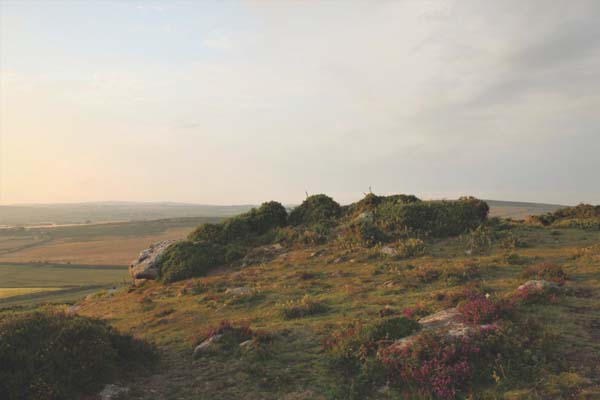
“After wandering for five hours over places which appeared strange to him, Richard followed the path through the rocky bottom or glen into an underground passage or cavern, from which, on emerging, he found himself in a pleasant looking country.”

“Walking on, he heard the sounds of merrymaking and came to a place where people appeared to be having a feast. He noticed a great number of persons playing bowls. Being fond of that game, he was about to run and seize the silver ball as it fell near him, when a female darted from behind a rock, which had screened her from view, and made eager signs for him to stop playing and to follow her. She went into an orchard near at hand. He approached and saw that she was a young lady who he had once loved, but who had been dead for a number of years. She told him she was changed into the fairy state by having trespassed on the fairies’ domain, and that he had narrowly escaped the same fate.”

“She was disposed to save him for the sake of their former attachment. When the persons playing bowls and spectators of the game had all gone out of sight, she conducted her former lover to the upper world by a shorter road than that by which he entered; on the way she told him that, as he was engaged to be married within a few weeks, she had no desire to detain him. She advised him, however, to defer his wedding three years, that he might be sure he knew his own mind. When Vingoe promised to follow her advice, they passed through an opening in a carn, and he saw Nanjizal” (which is a real place):

His conductress then said good-bye, and vanished. Being fatigued with his journey, he lay on the grass, near the spot where he again saw the light of day, and there he was found asleep nearly a week after. Vingoe was never the same man again, for he took to hard drinking and he died unmarried.

Notice how many of the usual themes are introduced…..

………wandering for hours, disorientation, caverns in the rocks, a distant feast and merrymaking, an orchard, playing bowls, a dead person who is not dead but has been captured by the fairies and finally, the poor innocent victim who, like all the rest, is affected by his time with the fairies.

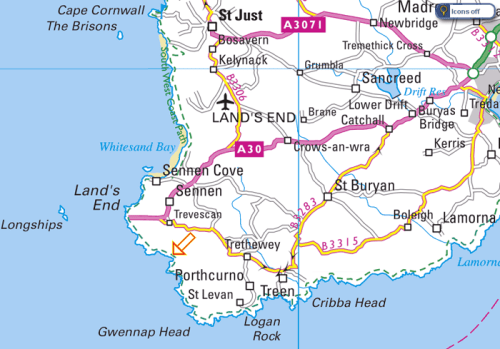
The map below shows you where Nanjizal is, thanks to the efforts of the Orange Arrow. This is the very last bit of England (hence Land’s End) and the dark grey shading in the top right represents the western edge of the town of Penzance. As an area, it is full of magic and witchcraft, even nowadays, and it must contain at least fifty Stone Age circles and other types of monument.
The second story concerns a servant girl called Grace who has been tricked into going to work for a human sized fairy:

“Grace told her master (the human sized fairy)  that she wasn’t used to going to bed so early. He answered,  “Please yourself on that score, and stay up as long as you want to.”

He then brought her a basket of fruit and told her to eat what she pleased of them. Afterwards, he gave her a cup of fruit juice that she found delicious. By the time she had drunk it to the last drop, she forgot her home and playmates among the hills. She forgot her brothers and her sisters, her father and her mother even. She no more remembered her former life, and only thought of her kind Master and the delightful place in which he lived. She dreamed of it that night and nothing else.”

This last tale could well have been something from a science-fiction short story. Not only do we have the familiar tale of eating or drinking something, and then there is no escape ( rather like the Greek Persephone) but we also have that feeling of lethargy yet total happiness, and a forgetfulness that leads to a perfect life, almost as if Grace had joined a modern day sect:

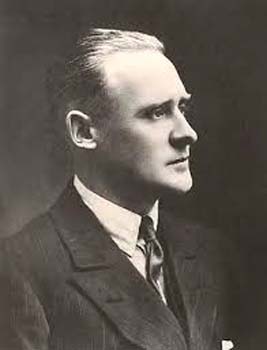
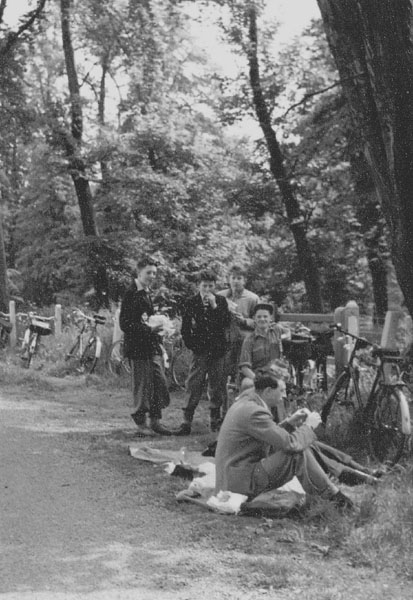
If you ever see the gentleman in the picture, make sure that you tell him what a “helter-skelter” is in England. It’s not what he thought it was.

17 Comments

Filed under Cornwall, Criminology, Cryptozoology, History, Literature, Personal, Wildlife and Nature, Writing

The Best of CHS (1)

I thought I would share with you what I personally considered to be the best photographs that the Reverend Charles Stephens took during his years at the High School. Firstly, he took many pictures of various groups of boys. This is a bicycle ride to Southwell in 1952:

Here is a group of boys eating their lunch while out on a field trip during the 1950s. It is a Form called “3 Red”:

A couple of years later, the Reverend Stephens, like all staff, known by his initials, CHS, took two slightly overlapping photographs of a different 3 Red. This is the left side of the Form, as he looked at them:

Here is the other side, nearer to the window. Only one boy manages to crane his way into both photographs:

This picture shows an unknown group of boys almost ready to play rugby at the Valley Road playing fields, probably back in the late 1950s. One brave little chap will be playing in his white plimsolls by the look of it. I wish I knew the supervising Master’s name:

The last group of boys is the Combined Cadet Force in 1957, practicing their drills near the old Green Shed. This huge edifice was first erected by the army during the severe winter of 1942.  It was in the north-west corner of the playground which the school had hitherto used for its cricket nets and practice wickets. The shed was used to store searchlight units and sound ranging equipment, which was brought out for drill in the daytime. The High School’s classrooms were used for the army’s theory lectures.
After a while, despite the snow and ice, the army began to dig the foundations for a second shed in the middle of the playground. According to popular legend, it was only when Mr Reynolds, the Headmaster, lined up the entire school and carefully explained to the foreman that the boys might well pelt them with snowballs as they worked was the idea given up. Protests were also made to the War Office through more normal channels. Until the playground received a new coat of asphalt in the late 1980s, the exploratory marks left by the army’s engineers could still be seen:

Here’s the Green Shed in the 1980s and it really was green.:

The last photograph is of a group, but not a group of human beings. This is the queue of trolleybuses waiting to take boys back from Sports Day to School at four o’clock, probably in 1957:

That type of vehicle, with rubber tyres, and powered by an overhead electricity supply,  would have been a bit cheaper than building our present tram system, where, apparently, only 10% of the cost goes on the overhead wires.


22 Comments

Filed under History, Nottingham, The High School

A nasty German in Woodville, Part Two, the True Facts

The Luftwaffe’s Gruppe III./KG.4, full name 111 Gruppe/Kampfgeschwader 4 arrived at Leeuwarden in the Netherlands in the middle of January 1941. They would be there until July 31st when they left for the Soviet Union and the Eastern Front:

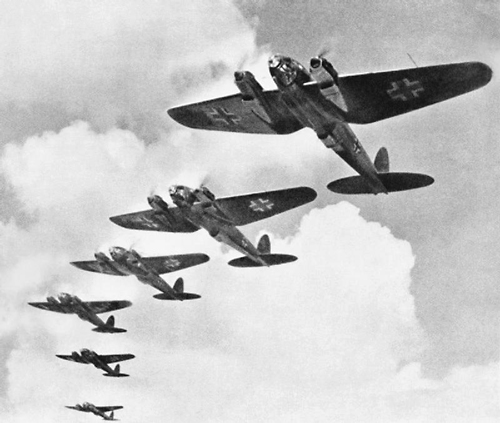
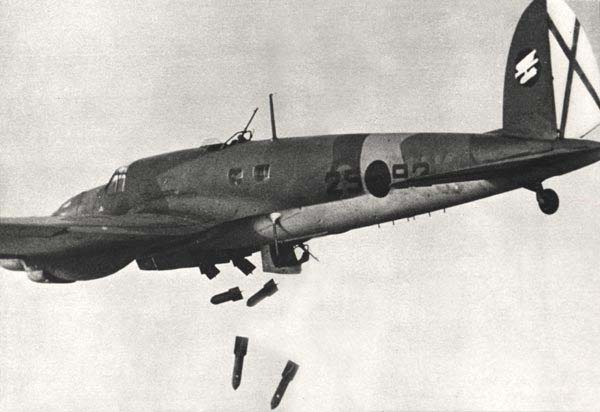
During the first part of their stay, in one of the hardest winters for years, they spent a lot of time training and then taking part in planned air raids on the cities and ports of Great Britain. They were flying twin engined Heinkel He-111H version bombers, “hard to start greenhouses”, which scared the bejesus out of the locals who lived near the airfield. They were all loaded to the maximum limits with explosives and fuel, and on quite a few occasions, seemed to struggle to climb over the locals’ houses in this birthplace of Mata Hari:

On Tuesday, June 24th 1941 the pilot of one of the Heinkel He-111Hs, Oberleutnant Joachim Schwartz, took off at 23.00 hours, tasked with laying mines in the Mersey Estuary near Liverpool. With him was a crew of three men, Stabsfeldwebel H Glkowski, Obergefreiter Friedrich Ertzinger, the Wireless Operator / Air Gunner, and Feldwebel W Köller.

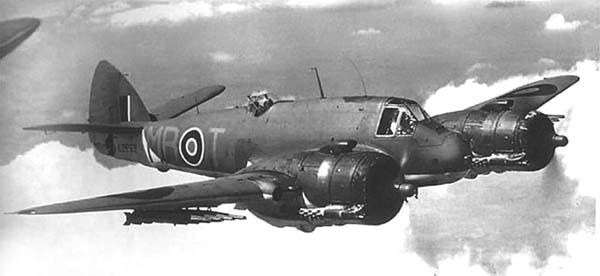
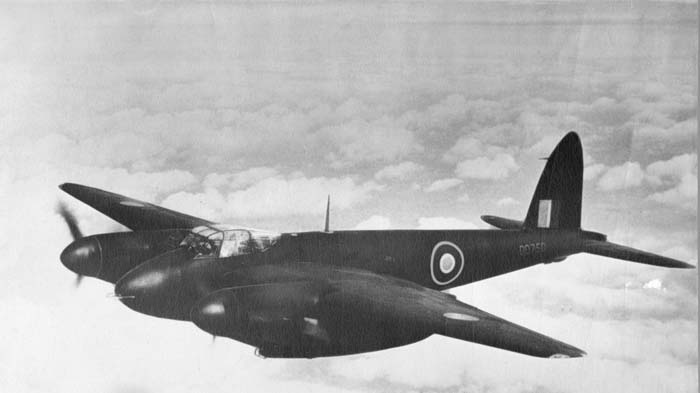
At 02.30 hrs, somewhere between the Wash and Liverpool, the Heinkel was intercepted on radar and then attacked by a Bristol Beaufighter of 25 Squadron, based at RAF Wittering, squadron codes ZK:

The Beaufighter was flown by Pilot Officer DW Thompson, with Pilot Officer LD Britain acting as the airborne interception radar operator (A1). Pilot Officer Britain picked up the Heinkel almost half way between Sheffield and Nottingham just under approximately 20,000 feet up, and stalked the twin engined bomber for a quarter of an hour. Slowly, slowly, the Beaufighter crew crept up on their prey and then opened fire with their four 20 mm Hispano cannons. Here they are, under the nose of the aircraft. There were also six .303in machine guns, two in the port wing and four in the starboard wing. This made it the most heavily armed British fighter of the war, with a total of ten guns:

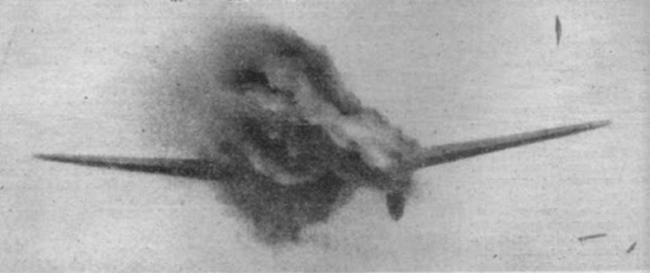
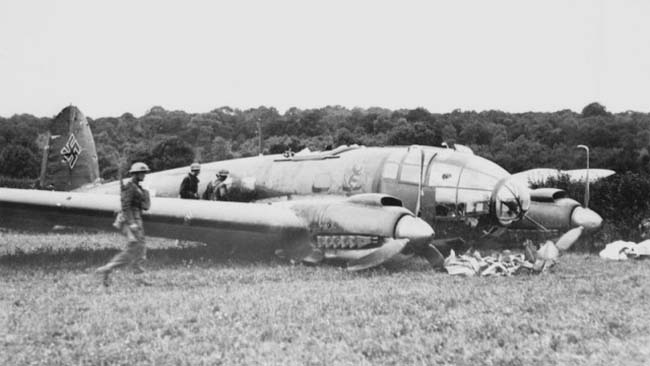
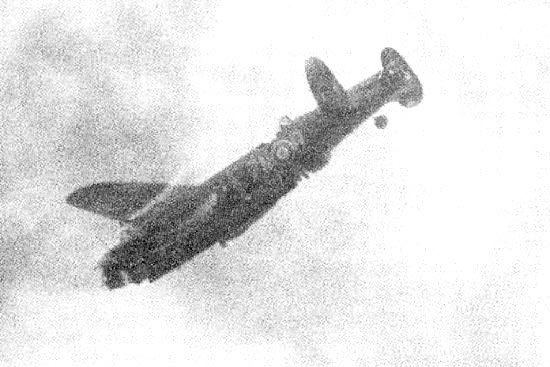
The RAF night fighter scored many hits on the hapless Heinkel. The cannon shells and machine gun bullets hit home with the same impact in energy terms as a broadside from a Royal Navy destroyer. The Heinkel’s starboard engine dissolved into flames and stopped working. A few minutes later, the bomber’s undercarriage fell out of its engine nacelles, increasing the plane’s drag enormously:

Immediately the bomber began to lose height rapidly, and as they plunged down to 1,000 feet, the pilot, Oberleutnant Schwartz, gave the order to the crew to bale out. Sadly, by the time he baled out himself, the aircraft was too low and his parachute failed to deploy. Schwartz was killed but his three colleagues, Ertzinger, Glkowski and Köller all escaped safely.

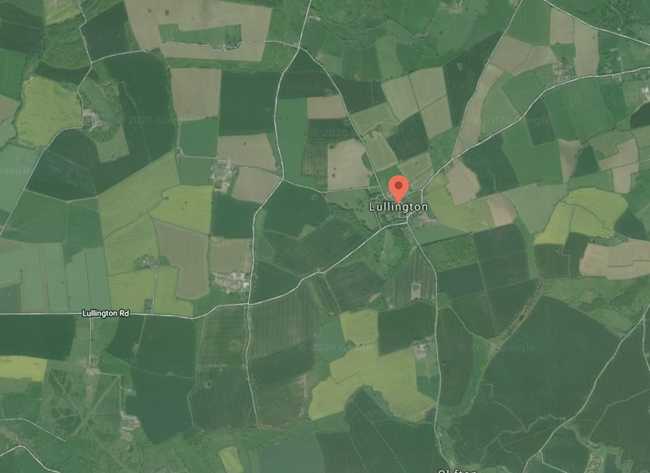
The Heinkel crashed close to the buildings of Edwards Farm in Lullington, a sleepy little village in South Derbyshire, some six miles south west of Woodville. This satellite view shows just how countrified Lullington still is even nowadays, eighty years after the event :

As soon as the Heinkel hit the ground, its bombs immediately exploded, scattering pieces of the plane over an area of some fifteen acres. The Home Guard would later find the tail mounted MG 17 machine gun. The aircraft had also been fitted with two external PVC 1006 bomb racks to increase its weapon carrying capacity.

The three surviving members of the crew, Ertzinger, Glkowski and Köller, landed in fields belonging to Edwards Farm. They were immediately captured and taken prisoner by two Home Guard men, Jack and Geoff Edwards, the brothers who owned the farm where the wreckage of the plane fell :

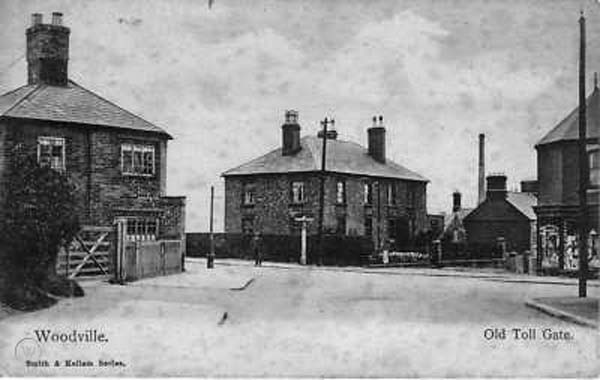
Ultimately the German aviators were taken to the Police Station at Woodville Tollgate to be locked up until the army could come and pick them up later that day. Here’s the Police Station again:

And what happened to the rest of the men involved ?

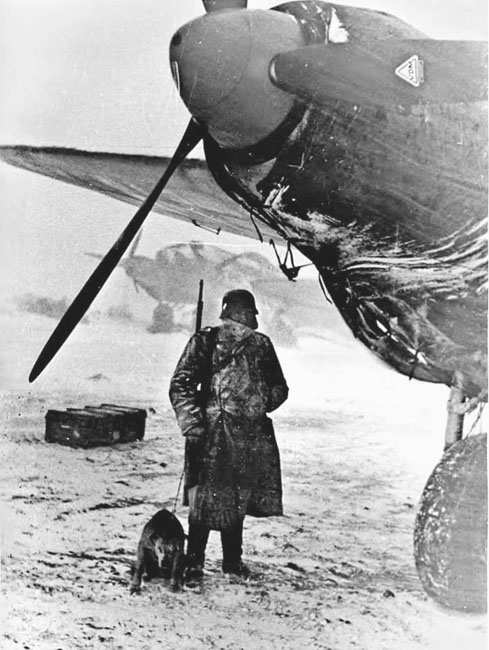
On July 31st 1941 the entire 111 Gruppe/Kampfgeschwader 4 was sent to the Eastern Front. It was a lovely place to walk the dog :

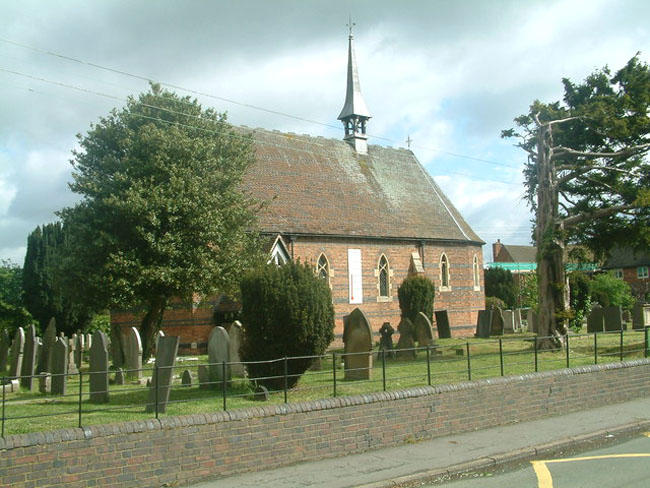
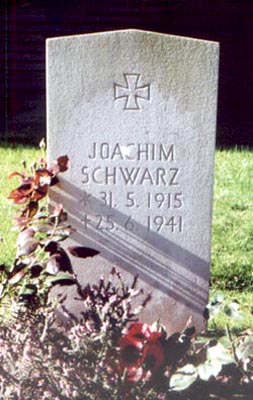
Poor Oberleutnant Schwartz received a full military funeral at Fradley Church near the cathedral city of Lichfield on June 27th 1941. He was buried in the lovely English churchyard around the church. Here’s the church:

And here’s his grave :

In recent years, at the Battle of Britain service in September, an officer of the Luftwaffe based at 16 M.U. Stafford has laid a wreath on the grave of the pilot, Oberleutnant Joachim Schwartz. Everybody was very happy to see this, and evinced the hope that it would continue for many years to come.

A number of years after the end of the war, in 1979, Friedrich Ertzinger, the Heinkel’s Wireless Operator / Air Gunner, visited Edwards Farm where he was given a wonderful reception by the two Edwards brothers. These visits continued for a number of years, and all three men enjoyed themselves enormously.

Pilot Officer LD Britain survived the war. You may remember that he was the airborne interception radar operator in the successful Beaufighter.

Pilot Officer David William Thompson, a mere 22 years old and the pilot of that successful Beaufighter, did not survive the conflict. Indeed, when he shot down that Heinkel over Lullington, he had only fourteen more days to live. On July 8th 1941, piloting a Bristol Beaufighter If, serial number, T4629, for an unknown reason, he plunged into the ground near Wittering. His airborne interception radar operator, Flight Sergeant Richard George Crossman, was also killed instantly.

David William Thompson was the son of the Reverend Hamlet George Thompson and of Dora Muriel Thompson (née Watney), of Little Munden Rectory in Hertfordshire. David was buried in Wittering (All Saints) Churchyard.

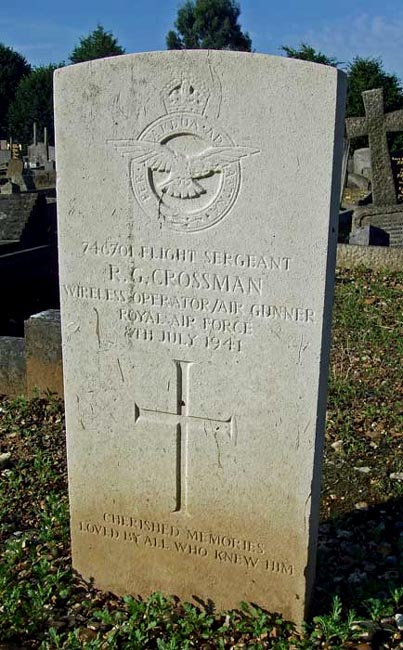
Richard George Crossman was the son of Richard Berkley Crossman and Clara Priscilla Crossman and the husband of Mary Crossman, who all hailed from Watford. Richard is buried in Watford Cemetery:

His grave bears the inscription “Cherished memories, loved by all who knew him”.


27 Comments

Filed under Aviation, History, Politics, Russia

The finest fighter of World War II

The P-51 Mustang was the most successful and most significant single-seat fighter of World War Two. It was initially designed for the British RAF and the most amazing fact is that from the moment the chief designer, James Kindelberger, sharpened his pencil to start work, to the moment the prototype roared off down the runway, was only 119 days.

That early prototype certainly showed promise, and so did all the subsequent A-36 Apaches, although they clearly had serious limitations at altitude.

And then, at Hucknall Aerodrome, just five miles from where my trusty computer now sits, with yours truly at the controls, the senior liaison test pilot with Rolls-Royce. a New Zealander named Ronnie Harker, earned his best ever pay rise of one pound a week (just over one and a half dollars). Ronnie thought up the scheme to put a British Rolls Royce Merlin 61 engine into the underpowered North American Mustang. This was the same engine as the Spitfire IX, and it cured all the problems the aircraft was having over 15,000 feet and gave its newly invented Laminar Flow Wing the chance to shine. Here is that huge Merlin:

P1320138xxxxxxxxxxxxxxxxxxxx

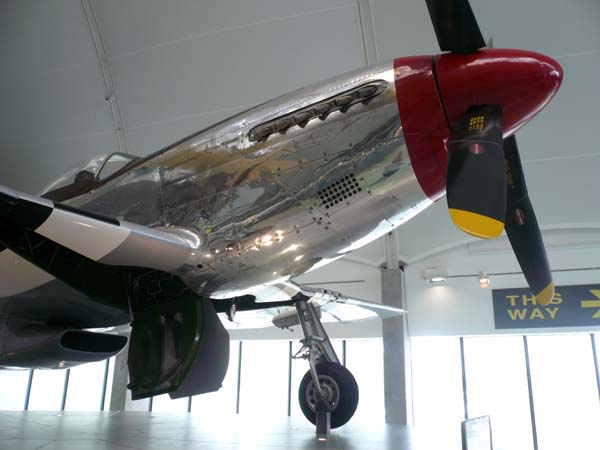
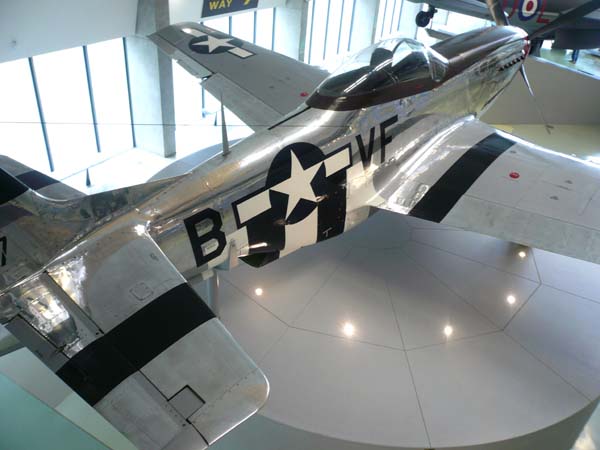
And poor Ronnie Harker. I suppose that for the rest of his life people must have introduced him at parties by saying, “Have you met Ronnie, the man who put the Merlin in the Mustang?”  You can read a much more detailed story via this link.  The article is called “The Cadillac of the Skies” Here’s the Hendon Mustang from a slightly unusual angle:

P1310952ccccccccccccccc

A second great leap forward for the aircraft was the fitting of the drop tanks which permitted Mustangs to fly and fight all the way to Berlin and back. The appearance of this superb fighter over the Brandenburg Gate sounded the death knell of the Third Reich, because in trying to fight off the B-17s and the B-24s, the Luftwaffe would slowly but surely be destroyed by the P-51 escort fighters. In 1944, for example, P-51 Mustangs would shoot down 6,039 German dayfighters.  That left the Germans with hardly any experienced pilots, considerably fewer defensive aircraft and a big, big problem.

Here’s the view after descending the stairs:

P1320143cccccccccccccccccccccccccccccc

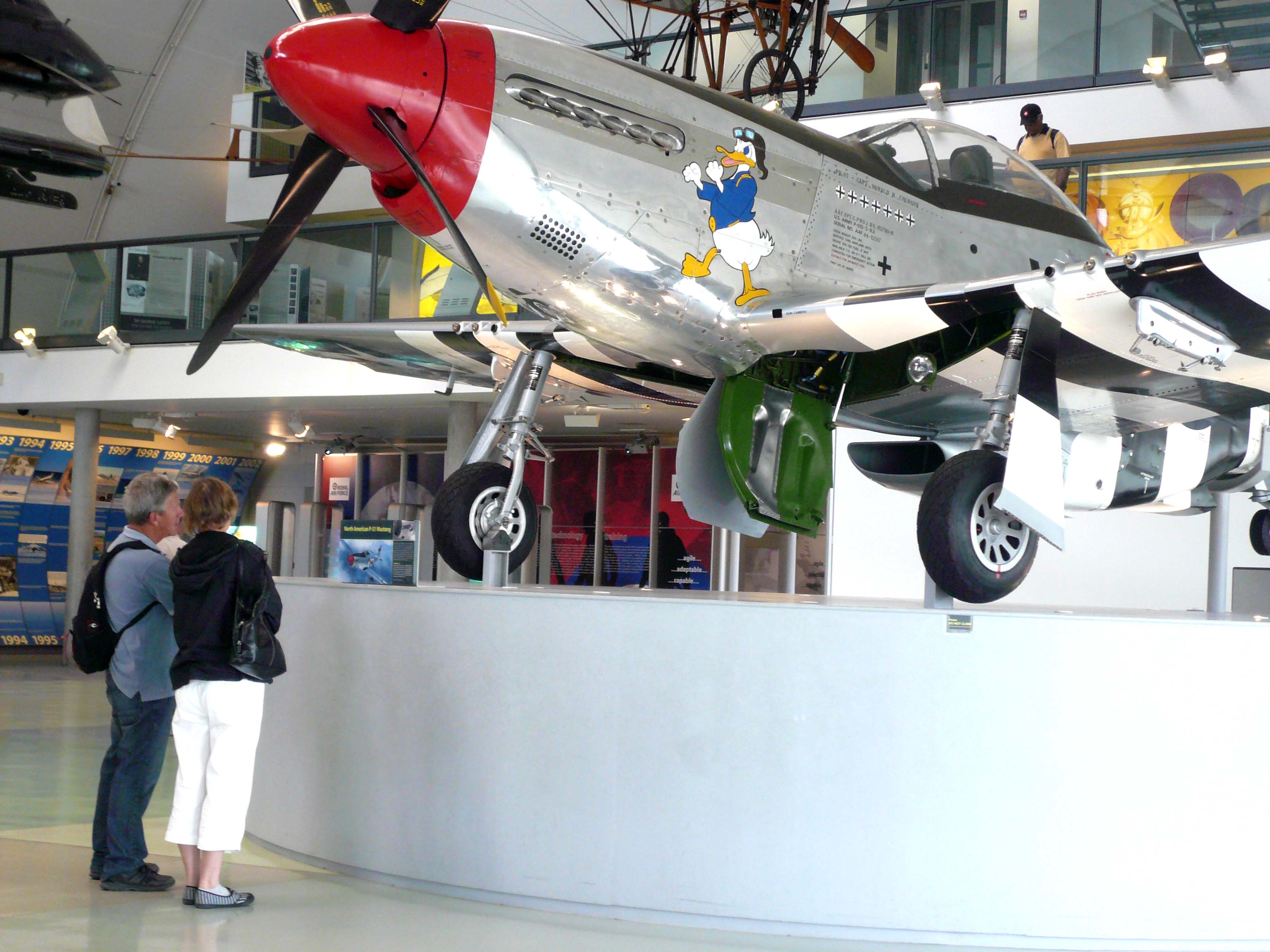
This particular example of a P-51 was constructed at Inglewood in California in 1945. It began in USAAF Air Training Command before, in 1950, being transferred to the Royal Canadian Air Force. It then had an enormously long history of toing and froing until it reached Hendon in 2003, where it was finally painted as the Mustang belonging to Captain Donald R Emerson of the 336th Fighter Squadron  based at Debden, in Essex. Here is Donald’s nose art:

P1320164ccccccccccccccc

Captain Emerson was killed by ground fire on Christmas Day 1944, as he flew over Belgium on the very last of his 89 missions. He had scored 4½ victories in the air, plus 3½ on the ground. He is buried at Margrattan in Holland.

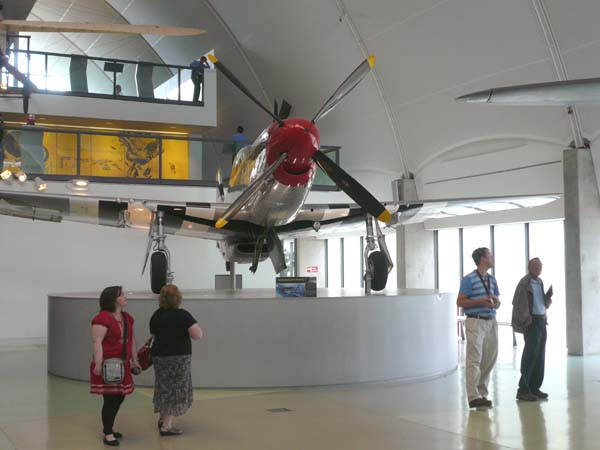
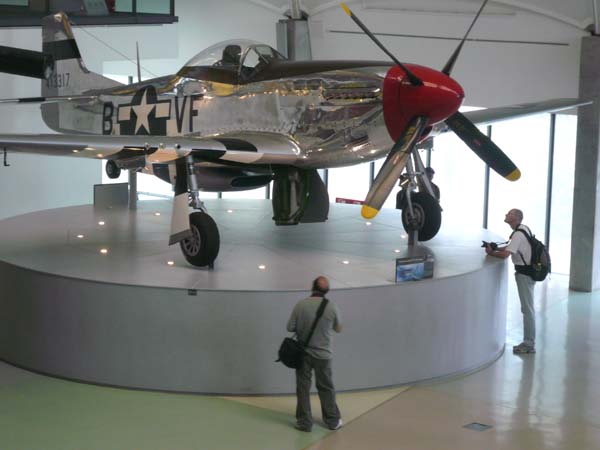
It says everything about the Mustang that over fifteen or so minutes, I was unable to take a photograph without somebody in shot. There was a constant, steady stream of admirers, with a good few photographers:

P1320004cccccccccccccccccccccc

And married couples:

P1320194xxxxxxxxxxxxxxxxxxxxxxxxxxx

And my wife and daughter:

P1320180xxxxxxxxxxxxxxxxxxxxxxxxxxx

It is impossible to waste your time if you are looking at a Mustang:

P1320006xxxxxxxxxxxxxxxxxxxxxxxxxxxxxxxxx

As John Keats so rightly put it in a poem he wrote on his visit to the RAF Hendon Museum in 1818 :

“A thing of beauty is a joy for ever:
Its loveliness increases; it will never
Pass into nothingness.”


27 Comments

Filed under Aviation, Canada, History

The Fairies of Cornwall (10)

Jenny has given birth to a beautiful baby. She decides to leave her baby at home and to go to the village Harvest Festival. When she returns, the baby is missing. Eventually she finds the infant, and takes it to bed with her. In the months which follow, the baby becomes increasingly strange. Many of the neighbours say that they fear that the fairies have played a trick on her and have replaced her baby by a changeling.

They told her:

“You can do nothing better than to bathe your child in the Holy Well at Chapel Carn Brea”.

Carn Brea is the first hill after Land’s End and is made of Hercynian granite. It is at the southern edge of the parish of St Just in west Cornwall and has a beacon which is the first of the whole series visible on hill tops across the whole of England.

The story continues:

“Jenny dutifully bathed her baby in the Holy Well at Chapel Carn Brea. She had nearly passed around the top of the huge hill and was coming to some large rocks near the open moor when she heard a shrill voice, seemingly from above her head, call out “Thy wife and children greet you well”. Jenny was surprised to hear the shrill voice with nobody in sight.”

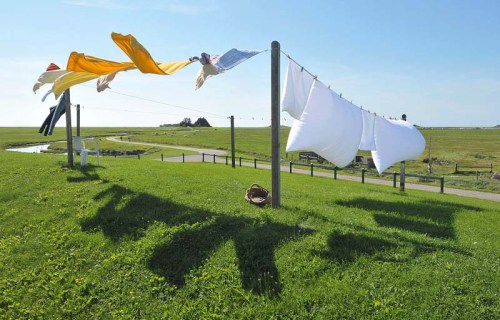
“Jenny returned to her home and stayed there until morning. Being fatigued and worried she overslept, for it was nearly daybreak when she awoke and hurried away, full of both hope and fear, to the fence around the field. And there, sure enough, she found her own dear child sleeping on some dry straw. The infant was as clean from head to foot as soap and water could make it, and wrapped up in a piece of old bright flowery chintz, which Fairies often covet and steal from washing lines when it is placed there in the sun to dry.”

“Jenny nursed her recovered child with great care but there was always something strange about him as there always is with one who has been in the fairies’ power, if only for a few days. He was constantly complaining, and as soon as he was able to toddle, he would wander far away to all sorts of out of the way places. The rich lady of Brea came to see him and brought him many nice things that his mother couldn’t afford to buy. When he was about nine years of age Squire Ellis took the changeling (as he was always called) into his service, but he was found to be such a poor simple innocent that he could never be trusted to work in the fields alone, much less with cattle. As the fancy would take him, every now and then, he would leave his work and wander away over hills and moors for days at a time.

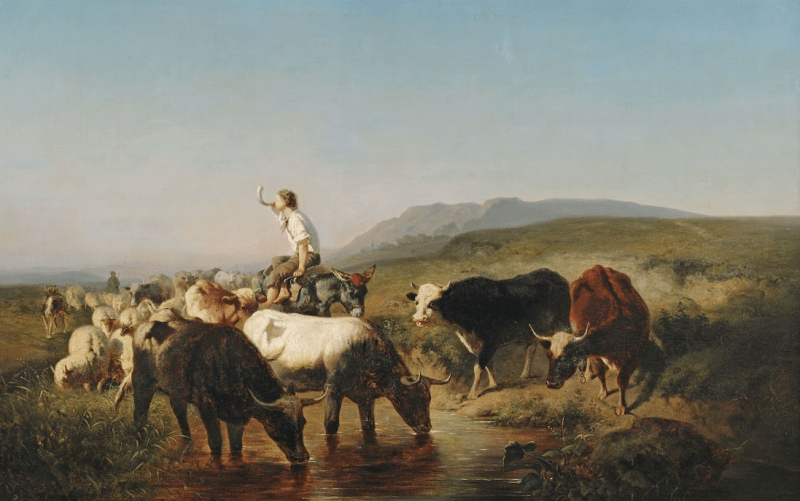
Yet he was found useful for attending to rearing cattle and sheep. He was so careful of his master’s flock at lambing time that there was seldom any lost. He often talked to himself and many believed that he was then holding a conversation with some of the fairy tribe visible only to him . They were trying to entice him to ramble among the rocky outcrops, hills and moors, their usual haunts.

When he was about thirty years of age he was missing for several days. His flock had been noticed staying longer than usual in the same place, on a moor between the Chapel Hill and Bartinney. He was found, surrounded by his sheep, lying on a quantity of rushes which he had pulled up and collected for making sheep pens. He lay with his arm under his head, apparently in sweet sleep, but the poor changeling of Chapel Carn Brea was dead.”

12 Comments

Filed under Cornwall, Criminology, Cryptozoology, History, Literature, Politics, Wildlife and Nature, Writing

A nasty German in Woodville, Part One, the Legend

I grew up in a small village called Woodville, just to the south of Derby, in more or less the centre of England.

Derby was the home of an important Rolls Royce factory which made Merlin engines, the powerplant used by important World War Two aircraft such as the Spitfire, the Hurricane, the Mosquito and the Lancaster :

This slideshow requires JavaScript.

Shortly after the outbreak of war in 1939, steps were taken to protect this important Derby factory from enemy air attack. Immediate measures included the installation of a large calibre ex-naval gun on the western side of Hartshorne Lane, on some grassland near the public footpath, just beyond the site where the Dominoes public house was to be built shortly after the end of the war. Look for the Orange Arrow, my hearties!! :

This naval gun, probably taken from a scrapped old battleship, was extremely powerful and extremely noisy. Every time it was fired in practice, it made all the cups rattle on their holders in the pantry at my grandparents’ house, “Holmgarth”, at No 39,  Hartshorne Lane, some half a mile away :

One evening, probably in the second half of 1940 or early 1941, a lone Heinkel III bomber was caught in the searchlights over Derby. This spectacular event was the signal for the Hartshorne gun to fire its one and only shot in anger of the entire war :

Needless to say, the shot was a successful one and the bomber was duly brought down. Later in the evening, the Home Guard was to capture the pilot, who had descended by parachute from his stricken craft. Another slightly different version of the story relates how the pilot was dragged semi-conscious from the wreckage of his aeroplane:

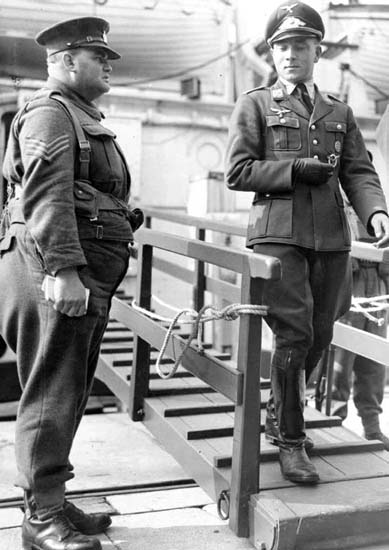
The pilot was subsequently brought to Hartshorne and then marched up the hill to the Police Station at Woodville Tollgate. He did not speak any English but seemed happy to rave loudly to himself in German. This gentleman was seen by the locals as being a typically arrogant Nazi, who believed that the war was already won. He was even smoking the Player’s cigarettes which had been captured in such large quantities at Dunkirk in June 1940. I couldn’t find a picture of this particular gentleman in Woodville, but the world at this time was not particularly short of arrogant Nazis:

The pilot was locked in a police cell overnight. This may well have been to his benefit, as the mood of the angry passers-by as he had been brought up Hartshorne Lane had largely been in favour of lynching him. Indeed, the crowd’s evident hostility had done much to quieten the pilot’s rantings on the long slow walk up to the police station.

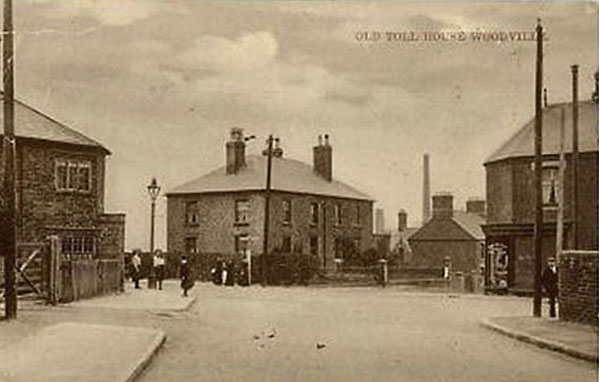
Here’s the police station, in Edwardian sepia. If you look to the right of the police station, (which is right in the middle of the picture), there is a very tall chimney which is now long demolished but which, then, was the chimney of the Outram’s factory which made sinks, wash-basins, toilets and such. To the right of that chimney is a very stout looking house with two chimney stacks. The further one of those two is the chimney stack for my Mum and Dad’s house, “Clare Cottage, built 1890”, They lived there from 1949-2000 and 1949-2003 respectively.

So what? you may ask. Well, I know that with a little bit of luck, my instructions will be followed by a lady from India, a gentleman from Australia, my American friends from coast to coast, and citizens, perhaps, of other countries across the globe, as well as my valued readers in this country. I wonder what the newly married couple would have thought of that, when they moved in to what was then a semi-derelict house,  more than seventy years ago. People across the whole world looking at their chimney stack :

At the time the Heinkel was shot down, Fred, as a young man of some seventeen or eighteen years of age, was still awaiting his chance to go into the RAF. He had therefore in the interim become a young member of the local Home Guard, or L.D.V. (the Local Defence Volunteers, or as Fred always interpreted the initials, “Look, Duck and Vanish”). Neither the Hartshorne Home Guard or the Woodville Home Guard ever had as many rifles as these mean looking killers, though:

This episode, before he went away into the armed forces, was in actual fact the only time that Fred was ever destined to meet a Nazi in person. Indeed, in later years, Fred was to say that this was the most dangerous moment he was to experience in terms of being directly face to face with the enemy. The even greater irony was that the very real threat of violence inherent in the situation was provided exclusively by the English civilians, and not by the Luftwaffe pilot himself.

Conceivably, this particular Heinkel bomber was the same one which was later to be put on display in nearby Burton-on-Trent in an effort to raise funds for the war. I have been unable to trace an exact date for this occurrence, other than the fact that, with the decreasing frequency of Luftwaffe raids on England, it was more likely to have occurred sooner rather than later during the conflict.

I was told this story about the naval gun more than once by my Dad, Fred. It seemed so far fetched that I began to think that he was suffering from false memories. I thought that perhaps my Dad had confused 1940 or 1941 with a very famous episode of the comedy “Dad’s Army”. But he hadn’t. Fifty or so years after I first met him, my oldest friend revealed that his mother, as a young girl, had been in that crowd at Woodville Police Station and had seen the arrogant Nazi smoking our Player’s Cigarettes.

Any excuse for a bit of Dad’s Army:

That moment has won more than one award as the funniest moment ever on BBC TV.


29 Comments

Filed under Aviation, Bomber Command, History, Personal

The Fairies of Cornwall (9)

This is a old Cornish story about a pretty young girl called Jenny who has given birth to a beautiful baby son three or four days previously. She decides to leave her baby for a few hours to go to the Harvest Festival in the village. In the world of Cornish fairies, this is a NO-NO in capital letters a thousand feet tall. It can only end in total catastrophe.

“Jenny, thinking about her baby left all alone at home, didn’t stop for the drinking after the harvest festival, but had one good drink of beer, got some cakes to take home and then she hurried away. When she opened her door, she saw, by the moonlight, that the cradle was overturned. Straw and rags were on the floor, but no child was in sight”:

“In searching all the holes and corners, she came to the corner where the wood was kept and there, among the heaps of dried grasses, ferns, and gorse, she found the child fast asleep. Being very tired, she took up the child and went to bed”.

“The next morning, when she looked at the baby by daylight, it seemed to her that there was somehow something strange about him. She didn’t know what, but he seemed to be different somehow from when she went off to the Harvest Festival. The baby was healthy enough but he seemed never satisfied unless he was all the time breastfeeding or eating. He would roar like a bull if he didn’t get his own way. He always wanted to be in her arms or eating. She began to wonder what on earth was going on”.


“Poor Jenny couldn’t do her household chores and had no rest at all in her life with the squalling hungry brat. Yet despite all his breastfeeding and eating, the baby always seemed to be wasting away to skin and bone. And so it continued through the entire winter. The more he ate the thinner he became. Many of the neighbours shook their heads when they saw the child and said that they feared the fairies had played a trick on her that afternoon when she went to the harvest festival.”

“They believed that the fairies had left a changeling which, according to local belief:

“….was believed to be a fairy child that had been left in place of a human child stolen by the fairies.”

Nobody knew why the fairies did this. Every culture across Western Europe seems to have had its own ideas. On that basis, there is no reason to exclude immediately that this was not an attempt by superior beings to harvest human DNA, and then to manipulate it, although the ease with which a changeling was identified hints at the many problems they were having with this.
Jenny’s neighbours told her:

“You can do nothing better with the child than to bathe him in the Holy Well at Chapel Carn Brea”.
Carn Brea is the first hill after Land’s End and is made of Hercynian granite. It is at the southern edge of the civil parish of St Just in west Cornwall and has a beacon which is the first of an entire network on the hill tops of England. In this way important messages can be passed such as “Spanish Armada in sight” (1588) or “Battle of Trafalgar won” (1805):

As far as I know, the last time the beacons were used was for the Queen’s Diamond Jubilee in 2012. The next episode in this cute little fairy story will appear soon.


13 Comments

Filed under Cornwall, Criminology, Cryptozoology, History, Literature, Personal, Wildlife and Nature, Writing

the Supermarine Southampton at Hendon

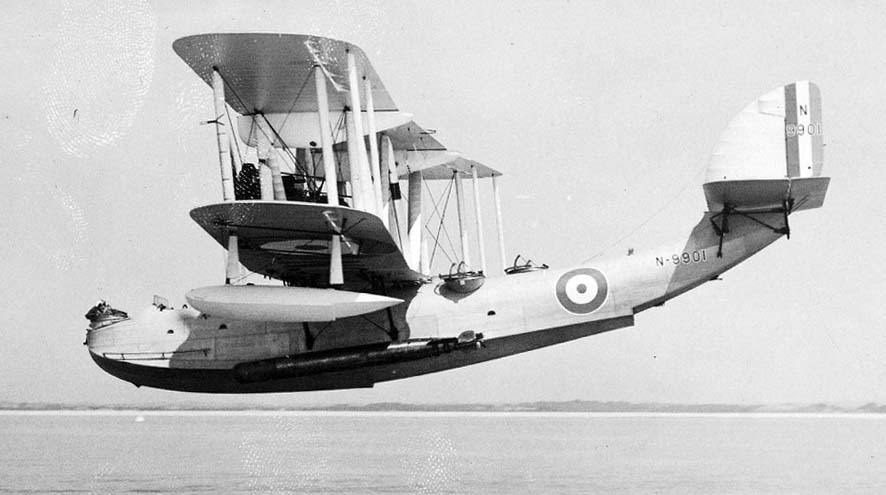
You don’t always expect to see a flying boat in a museum in London, but the RAF Museum at Hendon has, among many other seaplanes, a Supermarine Southampton, a type which, between the two wars, was an extremely successful aircraft in Royal Air Force service:

The Southampton was designed by the famous R J Mitchell and it immediately brought Mitchell’s name to the fore as an aircraft designer. At the same time, it also gave Supermarine an enormous amount of publicity, affording a much greater chance that their later designs might be approved:

The first 18 examples of the Mark I were made completely of wood. They were delivered in August 1925. The RAF, however, was now beginning to express a growing preference for metal aircraft and when the Mark IIs were delivered, they were made entirely of metal. They were much preferred to the older wooden Southamptons which, from 1929 onwards, were all gradually converted to have metal hulls:


The aircraft was amazingly durable and reliable and each one had an average service life of around eleven years. One source of their fame was a series of long distance formation flights to many different parts of the world. In 1927-1928, the “Far East Flight” travelled from Felixstowe to the Mediterranean and then on to India and Singapore, a total of some 27,000 miles:

This slideshow requires JavaScript.

The museum aircraft is a Mark I, N9899, from the very first ever batch of Mark Is which were numbered N9896-N9901. It was used by No.480 (Coastal Reconnaissance) Flight at Calshot in Hampshire. Here’s a general view. Not many aircraft have a ladder. At least, not on the outside.:

On September 7th 1925 the crew had an engine failure just off Wicklow Head in Ireland and had to be towed more than one hundred miles over the sea to Belfast Lough by HMS Calliope. On November 23rd 1928 N9899 was one of three Southamptons moored near Portland when it broke loose from its moorings in a gale and crashed violently into a breakwater. Only its engines were salvageable. In 1929 it was purchased privately so that its fuselage could be used as a houseboat, one of five flying boats to suffer such a fate at this time. N9899 then seems to have been towed to Felixstowe where it remained until the RAF bought it back and began a restoration scheme in the late 1960s.

What struck me about the aircraft was its vast collection of amazing old fashioned rivets and apparently heavy ironwork. Here is a closer view of the hull, revealing just how many rivets are holding the aircraft together. I haven’t bothered to count, but I bet there must be the best part of a couple of thousand. It’s a good job Mitchell’s most famous design, the Spitfire, was not too much like a Southampton!:

Notice the beautiful flowing lines of that tight, superbly graceful, bottom, or perhaps “hull” would be a better word. The museum still has that purple light to stop excessive fading of fragile old colours. I would think that aviation experts will see in the Southampton much of the design that Mitchell took forward to the Walrus.

This photograph shows a view from the rear, with the squadron letters of QN. I have the distinct feeling that every one of those silver metal panels might have a few rivets. The section around the gun turret, above the roundel, certainly does:

Here’s my final view, with the wheels used to bring the aircraft into the museum still in situ. They are not part of the aircraft because the Southampton was a flying boat, rather than an amphibian like the Consolidated PBY Catalina, which had its own undercarriage:

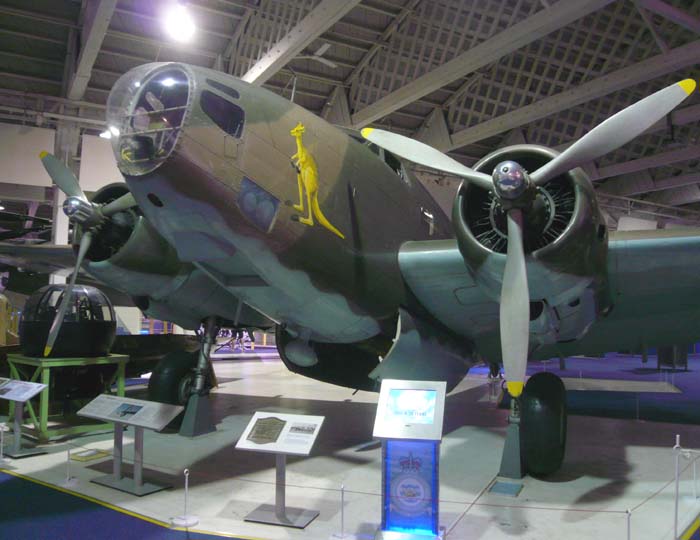
Notice behind the Southampton a Lockheed Hudson of the Royal Australian Air Force. Can you spot the kangaroo? Here’s a better view:

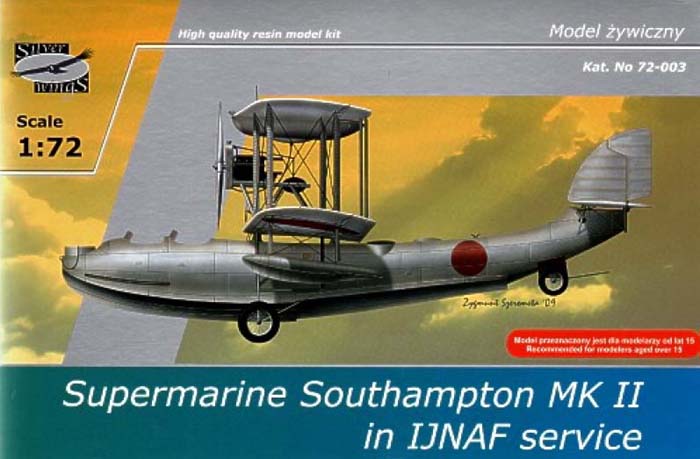
The Japanese used the Southampton as well as the RAF. Here’s a photograph of a modern day Polish construction kit:

I think that “IJNAF” stands for “Imperial Japanese Naval Air Force” (or something very like it.)


20 Comments

Filed under Aviation, History, Personal, Science

Bomber Harris, not a happy man (8)

In his book, “The Relentless Offensive”, Roy Irons does not forget to discuss at great length, the huge losses of both aircraft and aircrew suffered by Bomber Command:

Even on night raids, bombers were shot down in great numbers, both by flak and by nightfighters such as the Junkers Ju88:

In part, this was because aircraft such as the Whitley, the Hampden, the Blenheim, the Manchester, the Stirling and the Halifax were to a greater or a lesser extent, just not up to the job. The Lancaster, in contrast, was an outstanding aircraft, although even the “Lanc”, despite being the bomber of choice of the vast majority of Bomber Command aircrew, was itself still shot down in large numbers.

Casualties, in actual fact, were enormous.

In the First Phase of the bomber war, the Battle of the Ruhr (March 1st to July 1943), Bomber Command lost 1,038 aircraft, some 4.3% of their total strength.

In the Second Phase, the Battle of Hamburg (July 24th-August 3rd 1943) 139 aircraft were lost.

Unlike the First Phase, however, the Second Phase was a total victory for the RAF. Some forty thousand Germans were killed and a million fled the city. As Albert Speer realised:

“Six more like that and all war production will come to a total halt.”

The Third Phase was the Battle of Berlin (August  1943–March 31st 1944). Bomber Command lost 1,778 aircraft as Harris’ promise “to wreck Berlin from end to end” went terribly, terribly, wrong.

During these three phases, 396 days had passed, and 2,955 bombers had been lost. There were seven men in each one of them and on average no more than two ever escaped alive.

The problems were, as we have already said, that the bombers, on very single one of those 396 days, had had defend themselves with rifle calibre bullets. Secondly, escort fighters at night were almost completely unknown. The ranges of every single RAF fighter except one were largely inadequate , and in any case the Mosquito night fighter was way too fast to fly alongside four engined bombers:

To these two factors can be added the ten thousand plus anti aircraft guns  protecting the Reich. The majority of those guns were the deadly “8.8 cm Flak”, known universally to the hundreds of thousands of people involved in operating them as the “Acht-acht” (“eight-eight”).

Overall, though, Harris was right. Bombing worked. It destroyed both factories and living accommodation and at the same time, it kept hundreds of thousands of people tied up, busy defending Germany. Were it not for Bomber Command, those hundreds of thousands of people, and their ten thousand plus anti aircraft guns, would have been on the Eastern Front, knocking over T-34 tanks, and putting a brake on those huge Soviet advances into the Reich.

And that’s without counting the actual damage the bombers did. Albert Speer, for example, stated that through the activities of the RAF a minimum of 35% of tank production had been lost and 31% of aircraft production and 42% of lorry production.

Over the course of the conflict, though, it must be admitted that the war-winning aircraft of Bomber Command had actually been found to be “pitifully vulnerable”.

During the very rough total of 2000 days of war, Bomber Command had lost the equivalent of four heavy bombers on every single one of them:

The people who decided the tactics, with the notable exception of Harris, had initially attached far too much attention to the old doctrine that “the bomber will always get through”, a war-cry which dated back as far as the distant days of the Spanish Civil War when the Legión Cóndor had invented area bombing by its carefully planned attack on Guernica:

Perhaps Bomber Command losses might have been cut if they had taken a leaf out of Fighter Command’s book. The top fighter pilots always turned themselves into fabulous marksmen by one means or another. Constant shooting practice, they found, was a good method to try. This method was “completely ignored in the training of bomber gunners” and the top brass actually suggested that the standards of gunners’ eyesight should be lowered, because of the shortage of gunners.
The net result was that Bomber Command did not shoot down too many enemy fighters. As the author, Roy Irons, states, the air war in the West won by the 0.5 calibre guns of the P-51s and the B-17s. In 1944, the Luftwaffe lost 914 night fighters, mainly to Bomber Command. In the same period of time, 6,039 dayfighters were shot down by P-51 Mustangs.
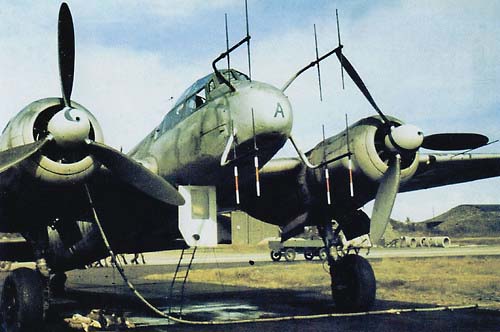
Here’s the Luftwaffe’s cutting edge night fighter, the Heinkel He219, with a fantastic array of radar  aerials.

And finally, if you enjoy discovering more irreverent truths about Bomber Command’s war, you might enjoy “Britain 1939-1945: The economic cost of strategic bombing” by John T Fahey. It is available on line here although it may take a long time to load.

There is a very interesting discussion about the book here.

22 Comments

Filed under Aviation, Bomber Command, History

The place where I grew up, Woodville, in World War 2

I grew up in a small village called Woodville, just to the south of Derby, in more or less the centre of England. Cue “The Orange Arrow” :

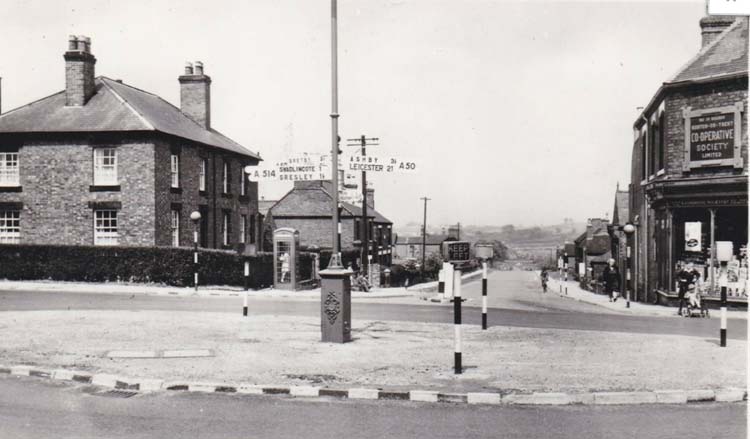
The village used to be called Wooden Box because of the large wooden box occupied by the man who operated the toll gate on the toll road between Ashby de la Zouch and Burton-upon-Trent.  The name Woodville first appeared in 1845. Nowadays, there is a roundabout where his box used to be, although the location itself is still called “Tollgate”. Here’s an old postcard of the “Tollgate” :

My Dad, Fred, told me that the majority of the people in Woodville were pretty much unaware of the existence of World War Two. It had comparatively little impact in this mostly country area, where rationing was offset by the inhabitants’ ability to grow food for themselves, and even to raise their own pigs and chickens. Food, therefore, was relatively freely available, if not abundant, and the war seemed to be very distant. Woodville seemed to be an unchanging pastoral paradise:

The twenty year old Fred despised the comfortable lives of the older people in Woodville. They would live out their humdrum lives without any risk whatsoever, while he was laying his life on the line pretty much every single day in Bomber Command:

The contempt he had for the inhabitants of the village, though, was perhaps a measure of his own fear at being asked to fly over burning Bremen or Cologne, or some other heavily defended Bomber Command target :

Young men, of course, went away from Woodville and from time to time their parents were duly informed that they would never return:

It was only too easy, though, for others to view that profoundly sad process as similar to that of the young men who might have moved away from the village for reasons of employment, or even in order to emigrate to another country.

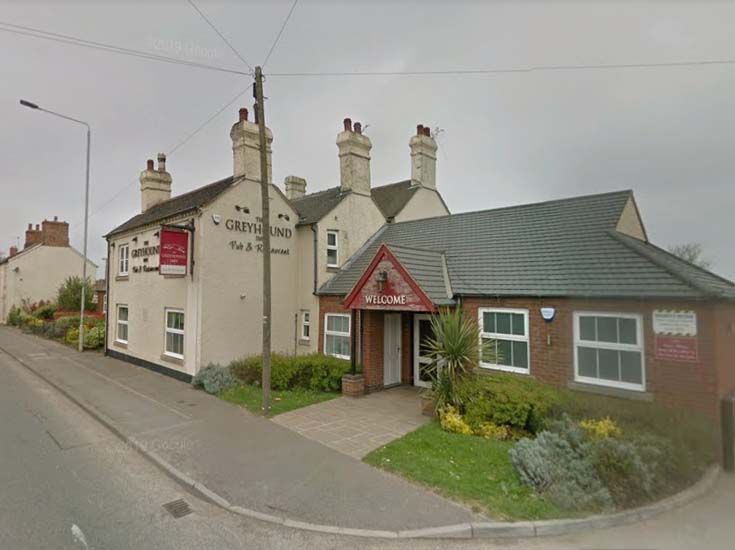
Occasionally, enemy aircraft would fly over Woodville, identifiable by their particular and peculiar engine noise. On one dark night, on November 14th 1940, many local people, Fred included, walked up to the Greyhound Inn near Boundary :

Everybody stood on the opposite side of the road from the public house and looked south. The view from that spot stretches thirty or forty miles or more into the southern Midlands

As they stood and looked, they were able to see the bright glow in the sky as Coventry burned, a city whose centre was almost completely destroyed by the Germans. There was, though, very little direct effect of German bombing on the local area around Woodville.

On one occasion, a Heinkel III night bomber, panicking about where he was, possibly pursued by a night fighter and perhaps worried that he might not make it back to the Fatherland, jettisoned all his bombs over the nearby village of Church Gresley. Look for “der fliegende orangefarbene Pfeil” :

The bombs all landed near Hastings Road, not far from the school where Fred would teach immediately after the war. They demolished an entire row of houses which backed onto Gresley Common, and all the inhabitants, almost thirty unfortunate people, were accidentally killed.

Years later, in the 1990s, Fred was able to explain these events to a man digging in the garden of his new townhouse, built recently on the site of the Second World War disaster. The man could not understand why the soil was so full of broken bricks, bath tiles and so many smithereens of old fashioned blue and white patterned crockery:

The only other direct connection with World War 2 was the unfortunate soldier and ex-prisoner-of-war who finally returned to Woodville in late 1945 or early 1946, having spent years as the unwilling guest of Emperor Hirohito, and the Japanese Imperial Army.

The poor man was unbelievably gaunt, and he had lost so much weight that his clothes flapped on his body like sails on a mast:

He did not receive as much sympathy as he might have done from the citizens of Woodville, though, when they found out that he had actually eaten snakes in his efforts not to starve to death. “Really ! Snakes ! ! ” Here’s snake soup, a delicacy in China but not as highly prized as bat and pangolin, apparently:

Fred, of course, had a view of such events very different from that of the average native of Woodville. Almost sixty years later, when I cleared out his house after his death, there was not a single Japanese electrical device to be found. Everything came from the factories of Philips in Eindhoven in the Netherlands.


33 Comments

Filed under History, Personal, the Japanese, war crimes