Author Archives: jfwknifton

Hedgecoe and Bamford : Death in the Night

I am currently carrying out research about the 100-odd Old Boys of the High School who gave their lives during World War II. Certain websites are very good for this, certain books are excellent but for really interesting details, it is always the “Forums” which take the prize.

I wonder if people realise that so many individuals, so many hundreds, if not thousands of people, spend their valuable spare time working away on their computers, trying to trace the fate, not just of their relatives, but of the young men or women who have captured their imagination.
I did some blogposts recently about the De Havilland Mosquito, and they reminded me of a trail which I followed a few months before that. The trail was started off, of course, by a story I came across on a forum.
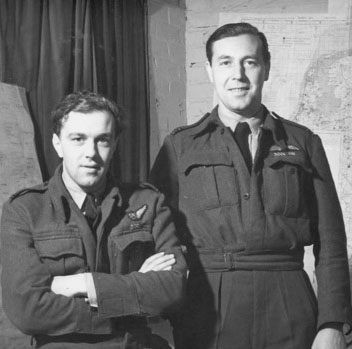
Here are Flying Officer Edward Richard Hedgecoe (pilot), and Flight Lieutenant Norman Llewellyn Bamford (radar operator) in a photograph which I have borrowed from a search engine. On the original website it appeared by courtesy of Colin Bamford, so I hope it doesn’t cause a problem. I will obviously take it down if he wishes.
The two men were apparently involved in a strange incident during the night of March 24th-25th 1944. They were flying a Mosquito night fighter when, off the coast of Kent, they found an apparent Junkers Ju 188 weaving violently from side to side. In order to be certain of the rather exotic aircraft’s identity, they approached to within 100 yards’ range before they fired a long burst of cannon fire at it. This was the correct thing to do, of course, but not if the quarry aircraft suddenly explodes in a huge fireball. This is a Junkers Ju 188:
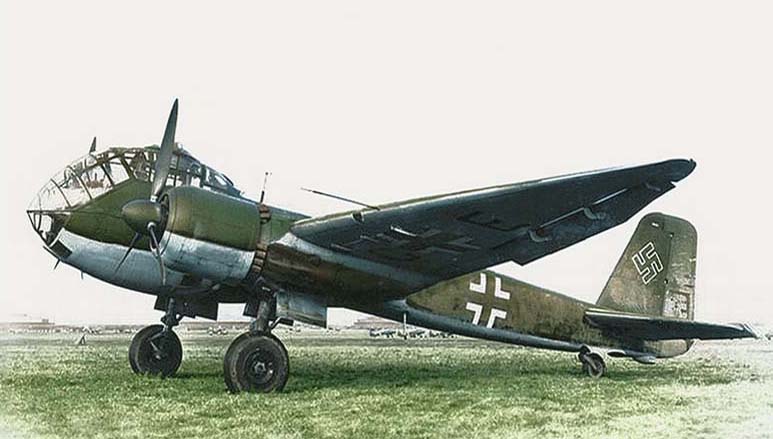
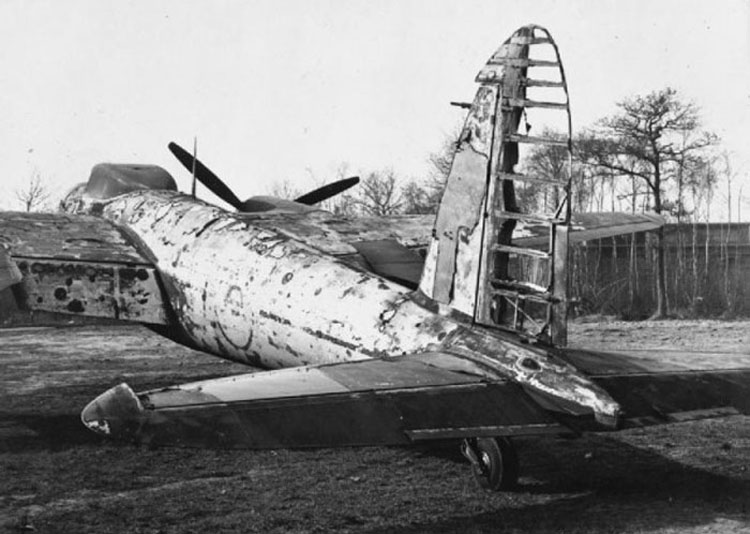
With its burning fuel and pieces of its own fiery débris, the German aircraft actually managed to set fire to the Mosquito, which was, of course, covered in extremely flammable fabric, stretched over a wooden frame. Very soon, in Bamford’s words, “our aircraft was ablaze from end to end”. Not a good situation to be in, and the pilot decided that they needed to abandon the blazing aeroplane as a matter of some urgency. He was flying straight and level to give Bamford an opportunity to bale out when he noticed that the fire was actually getting no worse. Indeed, before Bamford was ready to jump, the flames actually went out.

Although they were lacking a number of the usually vital parts of the aircraft, the pilot was still able to fly straight and level, despite not having any rudder control as the fabric had been totally destroyed by the fire. The only action necessary was to get a piece of old cloth, lean out of a side window and wipe as much soot as possible off the Mosquito’s perspex windscreen. To be honest, that only produced a kind of tunnel vision effect, but it was enough to fly carefully back to base at RAF Manston. Here is the Mosquito in question, after the landing:
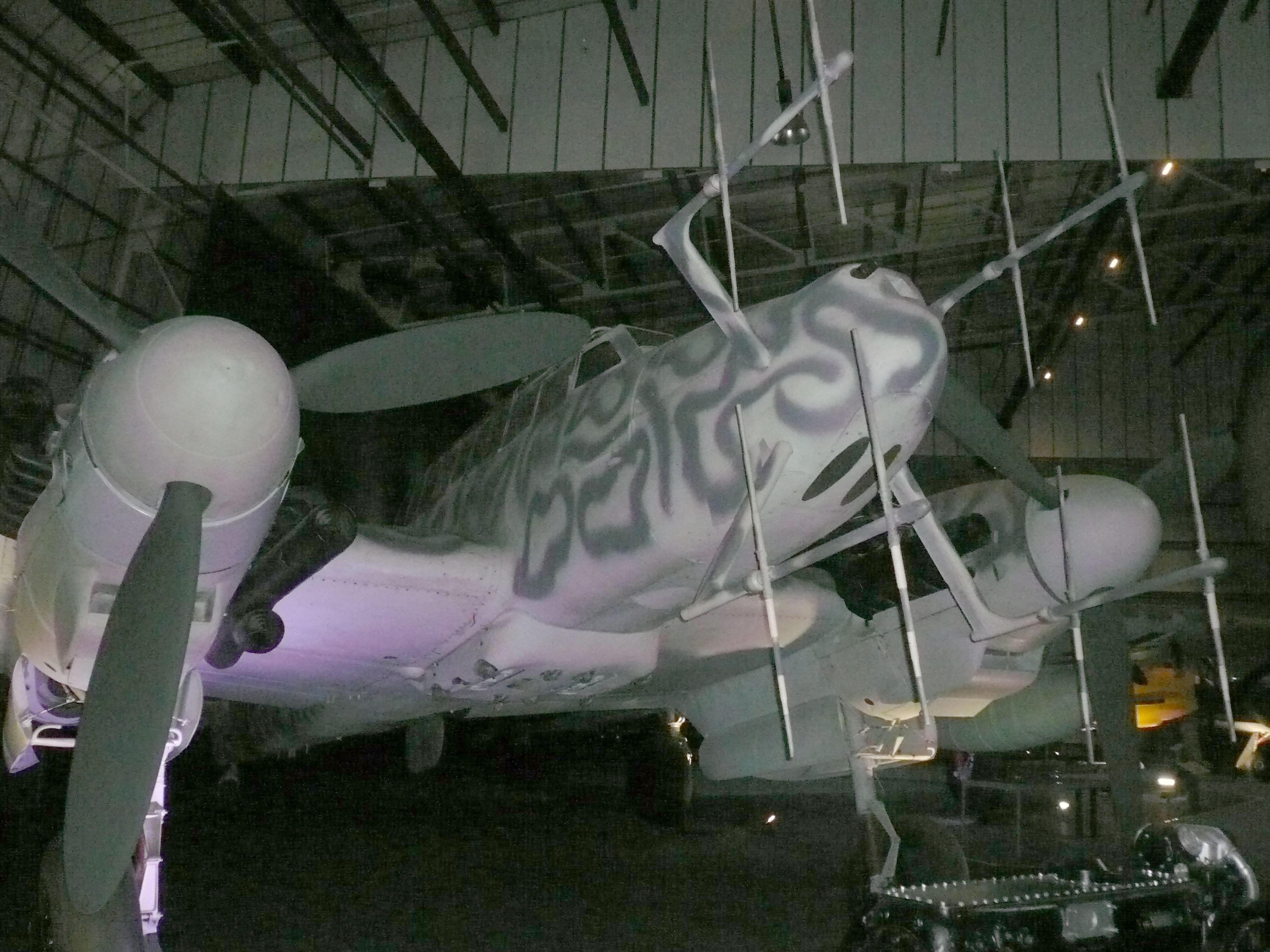
That story is an amazing tale to uncover and it appeared, presumably for the first time, in the Sevenoaks Chronicle and Kentish Advertiser for January 12th 1945. But that wasn’t all that had been found about these two men on the forum. Hedgecoe claimed 8 German planes destroyed and as a radar operator, Bamford claimed 10. Hedgecoe’s minimum list of kills included 2 x Junkers Ju 88, 2 x Messerschmitt Bf110s, a a Messerschmitt Me410, Junkers Ju 188, a Focke Wulf Fw 190 and one unidentified. This is a Messerschmitt Bf110:
Amazingly, Hedgecoe himself had already baled out once previously under rather peculiar circumstances. He hunted down a German aircraft in the darkness during the night of September 15th-16th 1943 and opened fire on it. For some reason which never became apparent, this action shattered the nose of his own aircraft which he was then forced to abandon.

The other details discovered about these two men across the Internet were quite astonishing. The Commonwealth War Graves Commission Website is always the first port of call, providing, for all casualties, service numbers, units, dates of death and the names of parents and spouse, with locations where possible. And, of course, the basics are there as well. Norman Bamford was a Welshman and came from Llanfair near Harlech in Merionethshire:

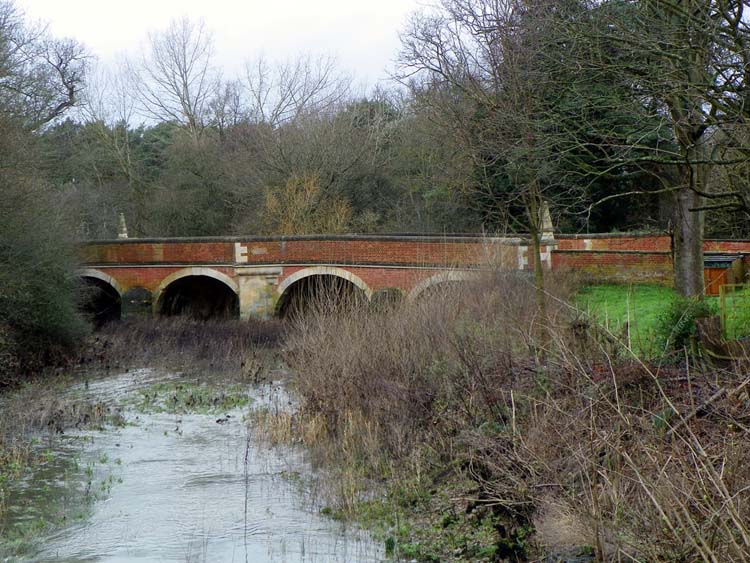
Edward Hedgecoe lived with his wife Sheila Sandford Hedgecoe, of Brookmans Park in south Hertfordshire. Here’s the bridge at nearby North Mymms:
Researchers though, can nowadays also trace the individual’s path through various units. In the case of Hedgecoe he was in 85 Squadron, the Fighter Interception Unit, the Night Fighter Development Unit and finally 151 Squadron.

The details of somebody’s education can be found…in the case of Bamford, he attended The Bec School in Tooting and then University College in London in order to qualify as an architect. Family details can be traced…younger brothers, where the family live and where they used to live, the name of the widow, and in due course on occasion, the details of her remarriage and where she went to live.

And all of it down to the Internet of course. Had these two young men ever been shot down by a Luftwaffe aircraft, we could even be reasonably certain who pressed the firing button.
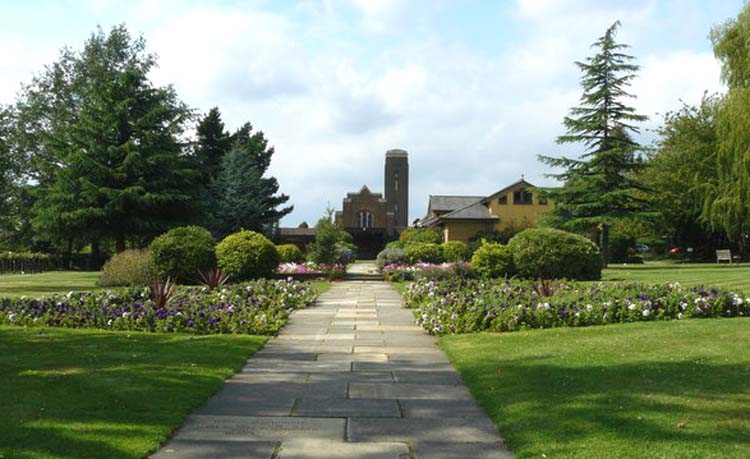
These two young heroes came to their end on January 1st 1945.  Edward Hedgecoe was 34 years of age and Norman Bamford was just 25 years old. They had recently been transferred and were flying with 151 Squadron on their very first flight with that squadron. It was very bad weather, they crashed and tragically, they were both killed. Edward Hedgecoe was buried in North Mymms Churchyard in Hertfordshire. Norman Bamford was cremated at Croydon Crematorium after a service attended by his family and friends and two representatives from the RAF Base:
And were it not for those people who maintain all the websites and the ones who beaver away on the Forums, nobody would ever have known the faintest thing about them.

One final note. I am having a second hand operation on February 8th, tomorrow, so I won’t be able to reply to any of your comments for, probably, a couple of weeks. As soon as I am able to, though, I will answer what you have been kind enough to contribute.



29 Comments

Filed under Aviation, History, Personal

Look at that fat bloke, Stan (5)

Please don’t look at these blog posts and think “I don’t like football” and then go on your merry way. All of these blog posts are about much more than football. In particular they concern the eternal battle between sporting genius and cream cakes.

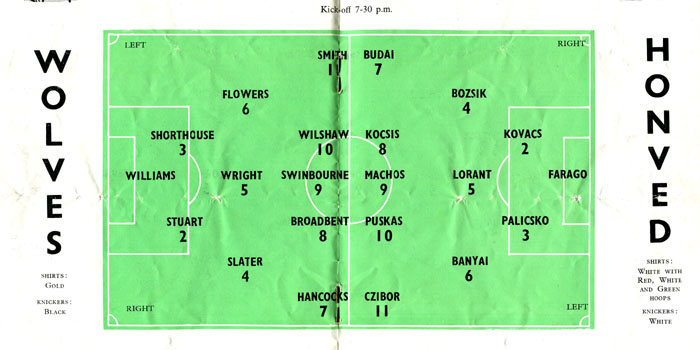
After the Wembley game in 1953, Ferenc Puskás went on to play in a number of other matches in Great Britain. After England’s defeat, Wolverhampton Wanderers tried to re-establish the reputation and the enduring quality of English football by playing prestigious friendlies against top European club sides. And if they beat enough of them, they would be able to make the claim that they were  the Champions of Europe. Puskás played for Honved of Budapest in one such game:

Here’s the line up of the two teams. Six of the players had played in 1953:

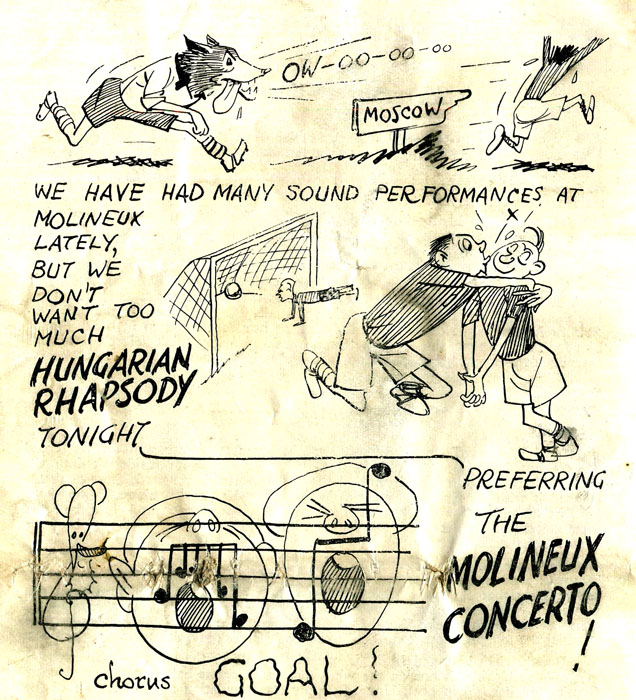
Never underestimate the English love of a cartoon on the back cover of a football programme:

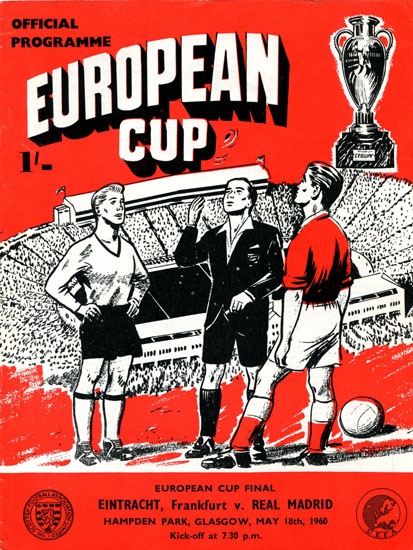
From Hungarian football Puskás joined Real Madrid.  He played in a second legendary game, the European Cup Final of 1960 which finished Real Madrid 7 Eintracht Frankfurt 3. Frankfurt had already beaten Glasgow Rangers by an aggregate of 12-4 in the semi finals. In the final, Puskás scored four goals:

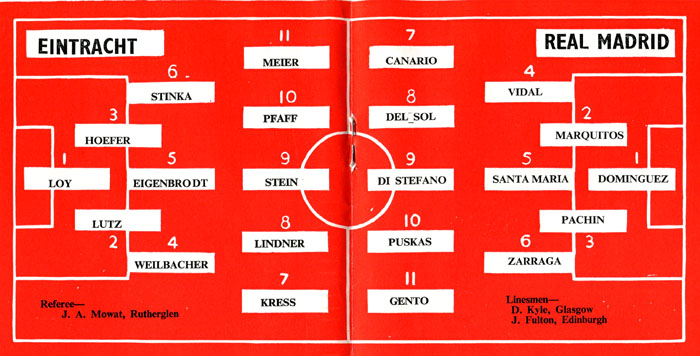
Here’s the team line-ups:

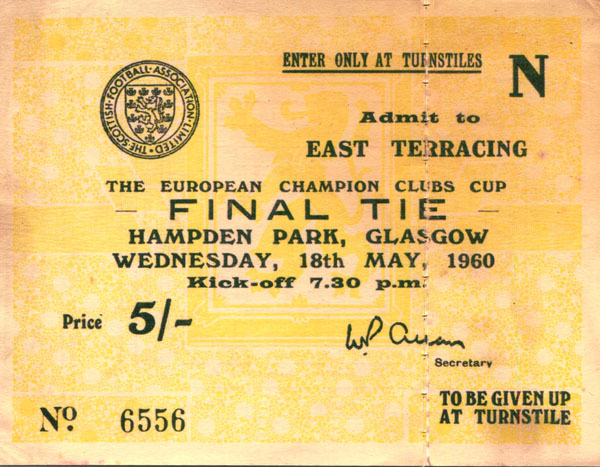
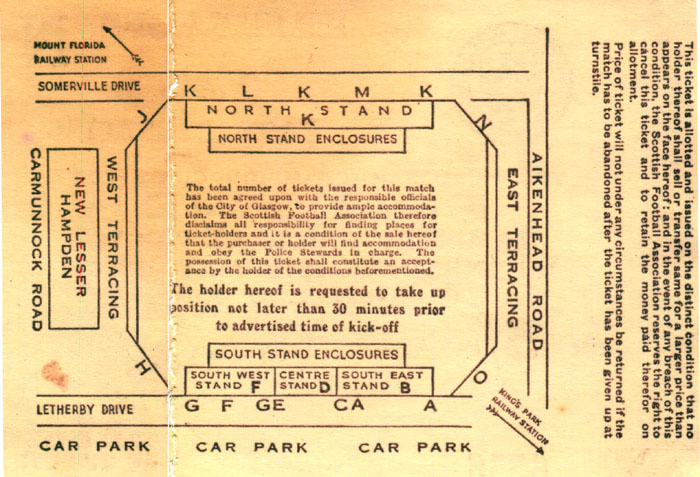
Being a very sad person indeed, I bought a reproduction ticket to the game. Here’s the front:

And the back

That game is widely accepted in football as the greatest ever played. It was between two teams, one of which was very, very good and one of which was walking into legend. And certainly, very few of the crowd of ‎127,621 were disappointed by the game.


10 Comments

Filed under Football, History, Personal

The Day from Hell (2)

Last time, I told you about Jack Ketch’s abilities as the King’s Executioner. He was useless. Absolutely useless. All that happened to him, though, was that he was promoted.

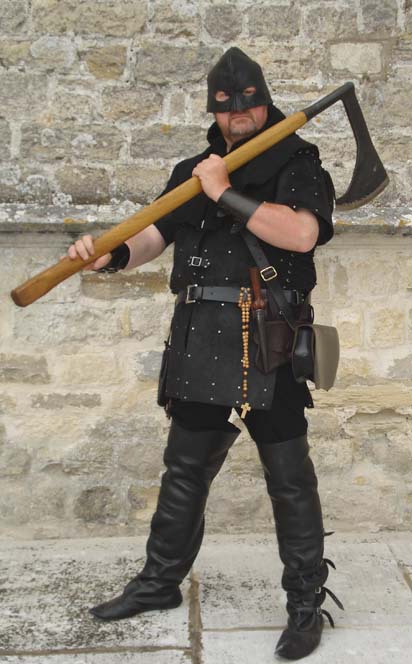
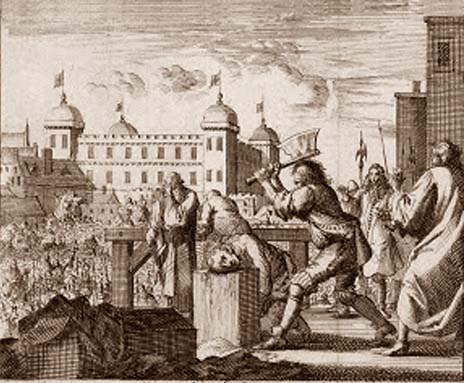
If you are in management, always give  the important  jobs to the most useless people. It will make your own performance look so much better. Ketch was the man tasked with executing the Duke of Monmouth:

The Duke of Monmouth knew all about Jack Ketch’s reputation for incompetence. They were all assembled, up on the scaffold and ready to go, when the Duke walked over to Ketch and said:

“Here are six golden guineas for you, Ketch. Do not hack me to bits as you did with Lord Russell. I have heard that you struck him three or four times. My servant will give you even more gold if you do the work well.”

“No problem, your Dukeness” replied Ketch, picking up his axe to begin the ghastly deed.

Monmouth ran his almost royal finger over the edge of Ketch’s axe. He was not a happy man. The axe wasn’t really that sharp. It was certainly not as sharp as the knife he’d had at breakfast. And it didn’t cut his finger at all.

Ketch began his work.

One slash of the axe. It missed. Just a little nick on the neck. Monmouth actually got up from the block and gave Ketch a dirty look.

Second go. Whoops, missed again. Sorreeeeeeeee !

Third attempt.

“Don’t worry, Duke. I’ll get you next time.”

Next time.

“Sorry, I don’t know where I’m going wrong. It was all right yesterday at rehearsal.”


That made four goes. How many more were needed?

Well, at least four more large swings of the axe. Ketch made a grand total of eight attempts at killing the Duke. And there were even some witnesses who talked of double figures.

And was the Duke dead? Well, no, not quite. Not yet. The neck was still not severed and the Duke was still moving about on the planks of the scaffold.

Ketch flung his axe down. The crowd was not happy. But they knew the rules.

Either the job was finished and the crowd went home happy or they themselves would ensure that at least one person went home dead. And that one person would be either the Duke or it would be Ketch. They really were not that bothered.

Lucky then that Ketch was carrying a penknife in his pocket. “Bear with me”, he shouted to the crowd, “I’ll get him this time.”

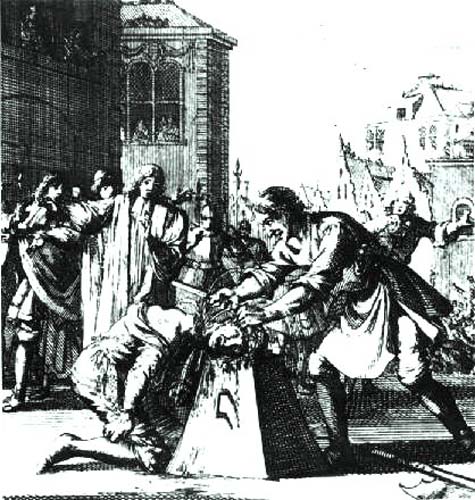
And he began sawing the Duke’s head off with his penknife. Eventually, he did it.
Here’s the close up. Look at the knife. Eight inches? Ten? :

The Duke of Monmouth was now, as requested by the King, in two completely separate pieces.

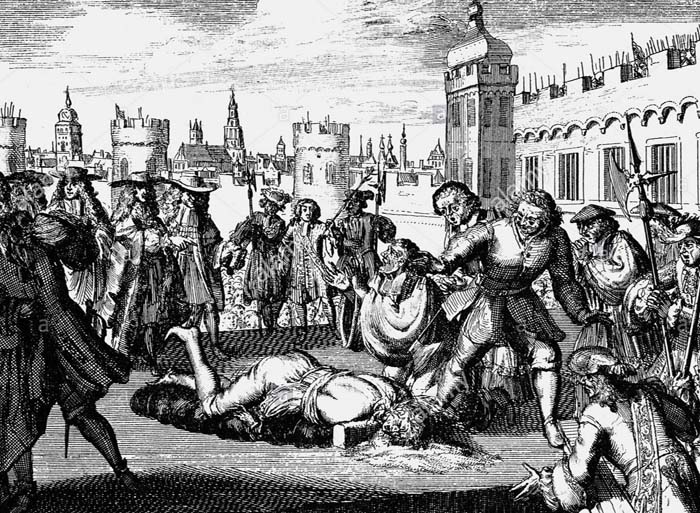
Ketch showed the two pieces to the crowd:

And then some slack jawed local of an assistant piped up with something he should have said to Ketch about an hour before:

“Jack!! Jack !!!  Don’t forget the drawing.”

“What drawing?”

“Well, Jack, they haven’t got an oil painting of the Duke anywhere in England so there’s a man here who needs to draw the Duke before you cut his head off.”

“Nooooooooooooooooooooooooooo!”

Was Ketch beaten? Hell, no. They sewed the Duke’s head back on to his body (which was not considered a serious breach of the Two Pieces Rule) and the artist then drew a quick sketch. When he had finished, Ketch took out his trusty penknife and cut the Duke’s head off (for a second time, presumably) and the Two Pieces were sent off for burial and/or display.

.
Now THAT was a bad day.

.
Incidentally, the oil painting is still in the National Portrait Gallery. They insist on calling it the “Portrait of a Man Sleeping” but they’re wrong, very, very wrong:

Just look at that piece of cloth tucked neatly around his neck. Surely it covers second rate stitching done at speed.

This is not a Man Sleeping.

This is the Duke of Monmouth.

But unfortunately, he has ceased to be! ‘E’s expired and gone to meet ‘is maker! ‘E’s a stiff! Bereft of life, ‘e rests in peace!

No no he’s not dead, he’s, he’s restin’!

NO  ‘E’s kicked the bucket, ‘e’s shuffled off ‘is mortal coil, run down the curtain and joined the bleedin’ choir invisible!! THIS IS AN EX-DUKE OF MONMOUTH!!

Jack Ketch died in November 1686. He went on to be mentioned in three different novels by Charles Dickens. He also gave rise to the Rock/Punk/Metal/ super group entitled “Jack Ketch & The Bilge Rat Bastards”.

I could not have written this blog post without the description of events supplied by Lord Macaulay in his “History of England”.


34 Comments

Filed under Criminology, History, Humour, Politics

The Day from Hell (1)

Have you ever had the day from hell? When more or less everything that could go wrong, did go wrong?

Do you ever think that you struggle to hold down your job? Do you ever think that you are absolutely useless and it’s only a matter of time before your ineptitude is discovered?


Well, trust me, you will never approach the levels achieved in the 1680s by Jack Ketch, the King’s Executioner:


On July 21st 1683, Jack attempted to execute Lord Russell. The story comes from  the incomparably named “Great B#stards of History: Famous Illegitimate Children Who Went on to Achieve Greatness”. That title was the winning entry in the “Book Title of the Week” competition last week. Here’s Jack:

“Ketch wielded the axe with such lack of simple dexterity that the victim suffered horrifically under blow after blow, each excruciating but not in itself lethal. The gory display created such outrage that Ketch felt moved to write and publish a pamphlet in which he excused his performance with the claim that Lord Russell had failed to “place himself as was most suitable” and that he was therefore distracted while taking aim on his neck.”

Blame anything. Blame anybody. The victim. The bad weather, A loudly barking dog. My little brother. Never admit you are a total incompetent.

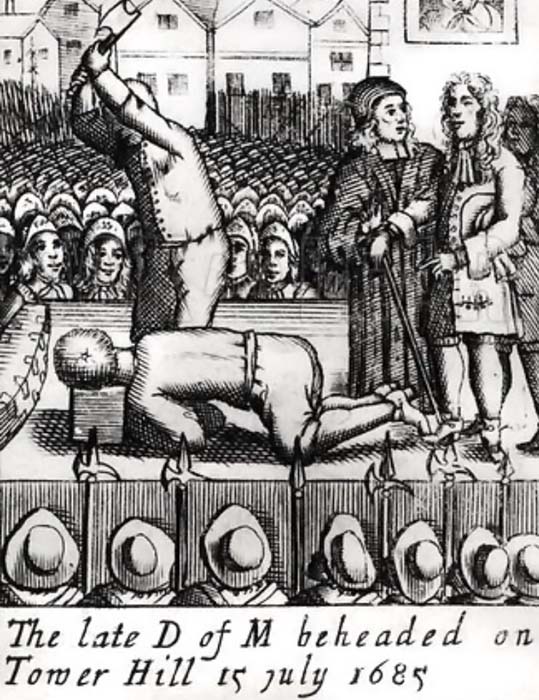
Two years later, on July 15th 1685, Ketch was given the job of lopping off the head of James Scott, the Duke of Monmouth.

“Cometh the hour, cometh the man.” as they say. The execution of Lord Russell was a smooth job, slickly done, compared to what would happen with the Duke of Monmouth. But Jack Ketch could not turn down this opportunity for a comeback.

This was the big one. The climax of his career. Tower Hill in London. Thousands and thousands of people watching. And big money if he did it right.

I’ll tell you very soon exactly what happened.


26 Comments

Filed under Criminology, History, Humour, Politics

Look at that fat bloke, Stan (4)

Please don’t look at these blog posts and just think “I don’t like football” and then go on your merry way. All of these blog posts are about much more than football. In particular they concern the eternal battle between sporting genius and cream cakes.

Last time, I wrote about the “Match of the Century” played at Wembley between England and Hungary in 1953, a game which resulted in England’s first ever defeat at home by a foreign team.

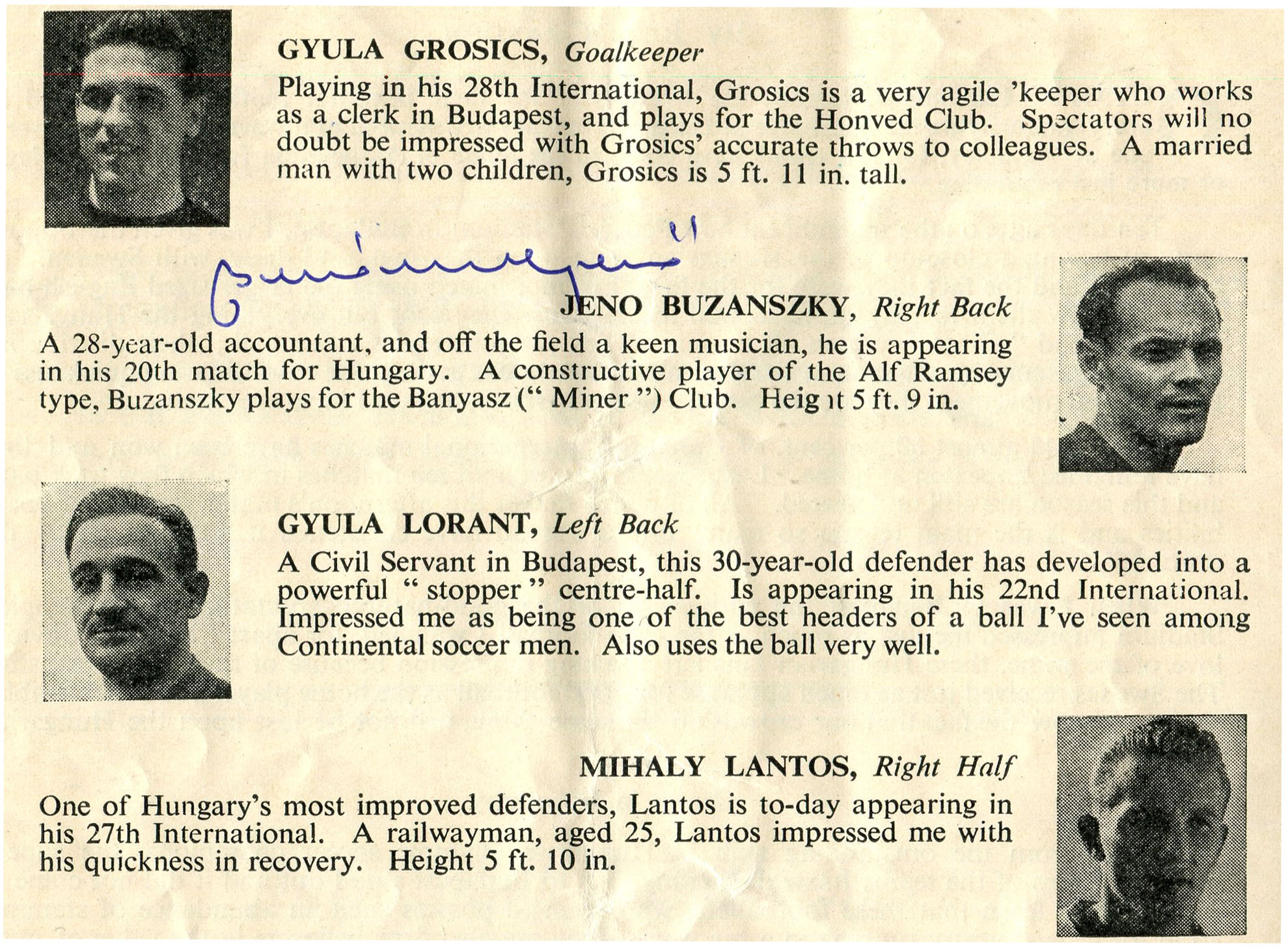
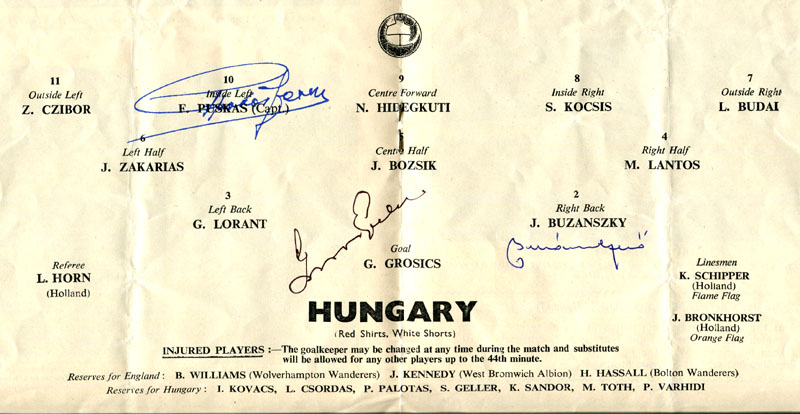
The programme, of course, did not just contain details about the English players. There was a section of equal size, of course, for the Hungarian players:

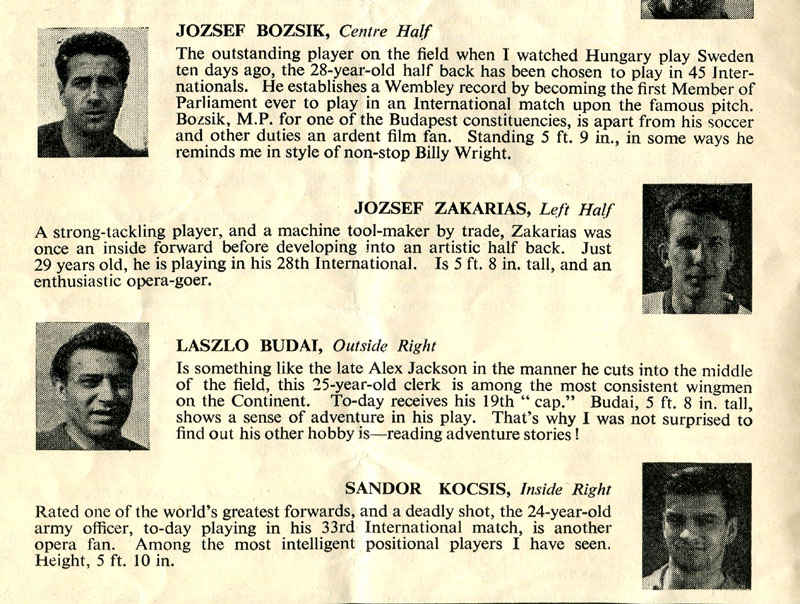
And there is the clue as to why the programme cost me more than might be expected. It has autographs in it. The one above, I presume, is Jeno Buzansky, although it looks as if he writes it as “BuzanskyJeno”. This is because he is not English, I expect, and has a different way of going about things. Here are the second lot of players:

No autographs here, although the players are quite famous in the world of football, especially Jozsef Bozsik, who was a Member of Parliament, and Sandor Kocsis who was very naughty because he was one of the rascally Hungarian forwards who would not stay in position so that the England players could mark him. On to No 3:

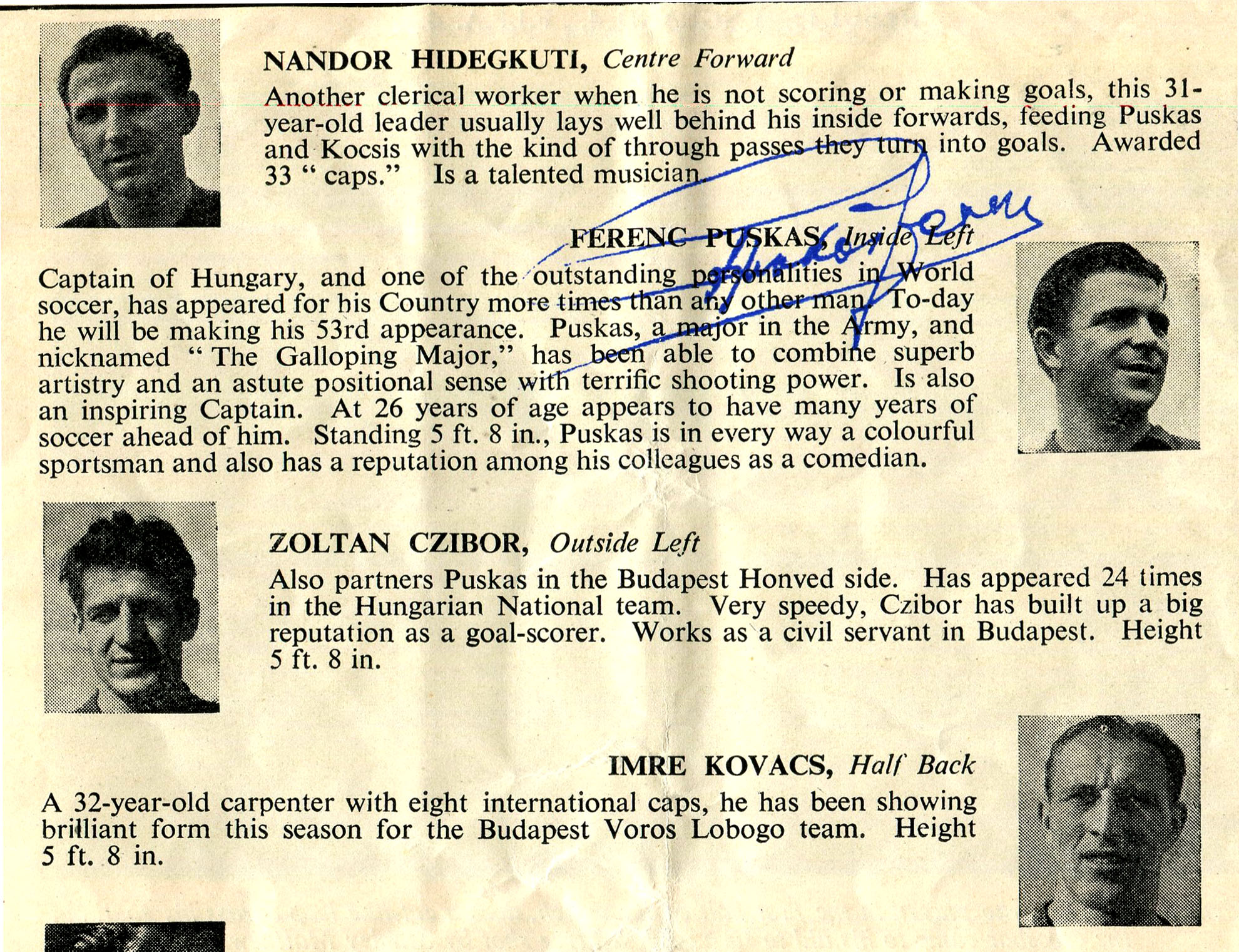
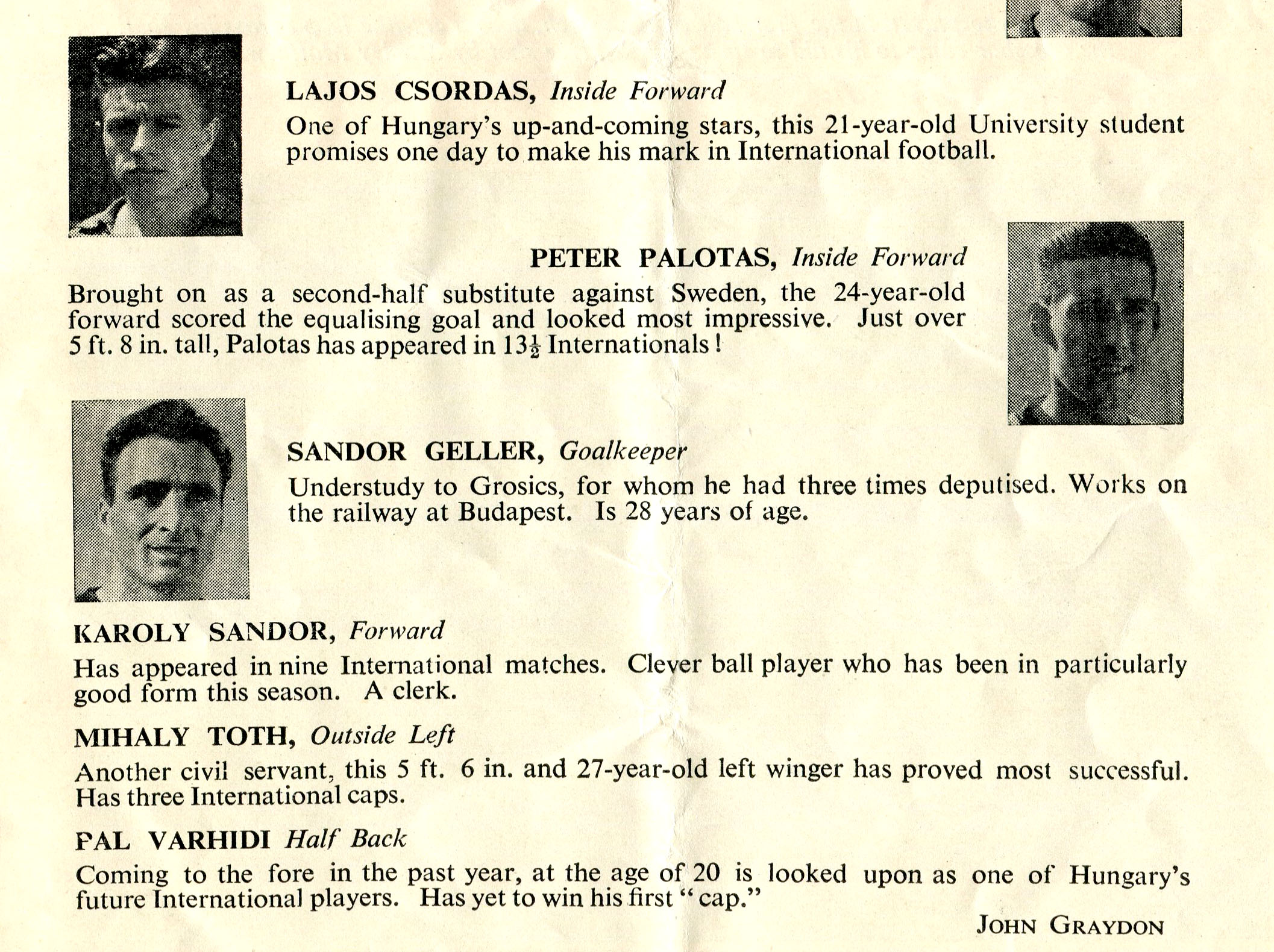
This section bears the great man’s autograph, written as PuskásFerenc. Notice that the English writer, John Graydon, is well aware of his nickname of “The Galloping Major” which had been a popular song in 1906, the same year as Puskás’ grandfather had been born. The man at the top, Nandor Hidegkuti, was, I believe, the key to England’s disastrous performance. He was the Hungarian centre forward but stubbornly refused to play where a centre forward was supposed to play. That in turn meant that the England defence did not know what to do. They did not know who to mark. When they asked the coach if they should change their own formation, he replied that he didn’t know what to do either and he told them to carry on, it would all come out OK eventually, so don’t worry lads, fingers crossed.  Here’s the last of the pen pictures:

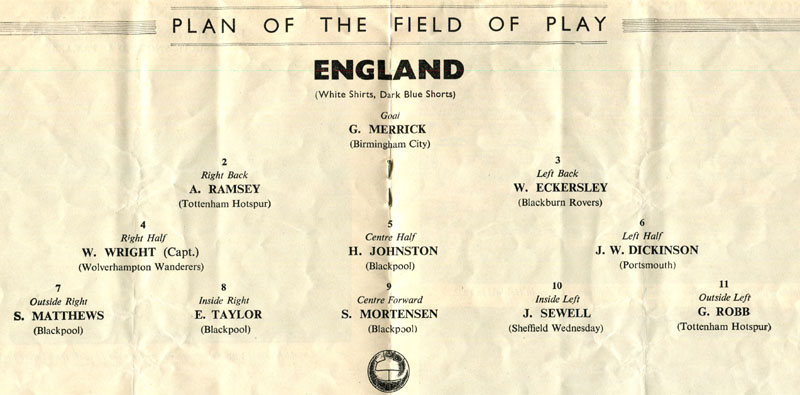
That meant that the teams lined up as, for England:

And for the Hungarians:

And yes, three more autographs. PuskásFerenc and BuzanskyJeno and a new one, the goalkeeper, Gyula Grosics, or GrosicsGyula as he liked to sign himself.

The attendance was 105,000 spectators . This was one of the biggest accurately counted crowds ever recorded in England.  Any number of managers of First Division clubs always claimed to have been there but of course, there is no way of checking now. The game started badly for England and got worse after that. The scores went, from England’s point of view, 0-1, 1-1 (hurrah!), 1-2, 1-3, 1-4, 2-4 (hurrah!), half time, 2-5, 2-6, 3-6. The game was filmed, and as I have already mentioned, it is available on DVD, although, shop around…ebay can be very expensive.

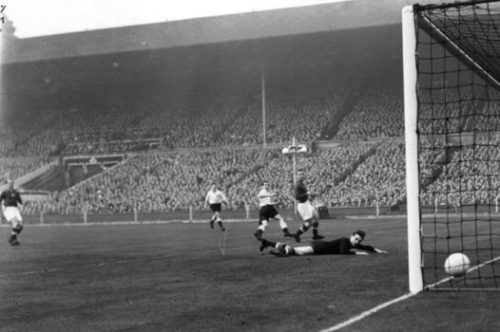
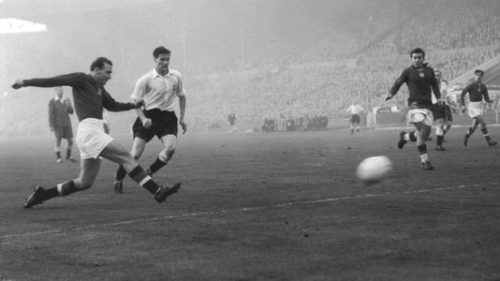
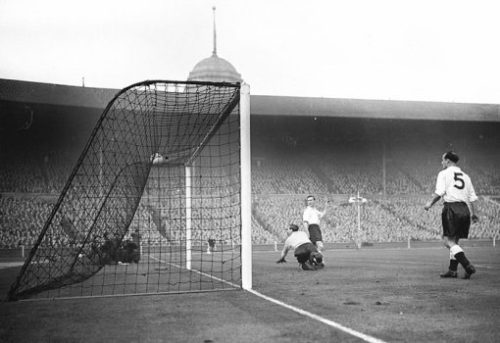
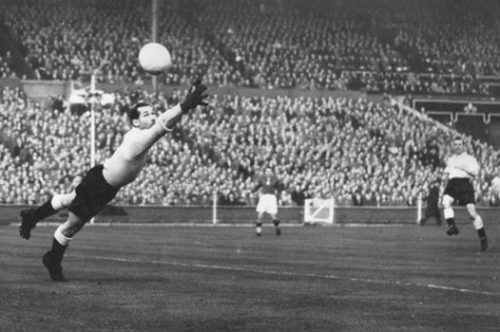
Here are some photographs from the match:

Some editions of the film of the game have only eight of the nine goals in the main match, If you are lucky, the makers of your DVD will have contacted Pathé News to make use their film of the missing goal as an ‘extra’.

Here’s one film about the game from gr8footy:

And here’s the full match version. The commentary is in Hungarian but the picture is better than most (Yes, really!):

And the programme still manages to be helpful. Here’s how you can get home by train:


19 Comments

Filed under Football, History, Personal

The Hen Harrier in Victorian Nottinghamshire

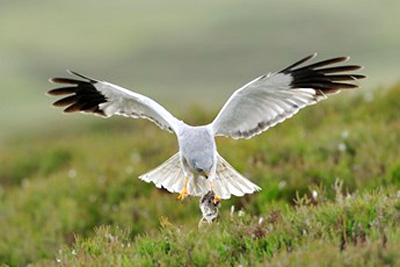
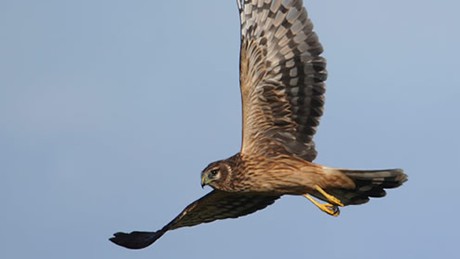
The Hen Harrier is a bird of prey which is called in North America the ‘Northern Harrier’ or the ‘Marsh Hawk’. These days it is becoming an increasingly rare and endangered bird in England because of the activities of the large shooting estates. Hen Harriers are harmful to Red Grouse, the quarry species for the man with a £3000 shotgun, so, completely illegally, many gamekeepers kill Hen Harriers on sight. Prosecutions are extremely few and far between because effective evidence needs to be gathered in very remote places where trespassers are far from welcome:

83017_54_news_qqqqqqqqqqqqqqqqqqqqqqqq

In Great Britain we have the wild spaces for more than a thousand pairs of breeding Hen Harriers, but this illegal killing for commercial reasons has limited the number to fewer than ten pairs. There are those, myself included, who think that the law should be changed. Instead of trying to prosecute individuals (who are quite often disowned by the estate owners), the estates themselves should be brought to account. Any estate found guilty should have their enormous subsidies of taxpayers’ money withdrawn.

Interestingly enough, just after I wrote this article, a fine example of what happens to Hen Harriers in northern England came to light. It is totally typical of the contempt which the moneyed classes have for the ordinary person who lives his or her life not to accrue wealth by any means whatsoever, but instead to delight in the wonders of the natural world. And look too at what the police managed to do after other people had done more or less 99% of their job for them.

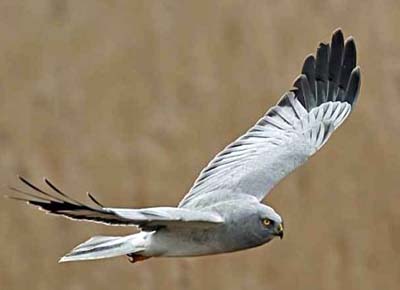
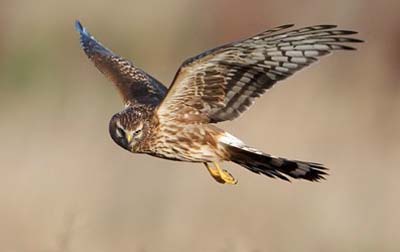
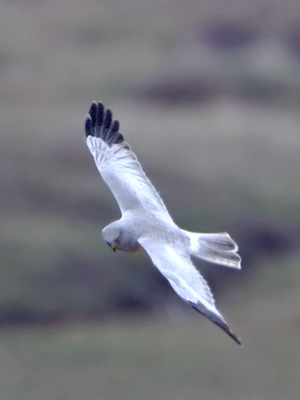
In Nottinghamshire, therefore, the Hen Harrier is not a particularly common bird. The male is very distinctive, but the female or the young bird, the so-called “ringtail” stands out a lot less:

hen harrier

In 1857 William Sterland recounted how, on an unrecorded date this year:

“I was walking past Lord Manver’s poultry yard at Perlethorpe, which adjoins Thoresby Park, when a ringtail came sailing over, evidently intent on plunder. Three times she soared around the large enclosure , which contains several hundred head of poultry, and although it is bounded by a high wall, and is surrounded by the dwellings of the gamekeepers and others, she was only deterred from carrying off a chicken by the presence of some of the men.”

ringtil

In 1866 William Felkin spoke of birds of prey in general:

“On the whole, this noble tribe of birds is fast decreasing, and some species, if not yet extinct, soon will be, under the deadly warfare waged against them by trap and gun; and thus the finest ornament of English forest scenery will be for ever lost, for the paltry gain of the few head of game they might possibly destroy.”

How true that has turned out to be. The Hen Harrier is well on its way to extinction as a breeding bird in this country, and before their recovery in modern times, both Common Buzzard, Marsh Harrier and Osprey had been exterminated by gamekeepers from most of the country.

male

William Sterland wrote in his “Birds of Sherwood Forest”:

“…the blue hawk as the male is called, is not by any means uncommon ; and both male and female being considered, and I fear not unjustly, as very destructive to game, are visited, whenever opportunity offers, with condign punishment, and their once buoyant forms are seen nailed up in terrorem amongst others of their order, in grim companionship with stoats, weasels, polecats, and other vermin.”

Flying-Male-hen

Indeed, by the end of the nineteenth century, polecats themselves were extinct in England. And only the departure of all the gamekeepers to the trenches of the First World War prevented the extinction of the ordinary fox from many areas, especially in East Anglia.

Before 1907 Joseph Whitaker had seen only five or six Hen Harriers in thirty years of birdwatching.
He relates how:

“…one of the Hen Harriers I saw close to my home in Rainworth, was a male in full plumage, coloured pale lavender slate.”

hen peak

Whitaker took great pleasure in this, and other birds of the same species. Rather like William Felkin, he thought that:

“An odd harrier or two do very little harm, and the graceful flight, which I may describe as a cross between that of a Hawk and an Owl is always pleasant to see and adds immensely to the delight of the country walk.”

hen_harrier_470_6_470x300

In his own copy of “The Birds of Nottinghamshire”, he has written of his own sighting:

“About  Xmas 1914 a Hen Harrier female flew over the road at the head of my pond within 20 yards. It had been seen earlier by Blackburn (keeper) today, March 19 it again passed over the same road, but at the top of mill by our gate it looked grand in a clear sun light. I am so glad it has escaped the keepers snare + hope it may like to lay a clutch of Cambridge blue eggs amongst the heather of the windswept Orkney Islands.”

henharrier_sr_tcm9-91147

20 Comments

Filed under Criminology, History, Nottingham, Science, Twitching, Wildlife and Nature

Look at that fat bloke, Stan (3)

Please don’t look at this series of blog posts and just think “I don’t like football” and then go on your merry way. All of these blog posts are about much more than football. In particular they concern the eternal battle between sporting genius and cream cakes.

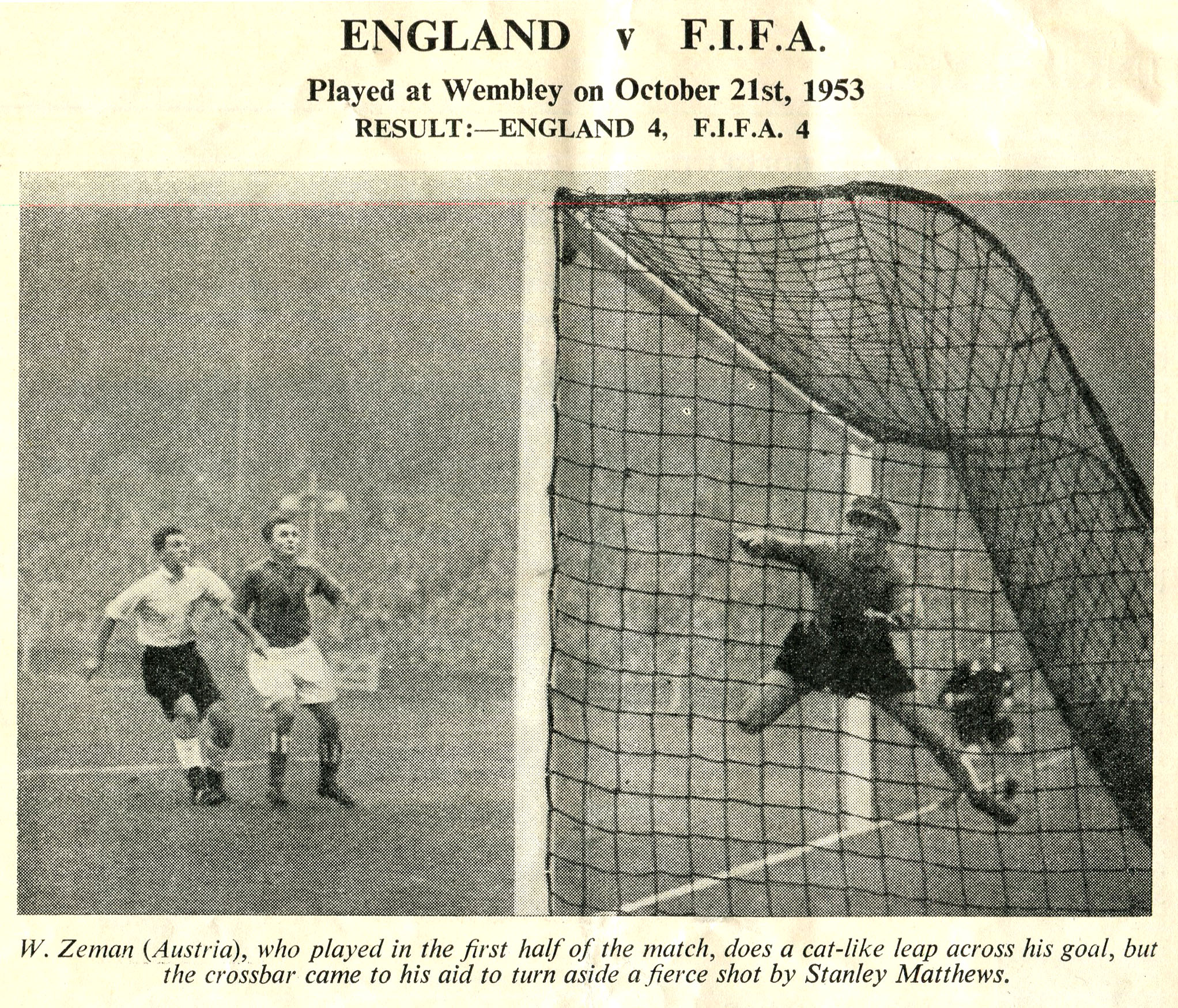
In the last post, I talked about the one football match I wish I had seen. It was England v Hungary, played on November 25th 1953 at 2.15 pm because there were no floodlights at Wembley. This game would later be called the “Game of the Century”. Hungary were the Olympic champions, undefeated since 1950. The programme took comfort in offering us pictures of previous successes by the England team. The first one shows an exhibition game against FIFA, the World Federation of Football, only a few weeks previously. General Montgomery was the guest of honour. He was brilliant at beating foreigners :

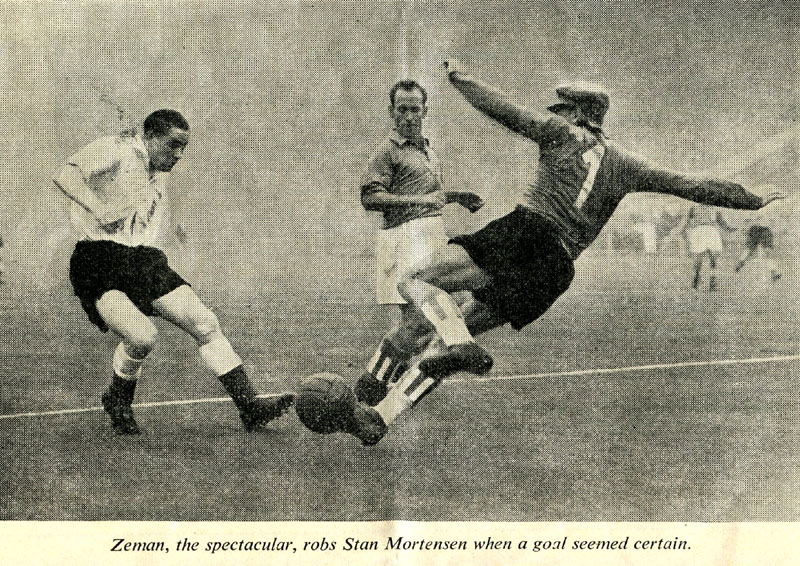
Another picture showed Stan Mortenson being hypnotised by a cheating foreign goalkeeper and his brightly striped socks:

This photo from the game would have been used for the “Spot-the-Ball” contest until somebody eventually spotted that the ball had never ever been there in the first place:

A full programme of activities would precede the match itself:

I don’t know if there were many Hungarians in the crowd, but the effort had certainly been made  to include some appropriate music with ‘Hungariana’ and ‘Bond of Friendship’. And then , at 2.05…. pm….

I’m not too sure that anybody would have stayed behind for a second go at the national anthem.

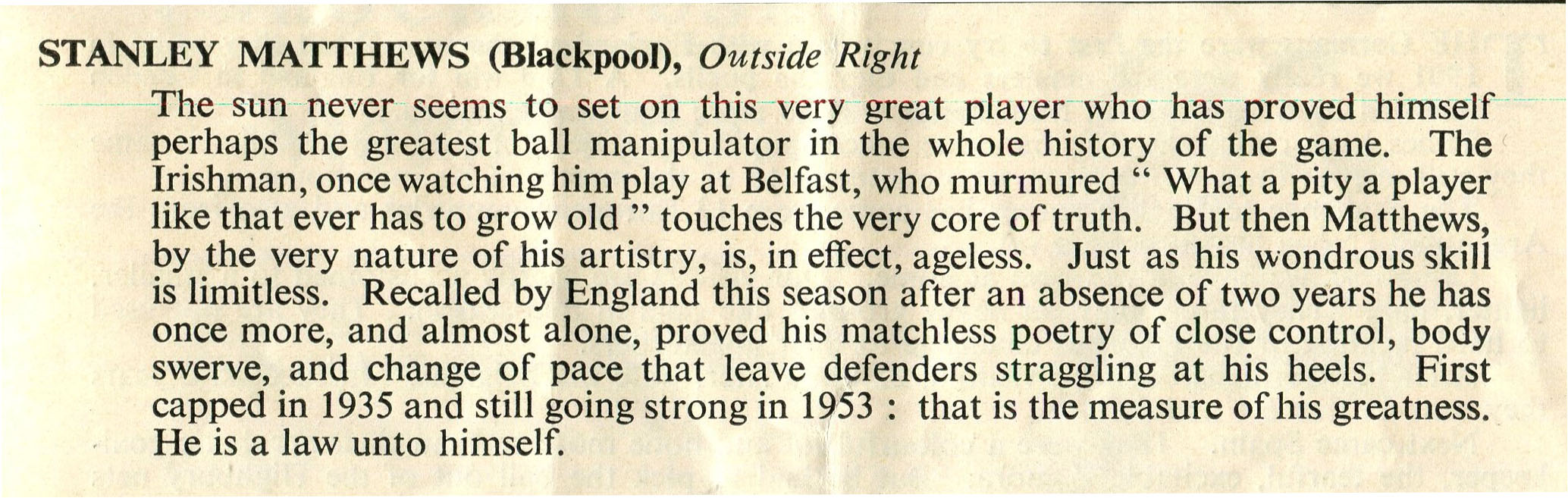
If you didn’t like foreign music, then you could content yourself with reading the players’ pen pictures. I copied a couple of the best English ones. First of all Stanley Matthews:

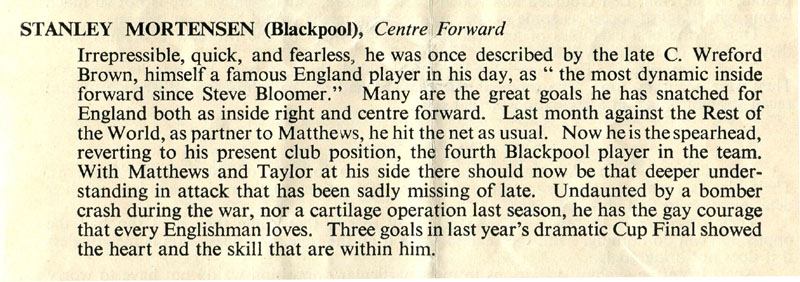
Alas, Stan would soon be proved NOT to be the “greatest ball manipulator in the whole history of the game”. The second Stan was Stan Mortensen, who also played at Blackpool:

I don’t know about “the gay courage that every Englishman loves” but Stan Mortenson was a very brave man. He was a wireless operator in the RAF and was almost killed in a practice parachute jump. A short time later, after a serious plane crash in a conifer plantation while flying in a Vickers Wellington, Stan escaped death by the narrowest of margins.  Both the pilot and the bomb aimer were killed. The navigator lost one of his legs and Stan suffered severe head injuries, necessitating 12 stitches. He was plagued by insomnia for the rest of his life:

Like Stan Mortensen, my Dad was stationed in Lossiemouth in northern Scotland. He met the famous footballer on one occasion:

“My Dad was a fellow wireless operator in the RAF. One day he was travelling on the train from Elgin in northern Scotland down to Crewe in north western England. He was in the same compartment as Stan Mortensen, the famous professional footballer. Mortensen played on many, many occasions as a centre forward both for Blackpool in the First Division, and in international games for England. Indeed, during the course of his career, Mortensen managed 222 goals for Blackpool in just 354 appearances, and 23 goals in 25 games for his country. In later years, he was to appear in the 1953 F.A.Cup Final, when the whole country was firmly behind Stanley Matthews in his third attempt to win a cup winner’s medal. Blackpool duly triumphed against Bolton Wanderers, but, in the euphoria over Matthews’ medal, the fact that Mortensen had himself scored three vital goals has always tended to be rather forgotten. Indeed, the match itself was to become known as “The Matthews Final”, with never a mention of Mortensen’s unique feat. In later years as an old man, Mortensen was to joke grimly that when he finally passed on, they would call his interment “The Matthews Funeral”:

On this particular occasion, another RAF man was in the crowded train compartment, and, during the long and tedious journey south, he began boasting about his extensive triumphs in the world of football. He had played in any number of games and scored any number of vital goals. He went on and on, with everybody else in the compartment, who were all well aware of Mortensen’s identity, acutely embarrassed. Finally, the man turned to Mortensen and said “Do you play at all, mate?” and Mortensen replied “Yes, just a bit.” Mortensen left the train shortly afterwards, and everybody was then able to tell the boastful buffoon just who his erstwhile travelling companion had been. The stupid young man was completely mortified.”


19 Comments

Filed under Bomber Command, Football, History, Personal

The Mosquito at Duxford

“Knock, knock.”

“Who’s there?”

“Dee.”

“Dee, who?”

“Dee Havilland Mosquito.”

I made that one up myself.  If I had a time machine, I could send it back in time to 1944.  Well, they had to do something to amuse themselves while they waited for limited overs cricket to be invented. My final Mosquito is actually the one I saw first of the three. It is the Mosquito at Duxford, which is near Cambridge.

Its registration number is TA719 and it is now a Target Tug, a TT.35 to be precise. It has had better days, especially when it was built in June 1945 and the cunning plan was for it to be a Mark 35 bomber.

Its greatest glory days came though, when, like its friend at Cosford, it took part in 633 Squadron. At that time, the aircraft had been demobbed, had left the RAF and had become a Bird of Peace, a civil aircraft with the lettering G-ASKC.
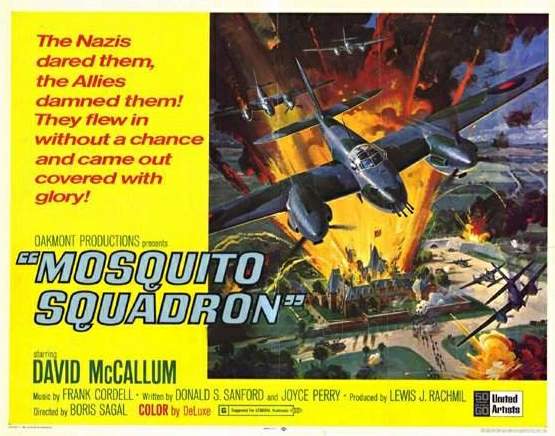
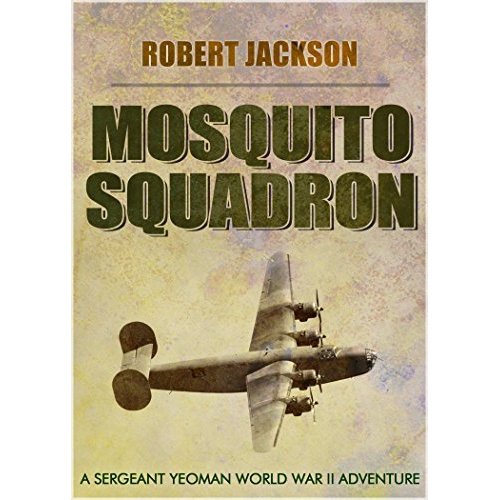
The next Mosquito film made after 633 Squadron always tends to be forgotten. It was not a sequel but just a film that was produced because all the matériel for a war film with Mosquitoes was at hand. And the daily rent for an airworthy Mosquito was just £2. The film’s plot verged on the ridiculous but the flying was good. It was called Mosquito Squadron and let’s be honest, some critics did say that the acting was as wooden as the aircraft. If the film was poor (and here’s the poster)…

…the book cover was even worse. Can anybody see today’s deliberate mistake?

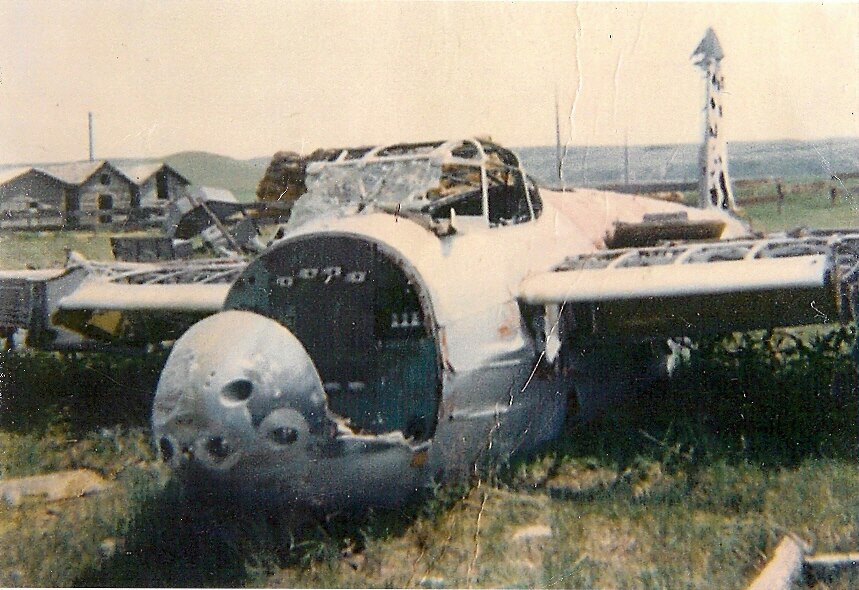
This is a strange photograph. It’s the best bits of a Mosquito on its way to Boreham Wood Film Studios:

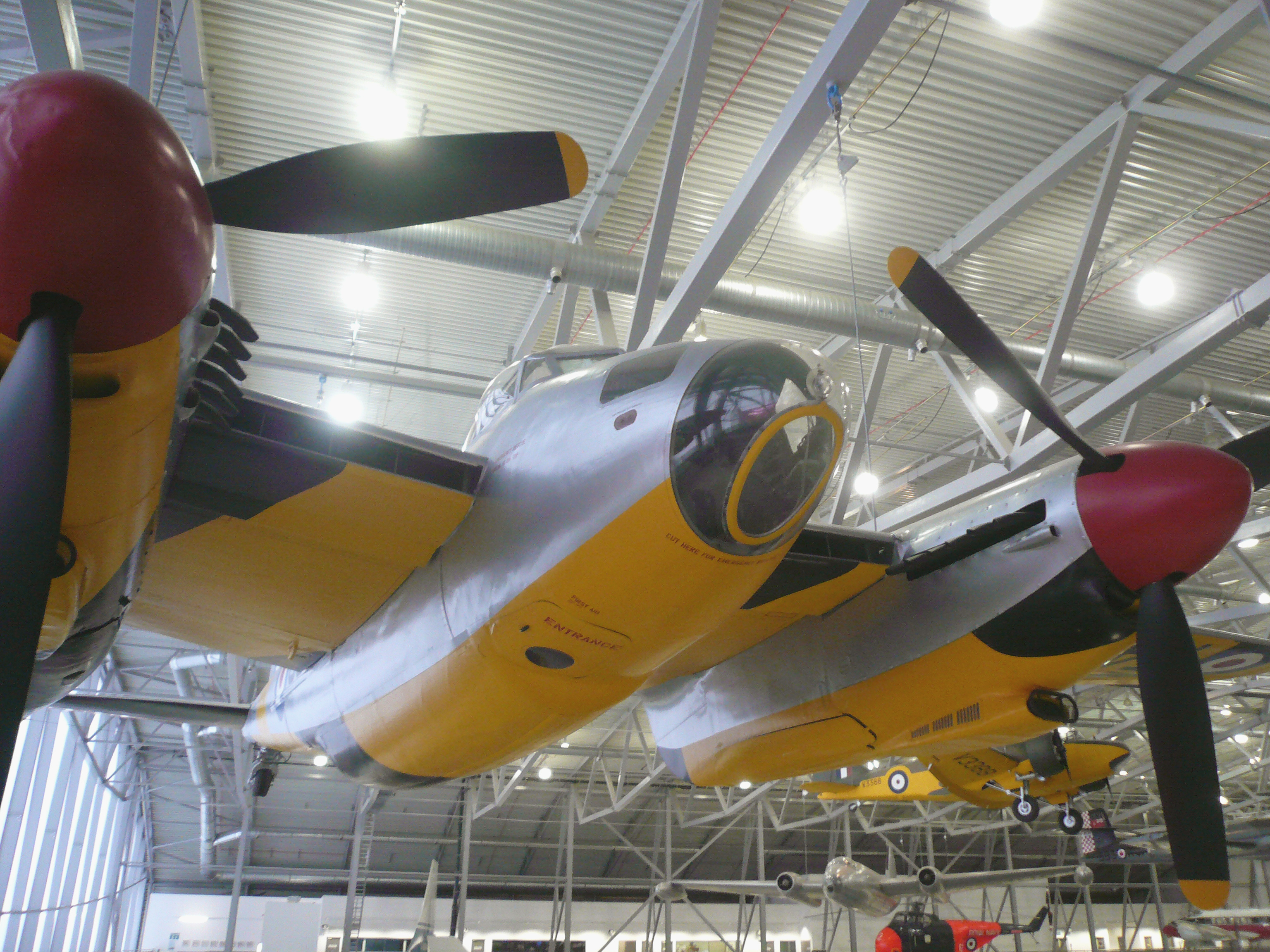
TA719 has finally settled down at Duxford as a TT35 with the “Keep away!!!!” black and yellow stripes. These Mosquitoes were used to tow targets which always seem to me to have been merely a more sophisticated cousin of the airfield’s windsock. The towing cable could be extended as far as 6,000 feet but being a Target Tug was still a dangerous job with all those inexperienced potential fighter aces firing at a moving target.
Two last points about the Mosquito. So few are left because, being made of wood, they tended to fade away very quickly. Of nearly 8,000 only a few remain:

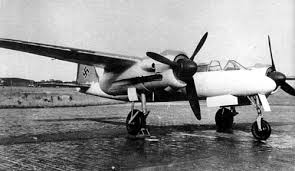
At least, the British Mosquito did not have the same problem as the German imitation , the Focke Wulf Ta 154. an aircraft where the glue wasn’t always right and the wings, quite literally, fell off:

Here’s a video:

The loss rate of Mosquitoes to the enemy was very small, some 0.5 %, but the aircraft were sometimes dangerous to the crew. During a landing without undercarriage, the wood was little protection to the crew’s legs. And sometimes the proximity of the propeller blades to the side of the fuselage produced horrendous accidents with a tired crew getting out of the plane. Which brings me to a nice story about my Dad:

“One day at Lossiemouth in northern Scotland, a fine frosty clear blue winter’s day, a photo reconnaissance Mosquito came in for an emergency landing. The aircraft had been taking photographs over occupied Norway and was very badly damaged. Unarmed and made of wood for lightness and performance, it had no working undercarriage and scraped along the length of the runway, coming to an eventual stop in a cloud of smoke. Two men, Fred and an officer, ran out with fire axes. Despite the still whirling propellers they both jumped up onto the smoking aircraft and smashed the Perspex of the canopy. They dragged out the two members of the crew.
For this gallant deed, the officer received a medal. Fred did not, and the episode confirmed his belief that rank and class counted for a hell of a lot in the RAF at that time.”

This event cannot now be dated and, conceivably, it was connected with 617 Squadron’s attempts to bomb the Tirpitz. Here’s Lossiemouth, then and now:

This slideshow requires JavaScript.

Indeed, if Fred’s memory was playing him just slightly false some five decades after the event, it may well have been that this unfortunate aircraft was actually one of 617 Squadron’s own Mosquitoes. These twin engined planes were used, from 1944 onwards, to mark targets accurately before the rest of the squadron bombed them.

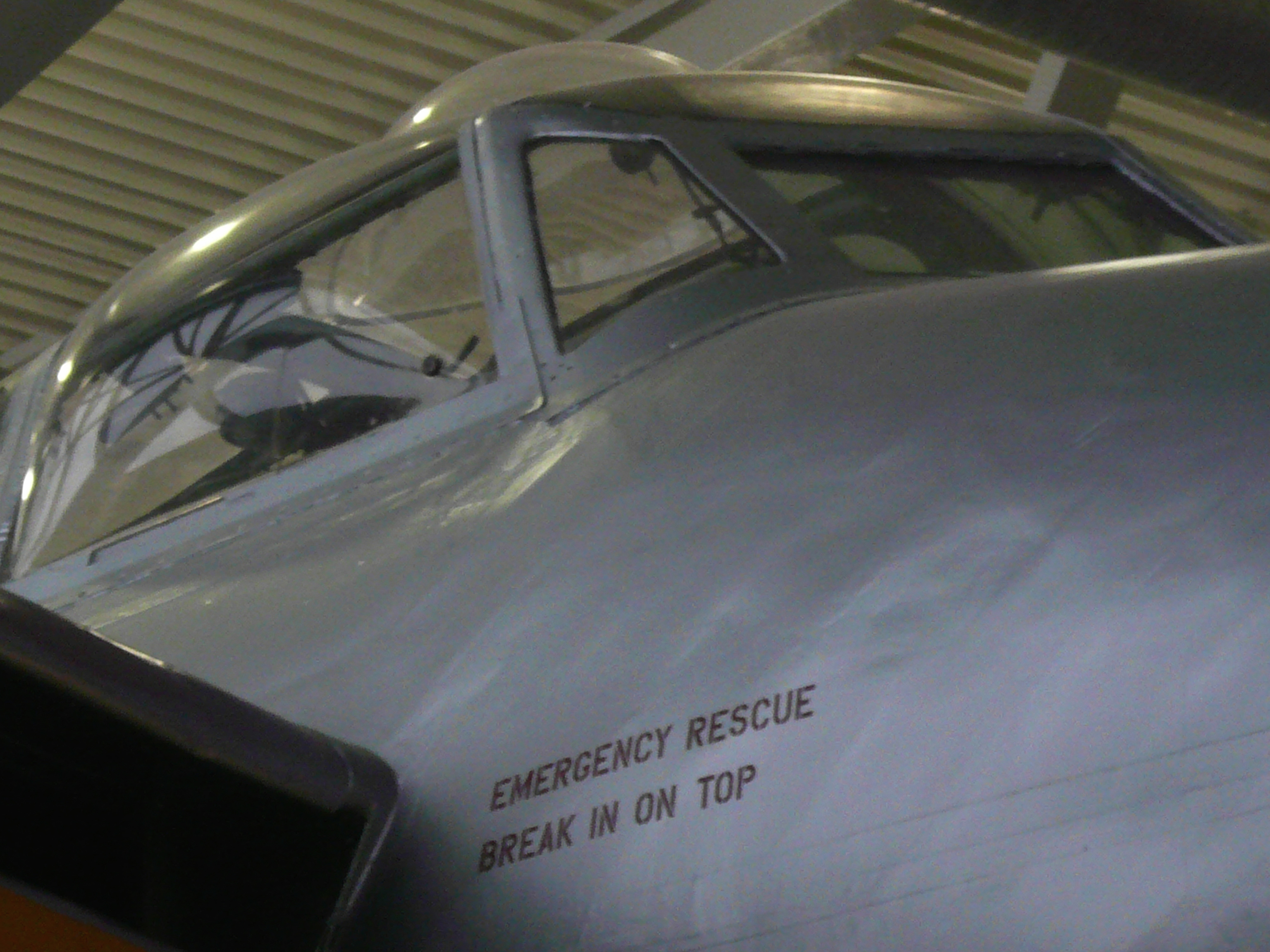
The Mosquito  at Duxford is painted in garish fashion. This was the closest I could get to going underneath it:

This view is very similar:

Here’s the view from the front:

This is perhaps very slightly better:

It was a pity my Dad wasn’t there to see this bit,. but it would probably have just set him off again. He just thought that whatever medals they got or did not get, it should have been the same for both of them:

And here is an enlargement  of those ironic words:


26 Comments

Filed under Aviation, Bomber Command, History

Diversity Trip – McLeod Gunj

This is how Prasna Velcheru spent her December 25th. This post is perhaps a bit long to read in full, but it is absolutely magical just to look at her photographs and to see the sights on offer. You will need to click on

View original post 1,160 more words

to look at the entire post but it really is worth it…. a world that, sadly, may be on the edge of disappearing.

Prasna Velcheru's avatarART PEACE

From Jammu we reached Pathankot and from there took a bus to Dharamshala. More than 10 hours for 230 kms, the State Government should do something to improve the public transport.

Reached McLeod Gunj at around midnight – surprised to see some shops and restaurants open – checked into the hotel and called it a day.

Woke up to the view of the Dauladhar range and to the chirping of birds.

A warm tea is all I need to start my day.

I had listed out around 10-12 placesthings to do but once we were out on the streets I didn’t feel like working on my checklist. Dropped everything and went with the flow – which included again a pot of ginger tea and brunch – had a toast and pancakes for almost almost 2 hrs. Tibetan culture was getting onto me and I was enjoying it. One other reason could also…

View original post 1,160 more words

10 Comments

Filed under Uncategorized

“Have yourself a Merry Little Christmas…”

This tale comes from a source which I have used quite frequently in the past, namely “The Date Book of Remarkable Memorable Events Connected With Nottingham and Its Neighbourhood”.

Imagine. It is December 12th 1786. Less than a fortnight to the Big Day. What will Santa bring you? Better make sure that Santa can get down those Georgian chimneys without a problem:

December 12th. “A remarkable escape from death at the premises of Mr Wilson, bookseller, of South-parade, Nottingham. Mr Stretton, a builder, accidentally met a Mr Ward of Eastwood, and stood on the pavement in front of the shop, conversing with him about Christmas.”

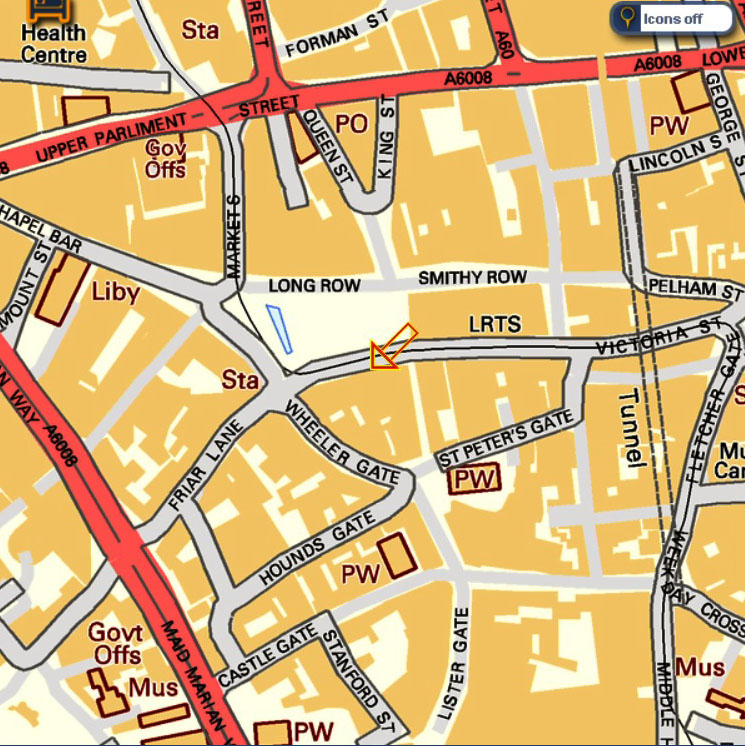
You can go nowadays and stand where exactly these two gentlemen stood, nearly 250 years ago. I have painted an enormous orange arrow on the pavement:

And I also found a photograph of the houses concerned. This was taken in 1874 and although the ground floors are very different today, the upper floors of some of the buildings are still quite similar:

In 2017, it is not just the ground floors which are different. The people are as well. Nowadays, all the people try to dress as much like each other as possible. A 21st century guerrilla army:

But what about Mr Stretton and Mr Ward the builder? Well, they were talking about what Santa was going to bring them, and Mr Ward was just saying that he had been repairing loads of chimneys in this area because all the little kids were worrying about Santa’s arrival, when suddenly…..

“…a violent gust of wind overthrew a stack of chimneys, which in their descent brought down with them a large proportion of the roof and a quantity of the brickwork of the front wall.”

It was a little bit like this…

But a lot more like this…

It was no laughing matter, because…

“Neither of the gentleman had warnings sufficient to run out of danger. An apparently solid mass fell upon the back and head of Mr Stretton, but chiefly upon his shoulders, beating him to the ground, and cutting the back of his coat into shreds . He endeavoured two or three times to get up, but the bricks continually falling upon him, prevented him.”

I think we’ve all seen Laurel and Hardy, or Tom and Jerry, in that situation, as the last two or three bricks of many fall individually and hit them one after another on the head. But it was no laughing matter at all…

“Mr Ward also received serious injuries. The two men were taken away in sedan chairs, and both of them eventually recovered, although not without great difficulty.”

So it all turned out well in the end. Cue a famous Shakespeare play.

Sedan chairs must have been magic. Ideal places for meeting your lover, at least, if you can persuade the servants to go and have a cup of coffee for half an hour. And take that magpie with you…

And here’s the ideal sedan chair for a collapsing chimney situation. That roof looks very well made, very robust. And those top hats would be brilliant. Just like the special zones that crumple up when modern cars crash into each other.

Mind you, I think if they were my servants, I might buy them a pair of shoes each for Christmas. Unless, of course, I could think of a really life changing present to give them.


29 Comments

Filed under History, Nottingham