Author Archives: jfwknifton

A Werewolf in Yorkshire: Eeh bah gum (again) !

I told you in previous articles that there were more werewolves about than you might think. News came in recently, on Sunday May 15th, of werewolf sightings near Hull in East Yorkshire. The national newspaper, the Daily Express, took up the story. Here is a highly abridged version:

“Seven separate eye witnesses claim to have spotted the 8ft tall creature lurking in an abandoned industrial area outside the centre of Hull.

Residents and folklore experts believe the beast is Old Stinker who, according to legend, is a foul-breathed creature in the Yorkshire Wolds.
The lonely banks of Barmston Drain are where the creature was first reported before Christmas.
One woman claims to have seen it turn from man to beast as she stood on the bridge”:

barmaston drasin

She said: “It was stood upright one moment. The next it was down running like a dog. I was terrified.
It bounded along, then stopped and reared up on its back legs, before running down the embankment towards the water.
It vaulted thirty feet over to the other side and vanished into some allotments. It both ran on all two legs and on all fours, as if with the qualities of both human and wolf.”
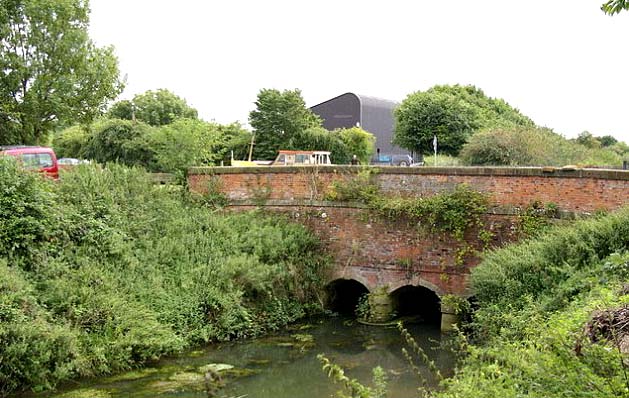
A couple saw “something tall and hairy” eating a German Shepherd dog next to the Drain.
They saw it jump an 8ft high fence before vanishing into the night, its prey still in its jaws.

I have a link to that. Something tall and hairy, eating a German Shepherd dog?

A woman walking her dog spotted something “half-man, half-dog” in the distance.
She was terrified, and her pet began shaking and refused to go any further:

werewolf xxxxxxxxxxxxxxxxxxx

Well, this monster could well have become a minor source of tourist revenue, particularly with the right people in the right costumes. Unfortunately, though, the locals chose to shoot themselves in the foot.

Leave well alone?? Rake in the cash??  No. No. NO!

Let’s take the high risk strategy of going to look for “Old Stinker”, the moment the next full moon raises her beautiful head. Notice how the local councillor just can’t keep away, and his almost childlike faith in Hull Council:

“Now locals plan a werewolf hunt with cameras and recording equipment. Councillor Steve Wilson has offered to keep an incident log: “I am happy to keep a diary of sightings by people around here and report them to Hull Council.”

Just one step from the Stasi.

Local author Charles Christian said: “Old Stinker was actually said to be operating on the other side of the Yorkshire Wolds but it would be no distance at all for a large animal to get to Hull.”

What faith in the public transport system. Why, it’s probably run by Hull Council:
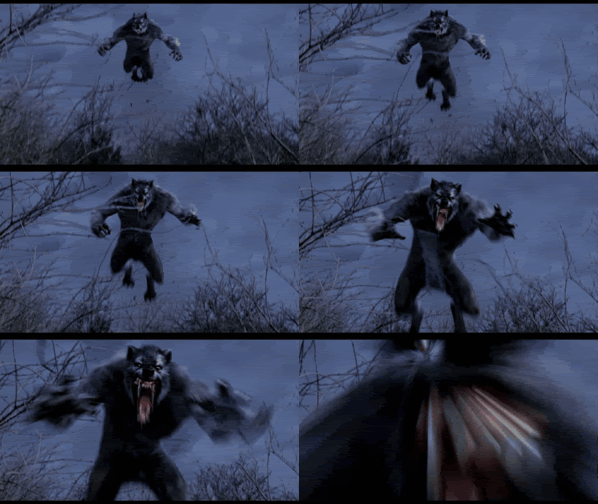
werewolf attack

Mike Covell, an expert in the supernatural, said: “No one really knows what to do. You can hardly pop down the local council office or police station and say you’d like to report a werewolf.”

Well, Mike, have I got news for you. That is exactly what everybody has been doing. On a discussion forum, watertight evidence was provided of previous werewolves in Yorkshire by “wmysteries90″:

“I had one witness claim they saw a huge dog which stood up, jumped over a fence and then run off with a cattle animal.(sic) Then his friend came forward to his fried stating he had seen a huge dog in the same area. (sic) A woman claimed she heard a strange howl. While a former military guy with an undisclosed area on the moors stated that few years back with a routine team in the middle of the night they had the sense of being watched by something.

Also there have been claims made by people around the moors stating that they have either seen or heard strange howls, growls.”

Indeed, the Daily Mail were to concentrate more fully on placing the “Barmston Drain Dog Destroyer” in its proper context, once they had established that the Werewolf Councillor was from the Labour Party.

Old Stinker, therefore, was supposed to haunt the “Wold Newton Triangle” (the what??), an area known for mysterious activity (really?):

wold newton triangle

“For centuries, tales have circulated of zombies, ghosts, and Old Stinker – a great hairy beast with red eyes, who was so called because he had bad breath…people would glimpse the rear lights of a car in front, but it would reveal itself to be the red eyes of a wolf.”

red eyes

How often that has happened to me. Although driving a 1994 Volvo I don’t catch up too many cars, or werewolves, for it to be a real problem. Well, it’s not as bad as ice or sudden banks of fog.

If you want to investigate further the question of “How gullible can people get?”, then this is a similar story, set in the same area, but harking back in the “Golden Age of Satanic Panic”.

werewol
My previous story about the “Barmston Drain Dog Destroyer” and the “Golden Age of Satanic Panic” was soon followed in the national press by the story of two people who saw what they thought was a puma type creature as they returned home along country lanes around Pershore in Worcestershire in the early hours of the morning:

puma

They suddenly saw a “muscular black animal” in the middle of the road. It was around one metre long and they were forced into an emergency stop. The creature circled the car and appeared to be about as tall as the car window. Its eye reflection was green. Frightened, the couple drove off, but not before they had noticed what they took to be the eyes of the creature’s mate hiding in the darkness of the hedgerow:

big cat

There have apparently been other sightings of puma type animals elsewhere in the county, at Evesham, Malvern and in the Malvern Hills.

Indeed, there are continuing reports of pumas or ABCs as they are called (Alien Big Cats) all over the country. In Leicestershire, for example, experts have said that there are two territories which overlap around the East Midlands Airport at Castle Donington. Rutland Water is included in one of them:

_38789095_bigcat300

Even I have seen one, while I was trying out my new “see in the dark” binoculars. I thought it was a fox at the time, but I now realise that foxes don’t have long curved tails, wide faces or big round ears. There are even videos of these killer cats. This one comes from AnimalInfoTV, who produce a great number of really interesting looking videos on a number of different subjects. I would commend them to you:

Going back to the “Puma of Pershore” though, what makes this news story quite extraordinary, however, is the fact that when the couple did a drawing of what they had seen, because a werewolf had been spotted near Hull around the same time, the consensus of opinion suddenly became that they had actually seen the “Worcestershire Werewolf” rather than the “Puma of Pershore”.

werewolf

Well, here is their drawing. Make your own mind up. “Worcestershire Werewolf”?? or the  “Puma of Pershore”??

sketch

I went to Pershore twitching once. It’s a really lovely place. It was to see a Black-throated Thrush, which was at the time, a mega-rarity:

HBW10-TUR-06

13 Comments

Filed under Cryptozoology, History, Humour, Science, Wildlife and Nature

Heil Hitler Episode 4

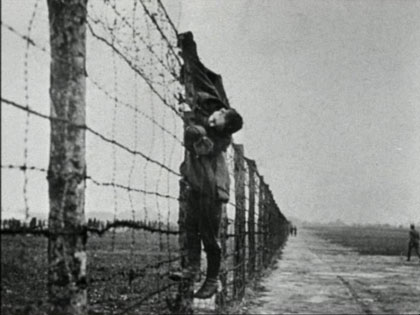
Nowadays, it is quite difficult to understand why people did not stand up to Hitler and the Nazi party in larger numbers.  The truth is, though, that it is a very difficult to deal with situations which are evil beyond belief. A little bit of cooking the books and stealing small sums of money from the Church Accounts is one thing, but these men were Satan’s Inner Council. They did not hesitate to kill people in thousands, if not hundreds of thousands. If not millions. If not tens of millions:

belsen

Or just one at a time:

one

No matter how evil or how terrifying these crazies became, though, there was still no shortage of brave Germans willing to stand up and be counted.
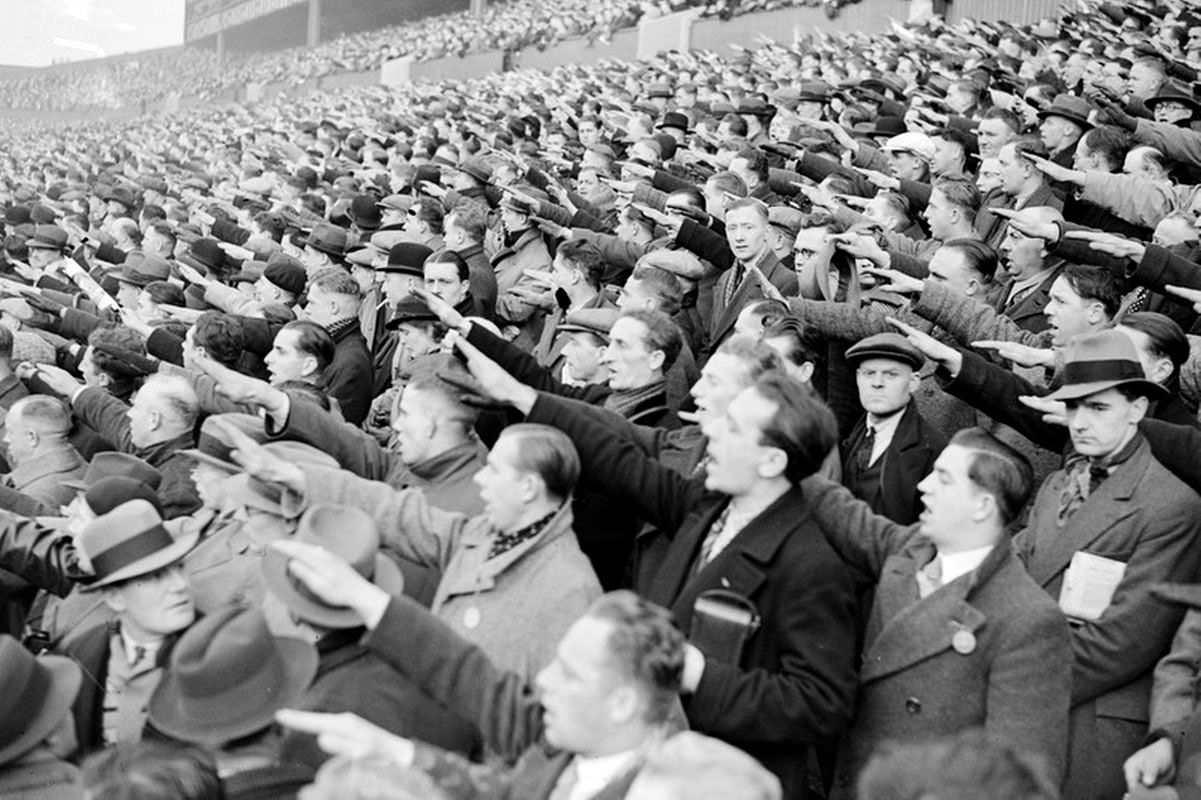
Look at these Germans here. At first glance, everybody is Heil Hitlering and Seig Heiling, and singing the company song:

We love you Adolf, we do,
O Adolf, we love you!

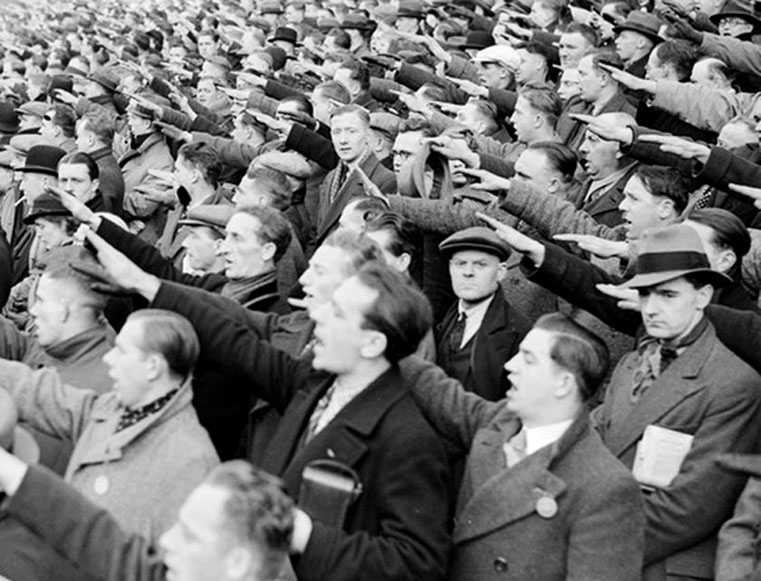
But look very carefully.  This is the football crowd at the England-Germany game at White Hart Lane, the home of Tottenham Hotspur, in December 1935 . A number of people appear not to be joining in with the general joy and merriment. There are about ten of them altogether. When you look more carefully, they seem, perhaps, to have all different motives for their non-participation:

german-football-supporters-giving-the-nazi-salute-during-the-international-match-against-england-at-white-hart-lane-london-december-1935

Disgust with their fellow citizens. Unwillingness to join in. Curiosity at the situation.  Puzzlement at why some other people are not joining in. Puzzlement at who is taking the photograph:

close up mny dissds

Apparently, then, no one single motive. But at least one of them, if not more, have the purposeful expression of a good man who has resolved not to do nothing any longer:

This slideshow requires JavaScript.

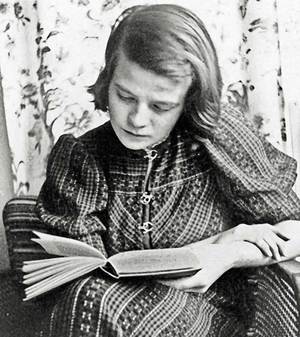
And as well as good, these are brave men. Brave anti-Nazi German men. We tend to forget nowadays, but there were lots of them. And brave anti-Nazi German women too. And boys. And girls.

Sophie Scholl who has more schools named after her in Germany than Franz Beckenbauer:

scholl

Her brother Hans:

HansScholl

Not everybody follows the rest. Not everybody wants to be evil. Some people will make their own protest. It may not be anything particularly spectacular, but it may well be extremely brave.

As we shall see next time.


12 Comments

Filed under Criminology, History, Politics

The Oldest Old Boy of Them All (1)

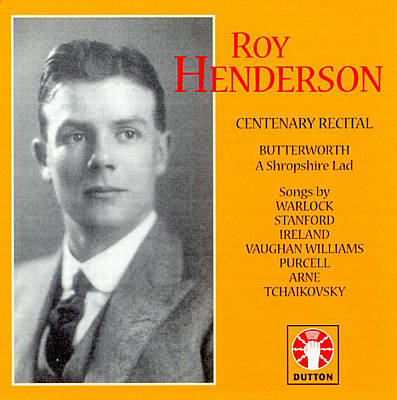
Many, many years ago, in 1990, my friend and colleague, Simon Williams, interviewed Roy Henderson who was then one of the oldest Old Boys still alive.  In due course, I transcribed the taped interview and added some extra explanatory details of my own where this seemed helpful to the reader.

This is the first section of an eventual five, all of which describe the High School just before the outbreak of the Great War, and then during the first few years of the conflict.

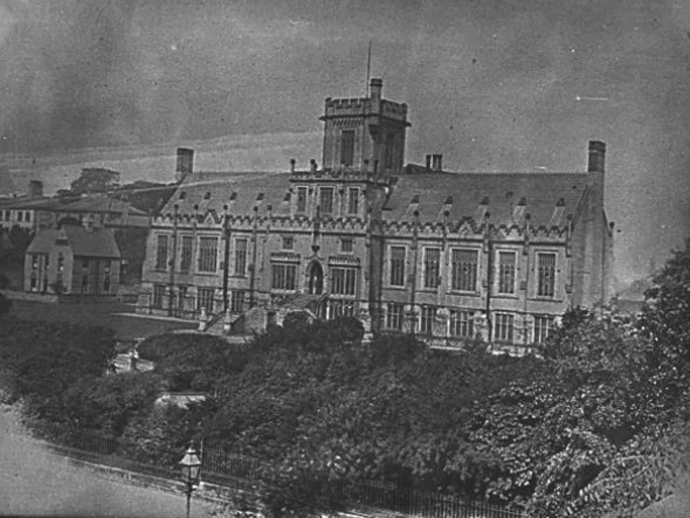
Here is the High School around this time. Notice at least four boys in the picture, including one sitting down on the edge of the tennis court:

west end of school

Roy Galbraith Henderson arrived in the High School Preparatory Department in January 1909. He had been born in Edinburgh, although he had not lived there since the age of three. Given his Scottish background, he arrived at the school wearing a kilt. This proved not to be the wisest of decisions, since he was immediately picked on by two older boys called Jaffer and Dodds, both of whom were at least a foot higher than he was. On many occasions in the future, he was to have water poured down his neck by these two bullies.

The Head of the Preparatory Department was Mr Leggatt, who was one of the very first to volunteer to go off and fight in the Great War. The main game in the school playground at this time was called “relievo”. It was a particularly thrilling game to play in one of the era’s many dense fogs.

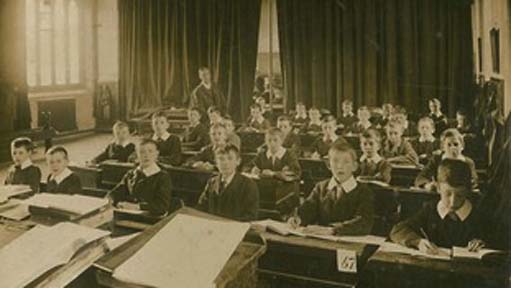
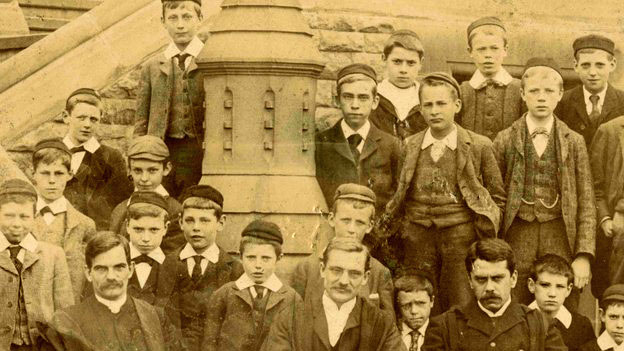
In the First Form, the form master was called Mr Radley, or “Pot-eye”. He always used to get the boys to begin work with a loud cry of “pens up!”. They would then write “like the blazes”, before the call of “pens down ! ”. Mr Radley is the third person from the left on the front row:

radley front 3rd from left

In Form 2a, “Nipper” Ryles was a very good master, and was thought to be one of the very few who did not possess a degree. Here he is:

jumbo ryles

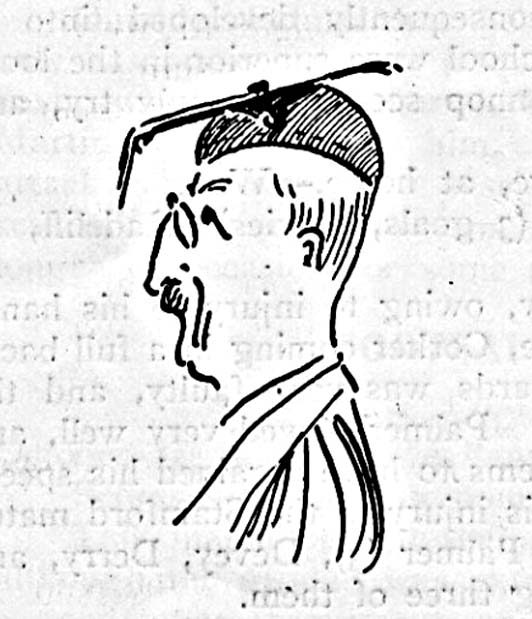
In the following year, in Form 3a, his brother, “Jumbo” Ryles, however, was “terrible, absolutely hopeless”. He used to have his feet up on the front desk all the time, and would practically go to sleep. The Drawing Master used to poke his nose around the door, and wake Jumbo up with a gentle cough. The latter would then rouse himself, and say to the class “Now get along there! Get along there! ” Jumbo’s teaching technique was to line boys up in a row for a series of questions. If they were correct, they would stay where they were. If they were wrong, they would go back to the end of the queue. This cartoon dates from just before “Jumbo” retired:

jumbo ryles left

In the Fourth Form, Mr Lloyd Morgan went to serve at the front during the middle of the school year, shortly after hostilities began. He was replaced by Mr D’Arcy Lever, who was the butt of many jokes, and found the boys extremely difficult to control. They made a lot of fun of him. Later in the conflict, retired teachers had to return to the school. Mr Trafford took over 3c, the worst form in the school, who were famed for their ability “to play up a lot”.

In Form 5a, Mr Brock was a “very nice chap, and very popular”. Everyone liked him very much. The Classical Sixth was looked after by Mr Strangeways.

In the yard, games tended to be played by years. In Form 1a, for example, everybody always had pockets full of marbles. They often played in the covered sheds near the Forest Road entrance.

This slideshow requires JavaScript.

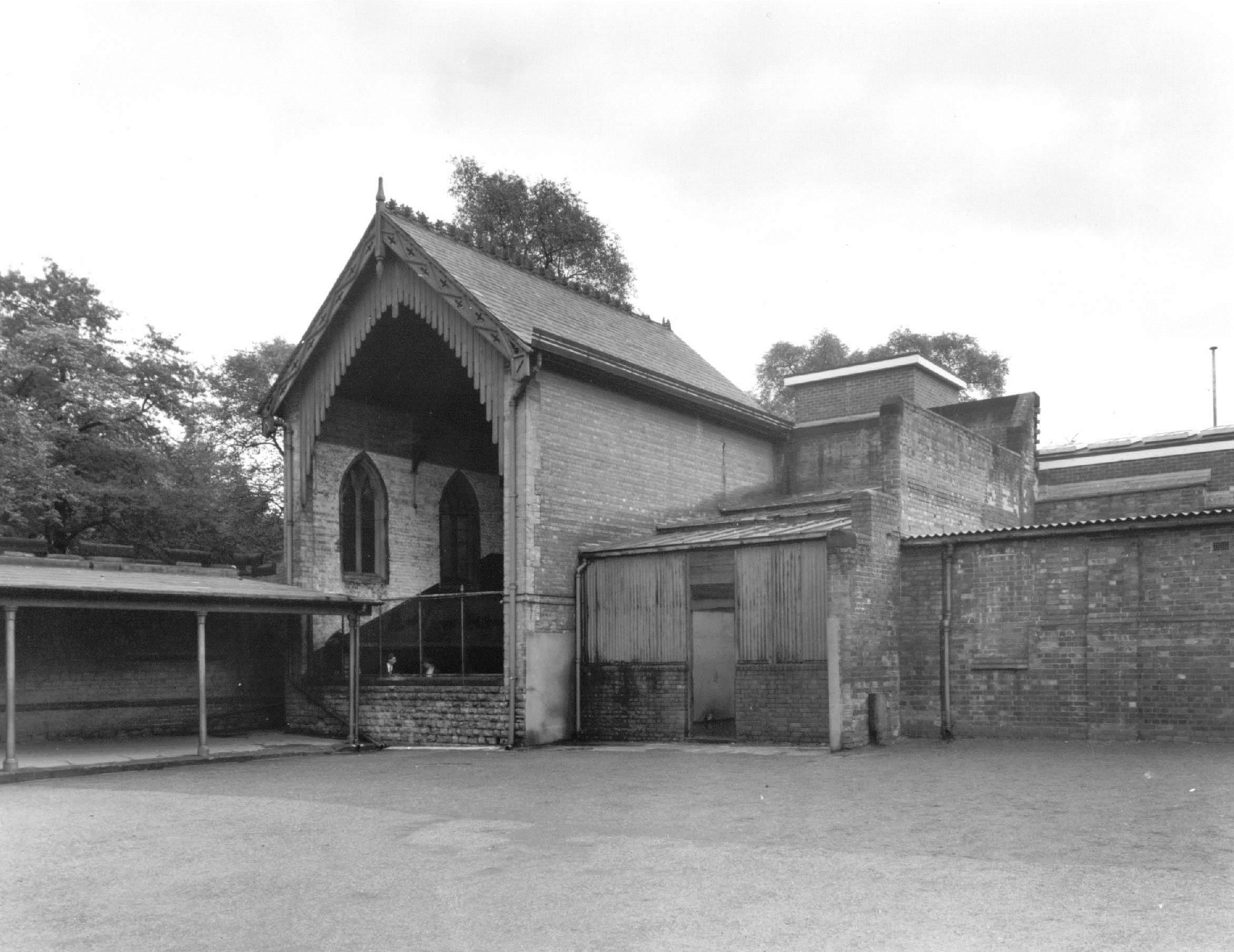
The yard also had two Fives courts, one of which was covered, and the other was left open to the elements.

fivers

To the left as one entered the playground via the Forest Road entrance, there was some extremely dirty sand.

playgro 1932

This was used as a football pitch, with rough and ready goalposts at either end. Every year, around Easter, a competition was held among teams of eight players, each one of which was captained by a different member of the First Eleven. In 1913, Roy played in the winning team, which was captained by James Ivor Holroyd. On October 30 1917, Holroyd of the 1/28th London Regiment was to be reported missing, presumed dead, in the Second Battle of Passchendaele, at the age of only twenty one.

Form 2a enjoyed a game called “rempstick”. A member of one team would stand with his back to the wall, while one of the other members of his team stood with his head between the first boy’s legs. The next team member would then put his head between the legs of the second boy, and so on, until a long caterpillar-like scrum structure was formed, just one person wide. The members of the other team then took a long run-up, and, one by one, jumped onto the top of the human caterpillar. If they caused a collapse, then their team was allowed to have a second go. If the caterpillar held up, then its members were allowed to do the jumping:

This slideshow requires JavaScript.

In Form 3a, the main game was football, which was played on the left hand side of the playground. looking from the Forest Road entrance, right at the very far end. In Form 4a, football was played again to the left, but not as far along as in the Third Year.

The Fifth Form played their football under cover in the sheds along the Forest Road wall, kicking the ball against the wall in an effort to get past their opponent. Among these boys, Lancelot Wilson Foster was remembered as a particularly good full back.

The Sixth Form spent most of their free time just walking and talking on the lawns at the front of the school:

front schoollll

Nobody was ever allowed inside the school during breaks, but it never seemed to rain!  In any case, all the boys were always very keen to get out of the building.

There were few facilities for the boys, including just six to eight cracked stone washbasins. There was a tuck shop, near the south eastern corner of the present day West Quadrangle. It was run by Robert, the School Caretaker. The small shop which boys at the end of the twentieth century called “Dicko’s” was at this time called “Baldry’s”, and it was a sweet shop. A female member of staff, a Mrs Digblair, lived above it. She was one of the school’s first ever mistresses, and members of the Sixth Form loved to go and have tea with her.

Finally, my own footnote on Mr Radley. He was a teacher with what would nowadays be considered ideas before their time. He loved literature, art and music, and taught the boys about understanding and peace among mankind. Indeed, this was perhaps not particularly surprising for a man who knew French, German, Italian, Russian and Welsh. On one occasion, he brought an Egyptian into school to show his pupils that there were “other men than Englishmen and other creeds than Christianity.” His obituary in the school magazine ended with the words “Goodbye, Mr Chips!”

This article will be continued in the near future.


22 Comments

Filed under Football, History, Nottingham, The High School

Heil Hitler Episode 3

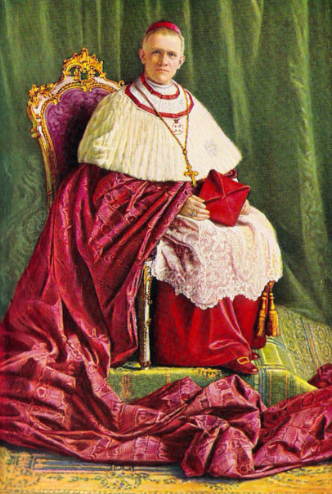
Last time I told you the story of Bishop Hudal, the appalling so-called Christian who was happy to help any war criminal, no matter what he had done, so long as he was German. Killing Jews was a bonus. Here he is. Adolf Hitler is thought to be hiding under that bit of robe on the floor:

Ateismo cristianismo dios jesus biblia religion catolicos creyentes Hitler ss nazis segunda guerra mundial xxxxxxxxxxxxxxxxxxxxxxxxxxxxxxxxxxxxxxxxxxxxxxxxxxxxxxxxxx

Bishop Hudal’s policy was “It’s a good way for Evil to prosper if you help it as eagerly as you can at every single opportunity”.

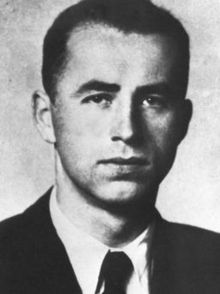
Hudal loved to help war criminals. Last time I supplied you with a list. It was not a complete one, though. Hudal Tours was used by many Nazis other than the ones I mentioned. The first lot were enough to get you into moral “deep doo-doos” but these second ones are even deeper and doo-dooier. This man looks fairly innocuous:

Alois_Brunner

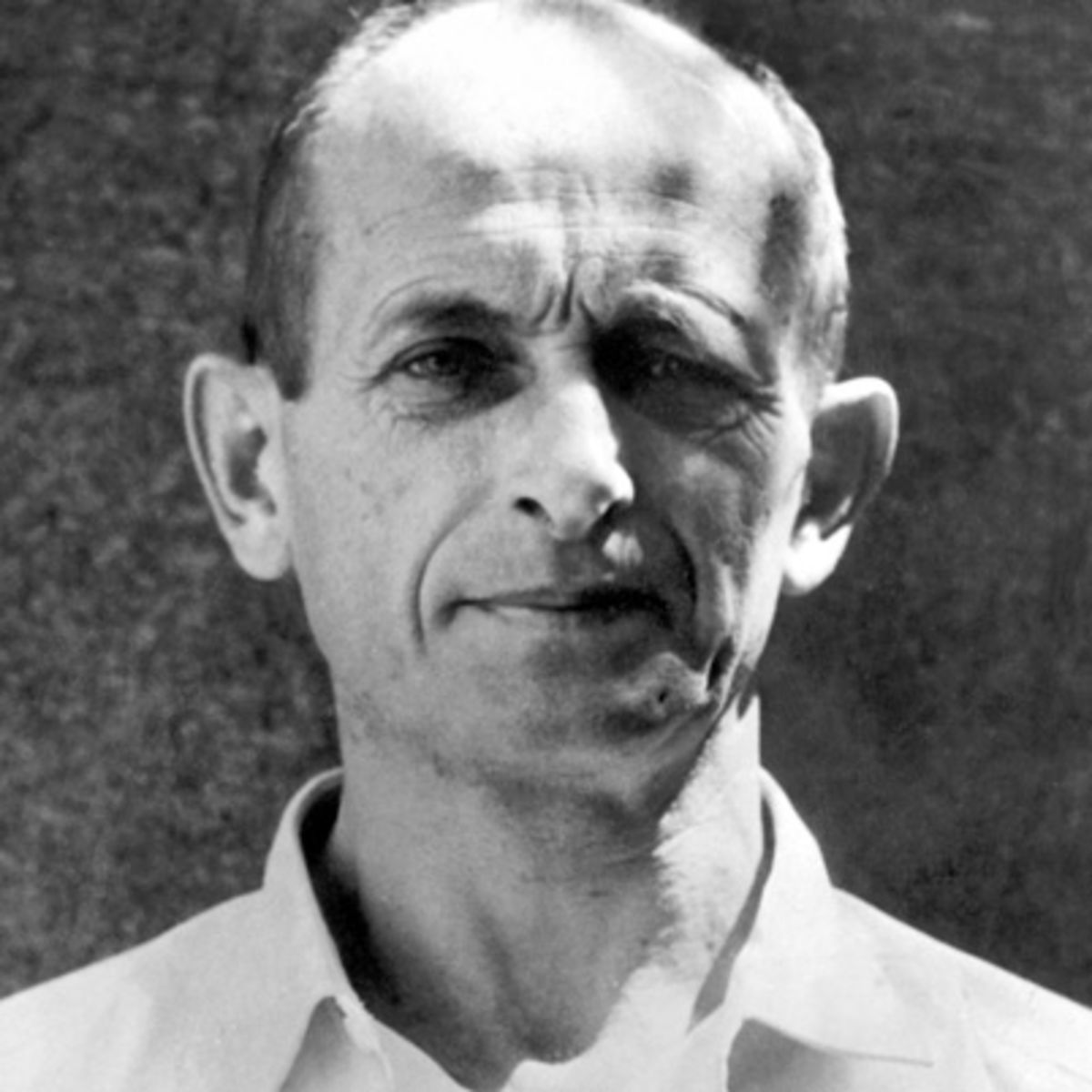
He wasn’t a bank clerk though. He is Alois Brunner, the man who organised the deportation of Jews from France and Slovakia to German concentration camps, where they were killed in cold blood on an industrial scale. Brunner was responsible for at least 24,000 Jewish deaths, so he was welcomed with open arms by Syria, who adamantly refused to extradite this heroic man. The Israeli Secret Police, Mossad, used to write to him regularly, and send him little presents. In 1961 he lost an eye to one of them, and in 1980, all the fingers of his left hand. During his long residence in Syria, Brunner was reportedly given a generous salary and protection in exchange for his advice on effective torture and interrogation techniques.
Hudal helped Adolf Eichmann, the man in charge of the murder of European Jewry, the so-called “endlösuhng. His career was instrumental in slaughtering between 5.5-6 million Jews.

mengele

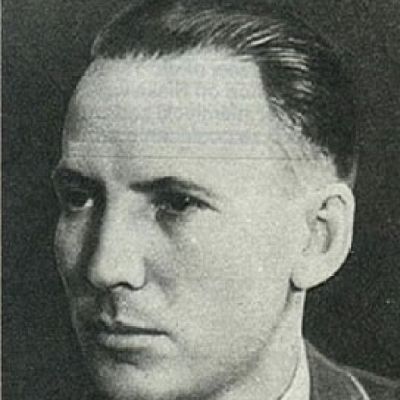
Hudal gave refuge to Otto Wächter, the man who organised the Cracow Ghetto in 1941. Working alongside Hans Frank, the Nazi governor of occupied Poland, Wächter was responsible for the deaths of uncounted millions of Jews and Poles.  After the war Wächter lived in a monastery in Rome, “as a monk”, under the direct protection of Bishop Hudal. He died in 1949 in a Roman hospital cradled “in the arms” of Bishop Hudal. How sweet.

ob_fea0cb_wachter-otto

Other possibles for the help and assistance of the kindly old Christian, Bishop Hudal, were Klaus Barbie, the Gestapo’s “Butcher of Lyon”, and Heinrich Müller, chief of the Gestapo.

What a long set of photographs. It looks like Mossad‘s Most Wanted. Or the star prizes in the Simon Weisenthal Show.

And did you notice how they were all German? Except Bishop Hudal and he was Austrian and then Austria was annexed and he became an Honorary German, more or less.

I still can’t really believe what Bishop Hudal said in his memoirs:

“I felt duty bound after 1945 to devote my whole charitable work mainly to former National Socialists and Fascists, especially to so-called ‘war criminals’.”

This slideshow requires JavaScript.

Were there any Germans, though, who lived up to Edmund Burke’s company motto?

“The only thing necessary for the triumph of evil is for good men to do nothing”

Were there any Germans who just refused to stand by and let evil prosper?

Of course there were and many of them went a lot further in their opposition than you might think. I’ll save that for next time.


14 Comments

Filed under Criminology, Football, History, Politics

My latest book

snip-of-coverThose of you who follow my blog will be familiar with the many stories I have told about Nottingham High School; its Founders, its coat of arms, its war heroes, its caretakers and its one or two villains. I have recently finished compiling these stories, and many more, into a new book called Nottingham High School: The Anecdotal History of a British Public School, published with Lulu.com.

My history is an entertaining one about the people behind the institution – what they thought, said, and did from the reign of Henry VIII up to the modern era. I want to tell the stories of the ordinary people whose actions changed the history of Nottingham forever, and those whose lives had much wider influence on the history of our country and on the lives of people across the world. I tell the tales of all people connected with the High School – teachers, support staff, boys, alumni… from caretakers to kings!

image_update_72e24141db868b82_1348683417_9j-4aaqskThe book is written in diary form and runs from Thursday, June 30th 1289 to Thursday, July 12th 2012. It’s an easy read that you can dip in and out of as you wish. Find out about the antics of the boys, the excesses of the staff, the sacrifices of the alumni, and the castle-like school building in all its majesty.

My book contains new and previously unpublished research into the lives of some of the most famous ex-pupils of the school. Read about the childhood of scurrilous author D.H.Lawrence, whose controversial books were still banned 50 years after he wrote them. Read about the disruptive antics of Albert Ball V.C., the daring air ace who always fought alone. Read about American Old Boy, Major General Mahin of the U.S. Army, a man whose power and authority in the Second World War rivalled that of General Patton, until he was killed (or was it murder?).

The tone of my work is interesting and light, but at the same time, as you know from my blogposts, I can show my more serious side when occasion demands. A very large number of former pupils from the High School died in the two World Wars and their sacrifices are reflected in my book.

I have really enjoyed writing this new history book, and I hope that you will find it an entertaining and intriguing read. If you would like to give it a go, then it is now available from my page on Lulu.com.

p1040694

31 Comments

Filed under Aviation, Criminology, History, Literature, Nottingham, Personal, The High School, Writing

The Osprey in Victorian Nottinghamshire

In the first half of the nineteenth century, William Felkin tells an intriguing story about an osprey in Nottinghamshire:

“In 1839, a female was captured at Beeston Rylands, and kept alive sometime; it was tamed, and often used to fly from its owner’s house to the river, and stand in the shallow water it measured 5’7″ from tip to tip of its wings.”

-fishing-osprey-xxxxxxxxxxxxxxxxxxxxxxxxxxxxxxxx

In 1855  William Sterland tells how a bird took up a temporary residence on the edges of the lake at Thoresby during the summer:

“Attracted in its wanderings by the piscine resources of the large sheet of water where I had the pleasure of seeing it. Here it remained some weeks, faring sumptuously, its manner of fishing affording me and others who witnessed it much gratification ; its large size, its graceful manner of hovering over the water when on the lookout for its prey, and the astonishing rapidity of its plunge when darting on its victim, rendering it a conspicuous object:

osprey againxxxxxxxxxxxxxxxxxxxxxxxxxxxxxxxxxxx

It then to my great regret took its departure, doubtless alarmed at the attacks of the gamekeepers, who viewed its successful forays with little favour.”

In 1880 an Osprey was trapped at Rainworth on an unrecorded date. In one of his notebooks, Joseph Whitaker described it as:

“a beautiful Osprey caught in a rabbit trap by Mr F Ward on May 16th. It measured 5’4″ from wingtip to wingtip.”

Osprey-5xxxxxxxxxxxxxxxxxxxxxxxxxxxxxxxxxxxx

A further account of what is presumably the same occurrence is included in Whitaker’s own copy of “The Birds of Nottinghamshire”, written out in his own hand opposite the entry for this species:

“One of the Duke of Portland’s keepers caught a fine specimen of this Hawk this morning Tuesday. On Monday evening he saw the bird flying about over the heather on the forest where it struck a rabbit & carried it off. About half past four this morning (Tuesday) he again observed the bird strike a rabbit but being near he left it having some traps with him he quickly set some & soon had him in one the bird was in good condition & very fine plumage it measured 5 feet 4½ inches inches from tip to tip.”

ospr michiganxxxxxxxxxxxxxxxxxxxxxxxxxxxxxxx

This final account occurs in “The Zoologist” magazine for 1890:

“One of these fine, but now, alas ! rare birds was shot about the middle of November last by Mr George Edison at Shire Oaks Hall in this county. When he first noticed it, it was hovering over one of the pieces of water near the house, but was being teased by a number of Rooks, who drove it over him, when he shot it. I hear it was a very fine bird, and in good condition. Shire Oaks is just the place to attract an Osprey, having several beautiful sheets of water full of fish of good size, and many species – J WHITAKER, Rainworth,  Notts.”

The editor of “The Zoologist” has added his own opinion at the end of the letter. He writes:

“What a pity that it could not be allowed to remain unmolested in a spot so well suited to its habits. To see an Osprey catch a fish is one of the finest sites in nature.-ED”

Ain’t that the truth!

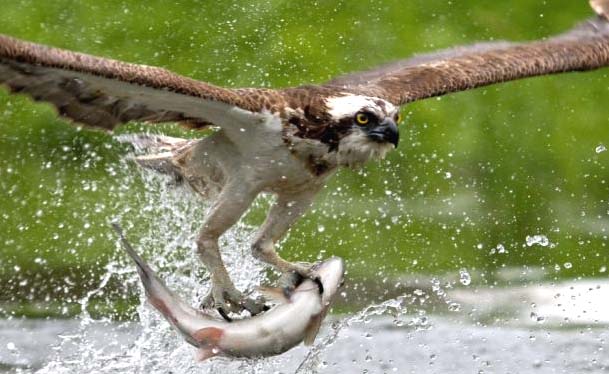
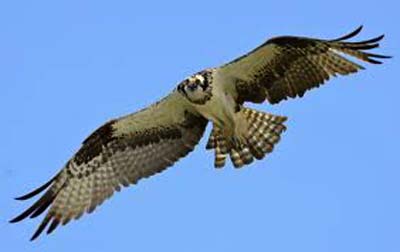
Nowadays, of course, you can drive the thirty or forty miles south to Rutland Water where Ospreys have been introduced and in the summer as many as eight breeding pairs may be seen:

osprey-with-bassxxxxxxxxxxxxxxxxxxxxxxxxxxxxxxxxx

Here is the link to the webcam which keeps watch on one of the birds’ nest.

13 Comments

Filed under History, Science, Twitching, Wildlife and Nature

Heil Hitler Episode 2

Last time, I showed you a picture of the England football team all making their Nazi salutes at the Olympic Stadium in Berlin on May 14th 1938. They were the good men who stood by and did nothing:

England-Germany 1938 nazi.xsderftgyhb
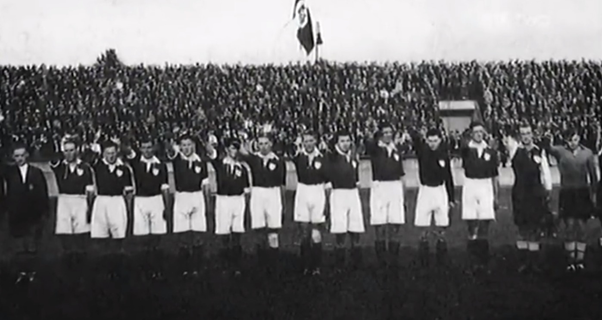
The England team though, were were not the only foreigners to greet the Führer with a cheery “Sieg Heil”. Here, just a year later, is the Republic of Ireland football team engaged in pretty much the same behaviour. Is this the old saying, “The enemy of my enemy is my friend”? After all, the Irish Republicans hated the British. The Germans hated the British. Result: a football match made in Heaven:

Ireland-Germany-1

And here’s a third group of Nazi sympathisers and Jew haters. No great surprises with this one:
bishops

Perhaps one of them is Bishop Alois Hudal, who was an Austrian titular bishop in the Roman Catholic Church and the author of the catchy best seller in cathedral bookshops across Europe, “The Foundations of National Socialism”:

Ateismo cristianismo dios jesus biblia religion catolicos creyentes Hitler ss nazis segunda guerra mundial xxxxxxxxxxxxxxxxxxxxxxxxxxxxxxxxxxxxxxxxxxxxxxxxxxxxxxxxxx

Hudal was no Nazi, of course, no racist. He just took being a good man who stands by and does nothing one stage further. He decided to be a bad man and join in enthusiastically to help the evil, presumably on the basis of “Whoever kills Jesus deserves all they get.” That attitude though, can get you into very deep doo doos, however.

Hudal, for example, is credited with organising the escape from justice of war criminals such as Franz Stangl, the Commanding Officer at Treblinka Extermination Camp, which killed between 700,000-900,000 human beings:
Stangl,_Franz

Stangl himself said that he went looking for Hudal in Rome, because he knew the bishop was helping all Germans. Hudal arranged rooms in Rome for him, helped him to escape through a “ratline” and then gave him money and a visa to Syria. Using a Red Cross passport Stangl lived happily in Damascus, where Bishop Hudal found him a job in a textile factory.  He remained in Syria with his wife and family for a few years before moving to Brazil in 1951. Stangl then found work with Volkswagen still living openly with no problems, still using his own name.
Another Nazi war criminal allegedly helped by Hudal was SS Captain Eduard Roschmann, the “Butcher of Riga”, who killed 24,000 Jews in the Latvian ghetto.
rosch
Hudal helped Josef Mengele, the Mad Doctor at Auschwitz, the “Angel of Death”, who always introduced himself to the Jewish children as “Uncle Mengele”:
WP_Josef_Mengele_1956

Gustav Wagner was the commanding officer of Sobibor, where between 167,000-300,000 human beings were killed. Hudal and others in the Vatican helped him to flee to Syria, and then to Brazil, where he became a citizen in 1950. Extradition requests from Israel, Austria and Poland were rejected by Brazil’s Attorney General who also rejected those from the West Germans.

In 1980, Wagner supposedly committed suicide in Sao Paulo. This was after he had given himself a severe beating, cut off all the fingers of his right hand and then stuck a very large knife into his own chest.

So where is all this going? Well, we’ll see in Episode 3.


18 Comments

Filed under Criminology, Football, History, Politics

Football in the Old Days : Derby County v Middlesbrough

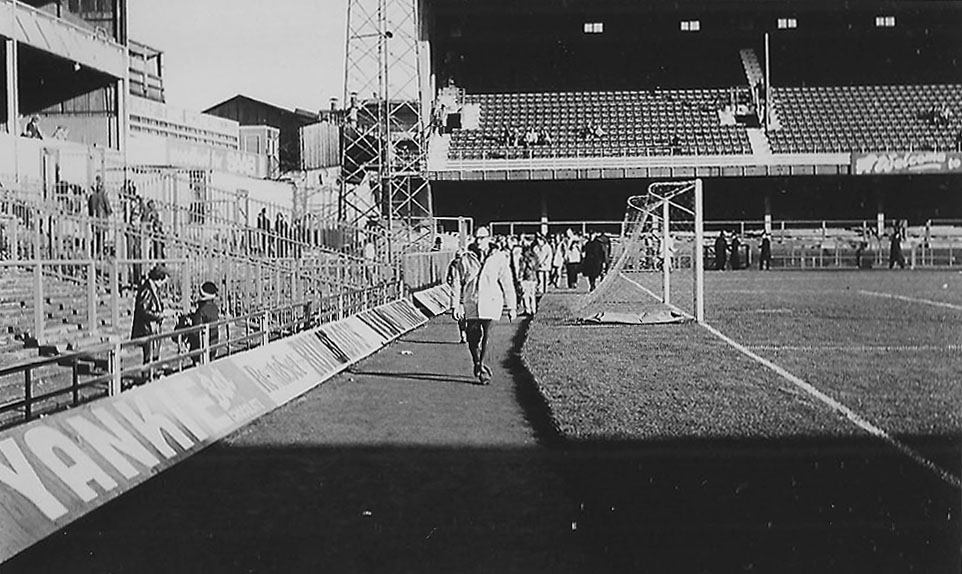
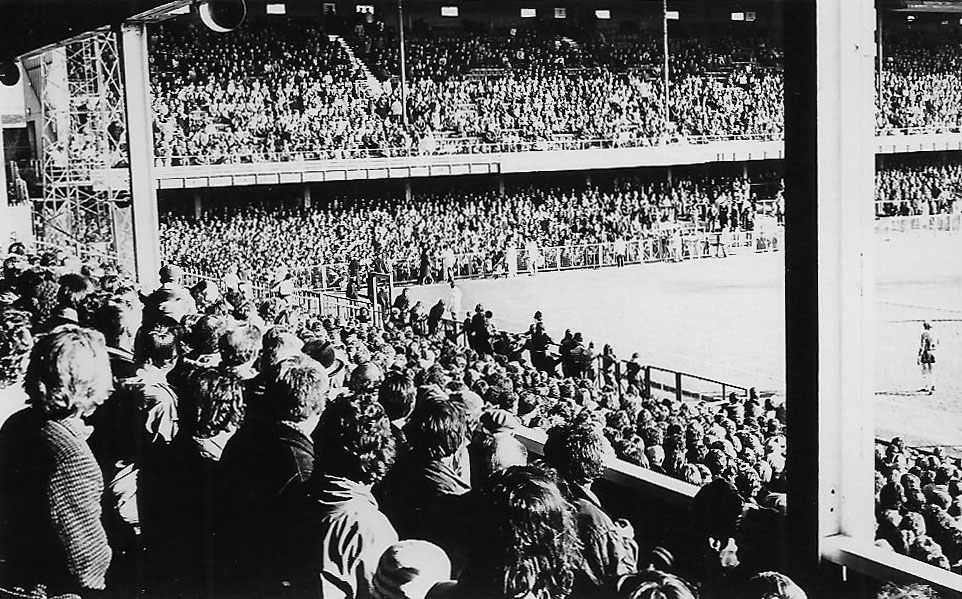
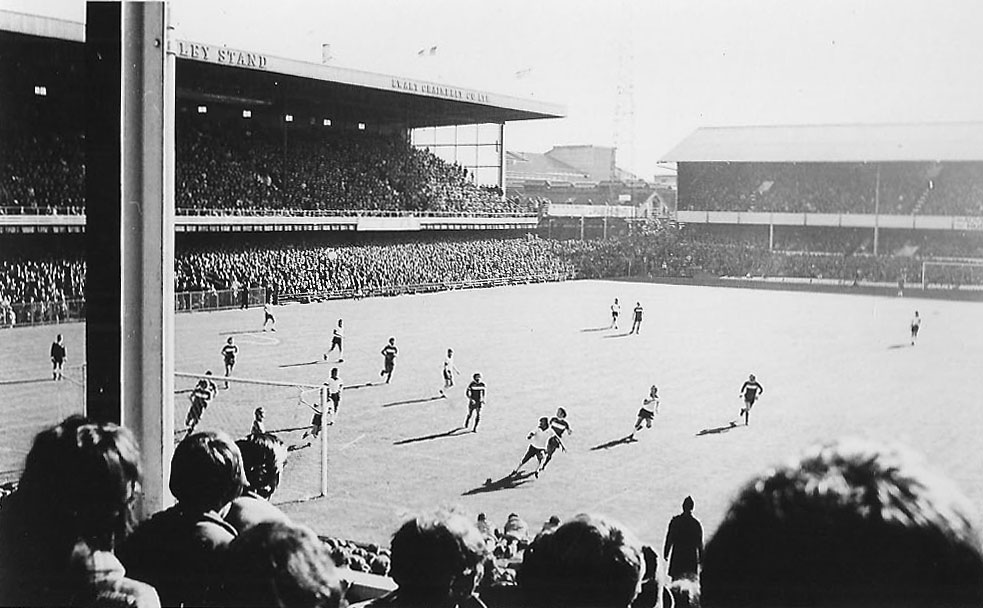
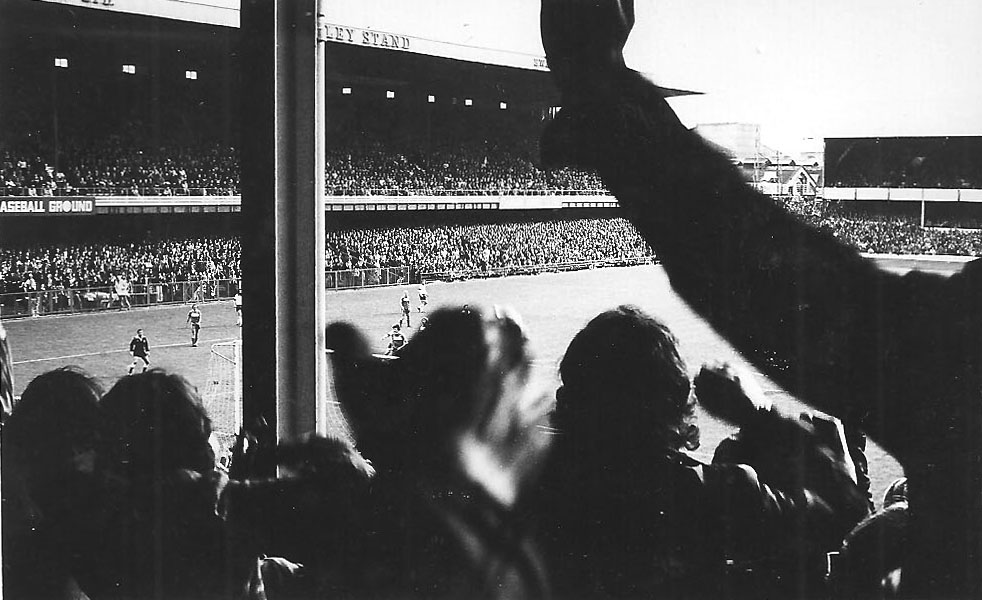
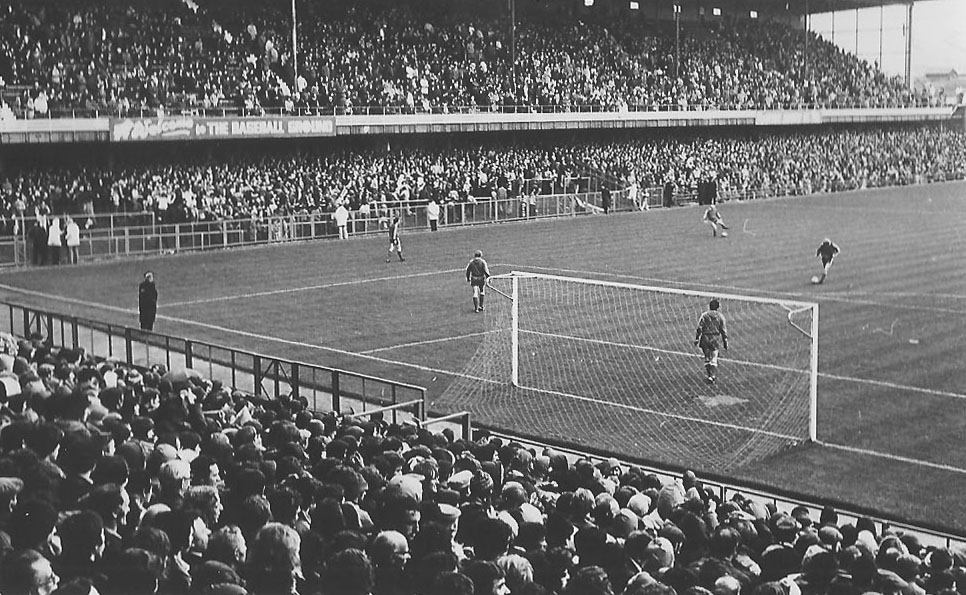
In the early 1970s, I used to watch Derby County who, at that time, were a highly successful team in what was then still called “The First Division”. I saw Derby win the Championship of that First Division on two occasions, in 1972 and 1975. In later years, I took my camera with me a couple of times, to take a few photographs, even though, at the time, this was actually illegal and club stewards kept a careful watch in case anybody did it.  Derby, of course, did not play in their current modern stadium, but in the old Baseball Ground, built in the middle of square miles of terraced houses in one of the poorest areas of Derby. It has now, alas, been demolished, although I do have a box of mud from the pitch, and a fair quantity of bricks from the stands.

I keep them in the cellar, but the very best one I had concreted underneath my Dad’s gravestone. He was a Derby fan from 1931, when Newcastle United came to Derby and won by 5-1, until the last game at the Baseball Ground, a 1-3 defeat against Arsenal. Fred was to watch Derby County for almost seventy years, until his very, very last game, at the new Pride Park Stadium, a defeat by 0-2 to Charlton Athletic. Nobody said supporting a football team was going to be easy.

This slideshow requires JavaScript.

My camera was a Voigtländer Vito B (I think) equipped with a rather handy Zeiss lens:

Voigtlander-Vito-Bxxxxxxxxxxxxxxxxxxxxxxxxx

Here are the match stewards just before the match begins:

A four more police horses - photo 2

Today, the opponents are Middlesbrough, recently promoted to the First Division, and relying on tenacious defence to stay there. Here they are warming up before the match begins. The spectators at the back are in the Ley Stand, sitting upstairs, as it were, but standing in their thousands underneath. The “standees”, what a wonderful new word, are the away supporters from Middlesbrough:

B four more police horses photo 4

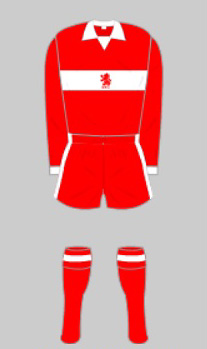
Middlesbrough played in all red with a white chest band:

1973

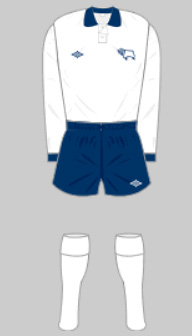
Derby played in white and dark blue:

derbyxxxxx.jpgjjjjjjjjjjjjjjjjjjjjjjjjjjjjj

Middlesbrough have already come out for the game, but here come Derby, resplendent in their white shirts with a darker collar and cuffs,

C four more police horses photo 1

Here is the moment just before Derby kick off to start the game. At the far end is the packed Normanton Stand:

D football x four - C photo 2

Hooliganism was rife in the 1970s, and here the supporters next to me in the Osmaston Stand, Lower Tier, are obviously bored by the game, so they concentrate on a threatened pitch invasion by the Middlesbrough  fans:

E photo 1

Here Derby attack, and their best player, Kevin Hector, has a shot at goal:

football x four - photo 1

He shoots, he scores!

photo 2

I thought the result of this game was Derby County 3 Middlesbrough 2 but apparently, when I checked my reference books, it actually finished Derby County 2 Middlesbrough 3. They are useless books and I may throw them away.

12 Comments

Filed under Derby County, Football, History, Personal

Fashion in Nottingham in 1776

As well as the material I discussed in one of my previous articles, there is plenty of interesting fashion news tucked away in “The Date-Book of Remarkable and Memorable Events connected with Nottingham and its neighbourhood” by John Frost Sutton. This time, it is for 1776, and it concerns, if I interpret it correctly, informal wear for ladies.

“The Nottingham Journal of this date gives the description of ladies’ undress for August:

“The ladies’ fashionable undress, commonly called a dishabille (sic)”.

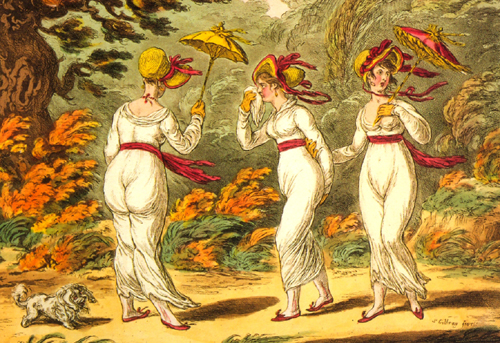
Here is a satirical portrait of dishabille entitled “The Three Graces in a High Wind”:

dishabuill marie antoin satire

Some young gentlemen also clearly appreciated that there were varying degrees of dishabille:

dishabille late 18

Back to the story:
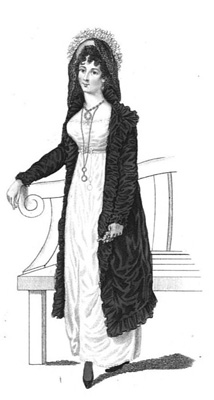
“(Ladies’ fashionable undress is…) to pay visits in the morning, also for walking in the country, on account of its being  neat, light and short, consists of a jacket, the front part of which is made like a sultana; the back part is cut out in four pieces; the middle part is not wider at the bottom than about half an inch; the sides in proportion very narrow”:
muslin 1810

“The materials most in vogue, are white muslins with a coloured printed border chintz pattern, printed on purpose in borders about an inch deep. The silks, which are chiefly lute strings, are mostly trimmed with gauze, The gauze is tucked upon the bottom of the jacket, and edged with different coloured fringes. The petticoat is drawn up in a festoon, and tied with a true lover’s knot, two tassels hanging down from each festoon. A short gauze apron, striped or figured, cut in three scollops (sic) at the bottom, and trimmed round with a broad trimming closely plaited; the middle of the apron has three scollops reversed. The cuffs are puckered in the shape of a double pine, one in front of the arm, the other behind, but the front rather lower.”

02 1812 walking dress

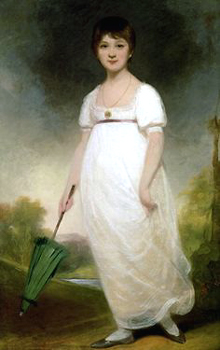
“To complete this dress for summer walking, the most elegant and delicate ladies carry a long japanned walking-cane with an ivory hook head, and on the middle of the cane is fastened a silk umbrella, or what the French call a parasol, which defends them from the sun and slight showers of rain. It opens by a spring, and it is pushed up towards the head of the cane when expanded for use”:

judy-st_-louis-swiss-dot-summer-dress

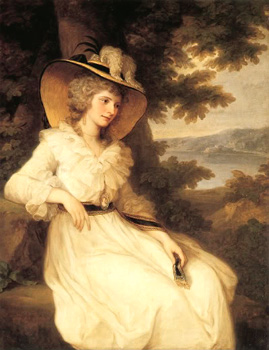
“Hats, with the feathers spread, chiefly made of chip, covered with fancy gauze puckered, variegated artificial flowers, bell tassels, and other decorations are worn large. No alteration worth notice has taken place in gentlemen’s dress except that they increase the size of their hats, and cock it in the German military style.”

_foster_1786
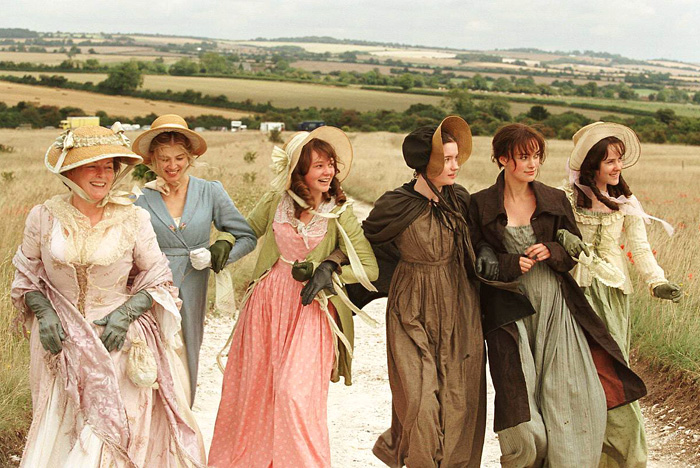
I’m afraid that there is quite a lot here that I do not understand. I suspect that many of the technical terms have been lost in the intervening 240 years. To me, for example, “sultana” is either a brown fruit or a large woman who is the wife of the sultan. Neither of them are much of a match for the front of a jacket. Anyway, I have not been able to put too many pictures in, because much of the text remains unintelligible to me. On the other hand, this is what the world of the cinema offered as their version of the informal dresses of the late eighteenth century and the Regency periods:

pridse ands prejudice film

It’s so sad, though, that they couldn’t find the eighteenth century countryside to go with it. And couldn’t they have avoided including a group of caravans when they did the filming?


19 Comments

Filed under History, Nottingham

Heil Hitler Episode 1

“The only thing necessary for the triumph of evil is for good men to do nothing.” is a famous quotation attributed to Edmund Burke, the statesman, author, orator, political theorist, and philosopher.
A good example would be this photograph showing the England football team just before a friendly game at the Olympic Stadium in Berlin on May 14th 1938:England-Germany 1938 nazi.xsderftgyhb

The fixture was played before a crowd of 110,000 people, but clearly, the Englishmen are not waving to their German admirers. This is the Hitler-Grüss. The English players are all saluting Adolf Hitler, arguably the most evil man ever born. Why did the footballers do this? Surely they were good men? Why did they do nothing? Or was Stanley Matthews, a hero to millions of young boys, an evil man?
Well, the truth of the matter is that the British Foreign Office had actually ordered them to salute the Führer, Adolf  Hitler.


Six months before, Naughty Hitler had marched his armies into Austria, the home of the waltz and the cream cake, and annexed this defenceless little country, the so-called “Anschluss”.

The Foreign Office wanted to assure Hitler that, even though he kept invading places, Germany was not a “pariah” state. Hopefully, if Adolf was kept sweet by an England team which saluted him, he would look favourably on Neville Chamberlain’s government and their policy of appeasement:

“You’re very naughty, Adolf, but as long as you promise it’s the last time, we’ll overlook it.”

The “Peace in our Time” deal must go through.
Germany’s football team was very weak at this time, but Austria’s was not. In 1934, they had finished fourth in the FIFA World Cup, and in the Berlin Olympics of 1936, they had finished second, losing to fascist Italy in the final. Austria qualified for the 1938 World Cup, but on March 28th 1938, they were forced to withdraw as the country no longer existed. The theory was that after Anschluss,  the Austrian players would all play in the German team.

First though, the two countries would play a last match for Austria, a “reunification derby” which would unite the two countries and their respective football teams for ever. Not surprisingly perhaps, the game was planned to finish as a draw. The Austrians, though, all of them good men, would not stand idly by and do nothing, but instead they scored two goals in the last few minutes in a successful  effort to win the game and put the Nazi noses out of joint.

To humiliate the Germans even further, the Austrians’ absolute star player, the thoughtful Matthias Sindelar, scored one of those two Austrian goals, and then celebrated extravagantly in front of the senior Nazi dignitaries watching the game. The latter already knew about the kit controversy. Both Germany and Austria usually played in white shirts and black shorts, but Sindelar, for what he thought would be the country’s last ever game, had insisted on Austria playing in the same colours as the national flag, red shirts, white shorts and red socks. Red, of course, was not a particularly favourite colour of the Nazis.

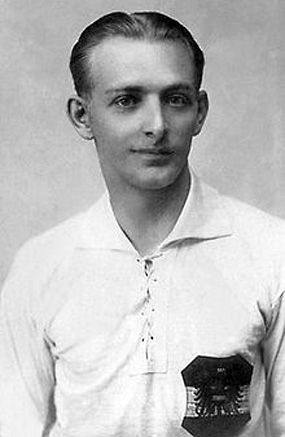
Here he is. Matthias Sindelar. He was so thin, so pale and fragile, that his footballing nickname was “The Man of Paper”. He was, though, a good man who refused to stand idly by. A real “Man of Steel”:

220px-Sindelar-aut

At the very end of the game, Sindelar deliberately and obviously missed an easy chance which would have made the victory an even wider one. Afterwards Sindelar refused to play for the German Reich, giving either his extreme age of 35 or injury as an excuse.

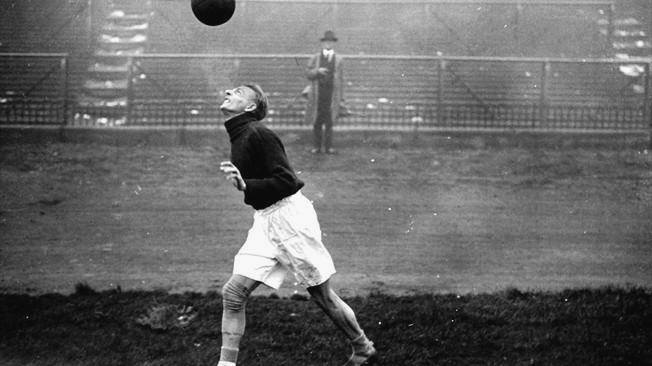
head tennis

Not totally surprisingly, perhaps, Sindelar was dead within the year. He died on January 23rd 1939. By now he was a symbol of Austrian patriotism, and his Gestapo file listed him as being pro-Jewish and a Social Democrat. The Gestapo also watched his café twenty four hours a day.

No wonder, therefore, that the heating system in his flat should fail, the problems allegedly being caused by a defective chimney. As he lay in the arms of his girlfriend, Camilla Castagnola, therefore, they both died of carbon monoxide poisoning.
That Sindelar’s death was a suicide as a protest against the German Anschluss of Austria was suggested by, presumably, pro-Gestapo elements, but that was just not true. Decades after the event, we now know, thanks to the confession of Egon Ulbrich, a lifelong friend of Sindelar, that a petty local bureaucrat was bribed by the Nazis to record his death by Gestapo as a mere accident. Here is Sindelar’s grave, still visited regularly by many people today:

grave_Matthias_SindelarMatthias Sindelar is one of my favourite players.


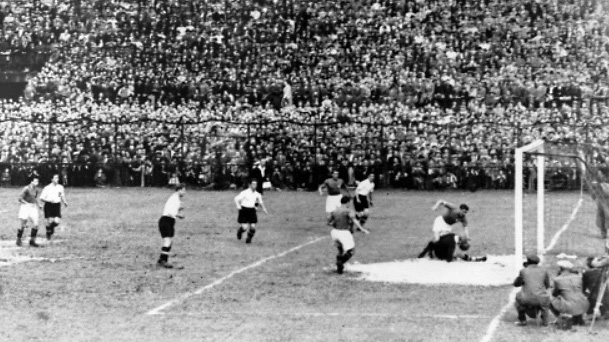
He had played centre-forward many, many times for the Austria team of the 1930s. They were known as the “Wunderteam”, and Sindelar was their captain at the 1934 World Cup, where they were cheated out of it in the semi final by match referee Eklind. Austria’s phenomenal goalscorer, Josef Bican, (at least 1468 goals in 918 games) maintained all his life, until he died in 2001, that Eklind had taken cash inducements from the Italians. And Bican was perhaps justified in his belief. On one occasion during the match, he passed the ball out to the Austrian right winger only to see it intercepted and headed down to an Italian….by the referee!

Here is one of the few pictures of the game. Some nice cotton wool seems to have been provided for the Italian goalkeeper to stop him getting bruised:

copyright

Sindelar was one of the greatest footballers of the decade, famous for his fantastic dribbling skills and the creativity of his passing. He had two brilliant nicknames. We know already what “Der Papierene” means. The “Man of Paper”:

sindelar

But Sindelar’s precocious skills would also lead to his being called “The Mozart of Football”.

mozart
In 1999, Sindelar was voted the best Austrian footballer of all time. He had already been named Austria’s sportsman of the century a year before. Sindelar even now, is still ranked as the world’s 22nd best ever footballer. Overall, he scored 26 goals in his 43 matches for Austria, and won one Austrian championship with SV Amateure in 1926, two Austrian Cups with Amateur-SV in 1925 and 1926, and three with FK Austria Wien in 1933, 1935 and 1936.

There was no European Cup then, but Sindelar won one of its predecessors, the Mitropa Cup or Central European Cup in 1933 and 1936 with FK Austria Wien.

mitrop

In 1932, he won the Central European International Cup, a predecessor of the UEFA European Championship.
Participants were Austria, Czechoslovakia, Hungary, Italy, Poland, Romania and Switzerland.
Matthias Sindelar was certainly one who did something to prevent, or at least, slow down, the triumph of evil. And ultimately, he paid with his life.

26 Comments

Filed under Criminology, Football, History, Personal, Politics