
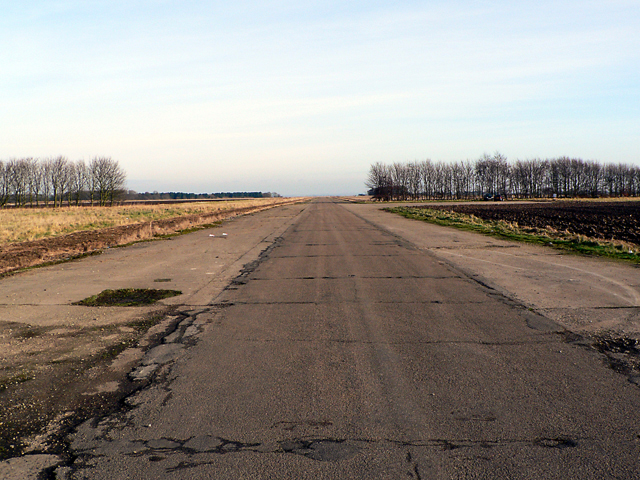
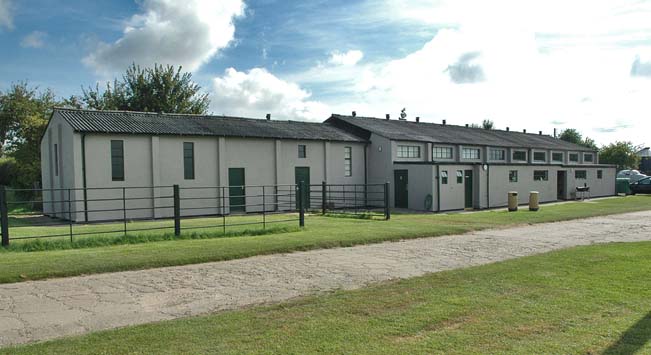
I have written two previous articles about an Avro Lancaster Mark III bomber which took off from Metheringham, in Lincolnshire, ten miles south east of Lincoln at twenty five minutes past midnight on June 7th 1944. Its squadron letters were Z-NH and its serial number was NE150.
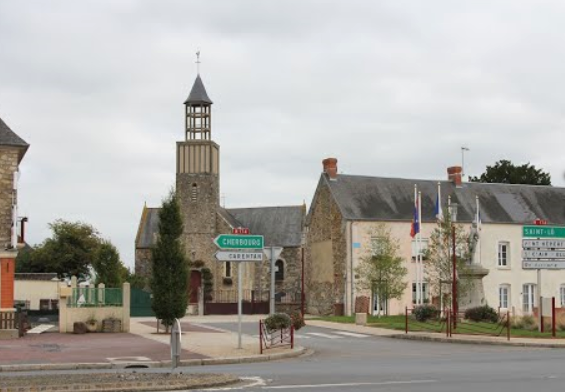
Operating in the direct aftermath of D-Day the crew were tasked with bombing Coutances, a beautiful little town just south west of Caen in Normandy, in an effort to disrupt German transportation of troops:

Unfortunately, the aircraft was hit by heavy anti-aircraft fire over Lison, a town near Coutances, and it crashed near the village of St Jean de Daye. All of the crew were killed except two.
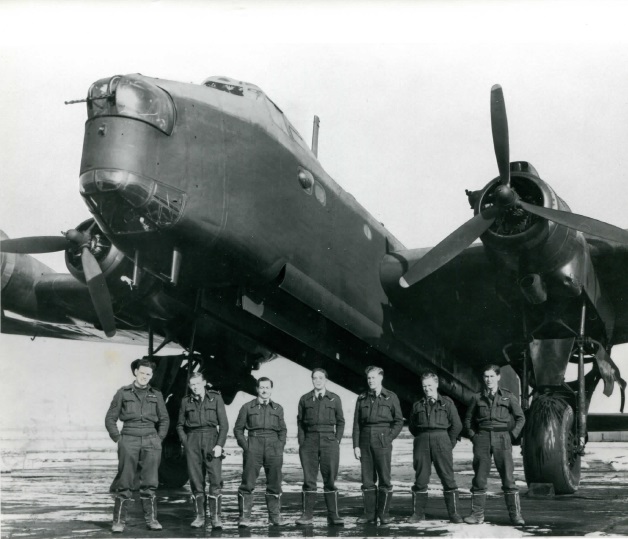
The first of two articles will tell the story of John “Jock” Drylie, the aircraft’s navigator, and the only member of the crew who managed, eventually, to return home, in his case, to Fife in Scotland. “Jock” Drylie is known to be on this photograph of a Short Stirling bomber and its crew, but the names of the individual flyers remain unknown:
I found John’s story on a forum, one of what must be hundreds devoted to the aircraft of the RAF in the Second World War.
The tale of John Drylie was posted by Michel Tardivat in 2014:
“When the aircraft crashed, five members of the crew were either unconscious or dead. He buried his parachute and hid in the deep bushes of Normandy for two or three days, he did not know how long. Driven by hunger, he knocked on the door of a farm near the village of Saint-Fromond. The owner of the farm was Arthur Michel who carefully checked John’s proof of identity with the local French Résistance. At this time, it was only too easy for German agents to pose, for example, as British soldiers, or downed flyers, in order to penetrate the Résistance network. Brave Monsieur Michel kept John at his farm, pretending, as the Scot could speak no French whatsoever, that he was a deaf and dumb farm worker.
All of the crew members from NE150 were initially reported as missing in action. His family, and especially his young fiancée, Margaret, were devastated. She was working at Stirling Castle as a radio operator for the Army.
In actual fact, John was already on his way back home. Arthur Michel continued his heroism by driving John to Bayeux. Again, the Germans had only one penalty for people caught helping Allies soldiers, and that was death. After that, the equally brave men and women of the Résistance network continued the process, and Flying Officer Drylie was back in Britain by July 19th 1944.In the late 1940s, Farmer Michel took a wife and she was able, in the era of rationing and postwar shortages, to wear a silk wedding dress made from the material of John Drylie’s parachute. Arthur Michel and his lucky wife had just one daughter who was the village teacher at Saint-Fromond all her working life. At the moment, she lives in the family farm, which has been converted into a Bed and Breakfast establishment.
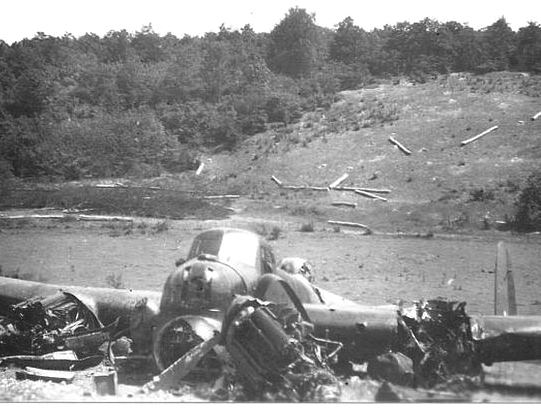
During the 1950s, the Drylie family would visit their French friends and their son Peter, would play around the wrecked fuselage of the Lancaster bomber which remained virtually untouched in a field near the village for many, many years.
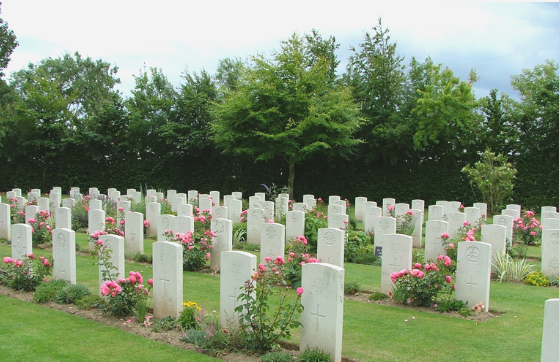
Nowadays, in the cemetery at Saint-Fromond, brave Arthur Michel rests in peace. On his tomb is fixed a medal. It was placed there by the grateful RAF.”
John Drylie seems to have been very greatly affected by the events of June 7th 1944. He hardly ever spoke about what had happened to him in that doomed Lancaster. He never wore his wartime medals. He never attended any official ceremonies connected with that terrible night.
Just once,though, he came with three generations of his family, his children and grand-children, to visit the most famous places from D-Day, namely, Saint-Lô, Bayeux, Sainte-Mère-Église and Colleville. It is unknown whether he visited the cemetery at Saint-Fromond or at Bayeux, but I would be very surprised if he did not. He was certainly seen to be very deeply moved as he stood silently at the places he visited
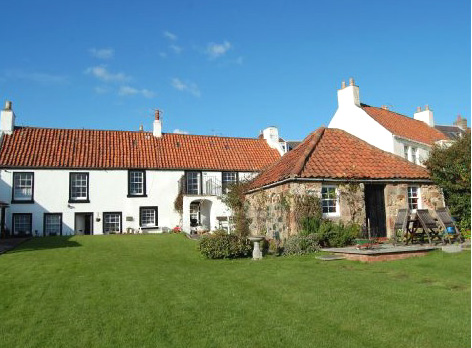
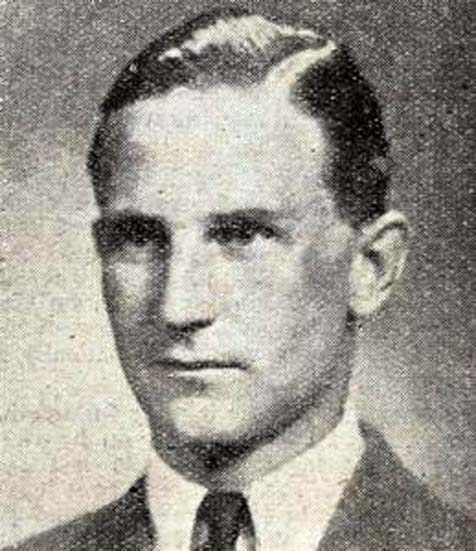
“Jock” Drylie was a chartered-accountant for all of his life. He travelled extensively between workplaces in Paris and in Scotland. He passed away in September 1990, in his house, “Balguthrie”, in Lower Largo, Fife, Scotland:
He was buried in the local churchyard with his wife Margaret and his son Peter.
Personally, I would posit that John Drylie, who hardly ever spoke about what had happened, never wore his wartime medals and never attended any official ceremonies, was a classic sufferer from Survivor Guilt.
To quote Wikipedia:
“Stephen Joseph, a psychologist at the University of Warwick, has said: “There were three types of Survivor Guilt: first, there was guilt about staying alive while others died; second, there was a guilt about the things they failed to do – these people often suffered post-traumatic ‘intrusions’ as they relived the event again and again; third, there were feelings of guilt about what they did do, such as scrambling over others to escape. These people usually wanted to avoid thinking about the catastrophe. They didn’t want to be reminded of what really happened.”
I am sure that, by now, Jock will have met up with all his old pals in Heaven and they will have told him that he should feel no guilt. In Bomber Command, death was so often decided by blind chance, nothing more:

To end with, let me repeat that none of these three articles about the Avro Lancaster III from Metheringham, Z-NH, NE150, shot down on June 7th 1944, could have been written without recourse to the websites and forums which I have indicated. I just hope that what I have written, tales which deserve to be heard, will reach another audience by my re-telling them.






















 John Knifton