Category Archives: Africa

Shaka Zulu (2)

Last time, I introduced you to Shaka kaSenzangakhona (1787–1828). The Black Napoleon. The greatest military commander in African history. The man who revolutionised warfare on the veldt of Zululand. Shaka, or indeed, Chaka. Either spelling is apparently acceptable.

Chaka was no fool. As the Romans had realised two thousand years previously, he soon worked out that the throwing assegai could be thrown straight back at you. He favoured the “iklwa” or ixwa” which he supposedly invented himself. This was “a short stabbing spear with a long, broad, and sword-like, spearhead.” It had a shaft around two feet long, and a blade one foot in length. Here it is:
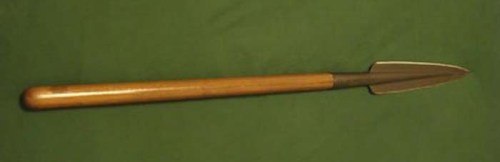
The longer spear was not abandoned, but it became a one use weapon which the Zulus would throw in unison at an enemy formation before moving in to attack with the iklwa.

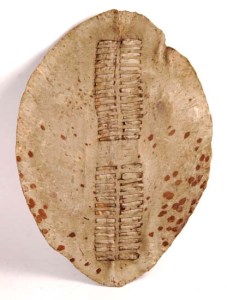
Chaka also favoured the use of a particular shield, the “isihlangu”, which means which means “to brush aside”. Here is one from the internet, which dates from 1879:
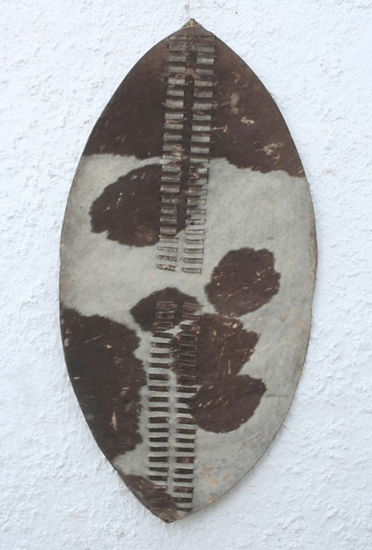
In an online shop, their reproduction isihlangu shields measure 38″ by 22″, with a wooden shaft of 48″ which protrudes five inches above and below the shield. As I have learnt, most Zulu artifacts are quite variable.

Chaka taught his warriors to use the isihlangu shield in their hand-to-hand attacks. They hooked the left hand side of their shield under the edge of the opponent’s shield, then spun him sideways to leave his rib cage exposed. The “iklwa” was then inserted between the ribs and into the heart for a death blow. In actual fact, the iklwa acquired its name from the sound it made when you pulled it out of the wound it has made.

Chaka also persuaded his men to fight in formation rather than just charging off, like the beginning of a serious disturbance in a pub car park. He taught them the “bull’s horns” formation and they practiced it in times of peace, so that when war came, they were better organised than they had ever been. Here it is:
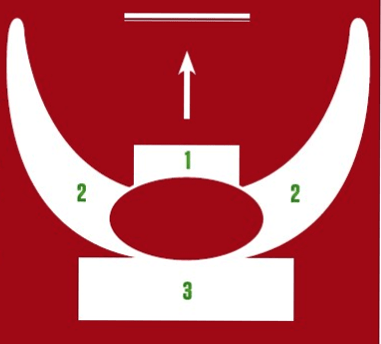
I borrowed the diagram from this webpage, although I am proud to say that the Zulu phrases were the only things I didn’t know, having been a huge Zulus fan from a very early age. The enemy are the weedy white rectangle at the top of the diagram. The Zulu for “bull’s horns” by the way, is “impondo zankomo”. Anyway, the warriors in No 1, the “isifuba” charge forward like a group of middle aged women in the first minute of a reduced-to-clear designer handbag sale.  They engage the enemy, isihlangu shields in action and the sound of the iklwa absolutely deafening. Meanwhile, the horns, No 2, the “izimpondo”, move forward quickly and stealthily and encircle the sides and back of the enemy force. If needed, the reserves, the “umava”, the bull’s loins, No 3, wait in case they are needed. Traditionally, they always faced backwards, away  from the battle and looking to the rear, so that they didn’t get over-excited, and then lose their discipline and rush off too soon to join the party. In actual fact, the most frequently occurring time to employ the “umava”, was if the enemy managed to break out of the Zulu encirclement.

All of this manoeuvring could be done because the Zulus had their army divided into regiments. The British in 1879 faced an army of 20,000 men. Their overall commander was Ntshingwayo kaMahole Khoza with subordinate commanders called Vumindaba kaNthati and Mavumengwana kaNdlela.

The Right Horn was made up of the uDududu and uNokenke regiments, with part of the uNodwengu corps (3,000-4,000 warriors).

The Chest comprised the umCijo, uKhandampevu and uThulwana regiments and part of the uNodwengu corps (7,000-9,000 warriors).

The Left Horn of the bull included the inGobamakhosi, uMbonambi and uVe regiments (5,000-6,000 warriors).

And finally, the Loins, who were the reserves and stood with their backs to the battle were the Undi corps and the uDloko regiment (4,000-5,000 warriors).

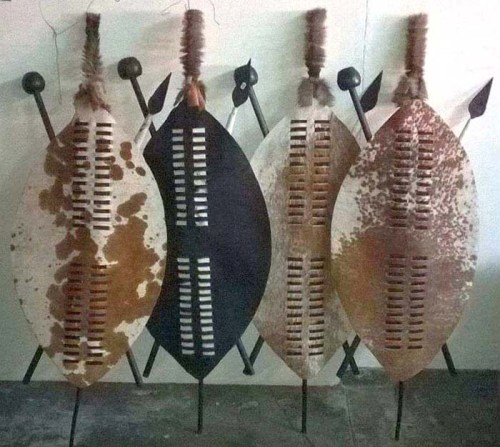
The regiments could be distinguished by the colours of the isihlangu shields, and the different numbers and groupings of the marks on them:
Next time we’ll look at some of the other interesting things that the Zulus got up to.


20 Comments

Filed under Africa, History, military

Shaka Zulu (1)

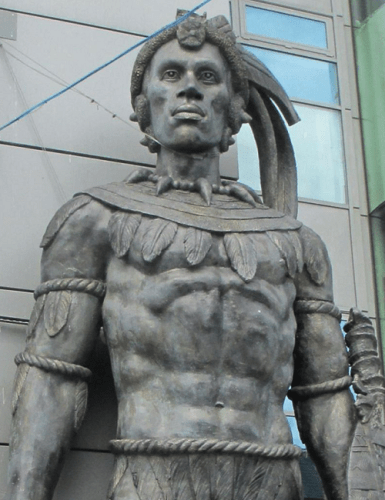
He was one of the greatest military commanders in history. He revolutionised warfare on his own continent. A huge statue of him now stands in the middle of a restaurant in London :

He was born in July 1787 and he was assassinated on September 22nd 1828. He was the King of the Zulus from 1816 to 1828. His name was Tshaka kaSenzangakhona but he was better known as “Shaka Zulu”.

His enemies said that he had a big nose, that he had two prominent front teeth and that he spoke as though “his tongue were too big for his mouth.” Many people said that he spoke with a speech impediment. He himself admitted that “Shaka himself was ugly, with a protruding forehead”.

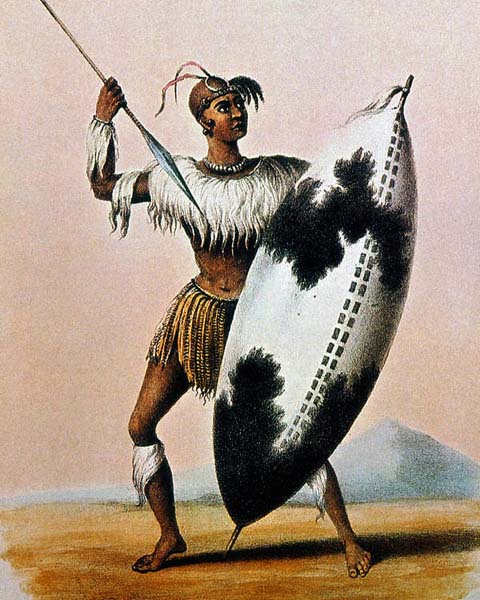
We have no photographs, of course, in 1820. Just drawings or paintings:

Two British ivory traders, Francis Farewell and Henry Fynn, introduced other white men to Shaka in 1824. They were appalled by his cruelty to his enemies. At the same time, they could see his obvious leadership qualities, impressive self possession, great intelligence and a genuine sense of humour.

Shaka was tall. He was muscled. He was strong. His skin tone was dark brown. Petros Sibani, a current historian and tour guide of the Zulu battlefields, has given a sensible opinion about him. He said that there was no doubting that :

“Shaka was a cruel and ruthless man, but these were cruel and ruthless times”

Some historians have called him the Black Napoleon. Fans of the reggae sound system culture regularly chant his name:  “Shakalaka”:

Praise indeed.

As Shaka gradually earned the respect of the Zulu people, they became increasingly willing to adapt his ideas.

Shaka taught the Zulus that if they were to dominate the tribes around them, the most effective strategy was to beat them on the battlefield. Those surrounding tribes had to be conquered and their lands and cattle taken for the Zulus. Any prisoners were given the opportunity of joining his Zulu army.  In this way, the Zulu tribe increased in size extremely quickly and every Zulu soon developed the mindset of a true warrior.

On occasion, though, Chaka made use of other methods as well,  such as diplomatic ties and patronage. The chiefs of friendly tribes became his allies. These included Zihlandlo of the Mkhize, Jobe of the Sithole, and Mathubane of the Thuli. These three tribes were never beaten in battle by the Zulu. Instead Chaka won their hearts and minds by treating them well and repeatedly rewarding them for their loyalty to him.

Initially, the Zulus had fought with a long throwing assegai but to make them more successful, Chaka made radical changes to this traditional weapon. Here is the throwing assegai:

The Zulus had always carried a shield in the left hand. It was a piece of defensive armour designed to deflect enemy spears or assegais and the arrows fired by Hottentots and other non-Bantu peoples . It was often carried also during lion or leopard hunts as protection against such fierce animals. I think that this is the pre-Chaka defensive shield:

Boys would practice with their weapons in “stick fights” with other boys. This activity still exists nowadays:

Chaka would make changes to all of the traditional activities and weapons. He would transform the Zulus into a disciplined army, equipped with weapons that suited the sophisticated new tactics that he had taught them.

He re-organised the Zulu army from top to bottom and transformed it into a fearsome fighting force through a number of  tactical changes. These changes would permit the Zulus to fight against Europeans and, on occasion, to inflict heavy defeats, as happened here at the Battle of Isandlwana:

Next time, the new weapons and the new tactics in more detail, and some more very long Zulu words.

“Sobonana ngokuzayo !”

14 Comments

Filed under Africa, History, military

The Carvings in the Tower (5)

Robert Michael Gunther (line 5 of the picture below) was one of the young men who, in May 1940, had climbed up into the Tower of the High School and carved their names and their message on a window sill. When the group did this, they could have had no idea how the war would turn out, whether the Germans would cross the Channel and occupy the country, or whether the British forces would manage to fight them off :

Robert lived at a house called “The Haven” in Burton Joyce, a village which is to the north of Nottingham, on the River Trent. He entered the High School on April 24th 1924. Robert won Mr Player’s Prize for Arithmetic (Intermediate) in 1938 and passed his School Certificate in 1939, just a year before he carved his name and message on the stone window sill in the School Tower.

In the OTC, he became a Lance Corporal and then a Corporal in 1938. He won the Certificate ‘A’ prize in 1939 and soon became Company Quarter-Master Sergeant and then Company Sergeant Major. In 1940, he was the most efficient senior NCO and the Commander of the Most Efficient House Platoon. A School Prefect, Robert won his First XV Colours and Cap, and captained the school rugby XV in 1940-1941:

“An exceptionally good leader, he also has shown himself outstanding in all departures (sic) of forward play.”

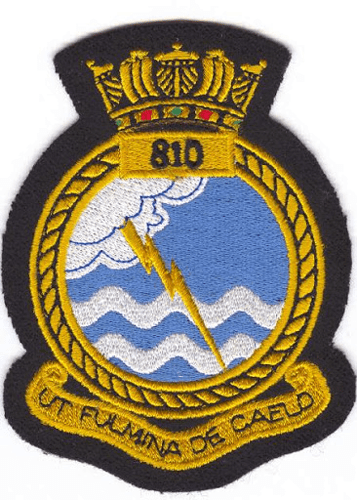
Robert left the High School on Christmas Eve, 1940. He joined the RNVR (Royal Naval Volunteer Reserve) and by 1942 he was a member of the Fleet Air Arm. He was trained at HMS Kipanga in Kenya and then at HMS Ukussa in Ceylon (Sri Lanka). He then joined 810 Squadron. The motto means “Like lightning from the sky”:

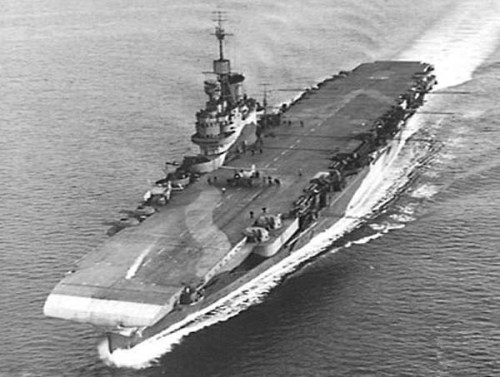
810 Squadron, Robert included, flew off the aircraft carrier, HMS Illustrious:

At the end of the academic year, in July 1944, the Nottinghamian carried the following message:

“We regret to announce that the following Old Boys have recently been reported “Missing”, and we hope that good news of their safety will soon be received: RM Gunther (1934-40) and FL Corner (1932-39)”.

The Nottinghamian said that Bob Gunther had disappeared during a routine flight over the Indian Ocean in June 1944. In actual fact, he had been shot down while acting as observer in a Fairey Barracuda during a bombing raid on Port Blair in the Andaman Islands.

The Andaman Islands are here:

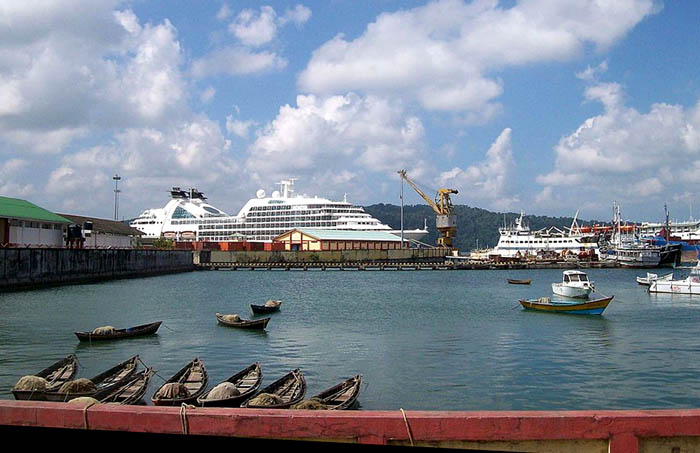
Here is Port Blair:

And here is a Fairey Barracuda, which could carry combinations of a torpedo, bombs or rockets :

Bob and his pilot, Basil Willington Aldwell, were missing for 15 months. But Bob was not dead. The brutal Japanese had him, and his pilot, in their tender care. From July 13th 1944-August 27th 1945, he was imprisoned at Ofuna near Tokyo before spending two days at Shenagawa. When released he spent a long, long, time in hospital, before he was able to return home. Here are two typical victims of what was, ultimately, Japanese racism:

At Christmas 1945, another notification was published in the Nottinghamian:

“Sub-lieutenant RM Gunther RNVR (1934-1940) who disappeared on an operational flight over the Indian Ocean, in June 1944, is reported safe and on his way home. No news had been heard of him for some 15 months, and we are delighted to know of his safety.”

The extraordinary story also appeared in the Nottingham Evening News:

“One of the first Nottingham people to get a cablegram announcing the release of prisoners of war in Japan is Mrs KL Gunther of 37 Staunton Drive, Sherwood, who today was one of the first in Nottingham to receive news that her only son was returning home. His telegram read “Safe in Allied hands. Hope to be home soon. Writing. Address letters and telegrams to Liberated POW, c/o Australian Army Base Post Office, Melbourne.”

Sub Lieutenant RN Gunther of the Fleet Air Arm had been liberated. He had survived the Pacific war, a theatre where it was only too easy to lose your life.

Frank Leonard Corner, the other name in the Nottinghamian magazine of Summer 1944, was not so lucky.

At 00:25 on June 7th 1944, operating as a flight engineer, he had taken off from RAF Metheringham in an Avro Lancaster Mark III of 106 Squadron. It carried the squadron letters “Z-NH” and had a serial number of NE150. “Z-Zebra” was tasked with attacking bridges near Caen in the immediate aftermath of D-Day. It carried 18 x 500 lb bombs in its capacious bomb bay. Bombing from 3,000 feet and lower, at around 03:00 hours, the Lancasters were hit very severely by anti-aircraft fire over Lison, where a worker at the railway yard remembers vividly how the German gunners celebrated the fact that they had shot down a bomber, which must surely have been “Z-Zebra”. Frank was just twenty years old when he died. His service number was 222039 and his parents had by now moved to Whiston near Rotherham in South Yorkshire.

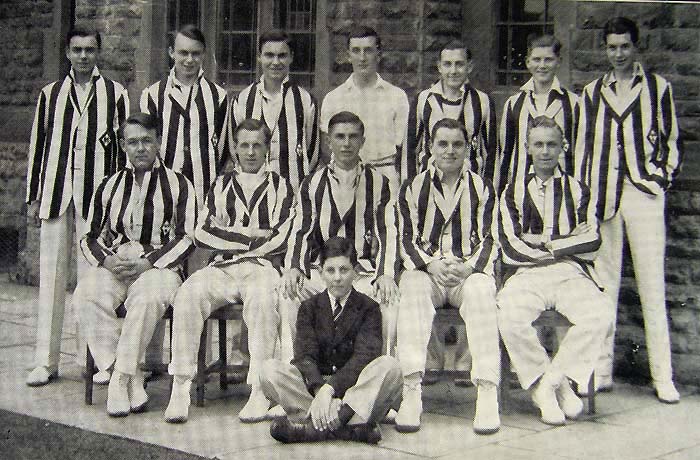
Frank was the scorer for the school’s First XI cricket team in 1938. In the photograph below he sits cross legged in front of the team:

Three of that season’s cricketers were killed in the war, as well as the team scorer.

Boy No 4 on the front row, George Colin Brown, of the Second Battalion of the Lincolnshire Regiment, was killed in Normandy on July 8th 1944, as 7 Platoon helped to clear the village of Hérouville-Saint-Clair of Germans.

“We slowly crept forward across open fields. As we broke into a trot, the Germans came out of holes in the ground like rats and unleashed hell. Mortars rained down on us and machine gun bullets were flying everywhere. Ahead of me, my platoon commander, Lieutenant Brown and his batman were killed.”

George Colin Brown was just 24 years old when he died. He was a young man whose….

“fast in-swinging ‘yorker’ on the leg stump was so devastating on its day.”

Boy No 5 on the back row, Ian Leslie Wilkinson, was killed on January 31st 1944, after taking off on a routine training flight from RAF Tilstock in an Armstrong Whitworth Whitley Mark V of 81 OTU, serial number LA 765. They crashed about 30 miles away near Dilhorne, a tiny village in Staffordshire. Ian was 24 years old and he was training to be a bomber pilot.

Boy No 6 on the back row, John Richard Mason, was killed on Friday, April 16th 1943, near RCAF Station Assiniboia in southern Saskatchewan in Canada. Sergeant Mason, a Pilot Instructor, was instructing Trainee Pilot, Leading Aircraftman John Hugh Evans, when their Fairchild Cornell Mark I, serial number FJ654, crashed into the ground.


10 Comments

Filed under Africa, Aviation, cricket, History, military, Nottingham, The High School, war crimes

A little taste of Egypt in Nottingham

How do they give names to the streets and roads of England? Well, there are lots of methods. Let’s take a quick look at Nottingham.

They are named after famous people (Shakespeare Street). They are named after the people who used to live there (Friargate) and the activities that used to happen there (Fletchergate….fletchers make arrows, or it’s from the word “flesh” which is what butchers sell you). Where the road goes to. (Hucknall Road). Who owned the land (Thackeray’s Lane). What the church is called (St Peter’s Gate). What building is there (Castle Gate). After events that happened in history. (Standard Hill…..where King Charles I first raised his banner and began forming an army at the outset of the English Civil War on August 22nd 1642.)

“Gata” incidentally is an old Viking word for street and will date back to 867AD when Nottingham was captured by the dreaded Northmen.

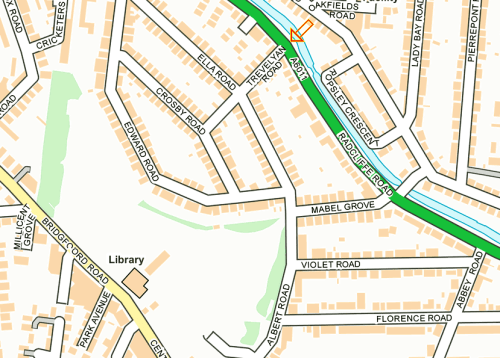
During the house building boom in the suburbs of Nottingham during the late 19th century and the early 20th century, the builder would often name streets after his own family. Here is an example in West Bridgford. Look for the Orange Arrow, wearing his anti-Covid mask:

The only problem is that we can recognise the first names such as Florence, Mabel and Violet,  but what was their surname? Was it Crosby or Trevelyan? So often they seem to miss this detail out, or  not to make it too obvious which name it is.

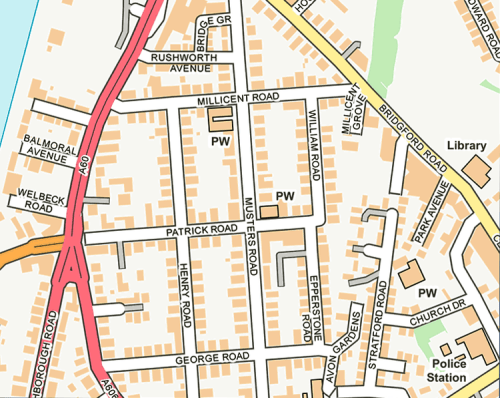
Has this builder tried his best to make it obvious by putting all of the first names around the surname “Musters” ?

Exactly the same thing was still going on in the mid-1970s when we moved into suburbia ourselves. The same problem remained, though. What was the surname? Our house was at the end of the Orange Arrow. The fourth one down the hill from the little gap which had an old oak tree in it.

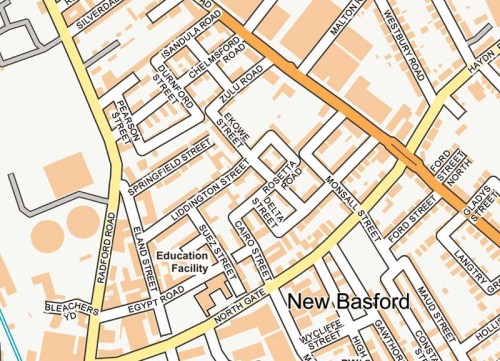
Strangest of all, though, in Nottingham, are the streets which are all, clearly, named after a particular event, or even after another country. Between 1880-1900, the theme in a particular suburb of Nottingham, namely New Basford, was Egypt. This was a working class area with a huge number of terraced houses, and somebody, somewhere, decided to name the streets there in such a way as to commemorate the British involvement in Egypt, although I have been unable to ascertain any definite answer to that simple question….”Why now? ”   Was it to commemorate Nelson’s victory in the Battle of the Nile in 1798 ? Or the opening of the Suez Canal in 1869 ? I just don’t know.  Perhaps it was because of events in 1882. Wikipedia says that :

“After increasing tensions and nationalist revolts, the United Kingdom invaded Egypt in 1882, crushing the Egyptian army at the Battle of Tell El Kebir and militarily occupying the country. Following this, the Khedivate became a de facto British protectorate under nominal Ottoman sovereignty”.

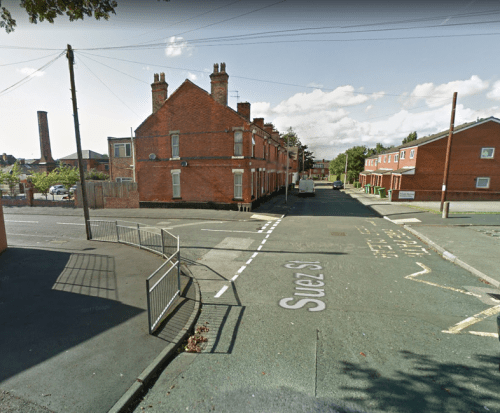
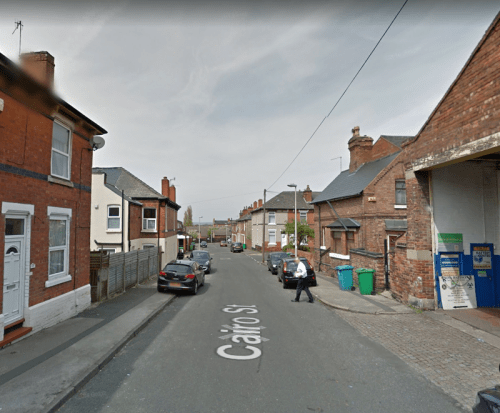
Whatever the answer, we now have, in New Basford, an Egypt Road, a Cairo Street, a Delta Street, a Suez Street and a Rosetta Road :

Do we all understand these references ?

Well, first of all, in the photograph below, there’s Egypt Street on the left, the home of Ramesses the Great and the Arab world’s greatest rock group, Mo Salah and the Pyramids. As a bonus, there’s also an excellent view of the junction with Suez Street :

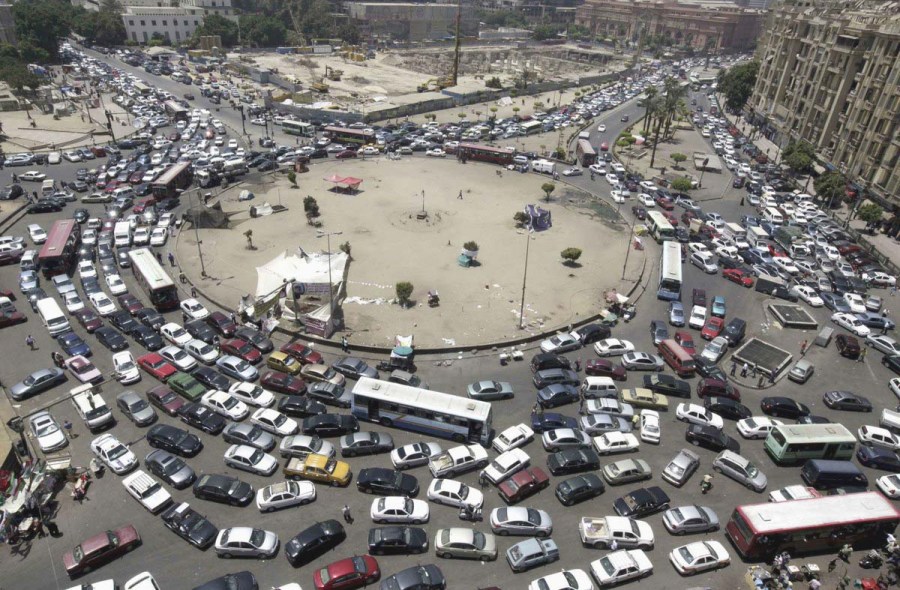
Suez also has a canal. Here it is during the rush hour. It looks like the US Navy has brought its aircraft out to sunbathe:

Cairo is famous for its rush hour although I was really disappointed that it was cars not camels. Camels are far too clever to get into this kind of mess :

And here’s Cairo Street, once the traffic has thinned out a little. Watch out for that camel behind you!

Here’s the Nile Delta, which has its very own rush hour, but with dhows rather than supertankers :

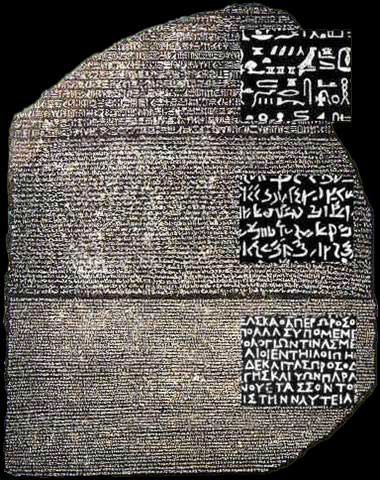
Last and most famous is the Rosetta Stone, commissioned by Pharaoh Ptolemy V and found in the city of Rosetta two thousand years later, decorated with the same thing written in three different languages.

Firstly, there are hieroglyphics for the priests, then Demotic, the native Egyptian script used for everyday business, and Ancient Greek, the language of the civil service. At this time Egypt was ruled over by Greek speakers after Alexander the Great conquered the country :

Notice how somebody has put a magnifying glass over each bit, so that you can see the differences. Rosetta Road has no such problems over communication, because 99% of the time, it is deserted, except for cars:
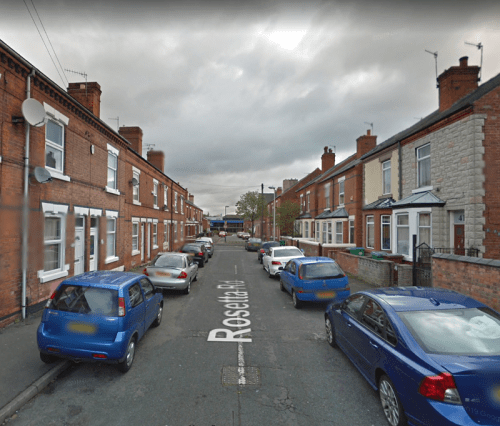
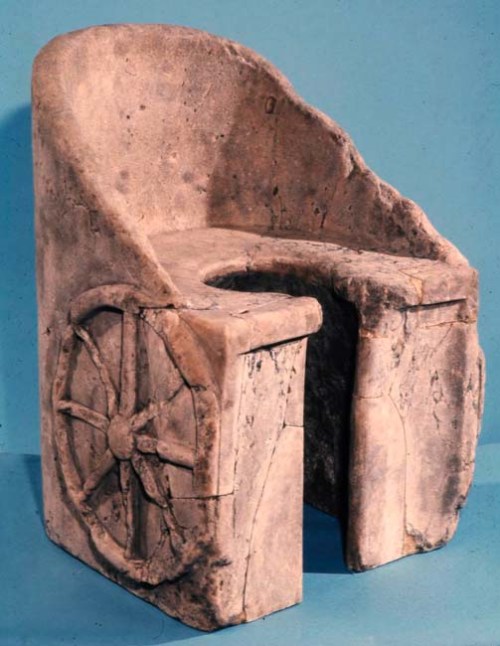
Originally the French had the Rosetta Stone, but after Admiral Nelson beat them in the Battle of the Nile, the English took it to the British Museum where, even now, it is the most visited thing in the whole museum. I thought that title might have belonged to the toilets:

33 Comments

Filed under Africa, Aviation, History, Humour, Nottingham

My Dad, Fred, and his favourite poetry (2)

Last time, I told you my Dad’s three favourite lines of poetry, which he would quote out loud at what he thought was the right moment.

Any mention of autumn, in any context, in real life, on TV, the fact that it was October, any of those would produce Keats’ line:

“Season of mists and mellow fruitfulness”

Sometimes he would manage the second line after it:

“Close bosom-friend of the maturing sun”

Any bird high up in the sky, perhaps a skylark but definitely not an eagle, pigeon or airliner would produce Shelley’s line:

“Hail to thee, blithe Spirit!

Bird thou never wert,”

And then, Fred’s improvement on the lines by William Henry Davies:

“What is this life if so full of care, we have no time to stand and stare ? ”

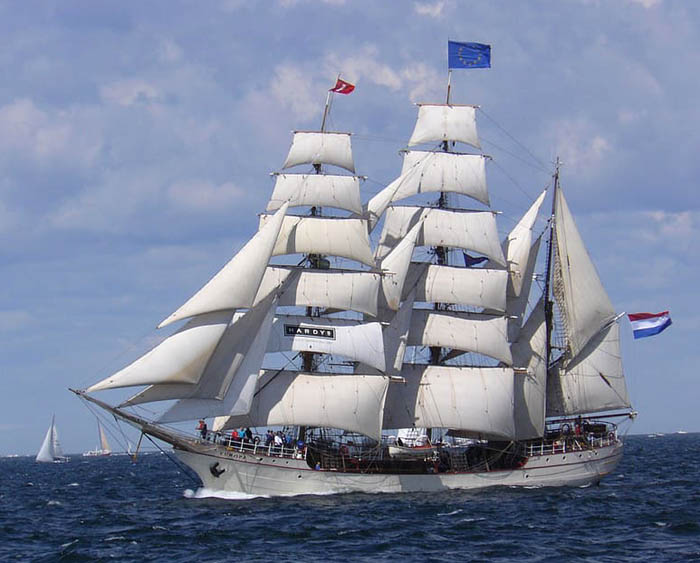
Any mention of ships though, either in real life or on television, would set him off with some phrases, or even a couple of lines, from another of Fred’s favourite poets, namely John Masefield. All the family, therefore, soon became familiar with the various vessels of his poem “Cargoes”, and their home ports.  There was a “quinquireme of Nineveh ” and a “ stately Spanish galleon coming from the Isthmus ” or, much more more likely in the North Sea off Skegness or Scarborough, perhaps, a “ dirty British coaster with a salt-caked smoke stack. ”

The first verse was a

“Quinquireme of Nineveh from distant Ophir,
Rowing home to haven in sunny Palestine,
With a cargo of ivory,
And apes and peacocks,
Sandalwood, cedarwood, and sweet white wine.”

The second verse was equally exotic:

“Stately Spanish galleon coming from the Isthmus,
Dipping through the Tropics by the palm-green shores,
With a cargo of diamonds,
Emeralds, amythysts,
Topazes, and cinnamon, and gold moidores.”

And here’s that very galleon:

In contrast, though, the third, and last, verse is about a ship of a much humbler origin:

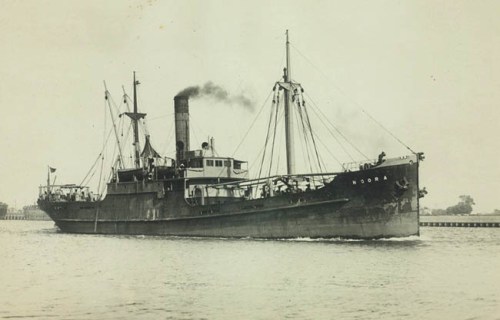
“Dirty British coaster with a salt-caked smoke stack,
Butting through the Channel in the mad March days,
With a cargo of Tyne coal,
Road-rails, pig-lead,
Firewood, iron-ware, and cheap tin trays.”

And here it is:

And now, some of the meanings:

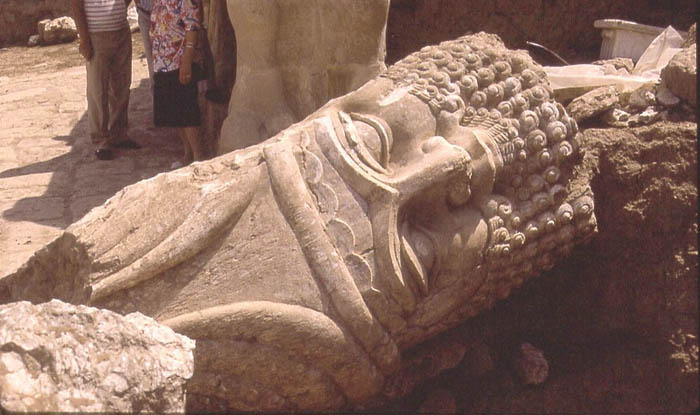
Nineveh was the ancient capital of Assyria. You can see its ruins on the opposite bank of the River Tigris from Mosul, in northern Iraq.

Ophir was probably one of the many empires which flourished either on the banks of the Nile or in the Horn of Africa. King Solomon received a cargo from Ophir every three years. It was a consignment of gold, silver, sandalwood, pearl, ivory, apes, and peacocks. Presumably, the quinqireme in the poem was on its way to Israel.

Amethyst is a violet variety of quartz. The name comes from the Greek “αμέθυστος“.

Moidores were a Portuguese gold coin of the early 18th century and then worth about 27 shillings.

Topaz is a silicate mineral of aluminium and fluorine with the chemical formula Al2SiO4(F, OH)2. Topaz crystallizes in the orthorhombic system, and its crystals are mostly prismatic terminated by pyramidal and other faces. (There will be a test next Monday).

As a preliminary to the test, which one is which? Moidores? Topaz? Amethyst?

This slideshow requires JavaScript.


16 Comments

Filed under Africa, History, Literature, my Dad, Personal

“A long forgotten war, wasted young lives” (7)

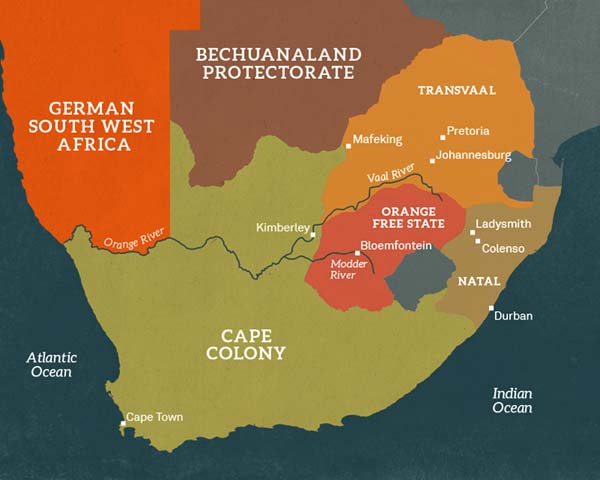
It’s a long time since Post No 6 in this series about the futility of the Boer War, but I would like to finish off with what is perhaps the saddest and most poignant tale of them all. The Second Boer War (1899 – 1902) was fought between the British Empire and the two independent Boer (Dutch) states, the Republic of Transvaal and the Orange Free State, over the British Empire’s influence in South Africa.

The catalyst for the war was the discovery of diamonds and gold in the Boer states:

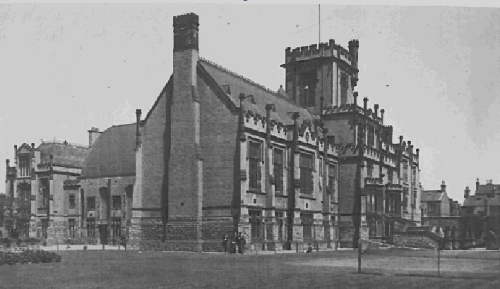
Richard Truman Fitzhugh was born on June 8th 1873. He was educated first at Shrewsbury Grammar School and then at Nottingham High School. There are at least four boys visible in this picture of the School, taken from a spot near what was then the old Caretaker’s House:

Richard arrived at the High School on May 4th 1891, with the sole intention of passing the examination needed to enter university and to become a doctor.  His success was duly recorded in the School List :

“London Matriculation Examination, First Division, June 1891”

Having accomplished exactly what he had come for, Richard left at the end of the school  year, in July 1891.

Richard was particularly talented and popular, but sadly he became a totally innocent victim of a greedy overseas war, started by men eager for gold and diamonds:

“It is with deep regret that we record the death of Dr Richard Truman FitzHugh, the only son of Mr Richard Fitzhugh, JP, of Clumber Crescent, The Park, Nottingham. His death occurred on June 15th, 1900 as the result of enteric fever (typhoid), at the Imperial Yeomanry Base Hospital at Deelfontein, South Africa.”

Richard was only 27 years old.

The first intimation of his illness had reached Nottingham at the end of May. In his letter, Richard mentioned that he was suffering from shivering fits.

Then a telegram arrived in Nottingham saying that Richard was seriously ill.

On Friday, June 15th, another telegram arrived, with the first indication of anything life-threatening:

“Regret to inform you that your son, Richard, is dangerously ill with enteric fever”.

Two days of anxious suspense followed, then a third telegram arrived:

“Deeply regret to inform you of the death of your son, Richard, from enteric fever, an irreparable loss to this hospital, he having endeared himself to all.”

Richard had gone straight from Nottingham High School to Guy’s Hospital for his medical training. He passed important examinations in 1892 and in 1895. He became a Member of the Royal College of Surgeons, a Licentiate of the Royal College of Physicians and then a Bachelor of Medicine in 1898. Here is a ward in the hospital with what may be an oxygen tent in the rear right corner:

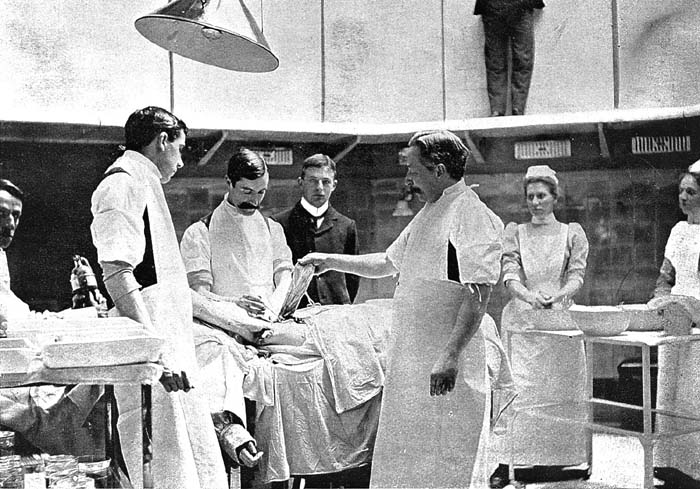
Richard worked as Assistant House-Surgeon and House Physician as well as Obstetric Resident, Clinical and Gynaecological Assistant, and Dresser in the eye wards. Here’s one of the operating theatres:

His obituary came from his colleagues:

”He was a man of culture and ability, held in high regard by his associates at Guy’s, not only because of his medical skill, but because of the part he played in its social life. He was a fine sportsman and soon took a prominent place in athletics. He was a leading cricketer and helped to win the cup in 1892. He was best of all at Association Football. Indeed, Richard was one of the best players of recent years, and won the cup in 1894, besides captaining the team from 1894-1896.

He was Assistant Secretary of the Student’s Club, President of the Residents, and foremost among the singers at Christmas.

Richard was a man with a keen sense of humour and the most popular performer at the smoking concerts which cheered us up so well. One of his songs was so admired that, however many others he sang, he could never leave the piano until he had sung that favourite one.

Behind his good humour and cheeriness, though, there was a solid character, and an honest straight forwardness that made us all trust and admire him. An old friend wrote:

“There was nobody I worked with at Guy’s for whose character I had greater respect, or whose society gave me greater pleasure.

He was a sterling gentleman and there is some consolation that he died amongst his friends, and that everything was done for him.”

The news of “the termination of such a promising career by a malignant disease which is causing more deaths than the enemy, has evoked enormous sympathy for his family.”

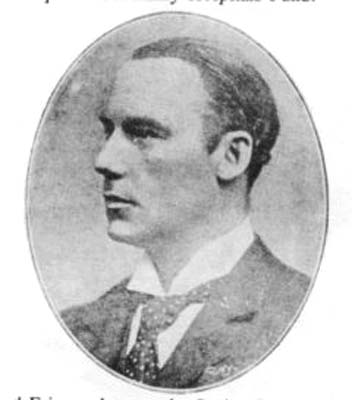
Mr Fripp was the Senior Surgeon at the Imperial Yeomanry Base Hospital at Deelfontein:

He wrote:

“Everybody felt they had lost a friend. He was popular with his colleagues and the nursing sisters, the NCOs and the orderlies, and also with the patients. It seemed he would attain a very high place in his profession, but he also had many characteristics which endeared him to everyone.

Poor “Fitz” will never be forgotten. There “was an enormous congregation at his funeral. All ranks of the hospital were represented. They formed a long procession to the cemetery. The coffin was carried by orderlies, and some of his fellow Guy’s men acted as pall-bearers.

I doubt if the cost of war was ever brought home to us as fully as when we heard of poor FitzHugh’ s death. None of us even knew he was ill.”

Dr Fitzhugh’s death is commemorated on the Nottingham Boer War Memorial in the Forest Recreation Ground. It used to stand in Queen Street in the city centre but was moved in 1927. No war memorials last for ever. Sadly, after a certain period of time, they have to be relocated elsewhere to make room for the new war memorial.

22 Comments

Filed under Africa, History, military, Nottingham, Politics, Science, The High School

Classics Illustrated

In the 1950s and the 1960s, there was always a desire among middle class parents not just to encourage their children to read, but to read what people called at the time “classic books”, books which might improve you. One way of luring children to, mainly, 19th century masterpieces, was to introduce them to a very large collection of such books for sale, an act which would encourage children, hopefully, to buy more and more from the “approved” library.

When I was a child, I had a very small collection of “Olive Classics”, dark green books with a kind of faux-leather cover, and a cardboard mini-box to hold them in. I still have them all, and I was looking at them the other day. I think I read the lot, although this may be more a reflection of the small number of books I possessed than the quality of the works in question:

I bought them based on whether or not I had seen the film (The Hunchback of Notre Dame), whether I had heard of the book and thought it was a good one (Ivanhoe) and if my parents just bought it for me as a stocking filler at Christmas (South with Scott). I also had Ben-Hur (tedious and over long), Allan Quartermain (a fabulous book):

Another way to read books which would be good for you were the magazines entitled “Classics Illustrated”. These were a series of American comic books which told the stories in pictures with very few printed words, usually just a caption. I had one or two of these as well, and certainly read them all avidly. It was marvellous to see pictures bringing books to life, although, if truth be told, the standard of the artworks was very, very low. Let’s compare them with “Eagle” comic. “War of the Worlds is really quite crude, whether it is the cover:

or the inside, where there seems to have been a problem with the printing;

Here’s “Eagle”, a weekly comic:

I can remember owning relatively few Classics Illustrated. There was “White Fang” which I really enjoyed. It was a “Ripping Yarn”, well told:

And then there was “Black Arrow” which I had never heard of, found really unexciting and I couldn’t understand the plot, anyway. The two I liked best were technically not Classics Illustrated, but, in one case, a “Special Issue”. This was a one-off publication about “The Royal Canadian Mounted Police”, which I loved. I particularly liked the fact that they were originally the “North West Mounted Police”:

What a wonderful cover!  One thing I did like especially was the dog on page 54 which looks as daft as a brush:

And I also fully endorsed, at the tender age of 11, the largely wise approach of the Canadians to their own First Nation communities.

The magazine which I liked even more was one of the “Classics Illustrated World Around Us” special series which was called “The Crusades”. I was intrigued by one particular sentence which said, roughly:

“Things took a turn for the worse when, in IIII, the king decided to…..”

At the age of eight or nine, I just could not work out what “IIII” meant. It  never occurred to me that it was a date.

Overall, I wish I had had quite a few more Classics Illustrated than I did.  I would have liked to have had a chance to read “Alice in Wonderland” or “Journey to the Centre of the Earth”, or perhaps even “Gulliver’s Travels”:

This slideshow requires JavaScript.

And don’t forget………….

20 Comments

Filed under Africa, Canada, History, Literature, military, Science, Writing

What would you do ? (13) The Solution

“What would you do ?” used to figure on the cover of a boys’ comic called “Boys’ World”. This was a publication, obviously, aimed at boys, and first appeared on January 26th 1963. There were 89 issues before the comic was merged with Eagle in 1964. The last issue of “Boys’ World” came out on October 3rd 1964.

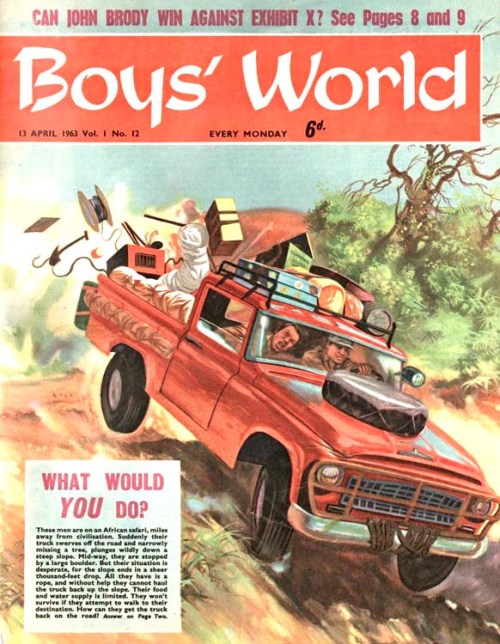
I used to buy “Boys’ World”, and this was mainly for the front cover which always featured a kind of puzzle. It was called “What would you do ?” and was based on somebody being in what Ned Flanders would call “A dilly of a pickle”. Here’s the situation:

And here’s an enlargement of that box:

And the correct solution given on page 2 of the comic is:

So, the answer is taken, more or less, from that wonderful war film of 1958, “Ice Cold in Alex” with John Mills, Sylvia Sims, Anthony Quayle and Harry Andrews. All the four of them can think about in all that heat and all that sand is an ice cold beer in a bar in Alexandria, but at one point they have to wind the truck up a steep sand slope in exactly the same way, more or less, as the solution says:


16 Comments

Filed under Africa, Film & TV, History, military, Wildlife and Nature

What would you do ? (13) The Puzzle

What would you do ?” used to figure on the cover of a boys comic called “Boys’ World”. This was a publication, obviously, aimed at boys and first appeared on January 26th 1963. There were 89 issues before the comic was merged with Eagle in 1964. The last issue of “Boys’ World” came out on October 3rd 1964.

I used to buy “Boys’ World”, and this was mainly for the front cover which always featured a kind of puzzle. It was called “What would you do ?” and was based on somebody being in what Ned Flanders would call “A dilly of a pickle”. Here’s Ned again:

The pale box sets the scene, and the task is for you to solve the situation.  Perhaps you might like to write your idea in the “Comments” section. Here’s the overall view:

Here’s that box enlarged:

So, just in case you can’t make out that rather blurred blue box, it reads, roughly:

“You are out on an African safari when the truck swerves off the road and sets off down a steep slope. Eventually, the truck is stopped when it hits a large boulder. But that isn’t the problem solved. What on earth can they ding-dong-diddily do to escape death? The slope they are on ends with a thousand foot drop. All they have is a rope, and without help, they cannot haul the truck back up the slope. Food and water is limited, and they cannot possibly walk all the way to their destination because of dehydration.  What can do to save themselves?”

Perhaps you might like to write your idea in the “Comments” section.


20 Comments

Filed under Africa, Wildlife and Nature

In the Footsteps of the Valiant (Volume Four)

As we found with Volume 3, things moved at a rather slow pace for the publication of Volume 4, but you will be pleased to hear that it has finally made its appearance, detailing 25 of the High School’s casualties in World War II.

Don’t think, incidentally, that we were running out of steam. As I mentioned last time, all five volumes have been deliberately constructed to contain the same amount of material as all of the others. Furthermore, that material is, overall, of the same quality as all the other volumes. No single book is full of exciting stories of derring-do, at the expense of another volume devoid of all excitement. I took great care to make that the case.

Indeed, Volume 4 contains the detailed story of “Watty” Watson, the Battle of Britain fighter pilot who would die, it was alleged by his colleagues in 152 Squadron, the victim of Irish saboteurs in the parachute packing plant.

This volume, therefore, portrays not just the terrible excitement of World War II, but the backgrounds of these 25 young men who died fighting it. Their families, their houses, their school years with Masters very different from those of today:

You can read about their boyhood hobbies, their sporting triumphs, where they worked as young adults and the jobs they had. And all of this is related against the background of the living Nottingham of yesteryear, a city almost completely different from that of today.

That is not to say, of course, that you will not find all the details of the conflicts in which these young men fought and the circumstances in which they met their deaths. On occasion, particularly in the case of the more peculiar training accidents, I have even attempted to find explanations for events. Most details of this kind were completely unknown until I carried out my groundbreaking research.

In this volume, you will meet the ON who was killed trying to defend Liverpool at night in a Boulton Paul Defiant night-fighter:

The ON shot down over West Norfolk by Oberleutnant Paul Semrau of the Fernnachtjagd:

The ON who flew his Vickers Wellington straight into the cold waters of Tremadog Bay in North Wales, for no apparent reason:

The ON who worked for the Air Transport Auxiliary, ferrying American bombers across the Atlantic:

The ON who left his jacket hanging in the School Archives, where it still hangs today. Alas, it may look as if it is waiting for its owner to come in, a laughing, jovial, chubby middle aged man, who will boast that his school cricket blazer still fits him, but who will be sadly disappointed when he takes it off the hanger and realises just how thin he was back in the day.

Alas, he sleeps now in Tobruk Cemetery:

Another ON perished trying to cross the River Volturno in Italy. He and his colleagues were prevented, temporarily, from so doing by the Hermann Göring Division and the 15th Panzergrenadiers.

The ON whose Whitley bomber crossed the North Sea on a bombing mission only to be hit by anti-aircraft fire and crash, as my researches have discovered, on a hillside near Hüffe Farm south of the village of Lashorst, near the small town of Preußisch Oldendorf in North Rhine-Westphalia, nineteen miles east-north-east of Osnabrück and almost midway between that city and Hannover:

The ON in the wrong place at the wrong time. The place, the Bomb Dump at RAF Graveley, which stored the bombs for the missions of an entire squadron over, at least, a number of days. The time, five seconds before it all blew up.

The ON who fought with the SAS, the Special Air Service and then the SBS, the Special Boat Service. The SAS still do not know how he died.

The ON whose family owned and traded under the name of “Pork Farms”:

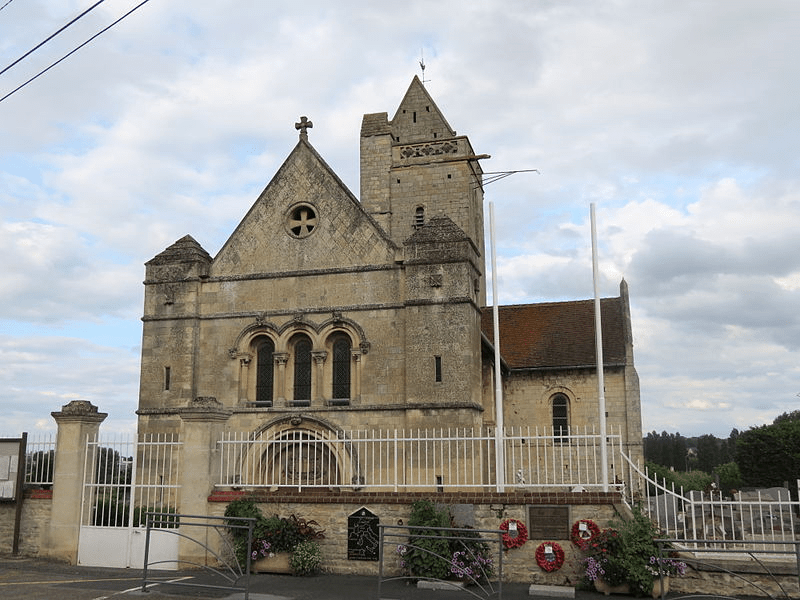
The ON, a young man whose “fast in-swinging ‘yorker’ on the leg stump was so devastating on its day.”  Alas, six years later, he was one of the day’s casualties “laid out on the ground in front of the church wall” in Hérouville,  as the Allies fought hard to clear another of the many little villages  in Normandy.

And finally, the ON who was a history lecturer at Glasgow University, but who, in October 1941, thought it was his duty to give lectures to the ordinary troops in the North African and Mediterranean theatres about why we are fighting and the world after the war. Backwards  and forwards he criss-crossed the area time and again. And the ordinary men lapped it up. They were so happy that a university lecturer who didn’t need to be there had come to see them and to explain the politics of the day.

And don’t forget, our history writing motto still remains:

“No tale is left untold. No anecdote is ignored.”

This book is now available for purchase through Lulu.com:


16 Comments

Filed under Africa, Aviation, Bomber Command, France, History, military, Nottingham, Personal, The High School, Writing