Category Archives: Aviation

A Werewolf in Cambridgeshire. Run away!!

In three previous blog posts, I discussed “Shuck”, the huge phantom black dog, who for centuries has roamed, for the most part, the fields, fens and even beaches of East Anglia. I showed, though, that the cryptic canid has also walked on occasion in Nottinghamshire, visiting churchyards and graveyards. He frequents ancient tracks and pathways and, in particular, a lonely footpath down by the River Trent in Beckingham. He has been seen in isolated Crow Lane in South Muskham and, in recent times, on a pitch black Blyth Road, near Hodsock Priory:
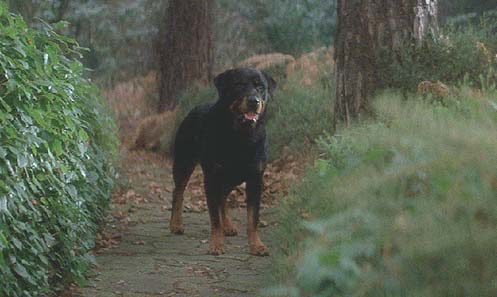
hellhound zzzzz

In my third blogpost, I tried to establish a link with the American Wolfmen such as the “Beast of Bray Road”:

roadkill cccc

These are hairy bipeds with canid features who, like Black Shuck, seem to occur “near freshwater; on hills; at boundary areas such as roads; and on or near burial grounds, and military zones, and all types of sacred areas around the world”:
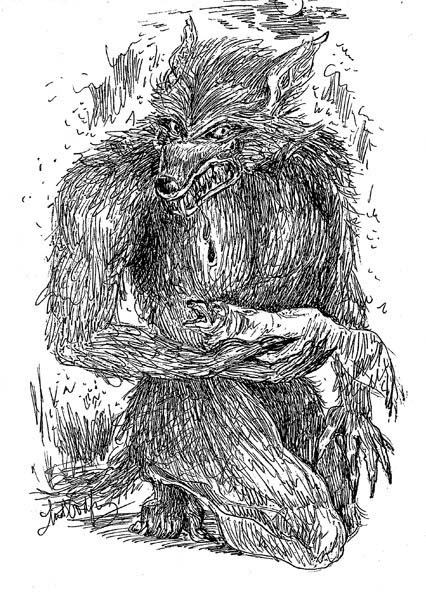
michigan-dogman ccccccc

These are the words of Linda S Godfrey in her wonderful book, “Real Wolfmen: True Encounters in Modern America”:

book cover linda

After receiving this book as a Christmas present in 2013, I received an equally interesting publication in 2014. It was “Haunted Skies Volume One” by John Hanson and Dawn Holloway:
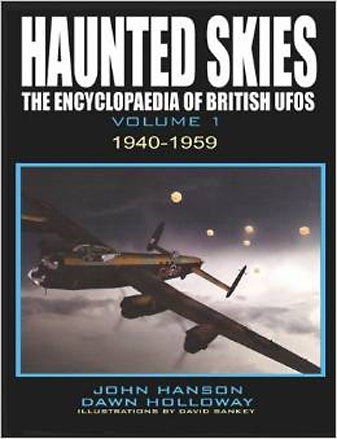
vol 1

As they say on the cover, the book is part of a whole series telling the entire story of British UFOs. In total, there are ten different volumes and they are, quite simply, an absolute tour de force, a labour of love which runs from 1940 to the present day. So far, I have bought a number of other volumes although I am still a little bit short of the full set (as they say).

What has this got to do with Shuck you may ask? Does this mean that the Beast of Bray Road has moved kennel to England?

Well, in a way, it does. This is Volume 5:

vol 5 cover

This volume runs from 1972-1974. It contains a tale told about RAF Alconbury, a USAAF airbase in Cambridgeshire, which has a number of claims to fame as being haunted by a variety of different spectres. Here is a large scale map of the area. Look for the orange arrow which indicates the airbase:

alconbury map

And here is a close up. The orange arrow is in the same place on both maps:

larg scale alconbury

The amazing tale told to John Hanson and Dawn Holloway, the authors of the book, by an eyewitness, is that a mechanic was:

“carrying out some routine work to an F-5 Aircraft, parked on the runway, a job that should have been completed in an hour. When he failed to make the telephone call, requesting a lift back from the Hangar, a search went out to find him. They found him sitting in the aircraft, as white as a sheet, with the canopy closed. Although I asked him, many times, what it was that he had seen, he declined, saying that it had frightened him so much that he refused to go anywhere near that location again. We discovered, from another source, that the man had seen a terrifying hairy humanoid, which had walked past the aircraft.”

This is a Northrop F-5 aircraft:
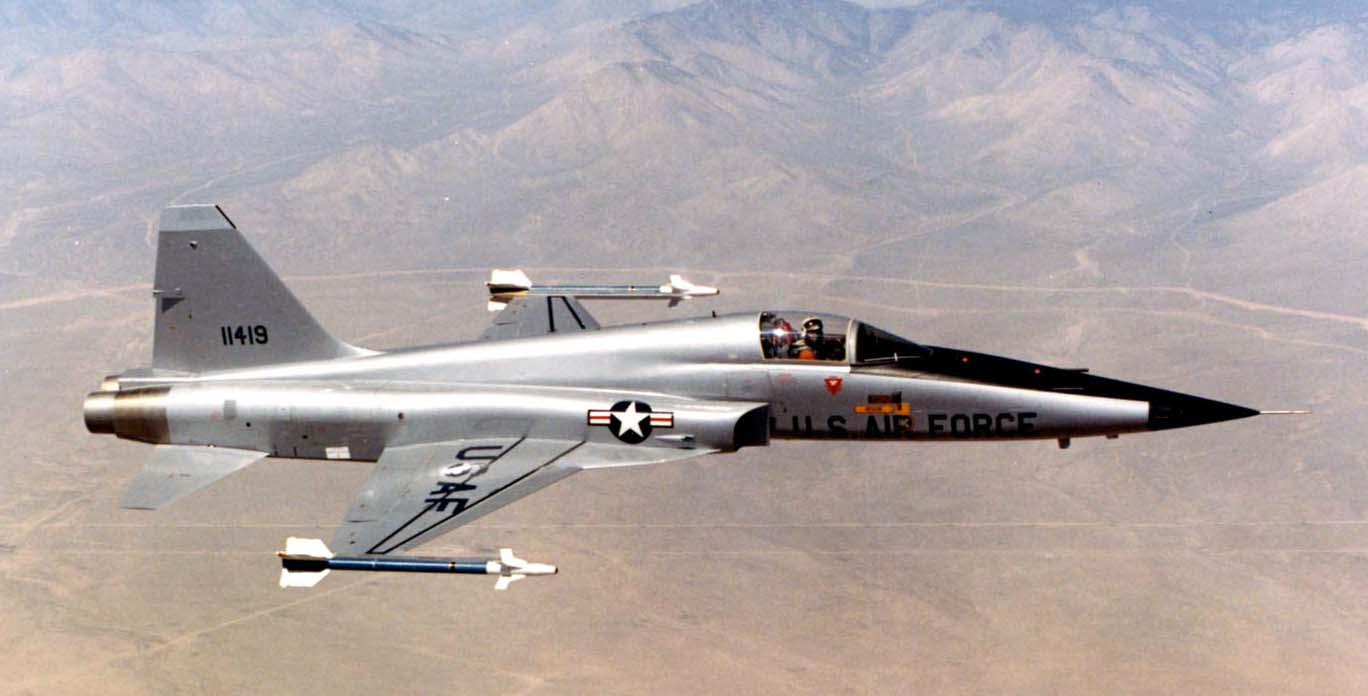
Northrop F-5E

This is a second eyewitness account which they quote:

“I also heard about an incident involving two mechanics, working on an aircraft parked on the north side of the base, one of whom was so frightened by the appearance of a strange hairy creature that he jumped into the cockpit of the aircraft and refused to get out for some time.”

ALCONBURY-some of

It is entirely impressive that the two co-authors should then discover a third corroborative tale about two USAAF personnel:

“Sergeants Randi Lee and Jackson…. one night, while on patrol with their two dogs, they saw some movement near the towers and called the Main Gate to check if any workmen were still on-site…. As they approached the tower, they came face-to-face with a hairy figure. The dogs stopped in their tracks, absolutely terrified, frantically trying to get away…..The truck arrived just in time to see the creature, whatever it was, climbing over the security fence, where it was last seen entering North Woods.”

It is difficult to imagine how much more thorough these two authors could have been at this point. They manage to find yet another witness to this bizarre tale:

“One foggy night my father received a radio call; there was an intruder within the perimeter…. He tore out in his truck and sped towards the scene…. Seeing a figure in the fog, he pulled over, thinking it was one of his guards. He rolled down his window and was screamed at, full in the face, by what can only be described as a man-like, bipedal creature. My father nearly wet himself in fear. In an instant the thing ran off at incredible speed and my father drove after it. Within moments it had sped past another of the guards….my father and these men witnessed this creature make fantastic, running bounds across the grounds before leaping over two tall, well-spaced barbed wire fences in a single bound. It disappeared into the surrounding woods.”

werewolf qqqqqqqqqqqqqqqqqqqqq

Many similar and confirmatory accounts can be found on the Internet of this interesting, yet frightening creature. Just as I have quoted John Hanson and Dawn Holloway, some of the websites are clearly redolent of Nick Redfern’s blog post of 2007, “Do Werewolves Roam The Woods Of England?
One of the contributors, a gentleman who calls himself “wes” recounts his own version of the Alconbury creature:

“I encountered a werewolf (lack of better description) in England in 1970, I was 20 years old when I was stationed at RAF Alconbury. I was in a secure weapons storage area when i encountered it. It seemed shocked and surprized to been caught off guard and I froze in total fright. I was armed with a .38 and never once considered using it. There was no aggression on its part. I could not comprehend what I was seeing. It is not human. It has a flat snout and large eyes. Its height is approx 5 ft and weight approx.200 lbs. It is very muscular and thin. It wore no clothing and was only moderately hairy. It ran away on its hind legs and scurried over a chain link fence and ran deep into the dense wooded area adjacent to the base. I was extremely frightened but the fear developed into a total commitment of trying to contact it again. I was obsessed with it. I was able to see it again a few weeks later at a distance in the wooded area. I watched it for about 30 seconds slowly moving through the woods”

werewolf xxxxxxxxxxxxxxxxvvvvvvvbbbbbbb

At the website “Winter Spirits” a person called “earth_spirit” recounts how he too was in the RAF:

“In 1978 I was stationed with the US Air Force in West Germany and was sent to RAF Alconbury in England for a 30 day TDY (temporary duty.) When I mentioned to a co-worker I was going to RAF Alconbury, he told me that he had been there in 1972 when one of the aircraft mechanics in his squadron had been found late one night in the back seat of an RF-4C Phantom jet, supposedly after he had died of “fright.”  The story was that a subsequent investigation revealed unexplained scratches on the glass of the canopy of the jet, and this started a rumor circulating that the unfortunate crew chief had been the victim of what came to be known as the infamous “hard stand monster.”

You could be forgiven for misinterpreting the “hard stand monster” but clearly, there is something behind these stories.

werewolf_van_helsing_zzzzzzzzzzzzzzzzzz

In a fascinating blog, well worth a look, written by Sarah Hapgood and entitled “sjhstrangetales”, the testimony of yet another witness is quoted:

“Dennis Prisbrey, stationed here between 1973/5, told of colleagues seeing a “creature” near the north side of the airfield. One sighting of it scared a colleague so much that he jumped into the cockpit of an aircraft and refused to get out. The creature was also seen climbing over the security fence, and entering the North Woods. Wesley Uptergrove also saw it, and said he tried to pursue it in a truck. He described it as 5ft 9″ tall, with human-like eyes, a flat nose, and large ears.”

With so many websites discussing the unusual, the ghostly and the frightening, it is again just a matter of establishing some kind of average between the many repeated tellings of what is obviously the same incident. One intriguing explanation is offered by Nick Redfern with the full backing of Linda S.Godrey. Clearly based on the fact that these werewolves are often seen near military bases, it is well worth five minutes of your time. This individual is my favourite. He looks as if he waiting for his library book to be stamped:

werewolf xxxxxxxxxxxxxxxxxxx

Whatever happens though, you could do lot worse than to take a look at the many volumes of “Haunted Skies” by John Hanson and Dawn Holloway. They are an unbelievable set of books, although “unbelievable” is perhaps not the best choice of words when discussing UFOs.

 

14 Comments

Filed under Aviation, Cryptozoology, History, Science

The Officer Training Corps 1915 Part Two

This photograph shows the High School Officer Training Corps in 1915. I have previously written about what happened to the teachers in the years after this iconic photograph was taken.

This time I want to write about the fates of some of the boys. You might be forgiven for thinking that these twelve individuals are all far too young to have left the school, joined the army, trained as officers, gone to the Western Front and then been killed. But you would be wrong. Three of these young men were to perish. And this, tragically, is a much better casualty rate than the rugby team of Boxing Day, 1913. On the other hand, though, it is still a staggering 25%!

otc 1915

On the back row of the photograph are, left to right, F.A.Bird, J.R.Coleman, D.J.Clarkson, J.Marriott, A.W.Barton, G.R.Ballamy, S.I.Wallis and W.D.Willatt.

On the front row are, left to right, L.W.Foster, V.G.Darrington, Second Lieutenant J.L.Kennard, Captain G.F.Hood, Second Lieutenant L.R.Strangeways, G.James and R.I.Mozley.

I have not been able to find information on all of the boys in this photograph, but here is what I have come up with:

In January 1918, the school magazine, “The Highvite” carried a list of the school prefects, with their nicknames. They included the Captain of the School, F.A.Bird (Dicky) and A.W.Barton (Fuzzy). Both of them feature in the photograph.

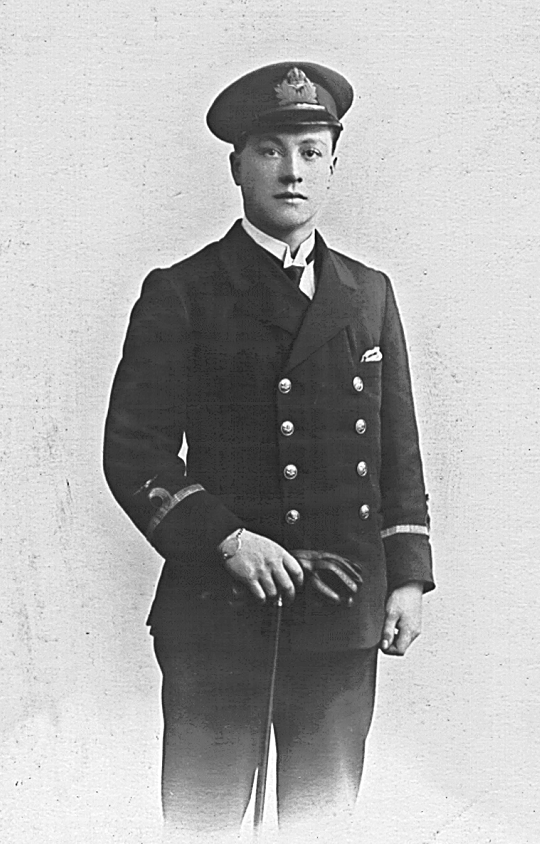
They seem to have been very good friends and we have already noted their advertisement “for poisons, the quality of which was endorsed by Mr.Strangeways”. I know nothing further of Mr Bird except that his first name was Francis and he was the best friend of Harold Arno Connop, a Flight Sub-Lieutenant in the Royal Naval Air Service, who was killed at Dunkirk on Sunday, March 31st 1918:

connop zzzzzzzzzzzzzzzzzz

Arthur Willoughby, “Fuzzy”, Barton had an unbelievably varied life. In his last year at the High School, he was Captain of the School and during the First World War, he became a Second Lieutenant in the Royal Engineers Signal Service, until he was demobilised in December 1918.

Arthur then went to Cambridge University to study Physics and helped Lord Rutherford to split the atom. He became a top flight football referee and officiated in the only football match that Adolf Hitler ever watched. I will be telling you his story in another blogpost (Fuzzy Barton, not Adolf Hitler).

Arthur had been, however, the recipient of a gangster type extortion racket in the early part of his school career. The Prefects’ Book records that on Tuesday, October 27th 1908:

“…A meeting was held at 2.30 p.m. in the Library. All the prefects were present. M.M.Lyon was reported for bullying A.W.Barton during the preceding day. He had tried to make Barton accompany him home & as Barton refused, he dragged him along Forest Road towards Waverley St. Lyon also hit Barton with the knob of his umbrella on his head just behind the ear. This blow had raised a big lump on Barton’s head. Lyon only allowed Barton to go home on receiving a promise that he would bring him a penny in the afternoon. As Barton did not bring the money, Lyon thrashed him again in the afternoon.

Lyon admitted the offence, & was treated as a first offender & received 6 strokes.
On the next day, however, Mr Woodward told the school captain that Lyon had treated other boys in a similar way, & had obtained 2d, from J.B.Cooper. Dr.Turpin stated that he had warned Lyon previously, & threatened him with expulsion on a repetition of the offence. Mr Dark had also complained about Lyon’s bullying propensities. H.J.Hoyte reported Lyon at the end of the summer term for swearing, but Lyon had not been punished as he was away from School. Taking all this into consideration, the prefects offered Lyon the alternative of 15 strokes or expulsion by the Doctor. Lyon chose the strokes.”

Richard Inger Mozley was born on May 10th 1898, the son of Albert Henry and Laura Mozley. He entered the High School on January 14th 1908, at the age of nine.

In the School Register his address is given as Grosvenor Avenue, Mapperley Park (1908), and then later, “Hollies”, Burton Joyce, Nottingham. One other website gives the family address as 17a, Woodborough Road, Nottingham. His father, Albert Mozley, was a Coal Merchant.

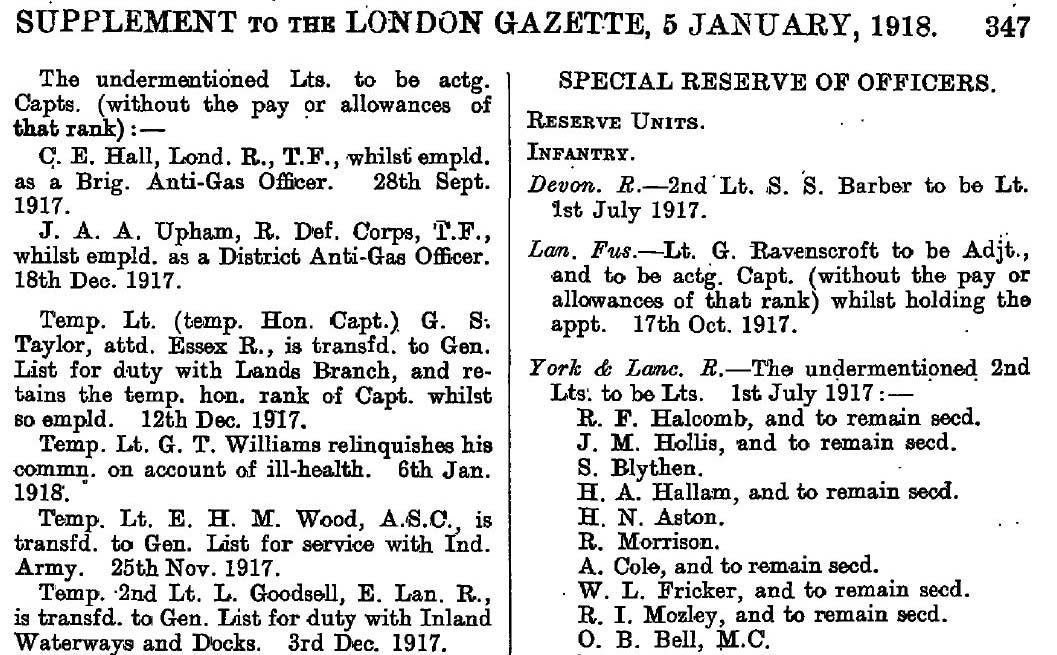
Richard was a Sergeant in the O.T.C. and, as such, was recommended for a commission in the Army both by Captain Hood and by the Headmaster, Dr G.S.Turpin.  Richard had already applied himself to the O.T.C. of the 3rd Battalion of the Sherwood Foresters, but they were already vastly oversubscribed, and he duly joined the 3rd York & Lancaster Regiment.

Capture gazette mozley aaaaaaa

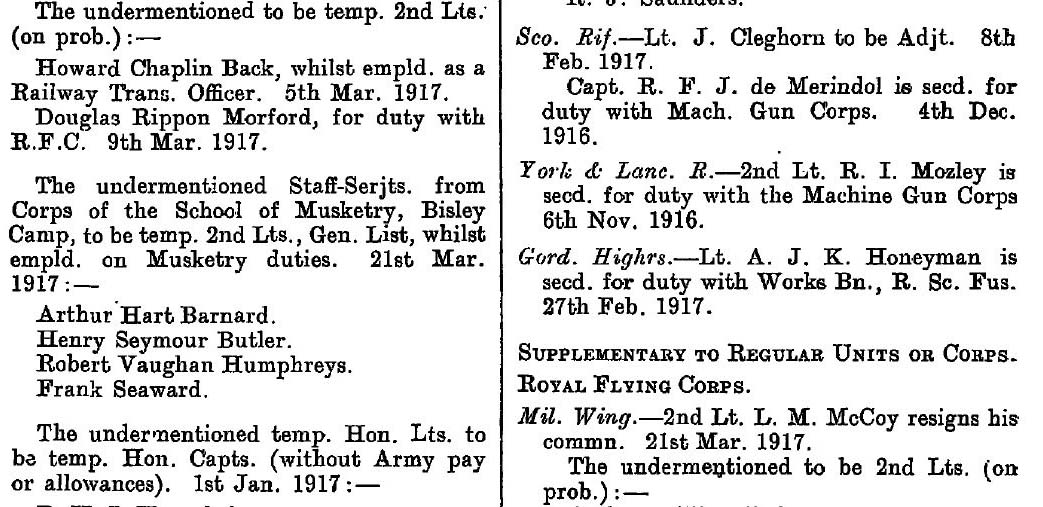
He was then attached to the 36th Battalion of the Machine Gun Corps (Infantry):

Capture gazette mozley 2  zzzzzz

During the course of “Operation Michael”, the Germans’ last do-or-die effort to win the war before the Americans began to influence the outcome of the conflict, Richard’s unit was assigned to defend the Forward Zone. Richard himself was stationed in the forward trenches, but he and his colleagues were quickly overwhelmed by the sheer weight of numbers of the enemy. They perished more or less to a man.

mozley_1 xxxxxxxxxxxxxxxxxxxxxx

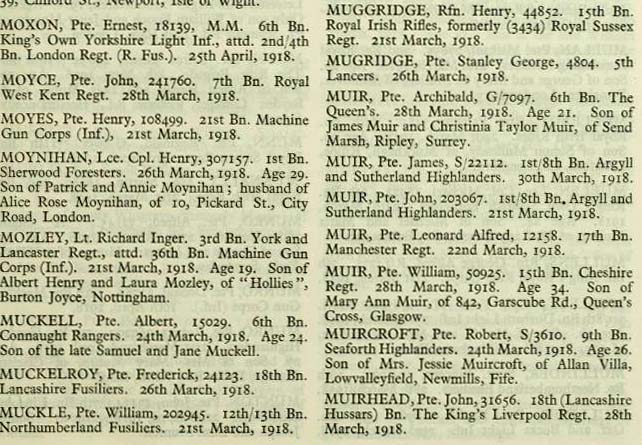
Richard was listed as missing, presumed killed, on March 21st 1918. At the time he was nineteen years of age:

capture mozley cvbnm

By the time he died, he was living in Hoveringham and his parents remained at the “Hollies”, Burton Joyce. In due course, a letter arrived from Sergeant Crenston:

“When Lt. Mozley came back to the Coy. in Dec. last, he took charge of “A” Section and I being the section Sgt. was nearly always with Mr. Mozley and when in the line that terrible morning 21st March Mr. Mozley, myself and about 19 others were in the same position and dugout, the most forward position of the Division, 4 guns with us; at about 4:30 the barrage started. We were being pounded most cruel with gas and high explosive shells but we stuck it till about 9 when your son was hit …… a piece of shell penetrated Mr. Mozley’s right breast …… I helped to bandage your son and asked him to get down to the dressing station a short distance away (it was a nasty wound and it would have got him home) but no, he refused to go, saying I will see it through Sergeant.”
“Now this splendid spirit and example inspired us all and setting our teeth we all determined to stand by to the end …… The first indication we got of the German approach was a death scream from one of the boys and after that my memory is nearly a blank for we all seemed to work by machinery, Mr. Mozley and self took up positions with revolvers and did our best, we were however surrounded by the Germans, a bomb or shell burst amongst us and I found myself with a wound in the back feeling dizzy”.
“Now as to what happened to your son I cannot say”.

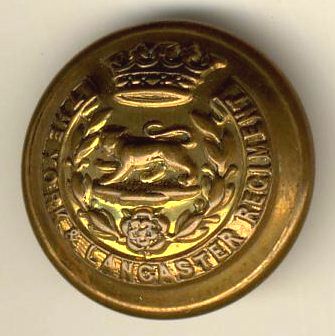
Richard has no known grave and is remembered on the Pozières Memorial. This was one of his buttons:

button mozley

John Roberts Coleman was the son of John Bowley Coleman and Florence Annie Coleman of 29, Derby Grove, Lenton Sands, Nottingham. His father was a schoolmaster. John was born on April 16th 1899 and he entered the High School on September 23rd 1909 at the age of ten. He was a Foundation Scholar in both 1911 and 1914. He left in July 1916 and became a Second Lieutenant in the Special Brigade of the Royal Engineers. In the era before antibiotics, he died of pneumonia in Tourcoing, after the end of hostilities, on November 26th 1918. He was only nineteen years of age, and this fresh faced young man had seen so very little of the world beyond mud, blood and death.

coleman zzzzzz
He is buried in Pont-Neuville Communal Cemetery in Tourcoing.

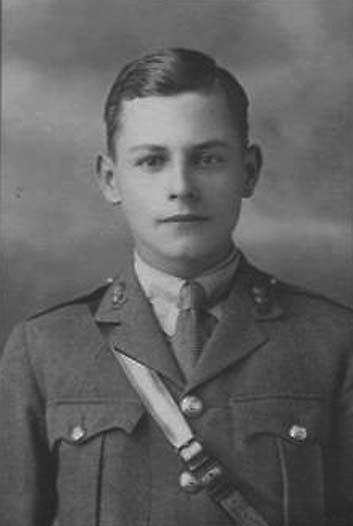
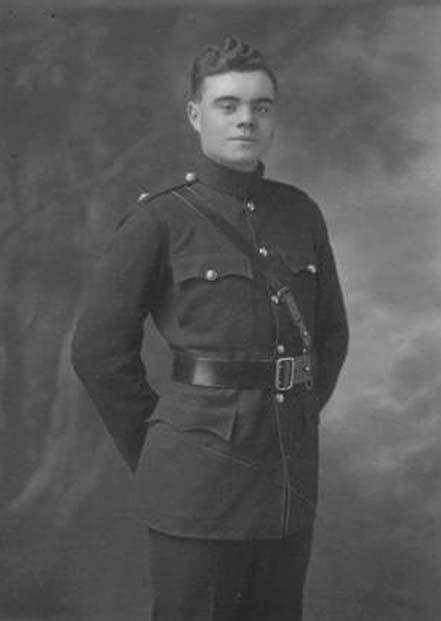
Donald James Clarkson was born on May 11th 1899. He was son of James Clarkson, whose occupation was listed as “a manager”, and his mother was called Alice. The family lived at “Wyndene”, which is now Number 52, Caledon Road, Sherwood. He entered the High School on September 23rd 1909, at the age of ten. He was always known by his many friends as “Pug” because of his upturned nose.

clarkson zzzzzzz

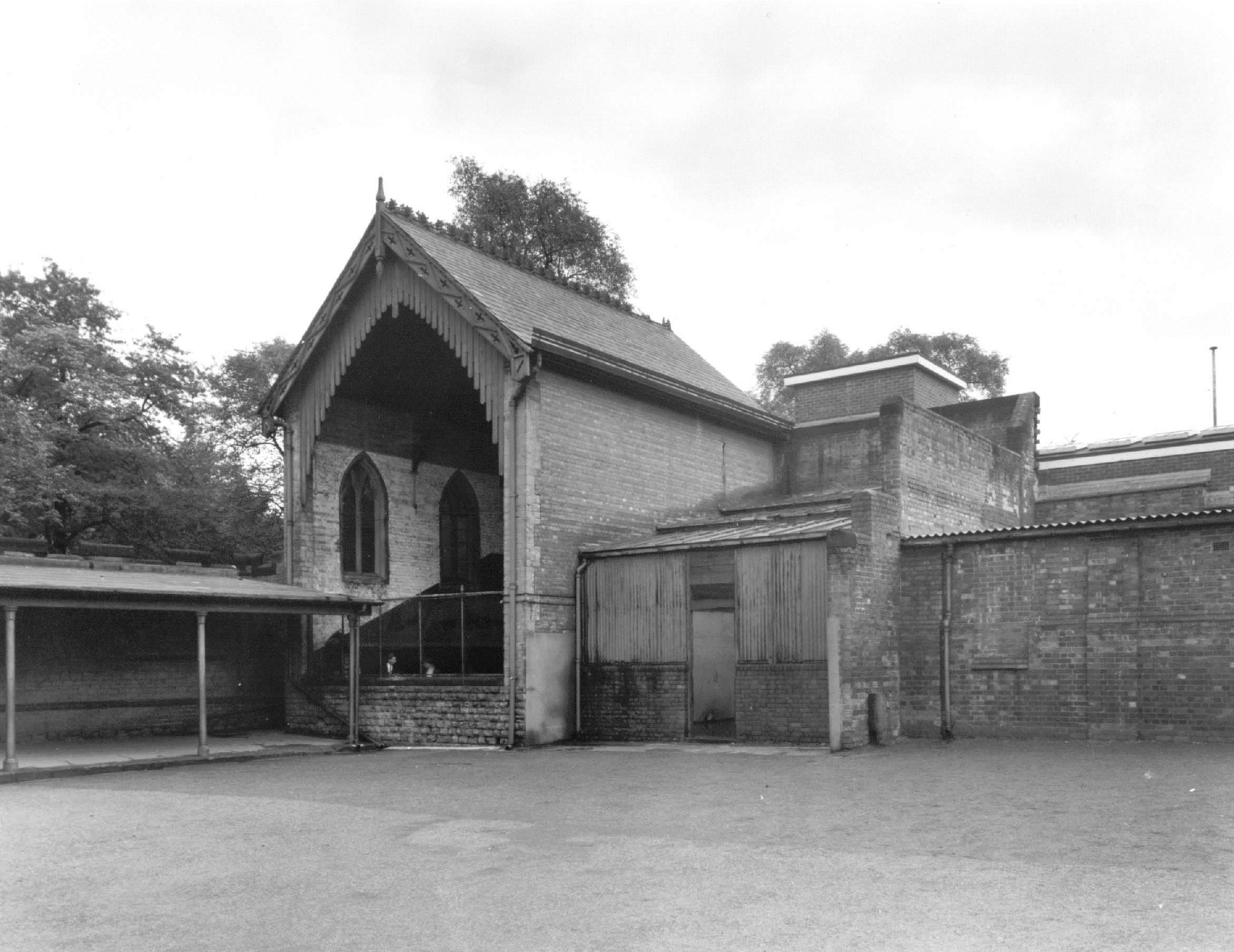
Donald played for the Football 1st XI as a goalkeeper during the last ever term of the sport at the High School. He was a replacement for Roy Henderson, who, by his own admission “..did horribly.., conceding eight goals… for the First Team in an away game at Trent College.” Both of them were in the Fifth Form, Year 11, at the time. In one unrecorded year, Donald was also the High School Fives champion. This is the Fives Court, which was demolished during the 1980s.

best fives

The only other specific mention of him that I have been able to find is in a rather surreal report about a meeting of the Debating Society on Saturday, February 27th 1915, when the school magazine stated that “Mr.Barber was glad Mr.Clarkson had a long arm.” Perhaps you had to be there.

Donald left in December 1915, and then seems to have gone to University College, Nottingham where he immediately joined their Officer Training Corps. After that, he went to the Royal Military Academy at Sandhurst where, in his passing out examination in early 1918, he was placed first of all the candidates in the college and was awarded the King’s Sword and the King’s Medal.

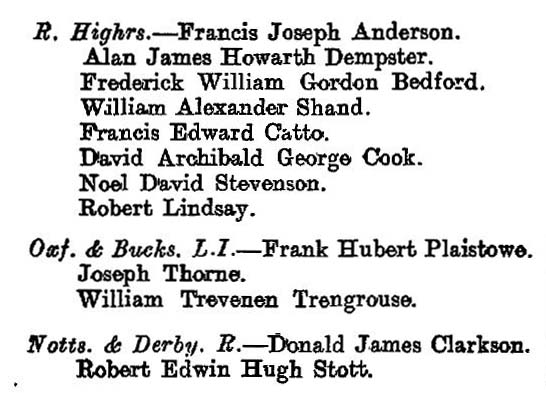
On April 23rd 1918, Donald became a Second Lieutenant in the 1/6th Battalion of the Sherwood Foresters.

Capture commission clarkson

Just four months later, Donald was killed in action on August 9th 1918.  He is buried in Fouquières Churchyard Extension in France.  This cemetery is in the village of Fouquières-les-Béthune, about one kilometre to the south-west of Béthune in the Pas-de-Calais.

clarkson grasveyard

Donald’s death is commemorated on the memorial of University College, Nottingham’s Officer Training Corps as well as the High School’s war memorial.

Like the two other casualties in the photograph of the OTC, he was just nineteen years of age.

I was a teacher in the High School for thirty eight years. Neither there, nor in the rest of my life, do I ever recollect knowing anybody who was called “Clarkson”. On the Commonwealth War Graves Commission website, a simple search for any casualty with the surname “Clarkson”, in the Great War, in the Army, yields 226 results.

8 Comments

Filed under Aviation, Football, France, History, Nottingham, Politics, The High School

“The Last Farewell” sung by David Clifton, B-17 Pilot

In the comments section for this video, Nick Dawson of Texas says that it is “awesome”. He is right.

David Clifton, a B-17 pilot in World War Two sings his own version of an old song. I believe that the video was made to mark Mr Clifton’s 90th birthday in 2010.

Enjoy.

By the way, I have no wish whatsoever to tread on anybody’s copyright toes in this short article. I just think that Mr Clifton and his very moving song deserve a very wide audience indeed. The clip was originally uploaded by BahamasDave1, and for those interested in a first-hand account of B-17s during the war, Lt. Colonel Clifton’s oral history, prepared by Charles Riley, provides detailed recollections. The tapes and transcripts are available at Florida Atlantic University Library, Mighty Eight Air Force Museum in Savannah, and the Library of Congress.

Riley, Charles. Oral History Interviews of Lt. Colonel David S. Clifton, USAF Retired, June 12th-July 26, 2001. Florida Atlantic University, Boca Raton, Florida, 19 April 2004.


16 Comments

Filed under Aviation, History

Seven graves to Penzance

If you cast your minds back what seems now a very long time, my continuing researches about the German bomber shot down in St.Just in western Cornwall on September 27th 1942 , had led me to the cemetery in Penzance. I have already spoken about some of the graves to be found there, and this article continues that theme.

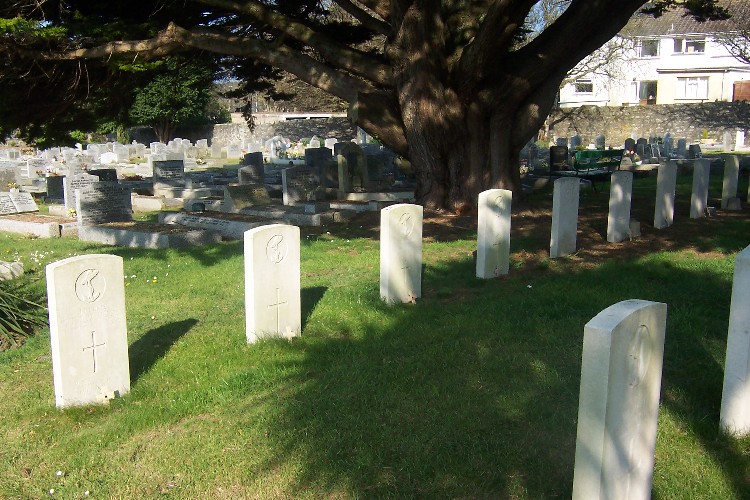
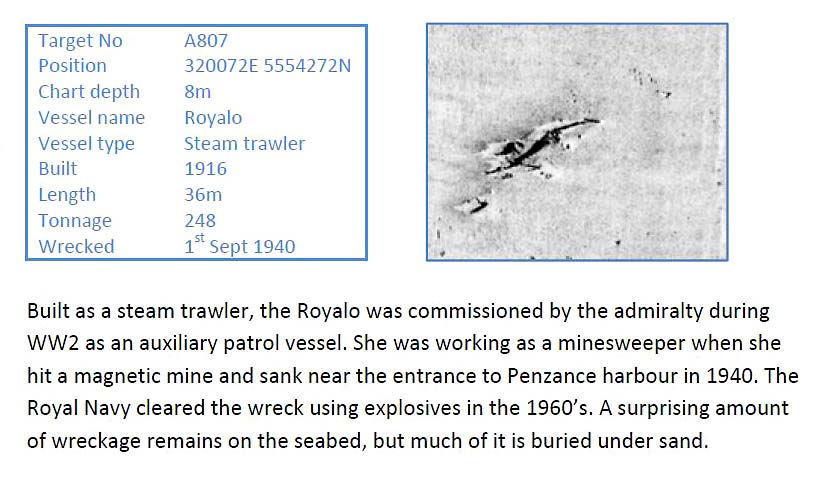
This beautiful, tranquil place contains seventy one Second World War burials, including the six graves of the crew of H.M.Trawler “Royalo”:

Royalo_Crew_04_Penzance

They were killed when their vessel was sunk by a magnetic mine on September 1st 1940 just outside Penzance Harbour, around one mile from the seafront. The orange arrow gives the approximate position:

This slideshow requires JavaScript.

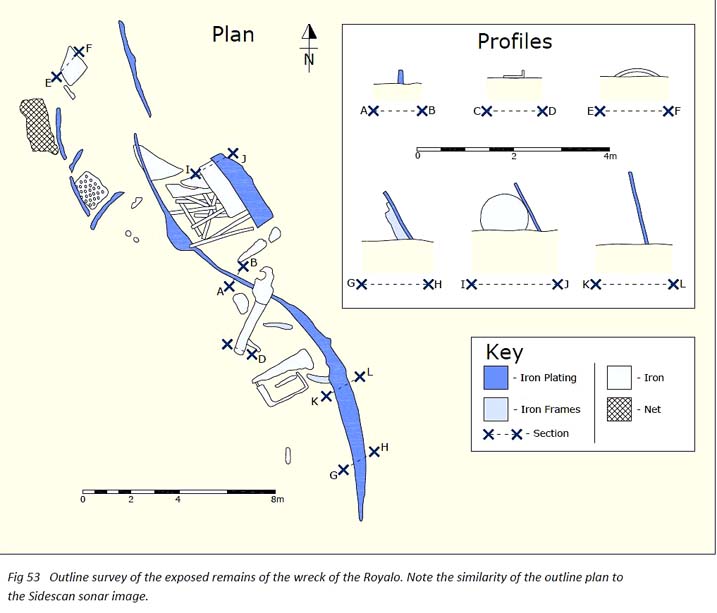
The “Royalo” was built by Cook, Welton & Gemmell of Beverley, Yorkshire, and was launched on December 6th 1915, being fully completed by August of 1916. I have been unable to trace any photographs of the vessel. A ship of only 248 tons, when the Great War broke out, it was immediately requisitioned and converted into a minesweeper. After the end of the Great War, in 1919, it was returned to its owners. In 1933 the ship passed into the ownership of Sleight & Humphrey of Grimsby, only for it to be requisitioned for a second time in November 1939, just after the beginning of the Second World War. This time it was converted into an APV, an “Auxiliary Patrol Vessel”. In 1940, the vessel was converted for the second time into a minesweeper and given the serial number of FY825. It was armed with just one six pounder anti-aircraft gun.
A short but very vivid account of the ship’s sinking is given on the “Hearts of Oak” website:

“The “Royalo”, under Commanding Officer, Skipper William Durrant Warford RNR, was sweeping Mount’s Bay clear of mines which had been previously laid there by a German aircraft. Around midday, there came the sound of a huge explosion, which was easily heard in Penzance. My brother-in-law remembers, as a child, hearing the sound of an enormous explosion. He ran out of the house, and down the road, to see nothing but a pall of smoke; there was no sign of the vessel. She had been blown up by a magnetic mine, and a column of water had lifted her out of the water.
And she was gone.
The Penzance lifeboat was launched, and small boats came to the rescue of the survivors.
The “Royalo” had sunk in position 50.06N : 05.30W, about one mile off Penzance.”

On at least one other website, Lieutenant Irvine Willox Watt is given as the Commanding Officer.

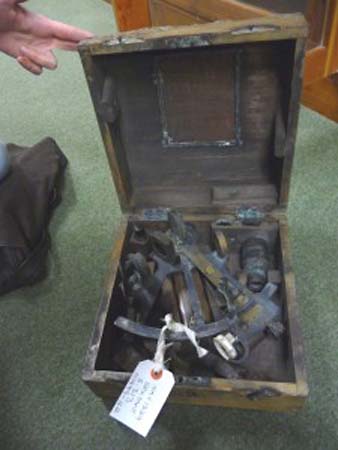
Given the dramatic way in which the “Royalo” had met its end, its position remained well known over the years to the people of Penzance. In 1962 a group of divers explored the wreck, which lay some ten metres below the surface. They were able to recover a wooden box. It turned out to contain a sextant, which is a navigational aid. This particular one was manufactured in 1939 by the celebrated Hughes & Son Ltd. of London. The Royal Museum at Greenwich acquired the sextant at some point during the 1970s:

sexrant

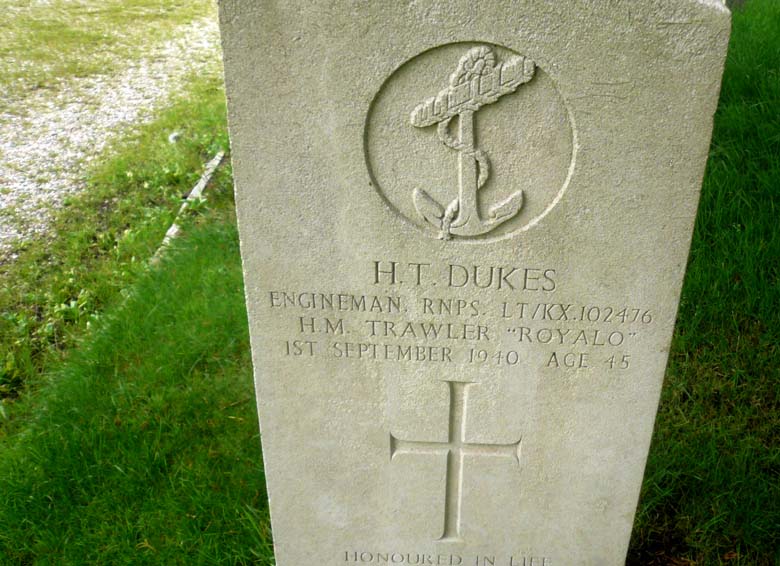
Of the casualties buried in Penzance Cemetery, Henry Thomas Dukes was an Engineman in the Royal Naval Patrol Service who was forty five years of age at the time of his death:

P1500286XXXXXX

He was the husband of Ellaline Isabell Dukes of Grimsby, Lincolnshire. The rather bittersweet verse inscribed on the lower section of his gravestone reads…

Honoured in life
Treasured in Death
A Beautiful Memory
Is all we have left.

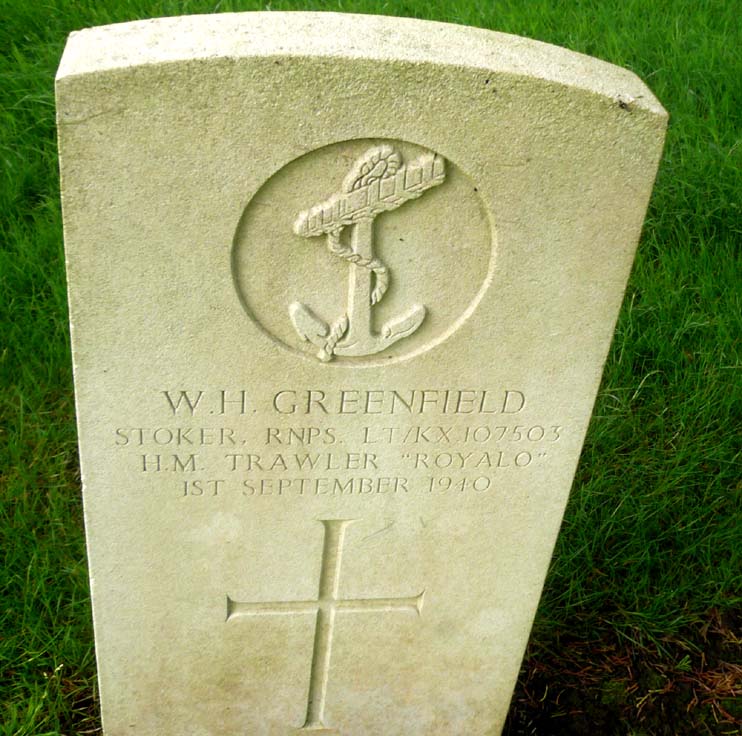
William Henry Greenfield was a Stoker in the Royal Naval Patrol Service. His age at the time of his death has not been recorded, and I have been unable to trace any further details about him:

P1500288XXXX

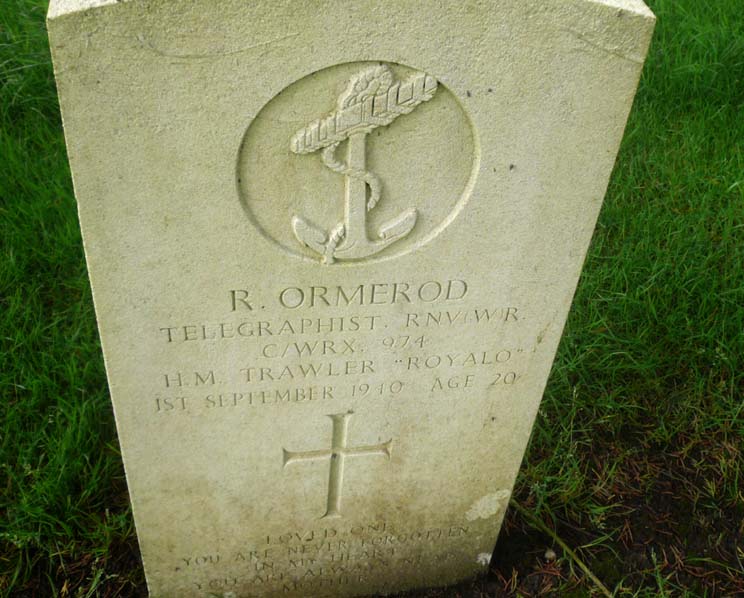
Raymond Ormerod was a Telegraphist in the Royal Naval Volunteer (Wireless) Reserve and was twenty years old at the time of his death:

P1500244 XXXX

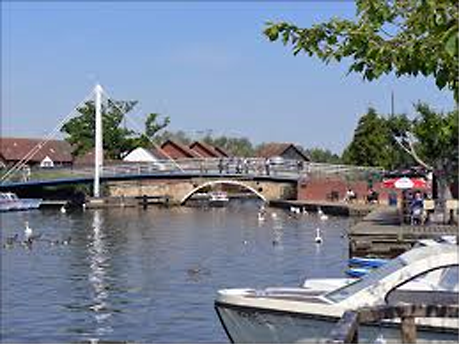
He was the son of Reginald and Octavia Ormerod, of Wroxham, Norfolk:

weoxham

His mother had the following verse inscribed on the lower section of his gravestone:

Loved one
You are never forgotten
In my heart
You are always near
Mother

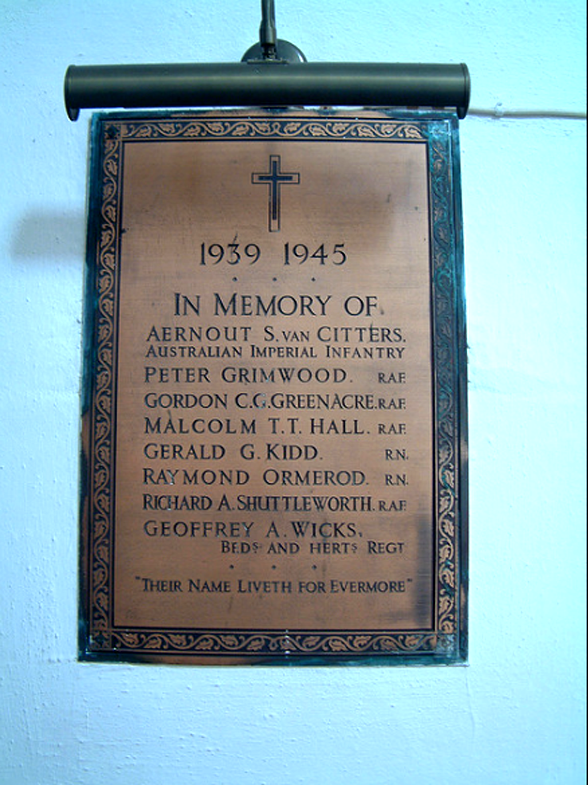
Raymond is listed on the memorial plaque in the Church of St Mary the Virgin in Wroxham:

wroxham church

He also appears on the town’s War Memorial:

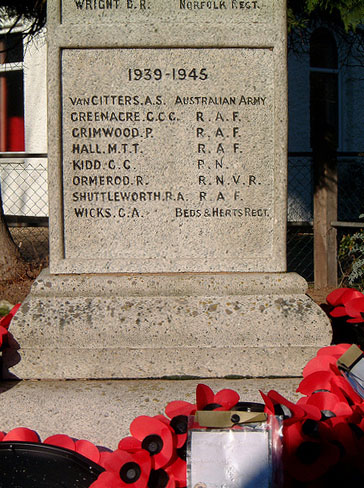
wroxham xxxxxxxxxxx

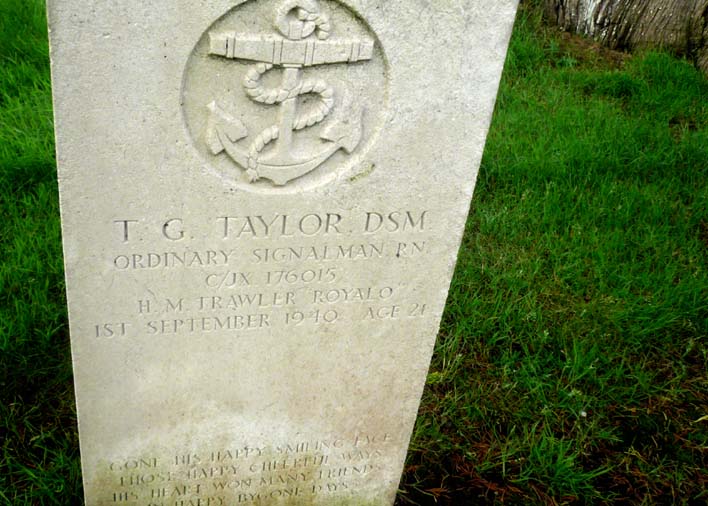
Thomas Gardner Taylor was an Ordinary Signalman in the Royal Navy who was twenty one years of age at the time of his death:

P1500296XXXXXX

He had already been awarded the Distinguished Service Medal. He was the son of Thomas Gardner Taylor and Hannah Ann Taylor, of High Heaton, Newcastle-on-Tyne. The verse inscribed on the lower section of his gravestone reads:

Gone his happy smiling face
Those happy cheerful ways
His heart won many friends
In happy bygone days

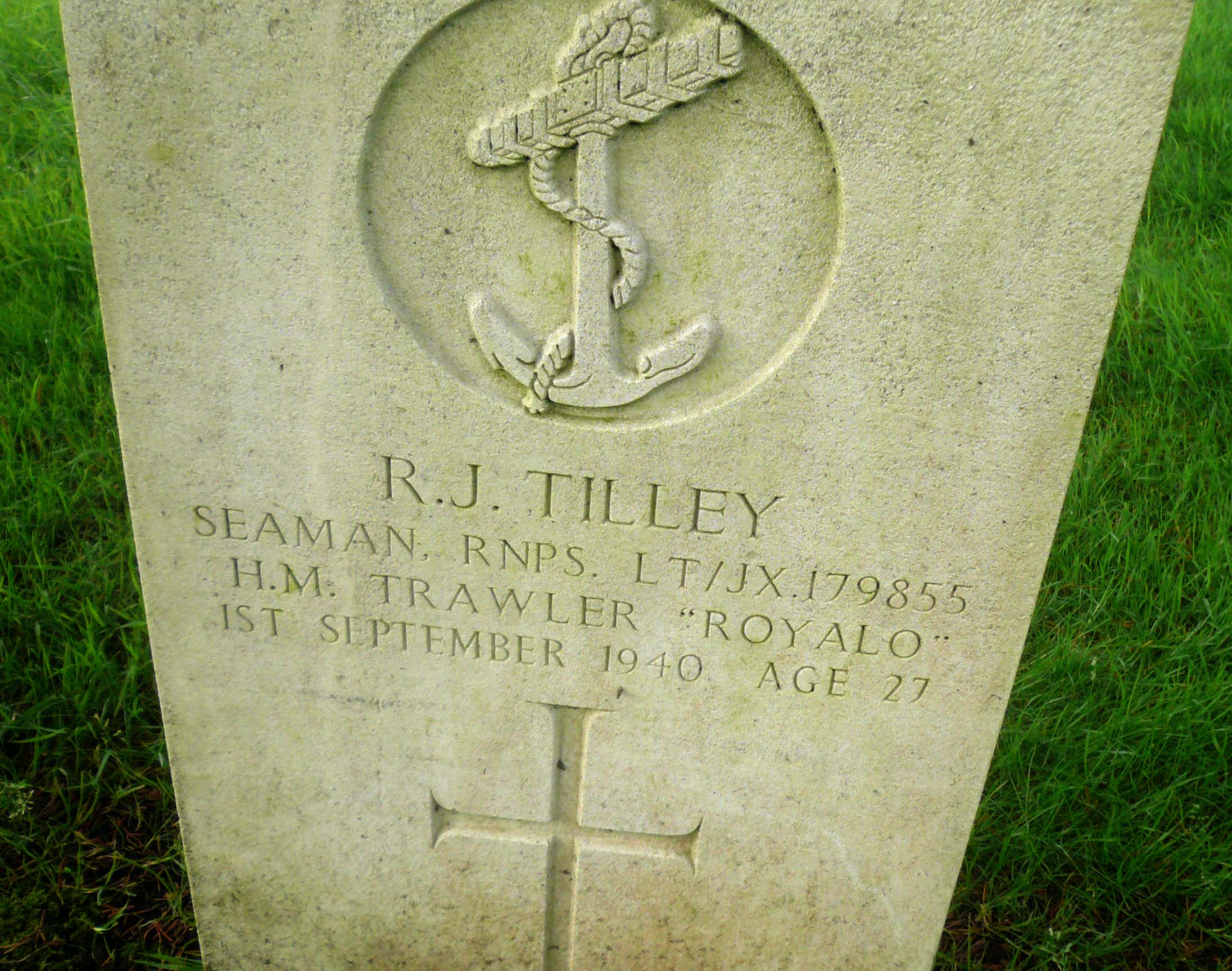
Robert John Tilley was a Seaman in the Royal Naval Patrol Service who was twenty seven years of age at the time of his death:

P1500297XXXXXX

The verse inscribed on the lower section of his gravestone reads…

No one knows
How much we miss him
None but aching hearts
Can tell
Mum and Mary

Robert John Tilley’s sacrifice is commemorated on the Memorial of the Whitstable Royal British Legion Club in Kent.

legion

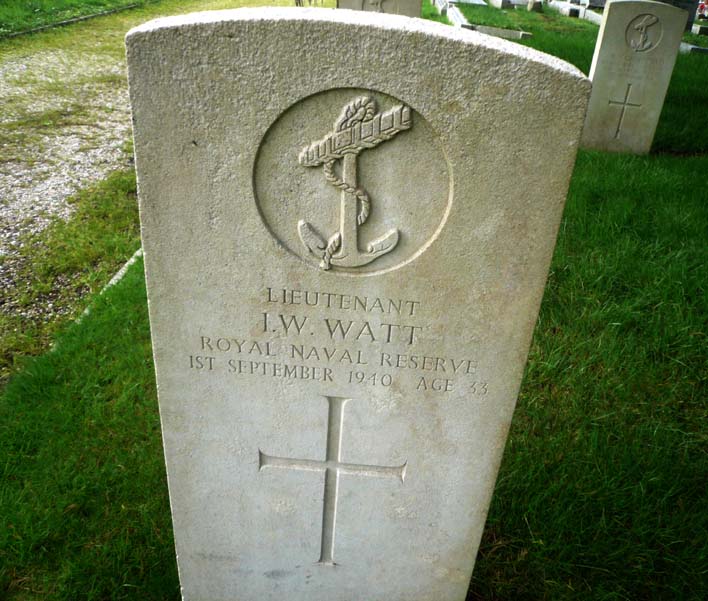
Irvine Willox Watt was a Lieutenant in the Royal Naval Patrol Service who was thirty three years of age at the time of his death.  He was the son of G. Fieldes Watt and Jean Fieldes Watt, of Kensington, London.

P1500319XXXXX

Of the tiny crew of the Royalo, at least one is not buried here in Penzance, Sam Lockwood-Dukes was the son of Samuel and Emily Lockwood-Dukes, of Worsborough Bridge in distant South Yorkshire.  He was twenty two years of age when he was killed. He was not buried with the rest of his naval family in Penzance, as his parents no doubt wanted to be able to place flowers on his grave regularly, so he was interred in Saint Thomas Church Cemetery in Worsborough Dale.
Because of the nature of the incident, however, not all of the casualties were found.
One of these was Engineman Robert William Edward Grant Burgoyne who was an amazing sixty four years of age at the time of his death. He was the son of Robert and Sarah Burgoyne and the husband of Rosina Burgoyne. They all lived in Willington Quay, Northumberland. His sacrifice is commemorated on the Royal Naval Patrol Service Memorial at Lowestoft:

lowestoft_mem2xxxxxxxxxxxxxx
Second Hand Leonard Rye was in the Royal Naval Patrol Service. He was twenty six years of age at the time of his death and a holder of the Distinguished Service Medal. He was the son of Charles John and Clara Louise Rye and the husband of Florence Lilian Rye. They all lived in Hull in East Yorkshire. His sacrifice is commemorated on the Royal Naval Patrol Service Memorial at Lowestoft:

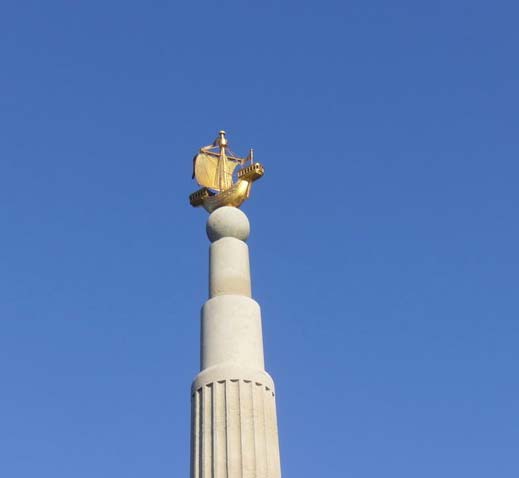
galleon

Engineman Jim Walker Pitts was twenty eight years of age at the time of his death. He was the son of Mr and Mrs James Pitts and the husband of Joan Agnes Norah Pitts. They all lived in Great Yarmouth, Norfolk. His sacrifice is commemorated on the Royal Naval Patrol Service Memorial at Lowestoft:

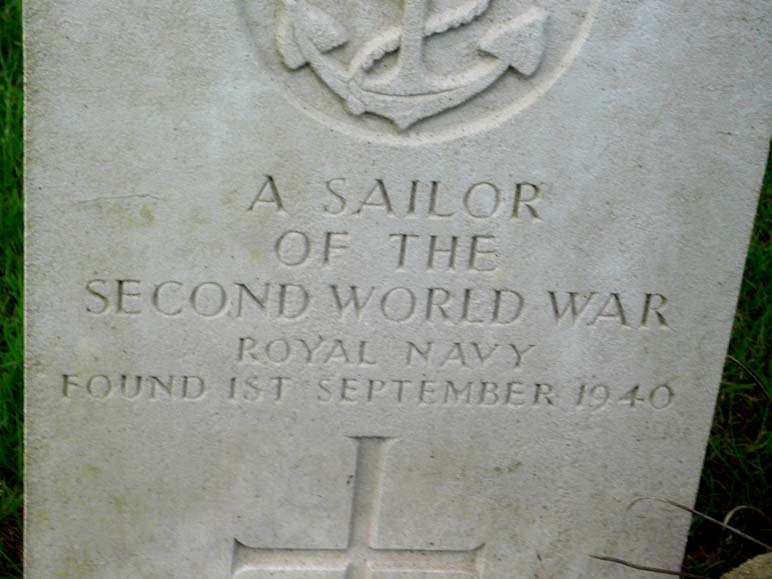
Surely one of these gallant seamen must be in this grave, whose date is the same, as the “Royalo”…

P1500241XXXX

I said that I had been unable to trace a photograph of the unfortunate “Royalo”. That is true, but I did find this…

Capture

And this…

Capture 2

 “Full fathom five thy father lies;
Of his bones are coral made;
Those are pearls that were his eyes:
Nothing of him that doth fade,
But doth suffer a sea-change
Into something rich and strange.
Sea-nymphs hourly ring his knell:
Ding-dong.
Hark! now I hear them—Ding-dong, bell.”


13 Comments

Filed under Aviation, Cornwall, History

A Life on the Ocean Wave

After doing my researches on the German Dornier Do. 217E bomber which was shot down in St.Just in western Cornwall, I tried very hard to find the graves of the crew. It seemed likely to me that, whatever side they might have been on in the conflict, they had probably been interred a very, very long way from their homes and families. After failing to find their graves in the two cemeteries at St.Just, I visited the cemetery at Penzance.

The dead crew members of the Dornier bomber were not in that particular cemetery either, but I did find a great many other graves from the Second World War.

This slideshow requires JavaScript.

And at the time, I was forcibly struck by two things. First of all, the majority of the dead were from ships, completely unlike, for example, the cemetery where my father is buried in South Derbyshire. Here more or less all the war casualties are from the Army or possibly, the RAF. Secondly, I became very aware of the discrepancy between what we do and say on Armistice Day, and what dreadful fates have befallen the people who are buried in these graves. We all wear our poppies, and dutifully pledge that “At the going down of the sun and in the morning, we will remember them.” yet I am very sure that we don’t, despite all our best intentions.
The poor people in those graves in Penzance Cemetery no longer have any life whatsoever, thanks to their decision to join up and serve their country. They hit a brick wall in time, sometimes known precisely down to the very minute, and then no more. And they weren’t anonymous. They all had their own lives just like we do now, with families, girlfriends, wives, beer to drink and Christmases to celebrate.

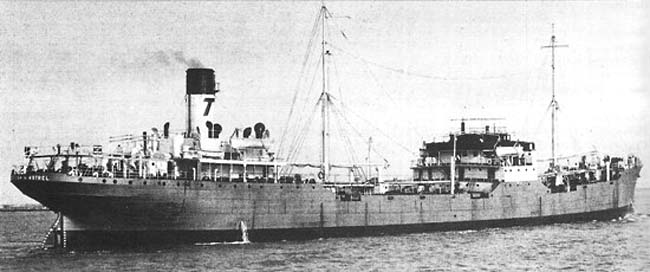
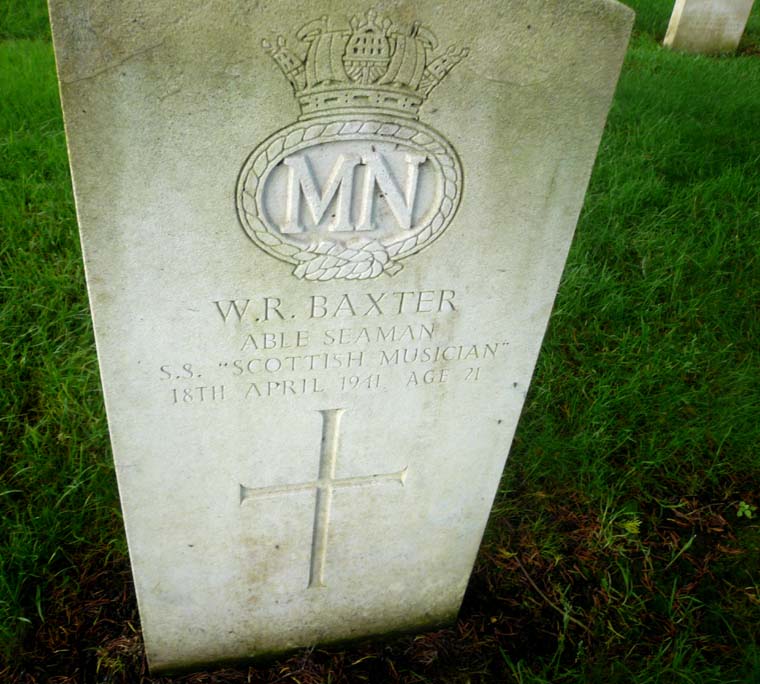
William R.Baxter was an Able Seaman on the Merchant Navy ship, the S.S.Scottish Musician which was a motor tanker of just under seven thousand tons, registered in London. The ship was to survive the war, but William R.Baxter was not.

scottish_minstrel

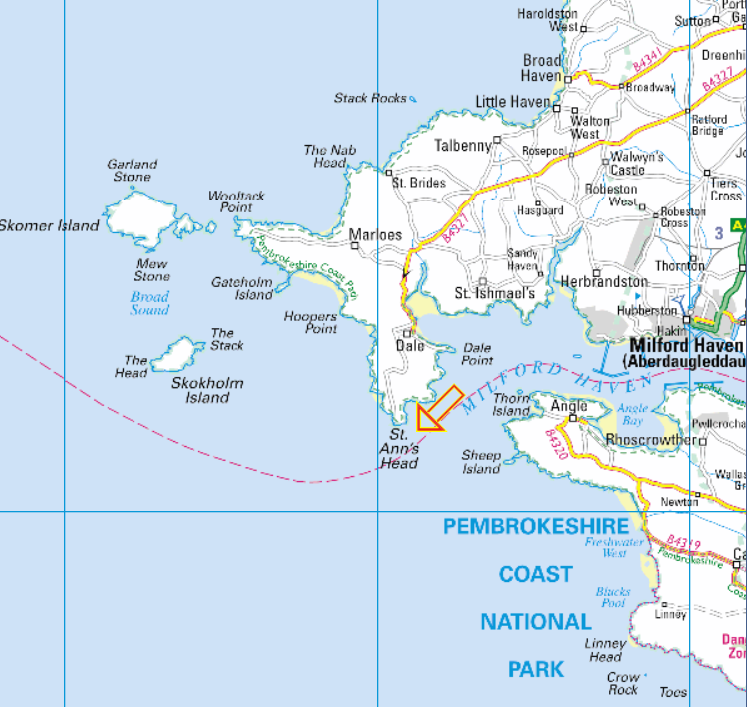
On Friday April 18th 1941, the Scottish Musician was damaged by aircraft bombing at a position some three miles from St. Ann’s Head on a bearing of 205°. St. Ann’s Head is the extreme south western tip of Pembrokeshire in south west Wales.

annd head

William Baxter was the only casualty. He was just twenty one years of age. William was the son of Richard George Baxter and Ruth Baxter of Penzance and the husband of Beatrice Joy Baxter.
P1500250xxxxxThe Scottish Musician was consequently further damaged on January 5th 1942 when she hit a mine at position 52° 16’ N, 01° 59’ E, which is near the port of Harwich in Suffolk in East Anglia. This resulted in the death of the twenty year old cabin boy, Albert Henry Jones. Albert is buried in Canada in the “Notre Dame des Neiges” Cemetery in Montréal.
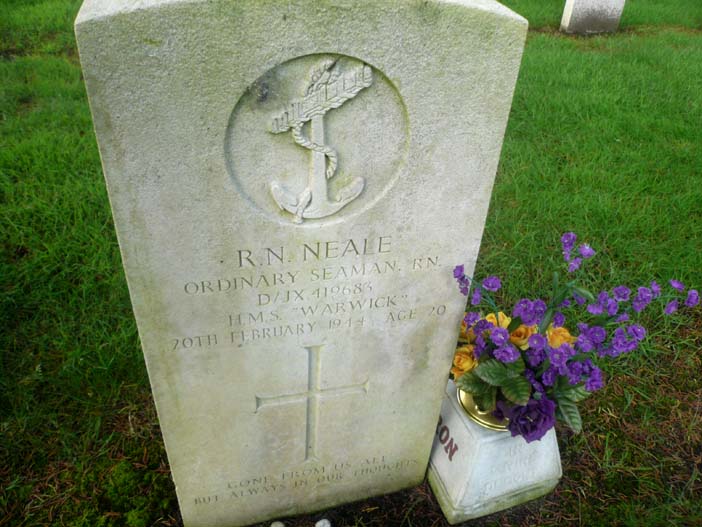
P1500256XXXXXXXRonald Norman Neale was an Ordinary Seaman. He served on board HMS Warwick which was an Admiralty ‘W’ class destroyer. Young Ronald was only twenty years of age when he was killed, on February 20th 1944. He was the unmarried son of James and Linaol Neale of Grove Park, London. On his grave, his grieving parents have had inscribed “Gone from us all, but always in our thoughts”, as Ronald no doubt was for the rest of their lives. On the day that I visited, there were flowers on his grave, conceivably from one of his aging siblings perhaps, or possibly his nephews or nieces.

dwm-1-u-boat-death-trap-HMS-Warwick (2)

HMS Warwick was itself only twenty seven years old, having been launched in 1917. As “D-25” she participated in both the First and Second World Wars, before she was torpedoed and sunk on the day that Ordinary Seaman Ronald Norman Neale was killed. From July to November 1943, she had been in the Bay of Biscay on anti-submarine duties, as part of the RAF Coastal Command offensive. In November she participated in Operation Alacrity,  helping to set up and supply Allied air bases in the Azores.
Having returned to Britain in January 1944,, HMS Warwick was tasked with leading an escort group operating in the South Western Approaches, guarding merchant ships against surprise attacks by German E-boats. The destroyer was patrolling off Trevose Head just north of Newquay on Cornwall’s northern coast when she was torpedoed by the U-413. At the time, HMS Warwick  was under the command of Commander Denys Rayner. The warship sank very quickly, in just a few minutes, with the loss of over half her crew.
The U-413 had been launched on January 15th 1942, and was commanded by Kapitänleutnant Gustav Poel, who, unlike the vast majority of German submariners, was to survive the war.

This slideshow requires JavaScript.

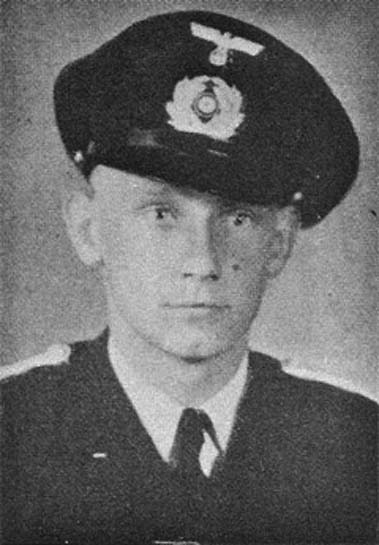
As well as the Warwick, the U-413 was an extremely successful submarine which sank five merchant ships amounting to a total tonnage of 36,885 tons. By August 20th 1944, the U-413  was  commanded by the 26 year old Oberleutnant Dietrich Sachse.

sasche_dietrich

On this summer’s day, though, the U-413 was sunk in the English Channel to the south of Brighton, by depth charges from the British escort destroyer HMS Wensleydale and the destroyers HMS Forester and HMS Vidette. Forty five members of the Kriegsmarine were killed, including the fresh faced young Captain.  Only one member of the crew survived. His name is not recorded but it is thought unlikely to have been Ishmael. Oy vey!

6 Comments

Filed under Aviation, Cornwall, History

The Luftwaffe comes to Cornwall (and stays there)

For many, many, years, we have spent our summer holidays in Cornwall, in the very westernmost part, which is called Penwith, and where the major town is Penzance, the birthplace of the pioneer chemist, Humphry Davy. Ten miles or so to the north west of Penzance is the even smaller town of St Just. Just look for the orange arrow:

This slideshow requires JavaScript.

In the nineteenth century, there were any number of tin mines around the town, which is made up for the most part of stone buildings with slate roofs.

This slideshow requires JavaScript.

It has a beautiful ancient parish church with its centuries old frescoes of Christ and St.George.

This slideshow requires JavaScript.

There is also the old battleflag of an old Great War battleship.

aaaaa50478

Nearby is the medieval “Plen an Gwarry”, which is a small area of open grass, used for watching plays or sporting contests or perhaps just for relaxation.

ab5

As you relax, you might want to eat a pasty or a pie from Mcfaddens, who are often quoted as making the best Cornish pasties in the world. The day I took these photographs, they had sold out. Fortunately, they do mail-order, although the pasties will not always be piping hot.

This slideshow requires JavaScript.

St Just also hosts its popular Lafrowda Festival, a community and arts celebration that lasts for seven days.

There is the old bank, with its many changes of owner and cryptic lettering.

P1330533xxxxxxxxxxxxx

More subtly famous is the Wesleyan Methodist Chapel which was built in the first half of the nineteenth century. It is an enormous stone building, and I remember reading somewhere that, as vast numbers of impoverished Cornishmen were forced to emigrate overseas, given its position so close to the cliffs of Land’s End, this building was usually the very last thing that thousands of emigrants saw as they set off towards the mines of the USA, Canada, Australia or South America.

This slideshow requires JavaScript.

Some of the very best and most spectacular cliff scenery is at either Carn Gloose or the nearby Cape Cornwall. This is the Brisons, a pair of storm battered sea stacks.

TT8 xxxxxxxxxxx

It was here that a very, very lost Steller’s Sea-lion lived in the late 1980s and 1990s. It should have been living in Eastern Siberia or Western Alaska.


Every time that I have ever driven down Cape Cornwall Road to look at the cliffs or to watch the fierce ocean storms, I have always looked up at the old Methodist School on the left, to check that the conspicuous gap on the ridge of the roof is still there.

This slideshow requires JavaScript.

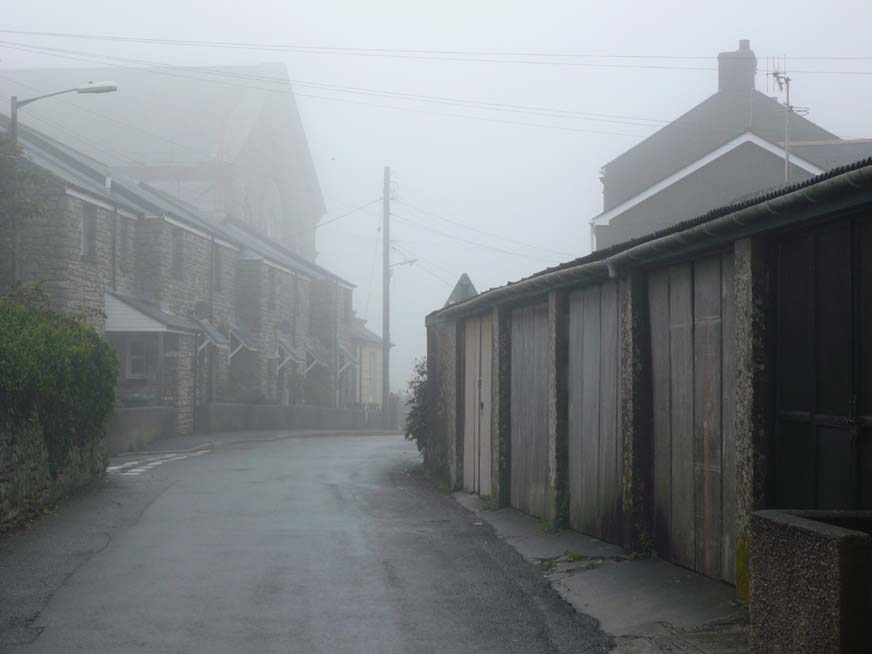
From a tourist leaflet that I read many years ago, I know very well that, during an air raid in the Second World War, this gap was caused by a German bomber in its last few seconds before it crashed into Chapel Road.

Do_217E-2_

This year I decided to research the story more extensively, so I called in at the library in St Just, where the helpful staff tried very hard to check any references to this event in the books of their Local Collection. They were unfortunately unable to find anything but, not for the first time I suspect, they contacted long time St Just resident, John Harry, who came round to the library straightway to recount the full story. Mr Harry told me that the events had taken place in the autumn or winter of 1942.

As a little boy, he was always very excited indeed when the St Just air raid warning was sounded, and he always had to be dragged very reluctantly up to bed. In their home in Chapel Street, the family had a simple home-made air raid shelter downstairs in the kitchen. It consisted for the most part of a rather robust kitchen table which, in theory, should be able to withstand the majority of shocks which an air raid might cause. On most occasions, though, John’s aging grandmother would refuse to get inside it, but instead, ostrich like, would merely stick her head underneath.

This particular night, they could hear distant gunfire, which gradually grew louder and louder. Some kind of aerial dogfight was clearly taking place, as they could all hear the noise of aircraft engines, machine guns and a series of explosions. Granny kept shouting “We’ll all be killed! We’ll all be killed!”, but her daughter replied, “Be quiet! Don’t keep saying that! You’ll frighten the child!”.

“The child” himself thought that it was all extremely exciting, and was clapping his hands in sheer glee. Suddenly, there was a huge crash. John shouted, “We’re winning! we’re winning!”. Auntie went upstairs to see what was happening. She looked out of the bedroom window. Below her, she could see flames down in the street. “All of Chapel Street is on fire!”, she shouted, “All St Just is ablaze !”

The stricken bomber had destroyed two houses, but fortunately, nobody was injured. The first house was owned by an old lady, but she had gone away to her daughter’s for a two week holiday.

The other house was a second home for the newly married Mr and Mrs Vague. (sic) They did not normally bother to use their air raid shelter, but on this particular evening, their cat had kept making a huge fuss, walking repeatedly backwards and forwards from the bedroom to the shelter. In an effort to keep the cat quiet therefore, the two of them finally moved down to the air raid shelter. From this place of safety, they were able to feel their house shaking as if it were an earthquake.

When it was safe to do so, both Mr and Mrs ran to the emergency shelter in the St Just Town Hall. All they possessed at this moment were their night clothes. In later years, though, of course, Mr and Mrs Vague would dine out regularly on the fact that they had had their lives saved by the cat.

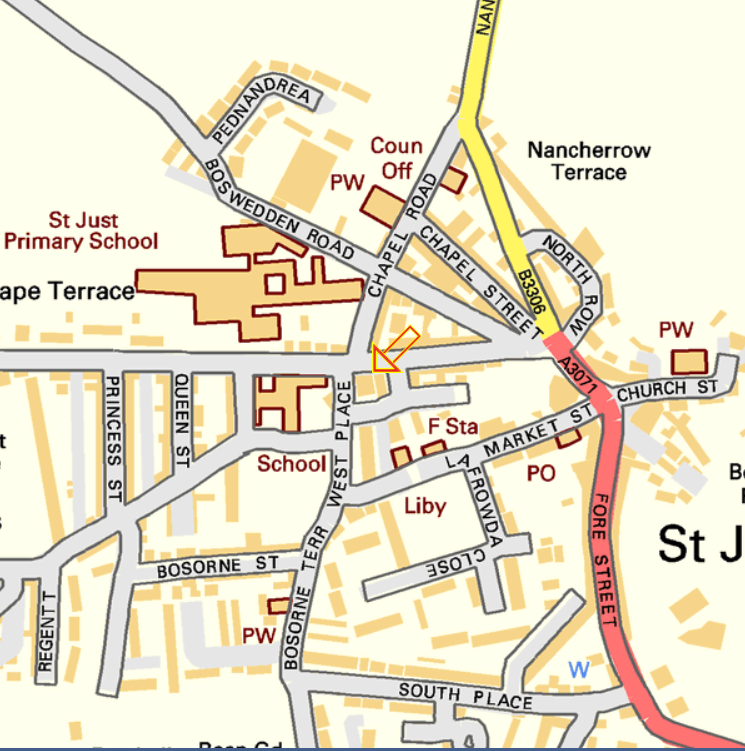
The next morning, more than half the town was cordoned off by the Home Guard. Hundreds of windows had been blown out by the explosions. On the Methodist School (look for the orange arrow), huge numbers of tiles had been knocked off.

street map

Fragments of the crashed plane were everywhere. In the nearby village of Kelynack, some mile and a half away, (see the previous map after Paragraph One), one member of the German crew had landed by parachute. He had a broken leg, and, a forlorn figure, he was duly arrested by Mr.Matthews, the owner of a small local farm. The rest of the crew, three men, sadly, were all killed.

In a house in Cape Cornwall Street, a woman stepped forward in the darkness to open the bedroom curtains. She tripped over a German’s dead body, which had been blown in through the window. A few days later, in another house in the town, a frightened woman was to find a German’s leg on the top of her wardrobe.

And for a very long time afterwards, John Harry was too frightened to leave his mothers’ side.

Even now, though, at nearly eighty years of age, John was still unaware of where the three dead Germans were buried. And seventy years ago, his mother had been equally unable to ascertain their final resting place. Equally unsuccessful was her friend, who was actually a member of the local Home Guard. Indeed, at the time, everybody in St Just was curious about where the dead Germans were. They kept asking the Home Guard, who always replied with the same “Dunno”. It was thought, however, that some of them did know, but they were just not saying.

My own researches have been equally unsuccessful. I was unable to find the Germans’ last resting place either in the cemetery at St Just, or in the war graves section of Penzance Cemetery. Subsequent inquiries, however, reveal that most German war dead at this time were taken to the German Cemetery on Cannock Chase, and that after the end of hostilities, many of them were then re-interred in Germany. Let’s hope so. It is certainly a very long way from the frequently wet, windy and misty West Penwith to whatever churchyard in Germany where they rightfully belong.

The two destroyed houses were never rebuilt. Instead they were replaced by a row of garages. When the foundations for these buildings were being dug, the workmen found Mr.Vague’s gold watch.

P1330546  yyyyy

Amazingly, this was not the only air raid on tiny St Just. On another occasion, the Luftwaffe bombed Holman’s Foundry, which produced munitions for the Allied Forces, down in the Tregeseal Valley. Ironically, Mrs Holman had herself been born in Germany. She had originally come over to England around 1900 as a governess, and then married into a local family.

This particular bombing attack was actually mentioned in one of his broadcasts by Lord Haw Haw. He said, in very sinister and threatening fashion, “Don’t think we have forgotten you, St Just. You have not been forgotten.”

williamjoyce_2041800i

The foundry’s owner, Ken Olds, lived in a house right next to the foundry. At the height of the bombing raid, when the grandparents went to look for the baby, they found that he was no longer in the bedroom. In actual fact, he had been blown out of the window, and they found him in the front garden. He was still in his cot, fast asleep and completely unharmed. Nearby houses had lots of cracks caused by the explosion of the bombs. In later years, this seems to have led to large scale subsidence, and all of the houses eventually had to be demolished. So too the foundry itself had to come down, and it was replaced by a housing estate.

I was genuinely surprised that after seventy years that it was still possible to talk to an eyewitness of all these amazing events. I will never forget my afternoon spent in the company of John Harry. He is a most charming man, and an amazing source of knowledge of the St Just area, the people who have lived there, and the people who live there still.

Subsequent, subsequent, subsequent researches on the Internet have now revealed the excellent website of Shauney Strick whose hobby is “The History of World War 2 in Penwith, Cornwall:Uncovering the evidence with a metal detector”.

metal detrector zzzzzzzz

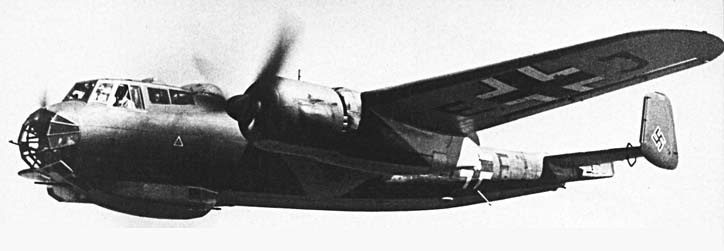
With his metal detector, Mr.Strick recently uncovered several small parts of a Luftwaffe aircraft buried in West Place, St.Just. (see street map above). The various objects of wreckage were from a Dornier Do. 217E, aircraft U5+1H of 1Staffel KG 2, which had crashed on September 27th 1942 as it made its way towards Penzance, after being pursued and shot down by a Bristol Beaufighter Mark IF of 406 Squadron from RAF Predannick. The Beaufighter was  flown by Squadron Leader Denis Chetwynd Furse with Pilot Officer John Haddon Downes as his radio operator.  

Dornier-Do-217E2- zzzzzzz

One additional detail was that one of the diesel engines from the stricken bomber flew an enormous distance before smashing through three garden walls in West Place. 

As I mentioned above, my search for the final resting place of the Luftwaffe bomber’s crew led me to Penzance Cemetery, where, although I did not have any success with the Dornier, I did find that the World War II graves there had some very interesting, and very, very sad tales to tell. But that, as they say, is for another time.


23 Comments

Filed under Aviation, Cornwall, History, Humour

The Cadillac of the Skies


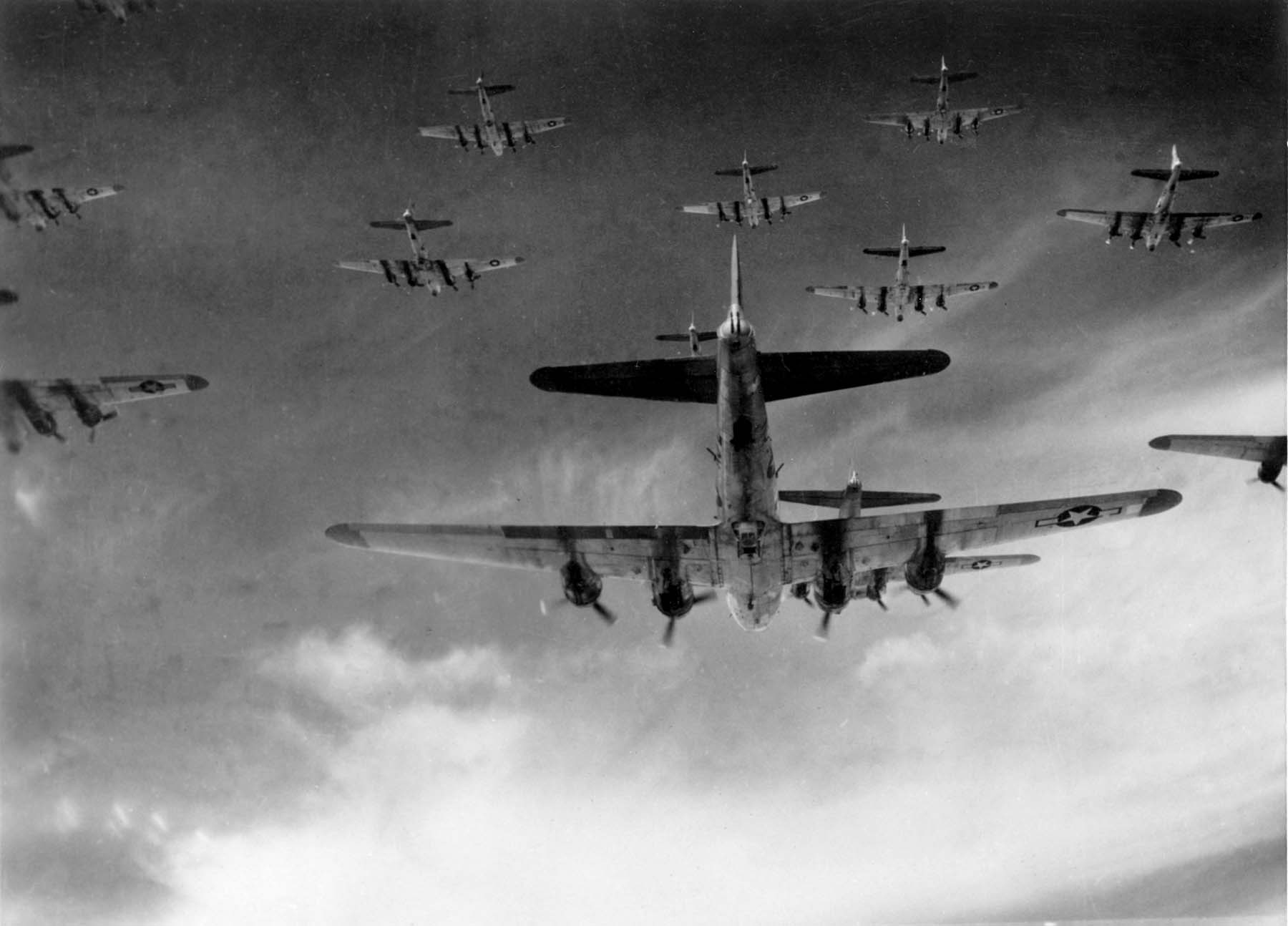
On August 17th, 1943 the Eighth Air Force had tried to eliminate the ball-bearing factories at Schweinfurt, deep inside the German heartland. Flying in daylight, and unescorted for the vast majority of the trip, the raid had been an audacious catastrophe. Some 230 bombers had taken part, and sixty of these were completely destroyed. As well as these sixty B-17s, a further 55-95 bombers were badly damaged. Many of these were too severely damaged ever to be repaired.

Living legends

The Eighth Air Force regained its composure, made good its losses in both men and aircraft, and, on October 14th 1943, they attacked again.  Flying in daylight, and unescorted for the vast majority of the trip, the raid was arguably a bigger disaster than the previous one. Of the 291 B-17s on the mission, 60 were shot down over enemy territory and another 17 damaged so severely that they had to be scrapped. A further 121 aircraft were damaged to a greater or lesser extent. These losses represented more than 26% of the attacking force.

d-13-vs-b-17-24guva vvvvvvvvvvvv

The losses of aircrew were equally devastating. Some 650 well trained and skilful specialists were killed, which constituted some 22% of the 2,900 brave young airmen who went on the raid. The 306th Bomb Group lost 100 men, with 35 either killed in the air or died of wounds and 65 made Prisoners of War. The 305th Bomb Group lost 130 men, which was 87% of their complement.
General Henry H. “Hap” Arnold was later to state that the Black Thursday loss of American bombers in the Schweinfurt raid was “incidental”. Despite this callous dismissal of the lives of well over six hundred of his own men, further unescorted daylight bomber raids deep into Germany were immediately suspended until further notice. Cynics might well ask how many more B-17s  were left after the two disastrous attacks on Schweinfurt? Long distance bombing raids would only recommence in February 1944 with the advent of Operation Argument, a series of missions which would later be more commonly known as “Big Week”.

*****

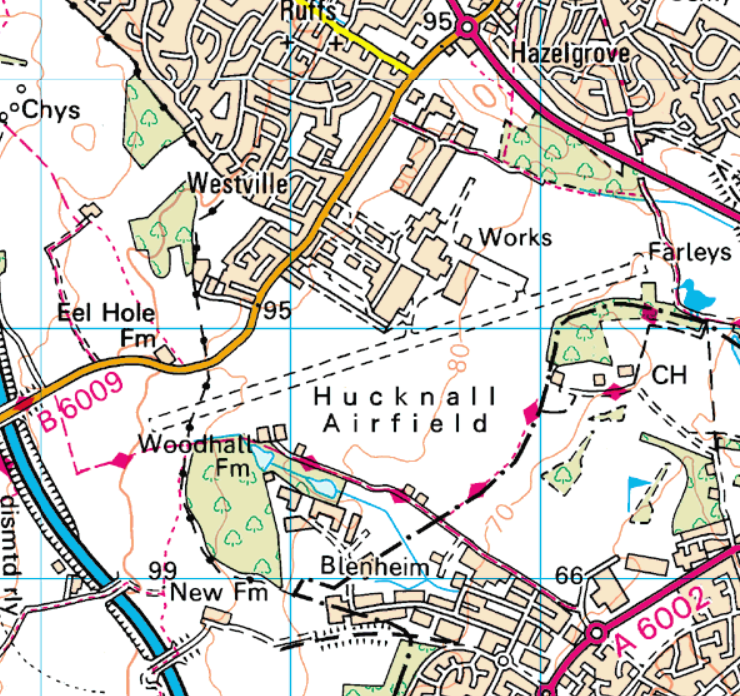
I live in Sherwood, a suburb in the north of the Nottingham conurbation in England. At the end of our street is “Hucknall Road” which leads the seven or so miles to the much smaller market town of Hucknall.

hucknall aerodromecccccccc

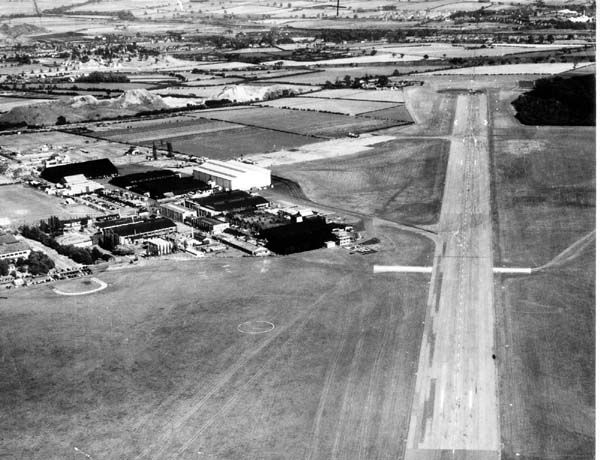
Strangely enough, Hucknall has a small grass airfield which is less than six miles from our street. Most days we can hear light planes making an enormous noise as they drone slowly overhead.

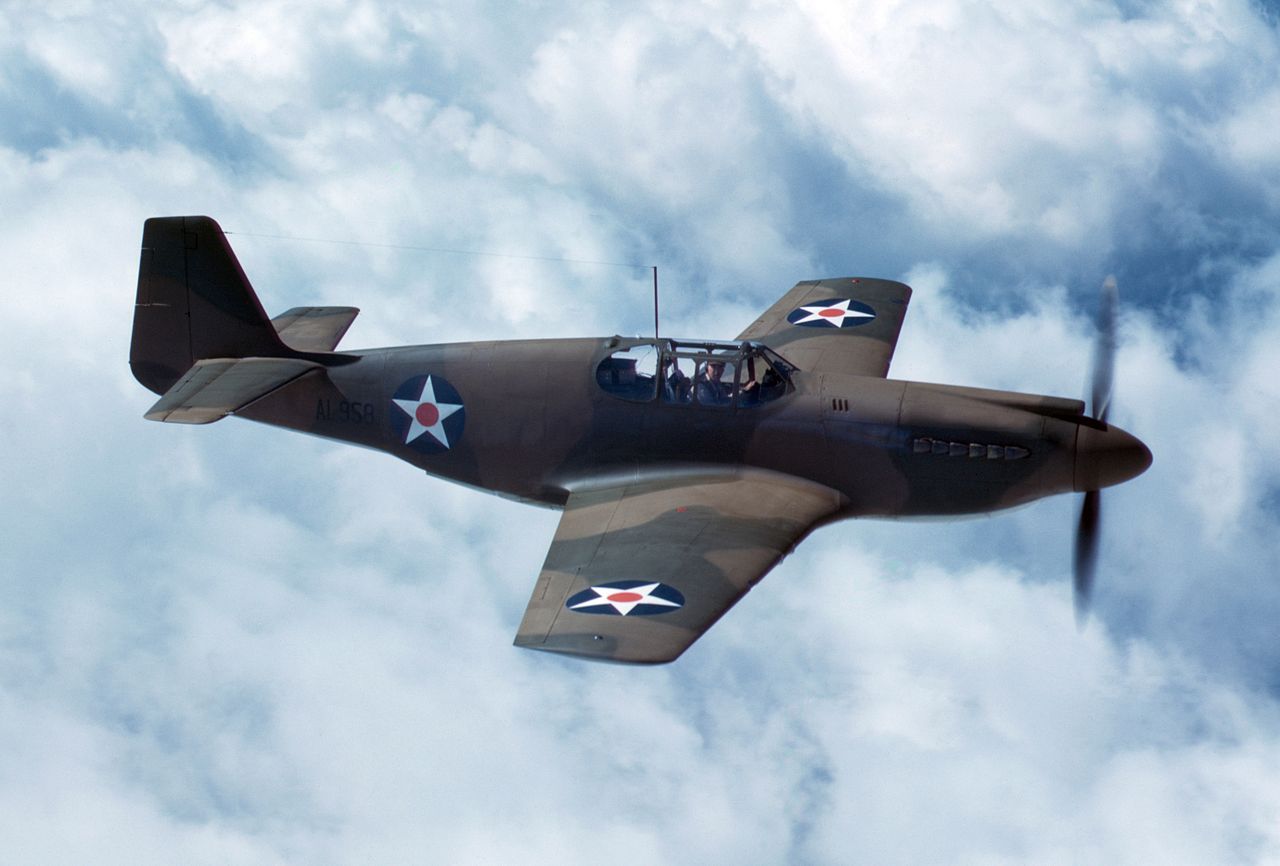
Hucknall RunwayxxxxxxDuring the course of April 1942, one man who frequently worked at Hucknall Aerodrome was to come up with an idea which would go a very long way indeed to winning the war in Western Europe. His name was Ronald W. Harker and he was usually known as “Ronnie”. Harker was the senior liaison test pilot with Rolls-Royce. Perhaps with Harker’s employer in their minds as an ulterior motive, the RAF had already invited the experienced test pilot to test fly the North American Mustang Mark 1, an American aircraft which was designed and built in the unbelievably short time of 117 days. This amazing feat was in response to a request by the British Purchasing Commission for an RAF fighter which would be an advance on the Spitfire.

1280px-P-51-October1942

The original North American Mustang was powered by an Allison V-1710 piston engine and Harker was quite impressed with the plane’s handling qualities. Its performance up to 20.000 feet or so was commendable, but any higher, and the aircraft quickly became rather disappointing. Harker concluded that the problem was the inadequate Allison engine which was too low-powered to exploit the plane’s advanced aerodynamic features including a much more fuel efficient laminar flow wing. This innovation cut down the amount of turbulence as the air passed over the wing and would eventually lead to almost phenomenally low fuel consumption.

fig14

Initially though, the new American fighter had an extremely unimpressive maximum range of only 400 miles, and when delivered to the RAF it was quickly relegated to Army co-operation and photographic work.
Ronnie Harker was employed by Rolls-Royce and was therefore presumably somewhat biased, but it was his suggestion to take out the Allison engine and to replace it with the Rolls-Royce Merlin 61, an act which was to transform a rather disappointing aircraft and to turn it into a war winner.
Despite a great deal of initial reluctance, mostly from the British Air Ministry, the first flight of the newly engined Mustang took place at Hucknall Airfield on October 13th 1942 with Captain R.T. Shepherd, the Rolls-Royce chief test pilot, at the controls. The Merlin-Mustang fighter’s performance was spectacular, particularly at high altitude. Thus the greatest fighter of the war was born and Harker acquired for the rest of his life the sobriquet of “the man who put the Merlin in the Mustang.” Harker also got a pay rise of a pound a week (just over one and a half dollars).

mustang cccccc

Some four hundred of the Merlin-Mustangs were ordered for the US Army Air Force as the P-51 and Great Britain wanted more than a thousand, although only 25 were eventually delivered to the RAF because Rolls-Royce’s own Merlin production was already allocated to Spitfires, Lancasters and Mosquitos. In the USA, however, North American, now almost overwhelmed by the orders to be filled, had no such problems, using Packard and Continental versions of the Rolls-Royce engine built under licence. Eventually, more than 15,000 aircraft were to be manufactured.

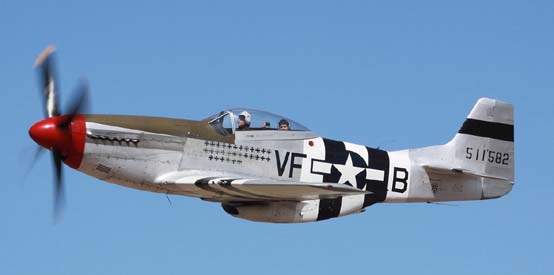
P-51_Mustang cccccccc
The P-51B carried just about the same amount of fuel as the P-47 Thunderbolt, but with its new Merlin engine “got 3.3 miles per gallon while the P-47 got less than 1.8.”. Brigadier General “Tommy” Hayes said that the Merlin-Mustang “had the three qualities you need most if you were going to escort bombers to Berlin – range, range and range.” The latter was extended even further by the carrying of two 512 gallon drop tanks which gave a maximum range of around 2,000 miles. In addition, the aircraft’s top speed increased from 390m.p.h. to 440m.p.h. and in the days after the war had finished there were to be many no doubt apocryphal tales of Mustangs which had exceeded the sound barrier in a steep or even vertical dive. In his memoirs, the P-51 ace Colonel Clarence E. “Bud” Anderson said that the Mustang “went like hell” because “the Merlin had great gobs of power and was equally at home high or low, thanks to its two-stage, two-speed supercharger.”

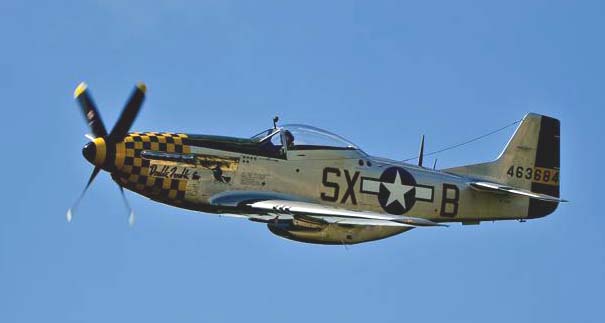
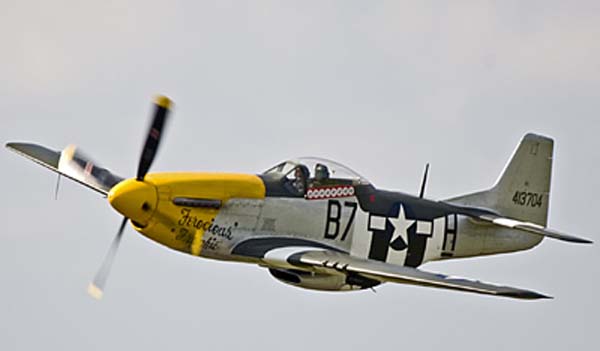
Mustang-Ferocious-Frankie-01 cvcc

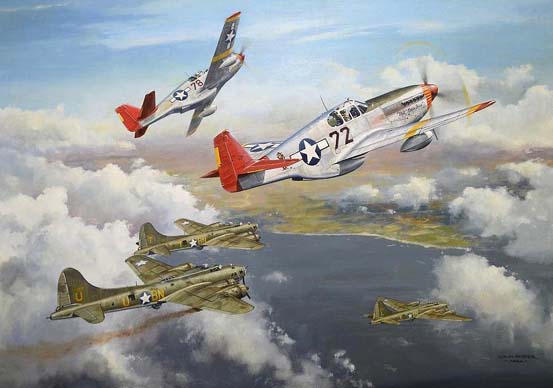
This newly updated Mustang was, of course, exactly the aircraft that the beleaguered bomber crews in the B-17s of the Eighth Air Force had been waiting for. Now, with help of “our little friends” they could go about their business with considerably less apprehension than had previously been the case. The new aircraft is certainly said to have had an impact on Herr Reichsmarschall Göring who “when (he) saw the Mustangs escorting the American air armadas over the capital of the Reich is said to have realised that Germany had lost the war.”

little friends cccccc

The mechanism by which the Third Reich was, along with Göring himself, quite rightly consigned to the rubbish bin of History, was by no means a complex one. The Mustang pilots were quite simply encouraged to engage the Luftwaffe fighters in combat at every opportunity.  Given the quality of the new P-51, especially the P-51D with its superb all round visibility bubble canopy, the Americans duly shot down both the aging Bf109s and the newer Fw190s. Gradually over the months, the Mustangs killed off all the most experienced and most effective pilots in the Luftwaffe. Between January and April 1944, the Germans lost more than 1,000 fighter pilots, of which 28 had more than 30 kills and eight had more than 100. On one mission to Augsburg, much later in the war, Mustangs put a final full stop to the last and greatest German threat, namely the twin-engined fighter armed with multiple rockets. They destroyed 23 of the 77 that came up to oppose them.

This slideshow requires JavaScript.

At the same time, as part of the same process, it became increasingly difficult for the Luftwaffe to find calm skies where rookie pilots might practice. And in any case there was soon too great a shortage of fuel for these young replacements to waste on practice flights. The situation swiftly went from bad to worse, and the Mustangs, and many other Allied fighters, all began to enjoy enormous success against increasingly weak opponents. The Germans were never ever throughout the rest of the war to enjoy air superiority.

madd 3xxxxxx

Allied bombers began by day and by night to operate with increasing impunity and to have an increasingly greater impact on the overall fighting capabilities of the Third Reich.

This slideshow requires JavaScript.

The situation is perhaps best summarised by a joke which remains as yet unverified on Wikipedia. It was supposedly told by Wehrmacht soldiers in the weeks after D-Day:

“If the plane in the sky is silver, it’s American, if it’s blue, it’s British, if it’s invisible, it’s ours.”
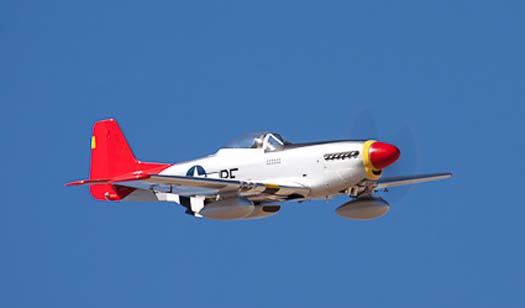
AeroWorks_Tuskegee_xxxxxxxxxx

“This all happened because of the Mustang, and the Mustang succeeded because of the Merlin.”

I cannot resist finishing my hymn of praise to the most effective fighter ever by quoting the episode in “Empire of the Sun”, when the “Cadillac of the Skies” makes its appearance, strangely not in Europe but in China. Enjoy.

8 Comments

Filed under Aviation, History, Nottingham

A Twitch to Flamborough

(An extract from my old birdwatching diary “Crippling Views”)

Sunday, August 28, 1988
The sea again. Its magic lure drags Steve, Alan, Paul and me off to seawatch, anywhere on the East Coast where, according to the weather forecasts, the wind should be suitable for our porpoise (as the spell check suggested). We decide to go to some place where we can seawatch but where there is also another specific bird to look for. In that case, we must head for Flamborough where there have been reports of a Desert Wheatear although there are no details to hand of either its exact location or its plumage. We arrive at about 8.30 a.m. and there is a lovely light foggy drizzle drifting around the cliff tops. Not too pleasant for the birdwatchers but brilliant for keeping down any lost little vagrant passerine.

This slideshow requires JavaScript.

There are other birdwatchers around, all looking for the relevant little bird. We find a somewhat peculiar female wheatear within half an hour, and then another, and another. We soon realise that all female wheatear are somewhat peculiar. None of them seem to have a consistent set of plumage features that they have in common with all the other female wheatears.

northern 3ccccccccc

Nothing for it. We set off down to the lighthouse for a sea watch. Same old place as ever – we set up our telescopes on the slope below the main cliff edge and start watching. No sign of Flamborough’s most famous birdwatcher, its very own “Mr.Sea Watch”, Brett Richards.

twitcher6

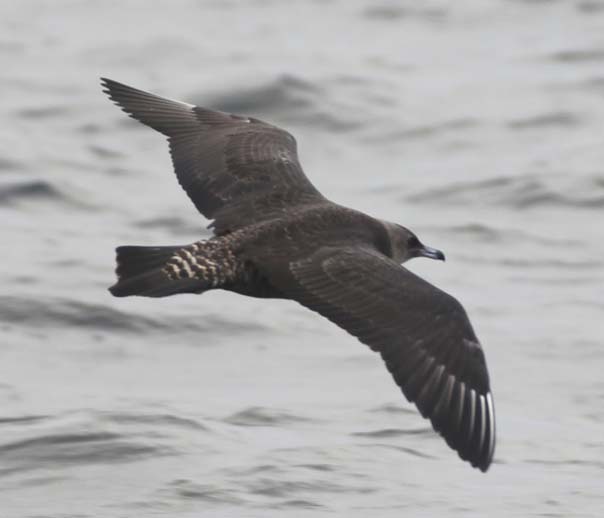
There are some Arctic Skuas moving through and we are able to study their piratical antics in some detail. After about ten minutes I see one all dark bird flying steadily and heavily northwards. Then it seems to remember its error and sweeps back around in a huge arc. Then it starts flying around in very large circles as if it is by now completely confused. On the other hand, it could be some vaguely half remembered display flight of some sort.

Pomarine Skua 4vvvvvvvvv

Whatever the case, it finally stops its circling, makes a half-hearted attempt to harry a Kittiwake and then heads off out to sea. We all pick the bird up and we all agree that at long last, we’ve seen a Pomarine Skua. It’s bigger than all the Arctic Skuas and it’s obviously not a Great Skua. Its flight is heavier than an Arctic and its behaviour is completely different. Every Arctic we have seen today has been energetically and enthusiastically chasing Kittiwakes in a most agile and nimble way. They are all darting, lightly built birds that at no point have shown the slightest inclination to soar or circle like some marine Common Buzzard.
Ten minutes later I find another large and heavy skua but this time, it’s down on the water. Again, its structure is much more solid than the Arctics, its bill is more substantial, its body weightier, and it even has what may well be rudimentary spoons sticking up into the air at the back end.

pom on seacccccc

We watch it for a good twenty minutes as it cruises around, well separate from the rest of the birds on the water. We are all satisfied that it is a first winter dark phase Pomarine Skua.
If we think we’ve had a difficult time of it with bird identification so far, then we are sadly mistaken. In the next half hour or so, we’re going to get into very deep water indeed and I don’t mean falling off the cliff.
We still have the best part of a sunny afternoon left so we decide to walk slowly round to see what we can turn up in the way of migrants. It’s really rather pleasant. A nice day, a blue sky and the hope that more or less anything might be out there for us to find it. We turn up any number of Northern Wheatears, both male and female and a Short-eared Owl, that looks very pale and which we try very determinedly to turn into a Barn Owl, but without any success, because in the final analysis, we just can’t ignore those dark carpal patches. We stop at the top of the cliffs, a little way south of the lighthouse at a point about fifty feet or so above the sea. There are lots and lots of wheatears here, flitting around, most of them near some kind of ruined wooden landing stage.

northrbqqqqqqqqqq

Alan soon spots what he thinks is a funny wheatear and we all set up scopes to examine it more closely. The first and most obvious feature about it is that its eye stripe is not as fully developed as the other birds. It seems to be more buffy, even russetty, in colour and seems to begin further back on the head, almost behind the eye itself.

desert 2ccccccc

The bird, a female, is obviously tired and is harried and picked on by all the other birds. Nevertheless it keeps returning to the landing stage steps and eventually begins to preen. That’s when we realise two interesting things about the bird. Firstly, its tail, as far as we can see, is completely black and although it has a smallish area of white in the top two corners, this is really no more than a slight curvature of the line between the white rump and the black tail. It is completely different from the T-shaped pattern that we have been looking at all day, more or less, on all the other Wheatears. Indeed, we’ve even noticed that with every Northern Wheatear that we’ve seen, this T-shaped pattern may even be visible when the bird is at rest. Not the case with this bird.

Desert-Wheatear-0bbbbbbbbb

The second feature, and for me, the one that clinches it as a female Desert Wheatear, is the fact that as the bird lifts its wing to preen, it reveals a snowy white underwing which is absolutely and totally white, except for a darker line on what must be the trailing edge. For weeks after this I look at Northern Wheatears and cannot find a single one, either in real life or in photographs, that comes even close to our mystery bird in the whiteness of this underwing. There is not a hint of brown or buff, just a brilliant white like a patch of bright fresh snow.
This bird, however, is not terrifically distinctive except for these two features and the eye stripe. This differs slightly from the Northern Wheatear but, in truth, if there is supposed to be a major difference in basic plumage, then there just isn’t one. It is perhaps a little peachier in colour but is not really fundamentally different from the Northern Wheatears that continue to chase and harry it. It is at this point that our problems start, because, as I later suspect, the mystery bird flies off without our noticing it, perhaps because the cliff is overhanging at this point and there is a vast area underneath it that we cannot see. It is certainly impossible to see the comings and goings of every single bird.

norethern flight ccccc

A few seconds later, a Wheatear of indeterminate species comes to perch on the landing stage, just as our bird has on several occasions in the past few minutes. A small crowd of some ten or twelve  birdwatchers has by now assembled, all trying to see whatever we’re looking at but apparently too shy just to ask us. We lead them to believe that this is the mystery bird even though we have not yet seen either its tail or underwing to confirm this. When the bird flies away, of course, it has the T-shaped pattern of an ordinary Northern Wheatear and this leads a high percentage of the new onlookers to think that we are a bunch of complete village idiots. Well, we are, but on the other hand, I know what I saw. And yes, I am more than a little put off by the episode at the end when I was fooled by the Northern Wheatear on the landing stage, but Steve soon calms me down.  He makes the valid point that whatever has happened subsequently, we did all four of us see a female Wheatear with an all-black tail, and an all-white underwing, whatever antics the bird got up to afterwards and whatever skilfully designed imposter came along its place. And surely even the most aberrant of birds could not have two diagnostic features of another species? That discovery would knock the Rarities’ Committee back a bit.
The whole appalling business does have its funny side however, because as soon as the assembled group of eight or ten becomes fifteen or twenty, this is easily a big enough crowd, particularly here at tight-lipped rare-bird-suppressing Flamborough, to attract an even greater number of birdwatchers. Very quickly, we have seventy or so people, all looking downwards with great deliberation.

Somebody on duty in the lighthouse then presumably thinks that one of us has had an accident and perhaps somebody has fallen off the cliff. Perhaps we are all looking at a corpse floating past. Whatever the case, it doesn’t take the RAF Rescue helicopter very long to get here and it soon arrives, a huge  deafening yellow whale that hangs, hovering loudly, about twenty yards from the cliff edge. I can’t really believe it’s here for an unconfirmed report of a female Desert Wheatear. News cannot possibly travel that fast. On the other hand, it would be really tremendous if that were the case and he could use the loudhailer – the electronic equivalent of Kevin’s voice:

“Hey, you on the cliff – yes – you – you on the left – in the green – yes – stop harassing that bird – return to your homes – and by the way, do you know they what they’ve had at Spurn?”

Rescue-Helicoptercccccccccc

Our final gesture is a last bit of seawatching as we give up hope that our Desert Wheatear will return to its original spot and we soon get a superb bit of unusual bird behaviour.

Guillemot06cccccc

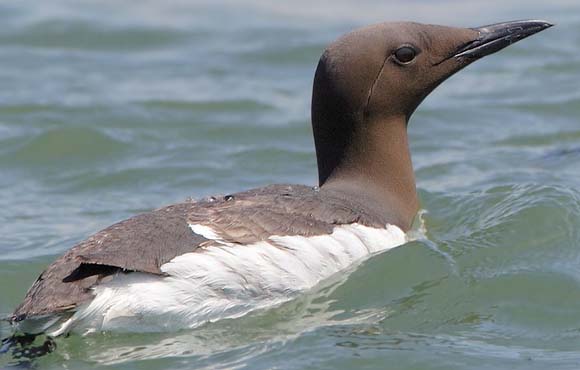
It’s a Guillemot that is performing some bizarre sort of preening ceremony that seems to consist solely of the bird lying flat on its back in the water, with only its beak and its little legs sticking out above the surface. It remains motionless for minutes on end so that it looks just like a man bathing in the Dead Sea or a gigantic dead fly floating around in the bath. A strange end to a puzzling day.

3 Comments

Filed under Aviation, Humour, Twitching, Wildlife and Nature

Schweinfurt Two: sixty B-17s downed, 650 airmen killed

I hope that you were able to read my blog post about the American Eighth Air Force’s first raid on the ball bearing factories at Schweinfurt. This brave action took place on August 17th 1943, and was a catastrophe. As I wrote a few weeks ago…

“The raid caused a 34 per cent loss of production at Schweinfurt but this was soon made up for by surplus supplies from all over Germany The industry’s infrastructure, while vulnerable to a sustained campaign, was not vulnerable to destruction by a single raid.”

I quoted the casualty figures…

“230 bombers had taken part, and sixty of these were destroyed. Five hundred and fifty two men were killed in the air, and seven poor souls made it back home, but, alas, had already succumbed to their injuries. Twenty one men were badly wounded. Beyond the sixty B-17s shot down, between 55-95 further aircraft were badly damaged. Of these many were too severely damaged ever to be repaired.”

Despite these huge losses, the Eighth Air Force plan had always been to go back to Schweinfurt a second time. It was to take the best part of two months to rebuild their forces, but on October 14th 1943, the B-17s returned to attack the factories where, at the time, American wartime intelligence thought ball bearing production had been permanently reduced by up to a third.
This time, changes would be made. Instead of a two-pronged attack on the ball-bearing works at Schweinfurt and the Messerschmitt aircraft works at Regensburg, the entire force would attack Schweinfurt alone.

2 photos contrails

Secondly, additional fighter escorts were added to protect the vulnerable bombers as much as was possible during both the outward and return journeys of the operation. Each of the three bomber wings, therefore, was to be escorted by multiple squadrons of P-47 Thunderbolts. For an unknown reason, though, none of the P-47s were equipped with drop tanks, an important mistake which significantly limited their escort range. And one outfit of fighters previously allocated to the Flying Fortresses was given the job of acting as an escort to the 29 B-24 Liberator bombers on a diversionary mission to Emden.

This slideshow requires JavaScript.

At first, though, things went quite well. When the bombers were initially intercepted as they crossed the coast the P-47s succeeded in shooting down seven Bf 109s. But over the Netherlands the P-47s came to the end of their range and the B17s were left alone and virtually defenceless.  Large numbers of Focke-Wulf FW 190s and Messerschmitt Bf 109s  made repeated attacks exactly as they had done in August. The 305th Bomb Group lost 13 of its 16 B-17s in just a few minutes. Further into Germany, this second Schweinfurt Raid would soon follow the same pattern as the first one.

This slideshow requires JavaScript.

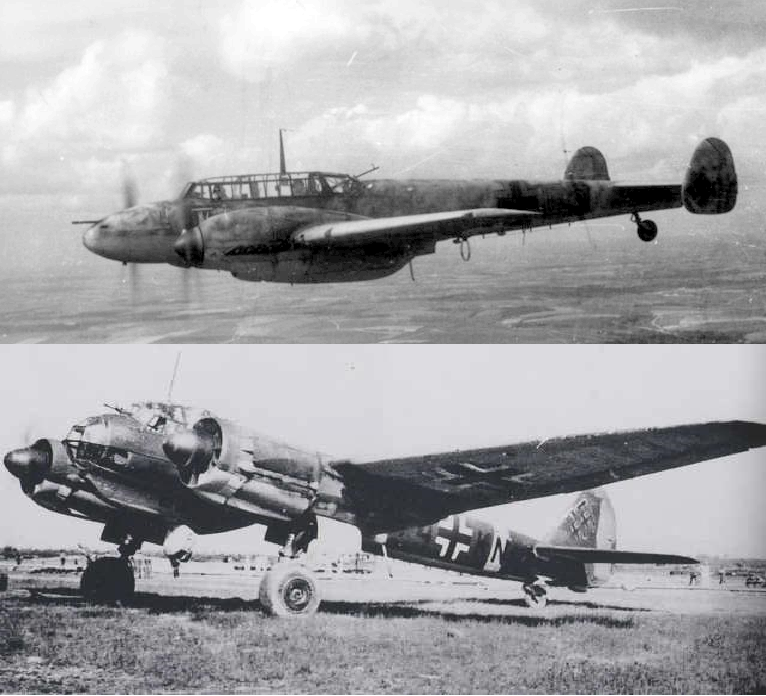
As well as single engined fighters, twin engined Messerschmitt Bf110s and Junkers Ju88s were encountered. They carried much heavier cannon.

two by two

This time, many more aircraft were armed with Werfer-Granate 21 rocket launchers, firing unguided stand-off rockets.

two rockets

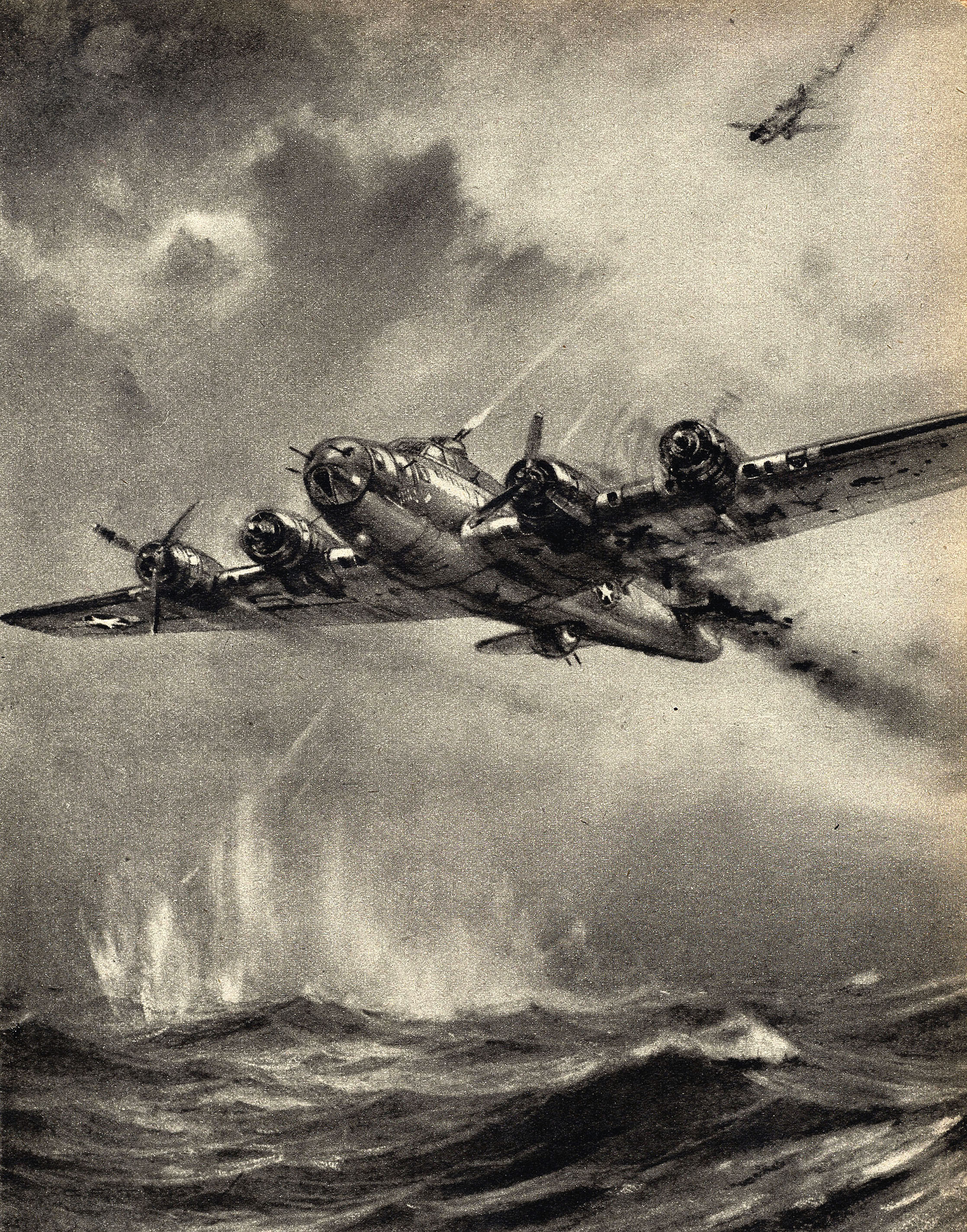
Here are two wonderful pictures from the Life Magazine of  the day, showing the heroic efforts of the brave young Eighth Air Force gunners.

As in August, although the ball-bearing factories were badly hit, the mission did not achieve any long lasting effects. Ball bearing production was halted for around six weeks but these losses were again easily made up by the large stocks the Germans already had. After this second attack, all of the ball bearing facilities were dispersed from Schweinfurt across the whole of Germany to reduce the risk of their being bombed for a third time.
General “Hap” Arnold claimed that “Black Thursday” and its losses were just incidental, but daylight bomber raids deep into Germany without fighter escort were suspended until further notice. Cynics might well have asked just how many B-17s did the Eighth Air Force have left on strength anyway?
Long distance bombing raids would only recommence in February 1944 with the advent of Operation Argument, a series of missions later to be called the “Big Week”. By then, escorts were available in the form of P-51B Mustangs.

Arnold’s “incidental losses” on the second Schweinfurt raid were astounding. Of the 291 B-17s on the mission, 60 were shot down over enemy territory.

This slideshow requires JavaScript.

Another 17 bombers were damaged so heavily that they had to be scrapped. A further 121 B-17s were damaged to a greater or lesser extent and many of the crippled bombers would require a great deal of time and effort to repair them.

This slideshow requires JavaScript.

These B-17 losses represented more than 26% of the attacking force. The losses of aircrew were equally devastating, with 650 men killed out of 2,900, some 22% of the bomber crews. Certain units were hugely affected. The 306th Bomb Group lost 100 men, with 35 either killed in the air or died of wounds and 65 made Prisoners of War. The 305th Bomb Group lost 130 men with 36 killed outright. This constituted 87% of their complement.

fighting man

My own father, Fred, even if he seems never to have had a great deal of contact with the Americans of the Eighth Air Force, always had enormous respect for their almost unbelievable bravery. Some thirty years after the war, as I returned from university, Fred was to accompany me, one dull autumn day, on a visit to the American Cemetery at Madingley near Cambridge.

Cambridge_American_Cemetery_and_Memorial

How strange to think that these neatly kept graves may well have been the last resting place of some of the brave young airmen he had watched flying high above him in the frosty blue sky of East Anglia so many years previously.

If your navigational skills are up to it, this is Part One of a ten film series about  the Schweinfurt raid.

In another blog post, I will look at what the Eighth Air Force did after the two disastrous raids on Schweinfurt, and how their airmen’s lives were saved, and arguably the Second World War was won, thanks to Ronnie Harker, a New Zealander who at the time was working at Hucknall in Nottinghamshire, just six miles to the north west of where I am sitting right now as I write the conclusion to this post.

11 Comments

Filed under Aviation, History

Frank Roy Daughton, friend of S.A.Casswell

A little while ago, I wrote about a Schoolboy’s Diary which I had bought on ebay. The 1935 diary had been owned by S.A.Casswell , who lived in Lincolnshire, at Sutterton near Boston. Only a few minutes searching on the Internet revealed some rather sad details about the one single person listed by S.A.Casswell in the address section of his Diary.
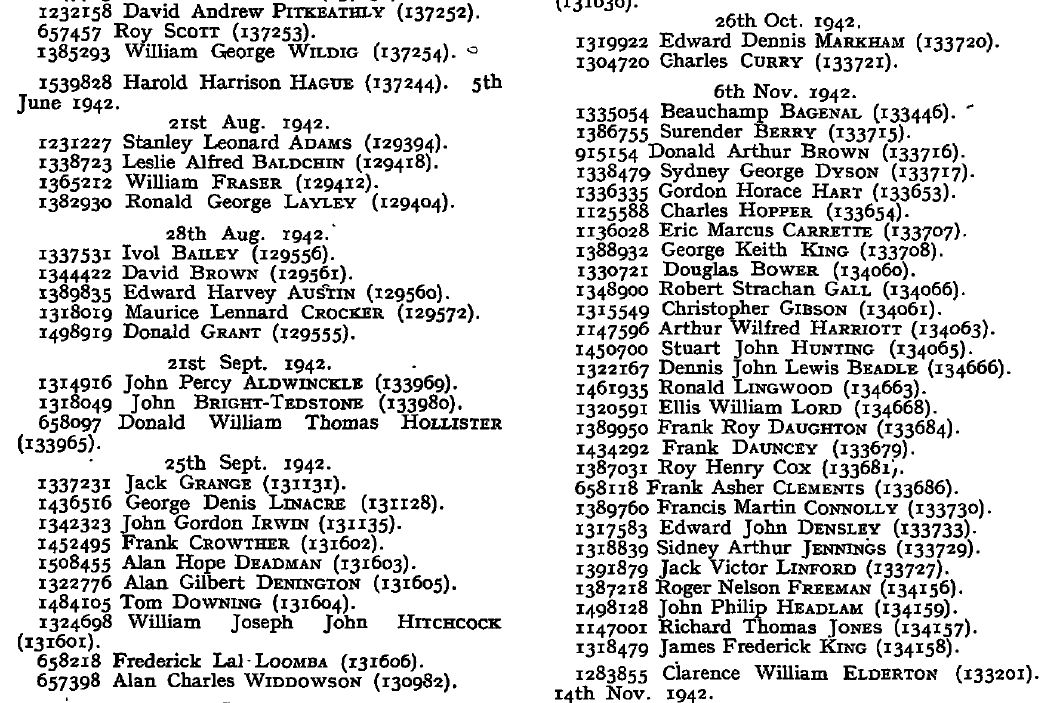
Frank Roy Daughton had lived firstly at 385, Kings Road Chelsea and then at 5, Gerald Road S.W 1. He was an officer originally in the RAFVR, the Royal Air Force Volunteer Reserve, and then in the RAF.
Given that Daughton’s job was to fly aircraft over long distances, both within Great Britain and abroad, he was surely continually in search of meteorological information before he set off on any of his trips. What more logical person to consult than his friend S.A.Casswell, who we know worked on the staff of the Meteorological Office as a Meteorological Officer?
Roy Daughton was born in London around 1915. His father was Frank Daughton and his mother was Bertha Daughton. The first personal detail that I have been able to trace is that before the war he was a member of the Metropolitan Police. His warrant number was 124334. He joined the force on July 15th 1935, and he left on February 25th 1944. His last posting was as a Police Constable in the C.I.D in X Division.

During the war, Roy Daughton was a Flying Officer, Number 133684. He began his career as a pilot with 9 OTU (Operational Training Unit) who were tasked with training long-range fighter aircrew. They operated from RAF Aldergrove in Northern Ireland, eighteen miles from Belfast. Roy Daughton must have served with 9 OTU at some point between 1942-August 11th 1944, as they were a comparatively short lived organisation.  He had received his commission on February 2nd 1943.

2' 2'43  supplement to LOndon Gazette
Roy Daughton then served with the OADU, the Overseas Aircraft Despatch Unit.  Their difficult and dangerous job was, quite simply, to co-ordinate the ferry flights of military aircraft, perhaps, for example, from the end of a factory production line in the United Kingdom to their new home on some distant foreign airbase. The commonest destination was North Africa or the Middle East. Sometimes, they ferried American aircraft which had just been flown across the Atlantic Ocean. This latter task in itself could be enormously dangerous, especially in the case of relatively small aircraft such as the Lockheed Hudson. The Overseas Aircraft Despatch Unit operated from RAF Portreath in west Cornwall.

The OADU’s very first customers were four Boeing B17C Flying Fortresses bound for Egypt. Other frequent flyers were Bristol Blenheims, Bristol Beaufighters, and Vickers Wellington bombers.

This slideshow requires JavaScript.

Roy was to die on February 25th, 1944 aged only 29. I have been completely unable to trace the circumstances of his death, although it was presumably either while or after delivering an aircraft from the United Kingdom to North Africa.

map of rabat

Roy is buried in Morocco, a very long way indeed from his cosy home in London. He lies in Rabat European Cemetery, Mil. Plot 21. Grave 673.

Daughton_F_R grave

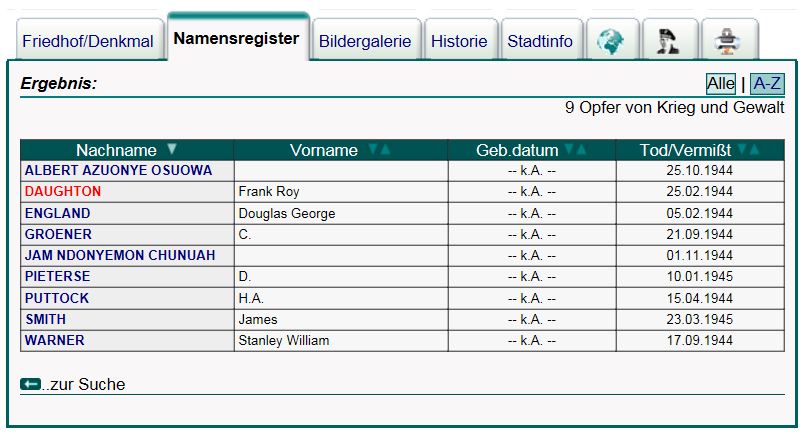
Roy is one of only nine war casualties in this far flung cemetery.

gereman websiteAt the time of his death Frank was a married man. His wife, who was about a year younger than him, was called Doreen Margaret Daughton, and the family home was in Maida Vale in London. In addition, I also discovered that in 1946, a Doreen M. Daughton left the port of Southampton in England and sailed to Halifax in Nova Scotia, Canada. She later crossed the border into the USA, but after that, the trail has, as they say, “run cold”.
And that is it. Frank Roy Daughton’s life, or what I personally have been able to find out about it. No medals, no fanfares. Nobody even seems to remember why he died at that premature age of around twenty nine years, or how or exactly where. What was he doing when he was killed? Was it his fault? Was he flying? Did he run out of fuel? Was he just walking perhaps, tired and inattentive, across a busy Moroccan street? And did S.A.Casswell ever know that his brave young friend was dead?

Leave a comment

Filed under Aviation, Cornwall, History