Category Archives: Bomber Command

RAF Elsham Wolds: Part Six: a few loose ends

While I was doing the researches for these sad and grim tales of Bomber Command, I came across a number of interesting details which I would like to share. Perhaps one or two loose ends might be tied up.
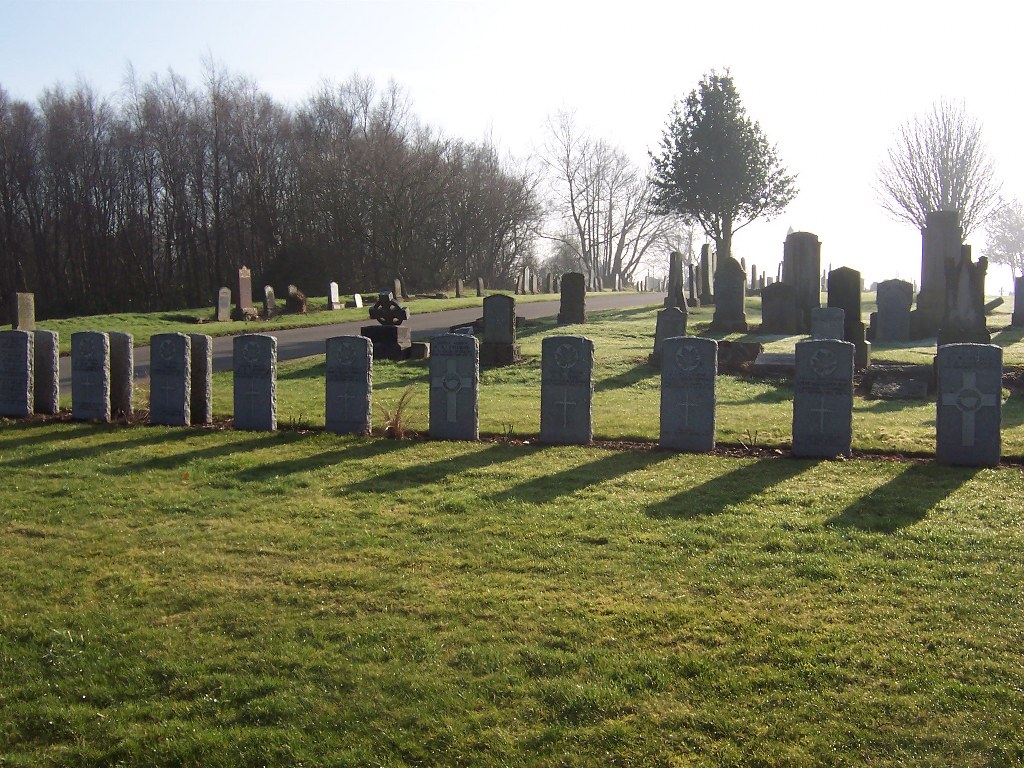
The first is only loosely connected with the collision of the two unfortunate Lancasters returning from Leipzig on February 20th 1944.  I noticed that one of the casualties, Flying Officer Ronald Harry Fuller, was buried in Cambridge City Cemetery. Given that Cambridge is not particularly close to Marylebone in London, where Ronald lived, I decided to look up the details of this cemetery on the Internet. I was genuinely shocked by what I found about the war casualties there. Their names and most basic of details occupy fully an unbelievable 68 pages on the Commonwealth War Graves Commission website. Just enter the words “Cambridge City Cemetery” in the line marked “Cemetery or memorial” and press “Search”:

cambrigde vity cem

The very last page is grimly ironic. It lists four Australians, all of them obviously interred a long, long way from home.
One is from the Great War, George Ernest Young of Camberwell, Victoria, Australia. He was aged 28 and died only 12 days from the end of the conflict. The other three interments are all Second World War flyers:

images7I5GV8Z5
Flight Sergeant George Louis Yensen was a Mid Upper Gunner aged just 20. He was killed on August 31st 1943 in a Short Stirling I of No. 1651 Heavy Conversion Unit of Bomber Command, Serial Number N6005,Squadron Letters probably F-D2. Here is a flight of three Stirlings:

Three_Stirling_bombers_zzzzzzzzzzzzzzzzzzzzzz

The name of George’s unit means he must have perished well before his training for heavy bombers was even complete. George died along with eight other young trainees on board this aircraft. Two of them were from the Republic of Ireland. Apparently the plane took off from Downham Market near Cambridge at 9.30 pm. presumably just as the daylight was beginning to fade. Suddenly, ten minutes after takeoff, for no apparent reason, the aircraft banked steeply and then spun into the ground just a mile or so north of Shippea Hill on the Cambridgeshire-Suffolk border, and around seven miles from Ely. The orange arrow marks the crash site:

yensen
The next Australian, Alan Geoffry (sic) Young was 21 years old when he was killed. A member of the RAAF’s 460 Squadron, he was returning from a bombing raid on Stuttgart. His Lancaster was caught in a blizzard and crashed some ten miles south of Grantham at North Witham. All seven members of the crew were killed. By coincidence, young Alan perished on February 21st 1944, the very next day after the Leipzig raid which inspired the first of these articles:

lanc crash
Flight Sergeant Ian Bailey Yorkston was killed in an accident on March 4th 1945, flying in a Lancaster  I, Serial Number PD431,Squadron Letters H4-V. Ian was in No. 1653 Heavy Conversion Unit RAF, and he was just 25 years of age. His parents were Christian missionaries and had worked in China where Ian grew up. Seven other young men perished in the crash. The plane had taken off from North Luffenham for a cross-country training flight at 11.30 in the morning, and returned to base at 4.00 pm. As the aircraft landed, it bounced quite severely. The pilot increased the power and prepared to go round for a second landing attempt. As it climbed away, the aircraft’s undercarriage hit an obstruction and then ploughed into the tops of several trees. It finally crashed near the village of Edith Weston, just four miles south east of Oakham in Rutland. The orange arrow marks the crash site:

yorkston
This was not Ian Yorkston’s first crash. On August 18th 1944, with “D” Flight of No. 1651 Heavy Conversion Unit he was flying in a Short Stirling III, Serial Number LK519, Squadron Letters QQ-O. Taking off on a night exercise from Wratting Common at three minutes to ten the previous evening, the crew were returning at six minutes past two. They requested, and were given, permission to land, but then there were problems with the Stirling’s immensely lofty and complicated undercarriage:

_giant_Stirling_modzzzzzzzzzzzzzzzzzzzzzzzzzzz

For forty minutes, a tense dialogue took place between the aircraft and Flying Control. At three minutes to three, a garbled  message came from the aircraft which was heard to contain the phrase “crash land”. The Stirling came in at tree top level, flying towards No 4 runway which already had a second Stirling parked on it, having suffered a burst tyre. In the resulting collision, the Trainee Pilot, Flight Sergeant Alan Woodbridge (aged 23) was killed. He was buried in his native village Up Nately, in Hampshire. Alan had himself already been in an accident on July 26th when a slightly misjudged landing resulted in part of the Stirling’s undercarriage being ripped off. Three weeks later, as we have seen, he was dead.
Ian Yorkston’s brother, Flying Officer Gordon Cameron Yorkston, was also killed, not in training though, but in combat with No. 251 Squadron. He was only 21 years of age when he perished on March 17th 1945, in the icy waters off Iceland. The squadron was tasked with carrying out Air Sea Rescue and Meteorological Flights out of Reykjavik This was only 13 days after his elder brother, Ian, had been killed. Gordon’s remains were never found and his sacrifice is commemorated on the Air Forces Memorial at Runnymede near Egham in Surrey. This memorial is dedicated to RAF personnel who died in World War II and who have no known grave anywhere in the world.  Many were lost without trace. There are an amazing 20, 310 names on the memorial:

runny
I actually found a website which listed all of the brothers who had died in service with the RAAF in World War Two. There were at least fifty pairs and included three Sandilands, three Eddisons and four brothers called Bernard. What a sacrifice to be asked to make!

The second final, grim, point concerns the unfortunate collision witnessed by Driver Marie Harris. This took place on December 16th 1943, as the two aircraft took off to bomb Berlin.
What I found really quite shocking was that there is another memorial very close by in what is actually only a very small area of Lincolnshire. It pays tribute to yet another crashed Lancaster, a plane from No 12 Squadron at RAF Wickenby, which was shot down by a German night intruder just before half past midnight in the early hours of March 4th 1945.

_ulce 2 zzzzzzzzzzzzzzzzzzzzzz

This was Lancaster PB476, Squadron letters PH-Y, and the brave young men remembered were the Flying Officer Nicholas Ansdell (Pilot, 21 years old, from Churt in Surrey), Flying Officer Alexander Hunter (Navigator, age 33, from Dunfermline, Scotland), Flying Officer Freddie Heath (Bombaimer, aged 22, from New Malden, Surrey), Sergeant Ronald Schafer, (Flight Engineer, aged 23 of Earley in Berkshire), Sergeant Robert Parry, (Wireless Operator, aged only 19 from Dagenham, Essex), Sergeant Arthur Walker, (Mid – Upper Gunner, aged only 20, of Risley, Derbyshire) and Sergeant William Mellor (Rear Gunner, aged just 19,from Hatherton, a hamlet in Cheshire.)

Here is the lane next to the field where the aircraft crashed and the monument on the left:

yulceby cross

They were victims of a German night fighter initiative called “Unternehmen Gisela” or “Operation Gisela
This involved large numbers of twin engined German night fighters, armed with Lichtenstein radar:
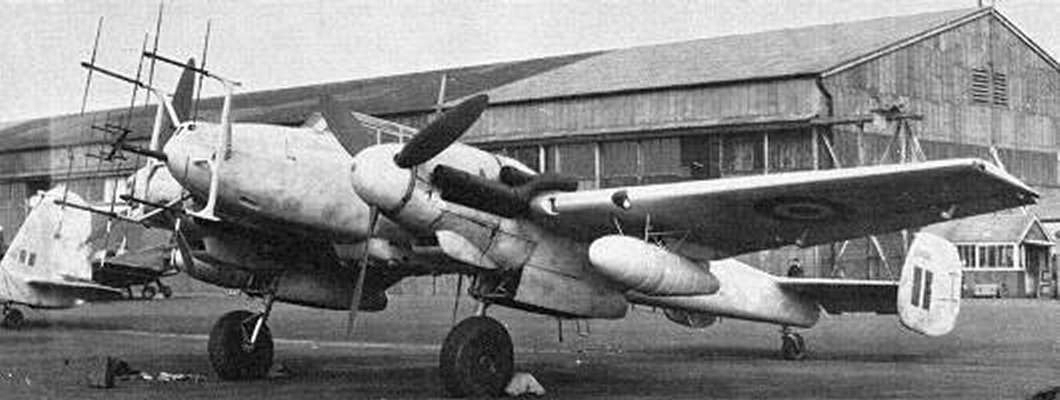
bf 110

The aircraft left the Continent and flew across the North Sea to England in an effort to destroy as many of the vulnerable bombers as possible as they arrived back from Berlin:

Junkers_Ju88

The fighters flew at low level, under a storm front and in heavy rain, to remain under the British radar defences. They were then able to attack over a wide area, looking for RAF navigation lights and then flying underneath the bomber to make use of their upward pointing Schräge Musik twin cannons. In this case, the cannon are just behind the cockpit, clearly offset for some reason:

Junkers_Ju_88G-6


Around 25 Lancasters or other bombers were either destroyed or severely damaged in this operation. A total of 78 aircrew were killed and 17 civilians perished. The Germans lost 45 airmen.

One final word. All of the websites I have used can be reached through the links above. I could not have produced this article, however, without recourse to the superb books by W.R.Chorley. Their detail is almost unbelievable and I would urge anyone interested by the bomber war to think seriously of purchasing at least one of them. The books bring home just how many young men were killed in Bomber Command during the Second World War. When the first book arrived, my daughter thought it contained all the casualties for the whole war, but, alas, it was just 1944.
 

23 Comments

Filed under Aviation, Bomber Command, History, Politics

RAF Elsham Wolds: Part Five

In a previous article I wrote about the tragic collision of two Avro Lancaster bombers, both of them from 103 Squadron at Elsham Wolds. The two aircraft were both trying to land at the same time, after permission to do so had been given to each of them by the Flying Control Officer. A subsequent Court of Inquiry found that “the accident was caused by the Flying Control Officer departing from the normal procedure.” They recommended that “Flying Control Officers must not depart from the normal procedure for landings”.
In the accident, therefore, Lancaster ND334, PM-unknown, was struck in mid-air by a second Lancaster Mk III, JB530, PM-F. That careless act, caused by the unfortunate decision of a still unnamed Flying Control Officer resulted in the deaths of five young men, namely the Flight Engineer Sergeant D.H.J.Cunningham, the Navigator Flying Officer R.H.Fuller, the Bomb Aimer Flight Sergeant C.Bagshaw,  the Wireless Operator Sergeant E.S.Gunn and the Rear Gunner Sergeant A.O.Haines:

halifax wreck
Sadly, this collision was not the first accident of this type to have occurred at Elsham Wolds. Searching on the Internet, I found a website detailing a collision which took place on December 16th 1943, as both aircraft took off to bomb Berlin. The accident involved one aircraft of 103 Squadron and one from 576 Squadron who were also based at the same airfield.
Apparently, low cloud was present and this was thought to provide a potential source of danger for the aircraft as they took off. At the pre-raid briefing, therefore, all of the crews were clearly told to climb away “into the climbing pattern” as soon as they left off the ground, and then to continue climbing until they reached the correct height to set off with the bomber stream across the North Sea to the target. Great stress was put on the problems which were possible with the low cloud base and that everyone should stick, therefore, “to the instructions”.
The first of the two doomed bombers to take off, at 4.36 p.m., was Flight Sergeant F.R.Scott of the Royal Australian Air Force in Lancaster LM332, UL-B2 of 576 Squadron. It was the crew’s very first mission:

takeogff

They were followed, at 4.37 p.m., by the second doomed aircraft, Lancaster JB670, PM-unknown, of 103 Squadron. The pilot was Flight Sergeant Richter and the crew were a last minute mixture of men from the two squadrons. This was fairly unusual, but I cannot see why it would have made any difference to events:

takoff

As JB670 climbed away from the runway, LM332 came out of the clouds and there was a head-on collision, more or less directly over the village of Ulceby. As you might expect, nobody survived and the lives of fourteen young men came to a very abrupt end. Certainly, it would have been so quick that many of the crew may well have known very little about it. Wreckage was littered everywhere:

piy

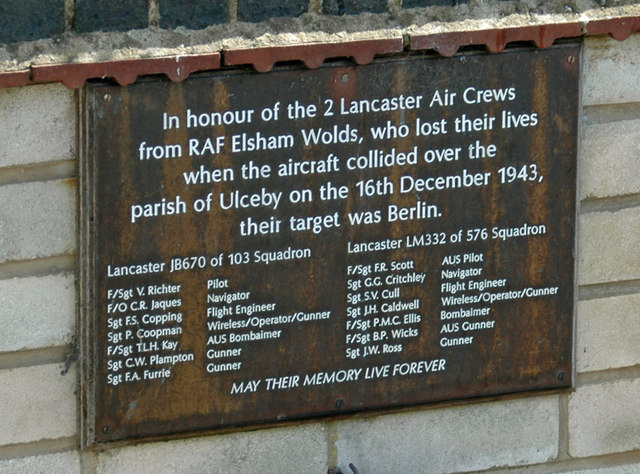
Nowadays a plaque has been set up at the site of the War Memorial, remembering all fourteen men:

Plaque_at_Ulceby_War_Memorial

On board the Lancaster JB670, PM-unknown, of 103 Squadron, the pilot was Flight Sergeant Valentine “Val” Richter, aged 22, of Chingford, Essex. He was a member of 576 Squadron.
The Flight Engineer was Sergeant Frederick Stanley Copping, aged 21, of Walthamstow, Essex. The navigator was Flying Officer Charles Reginald Jaques, aged 30, of Winterton, Lincolnshire, also a member of 576 Squadron.
The Bomb Aimer was Flight Sergeant Thomas Leslie Hobson Kay of the RAAF, aged 22, and from Redhead, New South Wales, Australia.

The Wireless Operator was Sergeant Peter Coopman. He was aged 21, and came from Cropthorne, Worcestershire.
Sergeant Cyril Walter Plampton was one of the two gunners. He was a member of 576 Squadron.

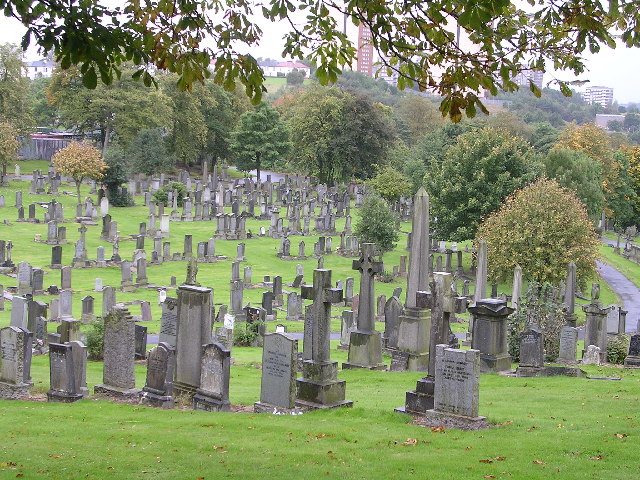
The other gunner was Sergeant Francis Andrew Furrie.  Young Sergeant Furrie was taken back to Scotland, to be interred in the New Stevenston (St Patrick’s) Roman Catholic Cemetery in Glasgow:

glasgow

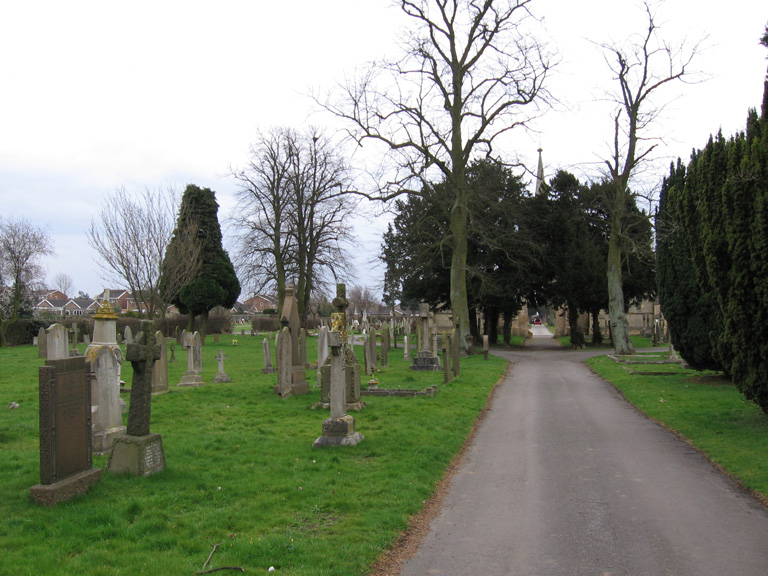
He was the only member of the crew not to be buried in Cambridge City Cemetery:

cambrigde vity cem

For the Avro Lancaster III, LM332, UL-B2 of 576 Squadron, the pilot was Flight Sergeant Frederick Roy Scott of the RAAF. He was 24 years of age and came from Cabramatta, New South Wales, Australia. Here are the shops in Cabramatta nowadays:

Cabramatta_shops
The navigator was Sergeant George Gordon Critchley. Apparently his father was a miner in St Helens in Lancashire. The family lived in a tiny terraced house but both sons, George and his brother Harold won scholarships to a Catholic Grammar School called De La Salle in the West Park area of the town. It was run by the Jesuits, and allowed Gordon to avoid the coal mine like his father, in favour of the much cushier Civil Service in London.
The Flight Engineer was Sergeant Stanley Victor Cull. He was aged only 18 and was possibly the youngest casualty in Bomber Command in 1943. He came from Windsor in Berkshire.
The Wireless Operator was Sergeant John Hamilton Caldwell . He was 21 years of age and came from Glasgow.
The Bombaimer was Flight Sergeant Peter Martin Crowle Ellis. He was the beloved son of the Reverend Crowle Ellis, B.A. and Mrs Crowle Ellis, of The Rectory, Northfield in Birmingham.
One of the gunners was Flight Sergeant Brian Price Wicks of the RAAF.

images7I5GV8Z5

Brian was only 20 years of age and came from Highgate in South Australia. He was a clerk before he joined up.
The other gunner was Sergeant Joseph William Ross. He was also only 20 years of age and came from Westminster in London.

On the website which has supplied a good deal of the information I have used for this article, the collision is actually described by an eye witness, Marie Harris. Here is a very much abridged version of her words. I would strongly urge you to follow the link and read the full story for yourself. There are also a number of photographs of crewmembers on the site. They will give you a good idea of just how young these men were when they lost their lives so tragically:

I was a driver at Goxhill Haven in 1943. Most of the RAF were Air Crew and you would dance with one or two, and have a great night. Next evening you would ask “where’s Alec, Bob and Bill?” A shrug of the shoulders and you knew and felt very sad.

As I drove around you would see the Bombers going off and up into the clouds and away, up into one circle, two circles and third circle away on their mission.

Around 4.30 I was driving past a farm, it was very low cloud and the Lancasters were taking off into the circles, up and away. They were so low and so near.

One went into this low cloud and I was thinking it’s a wonder they don’t crash they are so close together, when in a split second as it came out of the cloud, God, it was a head on crash with another Lancaster, one almighty explosion and all Hell was let loose. It was awful, I couldn’t believe what had happened practically over my head, just over the farmer’s field. I was so stunned, streaks of fire shooting all over the road. In no time at all the fire engines were arriving. I still couldn’t believe what had happened. I pulled up at the Guard House. I was rooted to my seat and couldn’t stop crying, thinking of the Bobs, Alecs and Bills just blown to bits. It was awful and still is.
They took me into the Mess and gave me a cup of hot strong tea
When I went to bed I couldn’t shut my eyes, this terrific explosion flashed before me every time. I was like this for quite a few nights. I can’t bear even to this day to watch a film with planes crashing. I shut my eyes or go out of the cinema.

Driver Marie Harris W/44133 ATS.

This raid on Berlin seems to have been a complete disaster. My own researches show that, unless I have made some grotesque error in my counting, around 58 Lancasters were destroyed and not far short of 300 young aircrew were killed.

A total of 483 Lancasters had set off for Berlin along with 15 Mosquitoes. Some 25 Lancasters were destroyed during the raid itself as they overflew the target, attacked by anti-aircraft fire and night fighters.

On the return journey to England, a minimum of 29 Lancasters were destroyed between Berlin and home:

Avro_Lancaster_B_Mk_II_ExCC

Some of this was down to the persistent German night fighters, but the greatest problems seem to have come when the  bombers all arrived back at their respective bases. That very same low cloud which had caused the collision at Elsham Wolds was still there. It had not dissipated at all since the bombers had taken off at the beginning of the night, with catastrophic results for many aircraft:

CrashedLanc

There is a slight difference in overall totals which I cannot readily explain, other than some aircraft may have crashed in England and then been repairable. Whatever the explanation, that is still a lot of young men to lose in just one cloud covered night.

One final word. All of the websites I have used can be reached through the links above. I could not have produced this article, however, without recourse to the superb books by W.R.Chorley. Their detail is almost unbelievable and I would urge anyone interested by the bomber war to think seriously of purchasing at least one of them. The books bring home just how many young men were killed in Bomber Command during the Second World War. When the first book of the series arrived, my daughter thought it contained all the casualties for the whole war, but, alas, it was just 1944.

22 Comments

Filed under Aviation, Bomber Command, History, Politics

RAF Elsham Wolds: Part Four

I wrote a previous article about the, sadly, rather typical loss of an Avro Lancaster of 103 Squadron, based at Elsham Wolds. The aircraft took off from north Lincolnshire at precisely one minute past midnight on February 20th 1944. It was on its way to bomb Leipzig, a very, very long trip lasting eight hours, most of it over the Third Reich itself. This raid involved more than 900 aircraft with the highest losses of the war so far, 78 aircraft destroyed, a loss rate of 9.55 %.  The previous worst total was the 58 aircraft lost over Magdeburg on January 21st-22nd 1943:

300px-Royal_Air_Force_Bomber_Command,_1942-1945__C5083

I was saddened to see however, during my researches into the fate of PM-I, JB745, that, on that very night, an even more tragic incident had occurred, not over Germany, but over the airfield itself. As they returned unscathed from this rather unsuccessful raid on Leipzig, therefore, two Lancasters collided with each other.
One was the Avro Lancaster Mk III, JB530, PM-F. The aircraft had taken off at 11:22 pm., and was preparing to land. Given the timings of the raid, this incident must have taken place at around 7.00-8.00 am. I would have thought that, at this time of year, it cannot have been absolutely pitch black, and, even though it was February, there must surely have been some light. Lancaster JB530 was heavily damaged in the collision with the other Lancaster, but the pilot, Flight Sergeant H.Gumbrell used all of his skills to bring the aircraft down without serious damage to the members of the crew. These were Sergeant T.V.Shaw, Flying Officer H.J. Hearn, Sergeant F.Osborne, Flight Sergeant J.Seward, Sergeant D.W.Evans and Sergeant R.A.Boulton.
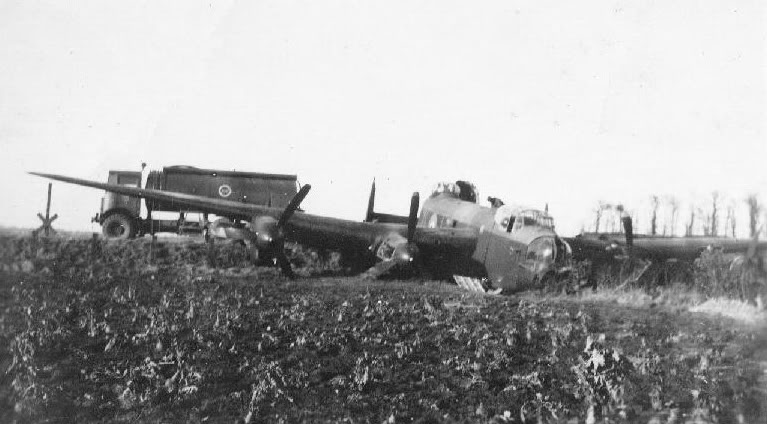
The second Lancaster Mk III, ND334, PM- unknown, did not fare quite so well. This aircraft had taken off a little later at 11:50 pm., and was also preparing to land.  The pilot, Warrant Officer JC Warnes escaped with injuries, as did the Mid-Upper Gunner, Sergeant S.Clapham, but everybody else was killed. These included the Flight Engineer, Sergeant D.H.J.Cunningham, the Navigator, Flying Officer R.H.Fuller, the Bomb Aimer, Flight Sergeant C.Bagshaw,  the Wireless Operator, Sergeant E.S.Gunn and the Rear Gunner, Sergeant A.O.Haines:

halifax wreck
Searching in more detail on the Internet, I found the following information on an archived page from the older of presumably two, DCBoard Forums of “RAF Commands”. It was written, from what I can make out, by “Greg” a guest on the forum in December 2003. Clearly, Greg has been able to access the official accident report:

“JB530 was struck in mid-air by ND334. The report is a little unclear, but it looks like permission by the Flying Control Officer (FCO) was given to JB530 to land first, and then permission was given for the other aircraft,ND334, to land, BEFORE JB530 had actually touched down on the runway. The Court of Inquiry suggests that this was due to a lack of flying discipline at the airfield, and also added that crews must keep a better lookout. The report also has the Air Officer Commanding’s comments, to the effect that Flying Control Officers must not depart from the normal procedure for landings. The report states that the accident was caused by the Flying Control Officer departing from the normal procedure.”

If this is true, then it is, quite simply, disgraceful. Five young men lost their lives because of a careless mistake. This wasn’t the fog of war. This was what should have been standard procedure for the Flying Control Officer.
In the early days when my Dad was first in the RAF, he told me that, when he had looked at the idea of becoming an Officer, the first question he was asked was “What school did you go to?” He said to me that “As soon as I said ‘Woodville Secondary Modern” (where all the pupils had to leave at thirteen) I knew I was wasting my time.”

wvilleupper

If only my Dad had been able to say “Eton” or “Harrow”, they might have promoted him:

eton-college xxxxxxxxxxxxxxxxxx

All I can say is that I just hope the Flying Control Officer in question did not get his job because of who his father was or which university he was educated at. To me, a mistake as basic as giving two different aircraft permission to land on the same runway at the same time is just stupid incompetence. And yes, I know that “these things happen in war”, but only if you give crucial jobs to people who are incapable of doing them.
Sergeant Donald Henry James Cunningham was aged only 19 when he was killed and his death must have been a catastrophic blow to his parents, Mr Geoffrey Joseph and Mrs Alice Maud Cunningham. The family all lived in Hounslow, Middlesex. Donald was buried in Brigg Cemetery, only four miles from the airfield:

brfigg cemetery
Sergeant Anthony Oliver Haines was 26 years of age when he was killed. His grieving parents were Mr Francis Henry Claudian Haines and Mrs Florence Ethel Haines, who lived in Bristol. Young Anthony was also buried in Brigg Cemetery, along with Donald Cunningham and 48 other young casualties of war.
Flying Officer Ronald Harry Fuller was only 22 years old when he was killed. He was the much loved son of Mr Henry James Fuller and Mrs Florence Fuller. The family all lived in Marylebone in London. Young Ronald was buried in Cambridge City Cemetery where 1,007 other young casualties of the two World Wars all lie:cambrigde vity cem

Flight Sergeant Charles Bagshaw was also only 22 years old when he was killed. He was the beloved son of Mr Charles Garrett Bagshaw and Mrs Sarah Bagshaw, of Urmston, a small town in Trafford, Greater Manchester. He is buried in his hometown cemetery where his grave bears the inscription, “He died that others might live”. He is with 59 other casualties of the two World Wars in this little town of only 41,000 people.
Sergeant Edward Sandilands Gunn was only 21 years old when he was killed. His parents were Mr Edward Sandilands Gunn and Mrs Bessie Gunn of Glasgow. Their son was returned to Scotland and now lies in the Glasgow Western Necropolis with 479 other young casualties of the two conflicts:

cemet

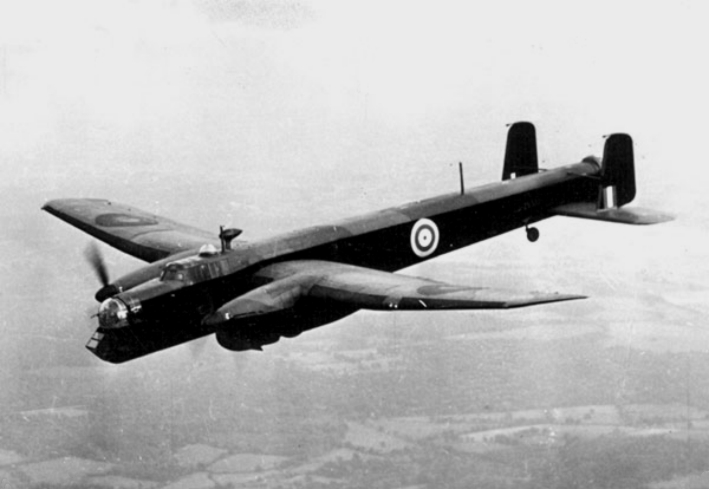
Edward’s brother David Sandilands Gunn was also in the RAF as a member of 612 Squadron, operating as a General Reconnaissance unit within RAF Coastal Command. David was killed on March 26th 1941, while flying an Armstrong Whitworth Whitley:

Armstrong_Whitworth_Whitley_in_flight_c1940

You may wonder about the name “Sandilands”. As far as I can ascertain, this was a Scottish clan name, here used as a first name.

Two things to finish, firstly a question. Was this the only catastrophic collision of two Lancaster bombers from 103 Squadron at Elsham Wolds? Well, what do you think?

And then one final word. All of the websites I have used can be reached through the links above. I could not have produced this article, however, without recourse to the superb books by W.R.Chorley. Their detail is almost unbelievable and I would urge anyone interested by the bomber war to think seriously of purchasing at least one of them. The books bring home just how many young men were killed in Bomber Command during the Second World War. When the first book arrived, my daughter thought it contained all the casualties for the whole war, but, alas, it was just 1944.

13 Comments

Filed under Aviation, Bomber Command, History, Personal, Politics

RAF Elsham Wolds: Part Three

I have now written two articles about RAF Elsham Wolds. I intend to carry on with this series of articles by firstly looking at the fate of just one single aircraft, an Avro Lancaster Mk III with the squadron letters “PM-I” and the serial number “JB745”. It took off from Elsham Wolds at precisely one minute past midnight on February 20th 1944. It was going to bomb Leipzig, which was a very, very long way involving an eight hour round trip, much of it over the Fatherland. Lancaster “JB745” was far from being a lone bomber, and the setting-up of this raid shows just what enormous levels of organisation and man power were involved in bombing a city more than 800 miles away:

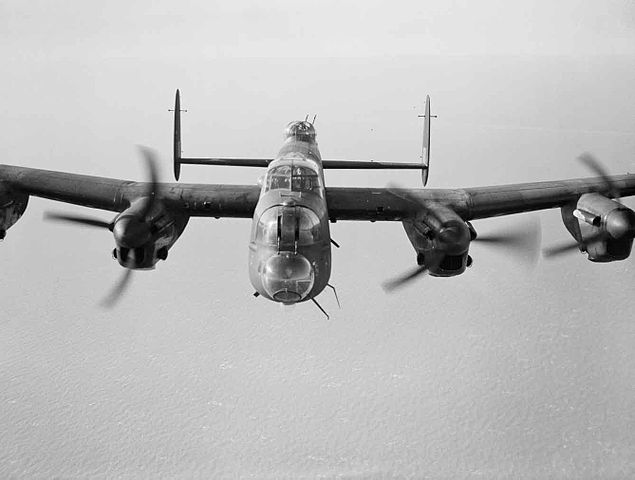
A_Lancaster_Mk_III_of_N

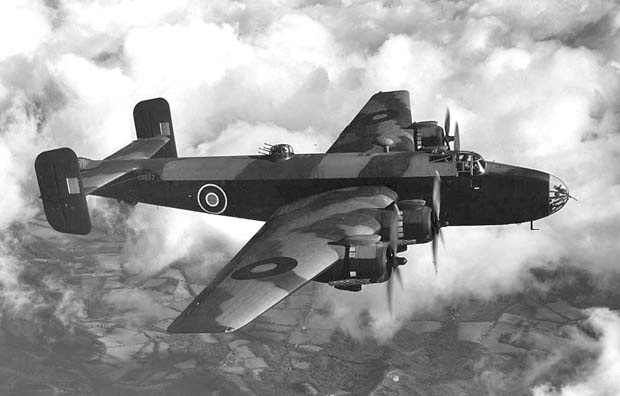
A total of 823 aircraft set off, comprising 561 Avro Lancasters, 255 Handley Page Halifaxes and  seven De Havilland Mosquitoes.  A diversionary attack was arranged, with 45 Short Stirlings on a mine laying raid on Kiel with four Handley Page Halifaxes as Pathfinders marking their targets for them. This is a Halifax, with its square tailfins and wings and its radial engines:

Halifax-mk3xxxxxxxxxxxxxxxxxx

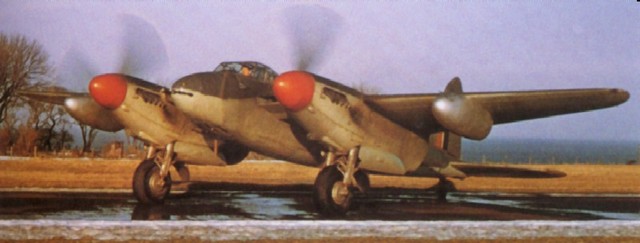
In addition to these aircraft, 15 Mosquitoes attacked Berlin, 16 Mosquitoes equipped with Oboe attacked German night fighter bases and 12 Mosquito patrols went out over Germany using Serrate to find and shoot down German night fighters. Three more Mosquitoes attacked Aachen as a diversion and three more Mosquitoes attacked flying bomb sites in France:

Mosquito_Fighter-bomber

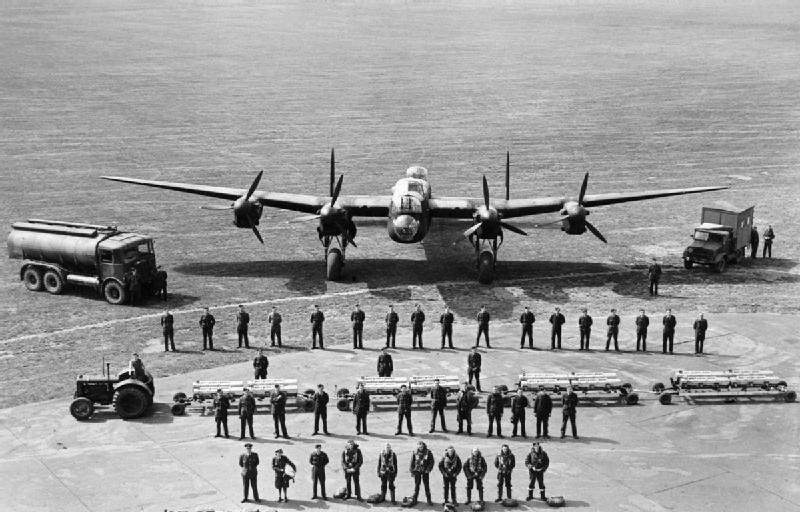
This was a total effort of 921 aircraft over Germany. Every single one of these bombers needed a huge number of people to fill it with fuel, load the bombs, replenish the ammunition in the gun turrets. and so on. The fuel and bombs can certainly be seen in this picture. Even what appears to be the refreshment van can be seen at the top right:

_the_personnel_required_

The losses on this particular raid over Leipzig were the highest of the whole war so far, with 78 aircraft lost out of the total of 921, a completely unsustainable loss rate of 9.55 %.  The previous worst total had been the 58 aircraft destroyed while bombing Magdeburg on January 21st-22nd 1943.
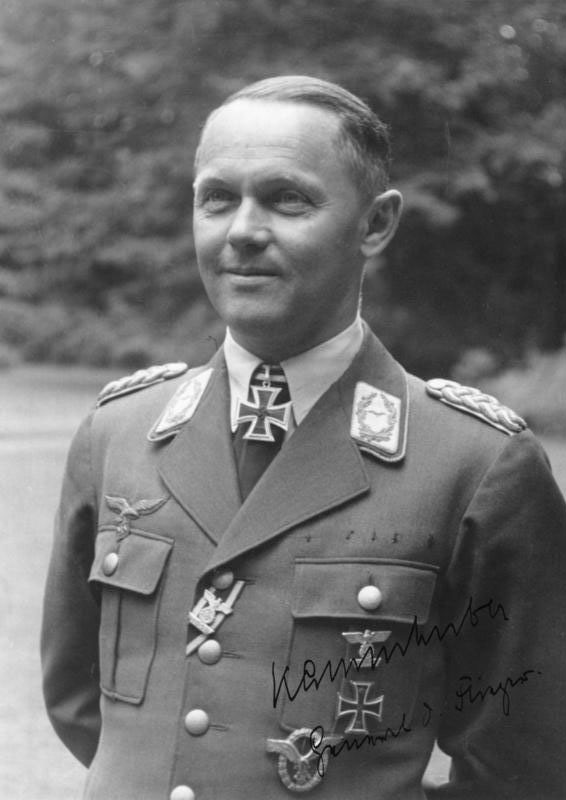
Some 44 Avro Lancasters were lost along with 34 Handley Page Halifaxes. The main problems were that the Germans were not fooled by the mine laying raid on Kiel. Only a very few night fighters were sent out there, and those that had been were soon summoned back to attack the real bomber stream. The bombers had been detected by German radar, operating as part of the famous Kammhüber Line, as soon as they crossed the Dutch coast. Here is the Great Man, Nachtjagdgeneraal Josef Kammhüber:

Josef Kammhuber

The very capable operators in the Luftwaffe control rooms were extremely efficient, and quickly summoned large numbers of fighters to attack the bombers. In actual fact, the RAF bombers were under continuous attack every single second of the 1500 + miles of the round trip between the enemy coast and Leipzig.

In those days, meteorological forecasting was in its infancy, and unexpected high winds meant that many bombers arrived too early over Leipzig. They then had to wait for the exact targets to be marked by the Pathfinders. As they circled around waiting for the Pathfinders to arrive, around twenty of the bombers were shot down by anti-aircraft fire. A further four aircraft were lost in collisions with other circling bombers. The city of Leipzig was wreathed in cloud and the Pathfinders were forced to drop their flares by parachute, the so-called Wanganui method. Given that some aircraft would have found the target using the Oboe radar device, then they were actually using “Musical Wanganui”.
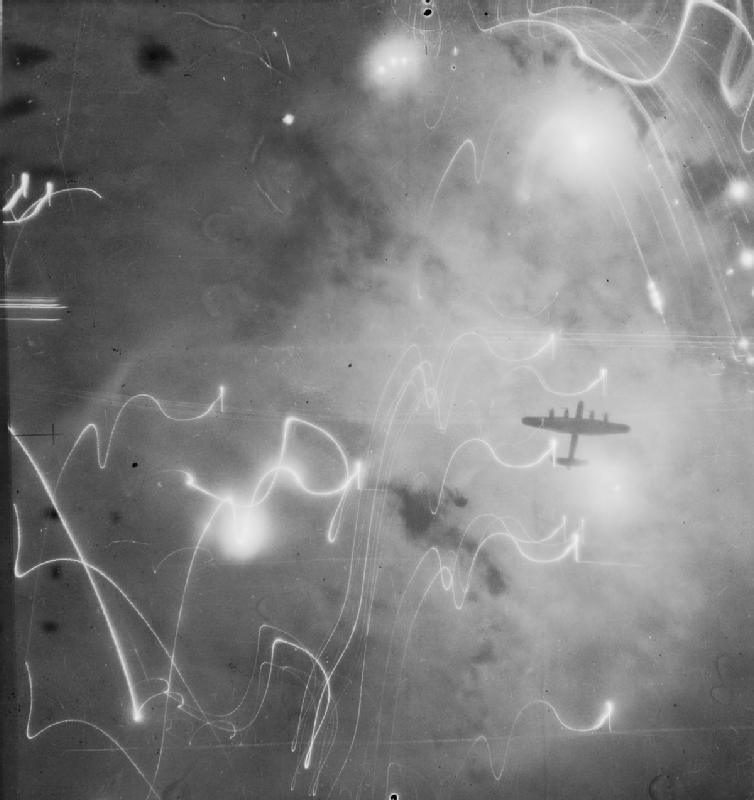
That arrangement worked all right in the beginning but gradually bombs became increasingly widely spread across a huge area:

Attack_on_Hamburg

Few details of the results of the bombing are known, even today. There was no immediate reconnaissance, so very little was ever discovered about the effects of this particular raid. The Germans, of course, said nothing about their losses.
At some point in the operation, Lancaster “JB745” was shot down. Nobody knows if this was by a night fighter, or by anti-aircraft fire (“flak”), or whether it collided with another aircraft. Nobody survived and the crew members, fittingly perhaps, are all buried together in Hannover War Cemetery.
Sergeant William Leslie Bradley was the pilot. He was just 24 years of age and like so many others, had originally served in the Royal Air Force Volunteer Reserve. From Selby in Yorkshire, his Service Number was 1129431 and he was the much loved son of Mr Wilson W. S. and Mrs Beatrice Bradley. William would never have the chance to lament the lack of shoppers in the modern Selby:

selby
The Flight Engineer was Sergeant Francis James Taylor, a youngster of only 21 years of age. He too had been in the Royal Air Force Volunteer Reserve. He was the much loved son of Mr Francis James Taylor and Mrs Cathrine (sic) Taylor, of Bolton, Lancashire. His Service Number was 2202861. He would never live to see the modern Bolton, Gateway to the North West:

Bolton modern

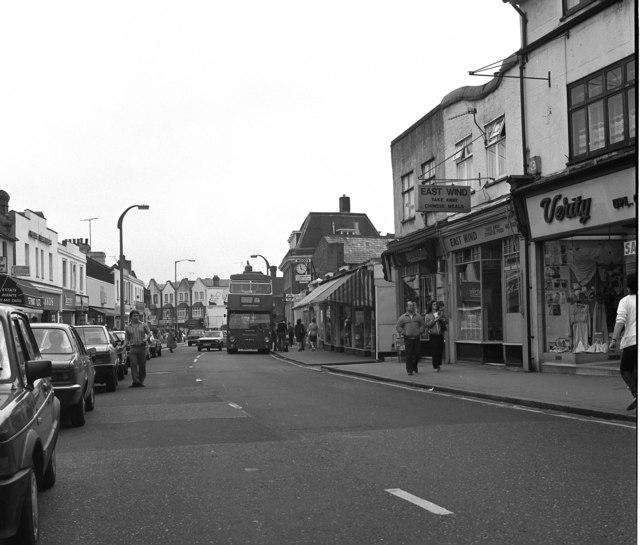
The navigator was a little older than that, at 24 years of age. He was Flight Sergeant Thomas Frederick  Johnston who, like many of his colleagues had been in the Royal Air Force Volunteer Reserve.  His Service Number was 1387379 and he was the much loved son of Thomas Frederick and Julia Johnston. They all lived in Coulsdon in Surrey, just to the south of London. Without the Leipzig raid, he would have been in his fifties when this photo of the High Street of his local town was taken:

Coulsdon_in_1983 in fifties

The bomb aimer was Flight Sergeant Jack Luck, who was just 22 years of age. He was a native of Newmarket, which is in Ontario in Canada. Young Jack was a member therefore, of the Royal Canadian Air Force:

220px-Join_the_Team_RCAF

Jack’s Service Number was R/105215 and he was the much loved son of Mr Harold John and Mrs Charlotte Luck. Here is the town hall in Newmarket:

NewmarketO town hall
The wireless operator was Sergeant Ernest Walter Hamilton. His flying had started in the Royal Air Force Volunteer Reserve and his Service Number was 1238004. Strangely the Commonwealth War Graves Commission website has no further details that I can find about Sergeant Hamilton.
The two gunners are both named. I suspect that Pilot Officer Arthur Stevens was the mid-upper turret gunner. He was by far the oldest of the crew at an almost ancient 37 years of age. His Service Number was 87717, a lowish number which probably shows more years in the RAF than the rest of the crew. Arthur was the son of Mr Herbert Frank and Mrs Ethel Mary Stevens. He had a wife, Celia Frances Stevens and the family all lived in Richmond in Surrey. Arthur at least though, would not be taking any more books out of the library, or watching any more humorous plays at the local theatre:

Richmond_Theatre_libraryzzzzzz

The young man named last in the crew list, and most probably therefore, the rear gunner, was Sergeant Frederick George Francis Osborne. Frederick was only 19 years old when he was killed. Like many of his fellow members of the crew, he had been in the Royal Air Force Volunteer Reserve. His Service Number was 1395421 and he was the much loved young son of Mr and Mrs Frederick Osborne, of Kendrick Mews, South Kensington, in the City of London:

_Kensington_mews

I tried to find out some background details about these seven young men who so willingly laid down their young lives to defeat the scourge of Hitler’s Germany. I would have to say that I was not particularly successful except for the following extract, which captures brilliantly well why so many people even nowadays, some seventy years later, still want to find out about the wartime heroes in their family.

I would not normally quote somebody else at length in an article, but I think you will see why I have done so when you read it. This is taken from a website entitled “The Wartime Memories Project – RAF Elsham Wold during the Second World War”. It contains a page about Elsham Wolds and another one about 103 Squadron. If you have any information to give Mr Osborne, you can do it via this link here. Anyway, here’s what he wrote:

“Freddie Osbourne was a member of Sergeant W.L.Bradley’s crew, Lancaster 111, JB745 PM-1,shot down en route to Leipzig. He was only 19, whereas his other gunner colleague was 37. Sadly, I have no photograph of him or his aircraft. As a young lad, I used to go out with his Father, Fred Osborne, helping him with his flower deliveries on a Saturday morning, but neither he, nor my Aunt Grace, would ever talk of him, and it has taken a lifetime to find details of him via a good friend with splendid connections, who handed me many details. It appears that both Aunt and Uncle were too grief stricken to ever mention their only child to anyone, even family. If anyone surviving 103 squadron could give me some idea what Freddie was like as a lad of 19 doing a man’s job, and what he was like at the tail end of a gun, and how many German planes did he shoot down? I would love to know, as I am immensely proud of him. If anybody knows of a picture of him, I will gladly pay for a copy and all expenses. He died on the 20th.February, 1944 and I consider it my duty to pay his grave a visit in Hanover, as a mark of respect to him and the other members of the crew.
Sadly, bad health has held me back for some time, but I will get there somehow. Thank you in anticipation.
Terence Osborne”

You may think that this was the worst thing to happen to one of 103 Squadron’s Lancasters during  the Leipzig raid, but you would be wrong. Sadly and tragically, very, very wrong.

One final word. All of the websites I have used can be reached through the links above. I could not have produced this article, however, without recourse to the superb books by W.R.Chorley. Their detail is almost unbelievable and I would urge anyone interested by the bomber war to think seriously of purchasing at least one of them. The books bring home just how many young men were killed in Bomber Command during the Second World War. When the first book in the series arrived at our home, my daughter thought it contained all the casualties for the whole war, but, alas, it was just 1944.
14 Comments

Filed under Aviation, Bomber Command, Canada, History, Personal

RAF Elsham Wolds: Part Two

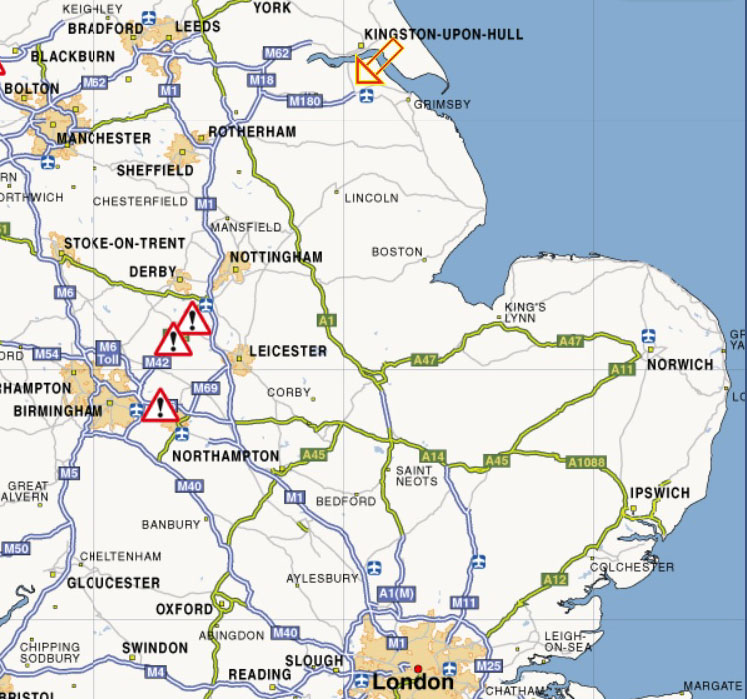
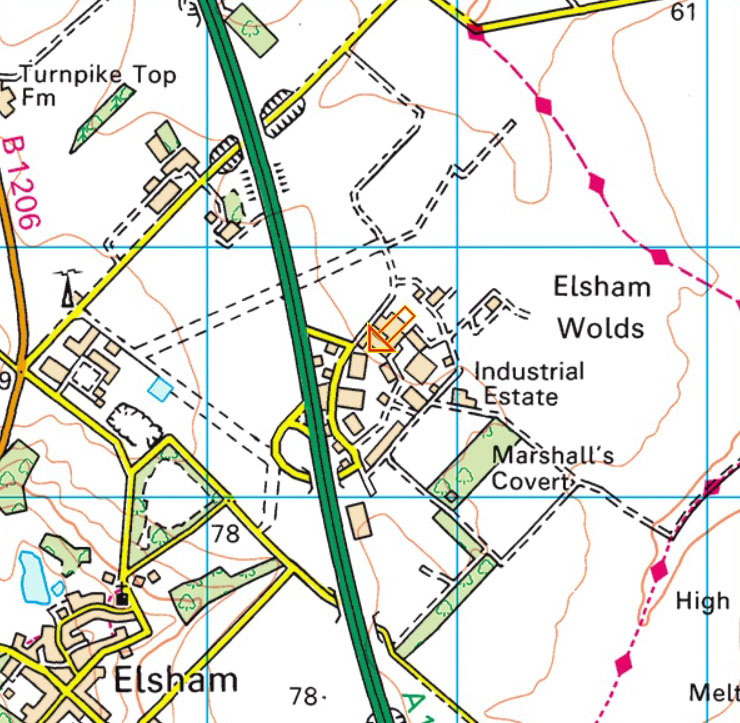
In a previous article, I wrote of how I had visited the RAF airbase where my Dad, Fred, had served during the Second World War, RAF Elsham Wolds in north Lincolnshire. Look for the orange arrow:

small scale

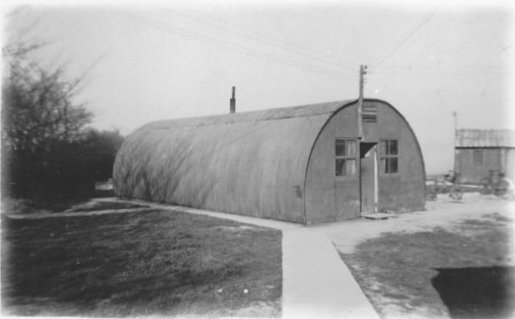
Not much of the original airfield was left, just a single aircraft hangar, which looked like a very large Nissen hut and was now painted white.
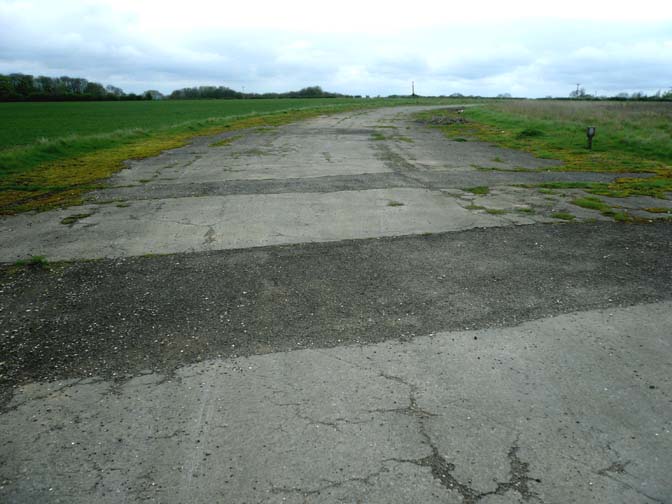
Very little else remained of 103 Squadron’s old home, beyond various stretches of derelict runway, now mostly covered in huge piles of builder’s rubble. Half of one runway has Severn Trent Water Authority buildings standing on it. The other end has a metal fence built over it. A second runway has a major road, the A15, constructed more or less right on top of it:

the new road
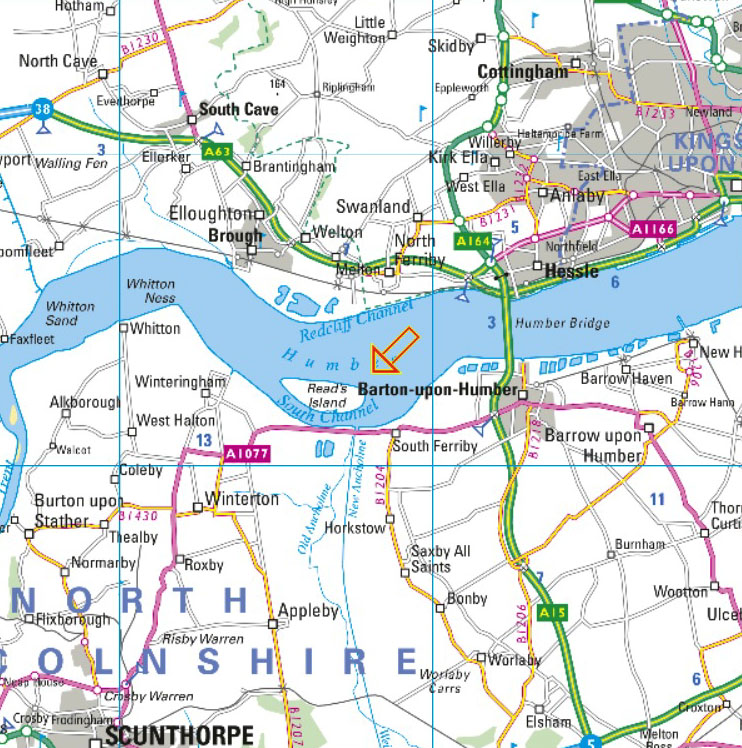
If you knew where to look, and could recognise what they were, there were still quite a number of disused dispersal points. Overall, it seemed a very long time indeed since those dark painted bombers had taken off, every single one of them straining their Merlin engines for altitude as they passed low over the village of Elsham. Within just a few miles of Elsham is Reed’s Island, a distinctively shaped land mass, situated in the estuary of the River Humber. Look for the orange arrow. When they were flying back to base, like all the other members of the squadron, the pilot of Fred’s aircraft used it as a rough and ready aid to navigation. Note Elsham village in the bottom right of the map:

reads island

Fifty years later, I myself was to visit Reed’s Island, not as a wireless operator / air gunner, but as a birdwatcher / twitcher, to see a rare Kentish Plover, which was spending the winter there:

K-Plover

In Fred’s time, the man in charge of Bomber Command was Arthur Harris:

Bomber-Harris-595x781
According to Fred, Harris, who was usually known to his men not so much as “Bomber”, but rather as “Butcher” or “Butch” Harris, was an absolute tartar. Whenever he came across a bomber which was not in service, he wanted to know why it was still being repaired, why it was not yet back in action, and when would it be possible for it to return to dropping bombs on the Germans.

Despite much encouragement from members of his own staff, Harris did not often visit airbases, because he felt that all the painting and decorating which would be carried out for his arrival was something which would inevitably interrupt the much more important business of killing the enemy.
Fred always used to say that he had actually seen Harris, though, and my subsequent researches have revealed that the great man did in actual fact visit Elsham Wolds, on September 16th 1943 to speak to 103 Squadron. He was greeted with sustained cheering by everyone present, and I presume that this must have been the occasion when Fred saw him.

And sure enough, Harris spent much of his time at Elsham Wolds trying to find out why aircraft were being repaired, how long the work would take, and exactly when they would be back on strength, ready to drop bombs on the Germans.
In actual fact, Fred had been very lucky to have seen Harris. Despite those constant urgings by his fellow officers, he was only ever to make around six visits to Bomber Command airbases during the whole time that he was the head of that formidable organisation.
Fred never mentioned to me any of the men he met during his time at operational bomber airfields, although I do remember that he once mentioned the presence of a Jamaican pilot with 103 Squadron at Elsham Wolds, presumably because this man was black, which would have been unusual in Bomber Command at the time.
Years later, totally by coincidence, I was surprised to see in “Royal Air Force Bomber Command Losses of the Second World War”, that on February 15th 1944, a Lancaster Mk III, ND 363, with the squadron letters PM-A of 103 Squadron, took off from Elsham at 17.10 to bomb Berlin. The plane was shot down by a night fighter two minutes before eleven o’clock, crashing into the sea near the island of Texel in Holland. The entire crew was killed. Among them was Squadron Leader Harold Lester Lindo who, although he was in the Royal Canadian Air Force, was actually from Sligoville in Jamaica. Lindo was not, however, a pilot but a navigator. Another Caribbean navigator was Cy Grant, who came from British Guiana and arrived in England to join the RAF in 1941. After undergoing initial training, he too was posted in 1943, to 103 Squadron at Elsham Wolds, as one of the seven-man crew of an Avro Lancaster bomber. Here he is:

grant

I have mentioned before the risks of bombing Germany, statistically four times more dangerous than attacking anywhere else in the rest of occupied Europe. In 1943, for example, in some squadrons, losses in the Battle of Berlin sometimes ran as high as twenty per cent. At Elsham Wolds, 103 Squadron had the lowest losses in 1 Group but they still lost 31 Lancasters in the Battle of Berlin, with, perhaps, 217 men killed. At the time, Bomber Command pilots, of course, received the princely sum of £5 per week for their efforts, with other members of the crew paid correspondingly less.
During his time at Elsham Wolds, Fred conceivably came across the record holding Lancaster in Bomber Command, although I do know that he never flew in it on an operation. ED888 was to carry out an unprecedented 140 bombing raids over enemy territory:

db_Mike_Squared_Flying1

This legendary Lancaster began its operational career on the night of May 4th 1943, initially in B Flight of 103 squadron, where she was known as “M-Mother”. In November 1943, to mark its fiftieth operation, the aircraft was awarded her very own Distinguished Flying Cross. When she then passed into Elsham’s second squadron, 576 squadron, she became known as “Mike Squared”. To commemorate her completion of one hundred sorties, the aircraft duly received a Distinguished Service Order. By now she had returned to 103 squadron and was known unofficially as “M-Mother-of-them-all”. Eventually to complete 140 operations with two Luftwaffe fighters shot down, ED888 finally received a Bar to her Distinguished Flying Cross:

ED888M

The aircraft was struck off charge on January 8, 1947 and scrapped without the slightest thought of preservation in a museum. Yet she was the greatest Lancaster of them all.
The only part of “M-Mother” which remains nowadays is, in fact, her bomb release cable, which was taken off the aircraft in 1947 by Flight Lieutenant John Henry, one of three Australian brothers, who were all in 103 squadron and who did, on one particular operation, all fly together to bomb Cologne. Flight Lieutenant Henry flew “M-Mother” on its very last trip down to the Maintenance Unit at RAF Tollerton in Nottinghamshire, where it was finally broken up:

mike squared

Not everything was hearts and flowers in Bomber Command though. My Dad once had a trick played on him by men who perhaps should have known better, but who could be forgiven a lot for finding any way whatsoever of dealing with some appalling events.

One day, on an unknown airfield in an unknown year, probably towards the beginning of his air force career and possibly at Elsham Wolds, the young Fred was approached by one of his superiors, perhaps a Flight Sergeant. Fred was told that he had to come and help get the Squadron Leader back from the runway. He innocently thought that it would merely be a matter of going out and telling the man, politely, that he was now needed to come inside. Fred did wonder, however, about the strange objects they were carrying out there onto the vast expanse of tarmac:

tipped on xxxxxx

Fred could not see anybody at all as he stepped out onto the runway. They walked further and further. Suddenly Fred realised why they were equipped with a sack and a shovel. The Squadron Leader was out on the runway, but was, unfortunately, no longer a living, recognisable, human being.
The poor man had been the victim of a crash as he came in to land, and was now just a collection of smears of what Fred described to me years later as “lumps of hairy strawberry jam”. He was picked up with the shovel, put into the sack, and then the two young men went back to their own lives.
As I found out in later life from various books I had read, this term, “strawberry jam”, was frequently used by members of Bomber Command to refer to the residue remaining after what might nowadays be termed “catastrophic and large scale injuries to personnel”.
The phrase typifies the kind of outcome one can expect when the human body is placed in a heavy metal machine travelling at hundreds of miles an hour, and there are then sudden and calamitous problems:

hali

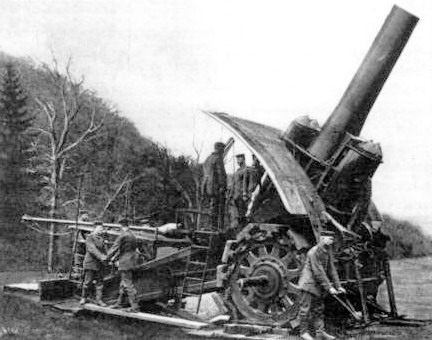
Perhaps Fred himself was familiar from his own father, Will, with the Great War equivalent of this Second World War expression. The Great War was fought with big guns, huge artillery pieces, and most men were killed when a shell landed and blew them to smithereens, “knocked to spots” as the soldiers of the day grimly called it:

gun
It has been suggested elsewhere, of course, that this use of slang to describe being killed, in what were frequently the most horrendous of fashions, was a sub-conscious means of reducing the natural fears of these brave young men of Bomber Command. If, therefore, you “got the chop”, “went for a beer”, “went for a burton”, “your number came up”, “you met the Reaper”, or as the Americans in the Eighth Air Force used to say, “bought a farm”, the expressions became events no more sinister than the other famous slang expressions of the RAF, such as Wizzo” or “Wizard”, “Crackerjack”, “ops” “kites”, “props”, “sprogs” and the one which has come down all those years to our own time, “Gremlins”.

18 Comments

Filed under Aviation, Bomber Command, History

A trip around my Dad’s past: RAF Elsham Wolds

My Dad, Fred, used to tell me many tales of his years in the RAF. He served in Bomber Command, and, as I grew older, stimulated perhaps by the increased interest generally in the Second World War, I made great efforts to find out the exact details of where he had served and what exactly he had done. This proved quite a challenge. Here he is with a few of his unduly optimistic friends during basic training:FRED WAS

I do know that Fred served with 103 Squadron, probably in late 1943 and/or early 1944. This was the time of the Battle of Berlin which lasted from November 1943 to March 1944. My Dad did not take part in this titanic, and ultimately losing, struggle where 2,690 aircrew were killed in action and nearly a thousand became Prisoners of War. Bomber losses ran at 5.8% which is generally considered unsustainable. Crew morale was extremely low because of these huge casualties over “The Big City” as it was called, and luckily for him, Fred was never asked to bomb Berlin. Fred considered this to be the sole reason that he survived the war.
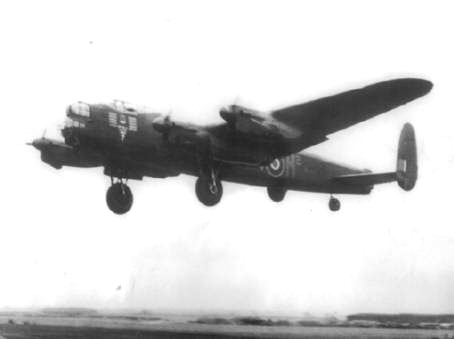
Here is the badge of 103 Squadron. The motto means “Don’t touch me”:

badge

Fred spent his time with 103 Squadron at RAF Elsham Wolds which is between Scunthorpe and Grimsby, two places neither of which have ever been described as the Paris of the North, shall we say?  Indeed, at the end of the conflict, one of my Dad’s great resentments, whatever he achieved against such a mad and bad enemy as the Germans were at that time, was that, like all the young men of Bomber Command, he knew damn well that they had all been forced to waste the best years of their lives, all of their youth, not pursuing pretty young girls at the village dance, but sitting in a Nissen hut in the middle of nowhere, feeling freezing cold and scared to death of a dangerous and precarious future. Fred’s twenty-first birthday, for example, had been celebrated, or rather, not celebrated, on a lonely, cold airfield in the middle of nowhere, far from his family. A definition which certainly would fit Elsham Wolds.
Here is Elsham Wolds on June 26th 1943, seen from about 10,000 feet up. Look for the three runways forming a huge triangle in the middle of the photo, and, on the right, five of the many circular dispersal points where the Lancaster bombers would wait impatiently for night to fall :

June 26 1943

And here is a Nissen hut, named after Mr Nissen:

nissen

Today, very little remains of RAF Elsham Wolds. A major road, the A15, has been built more or less right through the middle of it, and on top of the majority of one runway. There is a single hangar left, apparently a J-type. Look for the orange arrow, pointing to the hangar:

elsham

It’s a funny feeling, though, to see a wartime building that your Dad would have known and no doubt loved when he was just nineteen or twenty years of age:

P1300101 xxxxxxx J type

Here I have made gallant attempts to match up the aerial photograph of RAF Elsham Wolds in 1943 with the present countryside. The orange arrow still marks the J-type hangar. One runway has obviously disappeared under the A15. On the Ordnance Survey Map look for the number “78” and then the irregularly shaped four sided area to the left of it. It is bordered with yellow minor roads. You may be able to pick this distinctive shape out on the 1943 photograph:


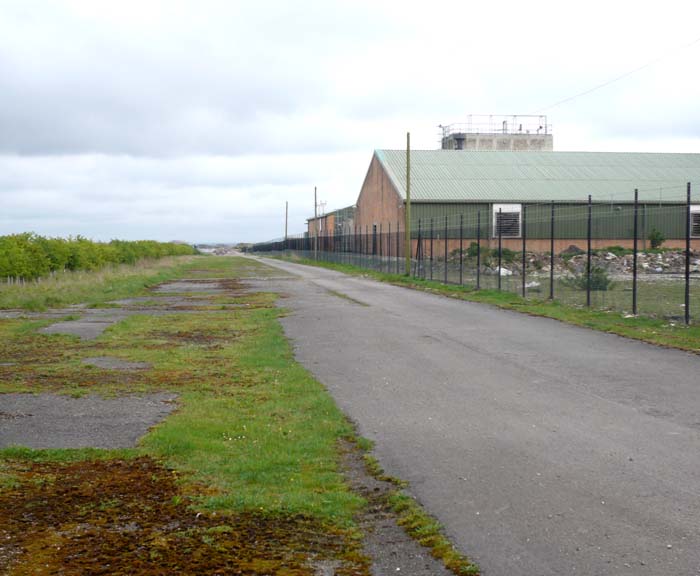
This is half of the runway which, on the Ordnance Survey map, has the radio mast symbol on it. The buildings have something to do with the Severn Trent Water Authority, but were seemed to be  unoccupied during our visit:

severn trent

This is the runway which runs more or less west to east, if you refer back to the Ordnance Survey map. It has now become a dumping ground for builders’ rubble:

tipped on xxxxxx

This is the Perimeter Track, or “Peri-track” running toward the start of the runway. When they set off on a mission, all the bombers would taxi slowly along the “Peri-track” to the start of whichever runway they were using that night:

peri track

The laws of trespass are quite different in England to many countries. Here, more or less, you can go wherever you want, provided you leave when you are asked to. Only too easy then, to take a Volvo saloon off the road, over ten yards of gravel, on to the old “Peri-track” and then round and off to the start of the runway. Here is where the bombers waited to take off:

wait to take off xxxxxxxxxxxx

Unfortunately, some idiot vandal builder has built a metal fence to stop me attempting a proper take-off so I have to stop the car and just drink in the scenery:

take off xxxxxxxxxxxxxxxxx

Nevertheless, let’s give it a go!

And I certainly knew what to do in my Lancaster. Accelerate as hard as possible. Keep your eye on the speed.  When it reaches 130 mph, a gentle dab on the brakes and then, lift off. You’re on your way. Seriously though, it was good to think that I might have been doing exactly what Dear Old Dad had done 60 plus years ago. In a Lancaster, of course, not a Volvo:

010BD127_5056_A318_A8C78A0799237BD9

30 Comments

Filed under Aviation, Bomber Command, History, Personal, Writing

Schweinfurt One: sixty B-17s downed, 559 airmen killed

I am sure that most people would understand the difference between “hot courage” and “cold courage”. During a robbery, the person who suddenly confronts the would-be robber and tries, as the English say, to “have a go” is showing hot courage. The same would be true of the person who tries to drag an unconscious victim out of a burning car crash. In the context of war, it may be the man who solves the sudden problem of an enemy tank by jumping onto the top of it and throwing a hand grenade in through the hatch.
All of these acts show great heroism, but as far as I am concerned, “cold courage” takes it all into a different dimension. “Cold courage” is the person who faces a painful terminal disease without losing his dignity. “Cold courage” is the person who sets off to walk along a highwire stretched hundreds of feet off the ground between two skyscrapers. “Cold courage” is the fireman who looks up at that staircase in the North or South Tower, and starts climbing, because he knows that it is his duty to try and save people, even if it may be at the expense of his own life. In the context of war, “cold courage” is the man who sits on his bunk for a whole afternoon, waiting for the chance to get into a bomber at nine o’clock and then fly off into the night skies over Germany, not only risking death, but knowing that, statistically, death is a very likely outcome. The only thing more difficult than doing this as far as I’m concerned, would be the chance to fly over Germany in broad daylight, when you have the opportunity to see exactly what is happening to everybody else, and may well happen to you.
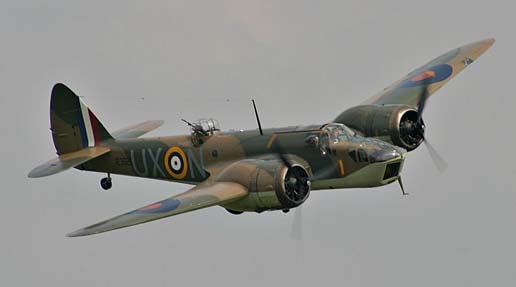
Early on in the Second World War, the RAF tried to place their tiny bombs accurately on exclusively military targets during the hours of daylight when, theoretically, it should have been relatively easy to do so. The only problem was that the German fighters of the day were all easily capable of shooting down these poorly armed bombers without any real problems. Between May 10th-May 28th 1940, losses of the Bristol Blenheim bomber, for example, were almost unbelievable. (Search for “Known Individual Aircraft Records”)

bristol-blenheim-xxxxx

For that reason, the RAF soon turned to night bombing. Equally swiftly, they found that it was virtually impossible to hit relatively small military targets with any accuracy at night. They would be better employed in bombing the areas of the city around the enemy factories, in an effort to kill or injure the workers who worked there. This new tactic carried out the directive that had been agreed on at the Casablanca Conference.

“Your Primary object will be the progressive destruction and dislocation of the German military, industrial, and economic system, and the undermining of the morale of the German people to a point where their capacity for armed resistance is fatally weakened.”

When the United States came into the war in Europe, effectively in 1942, their bombers were equipped with the famous Norden bombsight, which was supposedly capable of dropping a bomb into a pickle barrel from 30,000 feet up. Putting their faith into the bombing accuracy achievable with their marvellous bombsight, the Eighth Air Force ignored British advice that, because of the very high standards of Luftwaffe fighter pilots, bombing at night was the only sustainable method of carrying on the struggle against the Germans. The Americans, therefore, persisted with their daylight raids.

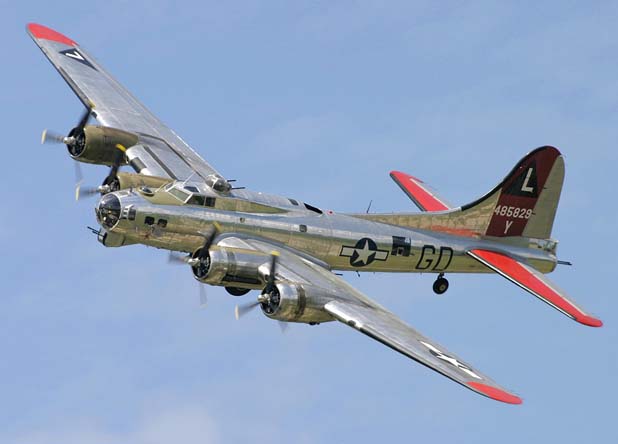
B-17G%20Flying%20FortresszzzzzzzzAfter a few months of daylight bombing, much of it over France rather than the Reich itself, the idea was mooted that enormous and significant damage could be inflicted by bombing the German factories which produced ball-bearings, as they were vitally important to the entire German war machine. Virtually every single military vehicle and aircraft depended on them. The Mighty Eighth, therefore, exactly a year to the day after their first gentle raid, Mission 1 on August 17, 1942 against the Sotteville Marshalling Yard at Rouen in France, decided to attack these important factories . This would be Mission 84, scheduled for August 17, 1943, a complex two-pronged attack on the ball-bearing works at Schweinfurt and the Messerschmitt aircraft works at Regensburg. The raid would be the furthest penetration into German territory to date, some 800 miles from the coast. What happened is the most wonderful example of “cold courage” that anybody could wish to meet.
The greatest problem for the Eighth Air Force was that none of their own fighters, nor those of the RAF, had anywhere near the range required to escort the slow, heavily laden B-17s to their targets. The main defensive tactic, therefore, was to form up the Flying Fortress bombers into huge boxes, where, theoretically, every single aircraft could protect, and could be protected by, all the other aircraft.

1157x829xBoeing-B-17E-Flying-Fortresses-form-up-over-England-1942_jpg_pagespeed_ic_CkVpDznVhI

This procedure took a very long time to organise with hundreds of bombers to be fitted into the formation. And this was the first problem: all this activity was completely visible to the German radar. I can remember my own father telling me how he had watched these brave young men get ready to go into battle…

“ On a number of occasions, Fred had stood on a long forgotten airfield in East Anglia and watched the American Eighth Air Force prepare to depart on a daylight raid over Germany. Their B-17 Flying Fortresses would circle seemingly for hours over their bases, as they slowly and precisely formed up into their famous defensive boxes, intricate arrangements of, perhaps, up to a thousand heavily armed bombers whose almost countless machine guns, in theory, were capable of offering covering fire to all of their fellow aircraft. Once the B-17s were ready, it was as if somebody blew a bugle unheard far below on the ground and all the bombers would then suddenly set off to war, tracing their gleaming contrails across the blue sky, eastwards in the sunshine towards the Third Reich.”

This slideshow requires JavaScript.

The Eighth Air Force raid caused a 34 per cent loss of production at Schweinfurt but this was soon made up for by surplus supplies of ball bearings from all over Germany. The industry’s infrastructure, while vulnerable to a sustained campaign, was not vulnerable to destruction by a single raid.
The Nazi Minister of Armaments, Albert Speer , later wrote that the Eighth Air Force’s major error was to attempt a second attack on Regensburg at the same time as the main attack on Schweinfurt, and not to continue with further raids on Schweinfurt after the first one.
Some of the B-17s were over Germany for a period in excess of two hours with no fighter protection whatsoever, and the Luftwaffe were quick to take advantage of the situation. Given the fact that they had picked them up on radar over East Anglia, the Germans were able to call up extra fighters from all of their bases, stretching from southern France to Norway in the north. Many fighters were able to expend their ammunition in massed attacks on the American bombers, land again for fresh supplies of fuel and weapons and then rejoin the battle.

This slideshow requires JavaScript.

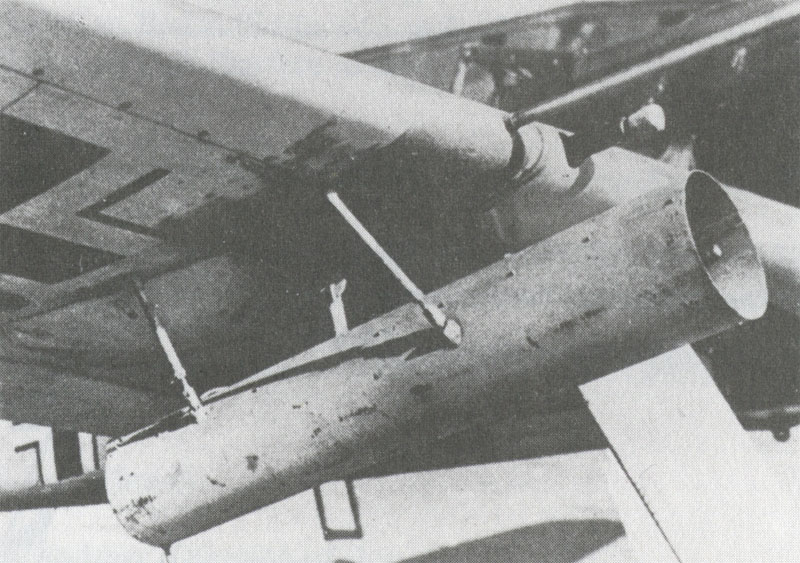
The German fighters were well aware of the B-17s’ inadequate forward armament and their vulnerability to head-on attack. Against the 0.50 calibre Browning machine guns of the Flying Fortresses, the German fighters were all equipped with cannon which fired explosive shells. In theory, just one hit could bring down a bomber. Much longer ranged than the machine guns, this enabled the Germans to fly well out of the range of the B-17s’ machine guns and fire off short bursts of cannon shells at intervals. Some fighters carried sophisticated rocket weapons, including mortars propelled by rockets, all of them capable of wiping out a B-17 in just one shot.

rocket tubes

Tales are also told of the Germans using either obsolete combat aircraft or training aircraft to fly high above the American formation and drop air-to-air bombs.
This account from  Archie J.Old Junior, a thirty seven year old Texan,  is quoted in “The Mighty Eighth” by Gerald Astor

“The fighters were all over us. They really got interested in me. German fighters came up from every point of the compass after our fighters turned around. (Just before the German frontier). And they were already throwing flak at us when we were five to ten minutes away from the target.” (Some thirty or forty miles)

In “Eighth Air Force”, Donald L.Miller describes pretty much the same situation, once the P-47s had been forced to turn back…

“…a hailstorm of fighter assaults that continued almost all the way to the target. (Beirne Lay, Jr) wrote, “I knew that I was going to die, and so were a lot of others.”

b17_direct%20hit

Overall, American casualties were way beyond the sustainable. For Bomber Command that most basic of figures had been set at 4%. On this raid 230 bombers had taken part, and sixty of these were destroyed. A tiny number finished up in Switzerland, and “thanks to the luck and the skill of the RAF Air-Sea rescue teams”, everybody who went into the icy waters of the North Sea (yes, even in August) was rescued. Five hundred and fifty two men were killed in the air, and seven poor souls made it back home, but, alas, were to succumb to their injuries. Twenty one men were badly wounded.
Beyond the sixty B-17s shot down, between 55-95 further aircraft were badly damaged. Of these, many were too severely damaged ever to be repaired.

This slideshow requires JavaScript.

Of the fighter escort, two P-47s of the 56th Fighter Group were destroyed and so too were two Spitfires from the RAF. The fighters claimed more than 30 kills, but the gunners on the B-17s were very optimistic with their claim of 288 German fighters destroyed. After the war, Luftwaffe records showed just 27 aircraft had been lost.
The very biggest problem of daylight raids by the Eighth Air Force deep into enemy territory was the lack of adequate long-range fighter escort. Some of the Schweinfurt Flying Fortresses were over German-occupied territory for three hours and thirty minutes. Of this period of time, there was no fighter support whatsoever for two hours and ten minutes, which included all of the time spent over Germany itself.

By one of those extraordinary coincidences which are sometimes thrown up, the night of August 17th-18th 1943, saw the British RAF engaged in “Operation Hydra”, which turned out to be one of the more significant raids of the war. Using 324 Avro Lancasters, 218 Handley Page Halifaxes and 54 Short Stirlings, attacks were made on the V-Weapon rocket testing grounds at Peenemünde in the Baltic to the east of Denmark.

Clearly, rocket weapons of the calibre of the V-1 and the V-2 quite simply had to be destroyed, certainly with the Allies envisaging a landing on the coast of France within less than a year.

Indeed, the bomber crews were actually told at their briefings that unless they were successful that particular night, they would be going back to Peenemünde again on the 18th, the 19th, the 20th, and, indeed, they would keep returning until the target was completely destroyed. This certainly concentrated their minds enormously, and, with  operations directed for the first time by a “Master Bomber”, namely  Group Captain John Searby, the Commanding Officer of 83 Squadron, they achieved great success.
Joseph Goebbels, Hitler’s Minister of Propaganda, himself said that the raid had cost the German efforts “six to eight weeks”, a figure agreed by the RAF who wrote in their official history that the attack “may well have caused a delay of two months.”

Although there were those who judged that the raid was “not effective”, an important figure, Chief Engineer Walther, was killed, but most significantly perhaps, so too was the hugely influential Doctor Walter Thiel who had provided the key ideas for the A4 rocket engine, later used to power the horrendous V-2 and indeed, in its developed form, NASA’s rockets into space.
The protection of the darkness was obvious in the casualty figures. Bomber Command lost 6.7% of their bombers and a total of 215 men were killed out of an approximate total of just over four thousand participants. Focke-Wulf Fw 190 night fighters claimed 29 of the 40 bombers shot down. Coincidentally again, the German night forces had employed for the first time ever, three twin engined Messerschmitt Bf 110 fighters with the deadly combination of radar and Schräge Musik upward firing cannons.

This slideshow requires JavaScript.

To make their night fighters even more formidable, the Luftwaffe taught  all their crews exactly where a Lancaster’s most vulnerable spots were…the enormous fuel tanks.

schrage-004

In another blog post, I will look at what the Eighth Air Force did next after the Schweinfurt raid, and their continuing “cold courage”, as they regrouped their strength after what must surely be considered, despite the immense resolution and extraordinary bravery of the Americans, one of the great catastrophes of the Allied air war.

12 Comments

Filed under Aviation, Bomber Command, History

Hallowe’en Nights (4) Three ghosts from my past

My father was called Fred Knifton. He lived from 1922-2003, for the most part in Hartshorne Road, Woodville, which is to the south of Derby and Nottingham, in the East Midlands.

This slideshow requires JavaScript.

Woodville at the time was a village of some 5,000 people. It was exactly on the edge of  a geological fault line, so to the west, coarse, heavy clay was mined in opencast quarries, and sewer pipes and drainpipes were manufactured. To the east there was no clay, but instead there were open green fields with Friesian cattle and tall hedges of hawthorn.

SLD_Herd ddddddd

Although as far as I know he never experienced any of the RAF’s many ghostly occurrences, Fred once told me that there was a well-known haunted hangar somewhere out there in East Anglia, possibly in Norfolk, where mechanics as they repaired aircraft late at night, would often hear dance music, even though of course, there was no orchestra within miles.

A modern day equivalent may well have been the occasion when I stood at the bathroom sink one summer’s morning, a good few years after Fred’s death, looking out over the roof tops of Nottingham. I was listening to “American Patrol” being played by the Glenn Miller Orchestra on a CD.

This moment suddenly gave me probably the most distinctive feeling of “déjà vu” I have ever had. I have wondered ever since whether my father had perhaps done exactly the same thing on some airbase in Lincolnshire on a long forgotten day some sixty or so years previously.

Strangely enough, for a man who always had so many tales to tell, ghosts and phantoms did not feature particularly highly in Fred’s repertoire, and I would struggle to think of any direct reference he ever made about the afterlife, although I am sure that he was aware of the alleged haunted house down near the Bull’s Head Inn in Hartshorne.

As a native of nearby Woodville, Fred would certainly have heard all the tales of the phantom attached to this large black and white timber framed Elizabethan house which stood between the old Georgian coaching inn and the Anglo-Saxon church in the middle of Hartshorne.

This slideshow requires JavaScript.

Apparently, the story was often told of how….

“A brave group of people, made curious by the many ghostly accounts of bumps in the night, had gone up into the attic, unvisited through many decades of neglect, and found furniture piled up across the entire room. On the inaccessible far wall of the room, there was a delicate but obvious print in the centuries old dust, the unmistakeable impression of a ghostly human hand. Nobody could possibly have penetrated the great mass of tables, chairs and rubbish stacked across the floor. It could only have been the work of a phantom. ”

In 1970, I experienced an extremely strange happening when I accompanied my father, Fred, down to his parents’ house at number 39, Hartshorne Road. Fred’s parents, Will and Fanny, had both recently died recently within a few months of each other in hospital at Burton-on-Trent, with Fanny remaining mercifully unaware of Will’s demise after more than sixty years of marriage.

This slideshow requires JavaScript.

Fred was paying regular visits to the property, presumably attempting little by little to clear the house out so that it could be resold. At the time, as a teenager of some sixteen  years of age, I was unaware of this, although, with the benefit of hindsight, I wish I had been, and I could perhaps have stopped Fred from throwing away so many of his father Will’s Great War souvenirs, such as his complete Canadian Army uniform, his German soldier’s leather belt and his extensive collection of German guns and ammunition.

We entered the deserted house through the front door, and as I walked along the hallway towards the kitchen, I distinctly heard the upstairs toilet flush. I turned round and asked Fred, who had been following me into the hall, how this could have happened, and who it could have been, given that we both knew that the house was locked up and empty.

Fred gave me some non-committal answer at the time, but afterwards, perhaps when he had regained his composure a little, he told me that, as he was some way behind me, he had been able to look up the stairs when he heard the sudden noise of the toilet being flushed. He had distinctly seen his recently deceased father, Will, walk out of the bathroom, across the landing and into the front bedroom.

My father Fred certainly knew the story about how an aging Mrs.Edwards had sadly passed away. This old lady had lived in the village a hundred yards further down Hartshorne Road from Fred’s own house, in a Victorian house next to the entrance of a factory making drainpipes.

Her old  friend, and our own family friend, Gertrude Betteridge, went down to Mrs.Edwards’  house to pay her respects and offer her condolences to her daughter, Margaret Edwards. The latter greeted Gertrude and showed her into the front room. Margaret then invited her guest to sit down on the settee while she went into the kitchen to make “a nice cup of tea”.

After a couple of minutes, as Gertrude sat there quietly and politely with the sunlight streaming brightly through the front windows, the door opened. It was not, however, Margaret with the expected tray of tea and biscuits, but Mrs.Edwards herself, exactly as she had been in life, who came in. She walked across the room to Gertrude completely normally, and quietly and calmly said to her, “Tell Margaret not to worry. I’m all right.” Then she turned and walked away, opened the front room door and disappeared back out into the hall, never to be seen again.


5 Comments

Filed under Aviation, Bomber Command, History, Personal

The Last British Lancaster

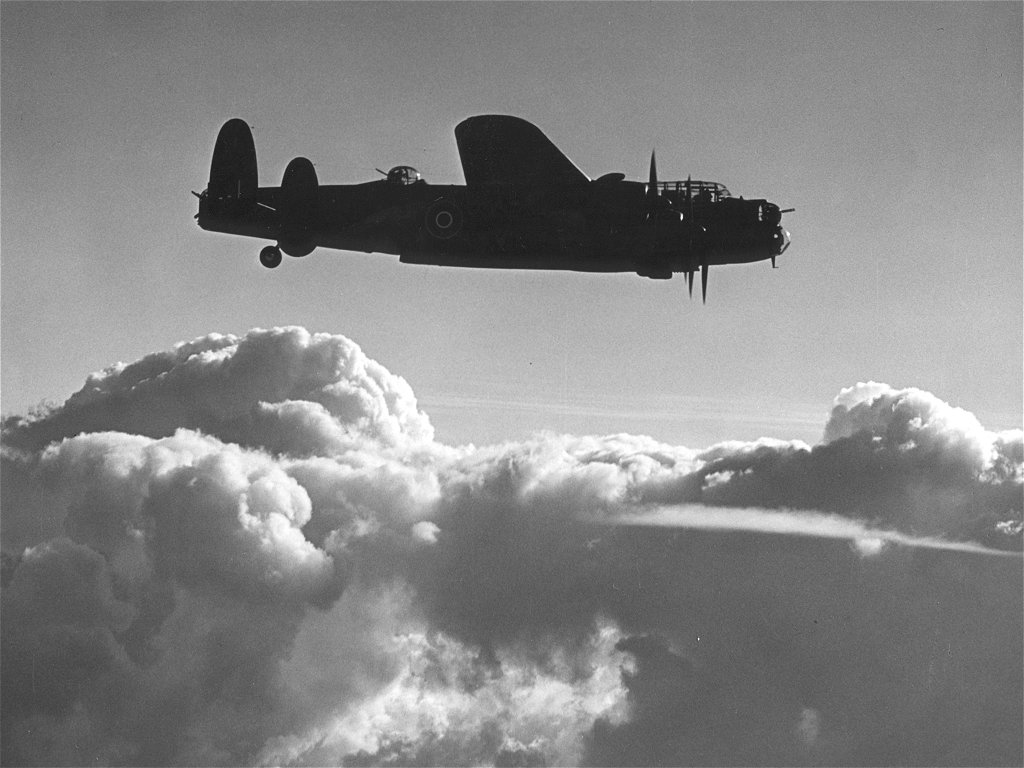
Yesterday we went to Westdale Lane in Nottingham to see the flypast by the Battle of Britain Memorial Flight’s  Avro Lancaster.
This particular aircraft was completed at Hawarden Airfield, Chester on May 31 1945 and its serial number is PA474.
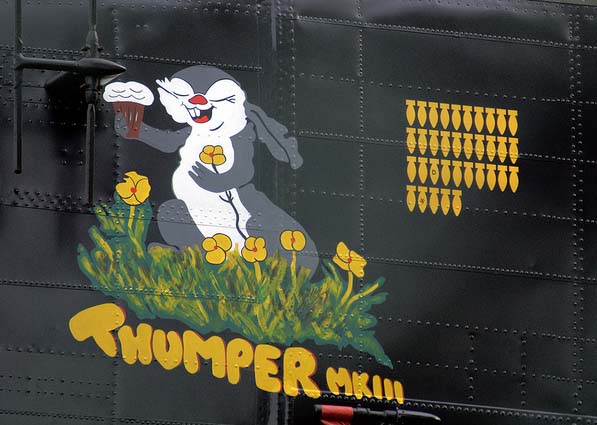
This sole remaining British Lancaster is currently painted as “Thumper Mk III“.

thumper

Thumper Mk III” was an aircraft of 617 Squadron, the home of the very, very best.

Here are my photos. They are woefully unworthy of the world’s most beautiful bomber.

This slideshow requires JavaScript.


2 Comments

Filed under Aviation, Bomber Command, History, Nottingham

“The Lancaster: Britain’s Flying Past”

Last night, I watched the superb BBC documentary “The Lancaster: Britain’s Flying Past”

The ranks of those who flew Lancasters with Bomber Command in the Second World War have, with the inevitable passage of time, thinned out somewhat, but the BBC has managed to put together the requisite crew of seven combat veterans. There were, therefore, a pilot, a flight engineer, a navigator, a bomb aimer, a wireless operator, a mid-upper gunner and a rear gunner…”tail-end Charlie”.
john sergesant
Every single man in Bomber Command was a proud volunteer. During the course of the war, they were to suffer 55,573 casualties from a total of 125,000 aircrew (a 44.4% death rate). The average bomber usually lasted for fewer than ten sorties. Life expectancy for crew members could be as low as two weeks, the same as a soldier in the Battle of the Somme in the First World War. Of every hundred airmen who joined Bomber Command, forty five were to be killed outright, six would be badly wounded, eight were captured by the enemy, and only forty survived physically unscathed. From the men who were serving in Bomber Command on September 3rd 1939, only 10% made it through to the end of the war some six years later.
There was no knighthood for Bomber Command’s leader  though, and no campaign medal for his “old lags”. In 1945, Roosevelt and Churchill had been asked by Stalin to destroy Dresden for him, and the two Western leaders were only too eager to demonstrate their ability to slaughter the enemy, be it German, or perhaps, even, one day, Russian. But when Bomber Command, as the best area bombers in the world, carried out this ghastly task, as they had been ordered to do , they then found themselves ostracised by those very same politicians, who now wanted to be popular as humanitarians, and to win elections after the end of the war.
It was eventually public subscription that finally paid for Bomber Command’s well-deserved memorial, fifty years or so too late, perhaps…
memorial
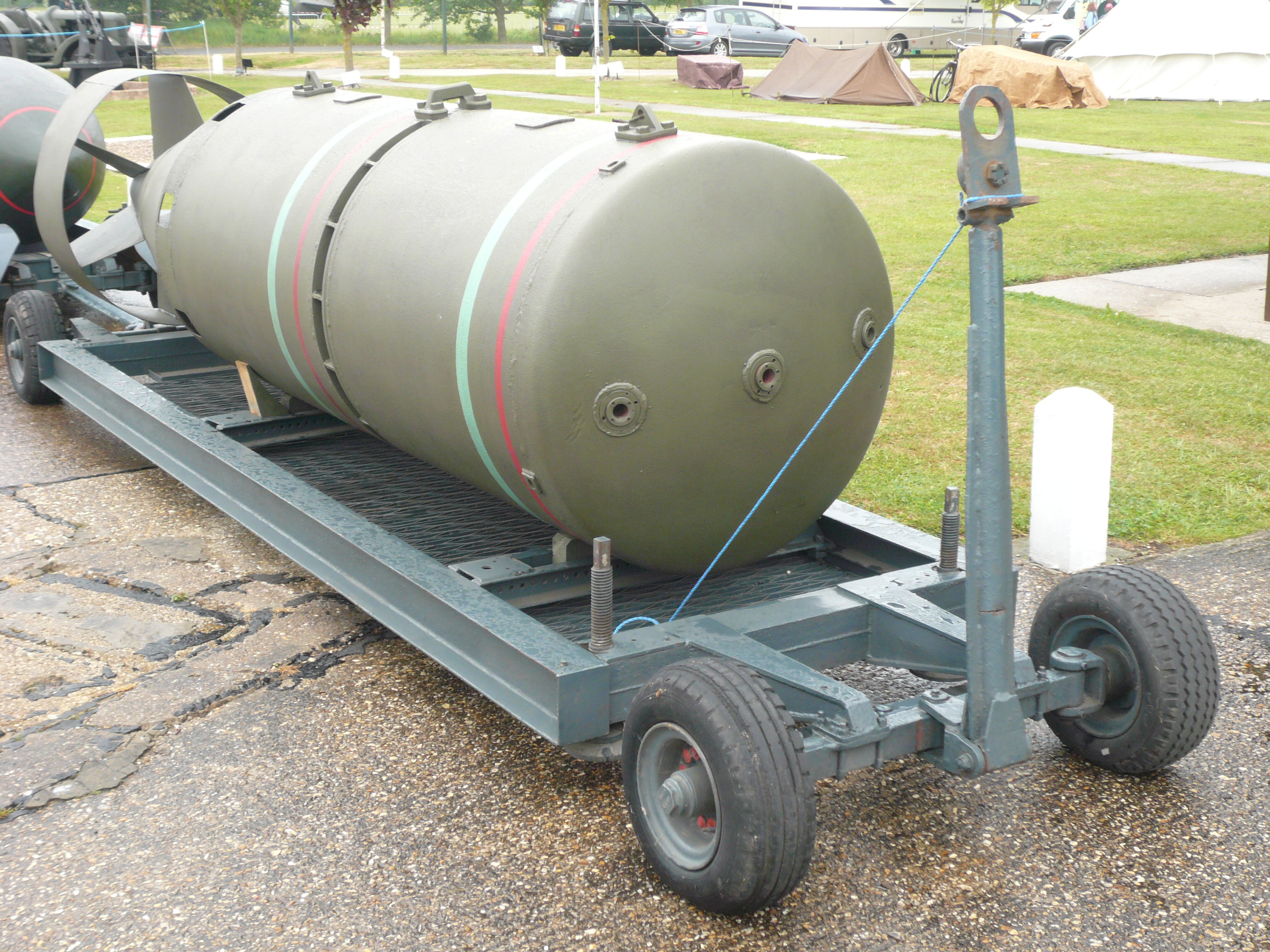
The “Lanc” was the greatest bomber ever made. It could fly at 300 m.p.h. and carry an enormous weight of bombs, with the more usual 4,000 pound “cookies” often bolted together to form either 8,000 or 12,000 pound “blockbuster”bombs. A Lancaster might carry hundreds of incendiaries, and some specially adapted aircraft could carry the 22,000 pound, ten ton “Grand Slam” bomb designed by Barnes Wallis.

P1300996 bomb

What an enormous bomb bay….
P1300780zzz
The aircraft’s immense power came from four magicians, well, four Merlin engines to be more precise…
P1300766
The Lancaster is a very large bomber; museums often struggle to fit them in, as here at Duxford

This slideshow requires JavaScript.


Best of all is the Lancaster in the RAF Museum at Hendon in north London (very easy to reach off the motorway)

P13203hend
Don’t miss the vain boast of Hermann Göring, painted on the nose of the bomber(with his name misspelt!).

This slideshow requires JavaScript.

The Reichsmarschall was also foolish enough to say that if any enemy plane did fly over the Reich, then , as the man in charge of the Luftwaffe, people could call him “Herr Müller”, a common Jewish name. Well, guess who had the last laugh?
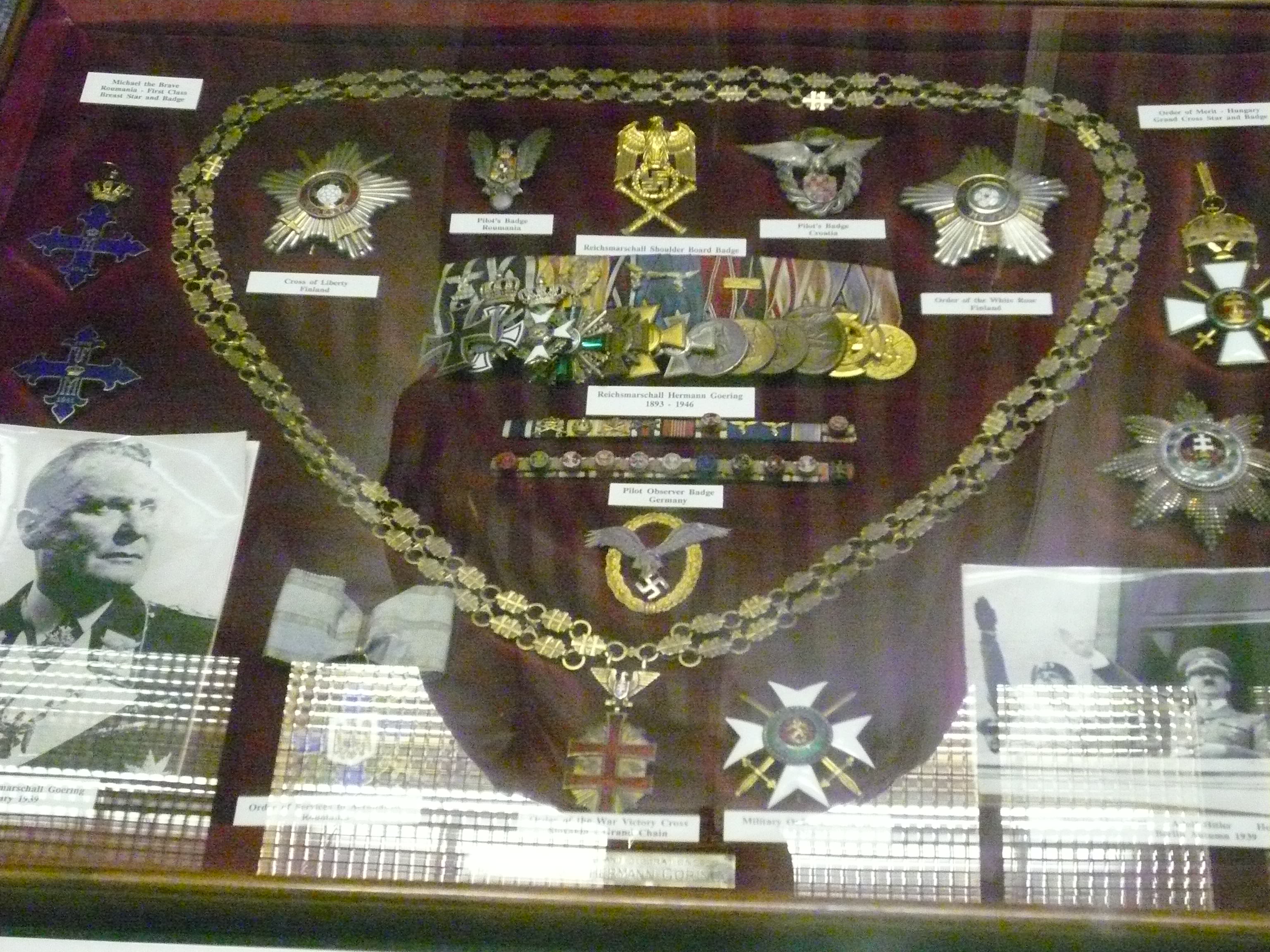
Göring‘s medals too, are in the museum…
P132medals
A couple of years ago, I really enjoyed visiting East Kirkby in Lincolnshire to see their Lancaster.  The aircraft does not fly but is taxied around the airfield every day.
P1300617 EK
What a beautiful machine, painted here as “Just Jane”, a fictional character in the wartime newspaper, the Daily Mirror.

This slideshow requires JavaScript.

The force of the engines being warmed up is amazing…

Then it sets off around the very large field…

Before returning, eventually, back to its rightful place…

It’s just such a pity that there are so few Avro Lancasters left for us all to enjoy!

7 Comments

Filed under Aviation, Bomber Command, Film & TV, History