Category Archives: Criminology

Jean Grin, not a nice man


As well as the long list of “Beasts” who seem to have munched their way through the apparently very, very, tasty peasants of France from 1400-1850, or thereabouts, I have also discovered the existence of at least one “Ogre” who was, to put it mildly, not a very nice man (or ogre) at all. His story is told, in exactly the same words, on a couple of websites that I have found. The first is designed to promote tourism in the wonderfully picturesque and unspoilt region of Lozère, which is here:

lozere map xxxxxxxx
The other website shows the availability of holiday cottages in this particularly beautiful area of a particularly beautiful country.

The tale of the Ogre is told by André Arnal, an author with his own page on Amazon France.

The story is too long to translate in its entirety, but I have summarised it for any monster fans who do not read French:

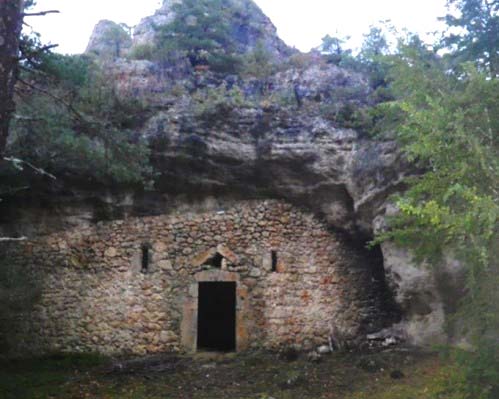
Jean Grin was an Ogre and he lived in a ravine called Malbouche, in what is now a hovel of stones with a collapsed roof. It is surrounded by pine trees and dry scrubland. Inside is a dark room right up against the very rock:

GROTTE-DANS-LE-RAVIN-DE-MALBOUCHE

It contains an oven where Jean Grin used to roast children to eat. Outside are piles of stones covered with soil, reputed to be the burial places of his victims:

house
Jean Grin had retreated to this hovel because of his inability to get along with his neighbours. Soon afterwards, young shepherds and shepherdesses began to disappear in the surrounding area:

scream woman

He was regarded as being a half-man, half-beast, because he had lived for such a long time out in the wild. Everybody knew that he loved to kill and eat his victims. Terror soon spread throughout the region:

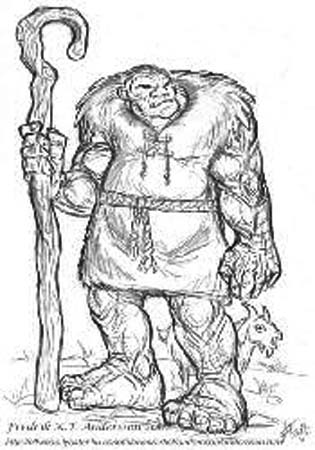
ogre

People said that he was a monster, or a man dressed in a skin. His eyes were red, very red and he could be seen approaching from a long way away. From one village to another people said that he was both a werewolf, a monster and a devil, all at the same time, with those awful, glittering, bright red eyes:

redeye

Jean Grin only attacked weak people or children. In just six months, from June to December, 1799, this monster killed three victims before running away at prodigious speed. The locals thought he was a second Beast of Gevaudan, because he always attacked children and ate them.

The important noblemen of the area though, did not blame Jean Grin the Ogre, but rather the so-called Beast of Veyreau, an unknown creature of some kind which was also running amok in the region around this time, slaughtering young shepherds and shepherdesses.  The noblemen said that this mysterious animal was either a very large wolf, a lynx or a hyena. The ordinary peasants of the countryside, though, already traumatized by a succession of similar horrors, thought that it was a werewolf:

werewolf attack

Of all these dramatic events, with ogres, very large wolves, lynxes, hyenas and werewolves (the popular choice) all loose in the area at once, the collective memory of the local people has retained only the most fantastic details, which are perforce the most terrifying ones.

For them the Beast of Veyreau could only be Jean Grin, the wild man. On his shoulders weighed all the problems of the community. He was an ambiguous creature, half way between animal and man. Jean Grin took on the attributes of a savage, brutal wild man which no social norms could restrain. The skin of the beast that covered him transformed him into a magical, demonic creature:

ogre malb

Jean Grin was, according to others, the misunderstood and innocent victim of wild rumours and stories with absolutely no basis in fact. The people of the area found this wild man, therefore, a scapegoat for their suffering during these times of misery and famine. He became a guilty person that nobody would protect.

Who was Jean Grin really? Nobody knows! Whatever the case, this mysterious character, whether man or monster, was finally trapped and surrounded in his lair by a mob of over-excited women who, armed with pitchforks and sticks, dragged him to a neighbouring hamlet where he was burned alive in a white hot oven:
bigfoot

And popular memory had it that :

” When John Grin died, his skin leapt around on the ground ; and therefore he was the Devil. ”

With the death of Jean Grin, the population of the entire region felt liberated, as if order and morality had finally been re-established.

Entering into legend, Jean Grin still haunts the country of his misdeeds, as the all-devouring monster, the ogre who seized and ate children.”

As background information, you should not forget though, that at this time, namely in 1799, this particular area of France, as was mentioned above, was already experiencing the ravages of the Beast of Veyreau. I wrote a more detailed article about this animal which was published on January 16th 2018
Basically, it was a creature which was generally considered to be either a wolf or some other unknown canid. It was a beast which filled all the local inhabitants with great fear:

warg_by_irkis-d5oehlo xxxxxxxxxxxxxxxxx

And certainly, the Beast’s behaviour was not good. He must have spent many an unhappy hour sitting on the naughty step, thinking very carefully about what he had done, and indeed, who he had devoured.
Any child that might meet the Beast, for example, stood a very good chance indeed of being carried off and eaten, first the liver and then the limbs. In the space of just six months, three victims were killed by this beast, including a boy of six.
This is the background, which might well lead us to interpret the story of Jean Grin in a number of different ways. It may well have been a story invented to attract tourists, like the Loch Ness Monster is thought by many to be:

-loch_ness_monster

There was, therefore, no such individual as Jean Grin. The whole thing was just an invented tourist trap.
Another slightly different approach would be to say that when the limbs of a six year old victim of the Beast of Veyreau were found hidden in the earth in the Malbouche Ravine, it was only too easy to look across at the nearby “hovel of stones with a collapsed roof” and attribute these ghastly unsolved murders to the person who had lived in the ruins shortly before. Harmless old weirdo, Jean Grin, who could then become transformed into an ogre, a supernatural figure.
Perhaps the tale of Jean Grin the Ogre was used to make up for the incompetency of whoever was in power now, ten years after the French Revolution. Perhaps serious questions were beginning to be asked about the value of this unbelievably massive political upheaval. The revolutionaries were palpably no more capable of capturing the Beast of Veyreau than the noblemen had been ten years before, in the bad old pre-revolutionary days of a Royal France. But if you blame all the gory deaths on Jean Grin the Ogre, though, and you know where he lives, then you can kill him and all your problems are solved.

Your inability to kill the real Beast of Veyreau very soon becomes a matter of minor importance. And if the Beast goes on to slaughter any more victims, just deny the events any publicity. If people continue to make an issue of it, put them in prison, or worse. Here is a lovely Ogre, drawn lovingly by Gustav Doré :
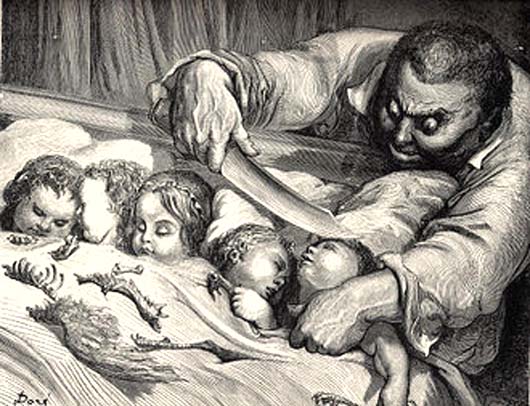
gusta v dore engraving

Another solution, a slight variation on the previous scenario, is that when nobody whatsoever seemed capable of catching the Beast of Veyreau, that apparent incompetence must have caused enormous frustration to everyone in the area. Perhaps a group of local mothers looked around the Malbouche Ravine on one particular occasion and were unable to locate any fierce animal. Acting as “a mob of over-excited women”, they then decided to take out their frustrations on the nearest passing weirdo. The ghastly fate of Jean Grin then just becomes a simple case of “strange eccentric in the wrong white hot oven at the wrong time”.

The situation is a little like the recent case of Christopher Jefferies, a retired teacher and the landlord of an unfortunate murder victim. He was perceived by the press to be a “dark, macabre, sinister villain” but a more accurate description might well have been “an innocent man wrongly accused of murder by the police”. Clearly, the eight newspapers he successfully sued were playing the part of the women of Veyreau.
There is just one more solution to the legend of Jean Grin. It may be a deeply seated racial memory, but that idea will have to wait for the future.
18 Comments

Filed under Criminology, Cryptozoology, France, History, Politics, Science, Wildlife and Nature

Another good day for a hanging: Wednesday, August 10th 1864

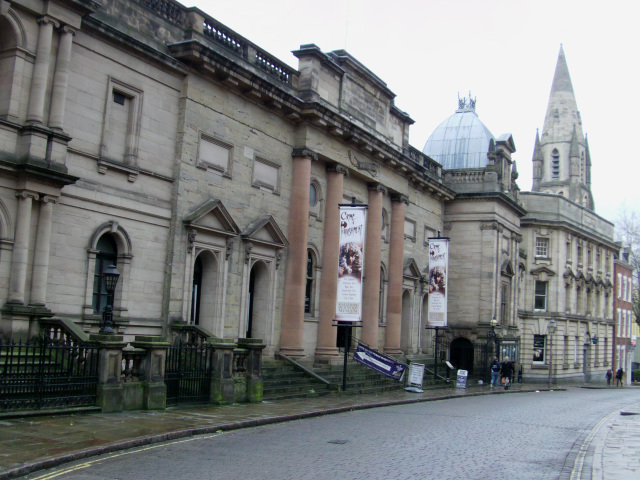
In the nineteenth century and before, the Master (what would now be the Headmaster) of the Free School in Stoney Street, often acted as Chaplain to the Town Gaol which was housed in the same building as the current Galleries of Justice:
DCIM100MEDIA
This meant that every time somebody was hanged, the Master was required to attend. In a previous article, I have already told the story of how the Reverend William Butler attended the execution of one John Fenton, a blacksmith and publican, who was hanged at the age of thirty-seven for the murder of Charles Spencer at Walkeringham on March 6th 1860.

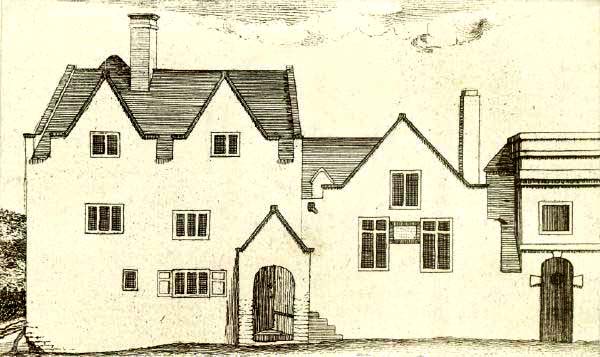
In actual fact, William Butler was not to stay in his job as Master for very much longer. He was not a well man, having had his health weakened by a huge scandal in the town about the Sir Thomas White’s Loan Money, which had not been used properly over the previous few years. Once again, the well tried defence of “The money was just resting in my account.” was not accepted. Worse still, the Reverend’s son had died in 1858. Butler was a tired man, and was replaced by Frederick Cusins, who actually worked as temporary Acting Headmaster for an amazing seven years. This is the Free School:

free school
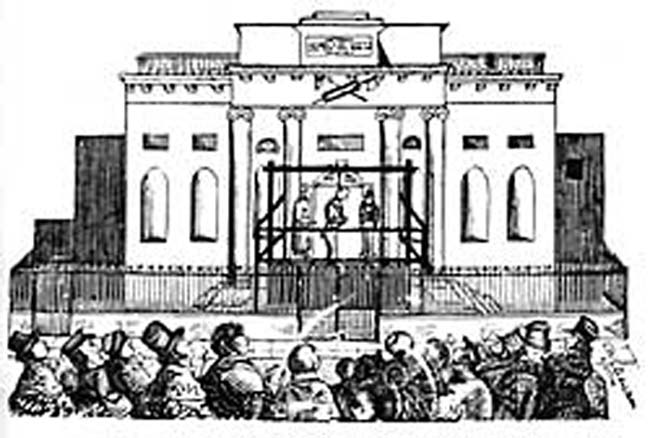
On 8 o’clock on the morning of Wednesday, August 10th 1864, it was Frederick Cusins’ turn to witness a fellow human being put to death. The man who was being hanged on this particular day was Richard Thomas Parker, aged twenty-nine:

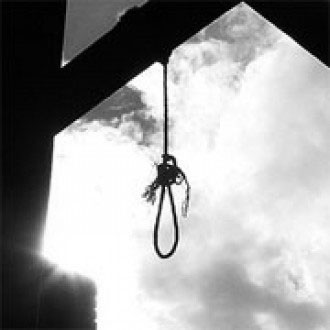
gallows
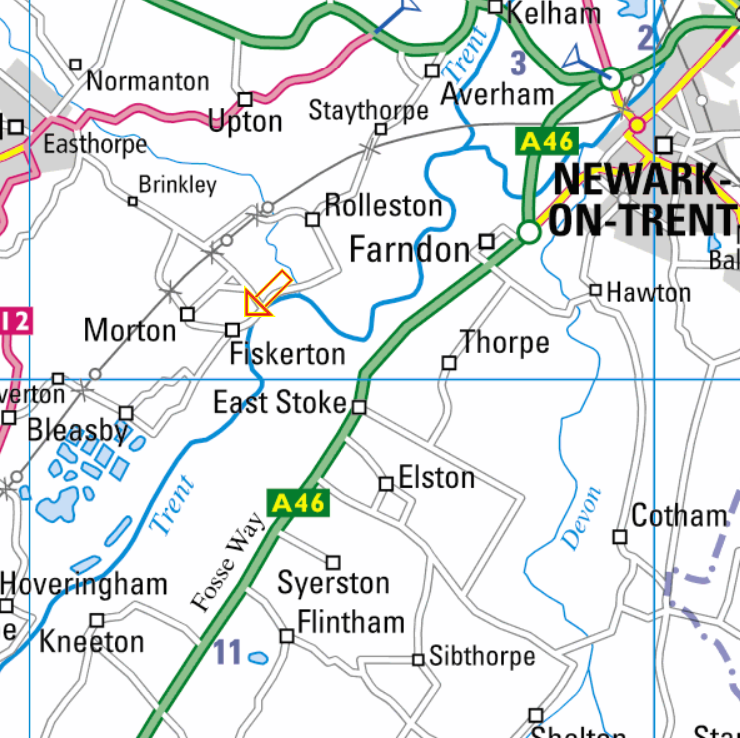
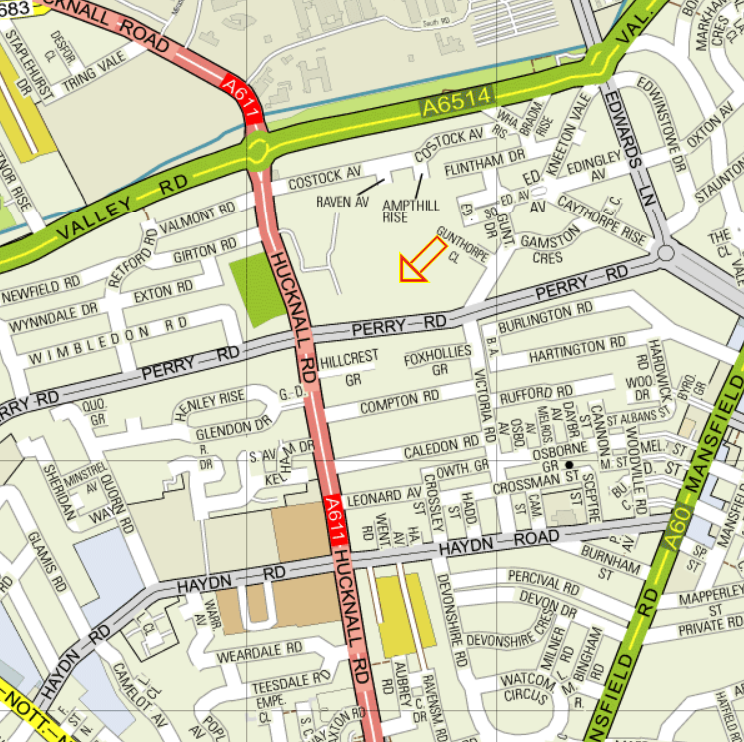
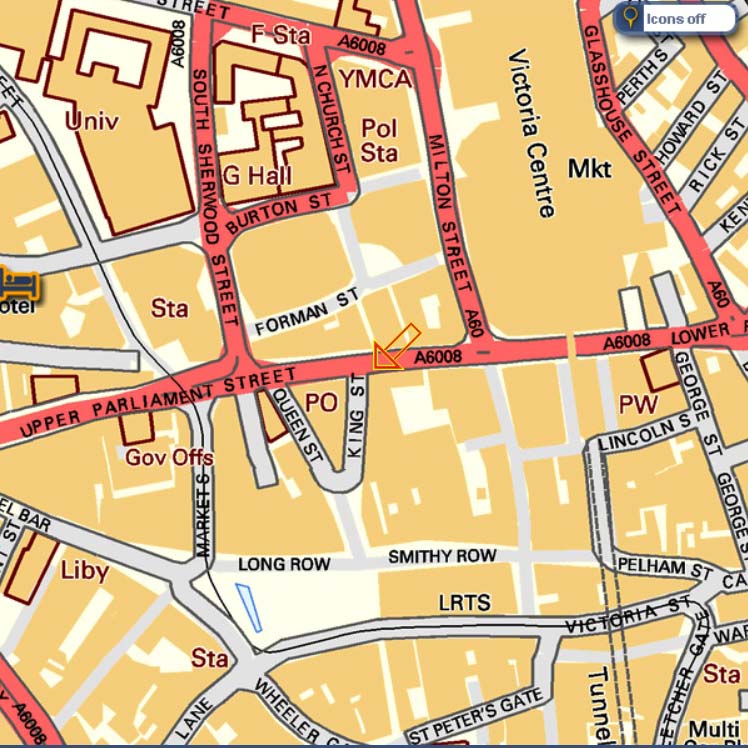
Parker was born in Thurgarton on October 26th 1834, the only son of his mother’s second marriage. Surprisingly for this era, she must have been in her mid to late forties when she gave birth to him. Parker was initially apprenticed to Mr Bee the Butcher of Sneinton Street in Nottingham. When his apprenticeship finished, he set up in business in Fiskerton where he again worked as a butcher, but not a particularly sober or upright one.  He was publicly declared bankrupt in November, 1862 at Newark-on-Trent. Here is a map of the area. Look for the orange arrow:

fiskerton

Not helped by an entire lifetime of being thoroughly overindulged and spoilt by his parents, and in particular his mother, who had waited so long for this unexpected child, Parker was dissolute and never slow to turn to physical violence. One day in 1864 he went to a cricket match at Newark-on-Trent, and in his attempt to drink the beer tent dry, consumed, as was his wont, too much alcohol. Always quarrelsome and confrontational after even the slightest amount of drink, he then returned to the family home in Fiskerton and had a violent drunken argument with his father, Samuel Parker, who promptly left the house and set off down the road. His wife, Elizabeth, rushed out of the house to warn her husband that “Tom’s got a gun”. Firing from the window of the house, Parker shot his father, Samuel, and his mother, Elizabeth as she tried to protect her husband. One internet source said that she was “formerly Miss Tutbury”. It took me far longer than it should have done to realise that, in actual fact, this was referring to her maiden name, rather than her career in the beauty pageant business. I must confess, I did actually Google “Miss Tutbury”. I think I found “formerly Miss Tutbury and the current Miss Tutbury” or perhaps they are “Miss Tutbury and Mrs Tutbury, her Mum”:

asdqerty ccccccccccccccccccccccccc

Anyway, Samuel Parker, the father, recovered from his wounds, but his seventy-six-year old wife did not quite pull through. She lingered on for several weeks but finally died on May 16th 1864. Her favourite son finished up here, in the gaol in Nottingham:

P1120126
Richard Parker’s trial duly took place at Nottingham Crown Court in the Shire Hall in Nottingham, in the building which is now the Galleries of Justice Museum. Proceedings began on Monday, July 25th 1864. The presiding judge was Mr Justice Blackburn. I couldn’t find a photograph, but here is a contemporary caricature:

220px-Colin_Blackburn,_Vanity_Fair,_1881-11-19

Not surprisingly, Parker was found guilty by the jury. There was only one possible sentence, which was pronounced by the judge, as:

“Richard Thomas Parker you are sentenced to be taken hence to the prison in which you were last confined and from there to a place of execution where you will be hanged by the neck until dead and thereafter your body buried within the precincts of the prison and may the Lord have mercy upon your soul”.

During this part of the trial, Mr Justice Blackburn would have been wearing his black cap as the sentence pronounced was one of death:

balck cap

I did not realise that this famous item of legal wear was based on court headgear from Tudor times. Likewise, I did not know that, even since the permanent abolition of the death sentence in 1969, High Court judges still carry the black cap, but only when they are required to wear their full ceremonial dress. Perhaps some judges still harbour secret hopes of “Bring back the Cap”:

black cap

Parker was executed on the steps of the Shire Hall.  This was the very last public execution in Nottingham, and building the scaffold was carried out by a local architect, Richard Charles Sutton.  I have been unable to ascertain if the days of clothing with the sponsors’ name had yet been thought up. I suspect not, but this would have been a splendid way to bring your architect’s business to the public, as photographs of the hanged man were known to be very popular souvenirs of events like this.
And it was a really “Good day for a Hanging”:

A crowd of more than 10,000 spectators was in attendance. Perhaps lower league football teams should examine these figures more carefully. Apparently, there was a wooden board more than four feet high to prevent the crowd from seeing the hanged man’s dead body once he had taken the fateful plunge. Again, this may well have been a sponsorship opportunity missed. As the moment drew near, Parker was praying earnestly. A white hood was put over his head and when the Chaplain finished the sentence “In the midst of life we are in death”, that was the exact moment for the bolt on the trapdoor to be drawn. Parker then suffered, as they say, “the extreme penalty of the law”:

hanging-at-shire-hall

Twenty or more years later, in 1886, in one of life’s great ironies, Mr Sutton the Architect was to stand as the Liberal candidate for the Sherwood Ward of Nottingham Town Council. And of course, he won.

Today, the executioner was Mr Thomas Askern (1816-1878) who had arrived from York. Details of the, literally, ups and downs of his career can be found on “English hangmen 1850 to 1964″ presumably one of Mastermind’s yet-to-occur specialist subjects.

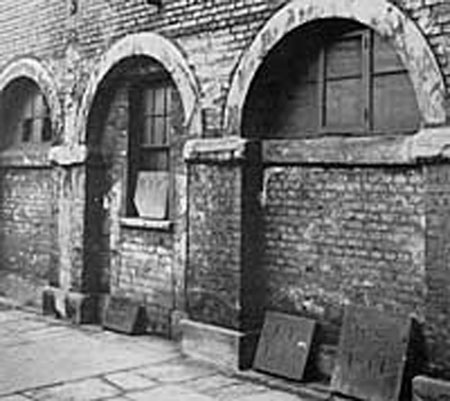
After being left hanging around for an hour, Richard Thomas Parker was cut down and buried inside the gaol.  This usually involved extensive use of large quantities of quicklime inside the coffin. In Lincoln Castle, the hanged man was interred with a very small gravestone which might well carry just his initials and the date. Traditionally, they would also have their feet facing in the wrong direction. Apparently in Nottingham, the bodies were buried under the flagstones of the yard behind the building. Slabs with the barest of identification details, usually just the hanged man’s initials were then placed against a side wall:

Yard at Shire Hall with headston
The whole brutal process was too much for temporary Acting Headmaster Mr Cusins. An old boy reminisced how, just like William Butler had done on a previous occasion, Mr Cusins, looking very pale, staggered into the classroom and said:

“Boys, I have just seen a man hanged. I cannot teach you today. You may all go home.”

It may have been the frequency of attendance at public executions by Masters of the School which led to the rather grim tradition that every time a criminal was executed outside Nottingham Gaol, only some two hundred metres or so from the Free School, the boys were all given a holiday.
The very last execution in Nottingham took place on April 10th 1928. This was in the privacy of Nottingham Prison, which, at the time, was called Bagthorpe Prison. The map shows the area now occupied by a much enlarged prison,  more in keeping, perhaps, with these lawless times:

prison

The last man to be hanged was called George Frederick Walter Hayward. He was 32 years of age and had worked as a commercial traveller. He lived at the White House, Little Hayfield, Derbyshire.

Hayward was found guilty of the murder of Mrs Amy Collinson, aged 36, the wife of Arthur Collinson, who kept the New Inn in the village. Just to be sure, Hayward battered her to a pulp and then cut her throat. He was hanged by Thomas Pierrepoint. The motive was theft and the full story is told on two pages of the website “Peakland Heritage”.

If you enjoy blood and guts, just read the first page.

If you want to see where poverty and unemployment can lead a weak and stupid man, try the second page as well.

17 Comments

Filed under Criminology, History, Nottingham, Politics, The High School

Was it suicide…..or was it………………..murder ?????

The period when the seventeenth century turned into the eighteenth was not the easiest of times for the Nottingham Free School, the ancient predecessor of the present day High School.  You only have to look at the wooden board behind the school receptionist’s desk at the High School, and the list of names and dates that is up there. During this period, some three hundred years ago, Headmasters come and go, thick and fast. Just to refresh your memory:

Edward Griffith              1691 – 1707
Richard Johnson           1707 – 1720
William Smeaton           1718 – 1719
William Saunders          1719
Thomas Miles                  1719
John Womack                 1720 – 1722
John Swaile                      1722 – 1731

Let’s look at the diary of these turbulent and potentially disastrous twenty years. Edward Griffith, the first Headmaster on the list, seems to have been an astonishing man. He could have talked his way into so many jobs in our own time, most of them probably in politics. Or maybe even financial advice:

August 1697

Edward Griffith, the Headmaster for the last six years, was summoned to court “for neglecting the school, whereby the school is much decayed in its reputation.” Griffith promised to concentrate on the school and never to work again as a full-time clergyman as well as his main job as the Headmaster.

early 1698

Griffith took up a lucrative post as the new Vicar of Stapleford.

Friday, December 19th 1698

The Town Council gave Edward Griffith the sack, alleging that

“…he has very much neglected his duty, whereby the said Free School is very much decayed and lessened, ….. the School Wardens do give him a discharge, which they have done accordingly. And if he shall refuse to leave the said Free School, that they shall withdraw his Salary.”

Griffith made no reply whatsoever to this decision. Sit tight and it will all blow over.
May 1699
The Town Council issued a second decree that Griffith should quit his post. He took absolutely no notice of this one either.
January 1700
It was agreed by the Town Council that Griffith should keep his job and salary until further notice. Result!!
January 1705
The Town Council told Griffith that he was “discharged from being Schoolmaster any longer”, an order which, not surprisingly perhaps, he again ignored completely. He did, however, make a promise to depart in the very near future.
June 1705
Griffith was again told to leave his job, and that his salary would henceforth not be paid.
March 1706
The school wardens were told by the Town Council to pay the £85 of Griffith’s wages which had not been paid to him over the past two years. Once he had been given this cash settlement, Griffith had promised to leave.
March 1707
Griffith at long last departed, a mere ten short years after being told to do so. And now, Richard Johnson…..

1707
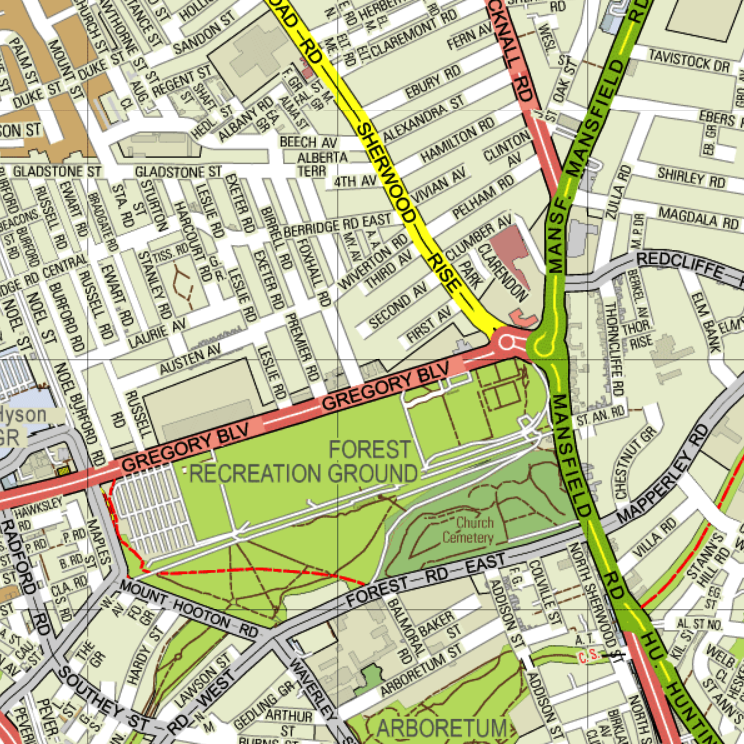
The new Headmaster, Richard Johnson, seems to have been, for the first five years or so of his reign, a vast improvement on his predecessor. Johnson was the author of an impressively long Latin poem describing a horse race on the Forest Recreation Ground, which was then called “The Lings”. Here is the site nowadays:

forest
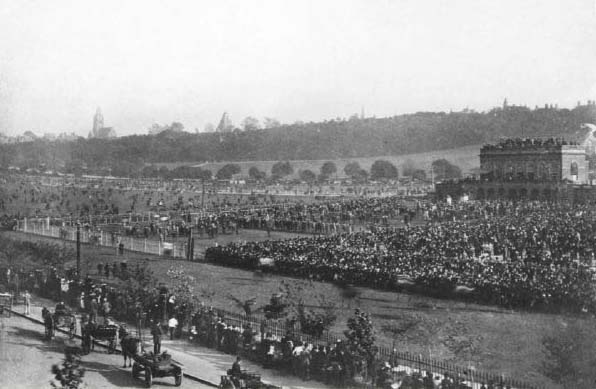
Race meetings used to take place in July of every year, and they attracted prominent people from miles around. Here is the Racecourse in the late nineteenth century:

racecourse zzzzzzzzzzzzzzzzzzzz

In 1708, the race was won by the Earl of Cardigan on his horse, Carlessus. Johnson’s long Latin poem mentions the Duke of Rutland, Sir Thomas Willoughby of Wollaton Hall and Sir Thomas Parkyns of Bunny. It refers specifically to the fact that, because of the recent outbreak of smallpox in the town, comparatively few women were present…

“Now, to enhance the glories of the race,
See, many lovely women bring their grace.
Yet others, eager for the festive day,
With tearful prudence choose to stop away,
Lest swift and dreaded pestilence arise,
And desecrate that loveliness they prize.”

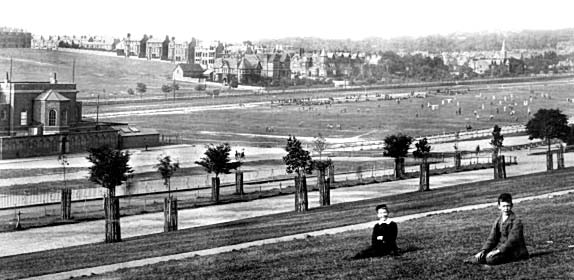
Here is another, mid-Victorian view of the Forest Racecourse with two boys, who may well have been members of the new High School. Notice the distant footballers busy playing in the middle of the racecourse:

forest and boys zzzzzzzzzzzzzzzzzzzzzzz

1708
The newly appointed Headmaster, Richard Johnson, gave so many promises about how well he would perform in his new job at the Free School that it was decided to improve his living quarters and to build extra classrooms for all the new pupils who were bound to be attracted by the extreme excellence of this new Headmaster. Plans were already afoot to appoint two more members of staff, namely a second Usher and a visiting Writing Master, giving an overall staff of four. That should cope with the almost countless hordes, all eager for a free education of a very high standard.

(This won’t end well. It all sounds like pie in the sky to me.)

June 1718
Very little is known about what happened in the school in the years between 1711-1718, but, as an expert on the subject, I was 100% right about the pie.

The Council now sought to sack Richard Johnson, given that they thought he was a madman:

“…for all or most of the time…he very much omitted and neglected to teach and instruct the Sons of Nottingham….For the space of three Months and upward, he hath been, and is now, Delirious and Non Compos Mentis. He is incapable of performing and executing the Office of the Headmaster of the said school.”

Certainly, Johnson had fallen ill in 1714. He wrote ….

“I suffered such pains in my limbs that for a whole year I could not sleep without the aid of opium.”

(A drug addict running the school. That’s just what we need.)

More seriously, though, Johnson does seem to have suffered from a certain amount of ill health. The Town Council’s motivation for removing him from his position, though, may have had more to do with politics than any touching concern for his welfare or the school’s success. They conceivably exaggerated the Headmaster”s medical problems to create a trumped up charge of incompetence, which could then be used to remove a political thorn from the Town Council’s side.

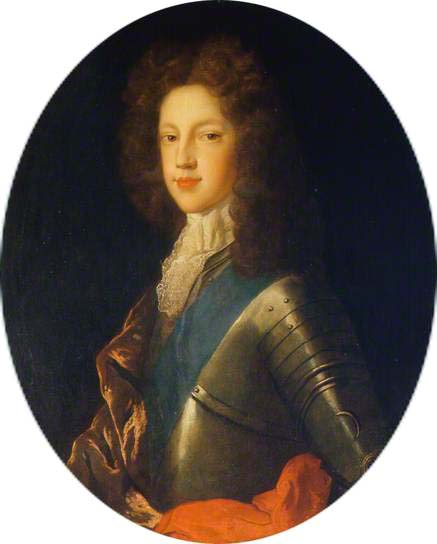
Inadmissible circumstantial evidence it may well be, but Johnson’s difficulties certainly seem to have begun not long after the national Jacobite rebellion in 1715, which was led by the so-called “Old Pretender”, James Stuart. Here he is in his younger days:

(c) Government Art Collection; Supplied by The Public Catalogue Foundation

Nottingham was a Whig town, and Johnson may well have been a Jacobite. Around this time many other schoolmasters throughout England lost their jobs because they were Jacobites.

For whatever reason though, madness, drugs or politics, the Town Council tried to throw Johnson out. Johnson may well have spoken to his predecessor, Edward Griffith, though, because he decided that the best policy was, quite simply, to refuse, point blank, to leave.

(If that happens, just ignore the situation, and bring in another Headmaster of your choice)

August 11th 1718

The Town Council appointed William Smeaton as Headmaster.

(In that case, Jacobite Johnson, just ignore them. Take no notice whatsoever)

August 12th 1718

Johnson refused physically to leave the school.

Later on in late 1718 or, more probably, early 1719

Fed up with the whole situation, Sulky Smeaton resigned in an apparent fit of pique, and eventually got out of Dodge, never to be heard of again.

1719

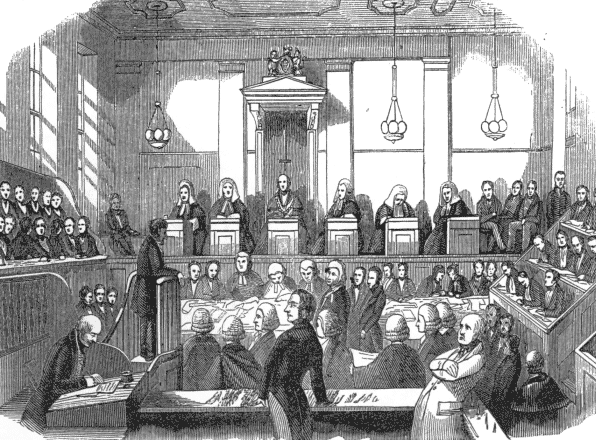
The Council then appointed a local man, William Saunders, but at a much reduced salary. A legal action to eject Johnson from the school was taken, but in court Clever Clogs Johnson did not bother with a lawyer. He conducted his own defence with great skill. He duly won his case:

oldbailey zzzzzzzzzzzzzzzzz

Johnson explained to the court how unreasonable it was to leave a man of his advanced age penniless in the world, and asked that he be given a decent reference, so that at the very least he could go elsewhere and earn an honest living. At one point, Councillor Abney, knowing of Johnson’s previous mental frailty, accused him:

“…what has happened to you is what Felix said of St.Paul ; much learning has made you mad.”

Johnson replied to the Councillor

“…you will never go mad from the same cause.”

(That got a lot of laughs)

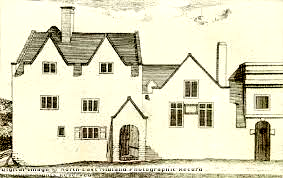
The school now had, arguably, more Headmasters and ex-Headmasters than pupils. There were only five students left. The Deputy Headmaster, George Bettinson, taught two, and Johnson, gallant to the end, did the lion’s share of the work with the other three. Indeed, there were so few pupils that they could well have had a couple of windows each:

free school

Very soon afterwards, the Town Council was again repeating its charge that Johnson had been delirious for the last eighteen months and that he was, to use the technical terms of psychology, as mad as a fish.

Finally, though, a compromise was reached. Johnson would leave and in return, he would be paid a pension of £10 a year for life.

(Mmm…..Nice)

William Saunders, the Town Council’s very, very recently appointed choice for the job, was now told that he too had to leave town before sundown.

later in 1719

Thomas Miles was made Headmaster.

(Problem solved !! Result !!)

Thomas Miles did not take up the post.

(Oh, noooooooooooooo!)

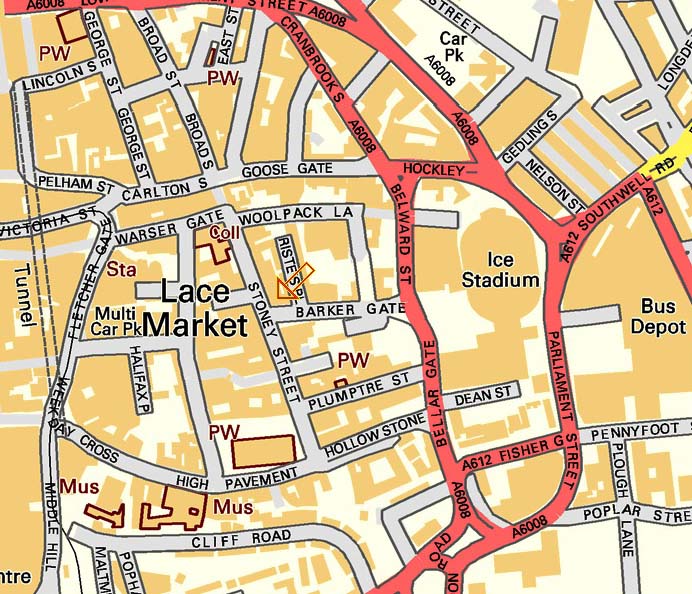
Amazingly and incomprehensibly, Thomas Miles said he didn’t want to work in an atmosphere of such considerable confusion. There was no confusion with the boys, though. Their parents voted with their feet. Numbers were still exceedingly low. On a good day, classes could have fitted inside a telephone box, if they had only been invented. Here is the site of the very confused Free School. No traces remain nowadays of the original building on the corner of  Stoney Street and Barker Gate. Look for the orange arrow:

free school site

1720

Next up to the plate was John Womack, a Bachelor of Arts from Corpus Christi College at Cambridge University, no less. I have been unable to trace if he was related to Bobby Womack, but this is still a superb soul classic. Enjoy:

Neither John Womack nor Bobby Womack held the poisoned chalice for long. John Womack died in April 1722. By now, the school was well on its way to six headmasters in three years. It was beginning to look like an unsuccessful football club.

But then the knockabout fun of “The Free School meets the Crazy Gang” came to an abrupt end.
Richard Johnson, Headmaster Number Two in a Series of Seven, Johnson the Madman, “Mr Delirious”, “Mr Non Compos Mentis”, “Jacobite” Johnson the Opium Addict, the Drug User, went out one day into the Nottingham Meadows, found a small stream which ran through it, and then, in a fit of despondency, he apparently drowned himself:

Erewash_Meadows_web

A witness spoke:

“of the extreme horror of meeting, one evening as I was walking in the Meadows, a venerable grey-haired man, carried dead on a stretcher. It was Richard Johnson. He appeared to have been sitting on the bank of the river, and was found in shallow water with his head downward.”

2994975_32908d1f

The incident was even reported in London newspapers:

“They write from Nottingham that some days since, the Reverend Mr. Richard Johnson, lately Master of the Free School there, being a little Melancholly, took a walk into the Meadows, and drowned himself in a Pit near the Old Trent.”

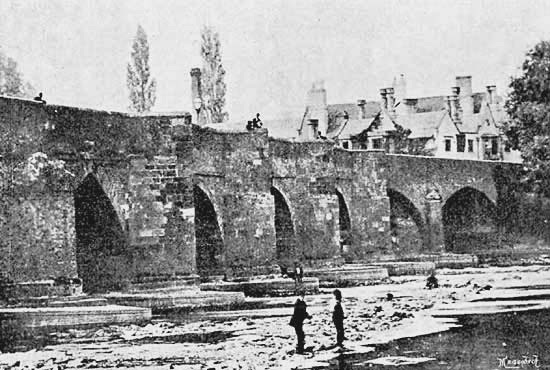
Here is the old Trent Bridge of the time, the so-called Bridge of Hethbeth:

old-trent-bridge-1869

Despite his apparent suicide, Johnson was eventually allowed to be buried in consecrated ground. He was probably given the benefit of the doubt, and his death was adjudged to be an unfortunate accident. And indeed, he may have had some kind of seizure or fit, perhaps brought on by trying some of those Ecstasy tablets which contain dog de-worming substances. (Unbelievably, yes, some of them do.) Equally, if Johnson’s death were suicide, then it may well have been decided that he was insane at the time he committed the act.

All of these strange circumstances have led a number of historical analysts to suggest, though, that Johnson’s burial in consecrated ground came about, not because his death was not the result of suicide, but because somebody knew very well that  that his unfortunate demise was actually murder. Consider some more circumstantial evidence. Johnson was an awkward so-and-so as his appearances in court show only too well. He was a political problem as a possible Jacobite, eager to see a different monarch in place and a return to Roman Catholicism. He was a financial burden to the Town Council with his Golden Goodbye of a pension of £10 a year for life.

Shadowy figures might well have decided that their own lives would be easier with one less Johnson in the world. One fewer ex-Headmaster above ground. Scratch one Jacobite. The questions are there to be asked. Why the mysterious drowning? Why did a man racked with pain in all his limbs go for a long walk at the side of a river? How did he then manage to drown in the “shallow water” of a “small stream” ?

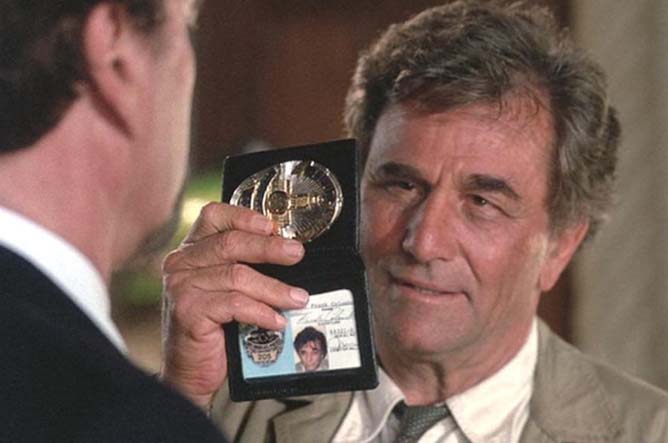
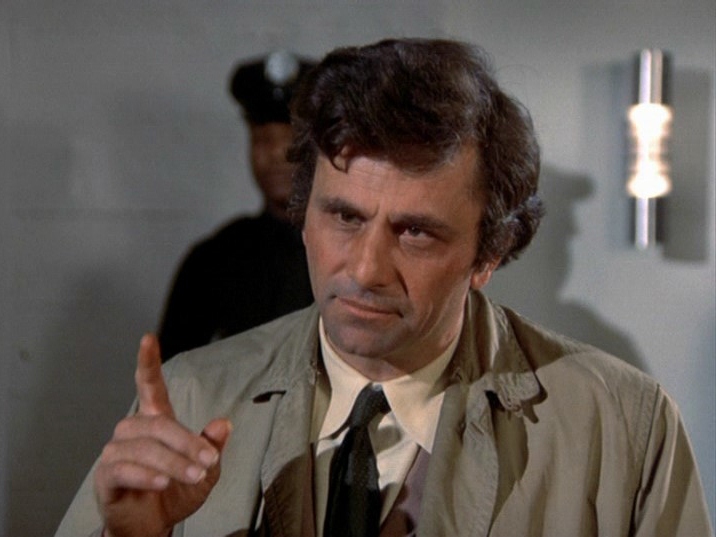
If only one sadly missed detective had been around:

columbo-death-jackpot-badge

Whatever the reason, this era marks probably the lowest level to which the school has ever sunk.

For years and years afterwards, wary of appointing another highly qualified and learned man who might  turn out to be a second Johnson, the Town Council limited itself to local men, whose good character was well known, even if that meant that they did not have any university experience.

During this period, in the summer, the classes used to begin at 7 am, and then continued until 11 am The afternoon then began at 1 pm, and finally finished at 5 pm, or even later, if the Master so decided. From October 14th to February 14th, school started at 8 am, and finished at 4 pm. It was a six day week, but the Master was allowed to grant holidays and extra playtimes up to twelve hours per week.

(Not a bad deal. Twelve hours free every single week, if you feel so inclined! Twelve hours!)

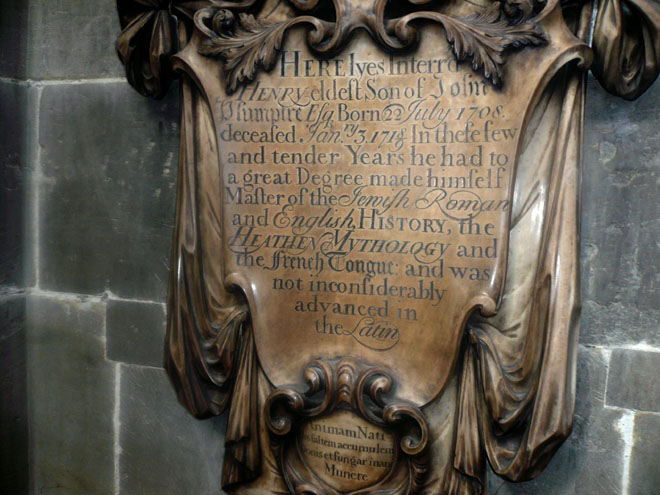
A poignant plaque in St.Mary’s Church has always been considered to be a description of the education given at the Free School. I have translated it from Ye Olde Englishe:

“ Here lies interred
Henry eldest son of John
Plumptre Esquire.,

Born 22 July, 1708
Deceased January 3, 1718.

In these few
and tender years he had to
a Great Degree made himself
Master of the Jewish, Roman
and English History, the
Heathen Mythology and
the French tongue, and was
not inconsiderably advanced in
the Latin ”

P1120161

1722

Not quite the end! Let’s not forget,  John Swaile. He succeeded John Womack, and steadied a very shaky ship over the next nine years, 1722-1731. He did, however, have his problems with George Bettinson, the Usher or Second Master , who, after serving under six different headmasters in just two and a half years, was well used to running the school himself, and did not take kindly to some fool of a new Headmaster trying to give him orders. But that, as they say, is a different story…

18 Comments

Filed under Criminology, History, Humour, Nottingham, Politics, The High School

Where did those three “merles” come from? Part Four

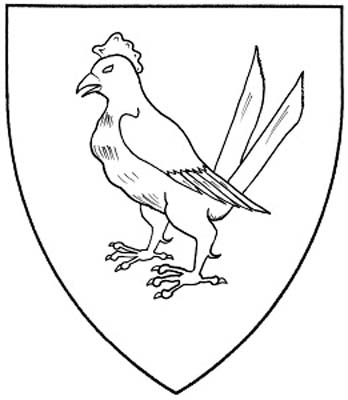
Last time, we had left Sir John More, the pious and God fearing father of England’s second Catholic martyr, making his choice about what coat of arms to have, now that he had come up in the world, and become first a lawyer and then a judge.  He was offered a completely free choice of design. He had no doubt been told of the possibility of having a visual pun on his shield. There is an heraldic bird called a moorcock, which is based on the male black grouse, a bird of the moors, and is characterized in heraldry by its two projecting tail feathers. Eventually, Sir John made his decision:

arm oooooooooooooooooooooo0000000oooo

A quite amazing result. Clearly, a direct hommage to Thomas à Becket, better known as Saint Thomas of Canterbury. There is no way that pious Sir John would have been ignorant of the Becket arms. He may even have been on a pilgrimage there himself.  Here is the coat of arms of the first Saint Thomas:

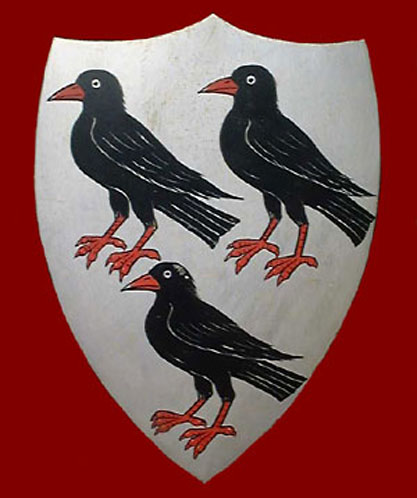
Becket-arms

Clearly, Dame Agnes too had felt the same attraction to those three black birds. For some still unknown reason, three black birds were beginning to have very strong connections with Catholic piety and Catholic saints.

Hanging Thomas à Becket’s choughs over the mantelpiece would not have been a problem in the early days of the sixteenth century when England was Roman Catholic, and owed its ultimate allegiance to the Pope in Rome. With the coming of the Reformation, however, things suddenly became very different. The Head of the now Protestant Church was now the King himself.

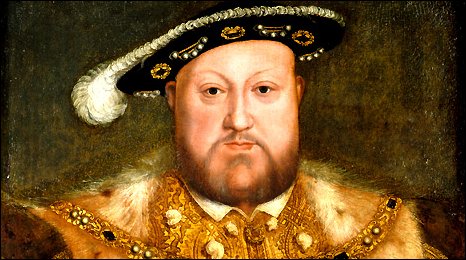
Henry VIII would not have wanted any reminders whatsoever about a prominent member of the now hated Catholic Church, who was murdered at the behest of a king called Henry, but who, eventually, was destined to triumph over him. Only three and a half years after the dirty deed, on July 12th 1174, the other Henry, Henry II, had had to carry out a public penance at Becket’s tomb and at the nearby church of St. Dunstan’s. The two churches became the most popular sites for pilgrims in the whole of England. King Henry VIII would have wanted absolutely nothing like this in his own reign.

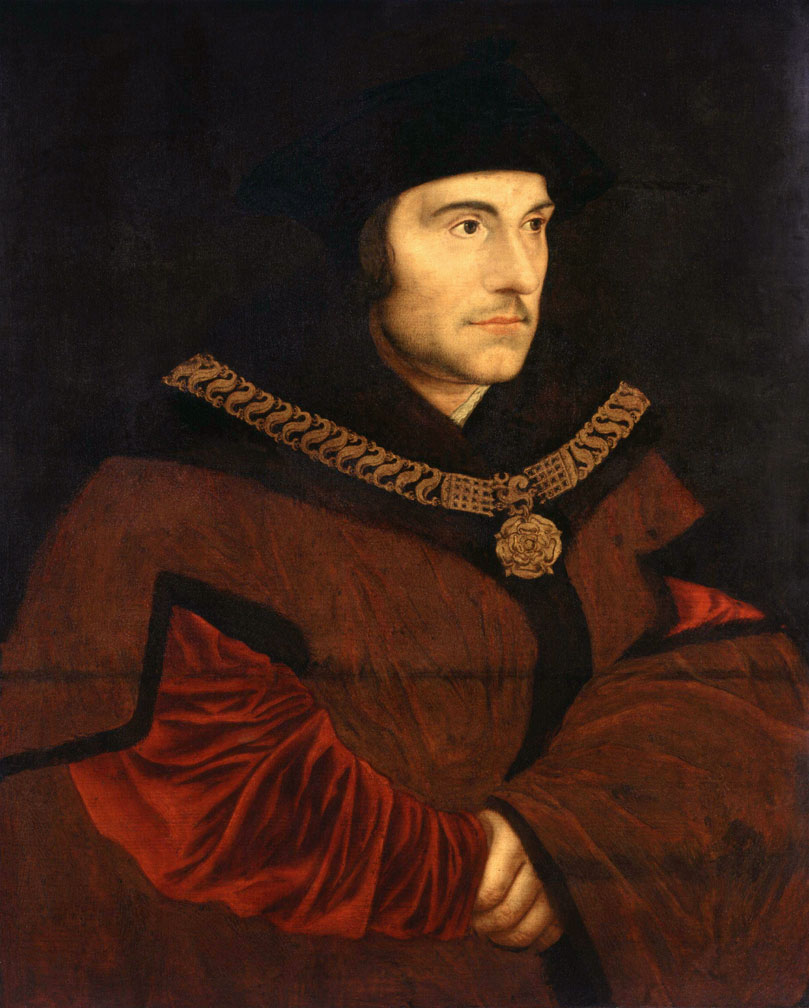
And, clearly, he must have been scared stiff of exactly the same thing happening. And with good reason after the amazing coincidence of Sir Thomas More, a second prominent and pious Catholic done to death by a wilful monster of a king called Henry. The last thing Henry VIII would have wanted would have been the beginning of a new martyr cult among the overwhelmingly Catholic  population of England:

thomas more

Dame Agnes’ favourite coat of arms would now have become much more of a problem, not for Dame Agnes herself, because she had died well before 1527, the year when Henry first asked Pope Clement VII for an annulment of his marriage to Catherine of Aragon. Instead, it would have been the fledgling school which might have faced problems. After all, those three black birds are a bit of a giveaway. Nobody was ever going to be mistaken about whose coat of arms they really were.
hery

Over the years, I think that the red legs and red beaks of Becket’s three choughs would probably have been allowed slowly and gradually to be forgotten, most likely once Dame Agnes herself had passed away, in probably April or possibly May, of 1514. In an area where choughs have probably never nested, namely the East Midlands, local people may not have considered their bright red legs and beak to be particularly important. Furthermore, in many cases, the birds would have been seen in a grayscale context where bright colours were totally absent, such as a carving in stone on a wall, or a drawing in pen and ink on a manuscript.

Certainly, in Heraldry, it has never been particularly difficult for birds’ legs to disappear. In actual fact, there has always been a black bird which has no feet or lower legs. It is called a “martlet” and is, more or less, the heraldic version of the barn swallow. And here is a barn swallow:

550px-Barn_Swallow

It is never represented with feet, the legs terminating in the feathers which cover the upper parts of the leg. Furthermore, many heraldry books also state that the “martlet” has no obvious beak, a useful detail if you are trying to tone down a large long bright red one.
Interestingly, some experts in Heraldry see a family tree which fits in quite neatly with my argument. In French heraldry, therefore, a blackbird may be a “merle” because that is the ordinary French word, even nowadays, for a blackbird. When the bird on the shield loses various bits of its body, it is called by a diminutive form, namely “merlette” and this then  becomes the “martlet” of English heraldry. The martlet in fact became commoner and commoner as it was used to indicate the arms of  the fourth son of any particular nobleman.
Here is just one “martlet”:

MartletSable

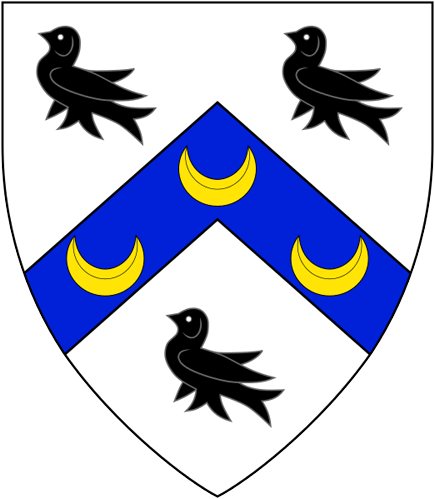
And here is a small flock of them:

522px-Argent_chevron_azure_three_martlets_sable_crescents_Or_svg

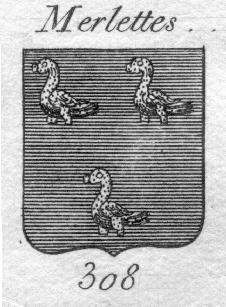
In French Heraldry the “merlette” has become an even stranger bird.  Although closely connected to the English martlet, it is always depicted with a swan-neck but without a beak, wings, feet or forked tail. It looks, in fact, worryingly like a duck in a car crash:

merlette3
For me, this may be where the confusion between “Mellers” and “merles” has
arisen. The choughs of Thomas à Becket have, over hundreds of years  on a wall a long way from Canterbury, gradually lost their bright beaks and legs and people have thought that they must be “martlets”.
As a word, of course, “martlet” is not a million miles from “merlette”, and “merlette” is not a million miles from “merle”. “Merle” is not a million miles from Mellers. It is this pure and total coincidence which has led people, always looking for logical explanations, to invent the story about the “merles” representing Mrs Mellers, creating an explanation that is historically and heraldically impossible. There have never been any “merles” in English Heraldry, either in this century or in the sixteenth.

badge

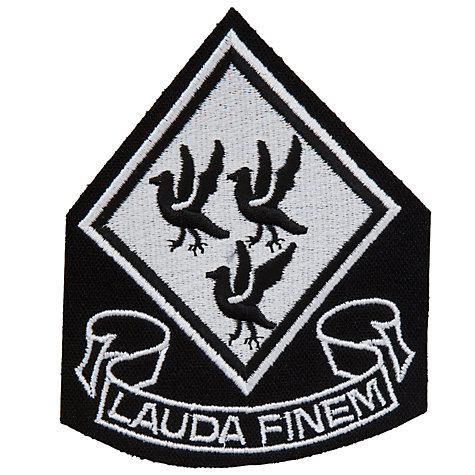
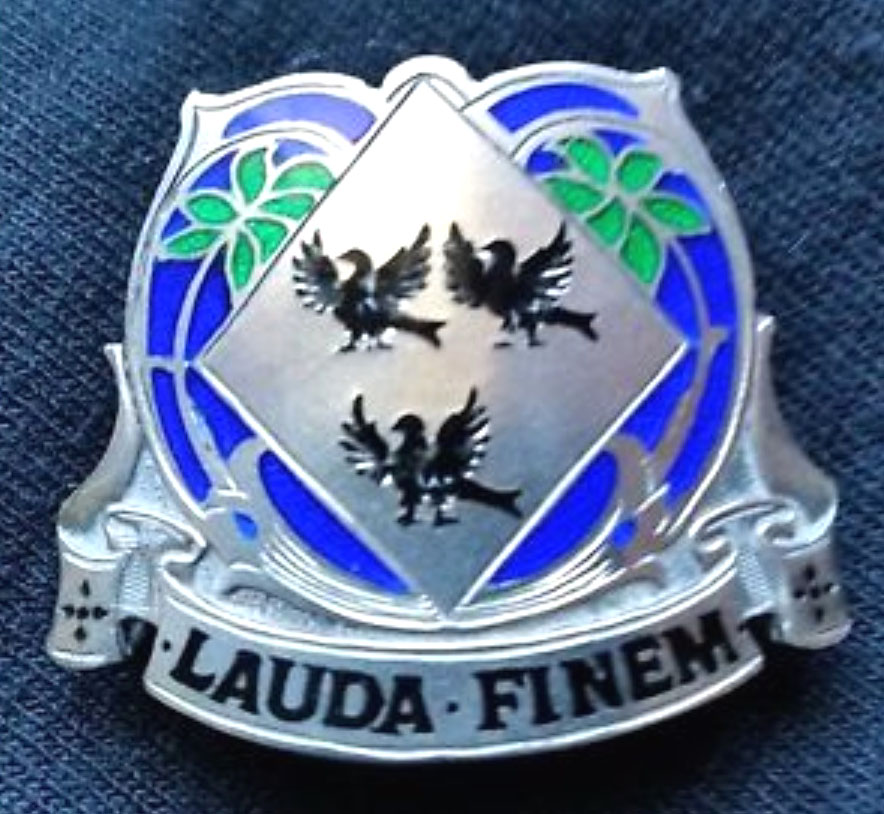
Months and months after I wrote these words, I found an online auction where a High School “Silver and Enamel Badge”, dating from 1935 was for sale. Interestingly enough, the three so-called “merles” on the badge have all been depicted with forked tails. In other words, they are not blackbirds, but black birds. And these black birds are clearly, because of their tails, martlets. This motorists’ badge must hark back to a mid-way period in the heraldic evolution from Becket’s chough to the erroneous, “merle”:

martlet badge

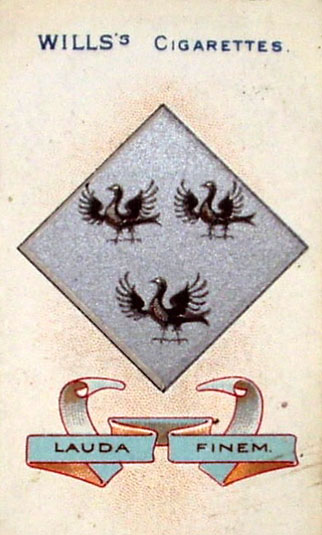
A very similar badge is in evidence in the Wills Cigarette card series of 1906, which depicts the coats of arms of England’s top public schools. I have always had visions of eleven and twelve year olds all smoking forty cigarettes a day just to get the complete set of cards. Anyway, here is the High School card, with the requisite “three Blackbirds rising proper”. Again, they have a forked tail:

three merles.jpg aaaaaa

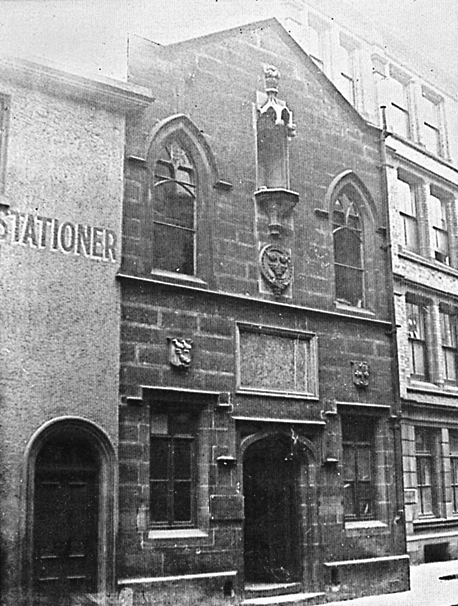
Finally, here is a photograph of the old Stoney Street school, possibly the only one still extant:

stoney st

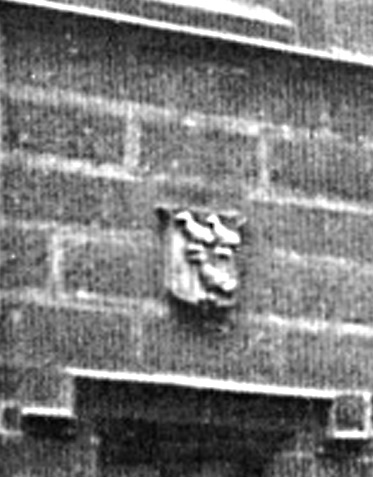
Look at the coat of arms (four o’clock from the word “stationer”). It doesn’t look very much like the present day badge. It is perhaps closer to being the missing link between Thomas à Becket’s choughs, martlets, merlettes and merles:

stoney st enlarged

The beauty about my ramblings is that they do explain away, quite effectively, a completely unrelated incident which has puzzled an admittedly tiny and fairly sad group of people over the last few decades.

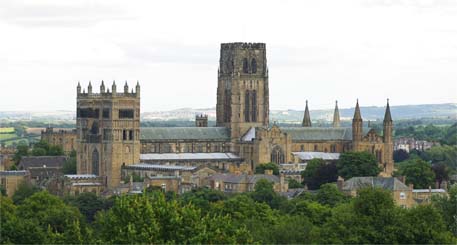
In the school archives, there remains an account of how a long forgotten Old Nottinghamian discovered what appeared to him to be Dame Agnes Mellers’ coat of arms, carved on the roof of the cloisters at Durham Cathedral.

Durham_Cathedral_

This was the only coat of arms in the whole cathedral which the local experts in the north east had failed to identify. The only link of any kind which could be established between Durham Cathedral and Nottingham was the fact that Richard Barnes, Bishop-Suffragen of Nottingham in 1537, eventually became the Bishop of Durham. No connection whatsoever was discovered though, between Richard Barnes and Dame Agnes Mellers.
My supposition is that whoever carved the mystery coat of arms in the late twelfth century when the cloisters at Durham Cathedral were being constructed, was displaying his own allegiance to St Thomas à Becket. Certainly, from a historical viewpoint, the timing is just about right. Thomas à Becket was martyred in Canterbury Cathedral on December 20th 1170. Precisely the time when the cloisters  were being built, namely the latter part of the twelfth century. Perhaps the coat of arms was carved as an act of ecclesiastical defiance against King Henry II, rather like the people who chalked letter “V”s on walls in Nazi-occupied Europe. I couldn’t find a picture of that, so here is the next best thing:

Churchill_V_sign_HU_55521

And as a conclusion, let me add that, during their investigations on behalf of Durham Cathedral, the Heralds’ College could not find any indication whatsoever that either Richard or Agnes Mellers had ever used those particular arms with the three birds, the ones which the Old Boy had immediately recognised as those on his blazer pocket all those years ago.. The ones he had himself seen, carved on that stone fireplace, by someone, another lifetime before that:

badge cccccccc c

13 Comments

Filed under Criminology, History, Humour, Nottingham, Politics, The High School

Where did those three “merles” come from? Part Three

Last time, we looked at this shield which is that of Thomas Becket also known as Saint Thomas of Canterbury, Thomas of London, and later Thomas à Becket.

Becket-arms

Born in probably 1118 or 1120, he became Archbishop of Canterbury in 1162 but was then martyred in Canterbury Cathedral on December 20th 1170 by followers of Henry II, namely Reginald fitzUrse, Hugh de Morville, William de Tracy, and Richard le Breton.

Surely this coat of arms is the easy and direct link with the “merles” of Dame Agnes Mellers?

badge

If you were scared stiff that your husband was on his way to Hell, then what better saint to recruit to your aid than the Numero Uno of English saints, the Head Honcho of martyrdom in England?  As one expert TV commentator recently said, in that original programme (to which, by now, I was giving my fullest attention):

“The most important English saint, by a wide margin.”

I think that Dame Agnes, like so many ordinary football supporters nowadays, did not have her own coat of arms or badge, but instead she was very attached to those of her hero. Not Nottingham Forest or Notts County for her, of course, but Thomas à Becket.

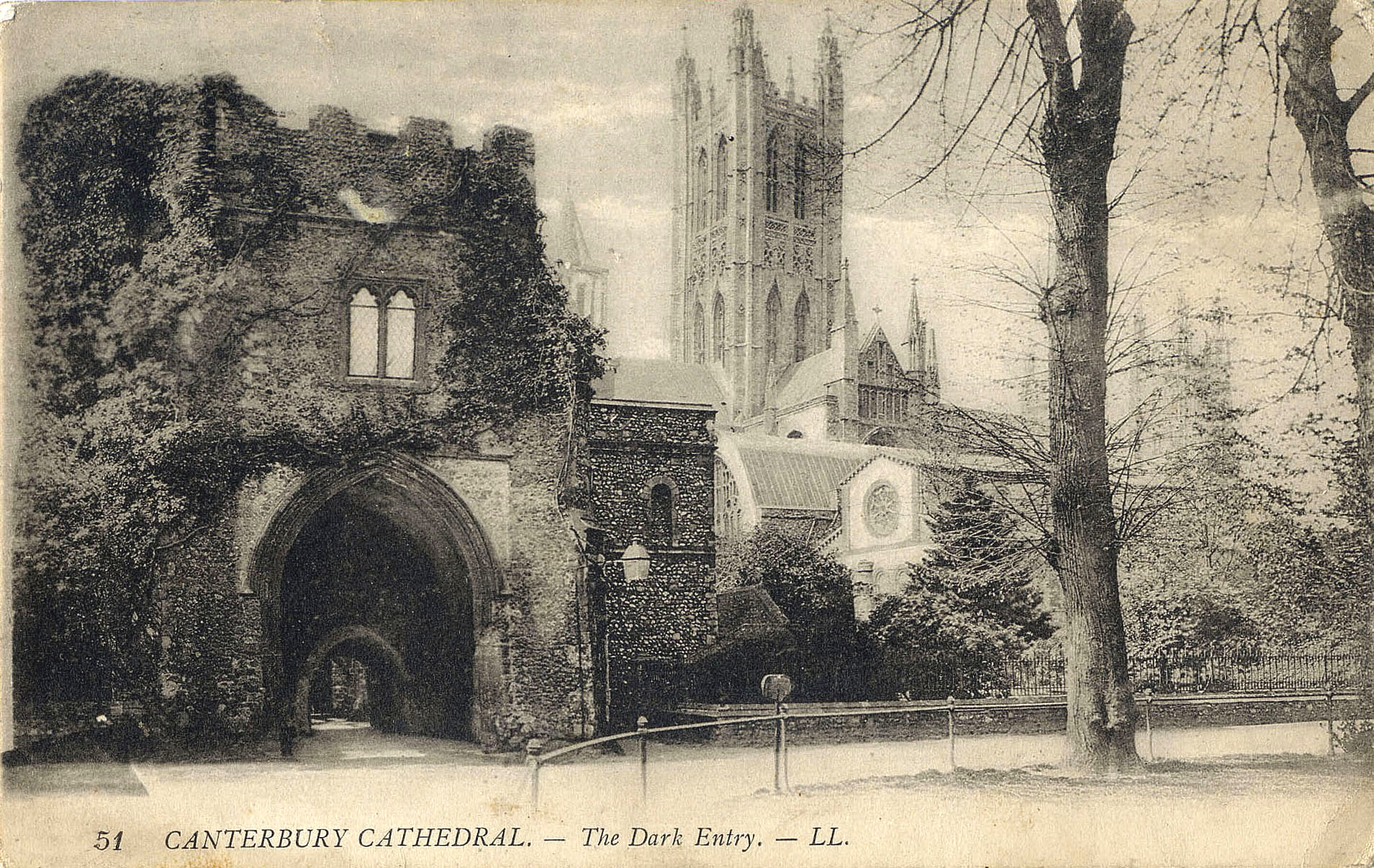
Perhaps Dame Agnes used to display Thomas à Becket’s coat of arms because, as a very pious  and religious person, a vowess of the future indeed, she had  already been on a pilgrimage to see the saint’s tomb in Canterbury Cathedral:

camterbury cathedrzzzzzzzzzzzzzzzzzzzzzz

Dame Agnes may have done this on her husband’s behalf or she may have done it because it was what thousands and thousands of English Christians had always done over the centuries. Perhaps in the three hundred and fifty years since Becket’s death, a tacky tourist trade had built up, and Dame Agnes was able to buy her very own copy of the great saint’s shield, which she had then hung up over her mantelpiece for all her friends to see. We will never know, but for me, the visual coincidence between the two coats of arms is quite stunning. Black birds, of course, are not particularly common on heraldic shields. Eagles, yes, but not a great deal beyond that. Everybody preferred lions.

Game set and match for my theory is the coat of arms of Sir Thomas More (1478-1535), the Lord Chancellor of Henry VIII but more significantly perhaps, the second most important English saint, venerated by all English Catholics as Saint Thomas More. When King Henry wanted to divorce the barren Queen Catherine of Aragon in the hope of fathering a male heir with Anne Boleyn as his new, younger, sexier, more fertile and six fingered Queen, Sir Thomas More “steadfastly refused to take the oath of supremacy of the Crown in the relationship between the kingdom and the church in England.”

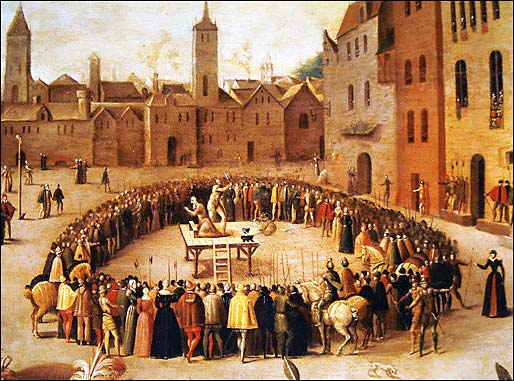
More would not retreat from his belief in the supremacy of the Pope over the King. He was beheaded on July 6th 1535. Before he died, More proclaimed to the watching crowd, that he was:

“the king’s good servant, but God’s first.”:

execution

As a young man Thomas had thought seriously more than once of giving up his legal career to become a monk. And now he was a martyr, and well on his way to becoming a saint.

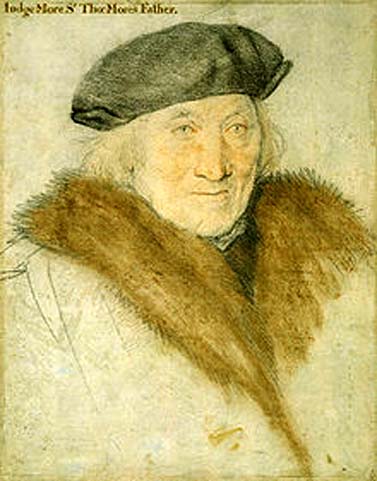
It would be amazing, of course, if his father had had no influence on his growing son. How could the young Saint Thomas have been so pious and so spiritual had his father not influenced him at any point? Clearly, Sir John must have been a very staunch Catholic to have produced a son like Thomas. Here is the only known depiction of Sir John:

220px-Sir_John_More_xxxxxxxxxxxxxxxxxxxxxxxx

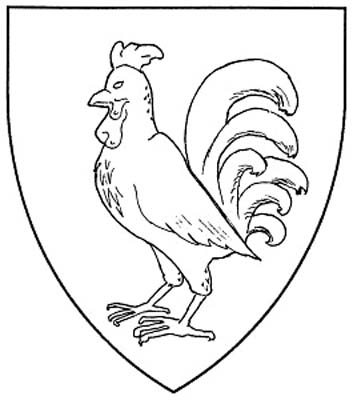
That pious father of the saint, Sir John More, was born around 1451 and died in 1530. He was a lawyer and eventually became a judge. As he rose in society, he was offered the chance of a coat of arms of his own. He may have been told of the possibility of having a shield with a striking visual pun. There is an heraldic bird called a moorcock, which is based on the male black grouse, a bird of the high moors, and is characterized in heraldry by its two projecting tail feathers:

moorcock-261x300

An ordinary cockerel has a curved over tail, and in heraldry is really much less desirable, quite often being referred to as a “dunghill cockerel”:

cock-265x300

Sir John was left to make his choice. You’ll find out what it was next time.

7 Comments

Filed under Criminology, History, Humour, Nottingham, Politics, The High School

Where did those three “merles” come from? Part Two

Last time, I posed a number of questions about the three black birds on the school crest, the so-called “merles”, and the coats of arms of a number of different families with the surname Meller, Mellers, Mellor and even Mellors:

Notts Crest COLOUR xxxxxxxxxxx

If you remember, I was far from convinced that there was any connection between Dame Agnes and any of these families, the closest of them a minimum of a week’s journey away in Manchester. I was equally doubtful about the existence of “merles” as a bird in English heraldry. Indeed, overall, in English, the word “merle” does not really seem to relate particularly strongly to birds at all.

Wikipedia, for example, states that “merle” is a first name used by both men and women, a surname of French origin, a rather beautiful pattern in dogs’ coats, another name for the wine grape Merlot, a German glider originally built in 1938 for the 1940 Olympics gliding competition, a Crusader fort near Tantura on the coast of Israel and finally mentions the fact that the MS Phocine, a ferry, was originally named MS Merle.

In the bird world, Wikipedia states that it is a name for the “Icterid varieties of which the male is predominantly black, especially the Common Blackbird, Turdus merula.” The first word is the Latin for thrush, and “merula” means Blackbird.
I need to say here that “Icterids” are exclusively American birds such as grackles, orioles, cowbirds, meadowlarks and bobolinks:

This slideshow requires JavaScript.


Back to Wikipedia, which continues with the fact that “merula” gives the French their word “merle” and also gives the Scots their word “merl”. According to Wiktionary, it is also an “English 19th century bird name from merle, blackbird, possibly also a variant of Muriel”. That is in itself quite interesting as many common birds in Merrye Olde Englande had their own human names. Jack Daw. Mag Pie. Jenny Wren, Robin Redbreast. Sparrows were called Philip because of their chirping call. A modern equivalent would be the Soviet ruler, Joe Starling.
Very tenuous links between Dame Agnes and merles therefore, made all the more tenuous by another, etymological, dictionary,  which states that “merle” is a late fifteenth century word which nowadays “owes its survival in modern times to its use by Scottish poets.” And how many fifteenth century Scottish poets can you name? Or any living, modern ones come to that?
Scotland, of course, is even further away from Dame Agnes than Manchester. And just in case you see a possible link between Dame Agnes and the “late fifteenth century”, don’t forget that the alleged Mellers’ coat of arms wasn’t ever used by her, and first appeared only in 1808.

Sooooo, where did that coat of arms come from?

Well, just for a moment, let’s go back to that idea that Dame Agnes was a lifelong staunch Roman Catholic with a very real fear of Hell for wrongdoers, especially those who might have cheated their customers a bit, perhaps when they were flogging them very large and very expensive bells.

One evening, sitting comatose in front of our TV set, I happened to see this coat of arms on a documentary programme as the camera panned down the High Street of a famous city:

Canterbu
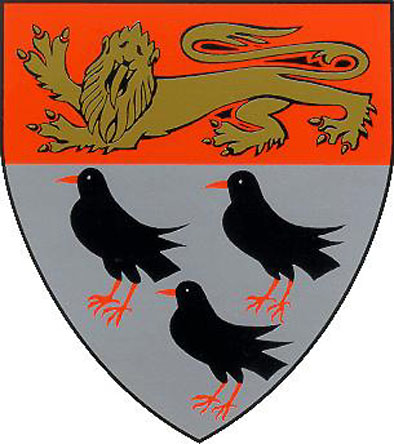
The city was, of course, Canterbury. But where did the City of Canterbury find those striking and exciting  black birds? Well, it’s not a huge surprise:

Becket-arms

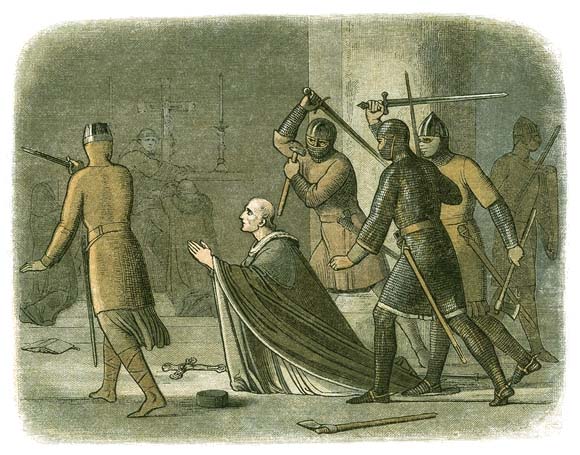
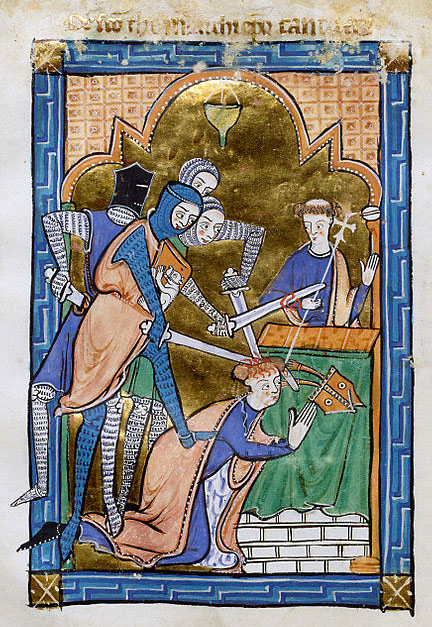
The shield above is that of Thomas Becket also known as Saint Thomas of Canterbury, Thomas of London, and later Thomas à Becket. Born in December of probably 1118 or 1120, he became Archbishop of Canterbury in 1162 but was then martyred in Canterbury Cathedral on December 20th 1170 by followers of Henry II, namely Reginald fitzUrse, Hugh de Morville, William de Tracy, and Richard le Breton.

Here is an account of the slaying, written by eyewitness Edward Grim. Edward must have been an extremely brave man. Completely unarmed, the young clerk stood up to four knights dressed in chain mail, all of them equipped with the heavy savage swords of the era. Edward was gravely wounded in the incident, as he tried in vain to protect Becket (Reader discretion is advised):

“The wicked knight leapt suddenly upon him, cutting off the top of the crown of his head. Next he received a second blow on the head, but still he stood firm and immovable. At the third blow he fell on his knees and elbows, offering himself a living sacrifice, and saying in a low voice, “For the name of Jesus and the protection of the Church, I am ready to embrace death.” But the third knight inflicted a terrible wound as he lay prostrate. By this stroke, the crown of his head was separated from the head in such a way that the blood white with the brain, and the brain no less red from the blood, dyed the floor of the cathedral:

Murder_of_Thomas_BecketThe same clerk who had entered with the knights (not Edward Grim) placed his foot on the neck of the holy priest and precious martyr, and, horrible to relate, scattered the brains and blood about the pavements, crying to the others, ‘Let us away, knights; this fellow will arise no more.”

640px-English_-_Martyrdmasxxxxxxxxxxxxxxxxxxxxxxxx

Soon after this famously gory death, Thomas was promoted to sainthood by Pope Alexander III. Canterbury Cathedral subsequently became the most important centre of pilgrimage in England, most famously for Geoffrey Chaucer.

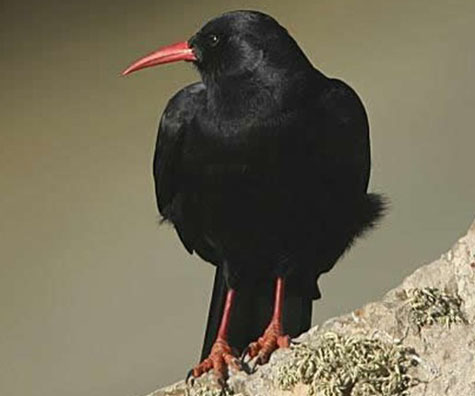
The birds on Thomas à Becket’s shield have red feet and red beaks and they are nowadays called “choughs”, although apparently in medieval times, they were often referred to by pilgrims as “beckitts”.

chough_nb_tcm9-94034

I feel sure that there is some kind of clue here:

columbo


19 Comments

Filed under Criminology, History, Humour, Nottingham, Politics, The High School

Home is the sailor, home from the sea, And the hunter home from the hill

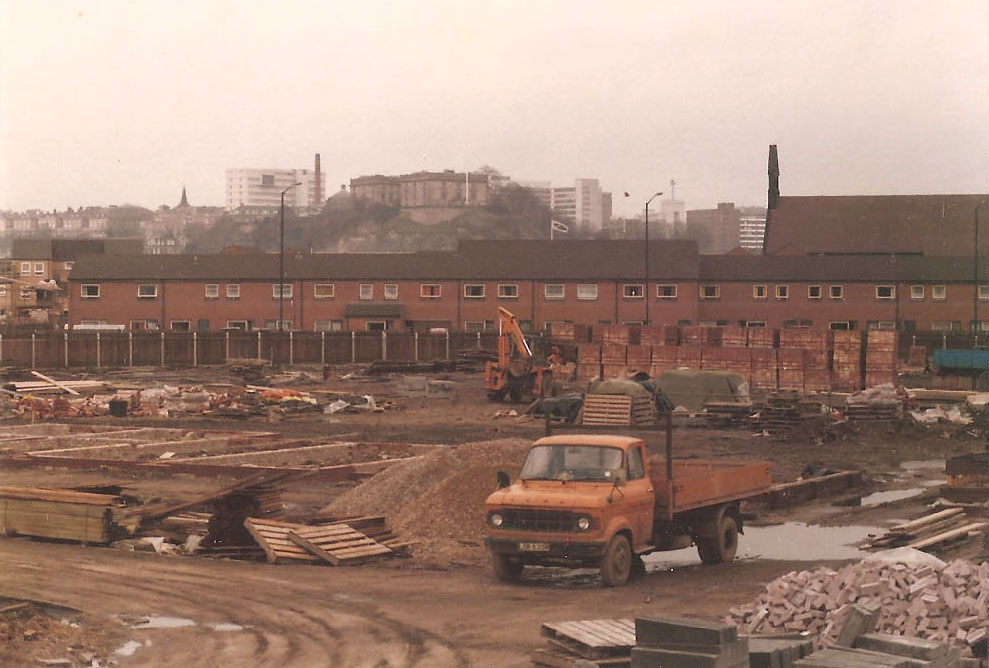
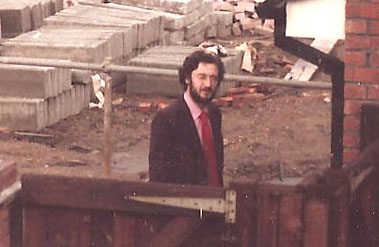
When we were first married, my wife and I bought a house in the Meadows area of Nottingham. This was traditionally a place of slums, crime and general unpleasantness, but at the time, the early 1980s, huge numbers of unhealthy hovels were being demolished to be replaced by newly built, better quality, council houses, as they were then called. Mixed in with all the rented accommodation though, was a small estate of private houses, and we bought one of those. When we first moved in, we were surrounded by a vast building site:

photo 1

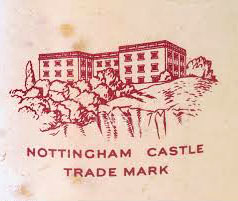
In the background is Nottingham Castle, which has very little remaining from the medieval period and dates mostly from the 1670s. It is perhaps most famous for being the trademark on Players Cigarettes:

trade markxxxxxxxxxxxxxxxxxx

And now, it must be nine minutes past four and the teaching day is ended and I have driven home at top speed:

“Home is the sailor, home from the sea,

And the hunter home from the hill.”

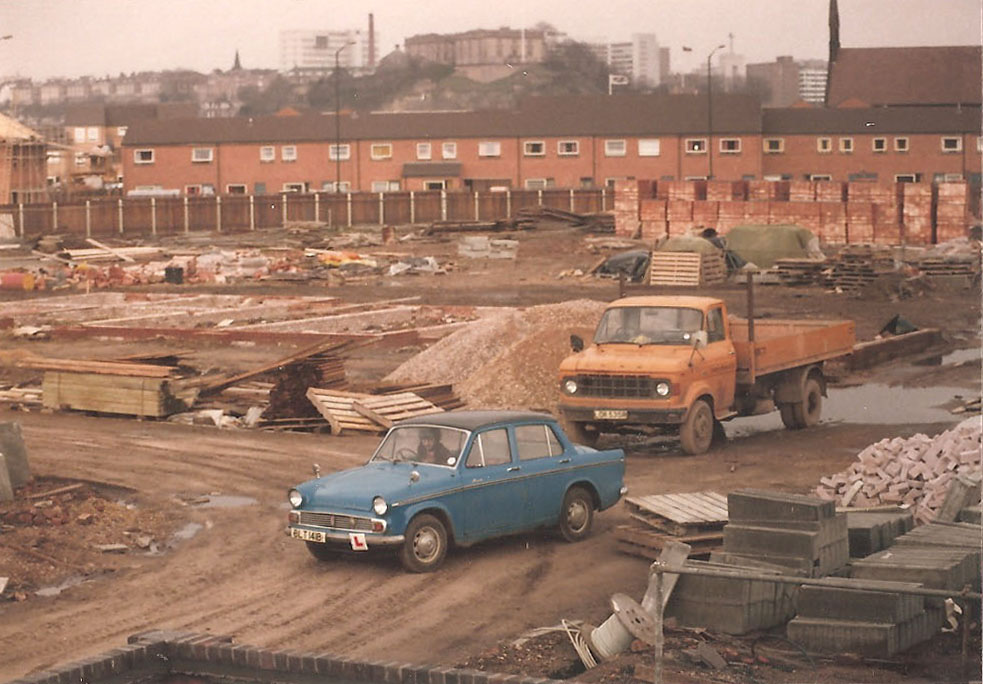
photo 3

I used to have an old 1964 Hillman Minx De Luxe, with the registration plate BLT 141B. It was my first car, and I loved it dearly. I wish I could have it back again. It had previously belonged to my Dad, Fred, who loved it even more than I did. When the seventeen-year-old car failed its last roadworthiness test, he was so glad that I took the trouble to drive it, fairly illegally, the 35 miles to his house, just so that he could then drive it himself on its last ever journey down to the scrapyard.
This beautiful blue car was “the one” as far as Fred’s motoring career was concerned. One day in 1966, he took me with him to nearby Derby and we visited Peveril Garage, on Friar Gate, up near the headquarters of the Derby County Supporters’ Club:

dcfc
Fred told me not to mention anything whatsoever about the day to my mother, not under any circumstances. Without any consultation with her at all, therefore, he bought this marvellous car, which was priced at £510. In those days, that was a princely sum indeed. If truth be told, it was actually a total sufficiently royal, that when my mother did eventually find out what he had done, she would have had Fred beheaded if she could have organised it.

The car was a rich blue, half way between sky blue and navy blue, with a black side stripe picked out in metallic chrome. In later years, when he had problems with rust on one of the wings, Fred was to opt for a total re-spray, which allowed him to retain the same colour blue for the body, but to incorporate a black roof which added that extra, unique, little detail to his beloved car:

photo 4

At this time, I had only recently passed my driving test, so, while I waited for the green “Provisional” plates to be invented, I retained my Learner plates, with the Big Red Ell on them. That was enough to be pulled over by a young policeman, apparently tired of arresting burglars, drug dealers, terrorists, murderers and bank robbers. Still, no hard feelings.
And here I am, looking like the man who designs the stage costumes for a 1970s pop group:

photo 2

I am wearing my favourite wide lapel purple jacket which had a wonderful Polyester feel to it. My shirt was short sleeved and chequered in pink and white. My extra wide tie was scarlet, and again, made of Polyester for easy cleaning. My glasses were gold-rimmed and my hair was a deep delicious dark brown without the slightest trace of grey:

photo 5

I had probably been wearing a pair of trousers throughout my day as a teacher, but they are not visible in this photograph. They may well have been my favourite pair ever, which were generously flared and mid-grey with an emphatic large black check design all over them. This created a whole series of huge squares perhaps four or five inches in size. I eventually gave these show stealers to a charity for the homeless in Africa. I often wonder who got them and what he made of them. Conceivably, some kind of shelter.

17 Comments

Filed under Criminology, History, Humour, My House, Nottingham, Personal

Where did those three “merles” come from? Part One

Not many people would be able to answer this question.

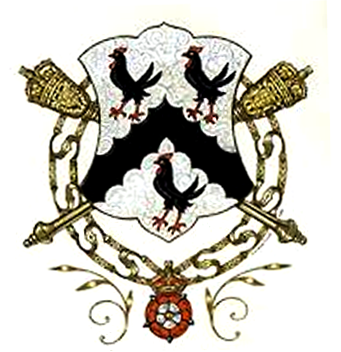
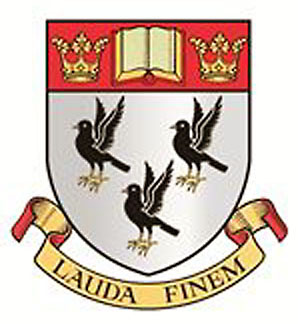
What exactly is “Ermine a Lozenge Argent charged with three Blackbirds rising proper on a Chief Gules an open Book also proper garnished Or between two Ducal Coronets of the last.” ?

Well, it’s one of these, more or less. What’s a lozenge between friends?:

Notts Crest COLOUR xxxxxxxxxxx

The origin of the High School’s coat of arms has always been, to me, a major enigma. Apparently, there has always supposed to have been a connection between the arms of Dame Agnes’ family, namely “Mellers” and another family called Mellor, who lived in Mellor, a village between Stockport and Glossop.

(Where?)

(Well, let’s put it this way. in either town you can easily get a bus to Manchester. It’s a distance of some seven miles and twelve miles respectively)

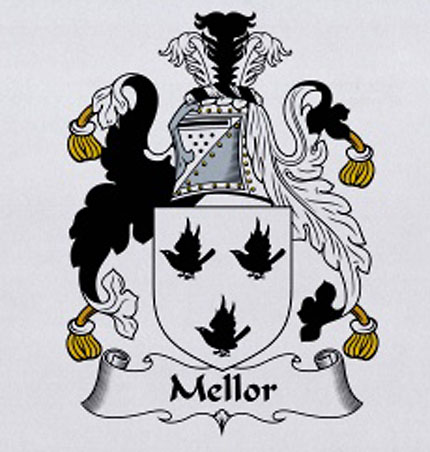
Here is their coat of arms:

0mellor coat of

To me though there is quite a difference in spelling between Mellor and Mellers, although the Mellor coat of arms is obviously a reasonable fit with the school’s crest.

This theory, though, does rely almost totally on the supposition that Richard Mellers was related to this “Family in the North” whose coat of arms displayed three black birds. In actual fact, there is no reason to suppose any proven link whatsoever between the two families. After all, it’s a very long way between Nottingham and Stockport in late medieval times. More than ninety miles, in fact. The best part of a week on foot, not counting any unexpected meetings with Robin Hood and his Merrie Men.

Let’s look at a small number of other likely coats of arms. Let’s start with Mellers. It should be said that Dame Agnes herself always spelt her name as “Mellers” (but never as “Mellor”):

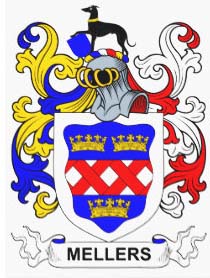
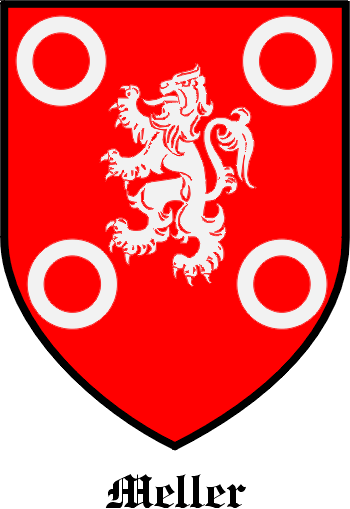
For “Mellers”, we find very few coats of arms, but there is this one:

meller_c

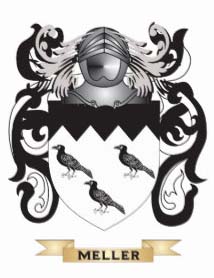
Let’s try “Meller”. We do find this one, and furthermore, the very same shield is listed elsewhere as “Mellers” :

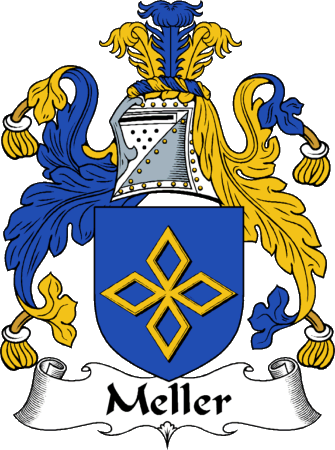
meller_cThat’s not the answer, though,, because we also find this shield for Meller, as well:

meller-ireland

And this one:

meller_large irish

And this one:

Smeller red

Clearly, something, somewhere, is not quite right. It may even be very wrong. There are problems here, and the first major one may well be connected with the simple issue of the spelling of Dame Agnes’ surname. Despite her own insistence on Mellers, mentioned above, a quick look at “Google Images” will reveal that Mellers, Mellor, Meller and probably Mellors, appear to be disturbingly interchangeable.Coats of arms just seem to come and go. They are different every tine you look at Google. This is because, I suspect, they are connected less with accurate heraldry than the desire to sell tee-shirts, mugs, key rings, ties and even underpants with your family crest on them.

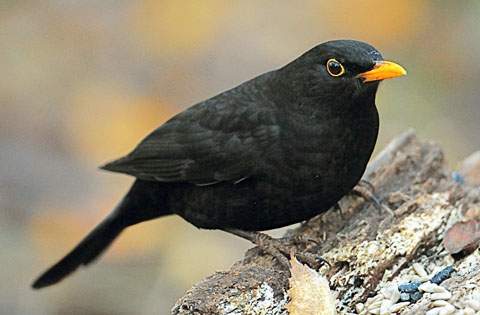
Those black birds on the High School shield have always been regarded as Blackbirds, an everyday bird species in England:

blackbird

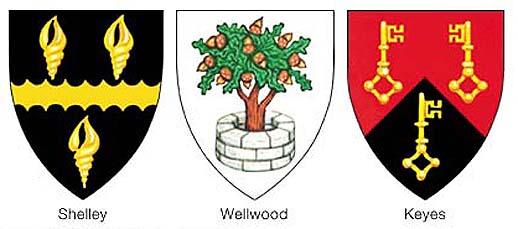
The theory is that the heraldic word for a blackbird is “merle”, taken from the French, and this gives us a devilishly funny pun for the surname “Mellers”. Such side splitters are called “Canting Arms”. They are used to  establish a visual pun, as in the following examples:

canting
I am just not sure about this word “merle”. Just because a coat of arms contains a number of black birds (as opposed to green ones), that does not automatically mean that we are dealing with canting arms, even if the French word “merle” refers to our familiar back garden bird, the Blackbird, aka turdus merula, and the name “Mellers” sounds perhaps, possibly, maybe, slightly, conceivably, like it.

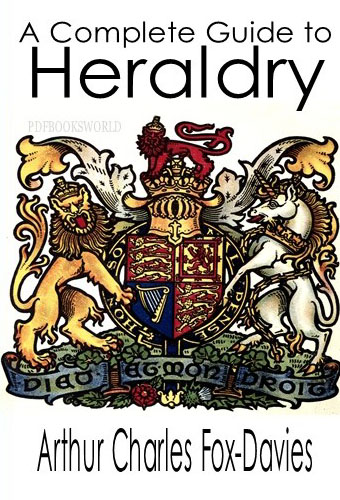
What is more disturbing, though, is the discovery that “merle” appears to mean absolutely nothing whatsoever in English Heraldry. On Amazon, the search for “Heraldry” reveals five books, all with the same title. It is “A Complete Guide to Heraldry” by A.C.Fox-Davis:

fox daviesThis rather old book is the standard work on English Heraldry and has been for quite a considerable time. It is a book of some 645 pages, but there is not a single “merle” on any one of them.  And more important still, if merles did actually exist in Heraldry, then why did the Heralds’ College, known also as the College of Arms, call these birds “blackbirds” when they made that formal grant-of-arms to the school as recently as 1949? Why didn’t they call them “merles” and thereby preserve the “Laugh, I nearly died” visual pun?
And don’t think that the College of Arms are just a bunch of fly-by-night door-to-door sellers of heraldic key rings and underwear. They were founded well before Dame Agnes Mellers, in fact as far back as 1484. To quote the definition on the Heraldry Society website:

“The College of Arms is the only official English authority for confirming the correctness of armorial ensigns — Arms, Crests, Supporters and Badges — claimed by descent from an armigerous ancestor, or for granting new ones to those who qualify for them.”

In other words, if they say it’s a blackbird it’s a blackbird. You can’t just decide to call it a “merle” because you feel like it, or because it seemed like a good idea at the time. It’s just not allowed. Here is another blackbird, just to refresh your memory:

Blackbird-01

In 1920 at least, nobody called it a “merle”. In June of that year, the new school magazine, “The Highvite” contained a “Sports Chorus”, including appropriately vigorous music. The words were…

“Score our High School / ye Highvites now score for victory.
Our High School / For Highvites, never, never, never shall be beaten
By any Worksop / Newark & c. team
At the Sign of the Blackbirds three.”

No “merles” there then. It is equally interesting to note that in “The Nottinghamian” of December 1921, the school’s emblem is again referred to as containing blackbirds, rather than merles. This overturning of tradition, however, does not mean that the use of three black birds does not connect us directly with Dame Agnes. Let’s look at it from a different angle, just for a moment.

Many people have believed over the years that it was only when the school changed its site from Stoney Street to Arboretum Street in 1867 that the three black birds were first adapted. But this was definitely not the case since photographs from the mid-nineteenth century show quite clearly that a badge with three birds was displayed on the wall of the Free School building. In this case, though, their wings were folded rather than the modern version, flapping and ready for immediate and dynamic intellectual and sporting take-off:

stoney st enlarged

Indeed, it is thought that the three black birds were in evidence as an unofficial badge for the school from at least June 16th 1808 onwards. On this date, an unknown but apparently very bored clerk has decorated the title page of the funky new volume of the Schoolwardens’ Annual Balance Sheets with the traditional three black birds, so it has clearly been known as a symbol connected with the school for a very long time.

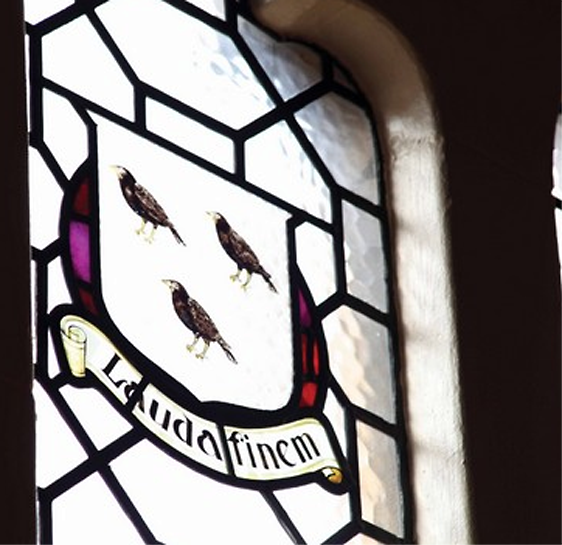
Interestingly enough, another slightly more modern place where the birds’ wings can be seen as folded dates from 1936, when some new stained glass sections were put into the windows at the back of the recently built Assembly Hall:

assembly hall

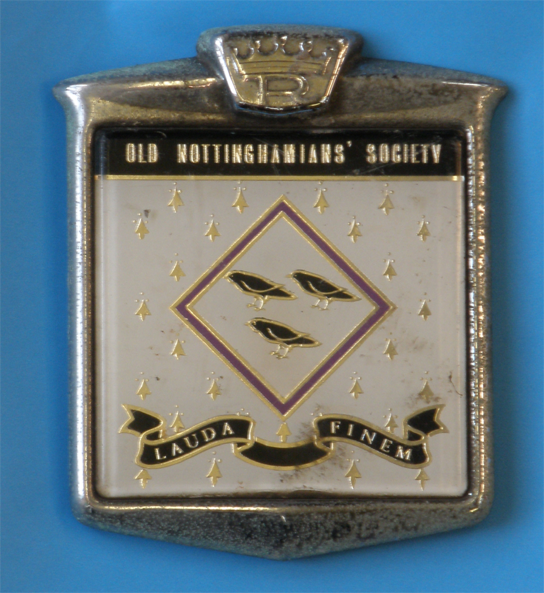
And nowadays, of course, this folded wings version forms the badge of the Old Nottinghamians’ Society. Presumably, that is why they appear in this guise on a car badge being sold off on ebay:

car badge

Next time, I will attempt to answer the question of where did those black birds come from? In the meantime here’s a clue. Not all black birds are Blackbirds:

chough_nb_tcm9-94034


17 Comments

Filed under Criminology, History, Humour, Nottingham, The High School

“Go straight to Hell ! Do not pass Go ! ” Part Two

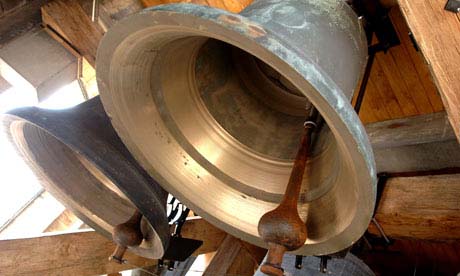
In the first part of this article, I demonstrated how Richard Mellers, the husband of Dame Agnes, was, at best, a fairly unscrupulous businessman. I ended by relating how, in 1507, Richard had received a pardon for having committed offenses against the statutes of weights and measures. This charge related to problems with the purity of his bells. The metal, apparently, was just not as valuable as he said it was. Richard’s pardon would have been granted because of his previous position as Mayor of Nottingham. A less prestigious person would have been in very, very, serious trouble:

Church-bells-001

Dame Agnes, of course, may well have known absolutely nothing whatsoever about any of this rather serious matter. Like many, many husbands over the centuries, Richard may have decided, quite simply, to tell her nothing at all about it. And if she did know about her husband’s cheating and double dealing, then, like many, many wives over the centuries, she may perhaps have turned a blind eye to it, hoping that one day her errant husband would rejoin the forces of light.

He didn’t though. At least not for long, because on or about Sunday, June 16th 1507, Richard Mellers died, with the ink on the pardon if not still wet, then certainly recognisably damp. I think Dame Agnes would have seen his sudden demise as a direct consequence of his previous wrongdoing. She must have thought that her husband’s death so soon after receiving a pardon was the true verdict from on high.

In more modern, medical, terms, Richard may well just have hastened a natural death by continually feeling guilty or by worrying too much about the outcome of the affair. He may, quite simply, have been a victim of early sixteenth century stress. Irrespective of the clinical truth, though, for a devout woman in Tudor times, these events must have seemed like a clear judgement from Heaven.

At the beginning of the sixteenth century, it would have been completely impossible for a sincere and devout Roman Catholic to be in any conceivable way ignorant of the rôle played by Hell in the scheme of things. How can Dame Agnes have possibly thought back about her husband’s life, misdemeanours and sudden death, and not have seen him as the proud possessor of a “Go straight to Hell, Do not pass Go, Do not collect a ticket to Heaven” card?

That must have been a very, very real fear in her mind.

Here’s how the Rock Combo “AC/DC” saw the situation, firstly on an album cover:

hqdefault

And then on stage:

More or less straightway after his death, therefore, Dame Agnes, the grieving widow, became a “vowess”. She resolved never to remarry, and instead to devote herself to the service of the church.

A “vowess” is defined in the Collins English Dictionary as:

“a woman who has vowed chastity or devotion to a religious life; a nun”.

Other dictionaries tell pretty much the same tale. One other interesting detail about vowesses is given in “The Customs of Old England” by F. J. Snell. Writing about how a vowess would view her obligations, he states that:

“Whatever fasts a vowess might neglect as non-obligatory, it seems probable that she would not willingly forgo any opportunity of showing reverence to the Blessed Virgin.”

More of this later.

Immediately after her husband’s death, Dame Agnes tried to repay many of his victims. She literally gave them back the exact sums of money which she was worried they had lost to her husband.

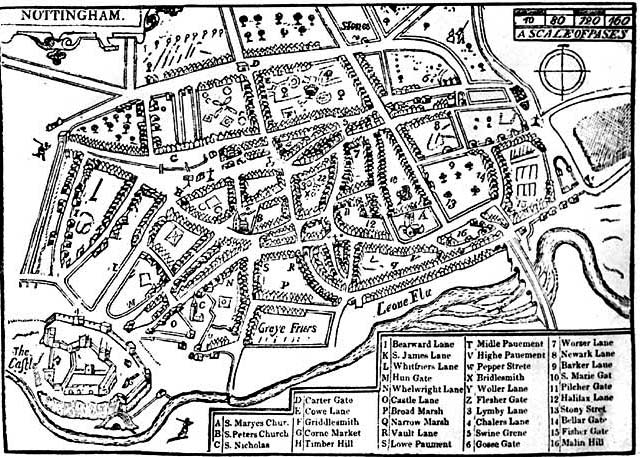
She then decided to spend the rest of Richard’s money on charitable causes. Most important of all, she decided to found a school. Or alternatively, she decided to fund a school which was already in existence and was clearly in need of financial assistance. She must have known that this one simple act would benefit the citizens of Nottingham in the long term, and make up for the occasions when, for short term gain, her late husband had cheated them. Here is the grateful city in 1610. St Mary’s church is marked with the letter “A”. Keep looking. It is there:

speed-map

Before the official first day of her school, February 2nd 1513, there had already been eleven apparent references to a “Nottingham Grammar School” between 1289 and 1513. At this point in time, of course, it is impossible to tell what connection, if any, there is, with Dame Agnes’ school. Indeed, we do not even know if the eleven schools mentioned before 1513 have a continuous history, or whether they were all short lived affairs.

Having said that, though, Dame Agnes may well have decided to develop an ancient original grammar school into her own school. This original establishment may have depended solely on fees paid by the pupils. Dame Agnes perhaps thought it would be a good idea to establish a foundation, which would then ensure a much better financial future for the school. Equally, she may well have wished to take personal dcontrol of an older school, and then, as a loyal Catholic, to bring it under the control of St Mary’s Church.

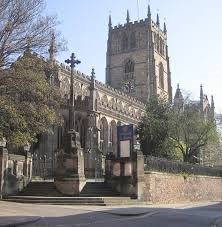
Whatever the details of founding, funding, refounding or whatever, from Dame Agnes’ point of view, the most important thing was that the school  should remain closely linked to St Mary’s Church. This, of course, carries out the words of F. J. Snell. Her efforts with this school clearly showed that Dame Agnes would “not willingly forgo any opportunity of showing reverence to the Blessed Virgin”. Here is St Mary’s Church nowadays:

ch 4

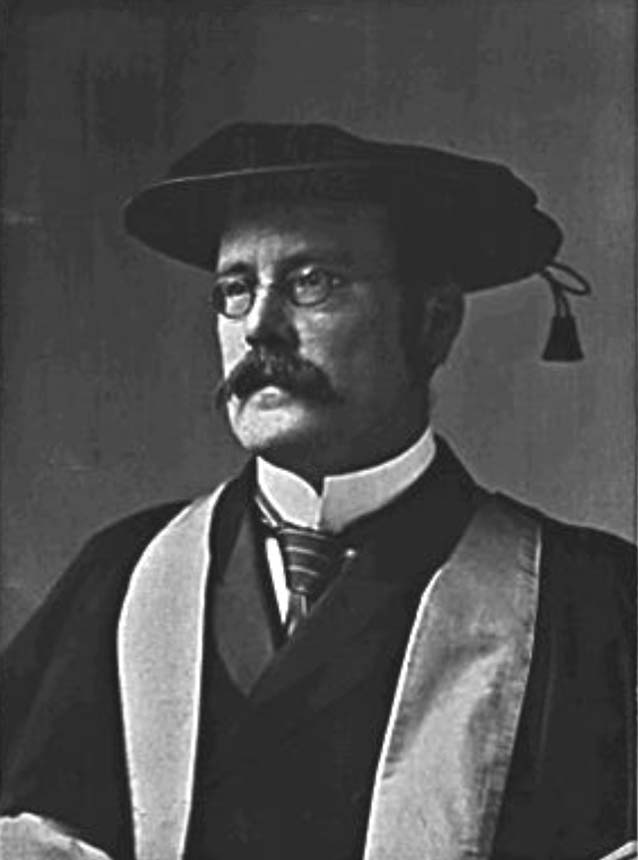
All this sounds like heresy now, of course, after a whole series of celebrations have commemorated the 500th Anniversary of the school, and books have been published, but these ideas are not actually mine own. In “The Nottinghamian” for 1924, for example, there was a clear connection stated in the school magazine between the older schools from before 1513 and the then Nottingham High School. Dr James Gow, the school’s greatest Headmaster, had died this particular year:

dr gow

In his obituary, it was said that:

“he was appointed Headmaster of the Nottingham High School, an ancient Grammar School, already existing in the thirteenth century, and refounded and endowed by Dame Agnes Mellers, under a Charter of King Henry VIII, in 1513.”

These words are anonymous, but were most probably written by Mr “Sammy” Corner who had been the school’s Deputy Headmaster until his retirement in 1914. Mr Corner had spent much of his spare time researching school history and had become a great expert. Much of this knowledge was to appear in the school magazine which he edited for many years, and which at one point had contained a serialised history of the school. After his retirement, the plan was that Mr Corner would finish writing his history of the High School.

Alas, this popular member of staff was destined never to write his book, as the Great War broke out only a month after he was due to start work, and, despite his advanced age, Mr Corner went off to do his bit for the war effort. At the end of the conflict, Mr Corner moved from Nottingham to Croydon, but his life’s work was to remain forever uncompleted, a source of great regret, as he later told Mr Reynolds, the Headmaster, in a letter. This is the great Sammy Corner in 1913, showing off the school’s charter in the 400th anniversary celebrations in 1913:

sammy corner s

On the afternoon of Monday, November 13th, 1933, similar ideas about the school’s history to those in Dr Gow’s obituary were being expressed by the Duke of Portland, when he performed the formal opening ceremony for two new High School buildings, the Gymnasium and the newly converted Library.

This very same interpretation was obviously still current around this time, when Mr.C.L.Reynolds, the Headmaster, wrote his own brief history of “The Buildings of Nottingham High School”. He described the events of 1513 as “…the re-foundation or endowment of the School by Dame Agnes Mellers.” Here is Mr Reynolds, seen with the prefects, in an unknown year, probably in the 1930s:

reynolds

Furthermore, a document more contemporary to Dame Agnes’ time said that what Dame Agnes was doing was to “…unite, create and establishe a Free Scole” as if there were some definite connection between her school and the Nottingham schools of previous centuries. Similarly, she is referred to in a number of other early documents not as a “foundress” but as a “fundress”, as if she were building and strengthening what was already there.

If this is the case, then it would give the High School a history of some seven hundred years, making it one of the oldest schools in the country. But not the oldest.

How that fear of the “Go straight to Hell, Do not pass Go, Do not collect a ticket to Heaven” card must have haunted Dame Agnes. As well as her wonderful achievements with the school, she also laid down that a service of commemoration for her deceased husband should be held every year on June 16th. This latter date is thought to have been chosen because it was the Feast Day of St Richard of Gloucester. Interestingly enough, St Richard’s shrine in Chichester Cathedral, at this time, was a magnificently decorated and popular destination for the Tudor Pilgrim. Perhaps Dame Agnes had been there herself as a dedicated vowess:

Chichester_Cathedral_epodkopaev

The ceremony which Dame Agnes had requested was, of course, a solemn Roman Catholic mass for the soul of her dear departed husband. It is thought that this mass was probably celebrated for about thirty five years, until such services were abolished by order of the then king, Edward VI. This same type of mass may then possibly have been revived under the Catholic Queen Mary, but it certainly would have disappeared for ever when the Protestant Queen Elizabeth I came to the throne in 1558.

Even in the 1660s though, some hundred and fifty years after Dame Agnes, the students still went every Friday during the period of Lent, with their teachers, to visit St.Mary’s church, and kneel in front of the tombs of Richard and Agnes Mellers, and say prayers for their souls, and the souls of all their relatives. And even nowadays, every year on Founder’s Day, the congregation still says prayers for the souls of Dame Agnes, and more importantly perhaps, her husband, Richard. This is Founder’s Day in 1957, a beautiful backlit day:

founders dfay

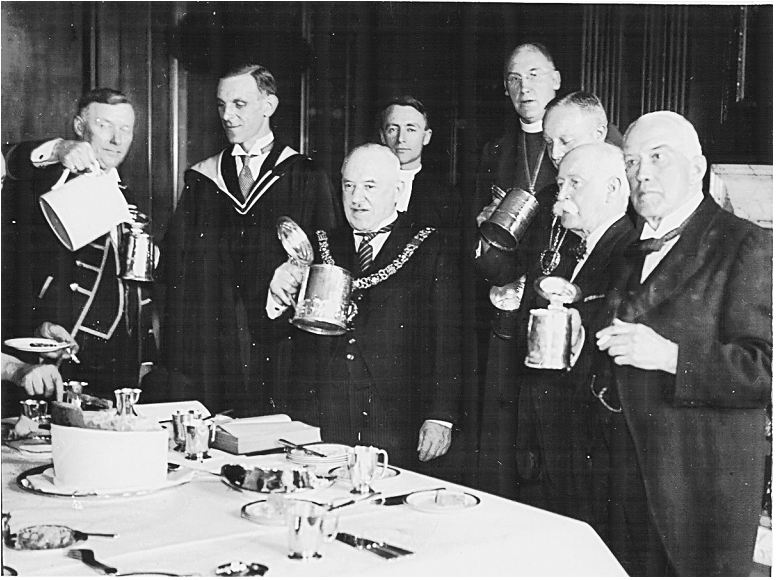
This is the Cheese and Ale Ceremony in the same year:

cheese and ale 1933

They’re going to get very drunk very quickly if they fill those tankards too frequently. Here is the traditional Cricket Match on that sunlit afternoon in 1957:

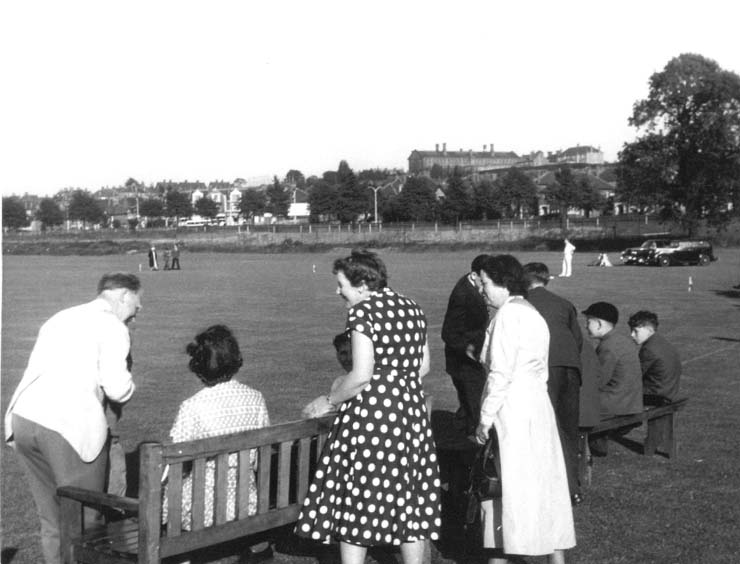
cricket 1957

18 Comments

Filed under Criminology, History, Humour, Nottingham, Politics, The High School

“Go straight to Hell ! Do not pass Go ! ” Part One

Having explored the history of the High School for more than twenty five years, I have always thought that the school’s beginnings are shrouded in mystery. For me, the High School has always been very like the Soviet Union:

“a riddle, wrapped in a mystery, inside an enigma”

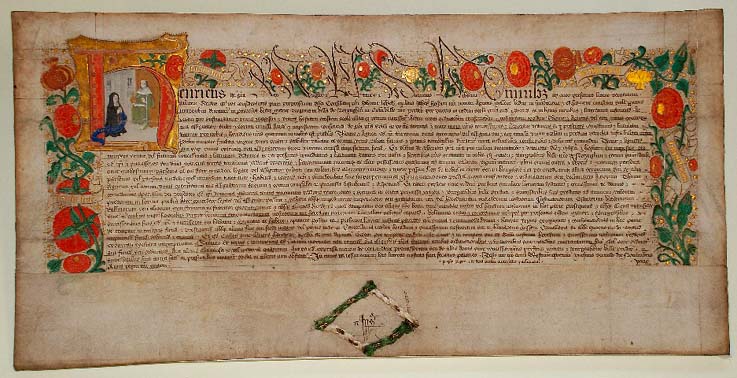
What do we know about the founder of the school, Dame Agnes Mellers, for example? What was she like as a person? There are a very few illustrations which are thought to be her. This is the school’s charter:

charter

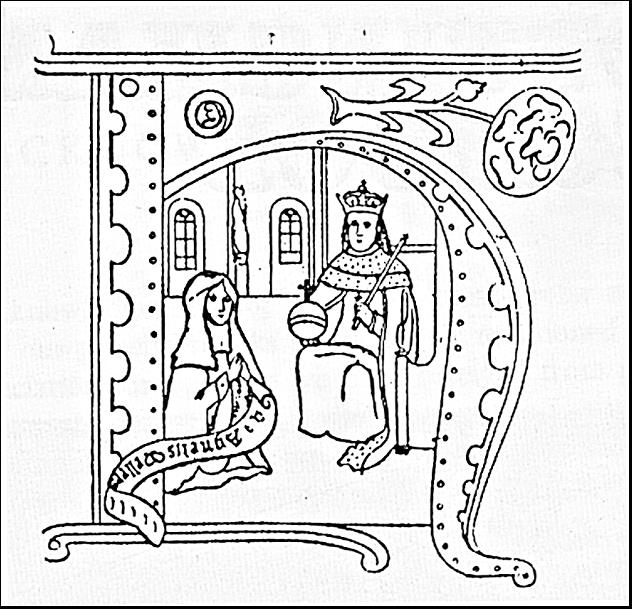
And here is a close-up of Dame Agnes and King Henry VIII:

charter001

This is the charter changed into a line drawing:

agnes

For me, there have always seemed to have been two enormously important motivating forces in her character. The first was her staunch religious faith as a Roman Catholic with a sincere love of Jesus Christ and the Catholic Church. Dame Agnes seems in many ways to have been an uncomplicated soul, who viewed the world in a simple direct way. She tried to be a good person, with the sincere belief that we should all try to make things better rather than worse, that we should do good things rather than evil and that we should always strive to be on the side of the Angels.

The second motivation for her was the love she had for her husband, Richard, which seems as sincere and unswerving as her love for the Church. Richard was, as his name suggests, a rich man. He was at one time or another, Sheriff of Nottingham (1472-1473), Chamberlain (1484-1485) and Royal Commissioner and Mayor of Nottingham (1499-1500 and again in 1506). In 1499, he is known to have given twenty shillings to help repair the Hethbeth Bridge, as Trent Bridge’s predecessor was called. Here is one of the last photographs ever taken of the old bridge before it was superseded by the present Trent Bridge. You can certainly see why it was easier for the river to freeze up in those days:

old-trent-bridge-1871xxxxxxxxxxxxxxxxx

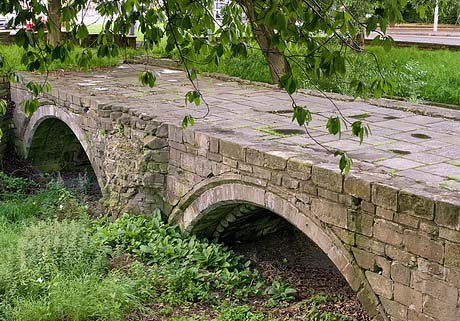
This is all that remains of the Hethbeth Bridge nowadays:

771942beth heth xxxxxxxxxxx

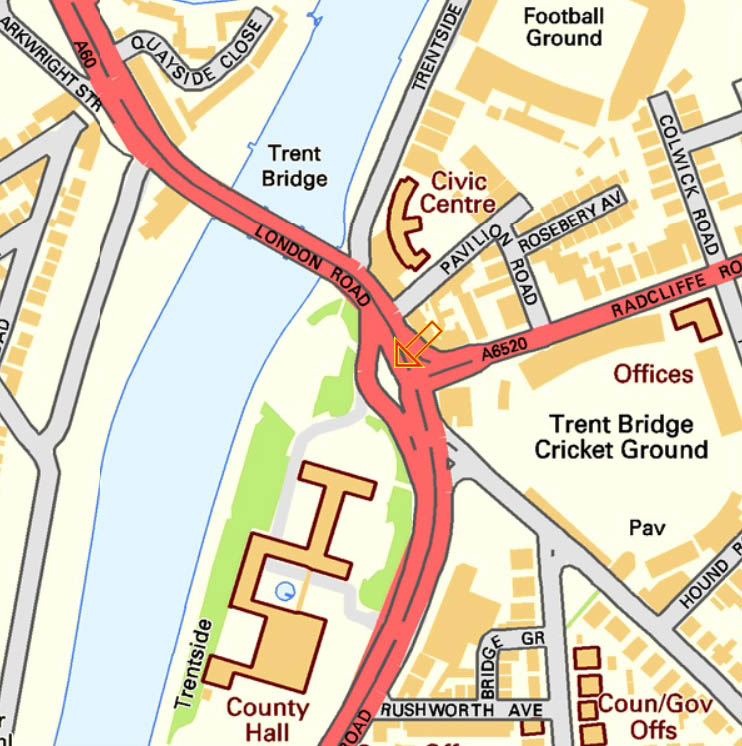
It is in the middle of a road island to the south of Trent Bridge. If you decide to take a look at it, be very careful of the traffic and use the proper crossings. Look for the (camouflaged) orange arrow in the centre of the (red) road junction:

trent

Richard Mellers was a brazier, and probably a potter, and he had certainly dealt in metal pots and dishes. Most important of all, he owned the largest church bell-foundry in the region. The site of his premises has long disappeared, but its exact location is still known today.

From 1888 onwards, just a very few yards north of the city centre, steps began to clear away:

“a curious V-shaped slice of slum property…a most unhygienic and immoral neighbourhood and nothing good could be said for it”.

This slum clearance took a number of years, and resulted in the formation of King Street and Queen Street, the latter being opened on June 22nd, 1892.

During this time, it was inevitable that, along with all the slums and all the undesirable features, a few other more reputable premises were destined to disappear. Among these was Richard Mellers’ Bell Foundry, which is known to have stood more or less exactly on the site of the present day Queen Street Post Office. The orange arrow points to the general area, and the letters PO stand for the purple edged Post Office:

king street

Perhaps it was working so close to such an “immoral neighbourhood” that deflected Richard away from the straight and narrow. He had, for example, already paid out £20 to be the Mayor of  Nottingham for twelve months. There wasn’t really much of the democratic process involved here, or indeed, much evidence of any genuine interest in the workings of democracy. That payment of £20, a rather sizeable sum of money by modern standards, may well have been the reason that, in the very same year, Richard had been so keen to do a good deed by paying  for the upkeep of the ever ailing Hethbeth Bridge.

Richard was certainly widely known as a fairly unscrupulous businessman. During his lifetime, in his efforts to acquire great personal wealth, he certainly seems to have cheated many of his bell buying customers. In 1507, for example, we know that Richard had received a pardon for having committed offenses against the statutes of weights and measures. This charge is believed to have related to problems with the purity of his bells and the metal they contained. The pardon would only have been granted because of his previous position as Mayor of Nottingham. A less prestigious person would have been in very, very, serious trouble. These bells, though, are all 100% the real peal:

100911_Lowell_bells_147.jpg

To be continued……………………….

13 Comments

Filed under Criminology, History, Humour, Nottingham, The High School