Category Archives: Criminology

What would you do ? (12) The Solution

“What would you do ?” used to figure on the cover of a boys’ comic called “Boys’ World”. This was a publication, obviously, aimed at boys, and first appeared on January 26th 1963. There were 89 issues before the comic was merged with Eagle in 1964. The last issue of “Boys’ World” came out on October 3rd 1964.

I used to buy “Boys’ World”, and this was mainly for the front cover which always featured a kind of puzzle. It was called “What would you do ?” and was based on somebody being in what Ned Flanders would call “A dilly of a pickle”. Here’s the situation:

And here is the puzzle:

And as we turn quickly to page two, we find out that:

“There is only one thing the fighter pilot can do. Sweeping down out of his dive he flies alongside the V.I., maintaining the same speed. Then, he gently manoeuvres his wing-tip under the wingtip of the deadly bomb. With a gentle pull on his stick, he turns his plane away, his wing whipping the V.1. over. Its delicate gyro-compass thrown off-course, the bomb hurtles earthward, to explode harmlessly in open countryside.”

So now you know!!

The people who throw around their accusations  about Bomber Command, aiming them chiefly at Bomber Harris, as if he was the Number One in the RAF rather than someone subject to a whole chain of superior officers and politicians, they forget both the V-1 and the V-2, which were pilotless and aimed only in the most general of terms. The V-1s were all aimed at Target 42, London, and more precisely, Tower Bridge. They never hit Tower Bridge or even got particularly close. V-2s were even more random and indiscriminate. In efforts ordered personally by Hitler to blow up the bridge over the Rhine at Remagen, no V-2 got within 900 yards but they did hit Cologne (still German at the time).

The statistics are not very precise but 22,880 V-1s were fired at targets in England (8,892) and Belgium (11,988). Around 4,000 V-2s were launched at targets in England (c 1,400) and Belgium (2,342). The main target in Belgium was the port of Antwerp. Hitler was determined to deny its use to the Allies. Overall,  V-weapons killed approximately 18,000 people in England and Belgium. Nearly all of them were  civilians.

Here’s a V-1 and a Spitfire playing nicely:

And here’s a V2 setting off to annihilate as many civilians as possible in London. It was designed by SS Sturmbannführer Werner von Braun, soon to be an American citizen and certainly not a war criminal responsible for the deaths of tens of thousands of slave workers, most of them Russian or East European, particularly Poles. Hopefully though, like the Führer, he loved his dog:

18 Comments

Filed under Aviation, Criminology, History, Humour, military, Science, war crimes

Famous Adverts of Filmland (2)

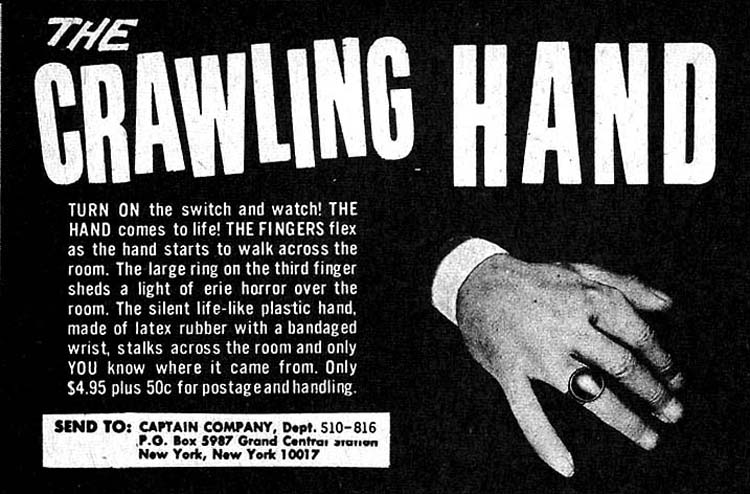
Last time I talked about the American magazines which appeared in Albert Taylor’s newsagent’s shop from time to time during the early 1960s. They all had one thing in common. They had advertisements for what we all thought were rather bizarre products which were largely unobtainable in England. On the other hand, had a lorry arrived in our village, full of “Crawling Hands”, we would have been fighting each other for the chance to purchase this amazing toy for only $4.95, plus an extremely reasonable 50c for postage and handling:

Wow and double wow!! It walks across the room and the ring on the third finger sheds light over the floor. What a bargain.  I wondered how much $5.45 in 1960 might be worth today. Well, it’s between $45-$50. In English money, that’s around £34-£37. I repeat. What a bargain!

I’m not so sure about the next one though.  A whistle for dogs?

What kind of trick is that? You can’t hear it but the dog can? What rubbish. How do you know if it works?

And how will you know the dog has heard it if he is habitually disobedient? And why should he obey a whistle that you cannot hear when he can pretend he hasn’t heard it and you are none the wiser?? He’ll just carry on in the same old way and you’ve wasted your money.

This is a much better product. While my friends join the Boy Scouts, I can put on my black mask and become a member of the Judean People’s Front, or perhaps the Judean Popular People’s Front, or even the Popular Front of Judea.

What have the Romans ever done for us ? “Romanes eunt domus“:

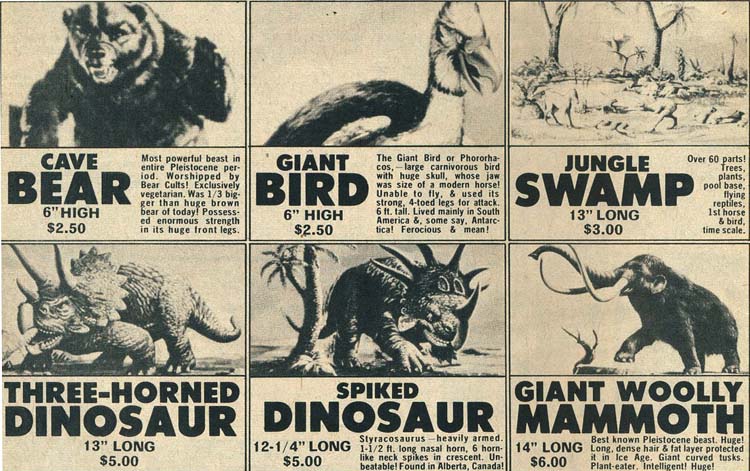
As an adult, I can see now that the majority of the adverts appeal, for the most part, to two categories of customer. The first category is that of the person who is perhaps less intelligent, shall we say? He does not know the names of the simplest dinosaurs. He needs pictures to distinguish between a cave BEAR and a Giant BIRD, or between a GIANT WOOLLY MAMMOTH and a thirteen inch long JUNGLE SWAMP :

In the intelligent section of the magazine, however, much more technical language is used. And if you’re intelligent enough to know what a Styracosaurus is, you’ll definitely want one with a wind up motor :

It isn’t the most intelligent kind of person, though, who will pay money for an authentic fingerprint kit, but is unaware that it will be completely useless without access to the FBI fingerprint database and three years at Police College:

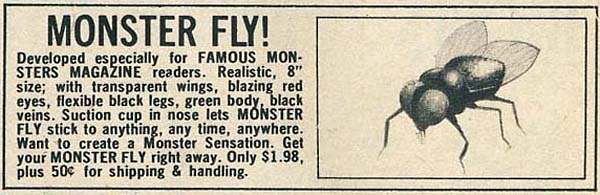
Other adverts just offer products for customers who want to frighten people. They want to scare the living daylights out of the last few friends they have. Perhaps they’ll do it with a monster fly:

They’d like a mask that makes them look like their movie heroes:

Or, the only full colour advert that I could find, a zombie mask:

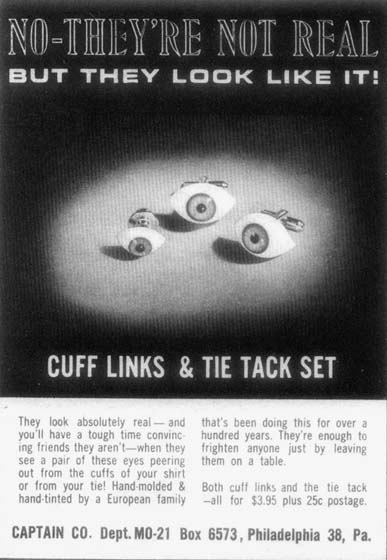
Presumably, they will wear their mask with their eyeball cufflinks:

And what a slogan.

“NO–THEY’RE NOT REAL, BUT THEY LOOK LIKE IT !

Surely that has a future with a publicity hungry plastic surgeon. It’s certainly better than this excessively subtle 1950s ad :

I borrowed that advert from a website which boasts 39 more. Take a look. It certainly shows how attitudes towards women have altered over the years.

Or have they?

24 Comments

Filed under Criminology, Film & TV, History, Humour, My House, Personal, Science, Wildlife and Nature, Writing

Why no statue ? (1)

There has been enormous controversy of late about the fact that a good many of our old statues were erected to honour people whose lives contain some rather unpleasant details, hiding away and hopefully forgotten, or even not noticed in all the glory and the wonderfulness.

Arguably, this phenomenon may have had  its origins in England years and years ago with the controversy about Jimmy Savile, that favourite son of the BBC and of their audiences. Wikipedia says…..

“He raised an estimated £40 million for charities and, during his lifetime, was widely praised for his personal qualities and as a fund-raiser.”

But he had a very large and dirty secret…….

“After his death, hundreds of allegations of sexual abuse were made against him, leading the police to conclude that Savile had been a predatory sex offender—possibly one of Britain’s most prolific. There had been allegations during his lifetime, but they were dismissed and accusers ignored or disbelieved.”

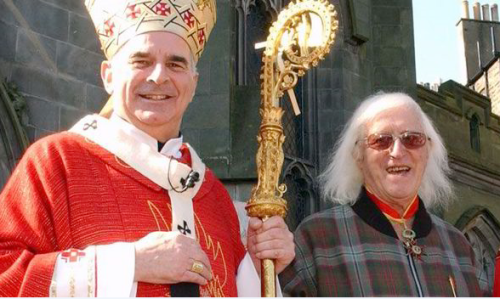
Here’s Savile with Cardinal O’Brien, a man who, according to the Guardian newspaper at least, had “admitted in general terms to sexual conduct that had “fallen beneath the standards expected of me”.”:

So what was done?

“Within a month of the child abuse scandal emerging, many places and organisations named after or connected to Savile were renamed or had his name removed. A memorial plaque on the wall of Savile’s former home in Scarborough was removed in early October 2012 after it was defaced with graffiti. A wooden statue of Savile at Scotstoun Leisure Centre in Glasgow was also removed around the same time. Signs on a footpath in Scarborough named “Savile’s View” were removed. Savile’s Hall, the conference centre at the Royal Armouries Museum in Leeds, was renamed “New Dock Hall.”

You can read about the two sides of this very strange and sad man here.

Here’s Savile’s Hall in Leeds. I took this picture years ago while we waited for the coach to come and pick us up. I must confess, I was attracted by young Marilyn. I’m sorry about the blurry focus but my hand was shaking:

People guilty of child abuse are a relatively easy target to identify. So are those with a background in slavery. Having “slavery” appear on your CV is not good.

And both slavery and child abuse are, of course, huge “no-no”s if you want a statue of yourself to be erected somewhere after your death.

A large number of Kings and Queens of England have been enthusiastic buyers and sellers of slaves. I have written two blog posts about this subject. Here’s a link to one, and here’s a link to the other.

The guilty parties included:

Queen Elizabeth the First, the family of King Charles II, King Charles II, King James II, Queen Anne, King George I. King George II, King George III, King George IV and King William IV.

It wasn’t just our beloved Royal Family though. It was ten of the first twelve Presidents of the United States. (Well done, John Adams and his son John Quincy Adams.) The guilty parties were George Washington (317 slaves), Thomas Jefferson (600+), James Madison (100+), James Monroe (75), Andrew Jackson (200), Martin van Buren (1), William Henry Harrison (11), John Tyler (70), James Polk, (25) and Zachary Taylor (less than 150).

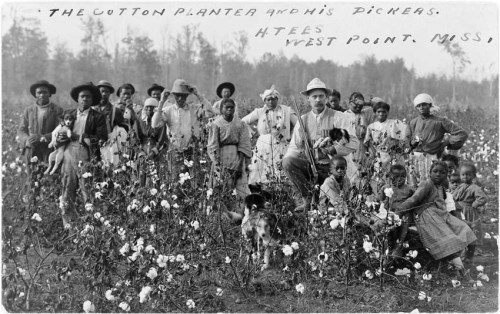
Zachary Taylor was the last president-in-office to own slaves and Ulysses S. Grant was the last president to have ever owned a slave. This picture shows a president and his slaves at cotton picking time, but the internet seems a little confused about which one:

What superb irony that Thomas Jefferson won the slave owning contest with a minimum of 600 slaves.

He was the man who wrote if not the most beautiful sentence in the English language, then certainly the most important:

“We hold these truths to be self-evident, that all men are created equal, that they are endowed by their creator with certain unalienable rights, that among these are life, liberty and the pursuit of happiness.”

In my scheme of things the people above may well lose their statues. That’s a lot of statues to take down. Slavery was not illegal in those days, but the 25-or-so people listed above would all have said they were Christians and putting it bluntly,

Jesus Christ did not keep slaves.

Just look at the expressions on these faces. Even the dogs are sad.

One major point to be made before we finish is that the descendants of slaves, in a great many countries of the world, do not want continually to be reminded of how their ancestors were mistreated in one of the great crimes of human history but instead they want to look forward to a better life. And I would be OK with that too.

What I think is that it would be a good idea to have the controversial statues put in a museum with explanations about why these previously valued men and women have been removed from public gaze. People would then have the choice of looking at them, or not.


19 Comments

Filed under Africa, Criminology, Film & TV, History, Politics

Books for Christmas (2)

I thought it might be nice if I gave you an idea of some of the best books that I have read over the past few years so that you could consider them as a Christmas present for one of your friends or family. All of the books featured are, in my opinion, well worth reading. They are all available on the Internet. In some cases, what appear to be very expensive volumes can be acquired for a fraction of the cost, if you go to abebooks or bookfinder, or if you consider the option of buying them second hand. It ‘s something I have never understood, but with some very expensive volumes, it is even possible to buy them brand new at a very much reduced price, again, if you shop around.

The first book is quite unusual since it is an attack by a German writer on the dastardly deeds of Bomber Command, and presumably, by extension , on the American Eighth Air Force. Jörg Friedrich obviously remembers very well Dresden, Hamburg, Darmstadt, Wurzburg, Pforzheim and so on. He seems to have forgotten the people who invented the indiscriminate bombing of innocent civilians at places such as London and even York Minster in WW1, and then Guernica, Rotterdam, Warsaw and so on. And there are some factual errors.

Overall the book reminds me of the verdict of a German friend of mine about the generation before his own:

“They start a war and then moan about losing it.”

Even so, “The Fire: The Bombing of Germany, 1940-1945” by Jörg Friedrich and Allison Brown is quite an intriguing book. Some of the things he says made me quite angry but perhaps because many of them are things that I have worried about myself, but loyally continued to defend.

A nice contrast is the book by two German academics, Sonke Neitzel and Harald Welzer, entitled “Soldaten”.  They examine the dreadful, appalling things done by ordinary Germans in World War Two, and then look at whether the Americans in Vietnam or Iraq could have done the same. A really good book, which does not leave you feeling too good about your own morality.

In my previous selection, the best book was either “Subsmash” or “Bombing Germany : the Final Phase”. In this second selection, the book we should all read and take in is “Soldaten”:

It’s quite a contrast with our next book, “Lady Chatterley’s Lover” by DH Lawrence. There are a lot of different editions of this masterpiece, and I would recommend the one which has a preface or introduction by Doris Lessing. Do NOT be tempted by an edition “with extra new added pornography”. In any case, the book is also about WW1 and about the disappearing English landscape.

As you can see, the cover of the best edition has the gamekeeper putting his trousers back on, or, more likely, taking them off yet again.

Perhaps even better to read are Lawrence’s “Selected Stories”. You get 400 pages of his best short stories, including my own particular favourite “The Horse Dealer’s Daughter”.

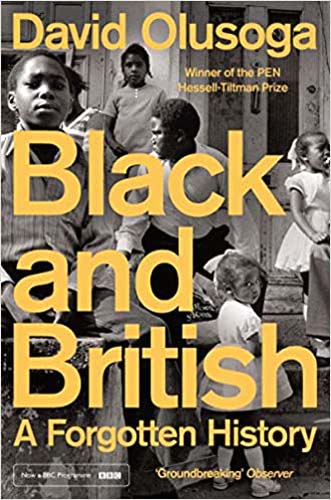
Next on the list is “Black and British: A Forgotten History” by David Olusoga. This book should be a compulsory read in every secondary school in England. How much really interesting history has been hidden away because of prejudice? Black Africans on Hadrian’s Wall, a black man killed by a white mob in Liverpool and the fight to abolish slavery, among many other long avoided stories.

Four books I haven’t read yet, although I’m certainly looking forward to them. Firstly, “Lend-Lease And Soviet Aviation in the Second World War” by Vladimir Kotelnikov. I have looked at the pictures of the P-39s and P-40s with red stars on them, and the Short Stirling, but I haven’t read the text yet. If it’s as good as the illustrations, it will be brilliant.

I haven’t read this book either, although I have read the companion volume about cricketers killed in World War One. It’s “The Coming Storm: Test and First Class Cricketers Killed in World War II” by Nigel McCrery. I have no reason to believe that this book will be anything other than extremely well researched and an interesting read.

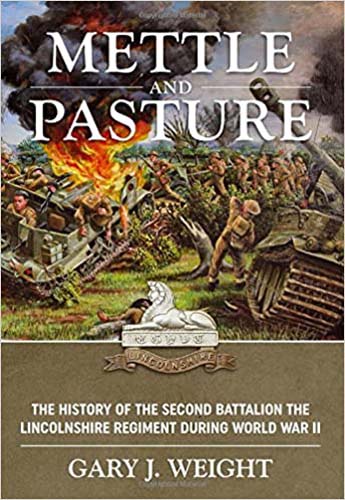
Next book in the “In Tray” is  “Mettle and Pasture”, the story of the Second Battalion of the Lincolnshire Regiment during WW2, written by Gary J Weight. I am hoping it will be a great read. It has certainly got some excellent reviews on amazon.co.uk.

The last book in the “In Tray” is called “Luftwaffe over America” by Manfred Griehl. The author examines the Germans’ very real plans to bomb the eastern seaboard of the United States during the Second World War,  using their Me 264s, Ju 290s and 390s and the Ta 400 from Focke Wulf. As a little boy, I was always intrigued by the fact that, on a trial flight, a Ju 290 supposedly got within ten miles of New York.

That’s all for now. Third and final part next time.


14 Comments

Filed under Africa, Aviation, Bomber Command, cricket, Criminology, History, Literature, military, Politics, Russia, war crimes, Writing

The Fairies of Cornwall (11) Two short stories

Today, I’m just going to let you read two short stories from William Bottrell’s “Stories and Folk-Lore of West Cornwall— Third Series” which Bottrell self-published in 1880.

The first story is told about a young farmer called Richard Vingoe who was targeted by fairies, for no good reason other than it was within their power to do so, near Treville Cliffs in West Cornwall:

“After wandering for five hours over places which appeared strange to him, Richard followed the path through the rocky bottom or glen into an underground passage or cavern, from which, on emerging, he found himself in a pleasant looking country.”

“Walking on, he heard the sounds of merrymaking and came to a place where people appeared to be having a feast. He noticed a great number of persons playing bowls. Being fond of that game, he was about to run and seize the silver ball as it fell near him, when a female darted from behind a rock, which had screened her from view, and made eager signs for him to stop playing and to follow her. She went into an orchard near at hand. He approached and saw that she was a young lady who he had once loved, but who had been dead for a number of years. She told him she was changed into the fairy state by having trespassed on the fairies’ domain, and that he had narrowly escaped the same fate.”

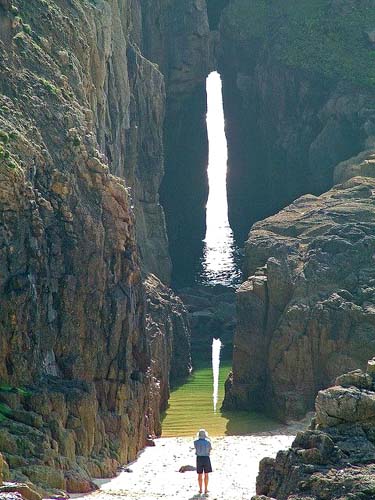
“She was disposed to save him for the sake of their former attachment. When the persons playing bowls and spectators of the game had all gone out of sight, she conducted her former lover to the upper world by a shorter road than that by which he entered; on the way she told him that, as he was engaged to be married within a few weeks, she had no desire to detain him. She advised him, however, to defer his wedding three years, that he might be sure he knew his own mind. When Vingoe promised to follow her advice, they passed through an opening in a carn, and he saw Nanjizal” (which is a real place):

His conductress then said good-bye, and vanished. Being fatigued with his journey, he lay on the grass, near the spot where he again saw the light of day, and there he was found asleep nearly a week after. Vingoe was never the same man again, for he took to hard drinking and he died unmarried.

Notice how many of the usual themes are introduced…..

………wandering for hours, disorientation, caverns in the rocks, a distant feast and merrymaking, an orchard, playing bowls, a dead person who is not dead but has been captured by the fairies and finally, the poor innocent victim who, like all the rest, is affected by his time with the fairies.

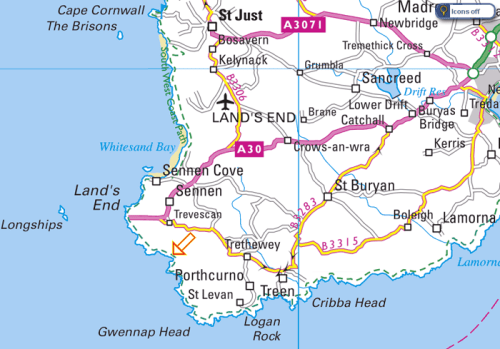
The map below shows you where Nanjizal is, thanks to the efforts of the Orange Arrow. This is the very last bit of England (hence Land’s End) and the dark grey shading in the top right represents the western edge of the town of Penzance. As an area, it is full of magic and witchcraft, even nowadays, and it must contain at least fifty Stone Age circles and other types of monument.

The second story concerns a servant girl called Grace who has been tricked into going to work for a human sized fairy:

“Grace told her master (the human sized fairy)  that she wasn’t used to going to bed so early. He answered,  “Please yourself on that score, and stay up as long as you want to.”

He then brought her a basket of fruit and told her to eat what she pleased of them. Afterwards, he gave her a cup of fruit juice that she found delicious. By the time she had drunk it to the last drop, she forgot her home and playmates among the hills. She forgot her brothers and her sisters, her father and her mother even. She no more remembered her former life, and only thought of her kind Master and the delightful place in which he lived. She dreamed of it that night and nothing else.”

This last tale could well have been something from a science-fiction short story. Not only do we have the familiar tale of eating or drinking something, and then there is no escape ( rather like the Greek Persephone) but we also have that feeling of lethargy yet total happiness, and a forgetfulness that leads to a perfect life, almost as if Grace had joined a modern day sect:

If you ever see the gentleman in the picture, make sure that you tell him what a “helter-skelter” is in England. It’s not what he thought it was.

17 Comments

Filed under Cornwall, Criminology, Cryptozoology, History, Literature, Personal, Wildlife and Nature, Writing

The Fairies of Cornwall (10)

Jenny has given birth to a beautiful baby. She decides to leave her baby at home and to go to the village Harvest Festival. When she returns, the baby is missing. Eventually she finds the infant, and takes it to bed with her. In the months which follow, the baby becomes increasingly strange. Many of the neighbours say that they fear that the fairies have played a trick on her and have replaced her baby by a changeling.

They told her:

“You can do nothing better than to bathe your child in the Holy Well at Chapel Carn Brea”.

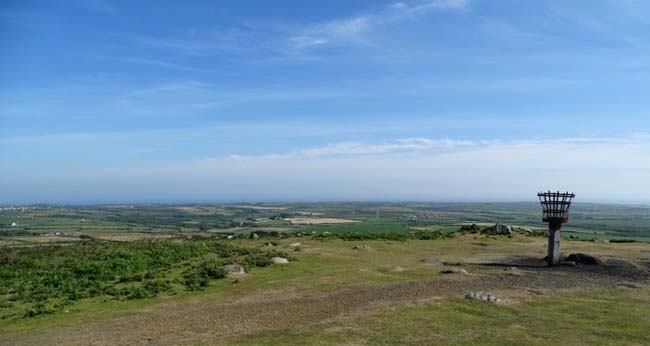
Carn Brea is the first hill after Land’s End and is made of Hercynian granite. It is at the southern edge of the parish of St Just in west Cornwall and has a beacon which is the first of the whole series visible on hill tops across the whole of England.

The story continues:

“Jenny dutifully bathed her baby in the Holy Well at Chapel Carn Brea. She had nearly passed around the top of the huge hill and was coming to some large rocks near the open moor when she heard a shrill voice, seemingly from above her head, call out “Thy wife and children greet you well”. Jenny was surprised to hear the shrill voice with nobody in sight.”

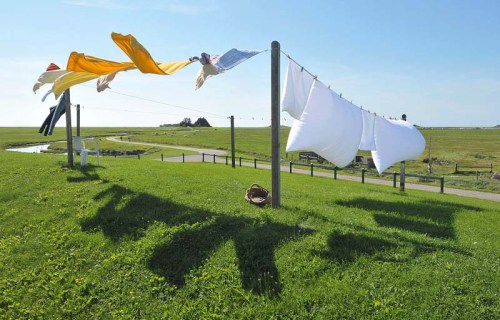
“Jenny returned to her home and stayed there until morning. Being fatigued and worried she overslept, for it was nearly daybreak when she awoke and hurried away, full of both hope and fear, to the fence around the field. And there, sure enough, she found her own dear child sleeping on some dry straw. The infant was as clean from head to foot as soap and water could make it, and wrapped up in a piece of old bright flowery chintz, which Fairies often covet and steal from washing lines when it is placed there in the sun to dry.”

“Jenny nursed her recovered child with great care but there was always something strange about him as there always is with one who has been in the fairies’ power, if only for a few days. He was constantly complaining, and as soon as he was able to toddle, he would wander far away to all sorts of out of the way places. The rich lady of Brea came to see him and brought him many nice things that his mother couldn’t afford to buy. When he was about nine years of age Squire Ellis took the changeling (as he was always called) into his service, but he was found to be such a poor simple innocent that he could never be trusted to work in the fields alone, much less with cattle. As the fancy would take him, every now and then, he would leave his work and wander away over hills and moors for days at a time.

Yet he was found useful for attending to rearing cattle and sheep. He was so careful of his master’s flock at lambing time that there was seldom any lost. He often talked to himself and many believed that he was then holding a conversation with some of the fairy tribe visible only to him . They were trying to entice him to ramble among the rocky outcrops, hills and moors, their usual haunts.

When he was about thirty years of age he was missing for several days. His flock had been noticed staying longer than usual in the same place, on a moor between the Chapel Hill and Bartinney. He was found, surrounded by his sheep, lying on a quantity of rushes which he had pulled up and collected for making sheep pens. He lay with his arm under his head, apparently in sweet sleep, but the poor changeling of Chapel Carn Brea was dead.”

12 Comments

Filed under Cornwall, Criminology, Cryptozoology, History, Literature, Politics, Wildlife and Nature, Writing

The Fairies of Cornwall (9)

This is a old Cornish story about a pretty young girl called Jenny who has given birth to a beautiful baby son three or four days previously. She decides to leave her baby for a few hours to go to the Harvest Festival in the village. In the world of Cornish fairies, this is a NO-NO in capital letters a thousand feet tall. It can only end in total catastrophe.

“Jenny, thinking about her baby left all alone at home, didn’t stop for the drinking after the harvest festival, but had one good drink of beer, got some cakes to take home and then she hurried away. When she opened her door, she saw, by the moonlight, that the cradle was overturned. Straw and rags were on the floor, but no child was in sight”:

“In searching all the holes and corners, she came to the corner where the wood was kept and there, among the heaps of dried grasses, ferns, and gorse, she found the child fast asleep. Being very tired, she took up the child and went to bed”.

“The next morning, when she looked at the baby by daylight, it seemed to her that there was somehow something strange about him. She didn’t know what, but he seemed to be different somehow from when she went off to the Harvest Festival. The baby was healthy enough but he seemed never satisfied unless he was all the time breastfeeding or eating. He would roar like a bull if he didn’t get his own way. He always wanted to be in her arms or eating. She began to wonder what on earth was going on”.


“Poor Jenny couldn’t do her household chores and had no rest at all in her life with the squalling hungry brat. Yet despite all his breastfeeding and eating, the baby always seemed to be wasting away to skin and bone. And so it continued through the entire winter. The more he ate the thinner he became. Many of the neighbours shook their heads when they saw the child and said that they feared the fairies had played a trick on her that afternoon when she went to the harvest festival.”

“They believed that the fairies had left a changeling which, according to local belief:

“….was believed to be a fairy child that had been left in place of a human child stolen by the fairies.”

Nobody knew why the fairies did this. Every culture across Western Europe seems to have had its own ideas. On that basis, there is no reason to exclude immediately that this was not an attempt by superior beings to harvest human DNA, and then to manipulate it, although the ease with which a changeling was identified hints at the many problems they were having with this.

Jenny’s neighbours told her:

“You can do nothing better with the child than to bathe him in the Holy Well at Chapel Carn Brea”.

Carn Brea is the first hill after Land’s End and is made of Hercynian granite. It is at the southern edge of the civil parish of St Just in west Cornwall and has a beacon which is the first of an entire network on the hill tops of England. In this way important messages can be passed such as “Spanish Armada in sight” (1588) or “Battle of Trafalgar won” (1805):

As far as I know, the last time the beacons were used was for the Queen’s Diamond Jubilee in 2012. The next episode in this cute little fairy story will appear soon.


13 Comments

Filed under Cornwall, Criminology, Cryptozoology, History, Literature, Personal, Wildlife and Nature, Writing

The Fairies of Cornwall (8)

This post is a continuation  from Episode No 7…..

Mr Noy has wandered into the Land of the Fairies, where he meets Grace Hutchens who was his fiancée for several years. One day she was found dead on the moor. She thinks that she had a fit, and that when she was buried, her coffin contained merely a changeling, sent by the fairies.

A changeling, incidentally, is a child believed to have been secretly substituted by fairies for the parents’ real child in infancy.

While this was going on, the real Grace Hutchens had inadvertently wandered into the Land of the Fairies on the moor. While she was there, she bit into a plum and was therefore forced to remain with the Fairies as a  servant girl to tidy up, bake cakes and brew beer, clean their houses and nurse the changeling children. Grace says to her erstwhile fiancé….

“People believed that I was found dead on the moor. It was supposed that I must’ve had a fit, as I was subject to them. What was buried as me, however, was only a changeling, a sham body.”

Mr Noy wanted to know much more about these strange beings, and was about to inquire, when the fairies again called “Grace, Grace, why are you so long. Bring some drink quickly.” She hastily entered the house and at that moment it came into his head that he too would have some drink, disperse the small tribe of fairies and save Grace.

Knowing that any garment turned inside out and cast among the fairies would make them flee, and happening to put his hand into his coat pocket, he felt for the gloves that he had worn in the afternoon.

As quickly as he could, he turned one inside-out, put into it a small stone and threw it among them.

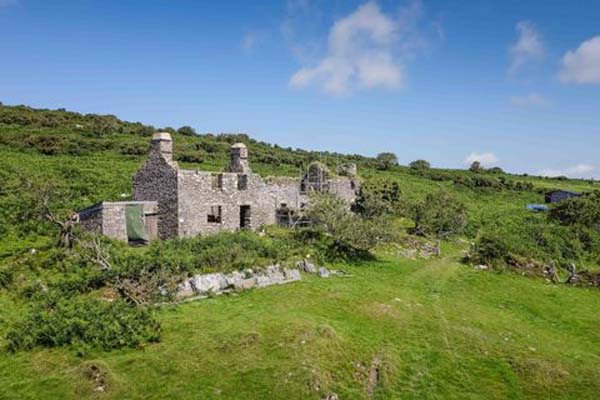
In an instant they all vanished with the house, Grace, and all the furniture. He just had time to glance around and saw nothing but bushes and the roofless walls of an old cottage:

Suddenly, Mr Noy received a blow on his forehead that knocked him down. He soon fell asleep and dozed away an hour or two…… or so he thought.

Those to whom Mr Noy related his story, said that he had learnt nothing new from Grace, for local people had always believed of the fairies such things as she had told him, and that none of the fairies liked to be seen by daylight because they then looked aged and grim. It was said too, that the fairies who take animal form get smaller and smaller with every change, until they are finally lost in the Earth as ants.

Mr Noy, now fully recovered from his adventure, further informed his neighbours that he had noticed, among the fairies, many who bore a sort of family likeness to people he knew, and he had no doubt that some of them were changelings of recent date. Other familiar faces were their forefathers who died in days of yore, when they were not good enough to be admitted into heaven, nor yet so wicked as to be doomed to the “worst of all places”.

The worst of all places was not, in fact, a football stadium, but Hell:

According to Mr Noy, the fairies pass the winter, for the most part, in underground habitations, entered from the huge granite outcrops on the moors. And it is held that many persons who appear to have died entranced are not really dead, but have been changed into fairies.

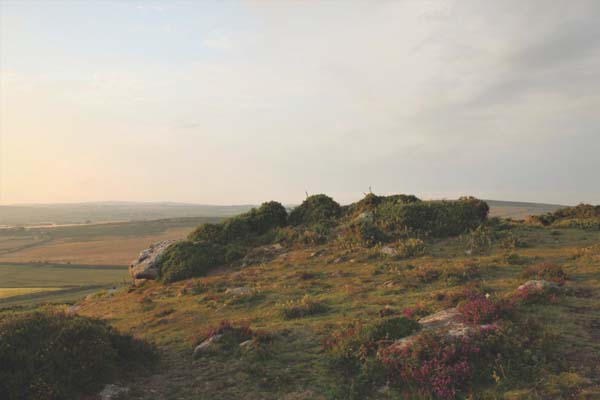
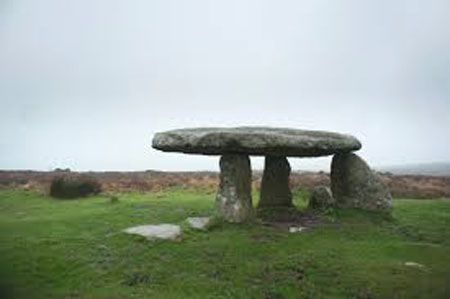
This is Carn Kenidjack near St Just. It is a completely natural rock formation, but the connection between granite outcrops and fairies is extended by many people, even nowadays, to include the numerous megalithic sites of western Cornwall. I have certainly met one farmer at a little village near Constantine who believed that if you went at dawn’s early light down from the farmhouse to the megalithic tomb, you would see the fairies dancing in the form of little tiny lights:

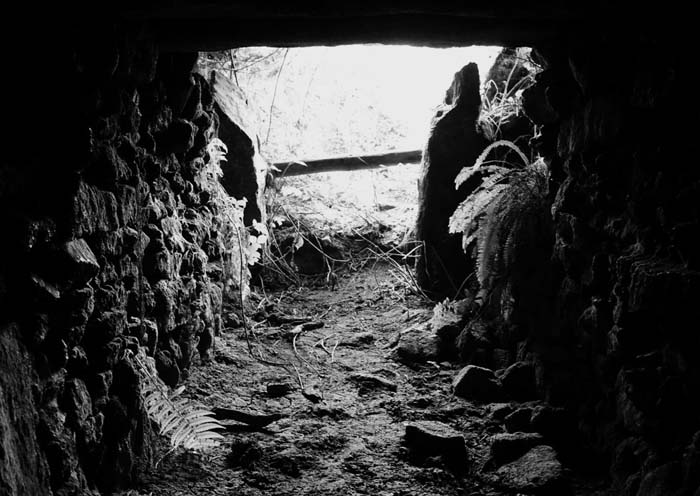
This is Pixie’s Hall Fogou near Bosahan Farm. A fogou is a kind of underground chamber whose purpose, after around four thousand years of thinking about it, we have not yet ascertained.

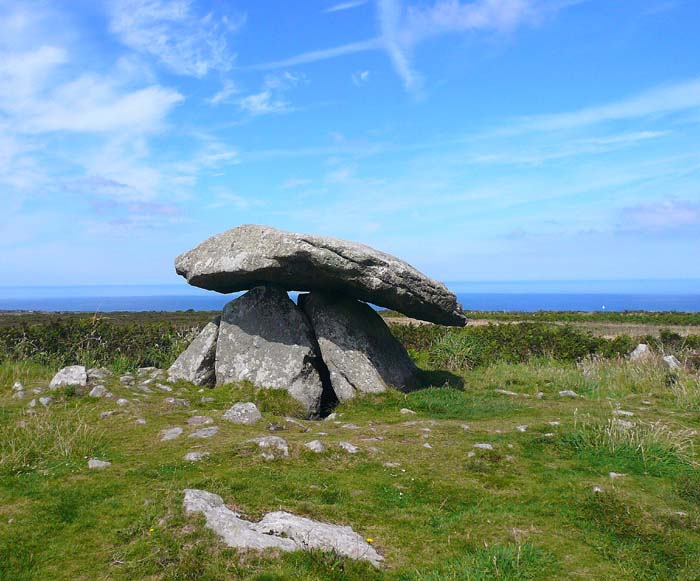
In similar fashion, the capstone of Chûn Quoit frequently plays host to the same kind of lights:

One footnote, incidentally, is that “the fairies who take animal form get smaller and smaller with every change, until they are finally lost in the Earth as ants”. The Cornish people have their own special name for ants which is “Muryans”. It comes from the Breton “merien” and Welsh “myrion”.


14 Comments

Filed under Cornwall, Criminology, Cryptozoology, History, Literature, Personal, Wildlife and Nature, Writing

Alice in Wonderland (4)

When discussing Lewis Carroll, though, there are always issues which need to be dealt with, other than the quality of the books that he wrote, books which are surely among the best known, most widely translated and most familiar books in history. Have no fears. Alice will be outselling Harry Potter fifty to one in a hundred years’ time:
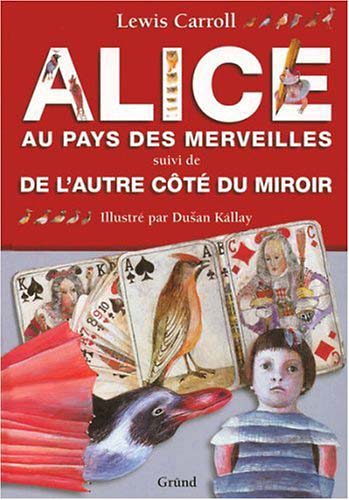
Whenever I have said how much I like that druggy golden afternoon, though, I am invariably assailed  by some deep thinker’s blunt statement “He was a paedophile”.

Well, as far as we know Charles Lutwidge Dodgson was not a paedophile, and as long as there is no documented proof, that is how it must stay. It is only too easy to throw stones at a man who died more than a century ago.

For me, the most important thing is to remember that the world of the 1860s, say, was very, very different from that of today.

“The past is a foreign country; they do things differently there.”

(LP Hartley in The Go-Between )

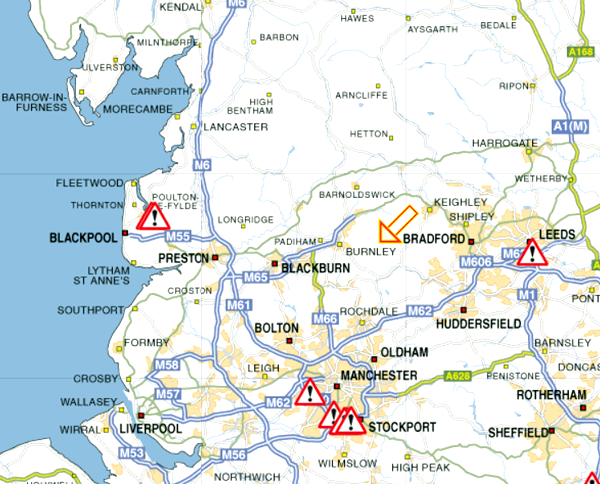
The sharp differences between 1860 and now will invariably be reflected in the relationships between a single man and single young girls or women. In 1860, for example, the minimum legal age for marriage, with the consent of the parents, was only twelve for a girl and merely fourteen for a boy. In the 1861 census, 175 women in Burnley had married at 15 or less. In Burnley, the figure was 179. The Orange Arrow points at Burnley and, an inch or so further on, at Bolton.

On that golden afternoon of Friday, July 4th 1862, Lorina Liddell was thirteen years old. Another year, and it would have been completely reasonable and wholly acceptable for young gentlemen to be calling round at her house to pay court to her.

Last time, I spoke about the sudden break in the relationship between the Liddells and Dodgson and the missing page in Dodgson’s diary. Supposedly it read:

“L.C. learns from Mrs. Liddell that he is supposed to be paying court to the governess—he is also supposed by some to be courting Ina”

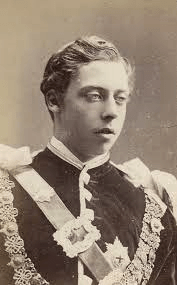
At the same time though, there are plenty of biographers such as Morton N. Cohen who think that Dodgson merely wanted to marry Alice when a few years had passed. Alice Liddell’s biographer, Anne Clark, writes that Alice’s descendants were certainly under the impression that Dodgson wanted to marry her, but that “Alice’s parents expected a much better match for her.” Mrs Liddell, for example, was aiming rather high perhaps, at the somewhat gormless looking Prince Leopold of Belgium:
Such “spring and autumn marriages” as Dodgson and Alice would have been, were actually quite common. John Ruskin the leading English art critic of the Victorian era was looking at one point to marry a twelve year old girl, while Dodgson’s younger brother sought to marry a 14-year-old, although he eventually postponed the wedding for six years. This is what Dodgson might have done. Wait five years, say, until Alice was sixteen or seventeen, and marry her then, when Dodgson was thirty five or so. Hardly outrageous, even by the standards of today.

A general pattern emerges with these “spring and autumn marriages”. The man usually falls in love with the girl when she is between ten and twelve years of age, and they are then married by the time she is sixteen or eighteen. Sometimes the little girl falls in love, but this was a lot less common.

We often tend to forget that the Reverend Charles Lutwidge Dodgson was a teacher of mathematics at Oxford University and a deacon of the Anglican Church. Some colleagues knew him as a somewhat reclusive stammerer, but he was generally seen by everyone as a devout and serious scholar. One college dean said he was “pure in heart.”

Supposedly, Dodgson took around 3,000 photo­graphs in his life.

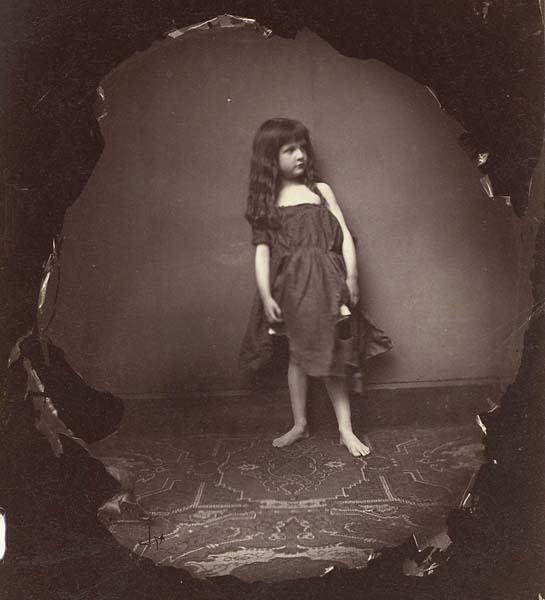
Supposedly 1500 are of children of whom only 30 are depicted nude or semi-nude. A great deal will depend on what is meant by “semi-nude”, of course. Here is Alice as “The Beggar”. Is she semi-nude? She is certainly not nude. All our attention is drawn, of course, to her enormous feet and weird toes:

Dodgson had the permission of both Liddell parents for this photograph and they were so pleased that they kept it in a beautiful Morocco leather case. Dodgson soon became so well thought of that he was invited to entertain two of the grandchildren of Queen Victoria herself.

Taking photographs of children was viewed in a very different way some 150-odd years ago. Here is the very sentimentalised, “The Prettiest Doll in the World”:

Victorians saw childhood as a state of grace; even nude photographs of children were considered pictures of innocence itself.

Such photographs of nude children sometimes appeared on postcards or birthday cards, and nude portraits—skilfully done—were praised as art studies.  Probably the most famous of society photographers at the time was Dodgson’s contemporary, Julia Margaret Cameron. As well as the rich, famous and beautiful, though, Cameron also took photographs such as” Nude child with hands folded” or “Venus Chiding Cupid And Removing His Wings “. Here she is, looking worryingly like a man, possibly even a man who has played 344 games of Rugby League for Wigan Warriors:
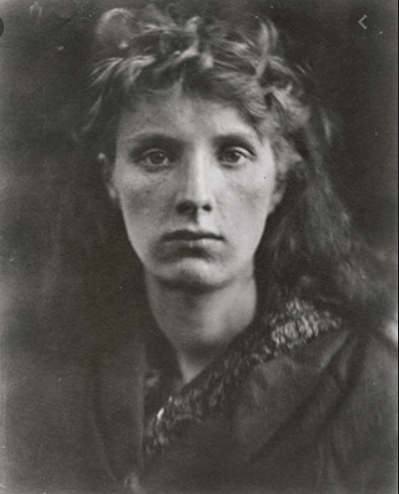
There was certainly no shortage of parents quite happy to have their children photographed nude by Dodgson, who was regarded as a top class photographer who had produced a large number of superb quality portraits of adults. And Dodgson was not the first Victorian to photograph nude children either. Wigan prop forward, Julia Margaret Cameron, among many others, predated him by at least three or four years. She was the most gifted artistically in this field. Dodgson’s nude photographs “by Victorian standards were, well, rather conventional.”

When he died, Dodgson left very few nude photographs behind him. As he grew old, he himself destroyed the majority of the negatives and prints of his nude studies. He asked the executors of his will to destroy any others that he had missed and this appears to have been done. This was not because the photographs were obscene. Every set of parents had already been given their own set of the photographs he took (and had posed no objections, in fact quite the opposite), so that was not the problem.

In 1881 he wrote to Mrs Henderson:

“Would you like to have any more copies of the full front photographs of the children? I intend to destroy all but one of each. That is all that I want for myself, and, though I consider them perfectly innocent in themselves, there is really no friend to whom I should wish to give photographs which so entirely defy conventional rules.”

The Hendersons (the father, incidentally, was a fellow of Wadham College, Oxford) had enormous  admiration for Dodgson’s work and were completely happy to for him to photograph their children nude. They left the children with him, unsupervised, and picked them up later. And there were no problems whatsoever.

Two families, the Hatches and the Hendersons, have passed down to us the only pictures we have which were taken by Dodgson of little girls in the nude. They were Beatrice Hatch, age 7, Evelyn Hatch, age 8, Ethel Hatch, age 9, Annie and Frances Henderson, ages 7 and 8. Anybody who finds them on the internet can see just how innocent they were, particularly in that world where:

“Victorians saw childhood as a state of grace; even nude photographs of children were considered pictures of innocence itself.”

The whole issue has perhaps been exacerbated by the fact that Dodgson died suddenly on January 14 1898. Before 1899 arrived, Dodgson’s nephew Stuart Collingwood wrote and had published, the biography of his uncle which contained two chapters on his friendships with little girls and yet no mention whatsoever of the many women that Dodgson counted among his friends:
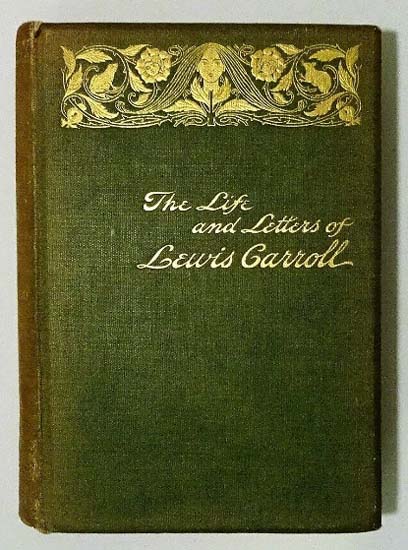
Overall, my conclusion would be that the ball is very much in the court of the accusers. They have looked at Dodgson, a strange man admittedly, seen some of his photographs, and, without bothering to put them in the context of the age, cried “Foul”! It is now up to them to come up with irrefutable proof, something which nobody has done in over 120 years.

And don’t be fooled by the way, by the fake photograph of Alice supposedly kissing Dodgson. And above all, a full frontal of a young girl of fourteen or fifteen, supposed to be Lorina,  found in a French museum. Again, the burden of truth is on the museum is to prove its veracity.

And don’t forget, it wasn’t that many years ago that a French museum claimed to have found the real Beast of Gévaudan in its stuffed animal section.
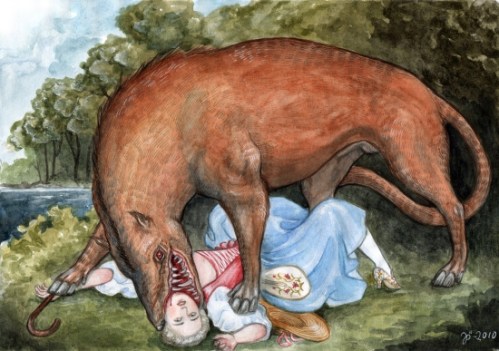
They explained that they had “lost it”.

16 Comments

Filed under Criminology, History, Literature, Personal, Writing

The Fairies of Cornwall (7)

Last time, in Part 6, we were discussing the apparent abduction of Mr Noy, and his being found five or six days later, very close to his own farm, although he did not recognise where he was. There is an alternative version of the story which tells the abduction story from Mr Noy’s point of view:

“Mr Noy told his neighbours that when he had reached the village of Ludgvan, the night being clear, he thought he would take a shortcut across the moor and save nearly a mile, instead of going all the way round by the stony path.”

Here’s a map where the orange arrow indicates “Ludgvan” and down in the south west is St. Buryan, generally recognised nowadays as Cornwall’s capital of witchcraft:

Mr Noyes’ horse, however, which was used to finding his own way when his rider was drunk, preferred the usual route by the stony path, and Mr Noy was forced to pull him towards the opposite side of the common.

He then found himself in an area that was unknown to him, although he had been, or so he thought, over every single inch of the common both in winter and summer. Alarmed at the strange appearance of everything around him, he tried in vain to retrace his steps. Not knowing what to do, he let the horse take its own course. Yet instead of proceeding homeward, the horse took Mr Noy to a strange land so crowded with trees that he had to dismount and lead his horse. He wandered  for miles and miles, sometimes riding but more often on foot, never seeing any habitation at all.  It was a strange, unknown place, which he believed must be outside his own parish, but in which other parish he couldn’t tell. At last he heard lively music and saw lights glimmering through the trees.

People were moving about, which made him hope that he had arrived at some farm where they were having a harvest festival and the farm labourers, after supper, were dancing in the town square.

The dogs hung back, and the horse didn’t want to go on, so he tied it to a tree, and walked through an orchard towards the lights. He came to a meadow where he saw hundreds of people.

Some were seated at table, eating and drinking. Others were dancing to the music of a tambourine. This was played by a young lady dressed all in white who was standing only a few feet from him.

He looked at her closely and was surprised to see that the young lady was none other than Grace Hutchens, a farmer’s daughter. She had been his sweetheart for a long time, but she had died four years ago. At least he had mourned her as dead and she had been buried in the local churchyard.

She turned closely towards him and said, “Thank the stars, dear William! I have come to stop you being changed into the fairy state that I am in. Woe is me!”

He tried to kiss her. “Beware”, she exclaimed, “Embrace me not. Touch not the flowers nor the fruit. Eating a plum from this enchanted orchard was my undoing.

You may think it’s strange, but it was because of my love for you that I came to this.

People believed that I was found dead on the moor. It was supposed that I must’ve had an epileptic  fit, as I was subject to them. What was buried as me, however, was only a changeling, a sham body. It was not me for I feel much the same now as when I was alive.”

Grace then told the story of how she herself had been ensnared.

“One evening, I was out on the moor looking for stray sheep, when I heard what I thought was you whistling to your dogs, so I went towards the sound to try to meet you. I got lost, though, under ferns higher than my head. I wandered on for hours among pools and bogs without knowing where I was going.”
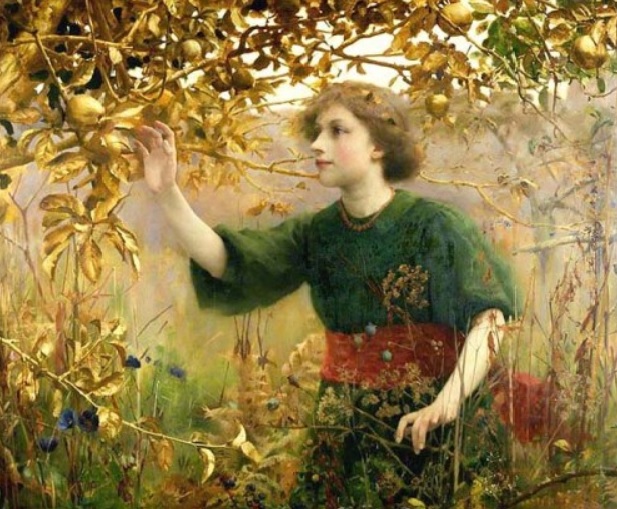
After rambling many miles, as it seemed to her, Grace waded a stream and entered an orchard. Then she heard music and walked towards it. She passed into a beautiful garden with roses and beautiful flowers that she had never seen before. Apples and other tempting fruits dropped onto the paths or hung overhead.

This garden was so surrounded with trees and water that, like one led by the fairies, all her efforts to find a way out were in vain. The music too seemed very close at times but she could see nobody.

Weary and thirsty, she picked a plum, that looked golden in the starlight. Her lips no sooner closed on the fruit than it dissolved to bitter water which made her faint. Then she fell to the ground in a fit and became unconscious. She didn’t how long it was before she woke up to find herself surrounded by hundreds of fairies who made great efforts to get her to remain among them. They had very much wanted a servant girl to tidy up, someone who could bake and brew, one would clean their houses and nurse the changeling children who were never as strong as they used to be, for want of beef and good malt liquor, so they said.
Grace told Mr Noy how at first she was sickened by the fairies’ bland food of honey and berries. Her stomach had felt so watery and she often longed for some salt fish.
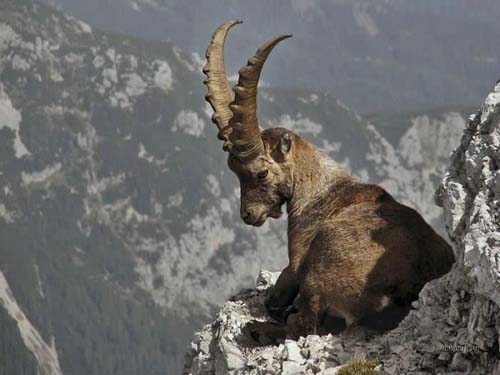
The only good thing was goats’ milk,

“For you know,” she said, “that goats are often seen on moors among the rock outcrops and in other wild places miles from houses. They are lured away by the fairies to feed the babies and changelings. There are sometimes twenty goats here. A cunning billy goat often comes among the farm goats but then disappears with the best milkers. He is a decoy, just a fairy in goat form.”

A “changeling” is a child believed to have been secretly substituted by fairies for the parents’ real child in infancy. Bottrell does not offer any explanation of why they do this. I suspect he had none.

I do suspect, though, that, if tales were told of changelings nowadays, we would soon begin to suggest that they were cases of alien abduction, carried out to extract sufficient genetic material to create perfect doubles, whose purpose is, at the moment, completely unknown.


14 Comments

Filed under Cornwall, Criminology, Cryptozoology, History, Literature, Personal, Wildlife and Nature, Writing