Category Archives: France

Two brothers fighting fascism (4)

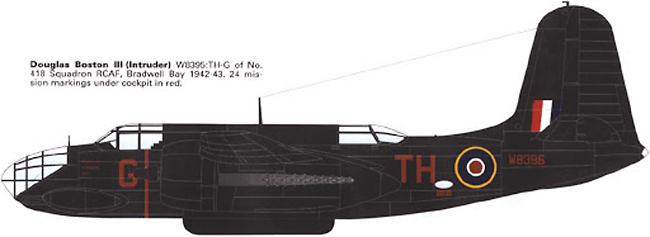
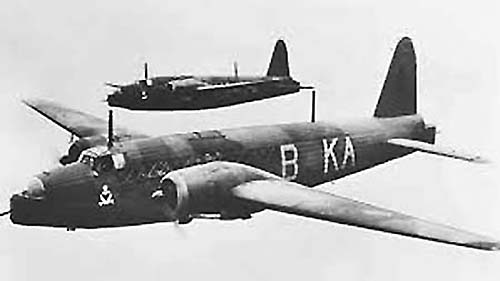
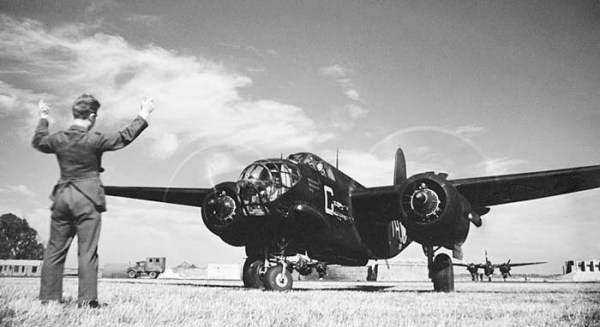
Old Nottinghamian, Robert Renwick Jackson was killed on Saturday, February 13th 1943. He was the pilot of a Boston III Intruder with the serial number AL766 and the squadron letters TH-unknown. Whatever that unknown letter was, “A-Able”, “Z-Zebra”, whatever, on a Boston it was never painted on the fuselage with the other two letters, either side of the roundel. Instead it was placed, in matt red, under the pilot’s side window, replacing those sexy ladies on the noses of B-17s:

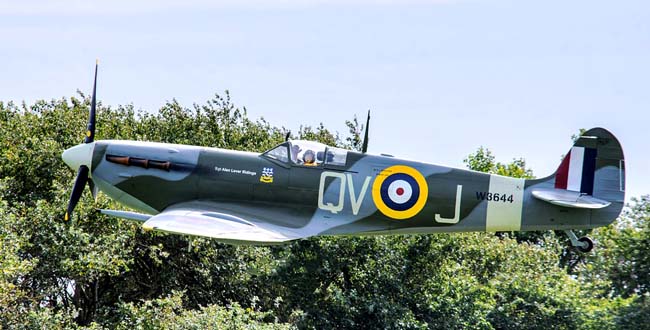
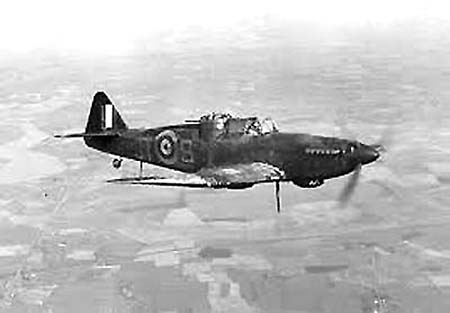
And here is the more normal positioning of squadron letters, on a Supermarine Spitfire :

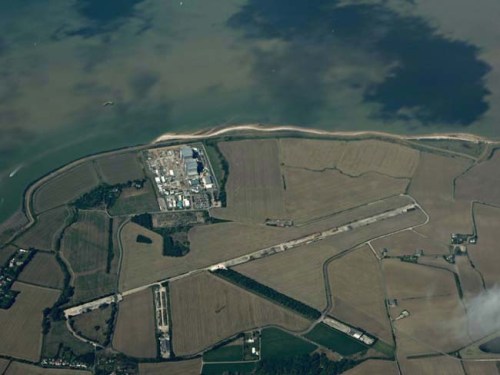
Robert took off from Bradwell at 23:57 hours on an Evening Intruder Sortie to Nantes, a large port on the River Loire in western France, 35 miles inland from St Nazaire. His mission was to drop propaganda leaflets for the occupied French. This activity was called “Nickeling” and, in the rich slang of the RAF, the men who did it were called “bumphfleteers”. Here’s Bradwell nowadays:

The last definite news about Robert’s aircraft came as it approached the French coast but it then crashed a few miles inland. There is much doubt about the exact reason for this, but, if we discount pilot error, we are pretty well left with just anti-aircraft fire or a night fighter.

Perhaps he had inadvertently flown over a German flak battery. Whenever the RAF reached the French coast they were never far from German guns. And the crews of these guns were always very good. They had plenty of practice. They were quite capable of shooting down a Boston:

One hugely relevant detail is that a straight line from Essex to Nantes passes more or less directly over some of the most heavily fortified sections of the Atlantic Wall. They may even have passed too close to the huge German troop concentration at Le Havre, a garrison of 14,000 men with an excellent concentration of 88mm guns protecting them from air attack. Many reports over the years have said that Robert’s aircraft crashed near Mantes, which, unless it is a misspelling for Nantes, must mean Mantes-la-Jolie, near Paris, around 30 miles from the city centre. This scenario can be pretty well rejected because Robert was initially buried at Saint-Riquier-ès-Plains, only 22 miles from Dieppe and 22 miles from Etretat, famous for its sea cliffs. Robert was then reburied on October 1st 1947 in a larger cemetery at Grandcourt, some 20 miles east of Dieppe. Clearly, everything is connected with Dieppe and the Channel coast rather than Mantes-la-Jolie and the city of Paris. I cannot agree either with those who say that he was killed not near Mantes but near Nantes, the original destination of his mission. Why would the Germans transport his remains some 250 miles for burial at Saint-Riquier-ès-Plains? That doesn’t make any sense whatsoever.

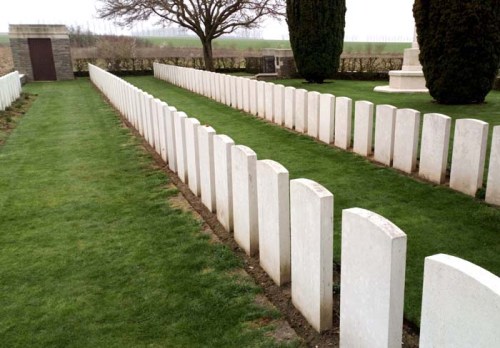
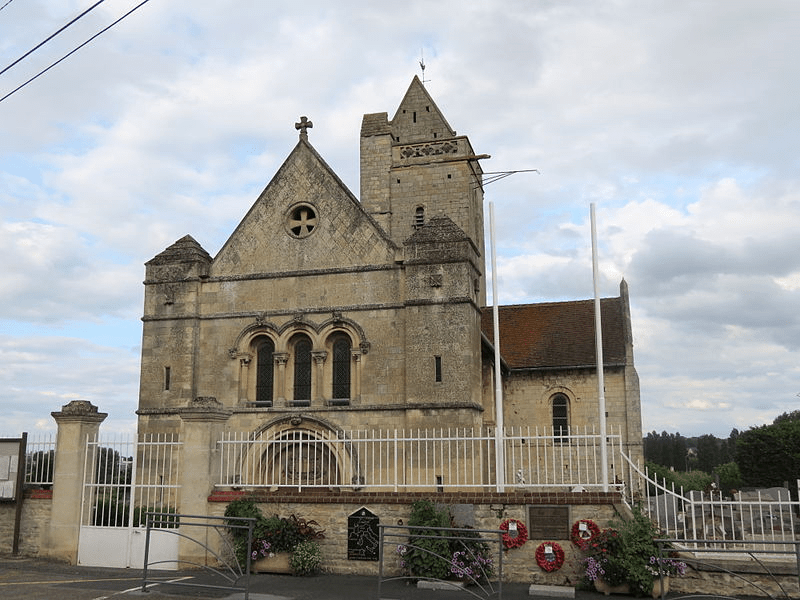
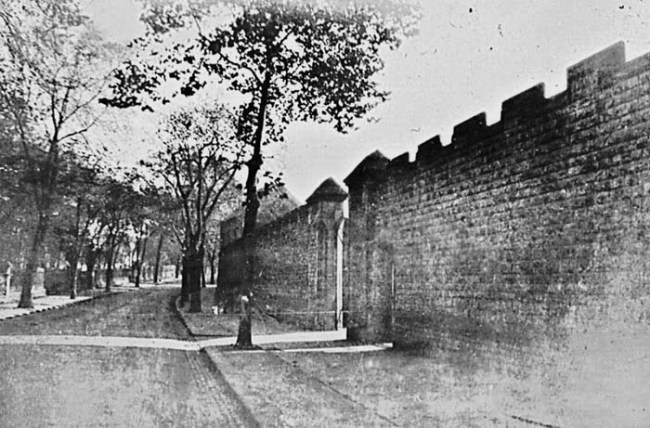
Anyway, here is Grandcourt Cemetery:

(Picture of the black Boston borrowed from wp.snc.ru.)


6 Comments

Filed under Aviation, France, History, military, The High School

In the Footsteps of the Valiant (Volume Four)

As we found with Volume 3, things moved at a rather slow pace for the publication of Volume 4, but you will be pleased to hear that it has finally made its appearance, detailing 25 of the High School’s casualties in World War II.

Don’t think, incidentally, that we were running out of steam. As I mentioned last time, all five volumes have been deliberately constructed to contain the same amount of material as all of the others. Furthermore, that material is, overall, of the same quality as all the other volumes. No single book is full of exciting stories of derring-do, at the expense of another volume devoid of all excitement. I took great care to make that the case.

Indeed, Volume 4 contains the detailed story of “Watty” Watson, the Battle of Britain fighter pilot who would die, it was alleged by his colleagues in 152 Squadron, the victim of Irish saboteurs in the parachute packing plant.

This volume, therefore, portrays not just the terrible excitement of World War II, but the backgrounds of these 25 young men who died fighting it. Their families, their houses, their school years with Masters very different from those of today:

You can read about their boyhood hobbies, their sporting triumphs, where they worked as young adults and the jobs they had. And all of this is related against the background of the living Nottingham of yesteryear, a city almost completely different from that of today.

That is not to say, of course, that you will not find all the details of the conflicts in which these young men fought and the circumstances in which they met their deaths. On occasion, particularly in the case of the more peculiar training accidents, I have even attempted to find explanations for events. Most details of this kind were completely unknown until I carried out my groundbreaking research.

In this volume, you will meet the ON who was killed trying to defend Liverpool at night in a Boulton Paul Defiant night-fighter:

The ON shot down over West Norfolk by Oberleutnant Paul Semrau of the Fernnachtjagd:

The ON who flew his Vickers Wellington straight into the cold waters of Tremadog Bay in North Wales, for no apparent reason:

The ON who worked for the Air Transport Auxiliary, ferrying American bombers across the Atlantic:

The ON who left his jacket hanging in the School Archives, where it still hangs today. Alas, it may look as if it is waiting for its owner to come in, a laughing, jovial, chubby middle aged man, who will boast that his school cricket blazer still fits him, but who will be sadly disappointed when he takes it off the hanger and realises just how thin he was back in the day.

Alas, he sleeps now in Tobruk Cemetery:

Another ON perished trying to cross the River Volturno in Italy. He and his colleagues were prevented, temporarily, from so doing by the Hermann Göring Division and the 15th Panzergrenadiers.

The ON whose Whitley bomber crossed the North Sea on a bombing mission only to be hit by anti-aircraft fire and crash, as my researches have discovered, on a hillside near Hüffe Farm south of the village of Lashorst, near the small town of Preußisch Oldendorf in North Rhine-Westphalia, nineteen miles east-north-east of Osnabrück and almost midway between that city and Hannover:

The ON in the wrong place at the wrong time. The place, the Bomb Dump at RAF Graveley, which stored the bombs for the missions of an entire squadron over, at least, a number of days. The time, five seconds before it all blew up.

The ON who fought with the SAS, the Special Air Service and then the SBS, the Special Boat Service. The SAS still do not know how he died.

The ON whose family owned and traded under the name of “Pork Farms”:

The ON, a young man whose “fast in-swinging ‘yorker’ on the leg stump was so devastating on its day.”  Alas, six years later, he was one of the day’s casualties “laid out on the ground in front of the church wall” in Hérouville,  as the Allies fought hard to clear another of the many little villages  in Normandy.

And finally, the ON who was a history lecturer at Glasgow University, but who, in October 1941, thought it was his duty to give lectures to the ordinary troops in the North African and Mediterranean theatres about why we are fighting and the world after the war. Backwards  and forwards he criss-crossed the area time and again. And the ordinary men lapped it up. They were so happy that a university lecturer who didn’t need to be there had come to see them and to explain the politics of the day.

And don’t forget, our history writing motto still remains:

“No tale is left untold. No anecdote is ignored.”

This book is now available for purchase through Lulu.com:


16 Comments

Filed under Africa, Aviation, Bomber Command, France, History, military, Nottingham, Personal, The High School, Writing

Two Old Nottinghamian brothers fighting fascism (3)

Old Nottinghamian, Robert Renwick Jackson was the pilot of a Boston III Intruder. He was killed on February 13th 1943 during an Evening Intruder Sortie to Nantes, carrying out a mission to drop propaganda leaflets for the occupied French. This type of activity was called “Nickeling”. In the rich slang of the RAF, the men who did it were called “bumphfleteers”:

I was really surprised when I found out exactly what they were distributing. Firstly, it was not necessarily a single sheet floating down. Some leaflets were up to sixteen pages. They are best thought of like an old football programme, with two or four or even eight sheets folded in two and then stapled.  Leaflets dropped on France in late 1942 included “We are winning the battle which will be decisive for victory” or “Winston Churchill Ami De La France”. There were precise verbatim reports such as “Speech by Mr. Winston Churchill to the House of Commons on September 9th 1942”, “Churchill talks on British war production” and accounts such as “Victory in Egypt – Prelude to the Allied Offensive”, referring to the Battle of El Alamein. One leaflet showed what the Free French in Great Britain were doing, trawler fishing and so on, and a second leaflet which firmly announced, “The Renault factories were working for the German Army. The Renault factories have been bombed”. Always mentioned were the times and frequencies of the BBC’s broadcasts to France.

There were two long running titles which were dropped many times in France. The first was “Courrier de l’Air” or “Postbag of the Air” with lots of short articles and photographs, of various happenings outside Hitler’s Europe:

On February 25th 1943, it contained “A heavy threat weighs on the Nazis in the Donetsk region”, “Heavy fighting in central Tunisia” and “The battleship Richelieu in New York”. Sometimes a single topic might fill the “Courrier” such as “I flew over the German army surrounded at Stalingrad”, “Stalingrad the Invincible”, “The condemned German army were waiting for the coup de grâce” and the sarcastic “Hitler has not forgotten you” under a photograph of five half, if not totally, frozen German soldiers:

Another favourite was the “Revue de la Presse Libre” or “The Magazine of the Free Press”. It carried editorials and articles in French taken from “The Times”, “The Telegraph” and other British newspapers. The leaflets were printed in hundreds of thousands and were dropped for several weeks, particularly if they were very general in nature. “Who was right?” ran from February 4th-April 11th 1943. “Edition Spéciale : Casablanca” ran from February 11th-14th 1943, and the January 1943 “Courrier de l’Air” was still being dropped in March. My own best guesses for the leaflets that Robert was delivering included “Courrier de l’Air 4 février 1943” which was dropped between February 11th-March 4th. My best guess No 2 would be the “Revue de la Presse Libre No 5” which was airlifted in by the RAF between February 11th-14th 1943. Waterlows had printed around 300,000 of them.

To be continued……….


8 Comments

Filed under Aviation, Bomber Command, France, History, Literature, military, Politics, Russia, The High School

Two Old Nottinghamian brothers fighting fascism (2)

Last time, John Jackson mentioned his brother, Robert Jackson, who was a member of No 418 “City of Edmonton” Squadron of the Royal Canadian Air Force, flying the American twin-engined Douglas Boston Mk IIIs. He was based at RAF Debden, around 34 miles north-east of London. They flew “Intruder sorties” into occupied Europe at night, and at low level to avoid the German radar. Their purpose was to destroy German aircraft, as they took off or came back to land. Sometimes, these were German night fighters, returning from operations over England. More important, though, were the attacks on German bombers as they returned from bombing England. The other main activity were “Ranger sorties”, when they would shoot up either enemy airfields, factories, power stations or shipping. Above all, they tried to destroy as many locomotives and as much rolling stock as possible:

The Bostons went deep into enemy territory, although they did not carry their own radar. They used the naked eye, fortified with an hourly consumption of carrots. 418 Squadron also spent a great deal of time dropping propaganda leaflets on occupied countries such as Belgium, France and Holland.

The Douglas Boston Mark III had extensive armour protection and large fuel tanks for longer range. Its speed was well in excess of 300 mph and fighter versions came closer to 400 mph. 418 Squadron flew a development of the Mark III called the Mark III Intruder, with specialised adaptations on the exhausts to mask the flame effects of the engines at night. They carried four 20mm cannon in a ventral pack under the central portion of the aircraft’s fuselage, and a bomb load of up to two thousand pounds.

The Bostons were painted completely matt black, an unusual paint scheme in the RAF. Squadron letters were in matt red. 418 Squadron was an élite outfit in the RCAF. They carried out more missions than anybody else, both by day and by night, they shot down more German aircraft than anybody else, both by day and by night, and they destroyed more aircraft on the ground than anybody else.

The squadron motto was in Inuit, the single word “Piyautailili” or “Defend Unto Death”:

They trained hard to master flying at low level at night, although it was far from easy. Casualty rates became extremely high in 1942. Aircraft were lost on February 24th, March 9th (two), March 26th and 29th, April 1st (two), 12th and 27th (two), May 17th and 20th (two), July 9th, August 1st, 2nd, 17th, 21st, 28th, October 19th, November 8th and 18th, December 1st and 5th. 24 aircraft in total, with potentially, 72 men killed.

During the winter of 1942-1943, the main problem was that, operating now from RAF Bradwell, they were penetrating deeper and deeper into Germany, much further than ever before. When they left England, conditions might be acceptable, but six hours later, there could be thick fog or ice or snow. They might be short of fuel as they looked for an airfield. There were lots of accidents and lots of casualties.

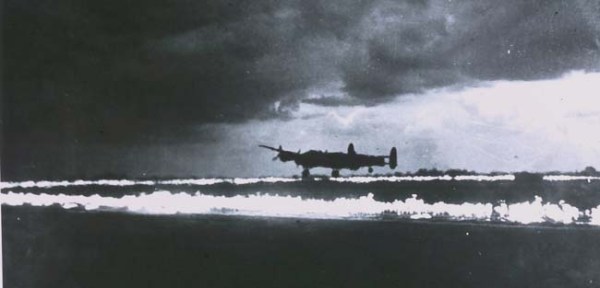
Bradwell Bay was the only fighter base to be equipped with FIDO, a method of allowing aircraft to land during periods of persistent, thick fog.

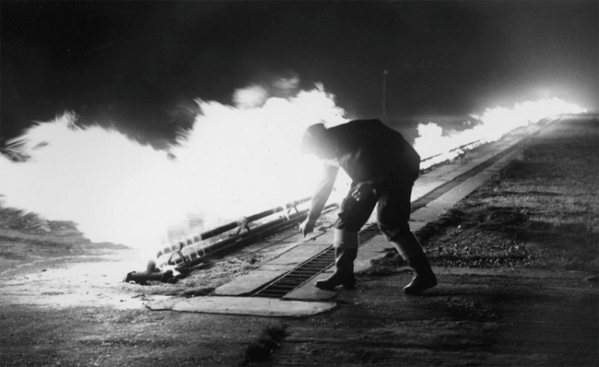
A pipeline either side of the runway had burner jets placed equal distances apart along its entire length. Petrol was pumped in and ignited. The subsequent flames would evaporate the fog droplets sufficiently for any aircraft waiting to land to see the runway:

FIDO was usually employed at bomber stations. Here it is, being lit. Mind your eyebrows:

The cost of training a seven man crew, was very much more than 100,000 gallons of petrol per hour. “Bomber” Harris always said that it was cheaper to send twelve men to Oxford or Cambridge for three years than to train a Lancaster crew:


11 Comments

Filed under Aviation, Bomber Command, France, History, military, Nottingham, The High School

Two Old Nottinghamian brothers fighting fascism (1)

There is an interesting letter in the School Archives which begins:

“On December 10th 1988, my son, daughter and myself were visiting Nottingham to see my granddaughter who is at Trent University. We arrived on the Saturday morning, and found my old school, opposite the Forest but with locked gates. Then we suddenly noticed the gates opening. It was one of the teachers preparing to drive out before locking up. We were warm in our anoraks but although he was only wearing light clothes, this kind teacher offered to show us around the outside of the school buildings. The site of the former “Fives” court was, he told us, blocked by a newer building. Memories began flooding back.”

The writer was John T Jackson who left school in 1935 at the age of twelve. His father’s job was transferred to Birmingham and he and his brother transferred to Solihull Grammar School. Here are the school gates on Forest Road in 1932:

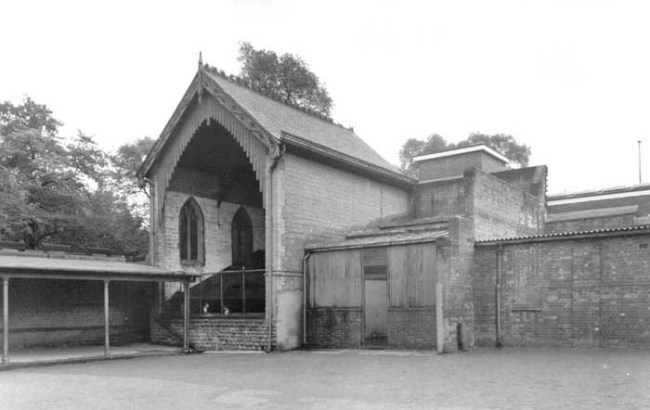
Here are the two fives courts, now replaced by the Sports Hall:

When young John Jackson attended the junior school, Mr Day was the headmaster. One day the boys were all taken outside to see the flight overhead of the new airship, the R101.

The buildings had not changed much as the little group all walked towards the front of the school. Mr Jackson remembered that the steps at the front of the school led to the Headmaster’s room. Then they saw the War Memorial. Mr Jackson had not realised that it would contain so many names. Over two hundred had died to halt fascism. He scanned the names, picking out his brother “Jackson RR”. He was very grateful to see this tribute to the courage and sacrifice that he and his fellow pupils had made.

Robert Renwick Jackson served in the RAF as a pilot in No 40 Squadron based at Chelmsford and flew on low level night intruder missions against enemy targets. In 1943 he was shot down in the coastal area of northern France. He and his observer are buried at Grandcourt in France:

After taking a few photos, John Jackson returned to his car, thanking the teacher for his kindness. When they found the gates locked they had been ready to accept that the best they could manage was to look from outside.

John Jackson had a far luckier war than his brother. He trained as a navigator in the RAF and was stationed at Kinloss in Scotland. His captain was Mac Hamilton, and they survived two tours in Bomber Command. After ten trips to Berlin with 619 Squadron, the whole crew volunteered to join 617 Squadron after Gibson’s successful raid on the dams. 617 was then commanded by Leonard Cheshire who had a precision way of marking targets with special bomb sights. They carried the Tallboy bomb weighing 12000 lbs and attacked special targets such as the U-boat pens, certain tunnels and canals, and rocket sites. Their last two operations were against the Tirpitz battleship. It took a total of three attacks to sink the Tirpitz.”

To be continued………..


6 Comments

Filed under Aviation, Bomber Command, France, History, military, Nottingham, The High School

“A long forgotten war, wasted young lives” (6)

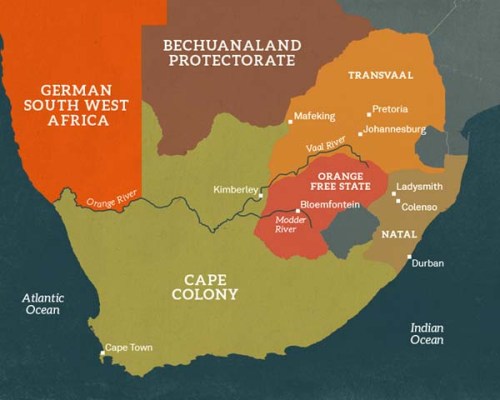
The Second Boer War (1899 –  1902) was fought between the British Empire and the two independent Boer (Dutch) states, the Republic of Transvaal and the Orange Free State, over the British Empire’s influence in South Africa.

The catalyst for the war was the discovery of diamonds and gold in the Boer states.

Last time, we saw how William Henry Heath, the son of a farmer at Bestwood Park to the north of the city of Nottingham may have helped out on the farm, before joining the army and sailing off for a distant, exotic and exciting war in South Africa, the home of gold and diamonds. A large number of Britain’s soldiers in South Africa were transported there on the SS Winifredian, an extremely powerful and very fast steamer, with the rakish lines you’d expect in a ship of that calibre:

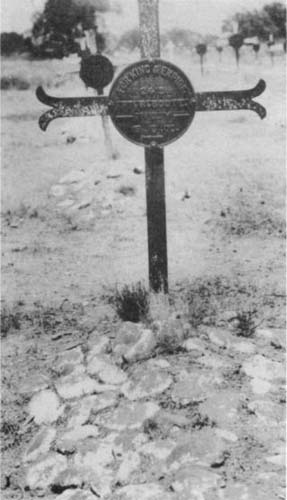
Needless to say, things did not go very well for William in South Africa. Before too many years had elapsed William was dead and buried in the thin dry soil of the veldt:

Here is a typical Boer War grave marker. It is in cast iron and reads at the top “For King & Empire”. Because it was made of iron, the embossed lettering tend to last very well in the extremely dry wind of the veldt:

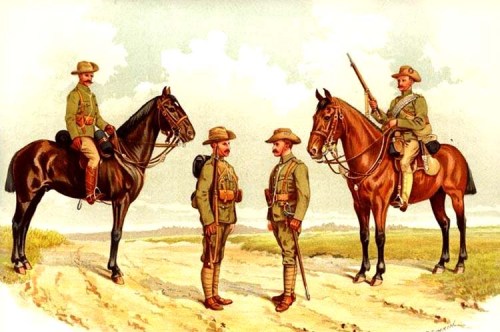
There is a certain amount of confusion about which unit William was serving in when he died. Two local Nottingham websites say that he was serving as a trooper in “The South African Constabulary”. On the other hand, the website with the Roll of Honour from the Nottingham War Memorial of the Boer War says that William Heath was a Private in the 11th Company of the 3rd Battalion of the Imperial Yeomanry. His service number was ‘1972’. Here are the Imperial Yeomanry in a colour print:

And here is just one member of the Imperial Yeomanry, complete with a dead white goose and his extremely alert horse, Dobbin:

William Heath, though, like more than 20,000 other British soldiers, appears not to have died in action but to have died of disease in Pretoria on February 14th 1902.

Illness, of course, despite all of the measures taken by the British Army, was the most frequent way to die in this war. The Royal Army Medical Corps had foreseen this, and had taken the precaution of mobilising more than 150 special units, along with 28 field ambulances and more than twenty hospitals of various types.

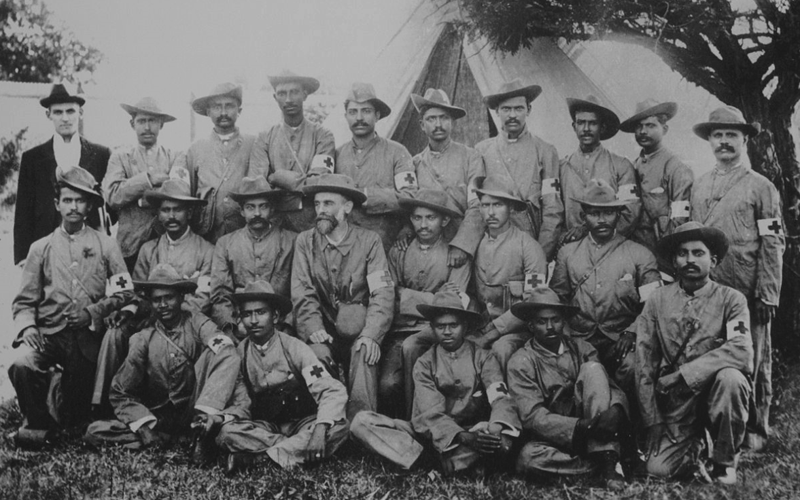
A thousand Indians from Natal were taken on to work as stretcher bearers. One of them would one day become extremely famous. At the time he was a young lawyer in Durban but he worked as a stretcher bearer during the Battles of Colenso and Spion Kop. Here he is,

Clue No 1

“This little brown man in the loincloth was a private man without wealth, without property, without official title or office. He was not a commander of great armies nor ruler of vast lands. He could boast no scientific achievements or artistic gift.”

Clue No 2

He said:

“I am a Muslim and a Hindu and a Christian and a Jew and so are all of you.”

Clue No 3

He said:

“An eye for an eye only ends up making the whole world blind.”

Did you spot him? He’s to the right of the white man with a beard in the middle row, and the man in the back row directly behind him has his hands on his shoulders. And who is he? Well, he’s the most mis-spelled famous person in the world. So, his name isn’t “Ghandi”.

William Heath’s younger brother, Leonard George Heath, was also, like his brother, a pupil at Grosvenor School but he then entered the High School on January 21st 1896. He was in the Lower First with Mr JS Jones in 1895-1896 (sixth of sixteen in the Form Order and in English, 8/12 in French and 14th / 42 in Writing). One of that sixteen was Edward Archer Thurman, a victim of the First World War, killed on December 3rd 1917 in Palestine and buried in Ramleh War Cemetery

With Mr Marriott in the Upper First in 1896-1897, Leonard finished 22/34 in the Form, 16th in English, 27th in French, 22nd in Latin and 10/33 in Writing. In 1897-1898 he was in the Lower Second with Mr WT “Nipper” Ryles, finishing 32/38 in the Form, 34th in English, 29th in French, 32nd in Latin and 15/34 in Writing.

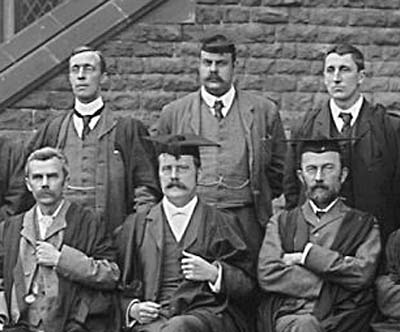
Here is a section of the staff photograph from 1901. Mr Jones is in the centre of the back row. On his left, as you look at the photograph, is Mr Wilfrid Tyson Ryles, alias “Nipper” Ryles. To the right of Mr Jones, as you look at the photograph is Mr Samuel Rnssell Trotman, a teacher of Chemistry and Gymnastics. He would have needed to be fit to cope with a class of 78 pupils as he did in one particular year. You read it right. 78 pupils!!

In front of Nipper Ryles is Mr “Sammy” Corner, in front of Mr Jones is the Headmaster, the Reverend Doctor James Gow, and in front of Mr Trotman is Mr Francis Coverley Smith.

The following year, Leonard George Heath is no longer listed in the School List, and, indeed, by this point, namely July 1898, he seems to have left.

He does not figure in the 1911 census, but we do know that Leonard emigrated to Rio de Janeiro in Brazil where he married Miss Ida Gilbert. When the First World War broke out, the two of them then returned to sunny Bestwood, and Leonard immediately joined the Sherwood Rangers to fight the filthy Huns. He died of his wounds on March 14th 1916 by which time he was a Captain in the 3rd Skinners Horse, in the Meerut Brigade of the Indian Army. He was buried in Le Tréport Military Cemetery in France, and poor Ida, who died on March 25th 1918, possibly of Spanish flu, was buried at Bestwood Emmanuel Cemetery

Rather poignantly, in 1928, their father, Henry Heath, was still patiently ploughing the land at Sunrise Farm.


21 Comments

Filed under Africa, France, History, military, Nottingham, Politics, The High School

Books for Christmas (1)

I thought it might be helpful if I gave you an idea of some of the best books that I have read over the past few years so that you could consider them as a Christmas present for one of your friends or family. All of the books featured here are, in my opinion, well worth reading. They are all available on the Internet. In some cases, what appear to be very expensive volumes can be acquired for a fraction of the cost, if you go to abebooks or bookfinder, or if you consider the option of buying the books second hand. It ‘s something I have never understood, but with certain very expensive volumes, it is even possible to buy them brand new at a very much reduced price. Again, you need to shop around.

First up to the plate, is “The Bayeux Tapestry: Story of the Norman Conquest, 1066” by Norman Denny and Josephine Filmer-Sankey. This book came out for the 900th anniversary in 1966 and was meant primarily for schools. It contains every single square inch of the tapestry in full colour. Many modern books leave out what they consider to be the boring bits, or reproduce them in black and white:

Next is “Conscientious Objectors of the First World War: A Determined Resistance” by Ann Kramer. Conscientious objectors, or “Conchies”, usually refuse to fight in their country’s wars because of religious reasons. This book completely changed my mind about them. I always thought that conchies were, deep down, just cowards, no different from the people who find spurious medical problems to avoid risking their lives, and are happy to let others do the fighting. I was wrong. Many of these people were a lot braver than the men already in the armed forces, and most of them were treated abominably, with their hearings not even being conducted according to the law. Here it is:

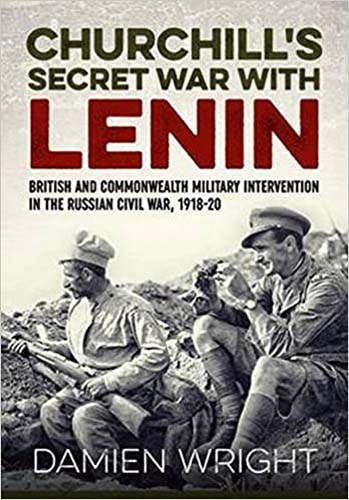
This is “Churchill’s Secret War with Lenin: British And Commonwealth Military Intervention In The Russian Civil War, 1918-20” by Damien Wright. So far, I’ve read 100 pages out of 500 but it’s a really interesting book . Who would ever have thought that the First World War extended into 1920? Or that British, Canadian and French troops fought for Murmansk, with Japanese and Italians present as observers?

These next three books are superb. Absolutely wonderful. “Brendon Chase” is about some boys who go off to the woods to live like Robin Hood. “The Little Grey Men” are the last four gnomes  in England, and in the sequel, “Down the Bright Stream “, one of them goes missing and the remaining three must find him. Superb books for children from eight to ninety-eight:

This slideshow requires JavaScript.

There are lots of books about the Battle of Britain. Here are my two favourites. Roger Hall’s book is fifty years old and you will probably need to search carefully at either abebooks, amazon or bookfinder. George Wellum’s book is very skilfully written  :

This slideshow requires JavaScript.

A famous incident of the air war is investigated in this book by Jean-Pierre Ducellier. Its title is “The Amiens Raid: Secrets Revealed: The Truth Behind the Legend of Operation Jericho” and Ducellier has spent the majority of his adult life attempting to put the evidence together into a coherent whole. And his solution is not a lot like the official version:

“Sisters in Arms: The Women Who Flew in World War II ” is a book by Helena Page Schrader. It details the women who were recruited in both Great Britain and the United States to fly aircraft. The treatment they received was amazingly different, with the ATA praised to the skies and the American women being much less fortunate in what happened to them. There  is a series of reviews here. How surprising that many of the American reviewers, especially Loren Tompkins, are not at all pleased when the USA’s treatment of their women flyers is shown to be infinitely inferior to that of the RAF and the women of the ATA, so they just limit themselves to slinging the maximum amount of mud at the book and its author. Only two American reviewers are accurate, namely Brenda Ledford and Kythera A. Grunge:

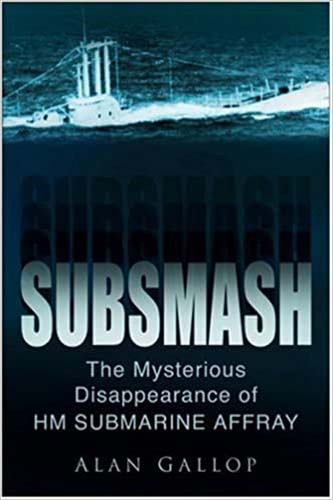
Our next book is, in my opinion, absolutely outstanding. It’s “Subsmash: The Mysterious Disappearance of HM Submarine Affray”  by Alan Gallop. The book is just superb. Anybody would enjoy reading it, whether or not you like military matters. It refers back to the disappearance of a state-of-the-art British submarine in 1950, the Affray, and the subsequent extensive search.  No official explanation for the disaster has ever been forthcoming, and the submarine is still down there, its crew still sealed inside, lying on the seabed near the Channel Islands.

During the search a number of strange things happened. The strangest was the massive object found on the bottom by sonar. It was too big to be the Affray and the search continued elsewhere. Several days later, attempts were made to establish what the object was, but by then it had disappeared.  Another strange event was that the wife of a submarine skipper claimed to have seen a ghost in a dripping wet submarine officer’s uniform telling her the location of the sunken sub. The position he gave later turned out to be correct.

The next book is also top of its particular category. The author is Tony Redding and the book is called “Bombing Germany : the Final Phase”.  The first city to be attacked in that final phase was Dresden in February 1945  and then came Pforzheim. Both cities until then had been relatively unscathed. During these attacks, though, the destruction unleashed by Bomber Command was apocalyptic. The author examines what happened from virtually every point of view, the bomber crews, the defenders, the occupying forces, everybody, even the German civilians who murdered RAF crews and then buried them like dead animals. I don’t have the time to read many books twice, but I shall be making an exception for this particular one. It is superb:

The last word of this first list is perhaps linked more directly  to Christmas itself. It is a book with two stories in it, both of which are told in picture form like a graphic novel. The book is “Classic Bible Stories: Jesus – The Road of Courage/Mark the Youngest Disciple”. The title says it all…the life of Jesus and then the life of Mark, who was also, of course, the writer of one of the Gospels.  The book could not have had a more perfect pedigree. The idea was thought up by Marcus Morris, an English vicar who invented the comic “Eagle”, itself meant as a Christian magazine for young people. The first story was drawn by Frank Hampson, generally thought to be the very best comic artist in England, if not the world, at the time. Frank’s lifetime ambition as a devout Christian, had always been to participate in this venture. The text of both stories was written by Chad Varah, the founder of The Samaritans organisation.

I have read all of these books and they are all well worth your time and money. I have no connection with any of them, beyond a copy of each one in my bookcase.


17 Comments

Filed under Aviation, Bomber Command, France, History, Literature, military, Politics, Russia, Wildlife and Nature, Writing

In the Footsteps of the Valiant (Volume Two)

We have just finished publishing my new book “In the Footsteps of the Valiant”. This is the second book of five, and tells about some more of the High School’s long forgotten casualties in World War II. Here is the front cover, with the shorter title and nine new pictures to look at:
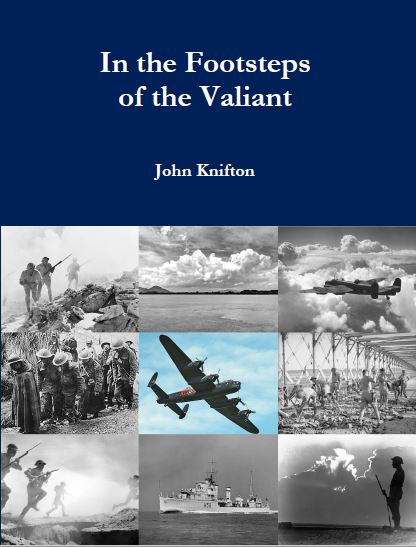
And here is the blurb from the back cover:

“This is the second of five books commemorating the ultimate sacrifice made by the brightest young men of Nottingham in the Second World War. After six years of ground-breaking research, John Knifton has uncovered over 100 forgotten war heroes, men who served their country in countless ways. All of them had one thing in common: they spent their boyhood years at Nottingham High School.

This book does not glorify the deaths of these men; but instead builds a monument to the unfinished lives they sacrificed for our freedom today. John Knifton conjures up the ghost of these men’s forgotten lives: their childhoods, families, homes, neighbourhoods, and the loved ones they left behind. You will discover their boyhood hobbies and their sporting triumphs, where they worked as young adults and the jobs they had. Most of all, you will find all the previously unknown details of the conflicts they fought in and how they met their untimely ends.

John Knifton’s project puts the humanity back into history, set against the backdrop of the Nottingham of yesteryear. No tale untold. No anecdote ignored.”

This book is now available for purchase through Lulu.com:

https://www.lulu.com/en/us/shop/john-knifton/in-the-footsteps-of-the-valiant-the-lives-and-deaths-of-the-forgotten-heroes-of-nottingham-high-school-volume-two/paperback/product-176j6pwm.html

The book has 332 pages and is “Crown Quarto”, that is to say, 189 mms x 246 mm (7.44 inches x 9.68 inches). The book contains just under 150,000 words and can therefore be compared with books such as “Sense and Sensibility”(119K), “A Tale of Two Cities”(135K) “The Return of the King”(137K), 20,000 Leagues under the Sea” (138K), “Oliver Twist” (156K) and “The Two Towers” (156K).

It tells the tale of 26 Old Nottinghamians, including, as in Volume 1, a young man who died shortly after the end of the war. In this case, he was called Patrick Russell Ward. He was killed during RAF service in the 1950s and deserves to be remembered.

Here are the names of the young men who perished in World War II:

William Donald Birkett, George Renwick Hartwell Black, Henry Brener, Henry Abington Disbrowe, Dennis Peter Fellows, Frank Freeman, Albert Hayes, John Neville Hickman, Gordon Frederick Hopewell, Eric John Hughes, Arthur Reeson Johnson, Richard Henry Julian, John Michael Preskey Ley, John Ambrose Lloyd, Edwin William Lovegrove, John Richard Mason, Geoffrey Leonard Mee, Ernest Millington, Robert Percy Paulson, George Green Read, Alan Robert Rose, Gordon Percy Carver Smith, Ernest Adam Wagstaff, Patrick Russell Ward, John Roger West, Carl Robert Woolley.

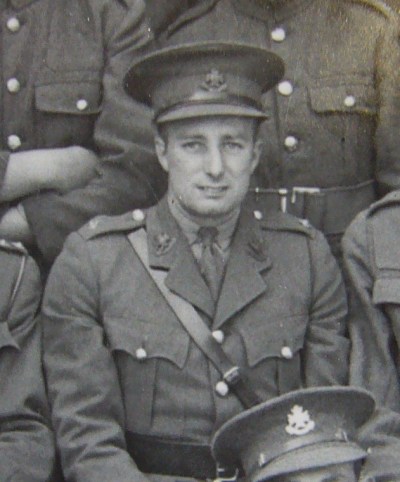
One of the High School’s ex-masters died trying to delay the German advance at Dunkirk:
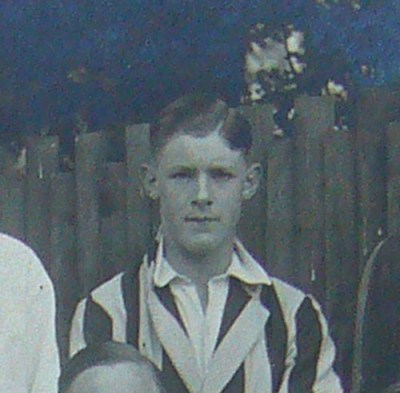
A young cricketer’s ship hit a mine off Malta:
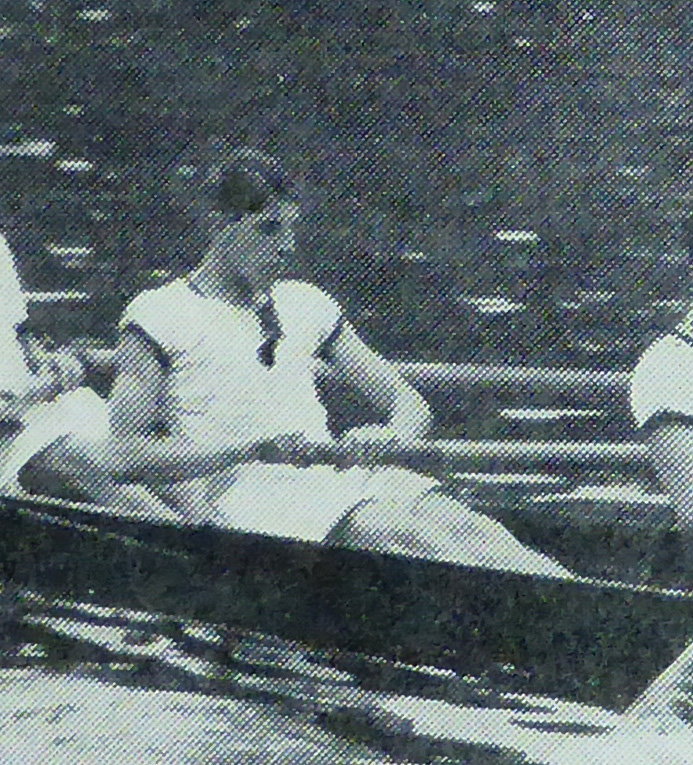
One  Old Nottinghamian rower was claimed by paratyphoid on the banks of the River Brahmaputra. Another was killed by nightfighters in his Stirling bomber over Berlin. A third died in a Lancaster bomber over the Dortmund-Ems Canal.  Another, a good rugby player, was killed in a Halifax over the Waddensee.

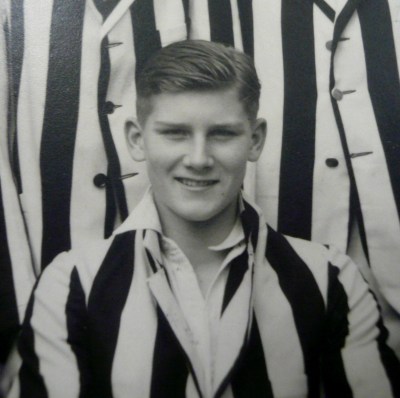
Accidents took others, at Coniston Water, and at Topcliffe in North Yorkshire. One Stirling took off and flew away into history. It was never heard of again. One man was killed at El Alamein. Another died as the Rhine was crossed in 1945, one of 1,354,712 men involved in the battle. Another young man, a cricketer and a pilot instructor, was killed at Assinboia in Saskatchewan:
Alas, one poor individual was killed after the end of the war, out on army manoeuvres on Lüneburg Heath on May 26th 1945.

Another had been Marconi’s greatest helper. One young man was killed in the savage fighting around  Villers-Bocage and Lisieux, as the Allies left the beaches and moved to the north east and Nazi Germany:
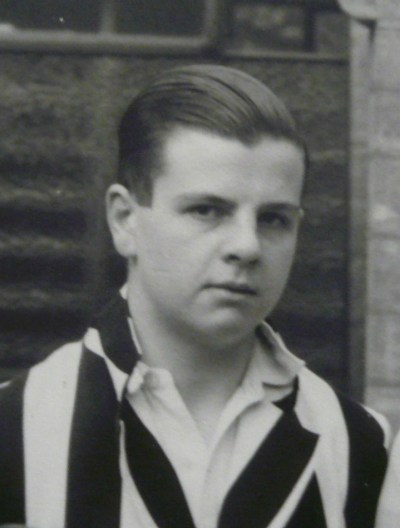
One young man from Woodthorpe died of peritonitis when the regimental doctor applied the rule he had been given: “All enlisted men are lead swinging liars. They have never got any of the diseases that they say they have”:
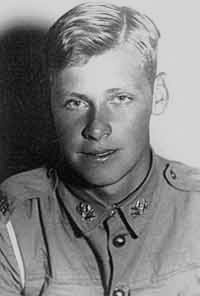
And last, but certainly not least, one poor man was the victim of one of the most disgusting cover-ups in British military history, as his parents both went to their graves thinking he had been killed fighting on the beaches of Normandy, when in actual fact, he and all his colleagues had all been accidentally killed by the Royal Navy just outside Portsmouth:

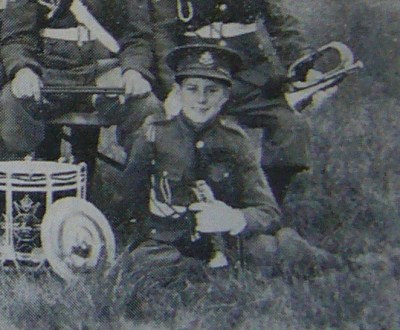
And they all had their personalities, their hobbies and their lives. Playing cricket on the beautiful walled ground at Grantham where a huge supermarket now stands. Taking part in barrel jumping competitions at Nottingham’s brand new ice rink. Playing the bugle in the OTC band:
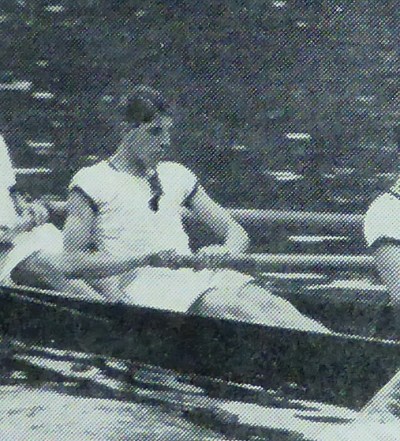
Rowing for the school in the race when they went through the wrong arch of Trent Bridge and finished second instead of first:
He might operate as a powerful and dangerous forward at rugby, but he will be remembered for playing a “prominent part” in the team’s festive occasions, reciting the monologues of Stanley Holloway, the famous northern comedian. Another First XV player was damned by Mr Kennard’s faint praise in the School Magazine:

“Has hardy fulfilled his promise. A steady player, however.”
And then to every one of the 26 comes sudden death, always unexpected at any given moment, but no real surprise when it came. And every one of those young heroes, to be honest, could have had the same obituary as that of the gentle giant, Ernest Adam Wagstaff:

“He died, as he had lived, for an ideal; in the lives of the few who knew him well his passing leaves a void which can never be filled.”

25 Comments

Filed under Aviation, Bomber Command, Canada, France, History, Nottingham, The High School

“In the Footsteps of the Valiant” : Volume One : the Verdict (1)

I must admit that initially I was a little disappointed with the sales of my first volume of  “In the Footsteps of the Valiant (Volume One)” :

I soon realised, though, that money was not important because I had achieved exactly what I had intended to do.

I had discovered as many hitherto unknown war dead from the High School as I was likely to, increasing previous lists by up to forty new names. I had found a number of men who had died serving their country but who, because they were not killed while “on active service”, gun in hand, had been largely ignored up till now.

I had also succeeded in finding out a large number of tiny details which I hoped would help to portray all of these valiant men as real human beings rather than just a surname and initials in a very long list of names.

In this first volume of five, the men concerned were John Edwin Armitage, Francis Nairn Baird, Edwin Thomas Banks, Philip Mackenzie Britton, Warren Herbert Cheale, Alfred Tregear Chenhalls, Paul Wilson Cherry, Walter Raymond Julyan Hoyte, Charles Davy Hudson, Robert Renwick Jackson, William Roy Llewellyn, Anthony Bertram Lloyd, Ian Mactaggart MacKirdy, Bruce Arthur Richardson, Wilfrid Henry Vivian Richiardi, Sidney Moger Saxton, Clifford Frank Shearn, Howard Rolleston Simmonds, Philip Bonnington Smith, Richard Christopher Sowerbutts, John Harold Gilbert Walker, Alfred Highfield Warren, Keith Henry Whitson and John Jeffrey Catlin.

I realised that I had succeeded in what I was trying to do when I received a most encouraging comment from an Old Nottinghamian, Richard Edwards:

“I used to see the names of these young men on the War Memorial at school, but I never properly made the link to them as people that had real lives, with successes and failures like the rest of us. John Knifton has done a great job to honour these men, but also to make others think about them as individuals who had the same hopes that we all do. A fantastic effort – well done – and I thoroughly recommend it to other potential readers.”
When I asked Mr Edwards for permission to use his comment in a blog post, he gave me an even more glowing reference:

“I think that you have done an astounding job, not just in gathering the facts, but in allowing us to see the list of dead as young men with personalities and as people that we could have known, could have laughed with and could have grown up alongside. What a great way of properly honouring those people.

I wish you all the best, and congratulations on doing something so important.”
And that is the reason that I included everybody’s examination results, where they lived, what kind of area it was, not nowadays, but back in the day, as our American friends say. And to that can be added every detail I could glean from a number of very large books, from twenty or so Directories of Nottingham by Kelly, White and Wright and from the entire internet, from Ethiopia to Paraguay.

And all that has helped to discover a little more about the boys who had reached the end of their school years with perhaps only five or ten years of their young lives remaining. In some cases only two or three.

Alfred Warren of 166, Derby Road, Nottingham. He was the son of a grocer and a superb female impressionist in school plays:

“The School stage has rarely been graced by a more charmingly seductive figure than the Anna Waleska of AH Warren.”

A year later:

“His part did not allow him this year the opportunity to display those feminine wiles of whichhe has shown himself so complete a master, but his expression, now wheedling, now indifferent, was no less successful in enticing the unfortunate victim into her trap. Perhaps he tended to overdo that half crouching feline posture but nevertheless, clad in exquisite garments, he contrived to overcome the artificialities and discrepancies of Lady Ciceley’s rôle, and for that achievement alone he deserves high praise.”

Bruce Arthur Richardson, who lived on Edwards Lane, in the big house diagonally opposite Oxclose Lane Police Station. In his school play, “Twelfth Night”, he

“became the very model of idiocy. His voice was a masterpiece: no voice could be more completely asinine. His continual foolish mien, with mouth agape, doltish wonderment in his eyes, no less than occasional inspired brilliance of acting–such as the windmill gestures which accompanied his threat to beat Viola “like a dog”– helped to make his part a pleasing success”.

John Harold Gilbert Walker of 787 Mansfield Road. As soon as he left the High School John applied for entrance to Sandhurst in an effort to become an officer in the Army, his dream job for many, many years. He was rejected.

His personal tutor wrote: “A sound fellow, with great keenness in OTC. Desirous of entering the Army as a career, but prevented by lack of means.”

This slideshow requires JavaScript.

Keith Henry Whitson of Wensley Road, one of the six roads which share the amazing roundabout on Thackeray’s Lane in Arnold. His father was Frank H Whitson who gave his job for the School Register as a “Branch Manager”. His mother was Dot Whitson, short, presumably, for “Dorothy”. Killed after the war’s end, Keith is buried in Rawalpindi War Cemetery in distant Pakistan:

15 Comments

Filed under Aviation, Bomber Command, Canada, Film & TV, France, History

What’s the School Play this year? (4)

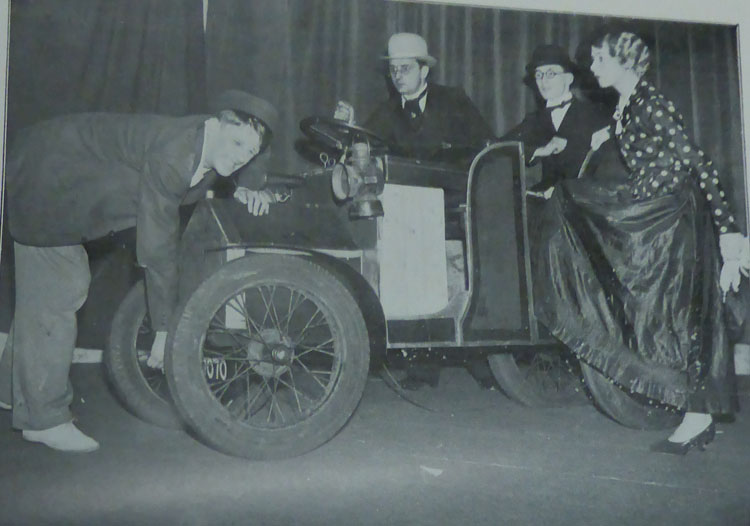
Just one year before the outbreak of war, 1938 saw what must surely be one of Nottingham High School Dramatic Society’s greatest triumphs. It was the English version of the iconic play of the inter-war years, “Knock ou le Triomphe de la médecine” (“Knock or The Triumph of Medicine”) by Jules Romains. This was the school play where, according to the “Nottinghamian”:

“…the Car, with all its rattles, its backfiring and trick number plates very nearly stole the performance.”

Perhaps you had to be there. The car with all those rattles, loud backfiring and laugh-a-minute number plates” was supplied by Mr Norris, whose greatest special effects triumph was now a mere two years in the future.

The play was produced by the Chief English Master at this time, Mr John Ward Roche, who had both an MA in English and a BSc in Economics from University College, London. He was nicknamed “Fishy” and he was a man of extraordinary energy. In School Drama, he instituted the Christmas form-play competitions, the best three plays going forward to be performed before the parents. This idea, slightly adapted to fit the circumstances, has been used throughout the High School ever since.

With “Knock”, Mr Roche was assisted by Mr Gregg, Mrs Roche, Mr Hubbuck the caretaker and his staff and the popular woodwork teacher, Mr Jack Mells. The School Magazine was suitably impressed:

“It is largely due to their efforts that the cast were able to give so satisfactory an account of themselves.”

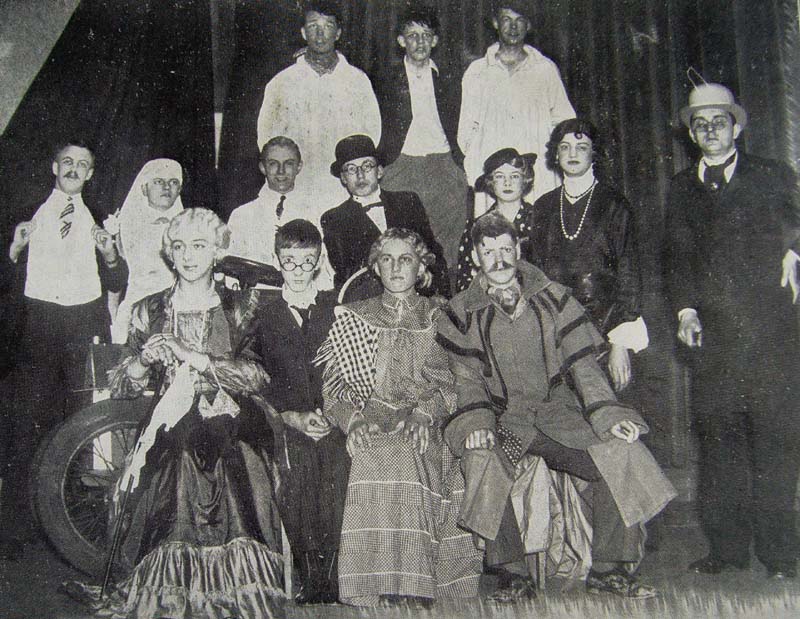
Here is the full cast:

Overall, the play was stunning, despite Mr Roche having to get through a horrendous setback which occurred completely unexpectedly. One of the main actors had what is now, eighty years later, an unknown but extremely serious problem, most probably that of stage fright. Mr Roche decided to take the rôle himself. With only three days’ notice he had to learn all the lines and then play the part of Dr Parpalaid in addition to all of his many other commitments as the producer of the play. The review in the School Magazine said:

“He imparted to Dr Parpalaid, the rather vague, fussy and ineffectual country GP, the right air of admiration for, mingled with bewilderment at, his more successful, but doubtfully honest successor, Dr Knock.”

Here is Mr Roche:

All of the female parts were still, of course, filled by boys, so Mr Roche was in the rather uncomfortable position of being married, for the duration of the play at least, to sixteen year old Eric Richard Gale, who was “excellent” throughout. Much of this was because of his extremely elegant high heels. Eric was the probably mortified son of a civil servant from 19 North Road in West Bridgford. Here is Eric, looking both extremely pretty and rather seductive:

And here are what the Nottinghamian thought were high heels (bottom right):

Here is fourteen year old Philip Blackburn, looking every inch Knock’s beautiful nurse:

And here’s Anthony Oscroft from 7, Mount Hooton, playing the part of the hall porter:

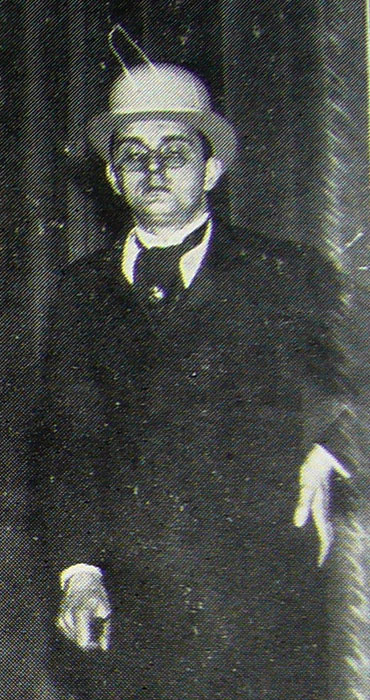
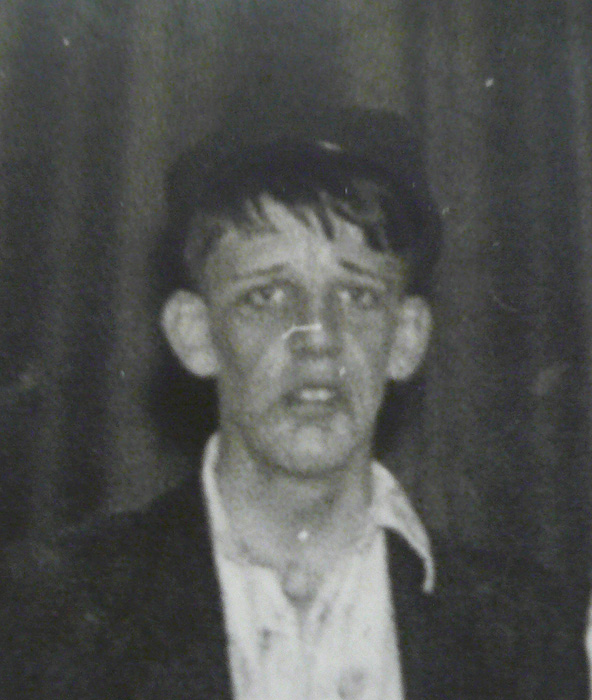
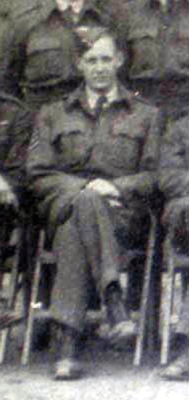
Two of the cast were marked for death in the Second World War. Does it show in their eyes? This young man played the part of Madame Remy. He had only six years left of his tragically short life:

And this young man had one year fewer:

That terror, that anguish, it is there, isn’t it?

20 Comments

Filed under Film & TV, France, History, Humour, Literature, Nottingham, Personal, The High School, Writing