Category Archives: History

Fire, I’ll take you to burn (2)

You may already have read some of the extracts I have featured from”The Date-Book of Remarkable Memorable Events Connected With Nottingham and Its Neighbourhood 1750-1879″, by John Frost Sutton. I have already found one description of what would nowadays be called a million pound fire, and it’s not the only one:

August 22nd 1874

“About half-past two in the morning the night watchman employed at the hosiery factory of Messrs I & R Morley in Manvers-street, while passing through the factory yard, saw some smoke but no flames issuing from a room in the centre of a block immediately over the cellar used to store cotton. He at once gave the alarm, which soon brought a body of willing hands together, and the hose reel belonging to the factory was immediately put in operation.”

“To the surprise of all present, though, there was scarcely any water in the cistern which was kept on the premises to be ready in case of fire. In the meantime several messengers had gone for the fire engines, and about fifteen minutes to three in the morning a body of men set out with the hose reels, followed immediately by the steam fire engine, the manual engines being sent afterwards in quick succession”.

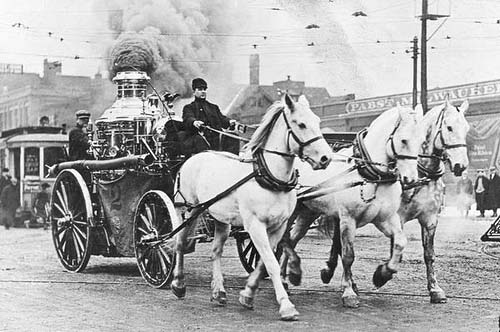
Here is a steam fire engine:

srteammm fir e engoine

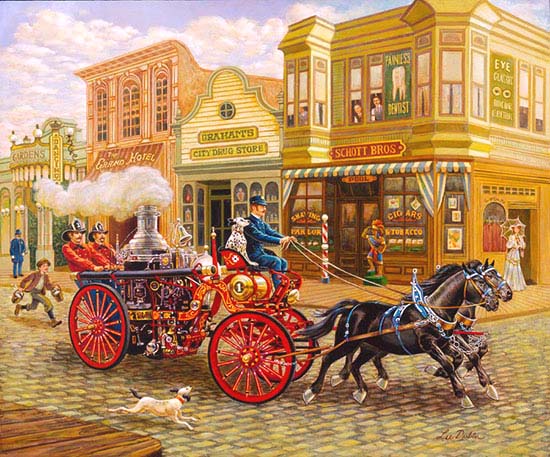
And here is the thrilling scene I found, of another very similar steam fire engine, rushing to the fire. Notice the Spotty Dog who is playing the part of a SatNav system:

steam fire emng0ne

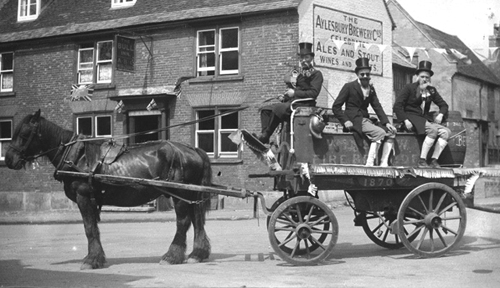
Here come the more genteel firefighters of the Victorian age:

1870more countrified

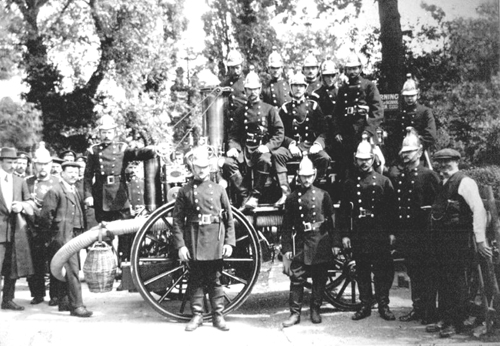
Time for a quick photograph and then we’ll start sorting out that fire for you:

1880

Back to Nottingham:

“By this time though, the flames had really taken hold of the middle of the building where they had originated, and passing along the south side had become totally unmanageable.”

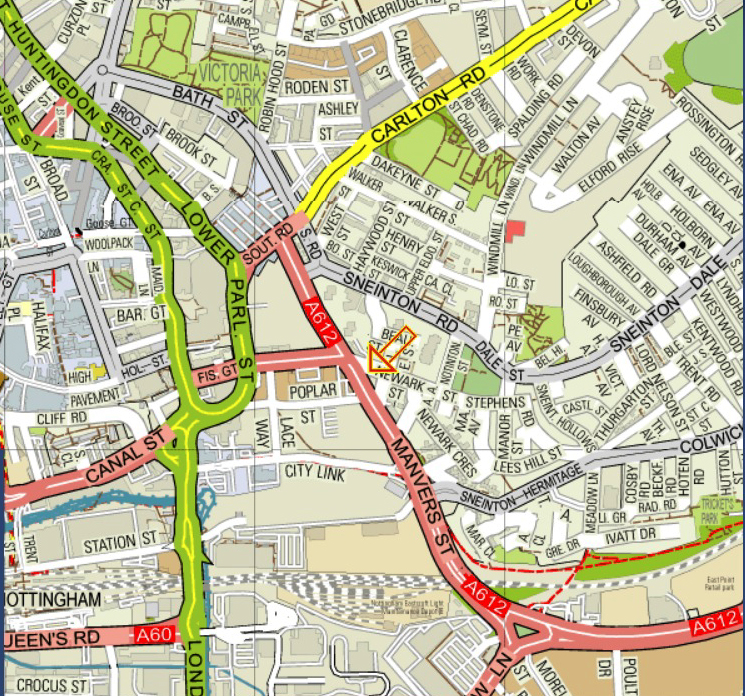
This is Manvers Street, on the north bank of the River Trent, where the road leaves Nottingham for Southwell. Notice the orange arrow which points to Manvers Street itself, and to the east, the packed terraced streets of Sneinton which provide the labour for the factory. To the west is the railway system used to take the finished product to its destination:

manvers street

“At about 3.15am, a large portion of the walls and floors collapsed. About four o’clock the whole of the remaining walls, and the roof of the Manvers-street part of the factory came down as well . Some idea of the crash may be formed, when it is stated that the noise was heard as far away as Radford and the surrounding villages. The sight of the ruins when viewed from the Southwell-road end of Manvers-street was almost beyond description.”

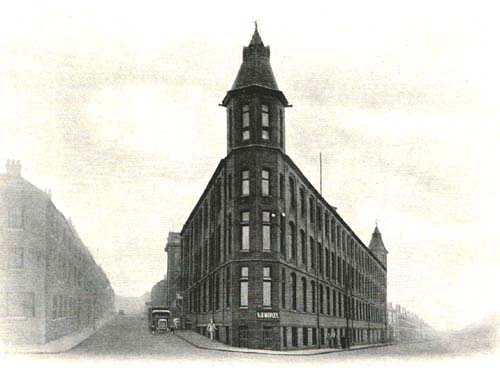
I think that this is Morleys’ factory, presumably rebuilt after the fire:

factory-manver-stxxxxxxxxxxxxxxxxxxxxxxxxxxx

Back to the story:

“Of the front of the factory, 200 yards long, nothing remained but an immense mass of bricks, iron, and wood, intermingled with the burnt remnants of hosiery goods. This was by far the greatest fire that has occurred in Nottingham in the memory of man, not excepting the Castle, the damage being estimated at £100,000.”

And, in terms of value, the damage nowadays would have been in the region of  £51,600,000.

16 Comments

Filed under History, Nottingham

The Oldest Old Boy of Them All (4)

Many, many years ago, in 1990, my friend and colleague, Simon Williams, interviewed Roy Henderson who was then one of the oldest Old Boys still alive. In due course, I transcribed the taped interview and added some extra explanatory details where this seemed helpful to the reader. This is the penultimate section of an eventual five, all of which describe the High School just before the outbreak of the Great War, and then during the first few years of the conflict.

Roy used to live at 3, Lenton Road in Nottingham’s richest area, The Park. He would be awakened by another High School boy called Alfred Tregear Chenhalls, who would come along the road as he walked the family dog, and whistle loudly that it was soon time to go to school. Roy was then accompanied to school by his friend, who was walking from his own family house at 2, Hawthorne Drive in The Park. One particular day in the Fourth Form, Alfred Chenhalls did not arrive, and Roy Henderson was therefore late. Mr Lloyd Morgan ticked him off:

“Who shall we punish? Chenhalls or his dog? ”

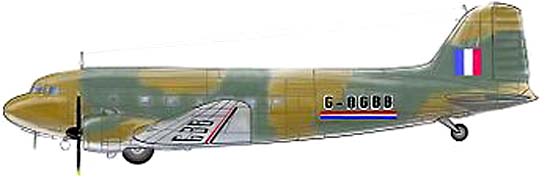
Alfred Chenhalls, whose father, like that of Roy Henderson, was a minister of the church, later became an accountant who dealt with lots of musicians and theatrical people, including the famous Hollywood actor, Leslie Howard. Chenhalls always smoked a large cigar, and as a big fat man, looked rather like Winston Churchill. He was killed on June 1st 1943, when the unarmed DC-3 of the B.O.A.C., carrying him and Leslie Howard between Lisbon and London, was shot down by Junkers Ju 88s of the German Luftwaffe. Here is the Douglas DC-3 Dakota, in question:
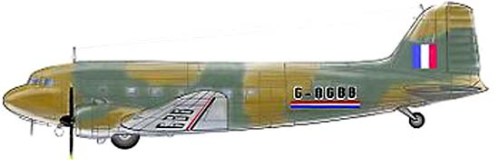
350px-BOAC_Flt_777

At the time, Churchill was known to be attending a conference in Algiers, and there was much speculation that a German spy had seen Chenhalls getting onto the plane in Lisbon, and had then organised its destruction. Here is Chenhalls pretending to be Churchill:

CHENHALLS

Further confirmation of the Germans’ interpretation was that Churchill’s colleague in Algiers, the Foreign Secretary, Sir Anthony Eden, looked very like Leslie Howard. Alternatively, Leslie Howard may have been thought to be Detective Inspector Walter Thompson Churchill’s personal bodyguard. Whatever the complex truth of it, Churchill himself considered all his life that this was a definite  assassination attempt. The incident was also one of the very few occasions when airliners were ever attacked on this route out of neutral Portugal. Much more detailed information on the event is available here.
At this time, many boys had nicknames. Donald James Clarkson was always called “Pug” because of his upturned nose. Here he is:
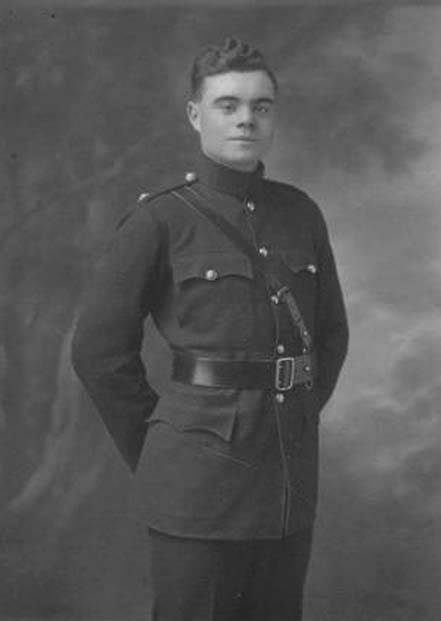
clarkson zzzzzzz

Another boy, an extremely good Fives player, was called, for obvious reasons, “Sparrowlegs”. Strangely enough, though, only one particular boy ever had a certain nickname. Nobody could ever be called “Pug” or “Sparrowlegs”, as long as the original boy remained in the school. There seemed to be no obvious reason for the nickname of “Fuzzy” Barton, given that his hair was not in the least bit curly. Peculiarly enough, though, his elder brother had extremely fuzzy hair. He, though, was never called “Fuzzy”.

Eventually, the younger Barton became the Headmaster of King Edward’s School in Sheffield. The latter establishment had an extremely peculiar cricket pitch, which was constructed on various levels, with a number of different slopes, flat areas, and two or three quite sharp drops. Certain unfortunate fielders were unable to see either wicket, and pieces of information had to be passed on to them by other fielders one level higher up.

Because of the Great War, and the subsequent restrictions on travelling by train, there were very few away matches at cricket. Boys went only to Derby, Worksop or Sheffield, but never to Denstone or Birmingham. On many occasions, they played home fixtures against Army teams billeted in the area, including a few Italian ones. This was much more enjoyable than the very limited number of fixtures against other schools.

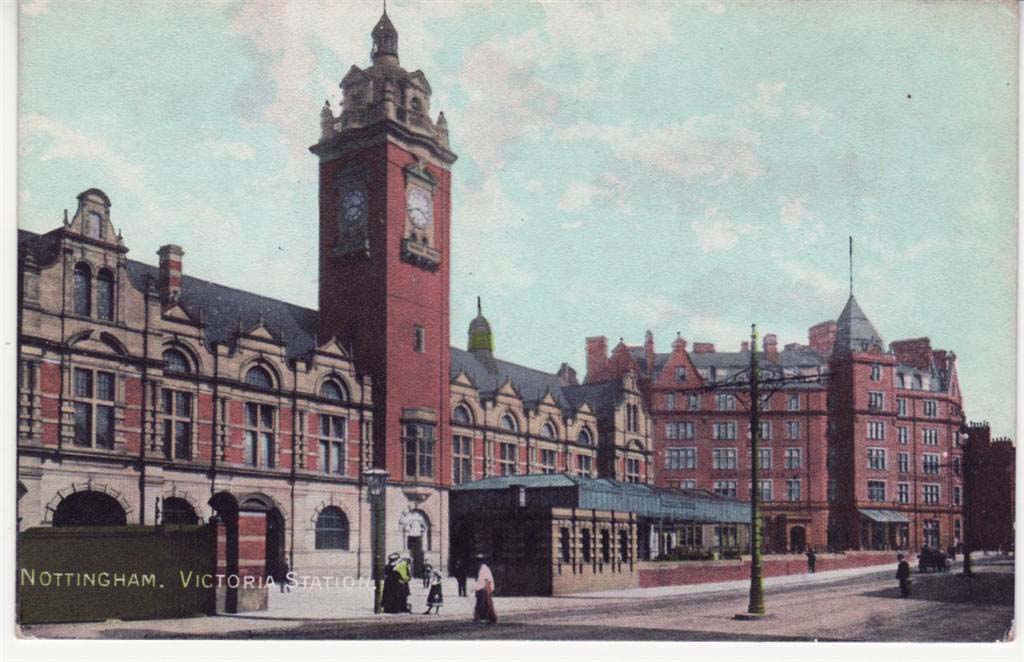
If they did ever travel by train, High School teams invariably used the now demolished Victoria Station. You might recognise the Clock Tower which still stands nowadays, outside the Victoria Shopping Centre. The hotel on the right is also still there:
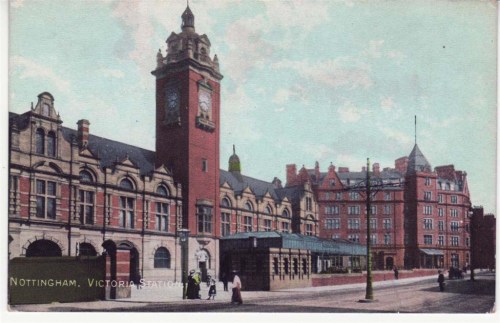
Nottingham_Victoria_Station_3

Here is a steam train coming out of the tunnel which took rail traffic northwards towards Worksop and Sheffield. This tunnel is still visible, either from the modern multi storey underground car park or from Huntingdon Street:

train

At this time, in the school, in general, the rules on caps were very strict. Roy Henderson himself had a special dispensation from the Headmaster and was allowed not to wear a cap in school. For some unknown reason, his mother had contacted the Headmaster, and the latter had agreed to this special privilege. Roy wore a cap for the first time when he became a prefect, and that turned out to be a spectacular piece of headgear with a silver badge on it.

Roy was the secretary of the School Debating Society. He spoke quite frequently in debates, despite, by his own admission, not being particularly good at it. The meetings, which were mostly in the winter term, took place after school, between twelve and one o’clock on Saturday afternoons.

When he left the High School, Roy joined “B” Battalion of the Artists’ Rifles. He had already learned a lot in the school’s Officer Training Corps, as was confirmed by the first drill sergeant that he encountered in the regular army. Later, he joined the Regimental Concert Party, which did its training at Lichfield. Roy, because of his age, missed the Great War by a few weeks, but he caught Spanish Flu in January 1918. He was not to leave hospital before August 1918.

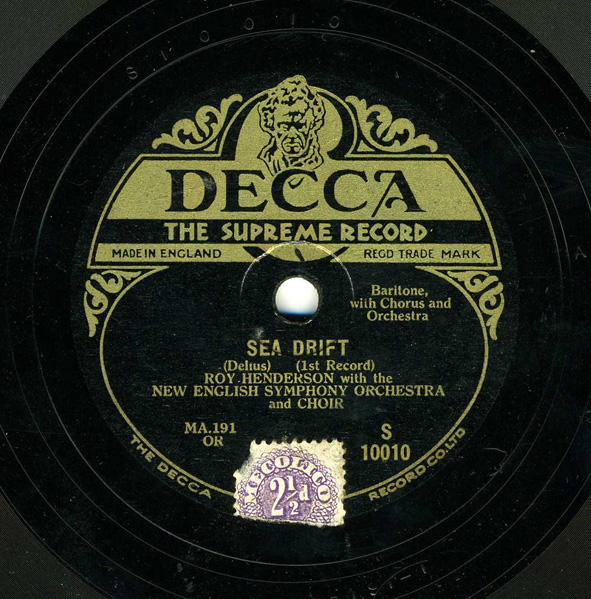
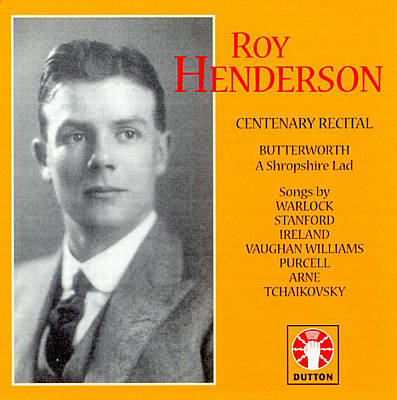
At the High School, there had been no specialist singing master, and no real in-depth teaching of music. Roy had never realised that he had any particular talent in this field, until he sang solo during the interval of a school play, and was overwhelmed and astonished by the great volume of applause which he received. Roy later went on to sing at Speech Day. Within only a few years of leaving the High School, he had become one of the leading singers in the country, who was destined to work with some of the greatest musical talents in the whole world. I have been unable to find any photographs of Roy Henderson, but here is one of his record labels:
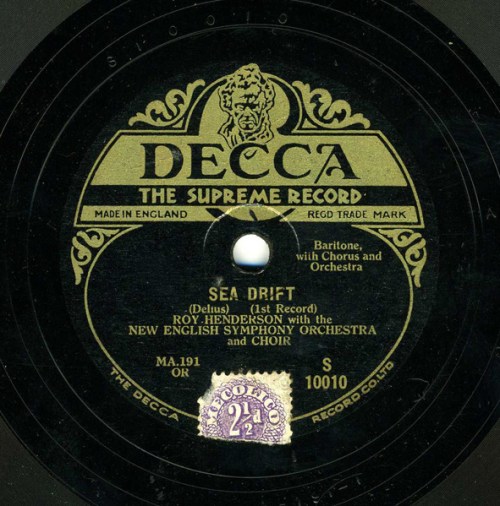
Decca_1929_Sea_Drift

And here is one of his album sleeves:

record

In the near future, I will continue with the fifth, and final, article in this series. I hope you are enjoying them and finding them interesting.


16 Comments

Filed under Football, History, Nottingham, The High School

The Bristol Beaufort at Hendon

I went on a trip to RAF Hendon Museum a few years ago, and I would like to share one or two of the more interesting aircraft with you over the months. Hopefully I will only be using my own photographs, so here are my excuses first. The Museum in  places is really quite dark, so that the daylight or bright artificial lights have no effect on the (poor quality) Second World War paint. This gives rise to a distinct purplish tone on many of the photographs. The museum is also very cramped, so try as I might, I could not get all of the aircraft into the shot at once.

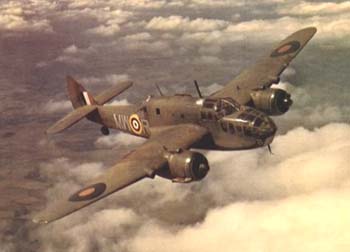
This is a Bristol Beaufort, the only monoplane produced for the Royal Air Force that was designed from the start for general reconnaissance and as a torpedo bomber. It was named after the late and great Duke of Beaufort, whose very large ancestral home was near to the headquarters of the Bristol company.

P1320429xxxxxxxxxxxxxxxxxxxxxx

The prototype first flew on October 15th 1938 and Beauforts entered service with No.22 Squadron in November 1939. They were Coastal Command’s standard torpedo bomber until 1943 and also laid mines.

The Beaufort was very successful as a torpedo bomber, and saw action over the North Sea, the English Channel and the Atlantic. In 1942, Beaufort squadrons were deployed to the Mediterranean and the Indian Ocean to meet a changing enemy threat. Malta-based aircraft were particularly successful in attacks on Axis shipping at a critical time in the war in North Africa.

Total Beaufort production was 1380, including 700 which were built in Australia.

P1320403xxxxxxxxxxxxxxxxxxxxxxxxxx

The Beaufort at Hendon was assembled from bits of various Australian aircraft found at Tadji Airstrip and West Sepik in Papua and New Guinea.  Five airframes were salvaged from these sites by Dr Charles “Bunny” Darby  in  1974  and as far as is known, significant bits of some 28 Beauforts are still there.
In October 1987, two Gate Guard Spitfire Mk XVIs were swapped for a P-40 Kittyhawk and a Beaufort. The latter eventually arrived at Hendon via a workshop in Hawkins, Texas and then Felixstowe and  Cardington in Bedfordshire.

To me, a Beaufort always looks like a half way between a Blenheim and a Beaufighter. Here is a proper photograph, purloined from my best friends at Google Images. I just didn’t want you to think that all Beauforts strongly resembled a very large twin engine blackcurrant:

bea

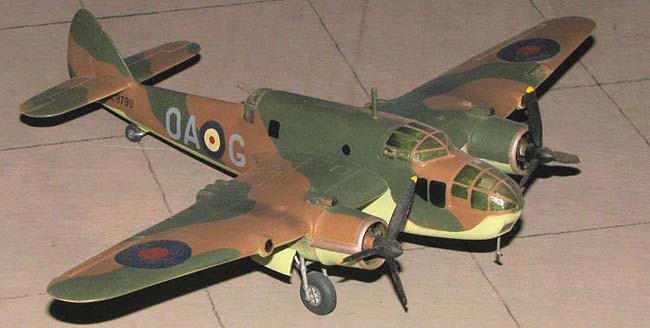
The best illustration of a Beaufort is, in fact, a model. There wasn’t an Airfix one, as far as I can remember, so perhaps this is a Frog kit or something even more exotic. I couldn’t find a good picture of a Beaufort in Australian colours:

beaufort

36 Comments

Filed under Aviation, History

Fire, I’ll take you to burn (1)

As you may already know, I am really head over heels with “The Date-Book of Remarkable Memorable Events Connected With Nottingham and Its Neighbourhood 1750-1879”, by John Frost Sutton. It records a world so similar and yet so different to our own. Fire, for example, was a very great concern when so many buildings were made of wood and the fire brigade arrived behind four horses.

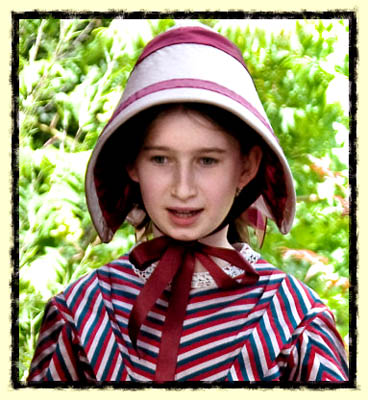
First though, a couple of words of introduction. This is a bonnet front:

bonnet front

And so is this:

bbb onnet front

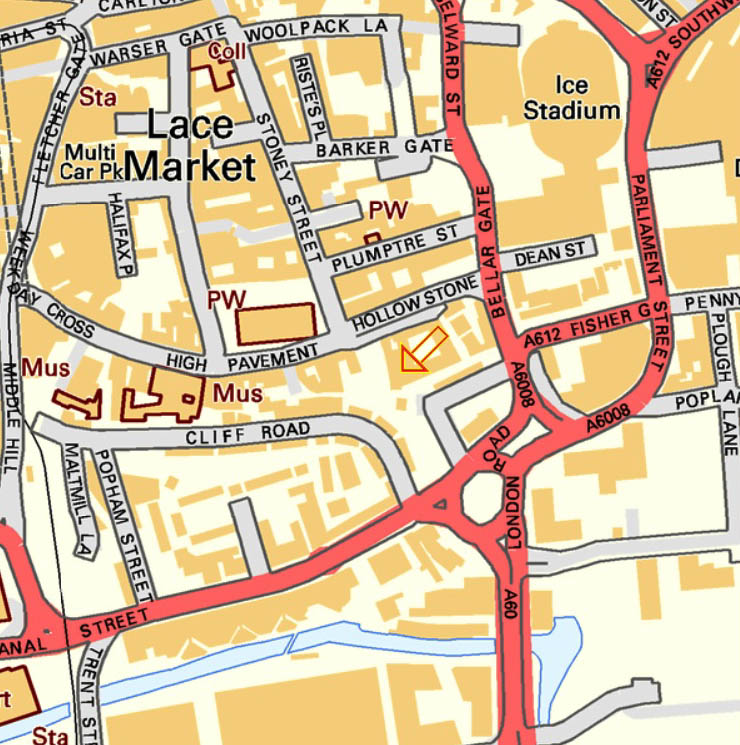
And this is Commerce Square, in the Lace Market area of the city. The letters “PW” indicate a “place of worship”, in this case, St Mary’s Church. The orange arrow indicates the exact location of the warehouse:

narow marsh

October 11 1866

Destruction by fire of the bonnet front warehouse of Mr. C. G. Hill, Commerce-square.”

“It appears that Mr Hill kept a large quantity of pigeons at the top of his warehouse and that after the workmen had left in the evening, he and some men went upstairs on some business to do with the birds.”

“While he was there Mr. Hill was surprised at a loud knocking at the warehouse door, and on going to the top of the stairs, he found that the lower portion of the premises was in flames, and that leaving by the stairs was impossible. Fortunately there was a trap door in the roof, through which they made their escape. The fire leaped upwards with fearful rapidity from floor to floor, and soon enveloped the whole of Mr. Hill’s premises in a glowing sheet of flame, which burst with great fury from the windows, lighting up a vast area, and presenting a spectacle of grandeur, particularly when viewed from the southern side of the town, which it overlooks”:

castle fire

“It was at one time feared that the burning building would fall into Narrow-marsh, and many of the inhabitants removed their goods, but beyond some falling pieces of burning timber, the massive roof of the building remained nearly intact. The interior, though, was completely burnt out, with nothing remaining but the shell. This building is eight stories high on the southern side. As the lower four stories in Narrow-marsh were occupied as houses, a fire-proof floor was inserted between the houses and the warehouse. This prevented the fire extending to the lower portions of the building, although they and their contents were much damaged by water. It was estimated that Mr. Hill’s stock was worth £10,000, he having from 10,000 to 15,000 boxes of bonnet fronts on hand. He was insured for £8,000, and the building, including the warehouses of Messrs. Hamel & Wright and Lottimer & Co, for £9,000. After Mr. Hill’s escape from the roof he climbed down into the building and turned off the gas, making his way out through the cellar grate.”

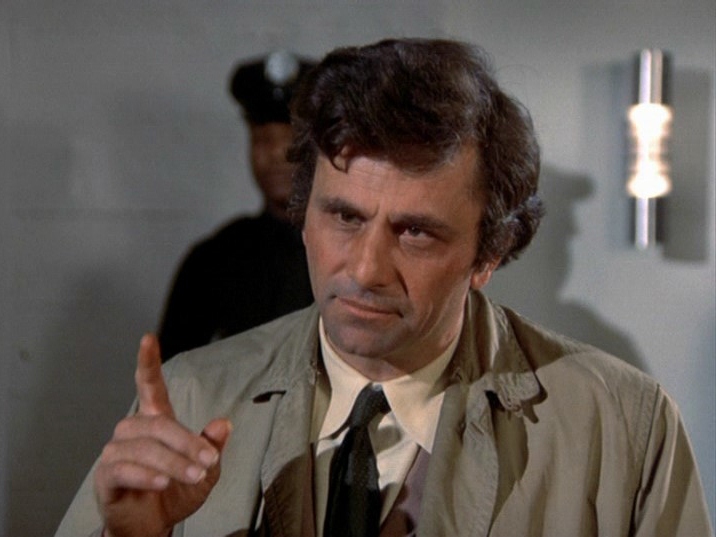
If Mr. Hill’s stock was worth £10,000, in today’s figures, that would be in the region of £1,140,000 nowadays. His insurance would have covered £912,000 by today’s reckoning,  with the insurance on  the warehouses of Messrs. Hamel & Wright and Lottimer & Co realising £1,026,000. Sounds like a job for Columbo to me:

columbo

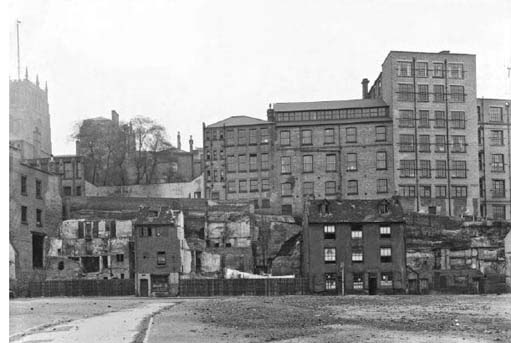
Narrow Marsh, the area below the Lace Market area, with, originally, a sandstone cliff at its back, was notorious in Victorian times as containing the worst slums in the British Empire, bar none, and being a place where only a mad policeman would attempt to go.

This photograph shows the many, many floors of some of the buildings, constructed against the cliff face itself:

narrow marsh

Here is a very ‘film noir’ shot of the streets below the cliff:

malt mill lane m=rrrow marsh

And, at last, the slums are torn down in the 1950s:

slum clearance 50s


10 Comments

Filed under Criminology, History, Nottingham

The Oldest Old Boy of Them All (3)

Many, many years ago, in 1990, my friend and colleague, Simon Williams, interviewed Roy Henderson who was then one of the oldest Old Boys still alive. In due course, I transcribed the taped interview and added some extra explanatory details where this seemed helpful to the reader. This is the third section of an eventual five, all of which describe the High School just before the outbreak of the Great War, and then during the first few years of the conflict.

Prominent boys in the High School at this time included Lancelot Wilson Foster, who, in the 1930s, was to become a vicar in Cheshire, and then a chaplain in World War Two.

William Donald Willatt became the Vicar of St.Martin’s, Sherwood, and eventually lived in West Bridgford. Here is St.Martin’s:

st martin sherwood ccccc

Along with Roy Henderson, William Willatt was later to start a school magazine called “The Highvite”. By Roy’s own admission, it was “a pretty dreadful magazine”, and only survived because it was financed by a variety of different adverts. The enterprising boys went round to local companies such as Sisson & Parker, and many other businesses. As editor of the other school magazine, Harold Connop was furious at the new rival. Roy didn’t get on very well with him at all.

Harold Arno Connop, however, was a first class scholar and very good rugby player. He was a fine three quarter, and a very fast runner, but for one reason or another, which Roy was not willing to divulge, he was, supposedly, never particularly well liked in the school, and in general, was apparently not a very popular figure. This may not have been totally unconnected, however, with Harold’s rare combination of outstanding academic prowess, and humble origins. His father was a mere Elementary School teacher, and Harold’s education throughout his time at the High School was entirely financed by his being both a Sir Thomas White Scholar, and a Foundation Scholar.

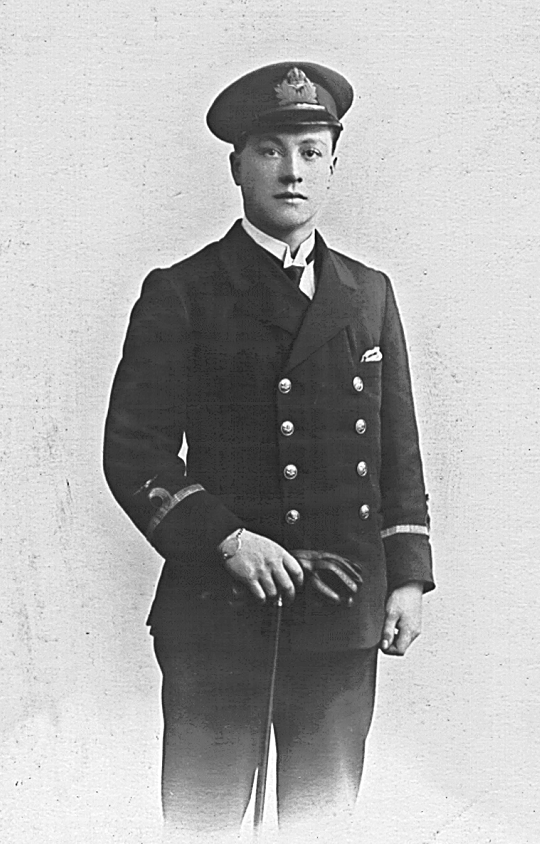
Harold eventually joined the Royal Naval Air Service, where he became a Lieutenant. He would not survive the conflict and was to die of his wounds on March 31st 1918. Here he is, resplendent in his uniform:

connop zzzzzzzzzzzzzzzzzz

Percival Henry Biddulph Furley always used to sit next to Henderson in the Classical Sixth. He was one of Deputy Headmaster Sammy Corner’s favourites. In actual fact, despite being well over sixty years of age, Mr Corner was to leave his post as Form Master of 5b to go to the Great War. Here is Mr Corner, showing the School Charter to interested parents on the occasion of the school’s 400th anniversary in 1913:

sammy corner s

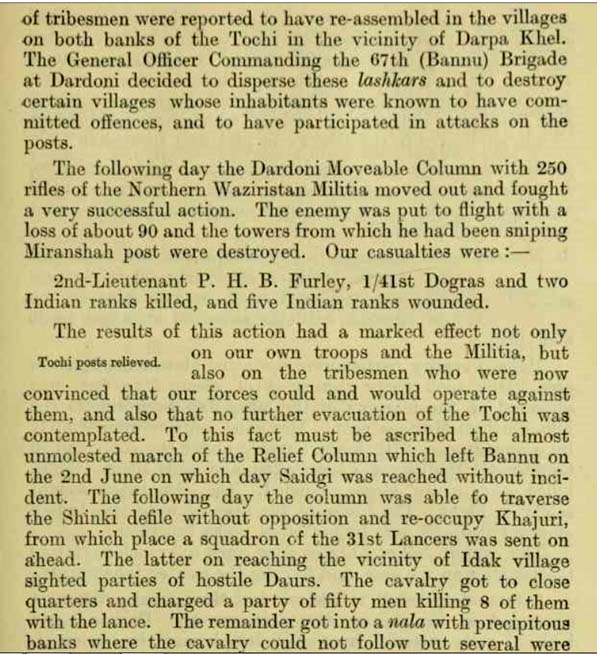
As a teacher, Mr Corner was famous for how easily he could be diverted from the work in hand. Anybody just had to get him started off on an interesting subject, especially in Scripture lessons, and the class would then seldom, if ever, have to return to what they were supposed to be doing. Percival Furley, for some unknown reason, was always nicknamed “Dab”. He was a member of the First Eleven at cricket for three years. His other claim to fame was his talent in school plays. At this time, all the female parts were taken by boys. Given his youthful good looks, “Dab” could always be made up into a very good looking lady or girl! When he left the High School, “Dab” joined the Army. He was eventually to be killed in a skirmish with some lashkars at Miranshah, in the North West Province of India, in June 1919. Here is the official account of that short rehearsal for our recent war in Afghanistan:
furley

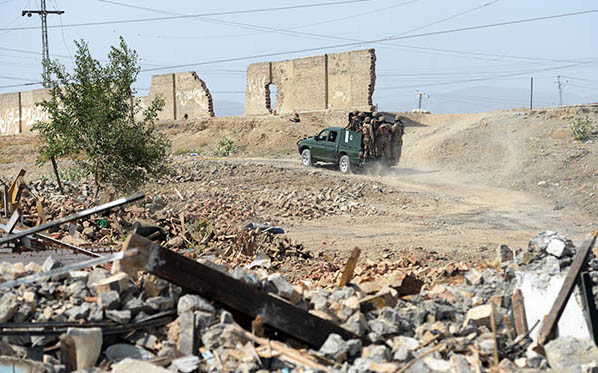
And here is Miranshah today, now that it is running its own affairs:

PAKISTAN-UNREST-NORTHWEST

According to Roy Henderson. the younger of the two Boyd brothers, John Hardy Boyd, was the best athlete in the school. He was captain of the school cricket team and of the Officer Training Corps. His elder brother, Charles Gordon Boyd, had been the school’s wicketkeeper, and had represented the school at football from 1910-1912. He was killed on May 3rd 1917, while serving as a Second Lieutenant in the  9th Battalion of the Leicestershire Regiment.

Allan Roy Stewart Grant was the son of a Presbyterian minister. For some subtle reason, possibly connected with his initials, he was always nicknamed “Pongy”. Thomas Wright was quite a good bowler, as was Daft, the grandson of the famous Nottinghamshire cricketer. Other cricketers included Francis Arthur Bird and James Wilcox, and Roy was himself one of the better bowlers and batsmen. The school cricket coach at this time was, of course, Mr A.G.Onion, seen here, perhaps, in his later years:

onion

In one year, Roy was the school Fives champion. In the year before this, it had been Donald Clarkson, who was to become that most vulnerable rank of officers, a Second Lieutenant, killed on August 9th 1918 with the 1/6th Sherwood Foresters. “Pug” Clarkson lived only a street away from where I am now writing, at 52, Caledon Road, Sherwood.

Other school Fives champions included Victor Guy Willatt and his brother, William Donald Willatt. William Norman Hoyte, the Captain of Mellers House was also a very fine athlete, as was Sidney Charles Trease. The latter was to become a Second Lieutenant in the 11th Scottish Rifles. He went  missing on September 19th 1918 at the age of only nineteen. He was the beloved son of George and Annie Trease, of 85, Waterloo Crescent, within just a couple of minutes’ walk of the school. His death came in a fairly pointless campaign in Greece and is commemorated on the Doiran Memorial.

The School was converted to rugby by Mr Kennard. He had the unfortunate habit with smaller boys of pulling them close and then tugging their hair very hard. It was extremely painful! There was no real reaction on the part of the boys to the change of sports from soccer to rugby. They just did as they were told.

Roy played as goalkeeper for the school on several occasions. He once let in eight goals against Trent College, and towards the end of the game he became what was probably the first player ever to be substituted in the history of school football, when he was replaced in goal by Donald Clarkson.

At the time, boys who represented the school were awarded ornate colour caps.

This article will be continued in the near future.


10 Comments

Filed under Football, History, Nottingham, The High School

The Second XI Football Team 1980-1981

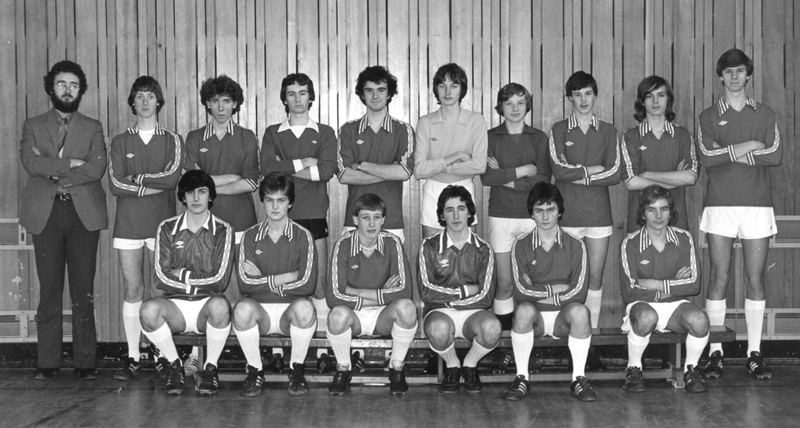
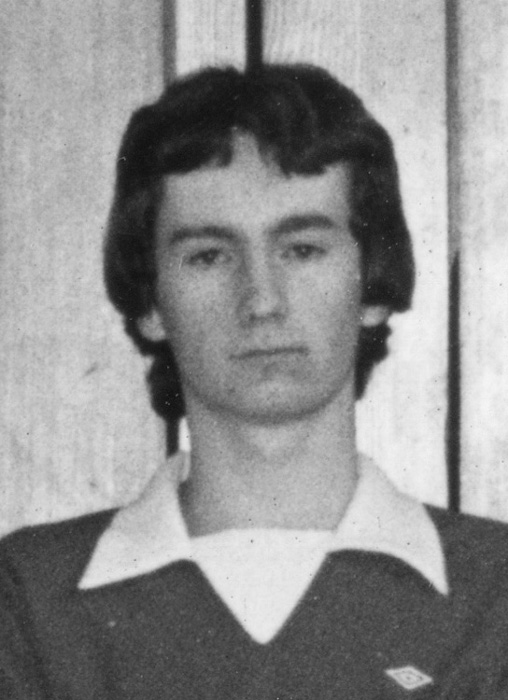
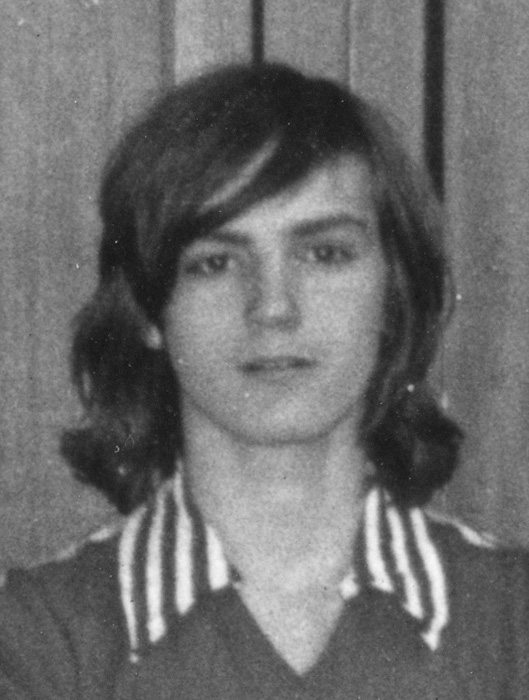
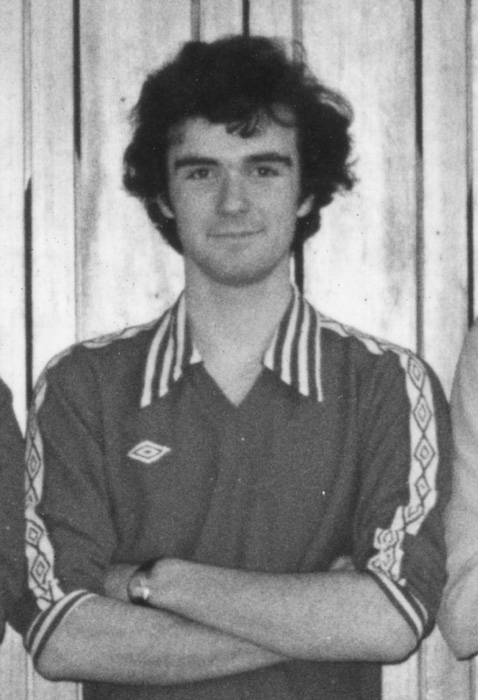
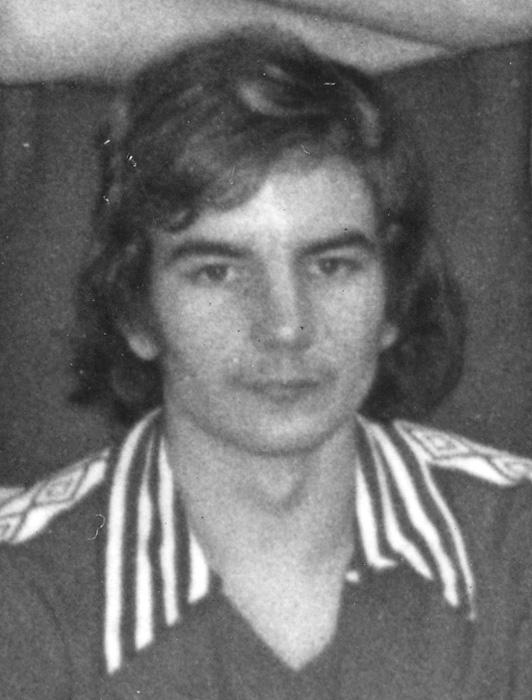
The Second XI had a pleasant and reasonably successful season back in 1980-1981, although it was possible to organise only seven fixtures. They lost their first match against Becket School, but were only to lose one more of the next five matches. Their record for the season of two wins, three draws and just two losses would have placed them comfortably in mid-table in the Premier League of today. Perhaps another Crystal Palace, Everton or West Ham. We drew games against High Pavement, Bramcote and Clarendon and then defeated Clarendon by 3-0 in the return and Bilborough by 5-2. Not a bad record for a team of eleven players picked from just nineteen available candidates:

asecond THE ONE

The goalkeeper was Richard Clark:

richard clark 700
And his deputy was, I think, David Lloyd:

other goalie

In defence we had Chris Turner:

chris turner 700

Alongside him was Julian Bower:

julian bower 700

Ken Blecher was the sweeper. He was the Team Captain, so he had the shiny satin finish shirt:
For some reason, we played in fairly dark blue shirts of a shade called ‘Admiral’ or ‘Azure’ apparently.  This had been worn as a change strip by Sunderland in the First Division a few years previously. The sleeves had a red and white design on them, as did the collars.

Ken Blacher

Now, back to the players.

Phil Sermon was a 100% team player who, although he was often a little quiet, always gave everything on the pitch:

phil-ser-mon-700

Paul Chappell was almost surgical in the strength and calmness of his tackles:

Paul Chasppell
Chris Batty was an accurate passer of the ball, with a powerful shot:

chris batty 7oo

Bert Crisp was a strong runner and created many chances:

bert crisp 700
Phil Colley supplied energy in midfield:

phil colley

Chris Ffinch played well in attack:

Chrs Ffinch 700

Robert Harwood was a confident goalscorer:

robert harwood 700

Stuart Burns also contributed well in attack:

stuart burns 700

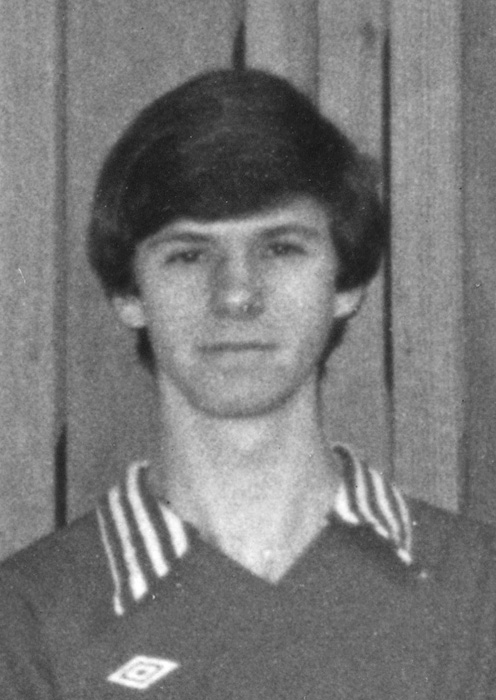
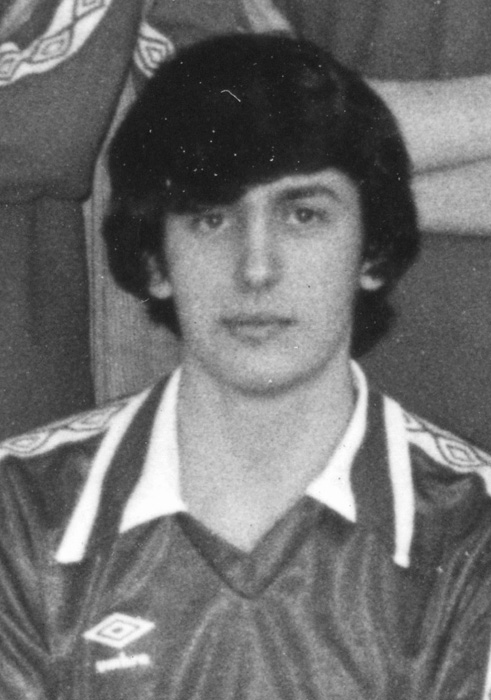
On the team photograph, two players remain a mystery to me, although this all took place some 35 years ago now. The first is CD Richardson:

one

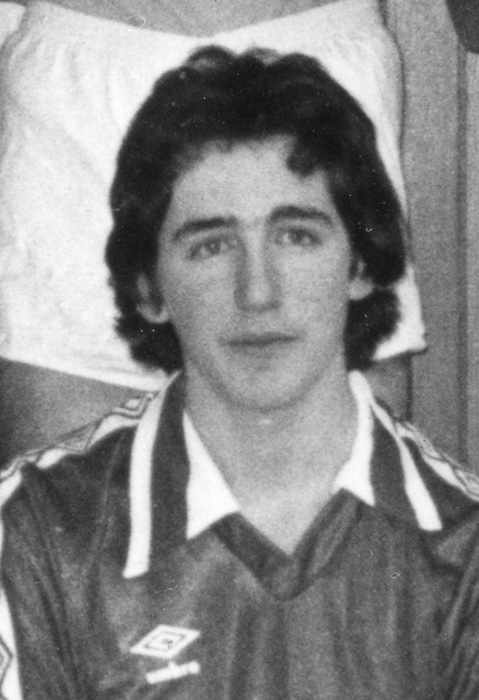
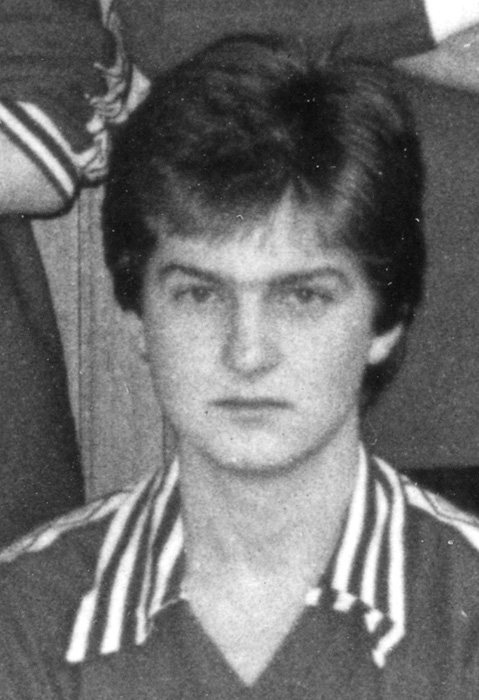
And the other is David Nowell, who, as you can see from the comments below, was the left full back, but who was unfortunately injured very early in the season :

three

Forgive me gentlemen.
Overall, the Nottinghamian reported that the players were “all keen to play and all contributed to a most enjoyable season. Everyone has done his best and given his all.”
A lot of my readers, of course, will not be familiar with any of these young men. Let them stand, therefore, for your own sporting efforts at school. Did you do your best and give it your all?
Perhaps you were not in a sports team of any kind. Well, just look at the faces of these sixteen, seventeen and eighteen year old young men. Look at their expressions. Their inner thoughts.
Nowadays they will be in their early fifties. Their team coach back in the day was in his late thirties. Well now, I am in my early sixties, and I just regret that I didn’t enter more Ché Guevara lookalike contests when I had the chance:

me close up

.

20 Comments

Filed under Football, History, Humour, Nottingham, Personal, The High School

All Quiet on the Western Front (4)

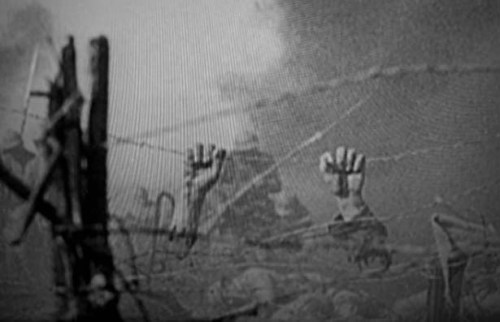
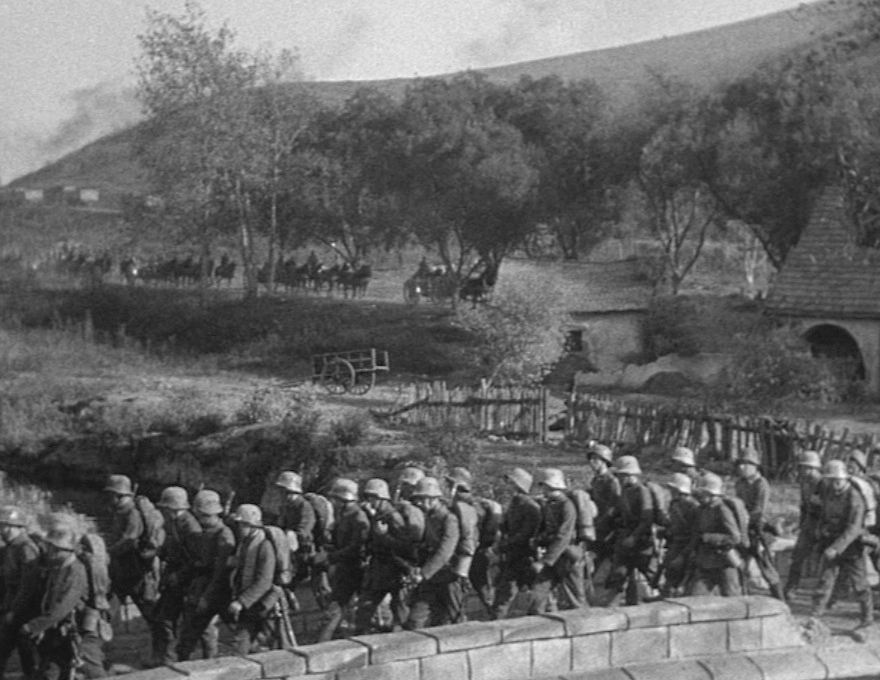
This is Part Four of a dialogue taken from “All Quiet on the Western Front”. A group of German soldier discuss their plight:

All-Quiet-hands

“I’ll tell you how it should all be done.
Whenever there’s a big war comin’ on, you should rope off a big field…”

“And sell tickets.”

“Yeah.”

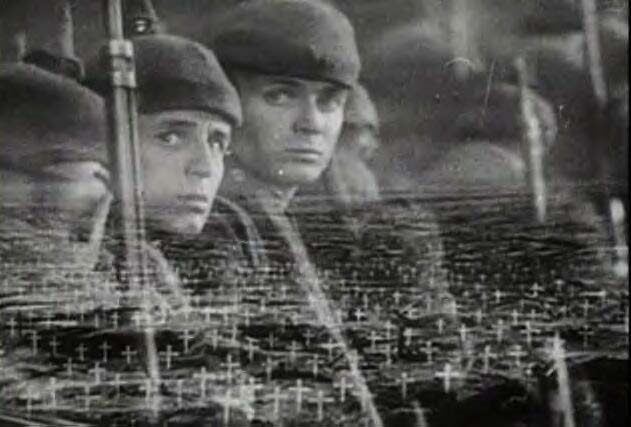
all_quiet_ghosts

“And on the big day, you should take all the kings and their cabinets and their generals, put ’em in the centre dressed in their underpants, and let ’em fight it out with clubs. The best country wins.”

P1090550

Unfortunately, only one war has ever been carried out like that. It was the Israelites and the Philistines in the Old Testament when one side chose a champion and so did the other:

full_davidgoliath

It would certainly be something to think about, especially where wars are just dragging on in pointless fashion as the First World War and the now long forgotten Iran-Iraq War did.  Eight years and not too far short of a million casualties.

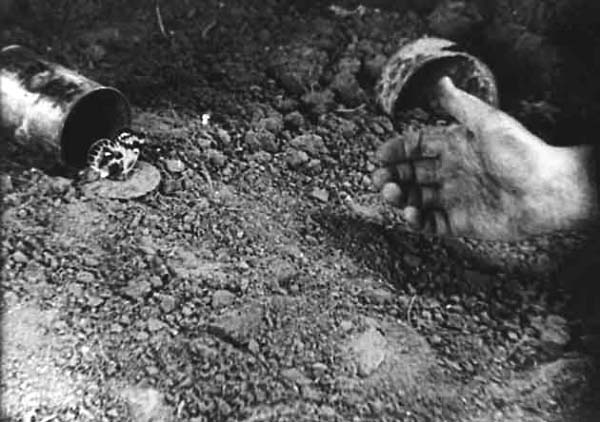
The film, though, comes to a famous end. The young hero, the last of his class to remain alive, is killed by a sniper as he reaches forward to touch a butterfly:

butterfly

16 Comments

Filed under Criminology, History

All Quiet on the Western Front (3)

This is Part Three of a dialogue taken from the film “All Quiet on the Western Front”:

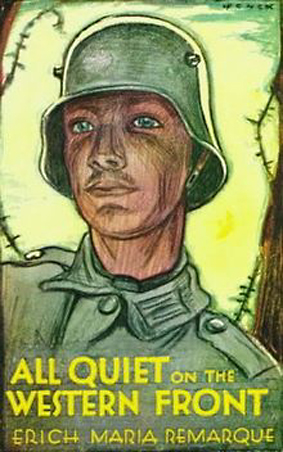
Remarque_Im_Westen_ book cover

A group of German soldiers discuss their plight:

“Somebody must have wanted the war. Maybe it was the English. No, I don’t want to shoot any Englishman. I never saw one ’til I came here. And I suppose most of them never saw a German ’til “they” came here. No, I’m sure “they” weren’t asked about it.”

“No.”

off to war

“Well, the war must be doing somebody some good.”

more shells

“I think maybe the Kaiser wanted a war.”

“I don’t see that. The Kaiser’s got everything he needs.”

group

“Well, he never had a war before. Every full-grown emperor needs one war to make him famous. Why, that’s history.”

“Yeah, generals, too. They need war.”

P1100069

And Prime Ministers and even Presidents come to that. They think it will make them look good when somebody else takes the risks on their behalf.


14 Comments

Filed under Criminology, History

All Quiet on the Western Front (2)

This is Part Two of a dialogue taken from “All Quiet on the Western Front”:

passchendale

A group of German soldiers in World War One discuss their plight:

“Well. how do they start a war?”

“Well, stupid, one people offends another.”

“Oh, well, if that’s it, I shouldn’t be here at all. I don’t feel offended.”

741px-second_battle_of_passchendaele_-_field_of_mud_

“It don’t apply to tramps like you.”

“Good. Then I could be goin’ home right away.”

“Ah, you just try it.”

“Yeah. You wanna get shot?”

“Me and the Kaiser felt just alike about this war. We didn’t either of us want a war, so I’m going home. He’s there already”

kaiser

Would it were so simple:

abbeville_arch12

You can see why Hitler’s Nazi Party sabotaged showings of this film in 1930s Germany. It would have brought home the grim reality to many of those willing to die for the Führer at the first glorious opportunity.

15 Comments

Filed under Criminology, History

All Quiet on the Western Front (1)

graves1

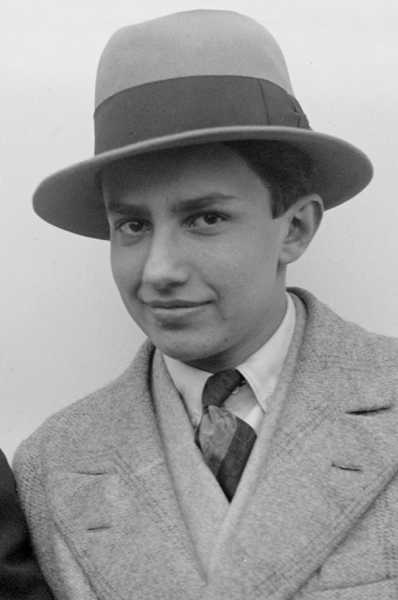
The film All Quiet on the Western Front was first shown in 1930. It won Oscars for its director, Lewis Milestone, and its producer, Carl Laemmle Junior:Carl_Laemmle_Jr

During his years as head of production at Universal studios, Carl Laemmle Junior was to be best known for overseeing  the classic old horror films such as Dracula (1931), Frankenstein (1931), The Mummy (1932), The Old Dark House (1932), The Invisible Man (1933), and Bride of Frankenstein (1935).

Lewis Milestone, born Leib Milstein, is best known for directing films such as Of Mice and Men, Anything Goes,  Halls of Montezuma Oceans Eleven and Mutiny on the Bounty.

My own favourite is All Quiet on the Western Front and that fondness for the film is based on a conversation that occurs right at the very end.

220px-AllQuietOnTheWesternFront

The film as a whole was written by Maxwell Anderson, George Abbott and Del Andrews. I do not know who was responsible for these particular extracts. The two writers who narrowly failed to win the Oscar for best writing were Andrews and Anderson. In it, one of the wise old soldiers gives his idea on the solution to war.

all-quiet-467 - Copy

I have decided to divide the dialogue into four sections. Here is Number One:

“Ah, the French certainly deserve to be punished for starting this war.”

“Everybody says it’s somebody else.”

“Well. how do they start a war?”

“Well, one country offends another.”

“How could one country offend another?”

“You mean there’s a mountain over in Germany gets mad at a field over in France?”

graves1

To be continued…


13 Comments

Filed under Criminology, History, Personal