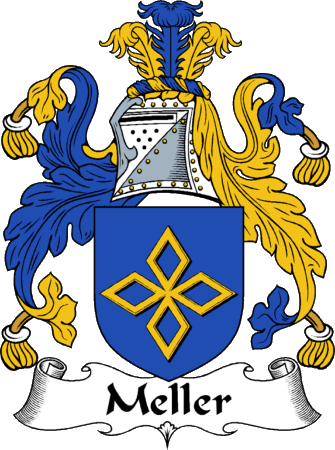
Last time, I posed a number of questions about the three black birds on the school crest, the so-called “merles”, and the coats of arms of a number of different families with the surname Meller, Mellers, Mellor and even Mellors:
If you remember, I was far from convinced that there was any connection between Dame Agnes and any of these families, the closest of them a minimum of a week’s journey away in Manchester. I was equally doubtful about the existence of “merles” as a bird in English heraldry. Indeed, overall, in English, the word “merle” does not really seem to relate particularly strongly to birds at all.
Wikipedia, for example, states that “merle” is a first name used by both men and women, a surname of French origin, a rather beautiful pattern in dogs’ coats, another name for the wine grape Merlot, a German glider originally built in 1938 for the 1940 Olympics gliding competition, a Crusader fort near Tantura on the coast of Israel and finally mentions the fact that the MS Phocine, a ferry, was originally named MS Merle.
In the bird world, Wikipedia states that it is a name for the “Icterid varieties of which the male is predominantly black, especially the Common Blackbird, Turdus merula.” The first word is the Latin for thrush, and “merula” means Blackbird.
I need to say here that “Icterids” are exclusively American birds such as grackles, orioles, cowbirds, meadowlarks and bobolinks:
This slideshow requires JavaScript.
Back to Wikipedia, which continues with the fact that “merula” gives the French their word “merle” and also gives the Scots their word “merl”. According to Wiktionary, it is also an “English 19th century bird name from merle, blackbird, possibly also a variant of Muriel”. That is in itself quite interesting as many common birds in Merrye Olde Englande had their own human names. Jack Daw. Mag Pie. Jenny Wren, Robin Redbreast. Sparrows were called Philip because of their chirping call. A modern equivalent would be the Soviet ruler, Joe Starling.
Very tenuous links between Dame Agnes and merles therefore, made all the more tenuous by another, etymological, dictionary, which states that “merle” is a late fifteenth century word which nowadays “owes its survival in modern times to its use by Scottish poets.” And how many fifteenth century Scottish poets can you name? Or any living, modern ones come to that?
Scotland, of course, is even further away from Dame Agnes than Manchester. And just in case you see a possible link between Dame Agnes and the “late fifteenth century”, don’t forget that the alleged Mellers’ coat of arms wasn’t ever used by her, and first appeared only in 1808.
Sooooo, where did that coat of arms come from?
Well, just for a moment, let’s go back to that idea that Dame Agnes was a lifelong staunch Roman Catholic with a very real fear of Hell for wrongdoers, especially those who might have cheated their customers a bit, perhaps when they were flogging them very large and very expensive bells.
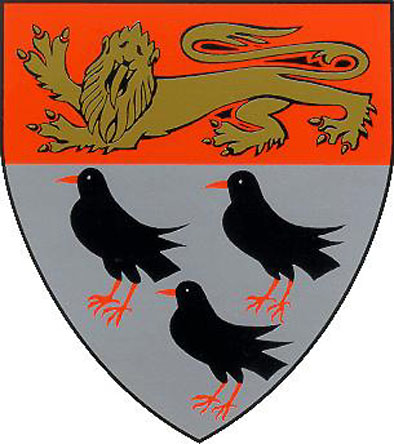
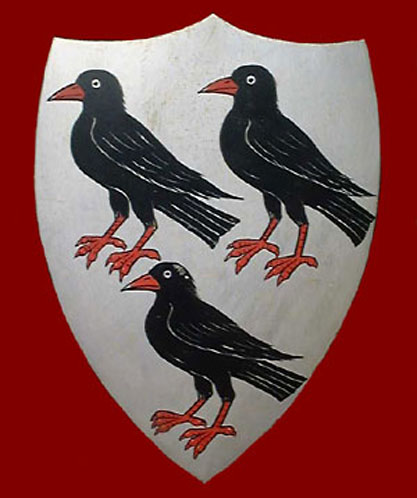
The city was, of course, Canterbury. But where did the City of Canterbury find those striking and exciting black birds? Well, it’s not a huge surprise:
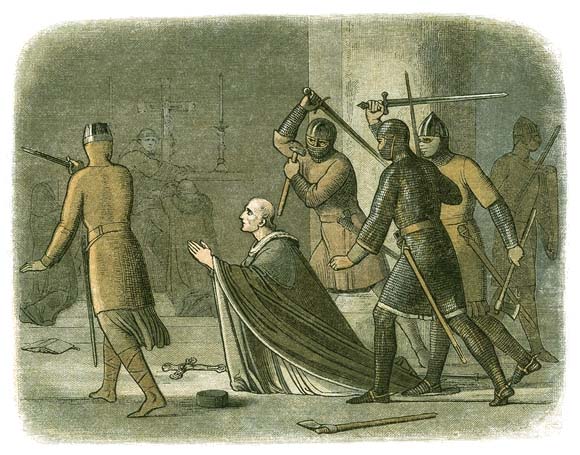
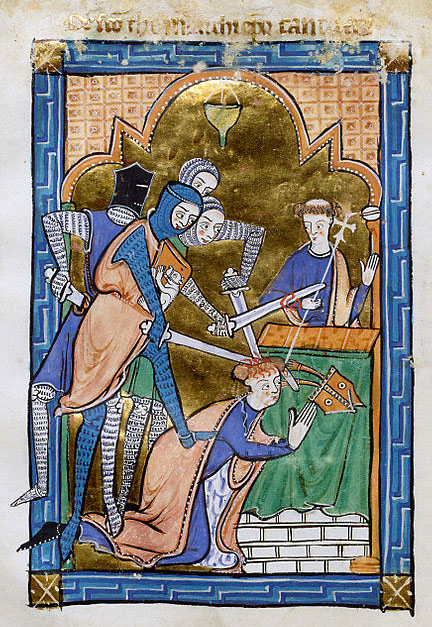
“The wicked knight leapt suddenly upon him, cutting off the top of the crown of his head. Next he received a second blow on the head, but still he stood firm and immovable. At the third blow he fell on his knees and elbows, offering himself a living sacrifice, and saying in a low voice, “For the name of Jesus and the protection of the Church, I am ready to embrace death.” But the third knight inflicted a terrible wound as he lay prostrate. By this stroke, the crown of his head was separated from the head in such a way that the blood white with the brain, and the brain no less red from the blood, dyed the floor of the cathedral:
The same clerk who had entered with the knights (not Edward Grim) placed his foot on the neck of the holy priest and precious martyr, and, horrible to relate, scattered the brains and blood about the pavements, crying to the others, ‘Let us away, knights; this fellow will arise no more.”
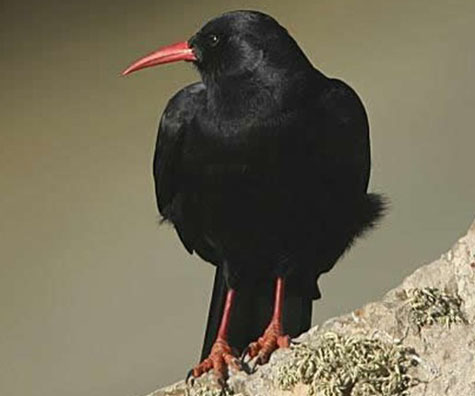
The birds on Thomas à Becket’s shield have red feet and red beaks and they are nowadays called “choughs”, although apparently in medieval times, they were often referred to by pilgrims as “beckitts”.
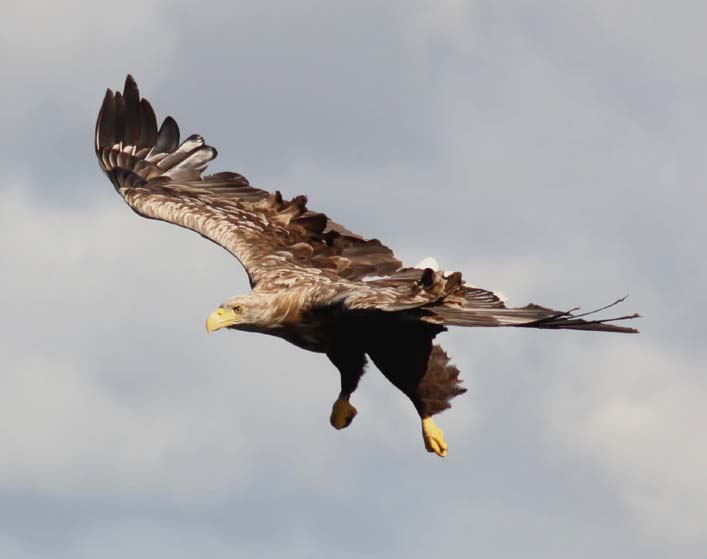
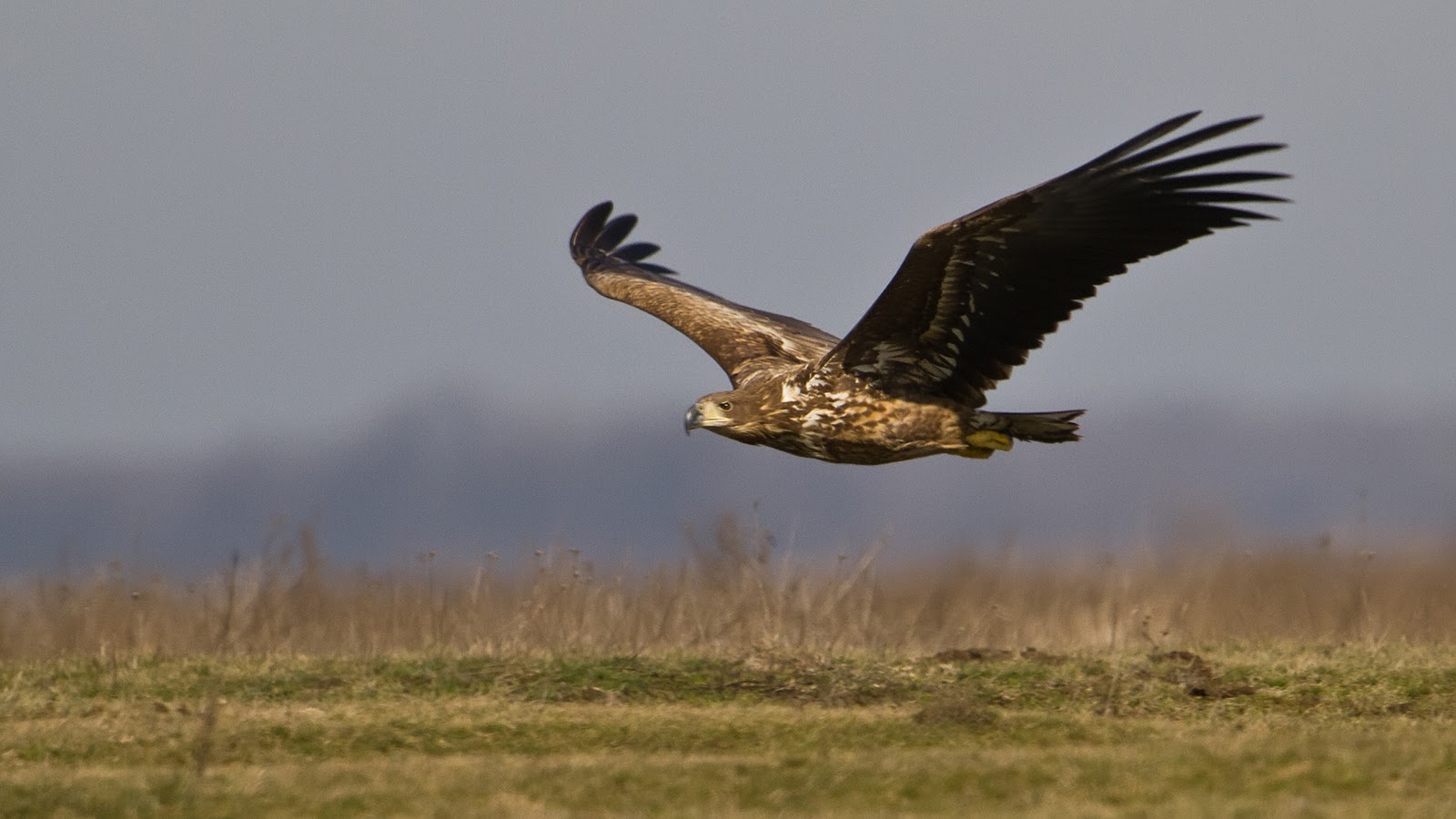
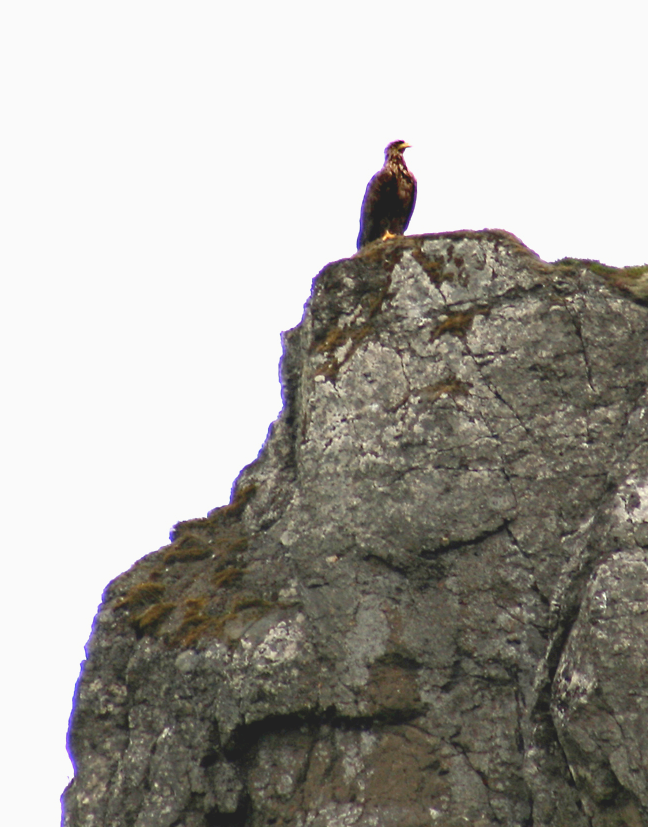
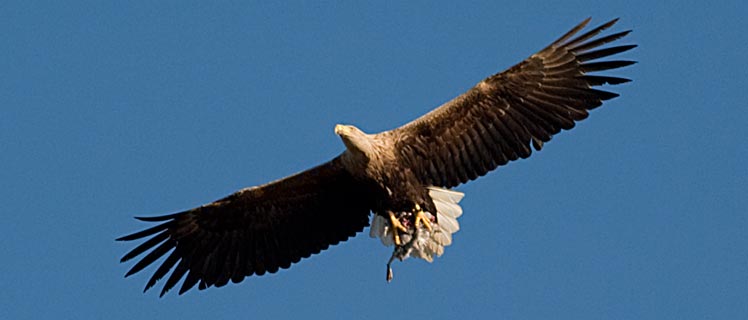
One of the more interesting issues in the area of local Natural History concerns the occurrence of eagles in Nottinghamshire in centuries gone by. In the era of the Anglo-Saxons, for example, the white-tailed sea eagle was called the Erne. This, supposedly, gave the town of Arnold its name.
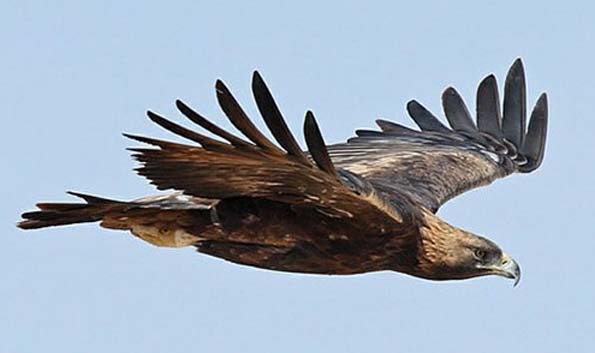
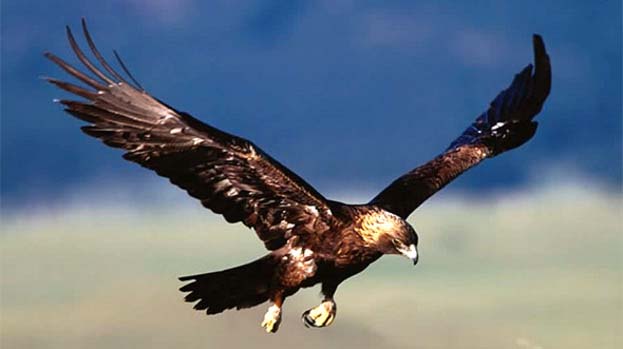
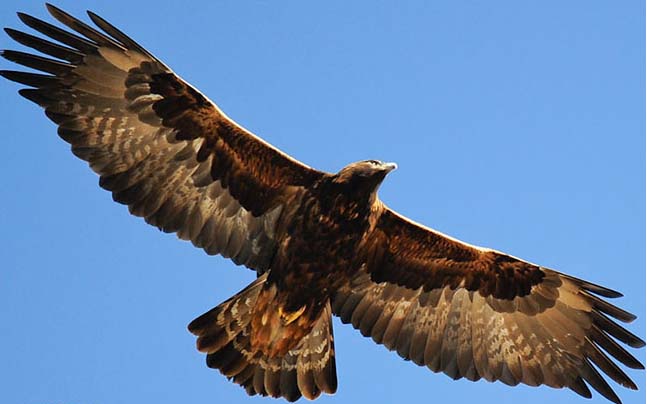
More problematic is the Golden Eagle, which certainly occurred in England much more frequently in the past than it does now. Between 1800-1900, there were at least twenty records nationwide with seven different birds in Yorkshire:
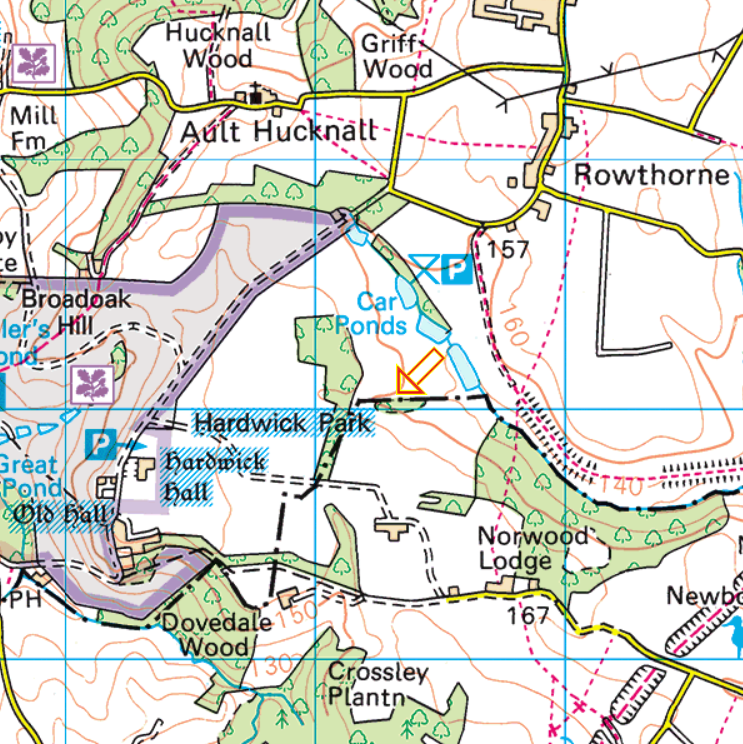
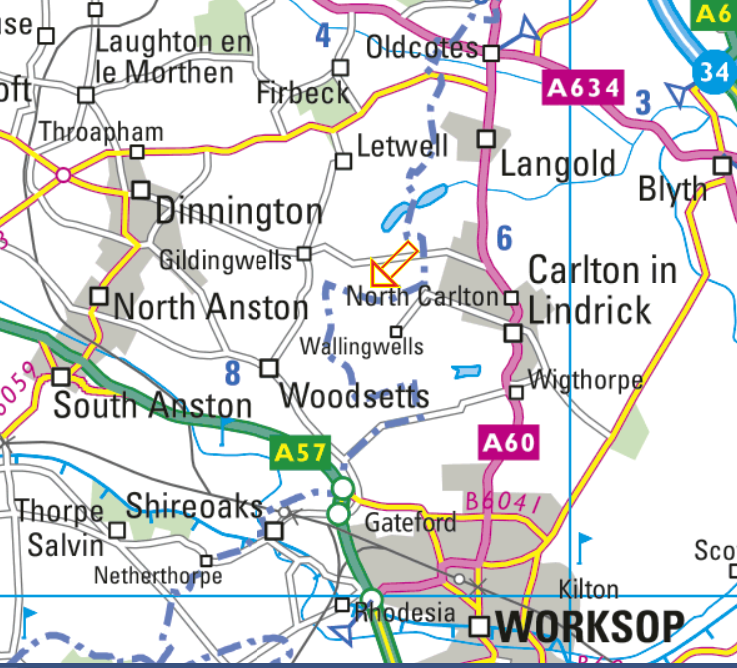
In books about local ornithology, there are some really old records of Golden Eagle. In “The Birds of Derbyshire” which was published in 1893, F.B Whitlock quoted an earlier, eighteenth century ornithologist, Mr Pilkington, who wrote about a Golden Eagle which was seen in Hardwick Park, a large estate right on the border of Derbyshire and Nottinghamshire. Hardwick Hall itself is within less than half a mile of the county boundary and in the absence of an exact location for this particular bird, it seems hardly unreasonable to suggest that it must have ventured into Nottinghamshire at some point during its stay. Both Hardwick Park and Hardwick Hall are easy to spot on this map. I have marked the county boundary between Derbyshire (top left) and Nottinghamshire (bottom right). Look for the orange arrow:
That particular Golden Eagle occurred as far back as 1759. A second Golden Eagle was shot in the same area around 1770. Twelve years later, in 1782, two Golden Eagles were seen “in the out-lying portions of Sherwood Forest, near Hardwick”. It was obviously a suitable habitat with a good supply of food.
In his “Ornithology of Nottinghamshire” published in 1866, William Felkin stated that “The eagle has twice been seen near Beeston: once by myself.” As a man, who, unfortunately, had no digital camera or mobile phone to record evidence of what he had seen, Felkin could have been no more definite than that.
I have recently become addicted to acquiring those reprints of Victorian Ordnance Survey maps and they do reveal that the outskirts of Nottingham were unbelievably countrified as recently as 1901 and even more so in 1866. Perhaps a stray eagle is not quite an outrageous bird to have seen, if only just passing over.
Felkin also noted that a Golden Eagle had been killed in an unrecorded year long ago at Castle Donington. This village, of course, is nowadays on the border between Derbyshire and Leicestershire, although it is reasonably close to Nottinghamshire. Felkin considered that this bird had occurred on Nottinghamshire’s “south-western border” and as such, was therefore worthy of inclusion in his important book about the county’s avifauna:
Modern birdwatchers would say that all these observers were simply mistaken, but that has always seemed a rather strange attitude to me. Just because they lived in the eighteenth or nineteenth century does not make people less trustworthy or more stupid than us. Certainly, in the case of the Golden Eagle which was shot around 1770 near Hardwick Hall, it would have been seen by a great many people once it was stuffed and out on display. They would certainly not have been slow to speak up about any identification errors committed by his Lordship or, indeed, his bird stuffer:
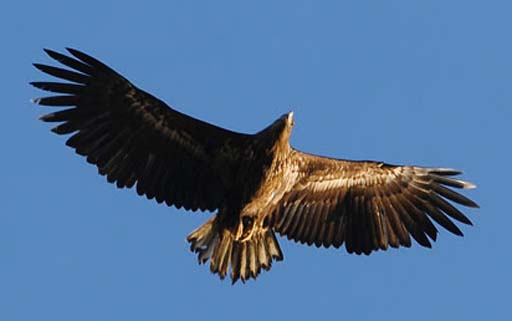
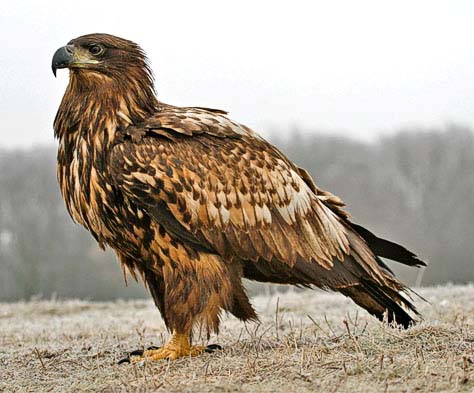
Joseph Whitaker mentions a number of eagles in his “Birds of Nottinghamshire” published in 1907, but these were all considered to be White tailed Sea Eagles, spending their winters further south than their summer breeding areas. His first account was:
“It was in the winter of 1838 that the bird appeared in Welbeck Park. Mr Tillery says :–
“The lake was frozen over at the time, except in one place, where a flush of warm water entered from a culvert which drained the abbey. The place was covered with ducks, teal and widgeon, and I saw his majesty swoop down once or twice to get one for his breakfast, but unsuccessfully, as the ducks saved themselves by diving or flying off. The park-keeper got two shots at him with a ball on a tree but missed him each time, and he gradually got wilder, so that he could never be approached again near enough for a shot. After levying blackmail on the young lambs, hares and game in the neighbourhood, he took himself off after three weeks’ sojourn”
In 1857, a single White tailed Sea Eagle was shot at Osberton near Ollerton on a date several days before January 13th. According to F.O.Morris, the nationally regarded author of “A History of British Birds”, he was informed of the occurrence by Sir Charles Anderson, Baronet, a gentleman who was presumably known to George Saville Foljambe Esquire on whose estate near Osberton the event took place. Sir Charles wrote thus…
“It was first seen sitting on a tree near a place where a cow had been buried a few days before and it continued flying about this locality for some days, always returning to the same tree, as if attracted towards it. There was partial snow on the ground at the time.”
William Sterland included in his two main books, “The Birds of Sherwood Forest” (1869) and “A Descriptive List of the Birds of Nottinghamshire” (1879) an account of the occurrence of a second White tailed Sea Eagle in Lima Wood at Laughton-en-le-Morthen. Strictly speaking, this bizarrely named village is in Yorkshire but it is really quite close to the Nottinghamshire border. On this map, Laughton-en-le-Morthen is towards the top left corner and I have indicated the dark blue county boundary with the orange arrow:
This occurrence was only a few days after the demise of another eagle, shot on the Foljambe estate near Osberton, and related immediately above. Whether the two birds were connected, male and female, or perhaps siblings, we will never know. It is certainly a very striking story:
“The bird was seen in the neighbourhood of Morthen for more than a fortnight before it was shot. On several occasions it was observed perched in a tree about a hundred yards from Pinch Mill, the person resident there taking it at that distance for a stray heron. Thomas Whitfield, the gamekeeper to J.C.Althorpe Esquire of Dinnington made many attempts to get within range of the bird, but was often baffled by its wariness. It was observed to be much molested by crows and small birds, and frequently, as if to escape from persecutions which were beneath its notice to resent, it would mount into the air with graceful spiral curbs until it became nearly lost to sight, leaving its puny assailants far below, and then would sweep as gracefully down again, with all the ease and lightness of wing of the swallow.”
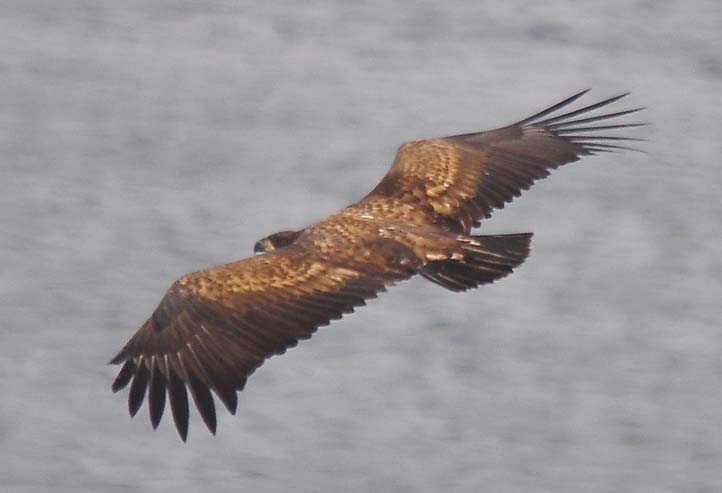
“It seems uncertain what its food consisted of during its sojourn for it was not seen to make any attack. At night it roosted on a tree, but still maintained a vigilant watch. When perceived by Whitfield, it was perched on a tree on the outskirts of the wood, but the night being moonlight, it perceived his approach and he had great difficulty in getting within gunshot. At the moment of his firing it flew off and he thought he had failed in hitting it; but in the morning he found it dead in an adjoining field. Its expanse of wing from tip to tip was seven feet six inches and it weighed eight pounds and a quarter. The friend I have mentioned kindly procured the loan of the bird from Whitfield and sent it for my inspection. It is a fine specimen in the immature plumage of the third or fourth year.”
The bird was shot on January 13, 1857, although. clearly, it had been present for some time before this.
Nearly forty years later in 1896, a single White tailed Sea Eagle was seen in the Deer Park at Park Farm, Annesley, between Nottingham and Mansfield, on November 5th, and for several days afterwards. It was thought to have been attracted to the area by the large number of rabbits present there and indeed, on a number of occasions, was seen feeding on them.
On November 8th, it was shot by Mr George Charles Musters, as it fed on the corpse of a rabbit, and when examined was found to have a total wingspan of seven feet one inch, and a weight of nine and a quarter pounds. It was an immature bird, although not a first winter individual, being considered to be probably three or four years old. It was, of course, preserved by a taxidermist and soon occupied pride of place in the collection of Mr John Patricius Chaworth Musters at Annesley Park.
In Joseph Whitaker’s own personal copy of “The Birds of Nottinghamshire”, housed in Mansfield Library’s local collection, he has appended a short note in pencil, written in that punctuation-free style that he always seems to use:
“I was standing on doorsteps one day in August 1907 waiting for carriage to come round it was a clear warm day a few white clouds were passing over very high I was looking up in the sky when I saw a bird pass under a white cloud it was so high if the white had not shown the job I should never have seen it but it was most distinct + I am certain it was an eagle by its size + flight whether Golden or White tailed I do not know.”
In another handwritten account in 1916, Joseph Whitaker tells the following story which, although illegible in places, is clear enough to constitute a valid record:
“A large bird of the (illegible) kind was seen by Mr Henry Smith’s son in Nov 1916 flying over his farm at Cropwell Butler. He wrote to me saying it was a very big bird + had a white tail. I told him it would be a mature Sea Eagle, and as such a bird was shot in Lincolnshire by Mrs (illegible) keeper of the next week. There is no doubt it was the same bird.”
Attitudes about shooting birds though, were gradually changing: people were well aware that a previously healthy Victorian population of Sea Eagles had disappeared from Scotland by 1900, every single one either shot or poisoned. The very last Sea Eagle was killed on the Shetlands in 1916, an albino bird shot by a member of the clergy.
These new, more conservationist, ideas were reflected in an account included in the Ornithological Records of the now defunct Nottingham Natural Science Field Club. It was included by one of the club’s most prominent birdwatchers, Frank Hind. Even nowadays, his handwriting is still recognisably angry:
“A Sea Eagle was shot by some bounder at Grimesmoor and sent to a taxidermist at Grantham in February of 1920. Mr Turton saw it there. It measured seven feet from tip of one wing to the tip of the other.
This rare visitor had shared the fate of so many noble birds which were frequently to be seen in the British Isles before anyone with a few pounds could buy a gun to destroy whatever his few brains had prompted him to shoot at.”
Nowadays, the positive attitude is the one which has prevailed. Even as I write, there are reintroduction schemes for this magnificent raptor in Ireland, eastern Scotland and many other areas of Great Britain. Many people would like to see it reintroduced to England and the debates rage about whether to select Norfolk or Suffolk. In the Inner Hebrides in western Scotland, of course, these charismatic birds are worth hundreds of millions of pounds to the local economy. Listen to just a few hundred quids’ worth of camera in this wonderful video by Brianpwildlife:
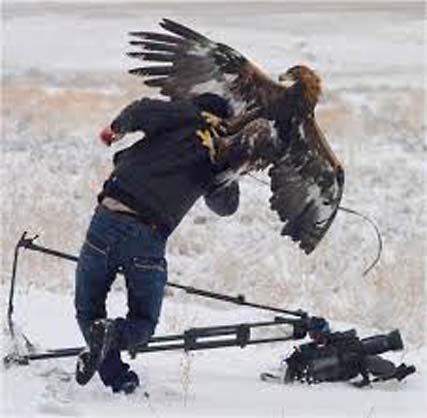
And no, they can’t carry off children or adults or small cars or large cars or vans or lorries or even what appears to be a young man equipped with perhaps a camera on a tripod or maybe a specially adapted hover mower for ice covered lawns:
I have always thought that France was fairly unlucky as a country to have been ravaged over the centuries by various Beasts, the majority of which nobody has been able to identify with 100% certainty. They have all been dismissed as merely oversized wolves, perhaps with attitude problems, but, somehow, I just cannot agree with that. Too many people who saw wolves perhaps three or four times a week were completely puzzled when they saw the BeastofGévaudan, for example:
This slideshow requires JavaScript.
Or when they saw the Beast of Benais or the Beast of Sarlat or the Beast of Auxerrois/ Trucy or the others whose individual blogposts I have not yet launched out into “Le Monde du Blogging”. Creatures such as the Beast of Lyonnais or the Beast of Cévennes/Gard/Vivarais or the Beast of Caen and Chaigny or the Beast of Orléans or the Beast of Veyreau. The Beast of Cinglais or the Beast of Gâtinais. The blood splattered list goes on.
What I did not realise, though, is that there are completely documented and wholly accepted historical accounts which detail attacks on Paris by wolves. And not just one wolf or even one pack of wolves. These were a whole series of large scale attacks by animals which broke all of our present day rules of how to be a politically correct wolf. They gleefully attacked and ate people. French people. Parisians:
The first wolf invasion came during the winter of 1419-1420. Over Europe as a whole, the weather that winter was unbelievably cold. In the east, in what is now Turkey, the Bosphorus was completely frozen over and it was possible to walk over the ice from Üsküdar to Istanbul, which was then called Constantinople.
In Western Europe, virtually all of France had already been made wretched by the debilitating effects of the Hundred Years War which was to last, rather inaccurately, 116 years, from 1337–1453:
This slideshow requires JavaScript.
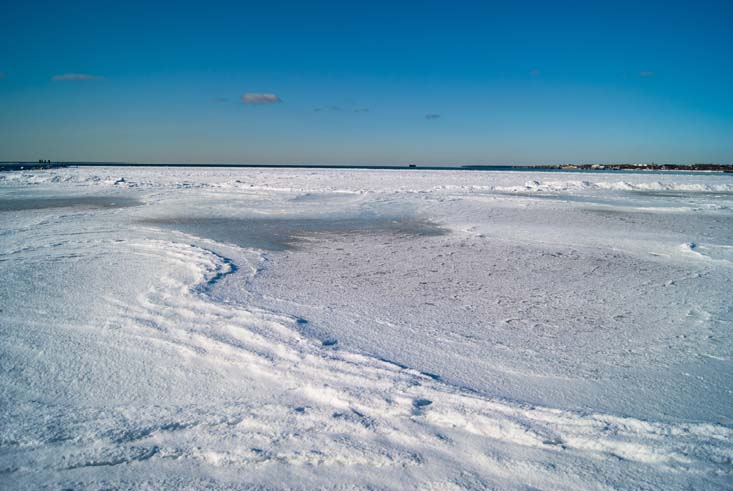
The winter of 1419-1420 was equally severe over the whole country with very low temperatures and copious amounts of snow falling for prolonged periods. Paris was occupied by the English and the famine there was so great that unfortunate Parisians spent all of their daylight hours wandering around just searching for food. Numerous packs of wolves, as hungry as the people, advanced into the suburbs of the capital, which was now just a vast, frozen wasteland. The River Seine froze over and people could cross over from one side to the other without problem:
Two years later, in 1421-1422, there was another winter of almost unbelievable severity. Wolves again entered the city. Every night they roamed around the streets of Paris, dug up recently buried corpses in the local graveyards and ate them. Anybody who tried to intervene was ripped to pieces and eaten, presumably, as a second course. Any wolves which were killed were strung up in the streets by their back legs the following morning, as a perhaps, slightly over optimistic warning to the rest.
It was so cold during this winter that bottles of wine, grape juice and vinegar froze in the cellars of Parisian houses and in some cases icicles formed on the vaults of cellar roofs. The River Seine, which had previously been in spate, froze over in less than three days and the ice quickly became firm enough to walk on. On January 12th 1422, there began in the French capital what was considered at the time to be the most severe spell of cold ever experienced by man.
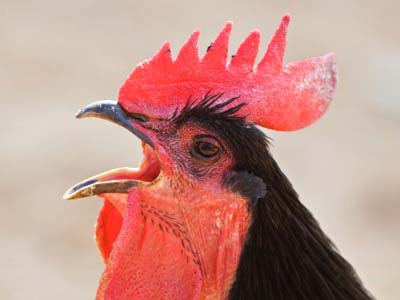
The River Seine froze completely throughout its entire length. Wells froze after four days. This harsh cold persisted for almost three weeks. To compound Parisian misery, a couple of days before the beginning of this extremely cold weather, there had been a heavy snowfall. Because of the severity of this snow and the subsequent extreme cold, people were completely unable to work. Instead, they resorted to jumping games, playing ball and other vigorous activities to keep warm. The freezing conditions were so intense that the ice in the streets and public squares persisted until March 25th. It was so cold that on the heads of cockerels and hens, their combs froze:
Equally surprisingly, there were no wolves reported in Paris during the extremely harsh winter of 1433-1434. The big freeze began on December 31st 1433 and then lasted for nine days short of three months. After this, another severely cold period followed, from March 31st 1434 until April 17th 1434. Just as a comparison, during this particular winter, the entire River Thames in England had frozen completely solid from December to February and remained completely impassable to shipping.
The wolves, though, were back with a vengeance in the second Parisian “Winter of the Wolf”, “L’Hiver du Loup”. This came in 1437–1438, when the weather was equally, if not more, glacial.
The River Seine again froze over completely and packs of wolves wandered into the French capital, roaming the streets in search of food. Here is an anachronistic photo of the River Seine, frozen over in 1437. How can you tell that, mon cher Sherlock?
In actual fact, there had been five unbelievably cold winters in succession over the whole of the European continent, and this was the last of the five. In England, the famine was so severe from 1437-39 that it was second only to the worst years ever in 1315-1317. These latter years were so wet that virtually all the nation’s crops failed and as many as 10% of the population may have eventually perished, in a decade characterised by crime, disease, mass death and cannibalism.
From 1437-1439, though, the winter cold was such that the English people in the countryside were driven to attempt to make bread from fern roots and ivy berries. An unbelievably prudent Mayor of London had avoided this situation in the capital by importing a good supply of rye from Prussia. This may have been Mayor William Estfeld (1437) or Mayor Robert Large (1439) but personally I would go for Stephen Broun the Grocer (1438).
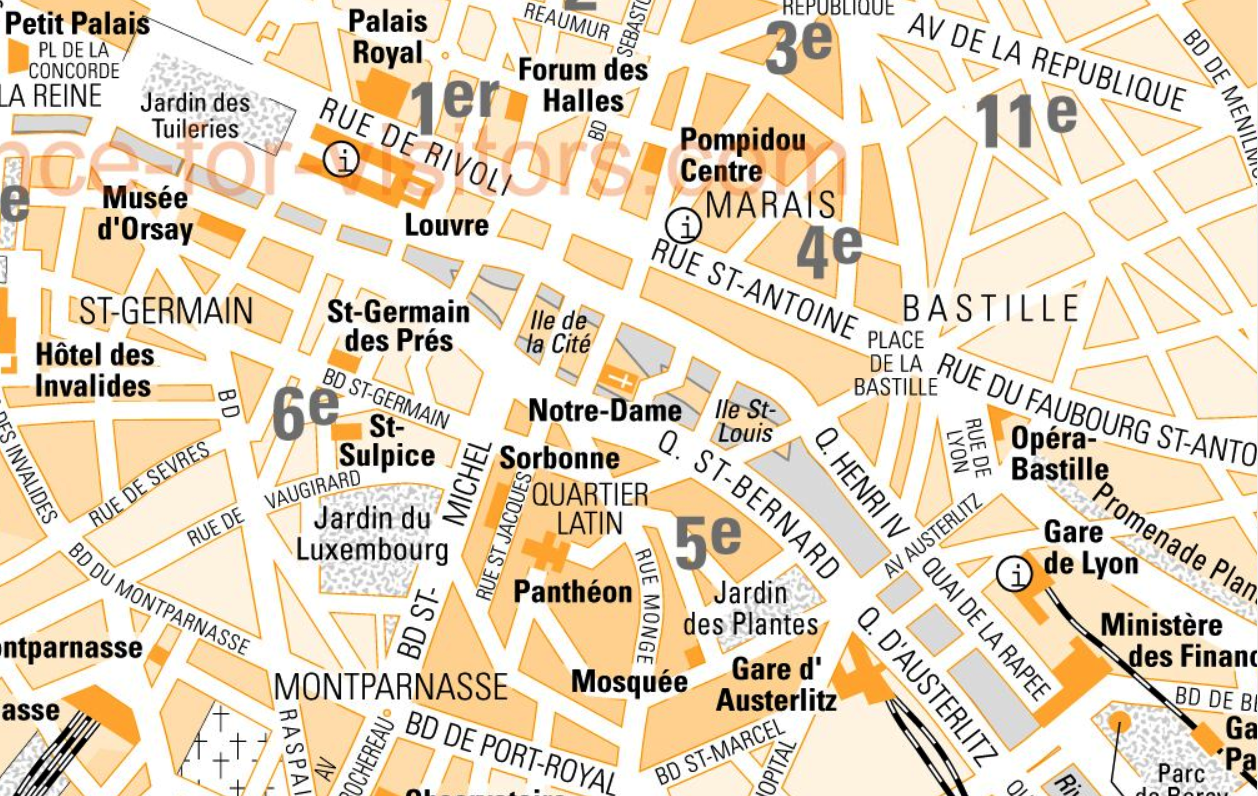
The only record of wolves in Paris which I have been able to trace during these three years of 1437-1439 came as early as the last week of the month of September 1439, when a desperate pack entered the city in search of fresh meat. They ripped out the throats of around fourteen people and duly devoured them. This occurred in the area between Montmartre in the north of the city:
And the Porte Saint-Antoine in the east, right next to the Bastille prison:
From 1450-1850, and possibly beyond that, into the early years of the twentieth century, the so-called Little Ice Age held sway over Europe. In 1457-1458 in Germany, for example, extreme cold froze the Danube River to such a thickness that an army of 40,000 men was able to camp on the ice. Two years, later during the winter of 1459-1460, the entire Baltic Sea was frozen and people could cross between Denmark, Germany and Sweden both on foot and on horseback:
In France, the most severe weather came right at the beginning of the Little Ice Age during their very worst winter of 1449-1450. During this period the weather in France was very wet, extremely cold, and there were, consequently, huge quantities of snow. Indeed, the winter had begun as early as October 1449, when large numbers of olive trees began to die of the cold across the whole country.
It was during this exceptional winter that Paris became the victim of its most famous attack by man-eating wolves, “des loups anthropophages” (a very useful mouthful, should you ever need the phrase on holiday, or perhaps wish to prove your sobriety to a French police officer).
This pack, “The Wolves of Paris”, (Oh somebody, form a Heavy Metal Band…the name is crying out for it!), “Les Loups de Paris”, are thought to have killed and eaten large numbers of hapless human victims of all ages over the course of the winter. The animals initially entered Paris through the very large holes in its dilapidated city walls, which had been built some 250 years previously in the early 13th century. Of course, the original builder, King Philippe Auguste, had intended the walls to protect the city from human invaders rather than animal predators:
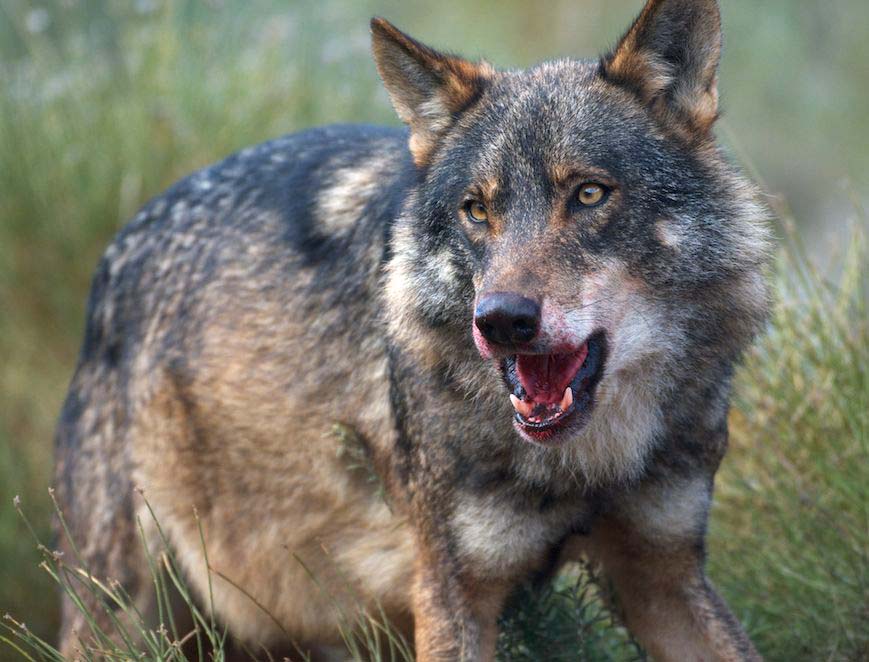
The leader of the pack was a wolf named “Courtaud” which means “Bobtail”, as he had a tail which had been “docked” or shortened in some unknown incident. The descriptions of “Courtaud” at the time said that he was reddish in colour, not really a pigment that you would expect in a pure 100% common, Eurasian or Middle Russian forest wolf as the subspecies canis lupus lupus is variously known across Europe. Suggestions have been made that its unusual colour was because it was an Iberian Wolfcanis lupus signatus on its holidays from Spain, but there is a problem with that. As far as I can see, the Iberian Wolf is not particularly reddish. Here he is. Just look at that blood:
According to the Wikipedia entry in the link above, canis lupus signatus has a lighter build than the European Wolf, some white marks on the upper lips, dark marks on the tail and a pair of dark marks in its front legs. There is no mention of red.
Don’t get me started, but my explanation for all those various Beasts (bêtes féroces, bêtes dévorantes ou bêtes anthropophages) which ravaged France over the centuries now comes into its own. I believe that they were members of a more aggressive, larger and now extinct species of wolf. If any unusual colour is mentioned for La Bête du Gévaudan, La Bête de Cinglais, La Bête de Caen, LaBête du Lyonnais or La Bête du Vivarais, it is always, exclusively, red. And, as we have just seen, Courtaud too had fur of this colour.
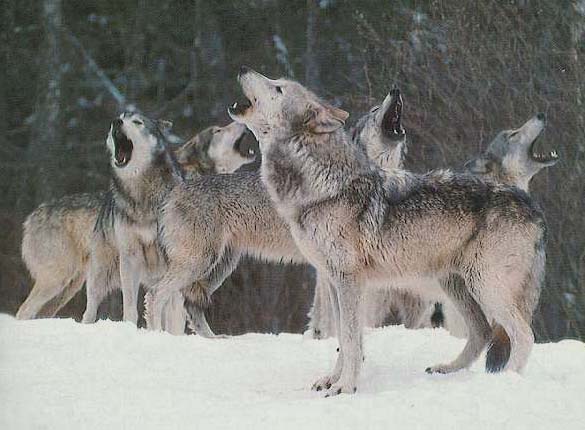
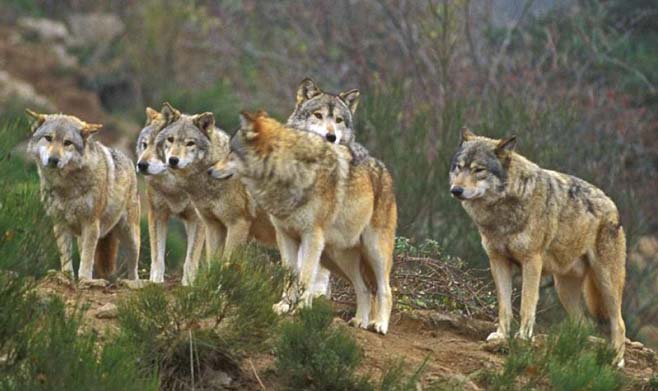
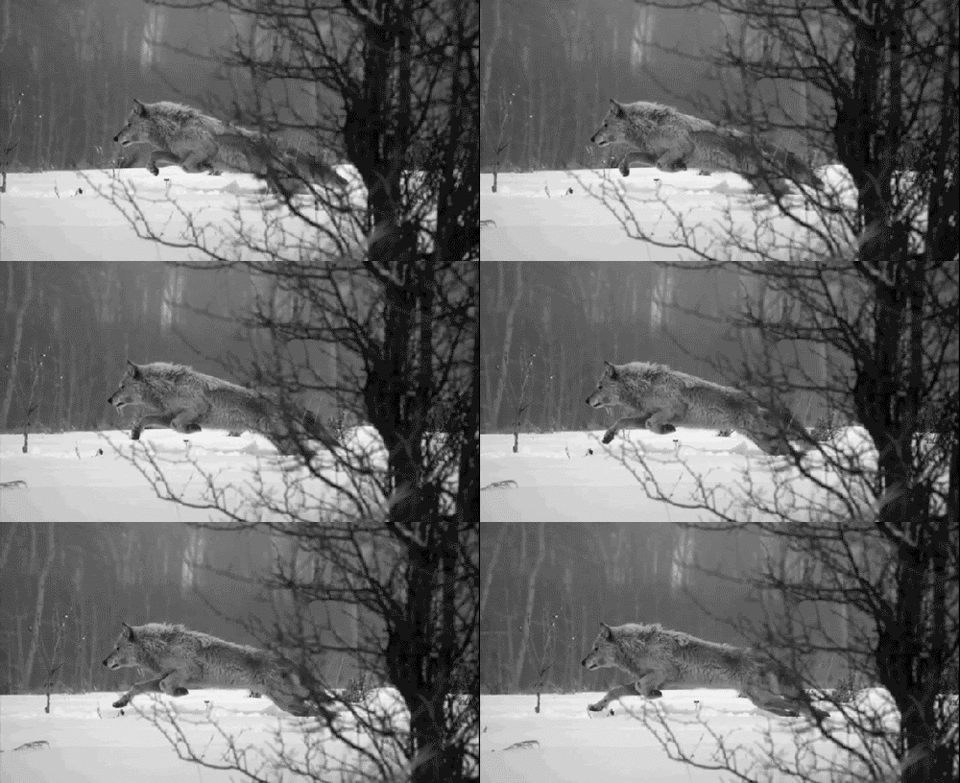
That is why I just do not believe that ordinary wolves were responsible for these blood spattered killings. And anyway, aren’t ordinary wolves a friendly looking bunch of chaps? They would not dream of eating anybody:
At first, there were around twenty wolves in the Parisian pack and they killed dozens of people. Gradually, wolf numbers built up, and the list of victims grew longer and longer. In the first month, supposedly around forty people perished, with a total kill for the whole winter of several hundred. They included, for the most part, anybody the wolves found wandering around the city at night, or any individuals who were outside sleeping rough. Inevitably, the inhabitants of Paris in that winter of 1449-1450 were swept by a feeling of total panic. Attempts to kill the wolves in their dens were totally ineffective. The wolves became so self confident that they often enjoyed a sing-song on their way back from the pub:
Eventually, though, Parisians became increasingly enraged that it was no longer safe to walk the streets of their beautiful city. Furious at all the deaths, a brave group of volunteers found a couple of unwanted cows and killed them. Then they set off, dragging the mutilated corpses along behind them on ropes, so that they left a bloodied trail. Eventually, the wolves began to follow the scent, and slowly, slowly, Courtaud and his bloodthirsty colleagues were lured and prodded into the very heart of the city:
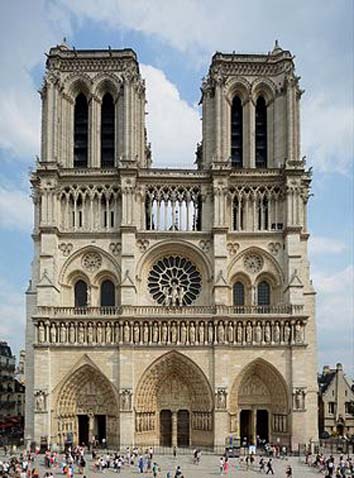
When the wolves reached the Ile de la Cité (middle of the map), they arrived at the large square in front of the cathedral of Notre Dame, which is called the Parvis Notre Dame. Here they were trapped, surrounded by pre-prepared wooden barricades. Here is Notre Dame cathedral. See if you can spot the hunchback:
And here is the large square in front of the cathedral, which is really quite extensive in size. I wouldn’t like to have chased a pack of wolves across here:
Finally, the angry Parisians stoned and speared the entire pack, until every single wolf was dead. Courtaud was paraded dead around the city in a cart, pulled by the triumphant crowd. Here is one of those bizarre modern art exhibitions which was held in Paris recently. I don’t suppose it’s Courtaud and his pals from 1449-1450, but I do hope that no real wolves died to make it:
I do not really believe that Paris’ historical scrapes with wolves have necessarily finished. Grey wolves were completely extirpated from France in the 1920s and 1930s, but ten years ago they started entering the country again from Italy. There are now around 300 wolves in France and the farmers allege that they have killed more than 6,000 sheep in the last twelve months. The woods around Paris are well stocked with deer and boar and they would make an ideal hunting ground for wolves. Indeed, this year, wolves have been sighted just 40 miles from the city:
Presumably preparing the Parisian populace for the latest lupine invasion, there are a number of different books available, all of which are all entitled “The Wolves of Paris”:
“It’s the winter of 1450 and Paris is in a panic. A pack of ravenous wolves is loose in the city, feasting on human flesh. Lorenzo Boccaccio is summoned by a Dominican inquisitor who….”
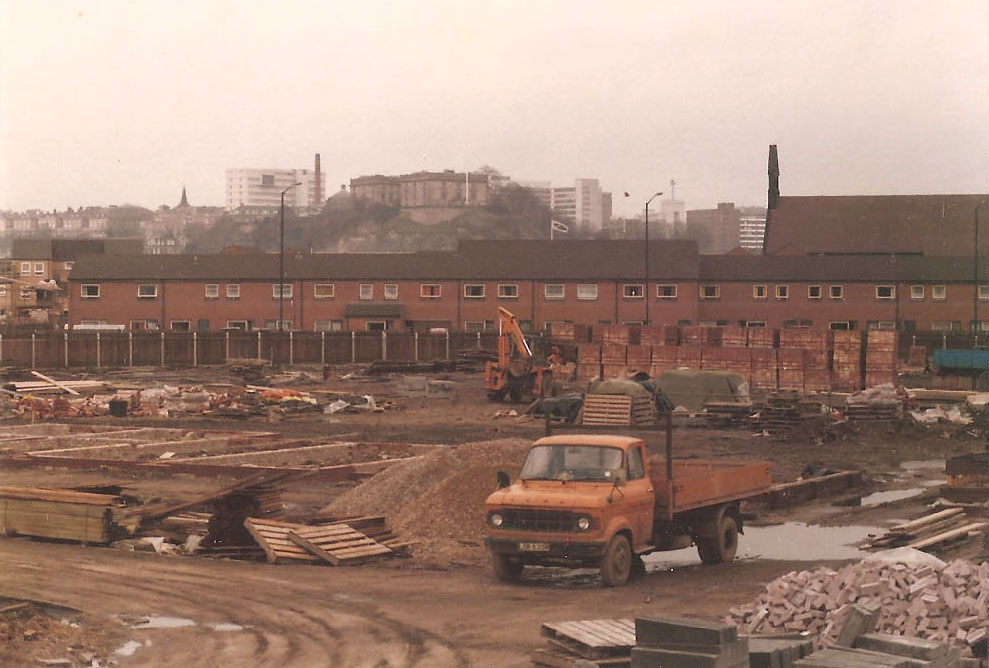
When we were first married, my wife and I bought a house in the Meadows area of Nottingham. This was traditionally a place of slums, crime and general unpleasantness, but at the time, the early 1980s, huge numbers of unhealthy hovels were being demolished to be replaced by newly built, better quality, council houses, as they were then called. Mixed in with all the rented accommodation though, was a small estate of private houses, and we bought one of those. When we first moved in, we were surrounded by a vast building site:
And now, it must be nine minutes past four and the teaching day is ended and I have driven home at top speed:
“Home is the sailor, home from the sea,
And the hunter home from the hill.”
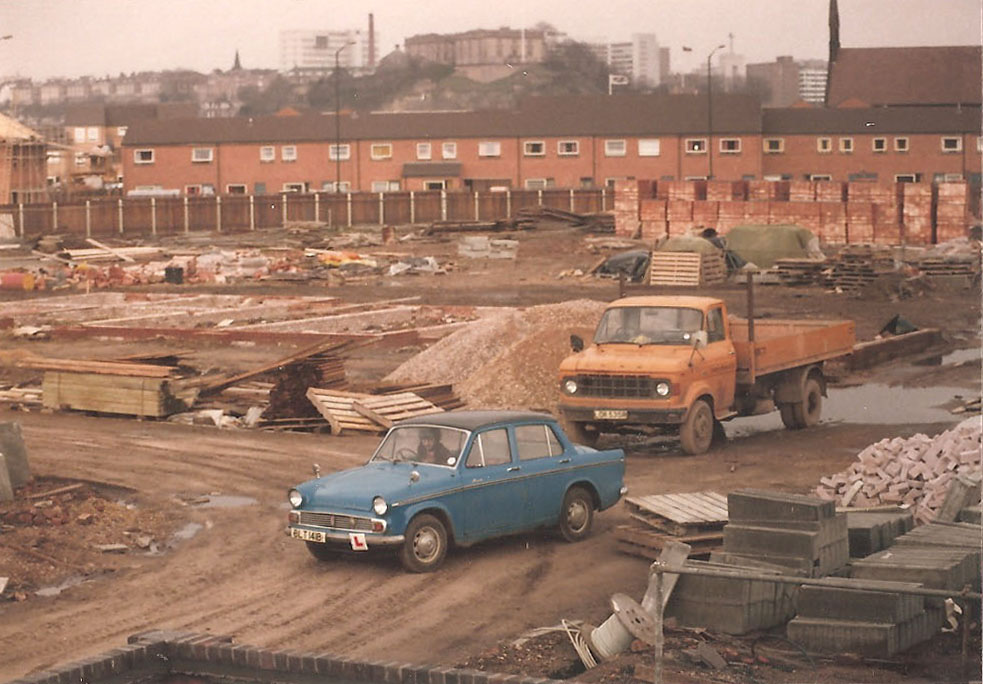
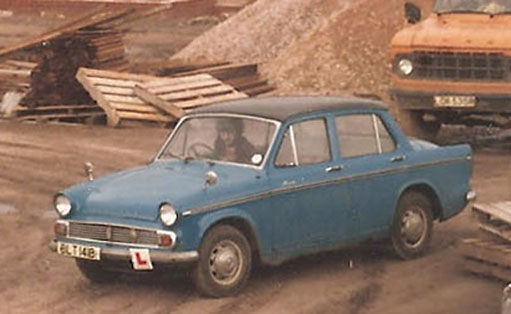
I used to have an old 1964 Hillman Minx De Luxe, with the registration plate BLT 141B. It was my first car, and I loved it dearly. I wish I could have it back again. It had previously belonged to my Dad, Fred, who loved it even more than I did. When the seventeen-year-old car failed its last roadworthiness test, he was so glad that I took the trouble to drive it, fairly illegally, the 35 miles to his house, just so that he could then drive it himself on its last ever journey down to the scrapyard.
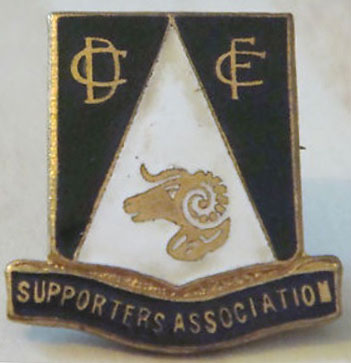
This beautiful blue car was “the one” as far as Fred’s motoring career was concerned. One day in 1966, he took me with him to nearby Derby and we visited Peveril Garage, on Friar Gate, up near the headquarters of the Derby County Supporters’ Club:
Fred told me not to mention anything whatsoever about the day to my mother, not under any circumstances. Without any consultation with her at all, therefore, he bought this marvellous car, which was priced at £510. In those days, that was a princely sum indeed. If truth be told, it was actually a total sufficiently royal, that when my mother did eventually find out what he had done, she would have had Fred beheaded if she could have organised it.
The car was a rich blue, half way between sky blue and navy blue, with a black side stripe picked out in metallic chrome. In later years, when he had problems with rust on one of the wings, Fred was to opt for a total re-spray, which allowed him to retain the same colour blue for the body, but to incorporate a black roof which added that extra, unique, little detail to his beloved car:
At this time, I had only recently passed my driving test, so, while I waited for the green “Provisional” plates to be invented, I retained my Learner plates, with the Big Red Ell on them. That was enough to be pulled over by a young policeman, apparently tired of arresting burglars, drug dealers, terrorists, murderers and bank robbers. Still, no hard feelings.
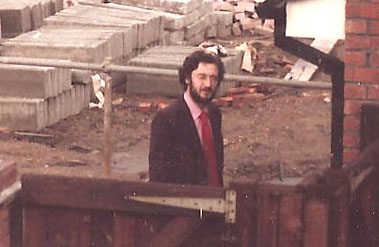
And here I am, looking like the man who designs the stage costumes for a 1970s pop group:
I am wearing my favourite wide lapel purple jacket which had a wonderful Polyester feel to it. My shirt was short sleeved and chequered in pink and white. My extra wide tie was scarlet, and again, made of Polyester for easy cleaning. My glasses were gold-rimmed and my hair was a deep delicious dark brown without the slightest trace of grey:
I had probably been wearing a pair of trousers throughout my day as a teacher, but they are not visible in this photograph. They may well have been my favourite pair ever, which were generously flared and mid-grey with an emphatic large black check design all over them. This created a whole series of huge squares perhaps four or five inches in size. I eventually gave these show stealers to a charity for the homeless in Africa. I often wonder who got them and what he made of them. Conceivably, some kind of shelter.
I have written a good deal, some would say too much, about the monsters which terrorized France between 1500 and the end of the nineteenth century. The most conservative zoologists say that the so-called monsters were just wolves behaving badly. Other more daring individuals say they were cave hyenas or dire wolves or waheelas or whatever:
This slideshow requires JavaScript.
I personally think that they were some kind of Superwolf which was like generally pretty much like an ordinary wolf in appearance, but with enough differences in behaviour to stand out from the rest. Just enough for the French peasant of 1764-1767 to think to himself, “C’était comme un loup, mais ce n’était pas un loup.”
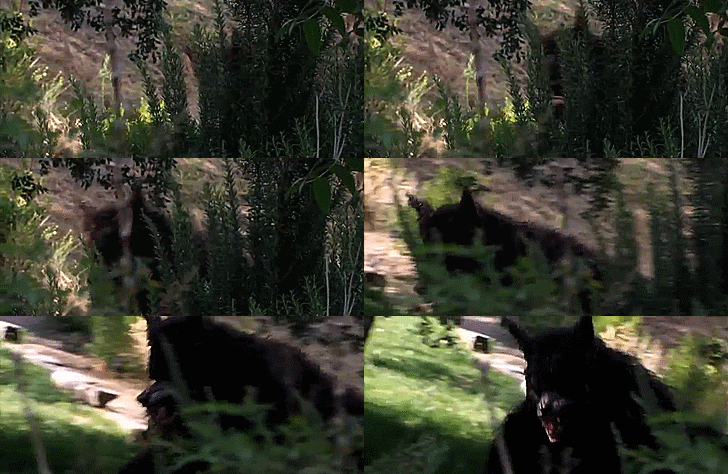
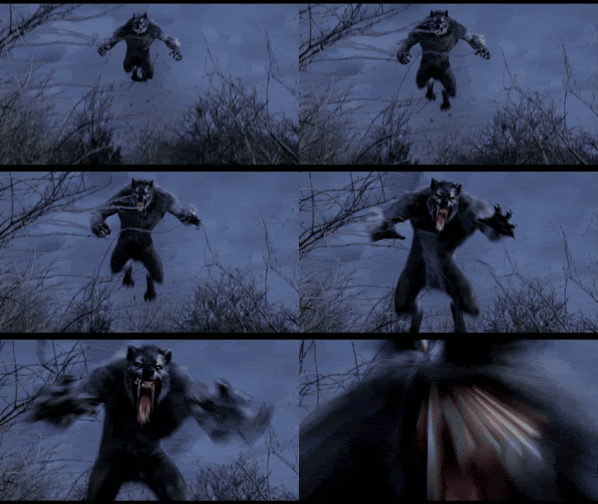
What I have never imagined as the solution to this blood spattered conundrum is the werewolf. In French, it is the Loup-garou:
The Americans in those areas of the USA which have a French heritage call it the Rougarou, rather as if somebody in 1700 had slightly misheard the word. Given that the Rougarou allegedly lives in the bayou and perhaps makes a “Wooo-hooo” call, I have always been somewhat surprised that no aspiring songwriter has ever taken up this subject.
In two cases, back in the day, they were unknown creatures that attacked livestock and left a trail of blood and gore. That could have been anything, of course, perhaps even the first Alien Big Cats in the country but much more likely to have been just feral dogs, which regularly kill both people and livestock in far larger numbers than either wolves or werewolves:
There was mention of a genuine werewolf near Ripon, Yorkshire, in the 1920s and then another in Edale, Lancashire, in 1925. It was described by the forum contributor, Jerry_B as “some large animal…tearing sheep to bits”. Sounds like it’s back to those feral dogs to me.
A bloodsucking equivalent of these two werewolves, allegedly, was the monster “on the prowl in 1905, at Badminton (Gloucester)”.
All of these seem extremely far-fetched in my humble opinion, but there is one interesting English werewolf tale which features very widely on the Internet. For me though, it is a superb example of putting a couple of interesting facts together, and then using them to come to a fairly ridiculous conclusion. After that, everybody is more than happy to view this iffy conclusion as completely sensible and to consider it henceforth as hard fact. No need to bother about questioning the reasoning process. If you still don’t understand what I’m getting at, then treat yourself to the finest example I know of, namely any episode whatsoever in the “Ancient Aliens” TV series.
.
First of all, though, for the sake of argument, I am willing to accept the supposition, for the moment, that wolves in England, centuries ago, were capable of behaviour that, nowadays, would be dismissed as being highly unlikely. That behaviour, of course, would be to treat human beings as a prey item and to attack them as a matter of ordinary routine:
Whatever you may think about that as a supposition, the author, John Harries, in his book “A Ghost Hunter’s Road Book”, states that things were so bad in Saxon times that, presumably at the behest of King Aethelstan:
“ about the year 940 AD a hostel was built in the village of Flixton to shelter wayfarers in wintertime from attacks by wolves. At that period packs of the animals were not uncommon in the north of the country, and they were regarded with particular loathing because in times of severe weather they scavenged in graveyards.”
That statement is by no means outrageous, although it would be nice to know where the story originally came from. After all, there cannot be too many sources available to be cited when it comes to events more than a thousand years ago in 940 AD.
What tips it over the edge, though, is the next piece of rather iffy logic:
“Their cunning in discovering unprotected cattle, their boldness in attacking travellers, and their habit of suddenly descending in large numbers on an area where they had previously been unknown, all helped to give rise to the belief that the animals were not ordinary wolves but human beings who adopted a travesty of wolf shape by night.”
Wolves capable of finding “unprotected cattle”? How unusual! How unprecedented! I’m sure that has never happened in the northern states of the USA.
“Descending in large numbers” to a source of easy food? How extraordinary for a pack predator to be any good at doing that!
The wolf is one of the most widespread and successful predators on the planet. So why do we need to explain his achievements as the work of werewolves? And not even ordinary werewolves at that…
“Their nocturnal exploits were supposed to be organised by a wizard whose innocent appearance enabled him to gather information about cattle, sheep and human wayfarers in taverns and market places.”
Look out! There’s a wizard about!! Careless talk costs lives!!
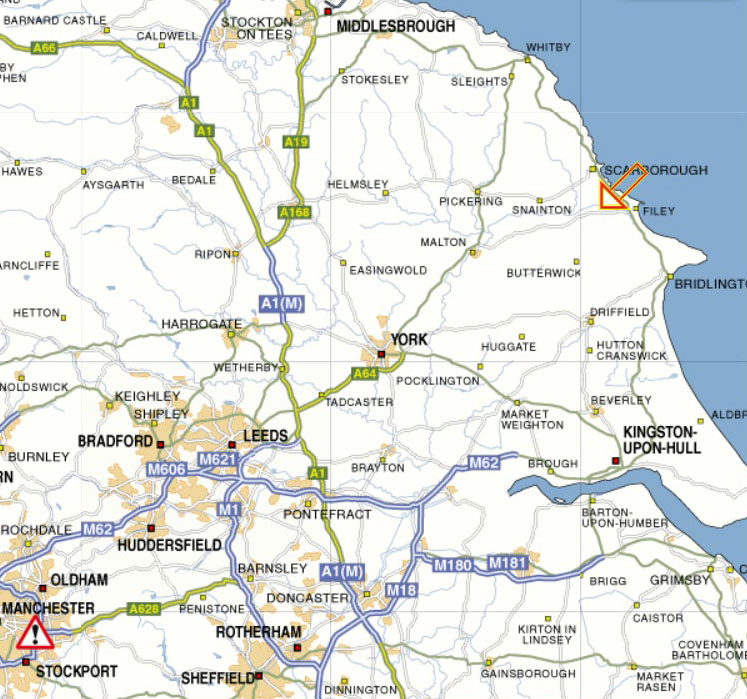
Flixton, by the way, is in Yorkshire, in the north of England, near Scarborough. Look for the orange arrow:
Here is a more detailed map:
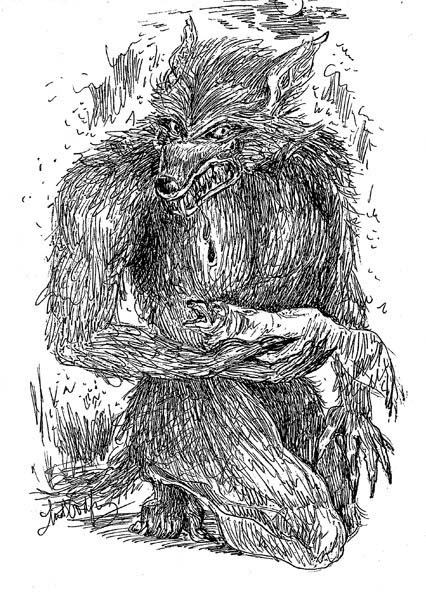
Further details about the Flixton Werewolf were that he has glowing red eyes and a particularly bad body odour. (Don’t say it!) Reports supposedly began all over again in 1150, although by now he had grown a very long tail. In 1800 a stagecoach making its way to York was supposedly attacked by an apparent werewolf. In 1970, the Flixton Werewolf made an unsuccessful attempt at attacking a long distance lorry. Easy prey, of course:
All these additional details, and a succession of precise dates, all help to give the story of a werewolf in Yorkshire veracity and credence, of course.
I was able to find mention on the Internet of just a two other werewolves in England, both of them in Devon (in the Valley of the Rocks in Lynton and the Valley of the Doones on Exmoor). On the latter occasion, a Victorian lady walking home in the dark saw a grey man with a wolf’s head, apparently stalking a large rabbit. The grey man disappeared when he was disturbed by a stag emerging suddenly from some nearby woodland.
Funnily enough, this apparently bizarre tale of the grey man with a wolf’s head sounds a lot more probable to me. If you have read my articles about Shuck and then the Wolfmen in the USA, you may recall that the almost cute behaviour of this grey man with a wolf’s head is much more typical of these cryptocanids:
“Nick Duffy, of the West Midlands Ghost Club, reported that “The first person to contact us was a postman, who told us he had seen what he thought was a werewolf. He saw what he believed was a large dog, but when he got closer, the creature got on his hind legs and ran away.”
“A local scout-leader reported that: “It just looked like a huge dog. But when I slammed the door of my car it reared up on its back legs and ran into the trees. It must have been about six to seven feet tall.”
Both of these pieces of behaviour come much, much closer to the Dogmen and Werewolves of the USA. If you read Linda S.Godfrey, you will see that the majority of these monsters prefer not to attack but to run away:
Let’s finish with two things. Firstly a question. Why do you always have to shoot a werewolf with a silver bullet to kill it?
It’s because back in the days of muskets and similar hit-and-miss weapons, accuracy was way below today’s standards, as was killing power. One, albeit expensive, way to improve both was to discard the third rate bullets of the day, and make your own, rock hard, bullets from…you’ve guessed it! Silver.
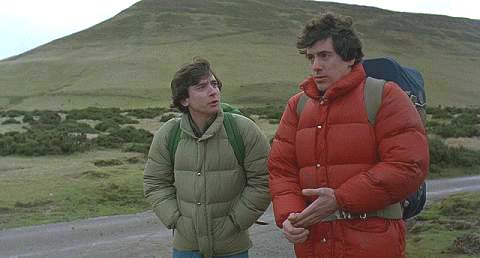
And secondly I was unaware that when they were filming that classic tale “An American Werewolf In London”, the opening scenes on the Yorkshire moors were all filmed in Wales because “Yorkshire didn’t look Yorkshire enough”:
Not many people would be able to answer this question.
What exactly is “Ermine a Lozenge Argent charged with three Blackbirds rising proper on a Chief Gules an open Book also proper garnished Or between two Ducal Coronets of the last.” ?
Well, it’s one of these, more or less. What’s a lozenge between friends?:
The origin of the High School’s coat of arms has always been, to me, a major enigma. Apparently, there has always supposed to have been a connection between the arms of Dame Agnes’ family, namely “Mellers” and another family called Mellor, who lived in Mellor, a village between Stockport and Glossop.
(Where?)
(Well, let’s put it this way. in either town you can easily get a bus to Manchester. It’s a distance of some seven miles and twelve miles respectively)
Here is their coat of arms:
To me though there is quite a difference in spelling between Mellor and Mellers, although the Mellor coat of arms is obviously a reasonable fit with the school’s crest.
This theory, though, does rely almost totally on the supposition that Richard Mellers was related to this “Family in the North” whose coat of arms displayed three black birds. In actual fact, there is no reason to suppose any proven link whatsoever between the two families. After all, it’s a very long way between Nottingham and Stockport in late medieval times. More than ninety miles, in fact. The best part of a week on foot, not counting any unexpected meetings with Robin Hood and his Merrie Men.
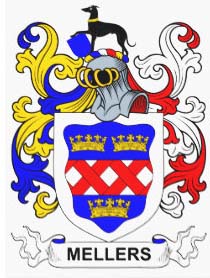
Let’s look at a small number of other likely coats of arms. Let’s start with Mellers. It should be said that Dame Agnes herself always spelt her name as “Mellers” (but never as “Mellor”):
For “Mellers”, we find very few coats of arms, but there is this one:
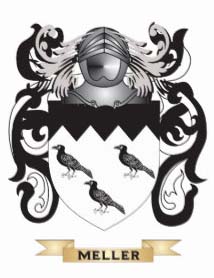
Let’s try “Meller”. We do find this one, and furthermore, the very same shield is listed elsewhere as “Mellers” :
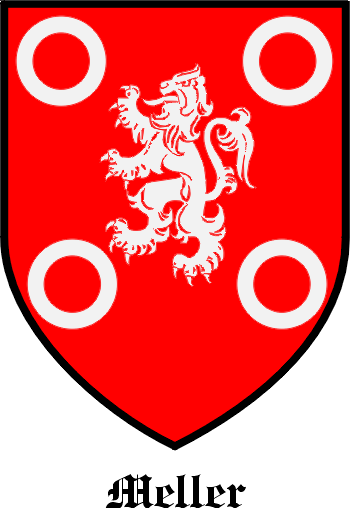
That’s not the answer, though,, because we also find this shield for Meller, as well:
And this one:
And this one:
Clearly, something, somewhere, is not quite right. It may even be very wrong. There are problems here, and the first major one may well be connected with the simple issue of the spelling of Dame Agnes’ surname. Despite her own insistence on Mellers, mentioned above, a quick look at “Google Images” will reveal that Mellers, Mellor, Meller and probably Mellors, appear to be disturbingly interchangeable.Coats of arms just seem to come and go. They are different every tine you look at Google. This is because, I suspect, they are connected less with accurate heraldry than the desire to sell tee-shirts, mugs, key rings, ties and even underpants with your family crest on them.
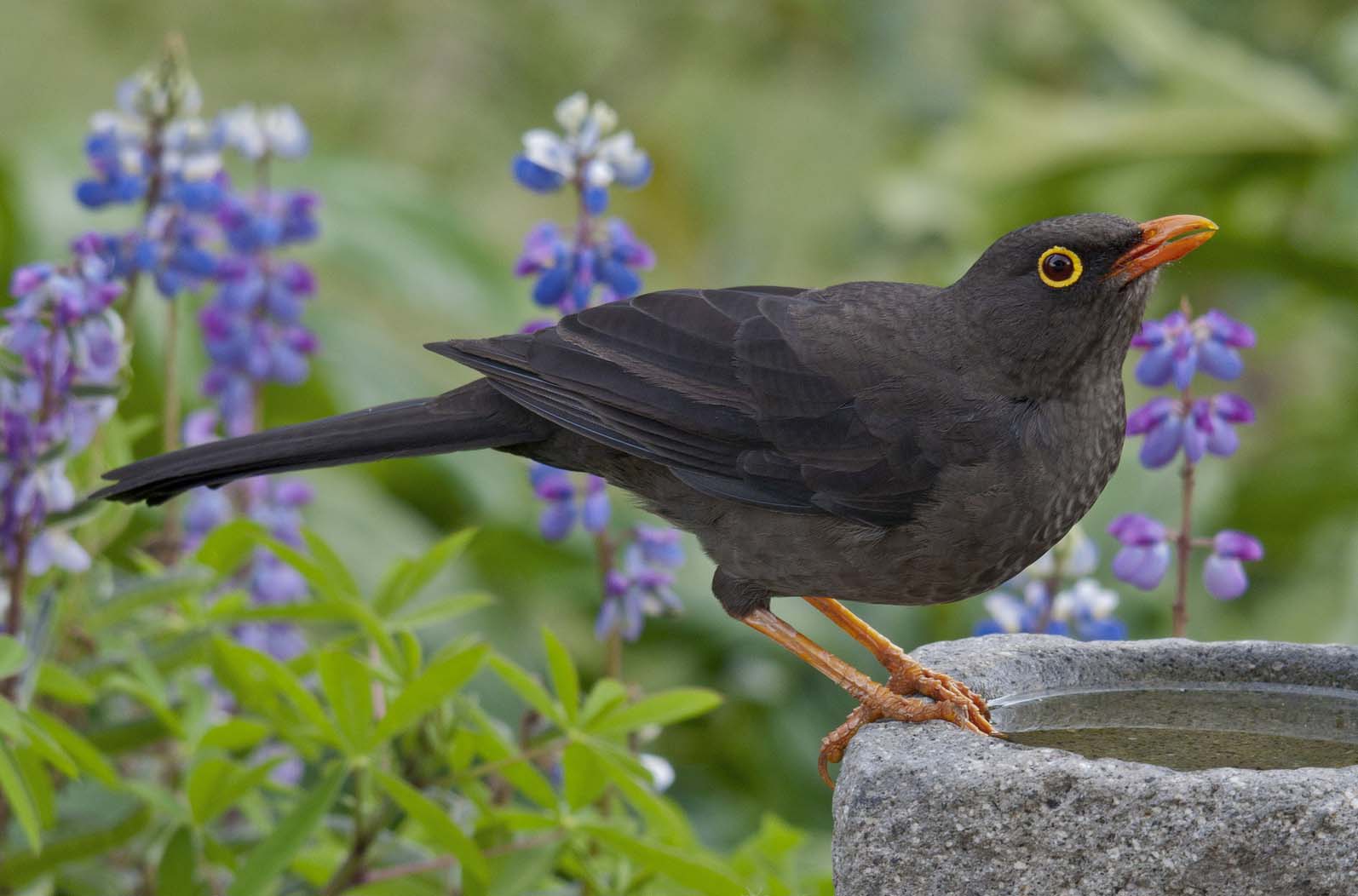
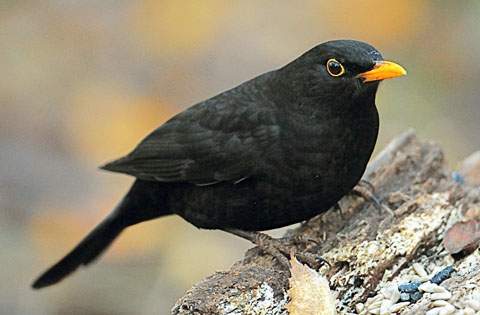
Those black birds on the High School shield have always been regarded as Blackbirds, an everyday bird species in England:
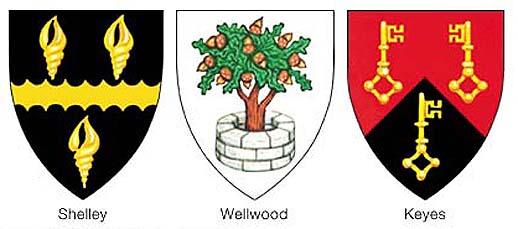
The theory is that the heraldic word for a blackbird is “merle”, taken from the French, and this gives us a devilishly funny pun for the surname “Mellers”. Such side splitters are called “Canting Arms”. They are used to establish a visual pun, as in the following examples:
I am just not sure about this word “merle”. Just because a coat of arms contains a number of black birds (as opposed to green ones), that does not automatically mean that we are dealing with canting arms, even if the French word “merle” refers to our familiar back garden bird, the Blackbird, aka turdus merula, and the name “Mellers” sounds perhaps, possibly, maybe, slightly, conceivably, like it.
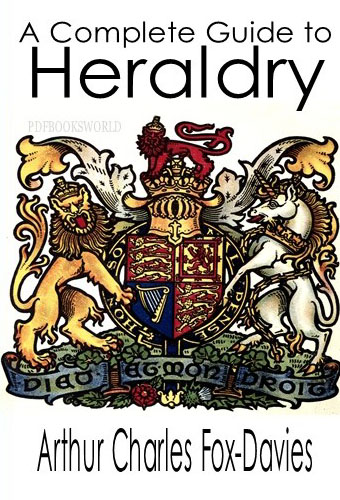
This rather old book is the standard work on English Heraldry and has been for quite a considerable time. It is a book of some 645 pages, but there is not a single “merle” on any one of them. And more important still, if merles did actually exist in Heraldry, then why did the Heralds’ College, known also as the College of Arms, call these birds “blackbirds” when they made that formal grant-of-arms to the school as recently as 1949? Why didn’t they call them “merles” and thereby preserve the “Laugh, I nearly died” visual pun?
And don’t think that the College of Arms are just a bunch of fly-by-night door-to-door sellers of heraldic key rings and underwear. They were founded well before Dame Agnes Mellers, in fact as far back as 1484. To quote the definition on the Heraldry Society website:
“The College of Arms is the only official English authority for confirming the correctness of armorial ensigns — Arms, Crests, Supporters and Badges — claimed by descent from an armigerous ancestor, or for granting new ones to those who qualify for them.”
In other words, if they say it’s a blackbird it’s a blackbird. You can’t just decide to call it a “merle” because you feel like it, or because it seemed like a good idea at the time. It’s just not allowed. Here is another blackbird, just to refresh your memory:
In 1920 at least, nobody called it a “merle”. In June of that year, the new school magazine, “The Highvite” contained a “Sports Chorus”, including appropriately vigorous music. The words were…
“Score our High School / ye Highvites now score for victory.
Our High School / For Highvites, never, never, never shall be beaten
By any Worksop / Newark & c. team
At the Sign of the Blackbirds three.”
No “merles” there then. It is equally interesting to note that in “The Nottinghamian” of December 1921, the school’s emblem is again referred to as containing blackbirds, rather than merles. This overturning of tradition, however, does not mean that the use of three black birds does not connect us directly with Dame Agnes. Let’s look at it from a different angle, just for a moment.
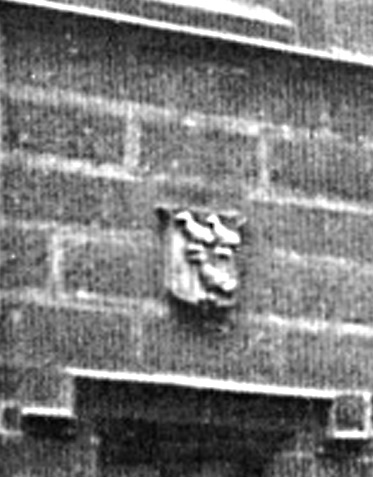
Many people have believed over the years that it was only when the school changed its site from Stoney Street to Arboretum Street in 1867 that the three black birds were first adapted. But this was definitely not the case since photographs from the mid-nineteenth century show quite clearly that a badge with three birds was displayed on the wall of the Free School building. In this case, though, their wings were folded rather than the modern version, flapping and ready for immediate and dynamic intellectual and sporting take-off:
Indeed, it is thought that the three black birds were in evidence as an unofficial badge for the school from at least June 16th 1808 onwards. On this date, an unknown but apparently very bored clerk has decorated the title page of the funky new volume of the Schoolwardens’ Annual Balance Sheets with the traditional three black birds, so it has clearly been known as a symbol connected with the school for a very long time.
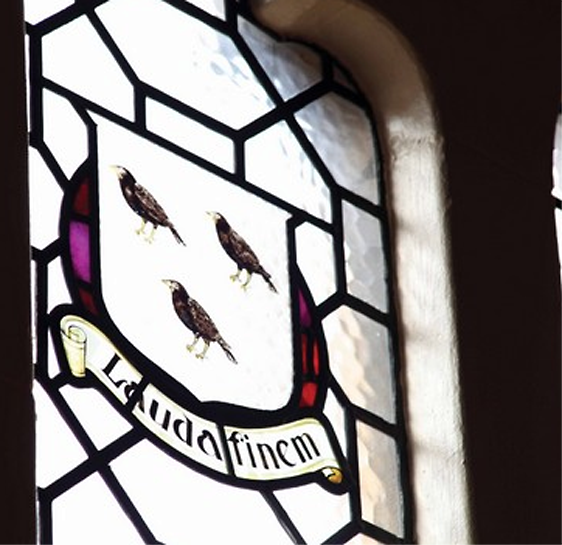
Interestingly enough, another slightly more modern place where the birds’ wings can be seen as folded dates from 1936, when some new stained glass sections were put into the windows at the back of the recently built Assembly Hall:
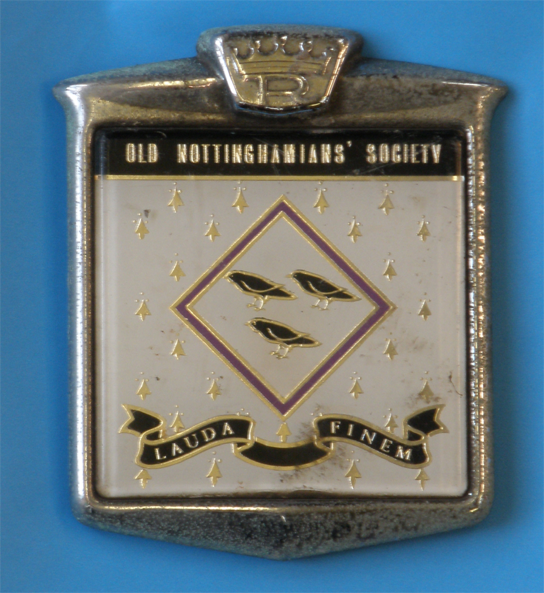
And nowadays, of course, this folded wings version forms the badge of the Old Nottinghamians’ Society. Presumably, that is why they appear in this guise on a car badge being sold off on ebay:
Next time, I will attempt to answer the question of where did those black birds come from? In the meantime here’s a clue. Not all black birds are Blackbirds:
In the first part of this article, I demonstrated how Richard Mellers, the husband of Dame Agnes, was, at best, a fairly unscrupulous businessman. I ended by relating how, in 1507, Richard had received a pardon for having committed offenses against the statutes of weights and measures. This charge related to problems with the purity of his bells. The metal, apparently, was just not as valuable as he said it was. Richard’s pardon would have been granted because of his previous position as Mayor of Nottingham. A less prestigious person would have been in very, very, serious trouble:
Dame Agnes, of course, may well have known absolutely nothing whatsoever about any of this rather serious matter. Like many, many husbands over the centuries, Richard may have decided, quite simply, to tell her nothing at all about it. And if she did know about her husband’s cheating and double dealing, then, like many, many wives over the centuries, she may perhaps have turned a blind eye to it, hoping that one day her errant husband would rejoin the forces of light.
He didn’t though. At least not for long, because on or about Sunday, June 16th 1507, Richard Mellers died, with the ink on the pardon if not still wet, then certainly recognisably damp. I think Dame Agnes would have seen his sudden demise as a direct consequence of his previous wrongdoing. She must have thought that her husband’s death so soon after receiving a pardon was the true verdict from on high.
In more modern, medical, terms, Richard may well just have hastened a natural death by continually feeling guilty or by worrying too much about the outcome of the affair. He may, quite simply, have been a victim of early sixteenth century stress. Irrespective of the clinical truth, though, for a devout woman in Tudor times, these events must have seemed like a clear judgement from Heaven.
At the beginning of the sixteenth century, it would have been completely impossible for a sincere and devout Roman Catholic to be in any conceivable way ignorant of the rôle played by Hell in the scheme of things. How can Dame Agnes have possibly thought back about her husband’s life, misdemeanours and sudden death, and not have seen him as the proud possessor of a “Go straight to Hell, Do not pass Go, Do not collect a ticket to Heaven” card?
That must have been a very, very real fear in her mind.
Here’s how the Rock Combo “AC/DC” saw the situation, firstly on an album cover:
And then on stage:
More or less straightway after his death, therefore, Dame Agnes, the grieving widow, became a “vowess”. She resolved never to remarry, and instead to devote herself to the service of the church.
“a woman who has vowed chastity or devotion to a religious life; a nun”.
Other dictionaries tell pretty much the same tale. One other interesting detail about vowesses is given in “The Customs of Old England” by F. J. Snell. Writing about how a vowess would view her obligations, he states that:
“Whatever fasts a vowess might neglect as non-obligatory, it seems probable that she would not willingly forgo any opportunity of showing reverence to the Blessed Virgin.”
More of this later.
Immediately after her husband’s death, Dame Agnes tried to repay many of his victims. She literally gave them back the exact sums of money which she was worried they had lost to her husband.
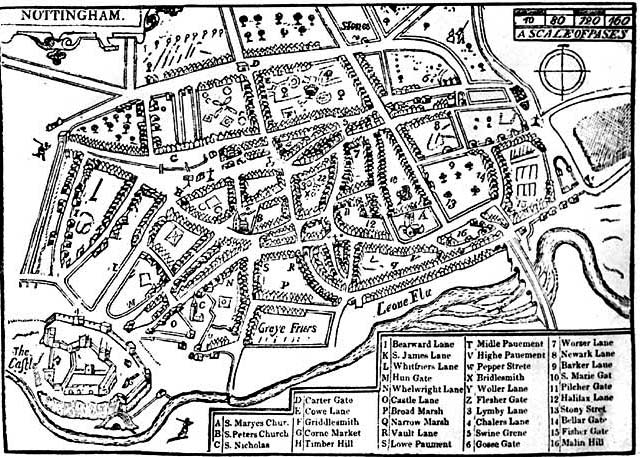
She then decided to spend the rest of Richard’s money on charitable causes. Most important of all, she decided to found a school. Or alternatively, she decided to fund a school which was already in existence and was clearly in need of financial assistance. She must have known that this one simple act would benefit the citizens of Nottingham in the long term, and make up for the occasions when, for short term gain, her late husband had cheated them. Here is the grateful city in 1610. St Mary’s church is marked with the letter “A”. Keep looking. It is there:
Before the official first day of her school, February 2nd 1513, there had already been eleven apparent references to a “Nottingham Grammar School” between 1289 and 1513. At this point in time, of course, it is impossible to tell what connection, if any, there is, with Dame Agnes’ school. Indeed, we do not even know if the eleven schools mentioned before 1513 have a continuous history, or whether they were all short lived affairs.
Having said that, though, Dame Agnes may well have decided to develop an ancient original grammar school into her own school. This original establishment may have depended solely on fees paid by the pupils. Dame Agnes perhaps thought it would be a good idea to establish a foundation, which would then ensure a much better financial future for the school. Equally, she may well have wished to take personal dcontrol of an older school, and then, as a loyal Catholic, to bring it under the control of St Mary’s Church.
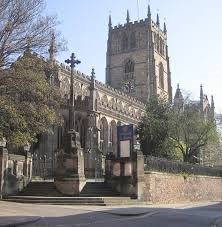
Whatever the details of founding, funding, refounding or whatever, from Dame Agnes’ point of view, the most important thing was that the school should remain closely linked to St Mary’s Church. This, of course, carries out the words of F. J. Snell. Her efforts with this school clearly showed that Dame Agnes would “not willingly forgo any opportunity of showing reverence to the Blessed Virgin”. Here is St Mary’s Church nowadays:
All this sounds like heresy now, of course, after a whole series of celebrations have commemorated the 500th Anniversary of the school, and books have been published, but these ideas are not actually mine own. In “The Nottinghamian” for 1924, for example, there was a clear connection stated in the school magazine between the older schools from before 1513 and the then Nottingham High School. Dr James Gow, the school’s greatest Headmaster, had died this particular year:
In his obituary, it was said that:
“he was appointed Headmaster of the Nottingham High School, an ancient Grammar School, already existing in the thirteenth century, and refounded and endowed by Dame Agnes Mellers, under a Charter of King Henry VIII, in 1513.”
These words are anonymous, but were most probably written by Mr “Sammy” Corner who had been the school’s Deputy Headmaster until his retirement in 1914. Mr Corner had spent much of his spare time researching school history and had become a great expert. Much of this knowledge was to appear in the school magazine which he edited for many years, and which at one point had contained a serialised history of the school. After his retirement, the plan was that Mr Corner would finish writing his history of the High School.
Alas, this popular member of staff was destined never to write his book, as the Great War broke out only a month after he was due to start work, and, despite his advanced age, Mr Corner went off to do his bit for the war effort. At the end of the conflict, Mr Corner moved from Nottingham to Croydon, but his life’s work was to remain forever uncompleted, a source of great regret, as he later told Mr Reynolds, the Headmaster, in a letter. This is the great Sammy Corner in 1913, showing off the school’s charter in the 400th anniversary celebrations in 1913:
On the afternoon of Monday, November 13th, 1933, similar ideas about the school’s history to those in Dr Gow’s obituary were being expressed by the Duke of Portland, when he performed the formal opening ceremony for two new High School buildings, the Gymnasium and the newly converted Library.
This very same interpretation was obviously still current around this time, when Mr.C.L.Reynolds, the Headmaster, wrote his own brief history of “The Buildings of Nottingham High School”. He described the events of 1513 as “…the re-foundation or endowment of the School by Dame Agnes Mellers.” Here is Mr Reynolds, seen with the prefects, in an unknown year, probably in the 1930s:
Furthermore, a document more contemporary to Dame Agnes’ time said that what Dame Agnes was doing was to “…unite, create and establishe a Free Scole” as if there were some definite connection between her school and the Nottingham schools of previous centuries. Similarly, she is referred to in a number of other early documents not as a “foundress” but as a “fundress”, as if she were building and strengthening what was already there.
How that fear of the “Go straight to Hell, Do not pass Go, Do not collect a ticket to Heaven” card must have haunted Dame Agnes. As well as her wonderful achievements with the school, she also laid down that a service of commemoration for her deceased husband should be held every year on June 16th. This latter date is thought to have been chosen because it was the Feast Day of St Richard of Gloucester. Interestingly enough, St Richard’s shrine in Chichester Cathedral, at this time, was a magnificently decorated and popular destination for the Tudor Pilgrim. Perhaps Dame Agnes had been there herself as a dedicated vowess:
The ceremony which Dame Agnes had requested was, of course, a solemn Roman Catholic mass for the soul of her dear departed husband. It is thought that this mass was probably celebrated for about thirty five years, until such services were abolished by order of the then king, Edward VI. This same type of mass may then possibly have been revived under the Catholic Queen Mary, but it certainly would have disappeared for ever when the Protestant Queen Elizabeth I came to the throne in 1558.
Even in the 1660s though, some hundred and fifty years after Dame Agnes, the students still went every Friday during the period of Lent, with their teachers, to visit St.Mary’s church, and kneel in front of the tombs of Richard and Agnes Mellers, and say prayers for their souls, and the souls of all their relatives. And even nowadays, every year on Founder’s Day, the congregation still says prayers for the souls of Dame Agnes, and more importantly perhaps, her husband, Richard. This is Founder’s Day in 1957, a beautiful backlit day:
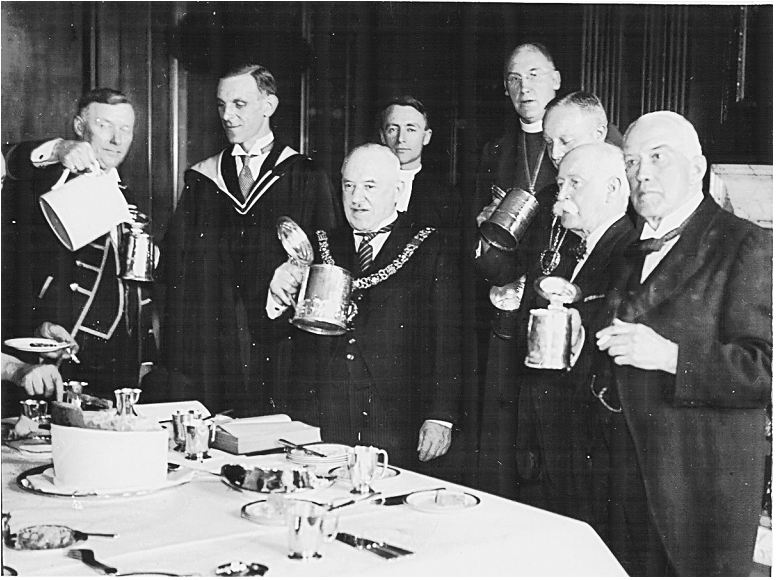
This is the Cheese and Ale Ceremony in the same year:
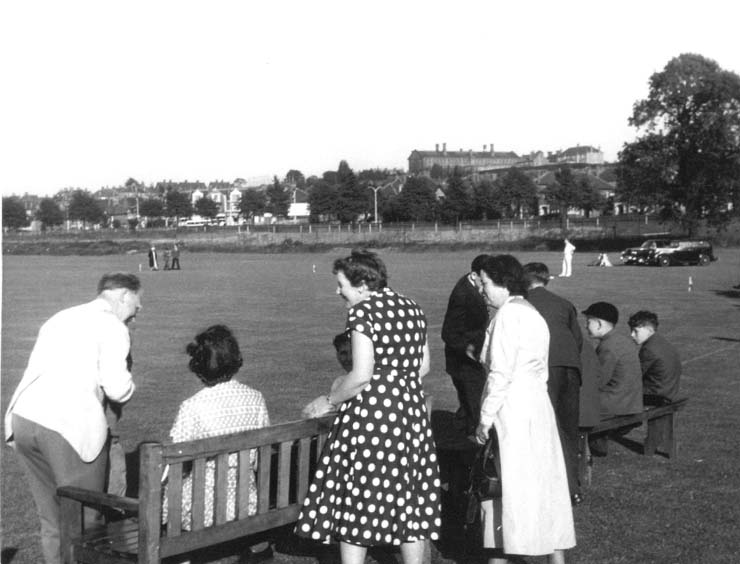
They’re going to get very drunk very quickly if they fill those tankards too frequently. Here is the traditional Cricket Match on that sunlit afternoon in 1957:
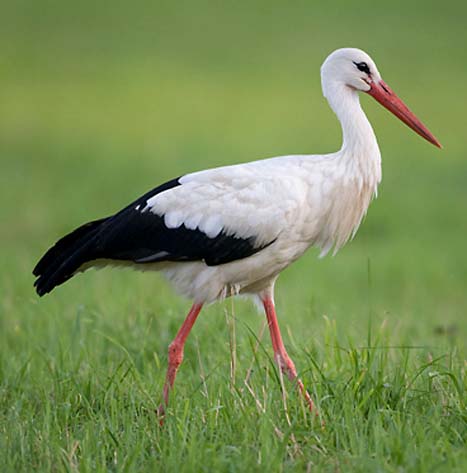
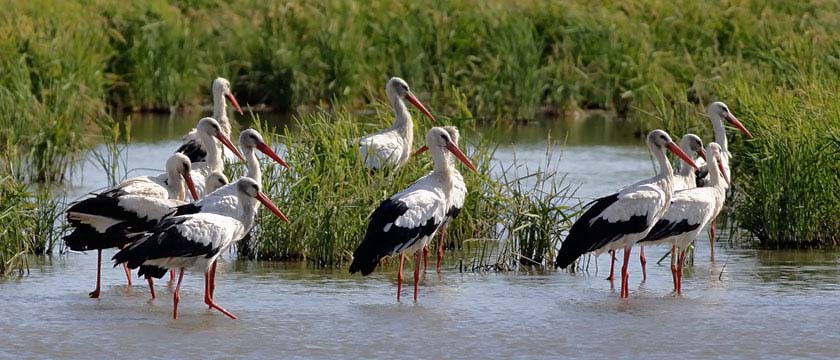
The White Stork is a very large and spectacular visitor to England. People have asked me on many occasions why we think that babies are brought by storks. My answer has always been that a good number of new babies have a red mark on their forehead when they are first born. This mark is triangular and it looks as if their head has been grasped for a considerable period of time in a stork’s beak. My own daughter certainly had the mark on her forehead when she was first born, although it usually fades with time.
Victorian Nottinghamshire recorded a number of storks, and in actual fact, the very best records come from the era of King George IV, Beau Brummell’s “fat friend”. In 1825, therefore, a single bird was killed near Bawtry on an unrecorded date during the year:
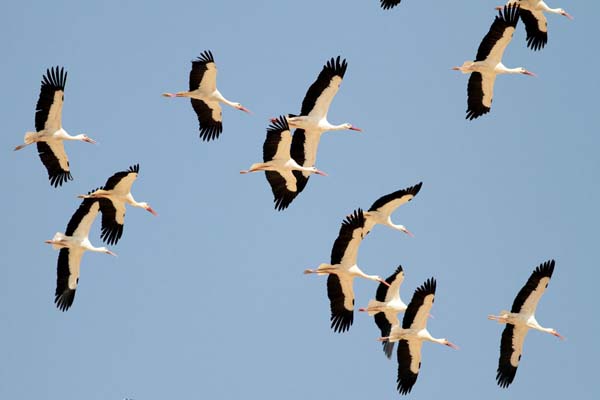
Four years later, in 1829 an entire flock of these magnificent birds was seen on the River Trent at the very same location as the 1825 individual:
Two of them were subsequently shot as they overflew the nearby market town of Bawtry. Look for the orange arrows:
In 1899 Sir Herbert had married Geraldine Katherine Webb, the daughter of Mr W.F.Webb, the owner of Newstead Abbey in Nottinghamshire. The poor lady was to die in 1910 without any children.
Sir Herbert immediately typed a letter to Joseph Whitaker, as soon as he reached home after seeing this wonderful bird:
“This morning a specimen of Cicogna Alba passed across the Nottingham-Mansfield high Road (sic) at 9.50 a.m. between the Pilgrim Oak and the Hutt House, the bird was in Spring plumage, with legs and beak very bright:
It was, I think, a hen bird, and passed directly over me within easy gun shot, flying relatively low, over the tops of the Beech trees by a few feet. It is possibly a War Refugee from the Low Countries.”
Here is the Pilgrim Oak in both spring and autumn:
This slideshow requires JavaScript.
Joseph Whitaker would have been totally gutted, to use the modern expression, that a non-birdwatcher had seen such a wonderful, spectacular bird, and he hadn’t:
Just under a week later, on Sunday, April 18th, Sir Herbert wrote again to Whitaker confirming the identity of a bird that he had already seen in many locations in the Middle East. This must really have twisted the knife, although, of course, unwittingly:
“I wish that you had seen the Stork instead of I (sic) although it is the first one that I have ever seen in England. Last year I was in the uplands of Algeria, south of Constantinople on the day of their arrival in very considerable numbers (early March) at the Dardanelles on the shores of the Sea of Marmora , 17th March is the day of their arrival. A day’s march from Gallipoli on the eastern side, they have a great assembly place-for both spring and autumn.
The natives allege that in Autumn, the birds of the year pair there, before the migration.”
All the way through this account, I have deliberately used the phrase “White Stork”. This is because there is a Black Stork as well. This is a much rarer bird, and one which I myself have yet to see:
This slideshow requires JavaScript.
In Victorian times there was just one report of this species being seen in the county. This was an unfortunate individual which was shot during the autumn of 1871 at Colwick by Mr John Brown of Old Moat Hall. Joseph Whitaker was told the facts in a letter from Mr P. Musters of West Bridgford. As Old Moat Hall is in Cheshire, I suppose we can presume that Mr Brown was a guest of one of the members of the extended Chaworth-Musters family, who were rich landowners in Nottinghamshire.
As far as I can see, their possessions included Annesley Hall, Colwick Hall, Wiverton Hall, Edwalton Manor, West Bridgford Hall and for Sundays, Felley Priory.
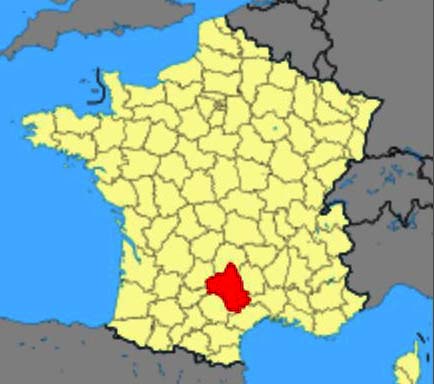
One more man eating monster to terrorise the local peasants of France was the “Bête de Veyreau”. At a time and in a place both relatively close to the Beast of Gevaudan, his bloodsoaked career peaked from 1799 onwards as he laid waste to an area of France called the “Causse Noir” or “Black Causse”. This beautiful countryside is situated more or less in the south of the Massif Central. Here is the old province of Rouergue, whose capital was Rodez:
And this is a more detailed map, with a red square in the extreme east representing the village of Veyreau. The orange arrow refused to travel abroad:
The province directly to the east of the green area is Gévaudan. The “Causse Noir” or “Black Causse” is dry, rugged and rocky.
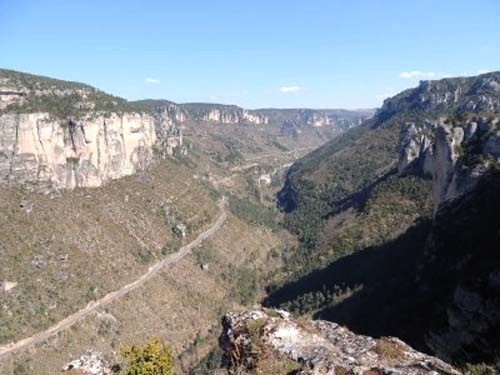
There are many mountainous areas and some notable gorges such as the “Gorges de la Jonte”:
Normally, the best approach for these French monsters is to take an average of the various French websites. In this case however, that is not really going to work, because, as far as I can see, more or less every account of this creature is virtually the same, and probably owes a great deal to Wikipedia:
“The Beast of Veyreau was a man eating animal which ravaged an area in the “Causse Noir” not too far from Gevaudan, from 1799 onwards. This was an area where livestock were raised and is nowadays part of the Département of Aveyron. These attacks filled the inhabitants with such immense fear, and the Beast had so many “dozens of victims”, that the locals thought the Beast of Gévaudan had come to their region.”
I have been able to find one person who could expand a little on that:
“around the year 1799, there appeared in the country a beast which filled all the inhabitants with great fear. Its build was slimmer and more willowy than a wolf. Its way of walking had such agility that it was seen first in one place, but then four or five minutes later in a different place perhaps several miles away. And woe betide any child that might meet the creature. The Beast would carry them off and eat them , first the liver and then the limbs. In the space of six months this beast killed three victims including a boy of six whose limbs they found hidden in the earth in the Malbouche Ravine, in the very same place which was, people used to say, the haunt of the ogre.”
Mention of “The Ogre” will lead me neatly to another blogpost in the future, when this long series of familiar crazed creatures, blood soaked beasts, maniacal monsters, feral dogs, wolf-dog hybrids, wolves with attitude or whatever nasty four legged beast you can imagine, becomes just for a few hundred words, a two legged cannibal killer, with the supercool name of Jean Grin.
To get back to the story, this is the tiny village of Veyreau:
The very best version of the story of the “Bête de Veyreau” comes from a website designed to “découvrir et aimer la Lozère”, in other words to “discover and love La Lozère”, which is one of the most beautiful and picturesque areas of the “Causse Noir”. The account of the Beast below is quoted directly from the parish records of the village of Veyreau, which were collected together in 1870 by the then parish priest, Père Casimir Fages. The road sign below shows that two languages were/are spoken in this southern part of France. “Veirau” is the village name in Occitan. Try the Wikipedia website to read about this ancient language. You will find a really interesting use of the Universal Declaration of Human Rights, which has been translated into a number of widely spoken languages but then into a good number of others such as Occitan, Gascon, Provençal and half a dozen others. At the very least, it has a wonderful moving map which you can click to enlarge:
As was so often the case in old France, the parish priest was the only literate person in the immediate area, and it was for him to record the history of tiny villages such as Veyreau. Père Fages’ church is still there:
The hard work for this website has all been done by an extremely dedicated gentleman, Monsieur Bernard Soulier. Bernard is the President of the Association “In the country of the Beast of Gévaudan”, in French, “Au pays de la Bête du Gévaudan”. This organisation is based in Auvers, a small village in the Haute Loire district.
.
Here is Père Fages’ story:
“Around the year 1799, there appeared in the country, especially around the village of Paliès, a beast that filled all the people immense fear; its size was slimmer than a wolf ; Its way of walking had such agility that it was seen in one place, and four or five minutes later it was seen in another place perhaps a league away. It had the head and muzzle of a large greyhound ; it used to come into villages in broad daylight, and woe betide any child that might meet the creature, the Beast would carry them off and eat them, first the liver and then the limbs. One summer’s day, the Beast appeared at Paliès. Children spied it from a long distance away and ran to take refuge in a tree close to a house on the northern side of the village; faster than lightning, the Beast seized one of the children, who was already two metres off the ground and carried him off into Madasse Wood. Men shearing the sheep of a local farmer, including the father of the unfortunate child, ran at top speed to the place where the Beast had gone. The noise that they made caused the Beast to abandon the little boy who was found shaking on the ground with his insides ripped out! Seeing his father looking for him, he did, however, have the strength, to shout “I’m here”, but he died a few moments later. This child aged six, was called Pierre-Jean Mauri; in the register Monsieur Arnal who carried out the baptism ceremonies in 1794 when the child was fifteen months old, has added to the margin of that register, “Devoured by the ferocious Beast”.
Fifteen days later, the Beast took a child from the farm of Graille at Rougerie. In company with his older brother, he was keeping watch over the cattle close to the natural spring of St. Martin; the elder brother tried hard to help his brother, but when the beast stood up on its hind legs, he was so frightened that he fled and went for help at Veyreau ; it was a Sunday, a large crowd came to help, and searching the Malbouche property, they found the remains of limbs that the Beast had hidden in the earth. This same beast also seized a little girl named Julien who lived in Bourjoie ; her father was busy knocking nuts down from the trees; the small children were close to the tree, and the Beast, in full view of the father, seized the little girl; the father set off after her, but he could not catch her up, and a few days later, she was found buried in the undergrowth; her liver had been eaten.
These different characteristics of the Beast filled the people of Veyreau and St André with justified fear; several people saw the Beast which accompanied them, gambolling along, jumping about, but not daring to attack adults; One day in bright sunshine, the Beast walked through the village of St André, and stopped outside the door of a weaver’s house; they took it for a dog, and at the very moment when they were going to stroke it, it disappeared in a flash. Monsieur Gaillard, the parish priest of St André, with whom I have discussed this extraordinary animal, assured me that he had heard it one evening in a small field below the duck pond, emitting howls like the braying of a donkey, something which was confirmed by several other people:
All the local poachers met to hunt the creature, but when they encountered the Beast, they said that sometimes, especially when it was being shot at, the creature rolled around on the ground but then disappeared with enormous speed. The people who were children during this era, agree how great was the terror that it produced throughout the whole region of the “Black Causse”. Never attacking men or animals, because we had seen it pass through the middle of herds of cattle and flocks of sheep without doing them any harm, the Beast targeted only children. In the course of this year, from June to December, two boys and a girl were the sad victims of its ferocity; nobody dared walk outside on their own at night, and by day everyone carried a halberd at the end of a stick to defend themselves, in case they met the creature:
What was this Beast? It could not be classified as one of the known animals in the area; Monsieur Caussignac claimed that it was a hyena; Monsieur Gaillard, the village priest of St. André, thought it was a lynx, and the common people gave it the name of “Werewolf”, in French “Loup garou”:
After some six months or a year, the creature disappeared without anybody knowing what had happened to it. About the same time, a similar beast was seen in the Sanvero woods near the village of Cornus in the Aveyron province; it almost managed eat a little girl that I was to know twenty-five years later; she was near her home in the village of Labadie, in the parish of St Rome Berlières ; her brother, older than her, rushed to her defence and grabbed her from the creature, he dragged her into the house ; through the cracks in the closed door they could see the Beast watching and waiting for some time for the prey which had escaped, only by the skin of her teeth. Indeed, a bite from the creature had taken a considerable piece of skin from her side; this scar was never to fade throughout the rest of her life:
Whatever this animal was, its appearance had an enormous impact throughout the whole area of the Black Causse. Uneducated people saw in the Beast something supernatural, especially after all the upheavals and ordeals of the recent Revolution.”
And there you have it. Yet another wolf that seems to be not quite a wolf. At the moment, I am favouring the idea that up until about two hundred years or so ago, there was a second, much fiercer and larger species of wolf living in the remote and most mountainous areas of France, some prehistoric survivor that had lingered on until the nineteenth century in ever diminishing numbers, until, after tens of thousands of years, it finally became extinct. I cannot believe that the locals were incapable of recognising an ordinary wolf when they saw one. I cannot believe either that wolves were hybridising with dogs across the whole of France to produce killer hybrids. Wolves don’t have steamy affairs with dogs. They eat them!
Corporal Anthony Bertram Lloyd was born in Staffordshire. He was the son of Bertram Harold Lloyd and Ada Lloyd, of Penarth in Glamorgan. He was a member of the High School from 1932-1939.
Tony had an:
“unswerving loyalty to the school, which he had revisited on several occasions during his military service…he was always in any mischief that was going, but under a seeming cloak of irresponsibility, there lay a deep respect for law and order…here was a comrade to have at one’s side in an emergency, a fellow whose courage steadied the nerves, and whose unfailing good humour showed a ray of hope in the blackest of moments”.
At school, not surprisingly perhaps, Tony was a promising boxer.
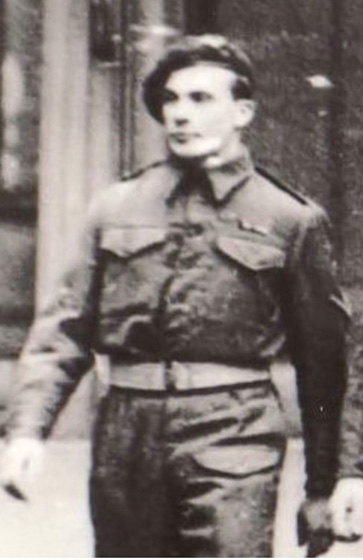
Shortly after war broke out, Tony enlisted into the Royal Welch Fusiliers and was serving with the 10th Battalion RWF when it began airborne duties in August 1942. Here he is, looking very dashing:
The Battalion was renamed the 6th (Royal Welch) Parachute Battalion and was incorporated into the 2nd Parachute Brigade. In early 1943, some of the 6th (Royal Welch) Parachute Battalion were engaged in fighting Axis forces in North Africa, during Operation Torch. On March 5th the Brigade handed this sector over to the Americans and moved eastwards to Tunisia.
On March 8th, a German force of divisional strength attacked the defensive positions of the 1st and 2nd Battalions. It was at this time that Anthony was awarded a Military Medal for his bravery:
“On the 8th March 1943 in the Tamera Sector, Tunisia, Private Lloyd was a member of a counter-attack Company. During the advance Private Lloyd and two other men became separated from their platoon. They came under heavy machine gun fire and Private Lloyd ordered the two men to cover him while he himself attacked the post. He charged over country showing a complete disregard for his own safety and succeeded in capturing the machine gun post and three men. By this act of gallantry Private Lloyd prevented severe casualties being inflicted to the Company which was advancing.”
On March 28th 1944, Tony was one of ten soldiers of the 1st Battalion who received their Military Medals at Buckingham Palace, all of them awarded for bravery in North Africa. It certainly looks to be a great moment when, with a group of your parachuting colleagues, you leave the Palace after the King has given you all a medal each:
Here is Tony, enlarged through the magic of Photoshop:
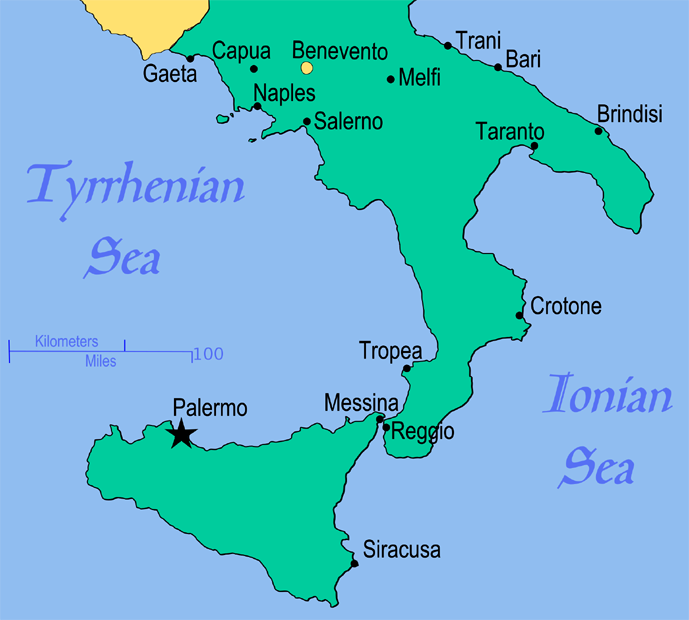
Once Generalfeldmarschall Rommel was defeated and North Africa was won, Tony was engaged in heavy fighting in Sicily, the island off the toe of Italy. Once Sicily was secured, he was part of the sea-borne landings at Taranto in mainland Italy in September 1943. Pushing north, they fought their way to Foggia before they were taken out of the line to return to the United Kingdom to prepare for D-Day:
On Sunday, September 17th 1944, as the Allies pushed north eastwards, their bravery was again put to the test as the Battalion jumped onto Renkum Heath in an attempt to capture the Rhine crossings at Arnhem, the so-called, “Operation Market Garden”. By this time Tony was the Second in Command of 8 Section, No 11 Platoon, T Company.
Tony and his fellow parachutists suffered severe casualties around Den Brink and the Queen Elizabeth Hospital as they tried to rescue the 2nd Battalion who had been cut-off and surrounded at the bridge at Arnhem, the famous “Bridge too far”. Eventually however, Tony, along with the survivors of the 2nd Battalion, was forced to retreat to the Division perimeter which was by now surrounded and besieged at Oosterbeek.
It is believed that Tony was wounded in the fighting at Oosterbeek, in the area near the Regimental Aid Post at Kate ter Horst’s house. Unfortunately, Tony died from his wounds and he was one of 57 parachutists given a temporary burial in mass grave in the house’s garden. Tony was only 21 years old when he died on September 26th 1944.
Many years later, on March 18th 2010, an appeal appeared in the “Penarth Times”. It was from R R Tolhurst (Lofty), who had borrowed a picture from H Rowan, of T Troop, the 1st Parachute Battalion. He was in the same trench, right next to Tony Lloyd when the latter was killed. Earlier, Tony had taken a photo of H Rowan, busily engaged in shooting at German soldiers. After Tony’s death, it managed to make its way back to Penarth in Wales. In a wonderful magnanimous gesture however, Tony’s parents, Harold and Ada, sent it on to H Rowan after the war, presumably because it showed him on the photograph rather than their own son. Photographs taken in the heat of battle are not common, but any which are taken by soldiers rather than official war photographers are extremely rare. Here is the photograph:
Corporal Anthony Bertram Lloyd MM was, by anybody’s standards, a real hero. He had spent most of his time during the war performing the same deeds of brave derring-do that boys in the 1960s used to read about in their comics such as “Victor or “Valiant”.
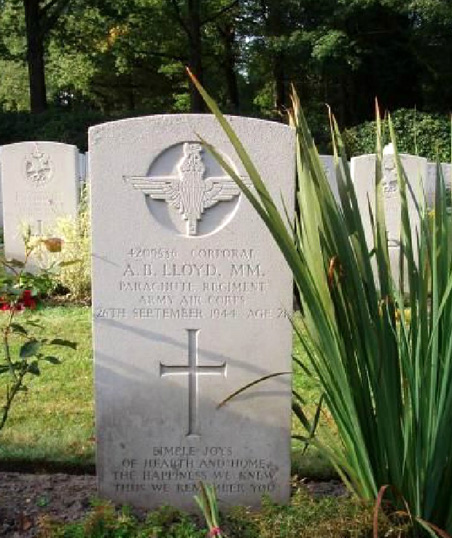
Tony now lies in Oosterbeek War Cemetery in Arnhem, the town he fought so bravely to liberate from Nazi occupation. People throughout the whole of Holland are now completely free to live their lives exactly as they wish, thanks to Tony Lloyd, and his countless thousands of brave companions :


The same clerk who had entered with the knights (not Edward Grim) placed his foot on the neck of the holy priest and precious martyr, and, horrible to relate, scattered the brains and blood about the pavements, crying to the others, ‘Let us away, knights; this fellow will arise no more.”































 John Knifton