Category Archives: Nottingham

Vandalism in the School Archives? Or is it Art?

A few months ago, I went into the School Archives to photograph the School Lists. They are quite boring little booklets to be brutally honest, but they are very informative and record the names of all the members of all the forms in the School for every year. The oldest ones date from the late 1860s, but because I was researching the school’s casualties in World War II, I started my James Bond activities with 1892 and then went forwards as far as 1950. Just for the sake of argument, here’s one, with a particularly famous ex-pupil on it:
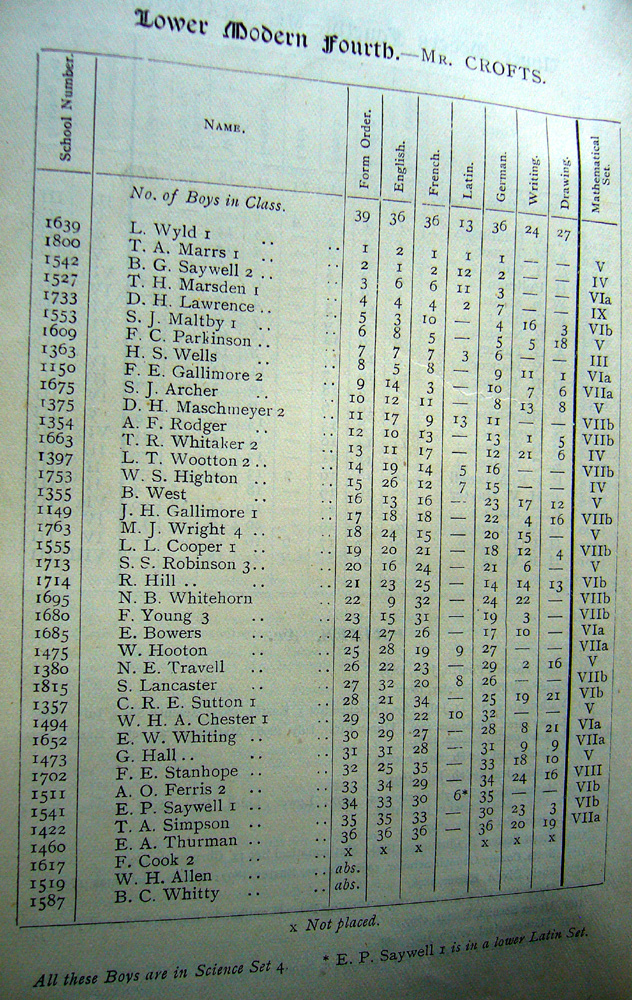
With all that information, it is actually a Victorian Excel Spreadsheet!

The only thing out of the ordinary that I found in 3.96 GB of School Lists was in the edition for 1941:
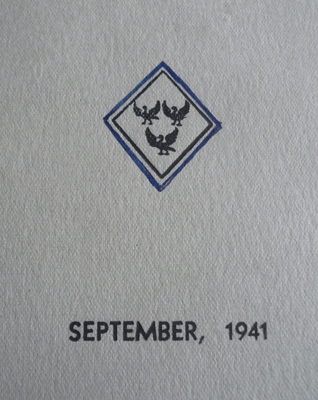
Once again, some young man was feeling the ‘Call of the Skies’:
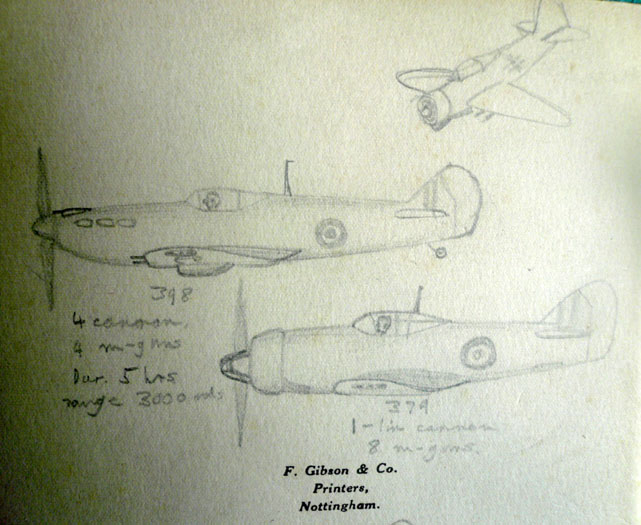
Below the printers’ name, he had knocked out a couple of bombers;
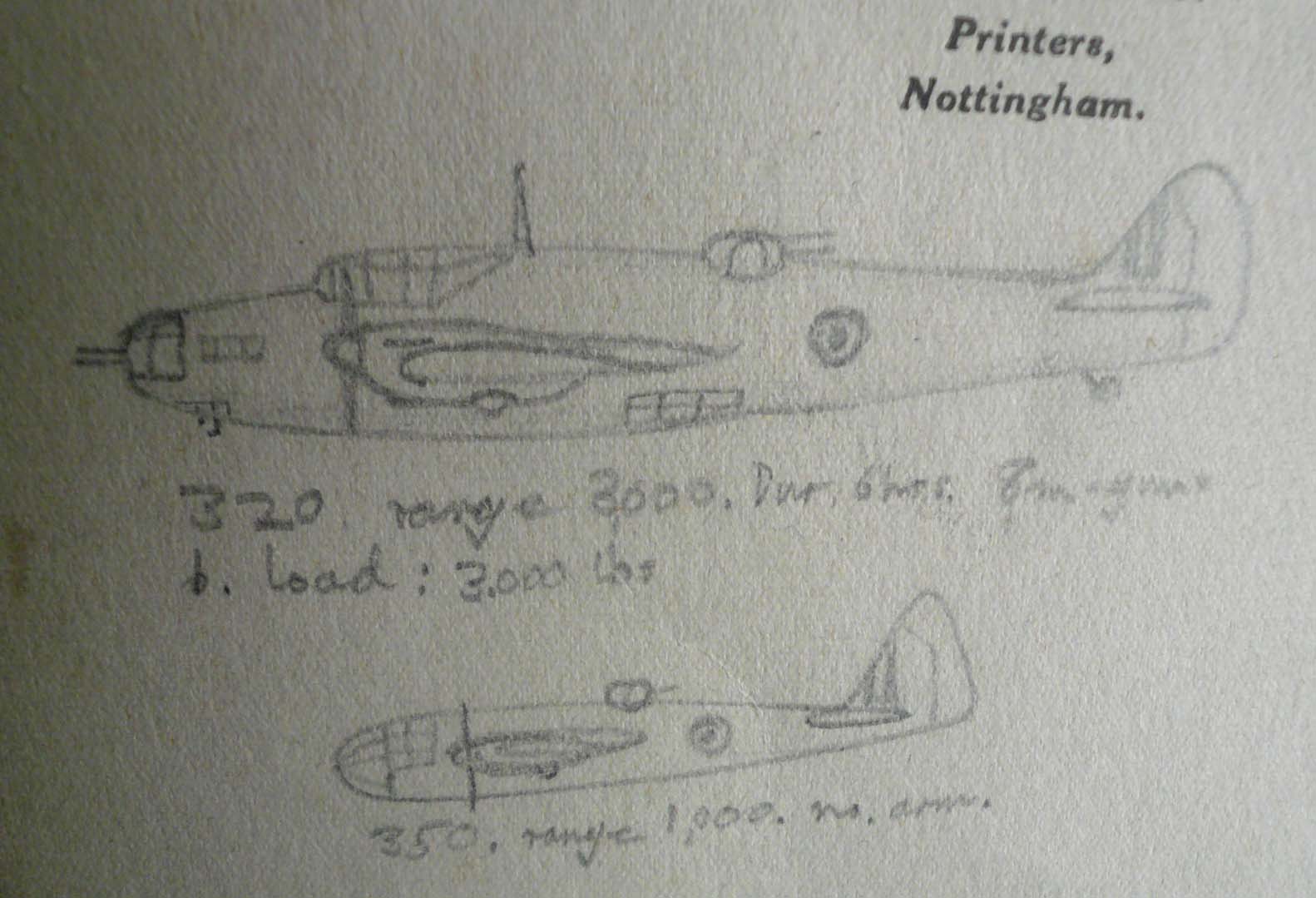
Here’s the larger of the two bombers blown up as best I can:
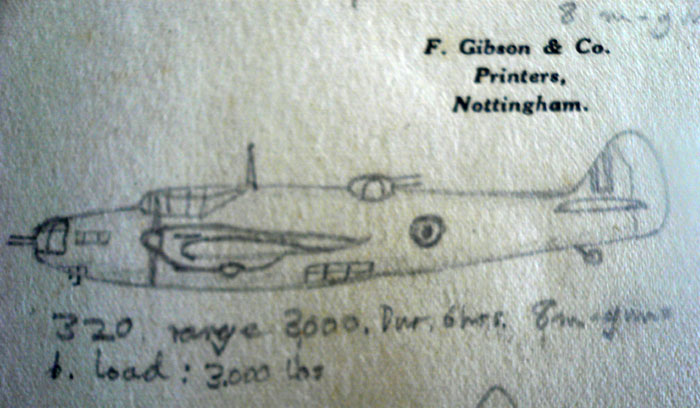
It is called the 320 and has a range of 3,000 miles, with an endurance, I think he means, not ‘duration’, of 6 hours 8 minutes and a bomb load of 3,000lbs. It also has 8 machine guns. Looks a bit like a Blenheim with the nose of a Heinkel, the tail of an Airspeed Oxford perhaps and inline engines.

Here’s the smaller of the two bombers blown up as best I can:

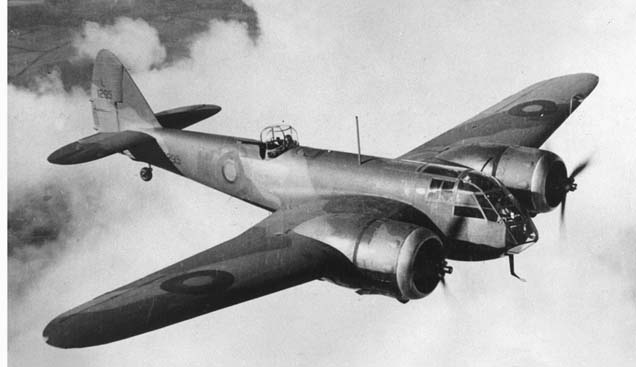
It is called the 350 and has a range of 1,000 miles, with no armament. It looks a bit like a Blenheim with the nose of a Heinkel, the tail of an Airspeed Oxford perhaps and inline engines. Here’s one I prepared earlier:
I have also tried hard to blow up the first of the fighters:
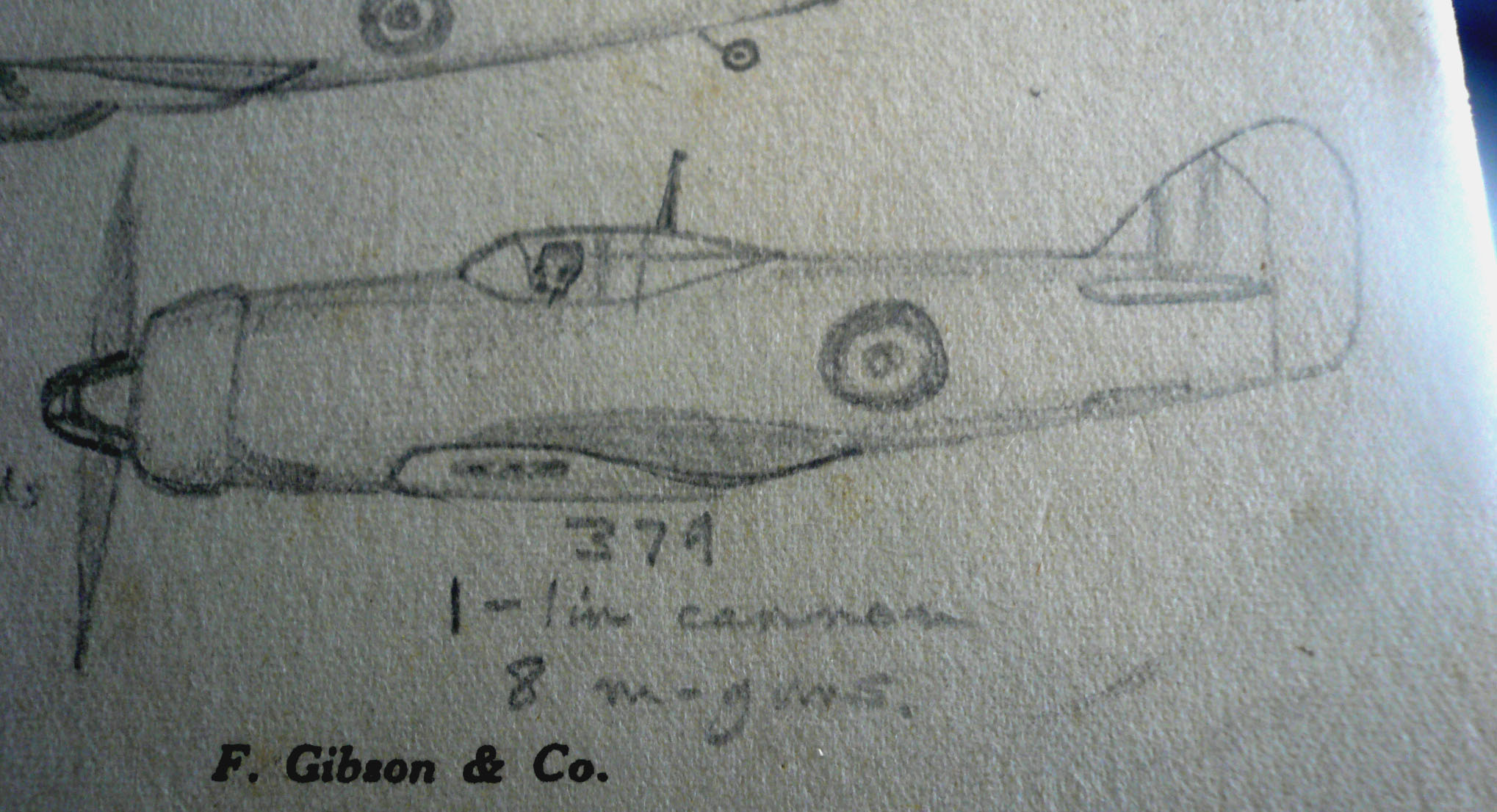
It has one 1 inch cannon, in the propeller boss, by the look of it, and 8 machine guns.

The other fighter is rather Spitfire like:
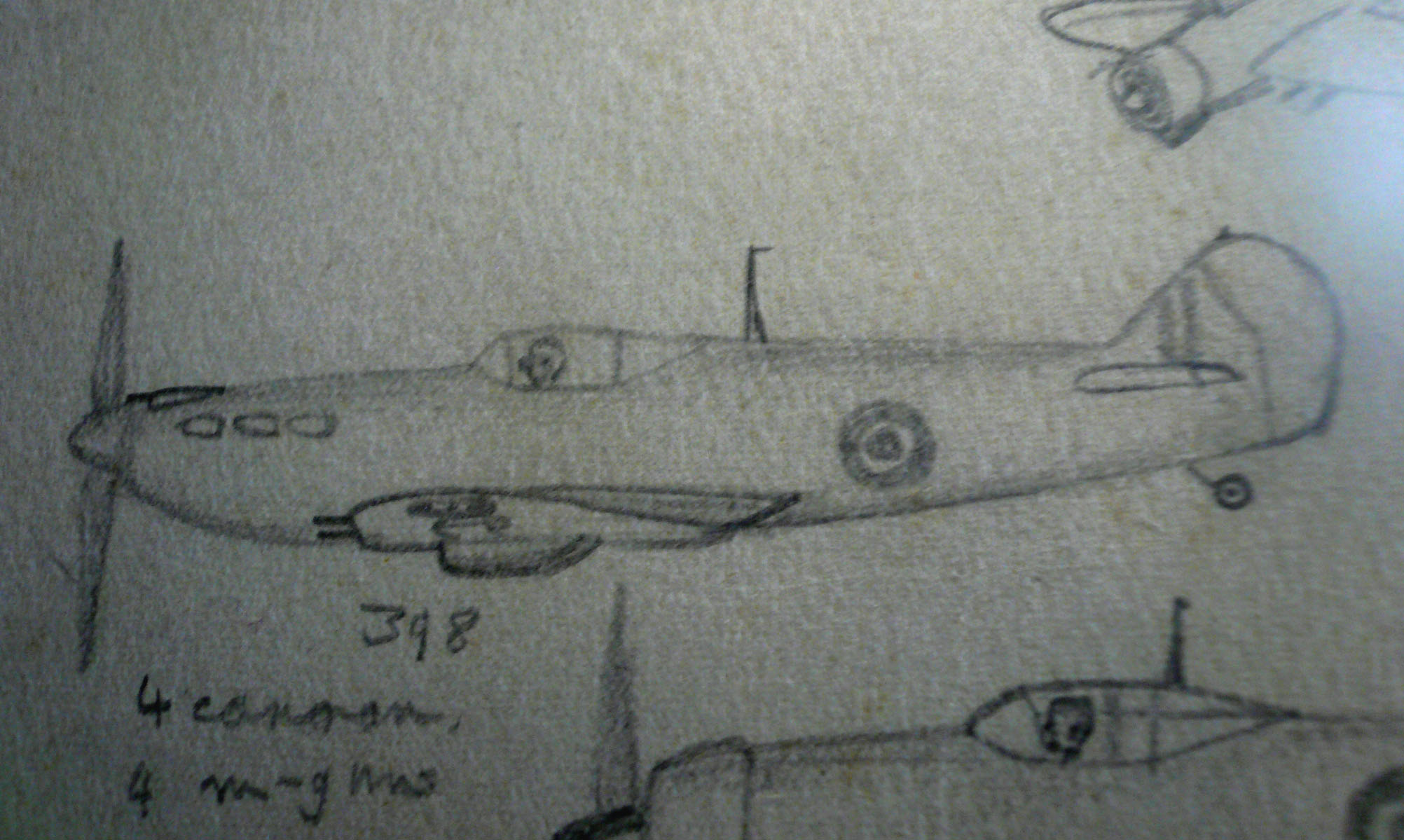
It is called the 398 and has 4 cannon, 4 machine guns, an endurance of 5 hours and a range of 3,000 miles. I’m sorry to say that Maths was not necessarily this young man’s strong point! The German fighter has no names or specifications:

For me, it is mainly Focke Wulf Fw 190, but there is a little dash of Mitsubishi Zero in it as well perhaps.

I often think that we regret what we do not do far more than what we do do. When I was in the Sixth Form at Ashby-de-la-Zouch Boys’ Grammar School, we used to have French lessons in a smaller room because there were only 12 of us. One of the desks had a fantastic carving of a B-17 Flying Fortress, deep into the wood of the lid, with all the ailerons, all the machine guns and all the ventilation holes in the gun barrels. It was fabulous. This is the closest I can find on the Internet:Looking back at how much money the school had, I suspect it dated from  1943 rather than 1963 and the Airfix kit of that era:
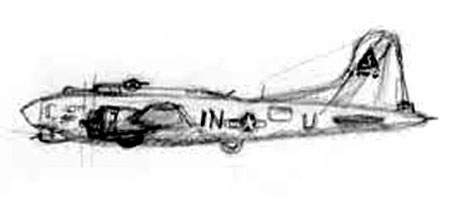
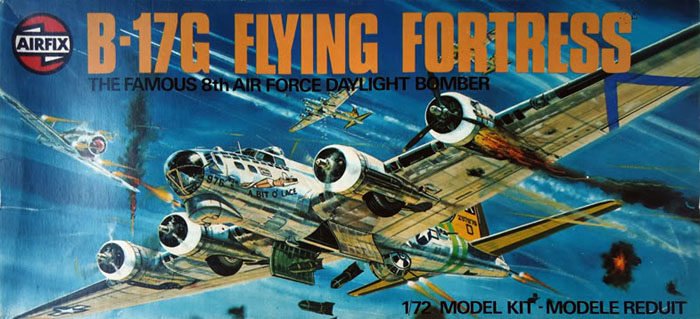
My regret is that I did not find any way of preserving this work of art rather than it be thrown into a skip in the middle 70s.

Not much survives of the pupils in any school. And what does would have been classified as vandalism at the time. Such as this example from 1922:

or this one from 1942:

or this one from a young man who upset the High School more than he could ever imagine:


26 Comments

Filed under Aviation, Bomber Command, History, Nottingham, Personal, The High School

My Book (3)

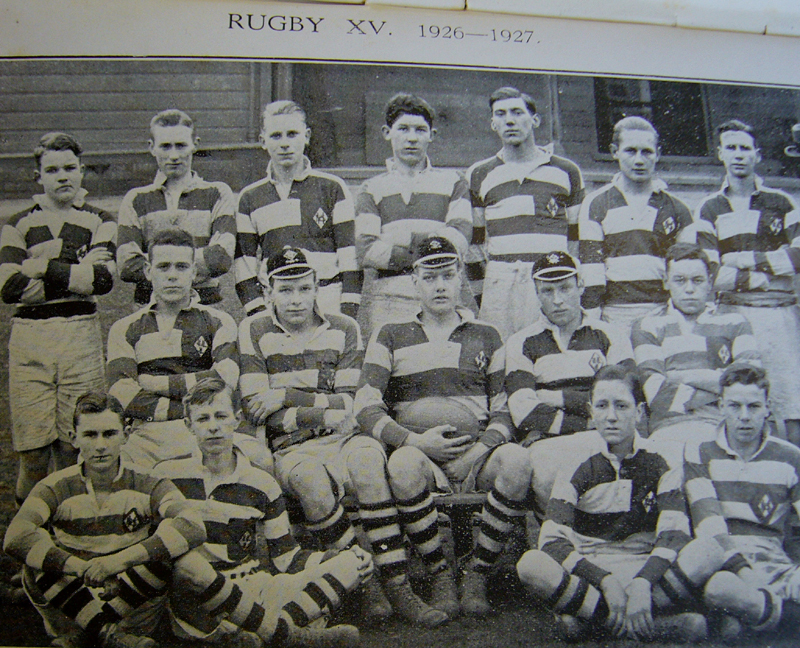
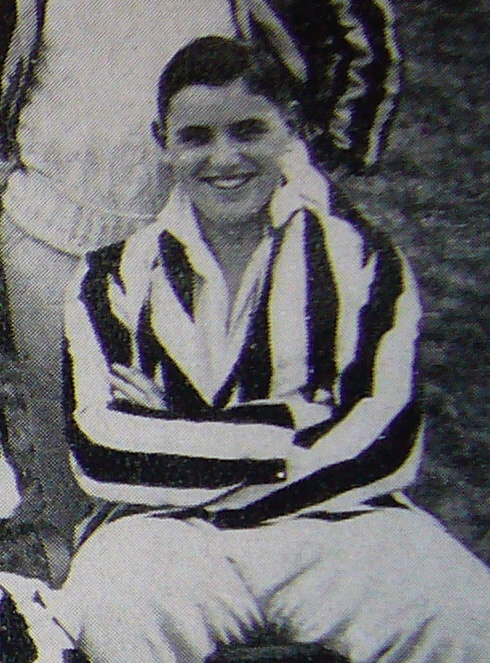
I am still quite proud of the fact that I have found out so much information about the vast majority of these young men. I feel that I have done them all justice and that I have done my very best to keep them in people’s memories, even as they seem to be receding further and further into the anonymous grey mists of time. Here is the School Rugby team in 1926-1927:

I have made great efforts to drag the complete ghost out of the past and to write not just about their fiery deaths but to try and unfold the full and energetic lives they led. It’s only too easy to see a name on a war memorial, to read that name and then to forget it, all in the same moment. For that reason I have tried to describe their families, their fathers, their mothers, their brothers and sisters. I have tried to find out what their father did as a job, where the family lived, in some cases occupying just one or two houses in their lifetime, in others half a dozen. What were their houses like? How might they have travelled to the High School? I have tracked their Forms, their teachers, what they did at School, how their exams went, what position they came in class and what prizes they won, all the things that would have been so important to them at the time. I have written about what their Form Masters were like and talked about their careers. This is Mr Kennard. He definitely took no prisoners:

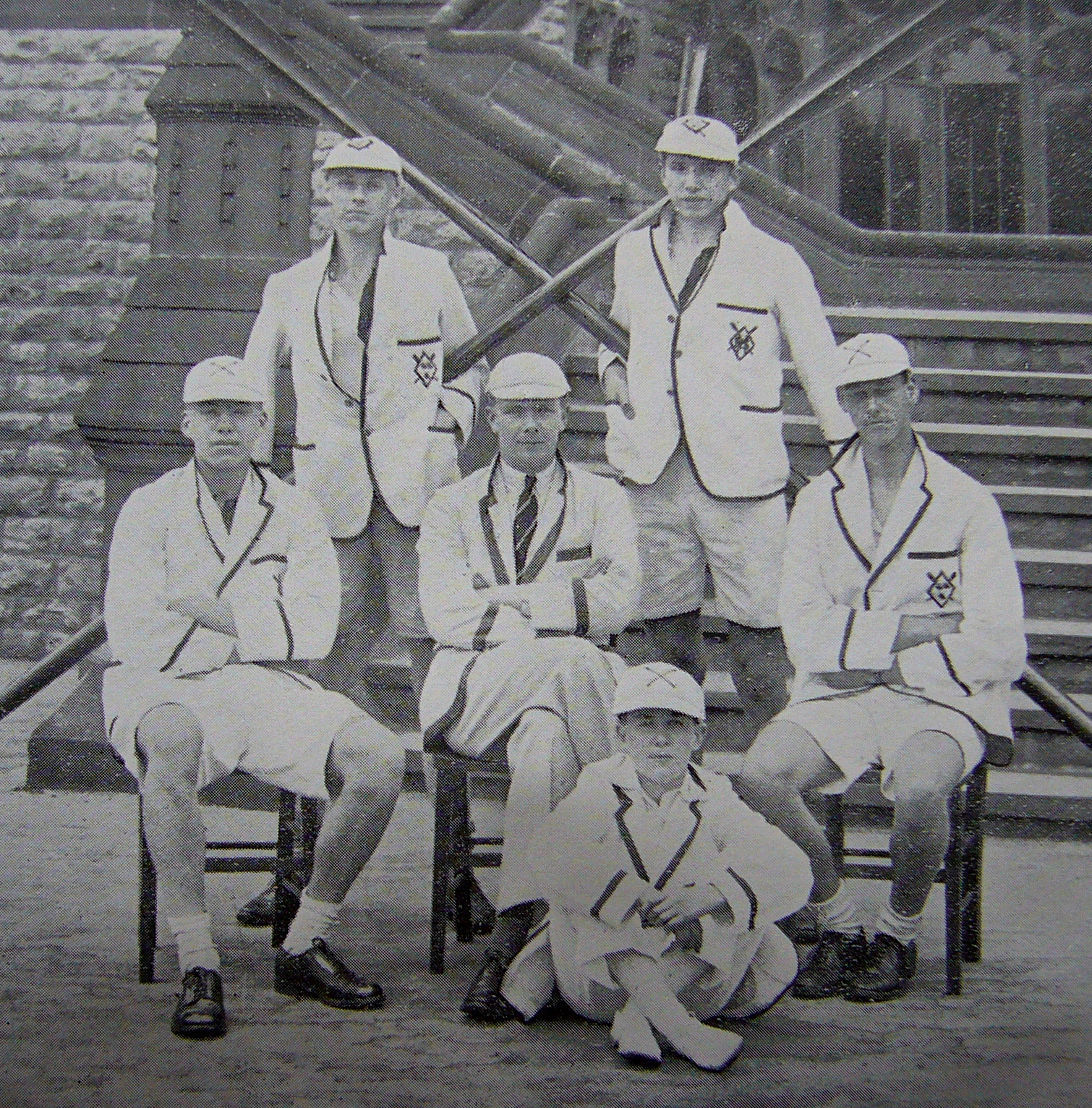
I have tried to find out what sports our future heroes played:

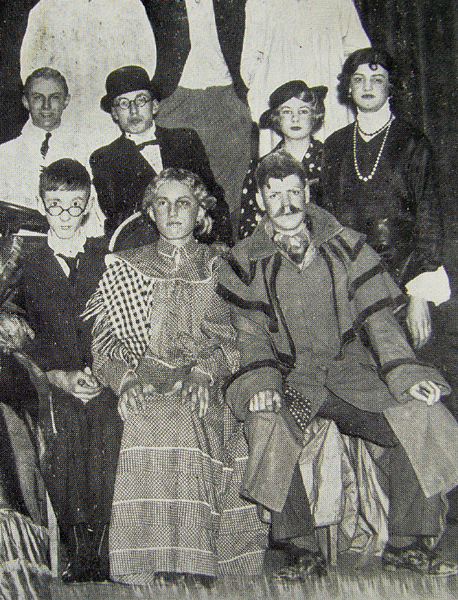
What school plays they were in. The French farce of the 1920s, “Dr Knock”, perhaps? And which one of these boys became the war hero?:

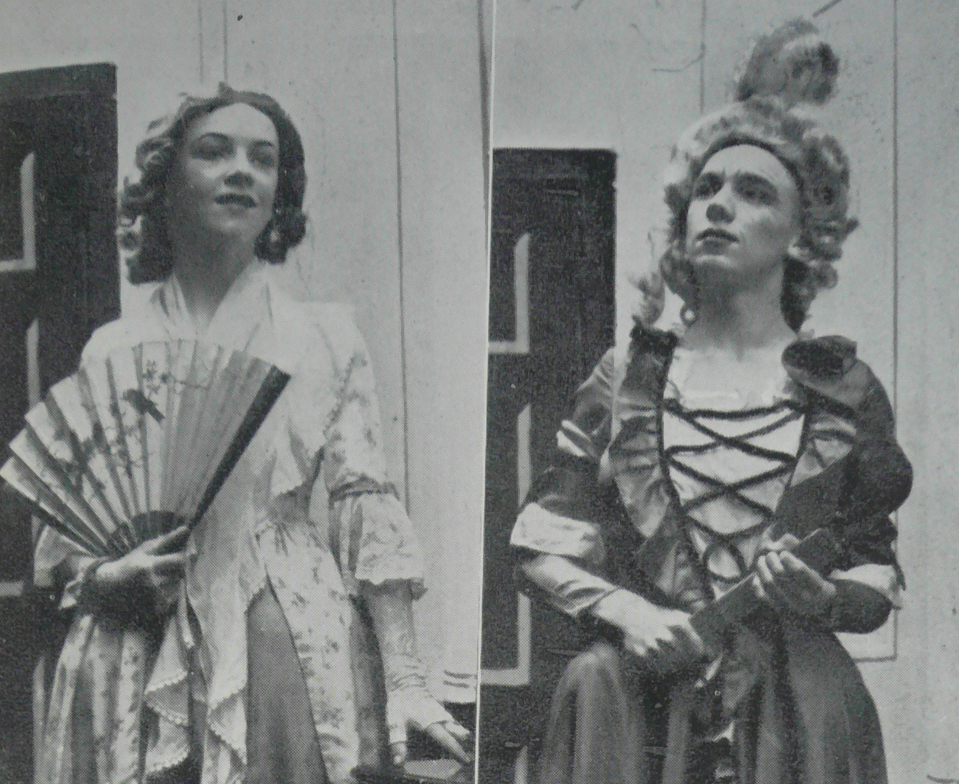
Or perhaps a play with a chance to wear a lovely frock and a string of pearls? :

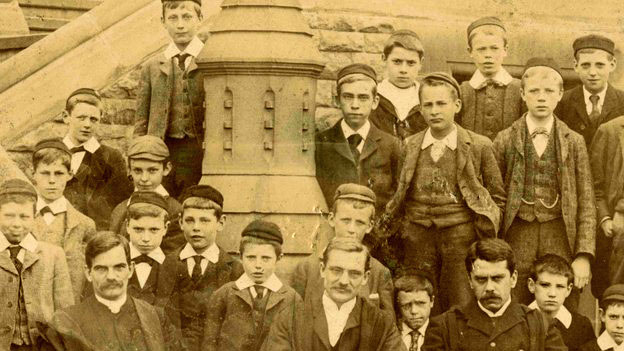
Which person collected stamps and who loved to make home movies? I have tried to identify other boys in their Forms who might have been their friends, even if that is just a case of saying who won the Form Prize and where they lived, what job their father did and so on. Here is a class of really small boys, eight and nine year olds, before the First World War:

The worst thing I could have done would have been to have written three thousand words about their death and thirty about their lives. So whatever I could find, I have included. Their sports, their hobbies, their jobs between school and the forces, and, if possible, what their abilities and talents were.
By doing this I revealed, even to myself, just how many different places have provided High School pupils over these years and just how many hundreds of different jobs their fathers have done, some of them long gone and requiring a search on the Internet.

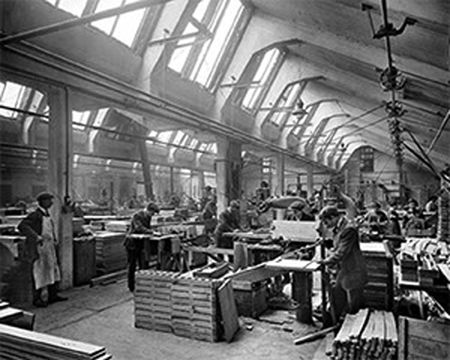
At least one High School hero of Bomber Command had come straight from Waring & Gillow’s shop to fly his Lancaster. He apparently said one day in the shop that selling double beds and three piece suites was not a worthy job for a man when his country was at war, and off he went. Waring & Gillow sold luxury furniture of all kinds, and they appear to have made a lot themselves, because here is their factory. :


And when I have written about the boys’ streets and houses, some simple directions are usually included. Without them, which of us could ever locate Balfour Road or Conway Avenue or Derby Terrace or Florence Road? And many old streets have completely disappeared. This is a very different Forest Recreation Ground, only a few decades before the first of the World War Two casualties was born. Look at the windmills, and the race course for horses. It was one of the very few ever to be a figure-of-eight, in the hope of some juicy crashes:

It is, of course, the young readers who are my ultimate target audience. It would be a tragedy indeed if they were never to realise who died for their right not to be brainwashed, not to speak German as their first language, not to be slave labourers in a foreign land and to have the right to make their own decisions at all the different stages of their young lives. Freedom does not come cheap, and I’m not talking about money. The situation is perhaps best summed up by what one Old Nottinghamian war hero has inscribed on his grave:

HE GAVE THE GREATEST GIFT OF ALL
HIS UNFINISHED LIFE.

18 Comments

Filed under Aviation, Bomber Command, History, Nottingham, Politics, The High School, Writing

My Book (2)

With the books that I eventually produce, my main intention will be to preserve our knowledge of the sacrifices made by these men, but at the same time, I do feel that I have one other main aim, which is to demonstrate that, as we live our own lives, we are surrounded by history of all kinds.

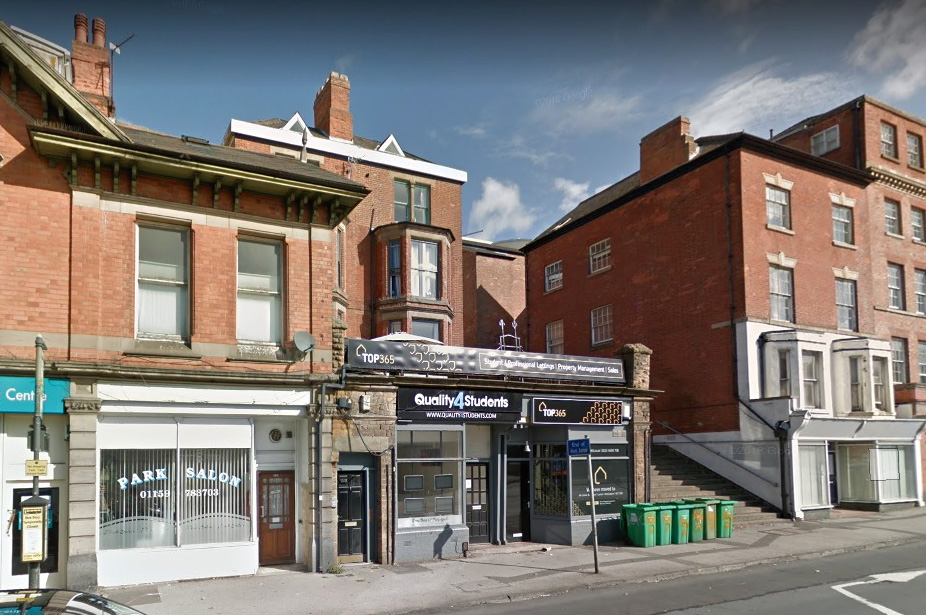
History is always there, hiding in the streets we walk down and in the houses we walk past. It is there, hiding in the buildings of a great city and it is hiding even in the corridors and rooms of the High School. It hides behind the modern frontage of the Park Salon and Quality4Students on Derby Road, up near Canning Circus:


History even hides behind the steamed up windows of the City Chicken Cafe and the Istanbul Off Licence on Mansfield Road:

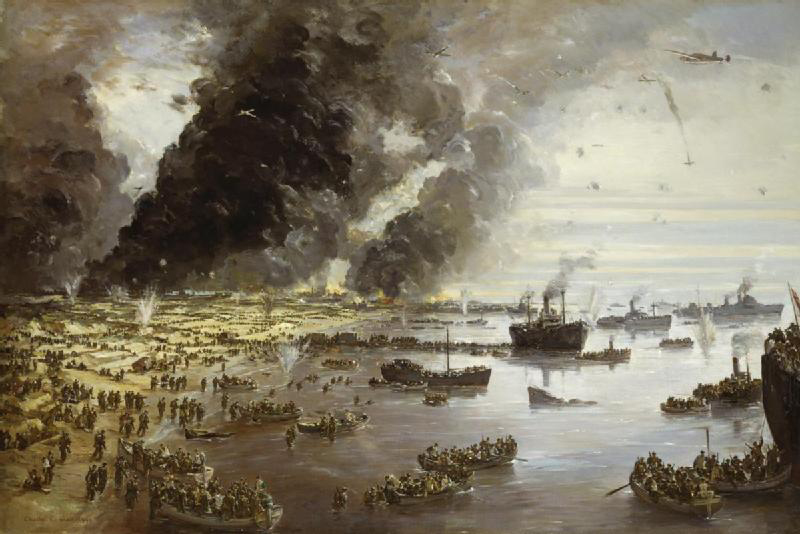
It hides catastrophic defeats:

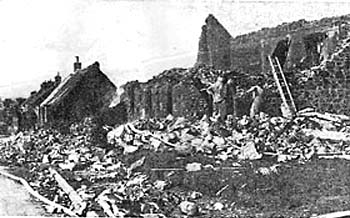
And it hides catastrophic accidents:


There’s no blue plaque to remember Peter Vernon, though. No flag flies over the home of “Watty” Watson. We have no statue in Edwards Lane of “Farmer” Richardson. No films are ever shown on our televisions of George Brown, the young man:

“whose fast in-swinging yorker on the leg stump was so devastating on its day.”

But I do not want this secret history of ordinary people to be forgotten. The modest men in these books all died for our freedom. Freedom from oppression, freedom from racism, freedom from random prejudice, from arrest without reason, from chance execution, from a quick death in a gas chamber or a slow death as a slave labourer :

They saved us from a society without free speech, without choice and with no discussion of the future of us all:

They saved us from a political system which, at the end of the war, was quite willing to kill a substantial percentage of its own citizens as the best way forward towards a better life.
In this book, therefore, you will find as much as I could discover about well over a hundred men from Nottingham High School who gave their lives willingly in the cause of freedom.
That sounds a great many people and it was, for a school with total numbers of between five and six hundred at any one moment during the period under review.

The criteria for being added to the list were, for the most part, inclusion in the long list kept by the Commonwealth War Graves Commission, which uses its own date limits for the casualty’s death of September 3rd 1939 to December 31st 1947. I did stretch the definition slightly to include the men who died while working to support the Allied cause. A university lecturer who is killed in an aircraft crash as he travels from place to place on a lecture tour around the Mediterranean theatre will be in the list, just as much as the man who organises food for a million refugees in India and who prevents the outbreak of a typhoid epidemic. Both are clearly making contributions to the war effort. They are both, to quote a famous football manager, “Getting us closer to the top of the hill.”

14 Comments

Filed under Aviation, Bomber Command, History, Nottingham, Politics, The High School, Writing

My Book (1)

It is a long time since I shared with you what I was up to, away from the knockabout world of blog posting. Some of you will know that for the last four years at least I have been researching the boys of the High School who gave their lives in the Second World War. At first, it was seven days a week, four hours a day, but I am now down to six days a week with three hours as a minimum and the usual being around three and a half hours. It’s difficult to describe what a huge job it was:

I began this mammoth task because as far as I was aware, nobody had ever carried out any research whatsoever about the brave Old Nottinghamians who gave their lives during the Second World War. At the moment I have around 120 people to include in an eventual book, of which 110 are men who qualify 100% as war casualties. Because of the volume of information I have discovered, hundreds of thousands of words, the final work is likely to be in three volumes if not four:

The majority of research I have carried out on the Internet which has supplied me with details which have never been known before. Most of all, I have discovered a large number of former pupils who deserve to be recognised as Old Nottinghamian war casualties but who were not included when the original lists were being compiled:

That is far from a criticism. In the late 1940s, how could anybody have found out that a little boy of eight or nine who spent just a couple of terms in the Preparatory School in the early 1920s had been killed in a tank three miles east of Hamburg five years before? Communication by letter:

and communication by postcard:

with other information distributed in newspapers could not possibly have coped with demands of this kind:

On occasion, the School Magazine, the Nottinghamian, got me started with my researches, but overall, the solutions were largely provided by the men who have dedicated their entire lives to the recording of the minutest details of the Second World War. Men who have recorded the names of every RAF man killed in an aircraft of Bomber Command. Men who have recorded the names of every sailor who did not come home from the sea in World War Two. Every U-boat captain and his every kill. Every nightfighter pilot and every bomber he shot down:

I just felt that, unless I did produced some committed and detailed research of my own right now, there was a real risk that nothing would have been done by the time we reached the centenary of the beginning of the conflict in 2039.
In many ways, that absence of detailed research by others might even be seen as a bonus, because there would be very few people out there who could contradict what I had written. On the other hand, I do feel that after so many thousands of hours working on the project, there should be no huge errors in what I have produced. (Touch wood). Even my best guesses have often proved later to be quite reasonable ones, based on what, in many cases, is a paucity of actual facts.

26 Comments

Filed under Aviation, Bomber Command, History, Nottingham, Politics, The High School, Writing

Sports Day : the race that lasted 20 years

The Reverend Stephens provides us here with yet another journey into “a foreign country; they do things differently there” (L.P.Hartley). And sixty years back in the past, it’s the start of the race in 1957. It’s late in the day, judging by the shadows. I think that the starter is Oswald Lush and look how each team has a differently coloured sash for identification purposes:

The next race started, I think, in 1969. None of those rather young little boys will be nervous, just because thousands of people are watching them and if anybody in the race slips and falls over, everybody will laugh at them and remember the event for the rest of their lives:

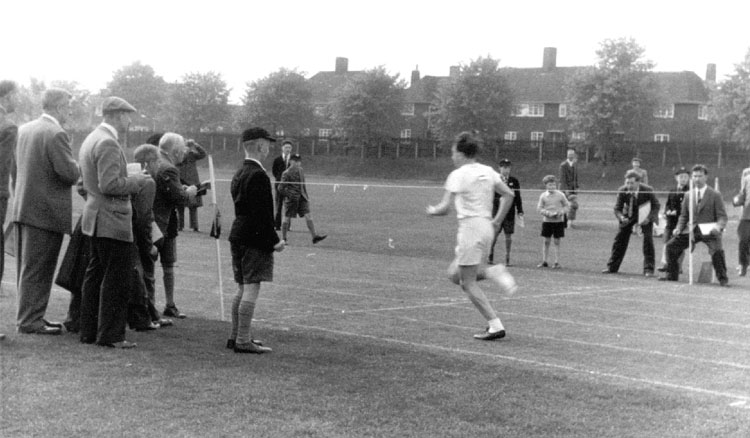
And here are the finishes. This one comes from 1957:

And here’s another tight finish from the same era:

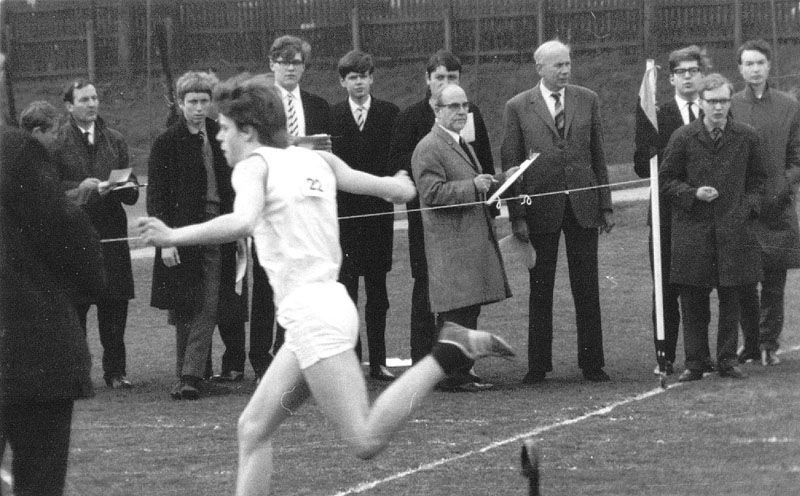
The finishing judges display great concentration, especially Mr Lush on the right:

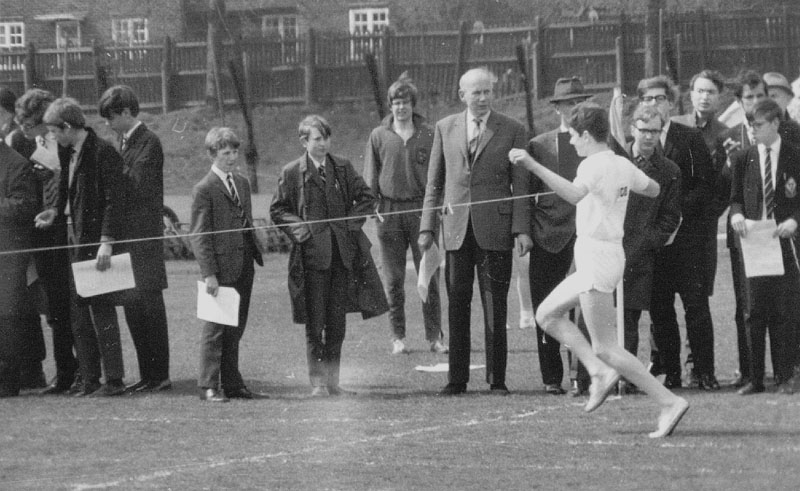
And the winner is…..No 22. Except he’s twelve years late, because this is 1969:

Some finishes in 1969 seem to have been based on folk dances:

The finish in 1977 was a lot more decisive:

And talking of individuals, this is thought to be B Watchorn in 1957. Just look at where there used to be a cricket scorebox:

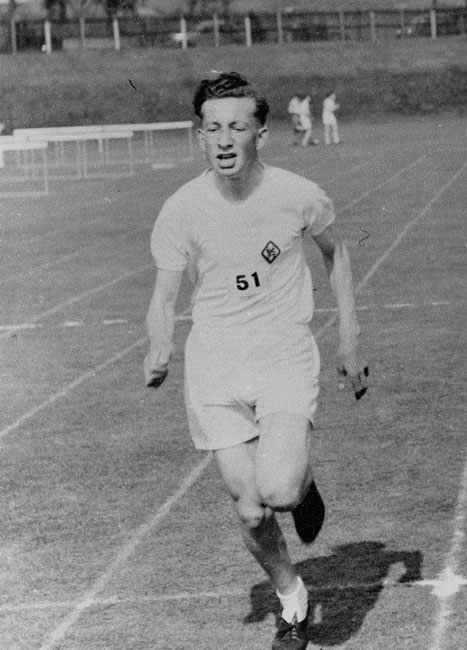
And finally, here is a young man thought to be called Burney winning the mile in 1954:

This was possibly John Murray Burney from Gedling. He will be over 80 years old if he’s still out there somewhere. I hope he is.

21 Comments

Filed under History, Nottingham, The High School

Sports Day : they also serve who stand and wait

One of the best things about old photographs is that we don’t necessarily look at them with the same interpretation of what is happening as the person who took the photograph in the first place. And at sports events, the activities might seem a little boring but the spectators never are. The Reverend Stephens has left us here a good few glimpses of the School Sports Days of the past…and the people who watched them. Here are Messrs Madden, Neville and Foster in 1957:

On the same day, he snapped Messrs Chett, Symonds, Grauberg and Lush. But just look at the cars! Left to right, a Ford Prefect, a Hillman Minx, a Morris Minor 1000 and I really don’t have a clue, but it’s definitely old:

By 1960, things haven’t changed very much. The starter signals that he is ready and everybody else waits for the bang:

Mr Powell doesn’t look too happy as he goes off to see somebody at the other end of the track:

Things were very similar in  1961. One thing that I can’t understand in this picture is the leg in the same lane as the athlete finishing second:

But what’s attracting all the attention in 1957? A small crowd seems to have formed:

Why! It’s a baby!! And Mr AJ Walker just can’t resist!

And how could he resist a child who can lick a finger in a world class way?

Of all the photographs we have of Sports Day, these two are the most thrilling. Why did this not happen when I was working at the High School ? Let me point out too, as you gasp at the size of the queue, that ice cream was not rationed at this point. It’s just a wonderful thing to eat, the Food of the Gods:

Here it is again!:

I cannot explain why there is this sudden rush. I would like to say that the ice cream man’s buxom young daughter has had a wardrobe malfunction, but I really don’t know.

23 Comments

Filed under History, Humour, Nottingham, The High School

Prices slashed on “History of the High School” !!!

Those of you who follow my blog will be familiar with the many stories I have told over the years about Nottingham High School…its Founders, its coat of arms, its war heroes, its caretakers, its heroes and its one or two villains. These stories all appeared in “Nottingham High School, the Anecdotal History of a British Public School” which was published some time ago now:

The reason I am reminding you now of this book is that the price on Amazon has now gone down to £23.48 with Free Postage if you are a member of Amazon Prime. This is fantastic value for money.

Most non-fiction books cost roughly £10 for every hundred pages, so £23.48 for a book of this length is an excellent price. The book has 394 pages (and my computer says around 130,000 words, which is roughly the length of either “The Two Towers” or “Return of the King”).

Above all, this is a hardback book with a nice dust jacket and to be honest, it surprised me with its quality in terms of its looks. It looks really professional for a book written by an amateur author.

The book is written in diary form and runs from Thursday, June 30th 1289 to Thursday, July 12th 2012. I have divided it into forty chapters whose titles range from “Lost in the Mists of Time”, “A Personal Friend of Guy Fawkes”, “The School is Closed Today because of Plague”,  “Old Boy Cuts Off King’s Head”, :

In the more modern era, the chapters run from “The DH Lawrence Years”, “Major General Mahin : A Yank at the High School”, “Albert Ball and the High School go to War” to “The Golden Age of Teachers”:

I have tried to keep the tone of the work an interesting and light one, but at the same time, as you know from my blog posts, I can show my more serious side when occasion demands. A very large number of former pupils from the High School died in the two World Wars and their sacrifice is reflected in my book:

What a price !

£23.48

And more than that, what a price for 394 pages of new, original and interesting ideas!

Incidentally, please don’t think that I’m being greedy and I’m trying to make loads-a-money from this. I am merely pointing out the existence of this new, lower price, because previously the two companies publishing the book have both asked for a higher price. In one case, a much higher price.


15 Comments

Filed under Football, History, Humour, Nottingham, Politics, The High School, Wildlife and Nature, Writing

George Norman Hancock, Old Nottinghamian (3)

As we saw last time, George Norman Hancock was killed on March 31st 1954. At the time he was working with the Ministry of Supply as the Senior Air Force Representative to the Controller of Guided Weapons and Electronics in the Ministry of Supply. He was flying a Gloster Meteor F8 with the serial number WH312:

The first jet fighter built by the British, the Meteor would eventually be produced in the thousands and be used by at least 15 other countries. Its shape was not as impressive as the Messerschmitt Me 262 but it was relatively successful and state-of-the–art, until aircraft like the Mig-15 and the F-86 Sabre came along. As somebody once wrote, it was “not a sophisticated aircraft in its aerodynamics, but proved to be a successful combat fighter.” The Meteor had two Rolls-Royce Derwent turbojets and could reach 600 mph and 43,000 feet with a range of 600 miles. It was armed with four 20 mm Hispano cannons and could also carry various combinations of rockets on the wings:

Norman was flying a Meteor F8 which seems to have been a distinct improvement on the F4. It had a longer fuselage, carried more fuel and had an improved tail shape and an ejection seat as standard.

Norman had taken off at 14:30 from Farnborough for what is called a familiarisation flight, which means that he was just making sure that he could fly the plane and knew what it could do and what it couldn’t do. In case of problems, this is often carried out at altitude and apparently Norman had been flying around at about 36,000 feet without any dramas whatsoever. As he returned to land at Farnborough, though, he reported that one of the engines was acting up. Around 15:14, he radioed the Farnborough Control Tower with the words, “This is Wicker 98. Downwind on one” which means that one engine was now not working at all. “Wicker 98” was his call-sign. Apparently the Control Tower asked him if this was just a practice but when he replied in the negative, they scrambled all the crash and rescue vehicles out onto the runway.

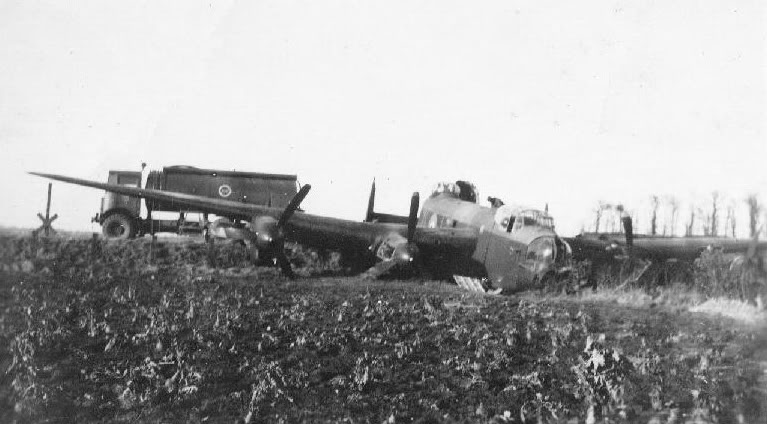
As it drew close to Farnborough witnesses saw the Meteor, at first, flying apparently quite normally until it began to plunge down towards Runway 25. The Meteor’s port wing seemed to lose its lift because of the loss in power of the stricken engine and the aircraft began to descend inexorably towards 400 feet and lower. Poor George had lost power and he had therefore lost lift. A catastrophic combination.
The aircraft was now only just clearing the tree tops and then sank so close to the ground that George clipped the cowshed of Mytchett Farm at Frimley Green and then brushed the adjacent roof of a garage. The Meteor performed a cartwheel and hit the ground:

It exploded in a fireball of aviation fuel and broke up into thousands of pieces:

Poor George must have been killed in a split second and hopefully, he didn’t realise what was happening. In the fiery aftermath, both buildings and up to six vehicles were destroyed.

George’s will produced one or two interesting footnotes. At the time of his death, he was living at The Old Manor House, West End, Beeston. Beeston is to the south west of Nottingham and West End is between the Police Station on Chilwell Road and the Recreation Ground and Bandstand on Queens Road. The Old Manor House, is reckoned to be the oldest surviving house in Beeston. Nowadays, it is a Grade II listed building and is currently used as a dance studio:

George left £10,751 and his estate was administered by his sister Grace, who never married.

20 Comments

Filed under Aviation, History, Nottingham, The High School

More groups of people at the High School

Once again, I thought it would be nice to see how the High School used to look some 60 or 70 years ago .Most of the photographs were taken by the Reverend Charles Stephens who must have spent the best part of thirty years documenting his workplace.

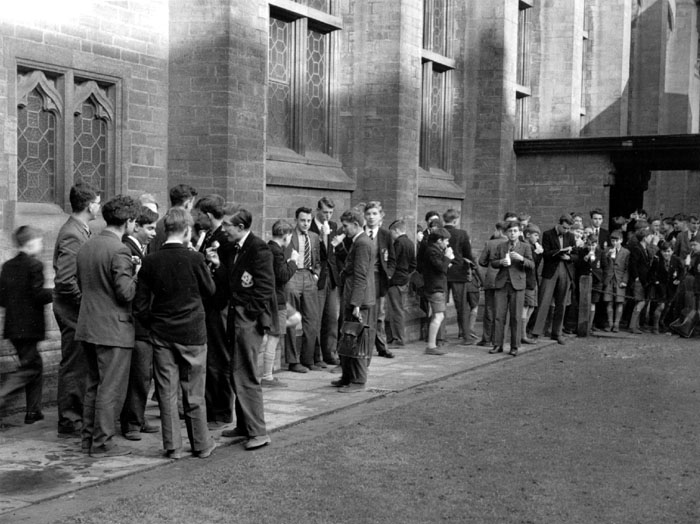
Fittingly, given his title, the first photograph shows the boys outside the Assembly Hall waiting for Assembly to start. I think that in those days, around 1955-1960, there would have been three assemblies per week. Some of the smaller boys seem to be drinking their “school milk” which was a third of a pint, issued to all children in all schools at this time:

People always seem to do a lot of waiting in schools. These expectant little boys are in the dining hall, then, I think, where the Music Hall now stands. They are possibly waiting for the monitors who are queuing up to get their meals before they hand them out. Well, that’s my best guess anyway:

The next three groups were photographed in the staffroom in 1959. The first picture is captioned “Entwhistle, Fallows, Forster, Lush, Leach”.

The second picture is captioned as “Sneyd, Pomfret, Fisher, Parker”. Here it is:

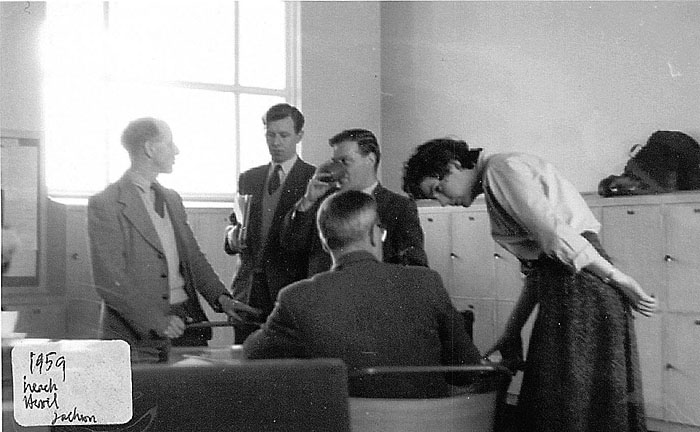
The third photograph shows a secretary as well as members of staff. The caption reads “Leach, Horrill, Jackson:

Let’s finish with a picture of Charlie Stephens at his happiest. He was in charge of the Photographic Society and here they are, from a spilt second in time in 1955:

They all look very happy, don’t they? Well, except for the little boy right at the front who seems to be practicing his “thousand yards stare”.

29 Comments

Filed under History, Nottingham, The High School

George Norman Hancock, Old Nottinghamian and RAF (2)

Last time, we saw how George Norman Hancock sat the Army Entrance Examination and was placed second in the Order of Merit for the Royal Air Force College at Cranwell in Lincolnshire. There were six successful candidates:

AFR Bennett (Harrow County School), GN Hancock (Nottingham High School), K Gray (Leeds Grammar School), TL Moseley (Tamworth Grammar School), GAV Knyvett (Malvern College) and JAP Owen (St Bees School, Cumberland).

These were six optimistic young men, the brightest and the best, who would dedicate their lives to the Royal Air Force and their country. Some of them would lose those lives for ever.

Wing Commander Albert Frank Reuben Bennett worked at the Royal Aircraft Establishment at Farnborough. He was killed on Wednesday, July 1, 1942 at the age of 29.

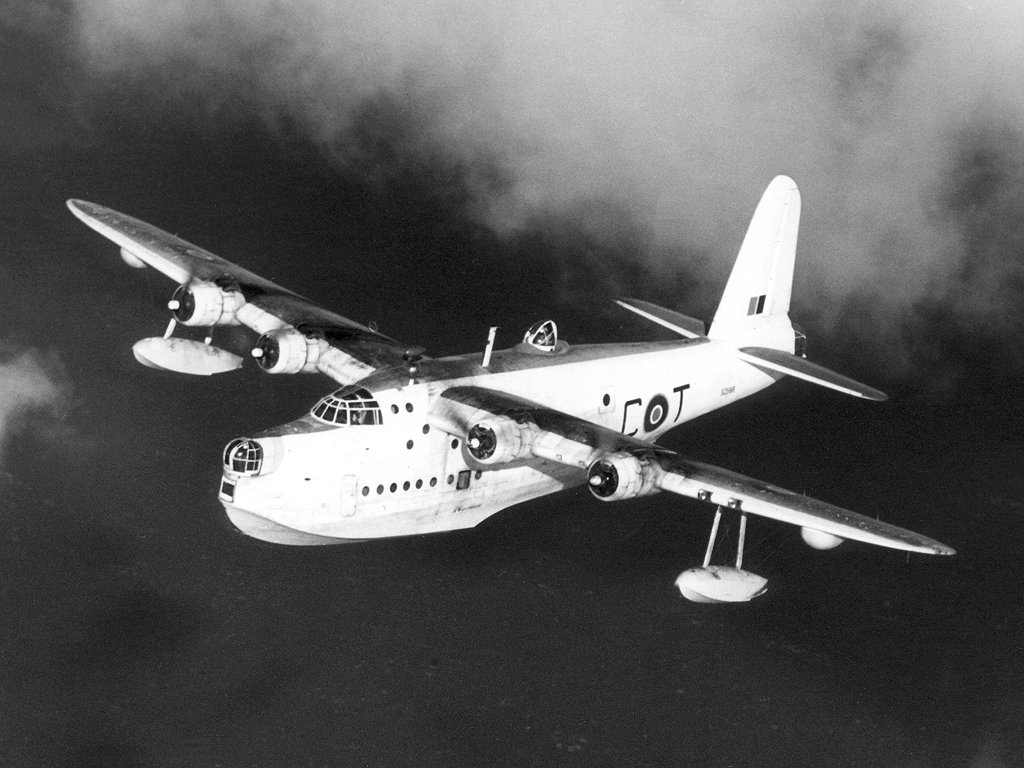
Wing Commander Thomas Lawton Moseley was with 228 Squadron when he was killed on August 25th 1942 at the age of 29. He was in the same Short Sunderland flying boat in which the Duke of Kent was killed:

As for K Gray of Leeds Grammar School, I found three Kenneth Grays who were all killed but they were members of the Royal Air Force Volunteer Reserve, so, unless he left the RAF and then returned to it, I am not sure that this particular K Gray is very likely to be any of them. On the other hand, he may well be.

I first found George’s name in the RAF list for 1933 when on July 15th 1933, he was appointed to a permanent commission as a Pilot in the General Duties Branch of the RAF. In 1938-1940 he was recorded as Flight Lieutenant GN Hancock with the date July 14th 1938 after his name. This corresponds, presumably, to the date when his rank of Flight Lieutenant began. In June 1938 he qualified as a Special Signals Officer and for the rest of his life, he was to work in this area of the service. He would always be engaged in flying an aircraft rather than a desk.
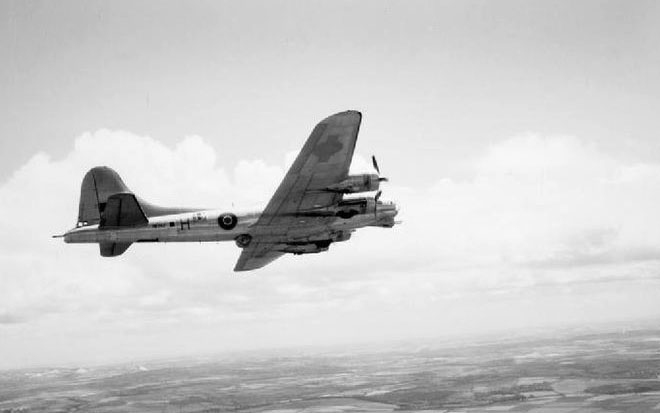
Interestingly, he soon became an Experimental Signals Officer at the Aeroplane And Armament Experimental Establishment, which was originally located on the east coast, at Martlesham Heath near Woodbridge in Suffolk. When the war broke out, it was moved to the less vulnerable site of RAF Boscombe Down in Wiltshire.  Boeing B-17s were frequently used in research of the electronic variety. This one was specifically part of the AAEE:


The next time we meet George is in the “Flight” edition of April 13th 1939 when Flight Lieutenant GN Hancock became Squadron Leader GN Hancock with effect from April 1st 1939. On April 24th 1939, George was transferred to the Technical Branch from General Duties.
George’s name also cropped up in the King’s Birthday Honours for 1944, which celebrated the official birthday of King George VI. He was listed as Group Captain GN Hancock, “Mentioned in Despatches”, this time for his work with Coastal Command.
In 1946, George was awarded the CBE in the New Year’s Honours List as senior Signals Officer of the entire RAF. He must have also been promoted, if only temporarily, to the rank of Group Captain.

On November 1st 1947 George relinquished his temporary rank of Group Captain to become a Wing Commander (substantive). On July 1st 1953, he reverted to being a permanent Group Captain because on October 6th 1953, he was transferred to the General Duties Branch, retaining his rank…Group Captain GN HANCOCK, CBE, MIEE (seniority 1st July 1951).
I’ve not found the second abbreviation yet, but it possibly means “Member of the Institution of Electrical Engineers”. He certainly joined the Institution as a university graduate in 1940 and by 1942, he was an Associate Member, and ten years later, a full Member. At the time of his death, George was also the proud holder of two prestigious diplomas. One was the AMIEE and the other was the AMI Radio Engineers. One was “Associate Member of the Institution of Electrical Engineers” and the other was, presumably, “Associate Member of the Institution of Radio Engineers”.

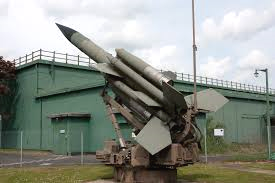
George’s obituary lists the various jobs he did in the RAF and they certainly make a long and impressive list. He was the Chief Signals Officer in Coastal Command, the Senior Staff Officer at the Air Traffic Headquarters at Uxbridge, and the Command Signals Officer with the British Air Force of Occupation in Germany. At the time of his death on March 31st 1954, he was working with the Ministry of Supply as the Senior Air Force Representative to the Controller of Guided Weapons and Electronics in the Ministry of Supply. Here is an early Bloodhound anti-aircraft missile:

To carry out all of these important posts, George needed immense dedication to the cause, and he had it in abundance, being committed both to the Royal Air Force and to his profession as a telecommunication engineer. He was known universally and affectionately by his nickname of “Hank”. His friends loved his courage and his jovial optimism. His work colleagues had great respect for his plainly expressed opinions and his dogged persistence in working away at things and overcoming any problems. Indeed, his obituary writer thought that George’s character was the very reason that he was always called “Hank”.

“This bestowal of a nickname gave an accurate measure of the esteem in which he was held by his colleagues.”

8 Comments

Filed under Aviation, History, Nottingham, The High School