Category Archives: Nottingham

Freedom and the English (1)

The other day, I was reading that classic work, the “Nottingham Date-Book” when I stumbled upon two little gems. The first was dated September 30th 1793 and showed a Blackadder type of world where alcohol replaces political thought:

“The Mayor’s installation banquet at the “New Change” as it was termed, was distinguished by excessive displays of loyalty. Amongst the toasts were “the King and Constitution,” with three times three, “the Duke of York and the Army,” “the Duke of Clarence and the Navy,” and so on.
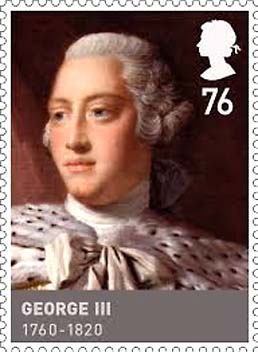
george III stampcccccccccccccccccccccccc

The Mayor himself sang the air, “God save the King,” and his guests the chorus, followed by loud huzzas and  Constitutional songs.”

These drunken fools in the past made me realise just how free Englishmen are in our present time. Free  to do what your rich betters want you to do. A good citizen as long as you think exactly what you are supposed to think. And any thought of a questioning kind is just not welcome. As it is now, so it was then, back in 1793, in the era when first the Americans and then the French had found other ways to rule themselves than with a king.
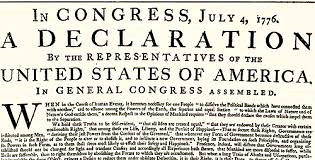
declaration of independence

The next entry in this diary of Nottingham is for November 12th 1793, in an entry where the author of the book promises us that “The spirit of the times will be observed in the following circumstances”. The events all took place in  Spalding, just over forty miles from Nottingham, in neighbouring Lincolnshire.
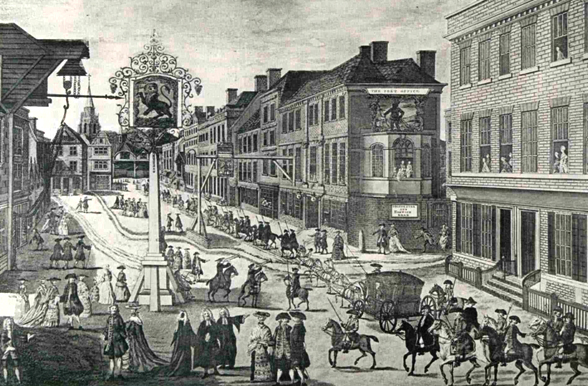
spalding

Here is the sorry tale:

“One of the Officers of the Nottingham Regiment of Militia” states the Journal, “now lying at Spalding, went to a shoemaker’s of that place to order a pair of boots, but on observing that detestable outcast of society’s book, Paine’s Rights of Man, lying on the table, he thought proper to countermand the order, and take the book along with him. Next day, the soldiers being under arms and forming a circle round a large bonfire, this knight of the lapstone was summoned to appear before them,, and made to burn the celebrated jargon of nonsense, the music playing “God save the King” during its burning, at the end of which the soldiers and inhabitants gave three loyal huzzas, and then this wonderful would be wiseacre was suffered to depart”.

And just in case you are wondering, a lapstone is, according to the Free Dictionary, “a rounded device or stone on which leather is beaten with a hammer by a cobbler”

Here is Thomas Paine:
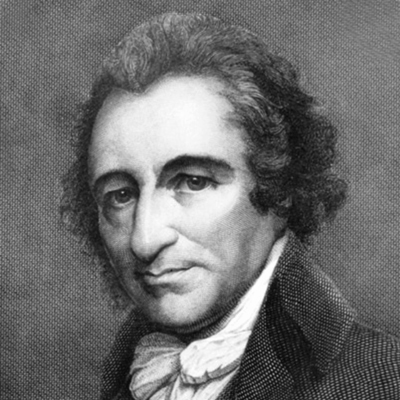
paine

According to Wikipedia, Thomas Paine is exactly what you don’t want in a society run by the upper classes, especially when, deep down, they know that they are not particularly clever or competent. And they worry therefore when the ignorant peasant class produces a “political activist, philosopher, political theorist and revolutionary” like Thomas Paine, “The Father of the American Revolution”:
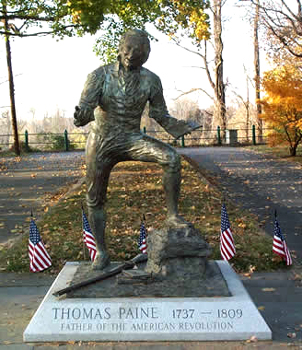
paine statue

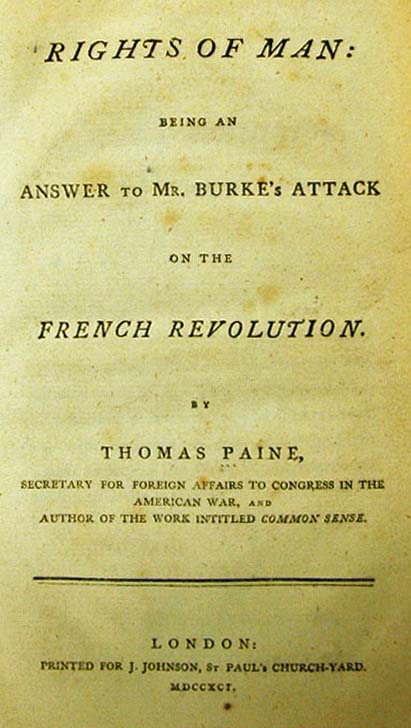
Paine came from Norfolk and his famous book, Rights of Man,  was in part a defence of the French Revolution:
rights man book

Paine believed that each individual has rights and that all the institutions that do not benefit the nation are invalid.  Top of the list was the monarchy and the aristocracy.
He wanted a written Constitution for England, a national assembly and a national budget without any money to be spent on military or war expenses.

He demanded lower taxes for the poor and free education for all.

He wanted a progressive income tax, to limit the power of wealthy estates, so that a ruling class could not preserve power, whether economic, political or religious, uniquely within the nobility.

Indeed, Paine stated that the ability to govern is not hereditary. This would mean that any idea of inheritance or royal succession would be abolished.

Paine was tried in his absence for seditious libel against the King and the Royal Family but could not be hanged because he never returned to England.
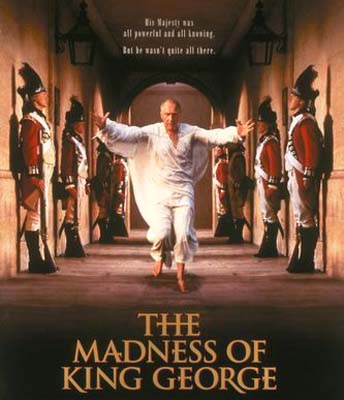
At this time, George III was as mad as a fish although there are plenty of people who say that it was mostly down to the medicines given to him by his doctors.
Madness_of_king_george-715444

When the doctors stopped treating him as, presumably, a hopeless case, King George got better almost straightaway.
It says a great deal for the repressive machinery of the government that those buffoons in Spalding who gave “three loyal huzzas” for the king didn’t even realise that their king was completely mad. They might just as well have gone down to the local fishmongers and pledged their undying loyalty to the largest cod on the counter.
Fish-with-Crown-


27 Comments

Filed under France, History, Nottingham, Politics

Bygone football clubs (2)

Last time, I looked for the most part at the early days of Notts County and Nottingham Forest. They were not the only football teams to play their fixtures down on the Forest, though. A veritable plethora of small local teams flourished in Nottingham during this era. They had some wonderful names, all marvellously evocative of the origins of their players:

“Notts Artisans, Notts Athletic, Nottingham Bank, Nottingham Castle, Notts Forest Swifts, Nottingham Co-op, Nottingham Lindum, the Nottingham Manufacturing Company, Notts County Rovers, Nottingham Lace, the Notts Law Club, Notts Magdala, Notts Pioneers, Nottingham Postmen, Nottingham Post Office, Nottingham Press, Notts Thursday Athletic, Notts Thursday Rovers, Nottingham Thursday Wanderers, Nottingham Strollers, Nottingham Trent, and Nottingham Trinity.

All of the “Thursday teams” would have been from Sherwood, given the day when the shops closed for the afternoon in this northerly suburb of the town. Have a wild guess when it was half day closing in Sheffield. Yes, on a Wednesday. But what about the little Welsh town of Abergavenny?

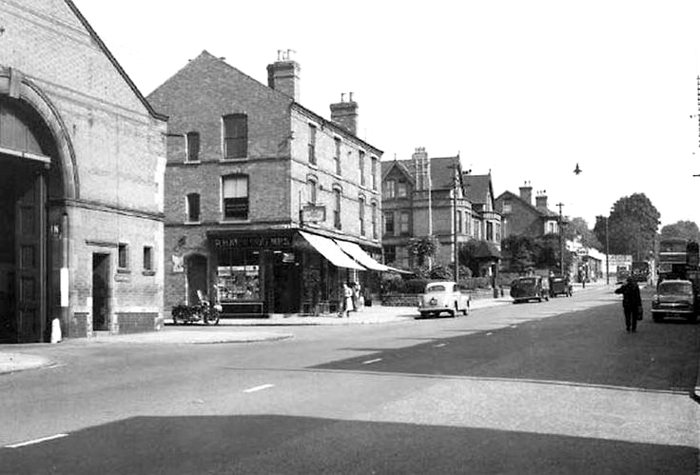
Here is a sleepy Sherwood as recently as the early 1950s. How many houses have been demolished to make way for charity shops and empty premises!

pivcture

Not much is known about many of the smaller Nottingham clubs, except that their names sometimes figure in the very early rounds of the fledgling FA Cup. I would be very surprised indeed, though, if there were any connection between Nottingham Trent Football Club and Nottingham Trent University.

In the list above, mention is made of Notts Law Club. They played the High School on an unknown date during the Christmas holidays of 1879-1880 and duly beat their young opponents by 3-0. All three goals were strongly disputed by the High School and no further fixtures appear ever to have taken place against this opposition. Notts Law Club was the original team of the most brilliant outside right of his day, Arthur Cursham, who played for Notts County, among many other clubs, and eventually captained England. Notts Law Club, though, were an extremely violent set of individuals, and gained such a reputation for rough play and a willingness to argue the toss about every single decision that other local teams soon became unwilling to arrange fixtures with them. Indeed, so hostile was the general local reaction to the Notts Law Club that the team was eventually forced to disband completely. Notts Law Club never had a player who won an Olympic Gold Medal, but one of the other little teams did:

article-2178161-143110FA000005DC-268_634x630

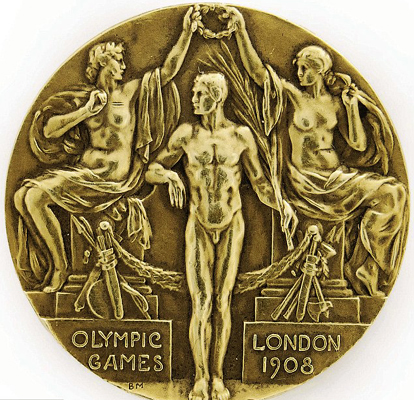
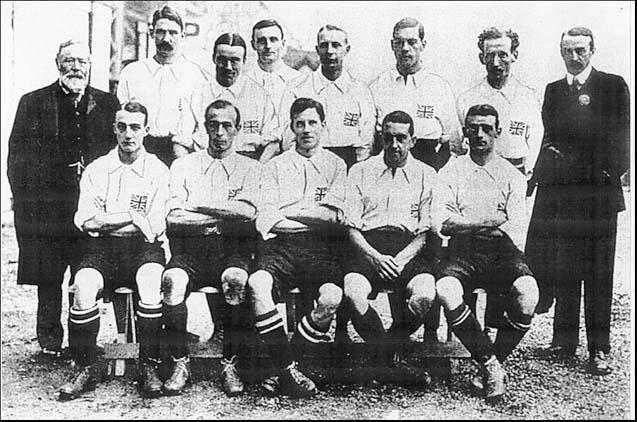
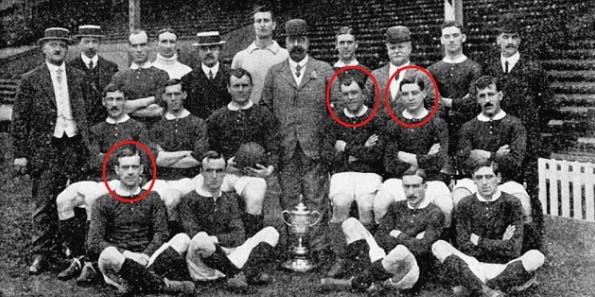
This team was Notts Magdala F.C., who had a very famous player in the person of Frederick William Chapman, an Olympic Gold Medal winner in the United Kingdom team in the 1908 Olympics held in London. Here is a photograph of the team which won a hard fought Final against Denmark by 2-0, with the first goal coming from that very same Fred Chapman of Notts Magdala F.C. and also of the High School, which he had attended from 1891-1898. In the Olympic Final, Fred played as a central defender. The second goal was scored by the era’s legendary amateur centre forward, Vivian Woodward. Previously the United Kingdom had defeated Sweden by 12-1 and Holland by 4-0. Arguably, their Olympic victory made England, who provided all of the players for the United Kingdom team, Champions of the World. Fred Chapman is the second player from the right on the back row:

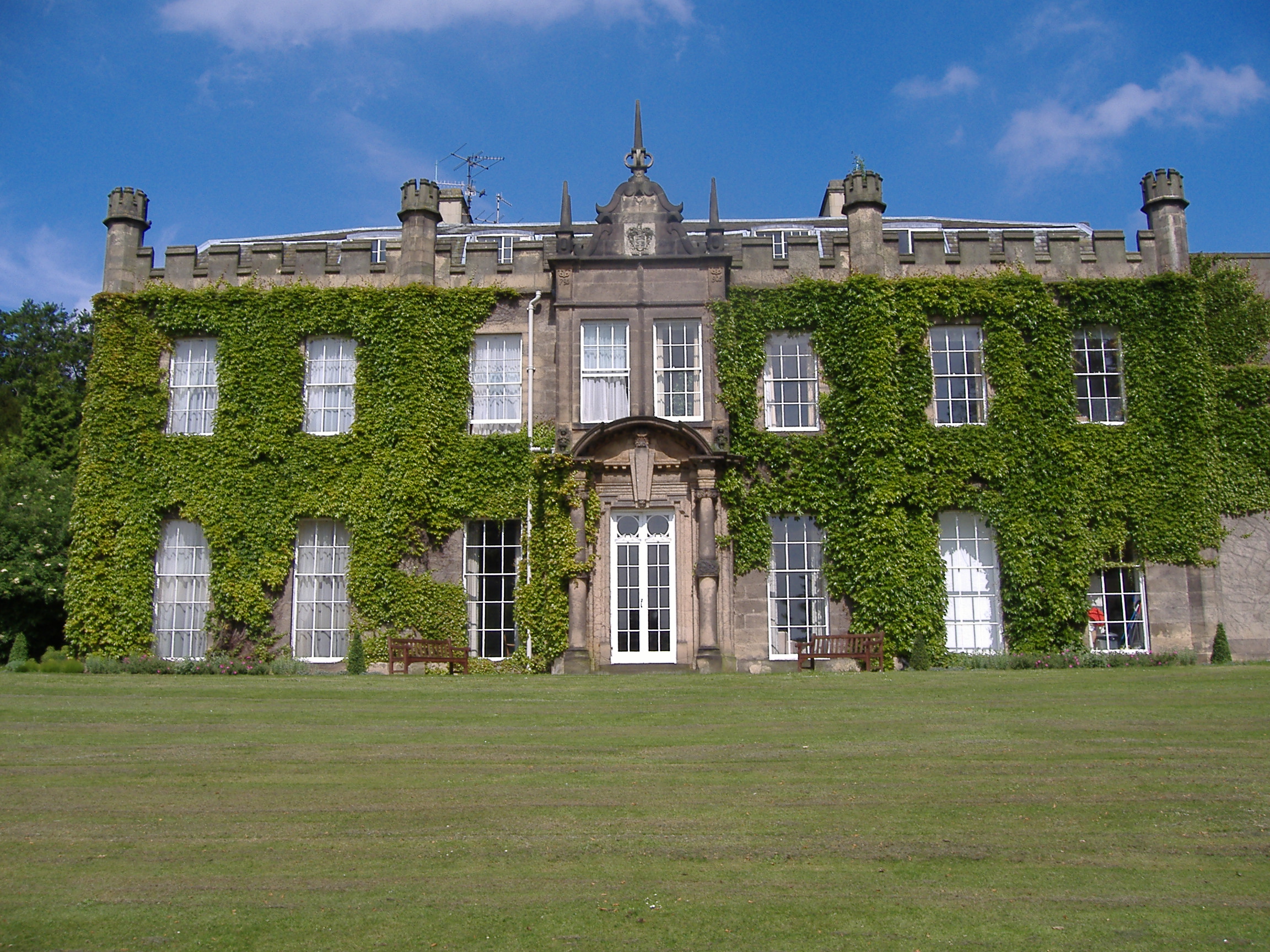
gold medalFred Chapman was still a relative unknown, however, even when he became one of the Notts Magdala club’s eleven Vice-Presidents, and later the Honorary Secretary and Treasurer. The club had 55 members and its playing captain was another Old Nottinghamian, John Barnsdale, (1878 –1960) born in Sherwood and later to play for Nottingham Forest on 28 occasions during the 1904-1905 season.  He was living at Lenton Hall around this time:

lenton

Houses must have been cheaper then. John Barnsdale was already Fred Chapman’s godfather, and years afterwards, became his “Uncle Jack”, when Fred married his sister, Evelyn Mary Barnsdale.

Not all of the local clubs on the Forest were called after the town. Prominent sides also included Basford Rovers and Sneinton Institute. It must all have been extremely colourful. Just a few of the old clubs’ colours have survived, and I thought it might be nice to recall them using present day teams who wear the same colours.

Notts Druids wore amber and black quarters, as do Hesketh Bank AFC most Saturdays in the West Lancashire Football League Premier Division:

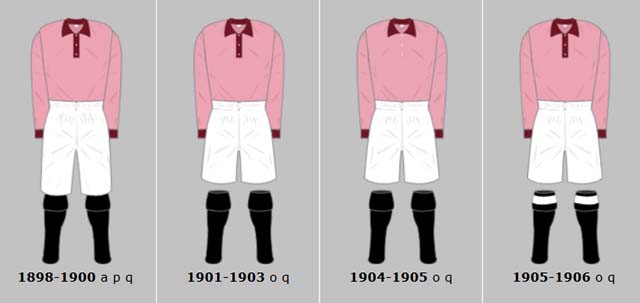
black amber heketh bank xxxxxxxxxxxxxxxNotts Olympic lasted from 1884-1893.  They wore pink and white, rather like Portsmouth FC used to wear from 1898-1909, just before they joined Division 3:

pink whiteNottingham Press, appropriately perhaps for a team of journalists, wore all black, rather like DFC United in the USA. Another local team who wore all black were Notts Swifts.

all black dc utd.jpg xxxxx

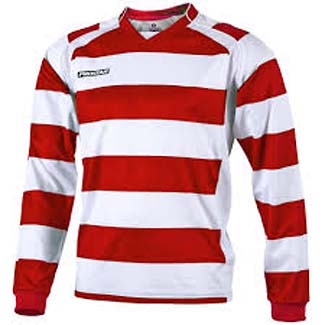
Nottingham Rangers, who still exist, used to wear scarlet and white shirts. So did Notts Wanderers. Either team might have played in this kit, found in an online catalogue:

scarket white 1

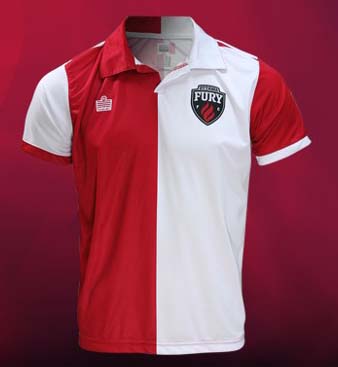
or in this one, worn by Ottawa Fury FC in the North American Soccer League:

fury xxxxxx

or like the slightly more boring Charlton Athletic:

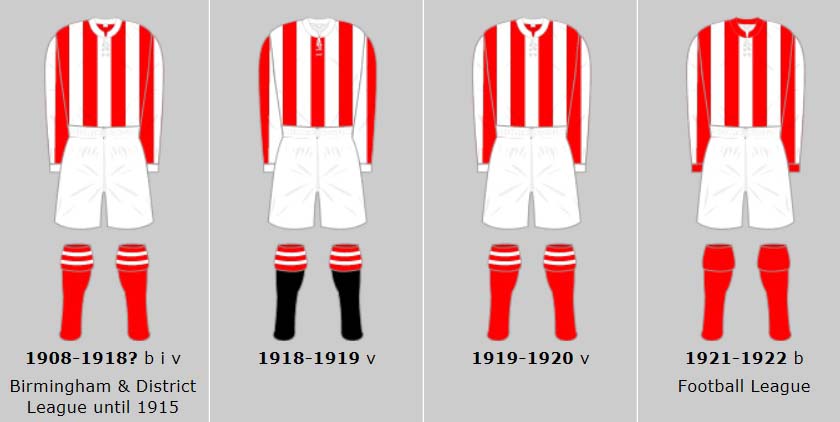
scarlet white bobbyor perhaps Stoke City:


scarley white 3

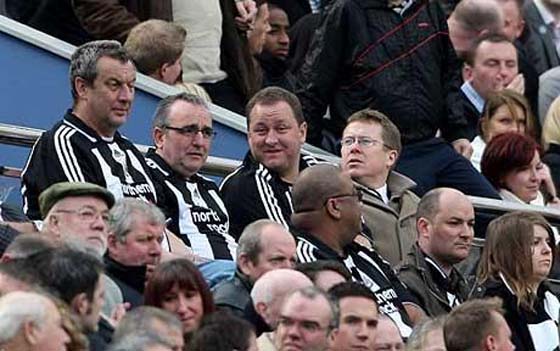
Nottingham Rovers used to play in black and white, perhaps like these gentlemen:

mike-ashley_zzzzzzzzz

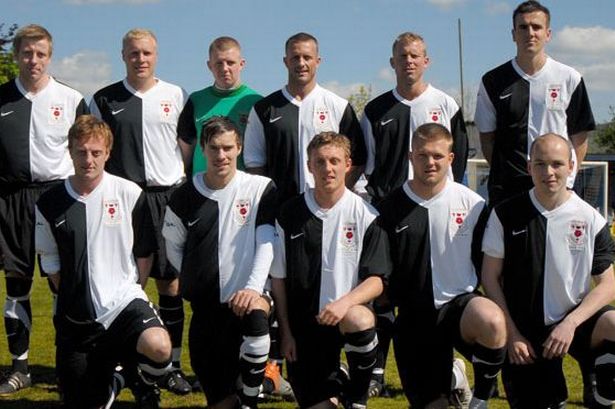
Or like this old kit of Glossop North End AFC now in the North West Counties Football League Premier Division after a brief spell in the Football League:

black white glossop n e

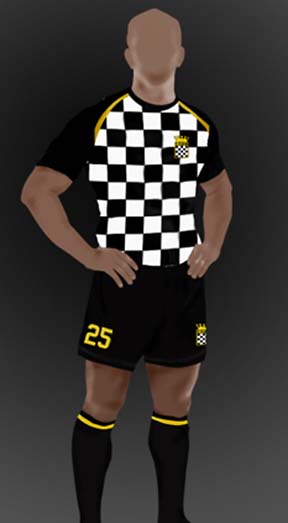
I cannot really imagine that they wore the same kit as Portuguese team, Boavista:

proposta

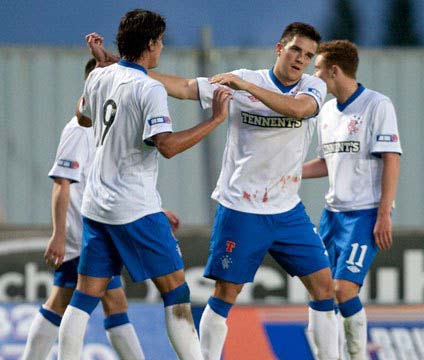
Nottingham Scottish used to wear white shirts and blue shorts, exactly like Rangers’ away strip:

rangers white, bluxxxxxxxxxxxxx

Only the fabrics change in football kits. The colours of the shirts never seem to change very much.

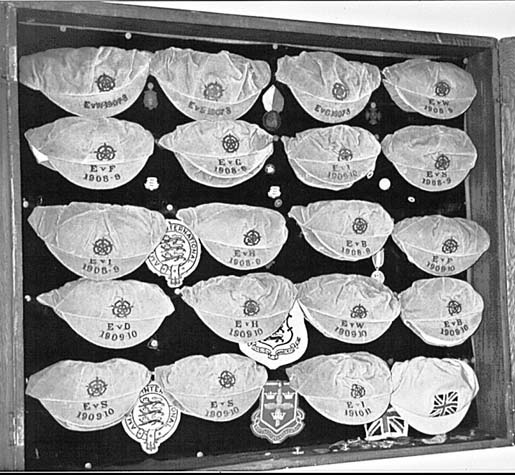
These are Fred Chapman’s Amateur International caps:

chapman caps

I will tell you more about his career in another blogpost. By the way, the illustrations of old football kits came from the best ever website for the soccer nerd and all those boys who had more than twenty different Subbuteo teams. New Brighton Tower 1898? Oh, yes.


8 Comments

Filed under Football, History, Nottingham, The High School

Bygone football clubs (1)

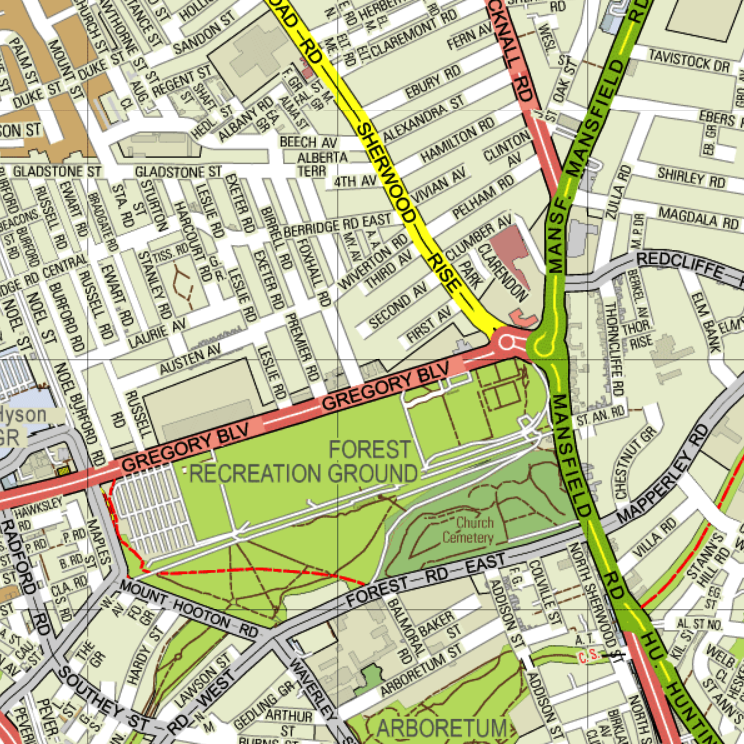
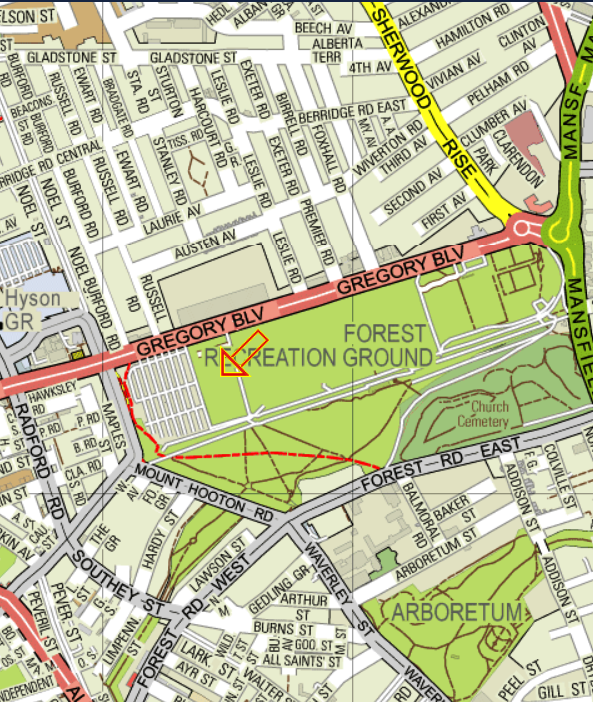
Over the years, the Forest Recreation Ground has been used for many, very varied, sporting activities. Here is a modern map:

forest

In the medieval period, bear baiting had been probably the first activity on the Forest, with a horse racing course eventually being constructed on the very same site.

Originally the racecourse measured four miles long, but in the early 1700s, this was shortened to two miles. In 1797 a new track in the form of a figure-of-eight was laid out. Unfortunately, this rather strange layout was not successful, and another more conventional course, therefore, oval in shape, was constructed soon afterwards

By the 1860s though, the racecourse was in decline, offering only small prizes, and attracting only second rate horses.  The last race meeting took place on September 29th-30th 1890, and Nottingham’s horse racing subsequently moved to Colwick.

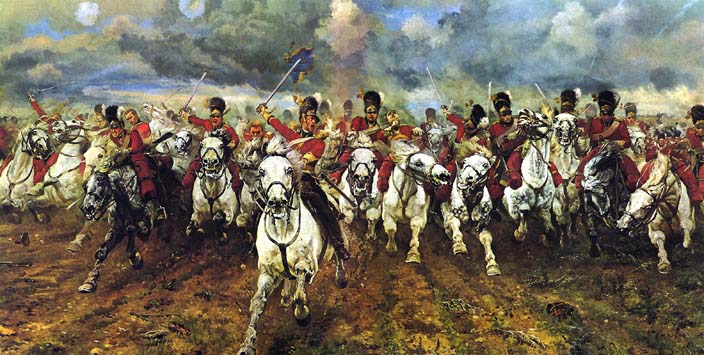
Around 1800, the centre of the racecourse had been used as a place of exercise by the many officers of the cavalry who lived in a distinctive Georgian building on Forest Road. Familiar to all High School pupils, it played host to a tiny sweet shop originally called “Baldry’s” and, more recently, “Dicko’s”. It is now a bakery. Most of those cavalry officers were destined to charge at the Battle of Waterloo:

Scotland_Forever

By 1849, cricketers were using the western end of the Forest for practice, and they soon moved to the centre of the racecourse to play professional games for large sums of money.

It is not really known when football was first played on the Forest. A group of young men regularly met there in the early 1860s, to play a primitive kind of field hockey called “shinney”. They soon thought of giving this up to play the new sport of football.

An initial meeting was convened therefore in the upstairs room of the then Clinton Arms in Shakespeare Street, and the “Forest Foot Ball Club” was duly formed in 1865.

Their first fixture on the Forest was on Thursday, March 22nd 1866, a friendly game between Fifteen of the Forest, and Thirteen of the Notts Club. The game was eventually played between Seventeen of the Forest and Eleven of the Notts, and, according to some sources, was goalless, Nottingham Forest’s first ever goal being scored in their third game, another friendly on the Forest against Notts County, which finished as a 1-1 draw.

Other contradictory sources say, however, that the initial game finished as a 1-0 victory for Nottingham Forest, with Old Nottinghamian, William Henry Revis, providing the decisive score.

One early newspaper article, described how:

“When the men were spread out, the field looked exceedingly picturesque, with the orange and black stripes of the Notts, and the red and white of the Foresters.”

This slideshow requires JavaScript.

One of Nottinghamshire’s greatest early footballers, E.H.Greenhalgh, who played for England in the first ever international match against Scotland in 1872, was to write, of football on the Forest:

“The first set of players who came out were regarded as a company of harmless
lunatics who amused themselves by kicking one another’s shins, but did no great harm to the public at large, although in earlier days they would have been put in the stocks.”

Richard Daft, wrote in similar vein…

“When a young man I played regularly with the Notts County Football Club when it was first formed. I believe I played centre forward, but I am not quite sure about this as we were never very particular in those days about keeping in one place. Charging and dribbling were the chief features of the game at that time, and often very rough play was indulged in.”

The exact location of Nottingham Forest’s pitches has never been ascertained for certain. My own researches have led me to believe that they must have been immediately to the east of what is now the “Park-and-ride” car park, at the bottom of the slight slope, but I have no way of being totally sure about this. Look for the orange arrow:

Untitled forest

Forest certainly had major problems with their location, however, when they entered the F.A.Cup from 1878 onwards. The Forest was common land, with free access for all, but the regulations of the F.A.Cup stipulated that an admission charge had to be levied. For this reason, “Forest Foot Ball Club” had to move to the Meadows area for the 1879-1880 cup campaign.

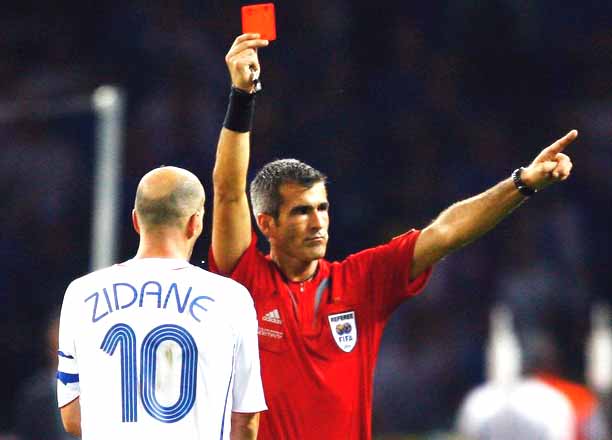
This was not, of course, before the club had introduced various innovations. Samuel Weller Widdowson had invented the shin guard, which was first worn on the Forest in 1874. In 1878, the first ever referee’s whistle in the world was heard on the Forest, most probably in a game between Nottingham Forest and Sheffield Norfolk. It was blown by Mr C.J.Spencer, and marked the first step in a long, long journey of what shall we say, talking points?

zid

The club’s departure however, did not mean that the Forest itself was suddenly devoid of football clubs. Throughout the Victorian era, football was always to remain the main sport, played by scores of different local teams, all wearing their own unique and brightly coloured shirts and shorts.

Indeed, at this time, there were so many local teams using the pitches that the High School were frequently unable to fulfil their own fixtures on Saturdays, but instead had to play on Wednesdays, occasionally Thursdays, or even Tuesdays. At the time, of course, Wednesday was half day closing for shops and businesses in Nottingham, and Thursday was half day closing in Sherwood.

On these half days, it was by no means unusual to see footballers on buses and trams, travelling to their game, already changed into their kit. A newspaper at the time wrote of

“persons hurrying to the Forest football grounds, and dozens of players in full
rig making their way in the same direction,”

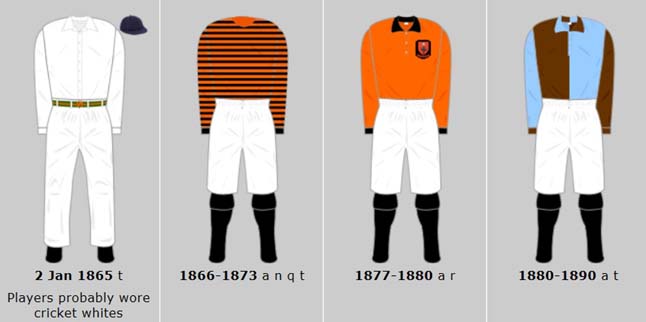
Notts County wore black and orange hoops, and at least three other kits:

notts county

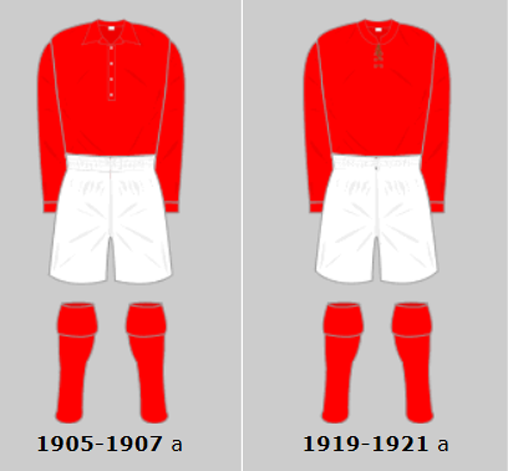
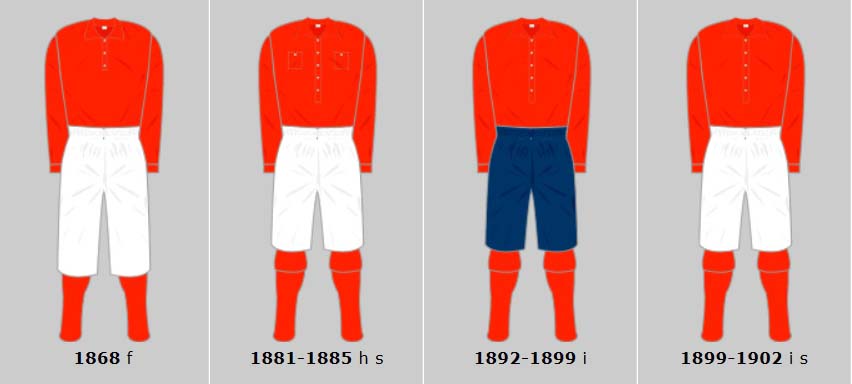
Nottingham Forest had always worn their famous “Garibaldi Red”. Here are some of their oldest kits, with only minor changes from year to year, and those sexy shorts getting shorter and shorter:

forest 1868 zzzzzz

By the way, all the illustrations of old football kits came from the best ever website for the soccer nerd and all those boys who had more than twenty different Subbuteo teams. New Brighton Tower 1898? Oh, yes.

Forest and County were not the only football clubs in Nottingham.  Next time I will look at some of the less well known local teams in the area at the end of the Victorian era and before the First World War.


16 Comments

Filed under Football, History, Nottingham, The High School

High School Football Team achieves Perfection on the Forest

Wednesday, January 21st 1981

On a dull, dreary, drizzly day in winter, the author stood with the football team coach, Tony Slack, watching the First XI play a well contested match against High Pavement 2nd XI. We were on the Forest, at the side of a pitch which has now been partially covered by the all-weather facilities. Look for that orange arrow:

This slideshow requires JavaScript.

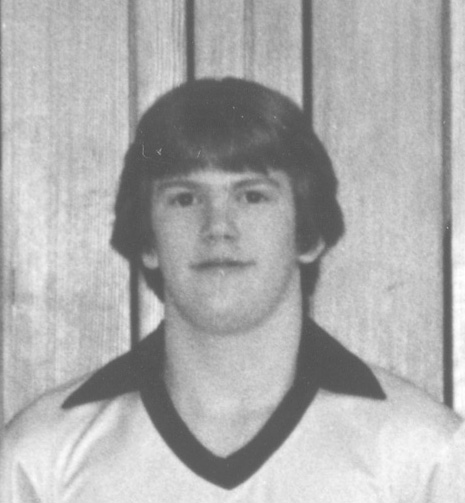
Suddenly, eighteen year old Norman Garden, his sleeves rolled up in determined fashion, won the ball with a strong, vigorous tackle at the edge of his own penalty area:

NORMAN GARDENxxxxxxxxxxxxxxxxxxxxxxxxxxxx

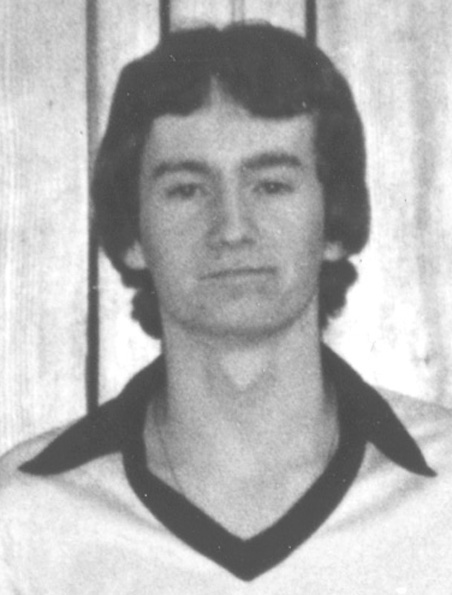
He came forward with the ball at his feet and set off thoughtfully towards the opposition goal. Looking up, he sent a long, curving, arcing pass out to young Bert Crisp on the left wing. Bert trapped the ball, then ran forward ten yards or so, and looked across at the attacking possibilities:

BERT CRISP the one
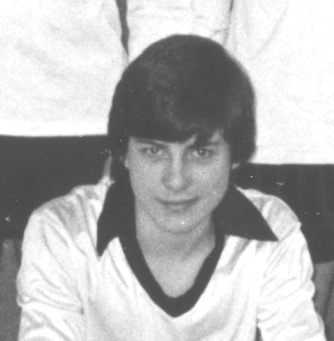
Five yards outside the penalty area stood Chris Ingle, the team’s centre forward. He was in his usual pose, apparently disinterested, lacking commitment, without any apparent desire for hard physical involvement, a young man who only came alive when he saw the whites of an opposing goalkeeper’s eyes:

CHRIS INGLE ONE WWWWWWWWWWWWWWW

Chris began to move. He accelerated slowly but purposefully from his standing start as he crossed the white line of the penalty area. Bert Crisp instinctively knew what to do. He clipped in a wickedly curving centre, about four or five feet above the ground. It was timed to arrive at the penalty spot at exactly the same time as the deadly centre forward. Chris Ingle, as the ball flew in front of him, launched himself full length over the cloying mud.
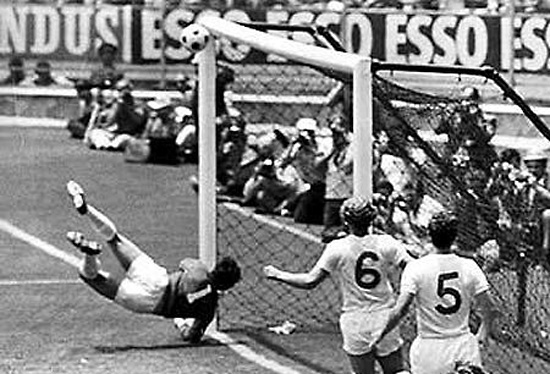
He met the ball hard with his forehead, catching it a blow which rocketed it towards the top corner of the net. “Goal!!” we teachers both yelled in our minds. But it was not quite over. The opposing goalkeeper soared backwards and with a despairing left hand just managed to flick out at the ball. He diverted it upwards, and it flew onto the crossbar and behind the goal for a corner.

Chris Ingle got up and wiped the mud from his hands down the front of his white shirt. Tony Slack turned to me and said, “You wouldn’t see anything better than that in the First Division.” And he was right.

And, in case you missed it, here’s that fabulous save again…

banks defesa

19 Comments

Filed under Football, History, Humour, Nottingham, Personal, The High School

A scary tale of cemeteries and coffins unearthed by the storm

This strange tale is just one of many which I have found in a little gem of a book entitled “The Date-Book of Remarkable Memorable Events Connected With Nottingham and Its Neighbourhood, 1750-1879”. Its author was  John Frost Sutton, and I have tried to make his account read a little bit more easily for the modern reader:

“December 1792
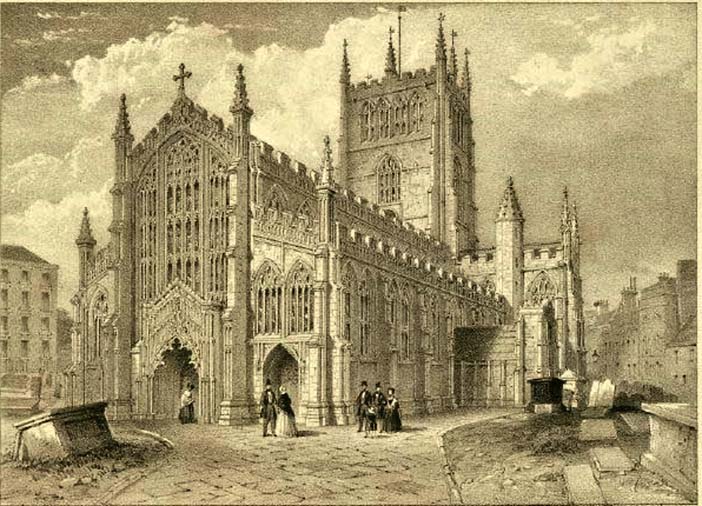
An extraordinary occurrence is stated to have happened this year at St Mary’s Church.

st mary engrav

It was necessary to improve the passageway at the side of the churchyard leading down towards the County Hall. This could not be done without taking down some houses, and the churchyard wall on the south side of the building; in order to widen the road, it was also necessary to dig away a part of the churchyard. The cemetery was much higher there than the street and when the wall was removed,  one night, a heavy shower of rain, washed away a considerable portion of the earth from the churchyard. In consequence of this, several coffins were left almost completely uncovered, and two or three of them fell out.

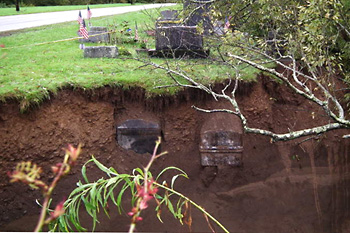
Here is a modern cemetery in South Carolina where exactly the same problem has occurred:

washed out graves

Back to the story:

Among these coffins was one which contained the remains of Mr William Moore, for some years landlord of the Black Swan public house, situated near the church. He had been dead for about twelve years.

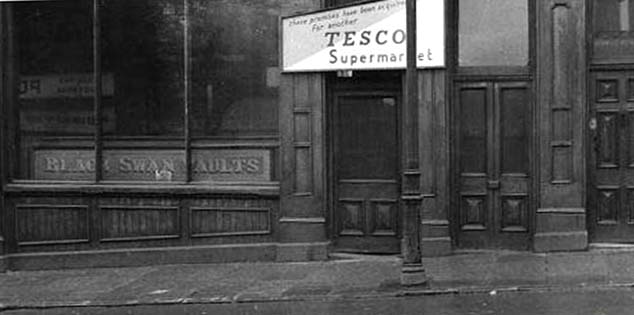
The Black Swan used to stand in Goosegate. It was closed as a public house, and became a shop. This is the most recent picture of it that I can find:

black swan pub

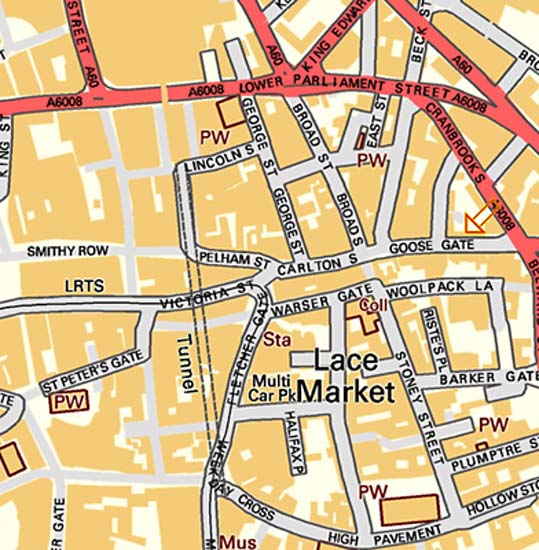
Here is Goosegate, indicated, as always, by the orange arrow.  St Mary’s Church is indicated as a “Place of Worship” by the letters PW on High Pavement, towards the bottom of the map:

goosgate

And now, back to the shattered coffin:

“The coffin being broken, there was observed in his remains a concretion not unlike a pumice stone, but rather whiter, and as large as the liver of an ox.”

It took me a very long time indeed to find out the weight of a complete ox liver, but I eventually decided that a pound, sixteen ounces or half a kilo would be roughly right:

“Mr William Moore, the landlord of the Black Swan, was a remarkable man for having a very large belly, which projected more on one side than the other:

belly
He had often said to his friends, that he thought a hard substance was beginning to form within him when only 22 years of age, and this continued to grow slowly until the day of his death He died about the age of 70. He had also been heard to say that it gave him little pain, though he found it troublesome; and it is worthy of remark, that the ribs on the side of the concretion bowed very much outwards.

Three local Doctors, Dr Hodges, Dr Neville and Dr Ford had examined Mr Moore several times and he had promised that whichever of them survived him should have permission to perform a post mortem on his body. But as Mr Moore survived all three of the doctors, no post mortem examination was ever made. Nothing therefore but an accident could possibly have brought the concretion to light.”

19 Comments

Filed under History, Nottingham

A Great Bustard in Edwardian Nottinghamshire

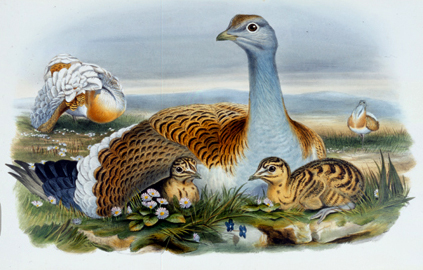
Great Bustards are huge birds, more or less the size of a domestic turkey. They used to live in many areas of Merrye Old Englande, as long as there was plenty of open grassland and only scattered farmland. They liked the chalk downs of central and southern England such as Wiltshire,  for example, and the open sandy heaths of East Anglia. The last bird English bird was shot in 1832. This is not him:

great bustard ddddddddddddddddddddddddddd

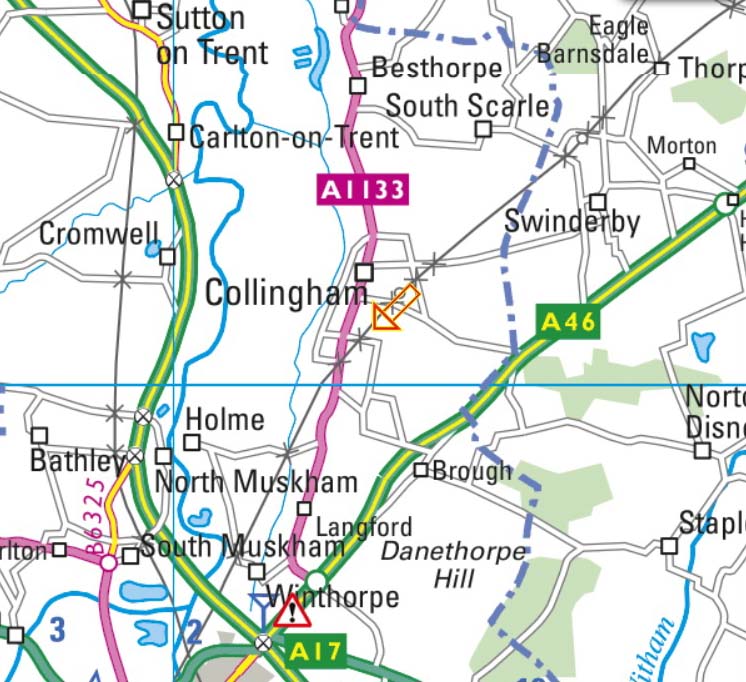
A single Great Bustard  was seen at South Collingham on April 1st and April 23rd to 24th 1906. South Collingham was, I presume, to the south of present day Collingham. The latter village is just to the north of Newark-on-Trent. In 1906, there would have been no electricity cables or pylons. Just open, infrequently visited farmland. The orange arrow marks the approximate spot:

collingh

Mr Henry Wigram sent Joseph Whitaker two letters which have survived, and they are kept in the Local Collection in the library at Mansfield:

The Lodge,
South Collingham,
Newark,
29th of June 1906

Dear Sir,
I am afraid you will think me slow in answering your PC (postcard), but I have had some difficulty in obtaining accurate information about the Cormorant, about which I had no note myself:

gret corm xxxxxxxxxxxxxx

I can tell you now that it was seen on the Newark Parish Church steeple for nearly two months. If I can hear anything more definite than this I will let you know.

.
I was glad to have your enquiry about the Great Bustard, because most people have simply smiled, & said “What could it have been ? ” ! !

Great_Bustard_woodcut_in_Bewick_British_Birds_1797

I can positively say I did see one, as I had another view of it nearly three weeks after:

flyingxxxxxxxxxxxxxxxxxxxxxxxxxxxxxxxx

I reported it to “Countryside”, flying over my garden & I believe my wife saw it at about the same time & place on the following day.

The second time I saw it, it was making a noise like an exaggerated Crow’s caw, while on the wing. It was this that drew my attention. On both occasions I was within 120 yards of it:

outarde-barbue-vol2qqqqqqqqqqqqqqqqqqqqq
You have perhaps heard of the Snipe & Redshank laying in the same nest at Besthorpe. The Snipe laid first, each laid 3 eggs, from which I saw the Redshank get up. I am afraid I cannot say how many were hatched.


I have a few other notes which seem interesting to me, but they may very possibly be rather commonplace to one with so much more experience, as you have.
Though I collected eggs as a boy, it is only of late that I have really studied birds at all. If you think I could help in any way I should be only too glad to do so, as far as I can. I am often at Retford on business and could come over to see you if you wish. After all, I have heard of Rainworth from my friend Bonar, who went to see you with the Wordsworths last year, there can be few more interesting places anywhere.
Yours truly,
Henry Wigram

PS:    I am sorry to find I addressed this wrongly, and it has been returned to me.”

A week later, Henry Wigram sent a further letter to the great man, dated July 6th 1906:

The Lodge,
South Collingham,
Newark,
6 July 1906

Dear Sir
Thank you for your Postcard. Since writing you I have seen a coloured plate of a Great Bustard, & find that it entirely corresponds with my recollection of the bird I saw, but I noticed, as you say, that the bird looks much whiter on wing (sic) than with its wings closed:

qwerty

At the time I saw it, the bird appeared to me to resemble a Turkey more than anything else I could think of. Its colouring was white & brown, not brown & grey.
I put its stretch of wing roughly at a yard and a half, and found afterwards that my man, who was with me on both occasions, guessed it at the same measurement:

flying

I first saw it on April 1st, again on April 23rd. My wife is also certain that she saw it on April 24th.
I had field glasses in my pocket the first time, but the bird, which when I first saw it, was in the act of rising from the ground in a grassfield – disturbed by other people passing, (who did not see it) – though at first it did not appear to be flying fast got away so quickly that I could not get the glasses on to it:

taking offqqqqqqqqqqqqqqqqqqqqqqqqqqqq
I was much struck at the time by the pace at which it flew with comparatively slow beats of the wing.
On the second occasion the bird passed right over my head at a height of, I should say, 50 to 60 feet.
This was in the evening. The following morning my wife saw it taking exactly the same line of flight.
I sent word to Gates at Besthorpe on 2nd April that this bird was about, but he was ill & could not look out for it. However a Besthorpe man told him that he had seen a large strange bird about that time:

flyignGAINxxxxxxxxxxxxxxxxxxxxxxxxxx

My father also saw a large bird he could not identify near the same date, but he did not get near enough to it to give any particulars.
I should very much like to come over to Rainworth as you kindly suggest. Would Friday the 20th suit you, & if so at what time?
I saw a bird the other day which puzzled me completely:

tree pipitqqqqqqqqqqqqqqqqqqqqqqqqqqq

It was the size and shape exactly like a Tree Pipit, but it had pink legs, & the markings on the throat were darker (almost like those of a  miniature French Partridge , & did not extend so far down the breast as in the case of a Tree Pipit. It also seemed to have a dark mark around the neck.
Would it be possible for strong sunlight to deceive one in this way? There were Tree Pipits about the place at the time.
Gates was with me, & quite agreed as to the markings.
Yours very truly,
Henry Wigram

In his own copy of the Birds of Nottinghamshire, Joseph Whitaker has written:

“I may add that Mr Wigram is a keen and careful observer of birds and a good field naturalist, and I am perfectly satisfied that it was a Great Bustard he saw.”

16 Comments

Filed under History, Nottingham, Science, Twitching, Wildlife and Nature

Young men behaving badly and a Touch of Class (2)

Last time I mentioned that there had been a quarrel which set Roy Henderson and his friend Arthur Barton, both from the richest areas of the city, against Harold Connop, the poor kid from the wrong side of the tracks. Two fairly clever kids against one who was blindingly clever, despite his impoverished background. The disagreement took place when Connop was in his second term as Captain of the School, in the Summer Term of 1917.  Roy Henderson was never selected to be Captain of the School and Arthur Barton only did the job very briefly at the end of an extremely short Easter Term, when Francis Bird was called up in March 1918.

bulletin_24_1403256831_2052%20Nottingham%20017

As I said in Part 1, I do not know why Harold Connop was so unpopular although at least three, possibly four, reasons spring easily to mind.

Anyway, here is the tale of the quarrel:

“Arthur Barton and Roy Henderson had given lines to one of Mr Strangeways’ favourites, whom they had found misbehaving. The two prefects were then told off for daring to punish this favoured boy. In revenge, however, fellow prefect Towle climbed through a trapdoor in the ceiling of the 5B room, into the loft above Mr Strangeways’ room, and disrupted his lesson by making a tremendous row on the ventilators.

This is Mr Strangeways:

wmp__1282738059_Headmaster_-_Strangeways0001

Both Barton and Henderson knew that Towle was going to do this, but they did nothing to stop him. Later, they argued that it was not for the Prefects to “attempt in any way to prevent such misbehaviour during School hours: that was the duty of the Masters.”

The other Prefects urged them to “help preserve a proper standard of behaviour”, and there was an enormous row about this outrage, as the perpetrator, Towle, could not be found. Harold Connop tried to remedy the situation at a meeting of the prefects and asked Barton and Henderson directly “Who did it?”.

Barton and Henderson again said that they knew the event was going to happen, but hadn’t tried to stop it.  Connop tried very hard to get them to name names, but they totally refused.

Connop then went straight to the Headmaster. His judgment was that anybody involved should be stripped of their prefectship:
“Such Prefects ought immediately to resign and I should be very pleased if they would do so. Please tell them so.”

Barton and Henderson resigned, and for four days, they were not included on the list of prefects. The Headmaster, however, had not seen either Barton and Henderson personally, or heard their version of the story. Henderson’s father, the clergyman, wrote a letter to Dr.Turpin, and told him that he ought to hear a full explanation.

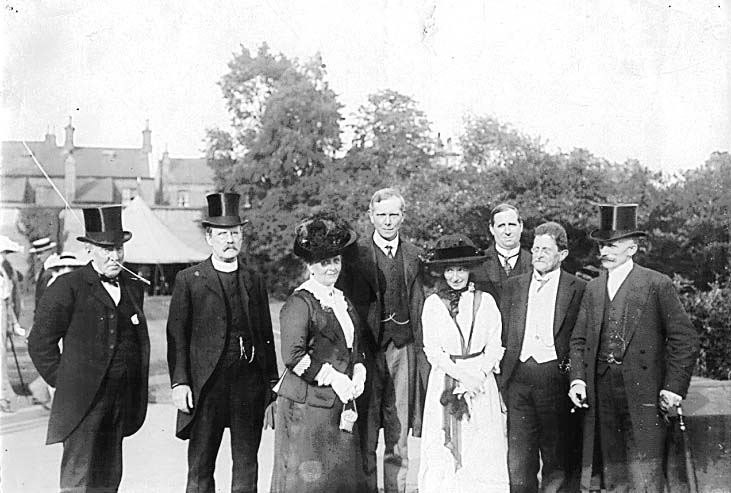
In this picture of the 400th anniversary celebrations, Dr Turpin is behind Mrs Gow and the lady in white:

400 mth heads

Barton and Henderson  duly went to see Dr.Turpin, and told him only they knew who the guilty party was, but were unwilling to furnish a name. They were told to apologise to Mr Strangeways, and were then reinstated as Prefects. They agreed “to do their best to stop such incidents in the future”.

And this was the somewhat surprising, even unsatisfactory, end of the matter. Nothing works like a letter from Daddy!

Shortly afterwards, Connop was caught smoking. He had recently given lines to a boy who had been giving a younger boy a ride on his handlebars as he cycled down Waverley Street. Waverley Street is very steep and this was a very dangerous thing to have done. The boy produced his lines, but also made a statement that he had seen Connop smoking in King Street in the middle of town.

Henderson called a meeting of the prefects about this serious misdemeanour, and Francis Bird accused Connop of breaking his previous promise not to smoke until he left the school, and of undermining the position of the Prefects.

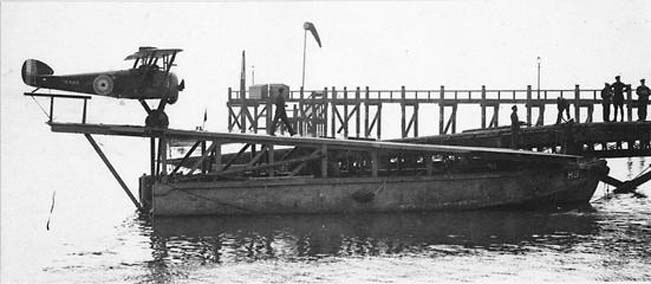
Connop explained that he was not in King Street, but in a street more than a mile from the middle of the town, which was not usually frequented by the boys. They were told that he had just received the news that he had been accepted for the Royal Naval Air Service, and he expected to leave very soon:

aircraft

Connop had bought some cigarettes for a wounded soldier on leave from the Front, and it was only after “being repeatedly pressed” that he had been prevailed upon to smoke. He argued that as School Captain he had been “freer from censure than the majority of his predecessors.” At least one of his accusers had been seen committing a far worse offence than his, and had escaped punishment completely.

Connop admitted his guilt, however, but claimed “extenuating circumstances”. He signed a declaration that he would not repeat the offence.

The entire body of the Prefects, including Henderson and Barton, then considered that the matter had been brought to a final conclusion.

Two months later, the Prefects organised another meeting, and declared that the punishment which they had all previously agreed upon, was now thought to be by no means severe enough.

A meeting of the entire Sixth Form was then called, and the whole affair was presented to them. They then voted as to whether Connop should continue as School Captain for the remainder of the term.

The vote was almost entirely unanimous, and Harold Connop was told to carry on.”

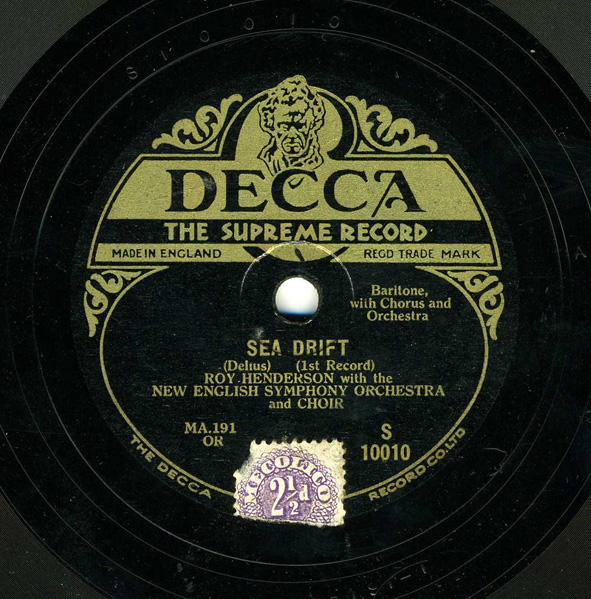
When he left the High School, Henderson joined “B” Battalion of the Artists’ Rifles, before moving to the Regimental Concert Party, based at Lichfield in Staffordshire. It is very difficult to imagine that he saw much combat at all. He later pursued a career in music as a baritone singer, becoming one of the foremost artists in the country.

Decca_1929_Sea_Drift

He died at the advanced age of just over a hundred.
Arthur Barton left the High School in 1918, and joined the Royal Engineers Signal Service. He was demobilised in December 1918. Given the timing of these events, and the time needed for training, it is difficult to imagine that he saw much combat, any more than Roy Henderson did.

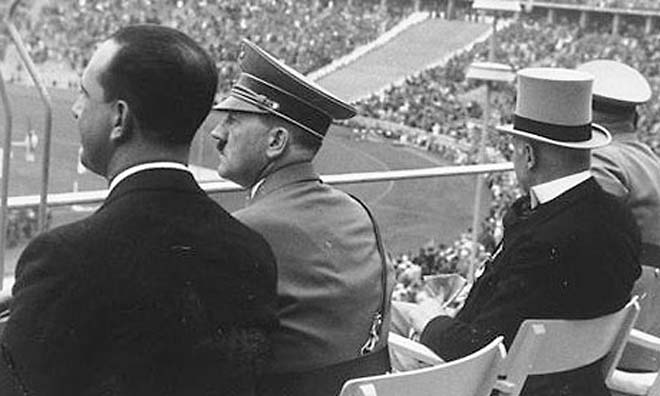
After Cambridge, Barton initially worked at Repton School as Head of Physics and gained a degree of Doctor of Philosophy of London University. He became Headmaster of King Edward VII School, Sheffield, and then Headmaster of the City of London School. In addition, he became a top class football referee who was in charge of an Amateur Cup Final, a large number of international matches in Europe and two games at the Berlin Olympics including the semi-final. Here is Adolf Hitler and two of his friends actually watching the match which saw Germany lose 0-2 to tiny Norway:

hitler-takes-in-the-actio-006

Arthur Barton died at the age of seventy-six.

I cannot trace what happened to young Mr Towle, the ventilator vandal, but we know that on November 16th 1918 at the School Debating Society, he proposed that a letter of congratulation should be sent to Marshall “Fotch” for winning the war for us.

Such crass insensitivity came after his school had lost well over two hundred Old Boys in the carnage of the Great War and, according to another reminiscence, the school flag had been more or less permanently at half-mast for a number of years.

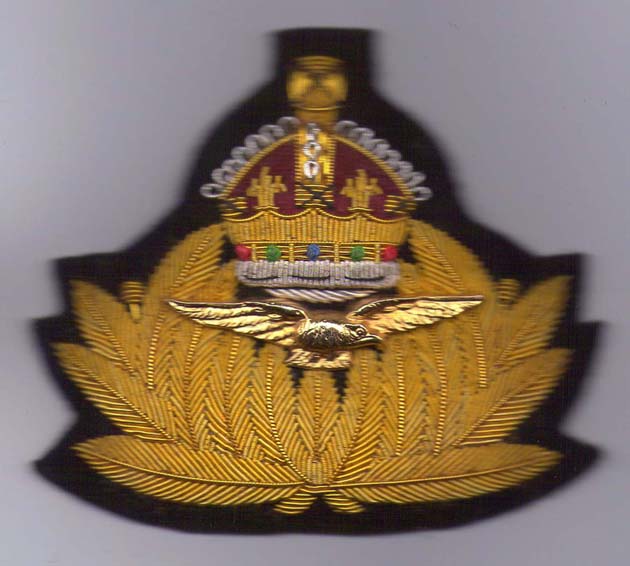
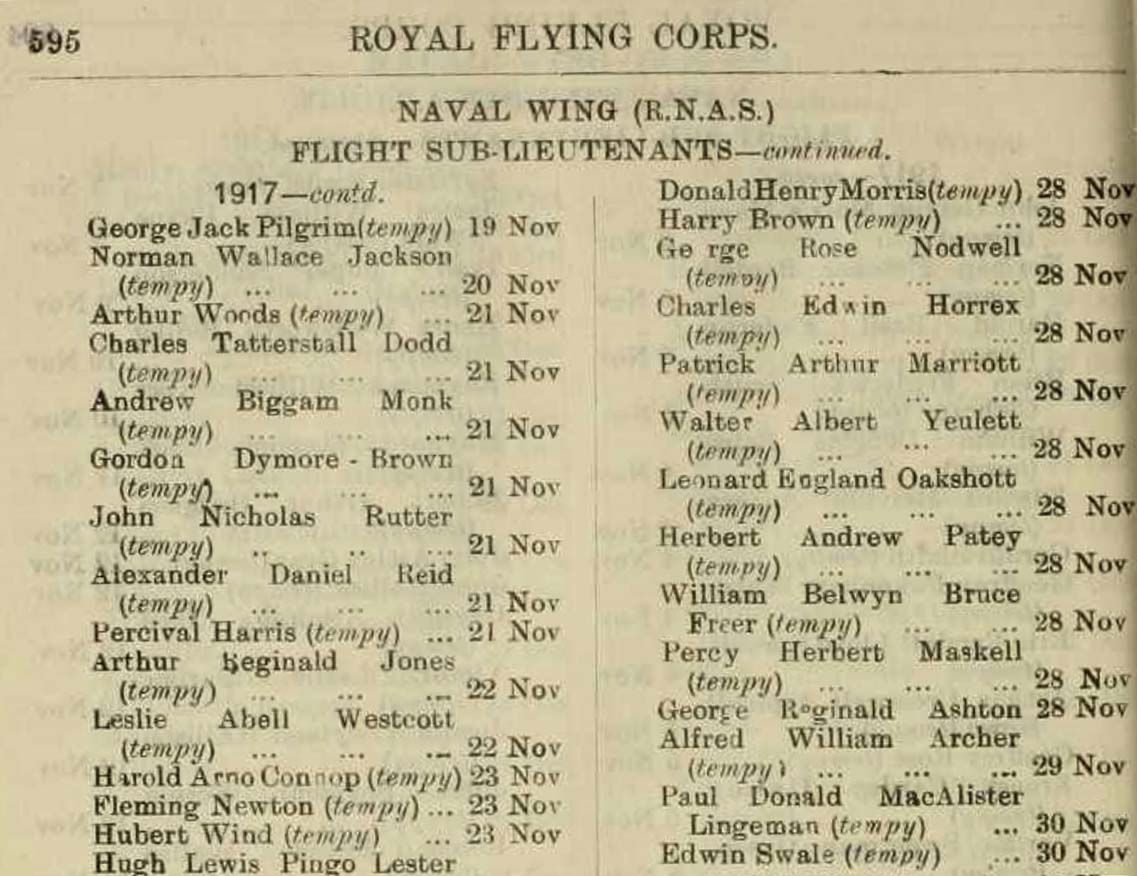
Harold Connop, of course, was one of that list of two hundred war casualties. He had joined the Royal Naval Air Service in 1917 and was posted to the airbase at Dunkerque on March 14th 1918 as a Temporary Flight Sub Lieutenant.

rnas cap

Within a very short time he was seriously wounded in aerial combat. He died from his injuries on March 31st 1918. Here is the RNAS casualty list for this period:

connop

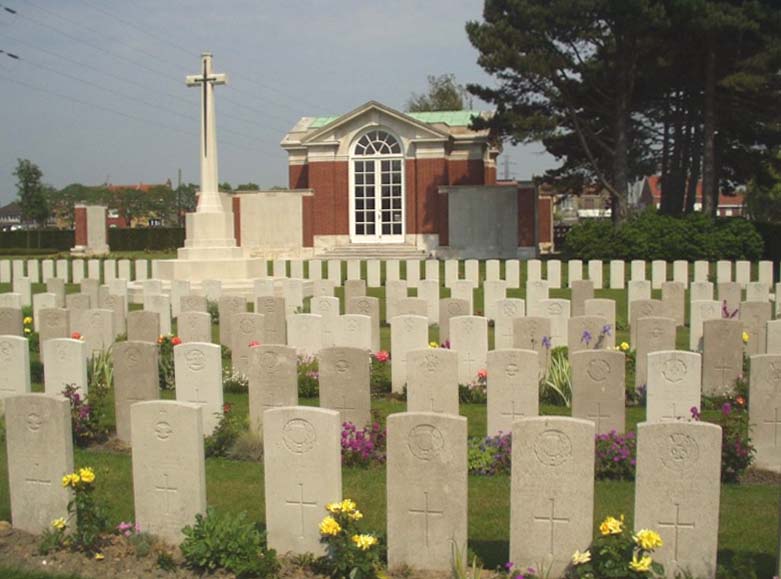
Harold wasn’t a hundred or even seventy-six. He was just eighteen years of age:

grave

19 Comments

Filed under Criminology, History, Nottingham, Politics, The High School

The only trophy the High School Football Team ever won

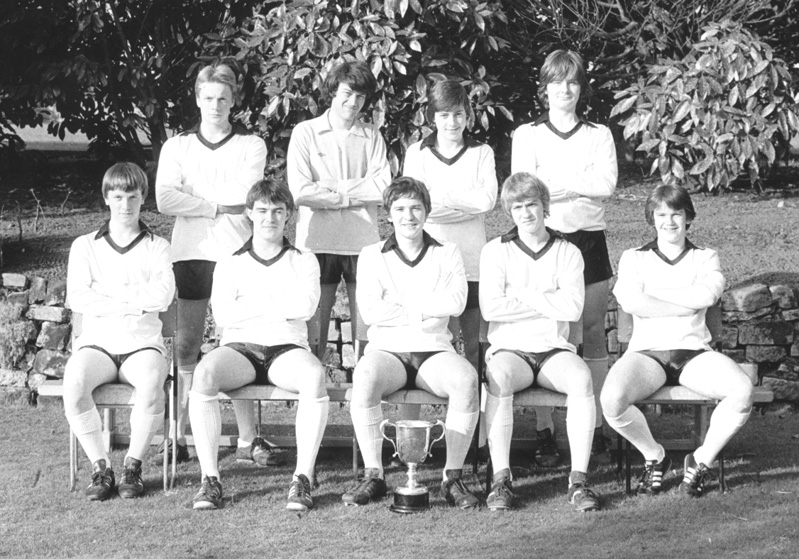
In late March 1981,  the school’s footballers won the Nottinghamshire Schools’ Football Association Seven-a-Side competition. This was the first time that a High School football team had ever won a cup at any level. Here is the squad:

six-a-side BETTER BEST BESTxxxxxxxxxxxxxxxx

The competition was organised into a number of groups, and in their initial group, the High School won two games, and lost just one, to Worksop College ‘B’ team. The High School therefore qualified for the next stage of the competition as the best losers.
This next stage was the semi-final, where they beat Worksop College ‘A’ team by one goal to nil. They therefore went forward to the Final, strangely enough, against Worksop College ‘B’ team. This ‘B’ team was the very same one which had already beaten the High School in the group stages.
In this game, the score was 0-0 at full time, and two periods of extra time did not produce any goals either. As there was no winner as yet, therefore, penalty kicks would be needed to decide the contest. The first five kicks were successful by each side, and the score was 5-5. Everybody would have to try again. The first Worksop player, though, then missed his second kick, leaving the High School needing just one goal to win the cup.
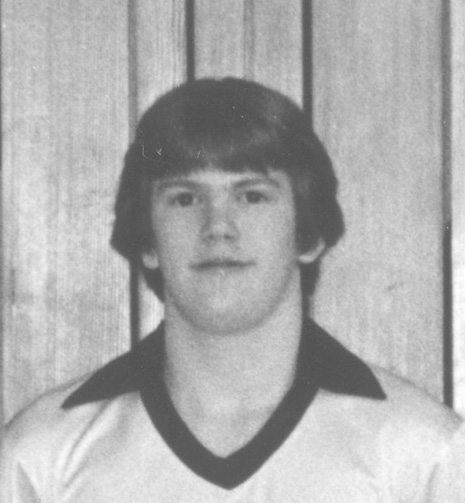
Norman Garden, who had come on as a half time replacement, took the kick, arguably the most important in a minimum of 110 years football at the High School.

NORMAN GARDENxxxxxxxxxxYESY EYS

By his own admission, head down, he took approximate aim. The ball hit both the post and the crossbar but screamed into the back of the net for the winning goal. The High School were the victors by the unusually high score of 6-5.
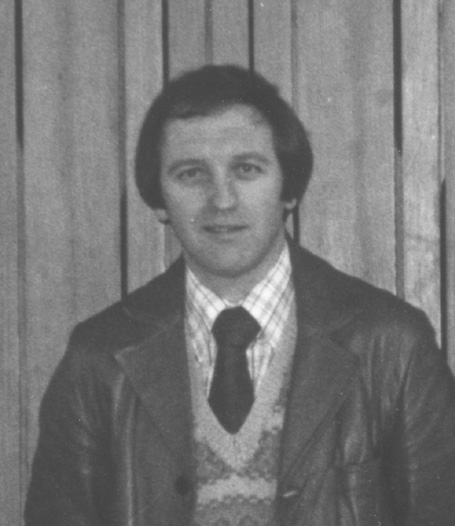
The team was coached, as always, by Tony Slack:

TONY SLACKKK WWWWWWWWWWWWWW

Team members were Raich Growdridge as captain, Simon Derrick, John Ellis, Norman Garden, Chris Ingle, Tim Little, Neil McLachlan, Richard Mousley and Chris Peers.

This slideshow requires JavaScript.


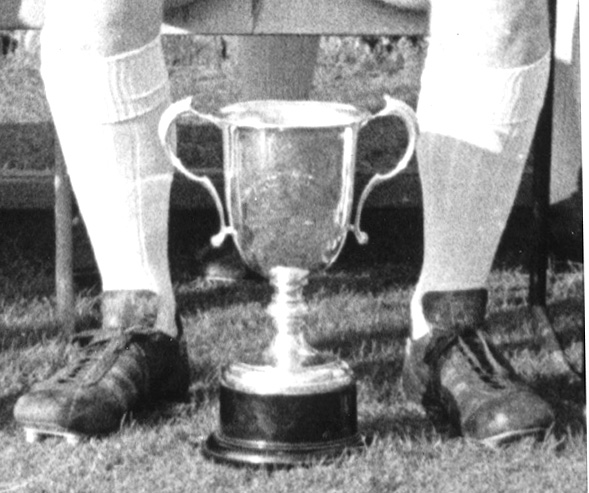
This remains the High School’s only ever official trophy:

ta cup

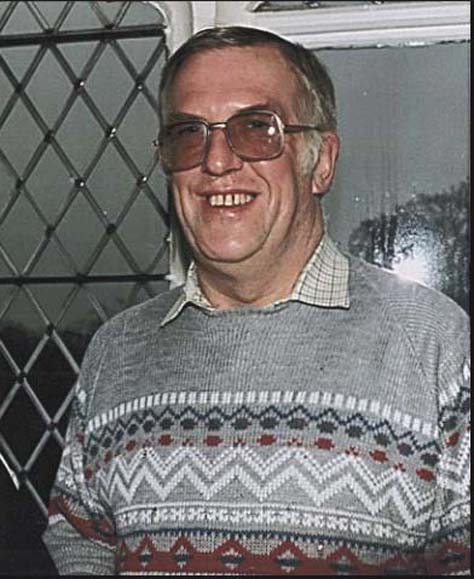
Strangely enough, the cup was never contested again, and despite various attempts by High School teachers to surrender it back to the relevant authorities, nobody ever came forward to take responsibility for it. As far as is known, the magnificent cup, at least twenty pounds of almost pure, locally mined Worksop silver, still remains somewhere deep in the bowels of the School, locked away for safe keeping by Tony Hatcher, the school caretaker at the time:

tony hatcher

29 Comments

Filed under Football, History, Humour, Nottingham, The High School

Young Men behaving Badly and a Touch of Class (1)

In the recent past, I published four articles which were, I hope, bite sized sections of a much larger whole. They were all about the High School before the Great War, and then during the first few years of the conflict. All of the material came from the reminiscences of Roy Henderson, an Old Boy  from this time. None of these articles would have been possible without the original research by my friend and colleague, Simon Williams, who interviewed Roy Henderson at length. Simon, of course, has done some incredibly detailed research about the school’s casualties in the Great War. This can be found in the Nottingham High School Archive. Take a look, for example at the material he has found on Harold Ballamy, perhaps, the High School’s saddest and most pointless loss of the entire conflict. Poor Harold is also remembered by Nottinghamshire County Council, who incorporate much of what Simon Williams has produced.

When I composed the four articles, I deliberately chose not to include anything negative from what Mr Henderson said. I cannot, however, fail to include this almost surreal tale. Hopefully, you will find it interesting to read it and then try for yourself to work out what is really going on, what the real motivations are behind people’s behaviour, and what is happening behind the scenes.

Firstly, a little background information.

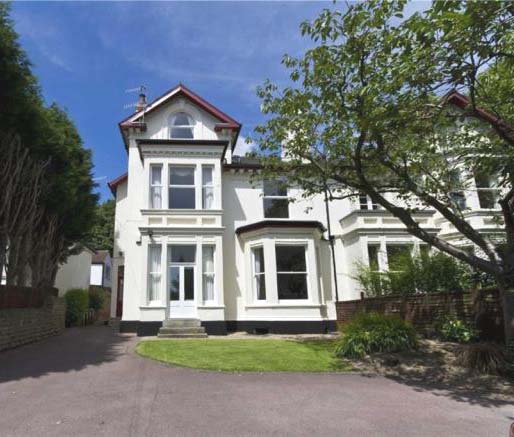
Roy Henderson’s father was a minister of the church. The family lived at No 3, Lenton Road in The Park Estate in Nottingham. This part of Nottingham is about as rich as it gets in the city. One website says that “If Nottingham were Los Angeles, this would be its Beverly Hills”.

Recent house prices there reached £535,000 (No2), £820,000 (No9) and £840,000 (No11). Another house in the road is currently for sale for £1,150,000. One website currently values No 3, Lenton Road at £816,382:

the park

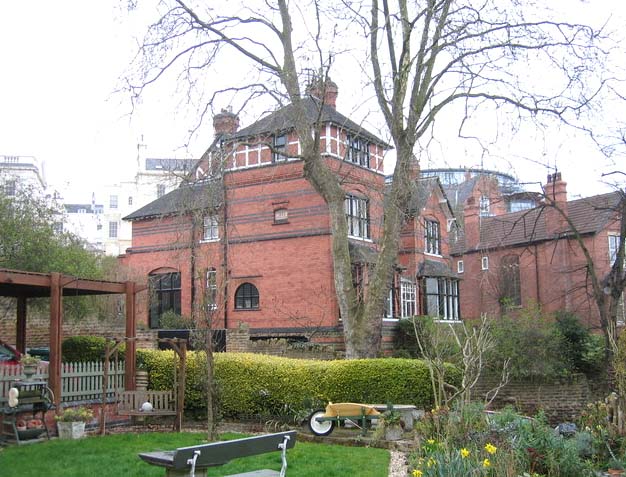
Arthur Willoughby Barton was the son of Professor Edwin H.Barton, a Fellow of the Royal Society, and a Professor of Experimental Physics. He lived in Private Road, Sherwood, where very large Victorian houses change hands nowadays for around £500,000:

private

After the High School, Arthur went to Trinity College, Cambridge and gained First Class Honours in Physics. He was then a research student at the Cavendish Laboratory, where he helped Lord Rutherford to split the atom.

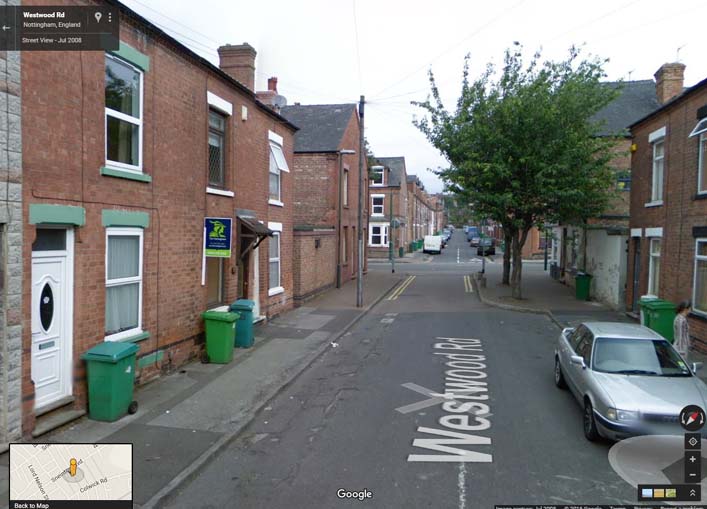
Harold Connop was the son of an Elementary School teacher, Mr Arno B Connop, and Mrs Ada Connop. There seems to be some confusion about the address. Some sources give it as 33,Westwood Road, a street in Sneinton, one of Nottingham’s working class areas. It is the first house on the left with a white door:

westwood lane

In 2001, this terraced house, with, perhaps just four or maybe five rooms, sold for £25,000. It is now worth around £57,000. Another address listed for Harold is 20, Stewart Place, a location which has now been demolished, probably in the slum clearance under the Socialist government immediately after the Second World War. Ironically, these houses were originally built by a local philanthropist, as “good houses for poor people”. This kind gentleman was the Reverend Robert Gregory, who was eventually to become Dean of St. Paul’s Cathedral.
Harold’s education at the High School was financed solely by scholarships, awarded on the basis of intellectual ability. He entered the school as a Sir Thomas White scholar, and then became a Foundation Scholar. Two years later, in 1913, the Sir Thomas White Scholarship was renewed and then subsequently extended for a fourth year.

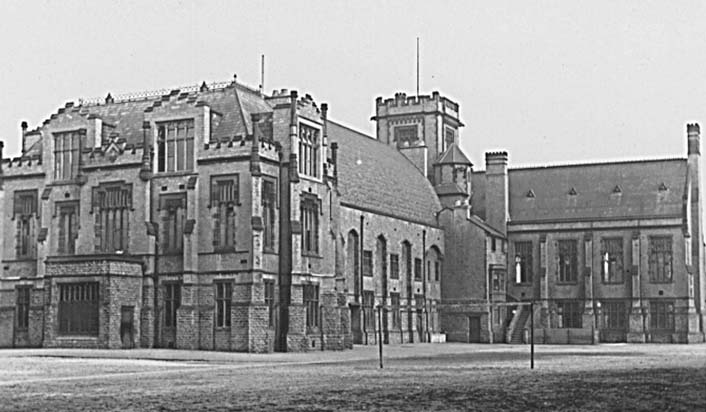
Harold won prizes for six different subjects and the Form Prize for the Fifth Form in 1913, and the Sixth Form in 1915, 1916 and 1917. Here is the school in 1915:

1915

In his public examinations in 1913, he gained First Class in six subjects, and subsequently five distinctions at Higher Level. He became a Prefect in 1915, and Captain of the School in 1917. In the words of Roy Henderson, he was:

“a first class scholar and very good rugby player. He was a fine three quarter in rugby, and a very fast runner.”

Harold won a scholarship to Corpus Christi College at Oxford University, and was also awarded an exhibition, worth £65 annually for four years. At Oxford he was regarded as “the first Scholar of Corpus Christi College”, in other words, the cleverest and best one there:

Corpus-Christi_College_Oxford_Coat_Of_Arms_svgCompared to both Barton and Connop, Roy Henderson was, quite simply, not in their league. He enjoyed school, but himself admitted that he was never very good academically and was totally hopeless at exams. The high point of his career came in the Sixth Form, when he finally won a prize for an English essay on “Militarism”. Henderson only won because the rest of the Sixth Form boycotted the competition, saying “It’s the only thing Henderson can do…let him have it.”
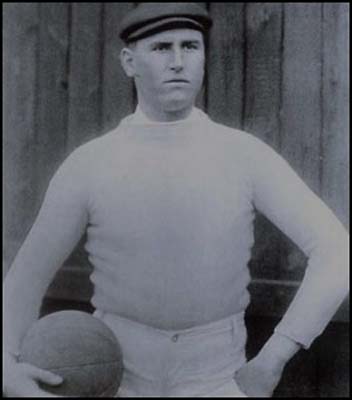
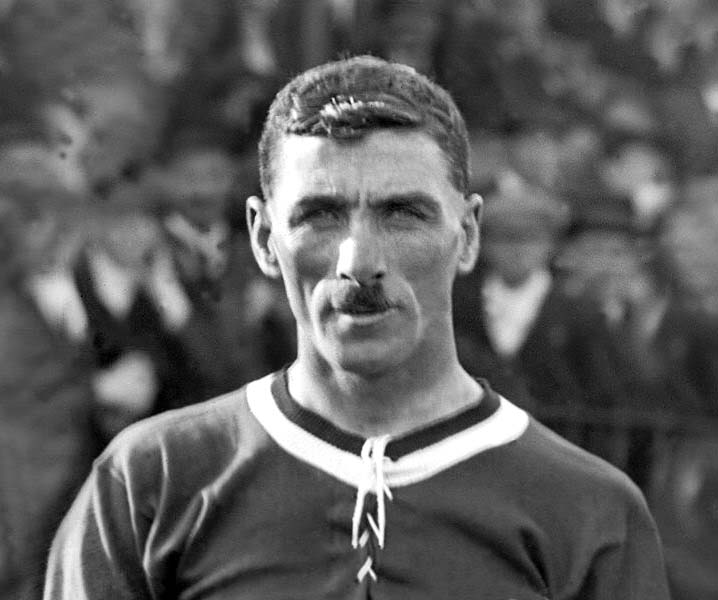
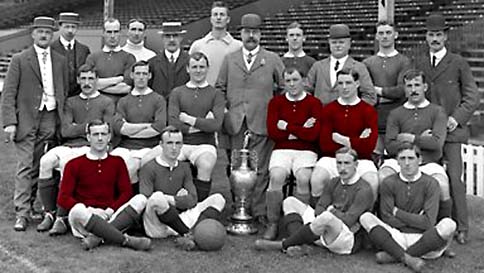
Around this time, Roy Henderson, along with William Donald Willatt, founded a new school magazine called “The Highvite”.  As editor of the original school magazine, Connop was apparently furious at this new rival.  Henderson didn’t get on very well at all with Connop, for a reason which Henderson was not willing to divulge, even after the best part of seventy years. Henderson added that Connop was not very well liked in the school as a whole and he was never a particularly popular figure.

William Donald Willatt was one of six brothers at the High School, the sons of John Willatt, who  lived at 4, Pelham Road, Sherwood Rise. John Willatt was a wine merchant, whose business was presumably prosperous enough to pay the school fees of his six sons.

I do not know why Harold Connop was so unpopular although at least three, possibly four, reasons spring easily to mind. I will tell you about the quarrel next time.


16 Comments

Filed under History, Nottingham, Politics, The High School

Match-fixing (1)

Corruption in football is nothing new. More than a century ago, in 1900, Burnley goalkeeper Jack Hillman attempted to corrupt the Nottingham Forest goalkeeper and the other players by giving them £2 each to let Burnley win on the last day of the season and perhaps thereby escape relegation. It didn’t work. Burnley went down with 27 points from 34 games, along with Glossop North End who managed only 18. Here’s Hillman, apparently twenty minutes after the invention of angora sweaters::

jack-hillman-264x300

Had the bribe succeeded, Burnley would have overtaken and relegated Preston North End (28 points) who would have taken their place in Division Two. Hillman was called to account by the authorities, but amazingly, they didn’t accept his explanation of “I was only having a laugh!” He got a rather lenient twelve month ban, although this meant no pay for that period and the loss of a benefit match which would have netted him around £300. Even worse for him, though, was the fact that he never played international football for England again, having just broken into the team
In 1905, at the opposite end of the table, Manchester City were trying to win the League title. Billy Meredith, their star winger, decided to make the task a little bit easier by offering the Aston Villa players £10 to let them win. Like Hillman, Meredith received a year long ban, but rocked the footballing boat by alleging that he had been ordered to bribe the Aston Villa player, Alex Leake, by his Manchester City manager, Tom Maley. Bribery, said Meredith, was common practice at Manchester City who finished the 1904-1905 season in third place behind champions Newcastle United and Everton. A whole selection of players were suspended, as were members of the club staff and directors from the boardroom. Here’s Meredith. He looks like he’s wearing in a new moustache for his shy, and rather strange, German penfriend:

meredith

Meredith actually wrote an open letter to the Athletic News:

“You approve of the severe punishment administered by the Commission AGAINST ME and state that the offence I committed at Aston Villa should have wiped me out of football forever. Why ME ALONE? when I was only the spokesman of others equally guilty.”

In 1915, Liverpool played so poorly as they lost 2-0 to relegation-threatened Manchester United that one of the many bookmakers who had taken bets on the game refused to pay out, at odds of 7-1.  He had probably heard of the clandestine meetings of players in the pubs of Manchester and Liverpool. And the poor old bookmaker was completely right. In the United team, Sandy Turnbull, Enoch West and Arthur Whalley were the guilty men and in the Liverpool team it was the fault of Tom Miller, Bob Purcell, Jackie Sheldon and the rather appropriately named Thomas Fairfoul. Can you spot the guilty players in this old picture of Manchester United?

wh turn wets

Would you like a second go?

betting-scandal-600x312

It looks like Liverpool are not quite so helpful towards the local detectives:

liverpool 1915

And no, the man with the cap is the trainer.

Jackie Sheldon as an ex-United man was the mastermind behind the coup but not everybody in the two teams was happy to cheat in this way. Both Fred Pagnam (Liverpool) and George Anderson (United) refused to participate. Indeed, when Pagnam shot and hit the opposing crossbar his teammates all showed their anger with him. It was perhaps his own fault, as before the match he had threatened to score a goal to spoil their nasty little plan. By now, whiter-than-white Billy Meredith was a United player, but everybody had taken great care not to tell him about what was happening and nobody passed to him throughout the game…something which, of course, aroused his suspicions as to what exactly was going on.  A penalty was missed by such a distance that the ball only just failed to hit the corner flag.  The crowd, feeling they had wasted their penny entrance money, grew increasingly angry with the proceedings.

Overall though, things were getting very much out of hand with match fixing. As an example, all seven of the Liverpool-Manchester United match fixers, along with an eighth player, Lawrence Cook of Stockport County, were banned from football sine die. (that effectively means “for life”)
Cynics might say that that was a fairly limp punishment as professional football had already been suspended because of the war. The even more cynical would point out that the Naughty Eight were given hints about a possible return to football, but only if they signed up for the Army and survived the carnage of the Western Front:

somme

A succession of away games on the Somme and at Passchendaele gave seven of the Naughty Eight their promised lifting of the ban. Fairfoul in fact turned away from football but the other six went back to their previous employment. For some reason “Lucky Enoch” West did not have his ban rescinded until 1945 when he was 59 years of age.

The_Battle_of_the_Somme_film_image1

Poor Sandy Turnbull had to be contented with a posthumous permission to resume his footballing career. He joined the 23rd Battalion of the Middlesex Regiment before a free transfer to the 8th Battalion of the East Surrey Regiment. He became Lance-Sergeant Turnbull and was killed on May 3rd in the Battle of Arras at the age of 33.  Sandy was the son of James and Jessie Turnbull, of I, Gibson St., Kilmarnock, Ayrshire and the husband of Florence Amy Turnbull, of 17, Portland Rd., Gorse Hill, Stretford, Manchester. He had won FA Cup medals with both Manchester City and Manchester United:

Deadgerman

The Grim Reaper has no favourites though. Sandy has no known grave and his death is commemorated along with that of almost 35,000 others from the United Kingdom, South Africa and New Zealand who died in this fairly pointless battle and whose bodies have never been identified. Overall, the Battle of Arras was quite a slaughter. Nearly 160,000 British lads and about 125,000 young Germans renounced their right ever to play football again. In a mere five weeks. Here is Polygon Wood where Sandy had tried to mark out a football pitch for himself and his pals:

polygonwood

Alas, they didn’t realise that a Great War average of one ton of explosives per yard of trench was going to be a really, really big problem with that.


22 Comments

Filed under Criminology, Football, History, Humour, Nottingham