Category Archives: Nottingham

School Gardener wins F.A.Cup Medal !!!

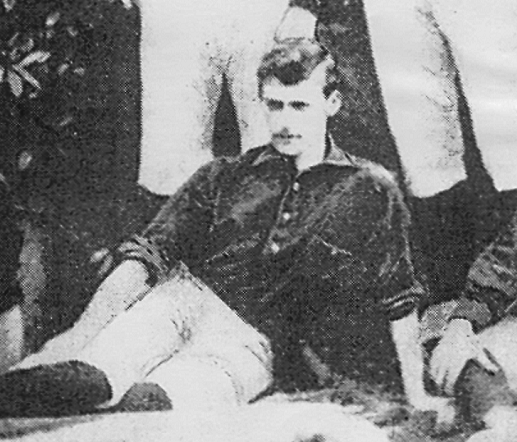
During the early months of the Easter Term of 1925, the long serving and popular School Gardener, Mr Kidd, was taken seriously ill. He had worked at the High School for thirty-seven years, and “must have been seen by thousands of boys at his work in front of the school.”  Mr Kidd was not well enough to carry on with his job and, poor man, was eventually to succumb to his illness during the early part of the Summer Term.  He was duly succeeded as the School Gardener by Mr Wragg, whom the “Nottinghamian” called “a footballer and cricketer of great prowess”.

Mr Wragg was paid £3 per week, which was a decent wage in 1925. At the same time, my own Grandad was more than happy to earn £2.20 as his weekly wage in a clay works in South Derbyshire. I have done quite a lot of research about who exactly Mr Wragg was.  Of course, nearly a century after the event, it is impossible to establish the truth without the slightest shred of doubt whatsoever, but I am now 99.9% certain that the High School’s new Gardener was William Arthur “Willie” Wragg.

williamwragg

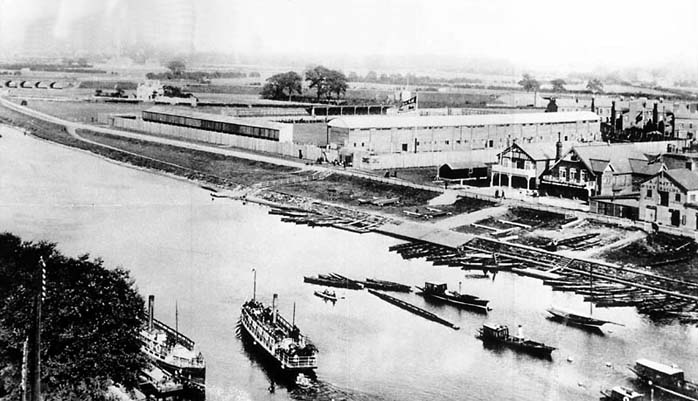
Willie Wragg was born in Radford, Nottingham in 1875, and initially played local football for Notts Olympic, Sutton-in-Ashfield, Newstead Byron and then Hucknall Portland. He was soon signed by Nottingham Forest and played for them as a professional footballer from 1896-1899. Appearing usually as a left-half, Willie made 48 League appearances in the First Division for Forest and scored one goal. Overall, he played 58 times for Forest in all competitions. This photograph shows the home of Nottingham Forest, the City Ground, during the 1898-1899 season:

City-Ground-1898

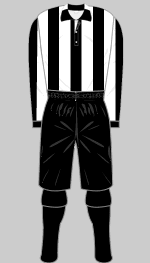
Willie made his début at home to Liverpool on November 28th 1896 in a comfortable 2-0 victory. He went on to play a further twelve times in the First Division that season, with a further four appearances in the F.A.Cup. He scored a single goal in a friendly match, a 2-1 victory over Dundee United at Crystal Palace. The following season of 1896-1897, Willie Wragg made 24 appearances in Division One and six in the F.A.Cup. He scored a single goal in the First Division in a 1-1 draw at home to Sunderland. The next season of 1897-1898 was his last at Forest. He played 13 times with most of his games coming as a left fullback. His final appearance came as a left half in a 0-0 draw at home to local rivals Notts County in front of a crowd of some 16,000 spectators. Here is Notts County’s magpie kit on that long ago Saturday, September 4th 1897. The crowd was a very respectable 15,000 spectators:

notts_county_1890-1900

As far as the boys are concerned the School Gardener can be a rather anonymous figure, working away quietly at the front of the school, a man whom the majority of pupils would not even notice. They were probably unaware of his lengthy pedigree as a professional footballer, but many hundreds of those unknowing little boys would have given a great deal to get their hands on what Willie Wragg had won during his three years at Forest, namely a Winner’s Medal from an F.A.Cup Final.

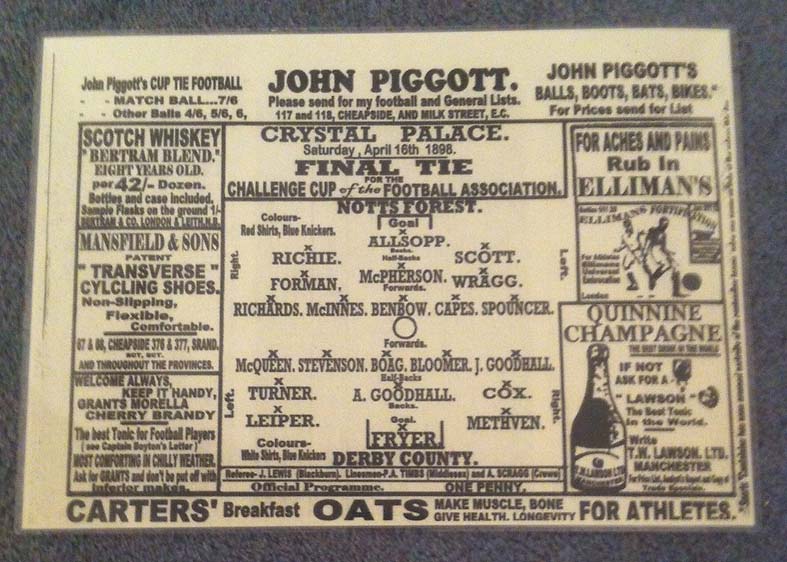
Willie had played at Crystal Palace on April 16th 1898 in front of a crowd of 62,017 spectators, when Nottingham Forest beat Derby County, Steve Bloomer and all, by three goals to one. Here is the front of the programme:

programme

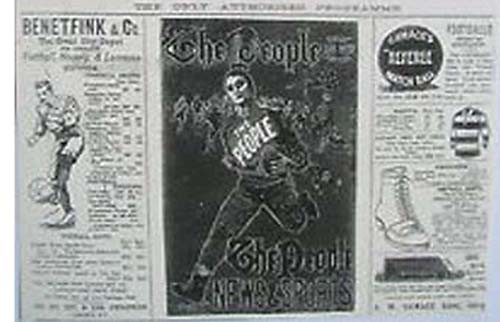
And here is the back:$(KGrHqFHJE4FGNV2GFfCBRonbILDSQ~~60_35

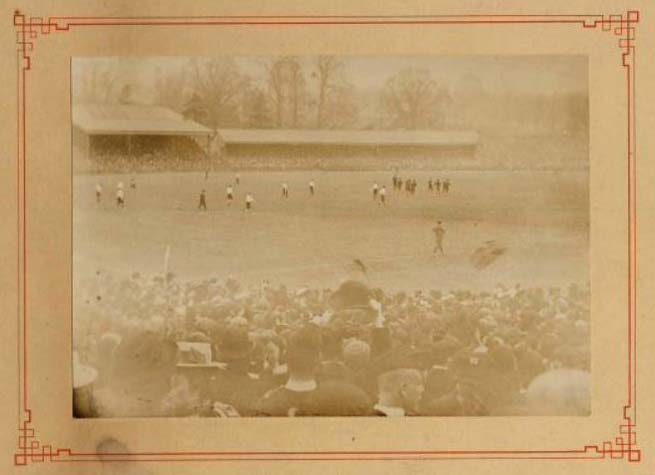
From his position as a left-half, Willie actually created Forest’s first goal, for it was from his free kick on the left near the touchline, that the ball eventually reached Arthur Capes who hit  the back of the net through a crowd of defenders.  Here is a picture of the game in progress…IMAGE_386

And here is a second photograph from a little further back…

Capture

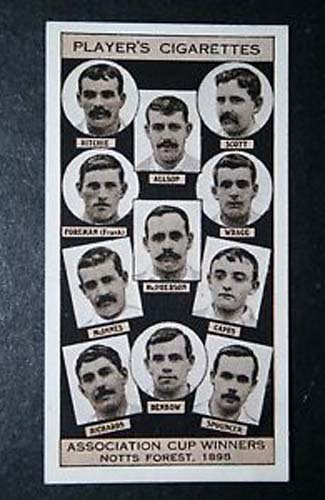
Later in the game, Wragg aggravated an injury suffered in the first-half, and, in the days before substitutes, was forced to move out on to the wing, not taking much further part in the game.That did not stop his appearance on the souvenir cigarette card…

$_35

Willie then left Forest, to go and play for Leicester Fosse in the Second Division. He spent two seasons at Leicester, making 50 appearances and scoring four goals. He was perhaps a little slower now and played at full back. Willie also became the club’s free kick specialist. He went on to appear just once for Small Heath (later to become Birmingham City), but he was unfortunately unable to displace George Adey from the team. His footballing career then rather petered out as he played for Watford in the Southern League and then Hinckley Town in the Midland League. His Football League career began again with Chesterfield Town (20 appearances, no goals) before a final return to non-League football with Accrington Stanley, Doncaster Rovers and finally Brighton & Hove Albion. Overall, Willie Wragg had made 119 appearances in the Football League.

Personally I believe that Willie Wragg may well have acquired his job as School Gardener at the High School through his past career at Nottingham Forest. At the time of the Cup win in 1898, the club’s then Chairman was Mr William Thomas Hancock, a prominent Old Boy of the High School, who had retired as Chairman of Nottingham Forest in 1920, only five years before Willie Wragg was appointed as the School Gardener. In 1925 Mr Hancock was still a Life Member of the football club.

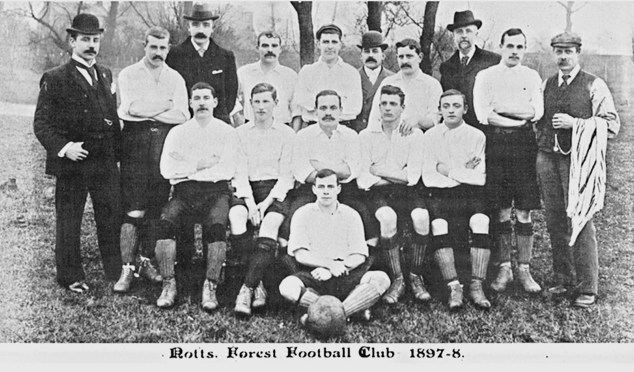
Most romantically of all though, perhaps ex-Chairman Hancock still remembered his day of glory when he posed on the Official Photograph of the F.A.Cup Winners of 1898 and knew exactly who had done more than his share to make possible that unique and unrepeatable thrill of being a winner. Mr Hancock is the gentleman third from the left on the back row.

forest team

Indeed, in 1898, when this photograph was taken of the players in the victorious team at Crystal Palace, how proud Mr Hancock must have been to stand with them:

back row: H.Hallam (Secretary), T.McInnes, Mr W. T. Hancock (Chairman), A.Ritchie, D.Allsop, unknown, A.Scott, unknown, A.Spouncer, G.Bee (Trainer)

front row:  C.H.Richards, Frank Forman, J.McPherson, W.A.Wragg, A.Capes

sitting:  L.Benbow

The photograph is, in itself, quite interesting, because it is one of two very similar photographs. In one of them, Forest posed with the cup, and in the other, they were photographed without it. The reason for this was that the crowd for the F.A.Cup Final was 62,000 spectators and almost all of them invariably invaded the playing area after the end of the game. This made it quite impossible to take a proper photograph of the winning team. And certainly the crowds do look huge and they seem to be pretty much left to their own devices…

This slideshow requires JavaScript.

The usual convention, therefore, was that both teams were photographed before the match, in conditions of complete calm, the photographers taking two pictures of each, one as victors with the trophy, the other as losers without it.  Afterwards, the two irrelevant photos were destroyed, although this has clearly not happened in this case.

It is also known that in this particular year, enormous problems were experienced with Forest’s red shirts and blue shorts, which did not show up particularly well in the comparatively dull weather conditions.

forest kit

The photographers therefore asked them to pose in Derby’s kit, wearing white shirts and black shorts. Perhaps this is why they look especially miserable, although, of course, Forest were certainly to have the last laugh.

Whatever the reason for Willie Wragg becoming the School Gardener, though, there was certainly an enormous connection between the football club and the High School. Almost forty Old Nottinghamians had already played for Forest, especially in the 1880s, and many of them had represented the club in important cup games, including semi-finals. By 1925, they were all just of the age to occupy important administrative posts in the club and certainly Tinsley Lindley had been a Committee member at Forest.

tinsley

Another familiar face at the City Ground was an Old Nottinghamian who had made his England début alongside Tinsley Lindley in a 6-1 victory over Ireland in Belfast. This was John Edward Leighton, called “Teddy” when he was at school, or, when he played for Forest, “Kipper”, because of his incredible ability to fall asleep in the dressing room before games. Indeed, old Mr Leighton was to fall asleep for the very last time at the City Ground, on the afternoon of Saturday, April 15th 1944, at the age of seventy-nine after a fatal seizure. His sudden demise occurred during a Wartime Cup tie between Nottingham Forest and Northampton Town, a fixture in which the Reds were eventually to triumph by 1-0. Here is “Kipper” though, on a better, and younger, day, sitting with all his pals, it is thought, in the Church Cemetery on Forest Road. They are all wearing the same bright scarlet shirts, and they are universally known as “The Garibaldi Reds” One day they will win the European Cup. Twice.

teddy

9 Comments

Filed under Derby County, Football, History, Nottingham, The High School

Ancient initials carved a century ago

In the High School, there is a much vandalised stone mantelpiece over an old fireplace on the ground floor. Boys have carved their names on it well over a hundred years ago and the letters are only just beginning to disappear into the thick levels of gloss paint now used to cover the original stone. The fireplace is located between the General Office and the entrance to the Assembly Hall, so literally thousands of boys will have queued past it as they go into Morning Assembly.

On Wednesday, January 18th 1899, Thomas Ignatius Joseph Gillott entered the school. He was to leave during the course of his fourth academic year, in July 1902. Sadly Thomas died on Sunday, July 6th 1913, after a failed operation at the London Hospital. On that same day in 1899, his brother Bernard Cuthbert Gillott, also entered the school. He was destined to remain a pupil only until the end of that academic year and he left in July 1899. With the advent of the Great War, Bernard was to join the army, where he served as a Captain in the 6th Northamptonshire Regiment. A brave man, he won both the British Military Cross and the French Croix de Guerre. Eventually he was  severely wounded, but thankfully he survived, and he was invalided home to England.

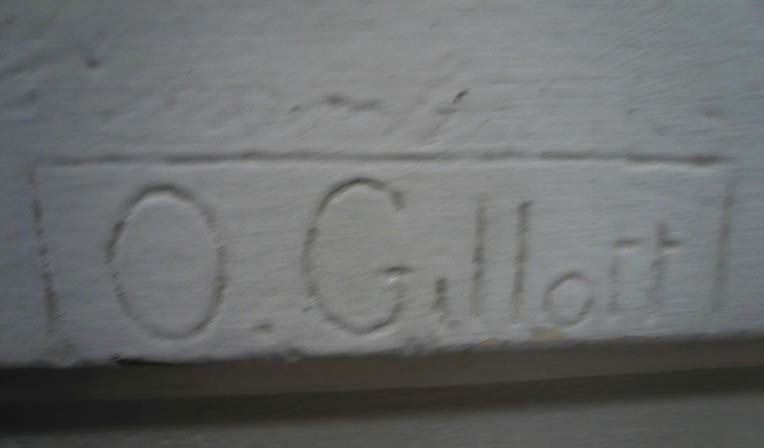
On Tuesday, September 12th 1899, the youngest of the three brothers, Oswald Cornek Gillot entered the school aged nine. Oswald was born in Ripley on July 22nd 1890 and his father was Thomas Gillot, M.I.C.E., a civil engineer whose address was given as either, Upland House, Eastwood, or Langley Mill near Ilkeston.  Possibly towards the end of the Summer Term, 1905, Oswald carved his name on that extremely popular stone mantelpiece on the ground floor fireplace between the General Office and the Assembly Hall. Oswald left the High School in March 1907.
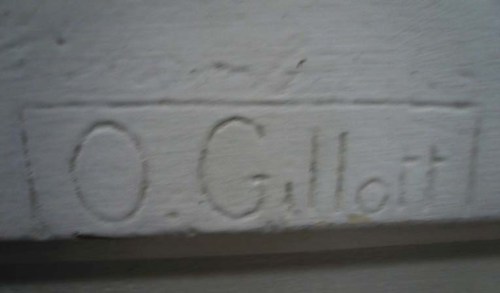
Gillott ccccccccc

Taking decent photographs of these carved signatures has in actual fact, proved extremely difficult. They are located on the northern side of the school where the usually tropical English sun does not often penetrate,  and they are surrounded by vast thick walls of stone and brick, with a singular lack of windows. This means that the whole area is more or less permanently dark from a photographic point of view. Added to this is the fact that in the century or so since these interesting acts of senseless vandalism were carried out, a succession of school caretakers, under the almost inhuman management pressure to hurry up that all school caretakers permanently face, have repainted the mantelpiece with a succession of layers of whitish gloss paint, all of them applied without having the time to remove the previous one. The stone therefore, now wears a building’s equivalent of an inflatable Sumo suit.
Consequently, I have been forced to Photoshop the pictures I took so that the now faint carvings stand out a little more clearly from the dimly lit and pale coloured background. One unfortunate young man, R.Salew, has proved completely impossible to conjure out of the camouflaging layers that now hide his signature. But he is definitely there.
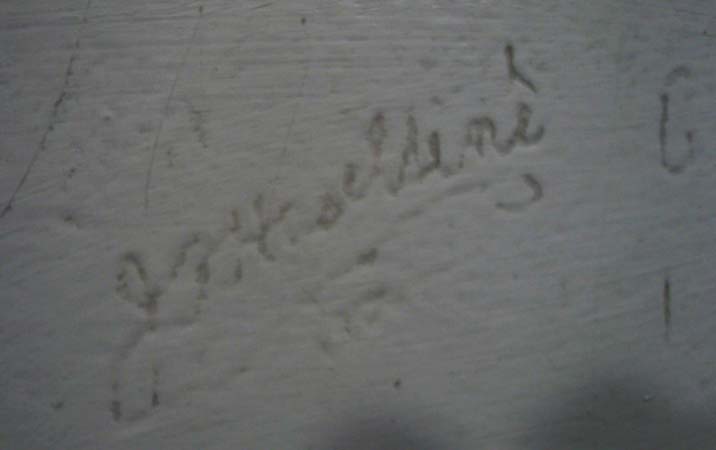
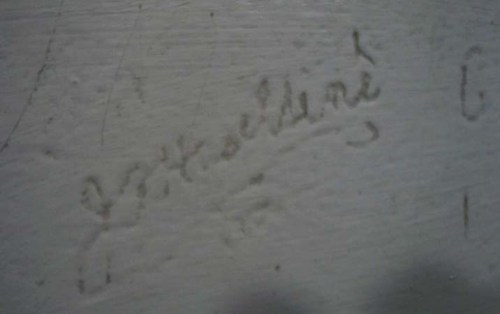
Towards the end of the Christmas Term, 1904, John Francis Haseldine carved his name, in rather florid handwriting, on that same stone mantelpiece.
haseldine cccccc

John was born on December 28th 1886 and entered the High School on May 4th 1896, aged nine. His father was Frank Haseldine, a lace manufacturer of St.John’s Grove, Beeston. John was a very good footballer (soccer player), and made his début for the First XI on Wednesday, March 26th 1902, in an away game against Loughborough Grammar School. We know that the school’s best player, J.B.Sim, worked hard throughout the match, but, according to the School Magazine of the time,“The Forester”, he was “too carefully watched” by the Loughborough defence, and the game was lost by 0-2. That particular spring, John had been in the team which had won the Football Sixes, a six-a-side competition organised within the school by the boys themselves, with the teams all drawn out of a hat. It was taken, of course, extremely seriously. Coincidentally, the winning team’s captain was that very same J.B.Sim, who was a well-known High School footballer of that era, with more than fifty appearances for the First XI.
On Wednesday, February 14th 1903, John scored his only goal for the school, in a 4-1 away victory over Mansfield Grammar School, “a rather poor and one-sided game”. As an ever present in the team, John won his football colours at the end of this season and was also awarded a “Standard Medal” for Football . In season 1903-1904, he became Captain of Football.  John spent the Christmas Term of 1904 at the High School, but, like so many boys during this period, he left half way through the academic year in December 1904.
In the Great War John was a Major in the Royal Engineers, Special Reserve. He was Mentioned in Dispatches on June 3rd 1916 and received the Military Cross on January 1st 1917. By 1929, he was living at Northdene, New Barnet, in  the northern suburbs of Greater London.
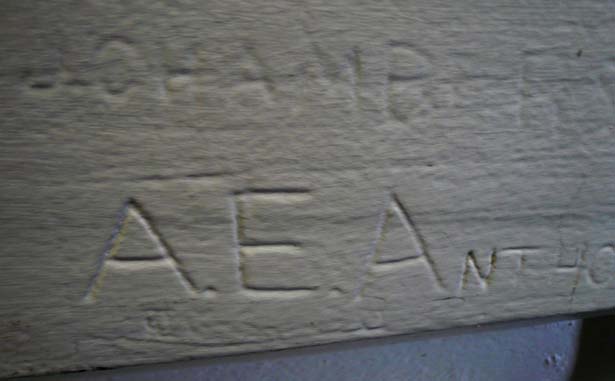
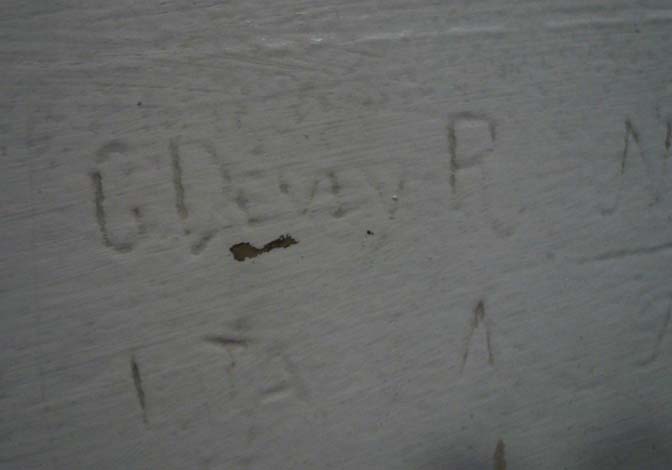
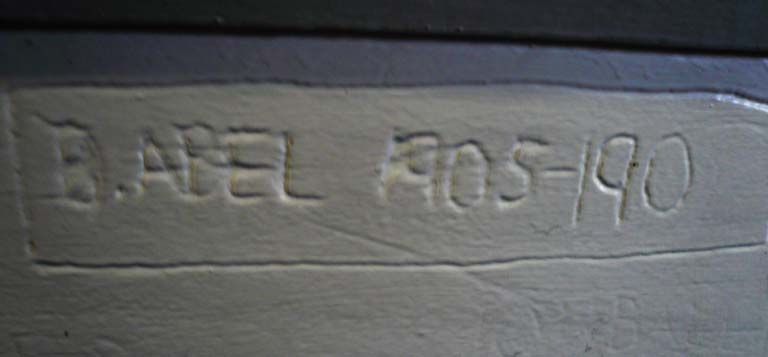
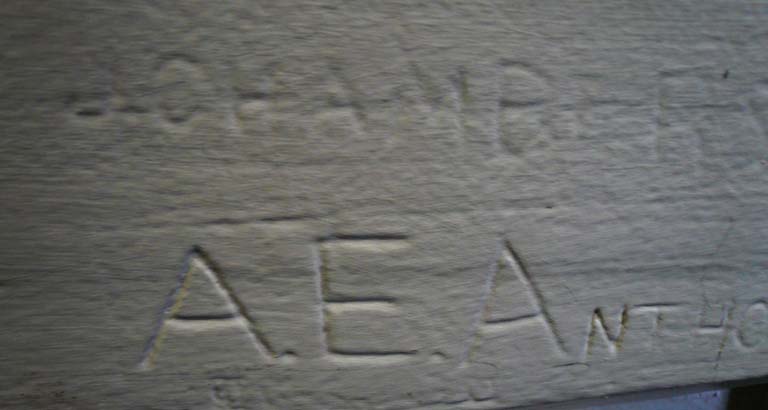
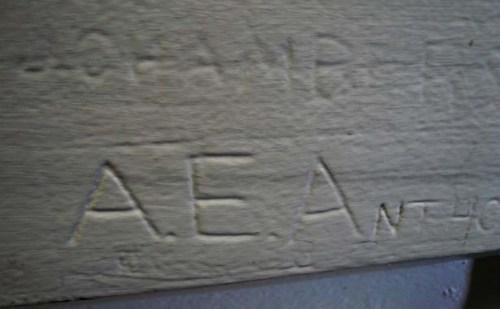
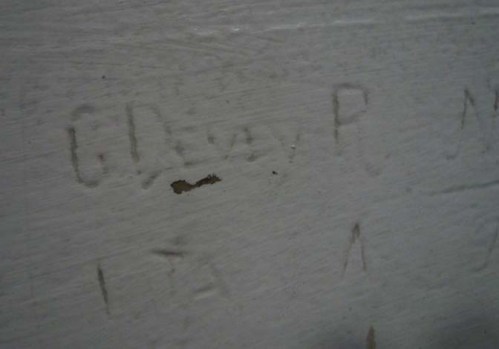
Among the other more legible carved names are “A.E.Anthony” and “G.Devey”. What is apparently “R.Salew” is also there, although there are many, many  layers of gloss paint to obscure the lettering of this particular name, and the photo has not come out because of this. Another seems to read “B.Abel 1905-190” as if the young man had been interrupted, perhaps by a Master (teacher), as he came towards the end of his carving, and then did not ever return to finish the job.

Alfred Edward Anthony was born on June 12 1906, and entered the school on September 18th 1918, aged twelve. His father was F.W.Anthony of 120, Radcliffe Road, West Bridgford. He was the Managing Director of Gotham Co Ltd (apparently sic). Alfred left the school in December 1922.
anthony 1 ccccccc

“G.Devey” was the elder brother of Reginald Devey, whose own name had already been carved on the fireplace upstairs, in the staffroom corridor, alongside that of D.H.Lawrence and L.S.Laver, the High School’s very own Latin Champion of the World.

r.a. devey cccccccv

This ground floor effort though, was Gerald Bertil Devey, who was born on June 10th 1903,. Gerald entered the school on May 27th 1918 at the rather late age of fourteen. His father was James Edward Devey, a civil servant, and the family lived at 22, Ebury Road, Sherwood Rise. Gerald left the High School in July 1919.
devey cccccc

John Rylett Salew entered the school on May 4th 1916, aged fourteen. He left in December 1918. John was born on February 28th 1902 and his father was Joseph William Salew, an “agent” of 19, William Rd, West Bridgford.

Bertram Albert Abel was born on July 31st 1889 and entered the school on September 13th 1905, aged sixteen. His father was William Jenkinson Abel, a clerk to the Nottingham Education Committee. The family lived at 99, Waterloo Crescent, and Bertram left the school in July 1907.

b abell ccccccc
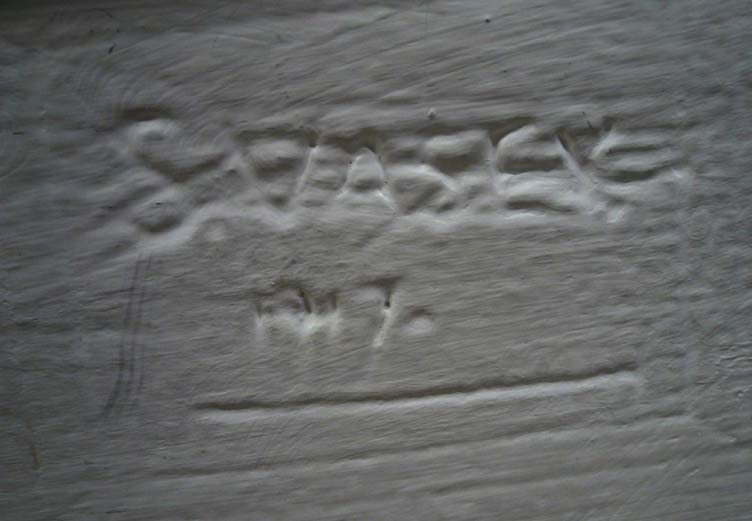
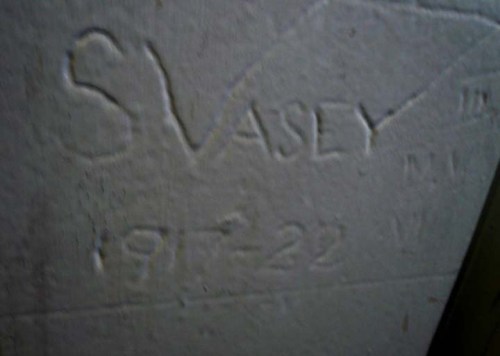
The fact that “S.Vasey” has carved his name in two different places on the stone, one of them complete with his own personal dates, namely “1917” and “1917-1922” shows not only that he had an extremely strong desire for immortality, but that, within the context of the High School, it has been fulfilled. He must have been a very swift, and fairly brazen, vandal.

zzzzz s vasey 1907

Stanley Vasey was born on June 5th 1905 and he entered the school at the age of thirteen, on September 18 1918. His father was Alfred Vasey, a shop inspector, and the family lived at 15, Glebe Road, West Bridgford. He left in December 1922.
zzzzzzzzzz vasey 1922
It is actually possible to best guess friendship groups among these carved names. Messrs Anthony, Devey and Vasey, for example, all joined the school in 1918. They all left in the latter half of 1922. They must surely have known each other. John Rylett Salew and Stanley Vasey both lived within a penknife’s throw of each other in the very posh Nottingham suburb of West Bridgford. Did the four boys seal their friendship by committing their names to the hard surface of that much painted fireplace ? Did three of them keep watch while the fourth scratched his name into the welcoming stone ?

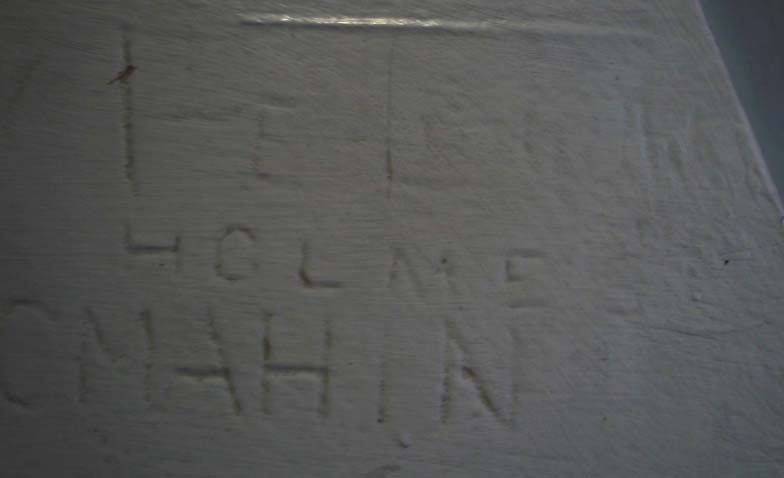
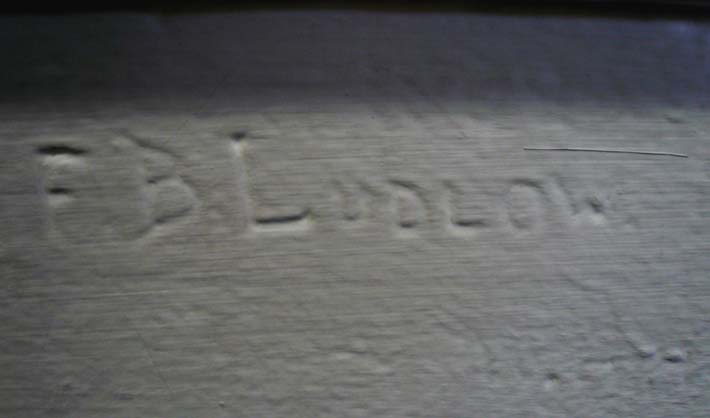
The other names on the fireplace, some of them extremely indistinct, include “F.B.Ludlow”, “N.G.Peet”, “Littler”, “Meigh” and “Holmes”. The latter was possibly the George Chudleigh Holmes who was a regular player in the First XI football team during the 1902-1903 season. Born on June 15th 1887, George entered the school on January 17th 1900, aged twelve. His father was George H.Holmes, a Lace Manufacturer of Gregory Street, Old Lenton. George left at Easter 1903, perhaps once the football season was over.

hiolmes 2 ccccccccc
Fred (sic) Ball Ludlow was born on April 28th 1891. He entered the school on May 1st 1900 aged  nine. His father was William Ludlow, a clerk in the Gas Depôt. The family lived at 10, Willoughby Avenue, Lenton in the western suburbs of the City. Fred left in June 1907.

ludlow cccccc

Noel George Peet was born on December 26th 1901 and entered the High School on April 26th 1917, aged fifteen. His father was William George Peet, a “general agent”, and the family lived at 413, Mansfield Road. Noel left the school in July 1919. Perhaps he was a relative of Mrs.Mary Peet who was the school’s nurse during the late 1970s and the 1980s.

Samuel Littler was born on May 16th 1891. He entered the school on September 16th 1903 aged twelve. The family lived at 8, Appleton Gate, Newark-on-Trent, and his father, a veterinary surgeon, was also called Samuel Littler. Samuel junior left in July 1908.

Vincent George Meigh entered the school as an Agnes Mellers scholar on September 12th 1899 aged ten, the cost of his place in the school automatically paid for. His father was George Meigh, a schoolmaster of 3, Willoughby Avenue, Lenton. Vincent left in December, 1903.
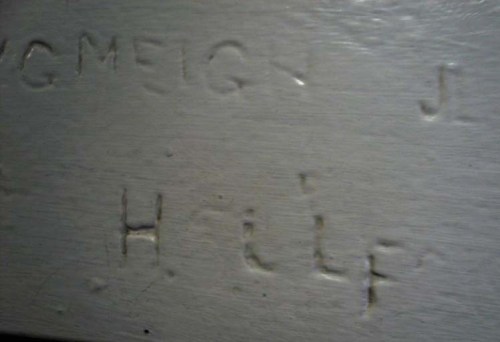
meigh ccccc
On the mantelpiece, one set of letters to set the heart a-flutter is “(illegible)BALL  1900-1907” , but this cannot be the famous air ace, as there are clearly a fair number of letters before the B-A-L-L. In any case, Albert Ball did not stay long in the High School, being expelled after an incident when he disrupted school assembly by emptying a large bag of bullseyes, gobstoppers and bouncing sweets onto the floor.

Best fit is probably Oliver Herbert Ball, who was born on August 13th 1891. He had entered the school on January 17th 1900, aged eight, as the third of three brothers. Oliver was to leave in July 1907. His mother was called Emma, and his father was Alfred Holmes Ball, the “Laundry Man” of “Sunnyside”, Daybrook, Notts.  Presumably, this was the company which was eventually to become the massive “Daybrook Laundry”.’ It was situated opposite the Home Brewery on the Mansfield Road, and was only recently demolished during the first decade of the twenty first century. The Arnold branch of the “Aldi” supermarket chain has now been built on this site during the latter part of 2014. It was open for business by the end of the year. Look for the orange arrow:
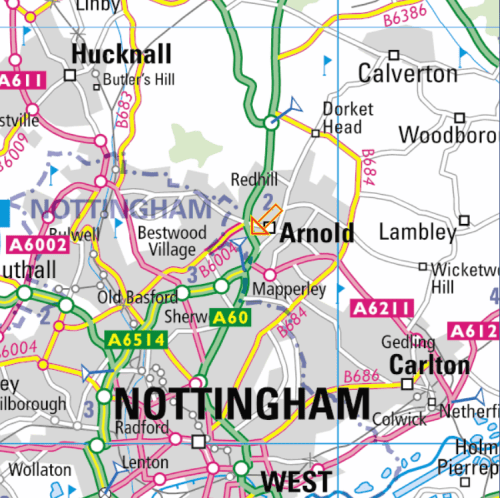
north nottingham

During the Great War, Oliver Ball was to serve as a Second Lieutenant in the 10th Battalion of the Yorkshire Regiment.  Aged only twenty five, he was killed on September 28th 1916 and is buried in the Guards’ Cemetery at Lesboeufs in France. Oliver’s  death was part of the Somme offensive.  He shares the cemetery with 1,492 identified casualties, and a grand total of 3.136 men.
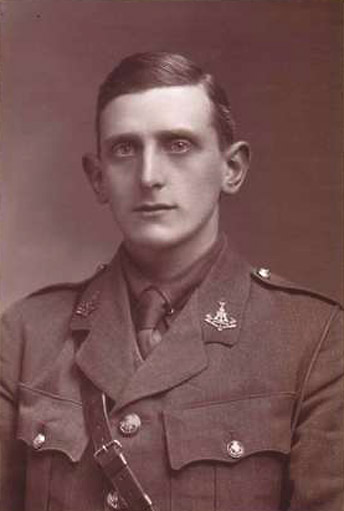
oh ball

Oliver Ball’s elder brother was Walter William Ball, the second son of the three, and himself an Old Nottinghamian. Walter had returned to the Western Front, and the Yorkshire Regiment, from his leave in Nottingham on Friday, November 19th 1915. The “Nottingham Guardian” reported his death on Monday, November 29th 1915. He had apparently been shot through the head by a sniper while organising a firing party with his captain. The tragic news was communicated to his parents by his younger brother, Second Lieutenant Oliver Ball, who held a commission in the same regiment. According to the “Nottingham Guardian”, Walter was “well-known in Nottingham and had a large circle of friends”. He had received his commission as a Second Lieutenant a mere twelve months previously. Walter is buried in Houplines Communal Cemetery Extension in France, Plot 1, Row A, Grave 21. He was 28 years of age.

ww ball

As far as I can trace, the third brother seems to have survived the war.

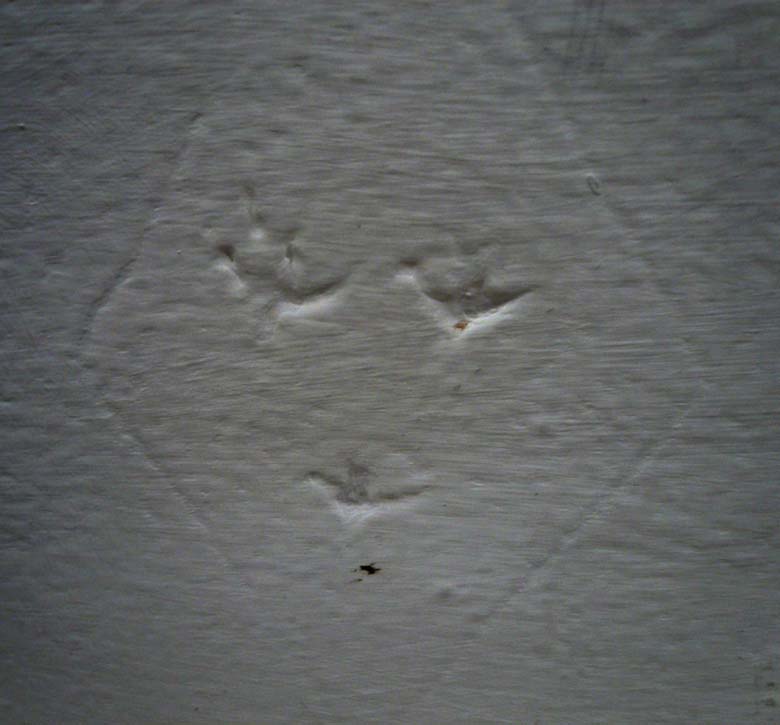
One of the more notable objects on the mantelpiece is perhaps the school badge which has been carved relatively large, and in primitive style, with the lozenge and the three merles or heraldic blackbirds still recognisable even now, the best part of a century after it was executed by some unknown, juvenile artist.
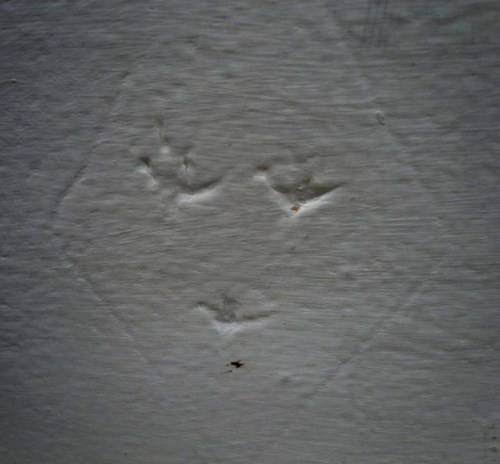
badge cccccccc c

Less time proof perhaps, are the boys who managed to carve only their initials, namely “JL”, “MV”, either “WA” or “WR”, and either “BFW” or “SFW”. It is just so difficult to be certain about whose initials they might be. In some cases, there are literally dozens of possible candidates in the school registers, and it becomes almost a pointless effort to try and guess who has carved them.

Some boys seem to have been able to make only part of their name legible. We appear to have, therefore, a group of letters which seems to spell “H-LLF”.

Similarly, I have tried so hard to turn “—-NGTON” into Victor George Darrington, one of the very few young men to have captained the school at both football and rugby. The time is right (he entered the school in 1909, aged twelve) but the fact is that the blurred and multi-layer gloss paint painted-over obscured letters just do not look like they were ever meant to spell Darrington.

Even more striking is the young member of what is probably the “Chambers” family who did not manage to carve his initials clearly. The name can be seen just above “A.E.Anthony”, although the letters seem to be an even whiter shade of pale.  Just a cursory perusal of the school registers reveals the existence, between 1897 and 1926, of “E.Chambers”, “W. Chambers”, “P. Chambers”, “N. Chambers”, “J.F. Chambers”, “J.S. Chambers”, “A. Chambers”, “C.G. Chambers”, “J. Chambers”, “B.J. Chambers”, “C.C. Chambers”,  “S.H. Chambers”, “D.B. Chambers”, and a second “W. Chambers”

chambers 1zzzzzzzzzzzz

No doubt a really thorough search would reveal even more members of the apparently vast Chambers clan.
It would be nice to think, though, that the perpetrator was the (uninitialled) Chambers of Form IVb, whose doings are reported in the Prefects’ Book for Thursday, February 1st 1912….

“…A meeting was held before afternoon school, Towles and Haubitz (prefects) being absent. Chambers (IVb) had been reported for carrying a loaded revolver in his pocket. He admitted the offence, and produced the weapon, which proved to be loaded in four chambers. He was requested not to bring it to school again, and the School Captain decided to interview the Headmaster.”

Most unfortunately, no record has survived of the outcome of this conversation. Here again, it is possible to guess at putative friendships between the names in the stone. Two of the boys, for example, Fred Ball Ludlow and Oliver Herbert Ball, both joined the school in 1900, and their entries are virtually next to each other in the School Register. Perhaps the use of the surname of one as the middle name of the other hints at a blood relationship, rather than just one of mere friendship.
Coincidentally, a third name on this single ancient page of the school register is that of Harold Binks, who entered the school in the very same year of 1900, although Harold was never to carve his own name on the fireplace. From his reminiscences, published in April 1935, we know that one of his best friends in the Senior School was called Ball. It seems likely too that another of the friends was Oswald Cornek Gillot, who was already in the school when Ludlow, Ball and Binks arrived. All these boys were of the same age, and they all left the school in the latter part of the academic year 1906-1907. As we have already noted, Gillot lived near distant Ilkeston, but Holmes lived in Gregory Street, Old Lenton, very close to Ludlow and Meigh who themselves both lived in the same street, namely Willoughby Avenue, Lenton. Again, we can imagine two keeping watch while the third one carried out the evil deed with his penknife.

On Thursday, June 7th 1917, just  ten years after carving his name on the stone fireplace, Oswald Cornek Gillott was killed at the age of twenty six, yet another hapless victim of the Great War. Even a school as small as the High School (400  pupils) was to provide some three hundred young men, all destined to die well before their time.

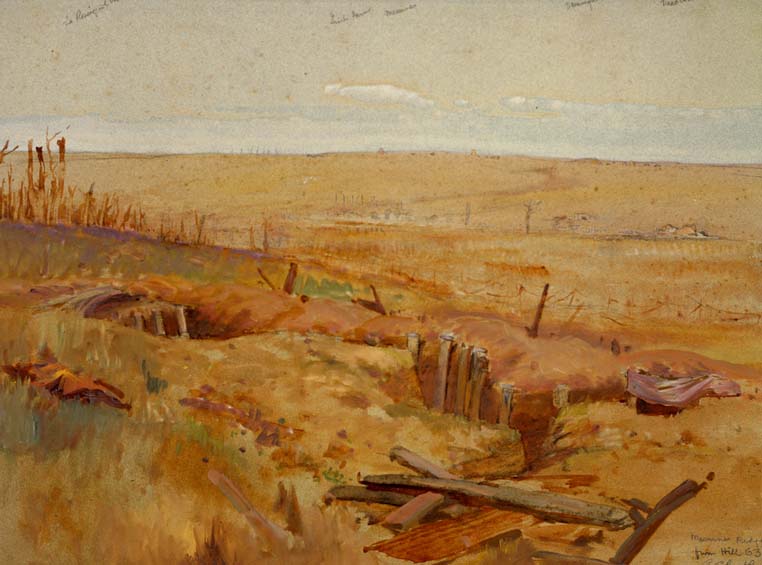
After he left the school, Oswald moved to Teesside, and became a twenty year old apprentice mechanical engineer living at 2, Woodland Terrace, Borough Road, Middlesbrough, Yorkshire. When the Great War came, Oswald joined the 68th Field Company of The Royal Engineers. They trained at Newark-on-Trent before sailing from Liverpool for Gallipoli at the end of June 1915. They remained at Lala Baba in Suvla Bay until December 19th and 20th 1915, when they withdrew and returned to Egypt by the end of January. Oswald was recorded as having been wounded during this period. In June 1916 the Division was ordered to France to reinforce the Third Army on the Somme. By July, they were in the Front Line and took part in the fighting at Thiepval. In early 1917 they were fighting on the Ancre, and then moved north to Flanders for the Battle of Messines
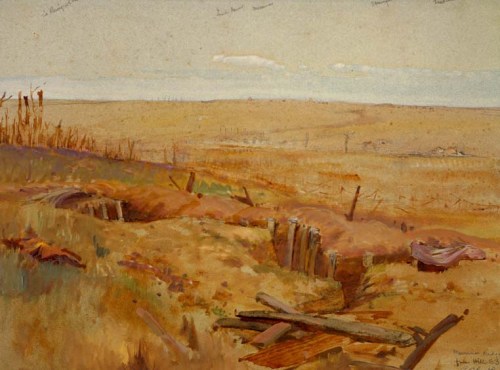
Messines_Ridge_from_Hill_63 cccccccSecond Lieutenant Oswald Gillott’s last day on Earth was June 7th 1917, coincidentally no doubt, the first day of the successful attack on the Messines Ridge.  The assault was preceded by the detonation of nineteen large mines, in what was described at the time as “the loudest explosion in human history”. Oswald, as a member of the Royal Engineers, may well have been involved in this activity when he was killed. On the Commonwealth War Graves Commission website there are a mere three pages of Gillotts, with only thirty two men of this name killed. Oswald Gillott lies in the Messine Ridge British Cemetery in Mesen, West-Vlaanderen in Belgium along with the 577 of his colleagues whose remains have been identified.

This slideshow requires JavaScript.

Second Lieutenant Gillott, aged twenty seven was one of a trifling 24,562 casualties, as the British under Field Marshal Herbert Charles Onslow Plumer, 1st Viscount Plumer, GCB GCMG GCVO GBE slowly began to learn how to fight battles at much lower costs than previously. (Battle of the Somme, 623,907 dead).

The other side of the coin, of course, is the fact that if the Field Marshall and his lordly colleagues are not much more careful with the lives of their social inferiors, they will risk actually running out of men. The  623,907 men killed in the Battle of the Somme is a catastrophe, but the apparently much lower figure of 24,562 killed during the assault on Messine Ridge could well be regarded as every single man in a town the size of, say, present-day Arnold or Newark-on-Trent.

One set of initials I have not dealt with. That is F.C.Mahin, one of the High School’s very few Americans, and I will talk about his incredible and hitherto completely unknown life in another blog post.


6 Comments

Filed under Criminology, History, Humour, Nottingham, The High School

“Where are the snows of yesteryear?”

Over the centuries, the weather can often be extreme, and some amazingly strange things have happened. In 1110, nearly a thousand years ago, Nottingham experienced a terrifying earthquake. Bizarrely, the River Trent dried up for several hours, presumably as it drained into, and then eventually filled up, a huge new crack in the ground that it had created somewhere upstream.

In the Nottingham of 1682, extremely low temperatures lasted from September until February of the next year. Shortages of coal, wood and food were caused by difficulties in the transport system, and  the fields, roads and rivers were all frozen up. The Trent, for example, was completely impossible to navigate throughout the entire period of the freeze.

It was equally cold in 1855 when a cricket match was played on the frozen River Trent. The victors roasted, and ate, the greater part of a whole sheep without the ice either melting or giving way. When the thaw set in, an iceberg weighing many tons was unleashed in the river and it destroyed a bridge downstream when it crashed into it.

6419523017_ebf7e7e31c

A local solicitor, William Parsons, recorded the weather’s outrages in his diary:

“In 1814, we had so severe a frost as to freeze the Trent over, the first time I believe. It continued 16 weeks. The Trent was then so frozen that a fair was held and oxen, sheep and pigs were roasted.”

In 1838, the River Trent froze over at the beginning of the year. William’s entry for January 20th reads:

“The frost has now continued about twelve days but with greater severity than is remembered. Many thousands from Nottingham went to see the Trent today. The frost continues extremely severe. The Trent this afternoon is now frozen completely over and I was sliding upon it just above Trent Bridge.  I shall visit it tomorrow again it being of rare occurrence to be frozen. The snow continues upon the ground about six inches deep. My hands are very severely chapped that I am now writing in kid gloves”.

He described the river as:

“in that state frozen it appeared like a frothy, foaming river of snow. Many people were crossing on the ice. I walked down to the bridge and crossed the river just above it where numbers were also winding their way through projecting masses of snow covered in ice. The river was more rough and picturesque in this part than in any other.”

The most charming thing about William’s diary is his great honesty. As regards the consumption of alcohol in very large quantities, he was a man many years before his time:

“Time worse than wasted, money spent, health injured, myself debased! Let these days of drunken, senseless riot be remembered only as incitements to become a rigid teetotaller”.

We’ve all been there.

6419523525_986f696990

The River Trent was a very different river in those days and that is why it used to freeze fairly regularly during exceptionally cold weather. There were, of course, no power stations releasing huge quantities of warm water which might increase the natural temperature of the river, but that is not the most fundamental reason for the change. Nowadays, the waters of the Trent have been for the most part  tamed and confined firmly in great ramparts of concrete. Because of the way in which the river has been turned into a giant canal, it is now much deeper and fast flowing than it used to be. The edges of the river do not extend outwards in leisurely fashion into marshes or shallow ponds with very little flow. The modern Trent no longer stretches, as it did in primeval times, from the sandstone cliffs south of St Mary’s Church for many, many hundreds of yards into present day West Bridgford. And the old wide river, of course, was a shallow, more slow flowing river, the kind of waterway that was much more likely to freeze in severe weather.

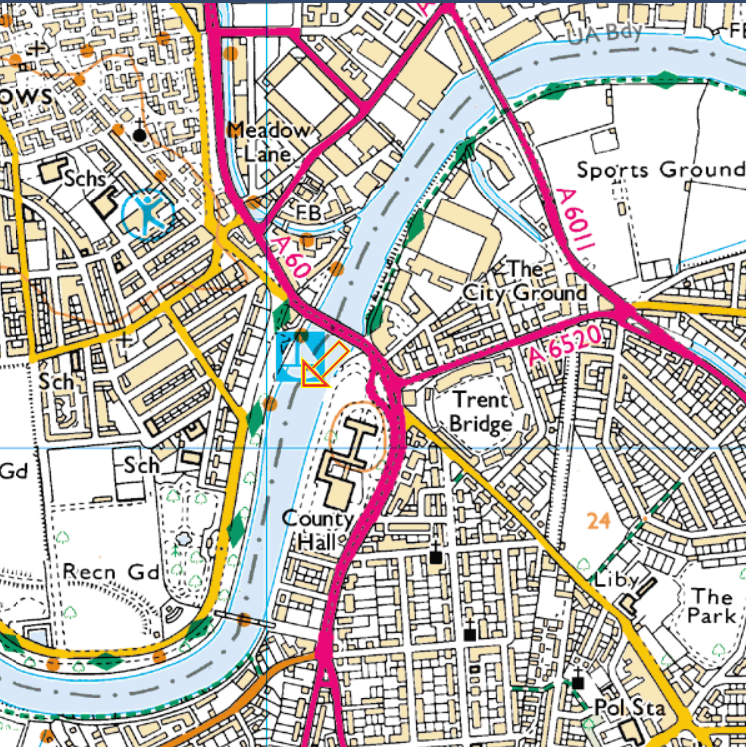
St Mary’s Church is in the top left of the map, near to the word “Museum”. It is represented by a cross and a square joined together. Trent Bridge is indicated by the orange arrow, and the southern edge of the waters centuries ago would have been well to the south of the present day B679 (bottom left of the map) or the Trent Valley Way (top middle right of the map).

old trent bridge

In those ancient of days, when the river was so very much wider, the only safe crossing, either on  foot or on horseback, was across the band of harder rock where Trent Bridge now stands.

images8WR58W3V

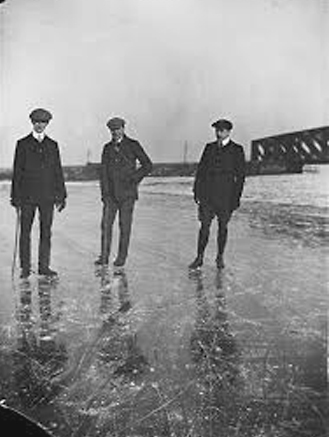
On January 16th 1892, on a “piercingly cold” Saturday, Nottingham Forest played Newcastle East End at the City Ground. When the crowd arrived at Trent Bridge, they were surprised to see “skating in progress on the old course of the River Trent.”  Because of the recent introduction of the penalty kick, the frozen football pitch had some new markings, which in this case were made of broad strips of black soot. Newcastle changed from their normal crimson shirts into black and white stripes. Hopefully, before the game, Old Nottinghamian Tinsley Lindley, Forest’s centre forward, was able to walk across the Trent to the game, just like Brian Clough used to do.

NTGM006720

Three years later, in 1895, the river froze for the last time. Again, the region’s economy suffered. Numerous tributary rivers smaller than the Trent were also frozen, and many jetties and warehouses became unusable. This caused huge job losses in local industry.

MS 258/3

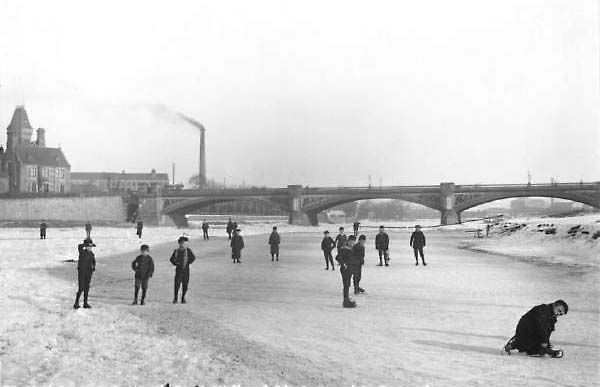
The river was caught in this devastating frost for almost a fortnight.  Skaters were able to venture onto the safe and solid ice over many miles of the Trent’s length. The ice was thick enough to allow a hockey game between teams from Newark and Burton-on-Trent to take place on a pitch somewhere upstream from Averham Weirs.

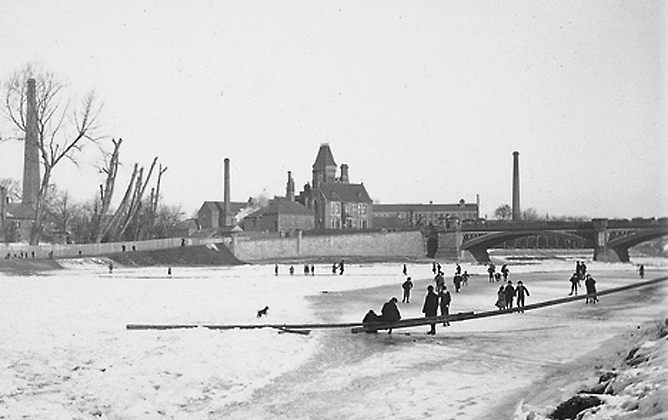
Here a huge crowd of boys are standing on the thick ice. Everybody looks very happy, but there were several fatalities, as people contrived to find excessively thin ice to stand on. Lady Bay Bridge can just be seen through the arches of Trent Bridge.

freezes caption 1

And not a scarf or a pair of gloves in sight. Kids were tough, and Health and Safety hadn’t even been thought of yet.

The photograph above was taken from opposite the West Bridgford embankment, to the south of Trent Bridge, near to the present day County Hall. Look for the orange arrow:

county hall

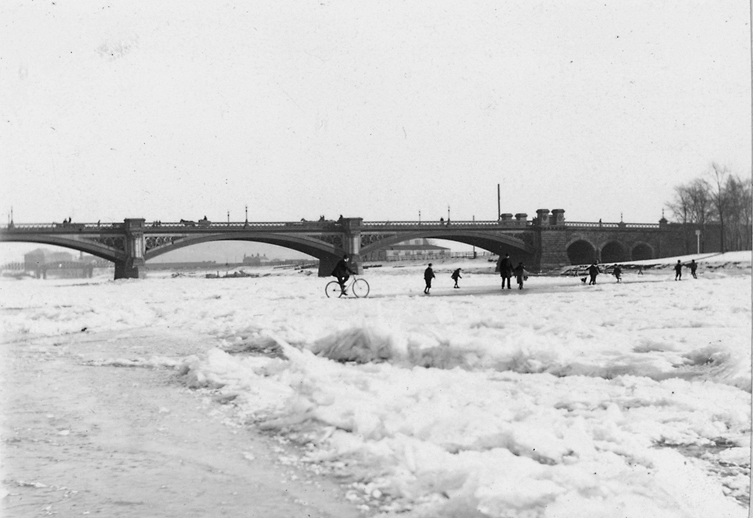
In places the extreme frost, the most severe in living memory, penetrated into the ground so deeply that it froze the tap water in the mains. Ordinary people suffered greatly and many had no water supply whatsoever, a parlous situation which was to last for several weeks. To overcome this most basic of problems, stand-pipes fitted with taps were set up at various places in the streets, and buckets could be filled up there. January and February of 1895 was a time of difficulty and danger for ordinary people and those who survived it were to remember it for the rest of their lives.
caption 2

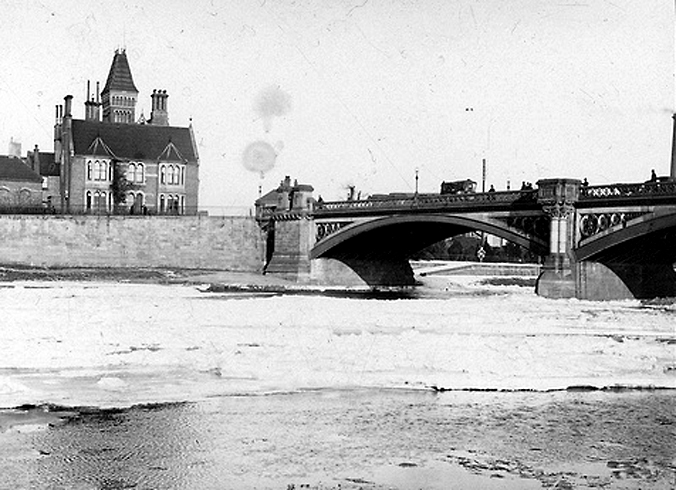
In the photograph above, a fire can be seen burning against the bridge, one of the many which blazed happily on the surface of the ice. The river’s rate of flow is reduced by the ice floes so much that it is almost reminiscent of a river during a drought.

During these bitterly cold winters at the turn of the twentieth century, my grandfather, Will, who had emigrated to Canada around 1905, saw Niagara Falls, for the large part frozen, on at least one occasion, this postcard dating most probably from 1911.

naiagara

2 Comments

Filed under History, Nottingham, Science, Wildlife and Nature

A child minding dilemma

(An extract from my old birdwatching diary “Crippling Views”)

Saturday, June 11, 1988

I walk back home from the local newsagents, my eyes peeled as always for the odd brilliant white Gyrfalcon, soaring over the City Hospital. But, as always, without any luck.

zzzz gyr

Suddenly, a big brown raptor comes into sight, making its way purposefully along the Ring Road, flying along the line of the valley, heading roughly eastwards.

surf marsh harrier

At first, because of the time of year, I presume that it must be an Osprey, although I can’t really imagine why, because it doesn’t look anything like an Osprey and it isn’t carrying a fish.

zzzzzzzzzzzzzz  osprey-with-bass

For a start, it has an obviously pale, or even white head. It is this latter feature that makes me realise that it is a Marsh Harrier.

zzzzz  marsh_harier_

Then there is an agonising decision to face. Do I run a home like the clappers, and then the bird will become eligible to be included in my “Seen from the Garden List”? If it were left to me, there would be no contest, but the problem is that I have my Baby Daughter, aged two, asleep in my arms. Mum will be a bit displeased if I plonk her down on the pavement and leave her, just so that I can see the same bird a second time, only thirty seconds after I have seen it for the first time, although, granted, from a different place. So, I forget the idea of momentarily hanging Baby Daughter on somebody’s front fence, and walk maturely on, trying to persuade myself that moral ticks count just as much as real ones do. It’s a lot more difficult to make these decisions when you’ve only just moved house and your Garden List is not yet in double figures.

Twenty six years later and I still haven’t seen an enormous number of raptors from my back garden. Sparrowhawks are probably the commonest.

zzzzz sparrow

In nearly thirty years, there has only ever been one Kestrel.

zzzzzzzCommon_kestrel_in_flight

I have seen a good number of Common Buzzards.

zzzzzzzzzzzzzzzz_Buzzard---Frisa

I have also seen Peregrines on several occasions, but this is because the latter now nest on the top of the Newton Building in South Sherwood Street in the middle of the City.

This slideshow requires JavaScript.
The best bird of all has been Red Kite, which is a good bird to see out in the countryside of wildest Nottinghamshire, never mind in a suburb of its largest conurbation. 

This slideshow requires JavaScript.

Birds of prey, or raptors, are notoriously difficult to identify, and fleeting glimpses, often without binoculars, quite often make you feel that you may have seen a particular species, but, alas, not well enough, or with enough certainty, to add it to your Garden List. In this category would be Hobby, Goshawk and Rough-Legged Buzzard.

This slideshow requires JavaScript.

2 Comments

Filed under Nottingham, Twitching, Wildlife and Nature

In memory of those who perished in the Holocaust

This is an extract from the history of the High School which I have been writing recently:

Tuesday and Wednesday, March 29th and 30th 2005

Organised by the Reverend Stefan Krzeminski, over the course of two days, the whole of Year 9 had the privilege of visiting what is now the National Holocaust Centre near Ollerton in north Nottinghamshire.

In past years the boys had been able to listen to the testimony of Arek Hersh, but on this occasion the speaker was Josef Perl ….

“It was not long before the train stopped and the front wagons pulled up at a platform. The people inside, who had clearly come directly from their homes, were marched away and disappeared down some steps straight to the gas chambers. We were in Auschwitz.

The doors of our wagons were unlocked and we had to jump down. There was a smartly dressed commandant deciding who would live and who would die.

Waving his riding crop, he indicated “links oder recht” (left or right) with a casual flick of the wrist. Those he sent to the left (over 70 per cent) went immediately to the gas chambers, those to the right had been selected, either for work or for experimentation.

It was Dr Mengele.”

I myself well remember hearing this chilling story of an encounter with the Angel of Death. At lunch, I was able to ask the question about concentration camps which had burned in my mind for years, namely, “Why, if you were all going to die anyway, didn’t you fight back and kill the Germans?”

Mr Perl answered my question and then asked me that, as a teacher, I should tell as many people as possible exactly what had happened in the Holocaust, so that it could never happen again.

I have never forgotten Josef Perl, or his request. Once again, therefore, I am happy, if that is the word, to do exactly as he asked.

1 Comment

Filed under History, Nottingham, Personal, The High School

Two local twitches

(An extract from my old birdwatching diary “Crippling Views”)

Monday, September 5, 1988

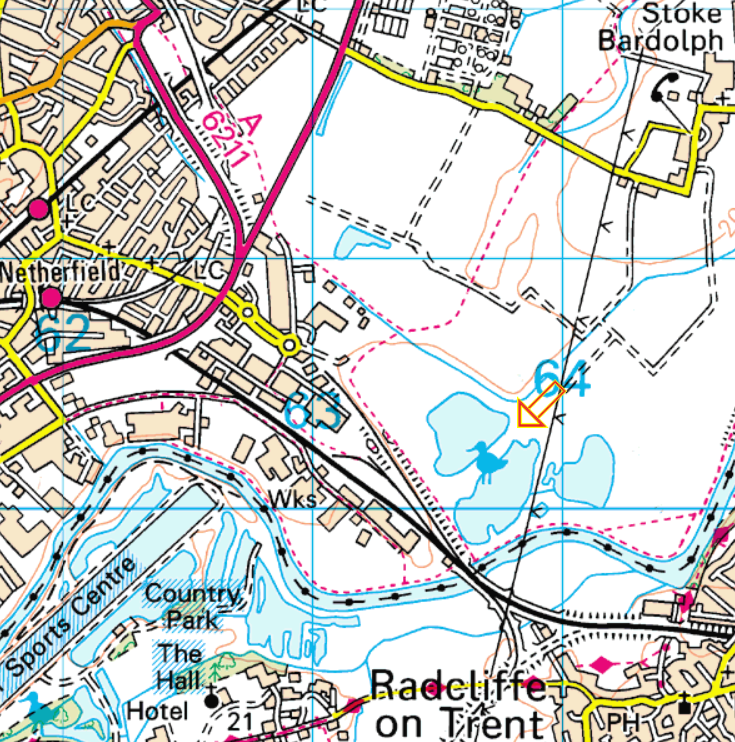
Another walk around my local patch, Netherfield  Sludge Pits, the Cape May of the Nottinghamshire gravel pits complex. (see the orange arrow)

Untitled

Once again, it turns up the big one, with immediate and excellent views of Sedge Warbler, and a male Reed Bunting in the same fifteen yards of hedge.

This slideshow requires JavaScript.

At the side of the path, there is a little flock of fifteen or twenty Yellow Wagtails and over the main lake, a Common Tern.

This slideshow requires JavaScript.

They used to nest on the little island, until it was submerged by the rising tide of slurry from the local coalmine. Knocking around the fields are a Kestrel, some Jackdaws and a few Stock Doves.

This slideshow requires JavaScript.

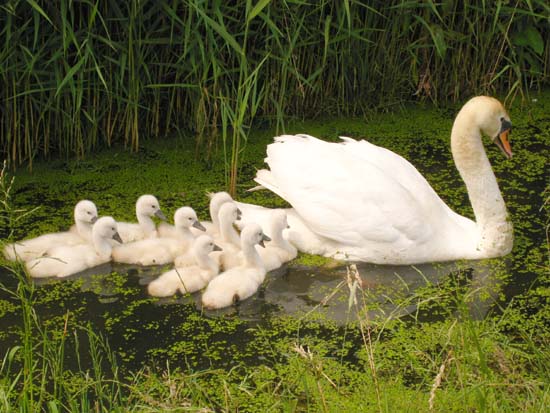
On one of the smaller pools, Mute Swans have bred.

Swan_with_nine_cygnets_xxxxxxxxx

They have produced several cygnets, but don’t worry, the anglers lead shot will soon put a stop to that. It’s amazing to think that Curlew used to breed here fifty years ago, and that, at this very site, Black-winged Stilts nested just after the Second World War.

A flock of finches here once contained an Ortolan Bunting and Little Bunting travelling together, and just after the Second World War, there was an apparent family  group of Gull-billed Terns come through, .

This slideshow requires JavaScript.

Today, there are three Great Black-backed Gulls, and a Herring Gull.

That’s what the destruction of habitat is all about.

**********************************************************************************************
Wednesday, September 7, 1988

An evening trip this time. A local birdwatcher has told me about a superb new place that attracts wonderful birds by Nottinghamshire’s normal standards. It’s a couple of flooded meadows down by the River Trent at Stoke Bardolph (now, alas, with houses built on them). Look for the orange arrow:

This slideshow requires JavaScript.

For some reason, the farmer has allowed the fields to flood, and for an even more obscure reason, he has permitted them to remain flooded. Waders in unprecedented numbers have been attracted for a short stopover as they fly south down the Trent Valley to Africa. Previously, I would only have thought of Stoke Bardolph for the incredible stink of the sewage works that are down there, but this is really something else. It’s just like a hide at Cley-next-the-Sea, with Curlew Sandpipers, Spotted Redshanks, a dozen or so Dunlin and some Greenshanks.

This slideshow requires JavaScript.

There is  a single stint, which causes us a little excitement as Steve and I try very hard to turn it into a Temminck’s Stint.

Temmincks_zzzzzzzzzzzzzzzzzzz

But it must, unfortunately, stay as a Little Stint. Still, it was a good try.

Little Stint1zzzzzzzzzzzzzzzzzzzzzzz

The only negative thing about the whole evening is the failure of the Hobby to appear at the appointed time.

Hobby xxxxxxxxxxxxxxxxxxxxx

There is at least one, if not two, birds in the area, and it, or they, often hunt over the woodland on the opposite side of the river. It’s even been seen knocking around in the gardens of neighbouring Burton Joyce, a riverside village. Tonight, though, there’s nothing.
Never mind – it’s a really brilliant wader site for somewhere as far from the coast is this. What a pity, therefore, that only a few months later, despite the impassioned pleas of a number of different conservation bodies, the farmer  should plough up the land without compunction, and what could have been a brilliant inland nature reserve is lost forever. So much for a democratic society. We are about as democratic as the Democratic Republic of East Germany is democratic. If you own the land, you can do whatever you like with it, irrespective of how many people subsidise you with their taxes and would like some kind of input as to what is done with the land.

Leave a comment

Filed under Nottingham, Politics, Twitching, Wildlife and Nature

Gun Battle on Derby Road: three slain, and a horse

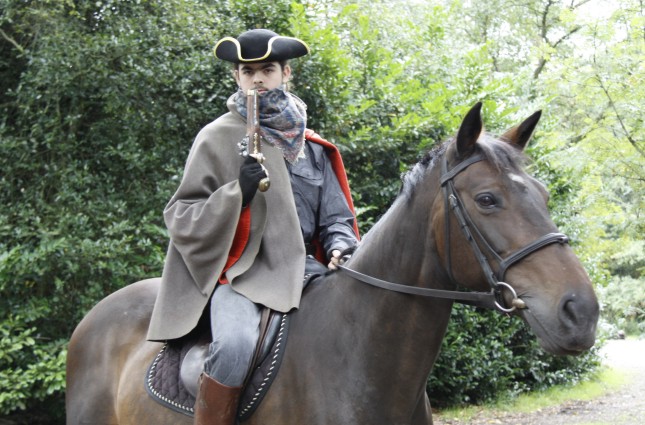
Derby Road seems reasonably peaceful now, but not in 1701, when Timothy Buckley, a 29-year old criminal from Stamford, Lincolnshire, was arrested after a ferocious gun battle as he tried to rob a stagecoach on its way to Derby.  The coach contained three gentlemen attended by two footmen. Buckley had previously been a shoemaker’s apprentice in London, but gradually became a more and more hardened criminal after his return to Nottinghamshire and the Wild North.
Beyond “two miles from Nottingham”, we do not know exactly where this gun battle took place, but usually, highwaymen would strike as the coach was moving uphill, and was therefore travelling at its very slowest pace.

highwayman

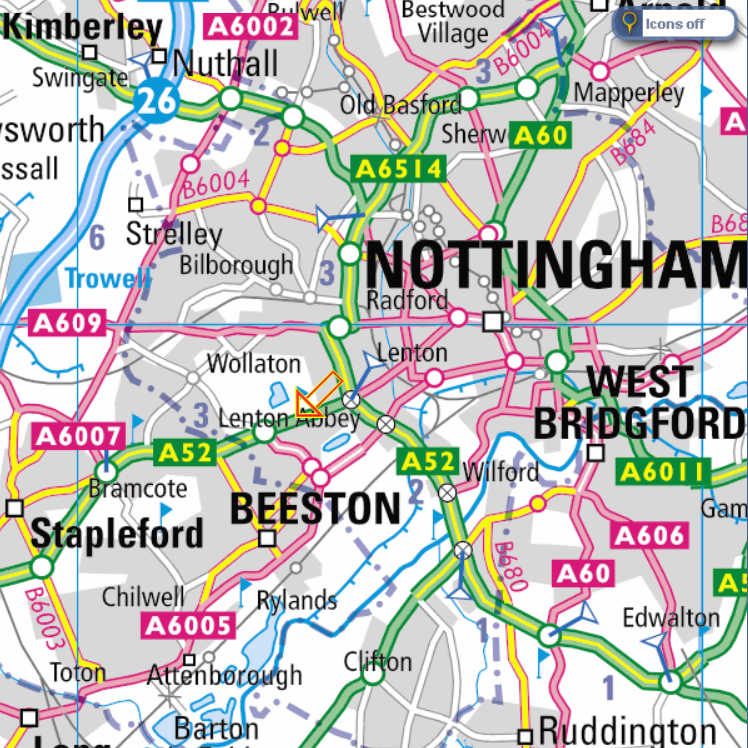
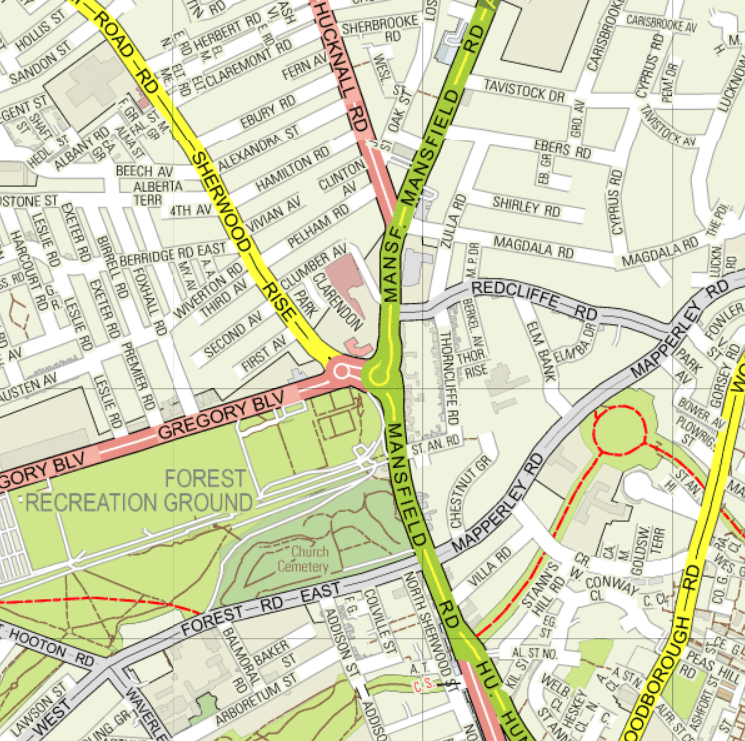
To me, the steep slope near the present day St.Barnabas Cathedral is too close to the city centre, so my best guess would be that stretch of the A52 as it climbs steadily after the present-day Ring Road, between the back of Wollaton Park and the grounds of Nottingham University. On this map, look for the orange arrow which is over the green A52 road with the words “Lenton Abbey” written over it. If the incident was any further on, then it might have been on the shorter slope near to the present day Bramcote Leisure Centre.

shoot out
No sooner had Buckley commanded the stagecoach to “Stand and Deliver, Your Money or your Life!”, than one of the passengers, unwilling “to submit to a single bravo”, blasted him with a blunderbuss. Buckley’s horse was shot out from under him, and died instantly.

Blunderbuss1

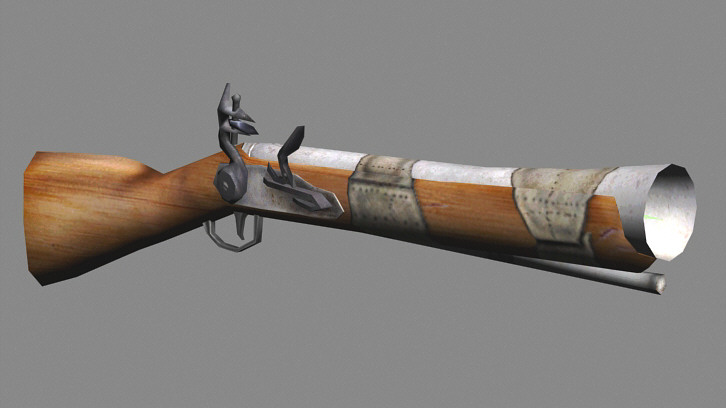
A blunderbuss was a murderous weapon, used for close-in fighting, in the words of Wikipedia, “when it was unimportant to protect objects around the intended target”. This formidable firearm was loaded with shot and anything else the user thought might do the job, small pieces of metal, nails, bits of rock or stone, or even salt. It was flared at the muzzle, and was the 17th-19th century equivalent of the shotgun so beloved of Wells Fargo personnel.
Interestingly, the military term dragoon is taken from the fact that early blunderbusses (or should that be “blunderbi”?) were decorated with dragon’s heads around the muzzle, and the blast would seem a little like the fire of a real dragon.
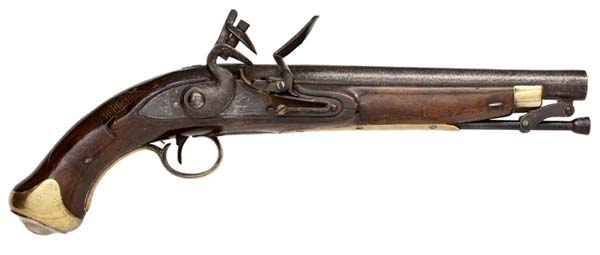
Buckley was not lightly armed either. He was carrying eight horse pistols. The largest were up to twenty inches long, and were carried in holsters across the horse’s back just in front of the saddle. This seems an unlikely number of such large weapons, but perhaps some were coat pistols (carried in the pocket of a greatcoat) coach pistols, (carried in a saddlebag perhaps), or belt pistols, (carried on a belt, hanging from a hook).

horse pistol xxxxxxxxIn any case, Buckley was very attached to his favorite horse and enraged by its untimely demise, “a most desperate conflict ensued”. Buckley let fly with all his pistols.
One male passenger and a footman both fell dead, shot through the heart. Eventually, though, Buckley was overcome by the remaining occupants of the stagecoach, as he grew gradually weaker and weaker from loss of blood, caused by his eleven severe gunshot wounds.

Guild-hall-1750 and prison

After a brief trial at Nottingham Shire Hall, Buckley was found guilty and was later hanged. He was only 29 years of age, and he was sentenced also to be “hanged in chains”. I don’t know how long his rotting cadaver was left exposed to the elements, but as a birdwatcher, I certainly know that there was one famous case in Nottingham where a dead criminal decayed over the course of the winter, helped by passing crows and magpies, only to have, with the advent of spring, a pair of blue tits raise their young inside his empty skull, using his eye sockets to go in and out, perhaps even operating their own one-way system.

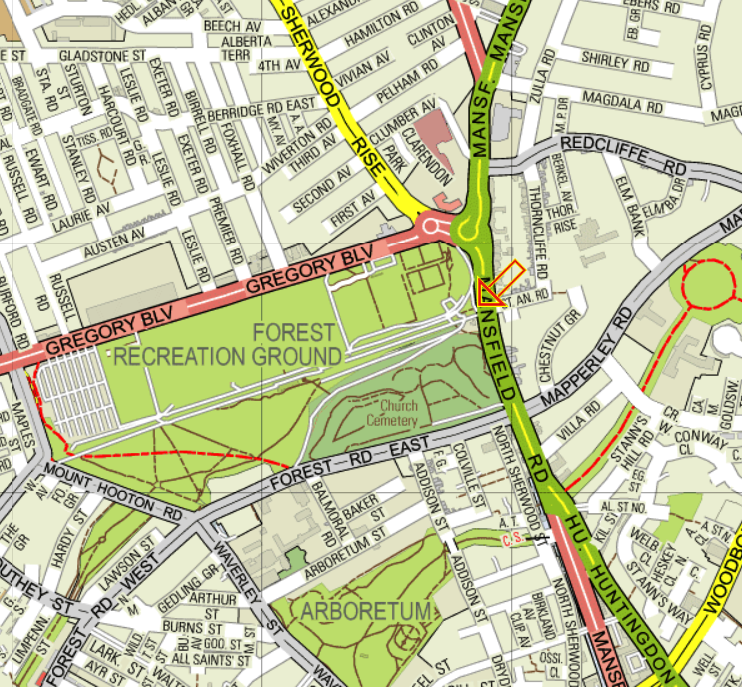
As these events all took place in 1701, Buckley would have been executed on what is now “The Forest Recreation Ground”. Centuries ago, “The Forest”, was called “The Lings” and was a very different place from what it is like nowadays. Largely covered by gorse and scrub, it was considered to be the southernmost part of Sherwood Forest itself. It was only as late as 1845 that, under the Nottingham Inclosure Act, some eighty acres of Sherwood Forest were set aside for recreational use. This area became “The Forest Recreation Ground” and to commemorate the event the Mayor of Nottingham planted a special Oak tree called the “Inclosure Oak” which can still be seen today at the Mansfield Road entrance. The orange arrow marks the oak tree:

Untitled

Pretty well straightway, the area became a site for sports and shows, or a combination of the two.

forest

In the summer of 1801, four butchers held their weddings there simultaneously, and decided who was to pay for the wedding picnic by holding a donkey race, with four animals, each equipped with mascots taken from the wardrobes of their respective owners’ new wives. The race was easily won by the donkey which had corsets attached to his tail with a bow of green ribbon. In second and third place were the animal with a pair of stockings around its neck, and another with a saddle made out of a nightgown.  Needless to say, the donkey wearing a voluminous pair of ladies’ drawers was placed last.
By this time, the Forest had already been a horse racing course for well over a hundred years. Not long before that, bear baiting had taken place on the very site where the horse racing course was later to be constructed. In 1798, a new horse racing track in the form of a figure-of-eight was built. Unfortunately, this rather novel choice of layout, designed to give the maximum length of course in the smallest possible area, was not overly successful, as spectators did not have a sufficiently good view. Crashes between horses were apparently too infrequent to compensate for this.
By the middle of the nineteenth century, though, there were at least two major race meetings per year, in spring and autumn, and the area was beginning to attract the same kind of people who can still be found there nowadays, well over a hundred and fifty years later…

“…loiterers…policemen…tooting footmen…toddling children…enterprising
vendors… overcharging greenhorns…patterers, chanters and beggars…sailors without arms or legs… “downy blokes”…holiday makers….villains…detectives …boozers and nymphs of easy virtue…ministers of religion……“black sheep”…enterprising merchants…aristocratic swells… pleasure seekers…a few robberies, a few drunks, a few fights…married men, sitting in the drinking places at the Stand with an assemblage of whores…the unemployed poor…”

Indeed, with whisky at an all-time low of 75p a gallon, so unsavoury did the area become that in 1879, male members of Nottingham University staff were threatened with instant dismissal if they were ever found at the horse races.
Other sports were played there as well. From 1865-1879, Nottingham Forest both practiced and played soccer here, being known therefore as “Forest Football Club”. Cricket was widely played in the summer, as were types of field hockey known variously as bandy, shinney or shinty.
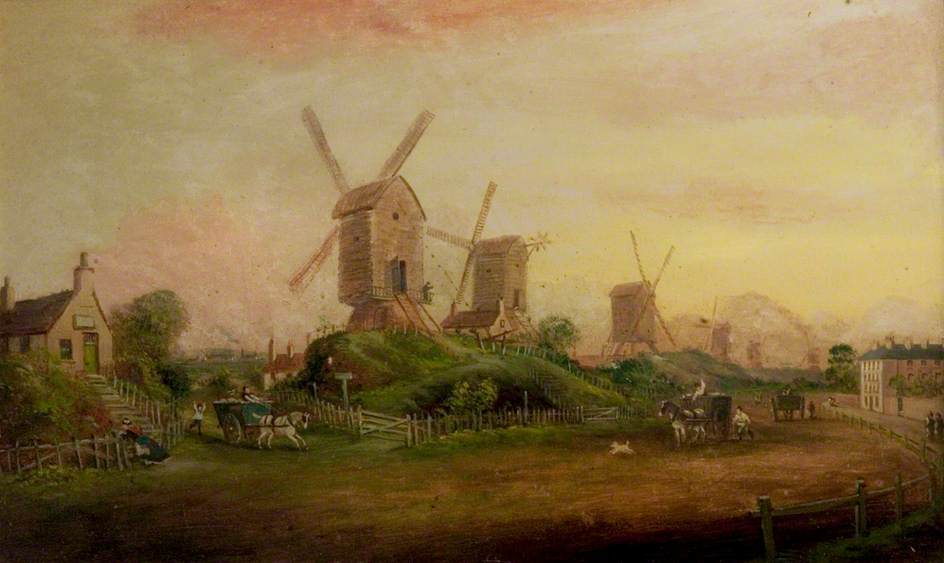
Apart from sport, alongside what is now Forest Road East, there was a long line of thirteen windmills, all taking advantage of the strong winds and updrafts which blew across the open ground lower down to the north.

(c) Nottinghamshire Archives; Supplied by The Public Catalogue Foundation

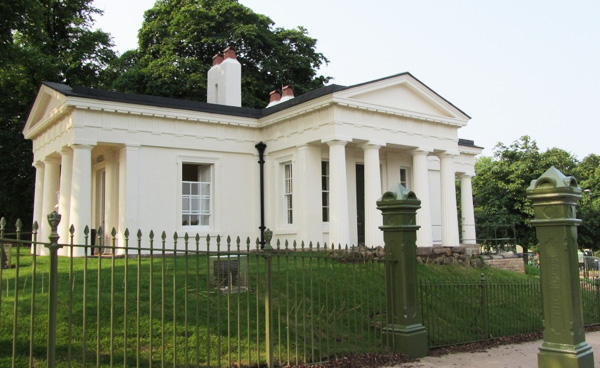
The exact place where the gallows stood and where Tinothy Buckley met his Maker has not necessarily been recorded absolutely accurately. Public executions took place here until as recently as 1827, and I am fairly certain that, many years ago, I read that the gallows used to stand a little distance down Mansfield Road from St.Andrew’s Church, within the present day Rock Cemetery. This was to the south of the white, recently refurbished, Lodge House. Clearly, in the latter part of the nineteenth century, there was still some judicial rôle for this building to fulfil, as it was originally used as a Police or Keeper’s Lodge and a police cell can still be seen at basement level.

forestlodge

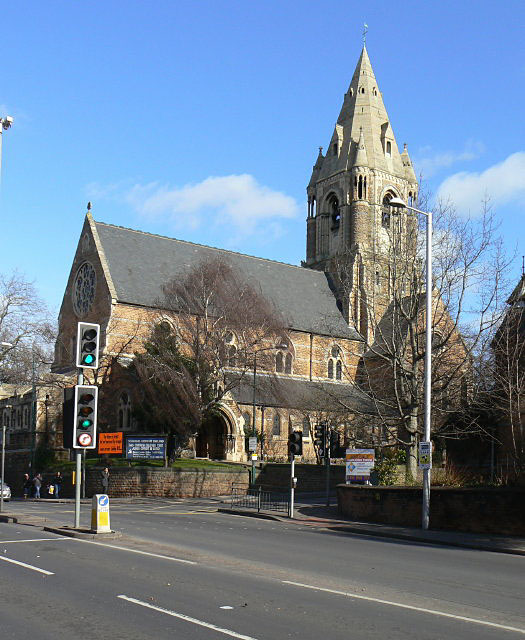
Others say that  there was a gallows on the same site as present-day St.Andrew’s Church, and, indeed, when excavation work was done here in 1826 for the church foundations, more than fifteen apparently medieval skeletons were found. This was presumably connected with a much earlier era, when travellers left the City of Nottingham through the gate in the mediaeval wall near what is now the Victoria Centre branch of Boots the Chemist. As they climbed painfully slowly up the hill which is now Mansfield Road, stagecoach robbers and mere footpads would sometimes pounce at Forest Road: hence the gallows which were constructed here, and might even have concentrated the thieves’ minds a little as they waited to swoop upon their prey from behind the bushes.

Notingham_St_Andrew_Nottinghamshire

“Garner’s Old Nottingham Notes” (date unknown) somehow contrive to be both illuminating and yet somehow confusing…

From information given, the gallows appear to have been erected on the level ground which now forms the upper portion of the Rock Cemetery, and it was probably 100 yards or rather more from Mansfield Road…..
Judging by the large old official map of the borough, measuring from the present Forest Road East, I consider it probable that, going northwards, the site of the gallows was about 100 yards from the southern boundary of the Rock Cemetery, and probably rather more from Mansfield Road, according to the contour of the ground, as depicted upon the official map. There is much likelihood that the gallows was erected near to where the last windmill on that side of the Forest then stood or was afterwards constructed.
It is certainly proper to state that I have seen two or more old maps on which the ground now covered by St Andrews Church, and southwards from there, is entitled Gallows Hill. The upper part of the ground is no doubt higher than any portion of the Rock Cemetery, and I have thought that this might possibly be the original place on which the gallows stored a few centuries back and perhaps afterwards were moved to the spot above designated.”

to gallowszzzzzzzzzz

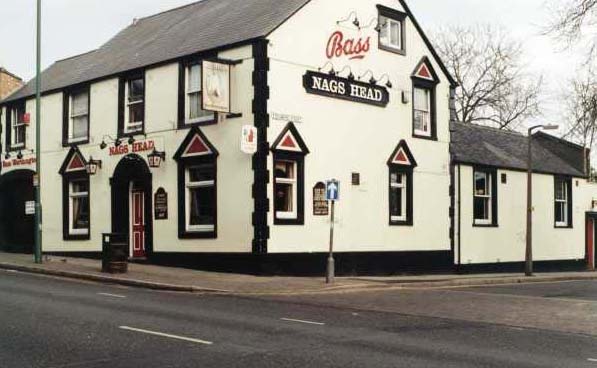
Wherever the exact location of the gallows, when convicted prisoners were to be hanged, they were usually brought from the County Hall in High Pavement, or the Town Hall at Week-day Cross, through the maze of streets in Hockley, and then walked along Clumber Street, Milton Street and finally up the hill along Mansfield Road. Prisoners were entitled to one last drink at the Nag’s Head Public House, which was traditionally paid for by the landlord.

00001tmp

There is, of course, a traditional tale, told no doubt, of every road with a set of gallows and a public house. One particular prisoner, who was a teetotaller, therefore, refused his last mug of ale at the Nag’s Head. He was taken straight on to the gallows and duly hanged. Seconds later a much flustered horse rider came galloping up the hill, and screamed to a halt by the little knot of people. He was waving a piece of paper which was, of course, the Royal Pardon for the Recently Hanged Man. Had the latter been just a little later in arriving at his place of execution, then he would have been saved. The “little later” of course, is exactly the time it takes to quaff a pint of ale.
The last person to be executed at these gallows on Forest Road was William Wells, a 45 year old native of Peterborough, who had robbed James Corden in Basford Lane and Mansfield Road on March 7th 1827. He was executed on April 2nd 1827.
Not all highwaymen meet with disaster however. Just occasionally one of them can make that leap from criminality to superstardom…


6 Comments

Filed under Criminology, History, Nottingham

The Cadillac of the Skies


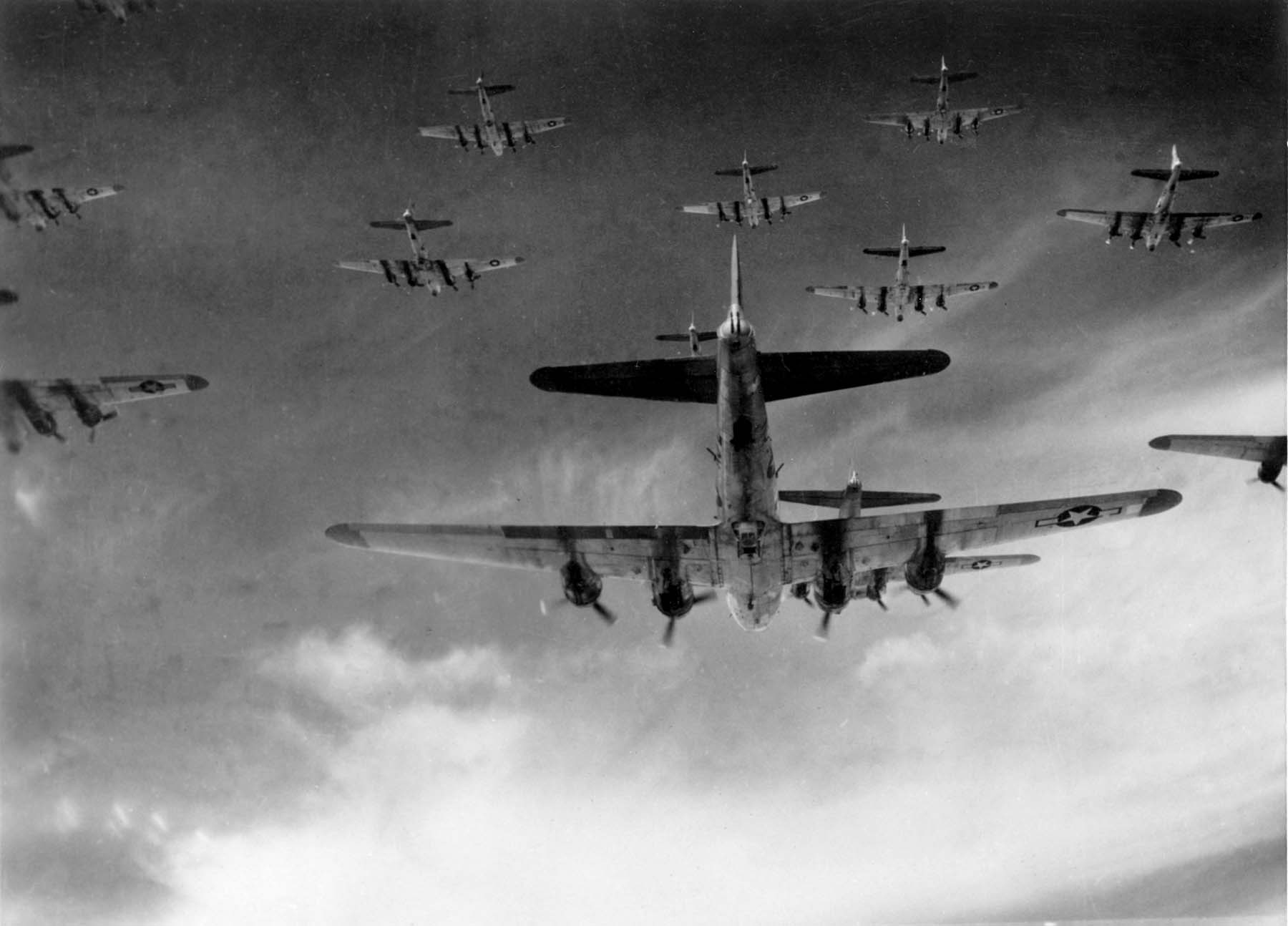
On August 17th, 1943 the Eighth Air Force had tried to eliminate the ball-bearing factories at Schweinfurt, deep inside the German heartland. Flying in daylight, and unescorted for the vast majority of the trip, the raid had been an audacious catastrophe. Some 230 bombers had taken part, and sixty of these were completely destroyed. As well as these sixty B-17s, a further 55-95 bombers were badly damaged. Many of these were too severely damaged ever to be repaired.

Living legends

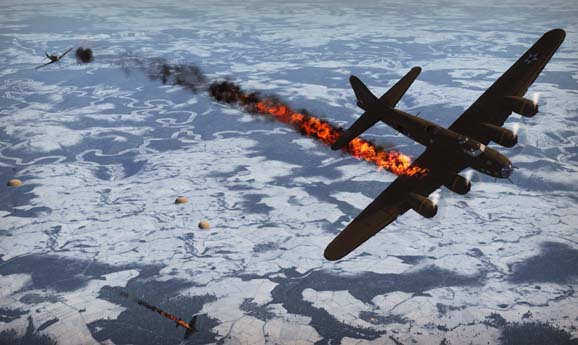
The Eighth Air Force regained its composure, made good its losses in both men and aircraft, and, on October 14th 1943, they attacked again.  Flying in daylight, and unescorted for the vast majority of the trip, the raid was arguably a bigger disaster than the previous one. Of the 291 B-17s on the mission, 60 were shot down over enemy territory and another 17 damaged so severely that they had to be scrapped. A further 121 aircraft were damaged to a greater or lesser extent. These losses represented more than 26% of the attacking force.

d-13-vs-b-17-24guva vvvvvvvvvvvv

The losses of aircrew were equally devastating. Some 650 well trained and skilful specialists were killed, which constituted some 22% of the 2,900 brave young airmen who went on the raid. The 306th Bomb Group lost 100 men, with 35 either killed in the air or died of wounds and 65 made Prisoners of War. The 305th Bomb Group lost 130 men, which was 87% of their complement.
General Henry H. “Hap” Arnold was later to state that the Black Thursday loss of American bombers in the Schweinfurt raid was “incidental”. Despite this callous dismissal of the lives of well over six hundred of his own men, further unescorted daylight bomber raids deep into Germany were immediately suspended until further notice. Cynics might well ask how many more B-17s  were left after the two disastrous attacks on Schweinfurt? Long distance bombing raids would only recommence in February 1944 with the advent of Operation Argument, a series of missions which would later be more commonly known as “Big Week”.

*****

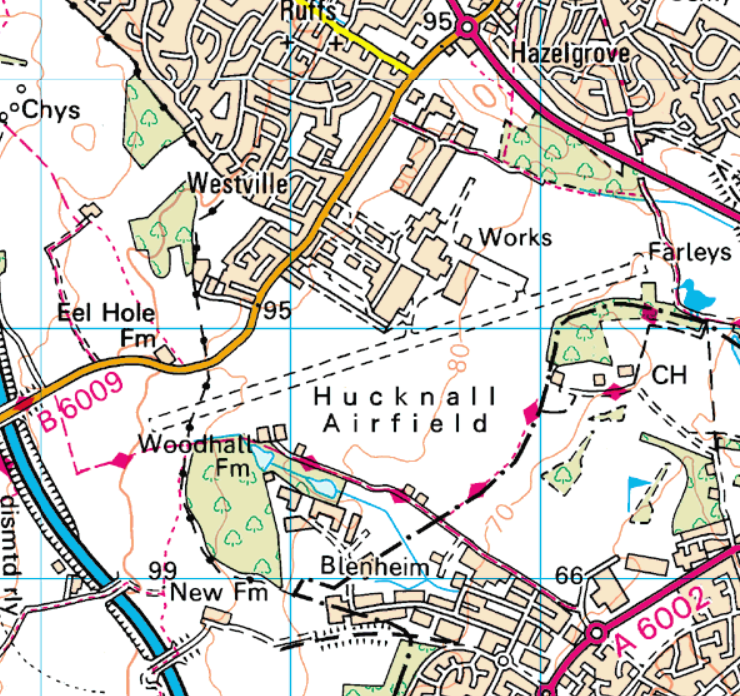
I live in Sherwood, a suburb in the north of the Nottingham conurbation in England. At the end of our street is “Hucknall Road” which leads the seven or so miles to the much smaller market town of Hucknall.

hucknall aerodromecccccccc

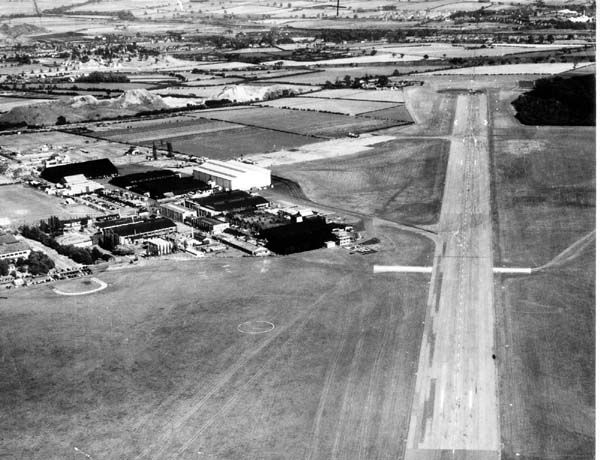
Strangely enough, Hucknall has a small grass airfield which is less than six miles from our street. Most days we can hear light planes making an enormous noise as they drone slowly overhead.

Hucknall RunwayxxxxxxDuring the course of April 1942, one man who frequently worked at Hucknall Aerodrome was to come up with an idea which would go a very long way indeed to winning the war in Western Europe. His name was Ronald W. Harker and he was usually known as “Ronnie”. Harker was the senior liaison test pilot with Rolls-Royce. Perhaps with Harker’s employer in their minds as an ulterior motive, the RAF had already invited the experienced test pilot to test fly the North American Mustang Mark 1, an American aircraft which was designed and built in the unbelievably short time of 117 days. This amazing feat was in response to a request by the British Purchasing Commission for an RAF fighter which would be an advance on the Spitfire.

1280px-P-51-October1942

The original North American Mustang was powered by an Allison V-1710 piston engine and Harker was quite impressed with the plane’s handling qualities. Its performance up to 20.000 feet or so was commendable, but any higher, and the aircraft quickly became rather disappointing. Harker concluded that the problem was the inadequate Allison engine which was too low-powered to exploit the plane’s advanced aerodynamic features including a much more fuel efficient laminar flow wing. This innovation cut down the amount of turbulence as the air passed over the wing and would eventually lead to almost phenomenally low fuel consumption.

fig14

Initially though, the new American fighter had an extremely unimpressive maximum range of only 400 miles, and when delivered to the RAF it was quickly relegated to Army co-operation and photographic work.
Ronnie Harker was employed by Rolls-Royce and was therefore presumably somewhat biased, but it was his suggestion to take out the Allison engine and to replace it with the Rolls-Royce Merlin 61, an act which was to transform a rather disappointing aircraft and to turn it into a war winner.
Despite a great deal of initial reluctance, mostly from the British Air Ministry, the first flight of the newly engined Mustang took place at Hucknall Airfield on October 13th 1942 with Captain R.T. Shepherd, the Rolls-Royce chief test pilot, at the controls. The Merlin-Mustang fighter’s performance was spectacular, particularly at high altitude. Thus the greatest fighter of the war was born and Harker acquired for the rest of his life the sobriquet of “the man who put the Merlin in the Mustang.” Harker also got a pay rise of a pound a week (just over one and a half dollars).

mustang cccccc

Some four hundred of the Merlin-Mustangs were ordered for the US Army Air Force as the P-51 and Great Britain wanted more than a thousand, although only 25 were eventually delivered to the RAF because Rolls-Royce’s own Merlin production was already allocated to Spitfires, Lancasters and Mosquitos. In the USA, however, North American, now almost overwhelmed by the orders to be filled, had no such problems, using Packard and Continental versions of the Rolls-Royce engine built under licence. Eventually, more than 15,000 aircraft were to be manufactured.

P-51_Mustang cccccccc
The P-51B carried just about the same amount of fuel as the P-47 Thunderbolt, but with its new Merlin engine “got 3.3 miles per gallon while the P-47 got less than 1.8.”. Brigadier General “Tommy” Hayes said that the Merlin-Mustang “had the three qualities you need most if you were going to escort bombers to Berlin – range, range and range.” The latter was extended even further by the carrying of two 512 gallon drop tanks which gave a maximum range of around 2,000 miles. In addition, the aircraft’s top speed increased from 390m.p.h. to 440m.p.h. and in the days after the war had finished there were to be many no doubt apocryphal tales of Mustangs which had exceeded the sound barrier in a steep or even vertical dive. In his memoirs, the P-51 ace Colonel Clarence E. “Bud” Anderson said that the Mustang “went like hell” because “the Merlin had great gobs of power and was equally at home high or low, thanks to its two-stage, two-speed supercharger.”

Mustang-Ferocious-Frankie-01 cvcc

This newly updated Mustang was, of course, exactly the aircraft that the beleaguered bomber crews in the B-17s of the Eighth Air Force had been waiting for. Now, with help of “our little friends” they could go about their business with considerably less apprehension than had previously been the case. The new aircraft is certainly said to have had an impact on Herr Reichsmarschall Göring who “when (he) saw the Mustangs escorting the American air armadas over the capital of the Reich is said to have realised that Germany had lost the war.”

little friends cccccc

The mechanism by which the Third Reich was, along with Göring himself, quite rightly consigned to the rubbish bin of History, was by no means a complex one. The Mustang pilots were quite simply encouraged to engage the Luftwaffe fighters in combat at every opportunity.  Given the quality of the new P-51, especially the P-51D with its superb all round visibility bubble canopy, the Americans duly shot down both the aging Bf109s and the newer Fw190s. Gradually over the months, the Mustangs killed off all the most experienced and most effective pilots in the Luftwaffe. Between January and April 1944, the Germans lost more than 1,000 fighter pilots, of which 28 had more than 30 kills and eight had more than 100. On one mission to Augsburg, much later in the war, Mustangs put a final full stop to the last and greatest German threat, namely the twin-engined fighter armed with multiple rockets. They destroyed 23 of the 77 that came up to oppose them.

This slideshow requires JavaScript.

At the same time, as part of the same process, it became increasingly difficult for the Luftwaffe to find calm skies where rookie pilots might practice. And in any case there was soon too great a shortage of fuel for these young replacements to waste on practice flights. The situation swiftly went from bad to worse, and the Mustangs, and many other Allied fighters, all began to enjoy enormous success against increasingly weak opponents. The Germans were never ever throughout the rest of the war to enjoy air superiority.

madd 3xxxxxx

Allied bombers began by day and by night to operate with increasing impunity and to have an increasingly greater impact on the overall fighting capabilities of the Third Reich.

This slideshow requires JavaScript.

The situation is perhaps best summarised by a joke which remains as yet unverified on Wikipedia. It was supposedly told by Wehrmacht soldiers in the weeks after D-Day:

“If the plane in the sky is silver, it’s American, if it’s blue, it’s British, if it’s invisible, it’s ours.”
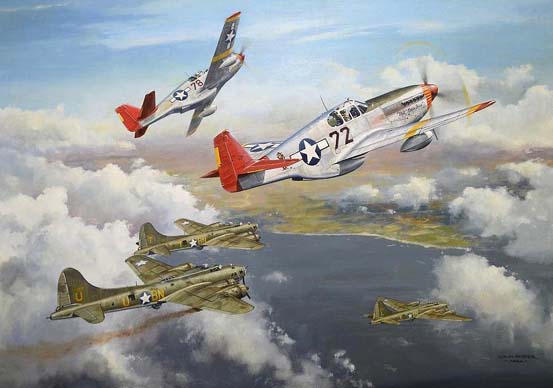
AeroWorks_Tuskegee_xxxxxxxxxx

“This all happened because of the Mustang, and the Mustang succeeded because of the Merlin.”

I cannot resist finishing my hymn of praise to the most effective fighter ever by quoting the episode in “Empire of the Sun”, when the “Cadillac of the Skies” makes its appearance, strangely not in Europe but in China. Enjoy.

8 Comments

Filed under Aviation, History, Nottingham

Be like Mary Poppins! Feed the birds!

Now is the time in this cold weather when you should be feeding the birds, even if you have done very little so far. You can save the life of a robin just by buying a packet of digestive biscuits. Every day, take two biscuits, crunch them up into a powder in your hands, and put that powder down on the ground in an area where he might come and eat it.

Robin-perched-zzzzzzzzz

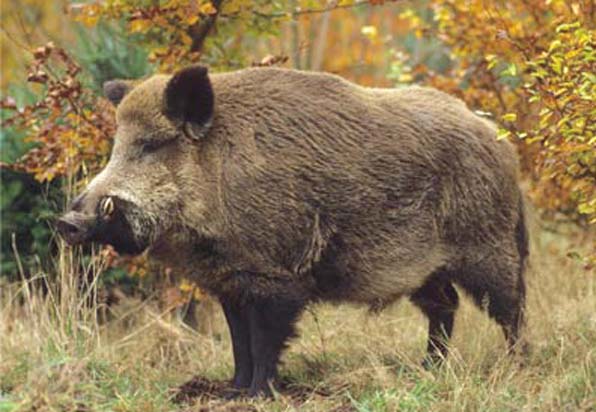
If you can, try to put food out in the same place every day, and you may well find that the robin becomes really tame. Apparently, robins evolved in the forests of Stone Age England to follow great huge fat wild boars around the place, so as you might imagine, I am having great success with my new little feathered friend.

A wild boar in autumn forest

After only a week, “Rockin’ Robin” sits in the bushes and waits for me to go out in the morning and feed him. As I arrive he seems to cheep a three syllable greeting which I have taken to mean “Good-Mor-Ning”. When I leave, he manages two syllables which I hope are “Thank-You”. I may however be mistaken in these interpretations. The little chap, though, is certainly very tame and I think if I had the time I might be able to train him to perch on my hand and take the food directly from there. Anyway two digestive biscuits is not a lot to ask.
If you want to go any further then you could refer back to my blog post about erecting your bird table. It was called “The five golden double entendres of buying a bird table”. Even if you do not have a bird table you can still put food down, perhaps a few feet or so away from where you feed the robin.

It is best in my opinion to buy ready-made specialised food rather than your own food scraps from meals. After various experiments, we have found that the best value is Wilkos where the bird food is cheap and seems to be of a good enough quality for the birds to eat it quite happily. If you have bird feeders, the best thing to buy is sunflower seeds which are cheap, and birds such as blue tits seem to absolutely love them. Alternatively, seed eating birds and robins and dunnocks all seem to like the finch food.

This slideshow requires JavaScript.

Of course you can still buy peanuts and put them in your peanut feeder. Do not eat them yourself.

Robins enjoy small bird food and any suet-based product.

The great thing about Wilkos is that you can order delivery at a specific branch and then you go and pick it up. It’s free. And no, I am not paid to advertise Wilkos. It’s just that I know from my own experience that they are cheap and the birds like them. There are lots of companies on the Internet who will be only too pleased to send you bird food (“Our special blend”) but you will pay enormous amounts of money for the privilege. Among ordinary bird watchers, this is a very well-known method of separating  a well intentioned nice person from their hard earned cash.
The finch seed does not contain wheat or grass seeds. A lot of the foods sold in shops seems to contain these two and it means that in the spring you will get a lot of unexpected grasses growing up, probably where you don’t want them. On the other hand if you have always wanted your very own mini wheat field they are absolutely excellent.

Unfortunately many bird foods may also attract wood pigeons and squirrels, both of which will behave like living vacuum cleaners.  They are quite capable of eating every single bit of food that you have put out in about ten minutes. When squirrels or wood pigeons arrive you should chase them away if it’s the early part of the day and then the little birds will get their chance.

This slideshow requires JavaScript.

Once it gets towards late afternoon though, the squirrels and the wood pigeons will do quite a good job of clearing up any surplus food that might otherwise attract our nocturnal little ratty friends. The same can be said about the special squirrel proof cages which can be put on the ground over the top of your bird food. We don’t have one of these but somebody told me that they work very well in the sense that squirrels are too big to get through the holes in the cage, but unfortunately, the holes are small enough to let in rats.
Overall I would encourage you to experiment in the way that you feed the birds. More or less anything that you do will be appreciated by them. Every year the people of north-western Europe save the lives of hundreds of millions of birds who otherwise would die in the cold. And on a less elevated level, the birds will soon become your friends and you can spend many a happy hour watching them and if you feel so inclined, singing to them. You may even have the time to learn the words to a well-known song in Hungarian:

2 Comments

Filed under My Garden, My House, Nottingham, Wildlife and Nature

The End of the British Empire, December 26th 1913

The very first game of Rugby in the long history of the High School was played on Friday, December 26th 1913, the last Christmas and the last Boxing Day before the outbreak of the Great War. The game took place on the High School’s playing fields at Mapperley Park Sports Ground , used by the school since 1897, when they had left the Forest Recreation Ground which was considered to be too dangerous for boys to play sport there.

This map shows the walk from the High School (which is in the bottom left on the opposite side of the yellow road from the “C” of “Cemy”) down to Mapperley Park in the centre right, indicated by the orange arrow. The present day Games Field, at Valley Road, is the blue word “Day”  in the top left hand corner.

games medium

This map shows the site of the Sports Ground in greater detail. Look for the orange arrow again.

Untitled 2

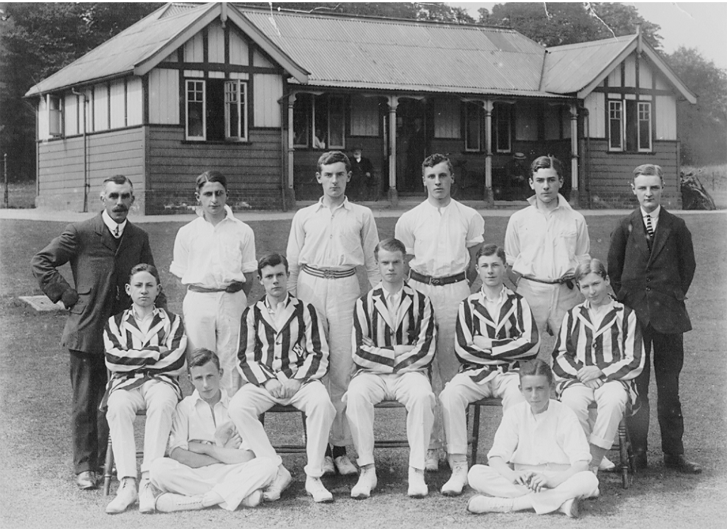
This is the Pavilion at the Mapperley Park Sports Ground which was demolished only within the last twenty or thirty years . The young men are a long forgotten First XI school cricket team from just a few short years before  the Great War.

pavilionThe gentleman on the left of the back row is Mr.Albert Grant Onion, the groundsman. He coached the High School cricketers with great enthusiasm, and saw many of them go on to do very well with local clubs. In 25 years, he did not miss umpiring a single 1st XI fixture, and was famed for his fairness and impartiality. He and his wife and daughters were responsible, too, for preparing all of the teas for the players. The young man at the other end of the back row is probably the team scorer, who kept an exact record of the game. Alternatively, he may be the reserve player, the so-called twelfth man.

On this occasion though, on Boxing Day, 1913,  it was not a cricket match but a rugby game. As a preliminary before the school’s changeover from Football, which was played from 1870-1914, to the new sport of  Rugby Union, therefore, the Old Nottinghamians played against Notts Rugby F.C.. The Old Boys lost a closely fought game by (three tries) 9 points to (three goals), 15 points. The tries were scored by H.A.Johnstone, C.G.Boyd and D.P.C.Grant. The referee was Mr.Lionel Kirk. Presumably, this fixture served for many people as a demonstration of the new sport.  In the days before television, the majority of Old Boys and Masters, and especially the parents and current pupils, would probably never have seen the game played before.

The Old Boys’ team was Stocks; H.A.Johnstone, H.S.Stocks (Captain), A.Willatt, R.L.W.Herrick, C.G.Boyd, W.Johnstone; D.P.C.Grant, F.Hardwick, J.K.Turpin, A.R.S.Grant, H.W.Ballamy, L.W.Peck, E.G.Hogan and W.S.Facon.

A pleasant interval in the Christmas festivities, one might think, a little respite from a surfeit of roast turkey, brussels sprouts, Christmas pudding, port, sherry, cigars and all the other indulgences of this wonderful time of year. Except that nobody who was there on that fatal Friday knew that a World War was to break out within less than eight months. That more than four years of fighting would leave almost a million British dead, and in that number would be more than three hundred Old Nottinghamians.

In actual fact, the eventual fate of the members of the Old Boys’ Rugby team pretty much defies belief. As well-intentioned, patriotic, decent, optimistic, courageous and athletic young men, they were to run forward into the maelstrom of the Great War as if it were a blood spattered combine harvester.

Henry Archer Johnstone became a Major in the 152nd Brigade of the Royal Field Artillery. He was the beloved son of John and Ada Johnstone, of Fairmead, Risley, Derbyshire.

johnstone

Henry was to die on Tuesday, May 21st 1918, at the age of only twenty eight. He is buried in Wancourt British Cemetery near Arras in northern France. His rugby playing days were finally over.

H.S.Stocks, who left the High School in July 1904, was eventually to become a Lieutenant in the 7th (Service) Battalion of the Royal Sussex Regiment. He was severely wounded on Friday, July 7th 1916, in the Battle of the Somme, and rendered unfit for further active service. I would certainly have been very surprised if he ever played any more Rugby matches with his young laughing friends.

imagesJ0RY1CA0

John Riversdale Warren Herrick was a Captain in the “2nd King Edward’s Own Gurkha Rifles (The Sirmoor Rifles). He was in the 3rd Battalion attached to the 11th Gurkha Rifles when he was fatally wounded on active service in Iraq. The son of Dr.R.W.Herrick and Mrs.Edith Herrick of 30, Regent Street, Nottingham, Captain Herrick was to die from his wounds on Sunday, October 24th 1920 at the age of only twenty seven. He is buried in the Basra War Cemetery, Iraq. His rugby playing days were finally over.

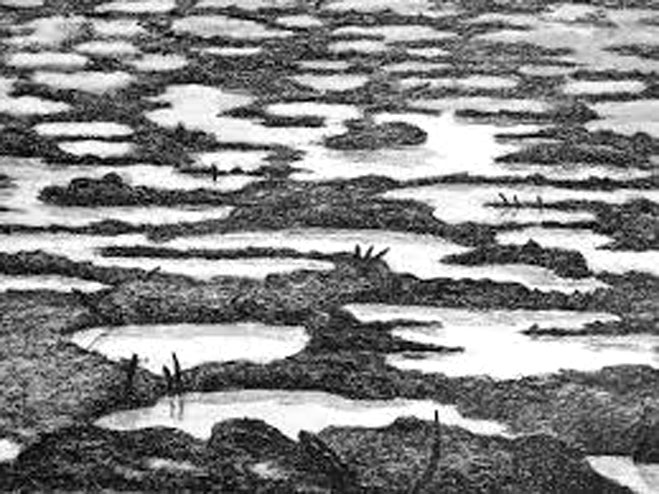
741px-second_battle_of_passchendaele_-_field_of_mud_

Charles Gordon Boyd was a Second Lieutenant in the 7th Battalion of the Sherwood Foresters, but was attached to the 9th Battalion of the Leicestershire Regiment. On Thursday, May 3rd 1917, he was killed whilst attacking Fontaine-Les-Croiselles with ‘D’ Company at the age of only twenty four. He was the son of George Herbert Boyd and Sarah Louisa Boyd, of, initially, 13, Tavistock Drive, Mapperley Park. Charles Boyd had been the Captain of the School in 1911-1912. In cricket, he was the First Team’s wicketkeeper and he was an enthusiastic footballer who played regularly for the First Eleven. His full record as a goalscorer was eleven goals in nine appearances. He surely got changed for this particular fixture in his own home nearby and perhaps walked along Tavistock Drive to the pitch in a laughing little group of his fellow players.  At the time of his death, his parents had moved to St Peter’s-in-Thanet, Kent. Tragically, Charles Boyd’s remains were not found until some six years after his death, in November 1923, when he was reburied in the Heninel-Croisilles Road Cemetery in the Pas-de-Calais in northern France. His rugby playing days were finally over.

James Knowles Turpin was the beloved only son of Harry and Minnie Turpin, of 68, Henry Road, West Bridgford. James was a Second Lieutenant in “A” Battery, 241st South Midland Brigade of the Royal Field Artillery.

turpin 2

On Tuesday, August 14th 1917, he was killed in action at Boundary Road behind the Brigade HQ at Hill Top Farm near St Jaan just west of the frontline.  he was just twenty five years of age. He was buried in Plot 6, Row D, Grave 7 in Vlamertinghe New Military Cemetery, West-Vlaanderen, Belgium. His rugby playing days were finally over.

somme_1

Allan Roy Stewart Grant, while he was at school as A.R.S.Grant, was nicknamed “Pongy” by his fellow students, because of his parents’ choice of initials for him. He served as a Captain in the 10th Battalion of the Seaforth Highlanders, Ross-shire, Buffs, and the Duke of Albany’s. He was awarded the Military Cross. “Pongy” survived the conflict and duly returned to Nottingham.

Not so his elder brother, Donald Patrick Clarke Grant, who was in the 7th Battalion of the Cameron Highlanders.  He is listed as either a Lance-Corporal (by the Commonwealth War Graves Commission), or a Lieutenant (in the school lists of the fallen). He was killed on Thursday, April 12th 1917 at the age of only twenty seven. He had previously been the Manager at the British Crown Insurance Office in Nottingham. His remains were never found but his death is commemorated on the Arras Memorial.

Both young men were the beloved sons of the Reverend John Charles Grant, a Minister of Religion, and his wife Ellen Jemima Grant who lived at “The Manse” at 16, Baker Street, Nottingham. The family was of Scottish origin. Donald had, in actual fact, been born at Loanhead in Midlothian.

Harold William Ballamy was a Lieutenant in “B” Battery of the 231st Brigade of the Royal Field Artillery.

ballamy 1234

He was the beloved son of Frederick William Ballamy, a commercial traveller, and his mother,  Mrs.M.A.Ballamy of 17a, Gedling Grove.

ballamy 2

He was killed on either Tuesday, August 14th or Wednesday, August 15th 1917, as part of the Third Battle of Ypres, usually known as the Battle of Passchendaele. He was twenty four years of age, and is buried in Fosse No 10 in the Communal Cemetery Extension at Sains-en-Gohelle,  in the Pas-de-Calais in northern France. His rugby playing days were finally over.

Leslie Wayland Peck was the son of Thomas Wayland Peck, a Clerk in Holy Orders, and a Diocesan Inspector of Schools, who had been, from 1885-1900, a master at the High School. From 1886-1893, despite being a teacher, Peck Senior had played regularly for the school’s First Team at both football and cricket. The family lived initially at 12, Arboretum Street, Nottingham, and then in Gedling Grove. He must certainly have known Harold Ballamy, a near neighbour. Perhaps the two boys used to make the short walk to school every morning, accompanied by Mr Peck. What could have been more embarrassing than walking to school with one of the teachers? Fortunately it was a very short walk. Today it would just necessitate crossing over the tram lines at  the High School tram stop.

Leslie Peck left the High School in June 1910, and joined the Bank, an establishment which was later to change its name to the National Westminster Bank. He had already served in the School Cadet Corps under Captain Trotman, and then joined the Sherwood Foresters Special Reserve. He was called up, and sent to France quite early in the Great War. He was “Mentioned in Dispatches”, but after being extremely badly shell-shocked, was invalided back home for a period of hospital treatment.

H08331 Leslie was then posted back to the Sherwood Foresters, but was never well enough to serve overseas again. I would certainly have been very surprised if he ever played any more Rugby matches with his young laughing friends.

passchendale

M.J.Hogan was the school goalkeeper from 1903-1905. In the Great War he became a Sergeant in the 1st Battalion of the Grenadier Guards. He was severely wounded on an unknown date. His goalkeeping days, and his rugby playing days too, were probably over for ever.

hogan 1904

I have been unable to trace anything concrete for W.S.Facon although according to the London Gazette, a Lieutenant W.S.Facon was promoted to Captain on December 21st 1921. The Internet also reveals that in the Air Force List for May 1939, a W.S.Facon worked at the Air Ministry in the Department of the Permanent Under-Secretary in the Directorate of Contracts.

I have been unable to trace either how many of these keen pioneer rugby players had been in the Officer Training Corps, but however many it was, it certainly had not trained them well enough for the Somme (1916) or Passchendaele (1917)

5 Comments

Filed under France, History, Nottingham, The High School