Category Archives: Nottingham

A very strange duck

(An extract from my old birdwatching diary “Crippling Views”)
Monday, September 19, 1988
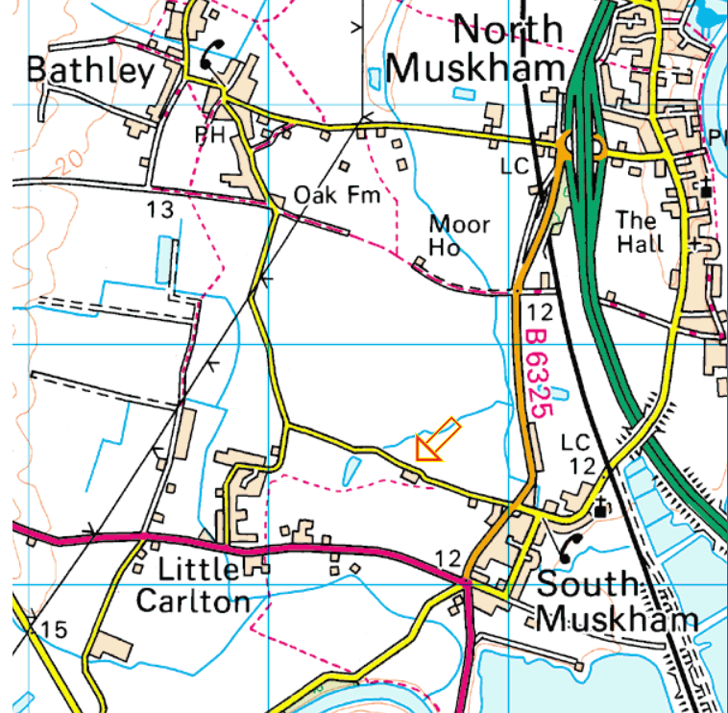
Paul and Steve have told me of a very strange duck, down on the River Trent at Attenborough, to the south west of Nottingham. Look for the orange arrow…

This slideshow requires JavaScript.

Because of this, I make sure that I take the Sixth Form Birdwatching Group down there for a quick look round during our birdwatching afternoon. And indeed, when we do find the bird, it does turn out to be a bit of a puzzler. First of all, it is completely alone on the river, while all the other ducks are on the main lake. This is a very good start in proving that it is a rare bird, blown across the stormy waters of the Atlantic Ocean from the USA. Everybody knows that rare birds always keep well separate from any strange foreigners they are suddenly brought into contact with. It’s because vagrants are shy, uncertain of themselves and take a very long time to make friends., They may not speak English. They may be afraid of being eaten.

Superficially, the stranger is all brown, rather like a female Tufted Duck, but it’s not a definite Tufted Duck because the head shape is wrong.

female-tufted-duck-xxxxxxxx

Instead of a tuft, or the basis of a tuft, the bird has a rounded head like a Greater Scaup.

greater_scaup-hen-wave-xxxxxxx

It’s not a Greater Scaup either though, because the head shape is not right for that species either. Instead of a completely rounded head like a Greater Scaup, it has a little peaked crown, rather like the head shape of Ring-necked Duck.

ring-necked-duck-fzzzzzzzzzz

The basic drab brown, chocolaty colour of our bird’s plumage and the absence of any eye ring markings means, as far as I’m concerned, though, that it cannot be a Ring-necked Duck either. I hesitate between the two ends of the spectrum. Either, at one end, we are looking at yet another hybrid duck, because duck species all interbreed in a most alarming way. Or, we are breaking new ground in the glorious history of Nottinghamshire birdwatching, and it is a juvenile, or female, or eclipse, Lesser Scaup, which would be a first for Britain. Even then, this would not be, however, the first claim for this American species of bird in the county despite its almost unbelievable rarity…

At the other end of the spectrum, the more likely solution, and the easiest cop out is to say is that it is a hybrid, the fate of at least two of the county’s previous claims. But a hybrid of what? Scaup and Lesser Scaup? Tufted Duck and Ring-necked Duck?

Still, it was a bit of excitement on an otherwise dreary day. And indeed – why should a female Lesser Scaup be impossible at Attenborough, while a male, the first ever seen in Britain, is  acceptable at Chasewater, only some fifty miles away?

If I had my time over again, I would have made a bigger effort to ascertain two things, one relatively easy, the other much more difficult. It would have been reasonably easy to have checked the extent of any white areas at the base of this puzzling bird’s bill. The photographs above show how important this detail might have been. Nowadays, getting on for thirty years later,  I quite simply cannot remember, although that very fact in itself would imply that the white cannot have been either unbelievably bright or striking to the observer. Secondly, I would have tried to establish the exact size of this duck, something which would have been very difficult to do as it did not go near any other birds at any point during its stay on the River Trent. Alas, now I shall never know what it was, although it really did seem very strange at the time that it adamantly refused to mix with any other species of duck.    

By 2007, there had been just under a hundred records of Lesser Scaup in Great Britain with virtually every county having played host to the more easily identifiable  male at some point. There had been females but these were admittedly in limited numbers. Here is an Irish female at Rostellan Lake.

irish femaile xxxxx

It is now generally agreed by birdwatchers that Lesser Scaup has never been an incredibly rare vagrant, just a species that was very difficult to identify.

1 Comment

Filed under Humour, Nottingham, Twitching, Wildlife and Nature

Murderer strung up for 67 years. It’s not enough !!!

Scrooby is a country village in the north of the county of Nottinghamshire.

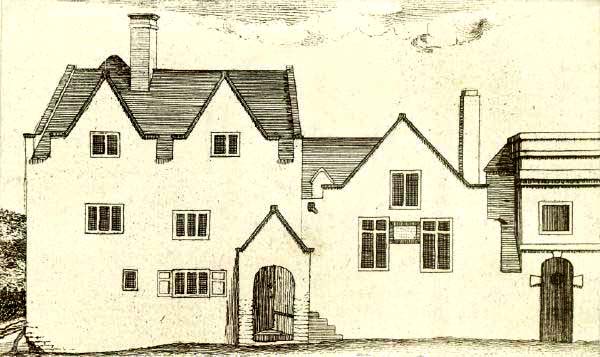
Just to the north of the village, a toll-house used to exist on what was then called “The Great North Road”.

This slideshow requires JavaScript.

On July 3rd 1779, it was the scene of two truly horrendous and violent murders.

In this largely rural and peaceful community, the tolls were always collected by Scrooby’s toll-bar keeper, William Yeadon. On the date of the slayings, William Yeadon, was being visited by his middle aged mother, Mary Yeadon. This particular evening, he had been playing cards with John Spencer, a man from the village of North Leverton with Habblesthorpe.  After the Yeadons had gone to bed, however, Spencer returned to the toll-house in the early morning and attempted to steal the money that had been collected as tolls the previous day. Gaining re-admittance to the building under a pretence that a drove of cattle wished to pass that way, Spencer then tried to carry off the strongbox under the cover of darkness, but unfortunately for everyone concerned he made far too much noise. Later it was thought that he had carelessly rattled the coins in the old wooden box too loudly. Mary and William were made immediately aware of what Spencer was trying to do, but the latter reacted with extreme violence…

“In a most barbarous manner he fractured their skulls by repeated blows with a heavy hedge stake.”

Spencer seized the money and then made the best of his opportunity to ransack the house. The murderer was interrupted by travellers as he dragged one of the bodies across the road to dispose of it in the nearby River Ryton. He was arrested shortly thereafter by a search party, but managed to escape. After he was apprehended for a second time, Spencer was taken to Nottingham and put on trial soon afterwards at the Shire Hall in High Pavement.
There was, of course, only one possible outcome, and Spencer was duly found guilty, taken on foot up to Gallows Hill and hanged on July 16th 1779.

3716238That was not the end of it though, as the rest of his sentence was that Spencer be taken to the scene of his crime in Scrooby, and

“to have his body hung in chains with the hedge stake in his right hand… near the place where the awful deed was perpetrated, on the gibbet post, near the Scrooby Toll-Bar”.

This was after his corpse had been liberally smeared with pitch and tar.

H in chains

These gruesome steps were taken “in accordance with the express words of his sentence”. More horror was to follow however, as I discovered as I sat one evening flicking through my back copies of “The Armagh Guardian” newspaper. In the June 9th 1846 edition I found an interesting account which was itself quoting the “Doncaster Chronicle”…

“After the lapse of a few weeks, a party of soldiers conveyed a deserter passing by the place, the sergeant fired his carbine, loaded with ball, at the corpse, and hit it, which caused a stench, almost unbearable for several days afterwards. The circumstances becoming known, the party was followed, and the sergeant taken, and on being subsequently tried by Court-martial he was found guilty and degraded on the ranks. Years rolled on, and the body gradually became less and less, until nothing was left but the chains which originally shackled it, and these in course of time fell and were secretly conveyed away. For several late years the post, with its withered and weather-beaten arm, was the only vestige left of that deed of blood which sixty-seven years ago filled the minds of the inhabitants of the surrounding districts with horror. But Time, which levels all terrestrial objects with his corroding breath, had for years past been gradually gnarling this once loathing stump to its core, and on the 15th of April 1846 actually accomplished his task, and it fell to rise no more.”

On the other hand, what is reputed to be the upright of the ancient Scrooby gibbet is currently preserved in Doncaster Museum.

Not surprisingly, after the murderer’s decaying body had been left dangling for so many years…

“the creaking cage and bleaching bones occasioned the haunting of the place by either disturbed spirits, or morbid sight-seers”

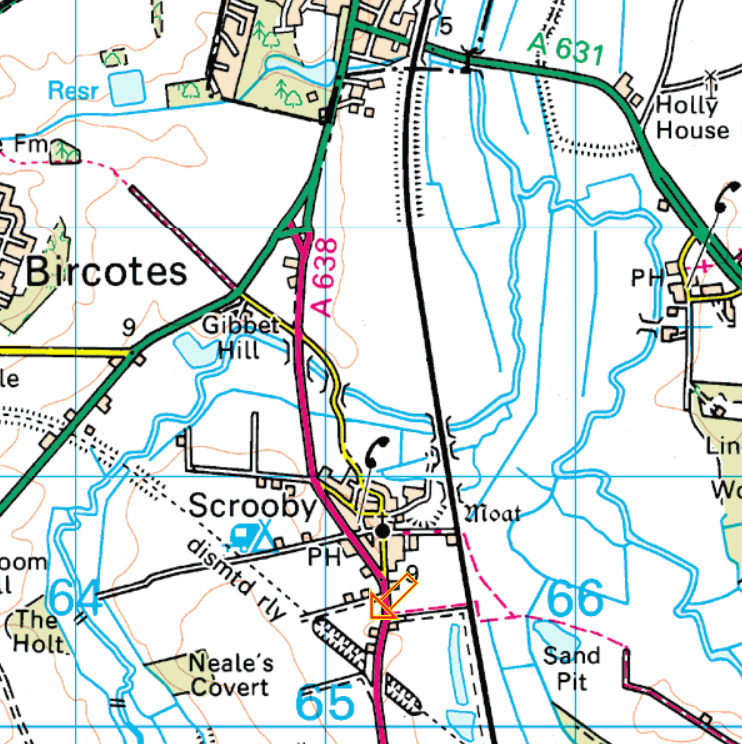
The hill, in Spencer’s honour, still keeps its name of “Gibbet Hill”. Nearby is the modern “Gibbet Hill Lane”. Nowadays, of course, Spencer’s rotting bones have been replaced by an owl sanctuary and a garden centre. What may conceivably have been the original toll-house, the scene of this dastardly crime, is still visible on the A638 leading north from the village, just before its junction with the green road.

map with gibbet hill

5 Comments

Filed under Criminology, History, Nottingham

Gunpowder, treason and Nottingham

Not many people would connect the High School and Guy Fawkes’ Gunpowder Plot, but the link is there, if you trace it through carefully……

…..Brian Garnett, or Garnet, is thought to have been the Master of the Free School during some unknown period between the years 1564-1575.

free school

It is considered most probable that he took up the post between 1564-1567, and then retired in, probably, 1575. He may then have lived in Beeston, but he was certainly buried in Heanor in Derbyshire on December 21st 1576, as the “Late Skoolemaster of Nottingham”.

With his wife, Alice Jay, he had at least three sons, Richard, John and Henry, and three daughters, Margaret, Eleanor and Anne,  all of whom became nuns at Louvain.

Of the sons, Henry is the most notable, because eventually he was to become the Superior of the Jesuits in England, and, allegedly, an active member of the Gunpowder Plot which, in earlier centuries, often used to be called the Gunpowder Treason Plot or the Jesuit Treason. In general terms, the plot, of course, was a failed assassination attempt to blow up the Protestant King James I of England and his entire Parliament, by filling the cellars of the building with gunpowder. lighting the fuse, and retiring quickly and sensibly to a minimum distance of at least fifty yards.

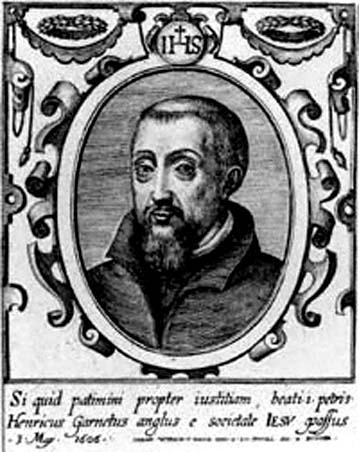
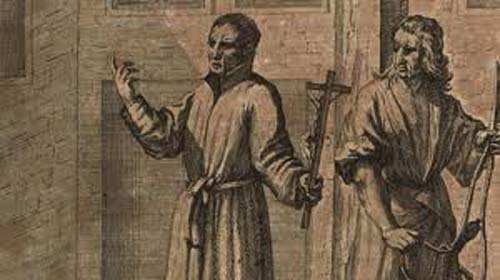
GunpowderPlot dddddddddGarnet was not quite tasked with carrying the barrels of gunpowder into the cellars, but rather, he was deemed to have been guilty of knowing all the details of the assassination attempt, but then doing nothing to save either the King’s life or those of his courtiers. Here he is….

google 2 zzzzzzzzz
In recent times, some doubt has been cast on the extent to which Garnet was actually aware of the dastardly plot, because all the details he knew were revealed to him through the plotters’ confessions. Of course, by the strict rules of his Catholic religion, Garnet was automatically prevented from informing the authorities by the absolute confidentiality of the confessional.

None of this alters the basic fact, though, that Henry Garnet was executed for treason, on May 3rd 1606. At his trial, the jury had needed only fifteen minutes to reach their verdict.

Where the tiniest of doubts still exists, however, is whether Henry was ever a pupil at the Free School, as no registers of this period are still in existence. It is certainly true, though, that he was educated in Nottingham, and the national rules in place at the time allowed only one school in each town or city. In any case, it is surely beyond credibility that he was not associated with the Free School during his father’s tenure of the position of Master, that is to say, the only teacher who was working there.
Indeed, at least one source says that young Henry came to the Free School during Henry Cockrame’s time as Master (most probably 1563-1564), possibly a year or so before Cockrame left in 1565 and was replaced by Henry’s father, Brian Garnett of Heanor, Derbyshire. Henry is supposed to have studied for two years under his father’s tutelage, before leaving for Winchester College where he was elected as a scholar on August 24th 1567 and duly entered the school in 1568.

WinCollege1_ccccccccccccccccc

Henry had been well taught in Nottingham, and proved to be an able student at Winchester. According to “The Oxford Dictionary of National Biography”…..

“His love of music and “rare and delightful” voice were complemented by an ability to perform songs without preparation, and he was reportedly also skilled with the lute.
Father Thomas Stanney wrote that Garnet was “the prime scholar of Winchester College, very skilful in music and in playing upon the instruments, very modest in his countenance and in all his actions, so much that the schoolmasters and wardens offered him very great friendship, to be placed by their means in New College, Oxford.”

Instead of the delights of New College, Oxford, however, when he left the school in 1571, Garnet moved to London to work for a publisher. Shortly afterwards, in 1575, he travelled to the continent and joined the Society of Jesus. Garnet then moved to Rome to study for the priesthood with the Jesuits. He was finally ordained as a priest around 1582. (Note the ear of corn which will be important)

henry again xxcccccdxdx

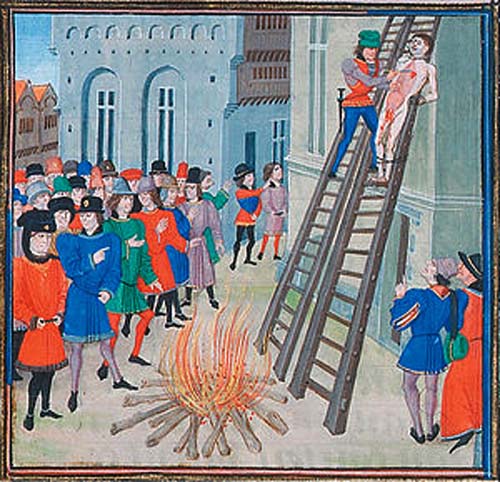
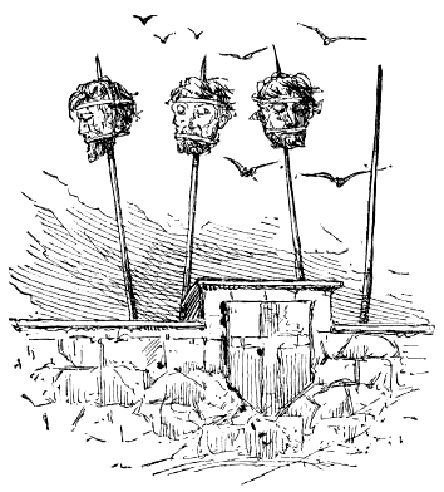
Whatever happened in his life during the next twenty three years in the service of the Lord, by virtue of the events of May 3rd 1606, Henry Garnet must surely remain the only Old Nottinghamian ever to have been convicted as a terrorist, and, indeed, one of the very few ever to have been hanged, drawn and quartered, and then to have had his severed head placed on a pole on London Bridge.

Froissar txxxxxxxxx

(That’s going to hurt)

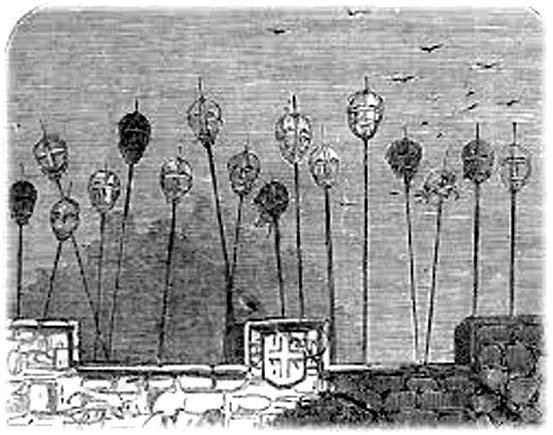
Heads_on_spikes xxxxxxxxx

(This engraving will be next month’s Caption Contest)

Thankfully, the more lurid details of his execution have survived in Antonia Fraser’s book, “The Gunpowder Plot”…..

“Garnet said his prayers, and was then thrown off the ladder and hanged.

beforfe execuion xxxxxxxxxx

Before the executioner could cut him down alive, many in the crowd pulled on his legs, and as a result, Garnet did not suffer the remainder of his grim sentence. There was no applause when the executioner held Garnet’s heart aloft and said the traditional words, “Behold the heart of a traitor”.
His head was set on a pole on London Bridge, but crowds of onlookers fascinated by its pallid appearance eventually forced the government to turn the head upwards, so its face was no longer visible.”

From this peculiar pallid appearance of course, came the widely held belief that Garnet’s head did not suffer any signs of decay or change.

nov 4th heads xxxxxxx(Can you spot Garnet’s head?)

Nowadays, of course, we are a lot more civilised and the heads of traitors are no longer placed on a pole on London Bridge. Instead, we have just two or three of the more unsuccessful Premier League managers.

modern cddddddddddd

(Why is nobody taking any notice?)

The final, and a slightly more serious thing to be said about Henry Garnet is that way back on May 3rd 1606, according to those who were there, a miraculous portrait of him apparently appeared on an ear of corn onto which drops of his blood had fallen at the moment of his execution. This particular ear of corn was later credited with achieving a number of miracles. At one point, it was taken secretly out of the country into the possession of the Society of Jesus, before, with its size surely playing a part, it was lost, rather appropriately, during the French Revolution.

-Portrait_of_Henry_Garnett zzzzzzzzz

The Roman Catholic Church, of course, has a large number of saints who have done far less than Henry Garnet to earn their sainthoods. Names which spring to my mind would include St.Buriana, St.Erc, St.Ia and any number of Cornish villages named after other dimly remembered saints.

Perhaps one fine day, Henry Garnet may yet become the only Old Nottinghamian ever to be canonised.

Leave a comment

Filed under History, Humour, Nottingham, Politics, The High School

And the Hallowe’en winner is………..

Around ten or fifteen years ago, I was a teacher of Religious Studies as well as my main subject of French. We were  studying the Afterlife, so, towards the end of, I think, the Christmas term, I asked the boys to write down for homework their own ghostly experience or a ghostly encounter that either their parents or anyone close to them had had. Here is a selection of the stories they came up with.
And, of course, yes, boys can tell lies just like everybody else, but by then I had taught this class for four months, seeing them for an hour and a half every week and I did not really think that anybody was lying. They may have been mistaken in their interpretation of events, but I’m sure they were sincere in what they thought was happening. This effort came from the parent, or even grandparent, of one of the pupils…

“My ghost story”

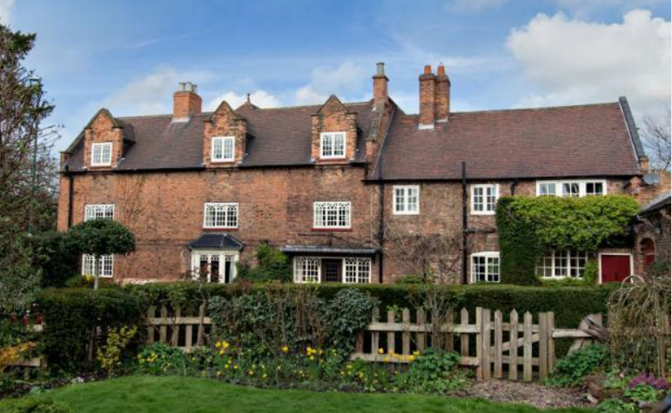
from Daniel J Furse who lived in the Old Manor House from 1956 to 1964.

gregory_st_manor

“I bought the house from one of the printer Milward family and he told me that when he moved in there was a row of wire operated bells hanging in the passage by the kitchen, although they were all disconnected. Every now and then, at night, these bells would ring wildly. On investigation, no one was ever seen but the bells were all swinging on their springs!
Our own contribution was fairly mundane but baffling. In what was the dining room – next to the kitchen where there now appears to be a door, we had a very large Jacobean oak sideboard tight against the wall, and above it hung a picture. Sometimes, when coming down in the morning, we would find the picture neatly stowed under the sideboard, with the hook still in the wall, and the cord intact.”
I live in the Old Manor House in Lenton regularly referred to as haunted. We have some accounts of manifestations of the ghost in the past one of which I have quoted above. There is one room that is thought to be the “haunted” room. It was in this room that someone was so frightened by what they saw or heard that it caused the previous owners to have an exorcism in the house. We ourselves have had some strange experiences. We seem to have a “Visitor’s curse”. More often than can be explained, something has happened with our lighting, heating or kitchen appliances when a guest was either there or coming. Sometimes just one system fails, but the most dramatic was when a bar of spotlights fell down from the ceiling near some guests. Another time when we were expecting guests for Christmas, all lighting, heating and cooking appliances, including the Aga which runs on gas and the electric cooker which relies on electricity, refused to work.
Hopefully we can have a ghost- free Christmas this year!”

olg manor house cccccc

This was a very popular topic indeed with boys of fourteen and fifteen.
One young man told me the story of how he had seen a ghost when he met up with one of his friends who attended another school in, I think, Grantham. The boy went from Nottingham to spend the whole weekend as his friend lived quite a long way out in the Lincolnshire countryside. They stayed in the friend’s house which was very large with a very large garden. On the Friday evening, as soon as the visitor had unpacked, both boys went outside to see if they could see the phantom which the host had already explained could often be seen as it walked in the garden. The visitor from Nottingham was very excited that the garden was haunted and that he might actually see a real ghost.
The young man told me that as he stood there with his Lincolnshire friend in the early evening they saw not a sharply defined ghost, but a pale blue patch of mist or smoke, shaped like a human form. It moved across the end of the garden from right to left and by the time it reached the left-hand edge it was beginning to disappear.
Supposedly, it was the ghost of a Second World War Luftwaffe flier whose aircraft, a Heinkel III bomber had been shot down, and he had been killed.

he111-5 zzzzz

Previously, I had been told about a slightly similar ghost by a now retired school technician called Frank. When he was young he used to live on the southern side of the Humber Estuary in Lincolnshire. Naturally, as a boy, he was keen to explore, and on one occasion he went with two of his friends out onto the salt marshes south of the estuary. He told me that there was a lookout tower right on the edge of the land, overlooking the waters of the estuary and of the North Sea. It had been put there for military purposes, probably either in the First or the Second World Wars. It was now in ruins but the shell of the brick built building was still there.

tower-inst xxxxxxxxxx

As the three boys made their way across the absolutely flat landscape, a saltmarsh covered in vegetation which was no more than four or five inches high, they suddenly saw a figure on the top of the tower.
Apparently an adult man, he stood there for a little while, and the boys watched him. I do not remember from the account whether he seemed aware that he was being watched, but I suspect that he did not. Anyway after five minutes or so, the figure leapt off the top of the tower which was at least twenty or thirty feet high, exactly as if he was doing a parachute jump or, as they always say, something silly. The three boys certainly thought so because they ran along the path which led to the building, to see if they could help what they presumed would be a fairly severely injured man. When they got there though, the place was completely deserted. Nobody was there.
What makes it so strange is that the landscape was such that he could not possibly have run away across either the saltmarsh or to the distant sandy beach without the boys seeing him. In any case it had not taken the boys long enough to get to the tower for him to have disappeared. He had not passed them on any of the paths which led across the marsh. They searched the tower but he was not there. They presumed therefore that he was a ghost of some kind. Later on, Frank explained that tales had been told of an occurrence just like this having been seen before in the very same location, but nobody had ever been able to explain what it was.

Two other stories were very scary indeed…..

“The crippled Ghost that learns to walk

Every so often when I lie awake in my bed at night and I leave the door open I see an old man in a brown wheel chair. He has grey hair and a mutilated face like it’s been taken off and jumbled about and then stuck back on.
It moves towards me without using its hands to move the wheels at all. Then when it reaches the door it stops and stands up. It starts to walk towards me. At that point I turn away and face the wall and try to force myself to believe it’s not real, it’s not real.

Then when it reaches my bed, it reaches out to touch me. The reason I know this is because I see its shadow on the wall. But as soon as it touches my head it disappears and so does the wheelchair which disappears as soon as he gets out of it. The only other thing that is strange about the man is that he is extraordinarily long thin fingers and shoulder length white hair.”

This extraordinary tale is recounted more or less exactly as the boy wrote it down. I have not altered anything at all except to make the tense used the present tense, rather than a mixture of several different ones.
What would be really interesting would be to try and trace in the history of the house if there was anybody who ever lived there who had the long fingers and long white hair, perhaps of a musician, or the mutilated face and the wheelchair of, perhaps, a Great War victim. It is however, even with the Internet, extremely difficult to trace who has lived in any house, and what his job was, or the hardest thing of all, what he did during his life and what happened to him.
And the winner is…….
…….This very last final story, which was clearly connected with my preparations for Christmas with the class. It is dated November 4th 2005, and is entitled…

“The white man with no face”

Interview with my Dad:
What size and age did the ghost appear to be?
He was a six-foot male…age impossible to say.
But roughly did he look middle-aged or quite young?
He was oldish but that’s the most accurate description I could give.
Did you contact any spiritualists or mediums about the ghost?
No I didn’t; it never crossed my mind. It didn’t really bother me personally, but I never thought to ask my wife whether she thought we should get somebody in to try and sort things out.
What was the scariest thing about the ghost?
It would be that every time you were fast asleep, this ‘thing’ could be looking over you; I wasn’t frightened about it at all, but it didn’t do anything… just stared endlessly at you.
If only I had ever seen the ghost and you hadn’t, would you believe me about it being ‘around’ or not? Would you look out for it?
I would believe you, but I wouldn’t go out of my way to find something that could only be found if ‘it’ wanted to be.
How did the ghost appear and what did it look like?
I was in deep sleep and there was a wind as if all the windows were open, and my shoulders felt cold like ice. Both your mum and I woke up basically at exactly the same time, and we saw ‘it’. All it did was just look down at us. I can’t remember the curtains blowing just a fairly strong wind, so the windows were definitely not open. My wife asked me: “Tell me what you just saw?” trying not to put any ideas into my head, and her expression when I replied, confirmed this was not a dream. We both looked away, and after a period of time I cannot remember, I eventually look back to see ‘it’ had vanished.
Did you ever feel like you are being watched?
Well obviously you knew there was something around but you just had to ignore it. My wife at the time was so terrified; she nearly moved out of the house and lived with her parents for a short time.
Did you ever stay on your own in the house?
Yes, of course, it didn’t bother me that much, it was your mum who was worried about it the most. However, this was one of the reasons why we eventually moved house. My mum has told me that for weeks she was terrified of the ghost reappearing, and too many times felt her shoulders turn ice cold even during the summer (just like when she first saw the ghost).
Apparently I saw the ghost on many occasions – more than my parents – and that I asked them “Who the white man in my room was” more than once. The ghost could communicate with “the living” as it asked me what my name was.
Chloe my sister regularly saw the ghost – which was obviously concerned my mom, and on one occasion she told my parents “a white man with no face keeps waking me up and then just staring at me”. At the time she wasn’t afraid of ‘it’ as she was too young to realise what was happening. Chloe can’t recall any of this but my parents remember it all too well.

3 Comments

Filed under Aviation, History, Nottingham, The High School

Hallowe’en Nights (5) Ghosts in the High School

It is often supposed that in a building as old as the present High School there should be a school ghost.

ray cccccccc

Ray Eastwood, the caretaker, once told me this story, in the early or mid-1980s, although to be honest, I have forgotten the exact date…..

“One year, a small number of boys were expelled from the school because of their appalling behaviour. They made threats that they would return, and either vandalise, or even set fire to the school. Because of this, my colleague Tony Hatcher and myself were asked to sleep in the school to forestall any problems. In actual fact, we borrowed a German Shepherd dog from a security firm that I had connections with, and all three of us moved with our camp beds into one of the rooms at the front of the school, underneath Reception, on the ground floor.

One morning, around 6.15 a.m., Tony and myself were sitting up in our beds having a cup of tea and a cigarette, when we clearly heard footsteps in the corridor above. They seemed to start near the staffroom, and then to proceed around the corner, past the staff toilets, and along the corridor towards the offices, directly above us. We both of us thought that these must be the footsteps of somebody who had broken into the school, and we rushed out of our temporary accommodation. We grabbed the dog, and threw him up the stairs to pursue the presumed miscreants. The poor animal wanted none of it, and he slunk off back into the room to his basket, his tail between his legs. We ourselves went on, rushed up the stairs and charged into the area around Reception. We could find absolutely nobody. We explored all around. All the windows were secure. All the doors that should have been locked were locked. There was no explanation whatsoever of what we had heard. There was certainly nobody there.”

In actual fact, Ray did offer me an explanation….He thought that the footsteps that both Ray and he had so clearly heard were those of Eric Oldham, a caretaker who had worked at the High School until some eight or ten years previously. One sunny Saturday evening at the end of that blistering hot August of 1976, after many years of faithful and steadfast service, poor Eric had collapsed and died as he made his rounds to lock up the school. He was found by his poor wife, lying on the sandstone paving slabs just inside the Main Gates. In the School Magazine, Mr.Oldham was described as “one of the school’s most devoted servants and a warm hearted friend”.

P1470416 cccccc

When Eric used to unlock the many various rooms inside the school every morning, he invariably followed the same route at the same time of day. Eric would have been walking along those same corridors, in the very same direction as the mysterious footsteps we so clearly heard, at the same early hour of the morning. Perhaps it was him, reluctant still to pass the school into anyone else’s care.

Shortly after the idea of a school ghost was first mooted, it later emerged that there had already been another claimant to the position. This phantom was in the then Preparatory School which educated boys aged between eight and eleven years of age.

Quite a number of reports had emerged that as boys walked down a particular set of stairs towards the Waverley Street end of the building, they repeatedly had felt what could only be described as invisible fingers grabbing at the bottoms of their trousers, as if somebody was trying to clutch at their ankles as they went past. This story was told to me quite a few times in the Main School by a number of boys of varying ages, so it must have been fairly well known at the time, although it was unclear whether any of the teachers in the Preparatory School were aware of it. At least one member of the Main School staff knew of it, however.
I have an explanation for this although it does require a certain “leap of faith”. The new building of the Preparatory School was constructed on the site of a magnificent Victorian house. It was still used for Sixth Form lessons for a short period during the early years of my time at the High School, and may well have been the Sixth Form Centre, although I am no longer totally certain of this. Originally, the house had belonged to Dr.Dixon, Headmaster of the school from 1868-1884. On May 29th 1876, his wife, Ada, died “of the effects of a chill”, leaving her husband with five children, who were, according to “The Forester”, “Robert, Charles, Harold, Sydney and one daughter to bring up, four sons and a daughter”.

My best guess is that the clutching fingers belonged to Ada, who, as a spirit, was unwilling to leave her children, as she could see that her husband was struggling with the job of looking after them. It may well be that the staircase in the modern Preparatory School occupied the same three dimensional space as a long forgotten room in the now demolished Victorian house.

Interestingly, neither of the two ghosts, if indeed they were ghosts, has persisted. The stories in the Preparatory School disappeared after just a couple of years at most, and as regards the tale of the footsteps in the corridor, both Ray and Tony were denying vehemently that anything had ever happened within weeks of originally talking about the event. Why that was, I never did discover, although it is always nice to have a School Conspiracy Theory.

Next time……The School Werewolf and how to apply for the job

wolf xxxxxx

Periods of work……only a few days every full moon

werewflopcddddaef fgbb

Paid holidays…….once in a blue moon

If you are interested in the ghosts of Nottinghamshire, there are at least two lists of reported hauntings.

Wooooooo

Hooooooo


Leave a comment

Filed under History, Nottingham, The High School

Hallowe’en Nights (3) Black Shuck in Notts

In my first blog post about the cryptic canid, it becomes perfectly obvious that for hundreds of years Black Shuck has been seen fairly frequently throughout all of East Anglia. Not only that, but he can still be seen there right up to the present day. Well known folklorist Ivan Bunn continues even now to find regular examples of Black Shuck’s appearances in our 21st-century world.

And so too, Black Shuck has been seen throughout the whole of the country. One website details 329 different places in the British Isles where spectral dogs of various size, shape, colour and attitude have cropped up over the centuries.
But has this famous dog ever been seen in our own county of Nottinghamshire? By careful searching on the Internet, I have managed to find just three examples. Read them through very carefully and make sure that you follow all the directions on the maps provided. There will be a test at the end!
The first tale is of a little village which now has the high-speed A631 dual carriageway constructed around it to the south west, allowing the peaceful, quiet community to preserve its rural tranquillity. Centuries ago, though, the main road from Sheffield to Gainsborough went right through the very middle of the village, which, with the frequent passage of mail coaches, it may well have been livelier than it is now….
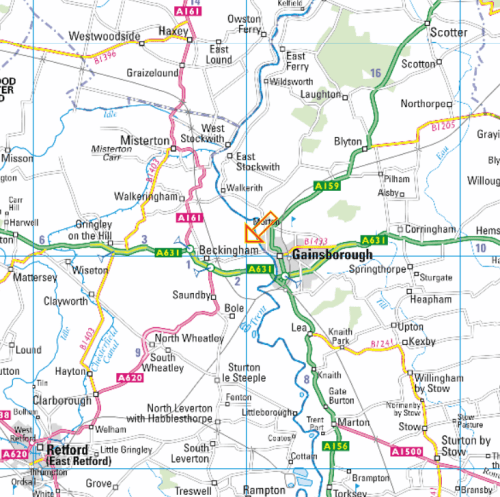
bigger scale

Perhaps this is why Beckingham’s most famous phantom, a colossal Black Dog, always keeps faithfully to his old tried and trusted route. The animal is reputed to be up to five feet tall and has dull red eyes that burn with an inner fire like the glowing embers on a coal fire
black_shuck_by_mearcu-d3lgpnd ccccccThe Black Dog invariably leaves from the churchyard of Beckingham’s parish church of “All Saints” which dates mostly from the thirteenth century, although the exterior is apparently fifteenth century.
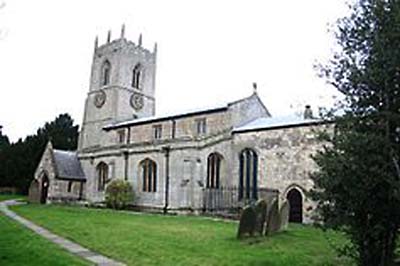
church beck

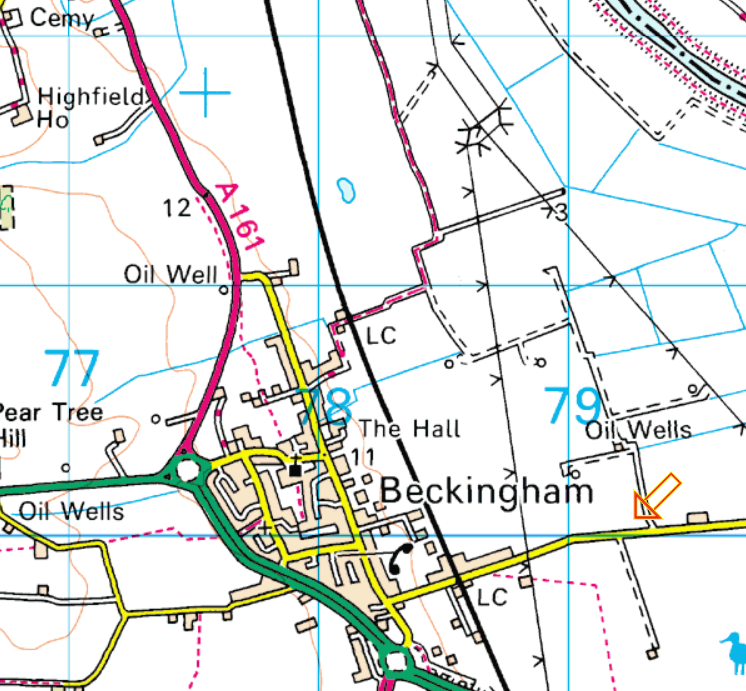
The Cryptic Canid leaves the little church with its square tower and makes his way, presumably down Walkeringham Road and then Station Street, before finally leaving the village along the Old Trent Road, walking purposefully out towards the marshy water meadows.
This map shows the church with its square tower and the red arrow points to the Old Trent Road.
better backingham
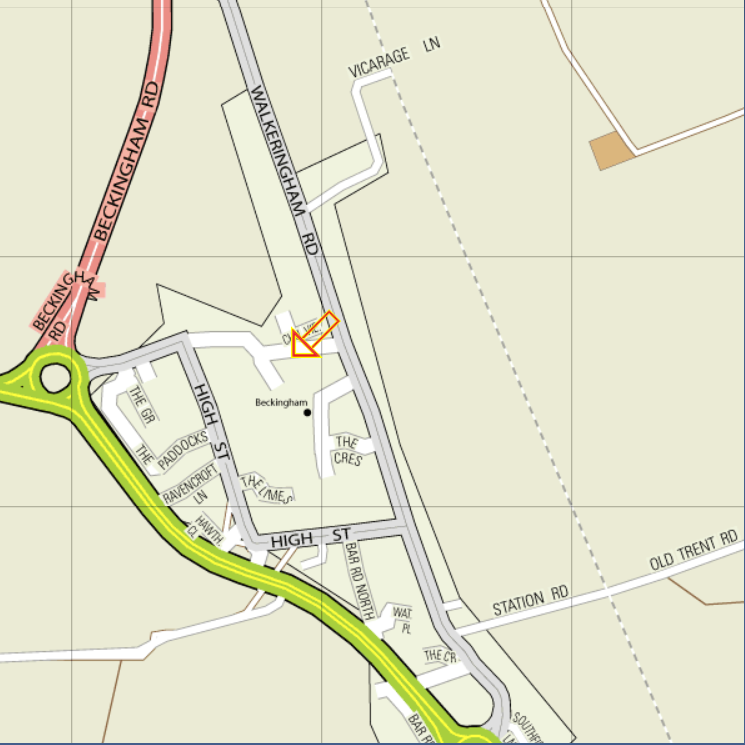
Some of the streets are indicated on this larger scale map. The red arrow points to the church…

at long last

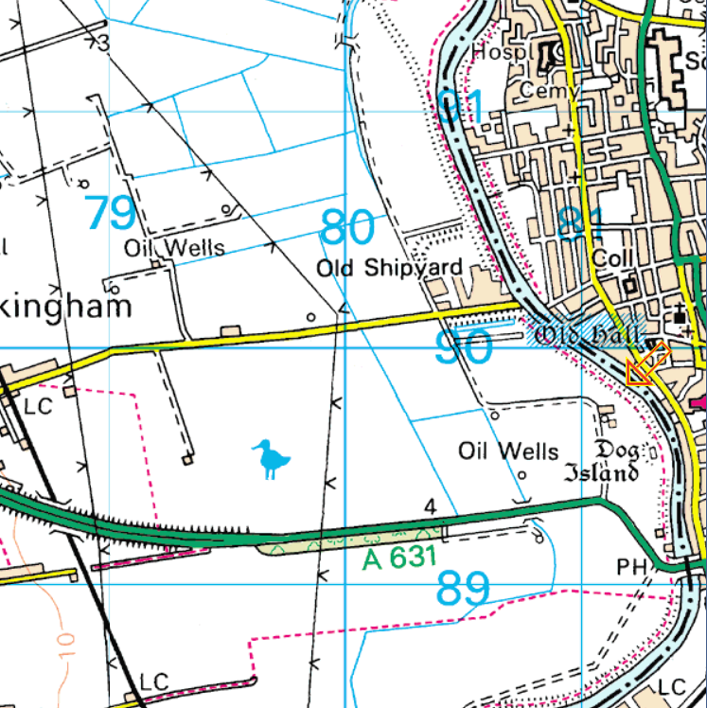
The Black Dog always leaves the Old Trent Road (yellow on the map) near the Old Shipyard and then sets off along the old path to the south, alongside the old River Trent. The red arrow points to the riverside route he invariably uses.

red varrow

Black Shuck though, for it is no less than he, is not a dog to mess with.  Anybody who tries to get in his way or to prevent his progress from church to river does so very much at their own risk. A good many years ago a man from Gainsborough attempted to stop Black Shuck by refusing to stand aside and allegedly asking it what it was doing. The dog looked with great anger at this foolish person, who was later found unconscious in the middle of the road. He was paralysed down one side of his body for the rest of his life and never recovered the feelings in his arm or leg.

A second Black Shuck has occurred not too far from Newark-on-Trent. In the Nottingham County Library there is a manuscript dating back to as recently as 1952 which records the words of a Mrs Smalley, who was then about seventy five years old.
Her grandfather, who was born in 1804 and died in 1888, used to have occasion to drive from Southwell to Bathley, a village near North and South Muskham, in a pony and trap. This involved going along Crow Lane, which leaves South Muskham opposite the school and goes to Bathley. Along that lane he frequently, used to see a large Black Dog trotting alongside his trap.
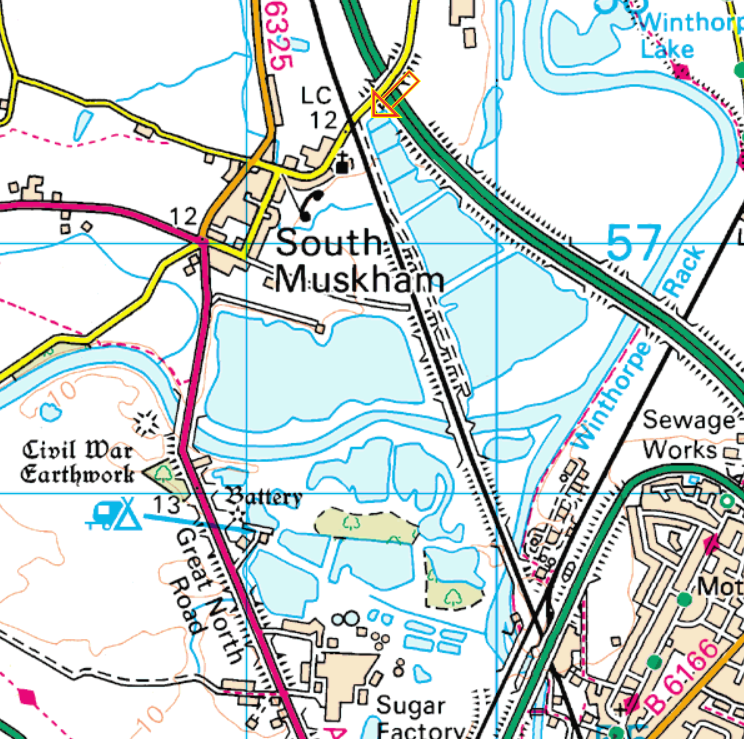
Here is a map of South Muskham, with all the landmarks in the story visible.

better map soujkth muskbhanmThe red arrow points towards Crow Lane, which goes westward  to Bathley. In the other direction, to the east, it runs, typically, past a church with a square tower.
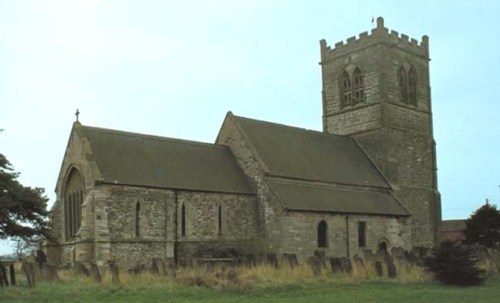
pextne xxxxxxxxxxxxxxxxxxxxxxxxxxx

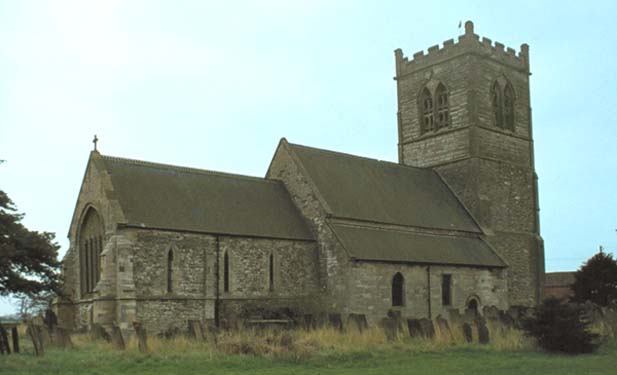
St. Wilfrid’s Church in South Muskham is medieval but seems to have taken a long time to construct. The square tower, therefore, has its lowest section of thirteenth century construction, the middle section is fourteenth century and the top is fifteenth century. One of the more interesting features are the carved ends of the wooden benches in the chancel, which include a number of “hideous monsters” and one crab.

“Round about 1915, Mrs Smalley’s son Sidney, used to ride out from Newark on a motorcycle to their home at Bathley. He went into Newark to dances and frequently returned at about 11 o’clock at night. He too often saw a black dog in Crow Lane; he sometimes tried to run over it but was never able to. One night Sidney took his father on the back of the motorcycle especially to see the dog, and both of them saw it.”

Overall, South Muskham is an area with a good deal of water in the landscape.
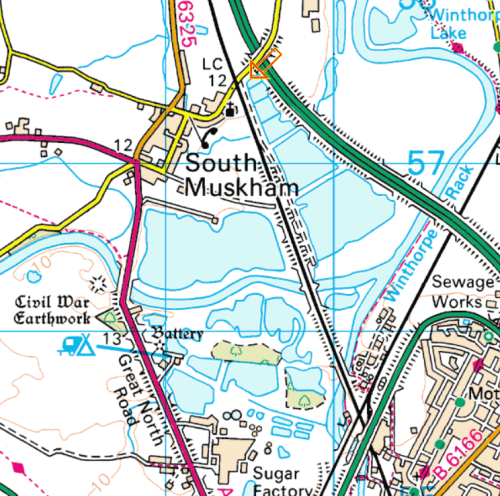
south musk is wetzzzzz

The third story is considerably more modern. It was 2.14 a.m. on May 11th 1991 and….

“Victoria Rice-Heaps had been visiting her boyfriend in Worksop, and was on her way home when she had her unusual experience. It was a journey she had made “thousands of times”. She wasn’t particularly tired, having slept earlier in the evening. Making her way out along the Blythe Road, she soon left the comforting glow of the streetlights for the dark country roads beyond.
After a mile or so, near to Hodsock Priory, Victoria saw illuminated in the beam of her headlights about 150 yards ahead “two red dots.”

beast_main ccccccc

“I slowed right down to a crawl as I saw a huge black dog. It looks like something from hell! It had very shiny fur and a short coat; the nearest thing I’ve seen to it in size was a Great Dane, but it had a good 18 inches over a dog of that breed. Its ears were erect and it appeared to be dragging something quite large across the road.”

Victoria had lived with dogs all her life, but had seen nothing like this creature.
As she waited for the dog to get out of the way of her Fiat Panda, the headlights of another vehicle announced its approach from the opposite direction. The driver of the red Montego estate, evidently seeing her at a standstill, pulled up and wound down his window to ask if anything was wrong. Victoria, having wound down her own window, asked the man if he could see the dog in front of her car.

“At this moment he shouted “Oh Jesus!” and sped off into the night. I looked in front of me again and to my joy and amazement the creature had vanished. I drove home as fast as I could. I did a little research later and found a tumulus nearby, a river and an old boundary as well as the priory”.

There is a lot less exact geographical detail for this particular story and I have therefore made one or two “best guesses”.
Victoria was driving north out of Worksop along the B6045 in the direction of Blyth. This road is fairly straight and leads quickly to the Hodsock area. The very narrow yellow road to the west of the B6045 is the turn off to Hodsock Priory, which is a big country house, rather than anything of particularly religious significance. In Nottinghamshire, it is very famous for its magnificent displays of snowdrops in the very first days of Spring.
B6045

My contention, though, is that Victoria only saw a single snapshot moment of Black Shuck’s usual journey. I believe that the huge dog would have started his journey in the northern section of the B6045.  Here is a map with the middle of Blyth and the old unnamed northern section of the B6045 (see arrow). It leads past a church with the square tower, St Mary and St Martin.
wet blyth

Shuck’s exact point of departure would surely have been the churchyard of this ancient church which dates from as early as 1088, when it was a part of a Benedictine monastery. Clearly, if you are driving down the B6045 in a saloon car at 40-50 m.p.h. in the darkness of the night, you will see Black Shuck for a lot less time than if you are on foot, or in a pony and trap, or even on a slow motorbike back in 1915.

The one thing I would really like to know, though, is what “quite large something”  Black Shuck was dragging across the road. And the driver of the red Montego, how had he not seen the ghostly dog when he first stopped? He was going in the opposite direction to Victoria, and Black Shuck was right in front of her car. The driver of the red Montego must have been parked almost directly next to the “Hound from Hell”. Indeed, she actually asked him if he could see the dog in front of her car.

When he apparently and finally saw this enormous beast, he shouted out in terror and drove off into the night. Why? He left a defenceless young woman behind on her own. Did he see what Black Shuck was dragging? Given the Hell Hound’s connection with the imminent death of those who see it, did the man see his own ghostly corpse?
If you have followed the directions and maps carefully, you will not find my next question a particularly difficult one!

“What is the connection between all three of the Black Dogs seen in Nottinghamshire?”

Well, if you have paid attention, you will have realised the elements which occur and recur throughout all three stories.

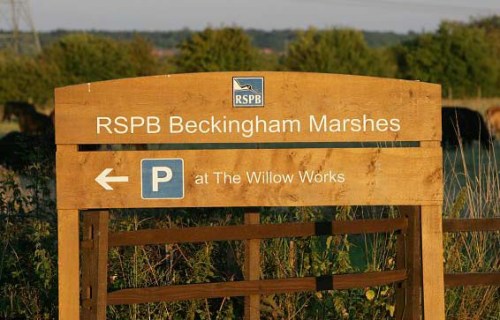
There is always a church, and the Ordnance Survey map shows that it is always a church with a square tower. That church of course, will have a graveyard around it. Black Shuck then follows a route which is always a very ancient one, rather than opting for the new bypass or the new dual carriageway. It is always a road which has been there for centuries, almost as if he has been following that path for that same amount of time. And as the road continues away from the church, it will gradually become more and more lonely and isolated. At the same time it will lead through a landscape which contains enormous amounts of water, either in the form of lakes, rivers or streams. In one case, namely that of Beckingham, the road leads to the wettest place of all. This is an area of riverside water meadows, which have now been taken by the RSPB to form an official wetland nature reserve.
rspb reservezzzz

Black Shuck makes his departure from this route not only at an old shipyard, but he also sets off southwards alongside the River Trent itself. As if to prove that this is the strongest manifestation of Black Shuck in the county, the phantom animal will pass an ancient hill which is called “Black Island”. This may have been a tumulus in the dim and distant past. Somewhere as flat and wet as this area is certainly a strange place for a completely natural hill.

Victoria Rice-Heaps mentions a tumulus near the B6045, but I have been unable to trace it, although I have not visited the area personally. This does not mean that it is not there, of course. But there is a “Hodsock Red Bridge”, red with the colour of Black Shuck’s eyes, perhaps? And what is “Black Screed”? Nowadays, a screed is “a levelled layer of material (e.g. cement) applied to a floor or other surface.” Earlier than this, it was “a fragment cut from a main piece”, and then “a torn strip”. Was it called “Black Screed” because it was connected with Black Shuck and being “torn to shreds”?
I was delighted to find all these various connections, because they fit in perfectly with the book “Real Wolfmen: True Encounters in Modern America” by Linda S Godfrey. She provides a key quotation about the appearance of spectral canids. And this quotation applies not only to North East Nottinghamshire, but also to the state of Wisconsin in the north eastern part of the United States.

I will be looking at all these various connections and trying to explain why they are so important in another blog post in the future.

6 Comments

Filed under Cryptozoology, History, Nottingham, Science, Wildlife and Nature

Murder most foul: Chapter Two

A second episode of blood soaked murder in the history of the old Free School was published in a series of “Reminiscences”  in the High School Magazine in December 1929. They came from Mr John Braithwaite, of Bournemouth, who, at the time, was thought to be the School’s oldest Old Boy….

“Schooldays, 1857-1862″

“I went to the old Grammar School in Stoney Street about Midsummer,1857, and left at Midsummer, 1862. The Rev. W. Butler was Headmaster.”

“The old building was very unsuitable, dull and cheerless. The upper school consisted of one large room and one small classroom. There were no cloakrooms or conveniences of any kind, and the sanitary arrangements in the small playground were most primitive.”

free school

“The whole building sadly wanted painting, but no money was spent; the reason given was that the Trustees were saving up to have enough money to build a new school.”

“We began work at 8 o’clock and finished at 5 o’clock, or later, with two hours’ break at midday. In winter we had to use candles… “long eights” I think they were called. One candle was allowed between two boys, and lighting them was the signal for all sorts of play. We amused ourselves by blowing the candles out and in again, making a nasty smelling smoke.”

gallows

“About the autumn of 1859, a man was sentenced to death in the Nottinghamshire Courts for a murder in the northern part of the county.

Our headmaster, the Rev.W.Butler, as Chaplain of the County Gaol, was required to read the burial Service at the execution, which was fixed for 8 o’clock one morning at the County Gaol in the High Pavement.”

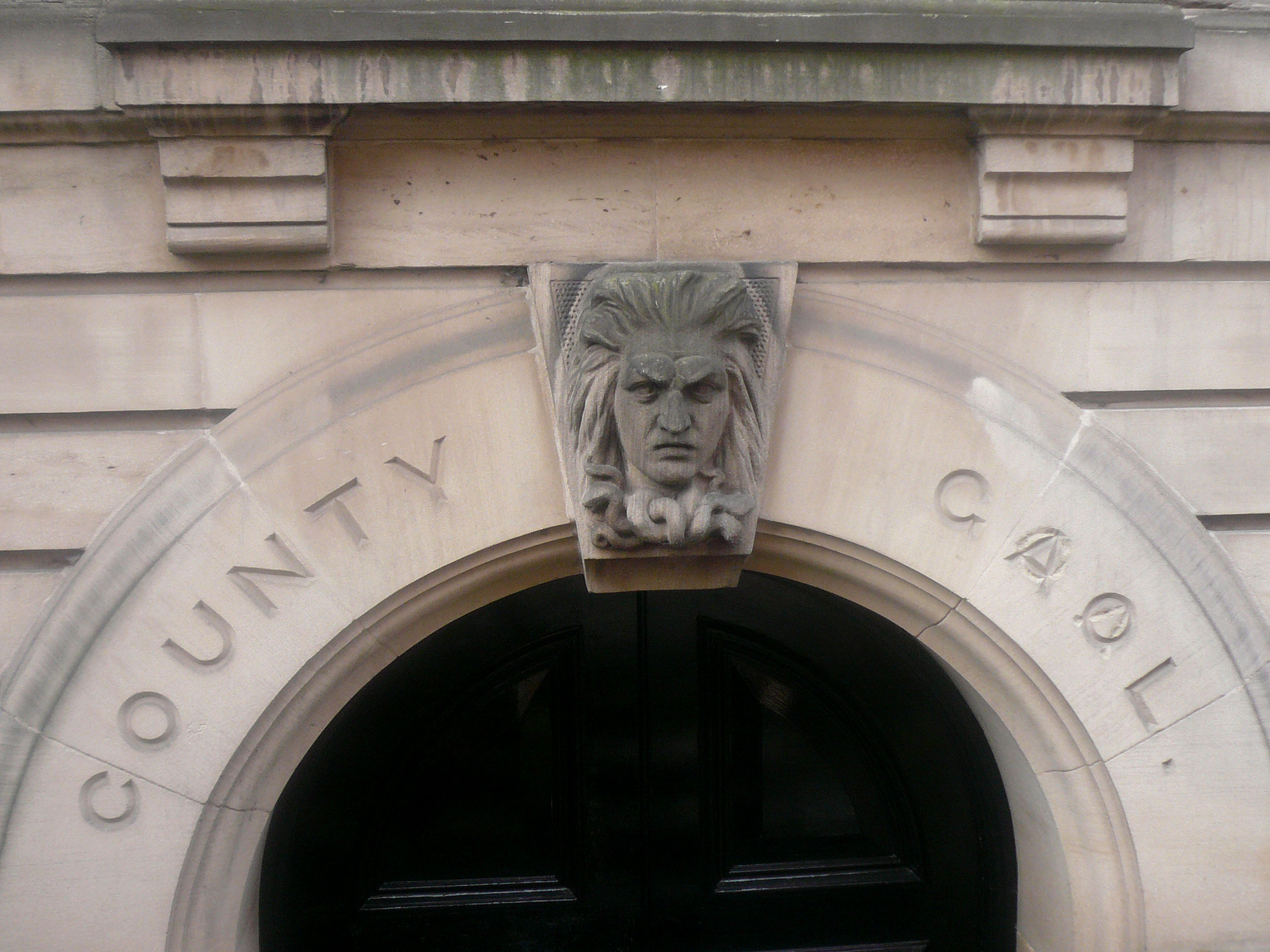
The main building on High Pavement, which dates from 1770, is quite imposing. The Normans were the first to use this site, appointing a Sheriff to preserve law and order in Nottingham, and to collect taxes. The oldest written  mention of law courts comes in 1375.

DCIM100MEDIA

The cells are below street level. They date back to at least 1449.

P1120126

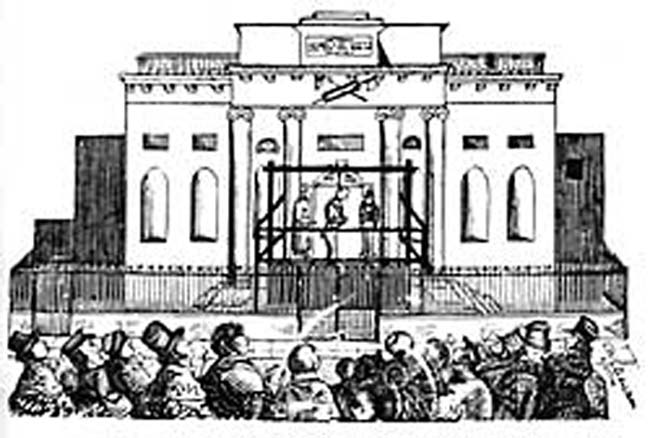
The scaffold used to be erected on the steps in front of the brown columns. There are special square holes cut in the stone steps to hold the wooden beams. They are still there to this day.

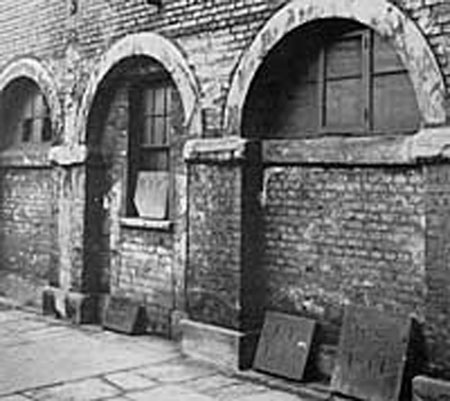
hanging-at-shire-hallThe dead hangees were buried in unconsecrated ground around the back of the building, their feet disrespectfully pointing towards Jerusalem.

Yard at Shire Hall with headston

“As usual we were at our desks at 8 o’clock on that particular morning, but the headmaster was absent. We all knew where he was, and each of us was thinking of him and visualising the dreadful scene which was being enacted only a short distance away. Back in school, the Deputy Master read prayers, and we waited, silent and awed. Presently the door was burst open, and poor Mr.Butler, with face white and drawn, stumbled in and staggered to his seat, almost spent. After resting awhile he stood up and said, “Boys, I have just come from….” and then he broke down. After recovering himself, he began again, and then he preached us a more impressive sermon than I have heard from any pulpit. As no one was in the mood for lessons we were sent home for the day…”

3716238The hanged man was one John Fenton, a blacksmith and publican, executed at the age of thirty-seven for the murder of Charles Spencer at Walkeringham on March 6th 1860. This was a public execution, held on the front steps of what is now the Shire Hall in High Pavement.

The crowd, however, was a lot smaller than expected. This was because, even though it was fourteen years previously, the last public hanging in Nottingham had resulted in the crushing to death of seventeen people, almost all of them children.

Given this blood soaked past, it is no surprise to find that the Galleries of Justice have a plethora of ghosts. On some wet Tuesday afternoons, there can sometimes be as many ghosts as living tourists. Here is a selection of the ghosts I saw on my own visit…

This slideshow requires JavaScript.

Wooooooooooooo………………………………

7 Comments

Filed under Criminology, History, Nottingham, The High School, Uncategorized

Murder most foul: Chapter One

Strangely enough, the theme of murder runs bright scarlet through the early history of the High School. First, came George Somers, who was the Headmaster for an unknown period of time between, probably 1530, and , hopefully, not long after Friday, July 15th 1532.

Eighteen years earlier, in more probably April, but perhaps in early May, 1514, the Free School’s main benefactress, Dame Agnes had died.

a mell

She left much of her property to the school and was buried alongside her husband in St.Mary’s Church, Nottingham.

This slideshow requires JavaScript.

Within a few short years of Dame Agnes’ death, however, her high standards of morality were more or less forgotten. Money frequently went missing and both the Headmasters and the school wardens neglected their duties. A number of teachers appeared in court on various charges, which varied from failing to maintain the church windows to the theft of pupils’ books.

In perhaps January of 1532, the Headmaster, George Somers, was accused of stealing a featherbed, a long pillow, two short pillows, a green and red quilt, a covering and a pair of sheets to the value of 46s 8d. (£2.33p in modern money. Oh for a time machine!)  Somers also owed twelve pence for the hire of the same bed. For what purpose has not been recorded. But you can probably guess…..

IMG_4607 bed

On Friday, July 15th of the same year, in a much more dramatic episode, George Somers, was now accused of murder. The Records tell how.

“…We indict the School Master of wilful murder.”

The incident had taken place almost a month earlier, on June 17th, and Somers had supposedly assaulted John Langton, Chaplain of Nottingham,

“by violence and weapons, namely a stick and daggers, of malice aforethought, and… had feloniously killed and wilfully murdered the same John, against the peace of our Lord the King.”

fox in the snow cvgbh

Unfortunately, the outcome of these events remains completely unknown, although it is devoutly to be wished that, if convicted, Somers did not keep his post as Headmaster of the school.

Hopefully too, this woodcut does not show Somers’ eventual fate. Notice the moment when the Mexican Wave was invented. Presumably it must be some  Tudor oik losing his focus during the thirty seconds while the rope is put on.

tudor hang

Leave a comment

Filed under Criminology, History, Nottingham, The High School

Next door’s cat, Secret Agent 007

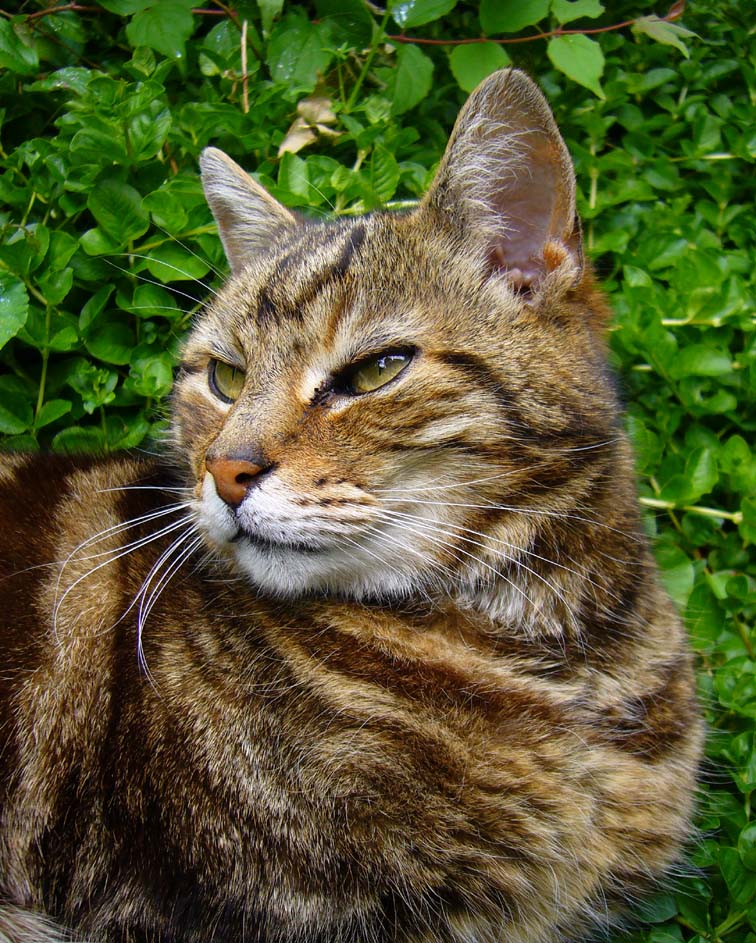
To his neighbours, this individual always used to be regarded, quite simply, as “next-door’s cat”.

P1270936XXXXXXX

We did not know that he was a deeply placed secret agent. Fifteen years ago, he was an inhabitant of London, the abandoned offspring of unknown feral parents. He was saved by his present owner who took him in as a very tiny kitten and fed him milk through a pipette hour after hour, day and night, until he was big enough to feed himself. And she continues to feed him generously, every day, and he sleeps in her house every night. He is, we all presume, her cat.
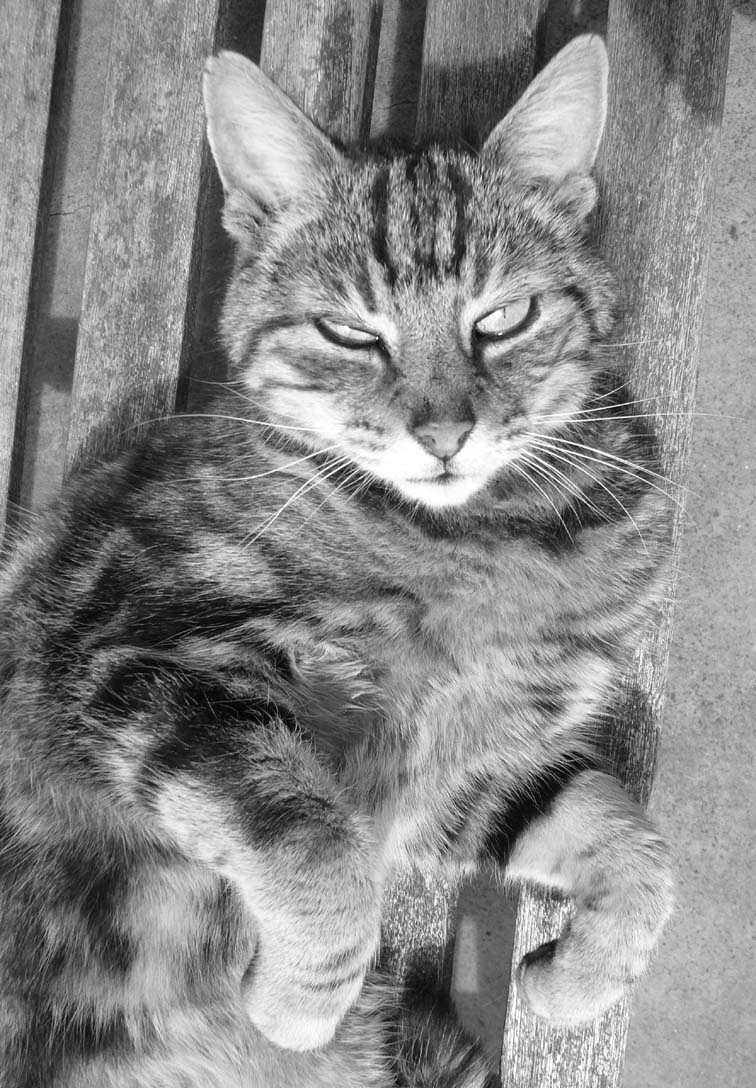
Occasionally, when her little boy gets a bit boisterous, and feels like a good chase game, the cat, who rejoices in the name of Ying Yang, will come over to our house for a few hours. His favourite occupation is lying on the very same wooden bench which used to be in the garden of my parents’ house, and on which their own cat, Sam, loved to sun herself.

This slideshow requires JavaScript.

Imagine my wife’s amazement, though, when she went up the Avenue to check arrangements with our neighbours about where our visiting builders’ van might park. Not only was Ying Yang there, but he had his very own food bowl. The neighbour sincerely believed that he had taken in a stray cat, which now belonged to him, because he fed it copiously on a regular basis. He did not know where his cat went to at night, but that didn’t matter because lots of male cats like to wander around during the darkness hours and then return in the morning.

The most amazing thing, though, was that Ying Yang himself quite clearly recognised my wife, but pretended not to. He ignored her totally. That may sound a little anthropomorphic, but she is absolutely certain that that is what he was doing.
You can imagine how pleased his real owner was when she heard of Ying Yang’s secret life, as somebody else’s cat.

P1280083ZZZZZZZZ

The amazing thing, though, was that even on a minimum of at least twice the meals he should be getting each day, he doesn’t really seem ever to put on too much weight. That makes me feel very jealous indeed!
How many cats do this? How many spend part of the day and the night with one owner, and the rest of the time with what we must consider the victim of a very slick confidence trickster?

1 Comment

Filed under Humour, My Garden, My House, Nottingham, Wildlife and Nature

Boot the Caretaker

Sir Jesse Boot, later the First Baron Trent, was, of course, a very famous figure in the history of Nottingham. In the High School, however, far more famous was Bill Boot, the school caretaker during the middle period of the twentieth century.

The school looked roughly the same in those days as it does now, except it was black and white.

bulletin_24_1403256831_2052%20Nottingham%20017

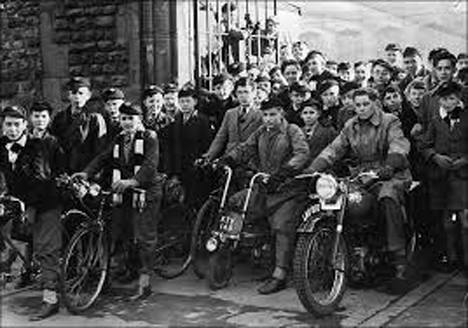
This photo shows the boys leaving school around this time.  Look at the great variety of means of transport compared to today…

around this time

Bill Boot was a much loved figure as the school caretaker, and in December 1949, the following poem appeared in the school magazine. It was a much modified version of the original, which was written by Lewis Carroll and appeared in his book “Alice’s Adventures in Wonderland”, published in 1865.

This slideshow requires JavaScript.

It was written by F.Martin Hall and John G.Golds, and was dedicated to Mr.Boot…

“To Bill Boot on his 70th birthday

You are old, Father William, the schoolboy said,
And your tooth is of marvellous length,
Yet your tap on the door makes the whole building rock,
Where on earth do you find all that strength ?

In my youth, said the Sage, when I fought for the Queen,
Frequent exercise, Generals demanded,
I chased Kruger each morning around Spion Kop,
Do you wonder my muscles expanded ?

You are old, Father William, the schoolboy said,
And your hair has long since turned quite grey,
Yet your voice like a clarion round the School rings,
How d’you manage such volume, I pray ?

In my youth, said the Sage, when I served with Lord “Bobs,”
His commands could not travel by wireless
So I bawled them (in code) right across the Transvaal,
And my throat, by this means, became tireless.

You are old, Father William, yet your eagle eye
Seems as bright as the stars high in heaven,
Pray, how does your eyesight thus function so well,
With no help from Aneurin Bevan ?

I have answered your questions, the wrathful Sage said,
And as sure as my name’s William B.,
If you pester me further, my patience will go,
So be off, or I’ll put you in D.

(With apologies to Lewis Carroll. In the last verse it was considered impolite to suggest that Mr. Boot would actually threaten to kick anyone downstairs.) ”

Bill Boot retired as school caretaker only a year later in 1950, after twenty-eight years’ service. He was replaced by Mr.T.H.Briggs, who had previously worked as a policeman in the city.

Bill Boot had been in the British Army and had fought bravely in the Boer War of 1899-1902. He was famous among the boys for his rapid, shuffling gait, and his extremely rapid speech, which, with his accent,  frequently became almost unintelligible.

Bill’s hobby was fishing, and he travelled widely at weekends. When he retired, he received a small pension, but, alas, he did not live very long to enjoy it, as, tragically, he was killed as he was crossing the road on December 7th 1952. As far as I know, no photographs of Bill Boot have survived, and only Old Boys in their seventies would now be able to remember this fine gentleman “of the old school”, as they say.

1 Comment

Filed under History, Humour, Literature, Nottingham, The High School