Category Archives: The High School

Nottingham High School on ebay (4)

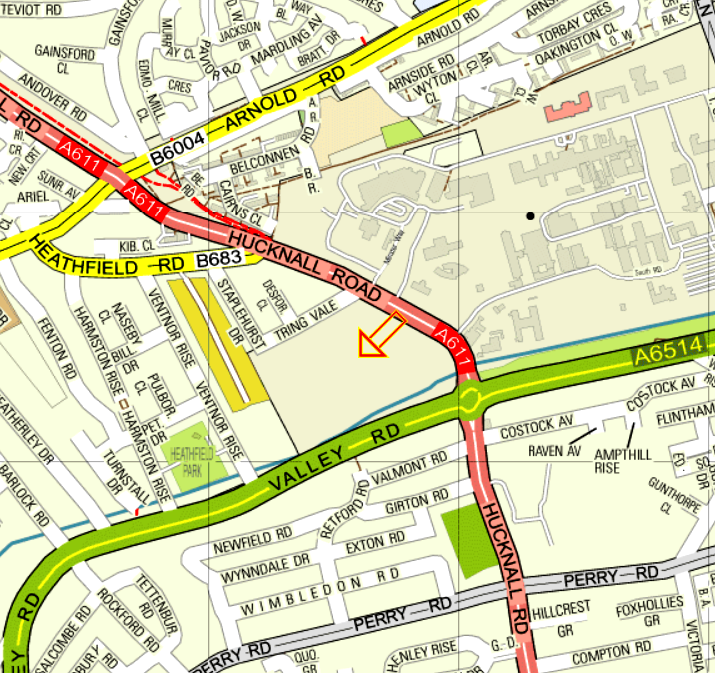
Just a couple of years ago, I saw some photographs of High School sport for sale on ebay. They showed various sports teams from what was then the Preparatory School, all of them photographed down at our Valley Road sports grounds. Here are the sports grounds, indicated by the orange arrow:

On the other side of the road is the City Hospital and the large space in the bottom right hand corner north of Perry Road is HM Prison Nottingham.

The school bought the 18 acres of land for the new playing fields on Valley Road in 1929, largely with money from JD Player, the Old Boy and cigarette millionaire. The total cost was £5,600, with £13,000 more needed to level the site, returf the surface, and build a new pavilion.  The Headmaster and JA Dixon, the Notts County and England footballer and Nottinghamshire cricketer, had looked at more than twenty sites before the decision was made.
Until this time, the school had played its representative matches at Mapperley Park on Mansfield Road, with house and form competitions played on the Forest Recreation Ground. The old Mapperley Park ground was sold to the City Corporation for £6,750 and the rest of the money for developing the site, some £6,000-£7,000, was raised by the Old Boys.
Interestingly enough, Johnny Dixon for many years believed strongly that more land should have been purchased, and that the whole school should then have been relocated to a new campus, surrounded by its own playing fields.  On the other hand, the Valley Road site did have a marsh at the western end, and the possible problems and expenses caused enough uncertainty to back away from buying any more land at this site:

In December 1931 the School Magazine included a three page list of subscribers who had given money to support the appeal to develop the School’s new playing fields at Valley Road. Overall, a total of some £434 2s 6d had been raised. The most generous benefactors were Messrs E Bignall and W Bignall, HR Gillespie, JC Joynes, F Limpenny, FW Pare, L Pilsworth, TS Ratcliffe, GT Rigley and AS Rigley, HB Rose and EB Stocker, all of whom contributed ten guineas. In the least generous category, however, were the three who could only be persuaded to hand over 2s 6d. Arguably though, the finest human being of all was the bank, whose interest payments amounted to £12 2s 6d.

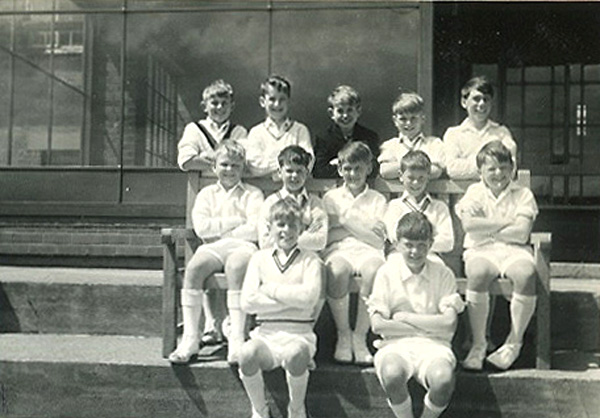
Anyway, here is the first photo I bought, the Under 10 XI in 1965:

The players are written on the back:

The next one, of the First XI in 1966, is perhaps of slightly better quality:

Again, the names are written on the back:

Next time, Technicolor © is invented.

16 Comments

Filed under History, Nottingham, Personal, The High School

The Battle of Britain (2)

Deep in the bowels of the RAF Museum at Hendon is the Battle of Britain section where the lighting is of a strange purple colour so that delicate ancient paint is not faded by direct sunlight. That’s an extra excuse for these rather weird photographs. First of all, the baddies, with that old favourite, the Junkers Ju 87 Stuka, an aircraft used in the blitzkrieg to dive bomb defenceless refugees:

This slideshow requires JavaScript.

Here’s a Heinkel He111 which was all right as a bomber but which didn’t carry a particularly significant bomb load. Even so, it performed well at Guernica, Rotterdam, London, Warsaw and half a hundred other places as the Germans invented the much criticised concept of “area bombing”.

This slideshow requires JavaScript.

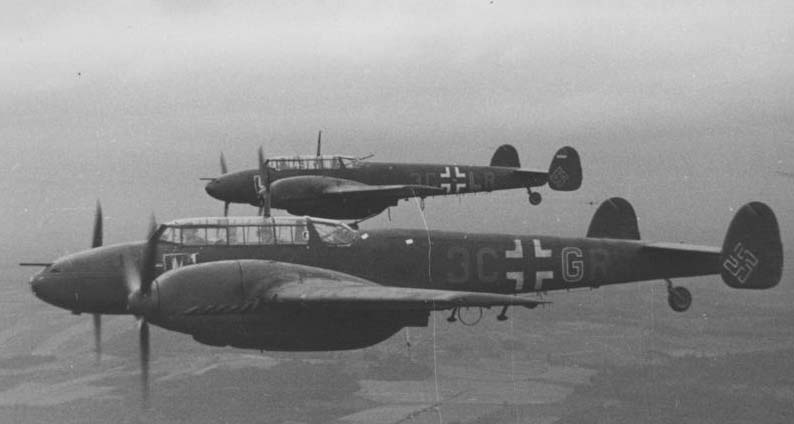
The fighters were the Messerschmitt Bf110, a rather slow aircraft for daylight use which would eventually finish up having to be escorted by better performing fighters:

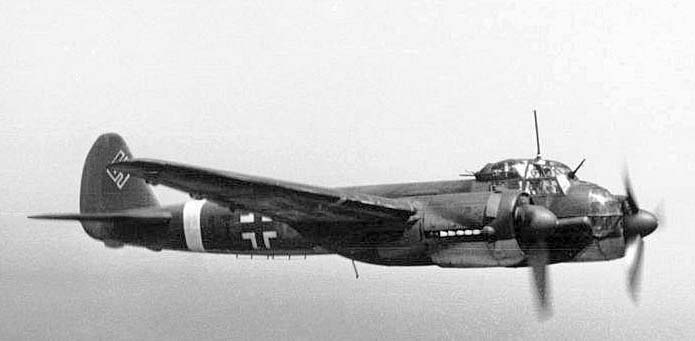
This is the Junkers Ju 88, a twin engined and very versatile aircraft which was arguably, a competent Bristol Blenheim or a poor man’s De Havilland Mosquito:

Last and certainly not least is the famous Messerschmitt Bf 109, a decent fighter, but an aging design which was prepared in response to a Reichsluftfahrtministerium specification of 1933. Bf 109s couldn’t carry enough fuel to fight for very long over Southern England. And a Spitfire, in theory, could always escape them by turning tightly inside them:

This slideshow requires JavaScript.

The Bf 109 at Hendon does not really allow you to stand back and get a decent general photograph. Here is one I found on the Internet. It certainly is a stunning photograph:

The Hendon individual is a Bf 109E-3 and it may have been painted as a yellow nosed member of Jagdgeschwader JG26, “The Abbeville Boys”. There must have been a little plaque in front of it, but I can’t remember what it said. Its detailed history can be accessed here.

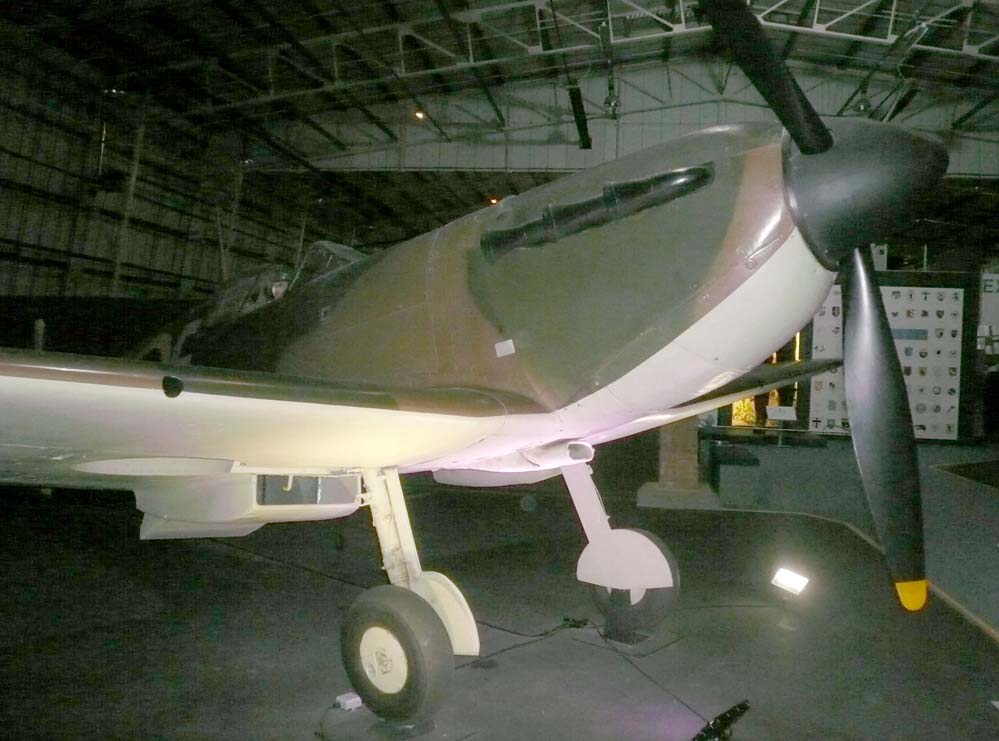
And in the blue corner…….the Supermarine Spitfire. Here’s my effort at a picture:

As one writer said,

“It was one of the most beautiful aircraft ever conceived with elegant, flowing lines that make it look perfect from every angle.”

And the most stunning Spitfire ever was the Mark I or Ia or the Mark IIa.

This gallery of photographs comes from the Internet. With a little bit of luck, you should be able to see what I mean about a beautiful aircraft:

This slideshow requires JavaScript.

And there’s also a Hawker Hurricane, an aircraft which, as we all know, shot down more German aircraft in the Battle of Britain than the Spitfire. The scores were roughly 60% to 40%. The Hurricane was a design which looked backwards to its biplane ancestors, especially the Hawker Fury:

On the plus side the Hurricane was a lot easier to repair than its cooler cousin, the Spitfire. It was easier to make as well, 10,300 man hours rather than 15,200 for the Spitfire. And easier to make meant cheaper, of course. Here are my unworthy efforts:

This slideshow requires JavaScript.

And now some proper photographs:

This slideshow requires JavaScript.

And next time, the Old Nottinghamians make an appearance.


35 Comments

Filed under Aviation, History, Humour, Politics, The High School

Nottingham High School on ebay (3)

Last time I was looking at a postcard sent to Noel George Peet of 2 Gorsey Close in Mapperley Park. The postcard was sent on October 27th 1926 and it was stamped with an 8.00 pm postmark. Here is the sender and the message:

It reads “Sorry! I shall be unable to play on Saturday next.”

I would say that the signature is of “JG Sykes”. October 27th 1926 was a Wednesday and JG Sykes is clearly writing to the person who organises a local sports team, probably the captain or the secretary. At this time, Noel was only 24 years old and I would therefore presume that he was the captain of the team, rather than the secretary, who is the man who organises the fixtures, the renting of the pitch and so on. At first reading, I would have said that the team was probably the Old Nottinghamians and that they were going to play rugby, but there is one big problem about this best guess.

JG Sykes did not go to the High School. It cannot be a local cricket team in late October, so it must be football, or soccer as my American friends would term it. Between 1914-1968 the High School did not play football, at least officially. There were, though, one or two renegade teams which I intend to talk about in a separate blog post. All I can offer, therefore, is that JG Sykes and NG Peet were members of a local football team, unconnected directly to the High School. Which one, I cannot imagine. Sherwood United? Mapperley Rangers? Who knows?

I did though, find out who JG Sykes possibly was. In the Kelly’s Directory for 1928, this entry appears:

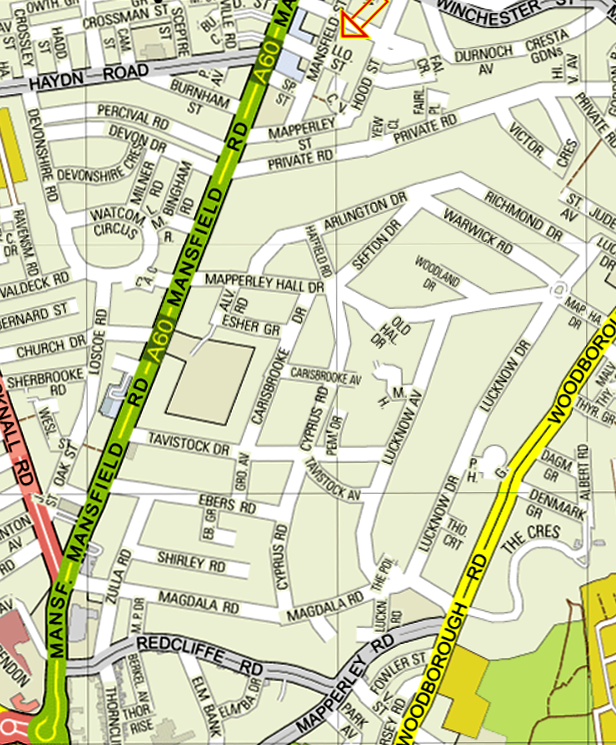
That is “James Gordon Sykes of 97 Mansfield Street, which I feel should be written in that same old fashioned way, as “Mansfield-street”. However you write it, Mansfield-street is deep in the heart of Sherwood, the suburb, of course, rather than the leafy place where the Merrie Men hang out. The orange arrow points to Mansfield Street which does in fact continue northwards over Winchester Street.  If you look at where “the Yellow Road to Woodborough” goes off the bottom of the map, the letters “-RSEY RD” to the left refer to Gorsey Road.

In the bottom left corner is the double roundabout only a hundred yards from the High School. Clearly, as regards games of football, this really was a local team for local people.

Sooooo…….what’s on the postcard? Well, James Gordon Sykes clearly knew his captain’s educational ancestry because he chose this beautiful scene. The front of the High School:

And there have been one or two changes since, say, 1920. A lot of pinnacles and chimney pots have been removed, presumably in the days before the concept of listed buildings was invented. The School field gun has gone. Here’s the School in more recent times:

The photograph for the postcard was taken from over on the right, behind the bushes and the hedge. Most noticeable, though, is the war memorial which has been there since 1922. On the top is a life size statue in bronze which represents a young officer leading his men into attack. The statue was designed by an Old Nottinghamian, Colonel AS Brewill, the commander of the 7th Sherwood Foresters and it was cast in bronze by Henry Poole.

Just over 1,500 boys and masters had fought in the Great War. Two Victoria Crosses had been won, 124 men had been awarded other decorations, and 29 had been mentioned in dispatches. Most important of all, though, was the fact that between two and three hundred men had been killed, from a School which had an annual total of between 350-450 pupils in the years before the war.

The only other object in front of the School before 1922 was a 25-pounder field gun which somebody had brought back from the war as a souvenir. I haven’t been able to discover who it was, or exactly when or indeed, why. After four years of a war memorial and a field gun within thirty yards of each other, a decision was taken to remove the gun and have it made into ploughshares somewhere. Even then, the gun had its supporters:

” In July 1926 the Old Boys’ Society spoke out against the removal of the field gun from the front of the school. They felt that its barrel provided a wonderfully useful litter bin for the boys walking past.”

Here is that old field gun enlarged:

The building behind the gun is the caretaker’s house, demolished long ago. The tower is still there to this day. It is nothing to do with the High School or the caretaker’s house. It belonged to a man who was extremely keen on the horse races which were held nearby until 1890 on what is now the Forest Recreation Ground . He therefore had the tower added to his house so he could see if he had won or lost his money. The last meeting took place on September 29th-30th 1890, and the last race, the Cotgrave Gorse Plate, was won by Sir Hamilton, owned by Mr T Tyler, and ridden by A Nightingall. Horse racing subsequently moved to Colwick.

Just to finish, here’s an aerial view of the School taken in 1920 or thereabouts. It is isn’t of very great quality, but then again neither was the camera or the plane:

Notice the shrubbery, Dr Dixon’s house on Waverley Mount, AKA the “Last House on the Left”.  The caretaker’s house is opposite and notice the boys near to it. Top left is the Fives Court and Brincliffe  School still stands to the right of that, where the staff car park now is.

The back of the School was very different then. Here is the North Entrance in 1915:

Notice the bell tower and the extra flag pole.

One last fact about Noel Peet by the way. I have only just realised where he has appeared before in the context of my blog. His name is to be found carved into the mantelpiece of the fireplace between the General Office and the Assembly Hall. You can read all about that here.


26 Comments

Filed under Football, History, Nottingham, Personal, The High School

Nottingham High School on ebay (2)

As well as not buying a rather expensive medallion on ebay, I have actually bought a postcard or two over the years. The first one was sent on October 27th 1926. It is stamped with an 8.00 pm postmark, so I presume that it was written earlier that day and then posted perhaps before dinner, or, more likely perhaps, on the sender’s way home from work. It was a Wednesday, which in those days would have been half day closing, so he probably left work at 1.00 pm and put it into the post box on his way home:

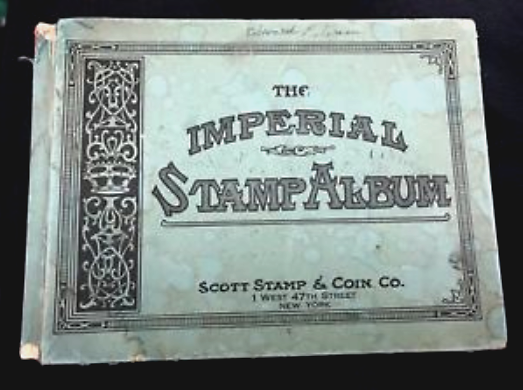
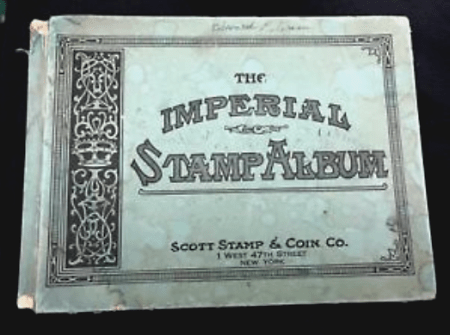
Notice how the Post Office slogan is “British Goods are best”. Only a few months after the General Strike, the economy was in real need of a boost if further discontent and upheaval was to be avoided. Notice too, the beautiful, classic stamp. King George V was a fanatical stamp collector, and loved nothing better of an evening than sticking his stamps in his thousand albums. When you’re an emperor, this is the album for you:
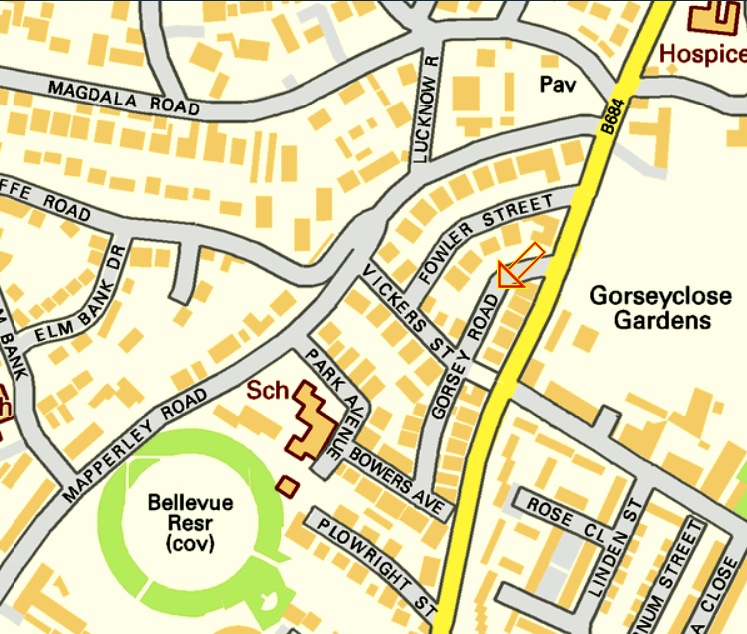
The postcard is addressed to NG Peet of 2 Gorsey Close in Mapperley Park. I couldn’t trace a Gorsey Close but I did find a Gorsey Road. Here is a close up view of the area. Gorsey Road is between the B684 Woodborough Road and Mapperley Road, in Mapperley Park, one of Nottingham’s leafier suburbs. Look as always for the orange arrow.  No 2 is on the corner with the B684, Woodborough Road. :
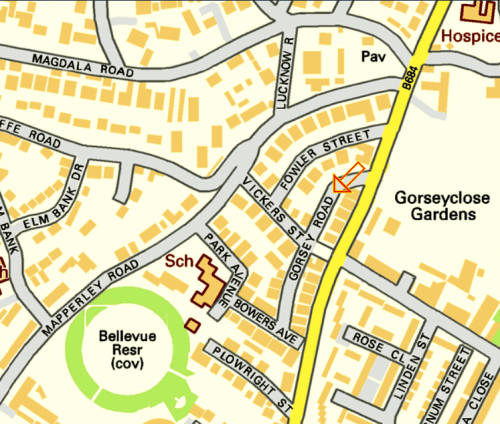
If you look at this larger map, you can see that Gorsey Road is not too far away from the High School which is in the bottom left corner in the area between Arboretum Street, Forest Road East and Waverley Street. The School is on the corner either side of the pale green patch. Gorsey Road, I should have said, is again indicated by the orange arrow.

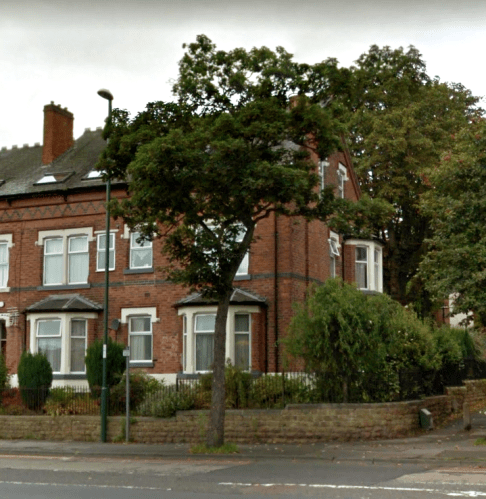
This is No 2 Gorsey Road now, a little overgrown perhaps, and in a street which looks to have gone a little downhill, but obviously, it was a very beautiful house in its time:

The Peet family had only recently moved to Gorsey Close when that postcard arrived in the late evening of October 27th 1926. In the Kelly’s Directory published in 1925, their future abode was owned by Edward Westwick Kirk of Kirk & Macdonald. The Head of the Family, WG Peet, was living at that time at 249 Woodborough Road, presumably with everyone else in the family. Here it is:
Three years or so later, when all of the information had been collected for the 1928 edition of the Kelly’s Directory, the house in Gorsey Road was now recorded as being occupied by Mrs Ann Elizabeth Peet. She was presumably NG Peet’s mother, rather than his wife. At this time her son was still in his early twenties and it is by no means surprising that he was still living in the parental home. There is certainly no NG Peet listed as living elsewhere in Nottingham, nor indeed in the rest of the county.

In 1929, the High School prepared its own list of the Old Boys’ addresses. In that, NG Peet is listed as still living at 2 Gorsey Close although it could just be that they carried an old address forward.

NG Peet, incidentally, I should have introduced him earlier. He is Noel Gordon Peet, who was born on December 26th 1901, hence the name. His father was William George Peet who was a “General Agent”. Six years later, in 1925, the relevant Kelly’s Directory listed William George Peet as working for “WG Peet, Son & Company”. By 1928, he is listed as a “yarn merchant” operating from Kaye’s Walk. His telephone number was listed as “TN 42769” and his telegraphic address as “Knitiarns”.

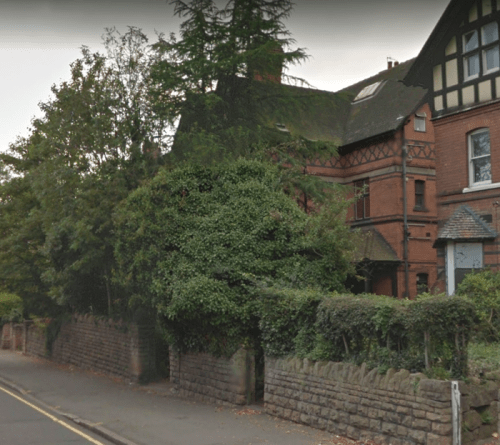
Noel entered the High School on April 26th 1917, at the age of 15. He was Boy No 3662 and he stayed there until July 1919. At this time, 1917 at least, the family was living at 413 Mansfield Road. Here’s 413 Mansfield Road, in spirit a very similar house to 2 Gorsey Road. I’m a huge lover of trees, but these need a tree surgeon and his assistant for a day and the whole place would look so much better:
Noel packed a lot into his two and a bit years at the High School. He won the Fifth Form B Prize in 1918 and the Fifth Form Writing Prize in the same year. In 1919, he won the Sixth Form B Prize. In the Officer Training Corps, he became a Corporal in 1918 and a Sergeant in 1919. In cricket, he won the School Prize for Batting in the same year.  He had 13 innings and scored a total of 144 runs at an average of 11.07. His top score was 36. Not a classic season for the School apparently !

Also listed in the High School’s list of Old Boys in 1929 was William Ronald Peet, Noel’s younger brother. He too is recorded as living at No 2 Gorsey Close. He was born on October 9th 1910 and entered the High School as Boy No 4036 on May 1st 1919. He left in December 1926 at the end of the First Term. By the time William entered the School, the family had moved from Mansfield Road and were living at Sutherland Lodge in Lucknow Drive in Mapperley Park. The boys’ father is listed as a “manager”. Lucknow Drive, or rather the word “Lucknow”, is visible in the top right corner of the second map above.

Did anything significant happen on the day the postcard was posted, namely October  27th 1926, anywhere in the world ? Well, nothing really earth shattering, but there was one episode which I found quite amusing. Here’s a clue, with a picture of a Shipstone’s Brewery beer crate and some of their products:

Shipstone’s Brewery lasted from 1852-1991. I always felt that it was, at best, an acquired taste. Anyway, here’s the funny story to finish with. It comes from ‘Hansard’ which records everything said by everybody in debates in the Houses of Parliament. The story came out because Labour Party MP, Alfred Salter, was censured in the House of Commons for refusing to retract remarks of his that had appeared in the Daily Express:

 “I am not prepared to withdraw, modify or apologise for anything I have said on this matter, and I propose to repeat the words I made use of and about which complaint has been made.

I said, and I repeat it here to-day, that I have seen members of all parties in this House, my own party I regret to say included, drunk in this House not on one occasion but on many.”

A motion was passed calling the statement “a gross libel on the Members of this House and a grave breach of its privileges.”



20 Comments

Filed under History, Nottingham, Personal, The High School

Nottingham High School on ebay (1)

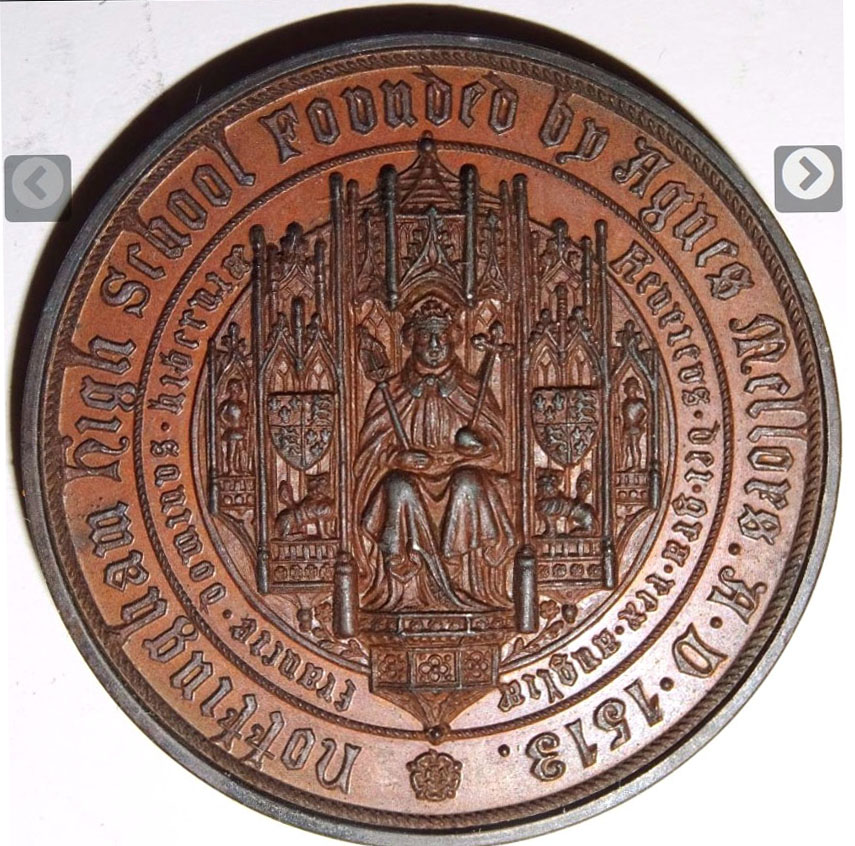
I always keep an eye on ebay to see if anything is on sale which is connected with Nottingham High School, the school where I spent my entire teaching career. First, here’s something that I didn’t buy because I thought it was far too expensive. Here’s the front:

And here’s the back:

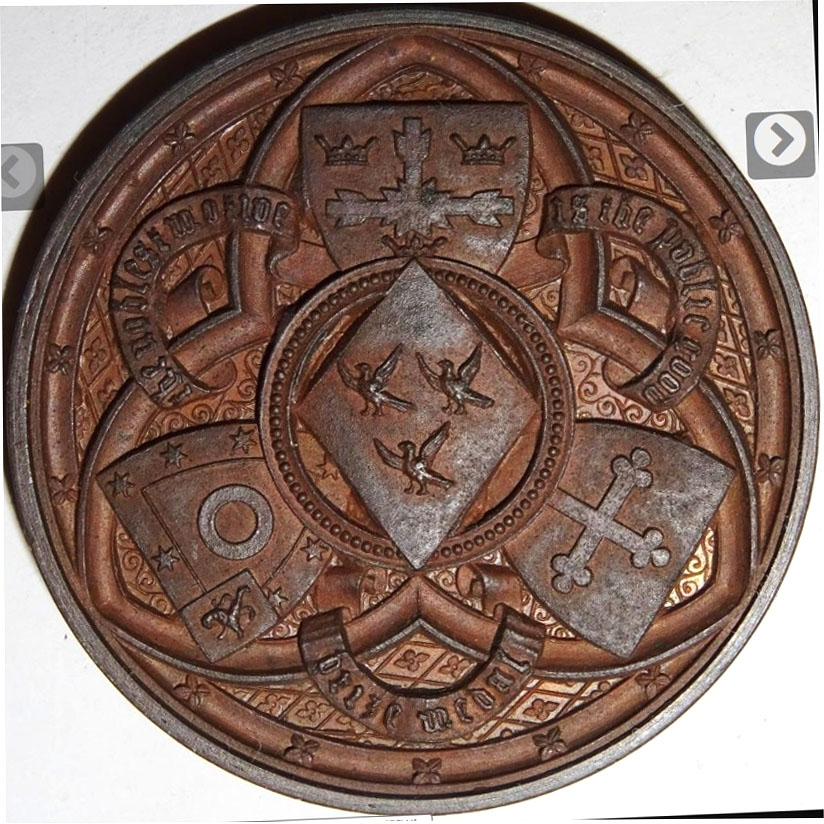
The seller wanted £85 for it which I thought was just too expensive for me. It was a medal awarded to Benjamin Herbert Heald of Wilford, a little village on the River Trent to the south of Nottingham. Born on September 16th 1874, Benjamin entered the High School at the age of 12 on September 11th 1887 as Boy No 664. His father was Francis Berry Heald, a designer. Benjamin left the High School on the last day of what was at the time quite frequently called “Term Three” in July 1893. He went on to Queen’s College, Oxford with an Exhibition of £42. That would have been at least 20 times the average worker’s weekly wage.  At the High School he was a true Clever Clogs of the Very Highest Level. He was a Foundation Scholar (1890), a William Enfie Exhibitioner (1892), a Morley Exhibitioner (1891). He won 12 School Prizes in his time at the school, and a number of medals. You can make your choice as to which one this was. They were the Bronze Medal for Good Conduct (1889), the Gold Medal for the Best Open Scholarship (1893) , the Silver Medal for Classic (1893) and the Bronze Medal for Good Conduct (1893). If anybody knows which medal this is, please make a comment. I presume it is one of the Bronze ones. Notice how the reverse has the normal badge of the School:

It also has the cross which appears on the coat of arms of Nottingham:

I don’t recognise the shield with the ring on it, but it does seem vaguely familiar so perhaps somebody has an idea about that.

I found out one strange detail about Benjamin Herbert Heald. In the School Register is a boy called Benjamin Arthur Heald who was born on May 11th 1856. He entered the English School at the Free School on Stoney Street, as it then was, in January 1866. His father is listed as Benjamin Heald and he was a “lace agent and designer” living at 18 High Pavement. Benjamin Arthur Heald was surely a relative of Benjamin Herbert Heald. Anyway Benjamin Arthur is recorded as having died at home from the effects of overbathing, probably in June 1867, when he was 11 years old.

Eventually, Benjamin Herbert Heald became the Headmaster of Midhurst Grammar School in Sussex. In later years he was to reminisce about how the High School’s Headmaster during his time at the School, Dr James Gow, was different from all the other teachers. He never called boys up to his desk to go through their work, but always went to sit alongside them. Lessons usually finished with the customary phrase, “…I think that just about finishes our dose.”

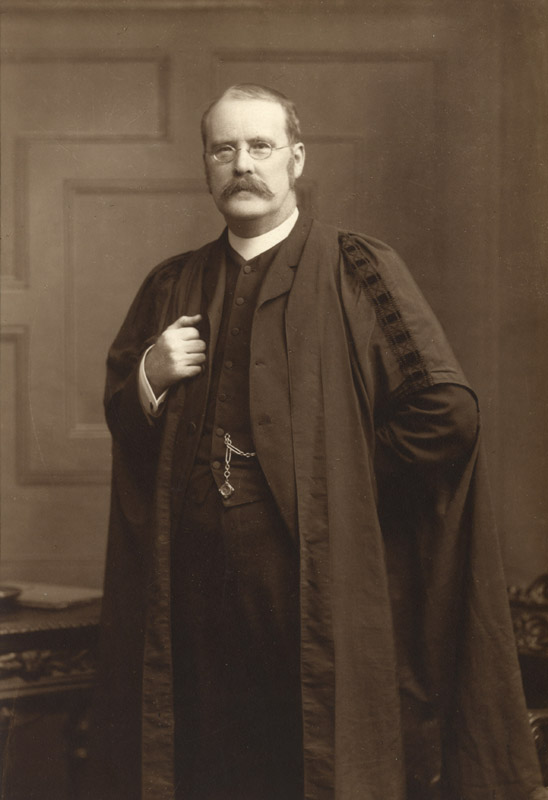
This is Dr Gow, the High School’s greatest ever headmaster:

Next time, some dirty postcards. Well, second hand, at least.


26 Comments

Filed under History, Nottingham, Personal, The High School

the Reverend Charles Stephens (3)

Last time I showed you some more of the photographs left to us by the Reverend Charles Stephens, a keen photographer who captured many aspects of the High School, both boys, buildings and activities. Some of the most striking ones were taken in early 1960 when the new block on the northern side of the West Quadrangle was opened.

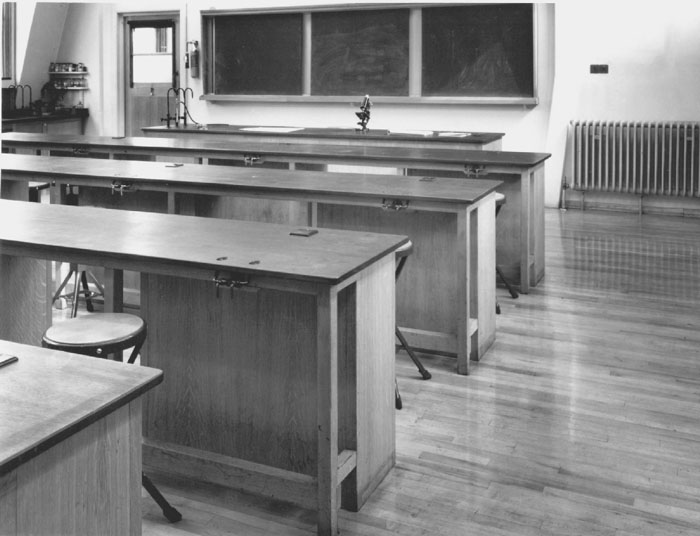
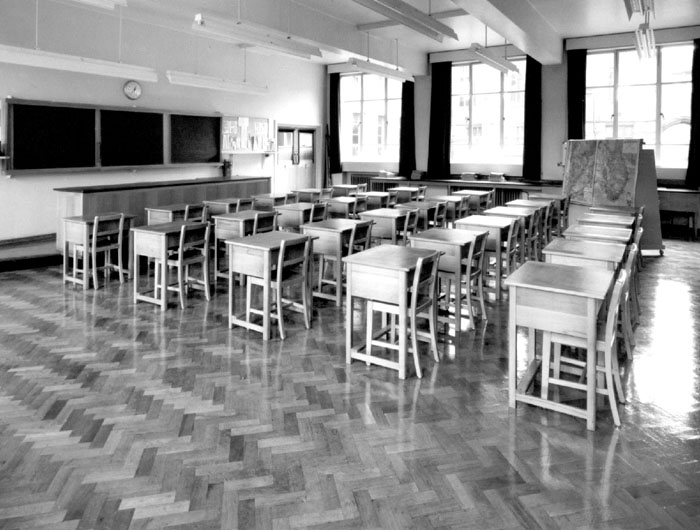
We have already looked at the bottom floor and the top corridor with their absolutely amazing block parquet flooring, which was not just shiny but even reflective. That incredible quality of being polished so highly as to be reflective seems to have been really widespread in the school at the time. Perhaps whichever company polished the floors of the new block was given free rein with some of the other rooms. Here are the floorboards of one of the Chemistry laboratories:

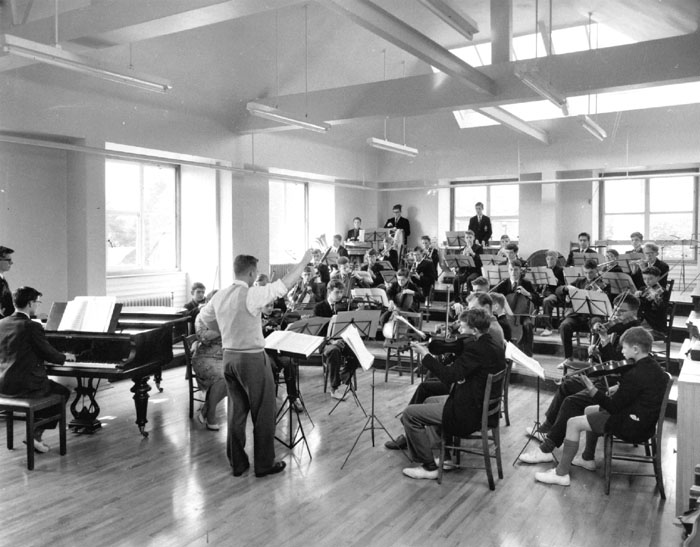
Here is the Music Rehearsal Room. Notice how all of the boys are wearing white plimsolls, which they have presumably had to bring from home, along with their trombones:

The Old Gym was pretty much the same as the new West Block rooms. Just look at those boys at the top of those ropes! If I’d been able to do that, I reckon my application for the French Foreign Legion would have gone a lot better than it did:

The Reverend Stephens didn’t just do buildings though. He did groups of boys such as his Tutor Set, seen here in 1953-1954:

How clever! He got them all to autograph the back of the photo:


16 Comments

Filed under History, Nottingham, The High School

the Reverend Charles Stephens (2)

Last time I showed you some of the photographs left to us by the Reverend Charles Stephens, a keen photographer who captured many aspects of the High School, both boys, buildings and activities. Some of the most striking ones were taken in early 1960 when the new block on the northern side of the West Quadrangle was opened . This was the last part of the extensive school building scheme financed by JD Player, the cigarette millionaire and philanthropist extraordinaire. Pretty much the Bill Gates of the era in England, the nation smoked so many of his cigarettes that the taxes paid on them amounted to £1,500,000 every single day. And in 1960, that single pound was worth £21.66, according to this official website. Another way of representing it was that JD Player was thought to be worth 5p in the pound added to income tax.

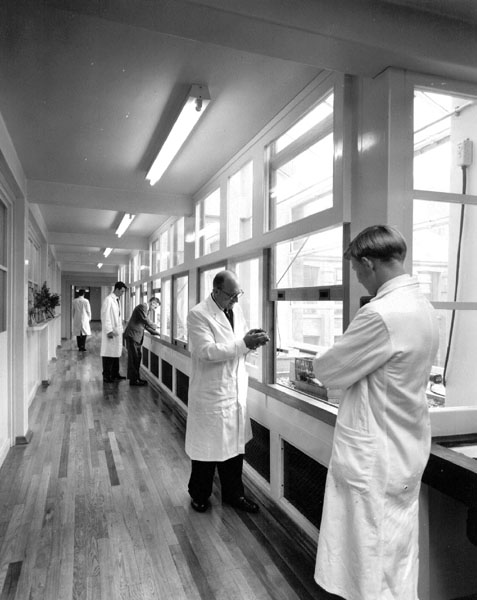
We have already looked at the bottom floor and its absolutely amazing block parquet flooring, which was not just shiny but even reflective.  Here’s the top corridor:

Here it is again and yes, you’re right to be afraid. The men in white coats have come to take you away:

And here’s a Biology class, complete with shiny floor:

Not far from there was the Library. It’s very different from today:

It’s very different even from 1986:

14 Comments

Filed under History, Nottingham, The High School

the Reverend Charles Stephens (1)

Over the years, quite a few ministers of the church have worked as Masters at the High School. One of the most memorable in recent years was the Reverend Charles H Stephens who arrived at the school in 1945. “Charlie” was a much respected teacher of Geography who served the High School well until 1978. As well as Geography, he taught at one time or another, Astronomy, Divinity, Mathematics and Modern Languages. Above all, though, he was a keen photographer who left behind him a huge number of photographs of the school, both boys, buildings and activities.

In 1990 or thereabouts, I scanned virtually all of them into the computers of the day and produced a couple of CDs of his work. I was told as my reward that I could have my own set of photographs to do with as I wished. So here we are. A quarter of a century later, I’ve finally done something to preserve his legacy in an active way.

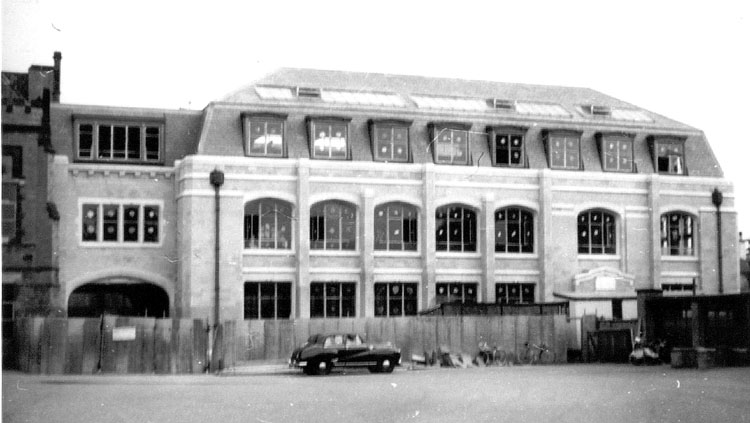
Some of the most striking photographs were taken in early 1960 when the new block on the northern side of the West Quadrangle opened for business. This was the last part of the extensive school building scheme financed by JD Player, the cigarette millionaire and philanthropist extraordinaire. Here are the new buildings, just a few days before their opening. Notice the dots on the windows so that the builders don’t smash them:

The new buildings consisted of two spacious geography rooms, two junior form rooms, and four sixth form rooms. At half term, the members of staff moved into their first ever purpose built Common Room, nowadays called the Staff Room. The rooms on the second floor came into use in the half term after this. They were originally designed to be a music rehearsal room, a prefects’ room, a general science laboratory and a biology laboratory. The latter was considered by Mr “Bill” Neville, the Head of Biology, to be the finest in the county. The new buildings were officially opened on September 22nd 1960, by the vice-chancellor of Nottingham University.

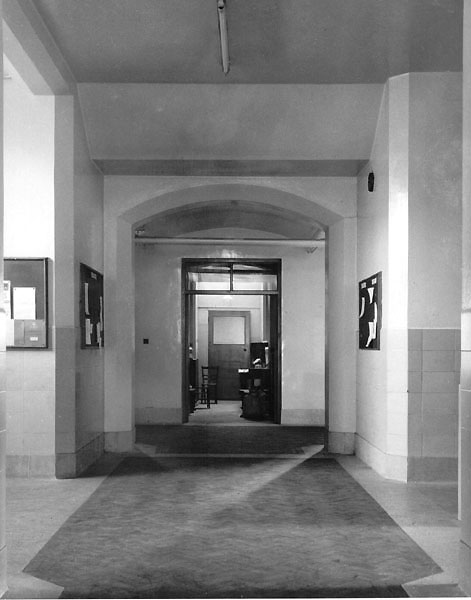
What was most amazing about this new section of the High School were the floors. I am no expert on flooring but I think they were block parquet floors and they were absolutely amazing. They were smooth, polished and reflective, a bit like me. They were quite wonderful. And the floors in the new block were not the only ones at that time. Here is the corridor on the ground floor:

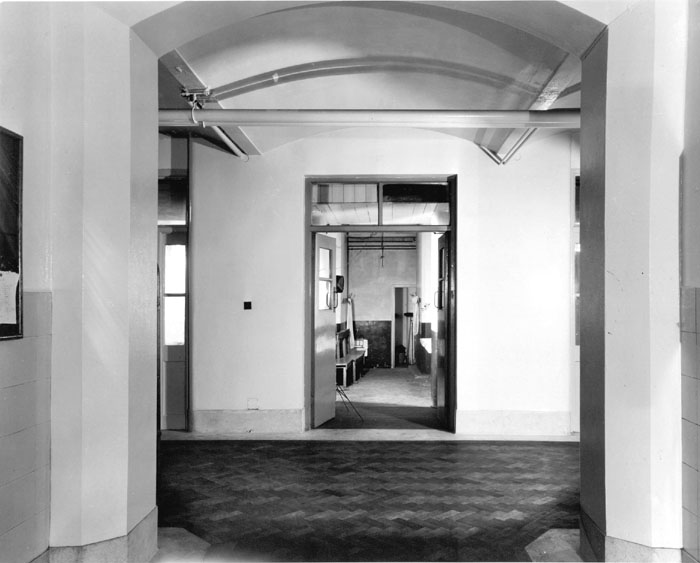
And here is the other end with what in those days was the caretakers’ room:

Here it is in glorious close-up:

Don’t forget that I did a series of four posts about the High School’s caretakers over the years. Here’s a link to the first one, and the second, and the third, and the fourth.

Here are the new geography rooms. The chairs are actually reflected in the floor:

And here is the Reverend Stephens, teaching perhaps a Year 10 or Year 11 class:


22 Comments

Filed under History, Nottingham, The High School

Staff cricket : the Golden Years (4)

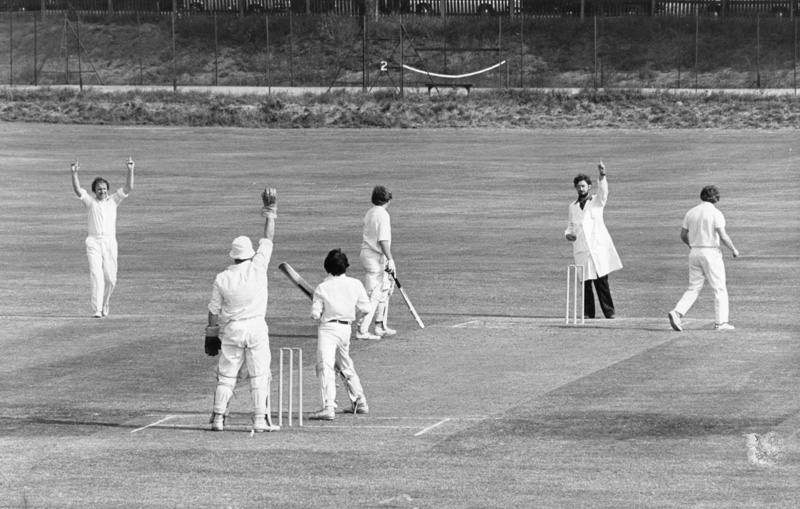
I know of only one photograph of the staff team in action. I don’t remember who the opponents were, but I believe the picture was taken by Allan Sparrow who was very keen on photography and who ran the School Photography Society which had its very own dark room in one of those tiny rooms off the very short corridor which leads to the Language Laboratory. Anyway, here is that photograph of a split second in time, forty years ago:

The batsman at this end, his name, alas, unknown, has been, literally, caught out, and the bowler, Clem Lee, makes his loud appeal, “Howzat !” to the Umpire. This is Me, dressed as Ché Guévara in a Surgeon’s outfit. On the left, Tony Slack, who, in one game he played, once hit the England fast bowler Freddie Truman to the boundary for four runs, adds his voice to the appeals. The only one not appealing is the batsman near me, who just turns around to await my decision. My raised index finger signifies “Out!”

Here’s the second photograph:

This photograph shows the staff team, I suspect, on the same summer’s evening as the previous one. In the back row, on the left, is three quarters of Chris Smith, the English  teacher who left the school as long ago as 1992:

Next to him is Richard Willan, the best Chairman the Staff Common Room ever had:

Then there is Phil Eastwood, who must be very pleased indeed to see Manchester City doing so well:

Then Bob Dickason, teacher of German and French, who I haven’t seen for a very long time. He left in 1983, to go and teach in France, I believe:

Then there’s Clem Lee, the Head of Games:

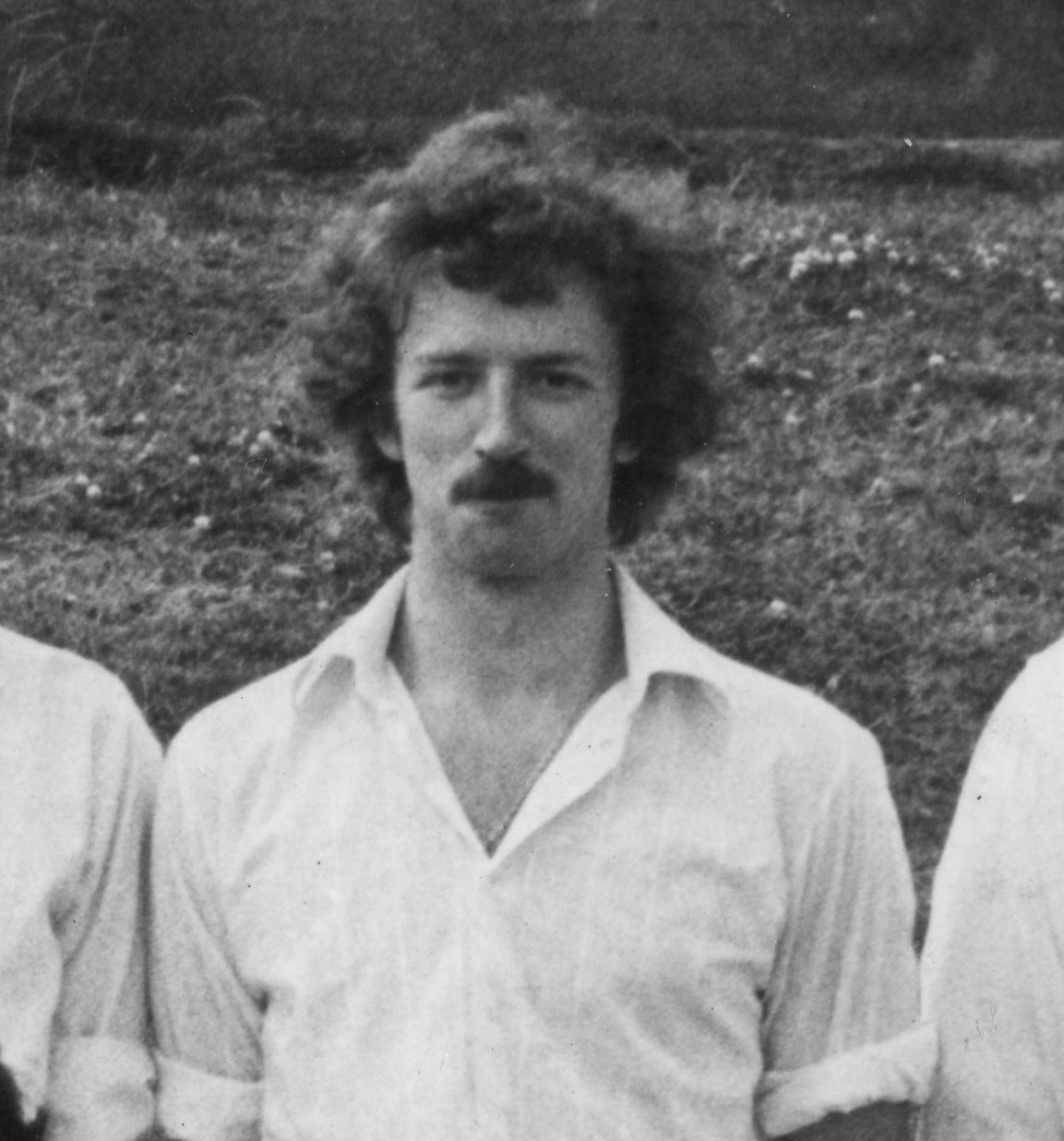
There’s Ray Moore with his hair much shorter than when he first arrived. He went to West Bridgford School, I have heard, and had unbelievable success running the girls’ football team.

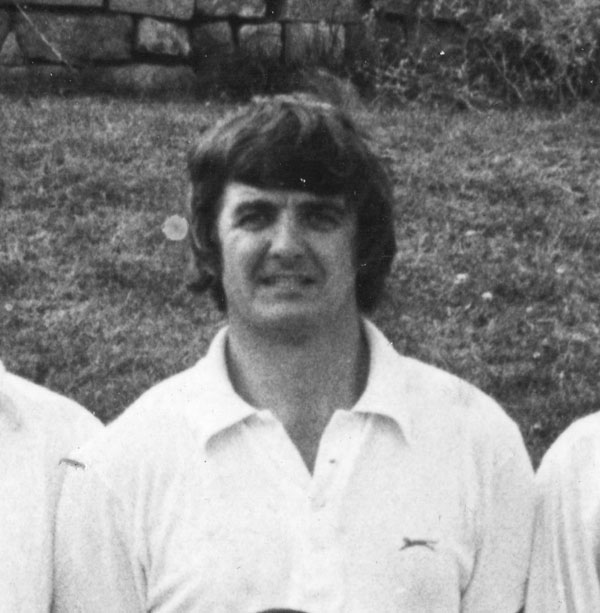
Then the best man at our wedding, Bob Howard, a friend I miss a lot and who I wish I had seen much more of over the years:

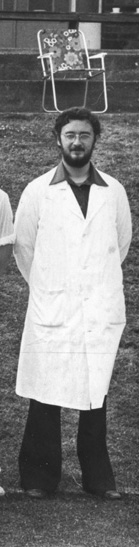
Then Me. That umpire’s coat must be the only thing I have ever worn that’s been too big for me. It also gave me the magic power to balance things on my head with consummate ease:

On the left of the front row is Norman Thompson the Head of Economics who taught at least one future Chancellor of the Exchequer:

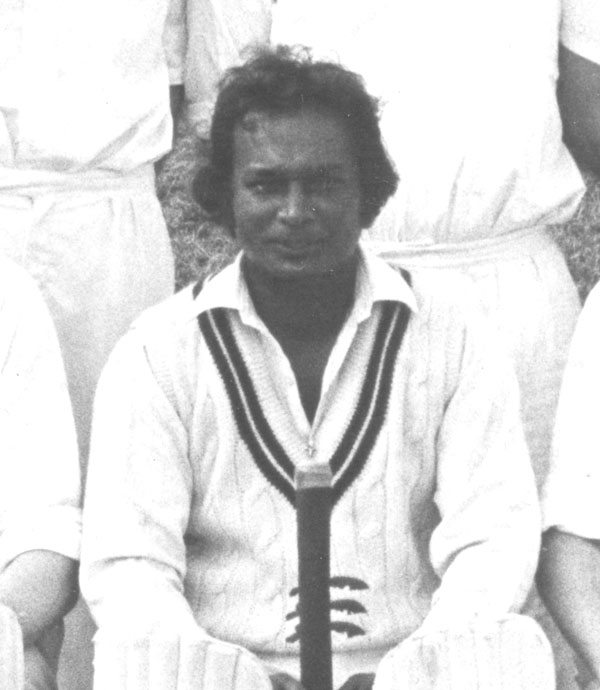
Next to him is Harry Latchman, the Groundsman and Cricket Coach. He was the only proper cricketer in the team, having played for both Middlesex and Nottinghamshire and in Minor Counties cricket, for Cambridgeshire. He was elected President of Middlesex County Cricket Club in 2015:

Then comes Tony Slack:

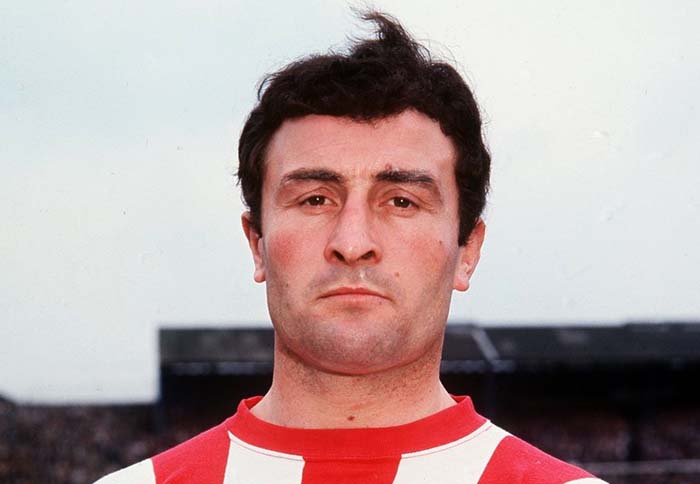
He has already appeared in a post about the First XI football team. In fact, a number of posts about the First XI football team. One. Two. Three.Tony taught Chemistry and then he took charge of the School’s computers. More impressive, he played for the reserves at Rotherham United, and in one game was personally threatened by Charlie Hurley, Sunderland’s Player of the Century:

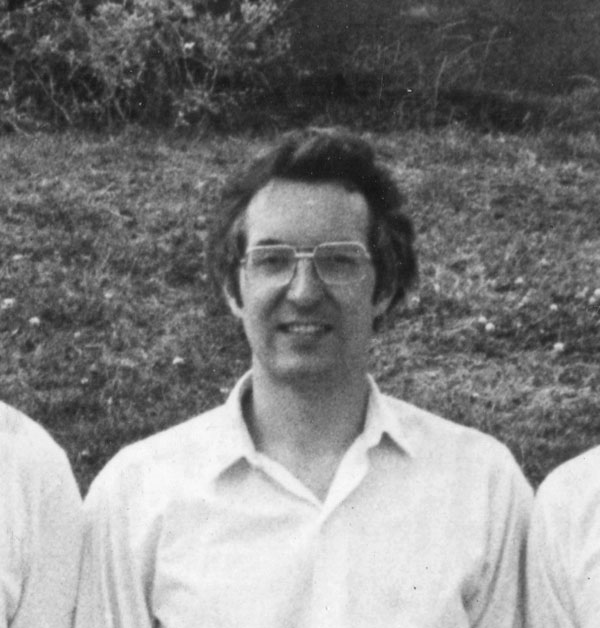
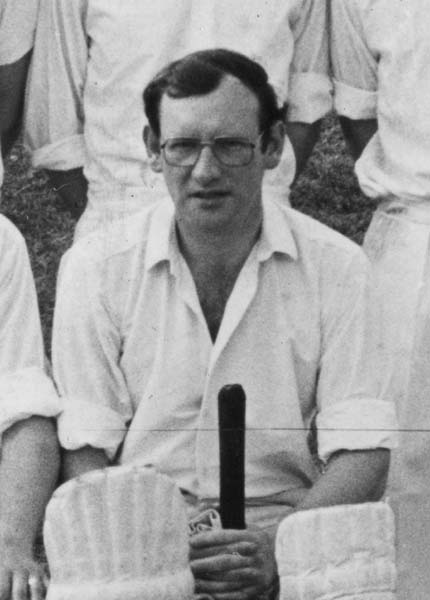
The final player is the Team Captain, David Phillips, the Maths teacher, who used to run both the Second XV and the Second XI if my memory serves me right. He worked at the High School for 37 years where he was an important rôle model for vast numbers of junior boys:

I don’t know if the staff still have a cricket team. The summer 2017 would mark their 70th Anniversary if they still played any fixtures.

22 Comments

Filed under History, Humour, Nottingham, Personal, The High School

Staff cricket : the Golden Years (3)

In a previous post of this series on the heroic deeds of the staff cricket team, I had started going through a number of episodes which are also mentioned in my bestselling book, and my Hollywood and Bollywood screenplay, “Nottingham High School: an Anecdotal History”.  If I remember rightly I had just discussed how crap I was at cricket compared to one prodigiously gifted member of the team who merely needed me to be there to do the fielding while he and the other superstars did all the batting and the bowling and showed off all their talents.

Not that I felt insulted by his words. They did not make me angry. No, Not at all.

The next mention of staff cricket in the book comes on the evening of Wednesday, June 21st 1978.
By then, the staff cricket team had two usual umpires, the young idiot Me, and the much more experienced Allan Sparrow, a History teacher. Whereas the first named umpire, Me, lived in permanent dread of having to make a decision which would upset his elders and betters by sending them back to the pavilion some 96 or so runs short of their century, the senior partner,  Allan Sparrow, true to his own wonderfully analytical character, had no such scruples.
This particular day, in the very first moments of the game, the opposition’s opening bowler managed to trap, plumb in front of the wicket, with his score still stuck on zero, a very important batsman indeed. Standing far away at square leg, the young idiot, Me, thanked the cricketing gods that he was standing far away at square leg and would not be required to make a decision. The shrieked appeal  of “howzat” died away in the quietness of the evening:

Umpire Sparrow waited for a moment. Then he raised the dreaded digit to the skies. What an angry trudge back to the pavilion for a very disappointed batsman . It was the bravest thing I have ever seen in the history of sport.

During the following year of 1979, staff cricket continued on apace, counting among its stars such sporting luminaries as Chris Chittenden, Paul Dawson, Bob Dickason, Claude Dupuy, Phil Eastwood, Steven Fairlie, Simon Jenkins, Dave Phillips, Graham Powell, Tony Slack, Chris Smith, Roger Stirrup and Norman Thompson.

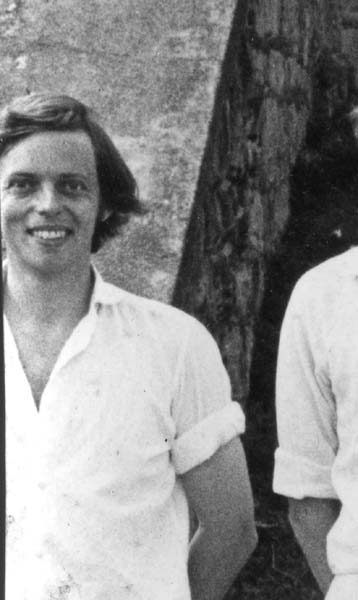
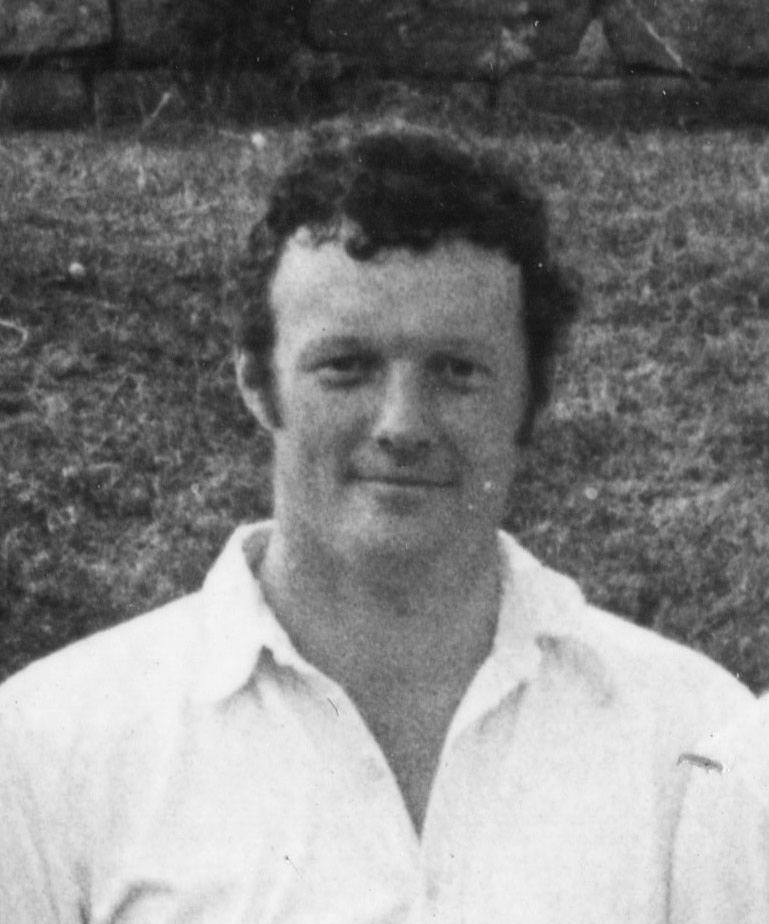
Here’s Bob Dickason, Phil Eastwood, Dave Phillips, Tony Slack, three quarters of Chris Smith, and Norman Thompson:

This slideshow requires JavaScript.

Claude Dupuy, by the way, was the French assistant, who, after living for a year in Mansfield went back to win the All-France University prize for speaking colloquial English. Chris Chittenden was a Geography teacher who worked at the School in the interval between Charlie Stephens and Bob Howard. Chris had four nationalities. His father was English, he was born in India, his mother was from New Zealand and he was brought up in Australia. Poor, poor man, he lived a healthy life only to be cut down by cancer at just 40 years of age. I will be eternally grateful to him because he was the man who organised for three of us to drive down to Wembley after school one evening to watch England-Holland at football and we all saw Johann Cruyff play at Wembley. And we saw him introduce the Cruyff turn to the world. Here’s Bob Howard:

Such was the fame of the staff team that a member of staff appointed as a teacher for the following Christmas Term actually came along to play in a number of fixtures.

This was Ray Moore, who at the time sported a fashionable Afro hairdo, unencumbered by any such refinement as a protective helmet. Here’s a picture of him a week after the game, when he’d lost that Afro:

On one occasion, Ray was facing an extremely wild fast bowler, whose main interest in life seemed to be scaring the living daylights out of opposing batsmen, with bouncer after bouncer. After a series of whistlingly fast deliveries, he finished his over with a fast, lifting ball, which actually went through Ray’s hair. The moment when Ray advanced down the wicket, shouting loudly, and waving a menacing cricket bat, was, I believe, the closest the staff team ever came to an actual punch-up.

19 Comments

Filed under History, Humour, Nottingham, Personal, The High School