Tag Archives: Nottingham Forest

Sports Day in the Victorian era

Nowadays, School Sports are held in April and can be, just occasionally, on the rainy or even the chilly side. The first School Sports I have been able to find any information about took place over two days, well over a hundred years ago…and not in April.

Instead, they were on Wednesday and Thursday, September 28th and 29th 1870, at Trent Bridge. (not for the first time, apparently). Events included the popular “High Leap with a Pole”, won by Woodhouse with a jump of 7ft 6ins, “a good jump for a man”. A total of 36 boys entered the stone gathering race, and the sack race was won by Darby, who had the bright idea of inserting a toe tightly into each corner of the sack, and then “shuffled along capitally”.
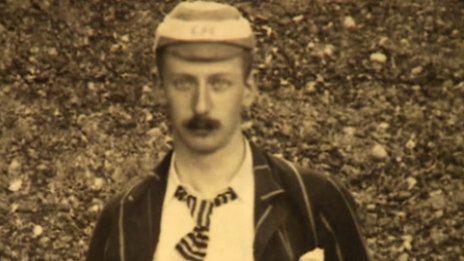
On the second day there was a “Stranger’s Race” with people not directly connected with the school allowed to compete. There was general reluctance to enter this race, because of the presence of Mr Sam Weller Widdowson, the famous captain of the Nottingham Forest Foot-ball Club:
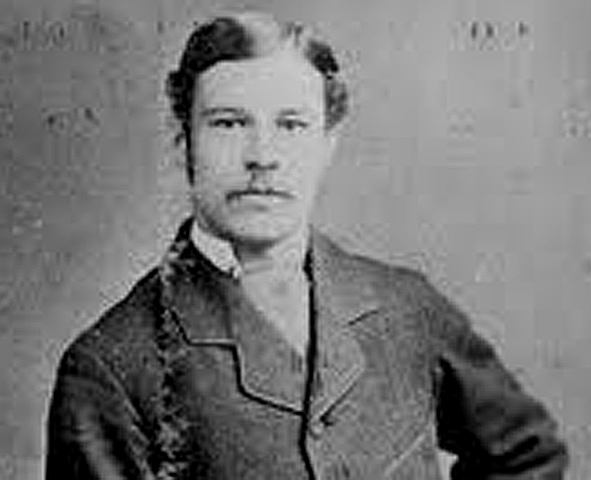
weller

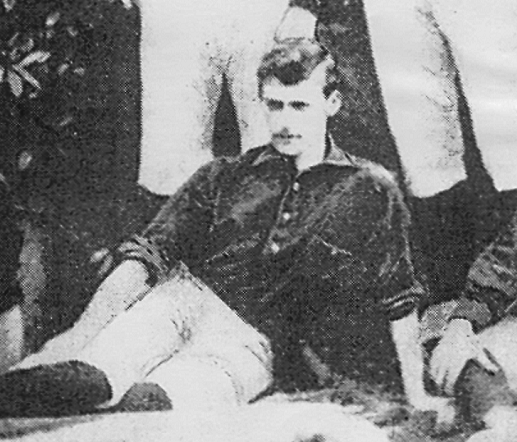
Named after the character in Dickens,  Widdowson was the inventor of the shin-pad:
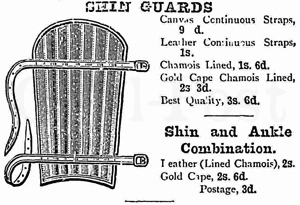
shinguards

A number of gentlemen finally took part in this race, running in top hats and overcoats. As expected, Mr Widdowson was in first place, with Mr Frederick Rothera second. There was a “blind donkey race” with large boys blindfolded, and small boys riding piggyback, giving them directions. It was won by “Purchase and Brown”.

The next School Sports I can trace were on Monday, April 8th 1878, at Trent Bridge, in front of a “numerous gathering”, entertained by the playing of the Sax Tuba Band. Events included throwing the cricket ball, a 220 yard football dribbling race, a 100 yard three-legged race, a 100 yard sack race, a one mile bicycle race, and an Old Boys’ race.

One of the highlights was the 220 yards running race when the course had been marked out wrongly. One of the eleven runners, Sulley, took the wrong turning, and “effectually disposed of his chance”. The other runners also went wrong, but because they were trailing so far behind Sulley, they were able to run back, and get onto the correct route. Unfortunately, Small was knocked over in the confusion, and eliminated from the race, which was eventually won by G.F.Chalcraft. His prize was a handsome desk, donated by the teaching staff.
In the final of the sack race, F.Bailey finished second behind “the younger Walker”, having decided not to jump inside his sack, but instead, to lie down and roll along the ground.
Most interesting, though, was the “Bumping Match”, the exact rules of which, unfortunately, have not survived. It was surely one of two scenarios. Either a huge circle was marked out by a rope, and the last boy left in it was the winner, or it was some kind of sumo type pushing contest, where boy after boy fought in round after round, until only one remained as the victor:

“The contest caused great merriment among the spectators, who greeted the overturned combatants with roars of laughter. Finally two, varying greatly in size were left in, and after a prolonged struggle, W.A.Walker, who showed great quickness and dexterity in avoiding the attacks of his tall opponent, R.E.Fletcher, succeeded in knocking the latter over the line, amidst loud applause.”

The following year, on Tuesday, April 29th 1879, again at Trent Bridge Cricket Ground, “a numerous and fashionable assemblage” was entertained by the Sax Tuba Band, under the conductorship of Mr J.Hindley. There were 22 events, including throwing the cricket ball and a 100 yards race with a Gladstone bag as first prize, presented by Sir James Oldknow. This is Trent Bridge  at the time, during a Test Match:
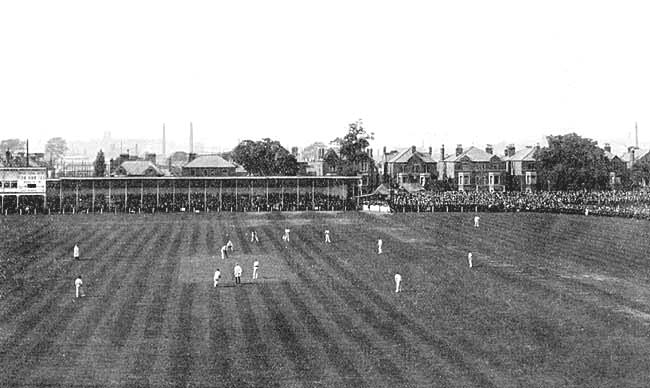
trent-bridge-cricket-ground

There was a half mile handicap race where the prize was a silver watch, presented by Captain W.E.Dennison  M.P., and the M.P., Saul Isaac.  J.E.Woolley led for nearly six hundred yards, but Barlow overcame his ten yard handicap about 120 yards from the finish, and went on to win. Woolley eventually finished third, and C.Cullen was second. The prize in the long jump was a luncheon basket, presented by the Borough Members. There was a three-legged race and a 400 yards race with only two competitors, G.B.Chalcraft beating E.H.Wells by ten yards. In actual fact, there should have been three runners for the race to start at all, but it was “run through an error on the part of the starter.” The one mile handicap bicycle race was won by A.V.Paton, and F.Bailey won the sack race. This event “…as usual, afforded great amusement.” C.Cullen won the 220 yards football race. His first prize was a cabinet Shakespeare, presented by the Dame Agnes Mellers Club. E.Thornley was doing very well until he kicked the ball out of his lane, and Cullen then went on to win.

H.R.Bramwell won the 100 yards hurdles, which was over six flights of hurdles. His prize was a writing desk, presented by Messrs J & J. Vice. In the 220 yards, C.Daft won a pair of binoculars presented by the Assistant Masters. “The most exciting race”, was the Old Boys’ race over 220 yards  won by F.F.Cleaver in 24 seconds.  At the end of the day came the “…usual bumping match and two consolation races”, won by Thornley and Butler.
Mr Charles Daft was the starter throughout, and Herr Altdorfer and Mr W.H.Bailey were the judges. The prizes were presented by Miss Lindley, and the President seconded a vote of thanks to her for her kindness. She was given a small bouquet of flowers, and three cheers by the school. Her father offered thanks for this kind gesture, and then called for three cheers for the President. With this, the day came to a happy close.
One interesting detail about the competitors in these sports is that there was a small fee payable to enter any of the events. At least one Old Boy in later life was to state that this cash payment did much to limit the number of competitors.

School Sports then seem to have died a death until, during his first term in office, in March 1885, the new Headmaster, Dr James Gow, started an Athletics Contest for senior boys. This soon evolved into a full School Sports Day. Over the years, the school magazines have given us a series of snapshots of the event has changed.

On Friday, June 29th 1888, for example, the School Sports, “…for many years in abeyance”, were revived, and were held in “very unfavourable weather” on the Castle Grounds. I am not really very sure, but I would presume that the Castle Grounds are the area of flat ground at the side of the Castle:
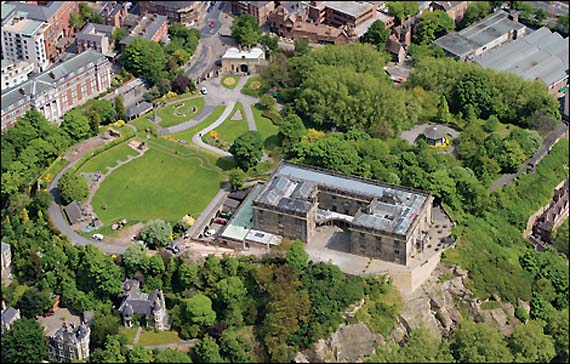
castle grouundszzzzzzzzzzzzzzzz

There was a good attendance of spectators, and among the more usual events was a three-legged race, won by W.A.Möller and C.P.S.Sanders, a sack race won by J.Blake, and a bicycle race over one mile, won by W.A.Möller in 3 minutes 45.4 seconds. F.Bramley won the “Throwing the Cricket Ball (for boys under 14), with a distance of 57 yards.
The Masters’ Race was won by the Reverend T.W.Peck, with Mr W.T.Ryles in second place, two yards behind. There was also an Old Boys’ Race which was a handicap, run over 220 yards, and a Tug of War, won by Team No 1, who defeated Team No 2 in the final. Again many prizes were in evidence, all presented by Mrs.Gow.

This staff group shows Mr W.T.Ryles in the back row, fifth from the right. His nickname was “Nipper”. His brother, Mr W.E.Ryles, “Jumbo” is on the front row, second from the left. The Headmaster, fourth from the right on the front row, is Dr Gow:

staff 1901

On the afternoon of Tuesday, June 3rd 1890, Sports Day was again held at the Castle Ground in dull and windy weather. Nevertheless, a large crowd attended, and enjoyed a day of “very fair sport”, and a selection of music played by the Nottingham Borough Police Band, under the leadership of Bandmaster Redgate. The prizes were presented by Miss Goldschmidt. Most of the events were similar to previous years including the 220 yards football dribbling race, throwing the cricket ball, an Old Boys’ bicycle race, a sack race and a whole series of running races, all of them with varying handicaps for the competitors .

The most interesting event, though, was the hundred yards Medley Handicap. In this, boys competed in a number of heats over one hundred yards, and the handicap consisted in the means by which they had to cover the distance. The methods included skipping, sack race, three legged, pick-a-back, on all fours, and, most spectacular of all, perhaps, on stilts. The final seems to have been a normal foot race, as the winner’s time was fifteen seconds.

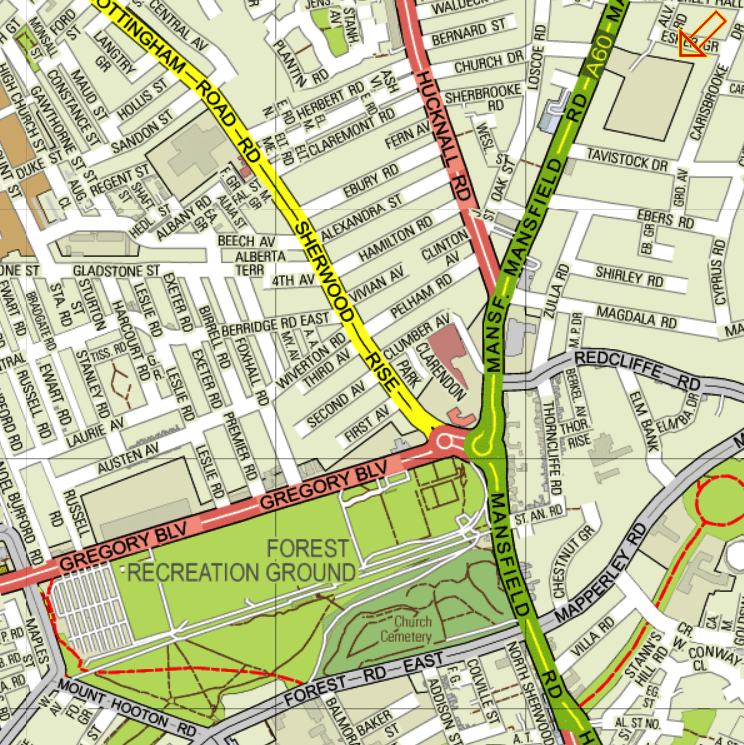
On the afternoon of Friday, March 29th 1901, the School Sports took place at the brand new sports ground at Mapperley Park. We already know how to get there. Look for the orange arrow. The High School is in the bottom left corner of the map, where Mount Hooton Road and Forest Road East meet. It is the incomplete beige rectangle which is outlined in black:
Untitled 2

A large number of boys, friends, parents and Old Boys were in attendance, but the day was spoiled by the bitterly cold weather,

“…the turf was naturally affected by the overnight fall of snow, which made the going heavy.”

Two years later, on the afternoon of Saturday, July 25th 1903, the weather was beautiful, although not too warm, and there was another large crowd,

“including many ladies, whose bright, summer dresses amidst the pretty surroundings of trees and shrubs, made the scene most picturesque”

The spectators were entertained by “the lively strains of a band, and a hospitable tea tent.”
The numerous prizes were presented by Lady Blain and events included the one mile walking race, won by B.G.Saywell and an U-11 obstacle race won by C.F.Brasher. L.W.Malton won the potato race and a tug of war was held between “The Past” (Old Boys), and “The Present” (Masters and Boys). The Old Boys were G.C.Allsebrook, W.Allsebrook, G.F.Brewill, E.Brewill, S.Hoyte and H.A.Wootton. Their opposition contained three boys, namely R.Marrs, W.Oldershaw and H.A.Watson, and three masters, Messrs Hughes, Jones and Yates. The Old Boys soon pulled the School over the line, but were found to have included a seventh member of the team, J.Johnstone (Cheats!). The result was overturned, and the School soon won a fair contest by 3-0. I could find no photographs of this event, but here is the tug of war at the 1904 Olympics in Los Angeles. I’m sure it will give you the rough flavour:
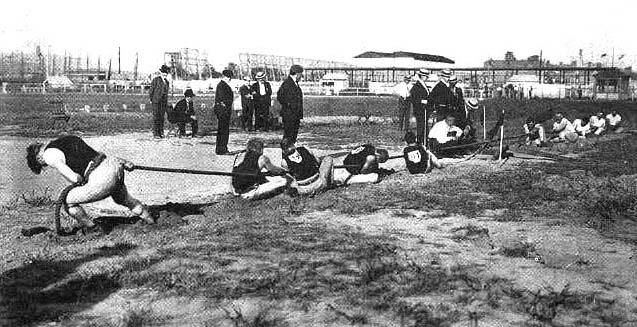
The-Olympic-1904 xxxxxxxxxxxxxxxx

On Saturday, June 24th 1905, it was very fine weather at Mapperley Park. Spectators were entertained by the band of the Robin Hood Rifles, under the directorship of Mr A.Pounder. The sports should have taken place the previous Saturday, but the rain was so torrential that this was completely impossible. Events included the usual ones, such as the 220 yards football dribbling race (R.B.Wray in 35 seconds) and the U-11 race over 75 yards (F.C.Tonkin, 10.8 seconds). There was a one mile bicycle race won by H.E.Mills (3 minutes 9.6 seconds) after the other two competitors, S.S.Parkinson and P.H.Hart collided with each other and both fell off. H.E.Mills  also won the potato race this year. J.H.Simpson won the U-11 obstacle race where competitors had to crawl through barrels and under pegged down clothes. The event created “much amusement”. The Old Boys won the tug of war against the Masters & Boys.

As war clouds slowly gathered, on the afternoon of Saturday, June 15th 1912, the Athletic Sports were held in splendid sunshine, again at Mapperley. The attendance was very large, and great interest was generated. Harold Ballamy ran 100 yards in 10.6 seconds, a marvellous performance on grass and wearing, presumably, ordinary pumps. There was again a football dribbling race, won by R.L.W.Herrick. This latter event was by now the only survivor of the many unusual and interesting events which had previously characterised the Victorian and Edwardian sports days. Now, virtually every event was a serious sporting trial.

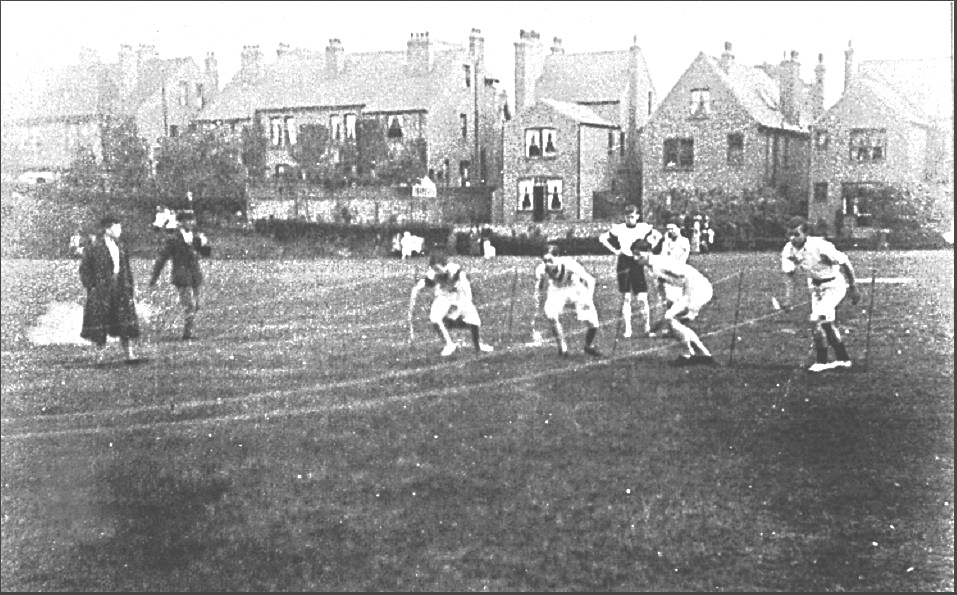
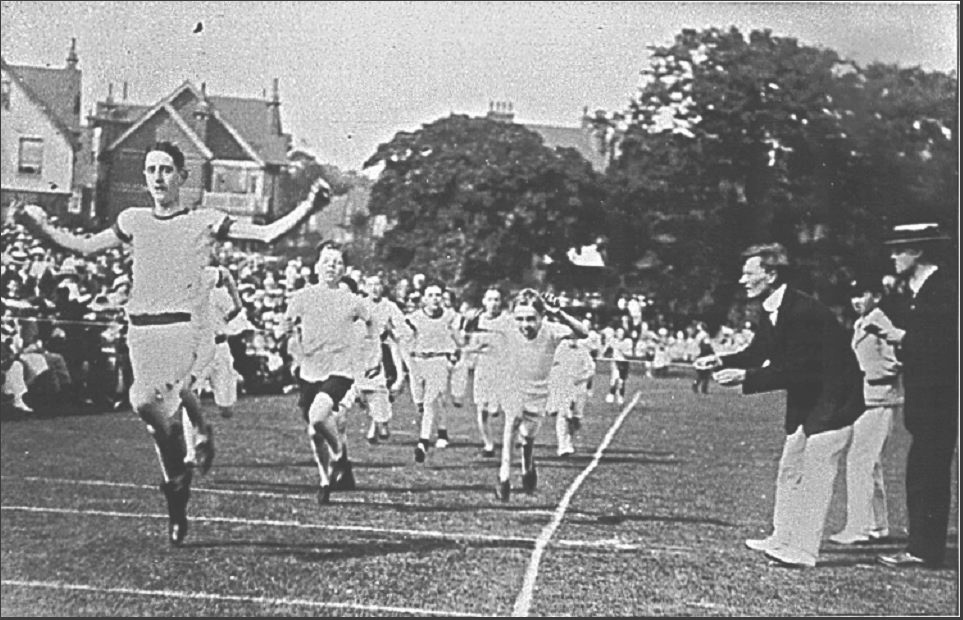
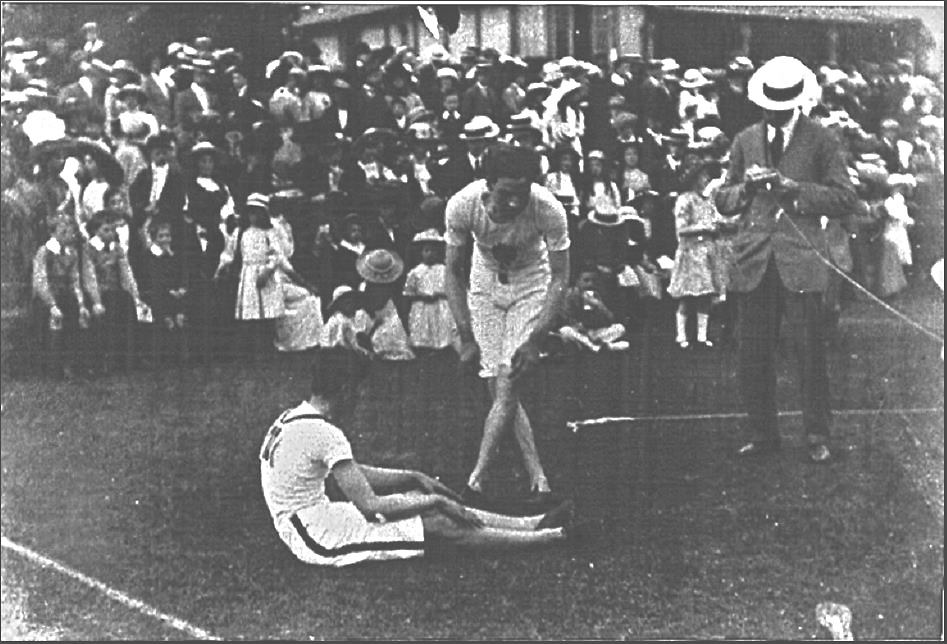
The following year, 1913, was, of course, the very last Sports Day before the thunderstorm that was the Great War carried away the best of this talented generation of young men from the whole of the continent of Europe. Ironically, it was this bittersweet occasion that has bequeathed to us the only photographs that we have of a Sports Day of yesteryear. It is such a pity that they are of comparatively poor quality. This year, of course, marked the 400th anniversary of the school and both this day of athletics and the photographs themselves came as part of this occasion. Here is the huge crowd:
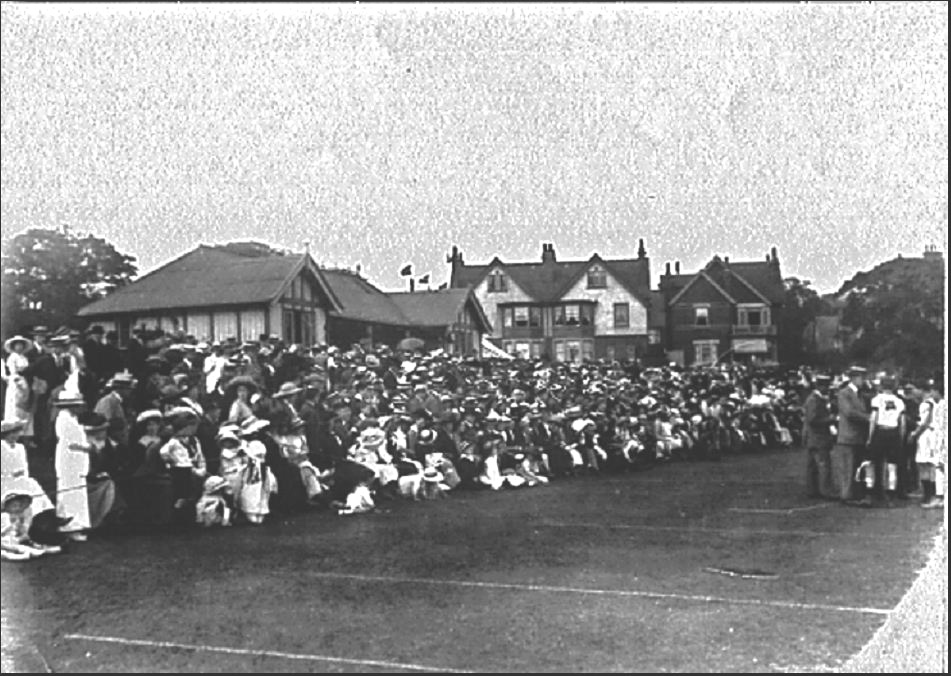
the crowd 1913

Here is the start of a race:

start of race

…and the exciting finish:

end of race 1913 handicap size runners

These are two exhausted athletes:

sports day 1913

The Headmaster, Dr Turpin, is the gentleman in the very middle of the picture, as the prizes are distributed:
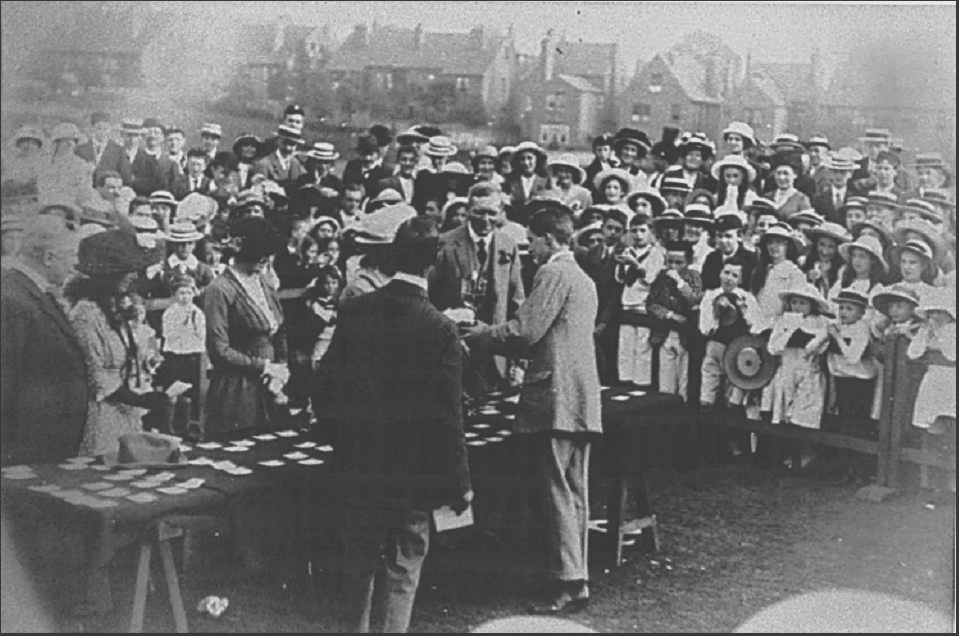
give out prizes

And here he is again, this time making a speech. Look at the policeman and how impressed the little boy is:

prizes 1913

It should still be possible to establish the exact location of the majority of these events. I am sure that the all large Victorian houses in the background will still be there.



8 Comments

Filed under History, Nottingham, The High School

School Gardener wins F.A.Cup Medal !!!

During the early months of the Easter Term of 1925, the long serving and popular School Gardener, Mr Kidd, was taken seriously ill. He had worked at the High School for thirty-seven years, and “must have been seen by thousands of boys at his work in front of the school.”  Mr Kidd was not well enough to carry on with his job and, poor man, was eventually to succumb to his illness during the early part of the Summer Term.  He was duly succeeded as the School Gardener by Mr Wragg, whom the “Nottinghamian” called “a footballer and cricketer of great prowess”.

Mr Wragg was paid £3 per week, which was a decent wage in 1925. At the same time, my own Grandad was more than happy to earn £2.20 as his weekly wage in a clay works in South Derbyshire. I have done quite a lot of research about who exactly Mr Wragg was.  Of course, nearly a century after the event, it is impossible to establish the truth without the slightest shred of doubt whatsoever, but I am now 99.9% certain that the High School’s new Gardener was William Arthur “Willie” Wragg.

williamwragg

Willie Wragg was born in Radford, Nottingham in 1875, and initially played local football for Notts Olympic, Sutton-in-Ashfield, Newstead Byron and then Hucknall Portland. He was soon signed by Nottingham Forest and played for them as a professional footballer from 1896-1899. Appearing usually as a left-half, Willie made 48 League appearances in the First Division for Forest and scored one goal. Overall, he played 58 times for Forest in all competitions. This photograph shows the home of Nottingham Forest, the City Ground, during the 1898-1899 season:

City-Ground-1898

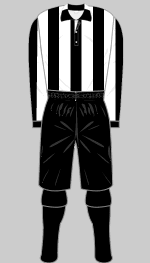
Willie made his début at home to Liverpool on November 28th 1896 in a comfortable 2-0 victory. He went on to play a further twelve times in the First Division that season, with a further four appearances in the F.A.Cup. He scored a single goal in a friendly match, a 2-1 victory over Dundee United at Crystal Palace. The following season of 1896-1897, Willie Wragg made 24 appearances in Division One and six in the F.A.Cup. He scored a single goal in the First Division in a 1-1 draw at home to Sunderland. The next season of 1897-1898 was his last at Forest. He played 13 times with most of his games coming as a left fullback. His final appearance came as a left half in a 0-0 draw at home to local rivals Notts County in front of a crowd of some 16,000 spectators. Here is Notts County’s magpie kit on that long ago Saturday, September 4th 1897. The crowd was a very respectable 15,000 spectators:

notts_county_1890-1900

As far as the boys are concerned the School Gardener can be a rather anonymous figure, working away quietly at the front of the school, a man whom the majority of pupils would not even notice. They were probably unaware of his lengthy pedigree as a professional footballer, but many hundreds of those unknowing little boys would have given a great deal to get their hands on what Willie Wragg had won during his three years at Forest, namely a Winner’s Medal from an F.A.Cup Final.

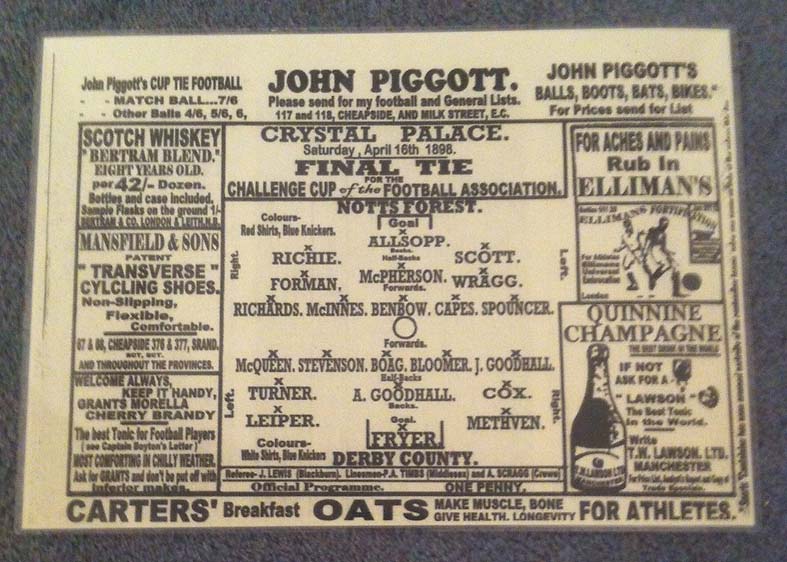
Willie had played at Crystal Palace on April 16th 1898 in front of a crowd of 62,017 spectators, when Nottingham Forest beat Derby County, Steve Bloomer and all, by three goals to one. Here is the front of the programme:

programme

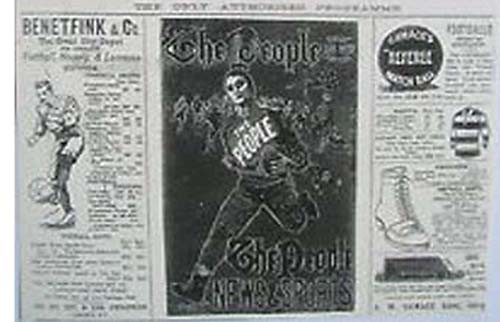
And here is the back:$(KGrHqFHJE4FGNV2GFfCBRonbILDSQ~~60_35

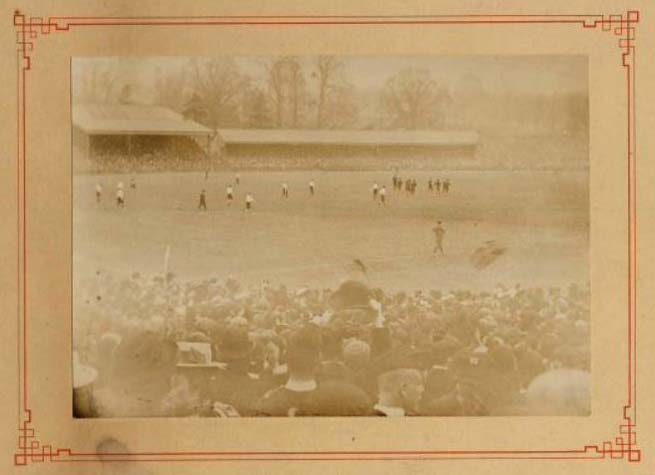
From his position as a left-half, Willie actually created Forest’s first goal, for it was from his free kick on the left near the touchline, that the ball eventually reached Arthur Capes who hit  the back of the net through a crowd of defenders.  Here is a picture of the game in progress…IMAGE_386

And here is a second photograph from a little further back…

Capture

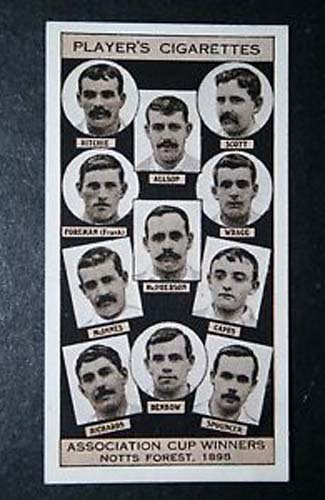
Later in the game, Wragg aggravated an injury suffered in the first-half, and, in the days before substitutes, was forced to move out on to the wing, not taking much further part in the game.That did not stop his appearance on the souvenir cigarette card…

$_35

Willie then left Forest, to go and play for Leicester Fosse in the Second Division. He spent two seasons at Leicester, making 50 appearances and scoring four goals. He was perhaps a little slower now and played at full back. Willie also became the club’s free kick specialist. He went on to appear just once for Small Heath (later to become Birmingham City), but he was unfortunately unable to displace George Adey from the team. His footballing career then rather petered out as he played for Watford in the Southern League and then Hinckley Town in the Midland League. His Football League career began again with Chesterfield Town (20 appearances, no goals) before a final return to non-League football with Accrington Stanley, Doncaster Rovers and finally Brighton & Hove Albion. Overall, Willie Wragg had made 119 appearances in the Football League.

Personally I believe that Willie Wragg may well have acquired his job as School Gardener at the High School through his past career at Nottingham Forest. At the time of the Cup win in 1898, the club’s then Chairman was Mr William Thomas Hancock, a prominent Old Boy of the High School, who had retired as Chairman of Nottingham Forest in 1920, only five years before Willie Wragg was appointed as the School Gardener. In 1925 Mr Hancock was still a Life Member of the football club.

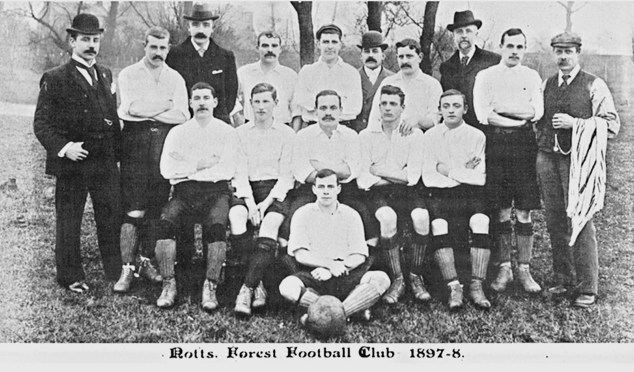
Most romantically of all though, perhaps ex-Chairman Hancock still remembered his day of glory when he posed on the Official Photograph of the F.A.Cup Winners of 1898 and knew exactly who had done more than his share to make possible that unique and unrepeatable thrill of being a winner. Mr Hancock is the gentleman third from the left on the back row.

forest team

Indeed, in 1898, when this photograph was taken of the players in the victorious team at Crystal Palace, how proud Mr Hancock must have been to stand with them:

back row: H.Hallam (Secretary), T.McInnes, Mr W. T. Hancock (Chairman), A.Ritchie, D.Allsop, unknown, A.Scott, unknown, A.Spouncer, G.Bee (Trainer)

front row:  C.H.Richards, Frank Forman, J.McPherson, W.A.Wragg, A.Capes

sitting:  L.Benbow

The photograph is, in itself, quite interesting, because it is one of two very similar photographs. In one of them, Forest posed with the cup, and in the other, they were photographed without it. The reason for this was that the crowd for the F.A.Cup Final was 62,000 spectators and almost all of them invariably invaded the playing area after the end of the game. This made it quite impossible to take a proper photograph of the winning team. And certainly the crowds do look huge and they seem to be pretty much left to their own devices…

This slideshow requires JavaScript.

The usual convention, therefore, was that both teams were photographed before the match, in conditions of complete calm, the photographers taking two pictures of each, one as victors with the trophy, the other as losers without it.  Afterwards, the two irrelevant photos were destroyed, although this has clearly not happened in this case.

It is also known that in this particular year, enormous problems were experienced with Forest’s red shirts and blue shorts, which did not show up particularly well in the comparatively dull weather conditions.

forest kit

The photographers therefore asked them to pose in Derby’s kit, wearing white shirts and black shorts. Perhaps this is why they look especially miserable, although, of course, Forest were certainly to have the last laugh.

Whatever the reason for Willie Wragg becoming the School Gardener, though, there was certainly an enormous connection between the football club and the High School. Almost forty Old Nottinghamians had already played for Forest, especially in the 1880s, and many of them had represented the club in important cup games, including semi-finals. By 1925, they were all just of the age to occupy important administrative posts in the club and certainly Tinsley Lindley had been a Committee member at Forest.

tinsley

Another familiar face at the City Ground was an Old Nottinghamian who had made his England début alongside Tinsley Lindley in a 6-1 victory over Ireland in Belfast. This was John Edward Leighton, called “Teddy” when he was at school, or, when he played for Forest, “Kipper”, because of his incredible ability to fall asleep in the dressing room before games. Indeed, old Mr Leighton was to fall asleep for the very last time at the City Ground, on the afternoon of Saturday, April 15th 1944, at the age of seventy-nine after a fatal seizure. His sudden demise occurred during a Wartime Cup tie between Nottingham Forest and Northampton Town, a fixture in which the Reds were eventually to triumph by 1-0. Here is “Kipper” though, on a better, and younger, day, sitting with all his pals, it is thought, in the Church Cemetery on Forest Road. They are all wearing the same bright scarlet shirts, and they are universally known as “The Garibaldi Reds” One day they will win the European Cup. Twice.

teddy

9 Comments

Filed under Derby County, Football, History, Nottingham, The High School

“Where are the snows of yesteryear?”

Over the centuries, the weather can often be extreme, and some amazingly strange things have happened. In 1110, nearly a thousand years ago, Nottingham experienced a terrifying earthquake. Bizarrely, the River Trent dried up for several hours, presumably as it drained into, and then eventually filled up, a huge new crack in the ground that it had created somewhere upstream.

In the Nottingham of 1682, extremely low temperatures lasted from September until February of the next year. Shortages of coal, wood and food were caused by difficulties in the transport system, and  the fields, roads and rivers were all frozen up. The Trent, for example, was completely impossible to navigate throughout the entire period of the freeze.

It was equally cold in 1855 when a cricket match was played on the frozen River Trent. The victors roasted, and ate, the greater part of a whole sheep without the ice either melting or giving way. When the thaw set in, an iceberg weighing many tons was unleashed in the river and it destroyed a bridge downstream when it crashed into it.

6419523017_ebf7e7e31c

A local solicitor, William Parsons, recorded the weather’s outrages in his diary:

“In 1814, we had so severe a frost as to freeze the Trent over, the first time I believe. It continued 16 weeks. The Trent was then so frozen that a fair was held and oxen, sheep and pigs were roasted.”

In 1838, the River Trent froze over at the beginning of the year. William’s entry for January 20th reads:

“The frost has now continued about twelve days but with greater severity than is remembered. Many thousands from Nottingham went to see the Trent today. The frost continues extremely severe. The Trent this afternoon is now frozen completely over and I was sliding upon it just above Trent Bridge.  I shall visit it tomorrow again it being of rare occurrence to be frozen. The snow continues upon the ground about six inches deep. My hands are very severely chapped that I am now writing in kid gloves”.

He described the river as:

“in that state frozen it appeared like a frothy, foaming river of snow. Many people were crossing on the ice. I walked down to the bridge and crossed the river just above it where numbers were also winding their way through projecting masses of snow covered in ice. The river was more rough and picturesque in this part than in any other.”

The most charming thing about William’s diary is his great honesty. As regards the consumption of alcohol in very large quantities, he was a man many years before his time:

“Time worse than wasted, money spent, health injured, myself debased! Let these days of drunken, senseless riot be remembered only as incitements to become a rigid teetotaller”.

We’ve all been there.
6419523525_986f696990

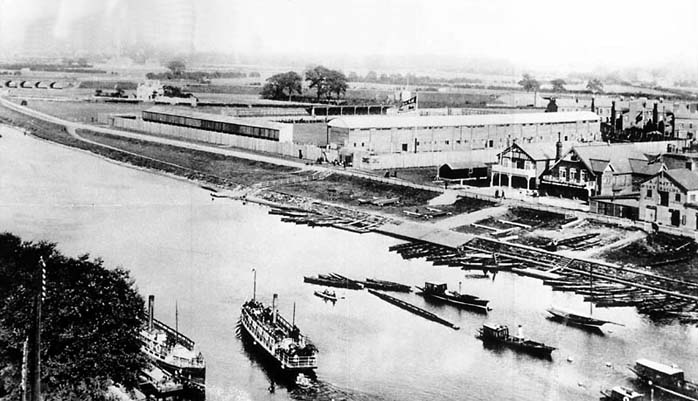
The River Trent was a very different river in those days and that is why it used to freeze fairly regularly during exceptionally cold weather. There were, of course, no power stations releasing huge quantities of warm water which might increase the natural temperature of the river, but that is not the most fundamental reason for the change. Nowadays, the waters of the Trent have been for the most part  tamed and confined firmly in great ramparts of concrete. Because of the way in which the river has been turned into a giant canal, it is now much deeper and fast flowing than it used to be. The edges of the river do not extend outwards in leisurely fashion into marshes or shallow ponds with very little flow. The modern Trent no longer stretches, as it did in primeval times, from the sandstone cliffs south of St Mary’s Church for many, many hundreds of yards into present day West Bridgford. And the old wide river, of course, was a shallow, more slow flowing river, the kind of waterway that was much more likely to freeze in severe weather.

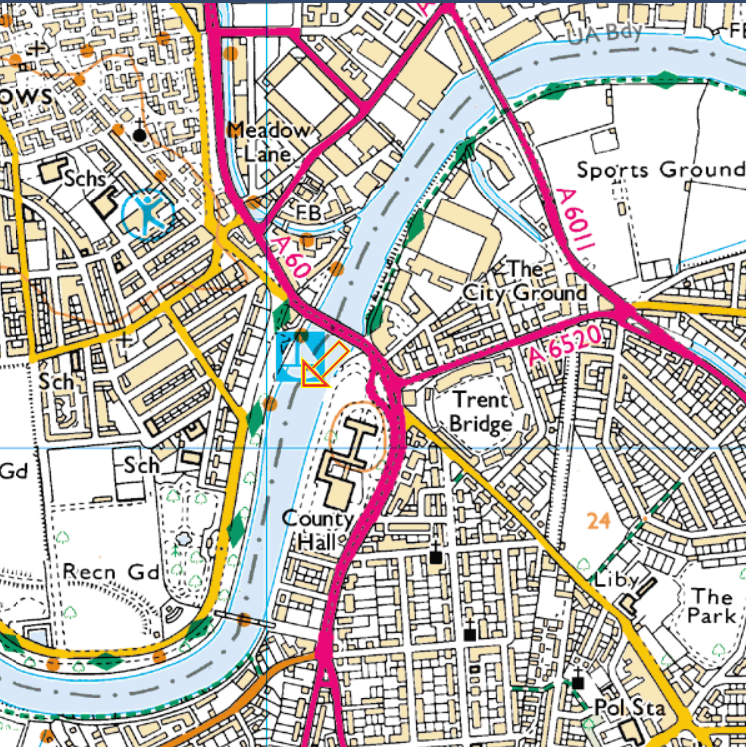
St Mary’s Church is in the top left of the map, near to the word “Museum”. It is represented by a cross and a square joined together. Trent Bridge is indicated by the orange arrow, and the southern edge of the waters centuries ago would have been well to the south of the present day B679 (bottom left of the map) or the Trent Valley Way (top middle right of the map).

old trent bridge

In those ancient of days, when the river was so very much wider, the only safe crossing, either on  foot or on horseback, was across the band of harder rock where Trent Bridge now stands.

images8WR58W3V

On January 16th 1892, on a “piercingly cold” Saturday, Nottingham Forest played Newcastle East End at the City Ground. When the crowd arrived at Trent Bridge, they were surprised to see “skating in progress on the old course of the River Trent.”  Because of the recent introduction of the penalty kick, the frozen football pitch had some new markings, which in this case were made of broad strips of black soot. Newcastle changed from their normal crimson shirts into black and white stripes. Hopefully, before the game, Old Nottinghamian Tinsley Lindley, Forest’s centre forward, was able to walk across the Trent to the game, just like Brian Clough used to do.

NTGM006720

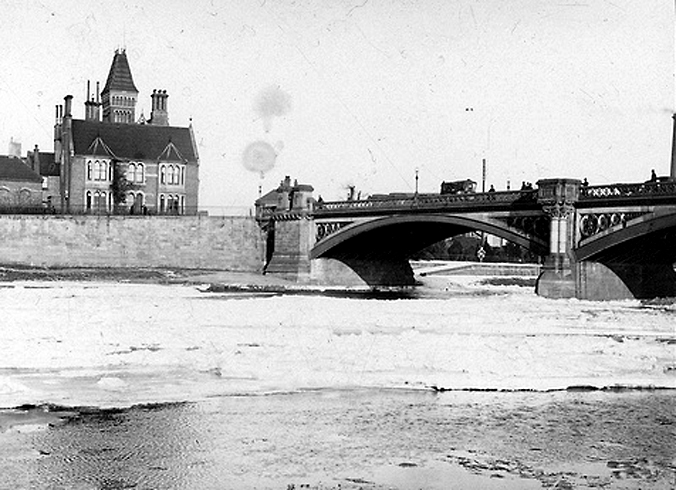
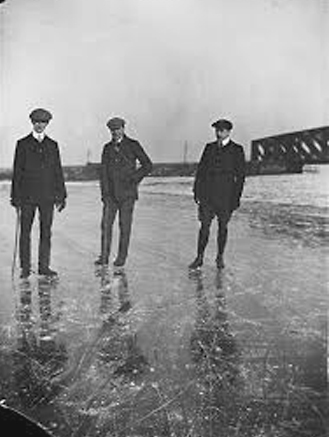
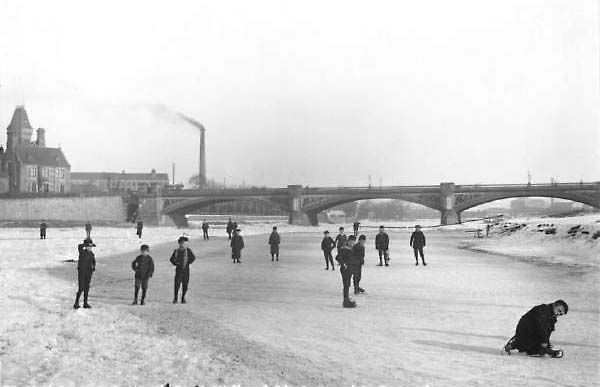
Three years later, in 1895, the river froze for the last time. Again, the region’s economy suffered. Numerous tributary rivers smaller than the Trent were also frozen, and many jetties and warehouses became unusable. This caused huge job losses in local industry.

MS 258/3

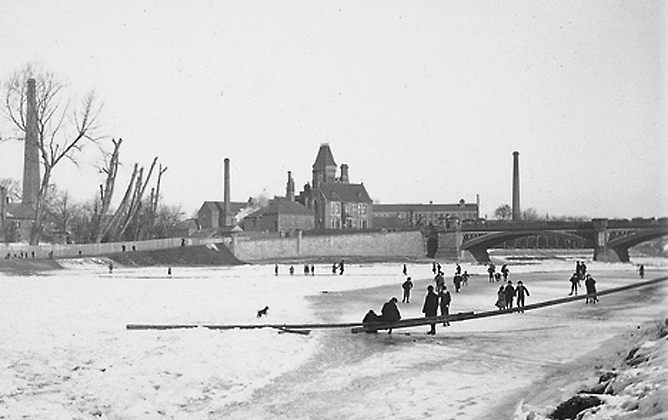
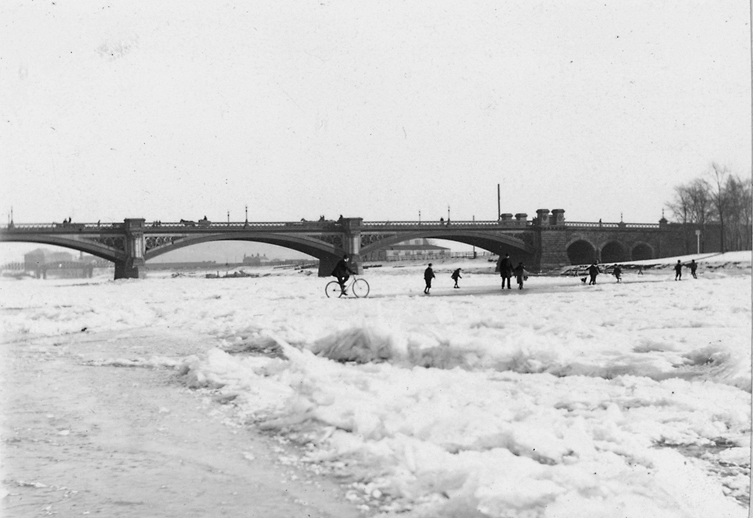
The river was caught in this devastating frost for almost a fortnight.  Skaters were able to venture onto the safe and solid ice over many miles of the Trent’s length. The ice was thick enough to allow a hockey game between teams from Newark and Burton-on-Trent to take place on a pitch somewhere upstream from Averham Weirs.

Here a huge crowd of boys are standing on the thick ice. Everybody looks very happy, but there were several fatalities, as people contrived to find excessively thin ice to stand on. Lady Bay Bridge can just be seen through the arches of Trent Bridge.

freezes caption 1

And not a scarf or a pair of gloves in sight. Kids were tough, and Health and Safety hadn’t even been thought of yet.

The photograph above was taken from opposite the West Bridgford embankment, to the south of Trent Bridge, near to the present day County Hall. Look for the orange arrow:

county hall

In places the extreme frost, the most severe in living memory, penetrated into the ground so deeply that it froze the tap water in the mains. Ordinary people suffered greatly and many had no water supply whatsoever, a parlous situation which was to last for several weeks. To overcome this most basic of problems, stand-pipes fitted with taps were set up at various places in the streets, and buckets could be filled up there. January and February of 1895 was a time of difficulty and danger for ordinary people and those who survived it were to remember it for the rest of their lives.
caption 2

In the photograph above, a fire can be seen burning against the bridge, one of the many which blazed happily on the surface of the ice. The river’s rate of flow is reduced by the ice floes so much that it is almost reminiscent of a river during a drought.

During these bitterly cold winters at the turn of the twentieth century, my grandfather, Will, who had emigrated to Canada around 1905, saw Niagara Falls, for the large part frozen, on at least one occasion, this postcard dating most probably from 1911.

naiagara

2 Comments

Filed under History, Nottingham, Science, Wildlife and Nature

This sepulchre of crime

Today is the eleventh day of the eleventh month, a date which, in this country is celebrated, if that is the right word, as Remembrance Day. In the United States I believe that it used to be called Armistice Day but is now renamed as the more inclusive Veterans Day. I always feel rather guilty at this time of year because I have never been able to see the “First World War”, or what we used to be able to call,  unfortunately, “The Great War”, in any really positive light. I am now of such an age that in earlier years I was able to speak personally to at least two veterans of the Great War, both of whom were able to give me their highly critical points of view.
It is not my intention to offend anybody by what I say in this blogpost, but it has always been my firm conviction that there are fundamental truths about the Great War which are always quite simply ignored because they are so unpalatable, and it is far more convenient just to forget them. Because of this, I would fully concur with the writer whose article I read in a newspaper recently, who called “The Great War”, “ineptitude followed by annihilation”.
I have never been able to see The Great War as anything other than the story of, literally, millions of well intentioned, patriotic young men whose idealism was taken advantage of by older men of a supposedly better social class, but who were in reality buffoons who signed treaties, and then declared wars which other people had to fight. And when the conflict itself was fought, the way in which it was carried out guaranteed unbelievable levels of casualties, most of which as far as I can see, were considered as merely inevitable by the top brass as they enjoyed constant  five star cuisine in their châteaux five or six miles behind the lines. In the trenches the average life expectancy of the ordinary soldier was about six weeks. An average of at least 6,000 men were killed every day, as the two sides fought over an area about the size of Lincolnshire, or Delaware, or half the size of Connecticut.
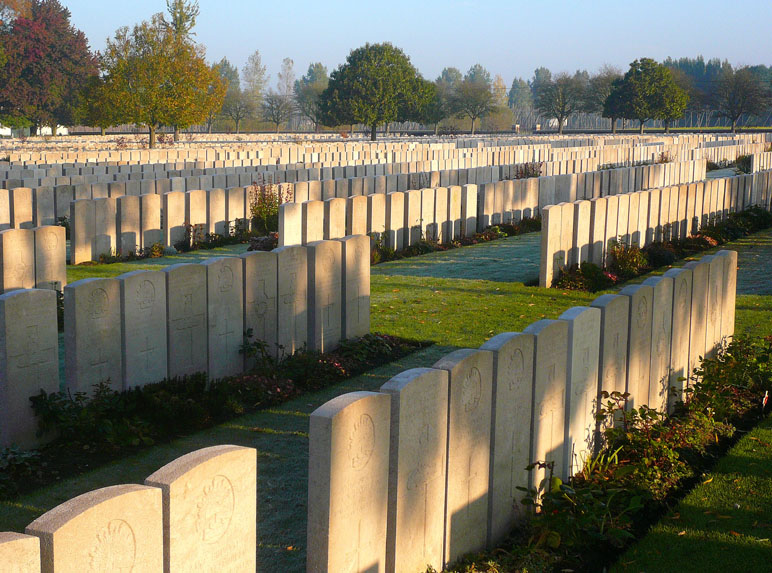
You may think that I am being appallingly cynical, but I have always seen these young men as having been robbed of their lives for little real purpose, victims who, if they had been given the choice, would have ultimately rejected a government gravestone in France or Belgium in favour of an ordinary life in their own home town or village, with a wife and children and all the usual cares and happiness which we now, a hundred years later, see as a basic right. Most of all, I would not take particularly kindly to criticism of my point of view from anybody who has not been to visit the cemeteries of the Great War which are scattered in great profusion across the areas where the battles took place.

P1090541 zzzzzzzzzzz

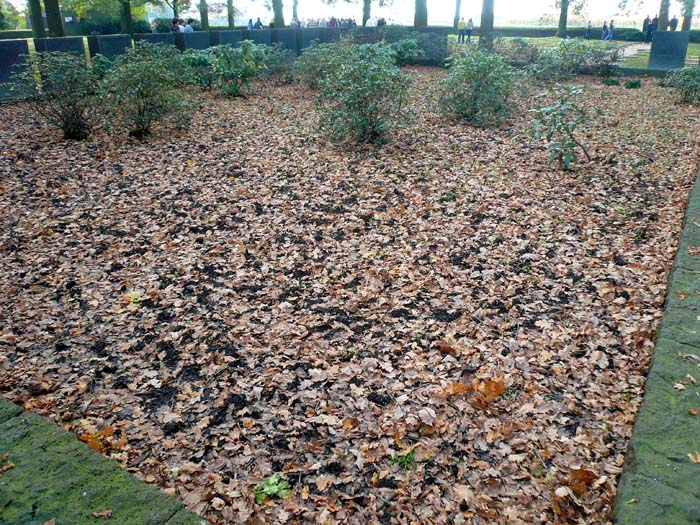
This piece of land is perhaps as large as a medium-sized house with a medium-sized garden. It contains the remains of just fewer than 25,000 men. They were for the most part killed in the very first few weeks of the war, when, having joined up straightaway so that they didn’t miss any of the excitement or the glory, they were worried in case it was all over by Christmas. A very large number of them are now known to have been university students, who were soon to find that war had its negative side. At least one of these young men is not forgotten, though.Here is a little remembrance offered to his brother, Friedrich Stieme from Halle, who was killed in 1915.

P1090547zzzzzz

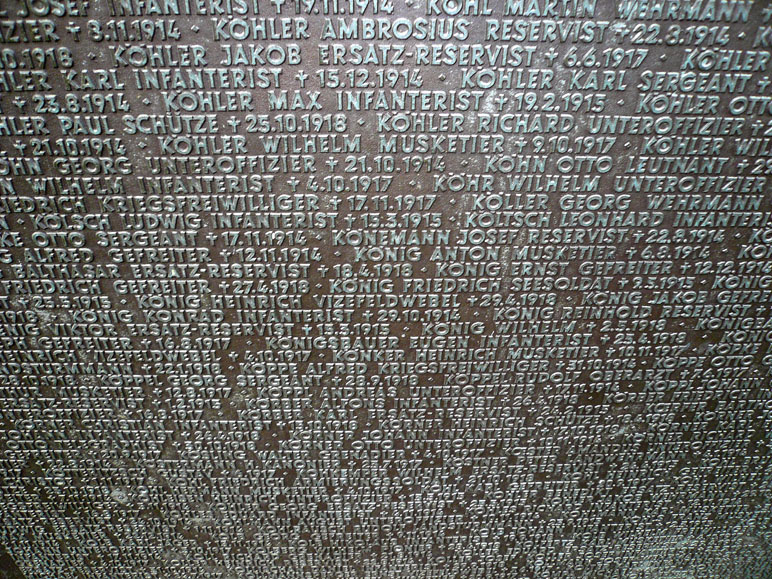
Here are the names of just some of the young men who are buried in that plot of land.

P1090571

Here are the names of some British and Commonwealth troops. They are recorded in enormous number on the Menin Gate in Ypres as the soldiers who were killed in fighting around the Ypres Salient and whose graves are unknown. There are 54,896 of these men and they were killed before August 15th 1917, a date chosen as a cut-off point when the people who designed what Siegfried Sassoon  called this “sepulchre of crime” suddenly realised that they had not built the monument big enough for all the casualties to be recorded. These, of course, are just the men with no known grave. If every death is counted, then the total Allied casualties exceeded 325,000.(the population of Coventry or Leicester). German casualties were in excess of 425,000.(the population of Liverpool)

P1090628

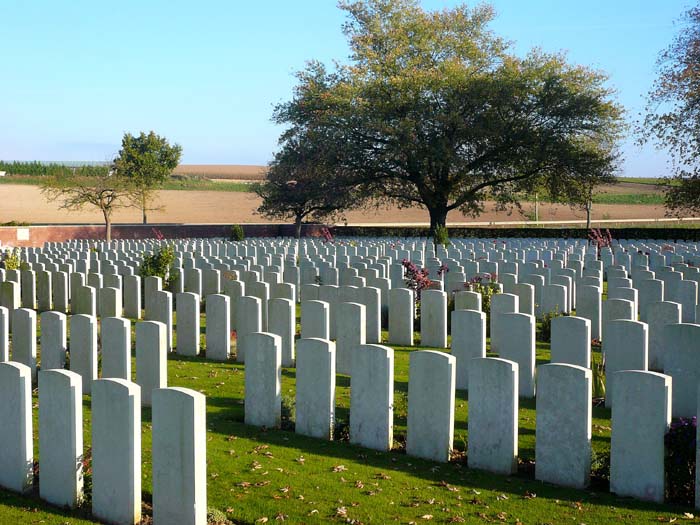
This whole area is dotted with cemeteries whose names, like this one, I have now forgotten. Some of them have just twenty or thirty graves, whereas some of them have a number that would take you a very long time indeed to count.

P1090669 zzzzzzz

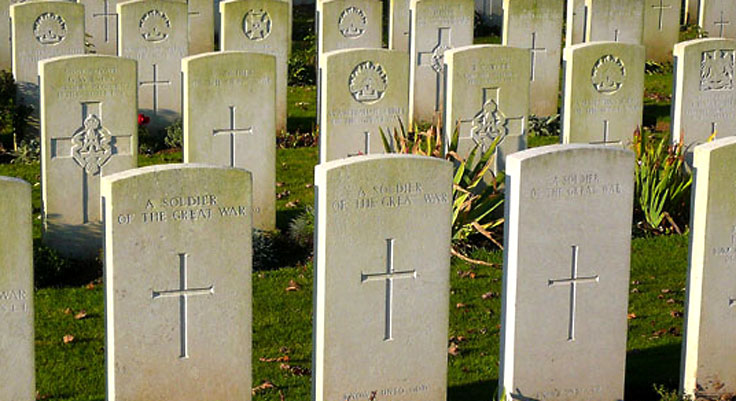
Too many of these men were unable to be identified because the British Army would not pay for their soldiers to have metal dog tags. The soldiers’ dog tags were made of leather, so that if their bodies remained in the wet ground for very long, the dog tags would rot away. This is why so many of them can be identified only as “A soldier of the Great War”. In addition, the fact that sixty per cent of casualties on the Western Front were caused by shellfire often made identification of casualties difficult. Notice too how nearly all the graves are covered in green slime, almost inevitably, given the rainfall totals in north western Europe.

P1090673333333

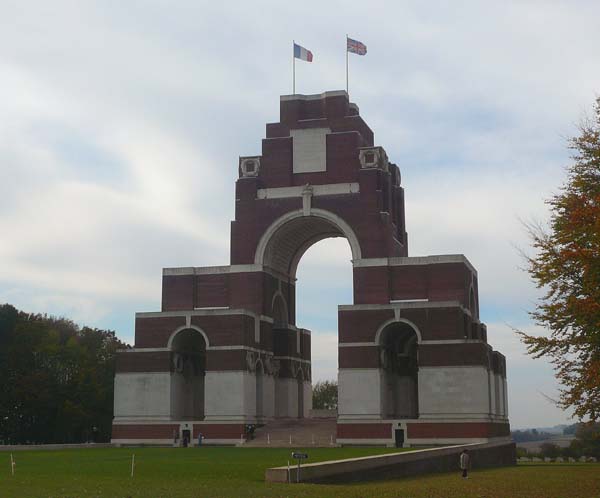
These graves are in a cemetery containing 300 British Commonwealth and 300 French graves which lies at the foot of the Thiepval Memorial.

P1090809

More important, though, is the enormous building itself wherein are recorded the names of the fallen who have no known resting place.

P1090790 zzzzzzzzz

A large inscription on an internal surface of the memorial reads:

“Here are recorded names of officers and men of the British Armies who fell on the Somme battlefields between July 1915 and March 1918 but to whom the fortune of war denied the known and honoured burial given to their comrades in death.”

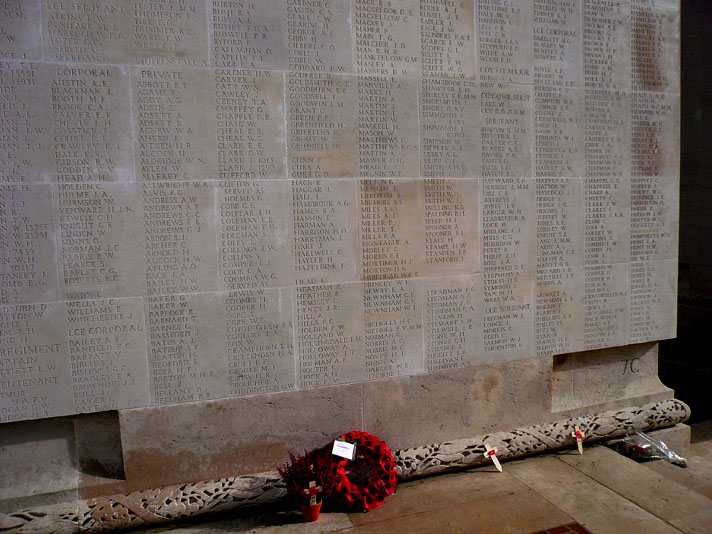
On the stone piers are engraved the names of more than 72,000 men who were slaughtered in the Somme battles between July 1915 and March 1918. More than 90% of these soldiers died in the first Battle of the Somme between July 1st and November 18th 1916. Here are some of the names.

P1090831

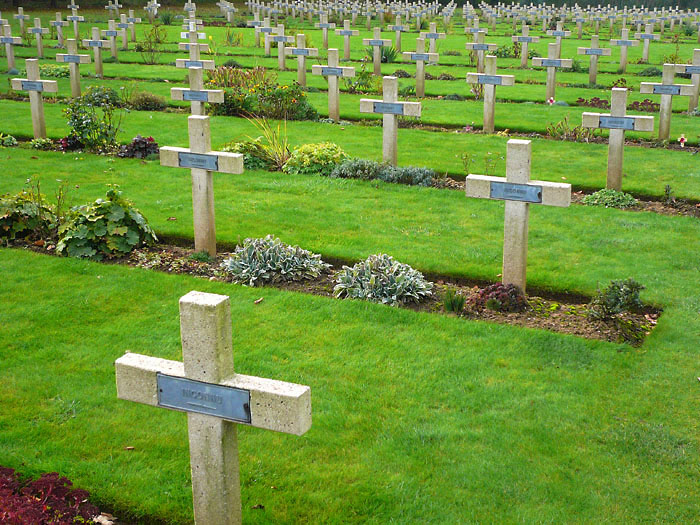
Here are some of the graves in another, fairly large cemetery whose name I am afraid I cannot remember …

P1090879

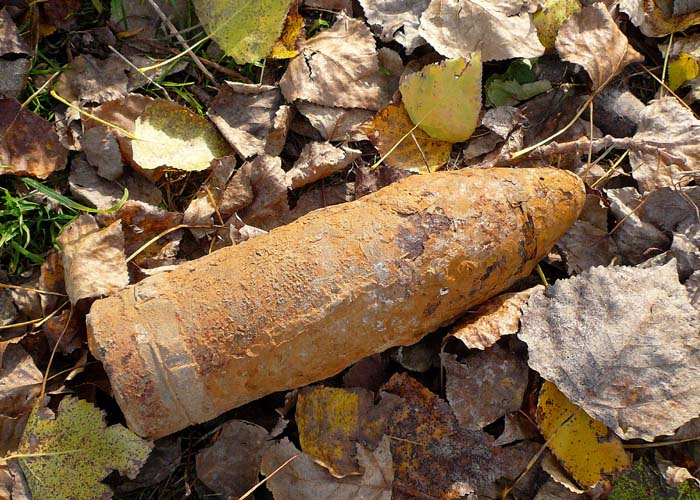
It is an insane thought that the Great War still continues to kill people nowadays. I was told by our tour guide that on average usually one person is killed every week as they explore the old battlefields looking for souvenirs.  This shell has been found by the farmer and has been left at the side of a country lane so that the regular patrols by the local council lorries can take it away. Only idiot foreigners, of course, touch these unstable objects. The French and the Belgians leave them alone.

P1090886 xxxxxx

This graveyard too I am afraid is one whose name I have forgotten. I remember that we went there because one of the other people on the coach had a relative who was buried there and he laid some poppies on his grave.

P1090932

This is one of the few places where I saw French graves. France had approximately 1,397,800 men killed in the war, with a further 4,266,000 wounded, giving a total of 5,663,800 casualties. Nowadays there are many areas of the country, particularly in central and southern France, which remain unfarmed wilderness because of this conflict a century ago which left whole provinces chronically short of men. The population of Greater Manchester, the West Midlands and West Yorkshire added together is approximately 5.7 million.

P1090967 xxxxxxx

This is part of the Tyne Cot Cemetery which is a burial ground for those who were killed in the Ypres Salient on the Western Front. It contains 11,956 men, of which 8,369 remain unidentified.

P1100069 zzzzzzzzzz

This is the “Tyne Cot Memorial to the Missing.” As mentioned above, the builders of the Menin Gate discovered it was not large enough to contain all the names, so the casualties after August 15th 1917 were inscribed on the Tyne Cot memorial instead. The memorial contains the names of 34,949 soldiers of the British and Commonwealth armies. The panels on which the names are written stretch away, seemingly  to the horizon.

This slideshow requires JavaScript.

Sadly, at Tyne Cot cemetery, there are always relatives looking for members of their family who fell during the Battle of Passchendaele in 1917.

P1100072

It is very difficult to find a neat conclusion to all this, but I am happy to leave the last word to His Majesty King George V, speaking in Flanders in 1922…

“I have many times asked myself whether there can be more potent advocates of peace upon earth through the years to come than this massed multitude of silent witnesses to the desolation of war.”

3 Comments

Filed under History, Uncategorized

Arsenal £127 Tottenham Hotspur £81

Recently, the Premier League teams released their charges for a seat to watch a game next season.

As you might expect, prices are fixed at an almost unbelievable level for the ordinary working person. The days when an averagely wealthy parent might have taken his two children to a game seem to be long over.
football prices
When I was much, much, younger, my Dad used to take my brother and myself to matches at the now demolished Baseball Ground in Derby. Granted, though, the playing surface might occasionally lack a little of the green stuff…

http://www.youtube.com/watch?v=wdFwl11WUAg

And just now and again, it became a little muddy in places…

This slideshow requires JavaScript.

I don’t know how much it cost my Dad, though, because we had season tickets, and I never saw him physically hand over his hard earned cash.

Forty years on, of course, the Baseball Ground is long gone…

I just cannot remember what prices for admission were posted up on the old stands at the Baseball Ground. And in any case, in those early days of the 1970s, there were terraces, where it was even cheaper to watch the game, although admittedly, hooliganism could often run riot.

terreces v man utd
I am pretty sure though, that, even allowing for the passage of time, my dad was not paying out anywhere near that average cost of £90.24 for a single game at White Hart Lane, or a possible £127 to watch their great rivals, Arsenal.
Unbelievably, if my dad were still with us now, it could cost him almost £300 to take my brother and myself to a Spurs game, and probably more, should we wish to watch Arsenal. Even the cheapest seats would give him too little change from his £100 for him to buy everybody a skinny latte and a prawn sandwich.
And the net result of all this, of course, is that the rich get richer and the poor get poorer. Little teams like QPR or Burnley might optimistically put their prices up, ready for a long and successful stay in the Premier League, but in terms of actually achieving any real footballing success, they stand quite simply no chance whatsoever.

This slideshow requires JavaScript.


The days when a team like Derby County could win what would have been the Premier League twice in four years are long gone…

Derby-1975-title-champion-001

…and the years when a team like Nottingham Forest could win the European Cup in two consecutive seasons have gone with them.
Football, though, was a lot more exciting in those days…

And occasionally, considerably naughtier…

Derby County only missed reaching the European Cup Final by the narrowest of margins. The width of an Italian’s banknote, you might say…

I don’t really know what to offer as advice. Most of us know which football team we are destined to support as a matter of instinct, and, judging by next season’s proposed prices, if we support a London team in particular, we could well be in financial difficulties.

It is, though, more or less impossible to invent an artificial love for Leyton Orient, Stevenage or Dagenham & Redbridge, just because it is cheaper to go inside their stadium and physically watch them play.

I would commend to you, though, not so much the teams in League One and League Two, but the teams lower down the pyramid. Have a look in your local evening newspaper, and see which local clubs are going to be playing on the following Saturday, kicking off probably at the traditional three o’clock.  And go and watch one of them. You never know, you might enjoy it. The programme will not be £5. When you ask for “A skinny latte and some nice focaccia, please”, the lady will probably reply, “Yer what??”
And pick a team with a good name, such as… Coventry Sphinx, Tonbridge Angels, Solihull Moors, Pontefract Collieries  or even the West Midlands Police.

You may or may not like it, but at least it will not be costing you the best part of a hundred quid. And who knows? You may one day take to them, and realise that you have become a supporter of real football, not showbiz.

2 Comments

Filed under Derby County, Football, History, Nottingham