Tag Archives: Soviet Union

Enigma 3

Last time, I had told the story of how the three Polish whizz kid mathematicians, Marian Rejewski, Jery Rozycki and Henryk Zygalski, had told the British and the French, everything they had discovered about Enigma.  The stories all came from the book by John Jackson which relates the story of Enigma, the German encrypting machine used throughout the entire Second World War…..

From these Polish beginnings, many, many aspects of the war were affected….. for the better. There was, however, a Golden Rule always in operation.

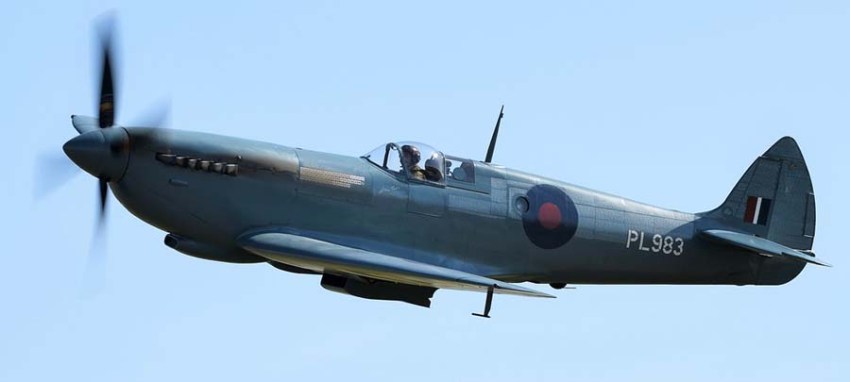
If the only information about a future event came from Enigma, then other sources had to be created as well. The rule resulted, for example, in a lot of photo-reconnaissance aircraft being sent to take photographs of a place already mentioned by the Enigma decrypt and which was going to be bombed  The pilot was always told to fly the aircraft around a lot of other nearby places as well, and to make it look as if the trip was completely routine. Here is a photo-reconnaissance Spitfire. They were usually entirely blue, although  I’m sure that they were also painted pink, a colour which was frequently nicknamed in North Africa especially, “Mountbatten pink”:
Mosquitoes were also used, especially for the longer trips:

If Enigma was the only source of a piece of information, of course, then any action taken by the British would prove to the Germans that the code had been cracked. For this reason, if there was only one source of information, and that was Enigma decrypts, then no action was taken.

The system worked so well that right until the very end of the war, the Germans continued to believe that Enigma was uncrackable and that only they had the secret of deciphering it.

In May 1941, Enigma was able to tell the Royal Navy the whereabouts of all the supply ships that were servicing the Bismarck. They also ascertained that the Bismarck was headed to France, not Germany, after a particular phase of the battle.  Here’s the German “Pocket Battleship of the Month”:

The Bismarck was one of my very few Airfix ships kits. That and HMS Tiger, a Royal Navy destroyer.  The way this piece of informnation from Enigma worked was that the ships carrying fuel and ammunition were all sunk, and so too was any other ship carrying supplies that added to the Bismarck’s capabilities as a ship destroyer.  Supply ships carrying records, newspapers, and a change of library books were all left alone, as were the ships carrying food and drink.

On November 1940, a major air-raid might have been opposed more thoroughly if the people at the top had used their brains and guessed which city in England was being referred to in a mildly encoded sequence of the names of cities about to be bombed back into the Stone Age………..

For example…..

“LOge” was “LOndon”

Do you see how it works? Nothing particularly Enigma-inspired at this point. The first two letters give it away.  So, what was “BRuder” ?

No, it wasn’t Brisbane, or Brighton & Hove or Bradford. It was…..

“BRistol”

So, now, what was “BIld”

No, it wasn’t Bicester, or Bishop Auckland or Bilston. It was…….

“BIrmingham”

So, a more difficult one, now. A city with its own name in German. And it’s actually easier than you might think. If the Air Vice Marshall had  taken his road atlas out of his bag, he would have realised that, of the 1, 165 cities, towns and villages of Great Britain, not a single one begins “Ko-“.

And no,  “Konchester” is not the German for “Manchester”, and “Korwich” is not the German for “Norwich”.

The correct answer is…..

“KOventry”

The  only city of the four with its own name in German. The city was flattened……
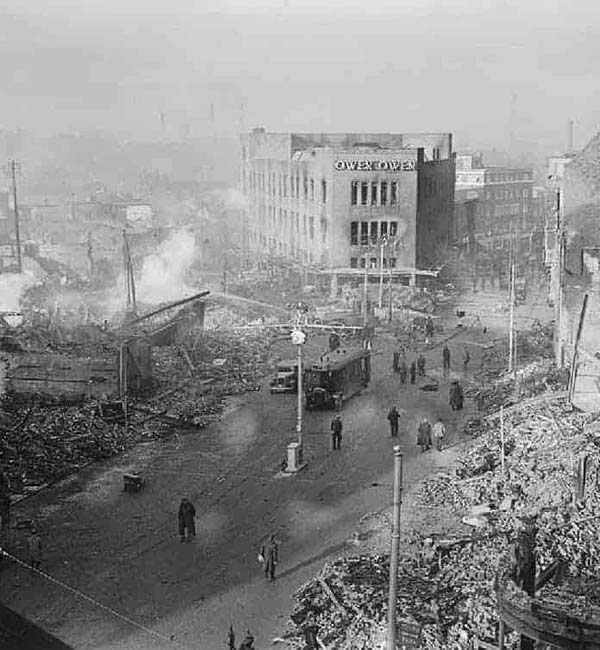
…..especially the cathedral……

In March-April 1941, Enigma revealed that Crete was to be invaded from the air, in the glider towing and troop carrying aircraft that the Germans had been assembling in Bulgaria and Greece for some time now. It was easy enough to pass off the information the British possessed as the product of the hundreds of spies in every city in this part of the world. The German paratroopers were called “Fallschirmjäger” and they wore helmets and smocks which were different from the uniform of the Wehrmacht……..
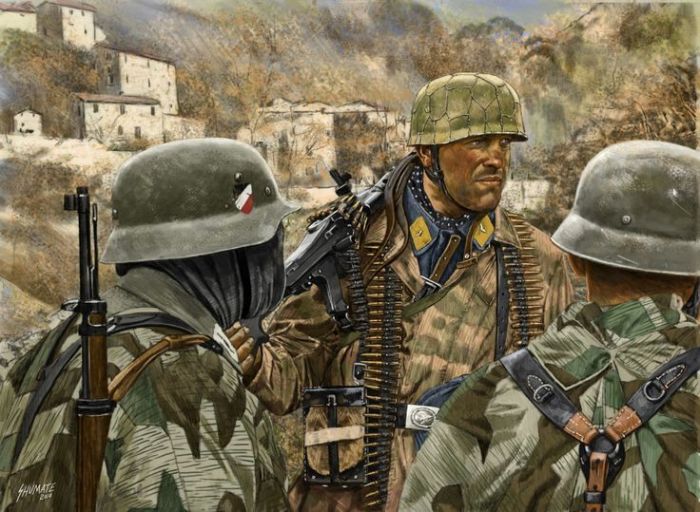
Preparations were made to give the German paratroopers a warm welcome, and as a result of the fierce resistance from both Allied forces and civilian Cretan locals, the invasion force suffered heavy casualties. Hitler then forbade further operations of this type for the rest of the war. Here they are in action……..

Overall, nearly 4,000 German paratroopers were killed.

In June 1941, the Germans invaded the Soviet Union. Stalin had been told time and time again by the British, the Americans and the Japanese that this was going to happen but he thought it was all some vast capitalist plot to upset his non-aggression pact with that nice man Hitler.

For Churchill, it had all become much likelier as a forecast when a series of Enigma decrypts revealed that three Panzer divisions had been moved to the Polish frontier, next to the Russian held zone of Poland. Overall, Churchill thought that Stalin and his Sycophants were…..

“the most completely outwitted bunglers of the Second World War.”

In August 1941, the RAF and the Royal Navy were told all about the German supply ships which were  transporting whatever Rommel required for the war in North Africa across the Mediterranean. Such precision made it easy to target and sink the oil tankers, the petrol carriers and the ammunition/weapons ships, even if that meant letting through the odd ship carrying savoury sausages or bottles of schnapps or a further change of library books for everybody. Ultimately. by supplying this kind of information, Enigma would make victory in the Battle of El Alamein a great deal more likely.

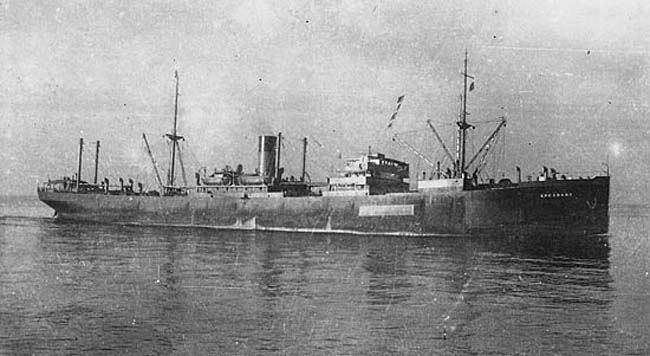
Here’s the ship with the library books:
 

17 Comments

Filed under Aviation, History, military, Russia

Why I am what I am (2)

Last time I mentioned a number of things that linked me to my Dad insofar as interests, hobbies and sports were concerned. I soon discovered that that was really only the beginning of the story.

I rather think that I studied Russian because Fred used to speak so frequently of the Russians during the Second World War. In the bookcase at his parents’ house, he had a pamphlet borrowed from an RAF library. It was entitled “Our Soviet Friends”, and it had pictures of the dam at Dnepropetrovsk:

He told me how, in the RAF, anybody wth knowledge of Russian could name their own price for helping to liaise with our new surprise allies, once the Germans invaded the Soviet Union. Towards the end of the war, Lancasters, on rare occasions, used to bomb the Germans and then carry on to Russia to land. When they came back they brought more bombs and often, one or two souvenirs.  On one occasion, my Dad had had a drink from a flask of coffee made up for the aircraft’s crew in Leningrad. I had to satisfy myself with my early attempts to learn the language, with the woman of my dreams…..

I may like French because, in 1940, Fred had wanted Britain and France to merge into one country just like Churchill had said. Fred was a keen European and, like Churchill,  he wanted a “United States of Europe”. As members of Bomber Command he told me, though, that the French could often be difficult to work with. Here is a Bristol Blenheim of the Free French Air Force in North Africa…..

I have always had great regard for the Poles because Fred said they were great blokes, and that he had joined up so that Poland could be freed from the invading Germans. A few years ago, I was in hospital for a operation, and there was a Polish van driver there that nobody would talk to because he was Polish. Except me, and if Fred had been there, he would have spoken to him, too. Racism can be amazingly petty.

I try to like poetry, because I know that Fred had claimed so often that poetry was an integral part of his life. He liked to read peoms out loud to his classes at school, his favourite being “Flannan Isle”.

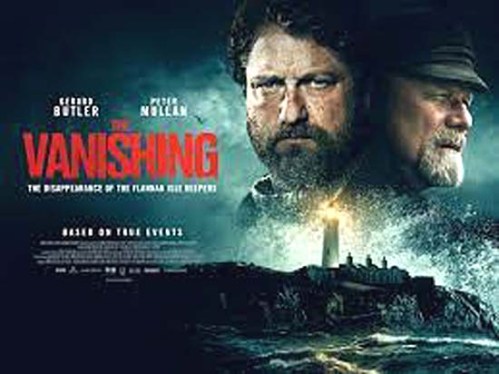
I did a series of five blog posts about the mystery of Flannan Isle, as portrayed in the poem, and the first one is here. The rest can be found by merely searching for  “Flannan”. And when you’ve done that, don’t forget to watch this film with its own, made-up, explanation of the three men’s disappearance….

I’m sure that I became a teacher because Fred was a teacher and I felt that a teacher was a good thing to be. In the mid-1970s, the money was excellent and I didn’t automatically have to live in London.

I always worked hard as a teacher because Fred told me that at the end of each day, you should always ask yourself the question, “Were you just given your wages, or have you earned them ?”

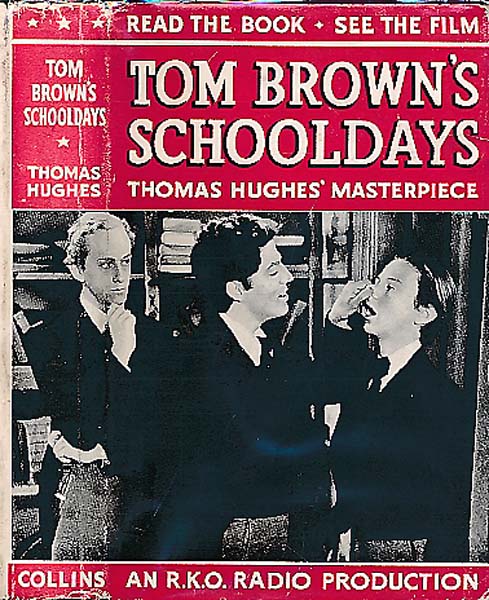
I worked all my life at the High School, 38 years, because when he took me there for a job interview in 1975, I could see that Fred was enormously impressed by the school. To him, and to me, it looked like something out of a film, such as, perhaps, the old version of “Tom Brown’s Schooldays”…….

In actual fact, after his death, I found that, when he was a boy in the 1930s, Fred’s Uncle George  had bought him a present, the book of the film “Tom Brown’s Schooldays”.  They didn’t shoot this film at The High School, but if they had wished to, it would have been entirely appropriate from the architectural point of view….

Fred read a lot about the Second World War, and one of his favourite books was a German doctor’s story of Operation Barbarossa, a book called “Moscow Tram Stop”. The High School has its own tram stop, called “High School”. That fact has always reassured me that I had made the right decision to work there for so long.


25 Comments

Filed under Film & TV, History, Literature, military, my Dad, Nottingham, Personal, Russia, Wildlife and Nature

Photographs of the Eastern Front in World War Two (4)

About a year ago I bought a collection, on DVD, of what were, supposedly,  more than 12,000  images of World War Two . I was very surprised, and pleased, to see that most of them were not British or American but were in fact either Russian or German. I would like to share some of these photographs with you, because a number of them have great photographic merits as well as capturing a split second in history.

Please be aware that these photographs do indeed capture moments in history. They portray the deeds of the Soviet Union, not the deeds of  present day Russia, a country run, like China and North Korea, on the mushroom method of management, although, of course, you can be sure that Putin’s suit will always remain spotless.

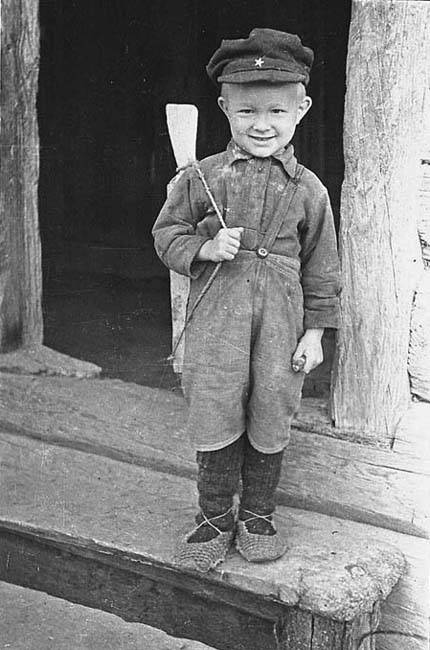
Today then , I’m going to look at the some of the pictures of children. Some were really quite cute, although they made no effort to disguise the fact that a war was going on:

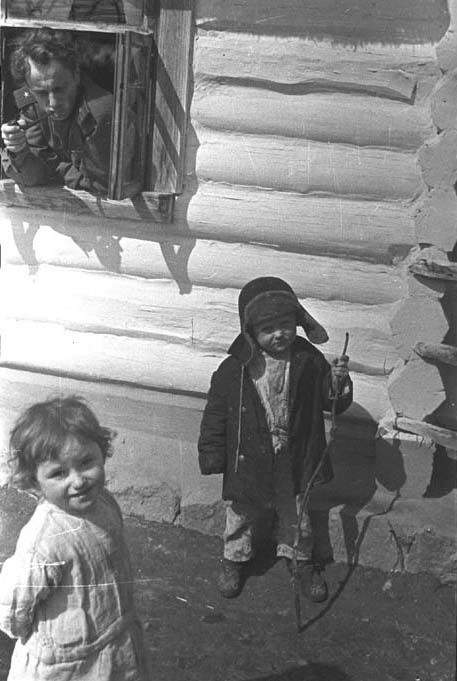
In this picture, the war is a soldier, looking out of the window, making a call by field telephone :

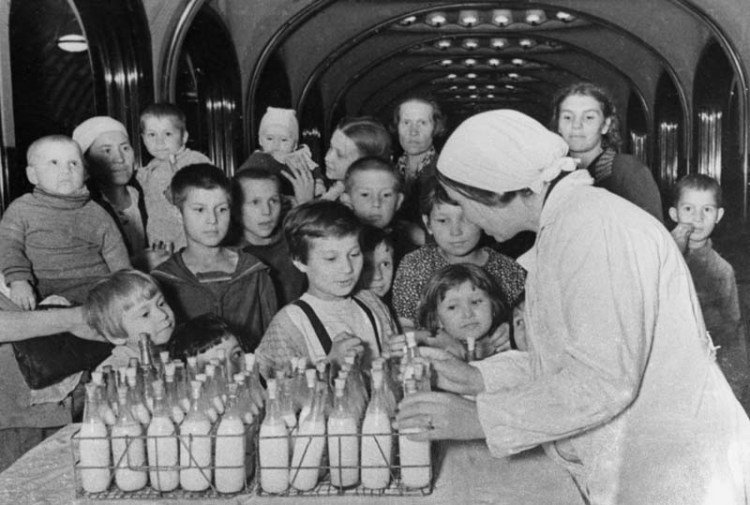
Another photograph made the point that in the twenty or so years since the revolution in 1917, the Soviets had made enormous strides in improving living standards, particularly in the cities. Don’t miss the Demonic Phantom in the middle of the back row. Or perhaps she’s the KGB Milklady

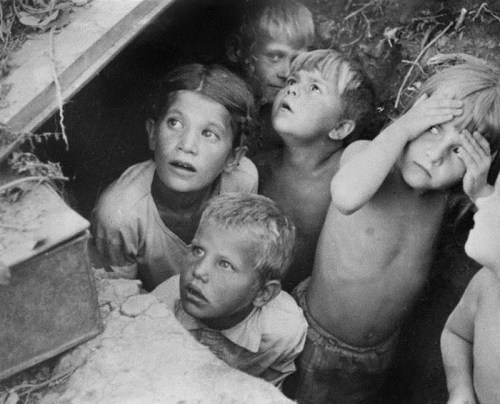
But then, the Germans invaded the Soviet Union and the Heinkels and the Dorniers rained death over Russian cities. This picture has done duty as being English boys watching the Battle of Britain, but the lack of clothing and the short, almost shaven haircuts, say to me “Western Russia”, a place of unending flat fields where Operation Barbarossa took place in absolutely splendid summer weather. Look at how the boys are amazed, fascinated, yet each one of them has a look of fear in their eyes.

Boys would play their part in the war. For Yuri Gagarin, the  cosmonaut, it was throwing caltrops on the road, pouring soil into tank batteries about to be recharged and mixing up the chemicals used for this job. No wonder! His school was burned down, his family were forced to live in a mud hut and two of his brothers went to Poland for slave labour. In this picture, the boys seem to be snipers of some sort, using enormous long barrelled rifles, or is the nearer one a machine gun?

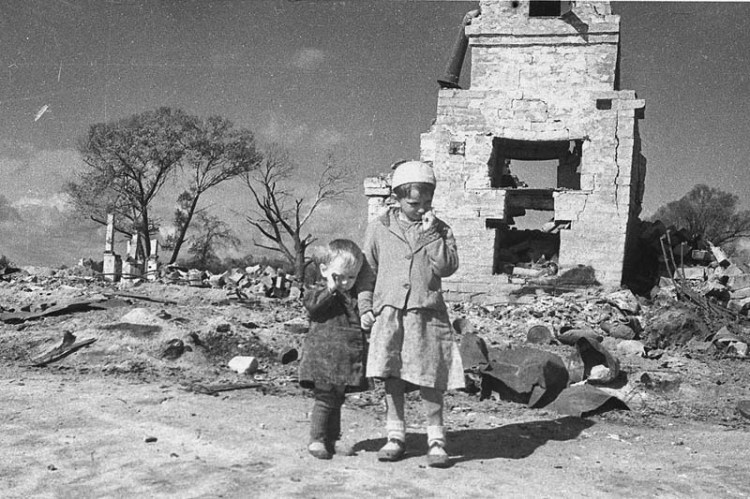
Next comes a beautiful picture of three bewildered and possibly orphaned little children in front of what may well be the ruins of their house. In Yuri Gagarin’s village, some 27 houses were burnt down. Hitler’s plans for the Russians involved the complete eradication of all the Russian villages, towns and cities, and to have the population housed in large camps from which they would be able to cultivate the land for the Germans. As these slave labourers died off, German families would come east to farm the land as their own:

A similar picture but the little boy is clearly well aware of what has happened to their family, and he just can’t take any more:

This is an unknown Russian village with two more little children. Both the village and its population have been destroyed:

The Germans were not in the slightest bit interested in the Russian civilian population. How could they be when they had carried out the massacre at Babi Yar and killed 33,771 Jews in two days, and the Rumbula massacre in Latvia where around 25,000 Jews were murdered in two days? As the Holocaust moved forward, the Germans would expect to find and kill all the Jews of a small town in a single day.

Russians, and indeed, all Slavs, were merely “untermenschen”, sub-humans, to be killed as the mood took them. The exceptions were the higher echelons of the Communist Party, who were killed on sight.

Human beings, no matter what may have happened to them, will always want to talk to each other and discuss. Here is Grandad, with his three grandsons, talking to somebody they know, probably about the future and where they are going to live. The Wehrmacht would burn down houses just because they felt like it, which may be what has happened here:

PS

My records, which I was looking at last night, show that I published “An impossible Beatles Quiz (1….the Questions)” but that I did not ever publish the answers. For Quiz No 2, I did publish both the Questions and the Answers.

Does anybody out there remember?     

I clearly thought I had published both Questions and Answers for Quiz 1, but the WordPress list of “Published” seems to think otherwise! Indeed, it thinks different things about the subject every single time I do a search!

Please write any thoughts in the “Comments” section of this particular blog post if you can help. 

28 Comments

Filed under History, military, Politics, Russia, Uncategorized, war crimes

Football Programmes of the Soviet Union (1)

I wrote this blog post, and the others in this series, beginning on November 30th 2021. It does not indicate my favouring Russia over the Ukraine in the war currently being waged on the latter’s territory.

In any case, I have written about sport in the old Soviet Union in the late 1960s, not the situation today. Indeed, I would argue that Russia today is an infinitely worse country to deal with than the old Soviet Union used to be. The only situation I could compare present day Russia to would be the Germany of Hitler and Goebbels, where the population were hypnotised into believing what they were told to believe. Anyway, here we go…….

Three, perhaps four lifetimes ago, I was at school, at a country grammar school in west Leicestershire. From 13-17, I studied Russian there, a subject that I always loved. I was also a huge football/soccer fan, and accordingly, I had a collection of hundreds of football programmes. These are the little booklets that are on sale before the match with all the details of the teams, the fixtures to come, the top goalscorers in the league and so on.

Those two hobbies came together when I wrote a letter to a Russian First Division team who were then called Zenit Leningrad, asking them if anybody there would like to become my penfriend, and exchange football programmes with me. Here’s the team badge:


A little while later, I received a letter from a Russian gentleman who, just like me, was a lover of football and a programme collector. His name was Oleg Soloviev and his surname meant “nightingale” in Russian. The team used to play at what was then called the Kirov Stadium, a vast bowl with 100,000 seats.

I sent Oleg English and Scottish programmes and he sent me Soviet ones. I say “Soviet” because in those days many of the teams had Soviet names, as we shall see. Oleg was the man in charge of Zenit’s Youth Team and he travelled widely around the USSR in connection with his job. I still have some of the programmes he sent me, although only a small fraction. When I left home to go to my first job, my mother threw out my entire programme collection because I didn’t live there anymore. This type of action, which, incidentally, discarded well over a thousand pounds worth of footballing treasures, was by no means rare at this time and there were other young people I knew who suffered from it. It was all part of the “Bring ‘em up tough but with deeply rooted complexes” method of child care, so beautifully captured by Philip Larkin in this oh-so-true poem

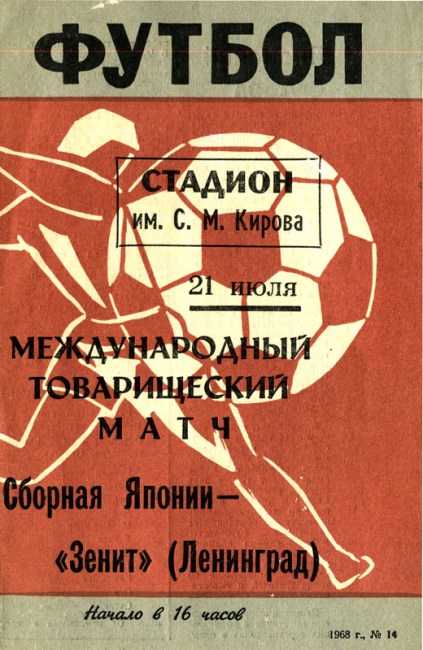
One small difference from English programmes was that in the Soviet Union, the home team was always printed second. This is shown in this particular programme which is of a design used by Zenit Leningrad for a number of years. At the top is the word “футбол” or “football” and the next word is “стадион” which means “stadium”. Perhaps you can spot the name of the man that the stadium was named after, namely “Kirov” or “Кирова”.

Other recognisable things are the kick-off time at the bottom, namely 1600 hours and the day “21 июля” or “21 July” in the middle of the ball.

The teams are going to play a friendly match, the lower team is “Зенит Ленинград” aka “Zenit Leningrad” and the two word opponents are “Сборная” which is “international (team” and “Японин” or “Japan”.

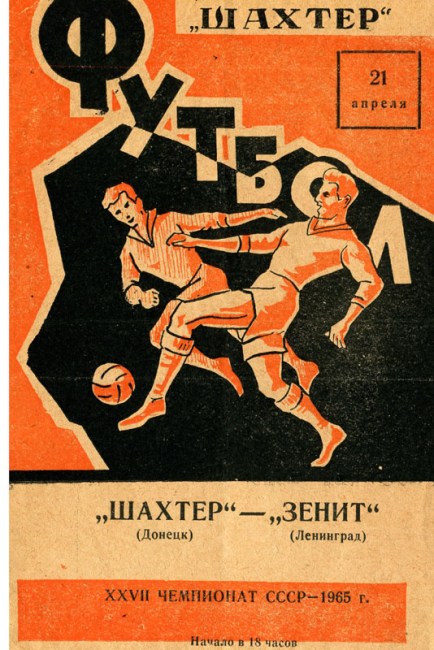
The next programme concerns two teams which still exist nowadays. “Шахтëр Донетск” or “Shakhtyor Donetsk” versus “Зенит Ленинград” aka “Zenit Leningrad” . The game actually took place in the 27th year of the USSR Championship, 1965 (bottom), on April 21st (top right), at 1800 hours (bottom) .

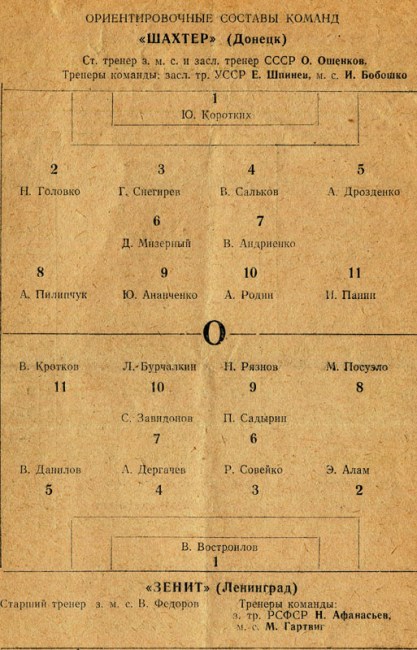
Here are the two teams, both set out in a daring 4-2-4 formation. “Зенит“ obviously means “Zenith” and “Шахтëр” means a “coalminer”. Донетск /Donetsk is now in the Ukraine, in the Donbass region, famous for its coal and iron ore.

That same team of Shakhtyor Donetsk/”Donbass Coalminers” is the away team in the next encounter, against “СКА Ростов” which is “SKA Rostov” “SKA” stands for “Sports Klub of the Army”. Rostov is a very large city and the stadium hosted five games in the 2018 World Cup. This link will take you to some pictures of Rostov’s beautiful buildings.

The game kicked off at 1700 hours (bottom) on July 1st 1971 (middle left). The large yellow letters say “кубок СССР по футболу” which means “Cup of the USSR in football”. It is the 30th tournament (top left, with “30-й турнир”).  Underneath the big yellow letters it is revealed that the game is the “матч ¼ финал” or “quarter final match”.  Rostov, though, have never been a very successful cup team. Just under the right hand yellow pentagon it says “35-й кубковый матч СКА”. So, if this is Rostov’s 35th cup match, and the cup competition is now thirty years old, then they must have only ever won five cup ties.


9 Comments

Filed under Football, History, Literature, Personal, Russia

Photographs of the Eastern Front in World War Two (2)

About a year ago I bought a collection, on CD, of what were,  supposedly,  some 12,000+ images of World War  2 . I was very surprised, and pleased, to see that most of them were not British or American but were in fact either Russian or German. I would like to share some of them with you because a number of them have great photographic merits as well as capturing a split second in history. They also reflect quite accurately how that massive struggle was unfolding.

We left the German invaders discovering just how cold the Soviet Union could get. The Germans still thought that they could win, though. Their racial theories said the Russians were “untermenschen” and the photographs they took and sent home seemed to prove it:

This man is living in the Western USSR but what race is he? :

And what about this one? He is far from the Aryan ideal. And by the rules used by the Germans, he may be killed for that offence against racial purity:

When they invaded Poland, the German troops were told that the Poles lived in filth, that they had a distinctive stink and that, with practice, you could smell the presence of any Poles nearby. Poles were Slavs and so were Russians. It wasn’t a huge leap to apply the same attributes to Russians. And the photographs you took would prove it. They were subhuman. Just look at them. Barefoot and unkempt. Where would you find the like in Germany?:

Many of them even lived underground:

And their children?  Like little animals. Dirty. Badly dressed and often bare footed:

And many of them are complete ragamuffins, with little evidence of knowing who their parents are:

And then the stupid, smelly Russkies stumbled their way to making what may well have been the finest tank of all time, the T-34 :

And before too long, the tables began to be turned. More and more prisoners were being captured by the useless, cretinous Soviets:

Events accelerated after that, from very bad to catastrophic. Soon it was Germans who were fleeing as refugees. Hitler had said that he would drive Bolshevism out of Europe, to the far side of the Urals. He was wrong. His incompetence had brought the Red Commie Tide westwards, and the Russians by 1945 were some 800 miles further into central Europe than they had been six years before. Run, run, run!:

And before long, they were giving German Grandads in Berlin newly invented superweapons and telling them to do their bit to chase those 2,300,000 Russkies out of the city. Don’t look so bewildered, Gramps! They’re easy to use, but unfortunately, they fire only one shot:


20 Comments

Filed under History, Humour, military, Russia

Photographs of the Eastern Front in World War Two (1)

About a year ago I bought a collection, on DVD, of what were,  supposedly,  some 12,000+  images of World War  2 . I was very surprised, and pleased, to see that most of them were not British or American but were in fact either Russian or German. I would like to share the best of these photographs with you because a good number of them have great photographic merits as well as capturing a split second in history. They also reflect quite accurately how that massive struggle was unfolding.

September 1st 1939. The Germans attacked Poland in some strength and soon, prisoners were being taken in large numbers:

On June 22nd 1941, came Operation Barbarossa. The Germans attacked the Soviet Union where lebensraum was almost limitless. Victories came easily. Cities were blown to bits:

Towns were destroyed:

And villages burned:

Russian prisoners were captured in their hundreds of thousands:

The Germans didn’t always feed the Russians. In years to come this would result in cannibalism in many of the camps. A German sentry would shoot a Russian prisoner, and the others, all starving, would then eat him:

For the advancing army, there were always meteorological problems, In the height of summer, it was dust:

But then it started to rain as autumn set in. Not too much to begin with. But then it got worse. The Russians call this time “распутица” (pronounced “rass-poot-eat-sa”) which means “the season of bad roads”.  The origin of the word is that “рас” (“rass”) means “in different directions” and “пут” (“poot”) means the road. And that’s exactly what happens as the road disappears into a sea of mud. It begins very gradually with this:

And it ends with this:

Traditionally, the weather starts to get colder and much more wintry on November 7th, the anniversary of the outbreak of the Russian Revolution. But the Germans did not know this, and they just woke up one day and there was a light dusting of snow, and the mud was all frozen. They preferred that. At least you could walk on frozen mud:

But then it snowed a little more, and a little more. At first it was very picturesque:

But then you find your tank is stuck in the frozen mud and the snowdrifts and it’s unusable. You expect to be given a winter uniform and winter equipment but it never comes. You start to feel cold. And it’s no fun playing stupid games in the snow any more:


26 Comments

Filed under History, military, Russia

A nasty German in Woodville, Part Two, the True Facts

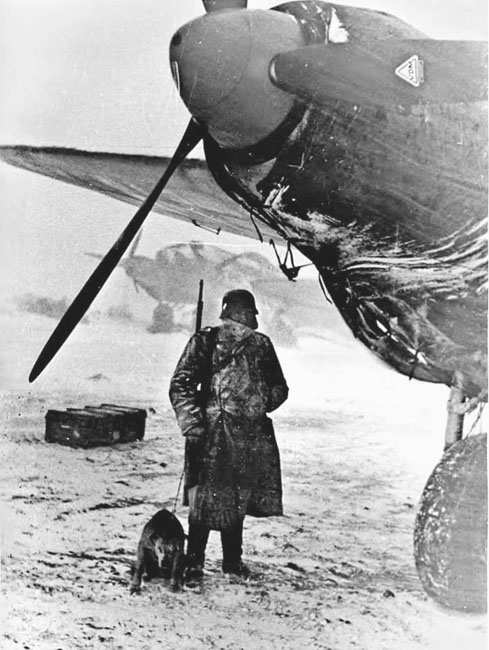
The Luftwaffe’s Gruppe III./KG.4, full name 111 Gruppe/Kampfgeschwader 4 arrived at Leeuwarden in the Netherlands in the middle of January 1941. They would be there until July 31st when they left for the Soviet Union and the Eastern Front:

During the first part of their stay, in one of the hardest winters for years, they spent a lot of time training and then taking part in planned air raids on the cities and ports of Great Britain. They were flying twin engined Heinkel He-111H version bombers, “hard to start greenhouses”, which scared the bejesus out of the locals who lived near the airfield. They were all loaded to the maximum limits with explosives and fuel, and on quite a few occasions, seemed to struggle to climb over the locals’ houses in this birthplace of Mata Hari:

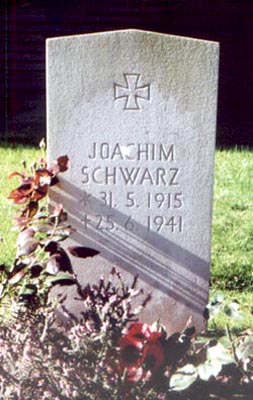
On Tuesday, June 24th 1941 the pilot of one of the Heinkel He-111Hs, Oberleutnant Joachim Schwartz, took off at 23.00 hours, tasked with laying mines in the Mersey Estuary near Liverpool. With him was a crew of three men, Stabsfeldwebel H Glkowski, Obergefreiter Friedrich Ertzinger, the Wireless Operator / Air Gunner, and Feldwebel W Köller.

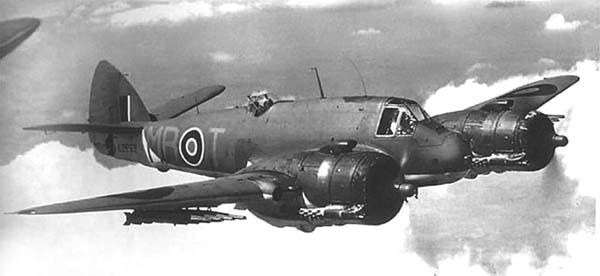
At 02.30 hrs, somewhere between the Wash and Liverpool, the Heinkel was intercepted on radar and then attacked by a Bristol Beaufighter of 25 Squadron, based at RAF Wittering, squadron codes ZK:

The Beaufighter was flown by Pilot Officer DW Thompson, with Pilot Officer LD Britain acting as the airborne interception radar operator (A1). Pilot Officer Britain picked up the Heinkel almost half way between Sheffield and Nottingham just under approximately 20,000 feet up, and stalked the twin engined bomber for a quarter of an hour. Slowly, slowly, the Beaufighter crew crept up on their prey and then opened fire with their four 20 mm Hispano cannons. Here they are, under the nose of the aircraft. There were also six .303in machine guns, two in the port wing and four in the starboard wing. This made it the most heavily armed British fighter of the war, with a total of ten guns:

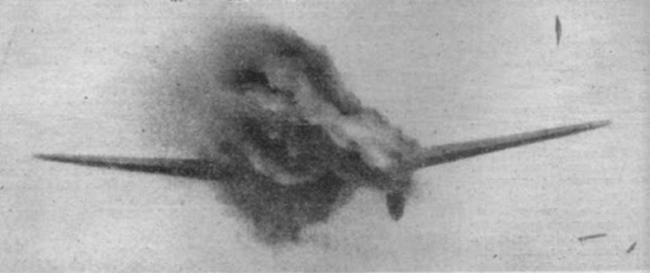
The RAF night fighter scored many hits on the hapless Heinkel. The cannon shells and machine gun bullets hit home with the same impact in energy terms as a broadside from a Royal Navy destroyer. The Heinkel’s starboard engine dissolved into flames and stopped working. A few minutes later, the bomber’s undercarriage fell out of its engine nacelles, increasing the plane’s drag enormously:

Immediately the bomber began to lose height rapidly, and as they plunged down to 1,000 feet, the pilot, Oberleutnant Schwartz, gave the order to the crew to bale out. Sadly, by the time he baled out himself, the aircraft was too low and his parachute failed to deploy. Schwartz was killed but his three colleagues, Ertzinger, Glkowski and Köller all escaped safely.

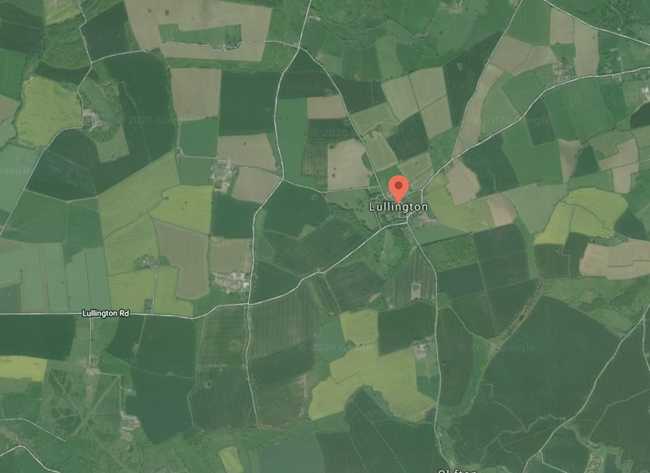
The Heinkel crashed close to the buildings of Edwards Farm in Lullington, a sleepy little village in South Derbyshire, some six miles south west of Woodville. This satellite view shows just how countrified Lullington still is even nowadays, eighty years after the event :

As soon as the Heinkel hit the ground, its bombs immediately exploded, scattering pieces of the plane over an area of some fifteen acres. The Home Guard would later find the tail mounted MG 17 machine gun. The aircraft had also been fitted with two external PVC 1006 bomb racks to increase its weapon carrying capacity.

The three surviving members of the crew, Ertzinger, Glkowski and Köller, landed in fields belonging to Edwards Farm. They were immediately captured and taken prisoner by two Home Guard men, Jack and Geoff Edwards, the brothers who owned the farm where the wreckage of the plane fell :

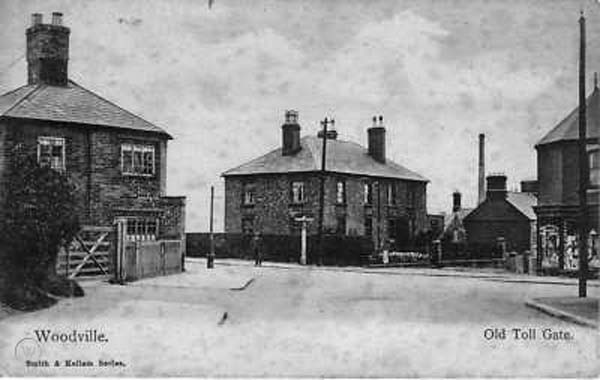
Ultimately the German aviators were taken to the Police Station at Woodville Tollgate to be locked up until the army could come and pick them up later that day. Here’s the Police Station again:

And what happened to the rest of the men involved ?

On July 31st 1941 the entire 111 Gruppe/Kampfgeschwader 4 was sent to the Eastern Front. It was a lovely place to walk the dog :

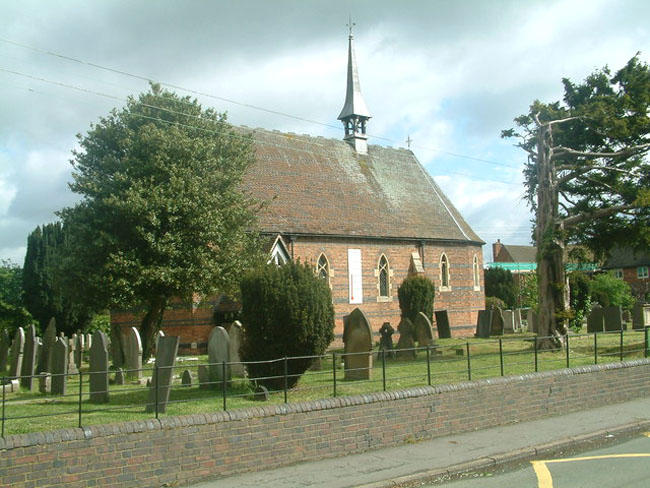
Poor Oberleutnant Schwartz received a full military funeral at Fradley Church near the cathedral city of Lichfield on June 27th 1941. He was buried in the lovely English churchyard around the church. Here’s the church:

And here’s his grave :

In recent years, at the Battle of Britain service in September, an officer of the Luftwaffe based at 16 M.U. Stafford has laid a wreath on the grave of the pilot, Oberleutnant Joachim Schwartz. Everybody was very happy to see this, and evinced the hope that it would continue for many years to come.

A number of years after the end of the war, in 1979, Friedrich Ertzinger, the Heinkel’s Wireless Operator / Air Gunner, visited Edwards Farm where he was given a wonderful reception by the two Edwards brothers. These visits continued for a number of years, and all three men enjoyed themselves enormously.

Pilot Officer LD Britain survived the war. You may remember that he was the airborne interception radar operator in the successful Beaufighter.

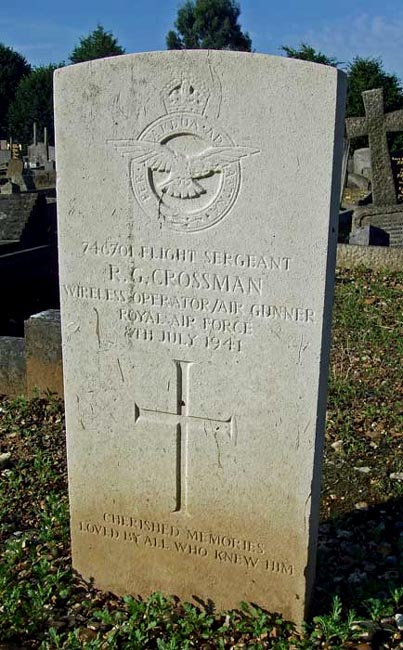
Pilot Officer David William Thompson, a mere 22 years old and the pilot of that successful Beaufighter, did not survive the conflict. Indeed, when he shot down that Heinkel over Lullington, he had only fourteen more days to live. On July 8th 1941, piloting a Bristol Beaufighter If, serial number, T4629, for an unknown reason, he plunged into the ground near Wittering. His airborne interception radar operator, Flight Sergeant Richard George Crossman, was also killed instantly.

David William Thompson was the son of the Reverend Hamlet George Thompson and of Dora Muriel Thompson (née Watney), of Little Munden Rectory in Hertfordshire. David was buried in Wittering (All Saints) Churchyard.

Richard George Crossman was the son of Richard Berkley Crossman and Clara Priscilla Crossman and the husband of Mary Crossman, who all hailed from Watford. Richard is buried in Watford Cemetery:

His grave bears the inscription “Cherished memories, loved by all who knew him”.


27 Comments

Filed under Aviation, History, Politics, Russia

The place where I grew up (5)

After Smart’s wool and dress shop, the next shop was Burton’s Stores, which sold food and general groceries. As a little boy, of course, I did not realise that this was just one shop in a chain of many hundreds, stretching across most of the East Midlands, and in particular, the area around Nottingham. Still less did I anticipate the fact that one day, I would spend my entire working life in the school where the founder of the firm, Frank Burton, had received his education, in the last decades of the nineteenth century. Here he is, ten minutes after he won the Gold Award in “Waxed Moustache Magazine” for December 1886:

Here’s Burton’s Stores today:

Just past Burton’s Stores was Shepherd’s the Chemists where, one day in the late 1950s, I was treated for the severe forehead cut which I suffered when I fell over on the pavement outside the shop, near the bus stop. Here’s the Chemists today:

Conceptually, the last business in the High Street was the Post Office which was just past the chemist’s. It was run by Ernie Chell and many is the First Day Cover I purchased from him over the years of the late 1960s and 1970s. Here is a first day cover from the early 1960s:

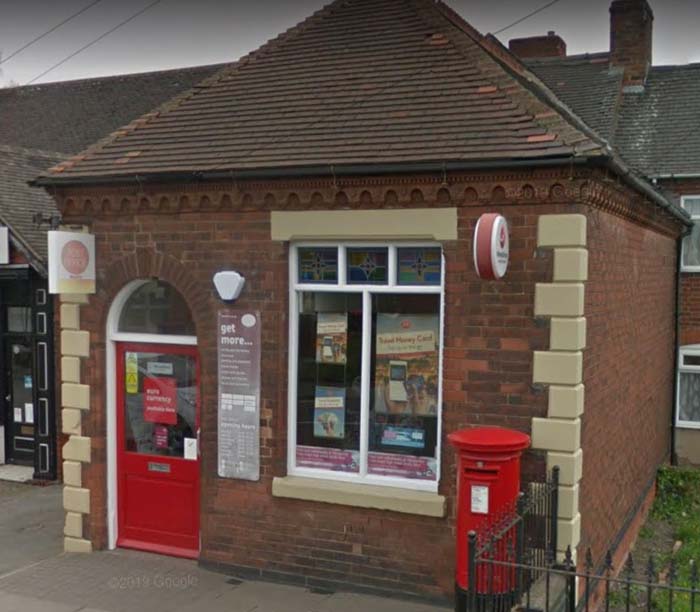
And here is the Post Office today, its presence in this rapidly decaying village guaranteed by government hand-outs, as was recently revealed in the local newspaper:

Next to the Post Office was the motorbike shop, which we as little boys always thought was the home of the Woodville Chapter of the Derbyshire Hell’s Angels. Now its changed its orientation and is home to “Chaps” and “Swishhh”:

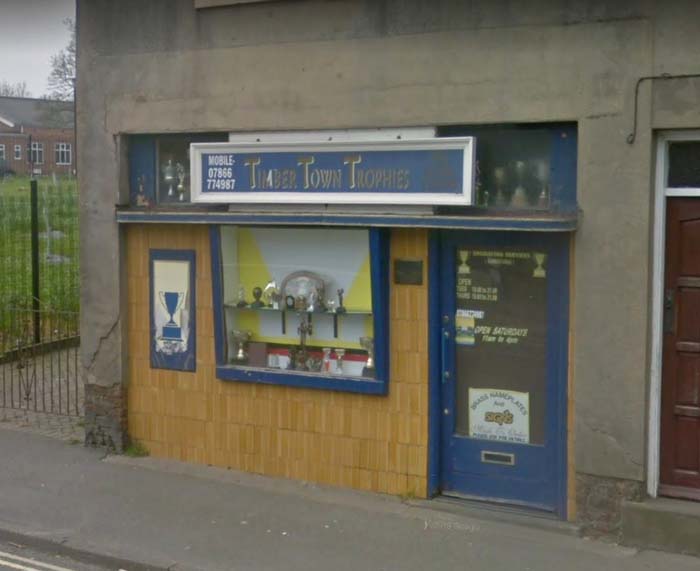
Opposite was Dytham’s Dairy, which delivered milk to most of the area. Now it is home to “Timber Town Trophies whose opening hours are on their website“:

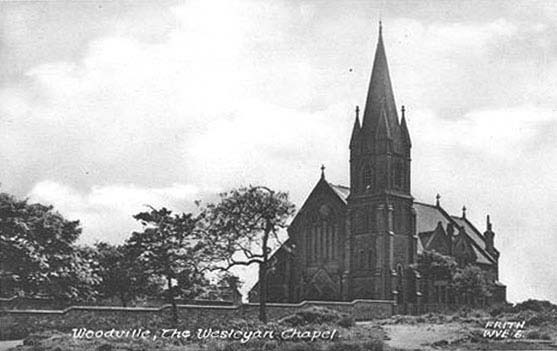
Beyond that on the right was the road which led up to the Infants’ School and to Woodville Secondary Modern, the destination, alas, of so many young people of the village over the years.  More striking, though, before its demolition in the late 1950s, was the vast bulk of the Wesleyan Church, which, in the vision of a five or six year old boy, towered as high as a medieval cathedral. Like the products of so many of the local pipe works, it was of a dark, reddish brown, made of bricks which may well themselves have had a partially glazed surface:

Beyond this was Leese’s furniture shop, which, despite its distant location at the top end of High Street, survived as a business for many years after I left the village.

Here is the shop today. Closed at 11 o’clock in the morning:

I was simply amazed at the economic desolation of Woodville today. So many shops were derelict. Presumably that is why everybody voted for Brexit. It was hoped that this gesture would be a punch on the nose of our politicians who have allowed the life of the ordinary working man in the north and Midlands to degenerate to an unacceptable standard. He no longer has any pride in what he does, and that is wrong.

I suppose the slogan will have to be “Let’s make Woodville great again”. Or at the very least, nice to live in.

One feature of life in the 1950s which has disappeared for ever from Woodville, and indeed from the whole of the rest of the country, was what used to happen at the end of every single working day, as all the factories closed down at five o’clock in the late afternoon.

Every single works, every single factory, had its own siren or hooter which would be sounded loudly in the still calm of the evening. From my Dad’s own back garden, he would have been able to hear perhaps as many as ten different factories closing down for the day, one after another.

Each hooter had its own distinctive note, and this, coupled with the direction the noise was coming from, meant that, with practice, every single one could be identified. Every night too, they would sound in the same order, a few seconds apart, and it was therefore possible to anticipate Outram’s, say, or Knowles’s or Wragg’s, all finishing work for the day.

Pretty much the same thing used to happen at the end of every lunch hour, as the managers and owners tried to bring their tired staff back for the afternoon. This was always less impressive, however, as invariably, the end of the midday break was always slightly different by at least a few minutes for every single factory.

I could only find a single factory hooter on Youtube. Listen from one minute onward:

Youtube also features the really unusual work of composer Arseny Avramov who created both a “Symphony Of Factory Sirens” and a second “Symphony of Industrial Horns” in 1922, using the various factory hooters of Baku in what was then the Soviet Union.


22 Comments

Filed under History, Humour, My House, Personal, Politics

Card Carrying Commies (3)

Last time, we were looking at the Communist Party membership cards carried by all of those Commies we have spent so much of our tax revenues trying to oppose. They all carried a little booklet:

The pretty young thing in the first booklet was called Aleesa. Here’s the second booklet we are going to look at. This is the top half of the identification page:

The surname of this gentleman is  “Artim”.  Look at the printed word “familiya”, with the Greek ‘Phi’. It means ‘surname’. His actual surname is handwritten which is a different alphabet and is best left for now. On the second line, his personal name is Vladimir with eight handwritten letters. It begins with a non-Greek letter which equals our “V” but then there is Lambda-Alpha as Letters No 2 and 3, and the word also ends with Rho as Letter  No 8.  The next line gives his patronymic, based on his father’s name. The first five letters show that Dear Old Comrade Dad was Vasili. Vladimir was born in 1933 on Line 4 and joined the Party in (March) 1967 on Line 5. He too comes from Lvov in the Ukraine.

Here’s his details in the Ukrainian version. Given that his Party number is 14,773,494 and Aleesa’s was 11,286,415, that means the Party acquired 3,487,079 new people in three years. I don’t know about the Democrats and the Republicans but it’s certainly a lot better recruitment than the Conservatives or Labour have ever managed in England:

As you can see, Ukrainian is only a little bit different although it is definitely a separate language rather than just a dialect of Russian. It’s perhaps like the difference between, say, Danish, Swedish and Norwegian, or maybe, Portuguese and Spanish.

Here is the bottom half of the page:

The bit above the photo refers to the issuing authority which is near Lvov in the Ukraine (now Lviv). His party membership book was issued on April 26th 1974 (bottom line).

I like Vladimir. He looks exactly the sort of bloke to have with you if you were a landlord and one of your tenants  was a day late with the rent. When I went to the Soviet Union in 1969 on a school trip,  we used to go out on our own in the evenings. Quite frequently we would be followed by KGB men who were not at all subtle about what they were doing.  Just imagine Vladimir in an over sized 1950s double breasted pale grey pin stripe suit and that’s them! Apparently, the KGB wanted to make sure most of all that we were not visiting churches to make contact with the Christian underground. We weren’t.  Here’s one of their student-agents of the time:


20 Comments

Filed under History, Humour, Politics, Russia

Card Carrying Commies (1)

During the days of the Soviet Union, people frequently joined the Communist Party mainly by reason of their political beliefs or for career advancement. It must have been like joining the Church of England or being a Freemason or buying your way into a top university like Oxford or Cambridge. It was not compulsory, but entirely by coincidence, everybody in the top jobs had done it.
Communist Party members had a booklet to prove their membership, pocket sized at 11 cm by 8 cm. Now that the Evil Empire has collapsed (the Soviet Union, not the Church of England or the Freemasons) you can buy old ones which belonged to previous Party members on ebay. Here is one of the job lot of 10 that I bought years ago. I only paid £3 each so I’m already making a profit from the deal if you have a look at current prices:

The lettering is in the Russian Cyrillic alphabet which is based on Ancient Greek. Here is the Greek alphabet, beloved of mathematicians and physicists, and ancient Greeks, presumably:

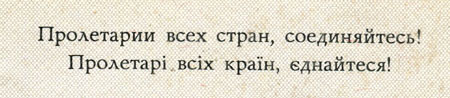
The top four words of the red cover of the booklet mean “Proletarians of all countries, unite”. You might recognise the “Pi-Rho-Omicron-Lambda” of the first word. Here is Marx’s phrase printed more clearly:

The second version of the Communist mission statement above is in Ukrainian because, as you will see, both of the Party members in these blog posts are from the Ukraine. Ukrainian is slightly different from Russian. You can always recognise Ukrainian because it has the letters  “ i ” and “ ï ”.

This means “Communist Party (of the) Soviet Union”.

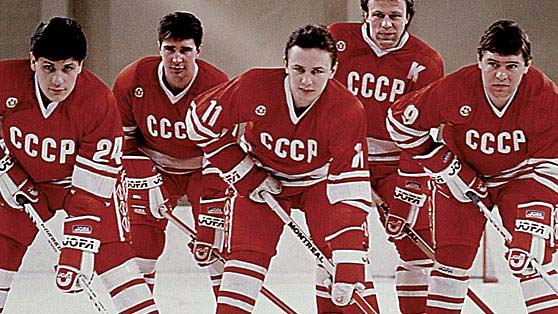
You might recognise the “Kappa-Omicron-Mu-Mu” of the first word. Soviet Union begins with the non-Greek letter ‘C’ which is our letter ‘S’. You will have seen it perhaps on ice hockey players with their CCCP letters.

The abbreviation at the bottom is “ц-K” which stands for “Central Committee”. “ц” is a non Greek letter which means “ts” as in “bits”. “KПCC” is again “Communist Party (of the) Soviet Union”.

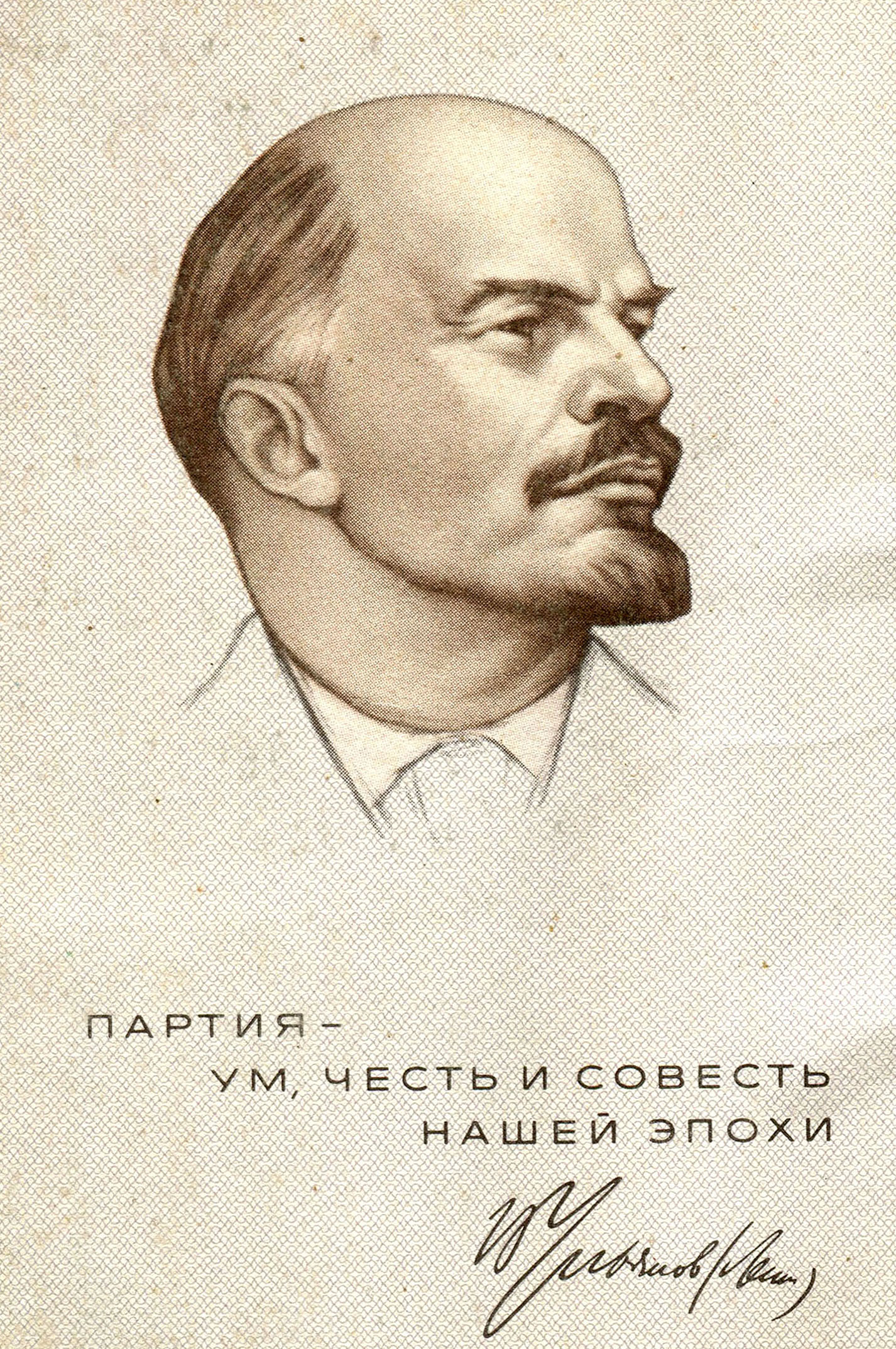
The first page on the inside has some bald bloke on it:

His autograph is at the end, “Ulyanov (Lenin)”. The quote, again with lots of Greek letters, is “(The) Party (is the) Intellect, Honour and Conscience (of) Our Epoch”. The words in brackets are not in the text. Russian does not normally have “the” “a” or “is, are”.

More from “Know your Enemy” next time.


19 Comments

Filed under History, Humour, Politics, Russia