Category Archives: Cryptozoology

The Beast of Veyreau….another cannibal killer!

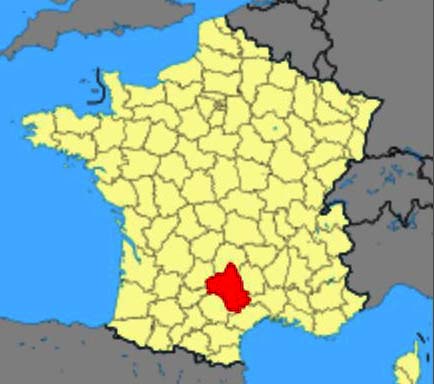
One more man eating monster to terrorise the local peasants of France was the “Bête de Veyreau”. At a time and in a place both relatively close to the Beast of Gevaudan, his bloodsoaked career peaked from 1799 onwards as he laid waste to an area of France called the “Causse Noir” or “Black Causse”. This beautiful countryside is situated more or less in the south of the Massif Central. Here is the old province of Rouergue, whose capital was Rodez:
rourgue

And this is a more detailed map, with a red square in the extreme east representing the village of Veyreau. The orange arrow refused to travel abroad:

map square

The province directly to the east of the green area is Gévaudan. The “Causse Noir” or “Black Causse” is dry, rugged and rocky.

1280px-Causse_Noir

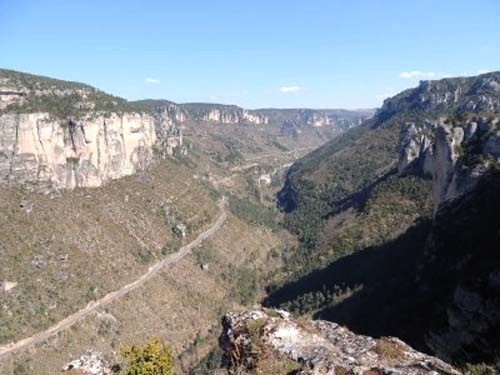
There are many mountainous areas and some notable gorges such as the “Gorges de la Jonte”:
gorges de la jonte

Normally, the best approach for these French monsters is to take an average of the various French websites. In this case however, that is not really going to work, because, as far as I can see, more or less every account of this creature is virtually the same, and probably owes a great deal to Wikipedia:

“The Beast of Veyreau was a man eating animal which ravaged an area in the “Causse Noir” not too far from Gevaudan, from 1799 onwards.  This was an area where livestock were raised and is nowadays part of the Département of Aveyron. These attacks filled the inhabitants with such immense fear, and the Beast had so many “dozens of victims”, that the locals thought the Beast of Gévaudan had come to their region.”

I have been able to find one person who could expand a little on that:

“around the year 1799, there appeared in the country a beast which filled all the inhabitants with great fear. Its build was slimmer and more willowy than a wolf. Its way of walking had such agility that it was seen first in one place, but then four or five minutes later in a different place perhaps several miles away. And woe betide any child that might meet the creature. The Beast would carry them off and eat them , first the liver and then the limbs. In the space of six months this beast killed three victims including a boy of six whose limbs they found hidden in the earth in the Malbouche Ravine, in the very same place which was, people used to say, the haunt of the ogre.”

Mention of “The Ogre” will lead me neatly to another blogpost in the future, when this long series of familiar crazed creatures, blood soaked beasts, maniacal monsters, feral dogs, wolf-dog hybrids, wolves with attitude or whatever nasty four legged beast you can imagine, becomes just for a few hundred words, a two legged cannibal killer, with the supercool name of Jean Grin.

To get back to the story, this is the tiny village of Veyreau:

Veyreau_aerien1

The very best version of the story of the “Bête de Veyreau” comes from a website designed to “découvrir et aimer la Lozère”, in other words to “discover and love La Lozère”, which is one of the most beautiful and picturesque areas of the “Causse Noir”. The account of the Beast below is quoted directly from the parish records of the village of Veyreau, which were collected together in 1870 by the then parish priest, Père Casimir Fages. The road sign  below shows that two languages were/are spoken in this southern part of France. “Veirau” is the village name in Occitan. Try the Wikipedia website to read about this ancient language. You will find a really interesting use of the Universal Declaration of Human Rights, which has been translated into a number of widely spoken languages but then into a good number of others such as Occitan, Gascon, Provençal and half a dozen others. At the very least, it has a wonderful moving map which you can click to enlarge:

veyreau_entree_panneau

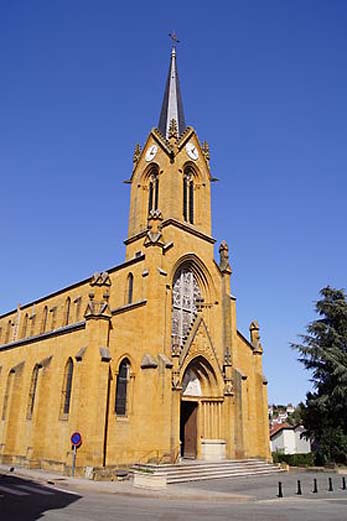
As was so often the case in old France, the parish priest was the only literate person in the immediate area, and it was for him to record the history of tiny villages such as Veyreau. Père Fages’ church is still there:

eglise-de-veyreau-e1380921126557

The hard work for this website has all been done by an extremely dedicated gentleman, Monsieur Bernard Soulier. Bernard is the President of the Association “In the country of the Beast of Gévaudan”, in French,  “Au pays de la Bête du Gévaudan”. This organisation is based in Auvers, a small village in the Haute Loire district.

.
Here is Père Fages’ story:

“Around the year 1799, there appeared in the country, especially around the village of Paliès, a beast that filled all the people immense fear; its size was slimmer than a wolf ; Its way of walking had such agility that it was seen in one place, and four or five minutes later it was seen in another place perhaps a league away. It had the head and muzzle of a large greyhound ; it used to come into villages in broad daylight, and woe betide any child that might meet the creature, the Beast would carry them off and eat them, first the liver and then the limbs. One summer’s day, the Beast appeared at Paliès. Children spied it from a long distance away and ran to take refuge in a tree close to a house on the northern side of the village; faster than lightning, the Beast seized one of the children, who was already two metres off the ground and carried him off into Madasse Wood. Men shearing the sheep of a local farmer, including the father of the unfortunate child, ran at top speed to the place where the Beast had gone. The noise that they made caused the Beast to abandon the little boy who was found shaking on the ground with his insides ripped out! Seeing his father looking for him, he did, however, have the strength, to shout “I’m here”, but he died a few moments later. This child aged six, was called Pierre-Jean Mauri; in the register Monsieur Arnal who carried out the baptism ceremonies in 1794 when the child was fifteen months old, has added to the margin of that register, “Devoured by the ferocious Beast”.
Fifteen days later, the Beast took a child from the farm of Graille at Rougerie. In company with his older brother, he was keeping watch over the cattle close to the natural spring of St. Martin; the elder brother tried hard to help his brother, but when the beast stood up on its hind legs, he was so frightened that he fled and went for help at Veyreau ; it was a Sunday, a large crowd came to help, and searching the Malbouche property, they found the remains of limbs that the Beast had hidden in the earth. This same beast also seized a little girl named Julien who lived in Bourjoie ; her father was busy knocking nuts down from the trees; the small children were close to the tree, and the Beast, in full view of the father, seized the little girl; the father set off after her, but he could not catch her up, and a few days later, she was found buried in the undergrowth; her liver had been eaten.
These different characteristics of the Beast filled the people of Veyreau and St André with justified fear; several people saw the Beast which accompanied them, gambolling along, jumping about, but not daring to attack adults; One day in bright sunshine, the Beast walked through the village of St André, and stopped outside the door of a weaver’s house; they took it for a dog, and at the very moment when they were going to stroke it, it disappeared in  a flash. Monsieur Gaillard, the parish priest of St André, with whom I have discussed this extraordinary animal, assured me that he had heard it one evening in a small field below the duck pond, emitting howls like the braying of a donkey, something which was confirmed by several other people:

howl

All the local poachers met to hunt the creature, but when they encountered the Beast, they said that sometimes, especially when it was being shot at, the creature rolled around on the ground but then disappeared with enormous speed. The people who were children during this era, agree how great was the terror that it produced throughout the whole region of the “Black Causse”. Never attacking men or animals, because we had seen it pass through the middle of herds of cattle and flocks of sheep without doing them any harm, the Beast targeted only children. In the course of this year, from June to December, two boys and a girl were the sad victims of its ferocity; nobody dared walk outside on their own at night, and by day everyone carried a halberd at the end of a stick to defend themselves, in case they met the creature:

halberd

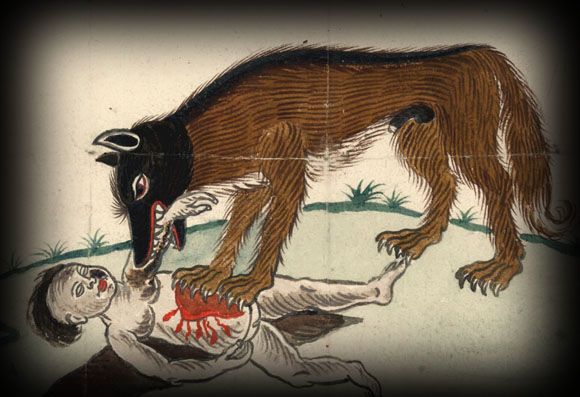
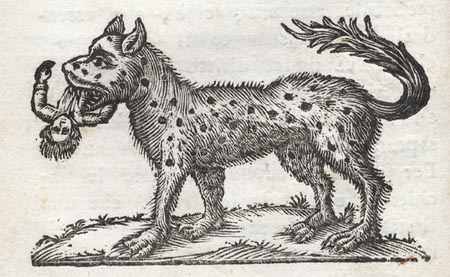
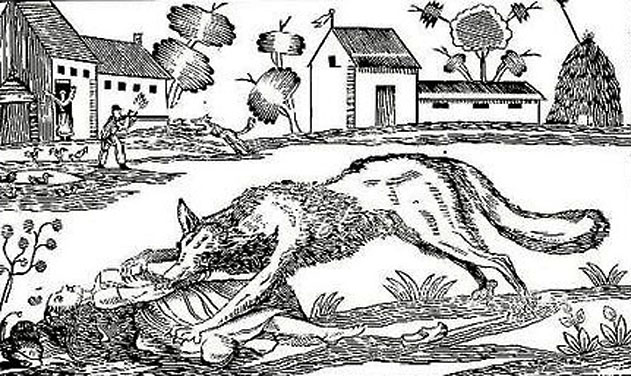
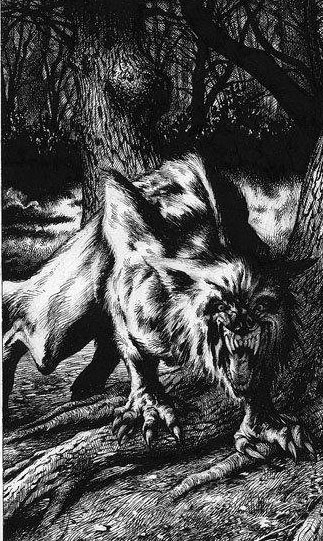
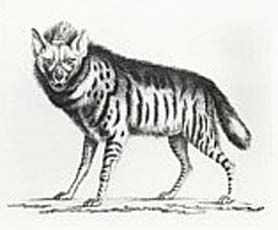
What was this Beast? It could not be classified as one of the known animals in the area; Monsieur Caussignac claimed that it was a hyena; Monsieur Gaillard, the village priest of St. André, thought it was a lynx, and the common people gave it the name of “Werewolf”, in French “Loup garou”:

loup-garou-1
After some six months or a year, the creature disappeared without anybody knowing what had happened to it. About the same time, a similar beast was seen in the Sanvero woods near the village of Cornus in the Aveyron province; it almost managed eat a little girl that I was to know twenty-five years later; she was near her home in the village of Labadie, in the parish of St Rome Berlières ; her brother, older than her, rushed to her defence and grabbed her from the creature, he dragged her into the house ; through the cracks  in the closed door they could see the Beast watching and waiting for some time for the prey which had escaped, only by the skin of her teeth. Indeed, a bite from the creature had taken a considerable piece of skin from her side; this scar was never to fade throughout the rest of her life:

werewolf
Whatever this animal was, its appearance had an enormous impact throughout the whole area of the Black Causse. Uneducated people saw in the Beast something supernatural, especially after all the upheavals and ordeals of the recent Revolution.”

And there you have it. Yet another wolf that seems to be not quite a wolf. At the moment, I am favouring the idea that up until about two hundred years or so ago, there was a second, much fiercer and larger species of wolf living in the remote and most mountainous areas of France, some prehistoric survivor that had lingered on until the nineteenth century in ever diminishing numbers, until, after tens of thousands of years, it finally became extinct. I cannot believe that the locals were incapable of recognising an ordinary wolf when they saw one. I cannot believe either that wolves were hybridising with dogs across the whole of France to produce killer hybrids. Wolves don’t have steamy affairs with dogs. They eat them!
15 Comments

Filed under Cryptozoology, France, History, Science, Uncategorized, Wildlife and Nature

French Monsters : the solution

I think that I have established by now, in a long series of articles, that large numbers of innocent people in France were being attacked, and frequently eaten, by wild creatures of some sort from the late 1400s possibly right up to the end of the nineteenth century.
My eagerly awaited conclusion to all this is that we are dealing here with an unknown creature which was essentially a wolf type animal and which is now extinct. It lived in thick forests and deep ravines, and behaved in a way so different from a modern wolf that it cannot possibly have been one. It killed and killed again.

Some sources attribute 150 deaths to what they call “just one ordinary, but large wolf”. Impossible! At the same time, “The Prime Suspect” was not necessarily hyper distinctive, and may not have been totally obvious at first sight:

Gevaudanwolf xxxxxx

Let’s begin by looking at a list of creatures which could have been this wolf type animal. I have compiled it from as many French Internet sites as I could find! There may be some copying between the websites involved here, but I prefer to think that descriptions which are similar are describing the same species of unknown animal. And don’t forget, most of these monsters are separated by both time and space.
As a rough comparison, a French author, Pascal Cazottes, has found fifteen monsters of this type, carbon copies, more or less, of the Beast of Gévaudan. Here is my contribution to the list:
1500-1510, Fontainebleau. it was supposedly a wolf, a werewolf or a shape shifter. Possibly six individual animals.
1510, Fontainebleau. a lynx, or a hybrid of a wolf and a feline, it devoured young girls and little children.
1595-1598, Vendômois, south/central France, 25 people killed by “wolves”. This was not normal wolf behaviour.
1632 – 1633 and then possibly in 1672, Cinglais, Evreux, Caen, Falaise, Calvados, between 15-30 people killed. It was not a wolf but resembled a large mastiff of enormous speed and agility, capable of  leaping across the river. At first sight, it was like a wolf, but was longer, more red, and had a more pointed tail and wider haunches. It was eventually identified as a wolf, but the local peasants had serious misgivings about this middle class verdict.

perhaps cinglais
1633-1634, the Forest of Besnats, Anjou, more than 100 people were mutilated and killed, their bodies lacerated by claws. It was “an enormous beast”.
1650, Fontainebleau, apparently, a female wolf of enormous size, with supposedly more than 600 people killed.
1660, Gâtinais, near Fontainebleau, apparently a huge wolf, it would cross the river to seize children and animals
1690, Forest of Douvres Saint-Riez-en-Belin, Sarthe, there was a report of a child, Cécile Le Boet, devoured by “a fierce creature”
1693-1694, Benais, 200-250 victims. There were several beasts acting in concert which looked like wolves, but had a wider muzzle. They behaved in remarkable fashion, allowing themselves to be patted, but then leaping on the throat of the victim. They appreciated “fresh meat”, and ate the weakest people. It was supposedly a lynx, but lynxes don’t attack human beings:

loup cervier 1vvvvvv

1691-1702, Orléans, over 60 young victims in fifteen months. A huge beast was killed in the forest and was then picked out from 200 dead wolves. It cannot have been a normal wolf, therefore.
Great Winter of 1709, Orléans, in six months more than 100 people were killed and the same number were wounded. The Beast of Orleans only attacked women and children, and had the same way of moving, the same sharpness and even occasional timidity, as the Beast of Gévaudan. It was covered in scales and no weapon could harm it.  A cruel beast, it was thought to be a hyena:

beast 1709

1731-1734, Auxerre, a big wolf or a tiger, “like a wolf, but not a wolf”, with very aggressive behaviour.
1746, Corrèze, an eleven year old boy was killed “by some kind of wolf” called a “mauvaise bête”, an evil beast.
1747-1752, Primarette, seven  victims, thought to be a Lynx (see above).
1751,  Latillé, Vienne, eight children killed in three weeks.
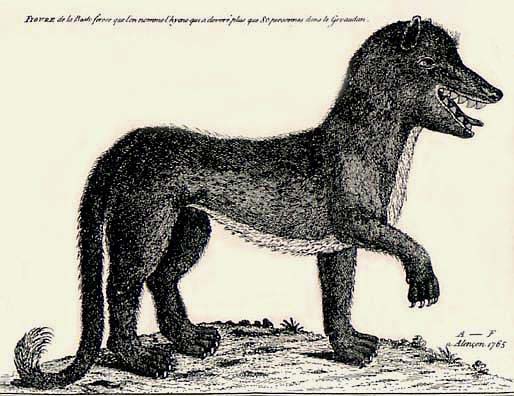
1751, Benais, supposedly a wolf but the peasants frequently rejected wolf as an explanation. The animal had a wide muzzle, a bigger mouth than a wolf, and was covered in reddish fur, with a black mane, a black stripe between head and tail, a belly that dragged towards the ground and a full tail, which could even be used to strike people. It resembled the Beast of Gévaudan on all counts. It frequently behaved to people like a dog who wanted to be patted, but would then jump up and rip their throat out.

second-beast
1754-1756, the Beast of Lyonnais, Meyzieu, Savigny, a kind of large wolf with short legs, its skin was spotted with various colours, (“two fierce animals, one like a big pony, reddish, resembling a wolf except for a short tail , the other like a large mastiff , but white on the belly and a big long tail.”)

1763Dauphiné, the size of a very large wolf, rather light in colour, with a blackish stripe on the back, a belly of dirty white, a very large rounded head  a fluffy tuft on the head and next to the ears, a furry tail like a wolf but longer and upturned at the end. It ignored sheep to attack the shepherd boy. Many prominent people, both clergy and nobility, seem to have been totally convinced by the theory that this monster was the very same individual animal as the Beast of Gévaudan.

bete-du-gevaudanzzzzzzz

1764-1767, Gévaudan, witnesses were adamant that the animal was a canid, but not a wolf. It was an animal that they did not know. In addition, wolves cannot have a white breast and underparts. The many witnesses, all accustomed to wolves, spontaneously called it “the Beast”. It resembled a wolf but it was huge, between a calf and a horse in size. Its fur was mostly red, its back streaked with black. It had large dog-like head, a snout like a wolf and a mouth full of large formidable teeth. Its jaws could open very wide and seize a human head. It had small straight ears, smaller than a wolf, which lay close to its head, a strong neck and a wide chest. Its tail was immensely long, and somewhat like that of a panther. It possibly had claws. People struck by the tail said that it was a blow of considerable force.

666666

Professional hunters refused to believe that it was an ordinary wolf. It seemed relatively invulnerable, when hit by bullets, and would always stagger back to its feet. It did not ever fear man. In the face of resistance from the victim, it would retreat, sat down to think, and then renewed the attack. It was very aggressive, much more so than from mere hunger. It was very agile and could jump over high walls. It could perhaps manage some steps on its hind legs. It once attacked a man on horseback…not a wolf’s, or even a bear’s, behaviour.

66666

March-August 1766, Sarlat, 18 victims, it was supposedly a rabid wolf but “rabies is a quick killer” (3-4 days). One wolf of extraordinary size was killed.
When ready to seize its prey, it supposedly put up its hackles, and its eyes became flaming red. It raised itself up on its back legs and tried to seize the victim, often  by the head.
1791, Wales, between Denbigh and Wrexham. it was the size of a horse, eating livestock, dogs and men, and even attacked a stagecoach. It was an enormous black beast, almost as long as the coach horses, and was possibly an overgrown wolf. One farmer was found terrified, after witnessing an enormous black animal like a wolf kill his dog. The monster pounded on the door, stood up on its hind legs and looked in through the windows. Its eyes were blue, intelligent and almost human. It foamed at the mouth,

1792, Milan, northern Italy, an ugly beast as big as a dog, but with a horrible mouth. Children said: “a big head with big ears, a pointed snout and large teeth, black and coloured hair on top, whitish underneath, a thick, curly tail”. (with some variation depending on the child). A farmer said “As big as a normal calf, head like a pig, ears like a horse, white hair like a goat underneath, reddish on top, thin legs, large feet, long claws, a large, broad chest and slim flanks.”
It was not a wolf, but was perhaps an exotic animal. “Many have recognized the wolf in the beast, but some argue that it is a different animal.”

beast of milan

1796, Châteauneuf- Brimon region of France, it killed a dozen women and children.

1799, Veyreau, “tens of victims”, the locals thought the Beast of Gévaudan was visiting the region, It was slimmer and more willowy than a wolf and had such agility that it was seen first in one place, but then four or five minutes later in a different place perhaps several miles away. This was possibly evidence of a small population of these animals, or perhaps even some kind of migration or irruption.

1809-1817, Vivarais/Gard/Cévennes, 29 victims, it was the size of a donkey with brown fur, a black mane and large udders. Other witnesses described a creature like a wolf but the size of a calf, with a grey and red coat and black hair over its back. It had a huge belly with white fur, almost dragging on the ground, possibly with tiger/tabby coloured spots. The white fur underneath its body means that it was not a wolf. It had large, long ears, a long muzzle and head and a thick, heavy, luxuriant tail sticking up at the end. Six of its victims were beheaded. It was never captured or killed.

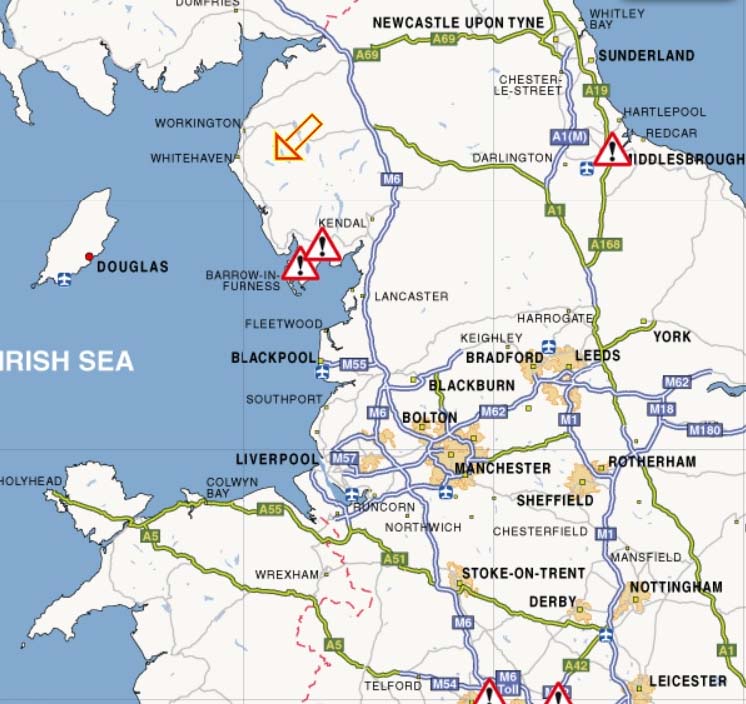
1810, the mountains of Cumberland, England, an unknown creature killed as many as eight sheep a night for six months. The victims had only a few bodily organs removed and eaten, and were drained of their blood. Recent theories have said that this monster was an escaped Thylacine, but my own researches have proved this to be untenable as a valid explanation.

December 6th, 1814, Chaingy, some women and children in the forest were attacked by a she-wolf, with two killed and eight injured. This behaviour is absolutely extraordinary. If it was rabid this was not mentioned when the animal was killed shortly afterwards. For me, definitely “a wolf but not a wolf”:

Bete_de_Chaingy_ws1028371882

1817, Trucy, a second carnivorous beast ravaged the forest around Auxerre/Trucy for a few months, at the exact same place as the animal from 1731-1734. It was like “a mastiff dog with pointed ears”

1874, County Cavan and Limerick, Ireland, a mystery animal killed sheep, as many as thirty in one night. Throats were cut, and blood sucked, but no sheep were eaten.

end of the 19th century, Fontainebleau, “a great evil beast which left the forest to attack farm labourers, shepherds and flocks. It attacked children, such as the little girl gathering nuts in the woods or a 9 year old boy devoured at Nanteuil-lès-Meaux.”

7777777

1966/7, Vaucluse,  Monsieur Henri C., a hunter, killed an unknown animal near a small wood at the edge of the Hautes Alpes. It was the size of a large dog (25 kilos). It had a head like a fox, but a sloping forehead gave it exceptional length. It had pointed ears and formidable fangs. Its fur was short and red, its paws were round, and it had a long tail.

1977, the Vosges area,  a witness described a beast of 60 kilos, with pointed ears, a drooping tail, a coat of yellowish-grey or red. It was larger than a German shepherd. Others thought it was like a wolf. Hair analysis said a canine, but nothing more exact. Existing photos are too poor for a conclusion.

.
A visit to a very interesting website called “La Taverne de l’Étrange” only served to confirm my ideas. The website author, Tyron, makes the point that in comparatively recent history, lions and
leopards, for example, could still be found in Europe, as could bears, wolves and lynxes, scattered more or less across the whole continent. France at the end of the Middle Ages, for example, was still covered with huge areas of forest wilderness, which, like the mountain regions, were practically uninhabited. Animals completely unknown to science could well have been living there.

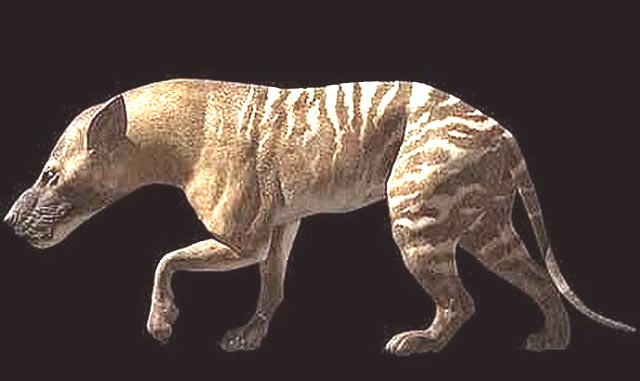
One suggestion has been that the mystery species was a mesonychid, an animal last seen millions of years ago:

Another suggestion is that it was the Waheela, a giant predator which some, such as Alaska Monsters, still believe to be present in northern forests. Traditionally it decapitates victims, and supposedly lives in the Nahanni Valley in the Northwest Territories of Canada. Opinions differ about exactly what a Waheela is:

wahoooooooooooooooooooooooooo

Supposedly, it may be an Amphicyonid which is a prehistoric carnivore of the Miocene and Oligocene eras:

Amphicyon-ingens_reconstruction

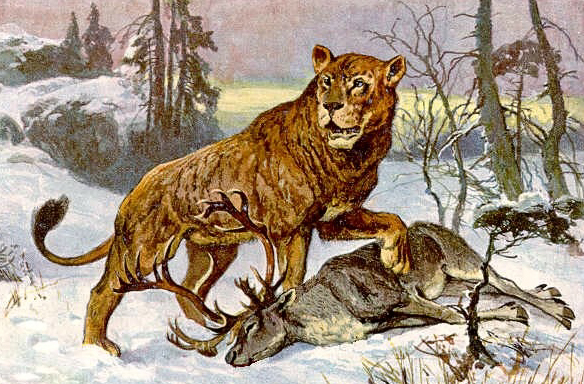
Many people disregard the wolf interpretation of the Beast of Gévaudan completely and look at its behaviour, its long tail and its habit of swishing a long, rather heavy tail. It seems perhaps almost bizarre to suggest a felid at this point, but the fit is actually, quite a good one. This is a cave lion:

Hoehlenloewe_CaveLion_hharder

It was certainly big enough and fierce enough to fit the bill. The colours in the illustration are just guesswork, of course. The animal may well have had a coat of exactly the same colours as the Beast of Gévaudan. Furthermore, he Cave Lion is known to have occurred in southern Europe, and to have been present in the forests of Southern Germany and Central Europe until fairly recently at least. Perhaps as recently as 100 AD. And if the Cave Lion was there in 100 AD, it could equally well have persisted through to 1764 AD.

The unknown monster may equally well have been a prehistoric hyena:

cave hyena xxxxxxxx

It may have been a dire wolf, which was a large wolf but from the Pleistocene era:

This slideshow requires JavaScript.

In actual fact, the Dire Wolf is not that bad a suggestion, although so far, it has only ever been found as a fossil in the Americas.

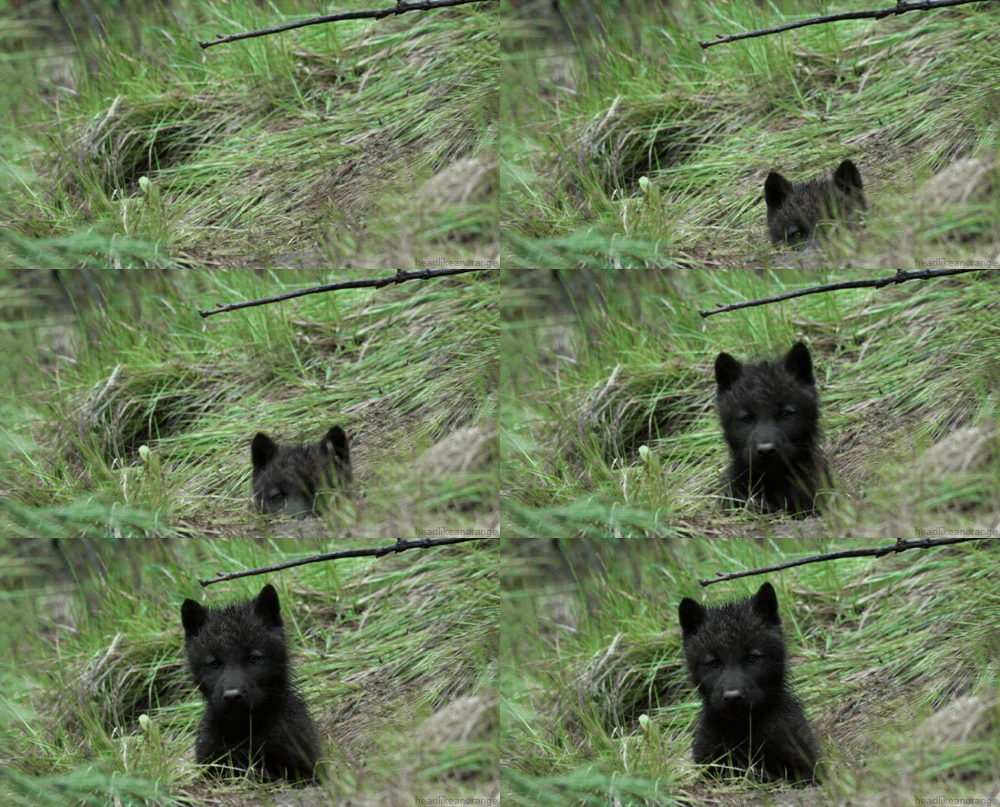
My favourite idea, though, is that this formidable killer was a species of canine completely unknown to science. It was not anything particularly strange, though, just an animal that was, with careful study, seen to be, to quote the peasants of the area, “like a wolf but not a wolf”. No doubt this fierce beast was some kind of leftover from a previous epoch. It had perhaps hung on desperately for centuries in the deep forests of Southern Germany, Central Europe or even Poland or Russia. For some reason, increasingly severe weather, lack of prey or whatever, some of them had now moved westwards to the beautiful countryside of France, perhaps establishing a small breeding population:

wolf baby

And from, say, 1500 onwards, they all gradually disappeared. Perhaps they were even wiped out during the continuing slaughter of the French wolf population, and nobody even noticed.

17 Comments

Filed under Cryptozoology, France, History, Science, Wildlife and Nature

The Beast of Lyonnais

The Beast of Lyonnais was yet another killer monster (or monsters) in the long, long series of various creatures, beasts, feral dogs, hybrid dogs, wolves with attitude, sexual psychopath or good old fashioned serial killers who have ravaged different regions of France from around 1550 until the present day, with particular reference to the period 1750-1820.

I will freely confess that I knew nothing whatsoever of this type of event until very recently, when I started reading about the Beast of Gévaudan. Then I realised that there had been a Beast of Benais, a Beast of Auxerrois/Trucya Beast of the Cévennes/Gard/Vivarais (it did like to travel about a bit) and then a Beast of Sarlat.
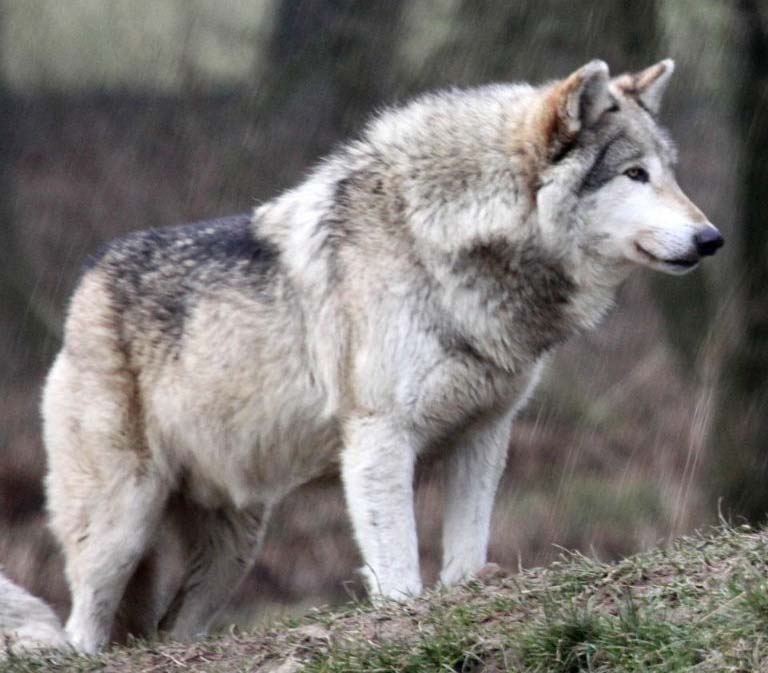
There seemed to be any number of them, and I deliberately selected the ones which seemed not to be the most obvious of wolves. This is also the case with the Beast of Lyonnais, which, as we will see, hardly any of the witnesses at the time thought was good, old canis lupus lupus, even if all the noblemen at the time told them that they were mistaken (despite the fact that none of them had ever seen it):

wolf 1 xxxxx
Once again, I will begin by looking at a number of websites written in French, offering you my own translations and you can then take your own average between them.

We start with a hoary old favourite:

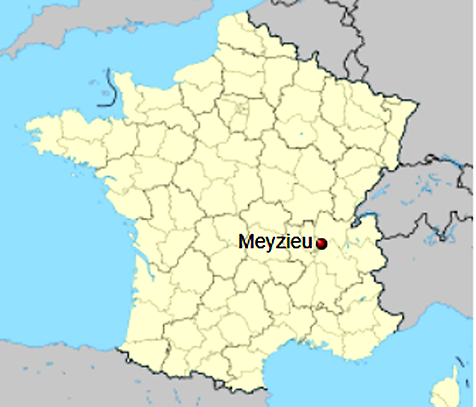
“The Beast of Lyon was a man eating animal behind a series of attacks on humans. The first attack was mentioned as being in the summer of 1754. Until the end of 1756, one or more ferocious beasts then ravaged the countryside, initially between Vienne in Isère, Meyzieu and then around Savigny in the Rhône area. This or these, animals claimed about thirty victims, mostly children or teenagers. Here is Meyzieu:

mey sssssssss

In early August 1754 the Royal Notary of Vienne was summoned by the most important individuals in the parish of Luzinay to proceed with the identification of the body of a young boy who had been found devoured. We know that at least two other attacks occurred in this same area, around Villette-de-Vienne and Régnié-Durette, before the Marquis of Marcieu, the Governor of the province, ordered a large hunt to trap the beast.
.
The Great Hunt took place on September 10th, 1754 and lasted two days. It mobilized around 2,000 hunters from 26 different villages, but had no effect other than increasing the extent of the predator’s territory. All trace of the Beast was lost in the last three months of 1754.

The beast resurfaced in February 1755 in the parish of Sarcey, where it killed a new victim. Until at least October, at least one death on average per month could be attributed to the creature, mainly around Savigny and L’Arbresle . There was then no more news of the creature during the winter of 1755-1756. Here is Savigny:

savigny

On Easter Tuesday, April 20th, 1756, a girl was found devoured in Saint-Julien-sur-Bibost. During this attack, for the first time, witnesses reported two beasts together.

In early 1757, the parish priest at Brietton in the parish of Sourcieux-les-Mines estimated that a total of some 25 people had been attacked in the local area since the Easter of 1755. According to the priest, the (two) creatures were wounding more people than they killed and these victims might equally well have been eaten if nobody had come to their rescue.

On November 24th 1756, the last victim was devoured and left half consumed at Montrottier. The local parish priest was the first to hypothesize that the beast might be a hyena. This hypothesis, which has been challenged by present day research, was also put forward at the time to explain the Beast of Gévaudan:

This slideshow requires JavaScript.

Following this apparently final attack in November 1756, the parish registers have no further mention of people being devoured by wild beasts in the vicinity of Lyon.
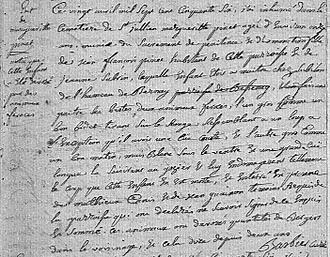
The accounts of burials that we still have give comparatively little information about the animal or animals ravaging the Lyon area between 1754 and 1756. The priest of Saint-Julien-sur-Bibost is the only one to have left us any evidence:

“This April 20th 1756, I buried in the cemetery of St Julien sur Bibost Marguerite Pinet, aged about eleven, the daughter of Jean-François Pinet, a resident of this parish & Jeanne Subrin. The child was employed by Monsieur Subilon in the hamlet of Bernay in the parish of Besenay to watch over his animals in the fields”

lyonnais xxxxxxxxx

“There were two ferocious animals, one as big as a small horse, reddish in colour, resembling a wolf, except that it had a short tail. The second animal was as big as a good sized mastiff, but it had white on the belly and a great long tail ; they seized Marguerite by the throat and neck causing enough damage to kill the child; she was buried in the presence of Mathieu Crois and Jean Guainon , witnesses required by the parish, who said they were illiterate and could not sign this form. These animals have devoured a good number of shepherds in the area. This has gone on for two years. Berbier, Priest.”

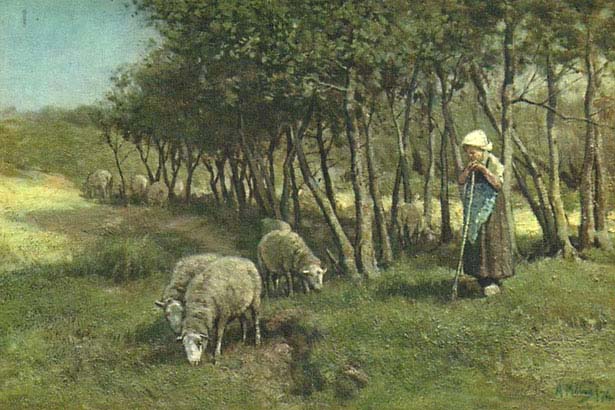
Here is a shepherdess, the meal of choice for the majority of monsters and beasts during this era. The sheep were usually ignored:

bergere xxxxxxx

The descriptions of the time mentioned a wolf, but with shorter legs. The fur was more coarse and the skin was mottled with several different colours. The evidence of the priest at Montrottier was that rumours of a hyena had currently gained momentum.

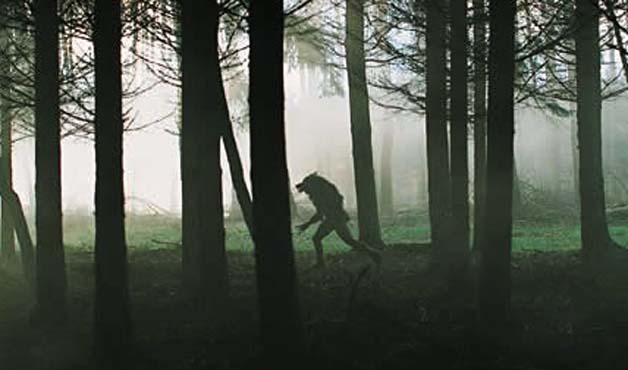
The theory of a werewolf was equally popular at that time and was mentioned by the Marquis of Marcieu in his instructions for Great Hunt held on September 10th, 1754:
“The Officers of both the Fusiliers and the Trackers must make every effort to destroy the ordinary people’s fanatical belief in werewolves:

Dog-Soldiers-2002-Movie-Ixxxxxxxxxxx

We must prove to them that these are just ordinary wolves which unfortunately are accustomed to eating human flesh.
Even if the woods are full of lynxes, bears and tigers, we must prove to them that these are just animals which a bullet from a rifle will kill, and which it is necessary to destroy.”

The French word “loup-cervier” appears on a number of occasions connected with these mystery monsters. I have found it impossible to trace the word in the Online dictionary which I normally use,
but Google Images for France provides any number of photographs of lynxes, mostly Canadian lynxes but also European ones. I eventually discovered that “loup-cervier” originally meant a lynx which hunts stags, and is used nowadays as a favourite metaphor for predatory financiers. “Cervier” seems to have no real existence except when attached to the word “loup” or very occasionally “chat”.

In any case, a Lynx, whether European or Canadian, is more or less out of the question as regards the Beast of Lyonnais. Lynxes are unbelievably shy and retiring creatures and it is inconceivable that they would attack human beings. In Europe their favourite prey item is Roe Deer. This is a European Lynx:

euraianLynx_lynx-2 xxxxxxxx

In North America, they hunt mainly Snowshoe Hares. This is a Canadian Lynx, the so-called “loup-curvier”:

loup cervier 1vvvvvv

To me, they are more kute than killer:

This slideshow requires JavaScript.

Wikipedia carried a list of the victims of the Beast(s) of Lyonnais:

Pierre Morel (5 years old), Claudine Tardif (45), François Beloud (8), Madeleine Joubert (?),Christophe Cambria (7), Anne Tricaud (14), Pierre Guillon (10), Marie Berchoud (13), Mathieu Gervais (9), Hélène Berquet (6), Marie Berger(6), Claudine L’Hospital (8), Catherine Cusset (10), an unknown toddler(2), Jean-Marie Duboy (13), Pierre Vaché (8), Benoite Daverdi (9), Marguerite Pinet (11), Benoît Thiver (10), Pierrette Devilard (7), Étienne Manu (6), Pierre Delorme (13), Jean-Baptiste Chazaud (7), Claudine Allioud (8), Anne Tiron (10), Elisabeth Blanc (11), Benoît Mortan (12), Jean Malaval (9), Marie Lombard (10), Benoit Barroh (sic) (1), Claudine Guillot (4), Pierre Paleron (6), Jean-Baptiste Bazin (14) and Anne Sarrazin(9).

This seems to be twice the usually quoted figure of seventeen. The first victim was killed on June 5th 1754 and the last on November 24th 1756. Very roughly, the deaths occurred perhaps once or twice a month, although in some months there were no killings at all. The original list gave dates without any further details but as far as I can ascertain, there were no occasions when two victims might have been killed together. On several occasions, one victim may have been quickly followed by another at the same location, but they were always killed on different days. In some cases, the animal or animals might have returned repeatedly to kill its prey, such as at the village of Savigny (6 slayings), Saint-Pierre-de-Chandieu (3) and Saint-Romain-de-Popey (2). This is Savigny nowadays. It looks a lot quieter:

280px-Savigny_1 xxxxxx
I just do not know if ordinary wolves would return to the scene of the crime like this, although all predators, both animals and birds, tend to be very much creatures of habit, following the same paths and game trails every single day.
Another familiar website tells a fairly similar tale, but comes to a very different conclusion:

In all, seventeen young men and children were bitten, ripped to pieces or even devoured. Those who saw the animal, or believed they saw it, said that it was approaching the size of a wolf, with shorter legs, a coarser coat and skin mottled with various colours-an exact portrait of a hyena.
From these accounts, people were all agreed that it was a real, genuine hyena. But who is unaware that fear may magnify things, or change them completely. The descriptions that people have given of this carnivorous animal have probably been inspired by their heated imaginations. Fleeing at top speed, how could exact measurements be taken by eye? And running along, the creature must have seemed a lot lower than he really was. The frantic motion of his entire body made his hair stand on end and lastly we know that glare changes shades of colour.  Take away these circumstances from your sighting, and instead of a hyena, much more likely it was a question of a big wolf driven by famine in that harsh winter of 1754.
The excessive winter weather of 1754 forced the animals of this latter species to seek in the villages what the countryside could no longer supply to them. Moreover, the hyena is an animal entirely foreign to our climate:

S H 3.png vvvv (2)

How would he have got to France? Can we suppose with any degree of probability whatsoever that he has crossed the immense expanses which separate us from his native home without leaving behind any traces whatsoever of his journey?

We are forced to conclude that too often we consider something miraculous when it is nothing out of the ordinary. “

Another description was of:

“two ferocious animals, one as big as small horse, verging on red in colour, like a wolf except it had a short tail. The other was the size of a large mastiff, but it had white on its belly and a big long tail”

When I wrote about the Beast of Gévaudan and examined in some detail the solutions to the mystery, I thought that the centuries old puzzle was solved. The Chastel family was the guilty party, and in particular, long and greasy haired Antoine. But then I read about the Beast of Cévennes/Gard/Vivarais whose behaviour was nothing like that of a wolf. And then came the puzzle of the Beast of Benais who the local people actually thought at the time was the “Beast of Gévaudan on Tour”. After that, it was the Beast of Sarlat which was supposedly a rabid wolf, although none of the locals thought so, preferring a werewolf as the likely explanation:

werewolf

Next came the Beast of Auxerrois/Trucy which was not a wolf, the locals said, but a tiger, a demon or a werewolf.
Throughout my articles, I had deliberately ignored obvious wolves as culprits and deliberately selected only the creatures which seemed to me not to be obvious wolves.

The enduring problem was that there just seemed to be any number of these strange creatures and so many of the “wolf but not a wolf” category. You can’t stretch the Chastel theory to explain away all of them.

Soooooo……..
I have returned to C.R. Rookwood who, in one of his blog posts, suggested that the Beast of Gévaudan, was a prehistoric mammal, a mesonychid, which were very large ancient predators with huge heads, long tails, and hooves instead of feet.

This slideshow requires JavaScript.

I do not have enough scientific knowledge to be quite so precise, but I would certainly go for some kind of relict creature, a fierce animal left over from a bygone age, its ever diminishing population dwindling on in the trackless forests and mountains of south-central Europe. Perhaps it was some kind of hyena such as the Cave Hyena. These photographs give an idea of their size:

This slideshow requires JavaScript.

I said that I did not think these monsters could be wolves, but the “Dire Wolf” is not a wolf. Or at the very least, it is a wolf, Jim, but not as we know it:

This slideshow requires JavaScript.

Who knows? And indeed, who ever will?

11 Comments

Filed under Cryptozoology, France, History, Science

A strange and worrying zoo in France

I have now written quite a few articles about the various Beasts of France, beginning with the most famous, the Beast of Gévaudan, which flourished from 1764-1767:

second-beast

And then it was the Beast of Benais, followed by the Beast of Noth, not forgetting the Beast of the Cévennes, the Beast of Primarette, the Beast of Orléans, the Beast of Lyonnais, the Beast of Sarlat, the Beast of Auxerre, the Beast of Cinglais, the Beast of Gâtinais, the list just goes on and on. Some of them were really quite peculiar creatures, even by the contemporary standards of Beastliness:

beast 1709

Not all French monsters are wolf-types, however. Here are just a few of the inmates of what the original website called “Un Zoo étrange et inquiétant en France”, “a strange and worrying zoo in France”.

The first animal is a snake, which used to live in the Forest of Fontainebleau, just to the south west of Paris:

forest of fontaineblasu

It was seen, and duly killed, by the King (Quite right too!). According to legend, it was 18 feet long, with a weight of some 160 kilos (around 350 pounds):

Giant_snakezzzzzzzzzzzzzzzzzz

This monster was venomous and used to hide in a great pile of rocks which offered him protection as no group of attackers was able to approach the creature simultaneously. Only one adversary at a time could reach him.

One day, King Francis the First or le Roi François Premier, was out hunting in the area. This king was a contemporary of King Henry VIII, at the start of the sixteenth century:

220px-Francis1-1

The King and His Royal Nose decided to put an end to this creature which had sown terror and desolation throughout the land.( Well, it was a very big pile of rocks).

BOA

The king had commissioned a suit of armour covered with razor blades. When the snake tried to coil itself around him, the razor blades, quite literally, cut the monster to pieces.  “Scratch one constrictor!” as they say.

What other animals are in the “strange and worrying zoo”?

Well, back in 1965:

“In the Toulouse area, flocks of sheep belonging to Trappist monks at the Abbey of St. Mary of the Desert, and also those belonging to the Count of Orgeix, suffered extensive depredations from a mysterious animal. Three students from the area of Cadours who were driving around one  night in the car, saw two animals which were larger than a dog or a wolf. They had light beige fur. These strange creatures were like enormous mastiffs, with huge, round, bulging eyes. The four footed killers then disappeared from the area as mysteriously as they had appeared.”

One year later, in May,

“In the region of Pignans (in the département of Var), a tenant farmer, Monsieur Baptistin, asleep in his small house, which was located some two kilometres from the village, was awakened by furious barking from his dog. He got out of bed, switched on the light and saw the silhouette of a huge animal which was disappearing into the darkness:

bigfoot giph

The next morning, he discovered near the water trough animal tracks of a startling size:

jerry-crew-taught-by-bob-titmus zzzzzzzzzzz

The authorities were alerted. The Forestry Services photographed the tracks and made a cast, but nobody was able to ascertain what kind of animal they belonged to.

For several weeks, the locals no longer dared to go out at night. The more daring people who did venture out never failed to take a reliable rifle with them.”

(Actually, it wasn’t Bigfoot, or at least I don’t think it was. It’s just that the details of this story are so vague that it is actually possible to interpret the events as being “Grand-Pied” himself, rather than some, presumably, fairly run-of-the-mill Alien Big Cat.)

In mid-August of 1966, a monster was seen haunting the area around Draguignan near the road to Grasse , a region where many UFOs had been seen, both in flight and on the ground:

“A former member of the armed forces, Monsieur Paul G… , found himself one morning around seven o’clock  face to face with an unknown creature. The animal had its mouth open.  It had a pointed snout, which was rather long, and triangular teeth. Under its neck, it had a goitre which gave it a frightening appearance. The ears were short, like those of a dog, but they were very pointed. The body was very long and covered with grey fur. The animal had a long tail, at least 40 centimetres (16 inches) in length.”

imaginative chaingyu

Interestingly, the town of Draguignan has a name and a coat of arms which are both redolent of another species of legendary animal. The town was founded around 400AD after Saint Hermentaire, the Bishop of Antibes, had overcome a dragon in single combat. Exactly how he managed this does not seem to have been recorded, but here is the coat of arms:

draguignan

It was definitely not a friendly dragon:

friendly dragon

In 1967, the presence of a number of monsters was reported throughout the whole of France. In the Creuse region in particular, between Royère and Chavanat:

Département_creuse zzzzzzzzz

…a feline of unknown species was flushed in the hamlet of Cloux Valleret by a farmer named Monsieur Simo:

surrey puma original

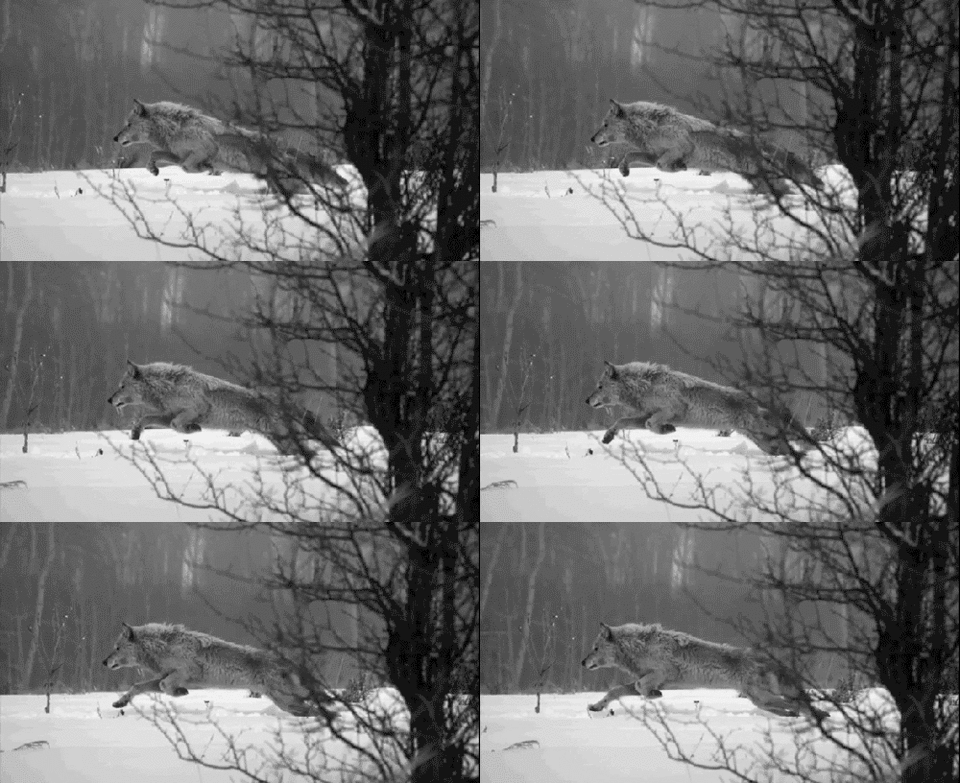
A week earlier, farmers in the Vosges area had already stalked an animal of indeterminate species which looked rather like a wolf:

wolf bounding

All that was easily topped though, by a report from Italy:

“In June 1970, in Meldola, about ten kilometres from Forli, a farmer claimed to have encountered some kind of dragon, six to seven metres long, with a body some 15 inches in diameter.

dragon

The Italian police organized a hunt which did not turn up anything. The monster appeared once or twice more and then disappeared forever.”

Back to France, in 1972:

“In the area around Vigan in Hérault, some medical students, out hunting in a snow covered area, discovered the footprints of an unknown animal:

yeti tracks

They followed the tracks for several kilometres. Suddenly they disappeared just in front of a rock which was projecting up out of the ground. The beast seemed to have reared up on his back end and then been recovered by his masters on board a flying machine.”

Don’t think though, that the French are especially weak minded and that this is why they continually report crazy sightings of weird animals. In this area, the British, quite rightly, are streets ahead of their nearest and dearest neighbours. But first of all, let’s just forget our many, many, ferocious Black Dogs such as Shuck and his like:

dog

Forget the werewolves seen more than once at Alconbury USAAF Air Base:

werewolf attack

Forget the sightings of Bigfoot in Cannock Chase and Sherwood Forest (an “eight-foot, hairy man beast with red glowing eyes” seen in late 2002) (allegedly):

red eyeszzzzzzzzzzzzzzzzzzzzz

Just on cats alone we are well in front. The most famous cat of all, of course, is the Beast of Bodmin:

bodmin1

But don’t forget his less famous sidekick, the Beast of Exmoor. And before that Gruesome Twosome, it was the Surrey Puma. And don’t ever forget the heyday of the Nottingham Lion.

But look at this list, put together originally by George M. Eberhart.

Don’t just skip through it. Select your top three:

“The Ashley Leopard, the Ayrshire Puma, the Beast of Ballymena, the Beast of Barnet, the Basingstoke Beast, the Beast of Beacon Hill, the Bennachie Beast, the Beast of Bin, the Blagdon Beast, the Beast of Bont, the Broadoak Beast, the Beast of Broomhill, the Beast of Bucks, the Carsington Beast, the Beast of Chiswick, the Essex Beast, the Inkberrow  Beast, the Beast of Margam, the Beast of Milton, the Beast of Otmoor, the Shropshire Border Beast, the Beast of Tonmawr, the Beast of Tweseldown (sic), the Black Beast of Gloucestershire, the Black Beast of Moray, the Brechfa Beast, the Cadmore Cat, the Chiltern Cougar, the Crondall Cougar, the Durham Puma, the Eccles Cheetah, the Fen Tiger, the Highland Puma, the Lindsey Leopard, the Mendips Monster, the M25 Monster, the Munstead Monster, the Norfolk Grinder, the Pink Panther of Derbyshire, the Penistone Panther, the Penwith Cougar, the Beast of Powis, the Rosshire Lioness, the Terror of Tedburn, the Tilford Lynx and, last but not least, the Wolds Wild Cat.”

For me it’s, in third place, the Norfolk Grinder. Second is the Penistone Panther, but my own winner is…….. the Eccles Cheetah!!

14 Comments

Filed under Cryptozoology, France, History, Humour, Science, Wildlife and Nature

Hallowe’en Tales : Numbers Seven and Eight

Number Seven

The Sea Serpent

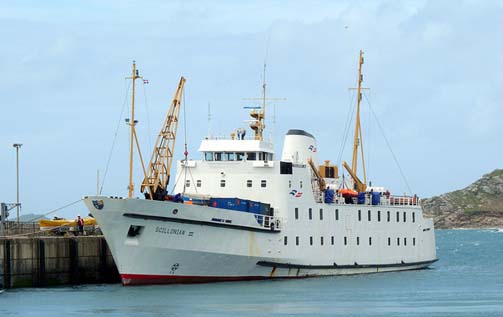
On October 25th 1988, I went over to the Isles of Scilly to birdwatch. I crossed over from Cornwall on the ferry, the Scillonian:

scillonia on scillis xxxxxxxxxx

For two or three hours during the crossing, I remained on deck with my binoculars, eagerly scanning the storm tossed waves for seabirds.

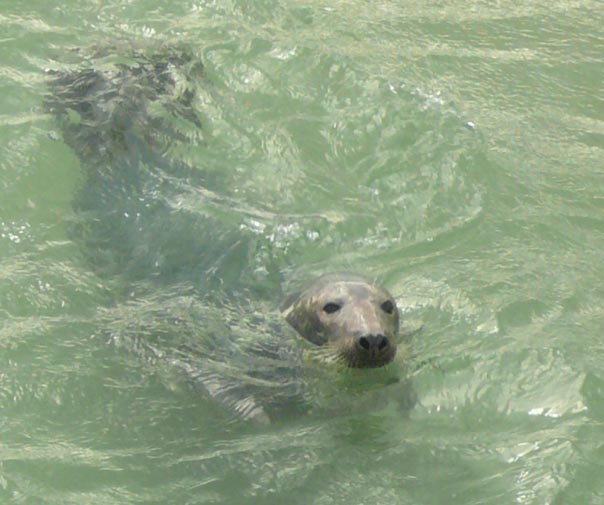
At one point, I noticed what I took to be the head of a Grey Seal, which broke the surface perhaps fifty or a hundred metres away from the boat. This is a Grey Seal which I photographed in the harbour at St.Ives in Cornwall:

P1460520

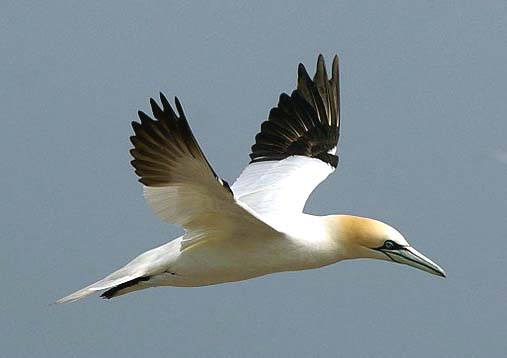
This head, way out in the Atlantic Ocean, was very similar, dark in colour, and I could see a forehead, two eye sockets, and an obvious snout. I didn’t really think a great deal about it, other than the fact that, for a seal, it was certainly a very long way from land, at least fifteen miles. It remained there, presumably watching the boat, for perhaps two or three minutes. Then, suddenly, a Gannet flew directly above it. A Gannet is a very large bird with a wingspan of some six or seven feet:

wikikikik Northern_Gannetzzzzzzzzzzzzzzzzzzzzz

I then realised from a simple comparison of sizes that the head must be at least a metre and a half, if not two metres, across. And that means it cannot have been a seal !

 Number Eight

The Ghost on the No 90 Bus

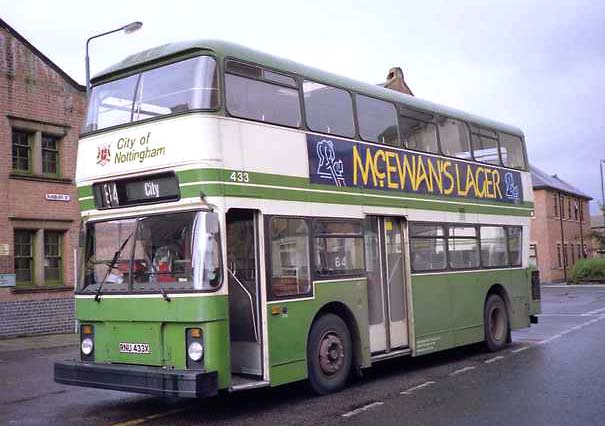
Some thirty or more years ago, we used to live in a large house in a new estate on top of a hill right at the very northern edge of the City of Nottingham. From our top bedroom window, we could see the distant cooling towers of the Ratcliffe-on-Soar Power Station, out towards the East Midlands Airport, absolutely miles away. If it had been built then, we would have easily been able to see the Control Tower on the Airport. To go into Nottingham was a little bit of a bore, though, because there was only the Number 90 bus, which ploughed, every hour, a long and very eccentric furrow from one side of the city to the other, from where we lived on the northern edge, to the furthest bus terminal of Edwalton, beyond even the foetid swamp that is West Bridgford:

DKY-496_lr

The Number 90 bus, strangely enough, had a very strong ghost story attached to it. People told me all about it on several occasions, almost as soon as I mentioned what bus I had to catch to get home and just how long the journey was.

3135590sssss

Funnily enough, the story concerned the very same bus stop on Mansfield Road which we used to use:

bus stop

Anyway, the first occasion the ghost appeared was quite a long time ago, in the 1950s perhaps, or in the 1960s. It was certainly in the era of the bus conductor, who used to go round the bus, issuing tickets and taking the money.

Just imagine to yourself. The time  is around seven or eight o’clock in the evening, and the bus is absolutely deserted. Not a single passenger. The conductor is standing up near the driver’s compartment, talking to him to pass the time. Suddenly, they both notice an old man who is standing at the Mansfield Road bus stop, waiting to go towards the city. The bus stops and the old man gets on. The evening is fine and dry, but the old man is absolutely drenched, with rainwater dripping off him. He looks quite battered, with little rips here and there in his clothing, which is, strangely for the weather at the time, a heavy winter topcoat over an equally heavy winter suit.

The old man says nothing as he gets on. He goes upstairs and the driver and conductor notice he is wearing his bike clips, a simple aid to cycling that is, by now, almost decades out of date.

The driver and conductor finish their conversation. The driver sets off down the road, and the conductor begins the shaky climb up the stairs. He wonders why this special kind of idiot had to go upstairs on a completely empty bus and make the tired conductor follow him.

He gets to the top of the stairs and has a good, surprised look round. The top deck of the bus is completely empty. The old man just isn’t there. He isn’t in the two rows of seats at the front of the bus. The conductor then walks slowly back past all the other rows of seats. The old man isn’t there either, neither is he hiding behind any of the seats in a ludicrous attempt to avoid paying his fare.

Puzzled, the conductor goes back down again, pushes his cap back on his head, and expresses his astonishment to the driver.

Back at the canteen, they tell their tale over a cup of tea and a couple of cigarettes. They are not the first crew to meet “The Phantom Passenger of the Number 90 bus.”

He is, or rather was, an old man of sixty or so:

old_man_on_bike_by_claeva

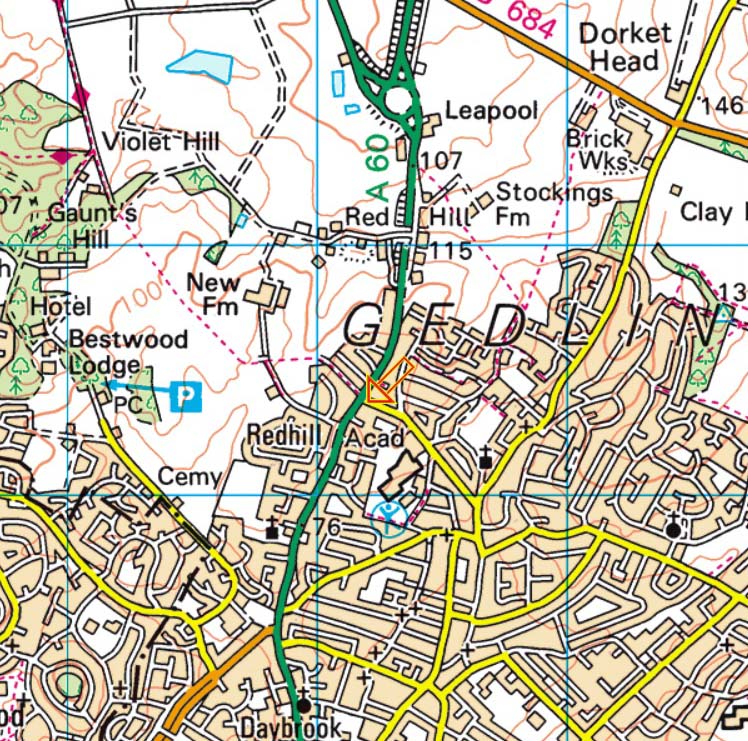
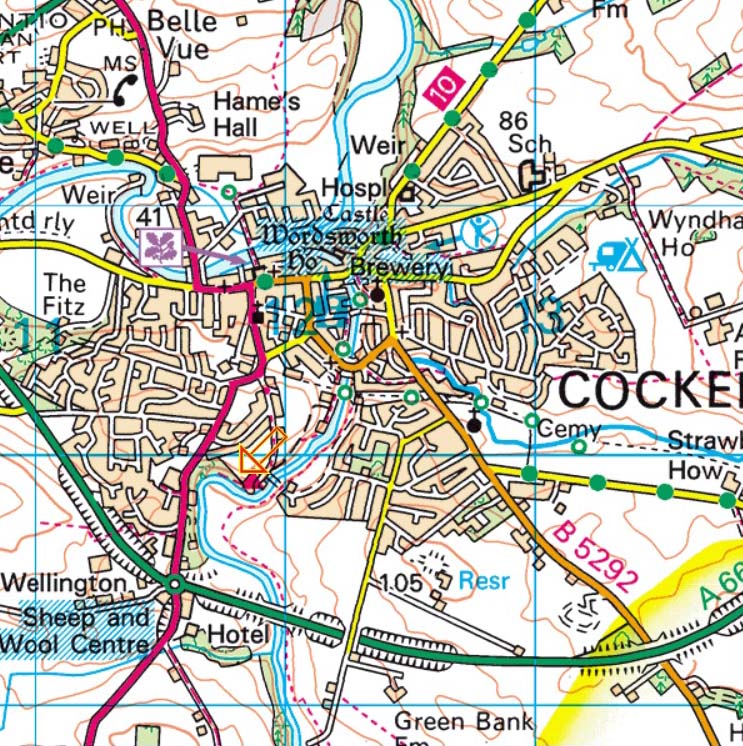
One winter’s night, he was riding his bicycle home to Arnold, when a hit-and-run driver killed him as he rode carefully and slowly around the Leapool Roundabout. It happened so swiftly that the old man does not realise, even now, that he is no longer alive. Wrapped up against the winter in his heavy suit and heavy topcoat, he still has his bike clips on. His bicycle, to him too valuable to leave behind, is too badly damaged to ride back home. And so, he must walk through the winter rain and sleet the two miles to the nearest bus stop to get back home to his wife and family. On this map, the orange arrow marks the bus stop where the wet old man would get on the No 90 bus. To the north is the Leapool Roundabout. Follow the green road until you come to the obvious roundabout:

map

I don’t know now if the Number 90 still runs or not. I hope it does. No ghost should fade away at the whim of the Nottingham City Transport.

16 Comments

Filed under Cornwall, Cryptozoology, History, Nottingham, Personal, Science, Twitching, Wildlife and Nature

Hallowe’en Tales : Numbers Three and Four

Number Three

Haunted Malham Tarn

In about 1978, despite the fact that I was a teacher of French, I accompanied a couple of Geography teachers on a field trip from our school in Nottingham, to stay at Malham Tarn Field Centre in North Yorkshire:

malham-cove-02xxxxxxxxxxxxxxxxxxxxxxxxx

We used to work late into the evening, and then, between ten and eleven o’clock, usually retired to one of our staff rooms for a few whiskies, and a little R & R. After that, we would all go to bed.

One night, though, I found myself awakened around two or three o’clock in the morning, by what I can only describe as the feeling that there was some kind of evil presence in the room. As I looked out over my feet, beyond the end of the bed, it seemed to be down in the left hand corner, below the window, in the darkness in front of the wardrobe doors. I could see nothing at all, and could not reach the light to put it on, but I was certain of my fear, and the fact that I was not the only person in the room. Indeed, I was so scared that I remembered my experience of horror films, and used some of the remedies I had seen there. I imagined myself cocooned in a pale blue light, and, despite my status as a lapsed Christian, did not hesitate to repeat to myself, again and again, until I eventually fell asleep, ” In the name of Jesus Christ, I defy thee Satan.”
The following day, I asked questions about whether the building, a converted seventeenth century barn, was haunted or not:

Malham_tarn_house

From my colleagues, I could only get very non-committal answers, which clearly hinted that they knew a lot more than they were prepared to reveal. Eventually, I was told that there was indeed supposed to be a ghost in the place. On one occasion, just after midnight, it had walked into and out of walls, a party piece which had totally terrified a group of Sixth Form Girls, who had packed up and left, even though it was in the middle of the night and still dark.

Number Four

The Beast of Glen Etive

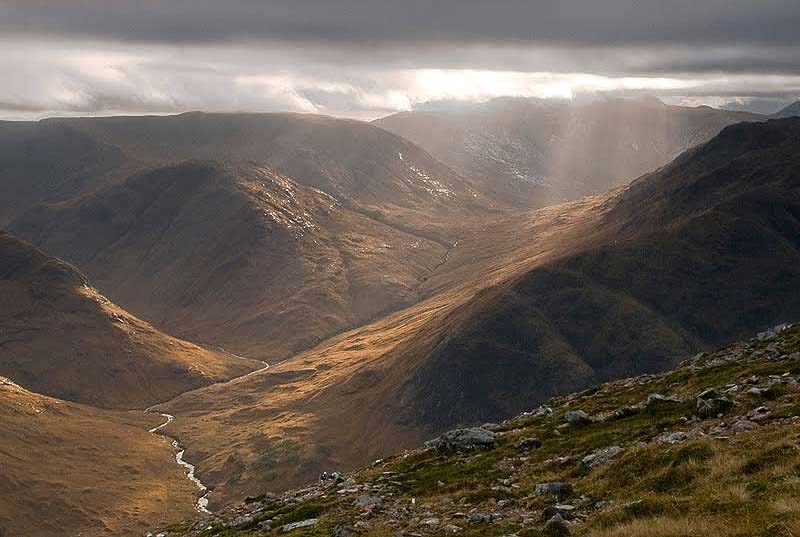
In the middle 1970s, I used to go regularly to Scotland with my friend Bill.  Normally, we would do a clockwise circuit around the whole country, camping each year in the same places. On the second day, we normally stayed at Glen Etive, a long and steep sided valley which runs off Glencoe, just to the south of Fort William:

glen-etive

This particular summer, in early August, if I remember correctly, we had again stopped in this dramatic glen, siting our tent and car just a few metres to the side of the single track road that ran the length of the glen. In those days, before the place was a film set, it was very isolated indeed. A single track road led for four or five miles down the valley to its very end, which was just a tiny wooden jetty large enough for a rowing boat. Nobody was camping anywhere near to us, and later in the holiday, when we followed the single track road down from our campsite to the wooden jetty and back, we met nobody in the ten or twelve miles we covered. No cell phones back then. This was genuine wilderness, where the orange arrow marks our orange tent:

etive

As darkness fell, Bill and I were both sitting in the car, looking across the road, and the flat floor of the valley, over towards the precipitous cliffs on the far side. After a couple of cigarettes, Bill announced that he was going to take the toilet roll, and go off to do what a man has to do. He took with him the torch, and his cigarettes and matches.

At first, I could still see him as he walked away toward a huge well-used pile of granite rocks, some two or three hundred metres in the distance. After a few minutes, though,   he was swallowed up by the darkness.

I was rather surprised that he did not switch on the torch, and looked in vain for the glowing end of his cigarette in what was by now total darkness.

After about fifteen minutes or so, I noticed a light well over to the left of where Bill had gone, and was a little worried that he had perhaps got disorientated in the darkness, and that he might fall over, and injure himself.

I began flashing the car headlights steadily to give him a reference point, and was then surprised to see a second light come on, and make its way at some speed towards the car. This, of course was Bill, who had been considerably frightened by the very loud roaring noises he had heard while out among the rocks:

red_deer_stag_

It was for this reason that he had not switched his torch on. He thought that if he did, he might well attract whatever was making the noise. Inside the car, three hundred yards away, for some reason, I had not heard the roaring, perhaps because I was listening to music on the car cassette player. Strangely enough, Bill had not seen the second light, which by now had disappeared.

During the next few hours, though, we both heard the roaring clearly:

red-deers-in-

It was difficult to describe exactly, but at times it was a deep, loud bellowing, and at others it sounded like an almighty crash. I remember thinking that if a giant baby had dropped a full sized battleship into his bath, then that was the noise it would have made.
We were both frightened, and I slept with the carving knife under my pillow. On the other hand, the noise was always fairly distant, and, although alone, and many miles from the nearest house, we were never scared enough to pack up the tent, and drive off into the night.

Later, we tried to investigate the origin of the lights and the noises. We climbed up into the area which we thought they had come from, but with no success. We found nothing to explain either the bellowing or the isolated light which had been at least as large as a torch. Neither did there appear to be any difference between this section of the valley and any other.

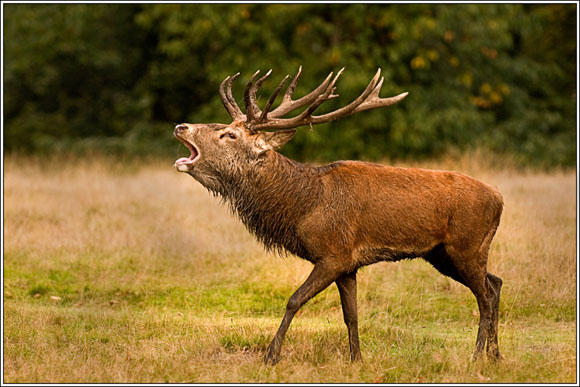
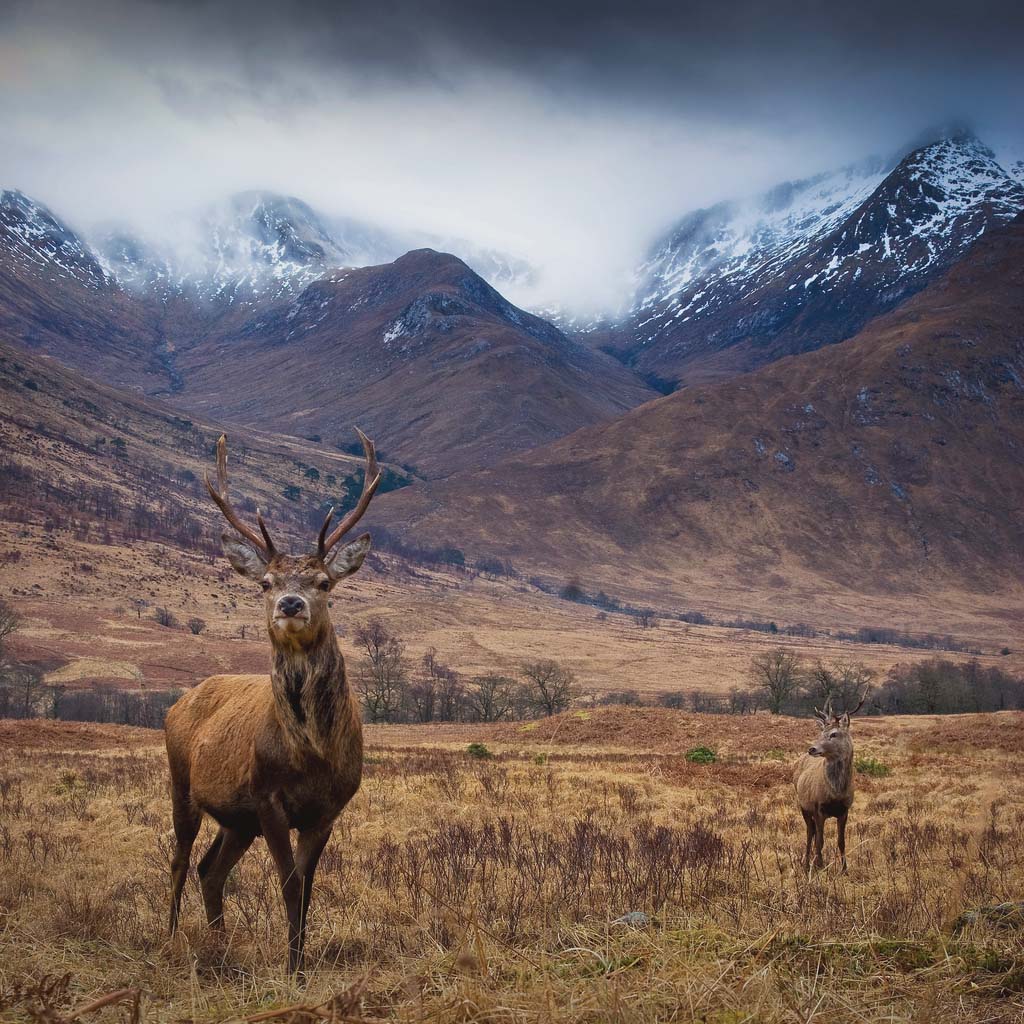
Whenever the idea of “bellowing” or “roaring” appears in this article, the animal depicted in the photograph is a Red Deer stag. And yes, in the rutting season, Red Deer stags do roar and bellow. Set against this though, is the fact that the events described here did not really occur during the rutting season, which occurs from October to November. Likewise, the roaring is most frequently heard in the late evening and then during the early dawn. We heard it, though, when night had really begun. It was certainly pitch black, dark enough to need torches for safety reasons.

Forty years later, I would still describe the noise as “a full sized battleship dropped into a bath”. Strange! Very strange!!

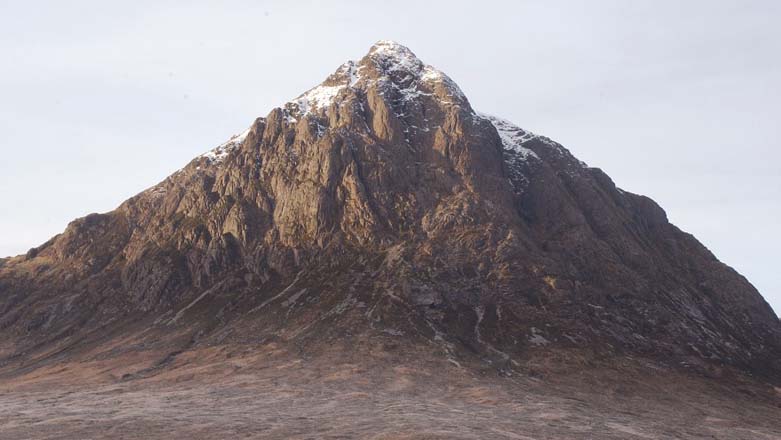
Incidentally, this is the mountain which stands at the head of the glen. It is called “Buachaille Etive Mòr” and, statistically, it is much more dangerous than the Eiger:

monitain


12 Comments

Filed under Cryptozoology, History, Personal, Wildlife and Nature

The Beast of Primarette

The Beast of Primarette is not really a top drawer Premier League monster, so the first port of call will have to be the French version of Wikipedia. Here is my own translation:

“The “Beast of Primarette” was a man eating animal responsible for a series of attacks on humans in the vicinity of the village of Primarette in the south east of France. The first attack took place in the spring of 1747. Between then and the end of the winter in 1752, seven victims were identified in the parish registers.”

Primarette is a tiny village in south eastern France. On this map, it is represented by a red dot. The orange arrow is on holiday, but not in France:Untitled

In 1747, François Malarin, the village priest of Primarette, reported the very violent death of a little boy in his parish :

“In the year 1747 and on the 23rd of May, the Tuesday of Whitsuntide, during the service of Vespers, a carnivorous wolf (loup carnassier) seized the child of François Malarin from the door of their house in the presence of his mother. She was unable to snatch the child back from the animal’s teeth. Several people returning from Vespers heard the story of this misfortune and ran into the woods, following the trail of blood left behind by the child. They found some of his limbs scattered on the ground including the head, the arms, an upper leg and a foot. These body parts were all buried in the presence of Michel and Gabriel Perrochat, father and son, Antoine Jeury, Jean Bassat, Claude Berthier and several other people who had rushed to see this sad sight. The child, aged around seven years and one month old, was the legitimate son of François Malarin from Espagnoux and Fleurice Petit. Whereof I have signed, not the witnesses, who do not know how to write.

                                         Favre the Priest.

An “x” is appended by Michel Malarin as a supplementary act.”

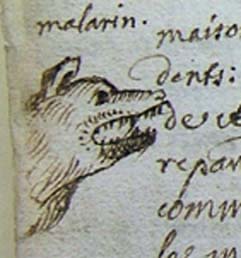
A sketch is in existence:

150 wolf child

This beast, most un-wolf-like in its behaviour, was later to claim several more victims, and the priest reported later that year the level of emotion aroused by these incidents. In the Parish Register of 1747 he wrote therefore:

“There have been this year a large crop of acorns, and carnivorous wolves have eaten three children in Primarette. It is believed that they were most probably lynxes and the common people believe that they are werewolves. Until the priests give the peasants permission to carry out hunts armed with pairs of spectacles, nothing will be able to cure their stupid credulity.”

Below is the original parish register entry, in French, of the paragraph translated above. See if you can pick out any words, such as “loups”, “carnassiers”, “loups garous” or any other words. I can’t imagine any reader would be expecting to manage to read French written by long dead Favre the Priest in 1747. Nor indeed, would he be expecting anybody to still be reading his words in 2015:

800px-Primarette-1747-9NUM_AC324A_6-p48

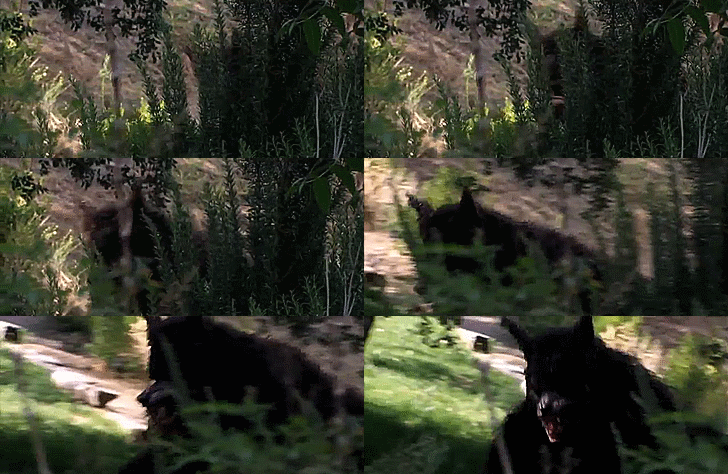
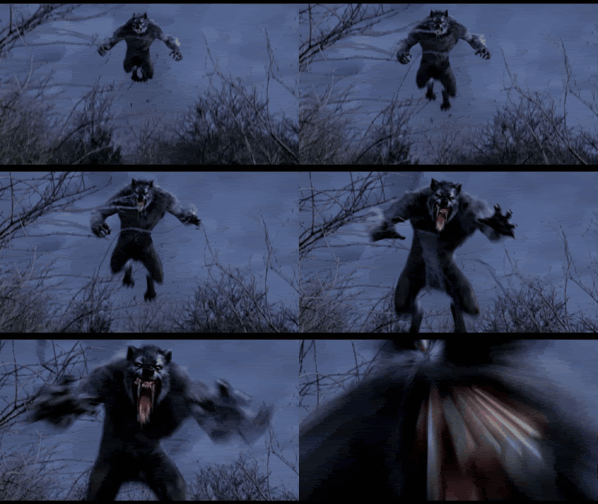
Here is a werewolf, a “loup garou” filmed by a trailcam in Wisconsin:

werewolf

The last victim within the bounds of the parish of Primarette was found in 1752, but nobody was ever able to identify the animal responsible for all these attacks.

Here is a very large wolf. It will calm you down after the werewolf. This animal was filmed by a trailcam in northern Scotland:

wolf bounding
Here is a list of the poor victims:

May 23rd 1747                       Michel Malarin, 7 years of age
June 1st 1747                          Joseph Fournier, 13 years of age
October 24th 1747                 Mathieu Roux, 5 years of age
October 11th 1748                 Benoite Pichon, 2 years of age
January 23rd 1749                Marie Peiron, 6 years of age
May 14th 1751                        Jeanne Fervonat, years of age
February 19th 1752               Marianne Boindrieux, 3 years of age

Another French website suggests that mention of the huge number of acorns, and the presence of man eating wolves may be connected in the minds of the locals at Primarette. Perhaps they had some kind of superstition about this.
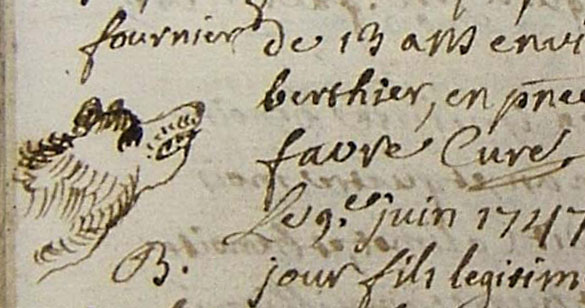
It is unfortunate that no description of the beast seems to have survived, although I would continue to argue that if the locals in this area thought that all the deaths in the area were caused by lynxes or werewolves, then that in itself lends credence to the idea that it was no ordinary wolf, an animal with which they would have been only too familiar. Favre the Priest tried hard to give people in the distant future some idea, adding little sketches to the side of his manuscript:

1747-38-Primarette-A1737a wolf

Here is a pair of wolf’s heads:

two wolves

I have enlarged some of the sketches. Again, you may be able to read some of Favre the Priest’s words:

wolf sketch

Here is a second head, with the name “Marianne Boindrieux”:

another wolf sketch

See if you can see the signature of Favre the Priest (“curé”):

more and more wolfsxxxxxxxxxxxxxxxxxxxx

This cryptid did not behave like an ordinary wolf. A wolf does not attack people at their front door. I’m not sure either, that a wolf would run off, dismembering its victim, and scattering body parts around, almost in sheer glee. And why did the same individual wolf remain in this area from May 23rd 1747 to February 19th 1752? Or was it a number of individuals from a local population, all with the same deviant behaviour? Members of a different species, in fact? “Like a wolf, but not a wolf.”

In so many cases like this, the original French text calls the animals “loups carnassiers”. “Carnassiers” means “carnivorous” or “predatory”. Why do they keep appending this epithet to the word “loup”?

And how on earth can  this continuing series of creatures continue to be explained away either by the nefarious activities of Jean Chastel and his sons, or the accidental interbreeding of wolf and dog? It has become a truism nowadays to say that “wolves don’t interbreed with dogs. They eat them.”

And what happened to the Beast of Primarette after 1752? Did it take early retirement?

13 Comments

Filed under Cryptozoology, France, History, Science, Wildlife and Nature

The Beast of Ennerdale: Part three

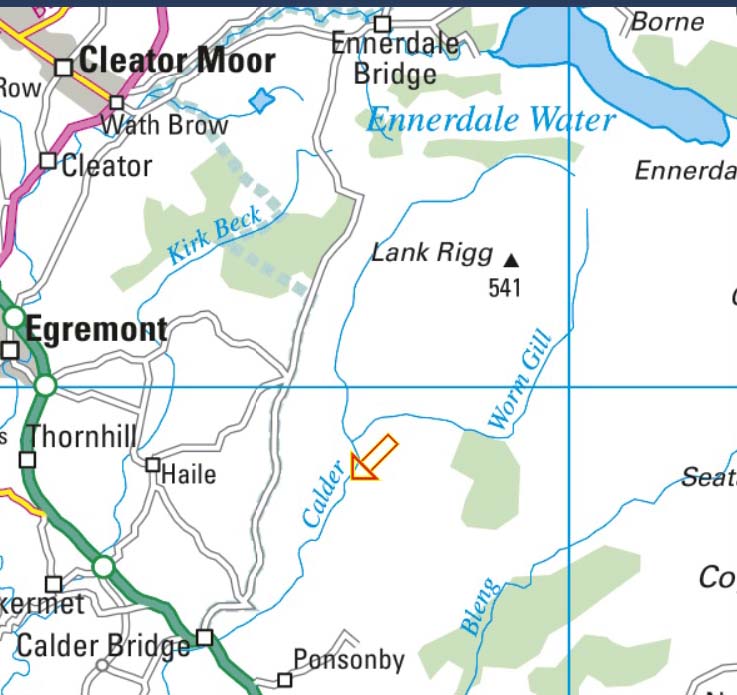
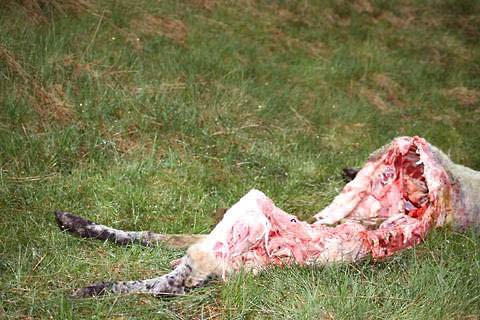
This is the third instalment of the story of the Beast of Ennerdale, a strange creature that rampaged across the Lake District in north western England in 1810. In five months, it killed almost 300 sheep, often just eating their soft organs and then lapping up their blood. The story of its ravages is told in the first two parts of this series:

eyes wolf

Nowadays, we have almost an almost unbelievable ability to make contact with each other instantly right across the globe. Furthermore, we have immediate instant access to unbelievable amounts of knowledge and information.
Until very recently though, that was just not the case. There was no television. No radio. No access to books. Most people were illiterate, especially in the countryside. Nobody knew very much at all about natural history outside their own country. Contrast our situation with life outside London in 1198. Richard the Lionheart was the English king then, and he was the proud owner of his very own private zoo in the Tower of London. Richard had been on the Crusades and he must have known a little bit about some of the wildlife in the Middle East. Perhaps that was the reason that he had a pet crocodile in his collection of animals:

crocs

One day, the animal escaped. It somehow made its way to the marshes of north Essex. The reaction of the locals, of course, was that a dragon had come to visit them:

alli

And what would the shepherds of the Lake District made of a giraffe? The very first one ever to be seen in England had only arrived on August 11, 1827, less than 200 years ago, and well after the début of the Beast of Ennerdale:

holle
During the period of the Beast of Ennerdale, the whole country was visited by many travelling zoos. The cages were transported on wagons which were pulled around the countryside by horses. Conditions, of course, were appalling. The cages were cramped and the horses that pulled the wagons were grossly overworked.  No animal rights in those days. The Church taught that animals had no souls, so what you did to them was simply irrelevant. Work them until they drop and then leave them to die. And then you can eat them.
The most famous of these travelling zoos was Wombwell’s Travelling Menagerie, which had a total of fifteen wagons and a large number of exotic animals. Wombwell bought them directly from ships as they arrived in England. They included elephants, giraffes, a gorilla, a hyena, a kangaroo, several leopards, a number of lions, llamas, monkeys, ocelots, onagers (what?), ostriches, panthers, various snakes, tigers, wildcats and zebras:

wombwerr

Wombwell had a number of snow leopards and his rhino was publicised as “the real unicorn of scripture”. Other faulty labelling is actually known to have cost him money. What he exhibited as a chimpanzee is now thought to have been the first ever Gorilla to be seen in Western Europe.
Here is a link to the story of George Wombwell told by Wikipedia. It really is worth a look, with some really funny anecdotes on offer:

Menagerie_wombwells_1910

All of these menageries were rather careless with their animals and escapes were not infrequent. In 1835, for example, a lion and a tigress escaped together and four people were killed. And that is what takes us back to the Beast of Ennerdale.
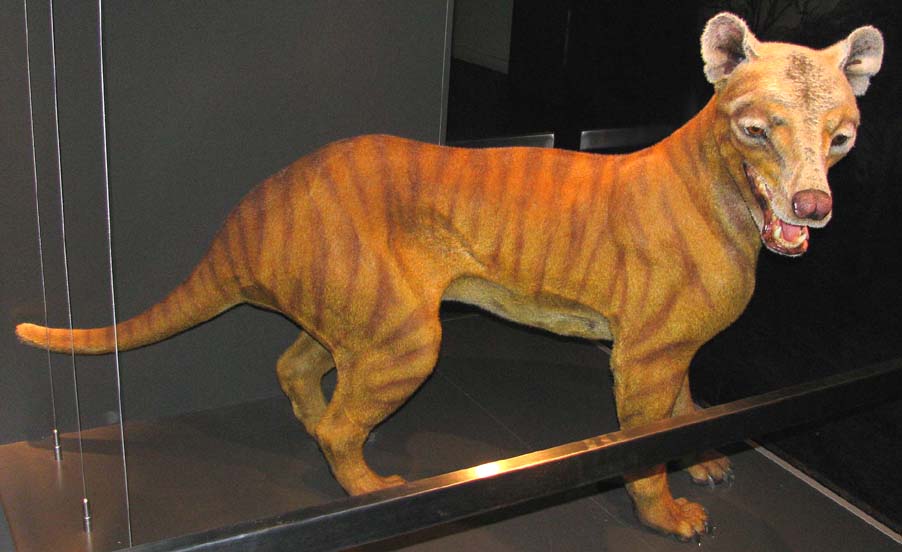
Apparently a number of the different travelling menageries had creatures which were exhibited as “tiger wolves”. Nowadays these animals are thought to have been thylacines, the so called “Tasmanian Tiger” or “Tasmanian Wolf”.

Here is a brief film, thanks to the Thylacine Museum:

The Museum also has a video where the extremely talented animal is apparently playing a piano, harpsichord type of thing:

So that is it! Mystery solved! The Beast of Ennerdale was an escaped Thylacine.

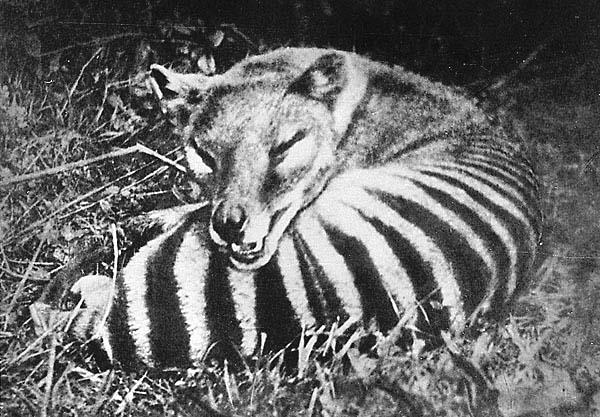
Nowadays, the Thylacine is extinct, of course. The last known specimen, “Benjamin”, died in captivity in Hobart Zoo on September 7th 1936:

thyl four

The Thylacine had dark stripes over its back and could be up to eight or nine feet in length:

thyl one

It was a marsupial which looked vaguely like a wolf and it ate flesh. It preferred the softer flesh to tougher meat such as the muscles.
The Thylacine was an apex predator and it was mainly nocturnal. Its behaviour was just like the Beast of Ennerdale because it retreated to the hills and woodlands in the daytime, avoiding contact with humans. It spent the daylight hours in caves or hollow tree trunks, sleeping on twigs or plant stalks. At night, it hunted the open heathland:

thyl two

Supposedly, back in the wilds of Tasmania, it happily preyed upon farmers’ sheep and poultry and apparently liked to drink the blood of its prey.
And with that information, I really thought that I had found a solution for the identity of the Beast of Ennerdale. I really did. I really, really did:

Thylacine-tring

A second level of internet research, though, shows that more or less all of the answers which have been suggested by the many websites which discuss the Beast of Ennerdale are most probably entirely wrong. The explanation of an escaped Thylacine is a very neat one, but modern science just dismisses it totally and completely.
Firstly, the blood drinking story seems to have originated merely from a single account heard at second-hand by Geoffrey Smith (1881–1916) in a shepherd’s hut in Tasmania. Not exactly a proven piece of Thylacine behaviour, certainly not enough to identify this creature’s presence in Ennerdale.
And killing and/or eating sheep? Well not really, apparently. Modern studies have now shown that the creature had the jaws of a wimp, not a wolf. It couldn’t have dealt with a dead sheep. Advanced computer modelling in 2011 showed that its prey size limit would have been in the region of only five kilos, animals such as the tiny possum:

thylacine_berlin_museum_10th_september_2011-167306

And here is a link to a second study from 2012, “Tasmanian tiger was no sheep killer”. These are not just amateurs’ guesses picked out of the air, of course. These are both scientific papers, published for the judgement of the zoological world. They would not have been published in reputable journals if they were not serious research carried out by serious scientists.
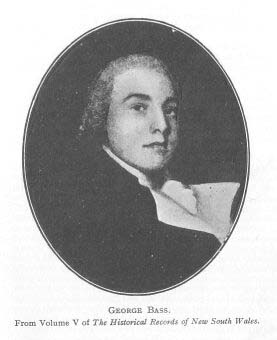
Instead, the Thylacine is seen nowadays as having been just a scapegoat for the widespread mismanagement of sheep farms in Tasmania. Furthermore, the killing of sheep was far more probably carried out by the European dogs which had first reached Tasmania in 1798 with the arrival of the explorer George Bass and a number of seal hunters:

George_bass

These men’s sled dogs interbred and their offspring subsequently dispersed into the temperate rain forest of the island. Some dogs were befriended by the aborigines but the majority just went wild.

During the period when Europeans were first coming across the Thylacine, therefore, there was already a population of feral dogs in Tasmania. They are far more likely to have been the animals responsible for the killings of sheep on the island, rather than the Thylacine. It was just easier for Europeans to blame a weird new animal than “man’s best friend”.
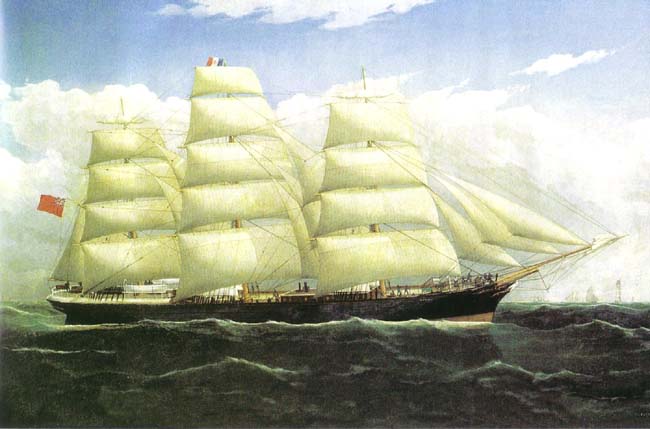
And what about the time schedule? How could a Thylacine have reached Cumberland for May 1810? At this time, the very best ships took a minimum of three months to reach Australia and a further three months to return to England:

SS_Dunedin_by_Frederick_Tudgay
The first thylacine had been seen by the French on May 13th 1792. They would not have told the English because, surprise, surprise, the two nations were at war with one another.  More than ten years later, the Lieutenant Governor of Tasmania sent the first full description of the animal for publication in the Sydney Gazette of April 21st 1805:

wild-thylacine-large

At that time, it was not a particularly familiar animal to the European people on the island. In June 1805, five convicts escaped from the only recently established penal colony. The establishment’s pastor, Robert Knopwood, wrote in his journal on June 18th 1805, shortly after the convicts had been recaptured:

“Am engaged all the morn, upon business examining the 5 prisoners that went into the bush. They informed me that on 2 May when they were in the wood they see a large tyger that the dog they had with them went nearly up to it and when the tyger see the men which were about 100 yards away from it, it went away I make no doubt but here are many wild animals which we have not yet seen”

thyl three

At this point, in 1805, no Thylacine had been captured. It had only been briefly glimpsed at a hundred yards’ range. Tasmania was the size of Ireland and more or less completely covered in forest, with only one small settlement of convicts. How on earth could a Thylacine have reached Ennerdale by 1810? Just look at the timetable:

“Captured in Tasmania, in 1806 at the earliest—shipped to Sydney—sent to England—didn’t die on the three month journey—bought by a zoo keeper in London—taken by horse drawn cart to the north (three or four weeks?)—escaped—seen in Cumberland, doing things we now know a Thylacine could not do”

Not very likely is it?
Anyway, here is a nice longer film of a Thylacine from LINCTasmania. It dates from 1964 and is a wonderful period piece, well worth watching, just for the accents and the product placement :

And finally, here are two videos about the Thylacine from my hero, MK Davis, the man who has been called “The Hippy from Mississippi”. He is a photographic analyst and is well worth your time. The first film is an analysis of a modern home movie, purporting to show an animal which may be a living, surviving Thylacine:

The second film from MK shows his thoughts on where Thylacines may survive nowadays:

And the Beast of Ennerdale? Well, the locals at the time thought it was a feral dog, and they may well have been right:

“No one knew to whom the dog had belonged, or whence he came ; but being of a mongrel breed, and excessively shy, it was conjectured he had escaped from the chain of some gipsy troop. He was a smooth-haired dog, of a tawny mouse colour, with dark streaks, in tiger fashion, over his hide ; and appeared to be a cross between mastiff and greyhound. Strongly built and of good speed, being both well fed and well exercised, his endurance was very great.”

On the other hand, unlike most dogs that I know, the Beast was never heard to bark, growl or howl. And why would you go to the considerable expense of stuffing the corpse and displaying it in Hutton’s Museum in Keswick if it were just “a cross between mastiff and greyhound”. Perhaps the Beast of Ennerdale was the Beast of Gévaudan on his holidays.

“C’était comme un chien, mais ce n’était  pas un chien”…

14 Comments

Filed under Cryptozoology, France, History, Humour, Science, Wildlife and Nature

The Beast of Ennerdale: Part Two

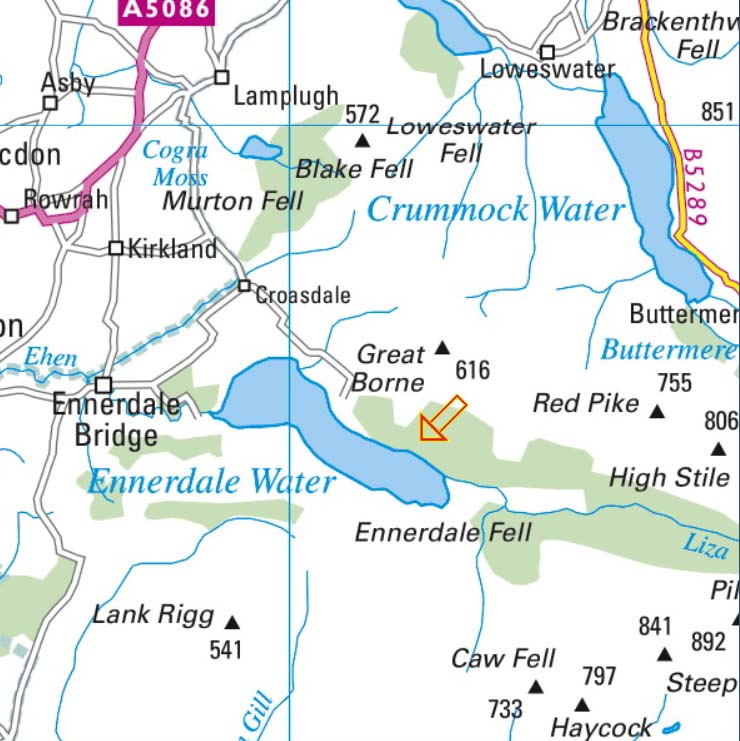
Last time I introduced you all to the Beast of Ennerdale, an unknown creature that rampaged over the Lake District in north western England in 1810. Here is Ennerdale:

1280px-Ennerdale

The original source for the tale was a book called “Cumbriana; or, Fragments of Cumbrian life” by William Dickinson. It was published in 1876, more than sixty years after the events it portrayed. Here, a typical chase after the Monster is described:

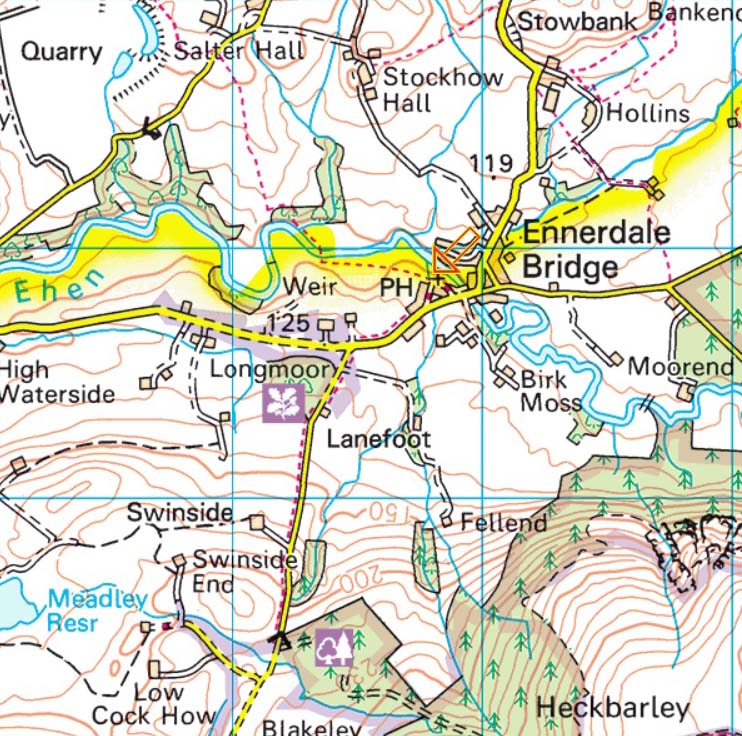
“One Saturday night a great number of men was dispersed over the high fells, watching with guns and hounds, but the animal avoided  them and took his supper on a distant mountain ; and the men not meeting with him, came down about eleven o’clock on Sunday morning and separated about Swinside Lane End:

Swinside

In a few minutes after, Willy Lamb gave the “view halloo.” He had started the beast in crossing the wooded stream, and away went the dog with the hounds in full cry after him. The hunt passed Ennerdale Church during service ; and the male part of the congregation, liking the cry of the hounds better than the sermon, ran out and followed. It has been said the Reverend Mr Ponsonby could not resist, and himself went in pursuit as far as he was able. This run ended at Fitz Mill, near Cockermouth, in a storm which the wearied men and dogs had to encounter in a twelve-miles return.”

The Beast’s identity was still a matter of considerable debate for the locals:

rustic

Some thought it was a lion. Some thought it was a tiger. Some thought it was a wolf. One wealthier farmworker, who had recently been to France for his holidays, said that it was “Like a wolf but not a wolf”.

And exactly as had been the case in France, many of the local peasants thought it was a werewolf, although the one who had been to France for his holidays, said it was “un loup-garou” or even “un rougarou”. Proof of the supernatural qualities of this Beast came in the fact that it drank blood:

eyes wolf

Just as a piece of information, there were no wolves in the Lake District at this time, and had not been for, probably, the best part of 400 years. The most recent record of wolves in England came, most fittingly, from Nottinghamshire where, in the reign of Henry VI (1422-1460), Robert Plumpton, who owned land in Nottingham itself, was given the job of “chasing wolves in Sherwood Forest”. By 1500, wolves were totally exterminated in England.

Whatever the Beast of Ennerdale was, the locals came up with a cunning plan to catch it. Somebody thought of putting together all the best hunting dogs into an élite pack, a Special Forces Unit which would hunt down the Sheep Slayer once and for all:

pack dogs
There was a pursuit which lasted several days. Finally, the poor monster was flushed from cover. It fled, but the hounds caught it. The plan now went pear shaped though, as the Beast took on all of the Special Forces dogs at once in a ferocious combat. Several of these ninja sheep dogs were killed outright in a matter of minutes. All the survivors then suddenly changed their minds and headed off home, to the safety of their nice safe kennels. Obviously, whatever the Beast was, “dog” could pretty well be crossed off the list.
And just as was the case in distant Gévaudan, there were the hard luck stories. William Jackson who lived in the middle of wild and lonely mountains at Swinside, had his musket loaded and ready, as he left his wild and lonely farm. Here it is, as it looks today:

Cragg_Hall_Farm_-

The Beast was watching him, just thirty yards away. William took careful aim, pulled the trigger and the fifty years old relic of a rifle failed to fire. The Beast, of course, made his escape easily.
On another occasion, a group of men, armed to the teeth, along with their pack of hounds, had the Beast surrounded in a small wood and totally at their mercy. It charged out and the weakest link in the human chain duly lost his nerve, dived out of the way and the chance was lost.

Interestingly enough, an incident very similar to this happened with the Beast of Gévaudan and with at least one of the other French creatures. The Beast of Ennerdale, though, continued onwards and knocked over an old chap called Jack Wilson. Jack was collecting wood for his fire but was completely unaware of the Beast’s presence, because he was totally deaf.
The guilty nerve loser was probably Will Rothery who is actually named in another very similar version of the tale. Will explained that he failed to take his easy shot at the animal because he was so surprised by its huge size and unexpected appearance. I would expect Mr Rothery’s fellow hunters might have had something to say about that. Later, Will Rothery was to testify that he thought the animal was some kind of lion.

Meanwhile, in Cumberland, the slayings continued. Sheep continued to die in large numbers:

sheer

Great was the disappointment, therefore, when, one fine morning in July, an enormous army of more than 200 armed men, with their hounds, found themselves scouring Kinniside Fell after the Beast had been seen moving away towards Hopehead. The contour lines show how steep the sides of the valley were. Look for the orange arrow:

kinniside

The huge pursuit went on, along the tops of the mountains between Wasdale and Ennerdale. And then it was the wild slopes of Stockdale Moor and then, finally, a cornfield near Calder Bridge.
But the enormous, and prolonged hunt was in vain. After they had waited for hours, not a single Beast was found hiding in the corn. Somehow, it had slipped away.

And then there was another wasted, breathless chase through Drigg and out to Seascale, right on the coast of the Irish Sea itself. Overall, the Beast took its admirers on many tourist trips around the fringes of the Lake District. Kinniside. Lamplugh. Through the icy waters of the Marron. Out to Little Clifton and then to sunny Workington. Or perhaps they would have preferred Seaton or the Fitz Mill at Cockermouth. Maybe Irton or Dent Hill or Egremont or even St. Bees. Here is the wonderfully named Cockermouth. The orange arrow indicates the Fitz Mill :

cockermouth
And still nobody knew what the Beast was. Hundreds of people, noblemen, farmworkers  and professional hunters had all seen it. And it remained an enormous puzzle. Meanwhile the death toll mounted. And still they were haunted by the worry that it might one day change from drinking sheep’s blood to killing children.
The longer it went on, the more gloom and despondency the locals felt. As autumn approached, they all made the conscious decision to accept the losses of sheep temporarily, but above all to make sure that the harvest was gathered in. All the hunts were abandoned for the moment, as gathering in the harvest continued apace:

George_Cole_-_Harvest_zzzzzzzzzzzzzzzzzzzzz
By September, the hunters were back, combing the hillsides and fields for the Beast. Now the writing was on the wall. No animal, however secretive and cunning, could continue for ever to elude so many hundreds of pursuers:

aa-bete-des-vosges-cxzcfe
A significant chance event occurred on September 12th, when the Beast was seen by Jonathan Patrickson to go into a cornfield. The tale is told by William Dickinson in his “Cumbriana; or, Fragments of Cumbrian life”. It starts with some traditional Lake District Gibberish:

Jonathan quietly said, ” Aa’l let ta lig theer a bit, me  lad, but aa’l want to see tha just noo.”

Away went the old man, and, without the usual noise, soon raised men enough to surround the field. As some in their haste came unprovided with guns, a halt was whispered round to wait until more guns were brought and the hounds collected. When a good muster of guns and men with dogs were got together, the wild dog was disturbed out of the corn ; and only the old man who had seen him go into the field was  lucky enough to get a shot at him, and to wound him  in the hind quarters:

Replica_Remington_Zouave_firing

This took a little off his speed, and enabled the hounds to keep well up to him, but none dared or did engage him. And, though partly disabled, he kept long on his legs and was often headed and turned by the numerous parties of pursuers, several of whom met him in his circuitous route from the upper side of Kinniside, by Eskat, Arlecdon, and Asby, by Rowrah and Stockhow Hall, to the river Ehen. Here is Arlecdon and Rowrah, indicated by the orange arrow:

rowrah

Each of these parties he fled from, and turned in a new direction till he got wearied. He was quietly taking a cold bath in the river, with the exhausted hounds as quietly looking on, when John Steel came up with his gun laden with small bullets, but dared not shoot, lest he should injure some of the hounds. When the dog caught sight of him it made off to Eskat Woods, with the hounds and John on its track, and after a few turnings in the wood, amid the greatest excitement of dogs and men, a fair chance was offered, and the fatal discharge was made by John Steel:

Brown_Bess_Musket_firing

The destroyer fell to rise no more, and the marksman received his well-earned reward of ten pounds, with the hearty congratulations of all assembled.

After many a kick at the dead brute, the carcase was carried in triumph to the inns at Ennerdale Bridge;  and the cheering and rejoicing there were so great that it was many days before the shepherd inhabitants of the vale settled to their usual pursuits.”

What was left of the mystery animal was taken triumphantly then to the various public houses at Ennerdale Bridge. On the map, the orange arrow indicates “PH” which means public house:

the pub

The locals, thirsty from the rejoicing and the cheering, clearly made serious attempts to drink the place dry:

Beer_Cans-1ccccccccccccccccccc

Not cans, though. They were not invented until 1935. Stick to bottled beer. Foreign, if they stock it:

Dutch_beersxxxxxxxxxxxxxxxxxxxxxx

The people who were still sober enough then weighed the animal (eight stone or 51 kilos: a big wolf is 100 kilos). They put it on a cart and paraded it around. It finished up in Hutton’s Museum, at Keswick where the resident taxidermist stuffed what remained of the animal after the Special Forces hunting dogs had all had a free bite each. It was given a collar round its neck, stating that the wearer had been the destroyer of nearly three hundred sheep and lambs in the five months of his Ennerdale campaign.

When the Museum closed in 1876, the Beast, though, was lost, and that was that. Another tale says that the curator of the Museum just decided one day that it was too tatty and too moth-eaten to be kept and the strange stripey Beast was simply thrown in the dustbin:

thylacineimg_1230

Whatever the truth, the Beast was still unidentified. So what was it? Just a dog?
Well…have a think, and I’ll tell you the extremely cunning theory in my next article.
Meanwhile, let’s finish with the Official Song of the Beast of Ennerdale. Unfortunately, perhaps, it has many, many verses, but this is the catchy chorus, sung to the tune of “D’Ye Ken John Peel”:

It was big,
It was strong,
It was eight feet long.
It could leap,
It could bound,
It could outrun any hound.

It had stripes and a tail, and it gave out such a wail,
And you’d find dead sheep in the morning.

6 Comments

Filed under Cryptozoology, France, History, Humour, Science, Wildlife and Nature

The Beast of Ennerdale: Part One

When I was researching the Beast of Gevaudan, and his many, many friends, both in France, Italy and a number of other countries, I was amazed to find “England” in one of the lists. I couldn’t believe it! An out of control animal rampaging in our well-ordered and generally wonderful country? A piece of slander by a lying, jealous foreigner, surely!

Well, apparently, no. The whole unfortunate business has been kept very quiet, of course, but in 1810, a mystery creature certainly did rampage across the wild countryside of the Lake District in north western England. Here is that beautiful area. Look for the orange arrow:

north of englasnd

The parallels with the Beast of Gévaudan were striking, the only difference being that the English victims were not pretty young shepherdesses or even little boys, but the sheep themselves.
The animal was dubbed at the time “The Girt Dog of Ennerdale”. To me, though, this is a singularly inappropriate name, certainly from the point of view of anyone who wants to attract tourists, rather as they do with the Loch Ness Monster.

“Where is Ennerdale?” you can hear all the tourists asking. “What does ‘Girt’ mean?” and “What is so special about a dog?”
The saga of “The Beast of the Lake District” or, a more striking name perhaps, “The Beast of Ennerdale”, began in spring, or more precisely May, of 1810, when the body of a half consumed sheep was found on the bleak hillside above the lake called Ennerdale Water. On May 10th, Mr Mossop, who lived at Thornholme, to the south of Ennerdale Water on the way to Calderbridge, had a brief glimpse of an unknown animal far away, up on the mountainside. The orange arrow indicates his farm at Thornholme:

arrow = thornholme

Soon after this, an increasing number of sheep began to be attacked. Every night, at least one sheep would be killed.

Clearly, a  monster was at large in the county, known at this time as Cumberland. At first the locals walked the hills, trying to find the animal. They had no success, which was not really surprising, given the extent of the hills, and in some cases, the extent of the forests in the valleys between them. One or two of the men had fleeting glimpses of the Beast, which always seemed to emerge just as night was falling. All they could make out was the animal’s size, which was extremely large. In the local dialect, “girt”, or “gurt” meant “great”, so the Beast was christened “The Girt Dog of Ennerdale”. This is Ennerdale. It is very wild country by English standards:

1280px-Ennerdale
The ferocious Beast killed large numbers of sheep, far beyond what it would have needed for food. Furthermore, it killed its victims in a very unusual way: the corpses of the sheep had their internal organs consumed or even removed, and their blood was apparently drained from their bodies. This was no ordinary dog, feral or otherwise. It was not a fox either. No canid drinks the blood of its prey, and this planted a seed in the minds of a superstitious local population.
Indeed, if these 19th century farmworkers had had wider access to satellite television, I am sure that the spectre of cattle mutilation and UFOs would have raised their ugly heads:

ufo-585761_640

As the situation worsened, more and more men had to leave their ordinary work and their farms, take their dogs, and begin to comb the hills and woods in an effort to find and kill the monster.

Without any success whatsoever. The Beast of Ennerdale was just as elusive and cunning as the Beast of Gévaudan. It did not, on any occasion, stay in an area long enough to attack the same flock of sheep on two successive nights. Its self-secreting powers, the ways it could avoid capture and above all, its propensity for drinking blood soon had the superstitious locals believing that the animal was supernatural. It was soon christened, if that is the word, “The Vampire Dog of Ennerdale”:

snarling

Just like the Beast of Gévaudan, it seemed to have a power over ordinary dogs who normally would have been reasonably courageous. Instead, the locals’ dogs would shrink away when asked to follow the Beast’s trail and, as dogs apparently do with Bigfoot, they often just refused to track.  The dogs were clearly scared stiff of something that they could understand, but their human owners could not.

Sometimes, when the dogs were a little more positive and were actually pursuing the Beast, it would occasionally let just one catch up and then seize it and crush its forelegs in its powerful teeth.  None of the other dogs would then go near it. The Beast was so fleet of foot that it usually only had one dog to deal with at any one time, as all the pursuing dogs would be chasing it at different speeds.
The death toll of sheep continued to mount by the day. Eventually, as a minimum, the unknown killer was slaughtering half a dozen sheep every night. Occasionally the total would mount to eight or ten. This only added to the villagers’ superstitions, of course:

sheep bones zzzzzz

The Beast clearly took sadistic pleasure in ripping sheep to pieces, often to leave them uneaten. On occasion, he would even leave them alive. One of a particular farmer’s favourite rams was watched by the dawn’s first light as the Beast attacked it. The latter ripped out and ate great lumps of best quality mutton from the poor animal’s rear quarters. The crippled victim was then left in the field, unable to fight back, unable even to walk, as its hind legs were paralysed.  Another sheep suffered even worse. The shepherd drove the Beast off as it was feasting and then found that the mutton had been stripped off the ribs behind the shoulder to leave visible the poor animal’s still beating heart.

Soon a prominent local, John Russell, put up a £10 reward for what he thought was a huge dog, “Dead or alive” as they say. An even better offer was free beer for the people who kept watch for the Beast. Mr Russell, of course, owned his very own brewery in Whitehaven. He also had a direct interest in the Beast as he was the owner of 3,000 acres of sheep farming land in Ennerdale. Here is a general map of the valley:

ennerdale water

The offer for the combatants of free food and especially, alcoholic drink, was taken up by other wealthy sheep farmers who provided as much as £12 for refreshments. Others showed their willingness to provide free meals for all Beasthunters over a certain fixed period of time at a certain location, such as their farm or large house.
Nothing succeeded. And then, just as with the Beast of Gévaudan, a feeling of panic began to sweep the area. Parents would keep their children indoors all day long, too scared to let them go out and play.
The Beast seemed just so calculating and so shrewd. Cleverer than a mere animal. Cleverer than a fox. No traps ever came close to catching it. It was wary and watchful:

yello eye
People thought that it spent the day high up in its look-out place, watching the scared natives far below in the valley make huge but vain efforts to catch it. The animal’s senses of sight, hearing, and scent, were so acute that it was a rare event indeed, for anybody to come upon it unawares during daylight hours. When it was accidentally approached in daytime, surprisingly perhaps, the animal never did anything vicious towards humans, and always took to its heels. The Beast never uttered the slightest sound, not a single bark, growl or howl.

As happened with its French counterpart in Gévaudan, the dead sheep were all poisoned and left out on the hillside. The Beast was no more attracted to these carcasses than it was to the many traps which were optimistically set to catch it.
One of the more subtle sheepfarmers even tried leaving out a dog on heat to attract the Beast within musket shot, but he had no success with this cunning plan:

nature-50514_640
The male dogs, of course, as soon as they caught the distant scent of the Beast, still continued with their policy of cowering and whimpering. They refused absolutely to follow this strange, ferocious animal.
As the weeks went by and the summer drew towards its close, the Beast was beginning to have a very negative effect. While the men were all off chasing it, the poor cows often had to wait to be milked. Horses too were not looked after properly and often went hungry. Fields were neglected. Years before computer games, the poor little children were confined to their homes as their parents were too frightened to let them out of their sight. And all this neglect had its impact on the womenfolk of the area who tried (I almost wrote ‘manfully’) to make up for their absent husbands and servants.
Finally, a shepherd out on the hillside, watching his flocks not by night but in the cold grey light of the early morning, caught a clear sight of the monster. In actual fact, his description was not desperately helpful, but to anybody who had ever heard of the Beast of Gévaudan, it had some strangely familiar elements:

p_AD48_gravure_bete_14Firstly, the Beast of Ennerdale was pale brown or sandy coloured. It was well built and solid. And it was very large. Its jaws seemed unusually large and wide and it had dark stripes on its back. It was a strange mixture of the features of both a very big dog and a very big cat. It was really quick, and, as they found out later, it possessed enormous stamina.  The Beast was not like anything the scared shepherd had ever seen before.
After this, the Beast seemed to be spotted more frequently. Shepherds and the bravest of their sheepdogs would chase after it up the hillside. Occasionally a group of some fifty or so locals would assemble, seemingly at the drop of a tricorn hat, to set off following their various hunting hounds, racing across the mountainside.
That princely reward of £10 plus free beer for everybody who kept watch for the Beast attracted scores, if not hundreds of professional hunters to the land around Ennerdale Water. Beer, money and undying fame! What was there not to like?

Edinburgh

The would-be hunters, of course, had no success whatsoever. The phrase “Wild Goose Chase” might have been invented for their efforts. At one point there were more than a hundred men and several hundreds of their dogs racing back and forth across the desolate hills. Useless. The killing and the blood sucking and the soft organ eating all continued as before. By the end of the summer, more than 300 sheep had been killed.

Next time: “Chapter Two: This isn’t going to end well”.

14 Comments

Filed under Cryptozoology, France, History, Humour, Science, Wildlife and Nature