Category Archives: France

Jean Grin, not a nice man


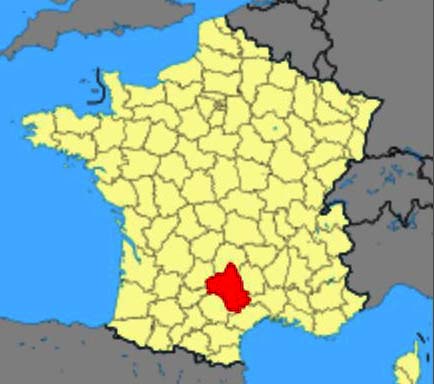
As well as the long list of “Beasts” who seem to have munched their way through the apparently very, very, tasty peasants of France from 1400-1850, or thereabouts, I have also discovered the existence of at least one “Ogre” who was, to put it mildly, not a very nice man (or ogre) at all. His story is told, in exactly the same words, on a couple of websites that I have found. The first is designed to promote tourism in the wonderfully picturesque and unspoilt region of Lozère, which is here:

lozere map xxxxxxxx
The other website shows the availability of holiday cottages in this particularly beautiful area of a particularly beautiful country.

The tale of the Ogre is told by André Arnal, an author with his own page on Amazon France.

The story is too long to translate in its entirety, but I have summarised it for any monster fans who do not read French:

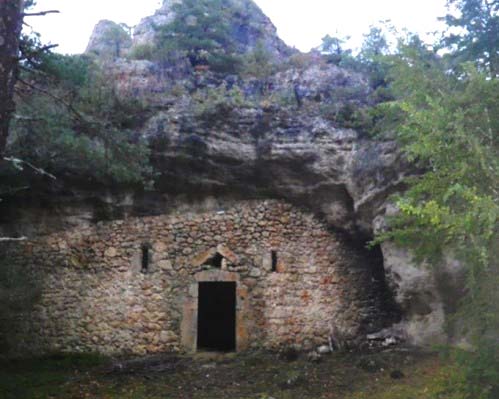
Jean Grin was an Ogre and he lived in a ravine called Malbouche, in what is now a hovel of stones with a collapsed roof. It is surrounded by pine trees and dry scrubland. Inside is a dark room right up against the very rock:

GROTTE-DANS-LE-RAVIN-DE-MALBOUCHE

It contains an oven where Jean Grin used to roast children to eat. Outside are piles of stones covered with soil, reputed to be the burial places of his victims:

house
Jean Grin had retreated to this hovel because of his inability to get along with his neighbours. Soon afterwards, young shepherds and shepherdesses began to disappear in the surrounding area:

scream woman

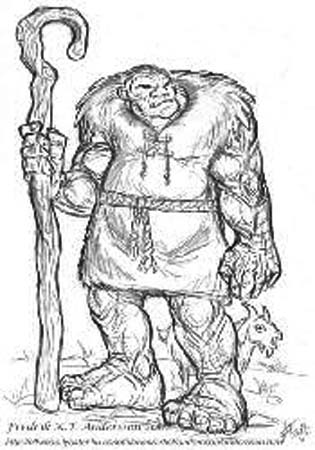
He was regarded as being a half-man, half-beast, because he had lived for such a long time out in the wild. Everybody knew that he loved to kill and eat his victims. Terror soon spread throughout the region:

ogre

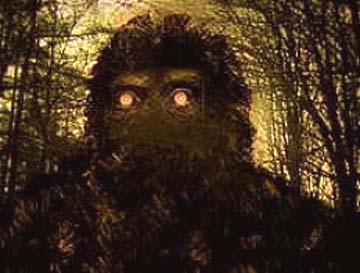
People said that he was a monster, or a man dressed in a skin. His eyes were red, very red and he could be seen approaching from a long way away. From one village to another people said that he was both a werewolf, a monster and a devil, all at the same time, with those awful, glittering, bright red eyes:

redeye

Jean Grin only attacked weak people or children. In just six months, from June to December, 1799, this monster killed three victims before running away at prodigious speed. The locals thought he was a second Beast of Gevaudan, because he always attacked children and ate them.

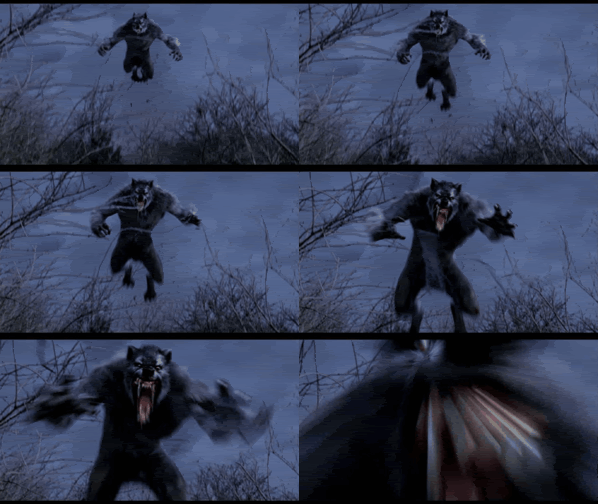
The important noblemen of the area though, did not blame Jean Grin the Ogre, but rather the so-called Beast of Veyreau, an unknown creature of some kind which was also running amok in the region around this time, slaughtering young shepherds and shepherdesses.  The noblemen said that this mysterious animal was either a very large wolf, a lynx or a hyena. The ordinary peasants of the countryside, though, already traumatized by a succession of similar horrors, thought that it was a werewolf:

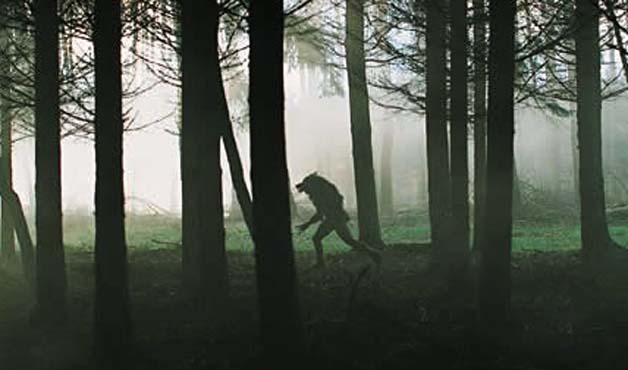
werewolf attack

Of all these dramatic events, with ogres, very large wolves, lynxes, hyenas and werewolves (the popular choice) all loose in the area at once, the collective memory of the local people has retained only the most fantastic details, which are perforce the most terrifying ones.

For them the Beast of Veyreau could only be Jean Grin, the wild man. On his shoulders weighed all the problems of the community. He was an ambiguous creature, half way between animal and man. Jean Grin took on the attributes of a savage, brutal wild man which no social norms could restrain. The skin of the beast that covered him transformed him into a magical, demonic creature:

ogre malb

Jean Grin was, according to others, the misunderstood and innocent victim of wild rumours and stories with absolutely no basis in fact. The people of the area found this wild man, therefore, a scapegoat for their suffering during these times of misery and famine. He became a guilty person that nobody would protect.

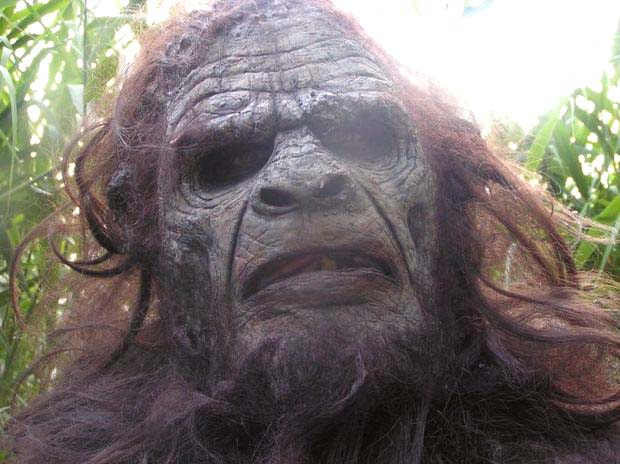
Who was Jean Grin really? Nobody knows! Whatever the case, this mysterious character, whether man or monster, was finally trapped and surrounded in his lair by a mob of over-excited women who, armed with pitchforks and sticks, dragged him to a neighbouring hamlet where he was burned alive in a white hot oven:
bigfoot

And popular memory had it that :

” When John Grin died, his skin leapt around on the ground ; and therefore he was the Devil. ”

With the death of Jean Grin, the population of the entire region felt liberated, as if order and morality had finally been re-established.

Entering into legend, Jean Grin still haunts the country of his misdeeds, as the all-devouring monster, the ogre who seized and ate children.”

As background information, you should not forget though, that at this time, namely in 1799, this particular area of France, as was mentioned above, was already experiencing the ravages of the Beast of Veyreau. I wrote a more detailed article about this animal which was published on January 16th 2018
Basically, it was a creature which was generally considered to be either a wolf or some other unknown canid. It was a beast which filled all the local inhabitants with great fear:

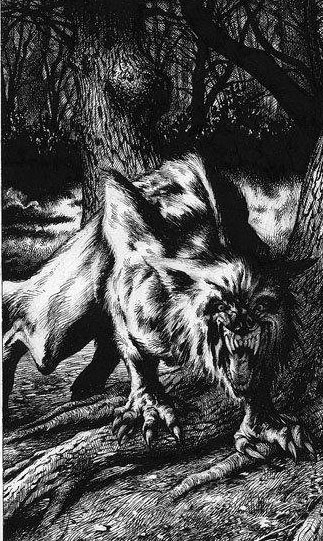
warg_by_irkis-d5oehlo xxxxxxxxxxxxxxxxx

And certainly, the Beast’s behaviour was not good. He must have spent many an unhappy hour sitting on the naughty step, thinking very carefully about what he had done, and indeed, who he had devoured.
Any child that might meet the Beast, for example, stood a very good chance indeed of being carried off and eaten, first the liver and then the limbs. In the space of just six months, three victims were killed by this beast, including a boy of six.
This is the background, which might well lead us to interpret the story of Jean Grin in a number of different ways. It may well have been a story invented to attract tourists, like the Loch Ness Monster is thought by many to be:

-loch_ness_monster

There was, therefore, no such individual as Jean Grin. The whole thing was just an invented tourist trap.
Another slightly different approach would be to say that when the limbs of a six year old victim of the Beast of Veyreau were found hidden in the earth in the Malbouche Ravine, it was only too easy to look across at the nearby “hovel of stones with a collapsed roof” and attribute these ghastly unsolved murders to the person who had lived in the ruins shortly before. Harmless old weirdo, Jean Grin, who could then become transformed into an ogre, a supernatural figure.
Perhaps the tale of Jean Grin the Ogre was used to make up for the incompetency of whoever was in power now, ten years after the French Revolution. Perhaps serious questions were beginning to be asked about the value of this unbelievably massive political upheaval. The revolutionaries were palpably no more capable of capturing the Beast of Veyreau than the noblemen had been ten years before, in the bad old pre-revolutionary days of a Royal France. But if you blame all the gory deaths on Jean Grin the Ogre, though, and you know where he lives, then you can kill him and all your problems are solved.

Your inability to kill the real Beast of Veyreau very soon becomes a matter of minor importance. And if the Beast goes on to slaughter any more victims, just deny the events any publicity. If people continue to make an issue of it, put them in prison, or worse. Here is a lovely Ogre, drawn lovingly by Gustav Doré :
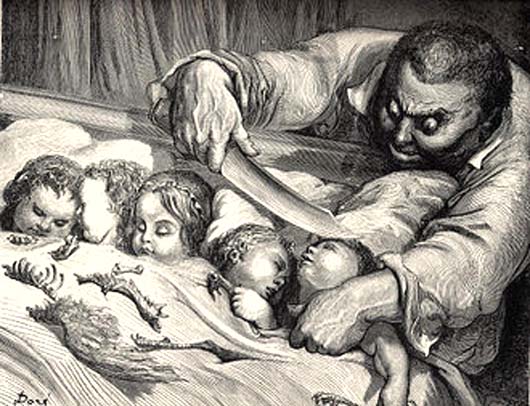
gusta v dore engraving

Another solution, a slight variation on the previous scenario, is that when nobody whatsoever seemed capable of catching the Beast of Veyreau, that apparent incompetence must have caused enormous frustration to everyone in the area. Perhaps a group of local mothers looked around the Malbouche Ravine on one particular occasion and were unable to locate any fierce animal. Acting as “a mob of over-excited women”, they then decided to take out their frustrations on the nearest passing weirdo. The ghastly fate of Jean Grin then just becomes a simple case of “strange eccentric in the wrong white hot oven at the wrong time”.

The situation is a little like the recent case of Christopher Jefferies, a retired teacher and the landlord of an unfortunate murder victim. He was perceived by the press to be a “dark, macabre, sinister villain” but a more accurate description might well have been “an innocent man wrongly accused of murder by the police”. Clearly, the eight newspapers he successfully sued were playing the part of the women of Veyreau.
There is just one more solution to the legend of Jean Grin. It may be a deeply seated racial memory, but that idea will have to wait for the future.

18 Comments

Filed under Criminology, Cryptozoology, France, History, Politics, Science, Wildlife and Nature

John David Fletcher: Part One

John David Fletcher entered the High School on September 17th 1931. He was born on March 22nd 1920. He was eleven years old. His father was John Fletcher, a Captain in the Royal Artillery Reserve who lived at 16, Edingley Avenue in Sherwood, Nottingham.

Edingley Avenue is just a brisk ten minute walk from where I sit now, drinking coffee and eating biscuits. John Fletcher left the High School in December 1936:

nhsxxxxxxxxxxxxxxxxxxxxxxxxxxxxxxxxxxx

Young John Fletcher was yet another Old Nottinghamian to answer the “Call of the Skies” when the Second World War broke out. Initially, like so many others, he joined the Royal Air Force Volunteer Reserve, but he soon progressed to an active squadron, namely 97 (Straits Settlements) Squadron. Here is their badge:

badge

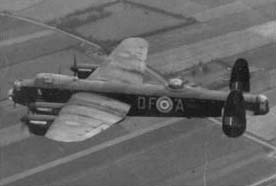
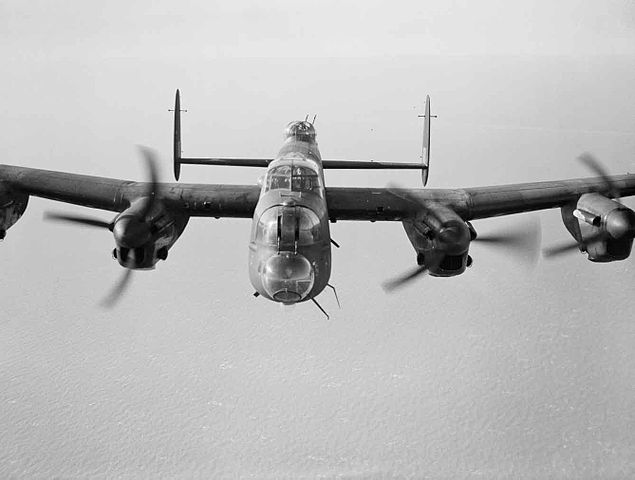
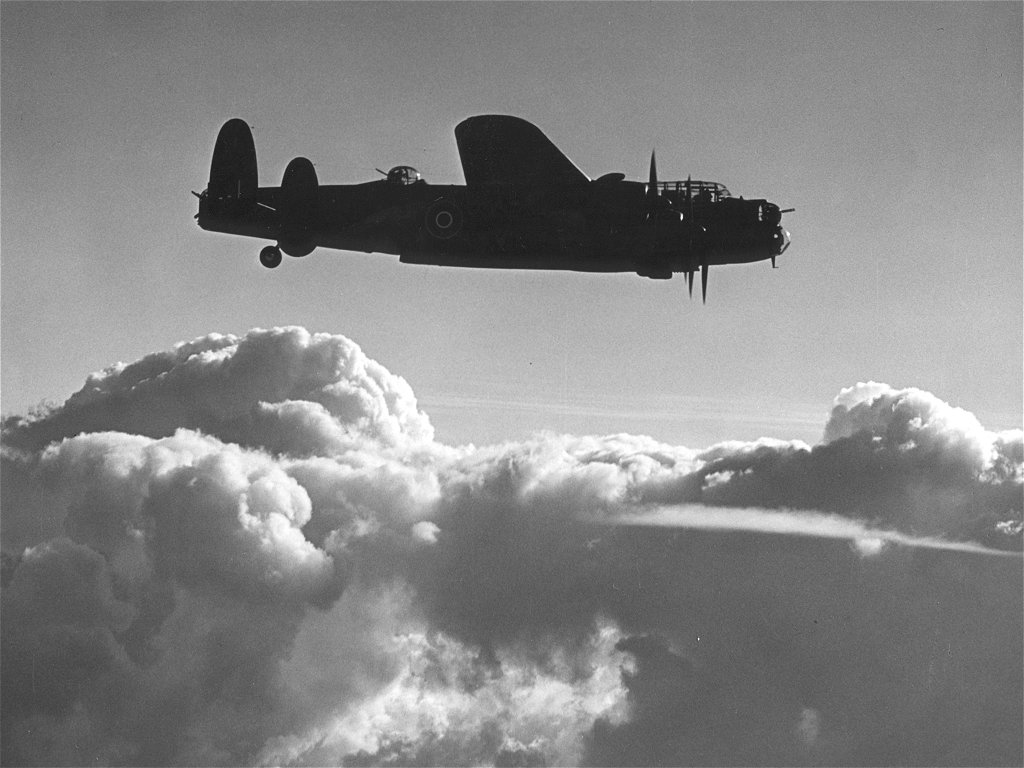
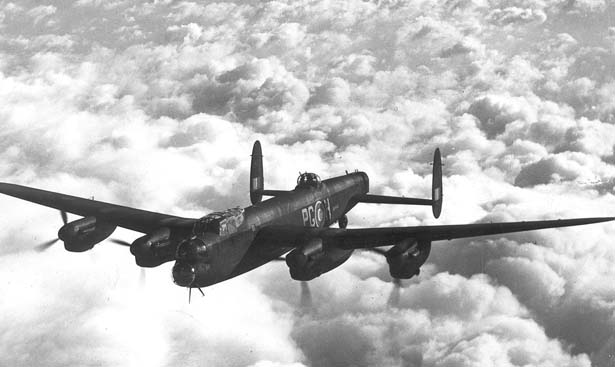
97 Squadron operated Avro Lancaster B.Is and B.IIIs at Coningsby in Lincolnshire.  Here is one of their aircraft, bearing the squadron letter, “E-Elizabeth”:

elizabeth 97 sq

By April 1943, they had become a Pathfinder Force squadron, tasked with using flares to mark targets for the rest of the bombers. By now, John was Flight Lieutenant Fletcher, serving as a Rear Gunner on a number of raids over both France and Germany.

In actual fact, John made a very promising start to his career as a rear gunner, a “tail end charlie”, one of the most dangerous jobs in any armed force during World War Two. At one point, there was a life expectancy on active service of a mere four operations, or perhaps two weeks, for every Rear Gunner.

A search through the Operations Book for 97 Squadron shows what he did in terms of operations. He was involved mostly in bombing communications targets in France to prevent the Germans moving troops to oppose the D-Day landings.

I have transcribed the Operations Book more or less intact, so you might need a dictionary:

3 May 1944 — Mailly-Le-Camp

ND346O  Up 2204  Down 0343.
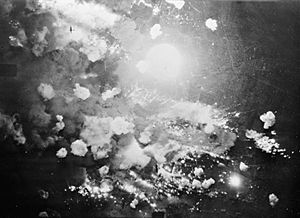
6 clusters 7” flares, 8 x 1000lb MC, 3 x 4.5” flares.  Very slight haze, nil cloud, vis good.  RSFs seen on target.  Original Oboe marker wide, then one RSF dropped on aiming point; this was backed up by more RSFs.  Early bombing was wide but later improved and sticks were seen to burst across the RSFs.  Bombing on whole very successful and two definite areas of fire resulted.

300px-Royal_Air_Force_Bomber_Command,_1942-1945__C5083

7-8 May 1944 – Tours Airfield

ND452S  Up 0040  Down 0517.
6 x 7” cluster flares, 8 x TI RSF, 3 x 4.5” reco flares.  Weather and identification as above.  Two first RSF were on aiming point but just off the hangars at 0250 hours.  Ordered to back this up and out own fires were seen to fall right on hangar buildings.  Other backers up well placed but one slightly undershot.  Most of bombing very accurate.  Some explosions seen, one appeared to be a fuel dump.

10-11 May 1944 – Lille

ND452S  Up 2204  Down 0104.
6 x 7” clusters, 1 x 4000lb HC, 8 x 500lb MC, 3 x 4.5” reco flares.  Weather over Lille – cloud, vis moderate.  Target located by RSFs.  Flares down on time.  RSF obscured at time of bombing.  Only one message heard

A_Lancaster_Mk_III_of_N

19/20 May 1944 – Amiens

ND346T  Up 2316  Down 0255.
11 x 7” clusters, 3 x 1000lb MC, 3 x 4.5” reco flares.  Located target by flares and RSF through 8-9/10ths cloud.  First run, one or two RSF near target.  Flares scattered.  Yellow markers not seen.  Glow seen through cloud only.  Identified target on second run.  No spot fires at all.  Raid called off 0125 hours.  Gee faded out at enemy coast until re-crossing on return journey.

22/23 May 1944 – Brunswick

ND346T  Up 2251  Down 0257.
12 x 7” flares, 1 x 2000lb HC.  Gee u/s after 3 degrees east at 2347 hours.  Icing experienced in very thivk cumulus 5217N 0121E, 2316 hours, 6,000’.  Endeavoured unsuccessfully to avoid; late at enemy coast, crossed at 12,000’, got off track, ran in to large belt of searchlights, lost 30-40 minutes trying to break through and decided too late to reach target in time to bomb anywhere near H-hour, so decided to return to base.  Soon afterwards, Bomb Aimer found unconscious.  Navigator took over H2S and soon discovered correct position.  Gee came in again at 0209, thence plotted on Gee.  Bomb Aimer still in complete daze when aircraft landed at base.

Avro_Lancaster_B_Mk_II_ExCC

24/25 May 1944 – Eindhoven (Phillips Works)

NE625O  Up 2256  Down 0218.
12 x 7” clusters, 2 x 1000lb MC, 3 x 4.5” reco flares.  Received orders to abandon exercise 0038 hours on VHF.  Confirmed by W/T at 0039 hours.

27/28 May 1944 – St Valery-en-Caux

ME625O Up 2357  Down 0301.
12 x 7 x 4.5” clusters, 2 x 1000lb MC, 3 x 4.5 reco flares.  Slight ground haze.  Target identified by Gee.  First flares dropped about ¾ mile west of town. Two minutes later more flares called for, which fell over town;  RSF then put down.  At 0145 hours, VHF order and two red verey cancelled.  At 0153 ordered to bomb on or near RSF.  Appeared very good attack.

3/4 June 1944 – Ferme D’Urville

A small but important wireless station just south east of the Cherbourg Peninsula.

ME625O  Up 2307  Down 0241.
9 x TI Green No 23, 1 x TI Green No 16, 2 x TI Yellow No 16, 1 x 4000lb HC, 2 x 500lb MC.  Weather clear, visibility good.  Target identified by red and green TI.  On arrival aircraft was too close to make accurate run on first red TI (down at 0058.18 hours).  So made second run and backed up green TI with bombs because Controller said marking was okay, so third run was unnecessary.  Only one backing up wave was requested or needed.  Second Oboe TI red fell at 0059 hours.  First red was on target and second to north of it.  Green TIs covered whole target area between red TIs and Main Force bombing almost obliterated first marker, so aircraft actually bombed second red TI.  Target disappeared under smoke and bomb flashes.  One or two bombs fell in sea but concentration appeared good and accurate.  No wind correction was necessary;   Controller appeared satisfied from the start though no assessment was heard.  No second backing up wave requested.

Avro_Lancaster_Mk_1_ExCC

5/6 June 1944 – La Peanelle (in conjunction with 83 Sq

ME625O  Up 2228  Down 0356
10 x TI green No 16, 4 x 1000lb MC.  7/10ths cloud at two layers at 10,000’ and 5,000’.  Visibility fair.  Located target by red TI.  Oboe marker could not be seen, aircraft orbited and as it was 13 minutes late on run, dropped bombs on green TI, backing up green TI adjacent to two red TIs which had previously given out.  Stood off awaiting instructions from Controller who had stopped bombing just after aircraft had released.  Bombing appeared inaccurate, some sticks a few miles south, some out to sea, possibly due to cloud layer.  Illuminating flares poor.

6/7 June 1944 – Argentan

ME625O  Up 2332  Down 0326.
9 x 7 x 4.5” clusters, 6 x 500lb MC, 3 x 4.5” reco flares.  Target Argentan, northern aiming point, tops 8,500’, 6,000’ base.  Haze below.  Located by markers.  Flares (which we were only to drop on order) not needed.  Target marked with RSF assessed as 40 yards/360 from aiming point.  Ordered to bomb 0132.5 hours.  Bombing seemed excellent although target very smoky.

9/10 June 1944 – Etampes

Up 2157  Down 0209.
9 x 7” flares, 7 x 500lb MC, 2 x 500lb MC (LD), 3 x reco flares.  10/10ths cloud, base 7,500’.  Slight haze below.  Location by markers.  First flares released on Oboe.  heard over VHF at 0001 hours, also on W/T (same time).  Ordered to bomb most easterly green with 200 yards under shoot at 0011 hours, after target had been re-marked.  Green in bomb sight and a RSF beyond it further east with another green west of green bombed.  Unable to assess attack owing to smoke.

12/13 June 1944 – Poitiers

ND625O  Up 2232  Down 0431.
9 x 7” clusters, 1 x 1000lb TI red, 1 x 1000lb MC, 4 reco flares.  Sky patchy, thin stratus, some haze.  Identified target by markers.  Over target marking flare run, Controller asked Backer 1 (0142.5 hours) to drop red TI on aiming point west of RSF already down.  Position as described by Controller was two RSF in line with green TI between slightly nearer most north-easterly RSF, all three being in line along direction of railway but on easterly side of it.  Our marker assessed as 40 yards west of aiming point (0148 hours).  Instructions for bombing followed immediately.  Further flares cancelled.  Own run for MC bombs okay.  Bombing appeared very successful.  A few sticks fell exceptionally wide in centre of town.  Controller assessed quickly and accurately.

By Friday, June 23rd 1944, young Flight Lieutenant Fletcher was becoming quite a veteran with twelve “ops” behind him, a commendable total for a rear gunner. That afternoon though, between half past three and four, he was killed, not in action over Germany, but practicing close formation flying with five other Lancasters over Deeping Fen in quiet, rural Cambridgeshire. John was just twenty-four years of age:

cambrigde vity cem

Needless to say, as I was not a witness to all of these dreadful events, this article could not have been written without using the series of excellent books by W.R.Chorley, and a number of other websites.

Part Two to follow in the near future.


22 Comments

Filed under Aviation, Bomber Command, France, History, Nottingham, The High School

The Wolves of Paris

I have always thought that France was fairly unlucky as a country to have been ravaged over the centuries by various Beasts, the majority of which nobody has been able to identify with 100% certainty.  They have all been dismissed as merely oversized wolves, perhaps with attitude problems, but, somehow, I just cannot agree with that. Too many people who saw wolves perhaps three or four times a week were completely puzzled when they saw the Beast of Gévaudan, for example:

This slideshow requires JavaScript.


Or when they saw the Beast of Benais or the Beast of Sarlat or the Beast of Auxerrois/ Trucy or the others whose individual blogposts I have not yet launched out into “Le Monde du Blogging”. Creatures such as the Beast of Lyonnais or the Beast of Cévennes/Gard/Vivarais or the Beast of Caen and Chaigny or the Beast of Orléans or the Beast of Veyreau. The Beast of Cinglais or the Beast of Gâtinais. The blood splattered list goes on.
What I did not realise, though, is that there are completely documented and wholly accepted  historical accounts which detail attacks on Paris by wolves. And not just one wolf or even one pack of wolves. These were a whole series of large scale attacks by animals which broke all of our present day rules of how to be a politically correct wolf. They gleefully attacked and ate people. French people. Parisians:

Iberian Wolf alpha male feeding on deer, its mouth tinted with f

The first wolf invasion came during the winter of 1419-1420. Over Europe as a whole, the weather that winter was unbelievably cold. In the east, in what is now Turkey, the Bosphorus was completely frozen over and it was possible to walk over the ice from Üsküdar to Istanbul, which was then called Constantinople.

In Western Europe, virtually all of France had already been made wretched by the debilitating effects of the Hundred Years War which was to last, rather inaccurately, 116 years, from 1337–1453:

This slideshow requires JavaScript.

The winter of 1419-1420 was equally severe over the whole country with very low temperatures and copious amounts of snow falling for prolonged periods. Paris was occupied by the English and the famine there was so great that unfortunate Parisians spent all of their daylight hours wandering around just searching for food. Numerous packs of wolves, as hungry as the people, advanced into the suburbs of the capital, which was now just a vast, frozen wasteland. The River Seine froze over and people could cross over from one side to the other without problem:

hiver-paris-1891

Two years later, in 1421-1422, there was another winter of  almost unbelievable severity. Wolves again entered the city. Every night they roamed around the streets of Paris, dug up recently buried corpses in the local graveyards and ate them. Anybody who tried to intervene was ripped to pieces and eaten, presumably, as a second course. Any wolves which were killed were strung up in the streets by their back legs the following morning, as a perhaps, slightly over optimistic warning to the rest.

It was so cold during this winter that bottles of wine, grape juice and vinegar froze in the cellars of Parisian houses and in some cases icicles formed on the vaults of cellar roofs. The River Seine, which had previously been in spate, froze over in less than three days and the ice quickly became firm enough to walk on. On January 12th 1422, there began in the French capital what was considered at the time to be the most severe spell of cold ever experienced by man.
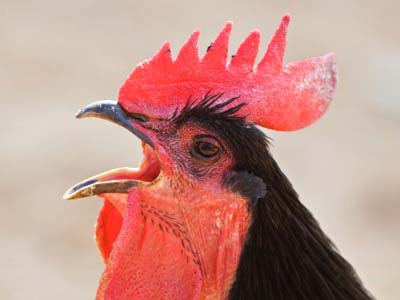
The River Seine froze completely throughout its entire length. Wells froze after four days. This harsh cold persisted for almost three weeks. To compound Parisian misery, a couple of days before the beginning of this extremely cold weather, there had been a heavy snowfall. Because of the severity of this snow and the subsequent extreme cold, people were completely unable to work. Instead, they resorted to jumping games, playing ball and other vigorous activities to keep warm. The freezing conditions were so intense that the ice in the streets and public squares persisted until March 25th. It was so cold that on the heads of cockerels and hens, their combs froze:

cockerel

Equally surprisingly, there were no wolves reported in Paris during the extremely harsh winter of 1433-1434. The big freeze began on December 31st 1433 and then lasted for nine days short of three months. After this, another severely cold period followed, from March 31st 1434 until April 17th 1434. Just as a comparison, during this particular winter, the entire River Thames in England had frozen completely solid from December to February and remained completely impassable to shipping.
The wolves, though, were back with a vengeance in the second Parisian “Winter of the Wolf”, “L’Hiver du Loup”.  This came in 14371438, when the weather was equally, if not more, glacial.
The River Seine again froze over completely and packs of wolves wandered into the French capital, roaming the streets in search of food. Here is an anachronistic photo of the River Seine, frozen over in 1437.  How can you tell that, mon cher Sherlock?

Seine-gelée-paris-1893

In actual fact, there had been five unbelievably cold winters in succession over the whole of the European continent, and this was the last of the five. In England, the famine was so severe from 1437-39 that it was second only to the worst years ever in 1315-1317. These latter years were so wet that virtually all the nation’s crops failed and as many as 10% of the population may have eventually perished, in a decade characterised by crime, disease, mass death and cannibalism.

From 1437-1439, though, the winter cold was such that the English people in the countryside  were driven to attempt to make bread from fern roots and ivy berries. An unbelievably prudent Mayor of London had avoided this situation in the capital by importing a good supply of rye from Prussia. This may have been Mayor William Estfeld (1437) or Mayor Robert Large (1439) but personally I would go for Stephen Broun the Grocer (1438).

The only record of wolves in Paris which I have been able to trace during these three years of 1437-1439 came as early as the last week of the month of September 1439, when a desperate pack entered the city in search of fresh meat. They ripped out the throats of around fourteen people and duly devoured them. This occurred in the area between Montmartre in the north of the city:

monty

And the Porte Saint-Antoine in the east, right next to the Bastille prison:

antony

From 1450-1850, and possibly beyond that, into the early years of the twentieth century, the so-called Little Ice Age held sway over Europe. In 1457-1458 in Germany, for example, extreme cold froze the Danube River to such a thickness that an army of 40,000 men was able to camp on the ice. Two years, later during the winter of 1459-1460, the entire Baltic Sea was frozen and people could cross between Denmark, Germany and Sweden both on foot and on horseback:

basltiv

In France, the most severe weather came right at the beginning of the Little Ice Age during their very worst winter of 1449-1450. During this period the weather in France was very wet, extremely cold, and there were, consequently, huge quantities of snow. Indeed, the winter had begun as early as October 1449, when large numbers of olive trees began to die of the cold across the whole country.

It was during this exceptional winter that Paris became the victim of its most famous attack by man-eating wolves, “des loups anthropophages” (a very useful mouthful, should you ever need the phrase on holiday, or perhaps wish to prove your sobriety to a French police officer).

This pack, “The Wolves of Paris”, (Oh somebody, form a Heavy Metal Band…the name is crying out for it!), “Les Loups de Paris”, are thought to have killed and eaten large numbers of hapless human victims of all ages over the course of the winter. The animals initially entered Paris through the very large holes in its dilapidated city walls, which had been built some 250 years previously in the early 13th century. Of course, the original builder, King Philippe Auguste, had intended the walls to protect the city from human invaders rather than animal predators:

wolf pack one

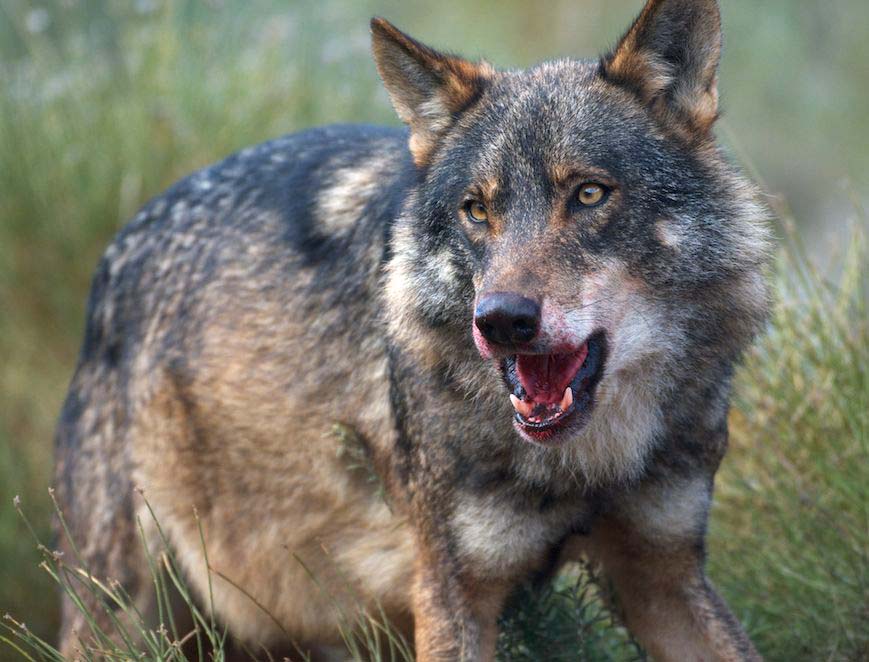
The leader of the pack was a wolf named “Courtaud” which means “Bobtail”, as he had a tail which had been “docked” or shortened in some unknown incident. The descriptions of “Courtaud” at the time said that he was reddish in colour, not really a pigment that you would expect in a pure 100% common, Eurasian or Middle Russian forest wolf as the subspecies canis lupus lupus is variously known across Europe.  Suggestions have been made that its unusual colour was because it was an Iberian Wolf canis lupus signatus on its holidays from Spain, but there is a problem with that. As far as I can see, the Iberian Wolf is not particularly reddish. Here he is. Just look at that blood:

Iberian Wolf alpha male feeding on deer, its mouth tinted with f

According to the Wikipedia entry in the link above, canis lupus signatus has a lighter build than the European Wolf, some white marks on the upper lips, dark marks on the tail and a pair of dark marks in its front legs. There is no mention of red.
Don’t get me started, but my explanation for all those various Beasts (bêtes féroces, bêtes dévorantes ou bêtes anthropophages) which ravaged France over the centuries now comes into its own. I believe that they were members of a more aggressive, larger and now extinct species of wolf. If any unusual colour is mentioned for La Bête du Gévaudan, La Bête de Cinglais, La Bête de Caen, La Bête du Lyonnais or La Bête du Vivarais, it is always, exclusively, red. And, as we have just seen, Courtaud too had fur of this colour.

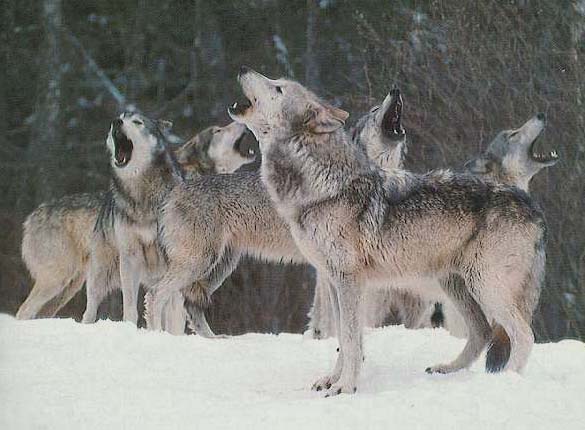
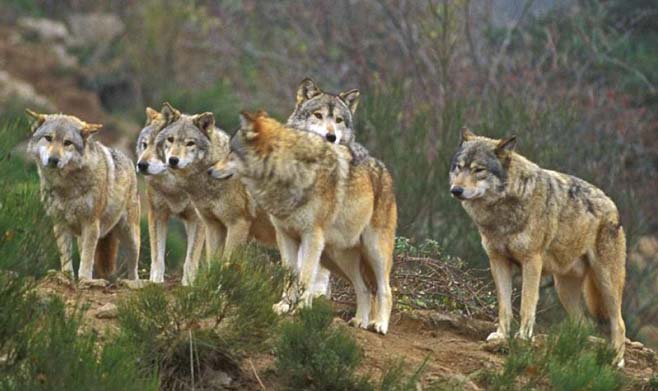
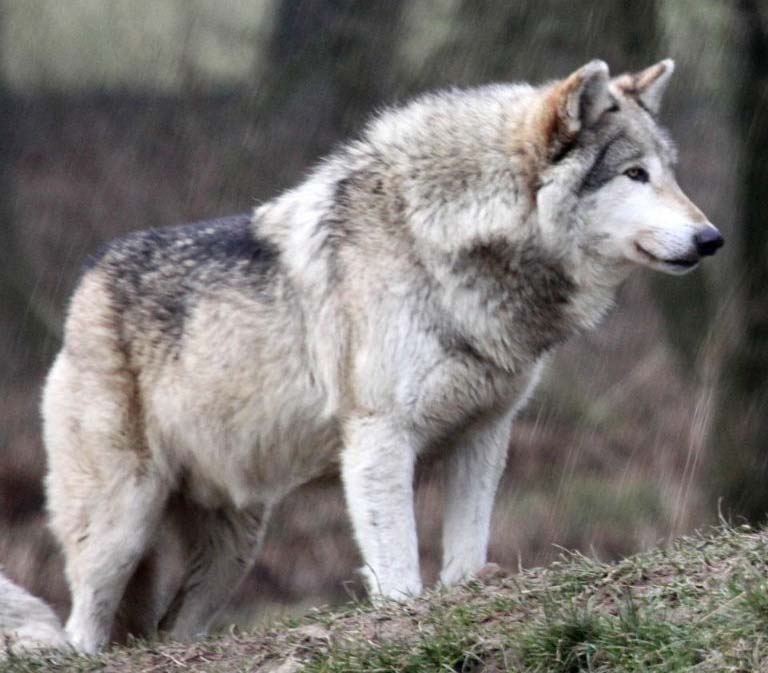
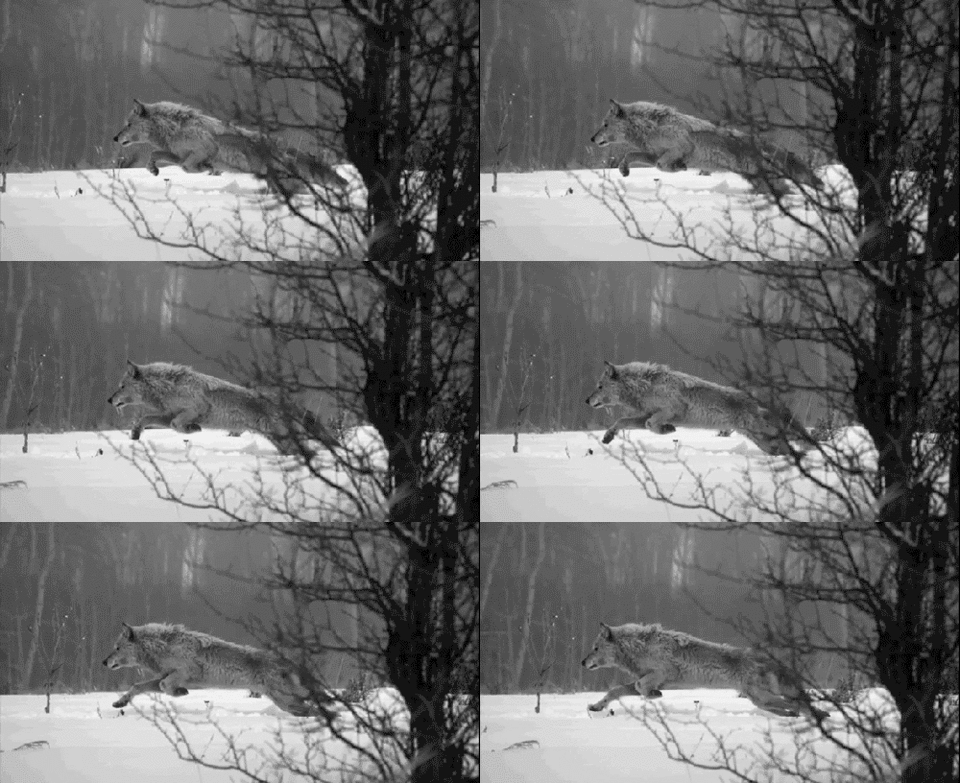
That is why I just do not believe that ordinary wolves were responsible for these blood spattered killings. And anyway, aren’t ordinary wolves a friendly looking bunch of chaps? They would not dream of eating anybody:

621166__the-wolf-pack_p

At first, there were around twenty wolves in the Parisian pack and they killed dozens of people. Gradually, wolf numbers built up, and the list of victims grew longer and longer. In the first month, supposedly around forty people perished, with a total kill for the whole winter of several hundred. They included, for the most part, anybody the wolves found wandering around the city at night, or any individuals who were outside sleeping rough. Inevitably, the inhabitants of Paris in that winter of 1449-1450 were swept by a feeling of total panic. Attempts to kill the wolves in their dens were totally ineffective. The wolves became so self confident that they often enjoyed a sing-song on their way back from the pub:

singing

Eventually, though, Parisians became increasingly enraged that it was no longer safe to walk the streets of their beautiful city. Furious at all the deaths, a brave group of volunteers found a couple of unwanted cows and killed them. Then they set off, dragging the mutilated corpses along behind them on ropes, so that they left a bloodied trail. Eventually, the wolves began to follow the scent, and slowly, slowly,  Courtaud and his bloodthirsty colleagues were lured and prodded into the very heart of the city:

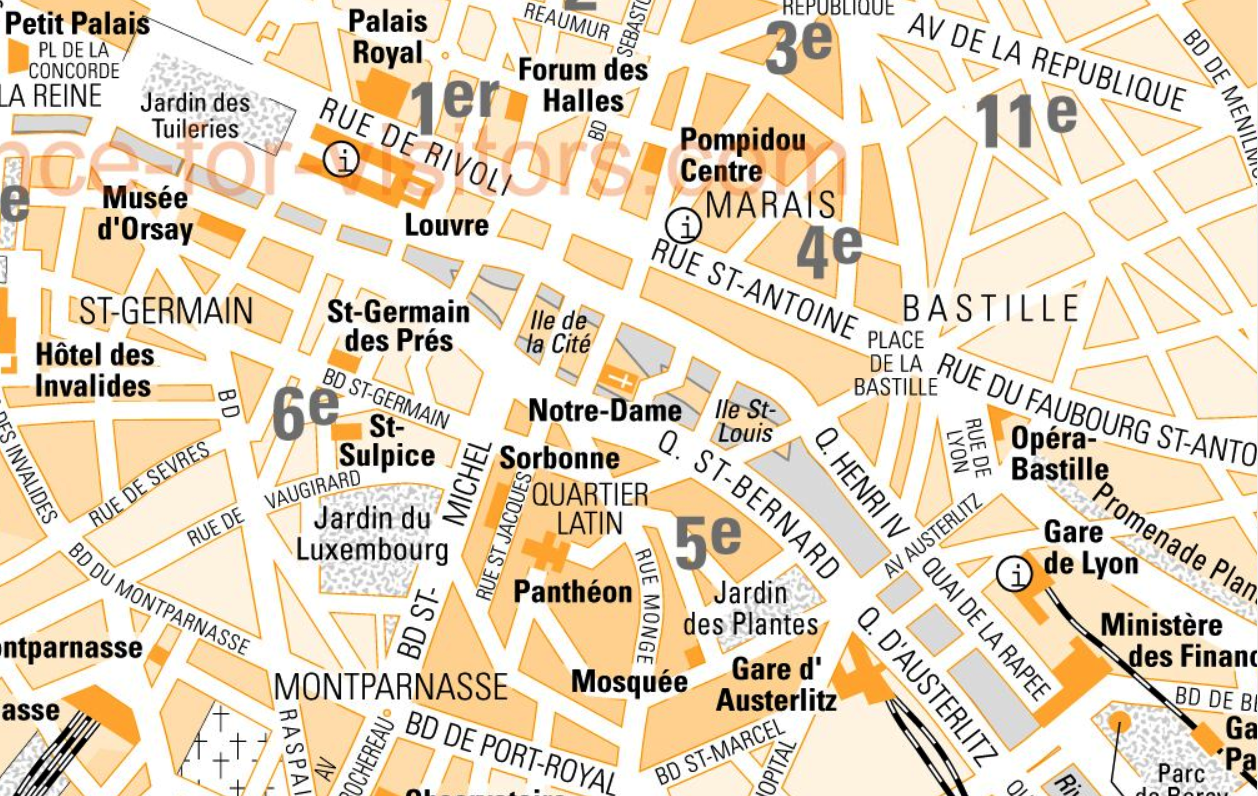
map

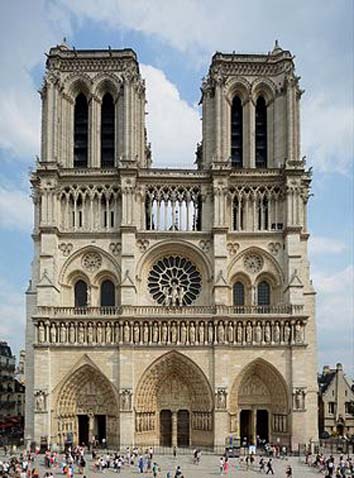
When the wolves reached the Ile de la Cité (middle of the map), they arrived at the large square in front of the cathedral of Notre Dame, which is called the Parvis Notre Dame. Here they were trapped, surrounded by pre-prepared wooden barricades. Here is Notre Dame cathedral. See if you can spot the hunchback:Notre_Dame_de_Paris_DSC_0846w

And here is the large square in front of the cathedral, which is really quite extensive in size. I wouldn’t like to have chased a pack of wolves across here:

parvis-Notre-Dame

Finally, the angry Parisians stoned and speared the entire pack, until every single wolf was dead. Courtaud was paraded dead around the city in a cart, pulled by the triumphant crowd. Here is one of those bizarre modern art exhibitions which was held in Paris recently. I don’t suppose it’s Courtaud and his pals from 1449-1450, but I do hope that no real wolves died to make it:

leadership-defaillant xxxxxxxxxxx
I do not really believe that Paris’ historical scrapes with wolves have necessarily finished. Grey wolves were completely extirpated from France in the 1920s and 1930s, but ten years ago they started entering the country again from Italy. There are now around 300 wolves in France and the farmers allege that they have killed more than 6,000 sheep in the last twelve months. The woods around Paris are well stocked with deer and boar and they would make an ideal hunting ground for wolves. Indeed, this year, wolves have been sighted just 40 miles from the city:

wolves
Presumably preparing the Parisian populace for the latest lupine invasion, there are a number of different books available, all of which are all entitled “The Wolves of Paris”:

The first is by Michael Wallace:

“It’s the winter of 1450 and Paris is in a panic. A pack of ravenous wolves is loose in the city, feasting on human flesh. Lorenzo Boccaccio is summoned by a Dominican inquisitor who….”

The second is by Daniel P Mannix and a reviewer promises:

“an extraordinary story with verve and deft pacing. In the reading of what is a tale of high drama, building remorselessly to the climax…”

After that remorseless climax, where next, but the boxset by Lance Roddick, also available in separate sections:

gay wolves of paris

One of the sections has a wonderful review:

“The book started off talking about the hard times France was going through.”

You don’t say!

If you can, always finish a blogpost with a song. And what else could it be except…


21 Comments

Filed under Cryptozoology, France, History, Science, Wildlife and Nature

The Beast of Veyreau….another cannibal killer!

One more man eating monster to terrorise the local peasants of France was the “Bête de Veyreau”. At a time and in a place both relatively close to the Beast of Gevaudan, his bloodsoaked career peaked from 1799 onwards as he laid waste to an area of France called the “Causse Noir” or “Black Causse”. This beautiful countryside is situated more or less in the south of the Massif Central. Here is the old province of Rouergue, whose capital was Rodez:

rourgue

And this is a more detailed map, with a red square in the extreme east representing the village of Veyreau. The orange arrow refused to travel abroad:

map square

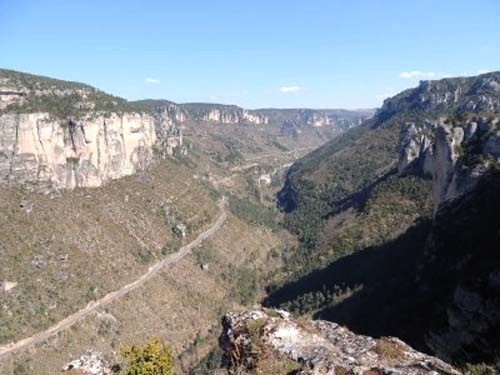
The province directly to the east of the green area is Gévaudan. The “Causse Noir” or “Black Causse” is dry, rugged and rocky.

1280px-Causse_Noir

There are many mountainous areas and some notable gorges such as the “Gorges de la Jonte”:

gorges de la jonte

Normally, the best approach for these French monsters is to take an average of the various French websites. In this case however, that is not really going to work, because, as far as I can see, more or less every account of this creature is virtually the same, and probably owes a great deal to Wikipedia:

“The Beast of Veyreau was a man eating animal which ravaged an area in the “Causse Noir” not too far from Gevaudan, from 1799 onwards.  This was an area where livestock were raised and is nowadays part of the Département of Aveyron. These attacks filled the inhabitants with such immense fear, and the Beast had so many “dozens of victims”, that the locals thought the Beast of Gévaudan had come to their region.”

I have been able to find one person who could expand a little on that:

“around the year 1799, there appeared in the country a beast which filled all the inhabitants with great fear. Its build was slimmer and more willowy than a wolf. Its way of walking had such agility that it was seen first in one place, but then four or five minutes later in a different place perhaps several miles away. And woe betide any child that might meet the creature. The Beast would carry them off and eat them , first the liver and then the limbs. In the space of six months this beast killed three victims including a boy of six whose limbs they found hidden in the earth in the Malbouche Ravine, in the very same place which was, people used to say, the haunt of the ogre.”
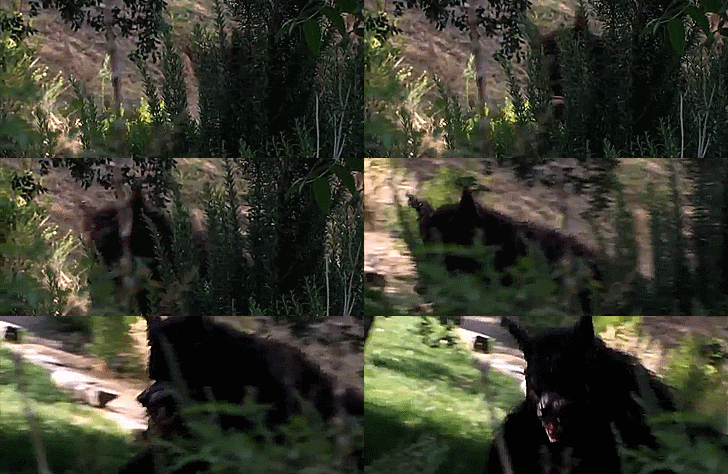
Mention of “The Ogre” will lead me neatly to another blogpost in the future, when this long series of familiar crazed creatures, blood soaked beasts, maniacal monsters, feral dogs, wolf-dog hybrids, wolves with attitude or whatever nasty four legged beast you can imagine, becomes just for a few hundred words, a two legged cannibal killer, with the supercool name of Jean Grin.

To get back to the story, this is the tiny village of Veyreau:

Veyreau_aerien1

The very best version of the story of the “Bête de Veyreau” comes from a website designed to “découvrir et aimer la Lozère”, in other words to “discover and love La Lozère”, which is one of the most beautiful and picturesque areas of the “Causse Noir”. The account of the Beast below is quoted directly from the parish records of the village of Veyreau, which were collected together in 1870 by the then parish priest, Père Casimir Fages. The road sign  below shows that two languages were/are spoken in this southern part of France. “Veirau” is the village name in Occitan. Try the Wikipedia website to read about this ancient language. You will find a really interesting use of the Universal Declaration of Human Rights, which has been translated into a number of widely spoken languages but then into a good number of others such as Occitan, Gascon, Provençal and half a dozen others. At the very least, it has a wonderful moving map which you can click to enlarge:

veyreau_entree_panneau

As was so often the case in old France, the parish priest was the only literate person in the immediate area, and it was for him to record the history of tiny villages such as Veyreau. Père Fages’ church is still there:

eglise-de-veyreau-e1380921126557

The hard work for this website has all been done by an extremely dedicated gentleman, Monsieur Bernard Soulier. Bernard is the President of the Association “In the country of the Beast of Gévaudan”, in French,  “Au pays de la Bête du Gévaudan”. This organisation is based in Auvers, a small village in the Haute Loire district.

.
Here is Père Fages’ story:

“Around the year 1799, there appeared in the country, especially around the village of Paliès, a beast that filled all the people immense fear; its size was slimmer than a wolf ; Its way of walking had such agility that it was seen in one place, and four or five minutes later it was seen in another place perhaps a league away. It had the head and muzzle of a large greyhound ; it used to come into villages in broad daylight, and woe betide any child that might meet the creature, the Beast would carry them off and eat them, first the liver and then the limbs. One summer’s day, the Beast appeared at Paliès. Children spied it from a long distance away and ran to take refuge in a tree close to a house on the northern side of the village; faster than lightning, the Beast seized one of the children, who was already two metres off the ground and carried him off into Madasse Wood. Men shearing the sheep of a local farmer, including the father of the unfortunate child, ran at top speed to the place where the Beast had gone. The noise that they made caused the Beast to abandon the little boy who was found shaking on the ground with his insides ripped out! Seeing his father looking for him, he did, however, have the strength, to shout “I’m here”, but he died a few moments later. This child aged six, was called Pierre-Jean Mauri; in the register Monsieur Arnal who carried out the baptism ceremonies in 1794 when the child was fifteen months old, has added to the margin of that register, “Devoured by the ferocious Beast”.
Fifteen days later, the Beast took a child from the farm of Graille at Rougerie. In company with his older brother, he was keeping watch over the cattle close to the natural spring of St. Martin; the elder brother tried hard to help his brother, but when the beast stood up on its hind legs, he was so frightened that he fled and went for help at Veyreau ; it was a Sunday, a large crowd came to help, and searching the Malbouche property, they found the remains of limbs that the Beast had hidden in the earth. This same beast also seized a little girl named Julien who lived in Bourjoie ; her father was busy knocking nuts down from the trees; the small children were close to the tree, and the Beast, in full view of the father, seized the little girl; the father set off after her, but he could not catch her up, and a few days later, she was found buried in the undergrowth; her liver had been eaten.
These different characteristics of the Beast filled the people of Veyreau and St André with justified fear; several people saw the Beast which accompanied them, gambolling along, jumping about, but not daring to attack adults; One day in bright sunshine, the Beast walked through the village of St André, and stopped outside the door of a weaver’s house; they took it for a dog, and at the very moment when they were going to stroke it, it disappeared in  a flash. Monsieur Gaillard, the parish priest of St André, with whom I have discussed this extraordinary animal, assured me that he had heard it one evening in a small field below the duck pond, emitting howls like the braying of a donkey, something which was confirmed by several other people:

howl

All the local poachers met to hunt the creature, but when they encountered the Beast, they said that sometimes, especially when it was being shot at, the creature rolled around on the ground but then disappeared with enormous speed. The people who were children during this era, agree how great was the terror that it produced throughout the whole region of the “Black Causse”. Never attacking men or animals, because we had seen it pass through the middle of herds of cattle and flocks of sheep without doing them any harm, the Beast targeted only children. In the course of this year, from June to December, two boys and a girl were the sad victims of its ferocity; nobody dared walk outside on their own at night, and by day everyone carried a halberd at the end of a stick to defend themselves, in case they met the creature:

halberd

What was this Beast? It could not be classified as one of the known animals in the area; Monsieur Caussignac claimed that it was a hyena; Monsieur Gaillard, the village priest of St. André, thought it was a lynx, and the common people gave it the name of “Werewolf”, in French “Loup garou”:

loup-garou-1
After some six months or a year, the creature disappeared without anybody knowing what had happened to it. About the same time, a similar beast was seen in the Sanvero woods near the village of Cornus in the Aveyron province; it almost managed eat a little girl that I was to know twenty-five years later; she was near her home in the village of Labadie, in the parish of St Rome Berlières ; her brother, older than her, rushed to her defence and grabbed her from the creature, he dragged her into the house ; through the cracks  in the closed door they could see the Beast watching and waiting for some time for the prey which had escaped, only by the skin of her teeth. Indeed, a bite from the creature had taken a considerable piece of skin from her side; this scar was never to fade throughout the rest of her life:

werewolf
Whatever this animal was, its appearance had an enormous impact throughout the whole area of the Black Causse. Uneducated people saw in the Beast something supernatural, especially after all the upheavals and ordeals of the recent Revolution.”

And there you have it. Yet another wolf that seems to be not quite a wolf. At the moment, I am favouring the idea that up until about two hundred years or so ago, there was a second, much fiercer and larger species of wolf living in the remote and most mountainous areas of France, some prehistoric survivor that had lingered on until the nineteenth century in ever diminishing numbers, until, after tens of thousands of years, it finally became extinct. I cannot believe that the locals were incapable of recognising an ordinary wolf when they saw one. I cannot believe either that wolves were hybridising with dogs across the whole of France to produce killer hybrids. Wolves don’t have steamy affairs with dogs. They eat them!

15 Comments

Filed under Cryptozoology, France, History, Science, Uncategorized, Wildlife and Nature

French Monsters : the solution

I think that I have established by now, in a long series of articles, that large numbers of innocent people in France were being attacked, and frequently eaten, by wild creatures of some sort from the late 1400s possibly right up to the end of the nineteenth century.
My eagerly awaited conclusion to all this is that we are dealing here with an unknown creature which was essentially a wolf type animal and which is now extinct. It lived in thick forests and deep ravines, and behaved in a way so different from a modern wolf that it cannot possibly have been one. It killed and killed again.

Some sources attribute 150 deaths to what they call “just one ordinary, but large wolf”. Impossible! At the same time, “The Prime Suspect” was not necessarily hyper distinctive, and may not have been totally obvious at first sight:

Gevaudanwolf xxxxxx

Let’s begin by looking at a list of creatures which could have been this wolf type animal. I have compiled it from as many French Internet sites as I could find! There may be some copying between the websites involved here, but I prefer to think that descriptions which are similar are describing the same species of unknown animal. And don’t forget, most of these monsters are separated by both time and space.

As a rough comparison, a French author, Pascal Cazottes, has found fifteen monsters of this type, carbon copies, more or less, of the Beast of Gévaudan. Here is my contribution to the list:
1500-1510, Fontainebleau. it was supposedly a wolf, a werewolf or a shape shifter. Possibly six individual animals.
1510, Fontainebleau. a lynx, or a hybrid of a wolf and a feline, it devoured young girls and little children.
1595-1598, Vendômois, south/central France, 25 people killed by “wolves”. This was not normal wolf behaviour.
1632 – 1633 and then possibly in 1672, Cinglais, Evreux, Caen, Falaise, Calvados, between 15-30 people killed. It was not a wolf but resembled a large mastiff of enormous speed and agility, capable of  leaping across the river. At first sight, it was like a wolf, but was longer, more red, and had a more pointed tail and wider haunches. It was eventually identified as a wolf, but the local peasants had serious misgivings about this middle class verdict.

perhaps cinglais
1633-1634, the Forest of Besnats, Anjou, more than 100 people were mutilated and killed, their bodies lacerated by claws. It was “an enormous beast”.
1650, Fontainebleau, apparently, a female wolf of enormous size, with supposedly more than 600 people killed.
1660, Gâtinais, near Fontainebleau, apparently a huge wolf, it would cross the river to seize children and animals
1690, Forest of Douvres Saint-Riez-en-Belin, Sarthe, there was a report of a child, Cécile Le Boet, devoured by “a fierce creature”
1693-1694, Benais, 200-250 victims. There were several beasts acting in concert which looked like wolves, but had a wider muzzle. They behaved in remarkable fashion, allowing themselves to be patted, but then leaping on the throat of the victim. They appreciated “fresh meat”, and ate the weakest people. It was supposedly a lynx, but lynxes don’t attack human beings:

loup cervier 1vvvvvv

1691-1702, Orléans, over 60 young victims in fifteen months. A huge beast was killed in the forest and was then picked out from 200 dead wolves. It cannot have been a normal wolf, therefore.
Great Winter of 1709, Orléans, in six months more than 100 people were killed and the same number were wounded. The Beast of Orleans only attacked women and children, and had the same way of moving, the same sharpness and even occasional timidity, as the Beast of Gévaudan. It was covered in scales and no weapon could harm it.  A cruel beast, it was thought to be a hyena:

beast 1709

1731-1734, Auxerre, a big wolf or a tiger, “like a wolf, but not a wolf”, with very aggressive behaviour.
1746, Corrèze, an eleven year old boy was killed “by some kind of wolf” called a “mauvaise bête”, an evil beast.
1747-1752, Primarette, seven  victims, thought to be a Lynx (see above).
1751,  Latillé, Vienne, eight children killed in three weeks.
1751, Benais, supposedly a wolf but the peasants frequently rejected wolf as an explanation. The animal had a wide muzzle, a bigger mouth than a wolf, and was covered in reddish fur, with a black mane, a black stripe between head and tail, a belly that dragged towards the ground and a full tail, which could even be used to strike people. It resembled the Beast of Gévaudan on all counts. It frequently behaved to people like a dog who wanted to be patted, but would then jump up and rip their throat out.

second-beast
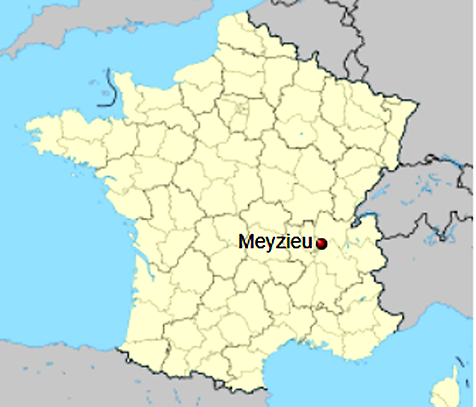
1754-1756, the Beast of Lyonnais, Meyzieu, Savigny, a kind of large wolf with short legs, its skin was spotted with various colours, (“two fierce animals, one like a big pony, reddish, resembling a wolf except for a short tail , the other like a large mastiff , but white on the belly and a big long tail.”)

1763Dauphiné, the size of a very large wolf, rather light in colour, with a blackish stripe on the back, a belly of dirty white, a very large rounded head  a fluffy tuft on the head and next to the ears, a furry tail like a wolf but longer and upturned at the end. It ignored sheep to attack the shepherd boy. Many prominent people, both clergy and nobility, seem to have been totally convinced by the theory that this monster was the very same individual animal as the Beast of Gévaudan.

bete-du-gevaudanzzzzzzz

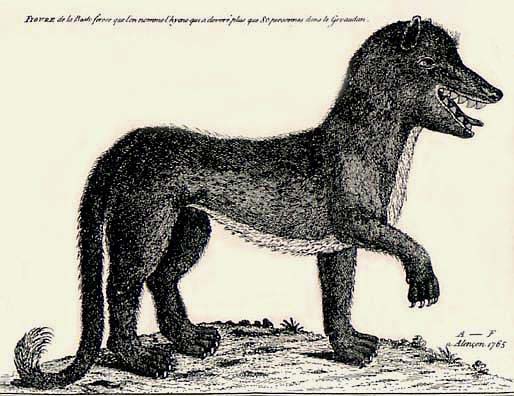
1764-1767, Gévaudan, witnesses were adamant that the animal was a canid, but not a wolf. It was an animal that they did not know. In addition, wolves cannot have a white breast and underparts. The many witnesses, all accustomed to wolves, spontaneously called it “the Beast”. It resembled a wolf but it was huge, between a calf and a horse in size. Its fur was mostly red, its back streaked with black. It had large dog-like head, a snout like a wolf and a mouth full of large formidable teeth. Its jaws could open very wide and seize a human head. It had small straight ears, smaller than a wolf, which lay close to its head, a strong neck and a wide chest. Its tail was immensely long, and somewhat like that of a panther. It possibly had claws. People struck by the tail said that it was a blow of considerable force.

666666

Professional hunters refused to believe that it was an ordinary wolf. It seemed relatively invulnerable, when hit by bullets, and would always stagger back to its feet. It did not ever fear man. In the face of resistance from the victim, it would retreat, sat down to think, and then renewed the attack. It was very aggressive, much more so than from mere hunger. It was very agile and could jump over high walls. It could perhaps manage some steps on its hind legs. It once attacked a man on horseback…not a wolf’s, or even a bear’s, behaviour.

66666

March-August 1766, Sarlat, 18 victims, it was supposedly a rabid wolf but “rabies is a quick killer” (3-4 days). One wolf of extraordinary size was killed.
When ready to seize its prey, it supposedly put up its hackles, and its eyes became flaming red. It raised itself up on its back legs and tried to seize the victim, often  by the head.
1791, Wales, between Denbigh and Wrexham. it was the size of a horse, eating livestock, dogs and men, and even attacked a stagecoach. It was an enormous black beast, almost as long as the coach horses, and was possibly an overgrown wolf. One farmer was found terrified, after witnessing an enormous black animal like a wolf kill his dog. The monster pounded on the door, stood up on its hind legs and looked in through the windows. Its eyes were blue, intelligent and almost human. It foamed at the mouth,

1792, Milan, northern Italy, an ugly beast as big as a dog, but with a horrible mouth. Children said: “a big head with big ears, a pointed snout and large teeth, black and coloured hair on top, whitish underneath, a thick, curly tail”. (with some variation depending on the child). A farmer said “As big as a normal calf, head like a pig, ears like a horse, white hair like a goat underneath, reddish on top, thin legs, large feet, long claws, a large, broad chest and slim flanks.”
It was not a wolf, but was perhaps an exotic animal. “Many have recognized the wolf in the beast, but some argue that it is a different animal.”

beast of milan

1796, Châteauneuf- Brimon region of France, it killed a dozen women and children.

1799, Veyreau, “tens of victims”, the locals thought the Beast of Gévaudan was visiting the region, It was slimmer and more willowy than a wolf and had such agility that it was seen first in one place, but then four or five minutes later in a different place perhaps several miles away. This was possibly evidence of a small population of these animals, or perhaps even some kind of migration or irruption.

1809-1817, Vivarais/Gard/Cévennes, 29 victims, it was the size of a donkey with brown fur, a black mane and large udders. Other witnesses described a creature like a wolf but the size of a calf, with a grey and red coat and black hair over its back. It had a huge belly with white fur, almost dragging on the ground, possibly with tiger/tabby coloured spots. The white fur underneath its body means that it was not a wolf. It had large, long ears, a long muzzle and head and a thick, heavy, luxuriant tail sticking up at the end. Six of its victims were beheaded. It was never captured or killed.

1810, the mountains of Cumberland, England, an unknown creature killed as many as eight sheep a night for six months. The victims had only a few bodily organs removed and eaten, and were drained of their blood. Recent theories have said that this monster was an escaped Thylacine, but my own researches have proved this to be untenable as a valid explanation.

December 6th, 1814, Chaingy, some women and children in the forest were attacked by a she-wolf, with two killed and eight injured. This behaviour is absolutely extraordinary. If it was rabid this was not mentioned when the animal was killed shortly afterwards. For me, definitely “a wolf but not a wolf”:

Bete_de_Chaingy_ws1028371882

1817, Trucy, a second carnivorous beast ravaged the forest around Auxerre/Trucy for a few months, at the exact same place as the animal from 1731-1734. It was like “a mastiff dog with pointed ears”

1874, County Cavan and Limerick, Ireland, a mystery animal killed sheep, as many as thirty in one night. Throats were cut, and blood sucked, but no sheep were eaten.

end of the 19th century, Fontainebleau, “a great evil beast which left the forest to attack farm labourers, shepherds and flocks. It attacked children, such as the little girl gathering nuts in the woods or a 9 year old boy devoured at Nanteuil-lès-Meaux.”

7777777

1966/7, Vaucluse,  Monsieur Henri C., a hunter, killed an unknown animal near a small wood at the edge of the Hautes Alpes. It was the size of a large dog (25 kilos). It had a head like a fox, but a sloping forehead gave it exceptional length. It had pointed ears and formidable fangs. Its fur was short and red, its paws were round, and it had a long tail.

1977, the Vosges area,  a witness described a beast of 60 kilos, with pointed ears, a drooping tail, a coat of yellowish-grey or red. It was larger than a German shepherd. Others thought it was like a wolf. Hair analysis said a canine, but nothing more exact. Existing photos are too poor for a conclusion.

.
A visit to a very interesting website called “La Taverne de l’Étrange” only served to confirm my ideas. The website author, Tyron, makes the point that in comparatively recent history, lions and
leopards, for example, could still be found in Europe, as could bears, wolves and lynxes, scattered more or less across the whole continent. France at the end of the Middle Ages, for example, was still covered with huge areas of forest wilderness, which, like the mountain regions, were practically uninhabited. Animals completely unknown to science could well have been living there.

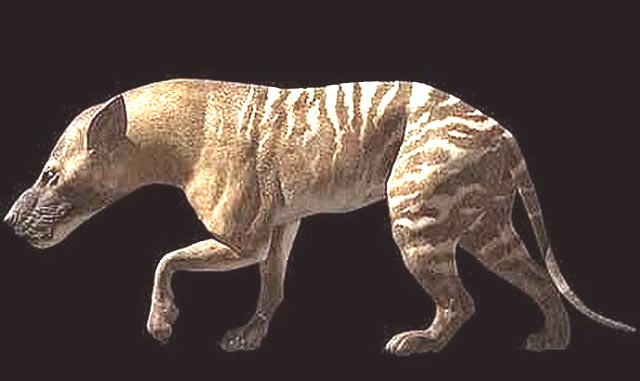
One suggestion has been that the mystery species was a mesonychid, an animal last seen millions of years ago:

Another suggestion is that it was the Waheela, a giant predator which some, such as Alaska Monsters, still believe to be present in northern forests. Traditionally it decapitates victims, and supposedly lives in the Nahanni Valley in the Northwest Territories of Canada. Opinions differ about exactly what a Waheela is:

wahoooooooooooooooooooooooooo

Supposedly, it may be an Amphicyonid which is a prehistoric carnivore of the Miocene and Oligocene eras:

Amphicyon-ingens_reconstruction

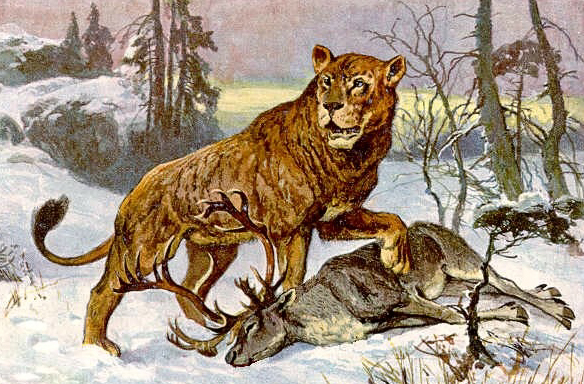
Many people disregard the wolf interpretation of the Beast of Gévaudan completely and look at its behaviour, its long tail and its habit of swishing a long, rather heavy tail. It seems perhaps almost bizarre to suggest a felid at this point, but the fit is actually, quite a good one. This is a cave lion:

Hoehlenloewe_CaveLion_hharder

It was certainly big enough and fierce enough to fit the bill. The colours in the illustration are just guesswork, of course. The animal may well have had a coat of exactly the same colours as the Beast of Gévaudan. Furthermore, he Cave Lion is known to have occurred in southern Europe, and to have been present in the forests of Southern Germany and Central Europe until fairly recently at least. Perhaps as recently as 100 AD. And if the Cave Lion was there in 100 AD, it could equally well have persisted through to 1764 AD.

The unknown monster may equally well have been a prehistoric hyena:

cave hyena xxxxxxxx

It may have been a dire wolf, which was a large wolf but from the Pleistocene era:

This slideshow requires JavaScript.

In actual fact, the Dire Wolf is not that bad a suggestion, although so far, it has only ever been found as a fossil in the Americas.

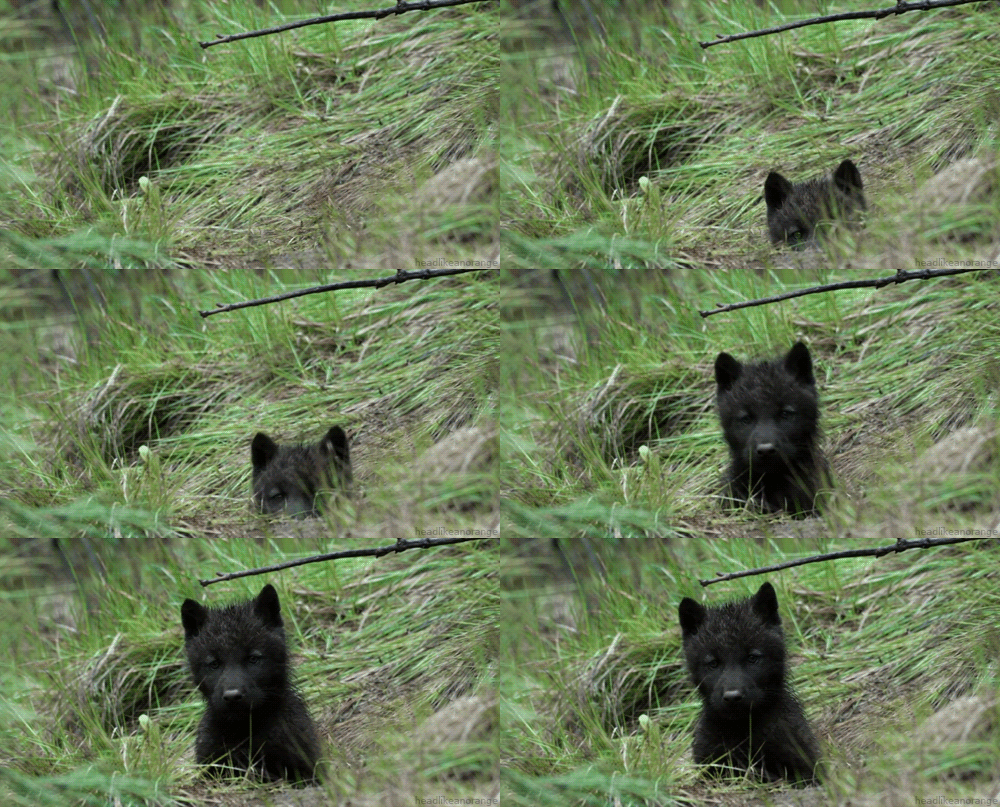
My favourite idea, though, is that this formidable killer was a species of canine completely unknown to science. It was not anything particularly strange, though, just an animal that was, with careful study, seen to be, to quote the peasants of the area, “like a wolf but not a wolf”. No doubt this fierce beast was some kind of leftover from a previous epoch. It had perhaps hung on desperately for centuries in the deep forests of Southern Germany, Central Europe or even Poland or Russia. For some reason, increasingly severe weather, lack of prey or whatever, some of them had now moved westwards to the beautiful countryside of France, perhaps establishing a small breeding population:

wolf baby

And from, say, 1500 onwards, they all gradually disappeared. Perhaps they were even wiped out during the continuing slaughter of the French wolf population, and nobody even noticed.

17 Comments

Filed under Cryptozoology, France, History, Science, Wildlife and Nature

The Christmas Truce of 1916: my Grandad was there.

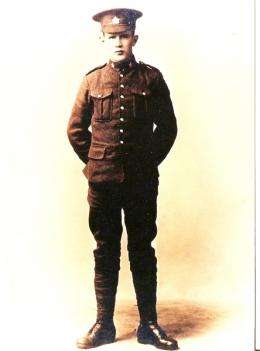
When I was a little boy in the late 1950s and 1960s, my Grandad used to mention to me how there had been a Christmas truce with the Germans during his time with the Canadian Army. The most famous truce of all had already taken place at Christmas 1914 of course.

Trucecigarette

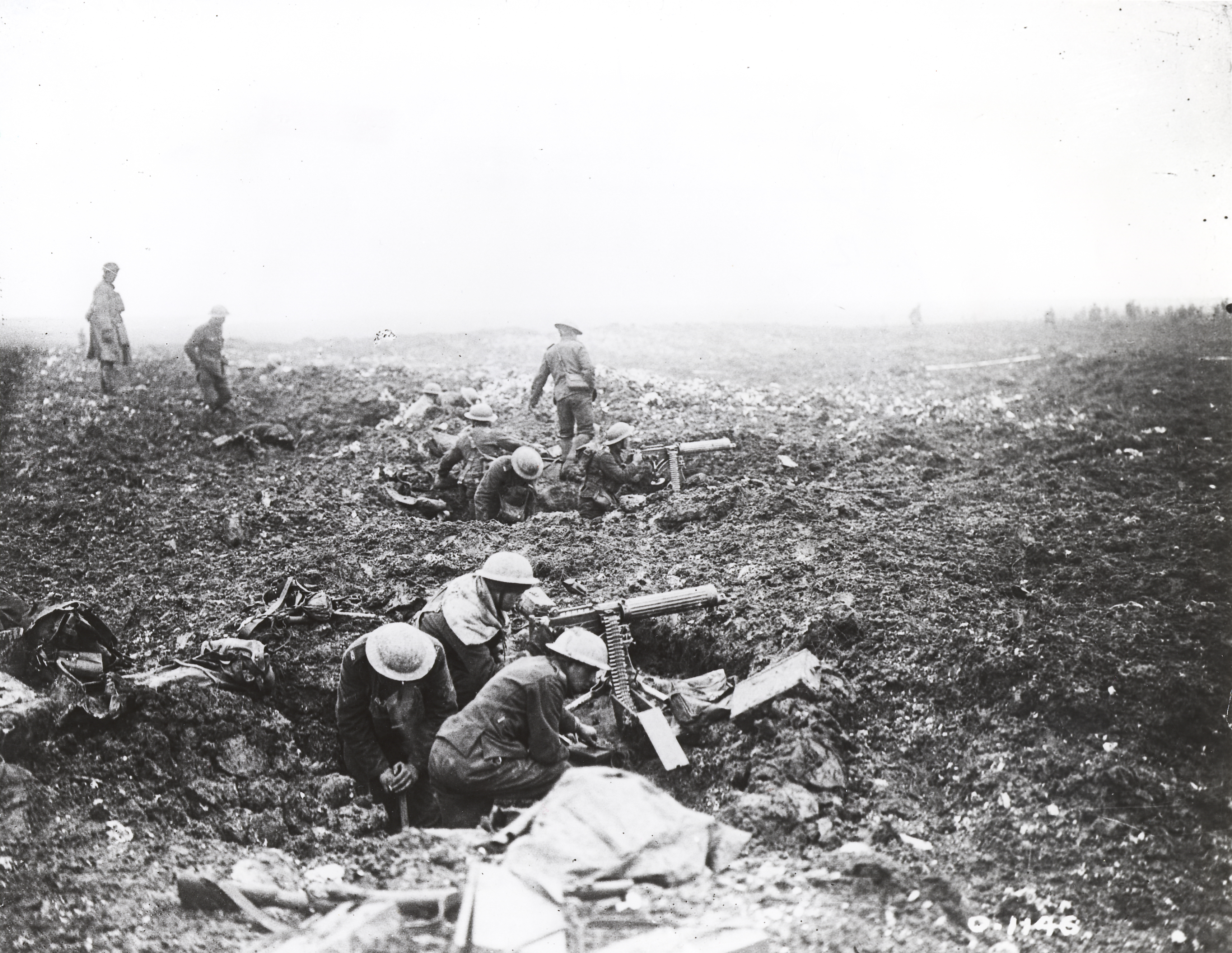
Having accessed my Grandad’s war records in later years, I knew that he hadn’t joined the Canadian Army until 1916, far too late for the famous Christmas Truce. I was also aware that he had fought at Vimy Ridge. How did I know that? Well, fifty or more years ago, he had told me so. Here are some Canadians at Vimy Ridge during the battle. Theoretically, my Grandad could be one of them, but I do know that he spent most of his time in the artillery. That was probably why he was so deaf when I knew him :Vimy_Ridge_-_Canadian_machine_gun_crews

And so it all remained a bit of a mystery, until I read in the media that:

“Evidence of a Christmas truce in 1916, previously unknown to historians, has recently come to light. German and Canadian soldiers reached across the battle lines near Vimy Ridge to share Christmas greetings and trade presents.”
In his book Hitler’s First War, Dr Thomas Weber, a historian at the University of Aberdeen had previously recorded various attempts at a Christmas Truce in 1916. None of them, however, were thought to have been successful, Dr Weber’s book explaining that that this wonderful goodwill gesture had been a complete failure. A war diary from Adolf Hitler’s own Brigade reported:
“Attempts at initiating fraternization by the enemy (calling out, raising of hands, etc.) were immediately quashed by the snipers and artillery men who had been ordered in and had stood ready to fire.”

On the Canadian side, the official version of events, which was reported in the diary of the Princess Patricia’s Canadian Light Infantry tells the other half of a very similar, and very pessimistic, story. The Germans had made efforts towards a ceasefire but nobody on the Canadian side had responded to it.
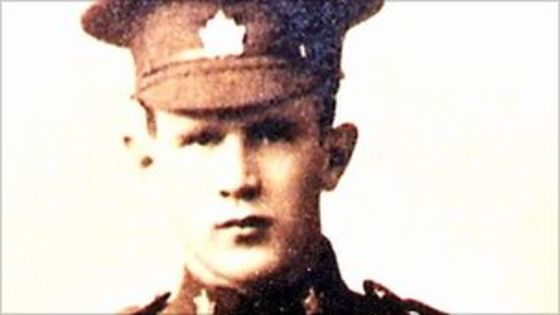
The entire situation changed radically, however, in November 2010, when the historian, Dr Weber, whose great-grandfather fought with the German army during the Great War, travelled to Canada. After a public lecture, he was approached afterwards by a member of the audience whose uncle, Ronald MacKinnon, had been deployed at Vimy Ridge at Christmas, 1916:

_50437465_ronald_mackinnon

Having heard from Dr Weber during the lecture how there had been only an unsuccessful attempt at a truce in 1916, the man had in his possession a letter from Ronald MacKinnon, a 23-year-old soldier from Toronto which proved that both the Canadian and the German soldiers had put down their weapons on Christmas Day and obeyed the phrase from the Gospel, “on earth peace, good will toward men”. Christmas greetings were shouted across no man’s land and presents, just as in 1914, were exchanged between the two sides.
Dr Weber immediately announced, quite rightly, that this letter was a “fantastic find” and offered proof of a hitherto completely unknown Christmas Truce, an impromptu break in the hostilities by German and Canadian troops. The letter also clearly demonstrated that the top brass had made extensive and determined efforts to downplay any Christmas truces subsequent to the first one in 1914. Dr Weber explained that, as officers always had to report significant events to their higher chain of command, they always had a personal interest in downplaying what might be viewed as negative events when they wrote the official version in their war diaries.
Private MacKinnon’s letter home was to his sister who also lived in Toronto, and it certainly does not downplay the significance of what happened on that Christmas Day 99 years ago:

Dearest Sister,
Here we are again as the song says. I had quite a good Xmas considering I was in the front line. Xmas eve was pretty stiff, sentry-go up to the hips in mud of course. I had long rubber boots or waders. We had a truce on Xmas Day and our German friends were quite friendly. They came over to see us and we traded bully beef for cigars. Xmas was “tray bon” which means very good.

mackinnon

Do you ever write to Aunt Minnie in Cleveland? If you do, see if she can give you the address of any of our mother’s relations in England. Aunt Nellie was saying that some of them lived in Grangemouth, which is not far from Fauldhouse. If you could get me their address I would be very pleased to see them when I am in Blighty again.
I am at present in an army school 50 miles behind the line and am likely to be here for a month or so. My address will be the same, No. 3 Coy., PPCLI. I left the trenches on Xmas night. The trenches we are holding at present are very good and things are very quiet.
I have had no Xmas mail yet but I hope to get it all soon. How is Neil getting on in the city? I’ll write to him some of these days. Remember me to all my many friends at home.”

Ronald MacKinnon, like so many soldiers in the Canadian Army, had very strong connections with Great Britain. His father was a Scot from Levenseat, near Fauldhouse in West Lothian. Ronald was to meet his Scottish relatives for the first time while he was engaged in his basic training in Britain, before being sent to the Western Front.
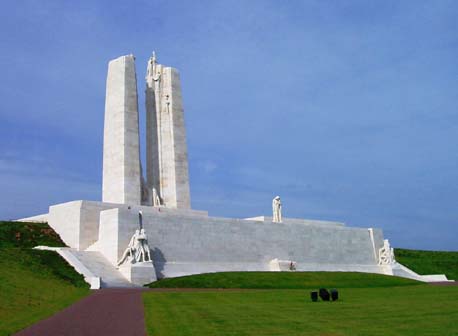
Not long after he wrote his amazing letter back to his sister at home in Toronto, Private MacKinnon was killed at an unknown time between April 9th-10th 1917, during in the Battle of Vimy Ridge, a bloody but successful attack up a strategic height of land in the northern French countryside, a great victory often remembered as Canada’s national coming of age. Here is the monument to the brave Canadians. It is at the top of the ridge:

Vimy_Memorialxxxxxxxxxxxxxxxxxxxxxxxxxxxxxxx

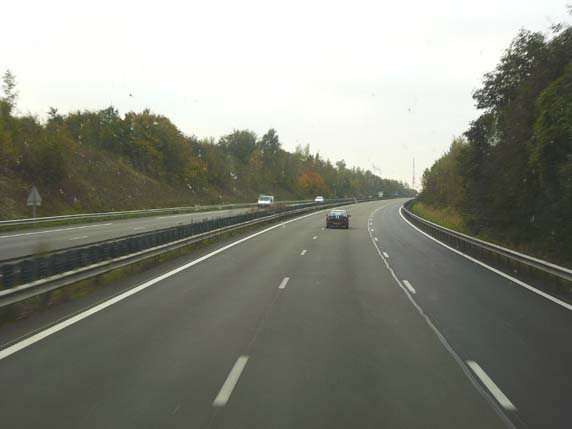
Nowadays, you can drive up the ridge effortlessly in a tour bus. There are no Germans around. Nobody shoots at you. Everybody is friends:

P1090648xxxxxxxxxxxxxxxxxxxxxxxxxxxxx

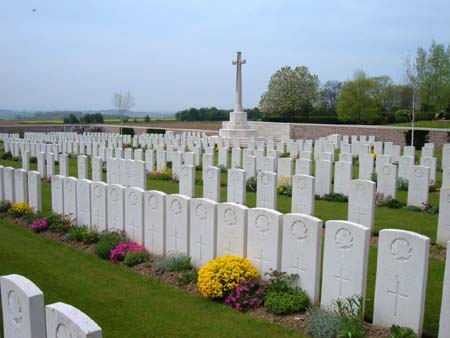
Ronald is buried in Bois-Carré British Cemetery in Thelus, in the Pas-de-Calais in northern France:

bois thelus zzzzzzzzzzzzzzzz

For some reason, his parents’ details are not listed on the Commonwealth War Graves Commission website.
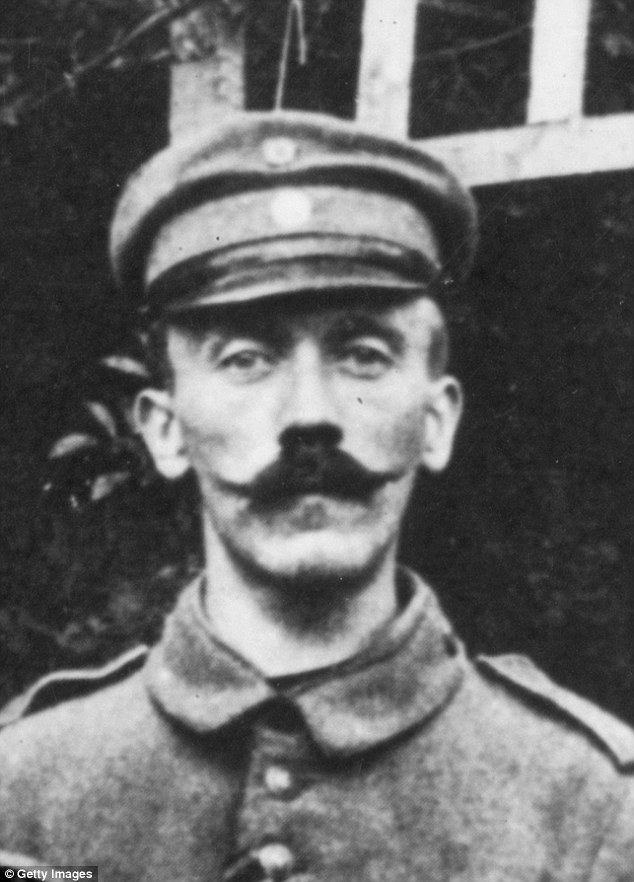
One last postscript is that, according to Dr Weber, Adolf Hitler’s own unit actually faced Canadian troops on Vimy Ridge throughout the period that I have been describing. Ever the sour fanatic, Adolf Hitler, of course, would never have participated in any truce, although as many as half of his fellow soldiers are thought to have done so. The Führer’s views on the previous Truce of 1914 were recorded by one of his fellow soldiers, Heinrich Lugauer, and there is no reason to suppose that he would have changed his ideas in two short years, filled, every moment, with hatred and anger:

“When everyone was talking about the Christmas 1914 fraternization with the Englishmen, Hitler revealed himself to be its bitter opponent. He said, ‘Something like this should not even be up for discussion during wartime.”

What a bitter loner Hitler was. More extreme than his colleagues, who were only too happy to fraternise with the young Canadian lads for a day. What a pity my Grandad didn’t have the chance to shoot the bugger:

hitler-giovane2
Last words should always be positive though: back to Dr Weber:

“The Christmas truce of 1914 involved 100,000 British and German troops on the Western Front in an exchange of gifts and food, to the horror of their commanders. But these displays of common humanity were much more frequent than suggested by official military histories, with evidence of similar festive get-togethers in 1915 and 1916, involving the Bavarian regiments. No doubt there were Christmas truces in 1917.

Soldiers never tried to stop fraternising with their opponents during Christmas.

This puts to rest the long dominant view that the majority of combatants during the Great War were driven by a brutalising and ever-faster spinning cycle of violence.”

I could not have written this article without accessing these websites.

23 Comments

Filed under Canada, France, History, Personal

The Beast of Lyonnais

The Beast of Lyonnais was yet another killer monster (or monsters) in the long, long series of various creatures, beasts, feral dogs, hybrid dogs, wolves with attitude, sexual psychopath or good old fashioned serial killers who have ravaged different regions of France from around 1550 until the present day, with particular reference to the period 1750-1820.

I will freely confess that I knew nothing whatsoever of this type of event until very recently, when I started reading about the Beast of Gévaudan. Then I realised that there had been a Beast of Benais, a Beast of Auxerrois/Trucya Beast of the Cévennes/Gard/Vivarais (it did like to travel about a bit) and then a Beast of Sarlat.
There seemed to be any number of them, and I deliberately selected the ones which seemed not to be the most obvious of wolves. This is also the case with the Beast of Lyonnais, which, as we will see, hardly any of the witnesses at the time thought was good, old canis lupus lupus, even if all the noblemen at the time told them that they were mistaken (despite the fact that none of them had ever seen it):

wolf 1 xxxxx
Once again, I will begin by looking at a number of websites written in French, offering you my own translations and you can then take your own average between them.

We start with a hoary old favourite:

“The Beast of Lyon was a man eating animal behind a series of attacks on humans. The first attack was mentioned as being in the summer of 1754. Until the end of 1756, one or more ferocious beasts then ravaged the countryside, initially between Vienne in Isère, Meyzieu and then around Savigny in the Rhône area. This or these, animals claimed about thirty victims, mostly children or teenagers. Here is Meyzieu:

mey sssssssss

In early August 1754 the Royal Notary of Vienne was summoned by the most important individuals in the parish of Luzinay to proceed with the identification of the body of a young boy who had been found devoured. We know that at least two other attacks occurred in this same area, around Villette-de-Vienne and Régnié-Durette, before the Marquis of Marcieu, the Governor of the province, ordered a large hunt to trap the beast.
.
The Great Hunt took place on September 10th, 1754 and lasted two days. It mobilized around 2,000 hunters from 26 different villages, but had no effect other than increasing the extent of the predator’s territory. All trace of the Beast was lost in the last three months of 1754.

The beast resurfaced in February 1755 in the parish of Sarcey, where it killed a new victim. Until at least October, at least one death on average per month could be attributed to the creature, mainly around Savigny and L’Arbresle . There was then no more news of the creature during the winter of 1755-1756. Here is Savigny:

savigny

On Easter Tuesday, April 20th, 1756, a girl was found devoured in Saint-Julien-sur-Bibost. During this attack, for the first time, witnesses reported two beasts together.

In early 1757, the parish priest at Brietton in the parish of Sourcieux-les-Mines estimated that a total of some 25 people had been attacked in the local area since the Easter of 1755. According to the priest, the (two) creatures were wounding more people than they killed and these victims might equally well have been eaten if nobody had come to their rescue.

On November 24th 1756, the last victim was devoured and left half consumed at Montrottier. The local parish priest was the first to hypothesize that the beast might be a hyena. This hypothesis, which has been challenged by present day research, was also put forward at the time to explain the Beast of Gévaudan:

This slideshow requires JavaScript.

Following this apparently final attack in November 1756, the parish registers have no further mention of people being devoured by wild beasts in the vicinity of Lyon.
The accounts of burials that we still have give comparatively little information about the animal or animals ravaging the Lyon area between 1754 and 1756. The priest of Saint-Julien-sur-Bibost is the only one to have left us any evidence:

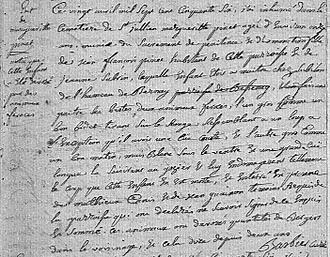
“This April 20th 1756, I buried in the cemetery of St Julien sur Bibost Marguerite Pinet, aged about eleven, the daughter of Jean-François Pinet, a resident of this parish & Jeanne Subrin. The child was employed by Monsieur Subilon in the hamlet of Bernay in the parish of Besenay to watch over his animals in the fields”

lyonnais xxxxxxxxx

“There were two ferocious animals, one as big as a small horse, reddish in colour, resembling a wolf, except that it had a short tail. The second animal was as big as a good sized mastiff, but it had white on the belly and a great long tail ; they seized Marguerite by the throat and neck causing enough damage to kill the child; she was buried in the presence of Mathieu Crois and Jean Guainon , witnesses required by the parish, who said they were illiterate and could not sign this form. These animals have devoured a good number of shepherds in the area. This has gone on for two years. Berbier, Priest.”

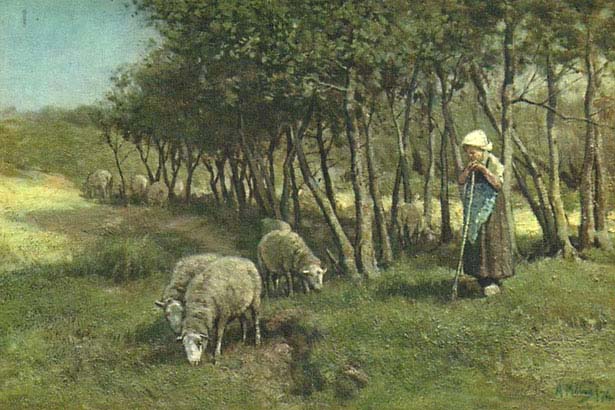
Here is a shepherdess, the meal of choice for the majority of monsters and beasts during this era. The sheep were usually ignored:

bergere xxxxxxx

The descriptions of the time mentioned a wolf, but with shorter legs. The fur was more coarse and the skin was mottled with several different colours. The evidence of the priest at Montrottier was that rumours of a hyena had currently gained momentum.

The theory of a werewolf was equally popular at that time and was mentioned by the Marquis of Marcieu in his instructions for Great Hunt held on September 10th, 1754:
“The Officers of both the Fusiliers and the Trackers must make every effort to destroy the ordinary people’s fanatical belief in werewolves:

Dog-Soldiers-2002-Movie-Ixxxxxxxxxxx

We must prove to them that these are just ordinary wolves which unfortunately are accustomed to eating human flesh.
Even if the woods are full of lynxes, bears and tigers, we must prove to them that these are just animals which a bullet from a rifle will kill, and which it is necessary to destroy.”

The French word “loup-cervier” appears on a number of occasions connected with these mystery monsters. I have found it impossible to trace the word in the Online dictionary which I normally use,
but Google Images for France provides any number of photographs of lynxes, mostly Canadian lynxes but also European ones. I eventually discovered that “loup-cervier” originally meant a lynx which hunts stags, and is used nowadays as a favourite metaphor for predatory financiers. “Cervier” seems to have no real existence except when attached to the word “loup” or very occasionally “chat”.

In any case, a Lynx, whether European or Canadian, is more or less out of the question as regards the Beast of Lyonnais. Lynxes are unbelievably shy and retiring creatures and it is inconceivable that they would attack human beings. In Europe their favourite prey item is Roe Deer. This is a European Lynx:

euraianLynx_lynx-2 xxxxxxxx

In North America, they hunt mainly Snowshoe Hares. This is a Canadian Lynx, the so-called “loup-curvier”:

loup cervier 1vvvvvv

To me, they are more kute than killer:

This slideshow requires JavaScript.

Wikipedia carried a list of the victims of the Beast(s) of Lyonnais:

Pierre Morel (5 years old), Claudine Tardif (45), François Beloud (8), Madeleine Joubert (?),Christophe Cambria (7), Anne Tricaud (14), Pierre Guillon (10), Marie Berchoud (13), Mathieu Gervais (9), Hélène Berquet (6), Marie Berger(6), Claudine L’Hospital (8), Catherine Cusset (10), an unknown toddler(2), Jean-Marie Duboy (13), Pierre Vaché (8), Benoite Daverdi (9), Marguerite Pinet (11), Benoît Thiver (10), Pierrette Devilard (7), Étienne Manu (6), Pierre Delorme (13), Jean-Baptiste Chazaud (7), Claudine Allioud (8), Anne Tiron (10), Elisabeth Blanc (11), Benoît Mortan (12), Jean Malaval (9), Marie Lombard (10), Benoit Barroh (sic) (1), Claudine Guillot (4), Pierre Paleron (6), Jean-Baptiste Bazin (14) and Anne Sarrazin(9).

This seems to be twice the usually quoted figure of seventeen. The first victim was killed on June 5th 1754 and the last on November 24th 1756. Very roughly, the deaths occurred perhaps once or twice a month, although in some months there were no killings at all. The original list gave dates without any further details but as far as I can ascertain, there were no occasions when two victims might have been killed together. On several occasions, one victim may have been quickly followed by another at the same location, but they were always killed on different days. In some cases, the animal or animals might have returned repeatedly to kill its prey, such as at the village of Savigny (6 slayings), Saint-Pierre-de-Chandieu (3) and Saint-Romain-de-Popey (2). This is Savigny nowadays. It looks a lot quieter:

280px-Savigny_1 xxxxxx
I just do not know if ordinary wolves would return to the scene of the crime like this, although all predators, both animals and birds, tend to be very much creatures of habit, following the same paths and game trails every single day.
Another familiar website tells a fairly similar tale, but comes to a very different conclusion:

In all, seventeen young men and children were bitten, ripped to pieces or even devoured. Those who saw the animal, or believed they saw it, said that it was approaching the size of a wolf, with shorter legs, a coarser coat and skin mottled with various colours-an exact portrait of a hyena.
From these accounts, people were all agreed that it was a real, genuine hyena. But who is unaware that fear may magnify things, or change them completely. The descriptions that people have given of this carnivorous animal have probably been inspired by their heated imaginations. Fleeing at top speed, how could exact measurements be taken by eye? And running along, the creature must have seemed a lot lower than he really was. The frantic motion of his entire body made his hair stand on end and lastly we know that glare changes shades of colour.  Take away these circumstances from your sighting, and instead of a hyena, much more likely it was a question of a big wolf driven by famine in that harsh winter of 1754.
The excessive winter weather of 1754 forced the animals of this latter species to seek in the villages what the countryside could no longer supply to them. Moreover, the hyena is an animal entirely foreign to our climate:

S H 3.png vvvv (2)

How would he have got to France? Can we suppose with any degree of probability whatsoever that he has crossed the immense expanses which separate us from his native home without leaving behind any traces whatsoever of his journey?

We are forced to conclude that too often we consider something miraculous when it is nothing out of the ordinary. “

Another description was of:

“two ferocious animals, one as big as small horse, verging on red in colour, like a wolf except it had a short tail. The other was the size of a large mastiff, but it had white on its belly and a big long tail”

When I wrote about the Beast of Gévaudan and examined in some detail the solutions to the mystery, I thought that the centuries old puzzle was solved. The Chastel family was the guilty party, and in particular, long and greasy haired Antoine. But then I read about the Beast of Cévennes/Gard/Vivarais whose behaviour was nothing like that of a wolf. And then came the puzzle of the Beast of Benais who the local people actually thought at the time was the “Beast of Gévaudan on Tour”. After that, it was the Beast of Sarlat which was supposedly a rabid wolf, although none of the locals thought so, preferring a werewolf as the likely explanation:

werewolf

Next came the Beast of Auxerrois/Trucy which was not a wolf, the locals said, but a tiger, a demon or a werewolf.
Throughout my articles, I had deliberately ignored obvious wolves as culprits and deliberately selected only the creatures which seemed to me not to be obvious wolves.

The enduring problem was that there just seemed to be any number of these strange creatures and so many of the “wolf but not a wolf” category. You can’t stretch the Chastel theory to explain away all of them.

Soooooo……..
I have returned to C.R. Rookwood who, in one of his blog posts, suggested that the Beast of Gévaudan, was a prehistoric mammal, a mesonychid, which were very large ancient predators with huge heads, long tails, and hooves instead of feet.

This slideshow requires JavaScript.

I do not have enough scientific knowledge to be quite so precise, but I would certainly go for some kind of relict creature, a fierce animal left over from a bygone age, its ever diminishing population dwindling on in the trackless forests and mountains of south-central Europe. Perhaps it was some kind of hyena such as the Cave Hyena. These photographs give an idea of their size:

This slideshow requires JavaScript.

I said that I did not think these monsters could be wolves, but the “Dire Wolf” is not a wolf. Or at the very least, it is a wolf, Jim, but not as we know it:

This slideshow requires JavaScript.

Who knows? And indeed, who ever will?

11 Comments

Filed under Cryptozoology, France, History, Science

A strange and worrying zoo in France

I have now written quite a few articles about the various Beasts of France, beginning with the most famous, the Beast of Gévaudan, which flourished from 1764-1767:

second-beast

And then it was the Beast of Benais, followed by the Beast of Noth, not forgetting the Beast of the Cévennes, the Beast of Primarette, the Beast of Orléans, the Beast of Lyonnais, the Beast of Sarlat, the Beast of Auxerre, the Beast of Cinglais, the Beast of Gâtinais, the list just goes on and on. Some of them were really quite peculiar creatures, even by the contemporary standards of Beastliness:

beast 1709

Not all French monsters are wolf-types, however. Here are just a few of the inmates of what the original website called “Un Zoo étrange et inquiétant en France”, “a strange and worrying zoo in France”.

The first animal is a snake, which used to live in the Forest of Fontainebleau, just to the south west of Paris:

forest of fontaineblasu

It was seen, and duly killed, by the King (Quite right too!). According to legend, it was 18 feet long, with a weight of some 160 kilos (around 350 pounds):

Giant_snakezzzzzzzzzzzzzzzzzz

This monster was venomous and used to hide in a great pile of rocks which offered him protection as no group of attackers was able to approach the creature simultaneously. Only one adversary at a time could reach him.

One day, King Francis the First or le Roi François Premier, was out hunting in the area. This king was a contemporary of King Henry VIII, at the start of the sixteenth century:

220px-Francis1-1

The King and His Royal Nose decided to put an end to this creature which had sown terror and desolation throughout the land.( Well, it was a very big pile of rocks).

BOA

The king had commissioned a suit of armour covered with razor blades. When the snake tried to coil itself around him, the razor blades, quite literally, cut the monster to pieces.  “Scratch one constrictor!” as they say.

What other animals are in the “strange and worrying zoo”?

Well, back in 1965:

“In the Toulouse area, flocks of sheep belonging to Trappist monks at the Abbey of St. Mary of the Desert, and also those belonging to the Count of Orgeix, suffered extensive depredations from a mysterious animal. Three students from the area of Cadours who were driving around one  night in the car, saw two animals which were larger than a dog or a wolf. They had light beige fur. These strange creatures were like enormous mastiffs, with huge, round, bulging eyes. The four footed killers then disappeared from the area as mysteriously as they had appeared.”

One year later, in May,

“In the region of Pignans (in the département of Var), a tenant farmer, Monsieur Baptistin, asleep in his small house, which was located some two kilometres from the village, was awakened by furious barking from his dog. He got out of bed, switched on the light and saw the silhouette of a huge animal which was disappearing into the darkness:

bigfoot giph

The next morning, he discovered near the water trough animal tracks of a startling size:

jerry-crew-taught-by-bob-titmus zzzzzzzzzzz

The authorities were alerted. The Forestry Services photographed the tracks and made a cast, but nobody was able to ascertain what kind of animal they belonged to.

For several weeks, the locals no longer dared to go out at night. The more daring people who did venture out never failed to take a reliable rifle with them.”

(Actually, it wasn’t Bigfoot, or at least I don’t think it was. It’s just that the details of this story are so vague that it is actually possible to interpret the events as being “Grand-Pied” himself, rather than some, presumably, fairly run-of-the-mill Alien Big Cat.)

In mid-August of 1966, a monster was seen haunting the area around Draguignan near the road to Grasse , a region where many UFOs had been seen, both in flight and on the ground:

“A former member of the armed forces, Monsieur Paul G… , found himself one morning around seven o’clock  face to face with an unknown creature. The animal had its mouth open.  It had a pointed snout, which was rather long, and triangular teeth. Under its neck, it had a goitre which gave it a frightening appearance. The ears were short, like those of a dog, but they were very pointed. The body was very long and covered with grey fur. The animal had a long tail, at least 40 centimetres (16 inches) in length.”

imaginative chaingyu

Interestingly, the town of Draguignan has a name and a coat of arms which are both redolent of another species of legendary animal. The town was founded around 400AD after Saint Hermentaire, the Bishop of Antibes, had overcome a dragon in single combat. Exactly how he managed this does not seem to have been recorded, but here is the coat of arms:

draguignan

It was definitely not a friendly dragon:

friendly dragon

In 1967, the presence of a number of monsters was reported throughout the whole of France. In the Creuse region in particular, between Royère and Chavanat:

Département_creuse zzzzzzzzz

…a feline of unknown species was flushed in the hamlet of Cloux Valleret by a farmer named Monsieur Simo:

surrey puma original

A week earlier, farmers in the Vosges area had already stalked an animal of indeterminate species which looked rather like a wolf:

wolf bounding

All that was easily topped though, by a report from Italy:

“In June 1970, in Meldola, about ten kilometres from Forli, a farmer claimed to have encountered some kind of dragon, six to seven metres long, with a body some 15 inches in diameter.

dragon

The Italian police organized a hunt which did not turn up anything. The monster appeared once or twice more and then disappeared forever.”

Back to France, in 1972:

“In the area around Vigan in Hérault, some medical students, out hunting in a snow covered area, discovered the footprints of an unknown animal:

yeti tracks

They followed the tracks for several kilometres. Suddenly they disappeared just in front of a rock which was projecting up out of the ground. The beast seemed to have reared up on his back end and then been recovered by his masters on board a flying machine.”

Don’t think though, that the French are especially weak minded and that this is why they continually report crazy sightings of weird animals. In this area, the British, quite rightly, are streets ahead of their nearest and dearest neighbours. But first of all, let’s just forget our many, many, ferocious Black Dogs such as Shuck and his like:

dog

Forget the werewolves seen more than once at Alconbury USAAF Air Base:

werewolf attack

Forget the sightings of Bigfoot in Cannock Chase and Sherwood Forest (an “eight-foot, hairy man beast with red glowing eyes” seen in late 2002) (allegedly):

red eyeszzzzzzzzzzzzzzzzzzzzz

Just on cats alone we are well in front. The most famous cat of all, of course, is the Beast of Bodmin:

bodmin1

But don’t forget his less famous sidekick, the Beast of Exmoor. And before that Gruesome Twosome, it was the Surrey Puma. And don’t ever forget the heyday of the Nottingham Lion.

But look at this list, put together originally by George M. Eberhart.

Don’t just skip through it. Select your top three:

“The Ashley Leopard, the Ayrshire Puma, the Beast of Ballymena, the Beast of Barnet, the Basingstoke Beast, the Beast of Beacon Hill, the Bennachie Beast, the Beast of Bin, the Blagdon Beast, the Beast of Bont, the Broadoak Beast, the Beast of Broomhill, the Beast of Bucks, the Carsington Beast, the Beast of Chiswick, the Essex Beast, the Inkberrow  Beast, the Beast of Margam, the Beast of Milton, the Beast of Otmoor, the Shropshire Border Beast, the Beast of Tonmawr, the Beast of Tweseldown (sic), the Black Beast of Gloucestershire, the Black Beast of Moray, the Brechfa Beast, the Cadmore Cat, the Chiltern Cougar, the Crondall Cougar, the Durham Puma, the Eccles Cheetah, the Fen Tiger, the Highland Puma, the Lindsey Leopard, the Mendips Monster, the M25 Monster, the Munstead Monster, the Norfolk Grinder, the Pink Panther of Derbyshire, the Penistone Panther, the Penwith Cougar, the Beast of Powis, the Rosshire Lioness, the Terror of Tedburn, the Tilford Lynx and, last but not least, the Wolds Wild Cat.”

For me it’s, in third place, the Norfolk Grinder. Second is the Penistone Panther, but my own winner is…….. the Eccles Cheetah!!

14 Comments

Filed under Cryptozoology, France, History, Humour, Science, Wildlife and Nature

The Beast of Primarette

The Beast of Primarette is not really a top drawer Premier League monster, so the first port of call will have to be the French version of Wikipedia. Here is my own translation:

“The “Beast of Primarette” was a man eating animal responsible for a series of attacks on humans in the vicinity of the village of Primarette in the south east of France. The first attack took place in the spring of 1747. Between then and the end of the winter in 1752, seven victims were identified in the parish registers.”

Primarette is a tiny village in south eastern France. On this map, it is represented by a red dot. The orange arrow is on holiday, but not in France:Untitled

In 1747, François Malarin, the village priest of Primarette, reported the very violent death of a little boy in his parish :

“In the year 1747 and on the 23rd of May, the Tuesday of Whitsuntide, during the service of Vespers, a carnivorous wolf (loup carnassier) seized the child of François Malarin from the door of their house in the presence of his mother. She was unable to snatch the child back from the animal’s teeth. Several people returning from Vespers heard the story of this misfortune and ran into the woods, following the trail of blood left behind by the child. They found some of his limbs scattered on the ground including the head, the arms, an upper leg and a foot. These body parts were all buried in the presence of Michel and Gabriel Perrochat, father and son, Antoine Jeury, Jean Bassat, Claude Berthier and several other people who had rushed to see this sad sight. The child, aged around seven years and one month old, was the legitimate son of François Malarin from Espagnoux and Fleurice Petit. Whereof I have signed, not the witnesses, who do not know how to write.

                                         Favre the Priest.

An “x” is appended by Michel Malarin as a supplementary act.”

A sketch is in existence:

150 wolf child

This beast, most un-wolf-like in its behaviour, was later to claim several more victims, and the priest reported later that year the level of emotion aroused by these incidents. In the Parish Register of 1747 he wrote therefore:

“There have been this year a large crop of acorns, and carnivorous wolves have eaten three children in Primarette. It is believed that they were most probably lynxes and the common people believe that they are werewolves. Until the priests give the peasants permission to carry out hunts armed with pairs of spectacles, nothing will be able to cure their stupid credulity.”

Below is the original parish register entry, in French, of the paragraph translated above. See if you can pick out any words, such as “loups”, “carnassiers”, “loups garous” or any other words. I can’t imagine any reader would be expecting to manage to read French written by long dead Favre the Priest in 1747. Nor indeed, would he be expecting anybody to still be reading his words in 2015:

800px-Primarette-1747-9NUM_AC324A_6-p48

Here is a werewolf, a “loup garou” filmed by a trailcam in Wisconsin:

werewolf

The last victim within the bounds of the parish of Primarette was found in 1752, but nobody was ever able to identify the animal responsible for all these attacks.

Here is a very large wolf. It will calm you down after the werewolf. This animal was filmed by a trailcam in northern Scotland:

wolf bounding
Here is a list of the poor victims:

May 23rd 1747                       Michel Malarin, 7 years of age
June 1st 1747                          Joseph Fournier, 13 years of age
October 24th 1747                 Mathieu Roux, 5 years of age
October 11th 1748                 Benoite Pichon, 2 years of age
January 23rd 1749                Marie Peiron, 6 years of age
May 14th 1751                        Jeanne Fervonat, years of age
February 19th 1752               Marianne Boindrieux, 3 years of age

Another French website suggests that mention of the huge number of acorns, and the presence of man eating wolves may be connected in the minds of the locals at Primarette. Perhaps they had some kind of superstition about this.
It is unfortunate that no description of the beast seems to have survived, although I would continue to argue that if the locals in this area thought that all the deaths in the area were caused by lynxes or werewolves, then that in itself lends credence to the idea that it was no ordinary wolf, an animal with which they would have been only too familiar. Favre the Priest tried hard to give people in the distant future some idea, adding little sketches to the side of his manuscript:

1747-38-Primarette-A1737a wolf

Here is a pair of wolf’s heads:

two wolves

I have enlarged some of the sketches. Again, you may be able to read some of Favre the Priest’s words:

wolf sketch

Here is a second head, with the name “Marianne Boindrieux”:

another wolf sketch

See if you can see the signature of Favre the Priest (“curé”):

more and more wolfsxxxxxxxxxxxxxxxxxxxx

This cryptid did not behave like an ordinary wolf. A wolf does not attack people at their front door. I’m not sure either, that a wolf would run off, dismembering its victim, and scattering body parts around, almost in sheer glee. And why did the same individual wolf remain in this area from May 23rd 1747 to February 19th 1752? Or was it a number of individuals from a local population, all with the same deviant behaviour? Members of a different species, in fact? “Like a wolf, but not a wolf.”

In so many cases like this, the original French text calls the animals “loups carnassiers”. “Carnassiers” means “carnivorous” or “predatory”. Why do they keep appending this epithet to the word “loup”?

And how on earth can  this continuing series of creatures continue to be explained away either by the nefarious activities of Jean Chastel and his sons, or the accidental interbreeding of wolf and dog? It has become a truism nowadays to say that “wolves don’t interbreed with dogs. They eat them.”

And what happened to the Beast of Primarette after 1752? Did it take early retirement?

13 Comments

Filed under Cryptozoology, France, History, Science, Wildlife and Nature

Off to the Great War (Part Two)

I wrote about my grandfather, Will Knifton, in a previous blog post:

A1 hard man

When he first joined the Canadian Army in Toronto, he was soon sent across the Atlantic to receive his initial training in England. He started at  Shorncliffe Training Camp in Kent, learning how to be a Canadian soldier from late July 1916 until the end of November. There was a Canadian Training Division at Shorncliffe and I suspect he was stationed there. Will seems to have enjoyed his stay in Kent, the so-called “Garden of England”. I have already shown you some of the post cards he sent to his fiancée, in an article imaginatively entitled “Off to the Great War (Part One)”.
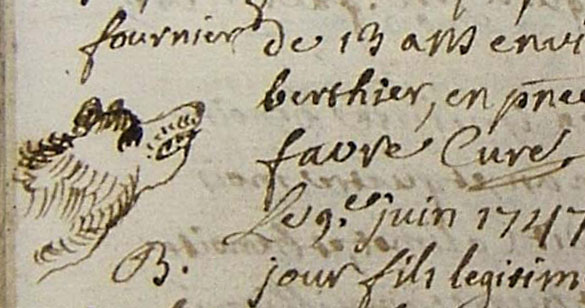
At this time, Will’s fiancée, Fanny Smith, lived with her family in Woodville, a little village in South Derbyshire. Will sent Fanny many postcards. This one is of Sandgate, a little seaside resort in the area. It shows the High Street East:
sandg high st

The message reads:

“Sandgate is about 5 minutes walk from Ross Barracks. Love Will”

five mins ross back xxxxxxxxxxxxxxxxxxx

Ross Barracks were themselves part of Shorncliffe Camp.

This next postcard was posted at 10.00 am. on August 4th 1916. It shows the low cliffs in this small village near Shorncliffe Camp and close to Folkestone:

sandgate cliff xxxxxxxxxxxxxxxxxxxxxxxx

Here is the back of the postcard:

baxk of snadgate c;liff xxxxxxxxxxxxxxxxxxxxxx

The message reads;

baxk of snadgate c;liff eeeeeeeeeeeeeeeee

Once again, Will is able to retain an almost surreal quality in his writing:

“It has been so warm today and we walked 18 miles. Send me lots of news dear. Love to all. Yours Will”

This postcard was franked at 11.00 pm, on August 20th 1916, and had been posted in Folkestone, perhaps after a visit by train to the famous cathedral, only some twenty miles away in Canterbury:

camterbury cathedrzzzzzzzzzzzzzzzzzzzzzz

Here is the back of the postcard:

back cathedralzzzzzzzzzzzzzzzzzzzzzzzzzz

Here is the message enlarged:

back cathedra jjjjjjjjjjjjjjjjjjjjjjjjjjjjjjjjjjjjjjjjjjjjjjjjjjjjj

The message reads, as far as I can decipher it….

 “Sunday 1pm

I didn’t get my pass yesterday so couldn’t see Stacey. (name slightly illegible) May go next week. Trust you are alright. Fondest love, Will ”

This postcard shows the Lees and the Shelter at Folkestone:

folstone colour

The message reads:

“Yours to hand love (?) A letter is coming. I wish I were too. wont be long Fondest love Will”:

back folkstome colour

Here is the message enlarged. This seems to be in his more florid style of handwriting:

back folkstome colour enlarged


In retrospect, this next postcard may perhaps seem a little insensitive. Just a few short weeks after being asked to join the blood soaked antics of the Western Front, and due to depart on November 17th for the trenches, Will sent his fiancée a postcard of the large convalescent home in Folkestone. Presumably, the lone soldier on the seat is the only one left after “The Big Push”:

convalaecscnt home

This is the reverse of the card:

back hospitasl

Can you decipher the message, written in best quality pencil?

Here it is enlarged:

back hospitasl wwwwwwwwwwwwwwwwww

And notice too, how the young prototype Canadian, once again, says “I will write you”, rather than the more usual English of “I will write to you”. In actual fact, the message reads……

“I will write you again tonight. Trust you are well. Love to all. Fond love to you. Will”

The postmark of 9.oo pm on September 5th 1916 reveals that Will could not have been convalescing at the hospital, as he had only just arrived in England from Canada on July 25th 1916, and he did not set off to join the Great War until November 17th 1916.

I am fairly sure that this was Will’s last card before he moved on in his Canadian Army career. I suspect that it was sent from Folkestone in Kent, just before Will embarked for France and the Western Front. The reverse, unusually for Will, is blank. Perhaps what faced him in the future was enough to take away his inspiration temporarily:

old sldier channel

The inscription on the front of the card reads:

“Crossing the Channel was quite a thrilling thing. But an old B.E.F. man rather spoiled the trip by swanking without his life belt, and otherwise showing everyone that the entire thing was far from new to him.”

On November 17th, Will left Shorncliffe, Folkestone and Kent to sail for France and the “3rd D.A.C.” He was “taken on strength” with the “3rd D.A.C.” on November 23rd, and could now be considered a fully fledged soldier.

Like many soldiers on the Western Front during the Great War, Will was shot by a German machine gun on at least one occasion. He had two wounds in the legs, and I believe that he may have gone back to Kent to recuperate. The position of his wounds was doubtless because German machine gunners were trained to sweep their guns backwards and forwards close to the ground:

a23_world_war_1_german_machine_gun_1

They were told to try and imitate a man cutting down grass with a scythe:

giphy

Germans, machine guns, bombs, mud, trench foot, sudden death, whatever. Will survived it all:

old age


14 Comments

Filed under Canada, France, History, Personal