Category Archives: History

Young Men behaving Badly and a Touch of Class (1)

In the recent past, I published four articles which were, I hope, bite sized sections of a much larger whole. They were all about the High School before the Great War, and then during the first few years of the conflict. All of the material came from the reminiscences of Roy Henderson, an Old Boy  from this time. None of these articles would have been possible without the original research by my friend and colleague, Simon Williams, who interviewed Roy Henderson at length. Simon, of course, has done some incredibly detailed research about the school’s casualties in the Great War. This can be found in the Nottingham High School Archive. Take a look, for example at the material he has found on Harold Ballamy, perhaps, the High School’s saddest and most pointless loss of the entire conflict. Poor Harold is also remembered by Nottinghamshire County Council, who incorporate much of what Simon Williams has produced.

When I composed the four articles, I deliberately chose not to include anything negative from what Mr Henderson said. I cannot, however, fail to include this almost surreal tale. Hopefully, you will find it interesting to read it and then try for yourself to work out what is really going on, what the real motivations are behind people’s behaviour, and what is happening behind the scenes.

Firstly, a little background information.

Roy Henderson’s father was a minister of the church. The family lived at No 3, Lenton Road in The Park Estate in Nottingham. This part of Nottingham is about as rich as it gets in the city. One website says that “If Nottingham were Los Angeles, this would be its Beverly Hills”.

Recent house prices there reached £535,000 (No2), £820,000 (No9) and £840,000 (No11). Another house in the road is currently for sale for £1,150,000. One website currently values No 3, Lenton Road at £816,382:
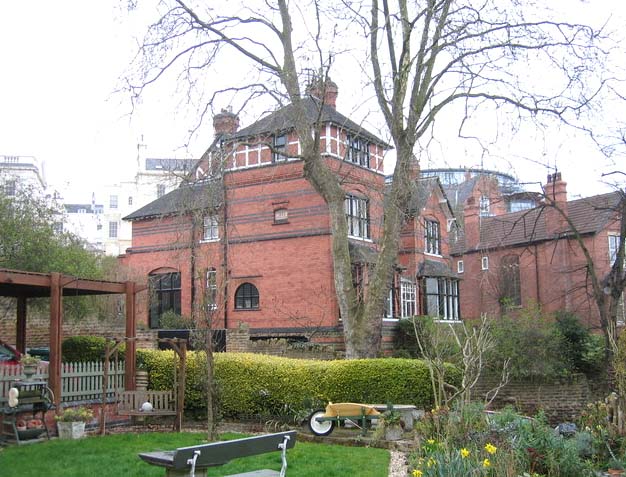
the park

Arthur Willoughby Barton was the son of Professor Edwin H.Barton, a Fellow of the Royal Society, and a Professor of Experimental Physics. He lived in Private Road, Sherwood, where very large Victorian houses change hands nowadays for around £500,000:

private

After the High School, Arthur went to Trinity College, Cambridge and gained First Class Honours in Physics. He was then a research student at the Cavendish Laboratory, where he helped Lord Rutherford to split the atom.

Harold Connop was the son of an Elementary School teacher, Mr Arno B Connop, and Mrs Ada Connop. There seems to be some confusion about the address. Some sources give it as 33,Westwood Road, a street in Sneinton, one of Nottingham’s working class areas. It is the first house on the left with a white door:
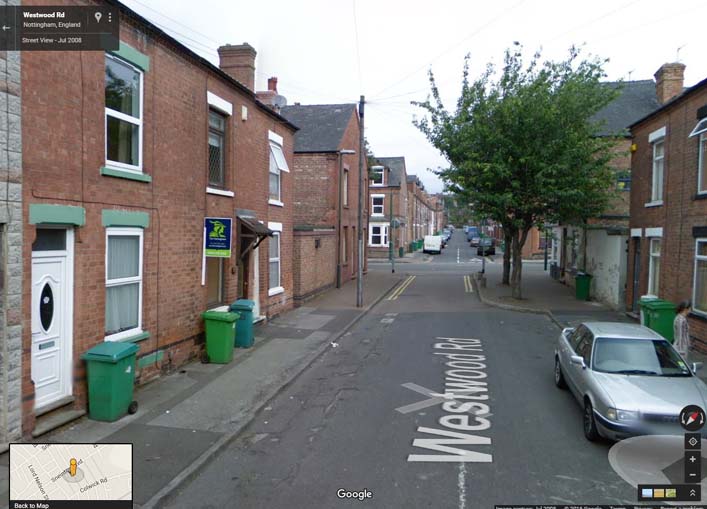
westwood lane

In 2001, this terraced house, with, perhaps just four or maybe five rooms, sold for £25,000. It is now worth around £57,000. Another address listed for Harold is 20, Stewart Place, a location which has now been demolished, probably in the slum clearance under the Socialist government immediately after the Second World War. Ironically, these houses were originally built by a local philanthropist, as “good houses for poor people”. This kind gentleman was the Reverend Robert Gregory, who was eventually to become Dean of St. Paul’s Cathedral.
Harold’s education at the High School was financed solely by scholarships, awarded on the basis of intellectual ability. He entered the school as a Sir Thomas White scholar, and then became a Foundation Scholar. Two years later, in 1913, the Sir Thomas White Scholarship was renewed and then subsequently extended for a fourth year.

Harold won prizes for six different subjects and the Form Prize for the Fifth Form in 1913, and the Sixth Form in 1915, 1916 and 1917. Here is the school in 1915:
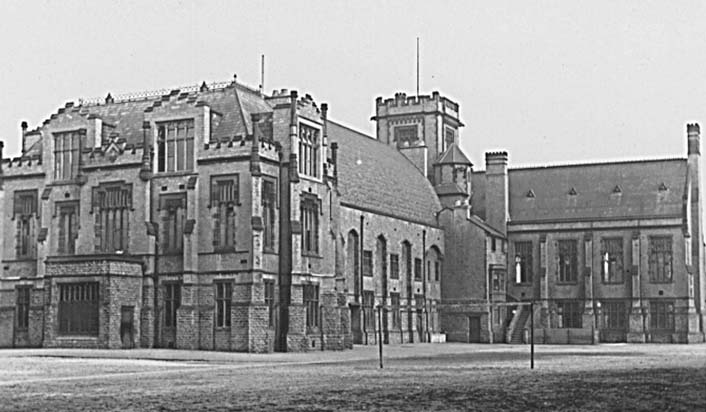
1915

In his public examinations in 1913, he gained First Class in six subjects, and subsequently five distinctions at Higher Level. He became a Prefect in 1915, and Captain of the School in 1917. In the words of Roy Henderson, he was:

“a first class scholar and very good rugby player. He was a fine three quarter in rugby, and a very fast runner.”

Harold won a scholarship to Corpus Christi College at Oxford University, and was also awarded an exhibition, worth £65 annually for four years. At Oxford he was regarded as “the first Scholar of Corpus Christi College”, in other words, the cleverest and best one there:

Corpus-Christi_College_Oxford_Coat_Of_Arms_svgCompared to both Barton and Connop, Roy Henderson was, quite simply, not in their league. He enjoyed school, but himself admitted that he was never very good academically and was totally hopeless at exams. The high point of his career came in the Sixth Form, when he finally won a prize for an English essay on “Militarism”. Henderson only won because the rest of the Sixth Form boycotted the competition, saying “It’s the only thing Henderson can do…let him have it.”

Around this time, Roy Henderson, along with William Donald Willatt, founded a new school magazine called “The Highvite”.  As editor of the original school magazine, Connop was apparently furious at this new rival.  Henderson didn’t get on very well at all with Connop, for a reason which Henderson was not willing to divulge, even after the best part of seventy years. Henderson added that Connop was not very well liked in the school as a whole and he was never a particularly popular figure.

William Donald Willatt was one of six brothers at the High School, the sons of John Willatt, who  lived at 4, Pelham Road, Sherwood Rise. John Willatt was a wine merchant, whose business was presumably prosperous enough to pay the school fees of his six sons.

I do not know why Harold Connop was so unpopular although at least three, possibly four, reasons spring easily to mind. I will tell you about the quarrel next time.


16 Comments

Filed under History, Nottingham, Politics, The High School

The Most Dangerous American Animal (3)

So what is the most dangerous animal for our American friends??

Well, we already know that wolves have never killed anyone in the lower 48 states of the USA with just one death in Alaska and one in Canada since the year 2000:

621166__the-wolf-pack_p

The most difficult problem I had with the USA was in finding accurate figures. Some lists refer to a single year and others to a number of years. On the other hand, the animals mentioned were all roughly the same in terms of the number of deaths, however the number was expressed.

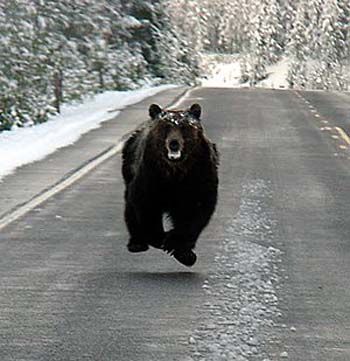
Soooo…..don’t worry about sharks, with one fatality per year on average between 2001-2013. It was the same figure for alligators, crocodiles (you have both?) mountain lions, moose and, surprising to me, bears. All three species together, Grizzly, Black and Polar kill around two people per year between them. Venomous snakes and lizards (you have both?) kill six, and scorpions one victim fewer.

I didn’t know what a non-venomous insect was, or rather, I just couldn’t see how it would kill you, but anyway, they managed to kill nine people. Much more dangerous, though, were cows with an average kill total of around twenty. According to one expert:

“Large livestock are powerful, quick, protective of their territory and offspring, and especially unpredictable during breeding and birthing periods.”

Most people killed by cows are farm workers although they will attack walkers, birdwatchers and artists on occasion. In particular, in my experience, they especially seem to hate easels and tripods, thinking you are some kind of four or five legged supercow. Meat producing cattle are more docile in their behaviour and milk producing breeds are the worst of all, especially Friesians:

Big_beasts_trigger_2663528kxxxxxxxxxxxxxxxxx

Mammals such as horses, pigs, deer and others killed 52 people annually between them, although strangely, this figure does not count road collisions.

More dangerous still are bees, wasps and hornets with just under sixty deaths, mostly through anaphylactic shock. Other venomous insects killed a further sixty victims, who included a large proportion of old folk in the southern states killed by fire ants.

image_fireants

One website alleges that domestic dogs kill 250 people per year and states that $1 billion is lost every year through injuries and deaths caused by dogs. Sadly 34% of the victims are children under four years of age. Elsewhere totals were much lower with the National Canine Research Council reporting 41 fatal dog attacks in 2014 and 32 fatalities in 2013.

Keep it in context though. The USA has a population of 318.9 million people and 2.6 million people die every year. All animal deaths combined constitute a measly 0.008 percent of all fatalities.

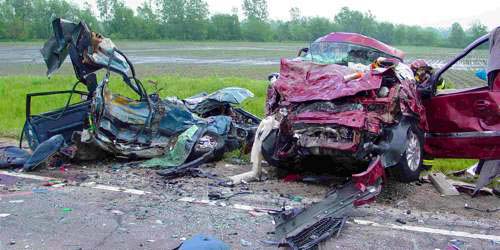
Annually, 33,000 people are killed in cars. There must be towns smaller than that.

AAA-Causes-of-Car-Crashes-Study

30,000 people fall to their deaths.

Nearly 39,000 manage to poison themselves.

11,000 people are shot and killed.

3,868 people drown.

41,000 commit suicide every year.

Around two and a half thousand Americans choke to death every year, with roughly the same total for deaths in fires. Six hundred people shoot themselves accidentally, with 45% of them children. Forty five of the adults will be hunters walking alone in the woods.

In the less serious category, 33 people are killed every year by lightning. A massive 413 deaths occur every year as a result of accidents with ATVs. Even elevators have their dangers…yes, you read correctly…..they kill 26 unfortunate people every year. These don’t look dangerous…but they are:

doors

And what about England? Well, we’ll see in the near future.

32 Comments

Filed under Criminology, History, Humour, Science, Wildlife and Nature

Heil Hitler Episode 6

Do you remember August Landmesser?

ONE

Do you remember what happened to the mild mannered card carrying Nazi? Well, Romeo, or rather August, found his Juliette, or rather Irma:

irma-ECKLER

Irma was Jewish, but handsome Aryan August proposed to her without hesitation. She accepted without hesitation.

In the summer of that year of 1935, though, disaster befell them. They found out, that Irma, according to the “Nürnberger Gesetze, the Nüremberg Race Laws”, was formally and legally classified as a Jew. August was not a Jew and for this reason, he would not be allowed to marry her.
When his engagement to a Jew was formally discovered, August was immediately expelled from the Nazi Party:

NSDAP_Member_Card_1
Despite this rather unpromising beginning, August and Irma put in an application to marry in their home town of Hamburg. Their application was denied under the Nüremberg Race Laws, which had come into law only a very short time previously.
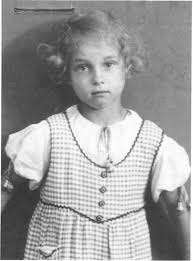
To cement the couple’s love, however, August and Irma’s first daughter, Ingrid, was born in October of 1935:

little girl

On June 13th 1936, August attended the launching of a new ship at Hamburg in the Blohm und Voss shipyards. He decided not to “Seig Heil!” or “Heil Hitler!” with all the rest, but to keep his arms firmly folded. It could not have been worse timed:

the one one

The ship was a training ship, the Horst Wessel, and was named after the Nazi Party’s greatest ever martyr. Men went into battle everywhere singing his happy song:

Furthermore, it was a naval vessel for the Kriegsmarine, the German Navy:

Kriegsmarine_

The Führer himself was the man smashing the champagne on the bow of the ship just before it slid off down the slipway into the water. Adolf, positioned directly opposite August Landmesser, may actually have seen his defiance. And even if he did not see August, such a high quality photograph could not have hidden August’s defiance in the middle of such a storm of “Seig Heil!” and “Heil Hitler!” salutes.
By 1937, though, August Landmesser had had enough. He attempted to flee northwards to Denmark with his family and leave Germany for ever. At the border, he was quickly arrested and eventually charged with “dishonoring his race,” or “racial infamy”, under the “Nürnberger Gesetze, the Nüremberg Race Laws”, mentioned above:

Landmesser family

Just one year later, in July of 1938, because of an apparent lack of evidence, August was cleared of all crimes, but a suspicious Third Reich ordered him to have no further contact with Irma. In addition, August was given a severe warning that punishment would surely follow if he ever dared repeat any of the offenses.
For August, of course, this was completely impossible. How could he just abandon the love of his life? How could he give up his wife? The mother of his darling little daughter, Ingrid?
August ignored completely the demands of the Nazis.

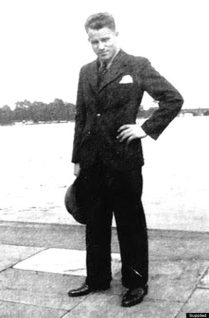
august-landmesser-uniform
Only a month later, in August of 1938, August was arrested again and put on trial. Not surprisingly, he was found guilty of all charges and received a sentence of hard labour for thirty months in a concentration camp.  August was destined never to see the love of his life ever again. He had seen his darling wife and child for the last time.
It was easy now for the Gestapo to arrest Irma as a new law had been quietly added to the Nazi Statute Book. It required the arrest of all Jewish wives in the case of a man “dishonouring the race,”

Irma was duly imprisoned by the Gestapo who was by now heavily pregnant with a second child. In prison, Irma gave birth to a second daughter, Irene. Irma was then transferred to an all-women’s concentration camp almost straight after the birth. In later months, she was sent to various other prisons and concentration camps,
In 1942, Irma was taken to a euthanasia centre at Bernburg.

bernvburg

During the course of the war, a total of 9,384 sick and handicapped German people were to be murdered there.  Around 5,000 prisoners from concentration camps were also murdered there. The doctors’ method of choice was carbon monoxide poisoning in a gas chamber.
In charge of this sickening establishment was Irmfried Eberl, who masqueraded as “Dr. Schneider” outside the walls. He was so promising as a genocidal monster that he became the first Kommandant at the Treblinka Extermination Camp, and made sure the place was in good working order with no problems. He must have been a little disappointed, though, that Treblinka missed the Million Total, with a mere 900,000 Jews killed there. “Dr. Schneider” was arrested in January 1948, but then hanged himself to avoid coming to trial. It must be said, though, he was a rather unimaginative man:

eberlllllllllllllllllll

When Eberl’s  colleague, Heinrich Bunke, was put on trial, he was initially given four years imprisonment for killing 11,000 people, but this was reduced on appeal to three years as his guilt could only be proved in 9,200 murders.  Both Eberl and Bunke were firm supporters of Joseph Goebbels and his clearly stated attitude towards the treatment of the mentally ill .As he wrote so memorably in his diary:

“Discussed with Bouhler the question of the silent liquidation of the mentally ill. 40,000 are gone, 60,000 must still go.”

In actual fact Dr Goebbels aimed at the round figure of 100,000 killed by 1945, but he only managed a rather poor 70,000. Most of them were Germans. Most of them were children.

One of these victims, sadly, was Irma Eckler. And by the time that she died, August too was dead. He had been due to be released from the concentration camp system in the spring of 1941, but alas, he did not live to see that day.

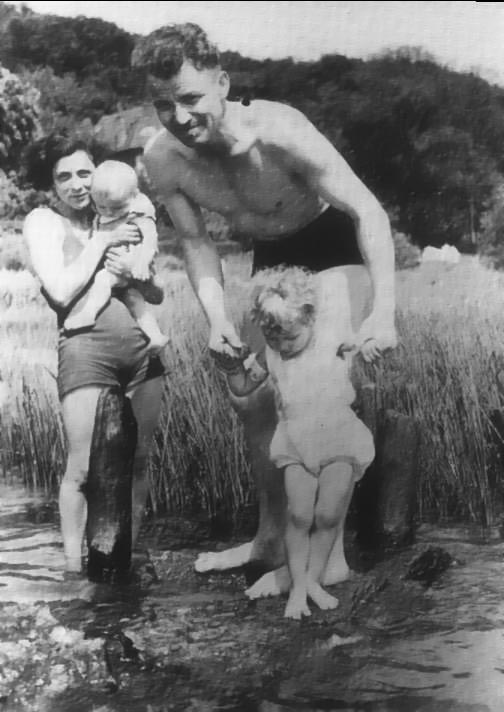
August and Irma had two daughters, Ingrid and Irene. Both of them survived the Second World War, and outlived the Third Reich, even if, their parents did not.

The younger of the two daughters, Irene, has, in actual fact, documented the story of her family. She published her book in both German and English language versions, and it is now in its second edition. It is called “A Family Torn Apart by “Rassenschande”, and the full author name is Irene Eckler. The ISBN number is ISBN 3-9804993-2-4.

This slideshow requires JavaScript.

It is a moral tale worth reading in more detail. And it just goes to prove. Love DOES conquer all.


26 Comments

Filed under Criminology, History, Politics

Heil Hitler Episode 5

So far I have written four articles about that famous quotation attributed to Edmund Burke:

“The only thing necessary for the triumph of evil is for good men to do nothing.”

All of the articles revolved, more or less, around the Nazis and their “Heil Hitler” salute which, by the 1930s, had become compulsory for all Germans to show their loyalty to their beloved Führer, the National Socialist Party, and his nation.
The first article mentioned the England football team who did a nice Nazi salute before a friendly game with Germany at the Olympic Stadium in Berlin on May 14th 1938. A more sinister aspect came when Hitler annexed Austria and left the Austrian international players with, literally, nothing to play for. Matthias Sindelar decided to take arms against a sea of troubles although despite all his best efforts, he definitely did not end them:

head tennis
The second and third ones talked about the war criminals’ friend, Bishop Alois Hudal, and the very many crazy Nazis that he helped avoid being put on trial for their evil deeds. Article Number 4 had a picture of the German supporters at a football match in London on December 4th 1935.

The enthusiastic German crowd were all Heil Hitlering and Seig Heiling for their beloved Führer. There were though, a number of people who were not joining in with the general joy and merriment. At least half a dozen of them:

This slideshow requires JavaScript.

But let’s just look at this photograph. Are you ready for a game of “Spot the One Brave Man”?

big crowd

Did you spot him? Here he is:

ONE

And in close up:

refuses
The brave man was called August Landmesser, and his story is first told on a German website, for, if the first Nazis were Germans, then no country could have worked harder to cleanse and redeem itself than present day Germany.
But this is Fascist Germany in the 1930s. A new warship is being launched in the dockyards of Hamburg. All of the shipyard workers are ecstatic with joy. “Seig Heil!” they shout, and “Heil Hitler!” All except one.
In the early 1930s the German economy was in freefall, and August, watching the irresistible rise of Adolf Hitler, had joined the Nazi Party, the NSDAP, because he thought that having the right connections would help him to find a job in a flat lining economy.

By 1931, August was a loyal, card-carrying Nazi who began slowly to work his way up through the hierarchy of the Party, the only legal political grouping in the Third Reich.
But then, in 1934, the 25 year old August fell madly in love. Not to order. Not a blonde haired, blue eyed Aryan. Not a female member of the Master Race. Just an ordinary woman.

irma-ECKLER

She was three years younger than August. She was called Irma Eckler. She was a Jewish woman and August proposed to her at the beginning of 1935. She loved him too, and she accepted his proposal immediately.

We will see what happens to them next time.


20 Comments

Filed under Criminology, History, Politics

Match-fixing (2)

I have always wondered exactly what happened to Leeds City, a team that apparently just disappeared, after playing first class football for ten years or more. Of course, we have all heard of Leeds United, famous for its few triumphs and many near misses in the late 1960s and early 1970s. But what about Leeds City? How does a big football club just disappear?
Well, they were founded at the Griffin Hotel in 1904.  Here is the Griffin Hotel nowadays. It doesn’t seem to be doing much better than Leeds City:

griff

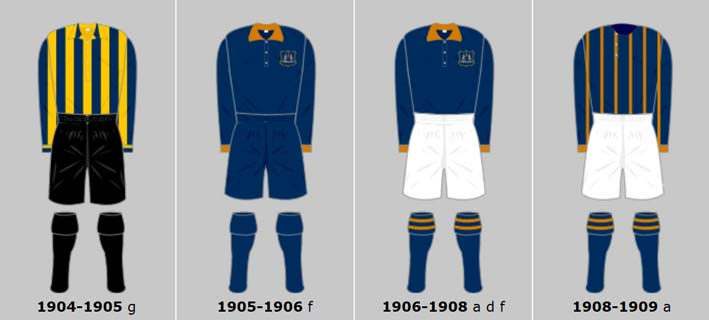
Leeds City were slated to be the primary football team in the city, somebody who could bring the delights of a relatively new sport to a rugby mad area.This allowed them to adapt the council’s coat of arms as their own and to wear the city’s colours of gold and blue for their shirts:

leeds city top row

Luckily for them, a local rugby club folded around this time, and Leeds City moved straight into their old stadium in Elland Road.
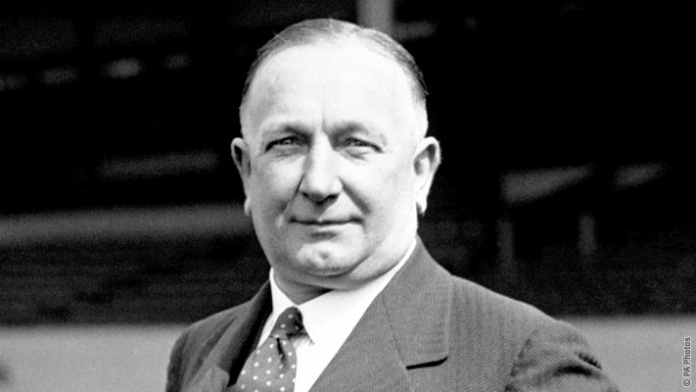
A decent ground enabled them to arrange friendly games against local league clubs, and after making powerful friends in this way they became members of the Second Division for the 1905-1906 season, when they finished sixth. Years ago, it was the club secretary who did what would nowadays be the job of team coach and club manager. City started with Gilbert Gillies (1904-1908) and then Frank Scott-Walford (1909-1912). The club’s record was fairly average until they appointed Herbert Chapman, the legendary manager of Huddersfield and Arsenal, who took City to fourth place in the Second Division, their highest position so far. Here is the great man. His ghost was said for many years to haunt Arsenal’s old ground at Highbury:

gun__1357732038_chapman_herbert1

Until the First World War, Leeds City continued to wear blue and gold as their colours, except for the 1910-1911 season. Research by David Tomlinson has revealed that their kit changed at this point, when they signed five young, inexperienced, but hopefully talented, Irishmen for the team. The Leeds Mercury, in their match report, said

“It must be remembered that these Irishmen are very young men, who have been brought into a higher class of football than that to which they have been accustomed, and that they were playing their first match amid unfamiliar surroundings. Mr Scott-Walford evidently had an eye to making his new men feel at home as well as to stage effect when he attired the team in green jerseys and supplied green flags to mark the centre line, and he apparently realised that their first match might go wrong when he  addressed them in his official programme: “Should your efforts deserve success, and it is denied you, we shall extend our sympathy, when you do badly we shall still think you have done your best.”

It certainly looks very strange for a team from Leeds:

leeds city row. two

During the 1913-1914 season they adapted a kit which they would wear for the rest of their short history:

leeds city row three

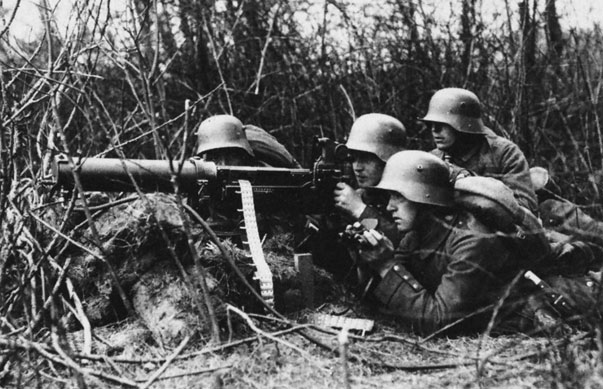
The Football Association has always been very adept at thinking up rules and regulations. It was strictly forbidden, for example, for a club to pay their players over the course of the Great War. No matter how dangerous it was fighting for King and Country, it was down to you to look after the wife and kids, rather than allow your rich erstwhile employer to help you out, even if that arrangement suited both sides. And woe betide, of course, anybody caught breaking the rules, even though many clubs did. It was a blind date with a bunch of Germans for you. Hopefully, you won’t get the one whose hat doesn’t fit:

a23_world_war_1_german_machine_gun_1

Leeds City were grassed up to the FA by a former player who told journalists that the club’s guest players for friendly games were being paid to turn out and play. The FA considered this to be an extremely serious offence, and began an investigation.
City, being both arrogant and stupid, did not help themselves by their poor choice of reaction to the FA’s questions. Instead of rolling over with a loud cry of:

“I am guilty, guilty, guilty but O how I regret my wrongdoing”

they basically told the Football Association:

“Get stuffed. You can’t look at the books”.

The FA’s reaction was to make a huge example of the wrong doers.  Immediate expulsion from the League sine die as they say, and the disbandment of the entire club.

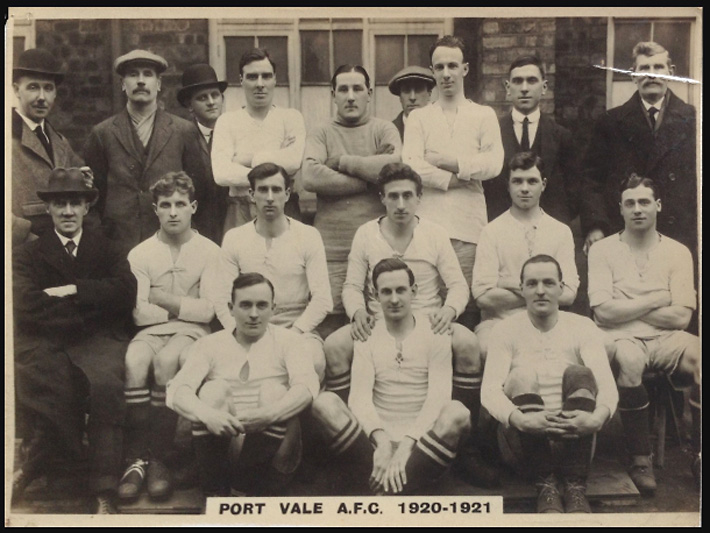
They had played only eight games of the 1919-1920 season and delighted Port Vale took over the rest of City’s fixtures. I bet the man with the rip across his face was the first one to die. I saw it in a horror film once:

port

Herbert Chapman, the club secretary, and a good few others, were also banned sine die. All the club’s assets were to be sold off. Not just the tables and chairs, but the players too.
At ten o’clock on October 17th 1919, therefore, an auction was held at the Metropole Hotel, where sixteen footballers were all sold to the highest bidder. They were bought by nine various clubs for a total of £9,250.
Billy McLeod £1,250 to Notts County
Harry Millership to Rotherham County (who??) and John Hampson to Aston Villa, both for £1,000.
Willis Walker to South Shields (who??) and John Edmondson to Sheffield Wednesday, both for £800
Other clubs who coughed up either £600 or less were Grimsby Town, Manchester City, Aston  Villa, Lincoln City and Hartlepool United.

Poor old Francis Chipperfield, worth only £100 to Lincoln City. I wonder if he just packed up football and went to join the circus?

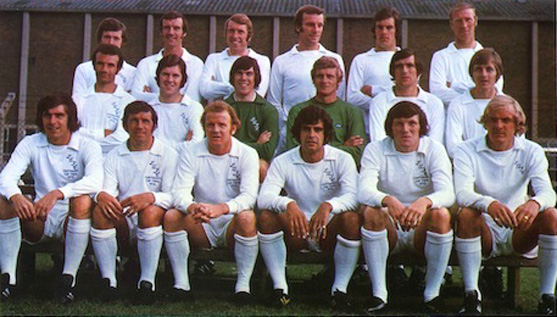
During the afternoon, after the auction, a number of other local officials, or at least, all the ones who were as pure as the driven snow, founded a new club, Leeds United, which could play in the now deserted Elland Road ground. United initially took over the fixtures of City’s reserves in the Midland League, but for the next season of 1920-1921, the club was promoted into the Second Division:

pasted-graphic-1

As I have done before in other posts, I would like to thank the website who supplied all of the illustrations of the old football kits from days of yore.

It is the best ever website for the soccer nerd and all those little boys who had more than twenty different Subbuteo teams.

15 Comments

Filed under Criminology, Football, History, Humour, Politics

Wolves (2) How to fight them off

Recently, I wrote about how Candice Berner, a thirty two year old special education teacher was killed by wolves as she jogged along a road outside Chignik Lake, a remote village in south western Alaska. It was the first ever fatal wolf attack in Alaska where between 7,700-11,200 wolves are resident. There has only been one fatal attack in the rest of North America, where between 50,000-60,000 wolves are resident. This was a man who regularly fed the wolves near his campsite.

Kenton_SKxxxxxxxxxxxxxxxxxxxxxxxxxx

Last time it emerged that Ms Berner’s slight, almost childlike build would have been attractive to the wolf. So too was the fact that she was out jogging. A running target always brings out the worst in any predator.

Her listening to music on a headset was thought by her father to be contributory, but was actually discounted because wolves are less noisy than the wind anyway.
A recent TV programme on Animal Planet also made one or two important points about this attack. They visited Chignik Lake and discovered that Ms Berner went running every day at the same time. This did not make it particularly difficult for any predator. The first thing every politician at risk of assassination is told is to vary their routine as much as possible. Ms Berner, they said, ran past the town dump, where both wolves and bears would routinely come to scavenge. As I said in a previous article, the local dump is a good way to habituate predators to humans. To show them how human scent equals food. If people take no notice of the predators’ presence, then they will gradually lose their innate fear of humans.
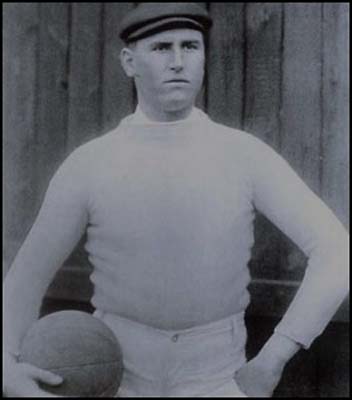
image_encounters

The locals at Chignik Lake considered the dump too dangerous a place to go. Most significantly, the TV reporters found that Candice Berger was the only person in Chignik Lake ever to go jogging outside the town. The locals at Chignik Lake considered this activity far too dangerous, although their primary fear was that of bears, who can chase you at a steady 35 mph. Hard luck Usain Bolt, tootling along at a pathetic 27 mph. The bear population around Chignik Lake was very high.

xjune-2013-bear_jpg_pagespeed_ic_q9hIvBROLI

The road out of Chignik Lake ran along the side of a hill, and as it curved, Ms Berner’s tracks made a sharp U-turn. This was thought to be the point at which she first noticed the wolves. She was running westwards and the wind was blowing from the west so the wolves may have had her scent blown towards them for some considerable time. Presumably, after she had turned sharply away, this provoked a predatory response. Either one or two wolves chased her, while a third ran higher than the road and then swooped down to either knock her down or cause her to slip over. The place she fell had bloodstains with a second depression three or four yards away as she fell for the second time. She had fled about fifty yards from the place where she first apparently turned away from the wolves. She then tried to crawl away but the wolves dragged her down the slope. By now she was in a very bad way. She finally succumbed in a clearing ten yards from the road. The fight was a very brief one and she died quickly. Her body was then dragged thirty yards to an area of small bushes. Blood on the road led to the discovery of her body, and later that night a wolf returned to drag it a further twenty yards downhill.
Nine sets of wolf tracks were found but the Fish and Game Department said that only four or five wolves had been involved.

pair-of-mexican-wolves

The Fish and Game Department then culled eight wolves within thirty miles of the attack site. The DNA from one of these wolves was found on the young woman’s body, but a second wolf who left DNA was never found. As always seems to be the case, the evidence of three or four other lots of DNA was impossible to prove.
I have researched exactly what happened in some detail because this attack was, at this time at least, totally unique.
As we have seen, the townspeople seemed deeply worried about the attack, by a member, or members, of a protected species. The Director of the Alaska Wildlife Alliance said that those who wanted to be allowed into the area around the town to kill all the wolves they could find were just:

“A lot of people who want to be macho and go out there and kill animals.”

Perhaps the last words should go to the poor young woman’s father:

“They were just doing what wolves do. Their nature happened to kill my daughter but I don’t have any anger towards wolves.”

Candice_Berner12

So what should you do? Well, the expert in my last article said that you should:

Never feed wolves

Don’t let them become habituated to humans (by leaving them a rubbish tip to visit, presumably)

If confronted by a wolf, don’t run

Face the animal, make yourself appear as large as possible

Yell

Wave your arms

Throws stones or other objects

Resist any attack

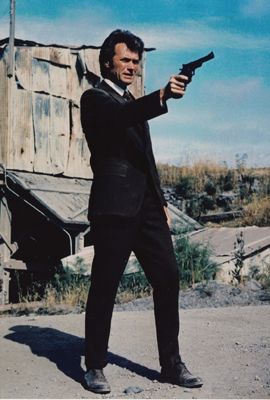
I would personally, if I were American, carry a revolver, one of those that Clint Eastwood carries, and learn how to use it for my own self defence:

dirty-harry328381
And if all else fails, I would try to climb a tree.
The Candice Berner case was notable as being the first fatal wolf attack in North America in which DNA evidence was gathered to confirm wolf involvement.

30 Comments

Filed under Criminology, History, Science, Wildlife and Nature

Match-fixing (1)

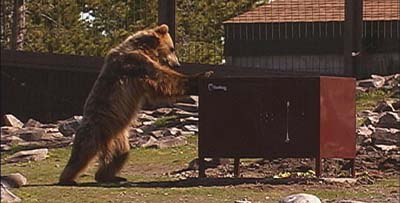
Corruption in football is nothing new. More than a century ago, in 1900, Burnley goalkeeper Jack Hillman attempted to corrupt the Nottingham Forest goalkeeper and the other players by giving them £2 each to let Burnley win on the last day of the season and perhaps thereby escape relegation. It didn’t work. Burnley went down with 27 points from 34 games, along with Glossop North End who managed only 18. Here’s Hillman, apparently twenty minutes after the invention of angora sweaters::

jack-hillman-264x300

Had the bribe succeeded, Burnley would have overtaken and relegated Preston North End (28 points) who would have taken their place in Division Two. Hillman was called to account by the authorities, but amazingly, they didn’t accept his explanation of “I was only having a laugh!” He got a rather lenient twelve month ban, although this meant no pay for that period and the loss of a benefit match which would have netted him around £300. Even worse for him, though, was the fact that he never played international football for England again, having just broken into the team
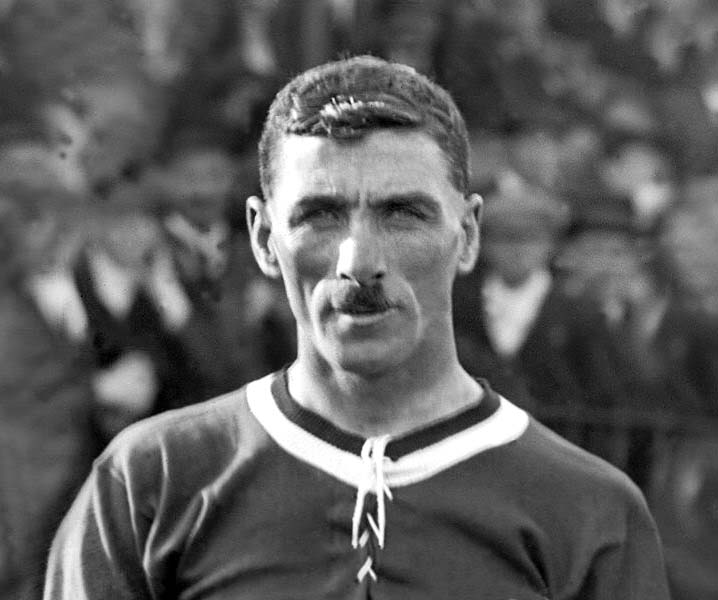
In 1905, at the opposite end of the table, Manchester City were trying to win the League title. Billy Meredith, their star winger, decided to make the task a little bit easier by offering the Aston Villa players £10 to let them win. Like Hillman, Meredith received a year long ban, but rocked the footballing boat by alleging that he had been ordered to bribe the Aston Villa player, Alex Leake, by his Manchester City manager, Tom Maley. Bribery, said Meredith, was common practice at Manchester City who finished the 1904-1905 season in third place behind champions Newcastle United and Everton. A whole selection of players were suspended, as were members of the club staff and directors from the boardroom. Here’s Meredith. He looks like he’s wearing in a new moustache for his shy, and rather strange, German penfriend:

meredith

Meredith actually wrote an open letter to the Athletic News:

“You approve of the severe punishment administered by the Commission AGAINST ME and state that the offence I committed at Aston Villa should have wiped me out of football forever. Why ME ALONE? when I was only the spokesman of others equally guilty.”

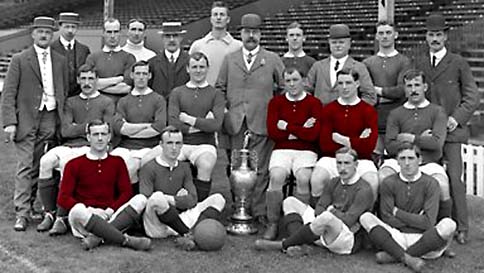
In 1915, Liverpool played so poorly as they lost 2-0 to relegation-threatened Manchester United that one of the many bookmakers who had taken bets on the game refused to pay out, at odds of 7-1.  He had probably heard of the clandestine meetings of players in the pubs of Manchester and Liverpool. And the poor old bookmaker was completely right. In the United team, Sandy Turnbull, Enoch West and Arthur Whalley were the guilty men and in the Liverpool team it was the fault of Tom Miller, Bob Purcell, Jackie Sheldon and the rather appropriately named Thomas Fairfoul. Can you spot the guilty players in this old picture of Manchester United?

wh turn wets

Would you like a second go?

betting-scandal-600x312

It looks like Liverpool are not quite so helpful towards the local detectives:

liverpool 1915

And no, the man with the cap is the trainer.

Jackie Sheldon as an ex-United man was the mastermind behind the coup but not everybody in the two teams was happy to cheat in this way. Both Fred Pagnam (Liverpool) and George Anderson (United) refused to participate. Indeed, when Pagnam shot and hit the opposing crossbar his teammates all showed their anger with him. It was perhaps his own fault, as before the match he had threatened to score a goal to spoil their nasty little plan. By now, whiter-than-white Billy Meredith was a United player, but everybody had taken great care not to tell him about what was happening and nobody passed to him throughout the game…something which, of course, aroused his suspicions as to what exactly was going on.  A penalty was missed by such a distance that the ball only just failed to hit the corner flag.  The crowd, feeling they had wasted their penny entrance money, grew increasingly angry with the proceedings.

Overall though, things were getting very much out of hand with match fixing. As an example, all seven of the Liverpool-Manchester United match fixers, along with an eighth player, Lawrence Cook of Stockport County, were banned from football sine die. (that effectively means “for life”)
Cynics might say that that was a fairly limp punishment as professional football had already been suspended because of the war. The even more cynical would point out that the Naughty Eight were given hints about a possible return to football, but only if they signed up for the Army and survived the carnage of the Western Front:

somme

A succession of away games on the Somme and at Passchendaele gave seven of the Naughty Eight their promised lifting of the ban. Fairfoul in fact turned away from football but the other six went back to their previous employment. For some reason “Lucky Enoch” West did not have his ban rescinded until 1945 when he was 59 years of age.

The_Battle_of_the_Somme_film_image1

Poor Sandy Turnbull had to be contented with a posthumous permission to resume his footballing career. He joined the 23rd Battalion of the Middlesex Regiment before a free transfer to the 8th Battalion of the East Surrey Regiment. He became Lance-Sergeant Turnbull and was killed on May 3rd in the Battle of Arras at the age of 33.  Sandy was the son of James and Jessie Turnbull, of I, Gibson St., Kilmarnock, Ayrshire and the husband of Florence Amy Turnbull, of 17, Portland Rd., Gorse Hill, Stretford, Manchester. He had won FA Cup medals with both Manchester City and Manchester United:

Deadgerman

The Grim Reaper has no favourites though. Sandy has no known grave and his death is commemorated along with that of almost 35,000 others from the United Kingdom, South Africa and New Zealand who died in this fairly pointless battle and whose bodies have never been identified. Overall, the Battle of Arras was quite a slaughter. Nearly 160,000 British lads and about 125,000 young Germans renounced their right ever to play football again. In a mere five weeks. Here is Polygon Wood where Sandy had tried to mark out a football pitch for himself and his pals:

polygonwood

Alas, they didn’t realise that a Great War average of one ton of explosives per yard of trench was going to be a really, really big problem with that.


22 Comments

Filed under Criminology, Football, History, Humour, Nottingham

The Bristol Beaufighter at Hendon

I went on a trip to RAF Hendon Museum a few years ago, and I intend to share one or two of the more interesting aircraft with you over the months. Hopefully I will only be using my own photographs, so here are my excuses first. The Museum is really quite dark, so that the daylight or bright artificial lights have no effect on the (poor quality) Second World War paint. The museum is also very cramped, so try as I might, I could not get all of the aircraft into the shot at once.

P1320446

This particular aircraft is a Bristol Beaufighter Mk X. The Beaufighter flew for the first time on July 17th 1939 and the RAF received them in April of the following year. They were used as night fighters with airborne interception radar or, like this aircraft, as strike fighters, especially in Coastal Command. Armed with a combination of four cannons in the nose, machine guns, bombs, rockets or torpedoes, they were a formidable opponent. Production reached 5562 aircraft and they equipped 52 squadrons of the Royal Air Force:

P1320758
This particular example, RD253, BF-13 was built in October 1944 at Old Mixon in Weston-super-Mare. It has Bristol Hercules XVII engines and is one of a batch of 500 Mark Xs built there between September 1944-August 1945.

It is painted in Coastal Command colours of dark grey on the top, and underneath a much paler grey. The black and white stripes are there to undo all the work of the camouflage designers and painters in an effort to prevent friendly fire shooting the aircraft down. This could be a huge problem as one or two British anti-aircraft gunners apparently had Iron Crosses for five kills or more.

P1320433

This aircraft initially went to 19 Maintenance Unit at St Athan in Glamorgan on November 2nd 1944.
On March 7th 1945, it was sent to RAF Pershore in Worcestershire.

P1320445

Ten days later, on March 18th 1945,it was one of sixteen sent to Portela near Lisbon for use by the Portuguese Naval Air Arm, the Forcas Aereas da Armada. The aircraft was taken out of service in 1949 and then parked in the open in front of the Instituto Superior Tecnico.  It came to the Hendon Museum via South Africa, Bicester in Oxfordshire and  St Athan in Glamorgan, and was restored by 1968.

Overall, the Beaufighter strikes you as a very, very powerful and heavily armed aircraft. There must have been a lot of young men who really enjoyed the chance to fly it, armed to the teeth, with the sole aim of destroying anything belonging to the enemy that moved.


24 Comments

Filed under Aviation, History, Humour

Wolves (the animal not the football club)

When I wrote about the Beast of Gévaudan, I came to the conclusion that the ferocious creature was a previously unknown type of wolf:

bete-du-gevaudanzzzzzzz

For some unknown reason, it was being forced westwards from its normal habitat of the Polish or Russian primeval forests such as Białowieża. If ancient bison could live there, so could something even more prehistoric:

rejigged bison

At the time I did research the likelihood that the Beast was an ordinary wolf or wolves but I rejected that as a theory because I did not think that wolves would eat human beings.
It would be dishonest, however, not to make it patently clear that in the past, wolves certainly have eaten people but they don’t seem to now. Why should this be?
Firstly, extremes of weather centuries ago, more severe than what we have now, may have lead to a situation where wolves either ate any available prey items or just died. This would account for the Wolves of Paris which I have previously discussed:

wolf bounding

In actual fact they may also have acquired a taste for human flesh by eating corpses. Apparently, until as late as 1820, corpses in France were frequently thrown into open charnel pits. Presumably, these were paupers, drunks, stillborn babies, in short, anybody dead without the money for a funeral. And it is not outrageous to presume that this lovely way to dispose of the late dearly departed might have taken place in neighbouring countries too. An unfortunate situation that taught wolves to associate the scent of Man with a full belly.
If the hungry wolf wanted a better quality of prime human meat, young, and blood drippingly fresh, the best place was the battlefield straight after the battle. Once the local peasantry had stripped the bodies of everything valuable, they were not buried, but were gradually eaten by the ravens and other corvids, the eagles, both golden and especially white-tailed, and most of all, the local wolf pack.
This association of human flesh, its scent and taste, with a full stomach, was a recipe for disaster when wolves came across, say, lone travellers or children picking berries deep in the woods. And don’t forget. In France the peasantry were forbidden to own firearms to reduce the admittedly tiny risk of a blood spattering revolution.
Nowadays, the situation is completely different. Admittedly France had 7,600 fatal attacks by wolves between 1200–1900 but there has been nothing since. Italy has a population of wolves but without any fatal attacks on humans since 1945 and no attacks by wolves since the eradication of rabies in the 1960s.

wolf pack one

In the Baltic states, where rabies is still allowed to exist, just under a hundred people were bitten between 1992-2000 in Latvia and Lithuania, although the statistics are muddied somewhat in Estonia by the locals’ love for wolf-dog hybrids and keeping wolves captive on their properties.
And what about North America?

wolf baby

Well, in 2002, the Alaska Department of Fish and Game stated that there had been no human deaths in North America attributed to wild, healthy wolves since at least 1900. Concerns were caused though, when, on April 26th, 2000, a six year-old boy was attacked by a wolf in Icy Bay, Alaska. He was not killed, but then, on November 8th 2005 the body of Kenton Carnegie was found in northern Saskatchewan. He had died from “injuries consistent with a wolf attack.” The local wolves had apparently lost their fear of him because he fed them regularly.

Kenton_SKxxxxxxxxxxxxxxxxxxxxxxxxxx

To increase the risk, natural food was scarce in the area at the time and four wolves had been feeding on rubbish tips in the previous weeks. They were no longer scared by human activities. On November 4th, two of Kenton’s fellow campers clashed with two extremely aggressive wolves. Zoologists have now said that this was probably an “exploratory attack” just to see how difficult it was to kill a human being. Another perhaps more serious attack was imminent.
On the day of his demise, Kenton ignored warnings from his companions and went for a walk in the woods. It took the Coroners’ jury two years to rule out Black Bear, but their eventual verdict was “Death by Wolf”.

Iberian Wolf alpha male feeding on deer, its mouth tinted with f
On March 8th 2010, Candice Berner, a thirty two year old special education teacher who had only been in Alaska since the previous August was killed by two, perhaps three, wolves as she jogged along a road outside Chignik Lake. It was late afternoon.

Candice_Berner12

This was the first ever fatal wolf attack in Alaska. David Mech, a senior research scientist with the U.S. Geological Survey has studied wolves for more than fifty years. He said:

“There have been about two dozen nonfatal attacks in North America in the past century or so. Most involve wolves that have become habituated to people who have been feeding them at campgrounds, dumps and other sites near wolf habitat.”

Ms Berner was only 4 feet 10 inches tall and weighed just over eight stones (c 112 pounds). David Mech said that her slight, almost childlike build, and the fact that she was running may have attracted the wolves, who, after all, are predators by nature:

“Wolves are very much like dogs in a lot of respects. Things that are running, they have tendency to want to chase them,”


DogChasing

Ms Berner was thought to have been listening to music on a headset, but Dr Mech discounted this, as in his experience wolves move so silently that the wind is enough to mask their presence completely.

Whatever you think about wolves, the truth is that the inhabitants of the tiny village of Chignik Lake have lived alongside wild animals since time immemorial:

chig

This one attack has spooked all of the 73 inhabitants of the area, so remote that it can only be reached by aeroplane. The school’s stuffed wolf mascot had been there a good while, but now it has been kicked well into touch. The wolf badge of the school will also have to go if Virginia Aleck, a local woman, gets her way.
She said that everyone felt trapped in the village. None of the surrounding hills were considered safe anymore.  Nobody walked on their own and everybody carried a rifle.
Is this an over-reaction? Or are wolves just a part of living outside the big city? I’ll try to answer that question in a future article.

17 Comments

Filed under Canada, Cryptozoology, France, History, Personal, Science, Wildlife and Nature

Snow joke

Yet again, the Date-Book of Remarkable Memorable Events Connected With Nottingham and Its Neighbourhood 1750-1879 comes up with the goods.  Ands today you’ll see just how appropriate is the name of the author, John Frost Sutton. Once again, I have tried to simplify some of the more archaic language.

“January 1776

A great fall of snow and intense cold. Drivers of vehicles found it impossible to complete their journeys, and the stagecoach to London was stopped halfway to the capital, and was unable to proceed.”

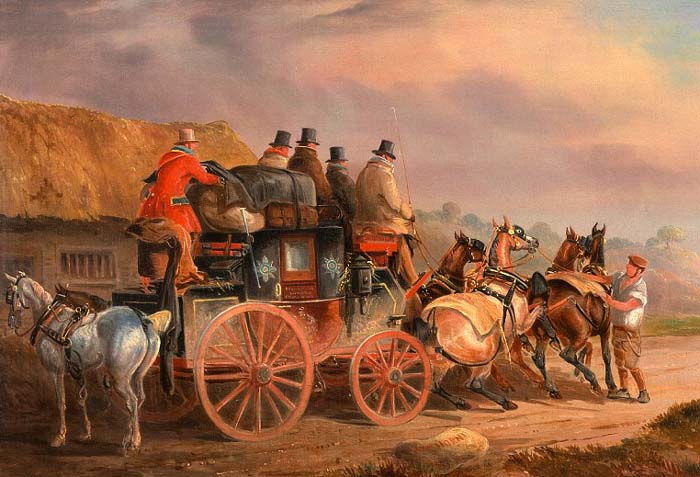
Here is the type of stagecoach we are talking about. It’s not really one for the Apaches to chase:

stagecoach w

“A contemporary record states that the road beyond Northampton “was crowded with the passengers from the north, all of whom had been detained there all the week, owing to the great depth of snow. Many of them had neglected to make any provision for what had happened, and were in the greatest distress. On the other hand, some, who were well supplied with the one thing they really cherished, lived happily at the nearest public or farm houses. They were literally in high spirits. Almost every house on the road exhibited either a happy picture of noise and merriment, or else showed the visible signs of vexation, disappointment, and humiliation.”

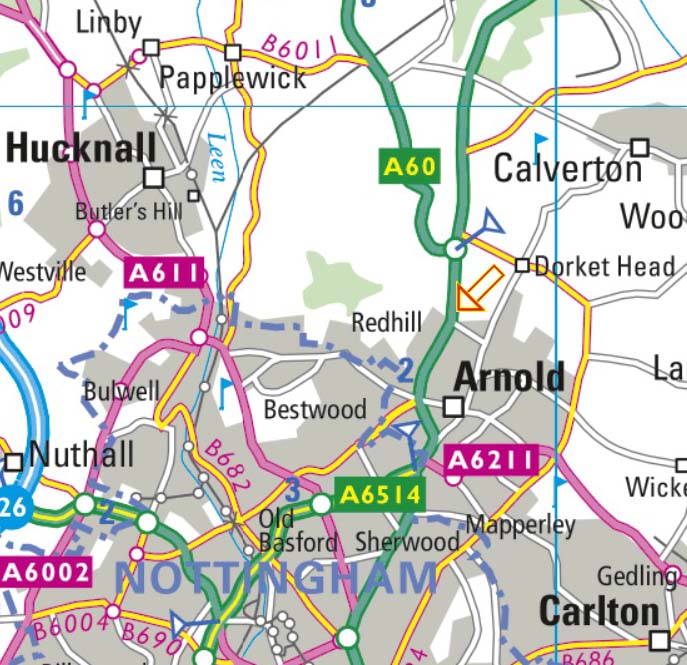
“On January 13th, two men were returning in the evening from Nottingham to Papplewick, when they were overcome by the cold, half-way between Redhill and their place of destination. In the morning, one of them was found stretched out on the snow and dead. The other was found in a state of insensibility, with his stiffened arms clasping the trunk of a tree, and icicles at the end of his fingers. With much difficulty his life was preserved.”

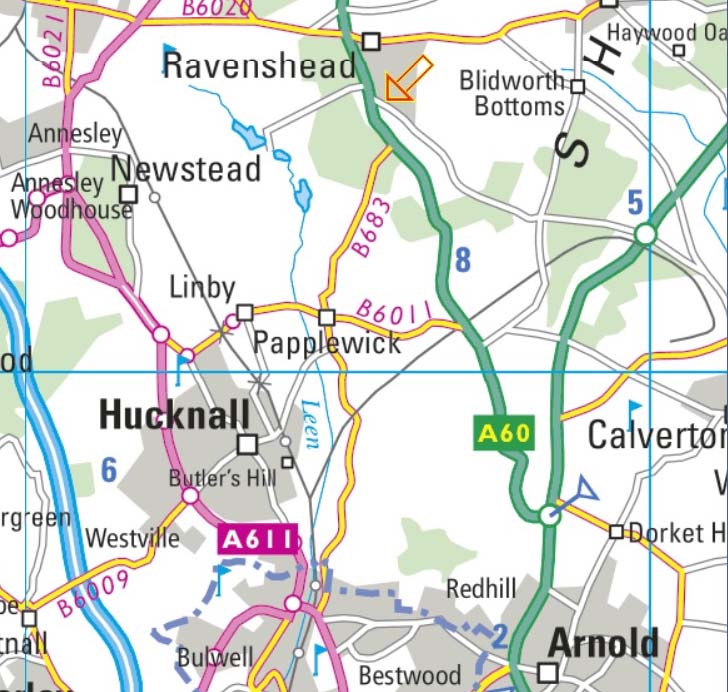
The orange arrow points to Redhill, and Papplewick is in the top left corner:

papplewi3333333333333333333333

“The same day another sufferer was rescued from death by Mr Turner, a Nottingham attorney. A young woman in the service of Mr Lee, of the Peacock Tavern, near St. Peter’s Church in the middle of Nottingham, had been to Leeds on a visit to her friends, and was returning to Nottingham.”

Here is St Peter’s Church in Nottingham, down near the Broadmarsh Shopping Centre. The building to the right will one day be Marks & Spencer but it doesn’t really know it yet:

st-peters-1860-300dpi

The young woman left Leeds as a passenger on the outside of the coach as it was so much cheaper (although a lot colder, of course).

red stage

“About midway between Leeds and Nottingham, some thirty miles from the latter town, the tremendous fall of snow rendered it impossible for the coach to proceed any further, and the young woman, not having enough money to stay where she was, set out resolutely on foot. She managed to reach The Hutt, on the road from Mansfield to Nottingham, when her strength totally failed, and she lay down to die.”

Here is the Hutt nowadays. It figured in a previous article when a White Stork flew over it:

thre hutt

On this map, the orange arrow indicates the Hutt. The immediate area is no longer as isolated or countrified as it would have been in 1766. Redhill and Arnold are both in the bottom right corner:

hutt aaaaa3333333333333333333

“In the hour of her extremity Mr Turner the solicitor happened to be passing that way on horseback, and prompted by humanity, lifted her up, took off his greatcoat and wrapped her in it. He put his gloves onto her hands, and with great difficulty succeeded in carrying her to Redhill, where she was properly taken care of at his expense until sufficiently recovered to be brought to Nottingham.”

I included this bit of the account because there are not many stories where a lawyer is the hero, especially a generous one. This is the “Ram Inn”, an old coaching inn at Redhill. It faces west so it is not easy to photograph and get much light on the subject:

Ram Inn pic

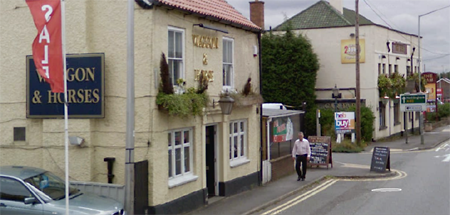
Right next to it is the Waggon and Horses, another coaching inn of the period:

ram

Two pubs next to each other is fabulously convenient. When the barman in one pub refuses to serve you because you are too drunk, you can just leave quietly and try your luck next door.


13 Comments

Filed under History, Nottingham, Science, Wildlife and Nature