Category Archives: History

The Luftwaffe comes to Cornwall (and stays there)

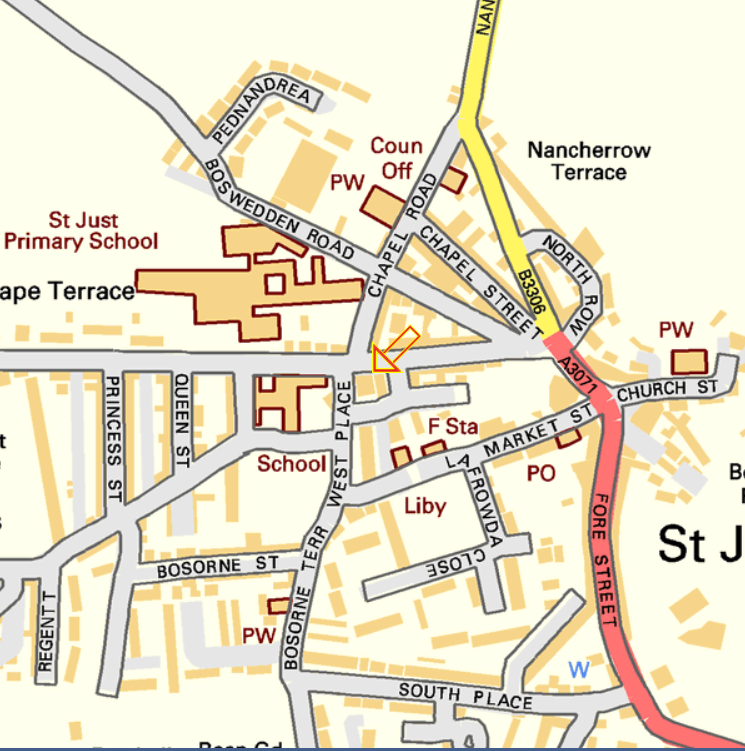
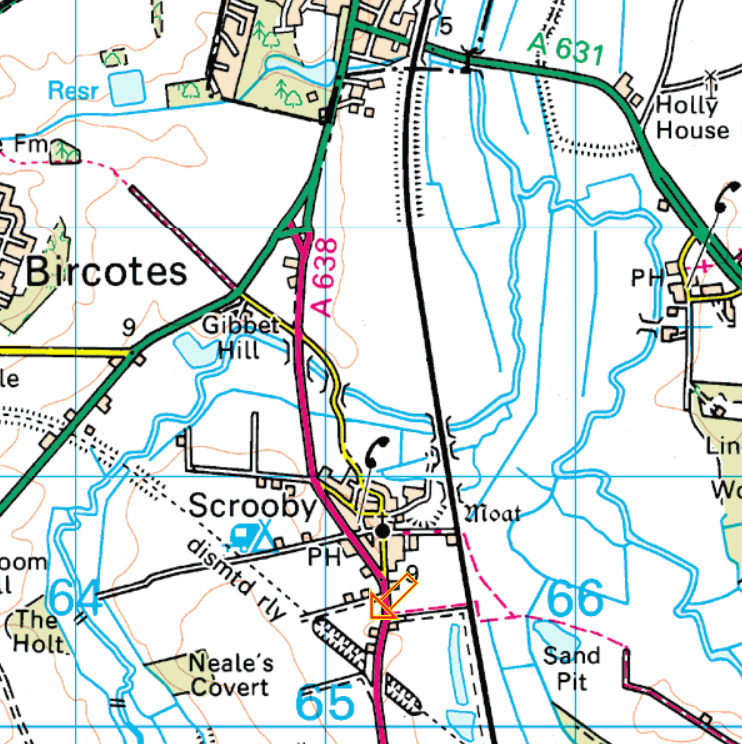
For many, many, years, we have spent our summer holidays in Cornwall, in the very westernmost part, which is called Penwith, and where the major town is Penzance, the birthplace of the pioneer chemist, Humphry Davy. Ten miles or so to the north west of Penzance is the even smaller town of St Just. Just look for the orange arrow:

This slideshow requires JavaScript.

In the nineteenth century, there were any number of tin mines around the town, which is made up for the most part of stone buildings with slate roofs.

This slideshow requires JavaScript.

It has a beautiful ancient parish church with its centuries old frescoes of Christ and St.George.

This slideshow requires JavaScript.

There is also the old battleflag of an old Great War battleship.

aaaaa50478

Nearby is the medieval “Plen an Gwarry”, which is a small area of open grass, used for watching plays or sporting contests or perhaps just for relaxation.

ab5

As you relax, you might want to eat a pasty or a pie from Mcfaddens, who are often quoted as making the best Cornish pasties in the world. The day I took these photographs, they had sold out. Fortunately, they do mail-order, although the pasties will not always be piping hot.

This slideshow requires JavaScript.

St Just also hosts its popular Lafrowda Festival, a community and arts celebration that lasts for seven days.

There is the old bank, with its many changes of owner and cryptic lettering.

P1330533xxxxxxxxxxxxx

More subtly famous is the Wesleyan Methodist Chapel which was built in the first half of the nineteenth century. It is an enormous stone building, and I remember reading somewhere that, as vast numbers of impoverished Cornishmen were forced to emigrate overseas, given its position so close to the cliffs of Land’s End, this building was usually the very last thing that thousands of emigrants saw as they set off towards the mines of the USA, Canada, Australia or South America.

This slideshow requires JavaScript.

Some of the very best and most spectacular cliff scenery is at either Carn Gloose or the nearby Cape Cornwall. This is the Brisons, a pair of storm battered sea stacks.

TT8 xxxxxxxxxxx

It was here that a very, very lost Steller’s Sea-lion lived in the late 1980s and 1990s. It should have been living in Eastern Siberia or Western Alaska.


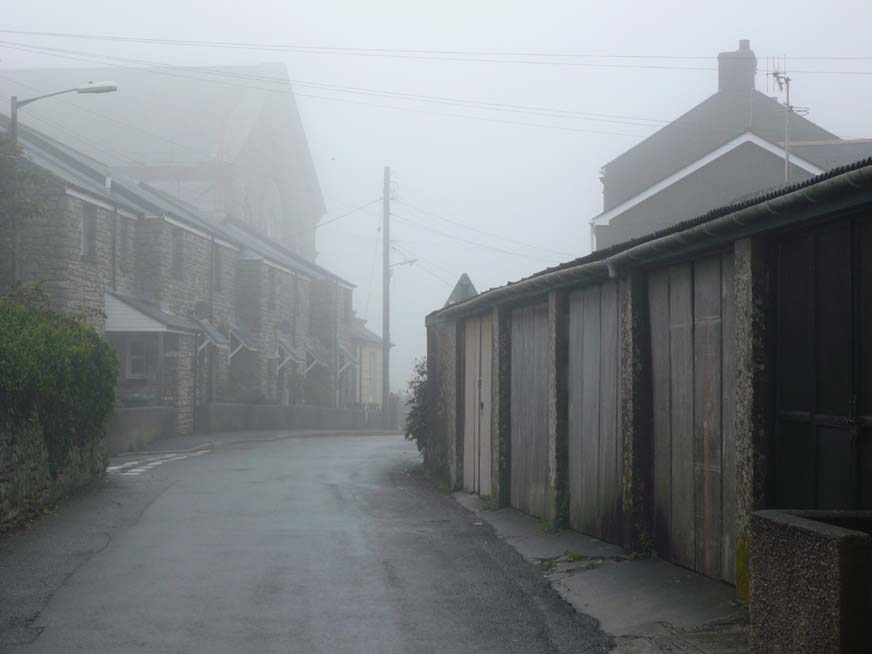
Every time that I have ever driven down Cape Cornwall Road to look at the cliffs or to watch the fierce ocean storms, I have always looked up at the old Methodist School on the left, to check that the conspicuous gap on the ridge of the roof is still there.

This slideshow requires JavaScript.

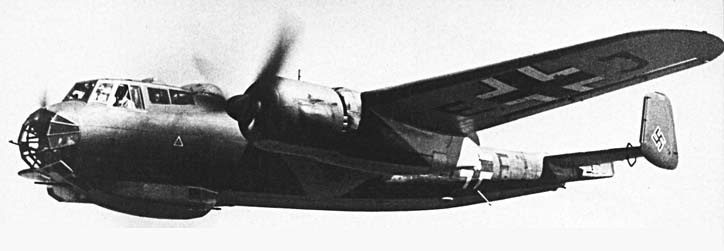
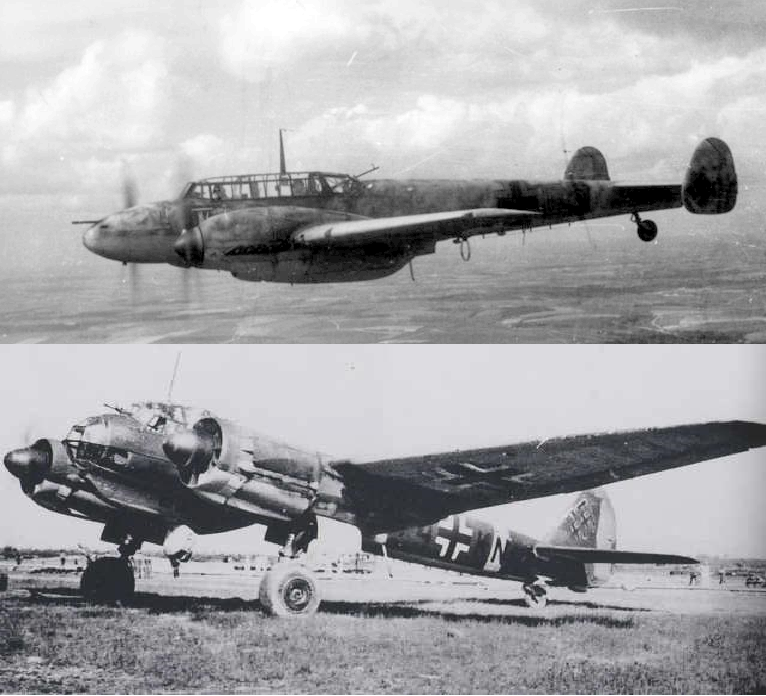
From a tourist leaflet that I read many years ago, I know very well that, during an air raid in the Second World War, this gap was caused by a German bomber in its last few seconds before it crashed into Chapel Road.

Do_217E-2_

This year I decided to research the story more extensively, so I called in at the library in St Just, where the helpful staff tried very hard to check any references to this event in the books of their Local Collection. They were unfortunately unable to find anything but, not for the first time I suspect, they contacted long time St Just resident, John Harry, who came round to the library straightway to recount the full story. Mr Harry told me that the events had taken place in the autumn or winter of 1942.

As a little boy, he was always very excited indeed when the St Just air raid warning was sounded, and he always had to be dragged very reluctantly up to bed. In their home in Chapel Street, the family had a simple home-made air raid shelter downstairs in the kitchen. It consisted for the most part of a rather robust kitchen table which, in theory, should be able to withstand the majority of shocks which an air raid might cause. On most occasions, though, John’s aging grandmother would refuse to get inside it, but instead, ostrich like, would merely stick her head underneath.

This particular night, they could hear distant gunfire, which gradually grew louder and louder. Some kind of aerial dogfight was clearly taking place, as they could all hear the noise of aircraft engines, machine guns and a series of explosions. Granny kept shouting “We’ll all be killed! We’ll all be killed!”, but her daughter replied, “Be quiet! Don’t keep saying that! You’ll frighten the child!”.

“The child” himself thought that it was all extremely exciting, and was clapping his hands in sheer glee. Suddenly, there was a huge crash. John shouted, “We’re winning! we’re winning!”. Auntie went upstairs to see what was happening. She looked out of the bedroom window. Below her, she could see flames down in the street. “All of Chapel Street is on fire!”, she shouted, “All St Just is ablaze !”

The stricken bomber had destroyed two houses, but fortunately, nobody was injured. The first house was owned by an old lady, but she had gone away to her daughter’s for a two week holiday.

The other house was a second home for the newly married Mr and Mrs Vague. (sic) They did not normally bother to use their air raid shelter, but on this particular evening, their cat had kept making a huge fuss, walking repeatedly backwards and forwards from the bedroom to the shelter. In an effort to keep the cat quiet therefore, the two of them finally moved down to the air raid shelter. From this place of safety, they were able to feel their house shaking as if it were an earthquake.

When it was safe to do so, both Mr and Mrs ran to the emergency shelter in the St Just Town Hall. All they possessed at this moment were their night clothes. In later years, though, of course, Mr and Mrs Vague would dine out regularly on the fact that they had had their lives saved by the cat.

The next morning, more than half the town was cordoned off by the Home Guard. Hundreds of windows had been blown out by the explosions. On the Methodist School (look for the orange arrow), huge numbers of tiles had been knocked off.

street map

Fragments of the crashed plane were everywhere. In the nearby village of Kelynack, some mile and a half away, (see the previous map after Paragraph One), one member of the German crew had landed by parachute. He had a broken leg, and, a forlorn figure, he was duly arrested by Mr.Matthews, the owner of a small local farm. The rest of the crew, three men, sadly, were all killed.

In a house in Cape Cornwall Street, a woman stepped forward in the darkness to open the bedroom curtains. She tripped over a German’s dead body, which had been blown in through the window. A few days later, in another house in the town, a frightened woman was to find a German’s leg on the top of her wardrobe.

And for a very long time afterwards, John Harry was too frightened to leave his mothers’ side.

Even now, though, at nearly eighty years of age, John was still unaware of where the three dead Germans were buried. And seventy years ago, his mother had been equally unable to ascertain their final resting place. Equally unsuccessful was her friend, who was actually a member of the local Home Guard. Indeed, at the time, everybody in St Just was curious about where the dead Germans were. They kept asking the Home Guard, who always replied with the same “Dunno”. It was thought, however, that some of them did know, but they were just not saying.

My own researches have been equally unsuccessful. I was unable to find the Germans’ last resting place either in the cemetery at St Just, or in the war graves section of Penzance Cemetery. Subsequent inquiries, however, reveal that most German war dead at this time were taken to the German Cemetery on Cannock Chase, and that after the end of hostilities, many of them were then re-interred in Germany. Let’s hope so. It is certainly a very long way from the frequently wet, windy and misty West Penwith to whatever churchyard in Germany where they rightfully belong.

The two destroyed houses were never rebuilt. Instead they were replaced by a row of garages. When the foundations for these buildings were being dug, the workmen found Mr.Vague’s gold watch.

P1330546  yyyyy

Amazingly, this was not the only air raid on tiny St Just. On another occasion, the Luftwaffe bombed Holman’s Foundry, which produced munitions for the Allied Forces, down in the Tregeseal Valley. Ironically, Mrs Holman had herself been born in Germany. She had originally come over to England around 1900 as a governess, and then married into a local family.

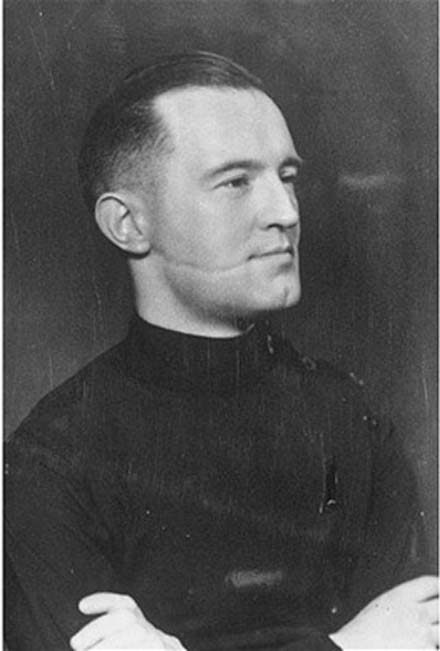
This particular bombing attack was actually mentioned in one of his broadcasts by Lord Haw Haw. He said, in very sinister and threatening fashion, “Don’t think we have forgotten you, St Just. You have not been forgotten.”

williamjoyce_2041800i

The foundry’s owner, Ken Olds, lived in a house right next to the foundry. At the height of the bombing raid, when the grandparents went to look for the baby, they found that he was no longer in the bedroom. In actual fact, he had been blown out of the window, and they found him in the front garden. He was still in his cot, fast asleep and completely unharmed. Nearby houses had lots of cracks caused by the explosion of the bombs. In later years, this seems to have led to large scale subsidence, and all of the houses eventually had to be demolished. So too the foundry itself had to come down, and it was replaced by a housing estate.

I was genuinely surprised that after seventy years that it was still possible to talk to an eyewitness of all these amazing events. I will never forget my afternoon spent in the company of John Harry. He is a most charming man, and an amazing source of knowledge of the St Just area, the people who have lived there, and the people who live there still.

Subsequent, subsequent, subsequent researches on the Internet have now revealed the excellent website of Shauney Strick whose hobby is “The History of World War 2 in Penwith, Cornwall:Uncovering the evidence with a metal detector”.

metal detrector zzzzzzzz

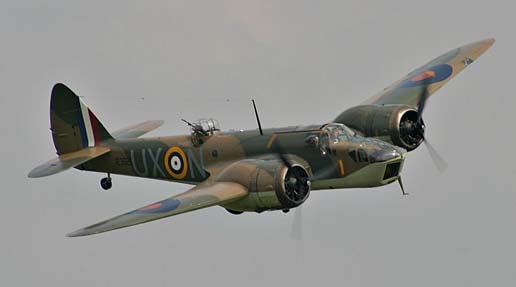
With his metal detector, Mr.Strick recently uncovered several small parts of a Luftwaffe aircraft buried in West Place, St.Just. (see street map above). The various objects of wreckage were from a Dornier Do. 217E, aircraft U5+1H of 1Staffel KG 2, which had crashed on September 27th 1942 as it made its way towards Penzance, after being pursued and shot down by a Bristol Beaufighter Mark IF of 406 Squadron from RAF Predannick. The Beaufighter was  flown by Squadron Leader Denis Chetwynd Furse with Pilot Officer John Haddon Downes as his radio operator.  

Dornier-Do-217E2- zzzzzzz

One additional detail was that one of the diesel engines from the stricken bomber flew an enormous distance before smashing through three garden walls in West Place. 

As I mentioned above, my search for the final resting place of the Luftwaffe bomber’s crew led me to Penzance Cemetery, where, although I did not have any success with the Dornier, I did find that the World War II graves there had some very interesting, and very, very sad tales to tell. But that, as they say, is for another time.


23 Comments

Filed under Aviation, Cornwall, History, Humour

Gun Battle on Derby Road: three slain, and a horse

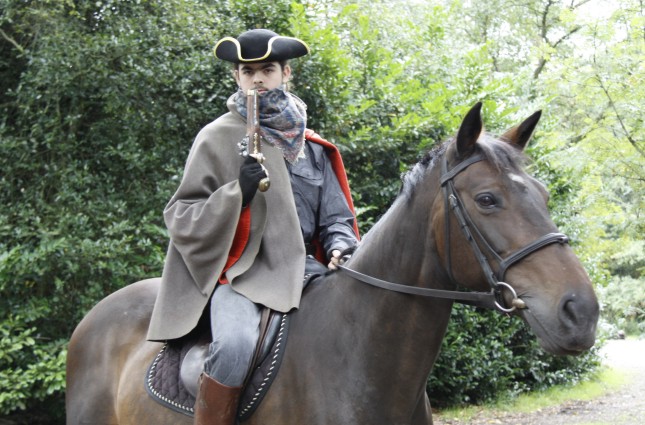
Derby Road seems reasonably peaceful now, but not in 1701, when Timothy Buckley, a 29-year old criminal from Stamford, Lincolnshire, was arrested after a ferocious gun battle as he tried to rob a stagecoach on its way to Derby.  The coach contained three gentlemen attended by two footmen. Buckley had previously been a shoemaker’s apprentice in London, but gradually became a more and more hardened criminal after his return to Nottinghamshire and the Wild North.
Beyond “two miles from Nottingham”, we do not know exactly where this gun battle took place, but usually, highwaymen would strike as the coach was moving uphill, and was therefore travelling at its very slowest pace.

highwayman

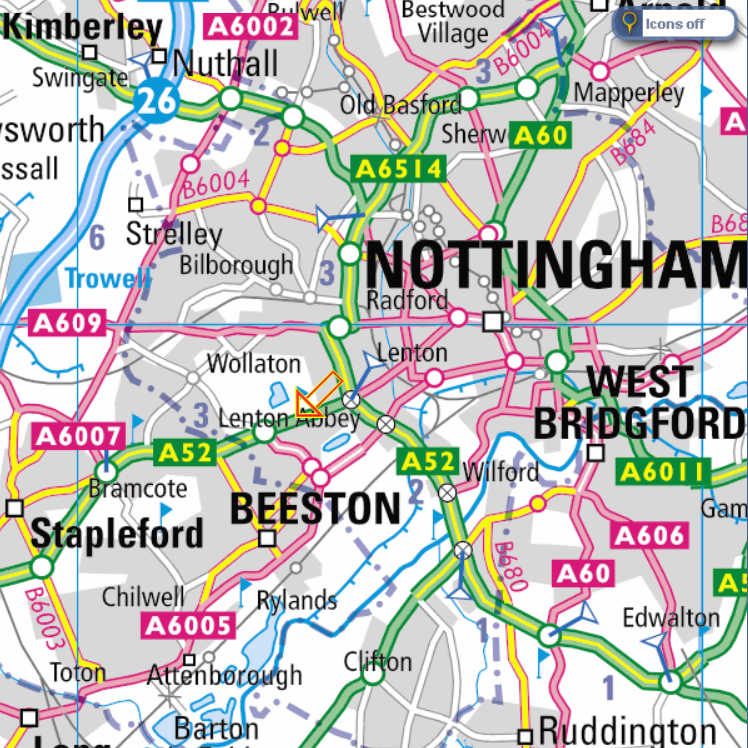
To me, the steep slope near the present day St.Barnabas Cathedral is too close to the city centre, so my best guess would be that stretch of the A52 as it climbs steadily after the present-day Ring Road, between the back of Wollaton Park and the grounds of Nottingham University. On this map, look for the orange arrow which is over the green A52 road with the words “Lenton Abbey” written over it. If the incident was any further on, then it might have been on the shorter slope near to the present day Bramcote Leisure Centre.

shoot out
No sooner had Buckley commanded the stagecoach to “Stand and Deliver, Your Money or your Life!”, than one of the passengers, unwilling “to submit to a single bravo”, blasted him with a blunderbuss. Buckley’s horse was shot out from under him, and died instantly.

Blunderbuss1

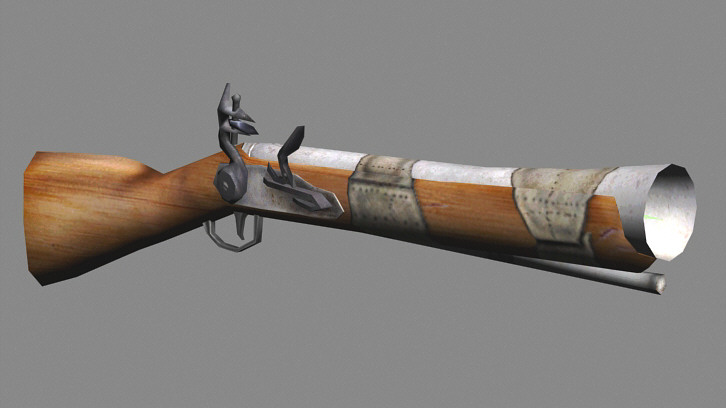
A blunderbuss was a murderous weapon, used for close-in fighting, in the words of Wikipedia, “when it was unimportant to protect objects around the intended target”. This formidable firearm was loaded with shot and anything else the user thought might do the job, small pieces of metal, nails, bits of rock or stone, or even salt. It was flared at the muzzle, and was the 17th-19th century equivalent of the shotgun so beloved of Wells Fargo personnel.
Interestingly, the military term dragoon is taken from the fact that early blunderbusses (or should that be “blunderbi”?) were decorated with dragon’s heads around the muzzle, and the blast would seem a little like the fire of a real dragon.
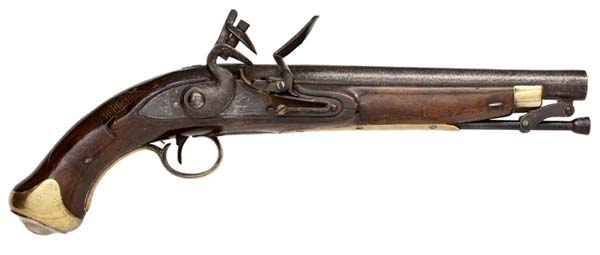
Buckley was not lightly armed either. He was carrying eight horse pistols. The largest were up to twenty inches long, and were carried in holsters across the horse’s back just in front of the saddle. This seems an unlikely number of such large weapons, but perhaps some were coat pistols (carried in the pocket of a greatcoat) coach pistols, (carried in a saddlebag perhaps), or belt pistols, (carried on a belt, hanging from a hook).

horse pistol xxxxxxxxIn any case, Buckley was very attached to his favorite horse and enraged by its untimely demise, “a most desperate conflict ensued”. Buckley let fly with all his pistols.
One male passenger and a footman both fell dead, shot through the heart. Eventually, though, Buckley was overcome by the remaining occupants of the stagecoach, as he grew gradually weaker and weaker from loss of blood, caused by his eleven severe gunshot wounds.

Guild-hall-1750 and prison

After a brief trial at Nottingham Shire Hall, Buckley was found guilty and was later hanged. He was only 29 years of age, and he was sentenced also to be “hanged in chains”. I don’t know how long his rotting cadaver was left exposed to the elements, but as a birdwatcher, I certainly know that there was one famous case in Nottingham where a dead criminal decayed over the course of the winter, helped by passing crows and magpies, only to have, with the advent of spring, a pair of blue tits raise their young inside his empty skull, using his eye sockets to go in and out, perhaps even operating their own one-way system.

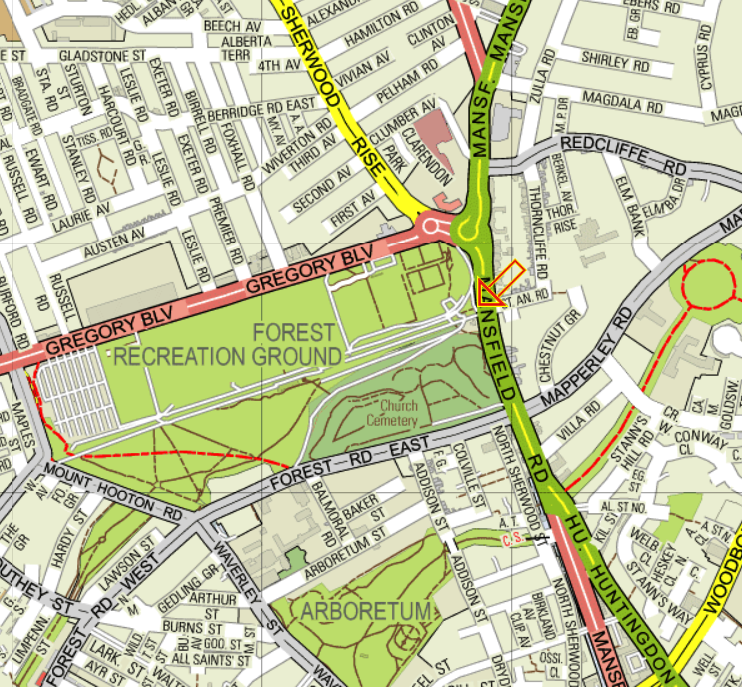
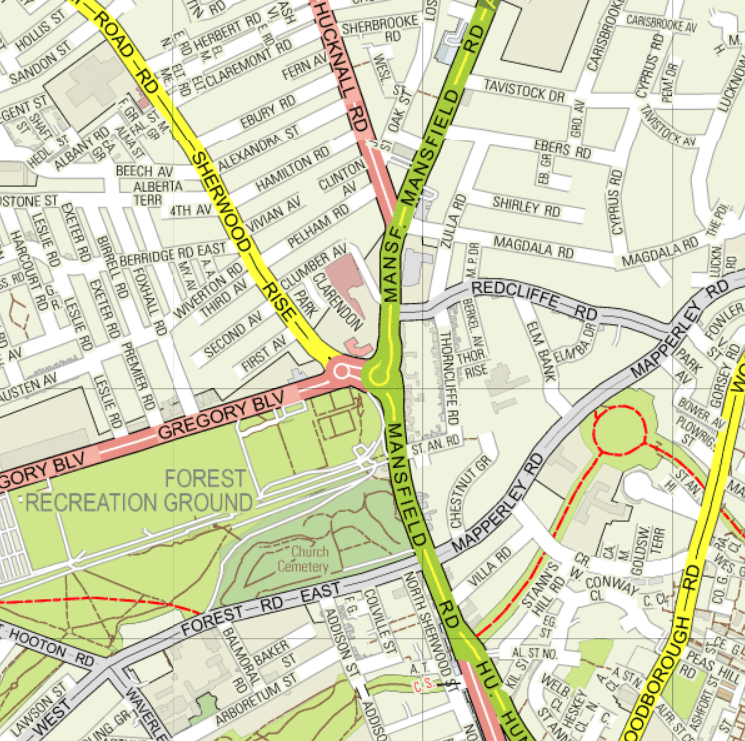
As these events all took place in 1701, Buckley would have been executed on what is now “The Forest Recreation Ground”. Centuries ago, “The Forest”, was called “The Lings” and was a very different place from what it is like nowadays. Largely covered by gorse and scrub, it was considered to be the southernmost part of Sherwood Forest itself. It was only as late as 1845 that, under the Nottingham Inclosure Act, some eighty acres of Sherwood Forest were set aside for recreational use. This area became “The Forest Recreation Ground” and to commemorate the event the Mayor of Nottingham planted a special Oak tree called the “Inclosure Oak” which can still be seen today at the Mansfield Road entrance. The orange arrow marks the oak tree:

Untitled

Pretty well straightway, the area became a site for sports and shows, or a combination of the two.

forest

In the summer of 1801, four butchers held their weddings there simultaneously, and decided who was to pay for the wedding picnic by holding a donkey race, with four animals, each equipped with mascots taken from the wardrobes of their respective owners’ new wives. The race was easily won by the donkey which had corsets attached to his tail with a bow of green ribbon. In second and third place were the animal with a pair of stockings around its neck, and another with a saddle made out of a nightgown.  Needless to say, the donkey wearing a voluminous pair of ladies’ drawers was placed last.
By this time, the Forest had already been a horse racing course for well over a hundred years. Not long before that, bear baiting had taken place on the very site where the horse racing course was later to be constructed. In 1798, a new horse racing track in the form of a figure-of-eight was built. Unfortunately, this rather novel choice of layout, designed to give the maximum length of course in the smallest possible area, was not overly successful, as spectators did not have a sufficiently good view. Crashes between horses were apparently too infrequent to compensate for this.
By the middle of the nineteenth century, though, there were at least two major race meetings per year, in spring and autumn, and the area was beginning to attract the same kind of people who can still be found there nowadays, well over a hundred and fifty years later…

“…loiterers…policemen…tooting footmen…toddling children…enterprising
vendors… overcharging greenhorns…patterers, chanters and beggars…sailors without arms or legs… “downy blokes”…holiday makers….villains…detectives …boozers and nymphs of easy virtue…ministers of religion……“black sheep”…enterprising merchants…aristocratic swells… pleasure seekers…a few robberies, a few drunks, a few fights…married men, sitting in the drinking places at the Stand with an assemblage of whores…the unemployed poor…”

Indeed, with whisky at an all-time low of 75p a gallon, so unsavoury did the area become that in 1879, male members of Nottingham University staff were threatened with instant dismissal if they were ever found at the horse races.
Other sports were played there as well. From 1865-1879, Nottingham Forest both practiced and played soccer here, being known therefore as “Forest Football Club”. Cricket was widely played in the summer, as were types of field hockey known variously as bandy, shinney or shinty.
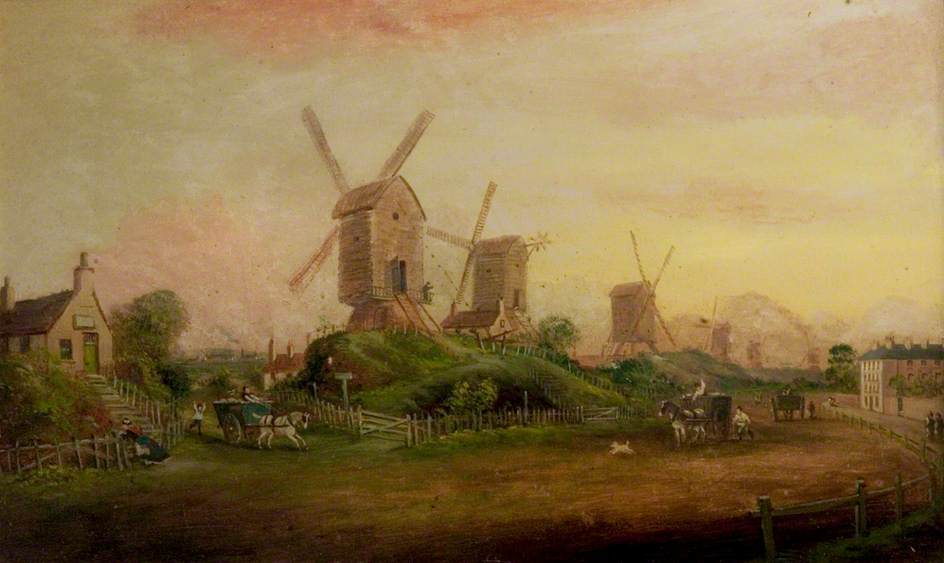
Apart from sport, alongside what is now Forest Road East, there was a long line of thirteen windmills, all taking advantage of the strong winds and updrafts which blew across the open ground lower down to the north.

(c) Nottinghamshire Archives; Supplied by The Public Catalogue Foundation

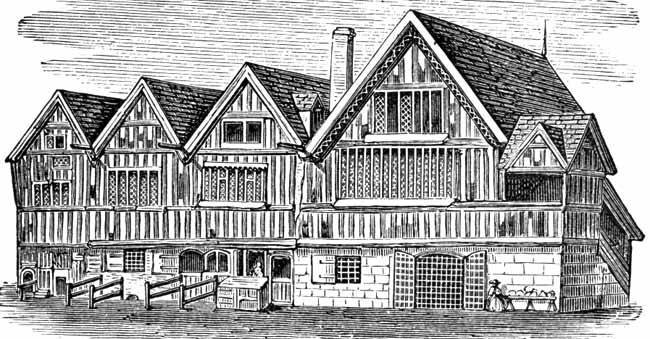
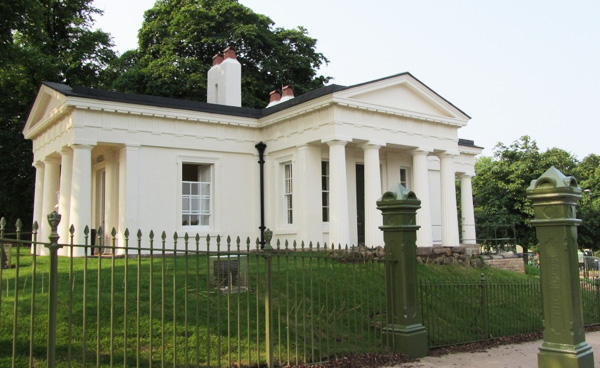
The exact place where the gallows stood and where Tinothy Buckley met his Maker has not necessarily been recorded absolutely accurately. Public executions took place here until as recently as 1827, and I am fairly certain that, many years ago, I read that the gallows used to stand a little distance down Mansfield Road from St.Andrew’s Church, within the present day Rock Cemetery. This was to the south of the white, recently refurbished, Lodge House. Clearly, in the latter part of the nineteenth century, there was still some judicial rôle for this building to fulfil, as it was originally used as a Police or Keeper’s Lodge and a police cell can still be seen at basement level.

forestlodge

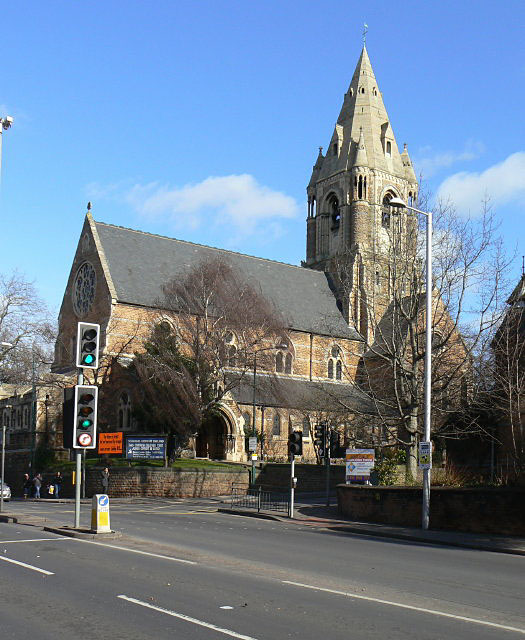
Others say that  there was a gallows on the same site as present-day St.Andrew’s Church, and, indeed, when excavation work was done here in 1826 for the church foundations, more than fifteen apparently medieval skeletons were found. This was presumably connected with a much earlier era, when travellers left the City of Nottingham through the gate in the mediaeval wall near what is now the Victoria Centre branch of Boots the Chemist. As they climbed painfully slowly up the hill which is now Mansfield Road, stagecoach robbers and mere footpads would sometimes pounce at Forest Road: hence the gallows which were constructed here, and might even have concentrated the thieves’ minds a little as they waited to swoop upon their prey from behind the bushes.

Notingham_St_Andrew_Nottinghamshire

“Garner’s Old Nottingham Notes” (date unknown) somehow contrive to be both illuminating and yet somehow confusing…

From information given, the gallows appear to have been erected on the level ground which now forms the upper portion of the Rock Cemetery, and it was probably 100 yards or rather more from Mansfield Road…..
Judging by the large old official map of the borough, measuring from the present Forest Road East, I consider it probable that, going northwards, the site of the gallows was about 100 yards from the southern boundary of the Rock Cemetery, and probably rather more from Mansfield Road, according to the contour of the ground, as depicted upon the official map. There is much likelihood that the gallows was erected near to where the last windmill on that side of the Forest then stood or was afterwards constructed.
It is certainly proper to state that I have seen two or more old maps on which the ground now covered by St Andrews Church, and southwards from there, is entitled Gallows Hill. The upper part of the ground is no doubt higher than any portion of the Rock Cemetery, and I have thought that this might possibly be the original place on which the gallows stored a few centuries back and perhaps afterwards were moved to the spot above designated.”

to gallowszzzzzzzzzz

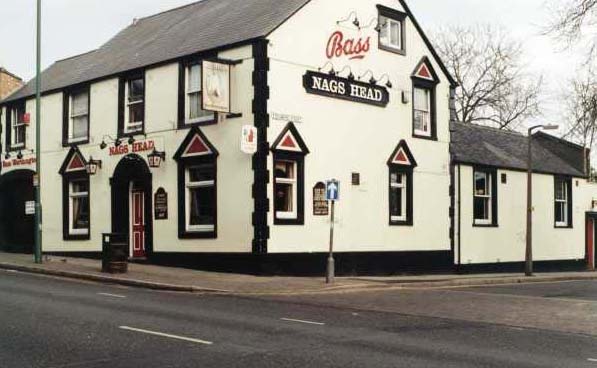
Wherever the exact location of the gallows, when convicted prisoners were to be hanged, they were usually brought from the County Hall in High Pavement, or the Town Hall at Week-day Cross, through the maze of streets in Hockley, and then walked along Clumber Street, Milton Street and finally up the hill along Mansfield Road. Prisoners were entitled to one last drink at the Nag’s Head Public House, which was traditionally paid for by the landlord.

00001tmp

There is, of course, a traditional tale, told no doubt, of every road with a set of gallows and a public house. One particular prisoner, who was a teetotaller, therefore, refused his last mug of ale at the Nag’s Head. He was taken straight on to the gallows and duly hanged. Seconds later a much flustered horse rider came galloping up the hill, and screamed to a halt by the little knot of people. He was waving a piece of paper which was, of course, the Royal Pardon for the Recently Hanged Man. Had the latter been just a little later in arriving at his place of execution, then he would have been saved. The “little later” of course, is exactly the time it takes to quaff a pint of ale.
The last person to be executed at these gallows on Forest Road was William Wells, a 45 year old native of Peterborough, who had robbed James Corden in Basford Lane and Mansfield Road on March 7th 1827. He was executed on April 2nd 1827.
Not all highwaymen meet with disaster however. Just occasionally one of them can make that leap from criminality to superstardom…


6 Comments

Filed under Criminology, History, Nottingham

The Cadillac of the Skies


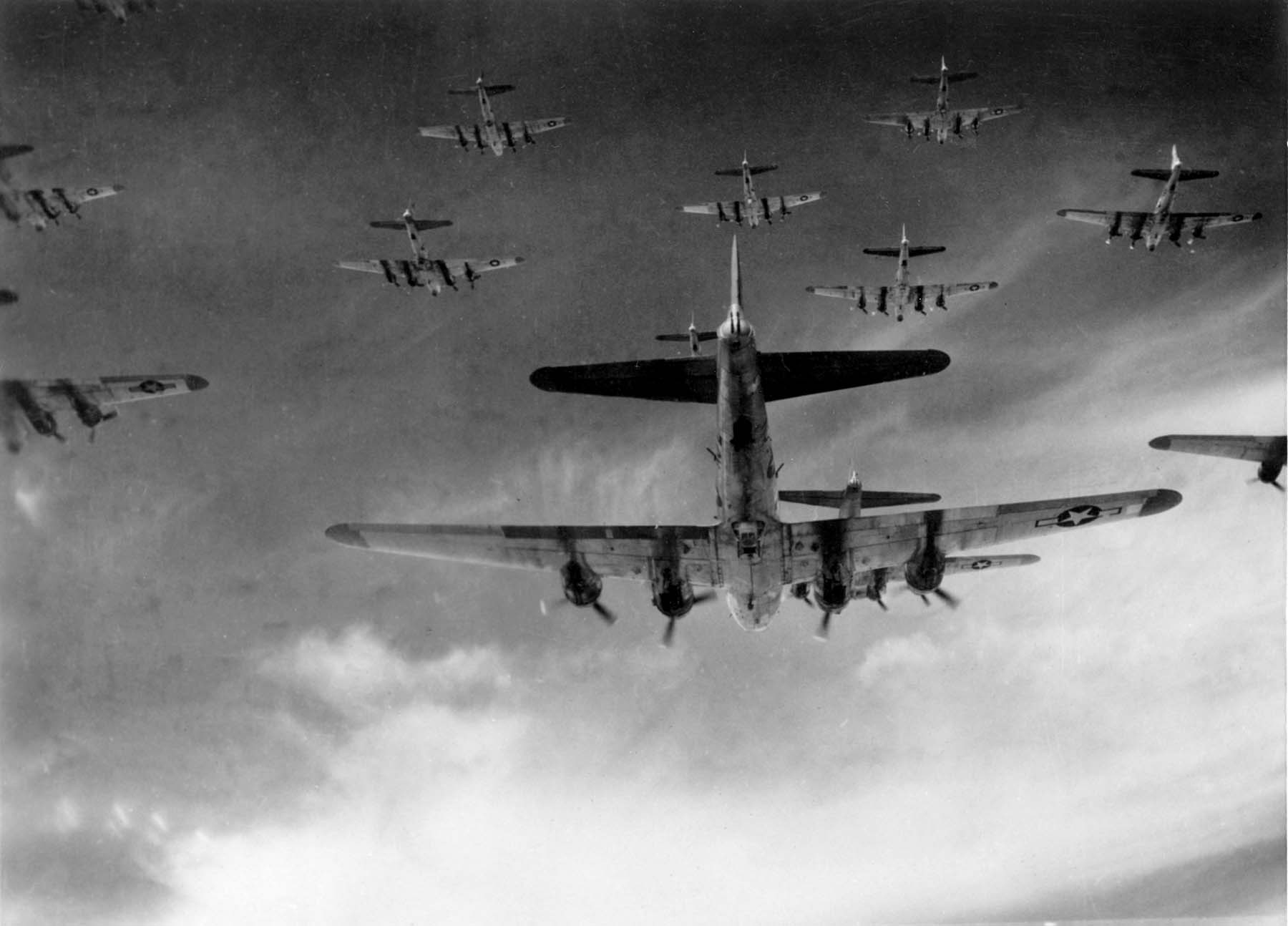
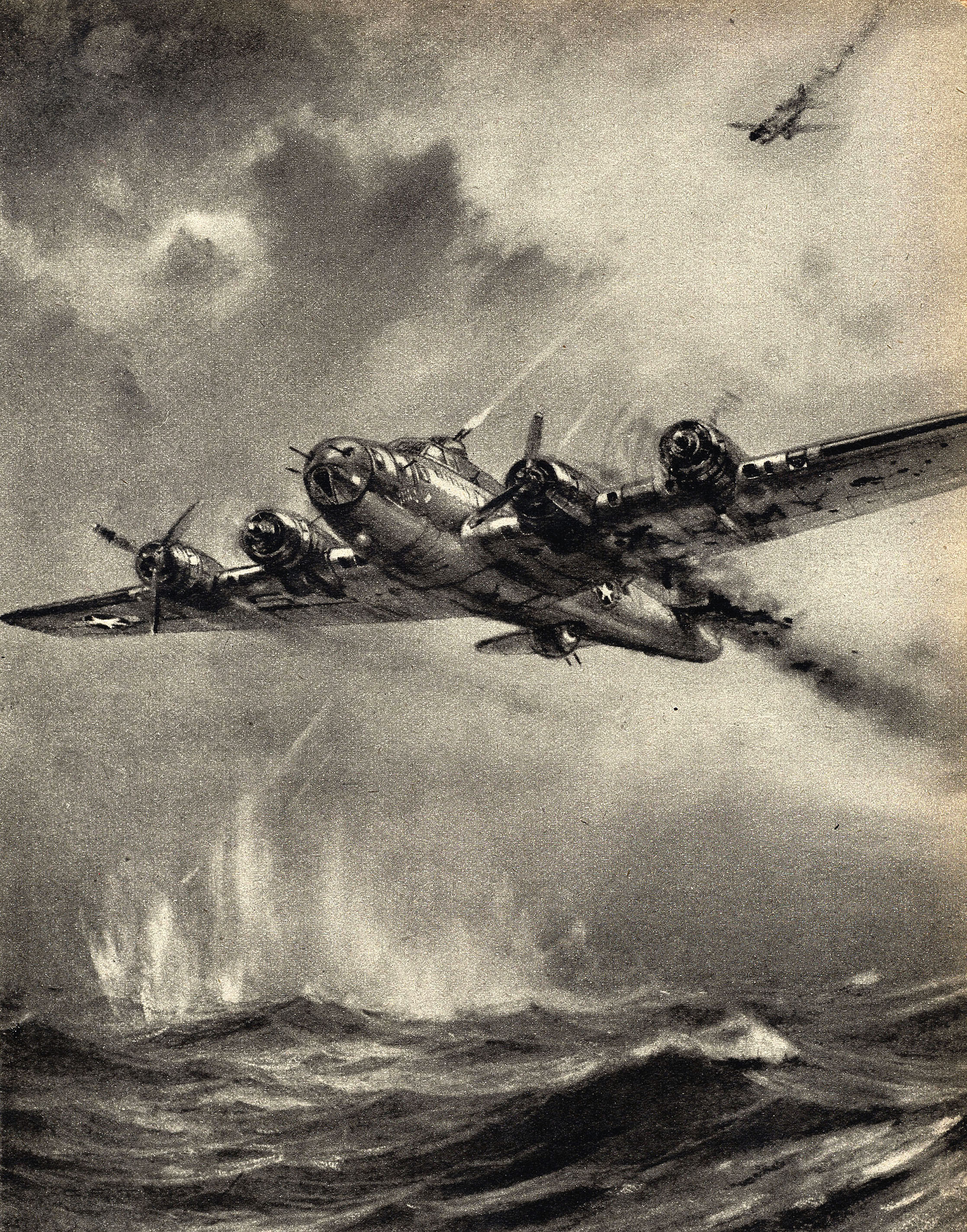
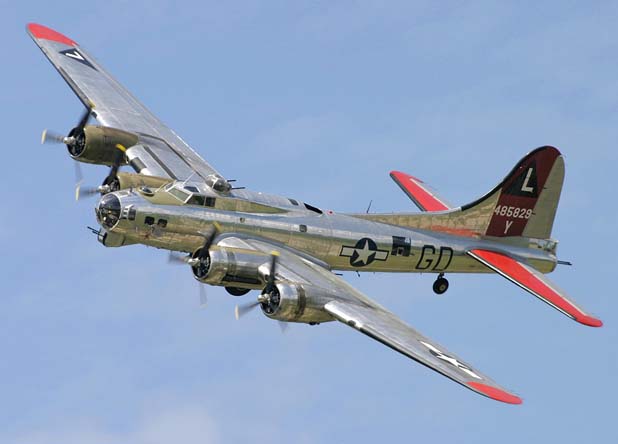
On August 17th, 1943 the Eighth Air Force had tried to eliminate the ball-bearing factories at Schweinfurt, deep inside the German heartland. Flying in daylight, and unescorted for the vast majority of the trip, the raid had been an audacious catastrophe. Some 230 bombers had taken part, and sixty of these were completely destroyed. As well as these sixty B-17s, a further 55-95 bombers were badly damaged. Many of these were too severely damaged ever to be repaired.

Living legends

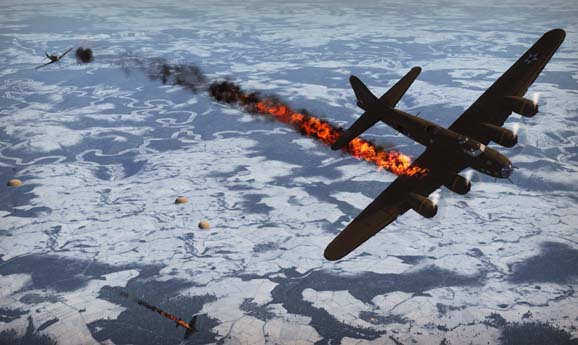
The Eighth Air Force regained its composure, made good its losses in both men and aircraft, and, on October 14th 1943, they attacked again.  Flying in daylight, and unescorted for the vast majority of the trip, the raid was arguably a bigger disaster than the previous one. Of the 291 B-17s on the mission, 60 were shot down over enemy territory and another 17 damaged so severely that they had to be scrapped. A further 121 aircraft were damaged to a greater or lesser extent. These losses represented more than 26% of the attacking force.

d-13-vs-b-17-24guva vvvvvvvvvvvv

The losses of aircrew were equally devastating. Some 650 well trained and skilful specialists were killed, which constituted some 22% of the 2,900 brave young airmen who went on the raid. The 306th Bomb Group lost 100 men, with 35 either killed in the air or died of wounds and 65 made Prisoners of War. The 305th Bomb Group lost 130 men, which was 87% of their complement.
General Henry H. “Hap” Arnold was later to state that the Black Thursday loss of American bombers in the Schweinfurt raid was “incidental”. Despite this callous dismissal of the lives of well over six hundred of his own men, further unescorted daylight bomber raids deep into Germany were immediately suspended until further notice. Cynics might well ask how many more B-17s  were left after the two disastrous attacks on Schweinfurt? Long distance bombing raids would only recommence in February 1944 with the advent of Operation Argument, a series of missions which would later be more commonly known as “Big Week”.

*****

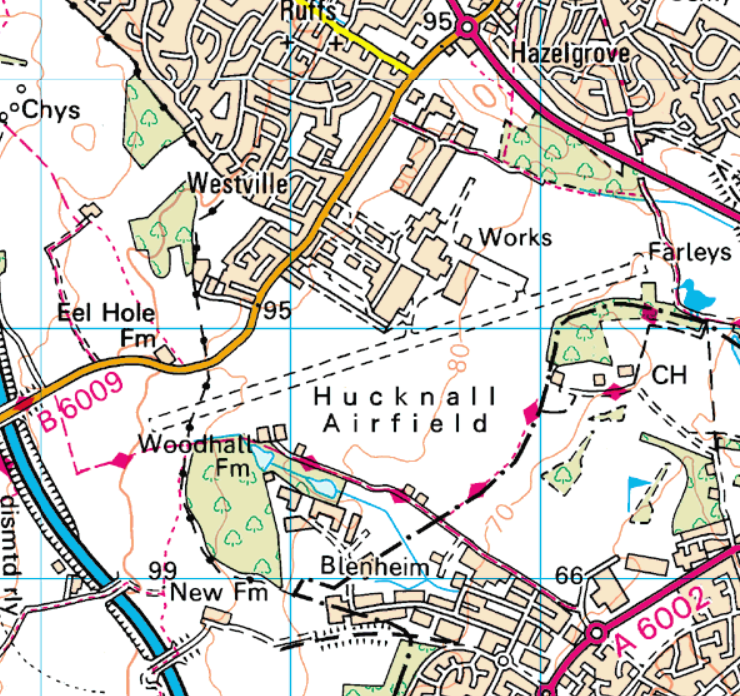
I live in Sherwood, a suburb in the north of the Nottingham conurbation in England. At the end of our street is “Hucknall Road” which leads the seven or so miles to the much smaller market town of Hucknall.

hucknall aerodromecccccccc

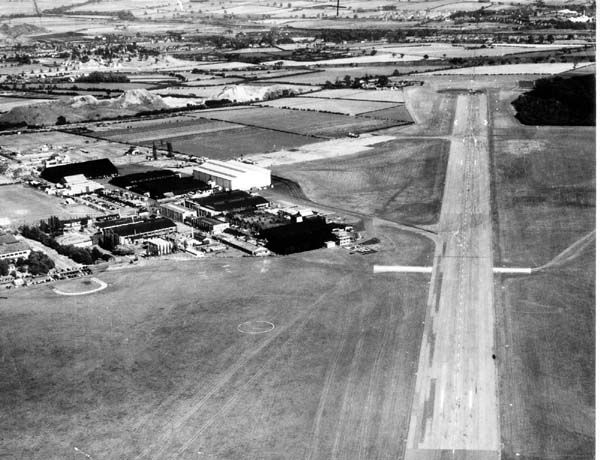
Strangely enough, Hucknall has a small grass airfield which is less than six miles from our street. Most days we can hear light planes making an enormous noise as they drone slowly overhead.

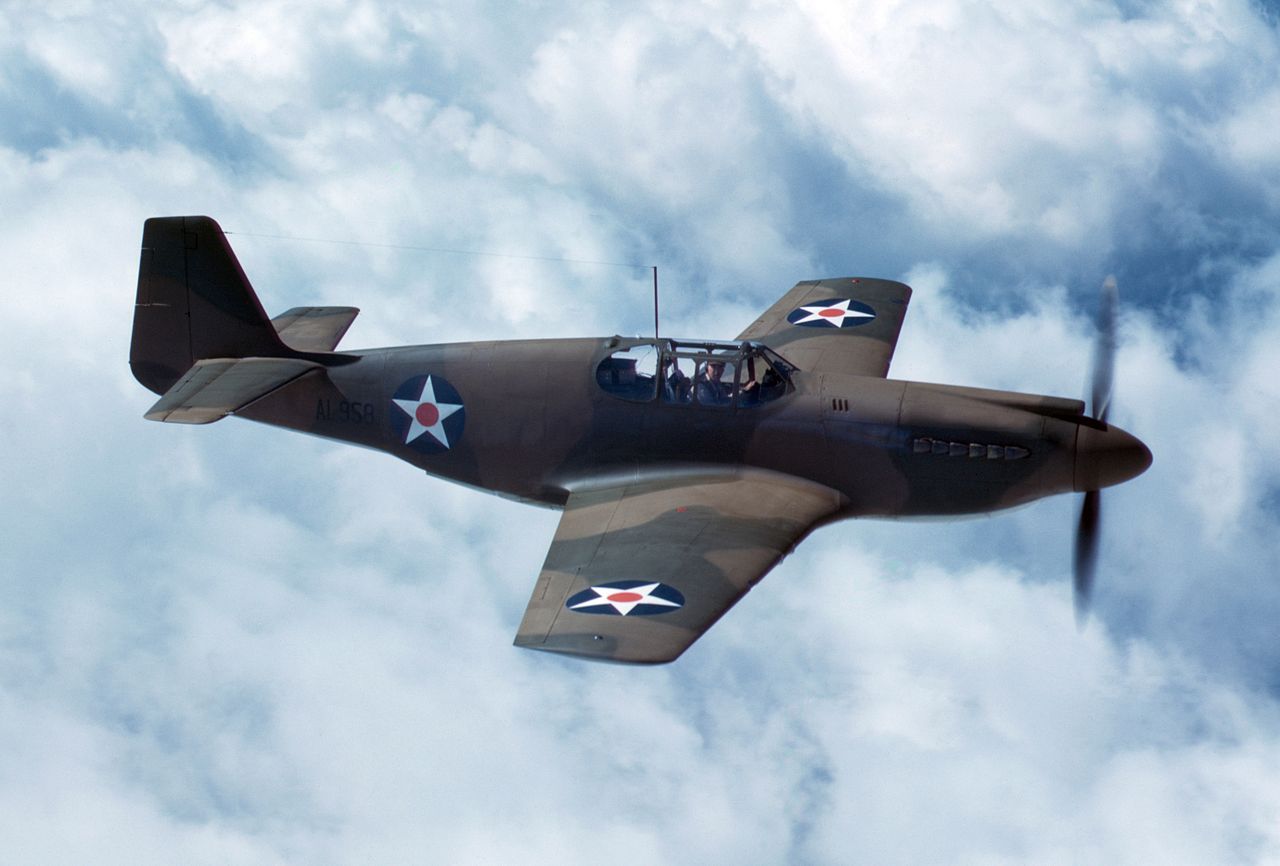
Hucknall RunwayxxxxxxDuring the course of April 1942, one man who frequently worked at Hucknall Aerodrome was to come up with an idea which would go a very long way indeed to winning the war in Western Europe. His name was Ronald W. Harker and he was usually known as “Ronnie”. Harker was the senior liaison test pilot with Rolls-Royce. Perhaps with Harker’s employer in their minds as an ulterior motive, the RAF had already invited the experienced test pilot to test fly the North American Mustang Mark 1, an American aircraft which was designed and built in the unbelievably short time of 117 days. This amazing feat was in response to a request by the British Purchasing Commission for an RAF fighter which would be an advance on the Spitfire.

1280px-P-51-October1942

The original North American Mustang was powered by an Allison V-1710 piston engine and Harker was quite impressed with the plane’s handling qualities. Its performance up to 20.000 feet or so was commendable, but any higher, and the aircraft quickly became rather disappointing. Harker concluded that the problem was the inadequate Allison engine which was too low-powered to exploit the plane’s advanced aerodynamic features including a much more fuel efficient laminar flow wing. This innovation cut down the amount of turbulence as the air passed over the wing and would eventually lead to almost phenomenally low fuel consumption.

fig14

Initially though, the new American fighter had an extremely unimpressive maximum range of only 400 miles, and when delivered to the RAF it was quickly relegated to Army co-operation and photographic work.
Ronnie Harker was employed by Rolls-Royce and was therefore presumably somewhat biased, but it was his suggestion to take out the Allison engine and to replace it with the Rolls-Royce Merlin 61, an act which was to transform a rather disappointing aircraft and to turn it into a war winner.
Despite a great deal of initial reluctance, mostly from the British Air Ministry, the first flight of the newly engined Mustang took place at Hucknall Airfield on October 13th 1942 with Captain R.T. Shepherd, the Rolls-Royce chief test pilot, at the controls. The Merlin-Mustang fighter’s performance was spectacular, particularly at high altitude. Thus the greatest fighter of the war was born and Harker acquired for the rest of his life the sobriquet of “the man who put the Merlin in the Mustang.” Harker also got a pay rise of a pound a week (just over one and a half dollars).

mustang cccccc

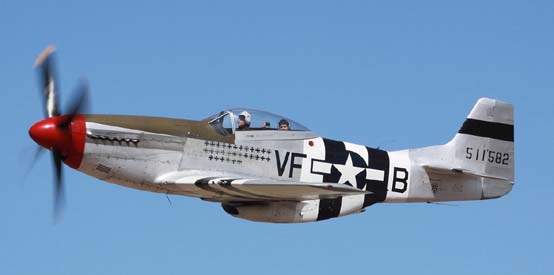
Some four hundred of the Merlin-Mustangs were ordered for the US Army Air Force as the P-51 and Great Britain wanted more than a thousand, although only 25 were eventually delivered to the RAF because Rolls-Royce’s own Merlin production was already allocated to Spitfires, Lancasters and Mosquitos. In the USA, however, North American, now almost overwhelmed by the orders to be filled, had no such problems, using Packard and Continental versions of the Rolls-Royce engine built under licence. Eventually, more than 15,000 aircraft were to be manufactured.

P-51_Mustang cccccccc
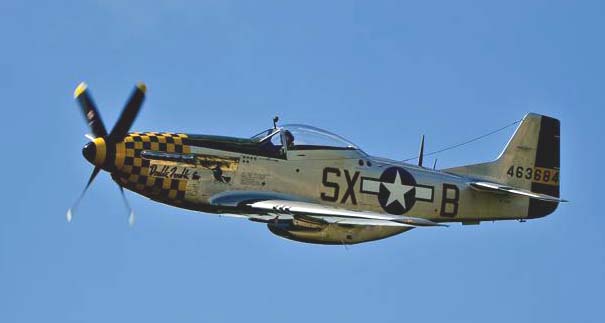
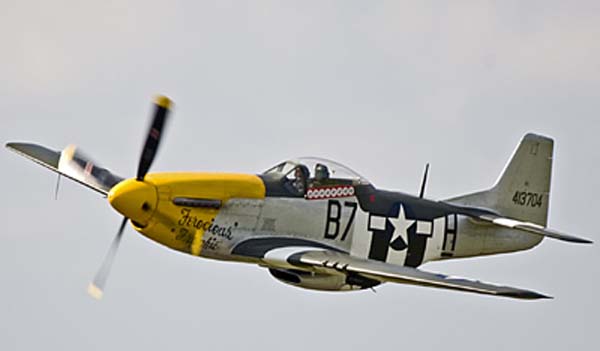
The P-51B carried just about the same amount of fuel as the P-47 Thunderbolt, but with its new Merlin engine “got 3.3 miles per gallon while the P-47 got less than 1.8.”. Brigadier General “Tommy” Hayes said that the Merlin-Mustang “had the three qualities you need most if you were going to escort bombers to Berlin – range, range and range.” The latter was extended even further by the carrying of two 512 gallon drop tanks which gave a maximum range of around 2,000 miles. In addition, the aircraft’s top speed increased from 390m.p.h. to 440m.p.h. and in the days after the war had finished there were to be many no doubt apocryphal tales of Mustangs which had exceeded the sound barrier in a steep or even vertical dive. In his memoirs, the P-51 ace Colonel Clarence E. “Bud” Anderson said that the Mustang “went like hell” because “the Merlin had great gobs of power and was equally at home high or low, thanks to its two-stage, two-speed supercharger.”

Mustang-Ferocious-Frankie-01 cvcc

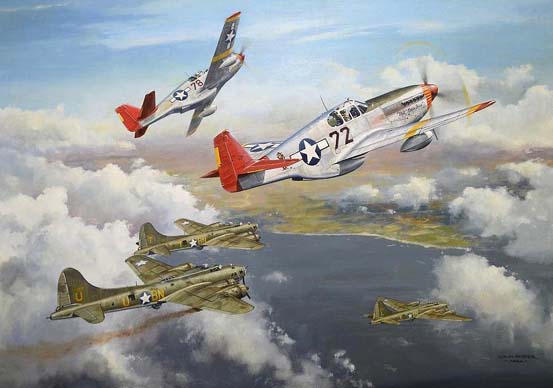
This newly updated Mustang was, of course, exactly the aircraft that the beleaguered bomber crews in the B-17s of the Eighth Air Force had been waiting for. Now, with help of “our little friends” they could go about their business with considerably less apprehension than had previously been the case. The new aircraft is certainly said to have had an impact on Herr Reichsmarschall Göring who “when (he) saw the Mustangs escorting the American air armadas over the capital of the Reich is said to have realised that Germany had lost the war.”

little friends cccccc

The mechanism by which the Third Reich was, along with Göring himself, quite rightly consigned to the rubbish bin of History, was by no means a complex one. The Mustang pilots were quite simply encouraged to engage the Luftwaffe fighters in combat at every opportunity.  Given the quality of the new P-51, especially the P-51D with its superb all round visibility bubble canopy, the Americans duly shot down both the aging Bf109s and the newer Fw190s. Gradually over the months, the Mustangs killed off all the most experienced and most effective pilots in the Luftwaffe. Between January and April 1944, the Germans lost more than 1,000 fighter pilots, of which 28 had more than 30 kills and eight had more than 100. On one mission to Augsburg, much later in the war, Mustangs put a final full stop to the last and greatest German threat, namely the twin-engined fighter armed with multiple rockets. They destroyed 23 of the 77 that came up to oppose them.

This slideshow requires JavaScript.

At the same time, as part of the same process, it became increasingly difficult for the Luftwaffe to find calm skies where rookie pilots might practice. And in any case there was soon too great a shortage of fuel for these young replacements to waste on practice flights. The situation swiftly went from bad to worse, and the Mustangs, and many other Allied fighters, all began to enjoy enormous success against increasingly weak opponents. The Germans were never ever throughout the rest of the war to enjoy air superiority.

madd 3xxxxxx

Allied bombers began by day and by night to operate with increasing impunity and to have an increasingly greater impact on the overall fighting capabilities of the Third Reich.

This slideshow requires JavaScript.

The situation is perhaps best summarised by a joke which remains as yet unverified on Wikipedia. It was supposedly told by Wehrmacht soldiers in the weeks after D-Day:

“If the plane in the sky is silver, it’s American, if it’s blue, it’s British, if it’s invisible, it’s ours.”
AeroWorks_Tuskegee_xxxxxxxxxx

“This all happened because of the Mustang, and the Mustang succeeded because of the Merlin.”

I cannot resist finishing my hymn of praise to the most effective fighter ever by quoting the episode in “Empire of the Sun”, when the “Cadillac of the Skies” makes its appearance, strangely not in Europe but in China. Enjoy.

8 Comments

Filed under Aviation, History, Nottingham

The Beast of Sarlat

The « Bête féroce de Sarlat » was famous in Périgord in central France from 1766 onwards. Its peculiarity was not to attack women but exclusively to kill men.

This slideshow requires JavaScript.

According to that font of all knowledge, Wikipedia….

“The « Bête de Sarlat » was a man-eating animal behind a series of attacks against human beings in the Périgord province of France. During the spring of 1766, a dozen or so fatal attacks were been recorded in the villages around Sarlat. The inhabitants of the region were filled with genuine panic, beginning to talk of a gigantic beast thirsting for human blood or even a werewolf. The creature managed around fifteen victims more, before in August 1766 the peasants and noblemen organised a beat together with more than a hundred rifles. During the course of this, the animal was flushed and killed. It was a wolf infected with rabies but the people did not readily accept this explanation and continued to talk of a werewolf.”

One website devoted primarily to the « Bête du Gévaudan » has a little to say about the « Bête de Sarlat » :
11111xxxxxxx

After all, the two areas are not a million miles apart in distance, although the two time periods clash, with the more famous Gévaudan monster killing its victims between the early summer of 1764 and June 19th, 1767 when a local man named Jean Chastel supposedly killed it during a hunt organized by a local nobleman.

“The Bête de Sarlat terrorised the Périgord province of France in the XVIIIth century. Its first appearance came in March 1766, when it carried out around ten killings in the surrounding area. The fear that the Beast caused can be imagined. It was from this time onwards that the myth of an enormous monster thirsting for human blood arose.
But in the month of August 1766, it was finally identified as a wolf suffering from rabies. The people did not really believe this explanation and it must be said that in the intervening time at least another eighteen more people were killed. The monster was seen absolutely everywhere, even in the dark backstreets of Sarlat. When the people’s fear and exasperation was at its height, the legend of the beast grew to such a point that the good people of the area no longer dared go out as soon as it got dark.

From this time onwards, both peasants and nobility came together with more than a hundred rifles and began a beat. The creature was found, pursued and shot. This death was confirmed by an assembly of a large number of happy eye-witnesses and seems to have taken away once and for all the justified fears of the local people. We know very well that the wolf with rabies and the man with rabies seem equally overcome with madness: frothing at the mouth, slavering and biting. They are terrifying to see and dangerous to approach. But this killing only stopped the spread of the rumour. Nothing really changed either in Sarlat or in the surrounding region, where they still spoke of the beast as a werewolf.”

perigord noir rocamadour cccccc

A further account tells broadly the same tale….

“The first time that this creature came to people’s attention was in the spring of 1766 when it had already committed a dozen murders in the villages around Sarlat. From then on, absolute terror reigned in the province of Périgord. They spoke of a gigantic beast, thirsting for human blood, and soon the legend grew to such a point that the people no longer dared to go out as night was falling, because it was claimed that the monster had even been seen in the very streets of Sarlat itself. The creature killed another good fifteen or so people before both the peasants and the aristocrats, driven to it by fear, organised a beat with more than a hundred rifles. The animal was flushed and killed, and it was stated to be a rabid wolf. Even if this particular animal was killed, its legend remained alive and well throughout the whole region, where they spoke for a good many more years of a bloodthirsty werewolf.”

On his own website, Mikerynos writes

“The Beast of Sarlat terrorised Périgord in the XVIIIth century. Its first appearance dates back to March 1766 when it had already committed around a dozen murders in the neighbouring areas. It is easy to imagine the terror that it provoked. It was from this time that there began the myth of an enormous monster thirsting for human blood. In the month of August 1766, however, the animal was finally identified as a wolf carrying rabies. The ordinary people found it difficult to accept this explanation, and it must be said that in the meantime it had killed at least eighteen more people.
People would see the creature absolutely everywhere, even in the dark alleyways of Sarlat. With fear and anger both reaching their peak, the tales told about  the beast grew to such a level that the good people of the region no longer dared to go out as night fell. From that moment both peasants and aristocrats came together with more than a hundred rifles and organised a beat. The animal was found, tracked and shot. This death was witnessed by so many ecstatic eyes and seemed to have rid the local people for ever of the object of their well justified fears.
We know very well that a wolf or a man with rabies both seem equally overcome with madness, slavering at the mouth, frothing and biting. They are terrifying to see and dangerous to approach. But this only stopped the rumours from spreading, nothing had changed and both in Sarlat and the surrounding area, they still talk of the beast even now as a werewolf.”

At the time in 1766, a broadsheet about the beast was published locally in the province.

broadsheetcccccc

Here is the bottom half with the text. Hopefully, the words are a little clearer….broadsheet   bottom  cccccc Here is a translation of the words you can see, but unfortunately, this is, literally, only half the story. And it seems supremely ironic that on the scan of the front page, you can see some of the print from the back page in reverse, but I cannot find it anywhere on the Internet…

“The curious, remarkable and true tale of the deaths and disorder caused by the ferocious beast, in the area around Sarlat in the Périgord region (of France).
Recently there has been seen in the area around Sarlat in the Périgord region, a ferocious beast, that was considered to be a rabid wolf, but one of an extraordinary size. This ferocious beast roamed, at an incredible speed, over the parishes of Saint-Julien and Grossejac. In vain did a number of the inhabitants of one or the other parish try to put a stop to the depredations of this cruel animal. Between eighteen and twenty people were the sad victims of its fury.
This animal was in complete contrast to the Beast of Gévaudan of which so much has been said; for it seems that the former hated only men whereas the Beast of Gévaudan preferred to attack women. When ready to seize its prey, it put up its hackles, and its eyes became flaming red. It raised itself up on its back legs and tried to seize the victim, sometimes by the face, sometimes by other parts of the head. To stop the ravages of this formidable enemy, whose terrible deeds were already beginning to weigh only too heavily on people, the nobleman Descamps and the gentleman Saint Julien……

Raising itself up on its hind legs, of course, is not normal behaviour for a wolf, animals which nowadays seem to stick firmly to a four legged approach. Flaming red eyes, of course, are not a feature of any known wild animal.

The on-line edition of the newspaper « Sud-Ouest » reports…

“In the XVIIIth century a monster terrorised the south eastern part of the province of Périgord for several weeks. The creature appeared in March 1766 and around a dozen people were killed in the villages around Sarlat. Then was born the myth of an enormous beast thirsting for human blood, like some kind of werewolf.
In the month of August in the same year certain people identified it as a very large wolf infected with rabies. But the population were not reassured by this, especially as in the meantime eighteen other people had been killed. People glimpsed the beast everywhere, even in the dark little lanes of Sarlat. The “population of the village shut themselves away in their houses. Around a hundred people armed with rifles, both peasants and nobles then organised a beat. A rabid wolf was killed. The attacks stopped but the legend lived on, that of a werewolf.”

Its report continues with a device that is known, probably, to newspapers the whole world over. Indeed « Sud-Ouest » could not consider itself a real newspaper if it did not  have that desire to thrill, to terrify and then to sell more newspapers…

« Un loup a-t-il été aperçu en Dordogne ? »
“Has a Wolf been seen in the Dordogne?


la-bete-a-ete-prise-en-photo-par-quentin-sarlat-dans-un_1535215_480x300

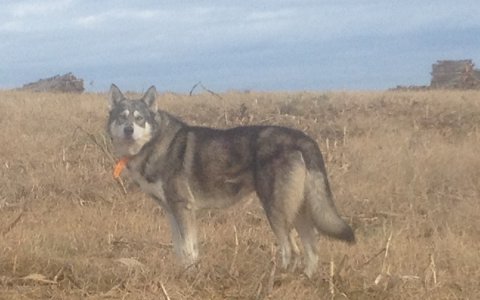
«This animal was photographed at Saint-Amand-de-Coly. Other people in the immediate area have been seeing it for the last two weeks. According to government sources, the theory of a wolf, however, is not particularly credible and some doubt may be expressed. Quentin Sarlat, aged 20, was coming back from Montignac last Friday and came across this animal in a field at Saint-Amand-de-Coly.

1415216_loup-2409062-1200_800x600p

He took a photograph of it, unlike one of his friends who had already seen it two weeks previously. «At first, the animal was much more distant and then it began to run across the field in my direction only to stop about ten metres away from me. He looked at me for at least thirty seconds, and I did not dare get out of my car. Then the animal went off round the back of the car, without ever taking his eyes off me »

As for Aurélien Viau, the regional head of the Office National de la Chasse et de la Faune Sauvage (The Ministry of Hunting and Wildlife) said that there was little chance that this was a wolf.

«Looking at this photograph, I would say that it’s a dog because the animal is too fat, it’s wearing an orange collar and it does not fear man. But nevertheless we will be going over there to have a look round. »

The collar that the animal is wearing could well be an identification collar, as some method of tagging wolves. On the other hand, it is certainly a wolf which seems to have eaten all the pies.

After this, of course, widescale panic seems to break out and the questions below are suddenly all asked in the newspaper. Nobody seems to notice it is that old strategy….”thrill, terrify, sell”……

Et si le loup revenait dans les forêts de Dordogne ?
“What if wolves came back to the forests of Dordogne?”
Le loup peut très bien recoloniser entièrement le territoire
“The wolf might very well recolonise the entire area”
Environnement : les sentinelles guettent toujours le loup
“Environmental news: a network of guards await the wolf”

And then, AH NON !!!!….

Dordogne : le loup était un husky

“Report from the Dordogne: the wolf was just a husky.”

Most significant of all perhaps is the verdict of the historian Jean-Marc Moriceau who in a newspaper article entirely worthy of our Daily Mail will:

“retrace the blood soaked career of the wolf in France. 8000 dead people in 250 years, and perhaps it isn’t all over yet….”

Perhaps the writer who argued in one of my previous blogposts that the entire French nation was too often guilty of collective hysteria in the face of these much maligned and gentle animals was correct. This website makes « Sud-Ouest » appear almost conservative in its ideas….

LE DIABLE A-T-IL CRÉÉ LE LOUP ?

DID THE DEVIL CREATE THE WOLF  ????

Bonne nuit et dormez bien!


7 Comments

Filed under Cryptozoology, France, History, Humour, Science, Wildlife and Nature

The End of the British Empire, December 26th 1913

The very first game of Rugby in the long history of the High School was played on Friday, December 26th 1913, the last Christmas and the last Boxing Day before the outbreak of the Great War. The game took place on the High School’s playing fields at Mapperley Park Sports Ground , used by the school since 1897, when they had left the Forest Recreation Ground which was considered to be too dangerous for boys to play sport there.

This map shows the walk from the High School (which is in the bottom left on the opposite side of the yellow road from the “C” of “Cemy”) down to Mapperley Park in the centre right, indicated by the orange arrow. The present day Games Field, at Valley Road, is the blue word “Day”  in the top left hand corner.

games medium

This map shows the site of the Sports Ground in greater detail. Look for the orange arrow again.

Untitled 2

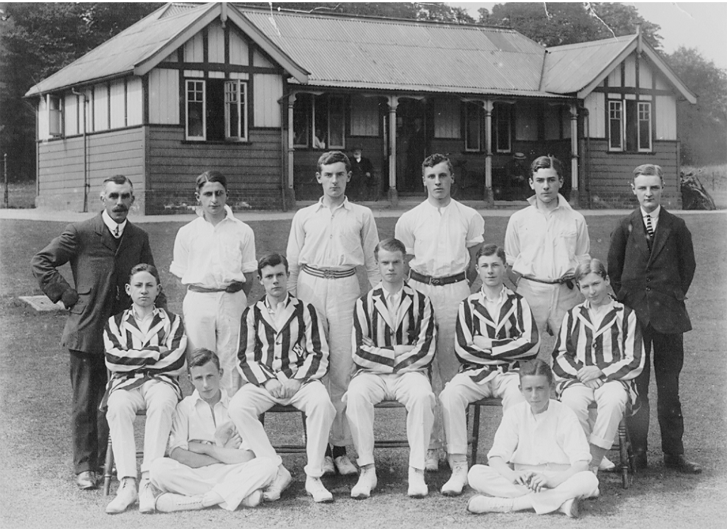
This is the Pavilion at the Mapperley Park Sports Ground which was demolished only within the last twenty or thirty years . The young men are a long forgotten First XI school cricket team from just a few short years before  the Great War.

pavilionThe gentleman on the left of the back row is Mr.Albert Grant Onion, the groundsman. He coached the High School cricketers with great enthusiasm, and saw many of them go on to do very well with local clubs. In 25 years, he did not miss umpiring a single 1st XI fixture, and was famed for his fairness and impartiality. He and his wife and daughters were responsible, too, for preparing all of the teas for the players. The young man at the other end of the back row is probably the team scorer, who kept an exact record of the game. Alternatively, he may be the reserve player, the so-called twelfth man.

On this occasion though, on Boxing Day, 1913,  it was not a cricket match but a rugby game. As a preliminary before the school’s changeover from Football, which was played from 1870-1914, to the new sport of  Rugby Union, therefore, the Old Nottinghamians played against Notts Rugby F.C.. The Old Boys lost a closely fought game by (three tries) 9 points to (three goals), 15 points. The tries were scored by H.A.Johnstone, C.G.Boyd and D.P.C.Grant. The referee was Mr.Lionel Kirk. Presumably, this fixture served for many people as a demonstration of the new sport.  In the days before television, the majority of Old Boys and Masters, and especially the parents and current pupils, would probably never have seen the game played before.

The Old Boys’ team was Stocks; H.A.Johnstone, H.S.Stocks (Captain), A.Willatt, R.L.W.Herrick, C.G.Boyd, W.Johnstone; D.P.C.Grant, F.Hardwick, J.K.Turpin, A.R.S.Grant, H.W.Ballamy, L.W.Peck, E.G.Hogan and W.S.Facon.

A pleasant interval in the Christmas festivities, one might think, a little respite from a surfeit of roast turkey, brussels sprouts, Christmas pudding, port, sherry, cigars and all the other indulgences of this wonderful time of year. Except that nobody who was there on that fatal Friday knew that a World War was to break out within less than eight months. That more than four years of fighting would leave almost a million British dead, and in that number would be more than three hundred Old Nottinghamians.

In actual fact, the eventual fate of the members of the Old Boys’ Rugby team pretty much defies belief. As well-intentioned, patriotic, decent, optimistic, courageous and athletic young men, they were to run forward into the maelstrom of the Great War as if it were a blood spattered combine harvester.

Henry Archer Johnstone became a Major in the 152nd Brigade of the Royal Field Artillery. He was the beloved son of John and Ada Johnstone, of Fairmead, Risley, Derbyshire.

johnstone

Henry was to die on Tuesday, May 21st 1918, at the age of only twenty eight. He is buried in Wancourt British Cemetery near Arras in northern France. His rugby playing days were finally over.

H.S.Stocks, who left the High School in July 1904, was eventually to become a Lieutenant in the 7th (Service) Battalion of the Royal Sussex Regiment. He was severely wounded on Friday, July 7th 1916, in the Battle of the Somme, and rendered unfit for further active service. I would certainly have been very surprised if he ever played any more Rugby matches with his young laughing friends.

imagesJ0RY1CA0

John Riversdale Warren Herrick was a Captain in the “2nd King Edward’s Own Gurkha Rifles (The Sirmoor Rifles). He was in the 3rd Battalion attached to the 11th Gurkha Rifles when he was fatally wounded on active service in Iraq. The son of Dr.R.W.Herrick and Mrs.Edith Herrick of 30, Regent Street, Nottingham, Captain Herrick was to die from his wounds on Sunday, October 24th 1920 at the age of only twenty seven. He is buried in the Basra War Cemetery, Iraq. His rugby playing days were finally over.

741px-second_battle_of_passchendaele_-_field_of_mud_

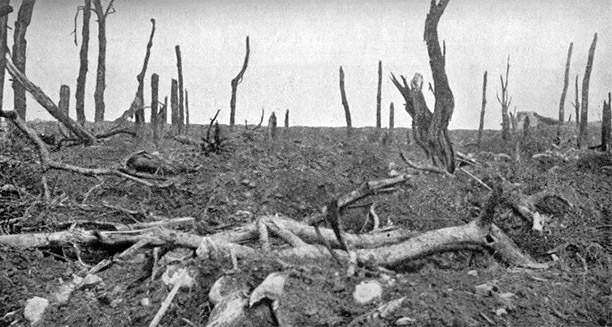
Charles Gordon Boyd was a Second Lieutenant in the 7th Battalion of the Sherwood Foresters, but was attached to the 9th Battalion of the Leicestershire Regiment. On Thursday, May 3rd 1917, he was killed whilst attacking Fontaine-Les-Croiselles with ‘D’ Company at the age of only twenty four. He was the son of George Herbert Boyd and Sarah Louisa Boyd, of, initially, 13, Tavistock Drive, Mapperley Park. Charles Boyd had been the Captain of the School in 1911-1912. In cricket, he was the First Team’s wicketkeeper and he was an enthusiastic footballer who played regularly for the First Eleven. His full record as a goalscorer was eleven goals in nine appearances. He surely got changed for this particular fixture in his own home nearby and perhaps walked along Tavistock Drive to the pitch in a laughing little group of his fellow players.  At the time of his death, his parents had moved to St Peter’s-in-Thanet, Kent. Tragically, Charles Boyd’s remains were not found until some six years after his death, in November 1923, when he was reburied in the Heninel-Croisilles Road Cemetery in the Pas-de-Calais in northern France. His rugby playing days were finally over.

James Knowles Turpin was the beloved only son of Harry and Minnie Turpin, of 68, Henry Road, West Bridgford. James was a Second Lieutenant in “A” Battery, 241st South Midland Brigade of the Royal Field Artillery.

turpin 2

On Tuesday, August 14th 1917, he was killed in action at Boundary Road behind the Brigade HQ at Hill Top Farm near St Jaan just west of the frontline.  he was just twenty five years of age. He was buried in Plot 6, Row D, Grave 7 in Vlamertinghe New Military Cemetery, West-Vlaanderen, Belgium. His rugby playing days were finally over.

somme_1

Allan Roy Stewart Grant, while he was at school as A.R.S.Grant, was nicknamed “Pongy” by his fellow students, because of his parents’ choice of initials for him. He served as a Captain in the 10th Battalion of the Seaforth Highlanders, Ross-shire, Buffs, and the Duke of Albany’s. He was awarded the Military Cross. “Pongy” survived the conflict and duly returned to Nottingham.

Not so his elder brother, Donald Patrick Clarke Grant, who was in the 7th Battalion of the Cameron Highlanders.  He is listed as either a Lance-Corporal (by the Commonwealth War Graves Commission), or a Lieutenant (in the school lists of the fallen). He was killed on Thursday, April 12th 1917 at the age of only twenty seven. He had previously been the Manager at the British Crown Insurance Office in Nottingham. His remains were never found but his death is commemorated on the Arras Memorial.

Both young men were the beloved sons of the Reverend John Charles Grant, a Minister of Religion, and his wife Ellen Jemima Grant who lived at “The Manse” at 16, Baker Street, Nottingham. The family was of Scottish origin. Donald had, in actual fact, been born at Loanhead in Midlothian.

Harold William Ballamy was a Lieutenant in “B” Battery of the 231st Brigade of the Royal Field Artillery.

ballamy 1234

He was the beloved son of Frederick William Ballamy, a commercial traveller, and his mother,  Mrs.M.A.Ballamy of 17a, Gedling Grove.

ballamy 2

He was killed on either Tuesday, August 14th or Wednesday, August 15th 1917, as part of the Third Battle of Ypres, usually known as the Battle of Passchendaele. He was twenty four years of age, and is buried in Fosse No 10 in the Communal Cemetery Extension at Sains-en-Gohelle,  in the Pas-de-Calais in northern France. His rugby playing days were finally over.

Leslie Wayland Peck was the son of Thomas Wayland Peck, a Clerk in Holy Orders, and a Diocesan Inspector of Schools, who had been, from 1885-1900, a master at the High School. From 1886-1893, despite being a teacher, Peck Senior had played regularly for the school’s First Team at both football and cricket. The family lived initially at 12, Arboretum Street, Nottingham, and then in Gedling Grove. He must certainly have known Harold Ballamy, a near neighbour. Perhaps the two boys used to make the short walk to school every morning, accompanied by Mr Peck. What could have been more embarrassing than walking to school with one of the teachers? Fortunately it was a very short walk. Today it would just necessitate crossing over the tram lines at  the High School tram stop.

Leslie Peck left the High School in June 1910, and joined the Bank, an establishment which was later to change its name to the National Westminster Bank. He had already served in the School Cadet Corps under Captain Trotman, and then joined the Sherwood Foresters Special Reserve. He was called up, and sent to France quite early in the Great War. He was “Mentioned in Dispatches”, but after being extremely badly shell-shocked, was invalided back home for a period of hospital treatment.

H08331 Leslie was then posted back to the Sherwood Foresters, but was never well enough to serve overseas again. I would certainly have been very surprised if he ever played any more Rugby matches with his young laughing friends.

passchendale

M.J.Hogan was the school goalkeeper from 1903-1905. In the Great War he became a Sergeant in the 1st Battalion of the Grenadier Guards. He was severely wounded on an unknown date. His goalkeeping days, and his rugby playing days too, were probably over for ever.

hogan 1904

I have been unable to trace anything concrete for W.S.Facon although according to the London Gazette, a Lieutenant W.S.Facon was promoted to Captain on December 21st 1921. The Internet also reveals that in the Air Force List for May 1939, a W.S.Facon worked at the Air Ministry in the Department of the Permanent Under-Secretary in the Directorate of Contracts.

I have been unable to trace either how many of these keen pioneer rugby players had been in the Officer Training Corps, but however many it was, it certainly had not trained them well enough for the Somme (1916) or Passchendaele (1917)

5 Comments

Filed under France, History, Nottingham, The High School

The Christmas Truce (a review, excerpts and my own thoughts)

I have decided to examine the Christmas Truce by quoting the words of the men who were there in that late December of 1914. I found these quotations in a book which I originally bought many years ago when it was first published, I should think, to commemorate the 80th anniversary of the Christmas Truce in 1994. The book is called, naturally enough, “Christmas Truce” and this is the edition I have…
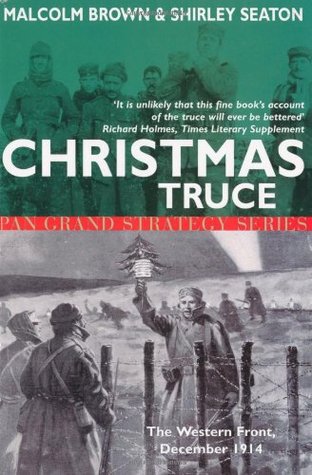
book
The authors are Malcolm Brown and Shirley Seaton. The volume is still there on Amazon in an updated edition and I would expect to find it on many other Internet book selling sites. It is a wonderfully written and extremely moving book which I would recommend to you wholeheartedly. It tells so very well the story of a brief poignant moment during the fire and fury of the Western Front. This book certainly inspired me to go deeper into this wonderful event. It is also now available in a more up to date edition, and is required reading for every student of the Great War, of whatever nationality.
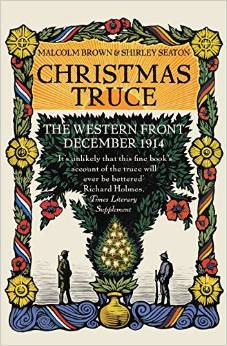
new edition

There are many soldiers quoted in the book and I have used a good number of them, with a few abridgements here and there. Quite simply, the tales they told were so moving that I found it virtually impossible to select only a tiny few to use. The book, of course, provides many, many more of them and goes into great detail about what exactly transpired that cold and frosty day in late December 1914. I do hope, though, that you will enjoy these brief extracts from a book that I still look at regularly today, some twenty years after I bought it:

“Several of my chums had been able to get hold of two small Christmas trees complete with candles, to be mounted on the parapet of the trenches, while others dragged planks with them, usually used in the battle against water and mud. As was usual at that time, having settled in the trenches, we just fired the occasional shot from our outposts to let the enemy know we would not let ourselves be surprised.”

*****

On Christmas Eve we got the order to go into the trenches. The day before we had celebrated Christmas in our rest quarters with the civilian people and their children who were presented with chocolate, bonbons and cake. It was all in good humour.
Then at darkness we marched forward to the trenches like Father Christmas with parcels hanging from us. All was quiet. No shooting. Little snow. We posted a tiny Christmas tree in our dugout – the company commander, myself the lieutenant, and the two orderlies. We placed a second lighted tree on the breast work.
Then we began to sing our old Christmas songs “Silent Night Holy Night” and “O Du Fröhliche”, a German Christmas carol.

*****

It was a beautiful moonlit night, frost on the ground, white almost everywhere; and about seven or eight in the evening there was a lot of commotion in the German trenches. And then they sang “Silent night”, “Stille Nacht”. I shall never forget it.  It was one of the highlights of my life. I thought, “What a beautiful tune”.

*****

Suddenly a man from my company reported, “The English are letting off fireworks”. And sure enough across the way from us, the enemy trenches were lit up with fires and rockets and so on. We then made a few banners reading “Happy Christmas” with a couple of candles behind and a couple on top.

*****

I was gazing towards the German lines and thinking what a very different sort of Christmas Eve this was from any I have experienced in the past. In the ordinary way of things, my father would have been making rum punch from an old family recipe, which had been written out by his grandfather, and was kept, of all places, in the Family Bible! Earlier, after the evening meal, we would have decorated the living rooms and hall with traditional greenery, and would now be looking forward to wishing one another a Happy Christmas, and toasting the occasion in the results of my father’s labours. Instead of this, here was I, standing in a waterlogged trench, in a muddy Flemish field, and staring out over the flat, empty and desolate countryside, with no signs of life……
Then suddenly lights began to appear along the German parapet, which were evidently makeshift Christmas trees, adorned with lighted candles!  Then our opponents began to sing “Stille Nacht, heilige Nacht”. They finished their carol so we sang “The First Nowell”, and when we finished they began clapping; and then they struck up another favourite of theirs, “O Tannenbaum”. And so it went on. First the Germans would sing and then we would sing one of ours, until when we started up “O come all ye faithful” the Germans immediately joined in singing the same hymn to the Latin words “Adeste fideles”. And I thought, well, this was really a most extraordinary thing – two nations both singing the same carol in the middle of a war.
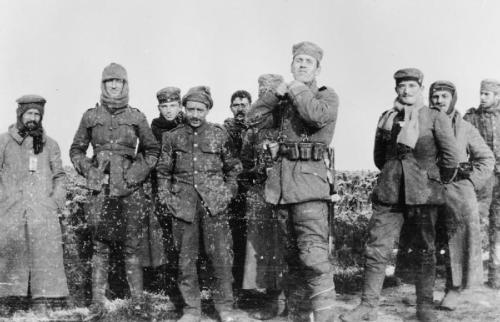
Christmas_Truce_1914_IWM_HU_35801

When I got back to the trenches after dark on Christmas Eve I found the Germans had got little Christmas trees burning all along the parapet of the trench. Meanwhile, unknown to us, two officers  got out of their trench and walked halfway to the German trench and were met by two German officers. They talked away quite civilly and actually shook hands!

*****

I have just been through one of the most extraordinary scenes imaginable. Tonight is Christmas Eve. Firing was going on all the time and the enemy’s machine guns were firing at us. Then about seven o’clock the firing stopped. I was reading the paper and the mail was being dished out. It was reported that the Germans had lighted their trenches up. I went out and they shouted “No shooting” and then somehow the scene became a peaceful one. All our men got out of the trenches and sat on the parapet, the Germans did the same, and they talked to one another in English and broken English. I got onto the top of the trench and talked German and asked them to sing a German folk song, then our men sang and each side clapped and cheered the other. Pope and I walked across and held a conversation with the German officer in command. He presented me to his officer. I gave permission to bury some German dead and we agreed to have no shooting until midnight tomorrow. We talked together, ten or more Germans gathered around. I was almost in their lines within a yard or so. We saluted each other, he thanked me for permission to bury his dead, and we fixed up how many men will do it, and that otherwise both sides must remain in the trenches.

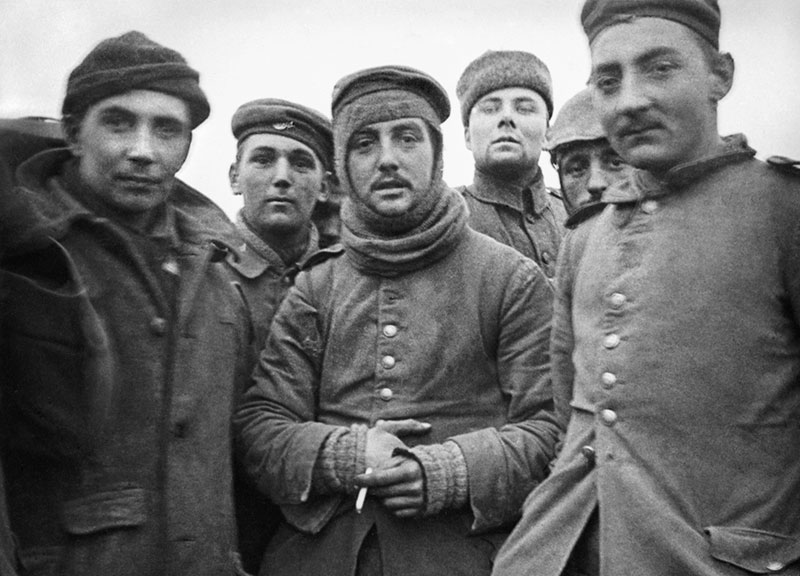
Then we wished one another good night and a Happy Christmas and parted with a salute. I got back to the trench and the Germans sang “Die Wacht am Rhein”. Our men sang “Christians Awake”, and with a good night we all got back into our trenches. It was a lovely moonlight night, the German trenches with small lights on them, and the men on both sides gathered in groups on the parapets. At times we heard the guns in the distance  but about us is absolute quiet. I allowed one or two men to go out and meet a German or two halfway. They exchanged cigars and smoked and talked. The officer I spoke to hopes we should do the same on New Year’s Day. I said “Yes if I am here”.

Trucecigarette

I felt I must sit down and write the story of this Christmas Eve before I went to lie down. If one gets through this show it will be a Christmas Time to live in one’s memory. I am just going for a walk round the trenches to see all is well. Good night.

*****

The Germans came out, and we gravely saluted each other. I then pointed to nine dead Germans lying in midfield and suggested burying them. We gave them some wooden crosses, and soon the men were on the best of terms and laughing.

*****

 There was no firing, so each side began gradually showing more of themselves and then two of their men came halfway and called for an officer. I went out and found they were willing to have an Armistice for four hours and to carry our dead men back halfway for us to bury. Then both sides came out, shook hands, wished each other compliments of the season, and had a chat. A strange sight between two hostile lines.

*****

I was in the 2nd Battalion of the Westphalian Infantry Regiment 15. On Christmas Day, at about eleven o’clock, there was a continuous waving of a white flag from the English trench. Soon afterwards a number of Englishmen climbed out and came towards our front. My commander, Baron von Blomberg, ordered me to find out what the Englishmen wanted. I  went out of the trench and we heard that it was the wish of the Englishman to bury their dead and they asked us to cease enemy action for an adequate period. What were we to do? Time was short. Major von Blomberg therefore decided that there should be a local Armistice until one o’clock in the afternoon, telling the Englishman that their dead must be buried by that time.

*****

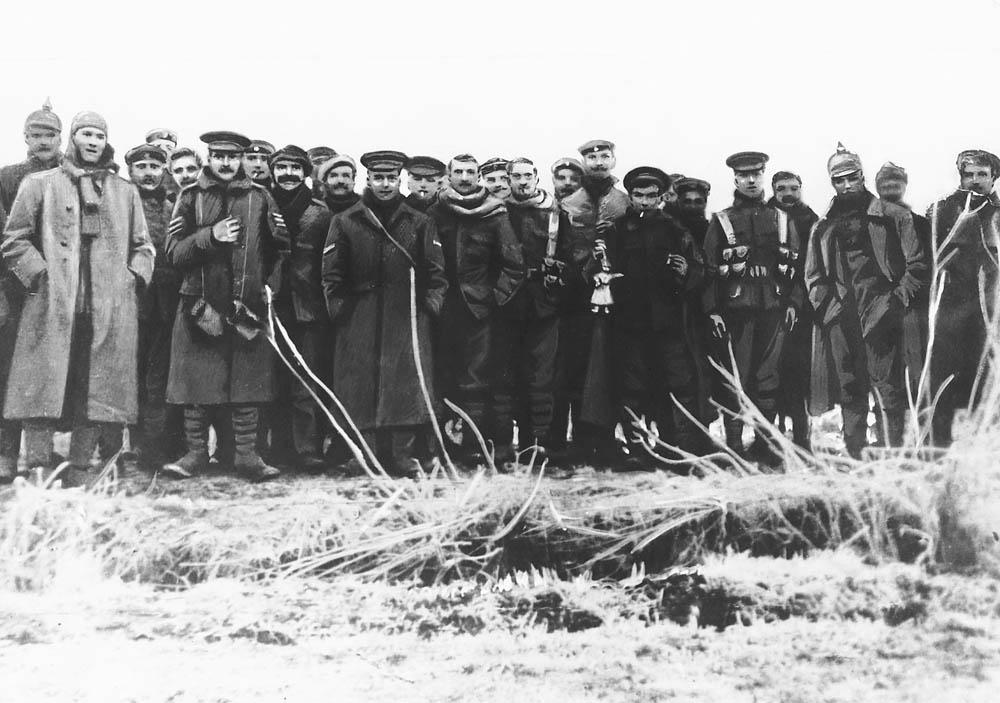
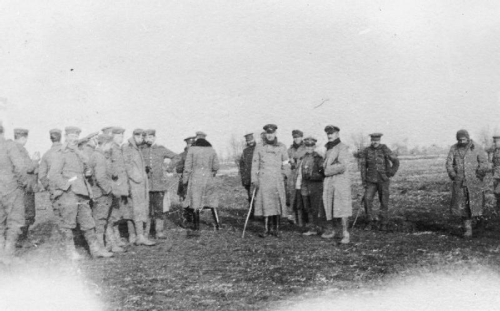
We then had a most wonderful joint burial service.  Our padre arranged the prayers and Psalms and an interpreter wrote them out in German. They were read first in English by our padre and then in German by a boy who was studying for the ministry. It was an extraordinary and most wonderful sight. The Germans formed up on one side, the English on the other, the officer standing in front, every head bare. Yes, I think it was a sight one will never see again. The ground between the two lines of trenches was soon swarming with men and officers of both sides, shaking hands and wishing each other a Happy Christmas.
Christmas_Truce_1914

“No Man’s Land was full of parties of British and Germans laughing and talking together.
By breakfast time, nearly all our men were between the trenches, and were the greatest pals. In the middle of the war we had a Merry Christmas.”

*****

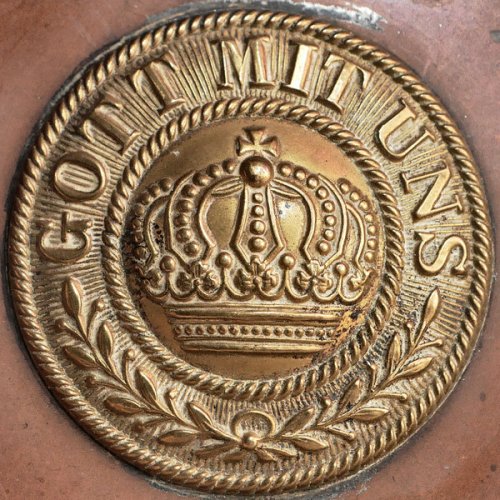
When morning came both sides shook hands and exchanged gifts. We were given corned beef, tea and cigarettes. They were mad about our cigars. I thought it would be a good idea to get rid of my uniform’s black metal shoulder titles, so I swapped them for very nice German belt with brass buttons and the words “God mitt Uns” on it, and I used that all through the rest of the wall to keep my trousers up.
1304254501_got_mit_uns_by_daliscar-d3fbgkq

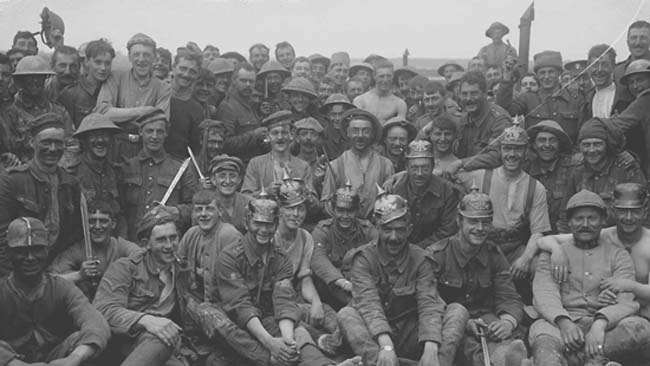
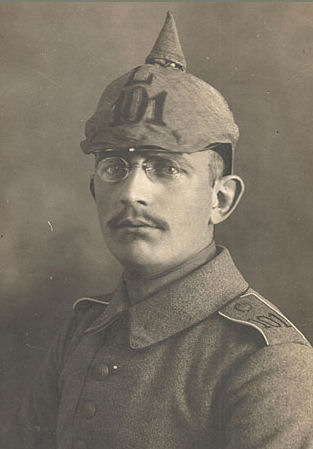
I spotted a German officer, and being a bit of a collector, I intimated to him that I’d taken a fancy to some of his buttons. We then agreed to do a swap. I brought out my wire clippers and, with a few deft snips, removed a couple of his buttons. I then gave him two of mine. One soldier swapped bully beef for a pointed German helmet.
Pickelhaube

The helmet achieved fame as on the following day a voice called out “I want to speak to the officer.” He continued, “Yesterday I swapped my helmet for the bully beef. I have an important inspection tomorrow. You lend me my helmet, and I will bring it back afterwards.” The loan was made and the agreement kept, sealed with some extra bully beef. I had a drink of rum off one of the Saxons and then I drank his health. He nearly shook my hand off.

*****

All the morning we have been fraternising, singing songs. I have spoken to and exchanged greetings with a colonel, staff officers and several company officers. We have just knocked off a dinner, and have arranged a meeting afterwards.

*****

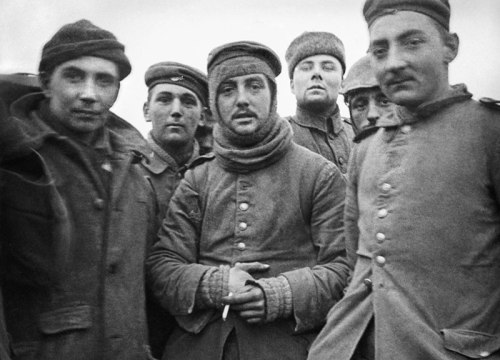
Captain Berryman came running up with the news that the Germans were out of their trenches  Sure enough I found a number sitting on the parapet of No. 2 Company’s trench, and also out in front of No. 1 Company. They were trying to converse with our men and giving them cigarettes, biscuits and boxes of cigars. As I could speak German I conversed with them. They all belonged to the 16th Regiment. They seemed very jolly as if they had just had a good dinner. One of them said to me that there must be “Friede auf der Erde”,  “Peace on Earth” on this day, being Christmas Day.
xmasPloegstreet-xxxxxxx

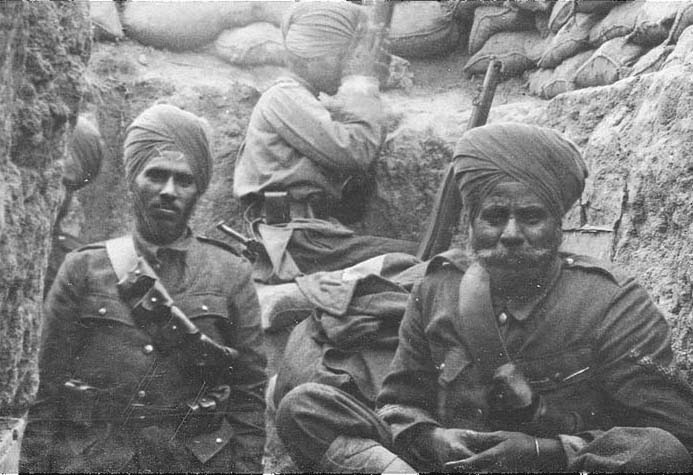
In the middle of No Man’s Land I met two English, one Indian and one German officer of the neighbouring company; we shook hands, wished each other a Merry Christmas, and then we exchanged some small presents like plum pudding, cakes, whisky, brandy, and so did our men. For an hour both sides walked about between the two lines of trenches, talking and laughing, swapping tobacco and cigarettes, biscuits etc….You would never believe that we have been fighting for weeks.

truce 1

One of the Germans asked me if I would like to bury a few dead Indians that were lying about their trenches. My chum and I set to work and buried about a dozen of them. All the Germans looked very fit. They were also very well clothed and looked well fed. One of their officers, a captain, clasped his hands together and looked towards heaven and said, “My God, why cannot we have peace and let us all go home!”

*****

A couple of bright sparks from the Staffordshire Regiment appeared – one clad in a tail coat, black trousers, and an old battered silk hat , the other decked out in blouse and skirt, an old bonnet and a broken umbrella. They paraded up and down and were joined by another joker who had found a broken bicycle with almost square wheels, which he trundled up and down. Many of the Germans had costumes on which had been taken from the houses nearby, and one fellow had a blouse, skirt, top hat and umbrella. My own platoon sergeant added a good deal to the Christmas party by going out to meet the Germans wearing a large skirt; this led to some earthy Teutonic byplay and caused plenty of laughs.

standard

We heard them singing and shouting in their trenches, and about midday they began lifting up hats on sticks and then they showed their heads, and then their bodies and finally they climbed out of their trenches into the open! Of course we could not shoot them in cold blood like that. We could hardly believe our eyes; we were just about to open fire when one of our officers gave us the order to unload our rifles. Seeing the Germans without any rifles, we stood up and answered them. Then they started to cheer. One of their men shouted out, “Here’s some cigars for you. Come and fetch them.” They shouted, “Come on, we will not fire on you.” The fellow who threw the cigars then came down off the top of his trench and picked up the box again, and started to walk over towards our trenches. Seeing this I climbed over the parapet of our trench to meet him. When we met in the middle he handed me the cigars and said, “A Happy Christmas to you”. I hardly knew what to do at first, but I shook hands with him and wished him the compliments of the season.
As soon as the Germans saw us shake hands they cheered like mad. They then started to come towards our trench.
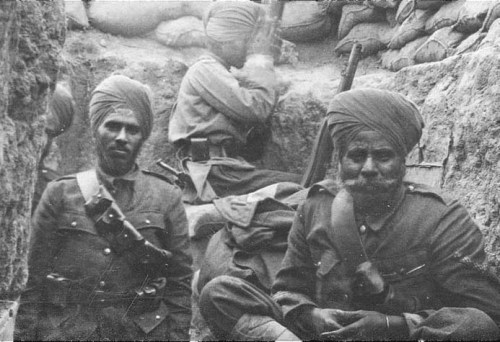
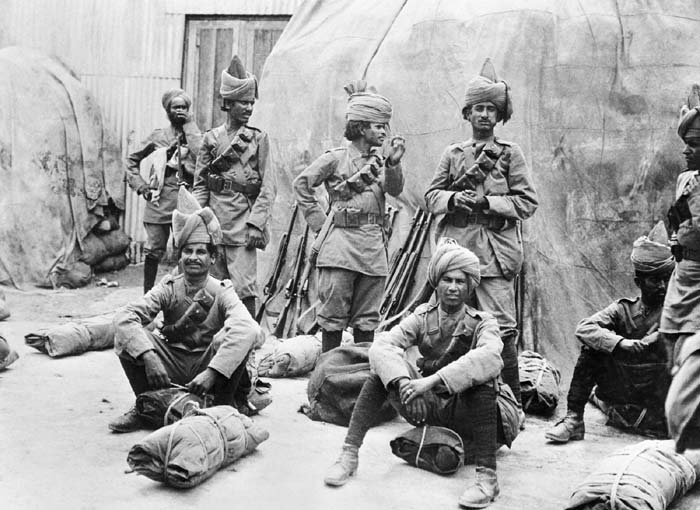
indians

Our boys, all Indians by the way, started out to meet them as well. The scene that followed can hardly be described. To see our greatest enemy shaking hands with our Indian troops and giving them cigars and cigarettes was a sight I shall never forget.

Captain, come out, the British have started waving. There is no shooting, and our men are doing the same”. I rushed out and saw a strange unforgettable picture. The soldiers who were standing upright on top of their trenches without their weapons, shouting “Merry Christmas”. Some soldiers had advanced into No Man’s Land. They met in the middle, shook hands, talked and strolled about.…… They were trying to talk to our men and they were giving them biscuits and boxes of cigars.

*****

An officer amused us very much by clearing some soldiers away from his machine gun emplacement, but he finally had his photo taken arm in arm with one of our officers.

*****

Coming across from the German trenches was a solitary German, carrying a white flag high above his head. Having come about halfway he suddenly stopped and waited. Then one of our men went out to meet him, to bring him into our lines. Unfortunately the German had not been blindfolded, and he had to be made a prisoner of war. He protested and was awfully upset, but he had seen behind our lines. (The luckiest man I have heard of for a good while. The whole of 1915, 1916, 1917 and 1918 in a British POW camp!)
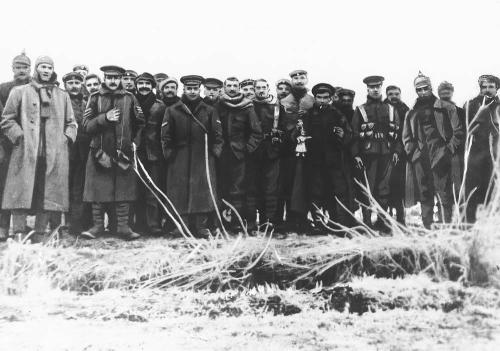
Christmasxxxxxxx truce

The Germans sent in a party with a white flag. Our bloody fool of a sentry brings one German in without blindfolding him and, of course, he had to be made a prisoner-of-war.

*****

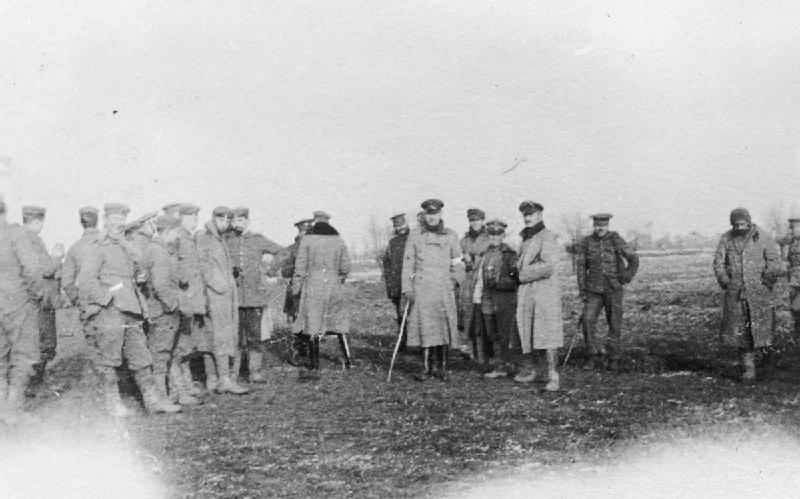
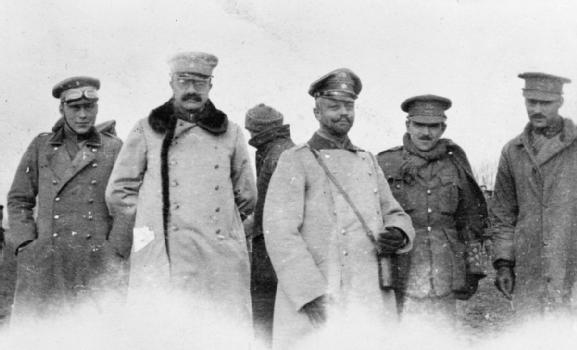
The German officers were taking photographs of mixed groups. One German brought us copies to send to the English newspapers. We  had our photographs taken by a German who was the proud possessor of a small camera. There were Indians and Germans shaking hands when he pulled the shutter.
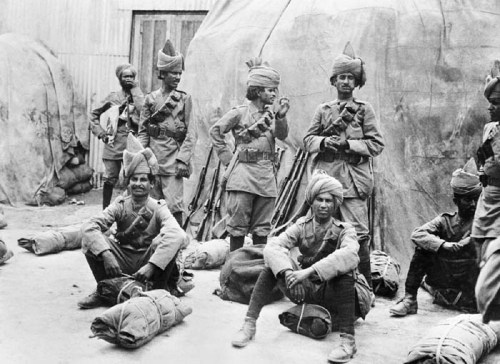
indians 2
He took a photograph of three of our officers and three of their officers; our officers were placed between theirs. Suddenly one of the Germans ran back to his trench and presently appeared with a large camera. I posed in a mixed group for several photographs. No doubt framed editions of this photograph are now on some German mantelpiece!.

*****

“Dear Mother, I am writing from the trenches. It is 11 o’clock in the morning. Beside me is a coke fire, opposite me a ‘dug-out’ (wet) with straw in it. The ground is sloppy in the actual trench, but frozen elsewhere. In my mouth is a pipe presented by the Princess Mary. In the pipe is tobacco. Of course, you say. But wait. In the pipe is German tobacco. Haha, you say, from a prisoner or found in a captured trench. Oh dear, no! From a German soldier. Yes a live German soldier from his own trench. Yesterday the British & Germans met & shook hands in the Ground between the trenches, & exchanged souvenirs, & shook hands. Yes, all day Xmas day, & as I write. Marvellous, isn’t it?”

*****

Suddenly a Tommie came with a football and then began a football match. We marked the goals with our caps. Teams were quickly established and the Fritzes beat the Tommies 3-2.

*****

The regiment actually had a football match with the Saxons, who beat them 3-2.

*****

“A” company played against the enemy with an old tin for a ball: they won 3-2!

*****

Some of our boys tied up a sandbag and used it as a football, while a party of Germans enjoyed themselves sliding on a little frozen pond. Soon there were dozens kicking a made up football about in No Man’s Land.

*****

In the sector of the Argyll and Sutherland Highlanders, “it was recorded that a game was played and according to a letter  published by the Glasgow News, the Scots won by  4–1.

*****

He toured Britain last year with the Leipzig team and beat Glasgow Celtic 1-0. All day we walked to and fro with newspapers and our little photographs and parted, regretting that it was our duty to fight each other.

*****

Men from the 1st Battalion came out from their trenches to play football. The Royal Welch Fusiliers played the German Battalion 371. The Germans won 2–1.
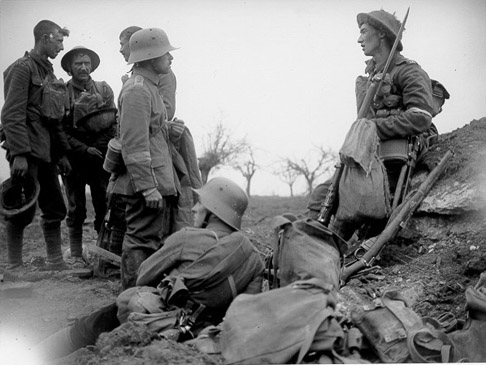
Christmas%20truce%202014-41-124316

As the fog lifted the Germans were playing football. We  climbed out of the trench armed with an entrenching tool handle and a jam tin and played rounders.

*****

We had a football out in front of the trenches and asked the Germans to send a team to play us but it had been freezing all night and it was a ploughed field so their officers stopped them doing it.

*****

A match against a German team (described as “Prussians and Hanovers”) was played near Ypres near the border of Belgium and France.

*****

The Lancashire Fusiliers, based near Le Touquet on the northern French coast, played a match against German soldiers using a ration tin as the “ball”.

*****

Captain Sir Edward Hulse reported “a sing-song which ended up with ‘Auld lang syne’ which we all, English, Scots, Irish, Prussians, Wurttenbergers, etc, joined in. It was absolutely astounding, and if I had seen it on a cinematograph film I should have sworn that it was faked!

*****

The ball appeared from somewhere, I don’t know where, but it came from their side, it wasn’t from our side. They made up some goals and one fellow went in goal and then it was just a general kickabout. I should think there were about a couple of hundred taking part. I had a go at the ball. I was nineteen. Everybody seemed to be enjoying themselves. There was no ill will between us. There was no referee, and no score. It was simply a mêlée. We had a rare old jolly vacation, which included football, in which the Germans took part.

sr_french_marines_01

On Christmas Day 1914 there was an Armistice between us and the enemy. A comrade of our company held up a sign with the inscription “Fröhliche Weinachten” (Merry Christmas). The English immediately responded in like manner. An English soldier shouted to us in imperfect German, asking if we wanted to remove the dead between the lines. We came to an agreement and our men climbed over the parapet, as did some of the English. Afterwards the Englishmen asked us to sing some Christmas songs. An English soldier came towards as and exchanged cigarettes and chocolate. The sight of opposing troops chatting to each other along a stretch of several hundred metres was a very strange one. As darkness fell both sides went back to their trenches. Such attempts at fraternisation have hardly been approved by the High Command; they remain, however, a wonderful testament to the human spirit.

*****

I gave them cigarettes and was given a box of tobacco which I will send home as a souvenir of  the most extraordinary event of the whole war – a soldiers’ truce without any higher sanction by officers and generals. We strolled up and down for about half an hour, shook hands, said goodbye, saluted and returned to our lines.

*****

And finally, the  very best one of all…

It was just the sort of day for peace to be declared. It would have made such a good finale. I should have liked to have suddenly heard an immense siren blowing. Everybody to stop and say “What was that? Siren blowing again: the appearance of a small figure running across the frozen mud and waving something. He gets closer – a telegram boy with a message! He hands it to me. With trembling fingers I open it: “War off, return home – George. King” Cheers! But no, it was a nice, fine day, that was all.

happy_soldiers_wwi

For me the Christmas Truce has always been the most wonderful achievement ever by ordinary working-class men, many of whom would never have even seen a German or an Englishman before the Great War broke out. And despite all the appalling self-serving jingoism in the newspapers, after just four months of  slaughter, both armies of ordinary men were ready to recognise that they had far more in common with their so-called enemies than they might previously have been allowed to know. The warmth and humanity of these men shines through still, even a century after the event. “Merry Christmas” or should I say “Fröhliche Weinachten”?
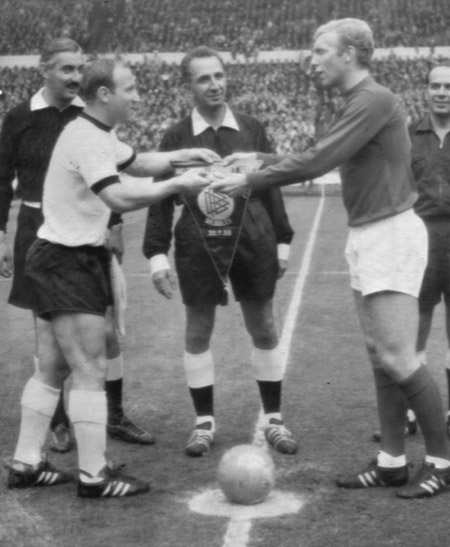
SportTo commemorate the hundredth anniversary of the impromptu football matches played in No Man’s Land during the Christmas Truce of December 1914, both English and German football supporters have come together this year, 2014, in the spirit of Christmas friendship. The highlight of the weekend-long meeting was a seminar entitled “The Referee”.

English supporters were able to show their German friends how it is possible for the referee to award a goal even though a tiny and almost insignificant proportion of the ball may not have completely crossed the line.

This slideshow requires JavaScript.

Our German friends were able to show how a referee, if he decides the ball is of the wrong colour or has been made by the wrong manufacturer, can refuse to award a goal, even though the ball may have crossed the line by several metres.

This slideshow requires JavaScript.

At the end of a wonderful day of comparing beers and consuming Christmas food, a collection was taken to fund methods of helping the referees of England-Germany games during the next century.

zzzzzz guide_dog_

1 Comment

Filed under France, History, Personal, Politics

Schweinfurt Two: sixty B-17s downed, 650 airmen killed

I hope that you were able to read my blog post about the American Eighth Air Force’s first raid on the ball bearing factories at Schweinfurt. This brave action took place on August 17th 1943, and was a catastrophe. As I wrote a few weeks ago…

“The raid caused a 34 per cent loss of production at Schweinfurt but this was soon made up for by surplus supplies from all over Germany The industry’s infrastructure, while vulnerable to a sustained campaign, was not vulnerable to destruction by a single raid.”

I quoted the casualty figures…

“230 bombers had taken part, and sixty of these were destroyed. Five hundred and fifty two men were killed in the air, and seven poor souls made it back home, but, alas, had already succumbed to their injuries. Twenty one men were badly wounded. Beyond the sixty B-17s shot down, between 55-95 further aircraft were badly damaged. Of these many were too severely damaged ever to be repaired.”

Despite these huge losses, the Eighth Air Force plan had always been to go back to Schweinfurt a second time. It was to take the best part of two months to rebuild their forces, but on October 14th 1943, the B-17s returned to attack the factories where, at the time, American wartime intelligence thought ball bearing production had been permanently reduced by up to a third.
This time, changes would be made. Instead of a two-pronged attack on the ball-bearing works at Schweinfurt and the Messerschmitt aircraft works at Regensburg, the entire force would attack Schweinfurt alone.

2 photos contrails

Secondly, additional fighter escorts were added to protect the vulnerable bombers as much as was possible during both the outward and return journeys of the operation. Each of the three bomber wings, therefore, was to be escorted by multiple squadrons of P-47 Thunderbolts. For an unknown reason, though, none of the P-47s were equipped with drop tanks, an important mistake which significantly limited their escort range. And one outfit of fighters previously allocated to the Flying Fortresses was given the job of acting as an escort to the 29 B-24 Liberator bombers on a diversionary mission to Emden.

This slideshow requires JavaScript.

At first, though, things went quite well. When the bombers were initially intercepted as they crossed the coast the P-47s succeeded in shooting down seven Bf 109s. But over the Netherlands the P-47s came to the end of their range and the B17s were left alone and virtually defenceless.  Large numbers of Focke-Wulf FW 190s and Messerschmitt Bf 109s  made repeated attacks exactly as they had done in August. The 305th Bomb Group lost 13 of its 16 B-17s in just a few minutes. Further into Germany, this second Schweinfurt Raid would soon follow the same pattern as the first one.

This slideshow requires JavaScript.

As well as single engined fighters, twin engined Messerschmitt Bf110s and Junkers Ju88s were encountered. They carried much heavier cannon.

two by two

This time, many more aircraft were armed with Werfer-Granate 21 rocket launchers, firing unguided stand-off rockets.

two rockets

Here are two wonderful pictures from the Life Magazine of  the day, showing the heroic efforts of the brave young Eighth Air Force gunners.

As in August, although the ball-bearing factories were badly hit, the mission did not achieve any long lasting effects. Ball bearing production was halted for around six weeks but these losses were again easily made up by the large stocks the Germans already had. After this second attack, all of the ball bearing facilities were dispersed from Schweinfurt across the whole of Germany to reduce the risk of their being bombed for a third time.
General “Hap” Arnold claimed that “Black Thursday” and its losses were just incidental, but daylight bomber raids deep into Germany without fighter escort were suspended until further notice. Cynics might well have asked just how many B-17s did the Eighth Air Force have left on strength anyway?
Long distance bombing raids would only recommence in February 1944 with the advent of Operation Argument, a series of missions later to be called the “Big Week”. By then, escorts were available in the form of P-51B Mustangs.

Arnold’s “incidental losses” on the second Schweinfurt raid were astounding. Of the 291 B-17s on the mission, 60 were shot down over enemy territory.

This slideshow requires JavaScript.

Another 17 bombers were damaged so heavily that they had to be scrapped. A further 121 B-17s were damaged to a greater or lesser extent and many of the crippled bombers would require a great deal of time and effort to repair them.

This slideshow requires JavaScript.

These B-17 losses represented more than 26% of the attacking force. The losses of aircrew were equally devastating, with 650 men killed out of 2,900, some 22% of the bomber crews. Certain units were hugely affected. The 306th Bomb Group lost 100 men, with 35 either killed in the air or died of wounds and 65 made Prisoners of War. The 305th Bomb Group lost 130 men with 36 killed outright. This constituted 87% of their complement.

fighting man

My own father, Fred, even if he seems never to have had a great deal of contact with the Americans of the Eighth Air Force, always had enormous respect for their almost unbelievable bravery. Some thirty years after the war, as I returned from university, Fred was to accompany me, one dull autumn day, on a visit to the American Cemetery at Madingley near Cambridge.
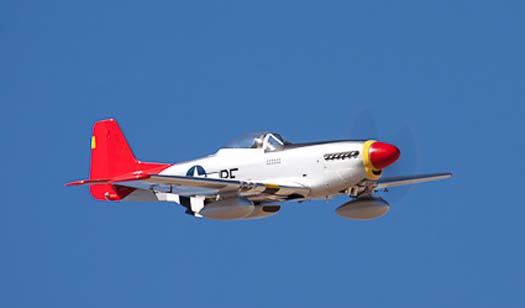
Cambridge_American_Cemetery_and_Memorial

How strange to think that these neatly kept graves may well have been the last resting place of some of the brave young airmen he had watched flying high above him in the frosty blue sky of East Anglia so many years previously.

If your navigational skills are up to it, this is Part One of a ten film series about  the Schweinfurt raid.

In another blog post, I will look at what the Eighth Air Force did after the two disastrous raids on Schweinfurt, and how their airmen’s lives were saved, and arguably the Second World War was won, thanks to Ronnie Harker, a New Zealander who at the time was working at Hucknall in Nottinghamshire, just six miles to the north west of where I am sitting right now as I write the conclusion to this post.

11 Comments

Filed under Aviation, History

Murderer strung up for 67 years. It’s not enough !!!

Scrooby is a country village in the north of the county of Nottinghamshire.

Just to the north of the village, a toll-house used to exist on what was then called “The Great North Road”.

This slideshow requires JavaScript.

On July 3rd 1779, it was the scene of two truly horrendous and violent murders.

In this largely rural and peaceful community, the tolls were always collected by Scrooby’s toll-bar keeper, William Yeadon. On the date of the slayings, William Yeadon, was being visited by his middle aged mother, Mary Yeadon. This particular evening, he had been playing cards with John Spencer, a man from the village of North Leverton with Habblesthorpe.  After the Yeadons had gone to bed, however, Spencer returned to the toll-house in the early morning and attempted to steal the money that had been collected as tolls the previous day. Gaining re-admittance to the building under a pretence that a drove of cattle wished to pass that way, Spencer then tried to carry off the strongbox under the cover of darkness, but unfortunately for everyone concerned he made far too much noise. Later it was thought that he had carelessly rattled the coins in the old wooden box too loudly. Mary and William were made immediately aware of what Spencer was trying to do, but the latter reacted with extreme violence…

“In a most barbarous manner he fractured their skulls by repeated blows with a heavy hedge stake.”

Spencer seized the money and then made the best of his opportunity to ransack the house. The murderer was interrupted by travellers as he dragged one of the bodies across the road to dispose of it in the nearby River Ryton. He was arrested shortly thereafter by a search party, but managed to escape. After he was apprehended for a second time, Spencer was taken to Nottingham and put on trial soon afterwards at the Shire Hall in High Pavement.
There was, of course, only one possible outcome, and Spencer was duly found guilty, taken on foot up to Gallows Hill and hanged on July 16th 1779.

3716238That was not the end of it though, as the rest of his sentence was that Spencer be taken to the scene of his crime in Scrooby, and

“to have his body hung in chains with the hedge stake in his right hand… near the place where the awful deed was perpetrated, on the gibbet post, near the Scrooby Toll-Bar”.

This was after his corpse had been liberally smeared with pitch and tar.

H in chains

These gruesome steps were taken “in accordance with the express words of his sentence”. More horror was to follow however, as I discovered as I sat one evening flicking through my back copies of “The Armagh Guardian” newspaper. In the June 9th 1846 edition I found an interesting account which was itself quoting the “Doncaster Chronicle”…

“After the lapse of a few weeks, a party of soldiers conveyed a deserter passing by the place, the sergeant fired his carbine, loaded with ball, at the corpse, and hit it, which caused a stench, almost unbearable for several days afterwards. The circumstances becoming known, the party was followed, and the sergeant taken, and on being subsequently tried by Court-martial he was found guilty and degraded on the ranks. Years rolled on, and the body gradually became less and less, until nothing was left but the chains which originally shackled it, and these in course of time fell and were secretly conveyed away. For several late years the post, with its withered and weather-beaten arm, was the only vestige left of that deed of blood which sixty-seven years ago filled the minds of the inhabitants of the surrounding districts with horror. But Time, which levels all terrestrial objects with his corroding breath, had for years past been gradually gnarling this once loathing stump to its core, and on the 15th of April 1846 actually accomplished his task, and it fell to rise no more.”

On the other hand, what is reputed to be the upright of the ancient Scrooby gibbet is currently preserved in Doncaster Museum.

Not surprisingly, after the murderer’s decaying body had been left dangling for so many years…

“the creaking cage and bleaching bones occasioned the haunting of the place by either disturbed spirits, or morbid sight-seers”

The hill, in Spencer’s honour, still keeps its name of “Gibbet Hill”. Nearby is the modern “Gibbet Hill Lane”. Nowadays, of course, Spencer’s rotting bones have been replaced by an owl sanctuary and a garden centre. What may conceivably have been the original toll-house, the scene of this dastardly crime, is still visible on the A638 leading north from the village, just before its junction with the green road.

map with gibbet hill

5 Comments

Filed under Criminology, History, Nottingham

Frank Roy Daughton, friend of S.A.Casswell

A little while ago, I wrote about a Schoolboy’s Diary which I had bought on ebay. The 1935 diary had been owned by S.A.Casswell , who lived in Lincolnshire, at Sutterton near Boston. Only a few minutes searching on the Internet revealed some rather sad details about the one single person listed by S.A.Casswell in the address section of his Diary.
Frank Roy Daughton had lived firstly at 385, Kings Road Chelsea and then at 5, Gerald Road S.W 1. He was an officer originally in the RAFVR, the Royal Air Force Volunteer Reserve, and then in the RAF.
Given that Daughton’s job was to fly aircraft over long distances, both within Great Britain and abroad, he was surely continually in search of meteorological information before he set off on any of his trips. What more logical person to consult than his friend S.A.Casswell, who we know worked on the staff of the Meteorological Office as a Meteorological Officer?
Roy Daughton was born in London around 1915. His father was Frank Daughton and his mother was Bertha Daughton. The first personal detail that I have been able to trace is that before the war he was a member of the Metropolitan Police. His warrant number was 124334. He joined the force on July 15th 1935, and he left on February 25th 1944. His last posting was as a Police Constable in the C.I.D in X Division.

During the war, Roy Daughton was a Flying Officer, Number 133684. He began his career as a pilot with 9 OTU (Operational Training Unit) who were tasked with training long-range fighter aircrew. They operated from RAF Aldergrove in Northern Ireland, eighteen miles from Belfast. Roy Daughton must have served with 9 OTU at some point between 1942-August 11th 1944, as they were a comparatively short lived organisation.  He had received his commission on February 2nd 1943.

2' 2'43  supplement to LOndon Gazette
Roy Daughton then served with the OADU, the Overseas Aircraft Despatch Unit.  Their difficult and dangerous job was, quite simply, to co-ordinate the ferry flights of military aircraft, perhaps, for example, from the end of a factory production line in the United Kingdom to their new home on some distant foreign airbase. The commonest destination was North Africa or the Middle East. Sometimes, they ferried American aircraft which had just been flown across the Atlantic Ocean. This latter task in itself could be enormously dangerous, especially in the case of relatively small aircraft such as the Lockheed Hudson. The Overseas Aircraft Despatch Unit operated from RAF Portreath in west Cornwall.

The OADU’s very first customers were four Boeing B17C Flying Fortresses bound for Egypt. Other frequent flyers were Bristol Blenheims, Bristol Beaufighters, and Vickers Wellington bombers.

This slideshow requires JavaScript.

Roy was to die on February 25th, 1944 aged only 29. I have been completely unable to trace the circumstances of his death, although it was presumably either while or after delivering an aircraft from the United Kingdom to North Africa.

map of rabat

Roy is buried in Morocco, a very long way indeed from his cosy home in London. He lies in Rabat European Cemetery, Mil. Plot 21. Grave 673.

Daughton_F_R grave

Roy is one of only nine war casualties in this far flung cemetery.
gereman websiteAt the time of his death Frank was a married man. His wife, who was about a year younger than him, was called Doreen Margaret Daughton, and the family home was in Maida Vale in London. In addition, I also discovered that in 1946, a Doreen M. Daughton left the port of Southampton in England and sailed to Halifax in Nova Scotia, Canada. She later crossed the border into the USA, but after that, the trail has, as they say, “run cold”.
And that is it. Frank Roy Daughton’s life, or what I personally have been able to find out about it. No medals, no fanfares. Nobody even seems to remember why he died at that premature age of around twenty nine years, or how or exactly where. What was he doing when he was killed? Was it his fault? Was he flying? Did he run out of fuel? Was he just walking perhaps, tired and inattentive, across a busy Moroccan street? And did S.A.Casswell ever know that his brave young friend was dead?

Leave a comment

Filed under Aviation, Cornwall, History

Schweinfurt One: sixty B-17s downed, 559 airmen killed

I am sure that most people would understand the difference between “hot courage” and “cold courage”. During a robbery, the person who suddenly confronts the would-be robber and tries, as the English say, to “have a go” is showing hot courage. The same would be true of the person who tries to drag an unconscious victim out of a burning car crash. In the context of war, it may be the man who solves the sudden problem of an enemy tank by jumping onto the top of it and throwing a hand grenade in through the hatch.
All of these acts show great heroism, but as far as I am concerned, “cold courage” takes it all into a different dimension. “Cold courage” is the person who faces a painful terminal disease without losing his dignity. “Cold courage” is the person who sets off to walk along a highwire stretched hundreds of feet off the ground between two skyscrapers. “Cold courage” is the fireman who looks up at that staircase in the North or South Tower, and starts climbing, because he knows that it is his duty to try and save people, even if it may be at the expense of his own life. In the context of war, “cold courage” is the man who sits on his bunk for a whole afternoon, waiting for the chance to get into a bomber at nine o’clock and then fly off into the night skies over Germany, not only risking death, but knowing that, statistically, death is a very likely outcome. The only thing more difficult than doing this as far as I’m concerned, would be the chance to fly over Germany in broad daylight, when you have the opportunity to see exactly what is happening to everybody else, and may well happen to you.
Early on in the Second World War, the RAF tried to place their tiny bombs accurately on exclusively military targets during the hours of daylight when, theoretically, it should have been relatively easy to do so. The only problem was that the German fighters of the day were all easily capable of shooting down these poorly armed bombers without any real problems. Between May 10th-May 28th 1940, losses of the Bristol Blenheim bomber, for example, were almost unbelievable. (Search for “Known Individual Aircraft Records”)

bristol-blenheim-xxxxx

For that reason, the RAF soon turned to night bombing. Equally swiftly, they found that it was virtually impossible to hit relatively small military targets with any accuracy at night. They would be better employed in bombing the areas of the city around the enemy factories, in an effort to kill or injure the workers who worked there. This new tactic carried out the directive that had been agreed on at the Casablanca Conference.

“Your Primary object will be the progressive destruction and dislocation of the German military, industrial, and economic system, and the undermining of the morale of the German people to a point where their capacity for armed resistance is fatally weakened.”

When the United States came into the war in Europe, effectively in 1942, their bombers were equipped with the famous Norden bombsight, which was supposedly capable of dropping a bomb into a pickle barrel from 30,000 feet up. Putting their faith into the bombing accuracy achievable with their marvellous bombsight, the Eighth Air Force ignored British advice that, because of the very high standards of Luftwaffe fighter pilots, bombing at night was the only sustainable method of carrying on the struggle against the Germans. The Americans, therefore, persisted with their daylight raids.

B-17G%20Flying%20FortresszzzzzzzzAfter a few months of daylight bombing, much of it over France rather than the Reich itself, the idea was mooted that enormous and significant damage could be inflicted by bombing the German factories which produced ball-bearings, as they were vitally important to the entire German war machine. Virtually every single military vehicle and aircraft depended on them. The Mighty Eighth, therefore, exactly a year to the day after their first gentle raid, Mission 1 on August 17, 1942 against the Sotteville Marshalling Yard at Rouen in France, decided to attack these important factories . This would be Mission 84, scheduled for August 17, 1943, a complex two-pronged attack on the ball-bearing works at Schweinfurt and the Messerschmitt aircraft works at Regensburg. The raid would be the furthest penetration into German territory to date, some 800 miles from the coast. What happened is the most wonderful example of “cold courage” that anybody could wish to meet.
The greatest problem for the Eighth Air Force was that none of their own fighters, nor those of the RAF, had anywhere near the range required to escort the slow, heavily laden B-17s to their targets. The main defensive tactic, therefore, was to form up the Flying Fortress bombers into huge boxes, where, theoretically, every single aircraft could protect, and could be protected by, all the other aircraft.

1157x829xBoeing-B-17E-Flying-Fortresses-form-up-over-England-1942_jpg_pagespeed_ic_CkVpDznVhI

This procedure took a very long time to organise with hundreds of bombers to be fitted into the formation. And this was the first problem: all this activity was completely visible to the German radar. I can remember my own father telling me how he had watched these brave young men get ready to go into battle…

“ On a number of occasions, Fred had stood on a long forgotten airfield in East Anglia and watched the American Eighth Air Force prepare to depart on a daylight raid over Germany. Their B-17 Flying Fortresses would circle seemingly for hours over their bases, as they slowly and precisely formed up into their famous defensive boxes, intricate arrangements of, perhaps, up to a thousand heavily armed bombers whose almost countless machine guns, in theory, were capable of offering covering fire to all of their fellow aircraft. Once the B-17s were ready, it was as if somebody blew a bugle unheard far below on the ground and all the bombers would then suddenly set off to war, tracing their gleaming contrails across the blue sky, eastwards in the sunshine towards the Third Reich.”

This slideshow requires JavaScript.

The Eighth Air Force raid caused a 34 per cent loss of production at Schweinfurt but this was soon made up for by surplus supplies of ball bearings from all over Germany. The industry’s infrastructure, while vulnerable to a sustained campaign, was not vulnerable to destruction by a single raid.
The Nazi Minister of Armaments, Albert Speer , later wrote that the Eighth Air Force’s major error was to attempt a second attack on Regensburg at the same time as the main attack on Schweinfurt, and not to continue with further raids on Schweinfurt after the first one.
Some of the B-17s were over Germany for a period in excess of two hours with no fighter protection whatsoever, and the Luftwaffe were quick to take advantage of the situation. Given the fact that they had picked them up on radar over East Anglia, the Germans were able to call up extra fighters from all of their bases, stretching from southern France to Norway in the north. Many fighters were able to expend their ammunition in massed attacks on the American bombers, land again for fresh supplies of fuel and weapons and then rejoin the battle.

This slideshow requires JavaScript.

The German fighters were well aware of the B-17s’ inadequate forward armament and their vulnerability to head-on attack. Against the 0.50 calibre Browning machine guns of the Flying Fortresses, the German fighters were all equipped with cannon which fired explosive shells. In theory, just one hit could bring down a bomber. Much longer ranged than the machine guns, this enabled the Germans to fly well out of the range of the B-17s’ machine guns and fire off short bursts of cannon shells at intervals. Some fighters carried sophisticated rocket weapons, including mortars propelled by rockets, all of them capable of wiping out a B-17 in just one shot.

rocket tubes

Tales are also told of the Germans using either obsolete combat aircraft or training aircraft to fly high above the American formation and drop air-to-air bombs.
This account from  Archie J.Old Junior, a thirty seven year old Texan,  is quoted in “The Mighty Eighth” by Gerald Astor

“The fighters were all over us. They really got interested in me. German fighters came up from every point of the compass after our fighters turned around. (Just before the German frontier). And they were already throwing flak at us when we were five to ten minutes away from the target.” (Some thirty or forty miles)

In “Eighth Air Force”, Donald L.Miller describes pretty much the same situation, once the P-47s had been forced to turn back…

“…a hailstorm of fighter assaults that continued almost all the way to the target. (Beirne Lay, Jr) wrote, “I knew that I was going to die, and so were a lot of others.”

b17_direct%20hit

Overall, American casualties were way beyond the sustainable. For Bomber Command that most basic of figures had been set at 4%. On this raid 230 bombers had taken part, and sixty of these were destroyed. A tiny number finished up in Switzerland, and “thanks to the luck and the skill of the RAF Air-Sea rescue teams”, everybody who went into the icy waters of the North Sea (yes, even in August) was rescued. Five hundred and fifty two men were killed in the air, and seven poor souls made it back home, but, alas, were to succumb to their injuries. Twenty one men were badly wounded.
Beyond the sixty B-17s shot down, between 55-95 further aircraft were badly damaged. Of these, many were too severely damaged ever to be repaired.

This slideshow requires JavaScript.

Of the fighter escort, two P-47s of the 56th Fighter Group were destroyed and so too were two Spitfires from the RAF. The fighters claimed more than 30 kills, but the gunners on the B-17s were very optimistic with their claim of 288 German fighters destroyed. After the war, Luftwaffe records showed just 27 aircraft had been lost.
The very biggest problem of daylight raids by the Eighth Air Force deep into enemy territory was the lack of adequate long-range fighter escort. Some of the Schweinfurt Flying Fortresses were over German-occupied territory for three hours and thirty minutes. Of this period of time, there was no fighter support whatsoever for two hours and ten minutes, which included all of the time spent over Germany itself.

By one of those extraordinary coincidences which are sometimes thrown up, the night of August 17th-18th 1943, saw the British RAF engaged in “Operation Hydra”, which turned out to be one of the more significant raids of the war. Using 324 Avro Lancasters, 218 Handley Page Halifaxes and 54 Short Stirlings, attacks were made on the V-Weapon rocket testing grounds at Peenemünde in the Baltic to the east of Denmark.

Clearly, rocket weapons of the calibre of the V-1 and the V-2 quite simply had to be destroyed, certainly with the Allies envisaging a landing on the coast of France within less than a year.

Indeed, the bomber crews were actually told at their briefings that unless they were successful that particular night, they would be going back to Peenemünde again on the 18th, the 19th, the 20th, and, indeed, they would keep returning until the target was completely destroyed. This certainly concentrated their minds enormously, and, with  operations directed for the first time by a “Master Bomber”, namely  Group Captain John Searby, the Commanding Officer of 83 Squadron, they achieved great success.
Joseph Goebbels, Hitler’s Minister of Propaganda, himself said that the raid had cost the German efforts “six to eight weeks”, a figure agreed by the RAF who wrote in their official history that the attack “may well have caused a delay of two months.”

Although there were those who judged that the raid was “not effective”, an important figure, Chief Engineer Walther, was killed, but most significantly perhaps, so too was the hugely influential Doctor Walter Thiel who had provided the key ideas for the A4 rocket engine, later used to power the horrendous V-2 and indeed, in its developed form, NASA’s rockets into space.
The protection of the darkness was obvious in the casualty figures. Bomber Command lost 6.7% of their bombers and a total of 215 men were killed out of an approximate total of just over four thousand participants. Focke-Wulf Fw 190 night fighters claimed 29 of the 40 bombers shot down. Coincidentally again, the German night forces had employed for the first time ever, three twin engined Messerschmitt Bf 110 fighters with the deadly combination of radar and Schräge Musik upward firing cannons.

This slideshow requires JavaScript.

To make their night fighters even more formidable, the Luftwaffe taught  all their crews exactly where a Lancaster’s most vulnerable spots were…the enormous fuel tanks.

schrage-004

In another blog post, I will look at what the Eighth Air Force did next after the Schweinfurt raid, and their continuing “cold courage”, as they regrouped their strength after what must surely be considered, despite the immense resolution and extraordinary bravery of the Americans, one of the great catastrophes of the Allied air war.

12 Comments

Filed under Aviation, Bomber Command, History