Category Archives: Personal

Eagle Comic (3)

Last time we were trying very hard to get the Ovaltineys song out of our heads. I was trying to make the point that Dan Dare was not the only character in the comic:

Eagle had sporting personalities. I have even written myself about the first one ever to appear:

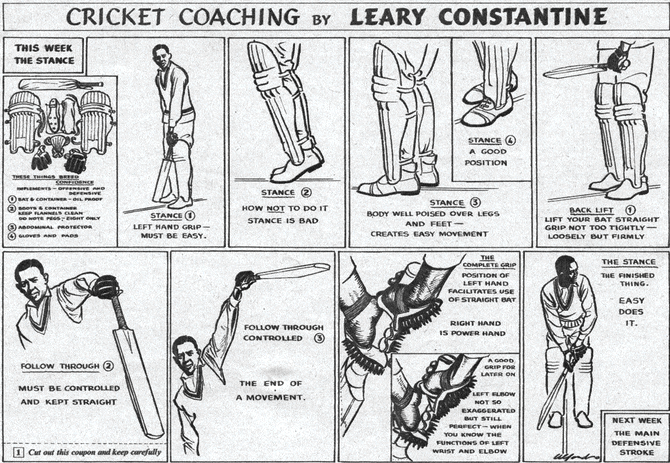
There was cricket coaching, and, thirty years before its time, and in a largely all white society, it was presented by a black man, Leary Constantine, a cricketer who achieved more in his life than most of  us do:
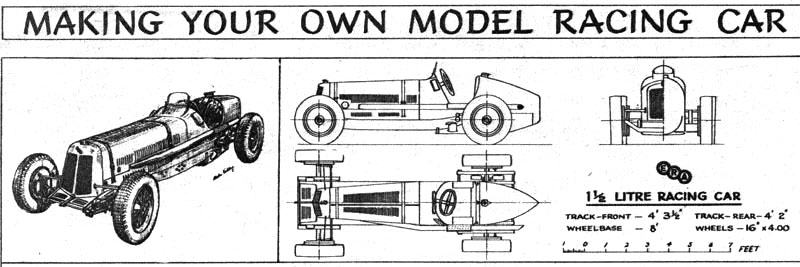
There were features about how to make models:
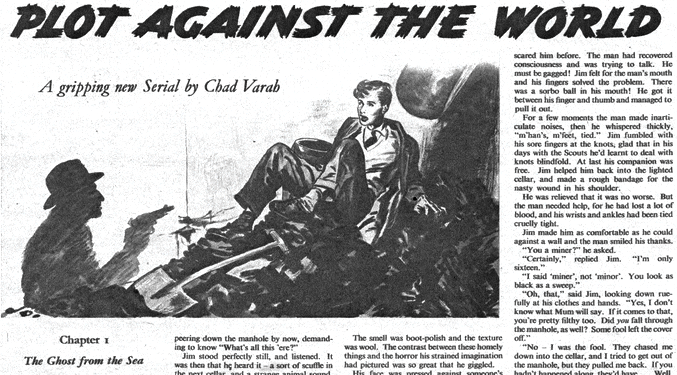
There were two written serials with solid text rather than just pictures. “Plot against the World” was the first ever to appear:
There was a half page about road safety. It was presented by Billy Steel, the famous Derby County footballer of the day:

During the 1950s lots and lots of children would be killed on the roads, because the drivers in England knew very little about how to drive safely and the children of England, accustomed to just a couple of cars a day going past, had very little road sense. Around 1963, a little boy in our class called Nigel Sparrow was killed by a car as he cycled along country lanes looking for bluebells for his mother. He was in hospital for two weeks or so before he passed away. We prayed for him every day in our school assembly but it was all in vain. He succumbed to his injuries and died. That was the first time I ever had any serious doubts about the religion I had been given. I think about Nigel regularly, poor little boy.

Billy Steel offered a lot of very good advice:

He offered advice a lot better than he played football for Derby County.

Years ago, I actually wrote about him, but only in the context of my Dad, Fred, who thought he was “a right twerp”:

“As regards football players, in the late 1940s, Fred was always less than impressed by Derby’s then record signing, a young man they bought as they attempted to stop their slow but inexorable slide out of the First Division. This was a handsome young forward called Billy Steel, whose dark tousled hair was, for Fred, his best, and probably only, positive feature. Fred was just unable to stomach how Steel would miss an easy chance to score a goal, and then merely laugh about it as if it were nothing important.”

Next time, the other features that made Eagle the best selling comic in English history:
16 Comments

Filed under Aviation, Derby County, Film & TV, Football, History, Literature, Personal, Science, Writing

Eagle Comic (2)

Last time we looked at the appearance of a brand new comic called “Eagle”, which was an almost revolutionary step forward in the world of boys’ comics in England. The eponymous hero of the comic was space pilot Dan Dare, always combatting something or other, in this case Psycho-Rocket-Repair-Man :

Dan wasn’t the only person in the comic though. There was “Rob Conway” who seems to have been some kind of aviation detective:

Note the three aircraft, a Hawker Seahawk, an Avro Lancaster and possibly a Gloster Meteor.

There was PC 49, where ‘PC’ does not necessarily stand for “politically correct” :

And “Seth and Shorty – Cowboys”, wrangling away deep in the heart of Texas :

Seth’s grandson is probably better known to you as Dr Sheldon Cooper:

“The Great Adventurer” was a comic strip that predicted Middle East politics seventy years ahead of its time:

And there was even Captain Pugwash:

There were cutaway drawings of the latest technological marvels of the day:

And more science from Professor Brittain, now that radar wasn’t top secret any more:

“Discovering the Countryside” featured the hedgehog and an adder:

We learnt about aviation from reading “Heroes of the Clouds”:

There were the Ovaltineys, another paramilitary group I have previously written about:

They had their own little section, with a quiz about British town names:

And nobody gets out of here without a little sing-song. A song you cannot get out of your head. Go on, you know you want to:

Next time, safety, science fiction, serials, sport and Steel. And no, that last one isn’t a typo.

26 Comments

Filed under Aviation, Film & TV, History, Literature, Personal, Science, Writing

“Eagle Comic” (1)

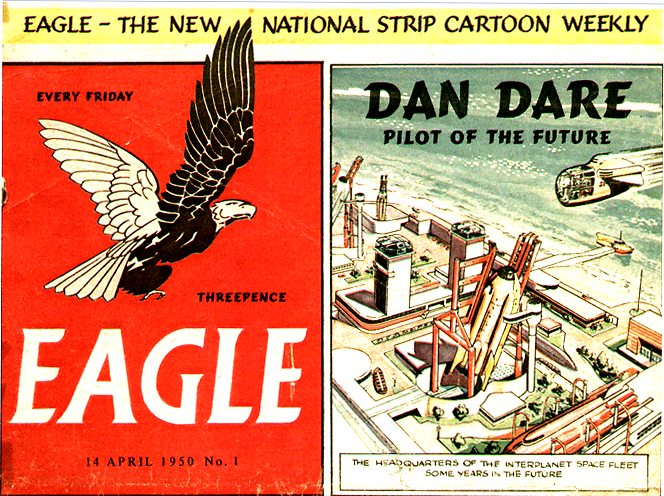
The first edition of ‘Eagle’ comic came out on April 14th 1950. It was the brainchild of Marcus Morris, a Lancashire vicar from Southport and it was illustrated by Frank Hampson who had previously worked on the vicar’s parish magazine. The Reverend Morris wanted a comic which told stories based on Christian ethics. Here’s the front cover, with the top half of the first ever Dan Dare story:

Dan Dare was the hero of this famous science fiction epic. It was perhaps a little like a cross between Flash Gordon and Star Trek. There was a villain as the equivalent of Ming the Merciless, and Dan belonged to the Interplanet Space Fleet who were a little like Captain Kirk’s United Federation of Planets. Here’s the second half of that historic first page:

I found it very difficult to create a clear illustration of the first edition where it is possible to read the text. The important thing, though, is the fact that a rocket is taking off, bound for outer space. In a 1930’s comic, it would have been a biplane, bound for Edinburgh.

The story continued in full colour on the back page. Here’s the bottom half of that very first second page, complete with jet propelled gyroscopic jeep:

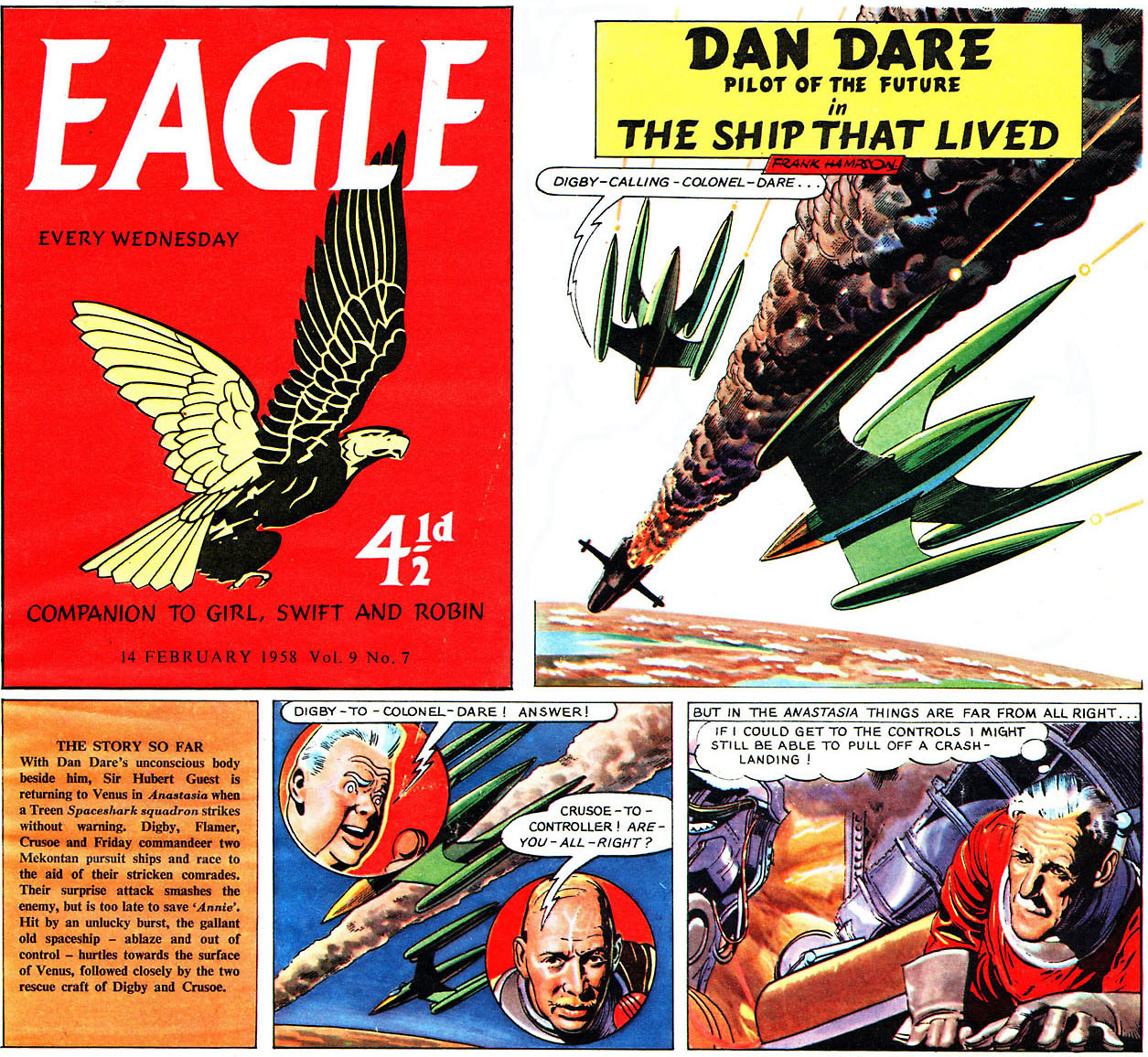
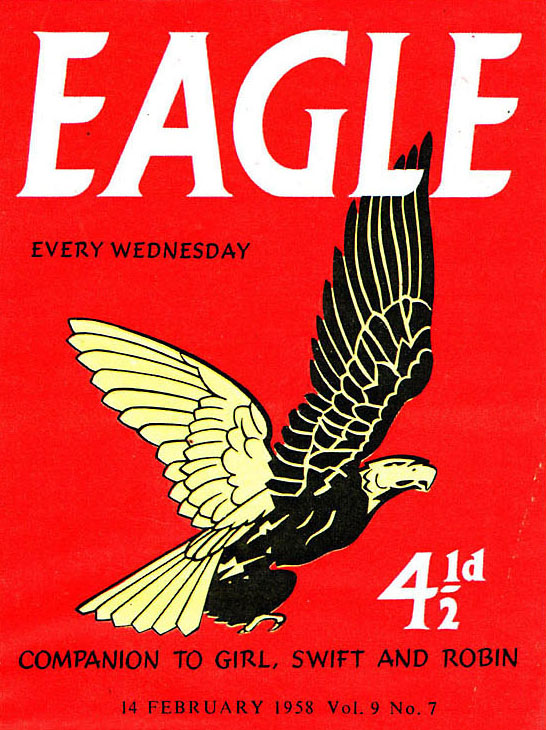
What is important, though, is that the printing, both of the words and of the illustrations, would be unrecognisable by 1958. Mind you, the cost of the comic had gone up from the original threepence to four and a halfpence. Just look at the quality now:

Next time, we’ll look at some of the other characters to appear in that first edition of Eagle comic:

27 Comments

Filed under Aviation, Film & TV, History, Literature, Personal, Science, Writing

The Nightingale and Bomber Command

This is a very famous recording of a nightingale singing its little heart out, only to be interrupted by the enormous noise of a large number of Bomber Command aircraft approaching and then flying over. Undaunted, the nightingale carries on with its beautiful song as the bombers leave and the roar of their engines gradually fades away. The recording lasts quite a long time but it is well worth listening to in its entirety, particularly if you have never heard it before. It comes from spud4x:

The recording was made from a garden in Surrey, England during the evening of May 19th 1942 as 197 aircraft flew over on their way to bomb Mannheim. There were 105 Wellingtons, 31 Stirlings, 29 Halifaxes, 15 Hampdens, 13 Lancasters and 4 Manchesters:

This slideshow requires JavaScript.

47 men would be killed and 23 would finish up as prisoners of war. Eleven days later would come the first 1,000 bomber raid on Cologne. And in the woods of England, and indeed Germany, the war would count for very little. The bluebells would be lingering on and the nightingales would be starting to sing.

The nightingale has a very powerful, very famous, but not necessarily hyper distinctive song. On birdwatching trips, I have often seen people listen to a hidden blackcap or garden warbler and walk away happy that they have heard a nightingale. John Keats too, may have been misled. Some critics have mentioned that the bird’s behaviour as Keats describes it, is on occasion not dreadfully nightingaley. But the poetic thoughts are dreadfully, well, poetic:

“Thou wast not born for death, immortal Bird!
         No hungry generations tread thee down;
The voice I hear this passing night was heard
         In ancient days by emperor and clown”
Perhaps John Clare, of whom I wrote long. long ago, had a better idea:
“See there! she’s sitting on the old oak bough,
Mute in her fears ; our presence doth retard
Her joys, and doubt turns every rapture chill.
Sing on, sweet bird! may no worse hap befall
Thy visions, than the fear that now deceives.”

Anyway, there’s only one nightingale and here it is…

And here’s another version of that BBC recording:

If you’re interested, this is also to be found on Youtube. It is a recording made of a Bomber Command crew on a bombing mission over Germany:

As a fully paid up very sad person, I have two CDs  of this type of thing, bought many years ago from Amazon and I have listened to them many times.

This is the first one and this is the second one. They are particularly good for driving through rush hour traffic on your way to work. Goggles optional.


34 Comments

Filed under Aviation, Bomber Command, History, Humour, Personal, Wildlife and Nature

Fred walks home with Will

As I mentioned before, my Dad, Fred, during his time in the RAF, was frequently given 24 hour passes which ran from 00:00 hours on the first day to 23:59 on the second. They weren’t much use when he was with 20 Operational Training Unit in Lossiemouth which even nowadays, using the motorways, is a there-and-back trip of almost 930 miles. Here’s the old Lossiemouth from a wartime picture:

And here’s the brand new sign at the gate:

Here’s the journey by car today:

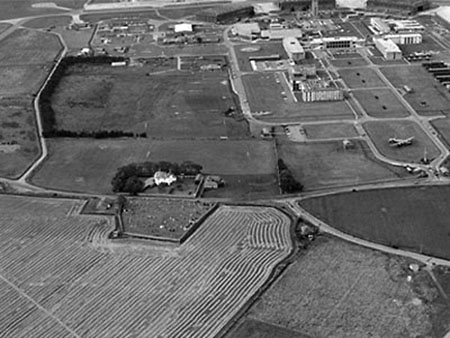
On the other hand when Fred was stationed at Elsham Wolds in Lincolnshire, two day passes were fine. Here’s the home of 103 Squadron in 1943:

Fred was often forced to travel in the early morning because he wanted to make use of the first few hours of his pass, usually from around 00.40 by the time he had walked down to Barnetby Station, to when the earliest train left Barnetby at, say, 01.10.

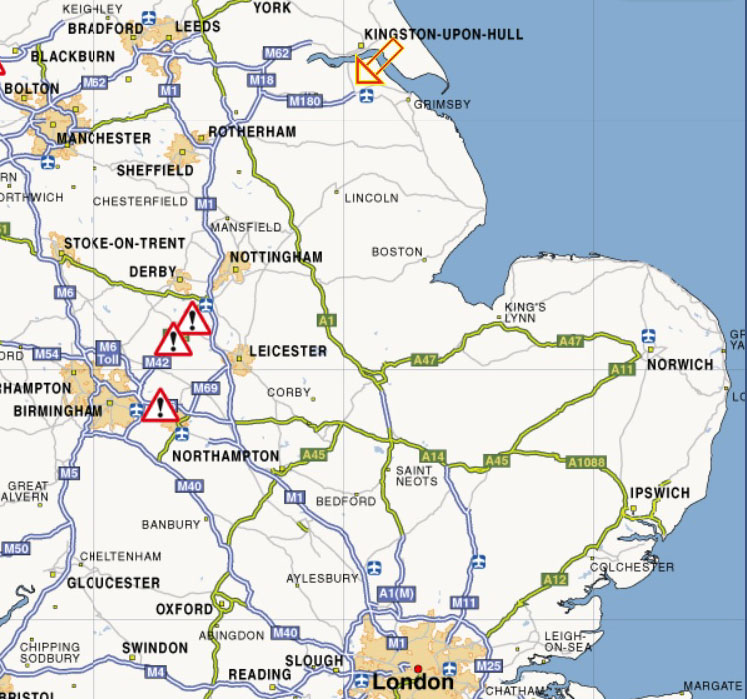
From Barnetby he usually travelled to Lincoln, then Nottingham and then Derby, although he could carry on from Derby to Burton-on-Trent if he so wished. The orange arrow points to Elsham Wolds, and Burton-on-Trent has been hidden, more or less, by the first triangular sign with an exclamation mark, just to the south of Derby:

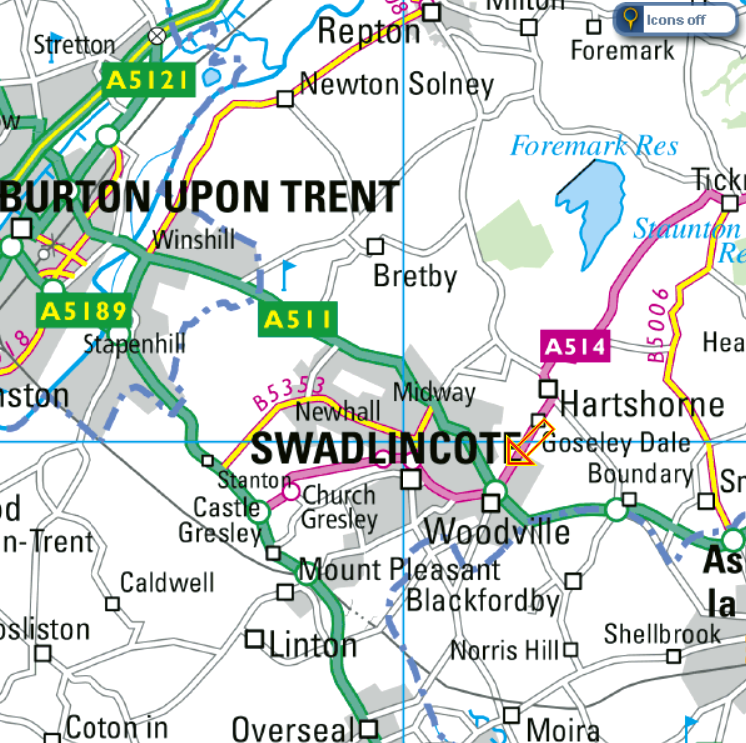
Here’s a map of the local area around Woodville, the mining village where Fred lived. His house was quite close to the tip of the orange arrow, in actual fact. The station at Burton-on-Trent is the tiny white  dot on the spindly black thread running from north east to southwest near the town, just below the “U-R” of “BURTON” :

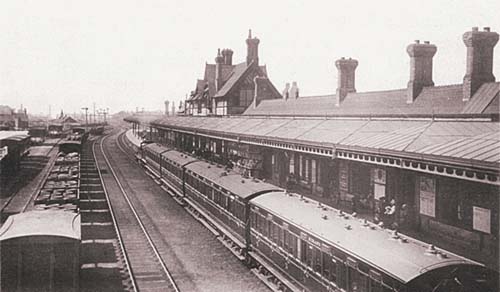
The problem Fred faced at this point, however, was that from Burton-on-Trent to Woodville where he lived, there would be no buses running if it he had arrived at Burton Station at four o’clock in the morning. If that were the case, there was only one remedy…what used to be called “Shanks’s Pony”. Do check out the link. It is quite an interesting origin for this phrase and useful for the American version of it too.

On one occasion, Fred came back on leave from Elsham Wolds and he then continued through Derby station to the local station at Burton-on-Trent. When he emerged onto the street, knowing full well that he had a five mile walk in front of him, he found that his father, Will, then in his mid-fifties, had spent at least a couple of hours of the early morning darkness walking the five miles from their house in Woodville to meet his son at the station as he got off the train:

They walked back together in the fresh, bright summer sunshine, the road even more deserted than normal as it was so early in the morning. Not a single word was said between father and son at any point in their journey. Their mutual respect and solidarity, their love, was expressed not by words but by a deed, the walking of five miles just to be with somebody that extra couple of hours, even if the time together were to be passed in total silence.

In later years, Fred was to say that one of the greatest regrets of his life was that he had never said anything to his father during this walk and that his father had never said anything to him. In general, Fred wished that there had been much more obvious affection shown during his life with his parents. Will had never hugged Fred or even held him in his arms as a young child. Never in his entire live did he ever express his undoubted love for his son by such gestures, which he would have thought unmanly.

Here they are, in a local park on holiday in Blackpool. Notice the fashion statements. Will is wearing those two coloured shoes and Fred has one of those elasticated belts that fastens with a metal snake device:


18 Comments

Filed under Aviation, Bomber Command, History, Personal

The World of the Mysterious (8)

During my researches about the Wodewose and the Green Man, one thing which has struck me is that to some extent there is a split between the two in terms of location. Indeed, it would be interesting to carry out a little research and to try and  establish the validity of this theory. More interesting still would be to try and see if there is a reason for it:

This slideshow requires JavaScript.

From what I have found on the Internet, therefore, I would posit that the Wodewose is linked more frequently to churches in areas with abundant water, areas where there are lots of rivers to follow. The places I have mentioned in my previous post are Boston in Lincolnshire and the counties of Cambridgeshire and Suffolk. All three of these regions in medieval times were full of marshes, and were areas subject to continual flooding. Indeed, much of the land area, in Lincolnshire and especially in Cambridgeshire, was permanently covered by shallow water and would be subject to extensive drainage schemes in later centuries.

Here are the marshes of Lincolnshire and Cambridgeshire. They were called “fens” and on this old map, virtually all of the land inside the dotted, or perhaps dashed, line, would have been a good place to take your wellingtons. Indeed, after the Norman Conquest in 1066, the Saxon freedom fighter, Hereward the Wake, held out in the fens against the overwhelming forces of the Norman invaders from at least 1067-1071. He is known to have used all of the areas enclosed on this map, particularly the Cambridgeshire section around Ely :

Here are the rivers of Suffolk in the only map I could find. There is perhaps not as much marshland but the county is riven by estuaries which seem to penetrate deep into the dry land. The blue lines of the rivers are only those of reasonable size. The streams and brooks are not featured:

Given the modern Bigfoot’s predilection for rivers, lakes and swamps, I think the Wodewose would have enjoyed living here. Because of the landscape, he may actually have been seen more frequently as he paddled through shallow marshes, perhaps in pursuit of his prey. For this reason the locals considered him to be a living, breathing creature somewhat like themselves but different. He was not seen as supernatural or godlike:

The Green Man, however, is mainly linked to churches in areas which were drier and more heavily forested. In places such as these, the Wodewose would have been seen even less frequently than in the marshes. For this reason, his once-in-a-green-moon appearances began to take on something of the supernatural. He became the godlike “guardian of the forest”.

And at the time, this was a rôle which needed to be filled because it was around this period that people were beginning to clear the forest much more extensively for agriculture and for fuel. Between 1066 and 1230, around a third of the woodland in England had been cleared for growing crops and the grazing of domestic animals. And once you’ve cut down a thousand year old oak tree, you have a good wait on your hands for it to be replaced. Here’s Nottinghamshire’s “Major Oak” which “missed the cut”, literally:

With marshes, no special guardian was needed to look after them. England was not short of rain! Indeed, it would take the people of the Fens area until 1630 to get started on draining the land and making it more suitable for agriculture. Even then, it took a Dutchman, the famous Cornelius Vermuyden, to do it:

For that simple reason, the Wodewose would remain a physical entity, rather than a supernatural one. He was little different from the beavers, the ospreys, the cranes and the Large Copper butterflies that were soon forgotten only twenty years after they had disappeared.


23 Comments

Filed under Bigfoot, Cryptozoology, History, Literature, Personal, Science, Wildlife and Nature, Writing

Fred walks home on leave

One beautiful summer’s afternoon, Fred was returning on leave from his airbase at Elsham Wolds in north Lincolnshire. The orange arrow is RAF Elsham Wolds, and Fred departed from a station near Elsham before continuing to Lincoln, to Nottingham and finally to Derby:

Derby was, and is, a huge station by English standards:

Fred arrived on time at Derby station, but there were no more trains to take him on to Burton-on-Trent (bottom left on the map above). He decided therefore to walk the twelve miles back home to the little mining village of Woodville, something which he had often done in the opposite direction in pre-war years, when he had been to watch Derby County play football at the Baseball Ground.

It was a Sunday, and after a couple of miles or so, Fred crossed the River Trent over the five spans of Swarkestone Bridge:

Fred then continued across the meandering  stone causeway, built by the Saxons, which crosses the floodplain of the River Trent. Things are a little bit different nowadays:

Or at least, things are a little different from what Fred would have known. These two photographs are taken from the same spot, but are separated by at least a century :

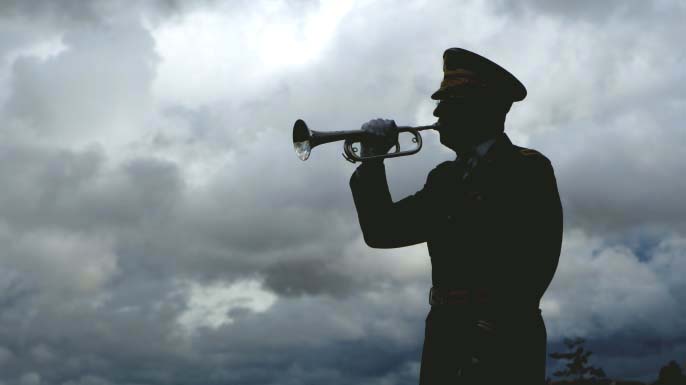
After the meandering charms of the ancient crossing, Fred then set off to the right, up the hill, towards the next village of Ticknall. As the evening moved slowly ever closer to sunset, everything grew very calm and very still, the light hovered on the edge of dusk, and just as he reached the top of the first long steady rise, Fred could hear, ringing out through the silence, the bugle sounding the Last Post at the nearby German prisoner of war camp:

Fred stopped to listen as the familiar notes echoed in evocative fashion over the late evening landscape, as the bright light of the sinking sun illuminated a pastoral scene in an England which is now long gone and will never return. It was a uniquely beautiful and unrepeatable moment in his life:

During the rest of his lifetime, Fred was never aware of a couple of facts about this moment. Firstly, he always thought that the prison camp was at Castle Donington but in actual fact it was somewhat closer to where he was, at Weston-on-Trent. I know that because I have just looked at the list of all the POW camps in the country.

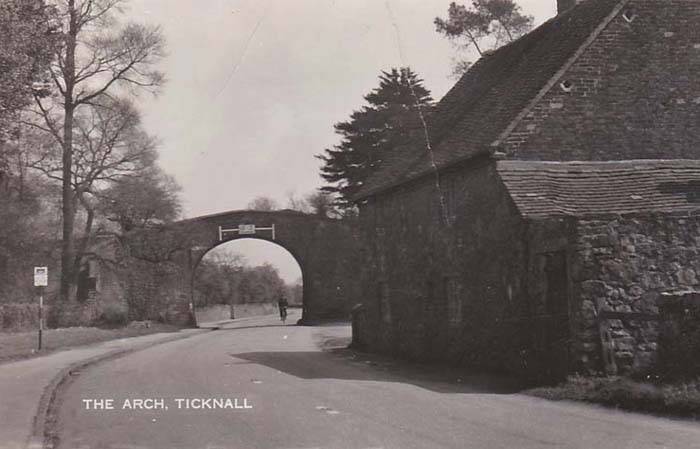
Secondly, as he walked through the village of Ticknall, under the bridge which used to carry the railway to the limestone quarry…

…as he walked past St George’s Church…

….he did not know that the building held, hidden away somewhere in a safe place, a great many records of his own family history. He did not know that his family had been baptised there, married there and buried there for centuries. They included…

his own grandfather, John Knifton (1850-1934), John’s father, Thomas Moor Knifton, and his mother, Jemima Knifton, and her mother, Katharine Knifton, and then her father, Richard Kniveton and lastly, George Kniveton, born, in all probability, before 1700.

Another England which is now long gone and will never return:

Fred would have walked past all the old water pumps at the side of the road, every fifty yards through the whole village. I bet some of them were still working then. If Fred had done his long walk previously, he might even have known which pumps could slake his thirst after perhaps seven or eight miles of walking:

Fred could not possibly have known, though, that only fifteen years later, in his Connaught green Austin A40 Devon saloon, he would drive, not walk, through the village, and his young son would count the pumps out loud as they passed along. Fred didn’t know that that was going to happen in the near future. He was too busy in the present, fighting to make sure that England had a future:


16 Comments

Filed under Aviation, Bomber Command, History, Personal

The World of the Mysterious (7)

Last time we looked at the Wodewose. Here he is:For me, the strange figure of the Wodewose is based on a Bigfoot type creature that may still have been alive and well in the vast forests of Western Europe in the early Middle Ages. At this time, the forests in England, for example, were enormous and covered between a third and a half of the country. And even when the Wodewose was gone for ever, then there were still people who had heard their grandfather’s tales about him and who could recreate him in their own world.

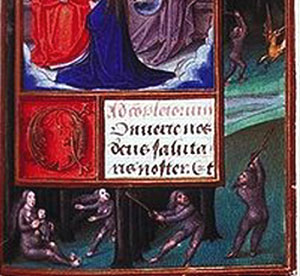
He was certainly famous enough to feature in documents written on old parchment . This one dates from 1325. He is on all fours because he has to fit in between the text in Latin and the bottom of the page:

A similar ‘margin picture’ dates from the 1300s. Notice the mother and her child with another young woman (bottom left) and what is either a fight or a very keenly contested game of golf (bottom right):

In this old drawing, the Wodewose looks as if he has lost his club and is struggling to find it (not a golf club, or a country club, but the other kind):

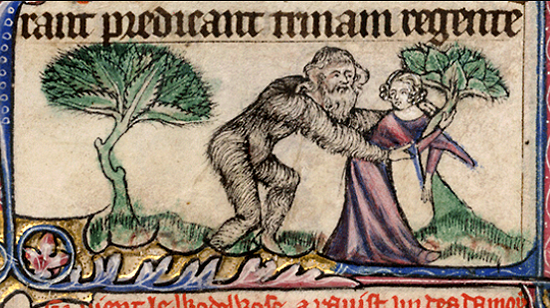
These two individuals are from a series which show the Wodewose’s well known desire for women, yet another feature he has in common with Bigfoot. Picture 1 shows his gentle method of courtship:

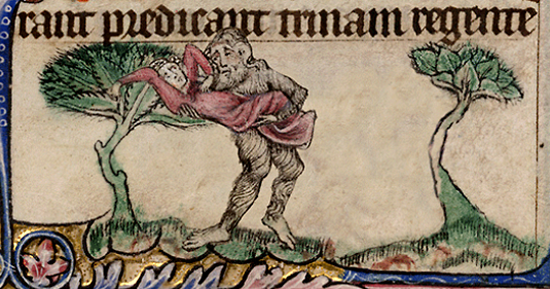
The second shows his next step which could well be summarised as “RUN!!!!” If you read about Bigfoot a lot, you will be familiar with his ability to pick up hogs and other farm animals and run off with them. But beautiful ladies are even more impressive:

This Italian lady, though, is well versed in the tricks of both Italian men and Italian Wodewoses. Forewarned is forearmed:

Is the Wodewose carrying a golf club in that last picture?

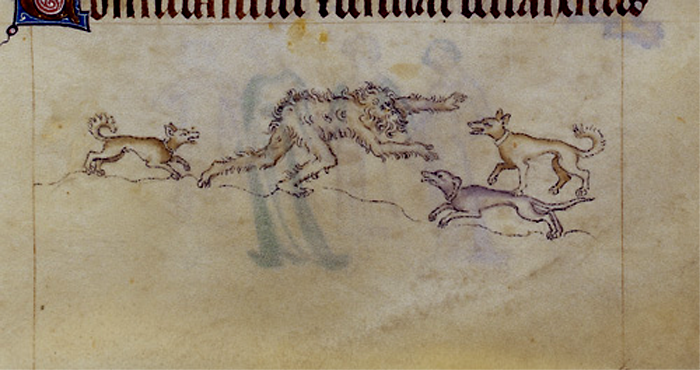
Bigfoots and Wodewoses hate dogs too:

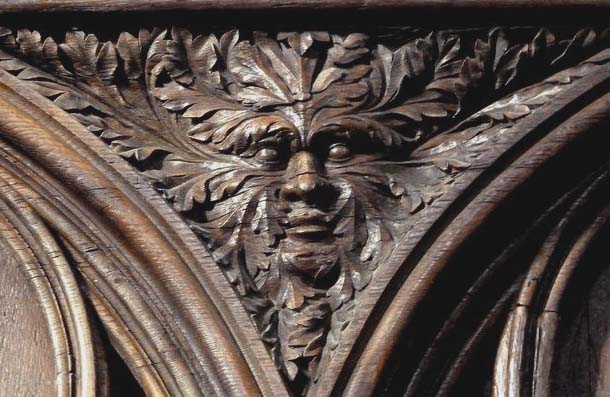
It is my belief that the Wodewose may well be the direct ancestor of the now much more famous “Green Man” which is a very familiar figure to anybody who visits medieval Western European churches. The Green Man is believed to be the deity who brings back the greenery every year in spring, hence the leaves pouring out of his body. This one is in Norwich Cathedral:

This one comes from Lincoln Cathedral:

The Green Man does also have an aspect as a kind of guardian of the forest, and the trees and the plants therein. And that, of course, is a rôle ascribed to Bigfoot by many different Native American peoples. This Green Man is taken from Poitiers Cathedral in west-central France:

The Green Man very often seems to occur in areas which have originally been heavily forested. The best Green Men I have ever seen occur in the Chapter House in Southwell Minster in Nottinghamshire. At the time it was built, it would have been in Sherwood Forest:

Next time, the explanation.

One final point is that in these blog posts about Bigfoot, I have tried very hard to use only images which are available to be used. With some images that is not the case because otherwise there was nothing else available. I am 100% willing to take them down if this causes a problem for anybody, although I suppose there is the flattering aspect that they were the best I could find!

16 Comments

Filed under Bigfoot, Cryptozoology, History, Literature, Personal, Science, Wildlife and Nature

The World of the Mysterious (6)

England has its own figure which may well look back to the days when ordinary people were all aware that there was something big and hairy in the woods. After all, centuries ago, woodland was far more plentiful and farmers’ fields would often be next to the forest. So too, there were many more hunters then and they would all have known what you might encounter as you moved silently around among the trees.
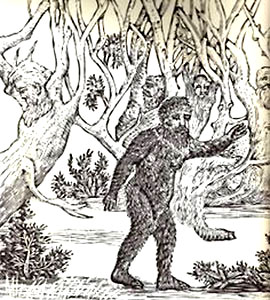
In England he was called the “Wodewose” and he is usually depicted as a human like creature, somewhat bigger than a man, often carrying a club, and almost completely covered in thick hair:

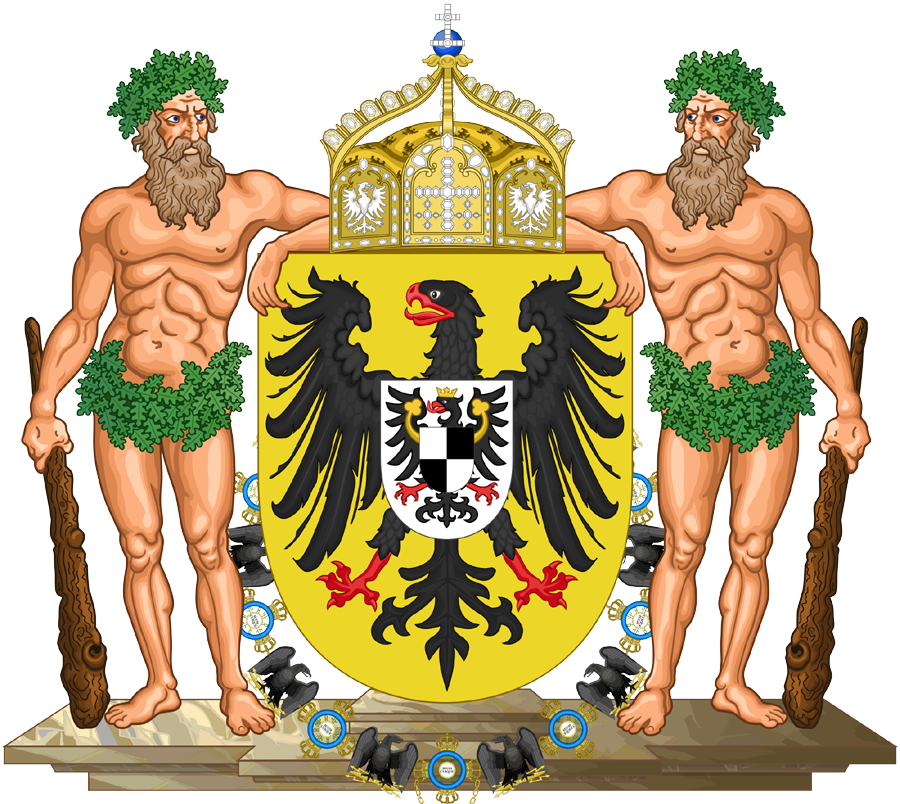
Over the years, in heraldry, he was depicted in increasingly human form, still carrying a club, but with leaves wrapped around his haunches. I think that that is probably because people saw the Wodewose a lot less frequently as the human population increased and the Wodewoses became less numerous. Even so, judging by the heraldry of the medieval period and later, there may well have been wild men in, as a minimum, the Czech Republic, Denmark, Finland, Germany, Italy, Lithuania, the Netherlands and Sweden:

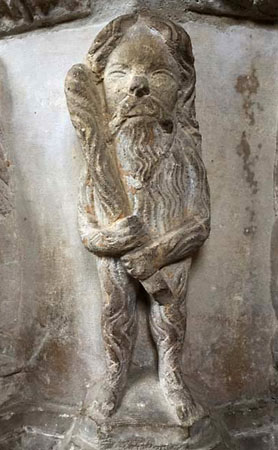
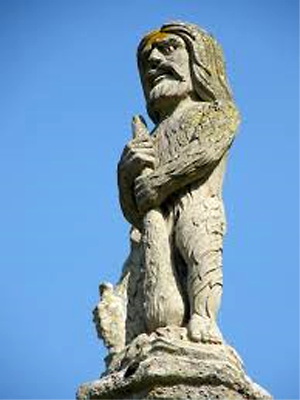
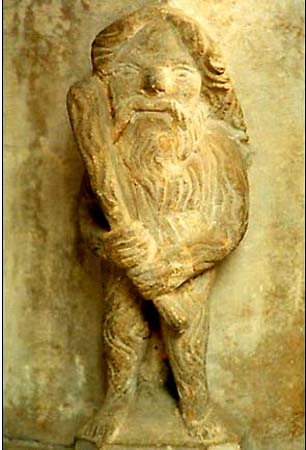
The name ‘wodewose’ comes from two old English words, “wudu” meaning ‘wood’ and “wāsa” which itself comes from the verb “wesan” or “wosan” meaning ‘to be alive’ or simply ‘to exist’ or ‘to be’. So he’s somebody who is in the woods. He is also seen a lot in medieval churches, but as a statue or a carving. This one doesn’t have a club:

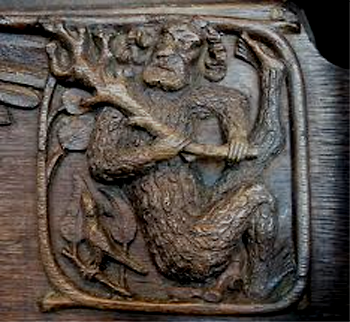
But this one does:

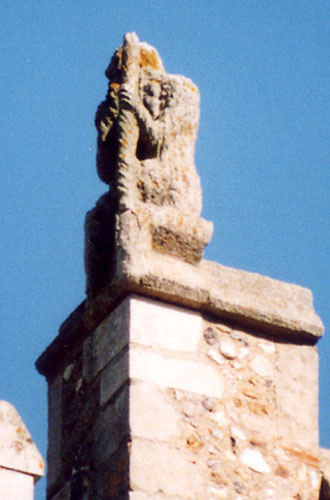
The Wodewose might be kneeling on the roof outside the church:

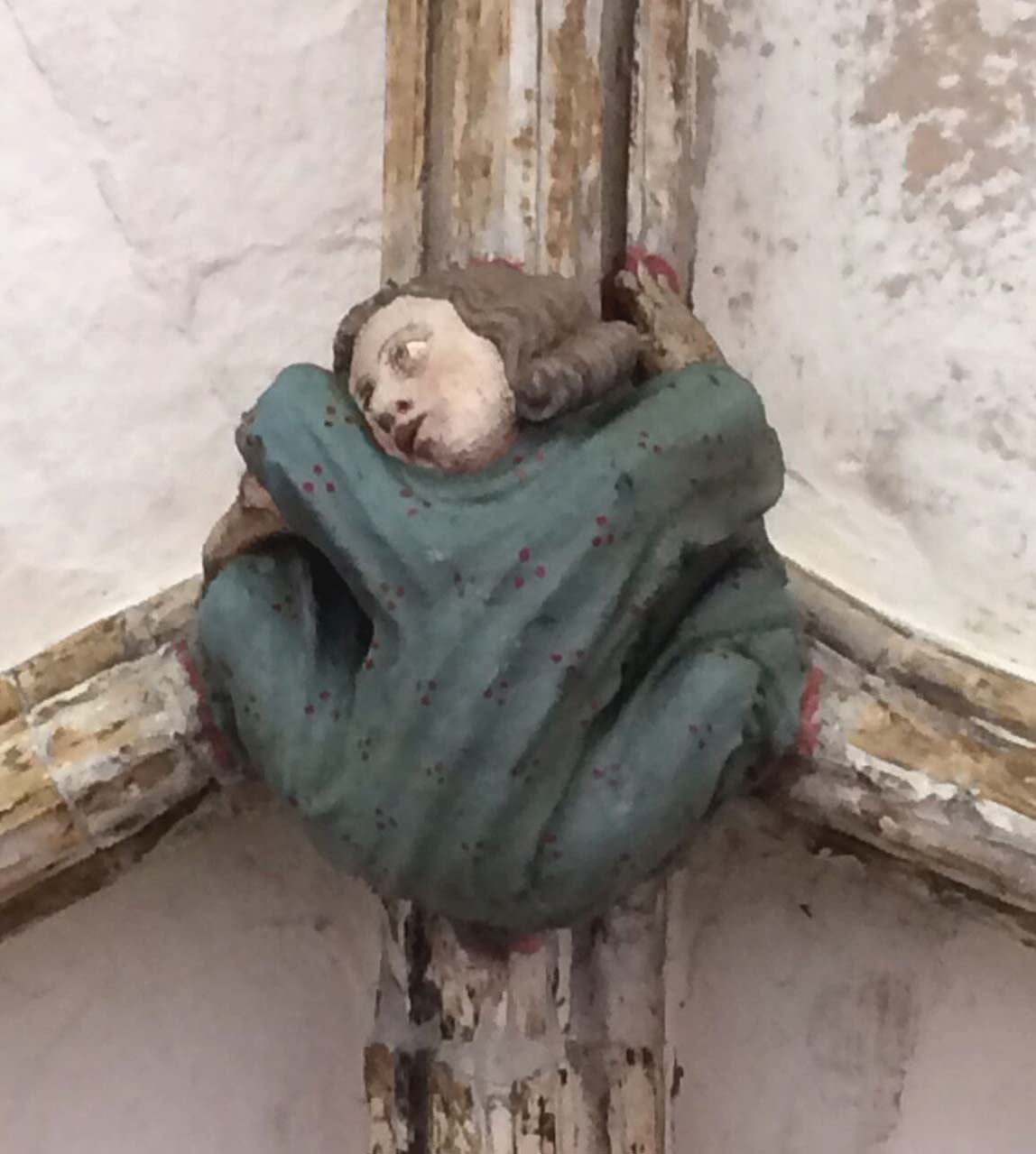
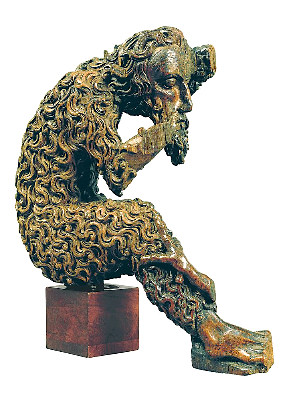
Or he might be on the roof inside. This Wodewose apparently has a touch of greenish mould, but then again, so do some Bigfoots:

This one has a bit more of a tan:

Here’s a German one from Cologne:And another from Suffolk:

This one has had to adopt a strange position just to get all of him in:

For me, the Wodewose can trace his lineage back to a Bigfoot type creature that may well have still been alive and well in the vast forests of Western Europe as late as the early Middle Ages. At this time, up to half of England was covered in forest. People used to say that you could travel from the Humber to the Thames without touching the ground because there were so many trees. And when the Wodewose had disappeared for ever, there were  still plenty of people who had heard all the tales about him and who could recreate him in their own world.

Next time……..the Wodewose’s brother.

One final point is that in these blog posts about Bigfoot, I have tried very hard to use only images which are available and there to be used. With some images that is not the case, but the problem was that there was nothing else available. I am 100% willing to take any images down if this causes a problem for anybody, although I suppose there is the flattering aspect that they were the best I could find on the whole Internet!

20 Comments

Filed under Bigfoot, Cryptozoology, History, Literature, Personal, Science, Wildlife and Nature, Writing

Fred’s travels with the RAF

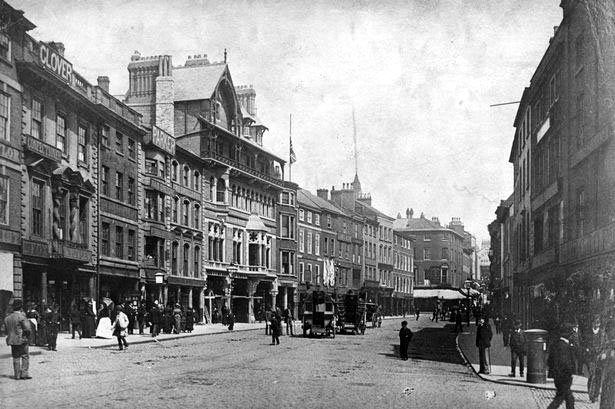
During the war years, Nottingham was a city which welcomed huge numbers of RAF men from all of the many airbases in Lincolnshire. One of the most famous pubs was the Black Boy, designed by Nottingham’s greatest architect, Watson Fothergill. The famous hotel is the very large building in the middle of the buildings on the left :

Alas, this wonderful, wonderful building was demolished to make way for a supermarket and a very ugly supermarket at that. The Black Boy was a hotel which was very convenient for the dashing Brylcreem Boys, who could easily get to Nottingham from their scores of bomber bases across Lincolnshire. Once they were there, they could get up to whatever they wanted and the Black Boy had enough bedrooms to accommodate all of them. I saw a programme recently which said that the rates of venereal disease among RAF aircrew were so high around this time that serious measures had to be taken. It was decided therefore that any man diagnosed with VD would have his mission total taken back to zero. Once you had done 30 missions, you were taken off combat flying, so if you had done a decent number, around 20, for example, this would have been a huge disaster, and a life threatening one at that.

Fred used Nottingham as a place to get a connection for Derby. When he was at Elsham Wolds, I think he must have caught a train at nearby Barnetby and then either got a connection at Lincoln or gone straight through to Nottingham. From there he could easily reach Derby or even Burton-on-Trent.  The orange arrow points at Elsham Wolds and nearby Barnetby:

Fred was no fool and he soon discovered that there was a small railway station, almost in the centre of Nottingham, called, he thought, High Pavement. It was an open station which meant that there were never any inspectors there to check tickets as the passengers alighted from the train.

The smart thing to do therefore, if you were either coming to Nottingham to visit, or were just changing trains at Nottingham, was not to bother with buying a ticket, but just to get off, not at the main station, but at High Pavement. You could then either disappear into the city, or walk the short distance to the main station and then catch the train to Derby or to Burton-on-Trent.

In later life, Fred was to retain little memory of the details of High Pavement station except that there were lots of blue brick walls and you had to go down some steps on your way to the main bit of the station.

I don’t really know where he means, but this remaining railway-type blue brick wall may be something to do with a station in this area:

Fred often had a 24 hour pass, which would run from 00h00 to 23h59. He frequently used to travel, therefore, in the early hours of the night. At that time there were certainly very few welcoming faces on the platforms, except the members of the Salvation Army, who were always on hand to dispense cups of tea or plates of hot food, most welcome out in the damp fogs of autumn, or in the cold icy blasts of winter. In later life, Fred was always to say that the Salvation Army were the only religious organisation to show any practical interest whatsoever in the welfare of the forces. He would always try to give them a donation whenever he saw them, because they had done so much to help soldiers, sailors and airmen when they really needed it in the cold dark days of World War Two.

23 Comments

Filed under Aviation, Bomber Command, History, Nottingham, Personal