Category Archives: Politics

RAF Elsham Wolds: Part Five

In a previous article I wrote about the tragic collision of two Avro Lancaster bombers, both of them from 103 Squadron at Elsham Wolds. The two aircraft were both trying to land at the same time, after permission to do so had been given to each of them by the Flying Control Officer. A subsequent Court of Inquiry found that “the accident was caused by the Flying Control Officer departing from the normal procedure.” They recommended that “Flying Control Officers must not depart from the normal procedure for landings”.
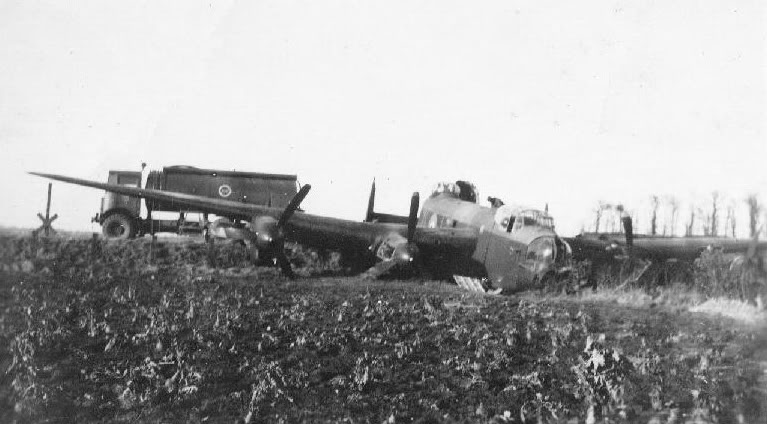
In the accident, therefore, Lancaster ND334, PM-unknown, was struck in mid-air by a second Lancaster Mk III, JB530, PM-F. That careless act, caused by the unfortunate decision of a still unnamed Flying Control Officer resulted in the deaths of five young men, namely the Flight Engineer Sergeant D.H.J.Cunningham, the Navigator Flying Officer R.H.Fuller, the Bomb Aimer Flight Sergeant C.Bagshaw,  the Wireless Operator Sergeant E.S.Gunn and the Rear Gunner Sergeant A.O.Haines:

halifax wreck
Sadly, this collision was not the first accident of this type to have occurred at Elsham Wolds. Searching on the Internet, I found a website detailing a collision which took place on December 16th 1943, as both aircraft took off to bomb Berlin. The accident involved one aircraft of 103 Squadron and one from 576 Squadron who were also based at the same airfield.
Apparently, low cloud was present and this was thought to provide a potential source of danger for the aircraft as they took off. At the pre-raid briefing, therefore, all of the crews were clearly told to climb away “into the climbing pattern” as soon as they left off the ground, and then to continue climbing until they reached the correct height to set off with the bomber stream across the North Sea to the target. Great stress was put on the problems which were possible with the low cloud base and that everyone should stick, therefore, “to the instructions”.
The first of the two doomed bombers to take off, at 4.36 p.m., was Flight Sergeant F.R.Scott of the Royal Australian Air Force in Lancaster LM332, UL-B2 of 576 Squadron. It was the crew’s very first mission:

takeogff

They were followed, at 4.37 p.m., by the second doomed aircraft, Lancaster JB670, PM-unknown, of 103 Squadron. The pilot was Flight Sergeant Richter and the crew were a last minute mixture of men from the two squadrons. This was fairly unusual, but I cannot see why it would have made any difference to events:

takoff

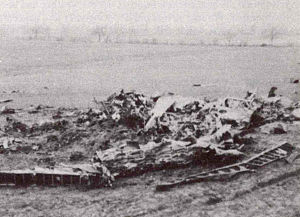
As JB670 climbed away from the runway, LM332 came out of the clouds and there was a head-on collision, more or less directly over the village of Ulceby. As you might expect, nobody survived and the lives of fourteen young men came to a very abrupt end. Certainly, it would have been so quick that many of the crew may well have known very little about it. Wreckage was littered everywhere:

piy

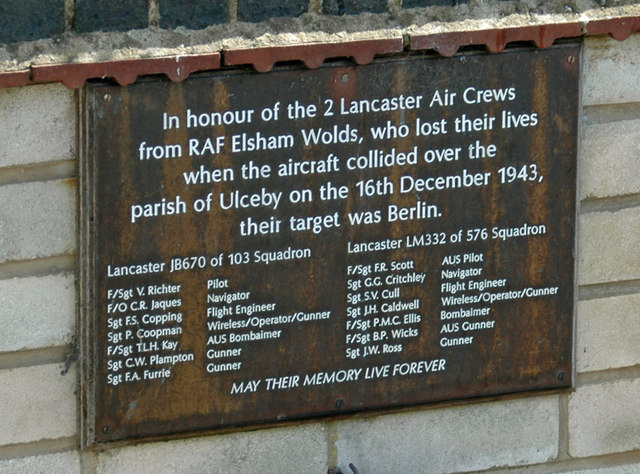
Nowadays a plaque has been set up at the site of the War Memorial, remembering all fourteen men:

Plaque_at_Ulceby_War_Memorial

On board the Lancaster JB670, PM-unknown, of 103 Squadron, the pilot was Flight Sergeant Valentine “Val” Richter, aged 22, of Chingford, Essex. He was a member of 576 Squadron.
The Flight Engineer was Sergeant Frederick Stanley Copping, aged 21, of Walthamstow, Essex. The navigator was Flying Officer Charles Reginald Jaques, aged 30, of Winterton, Lincolnshire, also a member of 576 Squadron.
The Bomb Aimer was Flight Sergeant Thomas Leslie Hobson Kay of the RAAF, aged 22, and from Redhead, New South Wales, Australia.

The Wireless Operator was Sergeant Peter Coopman. He was aged 21, and came from Cropthorne, Worcestershire.
Sergeant Cyril Walter Plampton was one of the two gunners. He was a member of 576 Squadron.

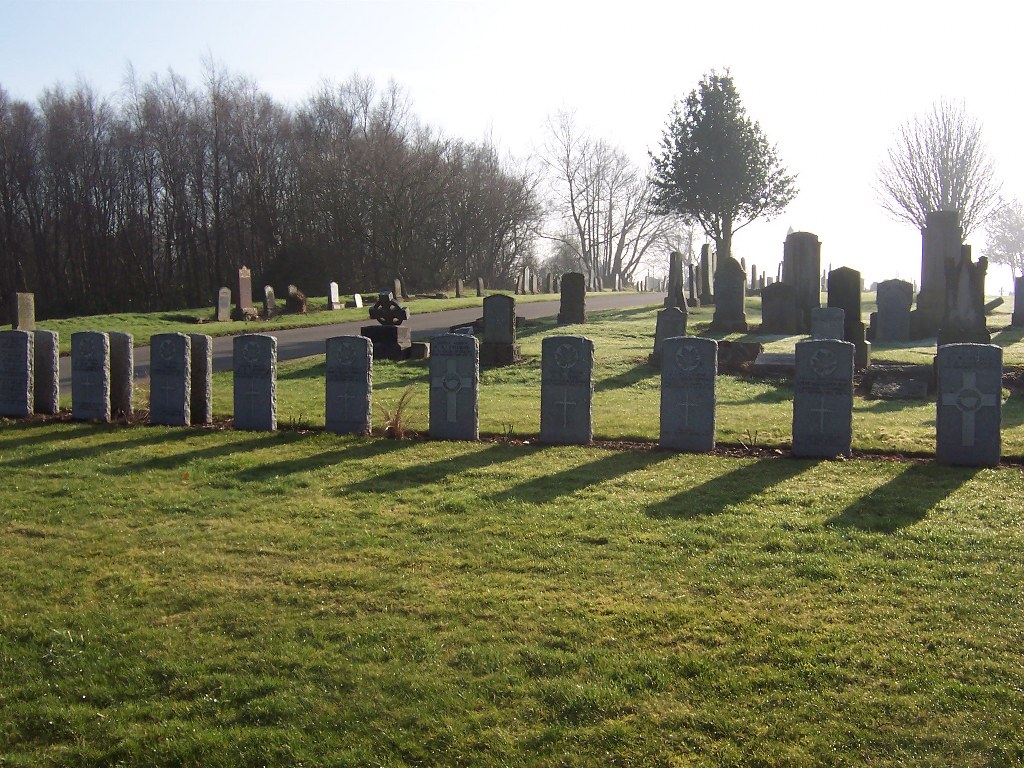
The other gunner was Sergeant Francis Andrew Furrie.  Young Sergeant Furrie was taken back to Scotland, to be interred in the New Stevenston (St Patrick’s) Roman Catholic Cemetery in Glasgow:

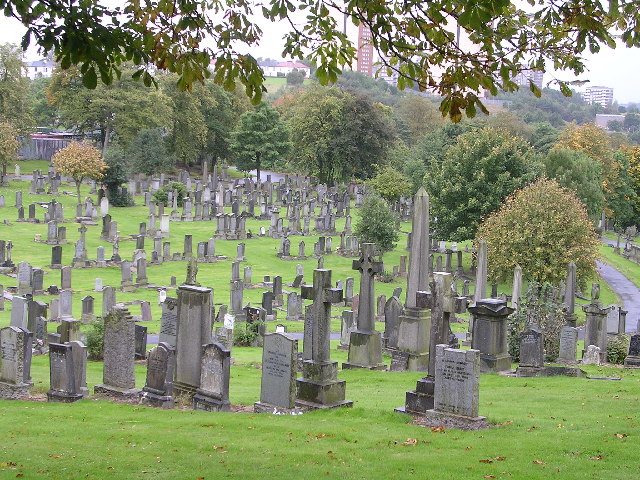
glasgow

He was the only member of the crew not to be buried in Cambridge City Cemetery:

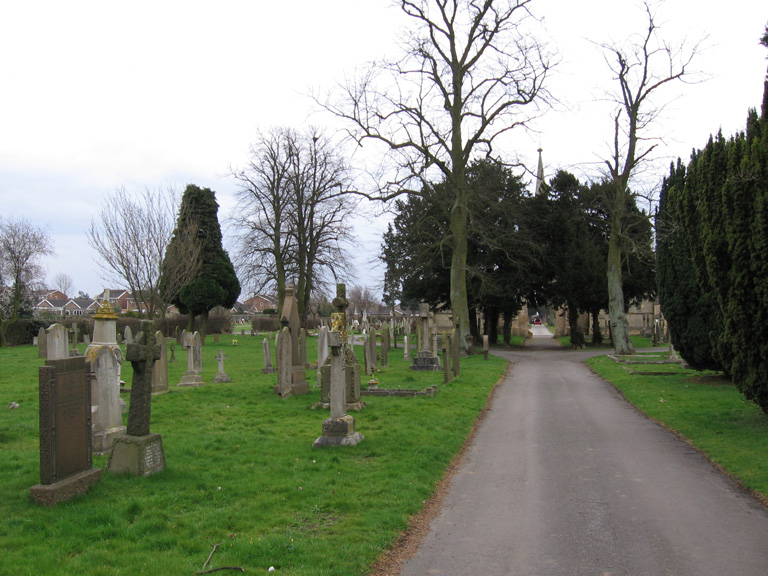
cambrigde vity cem

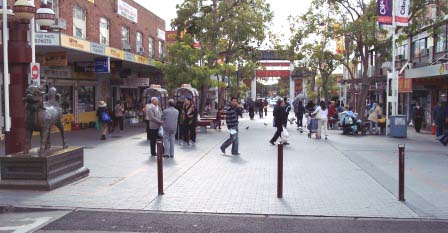
For the Avro Lancaster III, LM332, UL-B2 of 576 Squadron, the pilot was Flight Sergeant Frederick Roy Scott of the RAAF. He was 24 years of age and came from Cabramatta, New South Wales, Australia. Here are the shops in Cabramatta nowadays:

Cabramatta_shops
The navigator was Sergeant George Gordon Critchley. Apparently his father was a miner in St Helens in Lancashire. The family lived in a tiny terraced house but both sons, George and his brother Harold won scholarships to a Catholic Grammar School called De La Salle in the West Park area of the town. It was run by the Jesuits, and allowed Gordon to avoid the coal mine like his father, in favour of the much cushier Civil Service in London.
The Flight Engineer was Sergeant Stanley Victor Cull. He was aged only 18 and was possibly the youngest casualty in Bomber Command in 1943. He came from Windsor in Berkshire.
The Wireless Operator was Sergeant John Hamilton Caldwell . He was 21 years of age and came from Glasgow.
The Bombaimer was Flight Sergeant Peter Martin Crowle Ellis. He was the beloved son of the Reverend Crowle Ellis, B.A. and Mrs Crowle Ellis, of The Rectory, Northfield in Birmingham.
One of the gunners was Flight Sergeant Brian Price Wicks of the RAAF.

images7I5GV8Z5

Brian was only 20 years of age and came from Highgate in South Australia. He was a clerk before he joined up.
The other gunner was Sergeant Joseph William Ross. He was also only 20 years of age and came from Westminster in London.

On the website which has supplied a good deal of the information I have used for this article, the collision is actually described by an eye witness, Marie Harris. Here is a very much abridged version of her words. I would strongly urge you to follow the link and read the full story for yourself. There are also a number of photographs of crewmembers on the site. They will give you a good idea of just how young these men were when they lost their lives so tragically:

I was a driver at Goxhill Haven in 1943. Most of the RAF were Air Crew and you would dance with one or two, and have a great night. Next evening you would ask “where’s Alec, Bob and Bill?” A shrug of the shoulders and you knew and felt very sad.

As I drove around you would see the Bombers going off and up into the clouds and away, up into one circle, two circles and third circle away on their mission.

Around 4.30 I was driving past a farm, it was very low cloud and the Lancasters were taking off into the circles, up and away. They were so low and so near.

One went into this low cloud and I was thinking it’s a wonder they don’t crash they are so close together, when in a split second as it came out of the cloud, God, it was a head on crash with another Lancaster, one almighty explosion and all Hell was let loose. It was awful, I couldn’t believe what had happened practically over my head, just over the farmer’s field. I was so stunned, streaks of fire shooting all over the road. In no time at all the fire engines were arriving. I still couldn’t believe what had happened. I pulled up at the Guard House. I was rooted to my seat and couldn’t stop crying, thinking of the Bobs, Alecs and Bills just blown to bits. It was awful and still is.
They took me into the Mess and gave me a cup of hot strong tea
When I went to bed I couldn’t shut my eyes, this terrific explosion flashed before me every time. I was like this for quite a few nights. I can’t bear even to this day to watch a film with planes crashing. I shut my eyes or go out of the cinema.

Driver Marie Harris W/44133 ATS.

This raid on Berlin seems to have been a complete disaster. My own researches show that, unless I have made some grotesque error in my counting, around 58 Lancasters were destroyed and not far short of 300 young aircrew were killed.

A total of 483 Lancasters had set off for Berlin along with 15 Mosquitoes. Some 25 Lancasters were destroyed during the raid itself as they overflew the target, attacked by anti-aircraft fire and night fighters.

On the return journey to England, a minimum of 29 Lancasters were destroyed between Berlin and home:

Avro_Lancaster_B_Mk_II_ExCC

Some of this was down to the persistent German night fighters, but the greatest problems seem to have come when the  bombers all arrived back at their respective bases. That very same low cloud which had caused the collision at Elsham Wolds was still there. It had not dissipated at all since the bombers had taken off at the beginning of the night, with catastrophic results for many aircraft:

CrashedLanc

There is a slight difference in overall totals which I cannot readily explain, other than some aircraft may have crashed in England and then been repairable. Whatever the explanation, that is still a lot of young men to lose in just one cloud covered night.

One final word. All of the websites I have used can be reached through the links above. I could not have produced this article, however, without recourse to the superb books by W.R.Chorley. Their detail is almost unbelievable and I would urge anyone interested by the bomber war to think seriously of purchasing at least one of them. The books bring home just how many young men were killed in Bomber Command during the Second World War. When the first book of the series arrived, my daughter thought it contained all the casualties for the whole war, but, alas, it was just 1944.

22 Comments

Filed under Aviation, Bomber Command, History, Politics

RAF Elsham Wolds: Part Four

I wrote a previous article about the, sadly, rather typical loss of an Avro Lancaster of 103 Squadron, based at Elsham Wolds. The aircraft took off from north Lincolnshire at precisely one minute past midnight on February 20th 1944. It was on its way to bomb Leipzig, a very, very long trip lasting eight hours, most of it over the Third Reich itself. This raid involved more than 900 aircraft with the highest losses of the war so far, 78 aircraft destroyed, a loss rate of 9.55 %.  The previous worst total was the 58 aircraft lost over Magdeburg on January 21st-22nd 1943:

300px-Royal_Air_Force_Bomber_Command,_1942-1945__C5083

I was saddened to see however, during my researches into the fate of PM-I, JB745, that, on that very night, an even more tragic incident had occurred, not over Germany, but over the airfield itself. As they returned unscathed from this rather unsuccessful raid on Leipzig, therefore, two Lancasters collided with each other.
One was the Avro Lancaster Mk III, JB530, PM-F. The aircraft had taken off at 11:22 pm., and was preparing to land. Given the timings of the raid, this incident must have taken place at around 7.00-8.00 am. I would have thought that, at this time of year, it cannot have been absolutely pitch black, and, even though it was February, there must surely have been some light. Lancaster JB530 was heavily damaged in the collision with the other Lancaster, but the pilot, Flight Sergeant H.Gumbrell used all of his skills to bring the aircraft down without serious damage to the members of the crew. These were Sergeant T.V.Shaw, Flying Officer H.J. Hearn, Sergeant F.Osborne, Flight Sergeant J.Seward, Sergeant D.W.Evans and Sergeant R.A.Boulton.
The second Lancaster Mk III, ND334, PM- unknown, did not fare quite so well. This aircraft had taken off a little later at 11:50 pm., and was also preparing to land.  The pilot, Warrant Officer JC Warnes escaped with injuries, as did the Mid-Upper Gunner, Sergeant S.Clapham, but everybody else was killed. These included the Flight Engineer, Sergeant D.H.J.Cunningham, the Navigator, Flying Officer R.H.Fuller, the Bomb Aimer, Flight Sergeant C.Bagshaw,  the Wireless Operator, Sergeant E.S.Gunn and the Rear Gunner, Sergeant A.O.Haines:

halifax wreck
Searching in more detail on the Internet, I found the following information on an archived page from the older of presumably two, DCBoard Forums of “RAF Commands”. It was written, from what I can make out, by “Greg” a guest on the forum in December 2003. Clearly, Greg has been able to access the official accident report:

“JB530 was struck in mid-air by ND334. The report is a little unclear, but it looks like permission by the Flying Control Officer (FCO) was given to JB530 to land first, and then permission was given for the other aircraft,ND334, to land, BEFORE JB530 had actually touched down on the runway. The Court of Inquiry suggests that this was due to a lack of flying discipline at the airfield, and also added that crews must keep a better lookout. The report also has the Air Officer Commanding’s comments, to the effect that Flying Control Officers must not depart from the normal procedure for landings. The report states that the accident was caused by the Flying Control Officer departing from the normal procedure.”

If this is true, then it is, quite simply, disgraceful. Five young men lost their lives because of a careless mistake. This wasn’t the fog of war. This was what should have been standard procedure for the Flying Control Officer.
In the early days when my Dad was first in the RAF, he told me that, when he had looked at the idea of becoming an Officer, the first question he was asked was “What school did you go to?” He said to me that “As soon as I said ‘Woodville Secondary Modern” (where all the pupils had to leave at thirteen) I knew I was wasting my time.”

wvilleupper

If only my Dad had been able to say “Eton” or “Harrow”, they might have promoted him:

eton-college xxxxxxxxxxxxxxxxxx

All I can say is that I just hope the Flying Control Officer in question did not get his job because of who his father was or which university he was educated at. To me, a mistake as basic as giving two different aircraft permission to land on the same runway at the same time is just stupid incompetence. And yes, I know that “these things happen in war”, but only if you give crucial jobs to people who are incapable of doing them.
Sergeant Donald Henry James Cunningham was aged only 19 when he was killed and his death must have been a catastrophic blow to his parents, Mr Geoffrey Joseph and Mrs Alice Maud Cunningham. The family all lived in Hounslow, Middlesex. Donald was buried in Brigg Cemetery, only four miles from the airfield:

brfigg cemetery
Sergeant Anthony Oliver Haines was 26 years of age when he was killed. His grieving parents were Mr Francis Henry Claudian Haines and Mrs Florence Ethel Haines, who lived in Bristol. Young Anthony was also buried in Brigg Cemetery, along with Donald Cunningham and 48 other young casualties of war.
Flying Officer Ronald Harry Fuller was only 22 years old when he was killed. He was the much loved son of Mr Henry James Fuller and Mrs Florence Fuller. The family all lived in Marylebone in London. Young Ronald was buried in Cambridge City Cemetery where 1,007 other young casualties of the two World Wars all lie:cambrigde vity cem

Flight Sergeant Charles Bagshaw was also only 22 years old when he was killed. He was the beloved son of Mr Charles Garrett Bagshaw and Mrs Sarah Bagshaw, of Urmston, a small town in Trafford, Greater Manchester. He is buried in his hometown cemetery where his grave bears the inscription, “He died that others might live”. He is with 59 other casualties of the two World Wars in this little town of only 41,000 people.
Sergeant Edward Sandilands Gunn was only 21 years old when he was killed. His parents were Mr Edward Sandilands Gunn and Mrs Bessie Gunn of Glasgow. Their son was returned to Scotland and now lies in the Glasgow Western Necropolis with 479 other young casualties of the two conflicts:

cemet

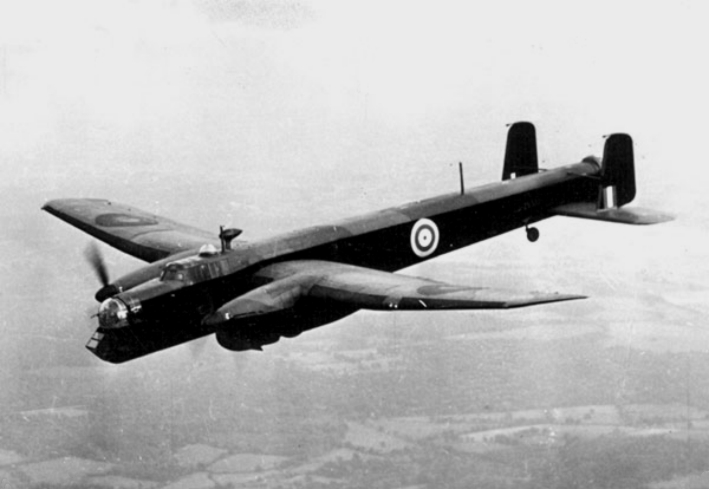
Edward’s brother David Sandilands Gunn was also in the RAF as a member of 612 Squadron, operating as a General Reconnaissance unit within RAF Coastal Command. David was killed on March 26th 1941, while flying an Armstrong Whitworth Whitley:

Armstrong_Whitworth_Whitley_in_flight_c1940

You may wonder about the name “Sandilands”. As far as I can ascertain, this was a Scottish clan name, here used as a first name.

Two things to finish, firstly a question. Was this the only catastrophic collision of two Lancaster bombers from 103 Squadron at Elsham Wolds? Well, what do you think?

And then one final word. All of the websites I have used can be reached through the links above. I could not have produced this article, however, without recourse to the superb books by W.R.Chorley. Their detail is almost unbelievable and I would urge anyone interested by the bomber war to think seriously of purchasing at least one of them. The books bring home just how many young men were killed in Bomber Command during the Second World War. When the first book arrived, my daughter thought it contained all the casualties for the whole war, but, alas, it was just 1944.

13 Comments

Filed under Aviation, Bomber Command, History, Personal, Politics

The Officer Training Corps 1915 Part Two

This photograph shows the High School Officer Training Corps in 1915. I have previously written about what happened to the teachers in the years after this iconic photograph was taken.

This time I want to write about the fates of some of the boys. You might be forgiven for thinking that these twelve individuals are all far too young to have left the school, joined the army, trained as officers, gone to the Western Front and then been killed. But you would be wrong. Three of these young men were to perish. And this, tragically, is a much better casualty rate than the rugby team of Boxing Day, 1913. On the other hand, though, it is still a staggering 25%!

otc 1915

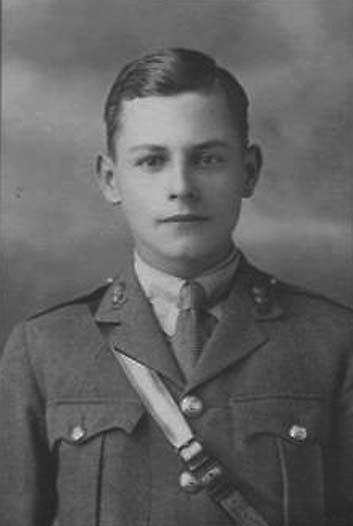
On the back row of the photograph are, left to right, F.A.Bird, J.R.Coleman, D.J.Clarkson, J.Marriott, A.W.Barton, G.R.Ballamy, S.I.Wallis and W.D.Willatt.

On the front row are, left to right, L.W.Foster, V.G.Darrington, Second Lieutenant J.L.Kennard, Captain G.F.Hood, Second Lieutenant L.R.Strangeways, G.James and R.I.Mozley.

I have not been able to find information on all of the boys in this photograph, but here is what I have come up with:

In January 1918, the school magazine, “The Highvite” carried a list of the school prefects, with their nicknames. They included the Captain of the School, F.A.Bird (Dicky) and A.W.Barton (Fuzzy). Both of them feature in the photograph.

They seem to have been very good friends and we have already noted their advertisement “for poisons, the quality of which was endorsed by Mr.Strangeways”. I know nothing further of Mr Bird except that his first name was Francis and he was the best friend of Harold Arno Connop, a Flight Sub-Lieutenant in the Royal Naval Air Service, who was killed at Dunkirk on Sunday, March 31st 1918:

connop zzzzzzzzzzzzzzzzzz

Arthur Willoughby, “Fuzzy”, Barton had an unbelievably varied life. In his last year at the High School, he was Captain of the School and during the First World War, he became a Second Lieutenant in the Royal Engineers Signal Service, until he was demobilised in December 1918.

Arthur then went to Cambridge University to study Physics and helped Lord Rutherford to split the atom. He became a top flight football referee and officiated in the only football match that Adolf Hitler ever watched. I will be telling you his story in another blogpost (Fuzzy Barton, not Adolf Hitler).

Arthur had been, however, the recipient of a gangster type extortion racket in the early part of his school career. The Prefects’ Book records that on Tuesday, October 27th 1908:

“…A meeting was held at 2.30 p.m. in the Library. All the prefects were present. M.M.Lyon was reported for bullying A.W.Barton during the preceding day. He had tried to make Barton accompany him home & as Barton refused, he dragged him along Forest Road towards Waverley St. Lyon also hit Barton with the knob of his umbrella on his head just behind the ear. This blow had raised a big lump on Barton’s head. Lyon only allowed Barton to go home on receiving a promise that he would bring him a penny in the afternoon. As Barton did not bring the money, Lyon thrashed him again in the afternoon.

Lyon admitted the offence, & was treated as a first offender & received 6 strokes.
On the next day, however, Mr Woodward told the school captain that Lyon had treated other boys in a similar way, & had obtained 2d, from J.B.Cooper. Dr.Turpin stated that he had warned Lyon previously, & threatened him with expulsion on a repetition of the offence. Mr Dark had also complained about Lyon’s bullying propensities. H.J.Hoyte reported Lyon at the end of the summer term for swearing, but Lyon had not been punished as he was away from School. Taking all this into consideration, the prefects offered Lyon the alternative of 15 strokes or expulsion by the Doctor. Lyon chose the strokes.”

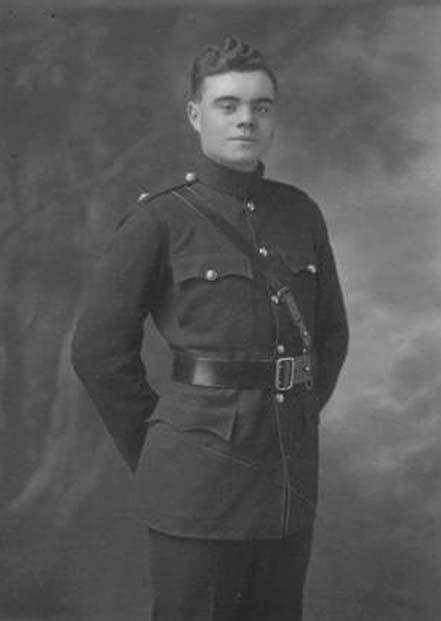
Richard Inger Mozley was born on May 10th 1898, the son of Albert Henry and Laura Mozley. He entered the High School on January 14th 1908, at the age of nine.

In the School Register his address is given as Grosvenor Avenue, Mapperley Park (1908), and then later, “Hollies”, Burton Joyce, Nottingham. One other website gives the family address as 17a, Woodborough Road, Nottingham. His father, Albert Mozley, was a Coal Merchant.

Richard was a Sergeant in the O.T.C. and, as such, was recommended for a commission in the Army both by Captain Hood and by the Headmaster, Dr G.S.Turpin.  Richard had already applied himself to the O.T.C. of the 3rd Battalion of the Sherwood Foresters, but they were already vastly oversubscribed, and he duly joined the 3rd York & Lancaster Regiment.

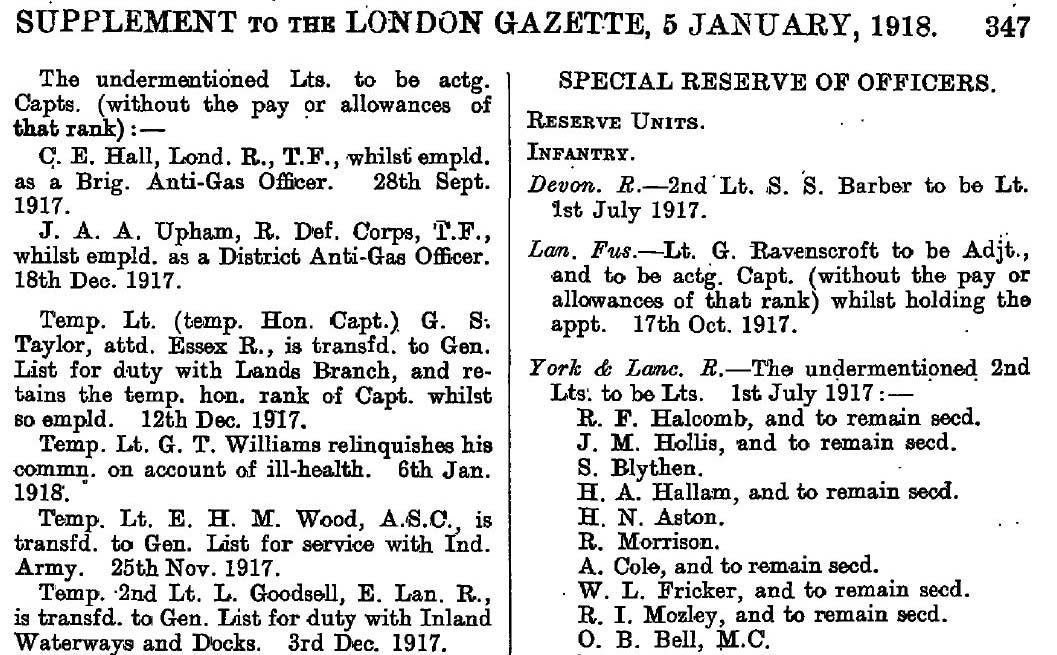
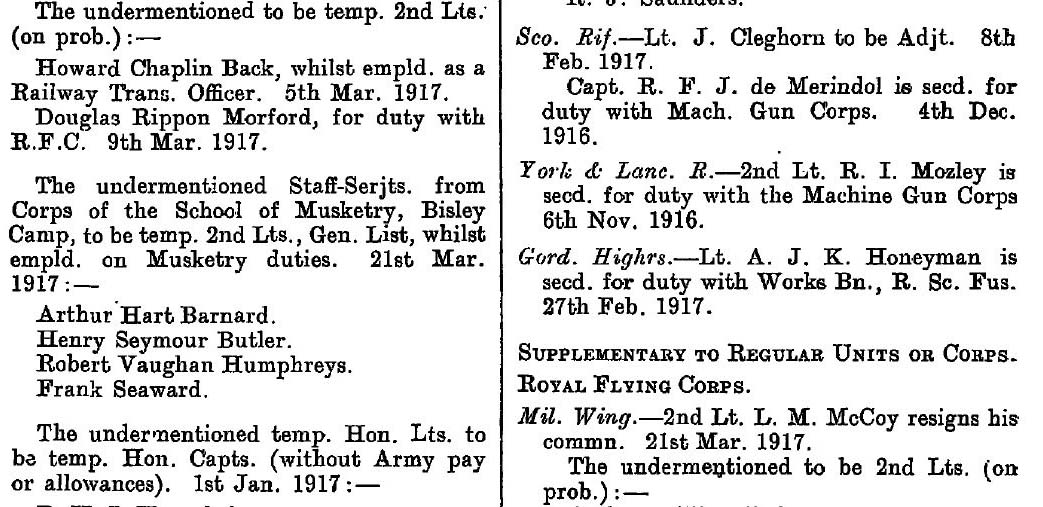
Capture gazette mozley aaaaaaa

He was then attached to the 36th Battalion of the Machine Gun Corps (Infantry):

Capture gazette mozley 2  zzzzzz

During the course of “Operation Michael”, the Germans’ last do-or-die effort to win the war before the Americans began to influence the outcome of the conflict, Richard’s unit was assigned to defend the Forward Zone. Richard himself was stationed in the forward trenches, but he and his colleagues were quickly overwhelmed by the sheer weight of numbers of the enemy. They perished more or less to a man.

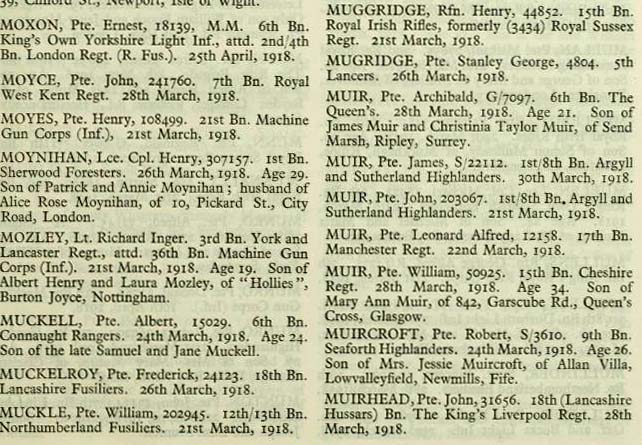
mozley_1 xxxxxxxxxxxxxxxxxxxxxx

Richard was listed as missing, presumed killed, on March 21st 1918. At the time he was nineteen years of age:

capture mozley cvbnm

By the time he died, he was living in Hoveringham and his parents remained at the “Hollies”, Burton Joyce. In due course, a letter arrived from Sergeant Crenston:

“When Lt. Mozley came back to the Coy. in Dec. last, he took charge of “A” Section and I being the section Sgt. was nearly always with Mr. Mozley and when in the line that terrible morning 21st March Mr. Mozley, myself and about 19 others were in the same position and dugout, the most forward position of the Division, 4 guns with us; at about 4:30 the barrage started. We were being pounded most cruel with gas and high explosive shells but we stuck it till about 9 when your son was hit …… a piece of shell penetrated Mr. Mozley’s right breast …… I helped to bandage your son and asked him to get down to the dressing station a short distance away (it was a nasty wound and it would have got him home) but no, he refused to go, saying I will see it through Sergeant.”
“Now this splendid spirit and example inspired us all and setting our teeth we all determined to stand by to the end …… The first indication we got of the German approach was a death scream from one of the boys and after that my memory is nearly a blank for we all seemed to work by machinery, Mr. Mozley and self took up positions with revolvers and did our best, we were however surrounded by the Germans, a bomb or shell burst amongst us and I found myself with a wound in the back feeling dizzy”.
“Now as to what happened to your son I cannot say”.

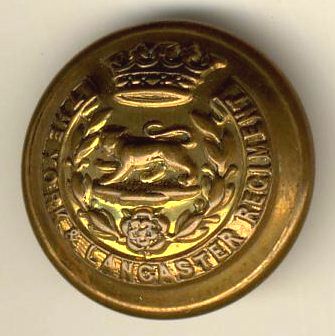
Richard has no known grave and is remembered on the Pozières Memorial. This was one of his buttons:

button mozley

John Roberts Coleman was the son of John Bowley Coleman and Florence Annie Coleman of 29, Derby Grove, Lenton Sands, Nottingham. His father was a schoolmaster. John was born on April 16th 1899 and he entered the High School on September 23rd 1909 at the age of ten. He was a Foundation Scholar in both 1911 and 1914. He left in July 1916 and became a Second Lieutenant in the Special Brigade of the Royal Engineers. In the era before antibiotics, he died of pneumonia in Tourcoing, after the end of hostilities, on November 26th 1918. He was only nineteen years of age, and this fresh faced young man had seen so very little of the world beyond mud, blood and death.

coleman zzzzzz
He is buried in Pont-Neuville Communal Cemetery in Tourcoing.

Donald James Clarkson was born on May 11th 1899. He was son of James Clarkson, whose occupation was listed as “a manager”, and his mother was called Alice. The family lived at “Wyndene”, which is now Number 52, Caledon Road, Sherwood. He entered the High School on September 23rd 1909, at the age of ten. He was always known by his many friends as “Pug” because of his upturned nose.

clarkson zzzzzzz

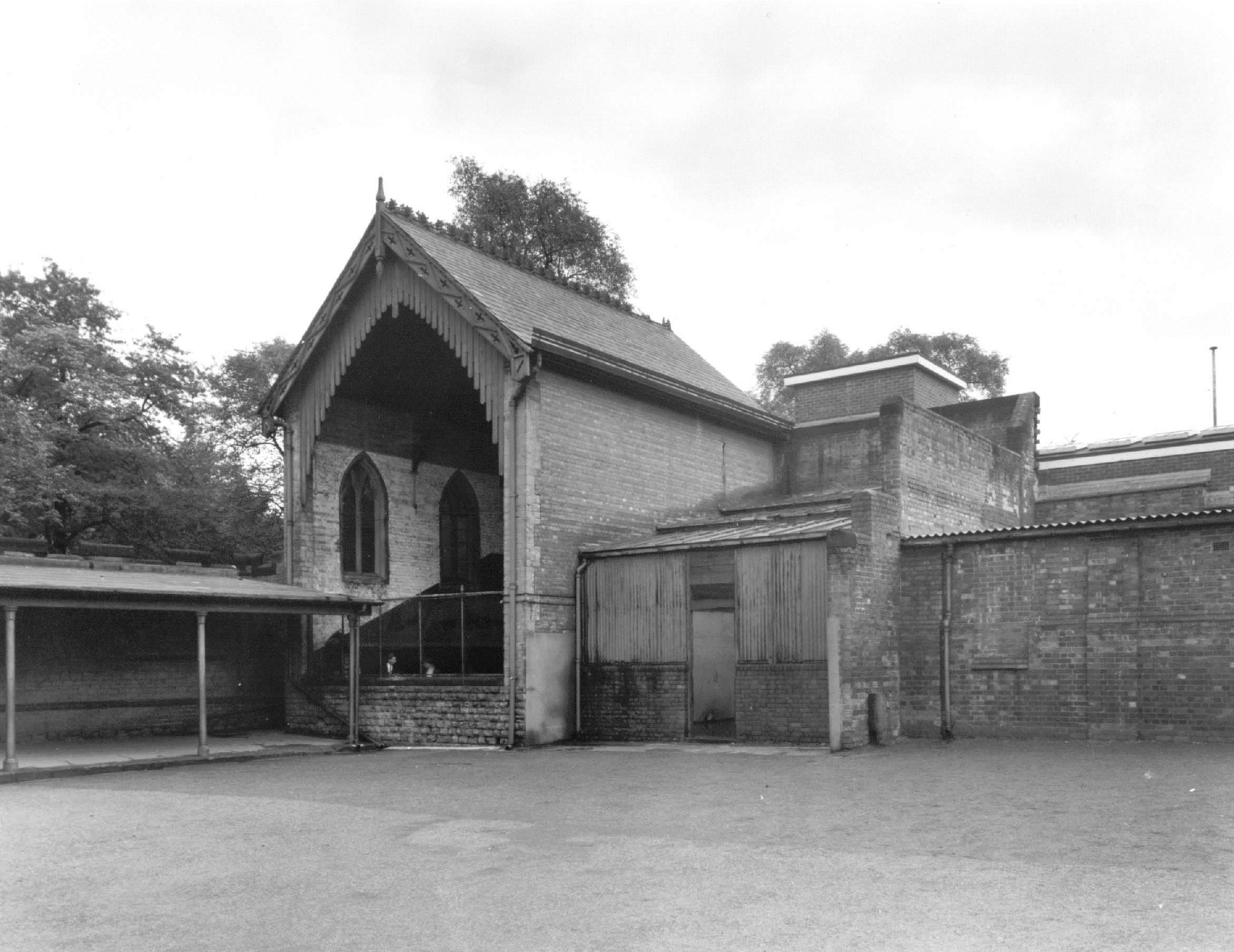
Donald played for the Football 1st XI as a goalkeeper during the last ever term of the sport at the High School. He was a replacement for Roy Henderson, who, by his own admission “..did horribly.., conceding eight goals… for the First Team in an away game at Trent College.” Both of them were in the Fifth Form, Year 11, at the time. In one unrecorded year, Donald was also the High School Fives champion. This is the Fives Court, which was demolished during the 1980s.

best fives

The only other specific mention of him that I have been able to find is in a rather surreal report about a meeting of the Debating Society on Saturday, February 27th 1915, when the school magazine stated that “Mr.Barber was glad Mr.Clarkson had a long arm.” Perhaps you had to be there.

Donald left in December 1915, and then seems to have gone to University College, Nottingham where he immediately joined their Officer Training Corps. After that, he went to the Royal Military Academy at Sandhurst where, in his passing out examination in early 1918, he was placed first of all the candidates in the college and was awarded the King’s Sword and the King’s Medal.

On April 23rd 1918, Donald became a Second Lieutenant in the 1/6th Battalion of the Sherwood Foresters.

Capture commission clarkson

Just four months later, Donald was killed in action on August 9th 1918.  He is buried in Fouquières Churchyard Extension in France.  This cemetery is in the village of Fouquières-les-Béthune, about one kilometre to the south-west of Béthune in the Pas-de-Calais.

clarkson grasveyard

Donald’s death is commemorated on the memorial of University College, Nottingham’s Officer Training Corps as well as the High School’s war memorial.

Like the two other casualties in the photograph of the OTC, he was just nineteen years of age.

I was a teacher in the High School for thirty eight years. Neither there, nor in the rest of my life, do I ever recollect knowing anybody who was called “Clarkson”. On the Commonwealth War Graves Commission website, a simple search for any casualty with the surname “Clarkson”, in the Great War, in the Army, yields 226 results.

8 Comments

Filed under Aviation, Football, France, History, Nottingham, Politics, The High School

Casualty rates in the Great War

Years ago I wrote a worldwide best-selling book about the history of football in the High School from 1870-1914.(Just kidding). In the foreword, I revealed the identity of the Old Boy who had won an Olympic Gold Medal for the United Kingdom at Association Football. I made public which Old Boy had scored more goals in a single F.A.Cup tie than any other player in the history of the competition. I listed the eight Old Boys who had played international football for England. I recalled the Old Boy whose refereeing in an F.A.Cup tie led the F.A. to introduce the concept of the neutral referee, an idea which has spread worldwide since that biased performance. I described an occasion when the High School goalkeeper let in the winning goal as a protest against the refereeing of the game, and the day when the referee refused to give a penalty because “penalty kicks were unknown in amateur football”. The reader could find out which team lost 0-13 and did not get the ball into the opposition half at any point during the game. In another fixture, against Nottingham Asylum, “the presence of so many lunatics unnerved the school team, for it did not come up to its normal form.”  I remembered the day when “The School Six defeated the Masters by three goals to one. The masters, who, like Hamlet, were somewhat “fat and scant of breath”, then demanded to play two fat men extra, to compensate for their want of nimbleness. This unfortunate challenge was accepted, and the School won again by ten goals to one.”

Overall,  this book provided many examples of extraordinary, and, indeed, often amusing events on the football pitches of Victorian and Edwardian England.

villa-cup

When I first started my researches, looking through issue after issue of, firstly, “The Forester’, and then “The Nottinghamian”, it seemed that this would ever be the case. Here was a football spectators’ paradise, where goals rained into the net in every single game, as Leicester Wyggeston School  were beaten by 23-0 on two separate occasions. Deadly goal poachers scored hat tricks past defenders made slow-witted by heavy leather boots, and referees, and their decisions, grew ever more eccentric by the year.


My suspicions, though, were initially aroused by the story of William Norman Hoyte who was at the High School from 1904-1913, when he won an Open Scholarship to Jesus College, Cambridge to read Natural Sciences. William represented his college at rowing and appeared in the Second May Boat. His studies, and his rowing, though, were interrupted by his military service as a Lieutenant in the Sherwood Foresters in the Great War. He was a very brave young man and won the Military Cross twice. When he returned to Jesus College in 1919, though, he was unable to continue with his rowing. After the appalling carnage of the Great War, William Norman Hoyte M.C. and Bar was Jesus College’s only remaining rower from the pre-war years. All the rest had been killed.

zzzzzz   Massengrab_

Morbid curiosity then caused me to wonder what were the eventual fates of those familiar names whose footballing deeds were recorded in perpetuity in their School Magazine, especially those who would have been of an age to have been sucked into the flesh shredding maelstrom of the Great War. where, on average, every single metre of trench was to be hit by a total of one ton of explosives. What I found, quite frankly, astounded me, and I do not feel that any reader, safe from harm, here at the beginning of the twenty first century, can begin to comprehend either the numbers of men involved in this war, or the enormous casualties which the nation suffered.

somme

During the Great War, for example, British forces lost 887,711 men killed and 1,663,570 men wounded. Of these 118,941 were officers. The British Empire had casualties of 1,244,589, with French deaths counted at 1,737,800. Italy lost 1,737,800 me killed and the Russians 3,394,369. Germany had 2,800,720 killed, the Austro-Hungarian Empire 2,081,200 and the Ottoman Empire 3,271,844. The United Kingdom lost as many as 2.20% of its total population, the French 4.39% and the Germans 4.32%.

zzzzzz-Ypres-necropole-

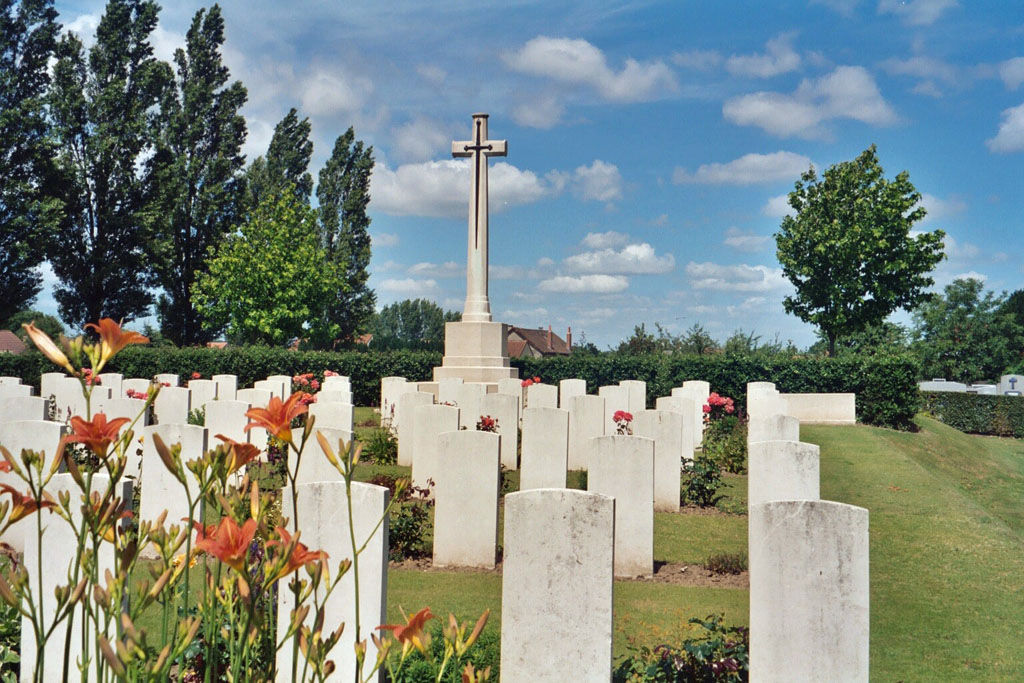
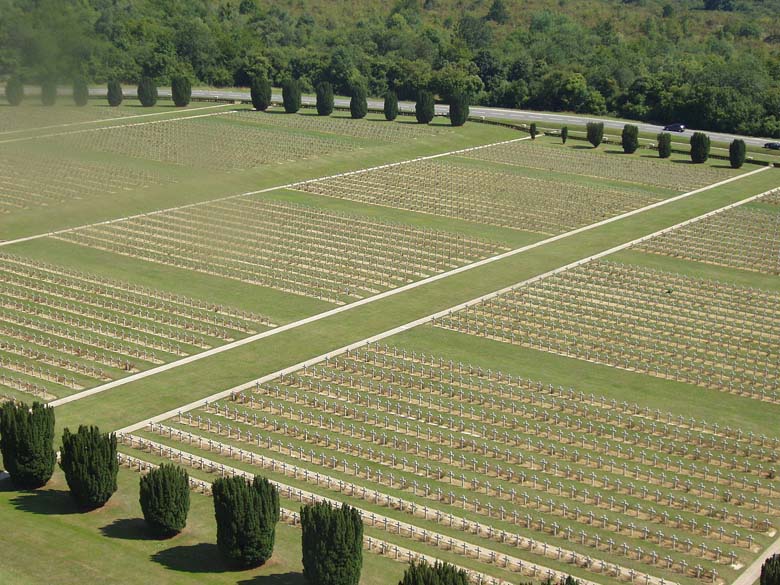
In individual battles, the loss of human life could be even more astounding. On the first day of the Battle of the Somme, on July 1st 1916, the 8th Division lost 218 of its 300 officers at Ovillers in just two hours. Of 8,500 other ranks, 5,274 men perished. On this single day, the total casualties of the British Army were 57,470 men. German casualties were just over 300. In the first three days of the Battle of the Somme, the average daily casualties per division were 101 officers and 3,320 men. During the second week, 10,000 men a day were lost, and for the remaining four or five months of the campaign, casualty rates were in the range of 2,500 men per day. Overall, this battle was to cost the lives of 420,000 British and Commonwealth troops, with a total of 220,000 French casualties. German losses remain unknown but were at least 450,000, and may have reached 600,000. In the photograph below, the tiny squares are all graves:

zzzzzz -Douaumont_ossuary3

Nor is this necessarily an isolated set of statistics. In the Second Battle of Ypres, in April 1915, the 149th Brigade lost over three quarters of their complement, a total of some 42 officers and 1,912 men. The 10th Brigade more or less ceased to exist, losing 73 officers and 2,346 men. In the Third Battle of Ypres, between August and November 1916, British infantry repeatedly advanced against German machine gunners, with casualties totalling 244,897. On the second day of the Battle of Loos, twelve battalions, numbering some 10,000 men, attacked the German machine guns. In just over three hours, 385 officers were lost, along with 7,681 men. On July 31st 1917, when the 1/1st Hertfordshires attacked the Langemarck Line, every single officer was a casualty and eleven of them were killed. The other ranks suffered 459 casualties and drafts of men had to be made to rebuild the battalion. Not until May 1918 was the 1/1st Hertfordshire Regiment fully reconstituted by absorbing thirty officers and 650 men from 6th Bedfordshire Regiment. In the Battle of Aubers Ridge, General Rawlinson, irritated with the lack of progress, complained to his Brigadier-Generals,

“Where are the Sherwood Foresters ?  Where are the Sherwood Foresters? ”

Brigadier-General Oxley replied, “They are lying out in no-man’s-land, sir, and most of them will never stand again.” Many of these particular casualties, especially the Lieutenants and Second Lieutenants, may well have been Old Nottinghamians, but nowadays, there is no way of being any more precise than that.

zzzz ertyuio

One thing of which we are certain is that Robert George Hopewell played in the High School First Team from 1897-1899. Robert was the son of Noah and Margaret Hopewell, of Old Basford and the devoted husband of Gladys Eleanor Hopewell.  They lived at West Brook in Mansfield, Robert was killed at Thiepval during the Battle of the Somme on September 3rd 1916, at the age of 33. A stretcher-bearer’s description of Thiepval in 1916 has survived to the present day…

“The trenches were knee-deep in glueing mud and it was the hardest work I have ever done…The banks on each side were full of buried and half-buried corpses and the stench was appalling. As one was carrying a wounded man down, one perhaps got stuck in the mud and staggered whilst one extricated oneself or was extricated. You put out a hand to steady yourself, the earth gave way and you found that you were clutching the blackened face of a half-buried German.”

Revelon, gefallener Deutscher

Nowadays, Thiepval is the scene of a huge memorial dedicated to those British soldiers who have no known grave. There are 73,000 names listed on it.

zzzzzz b Morgen53

Thomas Cripwell Wilson was an Old Nottinghamian who served as a Private in the 2nd Canadian Mounted Rifles Battalion. He was the son of Thomas and Mary Carr Wilson, of 5, Mount Hooton Terrace, Forest Road, just a five minute walk from the High School. Thomas was wounded in 1915, but returned to France in 1917.

wilson

He was killed in action in November of that same year. His war could be described in equally frank terms…

“All those picturesque phrases of war writers are dangerous because they show nothing of the individual horror, nothing of the fine personalities suddenly smashed into red beastliness, nothing of the sick fear that is tearing at the hearts of brave boys…a thing infinitely more terrible than physical agony.”

The earliest High School football players to be involved in the Great War were four boys who played in the 1891-1892 season, namely Blackwall, Hadfield, Senior and Wallis.

Ten years later, the 1901-1902 season was to provide a full team, eleven brave individuals called Constantine, Cooper, Cullen, Emmett, Hore, Johnson, Marrs, Millward, Settle, Watson and Woollatt.

By 1913-1914, even more footballers were destined to risk their lives on the Western Front. They were now a full tem with a generous selection of substitutes, including Barber, Boyd, Cleveland, Fleet, Harlow, Hind, Lyon, Munks, Nidd, Page, Parr, Prince, Sadler, Taylor, Telford, A.G.Wilson and W.M.Wilson.

Old Nottinghamians, both footballers and non-footballers, volunteered in huge numbers for the Great War. At least one thousand five hundred boys and staff went willingly from a comfortable, safe, and usually well-off  family background in Nottingham, to what was arguably the bloodiest war in human history.

This slideshow requires JavaScript.

11 Comments

Filed under Football, France, History, Nottingham, Politics, The High School

Two local twitches

(An extract from my old birdwatching diary “Crippling Views”)

Monday, September 5, 1988

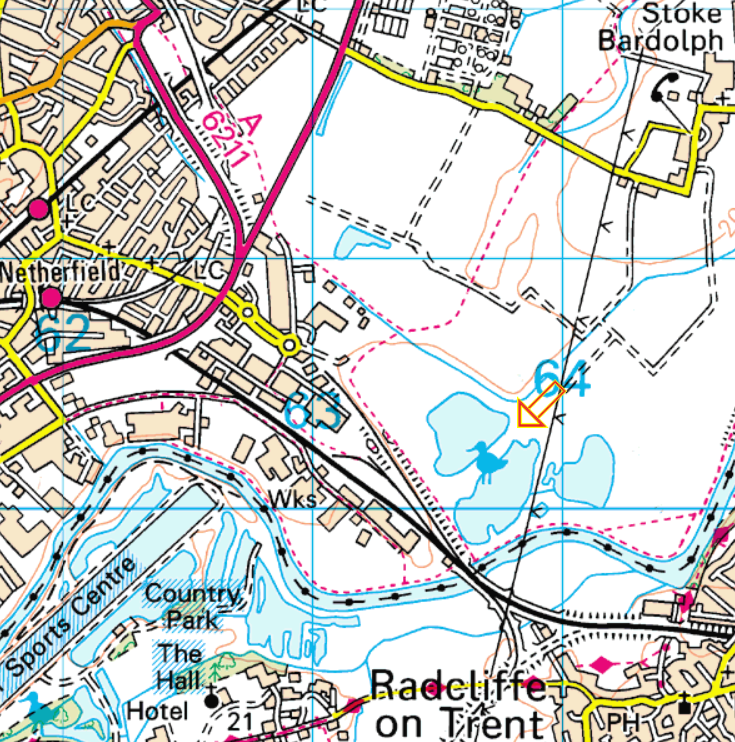
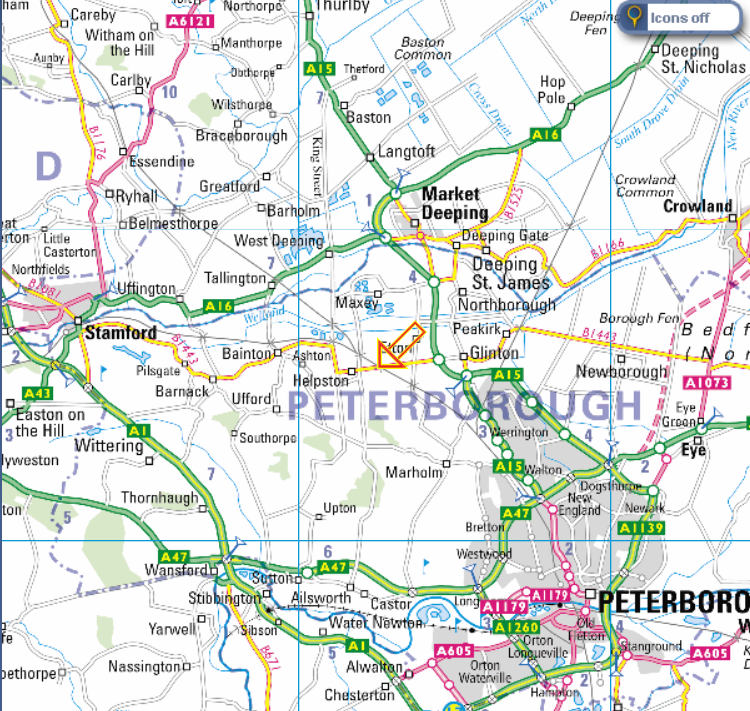
Another walk around my local patch, Netherfield  Sludge Pits, the Cape May of the Nottinghamshire gravel pits complex. (see the orange arrow)

Untitled

Once again, it turns up the big one, with immediate and excellent views of Sedge Warbler, and a male Reed Bunting in the same fifteen yards of hedge.

This slideshow requires JavaScript.

At the side of the path, there is a little flock of fifteen or twenty Yellow Wagtails and over the main lake, a Common Tern.

This slideshow requires JavaScript.

They used to nest on the little island, until it was submerged by the rising tide of slurry from the local coalmine. Knocking around the fields are a Kestrel, some Jackdaws and a few Stock Doves.

This slideshow requires JavaScript.

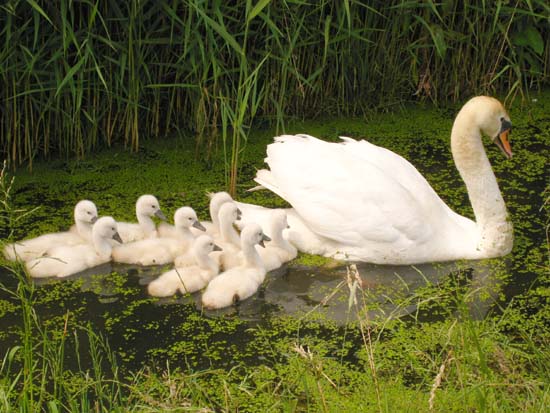
On one of the smaller pools, Mute Swans have bred.

Swan_with_nine_cygnets_xxxxxxxxx

They have produced several cygnets, but don’t worry, the anglers lead shot will soon put a stop to that. It’s amazing to think that Curlew used to breed here fifty years ago, and that, at this very site, Black-winged Stilts nested just after the Second World War.

A flock of finches here once contained an Ortolan Bunting and Little Bunting travelling together, and just after the Second World War, there was an apparent family  group of Gull-billed Terns come through, .

This slideshow requires JavaScript.

Today, there are three Great Black-backed Gulls, and a Herring Gull.

That’s what the destruction of habitat is all about.

**********************************************************************************************
Wednesday, September 7, 1988

An evening trip this time. A local birdwatcher has told me about a superb new place that attracts wonderful birds by Nottinghamshire’s normal standards. It’s a couple of flooded meadows down by the River Trent at Stoke Bardolph (now, alas, with houses built on them). Look for the orange arrow:

This slideshow requires JavaScript.

For some reason, the farmer has allowed the fields to flood, and for an even more obscure reason, he has permitted them to remain flooded. Waders in unprecedented numbers have been attracted for a short stopover as they fly south down the Trent Valley to Africa. Previously, I would only have thought of Stoke Bardolph for the incredible stink of the sewage works that are down there, but this is really something else. It’s just like a hide at Cley-next-the-Sea, with Curlew Sandpipers, Spotted Redshanks, a dozen or so Dunlin and some Greenshanks.

This slideshow requires JavaScript.

There is  a single stint, which causes us a little excitement as Steve and I try very hard to turn it into a Temminck’s Stint.

Temmincks_zzzzzzzzzzzzzzzzzzz

But it must, unfortunately, stay as a Little Stint. Still, it was a good try.

Little Stint1zzzzzzzzzzzzzzzzzzzzzzz

The only negative thing about the whole evening is the failure of the Hobby to appear at the appointed time.

Hobby xxxxxxxxxxxxxxxxxxxxx

There is at least one, if not two, birds in the area, and it, or they, often hunt over the woodland on the opposite side of the river. It’s even been seen knocking around in the gardens of neighbouring Burton Joyce, a riverside village. Tonight, though, there’s nothing.
Never mind – it’s a really brilliant wader site for somewhere as far from the coast is this. What a pity, therefore, that only a few months later, despite the impassioned pleas of a number of different conservation bodies, the farmer  should plough up the land without compunction, and what could have been a brilliant inland nature reserve is lost forever. So much for a democratic society. We are about as democratic as the Democratic Republic of East Germany is democratic. If you own the land, you can do whatever you like with it, irrespective of how many people subsidise you with their taxes and would like some kind of input as to what is done with the land.

Leave a comment

Filed under Nottingham, Politics, Twitching, Wildlife and Nature

The Christmas Truce (a review, excerpts and my own thoughts)

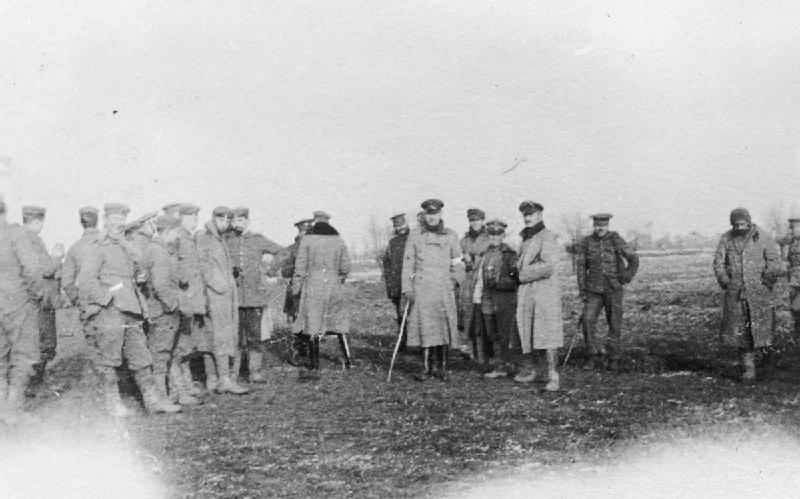
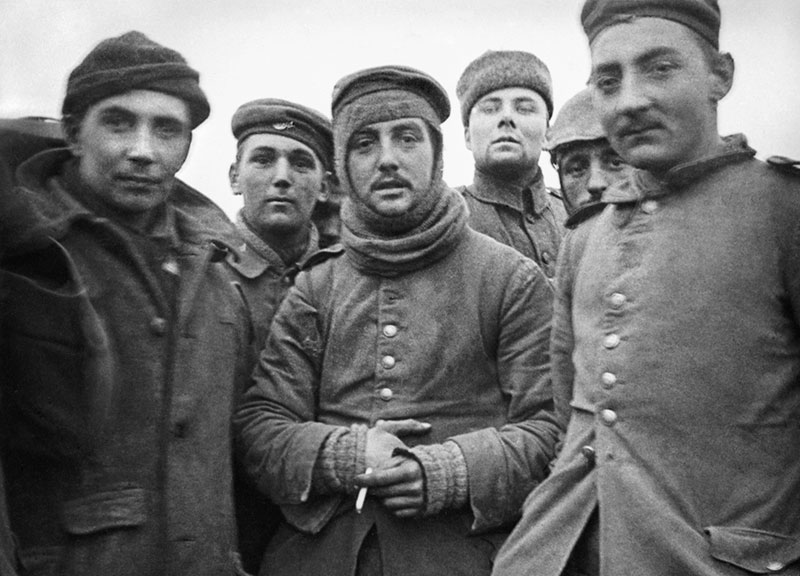
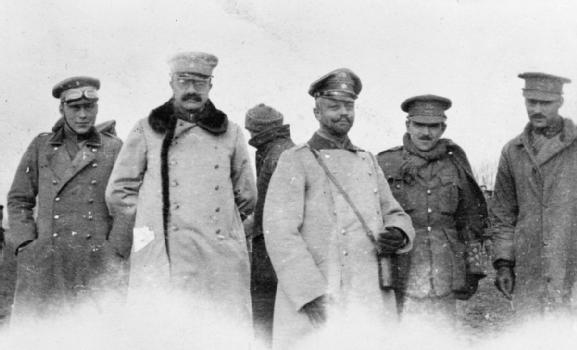
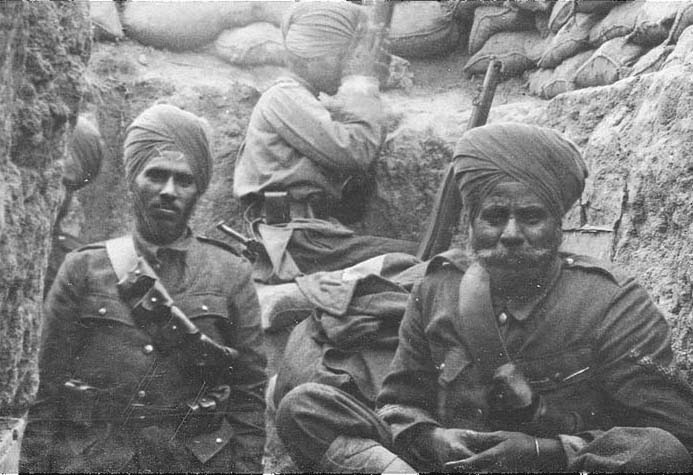
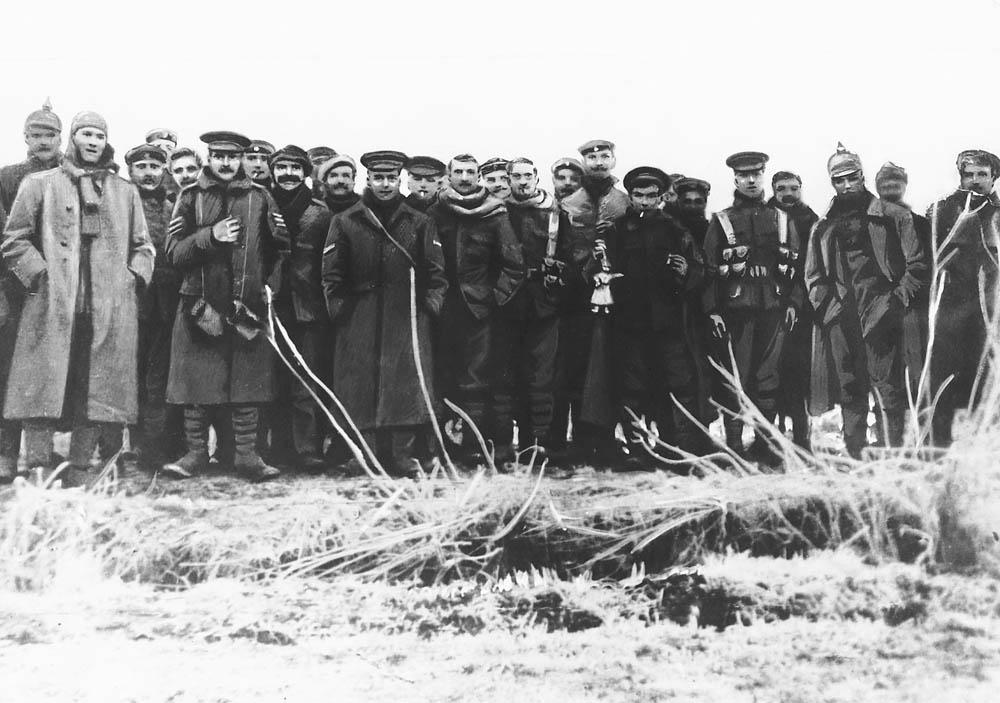
I have decided to examine the Christmas Truce by quoting the words of the men who were there in that late December of 1914. I found these quotations in a book which I originally bought many years ago when it was first published, I should think, to commemorate the 80th anniversary of the Christmas Truce in 1994. The book is called, naturally enough, “Christmas Truce” and this is the edition I have…
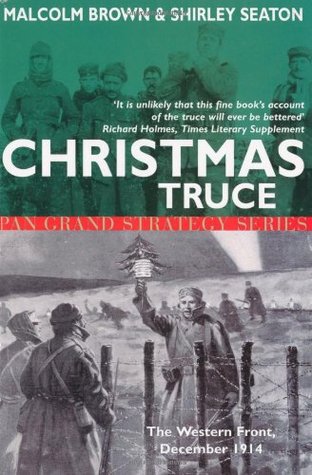
book
The authors are Malcolm Brown and Shirley Seaton. The volume is still there on Amazon in an updated edition and I would expect to find it on many other Internet book selling sites. It is a wonderfully written and extremely moving book which I would recommend to you wholeheartedly. It tells so very well the story of a brief poignant moment during the fire and fury of the Western Front. This book certainly inspired me to go deeper into this wonderful event. It is also now available in a more up to date edition, and is required reading for every student of the Great War, of whatever nationality.
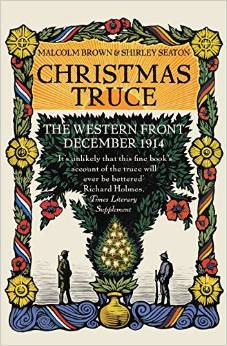
new edition

There are many soldiers quoted in the book and I have used a good number of them, with a few abridgements here and there. Quite simply, the tales they told were so moving that I found it virtually impossible to select only a tiny few to use. The book, of course, provides many, many more of them and goes into great detail about what exactly transpired that cold and frosty day in late December 1914. I do hope, though, that you will enjoy these brief extracts from a book that I still look at regularly today, some twenty years after I bought it:

“Several of my chums had been able to get hold of two small Christmas trees complete with candles, to be mounted on the parapet of the trenches, while others dragged planks with them, usually used in the battle against water and mud. As was usual at that time, having settled in the trenches, we just fired the occasional shot from our outposts to let the enemy know we would not let ourselves be surprised.”

*****

On Christmas Eve we got the order to go into the trenches. The day before we had celebrated Christmas in our rest quarters with the civilian people and their children who were presented with chocolate, bonbons and cake. It was all in good humour.
Then at darkness we marched forward to the trenches like Father Christmas with parcels hanging from us. All was quiet. No shooting. Little snow. We posted a tiny Christmas tree in our dugout – the company commander, myself the lieutenant, and the two orderlies. We placed a second lighted tree on the breast work.
Then we began to sing our old Christmas songs “Silent Night Holy Night” and “O Du Fröhliche”, a German Christmas carol.

*****

It was a beautiful moonlit night, frost on the ground, white almost everywhere; and about seven or eight in the evening there was a lot of commotion in the German trenches. And then they sang “Silent night”, “Stille Nacht”. I shall never forget it.  It was one of the highlights of my life. I thought, “What a beautiful tune”.

*****

Suddenly a man from my company reported, “The English are letting off fireworks”. And sure enough across the way from us, the enemy trenches were lit up with fires and rockets and so on. We then made a few banners reading “Happy Christmas” with a couple of candles behind and a couple on top.

*****

I was gazing towards the German lines and thinking what a very different sort of Christmas Eve this was from any I have experienced in the past. In the ordinary way of things, my father would have been making rum punch from an old family recipe, which had been written out by his grandfather, and was kept, of all places, in the Family Bible! Earlier, after the evening meal, we would have decorated the living rooms and hall with traditional greenery, and would now be looking forward to wishing one another a Happy Christmas, and toasting the occasion in the results of my father’s labours. Instead of this, here was I, standing in a waterlogged trench, in a muddy Flemish field, and staring out over the flat, empty and desolate countryside, with no signs of life……
Then suddenly lights began to appear along the German parapet, which were evidently makeshift Christmas trees, adorned with lighted candles!  Then our opponents began to sing “Stille Nacht, heilige Nacht”. They finished their carol so we sang “The First Nowell”, and when we finished they began clapping; and then they struck up another favourite of theirs, “O Tannenbaum”. And so it went on. First the Germans would sing and then we would sing one of ours, until when we started up “O come all ye faithful” the Germans immediately joined in singing the same hymn to the Latin words “Adeste fideles”. And I thought, well, this was really a most extraordinary thing – two nations both singing the same carol in the middle of a war.
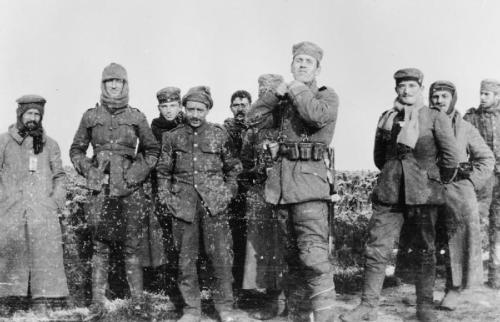
Christmas_Truce_1914_IWM_HU_35801

When I got back to the trenches after dark on Christmas Eve I found the Germans had got little Christmas trees burning all along the parapet of the trench. Meanwhile, unknown to us, two officers  got out of their trench and walked halfway to the German trench and were met by two German officers. They talked away quite civilly and actually shook hands!

*****

I have just been through one of the most extraordinary scenes imaginable. Tonight is Christmas Eve. Firing was going on all the time and the enemy’s machine guns were firing at us. Then about seven o’clock the firing stopped. I was reading the paper and the mail was being dished out. It was reported that the Germans had lighted their trenches up. I went out and they shouted “No shooting” and then somehow the scene became a peaceful one. All our men got out of the trenches and sat on the parapet, the Germans did the same, and they talked to one another in English and broken English. I got onto the top of the trench and talked German and asked them to sing a German folk song, then our men sang and each side clapped and cheered the other. Pope and I walked across and held a conversation with the German officer in command. He presented me to his officer. I gave permission to bury some German dead and we agreed to have no shooting until midnight tomorrow. We talked together, ten or more Germans gathered around. I was almost in their lines within a yard or so. We saluted each other, he thanked me for permission to bury his dead, and we fixed up how many men will do it, and that otherwise both sides must remain in the trenches.

Then we wished one another good night and a Happy Christmas and parted with a salute. I got back to the trench and the Germans sang “Die Wacht am Rhein”. Our men sang “Christians Awake”, and with a good night we all got back into our trenches. It was a lovely moonlight night, the German trenches with small lights on them, and the men on both sides gathered in groups on the parapets. At times we heard the guns in the distance  but about us is absolute quiet. I allowed one or two men to go out and meet a German or two halfway. They exchanged cigars and smoked and talked. The officer I spoke to hopes we should do the same on New Year’s Day. I said “Yes if I am here”.

Trucecigarette

I felt I must sit down and write the story of this Christmas Eve before I went to lie down. If one gets through this show it will be a Christmas Time to live in one’s memory. I am just going for a walk round the trenches to see all is well. Good night.

*****

The Germans came out, and we gravely saluted each other. I then pointed to nine dead Germans lying in midfield and suggested burying them. We gave them some wooden crosses, and soon the men were on the best of terms and laughing.

*****

 There was no firing, so each side began gradually showing more of themselves and then two of their men came halfway and called for an officer. I went out and found they were willing to have an Armistice for four hours and to carry our dead men back halfway for us to bury. Then both sides came out, shook hands, wished each other compliments of the season, and had a chat. A strange sight between two hostile lines.

*****

I was in the 2nd Battalion of the Westphalian Infantry Regiment 15. On Christmas Day, at about eleven o’clock, there was a continuous waving of a white flag from the English trench. Soon afterwards a number of Englishmen climbed out and came towards our front. My commander, Baron von Blomberg, ordered me to find out what the Englishmen wanted. I  went out of the trench and we heard that it was the wish of the Englishman to bury their dead and they asked us to cease enemy action for an adequate period. What were we to do? Time was short. Major von Blomberg therefore decided that there should be a local Armistice until one o’clock in the afternoon, telling the Englishman that their dead must be buried by that time.

*****

We then had a most wonderful joint burial service.  Our padre arranged the prayers and Psalms and an interpreter wrote them out in German. They were read first in English by our padre and then in German by a boy who was studying for the ministry. It was an extraordinary and most wonderful sight. The Germans formed up on one side, the English on the other, the officer standing in front, every head bare. Yes, I think it was a sight one will never see again. The ground between the two lines of trenches was soon swarming with men and officers of both sides, shaking hands and wishing each other a Happy Christmas.
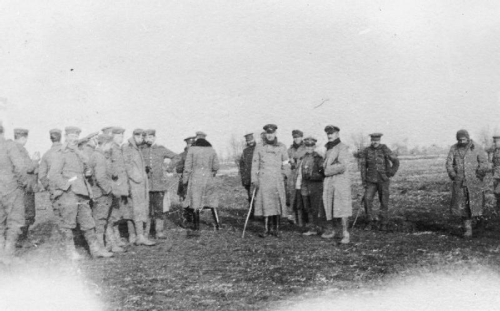
Christmas_Truce_1914

“No Man’s Land was full of parties of British and Germans laughing and talking together.
By breakfast time, nearly all our men were between the trenches, and were the greatest pals. In the middle of the war we had a Merry Christmas.”

*****

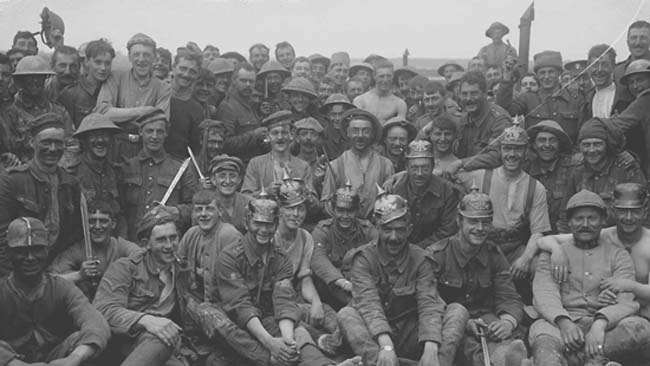
When morning came both sides shook hands and exchanged gifts. We were given corned beef, tea and cigarettes. They were mad about our cigars. I thought it would be a good idea to get rid of my uniform’s black metal shoulder titles, so I swapped them for very nice German belt with brass buttons and the words “God mitt Uns” on it, and I used that all through the rest of the wall to keep my trousers up.
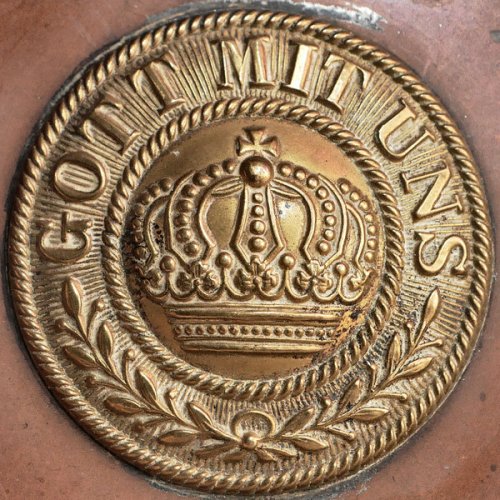
1304254501_got_mit_uns_by_daliscar-d3fbgkq

I spotted a German officer, and being a bit of a collector, I intimated to him that I’d taken a fancy to some of his buttons. We then agreed to do a swap. I brought out my wire clippers and, with a few deft snips, removed a couple of his buttons. I then gave him two of mine. One soldier swapped bully beef for a pointed German helmet.
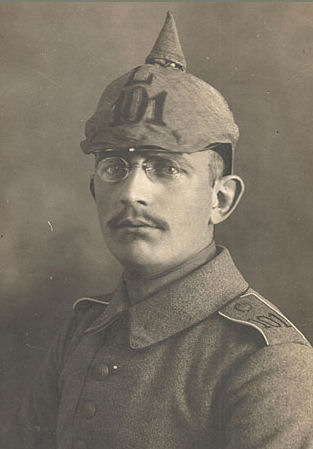
Pickelhaube

The helmet achieved fame as on the following day a voice called out “I want to speak to the officer.” He continued, “Yesterday I swapped my helmet for the bully beef. I have an important inspection tomorrow. You lend me my helmet, and I will bring it back afterwards.” The loan was made and the agreement kept, sealed with some extra bully beef. I had a drink of rum off one of the Saxons and then I drank his health. He nearly shook my hand off.

*****

All the morning we have been fraternising, singing songs. I have spoken to and exchanged greetings with a colonel, staff officers and several company officers. We have just knocked off a dinner, and have arranged a meeting afterwards.

*****

Captain Berryman came running up with the news that the Germans were out of their trenches  Sure enough I found a number sitting on the parapet of No. 2 Company’s trench, and also out in front of No. 1 Company. They were trying to converse with our men and giving them cigarettes, biscuits and boxes of cigars. As I could speak German I conversed with them. They all belonged to the 16th Regiment. They seemed very jolly as if they had just had a good dinner. One of them said to me that there must be “Friede auf der Erde”,  “Peace on Earth” on this day, being Christmas Day.
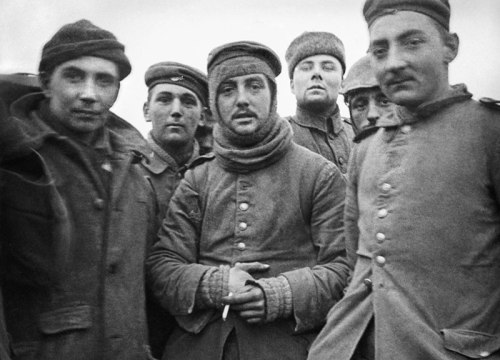
xmasPloegstreet-xxxxxxx

In the middle of No Man’s Land I met two English, one Indian and one German officer of the neighbouring company; we shook hands, wished each other a Merry Christmas, and then we exchanged some small presents like plum pudding, cakes, whisky, brandy, and so did our men. For an hour both sides walked about between the two lines of trenches, talking and laughing, swapping tobacco and cigarettes, biscuits etc….You would never believe that we have been fighting for weeks.

truce 1

One of the Germans asked me if I would like to bury a few dead Indians that were lying about their trenches. My chum and I set to work and buried about a dozen of them. All the Germans looked very fit. They were also very well clothed and looked well fed. One of their officers, a captain, clasped his hands together and looked towards heaven and said, “My God, why cannot we have peace and let us all go home!”

*****

A couple of bright sparks from the Staffordshire Regiment appeared – one clad in a tail coat, black trousers, and an old battered silk hat , the other decked out in blouse and skirt, an old bonnet and a broken umbrella. They paraded up and down and were joined by another joker who had found a broken bicycle with almost square wheels, which he trundled up and down. Many of the Germans had costumes on which had been taken from the houses nearby, and one fellow had a blouse, skirt, top hat and umbrella. My own platoon sergeant added a good deal to the Christmas party by going out to meet the Germans wearing a large skirt; this led to some earthy Teutonic byplay and caused plenty of laughs.

standard

We heard them singing and shouting in their trenches, and about midday they began lifting up hats on sticks and then they showed their heads, and then their bodies and finally they climbed out of their trenches into the open! Of course we could not shoot them in cold blood like that. We could hardly believe our eyes; we were just about to open fire when one of our officers gave us the order to unload our rifles. Seeing the Germans without any rifles, we stood up and answered them. Then they started to cheer. One of their men shouted out, “Here’s some cigars for you. Come and fetch them.” They shouted, “Come on, we will not fire on you.” The fellow who threw the cigars then came down off the top of his trench and picked up the box again, and started to walk over towards our trenches. Seeing this I climbed over the parapet of our trench to meet him. When we met in the middle he handed me the cigars and said, “A Happy Christmas to you”. I hardly knew what to do at first, but I shook hands with him and wished him the compliments of the season.
As soon as the Germans saw us shake hands they cheered like mad. They then started to come towards our trench.
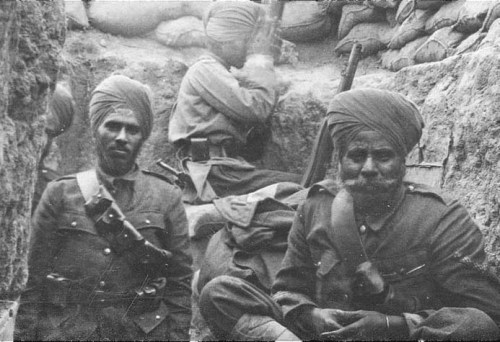
indians

Our boys, all Indians by the way, started out to meet them as well. The scene that followed can hardly be described. To see our greatest enemy shaking hands with our Indian troops and giving them cigars and cigarettes was a sight I shall never forget.

Captain, come out, the British have started waving. There is no shooting, and our men are doing the same”. I rushed out and saw a strange unforgettable picture. The soldiers who were standing upright on top of their trenches without their weapons, shouting “Merry Christmas”. Some soldiers had advanced into No Man’s Land. They met in the middle, shook hands, talked and strolled about.…… They were trying to talk to our men and they were giving them biscuits and boxes of cigars.

*****

An officer amused us very much by clearing some soldiers away from his machine gun emplacement, but he finally had his photo taken arm in arm with one of our officers.

*****

Coming across from the German trenches was a solitary German, carrying a white flag high above his head. Having come about halfway he suddenly stopped and waited. Then one of our men went out to meet him, to bring him into our lines. Unfortunately the German had not been blindfolded, and he had to be made a prisoner of war. He protested and was awfully upset, but he had seen behind our lines. (The luckiest man I have heard of for a good while. The whole of 1915, 1916, 1917 and 1918 in a British POW camp!)
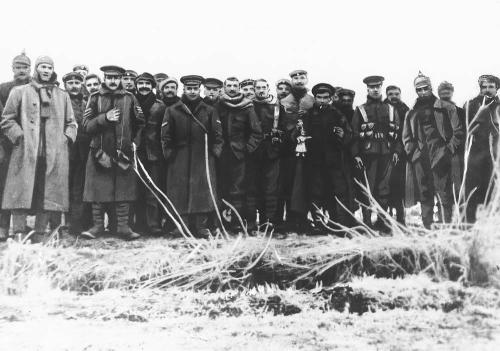
Christmasxxxxxxx truce

The Germans sent in a party with a white flag. Our bloody fool of a sentry brings one German in without blindfolding him and, of course, he had to be made a prisoner-of-war.

*****

The German officers were taking photographs of mixed groups. One German brought us copies to send to the English newspapers. We  had our photographs taken by a German who was the proud possessor of a small camera. There were Indians and Germans shaking hands when he pulled the shutter.
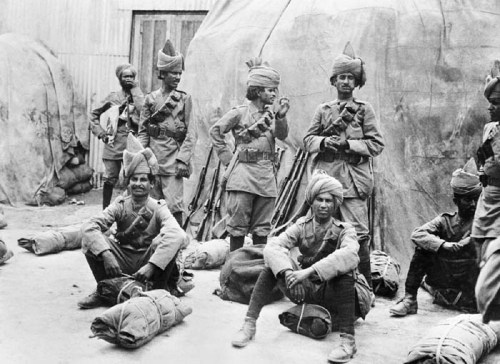
indians 2
He took a photograph of three of our officers and three of their officers; our officers were placed between theirs. Suddenly one of the Germans ran back to his trench and presently appeared with a large camera. I posed in a mixed group for several photographs. No doubt framed editions of this photograph are now on some German mantelpiece!.

*****

“Dear Mother, I am writing from the trenches. It is 11 o’clock in the morning. Beside me is a coke fire, opposite me a ‘dug-out’ (wet) with straw in it. The ground is sloppy in the actual trench, but frozen elsewhere. In my mouth is a pipe presented by the Princess Mary. In the pipe is tobacco. Of course, you say. But wait. In the pipe is German tobacco. Haha, you say, from a prisoner or found in a captured trench. Oh dear, no! From a German soldier. Yes a live German soldier from his own trench. Yesterday the British & Germans met & shook hands in the Ground between the trenches, & exchanged souvenirs, & shook hands. Yes, all day Xmas day, & as I write. Marvellous, isn’t it?”

*****

Suddenly a Tommie came with a football and then began a football match. We marked the goals with our caps. Teams were quickly established and the Fritzes beat the Tommies 3-2.

*****

The regiment actually had a football match with the Saxons, who beat them 3-2.

*****

“A” company played against the enemy with an old tin for a ball: they won 3-2!

*****

Some of our boys tied up a sandbag and used it as a football, while a party of Germans enjoyed themselves sliding on a little frozen pond. Soon there were dozens kicking a made up football about in No Man’s Land.

*****

In the sector of the Argyll and Sutherland Highlanders, “it was recorded that a game was played and according to a letter  published by the Glasgow News, the Scots won by  4–1.

*****

He toured Britain last year with the Leipzig team and beat Glasgow Celtic 1-0. All day we walked to and fro with newspapers and our little photographs and parted, regretting that it was our duty to fight each other.

*****

Men from the 1st Battalion came out from their trenches to play football. The Royal Welch Fusiliers played the German Battalion 371. The Germans won 2–1.
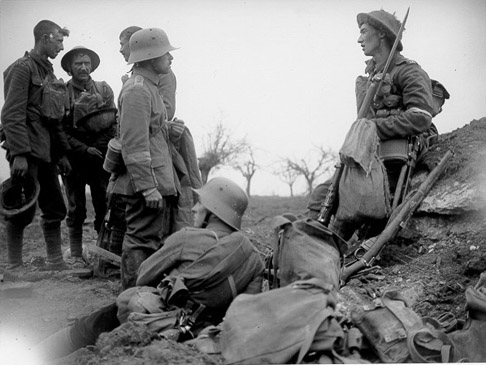
Christmas%20truce%202014-41-124316

As the fog lifted the Germans were playing football. We  climbed out of the trench armed with an entrenching tool handle and a jam tin and played rounders.

*****

We had a football out in front of the trenches and asked the Germans to send a team to play us but it had been freezing all night and it was a ploughed field so their officers stopped them doing it.

*****

A match against a German team (described as “Prussians and Hanovers”) was played near Ypres near the border of Belgium and France.

*****

The Lancashire Fusiliers, based near Le Touquet on the northern French coast, played a match against German soldiers using a ration tin as the “ball”.

*****

Captain Sir Edward Hulse reported “a sing-song which ended up with ‘Auld lang syne’ which we all, English, Scots, Irish, Prussians, Wurttenbergers, etc, joined in. It was absolutely astounding, and if I had seen it on a cinematograph film I should have sworn that it was faked!

*****

The ball appeared from somewhere, I don’t know where, but it came from their side, it wasn’t from our side. They made up some goals and one fellow went in goal and then it was just a general kickabout. I should think there were about a couple of hundred taking part. I had a go at the ball. I was nineteen. Everybody seemed to be enjoying themselves. There was no ill will between us. There was no referee, and no score. It was simply a mêlée. We had a rare old jolly vacation, which included football, in which the Germans took part.

sr_french_marines_01

On Christmas Day 1914 there was an Armistice between us and the enemy. A comrade of our company held up a sign with the inscription “Fröhliche Weinachten” (Merry Christmas). The English immediately responded in like manner. An English soldier shouted to us in imperfect German, asking if we wanted to remove the dead between the lines. We came to an agreement and our men climbed over the parapet, as did some of the English. Afterwards the Englishmen asked us to sing some Christmas songs. An English soldier came towards as and exchanged cigarettes and chocolate. The sight of opposing troops chatting to each other along a stretch of several hundred metres was a very strange one. As darkness fell both sides went back to their trenches. Such attempts at fraternisation have hardly been approved by the High Command; they remain, however, a wonderful testament to the human spirit.

*****

I gave them cigarettes and was given a box of tobacco which I will send home as a souvenir of  the most extraordinary event of the whole war – a soldiers’ truce without any higher sanction by officers and generals. We strolled up and down for about half an hour, shook hands, said goodbye, saluted and returned to our lines.

*****

And finally, the  very best one of all…

It was just the sort of day for peace to be declared. It would have made such a good finale. I should have liked to have suddenly heard an immense siren blowing. Everybody to stop and say “What was that? Siren blowing again: the appearance of a small figure running across the frozen mud and waving something. He gets closer – a telegram boy with a message! He hands it to me. With trembling fingers I open it: “War off, return home – George. King” Cheers! But no, it was a nice, fine day, that was all.

happy_soldiers_wwi

For me the Christmas Truce has always been the most wonderful achievement ever by ordinary working-class men, many of whom would never have even seen a German or an Englishman before the Great War broke out. And despite all the appalling self-serving jingoism in the newspapers, after just four months of  slaughter, both armies of ordinary men were ready to recognise that they had far more in common with their so-called enemies than they might previously have been allowed to know. The warmth and humanity of these men shines through still, even a century after the event. “Merry Christmas” or should I say “Fröhliche Weinachten”?
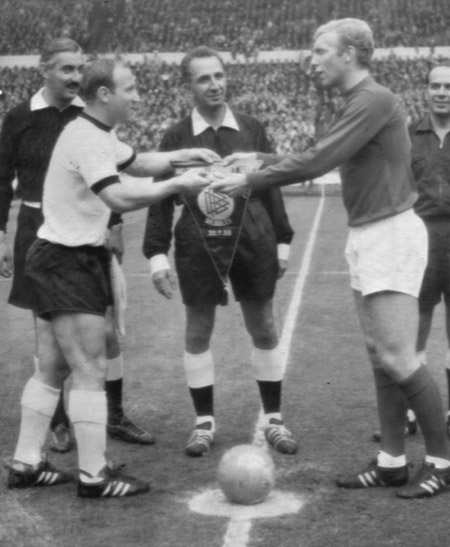
SportTo commemorate the hundredth anniversary of the impromptu football matches played in No Man’s Land during the Christmas Truce of December 1914, both English and German football supporters have come together this year, 2014, in the spirit of Christmas friendship. The highlight of the weekend-long meeting was a seminar entitled “The Referee”.

English supporters were able to show their German friends how it is possible for the referee to award a goal even though a tiny and almost insignificant proportion of the ball may not have completely crossed the line.

This slideshow requires JavaScript.

Our German friends were able to show how a referee, if he decides the ball is of the wrong colour or has been made by the wrong manufacturer, can refuse to award a goal, even though the ball may have crossed the line by several metres.

This slideshow requires JavaScript.

At the end of a wonderful day of comparing beers and consuming Christmas food, a collection was taken to fund methods of helping the referees of England-Germany games during the next century.

zzzzzz guide_dog_

1 Comment

Filed under France, History, Personal, Politics

Gunpowder, treason and Nottingham

Not many people would connect the High School and Guy Fawkes’ Gunpowder Plot, but the link is there, if you trace it through carefully……

…..Brian Garnett, or Garnet, is thought to have been the Master of the Free School during some unknown period between the years 1564-1575.

free school

It is considered most probable that he took up the post between 1564-1567, and then retired in, probably, 1575. He may then have lived in Beeston, but he was certainly buried in Heanor in Derbyshire on December 21st 1576, as the “Late Skoolemaster of Nottingham”.

With his wife, Alice Jay, he had at least three sons, Richard, John and Henry, and three daughters, Margaret, Eleanor and Anne,  all of whom became nuns at Louvain.

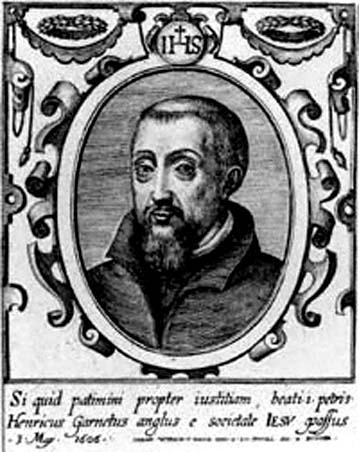
Of the sons, Henry is the most notable, because eventually he was to become the Superior of the Jesuits in England, and, allegedly, an active member of the Gunpowder Plot which, in earlier centuries, often used to be called the Gunpowder Treason Plot or the Jesuit Treason. In general terms, the plot, of course, was a failed assassination attempt to blow up the Protestant King James I of England and his entire Parliament, by filling the cellars of the building with gunpowder. lighting the fuse, and retiring quickly and sensibly to a minimum distance of at least fifty yards.

GunpowderPlot dddddddddGarnet was not quite tasked with carrying the barrels of gunpowder into the cellars, but rather, he was deemed to have been guilty of knowing all the details of the assassination attempt, but then doing nothing to save either the King’s life or those of his courtiers. Here he is….

google 2 zzzzzzzzz
In recent times, some doubt has been cast on the extent to which Garnet was actually aware of the dastardly plot, because all the details he knew were revealed to him through the plotters’ confessions. Of course, by the strict rules of his Catholic religion, Garnet was automatically prevented from informing the authorities by the absolute confidentiality of the confessional.

None of this alters the basic fact, though, that Henry Garnet was executed for treason, on May 3rd 1606. At his trial, the jury had needed only fifteen minutes to reach their verdict.

Where the tiniest of doubts still exists, however, is whether Henry was ever a pupil at the Free School, as no registers of this period are still in existence. It is certainly true, though, that he was educated in Nottingham, and the national rules in place at the time allowed only one school in each town or city. In any case, it is surely beyond credibility that he was not associated with the Free School during his father’s tenure of the position of Master, that is to say, the only teacher who was working there.
Indeed, at least one source says that young Henry came to the Free School during Henry Cockrame’s time as Master (most probably 1563-1564), possibly a year or so before Cockrame left in 1565 and was replaced by Henry’s father, Brian Garnett of Heanor, Derbyshire. Henry is supposed to have studied for two years under his father’s tutelage, before leaving for Winchester College where he was elected as a scholar on August 24th 1567 and duly entered the school in 1568.

WinCollege1_ccccccccccccccccc

Henry had been well taught in Nottingham, and proved to be an able student at Winchester. According to “The Oxford Dictionary of National Biography”…..

“His love of music and “rare and delightful” voice were complemented by an ability to perform songs without preparation, and he was reportedly also skilled with the lute.
Father Thomas Stanney wrote that Garnet was “the prime scholar of Winchester College, very skilful in music and in playing upon the instruments, very modest in his countenance and in all his actions, so much that the schoolmasters and wardens offered him very great friendship, to be placed by their means in New College, Oxford.”

Instead of the delights of New College, Oxford, however, when he left the school in 1571, Garnet moved to London to work for a publisher. Shortly afterwards, in 1575, he travelled to the continent and joined the Society of Jesus. Garnet then moved to Rome to study for the priesthood with the Jesuits. He was finally ordained as a priest around 1582. (Note the ear of corn which will be important)

henry again xxcccccdxdx

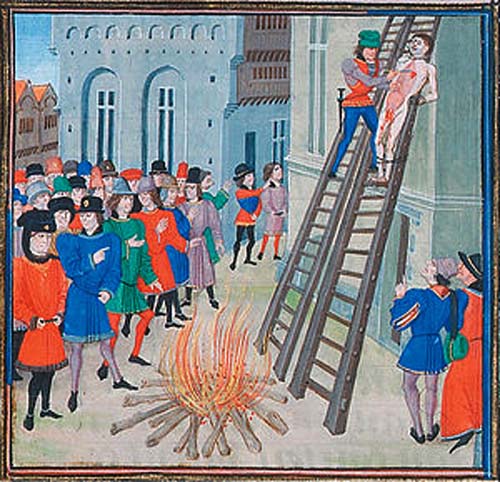
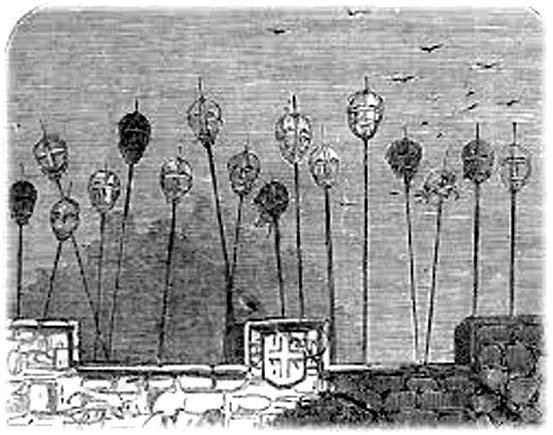
Whatever happened in his life during the next twenty three years in the service of the Lord, by virtue of the events of May 3rd 1606, Henry Garnet must surely remain the only Old Nottinghamian ever to have been convicted as a terrorist, and, indeed, one of the very few ever to have been hanged, drawn and quartered, and then to have had his severed head placed on a pole on London Bridge.

Froissar txxxxxxxxx

(That’s going to hurt)

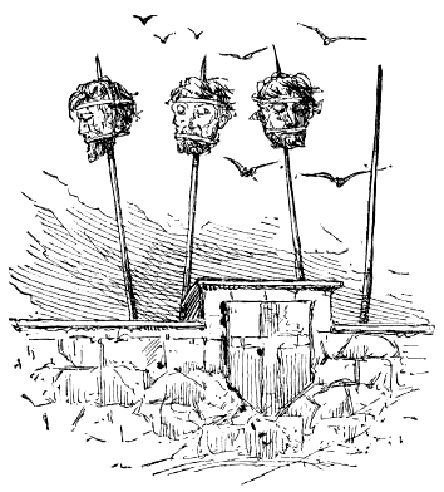
Heads_on_spikes xxxxxxxxx

(This engraving will be next month’s Caption Contest)

Thankfully, the more lurid details of his execution have survived in Antonia Fraser’s book, “The Gunpowder Plot”…..

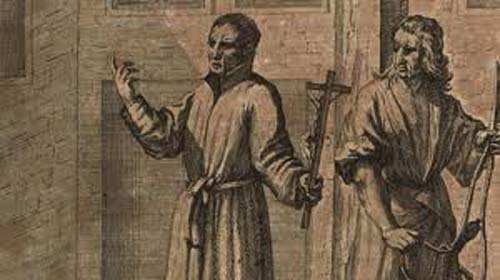
“Garnet said his prayers, and was then thrown off the ladder and hanged.

beforfe execuion xxxxxxxxxx

Before the executioner could cut him down alive, many in the crowd pulled on his legs, and as a result, Garnet did not suffer the remainder of his grim sentence. There was no applause when the executioner held Garnet’s heart aloft and said the traditional words, “Behold the heart of a traitor”.
His head was set on a pole on London Bridge, but crowds of onlookers fascinated by its pallid appearance eventually forced the government to turn the head upwards, so its face was no longer visible.”

From this peculiar pallid appearance of course, came the widely held belief that Garnet’s head did not suffer any signs of decay or change.

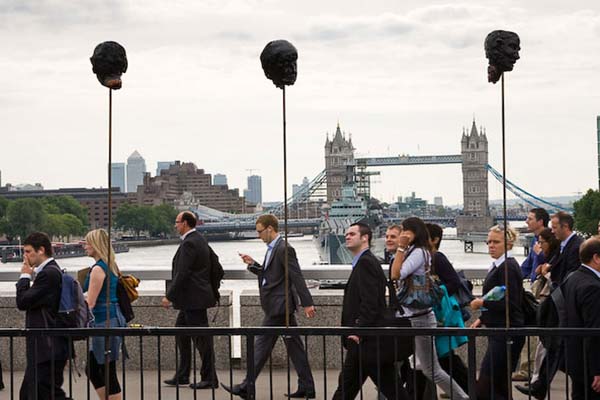
nov 4th heads xxxxxxx(Can you spot Garnet’s head?)

Nowadays, of course, we are a lot more civilised and the heads of traitors are no longer placed on a pole on London Bridge. Instead, we have just two or three of the more unsuccessful Premier League managers.

modern cddddddddddd

(Why is nobody taking any notice?)

The final, and a slightly more serious thing to be said about Henry Garnet is that way back on May 3rd 1606, according to those who were there, a miraculous portrait of him apparently appeared on an ear of corn onto which drops of his blood had fallen at the moment of his execution. This particular ear of corn was later credited with achieving a number of miracles. At one point, it was taken secretly out of the country into the possession of the Society of Jesus, before, with its size surely playing a part, it was lost, rather appropriately, during the French Revolution.

-Portrait_of_Henry_Garnett zzzzzzzzz

The Roman Catholic Church, of course, has a large number of saints who have done far less than Henry Garnet to earn their sainthoods. Names which spring to my mind would include St.Buriana, St.Erc, St.Ia and any number of Cornish villages named after other dimly remembered saints.

Perhaps one fine day, Henry Garnet may yet become the only Old Nottinghamian ever to be canonised.

Leave a comment

Filed under History, Humour, Nottingham, Politics, The High School

The Continuing Greed of the Few

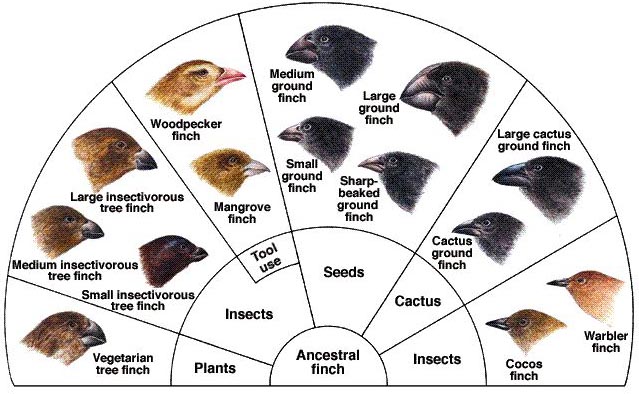
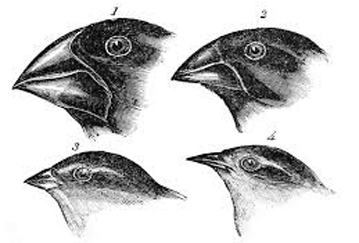
A short time ago, I posted an article inspired by what Richard Mabey had written in a very old copy of the BBC Wildlife Magazine. He spoke of Darwin’s law of “The Survival of the Fittest” and explained how it had been misinterpreted by those in the financial world whose only thought was to make vast sums of money for themselves and if possible, to exterminate the opposition. I extended this idea into our everyday world of shopping, and posited the idea that one day we may finish up with only four or five gigantic supermarket chains and no more interesting small shops.
At the time, I wrote a sequel to the original article which I did not post because I thought it would be considered not just too political but too extreme. However, events today have changed my mind and I realise that unfortunately and sadly, I was not in the slightest bit mistaken.
Here in Great Britain many people trundle slowly onwards through their lives, grumbling a little, but for the most part not doing too badly. Our government tells us that inflation is progressing at the wonderfully low rate of between 1% and 2%, although most people are not stupid enough to believe this. Their own experience when they go to buy things is absolutely the contrary of what the government says is happening. We are not helped either by the cartel of various brands of petrol, all of whom fail miserably to pass on to the customer any diminution in the price that they pay for crude oil.
Indeed, our society is now moving slowly into the world of zero hours contracts, where people sit at home with no real job and wait to be summoned into work just for an afternoon, or for a couple of hours in the morning. Such employees have few rights and no sick pay. The use of food banks is increasing and a growing number of people are being given the necessary accreditation by charitable organisations to receive free food donated by well-wishers. House prices are, of course, absolutely ridiculous. Hardly anybody can afford a house, because they are so unbelievably expensive. Certainly no young person starting off in an ordinary job could possibly buy their own house. An increasing number of especially young people cannot afford to rent a house either, and live at home with their parents. Starting salaries are often so poor that a very large number of graduates are leaving university, struggling to get their first job, and then staying with their parents who will have to support them just as if they were still away studying.
The most incredible icing on this catastrophic cake was the announcement today on BBC One Teletext of a statement by the Incomes Data Services.
It is politically so provocative that as far as I can see, it was only displayed prominently on our screens for three or four hours.

Apparently, the directors of Britain’s top 100 companies, listed in the FTSE 100 Index, now earn 120 times the average salary of their employees. Despite the appalling recession which we are continually told about, this marks a huge escalation in executive pay. In the year 2000, directors’ salaries were a mere 47 times those of their employees but since then the median total earnings for FTSE 100 bosses has risen by 278%, while the corresponding rise in total earnings for   ordinary full-time employees was a mere 48%. The typical director of one of these hundred companies earns an average of £2.43 million per year while the average wage of their employees is £27,000. This year alone, directors’ pay rose by a minimum of 20%.

Ordinary people have seen their wages continually eroded by inflation of only 2% or 3% because the majority of wage increases are less than that. This week, for example, NHS employees staged a four hour strike because they had been refused a 1% pay increase as this would be too expensive.
With all this in mind, I do not feel that my sequel article is quite as extreme as I first feared.

So here goes. It began with a swipe at M.P.s and the scandal of their expenses…

Will people always care as little as they seem to now about who benefits from the way the country is run? Will they always accept the situation, and just go on watching “Strictly Come Dancing”?

This slideshow requires JavaScript.


Will the eight million people whose families are only one monthly pay cheque away from severe monetary problems always be happy to walk along the cliff edge of finncial catastrophe ?

This slideshow requires JavaScript.


And as the poor get poorer, will they all stand idly by and watch as the tiny minority ensure that they will always get richer and richer?

This slideshow requires JavaScript.


What will happen to the people who work for the minimum wage, but dream of one day earning a living one? And when a job is advertised and two hundred people apply to work in an ordinary café, what will the other 199 do?

This slideshow requires JavaScript.


Will poor people who cannot feed their families, and who are reduced to visiting food banks accept that situation for ever?
Will the people who cannot afford heating costs in the winter, always shiver idly by and accept their inevitable fate?


This slideshow requires JavaScript.


Will they always be happy just to hold open the doors of luxury cars, like modern day servants in “Downton Abbey”?

This slideshow requires JavaScript.


What is so very bad about sharing things? Why must the world be organised so that a significant minority remain so rich and so greedy? And why should the vast majority spend all their time struggling to live pleasantly?


This slideshow requires JavaScript.

What is so unacceptable about their being warm and living in a house that they own, with children who receive a decent education and stand a realistic chance of real progress in their life?

This slideshow requires JavaScript.


Are the very rich too stupid to see what may happen?
This film shows the power of the crowd. Together, people can achieve anything. In this case, it is for good.


Leave a comment

Filed under Politics

The Greed of the Few

A few months ago, I went into a Salvation Army charity shop, which was surprisingly crowded with people looking for second hand clothes.  I was able to buy a very large pile of old BBC wildlife magazines which dated back some six or seven years to around 2007. It was interesting to see that all the concerns those few short years ago such as worries about climate change, the loss of wildlife habitat and the extinction of various rare species were pretty much exactly the same as they are now.
It was extremely interesting, though, to read an article by a gentleman called Richard Mabey who at that time was the vice president of the Open Society.
Richard-Mabey- ccccccccccccccccccccMr.Mabey’s writing stood out from the rest as being so very different and so very perceptive. He wrote, for example, of the richness, the biodiversity, of the English language, which he said, prospers because of its very complexity and because so many words have so many different shades of meaning.
He then developed Charles Darwin’s phrase, the “Survival of the Fittest”. Quite rightly, he made the point that, in the past, this simplistic idea has been used to justify Communist oppression, worldwide slavery and the persecution of the Jews. Mr Mabey extended this idea though, to the present day, with the observation that the phrase is nowadays being used to excuse the ruthless greed that runs unchecked through the world economic system. One banker recently proclaimed, for example, that the forces of the free market are merely the “Survival of the Fittest”.
sharks xxxxxxxxxxxxxxxxxxxxxxxxxxxxxxxThe most interesting point then made though, is that in nature, predation apart, one member of a species will hardly ever prove its fitness by directly killing another, weaker, member of that species. Mr Mabey argued, for example, that few, if any, animals indulge in bloody combat. Birds do not physically fight each other, but compete with song. Snakes may wrestle, but they do not usually use their fangs, and deer will not prolong their potentially life-threatening arguments, if their opponent exposes his unprotected flanks in a gesture of surrender.
When Darwin observed his famous finches in the Galapagos Islands, the thirteen different types of bird were not trying to eliminate each other forever, but instead were living more or less happily alongside each other.
They may have had differently sized or shaped bills, but all the birds were capable of exploiting slightly different food sources. Some birds drank nectar from cactuses. Some birds ate cactus seeds. Some birds stripped bark or chewed leaves or sought out ticks to eat. But all of these creatures were managing to survive alongside each other.
fich fanccccccccccccccccccccccccccc
Different species will all be forced to fight their environment, but in the main, they are able to coexist together because of only slight differences between each one of them, differences which in the course of their lives, will always prevent direct competition.

darwin finches ccccccc
In contrast, as Richard Mabey points out, the lack of regulation in financial markets merely allows the ambition and greed of a very small, very privileged and very hostile few to flourish without limit and without restraint. The financial world is then dominated by a very small number of what in nature would be seen as an aggressive super species. And it is ridiculous, of course, to justify this sad situation by bringing Charles Darwin into the argument.
Darwin’s Theory of Evolution is the complete opposite of this. Evolution produces tens of thousands, if not more, separate species, all of which to a greater or lesser extent, can exist alongside each other.
And to apply Richard Mabey’s arguments to the everyday human sphere, it does not take a major genius to work out that we may eventually finish up with, for example, just three or four gigantic supermarkets who will be able to dictate completely what we should buy and what we should eat.
4 supermarkets_cccccccThere will be few specialist small businesses, selling their own spicy sausages made in the back of the shop, or cakes that the owner’s wife and family have made at home. There will be no handmade wooden toys for children, built by local craftsmen using their ideas as to what will be liked by their little customers. No health food shops selling organic food made by workers’ co-operatives. No butchers selling local meat and supporting local farmers by paying them a proper and decent price for what they have produced. No market stall which sells both British and Indian made fabrics, which young dressmakers can make into whatever they want.
Farmers will be driven to abandon all idea of leaving untended spaces where wild animals, birds, insects and butterflies can live. How can they afford to do this when a major supermarket offers them just four pence for a cauliflower, a price recently quoted to me by a Cornish farmer?cultivated fieldTake it even further and we will have a situation where bankers, whatever their performance, will be able to award themselves gigantic bonuses every single year. Vast corporations will employ armies of people, the majority of whom will be earning the minimum wage, which is itself lower, of course, than the living wage.
And all this because of greed-stricken people, programmed only to make the maximum amount of money, with precious few reasons that they can remember about why they have to do it.


1 Comment

Filed under Politics, Science, Wildlife and Nature

England’s Greatest Poet

To my shame, I did not appreciate that July 13th, the 121st anniversary of his birth, was “John Clare Day”.  I found this out by googling retrospectively “John Clare”, and coming across an absolutely superb article by George Monbiot in the Guardian.
Furthermore, I must confess that I actually knew very little about John Clare other than the fact that he was a poet and that, unlike the vast majority of poets, he was of working class origin. His biographer Jonathan Bate described him as “the greatest labouring-class poet that England has ever produced. No one has ever written more powerfully of nature, of a rural childhood, and of the alienated and unstable self”.
The first port of call, therefore was Wikipedia.

The bare bones of Clare’s life were that he was born into desperate agricultural poverty in the tiny village of Helpston, just to the north of Peterborough in Northamptonshire.

Untitled

The area was amazingly rich in wildlife.

He would have seen and heard corncrakes everywhere.

Nightjars too, were as common in England then as they now are in this excellent film from Denmark…

There were ravens in the old, giant oak trees, wrynecks, which still bred in old woodpeckers’ holes, and the last few wildcats…

This slideshow requires JavaScript.

And glowworms…

glowworms

“Tasteful illumination of the night,
Bright scattered, twinkling star of spangled earth.”

Clare’s cottage, where he spent his childhood, still remains…

John Clare Cottage
Like all his fellows, Clare became an agricultural labourer while still a child, but he attended the school in Glinton church until he was twelve. He also began to write poetry, something which was to cause him great problems throughout the rest of his life among simple farm workers.

He wrote…

“I live here among the ignorant like a lost man in fact like one whom the rest seemes careless of having anything to do with—they hardly dare talk in my company for fear I should mention them in my writings and I find more pleasure in wandering the fields than in musing among my silent neighbours who are insensible to everything but toiling and talking of it and that to no purpose.”

Clare’s first love was Mary Joyce, but alas, she was to die, by our standards at least, a premature death.

MaryJoyceGrave

Clare was to marry Martha Turner in 1820. Her nickname was “Patty”.

“Courtship
Where are you going lovely maid
The morning fine & early
“I’m going to Walkerd”, Sir she said
&made across the barley

I asked her name she blushed away
The question seemed to burn her
A neighbour came & passed the day
&called her Patty Turner

I wrote my better poems there
To beautys praise I owe it
The muses they get all the praise
But woman makes the poet

A womans is the dearest love
Theres nought on earth sincerer
The leisure upon beautys breast
Can any thing be dearer

I saw her love in beauty’s face
I saw her in the rose
I saw her in the fairest flowers
In every weed that grows”

Clare, though, was to have  many bouts of severe depression, which worsened as his family increased in size and his poetry sold less well.
Gradually over the years, his behaviour became progressively more and more erratic. In July 1837, he went of his own accord to Doctor Matthew Allen’s private asylum. In 1841, though, Clare absconded and walked all the way back home from Essex. He thought, in his madness, that he would be able to refind his first true love, Mary Joyce.  He believed firmly that he was married not just to her, but to Martha as well, and had children by both women. He refused to believe Mary’s family that she had died accidentally three years previously in a house fire. He stayed a free man at home for a little while, but was back in the asylum by mid-1841, his wife having called for help from them between Christmas and the New Year of 1841.
Clare was sent to the Northampton General Lunatic Asylum, where he lived out the rest of his life. He was helped enormously by the kindness and humanity of Dr Thomas Octavius Prichard, who encouraged and helped him to continue writing his poetry. It was at the Northamptonshire County General Lunatic Asylum  that Clare wrote possibly his most famous poem…..

“I am!
I AM! yet what I am none cares or knows,
My friends forsake me like a memory lost;
I am the self-consumer of my woes,
They rise and vanish, an oblivious host,
Like shades in love and death’s oblivion lost;
And yet I am! and live with shadows tost
Into the nothingness of scorn and noise,
Into the living sea of waking dreams,
Where there is neither sense of life nor joys,
But the vast shipwreck of my life’s esteems;
And e’en the dearest–that I loved the best–
Are strange–nay, rather stranger than the rest.
I long for scenes where man has never trod;
A place where woman never smil’d or wept;
There to abide with my creator, God,
And sleep as I in childhood sweetly slept:
Untroubling and untroubled where I lie;
The grass below–above the vaulted sky. “

Clare’s problems with depression  had not been helped by having to watch his world disappear as, between 1809 and 1820, various  Acts of Enclosure allowed the greedy, idle, useless rich to increase their already great wealth by putting fences across the previously open fields, heathland and woodlands., and declaring that everything now belonged to them.

This, of course, was the early nineteenth century equivalent of “Trespassers will be Prosecuted”, and, as it was designed to do, prevented anybody poor from enjoying what abruptly became the rich man’s landscape.

In due course, the idle rich realised that they could make even more money by destroying the ancient countryside, and farming it in an exclusively profit orientated way.  There was no room for five hundred year old oak trees or sleepy marshes, no more meandering streams or cool copses to give shade on a hot summer’s day. Faced by the onslaught of Agribusiness, the wild animals, the birds, the insects and the butterflies all began to disappear.

In other words, it was pretty much the beginning of the country landscape we are asked to tolerate today.

This poem was finished by 1824, but was published only in 1935.

“The Mores

Far spread the moorey ground a level scene
Bespread with rush and one eternal green
That never felt the rage of blundering plough
Though centurys wreathed springs blossoms on its brow
Still meeting plains that stretched them far away
In uncheckt shadows of green brown and grey
Unbounded freedom ruled the wandering scene
Nor fence of ownership crept in between
To hide the prospect of the following eye
Its only bondage was the circling sky
One mighty flat undwarfed by bush and tree
Spread its faint shadow of immensity
And lost itself which seemed to eke its bounds
In the blue mist the orisons edge surrounds
Now this sweet vision of my boyish hours
Free as spring clouds and wild as summer flowers
Is faded all–a hope that blossomed free
And hath been once no more shall ever be
Inclosure came and trampled on the grave
Of labours rights and left the poor a slave
And memorys pride ere want to wealth did bow
Is both the shadow and the substance now
The sheep and cows were free to range as then
Where change might prompt nor felt the bonds of men
Cows went and came with evening morn and night
To the wild pasture as their common right
And sheep unfolded with the rising sun
Heard the swains shout and felt their freedom won
Tracked the red fallow field and heath and plain
Then met the brook and drank and roamed again
The brook that dribbled on as clear as glass
Beneath the roots they hid among the grass
While the glad shepherd traced their tracks along
Free as the lark and happy as her song
But now alls fled and flats of many a dye
That seemed to lengthen with the following eye
Moors loosing from the sight far smooth and blea
Where swopt the plover in its pleasure free
Are vanished now with commons wild and gay”

For me, Clare’s best work is his nature poetry. Because he was a poor labourer, he saw far more details as he walked along than the rich poets who thundered past in their coaches. John Clare’s nightingale actually was a real nightingale, not another species misidentified.

George Monbiot in his wonderful article urges us to read the poem…

“…Everything he sees flares into life…his ability to pour his mingled thoughts and observations on to the page as they occur, allowing you, as perhaps no other poet has done, to watch the world from inside his head.”

“The Nightingale’s Nest”  is indeed a fabulous poem, and is just like going for a stroll into the woods with John Clare himself, to view a bird whose nest he has previously staked out at some point during his working day. The reader becomes a fellow birdwatcher, who can follow John Clare’s instructions about where to look…

Common-nightingale-feeding-chicks-at-nest

“The Nightingale’s Nest

Up this green woodland-ride let’s softly rove,
And list the nightingale – she dwells just here.
Hush ! let the wood-gate softly clap, for fear
The noise might drive her from her home of love ;
For here I’ve heard her many a merry year –
At morn, at eve, nay, all the live-long day,
As though she lived on song. This very spot,
Just where that old-man’s-beard all wildly trails
Rude arbours o’er the road, and stops the way –
And where that child its blue-bell flowers hath got,
Laughing and creeping through the mossy rails –
There have I hunted like a very boy,
Creeping on hands and knees through matted thorn
To find her nest, and see her feed her young.
And vainly did I many hours employ :
All seemed as hidden as a thought unborn.
And where those crimping fern-leaves ramp among
The hazel’s under boughs, I’ve nestled down,
And watched her while she sung ; and her renown
Hath made me marvel that so famed a bird
Should have no better dress than russet brown.
Her wings would tremble in her ecstasy,
And feathers stand on end, as ’twere with joy,
And mouth wide open to release her heart
Of its out-sobbing songs. The happiest part
Of summer’s fame she shared, for so to me
Did happy fancies shapen her employ ;
But if I touched a bush, or scarcely stirred,
All in a moment stopt. I watched in vain :
The timid bird had left the hazel bush,
And at a distance hid to sing again.
Lost in a wilderness of listening leaves,
Rich Ecstasy would pour its luscious strain,
Till envy spurred the emulating thrush
To start less wild and scarce inferior songs ;
For while of half the year Care him bereaves,
To damp the ardour of his speckled breast ;
The nightingale to summer’s life belongs,
And naked trees, and winter’s nipping wrongs,
Are strangers to her music and her rest.
Her joys are evergreen, her world is wide –
Hark! there she is as usual – let’s be hush –
For in this black-thorn clump, if rightly guest,
Her curious house is hidden. Part aside
These hazel branches in a gentle way,
And stoop right cautious ’neath the rustling boughs,
For we will have another search to day,
And hunt this fern-strewn thorn-clump round and round ;
And where this reeded wood-grass idly bows,
We’ll wade right through, it is a likely nook :
In such like spots, and often on the ground,
They’ll build, where rude boys never think to look –
Aye, as I live ! her secret nest is here,
Upon this white-thorn stump ! I’ve searched about
For hours in vain. There! put that bramble by –
Nay, trample on its branches and get near.
How subtle is the bird! she started out,
And raised a plaintive note of danger nigh,
Ere we were past the brambles ; and now, near
Her nest, she sudden stops – as choking fear,
That might betray her home. So even now
We’ll leave it as we found it: safety’s guard
Of pathless solitudes shall keep it still.
See there! she’s sitting on the old oak bough,
Mute in her fears ; our presence doth retard
Her joys, and doubt turns every rapture chill.”

I have not quoted some of Clare’s poems in full. They are extremely accessible on the Internet, and will fully repay your efforts.
The vast majority of his poetry can be found very easily.

Just find “Poets by Name” on the left of the screen, and click on “J” for “John Clare”.
The poet’s grave is at Helpston….
helpston grave
And, as one of England’s greatest poets, he has a memorial…

220px-John_Clare_Memorial,_Helpston,_Peterborough

And what looks like a rather modern statue…

statue

Youtube, of course, has many readings of John Clare’s works.

There are some quite long anthologies…

Some are good,

And there are others

I am a sentimental old fool, so I liked…


3 Comments

Filed under History, Literature, Politics, Wildlife and Nature