Category Archives: Uncategorized

Patriot Day – 9/11/2001

I hope people in England will read this inspiring story about a group of men who always get the job done!!

GP's avatarPacific Paratrooper

Some of the destruction caused when the high-jacked American Airlines flight slammed into the Pentagon on Sept. 11. The terrorist attack caused extensive damage to the west face of some of the destruction caused when the high-jacked American Airlines flight slammed into the Pentagon on Sept. 11. The terrorist attack caused extensive damage to the west face of the Pentagon

AFTER FLIGHT 77 hit the Pentagon on 9/11, the following incident occurred:

A chaplain, who happened to be assigned to the Pentagon, told of an incident that never made the news:
“A daycare facility inside the Pentagon had many children, including infants who were in heavy cribs. The daycare supervisor, looking at all the children they needed to evacuate, was in a panic over what they could do. There were many children, mostly toddlers, as well as the infants that would need to be taken out with the cribs.

Pentagon Memorial Pentagon Memorial

“There was no time to try to bundle them into carriers and strollers. Just then a young Marine came running into the center and asked what they needed…

View original post 467 more words

2 Comments

Filed under Uncategorized

Forgotten Aircraft: Avro Manchester

A wonderful in-depth look at Bomber Command’s precursor to the “Shining Sword”, the Avro Lancaster.

6 Comments

Filed under Uncategorized

The Packard Merlin Rolls-Royce Engine and Avro [Canadian] Lancaster Bomber

Have a look at what my French-Canadian friend, Pierre Lagacé had on his blog a few days ago. The fantastic artwork alone is worth your attention.

Pierre Lagacé's avatarLest We Forget

Research and article by Clarence Simonsen

Packard Merlin Rolls-Royce Engine - image 1

This classic 1939 British poster celebrates fifty years of British aviation design and aircraft production, as the topless English lady looks to the beginning of her dark war-torn future. The next five war years will bring together the development of British and American aircraft and aero-engines which will effect combatant air forces until the end of the hostilities in May 1945. My story will be told by poster ads used in that time period, also demonstrating how the Canadian built Lancaster Mk. X bomber idea was created and constructed using North American engines and parts.

Packard Merlin Rolls-Royce Engine - image 2

This pre-war British ad possibly appeared in 1938, when the first production Spitfire Mk. I fighters were delivered to No. 19 and 66 RAF Squadrons. The prototype Spitfire was fitted with the first Rolls-Royce Merlin engine and flew in March 1936, setting a world record of 342 mph [547.2…

View original post 3,617 more words

Leave a comment

Filed under Uncategorized

I shall return!

Just a note to say that I will not be anywhere near a computer for the next ten days or so. I have scheduled for articles to be published during this period, but I will be unable to reply to your comments as I normally would do. Likewise, I will not be able to offer any of my usual pearls of wisdom to the many authors of the blogs that I follow.

Hopefully, in the fullness of time, I will eventually be able to catch up with any backlog.

Best wishes,

John

4 Comments

Filed under Uncategorized

2014 in review

A very big thank you to everybody who has taken the trouble to read my blog posts this year. I really enjoy writing my blog posts and hearing from the people who follow me. Happy New Year to one and all!

The WordPress.com stats helper monkeys prepared a 2014 annual report for this blog.

Here’s an excerpt:

A New York City subway train holds 1,200 people. This blog was viewed about 5,000 times in 2014. If it were a NYC subway train, it would take about 4 trips to carry that many people.

Click here to see the complete report.

1 Comment

Filed under Uncategorized

This sepulchre of crime

Today is the eleventh day of the eleventh month, a date which, in this country is celebrated, if that is the right word, as Remembrance Day. In the United States I believe that it used to be called Armistice Day but is now renamed as the more inclusive Veterans Day. I always feel rather guilty at this time of year because I have never been able to see the “First World War”, or what we used to be able to call,  unfortunately, “The Great War”, in any really positive light. I am now of such an age that in earlier years I was able to speak personally to at least two veterans of the Great War, both of whom were able to give me their highly critical points of view.
It is not my intention to offend anybody by what I say in this blogpost, but it has always been my firm conviction that there are fundamental truths about the Great War which are always quite simply ignored because they are so unpalatable, and it is far more convenient just to forget them. Because of this, I would fully concur with the writer whose article I read in a newspaper recently, who called “The Great War”, “ineptitude followed by annihilation”.
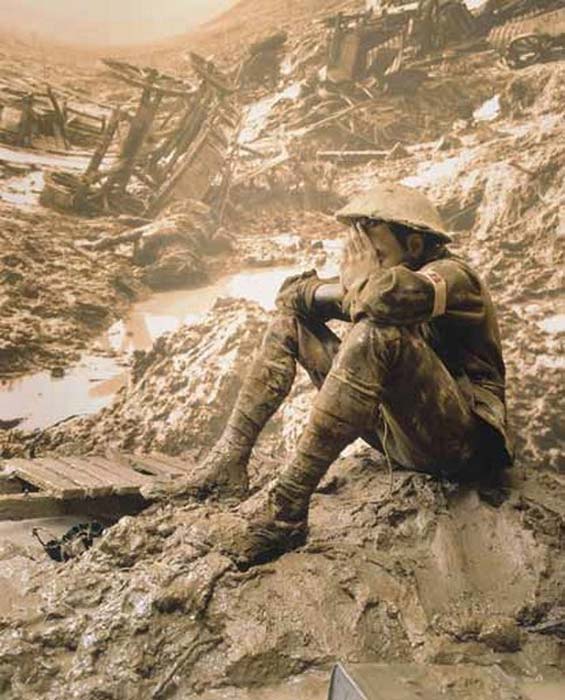
I have never been able to see The Great War as anything other than the story of, literally, millions of well intentioned, patriotic young men whose idealism was taken advantage of by older men of a supposedly better social class, but who were in reality buffoons who signed treaties, and then declared wars which other people had to fight. And when the conflict itself was fought, the way in which it was carried out guaranteed unbelievable levels of casualties, most of which as far as I can see, were considered as merely inevitable by the top brass as they enjoyed constant  five star cuisine in their châteaux five or six miles behind the lines. In the trenches the average life expectancy of the ordinary soldier was about six weeks. An average of at least 6,000 men were killed every day, as the two sides fought over an area about the size of Lincolnshire, or Delaware, or half the size of Connecticut.
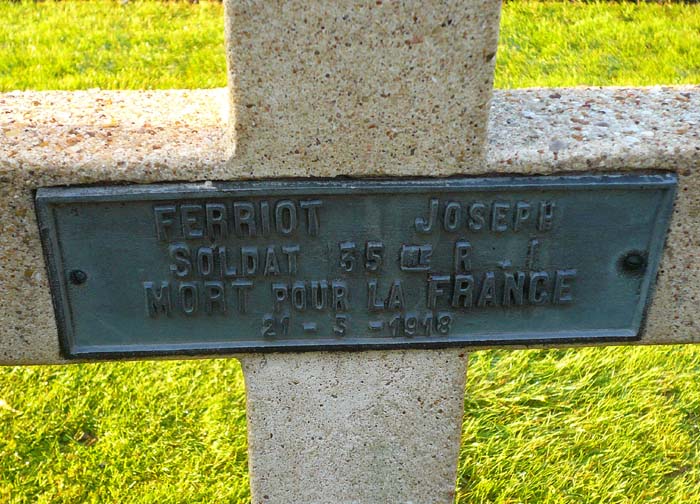
You may think that I am being appallingly cynical, but I have always seen these young men as having been robbed of their lives for little real purpose, victims who, if they had been given the choice, would have ultimately rejected a government gravestone in France or Belgium in favour of an ordinary life in their own home town or village, with a wife and children and all the usual cares and happiness which we now, a hundred years later, see as a basic right. Most of all, I would not take particularly kindly to criticism of my point of view from anybody who has not been to visit the cemeteries of the Great War which are scattered in great profusion across the areas where the battles took place.

P1090541 zzzzzzzzzzz

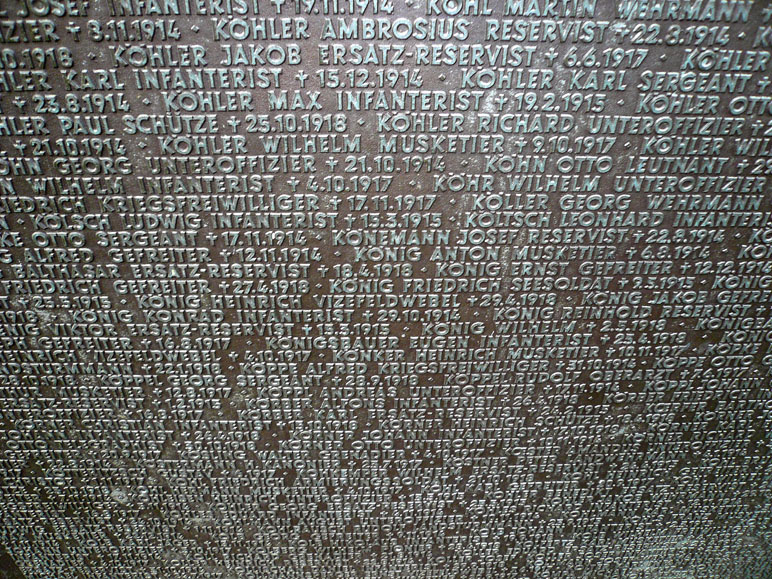
This piece of land is perhaps as large as a medium-sized house with a medium-sized garden. It contains the remains of just fewer than 25,000 men. They were for the most part killed in the very first few weeks of the war, when, having joined up straightaway so that they didn’t miss any of the excitement or the glory, they were worried in case it was all over by Christmas. A very large number of them are now known to have been university students, who were soon to find that war had its negative side. At least one of these young men is not forgotten, though.Here is a little remembrance offered to his brother, Friedrich Stieme from Halle, who was killed in 1915.

P1090547zzzzzz

Here are the names of just some of the young men who are buried in that plot of land.

P1090571

Here are the names of some British and Commonwealth troops. They are recorded in enormous number on the Menin Gate in Ypres as the soldiers who were killed in fighting around the Ypres Salient and whose graves are unknown. There are 54,896 of these men and they were killed before August 15th 1917, a date chosen as a cut-off point when the people who designed what Siegfried Sassoon  called this “sepulchre of crime” suddenly realised that they had not built the monument big enough for all the casualties to be recorded. These, of course, are just the men with no known grave. If every death is counted, then the total Allied casualties exceeded 325,000.(the population of Coventry or Leicester). German casualties were in excess of 425,000.(the population of Liverpool)

P1090628

This whole area is dotted with cemeteries whose names, like this one, I have now forgotten. Some of them have just twenty or thirty graves, whereas some of them have a number that would take you a very long time indeed to count.

P1090669 zzzzzzz

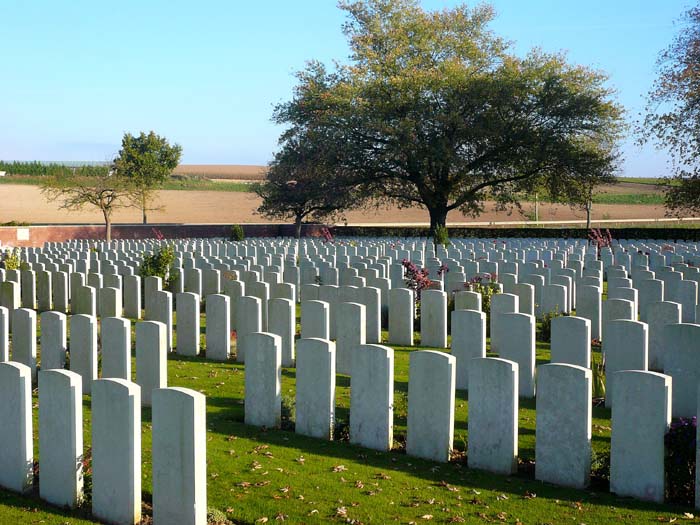
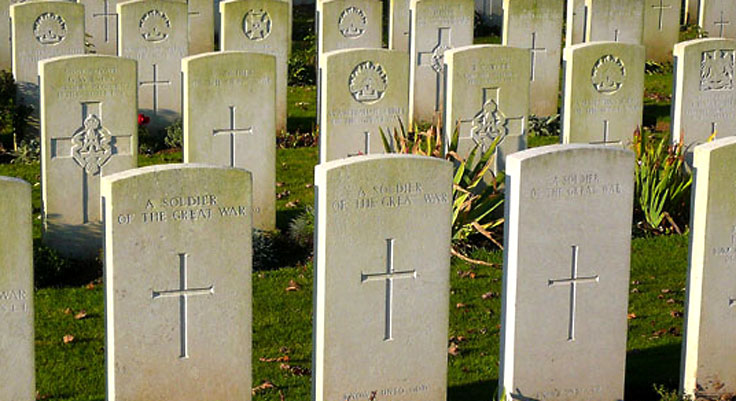
Too many of these men were unable to be identified because the British Army would not pay for their soldiers to have metal dog tags. The soldiers’ dog tags were made of leather, so that if their bodies remained in the wet ground for very long, the dog tags would rot away. This is why so many of them can be identified only as “A soldier of the Great War”. In addition, the fact that sixty per cent of casualties on the Western Front were caused by shellfire often made identification of casualties difficult. Notice too how nearly all the graves are covered in green slime, almost inevitably, given the rainfall totals in north western Europe.

P1090673333333

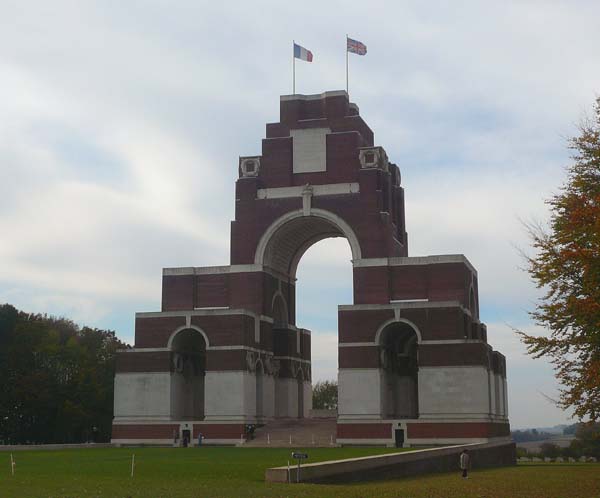
These graves are in a cemetery containing 300 British Commonwealth and 300 French graves which lies at the foot of the Thiepval Memorial.

P1090809

More important, though, is the enormous building itself wherein are recorded the names of the fallen who have no known resting place.

P1090790 zzzzzzzzz

A large inscription on an internal surface of the memorial reads:

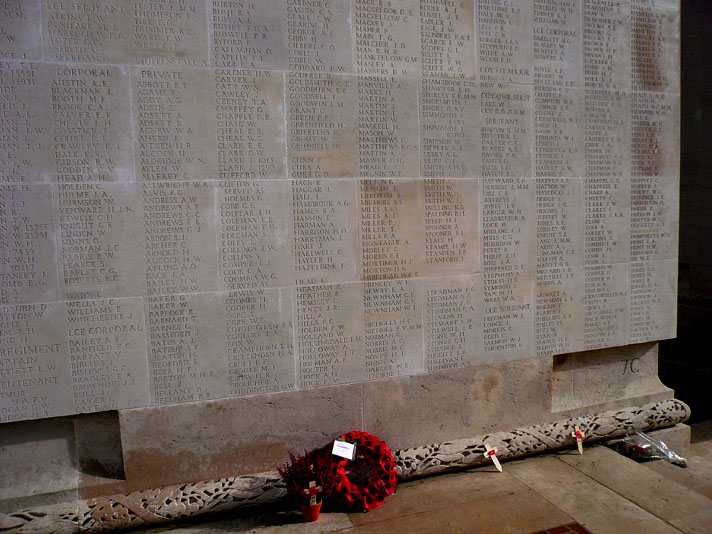
“Here are recorded names of officers and men of the British Armies who fell on the Somme battlefields between July 1915 and March 1918 but to whom the fortune of war denied the known and honoured burial given to their comrades in death.”

On the stone piers are engraved the names of more than 72,000 men who were slaughtered in the Somme battles between July 1915 and March 1918. More than 90% of these soldiers died in the first Battle of the Somme between July 1st and November 18th 1916. Here are some of the names.

P1090831

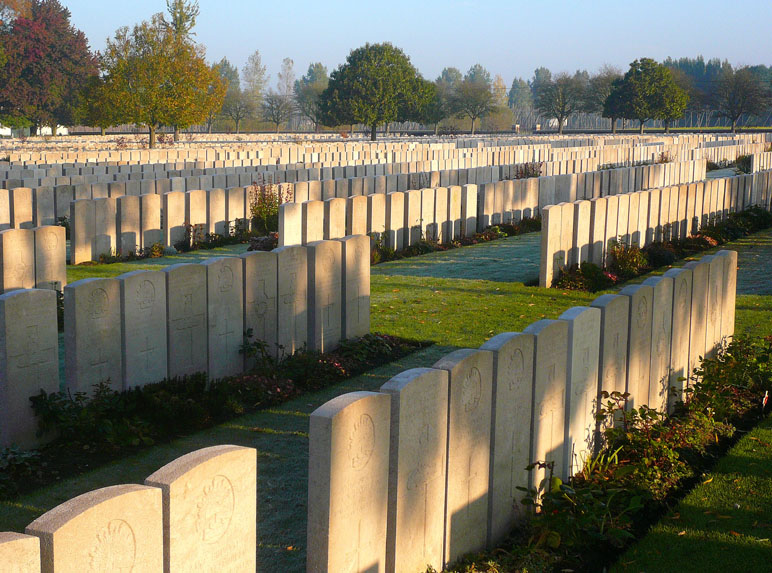
Here are some of the graves in another, fairly large cemetery whose name I am afraid I cannot remember …

P1090879

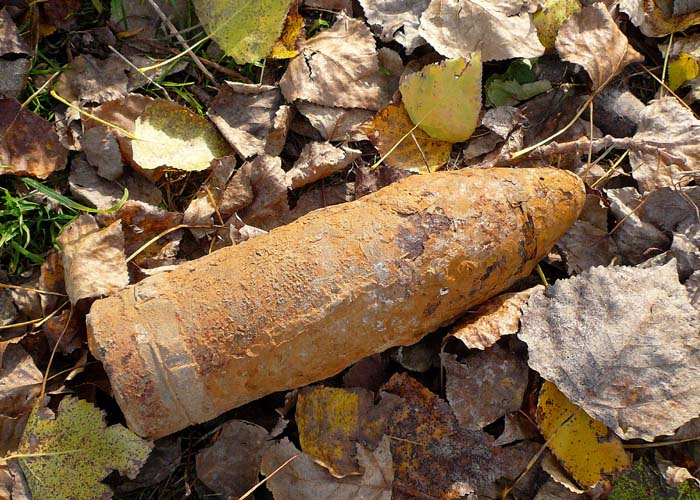
It is an insane thought that the Great War still continues to kill people nowadays. I was told by our tour guide that on average usually one person is killed every week as they explore the old battlefields looking for souvenirs.  This shell has been found by the farmer and has been left at the side of a country lane so that the regular patrols by the local council lorries can take it away. Only idiot foreigners, of course, touch these unstable objects. The French and the Belgians leave them alone.

P1090886 xxxxxx

This graveyard too I am afraid is one whose name I have forgotten. I remember that we went there because one of the other people on the coach had a relative who was buried there and he laid some poppies on his grave.

P1090932

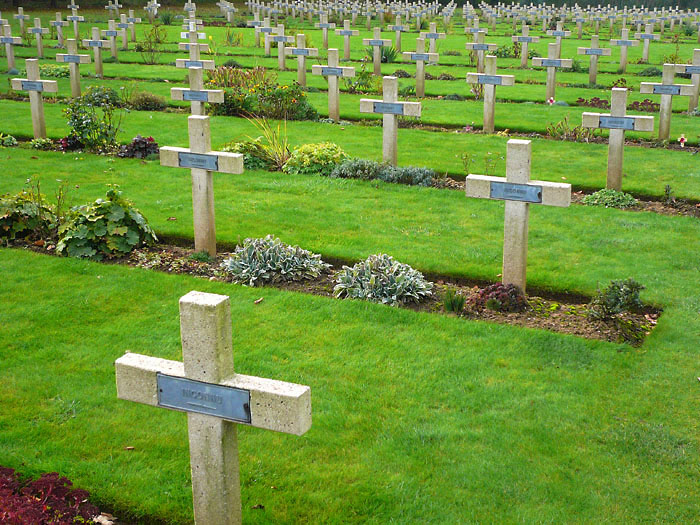
This is one of the few places where I saw French graves. France had approximately 1,397,800 men killed in the war, with a further 4,266,000 wounded, giving a total of 5,663,800 casualties. Nowadays there are many areas of the country, particularly in central and southern France, which remain unfarmed wilderness because of this conflict a century ago which left whole provinces chronically short of men. The population of Greater Manchester, the West Midlands and West Yorkshire added together is approximately 5.7 million.

P1090967 xxxxxxx

This is part of the Tyne Cot Cemetery which is a burial ground for those who were killed in the Ypres Salient on the Western Front. It contains 11,956 men, of which 8,369 remain unidentified.

P1100069 zzzzzzzzzz

This is the “Tyne Cot Memorial to the Missing.” As mentioned above, the builders of the Menin Gate discovered it was not large enough to contain all the names, so the casualties after August 15th 1917 were inscribed on the Tyne Cot memorial instead. The memorial contains the names of 34,949 soldiers of the British and Commonwealth armies. The panels on which the names are written stretch away, seemingly  to the horizon.

This slideshow requires JavaScript.

Sadly, at Tyne Cot cemetery, there are always relatives looking for members of their family who fell during the Battle of Passchendaele in 1917.

P1100072

It is very difficult to find a neat conclusion to all this, but I am happy to leave the last word to His Majesty King George V, speaking in Flanders in 1922…

“I have many times asked myself whether there can be more potent advocates of peace upon earth through the years to come than this massed multitude of silent witnesses to the desolation of war.”

3 Comments

Filed under History, Uncategorized

Armistice signed! But keep fighting!

Let me first say that it is not really my intention to offend anybody by my views in this blog post, but I believe that many uncomfortable truths about the Great War are quite simply ignored because they are so unpalatable, and it is far more convenient just to forget them.
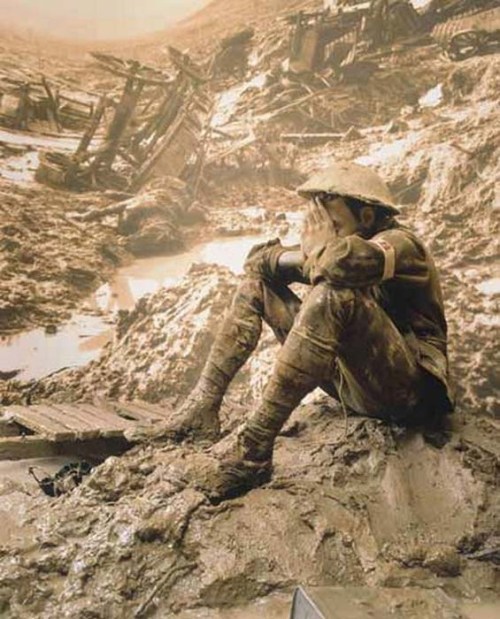
Most people, therefore, are completely unaware that at the end of the Great War, inanely and insanely, combat continued right up until 11.00 a.m. on that very last day, November 11th 1918, even though it had been widely known for five or six hours across the whole world that hostilities would soon cease, and despite the fact that the war had already claimed an enormous number of lives.

On the Allied side there had already been 5,525,000 soldiers killed and 4,121,000 missing in action. A total of 12,831,500 soldiers had been wounded, including both of the veterans that I myself had the privilege of knowing. In the east, the Russian Empire had  suffered casualties of 3,394,369 men killed with as many as 4,950,000 wounded.  On the side of the Central Powers, 4,386,000 soldiers were killed and 3,629,000 were missing in action. A total of 8,388,000 soldiers were wounded.
-armistice-day-1918 zzzzzzz

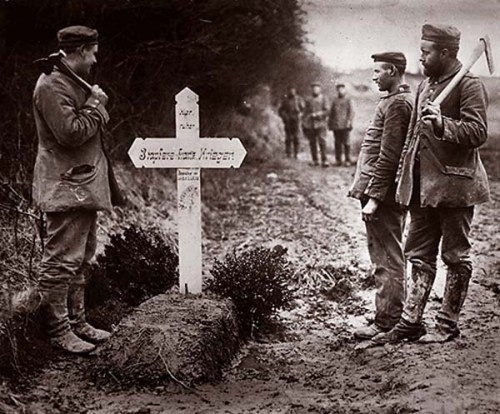
In total, Allied casualties were 22,477,500 and for the Central Powers the figure was 16,403,000. Overall, that is 38,880,500, roughly the current population of Poland, or a total more than Canada (35 million) or Belgium and Australia combined. Presumably, a few more pointless deaths on the last day were not seen as being particularly important.
http://www.world-war-pictures.com

The last to arrive in the carnage of the Great War, of course, had been the Americans, but they soon began to waste their poor young “Doughboys” lives in the same way as their more experienced allies had already done for three long years.

doughboys2 freshfaced

In the first four hours in the Argonne Forest, for example, they lost more men than they were to lose on D-Day. Indeed, the Meuse-Argonne was “probably the bloodiest single battle in U.S. history,” with the largest number of U.S. dead, at more than 26,000. Hopefully, this blood soaked struggle is not as forgotten as many websites claim, and if the Argonne War Cemetery, which contains the largest number of American military dead in Europe (14,246) is apparently often ignored by the tourist coaches, then it clearly should not be. Overall,  the American casualties in the Great War were to number 117,465 men.

Foch zzzzz

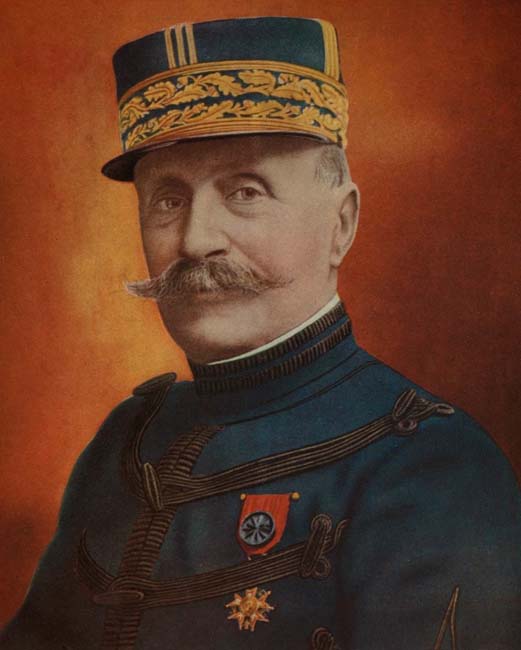
Negotiations to end hostilities had actually begun on November 8th but Marshall Foch, the Commander-in-Chief of the Allied Armies, refused to stop the war, because of fears that the German delegation, led by Matthias Erzberger, were not totally sincere in their desire for peace.

ger,manThis was after Foch’s own country had lost 1,737,800 men killed. The story is told by Joseph E.Persico

“On average, 2,250 troops on all sides were dying on the Western Front every day. “For God’s sake, Monsieur le Maréchal,’ Erzberger pleaded, ‘do not wait for those seventy-two hours. Stop the hostilities this very day.’ The appeal fell on deaf ears. Before the meeting, Foch had described to his staff his intention “to pursue the Feldgrauen (field greys, or German soldiers) with a sword at their backs” to the last minute until an armistice went into effect.”

So, the next day, November 9th, the Canadians attacked Mons and General Currie, helped by the men of the Canadian Infantry Brigade, captured the town during the night of November 10th-11th. As for the Americans…

“Late on November 9th, instructions from the Allied Commander-In Chief were transmitted, directing a general attack, which was executed by the First Army on November 10th-11th. Crossings of the Meuse were secured by General Summerall’s (V) Corps during the night of November 10th-11th and the remainder of the army advanced on the whole front.”

16-summerall_l

Summerall’s actions on November 10th-11th resulted in more than eleven hundred American casualties, mainly in the Marine Corps.

All of this military action took place despite the fact that the Armistice had already been signed at 5:10 a.m. on the morning of November 11th. Within minutes of the signing, news of the cease fire had been transmitted all around the world. The “war to end all wars”, was finally over. And every general and every high ranking officer knew this. They were all aware of what had happened that day at 5.10 a.m., a time which was then backed up officially to 5.00 a.m.

Even the primitive technology of the day allowed the wonderful news to be in every major city by 5.30 p.m. and celebrations began in the streets well before most soldiers were aware of the end of hostilities.
Except that technically, the “war to end all wars”, was not yet actually over, because the cease-fire was not to come into effect until Foch’s deadline: the eleventh month, the  eleventh day and the eleventh hour of 1918. In this way all the soldiers in the trenches would be completely sure of being told the news that the conflict had finished.

220px-Hw_wright_01

For this reason General William M. Wright thought it would be a fine idea for the American 89th Division to attack the tiny village of Stenay in north-eastern France only hours before the war ended.

stenay zzzzzz

A total of 365 men died because, in Wright’s words,

“the division had been in the line a considerable period without proper bathing facilities, and since it was realized that if the enemy were permitted to stay in Stenay, our troops would be deprived of the probable bathing facilities there.”

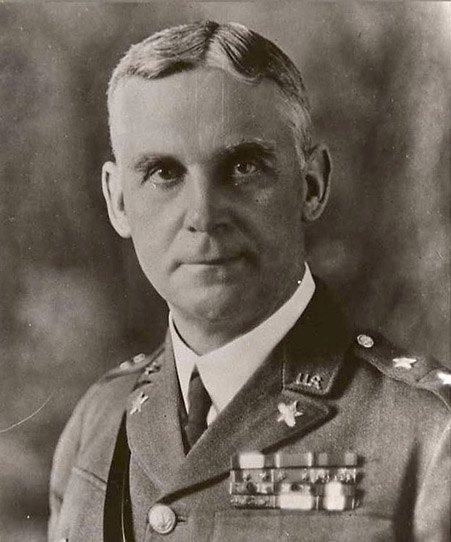
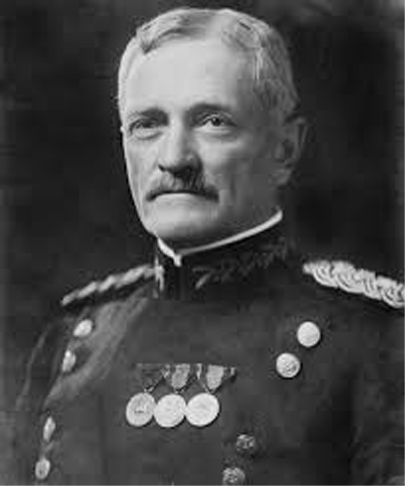
Indeed, the Americans were to take heavy casualties on the last day of the war. This was because their commander, General John Pershing, believed that the Germans had to be severely defeated at a military level to effectively “teach them a lesson”. Pershing saw the Armistice as being too soft. He supported the commanders who wanted to attack German positions – even though he knew that an Armistice had been signed.
pershing zzzzzz

It says it all perhaps to reveal the detail that the French commander of the “80th Régiment d’Infanterie” received two simultaneous orders on that morning of November 11th. The first  was to launch an attack at 9.00 a.m., the second was to cease fire at 11.00 a.m..

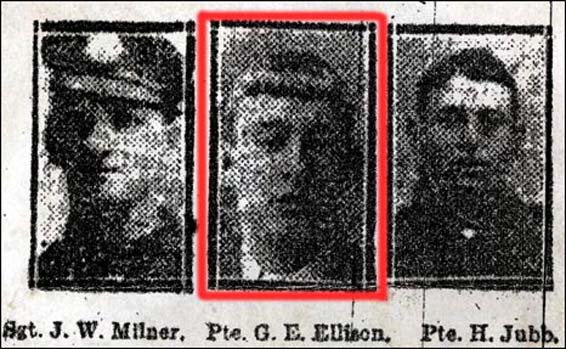
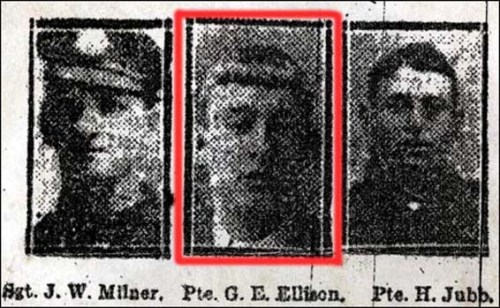
The last British soldier to die in the Great War seems to have been Private George Edwin Ellison, who was killed at 9.30 a.m. after serving a full four years on the Western Front. He was forty years of age, and had seen combat on the very first day of the conflict.
last english

A soldier in the 5th Royal Irish Lancers, Ellison was scouting on the outskirts of the Belgian town of Mons where German soldiers had been reported in a wood. In just ninety minutes or so, the war would be over and George Ellison, an ex-coal miner and the son of James and Mary Ellison, would go back to 49, Edmund Street, in Leeds, to his wife Hannah Maria and their four-year-old son James.  And then a rifle shot rang out, and George was dead. He would never go home to his loving family, but would rest for ever in St.Symphorien Military Cemetery.

This slideshow requires JavaScript.

The last French soldier to be killed was Augustin Trebuchon from the “415th Régiment d’Infanterie”. He was a runner and was taking a message to his colleagues at the front telling them of the ceasefire. He was hit by a single shot and killed at 10.50 a.m. Some seventy five French soldiers were killed on the last half-day of the war but their graves all give November 10th as the date of death. Optimists believe the reason for this discrepancy was that by stating that these men had died well before the end of the war, their family would be guaranteed a war pension. Realists believe that the government wanted to avoid any political scandal if it ever became known that so many brave men had died so pointlessly on the last day of the conflict.

last frenbch

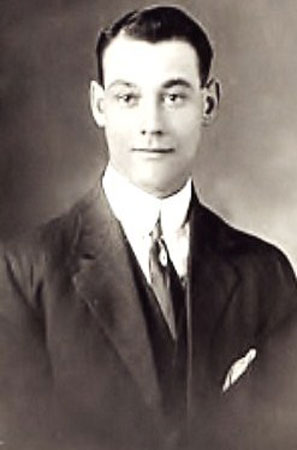
The last Canadian to be killed was Private George Lawrence Price of the Canadian Infantry (Second Canadian Division) who died, like Englishman George Ellison, at Mons in Belgium. Private Price was killed at 10.58 a.m., and he was officially the last Commonwealth casualty in the Great War. So Private Price would never be going home to Port Williams, in Nova Scotia to see again his loving parents, James and Annie Price. Instead their wonderful son would rest for ever in St.Symphorien Military Cemetery, just a short distance from the grave of Private George Ellison.
George_lawrence_price

The last American soldier to be killed was Private Henry Gunter who was killed at 10.59 a.m, one minute later than Private Price, the Canadian. A Private from Baltimore, ironically, of German ancestry, Gunter was officially the last Allied soldier to die in the Great War.

According to Joseph E.Persico

“His unit had been ordered to advance and take a German machine gun post. It is said that even the Germans – who knew that they were literally minutes away from a ceasefire – tried to stop the Americans attacking. But when it became obvious that this had failed, they fired on their attackers and Gunter was killed. His divisional record stated: “Almost as he fell, the gunfire died away and an appalling silence prevailed.”

Again according to Joseph E.Persico,

“The last casualty of the Great War seems to have been a junior German officer called Tomas who approached some Americans to tell them that the war was over and that they could have the house he and his men were just vacating. However, no one had told the Americans that the war had finished because of a communications breakdown and Tomas was shot as he approached them after 11.00 a.m.”

The total British Empire losses on the last day of the war were around 2,400 dead. Total French losses on that day amounted to an estimated 1,170. The Americans suffered more than 3,000 casualties, and the Germans lost 4,120 soldiers.

Indeed, Armistice Day, with its ridiculous totals of killed, wounded or missing, exceeded the ten thousand casualties suffered by all sides on D-Day, some twenty six years later. There was a crucial difference however. The men beginning to liberate Western Europe on June 6th, 1944, were risking their lives to win a war. The men who died on November 11, 1918, were losing their lives in a war that the Allies had already won.

This account occurs on an American website……

“When the American losses became public knowledge, such was the anger at home that Congress held a hearing regarding the matter. In November 1919, Pershing faced a House of Representatives Committee on Military Affairs that examined whether senior army commanders had acted accordingly in the last few days of the war.”

The story is continued on another website….

“Bland, the other Republican on Subcommittee 3, knifed quickly to the heart of the matter when his turn came to question General Conner.
“Do you know of any good reason,” Bland asked, “why the order to commanders should not have been that the Armistice had been signed to take effect at 11 o’clock and that actual hostilities should cease as soon as possible in order to save human life?”
General Conner conceded that American forces “would not have been jeopardized by such an order, if that is what you mean.”
Bland then asked, regarding Pershing’s notification to his armies merely that hostilities were to cease at 11 a.m., “Did the order leave it up to the individual commanders to quit firing before, or to go ahead firing until, 11 o’clock?”
“Yes,” General Conner answered.
Bland then asked, “In view of the fact that we had ambitious generals in this Army, who were earnestly fighting our enemies and who hated to desist from doing so…would it have been best under the circumstances to have included in that order that hostilities should cease as soon as practicable before 11 o’clock?”
General Conner answered firmly, “No sir, I do not.”
“How many generals did you lose on that day?” Bland went on.
“None,” General Conner replied.
“How many colonels did you lose on that day?”
General Conner: “I do not know how many were lost.”
“How many lieutenant colonels did you lose on that day?”
General Conner: “I do not know the details of any of that.”
“I am convinced,” Bland continued, “that on November 11 there was not any officer of very high rank taking any chance of losing his own life….”
General Conner, visibly seething, retorted, “The statement made by you, I think, Mr. Bland, is exceedingly unjust, and, as an officer who was over there, I resent it to the highest possible degree.”
Bland shot back, “I resent the fact that these lives were lost and the American people resent the fact that these lives were lost; and we have a right to question the motive, if necessary, of the men who have occasioned this loss of life.”
With that, General Conner was dismissed from giving evidence.

Would that such a hearing had taken place in every country, especially Great Britain.

P1100069 zzzzzzzzzz

2 Comments

Filed under History, Uncategorized

Murder most foul: Chapter Two

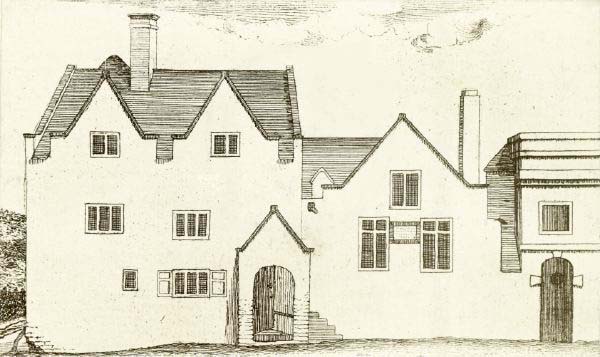
A second episode of blood soaked murder in the history of the old Free School was published in a series of “Reminiscences”  in the High School Magazine in December 1929. They came from Mr John Braithwaite, of Bournemouth, who, at the time, was thought to be the School’s oldest Old Boy….

“Schooldays, 1857-1862″

“I went to the old Grammar School in Stoney Street about Midsummer,1857, and left at Midsummer, 1862. The Rev. W. Butler was Headmaster.”

“The old building was very unsuitable, dull and cheerless. The upper school consisted of one large room and one small classroom. There were no cloakrooms or conveniences of any kind, and the sanitary arrangements in the small playground were most primitive.”

free school

“The whole building sadly wanted painting, but no money was spent; the reason given was that the Trustees were saving up to have enough money to build a new school.”

“We began work at 8 o’clock and finished at 5 o’clock, or later, with two hours’ break at midday. In winter we had to use candles… “long eights” I think they were called. One candle was allowed between two boys, and lighting them was the signal for all sorts of play. We amused ourselves by blowing the candles out and in again, making a nasty smelling smoke.”

gallows

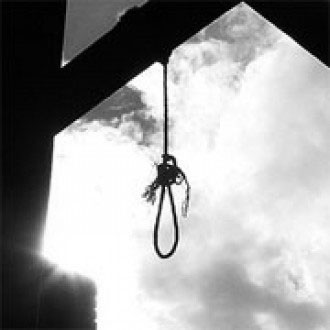
“About the autumn of 1859, a man was sentenced to death in the Nottinghamshire Courts for a murder in the northern part of the county.

Our headmaster, the Rev.W.Butler, as Chaplain of the County Gaol, was required to read the burial Service at the execution, which was fixed for 8 o’clock one morning at the County Gaol in the High Pavement.”
The main building on High Pavement, which dates from 1770, is quite imposing. The Normans were the first to use this site, appointing a Sheriff to preserve law and order in Nottingham, and to collect taxes. The oldest written  mention of law courts comes in 1375.

DCIM100MEDIA

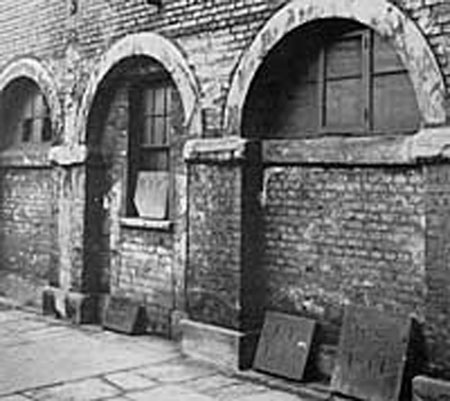
The cells are below street level. They date back to at least 1449.

P1120126

The scaffold used to be erected on the steps in front of the brown columns. There are special square holes cut in the stone steps to hold the wooden beams. They are still there to this day.

hanging-at-shire-hallThe dead hangees were buried in unconsecrated ground around the back of the building, their feet disrespectfully pointing towards Jerusalem.

Yard at Shire Hall with headston

“As usual we were at our desks at 8 o’clock on that particular morning, but the headmaster was absent. We all knew where he was, and each of us was thinking of him and visualising the dreadful scene which was being enacted only a short distance away. Back in school, the Deputy Master read prayers, and we waited, silent and awed. Presently the door was burst open, and poor Mr.Butler, with face white and drawn, stumbled in and staggered to his seat, almost spent. After resting awhile he stood up and said, “Boys, I have just come from….” and then he broke down. After recovering himself, he began again, and then he preached us a more impressive sermon than I have heard from any pulpit. As no one was in the mood for lessons we were sent home for the day…”

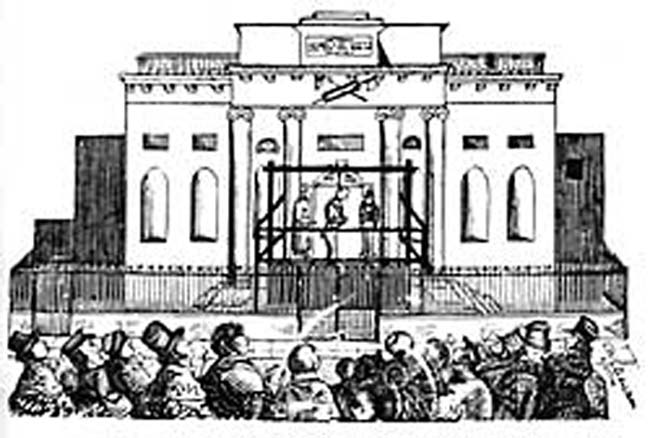
3716238The hanged man was one John Fenton, a blacksmith and publican, executed at the age of thirty-seven for the murder of Charles Spencer at Walkeringham on March 6th 1860. This was a public execution, held on the front steps of what is now the Shire Hall in High Pavement.

The crowd, however, was a lot smaller than expected. This was because, even though it was fourteen years previously, the last public hanging in Nottingham had resulted in the crushing to death of seventeen people, almost all of them children.

Given this blood soaked past, it is no surprise to find that the Galleries of Justice have a plethora of ghosts. On some wet Tuesday afternoons, there can sometimes be as many ghosts as living tourists. Here is a selection of the ghosts I saw on my own visit…

This slideshow requires JavaScript.

Wooooooooooooo………………………………

7 Comments

Filed under Criminology, History, Nottingham, The High School, Uncategorized

An intimate problem can always be shared

A lot of us, through shyness, keep our personal medical problems to ourselves. Not so these construction workers in Nottingham, who are more than willing, apparently, to let it all out.

P1530063 yes

So go for it, guys, your problem will soon be our problem.

3 Comments

Filed under Humour, Nottingham, Personal, Uncategorized

Teasels: the best plant in our garden

This amazingly spikey plant is called a “teasel”, and it is easily the most fascinating plant in our garden.
A9
It is a very thrilling plant from an English point of view, for, alas, we just do not seem to have the same exciting inhabitants in our gardens as they have in the USA…..
man_eating_
These American killers are deadlier than wolves or bears.
Gulp
Our English plant, though, can consume a reasonable number of insects, medium sized mammals and small children.
A10
It performs this valuable service by drowning them, and then absorbing their nutrients. Equally well, you can easily feed the plant yourself by tipping in the dregs from your cup of tea or coffee. On this caffeine based diet, our plant has now reached an amazing twenty seven flower heads. Here are two of them….
A11
The biggest flower heads are now in bloom. They provide a fabulous source of nectar for all kinds of interesting flying insect, especially butterflies….

This is a Peacock…
peacock
This is a Red Admiral. Its Latin scientific name is “Vanessa atalanta”, which sounds a little bit like one of the old Admiral’s girls in every port…
red-admiral-upperwing1_peter-eeles-web
The flowerheads are a lovely bluey-pink colour…
AP1520884
Eventually seeds will appear. Indeed, in our worryingly early autumn, many have already arrived as early as the fifth of August.

This slideshow requires JavaScript.


The seedheads are an absolute magnet to England’s most colourful bird, the improbably beautiful Goldfinch…
Goldfinch_x
The population of these splendid birds is gradually increasing, and teasels are an excellent way to entice them into your garden.

This could easily be your garden…
goldfinch on teasel
I would be very surprised, though, if you managed to attract as many of these beautiful birds as Gunnar Fernqvist has done, although, to be fair, he does seem to have a VERY large garden.

Interestingly, the Goldfinch has always been of great symbolism in medieval European art. According to Wikipedia, because of the thistle seeds it eats, and the spiky nature of the adult thistle plant, the goldfinch is associated with Christ’s crown of thorns. When it appears in pictures of the Madonna and child, the bird is thought to represent the knowledge both Mary and Jesus had of the latter’s Crucifixion.

This slideshow requires JavaScript.


Teasel seeds can be found fairly easily on your local brownfield site in late summer or early autumn. Otherwise, it’s another expedition up the Amazon.co.uk….

6 Comments

Filed under My Garden, Nottingham, Uncategorized, Wildlife and Nature