Category Archives: Wildlife and Nature

“Hilarity with Heraldry” (3)

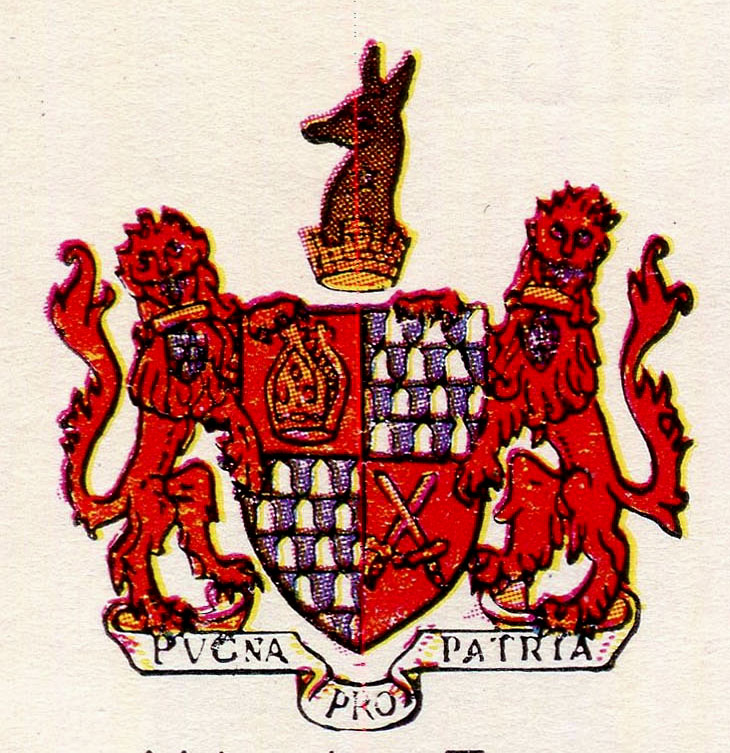
Last time I was looking at old football club badges from the late 1950s. Many clubs back then were using the heraldic coats of arms of their town or city. A fair proprtion of the rest, though, were using animals. Bolton Wanderers and Dumbarton in Scotland are presumably slow and ponderous yet very powerful in their play:

This slideshow requires JavaScript.

Derby County have a ram because of a folk song called “The Derby Ram”:
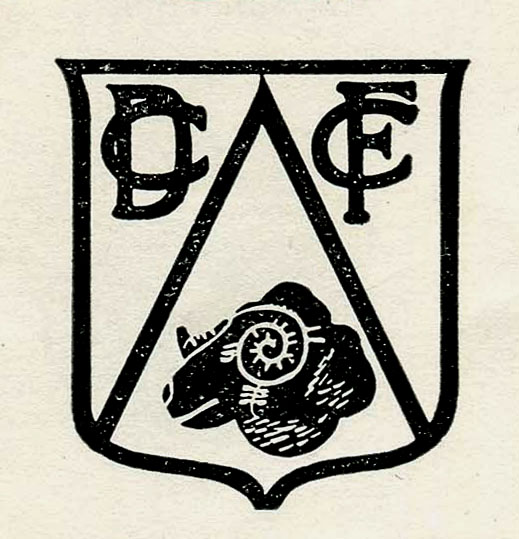
I was going to insert a link here to let you all hear the song that we sang in our junior school classes near Derby all those tears ago, but I decided not to. If you go to YouTube and search for “Derby Ram folk song” you’ll soon see my problem.

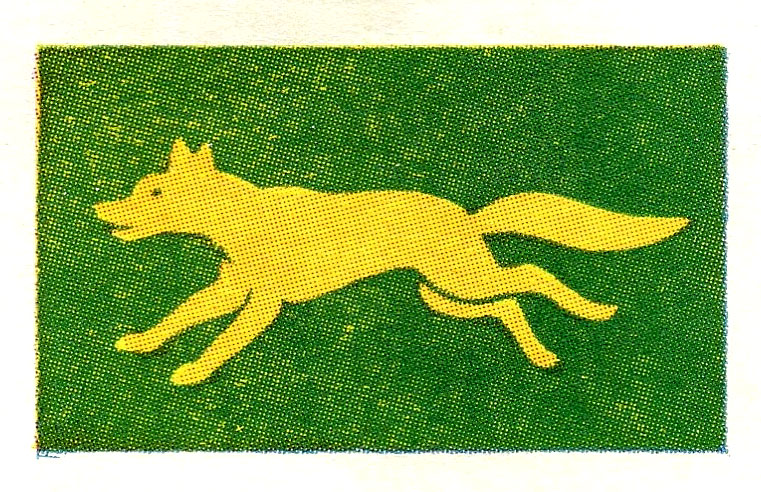
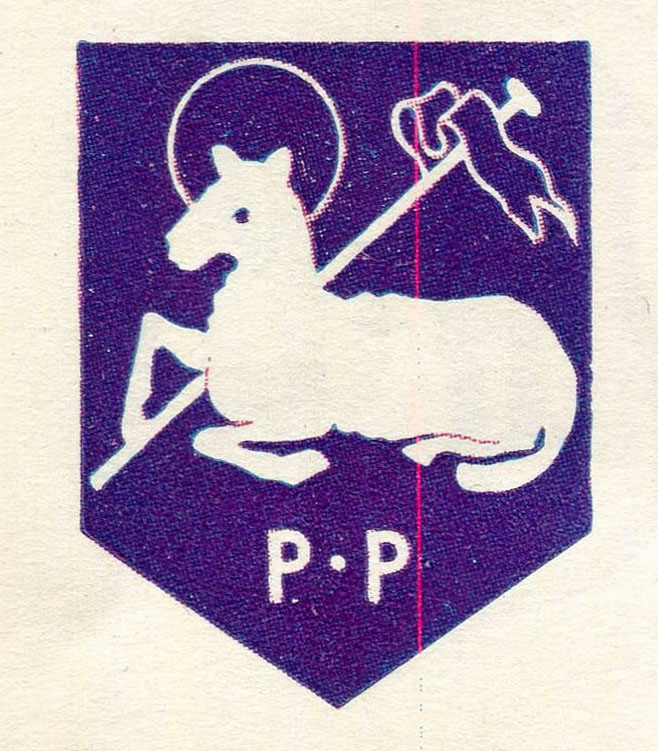
Leicestershire County Cricket team have a fox because the county was full of very keen foxhunting men and women and, indeed, children:Preston North End make use of the Paschal Lamb. “PP” stands for “Proud Preston”, who, in the 1880s, managed by the now long forgotten William Sudell, were the greatest team in the land:
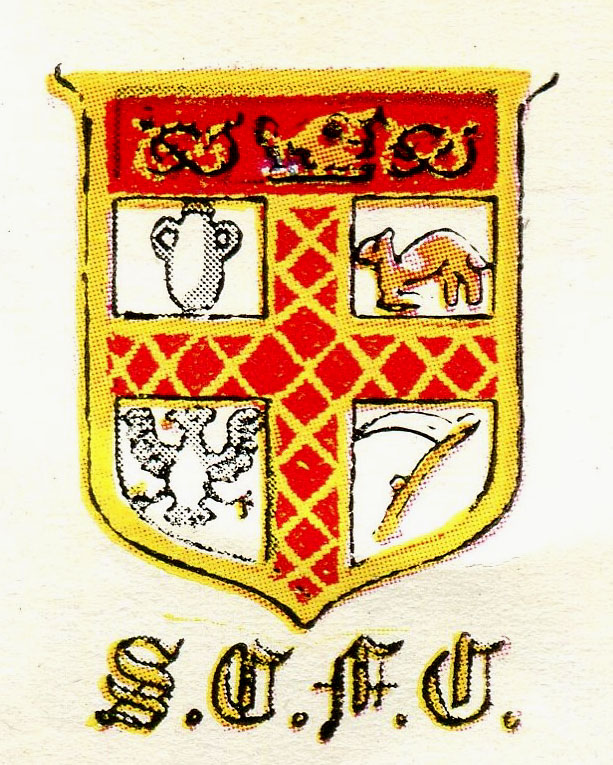
Stoke City have a strange badge which, to me, features a humpless camel. Intrigued, I looked it up and it is indeed a camel. The Stoke City camel comes from an original camel featured on the badge of the nearby town of Hanley. The Hanley camel comes from the coat of arms of John Ridgway, the first Mayor of Hanley. Ridgway had his very own camel on his shield because Stoke is the home of a huge pottery industry. Indeed, Stoke City’s nickname is “The Potters”.  Anyway, John Ridgway included the camel in honour of the land of origin of the pottery industry, Egypt. You couldn’t make it up.
A few clubs have badges with birds on them. The first is West Bromwich Albion who were nicknamed “The Throstles” years ago:
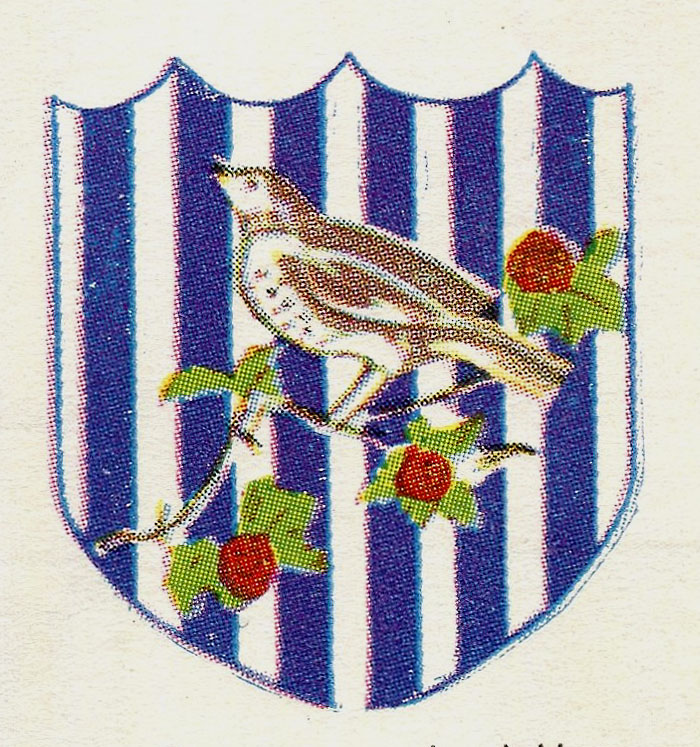
A “throstle” is a dialect word in the English Midlands for a song thrush, turdus philomelos.

Albion play in blue and white stripes so that isn’t the reason for the bird. I will quote Tony Matthews, the club’s official historian:

“The club was formed in 1878 as ‘The Albion’. In 22 years the team was based at five different grounds before settling at ‘The Hawthorns’ in 1900. The new ground brought with it a new nickname ‘The Throstles’, as the song thrush was a commonly seen bird in the hawthorn bushes from which the area took its name.”

This is the effigy of a ‘throstle’ at the current WBA ground in West Bromwich. It has been rescued after renovations and is about five or six feet high.

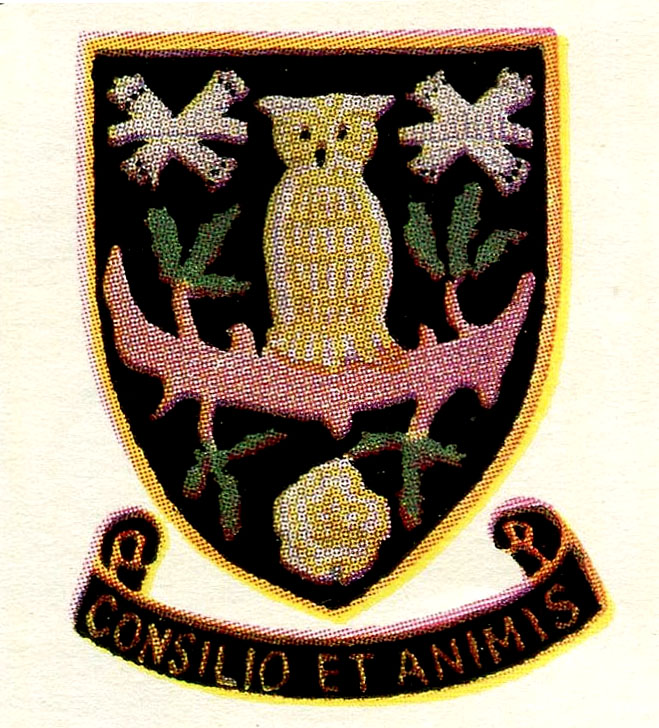
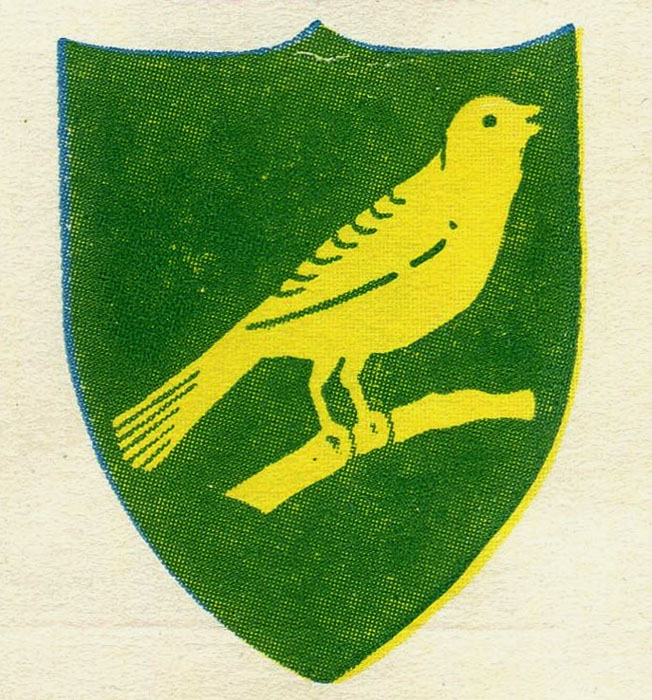
Sheffield Wednesday came from a district of the city called “Owlerton” and played when it was half day closing on Wednesdays, rather like the Welsh team, Abergavenny Thursday. Norwich, nicknamed “The Canaries”, play in green and yellow, the latter colour always strongly denied as merely representative of the city’s main employer, Colman’s Mustard. An image search might persuade you otherwise, though:
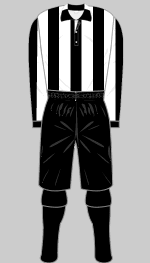
Other teams have particular birds on their shields because of the colour of their shirts. Cardiff City are the Bluebirds, Swansea City are the Swans, Bristol City are the Robins, and both Notts County and Newcastle United, in black and white are the Magpies:
And here’s one of Notts County’s many different badges, In this case, it’s the Ladies’ Team:

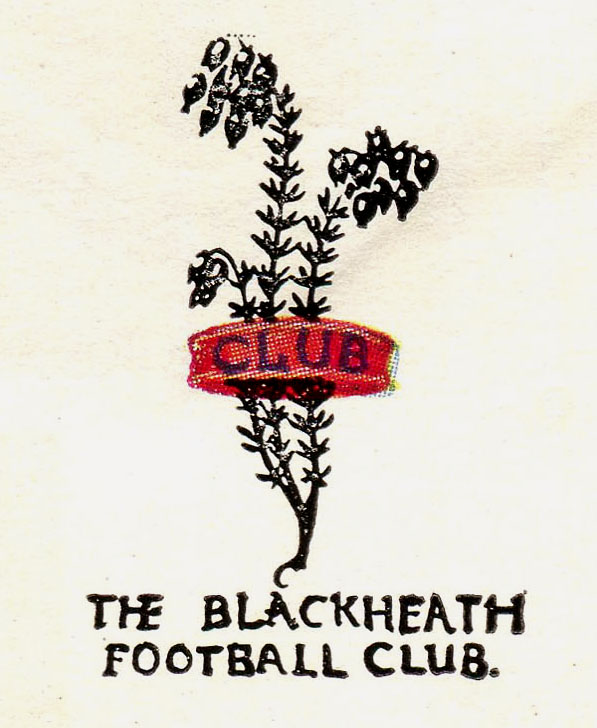
Flowers are often used as badges but hardly ever in football. In rugby this is the emblem of the Blackheath Club. It shows a piece of black heather, as a kind of pun:
In Heraldry such rib ticklers are called “canting arms”. Here are the shields of families called Shelley, Wellwood and Keyes:

This is a Spanish effort representing ‘Castile and Léon’ or ‘Castle and Lion’.

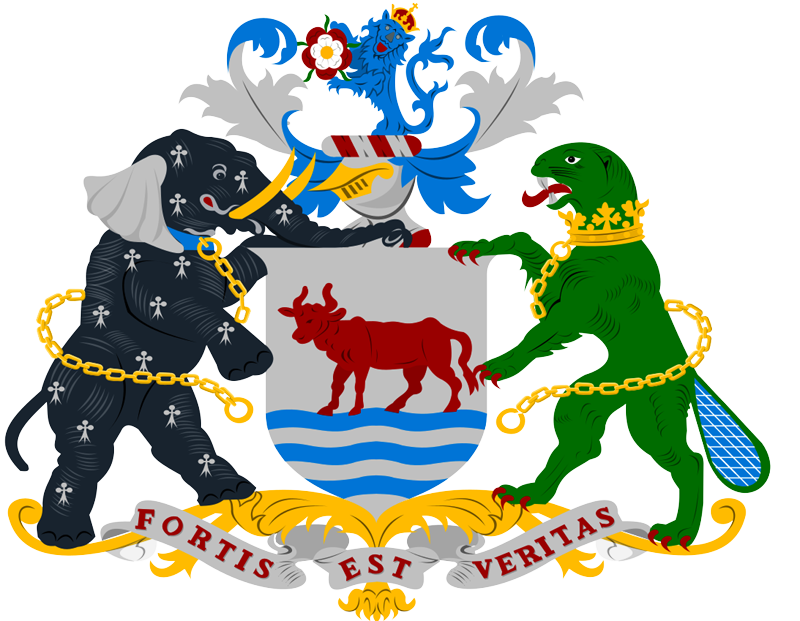
The arms of the city of Oxford seems to have been heavily influenced by student drug use in the 1960s:
London Irish uses the Irish national plant and the two cricket clubs, Glamorgan and Lancashire, use the daffodil and the red rose respectively:

This slideshow requires JavaScript.

Next time, badges with a story behind them.

 

15 Comments

Filed under Derby County, Football, History, Humour, Personal, Wildlife and Nature

“Hilarity with Heraldry” (2)

Last time, I was talking about “The Tiger Album of Football Club Badges” and I made the point that, back in 1961, lots of football clubs turned straight to the local town’s arms for their own badge. Here’s Aldershot, their nickname is “The Shots”. They’re not that bad, though:

Here’s Barnsley and Birmingham City which both refer back to their industrial heritage:

This slideshow requires JavaScript.

There are lots of animals used. Glamorgan Rugby play like dragons and Leicester Rugby Club are actually called “Leicester Tigers”.

This slideshow requires JavaScript.

In football, Newcastle United  are close to the sea which is probably full of seahorses at that point and Rotherham United must have had lots of deer in the area at one time:

This slideshow requires JavaScript.

Lions are always popular as ‘supporters’, in heraldic terms really, rather than sitting behind the goal, roaring on their team. Here’s Halifax Town and Plymouth Albion rugby club. Funny how both pairs of lions have learned to dance:

This slideshow requires JavaScript.

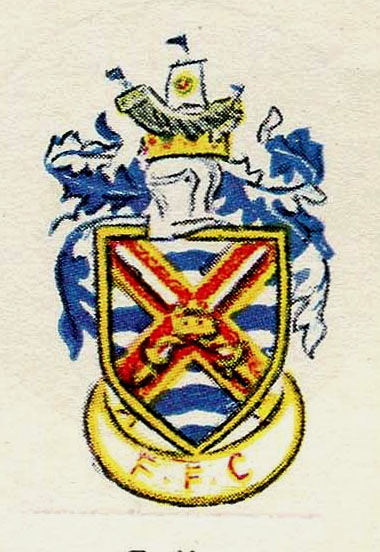
Some don’t fit into any category. Perhaps Fulham have the waters of the nearby River Thames on the shield:

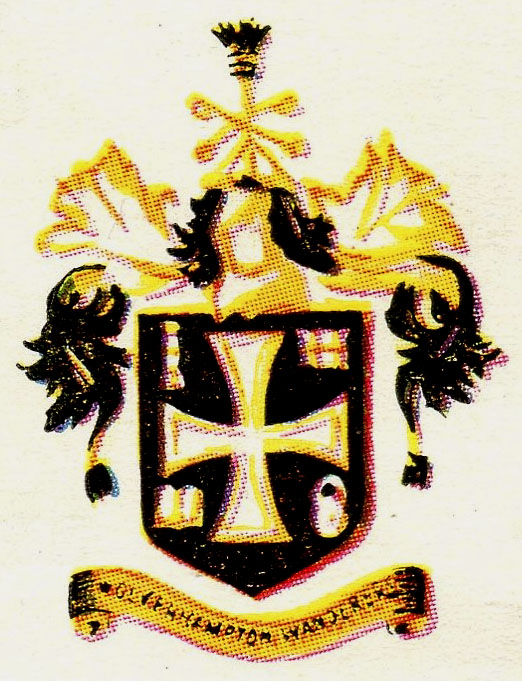
Wolverhampton Wanderers supporters obviously have their cross to bear:

Other badges are derived from their local town’s coat of arms but in a less elaborate way. Luton Town, Pontypridd Rugby Club, Torquay by the sea and Tranmere Rovers:

This slideshow requires JavaScript.

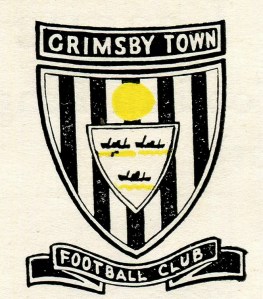
Grimsby is by the sea and the team are nicknamed “the Mariners” and Falkirk supporters look very fierce indeed:

Most interesting are the old Manchester City and Manchester United badges:

Despite their century or more of rivalry, both clubs wanted clearly to reflect their city. Here is the city’s coat of arms:

And what about those Bristols, I hear you shout. Bristol City, the Robins with a bright red breast and Bristol Rovers, “the Black Arabs”. I looked that up, and apparently when they were first founded, Rovers played in all black because they very much admired the Arabs rugby team who also played in all black. Here are the old badges of the two clubs:

This slideshow requires JavaScript.

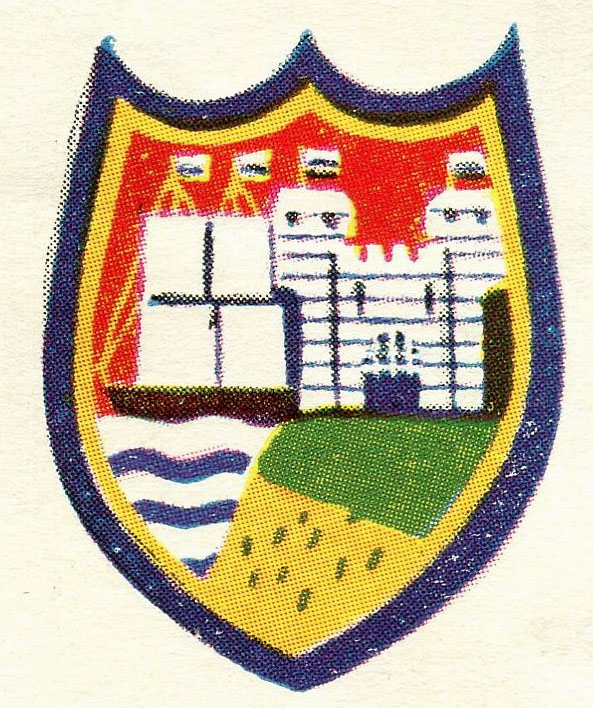
And here is the badge of the City of Bristol:

The idea even seems to have influenced Gloucester Rugby Club:
Next time, football and a bunch of animals.

21 Comments

Filed under Football, History, Wildlife and Nature

Prices slashed on “History of the High School” !!!

Those of you who follow my blog will be familiar with the many stories I have told over the years about Nottingham High School…its Founders, its coat of arms, its war heroes, its caretakers, its heroes and its one or two villains. These stories all appeared in “Nottingham High School, the Anecdotal History of a British Public School” which was published some time ago now:

The reason I am reminding you now of this book is that the price on Amazon has now gone down to £23.48 with Free Postage if you are a member of Amazon Prime. This is fantastic value for money.

Most non-fiction books cost roughly £10 for every hundred pages, so £23.48 for a book of this length is an excellent price. The book has 394 pages (and my computer says around 130,000 words, which is roughly the length of either “The Two Towers” or “Return of the King”).

Above all, this is a hardback book with a nice dust jacket and to be honest, it surprised me with its quality in terms of its looks. It looks really professional for a book written by an amateur author.

The book is written in diary form and runs from Thursday, June 30th 1289 to Thursday, July 12th 2012. I have divided it into forty chapters whose titles range from “Lost in the Mists of Time”, “A Personal Friend of Guy Fawkes”, “The School is Closed Today because of Plague”,  “Old Boy Cuts Off King’s Head”, :

In the more modern era, the chapters run from “The DH Lawrence Years”, “Major General Mahin : A Yank at the High School”, “Albert Ball and the High School go to War” to “The Golden Age of Teachers”:

I have tried to keep the tone of the work an interesting and light one, but at the same time, as you know from my blog posts, I can show my more serious side when occasion demands. A very large number of former pupils from the High School died in the two World Wars and their sacrifice is reflected in my book:

What a price !

£23.48

And more than that, what a price for 394 pages of new, original and interesting ideas!

Incidentally, please don’t think that I’m being greedy and I’m trying to make loads-a-money from this. I am merely pointing out the existence of this new, lower price, because previously the two companies publishing the book have both asked for a higher price. In one case, a much higher price.


15 Comments

Filed under Football, History, Humour, Nottingham, Politics, The High School, Wildlife and Nature, Writing

The Nightingale and Bomber Command

This is a very famous recording of a nightingale singing its little heart out, only to be interrupted by the enormous noise of a large number of Bomber Command aircraft approaching and then flying over. Undaunted, the nightingale carries on with its beautiful song as the bombers leave and the roar of their engines gradually fades away. The recording lasts quite a long time but it is well worth listening to in its entirety, particularly if you have never heard it before. It comes from spud4x:

The recording was made from a garden in Surrey, England during the evening of May 19th 1942 as 197 aircraft flew over on their way to bomb Mannheim. There were 105 Wellingtons, 31 Stirlings, 29 Halifaxes, 15 Hampdens, 13 Lancasters and 4 Manchesters:

This slideshow requires JavaScript.

47 men would be killed and 23 would finish up as prisoners of war. Eleven days later would come the first 1,000 bomber raid on Cologne. And in the woods of England, and indeed Germany, the war would count for very little. The bluebells would be lingering on and the nightingales would be starting to sing.

The nightingale has a very powerful, very famous, but not necessarily hyper distinctive song. On birdwatching trips, I have often seen people listen to a hidden blackcap or garden warbler and walk away happy that they have heard a nightingale. John Keats too, may have been misled. Some critics have mentioned that the bird’s behaviour as Keats describes it, is on occasion not dreadfully nightingaley. But the poetic thoughts are dreadfully, well, poetic:

“Thou wast not born for death, immortal Bird!
         No hungry generations tread thee down;
The voice I hear this passing night was heard
         In ancient days by emperor and clown”
Perhaps John Clare, of whom I wrote long. long ago, had a better idea:
“See there! she’s sitting on the old oak bough,
Mute in her fears ; our presence doth retard
Her joys, and doubt turns every rapture chill.
Sing on, sweet bird! may no worse hap befall
Thy visions, than the fear that now deceives.”

Anyway, there’s only one nightingale and here it is…

And here’s another version of that BBC recording:

If you’re interested, this is also to be found on Youtube. It is a recording made of a Bomber Command crew on a bombing mission over Germany:

As a fully paid up very sad person, I have two CDs  of this type of thing, bought many years ago from Amazon and I have listened to them many times.

This is the first one and this is the second one. They are particularly good for driving through rush hour traffic on your way to work. Goggles optional.


34 Comments

Filed under Aviation, Bomber Command, History, Humour, Personal, Wildlife and Nature

The World of the Mysterious (8)

During my researches about the Wodewose and the Green Man, one thing which has struck me is that to some extent there is a split between the two in terms of location. Indeed, it would be interesting to carry out a little research and to try and  establish the validity of this theory. More interesting still would be to try and see if there is a reason for it:

This slideshow requires JavaScript.

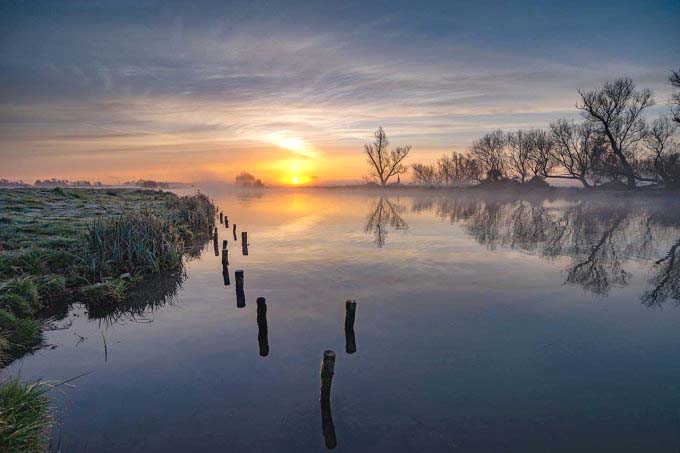
From what I have found on the Internet, therefore, I would posit that the Wodewose is linked more frequently to churches in areas with abundant water, areas where there are lots of rivers to follow. The places I have mentioned in my previous post are Boston in Lincolnshire and the counties of Cambridgeshire and Suffolk. All three of these regions in medieval times were full of marshes, and were areas subject to continual flooding. Indeed, much of the land area, in Lincolnshire and especially in Cambridgeshire, was permanently covered by shallow water and would be subject to extensive drainage schemes in later centuries.

Here are the marshes of Lincolnshire and Cambridgeshire. They were called “fens” and on this old map, virtually all of the land inside the dotted, or perhaps dashed, line, would have been a good place to take your wellingtons. Indeed, after the Norman Conquest in 1066, the Saxon freedom fighter, Hereward the Wake, held out in the fens against the overwhelming forces of the Norman invaders from at least 1067-1071. He is known to have used all of the areas enclosed on this map, particularly the Cambridgeshire section around Ely :

Here are the rivers of Suffolk in the only map I could find. There is perhaps not as much marshland but the county is riven by estuaries which seem to penetrate deep into the dry land. The blue lines of the rivers are only those of reasonable size. The streams and brooks are not featured:

Given the modern Bigfoot’s predilection for rivers, lakes and swamps, I think the Wodewose would have enjoyed living here. Because of the landscape, he may actually have been seen more frequently as he paddled through shallow marshes, perhaps in pursuit of his prey. For this reason the locals considered him to be a living, breathing creature somewhat like themselves but different. He was not seen as supernatural or godlike:

The Green Man, however, is mainly linked to churches in areas which were drier and more heavily forested. In places such as these, the Wodewose would have been seen even less frequently than in the marshes. For this reason, his once-in-a-green-moon appearances began to take on something of the supernatural. He became the godlike “guardian of the forest”.

And at the time, this was a rôle which needed to be filled because it was around this period that people were beginning to clear the forest much more extensively for agriculture and for fuel. Between 1066 and 1230, around a third of the woodland in England had been cleared for growing crops and the grazing of domestic animals. And once you’ve cut down a thousand year old oak tree, you have a good wait on your hands for it to be replaced. Here’s Nottinghamshire’s “Major Oak” which “missed the cut”, literally:

With marshes, no special guardian was needed to look after them. England was not short of rain! Indeed, it would take the people of the Fens area until 1630 to get started on draining the land and making it more suitable for agriculture. Even then, it took a Dutchman, the famous Cornelius Vermuyden, to do it:
For that simple reason, the Wodewose would remain a physical entity, rather than a supernatural one. He was little different from the beavers, the ospreys, the cranes and the Large Copper butterflies that were soon forgotten only twenty years after they had disappeared.


23 Comments

Filed under Bigfoot, Cryptozoology, History, Literature, Personal, Science, Wildlife and Nature, Writing

The World of the Mysterious (7)

Last time we looked at the Wodewose. Here he is:For me, the strange figure of the Wodewose is based on a Bigfoot type creature that may still have been alive and well in the vast forests of Western Europe in the early Middle Ages. At this time, the forests in England, for example, were enormous and covered between a third and a half of the country. And even when the Wodewose was gone for ever, then there were still people who had heard their grandfather’s tales about him and who could recreate him in their own world.

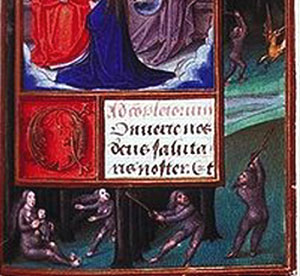
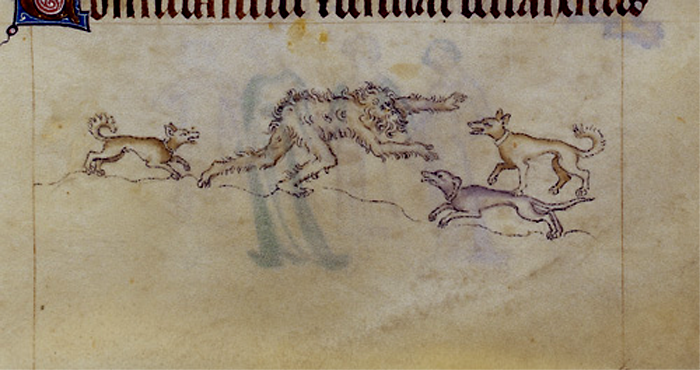
He was certainly famous enough to feature in documents written on old parchment . This one dates from 1325. He is on all fours because he has to fit in between the text in Latin and the bottom of the page:

A similar ‘margin picture’ dates from the 1300s. Notice the mother and her child with another young woman (bottom left) and what is either a fight or a very keenly contested game of golf (bottom right):

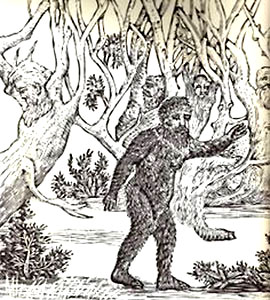
In this old drawing, the Wodewose looks as if he has lost his club and is struggling to find it (not a golf club, or a country club, but the other kind):

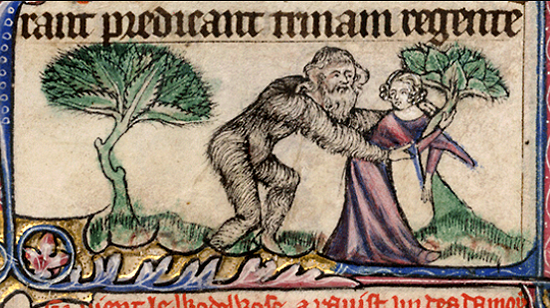
These two individuals are from a series which show the Wodewose’s well known desire for women, yet another feature he has in common with Bigfoot. Picture 1 shows his gentle method of courtship:

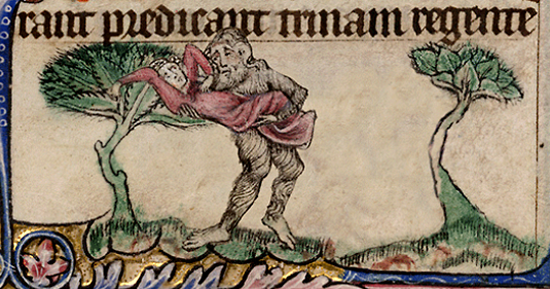
The second shows his next step which could well be summarised as “RUN!!!!” If you read about Bigfoot a lot, you will be familiar with his ability to pick up hogs and other farm animals and run off with them. But beautiful ladies are even more impressive:
This Italian lady, though, is well versed in the tricks of both Italian men and Italian Wodewoses. Forewarned is forearmed:

Is the Wodewose carrying a golf club in that last picture?

Bigfoots and Wodewoses hate dogs too:

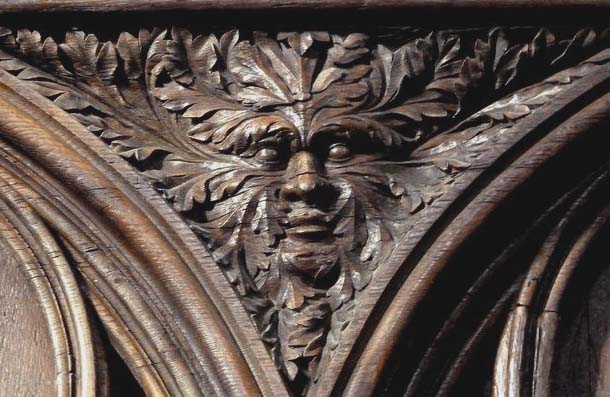
It is my belief that the Wodewose may well be the direct ancestor of the now much more famous “Green Man” which is a very familiar figure to anybody who visits medieval Western European churches. The Green Man is believed to be the deity who brings back the greenery every year in spring, hence the leaves pouring out of his body. This one is in Norwich Cathedral:

This one comes from Lincoln Cathedral:

The Green Man does also have an aspect as a kind of guardian of the forest, and the trees and the plants therein. And that, of course, is a rôle ascribed to Bigfoot by many different Native American peoples. This Green Man is taken from Poitiers Cathedral in west-central France:

The Green Man very often seems to occur in areas which have originally been heavily forested. The best Green Men I have ever seen occur in the Chapter House in Southwell Minster in Nottinghamshire. At the time it was built, it would have been in Sherwood Forest:

Next time, the explanation.

One final point is that in these blog posts about Bigfoot, I have tried very hard to use only images which are available to be used. With some images that is not the case because otherwise there was nothing else available. I am 100% willing to take them down if this causes a problem for anybody, although I suppose there is the flattering aspect that they were the best I could find!

16 Comments

Filed under Bigfoot, Cryptozoology, History, Literature, Personal, Science, Wildlife and Nature

The World of the Mysterious (6)

England has its own figure which may well look back to the days when ordinary people were all aware that there was something big and hairy in the woods. After all, centuries ago, woodland was far more plentiful and farmers’ fields would often be next to the forest. So too, there were many more hunters then and they would all have known what you might encounter as you moved silently around among the trees.
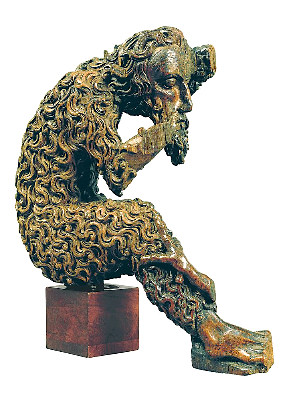
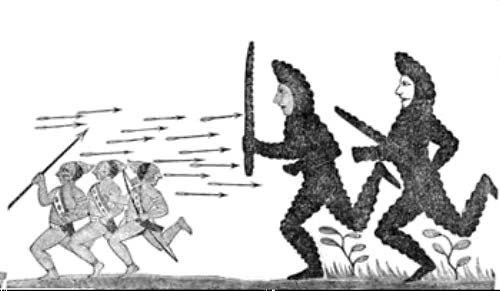
In England he was called the “Wodewose” and he is usually depicted as a human like creature, somewhat bigger than a man, often carrying a club, and almost completely covered in thick hair:

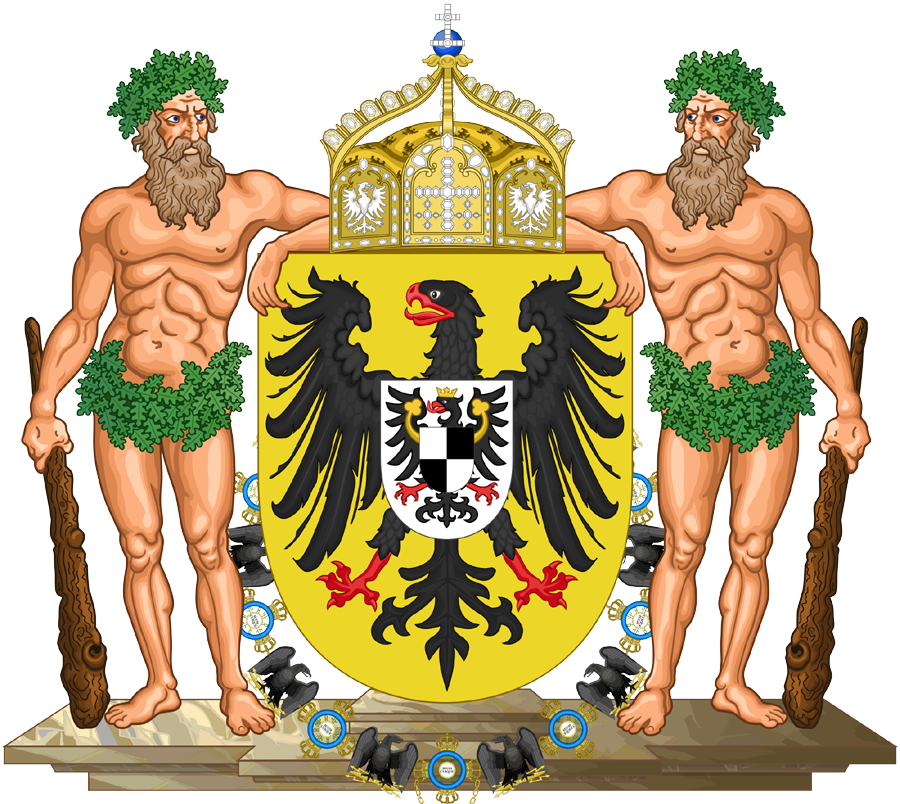
Over the years, in heraldry, he was depicted in increasingly human form, still carrying a club, but with leaves wrapped around his haunches. I think that that is probably because people saw the Wodewose a lot less frequently as the human population increased and the Wodewoses became less numerous. Even so, judging by the heraldry of the medieval period and later, there may well have been wild men in, as a minimum, the Czech Republic, Denmark, Finland, Germany, Italy, Lithuania, the Netherlands and Sweden:

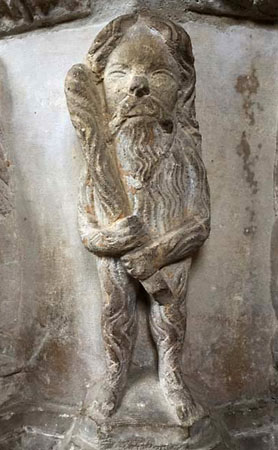
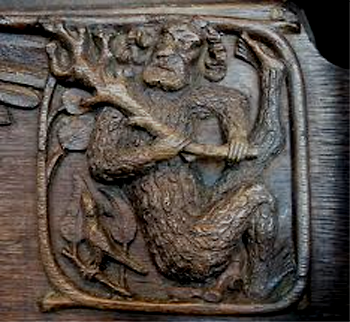
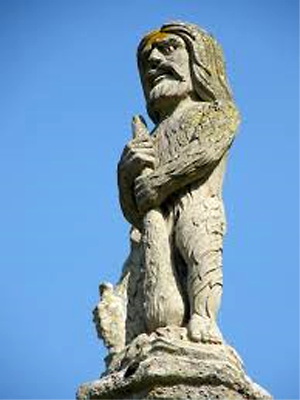
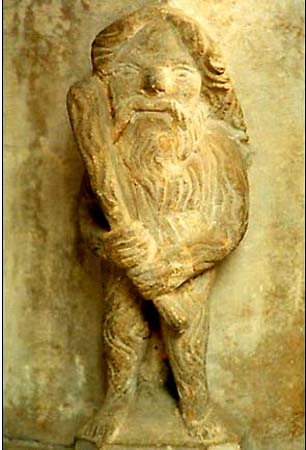
The name ‘wodewose’ comes from two old English words, “wudu” meaning ‘wood’ and “wāsa” which itself comes from the verb “wesan” or “wosan” meaning ‘to be alive’ or simply ‘to exist’ or ‘to be’. So he’s somebody who is in the woods. He is also seen a lot in medieval churches, but as a statue or a carving. This one doesn’t have a club:

But this one does:

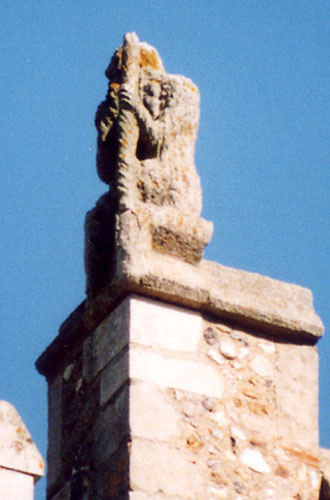
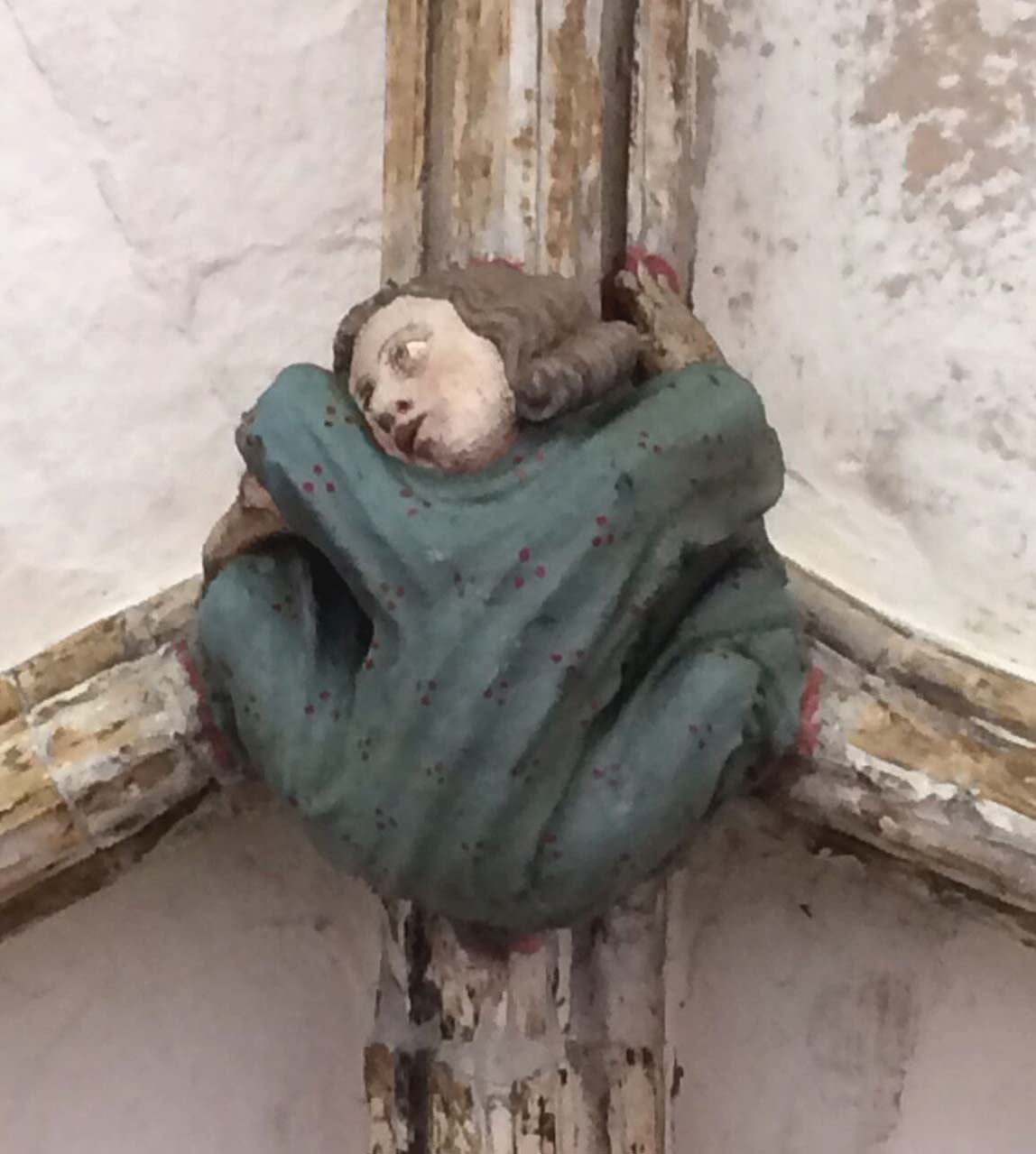
The Wodewose might be kneeling on the roof outside the church:

Or he might be on the roof inside. This Wodewose apparently has a touch of greenish mould, but then again, so do some Bigfoots:

This one has a bit more of a tan:

Here’s a German one from Cologne:And another from Suffolk:

This one has had to adopt a strange position just to get all of him in:

For me, the Wodewose can trace his lineage back to a Bigfoot type creature that may well have still been alive and well in the vast forests of Western Europe as late as the early Middle Ages. At this time, up to half of England was covered in forest. People used to say that you could travel from the Humber to the Thames without touching the ground because there were so many trees. And when the Wodewose had disappeared for ever, there were  still plenty of people who had heard all the tales about him and who could recreate him in their own world.

Next time……..the Wodewose’s brother.

One final point is that in these blog posts about Bigfoot, I have tried very hard to use only images which are available and there to be used. With some images that is not the case, but the problem was that there was nothing else available. I am 100% willing to take any images down if this causes a problem for anybody, although I suppose there is the flattering aspect that they were the best I could find on the whole Internet!

20 Comments

Filed under Bigfoot, Cryptozoology, History, Literature, Personal, Science, Wildlife and Nature, Writing

The World of the Mysterious (5)

I said last time that I would take Cliff Barackman, James “Bobo” Fay, Ranae Holland and Matt Moneymaker back into history and legend, to see if I could find any creatures, perhaps based on Bigfoot, mentioned over the course of the last 5,000 years or so.  I spoke of Enkidu, and Moses’ Twelve Spies in the land of  Canaan. I also rejected Goliath, and I described Grendel who, although I thought he was possibly not as dangerous as he has been portrayed, I thought was not necessarily armless.

This time, I would like to touch upon the story of Jean Grin, a subject which I have explored before. It all took place in early 19th century France  in the wonderfully picturesque and unspoilt region of Lozère, which is here:

This time the situation is a little more complex in that Jean Grin was, supposedly, a historical figure who was active as recently as 1800. He lived in a mountain ravine, in a crude cottage of stone with what is now a collapsed roof, surrounded by pine trees and dry scrubland. Inside, against the very rock itself, there is the oven where he roasted children to eat. Outside are several piles of stones covered with soil, supposedly the burial places of his victims:

Jean Grin was living here because of his inability to get along with his neighbours. They called him an ogre, and considered him an ambiguous being, “mi-homme mi-bête”, half way between animal and man. Soon after his arrival in the ravine, he seemed increasingly to take on the attributes of a savage, brutal, wild person that no social norms could restrain:

Young shepherds and shepherdesses began to disappear in the surrounding region. At the time, in a neighbouring area, there had been severe problems with some kind of mystery animal, either a very large wolf or a canid of an unknown species. It had been termed the “Beast of Veyreau” or “La Bête de Veyreau” and I have already written about it:

Whatever the killer in Lozère was, it only attacked weak people or children. In just six months, from June-December 1799,  three victims were killed and eaten.

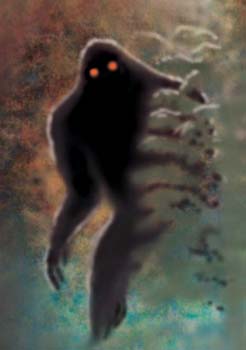
Physically, Jean Grin was by now dreadful to look at. He supposedly wore just animal skins and he could run extremely fast across the countryside and up and down slopes:In the dark, his eyes gleamed bright, shining red and you could see him coming from far away. Jean Grin too has been given the attributes of a Bigfoot. Memories from centuries ago have been added to his story. He had luminous red eyes.  He possessed prodigious speed both going up and coming down mountainsides. He had an appearance generally thought to be “mi-homme mi-bête”. In addition, photographs show that he lived in exactly the same kind of dry, rocky environment where Bigfoot lives nowadays in the Sierra Nevada of California:

It is my contention though, that the story of Jean Grin is obviously much, much older than a mere 200 years. Indeed, I think that quite a complex process has therefore come about here.

Firstly, the people had a dim memory from centuries previously of Bigfoot type creatures in the forest and in the mountains. Secondly, there was an eccentric and unpopular man called Jean Grin who lived in the area. He was big and ugly. Thirdly, an unknown animal,  the “Beast of Veyreau”, was attacking, killing and eating the young children who were left on their own to guard the flocks of sheep.

And what has happened is that these three elements, of Bigfoot, of gory deaths and of weird loners have all been melded together to give us the present legend. There are no Bigfoots in France nowadays, but in the centuries when the east of the country, in particular, was covered in extensive thick forest, I think there were, and recent enough for memories to linger on.

Next time, England’s Bigfoot.


17 Comments

Filed under Cryptozoology, Film & TV, France, History, Personal, Science, Wildlife and Nature, Writing

The World of the Mysterious (4)

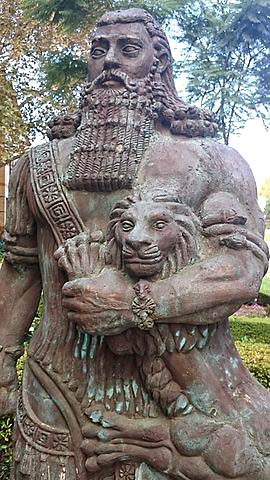
I said last time that I would take my Syma X5C-1 2.4G HD Camera RC Quadcopter RTF RC Helicopter with 2.0MP Camera back into history and legend to see if I could find any hints of creatures similar to Bigfoot mentioned over the course of the last 5,000 years or so. I spoke of Enkidu and Moses’ Twelve Spies in the land of  Canaan. I also  rejected Goliath, an obvious candidate, but not a valid one. Here’s Enkidu’s pal, Gilgamesh again:

In my researches, however, I did find “Beowulf”. This is an Old English epic poem written between 975-1025 AD. It concerns Hrothgar, the king of the Danes, who has grave problems with the fact that his feasting hall is repeatedly being attacked by a monster known as Grendel:

Here’s an old illustration of the creature:

Wikipedia describes events from the point of view of Grendel:

“Grendel is “harrowed” by the sounds of singing that come every night from the hall. He is unable to bear it anymore, and attacks. Grendel continues to attack the Hall every night for twelve years, killing its inhabitants and making this magnificent hall unusable. Beowulf arrives to destroy Grendel. He is welcomed with a banquet. Beowulf and his warriors bed down in the hall to await the creature. Grendel stalks outside the building for a time, spying the warriors inside. He makes a sudden attack, bursting the door with his fists and continuing through the entry. The first warrior Grendel finds is asleep, so he seizes the man and devours him.”

There are so many similarities here with the behaviour of Bigfoot. Active at night, attracted by noise, stalking round the building, looking at the people inside, smashing in through the door, and, certainly according to some of the tales of the Native Americans, eating one of the humans.

Grendel’s exact appearance is never directly described by the original Beowulf poet, except that he is “man-like”. He is referred to as a “sceadugenga”, which means “a shadow walker, a night goer”. This latter phrase, “night goer”, is a good fit for Bigfoot.

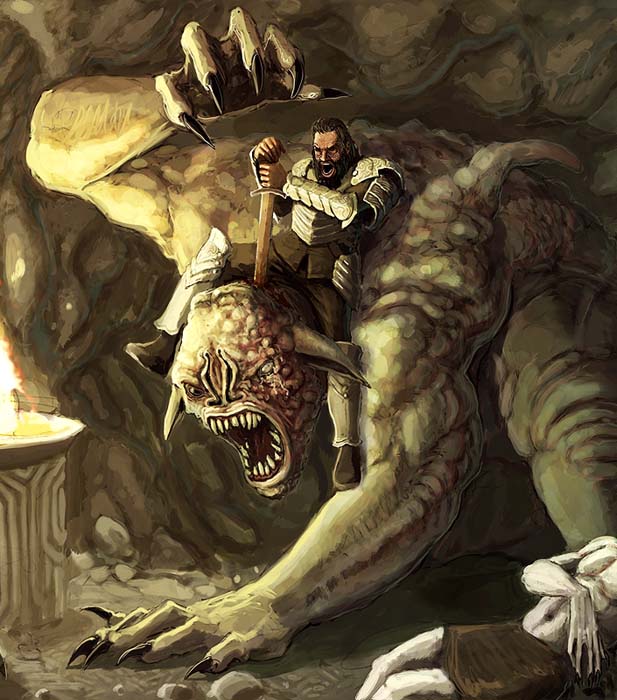
I’ve already shown you an older illustration of the monster. More modern sources such as films seem to just do what they feel like on the day:

Mind you, Grendel is big. So big, in fact, that when his head is finally cut off, it takes four men to move it. This is Goliath’s head, but I’m sure you’ll get the idea and that you’ll forgive me, especially when you notice the stone shaped hole in the Big Man’s forehead :

Back to the story. Having seen what he was dealing with, Beowulf decides to fight Grendel without using any weapons because he thinks he can match him. As Grendel comes into the hall, Beowulf leaps up and grabs his hand. Beowulf’s retainers come to help but their swords are unable to pierce Grendel’s skin. Beowulf then rips off Grendel’s arm and Grendel flees to the marsh where he lives and, indeed, dies.
Some excellent similarities there. Grendel’s size, his home in a watery place such as a marsh and his impenetrable skin.

A translation of the poem by Seamus Heaney in 1999 describes Grendel’s arm which gets ripped off in the struggle:

“Every nail, claw-scale and spur, every spike
and welt on the hand of that heathen brute
was like barbed steel. Everybody said
there was no honed iron hard enough
to pierce him through, no time proofed blade
that could cut his brutal, blood-caked claw.”

The Iroquois, a Native American tribe of the eastern Great Lakes area, described a whole race of giants twice as big as men, with bodies covered in rock-hard scales that repelled all of their weapons. Here we are:

Modern man has also repeatedly been baffled by the apparent ability of Bigfoot to escape both rifle and shotgun fire.

I’ll finish with three quick references to literature and legend of roughly the same period. Firstly the “kelpie” of Celtic folklore which is often seen as a water horse, but which could change shape and become a “rough, shaggy man who leaps behind a solitary rider, gripping and crushing him… tearing apart and devouring humans”.

Secondly a tale comes from Norway (not that far from Beowulf territory) called “Konungs skuggsjá” or Speculum Regale or “the King’s Mirror”. It was written around 1250 and describes a “wild man”

“It once happened in that country (and this seems indeed strange) that a living creature was caught in the forest as to which no one could say definitely whether it was a man or some other animal; for no one could get a word from it or be sure that it understood human speech. It had the human shape, however, in every detail, both as to hands and face and feet; but the entire body was covered with hair as the beasts are, and down the back it had a long coarse mane like that of a horse, which fell to both sides and trailed along the ground when the creature stooped in walking.”

The mane on this unknown, hairy creature…is that the origin of the confusion about the shape-shifting Kelpie which was both a “rough, shaggy man” and a water horse?

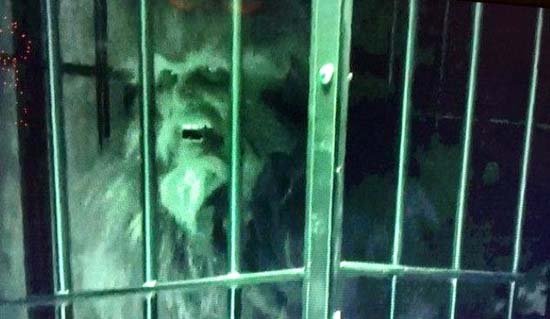
Perhaps it looked a little bit like the fake documentary made recently:

The third detail involves the Long Man of Wilmington who adorns a hillside in East Sussex. He is 235 feet tall and he is cunningly designed to look perfectly in proportion when viewed from below. He dates from, apparently, the 1600s and he carries two large sticks, and, even allowing for the effects of perspective, he does have enormously long arms, just like Bigfoot:

And next time, “ce sera une visite en France”.


24 Comments

Filed under Bigfoot, Cryptozoology, History, Literature, Personal, Science, Wildlife and Nature, Writing

The World of the Mysterious (3)

I said last time that I would take my trailcams back into history and legend to see if I could find any suggestions that creatures similar to Bigfoot were mentioned over the course of the last 5,000 years or so. I told you of Enkidu, the creation of the god Anu, and the companion of Gilgamesh, who was one third human and two thirds beast, very hairy and very wild:

The most obvious place to continue the search, of course, is the Bible. In the Book of Numbers, Moses sends out his Twelve Spies to have a look at the land of  Canaan. They return and say that they have seen fearsome giants there. They tell him:

“The land, through which we have gone to search, is a land that eateth up the inhabitants thereof; and all the people that we saw in it are men of a great stature. And there we saw the giants, the sons of Anak, which come of the giants: and we were in our own sight as grasshoppers, and so we were in their sight.”

What I will freely admit though, is that in another version of some of the quotation above, the translation is given as:

“And there we saw the Nephilim, the sons of Anak, who come of the Nephilim; and we were in our own sight as grasshoppers, and so we were in their sight.”

I don’t know what’s happening here or how it is possible to translate a word as “giant” and then on another occasion as “Nephilim”. What I did find out, though, is that the proper name ‘Anak’ is the Hebrew word for “giant” (ענק). Here’s a picture I found of the Twelve Spies, recounting the size of the giants in Canaan. It looks like the recreation of a Bigfoot sighting in “Finding Bigfoot” when Bobo stretches his hand over his head and Ranae says “But that makes it fifteen feet tall!”:

Because of this idea that there were giants in Canaan, I also looked at the possibility that the famous Goliath was not a human being but some kind of Bigfoot. In actual fact this proved not to have been a very likely thing to have occurred. The general feeling seems to be that successive translators have just added a cubit here and a cubit there and that is why the Big Man  is nine feet tall rather than just over six feet, which was not desperately taller than King Saul himself. There are also a great many other details about Goliath known from other sources which prove that he was a human being rather than a member of another species:

According to Wikipedia, the exaggeration of his height is relatively easy to trace:

“the Dead Sea Scrolls text of Samuel, the 1st-century historian Josephus, and the 4th-century Septuagint manuscripts, all give his height as “four cubits and a span” (6 feet 9 inches) whereas the Masoretic Text gives this as “six cubits and a span” (9 feet 9 inches)”.

When I was a little boy around nine or ten years of age, our entire class, forty or so of us, all helped to make a two dimensional Goliath with paper and cardboard. He was actually dressed as a Roman soldier with armour of tinfoil and a red curtain for his little kilt. He was six cubits and a span tall and, trust me, he was extremely large!

Just for comparison, here is Robert Pershing Wadlow, who was almost nine feet tall:

Sadly, I couldn’t find any pictures of Robert with nine or ten year old children. Don’t forget though, that Goliath would have been at least a foot taller than the famous American, allegedly.


14 Comments

Filed under Cryptozoology, History, Literature, Personal, Science, Wildlife and Nature, Writing