This is a second series of photographs taken by the Reverend Charles H Stephens. They portray some of the actors in the Junior Plays during the academic year 1976-1977. All of them were in Form 2L. What is most striking is how the actors have begged, stolen or borrowed, items from ordinary life and then, by putting them all together, have created a character for their own particular Junior Play.
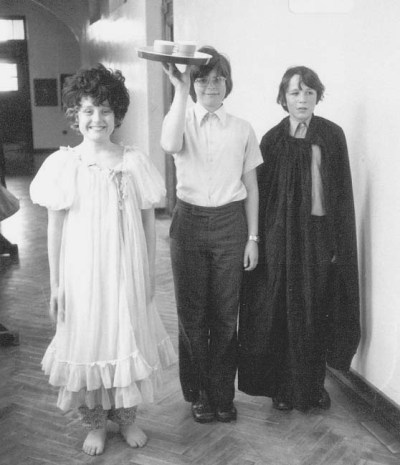
The first picture shows the actors in a drama whose plot I cannot begin to imagine. It must surely involve a huge admirer of Harpo Marx, whose hobbies include cross dressing in those night dresses you get in the Hammer Horror films of the period. Just to prove the point, on the right is a sinister Christopher Lee type figure, presumably waiting patiently for a cup of luke warm blood from the demented waiter in the middle:
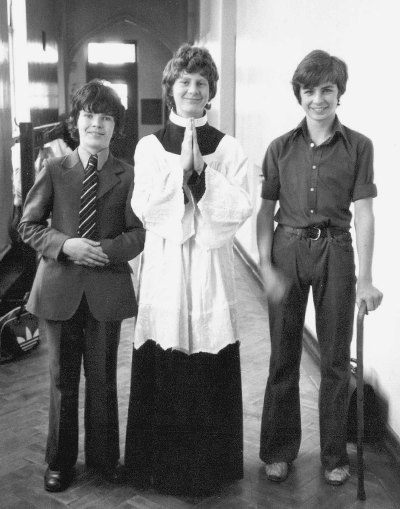
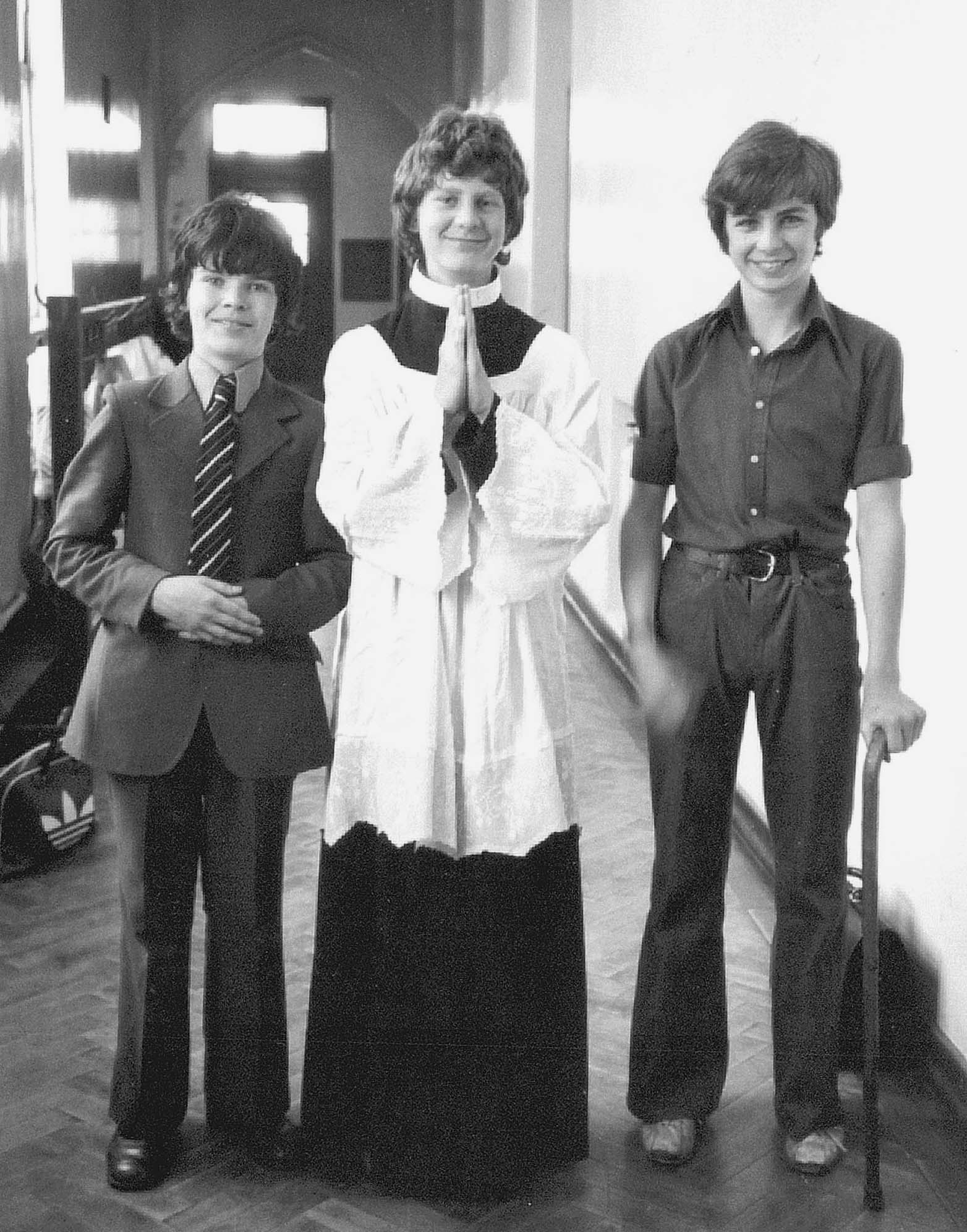
Picture Two shows the Exorcist in the middle, apparently wearing some of the Reverend’s robes that had shrunk in the wash and were therefore surplice to requirements. The little boy on the left clearly has completely the wrong end of the stick when it comes to the rule that “Junior Plays are not performed in School Uniform”. Just taking your tie out of your jacket will not be enough. And on the right, the happy little chap who won the North of England “Neat shirt sleeve folding” competition for the next fourteen years running:
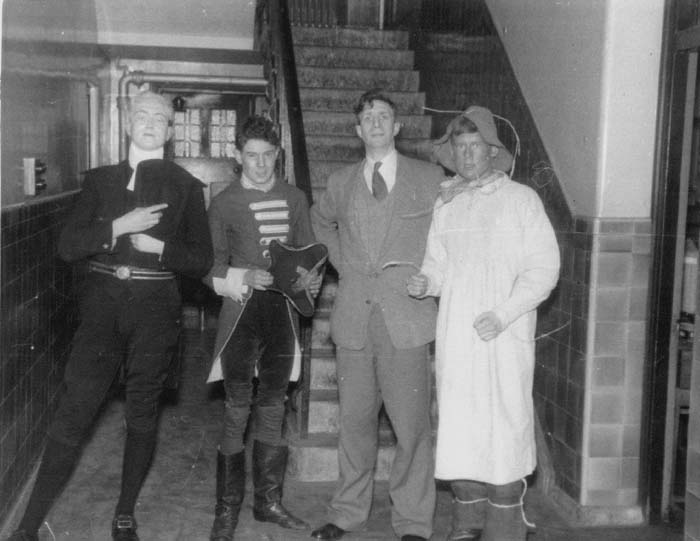
The third photograph shows a capacity for violence compatible perhaps with “Straw Dogs” or “Clockwork Orange”, two films of the time. On the left is the little boy who had clearly decided that the winner of the Junior Plays will be decided not by the judging panel nor the Ballot Box but by the Armalite. In the middle is the representative of the Metropolitan Police, looking a little morose, perhaps, but with his plastic policeman’s helmet, just like you get in toy shops, jauntily on the back of his head:

The boy on the right looks rather sad too. The police had promised to help him find, and then recover, his trousers. Still, that dress is rather nice and compliments perfectly his top garment, whatever it may be. A housecoat? Or the “Something more comfortable” that dubious young women with dyed blonde hair are keen to get into?
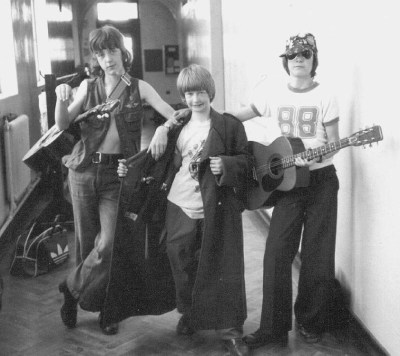
Next is the Junior Play set at Woodstock with three classic haircuts, two state of the art guitars and one army surplus coat in two extra small. Note the camouflaged ex-US Army cap that fishermen wear and always cover with lots of badges. Note, too, the denim waistcoat complete with war surplus sew-on USAAF wings:
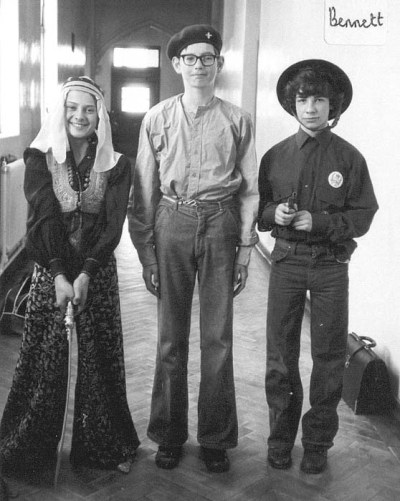
The final photograph shows the final three actors. On the right is the cowboy, whose costume is the easiest of the lot. A pair of jeans, a heavy, thick shirt, your Dad’s fishing hat and your little brother’s cap gun. And in the middle, somebody to whom you’d really have to pose that embarrassing question “And who are you meant to be, sonny?”. Well, he has made a fair attempt at reconstructing the beret of the Parachute Regiment, but the shirt and the trousers are a strange combination. Note the snake belt fastening, incidentally, which was then compulsory for all small boys to wear at least once before they reached the age of fourteen. On the left, he must surely be something Arabian, but exactly what I am not so sure. He has his mum’s tea towel over his head, held on with elastic, and a pair of wide, flared, bell-bottomed trousers which belong to his sister. Presumably his mother hasn’t noticed her missing Laura Ashley curtains in the third bedroom. Let’s hope too that that is a plastic scimitar and that the bra-like garment over his shirt has not been borrowed from his sister:
Next time, we’ll look at some of the School Plays over the years.
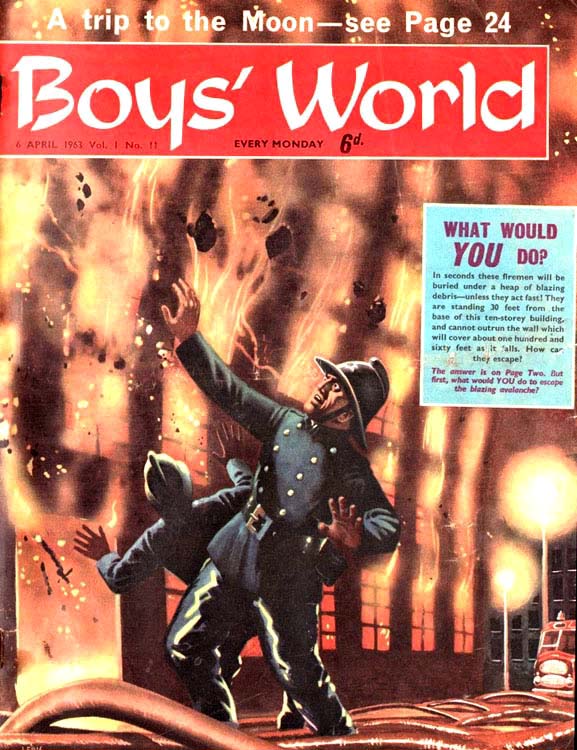
They laboured under a terrible handicap, which is clearly stated in the School Magazine:
“After the First World War, the Dramatic Society would put on an annual play for their parents and their siblings and friends to come and see. Usually, it was a classic, although not always by Shakespeare. The problem was that the School was for boys only and, in the words of the School Magazine: “The Dramatic Society has always hesitated to produce a modern play because of the difficulty of finding boys capable of filling the female parts. Twentieth Century dress does not lend itself so well to the purpose of transformation as do Elizabethan and Georgian costumes”.














 John Knifton