Author Archives: jfwknifton

The Flannan Isle disappearances (1)

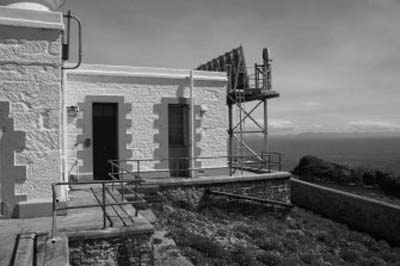
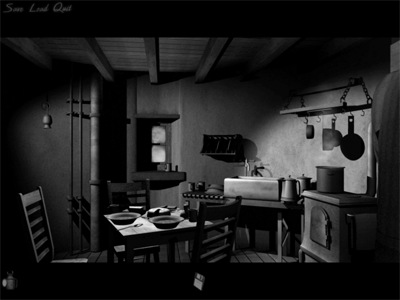
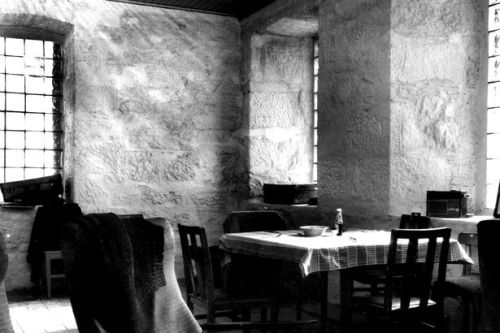
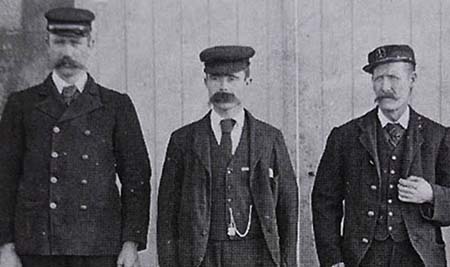
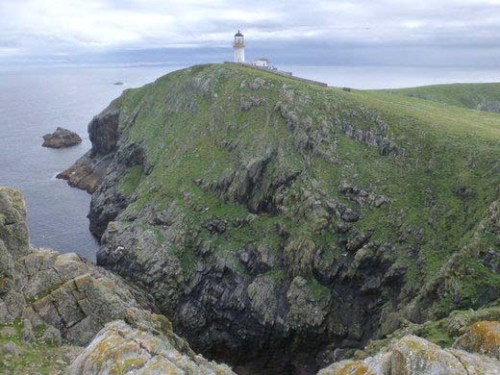
On February 17th 2021, I published a blog post about one of my Dad’s favourite poems, “Flannan Isle”, by Wilfrid Wilson Gibson, which was written in 1912. The poem concerned the mysterious disappearance of the three lighthouse keepers in December 1900. This strange incident has never been explained once and for all, and I was asked for my own ideas by a number of different people. Unfortunately, the subject proved so complex that I was unable to do it justice in fewer than four blog posts, although, on the other hand, I would argue that all four are as interesting as any that I have ever written.

So here we go……..

At midnight on December 15th, the steamship Archtor, nearing the end of its voyage from Philadelphia to Leith, passed the Flannan Isle lighthouse which was not showing a light. Instead of two quick bursts of light every 30 seconds, there was just darkness. Captain Holman, however, was unable to report this fact to the Northern Lighthouse Board, because the Archtor continued its voyage, but ran aground in the Firth of Forth. The NLB, therefore,  were unaware of the situation until their own supply ship, the Hesperus, made its usual regular visit to the lighthouse on December 26th.  The Master of the Hesperus, Captain Harvie, at the first opportunity, sent a telegram to the NLB. The significant elements can be read below:

“The three Keepers, Ducat, Marshall and the occasional have disappeared from the island. On our arrival there this afternoon no sign of life was to be seen on the Island. Fired a rocket but, as no response was made, managed to land Moore, who went up to the Station but found no Keepers there. The signs indicated that the accident must have happened about a week ago.”

The “occasional” was a temporary replacement for a full time lighthouseman who was ill. His name was Donald McArthur. Donald was due to be replaced by Joseph Moore, the third Assistant Lighthouseman allocated to Flannan Isle, now recovered from his illness. Joseph was on board the Hesperus and Captain Harvie sent him ashore to search the island. Captain Harvie then reported to the NLB the two key things that Joseph found during his search of the lighthouse and the island….

“…. The clocks were all stopped and other signs indicated that the accident must have happened about a week ago.”

Here’s Joseph Moore:
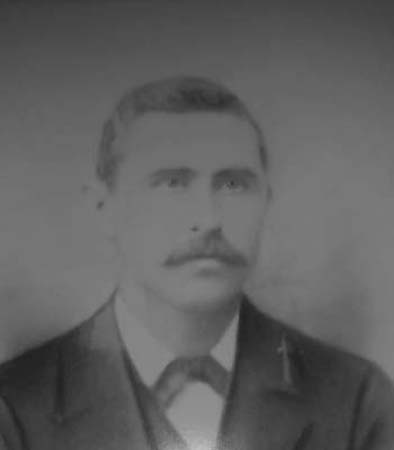
 

Joseph Moore also wrote his own letter to the NLB though, about what he had seen during his search of the island:

“On coming to the entrance gate I found it closed. I made for the entrance door leading to the kitchen and store room, found it also closed and the door inside that, but the kitchen door itself was open………..

On entering the kitchen I looked at the fireplace and saw that the fire was not lighted for some days. I then entered the rooms in succession, found the beds empty just as they left them in the early morning.”

And………

“Mr McCormack and myself proceeded to the lightroom where everything was in proper order. The lamp was cleaned. The fountain full. Blinds on the windows etc.”
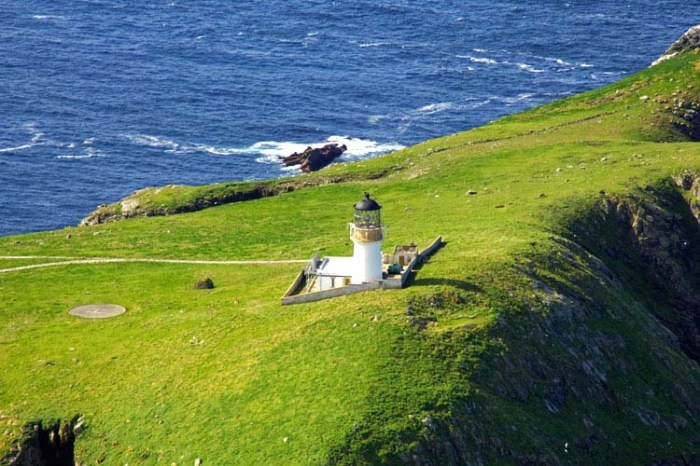
The island is so small that it could be searched in a very short time…..

“We traversed the Island from end to end but still nothing to be seen to convince us how it happened. Nothing appears touched at East Landing to show that they were taken from there. Ropes are all in their respective places in the shelter, just as they were left after the relief on the 7th.”

Both sides of the island were not the same though….

“On the West side it is somewhat different. We had an old box halfway up the railway for holding West Landing mooring ropes and tackle, and it has gone. Some of the ropes, it appears, got washed out of it, they lie strewn on the rocks near the crane. The crane itself is safe.

The iron railings along the passage connecting the railway with the footpath to the landing and started from their foundation and broken in several places (sic), also railing round crane, and handrail for making mooring rope fast for boat, is entirely carried away.”

Joseph Moore could also work out how the men were dressed…….

“Now there is nothing to give us an indication that it was there the poor men lost their lives, only that Mr Marshall has his seaboots on and oilskins, also Mr Ducat has his seaboots on. He had no oilskin, only an old waterproof coat, and that is away. Donald McArthur has his wearing coat left behind him which shows, as far as I know, that he went out in shirt sleeves. He never used any other coat on previous occasions, only the one I am referring to.”
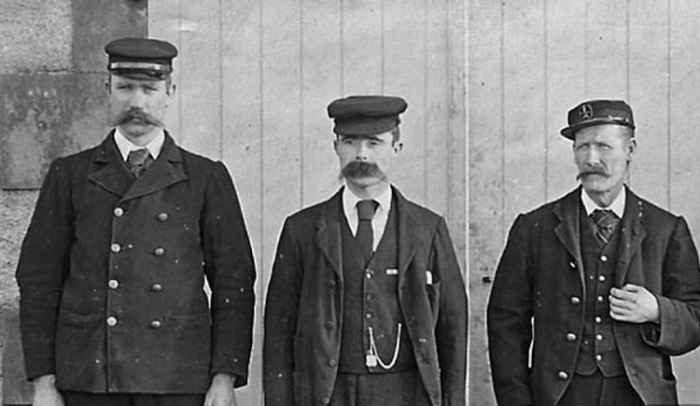
Some of the evidence above is important. To end this blog post, I will write out some of the things discovered by the NLB and perhaps you can have a think about what they prove, or, indeed, disprove……..

The clocks were stopped

The entrance gate I found …..closed

The entrance door ….. found it closed and the door inside (as well)

The kitchen door itself was open

The fire was not lighted for some days

I found the beds empty just as they left them in the early morning

In the lightroom everything was in proper order. The lamp was cleaned. The fountain full. Blinds on the windows etc

Nothing appears touched at East Landing

Ropes are all in their places
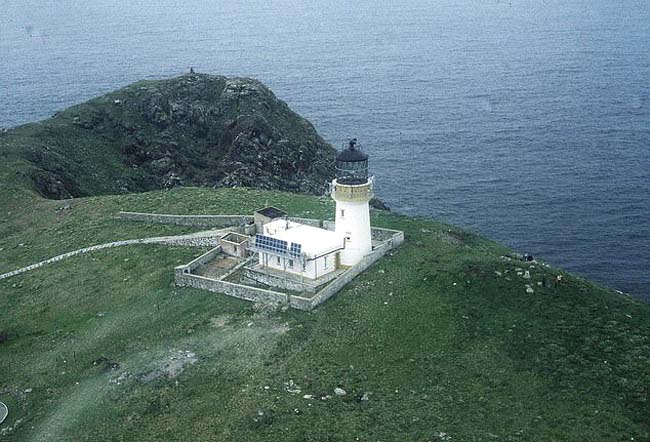
And then there is that huge contrast:

On the West side……… old box halfway up the railway ….has gone……the ropes…… got washed out of it, they lie strewn on the rocks.

The iron railings …….with the footpath to the landing …….started from their foundation and broken in several places…..railing round crane, and handrail for making mooring rope fast……. entirely carried away.”

Mr Marshall has his seaboots on and oilskins, also Mr Ducat has his seaboots on. He had no oilskin, only an old waterproof coat, and that is away. Donald McArthur has his wearing coat left behind him which shows, as far as I know, that he went out in shirt sleeves.

Next time, I will show you the conclusions of the NLB Superintendent who also visited the island. He, like Joseph Moore, was well aware that the box constructed to keep all the ropes and other equipment safe was 110 feet above the sea.


34 Comments

Filed under Criminology, Cryptozoology, Literature, my Dad, Wildlife and Nature

The Sandiacre Screw Company (2)

Ivan Keith Doncaster, usually known as Keith, began his education at Wellington Street Infants’ School in Long Eaton, built as recently as 1911 for 320 girls and 320 infants.

Keith left his local school and moved to the High School on May 2nd 1933. Just nine years of age, he was Boy No 5701 and he went straight into Hardy’s House and First Form C with Miss Richmond. There were 28 boys in the Form and Keith, very much a latecomer to the school year, finished an extremely creditable tenth. Here is a  fairly poor picture of Miss Richmond:

The following year it was First Form B with Miss Baker. Of the 21 boys, Keith came 11th. Here is Miss Baker, in between Mr Kennard and Mr Bridge, a pedagogical rock and a hard place.

Here’s a picture of Miss Baker a few years later:

The next year Keith was in First Form A with Mr Day, who, tragically, was to die of pneumonia on March 25th 1935, just before the end of the Easter Term. Mr Page took over his form. During that same year of 1934-1935, Miss Richmond had already passed away from pneumonia on January 7th. Keith finished fifth of the sixteen in the Form and also won the Preparatory School Drawing Prize.

Outside the classroom, Keith was in the Preparatory XI team for the “Preparatory Schools Spelling League Competition No 23”, although I couldn’t find out how he fared.

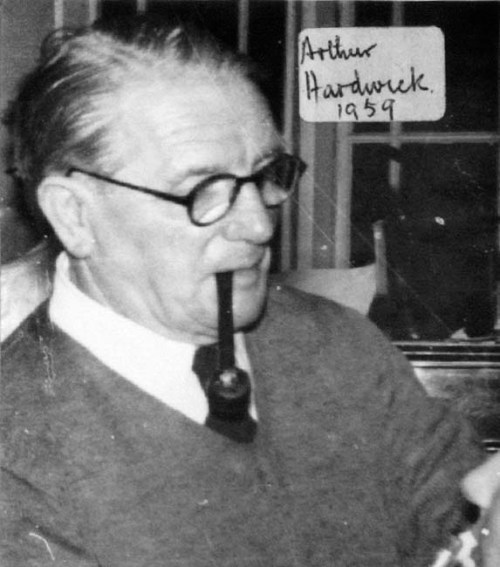
In 1935-1936, Keith was with Mr Hardwick in Second Form A. Here is Mr Hardwick in 1959, a picture taken by the Reverend Stephens:

Keith was now in a Main School house, Maples’, rather than Hardy’s House. There were 28 in the Form and Keith came 21st, not a disastrous result in a form which contained seven Entrance Scholars and Foundation Scholars and the winner of the Second Forms French Prize, Peter Robert Scott. This year, Keith found true fame by having a short poem featured in the School Magazine. It was entitled “Poetry” and this is how it went:

Poetry

“I’m not a Poet

And I know it.

The next line will take some time.

Now I’ve started,

All thoughts have parted

From my head,

So now I think I’ll go to bed.”

Next time, another poem published in the Nottinghamian. You will not be able to read it without putting on your salty sea dog accent. Or even, perhaps, pirate.


6 Comments

Filed under History, Humour, Nottingham, The High School

“Why no statue?” (7)

This is another candidate in my series, “Why no statue?”

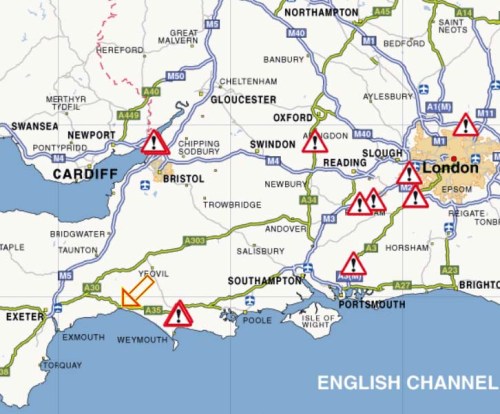
This time, we move to the deep south of England, to the area of Lyme Regis and Charmouth, to be precise. Keep your eyes open for the orange arrow..

Mary Anning (1799-1847) was alive at a time when the entire country believed that the Earth was not very old at all and that it was impossible for species to change or to evolve or even to become extinct.

Mary was born into the family of a cabinetmaker, who died when she was eleven. They supplemented their income by selling fossils from the cliffs on the coast to tourists, from a table outside their home. The latter was so close to the sea that storms often flooded the ground floor and the family had to climb out of a first floor window to escape a watery grave. Here is a typical storm at Charmouth :

Of ten children, only Mary and Joseph survived their childhood. Wars had tripled the price of wheat, but wages had remained the same. The child mortality rate was 50% and smallpox and measles were mean spirited killers. On August 19th 1800, baby Mary was nearly killed but not by disease. She was being held in the arms of a neighbour, Elizabeth Haskings, who was talking to two friends under an elm tree. The tree was struck by lightning and only Mary survived. She was rushed home and revived in a bath of warm water. Wikipedia said that:

“afterwards she seemed to blossom. For years afterward members of her community would attribute the child’s curiosity, intelligence and lively personality to the incident.”

How very Baron Frankenstein!

In 1833, a landslide killed her dog, Tray, a black-and-white terrier, at her feet as she hunted fossils under the cliffs. She wrote to her friend:

“Perhaps you will laugh when I say that the death of my old faithful dog has quite upset me, the cliff that fell upon him and killed him in a moment before my eyes, and close to my feet … it was but a moment between me and the same fate”.

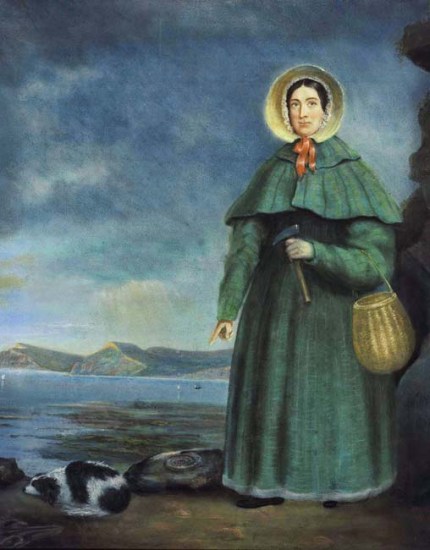
Here’s Mary and Tray, on a happier day:

Mary learnt to read and write at a Congregationalist Sunday school. Her favourite possession was a bound collection of the Dissenters’ Theological Magazine and Review containing two essays by the family’s pastor, James Wheaton. One said “God created the world in six days”, the other was entitled “Don’t forget to read about the new science of Geology”.

Mary looked for fossils in the coastal cliffs around Lyme Regis, especially the mudstone cliffs at Charmouth:

Mary was the first person to identify an ichthyosaur skeleton. She was only eleven years old:

On December 10th 1823, she found the first complete plesiosaurus:

This slideshow requires JavaScript.

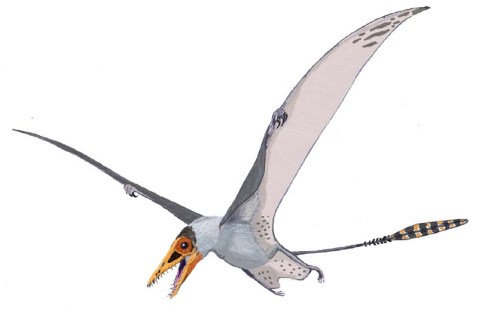
In 1828, she found the first British pterosaur, followed by a Squaloraja fish skeleton in 1829. A Squaloraja fish is one from the shark or ray family. This is a pterosaur:

In December 1830 she sold a new species of plesiosaur for £200, an enormous sum in those days, around £25,000 in today’s money. Lady Harriet Silvester had written of Mary, four years earlier:
“It is certainly a wonderful instance of divine favour – that this poor, ignorant girl should be so blessed, for by reading and application she has arrived to that degree of knowledge as to be in the habit of writing and talking with professors and other clever men on the subject, and they all acknowledge that she understands more of the science than anyone else in this kingdom.”

Indeed, on one occasion, the doctor and aide of King Frederick Augustus II of Saxony asked her to write her name down for him.

She spelt it as “Mary Annins”— and told him “I am well known throughout the whole of Europe.”

Which she was.

In the early 1820s, the eminent French anatomist Georges Cuvier accused her of forging fossil animals by adding extra ones more or less at random. After a meeting of the Geological Society, Mary was completely exonerated and Cuvier forced to say that he had acted in haste and was wrong.

Impoverished Peasants   1      Famous French Barons     0

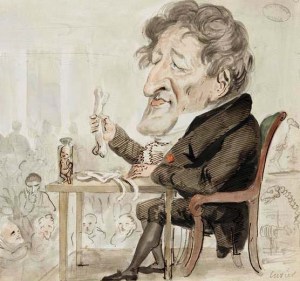
Here’s a caricature of Cuvier. In actual fact, Mary Anning was not the only person to get the better of him, despite his having a brain the size of a brontosaurus.

Part 2 to follow…….


16 Comments

Filed under France, History, Humour, Science, Wildlife and Nature

The Carvings in the Tower (6)

David John Furley was one of the young men who, in May 1940, had climbed up into the Tower of the High School and carved their names and their message on a stone window sill:

And here’s the Tower, pictured on a rather dark day between the two world wars:

David Furley had entered the High School on September 18th 1930 and he left on the last day of the Summer Term, July 30th 1940. The son of a hosiery manufacturer, Athelstan Willis Furley, he lived at 18 Markham Crescent, 50 yards from where Richard  Milnes lived in Langar Close, in that triangle of streets where Valley Road meets the Mansfield Road. Here’s his house today. You can just see a window behind the foliage:

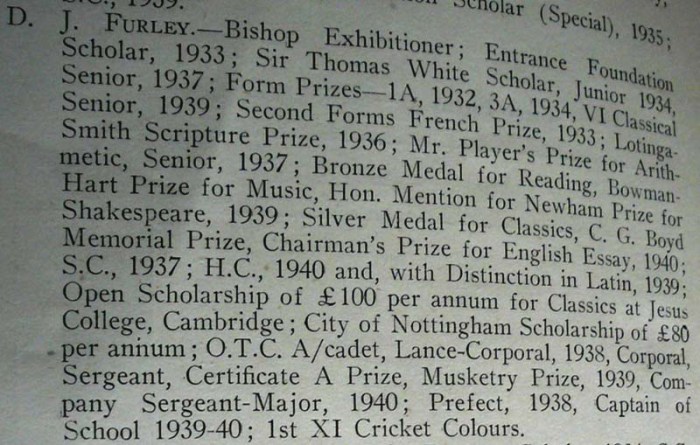
David was an extremely clever young man. He received various School scholarships, a minimum of a dozen prizes or other awards and became the Captain of the School. In the OTC he was Company Sergeant Major and in cricket, he was a regular player for the First XI, winning his colours during the 1940 season. He left to read Classics at Jesus College, Cambridge with a £100 Open Scholarship and an £80 City of Nottingham Scholarship. Nearly all of his Classics Masters were Cambridge men, Mr Beeby (Jesus College), Mr Duddell (Gonville & Caius College) and Mr Gregg (St Catharine’s College). Only Mr Roche had gone elsewhere (London University).

Here is  the list of all his prizes, scholarships and awards, as they appeared in the School List:

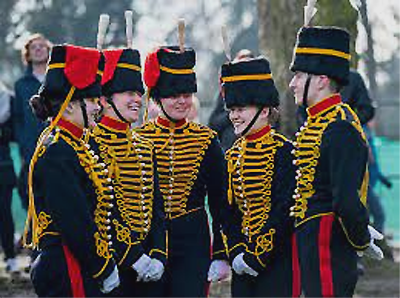
During the war, David became a Lieutenant in the Royal Artillery Company, serving in Bombay in India and then in Burma. Here they are, in their ceremonial uniforms:

He then returned to Cambridge University to complete his degree, and became an Honorary Fellow of Jesus College.

In 1947, he began lecturing at University College, London, soon becoming “one of the 20th century’s outstanding scholars of Greco-Roman philosophy” and soon afterwards a professor at Princeton University in the United States. In collaboration with Cooper, Frede, Nehamas, Penner and Vlastos, he helped build Princeton’s reputation as a world-leading centre for the study of ancient philosophy. This is Princeton:

His books on philosophy were widely known for their brilliance and their brevity. Most famous were “Two studies in the Greek Atomists”, “Self-movers”, (15 pages), “The rainfall example in Physics II.8”, (6 pages), “Lucretius and the Stoics” (20 pages) and “Galen: On Respiration and the Arteries”. He planned to write his final book, “The Greek Cosmologists”, in two volumes, but after Volume I appeared in 1987, Volume II unfortunately never came to fruition. His best articles and essays were all published together, however, in “Cosmic Problems”. For many years, David was:

“widely regarded within the ancient philosophy community as one of the subject’s most brilliant practitioners”.

Virtually everything he produced is a gem, and many have become classics. There are many who have argued that he was the cleverest pupil the High School has ever produced.

David Sedley wrote an obituary for David Furley, which lists the books he wrote and their length. On one occasion, apparently, he launched his newest book at a conference, and began by handing out copies to everyone. The book was fewer than 20 pages, but, because of David’s well-known intellect, nobody laughed when they first saw how short it was. They read it, and acknowledged that what he had written was a work of genius:

“The most recurrent motif of his work was the systematic contrast between two radically opposed philosophical and scientific worldviews, atomism and Aristotelianism, his analyses typically shedding equal light on both traditions. The leading exhibit is undoubtedly his brilliant 1967 book “Two Studies in the Greek Atomists.” ….A model of lucid and judicious scholarship, this monograph did much, perhaps more than any other single book, to bring Epicureanism into the philosophical mainstream.”

“Furley’s work proved seminal in his genius for writing a short but incisive article which provoked an entire micro-industry of debate. His classic “Self-movers”, a mere 15 pages in the original 1978 publication, became the focus of a subsequent conference at Pittsburgh, which in turn led to a multi-authored volume.

“Another such case is “The rainfall example in Physics II.8” (1986), which argued with amazing concision – it weighed in at just six printed pages – that, contrary to the current orthodoxy, Aristotle in fact believed that rainfall is purposive, and not merely the mechanical outcome of meteorological processes.”

A third case is “Lucretius and the Stoics” (1966). Lucretius was one of Furley’s heroes. The article, running to an impressive 20 pages, presented a major challenge to the orthodoxy that Lucretius’s polemics are typically directed against Stoic rivals. Resistance to this article’s findings has been widespread in Lucretian circles, but it still has its defenders, and the debate remains evenly balanced.”

Here’s Lucretius in an 18th century drawing:

And here’s Furley at varying ages:


This slideshow requires JavaScript.

I just wish that I understood anything of what Professor Furley had written. I even thought that “Lucretius and the Stoics” was a 1950s Rock and Roll group.


14 Comments

Filed under cricket, History, military, The High School, Writing

The Sandiacre Screw Company (1)

This is the first of  twelve posts which will tell the story of Keith Doncaster. They will appear over the course of, probably, a year, and I would encourage you to read them all. Keith was just one of the 119 young men from Nottingham High School who perished in the fight to save England and freedom during World War 2. I have found out more about Keith than any other casualty. What I did find is a wonderful advertisement for the evils of war, as what may well have been just one cannon shell from a night fighter, ultimately, deprived thousands of people of their livelihoods, in one of the very few large factories in a small town in Derbyshire called Sandiacre.

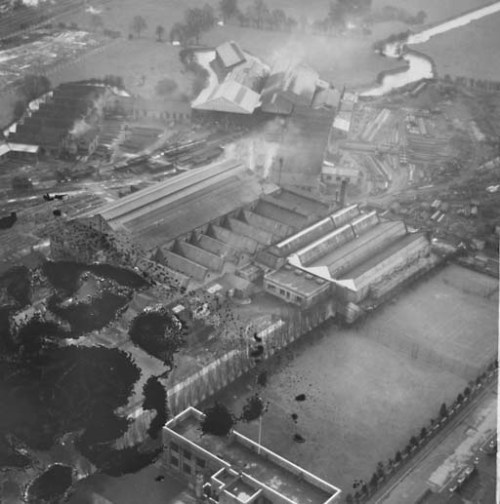
Ivan Keith Doncaster was born on October 17th 1923. His father was Raymond Doncaster who was an engineer. Ray’s father was Sir Robert Doncaster, the founder of the Sandiacre Screw Company, one of the biggest firms in the Nottingham area, with enormous and extensive premises on Sandiacre’s Bradley Street:

Here’s one of their adverts:

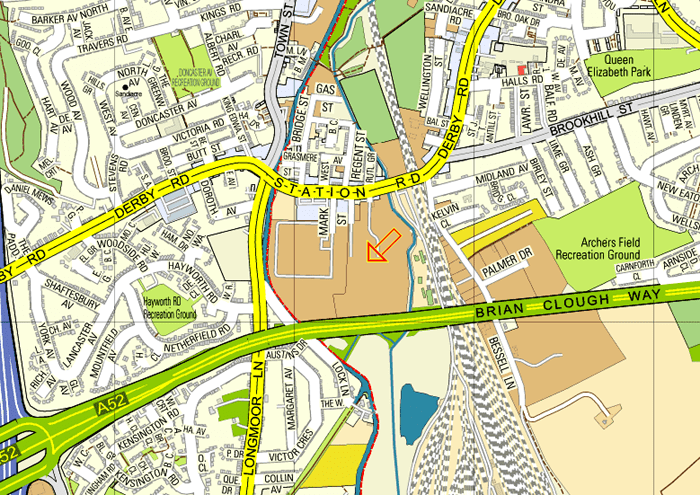
And a map shows how big the factory was and how many people it must have provided with employment. The orange arrow points to only some of the pale brownish area occupied by the factory. Nottingham is to the east:

The Doncaster family lived in a very large house in Longmoor Lane in Sandiacre, a small town of some nine thousand inhabitants, almost equidistant from Derby and Nottingham and to the east of Junction 25 of the M1.

Keith’s mother was Evelyn Mary Fell. Keith’s father Ray Doncaster served in the army during the First World War, eventually becoming a Lieutenant in the Army of Occupation of the Rhine. His elder brother, Robert Ivan Doncaster, had been killed in action on the First Day of the Battle of the Somme on July 1st 1916, only 50 days after he arrived in France. He is buried in Authuille, three miles north of the town of Albert.

When he returned in 1919, Ray became Assistant Works Manager of his father’s company. He then became Works Manager, eventually replacing his father as Managing Director. He retired during the 1960s. It does not take a fortune teller to work out that, had he lived, Ray’s only son, Ivan Keith Doncaster, would himself one day have acceded to that position and the factory would have gone on, providing money, food and accommodation for countless numbers of people not just in the town, but from the densely populated area around. Instead, Keith did not come back from his war in Bomber Command and, during the 1960s, the company just disappeared, taking perhaps thousands of jobs with it. And just one cannon shell would have been enough to bring Keith Doncaster’s Lancaster down.

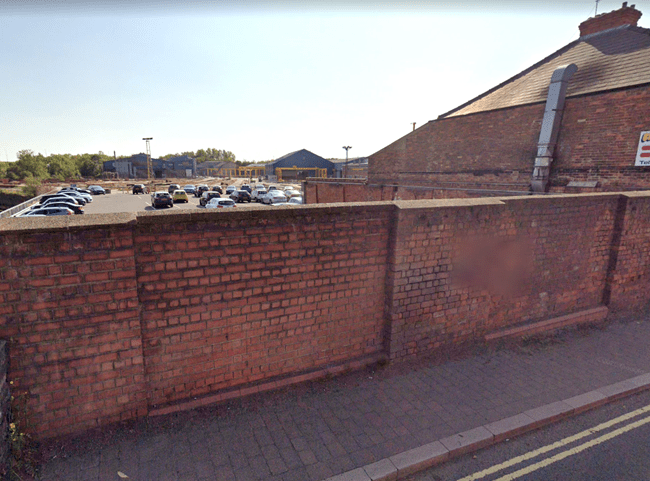
Here and there a few red brick buildings remain. And a few walls. They are all that is left of the Sandiacre Screw Company nowadays:

26 Comments

Filed under Aviation, Bomber Command, History, military, Nottingham, The High School

My Dad, Fred, and his favourite poetry (5)

When I was a little boy, my Dad, Fred, used to be a teacher at Hastings Road School in Gresley. Unfortunately excessive mining operations underneath the school led to its premature collapse.  My Dad is at the right hand end of the back row:

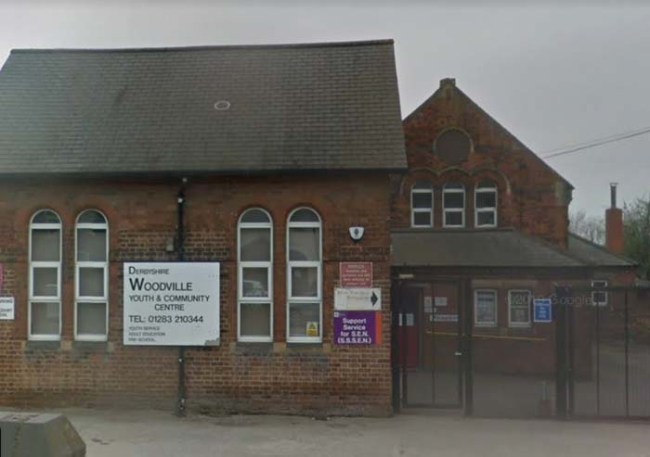
My Dad had to move to the Woodville Church of England Junior School, the school I attended, where, after a number of years, I finished up in his class, which was possibly Class 4. This is the school now.

One afternoon,  I can recall being one of the many children who were all so very frightened when my Dad read out to the fifty of us the narrative poem, “Flannan Isle”, by Wilfrid Wilson Gibson, written in 1912. Here’s the author:
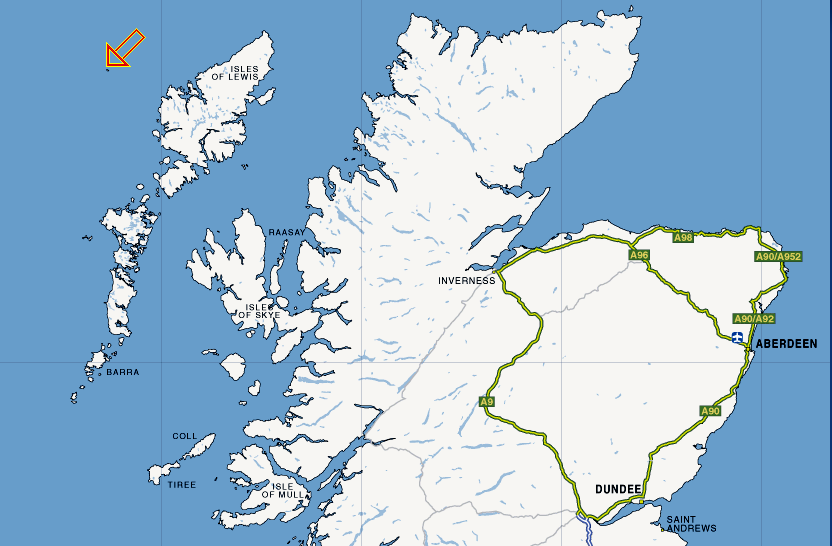
The Flannan Isles incidentally are pretty much as remote as you can get in Britain. The orange arrow is 553 miles from London, in a straight line, slightly less than London-Berlin:

On an unknown date in December 1900, the lighthouse on Flannan Isle suddenly failed to shine. A few days later, when a group of lighthouse men came to investigate, they found that the whole island was completely deserted. The three lighthouse keepers had completely disappeared.

Fred used to recite this poem regularly to his classes, and I can still recall how intriguing many of us found this true story, and how animatedly and at what great length we discussed all the possible reasons for the disappearance of those three unfortunate lighthouse keepers only sixty years previously. We were all convinced that the men had been magically transformed into seabirds,  an absolutely horrific idea for nine year olds in that more innocent age of the early 1960s. Anyway, here’s the first section:

“THOUGH three men dwell on Flannan Isle
To keep the lamp alight,
As we steered under the lee, we caught
No glimmer through the night.” A passing ship at dawn had brought
The news; and quickly we set sail,
To find out what strange thing might ail
The keepers of the deep-sea light.
The Winter day broke blue and bright,
With glancing sun and glancing spray,
As o’er the swell our boat made way,
As gallant as a gull in flight. But, as we neared the lonely Isle;
And looked up at the naked height;
And saw the lighthouse towering white,
With blinded lantern, that all night
Had never shot a spark
Of comfort through the dark,
So ghostly in the cold sunlight
It seemed, that we were struck the while
With wonder all too dread for words.
That sets the scene, although, initially, when I came back to this poem after 60 odd years, I was a little disappointed with the quality of the poetry. Gibson seems so often to add an extra phrase or an extra couple of words, when the poem would actually read better without them.
Anyway, a possible solution is hinted at by the description below of the three strange seabirds:
And, as into the tiny creek
We stole beneath the hanging crag,
We saw three queer, black, ugly birds—
Too big, by far, in my belief,
For guillemot or shag—
Like seamen sitting bolt-upright
Upon a half-tide reef:
But, as we neared, they plunged from sight,
Without a sound, or spurt of white.

Those three birds, guillemots or shags, were the very things that would go on to terrify a bunch of 9-year olds.

And still to ‘mazed to speak,
We landed; and made fast the boat;
And climbed the track in single file,
Each wishing he was safe afloat,
On any sea, however far,
So it be far from Flannan Isle:
And still we seemed to climb, and climb,
As though we’d lost all count of time,
And so must climb for evermore.
Yet, all too soon, we reached the door—
The black, sun-blistered lighthouse-door,
That gaped for us ajar.


As, on the threshold, for a spell,
We paused, we seemed to breathe the smell
Of limewash and of tar,
Familiar as our daily breath,
As though ‘t were some strange scent of death:
And so, yet wondering, side by side,
We stood a moment, still tongue-tied:
And each with black foreboding eyed
The door, ere we should fling it wide,
To leave the sunlight for the gloom:
Till, plucking courage up, at last,
Hard on each other’s heels we passed,
Into the living-room.
Actually, at this point, I might well retract what I said before. The further I went into the poem, the more I realised, that it is clearly meant to be slowly and deliberately declaimed out loud. Have a go. You’ll see what I mean. And sincere apologies, Wilf !
Yet, as we crowded through the door,
We only saw a table, spread
For dinner, meat and cheese and bread;
But, all untouched; and no one there:
As though, when they sat down to eat,
Ere they could even taste,
Alarm had come; and they in haste
Had risen and left the bread and meat:
For at the table-head a chair
Lay tumbled on the floor. We listened; but we only heard
The feeble cheeping of a bird
That starved upon its perch:
And, listening still, without a word,
We set about our hopeless search.
We hunted high, we hunted low;
And soon ransacked the empty house;
Then o’er the Island, to and fro,
We ranged, to listen and to look
In every cranny, cleft or nook
That might have hid a bird or mouse:
But, though we searched from shore to shore,
We found no sign in any place:
And soon again stood face to face
Before the gaping door:
And stole into the room once more
As frightened children steal.
Aye: though we hunted high and low,
And hunted everywhere,
Of the three men’s fate we found no trace
Of any kind in any place,
But a door ajar, and an untouched meal,
And an overtoppled chair.
And, as we listened in the gloom
Of that forsaken living-room—
A chill clutch on our breath—
We thought how ill-chance came to all
Who kept the Flannan Light:
And how the rock had been the death
Of many a likely lad:
How six had come to a sudden end,
And three had gone stark mad:
And one whom we’d all known as friend
Had leapt from the lantern one still night,
And fallen dead by the lighthouse wall:
And long we thought
On the three we sought,
And of what might yet befall.
Like curs, a glance has brought to heel,
We listened, flinching there:
And looked, and looked, on the untouched meal,
And the overtoppled chair.
We seemed to stand for an endless while,
Though still no word was said,
Three men alive on Flannan Isle,
Who thought, on three men dead.
Hopefully, you made it this far. It is definitely a great poem to be declaimed out loud. But you’ve got to take it slowly and deliberately. If you stumble at the words, go back and give it another go.
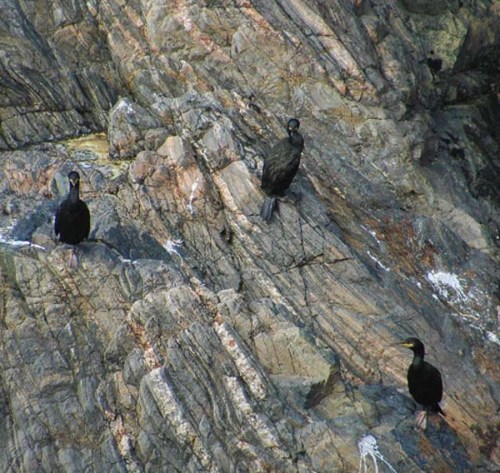
And here’s the three birds that we children all thought the lighthouse keepers had been transformed into:

In the future, I hope to produce some blog posts looking at the possible reasons that the three men disappeared.

Portrait of Gibson borrowed from poeticous

16 Comments

Filed under Criminology, Cryptozoology, History, Literature, my Dad, Personal, Science, Wildlife and Nature

They win. Zu Lus (2)

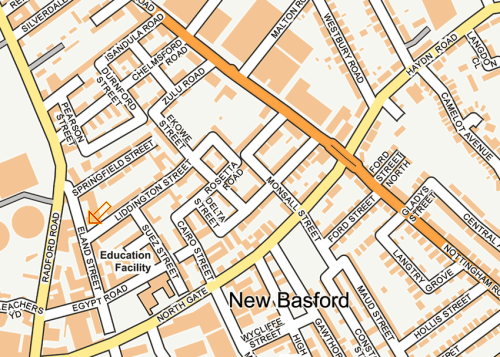
As well as the Egyptian quarter, a number of streets in New Basford in Nottingham are named after the Zulu War of 1879.  As far as I can tell, in this area, there are seven of them, namely Chard Street, Chelmsford Road, Durnford Street, Ekowe Street, Isandula Road, Zulu Road and perhaps Eland Street.

What is most amazing about these streets is that they represent, as far as I can tell, a kind of salute to the Zulus, who were, as I mentioned previously, one of the finest and most valiant of all the opponents of the British Army. The Battle of Isandlwana, or Isandula, for example, was the greatest defeat ever suffered by British soldiers against a native force armed with their traditional weapons.

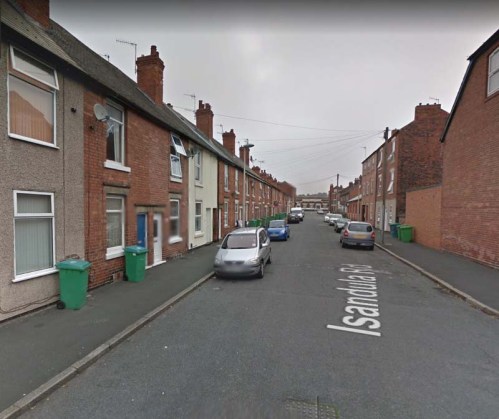
And the Zulus were trustworthy, too. King Cetshwayo tried as best he could to avoid war and told his men not to kill anybody who was not dressed in a red coat and therefore could not be identified with any certainty as a British soldier. He told them not to cross the border into Natal in pursuit of Chelmsford’s defeated forces. The Zulus stuck to both of these promises they had made to their king. Men in dark blue or green uniforms, such as in the Hale rocket battery, were allowed to walk away in peace, and not a single Zulu pursued the remnants of the defeated British army into Natal. If they had done, as Prince Ndanbuko urged them to, there would have been every chance of another stunning victory over the British Empire. Here’s Isandula Road:

So when we walk down Isandula Road, we can all remember that this Victorian street is a memorial to the Empire’s greatest ever native opponents.  Had Isandlwana been an easier word to pronounce, of course, the street would have been called Isandlwana Road.

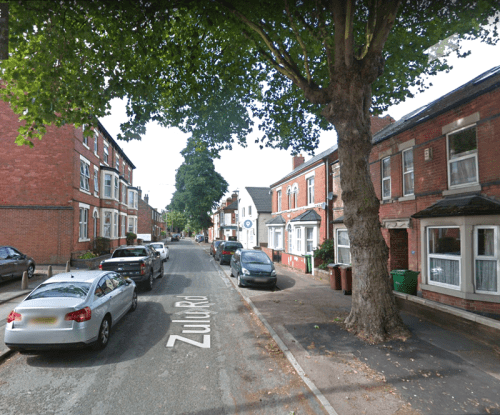
And I really do stick by the idea that this road was a monument to the Zulu warriors. There is only one Isandula Road in the whole of England so it must have been very important name to whoever made the decision to have a road dedicated to the British Empire’s gallant opponents. The same can be said of Zulu Road. There is only one of those in the whole country too :

I kept my eyes open for a Zulu or Tu, but I saw nothing. Here’s a modern Zulu, dressed up for the tourists, with all his friends:

He’s parked his car on the road in the background, which is quite a long way away. No wonder he’s had to keep his best trainers on.

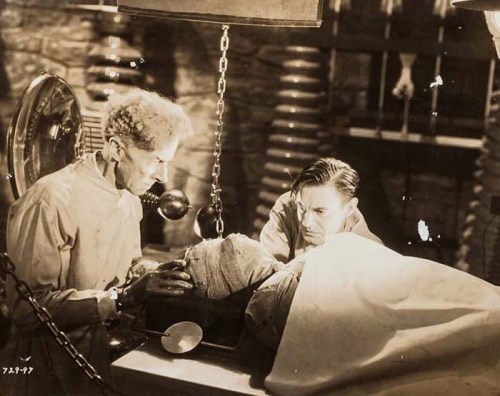
By 1880, people in England were well aware of whose fault the calamitous defeat at Isandlwana was. It was Lord Chelmsford’s, so a road named after him must have served as much as a reminder of his failures and his shortcomings as a monument to his military genius. I would think that nowadays Chelmsford would be more famous as the uncle of Ernest Thesiger, the actor (left) who worked with James Whale in the latter’s Frankenstein films :

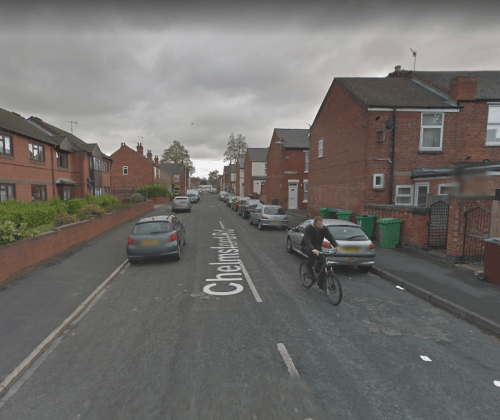
Here is Chelmsford Road, with Lord Chelmsford making good his escape from Isandlwana on his trusty bicycle:

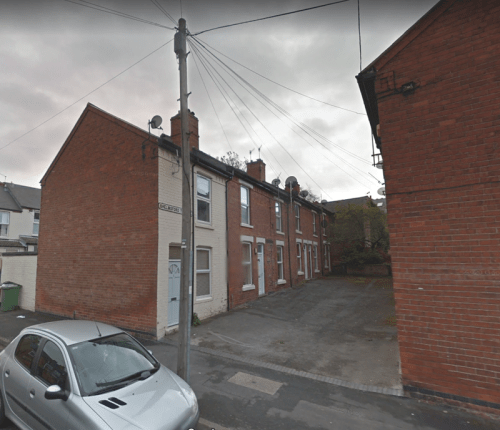
Chelmsford Road may not look as if it is 140 years old, but it does have one feature that is straight from the 1880s. That is the arrangement of four, or perhaps six, houses, in a short row, all of them typical small working class “two up, two down” terraced houses. These four/six houses are opposite  an identical set of houses, with, in this case, a concrete courtyard between the two rows. The more usual pattern was to have the outside lavatories situated in the middle of that courtyard, equidistant from each set of houses. In the golden days of the earth closet, this must have given life a very distinctive flavour, particularly in the summer.

This particular set of houses is called “Chelmsford Terrace” in honour of the great man.  This particular section of Chelmsford Road has other sets of houses like these, one called “Rene Terrace”, and another, “Iris Terrace”:

Here is Durnford Street, all of it:

Anthony Durnford was one of the two subordinate commanders killed at Isandlwana (the other was Henry Pulleine). Chelmsford was quick to blame Durnford for disobeying his superior’s orders to set up a proper defensible camp, although there is actually no hard evidence whatsoever that Chelmsford ever issued such an order. Nevertheless, Durnford can be regarded as a rather unsuccessful soldier, just like Chelmsford. He was also Irish, so, by the racist attitudes of the time, he was an easy man to blame. He was also dead, so he couldn’t argue with any of Chelmsford’s lies.

Chard Street is not always marked on street maps for some reason. It runs at right angles to Isandula Road, Chelmsford Road and Zulu Road. It is marked by the Orange Arrow’s “New Friend”, the Red Hot Air Balloon:

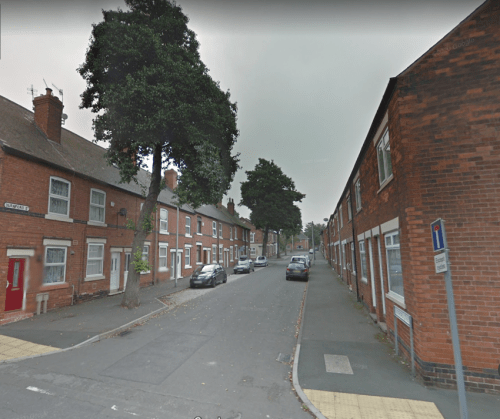
Here is Chard Street. It certainly has a Zululand feel about it:

John Chard is really the only heroic figure in this war to have a street named after him. He was the commander at Rorke’s Drift. He was played by Stanley Baker :

Chard’s second-in-command was Gonville Bromhead, now better known as Sir Michael Caine. Sadly, there was no street named after him. Bromhead was, in actual fact, an Old Boy of Magnus Grammar School in Newark-on-Trent:

There is also an Eland Street fairly close by.  This street probably fits in with all of these other South African links. An Eland is a large antelope which would surely have provided food for members of both armies.

Here is the map for Eland Street, which has an Orange Assegai at its northern end.

Ekowe Street is named after another incident in the Zulu War of 1879…….

On the very same day as the defeat at Isandlwana,  6,570 British soldiers armed with rifles, rockets and field guns managed to defeat a Zulu army of around 10,000 men armed with assegais and cowhide shields. They occupied Ekowe, where they were then besieged by the Zulus for ten weeks before a British army of 5,670 men came to the rescue with their two 9-pounder guns, four 24-pounder Congreve rocket tubes and two Gatling guns. You can see a rocket being fired in this picture:

Incidentally, I cannot find any connection for Liddington Street, Monsall Street or Pearson Street.

Just look though, what rich roots many English street names have.

Just look at the map above. “Ford Street North” where one of Henry Ford’s brothers was probably born. “Camelot Avenue” where Queen Guinevere and Sir Lancelot first fell in love. “Langtry Grove”, probably the  birthplace of Lily Langtry, the mistress of the future King Edward VII and the woman who had a saloon named after her by Judge Roy Bean, “The Only Law West of the Pecos”. Here’s the judge, and the saloon. You can just see the bottom of the letters of “JERSEY LILLY” at the very top of the picture:

And last, but certainly not least, Springfield Street, where Homer Simpson used to live before he left for his new life in television.

18 Comments

Filed under Film & TV, History, Humour, Nottingham, Wildlife and Nature

What would you do ? (14) The Solution

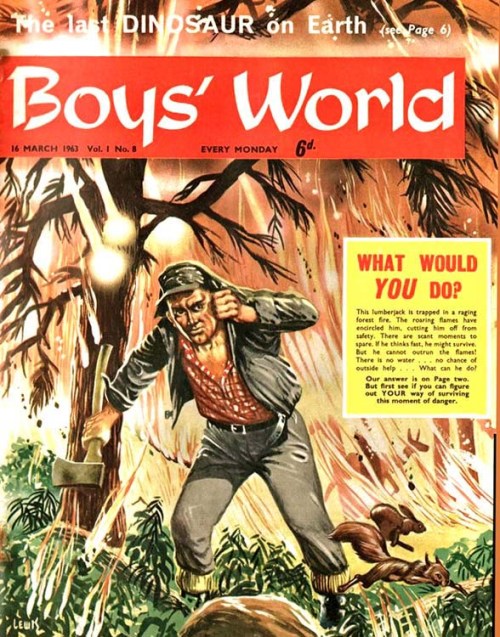
“What would you do ?” used to figure on the cover of a comic called “Boys’ World”. This publication first appeared on January 26th 1963. and lasted 89 issues before the comic was merged with Eagle in 1964. The last issue of “Boys’ World” came out on October 3rd 1964.

I used to buy this comic, mainly for the front cover which always featured a kind of puzzle called “What would you do ?”. The puzzle was based on somebody being in what Ned Flanders would call “A dilly of a pickle”.

Here’s the situation I showed you a few days ago:
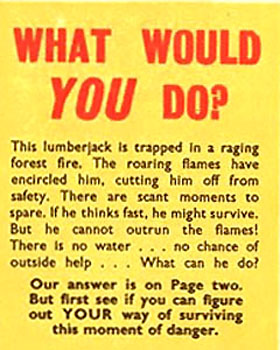
Here’s that yellow box, with the exact circumstances, in case you couldn’t understand the picture:

And the correct solution given on page 2 of the comic is:

Well, there we are…..

“Using his axe as a shovel, the lumberjack quickly scooped a shallow trench in the soft ground. Then lying flat inside it, he pulled his jacket over him and covered it with loose earth. As the blaze passed overhead, he was protected from its direct heat – and was able to breathe the cool air in the ‘pocket’ around him.”

Personally, I’m not so sure that that would work, and I really wouldn’t want to try it, but let’s cheer up and look at page 6 with “The last DINOSAUR on earth”. Here’s the top half of this complete short story by Donne Avenelle.

And here’s the artwork and the story’s rather sad ending:


19 Comments

Filed under Canada, Wildlife and Nature

What would you do ? (14) The Puzzle

“What would you do ?” used to figure on the cover of a boys’ comic called “Boys’ World”. This publication first appeared on January 26th 1963. There were 89 issues before the comic was merged with Eagle in 1964. The last issue of “Boys’ World” came out on October 3rd 1964.

The front cover always featured a puzzle, called “What would you do ?”. It was based on somebody being in what Ned Flanders would call “A dilly of a pickle”. Here’s the situation:


The yellow box sets the scene, and the task is for you to solve the situation. Perhaps you might like to write your idea in the “Comments” section.

Here’s the yellow box enlarged:

So…..it’s a raging forest fire, with roaring flames, and he’s cut off. There’s no water to save him, and no Superman, no Batman, not even a fireman.

So…..it’s one “Dilly of a pickle”. What can he do? Well, any bright ideas, write them in the “Comments” section.

First prize is a look at page 6, to see the last DINOSAUR on Earth.


26 Comments

Filed under Canada, Wildlife and Nature

My Dad, Fred, and his favourite poetry (4)

Fred had two poems which he really enjoyed. Last time we took a look at the first one of the two, “Tarantella”, which was written by Hilaire Belloc. Today, I’d like to introduce you to Fred’s second poem, “The Listeners” which was written by Walter de la Mare. This poem is great for children of around nine or ten, because it leaves so many questions unanswered and they can be asked to contribute their own ideas to the discussion:

‘Is anybody there?’ said the Traveller,
Knocking on the moonlit door;

And his horse in the silence champed the grasses
Of the forest’s ferny floor:
And a bird flew up out of the turret,
Above the Traveller’s head:
And he smote upon the door a second time;
‘Is there anybody there?’ he said.
But no one descended to the Traveller;
No head from the leaf-fringed sill
Leaned over and looked into his grey eyes,
Where he stood perplexed and still.

So….no answer when the grey-eyed traveller knocked on the moonlit door. The place is completely deserted. Or is it?

But only a host of phantom listeners
That dwelt in the lone house then
Stood listening in the quiet of the moonlight
To that voice from the world of men:
Stood thronging the faint moonbeams on the dark stair,
That goes down to the empty hall,
Hearkening in an air stirred and shaken
By the lonely Traveller’s call.

In other words, not just one ghost but a host of unidentified phantoms. Are they going to make their presence known?

And he felt in his heart their strangeness,
Their stillness answering his cry,
While his horse moved, cropping the dark turf,
‘Neath the starred and leafy sky;

The ghosts just prefer to remain still. Saying nothing and totally unseen. The Traveller knocks loudly a second time.

For he suddenly smote the door, even
Louder, and lifted his head: –
‘Tell them I came, and no one answered,
That I kept my word,’ he said.

But it has no effect. They can hear every word from the Traveller, but prefer to say nothing. And they can hear his departure. His foot into the stirrup and the horse’s shoes on the  stone cobbles.

Never the least stir made the listeners,
Though every word he spake
Fell echoing through the shadowiness of the still house
From the one man left awake:
Ay, they heard his foot upon the stirrup,
And the sound of iron on stone,
And how the silence surged softly backward,
When the plunging hoofs were gone.

And off he goes. The silent ghosts reclaim their building as soon as the Traveller is gone. And the building returns to its usual deserted state:

But why did he say ‘Tell them I came, and no one answered, That I kept my word,’? Alas, there are no hints given on that score, although clearly, there is some connection between all three protagonists, namely, the Traveller, the lone house and the listeners.

I think that the poem is as simple as that. It’s rather like when a stranger knocks on the door of the house next door to yours.  They wait for an answer but “answer came there none“. (Thank you, Lewis. Now just be quiet).

And you never do find out why they were knocking.


13 Comments

Filed under History, Literature, Personal, Writing