Category Archives: Bomber Command

My Book (3)

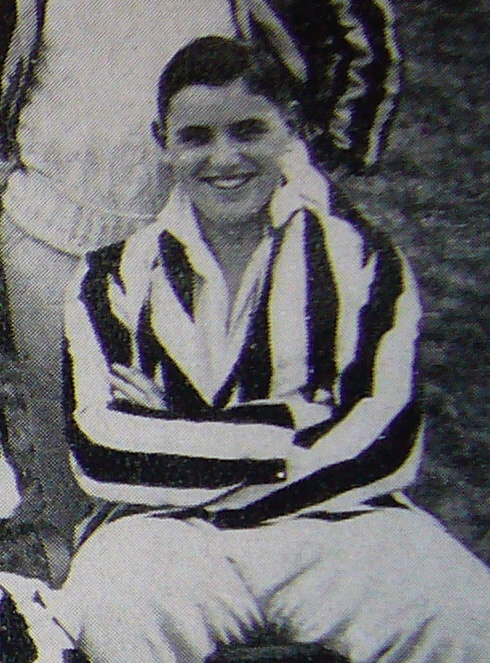
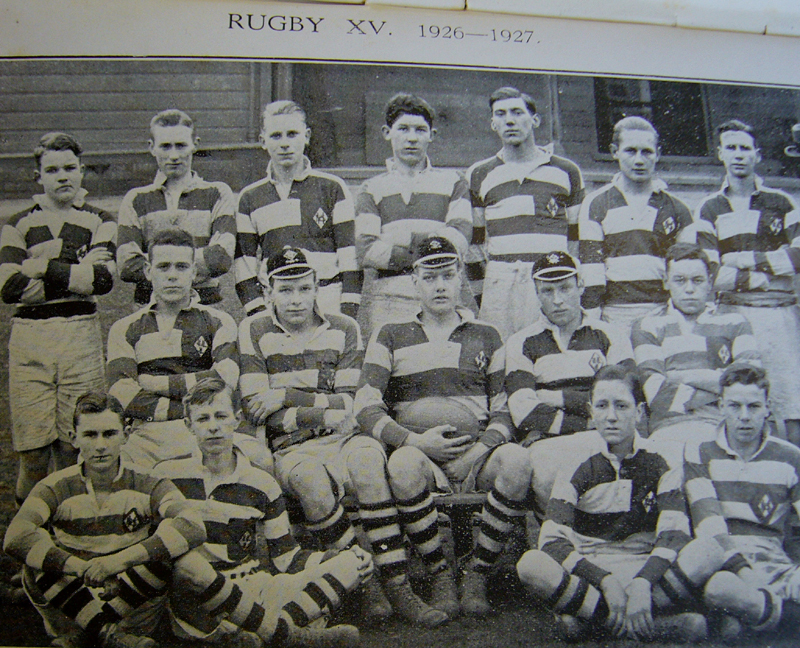
I am still quite proud of the fact that I have found out so much information about the vast majority of these young men. I feel that I have done them all justice and that I have done my very best to keep them in people’s memories, even as they seem to be receding further and further into the anonymous grey mists of time. Here is the School Rugby team in 1926-1927:
I have made great efforts to drag the complete ghost out of the past and to write not just about their fiery deaths but to try and unfold the full and energetic lives they led. It’s only too easy to see a name on a war memorial, to read that name and then to forget it, all in the same moment. For that reason I have tried to describe their families, their fathers, their mothers, their brothers and sisters. I have tried to find out what their father did as a job, where the family lived, in some cases occupying just one or two houses in their lifetime, in others half a dozen. What were their houses like? How might they have travelled to the High School? I have tracked their Forms, their teachers, what they did at School, how their exams went, what position they came in class and what prizes they won, all the things that would have been so important to them at the time. I have written about what their Form Masters were like and talked about their careers. This is Mr Kennard. He definitely took no prisoners:

I have tried to find out what sports our future heroes played:
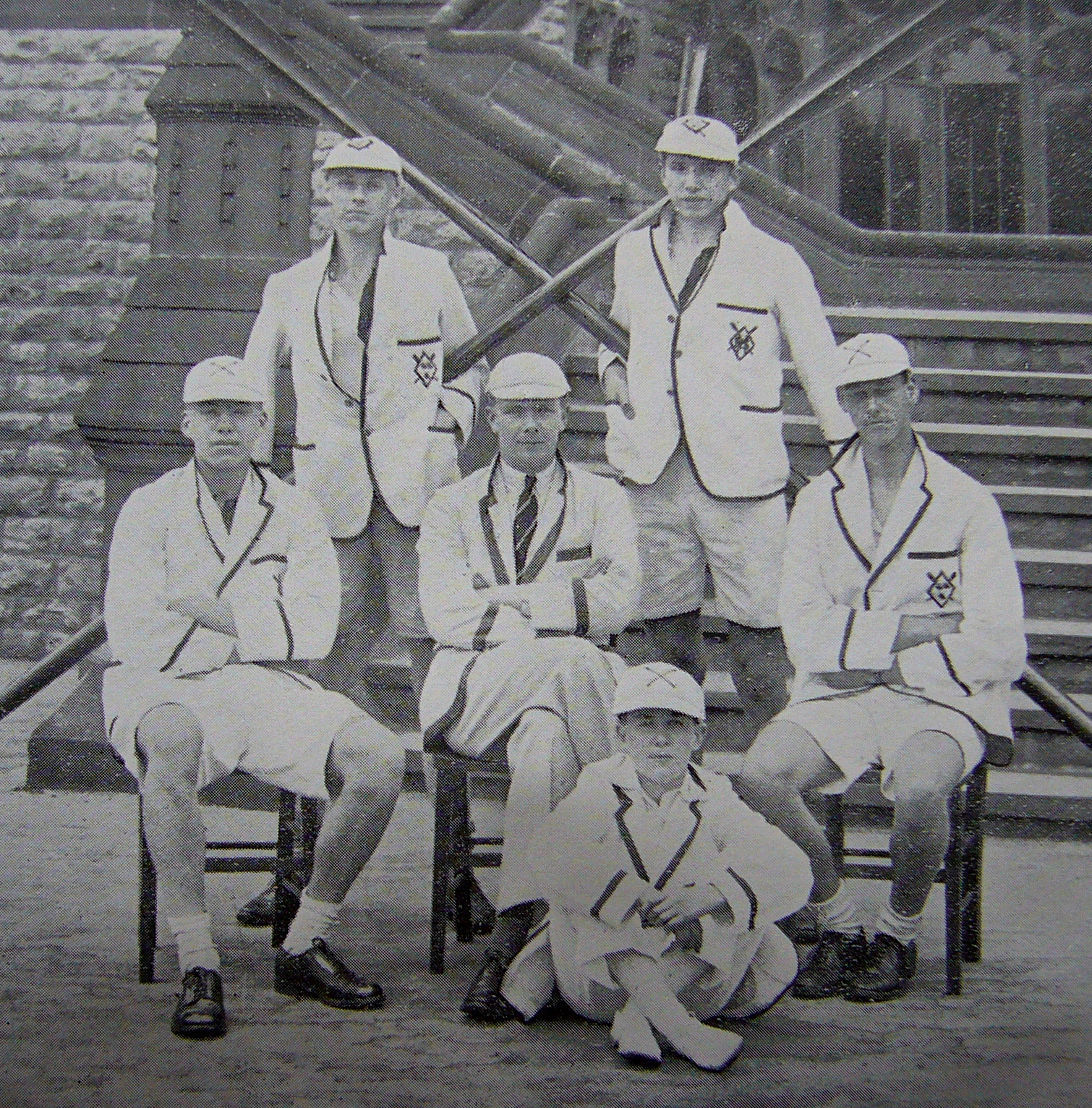
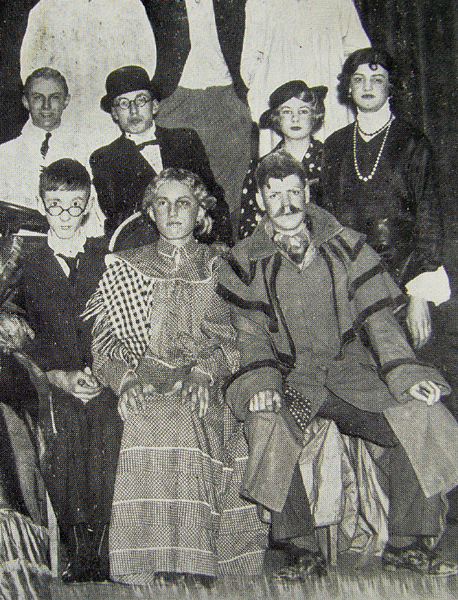
What school plays they were in. The French farce of the 1920s, “Dr Knock”, perhaps? And which one of these boys became the war hero?:
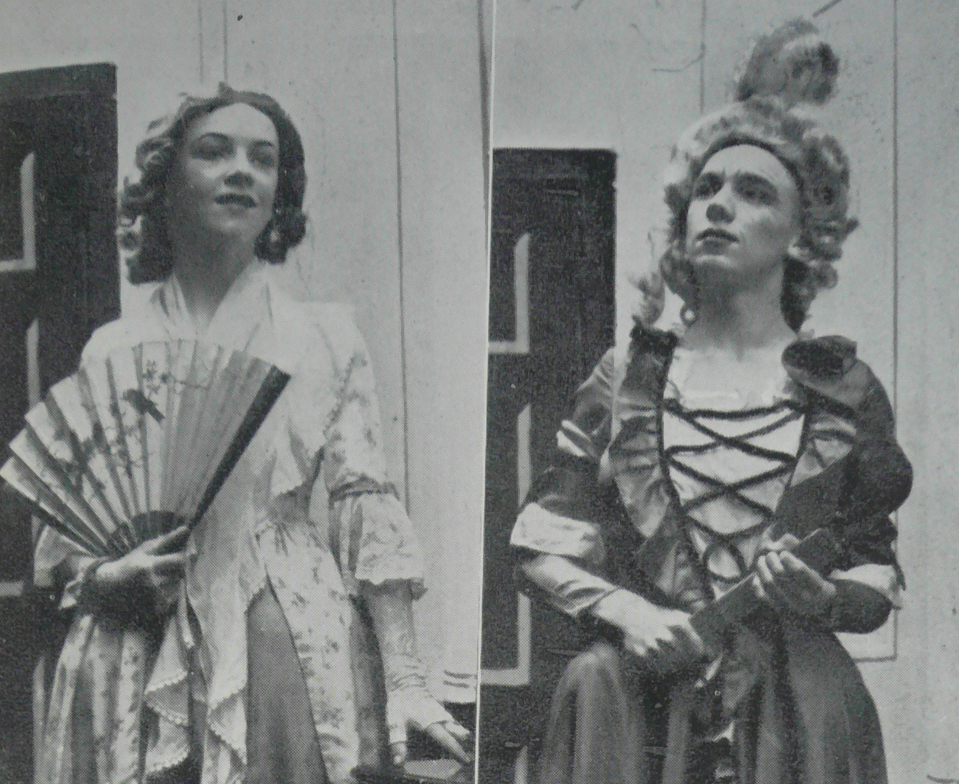
Or perhaps a play with a chance to wear a lovely frock and a string of pearls? :
Which person collected stamps and who loved to make home movies? I have tried to identify other boys in their Forms who might have been their friends, even if that is just a case of saying who won the Form Prize and where they lived, what job their father did and so on. Here is a class of really small boys, eight and nine year olds, before the First World War:

The worst thing I could have done would have been to have written three thousand words about their death and thirty about their lives. So whatever I could find, I have included. Their sports, their hobbies, their jobs between school and the forces, and, if possible, what their abilities and talents were.
By doing this I revealed, even to myself, just how many different places have provided High School pupils over these years and just how many hundreds of different jobs their fathers have done, some of them long gone and requiring a search on the Internet.

At least one High School hero of Bomber Command had come straight from Waring & Gillow’s shop to fly his Lancaster. He apparently said one day in the shop that selling double beds and three piece suites was not a worthy job for a man when his country was at war, and off he went. Waring & Gillow sold luxury furniture of all kinds, and they appear to have made a lot themselves, because here is their factory. :
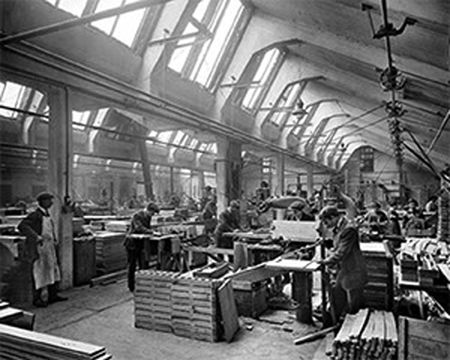

And when I have written about the boys’ streets and houses, some simple directions are usually included. Without them, which of us could ever locate Balfour Road or Conway Avenue or Derby Terrace or Florence Road? And many old streets have completely disappeared. This is a very different Forest Recreation Ground, only a few decades before the first of the World War Two casualties was born. Look at the windmills, and the race course for horses. It was one of the very few ever to be a figure-of-eight, in the hope of some juicy crashes:

It is, of course, the young readers who are my ultimate target audience. It would be a tragedy indeed if they were never to realise who died for their right not to be brainwashed, not to speak German as their first language, not to be slave labourers in a foreign land and to have the right to make their own decisions at all the different stages of their young lives. Freedom does not come cheap, and I’m not talking about money. The situation is perhaps best summed up by what one Old Nottinghamian war hero has inscribed on his grave:

HE GAVE THE GREATEST GIFT OF ALL
HIS UNFINISHED LIFE.
18 Comments

Filed under Aviation, Bomber Command, History, Nottingham, Politics, The High School, Writing

My Book (2)

With the books that I eventually produce, my main intention will be to preserve our knowledge of the sacrifices made by these men, but at the same time, I do feel that I have one other main aim, which is to demonstrate that, as we live our own lives, we are surrounded by history of all kinds.

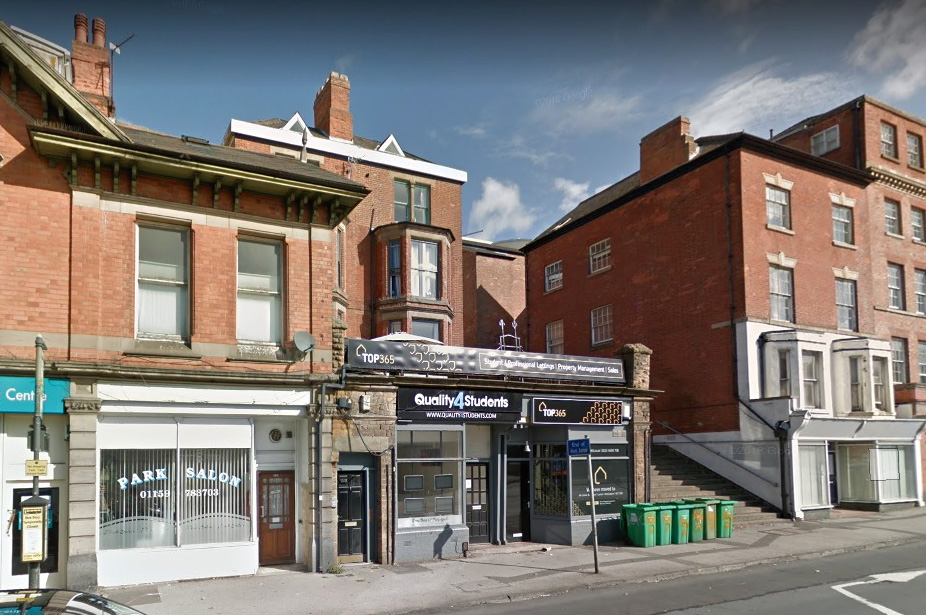
History is always there, hiding in the streets we walk down and in the houses we walk past. It is there, hiding in the buildings of a great city and it is hiding even in the corridors and rooms of the High School. It hides behind the modern frontage of the Park Salon and Quality4Students on Derby Road, up near Canning Circus:


History even hides behind the steamed up windows of the City Chicken Cafe and the Istanbul Off Licence on Mansfield Road:

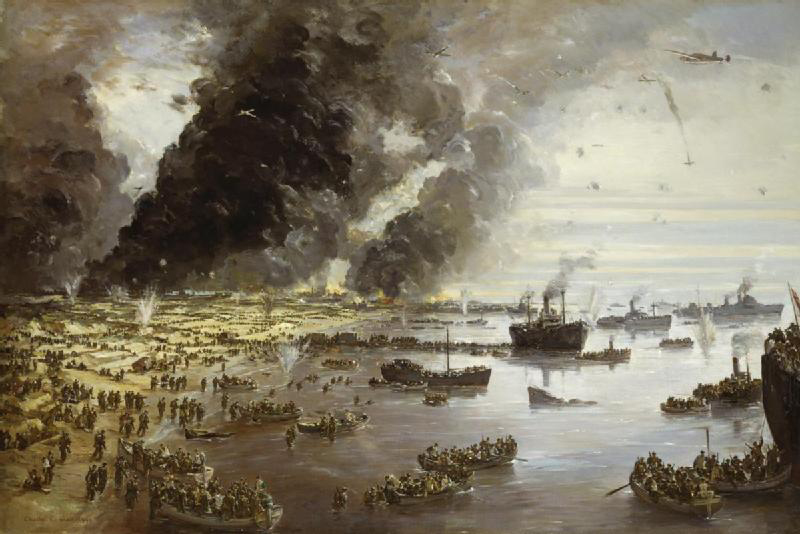
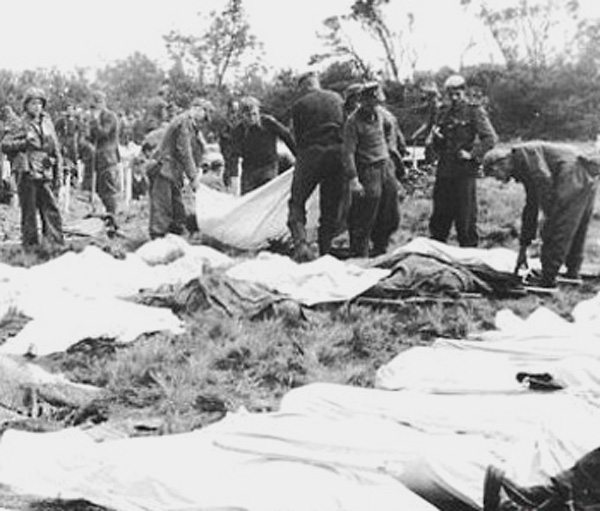
It hides catastrophic defeats:

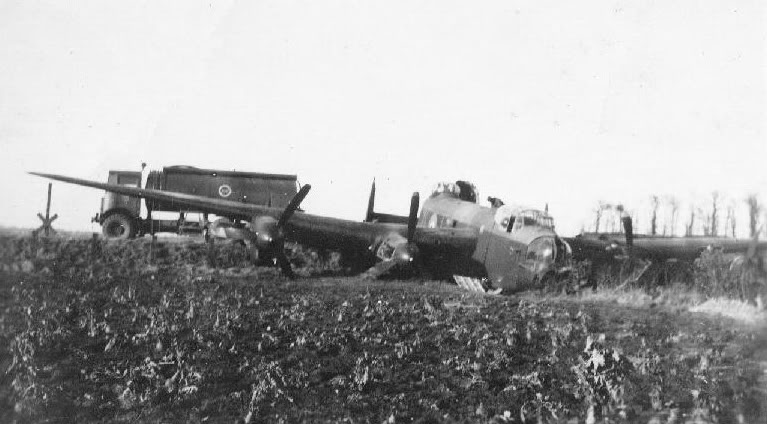
And it hides catastrophic accidents:


There’s no blue plaque to remember Peter Vernon, though. No flag flies over the home of “Watty” Watson. We have no statue in Edwards Lane of “Farmer” Richardson. No films are ever shown on our televisions of George Brown, the young man:

“whose fast in-swinging yorker on the leg stump was so devastating on its day.”

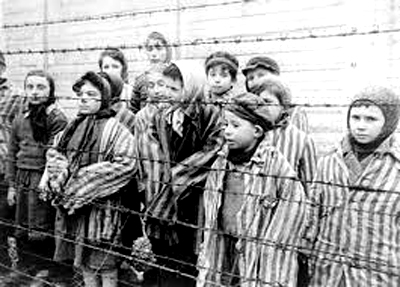
But I do not want this secret history of ordinary people to be forgotten. The modest men in these books all died for our freedom. Freedom from oppression, freedom from racism, freedom from random prejudice, from arrest without reason, from chance execution, from a quick death in a gas chamber or a slow death as a slave labourer :

They saved us from a society without free speech, without choice and with no discussion of the future of us all:

They saved us from a political system which, at the end of the war, was quite willing to kill a substantial percentage of its own citizens as the best way forward towards a better life.
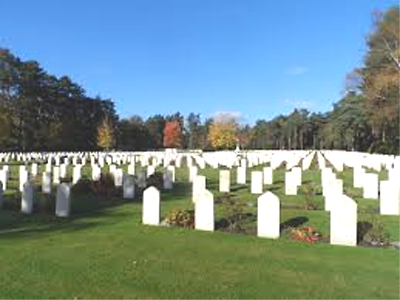
In this book, therefore, you will find as much as I could discover about well over a hundred men from Nottingham High School who gave their lives willingly in the cause of freedom.
That sounds a great many people and it was, for a school with total numbers of between five and six hundred at any one moment during the period under review.

The criteria for being added to the list were, for the most part, inclusion in the long list kept by the Commonwealth War Graves Commission, which uses its own date limits for the casualty’s death of September 3rd 1939 to December 31st 1947. I did stretch the definition slightly to include the men who died while working to support the Allied cause. A university lecturer who is killed in an aircraft crash as he travels from place to place on a lecture tour around the Mediterranean theatre will be in the list, just as much as the man who organises food for a million refugees in India and who prevents the outbreak of a typhoid epidemic. Both are clearly making contributions to the war effort. They are both, to quote a famous football manager, “Getting us closer to the top of the hill.”

14 Comments

Filed under Aviation, Bomber Command, History, Nottingham, Politics, The High School, Writing

My Book (1)

It is a long time since I shared with you what I was up to, away from the knockabout world of blog posting. Some of you will know that for the last four years at least I have been researching the boys of the High School who gave their lives in the Second World War. At first, it was seven days a week, four hours a day, but I am now down to six days a week with three hours as a minimum and the usual being around three and a half hours. It’s difficult to describe what a huge job it was:

I began this mammoth task because as far as I was aware, nobody had ever carried out any research whatsoever about the brave Old Nottinghamians who gave their lives during the Second World War. At the moment I have around 120 people to include in an eventual book, of which 110 are men who qualify 100% as war casualties. Because of the volume of information I have discovered, hundreds of thousands of words, the final work is likely to be in three volumes if not four:

The majority of research I have carried out on the Internet which has supplied me with details which have never been known before. Most of all, I have discovered a large number of former pupils who deserve to be recognised as Old Nottinghamian war casualties but who were not included when the original lists were being compiled:

That is far from a criticism. In the late 1940s, how could anybody have found out that a little boy of eight or nine who spent just a couple of terms in the Preparatory School in the early 1920s had been killed in a tank three miles east of Hamburg five years before? Communication by letter:

and communication by postcard:

with other information distributed in newspapers could not possibly have coped with demands of this kind:

On occasion, the School Magazine, the Nottinghamian, got me started with my researches, but overall, the solutions were largely provided by the men who have dedicated their entire lives to the recording of the minutest details of the Second World War. Men who have recorded the names of every RAF man killed in an aircraft of Bomber Command. Men who have recorded the names of every sailor who did not come home from the sea in World War Two. Every U-boat captain and his every kill. Every nightfighter pilot and every bomber he shot down:

I just felt that, unless I did produced some committed and detailed research of my own right now, there was a real risk that nothing would have been done by the time we reached the centenary of the beginning of the conflict in 2039.
In many ways, that absence of detailed research by others might even be seen as a bonus, because there would be very few people out there who could contradict what I had written. On the other hand, I do feel that after so many thousands of hours working on the project, there should be no huge errors in what I have produced. (Touch wood). Even my best guesses have often proved later to be quite reasonable ones, based on what, in many cases, is a paucity of actual facts.

26 Comments

Filed under Aviation, Bomber Command, History, Nottingham, Politics, The High School, Writing

The Nightingale and Bomber Command

This is a very famous recording of a nightingale singing its little heart out, only to be interrupted by the enormous noise of a large number of Bomber Command aircraft approaching and then flying over. Undaunted, the nightingale carries on with its beautiful song as the bombers leave and the roar of their engines gradually fades away. The recording lasts quite a long time but it is well worth listening to in its entirety, particularly if you have never heard it before. It comes from spud4x:

The recording was made from a garden in Surrey, England during the evening of May 19th 1942 as 197 aircraft flew over on their way to bomb Mannheim. There were 105 Wellingtons, 31 Stirlings, 29 Halifaxes, 15 Hampdens, 13 Lancasters and 4 Manchesters:

This slideshow requires JavaScript.

47 men would be killed and 23 would finish up as prisoners of war. Eleven days later would come the first 1,000 bomber raid on Cologne. And in the woods of England, and indeed Germany, the war would count for very little. The bluebells would be lingering on and the nightingales would be starting to sing.

The nightingale has a very powerful, very famous, but not necessarily hyper distinctive song. On birdwatching trips, I have often seen people listen to a hidden blackcap or garden warbler and walk away happy that they have heard a nightingale. John Keats too, may have been misled. Some critics have mentioned that the bird’s behaviour as Keats describes it, is on occasion not dreadfully nightingaley. But the poetic thoughts are dreadfully, well, poetic:

“Thou wast not born for death, immortal Bird!
         No hungry generations tread thee down;
The voice I hear this passing night was heard
         In ancient days by emperor and clown”
Perhaps John Clare, of whom I wrote long. long ago, had a better idea:
“See there! she’s sitting on the old oak bough,
Mute in her fears ; our presence doth retard
Her joys, and doubt turns every rapture chill.
Sing on, sweet bird! may no worse hap befall
Thy visions, than the fear that now deceives.”

Anyway, there’s only one nightingale and here it is…

And here’s another version of that BBC recording:

If you’re interested, this is also to be found on Youtube. It is a recording made of a Bomber Command crew on a bombing mission over Germany:

As a fully paid up very sad person, I have two CDs  of this type of thing, bought many years ago from Amazon and I have listened to them many times.

This is the first one and this is the second one. They are particularly good for driving through rush hour traffic on your way to work. Goggles optional.


34 Comments

Filed under Aviation, Bomber Command, History, Humour, Personal, Wildlife and Nature

Fred walks home with Will

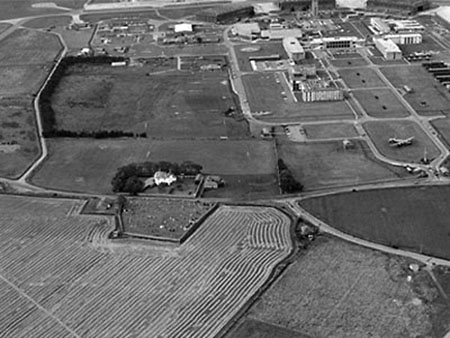
As I mentioned before, my Dad, Fred, during his time in the RAF, was frequently given 24 hour passes which ran from 00:00 hours on the first day to 23:59 on the second. They weren’t much use when he was with 20 Operational Training Unit in Lossiemouth which even nowadays, using the motorways, is a there-and-back trip of almost 930 miles. Here’s the old Lossiemouth from a wartime picture:

And here’s the brand new sign at the gate:

Here’s the journey by car today:

On the other hand when Fred was stationed at Elsham Wolds in Lincolnshire, two day passes were fine. Here’s the home of 103 Squadron in 1943:

Fred was often forced to travel in the early morning because he wanted to make use of the first few hours of his pass, usually from around 00.40 by the time he had walked down to Barnetby Station, to when the earliest train left Barnetby at, say, 01.10.

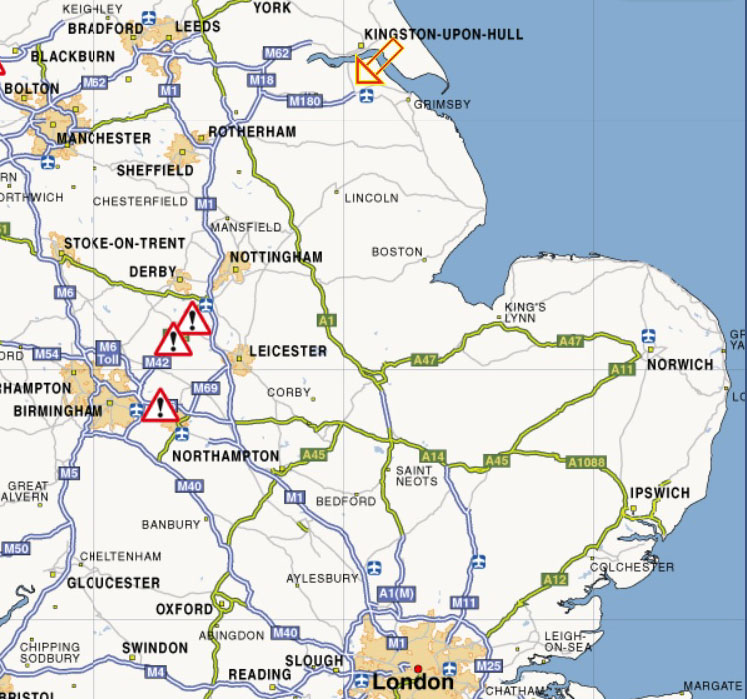
From Barnetby he usually travelled to Lincoln, then Nottingham and then Derby, although he could carry on from Derby to Burton-on-Trent if he so wished. The orange arrow points to Elsham Wolds, and Burton-on-Trent has been hidden, more or less, by the first triangular sign with an exclamation mark, just to the south of Derby:

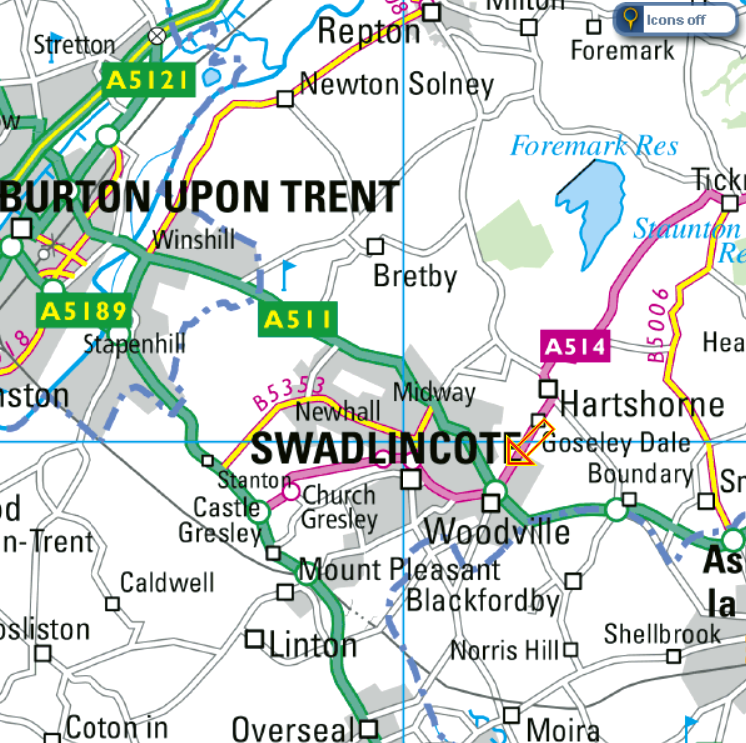
Here’s a map of the local area around Woodville, the mining village where Fred lived. His house was quite close to the tip of the orange arrow, in actual fact. The station at Burton-on-Trent is the tiny white  dot on the spindly black thread running from north east to southwest near the town, just below the “U-R” of “BURTON” :

The problem Fred faced at this point, however, was that from Burton-on-Trent to Woodville where he lived, there would be no buses running if it he had arrived at Burton Station at four o’clock in the morning. If that were the case, there was only one remedy…what used to be called “Shanks’s Pony”. Do check out the link. It is quite an interesting origin for this phrase and useful for the American version of it too.

On one occasion, Fred came back on leave from Elsham Wolds and he then continued through Derby station to the local station at Burton-on-Trent. When he emerged onto the street, knowing full well that he had a five mile walk in front of him, he found that his father, Will, then in his mid-fifties, had spent at least a couple of hours of the early morning darkness walking the five miles from their house in Woodville to meet his son at the station as he got off the train:

They walked back together in the fresh, bright summer sunshine, the road even more deserted than normal as it was so early in the morning. Not a single word was said between father and son at any point in their journey. Their mutual respect and solidarity, their love, was expressed not by words but by a deed, the walking of five miles just to be with somebody that extra couple of hours, even if the time together were to be passed in total silence.

In later years, Fred was to say that one of the greatest regrets of his life was that he had never said anything to his father during this walk and that his father had never said anything to him. In general, Fred wished that there had been much more obvious affection shown during his life with his parents. Will had never hugged Fred or even held him in his arms as a young child. Never in his entire live did he ever express his undoubted love for his son by such gestures, which he would have thought unmanly.

Here they are, in a local park on holiday in Blackpool. Notice the fashion statements. Will is wearing those two coloured shoes and Fred has one of those elasticated belts that fastens with a metal snake device:


18 Comments

Filed under Aviation, Bomber Command, History, Personal

Fred walks home on leave

One beautiful summer’s afternoon, Fred was returning on leave from his airbase at Elsham Wolds in north Lincolnshire. The orange arrow is RAF Elsham Wolds, and Fred departed from a station near Elsham before continuing to Lincoln, to Nottingham and finally to Derby:

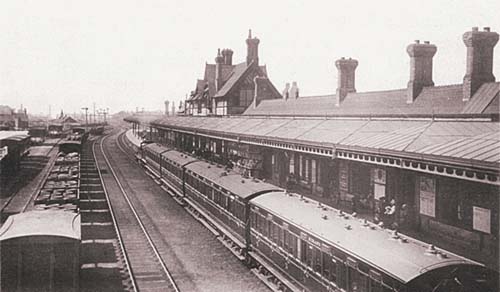
Derby was, and is, a huge station by English standards:

Fred arrived on time at Derby station, but there were no more trains to take him on to Burton-on-Trent (bottom left on the map above). He decided therefore to walk the twelve miles back home to the little mining village of Woodville, something which he had often done in the opposite direction in pre-war years, when he had been to watch Derby County play football at the Baseball Ground.

It was a Sunday, and after a couple of miles or so, Fred crossed the River Trent over the five spans of Swarkestone Bridge:

Fred then continued across the meandering  stone causeway, built by the Saxons, which crosses the floodplain of the River Trent. Things are a little bit different nowadays:

Or at least, things are a little different from what Fred would have known. These two photographs are taken from the same spot, but are separated by at least a century :

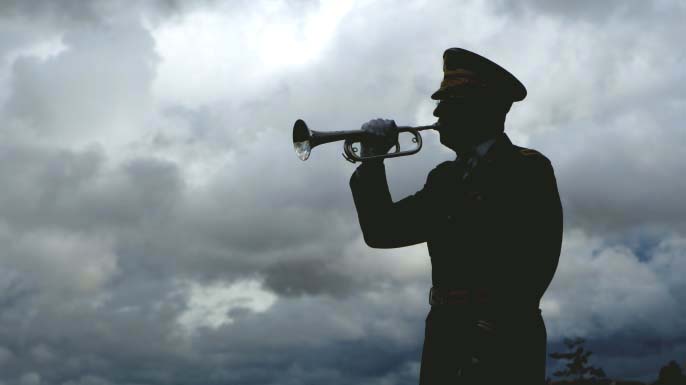
After the meandering charms of the ancient crossing, Fred then set off to the right, up the hill, towards the next village of Ticknall. As the evening moved slowly ever closer to sunset, everything grew very calm and very still, the light hovered on the edge of dusk, and just as he reached the top of the first long steady rise, Fred could hear, ringing out through the silence, the bugle sounding the Last Post at the nearby German prisoner of war camp:

Fred stopped to listen as the familiar notes echoed in evocative fashion over the late evening landscape, as the bright light of the sinking sun illuminated a pastoral scene in an England which is now long gone and will never return. It was a uniquely beautiful and unrepeatable moment in his life:

During the rest of his lifetime, Fred was never aware of a couple of facts about this moment. Firstly, he always thought that the prison camp was at Castle Donington but in actual fact it was somewhat closer to where he was, at Weston-on-Trent. I know that because I have just looked at the list of all the POW camps in the country.

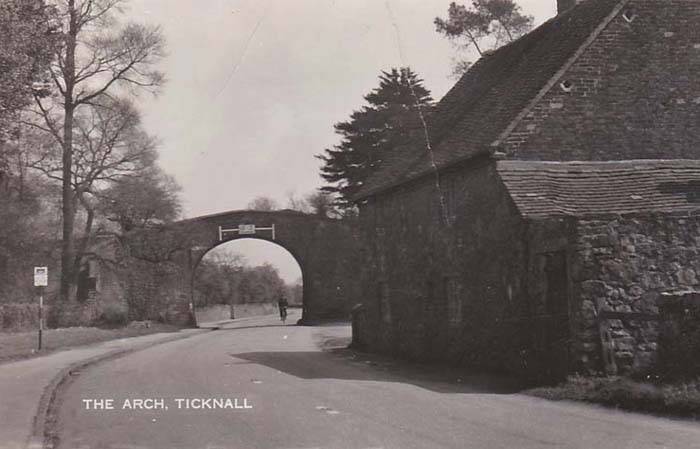
Secondly, as he walked through the village of Ticknall, under the bridge which used to carry the railway to the limestone quarry…

…as he walked past St George’s Church…

….he did not know that the building held, hidden away somewhere in a safe place, a great many records of his own family history. He did not know that his family had been baptised there, married there and buried there for centuries. They included…

his own grandfather, John Knifton (1850-1934), John’s father, Thomas Moor Knifton, and his mother, Jemima Knifton, and her mother, Katharine Knifton, and then her father, Richard Kniveton and lastly, George Kniveton, born, in all probability, before 1700.

Another England which is now long gone and will never return:

Fred would have walked past all the old water pumps at the side of the road, every fifty yards through the whole village. I bet some of them were still working then. If Fred had done his long walk previously, he might even have known which pumps could slake his thirst after perhaps seven or eight miles of walking:

Fred could not possibly have known, though, that only fifteen years later, in his Connaught green Austin A40 Devon saloon, he would drive, not walk, through the village, and his young son would count the pumps out loud as they passed along. Fred didn’t know that that was going to happen in the near future. He was too busy in the present, fighting to make sure that England had a future:


16 Comments

Filed under Aviation, Bomber Command, History, Personal

Fred’s travels with the RAF

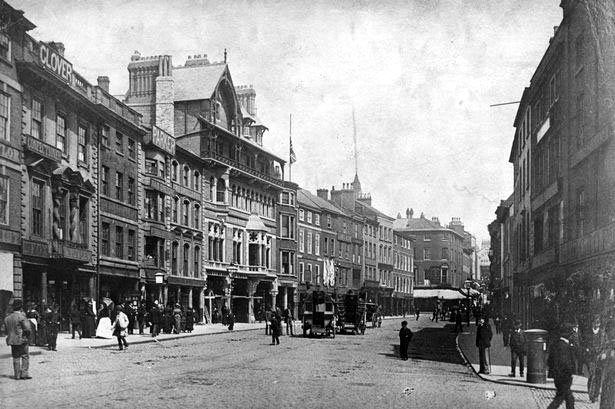
During the war years, Nottingham was a city which welcomed huge numbers of RAF men from all of the many airbases in Lincolnshire. One of the most famous pubs was the Black Boy, designed by Nottingham’s greatest architect, Watson Fothergill. The famous hotel is the very large building in the middle of the buildings on the left :

Alas, this wonderful, wonderful building was demolished to make way for a supermarket and a very ugly supermarket at that. The Black Boy was a hotel which was very convenient for the dashing Brylcreem Boys, who could easily get to Nottingham from their scores of bomber bases across Lincolnshire. Once they were there, they could get up to whatever they wanted and the Black Boy had enough bedrooms to accommodate all of them. I saw a programme recently which said that the rates of venereal disease among RAF aircrew were so high around this time that serious measures had to be taken. It was decided therefore that any man diagnosed with VD would have his mission total taken back to zero. Once you had done 30 missions, you were taken off combat flying, so if you had done a decent number, around 20, for example, this would have been a huge disaster, and a life threatening one at that.

Fred used Nottingham as a place to get a connection for Derby. When he was at Elsham Wolds, I think he must have caught a train at nearby Barnetby and then either got a connection at Lincoln or gone straight through to Nottingham. From there he could easily reach Derby or even Burton-on-Trent.  The orange arrow points at Elsham Wolds and nearby Barnetby:

Fred was no fool and he soon discovered that there was a small railway station, almost in the centre of Nottingham, called, he thought, High Pavement. It was an open station which meant that there were never any inspectors there to check tickets as the passengers alighted from the train.

The smart thing to do therefore, if you were either coming to Nottingham to visit, or were just changing trains at Nottingham, was not to bother with buying a ticket, but just to get off, not at the main station, but at High Pavement. You could then either disappear into the city, or walk the short distance to the main station and then catch the train to Derby or to Burton-on-Trent.

In later life, Fred was to retain little memory of the details of High Pavement station except that there were lots of blue brick walls and you had to go down some steps on your way to the main bit of the station.

I don’t really know where he means, but this remaining railway-type blue brick wall may be something to do with a station in this area:

Fred often had a 24 hour pass, which would run from 00h00 to 23h59. He frequently used to travel, therefore, in the early hours of the night. At that time there were certainly very few welcoming faces on the platforms, except the members of the Salvation Army, who were always on hand to dispense cups of tea or plates of hot food, most welcome out in the damp fogs of autumn, or in the cold icy blasts of winter. In later life, Fred was always to say that the Salvation Army were the only religious organisation to show any practical interest whatsoever in the welfare of the forces. He would always try to give them a donation whenever he saw them, because they had done so much to help soldiers, sailors and airmen when they really needed it in the cold dark days of World War Two.

23 Comments

Filed under Aviation, Bomber Command, History, Nottingham, Personal

Fred goes to Lincoln Cathedral

Towards the early part of his career in the Royal Air Force, probably in the winter of 1941-1942, Fred was stationed for a short period at Cranwell, the RAF College. Cranwell is a very imposing place:

This episode took place at the very start of his stay there, when, in his first period of free time, Fred decided to go out on a visit somewhere.

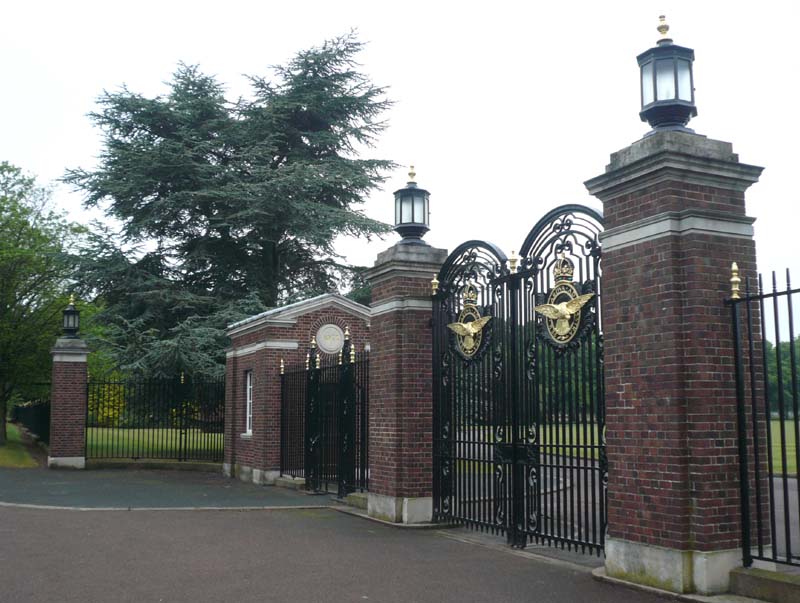
It was a glorious, cold, clear, bright blue, frosty day, and Fred went out of the front gate of the camp accompanied by a friend. It’s difficult to miss the gates at Cranwell:

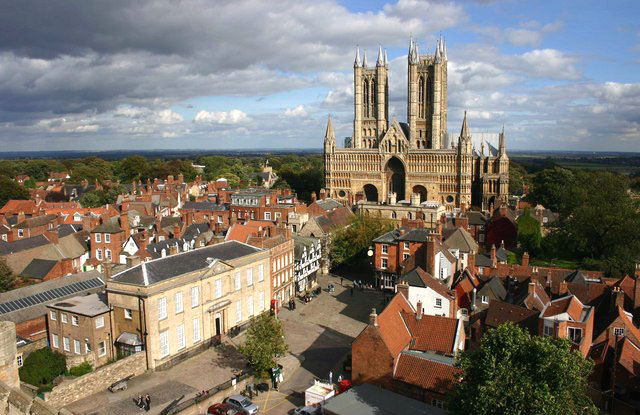
Seeing a local man pushing his bike along the road, Fred asked him the way to Lincoln, but instead of offering directions, the man just stretched out his arm and pointed along the road, which was a Roman one, and absolutely straight, to the distinctive shape of the cathedral, silhouetted sharply against the bright light of the sky. Lincoln Cathedral is on a high hill, surrounded by a flat landscape, so it is fairly difficult to miss:

The man said not a single word but just carried on trudging along with his bicycle. Fred and his friend, armed with the usual 24 hour pass, set off cycling along the road to Lincoln.

This initially unnamed friend may well have been Joe Fielding, a highly educated man who had studied, among other things, Latin at Oxford University.  The two young airmen were taken around the cathedral by one of the amateur guides, who had many interesting things to explain to them. When they reached the shrine to St Hugh, at the eastern end of the cathedral, near the altar, the guide told them all about the life of the saint, and his pet swan, but he confessed that, as a modestly educated working class man, he was unable to translate the Latin inscription on one of the metal tablets near the altar. Joe, however, with his degree level knowledge of Latin, proceeded to translate the inscription fluently.

The guide though seemed to be really, really, upset. Fred felt that, while Joe’s behaviour was perhaps the product of innocent helpfulness, he should rather just have kept his mouth shut, and let the guide remain the expert. Fred was certainly highly embarrassed by the whole affair.

As one of the coincidences that fill all our lives, Fred was to pass away on the very same day that I myself took a party of schoolboys to visit Lincoln Cathedral. I was able with ease to find that single plaque written in Latin, unchanged in the sixty or so years between the two events.

15 Comments

Filed under Aviation, Bomber Command, History, Personal

Fred goes to Rotherham

In his early career with the RAF, Fred lived in Rotherham, where he was training to be a wireless operator. He attended the local Technical College, and for his ab initio training in electronics, he studied topics such as radar and the many other technical devices which he would need to use as a Wireless Operator / Air Gunner.

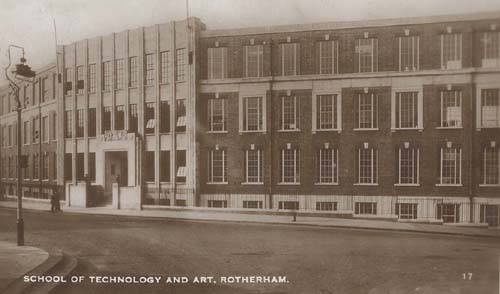
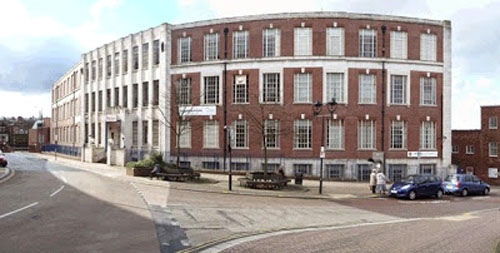
The college is still there today:

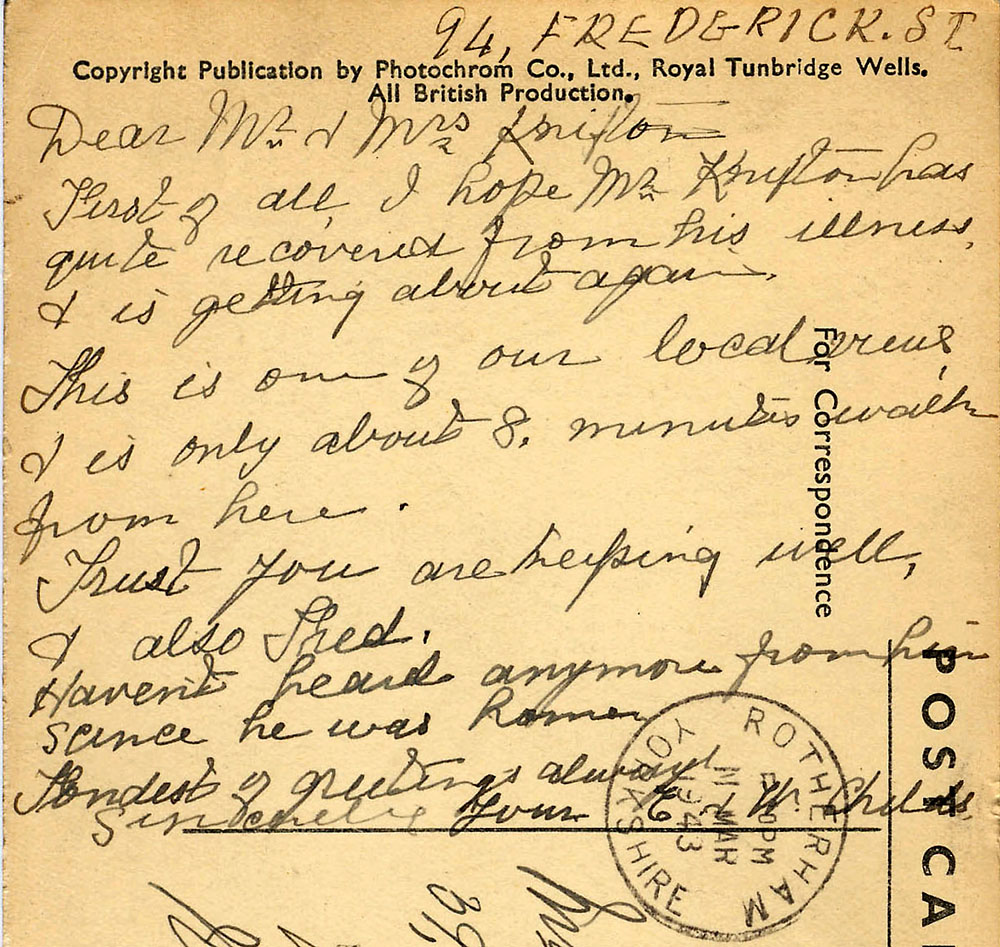
Fred was staying at 94, Frederick Street, with Mr and Mrs Childs, as a lodger in their house. The latter acted more or less as surrogate parents, and in actual fact, frequently corresponded with Fred’s own parents, Will and Fanny. They reported Fred’s progress to them, and postcards were sent back and forth quite regularly. This is the reverse of the postcard of the School of Technology above:

The postcard was posted on June 22nd 1942 at 9.00pm. As far as I can see, the text reads

“ Dear Mr Mrs thanking you for your kind and welcome letter I had a letter from fred I am sending you this I though (sic) you would like it it is were fred and the boy went to school I saw it and though you will like it kind regards to fred when you write hoping you are both well we remain yours faithful  E W Childs”

This date proves that Fred had finished what must have been fairly elementary technical training relatively early in his RAF career. More of these postcards have survived and this one is of Boston Park in Rotherham:

The reverse has the same address as the card above and the message reads:

The text reads:

“74, FREDERICK. ST. Dear Mr & Mrs Knifton  First of all I hope that Mr Knifton has recovered from his illness & is getting about again. This is one of our local areas & is only about 8 minutes walk from here. Trust you are keeping well & also Fred. Haven’t heard anymore from him since he was home. Fondest of greetings always sincerely from E (&) W Childs”

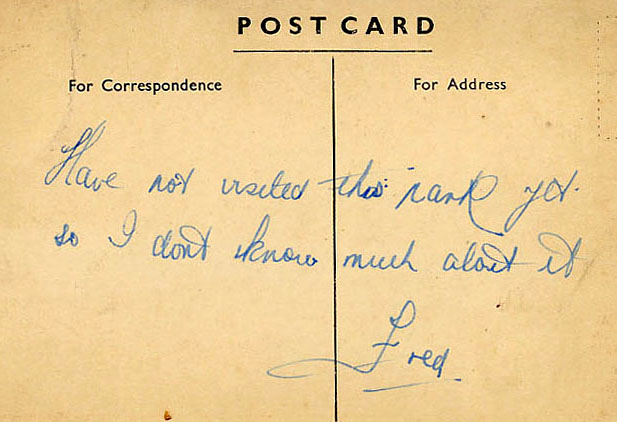
Imaginative as most young men are, Fred chose the very same picture postcard to send home. His message was hardly informative:

The text reads

“Have not visited this park yet so I don’t know much about it Fred ”

It was probably when he was still being trained at Rotherham Technical College, that Fred, as a serving member of the armed forces, was invited on a distant, almost forgotten, occasion to be one of the people to meet the Mayor of Barnsley. The latter was the Lieutenant Colonel of the local regiment, and came round, as we would say nowadays, to “raise his profile”. One thing that Fred did remember was how overawed he felt given the high rank of the distinguished visitor, compared to his own status as a simple Aircraftman Second Class.

In similar vein, Fred had also been somewhat embarrassed when, in uniform, he was given a lift back home from Burton-on-Trent station, by Dr Love, the local doctor in Woodville, the village where Fred lived. Dr Love was himself a high ranking officer in the Royal Army Medical Corps during the First World War, and he had carried this rank with him, over into the local South Derbyshire Home Guard forces. Everybody in the High Street in Woodville was amazed when Dr Love stopped his car, at the time one of the only privately owned vehicles in the area, and out stepped Fred.

19 Comments

Filed under Aviation, Bomber Command, History, Humour, Personal

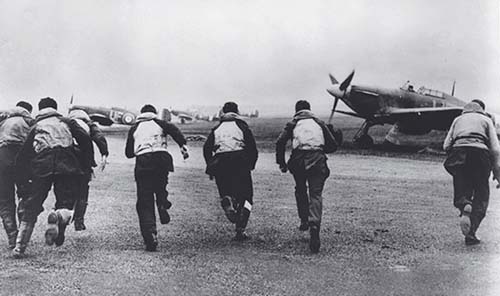
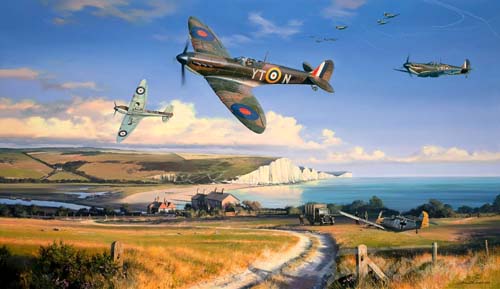
The Battle of Britain (3)

This slideshow requires JavaScript.

There is no better person to tell the story of the Battle of Britain that the greatest ever Englishman, Sir Winston Churchill:

“The Battle of France is over … the Battle of Britain is about to begin. Upon this battle depends the survival of Christian civilisation. Upon it depends our own British life, and the long continuity of our institutions and our Empire. The whole fury and might of the enemy must very soon be turned on us. Hitler knows that he will have to break us in this island or lose the war. If we can stand up to him, all Europe may be freed and the life of the world may move forward into broad, sunlit uplands. But if we fail, then the whole world, including the United States, including all that we have known and cared for, will sink into the abyss of a new dark age made more sinister, and perhaps more protracted, by the lights of perverted science” :

This slideshow requires JavaScript.

“Let us therefore brace ourselves to our duties, and so bear ourselves, that if the British Empire and its Commonwealth last for a thousand years, men will still say, “This was their finest hour.”

He produced a second speech which gave us another memorable phrase:

“The gratitude of every home in our Island, in our Empire, and indeed throughout the world, except in the abodes of the guilty, goes out to the British airmen who, undaunted by odds, unwearied in their constant challenge and mortal danger, are turning the tide of the World War by their prowess and by their devotion. Never in the field of human conflict was so much owed by so many to so few.”

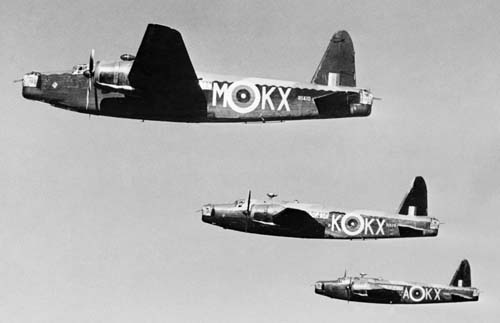
“All hearts go out to the fighter pilots, whose brilliant actions we see with our own eyes day after day, but we must never forget that all the time, night after night, month after month, our bomber squadrons travel far into Germany, find their targets in the darkness by the highest navigational skill, aim their attacks, often under the heaviest fire, often with serious loss, with deliberate, careful discrimination, and inflict shattering blows upon the whole of the technical and war-making structure of the Nazi power.”

We actually know exactly how that phrase “Never in the field….” came about.

On August 20th 1940 Churchill was travelling in a car with Major General Hastings Ismay to give a speech about the Battle of Britain in the House of Commons. Churchill was reading the speech out aloud to Ismay and it was originally “Never in the history of mankind have so many owed so much to so few”. Ismay interrupted him and said “What about Jesus and his disciples?” Churchill concurred and immediately changed it to its present form “Never in the field of human conflict was so much owed by so many to so few.”.

27 Comments

Filed under Aviation, Bomber Command, France, History, Politics