Category Archives: France

The Incredible Story of Frank Mahin, Volume II, 1908-1920

I have previously written two articles about Frank Mahin. The first recounted how he had carved his name on a stone fireplace in the High School:
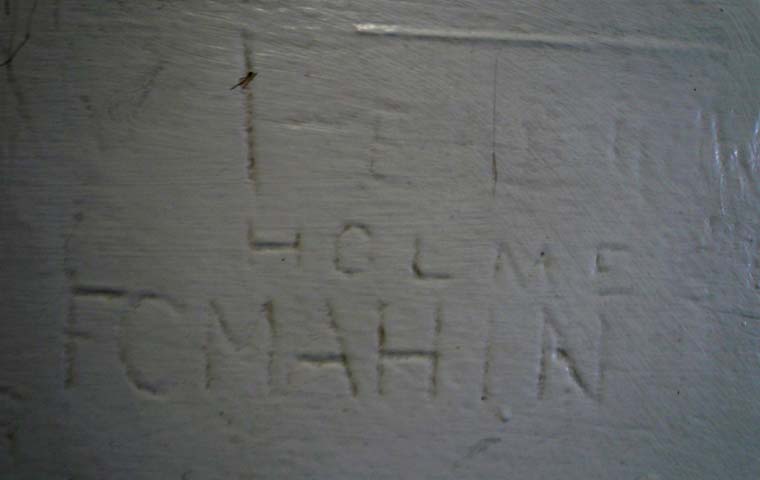
mahin cccccc

The second article had a title very similar to this one, but it was entitiled The Incredible Story of Frank Mahin, Volume I, 1887-1909

And now, Dear Reader, my tale continues:

Frank Cadle Mahin was so keen on a military career, that after only two years, he left Harvard University and his boring Law studies. He joined the Regular Army in 1910 as a private soldier, after service with the New York National Guard. Two years later he received his first commission. On April 21st 1912, Mahin and thirty eight others took an examination and were all made Second Lieutenants:
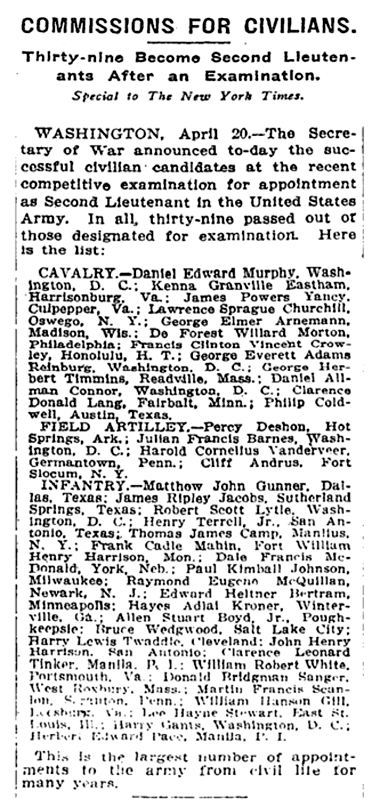
commissions for civiliaNS

At this time, Frank is listed as being at Fort William Henry Harrison in Montana.
On September 25th 1913, Frank was married to Margaret Mauree Pickering, his previous, second, marriage to Sasie Avice Seon having, presumably, come to an end in some way. Again, unfortunately, the precise details are lacking.

Margaret Mauree was born in Coeur d’Alene, Idaho, USA in 1890, the daughter of Abner Pickering and Celestia Florence Kuykendall. In married life she was to call herself Mauree Pickering Mahin so that her father’s name was never forgotten.  Her father, and Frank’s father-in-law, was Abner Pickering, who came from a very strong military background, as is shown by the wedding announcement in a local newspaper:
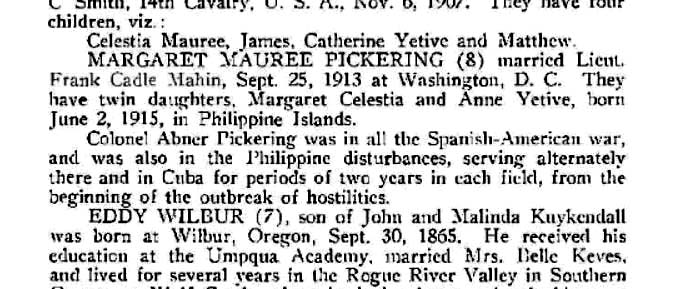
wedding cccc
In her book, “Life in the American Army from the Frontier Days to Army Distaff Hall”, Mauree describes the magic moment when she first met her future husband:

“We sat down, and the place next to me was left vacant for him. When he did
arrive, everyone forgot that we had not met, so after a minute of awkward
silence he took the vacant seat saying: “I guess no one is going to introduce us, I am Lieutenant Mahin, and I am sure you are Miss Pickering.”

With that one look into his clear steady eyes, I was convinced that there was such a thing as “Love at First Sight” and that I was not going to let the blonde or anyone else have him.”

Frank and Mauree were to have four children, including twins named Margaret Celestia and Anna Yetive, both born on June 2nd 1915 in the Philippines which at the time was an American colony, seized from the Spanish after the Spanish-American War. Frank’s three daughters were all to marry, as was his son, Frank junior, bom in Connecticut on January 2nd 1923. His third daughter, Elizabeth, lived from 1921-1981 and Frank junior, like his father, was a distinguished military man until he died in Dallas, Texas, on January 28th 1972.

.
In November and December 1914 Frank and the regiment received extremely unexpected orders.  They were to go to Naco in Arizona where Pancho Villa. the legendary Mexican bandit, and the inventor of the moustache, was up to his tricks, causing trouble:
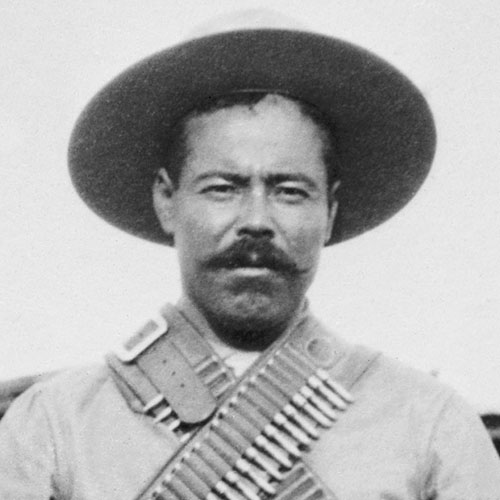
Pancho-Villa

The American garrison was tasked with keeping Villa’s men from crossing the Mexican border into the USA. Orders from Washington stipulated though, that, in the interest of preserving friendly international relations, no shots were to be fired, even if the bandits fired at them, a rather difficult policy to carry out!

That was December 1914. Europe had already been at war since August, and more than a million young men were already dead. Frank Cadle Mahin, as you will see in another article, was to play his part in this sickening slaughter.
In early 1915, Frank was sent to the Philippines, then still an American colony. Here he was to have an unexpected chance to practice the German he had learned at the High School. Let’s not forget that in 1905, he had won the Mayor’s Prize for Modern Languages:

“On to Guam our next port of call, and there the war was brought directly to our minds, for anchored in the harbour was one of the converted German warships, riding at anchor. She had been forced in there by lack of coal and, of course, was interned for the duration of the war! Our Quartermaster had occasion to visit this ship with some supplies, and since he spoke no German, he asked Frank to go with him and interpret for him. Judging by the time they were gone, it must have been an interesting and pleasant afternoon. One thing I do know, the Germans may have run out of coal, but not out of good German beer!”

The first Mahin to be seriously affected by the Great War was Frank Senior. At this time, he, and his wife, Abbie, were, of course, both citizens of a neutral United States. In September 1915 they made the ferry crossing from Holland, where, by now, Frank Senior was the American consul in Amsterdam. They were on their way to visit their daughter, Anna and her doctor husband Alec in Nottingham, England:

“The journey is made by daylight during the war so we sailed from Flushing at 6.00 am. on July 31st on the Dutch liner Koiningin Wilhelmina. The day was lovely and the sea calm, and all was calm and restful till ten minutes before ten, when, a sharp explosion beneath us was heard, and great volumes of water blew up over the sides of the ship. Passengers on the forward deck, under which the explosion occurred, were drenched with water and covered with black particles, which came from the mine which, as we all
realized, the ship had struck:
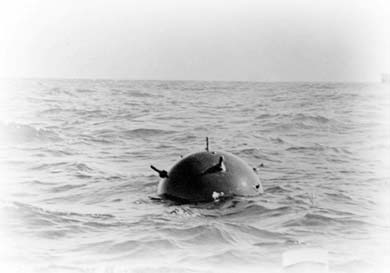
mine

As the explosion was under the stoke-hold three poor stokers were killed, and one fatally wounded. We put on overcoats, hats, and lifebelts and went on deck. In about ten minutes all of the lifeboats had been loaded and left the ship. The boats rowed toward the lightship, about three miles distant. As we left the ship, the forward part was slowly sinking. But in half an hour the boat sagged in the middle. That part sank out of sight, and the bow and stern rose straight in the air. From the stern floated the Dutch flag, thus the two ends stood for some minutes. Then they came together as one: the flag floating from the top of it. Slowly that column disappeared under the water at fifteen minutes before eleven o’clock, fifty-five minutes after the mine was struck.

Scattered about were our lifeboats rowing towards the lightship, which was a mile or two away. Beyond it, cruising swiftly in circles, was the British war vessel which afterwards took us to England. Behind us was the sinking ship, whose last moments were like the despairing struggle of some living thing; and we thought of the poor dead men who were going down with the ship, as might have been the fate of all of us.
At the same time we heard the roar of cannon in the direction of Belgium, adding more death and destruction to this awful war. All the boats reached the lightships safely by noon, and everyone was safe. About six that evening a British torpedo boat destroyer took us to Harwich, England, where we arrived at 8:30 that night. We spent the night at Harwich, and at midnight we heard the sound of bombs exploding, Zeppelins being in the vicinity.

Frank junior had been swiftly promoted following his good work against Pancho Villa and his band of Mexican bandits. He became a Major just in time for the USA’s entry into the Great War, and served in combat in France in 1918. He was wounded at St. Mihiel, the first time that American troops were in really significant action, as they launched an offensive against retreating German forces. Frank was to win a Purple Heart, showing great bravery under enemy fire:
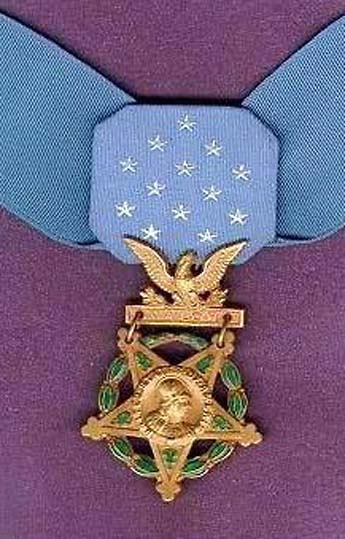
left hand medal

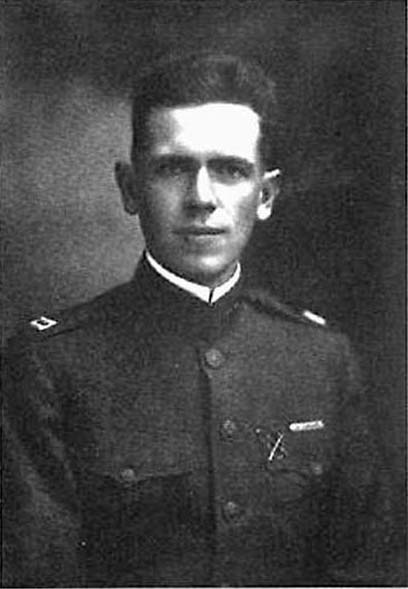
Frank then went on to fight in the Meuse-Argonne Offensive and the Battle of the Argonne Forest. He had at least one amazing escape:

“I think I am more than lucky to be here at all. I have had narrow escapes before, since
I came over to  France, but had more in this day and a half in the Argonne than all the rest put together. For instance, Hancock, my liaison officer, and I were lying in a shell hole with machine gun bullets cutting the top edges off and knocking the dirt all over us. Then a 105mm artillery shell hit right at the edge of the hole and slid down under us, raising the ground up, like a mole furrows, on the side of the shell hole.

Of course it was sliding for the tiniest part of a second but we heard it, felt it, and knew what it was, and then it burst! Good night! In that fraction of a second, I thought “God bless my girls, “ but we weren’t hurt! It was a gas shell, thank God, with just enough explosives to crack the case and throw the dirt around. We had our masks on anyway, so it did not harm us, but Hancock looked like a ghost, and fool that I am, I laughed at him and took my mouthpiece out and yelled, “ Going up!” and even he had to smile then! Had that shell been a High Explosive they would never have found even our identification tags. If it had been even an ordinary gas shell, half gas and half High Explosive, it would’ve blown both of us to pieces.”
mahin ccccc xxx

In the 1920s, when he returned to the United States, Frank, still fresh faced and eager, was to relate to his twin daughters exactly what his life under fire had been like:

“The trouble is gas, we were in it almost continuously for three hours, and I tried to keep my mask on, but you just can’t run a battalion in battle with a gas mask on. It was a wet, misty morning when we went “over the top” and they just poured gas shells over, tear gas, sneezing gas, then phosgene and mustard after they had gotten our noses and eyes inflamed.

The country was the worst possible country to fight over, for it was just ridge after ridge with fire coming at us from every direction. Believe me, it was some scrap. Saint Mihiel was a cinch compared to this Argonne Forest offensive.

From the Field Hospital, they sent me by truck to Evacuation Hospital No 7. I stayed there a day and a half, and then to Base Hospital No 27, a Pittsburgh outfit at Angers near the mouth of the River Loire. The hospital is in a big old three-storey convent building, and is awfully comfortable, and the ‘chow’ is fine.

Nausea, acute diarrhea, for several days, and an awful headache, all from the gas, and, of course, burning lungs. I now feel pretty good but the d— stuff has affected my heart. They say this does not last more than a week if one stays perfectly quiet, but for several more weeks I will have to be very careful not to exert myself violently.”

His wife Mauree, however, adds a little more realism to the tale, pointing out just how seriously affected her husband was:

“I can assure you, girls, that that heart condition lasted several years instead of several weeks. Even after his return, and for many months, he would be sitting talking, and without warning would fall right out of the chair, and I never knew when we picked him up whether he would be dead or alive.”

Nowadays we have little or no idea of what it must have been like in the trenches during a gas attack:
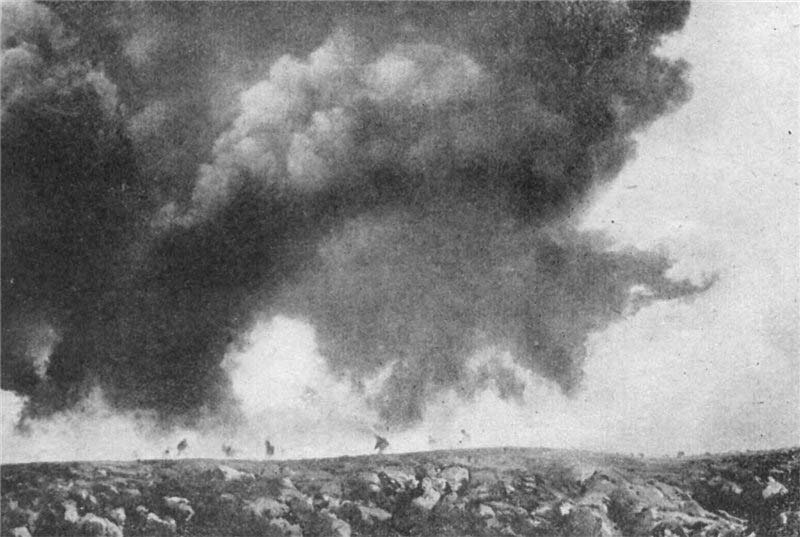
gas

We are given some idea, however, when the family take a trip to a more peaceful Europe in 1920. It is Frank’s wife, Mauree, who tells the tale:

“On this trip we followed the movements of the 11th Infantry up to the time of Dad’s gassing and evacuation. At Madeleine Farms, where his battalion command post was during one of the offensives, we were able to go down into the very dugout he had used! It had two entrances, and both were completely overgrown with vines. As Dad and I started down the rickety old rotted-out steps, Dad recognised the odor of gas still down there, and he whispered to me not to tarry long but just to take a quick look and go out of the other entrance. The dampness was terrible, water dripping off of the low ceiling, we were able to see the boards hung against the side where they slept when there was a minute to spare, and we actually walked on the duckboard.

As quickly as we went through, Dad was greatly affected by that little gas, and had a very hard attack of coughing ; and just as we got into the car Grandma had a heart attack, and this was two whole years after the war , thus you can see, just how potent that gas really was!

Here are the Madeleine Farms, then and now, as it were:

This slideshow requires JavaScript.

In my next article about Frank, I will tell the tale of how he continues his military career and eventually achieves a very high rank in the American army.

8 Comments

Filed under France, History, Nottingham, The High School

The Beast of Ennerdale: Part three

This is the third instalment of the story of the Beast of Ennerdale, a strange creature that rampaged across the Lake District in north western England in 1810. In five months, it killed almost 300 sheep, often just eating their soft organs and then lapping up their blood. The story of its ravages is told in the first two parts of this series:

eyes wolf

Nowadays, we have almost an almost unbelievable ability to make contact with each other instantly right across the globe. Furthermore, we have immediate instant access to unbelievable amounts of knowledge and information.
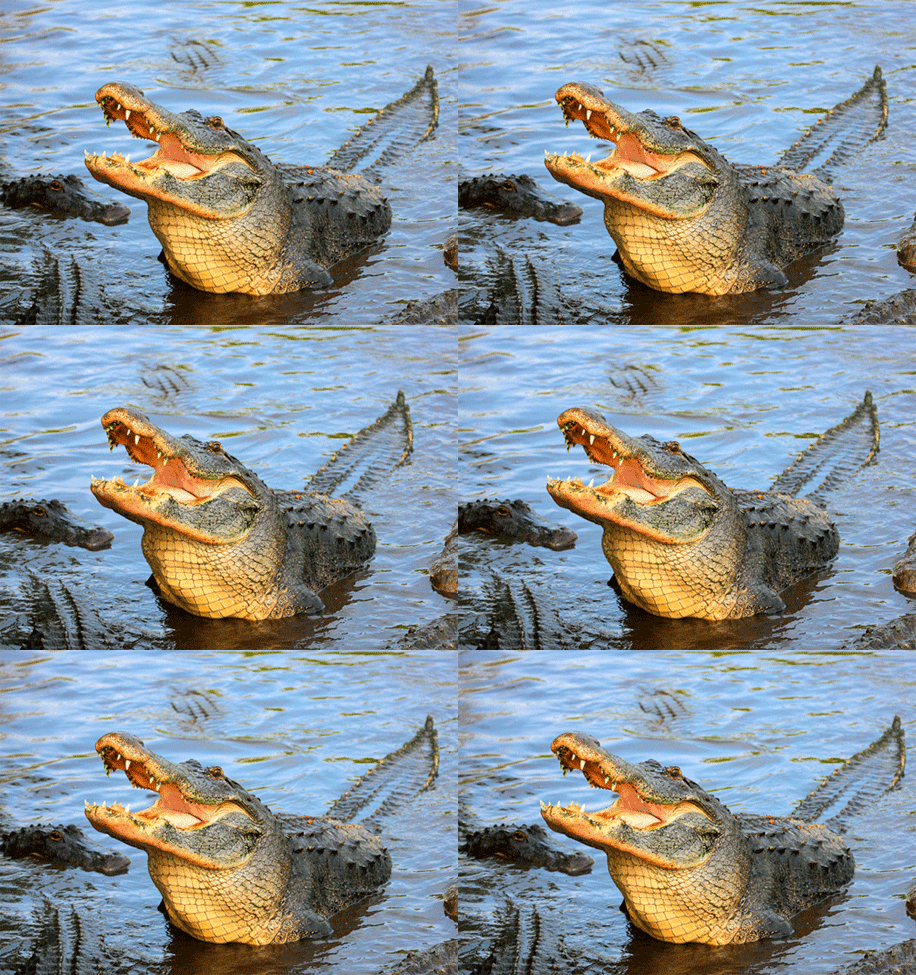
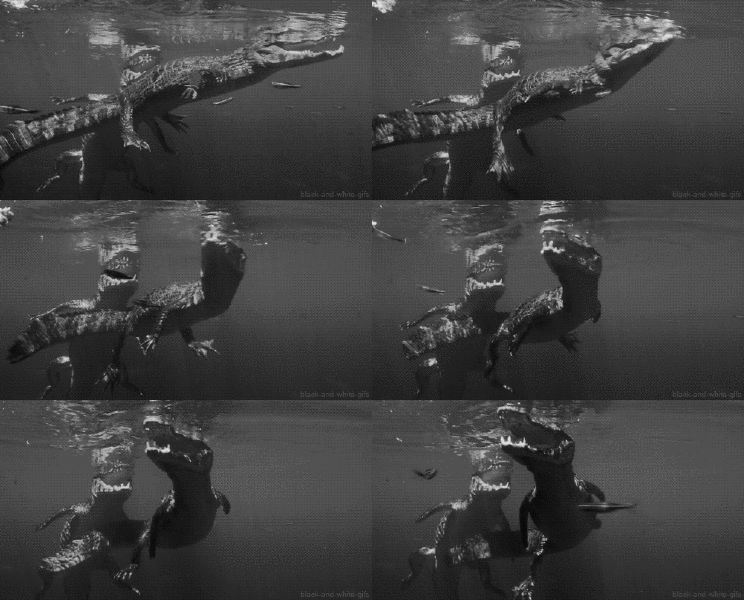
Until very recently though, that was just not the case. There was no television. No radio. No access to books. Most people were illiterate, especially in the countryside. Nobody knew very much at all about natural history outside their own country. Contrast our situation with life outside London in 1198. Richard the Lionheart was the English king then, and he was the proud owner of his very own private zoo in the Tower of London. Richard had been on the Crusades and he must have known a little bit about some of the wildlife in the Middle East. Perhaps that was the reason that he had a pet crocodile in his collection of animals:

crocs

One day, the animal escaped. It somehow made its way to the marshes of north Essex. The reaction of the locals, of course, was that a dragon had come to visit them:

alli

And what would the shepherds of the Lake District made of a giraffe? The very first one ever to be seen in England had only arrived on August 11, 1827, less than 200 years ago, and well after the début of the Beast of Ennerdale:

holle
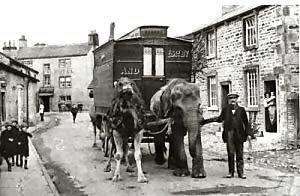
During the period of the Beast of Ennerdale, the whole country was visited by many travelling zoos. The cages were transported on wagons which were pulled around the countryside by horses. Conditions, of course, were appalling. The cages were cramped and the horses that pulled the wagons were grossly overworked.  No animal rights in those days. The Church taught that animals had no souls, so what you did to them was simply irrelevant. Work them until they drop and then leave them to die. And then you can eat them.
The most famous of these travelling zoos was Wombwell’s Travelling Menagerie, which had a total of fifteen wagons and a large number of exotic animals. Wombwell bought them directly from ships as they arrived in England. They included elephants, giraffes, a gorilla, a hyena, a kangaroo, several leopards, a number of lions, llamas, monkeys, ocelots, onagers (what?), ostriches, panthers, various snakes, tigers, wildcats and zebras:

wombwerr

Wombwell had a number of snow leopards and his rhino was publicised as “the real unicorn of scripture”. Other faulty labelling is actually known to have cost him money. What he exhibited as a chimpanzee is now thought to have been the first ever Gorilla to be seen in Western Europe.
Here is a link to the story of George Wombwell told by Wikipedia. It really is worth a look, with some really funny anecdotes on offer:

Menagerie_wombwells_1910

All of these menageries were rather careless with their animals and escapes were not infrequent. In 1835, for example, a lion and a tigress escaped together and four people were killed. And that is what takes us back to the Beast of Ennerdale.
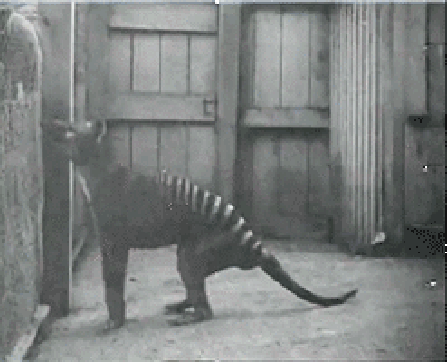
Apparently a number of the different travelling menageries had creatures which were exhibited as “tiger wolves”. Nowadays these animals are thought to have been thylacines, the so called “Tasmanian Tiger” or “Tasmanian Wolf”.

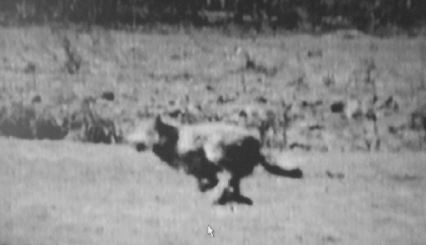
Here is a brief film, thanks to the Thylacine Museum:

The Museum also has a video where the extremely talented animal is apparently playing a piano, harpsichord type of thing:

So that is it! Mystery solved! The Beast of Ennerdale was an escaped Thylacine.

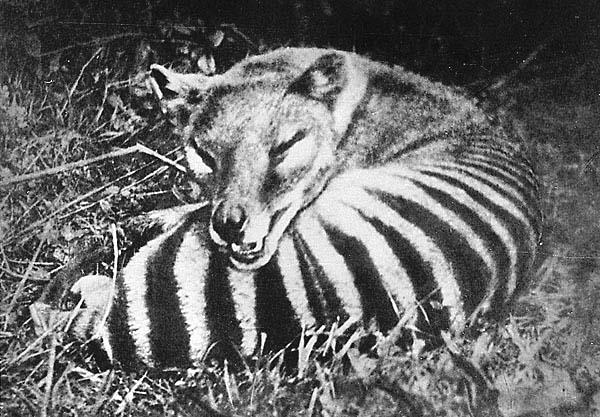
Nowadays, the Thylacine is extinct, of course. The last known specimen, “Benjamin”, died in captivity in Hobart Zoo on September 7th 1936:

thyl four

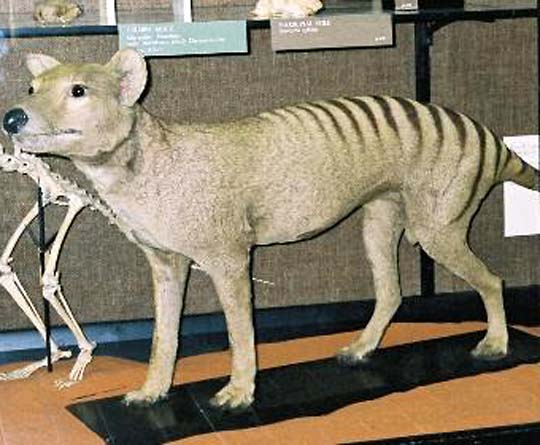
The Thylacine had dark stripes over its back and could be up to eight or nine feet in length:

thyl one

It was a marsupial which looked vaguely like a wolf and it ate flesh. It preferred the softer flesh to tougher meat such as the muscles.
The Thylacine was an apex predator and it was mainly nocturnal. Its behaviour was just like the Beast of Ennerdale because it retreated to the hills and woodlands in the daytime, avoiding contact with humans. It spent the daylight hours in caves or hollow tree trunks, sleeping on twigs or plant stalks. At night, it hunted the open heathland:

thyl two

Supposedly, back in the wilds of Tasmania, it happily preyed upon farmers’ sheep and poultry and apparently liked to drink the blood of its prey.
And with that information, I really thought that I had found a solution for the identity of the Beast of Ennerdale. I really did. I really, really did:

Thylacine-tring

A second level of internet research, though, shows that more or less all of the answers which have been suggested by the many websites which discuss the Beast of Ennerdale are most probably entirely wrong. The explanation of an escaped Thylacine is a very neat one, but modern science just dismisses it totally and completely.
Firstly, the blood drinking story seems to have originated merely from a single account heard at second-hand by Geoffrey Smith (1881–1916) in a shepherd’s hut in Tasmania. Not exactly a proven piece of Thylacine behaviour, certainly not enough to identify this creature’s presence in Ennerdale.
And killing and/or eating sheep? Well not really, apparently. Modern studies have now shown that the creature had the jaws of a wimp, not a wolf. It couldn’t have dealt with a dead sheep. Advanced computer modelling in 2011 showed that its prey size limit would have been in the region of only five kilos, animals such as the tiny possum:

thylacine_berlin_museum_10th_september_2011-167306

And here is a link to a second study from 2012, “Tasmanian tiger was no sheep killer”. These are not just amateurs’ guesses picked out of the air, of course. These are both scientific papers, published for the judgement of the zoological world. They would not have been published in reputable journals if they were not serious research carried out by serious scientists.
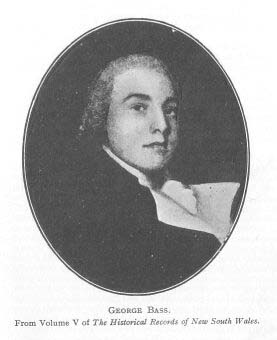
Instead, the Thylacine is seen nowadays as having been just a scapegoat for the widespread mismanagement of sheep farms in Tasmania. Furthermore, the killing of sheep was far more probably carried out by the European dogs which had first reached Tasmania in 1798 with the arrival of the explorer George Bass and a number of seal hunters:

George_bass

These men’s sled dogs interbred and their offspring subsequently dispersed into the temperate rain forest of the island. Some dogs were befriended by the aborigines but the majority just went wild.

During the period when Europeans were first coming across the Thylacine, therefore, there was already a population of feral dogs in Tasmania. They are far more likely to have been the animals responsible for the killings of sheep on the island, rather than the Thylacine. It was just easier for Europeans to blame a weird new animal than “man’s best friend”.
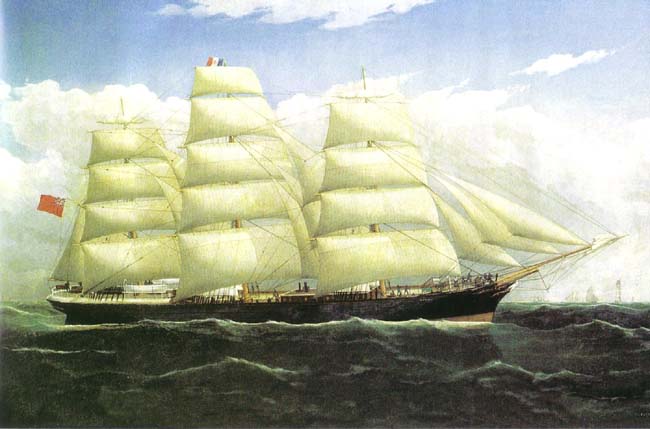
And what about the time schedule? How could a Thylacine have reached Cumberland for May 1810? At this time, the very best ships took a minimum of three months to reach Australia and a further three months to return to England:

SS_Dunedin_by_Frederick_Tudgay
The first thylacine had been seen by the French on May 13th 1792. They would not have told the English because, surprise, surprise, the two nations were at war with one another.  More than ten years later, the Lieutenant Governor of Tasmania sent the first full description of the animal for publication in the Sydney Gazette of April 21st 1805:

wild-thylacine-large

At that time, it was not a particularly familiar animal to the European people on the island. In June 1805, five convicts escaped from the only recently established penal colony. The establishment’s pastor, Robert Knopwood, wrote in his journal on June 18th 1805, shortly after the convicts had been recaptured:

“Am engaged all the morn, upon business examining the 5 prisoners that went into the bush. They informed me that on 2 May when they were in the wood they see a large tyger that the dog they had with them went nearly up to it and when the tyger see the men which were about 100 yards away from it, it went away I make no doubt but here are many wild animals which we have not yet seen”

thyl three

At this point, in 1805, no Thylacine had been captured. It had only been briefly glimpsed at a hundred yards’ range. Tasmania was the size of Ireland and more or less completely covered in forest, with only one small settlement of convicts. How on earth could a Thylacine have reached Ennerdale by 1810? Just look at the timetable:

“Captured in Tasmania, in 1806 at the earliest—shipped to Sydney—sent to England—didn’t die on the three month journey—bought by a zoo keeper in London—taken by horse drawn cart to the north (three or four weeks?)—escaped—seen in Cumberland, doing things we now know a Thylacine could not do”

Not very likely is it?
Anyway, here is a nice longer film of a Thylacine from LINCTasmania. It dates from 1964 and is a wonderful period piece, well worth watching, just for the accents and the product placement :

And finally, here are two videos about the Thylacine from my hero, MK Davis, the man who has been called “The Hippy from Mississippi”. He is a photographic analyst and is well worth your time. The first film is an analysis of a modern home movie, purporting to show an animal which may be a living, surviving Thylacine:

The second film from MK shows his thoughts on where Thylacines may survive nowadays:

And the Beast of Ennerdale? Well, the locals at the time thought it was a feral dog, and they may well have been right:

“No one knew to whom the dog had belonged, or whence he came ; but being of a mongrel breed, and excessively shy, it was conjectured he had escaped from the chain of some gipsy troop. He was a smooth-haired dog, of a tawny mouse colour, with dark streaks, in tiger fashion, over his hide ; and appeared to be a cross between mastiff and greyhound. Strongly built and of good speed, being both well fed and well exercised, his endurance was very great.”

On the other hand, unlike most dogs that I know, the Beast was never heard to bark, growl or howl. And why would you go to the considerable expense of stuffing the corpse and displaying it in Hutton’s Museum in Keswick if it were just “a cross between mastiff and greyhound”. Perhaps the Beast of Ennerdale was the Beast of Gévaudan on his holidays.

“C’était comme un chien, mais ce n’était  pas un chien”…

14 Comments

Filed under Cryptozoology, France, History, Humour, Science, Wildlife and Nature

The Beast of Ennerdale: Part Two

Last time I introduced you all to the Beast of Ennerdale, an unknown creature that rampaged over the Lake District in north western England in 1810. Here is Ennerdale:

1280px-Ennerdale

The original source for the tale was a book called “Cumbriana; or, Fragments of Cumbrian life” by William Dickinson. It was published in 1876, more than sixty years after the events it portrayed. Here, a typical chase after the Monster is described:

“One Saturday night a great number of men was dispersed over the high fells, watching with guns and hounds, but the animal avoided  them and took his supper on a distant mountain ; and the men not meeting with him, came down about eleven o’clock on Sunday morning and separated about Swinside Lane End:

Swinside

In a few minutes after, Willy Lamb gave the “view halloo.” He had started the beast in crossing the wooded stream, and away went the dog with the hounds in full cry after him. The hunt passed Ennerdale Church during service ; and the male part of the congregation, liking the cry of the hounds better than the sermon, ran out and followed. It has been said the Reverend Mr Ponsonby could not resist, and himself went in pursuit as far as he was able. This run ended at Fitz Mill, near Cockermouth, in a storm which the wearied men and dogs had to encounter in a twelve-miles return.”

The Beast’s identity was still a matter of considerable debate for the locals:

rustic

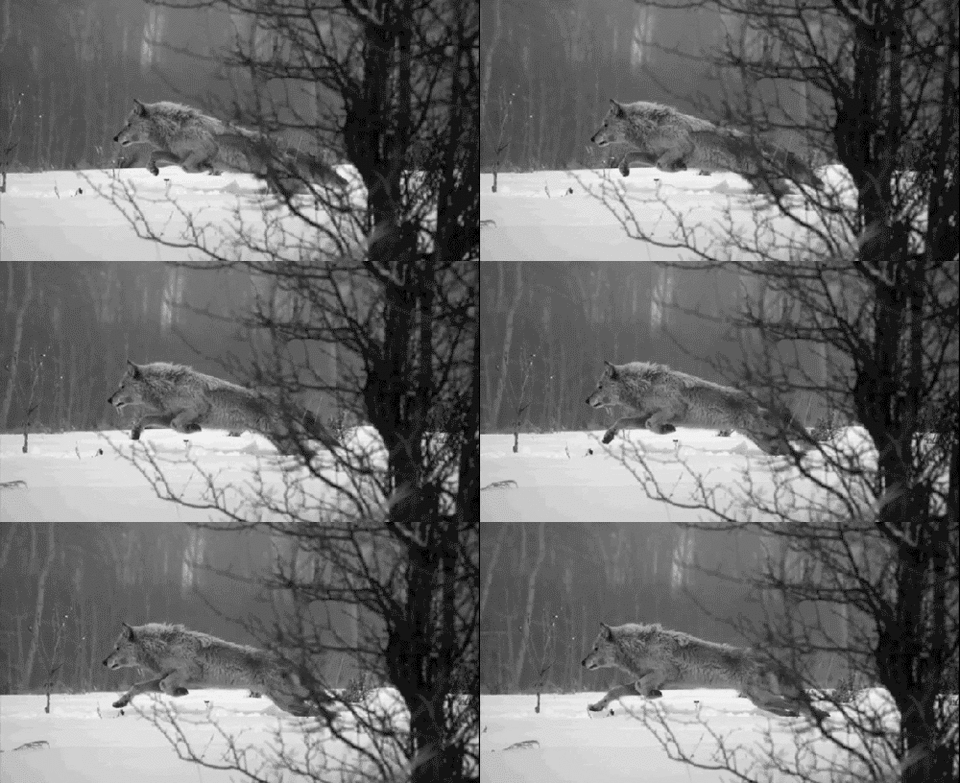
Some thought it was a lion. Some thought it was a tiger. Some thought it was a wolf. One wealthier farmworker, who had recently been to France for his holidays, said that it was “Like a wolf but not a wolf”.

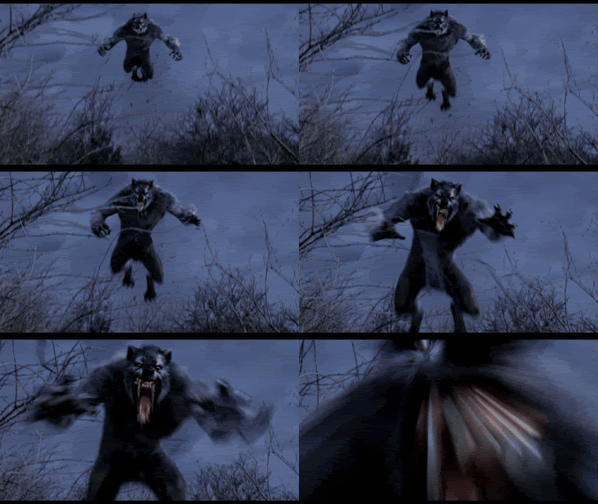
And exactly as had been the case in France, many of the local peasants thought it was a werewolf, although the one who had been to France for his holidays, said it was “un loup-garou” or even “un rougarou”. Proof of the supernatural qualities of this Beast came in the fact that it drank blood:

eyes wolf

Just as a piece of information, there were no wolves in the Lake District at this time, and had not been for, probably, the best part of 400 years. The most recent record of wolves in England came, most fittingly, from Nottinghamshire where, in the reign of Henry VI (1422-1460), Robert Plumpton, who owned land in Nottingham itself, was given the job of “chasing wolves in Sherwood Forest”. By 1500, wolves were totally exterminated in England.

Whatever the Beast of Ennerdale was, the locals came up with a cunning plan to catch it. Somebody thought of putting together all the best hunting dogs into an élite pack, a Special Forces Unit which would hunt down the Sheep Slayer once and for all:

pack dogs
There was a pursuit which lasted several days. Finally, the poor monster was flushed from cover. It fled, but the hounds caught it. The plan now went pear shaped though, as the Beast took on all of the Special Forces dogs at once in a ferocious combat. Several of these ninja sheep dogs were killed outright in a matter of minutes. All the survivors then suddenly changed their minds and headed off home, to the safety of their nice safe kennels. Obviously, whatever the Beast was, “dog” could pretty well be crossed off the list.
And just as was the case in distant Gévaudan, there were the hard luck stories. William Jackson who lived in the middle of wild and lonely mountains at Swinside, had his musket loaded and ready, as he left his wild and lonely farm. Here it is, as it looks today:

Cragg_Hall_Farm_-

The Beast was watching him, just thirty yards away. William took careful aim, pulled the trigger and the fifty years old relic of a rifle failed to fire. The Beast, of course, made his escape easily.
On another occasion, a group of men, armed to the teeth, along with their pack of hounds, had the Beast surrounded in a small wood and totally at their mercy. It charged out and the weakest link in the human chain duly lost his nerve, dived out of the way and the chance was lost.

Interestingly enough, an incident very similar to this happened with the Beast of Gévaudan and with at least one of the other French creatures. The Beast of Ennerdale, though, continued onwards and knocked over an old chap called Jack Wilson. Jack was collecting wood for his fire but was completely unaware of the Beast’s presence, because he was totally deaf.
The guilty nerve loser was probably Will Rothery who is actually named in another very similar version of the tale. Will explained that he failed to take his easy shot at the animal because he was so surprised by its huge size and unexpected appearance. I would expect Mr Rothery’s fellow hunters might have had something to say about that. Later, Will Rothery was to testify that he thought the animal was some kind of lion.

Meanwhile, in Cumberland, the slayings continued. Sheep continued to die in large numbers:

sheer

Great was the disappointment, therefore, when, one fine morning in July, an enormous army of more than 200 armed men, with their hounds, found themselves scouring Kinniside Fell after the Beast had been seen moving away towards Hopehead. The contour lines show how steep the sides of the valley were. Look for the orange arrow:

kinniside

The huge pursuit went on, along the tops of the mountains between Wasdale and Ennerdale. And then it was the wild slopes of Stockdale Moor and then, finally, a cornfield near Calder Bridge.
But the enormous, and prolonged hunt was in vain. After they had waited for hours, not a single Beast was found hiding in the corn. Somehow, it had slipped away.

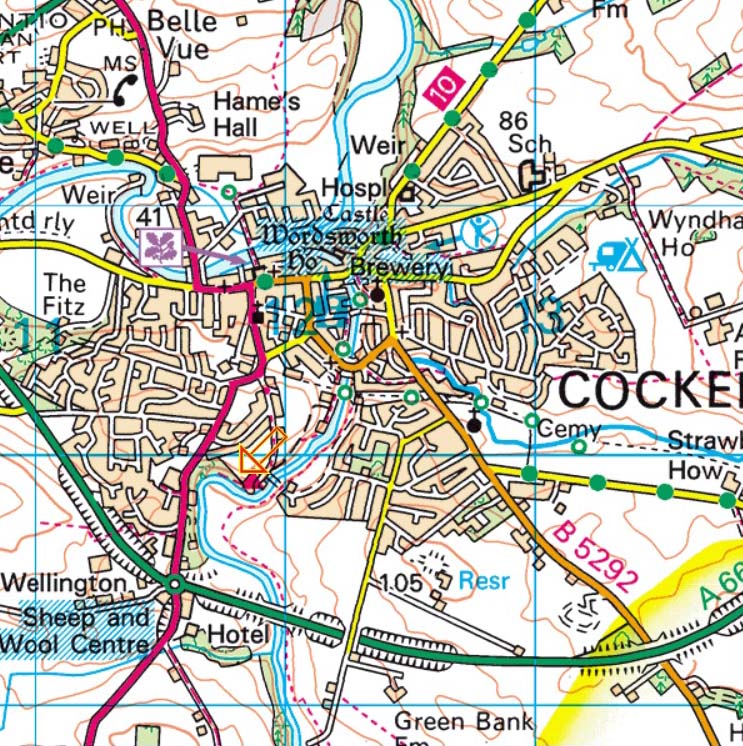
And then there was another wasted, breathless chase through Drigg and out to Seascale, right on the coast of the Irish Sea itself. Overall, the Beast took its admirers on many tourist trips around the fringes of the Lake District. Kinniside. Lamplugh. Through the icy waters of the Marron. Out to Little Clifton and then to sunny Workington. Or perhaps they would have preferred Seaton or the Fitz Mill at Cockermouth. Maybe Irton or Dent Hill or Egremont or even St. Bees. Here is the wonderfully named Cockermouth. The orange arrow indicates the Fitz Mill :

cockermouth
And still nobody knew what the Beast was. Hundreds of people, noblemen, farmworkers  and professional hunters had all seen it. And it remained an enormous puzzle. Meanwhile the death toll mounted. And still they were haunted by the worry that it might one day change from drinking sheep’s blood to killing children.
The longer it went on, the more gloom and despondency the locals felt. As autumn approached, they all made the conscious decision to accept the losses of sheep temporarily, but above all to make sure that the harvest was gathered in. All the hunts were abandoned for the moment, as gathering in the harvest continued apace:

George_Cole_-_Harvest_zzzzzzzzzzzzzzzzzzzzz
By September, the hunters were back, combing the hillsides and fields for the Beast. Now the writing was on the wall. No animal, however secretive and cunning, could continue for ever to elude so many hundreds of pursuers:

aa-bete-des-vosges-cxzcfe
A significant chance event occurred on September 12th, when the Beast was seen by Jonathan Patrickson to go into a cornfield. The tale is told by William Dickinson in his “Cumbriana; or, Fragments of Cumbrian life”. It starts with some traditional Lake District Gibberish:

Jonathan quietly said, ” Aa’l let ta lig theer a bit, me  lad, but aa’l want to see tha just noo.”

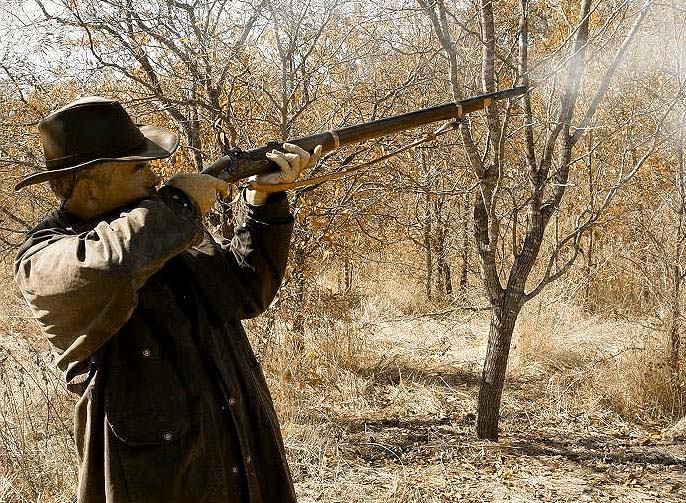
Away went the old man, and, without the usual noise, soon raised men enough to surround the field. As some in their haste came unprovided with guns, a halt was whispered round to wait until more guns were brought and the hounds collected. When a good muster of guns and men with dogs were got together, the wild dog was disturbed out of the corn ; and only the old man who had seen him go into the field was  lucky enough to get a shot at him, and to wound him  in the hind quarters:

Replica_Remington_Zouave_firing

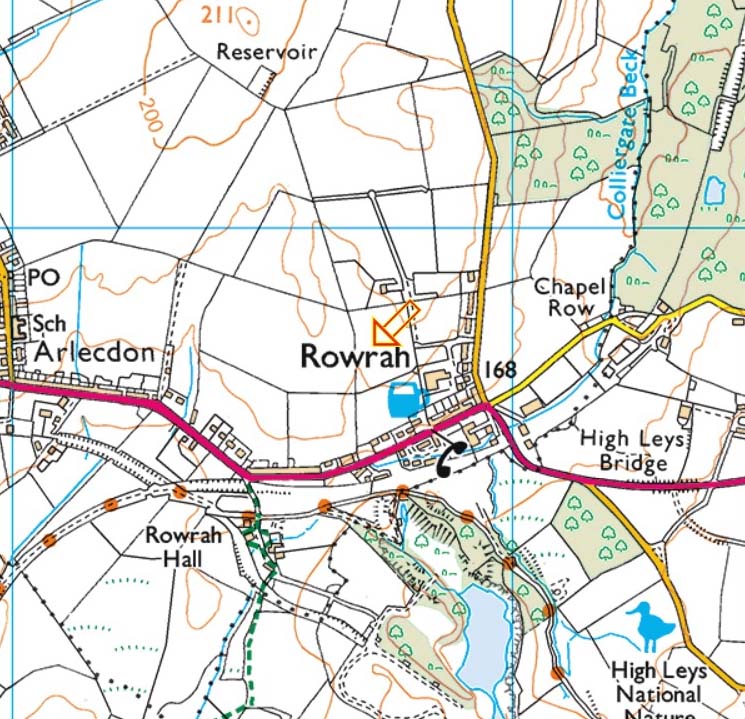
This took a little off his speed, and enabled the hounds to keep well up to him, but none dared or did engage him. And, though partly disabled, he kept long on his legs and was often headed and turned by the numerous parties of pursuers, several of whom met him in his circuitous route from the upper side of Kinniside, by Eskat, Arlecdon, and Asby, by Rowrah and Stockhow Hall, to the river Ehen. Here is Arlecdon and Rowrah, indicated by the orange arrow:

rowrah

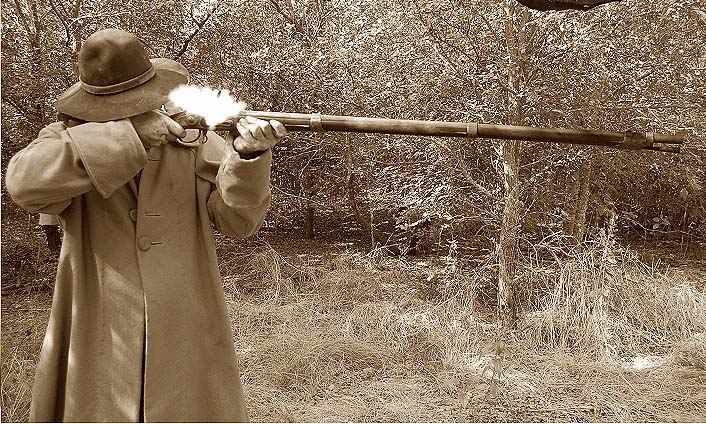
Each of these parties he fled from, and turned in a new direction till he got wearied. He was quietly taking a cold bath in the river, with the exhausted hounds as quietly looking on, when John Steel came up with his gun laden with small bullets, but dared not shoot, lest he should injure some of the hounds. When the dog caught sight of him it made off to Eskat Woods, with the hounds and John on its track, and after a few turnings in the wood, amid the greatest excitement of dogs and men, a fair chance was offered, and the fatal discharge was made by John Steel:

Brown_Bess_Musket_firing

The destroyer fell to rise no more, and the marksman received his well-earned reward of ten pounds, with the hearty congratulations of all assembled.

After many a kick at the dead brute, the carcase was carried in triumph to the inns at Ennerdale Bridge;  and the cheering and rejoicing there were so great that it was many days before the shepherd inhabitants of the vale settled to their usual pursuits.”

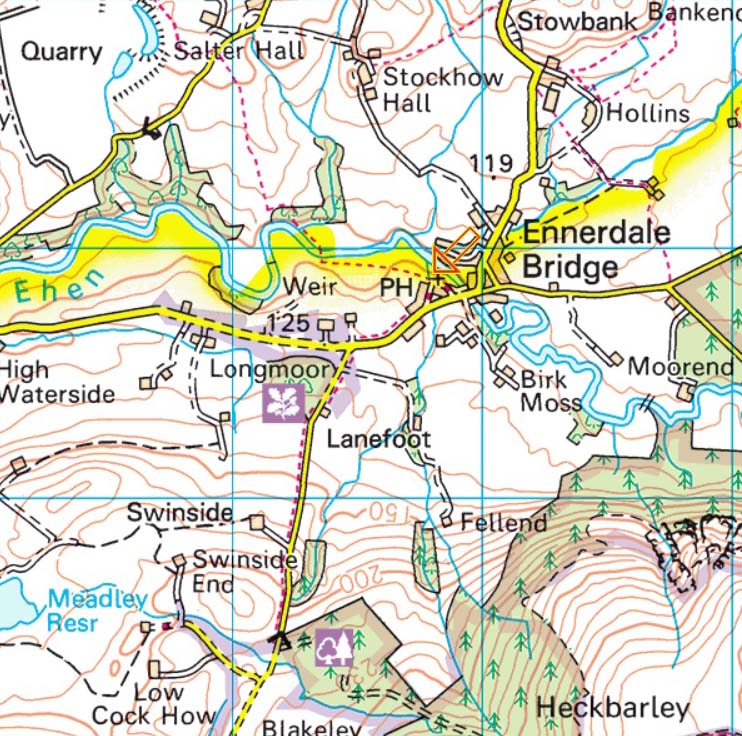
What was left of the mystery animal was taken triumphantly then to the various public houses at Ennerdale Bridge. On the map, the orange arrow indicates “PH” which means public house:

the pub

The locals, thirsty from the rejoicing and the cheering, clearly made serious attempts to drink the place dry:

Beer_Cans-1ccccccccccccccccccc

Not cans, though. They were not invented until 1935. Stick to bottled beer. Foreign, if they stock it:

Dutch_beersxxxxxxxxxxxxxxxxxxxxxx

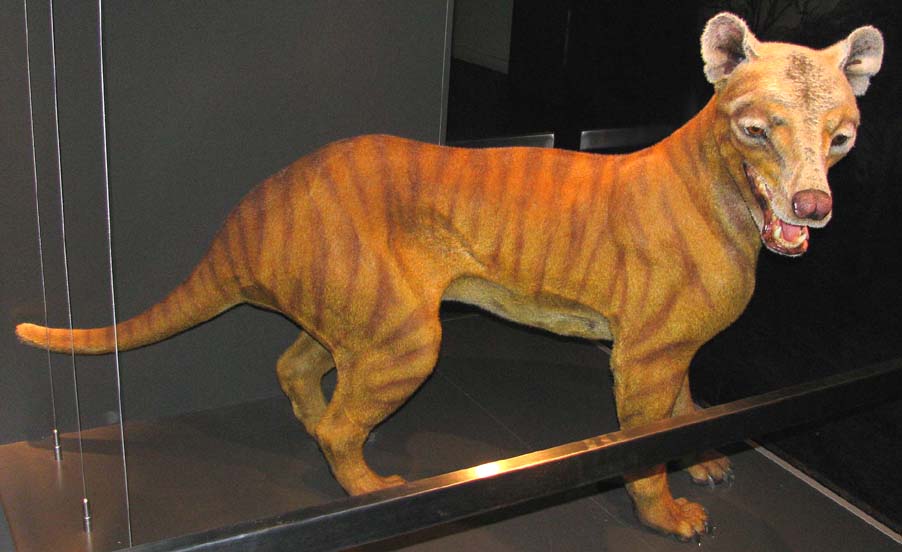
The people who were still sober enough then weighed the animal (eight stone or 51 kilos: a big wolf is 100 kilos). They put it on a cart and paraded it around. It finished up in Hutton’s Museum, at Keswick where the resident taxidermist stuffed what remained of the animal after the Special Forces hunting dogs had all had a free bite each. It was given a collar round its neck, stating that the wearer had been the destroyer of nearly three hundred sheep and lambs in the five months of his Ennerdale campaign.

When the Museum closed in 1876, the Beast, though, was lost, and that was that. Another tale says that the curator of the Museum just decided one day that it was too tatty and too moth-eaten to be kept and the strange stripey Beast was simply thrown in the dustbin:

thylacineimg_1230

Whatever the truth, the Beast was still unidentified. So what was it? Just a dog?
Well…have a think, and I’ll tell you the extremely cunning theory in my next article.
Meanwhile, let’s finish with the Official Song of the Beast of Ennerdale. Unfortunately, perhaps, it has many, many verses, but this is the catchy chorus, sung to the tune of “D’Ye Ken John Peel”:

It was big,
It was strong,
It was eight feet long.
It could leap,
It could bound,
It could outrun any hound.

It had stripes and a tail, and it gave out such a wail,
And you’d find dead sheep in the morning.

6 Comments

Filed under Cryptozoology, France, History, Humour, Science, Wildlife and Nature

The Beast of Ennerdale: Part One

When I was researching the Beast of Gevaudan, and his many, many friends, both in France, Italy and a number of other countries, I was amazed to find “England” in one of the lists. I couldn’t believe it! An out of control animal rampaging in our well-ordered and generally wonderful country? A piece of slander by a lying, jealous foreigner, surely!

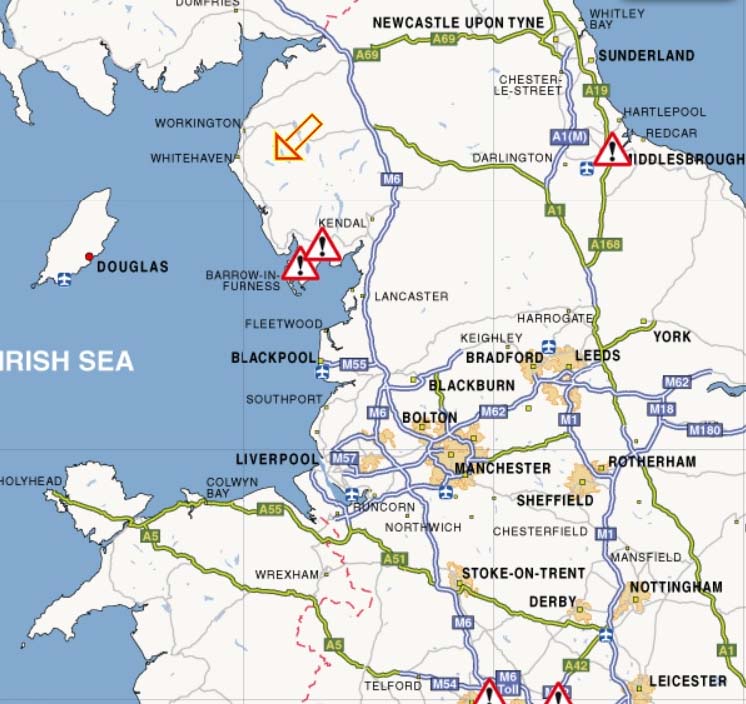
Well, apparently, no. The whole unfortunate business has been kept very quiet, of course, but in 1810, a mystery creature certainly did rampage across the wild countryside of the Lake District in north western England. Here is that beautiful area. Look for the orange arrow:

north of englasnd

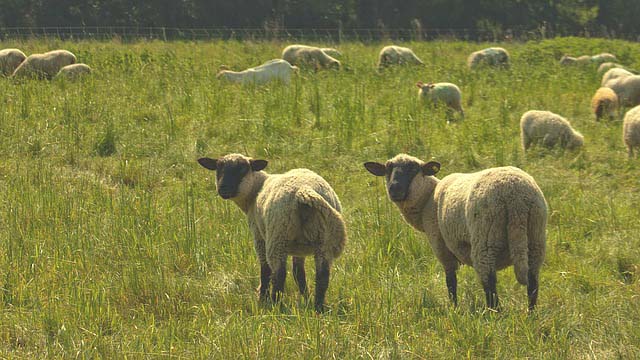
The parallels with the Beast of Gévaudan were striking, the only difference being that the English victims were not pretty young shepherdesses or even little boys, but the sheep themselves.
The animal was dubbed at the time “The Girt Dog of Ennerdale”. To me, though, this is a singularly inappropriate name, certainly from the point of view of anyone who wants to attract tourists, rather as they do with the Loch Ness Monster.

“Where is Ennerdale?” you can hear all the tourists asking. “What does ‘Girt’ mean?” and “What is so special about a dog?”
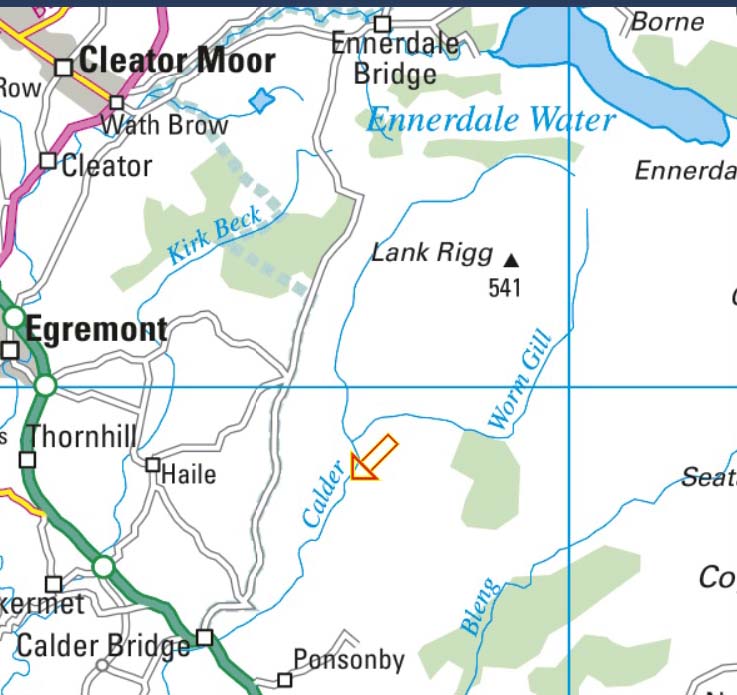
The saga of “The Beast of the Lake District” or, a more striking name perhaps, “The Beast of Ennerdale”, began in spring, or more precisely May, of 1810, when the body of a half consumed sheep was found on the bleak hillside above the lake called Ennerdale Water. On May 10th, Mr Mossop, who lived at Thornholme, to the south of Ennerdale Water on the way to Calderbridge, had a brief glimpse of an unknown animal far away, up on the mountainside. The orange arrow indicates his farm at Thornholme:

arrow = thornholme

Soon after this, an increasing number of sheep began to be attacked. Every night, at least one sheep would be killed.

Clearly, a  monster was at large in the county, known at this time as Cumberland. At first the locals walked the hills, trying to find the animal. They had no success, which was not really surprising, given the extent of the hills, and in some cases, the extent of the forests in the valleys between them. One or two of the men had fleeting glimpses of the Beast, which always seemed to emerge just as night was falling. All they could make out was the animal’s size, which was extremely large. In the local dialect, “girt”, or “gurt” meant “great”, so the Beast was christened “The Girt Dog of Ennerdale”. This is Ennerdale. It is very wild country by English standards:

1280px-Ennerdale
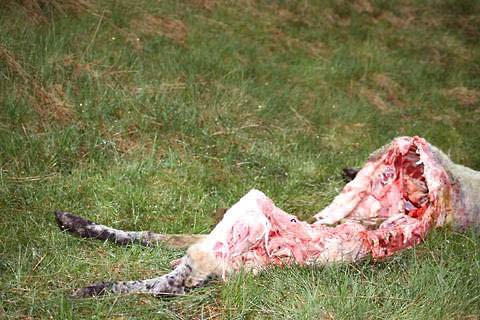
The ferocious Beast killed large numbers of sheep, far beyond what it would have needed for food. Furthermore, it killed its victims in a very unusual way: the corpses of the sheep had their internal organs consumed or even removed, and their blood was apparently drained from their bodies. This was no ordinary dog, feral or otherwise. It was not a fox either. No canid drinks the blood of its prey, and this planted a seed in the minds of a superstitious local population.
Indeed, if these 19th century farmworkers had had wider access to satellite television, I am sure that the spectre of cattle mutilation and UFOs would have raised their ugly heads:

ufo-585761_640

As the situation worsened, more and more men had to leave their ordinary work and their farms, take their dogs, and begin to comb the hills and woods in an effort to find and kill the monster.

Without any success whatsoever. The Beast of Ennerdale was just as elusive and cunning as the Beast of Gévaudan. It did not, on any occasion, stay in an area long enough to attack the same flock of sheep on two successive nights. Its self-secreting powers, the ways it could avoid capture and above all, its propensity for drinking blood soon had the superstitious locals believing that the animal was supernatural. It was soon christened, if that is the word, “The Vampire Dog of Ennerdale”:

snarling

Just like the Beast of Gévaudan, it seemed to have a power over ordinary dogs who normally would have been reasonably courageous. Instead, the locals’ dogs would shrink away when asked to follow the Beast’s trail and, as dogs apparently do with Bigfoot, they often just refused to track.  The dogs were clearly scared stiff of something that they could understand, but their human owners could not.

Sometimes, when the dogs were a little more positive and were actually pursuing the Beast, it would occasionally let just one catch up and then seize it and crush its forelegs in its powerful teeth.  None of the other dogs would then go near it. The Beast was so fleet of foot that it usually only had one dog to deal with at any one time, as all the pursuing dogs would be chasing it at different speeds.
The death toll of sheep continued to mount by the day. Eventually, as a minimum, the unknown killer was slaughtering half a dozen sheep every night. Occasionally the total would mount to eight or ten. This only added to the villagers’ superstitions, of course:

sheep bones zzzzzz

The Beast clearly took sadistic pleasure in ripping sheep to pieces, often to leave them uneaten. On occasion, he would even leave them alive. One of a particular farmer’s favourite rams was watched by the dawn’s first light as the Beast attacked it. The latter ripped out and ate great lumps of best quality mutton from the poor animal’s rear quarters. The crippled victim was then left in the field, unable to fight back, unable even to walk, as its hind legs were paralysed.  Another sheep suffered even worse. The shepherd drove the Beast off as it was feasting and then found that the mutton had been stripped off the ribs behind the shoulder to leave visible the poor animal’s still beating heart.

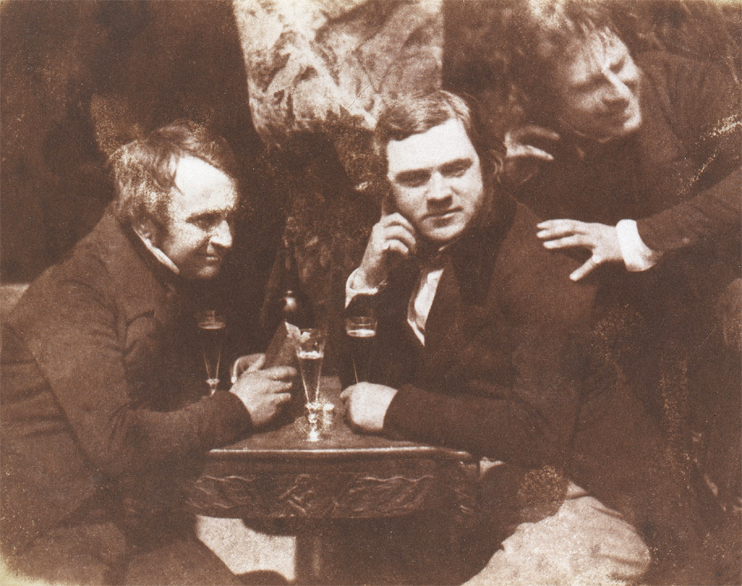
Soon a prominent local, John Russell, put up a £10 reward for what he thought was a huge dog, “Dead or alive” as they say. An even better offer was free beer for the people who kept watch for the Beast. Mr Russell, of course, owned his very own brewery in Whitehaven. He also had a direct interest in the Beast as he was the owner of 3,000 acres of sheep farming land in Ennerdale. Here is a general map of the valley:

ennerdale water

The offer for the combatants of free food and especially, alcoholic drink, was taken up by other wealthy sheep farmers who provided as much as £12 for refreshments. Others showed their willingness to provide free meals for all Beasthunters over a certain fixed period of time at a certain location, such as their farm or large house.
Nothing succeeded. And then, just as with the Beast of Gévaudan, a feeling of panic began to sweep the area. Parents would keep their children indoors all day long, too scared to let them go out and play.
The Beast seemed just so calculating and so shrewd. Cleverer than a mere animal. Cleverer than a fox. No traps ever came close to catching it. It was wary and watchful:

yello eye
People thought that it spent the day high up in its look-out place, watching the scared natives far below in the valley make huge but vain efforts to catch it. The animal’s senses of sight, hearing, and scent, were so acute that it was a rare event indeed, for anybody to come upon it unawares during daylight hours. When it was accidentally approached in daytime, surprisingly perhaps, the animal never did anything vicious towards humans, and always took to its heels. The Beast never uttered the slightest sound, not a single bark, growl or howl.

As happened with its French counterpart in Gévaudan, the dead sheep were all poisoned and left out on the hillside. The Beast was no more attracted to these carcasses than it was to the many traps which were optimistically set to catch it.
One of the more subtle sheepfarmers even tried leaving out a dog on heat to attract the Beast within musket shot, but he had no success with this cunning plan:

nature-50514_640
The male dogs, of course, as soon as they caught the distant scent of the Beast, still continued with their policy of cowering and whimpering. They refused absolutely to follow this strange, ferocious animal.
As the weeks went by and the summer drew towards its close, the Beast was beginning to have a very negative effect. While the men were all off chasing it, the poor cows often had to wait to be milked. Horses too were not looked after properly and often went hungry. Fields were neglected. Years before computer games, the poor little children were confined to their homes as their parents were too frightened to let them out of their sight. And all this neglect had its impact on the womenfolk of the area who tried (I almost wrote ‘manfully’) to make up for their absent husbands and servants.
Finally, a shepherd out on the hillside, watching his flocks not by night but in the cold grey light of the early morning, caught a clear sight of the monster. In actual fact, his description was not desperately helpful, but to anybody who had ever heard of the Beast of Gévaudan, it had some strangely familiar elements:

p_AD48_gravure_bete_14Firstly, the Beast of Ennerdale was pale brown or sandy coloured. It was well built and solid. And it was very large. Its jaws seemed unusually large and wide and it had dark stripes on its back. It was a strange mixture of the features of both a very big dog and a very big cat. It was really quick, and, as they found out later, it possessed enormous stamina.  The Beast was not like anything the scared shepherd had ever seen before.
After this, the Beast seemed to be spotted more frequently. Shepherds and the bravest of their sheepdogs would chase after it up the hillside. Occasionally a group of some fifty or so locals would assemble, seemingly at the drop of a tricorn hat, to set off following their various hunting hounds, racing across the mountainside.
That princely reward of £10 plus free beer for everybody who kept watch for the Beast attracted scores, if not hundreds of professional hunters to the land around Ennerdale Water. Beer, money and undying fame! What was there not to like?

Edinburgh

The would-be hunters, of course, had no success whatsoever. The phrase “Wild Goose Chase” might have been invented for their efforts. At one point there were more than a hundred men and several hundreds of their dogs racing back and forth across the desolate hills. Useless. The killing and the blood sucking and the soft organ eating all continued as before. By the end of the summer, more than 300 sheep had been killed.

Next time: “Chapter Two: This isn’t going to end well”.

14 Comments

Filed under Cryptozoology, France, History, Humour, Science, Wildlife and Nature

Off to the Great War (Part One)

I have already mentioned in a previous blog post that my Grandfather, Will Knifton, emigrated to Canada in an unknown year before the Great War. Conceivably, he was with his elder brother, John Knifton, or more likely perhaps, John went across the Atlantic first and then Will joined him later on. I have only two pieces of evidence to go on.

Firstly, it is recorded that a John Knifton landed in Canada on May 9th 1907. His ship was the “Lake Manitoba” and he was twenty three years of age. His nationality is listed in the Canadian records as English.

On the other hand, I still have an old Bible belonging to my Grandfather, which says inside the front cover,

“the Teachers and Scholars of the Wesleyan Sunday School, Church Gresley, given to him as a token of appreciation for services rendered to the above School, and with sincerest wishes for his future happiness and prosperity. March 26th 1911.”

Whatever the truth of his arrival, Will lived at 266, Symington Avenue, Toronto. He then worked as a locomotive fireman on the Canadian Pacific Railways, between Chapleau, Ontario, right across the Great Plains to Winnipeg. He also talked many times of the town of Moose Jaw, although he never supplied any details that I can remember:

cab paint

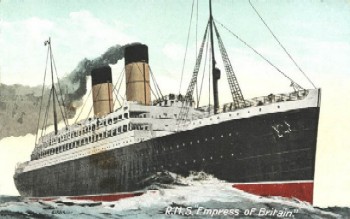
Will joined the Canadian Army on June 12th 1916 at the Toronto Recruiting Depôt. He sailed from Canada for the Western Front on July 16th 1916 on the “S.S.Empress of Britain”:

ss_empress_of_britain

For many years, Will had courted a local English girl called Fanny Smith, the daughter of Levi Smith, a labourer in a clay hole in the area around the village of Woodville, in South Derbyshire, where they all lived. Will wrote to her from Canada and then, during his time in the army, he sent her regular postcards from France. During his leaves from the front, he always returned to see her and they married on July 15th 1917:

This slideshow requires JavaScript.

I still have quite a few of Will’s postcards. He had clearly bought this postcard just before he left Canada for England and the Great War:

montrealbxxxxxxxxxxxxx

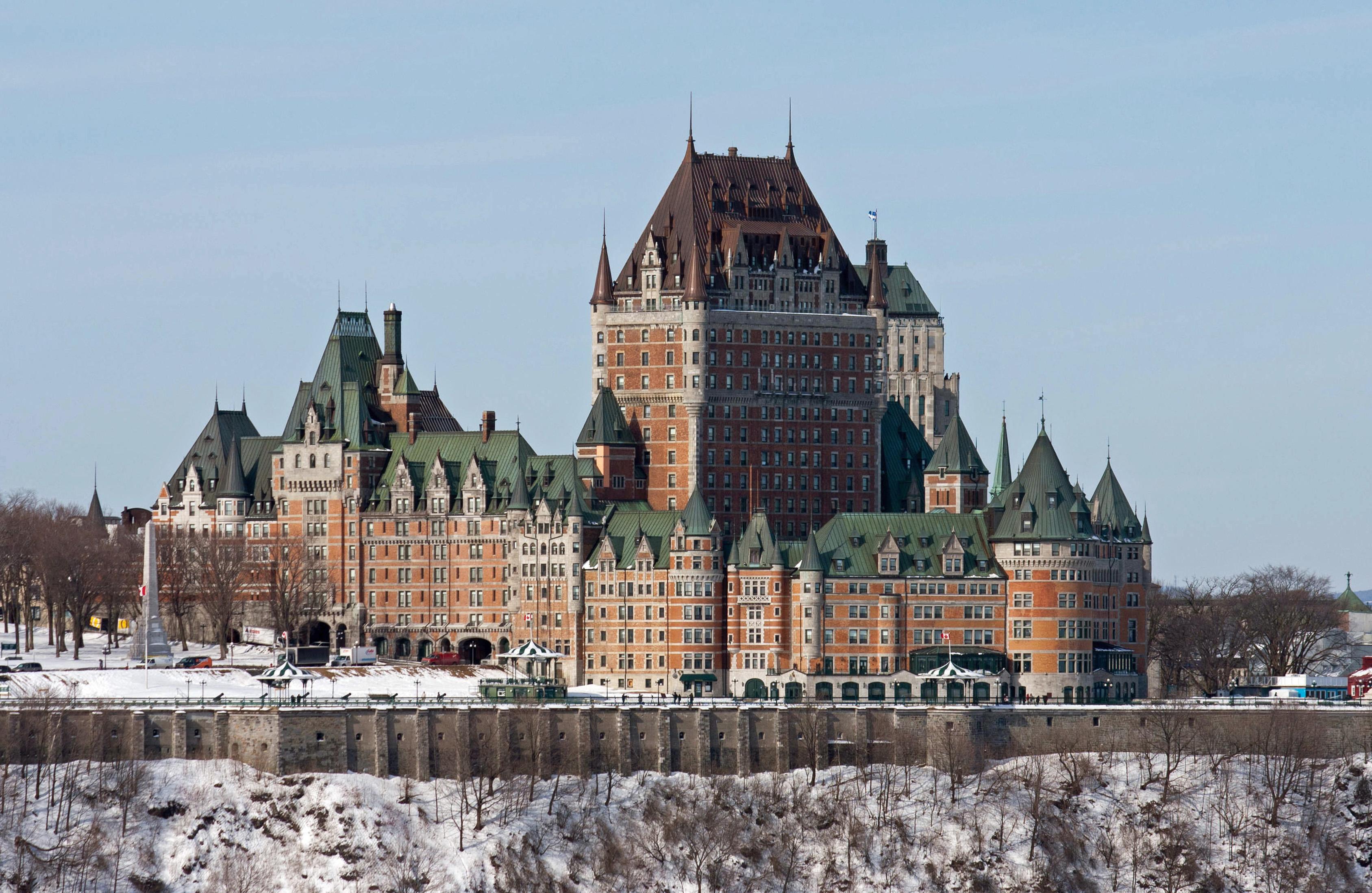
He used to speak enthusiastically about Montreal and especially about the famous Hôtel Frontenac:

Château_Frontenac_02

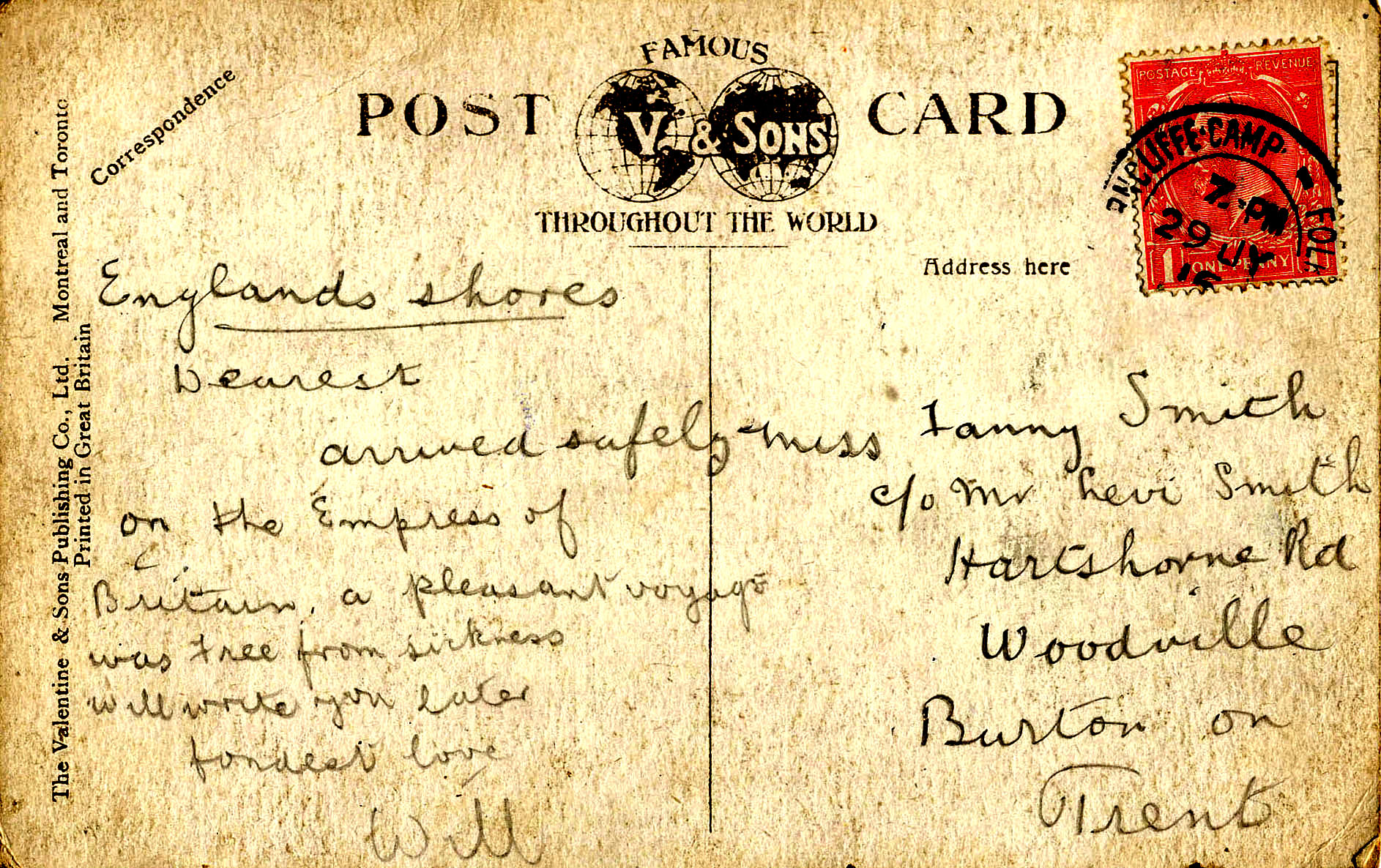
On July 25th, Will duly arrived in England, and was taken on strength into the army at Shorncliffe in Kent. He posted his postcard of Montreal soon after he arrived at Shorncliffe Camp in Folkestone, Kent, at 7.00 pm on July 27th 1916. Here is the back of it:

shrncliffe campxxxxxxxxxxxxxxxxx

The message reads:

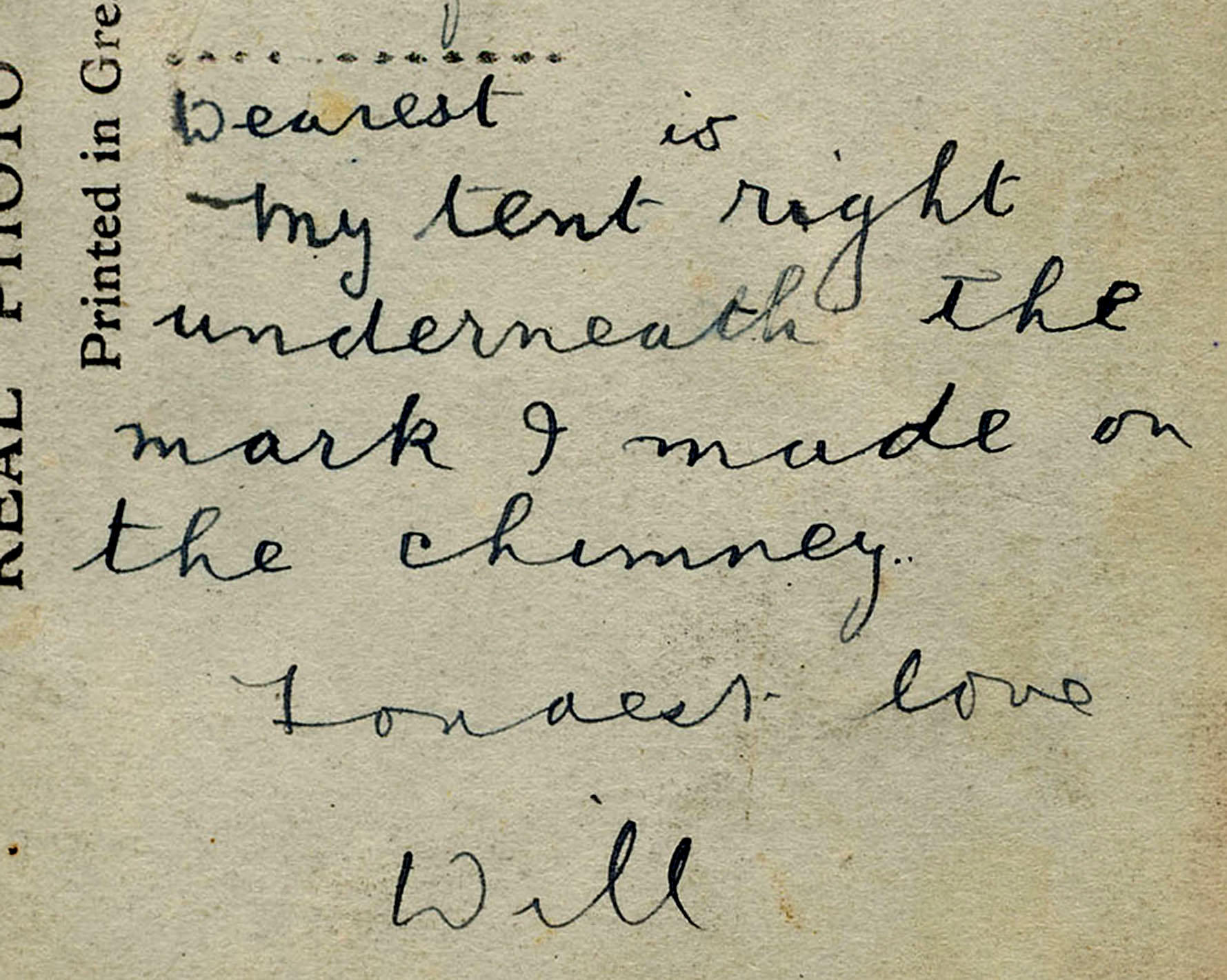
Englands shores   Dearest, arrived safely on the Empress of Britain, a pleasant voyage was free from sickness will write you later fondest love Will”.

Notice how Will is beginning to become a Canadian with his unusual lack of a preposition in “will write you later”.

Shorncliffe Camp was where Will, and many other young men, were to train for France and the Western Front. Having mentioned the idea of being sick in his previous postcard, Will continues the romantic mood with a picture of the men and horses of the Canadian Field Artillery drilling hard on the parade ground:

canadian cannons sepiaxxxxxxxxxx

The reverse is here:

reverse of shoercliffexxxxxxxxxxxxxxxxxxxxxxx

Will manages to make a charming juxtaposition of “men and horses at drill with the big guns” and “Fondest thoughts” to his true love. (And she really was his true love.)

Will began his training at Shorncliffe on July 27th and he remained there until November 17th 1916. The schedule for basic training makes interesting reading nowadays. This particular week was the one ending June 5th 1915, and it is difficult to imagine that Will would have done anything substantially different just over a year later:

Monday 

(6.30-7.00 am)                          Squad drill without arms

(8.00-9.00 am)                         Physical Training

(9.00-9.30 am)                          Bayonet Fighting

(9.30-10.00 am)                        Rapid loading

(10.00-12.00 am)                      Company Training

afternoon                                 as for morning less ½ hour squad drill

Tuesday

morning                                   as for Monday

afternoon                                Entrenching  (2 Companies), remainder as for Monday

Night March

Wednesday

morning                                   as for Monday

afternoon                                 Entrenching  (2 Companies), remainder as for Monday

Thursday                                  all day                      Battalion field training

Friday 

morning                                    as for Monday

afternoon                                 as for Monday

Saturday 

morning                                   as for Monday, less afternoon (holiday)

(If this were a restaurant, you would only go there once, wouldn’t you?)

Will’s next postcard continues the hearts and flowers theme with a photograph of the men’s tents.

Will’s own tent is marked with a cross:

tentxxxxxxxxxxxxxxxxxxxxxxxxx

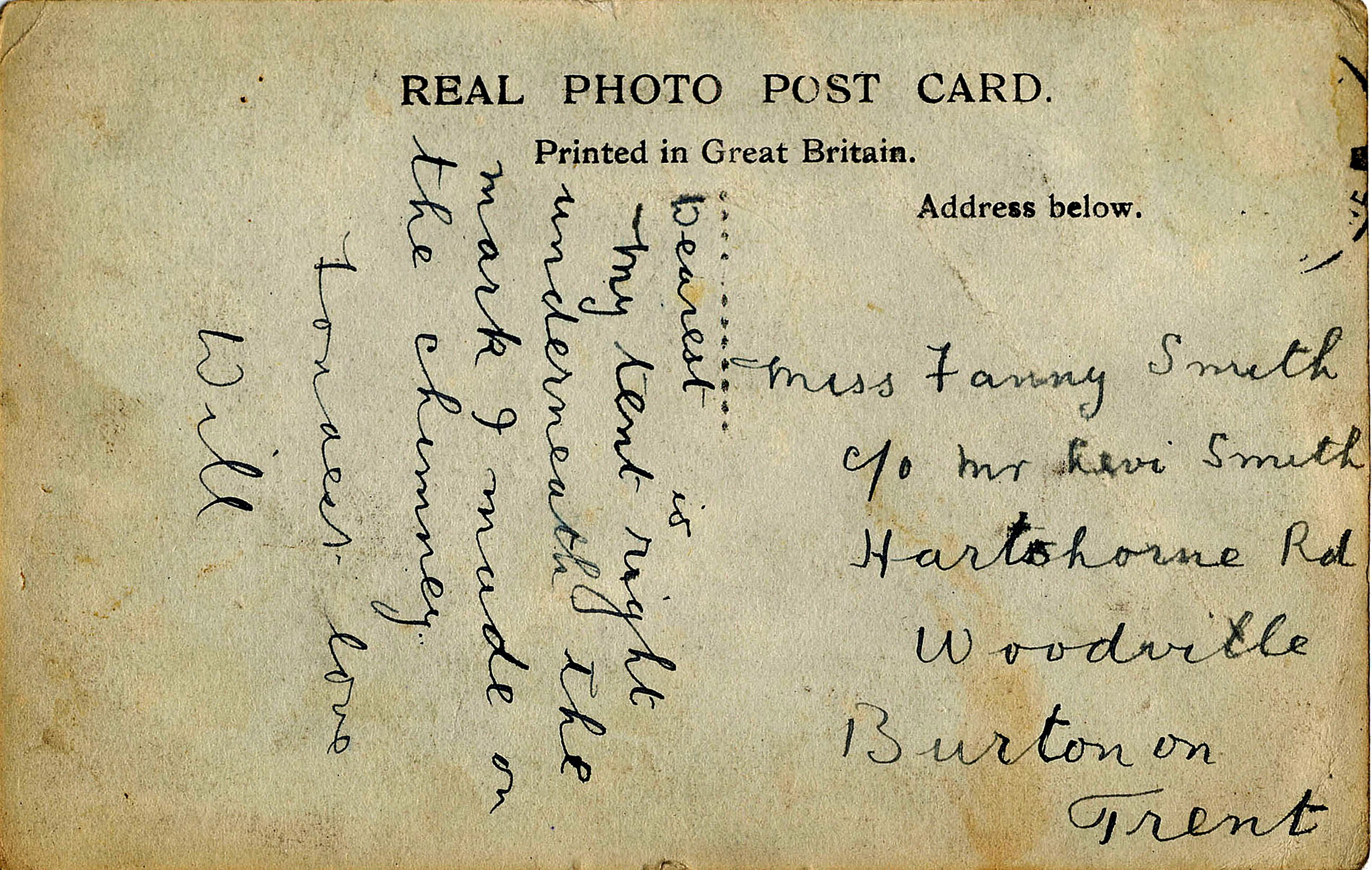
This is the reverse side of this postcard. Firstly, as Fanny received it:

back of tentxxxxxxxxxxxxxxxxxxxxxxx

And here is the message enlarged:

back of tent2xxxxxxxxxxxxxxxxxxxxxxxxxxxx

Will remained at Shorncliffe until November 17th. He sent his girlfriend, or perhaps by now, his fiancée, some more post cards before he left. We will look at them in the near future.


22 Comments

Filed under Canada, France, History, Personal

The Beast of Orléans and his grandson

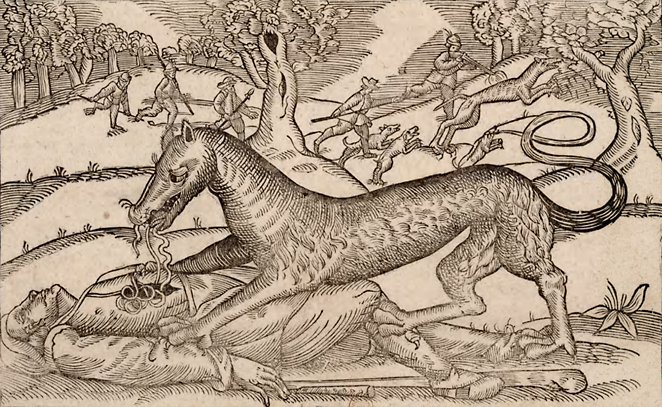
This blog post will introduce you to yet another killer monster (or monsters) in the long, long series of killer monsters which have ravaged different areas of France from around 1550 until the present day. I started this long list by telling you about the Beast of Gévaudan. Then it was the Beast of Benais, the Beast of Auxerre and Trucy, the Beast of Cévennes and Gard and Vivarais and then the Beast of Sarlat. This illustration has been used to represent more or less all of them by the uninhibited copyright thieves who wrote sensationalist pamphlets in the Eighteenth Century:

Bete_de_Cinglais_1632 xxxxxx

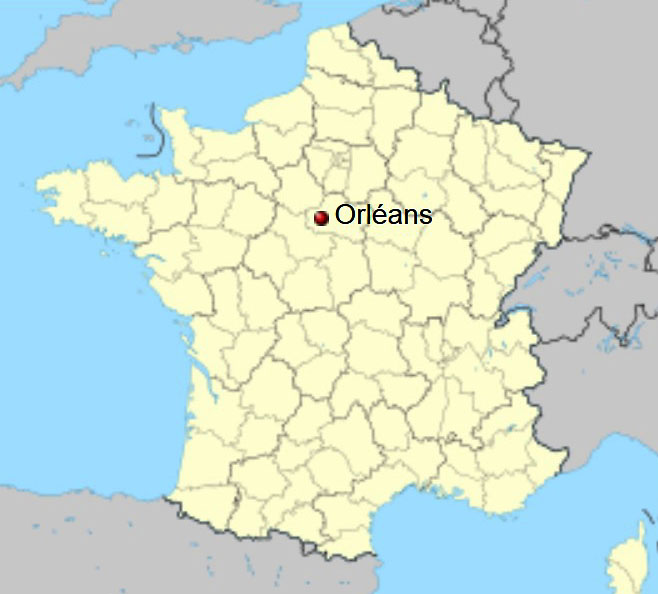
This time I will be looking at the area near Orléans, where a number of “incidents” have taken place over the years:orleans map

Many people at the time thought that the culprits were just ordinary wolves, but, as we will see, there are more than enough anomalies to cause the odd doubt here and there. Once again, I will be looking at a number of websites written in French, offering you my translations and you can then make your own mind up between them.

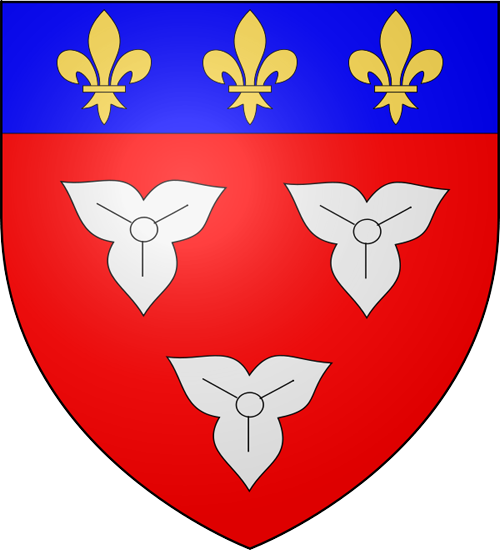
The first website actually begins with a man who was writing about wolves in the region around Orléans. Here is the coat of arms of that beautiful city:

600px-Blason_Orléans_svg.png zzzzzzz

This was in 1911, and the writer in question was an historian called Charles de Beaucorps. He wrote:

“In 1691, the wolves’ misdeeds caused many justified complaints and the Royal Commissioner duly informed the national authorities. Learning that the incidents caused by these predators were increasing every day, he asked the King to allow the inhabitants of ten or twelve parishes to have firearms in their homes.  Normally they did not dare do so for fear of prosecution by the officers of the Royal Hunt. The Royal Commissioner also told them to carry out hunts and asked Monsieur Béchameil, an officer of the crown, to direct them. Nothing was done to stop this scourge: it grew to such an extent that every day people were being killed or injured by wolves. On September 12th, within musket range of the Chêne Brûlé, a parish in Cercottes, a sixty year old woman was devoured. The King’s Prosecutor in the Neuville Guard, who was keeping a register of children killed or injured by wolves using the death certificates written by parish priests, had listed more than 60 young victims in the space of fifteen months. “

Interestingly enough, this was not, apparently, completely outrageous by the usual standards of behaviour of French wolves, animals which had grown accustomed to feeding on human corpses in open charnel pits until as recently as 1820:

wolf bounding

Charles de Beaucorps, however, was nothing if not a very thorough investigator:

“Despite the hunts and more than two hundred wolves killed, the attacks continued for years, right up until 1702 (a total of eleven years). The first teams of hunters obtained hardly any results. It needed the militia and the Duke of Vendôme, supported by thirty musketeers, to stop this scourge.

In 1700, an “Enormous Beast” was killed in the forest and brought back for the Royal Commissioner, leading to the payment of a reward of thirteen pounds.”

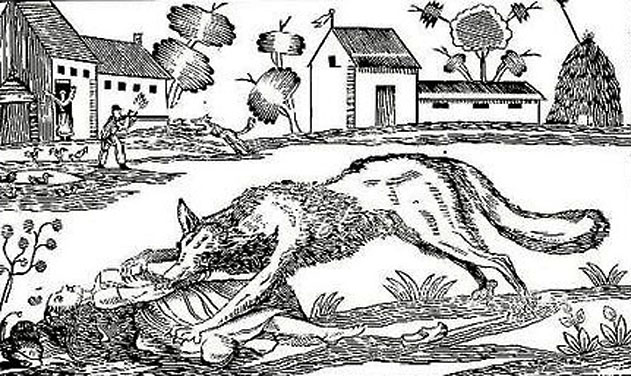
werewolf attack

And nobody, of course, managed to write a precise scientific description of exactly what this “Bête énorme” was. Presumably, though, for it to be considered a “Bête énorme” in the middle of more than two hundred dead wolves, all of which must have looked pretty much the same as all the others, it cannot have been an ordinary wolf.

Around the same time, there were equally strange events in Fontainebleau:

“In 1679, woodcutters were killed and eaten in the Forest of Fontainebleau. The parish registers of Bois-le-Roi mentioned several cases of attacks.”

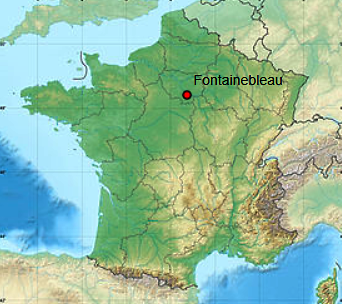
It might have been wolves, but I am surprised that, if it were, they did not say so. As the map shows, these gory killings took place not a million miles from Orléans:

fontaineb

Shortly after this, came the animal which was to become really famous. It was given the name of “The Beast of Orléans”. According to a website we have already visited:

“There were actually two distinct episodes which took place almost a century apart. The first, the Beast of Orléans, happened in 1709, as attested by a letter from Monsieur Polluche Lumina, who lived in the Rue des Hennequins, dated June 17th 1765. It says this:

“I am taking the liberty to write to you about the ferocious Beast of Gévaudan. The more I reflect on all the stories which appeared in the newspapers the more I find a resemblance with what has happened here and what I myself saw in part after the Great Winter of 1709. There appeared an animal which people called “The Beast” which only attacked women and children. There were the same ways of moving around, the same
sharpness and even timidity as the Beast of Gévaudan:

second-beast

The devastation was so serious that in six months there were more than 100 people killed and as many wounded. This provoked the king to send his royal wolf catchers. The officer who commanded them did not bother to follow the trail of destruction which this animal produced and which was normally around the perimeter of the forest.

He decided instead, every morning, to have several hunts in the woods with bloodhounds, after which his men went on a reconnaissance.  Then, without making any noise whatsoever, they positioned marksmen all around the area. The dogs were then released into the forest.

If the Beast was not found, they would go and carry out the same tactics in another area to pursue the Beast. There was hardly any hunt where the men did not kill one, two or three wolves, because the Beast was nothing different from them. Could they not employ the same tactics to destroy the so-called Beast of Gévaudan? I presume that the situation there is just like it was here. Just wolves and nothing more. I forgot to say that they killed a good hundred wolves in this area. In the stomach of several they found hair and other things which proved that they had eaten human flesh. They managed to destroy the species, the wolf, to such a point that there was no longer any question of there being a so-called “Beast” to which fear had given names and features each one more frightening than the last.”

Clearly, Monsieur Polluche Lumina thought that the Beast of Orleans was merely a wolf or wolves, seen under conditions of extreme stress and fear. Such terror supposedly exaggerated the witnesses’ testimony to such an extent that the idea of a monster was born. Not everybody, though, went for this rather simplistic explanation.

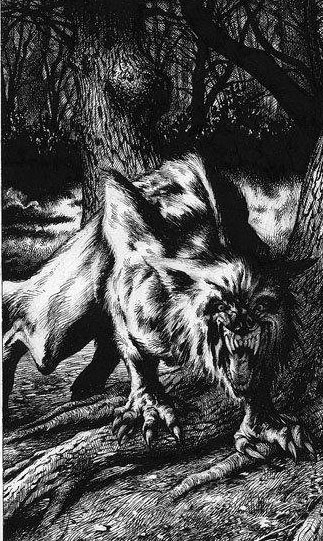
A short pamphlet about the Beast was printed at Chartres by Garnier-Allabre, the well-known local manufacturer of wallpaper and pictures. He may well have interviewed the witnesses about what they had seen. Garnier-Allabre produced this illustration which, to me, looks nothing like any wolf I have ever seen, even a stylised one. It has scales! It is armoured! It is as much like an anklylosaurus as a wolf!:

beast 1709

The leaflet also contained the following text:

“This cruel beast tears and devours everything it encounters in its path and causes desolation among whole families in the areas that it moves through. Last December 25th, near the entrance to a village near Beaugency, it found an unfortunate woodcutter and his wife and his eldest son. The ferocious beast first attacked the unfortunate woman. The poor woodcutter and then his son tried to defend her and a terrific battle ensued. Despite their efforts and those of several other people who rushed to the rescue, the unfortunate woman was killed and several others were wounded.
It is impossible to calculate the number of unfortunate people who were victims of the rapacity of this wild beast; it is covered with scales, and no weapon has any effect on it. Let us pray to God, my dear friends, to deliver us from this monster, and pray, too, for the speedy recovery of those injured by this animal. “

The local historian Monsieur Lottin also makes mention of the Beast and links the Beast of Orléans to the Beast of Gévaudan:

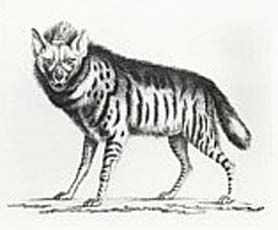
“A cruel beast, believed to be a hyena and which ravaged Gévaudan, Auvergne, Nivernais , Bourbonnais and the areas around Orléans and against which regular frontline troops had operated , was killed at that time , by the Sieur Antoine, a skilful hunter. This ferocious animal had caused the greatest devastation and had inspired universal terror. Coloured pictures, produced by Monsieur Letourny, a paper merchant in the Place du Martroi , who had gained a reputation for this kind of engraving, were sold by the thousand.”

Alas, none seem to have survived.

Extremely close to Orléans is the tiny town of Chaingy. It is represented by the red square:

This slideshow requires JavaScript.

Even nowadays Chaingy has only 3,669 inhabitants. It was here that an unbelievably aggressive creature struck more than a century after “The Beast of Orléans”. The same website continues:

“In 1814, the Beast of Chaingy also gave rise to an abundance of images. There has been much confusion between the two creatures, at least on the level of how the illustrations would represent “The Beast”. This is not surprising: the printers did not trouble themselves over exact details and were more than willing to copy each other’s efforts:

Bete_de_Chaingy_ws1028371882


The case of the Beast of Chaingy took place in 1814. It is possible that it reflected other cases of “Beasts” from a long time before, such as the one described by Monsieur Polluche Lumina which took place a long time before (1709). The Beast of Chaingy is a creature which has been a little better documented :

“On December 6th, 1814 , several women and children who were collecting dead wood in the forest were attacked by a she-wolf . The animal killed two and injured eight more. The Baron de Talleyrand, whose magnificent full name was Alexandre Daniel de Talleyrand-Périgord was Prefect of this area. He ordered a hunt and the beast was slain near Cercottes.”

This is as maybe, but, for me, if this creature was just an ordinary canis lupus, then its behaviour was absolutely extraordinary. Nobody nowadays would expect a group of people to be attacked, or even challenged, in a wood by a lone she-wolf. To then have two individuals killed and eight more wounded is quite astonishing. All I can suggest is that this animal was, as has been said so many times both about the Beast of Gévaudan and about many others:

“C’était comme un loup mais ce n’était pas un loup.”
“It was like a wolf but it was not a wolf.”

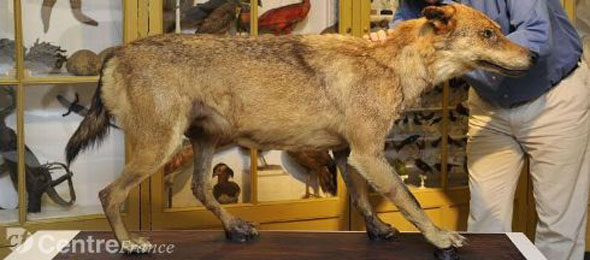
In 1868, the last real wolf in the region was killed by a poacher in Chaingy, a man called Blaise Basset. The body of the animal is now on display at the Museum of Natural Sciences in Orléans.
And here it is:

real bete

Hardly the type of creature to kill two people and wound a further eight. I’m more scared of those polyester slacks if truth be told.
And finally. Let’s hope that this is merely an imaginative drawing of the Beast of Chaingy. If it’s from a trailcam, we could all be in trouble:

imaginative chaingyu


18 Comments

Filed under Cryptozoology, France, History, Science, Wildlife and Nature

If you go down to the woods today, you’d better not go alone…

One more monster to terrorise the local peasantry of bygone France was the so called “Bête de Cinglais” which was also called the “Bête d’Evreux”. Its bloodstained career lasted from 1632–1633, as it terrorised the province of Normandy, bringing violent death to one of the most beautiful areas of a beautiful country. Indeed, there is a sharp contrast here with the wild mountains frequented by so many other of the monsters we have read about. Here is a map of northern France:

basse norm map national

And here is a bit more of a close-up. The green UFO marks the precise location:

basse norm map

As always, the best approach is to take an average of the various French websites. The “Virtual Institute of Cryptozoology”, the “Institut Virtuel de Cryptozoologie”, states that:

“In 1632, about fifteen kilometres to the south of Caen, in the Forest of Cinglais, an animal carried out a reign of terror. Those who survived its attacks described it as a kind of huge mastiff of extraordinary agility and speed. Two historical documents mention the mysterious beast: the “Gazette de France” of March 19th 1632 and the edition of June 17th 1633. The edition of 1632 announces that the predator has already devoured around fifteen people in a month.

Forest rangers have shot at it with their muskets but are unable to cause any injury. The priests are trying to mobilize the inhabitants of the neighbouring parishes but the population is so traumatised that very few volunteers dare to take part in the hunts. The hunters themselves do not want to venture into the woods unless they are in a large group. The 1633 edition of the newspaper announces the killing of an animal at the end of a massive hunt lasting three days, organised by the Count de la Suze, with the participation of between 5,000-6,000 hunters and beaters. The Beast of Cinglais looks like a kind of wolf, but is longer, and more red in colour with a more pointed tail and a wider rump than an ordinary wolf. At least thirty people have now been killed.”

This, conceivably, may be a depiction of the creature:

perhaps cinglais

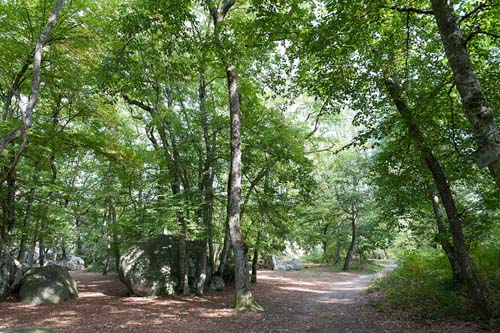
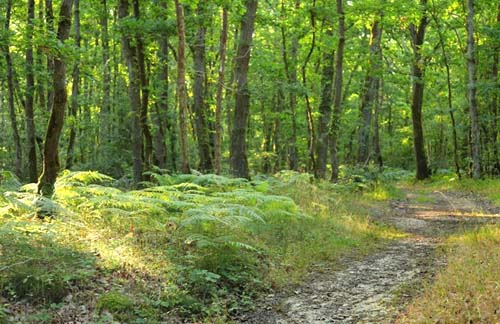
Interestingly enough, there was a further series of attacks only some fifteen years later in the Forest of Fontainebleau. This is a very similar area to the Forest of Cinglais and is not particularly far away at all:

sous-bois-dans-la-foret-de-fontainebleau

The Fontainebleau story is carried by the same website:

“In 1679, woodcutters were killed and eaten in the Forest of Fontainebleau. Records in the parish of Bois-le-Roi mention several cases of attacks.”

A website which specialises in the ghostly aspects of the beautiful Forest of Fontainebleau also carries a few tales of ancient beasts thought to live there:

“There used to exist around the beginning of the sixteenth century a fabulous animal that spread terror in the Forest of Fontainebleau and its surroundings. All indications are that it was a wolf, but some cried “Werewolf”, or tried to blame a magician who was said to be an expert in the art of shape shifting.”

“And then, around 1660, long before the famous Beast of Gévaudan, there was already talk around this area of the Bête du Gâtinais, the  Beast of Gâtinais, a frightful creature which looked like a monstrous wolf. His greatly exaggerated exploits, murdering children and young girls, used to feed people’s fears. Such stories caused many sleepless nights. It was even said that the Beast used to cross the River Seine to come and steal little children and animals on the far side.”

Even in fairly modern times:

“Towards the end of the nineteenth century, an old woman recounted the story of a great evil beast which lived in the forest and which came out from time to time to attack farm labourers, shepherds and flocks of sheep. The monster had to its credit a whole multitude of atrocities, dead sheep, dogs killed and children who just disappeared. The little girl who set off to gather hazelnuts in the woods, and was never seen again. The young nine year old boy devoured near the village of Nanteuil les Meaux”

The website’s author states that:

“It is quite possible that these three stories all refer to the same species of animal, described at different times in history….With evidence of this type, spread over long periods of time….it is not easy to make sense of things, to separate the mythical and imaginary monster from a mere animal.”

That “mere animal”, of course, is the wolf, considered in the France of bygone years to be guilty of far more serious attacks on humans than, say, the wolves of present day North America or Europe. This is the location of Fontainebleau. Compare this map with the maps for the Beast of Caen/Evreaux/Cinglais”:forest of fontaineblasu

As far as Fontainebleau during the first half of the sixteenth century is concerned, there were certainly many people who thought that nobody should ever go down to the woods. If they did, they would certainly be sure of a really big surprise, one with lots of a fangs and an aggressive attitude that needed quite a lot of adjustment. And yes, there were lots of marvellous things to eat, (in a way) but it was better not to go alone. It’s really lovely down in the woods, but perhaps it is safer to stay at home:

The same fascinating website continues:

“In the reign of King François the First, during the first half of the sixteenth century, a certain Sebastian Rabutin was to rid the country of a terrible lynx which was just as murderous as any of our previous beasts. It too was devastating the same region, devouring in turn both young girls and children. This monster, which appears in a fresco in the ballroom of the Château de Fontainebleau where it is depicted as some kind of hybrid between a wolf and a feline, was so formidable that no one dared confront it . For the record, the “loup-cervier”, in Latin “lupus cervarius”, which means deer wolf, is the common name of the Lynx, a big cat which hunts hares or rabbits, but never deer or men.”

I have not been able to trace the fresco in the ballroom of the château, but there is quite a lot to go at:

salle_bal_00

There is absolutely no way though that any of these French monsters was a lynx, as I have already discussed in a previous blogpost about the Beast of Benais.

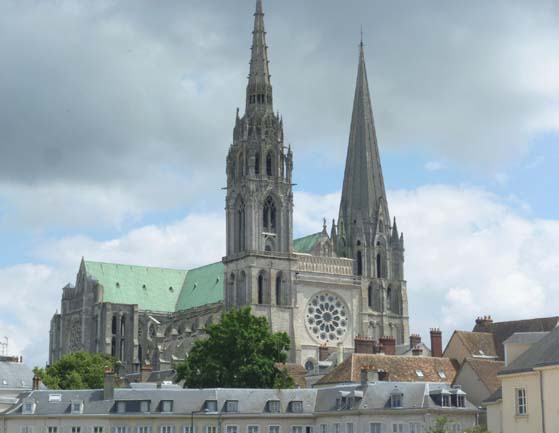
Fairly close to both Caen and  Fontainebleau is the beautiful cathedral city of Chartres:

chartres_cathedralxxxxxxxxx

The “Institut Virtuel de Cryptozoologie” reports how:

“At Chartres, in 1581, a young boy was buried at Ver-les-Chartres, killed by a “wild beast”, “une beste sauvage” whose identity we are not at all sure of.”

If this were not a wolf, and a wolf would surely have been recognised, then it may well have been one of the mysterious beasts we have been examining.

But let’s just forget this supporting cast for the moment. Let’s return to “La Bête de Cinglais”. Another interesting blogpost about this fearsome creature comes from Evelyne Achon:

“The Forest of Cinglais is about 15 kilometres to the south of Caen. The “Beast of Cinglais” is also called “The Beast of Evreux” or “The Beast of Caen”. It refers to a man eating animal behind a series of attacks on humans.

The first attack was mentioned in 1632. These attacks are known through articles in contemporary newspaper. The Gazette de France therefore reported on March 19, 1632:

“News from Caen in Normandy. The 10th of March in the year 1632. Since last month in the forest of Cinglais, and then between there and Falaise, people have seen a wild beast that has already devoured fifteen people. Those who have avoided his fangs report that this savage beast is similar to a large mastiff of such a speed that it would be impossible to run and catch him on foot. He is of such extraordinary agility that people have seen him jump right over the river in certain places. Some people call him Thérende. Local residents and forest gamekeepers have shot at him from range with their arquebuses on several occasions, but without wounding him. They do not dare approach him, or even to reveal themselves, until they are organised in a large group, exactly as they will be today when they hear the sound of the alarm bell, to which all the parishioners from all the parishes around have been invited by their village priests, as three thousand people are assembled to carry out the hunt. “

A gigantic beat was organized in June 1633, with the participation of between 5,000 and 6,000 men. An animal was killed, and the attacks ceased.

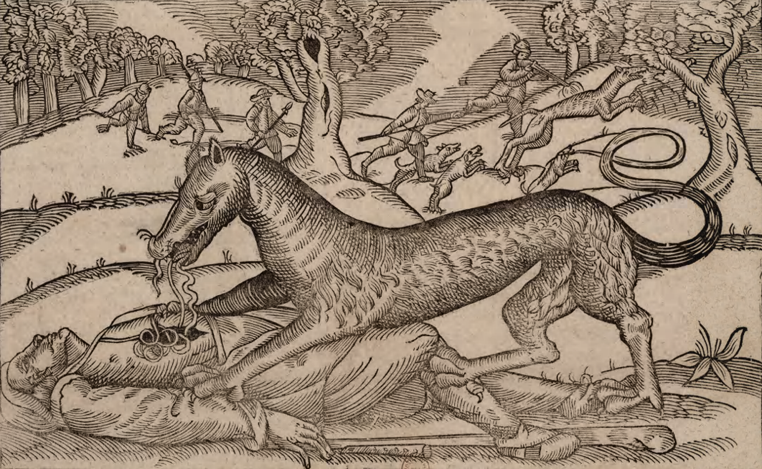
Here is an old engraving of the Beast. Spaghetti for lunch:

Bete_de_Cinglais_1632

The Gazette de France reported on June 17th the death of the creature as follows:

“This raging mad beast which I wrote about last year as having eaten in two months more than thirty people in this forest was believed by everybody to be a creature of magical properties. But the Count de la Suze, having assembled by the order of our Lieutenant General on the 21st of this month between 5000 to 6000 people, has pursued the creature so keenly that after three days it was killed by a shot from a flintlock musket. It turned out to be some kind of wolf but longer, redder in colour with a pointed tail and a rump wider than normal. “

Here is the Forest of Cinglais:

Foret-cinglais1xxxxxxxxxxxxxxxxxxxxxxxx

Wikipedia supplies a little information, but seems, perhaps, rather coy:

“This beast was identified as a wolf, but a mystery still remains. It was described as a kind of red wolf with an elongated body and a more pointed tail than a common wolf. It seemed very quick and agile.”

Another old friend, Vampiredarknews knows the details equally well:

“In 1632, this Beast killed fifteen victims in only one month. It struck in Normandy, where those who escaped described it as a great extremely fast and agile mastiff. It then settled in the Forest of Cinglais, about fifteen kilometres south of Caen. It then killed a dozen or so victims before they organized a hunt that lasted three days and brought together more than 5000 people. It was killed on June 23, 1633 by the Count de la Suze.”

One final website makes a very good point:

“It will eventually be described as a wolf, but a great mystery still hangs around this story ; the behaviour and the agility of the creature are in no way anything like that of a wolf.”

In the fullness of time, I will finish this almost interminable list of “Monsters of France” and draw them all together as the same unknown species. This particular creature is a good example. The Forest of Cinglais, the Forest of Fontainebleau and the charming countryside around Orléans are all pretty much the same kind of environment. The looks and behaviour of these beasts are not unique. Other localities have had strange reddish animals, animals with noticeable tails, animals with extreme agility or with great speed or an ability to leap long distances. There must be a link between them all.

I am very struck by the words of Abbé Pierre Pourcher about the Beast of Gévaudan:

“Everybody who saw it said it was not a wolf. Everybody who did not see it said it was.”

5 Comments

Filed under Cryptozoology, France, History, Science, Wildlife and Nature

The Officer Training Corps 1915 Part Three

This photograph shows the Officer Training Corps in 1915. You might be forgiven for thinking that they are all far too young to have left the school, to have immediately joined the army, trained as officers, gone to the Western Front and then been killed. But you would be wrong. Three of the twelve were to be lost, although this is a much better casualty rate than the rugby team of Boxing Day, 1913. On the other hand, though, it is still a staggering 25%!

Previously, I have written about the eventual fate of the teachers, and I have talked about the fate of the three boys who were destined to die in the Great War. This time I will try to fill in the gaps in our knowledge of the remaining nine boys, all of whom, you will be pleased to know, came back home from the  fields of Flanders.

Once again, here are the names. On the back row of the photograph are, left to right, F.A.Bird, J.R.Coleman, D.J.Clarkson, J.Marriott, A.W.Barton, G.R.Ballamy, S.I.Wallis and W.D.Willatt.

On the front row are, left to right, L.W.Foster, V.G.Darrington, Second Lieutenant J.L.Kennard, Captain G.F.Hood, Second Lieutenant L.R.Strangeways, G.James and R.I.Mozley:

otc 1915

If J.Marriott was John Marriott, then a wild guess says that his father, or perhaps even grandfather, may have been Frank Marriott, an Old Boy of the school who played First XI football from 1868 at least, and then played nine times for Notts County between 1872-1874. Frank’s own father was John Marriott, a victualler, of Warser Gate in Nottingham. In England, a victualler was the keeper of an inn, a tavern or a restaurant, who had a licence to sell alcohol.

G.R.Ballamy was the brother of Harold William Ballamy, the Captain of Football in 1912. The family lived at 17a, Gedling Grove, Nottingham. I will be writing a blogpost about Harold Ballamy in the future. This is the family’s house in Gedling Grove, which nowadays is just behind the northbound High School tram stop:

ballamy 2

S.I.Wallis left the High School for the Army. He became a Lieutenant in the Sikhs/Pioneers and then a Captain in the same unit. He was also at various times, a Captain in the Indian Army Reserve of Officers and the King’s Royal Rifle Corps.

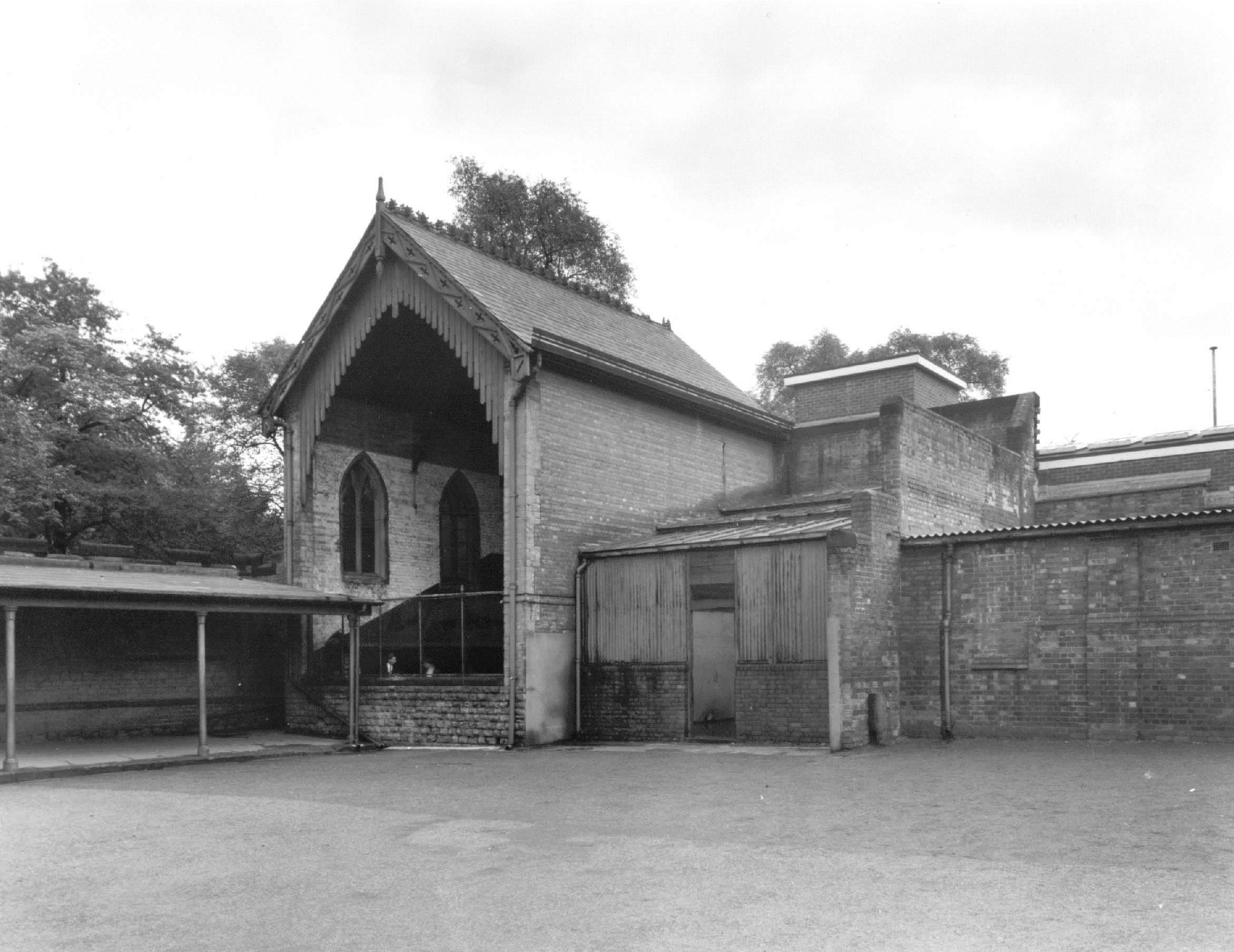
On May 29th 1915, William Donald Willatt was to play for the 2nd XI cricket team against Derby Grammar School 2nd XI. He scored five runs before he was out to Shellard leg before wicket. William was the school Fives champion on one occasion, a title also won by his brother, Victor Guy Willatt. Fives was a Victorian and Edwardian version of Squash, using a fingerless leather glove to bash a ball made of cork, gutta percha and leather. Not a game for softies! Here is the school Fives Court:

best fives

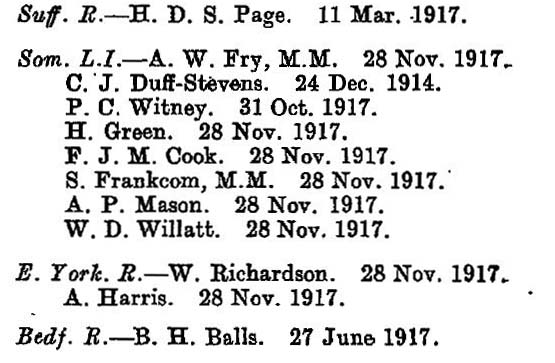
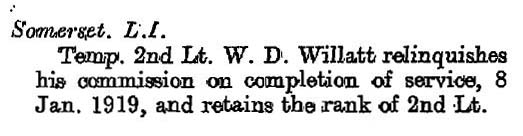
In partnership with a fellow pupil, Roy Henderson, William was later to start a school magazine called “The Highvite”. By Henderson’s own admission, it was “a pretty dreadful magazine”, and it only survived because it was financed by a variety of different adverts. The two enterprising young men went round to canvas support from local companies, shops such as Sisson & Parker and many other businesses. This screen capture shows the moment William was promoted to temporary Second Lieutenant in the Somerset Light Infantry:

Capture   willatt xxxxxxxxAt the end of the war, he could walk away:

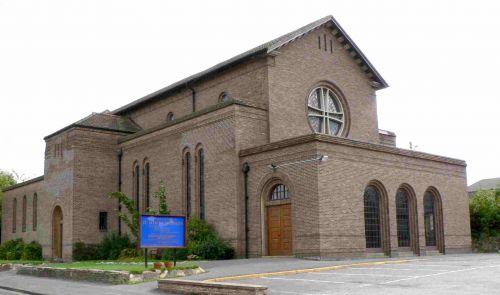
Capture   willatt.JPG  two zzzzzzzzzzzzzzzzzEventually, William became the Vicar of St.Martin’s, Sherwood:

church

At this time, he was living in West Bridgford. In 1949, a W.D.Willatt became Vicar of Edwalton, a post which he held until 1955. This was presumably the same man.

G.James has proved difficult to trace and I have found out very little about him. In the 1912-1913 football season, he played at left half or right half for the 1st XI. The School Magazine reported that he:

 “Plays a good defensive game sometimes, but completely fails to help the attack.”

A year later, in 1913-1914, he played more or less exclusively as a right half. We also have his contributions to what seems a heated debate about various matters of school discipline. At this time, the Prefects were more or less in charge of this aspect of school life:

“On April 29th 1915, at 4.15 p.m., all of the Prefects met to discuss a “revision of the rules of discipline”. With reference to Rule 18, G.James suggested that attendance at the Officer Training Corps be made compulsory. This was seconded by School Captain, L.M.Clark, and carried unanimously. J.H.Boyd, the Captain of School Cricket, then suggested that games also be made compulsory. Again, the motion was carried unanimously.”
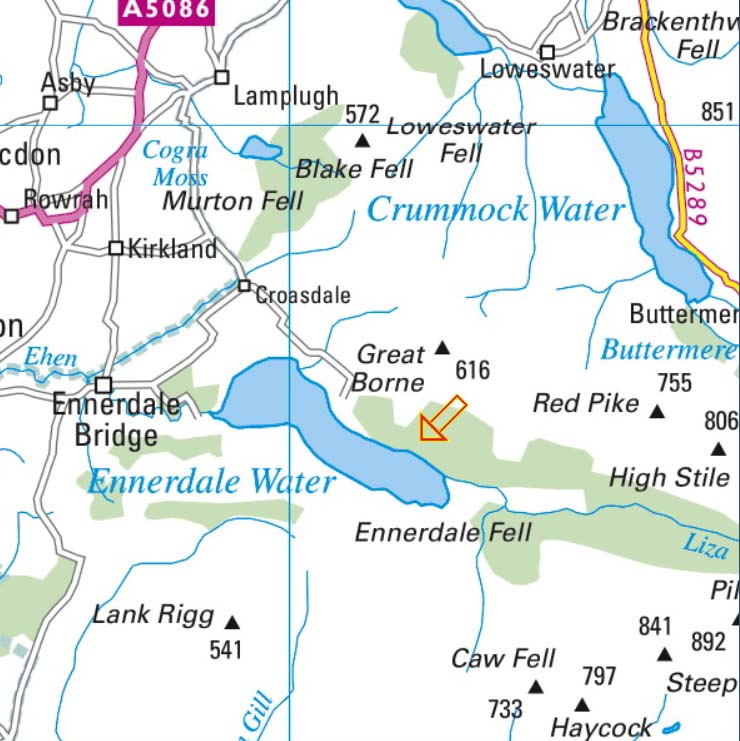
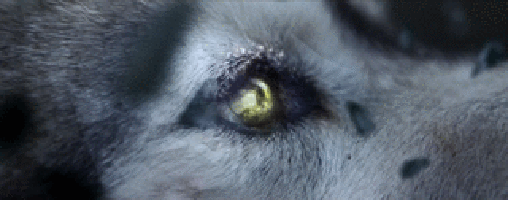
Young James was obviously a young man well ahead of his time, because he then went on to put forward the idea that three afternoons a week should be allocated to games, or perhaps two to games and one to military training:

“Unfortunately, his idea was not supported, the rest of the Prefects thinking that this would involve a too sweeping reform of the school time table.”

Presumably, from a logistical point of view, even with perhaps four afternoons available, it would have been completely impossible for a large proportion of the High School, which now numbered almost five hundred boys, all to play sport simultaneously, at a sports ground designed to accommodate perhaps only a hundred boys at a time.

L.W.Foster, or Lancelot Wilson Foster, to give him his full name, remains a figure about whom I have discovered just unrelated snippets. Before the Great War, the Fifth Form, (Year 11), always used to play their football under cover, in the sheds tucked under the Forest Road wall. They were noted for kicking the ball against the wall in an effort to get past their opponent. The Fifth Form usually played mainly in the eastern half of the sheds:

onexxxxxxxxxxxxxxxxxxxxxxxxxxx

This is the view in the other direction:

one west

Among these fifteen and sixteen year old boys, Lancelot Foster was remembered as a particularly good full back. In 1915, Roy Henderson, of “Highvite” fame, arranged a summer camp at a farm near Grantham in Lincolnshire. Six boys, all members of his father’s church, went with him. They were all Prefects, and comprised three pairs of friends, Harold Connop and Francis Bird, Thomas Wright and Lancelot Foster, and John Boyd and Roy Henderson.

In the Great War, Lancelot Wilson Foster became Lieutenant Foster of the 9th Battalion of the Sherwood Foresters He survived the carnage and in 1929, was living in Buglawton Vicarage, Cheshire, presumably as the vicar.

Victor George Darrington, lived at “The Limes” in Eastwood. He was born on November 25th 1896 and entered the High School on September 23rd 1909, at the age of twelve. His father was William Darrington, the Schoolmaster at the School House in Eastwood. As such, he must surely have taught the young D.H.Lawrence, who was born and bred in this mining village, before continuing his education at the High School in September 1898. Perhaps William Darrington was the person who encouraged the budding young author to sit for a scholarship to the High School:

dh-lawrence

From 1938 to 1939, William was Mayor of Eastwood:

EastwoodShops4s zzzzzzzzzzzzzzzzzzzzzzzz

Victor was in the team which won the Football Eights competition in 1912. He was a regular member of the First Team in the 1913-1914 season, playing at either centre half or left half. The decision having been taken to switch from football to rugby in the Spring Term of 1915, the First and Second Football Teams played their last ever fixtures during the Autumn Term of 1914. At this sad time, Victor duly became the last High School Captain of Football until 1968. During this Autumn Term, Victor was also the Captain of the School.

Not surprisingly, perhaps, given that there was an imminent change of sport in the offing, neither of the two football teams seems to have had their hearts in it, and their results were very disappointing. The Nottinghamian does not appear to have listed any of the players who took part. After the demise of football, Victor was to become the school’s first Captain of Rugby, a post he was to retain during the following season of 1915-1916.

During the Great War, Victor became a Lieutenant, firstly in the Royal Field Artillery, and then in the newly formed Royal Air Force:

T0Badge-Front

He was wounded on May 30th 1916, and then again on September 29th of the same year. He survived the conflict, and in 1922, was awarded a Diploma in Forestry at Oxford. Victor returned to Nottinghamshire, and in 1929, he was still living at “The Limes”, in Eastwood.

I will be writing a blogpost about Victor George Darrington in the future.


3 Comments

Filed under Football, France, History, Nottingham, The High School

The Beast of the Vosges

The Beast of the Vosges is a fairly recent monster to rampage through the French countryside and it has a very different flavour from the Beast of Gévaudan, the Beast of the Cevennes, the Beast of Trucy or the Beast of Sarlat. Its victims, for example, were not human beings but rather livestock, much like the modern monsters of the USA such as the Grassman of Perry County, Ohio or the Devil Dog of Logan County, West  Virginia.

And there were more than just one Beasts of the Vosges. The first struck between 1975-1977 and the second reared his enraged, ugly head from 1994-1995.  And then a third Beast appeared as recently as 2011.

But first, some geography. The Vosges are in the east of France:

carte_francezzzzz

They are mountains which are much lower than the Alps and they do not have the same snow capped peaks. They are more rounded, with conifers and moorland:

SNV84400 zzzzzzzzzz

While not a top tourist destination, the Vosges are famous for their savoury cuisine and their beers, both of which look towards Germany and the east for inspiration.

For the Beast, once again, I will look at a number of French cryptozoological websites and you can take your own average between them. “Vampire Dark News” says:

“The “Beast of the Vosges” is one of the favourite topics of discussion for residents of the local cafés. Everyone remembers the ravages of this strange creature from 1977 to 1988.(these dates differ from other sources).  It killed more than 300 animals, between Epinal and Bresse (an area of over 150 square kilometres).  Poultry houses were attacked, horses were injured, at least 200 sheep were slaughtered … but there were no attacks against human beings.

La_bete_des_Vosges zzzzzzz

The animal would disappear only to reappear later and begin its misdeeds all over again. Was it a wolf?  A rabid dog?  Several stray dogs?  An animal trained to kill?  The mystery was never solved because nobody ever managed to get a really good look at the beast, neither hunters nor the police nor the military despite 26 hunts being  organized to kill it.  The Beast was able to avoid all the ambushes and all the traps.  Shot at several times from fairly closely range, the animal was never wounded or identified. The only conclusion was that it was some sort of canid.  And because of this, stray dogs were killed everywhere.

And then in 1994, a she-wolf that attacked flocks of sheep was saddled with the nickname of the “Beast of the Vosges”.

1994

It was filmed by an amateur and was active for several months before being found dead in 1995. Protected by a Decree of the Ministry of the Environment, the protected animal could not be hunted, at least officially.  But who buried the remains which were found in early 1995?

The name of the Beast of the Vosges was later given to a type of lager produced in the Vosges area.”

(My own translation)

This slideshow requires JavaScript.

Wikipedia adds a few more details:

In December 1975, at Rambervillers, forest workers noticed footprints of a carnivore that they could not identify. In March 1976 , in Domèvre-sur-Durbion, seven cattle and a number of sheep were found slaughtered.  A few days later, cattle were the victims at Moriville and sheep at Hadigny-les-Verrières.  They accused the Beast of attacks on poultry sheds, of  injuring horses and of slaughtering at least two hundred sheep. No attack though was made against human beings  After a final attack on sheep on June 2, 1976 , nothing more was heard of the animal.
A few years later, in 1994 , a female wolf was given the nickname of the “Beast of the Vosges”.  For several months it maintained its attacks on  flocks of sheep, before its remains were found on May 19th 1995 .
In 2011, after an absence of some 17 years, the Beast again attacked flocks of sheep in the Vosges in the village of Ventron; forty sheep were found dead in less than a month.”

(My own translation)

Another well known cryptozoological website adds some extra, more scandalous suggestions :

“It all begins with a report on February 6th 1977 when Lucien Baret, a Federal Guard, is the witness as the beast stalks a roe deer in the woods at Rambervillier. It is some kind of enormous wolf-dog which hunts in the open without making the least noise. And then in less than ten months, not far short of 62 sheep, two lambs and a bullock weighing 300 kg have their throats cut out, and more than a dozen cattle are attacked.

canadien

What seemed at first sight to be a mere footnote in a newspaper, just mentioning  feral dogs, now becomes transformed into an affair with a monster where everybody has their very own something to contribute. First of all the talk is of a wolf or a dog or a lynx. And then suspicion turns to human beings. Fingers are pointed at certain people, but the favourite is Herr Reinartz, the owner of a vast estate which partially covers sections of a more ancient hunting ground, the most frequently hunted area in the region. Furthermore this German industrialist is not particularly lucky because he has a name very like that of a Nazi colonel, Colonel Reinardt, who committed atrocities in the region during the Second World War, only thirty years previously. This is a similarity which fans the flames of old hatreds. Present day Monsieur Reinartz fears for his life. Has he imported a couple of wolves to guard his estate, but then they have escaped, as certain people claim? Certainly not. A wolf only attacks in certain conditions and these were not fulfilled here. The estate of Monsieur Reinartz being a hunting ground, the wolves would have had more than enough to eat without having to go beyond their enclosures in search of what they already had in their cage. A large cage covering several hectares but a cage nevertheless.
And against all expectations, the press goes wild. The German industrialist is attacked. Abuse is heaped upon him. He is insulted on the front page of certain newspapers. The affair goes to court. Had he been of another nationality, things would probably not have degenerated in this way. None of this, though, stopped flocks of sheep being ripped to pieces by the teeth of the beast:

nespapere zzzz

And then one day, roughly one year later,  everything just stops. No more massacres, no more animals to put out of their misery in the first light of morning. As mysteriously as it appeared, the Beast of the Vosges disappears. It flies away. All of this, of course, without anybody really understanding at all why. But after its disappearance, the Beast leaves lots of unanswered questions, and even 32 years later, tongues will not be loosened. There are a few clues perhaps, and doubtless some details are completely true, but the people who know, or who think they know, just add to the legend. One can well imagine what will have been written about this Beast in 210 years’ time when other people look at this business, in exactly the same way that we nowadays look back at the Beast of Gévaudan. How many arguments there will be in future generations between all the different viewpoints !
It is impossible not to see in this business numerous similarities with the Beast of Gévaudan. The same black magic seems to protect the animal which escapes through the fingers of the hunters on every single occasion . Beats are organised, but with only the same effectiveness of those of Duhamel in 1765, despite the fact they are now carried out with methods which the eighteenth century could not possibly have imagined. One day the Beast of the Vosges manages to escape its pursuers because one of the hunters is not at his post. A strange reminder of the indignation felt by the noblemen at Malzieu in 1765 when the Beast of Gévaudan was similarly allowed  to escape its pursuers because a guard was not in the correct place. And as one thing leads to another, people realise that this affair is not, in actual fact, very different from that of the Beast of Gévaudan. There are no human victims to pity, of course, but the chain of events is a mechanism which remains essentially the same for both affairs: first of all, people want to put things into perspective: it’s just a wolf. Everything will soon be taken care of. Then, as the Beast evades beats, traps and poisons, it becomes a tool of vengeance. In the Gévaudan of the eighteenth century the Bishop of Choiseul Beaupré sees the Beast as the avenging arm of God. In 1977, in the Vosges, it soon turns into a dog, radio controlled from some distance. But nobody will say a word about it. Nobody?”

 (My own translation)

This same website, and many others, contain the only three known photographs of the Beast of the Vosges. They prove it, apparently, to have been a canid of some sort, but not definitely a wolf. The account concludes with:

“always this question comes to everyone’s lips: the Beast, what was it? I asked Daniel Jumentier, who was present when the photos were taken, and he himself saw the Beast from afar

aa bete des vosges 1

The animal was probably a wolf dog cross, first or second generation, weighing at least sixty pounds.

vosges_02

It was released to attack herds and flocks to hurt their owners.  Vengance between men, but through the intermediary of animals.  We can see two periods in the attacks: at first the Beast is confined to attacks on the plain, but then goes beyond La Bresse (a mountainous area) where it then goes wild. According to Daniel, one reason for this fit of madness: the loss of its master.”

And of course, unless somebody suddenly decides to speak up and reveal some hitherto hidden secret about this creature, we have reached the end of our investigation. Here some films to keep you going. The ancient ones date back as far as 1977, when Mankind’s existence was only occasionally slipping into colour:

And here is the second:

And this one shows that even a third comeback is not necessarily excessive:

There will be no more Beasts of the Vosges though. The Grey Wolf has now officially returned to the Vosges Mountains, thanks to the conservation efforts of a number of countries in the European Union, including Spain, Italy and Germany. Indeed, the Beast in 2011 was most probably one of the first two wolves who arrived in the Vosges that very year.  “Smile, you’re on Trailcam!”:

ATTAQUE DE LOUP


26 Comments

by | June 10, 2015 · 2:15 pm

“The Memorial: Beyond The Anzac Legend” with Dr Neil Oliver


Recently I have been watching a TV series with Neil Oliver about the Australian War Memorial in Canberra:

poppies

It was called “The Memorial: Beyond The Anzac Legend” and it was on History Channel.
Here is the link.

The programmes examine what is being done to commemorate the centenary of the outbreak of the Great War, and in particular from an Australian point of view, the centenary of the disastrous Gallipoli campaign.

This is an extremely moving set of five programmes and in my opinion by far the best work that Dr Oliver has ever done on television:

oliverxxxxxxxxxxxxxxxxxxxxxx

One episode featured the letters of two brothers initially from Manchester, England who then settled in South Australia and became Australians. The elder brother served as Second Lieutenant John Alexander Raws and his younger brother was Lieutenant Robert Goldthorpe Raws. After Gallipoli, they were both sent to France and the disastrous Battle of the Somme.

Robert was to die on either July 28th or 29th 1916 and John was killed shortly afterwards on August 23rd 1916. Their biographical details are available here. Firstly John Raws and then his brother Robert.
What makes it all so interesting is the fact that the letters home from the two officers have been preserved and can be downloaded from this link.

The best thing is to do is to download them as a 164 page PDF document. I actually right clicked the download link on my computer, and then I selected “Save target as”. I could then choose where the letters were downloaded on my computer. I am no computer wizard, and I found that if I just clicked “Download”, I couldn’t find them afterwards. At least two lost copies are just wandering around inside the machine somewhere.

The whole point about these letters is that, for some unknown reason, they came through to the people waiting at home without the censors doing anything about them. I have read a fair amount about the Great War and I have never come across any letters quite like these.

Some of the things said are just unbelievable by the censorship standards of the day. Just to encourage you to take that first step, here are a few extracts, with the page references:

Page 134

July 16, 1916

There is something rather humorous in this situation, when I actually come to it.

John Alexander Raws, who cannot tread upon a worm; who has never struck another human being except in fun; who cannot read of the bravery of others at the front without tears well into his eyes; who cannot think of blood, and mangled bodies, without bodily sickness, this man, I, go forth tomorrow to kill and maim,  murder and ravage.

It is funny.

But I am glad to go. It is what I set out for, and the mission must be fulfilled:

recruit

Pages 136 and 137

How we do think of home, and laugh at the pettiness of our little daily annoyances. We could not sleep, we remember, because of the creaking of the pantry door, all the noise of the tram cars, all the kids playing around and making a row.
Well, we can’t sleep now because six shells are bursting around here every minute, and you can’t get much sleep between them:
Guns are belching out shells, with the most thunderous clap each time;
The ground is shaking with each little explosion;
I am wet, and the ground on which I rest is wet;
My feet are cold. In fact, I’m all cold, with my two skimpy blankets;
I am covered with cold, clotted sweat, and sometimes my person is foul.
I am hungry;
I am annoyed because of the absurdity of bloody war;
I see no chance of anything better for tomorrow, or the day after, or the year
after;
One could go on and on…..
And don’t think I always sleep on the wet ground. I sometimes get a dry bit. And I had a hot bath yesterday, and I am clean-for the time. By the way, while I was having my bath, another officer of his Majesty’s gallant forces was blown to pieces a little way in front. He had just come out of the trenches and was going to have his bath.

page 140

July 25th 1916

I am still alive but living rather a risky existence, what with shells and bullets and bayonets…..

August 4th 1916

I write from the battlefield of the Great Push with thousands of shells passing in a tornado overhead and thousands of unburied dead around me. It seems easy to say that, but you who have not seen it can hardly conceive the awfulness of it all:

pozieres shatteredzzzzzzzzzzzzzzzzzzzzzz

My battalion has been in it for eight days, and one-third of it is left–all shattered at that. And they’re sticking it still, incomparable heroes all. We are lousy, stinking, ragged, unshaven, sleepless. Even when we’re back a bit we can’t sleep for our own guns. I have one puttee, a dead man’s helmet, another dead man’s gas protector, a dead man’s bayonet. My tunic is rotten with other men’s blood and partly splattered with a comrade’s brains.
It is horrible, but why should you people at home not know? Several of my friends are raving mad. I met three offices out in No Man’s Land the other night, all rambling and mad. Poor Devils!

Chateau_Wood_Ypres_1917

page 141

Myself, I am alright. I have had much luck and kept my nerve so far. The awful difficulty is to keep it. The bravest of all often lose it. Courage does not count here. It is all nerve. Once that goes one becomes a gibbering maniac. The noise of our own guns, the enemy shells, and the getting lost in the darkness.
You see this is enemy country. We’re in the remnants of their trenches and wrecked villages, and the great horror of many of us is the fear of being lost with troops at night on the battlefield. We do all our fighting and moving at night and the confusion of passing through a barrage of enemy shells in the dark is pretty appalling . You’ve read of the wrecked villages. Well some of these about here are not wrecked. They are utterly destroyed, so that there are not even skeletons of buildings left. Nothing but a churned mass of  débris, with bricks, stones and girders and bodies pounded to nothing. And forests! There are not even tree trunks left, not a leave or a twig. All is buried and churned up and buried again.
The sad part is that one can see no end of this. If we live tonight we have to go through it tomorrow night and next week and next month. Poor wounded devils you meet on the stretchers are laughing with glee. One cannot blame them. They are getting out of this.

pages 147 and 148

Just before daybreak, an engineer officer out there, who was hopelessly rattled, ordered us to go. The trench was not finished. I took it on myself to insist on the men staying, saying that any man who stopped digging would be shot. We dug on and finished amid a tornado of bursting shells. All the time, mind, the enemy flares are making the whole area almost as light as day. We got away as best we could. I was again in the rear going back, and again we were cut off and lost. We eventually found our way to the right spot. I was buried twice, and thrown down several times–buried with the dead and dying. The ground was covered with bodies in all stages of decay and mutilation, and I would, after struggling free from the earth, pick up a body by me to try to lift him out with me, and find him a decayed corpse. I pulled a head off one man and was covered with blood. The horror was indescribable:

cotrpses_Somme_1916

In the dim misty light of dawn I collected about 50 men and sent them off, mad with terror, on the right track for home. Then two brave fellows stayed behind and helped me with the only unburied wounded man we could find. The journey down with him was awful. He was delirious. I tied one of his legs to his pack with one of my puttees. On the way down I found another man and made him stay and help us. It was so terribly slow.

page 153

Well, I’ve had my whack and enough to last a life time. I think one could call it a crowded time. Shells—millions of shells, shells all day and all night, high explosives. I want to put somewhere in here that Goldy fell at Pozières, or rather beyond it. Shrapnel, minenwerfers, whizz-bangs, bombs, tear gas shells, gas shells, sulphur shells-and thousands of gaping dead:


The stench, and the horridness of it can but be mentioned. I have sat on corpses, walked on corpses, and pillaged corpses. I got many interesting German souvenirs and could have secured cartloads from their trenches, but I lost most of what I took, and usually was too busy to pick up anything. I lost nearly all my equipment and clothes and with them my curiosities, but I brought back one bonzer souvenir that I did not expect to bring back—myself.

You always told me I would stick it all right, and I did, but I’d give anything to be out of it for good. All of us would. I saw strong men who had been through Gallipoli sobbing and trembling as with fever–men who had never turned a hair before. The fact that it was all so new to me probably helped me enormously. Goldy fell in the first hour, before I even saw him. I reached the same ground next day.

I worry that if we are not careful, we will finish up celebrating the Great War and our eventual victory over the Germans. This collection of Australian letters will go a long way in preventing anybody from making that ridiculous mistake.

11 Comments

Filed under France, History, Writing