Category Archives: Personal

Three war crimes, two Sunderlands and one Ashley Wilkes (3)

Last time I was explaining the connection between the Short Sunderland flying boat and “Das Fliegende Schtachelschwein” aka “The Flying Porcupine”.

This thorny porcine epithet comes from an aircraft which was based at Invergordon in north east Scotland in 1940. My story will be based primarily on the work of John Robertson in 2010. I had never heard any explanation of the nickname and it is a tale of heroism well worth telling and re-telling, believe me.

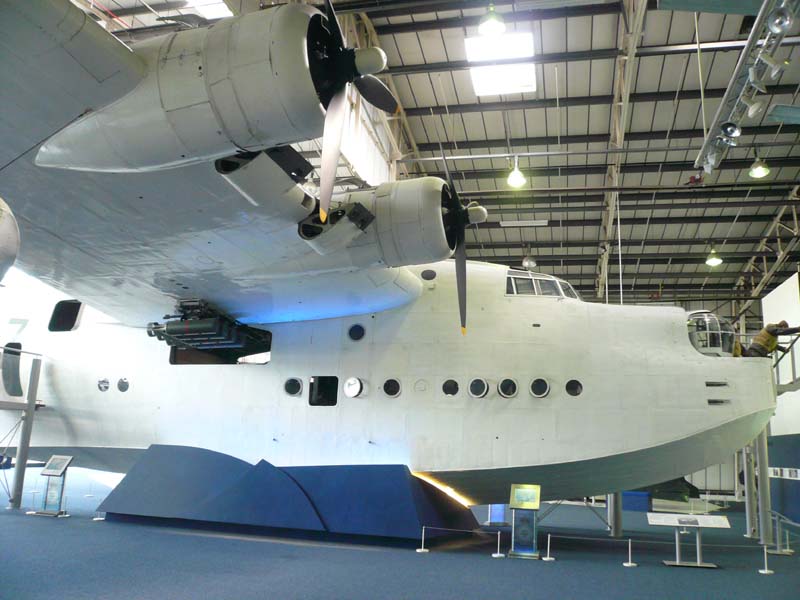
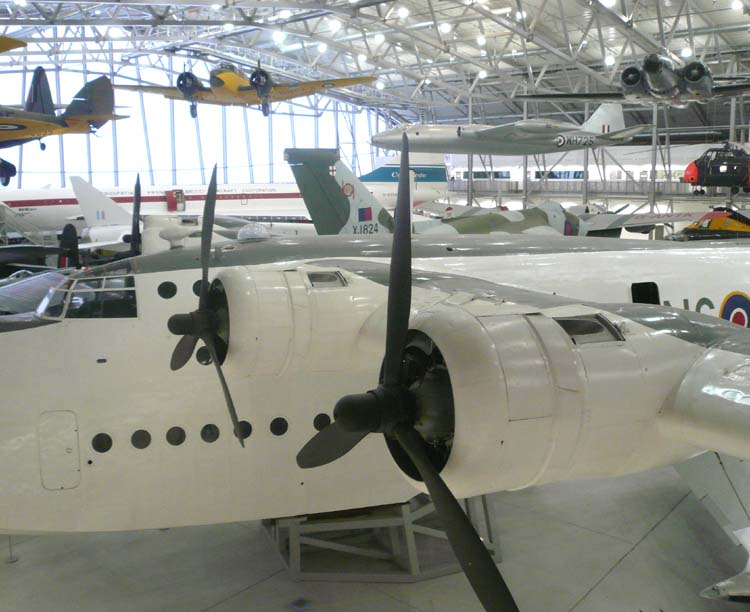
The particular Sunderland was N9046. It belonged to 204 Squadron and its squadron letters were KG-F. Here it is, although it seems to lack the KG-F:

The crew left their northern Scottish base on April 3rd 1940, tasked with carrying out a ten hours protection patrol, looking after a convoy bound for Norway. There was absolutely no sign of the enemy, until two Junkers Ju88s, probably from II./Kampfgeschwader 30, appeared at low altitude over the water, seemingly having arrived from a base in southern Norway, or perhaps in Denmark. Here is a nice Junkers Ju88 in full-ish colour:

And here’s the Airfix kit box:

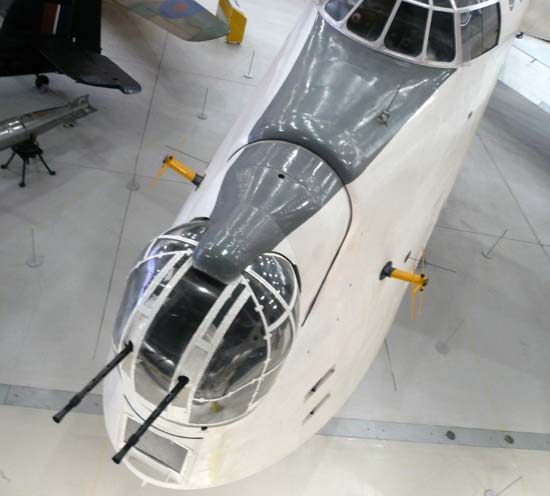
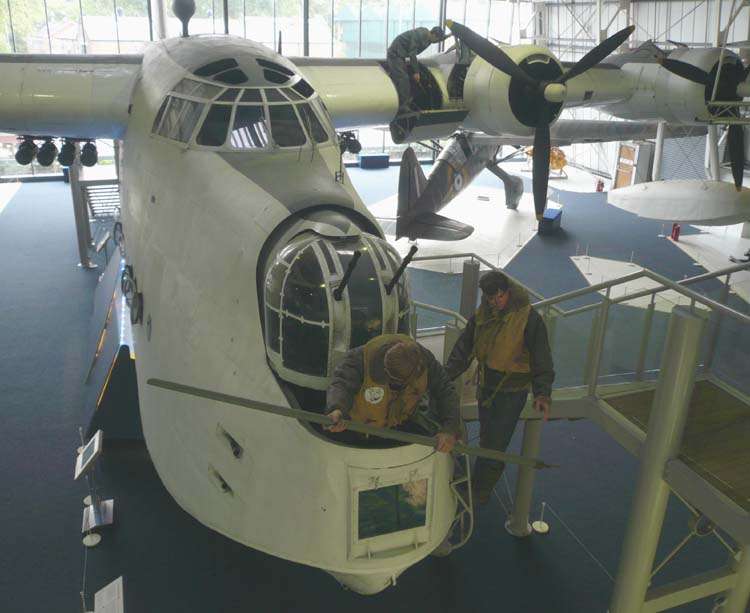
Seeing the Sunderland, one of the two Ju 88s made a head on attack but the Sunderland’s front turret opened up and the two Junkers aircraft seemed to take flight into the leaden clouds. Here’s that front turret again, with its rather light .303 guns.:

Four more Junkers then attempted to attack the ships but they were driven off by the convoy’s various defences. Less than a quarter of an hour later, six Junker Ju88s came in, four of them almost certainly Ju88A-4s. Two of them came for the Sunderland which went right down to the water to make itself a more difficult target. That didn’t stop the Germans who both attacked fiercely, but the flying boat’s gunners drove them off and they eventually fled.

The situation had now become dramatic enough for it to form the basis of a modern computer game:
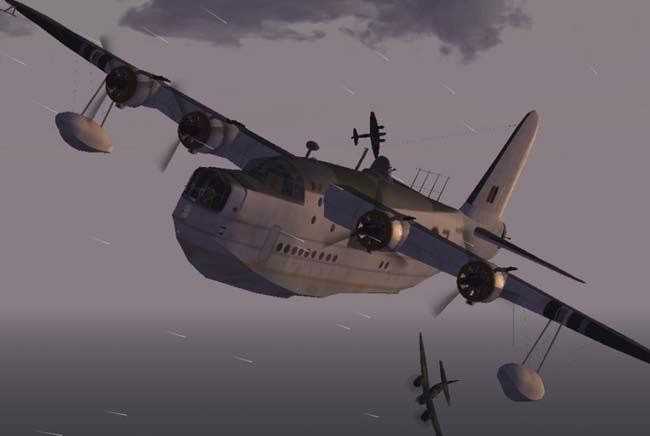
The other four Ju88s, having already released their bombs, then made a line astern attack on the Sunderland but the rear gunner, Corporal William Gray Lillie, with his slightly heavier 0.5 machine guns sent the first one spiralling in flames into the cold, cold waters of the North Sea. Ignore the trees. It’s actually seaweed:
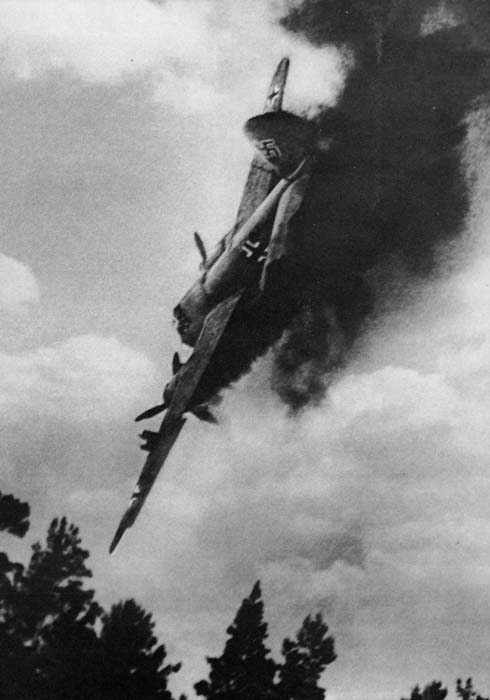
Corporal Lillie blasted the second German in his port engine which was soon pothering black oily smoke and flames. The German pilot left for his land base in Norway, uncertain if he would reach it with only one engine performing properly. In actual fact, he was forced to crash land in the as yet unoccupied northern section of Norway where the crew were forced to set their aircraft on fire before being arrested and interned.

Rather imaginatively, the final two Ju88s then attempted to drop their bombs onto the Sunderland. They missed and finally cleared off home.

N9046 reached Scotland safely and had no problems until Wednesday,  December 11th 1940 when, riding at anchor in Sullom Voe in the Shetlands, it suddenly caught fire and was completely destroyed.

Here is brave Corporal Lillie:

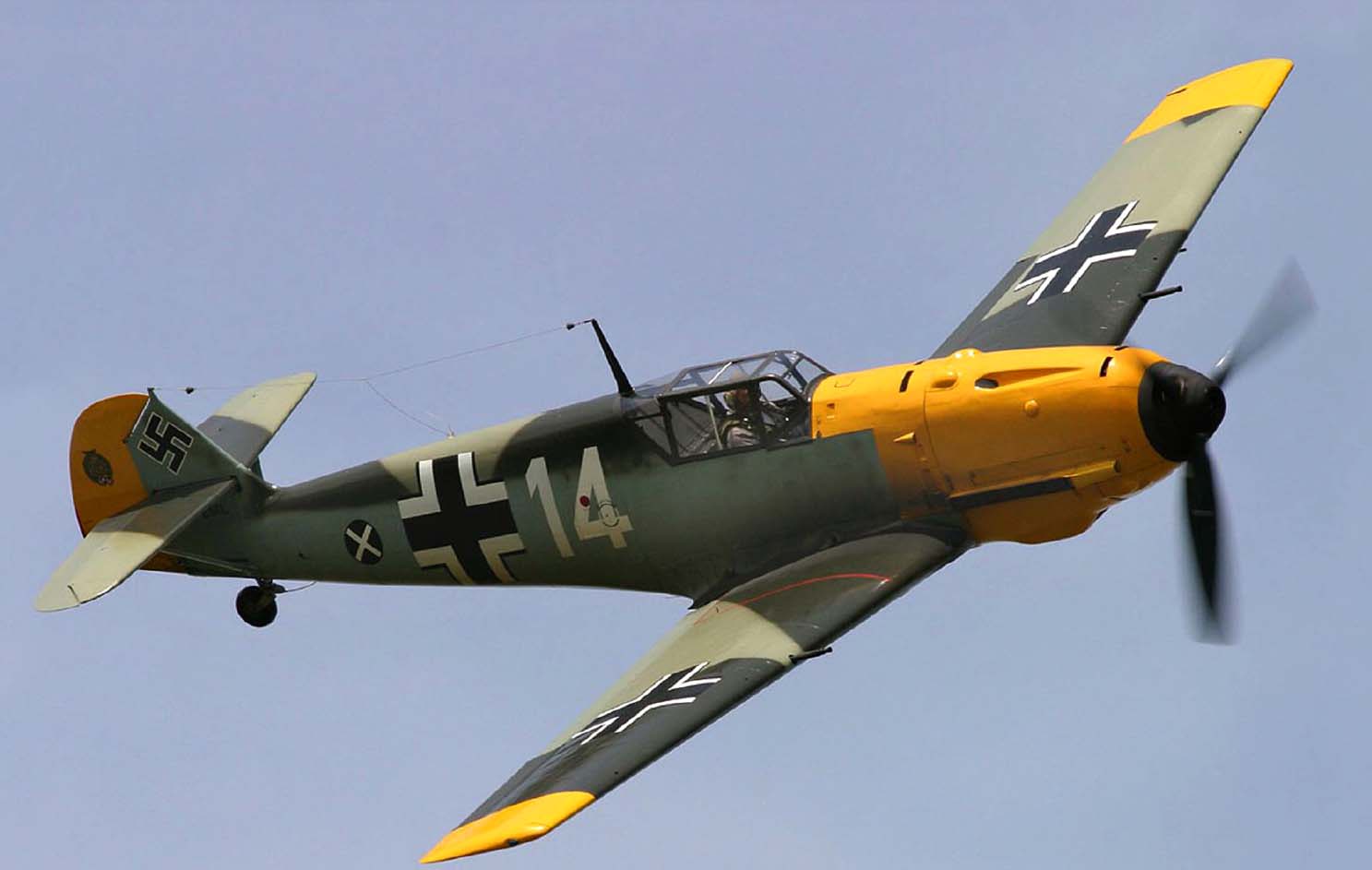
Did he survive the war? Well, sadly, no. He was killed in combat on July 21st 1940, shot down by a Messerschmitt Bf109 of 8./JG77:
Corporal Lillie was the rear gunner in Sunderland N9028. They had been sent to Trondheim in Norway on a clandestine reconnaissance mission to check the submarine base and to see if the Gneisenau had left the port. Here it is:
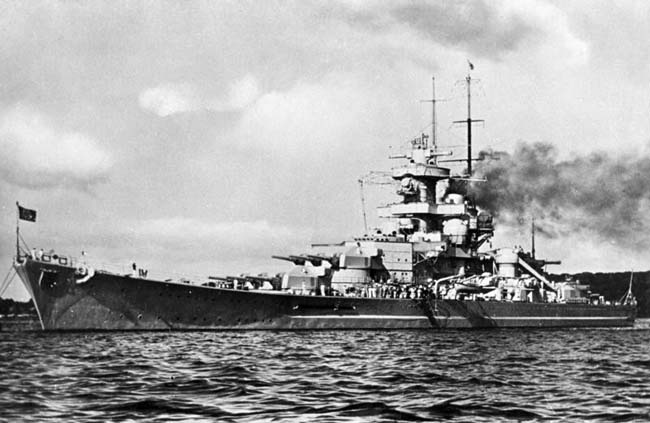
Next time, I will show you how a suave English actor is connected to the Short Sunderland and, indeed, the Junkers Ju88.


24 Comments

Filed under Aviation, Cornwall, Criminology, Film & TV, History, Personal, Politics

The place where I grew up (4)

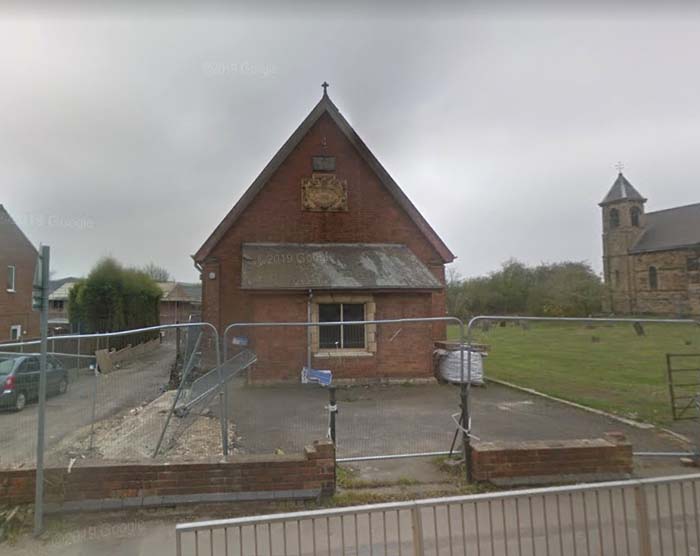
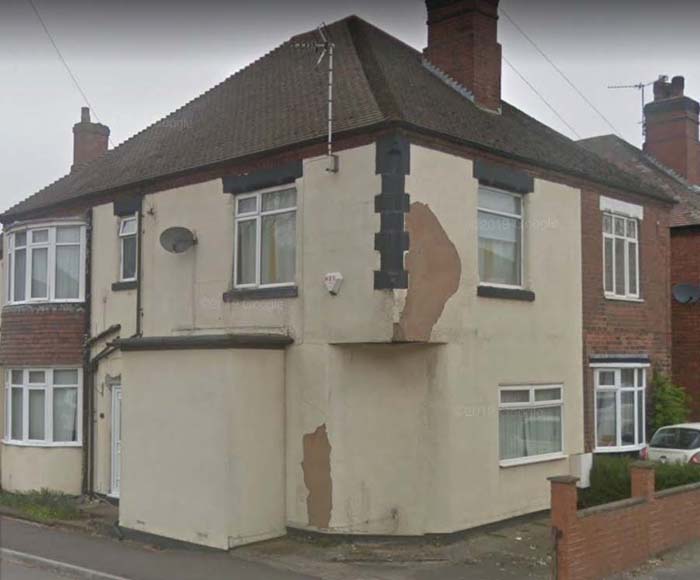
Last time we were walking through my home village of Woodville, down to the school and the church. Now, though, we return to the High Street, the most important street in the village. The first shop on the left was Ormes’s. Here they sold boiled ham, crusty bread, ice cold milk and cream cakes. Hot ham hocks were delivered to the shop, I think, on perhaps a Monday or a Tuesday, and there were also special arrivals of savoury ducks, which were very large meatballs, on a Monday and a Thursday. The manager here was Eric Boss, a man who could out-flirt and out-innuendo even the Co-op butcher. Here’s Ormes’s. As you can see, it too is nowadays derelict:

There’s one Eric Boss story that I cannot not tell you.

“On one occasion, my grandfather, Will was pushing his huge old fashioned wooden wheelbarrow up Hartshorne Road towards the Toll Gate at the top of the hill. It was full of clay, and weighed a colossal amount. This, of course, was of little concern to Will, who was extremely strong, having spent his entire adult working life carrying huge quantities of wet clay on his back at Knowles’s and at Wraggs.

Down the hill came Eric Boss, the manager of Ormes’ grocer’s and cake shop, and a middle aged “Jack the Lad”, a man with a great eye for the ladies. He was always chatting them up as he served them. When he met Will, he obviously saw it as a chance to show off, for he said to him, “Hold on there, old man, I’ll give you a hand.” He reached down to grasp the handles of the barrow and take some of the weight off my apparently frail old grandfather.

Imagine then his embarrassment, when he could not even lift the wheelbarrow legs off the ground.”

Next door to Ormes’s was Taylors’ newsagents, run by Albert Taylor and his wife. As you can see, it too is nowadays derelict :

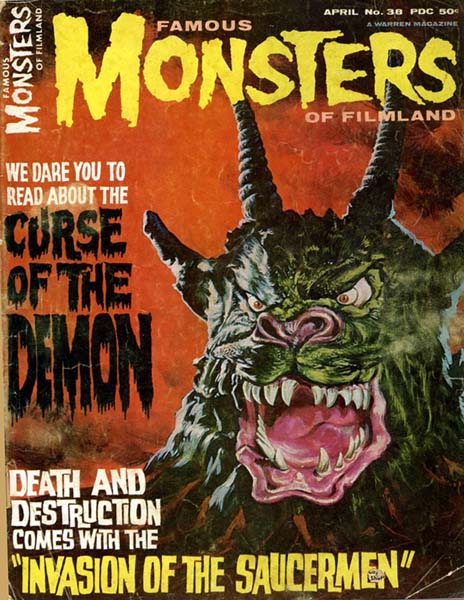
Among many other products, Taylors’ sold magazines from America such as “Famous Monsters of Filmland”:

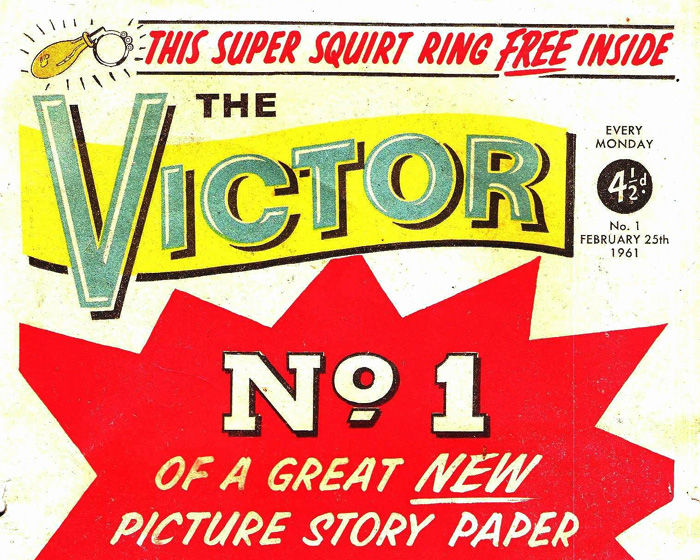
And I well remember having to go up to Taylor’s to pre-order my copy of the new British comic for boys, namely “Victor”, complete with free gift, a plastic presentation wallet full of postcard sized photographs of the great football and rugby teams of 1961-1962:

Next on the left was Renée’s fish and chip shop, with her fabulous fishcakes, made almost exclusively of potato, and her special batter, imported daily from Derby by special van in special plastic buckets.
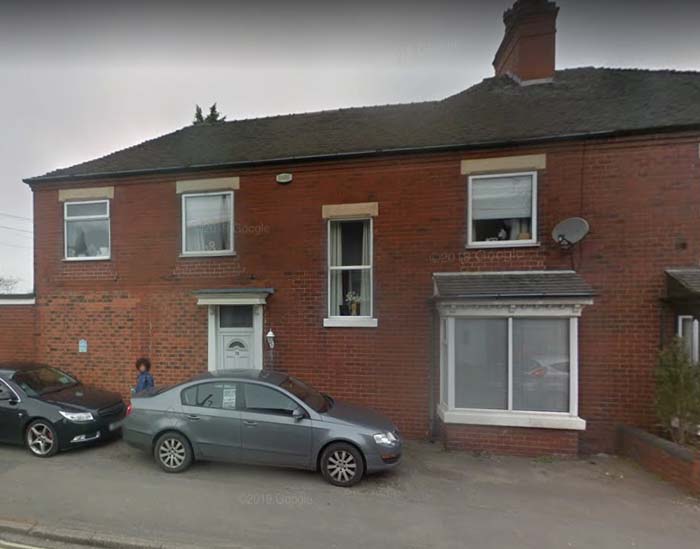
Here is Renée’s today:

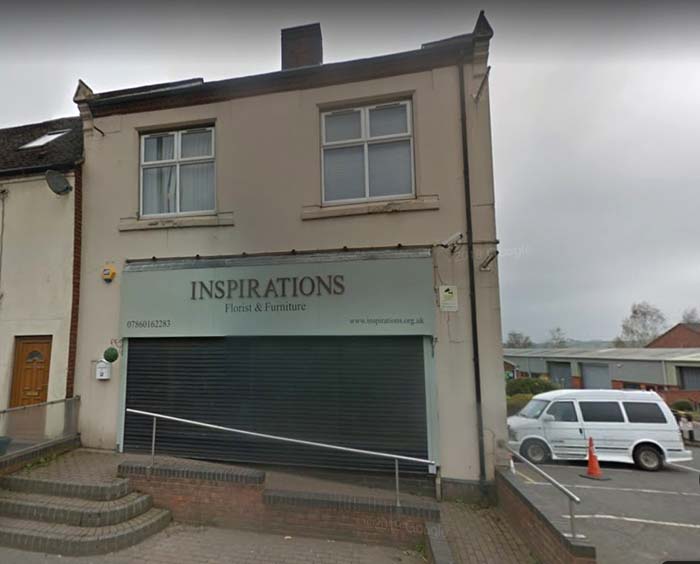
After Renée’s fish and chip shop, with her fabulous fishcakes, came the Viking Coach Company which took clubs, societies and just ordinary passengers all over the country. A holiday in Scarborough. A fortnight on the Isle of Wight. A visit to a show in London or off to Birmingham to see “Godzilla: the Musical”. Alas, the Vikings are no more. They are now a flower and furniture shop where business is so good that they are closed at eleven o’clock in the morning on a Friday:

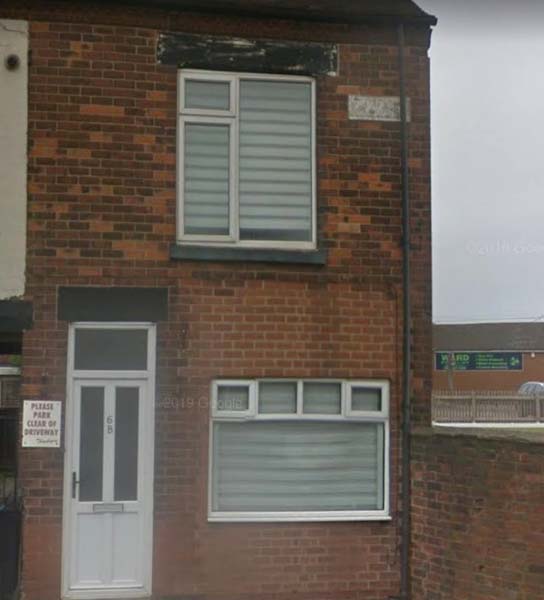
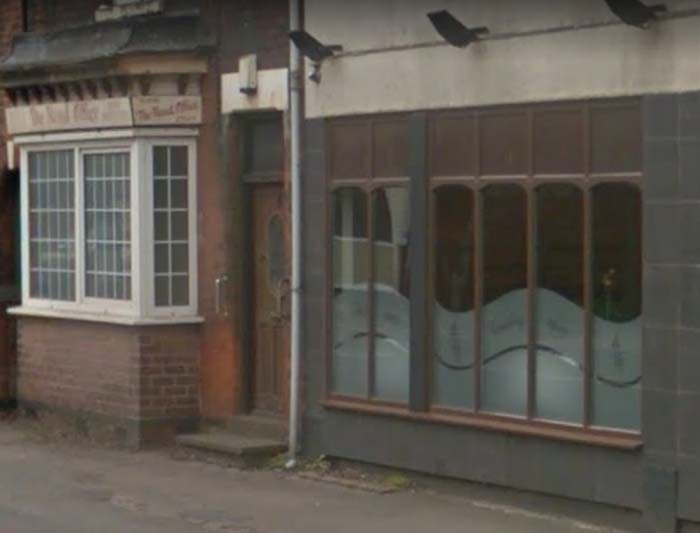
Opposite Albert Taylor’s newsagents, was, I think, a dry cleaners, As you can see, it too is nowadays derelict :

Next door was Charlie Fowell’s barber’s shop.  Strangely, it is also closed this fine Friday morning:

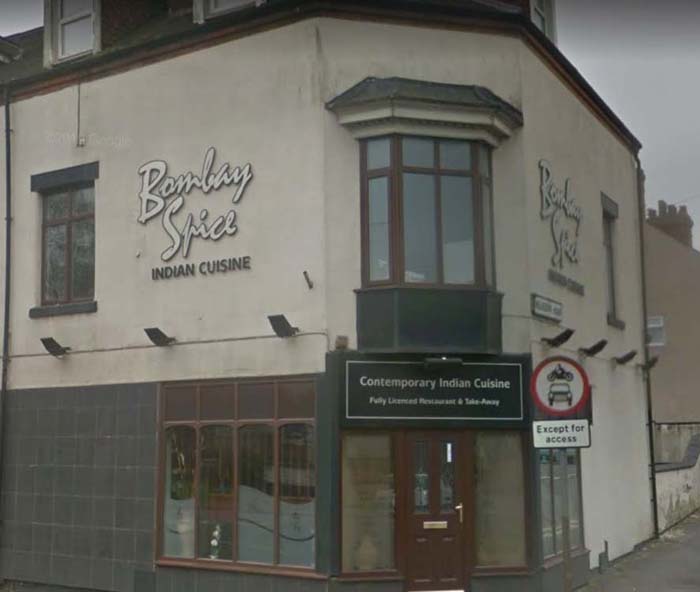
Further up on the right hand side of the street was Ashmore’s, a second newsagent’s. As everybody has now forgotten how to read, it is now a curry shop:

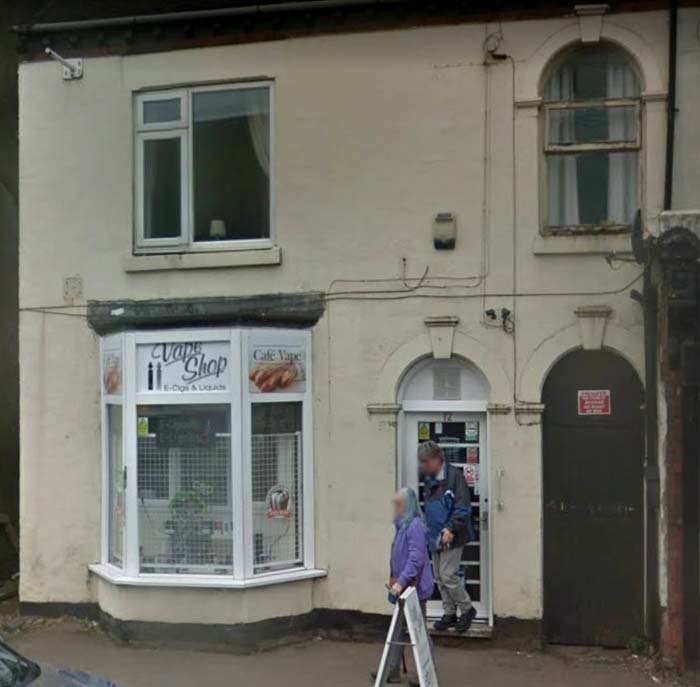
Then there was Whyatt’s the greengrocers. Today, it is a Vape Shop, whatever that is:

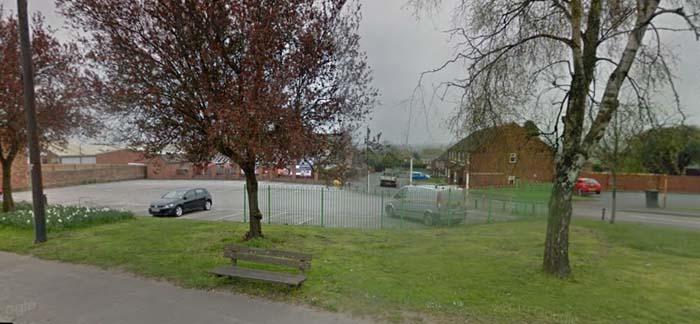
I can remember though, the days when this greengrocery business was further up the street, on the left, until it had to be demolished to construct an important car park, and they had to move their premises. Here is that vital car park today, keeping the commerce of the area ticking over:

Whyatt’s original shop was at the side of a little road which ran away to the north from the High Street, on the opposite side from the Queen Adelaide public house. Whyatt’s always had boxes made of bright, thin, cheap orange wood on the pavement in front of their shop, where they displayed their fruit and vegetables. It was in this part of High Street that the demolition of a number of buildings occurred and, in the ruins of an ancient terraced house, a vast tangled rats’ nest was revealed in the ceiling of the back bedroom. It must have been ten or twelve feet across, and the product, one supposes, of generations of work on the part of countless hundreds of rats. As seven year old children, we always stopped to look at this natural wonder as we walked up to the Infants’ School at the top of High Street.

Opposite these shops and houses, on the other side of the High Street to Whyatt’s the Greengrocer’s was Woodville’s third newsagent’s, namely Jones’s, perhaps the least successful of the three. Nowadays it has been converted to a vitally needed fast food shop, one of forty three million  in the country:

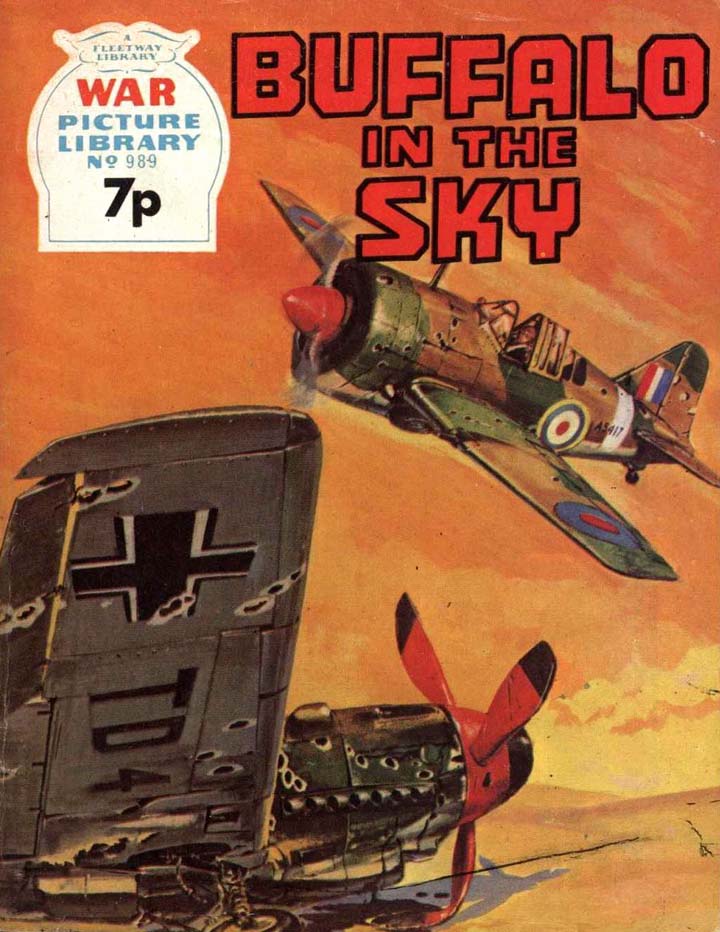
Back in the day, the shop was a fine source of what we called “shilling war books”:

There was at least one other shop in this block, but I cannot remember exactly what it was. There are vague memories, perhaps, of a TV repair shop. As you can see, though, it too is nowadays derelict:

Further up on the opposite side was Smart’s shop, which was divided into two halves, both equipped with bright orange cellophane sheets in the windows to protect their goods against the sun. The right hand half of the shop sold, if I remember correctly, wool, knitting patterns, knitting needles  and sewing requisites, while the left hand side contained ladies’ dresses and other clothing. It was a marvellous shop for middle aged women to visit, to buy everything they needed for their hobbies.

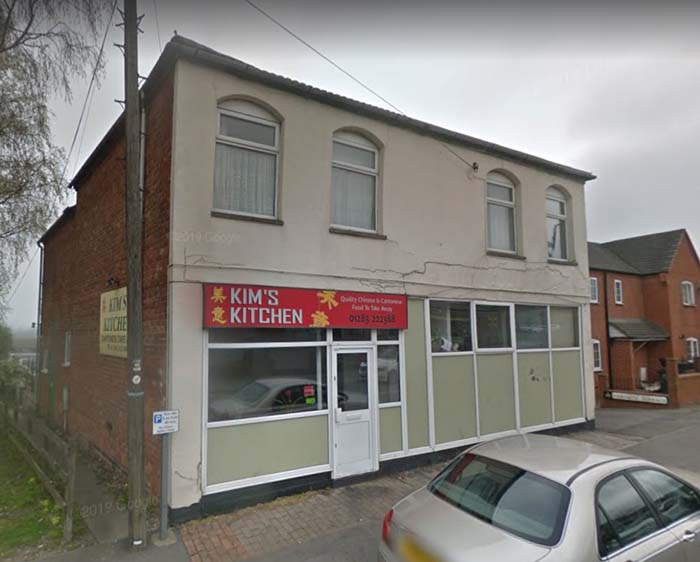
Here is the knitting shop today. It was converted into a vitally needed fast food shop, one of forty three million  in the country:

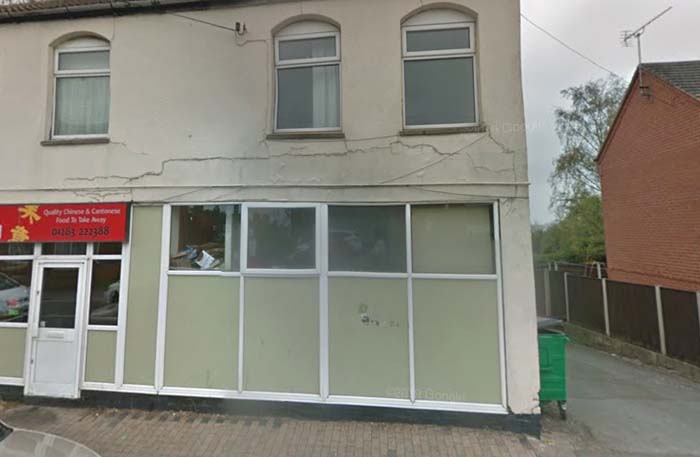
And here is the clothes shop. It’s used, I presume, to store the uncooked ingredients for Kim’s Kitchen. It’s very pretty, though, and I take my hat off to the architect who came up with that conversion of the original shop, after only seven years of study:

Next time, my attempts to get Woodville twinned with Florence.

25 Comments

Filed under History, Humour, My House, Personal, Politics

What would you do ? (1) The Solution

Here’s the emergency from last time:

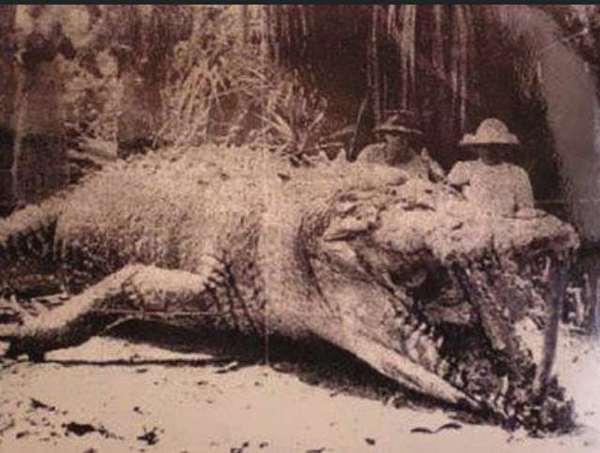
And here’s the situation:

The canoe’s occupants were threatened with a capsize. There were more crocodiles in the water, there was no time to use the rifle and there was a clear need to act fast.

And page 2 says that the solution is:

“The expert hunters have an immediate answer. They cover the crocodile’s eyes. Immediately the monster stops threshing. When a crocodile cannot see, it becomes docile. And then the net can be put round its body to prevent it escaping.”

And that solution is absolutely right. My Dad had a pet blind crocodile for years and he never ate anybody. Well, not completely anyway. And the crocodile was even better behaved.

And finally, always have something big enough to wrap round a big crocodile if you come across one:


20 Comments

Filed under Film & TV, History, Humour, Literature, Personal, Writing

What would you do ? (1) The Puzzle

“What would you do ?” used to figure on the cover of a comic called “Boys’ World”. This was a publication, obviously, aimed at boys and first appeared on January 26th 1963, priced sixpence in pre-decimal money, two and a half pence in today’s money. There were 89 issues before the comic was merged with Eagle in 1964. The last issue of “Boys’ World” came out on October 3rd 1964. Here is the Eagle for that very same day. It seems to have swallowed “Boys’ World” without even noticing:

I used to buy “Boys’ World”, and this was mainly for the front cover which always featured a kind of puzzle. It was called “What would you do ?” and was based on somebody being in what Ned Flanders would call “A dilly of a pickle”. Here’s the great man:

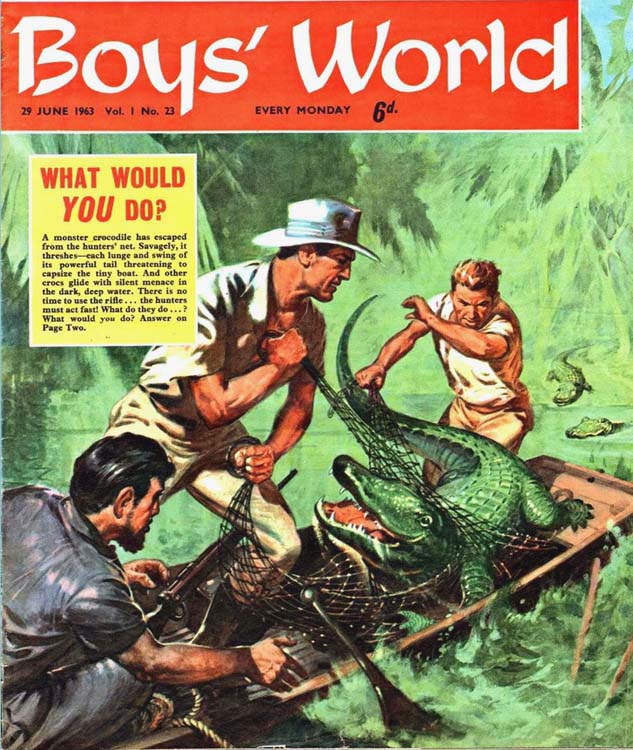
Here’s the front cover with the situation for “What would you do ?”

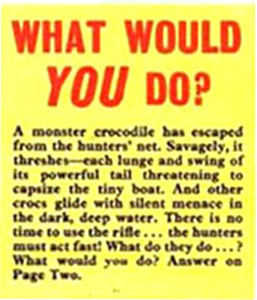
The yellow box sets the scene, and the task is for you to solve the situation. Perhaps you might like to write your idea in the “Comments” section. Here’s the yellow box enlarged:

The monster crocodile has escaped and is thrashing about in the boat. The canoe’s occupants are threatened therefore with a capsize. There are more crocs in the water and there’s no time to use the rifle. There is, though, a clear need to act fast.

Both the picture of the situation and the yellow box can also be enlarged with a double click. I’ll be telling you the answer on December 5th. First prize is a chance to spend an evening Crocodile Rocking with Elton John, second prize is a stuffed thirteen foot crocodile and third prize is a thirteen foot crocodile which is not stuffed.

27 Comments

Filed under Film & TV, History, Humour, Literature, Personal, Writing

The place where I grew up (3)

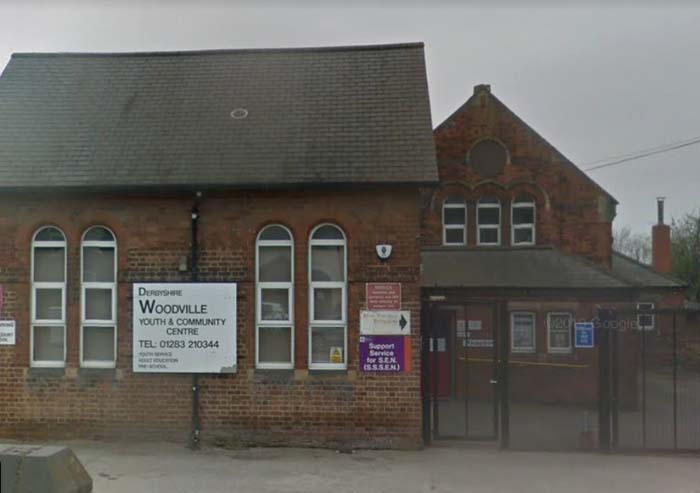
Last time, we finished Part Two standing in the middle of Moira Road with our backs to the traffic, hoping that Woodville, my natal village, did not yet have anybody with a silent electric car. First on the right is the Junior School that I went to, now closed down and fenced off, and used by Derbyshire  County Council as a Youth & Community Centre:

My Dad went to the Junior School in the late 1920s and early 1930s, and I went there in the late 1950s and early 1960s. My Dad then worked there, and, in fact, taught me in what would one day be Year 4. I was also taught by Miss Cartwright, Mrs Burman and Mrs Simpkin. All four of them were excellent teachers and tried as hard as they could, even though their classes had around forty five to fifty pupils.

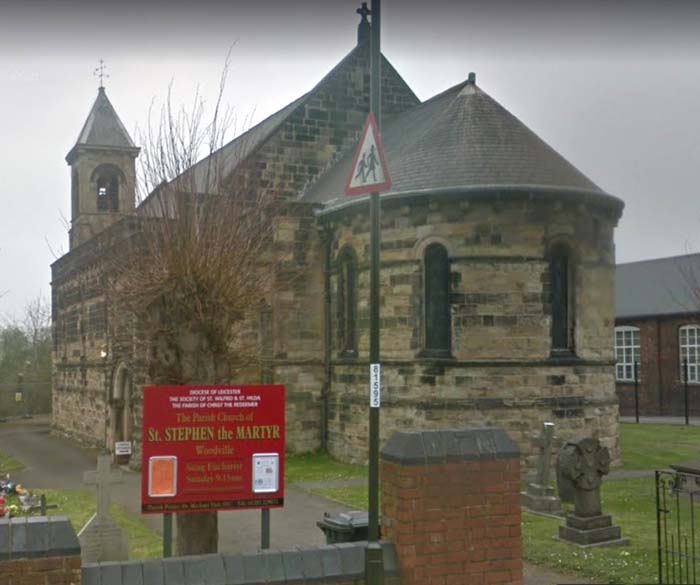
Next to the school is the church of St Stephen:Nowadays it’s a lot more dramatic as St Stephen the Martyr, but we all knew it as St Stephen’s. After going to the school next door and standing in the playground  as a little boy and watching the swifts nest under the eaves of the church, Fred had his funeral there in  2003.

The next building was the Church Hall where our School Choir, District Champions, gave a concert for the Old Age Pensioners in 1962:

I think it’s just being repaired rather than being derelict. Next comes the only shop in the road, namely Hopper’s, which always seemed to sell the coldest fizzy drinks and ice cream, when we returned from playing sport at the Recreation Ground. Hopper’s had a door which clanged with a mechanical ringing effect and this unique sound was emphasised by a grey, metal grille on which customers were supposed to wipe their feet as they entered the shop.

Here is the shop today, alas:

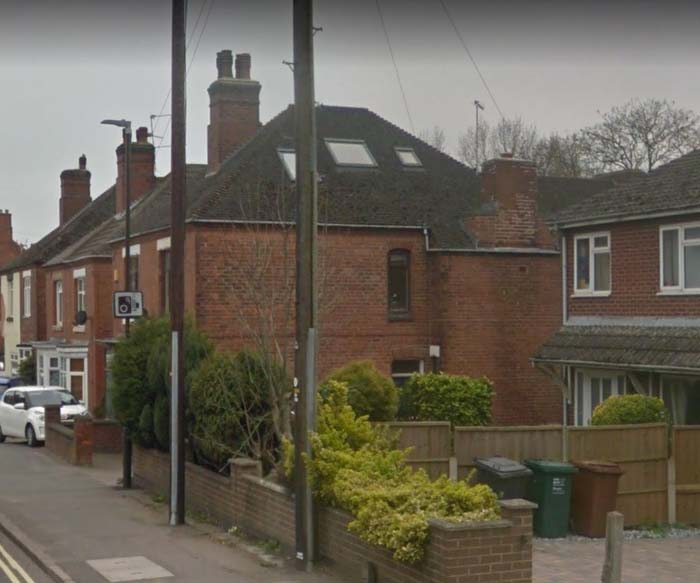
Between the Church Hall and Hopper’s is the house where Fred, my Dad, was born on November 30th 1922. No blue plaque as yet. It’s the house with the three windows in the roof:

Right at the very far end of Moira Road was another shop which was close enough to the Recreation Ground to provide cold fizzy drinks and ice cream for young children playing sport up there. I have forgotten the name of the shop owners, but they were much more like a convenience store with tinned vegetables and canned fruit for sale. Here is the shop today. It’s as good as derelict if you’re thirsty from a good game of football:

Next time a trip up High Street, or, as my Grandad would say, a trip “up Box”, using the old expression for Woodville, taken from the man who took the toll money in the eighteenth century. We’ll see Albert Taylor, Reg Ashmore, Renée and her chip shop and Graham Fowell, who left his Dad’s business to become a minister of the church.


28 Comments

Filed under History, Humour, My House, Personal, Politics

Three war crimes, two Sunderlands and one Ashley Wilkes (2)

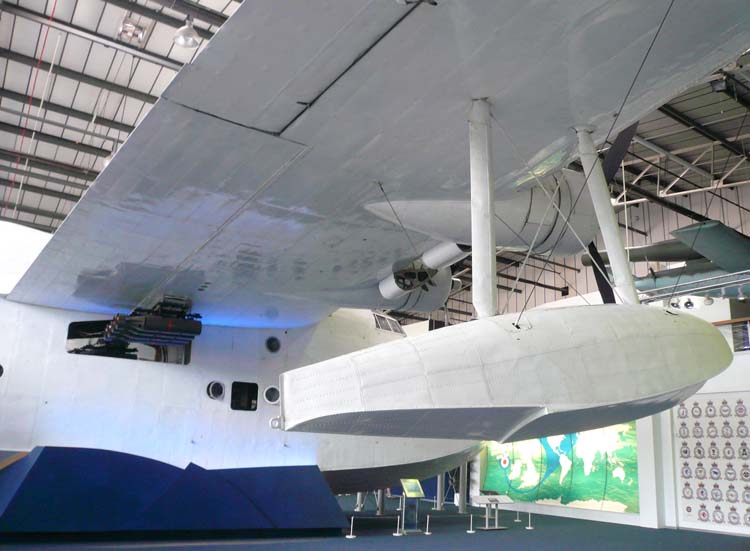
Last time, I was showing you round what is probably the same aircraft in two different locations, that is, the Short Sunderland flying boat at Hendon and then at Duxford.  Just to remind ourselves, the Sunderland was a mighty war machine:

This slideshow requires JavaScript.

The Sunderland had a panoply of weapons. Something for every occasion:

This slideshow requires JavaScript.

There was also an astrodome for taking bearings from the stars, and ASV radar, visible above the cockpit area:

I saw just part of my first ever Sunderland on ‎February 14‎th 2008, ‏‎ at 11:24:44. And, as you might expect for that date, it was love at first sight. The aircraft was behind a Handley Page Hastings and below a Hawker Harrier, and it was terribly squashed in:

I had to wait until 2010 when I went to Hendon to see a Sunderland displayed a little more favourably, and in a much bigger and more open area:

This particular Sunderland you could go inside. Just look at the room. You could fly a model plane around inside it:

The walls have lots of useful instructions:

This slideshow requires JavaScript.

Overall, the Germans were very wary, if not simply afraid, of the Sunderland flying boat. It was an extremely heavily armed aircraft and a formidable opponent. No wonder they called it the “Flying Porcupine”. Porcupines look old, they look rather fat and are rightly known as being grumpy, solitary and always just wanting to be left alone. OMG. How many of those boxes can I tick? And don’t say “All of them”. Here’s a real porcupine at Newquay Zoo in Cornwall. They eventually sold him to Bristol Zoo for “excessive grumpiness”  :

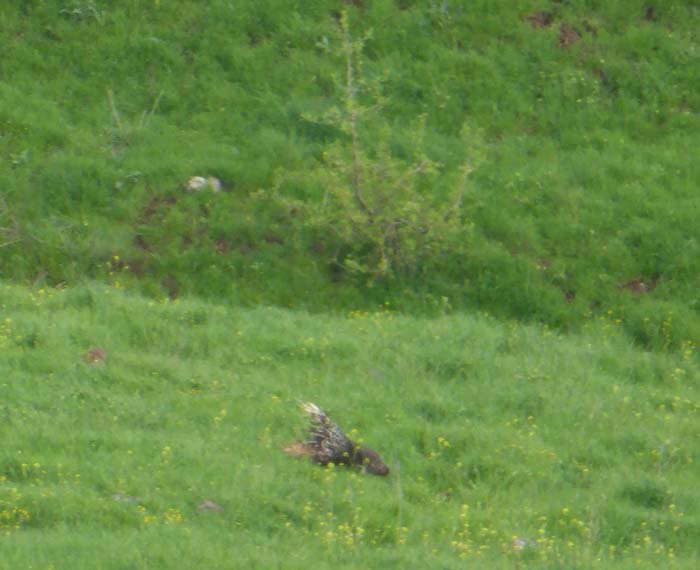
And here’s a wild one in the Golan Heights of Israel. A really rare sight:

Final thought. What is the German for “Flying Porcupine” ?

Why it’s “Das Fliegende Schtachelschwein”, a phrase which has proved particularly useful in my trips to the Fatherland, especially to Berlin Zoo which is conveniently close to the airport.


16 Comments

Filed under Aviation, Cornwall, Film & TV, History, Personal

The place where I grew up (2)

Last time, we looked at the pretty little village where I grew up. It was called Woodville and it is in Derbyshire, England.

The school I went to was down Moira Road, one of the five roads that met at the Tollgate. Much more interesting, though, was Donald Ward’s scrapyard, where we would call in hoping that we would be given metal ball bearings to use in our schoolboy games of marbles:

Occasionally the metal ball bearings would be thrown at us, but none of us were too proud to reject any projectiles that came whizzing our way. Legend told of an immensely strong gentleman of Ukrainian heritage, who worked in the scrap yard, and who was so strong that he could lift a length of railway line off a lorry without any outside help. Here’s his brother, as I could not find any pictures of a man carrying a railway line. He’s just bought his lunch at the takeaway:

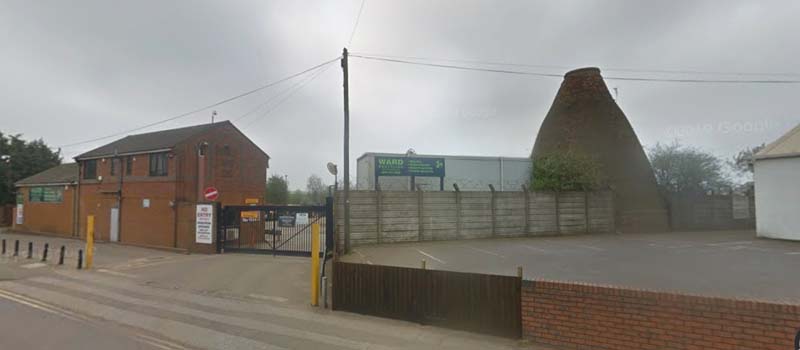
Inside the scrapyard was a traditional bottle kiln, which is still there to this day, because it is a Listed Building:

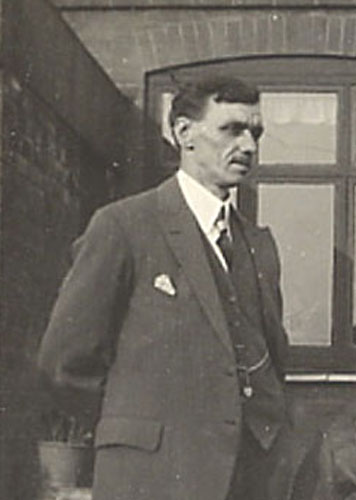
My grandfather, Will, spent a great deal of his adult life working in a bottle kiln. It was hard physical work, which required an enormous physical effort. Grandad was immensely strong and, although he was only a small man, he had huge slab like forearms and muscles made powerful from years of lifting heavy objects. He worked in the pipeyards at Wragg’s and then at Knowles’s. Both of these companies were near Swadlincote, and they manufactured underground pipes, mostly for drains and sewers. During the 1920s and 1930s, because of the severe physical strains of his job, Will was a relatively well paid employee, earning at one point some 42/- per week (£2.10):

Will’s job was to carry a tray of soft, “green ware” which would have weighed around a hundredweight, perhaps some fifty or so kilos. He took them from the place where they were made from moist clay, on a large wooden carrying tray, into the bottle kiln, to be fired and hardened. The bottle kiln, in an effort to retain heat and to economise, was slightly recessed into the ground. It had a very small door, so that Will was obliged firstly to slide down a gentle slope, and then to dip down so that he could enter through the tiny, heat conserving, door. Finally, Will had to lift the heavy tray with its cargo of wet clay objects upwards onto the racks inside the kiln.

Here, of course, inside the kiln, it might be immensely hot, and stories were often told of how men, stripped to the waist, would drink a whole bucketful of water to slake their huge thirst. They always wore sacking on their feet. Newcomers who arrived wearing a pair of shoes for their first day on the job would find that their footwear barely lasted until finishing time at the end of the first day. When he finally retired in 1964, my Grandad was replaced by a fork-lift truck.

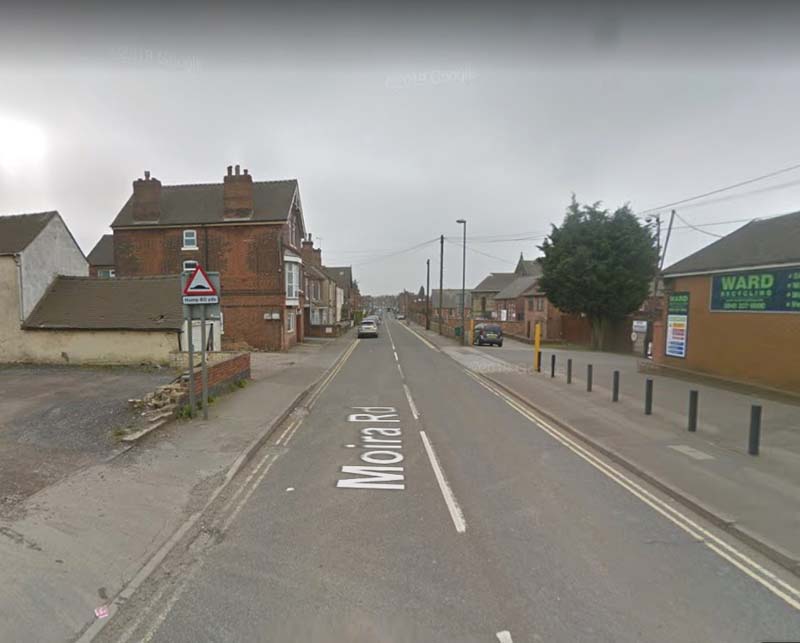
Continuing down Moira Road, on the right was, firstly, the Junior School, and then St Stephen’s Church and then the Church Hall. We’ll look at them in more detail next time, but for now, here’s a glimpse. When I was a child, of course, the younger generation were so clever that they did not need to spray paint the names of the roads on the asphalt:


21 Comments

Filed under History, My House, Personal, Politics

Three war crimes, two Sunderlands and one Ashley Wilkes (1)

One of the world’s most bewitching aircraft is the Sunderland flying boat. When I was a boy, I never did save up enough pocket money for the Airfix kit, although it was only fifty pence or so in the 1960s. I should have bought it then, though. They’re fifty pounds now!

The Short S.25 Sunderland was a flying boat patrol bomber operated not just by RAF Coastal Command but also by the RAAF, the RCAF, the SAAF, the RNoAF and the Marinha Portuguesa. The last one’s a bit of a give away, but did you get all of the rest? This one’s Australian:

The Sunderland was designed and built by Short Brothers of Belfast, and the cynic inside me says that it was the only decent aircraft of their own that they made during the war. This model of the aircraft was numbered the S.25 because it was a warplane but it was a direct descendant of the S.23 Empire flying boat, the flagship of Imperial Airways. Here it is, a beautiful aircraft:

The new aircraft S25 was very well designed for its purpose. The Sunderland had a wingspan of 112 feet, a length of 85 feet and a height of 32 feet. It was a big aeroplane! Even the stabilising floats on the wings were as big as a rowing boat or a small plane. Compare one of them with the man with a pram, and the Walrus behind them both:

A Sunderland had four Bristol Pegasus XVIII nine-cylinder radial engines which gave it a total of 4,260 horse power:

And those powerful Pegasus engines gave it a range of around 1800 miles at a cruising speed of 178 mph Don’t fly too fast when you’re doing maritime reconnaissance!

The S 25 Sunderland featured a hull even more aerodynamic and more advanced than that of the S23. You can see why it’s called a “Flying Boat”:

Here’s lengthways:

Here’s the nose end of that hull:

Weapons included machine guns in front and rear turrets. The front turret had rather weak 0.303 guns which could not always penetrate thick metal, but at least I got a good shot of it:

I even got a good shot of the three jokers who seemed to be making off with the plane from the Hendon museum, trying to push it backwards through the very large French windows:

Here’s some close-ups for the wanted posters:

This slideshow requires JavaScript.

I didn’t get any good photographs of the rear turret but it had heavier 0.50 calibre machine guns. You can just about spot it among the bits of other aircraft. It’s slightly right of centre:

There was also a heavy machine gun firing from each of the beam hatches. You can just about see one poking out here:

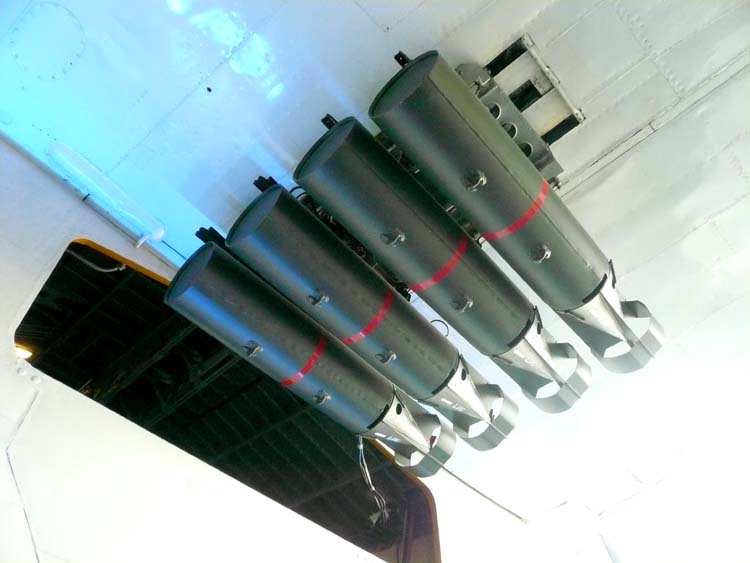
The Sunderland made extensive use of bombs, aerial mines, and depth charges. Here are four which have been winched out ready to drop. Hopefully, they are dummies:

Here they are in close up.

The Vickers Wellington’s immensely  powerful Leigh Lights, designed to light up U-boats on the surface at night, were rarely, if ever, fitted to Sunderlands.

Next time, a look inside the mighty Sunderland.


27 Comments

Filed under Aviation, Bomber Command, Film & TV, History, Personal

The place where I grew up (1)

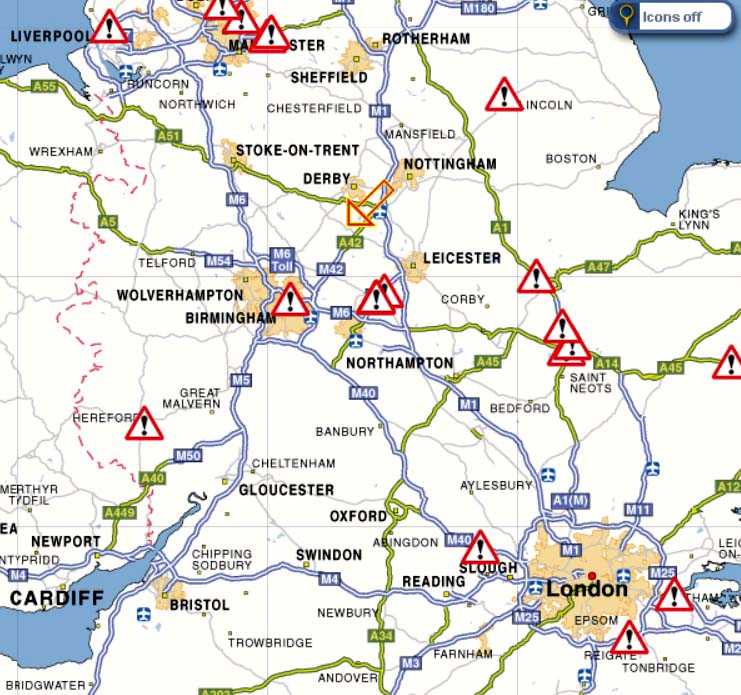
I grew up in a small village called Woodville, just to the south of Derby, in more or less the centre of England. Cue The Orange Arrow:

The village had around 4,000 inhabitants who worked for the most part in the local industry, which was digging up the local clay and using it to make water pipes, sewage pipes and the like.

Originally, the village was called Wooden Box, because five roads met in the centre, and the man who collected the tolls from the travellers on those five roads lived in a large wooden box the size of a small house. The place where he stopped the traffic therefore became known as the Tollgate. Nowadays, it is a roundabout.

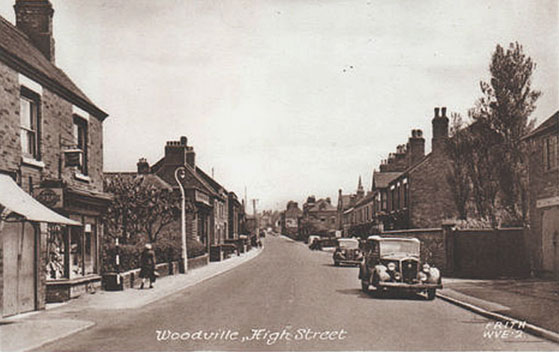
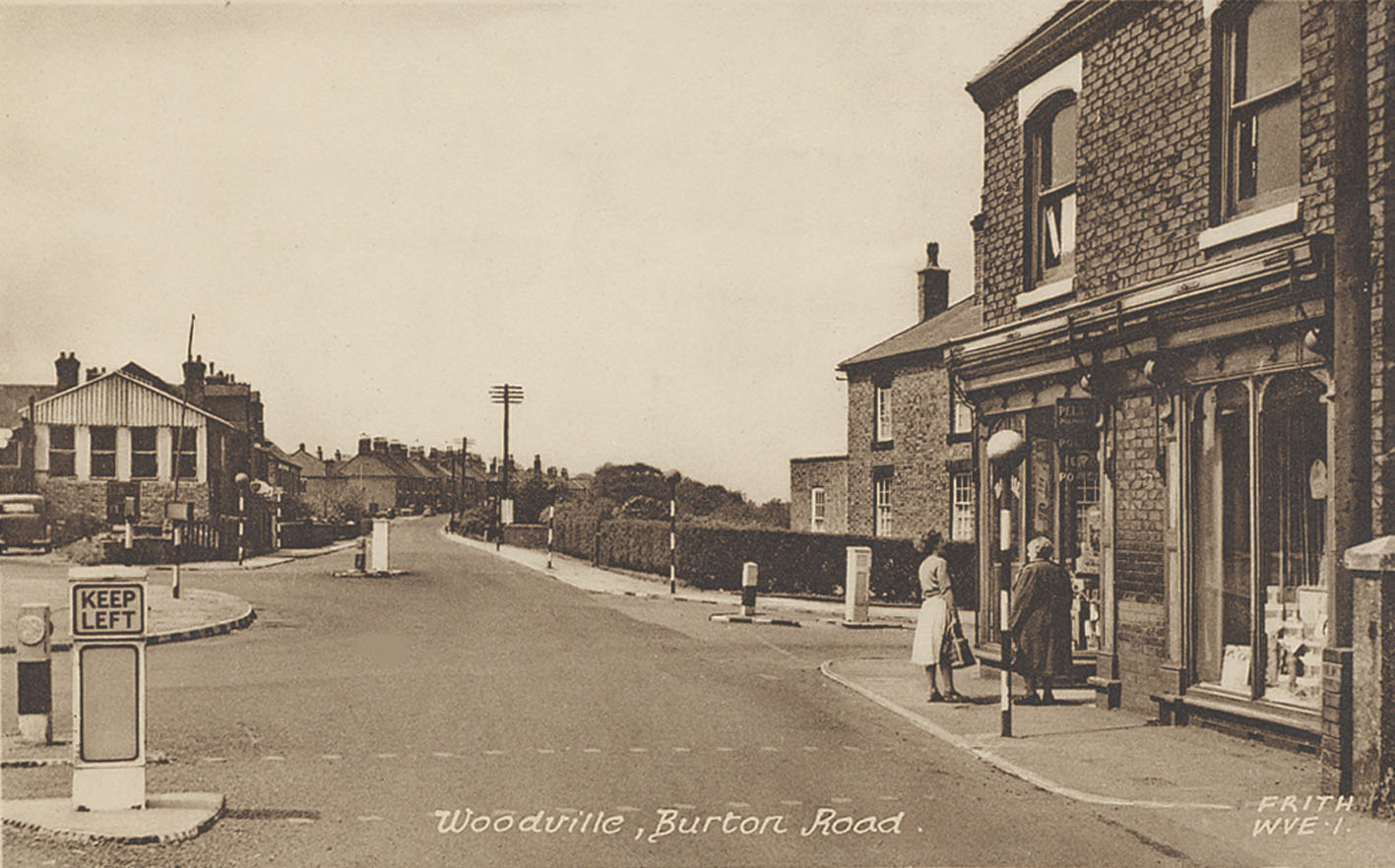
Here is the High Street shortly after the end of World War Two:

It was quite grim when the snows of 1947 began to get a little grimy:

Over a series of blog posts, I would like to show you what Woodville was like when I was a little boy in the late fifties and early sixties, and what all those places are like now.

In the 1950s, the shops of Woodville were vastly different from what they are nowadays. At the top of Hartshorne Road, where I lived, was the Co-op butcher’s, with its decorated ceramic tiles, where meat was displayed on a big white slab behind a huge plate glass window. Here are some of the ceramic tiles:

This slideshow requires JavaScript.

Inside was the counter with a wooden chopping block at the side. The butcher wore a striped blue and white apron, soiled with smears of old blood. He was, like all butchers, a Smart Alec, who fancied his chances with the women and was always over familiar with them.

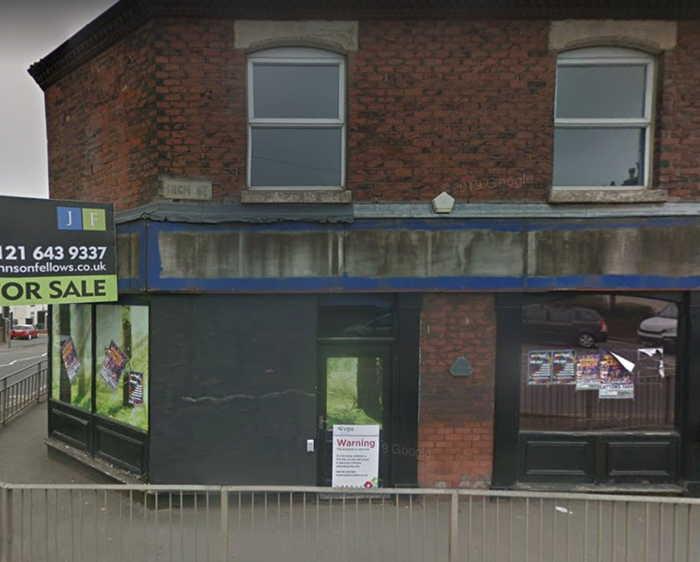
Here’s the butcher’s shop today. It’s derelict:

Higher up, on the corner of the roundabout was a large shop called the Co-op. In the picture below, it’s on the right:

Margaret who worked in the Co-op was my mother’s particular friend. Here’s the shop today. It’s derelict too:

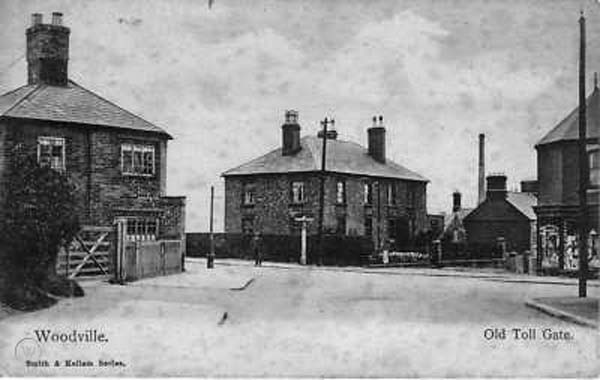
On the opposite side of the road was what had been the old Police Station. Here it is, in the centre of  a very old postcard:

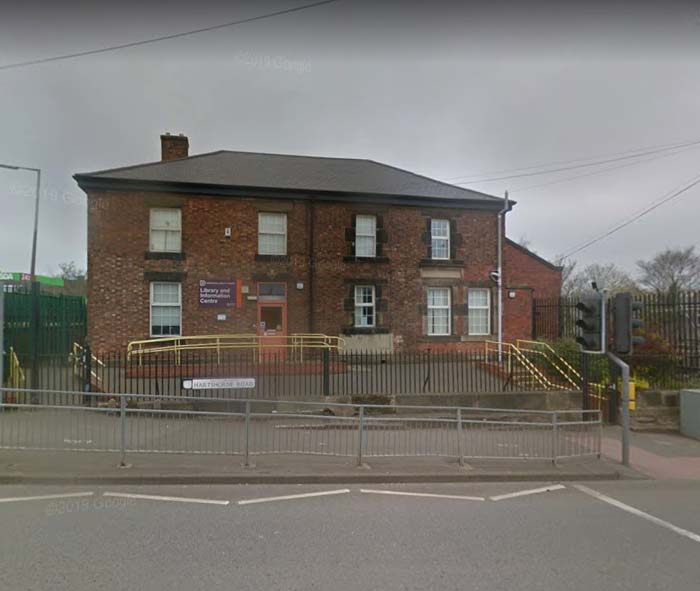
The County Library was to move into the derelict police station around 1960. The story was told locally that four special garages were constructed to house the mobile library vehicles, but that the people in charge forgot to measure the huge vans’ lengths, so that they eventually stuck out of their garage by some  three or four feet and it was impossible to close the doors of the new buildings.

Around this time, the same location also housed the local Civil Defence, who had a large and enormously loud siren next to the building’s chimney. It was a frightening machine which could be sounded should “Our Friends the Soviets” ever launch a nuclear attack on Woodville. In the early 1960s, I well remember the threatening and haunting sound of this siren curling around the walls of the houses on, thank goodness, just one occasion per month, possibly the first Sunday, when testing was allowed to occur if my memory serves me well. Here’s the police station pretending to be a library:

Over the road from the Police Station was a ramshackle, black, wooden garage where cars were repaired and petrol was sold, BP, if I remember correctly. Further along this road towards Burton on Trent, on the left hand side stood a garage which sold Cleveland Driscoll petrol, and which was unstinting in the way in which it gave away primarily purple coloured advertising lapel badges to small boys.

Here’s the garage today. It’s derelict, with weeds growing in front of it:

The roundabout was called the Toll Gate, and it had a third garage, which sold, again if I am not mistaken, Regent petrol. It was called the Clock Garage and here it is today, repainted and restored:

Next time we’ll look at my old school and the house where my Dad was born.


30 Comments

Filed under History, My House, Personal, Politics

On holiday with Ross Poldark (3)

Last time I was showing you more of the attractions at Botallack, in West Penwith, in western Cornwall:

I introduced the Crowns Mines which I called:

“the most photogenic industrial location in Cornwall.”

From the base of the stone chimney, a long sweeping path descends the cliff face. It goes down towards the Crowns Mines:

Their position is so dramatic that it attracts film crews like bees to honey. Here is a slightly different shot which includes what looks to me like the silhouette of Pan and below that, to the right, a number of faces in the rock. At least two gannets are visible flying past as just two white dots. Notice too, the croquet lawn right in the middle of the photograph:

There must be quite a few people who are frightened by the path, which is wide and flat with a substantial fence made largely of rust. To your left, there is a very, very long way to fall on to the sharp rocks below . If you do fall, though, make sure that you look to the right as views are tremendous.

These mines had tunnels which stretched under the ocean for several miles, allegedly. Equally allegedly, the miners could always hear the noise of the waves above their heads.

As you walk down, the two mines gradually grow closer. If I remember correctly, you can go safely into the right hand structure:

But the left hand tower is a very definite “No-No”. Or at least, you’ve got a very large queue of kamikaze pilots to contend with.
Still, it’s a wonderful location. The ocean is so blue and it is transparent enough for the rock platform underneath the waves to show up. Gannets are still passing by . There is one to the right of the right hand tower, just where the wall meets the ground. Again, if I remember correctly, it is impossible to climb to the top of this tower, although a door lets you in to see a very limited part of the ground floor.

This is the best shot I could get of the left hand tower.

The National Trust says that the tunnels went out under the sea just 450 yards (very roughly 450 metres), and reached 1600 feet under the seabed, an amazing depth if you think about it (very roughly 487.68 metres).

Here is a comparison of the two mines then and now. If you look very carefully, you can see a lot of similarities but many differences, some of them the effects of a hundred years’ plus of Atlantic storms:

This slideshow requires JavaScript.

The path leading back up to the main group of ruins is quite steep but you’re not going to get lost with such a landmark to guide you:

How long it must have taken to quarry the stones to build this impressive edifice! It’s certainly lasted a lot longer than the men whose toil and sweat erected it:

Back at the top, among the ruins, I found some intriguing graffiti. This first one could fire at least a couple of romcoms:

And this is a full length effort, vandalised by some moron, unfortunately:

My last memory of the place will be watching a couple of retired BBC planners (click on the picture to enlarge it, and they are on the cliff edge). They are working out the cost of a modern Poldark sequel starring Jeremy Corbin as Poldark’s charismatic youngest son and Vladimir Putin as George Warleggan:

4 Comments

Filed under Cornwall, Film & TV, History, Humour, Literature, Personal, Politics