Category Archives: Personal

Nottingham High School on ebay (4)

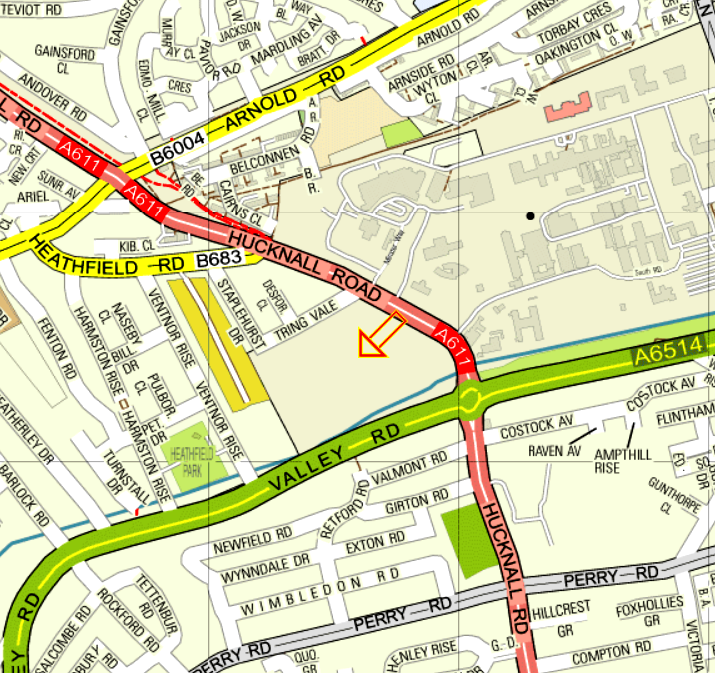
Just a couple of years ago, I saw some photographs of High School sport for sale on ebay. They showed various sports teams from what was then the Preparatory School, all of them photographed down at our Valley Road sports grounds. Here are the sports grounds, indicated by the orange arrow:

On the other side of the road is the City Hospital and the large space in the bottom right hand corner north of Perry Road is HM Prison Nottingham.

The school bought the 18 acres of land for the new playing fields on Valley Road in 1929, largely with money from JD Player, the Old Boy and cigarette millionaire. The total cost was £5,600, with £13,000 more needed to level the site, returf the surface, and build a new pavilion.  The Headmaster and JA Dixon, the Notts County and England footballer and Nottinghamshire cricketer, had looked at more than twenty sites before the decision was made.
Until this time, the school had played its representative matches at Mapperley Park on Mansfield Road, with house and form competitions played on the Forest Recreation Ground. The old Mapperley Park ground was sold to the City Corporation for £6,750 and the rest of the money for developing the site, some £6,000-£7,000, was raised by the Old Boys.
Interestingly enough, Johnny Dixon for many years believed strongly that more land should have been purchased, and that the whole school should then have been relocated to a new campus, surrounded by its own playing fields.  On the other hand, the Valley Road site did have a marsh at the western end, and the possible problems and expenses caused enough uncertainty to back away from buying any more land at this site:

In December 1931 the School Magazine included a three page list of subscribers who had given money to support the appeal to develop the School’s new playing fields at Valley Road. Overall, a total of some £434 2s 6d had been raised. The most generous benefactors were Messrs E Bignall and W Bignall, HR Gillespie, JC Joynes, F Limpenny, FW Pare, L Pilsworth, TS Ratcliffe, GT Rigley and AS Rigley, HB Rose and EB Stocker, all of whom contributed ten guineas. In the least generous category, however, were the three who could only be persuaded to hand over 2s 6d. Arguably though, the finest human being of all was the bank, whose interest payments amounted to £12 2s 6d.

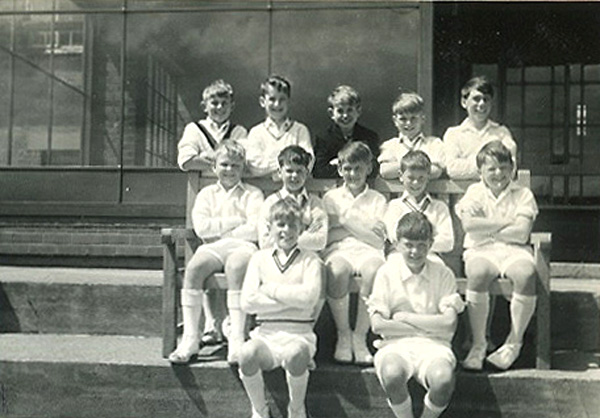
Anyway, here is the first photo I bought, the Under 10 XI in 1965:

The players are written on the back:

The next one, of the First XI in 1966, is perhaps of slightly better quality:

Again, the names are written on the back:

Next time, Technicolor © is invented.

16 Comments

Filed under History, Nottingham, Personal, The High School

Nottingham High School on ebay (3)

Last time I was looking at a postcard sent to Noel George Peet of 2 Gorsey Close in Mapperley Park. The postcard was sent on October 27th 1926 and it was stamped with an 8.00 pm postmark. Here is the sender and the message:

It reads “Sorry! I shall be unable to play on Saturday next.”

I would say that the signature is of “JG Sykes”. October 27th 1926 was a Wednesday and JG Sykes is clearly writing to the person who organises a local sports team, probably the captain or the secretary. At this time, Noel was only 24 years old and I would therefore presume that he was the captain of the team, rather than the secretary, who is the man who organises the fixtures, the renting of the pitch and so on. At first reading, I would have said that the team was probably the Old Nottinghamians and that they were going to play rugby, but there is one big problem about this best guess.

JG Sykes did not go to the High School. It cannot be a local cricket team in late October, so it must be football, or soccer as my American friends would term it. Between 1914-1968 the High School did not play football, at least officially. There were, though, one or two renegade teams which I intend to talk about in a separate blog post. All I can offer, therefore, is that JG Sykes and NG Peet were members of a local football team, unconnected directly to the High School. Which one, I cannot imagine. Sherwood United? Mapperley Rangers? Who knows?

I did though, find out who JG Sykes possibly was. In the Kelly’s Directory for 1928, this entry appears:

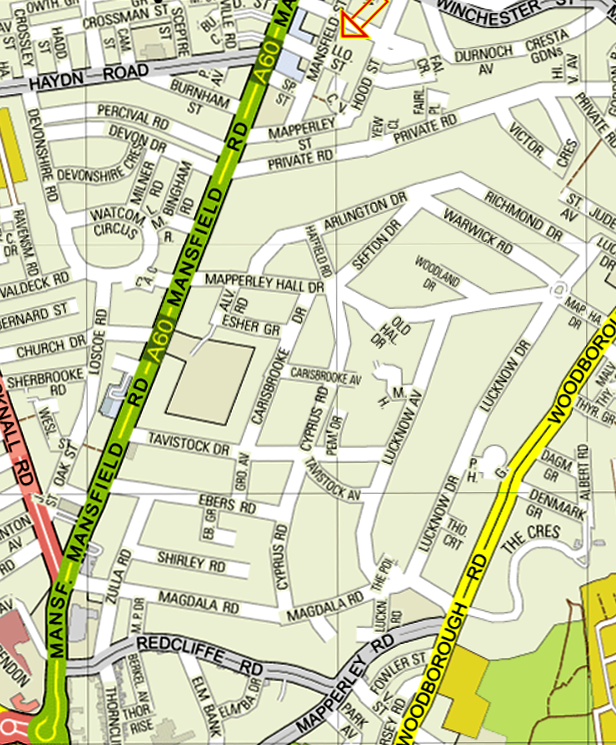
That is “James Gordon Sykes of 97 Mansfield Street, which I feel should be written in that same old fashioned way, as “Mansfield-street”. However you write it, Mansfield-street is deep in the heart of Sherwood, the suburb, of course, rather than the leafy place where the Merrie Men hang out. The orange arrow points to Mansfield Street which does in fact continue northwards over Winchester Street.  If you look at where “the Yellow Road to Woodborough” goes off the bottom of the map, the letters “-RSEY RD” to the left refer to Gorsey Road.

In the bottom left corner is the double roundabout only a hundred yards from the High School. Clearly, as regards games of football, this really was a local team for local people.

Sooooo…….what’s on the postcard? Well, James Gordon Sykes clearly knew his captain’s educational ancestry because he chose this beautiful scene. The front of the High School:

And there have been one or two changes since, say, 1920. A lot of pinnacles and chimney pots have been removed, presumably in the days before the concept of listed buildings was invented. The School field gun has gone. Here’s the School in more recent times:

The photograph for the postcard was taken from over on the right, behind the bushes and the hedge. Most noticeable, though, is the war memorial which has been there since 1922. On the top is a life size statue in bronze which represents a young officer leading his men into attack. The statue was designed by an Old Nottinghamian, Colonel AS Brewill, the commander of the 7th Sherwood Foresters and it was cast in bronze by Henry Poole.

Just over 1,500 boys and masters had fought in the Great War. Two Victoria Crosses had been won, 124 men had been awarded other decorations, and 29 had been mentioned in dispatches. Most important of all, though, was the fact that between two and three hundred men had been killed, from a School which had an annual total of between 350-450 pupils in the years before the war.

The only other object in front of the School before 1922 was a 25-pounder field gun which somebody had brought back from the war as a souvenir. I haven’t been able to discover who it was, or exactly when or indeed, why. After four years of a war memorial and a field gun within thirty yards of each other, a decision was taken to remove the gun and have it made into ploughshares somewhere. Even then, the gun had its supporters:

” In July 1926 the Old Boys’ Society spoke out against the removal of the field gun from the front of the school. They felt that its barrel provided a wonderfully useful litter bin for the boys walking past.”

Here is that old field gun enlarged:

The building behind the gun is the caretaker’s house, demolished long ago. The tower is still there to this day. It is nothing to do with the High School or the caretaker’s house. It belonged to a man who was extremely keen on the horse races which were held nearby until 1890 on what is now the Forest Recreation Ground . He therefore had the tower added to his house so he could see if he had won or lost his money. The last meeting took place on September 29th-30th 1890, and the last race, the Cotgrave Gorse Plate, was won by Sir Hamilton, owned by Mr T Tyler, and ridden by A Nightingall. Horse racing subsequently moved to Colwick.

Just to finish, here’s an aerial view of the School taken in 1920 or thereabouts. It is isn’t of very great quality, but then again neither was the camera or the plane:

Notice the shrubbery, Dr Dixon’s house on Waverley Mount, AKA the “Last House on the Left”.  The caretaker’s house is opposite and notice the boys near to it. Top left is the Fives Court and Brincliffe  School still stands to the right of that, where the staff car park now is.

The back of the School was very different then. Here is the North Entrance in 1915:

Notice the bell tower and the extra flag pole.

One last fact about Noel Peet by the way. I have only just realised where he has appeared before in the context of my blog. His name is to be found carved into the mantelpiece of the fireplace between the General Office and the Assembly Hall. You can read all about that here.


26 Comments

Filed under Football, History, Nottingham, Personal, The High School

Nottingham High School on ebay (2)

As well as not buying a rather expensive medallion on ebay, I have actually bought a postcard or two over the years. The first one was sent on October 27th 1926. It is stamped with an 8.00 pm postmark, so I presume that it was written earlier that day and then posted perhaps before dinner, or, more likely perhaps, on the sender’s way home from work. It was a Wednesday, which in those days would have been half day closing, so he probably left work at 1.00 pm and put it into the post box on his way home:

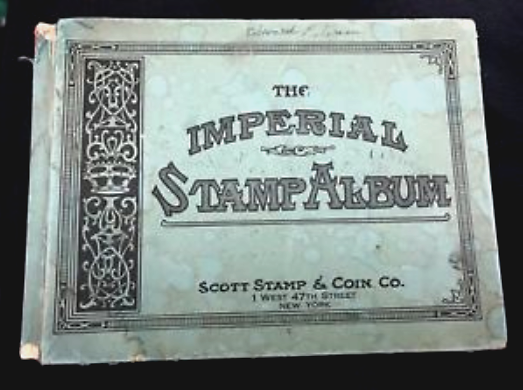
Notice how the Post Office slogan is “British Goods are best”. Only a few months after the General Strike, the economy was in real need of a boost if further discontent and upheaval was to be avoided. Notice too, the beautiful, classic stamp. King George V was a fanatical stamp collector, and loved nothing better of an evening than sticking his stamps in his thousand albums. When you’re an emperor, this is the album for you:

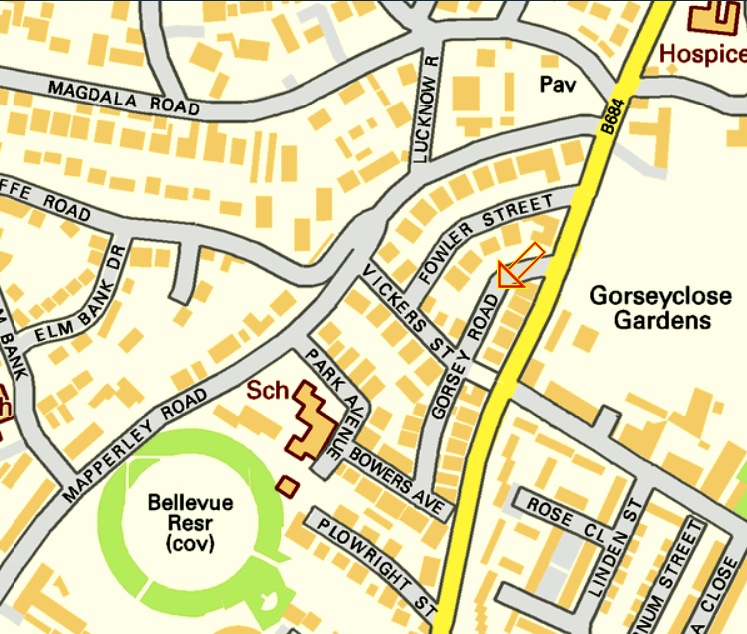
The postcard is addressed to NG Peet of 2 Gorsey Close in Mapperley Park. I couldn’t trace a Gorsey Close but I did find a Gorsey Road. Here is a close up view of the area. Gorsey Road is between the B684 Woodborough Road and Mapperley Road, in Mapperley Park, one of Nottingham’s leafier suburbs. Look as always for the orange arrow.  No 2 is on the corner with the B684, Woodborough Road. :
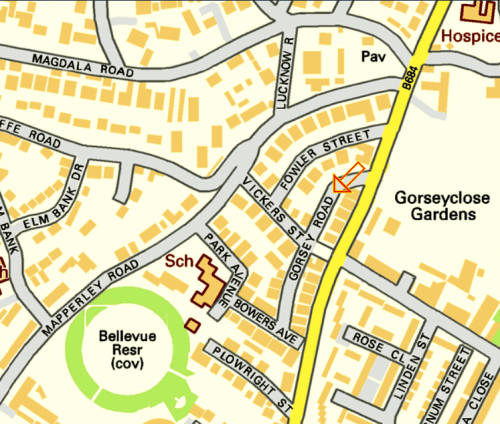
If you look at this larger map, you can see that Gorsey Road is not too far away from the High School which is in the bottom left corner in the area between Arboretum Street, Forest Road East and Waverley Street. The School is on the corner either side of the pale green patch. Gorsey Road, I should have said, is again indicated by the orange arrow.

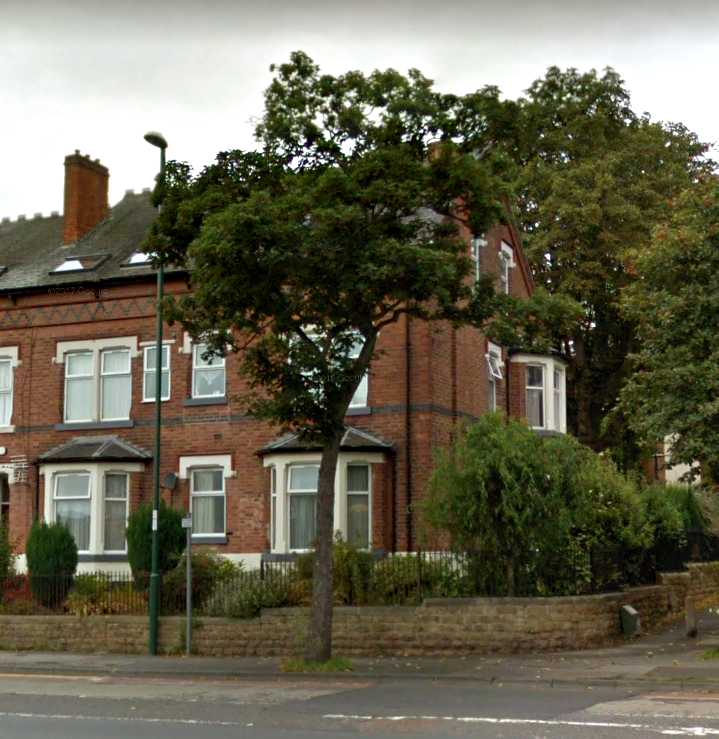
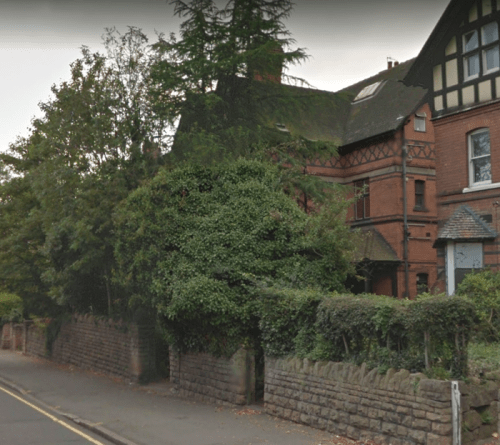
This is No 2 Gorsey Road now, a little overgrown perhaps, and in a street which looks to have gone a little downhill, but obviously, it was a very beautiful house in its time:

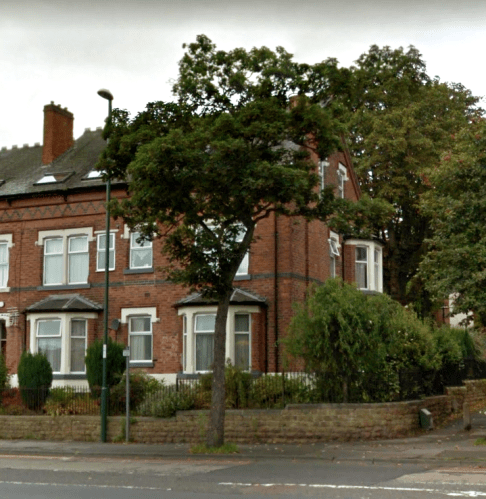
The Peet family had only recently moved to Gorsey Close when that postcard arrived in the late evening of October 27th 1926. In the Kelly’s Directory published in 1925, their future abode was owned by Edward Westwick Kirk of Kirk & Macdonald. The Head of the Family, WG Peet, was living at that time at 249 Woodborough Road, presumably with everyone else in the family. Here it is:
Three years or so later, when all of the information had been collected for the 1928 edition of the Kelly’s Directory, the house in Gorsey Road was now recorded as being occupied by Mrs Ann Elizabeth Peet. She was presumably NG Peet’s mother, rather than his wife. At this time her son was still in his early twenties and it is by no means surprising that he was still living in the parental home. There is certainly no NG Peet listed as living elsewhere in Nottingham, nor indeed in the rest of the county.

In 1929, the High School prepared its own list of the Old Boys’ addresses. In that, NG Peet is listed as still living at 2 Gorsey Close although it could just be that they carried an old address forward.

NG Peet, incidentally, I should have introduced him earlier. He is Noel Gordon Peet, who was born on December 26th 1901, hence the name. His father was William George Peet who was a “General Agent”. Six years later, in 1925, the relevant Kelly’s Directory listed William George Peet as working for “WG Peet, Son & Company”. By 1928, he is listed as a “yarn merchant” operating from Kaye’s Walk. His telephone number was listed as “TN 42769” and his telegraphic address as “Knitiarns”.

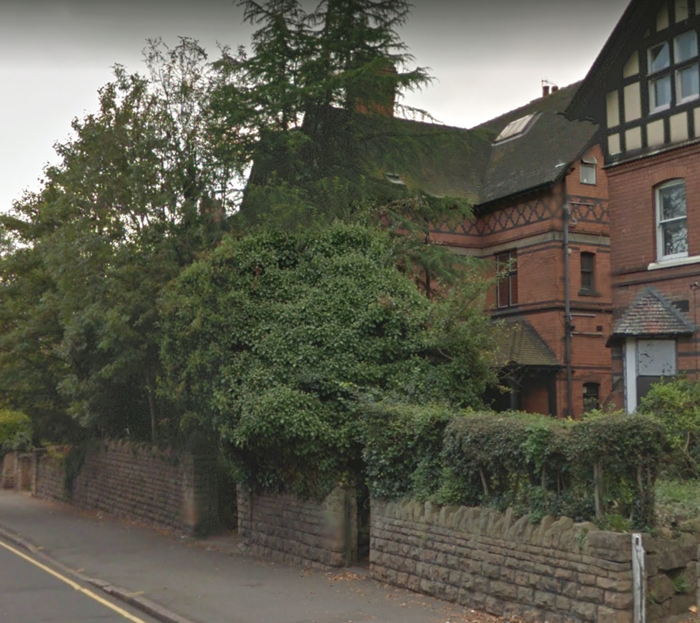
Noel entered the High School on April 26th 1917, at the age of 15. He was Boy No 3662 and he stayed there until July 1919. At this time, 1917 at least, the family was living at 413 Mansfield Road. Here’s 413 Mansfield Road, in spirit a very similar house to 2 Gorsey Road. I’m a huge lover of trees, but these need a tree surgeon and his assistant for a day and the whole place would look so much better:
Noel packed a lot into his two and a bit years at the High School. He won the Fifth Form B Prize in 1918 and the Fifth Form Writing Prize in the same year. In 1919, he won the Sixth Form B Prize. In the Officer Training Corps, he became a Corporal in 1918 and a Sergeant in 1919. In cricket, he won the School Prize for Batting in the same year.  He had 13 innings and scored a total of 144 runs at an average of 11.07. His top score was 36. Not a classic season for the School apparently !

Also listed in the High School’s list of Old Boys in 1929 was William Ronald Peet, Noel’s younger brother. He too is recorded as living at No 2 Gorsey Close. He was born on October 9th 1910 and entered the High School as Boy No 4036 on May 1st 1919. He left in December 1926 at the end of the First Term. By the time William entered the School, the family had moved from Mansfield Road and were living at Sutherland Lodge in Lucknow Drive in Mapperley Park. The boys’ father is listed as a “manager”. Lucknow Drive, or rather the word “Lucknow”, is visible in the top right corner of the second map above.

Did anything significant happen on the day the postcard was posted, namely October  27th 1926, anywhere in the world ? Well, nothing really earth shattering, but there was one episode which I found quite amusing. Here’s a clue, with a picture of a Shipstone’s Brewery beer crate and some of their products:

Shipstone’s Brewery lasted from 1852-1991. I always felt that it was, at best, an acquired taste. Anyway, here’s the funny story to finish with. It comes from ‘Hansard’ which records everything said by everybody in debates in the Houses of Parliament. The story came out because Labour Party MP, Alfred Salter, was censured in the House of Commons for refusing to retract remarks of his that had appeared in the Daily Express:

 “I am not prepared to withdraw, modify or apologise for anything I have said on this matter, and I propose to repeat the words I made use of and about which complaint has been made.

I said, and I repeat it here to-day, that I have seen members of all parties in this House, my own party I regret to say included, drunk in this House not on one occasion but on many.”

A motion was passed calling the statement “a gross libel on the Members of this House and a grave breach of its privileges.”



20 Comments

Filed under History, Nottingham, Personal, The High School

Nottingham High School on ebay (1)

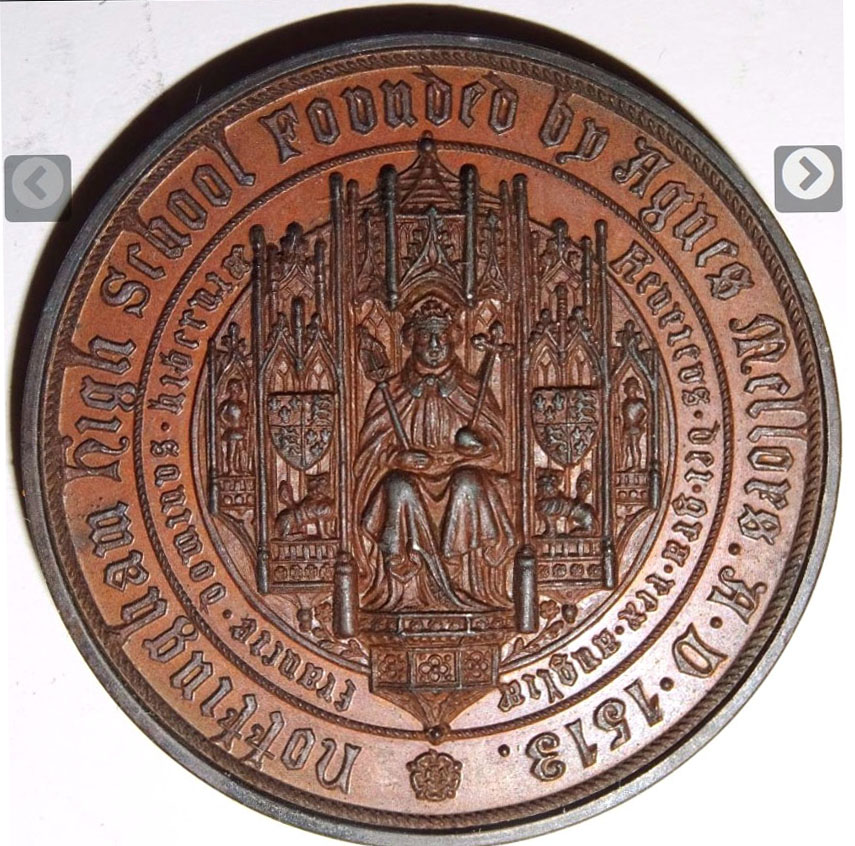
I always keep an eye on ebay to see if anything is on sale which is connected with Nottingham High School, the school where I spent my entire teaching career. First, here’s something that I didn’t buy because I thought it was far too expensive. Here’s the front:

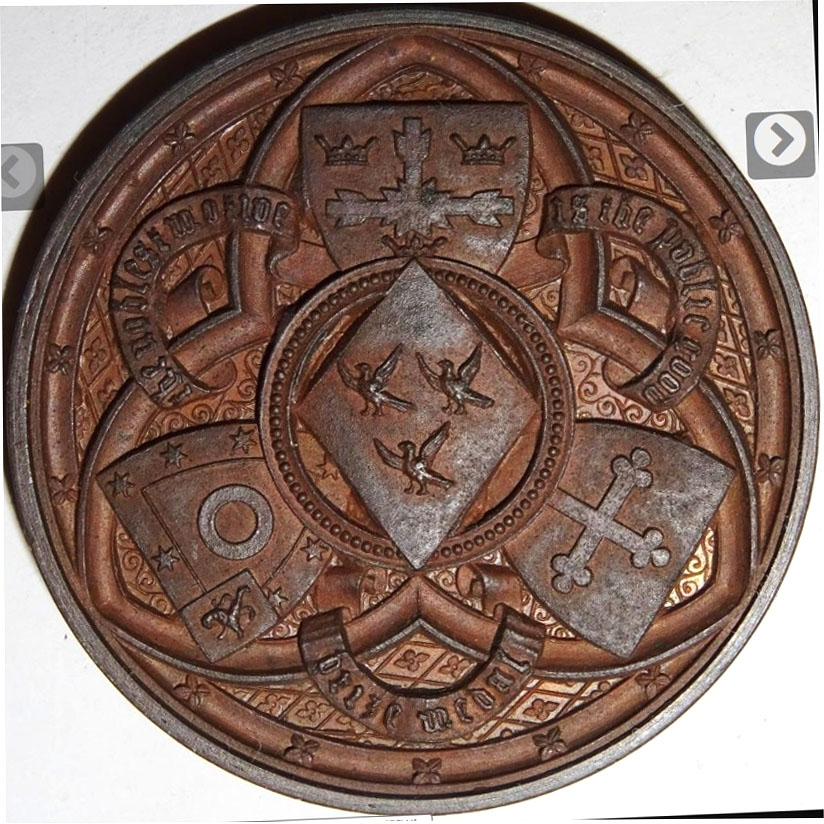
And here’s the back:

The seller wanted £85 for it which I thought was just too expensive for me. It was a medal awarded to Benjamin Herbert Heald of Wilford, a little village on the River Trent to the south of Nottingham. Born on September 16th 1874, Benjamin entered the High School at the age of 12 on September 11th 1887 as Boy No 664. His father was Francis Berry Heald, a designer. Benjamin left the High School on the last day of what was at the time quite frequently called “Term Three” in July 1893. He went on to Queen’s College, Oxford with an Exhibition of £42. That would have been at least 20 times the average worker’s weekly wage.  At the High School he was a true Clever Clogs of the Very Highest Level. He was a Foundation Scholar (1890), a William Enfie Exhibitioner (1892), a Morley Exhibitioner (1891). He won 12 School Prizes in his time at the school, and a number of medals. You can make your choice as to which one this was. They were the Bronze Medal for Good Conduct (1889), the Gold Medal for the Best Open Scholarship (1893) , the Silver Medal for Classic (1893) and the Bronze Medal for Good Conduct (1893). If anybody knows which medal this is, please make a comment. I presume it is one of the Bronze ones. Notice how the reverse has the normal badge of the School:

It also has the cross which appears on the coat of arms of Nottingham:

I don’t recognise the shield with the ring on it, but it does seem vaguely familiar so perhaps somebody has an idea about that.

I found out one strange detail about Benjamin Herbert Heald. In the School Register is a boy called Benjamin Arthur Heald who was born on May 11th 1856. He entered the English School at the Free School on Stoney Street, as it then was, in January 1866. His father is listed as Benjamin Heald and he was a “lace agent and designer” living at 18 High Pavement. Benjamin Arthur Heald was surely a relative of Benjamin Herbert Heald. Anyway Benjamin Arthur is recorded as having died at home from the effects of overbathing, probably in June 1867, when he was 11 years old.

Eventually, Benjamin Herbert Heald became the Headmaster of Midhurst Grammar School in Sussex. In later years he was to reminisce about how the High School’s Headmaster during his time at the School, Dr James Gow, was different from all the other teachers. He never called boys up to his desk to go through their work, but always went to sit alongside them. Lessons usually finished with the customary phrase, “…I think that just about finishes our dose.”

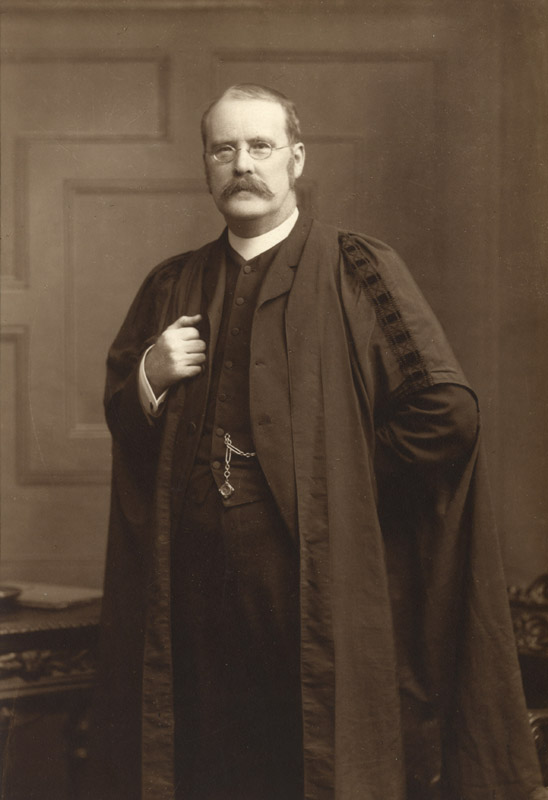
This is Dr Gow, the High School’s greatest ever headmaster:

Next time, some dirty postcards. Well, second hand, at least.


26 Comments

Filed under History, Nottingham, Personal, The High School

Fred joins the RAF (4)

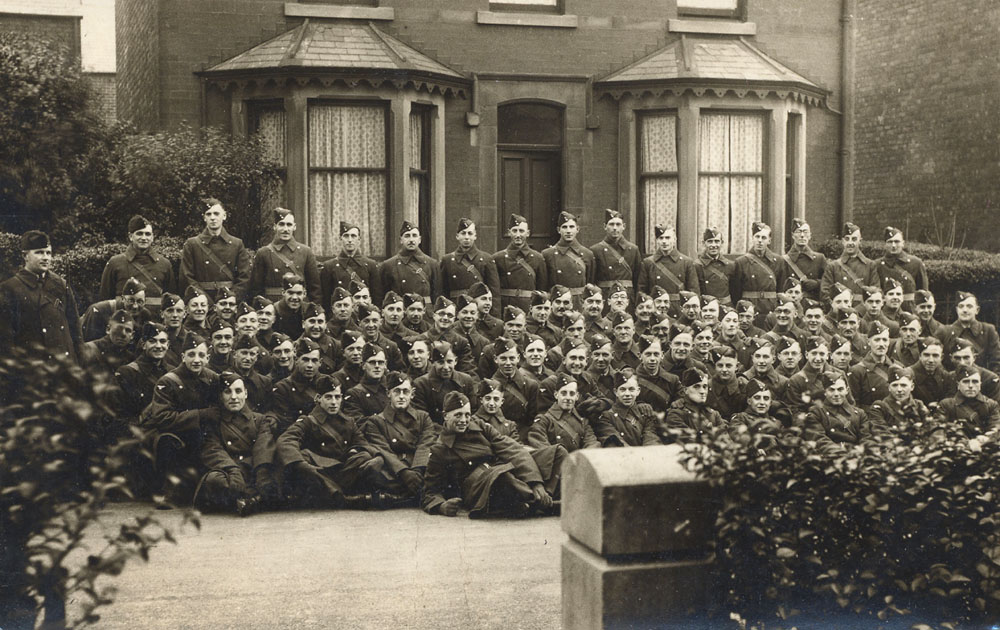
We left Fred last time in Blackpool doing his basic training with Sergeant Parry. All of the RAF’s young volunteers were billeted in boarding houses which, in peacetime, would have accommodated holiday makers. Here are Fred and his friends:

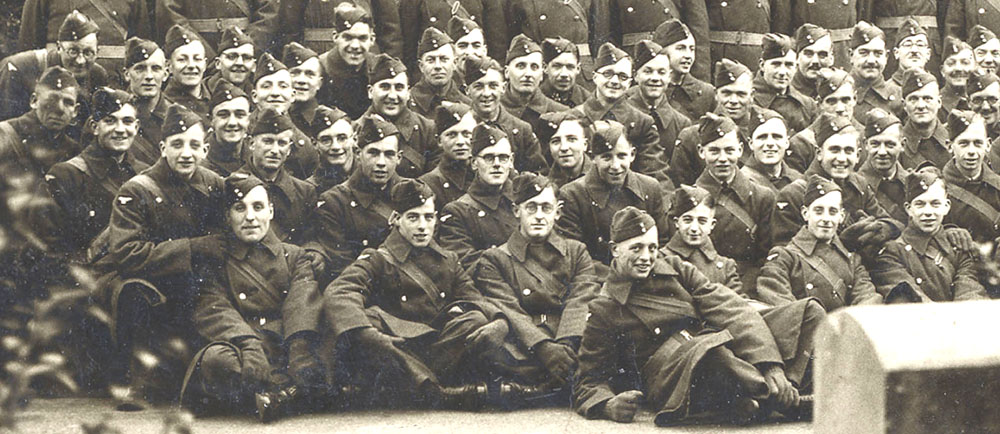
And here is the section with Fred in it. It always reminds me of the RAF version of “Where’s Wally?”:

The boarding house landladies in Blackpool were paid for every recruit they took, but a substantial minority saw this as a fine opportunity to profiteer, accepting money for meals that were never to materialise in the quantities that the payments might have implied. Instead, these unscrupulous women either ate the food themselves, or, more frequently, sold it to their neighbours, who were themselves short of food because of rationing.

In the boarding house where Fred was billeted, thanks to their particular greedy grasping landlady, the individual portions served, were, at best, markedly small. One day, after Physical Training on the beach, Fred and his friend Jacques, came back early from their exercise.

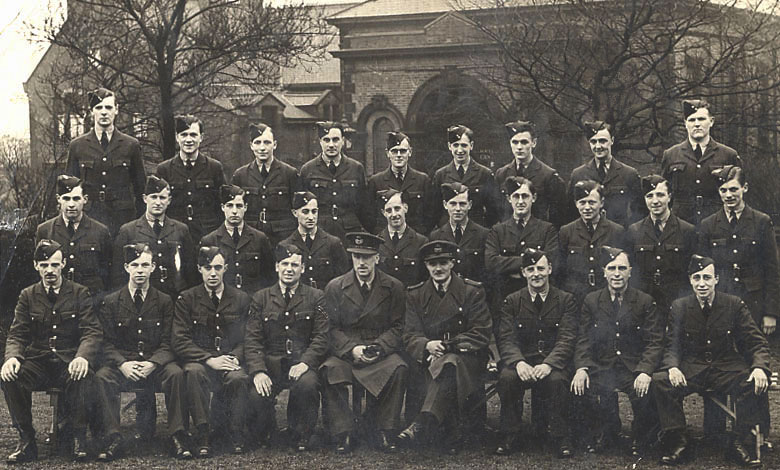
Jacques was Fred’s best pal at this time. He was the son of a Yorkshire farmer, with the physical build, and indeed the appetite for food, to match his origins. Here is the group as a whole in a formal class photograph:

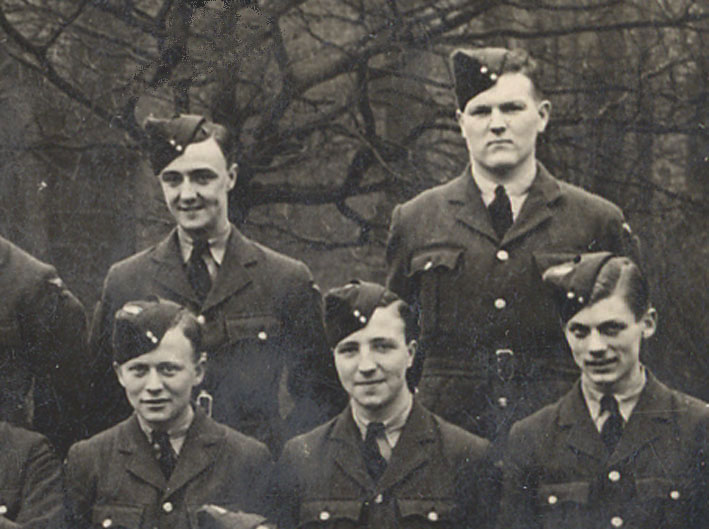
And here are Fred and Jacques as a close-up :

If you remember,  Fred and Jacques had come back early from their Physical Training on the beach. Fred went straight upstairs to wash and make sure he was properly dressed for the meal. Jacques, however, went immediately into the dining room where he found a whole ham, meant for twelve hungry young recruits, waiting in the centre of the table. Jacques, clearly accustomed to Yorkshire farmer sized servings, immediately presumed that the meat was for him and without further ado, he ate the lot.

The reaction of his colleagues when they eventually arrived from their afternoon’s exertions, has not been recorded for posterity, but at best, they were not very impressed.

One of the other men in Fred’s boarding house had  a knowledge both of chemistry and of the behaviour of dogs. One fine, sunny day he went down to the local chemist’s shop, and bought a very large quantity of aniseed concentrate which he then proceeded to dilute:

He took this magic potion and laid scent trails through the streets of Blackpool, all of which led back to the boarding house. He then continued the trails inside the building, entering through both the front and the back doors, leading up the stairs to the different floors, then onto the landings, into the bedrooms and into the bathrooms. In short, his aniseed trails reached every single square inch of the property. Aniseed is desperately attractive to dogs. Once they get the scent…

…off they go, like addicts to their next fix:

They just cannot resist that aniseedy smell:

The result was one glorious afternoon of revenge, as every dog in Blackpool, driven crazy by the overpowering and intoxicating scent of aniseed, arrived at the house and ran berserk, up and down the stairs, careering backwards and forwards along the landings, chasing in and out of the rooms, widdling, piddling and scent marking up every wall and in every recess and corner as they went.

Never make an enemy of the RAF.

17 Comments

Filed under Aviation, Bomber Command, Criminology, History, Humour, Personal, Science, Wildlife and Nature

the Gloster Meteor at Hendon (1)

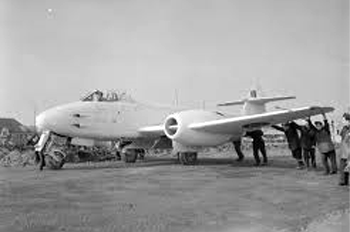
On the very same visit to RAF Hendon when I saw the Messerschmitt Me 262, I also saw the first RAF jet fighter, the Gloster Meteor F8:

To be honest, compared to the German thoroughbred, the Meteor looked a bit of a tub, to say the least:

On the other hand, the engines were lots better than the German ones and eventually the Meteor would be purchased by Australia, Argentina, Belgium, Biafra, Brazil, Canada, Denmark, Ecuador, Egypt, France, West Germany, Israel, the Netherlands, New Zealand, South Africa, Syria and the United States. Here are aircraft from Argentina, Belgium and Brazil :

This slideshow requires JavaScript.

Having been initially negative about the Meteor, it is only fair to say that in the in-service trials between the Meteor and the propeller driven Hawker Tempest, the Meteor was judged the winner on all counts, except, conceivably, manœuvrability. Pilots of propeller driven aircraft often said that the Meteor was “exciting to fly”. Norman Tebbit, the politician and ex-RAF pilot, said of the Meteor:

“Get airborne, up with the wheels, hold it low until you were about 380 knots, pull it up and she would go up, well we thought then, like a rocket”.

The first Meteors to see action were with 616 Squadron who began by chasing V1 flying bombs over south eastern England from July 27th 1944 onwards. In early 1945, they moved out to Belgium and then Holland, carrying out armed reconnaissance and ground attack sorties but without meeting any Me 262s. The Meteors were painted all white to avoid friendly fire issues:

After the war, the Meteor came into contact with the Soviet Mig-15 both in Korea and in the Israel-Egypt war in the mid-1950s. It was found to be lacking in many respects.

More on the Meteor’s shortcomings next time.

25 Comments

Filed under Aviation, History, Personal, Science

Card Carrying Commies (5)

One of my very best friends, whom I have known since Infants’ School, has always been a keen photographer. In 1989 he decided to go to Berlin on one of those cheap European flights. As luggage, he took with him a camera and a large hammer. He wanted, I suppose, to help history along on its way:

By December 25, 1991, the desire for change had spread to the USSR. The Soviet hammer and sickle flag over the Kremlin was pulled down for the last time. Mikhail Gorbachev, a good man, was replaced by Boris Yeltsin.

Here’s Gorbachev and Yeltsin:

This slideshow requires JavaScript.

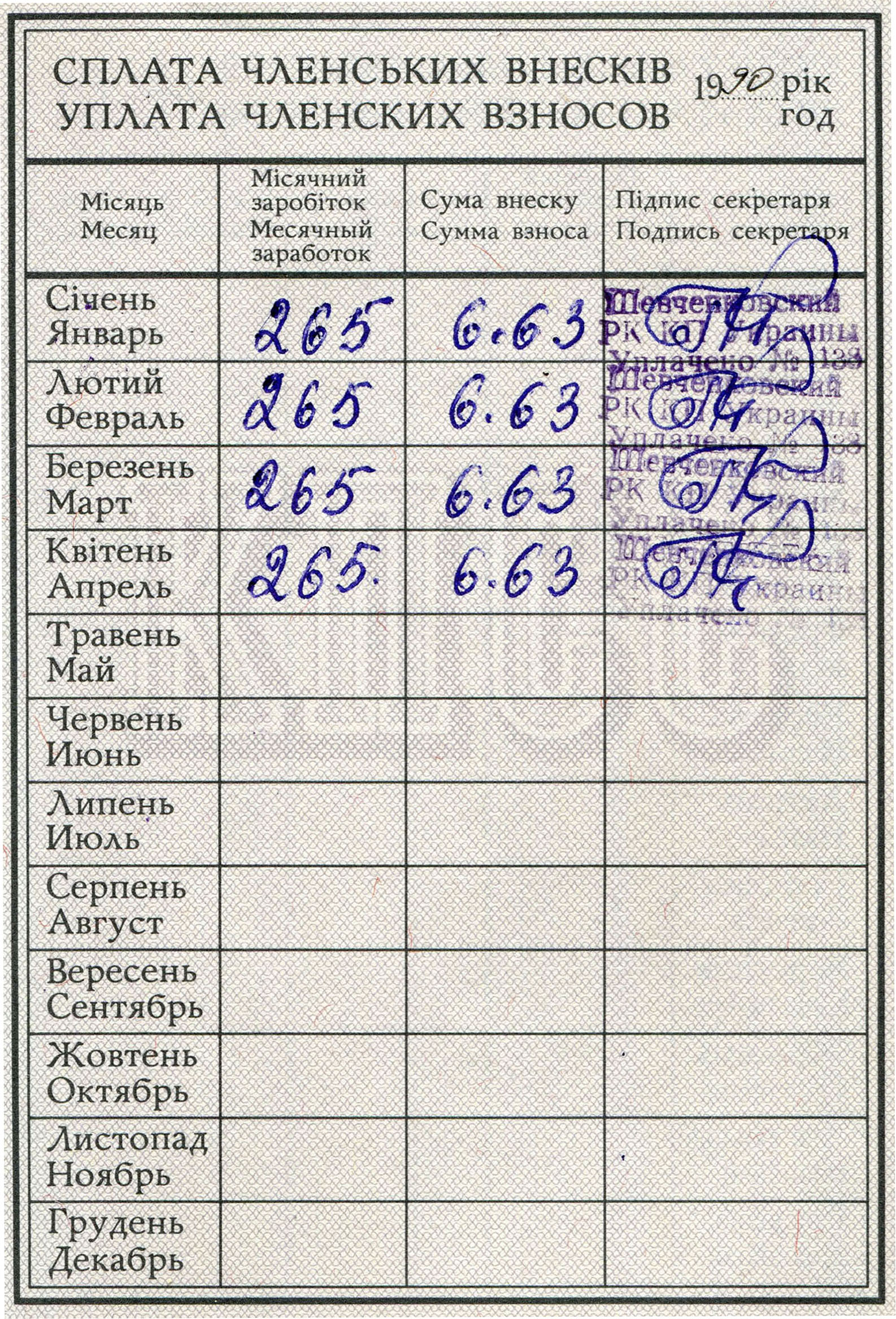
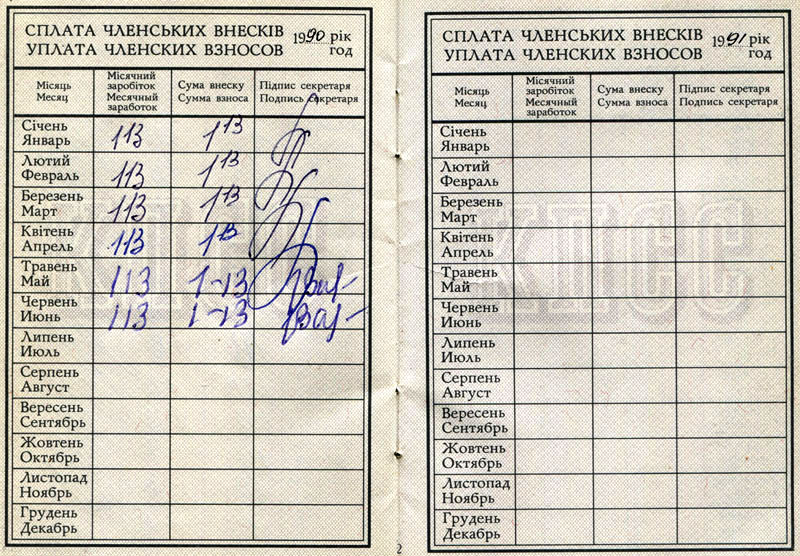
And the world that Aleesa and Vladimir had known all their lives comes crashing down. For years and years, Aleesa has come into the office with her Party dues. She has paid her money every single month without fail, to the only organisation she has ever belonged to. And then, she goes along to pay for May 1990, perhaps thinking it will help with the cost of the celebrations to mark the end of the Great Patriotic War on May 8th or perhaps even May Day itself. The day which celebrates the Workers of the World. But the Party is over. Gone for ever:

Vladimir will experience exactly the same process. He goes in one day to pay his 1 rouble 13 kopecks and there’s nobody to take it from him. Why, they’ve even written the next year on the blank page, so certain were they both that the Party would be there for ever:

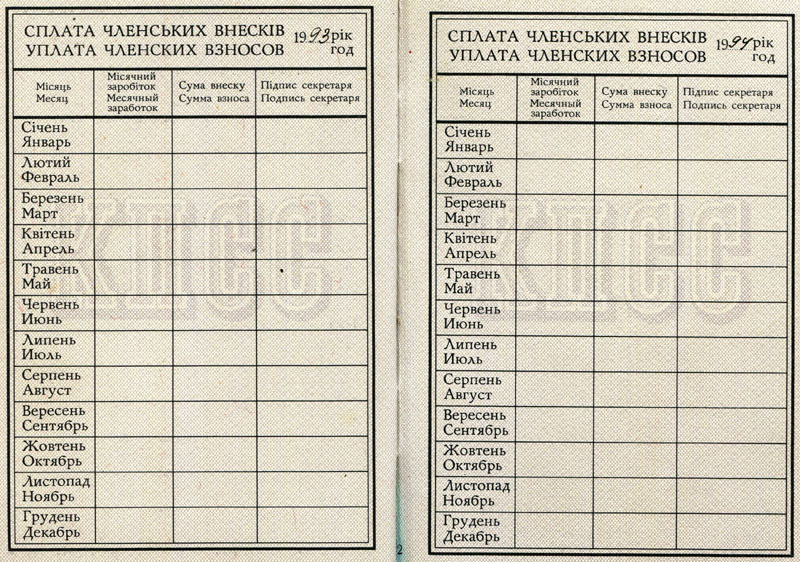
But now, there are just lots and lots of blank pages, each with the number of a future year already inked in in the top right hand corner. Life though, has changed for ever:

Even “Zolochevskiy” has changed as I found out when I googled it. In my previous post, “Zolochevskiy” was the name of the local administrative area of the Communist Party. I skimmed through four news reports thrown up by Google and I found nothing at all about any branches of the old Communist Party.

“Zolochevskiy” was there though, but the stories were all reported with the kind of vocabulary such as:

“Anti-Corruption Bureau, colossal greed, corruption, crime, criminal proceedings, dirty money, embezzlement, illicit assets, laundering, mafia, misappropriation, possible abuses, proceeds from crime, seizure of property through abuse of official position, stacks of treasures, suspicion of illegal enrichment and the wanted list.”

How sad. The Party fades away and is replaced by something lots, lots worse. And that’s not just the Ukraine, of course. Plenty of other ex-members of the Soviet club are much, much worse off than they ever were before. Whole countries run by criminal elements. Fixed elections. Old people forced to beg in the streets because their pension funds have been stolen.

Don’t worry though. I’m sure that somebody will come along and save them all:

18 Comments

Filed under History, Humour, Personal, Politics, Russia

Fred joins the RAF (3)

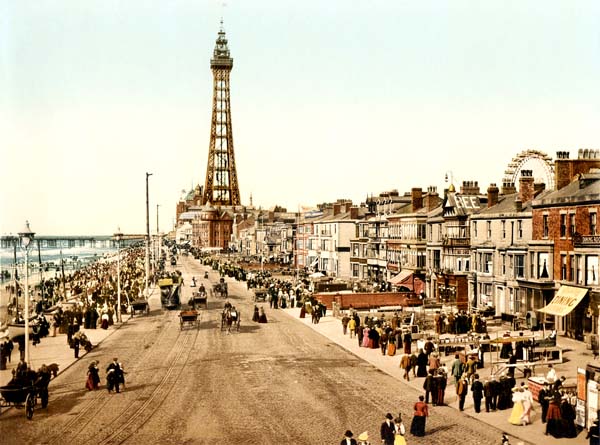
For ab initio training, new recruits to the RAF were often sent to Blackpool. The popular seaside resort had an abundance of boarding houses and small hotels to provide accommodation and food. There were plenty of nice, wide promenades to practice marching:

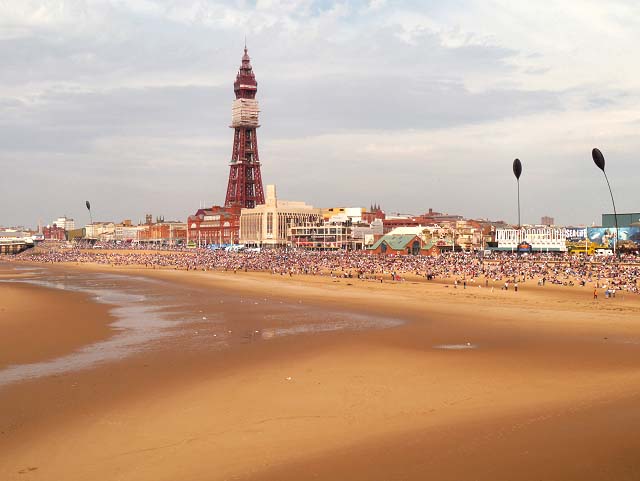
There were lots of even wider beaches for improving physical fitness:

In Blackpool, Fred was taught how to salute, to hold a rifle, to march, and, in general, how to behave as an Aircraftman Second Class, by Sergeant Parry. It was Sergeant Parry’s proud boast that

“One day you’ll be walking along the street, years after this war has finished, and you’ll suddenly hear me shout “Ah..ten…SHUN ! ! ” and you’ll pull up straightaway, and come to attention, even if you are 55 years old.”

In actual fact, this never happened to Fred, but when he was 75 years old, he was admitted to Burton-on-Trent Hospital, where, although he was eventually to recover, he was for some length of time, gravely ill. The Victorian ward he was in had very large metal framed windows, pale green and beige walls, and a yellowish grey light. It clearly reminded a very confused Fred of his original RAF barracks, and the nurses reported that on more than one occasion he was heard to call out, in his delirium,

“It’s all right, Sergeant Parry, I’m coming, don’t worry, Sergeant Parry, I’ll be there in a minute.”

Presumably, Sergeant Parry was marginally more pleasant than the only other drill instructor that Fred ever mentioned. Ironically, Fred never actually met the man in question face to face.

Instead, shortly after arriving at a training base where he was to serve, Fred heard the story of a sergeant instructor who regularly shouted and screamed at the young men in his charge and who, in his treatment of them, regularly overstepped the mark by a considerable distance. He was a bullying, aggressive man, and basically, everybody soon grew to hate him.

One day, a German raider arrived and began strafing the airfield:

The instructor raced away across the grass and jumped into one of the many slit trenches which crisscrossed the base, constructed for surviving just such an occasion as this. What he did not realise when he jumped in was that the trench was almost completely filled with water.

Unable to swim, he drowned. There were men there who could have helped him but they chose just to watch him thrash about in the water. They could have saved his life, but he had abused too many of them for anybody to want to help him now.

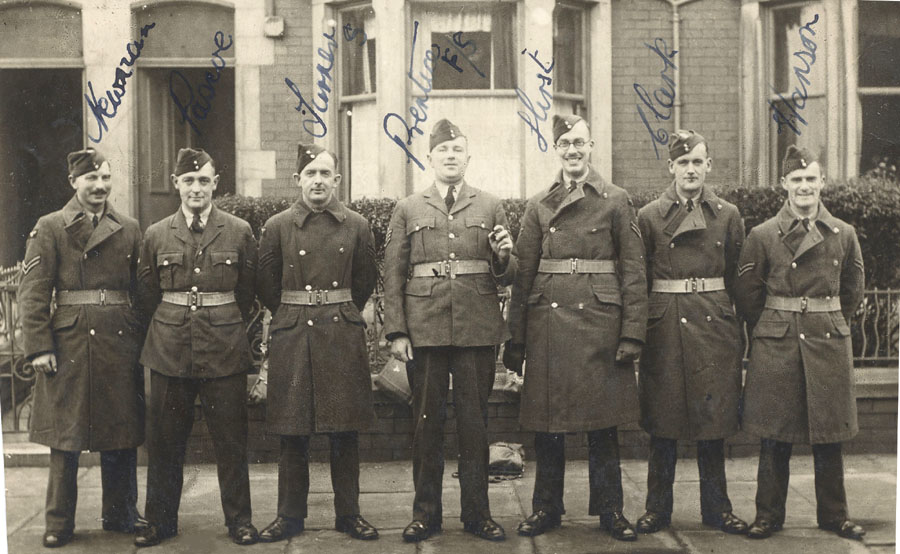
Here are seven of Fred’s instructors during his “ab initio” training, probably at Blackpool:

They are Messrs Newman, Pascoe, Turner, Flight Sergeant Prentice, Hirst, Clark and Hanson.


11 Comments

Filed under Aviation, Bomber Command, Criminology, History, Personal

Fred joins the RAF (2)

By 1941, inspired no doubt in part by the exploits of “The Few” in the previous year’s Battle of Britain, Fred had made up his mind to join the RAF. To do this, he had to walk to the recruiting office in Derby, a journey he had made so many times before with his father to see Derby County play football at the Baseball Ground:

It was a lot less built up and a lot quieter in 1941 than it is now:

Fred duly arrived at a two storey building in the middle of  Derby, where all three of the services were busily enrolling volunteers.

As he walked in, Fred was immediately offered a commission as a Second Lieutenant in the Sherwood Foresters, but he refused this generous opportunity and continued on up the stairs to the RAF. Here, he was asked to spell two words correctly, and he had passed their entrance examination. The words were “horizon” and “bicycle”. Fred was now a proud member of the RAF, an organisation which most of the population believed were “the cream of the nation”. He would wear this for the best part of five years:

When Fred returned home, he told his parents what he had done. His father congratulated him on his bravery, but his frightened mother slapped his face, and said “You wicked boy!”

Not everybody saw it in such a negative way. In October 1941, Fred was still working in Swadlincote at the office of Bert Orgill, a local business man, when Colonel Guy German from nearby Ashby-de-la-Zouch called round, and asked about him, perhaps even seeing Fred as a likely recruit for his own regiment.

Mr Orgill said that Fred had recently volunteered for the RAF, and Colonel German generously gave him a five pound note for having done so. Eventually, Fred would look like this:

At this time, as was briefly mentioned above, the RAF was considered to be the élite force of the three, a fact which was strongly emphasized in the personal letter sent to every man who joined the RAF by Archibald Sinclair, the Secretary of State for War. He said that

“The RAF demands a high standard of physical fitness and alertness, and I congratulate you on passing the stringent tests”.

They were also told they had a “great task to perform” and that

“The honour of the RAF is in your hands. Our country’s safety and the final overthrow of the powers of evil now arrayed against us depend on you and your comrades.”

They were encouraged to “keep fit, work hard, live temperately”. Well, two out of three isn’t bad.

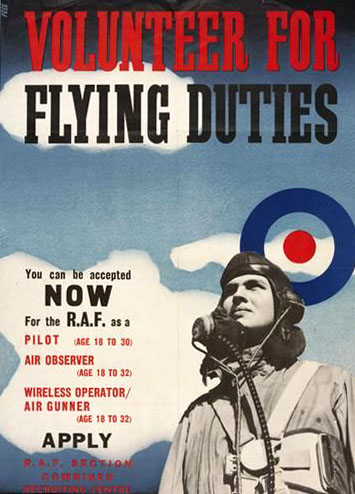
Perhaps as a direct result of this generous praise, there were so many volunteers for the RAF that young men were often sent away for up to a year or more, until a place on a suitable training course became available. This may possibly have been what happened to Fred, although, at this late stage, we have absolutely no way of ever knowing the truth, as his RAF records are far from exhaustive, shall we say!

Nobody of Fred’s social class had ever done any flying. Few had ever been inside an aircraft. Hardly any could even drive a car. To have volunteered for the RAF, and to have been accepted, no matter how low he said their standards of spelling may have been, must have suffused him with immense pride. In this, of course, he was not alone. Thousands of young men across the entire nation had read books and magazines about aviation throughout the 1930s and now, as they reached their early twenties, they were only too willing to join the youngest service:

We do know that when Fred volunteered, he was within just a couple of months of his nineteenth birthday. At the age of eighteen, he still had the right to choose which service he entered. Had he waited those last two months, until he was nineteen years old, the government would then have had the right to conscript him, and he would have lost the right to decide in which arm of the services he was to serve.

It is, however, actually possible to disprove one apparently neat theory, namely that Fred, as a keen cinema goer, might well have been inspired to join the RAF by seeing a famous documentary film, which he would talk about ceaselessly in later years. It was entitled “Target for Tonight”.

“Target for Tonight” was a Crown Film Unit propaganda film, using real RAF personnel throughout and chronicling a night raid on Germany by the Vickers Wellingtons of 149 Squadron of Bomber Command, with, coincidentally, “F for Freddie” as the main aircraft. It is a nice idea that Fred was inspired to join the RAF by seeing this film but it cannot be true, as the film was not released until at least October 1941, almost a full month after Fred volunteered.  He still spent the rest of his life as an enormous fan of  Charles Pickard, the hero of the film:

One thing that Fred was always to joke about, however, was the immediate impact that his joining the Allied Forces was to have on the conflict. Montgomery’s victory over Rommel at El Alamein followed his enlistment reasonably quickly, and not long afterwards, the Soviets were to win the Battle of Stalingrad.

You can watch “Target for Tonight” here:

16 Comments

Filed under Aviation, Bomber Command, Derby County, History, Personal

Fred joins the RAF (1)

When war broke out in September 1939, Fred took advice from his father, Will, about which of the three services to join. Will, of course, had been a veteran of the First World War, and was well aware that, until conscription was introduced, there was a free choice of where to spend the conflict, with, hopefully, a maximised chance of survival.

Will told Fred not to join the Army, as he himself had fought on the Western Front, and had seen the horrors of Passchendaele, followed by a period on active service in the area of the Somme battlefields:

Will knew all too well that for the army commanders, the men remained just cannon fodder, whose eventual fate was of little importance to them, as they ate and drank in palatial comfort, miles behind the Front Line. The ordinary soldiers were just a list of names on a war memorial :

Will could not recommend the Navy either, because, if your ship were sunk, it would take you far too long to die, floating around in the water, with little real prospect of rescue. Don’t miss the shark :

Instead, along with thousands of other First World War veterans, he recommended to his son that Fred join the RAF. Will had seen the aircraft of the then Royal Flying Corps, flying high over the trenches. He knew that when they died, it was usually by burning, a relatively quick, and clean, way to go:

The supreme irony, of course, was that Fred was eventually to find himself in the ranks of Bomber Command. Throughout the entire war, their casualty rates were destined always to bear direct comparison with those of the British Army on the Western Front during the First World War, and even with the appalling rates of carnage of specific battles such as Ypres or the Somme.

Fred knew that his mother was extremely worried about her only son when he was away in the RAF. Like many thousands of his colleagues in Bomber Command, therefore, he told her that he had a totally safe job, working from nine till five in the quartermaster’s stores, doling out uniforms to new recruits. Fred’s father, however, who had experience of the sharp end of war, was fully aware that Fred was in aircrew, and of the risks that that involved:

Fred had very dismissive and, at the same time, modest, memories of what rank he had held in the RAF. He always insisted that he had been an AC2, an “Aircraftman Second Class”, but that he had once been promoted to the lofty heights of Lance Corporal, so that he would have the authority to guard a pile of boxes.

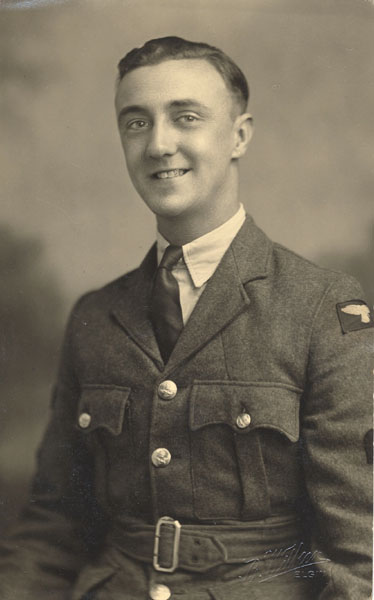
Fred’s parents had a photograph of their beloved only son, taken by Wilkes of Elgin:

They kept the photograph on the piano throughout the conflict, and indeed, long afterwards, as, perhaps, some kind of thanksgiving for his safe return. Fred’s mother and father had tried so hard to have a baby, with things going wrong with a number of pregnancies before Fred was born. And he was an only child.

Almost seventy years later, Fred’s granddaughter was to make a public appeal for information about her grandfather’s time in the RAF, and for just a few hours, this particular photograph was to be the main attraction on the RAF’s Facebook page:


31 Comments

Filed under Aviation, Bomber Command, History, Personal