Category Archives: Wildlife and Nature

Storks in Victorian Nottinghamshire

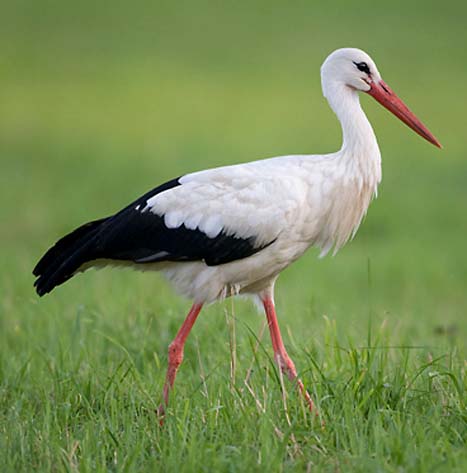
The White Stork is a very large and spectacular visitor to England. People have asked me on many occasions why we think that babies are brought by storks. My answer has always been that a good number of new babies have a red mark on their forehead when they are first born. This mark is triangular and it looks as if their head has been grasped for a considerable period of time in a stork’s beak. My own daughter certainly had the mark on her forehead when she was first born, although it usually fades with time.

Victorian Nottinghamshire recorded a number of storks, and in actual fact, the very best records come from the era of King George IV, Beau Brummell’s “fat friend”.  In 1825, therefore, a single bird was killed near Bawtry on an unrecorded date during the year:

white-stork-113589 xxxxxxxxxxxxxxx
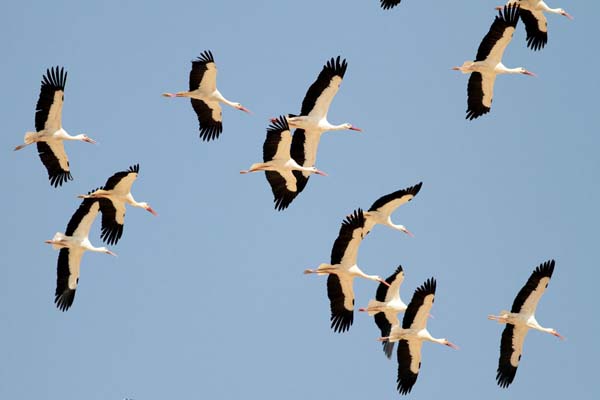
Four years later, in 1829 an entire flock of these magnificent birds was seen on the River Trent at the very same location as the 1825 individual:

white-storks-flockxxxxxxxxxxxxxxxxxxxxx

Two of them were subsequently shot as they overflew the nearby market town of Bawtry. Look for the orange arrows:

This slideshow requires JavaScript.

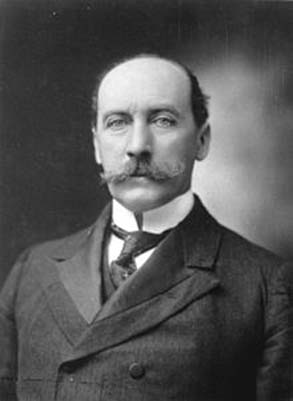
On Monday, April 12th 1915, a single bird was seen in flight over the road between Nottingham and Mansfield. The observer was Sir Herbert Chermside :

220px-Sir_Herbert_Chermside

In 1899 Sir Herbert had married Geraldine Katherine Webb, the daughter of Mr W.F.Webb, the owner of Newstead Abbey in Nottinghamshire. The poor lady was to die in 1910 without any children.

Sir Herbert immediately typed a letter to Joseph Whitaker, as soon as he reached home after seeing this wonderful bird:

“This morning a specimen of Cicogna Alba passed across the Nottingham-Mansfield high Road (sic) at 9.50 a.m. between the Pilgrim Oak and the Hutt House, the bird was in Spring plumage, with legs and beak very bright:

bilyl_leleka_pislja_opysu xxxxxxxxxxxxxx

It was, I think, a hen bird, and passed directly over me within easy gun shot, flying relatively low, over the tops of the Beech trees by a few feet. It is possibly a War Refugee from the Low Countries.”

The Pilgrim Oak or Gospel Oak stands opposite the Hutt at the main entrance to Newstead Abbey. This is the Hutt:

thre hutt

The Pilgrim Oak was the place where pilgrims would stop and read the gospels before entering the Abbey (not the pub). The age of the tree is unknown but it was already quite large in Lord Byron’s time. The American author, Washington Irving, described as “a venerable tree, of great size” when he visited the area in the early 19th century:

This slideshow requires JavaScript.

Here is the Pilgrim Oak in both spring and autumn:

This slideshow requires JavaScript.

Joseph Whitaker would have been totally gutted, to use the modern expression, that a non-birdwatcher had seen such a wonderful, spectacular bird, and he hadn’t:

white-stork-hungary-2007

Just under a week later, on Sunday, April 18th, Sir Herbert wrote again to Whitaker confirming the identity of a bird that he had already seen in many locations in the Middle East. This must really have twisted the knife, although, of course, unwittingly:

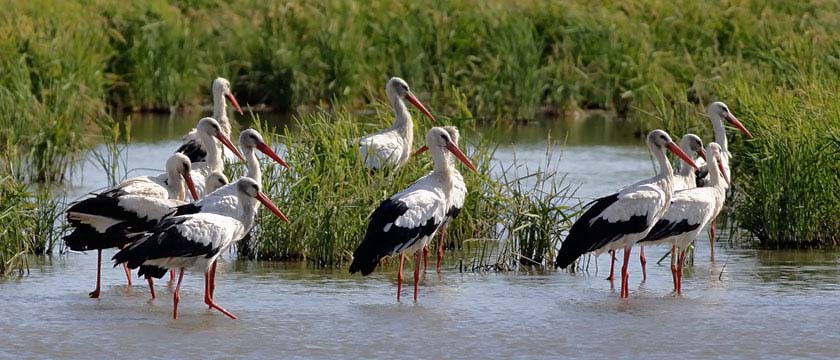
“I wish that you had seen the Stork instead of I (sic) although it is the first one that I have ever seen in England. Last year I was in the uplands of Algeria, south of Constantinople on the day of their arrival in very considerable numbers (early March) at the Dardanelles on the shores of the Sea of Marmora , 17th March is the day of their arrival. A day’s march from Gallipoli on the eastern side, they have a great assembly place-for both spring and autumn.

White-Storks_1164flock xxxxxxxxxxx

The natives allege that in Autumn, the birds of the year pair there, before the migration.”

All the way through this account, I have deliberately used the phrase “White Stork”. This is because there is a Black Stork as well. This is a much rarer bird, and one which I myself have yet to see:

This slideshow requires JavaScript.

In Victorian times there was just one report of this species being seen in the county. This was an unfortunate individual which was shot during the autumn of 1871 at Colwick by Mr John Brown of Old Moat Hall. Joseph Whitaker was told the facts in a letter from Mr P. Musters of West Bridgford. As Old Moat Hall is in Cheshire, I suppose we can presume that Mr Brown was a guest of one of the members of the extended Chaworth-Musters family, who were rich landowners in Nottinghamshire.

As far as I can see, their possessions included Annesley Hall, Colwick Hall, Wiverton Hall, Edwalton Manor, West Bridgford Hall and for Sundays, Felley Priory.

10 Comments

Filed under History, Nottingham, Politics, Science, Twitching, Wildlife and Nature

The Beast of Veyreau….another cannibal killer!

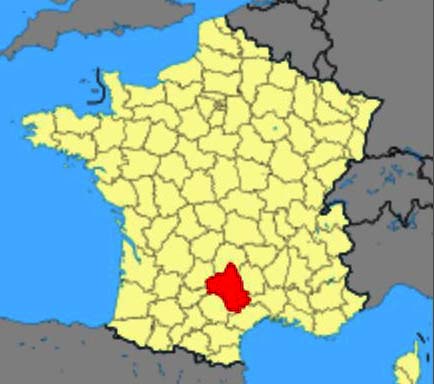
One more man eating monster to terrorise the local peasants of France was the “Bête de Veyreau”. At a time and in a place both relatively close to the Beast of Gevaudan, his bloodsoaked career peaked from 1799 onwards as he laid waste to an area of France called the “Causse Noir” or “Black Causse”. This beautiful countryside is situated more or less in the south of the Massif Central. Here is the old province of Rouergue, whose capital was Rodez:

rourgue

And this is a more detailed map, with a red square in the extreme east representing the village of Veyreau. The orange arrow refused to travel abroad:

map square

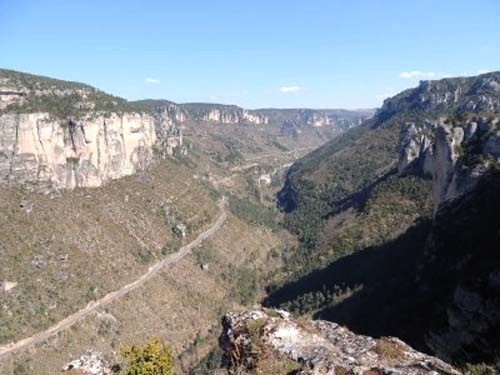
The province directly to the east of the green area is Gévaudan. The “Causse Noir” or “Black Causse” is dry, rugged and rocky.

1280px-Causse_Noir

There are many mountainous areas and some notable gorges such as the “Gorges de la Jonte”:

gorges de la jonte

Normally, the best approach for these French monsters is to take an average of the various French websites. In this case however, that is not really going to work, because, as far as I can see, more or less every account of this creature is virtually the same, and probably owes a great deal to Wikipedia:

“The Beast of Veyreau was a man eating animal which ravaged an area in the “Causse Noir” not too far from Gevaudan, from 1799 onwards.  This was an area where livestock were raised and is nowadays part of the Département of Aveyron. These attacks filled the inhabitants with such immense fear, and the Beast had so many “dozens of victims”, that the locals thought the Beast of Gévaudan had come to their region.”

I have been able to find one person who could expand a little on that:

“around the year 1799, there appeared in the country a beast which filled all the inhabitants with great fear. Its build was slimmer and more willowy than a wolf. Its way of walking had such agility that it was seen first in one place, but then four or five minutes later in a different place perhaps several miles away. And woe betide any child that might meet the creature. The Beast would carry them off and eat them , first the liver and then the limbs. In the space of six months this beast killed three victims including a boy of six whose limbs they found hidden in the earth in the Malbouche Ravine, in the very same place which was, people used to say, the haunt of the ogre.”

Mention of “The Ogre” will lead me neatly to another blogpost in the future, when this long series of familiar crazed creatures, blood soaked beasts, maniacal monsters, feral dogs, wolf-dog hybrids, wolves with attitude or whatever nasty four legged beast you can imagine, becomes just for a few hundred words, a two legged cannibal killer, with the supercool name of Jean Grin.

To get back to the story, this is the tiny village of Veyreau:

Veyreau_aerien1

The very best version of the story of the “Bête de Veyreau” comes from a website designed to “découvrir et aimer la Lozère”, in other words to “discover and love La Lozère”, which is one of the most beautiful and picturesque areas of the “Causse Noir”. The account of the Beast below is quoted directly from the parish records of the village of Veyreau, which were collected together in 1870 by the then parish priest, Père Casimir Fages. The road sign  below shows that two languages were/are spoken in this southern part of France. “Veirau” is the village name in Occitan. Try the Wikipedia website to read about this ancient language. You will find a really interesting use of the Universal Declaration of Human Rights, which has been translated into a number of widely spoken languages but then into a good number of others such as Occitan, Gascon, Provençal and half a dozen others. At the very least, it has a wonderful moving map which you can click to enlarge:

veyreau_entree_panneau

As was so often the case in old France, the parish priest was the only literate person in the immediate area, and it was for him to record the history of tiny villages such as Veyreau. Père Fages’ church is still there:

eglise-de-veyreau-e1380921126557

The hard work for this website has all been done by an extremely dedicated gentleman, Monsieur Bernard Soulier. Bernard is the President of the Association “In the country of the Beast of Gévaudan”, in French,  “Au pays de la Bête du Gévaudan”. This organisation is based in Auvers, a small village in the Haute Loire district.

.
Here is Père Fages’ story:

“Around the year 1799, there appeared in the country, especially around the village of Paliès, a beast that filled all the people immense fear; its size was slimmer than a wolf ; Its way of walking had such agility that it was seen in one place, and four or five minutes later it was seen in another place perhaps a league away. It had the head and muzzle of a large greyhound ; it used to come into villages in broad daylight, and woe betide any child that might meet the creature, the Beast would carry them off and eat them, first the liver and then the limbs. One summer’s day, the Beast appeared at Paliès. Children spied it from a long distance away and ran to take refuge in a tree close to a house on the northern side of the village; faster than lightning, the Beast seized one of the children, who was already two metres off the ground and carried him off into Madasse Wood. Men shearing the sheep of a local farmer, including the father of the unfortunate child, ran at top speed to the place where the Beast had gone. The noise that they made caused the Beast to abandon the little boy who was found shaking on the ground with his insides ripped out! Seeing his father looking for him, he did, however, have the strength, to shout “I’m here”, but he died a few moments later. This child aged six, was called Pierre-Jean Mauri; in the register Monsieur Arnal who carried out the baptism ceremonies in 1794 when the child was fifteen months old, has added to the margin of that register, “Devoured by the ferocious Beast”.
Fifteen days later, the Beast took a child from the farm of Graille at Rougerie. In company with his older brother, he was keeping watch over the cattle close to the natural spring of St. Martin; the elder brother tried hard to help his brother, but when the beast stood up on its hind legs, he was so frightened that he fled and went for help at Veyreau ; it was a Sunday, a large crowd came to help, and searching the Malbouche property, they found the remains of limbs that the Beast had hidden in the earth. This same beast also seized a little girl named Julien who lived in Bourjoie ; her father was busy knocking nuts down from the trees; the small children were close to the tree, and the Beast, in full view of the father, seized the little girl; the father set off after her, but he could not catch her up, and a few days later, she was found buried in the undergrowth; her liver had been eaten.
These different characteristics of the Beast filled the people of Veyreau and St André with justified fear; several people saw the Beast which accompanied them, gambolling along, jumping about, but not daring to attack adults; One day in bright sunshine, the Beast walked through the village of St André, and stopped outside the door of a weaver’s house; they took it for a dog, and at the very moment when they were going to stroke it, it disappeared in  a flash. Monsieur Gaillard, the parish priest of St André, with whom I have discussed this extraordinary animal, assured me that he had heard it one evening in a small field below the duck pond, emitting howls like the braying of a donkey, something which was confirmed by several other people:

howl

All the local poachers met to hunt the creature, but when they encountered the Beast, they said that sometimes, especially when it was being shot at, the creature rolled around on the ground but then disappeared with enormous speed. The people who were children during this era, agree how great was the terror that it produced throughout the whole region of the “Black Causse”. Never attacking men or animals, because we had seen it pass through the middle of herds of cattle and flocks of sheep without doing them any harm, the Beast targeted only children. In the course of this year, from June to December, two boys and a girl were the sad victims of its ferocity; nobody dared walk outside on their own at night, and by day everyone carried a halberd at the end of a stick to defend themselves, in case they met the creature:

halberd

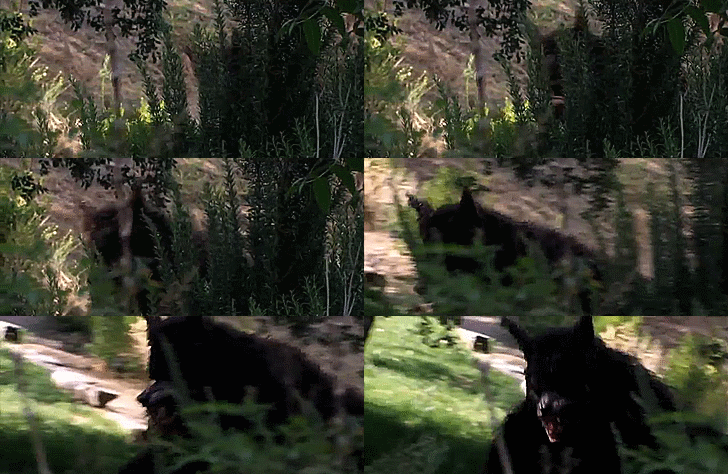
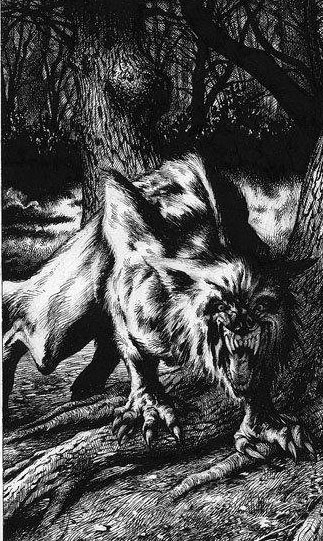
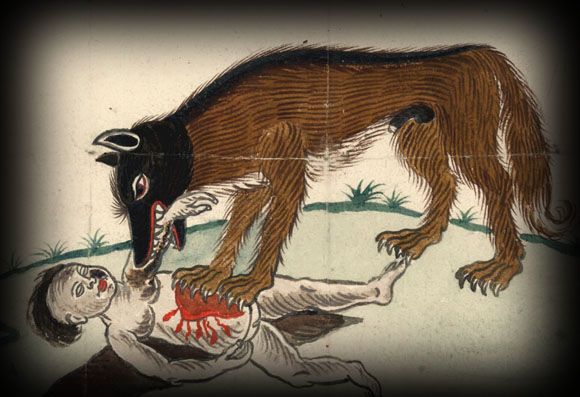
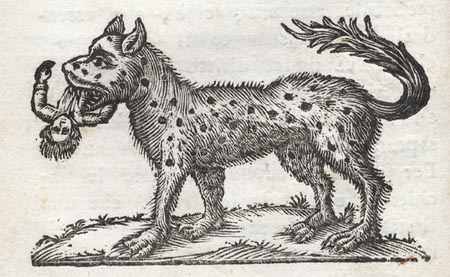
What was this Beast? It could not be classified as one of the known animals in the area; Monsieur Caussignac claimed that it was a hyena; Monsieur Gaillard, the village priest of St. André, thought it was a lynx, and the common people gave it the name of “Werewolf”, in French “Loup garou”:

loup-garou-1
After some six months or a year, the creature disappeared without anybody knowing what had happened to it. About the same time, a similar beast was seen in the Sanvero woods near the village of Cornus in the Aveyron province; it almost managed eat a little girl that I was to know twenty-five years later; she was near her home in the village of Labadie, in the parish of St Rome Berlières ; her brother, older than her, rushed to her defence and grabbed her from the creature, he dragged her into the house ; through the cracks  in the closed door they could see the Beast watching and waiting for some time for the prey which had escaped, only by the skin of her teeth. Indeed, a bite from the creature had taken a considerable piece of skin from her side; this scar was never to fade throughout the rest of her life:

werewolf
Whatever this animal was, its appearance had an enormous impact throughout the whole area of the Black Causse. Uneducated people saw in the Beast something supernatural, especially after all the upheavals and ordeals of the recent Revolution.”

And there you have it. Yet another wolf that seems to be not quite a wolf. At the moment, I am favouring the idea that up until about two hundred years or so ago, there was a second, much fiercer and larger species of wolf living in the remote and most mountainous areas of France, some prehistoric survivor that had lingered on until the nineteenth century in ever diminishing numbers, until, after tens of thousands of years, it finally became extinct. I cannot believe that the locals were incapable of recognising an ordinary wolf when they saw one. I cannot believe either that wolves were hybridising with dogs across the whole of France to produce killer hybrids. Wolves don’t have steamy affairs with dogs. They eat them!

15 Comments

Filed under Cryptozoology, France, History, Science, Uncategorized, Wildlife and Nature

When the mighty Trent turned into a tiny stream…

In a couple of previous articles, I have mentioned two different extremes of weather at Trent Bridge, namely freezing ice and snow and then, quite frequently straight afterwards, horrific floods, when a sudden melt of huge snowdrifts overfills the river. Such a sequence of events may raise the water level by twelve or fifteen feet above normal and increase the rate of flow to a situation when 45,000 cubic feet of floodwater go past the bridge every second, as opposed to the more normal figure of 3,000. What I have not mentioned so far though, is a complete lack of rainfall and the consequent drought.

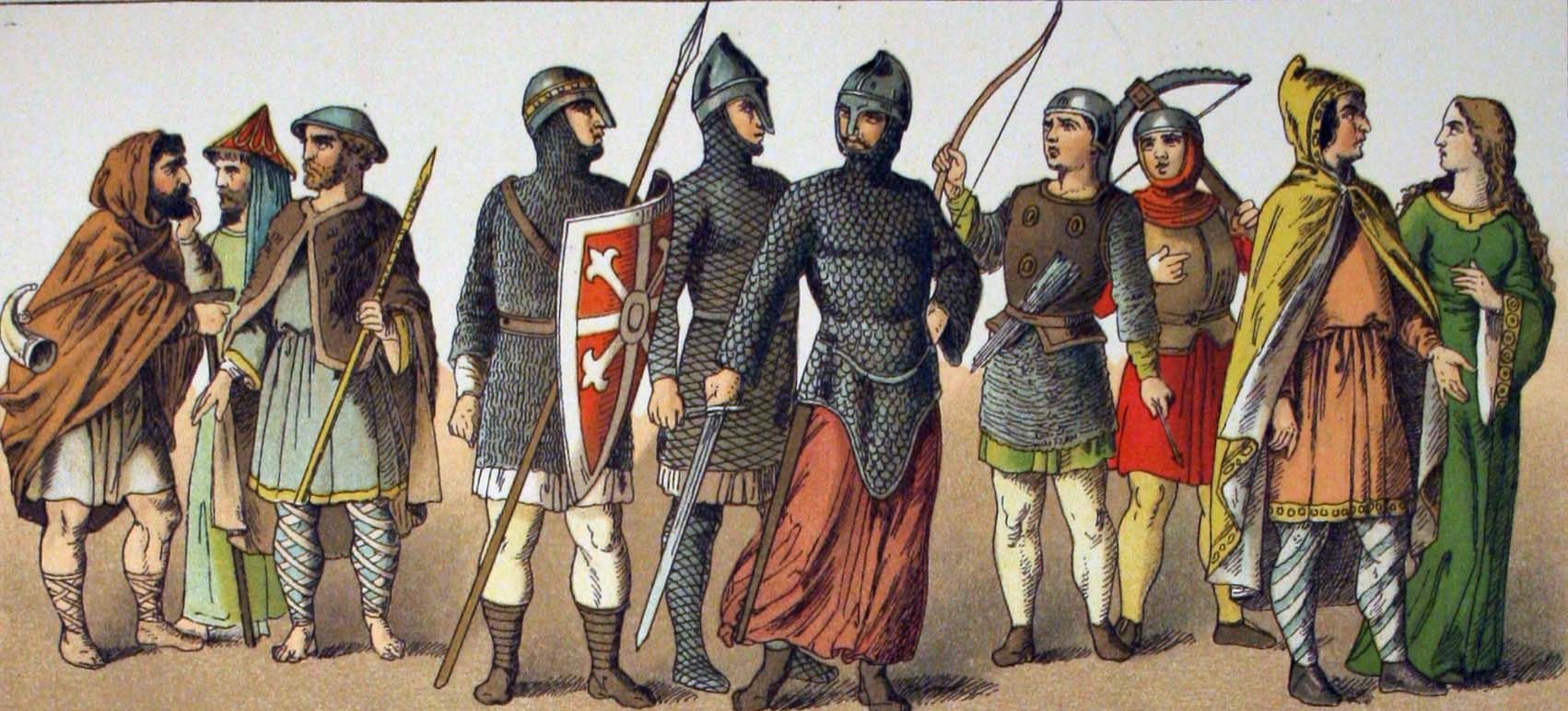
Almost a thousand years ago, in 1101, Nottingham experienced a terrifying earthquake. Here are some people in 1100. Can you spot Robin Hood? (He is wearing a cunning, yet comfortable disguise in his traditional Lincoln Green.)

1000-1100,_Norman_

Bizarrely, once the earthquake had stopped, the River Trent dried up and then ceased to flow for several hours, presumably as it drained into, and then eventually filled up, a huge crack or cavern in the ground that the earthquake had created somewhere upstream from Nottingham. Once that was done, the waters returned to normal.  Another source gives the date of this amazing event as 1110 and says that the River Trent was dry at Nottingham for 24 hours. Strictly speaking, though, that is not a genuine bona fide drought.

Two hundred years or so later though, in 1354, the weather was extremely dry in the whole of England:

“This year, the country was affected with a great drought, in which Nottinghamshire, from its peculiar geographical position, suffered extremely; in both Nottinghamshire and Derbyshire no rain had fallen from the latter end of March until the close of July.”

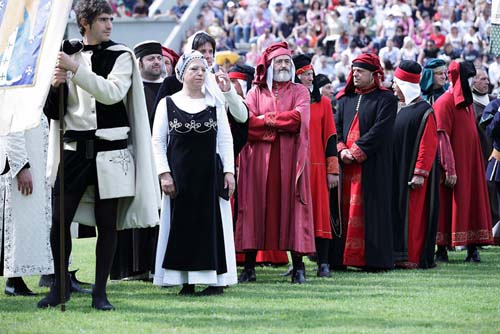
It is difficult to believe that this prolonged lack of rain would not have affected the amount of water flowing under Hethbeth Bridge. Here are some people in 1354. It looks like the start of a football match to me:

participants in mediaeval costume on field at the Corsa all'anello in Narni Umbria

The four years of 1538-1541 produced extreme drought throughout the whole country, with three successive fine and hot summers from 1538-1540. In the latter year, cherries could be picked and eaten by the beginning of June. Grapes were ripe by early July. Both 1540 and 1541 were exceptionally dry years overall, and in both summers, the River Thames was so low that sea water backed up above London Bridge. It would be interesting to know what effect such amazingly hot and dry weather must have had on the River Trent. Here are some people of this period, waiting for a shower of rain, but looking a little worried that global warming has perhaps started five hundred years too early. I wouldn’t have liked the hat with the feather:

tudor

That dry summer of 1540 was the warmest until 2003, and countries in Western Europe christened it the ‘Big Sun Year’. Very high temperatures prevailed from Germany to the Netherlands and no rain fell in Rome for at least nine months. Many people died of heat stroke and heart failure. Reportedly the waters of the River Rhine were so low that the river could be crossed on horseback. People could walk across the River Seine in Paris without getting their feet wet. In England during these four years:

“rivers and streams were drying out in parts. A remarkable series of droughts, with a burning sun during the summer”.

In 1541:

“At Nottingham a remarkable drought; almost all the small rivers dried up, and the River Trent diminished to a straggling brook. Many cattle died for want of water, especially in the county of Nottinghamshire, and many thousands of persons died from grievous diarrhoea and dysentery.”

“Trent a straggling brook”

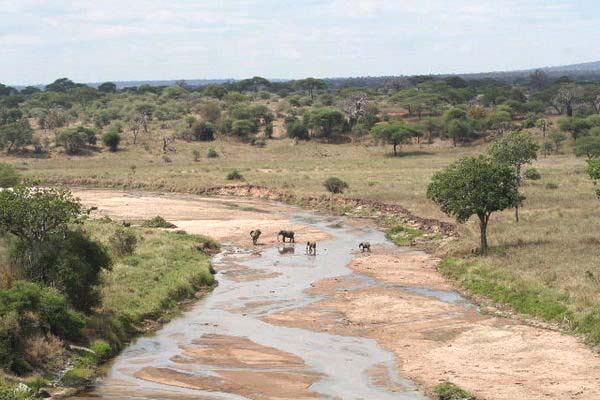
I could not find any pictures of the Trent as a “straggling brook”, but this is close. And no, the hot weather did not attract any elephants to Nottingham:

elephsnts

Forty years later, in 1581 the River Trent apparently “dried up completely” but further details of this event are not very much in evidence, beyond the rather strange date when it was supposed to have occurred, supposedly December 21st. Perhaps a build up of ice higher upstream brought the river’s flow to a stop.

Ten years later, in 1591,

“A severe drought destroyed practically all the crops and vegetation in the areas around Nottingham. The rivers Trent and Erewash, plus other rivers, were almost without water.”

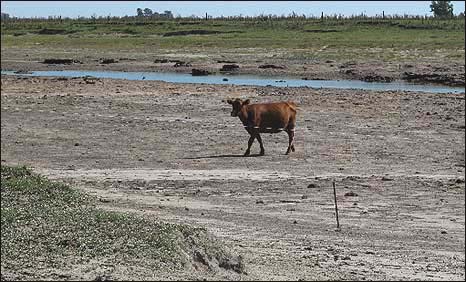
People actually remarked how like Texas the landscape had become:

cow

There was another “uncommon drought in Nottinghamshire” in the spring of 1592. In the summer there were strong westerly winds to dry the land even further, and hardly any rain fell.

“The Trent and other rivers were almost without water. In summer, the Thames was so shallow that horsemen could ride across near London Bridge & the River Trent was also said to be almost dry.”

This is the old London Bridge of this period:

london bridge zzzzzzzzzzzzzzzzz

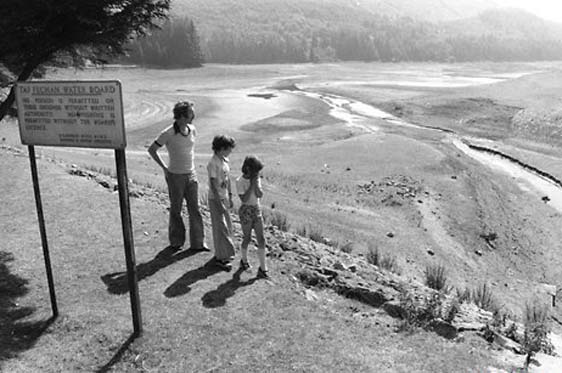
After this, there is then a hiatus of some three or four hundred years until the twentieth century. I have been unable to trace any other noticeably dry periods during this intervening time. The next striking piece of dry weather comes in the mid-1970s, with an absolutely scorching summer in 1975. This initial heat and drought was followed by a very dry winter, and then the unforgettable drought conditions of the summer of 1976. These periods of extreme weather saw the River Trent during the end of the month of August 1976 at its very lowest level in modern times. Indeed, this summer produced what was called the Great European Drought with the lowest soil moisture readings in London since 1698.

Unfortunately nobody in Nottingham seems to have thought of preserving this amazing weather with their camera. Instead, I will just show you one or two typical scenes. Here is an unknown reservoir which should have been a vast lake. Flap those flares:

_72775633_1976-drought

Here is a reservoir at Huddersfield in Yorkshire:

hudd ressser

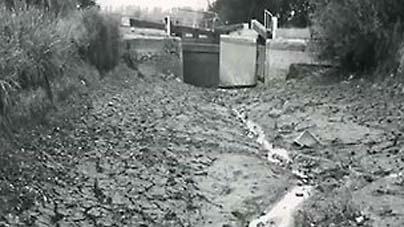
Here is a lock on what should have been a brim full canal:

foxton lock

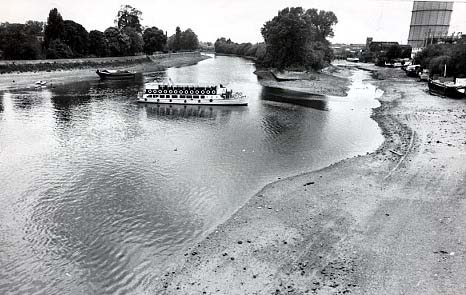
This is the River Thames at Kew near London. The River Trent at Nottingham would presumably have been comparable:

r thames kew

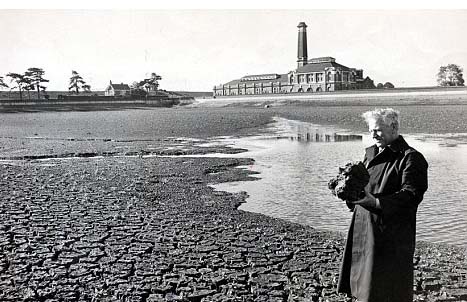
And finally, here is Walton Reservoir in Surrey, being monitored by the least appropriately dressed man in 1976:

reser at walton thsame ssurrey


11 Comments

Filed under History, Humour, Nottingham, Wildlife and Nature

French Monsters : the solution

I think that I have established by now, in a long series of articles, that large numbers of innocent people in France were being attacked, and frequently eaten, by wild creatures of some sort from the late 1400s possibly right up to the end of the nineteenth century.
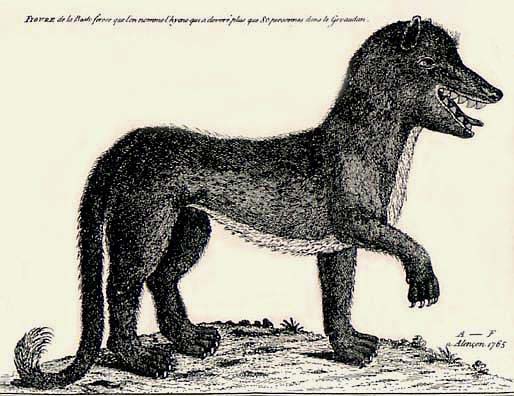
My eagerly awaited conclusion to all this is that we are dealing here with an unknown creature which was essentially a wolf type animal and which is now extinct. It lived in thick forests and deep ravines, and behaved in a way so different from a modern wolf that it cannot possibly have been one. It killed and killed again.

Some sources attribute 150 deaths to what they call “just one ordinary, but large wolf”. Impossible! At the same time, “The Prime Suspect” was not necessarily hyper distinctive, and may not have been totally obvious at first sight:

Gevaudanwolf xxxxxx

Let’s begin by looking at a list of creatures which could have been this wolf type animal. I have compiled it from as many French Internet sites as I could find! There may be some copying between the websites involved here, but I prefer to think that descriptions which are similar are describing the same species of unknown animal. And don’t forget, most of these monsters are separated by both time and space.

As a rough comparison, a French author, Pascal Cazottes, has found fifteen monsters of this type, carbon copies, more or less, of the Beast of Gévaudan. Here is my contribution to the list:
1500-1510, Fontainebleau. it was supposedly a wolf, a werewolf or a shape shifter. Possibly six individual animals.
1510, Fontainebleau. a lynx, or a hybrid of a wolf and a feline, it devoured young girls and little children.
1595-1598, Vendômois, south/central France, 25 people killed by “wolves”. This was not normal wolf behaviour.
1632 – 1633 and then possibly in 1672, Cinglais, Evreux, Caen, Falaise, Calvados, between 15-30 people killed. It was not a wolf but resembled a large mastiff of enormous speed and agility, capable of  leaping across the river. At first sight, it was like a wolf, but was longer, more red, and had a more pointed tail and wider haunches. It was eventually identified as a wolf, but the local peasants had serious misgivings about this middle class verdict.

perhaps cinglais
1633-1634, the Forest of Besnats, Anjou, more than 100 people were mutilated and killed, their bodies lacerated by claws. It was “an enormous beast”.
1650, Fontainebleau, apparently, a female wolf of enormous size, with supposedly more than 600 people killed.
1660, Gâtinais, near Fontainebleau, apparently a huge wolf, it would cross the river to seize children and animals
1690, Forest of Douvres Saint-Riez-en-Belin, Sarthe, there was a report of a child, Cécile Le Boet, devoured by “a fierce creature”
1693-1694, Benais, 200-250 victims. There were several beasts acting in concert which looked like wolves, but had a wider muzzle. They behaved in remarkable fashion, allowing themselves to be patted, but then leaping on the throat of the victim. They appreciated “fresh meat”, and ate the weakest people. It was supposedly a lynx, but lynxes don’t attack human beings:

loup cervier 1vvvvvv

1691-1702, Orléans, over 60 young victims in fifteen months. A huge beast was killed in the forest and was then picked out from 200 dead wolves. It cannot have been a normal wolf, therefore.
Great Winter of 1709, Orléans, in six months more than 100 people were killed and the same number were wounded. The Beast of Orleans only attacked women and children, and had the same way of moving, the same sharpness and even occasional timidity, as the Beast of Gévaudan. It was covered in scales and no weapon could harm it.  A cruel beast, it was thought to be a hyena:
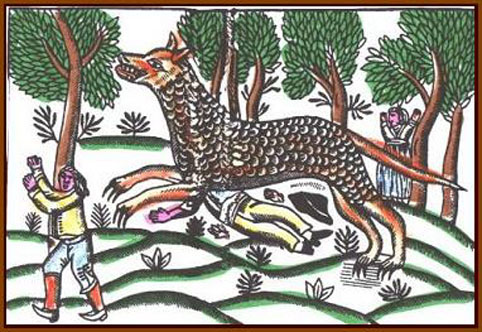
beast 1709

1731-1734, Auxerre, a big wolf or a tiger, “like a wolf, but not a wolf”, with very aggressive behaviour.
1746, Corrèze, an eleven year old boy was killed “by some kind of wolf” called a “mauvaise bête”, an evil beast.
1747-1752, Primarette, seven  victims, thought to be a Lynx (see above).
1751,  Latillé, Vienne, eight children killed in three weeks.
1751, Benais, supposedly a wolf but the peasants frequently rejected wolf as an explanation. The animal had a wide muzzle, a bigger mouth than a wolf, and was covered in reddish fur, with a black mane, a black stripe between head and tail, a belly that dragged towards the ground and a full tail, which could even be used to strike people. It resembled the Beast of Gévaudan on all counts. It frequently behaved to people like a dog who wanted to be patted, but would then jump up and rip their throat out.
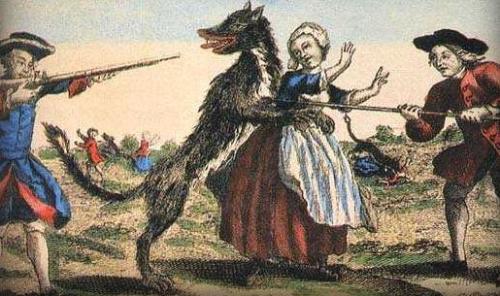
second-beast
1754-1756, the Beast of Lyonnais, Meyzieu, Savigny, a kind of large wolf with short legs, its skin was spotted with various colours, (“two fierce animals, one like a big pony, reddish, resembling a wolf except for a short tail , the other like a large mastiff , but white on the belly and a big long tail.”)

1763Dauphiné, the size of a very large wolf, rather light in colour, with a blackish stripe on the back, a belly of dirty white, a very large rounded head  a fluffy tuft on the head and next to the ears, a furry tail like a wolf but longer and upturned at the end. It ignored sheep to attack the shepherd boy. Many prominent people, both clergy and nobility, seem to have been totally convinced by the theory that this monster was the very same individual animal as the Beast of Gévaudan.

bete-du-gevaudanzzzzzzz

1764-1767, Gévaudan, witnesses were adamant that the animal was a canid, but not a wolf. It was an animal that they did not know. In addition, wolves cannot have a white breast and underparts. The many witnesses, all accustomed to wolves, spontaneously called it “the Beast”. It resembled a wolf but it was huge, between a calf and a horse in size. Its fur was mostly red, its back streaked with black. It had large dog-like head, a snout like a wolf and a mouth full of large formidable teeth. Its jaws could open very wide and seize a human head. It had small straight ears, smaller than a wolf, which lay close to its head, a strong neck and a wide chest. Its tail was immensely long, and somewhat like that of a panther. It possibly had claws. People struck by the tail said that it was a blow of considerable force.

666666

Professional hunters refused to believe that it was an ordinary wolf. It seemed relatively invulnerable, when hit by bullets, and would always stagger back to its feet. It did not ever fear man. In the face of resistance from the victim, it would retreat, sat down to think, and then renewed the attack. It was very aggressive, much more so than from mere hunger. It was very agile and could jump over high walls. It could perhaps manage some steps on its hind legs. It once attacked a man on horseback…not a wolf’s, or even a bear’s, behaviour.

66666

March-August 1766, Sarlat, 18 victims, it was supposedly a rabid wolf but “rabies is a quick killer” (3-4 days). One wolf of extraordinary size was killed.
When ready to seize its prey, it supposedly put up its hackles, and its eyes became flaming red. It raised itself up on its back legs and tried to seize the victim, often  by the head.
1791, Wales, between Denbigh and Wrexham. it was the size of a horse, eating livestock, dogs and men, and even attacked a stagecoach. It was an enormous black beast, almost as long as the coach horses, and was possibly an overgrown wolf. One farmer was found terrified, after witnessing an enormous black animal like a wolf kill his dog. The monster pounded on the door, stood up on its hind legs and looked in through the windows. Its eyes were blue, intelligent and almost human. It foamed at the mouth,

1792, Milan, northern Italy, an ugly beast as big as a dog, but with a horrible mouth. Children said: “a big head with big ears, a pointed snout and large teeth, black and coloured hair on top, whitish underneath, a thick, curly tail”. (with some variation depending on the child). A farmer said “As big as a normal calf, head like a pig, ears like a horse, white hair like a goat underneath, reddish on top, thin legs, large feet, long claws, a large, broad chest and slim flanks.”
It was not a wolf, but was perhaps an exotic animal. “Many have recognized the wolf in the beast, but some argue that it is a different animal.”

beast of milan

1796, Châteauneuf- Brimon region of France, it killed a dozen women and children.

1799, Veyreau, “tens of victims”, the locals thought the Beast of Gévaudan was visiting the region, It was slimmer and more willowy than a wolf and had such agility that it was seen first in one place, but then four or five minutes later in a different place perhaps several miles away. This was possibly evidence of a small population of these animals, or perhaps even some kind of migration or irruption.

1809-1817, Vivarais/Gard/Cévennes, 29 victims, it was the size of a donkey with brown fur, a black mane and large udders. Other witnesses described a creature like a wolf but the size of a calf, with a grey and red coat and black hair over its back. It had a huge belly with white fur, almost dragging on the ground, possibly with tiger/tabby coloured spots. The white fur underneath its body means that it was not a wolf. It had large, long ears, a long muzzle and head and a thick, heavy, luxuriant tail sticking up at the end. Six of its victims were beheaded. It was never captured or killed.

1810, the mountains of Cumberland, England, an unknown creature killed as many as eight sheep a night for six months. The victims had only a few bodily organs removed and eaten, and were drained of their blood. Recent theories have said that this monster was an escaped Thylacine, but my own researches have proved this to be untenable as a valid explanation.

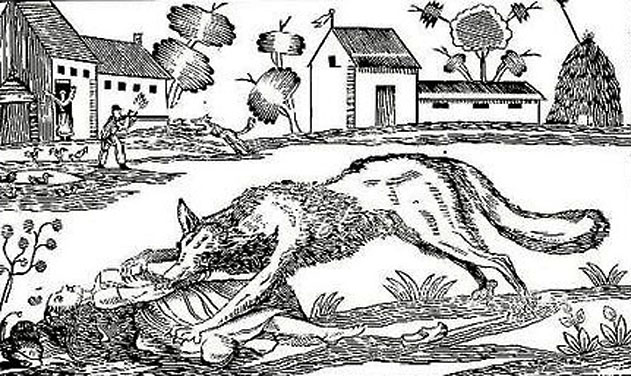
December 6th, 1814, Chaingy, some women and children in the forest were attacked by a she-wolf, with two killed and eight injured. This behaviour is absolutely extraordinary. If it was rabid this was not mentioned when the animal was killed shortly afterwards. For me, definitely “a wolf but not a wolf”:
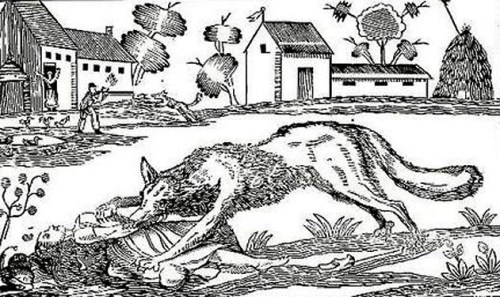
Bete_de_Chaingy_ws1028371882

1817, Trucy, a second carnivorous beast ravaged the forest around Auxerre/Trucy for a few months, at the exact same place as the animal from 1731-1734. It was like “a mastiff dog with pointed ears”

1874, County Cavan and Limerick, Ireland, a mystery animal killed sheep, as many as thirty in one night. Throats were cut, and blood sucked, but no sheep were eaten.

end of the 19th century, Fontainebleau, “a great evil beast which left the forest to attack farm labourers, shepherds and flocks. It attacked children, such as the little girl gathering nuts in the woods or a 9 year old boy devoured at Nanteuil-lès-Meaux.”
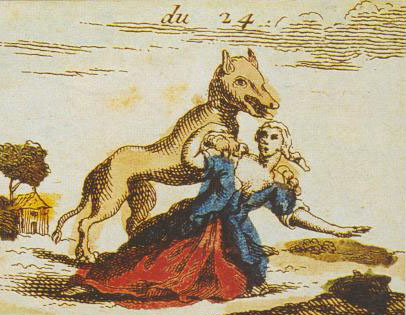
7777777

1966/7, Vaucluse,  Monsieur Henri C., a hunter, killed an unknown animal near a small wood at the edge of the Hautes Alpes. It was the size of a large dog (25 kilos). It had a head like a fox, but a sloping forehead gave it exceptional length. It had pointed ears and formidable fangs. Its fur was short and red, its paws were round, and it had a long tail.

1977, the Vosges area,  a witness described a beast of 60 kilos, with pointed ears, a drooping tail, a coat of yellowish-grey or red. It was larger than a German shepherd. Others thought it was like a wolf. Hair analysis said a canine, but nothing more exact. Existing photos are too poor for a conclusion.

.
A visit to a very interesting website called “La Taverne de l’Étrange” only served to confirm my ideas. The website author, Tyron, makes the point that in comparatively recent history, lions and
leopards, for example, could still be found in Europe, as could bears, wolves and lynxes, scattered more or less across the whole continent. France at the end of the Middle Ages, for example, was still covered with huge areas of forest wilderness, which, like the mountain regions, were practically uninhabited. Animals completely unknown to science could well have been living there.

One suggestion has been that the mystery species was a mesonychid, an animal last seen millions of years ago:

Another suggestion is that it was the Waheela, a giant predator which some, such as Alaska Monsters, still believe to be present in northern forests. Traditionally it decapitates victims, and supposedly lives in the Nahanni Valley in the Northwest Territories of Canada. Opinions differ about exactly what a Waheela is:

wahoooooooooooooooooooooooooo

Supposedly, it may be an Amphicyonid which is a prehistoric carnivore of the Miocene and Oligocene eras:
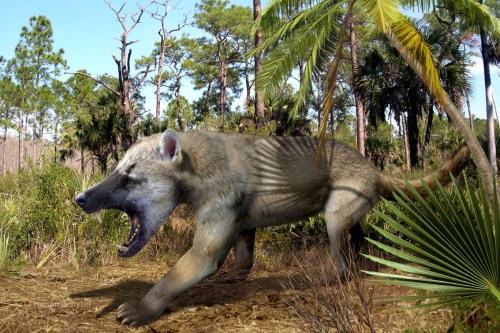
Amphicyon-ingens_reconstruction

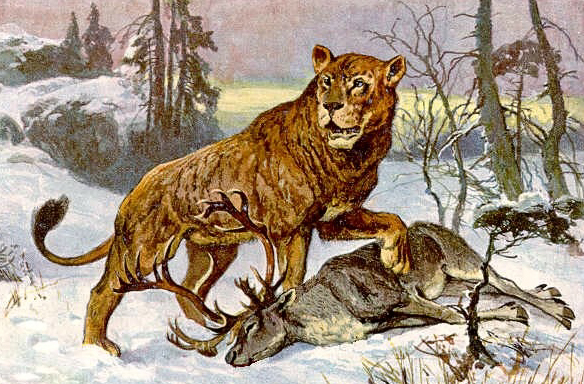
Many people disregard the wolf interpretation of the Beast of Gévaudan completely and look at its behaviour, its long tail and its habit of swishing a long, rather heavy tail. It seems perhaps almost bizarre to suggest a felid at this point, but the fit is actually, quite a good one. This is a cave lion:

Hoehlenloewe_CaveLion_hharder

It was certainly big enough and fierce enough to fit the bill. The colours in the illustration are just guesswork, of course. The animal may well have had a coat of exactly the same colours as the Beast of Gévaudan. Furthermore, he Cave Lion is known to have occurred in southern Europe, and to have been present in the forests of Southern Germany and Central Europe until fairly recently at least. Perhaps as recently as 100 AD. And if the Cave Lion was there in 100 AD, it could equally well have persisted through to 1764 AD.

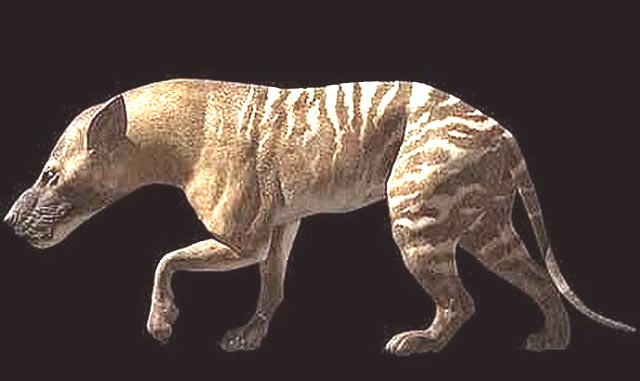
The unknown monster may equally well have been a prehistoric hyena:
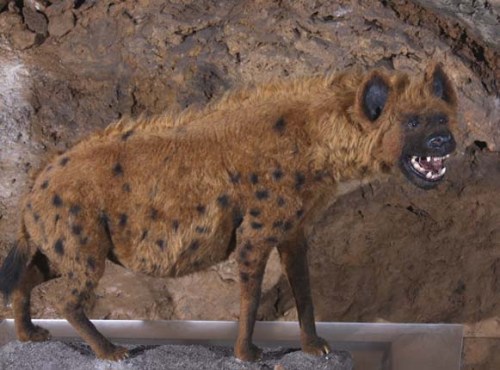
cave hyena xxxxxxxx

It may have been a dire wolf, which was a large wolf but from the Pleistocene era:

This slideshow requires JavaScript.

In actual fact, the Dire Wolf is not that bad a suggestion, although so far, it has only ever been found as a fossil in the Americas.

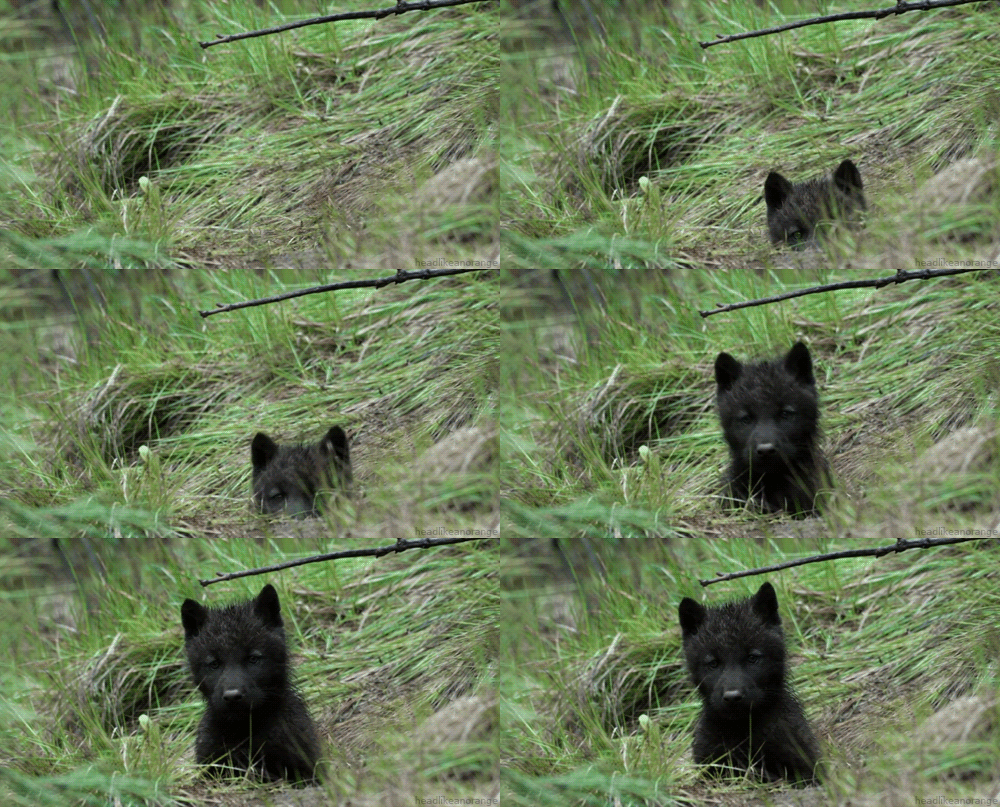
My favourite idea, though, is that this formidable killer was a species of canine completely unknown to science. It was not anything particularly strange, though, just an animal that was, with careful study, seen to be, to quote the peasants of the area, “like a wolf but not a wolf”. No doubt this fierce beast was some kind of leftover from a previous epoch. It had perhaps hung on desperately for centuries in the deep forests of Southern Germany, Central Europe or even Poland or Russia. For some reason, increasingly severe weather, lack of prey or whatever, some of them had now moved westwards to the beautiful countryside of France, perhaps establishing a small breeding population:
wolf baby

And from, say, 1500 onwards, they all gradually disappeared. Perhaps they were even wiped out during the continuing slaughter of the French wolf population, and nobody even noticed.

17 Comments

Filed under Cryptozoology, France, History, Science, Wildlife and Nature

A minibus trip to Norfolk

Friday, November 4th, 1988

.
(An extract from my old birdwatching diary “Crippling Views”)

.
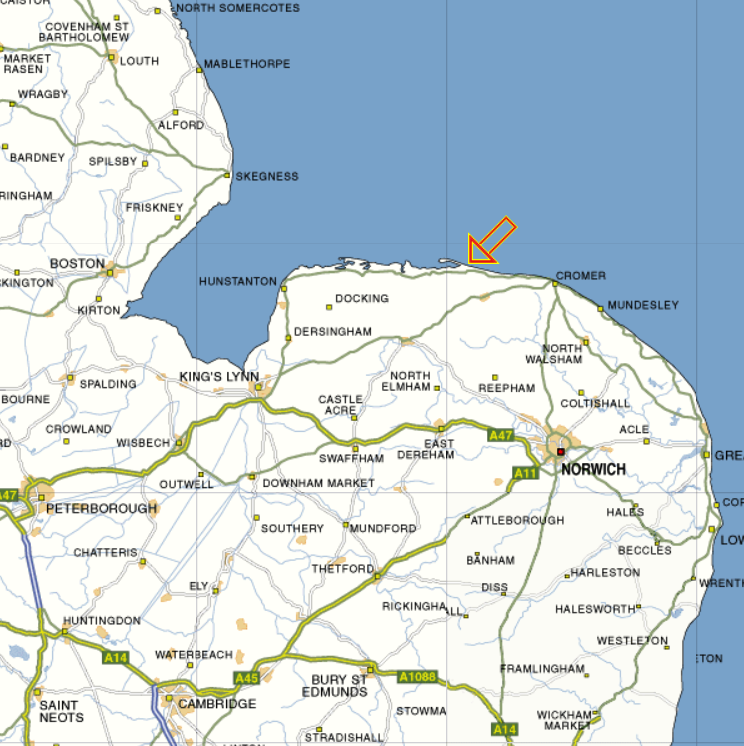
A new venture this time. An official  General Studies Birdwatching trip to Norfolk, taking the Sixth Form with me in a hired minibus. One thing is for certain, though… They’ll all get a lot of lifers… And I hope for one as well, the Indigo Bunting at Wells, which may just have lingered on from the previous weekend. There is every chance that nobody has really looked for it since then. The main priority, though, is to make sure that there is a constant stream of birds for the students, always as obvious and as spectacular as possible. We start at Cley-next-the-Sea, and then we plan to work our way steadily back westwards along the beautiful Norfolk coast. Look for the orange arrow:

Untitled

Arnold’s Marsh provides us with two nice birds, a late Curlew Sandpiper and a very spectacular Knot, still in bright brick red summer plumage:

red knot xxxxxx

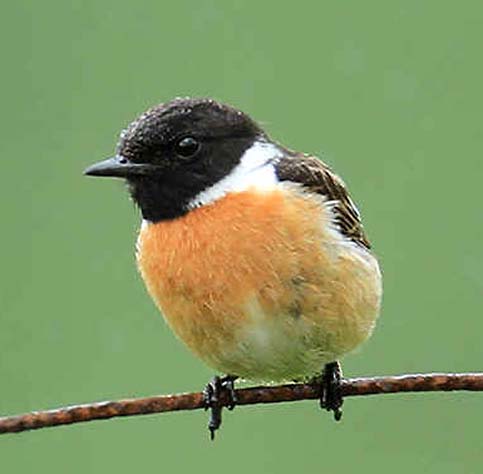
Further along the East Bank, we find a lovely Stonechat, obviously prospecting for an overwintering site:

Stonechat%20-3 xxxxxxx

At the far end, there is an exquisite flock of about a hundred or so Snow Buntings, flying with their tinkling calls up and down the shingle bank:

This slideshow requires JavaScript.

Unfortunately there is no sign of Boy George the famous Glaucous Gull, whichever plumage he may be in now, white adult or coffee coloured juvenile:

This slideshow requires JavaScript.

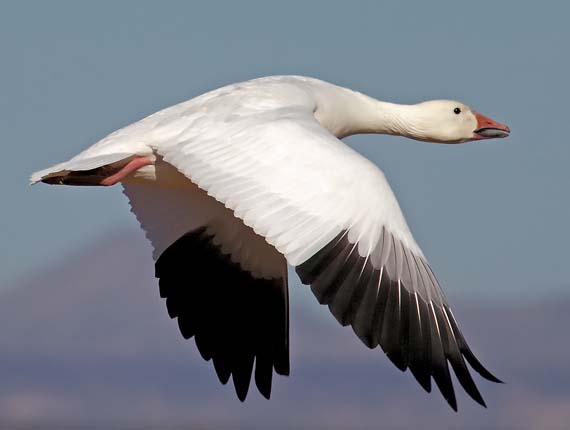
There are no Waxwings either at the traditional haunt of Winterton. So off we go to Wells, stopping only briefly to look at the goose flocks at the side of the coastal road. The lads are delighted to see a Snow Goose which they all insist has flown in the previous day from Arctic Canada, despite all my vigorous explanations to the contrary:

snow goose0df3f5bbxxxxxxxxx

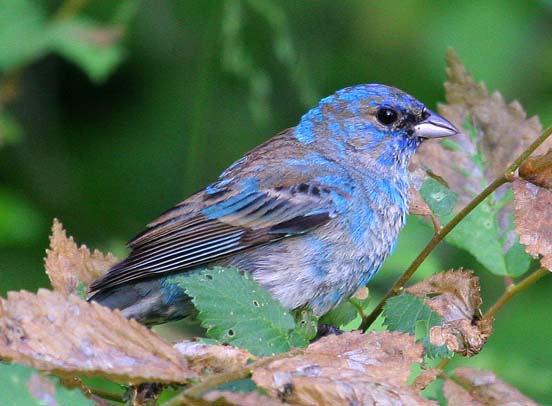
We get to Wells where I spend half an hour looking for The Bunting but without any success, either down by the old toilet block, or down in the Dell. It must’ve moved on or perhaps it’s been recaptured by its worried owner:

Indigo-Bunting1 xxxxxxxx

As we walk back to the car park, I see a starling like bird in silhouette. It flies over our heads and I don’t really pay it any attention, until it comes in to land. Instead of landing on the top of a nearby tree, it clings to the trunk like a woodpecker. That’s enough to attract my attention and when I look through binoculars, I soon realise that it is a Waxwing:

This slideshow requires JavaScript.


That is when the fun starts because we have only two pairs of binoculars between four of us and one pair is broken. Added to this is the fact that all the lads are very inexperienced, and it takes each one of them a really long time to find the bird on the tree trunk. There’s a lot of shouting, a lot of counting branches to the left and branches to the right, until the bird finally gets bored with it all and flies off. Two of the three without binoculars see it properly but, sadly, the last one does not. Holkham and Lady Ann’s Drive provide a couple of new birds for us, namely Golden Plover, and the almost jet black Brent Geese:

This slideshow requires JavaScript.

Amazingly enough, though, there are no Egyptian Geese to brighten the day. Titchwell is a little disappointing, with all the Marsh Harriers departed for sunnier climes and the Spoonbills that were asleep at the back of the pool three years ago also seem to have moved away. All we find are wigeon and teal.:

This slideshow requires JavaScript.

Still the lads are pleased. Indeed in a lot of ways, they teach me a thing or two. Any nice bird they see is a source of almost innocent wonder to all of them, particularly if it has more than three colours.
 

10 Comments

Filed under Twitching, Wildlife and Nature

“I have just had a Female Eider Duck come in shot to night…”

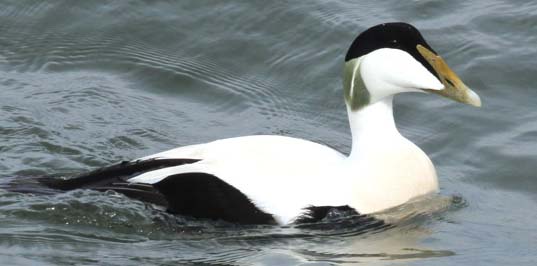
The male eider duck is a particularly beautiful bird:

male-eider-duck-i xxxxxx

It has a much imitated call. This is a recording by “markwilmot”:

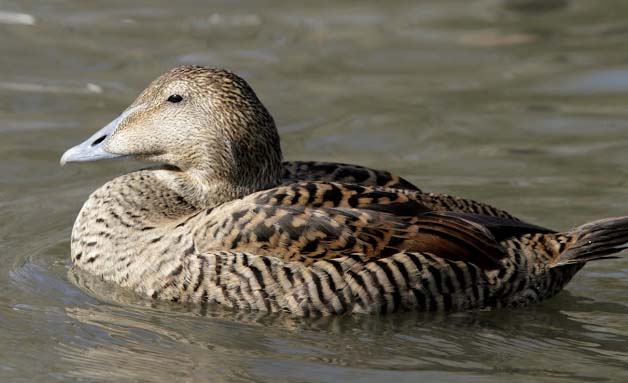
A female eider is a much drabber bird than the drake, and arguably, is barely recognisable as the same species:

eider duck female xxxxxxxxxxxx

Eiders are common enough birds around our coasts, particularly in the north east, but inland, they remain very much a rarity. This report details the only Victorian occurrence in Nottinghamshire:

“According to “The Zoologist” magazine, a female eider was shot near Nottingham on November 16th, 1882.  It had been attracted to the area by the large number of acres of farmland under water at the time and its acquisition brought the number of Notts species to 240.”

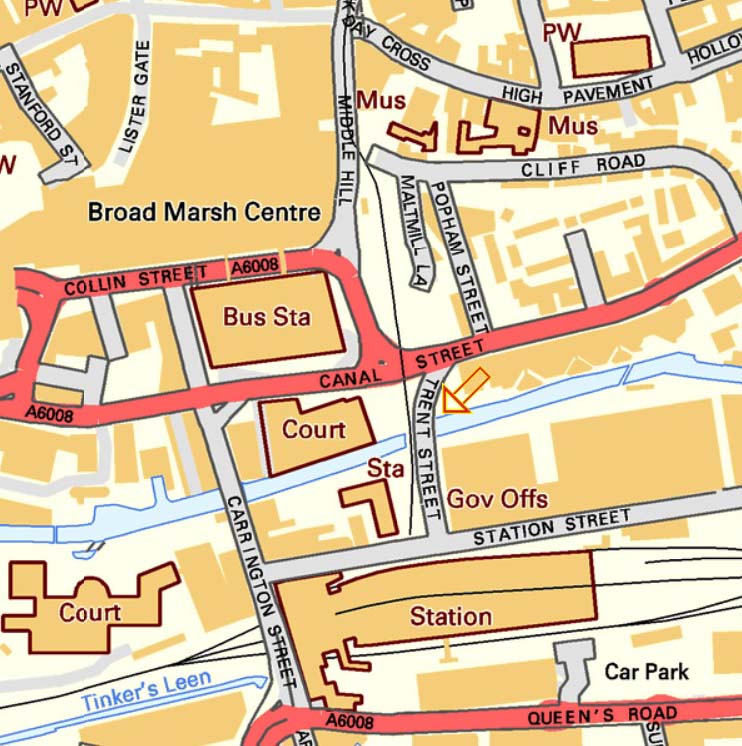
The unrecorded wildfowler who shot this rather drab, but extremely rare bird, immediately took it to Mr J Stanley the “Art Naturalist and Sporting Trophy Mounter” of 5, Trent Street, in the City of Nottingham. The wildfowler was probably ignorant of the bird’s identity, but he would have been well aware of its value. For his part, Mr Stanley would have bought the bird from him without a moment’s hesitation. Look for the orange arrow:

trent st

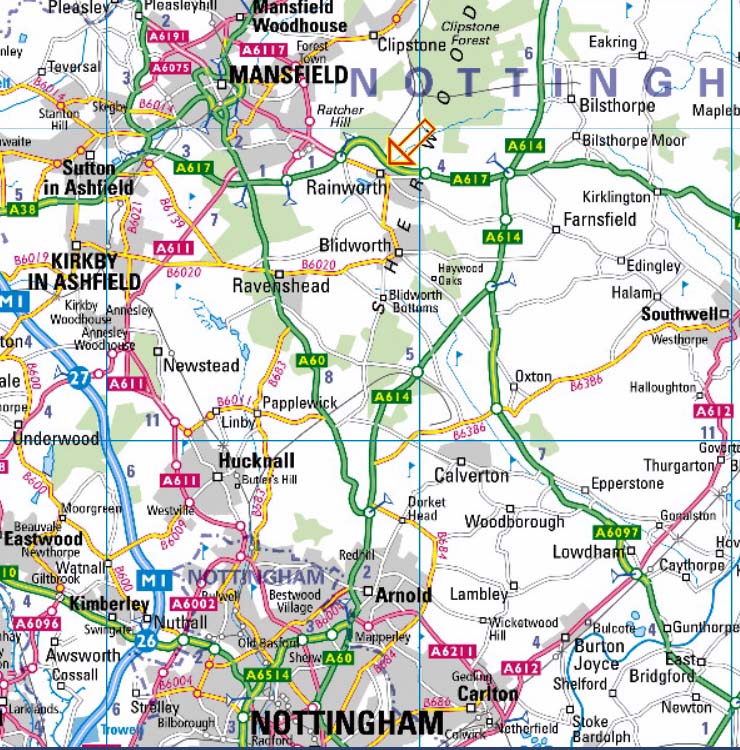
Mr Stanley knew very well what the bird was, and he knew equally well who would pay a very large amount of cash for it.  At 8 o’clock that evening, therefore, he sent a note, presumably by hansom cab, to Joseph Whitaker at Rainworth, some fifteen or so miles  from his shop. Again, look for the orange arrow:

rainworth

Mr Stanley must have been more or less totally certain that Joseph Whitaker, an avid collector of rare birds killed in Nottinghamshire, would pay him handsomely for such a rarity. Stanley’s note read, spelling mistakes and all:

“I have just had a Female Eider Duck come in shot to night in our Medowers it is left for me to buy if you have not got one & you would like it Please to right by return & oblidge your

faithefully

J Stanley”

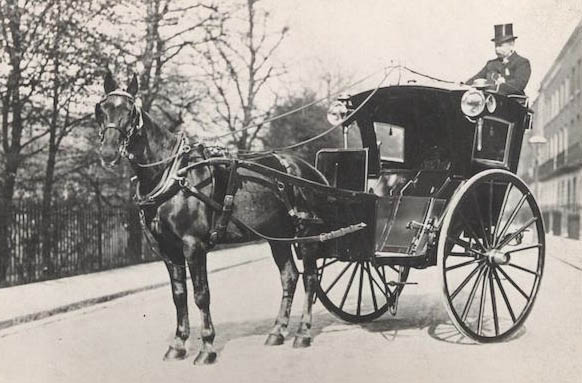
Joseph Whittaker, of course, came immediately to Nottingham, perhaps even in the same hansom cab in which Mr Stanley had sent the note:

1998-20707-hansom-pp

And Joseph Whittaker duly bought this exceptionally rare prize, although, unfortunately, we do not have any record of the price he paid.
Thirty years later, though, in 1913, Fred Smith, described by Whitaker on another occasion as “that shocking poacher”, was to charge him seven shillings for a pair of sheldrakes, a relatively common species, so we can only guess at what price was paid for a genuinely rare bird.
3 Comments

Filed under History, Nottingham, Twitching, Wildlife and Nature

The rarest bird I ever saw

(An extract from my old birdwatching diary “Crippling Views”)

Tuesday, September 20, 1988

Another bit of excitement, this time at Pitsford in Northamptonshire, where there is a Sociable Plover, first discovered apparently by a teenage birdwatcher, late on Sunday evening, flying around with a flock of Lapwings. The Sociable Plover, not the teenager.

Here is a Lapwing:

lapwing1a480 zzzzzzz

And here is a Sociable Plover:

plover

I have a free afternoon from school on Tuesdays, so I decide to leave at one o’clock, directly from Period Five. So as not to look an even bigger idiot than normal, I take a pullover and a pair of jeans to change into, as well as my telescope, tripod and binoculars. I religiously ring Paul, as I always do, to ask him if he wants to come, but he’s at work, I also ring Alan to unmake a previous date to go looking for Hobby at Clumber Park that evening. Surprisingly enough, he also has a free afternoon, so we decide to go for the bird together.
It’s only about eighty miles to Pitsford, so we arrive there about three thirty. Look for the orange arrow:

midlandszzzzzzzzzzzzzzzzzzzzzzzzzzz


It is obvious where the bird is supposed to be from the great tangle of parked cars. Quickly, we park too, and head on out there. It is a marshy area, with a very long shoreline, and a lot of distant birds. Look for the orange arrow:

cayseway

Unfortunately none of the distant birds is a Sociable Plover, although a winter plumaged Grey Plover, seen through a heat haze at a range of about four miles, does cause quite a few hearts to flutter, mine included.

Grey%20Plover% xxxxxxxxxxxxxxxxxxxxxx

There are some Curlew Sandpipers, a few Ruff , and a couple of Little Stint.

This slideshow requires JavaScript.

The Pectoral Sandpiper, though, which has been reported for the last couple of days, seems to have gone:

pectoral_sandpiper_zzzzzzzzzzzzzzzzzz

Eventually the disappointed crowd drifts away, in ugly mood, to the section of the reservoir where the Sociable Plover came in to bathe on Monday afternoon. Here, there are absolutely thousands of gulls, and to relieve the monotony of waiting, we look through the crowd for the lone Mediterranean Gull that has been tantalising the gull watchers for the last few evenings:

This slideshow requires JavaScript.

No luck with that either, and Alan and I agree on a departure time of six thirty, as the last few minutes of daylight tick inexorably away. Finally, we are forced to admit defeat, and terribly disappointed, we trudge despondently back to the car. Fifty yards from the vehicle, I get my car keys out. We are just climbing over the fence at the side of the road, when a rather rusty car suddenly squeals to a halt, and a young man jumps out and screams:

“THEY’VE FOUND IT!!!!         THEY’VE FOUND IT!!!!   

We restrain him for a moment and ask him one or two simple questions like:

“WHERE???      WHERE???      WHERE???”

He burbles on for another ten minutes about crossroads and turns left and turns right and pubs called the Red Lion, houses with green doors and the third tractor from the right:

red-lion-inn-01

This is terrible. It is one thing if the bird is not there. That you can live with, difficult though it may be. But to be right next to the bird, and not to be able to navigate your way to it in the car, that’s something else:

socco plov xxxxxxxxxxxxxxxxxx

It is cruelty of an unreasonable nature. The young man tells us to wait. He’ll call over all of the other birdwatchers, still standing expectantly on the edge of “The Marsh”. Then we can all follow him in a convoy, just like in the song and the film made from it:

This we all do, or rather, attempt to do. I am personally amazed at what staggering speed a rusty T Reg Datsun can achieve when provoked:

datsun xxxxxxxxxxxxxxxxxxx

He must have rocket assisted take off in the boot. We are driving along country lanes at around ninety miles an hour, squealing the tyres on rustic roads which are really meant for bicycles or the odd haywain:

haywain

On the other hand, there is a certain logic that says if I keep fifty yards behind the lunatic in front, we cannot fail. Whatever bend the Datsun can get round, I can get round. Any emergency stop he is forced to do, I will have ample time to prepare for. It doesn’t work quite so well at “Give Way” signs, and we have a couple of close shaves. Nevertheless, after a fundamentally frightening drive down these little country lanes, we arrive at the tiny village of Old, where we find cars abandoned at crazy angles across the grass verge and even in the road itself . A great crowd of people is staring fixedly at the back of a distant field.

This Must Be The Place:

.

one above OS

The field itself is in a rather strange condition, unlike anything I’ve ever seen in Nottinghamshire, with some areas recently ploughed, with lots of bare earth visible, but there is also a series of strips of stubble, all about six or seven yards wide. The Plover is out there with a large group of Lapwings, but it is a long, long way off. It takes a lot of careful and diligent searching, most of it done at comparatively high magnification, before Alan and I both find The Bird:

sooibla xxxxxxxx

It is nowhere near as colourful as the field guides would have you believe, and, indeed, it is completely capable of disappearing entirely when it stops moving around, and just sits down quietly, looking rather reminiscent of a clod of earth with two eyes and a beak. Unfortunately, it doesn’t fly at any point, so we miss the chance of comparing the wing pattern to that of Sabine’s Gull, and of seeing just how similar it is:

This slideshow requires JavaScript.

Still, you can’t have everything. Indeed, the way that things have gone tonight, it would be difficult to imagine how much luckier we could have been.

In my career as a twitcher, that was the closest I ever came to not seeing a rare bird, but then still managing to see it.

Secondly, the Sociable Plover was the rarest bird that I ever saw, from a global point of view. Red-breasted Nuthatch has occurred only once ever in England, and so has Ancient Murrelet, and I saw both of them:

This slideshow requires JavaScript.

The world as a whole, though, is not particularly short of either species. Sociable Plover however, at this time, some thirty years ago, was on the IUCN Red List of Threatened Species, chiefly because of over-hunting and habitat loss, two splendid ways of driving a species into extinction. At the moment, the Sociable Lapwing, as it is now called, has recovered sufficiently to be placed currently in the Critically Endangered category:

sociable-lapwing-bharatpur-xxxxxxxxxxxxxxxxxxx

28 Comments

Filed under Science, Twitching, Wildlife and Nature

Water, water everywhere, especially past Trent Bridge

In a recent blogpost, I mused about the cold past of our city, and how the River Trent had frozen over on a number of occasions in the nineteenth century, the last being in 1892. Previous years when similar brass monkey weather conditions had occurred were 1682, 1814, 1838 and 1855. In all of these winters, the River Trent at Nottingham had literally frozen over from one bank to the other. I found these extremes of weather really quite interesting, so I continued to do further research of my own. I duly found some extra details, such as, for example, the sad fact that:

“on 10 January 1814, seven boys drowned in the River Trent in England by the breaking of the ice.”

One or two more examples of extreme cold have since come to light, in years of which I had previously been completely ignorant. During the winter of 1092-1093, for example, when William Rufus was king:

“the River Thames and all the English rivers (were) heavily locked in with ice”. There was severe frost in this winter. English rivers (were) frozen so hard that horsemen and wagons could travel on them.”

When warmer weather finally came, however:

“drifting ice on the rivers destroyed bridges, and mills were carried away”.

Here is William Rufus, who was to be killed by an arrow in the New Forest:

4559818813_e810e0ca1c_z

Four hundred years later, the River Trent was frozen near Nottingham in the winter of 1485-1486. When the thaw finally came, “the bridge at Newark-on-Trent was swept away.” In 1766, on February 15th, a great snowstorm hit Nottinghamshire, which lasted fifty hours. That is a lot of snow!

Our old friend “Wikipedia” provided a great deal of historical detail about this kind of event, not all of it totally fascinating, although the word “palaeochannel” was new to me and it does contain three unusual vowels in a row. Here’s one I photographed earlier:

paleo chanaell zzzzzzz

I knew that Giant Floods generally follow any Big Freeze but it was interesting to see that, in the modern era, the worst flooding experienced in Nottingham came very soon after the vast snows of the winter of 1946-1947 had melted. This melt was extremely sudden because of continuous heavy rain throughout March. The result was extensive and severe flooding all along the valley of the Trent. During this flood the peak flow of the Trent was 39,100 cubic feet per second, thirteen times the norm. As many as 9,000 houses were flooded and almost one hundred industrial premises were awash, with floodwater up to the height of the first floor. Here are one or two photographs of the flooding. These are of West Bridgford:

This slideshow requires JavaScript.

Here is Arkwright Street next to the railway station:

arkwright st

This is the aptly named Canal Street:

NTGM006755.tif

Here is a picture of the River Trent near the present day Harry Ramsden’s and Toys-r-us. On the left is Wilford Power Station, demolished in the 1980s, and on the right, Clifton Colliery which disappeared even before this (possibly through flooding?):clif colli wilf power station

Here is Beeston, looking remarkably like Venice:

NTGM016349.tif

This photograph is just about recognisable as Melton Road in West Bridgford:

220px-Melton_Road_in_the_floods_of_March_1947_-_geograph_org_uk_-_1537395

This natural disaster in 1947 was the beginning of our modern attempts to tame the river, by building concrete embankments and sluices in an effort to avoid the surging floods which had devastated Long Eaton, Beeston, the Meadows area, Colwick and West Bridgford on more than one occasion during this period. Here is the Trent, with early concrete steps visible only on the far side of the river, and just a grassy slope on this, southern, side:

before concrete

This photograph was probably taken in the 1950s, with concrete embankments on both sides. Trent Bridge is in the background, so we must be looking north:

nottinghamtrentbridge-620x413

Nowadays, the concrete steps near Wilford Suspension Bridge would stop a Soviet tank. Well, perhaps make them feel a little motion sick:

nearcounty hsall

Here’s the other side, looking north towards Trent Bridge and the green roof of County Hall:

concrete zzzzzzzzzzzzzzzzzzz

These are the sluices on the river between Holme Pierrepont and Colwick, designed to hold back excessive flood water so that it can be released gradually at sensible intervals. By the way, firm promises have now been given that the next time they release fifty billion gallons of floodwater, not only will they look first to see if any anglers are fishing at the riverside, but they will also sound a warning klaxon:

colwick sluives zzzzzzzzzzz

This huge construction work of the modern era seems to have been completely successful. During the Millenium Flood of November 2000, the peak flow of the Trent was 36,000 cubic feet per second, around twelve times the norm, and certainly comparable to the conditions experienced in 1946-1947. But this time, the 15,000 homes at risk were completely unaffected and there was none of the widespread flooding seen in 1947 within the city:

flood 2000

In this photo the flooded Trent is, for the most part, still contained within its banks, although Nottingham Forest’s pitch does look as if it may be somewhat waterlogged.  All of the floodwater in the background, by the way, is, for the most part, lying harmlessly on playing fields.


11 Comments

Filed under History, Nottingham, Science, Wildlife and Nature

A strange and worrying zoo in France

I have now written quite a few articles about the various Beasts of France, beginning with the most famous, the Beast of Gévaudan, which flourished from 1764-1767:

second-beast

And then it was the Beast of Benais, followed by the Beast of Noth, not forgetting the Beast of the Cévennes, the Beast of Primarette, the Beast of Orléans, the Beast of Lyonnais, the Beast of Sarlat, the Beast of Auxerre, the Beast of Cinglais, the Beast of Gâtinais, the list just goes on and on. Some of them were really quite peculiar creatures, even by the contemporary standards of Beastliness:

beast 1709

Not all French monsters are wolf-types, however. Here are just a few of the inmates of what the original website called “Un Zoo étrange et inquiétant en France”, “a strange and worrying zoo in France”.

The first animal is a snake, which used to live in the Forest of Fontainebleau, just to the south west of Paris:

forest of fontaineblasu

It was seen, and duly killed, by the King (Quite right too!). According to legend, it was 18 feet long, with a weight of some 160 kilos (around 350 pounds):

Giant_snakezzzzzzzzzzzzzzzzzz

This monster was venomous and used to hide in a great pile of rocks which offered him protection as no group of attackers was able to approach the creature simultaneously. Only one adversary at a time could reach him.

One day, King Francis the First or le Roi François Premier, was out hunting in the area. This king was a contemporary of King Henry VIII, at the start of the sixteenth century:

220px-Francis1-1

The King and His Royal Nose decided to put an end to this creature which had sown terror and desolation throughout the land.( Well, it was a very big pile of rocks).

BOA

The king had commissioned a suit of armour covered with razor blades. When the snake tried to coil itself around him, the razor blades, quite literally, cut the monster to pieces.  “Scratch one constrictor!” as they say.

What other animals are in the “strange and worrying zoo”?

Well, back in 1965:

“In the Toulouse area, flocks of sheep belonging to Trappist monks at the Abbey of St. Mary of the Desert, and also those belonging to the Count of Orgeix, suffered extensive depredations from a mysterious animal. Three students from the area of Cadours who were driving around one  night in the car, saw two animals which were larger than a dog or a wolf. They had light beige fur. These strange creatures were like enormous mastiffs, with huge, round, bulging eyes. The four footed killers then disappeared from the area as mysteriously as they had appeared.”

One year later, in May,

“In the region of Pignans (in the département of Var), a tenant farmer, Monsieur Baptistin, asleep in his small house, which was located some two kilometres from the village, was awakened by furious barking from his dog. He got out of bed, switched on the light and saw the silhouette of a huge animal which was disappearing into the darkness:

bigfoot giph

The next morning, he discovered near the water trough animal tracks of a startling size:

jerry-crew-taught-by-bob-titmus zzzzzzzzzzz

The authorities were alerted. The Forestry Services photographed the tracks and made a cast, but nobody was able to ascertain what kind of animal they belonged to.

For several weeks, the locals no longer dared to go out at night. The more daring people who did venture out never failed to take a reliable rifle with them.”

(Actually, it wasn’t Bigfoot, or at least I don’t think it was. It’s just that the details of this story are so vague that it is actually possible to interpret the events as being “Grand-Pied” himself, rather than some, presumably, fairly run-of-the-mill Alien Big Cat.)

In mid-August of 1966, a monster was seen haunting the area around Draguignan near the road to Grasse , a region where many UFOs had been seen, both in flight and on the ground:

“A former member of the armed forces, Monsieur Paul G… , found himself one morning around seven o’clock  face to face with an unknown creature. The animal had its mouth open.  It had a pointed snout, which was rather long, and triangular teeth. Under its neck, it had a goitre which gave it a frightening appearance. The ears were short, like those of a dog, but they were very pointed. The body was very long and covered with grey fur. The animal had a long tail, at least 40 centimetres (16 inches) in length.”

imaginative chaingyu

Interestingly, the town of Draguignan has a name and a coat of arms which are both redolent of another species of legendary animal. The town was founded around 400AD after Saint Hermentaire, the Bishop of Antibes, had overcome a dragon in single combat. Exactly how he managed this does not seem to have been recorded, but here is the coat of arms:

draguignan

It was definitely not a friendly dragon:

friendly dragon

In 1967, the presence of a number of monsters was reported throughout the whole of France. In the Creuse region in particular, between Royère and Chavanat:

Département_creuse zzzzzzzzz

…a feline of unknown species was flushed in the hamlet of Cloux Valleret by a farmer named Monsieur Simo:

surrey puma original

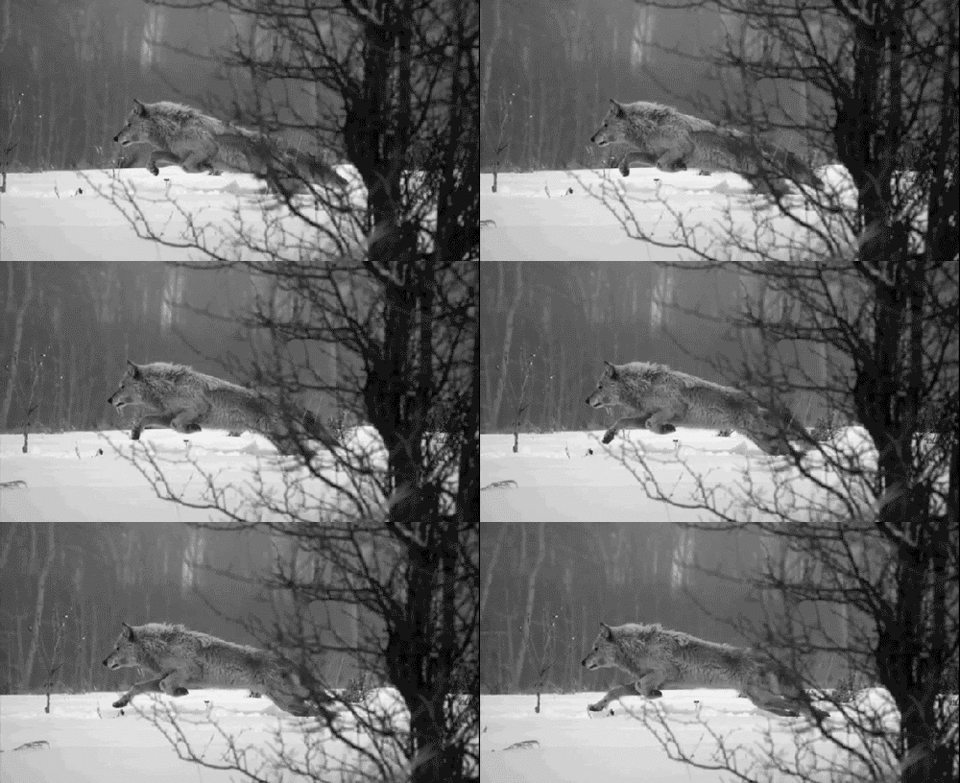
A week earlier, farmers in the Vosges area had already stalked an animal of indeterminate species which looked rather like a wolf:

wolf bounding

All that was easily topped though, by a report from Italy:

“In June 1970, in Meldola, about ten kilometres from Forli, a farmer claimed to have encountered some kind of dragon, six to seven metres long, with a body some 15 inches in diameter.

dragon

The Italian police organized a hunt which did not turn up anything. The monster appeared once or twice more and then disappeared forever.”

Back to France, in 1972:

“In the area around Vigan in Hérault, some medical students, out hunting in a snow covered area, discovered the footprints of an unknown animal:

yeti tracks

They followed the tracks for several kilometres. Suddenly they disappeared just in front of a rock which was projecting up out of the ground. The beast seemed to have reared up on his back end and then been recovered by his masters on board a flying machine.”

Don’t think though, that the French are especially weak minded and that this is why they continually report crazy sightings of weird animals. In this area, the British, quite rightly, are streets ahead of their nearest and dearest neighbours. But first of all, let’s just forget our many, many, ferocious Black Dogs such as Shuck and his like:

dog

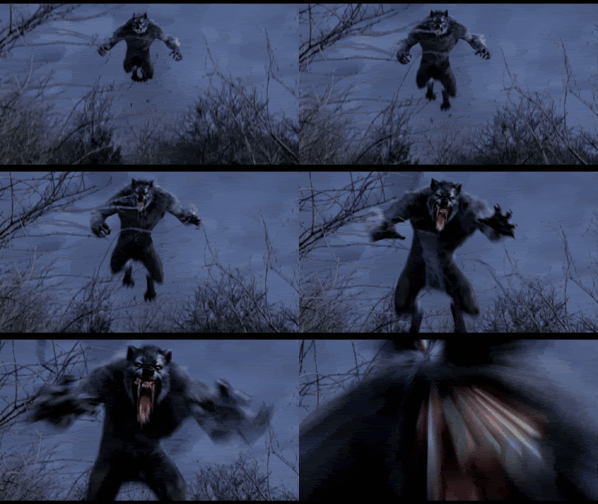
Forget the werewolves seen more than once at Alconbury USAAF Air Base:

werewolf attack

Forget the sightings of Bigfoot in Cannock Chase and Sherwood Forest (an “eight-foot, hairy man beast with red glowing eyes” seen in late 2002) (allegedly):

red eyeszzzzzzzzzzzzzzzzzzzzz

Just on cats alone we are well in front. The most famous cat of all, of course, is the Beast of Bodmin:

bodmin1

But don’t forget his less famous sidekick, the Beast of Exmoor. And before that Gruesome Twosome, it was the Surrey Puma. And don’t ever forget the heyday of the Nottingham Lion.

But look at this list, put together originally by George M. Eberhart.

Don’t just skip through it. Select your top three:

“The Ashley Leopard, the Ayrshire Puma, the Beast of Ballymena, the Beast of Barnet, the Basingstoke Beast, the Beast of Beacon Hill, the Bennachie Beast, the Beast of Bin, the Blagdon Beast, the Beast of Bont, the Broadoak Beast, the Beast of Broomhill, the Beast of Bucks, the Carsington Beast, the Beast of Chiswick, the Essex Beast, the Inkberrow  Beast, the Beast of Margam, the Beast of Milton, the Beast of Otmoor, the Shropshire Border Beast, the Beast of Tonmawr, the Beast of Tweseldown (sic), the Black Beast of Gloucestershire, the Black Beast of Moray, the Brechfa Beast, the Cadmore Cat, the Chiltern Cougar, the Crondall Cougar, the Durham Puma, the Eccles Cheetah, the Fen Tiger, the Highland Puma, the Lindsey Leopard, the Mendips Monster, the M25 Monster, the Munstead Monster, the Norfolk Grinder, the Pink Panther of Derbyshire, the Penistone Panther, the Penwith Cougar, the Beast of Powis, the Rosshire Lioness, the Terror of Tedburn, the Tilford Lynx and, last but not least, the Wolds Wild Cat.”

For me it’s, in third place, the Norfolk Grinder. Second is the Penistone Panther, but my own winner is…….. the Eccles Cheetah!!

14 Comments

Filed under Cryptozoology, France, History, Humour, Science, Wildlife and Nature

A Hoopoe at Stoke

Saturday, November 12, 1988

.
(An extract from my old birdwatching diary “Crippling Views”)

.
This time it’s a quick half day trip to Parkhall Country Park near Stoke. Look for the orange arrows:

This slideshow requires JavaScript.

In this unlikely industrial landscape,  there is an extremely late Hoopoe. What a fabulous bird:

hoopoe02 xxxxx

It’s a bird that I’ve seen before, but only as a flushed silhouette that flitted across the path and disappeared forever. A distinctive enough shape to be a tick, but not much more than that:

This slideshow requires JavaScript.

Alan isn’t with us, and I’m too scared of his wife to ring him. Steve isn’t there either. Paul says that he’s ill and doesn’t want to come, but in actual fact he hasn’t told him we’re going, in case he gets a tick as well.

We are the first to arrive in Stoke and we have a quick look round the incredible maze of paths and disused quarries:

mossy view zzzzzzz

We draw a blank. Luckily we find a local and he tells us that we are at the wrong end of the park and that we should drive round to the other side:

view

This we do, and find a good few people scouring the countryside. A half mile walk takes us along the side of an old quarry, and down to a little grassy valley where the Hoopoe habitually feeds, probing the short turf for insects and grubs:

general view

Sure enough it’s there, a fairly dull, pinky chestnut coloured bird, with an improbably long bill and crest, and a bewildering series of black and white stripes on various bits of its anatomy. It looks like a bird that has been doodled by a very bored person in an exceptionally boring meeting:

hoopoe

The watchers themselves are extremely well-behaved and I lose a bet with myself that somebody with a really, really poor camera is bound to want an amazingly close close-up shot, but I am wrong. Everybody conducts themselves properly and they just watch the Hoopoe as it feeds in the short grass and then they all return home.

10 Comments

Filed under Science, Twitching, Wildlife and Nature