Category Archives: Wildlife and Nature

The Beast of Orléans and his grandson

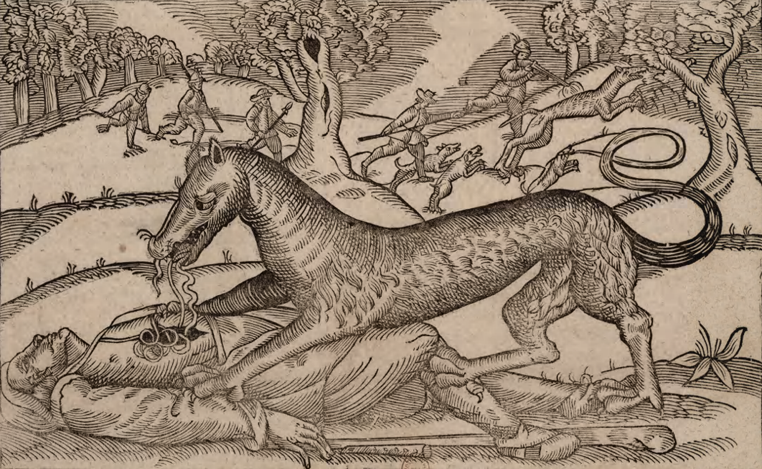
This blog post will introduce you to yet another killer monster (or monsters) in the long, long series of killer monsters which have ravaged different areas of France from around 1550 until the present day. I started this long list by telling you about the Beast of Gévaudan. Then it was the Beast of Benais, the Beast of Auxerre and Trucy, the Beast of Cévennes and Gard and Vivarais and then the Beast of Sarlat. This illustration has been used to represent more or less all of them by the uninhibited copyright thieves who wrote sensationalist pamphlets in the Eighteenth Century:
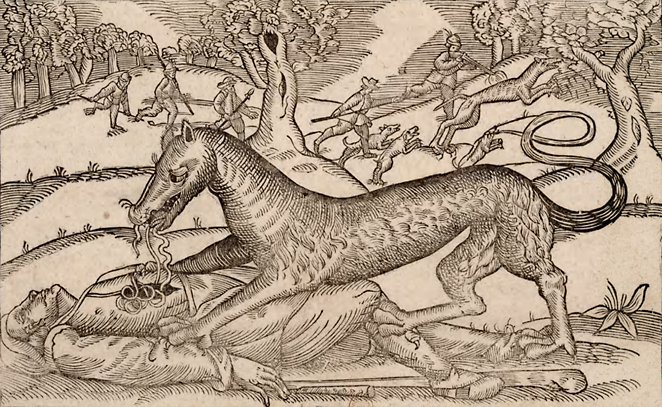
Bete_de_Cinglais_1632 xxxxxx

This time I will be looking at the area near Orléans, where a number of “incidents” have taken place over the years:orleans map
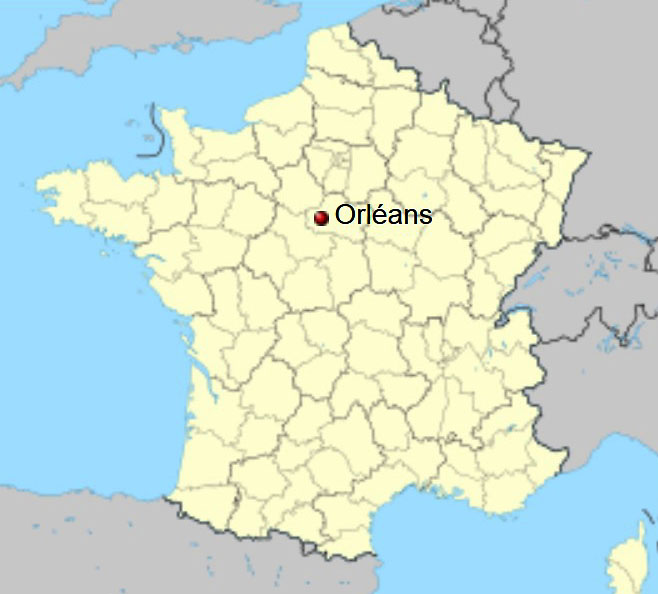
Many people at the time thought that the culprits were just ordinary wolves, but, as we will see, there are more than enough anomalies to cause the odd doubt here and there. Once again, I will be looking at a number of websites written in French, offering you my translations and you can then make your own mind up between them.

The first website actually begins with a man who was writing about wolves in the region around Orléans. Here is the coat of arms of that beautiful city:
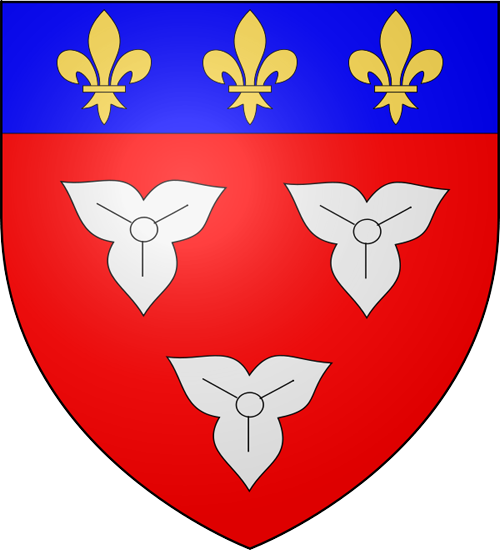
600px-Blason_Orléans_svg.png zzzzzzz

This was in 1911, and the writer in question was an historian called Charles de Beaucorps. He wrote:

“In 1691, the wolves’ misdeeds caused many justified complaints and the Royal Commissioner duly informed the national authorities. Learning that the incidents caused by these predators were increasing every day, he asked the King to allow the inhabitants of ten or twelve parishes to have firearms in their homes.  Normally they did not dare do so for fear of prosecution by the officers of the Royal Hunt. The Royal Commissioner also told them to carry out hunts and asked Monsieur Béchameil, an officer of the crown, to direct them. Nothing was done to stop this scourge: it grew to such an extent that every day people were being killed or injured by wolves. On September 12th, within musket range of the Chêne Brûlé, a parish in Cercottes, a sixty year old woman was devoured. The King’s Prosecutor in the Neuville Guard, who was keeping a register of children killed or injured by wolves using the death certificates written by parish priests, had listed more than 60 young victims in the space of fifteen months. “

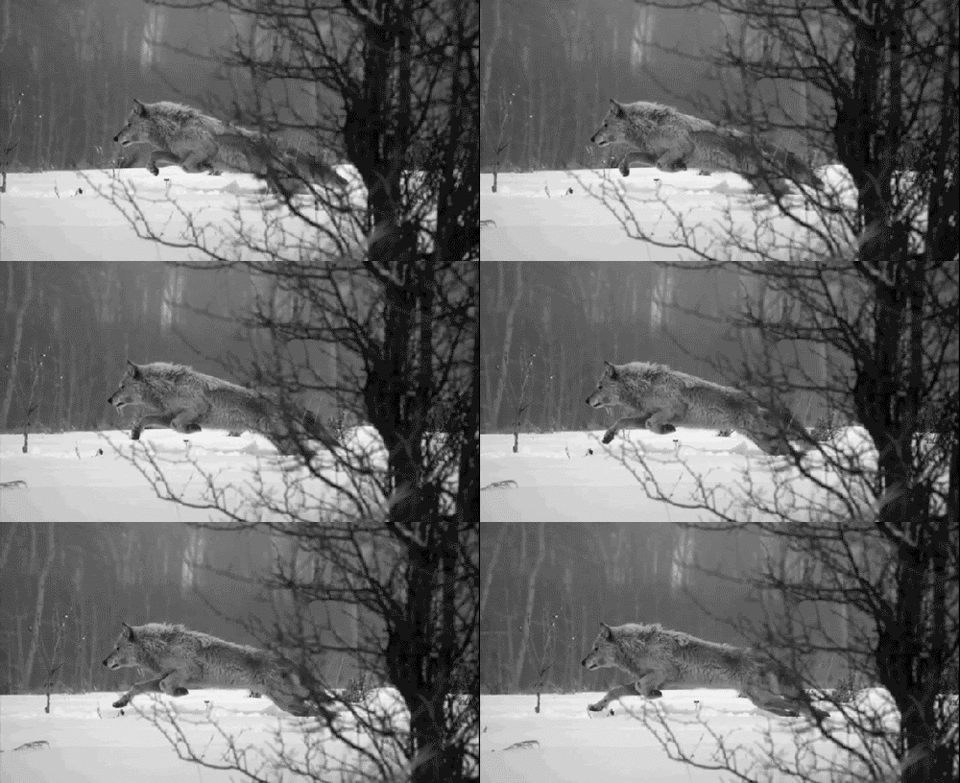
Interestingly enough, this was not, apparently, completely outrageous by the usual standards of behaviour of French wolves, animals which had grown accustomed to feeding on human corpses in open charnel pits until as recently as 1820:
wolf bounding

Charles de Beaucorps, however, was nothing if not a very thorough investigator:

“Despite the hunts and more than two hundred wolves killed, the attacks continued for years, right up until 1702 (a total of eleven years). The first teams of hunters obtained hardly any results. It needed the militia and the Duke of Vendôme, supported by thirty musketeers, to stop this scourge.

In 1700, an “Enormous Beast” was killed in the forest and brought back for the Royal Commissioner, leading to the payment of a reward of thirteen pounds.”
werewolf attack

And nobody, of course, managed to write a precise scientific description of exactly what this “Bête énorme” was. Presumably, though, for it to be considered a “Bête énorme” in the middle of more than two hundred dead wolves, all of which must have looked pretty much the same as all the others, it cannot have been an ordinary wolf.

Around the same time, there were equally strange events in Fontainebleau:

“In 1679, woodcutters were killed and eaten in the Forest of Fontainebleau. The parish registers of Bois-le-Roi mentioned several cases of attacks.”

It might have been wolves, but I am surprised that, if it were, they did not say so. As the map shows, these gory killings took place not a million miles from Orléans:
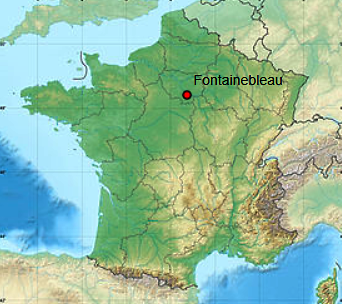
fontaineb

Shortly after this, came the animal which was to become really famous. It was given the name of “The Beast of Orléans”. According to a website we have already visited:

“There were actually two distinct episodes which took place almost a century apart. The first, the Beast of Orléans, happened in 1709, as attested by a letter from Monsieur Polluche Lumina, who lived in the Rue des Hennequins, dated June 17th 1765. It says this:

“I am taking the liberty to write to you about the ferocious Beast of Gévaudan. The more I reflect on all the stories which appeared in the newspapers the more I find a resemblance with what has happened here and what I myself saw in part after the Great Winter of 1709. There appeared an animal which people called “The Beast” which only attacked women and children. There were the same ways of moving around, the same
sharpness and even timidity as the Beast of Gévaudan:

second-beast

The devastation was so serious that in six months there were more than 100 people killed and as many wounded. This provoked the king to send his royal wolf catchers. The officer who commanded them did not bother to follow the trail of destruction which this animal produced and which was normally around the perimeter of the forest.

He decided instead, every morning, to have several hunts in the woods with bloodhounds, after which his men went on a reconnaissance.  Then, without making any noise whatsoever, they positioned marksmen all around the area. The dogs were then released into the forest.

If the Beast was not found, they would go and carry out the same tactics in another area to pursue the Beast. There was hardly any hunt where the men did not kill one, two or three wolves, because the Beast was nothing different from them. Could they not employ the same tactics to destroy the so-called Beast of Gévaudan? I presume that the situation there is just like it was here. Just wolves and nothing more. I forgot to say that they killed a good hundred wolves in this area. In the stomach of several they found hair and other things which proved that they had eaten human flesh. They managed to destroy the species, the wolf, to such a point that there was no longer any question of there being a so-called “Beast” to which fear had given names and features each one more frightening than the last.”

Clearly, Monsieur Polluche Lumina thought that the Beast of Orleans was merely a wolf or wolves, seen under conditions of extreme stress and fear. Such terror supposedly exaggerated the witnesses’ testimony to such an extent that the idea of a monster was born. Not everybody, though, went for this rather simplistic explanation.

A short pamphlet about the Beast was printed at Chartres by Garnier-Allabre, the well-known local manufacturer of wallpaper and pictures. He may well have interviewed the witnesses about what they had seen. Garnier-Allabre produced this illustration which, to me, looks nothing like any wolf I have ever seen, even a stylised one. It has scales! It is armoured! It is as much like an anklylosaurus as a wolf!:

beast 1709

The leaflet also contained the following text:

“This cruel beast tears and devours everything it encounters in its path and causes desolation among whole families in the areas that it moves through. Last December 25th, near the entrance to a village near Beaugency, it found an unfortunate woodcutter and his wife and his eldest son. The ferocious beast first attacked the unfortunate woman. The poor woodcutter and then his son tried to defend her and a terrific battle ensued. Despite their efforts and those of several other people who rushed to the rescue, the unfortunate woman was killed and several others were wounded.
It is impossible to calculate the number of unfortunate people who were victims of the rapacity of this wild beast; it is covered with scales, and no weapon has any effect on it. Let us pray to God, my dear friends, to deliver us from this monster, and pray, too, for the speedy recovery of those injured by this animal. “

The local historian Monsieur Lottin also makes mention of the Beast and links the Beast of Orléans to the Beast of Gévaudan:

“A cruel beast, believed to be a hyena and which ravaged Gévaudan, Auvergne, Nivernais , Bourbonnais and the areas around Orléans and against which regular frontline troops had operated , was killed at that time , by the Sieur Antoine, a skilful hunter. This ferocious animal had caused the greatest devastation and had inspired universal terror. Coloured pictures, produced by Monsieur Letourny, a paper merchant in the Place du Martroi , who had gained a reputation for this kind of engraving, were sold by the thousand.”

Alas, none seem to have survived.

Extremely close to Orléans is the tiny town of Chaingy. It is represented by the red square:

This slideshow requires JavaScript.

Even nowadays Chaingy has only 3,669 inhabitants. It was here that an unbelievably aggressive creature struck more than a century after “The Beast of Orléans”. The same website continues:

“In 1814, the Beast of Chaingy also gave rise to an abundance of images. There has been much confusion between the two creatures, at least on the level of how the illustrations would represent “The Beast”. This is not surprising: the printers did not trouble themselves over exact details and were more than willing to copy each other’s efforts:
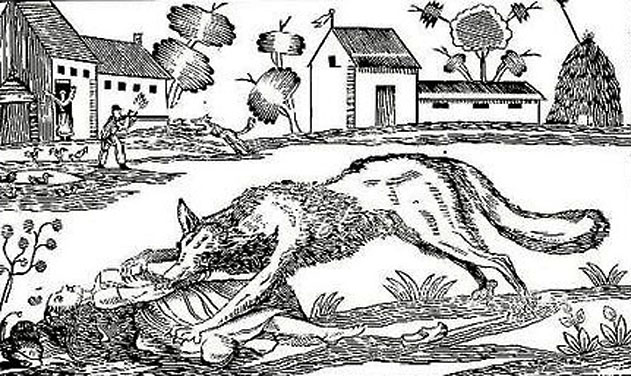
Bete_de_Chaingy_ws1028371882


The case of the Beast of Chaingy took place in 1814. It is possible that it reflected other cases of “Beasts” from a long time before, such as the one described by Monsieur Polluche Lumina which took place a long time before (1709). The Beast of Chaingy is a creature which has been a little better documented :

“On December 6th, 1814 , several women and children who were collecting dead wood in the forest were attacked by a she-wolf . The animal killed two and injured eight more. The Baron de Talleyrand, whose magnificent full name was Alexandre Daniel de Talleyrand-Périgord was Prefect of this area. He ordered a hunt and the beast was slain near Cercottes.”

This is as maybe, but, for me, if this creature was just an ordinary canis lupus, then its behaviour was absolutely extraordinary. Nobody nowadays would expect a group of people to be attacked, or even challenged, in a wood by a lone she-wolf. To then have two individuals killed and eight more wounded is quite astonishing. All I can suggest is that this animal was, as has been said so many times both about the Beast of Gévaudan and about many others:

“C’était comme un loup mais ce n’était pas un loup.”
“It was like a wolf but it was not a wolf.”

In 1868, the last real wolf in the region was killed by a poacher in Chaingy, a man called Blaise Basset. The body of the animal is now on display at the Museum of Natural Sciences in Orléans.
And here it is:
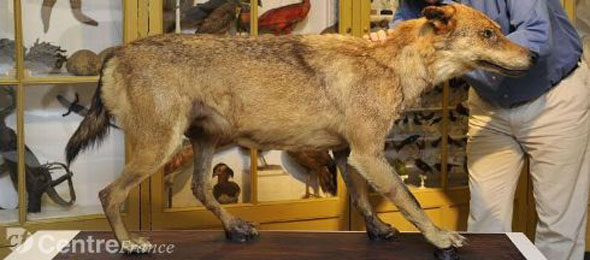
real bete

Hardly the type of creature to kill two people and wound a further eight. I’m more scared of those polyester slacks if truth be told.
And finally. Let’s hope that this is merely an imaginative drawing of the Beast of Chaingy. If it’s from a trailcam, we could all be in trouble:
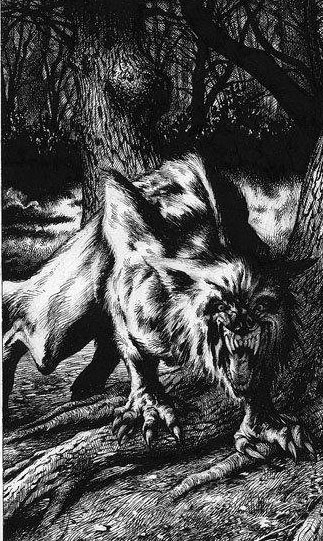
imaginative chaingyu


18 Comments

Filed under Cryptozoology, France, History, Science, Wildlife and Nature

The Corncrake: the sound of Victorian England

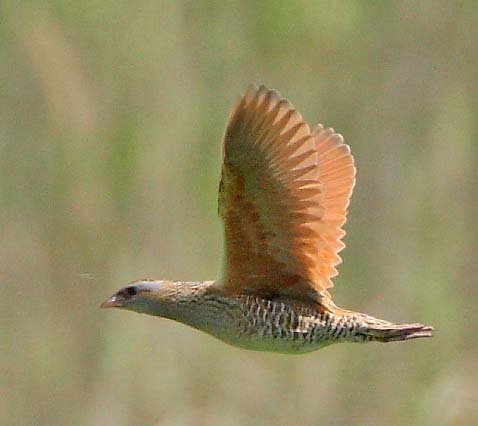
Nowadays the Corncrake is limited to the Outer Hebrides in Scotland although there is also what seems to be a highly successful  reintroduction scheme being carried out in the RSPB Nene Washes Reserve in Cambridgeshire, England:
Corncrakegreyt zzzzzzzzz

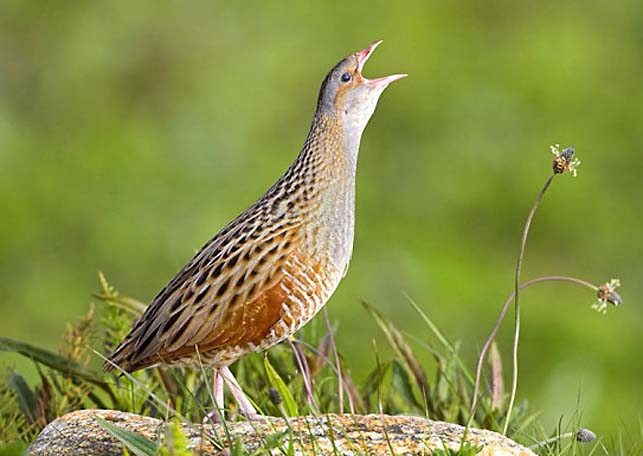
In the first half of the nineteenth century, Corncrakes were present throughout the length and breadth of England and their distinctive call was heard in every sunlit field. Even their Latin name, crex crex, is onomatopoeic. The birds were described as producing the most distinctive summer sound to be heard on a country walk anywhere in England. This is the song of the corncrake, beautifully recorded by “therhys927”

Corncrakes will often sing all through the night, and they can in fact be pretty aggravating little so-and-so’s once the initial novelty has worn off:

siningig zzzzzzzzzzzzzzz

John Clare, England’s greatest poet, wrote a poem about the bird which he knew as the “Landrail”:

“How sweet and pleasant grows the way
Through summer time again
While Landrails call from day to day
Amid the grass and grain

We hear it in the weeding time
When knee deep waves the corn
We hear it in the summers prime
Through meadows night and morn

And now I hear it in the grass
That grows as sweet again
And let a minutes notice pass
And now tis in the grain”

Nowadays, the Corncrakes are all gone, gradually killed off by decade after decade of desire for profit, intensive farming practices and in particular the mechanised mowing techniques used by the nation’s farmers in place of the trusty scythe.  This sad decline is chronicled in Nottinghamshire by the county’s Victorian birdwatchers:

crake zzzzzzzzz
In 1866, in his “Ornithology of Nottinghamshire”,  William Felkin wrote that “the corncrake is very common”. Three years later, in 1869, William Sterland provided a charming account of this delightful bird in “The Birds of Sherwood Forest”:

“That bird of singular habits and note, the corncrake, visits us in abundance every year, sometimes arriving as early as the first of May, while in 1853 I did not hear its note until the 18th. This was unusually late; the season being a remarkably cold and backward one, a fact of which our other migratory birds also seemed, in some mysterious way, to be fully cognisant. Nothing, indeed, relating to the feathered tribes is more wonderful or more deserving of our admiration than that knowledge, call it instinct or what you will, which, implanted in them by their Creator, enables them to hasten or delay their departure for their distant but temporary places of abode, according as the seasons there are suitable to their necessities or otherwise. How strikingly is this wisdom brought forward in Holy Scripture: “Yes, the Stork in the heaven knoweth her appointed time and the turtle, and the crane, and the swallow observe the time of their coming.”

William Sterland seems well aware of the piece of Corncrake behaviour which was to prove its downfall, as the mechanized mower made its inexorable way forward:

“I have never succeeded in causing the Corncrake to take wing except with a dog, and even then its flight is always brief, as it takes an early opportunity of dropping to the ground and regaining its cover. It flies rather slowly with its legs hanging down, and there is such an air of effort about his movements on the wing, that I have often wondered how its migrations are performed.
Its ventriloquial powers are well known to every observer. Now it’s harsh “Crake, crake” seems within a few yards, and the next moment it sounds as if it were halfway across the field, and this apparent variation in distance is so well simulated that in a consecutive repetition of its call for ten or twelve times, a few notes will sound as if uttered almost at your feet, and the next two or three from afar, and yet the bird is standing motionless all the time, as I have several times tested. Its singular call I have often imitated by drawing my nail across the teeth of a pocket comb, and thus inducing its near approach.”

flightg zzzzzzz

Again Sterland reveals how fully conscious he is of the problems the Corncrake will face throughout the rest of the nineteenth century:

“The female sits very closely on eggs, so closely indeed, as not infrequently to lose her life by the mower’s scythe. I have known two instances of this, in one of which the poor bird was almost cut in two.”

Ten years later, in 1879, William Sterland provided additional details about the Corncrake:

“An abundant summer visitor. It is also been found in winter, and on this account has been thought by some to hibernate; but apart from the fact that no bird is known to hibernate, why should a corncrake which remains during the winter not be able to fare as well as a water rail or a common snipe. Cold does not affect them.”

In his “Scribblings of a Hedgerow Naturalist”(1904), Joseph Whitaker wrote:

“The other evening when talking to Rose the Nottingham taxidermist (who has set up a great many specimens in this collection) I remarked how very few Corncrake there were about, he said he well remembered about 35 years ago, a man bringing a large basket to his father, of these birds, which he had shot in two days, and they numbered over fifty; at that time he said the meadows round Nottingham were full of them, and their call could be heard on all sides. This year I have heard one, although I have been about a great deal.”

corncrake zzzzzzz

No Corncrakes in 1904, no meadows in 2014! Elsewhere Joseph Whitaker wrote about his country house at Rainworth, between Nottingham, and Mansfield:

“I am sorry to say the Corn Crake is getting scarcer. I have not heard one near the house was several years, although twenty years ago they were in every mowing field. No doubt the result of mowing machines which cuts the young up often I fear.”

Three years later in 1907, Joseph Whitaker provided in “The Birds of Nottinghamshire”  the following information :

“I sorrow to say that this interesting bird is a rapidly vanishing species, not only as far as Notts is concerned, but in many other counties. Twenty years back it was the exception in the spring not to hear a corncrake in nearly every mowing field in the Trent Valley, and almost every seed and grass field left for hay in other parts. In this very high and dry parish of Blidworth, we had between ten and fifteen pairs, now for the last three years not a bird has been heard.”

corcrake_30594 zzzzzzz

Like his fellow nature writers, Joseph Whitaker chronicles the decline:

“At Southwell, on a June night, their curious call resounded on all sides; now this year there may be two pairs. Mr Henry Smith Junior of Cropwell Butler informs me that this scarcity is very noticeable in that part, and in fact all over the south of the county.”

Alas, Whitaker was to be proved wrong when he wrote:

“Let us hope that it will be many years before they are quite a bird of the past, but if they decrease during the next twenty years as fast as their decrease during the last two decades, it pains me to think that it may be so.
I once heard a corncrake calling inside the kitchen garden at Welbeck Abbey.”

And finally, in “Jottings of a Naturalist” in 1912, Whitaker wrote:

“Twenty years ago there were Corncrakes all over the parish, in fact it was the exception not to hear them in every mowing field, but I know that there is been none for the last ten years, not a single bird heard, and the parish is six thousand acres; and it is not only so in these parts, it is the same everywhere.”

Corncrakeflight zzzzzzzzz

And really, that was that. The end of the Corncrake.

As the Great War loomed, the Victorian age drew to a close. No more mowing fields, no more meadows full of flowers, no more clouds of brightly coloured butterflies. And no more Corncrakes. Just mud, blood, war and death.

To film a Corncrake nowadays, you are more or less wasting your time in England. This beautiful, atmospheric video comes from “mikhailrodionov” in faraway Russia:


10 Comments

Filed under History, Nottingham, Science, Twitching, Wildlife and Nature

If you go down to the woods today, you’d better not go alone…

One more monster to terrorise the local peasantry of bygone France was the so called “Bête de Cinglais” which was also called the “Bête d’Evreux”. Its bloodstained career lasted from 1632–1633, as it terrorised the province of Normandy, bringing violent death to one of the most beautiful areas of a beautiful country. Indeed, there is a sharp contrast here with the wild mountains frequented by so many other of the monsters we have read about. Here is a map of northern France:

basse norm map national

And here is a bit more of a close-up. The green UFO marks the precise location:

basse norm map

As always, the best approach is to take an average of the various French websites. The “Virtual Institute of Cryptozoology”, the “Institut Virtuel de Cryptozoologie”, states that:

“In 1632, about fifteen kilometres to the south of Caen, in the Forest of Cinglais, an animal carried out a reign of terror. Those who survived its attacks described it as a kind of huge mastiff of extraordinary agility and speed. Two historical documents mention the mysterious beast: the “Gazette de France” of March 19th 1632 and the edition of June 17th 1633. The edition of 1632 announces that the predator has already devoured around fifteen people in a month.

Forest rangers have shot at it with their muskets but are unable to cause any injury. The priests are trying to mobilize the inhabitants of the neighbouring parishes but the population is so traumatised that very few volunteers dare to take part in the hunts. The hunters themselves do not want to venture into the woods unless they are in a large group. The 1633 edition of the newspaper announces the killing of an animal at the end of a massive hunt lasting three days, organised by the Count de la Suze, with the participation of between 5,000-6,000 hunters and beaters. The Beast of Cinglais looks like a kind of wolf, but is longer, and more red in colour with a more pointed tail and a wider rump than an ordinary wolf. At least thirty people have now been killed.”

This, conceivably, may be a depiction of the creature:

perhaps cinglais

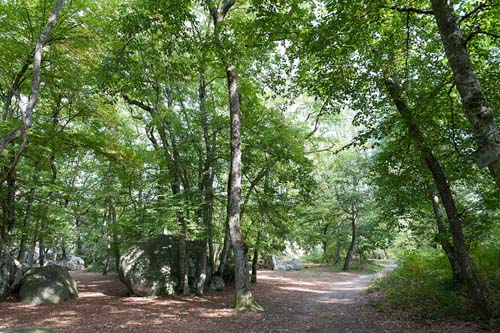
Interestingly enough, there was a further series of attacks only some fifteen years later in the Forest of Fontainebleau. This is a very similar area to the Forest of Cinglais and is not particularly far away at all:

sous-bois-dans-la-foret-de-fontainebleau

The Fontainebleau story is carried by the same website:

“In 1679, woodcutters were killed and eaten in the Forest of Fontainebleau. Records in the parish of Bois-le-Roi mention several cases of attacks.”

A website which specialises in the ghostly aspects of the beautiful Forest of Fontainebleau also carries a few tales of ancient beasts thought to live there:

“There used to exist around the beginning of the sixteenth century a fabulous animal that spread terror in the Forest of Fontainebleau and its surroundings. All indications are that it was a wolf, but some cried “Werewolf”, or tried to blame a magician who was said to be an expert in the art of shape shifting.”

“And then, around 1660, long before the famous Beast of Gévaudan, there was already talk around this area of the Bête du Gâtinais, the  Beast of Gâtinais, a frightful creature which looked like a monstrous wolf. His greatly exaggerated exploits, murdering children and young girls, used to feed people’s fears. Such stories caused many sleepless nights. It was even said that the Beast used to cross the River Seine to come and steal little children and animals on the far side.”

Even in fairly modern times:

“Towards the end of the nineteenth century, an old woman recounted the story of a great evil beast which lived in the forest and which came out from time to time to attack farm labourers, shepherds and flocks of sheep. The monster had to its credit a whole multitude of atrocities, dead sheep, dogs killed and children who just disappeared. The little girl who set off to gather hazelnuts in the woods, and was never seen again. The young nine year old boy devoured near the village of Nanteuil les Meaux”

The website’s author states that:

“It is quite possible that these three stories all refer to the same species of animal, described at different times in history….With evidence of this type, spread over long periods of time….it is not easy to make sense of things, to separate the mythical and imaginary monster from a mere animal.”

That “mere animal”, of course, is the wolf, considered in the France of bygone years to be guilty of far more serious attacks on humans than, say, the wolves of present day North America or Europe. This is the location of Fontainebleau. Compare this map with the maps for the Beast of Caen/Evreaux/Cinglais”:forest of fontaineblasu

As far as Fontainebleau during the first half of the sixteenth century is concerned, there were certainly many people who thought that nobody should ever go down to the woods. If they did, they would certainly be sure of a really big surprise, one with lots of a fangs and an aggressive attitude that needed quite a lot of adjustment. And yes, there were lots of marvellous things to eat, (in a way) but it was better not to go alone. It’s really lovely down in the woods, but perhaps it is safer to stay at home:

The same fascinating website continues:

“In the reign of King François the First, during the first half of the sixteenth century, a certain Sebastian Rabutin was to rid the country of a terrible lynx which was just as murderous as any of our previous beasts. It too was devastating the same region, devouring in turn both young girls and children. This monster, which appears in a fresco in the ballroom of the Château de Fontainebleau where it is depicted as some kind of hybrid between a wolf and a feline, was so formidable that no one dared confront it . For the record, the “loup-cervier”, in Latin “lupus cervarius”, which means deer wolf, is the common name of the Lynx, a big cat which hunts hares or rabbits, but never deer or men.”

I have not been able to trace the fresco in the ballroom of the château, but there is quite a lot to go at:

salle_bal_00

There is absolutely no way though that any of these French monsters was a lynx, as I have already discussed in a previous blogpost about the Beast of Benais.

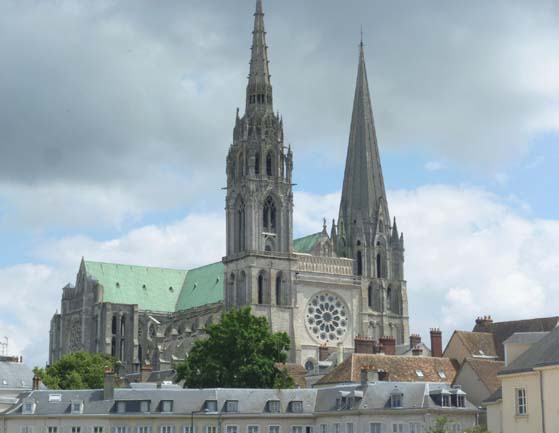
Fairly close to both Caen and  Fontainebleau is the beautiful cathedral city of Chartres:

chartres_cathedralxxxxxxxxx

The “Institut Virtuel de Cryptozoologie” reports how:

“At Chartres, in 1581, a young boy was buried at Ver-les-Chartres, killed by a “wild beast”, “une beste sauvage” whose identity we are not at all sure of.”

If this were not a wolf, and a wolf would surely have been recognised, then it may well have been one of the mysterious beasts we have been examining.

But let’s just forget this supporting cast for the moment. Let’s return to “La Bête de Cinglais”. Another interesting blogpost about this fearsome creature comes from Evelyne Achon:

“The Forest of Cinglais is about 15 kilometres to the south of Caen. The “Beast of Cinglais” is also called “The Beast of Evreux” or “The Beast of Caen”. It refers to a man eating animal behind a series of attacks on humans.

The first attack was mentioned in 1632. These attacks are known through articles in contemporary newspaper. The Gazette de France therefore reported on March 19, 1632:

“News from Caen in Normandy. The 10th of March in the year 1632. Since last month in the forest of Cinglais, and then between there and Falaise, people have seen a wild beast that has already devoured fifteen people. Those who have avoided his fangs report that this savage beast is similar to a large mastiff of such a speed that it would be impossible to run and catch him on foot. He is of such extraordinary agility that people have seen him jump right over the river in certain places. Some people call him Thérende. Local residents and forest gamekeepers have shot at him from range with their arquebuses on several occasions, but without wounding him. They do not dare approach him, or even to reveal themselves, until they are organised in a large group, exactly as they will be today when they hear the sound of the alarm bell, to which all the parishioners from all the parishes around have been invited by their village priests, as three thousand people are assembled to carry out the hunt. “

A gigantic beat was organized in June 1633, with the participation of between 5,000 and 6,000 men. An animal was killed, and the attacks ceased.

Here is an old engraving of the Beast. Spaghetti for lunch:

Bete_de_Cinglais_1632

The Gazette de France reported on June 17th the death of the creature as follows:

“This raging mad beast which I wrote about last year as having eaten in two months more than thirty people in this forest was believed by everybody to be a creature of magical properties. But the Count de la Suze, having assembled by the order of our Lieutenant General on the 21st of this month between 5000 to 6000 people, has pursued the creature so keenly that after three days it was killed by a shot from a flintlock musket. It turned out to be some kind of wolf but longer, redder in colour with a pointed tail and a rump wider than normal. “

Here is the Forest of Cinglais:

Foret-cinglais1xxxxxxxxxxxxxxxxxxxxxxxx

Wikipedia supplies a little information, but seems, perhaps, rather coy:

“This beast was identified as a wolf, but a mystery still remains. It was described as a kind of red wolf with an elongated body and a more pointed tail than a common wolf. It seemed very quick and agile.”

Another old friend, Vampiredarknews knows the details equally well:

“In 1632, this Beast killed fifteen victims in only one month. It struck in Normandy, where those who escaped described it as a great extremely fast and agile mastiff. It then settled in the Forest of Cinglais, about fifteen kilometres south of Caen. It then killed a dozen or so victims before they organized a hunt that lasted three days and brought together more than 5000 people. It was killed on June 23, 1633 by the Count de la Suze.”

One final website makes a very good point:

“It will eventually be described as a wolf, but a great mystery still hangs around this story ; the behaviour and the agility of the creature are in no way anything like that of a wolf.”

In the fullness of time, I will finish this almost interminable list of “Monsters of France” and draw them all together as the same unknown species. This particular creature is a good example. The Forest of Cinglais, the Forest of Fontainebleau and the charming countryside around Orléans are all pretty much the same kind of environment. The looks and behaviour of these beasts are not unique. Other localities have had strange reddish animals, animals with noticeable tails, animals with extreme agility or with great speed or an ability to leap long distances. There must be a link between them all.

I am very struck by the words of Abbé Pierre Pourcher about the Beast of Gévaudan:

“Everybody who saw it said it was not a wolf. Everybody who did not see it said it was.”

5 Comments

Filed under Cryptozoology, France, History, Science, Wildlife and Nature

Last day on the Scillies

Saturday, October 29, 1988

.
(An extract from my old birdwatching diary “Crippling Views”)

.
My last day on the Scillies. Time off for good behaviour. I’m not really sorry to be going home. I had four lifers. I don’t feel I’ve missed out on anything that was there and was viewable, except perhaps the Short toed Lark, about which I have exactly the same dilemma today as I had yesterday. Do I go to St Agnes or not? I chicken out, I am ashamed to say. I’m too scared of missing the last ferry back to Penzance Harbour to risk missing an inter-island boat through a twisted ankle, or a fat man’s heart attack. This will be the last Scillonian ferry back to the mainland before the end of the year, and the helicopters are all booked up until next Wednesday so I just cannot risk anything going wrong. I simply do not have enough money:

Scillonian_III-01 xxxxxx

I go back to my old friend at Telegraph, the Rose-coloured Starling, who I see very briefly, flying around with his common friends. He’s a very pale, buffy coloured individual, which I am sure is the bird in question, a fact made all the more certain by a group of birdwatchers coming from the area where the flock appeared to land and who say that they have just seen the little chap:

This slideshow requires JavaScript.

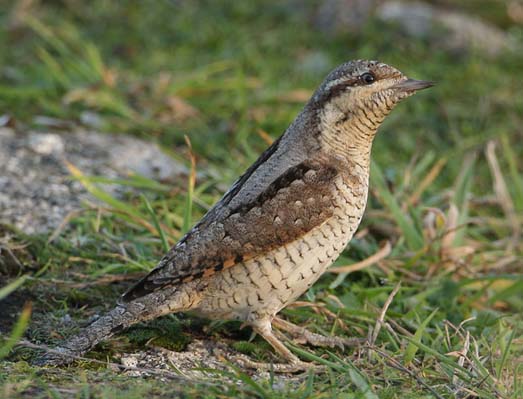
I can’t relocate the bird, but I meet someone who says he’s just seen a Wryneck feeding alongside the road. It was actually on the grassy tops of the great wide dry stone walls, although it has disappeared by the time I arrive:

Wryneck%20Scilly%2 zzzzzzz

I look for about fifteen minutes, but I can’t find it, and I am just about to pack it in as a bad job, when another young chap comes over and says he’s found the bird about seventy yards away in another lane. When I get there, I find that it’s a lot more active than the previous birds that I’ve seen in Norfolk, as it moves along the base of the hedge, feeding energetically. I am always impressed by Wrynecks, which never seem reptilian to me or particularly primitive as they are supposed to, but rather I wonder at the subtlety of their camouflage, and the way they seem able to disappear into their background at the drop of a dead leaf. It’s a good padder of a bird and I’m really pleased to have seen it. Not that I’m surprised, because it’s my friend Paul’s bogey bird and I told him before I left for the Scillies that I would see one for him:

Blog Wryneck St Marys xxxxxxxxx

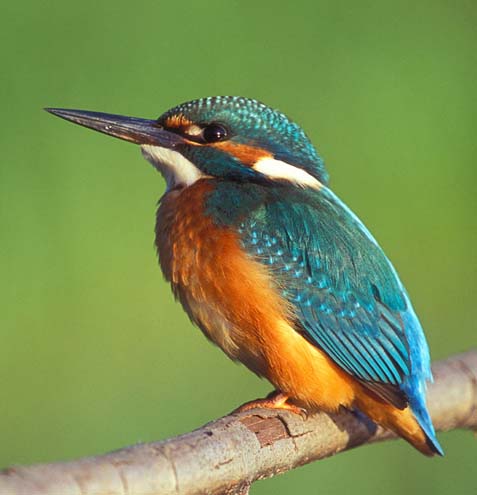
I take a leisurely stroll back to town, walking along the seashore where I am amazed to see a kingfisher flying out over the breaking waves, seemingly completely at home among the rocky coves and the surf,  before it finally disappears into a line of pine trees at the top of the scrub covered cliff:

kingfisher14  zzzzzzzz

I pass a field full of absolutely thousands of finches, including at least one superb full adult summer plumage Brambling, which is so bright that I think it is some weird American bird when I first see it. There’s really no need for it to be a transatlantic vagrant, since the bird is such a beautiful sight in its own right, without needing to be particularly rare:

This slideshow requires JavaScript.

A hundred yards further on, I surprise a Pipit in another field at the side of the road. I try hard to imagine that it is some unprecedented rarity, but I’m finally forced to concede that it is merely a Tree Pipit.
Finally, I reach the Porthcressa Restaurant, where the magic noticeboard announces the presence of a Scarlet Rosefinch, another possible lifer, which has turned up near the airport. This is going to be a close run thing for a fat man. The boat leaves this afternoon and I need to be on the quay by half past three. It’s half past one now, so I start off at a reasonable pace, taking care to time myself for the walk, so that I can set off back to the harbour in good time. It only takes me thirty minutes, so I am left with about an hour to find the bird:

Scarlet%20Rosefinch%20 xxxxxxx

It’s apparently been showing well in a little field full of cabbages, but has unfortunately moved on by the time I arrive. I go and search the neighbouring fields where there are huge flocks of finches and lots of good big hedges for them to perch in. It is at this point that I get the closest that I’ve ever been to a rare bird without actually seeing it. Two young men poke their heads round the hedge and tell me that the Rosefinch is there. They are actually looking at it right now:

scarlet rosefinchR  xxxxxxx

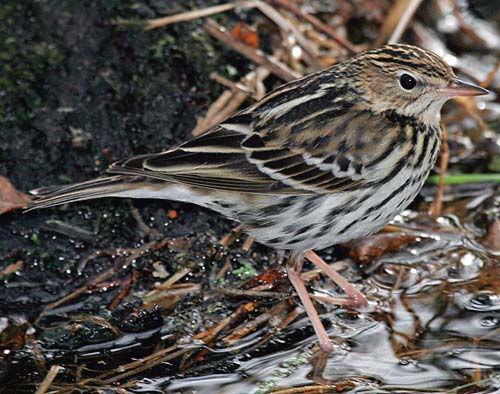
In the very short time that it takes me to walk the ten yards or so, the bird flies away, never to be seen again, at least not by me. I give it a few more minutes, but time, as always, ticks inexorably away.  There is one final bit of excitement when a message comes on the CB that a Pechora Pipit has been spotted on the far side of the airport near Salakee Farm:

pechora xxxxxx

The fittest ferry passengers, and the more leisurely helicopter users, all set off, but without me, I’m afraid. I’m far too unfit to rush all the way to Salakee, find a pipit famous for its ability to skulk and hide in the undergrowth, and then get back down to the Scillonian by 3.30. At least, not without a major heart attack. I do have the pleasure though, of a nice stroll back through the town, along the main street down to the ferry:

St%20Marys%20Quay xxxxxxxx

The scene that greets me is straight out of a 1930s black-and-white documentary film about the evacuation of St.Kilda. The ferry seems to know that it is the last boat of the year and mournfully blasts its foghorn as a farewell to the tiny town.

scillonia on scillis xxxxxxxxxx

The street, with its grey stone buildings, is full of hurrying figures, all burdened with bags and suitcases, tripods and scopes, all plodding in the same direction to get down to the quay. When I reach the ferry, I have twenty minutes to drink in the scene, so I stand and lean over the side of the boat. It’s beautiful, the still, calm sea, the line of old buildings along the curve of the bay and the continuing mournful bellowing of the ship’s foghorn. Even better though, is a stream of birdwatchers, all returning at breakneck speed from not seeing the Pechora Pipit, tripods and spare wellies flying around their necks. They all seem to make it, except, presumably, the ones that don’t.
We set off across the surface of a glassy sea, as the people on the land wave their last farewells to the ship:

scillonian-day-trips-1-1180x520 xxxxxxx

It will be a long time before the Scillonian returns to the island, as the next arrival is scheduled for April. The crossing is bird free, mainly because the weather becomes so foul. In actual fact, the crossing isn’t particularly rough by Scilly standards. All I can say, though, is that, if this isn’t rough, then very rough most be unbelievable. I stay on deck, of course, in my capacity as the toughest man on the boat, and when I finally go downstairs, the bar is full of people with green faces. It reminds me very strongly of a pub in Nottingham that sells Shipstone’s beer.
One young lad that I speak to is really delighted to have been on the Scillies. He is about fifteen and he has had a lot of lifers and he is as pleased as Punch. Birdwatching here certainly does make it a lot easier to see some of the birds that on the mainland can take a lot of effort, above all if you live in the south. Dotterel, Corncrake, Red Kite, or especially, Lapland Bunting:

LaplandBuntingSteveArlow cccccc

He’s had them all in the past two weeks here. I’m still riddled with jealousy, all bitter and twisted at those people who can spend two or three weeks here at the best time of the birdwatching year, namely early October, when I have to be at work. It must have added a good thirty or forty species at the very least to their life lists, with no real difficulty and very little real effort. Perhaps an inflation rate of up to 25% or 30% of your life total. All there for you to tick off, knowing that they are birds unlikely to occur anywhere else in Britain.
I have not seen too many good birds on the Scillies, but I have met a good number of what you might call “characters”. It is, after all, “Teachers’ Week”, although I do find one teacher who has clocked up an exceptionally impressive 420 species without ever using the rather artificial aid of coming to these islands in the first two or three weeks of October. At the same time he has not lost his ability to be excited by a Red Kite or a Red-necked Grebe:

This slideshow requires JavaScript.

There are some quite desperate twitchers who just hear the words “Paddyfield Warbler” and will then slit Granny’s throat for the bus fare. Some of them are very rude, unpleasant and downright boorish, including one young oaf who insists on shouting his requests for directions at you at the top of his fifteen year old voice, irrespective of how far away he is. His only interest is the extraction of any information you might have about the bird he is trying to see. I meet him once and say “Good Morning” and he says loudly, “Where? Is it showing well?”

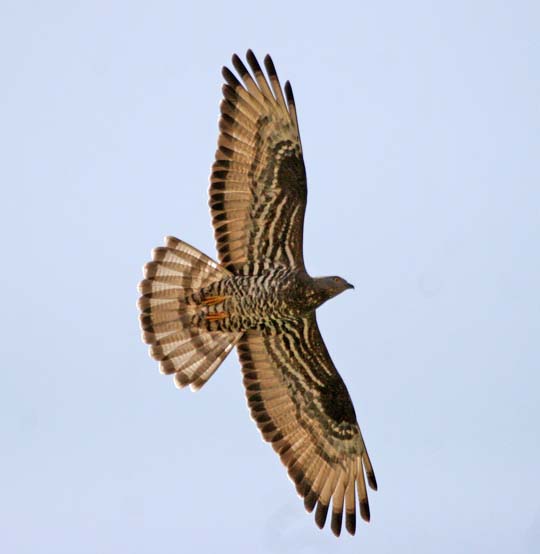
One unemployed birdwatcher has worked out his cash supply down to literally the last fifty pence. For the last two days of his holiday (a holiday from being unemployed?),  he cannot afford accommodation, but has to walk around looking for nice warm bus shelters. The most notable of the whole lot, though, is an old gentleman who has bird watched all his life and who has seen some splendid ornithological sights in his time, particularly when birds of prey were more numerous than they are today. Honey Buzzards thronged his skies:

HoneyBuzzard xxxxxx

From his house on the north west coast of Wales, he would see a dozen migrating Merlin in a day. Now it is just one a month:

merli_juv_ ccc

He has little or no interest in twitching rare birds, many of which he has never heard of anyway. He has an outlook based solely on what he can find for himself. Not for him the new fangled Gore-Tex or plastic cagoules, but a pair of battered old boots, some comfortable corduroy trousers and a sports coat with leather elbow patches. His bird watching techniques are different to those of the present day as well. Not for him the patient wait for the bird to appear. He is deep in the bushes, energetically bashing around with his walking stick, determined to find everything that is in there, vainly trying to hide.
The real stars of the show though, are the people of the Isles of Scilly themselves. They are genuinely calm, kind and wonderful people and remind me a lot of the inhabitants of the Highlands of Scotland. They will not be hurried and their entire lives are very different indeed to those of us city folk.

Certainly this week though, the birds are disappointing. I wish I’d stayed on the mainland and gone for whatever presented itself. There was every chance that I’d have seen the Indigo Bunting at Wells and a Lesser Yellowlegs at the Ouse Washes.

This slideshow requires JavaScript.

On the other hand, I wouldn’t have had the total experience that I have had.

10 Comments

Filed under Cornwall, Personal, Twitching, Wildlife and Nature

You have three minutes to learn to swim

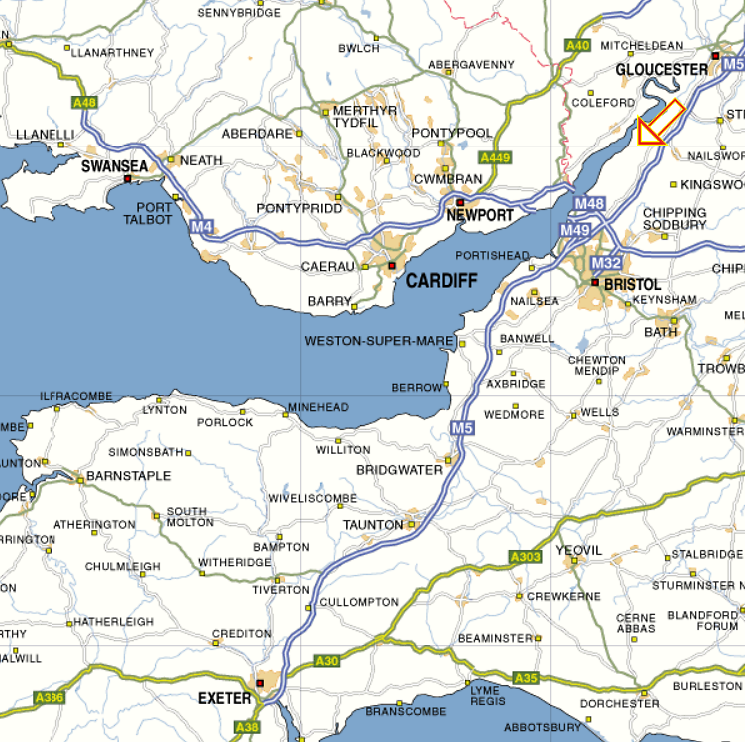
In a previous blogpost I spoke about the Great Storm of 1703. Just under a hundred years previously, in 1607, there had been a huge, spectacular, surging flood in the West Country, centred on the Bristol Channel and the Severn Estuary. Much damage was done, in particular to the area near the orange arrow:
sw of england

The floodwaters which struck on January 30th were in no way the result of a long period of continuous rain, such as has been the case in the recent years of our own century. Indeed contemporary writers stated that:

“The winter was extremely warm and very much drying….even smaller brooks remained ice free. Already in February the sowing was performed, in the same time violets are to have flowered.”

It is always possible, of course, that this long ago catastrophe was the result of a sudden surge, caused by high tides and very strong winds, as has happened several times in Norfolk and Suffolk in the last two hundred years. Some meteorologists, though, have looked beyond this.

Contemporary scientists such as Professor Simon Hazlitt, and Australian geologist Ted Bryant therefore,postulated in their research paper in 2002 that the flooding was caused by a tsunami. Their evidence, other than presumably the immense volumes of water involved in the incident, are that various deposits of sand, pebbles and shells, scattered around the Severn Estuary, are compatible with having been brought from the open ocean.

Their explanation for this melodramatic event was an undersea landslide, or perhaps ocean slide, on the sea floor between Cornwall and Ireland.  Alternatively, there may have been some kind of earthquake, caused by fault lines in the sea somewhere to the southwest of the area.

Whatever the reason, the results were catastrophic. Water swept five miles inland around Bristol and all along the coast of South Wales from Pembrokeshire to Glamorgan and Monmouthshire. In the Somerset Levels, still the victims of flooding nowadays, some four hundred years later, the waters came as far as forty miles inland. Did they recreate the ancient Glastonbury when the waters turned the Tor into the legendary Avalon?

glast

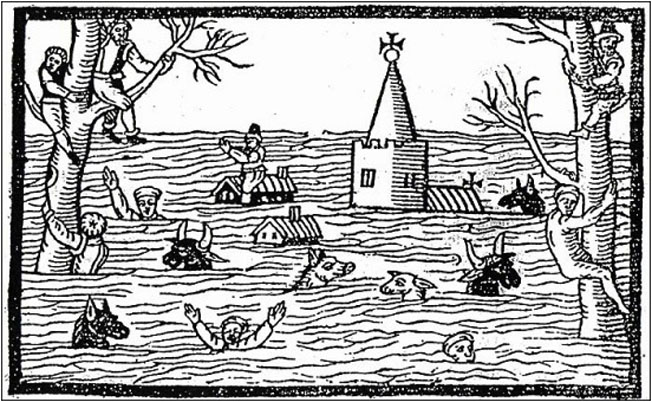
Certainly though, at Frampton on Severn in Gloucestershire, the flood covered the entire village so that only the spire of the church of St Mary the Virgin emerged from the water. There are some lovely details in this contemporary illustration:

1607-flood

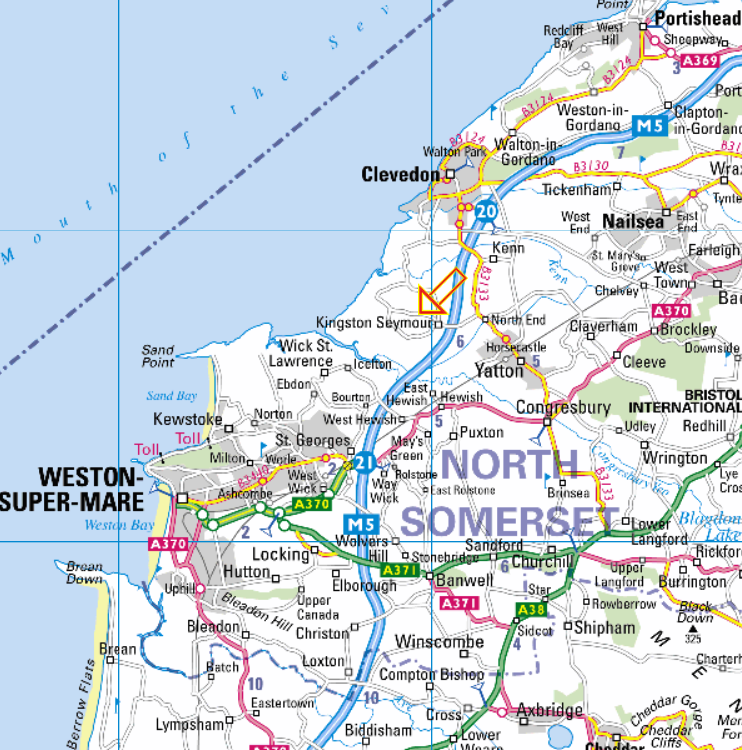
At Burnham on Sea in Somerset, the sea wall was washed away and so were thirty villages in the immediate vicinity. In Huntspill, almost thirty people drowned, with a similar number perishing at Brean which was “swallowed up”. Here, seven out of the nine houses were destroyed: these were typical totals repeated in villages and small towns over the entire area, resulting ultimately in a death toll of at least two thousand people, and that in a fairly sparsely populated agricultural region. Other villages which were devastated included Berrow, Mark, Lympsham, and both South and East Brent were badly affected. Houses and villages were swept away, and overall, an estimated 200 square miles (51,800 ha) of farmland was inundated. Livestock was destroyed. For ten days the Church of All Saints at Kingston Seymour, near Weston-super-Mare, (look for the orange arrow) was filled with water to a depth of five feet (1.5 m):

seymouis

A chiselled mark remains showing that the maximum height of the water was more than 25 feet (7.74 metres) above sea level. The church has a commemorative plaque:

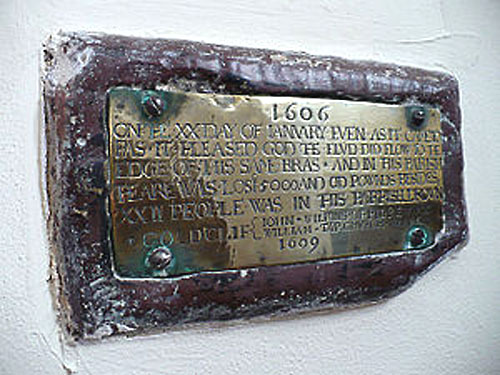
“An inundation of the sea water by overflowing and breaking down the Sea banks; happened in this Parish of Kingstone-Seamore, and many others adjoining; by reason whereof many Persons were drown’d and much Cattle and Goods, were lost: the water in the Church was five feet high and the greatest part lay on the ground about ten days. WILLIAM BOWER”

This plaque in the local St Mary’s church records the disaster at Goldcliff near Newport on the Welsh side of the Severn Estuary:

church plaque

Initially, on the day, all was going well:

“for about nine of the morning, the same being most fayrely and brightly spred, many of the inhabitants of these countreys prepared themselves to their affayres”

Then the sea retreated away from the shore; in contemporary terms, it was “driven back”. This is apparently a classic sign of trouble ahead, tsunami  imminent, and sure enough:

“mighty hilles of water tombling over one another in such sort as if the greatest mountains in the world had overwhelmed the lowe villages or marshy grounds. Sometimes it dazzled many of the spectators that they imagined it had bin some fogge or mist coming with great swiftness towards them and with such a smoke as if mountains were all on fire, and to the view of some it seemed as if myriads of thousands of arrows had been shot forth all at one time.”

And there was no escape just by running away:

“(the water)is ‘affirmed to have runne …. with a swiftness so incredible, as that no gray-hounde could have escaped by running before them’.

For me, though, insofar as these events in 1607 are relatively soon after the appearance of the new King James Bible, I personally agree with the sentiments expressed in a contemporary pamphlet which was called:

“God’s warning to the people of England by the great overflowing of the waters”

godswarningsmallThe familiar contemporary illustration quoted above also came from a pamphlet of the time:

moncover

Throughout the area, there were certainly some narrow escapes. Here are four contemporary accounts:

“a maide child, not passing the age of foure years: it is reported that the mother thereof, perceiving the waters to breake so fast into her house, and not being able to escape with it, and having no clothes on, set it upon a beame in the house, to save it from being drowned. And the waters rushing in a pace, a little chicken flew up, it being found in the bosome of it, when helpe came and by the heate thereof preserved the childe’s life”.

“Another little childe is affirmed to have been cast uppon land in a cradle, in which was nothing but a catte the which was discerned as it came floating to the shoare, to leape still from one side of the cradle unto the other, even as if she had been appointed steresman to preserve the small barke from the waves furie”

“A certain man and woman having taken a tree for their succour, espying nothing but death before their eyes, at last among other things which were carried along, they perceived a certain tubbe of great bignesse to come nearer and nearer unto them, until it rested upon that tree wherein they were, committed themselves, and were carried safe until they were cast upon the drie shore”.

“more than did, had perished for want of food, and extreme cold, had not the Rt. Honble. Lord Herbert …. sent out boats to relieve the distresse …. himself going to such houses as he could minister to their provision of meate and other necessaries”.

Nowadays, of course, this just could not happen. We keep a tight control of the weather:

This slideshow requires JavaScript.

Perhaps, though, the builders of medieval churches knew a little bit more than us:

church safe

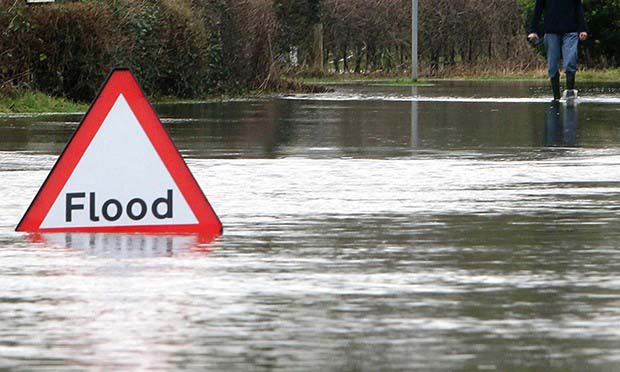
Having said that, have no fear. Should a flood, or indeed, a tsunami, ever arrive, we will be helped by an army of graduates from the University of the Bleedin’ Obvious:

A flood sign


5 Comments

Filed under History, Humour, Science, Wildlife and Nature

An insect with a billion friends

This story is an extract from my old birdwatching diary “Crippling Views”.

These events all took place on Friday, October 28, 1988, which was the fourth day of my stay on the Isles of Scilly:

“A late lie-in this morning, with the Radde’s Warbler ticked off, and little else to get up for, certainly not at five o’clock in the morning:

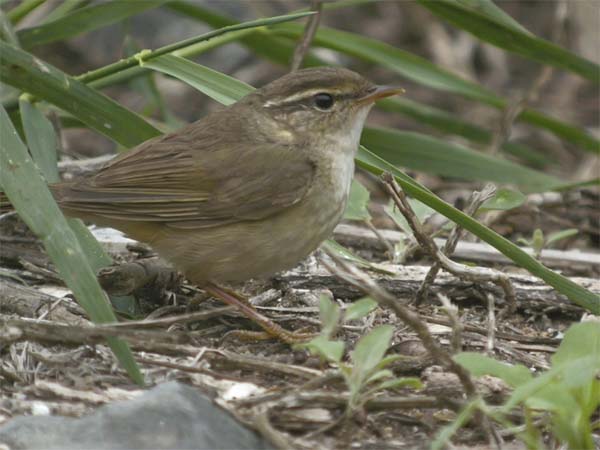
RaddesWarblerxxxxxxxx

I eagerly consume a splendid Scillonian breakfast made up of every conceivable Identified Frying Object, with the possible exception of haggis, although this could well be the single mysterious item which I cannot identify with absolute certainty. Then it’s a leisurely walk down to the Porthcressa Restaurant where the magic blackboard promises Melodious Warbler at the Garrison. With a bit of luck, I might see that, and then go over to St Agnes for the Short toed Lark. I walk up the horrendously steep slopes of the hill to the Garrison, and start looking…

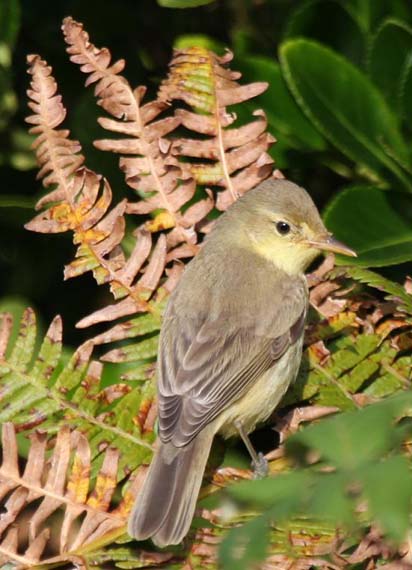
Melodious%20Warbler%zzzzzzzz

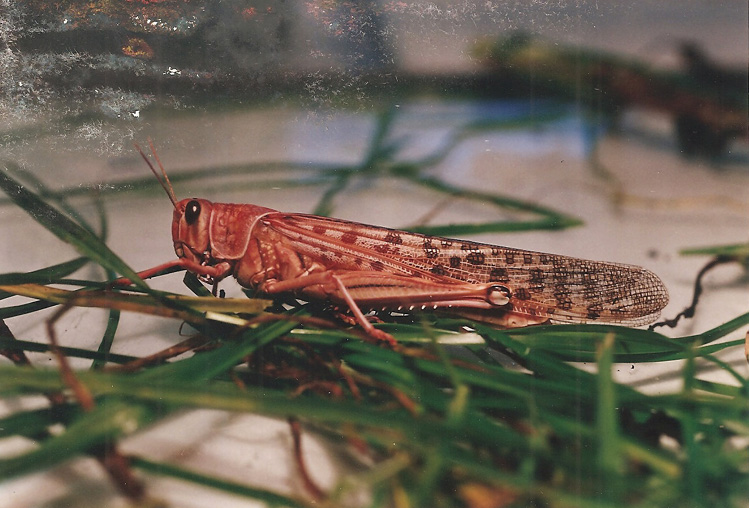
Unsuccessful after a couple of hours, I return to Hugh Town, the Big City. I find that I have a once-in-a-lifetime opportunity facing me. It’s not a bird, but a flying creature just as rare as any of the birds which reach the Scillies. It’s a Locust. Only the fourth or fifth ever to be blown to these rocky isles. At the moment, it is being housed in an art gallery in a backstreet. I stroll over there and find that the insect is living happily in a vivarium on the counter. It is a truly splendid and beautiful creature, far better than any of the birds that I have seen on the Scillies, including the juvenile Rose-coloured Starling:

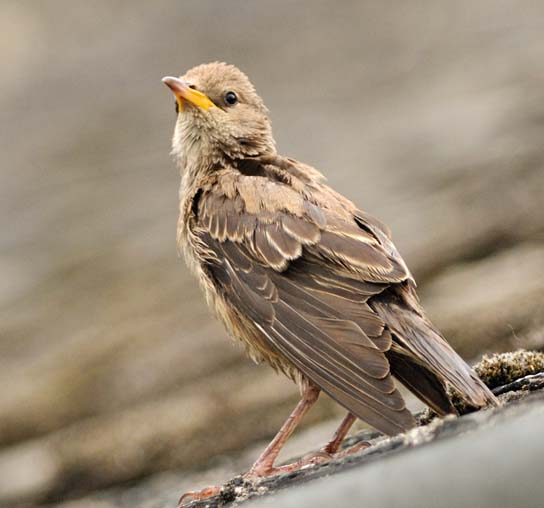
rc starling xxxxxxxxxx

I could even imagine this magnificent insect being used as a powerful argument for the existence of God, particularly in mediaeval times.  It is constructed so wonderfully skilfully that it becomes a classic example of the Celestial Watchmaker. It has one set of protective plates inside another, and then another beyond that. It looks like a knight in armour, but instead of being as dry as dust and rusty like something in an old stately home, this is a live being and it can move. It is a child’s clockwork toy that has the gift of life.

I am surprised by two things. Firstly, the creature’s colour, or rather colours, for it is at one and the same time, both yellow and pink and orange and sandy. I am shocked too by the size. I have never seen a Locust before, and it is absolutely huge. At least to a person like me who leaves the room when the zookeepers take the tarantula out of the glass case, or somebody who thinks that ladybirds are fierce.
The gentleman in the shop tells me that the creature was found on the local beach and was brought to his gallery so it could be drawn and photographed. He quite clearly and obviously is very attached to his six legged guest and seems to be well on the way to regarding it as his very own pet, or at the very least as an attraction to his gallery. Apparently, the British Museum have already contacted him and told him that he must kill it immediately, put it in a cardboard box, and send it to them in a parcel as a scientific specimen:

scan one zzzzzzz

I am totally appalled and disgusted by this news. I cannot find the words to capture my feelings. It seems somehow so repulsive to kill this beautiful innocent creature which has had to fight so hard for life. It has crossed the Atlantic in all probability, or has perhaps arrived here all the way from West Africa. Now it’s happily munching English grass, but soon it is supposed to die at the whim of some cold hearted scientist who has taken upon himself the right to dole out life or death. It seems to be taking such an advantage of an insect’s lack of awareness and essentially innocent existence.

The gallery owner, I feel, would rather not kill the insect, but keep it. I do try to tell him that in all probability it belongs to him, and that the British Museum have no legal right whatsoever to tell him to do what he does not want to do, and still less to actually make him do it.

Strangely, it seems to be to no purpose. The  gallery owner seems overawed by the demands of an organisation as apparently so powerful as the British Museum. And presumably, the locust will have to die. It is so sad that we should be given the chance to meet such an exotic and unusual member of God’s family, but should then lack the reasoning power to do anything more creative or imaginative than to kill it.
I would hope that I personally could do better than that, if put in the position of having to look after a stray innocent. At the very least though, I will remain the only person with a framed, but not autographed, picture of a locust above the fireplace…Even if it is only when my wife is out of the house.

Years and years later and I am sure that I read somewhere that the poor unfortunate locust was not  killed for the British Museum, but instead was allowed by its admiring owner to live out its life in its little vivarium on the counter of his gallery. Unfortunately, I have been unable to substantiate this, as I have long forgotten where I read the wonderful news. Locusts continue to reach the shores of our freezing wet little island, but only on very rare occasions. Certainly, there has been nothing like the situation in 1869 when whole swarms of Desert Locusts reached England, apparently from West Africa.

Cruel scientists still insist on killing creatures to prove what they are, and there was considerable outcry a few years ago, when a Californian ornithologist, I think it was, killed the first Arctic Redpoll ever to be found in that state. This, of course, is why Bigfoot keeps such a low profile for somebody who is nine or ten feet tall. He knows he exists, so why should he get himself killed just so that other people can?

db_Bigfoot43_1xxxxxxxxxxxxxxxxxxxxxxxxx


6 Comments

Filed under Cornwall, History, Personal, Science, Twitching, Wildlife and Nature

The Beast of the Vosges

The Beast of the Vosges is a fairly recent monster to rampage through the French countryside and it has a very different flavour from the Beast of Gévaudan, the Beast of the Cevennes, the Beast of Trucy or the Beast of Sarlat. Its victims, for example, were not human beings but rather livestock, much like the modern monsters of the USA such as the Grassman of Perry County, Ohio or the Devil Dog of Logan County, West  Virginia.

And there were more than just one Beasts of the Vosges. The first struck between 1975-1977 and the second reared his enraged, ugly head from 1994-1995.  And then a third Beast appeared as recently as 2011.

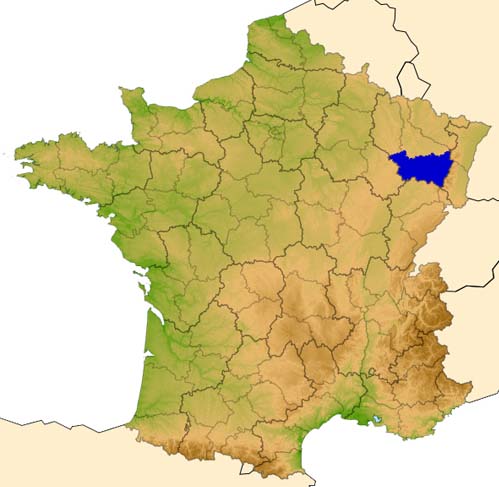
But first, some geography. The Vosges are in the east of France:

carte_francezzzzz

They are mountains which are much lower than the Alps and they do not have the same snow capped peaks. They are more rounded, with conifers and moorland:

SNV84400 zzzzzzzzzz

While not a top tourist destination, the Vosges are famous for their savoury cuisine and their beers, both of which look towards Germany and the east for inspiration.

For the Beast, once again, I will look at a number of French cryptozoological websites and you can take your own average between them. “Vampire Dark News” says:

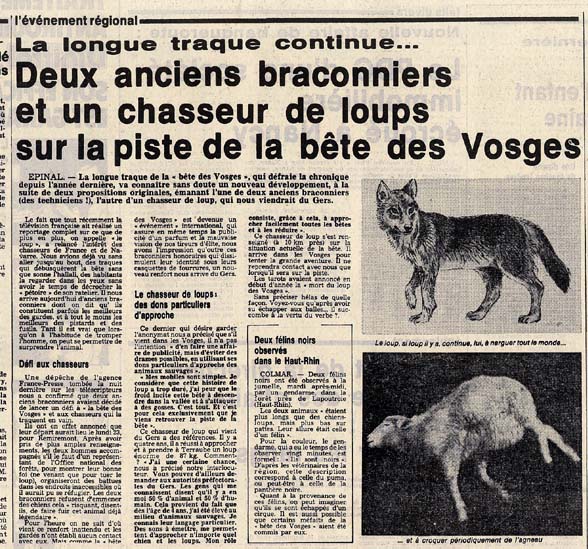
“The “Beast of the Vosges” is one of the favourite topics of discussion for residents of the local cafés. Everyone remembers the ravages of this strange creature from 1977 to 1988.(these dates differ from other sources).  It killed more than 300 animals, between Epinal and Bresse (an area of over 150 square kilometres).  Poultry houses were attacked, horses were injured, at least 200 sheep were slaughtered … but there were no attacks against human beings.

La_bete_des_Vosges zzzzzzz

The animal would disappear only to reappear later and begin its misdeeds all over again. Was it a wolf?  A rabid dog?  Several stray dogs?  An animal trained to kill?  The mystery was never solved because nobody ever managed to get a really good look at the beast, neither hunters nor the police nor the military despite 26 hunts being  organized to kill it.  The Beast was able to avoid all the ambushes and all the traps.  Shot at several times from fairly closely range, the animal was never wounded or identified. The only conclusion was that it was some sort of canid.  And because of this, stray dogs were killed everywhere.

And then in 1994, a she-wolf that attacked flocks of sheep was saddled with the nickname of the “Beast of the Vosges”.

1994

It was filmed by an amateur and was active for several months before being found dead in 1995. Protected by a Decree of the Ministry of the Environment, the protected animal could not be hunted, at least officially.  But who buried the remains which were found in early 1995?

The name of the Beast of the Vosges was later given to a type of lager produced in the Vosges area.”

(My own translation)

This slideshow requires JavaScript.

Wikipedia adds a few more details:

In December 1975, at Rambervillers, forest workers noticed footprints of a carnivore that they could not identify. In March 1976 , in Domèvre-sur-Durbion, seven cattle and a number of sheep were found slaughtered.  A few days later, cattle were the victims at Moriville and sheep at Hadigny-les-Verrières.  They accused the Beast of attacks on poultry sheds, of  injuring horses and of slaughtering at least two hundred sheep. No attack though was made against human beings  After a final attack on sheep on June 2, 1976 , nothing more was heard of the animal.
A few years later, in 1994 , a female wolf was given the nickname of the “Beast of the Vosges”.  For several months it maintained its attacks on  flocks of sheep, before its remains were found on May 19th 1995 .
In 2011, after an absence of some 17 years, the Beast again attacked flocks of sheep in the Vosges in the village of Ventron; forty sheep were found dead in less than a month.”

(My own translation)

Another well known cryptozoological website adds some extra, more scandalous suggestions :

“It all begins with a report on February 6th 1977 when Lucien Baret, a Federal Guard, is the witness as the beast stalks a roe deer in the woods at Rambervillier. It is some kind of enormous wolf-dog which hunts in the open without making the least noise. And then in less than ten months, not far short of 62 sheep, two lambs and a bullock weighing 300 kg have their throats cut out, and more than a dozen cattle are attacked.

canadien

What seemed at first sight to be a mere footnote in a newspaper, just mentioning  feral dogs, now becomes transformed into an affair with a monster where everybody has their very own something to contribute. First of all the talk is of a wolf or a dog or a lynx. And then suspicion turns to human beings. Fingers are pointed at certain people, but the favourite is Herr Reinartz, the owner of a vast estate which partially covers sections of a more ancient hunting ground, the most frequently hunted area in the region. Furthermore this German industrialist is not particularly lucky because he has a name very like that of a Nazi colonel, Colonel Reinardt, who committed atrocities in the region during the Second World War, only thirty years previously. This is a similarity which fans the flames of old hatreds. Present day Monsieur Reinartz fears for his life. Has he imported a couple of wolves to guard his estate, but then they have escaped, as certain people claim? Certainly not. A wolf only attacks in certain conditions and these were not fulfilled here. The estate of Monsieur Reinartz being a hunting ground, the wolves would have had more than enough to eat without having to go beyond their enclosures in search of what they already had in their cage. A large cage covering several hectares but a cage nevertheless.
And against all expectations, the press goes wild. The German industrialist is attacked. Abuse is heaped upon him. He is insulted on the front page of certain newspapers. The affair goes to court. Had he been of another nationality, things would probably not have degenerated in this way. None of this, though, stopped flocks of sheep being ripped to pieces by the teeth of the beast:

nespapere zzzz

And then one day, roughly one year later,  everything just stops. No more massacres, no more animals to put out of their misery in the first light of morning. As mysteriously as it appeared, the Beast of the Vosges disappears. It flies away. All of this, of course, without anybody really understanding at all why. But after its disappearance, the Beast leaves lots of unanswered questions, and even 32 years later, tongues will not be loosened. There are a few clues perhaps, and doubtless some details are completely true, but the people who know, or who think they know, just add to the legend. One can well imagine what will have been written about this Beast in 210 years’ time when other people look at this business, in exactly the same way that we nowadays look back at the Beast of Gévaudan. How many arguments there will be in future generations between all the different viewpoints !
It is impossible not to see in this business numerous similarities with the Beast of Gévaudan. The same black magic seems to protect the animal which escapes through the fingers of the hunters on every single occasion . Beats are organised, but with only the same effectiveness of those of Duhamel in 1765, despite the fact they are now carried out with methods which the eighteenth century could not possibly have imagined. One day the Beast of the Vosges manages to escape its pursuers because one of the hunters is not at his post. A strange reminder of the indignation felt by the noblemen at Malzieu in 1765 when the Beast of Gévaudan was similarly allowed  to escape its pursuers because a guard was not in the correct place. And as one thing leads to another, people realise that this affair is not, in actual fact, very different from that of the Beast of Gévaudan. There are no human victims to pity, of course, but the chain of events is a mechanism which remains essentially the same for both affairs: first of all, people want to put things into perspective: it’s just a wolf. Everything will soon be taken care of. Then, as the Beast evades beats, traps and poisons, it becomes a tool of vengeance. In the Gévaudan of the eighteenth century the Bishop of Choiseul Beaupré sees the Beast as the avenging arm of God. In 1977, in the Vosges, it soon turns into a dog, radio controlled from some distance. But nobody will say a word about it. Nobody?”

 (My own translation)

This same website, and many others, contain the only three known photographs of the Beast of the Vosges. They prove it, apparently, to have been a canid of some sort, but not definitely a wolf. The account concludes with:

“always this question comes to everyone’s lips: the Beast, what was it? I asked Daniel Jumentier, who was present when the photos were taken, and he himself saw the Beast from afar

aa bete des vosges 1

The animal was probably a wolf dog cross, first or second generation, weighing at least sixty pounds.

vosges_02

It was released to attack herds and flocks to hurt their owners.  Vengance between men, but through the intermediary of animals.  We can see two periods in the attacks: at first the Beast is confined to attacks on the plain, but then goes beyond La Bresse (a mountainous area) where it then goes wild. According to Daniel, one reason for this fit of madness: the loss of its master.”

And of course, unless somebody suddenly decides to speak up and reveal some hitherto hidden secret about this creature, we have reached the end of our investigation. Here some films to keep you going. The ancient ones date back as far as 1977, when Mankind’s existence was only occasionally slipping into colour:

And here is the second:

And this one shows that even a third comeback is not necessarily excessive:

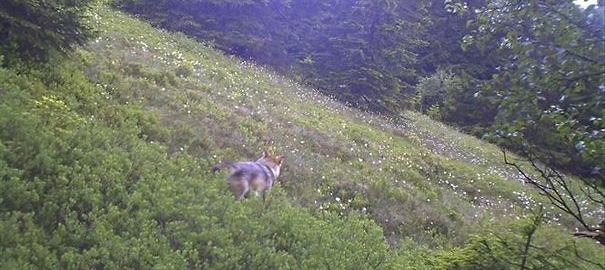
There will be no more Beasts of the Vosges though. The Grey Wolf has now officially returned to the Vosges Mountains, thanks to the conservation efforts of a number of countries in the European Union, including Spain, Italy and Germany. Indeed, the Beast in 2011 was most probably one of the first two wolves who arrived in the Vosges that very year.  “Smile, you’re on Trailcam!”:

ATTAQUE DE LOUP


26 Comments

by | June 10, 2015 · 2:15 pm

Marsh Warbler: here yesterday, gone today

(An extract from my old birdwatching diary “Crippling Views”)

Wednesday, June 1, 1988

A quick trip out from my wife’s parents’ house this time. They live on the western edges of Birmingham, but I am off to see a speciality in a nearby area, namely Marsh Warbler. I find the site, next to a picturesque little humpback road bridge, and park the car. Then I set off along the riverbank, towards a brick railway bridge. Look for the orange arrows:

This slideshow requires JavaScript.

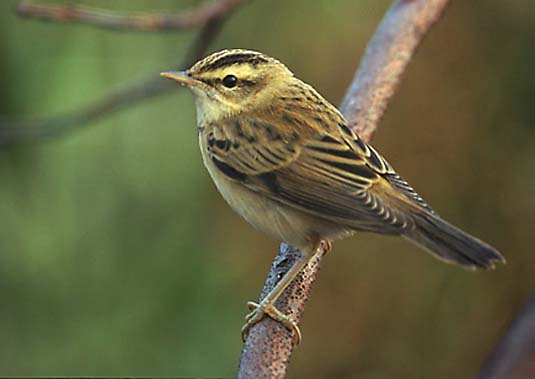
As I walk along, there are Sedge Warblers, exploding indignantly at me from riverside clumps of vegetation.

xxxxxxxxxxxxxxxx sedge

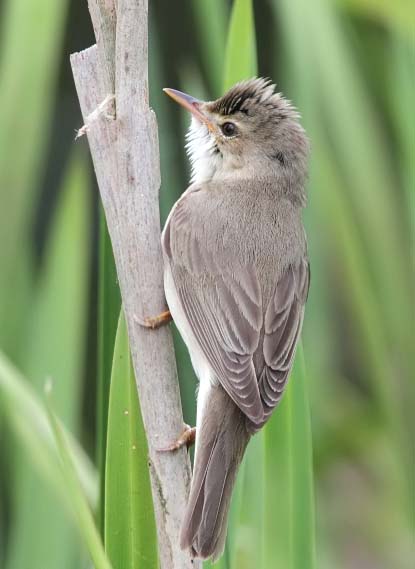
There are the odd few Reed Warblers, just to get me excited, but I am hopeful that Marsh Warbler will look completely different from its closely related congener.  It’s an unfamiliar and interesting landscape for me, with pollarded willows and soaking wet pastures, full of ferocious Friesian cattle, plotting to charge and trample me to death as soon as my back is turned. When I get to the railway bridge, there is already another birdwatcher looking for Marsh Warblers:

This slideshow requires JavaScript.

After about ten minutes or so, a bird appears low down in the vegetation on the opposite bank of the slowly flowing river, just above the waterline. It looks good to me for Marsh Warbler, despite the fact that at no point does it actually sing. Its shade of brown has an appropriate grey tinge and its underparts are whiter than white with no hint of buff.

It has a smooth, flat head, without a crest of any kind. Its legs are a nice pale colour, as it reappears every ten minutes or so at roughly the same place. The bird is obviously doing a circuit around the nettles and the Rosebay Willow Herb, feeding as it goes. Perhaps it has just this minute arrived from Africa, and it’s getting its breath back before it bursts into its imitations of 93 different bird songs, and seven types of lorry reversing signals. Anyway, I agree with the other birdwatcher that this is a Marsh warbler. Then we both pack up and go home, plodding off down the riverside path. There aren’t any reasons to believe that the bird is not what it is supposed to be. Not a single feature contradicts Marsh Warbler as a verdict. Besides, most important of all, it’s exactly where it’s supposed to be.

Nowadays, the Marsh Warbler, as far as I know, no longer breeds in this exact area. There are, and there have been, various breeding records from Kent and Suffolk, among many others, but I no longer know of any reliable site for these birds. I know that I have definitely seen a Marsh Warbler, an individual that was seen by many, many others, who all agreed with the identification…alas! It was on the Isles of Scilly, in bracken in a rocky, overgrown field. Given the habitat and the time of year, there were many, many people who thought that it must be a Blyth’s Reed Warbler. Indeed, there were those who wanted it to be God knows what sort of Warbler from beyond not just Lake Baikal, but Kamchatka itself.

The lone birdwatcher I met at Eckington was a young woman. She still remains the only young woman I have ever seen in a twitching situation. Older women will readily, even eagerly, go on coach trips with the RSPB or the Nottinghamshire Birdwatchers but young women have many and better things to do in my experience. Birdwatching has always  been equally short of ethnic minorities. I know now that they exist in British ornithology, but in my twitching days, I never saw a black birdwatcher. I only ever came across one young Asian man, as we all embarked on the Scillonian for one of the old Pelagics, a trip out into the South West Approaches to find Black-browed Albatross and Sea Serpent. But that, as they say, is another story.

12 Comments

Filed under Science, Twitching, Wildlife and Nature

The Birdwatchers of Victorian Nottinghamshire

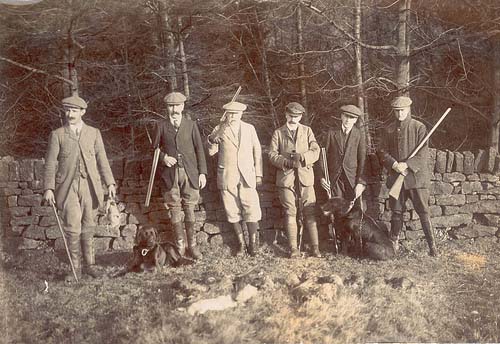
In the Victorian era there were hardly any birdwatchers in Nottinghamshire. Most ordinary people seem to have been too busy just living their lives to have a hobby such as watching birds. Among the richer individuals such as the landed gentry and the nobility, their particular interest was not watching but shooting birds:

another shoot

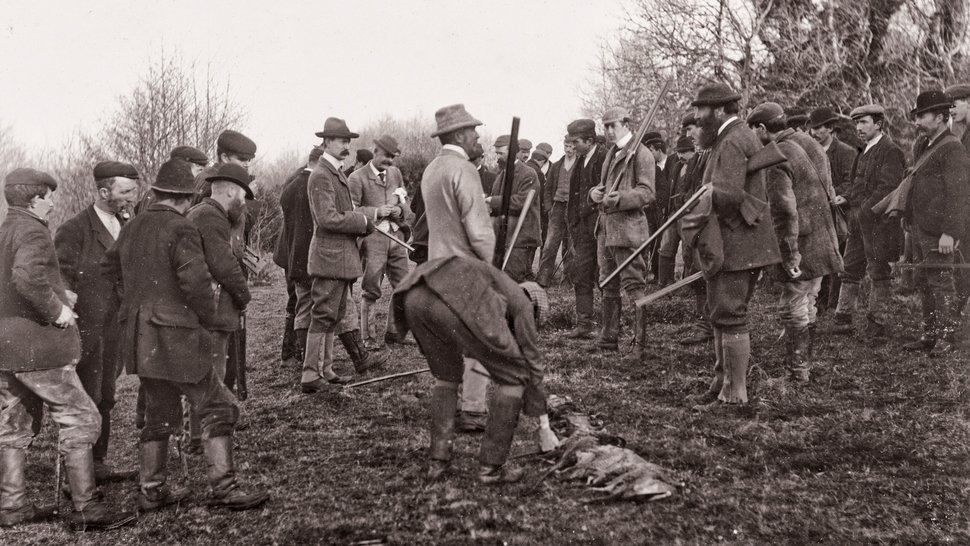
Even so, the very fact that they enjoyed shooting birds would actually have led them to develop some identification skills, however rudimentary, if only to avoid shooting a species which was out of season, or the same species over and over again:

shooting

At this time, there was great interest in having a large collection of stuffed birds or animals. Here again, identification skills would have been important:

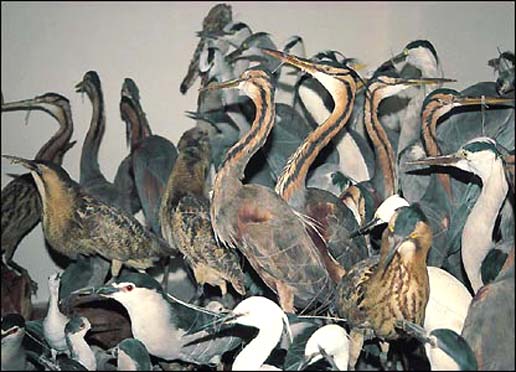
_42866547_stuffed_416

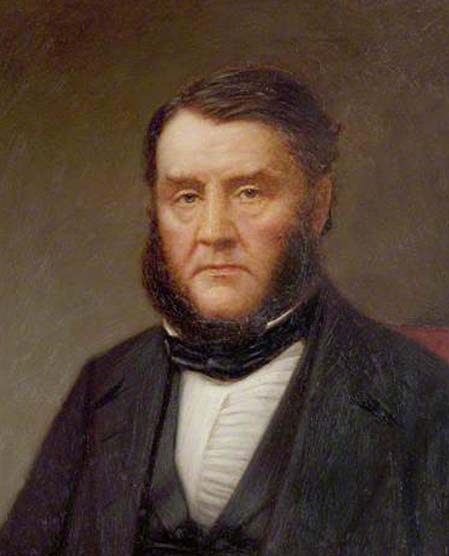
The earliest actual birdwatcher in Nottinghamshire seems to have been a man called William Felkin junior who lived in Nottingham from at least 1845-1870. Like his father, he was a lace manufacturer, but he became a Fellow of the Zoological Society and possessed a collection of stuffed birds of some 313 species. In 1866 he wrote the first ever book about birds in the county, entitled “The Ornithology of Nottinghamshire”. It was incorporated in Allen’s “Hand-book to Nottingham” published in the same year. This, I believe, is William Felkin senior. Hopefully. he looked a lot like his son:

felkin senior zzzzzzz

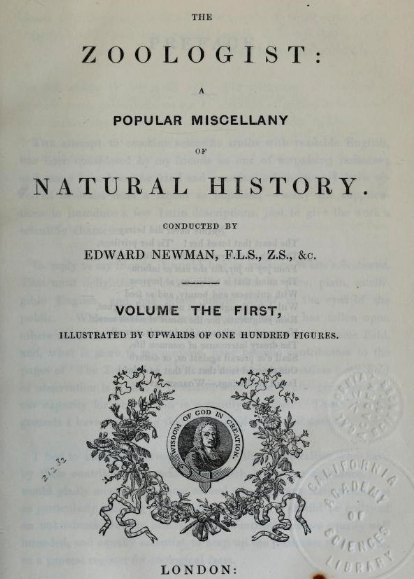
A contemporary of Felkin was William Foottit of Newark-on-Trent (fl 1840-1860). He was the local Coroner and ordinary people from miles around would bring unusual birds to him. Foottit was a frequent contributor to “The Zoologist” magazine:

Untitled

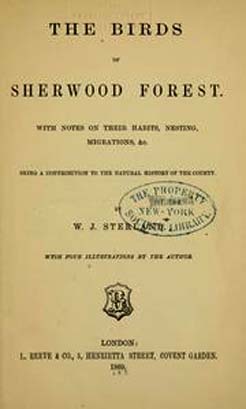
In 1869, clearly an outdoorsman of some competence, William Sterland of Ollerton wrote the marvellously entertaining “Birds of Sherwood Forest”:

sterland book

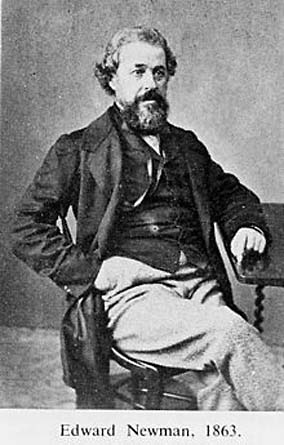
This book contained many anecdotes, and a number of records of rare birds. Sterland was the relatively uneducated son of a “grocer/ ironmonger/ tallow chandler/ dealer in sundries”, and, when the great man deigned to review it, his book was slated by Edward Newman, owner of “The Zoologist” magazine :

220px-EdwardNewman

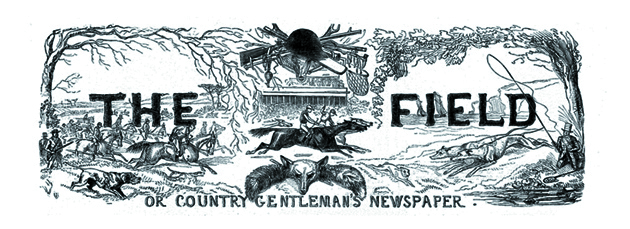
This was possibly because Sterland was a frequent contributor  to “The Field” magazine, a fierce rival of “The Zoologist”:

p_1-the-field-top-banner

It is more likely, though, that this was a slightly more complex issue. Newman had himself left school at sixteen to go into his father’s business.  Now he mixed with some of the most prominent scientists and zoologists in the land. I suspect that if Newman’s well healed and well connected upper class friends found out that William Sterland still worked in his Dad’s village grocer’s shop, they might well have been strongly reminded of the humble origins of Newman himself.

Unabashed, though, in 1879, William Sterland produced “The Descriptive List of the Birds of Nottinghamshire”. Needless to say, Edward Newman still had quite a few buckets of bile left to throw, but all the local newspapers in the Nottingham area really liked the book.

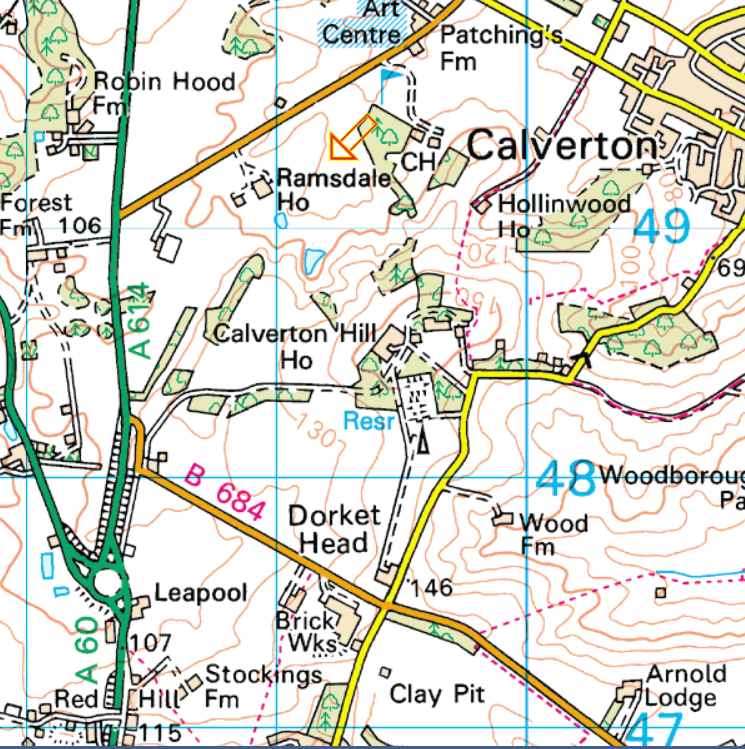
Sterland’s collaborator in this venture was a young man called Joseph Whitaker, now universally acknowledged as “The Father of Nottinghamshire Ornithology”.  Whitaker (1850-1932), the son of a farmer, was born at Ramsdale House, nowadays a golf centre and wedding venue to the north of Nottingham. Look for the orange arrow:

ramsdale map

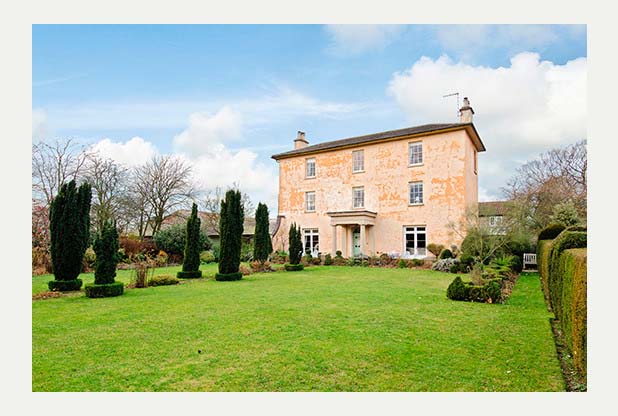
Recently this beautiful building received a great deal of publicity as the erstwhile residence of the most infamous dentist in the history of the National Health Service:

ramsdale zzzzz

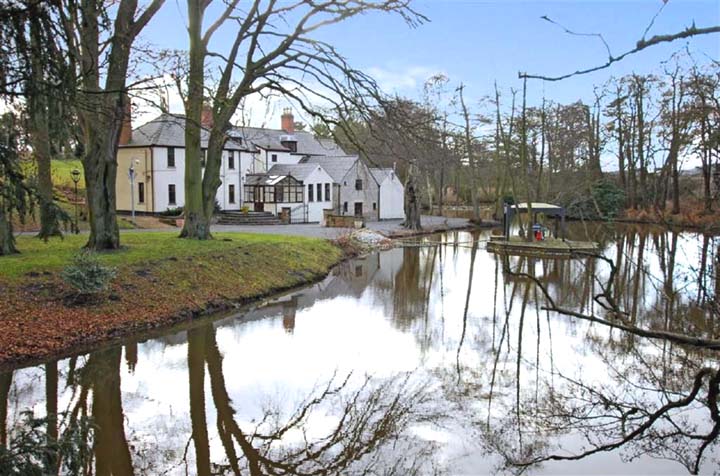
In later life Whitaker moved to Rainworth Lodge, a large country house with a lake, slightly further north in the county. Look for the orange arrow:

rain ladge

Here, he was known to one and all as the man to contact about birds in Nottinghamshire, whether it be a member of the nobility or a simple farm labourer who had found an unusual bird dead in the road as he walked to work:

rainworth zzzzzzz

Whitaker would travel around Nottinghamshire by horse and trap to see various interesting species of birds, or to talk to people who had seen, and/or shot, unusual birds on their estate.

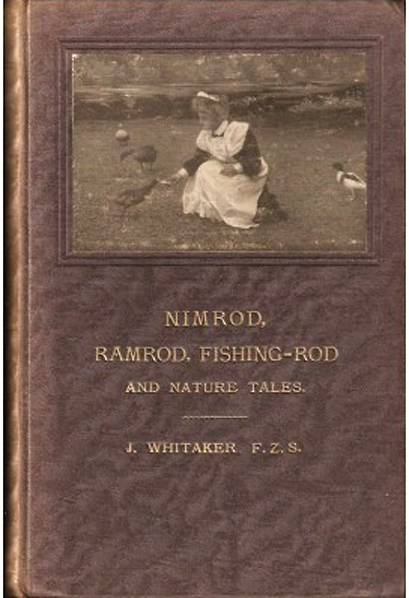
Whitaker wrote a number of books about nature, including “Scribblings of a Hedgerow Naturalist” and “Jottings of a Naturalist: Scraps of Nature and Sport on Land and Sea”. His finest title was most assuredly “Nimrod, Ramrod, Fishing-Rod and Nature Tales”. I believe that the young lady on the front cover of the book is the maid, rather than Whitaker himself:

nimrod

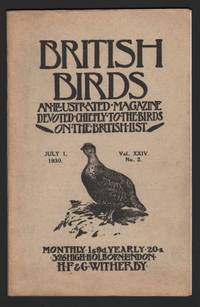
Whitaker was a frequent contributor to “The Zoologist” and in later years to the newly fledged “British Birds” magazine:

british birds

Before the rise of the pager, the mobile phone and the Internet, this publication was the only way to announce the presence of rare birds.

Whitaker also corresponded with his social betters, the Lords and Ladies whose many estates were the origin of the expression “The Dukeries” to describe north Nottinghamshire. There is a large collection of Whitaker‘s letters in the local collection at Mansfield Library. As well as the nobility, Whitaker also exchanged letters with many of the great ornithologists of the Victorian era, the men who wrote textbooks on birds, either in Britain, or in Europe as a whole. Joseph Whitaker’s greatest triumph, though, was a book entitled “The Birds of Nottinghamshire”,  which he had printed privately in 1907. It contains information about every single species of bird which the author knew to have occurred in the county. In Mansfield Library, we still have Whitaker’s own copy of this book, to which he has had a professional bookbinder add extra pages. In this way, the great man could cut out interesting stories from newspapers or magazines and then just paste them in.  Alternatively, he could simply handwrite in any interesting items of bird news which he had gleaned. Unfortunately, I have been able to trace only four photos of Joseph Whitaker, none of them as a young man. In all of them, he has a reassuringly large walrus moustache:

This slideshow requires JavaScript.

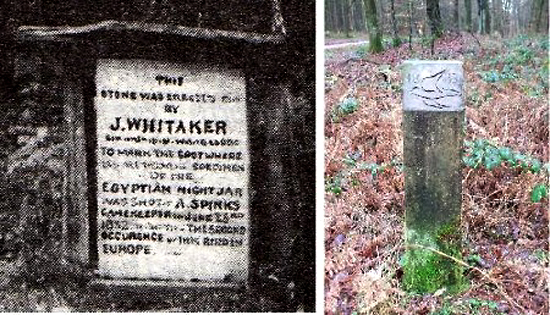
Whitaker’s greatest claim to fame was the Egyptian Nightjar which was shot in 1883 in Thieves Wood near Mansfield by a gamekeeper called Albert Spinks. At the time this poor lost individual (the bird, not the gamekeeper) was the first known sighting in England, and just the second in Europe. Even now, a hundred and thirty years later, only one more has been seen in this country. Whitaker erected a stone to commemorate the event but it was smashed to smithereens in the 1980s (to celebrate its centenary, presumably) and replaced by a wonderful modern sculpture costing well in excess  of £8.50:

original mem

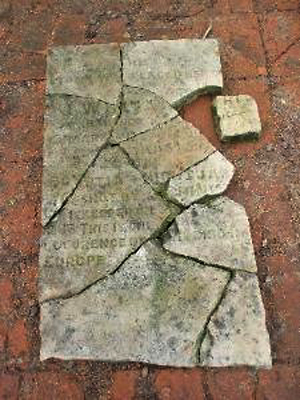
The pieces of the original stone were recently found and reassembled, although one little bit does seem to be somewhat of an enigma:

bits of stone

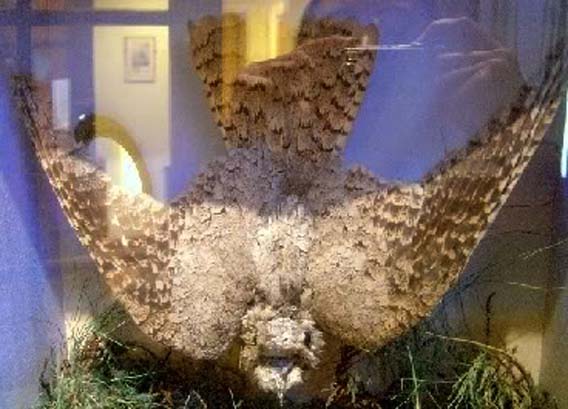
The bird itself was stuffed and, as an item of immense prestige, it went into Whitaker’s enormous collection. After his death, it eventually finished up in the foyer of Mansfield Library, safe behind highly reflective glass.

nightjar2

I thought it might be quite interesting to bring to a wider audience some of the birdwatching anecdotes which Whitaker mentions, both in his original book, and in the very many additions which he made to it. In future blog posts, therefore, I will bring you the true story of the famous Egyptian Nightjar and any number of other notable birds.

One final point is that the Nottinghamshire of the Victorian era was a very different place to the Nottinghamshire of today. The current Nottingham ring-road was just a muddy footpath alongside the Daybrook. Had our own suburban house existed then, there would have been no other private houses in sight in any direction. Just Bagthorpe Prison, Bagthorpe Hospital and the City Workhouse. It is amazing just how few people must have been alive in the county at that time.

A second final point is that many of these early ornithologists would not have had optical aids of any great standard, whether binoculars or telescopes. They may have had nothing beyond the Mark One Eyeball. In addition, they may have had no access to identification books, where they could carefully check what they had seen. This is why, if the presence of a rare bird was to be proven beyond doubt, it had to be shot. That is the origin of that grand old saying, “What’s hit is history, what’s missed is mystery”.

13 Comments

Filed under History, Humour, Nottingham, Wildlife and Nature

The Beast of Noth

A more modern monster to menace the peace and tranquillity of the French countryside and its inhabitants was the wonderfully named “Beast of Noth”, “La Bête de Noth”. Here is an aerial view of where it was seen:

Capture

Noth is a small village to the north of Limoges. It is marked in red on the map of France. The street map shows just how small a place it is:

This slideshow requires JavaScript.

Once again, I will look at a number of French cryptozoological websites and you can take your own average between them. I have combined two apparently closely related websites to produce this, slightly more detailed, account…

“In November 1982 the sun is rising over Noth, a village of just 450 people. Marcel Jinjeau, a market gardener from Fongeneuille near Noth, steps into his field to start the first jobs of the morning. Suddenly he notices through a veil of mist a shape lying on the grass. He thinks it is a calf. The animal feels his presence, sniffs the air then stands up. Marcel pinches himself: it is not a cow, or any bovine. The back end of the animal is slim but the neck is like that of a bull. And the way it walks. It’s like some kind of cat!

autumn mists zzzzzz

The animal walks off to take refuge in the woods. Terrified, Marcel rushes back home. If he tells this story to the village, they will think he is a madman. The following day at first light, just a few hundred metres away, at the Castle of La Fot, one of the servants goes to fetch his master’s car from the garage. As he is approaching the vehicle, he hears a savage growling in the darkness. Frightened, the man goes off to find a torch and a rifle, but when he returns to the garage, there is nothing there. Outside on the other hand, the strange visitor has left the imprint of his paws: four inches long (10cm) long, and nearly five inches(12 cm) across; a hefty animal. In the following days, the beast will leave other tracks: the corpses of lambs, that of a bullock, and a heifer. They are ripped to pieces, torn to shreds. Today though, a storm will wash away all trace of it.
Died of Fright
Meanwhile, that very afternoon the Mayor of Noth, André Lalande, and his friend, one of the partners in the Wolf Centre at Dun-le-Palestel then organise a beat. About thirty local hunters rush off to scour the forest, but the weather is against them. A storm brews up, the wind cuts out all electric power, and vast torrents of water wash their cars away. The animal is seen by several witnesses but many hunters turn back.
Not Rémy L. To prove his reputation as a crack shot, and to brave the elements which have been unleashed, he rushes off into the mud when suddenly – the beast looms up just five metres in front from him. He aims his rifle. But all of his body is shaking. He has never faced an animal of this kind. He fires, but only hits the cabbages. And he flees without further ado, quaking with fear. He will remain in shock for two days, completely incapable of putting a name to this creature. Which disappears, only to reappear forty kilometres away in Haute-Vienne, near Chateauponsac. In this area, witnesses talk of an animal a great deal bigger than a dog, with a long tail and with fur the colour of burnt sienna (a dark orangey-brown). The victims increase in number and terror spreads. People think they are seeing this feline everywhere. In the schools the children take fright and their teachers reassure them as best they can. The Mayor of Noth gives the cast of the paw prints to Dr Klein, a Parisian veterinary who is totally upfront.

noth prints

“They are those of a lion or a puma.” And just what is an animal like this doing right in the middle of the Creuse region?
Some people have their own ideas. Since no circus has reported any escape of an animal, there must be a man behind it. Somebody who has come back from Africa. Somebody who is wealthy enough to carry out the scheme. All eyes all turn towards an aristocrat in North, the Marquis de V. The rumours become increasingly accusatory, “There has been an incident”, they murmur in the village. “He has lost his lion and he can’t get his hands back on it.” An even stronger rumour is that the Marquis remains a  ghostly figure, never there, always somewhere else, away in Moselle. The gossips have an answer for everything. When the zoologists state that the beast’s appetite is abnormally light for a big cat, they argue “It’s because the hand of Man is feeding it”. Moreover when there is a new beat near Chateauponsac on December 12th, two witnesses state that they have caught a glimpse of the Beast deep in the forest……with a man. An hallucination?
During a year there are sporadic reports of people who think that they may have seen this feline, until the gossip finally dies away.  Today in the village, nobody is keen to retract what has been said. “No….I tell you….there was an animal, the people who saw it said it used to have a strange expression in its eyes. But one that they will never forget.”

A slightly less dramatic telling of the tale comes in Wikipedia:

“The « Bête de Noth » was a carnivorous animal behind a series of attacks on flocks of sheep from November 1982 onwards, in the Department of Creuse.  Among others, on November 10th the Beast of Noth killed a bullock and a heifer each weighing 900lb, both at a place called Maison-neuve.

farm barns zzzzzz

And then on November 19th, two lambs at Auzillac, with another at Maupas on December 3rd, and then a second heifer at Grand-bourg on December 9th. It was not the attacks on farm animals which appalled people so much as the state in which the corpses were found. They were all horribly ripped to shreds. Rumours began to circulate, suggesting a lion or a puma imported by an aristocrat in the area. During a beat organised in the Forest of Noth in November 1982 one huntsman was confronted by the animal but he was not able to identify it. The whole affair has never been explained.”

7 Comments

Filed under Cryptozoology, France, History, Science, Wildlife and Nature