Author Archives: jfwknifton

A Twitch in 1817

A twitch doesn’t have to involve a bird. It is becoming increasingly fashionable to twitch animals. I have twitched a Steller’s Sea Lion on the Brisons, a pair of sea stacks just off Cape Cornwall, which is in Cornwall, funnily enough. And I succeeded in my quest. I saw this amazingly lost creature, who, by rights, should have been sunning herself in Vladivostock Harbour. I saw her, on and off, for several years, in actual fact:

Steller Sea Lion
I have twitched a Bottle-nose Dolphin in Gainsborough in Lincolnshire. It frequented the River Trent at the back of of a supermarket car park in Gainsborough, Lincolnshire, Netto, if I remember correctly. It was there from January 25th-30th 1999, although I turned up on January 31st. And guess what? Well, this is all that I saw:

beaten

The following account is of a twitch for a sea-creature. It took place in the summer of 1817 in Massachusetts, and this is just one of a huge number of accounts. It came from Colonel TH Perkins on August 15th 1817. I have made one or two changes to make it easier for a modern reader to understand but other than that, there are no differences:

“The first appearance was in the summer of 1817, in the harbour of Cape Ann:

a Cape-Ann

And here is the more modern, less charming version:

a goolge YES easrthzzzzzzzzzzzzzzzzzz

And conceivably, this map is the best one for all the English people who think Boston is a market town in Lincolnshire:
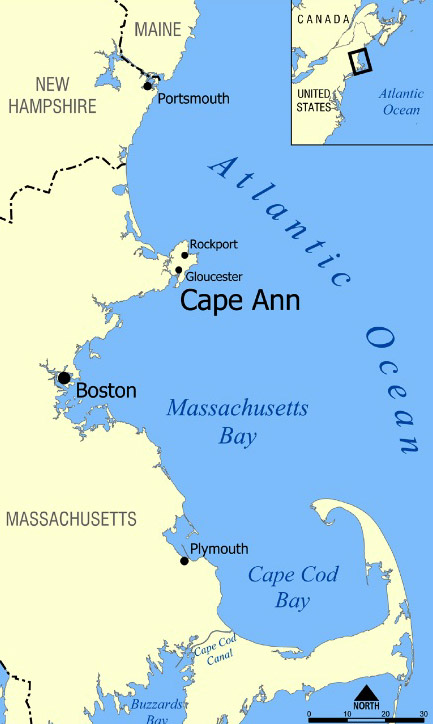
map ann (2)

Back to the story:

“I visited Gloucester with Mr Lee. On our way down we met several persons returning, who had already visited the place, and they reported to us that he had not been seen for two or three days past. We, however, continued our route to Gloucester, though with fears that we should not be rewarded with a sight of the monster which we sought.

I had already satisfied myself, from conversation with several persons who had already seen him, that the reports in circulation were not mere fables. All the townspeople were, as you may suppose, on the alert, and almost every individual, both great and small, had had sight of him, at a greater or less distance:

etching

“The weather was fine, the sea perfectly smooth, and Mr Lee and myself were seated on a point of land which projects into the harbour, about twenty feet above the level of the water, from which we were distant by about fifty or sixty feet. Seated in this way, I observed an agitation in the water at the entrance of the harbour, like that which follows a small vessel going five or six miles an hour through the water. As we knew there were no rocks where the water was this broken. I immediately said to Mr Lee that I had no doubt that what I had seen was the sea serpent in pursuit of fish. Mr Lee was not looking at the spot which I was talking about, and had not seen the foam of the water, the animal having immediately disappeared.
In a few moments after my exclamation, I saw on the opposite side of the harbour, at about two miles distance from where I had first seen, or thought I saw, the snake, the same object, moving with the rapid motion up the harbour, on the western shore”:

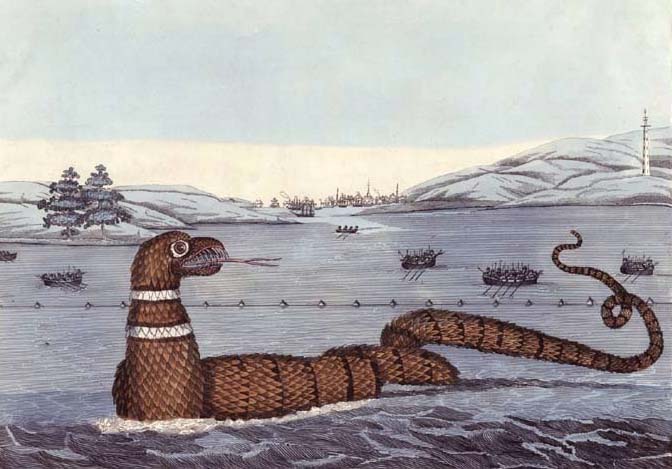
drawing (2)

“As he approached us, it was easy to see that his motion was not that of the common snake, either on the land or in the water, but evidently the vertical movement of the caterpillar. As nearly as I could judge, there was visible at a time about forty feet of his body. It was not, to be sure, a continuous body, as from head to tail he was seen only three or four feet at a time. It was very evident, however, that his length must be much greater than what appeared, as, in his movement, he left a considerable wake in his rear. I had a fine telescope, and was within less than half a mile of him. The head was flat in the water, and the animal was, as far as I could distinguish, of a chocolate colour. I was struck with an appearance in the front part of the head like a single horn, about nine inches to a foot in length, and of the form of a spike. There were a great many people collected by this time, many of whom had already seen the serpent. From the time I first saw him until he passed by the place where I stood, and soon after disappeared, was not more than fifteen or twenty minutes”:

erp banded (2)

“I left the place fully satisfied that the verbal reports in circulation, although differing in detail, were essentially correct. I returned to Boston, and having made my report, I found Mrs Perkins and my daughters disposed to make a visit to Gloucester with me when the return of the animal should again be announced. A few days after my return I went again to Cape Ann with the ladies; we had a pleasant ride, but returned unsatisfied in the quest which drew us there.”
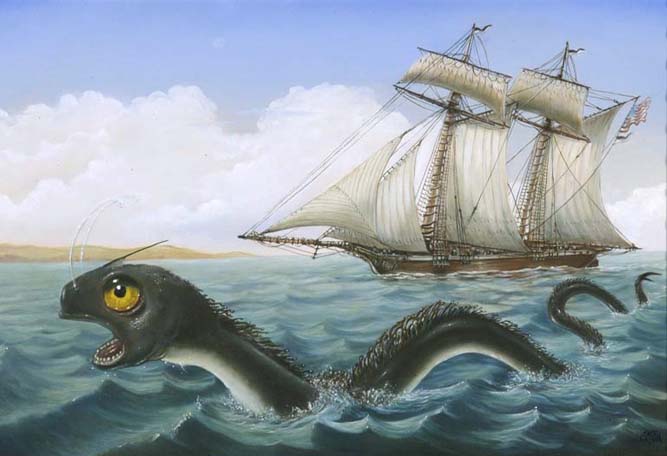
BRM2493-Sea-Serpent_lowres-2000x1616

This particular sea serpent was seen regularly around Cape Ann until 1819 at least. Indeed, the east coast of the United States seems to have been a good place for would-be sea serpent twitchers, with records dating back to 1638:
new_england_sea_serpentxxxxxxxxxxxxxx

Don’t think I don’t have my own story to tell:

On October 25th 1988, I went to the Isles of Scilly to birdwatch. I crossed over on the ferry, the Scillonian. For two or three hours during the crossing, I remained on deck with my binoculars, eagerly scanning the storm tossed waves for seabirds.

Scillonian_III-01 xxxxxx

“At one point, I noticed what I took to be the head of a Grey Seal, which broke the surface perhaps a hundred metres away. It was dark in colour, and I could see a forehead, two eye sockets, and an obvious snout. I didn’t really think twice about it, and it remained there for perhaps two or three minutes. Then, suddenly, a Gannet flew directly above it, and I realised from a comparison of sizes that the head must be at least a metre and a half, if not two metres, across. And that means it cannot have been a seal !”

12 Comments

Filed under Cornwall, Cryptozoology, History, Science, Twitching, Wildlife and Nature

The School Leprechaun

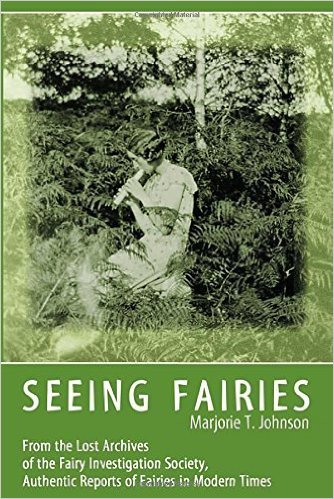
After reading all about gnomes, elves, pixies, fairies and such like, it should come as no surprise to hear that Wollaton is not the only place around Nottingham to have played host to fairies in recent times. Marjorie Johnson, the lady who saw fairies in her garden in Carlton was to become very famous in fairy circles. She wrote this best selling book:

fairy book

Here is a link to an account of fairies she saw in Nottingham, in Carlton to be more precise.

Belief in fairies persists still, even in our own time. When we went once to an isolated farm at Constantine in Cornwall, the farmer clearly believed that the huge ruined megalith in his bottom field was the home to fairy folk. He had seen their fairy lights on more than one occasion.

It is in Iceland that gnomes and fairies are taken most seriously. Over a half of Icelanders believe that these tiny entities are, at the very least, “possible”. They are thought to be from another dimension, usually making their homes inside huge boulders and outcrops of rock.

Known as huldufólk these beings are not regarded as trivial. Roads can be redirected on their behalf.

This report by Journeyman starts off in almost comic fashion, but does make some quite serious points:

This film by Torsten Scholl, aka “hatcast” has even more serious points to make:

This account by Richard Williams aka “rockuvages” is of the moment when the huldufólk seem to pop out of their own dimension:

Nowadays, we tend to see fairies and their like as something lovely and wonderful. This attitude has only come about since Peter Pan and Tinkerbell. Before that, fairies were considered by those who had regular contact with them to be malevolent beings who, if they were in any way annoyed, would readily kidnap adults, willingly do harm to them and, most of all, steal their babies, replacing them with changelings. This is why nowadays a lot of modern folklorists tend to equate ancient beliefs in fairies, with our current fondness for space aliens and little green men, who have continued in modern times to carry out all of these evil deeds:

green alien

Tales of fairies invariably involve abduction and poor innocent people forced to remain in Fairy Land, sometimes for ever. What difference is there between malevolent fairies holding people hostage in their realm and our modern tales of extra-terrestrial kidnap?

Other parallels are there. Some types of fairies, such as leprechauns and goblins, have green as their favourite colour, just as some aliens are literally “little green men”. Only medical experiments seem to be absent from the connections between the two groups, perhaps because in sixteenth and seventeenth century Ireland or Cornwall, there was no health care available and advanced medicine was not a subject on anybody’s mind. Only ointments and magic potions were on offer back then, and these simple remedies do figure from time to time in the more ancient tales of fairies.

Here is something more modern, a tractor beam, although some would argue that those fairy lights, leading innocent people out onto the marsh to drown or be abducted, did pretty much the same job:

uftgyu
This modern cartoon by “grackle” sums up best our ancient knowledge of fairies, who were by no means the magnanimous and well intentioned Peter Pan heroes of Walt Disney’s world.

Certainly, the Cornish and the Irish, for example, seem to view “piskies” or “the little people” as, at best, potentially tricky and at worst possibly, evil, and similar figures are met with in every human culture across the globe.

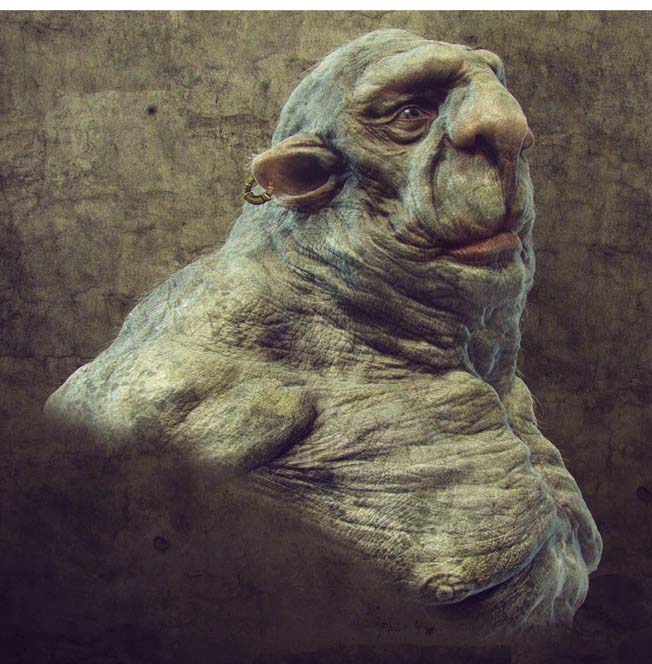
In North America, there are Ishigaq (Inuits), Jogahoh (Iroquois), Nimerigar (Shoshone) and the Yunwi Tsundi (Cherokee). In Hawaii, there are the Menehune, and for the Maoris, the Patupaiarehe. In Europe, there is a host of names such as the Brownies, the Kobolds in Germany, GoblinsGremlins, Pixies, Leprechauns and the Swedish “Di sma undar jordi”, who are clearly almost identical with the huldufólk of Iceland:

307228-mythical-creatures-troll

Let’s finish with a quite extraordinary piece of film.

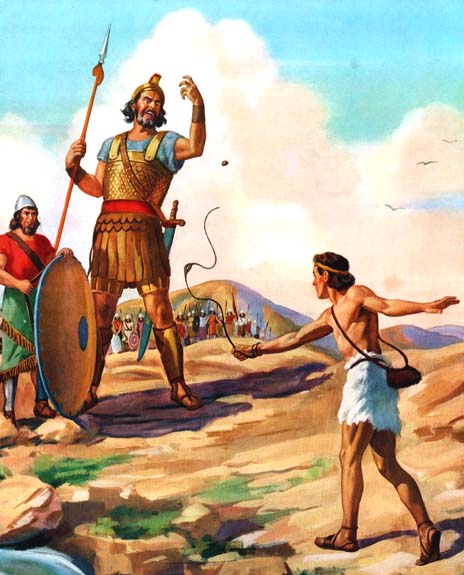
All over the world, of course, as well as “the little people”  there are the enormously large people. In Nepal, the “yeti”, in North America, “Bigfoot”, in Western Europe “the Wildman” or “Wodewose”. In Iraq, he was represented by “Enkidu” the companion of Gilgamesh. In Israel, he was “Goliath” whom David slew:

golithyuj

In Australia, the enormously large person is called the “Yowie” and he is very fierce indeed.

The huge Yowie, though, has a tiny equivalent. To the white man he is “Brown Jack” but to the blackfella he is the “Junjudee”. He is tiny and here is a purported film of one:

Any film by TheRusty222 is well worth watching. He tries to film Yowies but most of all, he ventures deep into the realm of the thickest parts of the Australian bush, an environment of staggering beauty if you ever watch one of his films.
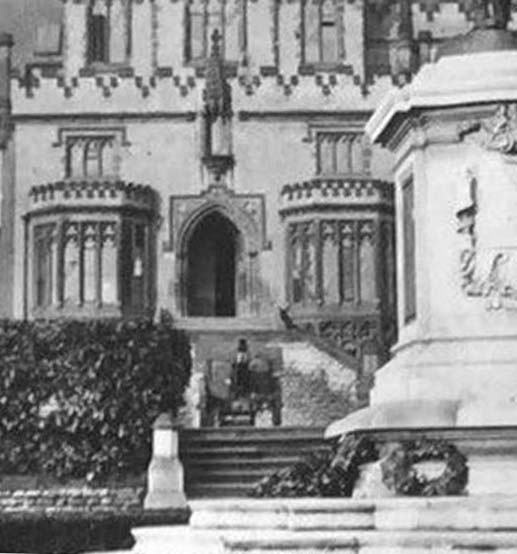
Talking of “Little People”, a few weeks ago, I bought a postcard of the High School taken in 1927. I was intrigued to see what is obviously the “School Leprechaun” busy guarding the front of the school:

lep[rechaun 1

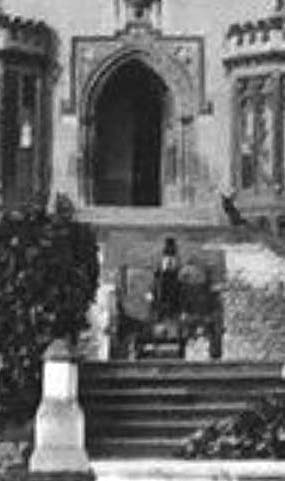
You can see his right hand, his jacket of Irish Green, his little fawn breeches and his lovely top hat. Here he is, slightly enlarged:

lep[rechaun 2

Do you see his mutton chop whiskers? And what about little Pumpkin Head, next to him, with his tiny hat and his little legs and boots?

Both photographs, courtesy of the Pareidolia Brothers.


17 Comments

Filed under Cryptozoology, History, Literature, Nottingham, Personal, The High School

Pokémon-Go, the Zombie Apocalypse and the C.I.A.

Another superb post from the Master. Wake up, ordinary people, wake up!!

toritto's avatartoritto

zombie2

Nothing can make you feel older than watching a bunch of adolescent teens wondering around the neighborhood staring at their phones looking for Pokemon-Go monsters.  I no longer fear the zombie apocalypse for I have seen it with my own eyes.  Empty headed dead brained children stumbling along into lakes and falling over ledges, curbs and tree stumps looking down intently at their $400 phones searching far and wide to capture Pokémon.

“Even if alternate reality location games were totally innocent there is something utterly revolting about celebrating the Pokémonization of the globe as the ultimate realization of the merged social and technological potential of modern life.”  But it is not totally innocent.

The smart phone technology is now ubiquitous (well not quite; I still have a flip phone!) and has been transformed into the ultimate weapon to (a) sell you shit and in a more sinister direction (b) to…

View original post 864 more words

14 Comments

Filed under Uncategorized

More and more water, most of it under Trent Bridge (1)

In a previous article, I wrote about the flooding of Nottingham during  the modern era, and the ways in which we have learnt lessons from the floods of 1947 and constructed concrete embankments and sluices so that the River Trent is nowadays, to all intents and purposes, relatively tame. (“relatively” being the operative word.) If you walk down to Trent Bridge and look underneath the bridge on the City side, directly beneath the Riverbank Bar and Kitchen, however, you will see how the flood levels of previous years of watery disaster have been recorded. They are scarily impressive and well worth a visit:

This slideshow requires JavaScript.

The very first records of floods in Nottingham are more a case of inference than anything else. According to the (Royal) Journal of the Statistical Society, Volume XLI and “The Insurance Cyclopaedia” by Cornelius Walford (I need to get out more):

“29 A.D. There was a great overflow of the River Trent in England”.

In 214 A.D. the entire River Trent was again in flood and overflowed its banks by some 20 miles on each side from the normal course of its flow. Many people were drowned as the whole Trent valley was awash and there was great destruction. Both of these dates are during the Roman era, although Nottingham was not, as far as I know, a Roman town. Perhaps they knew that an underlying band of hard rock could be used to ford the river and its adjacent marshes. Just to establish our dates firmly, here is a Roman. Like every single Roman, he is a legionnaire, although he doesn’t look particularly ill to me, but that hat is really something: Centurion_2_Boulzzzzzzz In 525 A.D. the entire Trent again burst its banks and a great number of cattle were drowned. The locals at his time may well have been Celts since we know that Nottingham, in the Brythonic Celtic language was called “Tigguo Cobauc”, meaning “The Place of Caves”. The Welsh may have been aware of Nottingham’s existence since they called it “Y Ty Ogofog” and even the distant Irish had a word or two for it, namely “Na Tithe Uaimh”, “The Cavey Dwelling”. Here are some Celts, managing to appear very, very fierce indeed, although admittedly, there is more than a dash of Village People in the overall look, especially the one at the front who may have no clothes on at all: gug7 zzzzzzzzzzzzzzzzzzzzzzzzz Whoever the locals were in 530 A.D., they would certainly have got extremely wet at some point. The mighty River Humber is known to have flooded extensively onto adjacent low-lying ground and most of the region’s cattle were drowned. Much of that excess of water, of course, was bound to have come from the River Trent, which feeds into the Humber. It is difficult to see how Nottingham, at the side of the River Trent, of course, could have escaped floods of such severity. It was slightly after this date that Nottingham, by now a small group of wooden huts and a line of washing, came under the sway of the wonderfully named “Snot”, an Anglo-Saxon chieftain. The place where “The Mighty Snot” lived was immediately called “Snotingaham”, the “home of the people of Snot the Magnificent”. At this time, “Snotingaham”, was part of the Kingdom of Elmet. Here is an Anglo-Saxon chief and his friend. What impressive elmets they are wearing: saxnb zzzzzzzzzzzzzzzzzzzzzzzz

I just couldn’t resist that!

Next time, we will see what happens when Ragnar Lothbrok and his pals arrive in Nottingham on a seven-day-cruise in 867AD.

16 Comments

Filed under History, Humour, Nottingham, Science, Wildlife and Nature

The First Ever Twitch

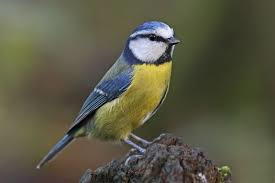
As I mentioned in a previous article, there is a difference between a birdwatcher and a twitcher. A birdwatcher will sit, as I am doing now, and watch whatever birds come to the feeders on the patio. He may go for a walk in his local wood and just see what he can find:

A5 blue tit

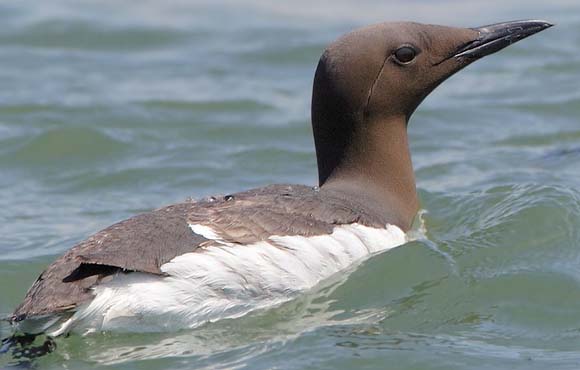
Or take a stroll along the beach, taking care to have his binoculars, and probably his telescope and tripod, to hand. He will have a rough idea of what he is going to see, but nothing is pre-planned:

Guillemot06cccccc

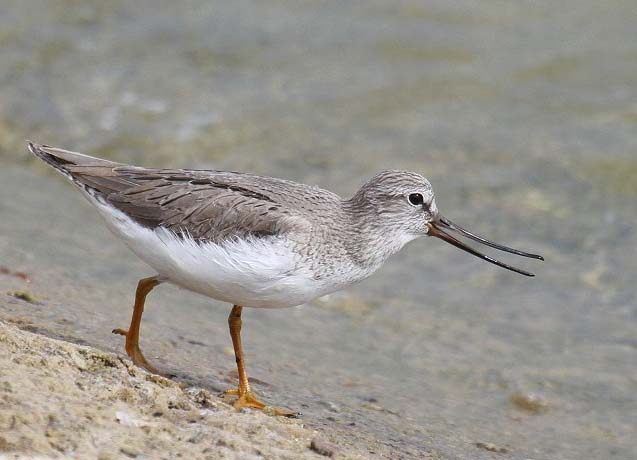
A twitcher is somebody who finds out where a rare bird has been seen and then sets off in an effort to see it. In previous articles, I have revealed how I used to be a twitcher. As I mentioned in a previous blogpost, I used to be a “twitcher”, the sort of birdwatcher who might travel hundreds of miles to see a species which is rare in whichever country he lives.I have already published articles about a trip to Dorset for a Terek Sandpiper:

another terekxxxxxxxxxxxxxxxx

I told you about going to Norfolk for a River Warbler:

River best shot (1024x721)
Twitching was a very popular pursuit when I used to do it, back in the 1980s and 1990s. Here is a Golden-winged Warbler:

gol wing

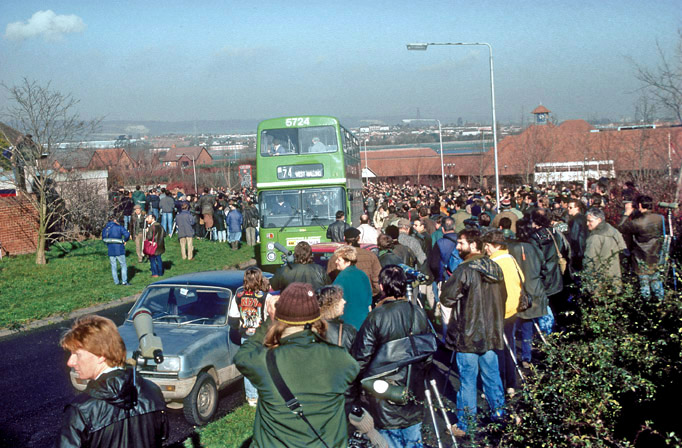
And here are the crowds that went to see it in Kent, myself included:

golden%20winged

Even now, a very rare vagrant may attract several thousand twitchers over the course of the bird’s stay.
Twitching first began, on a very limited scale, in the 1960s, when news of a long staying bird, such as the Dusky Thrush in Hartlepool during the winter of 1959-1960, were circulated by letter and postcard:

DuskyThrush2

How long has twitching been going on? What bird was the subject of the first twitch? I thought about this for a long while and my eventual conclusion was that it was possibly the Houbara Bustard present in Suffolk from November 21st to December 29th 1962.
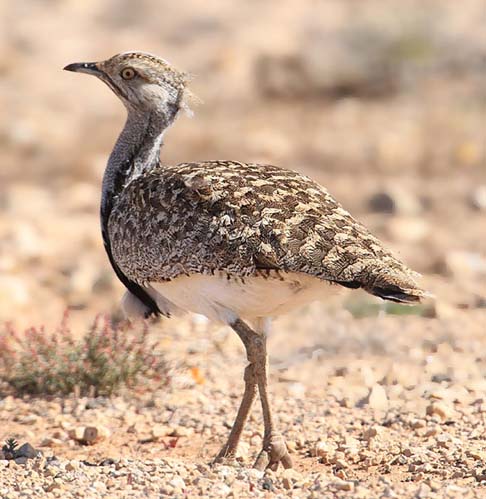
Here is a Houbara Bustard. They are very rare birds:

Sweet-Houbaraxxxxxxxxxxxxxxxxxxxxxxxxxxxxxxxxxxxxx

And they will get even rarer if the Pakistani hunters in Baluchistan continue to think that this is sustainable hunting:

Pakistanis-last-year-in-Baluchistan-Province- xxxxxxxxxxxxxxxxxxxx
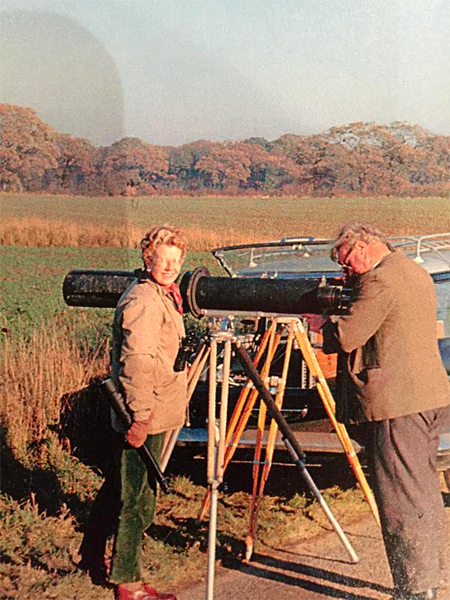
Even if the Houbara Bustard wasn’t the first ever twitch, the photographs reveal that this was very much an event in the distant past:

telescpope (2)

Just look at the clothes.
Just look at the car.
Just look at the telescope!
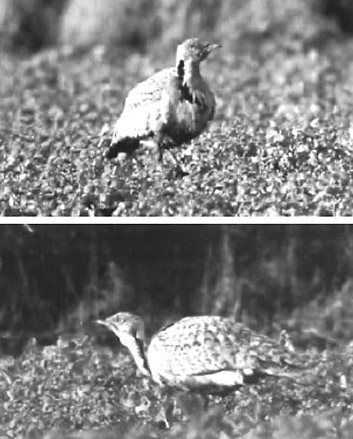
The bird was about the size of a turkey. It fed in a mustard field and could also be found in a stubble field:

hounbars 2

Here is another view:

bustrde (2)

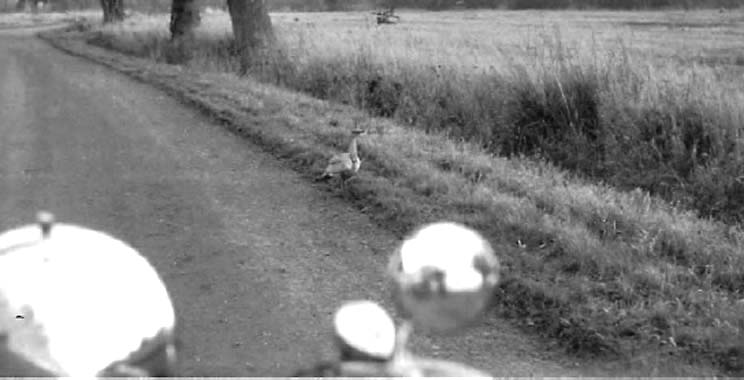
The Suffolk Houbara of 1962  was a rather eccentric creature and it often seemed to prefer to walk rather than fly. It could frequently be observed very easily by parking the old Morris Oxford at the side of the lane between its two favourite fields, and waiting for it to saunter past:

bustard

The full story of this bird, in much more mature and scientific prose can be found here.


11 Comments

Filed under History, Personal, Twitching, Wildlife and Nature

The Gnomes of Wollaton Park

I am sure that it would surprise a great many people to be told that there have been fairies, gnomes and elves seen in Nottingham in quite recent times. The most famous incident was in the late September of 1979. This took place in Wollaton Park, which is the extensive grassland, studded with trees, which surrounds stately Wollaton Hall, home of the Hollywood blockbuster, The Dark Knight Rises  :

Wollaton_Park_xxxxxxxxxxxxxxxxxxxxxxxxxxx

Wollaton Park is in the centre of Nottingham. Look for the orange arrow:

wollo general

I do not know the exact place where the fairies and gnomes were seen, but I suspect that it was probably here. Again, look for the orange arrow:

possibly here

This location fits in quite well with details I have found, namely, “near the lake”, “swampy”, “near an exit from the park” and “near a fenced off nature reserve”. The most frequently quoted directions are “in a rather wet area down by the lake”. Here is the Lake. The orange arrow points to the place where doting parents take their children to feed the ducks and fight off the Canada Geese:

lake close up

The little elvish creatures were seen by a small group of children between eight and ten years of age who were playing in a swampy section of the park. The children were Angie and her brother Glen and her sister Julie. There was also Andrew and Rosie who were brother and sister, and Patrick. Here are just some of the sixty gnomes:

gnomes-376967

The children were playing just as dusk was falling, around half past eight. The light was deteriorating but it was still bright enough to see. The children’s attention was attracted by something that sounded like a bell. They saw a throng of around sixty little gnome like men coming out of an area of woodland and bushes which had been fenced off to prevent the general public from entering. The little men were riding in small bubble-like vehicles. These cars were completely silent but they were very quick and could jump and skip over anything in their way such as fallen trees or branches.
Down near the lake they seemed to be enjoying riding over the marshy swampy area, and a few of them chased the children towards the exit gate from the park, just in play, though, not aggressively.

gnome vbnm

The little men were just half the size of the children, around two feet tall. They all had wrinkled faces, perhaps with a greenish tinge and long white beards, tipped with red. Sometimes they laughed in a strange way. On their little heads, they were wearing what the children described as caps like old-fashioned nightcaps. They were just like what Noddy used to wear, with a little bobble on the very end:

noddy

They had blue tops and yellow or green tights or pants. Despite the encroaching darkness, the children were able to see them all plainly. Patrick explained to the Headmaster: “I could see them in the dark. They all showed up.”:

Vintage gnome garden statuette.

The children watched them for about a quarter of an hour, as the men drove round in their little cars. Each of the fifteen cars carried two little men. They did not have steering wheels but some kind of circular device with a tiny handle to turn it. The little men also were climbing up into the surrounding trees, going into and emerging from, holes in the trunk or branches. All of the children felt that they had somehow surprised the little men, who usually would only have come out after night fell. Eventually, the children all ran away, because it was getting late. The little men had not been threatening or aggressive.
The adults who subsequently heard their stories thought that the little group of children were all telling lies, but the children were completely unwavering in their belief that they had seen what they said they had seen. Furthermore, they had seen the little men previously, during the six weeks of the long summer holiday from school. Some were at the lake, but others were at the Gnomes Anonymous, anti-Alcoholism Group:

beer garden gnome

The day after they returned to school, their Headmaster questioned them all separately and recorded their answers on a cassette tape recorder. The children all told, more or less, the same story. Their drawings too, were all very similar:

drawing

The Headmaster’s opinion was that the children were all telling the truth, although, as might be expected, there were minor differences of detail and emphasis between their different accounts. His overall final judgement was that “The children do sound truthful”. Here is the Headmaster on the School Photo taken that year. You can see why he believed the children:

garden-gnome-among-lilies-of-the-valley-no47-randall-nyhof

In actual fact, the Headmaster actually corresponded about the events with Marjorie T Johnson, the author of “Seeing Fairies”:

Untitled

He sent her the cassette tapes of the children he had recorded. His letter said:

“I think the tape reveals the wide measure of corroboration between the children, as well as the fluency with which they were able to describe the events. I remain sceptical as to the explanation of what they saw, but I am also convinced that the children were describing a real occurrence.”

When the children’s story about the Wollaton little people became public, a number of claims were made that they had been seen before in the boggy area around the lake. Marjorie Johnson, formerly Secretary of the Nottingham-based “Fairy Investigation Society”, confirmed that she had “received a number of previous reports of Little People frequenting this locality”. They included Mrs C George of Stapleford near Nottingham, who, in 1900, had seen both gnomes and fairies by the Wollaton Park Gates as she walked past on the pavement. Here is one of their little cars, abandoned temporarily by the roadside, and taken into the police pound:

Noddy-car_2618947b
Just before the children’s experience, Mrs Brown reported that she had been led telepathically around the Park, from one beauty spot to another, by a group of gnomes. At each stopping place they had magically provided her with a feather to find.
The famous writer on mysteries, and expert on fairy sightings, Janet Bord, added an interesting extra detail to the story:

“Over six years before the Wollaton fairies were reported in the media, I had corresponded with Marina Fry of Cornwall, who wrote to me giving details of her own fairy sighting when she was nearly four years old, around 1940. One night she and her older sisters, all sleeping in one bedroom, awoke to hear a buzzing noise (one sister said ‘music and bells’). Looking out of the window they saw a little man in a tiny blue and yellow car driving around in circles’. He was about 18 inches tall and had a white beard and a ‘blue pointed hat’…he just disappeared after a while.”

werty

18 Comments

Filed under Film & TV, History, Nottingham, Personal, Science, Wildlife and Nature

George Brown

On Saturday, July 8th 1944, Old Nottinghamian, Lieutenant George Colin Brown, was killed in action during the aftermath of the D-Day landings. He was just 24 years of age. Lieutenant Brown was in the 2nd Battalion of the Lincolnshire Regiment (3rd Infantry Division). He is buried in the War Cemetery at Ranville near Caen in Calvados, Normandy. This cemetery houses some 2,567 war casualties.RanvilleCimetiere

Here is the church tower:

ranville ch

In actual fact, Ranville was the first village to be liberated in France.

George Colin Brown was born on February 22nd 1921. His father was WA Brown, a Schoolmaster of 10 Grove Street, Beeston. He entered the High School on September 16th 1932 when he was eleven years of age and immediately became a member of White’s House. He obtained his School Certificate in 1936.

At the High School, George was a keen cricketer, and the school magazine reported poignantly that his “fast in-swinging yorker on the leg stump was devastating on its day”:

crickxxxxxxxxxxxxxxxxxxxxxxx

George had appeared for the 1st XI in 1936, 1937 and 1938. I have only been able to trace the exact details of just one single game that George played in. On May 29th 1937, therefore, he appeared in a fixture at Valley Road against King Edward VII School, Sheffield. The High School scored 77 all out, but Sheffield managed a narrow win by two wickets, with their score of 80 for 8. George scored nine runs when he batted and was bowled by Fletcher. We do not know exactly what type of bowler he was, but his performance was eminently successful, taking three wickets for 28 runs. His performance was bettered only by GF Palmer, who took three wickets for only seven runs.

Boys still learn to play cricket down on the cricket pitches at Valley Road. Almost eighty years after George used his “devastating fast in-swinging yorker on the leg stump”, games against other schools are still won, drawn and lost, all in that same spirit of good sportsmanship that George would have recognised:

nhs

Overall, though, his “fast in-swinging yorker on the leg stump” must have been very effective. In 1938, George took six wickets out of ten against Burton Grammar School and conceded a paltry fifteen runs. Later in the same season, he exceeded this with a haul of seven wickets for twenty runs against Stamford Grammar School. During that distant summer of 1938, he played exceedingly well because in total George took 45 wickets at a cost of just 6.42 runs per wicket. This was the best performance by a High School bowler during the season, in which the First Eleven was victorious in six matches out of twelve. Opponents included such old friends as Forest Amateurs, Notts Amateurs, the Old Nottinghamians, Ratcliffe College, Stamford School and Trent College, left hanging on at 50 for 3, chasing a winning total of 162.

When George Brown played down there at Valley Road, just before the war, a gigantic tree stood very close to two of the pitches. Alas! It was blown down in the great hurricane of 1987. It used to stand on the grass, perhaps directly in front of the house on the left. As I mentioned, it was close to two of the cricket pitches, so not one but two teams would wait to bat under its canopy of leaves :

untitled
I have been unable to trace any exact details of poor George’s death, but I suspect it was in the battle to control Caen, as the Allies moved inland after D-Day.

A website which details the entire war day by day says:

“On July 8th 1944, a major British and Canadian attack began around Caen. 2,726 tons of bombs were dropped by 450 RAF bombers overnight as part of the preliminaries. The battleship HMS Rodney delivered hundreds of 16-inch shells. US forces coordinated an attack to the west. British and Canadian troops entered the outskirts of Caen, only to find SS Colonel Meyer’s Panzer tanks still firmly established outside the city.
The citizens of Caen stayed huddled in their cellars while the Germans stubbornly held out. Hitler had ordered that every square kilometre should be defended to the last man, but the Allies managed to penetrate into the very centre of the ruined city along the north bank of the River Orne. There they were stopped by Meyer’s men. In a month of battles, every single one of Meyer’s battalion commanders was killed and he received no replacements. Meyer wrote in his diary:

“My officers and men all know that the struggle is hopeless, but they remain willing to do their duty to the bitter end.”

That is the point of view of an apparently honourable man but ultimately, it was pointless fanaticism, which may well have resulted in the death of another honourable man, George Colin Brown, at only 24 years of age.

30_caen04xxxxxxxxxxxxxxxxxxxxxxxxx


20 Comments

Filed under France, History, Nottingham, The High School

Drawing the Beast of Gévaudan

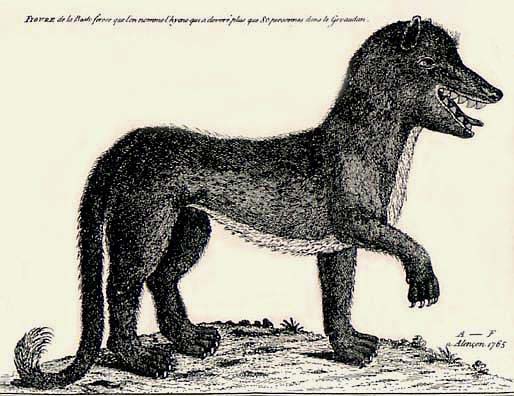
When the Beast of Gévaudan first appeared in 1764, people were unable to identify it. That is why it was immediately christened, in Occitan, the local language of the area, “La Bèstia”.  They did not see it as a wolf, but as some unknown monster that devoured little children. The newspapers of the time wanted accurate drawings of it, and it is now known that these two were the first images to appear:

1764 preface

They are not mirror images of each other (but it’s close. Look at the tongue.):

1764 page 2

It is believed that no direct witness of the creature has left us a drawing. No artist ever saw the Beast. What did happen, though, it is believed, is that the artists did, on some occasions, draw the creature under the direct instructions of a witness. The problem, though, is that, if this ever did occur, we do not know which of the drawings was done in this way, or, if there was more than one, which is the most accurate.

And don’t forget. There was a language barrier between the shepherds and the shepherdesses and the artists. The latter spoke French but the locals spoke Occitan, an age old language which sounds  like a mixture of French, Italian and Spanish. I myself have heard it spoken at a  local market, but I could not understand it at all.

Every single illustration of “La Bèstia” has some accuracy in it. These first two both have some of the features of a big cat which is a detail present, on and off, through many of the descriptions given by frightened witnesses. The thrashing tail, the attacks on the head and neck, the lowering of the body, and the rapid movements from side to side before it lunged for the victim are all very feline.

Here we can see that frequently mentioned black stripe between head and tail:

666666 (2)

It may have had a long tail which could be thrashed around, and even, possibly, used to strike people:

Gevaudanwolf xxxxxx

It may have had a white chest, which means that it was, categorically, not a wolf:

bete-du-gevaudanzzzzzzz

It possibly walked short distances on two legs, again, showing its white chest:

11111xxxxxxx

It might have been extremely large. Witnesses all agree that it was as large as a year old calf, or a “cob”  horse:

5555555sssssss

Both claws and hooves have been mentioned by witnesses. Hooves, possibly because it was a creature of the Devil:

unknoiwn 3

Here is another cat-like individual:

unknoiwn 8

Perhaps it may have had a rather prehistoric look to it, but it still went straight for the head:

la-fantastique-bete-du-gevaudan_4099155-L

It may have been extremely strange looking, even if it were a new unknown species:

untitled 1

It may, again, have been a strange canid, but one which invariably went for the head, rather than the more usual canid attacks on the rear legs and lower back:

page 72

The creature is sometimes depicted alongside the children which were its normal prey items. There may have been two monsters, or possibly even a small, scattered breeding population:

unknoiwn 7

Perhaps it was a peculiar breed of dog. A super killer greyhound:

Bête_du_Gévaudan_(1764)

It may have been, as Abbé Pourcher thought, a scourge sent by God, un fléau de Dieu. As we have already seen, though, many people believed the monster had been sent by Satan himself. For this reason, they often mentioned hooves. On occasion the head had the look of a satanic goat about it:

yes 11 (2)

Perhaps the illustration was one of the very first ever to be drawn, and the artist had little or nothing to go on, except, perhaps, some peculiar connection with Scottish tartan:

yes weird (2)

Simplistic, but still with a bushy tail and a stripe along the crest of its back. Perhaps the monster appeared faintly human in its movements. This is certainly an extremely lascivious expression on its face:

yes q

The church and stone buildings of the region have not changed in 350 years:

yes statue 7 yes (2)

And the brave young girl, Marianne, the spirit of France, fights on and on, against any creatures that may come along:

yes statue 2 (2)

She will never surrender:

yes statue with spear yes (2)

Not to any kind of monster that may threaten her country.


20 Comments

Filed under Cryptozoology, France, History, Science, Wildlife and Nature

A few days after D-Day (5)

In my previous article, I revealed that it is now known that one member of the crew of that Lancaster Z-NH, serial number NE150, brought down by anti-aircraft fire over Lison, did not perish, but survived the crash, only to be then killed, proudly fighting alongside the 507th Parachute Infantry Regiment at Graignes.

For many years the tale had been told that the mystery aviator was an American fighter pilot who had been shot down, but in recent times, around 2008, the real truth has come to light. The mystery flyer was Flight Sergeant Stanley Kevin Black of the Royal Australian Air Force.
I found the full, detailed story prominently featured on Channel Nine News:

“For sixty years his family had thought he died on D-Day in a relatively straight forward situation when his plane was shot down over occupied France by enemy fire. “We knew that he had been in a crashed plane and we always thought that he died there and then,” his great niece Elissa Liggins said. But Sergeant Black survived the crash, and was taken in by a brave French family for the night.
After a good stiff drink and a sleep Sergeant Black asked to be taken to the nearby village of Graignes where he met a group of American paratroopers. Their orders were to defend the village. Even after a plane crash, Sergeant Black was determined to help.”

graignes
“Aided by the villagers, the paratroopers and Sergeant Black set up a perimeter around Graignes.
After a couple of days, the Germans attacked. The allies successfully fought them off the first time but the Germans successfully attacked again.
The S.S. then executed many of the survivors. It is not clear exactly how Sergeant Stanley Black died but he was probably killed on June 11th. He was just 21 years old. The little village never forgot their “Australian hero”.

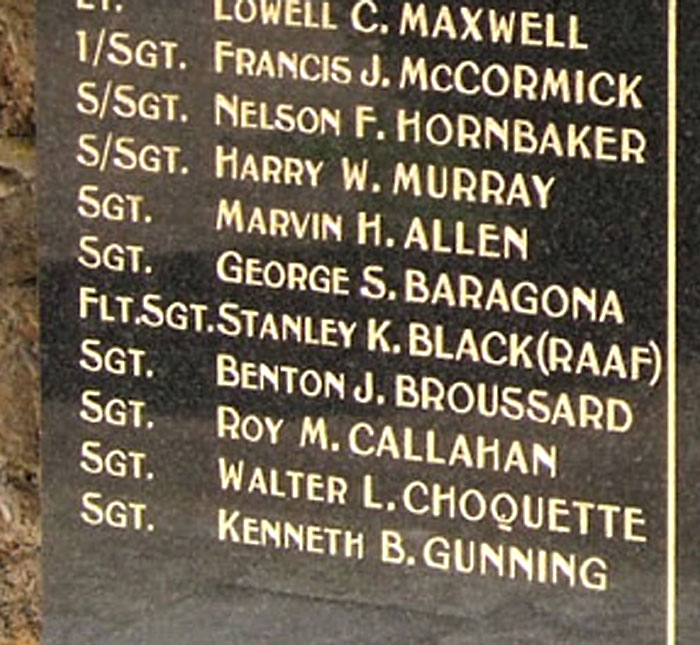
Decades later an English lady who lives in the village, Liane Ward-Cleaveley, felt frustrated his name was not on the plaque commemorating the battle. She contacted a Lancaster enthusiast in Australia, Graeme Roberts, who tracked down Sgt Black’s relatives.

“We got a phone call from a gentleman called Graeme who had read a message from an English lady living in France,” Ms Liggins recalled.
“She had a bee in her bonnet because this Australian who had battled hadn’t got his name on a memorial.”
Accompanied by members of the RAAF, Ms Liggins flew to France for the unveiling of her great uncle’s name on the village plaque.

ryinedchurch

“I don’t think any of us appreciated how big it was going to be for the family – certainly not for me – it’s quite life changing,” she said.
Flight Lieutenant Mark Schmidt describes it as “an amazing experience”.
“It’s an incredible story and then to go to the village and connect with the villagers there… he’s a hero to those guys they call him ‘the Australian who fell from the sky’,” he said.

Every single evening at the Australian War Memorial in Canberra, a single Australian who died for his country is honoured. And recently, Sergeant Stanley Black was the chosen hero.
The Last Post was played and the Eternal Fame flickered. Ms Liggins and her family laid a wreath for their uncle. It was a poignant moment she will never forget:

“I sort of feel like I have a connection with him now, that just wasn’t there before, and I know his story intimately… it’s pretty powerful stuff,” she said.

A powerful story, to share with generations to come.
And what a story. The forces of darkest evil opposed by brave, brave men, women and children.

French villagers, French children, American paratroopers, British flyers and one very, very brave and determined Australian.

Here is a film of Graignes today.

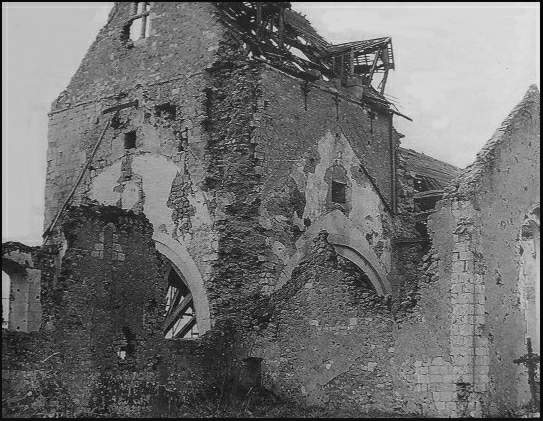
 The church has been left exactly as the cowards of the 17th SS Panzergrenadier Division left it.

There is another excellent film on the Channel 9 News site. It is well worth watching.

If you are feeling brave, then try this website. It has a picture of Madame Marthe His, one of the only surviving witnesses of this Nazi war crime.

marthe-his-temoigne-au-memorial-de-graignes

She watched what the SS did when she was only 12, and now, 73 years later, and a very young looking 83, she is determined that it should not be forgotten.
In a video lower down the page, she tells her story in French where, at the least, you should be able to recognise a few words.

Here is roughly the same story in French for you to read as homework:

“À 12 ans, Marthe His a vu soldats américains et civils se faire massacrer par les Allemands à Graignes. 71 ans plus tard, elle est revenue pour témoigner.

Derrière ses petites lunettes rondes, les yeux bleus de Marthe His ont gardé toute leur vigueur. Au moment de témoigner, hier après-midi au mémorial de Graignes (Manche), un voile de tristesse a peut-être atténué leur éclat pendant quelques minutes. C’est tout en pudeur que ce petit bout de femme, âgée de 83 ans, a revécu en souvenir les massacres de Graignes en juin 1944.

Des 200 Américains qui débarquent dans la maison familiale, au sauvetage de 23 soldats. Elle replonge dans cette histoire tragique du débarquement dans la Manche.
Un épisode sanglant où 43 soldats Américains et 30 habitants de Graignes trouveront la mort des mains des Allemands.”

This is the memorial to everybody who was slaughtered by the SS in that cowardly way:

And don’t forget Flight Sergeant Stanley Black of the Royal Australian Air Force:

Stanley Black  didn’t need to do what he did. And it would probably cost him his life.

But he did it nevertheless. He was a true hero.


22 Comments

Filed under Aviation, Bomber Command, Criminology, France, History, Politics, The High School

A few days after D-Day (4)

I wrote a previous article about an Avro Lancaster Mark III bomber which took off from Metheringham, in Lincolnshire, ten miles south east of Lincoln, at twenty five minutes past midnight on June 7th 1944. Its squadron letters were Z-NH and its serial number was NE150.

Operating in the direct aftermath of D-Day the crew were tasked with bombing Coutances, a beautiful little town just south west of Caen in Normandy, in an effort to disrupt the German transportation of troops.

balguthrie

Unfortunately, the aircraft was one of two hit by heavy anti-aircraft fire over Lison, and it crashed near the village of St Jean de Daye. All of the crew were killed except two.

The first of two subsequent articles told the story of John “Jock” Drylie, the aircraft’s navigator, and the only member of the crew who ever managed to return home, in his case, to Fife in Scotland:

DRYLIE PHOTO

This is the second article of the two, and tells the extraordinary story of Flight Sergeant Stanley Kevin Black of the Royal Australian Air Force. He was the bomb aimer, only 21 years of age and the beloved son of George and Lillian Eliza Black, of North Fitzroy, Victoria, Australia.

On June 7th 1944, Stanley survived the crash, and, in fact, was virtually unscathed.

He soon met some American gentlemen, however, and then a very dark and grim tale indeed began to unfold.

These American gentlemen turned out to be the élite troops of the 507th Parachute Infantry Regiment of the American Army. Just after two o’clock in the morning of June 6th 1944, twelve planeloads of them had been dropped in error some eighteen miles from their correct drop zone. Wandering more or less at random around the marshes near Carentan, they were now very close to the village of Graignes:

Pathfinder_Plane15

At daybreak, the village mayor of Graignes, Monsieur Alphonse Voydie, woke up and suddenly noticed that the grass field behind his house was absolutely full of American soldiers.  As Mayor, he called an immediate emergency meeting of everybody in the town. The brave townspeople decided unanimously to feed the American soldiers, despite the very real risk that the Germans would shoot them all, both villagers and soldiers. Under the forceful command of Madame Germaine Boursier, all the women of the village began cooking around the clock to serve the Americans with at least two hot meals every day. At the same time, teams of villagers, men, women and children, began filling any wheeled vehicle with lost American equipment and then bringing it back to its rightful owners.

Militarily, though, the situation was hopeless. The 507th Parachute Infantry Regiment and the brave, helpful French villagers were completely surrounded by German troops including, among others, the 17th SS Panzergrenadier Division Götz von Berlichingen under the command of SS-Standartenführer Otto Binge.

zz bocage

In view of what was about to happen, the fact that these Nazi troops were from the 17th SS Panzergrenadiers was supremely ironic. The unit had been raised near Poitiers in south-central France in October 1943.
war criminalsxxxxxxxxxxx

It consisted mainly of conscripts, many of whom were Rumanian Germans with a good number of French Fascist volunteers.

The SS duly attacked the 507th Parachute Infantry Regiment, who were by now entrenched in the village. It took the Germans until June 11th to overwhelm the village, with just the church left to be captured:

church

The Americans had, by this point, claimed perhaps five or six hundred dead Germans, with the roughly the same number wounded.

To forestall all those who would defend those apologies for human beings who made up the Waffen SS, I would like to quote the Wikipedia account pretty much in full about what happened next. I have also added some extra details from a website about the battle in Normandy in 1944:

“The 17th SS stormed the church and found Captain Sophian’s medical aid station. They forced the Captain and all of the wounded outside against a wall. The men were divided into two groups and marched away. One group was marched down to the edge of a shallow pond behind Madame Boursier’s café. At the edge of the pond, the SS bayoneted the wounded men and threw them into the water one on top of the other. The other group of 507th paratroopers was forced to march to a field near the village of Le Mesnil Angot. There, the nine wounded men were forced to dig a pit. As soon as the pit was complete, the SS shot each one of them in the back of the head and dumped their bodies in the pit one on top of the other.

Other Germans began a round-up of the French civilians.  The SS men knew that the church’s belfry had been used as an observation point to direct mortar fire accurately onto their attacking troops. The SS soldiers therefore burst into the church rectory, dragged Father Leblastier and Father Lebarbanchon into the courtyard and shot them both to death. They then discovered Madeleine Pezeril and eighty-year-old Eugenie DuJardin. Overwhelmed with fear, the two old ladies had been cowering in their quarters ever since the end of the battle. The Germans shot and killed both women in their beds. Meanwhile, forty-four villagers had been rounded up and were being interrogated. They were threatened with immediate execution if they did not divulge the names of any villagers who had actively assisted the Americans. Not a single one of the villagers turned in a single name. And none of them revealed either the role that Alphonse Voydie had played in the Graignes drama. Had the Germans known what Voydie had done, they would most certainly have executed him too.

On Tuesday June 13th, the Germans burned the village. They poured gasoline over the bodies of Father Leblastier, Father Lebarbanchon, Eugenie DuJardin and Madeleine Pezeril and then set them on fire. The ensuing blaze was allowed to burn out of control, destroying 66 homes, the boys’ school, Madame Boursier’s café and the 12th-century church. Another 159 homes and other buildings were damaged either as a result of that fire or the fighting. Before the June 11th battle and the German retaliation that followed, the village of Graignes had consisted of just over two hundred homes and other structures. Afterward, only two houses survived unscathed.”

In the words of “morice”:

« A leur départ, l’école et l’église de Graignes n’existent plus, le village n’est qu’une ruine fumante. C’est un autre Oradour et un autre Maillé, la signature des SS aux abois en 1944 dans le pays. Au total, ils laissent derrière eux 63 morts. Seul le clocher du XIIème siècle resté debout défie toujours l’occupant. »

On July 6th 1986, a ceremony was held in the ruins of the church at Graignes during which eleven villagers were presented with the Award for Distinguished Civilian Service for their role in assisting the men of 3rd Battalion/507th. Six of those awards were posthumous.

Only one member of the SS was punished in any way for this incident, the rather unlucky Erwin Wilhelm Konrad Schienkiewitz who went to prison for life. If you look at the Wikipedia entry for 17th SS Panzergrenadiers, there is a shortish list of the war crimes for which some of them received prison sentences.

For the most part, they were to do with killing concentration camp prisoners, but they also executed the Mayor of a German town who wanted to surrender to the Allies and avoid unnecessary deaths. And they murdered a Jewish dentist. What bravery from the élite troops of the Master Race.

Like so many members of the Waffen SS, however, their commander,  SS-Standartenführer Otto Binge, lived out a full life and died peacefully in a warm bed on June 18th 1982.

And why am I telling this great long-winded tale, other than the fact that it deserves to be told anyway?

Well, because it is now known that one member of that crew of the 106 Squadron Lancaster Z-NH, serial number NE150, was killed proudly fighting alongside the 507th Parachute Infantry Regiment at Graignes.
For many years, the tale had been told that there was an American fighter pilot involved in the fighting, but only in recent times, around 2008, has the real truth come to light. The mystery fighter pilot was none other than Flight Sergeant Stanley Kevin Black, bomb aimer of the Royal Australian Air Force.

black

I will bring this tale to a conclusion in the near future.

To end with, let me repeat that none of these three articles about the Avro Lancaster III from Metheringham, Z-NH, NE150, shot down on June 7th 1944, could have been written without recourse to the websites and forums which I have indicated. I just hope that what I have written, tales which deserve to be heard, will reach another audience by my re-telling them.


20 Comments

Filed under Aviation, Bomber Command, Criminology, France, History, Politics, The High School