Category Archives: Cryptozoology

The Beast of Orléans and his grandson

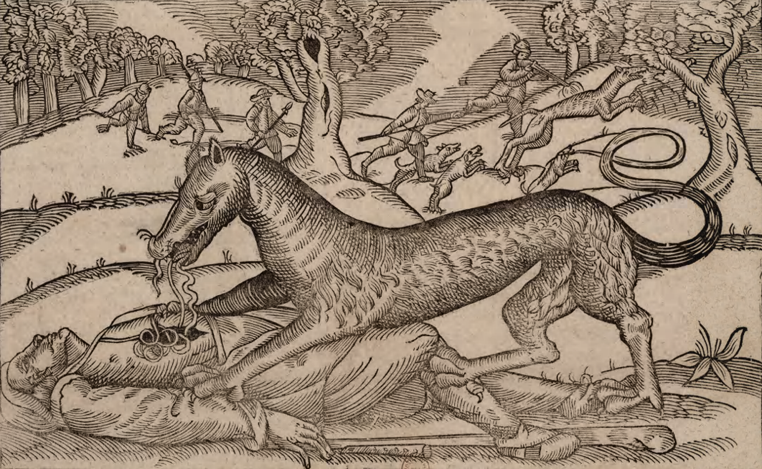
This blog post will introduce you to yet another killer monster (or monsters) in the long, long series of killer monsters which have ravaged different areas of France from around 1550 until the present day. I started this long list by telling you about the Beast of Gévaudan. Then it was the Beast of Benais, the Beast of Auxerre and Trucy, the Beast of Cévennes and Gard and Vivarais and then the Beast of Sarlat. This illustration has been used to represent more or less all of them by the uninhibited copyright thieves who wrote sensationalist pamphlets in the Eighteenth Century:
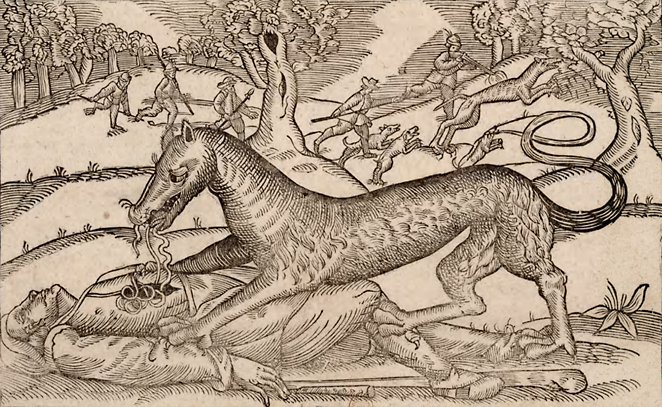
Bete_de_Cinglais_1632 xxxxxx

This time I will be looking at the area near Orléans, where a number of “incidents” have taken place over the years:orleans map
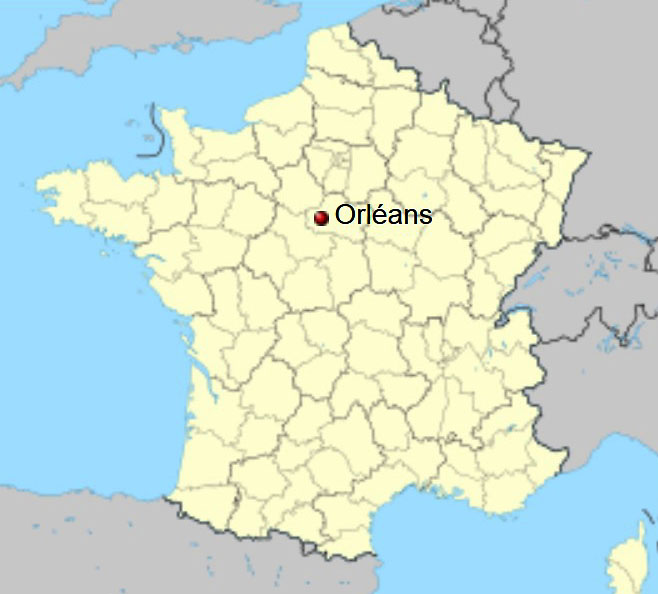
Many people at the time thought that the culprits were just ordinary wolves, but, as we will see, there are more than enough anomalies to cause the odd doubt here and there. Once again, I will be looking at a number of websites written in French, offering you my translations and you can then make your own mind up between them.

The first website actually begins with a man who was writing about wolves in the region around Orléans. Here is the coat of arms of that beautiful city:
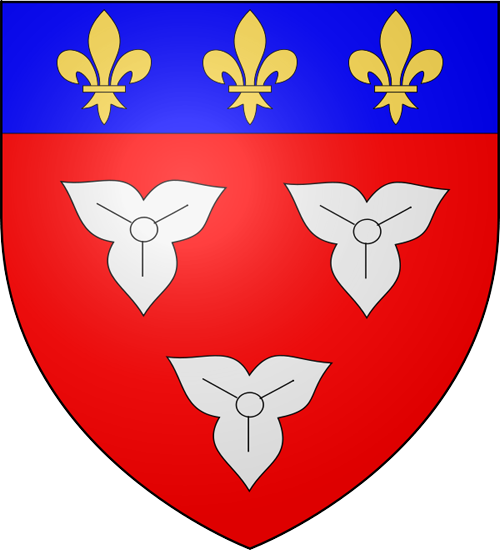
600px-Blason_Orléans_svg.png zzzzzzz

This was in 1911, and the writer in question was an historian called Charles de Beaucorps. He wrote:

“In 1691, the wolves’ misdeeds caused many justified complaints and the Royal Commissioner duly informed the national authorities. Learning that the incidents caused by these predators were increasing every day, he asked the King to allow the inhabitants of ten or twelve parishes to have firearms in their homes.  Normally they did not dare do so for fear of prosecution by the officers of the Royal Hunt. The Royal Commissioner also told them to carry out hunts and asked Monsieur Béchameil, an officer of the crown, to direct them. Nothing was done to stop this scourge: it grew to such an extent that every day people were being killed or injured by wolves. On September 12th, within musket range of the Chêne Brûlé, a parish in Cercottes, a sixty year old woman was devoured. The King’s Prosecutor in the Neuville Guard, who was keeping a register of children killed or injured by wolves using the death certificates written by parish priests, had listed more than 60 young victims in the space of fifteen months. “

Interestingly enough, this was not, apparently, completely outrageous by the usual standards of behaviour of French wolves, animals which had grown accustomed to feeding on human corpses in open charnel pits until as recently as 1820:
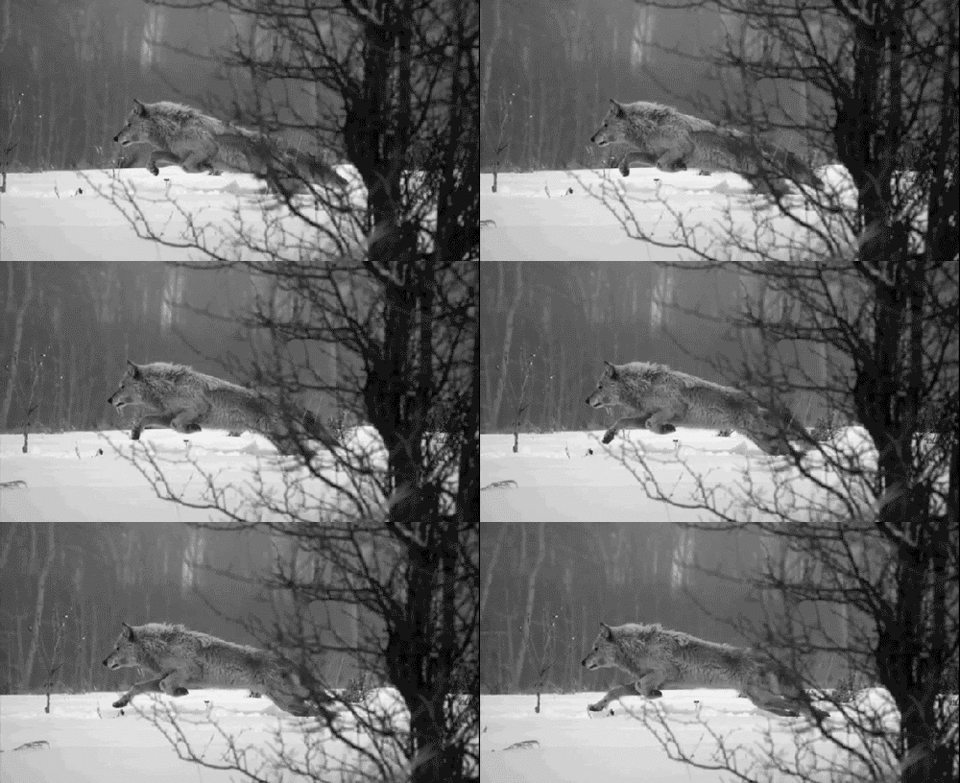
wolf bounding

Charles de Beaucorps, however, was nothing if not a very thorough investigator:

“Despite the hunts and more than two hundred wolves killed, the attacks continued for years, right up until 1702 (a total of eleven years). The first teams of hunters obtained hardly any results. It needed the militia and the Duke of Vendôme, supported by thirty musketeers, to stop this scourge.

In 1700, an “Enormous Beast” was killed in the forest and brought back for the Royal Commissioner, leading to the payment of a reward of thirteen pounds.”
werewolf attack

And nobody, of course, managed to write a precise scientific description of exactly what this “Bête énorme” was. Presumably, though, for it to be considered a “Bête énorme” in the middle of more than two hundred dead wolves, all of which must have looked pretty much the same as all the others, it cannot have been an ordinary wolf.

Around the same time, there were equally strange events in Fontainebleau:

“In 1679, woodcutters were killed and eaten in the Forest of Fontainebleau. The parish registers of Bois-le-Roi mentioned several cases of attacks.”

It might have been wolves, but I am surprised that, if it were, they did not say so. As the map shows, these gory killings took place not a million miles from Orléans:
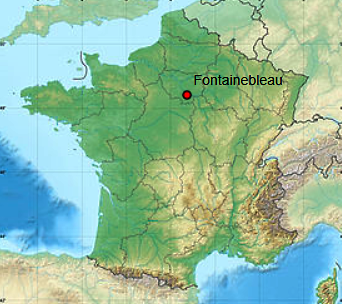
fontaineb

Shortly after this, came the animal which was to become really famous. It was given the name of “The Beast of Orléans”. According to a website we have already visited:

“There were actually two distinct episodes which took place almost a century apart. The first, the Beast of Orléans, happened in 1709, as attested by a letter from Monsieur Polluche Lumina, who lived in the Rue des Hennequins, dated June 17th 1765. It says this:

“I am taking the liberty to write to you about the ferocious Beast of Gévaudan. The more I reflect on all the stories which appeared in the newspapers the more I find a resemblance with what has happened here and what I myself saw in part after the Great Winter of 1709. There appeared an animal which people called “The Beast” which only attacked women and children. There were the same ways of moving around, the same
sharpness and even timidity as the Beast of Gévaudan:

second-beast

The devastation was so serious that in six months there were more than 100 people killed and as many wounded. This provoked the king to send his royal wolf catchers. The officer who commanded them did not bother to follow the trail of destruction which this animal produced and which was normally around the perimeter of the forest.

He decided instead, every morning, to have several hunts in the woods with bloodhounds, after which his men went on a reconnaissance.  Then, without making any noise whatsoever, they positioned marksmen all around the area. The dogs were then released into the forest.

If the Beast was not found, they would go and carry out the same tactics in another area to pursue the Beast. There was hardly any hunt where the men did not kill one, two or three wolves, because the Beast was nothing different from them. Could they not employ the same tactics to destroy the so-called Beast of Gévaudan? I presume that the situation there is just like it was here. Just wolves and nothing more. I forgot to say that they killed a good hundred wolves in this area. In the stomach of several they found hair and other things which proved that they had eaten human flesh. They managed to destroy the species, the wolf, to such a point that there was no longer any question of there being a so-called “Beast” to which fear had given names and features each one more frightening than the last.”

Clearly, Monsieur Polluche Lumina thought that the Beast of Orleans was merely a wolf or wolves, seen under conditions of extreme stress and fear. Such terror supposedly exaggerated the witnesses’ testimony to such an extent that the idea of a monster was born. Not everybody, though, went for this rather simplistic explanation.

A short pamphlet about the Beast was printed at Chartres by Garnier-Allabre, the well-known local manufacturer of wallpaper and pictures. He may well have interviewed the witnesses about what they had seen. Garnier-Allabre produced this illustration which, to me, looks nothing like any wolf I have ever seen, even a stylised one. It has scales! It is armoured! It is as much like an anklylosaurus as a wolf!:

beast 1709

The leaflet also contained the following text:

“This cruel beast tears and devours everything it encounters in its path and causes desolation among whole families in the areas that it moves through. Last December 25th, near the entrance to a village near Beaugency, it found an unfortunate woodcutter and his wife and his eldest son. The ferocious beast first attacked the unfortunate woman. The poor woodcutter and then his son tried to defend her and a terrific battle ensued. Despite their efforts and those of several other people who rushed to the rescue, the unfortunate woman was killed and several others were wounded.
It is impossible to calculate the number of unfortunate people who were victims of the rapacity of this wild beast; it is covered with scales, and no weapon has any effect on it. Let us pray to God, my dear friends, to deliver us from this monster, and pray, too, for the speedy recovery of those injured by this animal. “

The local historian Monsieur Lottin also makes mention of the Beast and links the Beast of Orléans to the Beast of Gévaudan:

“A cruel beast, believed to be a hyena and which ravaged Gévaudan, Auvergne, Nivernais , Bourbonnais and the areas around Orléans and against which regular frontline troops had operated , was killed at that time , by the Sieur Antoine, a skilful hunter. This ferocious animal had caused the greatest devastation and had inspired universal terror. Coloured pictures, produced by Monsieur Letourny, a paper merchant in the Place du Martroi , who had gained a reputation for this kind of engraving, were sold by the thousand.”

Alas, none seem to have survived.

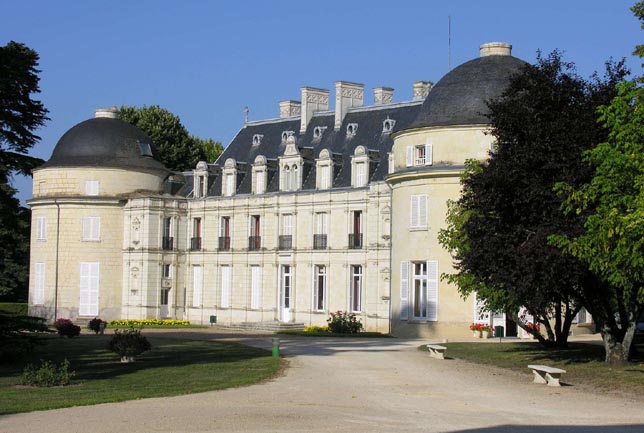
Extremely close to Orléans is the tiny town of Chaingy. It is represented by the red square:

This slideshow requires JavaScript.

Even nowadays Chaingy has only 3,669 inhabitants. It was here that an unbelievably aggressive creature struck more than a century after “The Beast of Orléans”. The same website continues:

“In 1814, the Beast of Chaingy also gave rise to an abundance of images. There has been much confusion between the two creatures, at least on the level of how the illustrations would represent “The Beast”. This is not surprising: the printers did not trouble themselves over exact details and were more than willing to copy each other’s efforts:
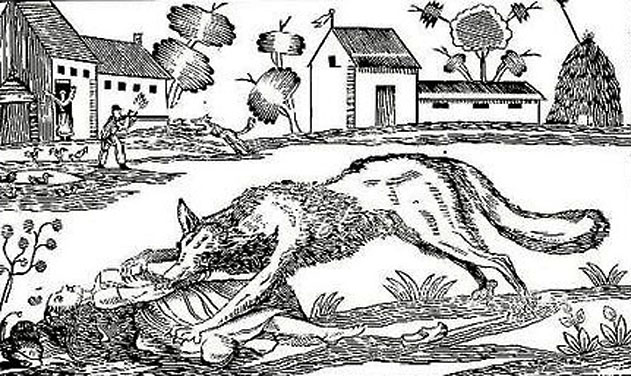
Bete_de_Chaingy_ws1028371882


The case of the Beast of Chaingy took place in 1814. It is possible that it reflected other cases of “Beasts” from a long time before, such as the one described by Monsieur Polluche Lumina which took place a long time before (1709). The Beast of Chaingy is a creature which has been a little better documented :

“On December 6th, 1814 , several women and children who were collecting dead wood in the forest were attacked by a she-wolf . The animal killed two and injured eight more. The Baron de Talleyrand, whose magnificent full name was Alexandre Daniel de Talleyrand-Périgord was Prefect of this area. He ordered a hunt and the beast was slain near Cercottes.”

This is as maybe, but, for me, if this creature was just an ordinary canis lupus, then its behaviour was absolutely extraordinary. Nobody nowadays would expect a group of people to be attacked, or even challenged, in a wood by a lone she-wolf. To then have two individuals killed and eight more wounded is quite astonishing. All I can suggest is that this animal was, as has been said so many times both about the Beast of Gévaudan and about many others:

“C’était comme un loup mais ce n’était pas un loup.”
“It was like a wolf but it was not a wolf.”

In 1868, the last real wolf in the region was killed by a poacher in Chaingy, a man called Blaise Basset. The body of the animal is now on display at the Museum of Natural Sciences in Orléans.
And here it is:
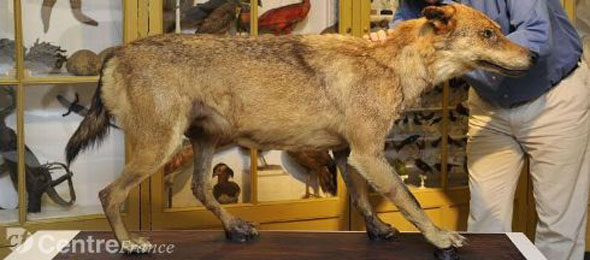
real bete

Hardly the type of creature to kill two people and wound a further eight. I’m more scared of those polyester slacks if truth be told.
And finally. Let’s hope that this is merely an imaginative drawing of the Beast of Chaingy. If it’s from a trailcam, we could all be in trouble:
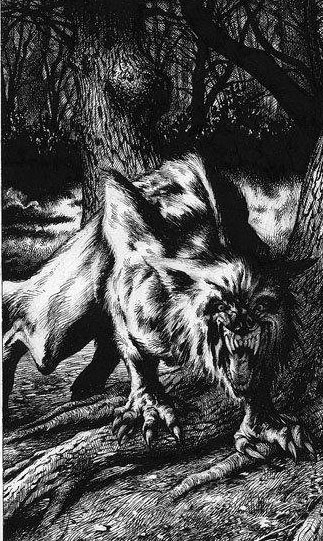
imaginative chaingyu


18 Comments

Filed under Cryptozoology, France, History, Science, Wildlife and Nature

If you go down to the woods today, you’d better not go alone…

One more monster to terrorise the local peasantry of bygone France was the so called “Bête de Cinglais” which was also called the “Bête d’Evreux”. Its bloodstained career lasted from 1632–1633, as it terrorised the province of Normandy, bringing violent death to one of the most beautiful areas of a beautiful country. Indeed, there is a sharp contrast here with the wild mountains frequented by so many other of the monsters we have read about. Here is a map of northern France:

basse norm map national

And here is a bit more of a close-up. The green UFO marks the precise location:

basse norm map

As always, the best approach is to take an average of the various French websites. The “Virtual Institute of Cryptozoology”, the “Institut Virtuel de Cryptozoologie”, states that:

“In 1632, about fifteen kilometres to the south of Caen, in the Forest of Cinglais, an animal carried out a reign of terror. Those who survived its attacks described it as a kind of huge mastiff of extraordinary agility and speed. Two historical documents mention the mysterious beast: the “Gazette de France” of March 19th 1632 and the edition of June 17th 1633. The edition of 1632 announces that the predator has already devoured around fifteen people in a month.

Forest rangers have shot at it with their muskets but are unable to cause any injury. The priests are trying to mobilize the inhabitants of the neighbouring parishes but the population is so traumatised that very few volunteers dare to take part in the hunts. The hunters themselves do not want to venture into the woods unless they are in a large group. The 1633 edition of the newspaper announces the killing of an animal at the end of a massive hunt lasting three days, organised by the Count de la Suze, with the participation of between 5,000-6,000 hunters and beaters. The Beast of Cinglais looks like a kind of wolf, but is longer, and more red in colour with a more pointed tail and a wider rump than an ordinary wolf. At least thirty people have now been killed.”

This, conceivably, may be a depiction of the creature:

perhaps cinglais

Interestingly enough, there was a further series of attacks only some fifteen years later in the Forest of Fontainebleau. This is a very similar area to the Forest of Cinglais and is not particularly far away at all:

sous-bois-dans-la-foret-de-fontainebleau

The Fontainebleau story is carried by the same website:

“In 1679, woodcutters were killed and eaten in the Forest of Fontainebleau. Records in the parish of Bois-le-Roi mention several cases of attacks.”

A website which specialises in the ghostly aspects of the beautiful Forest of Fontainebleau also carries a few tales of ancient beasts thought to live there:

“There used to exist around the beginning of the sixteenth century a fabulous animal that spread terror in the Forest of Fontainebleau and its surroundings. All indications are that it was a wolf, but some cried “Werewolf”, or tried to blame a magician who was said to be an expert in the art of shape shifting.”

“And then, around 1660, long before the famous Beast of Gévaudan, there was already talk around this area of the Bête du Gâtinais, the  Beast of Gâtinais, a frightful creature which looked like a monstrous wolf. His greatly exaggerated exploits, murdering children and young girls, used to feed people’s fears. Such stories caused many sleepless nights. It was even said that the Beast used to cross the River Seine to come and steal little children and animals on the far side.”

Even in fairly modern times:

“Towards the end of the nineteenth century, an old woman recounted the story of a great evil beast which lived in the forest and which came out from time to time to attack farm labourers, shepherds and flocks of sheep. The monster had to its credit a whole multitude of atrocities, dead sheep, dogs killed and children who just disappeared. The little girl who set off to gather hazelnuts in the woods, and was never seen again. The young nine year old boy devoured near the village of Nanteuil les Meaux”

The website’s author states that:

“It is quite possible that these three stories all refer to the same species of animal, described at different times in history….With evidence of this type, spread over long periods of time….it is not easy to make sense of things, to separate the mythical and imaginary monster from a mere animal.”

That “mere animal”, of course, is the wolf, considered in the France of bygone years to be guilty of far more serious attacks on humans than, say, the wolves of present day North America or Europe. This is the location of Fontainebleau. Compare this map with the maps for the Beast of Caen/Evreaux/Cinglais”:forest of fontaineblasu

As far as Fontainebleau during the first half of the sixteenth century is concerned, there were certainly many people who thought that nobody should ever go down to the woods. If they did, they would certainly be sure of a really big surprise, one with lots of a fangs and an aggressive attitude that needed quite a lot of adjustment. And yes, there were lots of marvellous things to eat, (in a way) but it was better not to go alone. It’s really lovely down in the woods, but perhaps it is safer to stay at home:

The same fascinating website continues:

“In the reign of King François the First, during the first half of the sixteenth century, a certain Sebastian Rabutin was to rid the country of a terrible lynx which was just as murderous as any of our previous beasts. It too was devastating the same region, devouring in turn both young girls and children. This monster, which appears in a fresco in the ballroom of the Château de Fontainebleau where it is depicted as some kind of hybrid between a wolf and a feline, was so formidable that no one dared confront it . For the record, the “loup-cervier”, in Latin “lupus cervarius”, which means deer wolf, is the common name of the Lynx, a big cat which hunts hares or rabbits, but never deer or men.”

I have not been able to trace the fresco in the ballroom of the château, but there is quite a lot to go at:

salle_bal_00

There is absolutely no way though that any of these French monsters was a lynx, as I have already discussed in a previous blogpost about the Beast of Benais.

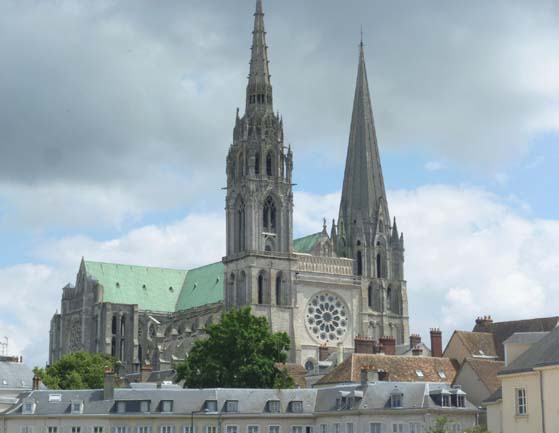
Fairly close to both Caen and  Fontainebleau is the beautiful cathedral city of Chartres:

chartres_cathedralxxxxxxxxx

The “Institut Virtuel de Cryptozoologie” reports how:

“At Chartres, in 1581, a young boy was buried at Ver-les-Chartres, killed by a “wild beast”, “une beste sauvage” whose identity we are not at all sure of.”

If this were not a wolf, and a wolf would surely have been recognised, then it may well have been one of the mysterious beasts we have been examining.

But let’s just forget this supporting cast for the moment. Let’s return to “La Bête de Cinglais”. Another interesting blogpost about this fearsome creature comes from Evelyne Achon:

“The Forest of Cinglais is about 15 kilometres to the south of Caen. The “Beast of Cinglais” is also called “The Beast of Evreux” or “The Beast of Caen”. It refers to a man eating animal behind a series of attacks on humans.

The first attack was mentioned in 1632. These attacks are known through articles in contemporary newspaper. The Gazette de France therefore reported on March 19, 1632:

“News from Caen in Normandy. The 10th of March in the year 1632. Since last month in the forest of Cinglais, and then between there and Falaise, people have seen a wild beast that has already devoured fifteen people. Those who have avoided his fangs report that this savage beast is similar to a large mastiff of such a speed that it would be impossible to run and catch him on foot. He is of such extraordinary agility that people have seen him jump right over the river in certain places. Some people call him Thérende. Local residents and forest gamekeepers have shot at him from range with their arquebuses on several occasions, but without wounding him. They do not dare approach him, or even to reveal themselves, until they are organised in a large group, exactly as they will be today when they hear the sound of the alarm bell, to which all the parishioners from all the parishes around have been invited by their village priests, as three thousand people are assembled to carry out the hunt. “

A gigantic beat was organized in June 1633, with the participation of between 5,000 and 6,000 men. An animal was killed, and the attacks ceased.

Here is an old engraving of the Beast. Spaghetti for lunch:

Bete_de_Cinglais_1632

The Gazette de France reported on June 17th the death of the creature as follows:

“This raging mad beast which I wrote about last year as having eaten in two months more than thirty people in this forest was believed by everybody to be a creature of magical properties. But the Count de la Suze, having assembled by the order of our Lieutenant General on the 21st of this month between 5000 to 6000 people, has pursued the creature so keenly that after three days it was killed by a shot from a flintlock musket. It turned out to be some kind of wolf but longer, redder in colour with a pointed tail and a rump wider than normal. “

Here is the Forest of Cinglais:

Foret-cinglais1xxxxxxxxxxxxxxxxxxxxxxxx

Wikipedia supplies a little information, but seems, perhaps, rather coy:

“This beast was identified as a wolf, but a mystery still remains. It was described as a kind of red wolf with an elongated body and a more pointed tail than a common wolf. It seemed very quick and agile.”

Another old friend, Vampiredarknews knows the details equally well:

“In 1632, this Beast killed fifteen victims in only one month. It struck in Normandy, where those who escaped described it as a great extremely fast and agile mastiff. It then settled in the Forest of Cinglais, about fifteen kilometres south of Caen. It then killed a dozen or so victims before they organized a hunt that lasted three days and brought together more than 5000 people. It was killed on June 23, 1633 by the Count de la Suze.”

One final website makes a very good point:

“It will eventually be described as a wolf, but a great mystery still hangs around this story ; the behaviour and the agility of the creature are in no way anything like that of a wolf.”

In the fullness of time, I will finish this almost interminable list of “Monsters of France” and draw them all together as the same unknown species. This particular creature is a good example. The Forest of Cinglais, the Forest of Fontainebleau and the charming countryside around Orléans are all pretty much the same kind of environment. The looks and behaviour of these beasts are not unique. Other localities have had strange reddish animals, animals with noticeable tails, animals with extreme agility or with great speed or an ability to leap long distances. There must be a link between them all.

I am very struck by the words of Abbé Pierre Pourcher about the Beast of Gévaudan:

“Everybody who saw it said it was not a wolf. Everybody who did not see it said it was.”

5 Comments

Filed under Cryptozoology, France, History, Science, Wildlife and Nature

A Werewolf in Cambridgeshire. Run away!!

In three previous blog posts, I discussed “Shuck”, the huge phantom black dog, who for centuries has roamed, for the most part, the fields, fens and even beaches of East Anglia. I showed, though, that the cryptic canid has also walked on occasion in Nottinghamshire, visiting churchyards and graveyards. He frequents ancient tracks and pathways and, in particular, a lonely footpath down by the River Trent in Beckingham. He has been seen in isolated Crow Lane in South Muskham and, in recent times, on a pitch black Blyth Road, near Hodsock Priory:

hellhound zzzzz

In my third blogpost, I tried to establish a link with the American Wolfmen such as the “Beast of Bray Road”:

roadkill cccc

These are hairy bipeds with canid features who, like Black Shuck, seem to occur “near freshwater; on hills; at boundary areas such as roads; and on or near burial grounds, and military zones, and all types of sacred areas around the world”:

michigan-dogman ccccccc

These are the words of Linda S Godfrey in her wonderful book, “Real Wolfmen: True Encounters in Modern America”:

book cover linda

After receiving this book as a Christmas present in 2013, I received an equally interesting publication in 2014. It was “Haunted Skies Volume One” by John Hanson and Dawn Holloway:

vol 1

As they say on the cover, the book is part of a whole series telling the entire story of British UFOs. In total, there are ten different volumes and they are, quite simply, an absolute tour de force, a labour of love which runs from 1940 to the present day. So far, I have bought a number of other volumes although I am still a little bit short of the full set (as they say).

What has this got to do with Shuck you may ask? Does this mean that the Beast of Bray Road has moved kennel to England?

Well, in a way, it does. This is Volume 5:

vol 5 cover

This volume runs from 1972-1974. It contains a tale told about RAF Alconbury, a USAAF airbase in Cambridgeshire, which has a number of claims to fame as being haunted by a variety of different spectres. Here is a large scale map of the area. Look for the orange arrow which indicates the airbase:

alconbury map

And here is a close up. The orange arrow is in the same place on both maps:

larg scale alconbury

The amazing tale told to John Hanson and Dawn Holloway, the authors of the book, by an eyewitness, is that a mechanic was:

“carrying out some routine work to an F-5 Aircraft, parked on the runway, a job that should have been completed in an hour. When he failed to make the telephone call, requesting a lift back from the Hangar, a search went out to find him. They found him sitting in the aircraft, as white as a sheet, with the canopy closed. Although I asked him, many times, what it was that he had seen, he declined, saying that it had frightened him so much that he refused to go anywhere near that location again. We discovered, from another source, that the man had seen a terrifying hairy humanoid, which had walked past the aircraft.”

This is a Northrop F-5 aircraft:

Northrop F-5E

This is a second eyewitness account which they quote:

“I also heard about an incident involving two mechanics, working on an aircraft parked on the north side of the base, one of whom was so frightened by the appearance of a strange hairy creature that he jumped into the cockpit of the aircraft and refused to get out for some time.”

ALCONBURY-some of

It is entirely impressive that the two co-authors should then discover a third corroborative tale about two USAAF personnel:

“Sergeants Randi Lee and Jackson…. one night, while on patrol with their two dogs, they saw some movement near the towers and called the Main Gate to check if any workmen were still on-site…. As they approached the tower, they came face-to-face with a hairy figure. The dogs stopped in their tracks, absolutely terrified, frantically trying to get away…..The truck arrived just in time to see the creature, whatever it was, climbing over the security fence, where it was last seen entering North Woods.”

It is difficult to imagine how much more thorough these two authors could have been at this point. They manage to find yet another witness to this bizarre tale:

“One foggy night my father received a radio call; there was an intruder within the perimeter…. He tore out in his truck and sped towards the scene…. Seeing a figure in the fog, he pulled over, thinking it was one of his guards. He rolled down his window and was screamed at, full in the face, by what can only be described as a man-like, bipedal creature. My father nearly wet himself in fear. In an instant the thing ran off at incredible speed and my father drove after it. Within moments it had sped past another of the guards….my father and these men witnessed this creature make fantastic, running bounds across the grounds before leaping over two tall, well-spaced barbed wire fences in a single bound. It disappeared into the surrounding woods.”

werewolf qqqqqqqqqqqqqqqqqqqqq

Many similar and confirmatory accounts can be found on the Internet of this interesting, yet frightening creature. Just as I have quoted John Hanson and Dawn Holloway, some of the websites are clearly redolent of Nick Redfern’s blog post of 2007, “Do Werewolves Roam The Woods Of England?
One of the contributors, a gentleman who calls himself “wes” recounts his own version of the Alconbury creature:
“I encountered a werewolf (lack of better description) in England in 1970, I was 20 years old when I was stationed at RAF Alconbury. I was in a secure weapons storage area when i encountered it. It seemed shocked and surprized to been caught off guard and I froze in total fright. I was armed with a .38 and never once considered using it. There was no aggression on its part. I could not comprehend what I was seeing. It is not human. It has a flat snout and large eyes. Its height is approx 5 ft and weight approx.200 lbs. It is very muscular and thin. It wore no clothing and was only moderately hairy. It ran away on its hind legs and scurried over a chain link fence and ran deep into the dense wooded area adjacent to the base. I was extremely frightened but the fear developed into a total commitment of trying to contact it again. I was obsessed with it. I was able to see it again a few weeks later at a distance in the wooded area. I watched it for about 30 seconds slowly moving through the woods”

werewolf xxxxxxxxxxxxxxxxvvvvvvvbbbbbbb

At the website “Winter Spirits” a person called “earth_spirit” recounts how he too was in the RAF:
“In 1978 I was stationed with the US Air Force in West Germany and was sent to RAF Alconbury in England for a 30 day TDY (temporary duty.) When I mentioned to a co-worker I was going to RAF Alconbury, he told me that he had been there in 1972 when one of the aircraft mechanics in his squadron had been found late one night in the back seat of an RF-4C Phantom jet, supposedly after he had died of “fright.”  The story was that a subsequent investigation revealed unexplained scratches on the glass of the canopy of the jet, and this started a rumor circulating that the unfortunate crew chief had been the victim of what came to be known as the infamous “hard stand monster.”

You could be forgiven for misinterpreting the “hard stand monster” but clearly, there is something behind these stories.

werewolf_van_helsing_zzzzzzzzzzzzzzzzzz

In a fascinating blog, well worth a look, written by Sarah Hapgood and entitled “sjhstrangetales”, the testimony of yet another witness is quoted:

“Dennis Prisbrey, stationed here between 1973/5, told of colleagues seeing a “creature” near the north side of the airfield. One sighting of it scared a colleague so much that he jumped into the cockpit of an aircraft and refused to get out. The creature was also seen climbing over the security fence, and entering the North Woods. Wesley Uptergrove also saw it, and said he tried to pursue it in a truck. He described it as 5ft 9″ tall, with human-like eyes, a flat nose, and large ears.”

With so many websites discussing the unusual, the ghostly and the frightening, it is again just a matter of establishing some kind of average between the many repeated tellings of what is obviously the same incident. One intriguing explanation is offered by Nick Redfern with the full backing of Linda S.Godrey. Clearly based on the fact that these werewolves are often seen near military bases, it is well worth five minutes of your time. This individual is my favourite. He looks as if he waiting for his library book to be stamped:

werewolf xxxxxxxxxxxxxxxxxxx

Whatever happens though, you could do lot worse than to take a look at the many volumes of “Haunted Skies” by John Hanson and Dawn Holloway. They are an unbelievable set of books, although “unbelievable” is perhaps not the best choice of words when discussing UFOs.


14 Comments

Filed under Aviation, Cryptozoology, History, Science

The Beast of the Vosges

The Beast of the Vosges is a fairly recent monster to rampage through the French countryside and it has a very different flavour from the Beast of Gévaudan, the Beast of the Cevennes, the Beast of Trucy or the Beast of Sarlat. Its victims, for example, were not human beings but rather livestock, much like the modern monsters of the USA such as the Grassman of Perry County, Ohio or the Devil Dog of Logan County, West  Virginia.

And there were more than just one Beasts of the Vosges. The first struck between 1975-1977 and the second reared his enraged, ugly head from 1994-1995.  And then a third Beast appeared as recently as 2011.

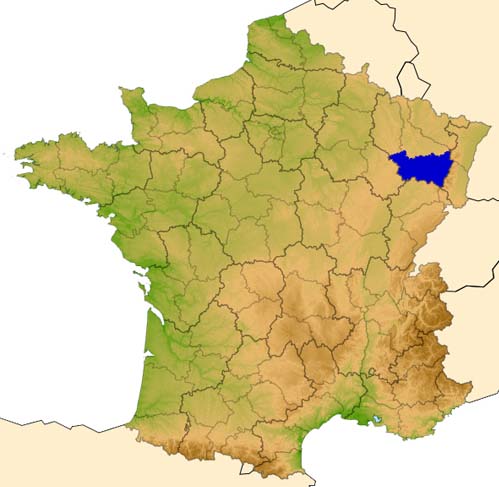
But first, some geography. The Vosges are in the east of France:

carte_francezzzzz

They are mountains which are much lower than the Alps and they do not have the same snow capped peaks. They are more rounded, with conifers and moorland:

SNV84400 zzzzzzzzzz

While not a top tourist destination, the Vosges are famous for their savoury cuisine and their beers, both of which look towards Germany and the east for inspiration.

For the Beast, once again, I will look at a number of French cryptozoological websites and you can take your own average between them. “Vampire Dark News” says:

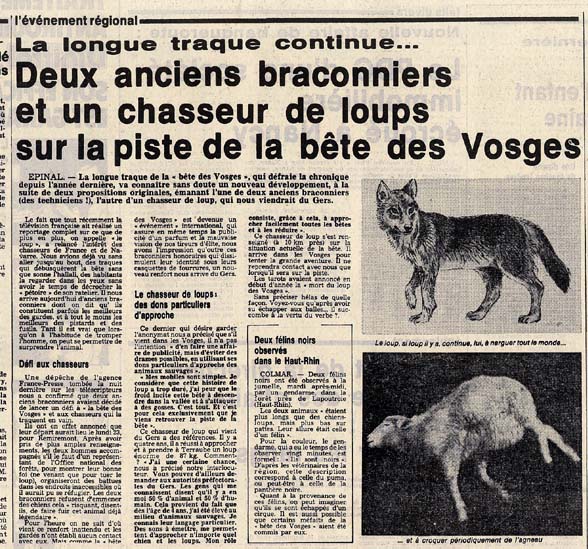
“The “Beast of the Vosges” is one of the favourite topics of discussion for residents of the local cafés. Everyone remembers the ravages of this strange creature from 1977 to 1988.(these dates differ from other sources).  It killed more than 300 animals, between Epinal and Bresse (an area of over 150 square kilometres).  Poultry houses were attacked, horses were injured, at least 200 sheep were slaughtered … but there were no attacks against human beings.

La_bete_des_Vosges zzzzzzz

The animal would disappear only to reappear later and begin its misdeeds all over again. Was it a wolf?  A rabid dog?  Several stray dogs?  An animal trained to kill?  The mystery was never solved because nobody ever managed to get a really good look at the beast, neither hunters nor the police nor the military despite 26 hunts being  organized to kill it.  The Beast was able to avoid all the ambushes and all the traps.  Shot at several times from fairly closely range, the animal was never wounded or identified. The only conclusion was that it was some sort of canid.  And because of this, stray dogs were killed everywhere.

And then in 1994, a she-wolf that attacked flocks of sheep was saddled with the nickname of the “Beast of the Vosges”.

1994

It was filmed by an amateur and was active for several months before being found dead in 1995. Protected by a Decree of the Ministry of the Environment, the protected animal could not be hunted, at least officially.  But who buried the remains which were found in early 1995?

The name of the Beast of the Vosges was later given to a type of lager produced in the Vosges area.”

(My own translation)

This slideshow requires JavaScript.

Wikipedia adds a few more details:

In December 1975, at Rambervillers, forest workers noticed footprints of a carnivore that they could not identify. In March 1976 , in Domèvre-sur-Durbion, seven cattle and a number of sheep were found slaughtered.  A few days later, cattle were the victims at Moriville and sheep at Hadigny-les-Verrières.  They accused the Beast of attacks on poultry sheds, of  injuring horses and of slaughtering at least two hundred sheep. No attack though was made against human beings  After a final attack on sheep on June 2, 1976 , nothing more was heard of the animal.
A few years later, in 1994 , a female wolf was given the nickname of the “Beast of the Vosges”.  For several months it maintained its attacks on  flocks of sheep, before its remains were found on May 19th 1995 .
In 2011, after an absence of some 17 years, the Beast again attacked flocks of sheep in the Vosges in the village of Ventron; forty sheep were found dead in less than a month.”

(My own translation)

Another well known cryptozoological website adds some extra, more scandalous suggestions :

“It all begins with a report on February 6th 1977 when Lucien Baret, a Federal Guard, is the witness as the beast stalks a roe deer in the woods at Rambervillier. It is some kind of enormous wolf-dog which hunts in the open without making the least noise. And then in less than ten months, not far short of 62 sheep, two lambs and a bullock weighing 300 kg have their throats cut out, and more than a dozen cattle are attacked.

canadien

What seemed at first sight to be a mere footnote in a newspaper, just mentioning  feral dogs, now becomes transformed into an affair with a monster where everybody has their very own something to contribute. First of all the talk is of a wolf or a dog or a lynx. And then suspicion turns to human beings. Fingers are pointed at certain people, but the favourite is Herr Reinartz, the owner of a vast estate which partially covers sections of a more ancient hunting ground, the most frequently hunted area in the region. Furthermore this German industrialist is not particularly lucky because he has a name very like that of a Nazi colonel, Colonel Reinardt, who committed atrocities in the region during the Second World War, only thirty years previously. This is a similarity which fans the flames of old hatreds. Present day Monsieur Reinartz fears for his life. Has he imported a couple of wolves to guard his estate, but then they have escaped, as certain people claim? Certainly not. A wolf only attacks in certain conditions and these were not fulfilled here. The estate of Monsieur Reinartz being a hunting ground, the wolves would have had more than enough to eat without having to go beyond their enclosures in search of what they already had in their cage. A large cage covering several hectares but a cage nevertheless.
And against all expectations, the press goes wild. The German industrialist is attacked. Abuse is heaped upon him. He is insulted on the front page of certain newspapers. The affair goes to court. Had he been of another nationality, things would probably not have degenerated in this way. None of this, though, stopped flocks of sheep being ripped to pieces by the teeth of the beast:

nespapere zzzz

And then one day, roughly one year later,  everything just stops. No more massacres, no more animals to put out of their misery in the first light of morning. As mysteriously as it appeared, the Beast of the Vosges disappears. It flies away. All of this, of course, without anybody really understanding at all why. But after its disappearance, the Beast leaves lots of unanswered questions, and even 32 years later, tongues will not be loosened. There are a few clues perhaps, and doubtless some details are completely true, but the people who know, or who think they know, just add to the legend. One can well imagine what will have been written about this Beast in 210 years’ time when other people look at this business, in exactly the same way that we nowadays look back at the Beast of Gévaudan. How many arguments there will be in future generations between all the different viewpoints !
It is impossible not to see in this business numerous similarities with the Beast of Gévaudan. The same black magic seems to protect the animal which escapes through the fingers of the hunters on every single occasion . Beats are organised, but with only the same effectiveness of those of Duhamel in 1765, despite the fact they are now carried out with methods which the eighteenth century could not possibly have imagined. One day the Beast of the Vosges manages to escape its pursuers because one of the hunters is not at his post. A strange reminder of the indignation felt by the noblemen at Malzieu in 1765 when the Beast of Gévaudan was similarly allowed  to escape its pursuers because a guard was not in the correct place. And as one thing leads to another, people realise that this affair is not, in actual fact, very different from that of the Beast of Gévaudan. There are no human victims to pity, of course, but the chain of events is a mechanism which remains essentially the same for both affairs: first of all, people want to put things into perspective: it’s just a wolf. Everything will soon be taken care of. Then, as the Beast evades beats, traps and poisons, it becomes a tool of vengeance. In the Gévaudan of the eighteenth century the Bishop of Choiseul Beaupré sees the Beast as the avenging arm of God. In 1977, in the Vosges, it soon turns into a dog, radio controlled from some distance. But nobody will say a word about it. Nobody?”

 (My own translation)

This same website, and many others, contain the only three known photographs of the Beast of the Vosges. They prove it, apparently, to have been a canid of some sort, but not definitely a wolf. The account concludes with:

“always this question comes to everyone’s lips: the Beast, what was it? I asked Daniel Jumentier, who was present when the photos were taken, and he himself saw the Beast from afar

aa bete des vosges 1

The animal was probably a wolf dog cross, first or second generation, weighing at least sixty pounds.

vosges_02

It was released to attack herds and flocks to hurt their owners.  Vengance between men, but through the intermediary of animals.  We can see two periods in the attacks: at first the Beast is confined to attacks on the plain, but then goes beyond La Bresse (a mountainous area) where it then goes wild. According to Daniel, one reason for this fit of madness: the loss of its master.”

And of course, unless somebody suddenly decides to speak up and reveal some hitherto hidden secret about this creature, we have reached the end of our investigation. Here some films to keep you going. The ancient ones date back as far as 1977, when Mankind’s existence was only occasionally slipping into colour:

And here is the second:

And this one shows that even a third comeback is not necessarily excessive:

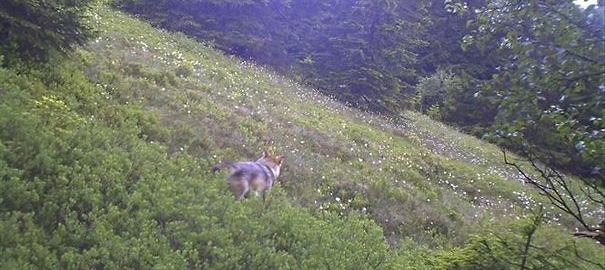
There will be no more Beasts of the Vosges though. The Grey Wolf has now officially returned to the Vosges Mountains, thanks to the conservation efforts of a number of countries in the European Union, including Spain, Italy and Germany. Indeed, the Beast in 2011 was most probably one of the first two wolves who arrived in the Vosges that very year.  “Smile, you’re on Trailcam!”:

ATTAQUE DE LOUP


26 Comments

by | June 10, 2015 · 2:15 pm

The Beast of Noth

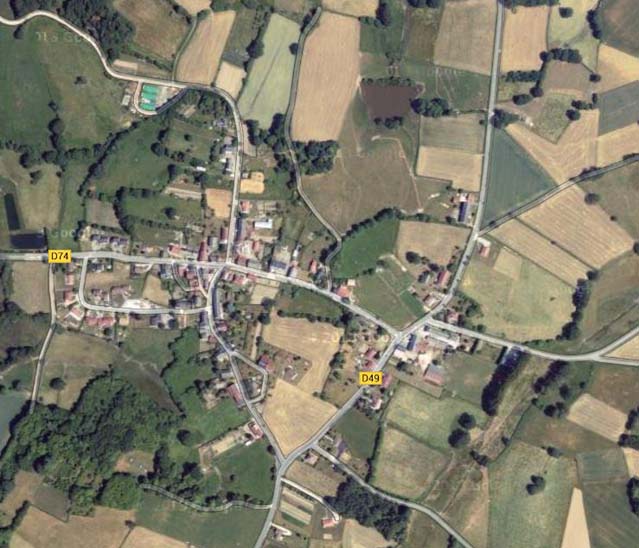
A more modern monster to menace the peace and tranquillity of the French countryside and its inhabitants was the wonderfully named “Beast of Noth”, “La Bête de Noth”. Here is an aerial view of where it was seen:

Capture

Noth is a small village to the north of Limoges. It is marked in red on the map of France. The street map shows just how small a place it is:

This slideshow requires JavaScript.

Once again, I will look at a number of French cryptozoological websites and you can take your own average between them. I have combined two apparently closely related websites to produce this, slightly more detailed, account…

“In November 1982 the sun is rising over Noth, a village of just 450 people. Marcel Jinjeau, a market gardener from Fongeneuille near Noth, steps into his field to start the first jobs of the morning. Suddenly he notices through a veil of mist a shape lying on the grass. He thinks it is a calf. The animal feels his presence, sniffs the air then stands up. Marcel pinches himself: it is not a cow, or any bovine. The back end of the animal is slim but the neck is like that of a bull. And the way it walks. It’s like some kind of cat!

autumn mists zzzzzz

The animal walks off to take refuge in the woods. Terrified, Marcel rushes back home. If he tells this story to the village, they will think he is a madman. The following day at first light, just a few hundred metres away, at the Castle of La Fot, one of the servants goes to fetch his master’s car from the garage. As he is approaching the vehicle, he hears a savage growling in the darkness. Frightened, the man goes off to find a torch and a rifle, but when he returns to the garage, there is nothing there. Outside on the other hand, the strange visitor has left the imprint of his paws: four inches long (10cm) long, and nearly five inches(12 cm) across; a hefty animal. In the following days, the beast will leave other tracks: the corpses of lambs, that of a bullock, and a heifer. They are ripped to pieces, torn to shreds. Today though, a storm will wash away all trace of it.
Died of Fright
Meanwhile, that very afternoon the Mayor of Noth, André Lalande, and his friend, one of the partners in the Wolf Centre at Dun-le-Palestel then organise a beat. About thirty local hunters rush off to scour the forest, but the weather is against them. A storm brews up, the wind cuts out all electric power, and vast torrents of water wash their cars away. The animal is seen by several witnesses but many hunters turn back.
Not Rémy L. To prove his reputation as a crack shot, and to brave the elements which have been unleashed, he rushes off into the mud when suddenly – the beast looms up just five metres in front from him. He aims his rifle. But all of his body is shaking. He has never faced an animal of this kind. He fires, but only hits the cabbages. And he flees without further ado, quaking with fear. He will remain in shock for two days, completely incapable of putting a name to this creature. Which disappears, only to reappear forty kilometres away in Haute-Vienne, near Chateauponsac. In this area, witnesses talk of an animal a great deal bigger than a dog, with a long tail and with fur the colour of burnt sienna (a dark orangey-brown). The victims increase in number and terror spreads. People think they are seeing this feline everywhere. In the schools the children take fright and their teachers reassure them as best they can. The Mayor of Noth gives the cast of the paw prints to Dr Klein, a Parisian veterinary who is totally upfront.

noth prints

“They are those of a lion or a puma.” And just what is an animal like this doing right in the middle of the Creuse region?
Some people have their own ideas. Since no circus has reported any escape of an animal, there must be a man behind it. Somebody who has come back from Africa. Somebody who is wealthy enough to carry out the scheme. All eyes all turn towards an aristocrat in North, the Marquis de V. The rumours become increasingly accusatory, “There has been an incident”, they murmur in the village. “He has lost his lion and he can’t get his hands back on it.” An even stronger rumour is that the Marquis remains a  ghostly figure, never there, always somewhere else, away in Moselle. The gossips have an answer for everything. When the zoologists state that the beast’s appetite is abnormally light for a big cat, they argue “It’s because the hand of Man is feeding it”. Moreover when there is a new beat near Chateauponsac on December 12th, two witnesses state that they have caught a glimpse of the Beast deep in the forest……with a man. An hallucination?
During a year there are sporadic reports of people who think that they may have seen this feline, until the gossip finally dies away.  Today in the village, nobody is keen to retract what has been said. “No….I tell you….there was an animal, the people who saw it said it used to have a strange expression in its eyes. But one that they will never forget.”

A slightly less dramatic telling of the tale comes in Wikipedia:

“The « Bête de Noth » was a carnivorous animal behind a series of attacks on flocks of sheep from November 1982 onwards, in the Department of Creuse.  Among others, on November 10th the Beast of Noth killed a bullock and a heifer each weighing 900lb, both at a place called Maison-neuve.

farm barns zzzzzz

And then on November 19th, two lambs at Auzillac, with another at Maupas on December 3rd, and then a second heifer at Grand-bourg on December 9th. It was not the attacks on farm animals which appalled people so much as the state in which the corpses were found. They were all horribly ripped to shreds. Rumours began to circulate, suggesting a lion or a puma imported by an aristocrat in the area. During a beat organised in the Forest of Noth in November 1982 one huntsman was confronted by the animal but he was not able to identify it. The whole affair has never been explained.”

7 Comments

Filed under Cryptozoology, France, History, Science, Wildlife and Nature

The Beast of the Cévennes, the Beast of the Gard, the Beast of Vivarais (it did get around)

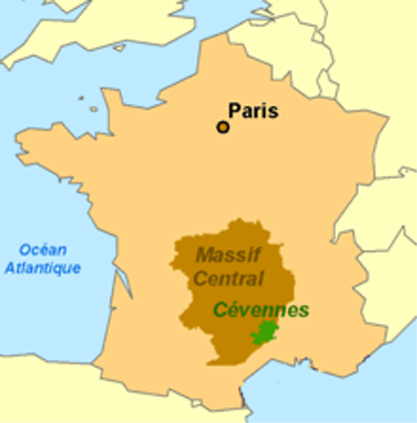
From 1809-1817, the Beast of the Cévennes, the Beast of the Gard or the Beast of Vivarais,(a creature which obviously ranged far and wide) was just one more in the long, long series of creatures, beasts, monsters, feral or hybrid dogs, wolves with completely atypical behaviour or sexual psychopath serial killers who have ravaged different areas of France from around 1550 until the present day. Here is the  Cévennes region:

Carte-cevennes-france

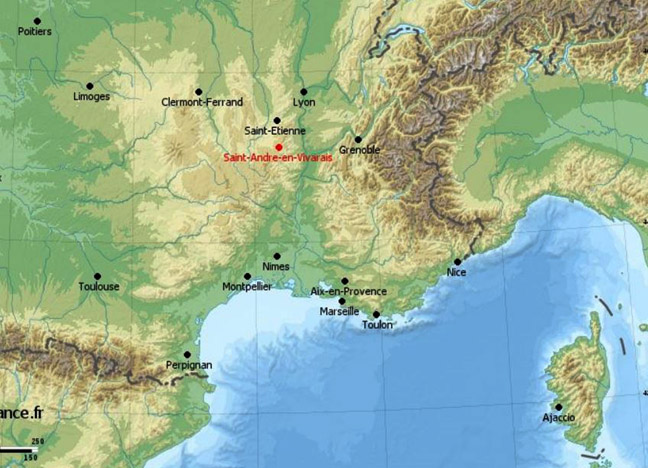
Here is the Vivarais area, in red, in the centre:

vivarais

And here is the Gard area, famous for the Pont du Gard. Again, it is in red:

This slideshow requires JavaScript.

Once again, I have looked at a number of French cryptozoological websites and you can take your own average between them. “Vampire Dark News” provides a solid, simple introduction to the latest killer:

“This particular creature spread panic in a vast region comprising Lozère, the Grand Gard and the Ardèche from 1809-1817. It killed, however, comparatively few victims compared to the eight long years when it was active. There were only 29 victims, almost exclusively women and children, six of whom were decapitated. On the other hand, the monster was brave enough to venture into the very houses where people lived. Their descriptions said that the beast was a wolf the size of a donkey with brown fur, a black mane and large udders. Perhaps it was an animal which had escaped from a circus. This creature was never killed.”

(My own translation)

How many wolves fit that description? A black mane? The size of a donkey? Large udders?

The French version of Wikipedia, provides a slightly more developed tale. It begins with the story of how :

«  The Journal du Gard on Octobre 21st 1809 announced the attacks by this animal in these terms :
« In just a few days, a ferocious animal has spread terror in the region of the Gard. Just like the Beast of Gévaudan of days long past (1764-1767), the Beast of the Cévennes is ravaging this part of the “country.”

2653590908_1Wikipédia then goes on to say:

“The Beast killed 29 people, including 19 children, but the list might actually be longer, because the Death Certificates do not always mention the reason for the death. A child called François Marcy, seven years old, was devoured on September 8th 1812 next to his house. Augustin Colomb, aged eight, was carried off on January 9th 1813. Only his head was ever found. In the middle of October, little Rose Henriette Dumas, aged seven, was devoured in the woods.  The attacks went on from 1809-1816, and the audacity of the creature recalls the famous affair of the Beast of Gévaudan. A woman of 34 was attacked just coming out of the church and the beast even attacked villagers inside their own houses.  The rumour was current that it had even eaten the hands of a child who was being rocked in his cradle.  Despite numerous beats and traps set by the people of the different villages the creature remained uncatchable. The attacks came to a final end in 1816 but the affair was never cleared up. It is unknown if this animal was killed during a beat, whether it changed its area of operation or if it was a question of crimes which had been carried out by human beings but were then disguised as being the work of a monster.
Several theories are offered about the origin of this aggressive animal. According to certain people it was a female wolf from Spain even though its behaviour did not resemble that of a wolf in any way whatsoever. The pins in the clothing of certain of his female victims had been removed (hardly the behaviour of a wolf) and six corpses were found decapitated, their necks seemingly having been cut by a blade. The very act of decapitation, of course, is not one which is done deliberately by any animal.

Mont Lozère seems to have been the epicentre of the whole business and had already experienced widespread attacks by wolves in the seventeenth century.

mont lozere

The descriptions which were given by witnesses at the time are extremely variable. Some people talk of an immense wolf, the size of a donkey with a mane and a coat of brown or red fur. Other witnesses describe a creature, or a wolf, the size of a calf, with a grey and red coat. In the majority of the descriptions, the witnesses agree on the presence of a huge belly covered in white fur which almost dragged on the ground. The beast had large ears, a long muzzle and a thick, heavy, tail.”

(My own translation)

What animal was this?  An immense wolf, the size of a donkey with a mane and a coat of brown or red fur? A wolf the size of a calf ? A huge belly covered in white fur almost dragging on the ground? A creature, or a wolf? This is beginning not to make any sense at all. The French peasants in this area, just like those in Gévaudan, all knew a wolf when they saw one. And white fur underneath its body means it cannot have been any species of wolf known today. And the Beast of Gévaudan explanation, based on crazed killers who used hybrid creatures to kill on their own perverted and vengeful behalf will only stretch so far. Indeed, the more I think about it, the more I am beginning to have my doubts even about Jean or Antoine Chastel and the rest of the local lunatics who were supposed to have masterminded the Gévaudan outrages.

BETE VIVARAIS

Another website relates how :

“The Beast of Vivarais (or of Cévennes) killed many women and children between 1809 and 1817 within the departments of Lozère, Gard and Ardèche. The animal is described as having the form of a wolf, but with longer ears and black hair bristling over the entire length of its back.  Another report, dating from 1813, speaks of a wolf the size of a calf, with grey and red fur, with a dangling belly covered in white fur with “roudeaux” (a word I have been unable to find in any dictionary, but they are tabby or tiger striped with white).  The head and muzzle are long, the tail is long and sticks up at the end. The official number of victims is twenty-nine.  However it is likely that the list is actually longer because Death Certificates do not necessarily mention the cause of death. In an article on the Beast of the Cevennes, Guy Crouzet details all of these killings, some of which say a great deal about the horror and helplessness of the local people in trying to overcome events which had left them completely out of their depth. And so near the village of Brahic: “was interred the body of François Marcy of Vénissac, seven years old, eaten by a wild beast on September 8th 1812, just a few steps from his home. Vézian, minister of the church.”
“ January 9th, 1813, the death of Augustine Columbus, aged eight. Devoured by a wolf, only the head was found. The boy was abducted on January 8th at five o’clock in the evening in the place called Beaujeu.”
On October 23rd 1813 at Saint-André-de-Cruzières, before the authorities there appeared: “Jacques Dumas, a farmer by profession, the uncle of the deceased, who lived in Chazelles and also Monsieur Graffand the Imperial Solicitor, who lived in Pierregras. They stated that Rose Henriette Dumas, seven years old, the daughter of Louis Dumas, a builder and Marie Maurin, from Chazelles has died from having been devoured in the woods by a ferocious wild beast yesterday, October 22nd, The remaining fragments of the deceased’s body were collected up, inspected carefully and then wrapped in the blood soaked skin of the little girl. They were recognized by her father Monsieur Dumas to be those of his late daughter Rose Henriette.”
Guy Crouzet also made a good point about Mont Lozère, which seems to have been the focus point of the Beast’s activities. Mont Lozère has already played host in the past to other monsters of the same type: in the seventeenth century, attacks by wolves on human beings were reported in the region of Saint-Julien-du-Tournel. And don’t forget that that the very first attacks by the Beast of Gévaudan were reported in Langogne, on the very edge of the Vivarais region. The Beast of Vivarais finally disappeared from the region in 1817, without ever being found. Perhaps it was killed during one of the many organized beats. Nobody knows.

(My own translation)

A wolf, but with longer ears and black hair bristling over the entire length of its back??  A wolf the size of a calf, with grey and red fur?? A dangling belly covered in white fur?? A tail that is long and sticks up at the end? For a wolf?
The “Midnight Forum” possibly isn’t quite the kind of website you might have expected, but it provides many of the details we have previously noted:

“The Beast of the Vivarais was also known as the Beast of the Cévennes or the Beast of the Gard, This monster killed 19 children. This creature first appeared in the regions of Ardèche and Gard in 1809. The descriptions of the monster vary widely. Some say it was a huge wolf the size of a donkey, with a thick mane and a coat of brown or red fur.  Others said that the creature was completely black, or that it was a wolf the size of a calf with a grey and red coat.  In most descriptions, however, witnesses spoke of a big belly covered in white fur, which hung almost to the ground.  Many thought it was a she-wolf that could have come from Spain, even if the behaviour of the animal was in no way whatsoever like that of a wolf.  It had big ears, with a long snout and a luxuriant tail.”

(My own translation)

This last one may well be a rehash of other accounts, but it is equally possible that it may be the firstborn account which all the others have rehashed.
Nobody could accept without question that this animal was an everyday, common or garden wolf. These French people two hundred years ago knew wolves.

This slideshow requires JavaScript.

From 1818-1829, supposedly 14,000 wolves were killed every single year in France. Even in 1889, around 500 wolves were trapped or shot nationally. The last wolf was killed as recently as 1937. It is, of course, a different question to explain exactly what the Beast of the Cévennes, the Beast of the Gard or the Beast of Vivarais may have been. And at this distance in time, it is not really very likely to happen. Having said that, I am working on it, even as we speak….

2 Comments

Filed under Cryptozoology, France, History, Wildlife and Nature

The Beast of Benais

The ferocious so-called “Beast of Benais”, in central France, was either one unbelievably long lived monster, or a series of, conceivably, related animals.

7741547673_carte-de-situation-de-benais-indre-et-loire

According to one account…..

“At the end of the winter of 1693, on February 19th, a wolf attacked a nine-year-old child, Pierre Boireau, at Saint-Patrice. The victim was found partially devoured and five days later, a mother found the remains of her own daughter, Antoinette, aged seven, in the heathland around Continvoir. In March 1694, a wolf killed two more victims, adults on this occasion, at Benais. In April, there were three more, four in May and eight in June, including a mother and her child.

chateau ccccccc

Monsieur de Miromesnil, the Lord Lieutenant in charge of the province of Touraine, then organised a series of beats. According to his account in June 1694, “In fewer than six months, wolves have killed in the area around Benais more than 70 people and have wounded the same number”.

benais

In June two shepherdesses had their throats ripped out, a father died defending his daughter at Ingrandes and in July there were three further killings in Benais and at Les Essards. In August a sixty four year old woman was devoured in Benais, and the same fate befell a little girl and two adult women in Bourgueil. None of this  behaviour, of course, is that of a wolf such as we experience them in the 21st century. As I have noted elsewhere, only one attack by a wolf on a human being has ever been documented in North America, and even then, it was a wolf which was used to scavenging on a landfill site and  had therefore lost its fear of Man.
Until the following winter of 1693-1694, the attacks stopped but the population of the area was still completely terrified. Two wolves were killed during the beats organised by Monsieur de Miromesnil, but the death of a young man of eighteen in December 1693, with two other young people killed in Saint-Michel-sur-Loire  in the January of 1694 proved that the Beast far from finished. There was, however, a long hiatus until the very last victim came in August of that same year, 1694. Then everything came to a stop.

coloiur village

Some fifty seven years later, on June 9th 1751 a young shepherd was attacked and devoured at Nouzilly to the north of Tours. The animal was not seen but wolves were considered to be the culprits. The body of the young man was horribly mutilated accorded to the description given by the village priest, Danican, the man charged with burying the body…

“The child from La Charité who used to live near your tenant farmer at Les Fosses Rouges, looking after his six animals, was ripped to pieces and devoured at eight o’clock in the morning by carnivorous wolves.  I buried her at quarter past twelve. They brought the sad remains of her corpse to the church, wrapped up in a woman’s apron with the child’s own clothes covered in blood. The beast had ripped her tracheal artery and part of her right cheek and had eaten her thigh which had been ripped off her body as far down as the knee.  This was in such a way that the top part of the bone of this thigh was extensively gnawed away and devoid of flesh as if it had been trimmed off purposefully by a knife. The beast in order to devour her intestines had eaten all of her belly and gnawed her ribs. Of all her viscera, there remained only one foot of (illegible, perhaps fortunately) and a small part of the spleen.”

This formidable animal resembled in every point including its behaviour « La Bête du Gévaudan ». To be convinced of this, it is enough to be aware of the story which was told by the village priest at Varennes…

“These beasts were almost like a wolf, except that they had much wider muzzles. When they first saw people, they were amiable like a dog would be, but then they leapt on their throats.”

Here is a different account

“A ferocious beast of which nobody knew the name, but with an unheard of daring and ferocity, struck, for the most part, in the Forest of Benais, not far from the village of the same name. It began in 1693 and the attacks were to last for a year and a half……during this time the animal had 300 victims. The attacks suddenly stopped in the month of August 1694. The Beast of Benais was never killed.”

A different website says…

“According to the evidence of the village priest at Varennes, it was thought that there were 300 victims, whereas the parish registers of the area report only 72 deaths caused by animal attacks during the same period, a total which is both more plausible and yet still quite a considerable one……The witnesses of the era said to the priest that there was not just one beast but several acting in concert and that the latter looked like wolves, but may not have been real wolves. They were very much like wolves but had a wider muzzle. One detail of their behaviour was quite remarkable in that they allowed themselves to be patted, but then leapt on the throat of the victim. People thought that they were “loups cerviers”. The people, however, were not so sure”.

“loups cerviers” does not exist as a phrase in the online foreign language dictionary that I usually consult, but I did find it in what looked to be quite a good alternative to my initial choice. In any case, the writer of the original cryptozoology website has added in brackets after “loup cervier”, the word “lynx”.  Google agrees with this and offers the expression as the French Canadian phrase  for “Le Lynx du Canada”. Strangely enough, when the French police spend a merry weekend recently looking for a wandering tiger near Paris, the suggestion that their expert put forward was that the animal was a “loup cervier”. In none of these cases, however, does the unbelievably secretive behaviour of the lynx, Camadian or otherwise, fit the details given by the witnesses.

This slideshow requires JavaScript.

In France at this time, parish registers would perhaps record the fact that somebody had died, but there was no legal stipulation that the person writing the account (usually the priest, the only one in the parish who was literate) should record the reason for death. If the priest at Varennes recorded his total of animal attack victims as three hundred, then this might well be a reasonably accurate total, based on his own local knowledge of the real facts, whereas the parish registers of an area which reports only 72 deaths caused by animal attacks might merely be providing a politically more acceptable figure. Certainly, this economy with the truth is known to have happened with the Beast of Gévaudan, whose kill rate was deliberately suppressed once the King’s official representatives, the d’Enneval father and son, had supposedly put an end to the monster.

Could the Beast or Beasts of Benais have been a number of feral dogs or the hybrids of wolves and large dogs? Certain death counts attributed to the Beast or Beasts are incredible. I do not really have the time to be meticulously exact but this list captures the flavour…

“In November 1693, there were deaths on the 18th, the 19th, the 22nd, the 23rd, the 25th, the 26th and the 27th. At Mazières, from November 29th to December 3rd, there were four victims. In Langeais in three days, November 29th-December 1st, there were three dead. More followed in Langeais on December 13th, 14th and 15th.
In early March of 1694, several children in Continvoir were devoured. Desperate, the inhabitants no longer knew what they could do to stop this scourge. The local clergy increased their prayers. God, after turning a deaf ear for so long, finally heard them. At the beginning of the month of August 1694 the carnage ceased.”

Subsequent writers then began their own attempts to count the victims. The priest at Varennes suggested 300 victims. Marie-Rose Souty proposed 95 definite kills, but added that this figure was certainly much lower than the real one, because most village priests of the time did not ever mention the cause of death for their parishioners when  recording their demise. Marie-Rose Souty suggests then, at least 200 victims in a year and a half, that is to say around ten or eleven per month. Above all, the monster seems to have appreciated “fresh meat” and always attacked the weakest people, those who were the least able to defend themselves. Its ferocity was unbelievable. Even the Beast of Gévaudan only managed a mere three victims a month.

.
Yet more creatures appeared in Touraine in 1751 in the north of the province, and then more in 1808 and more again in 1814. They were all thought to be wolves,  even though the behaviour of wolves in our present era just would not encompass their attacking human beings, killing them and then devouring them. Wolves just don’t behave like that nowadays!

As an afterthought, the more I read about these many monsters in the France of yesteryear, the less satisfied I am about any of the most frequently quoted explanations. I would reject wolf more or less totally and even feral dogs or wolf-dog hybrids seems to me increasingly less likely, whether or not they were trained by serial killers, sexual psychopaths or whoever. The peasants of the time were familiar with wolves and frequently rejected that animal as an explanation for the Beast of Benais. Their descriptions often have, variously, wide muzzles, reddish fur, black manes, a black stripe between head and tail, a belly that drags low towards the ground and a full tail, that could even be used to strike people. The more books I read the less I understand this. Perhaps in France there was  a very small and thinly scattered population of a ferocious animal, nowadays extinct, but which still hung on in the wilder regions. Perhaps we should be looking at the idea of a mesonychid ?

13 Comments

Filed under Cryptozoology, France, History, Wildlife and Nature

Black Shuck on the world stage

As I have said in two previous blogposts, Old Shuck, Black Shuck, or simply Shuck is the name of the huge, phantom black dog which roams, allegedly, the fields and fens of Norfolk and Suffolk. There are, of course, many places other than East Anglia where completely credible reports occur. We have already looked at three in Nottinghamshire, but almost every county in England has its own version of the creature, whether that be the “Bogey Beast” in Lancashire, the Lincolnshire “Hairy Jack”, the “Gallytrot” in Suffolk or the “Bargheust” in Yorkshire and the North.

hellhound zzzzz

They are often associated with electrical storms, such as Black Shuck’s appearance at first Bungay and then Blythburgh in Suffolk. More often, though, they are linked to places rather than meteorological conditions. Churchyards and graveyards at midnight are a favourite, as well as crossroads. Equally, if not more, favoured are dark lanes, ancient pathways and lonely footpaths in the countryside. Occasionally, there is a connection with water, such as a river, a lake or even a beach. Sometimes, such as at Launceston in Cornwall, it may be an ancient tumulus, as is the case with the….

“graves and prehistoric burials whose attendant hounds proliferate densely in Wiltshire and West Somerset on the grounds that they can be seen as passages downwards to the World of the Dead, and so also suicide graves and scenes of execution…”

(Theo Brown: ‘The Black Dog’, in Porter and Russell (ed.) ‘Animals in Folklore’ (1978).”

Likewise, the Black Dog is seen as the “guardian of the threshold, escorting souls into the afterlife”. According to Jennifer Westwood in her book “Albion” (1985) :

“Black Dogs commonly haunt lanes, footpaths, bridges, crossroads and graves – all points of transition, …..held to be weak spots in the fabric dividing the mortal world from the supernatural.”

And :

“If a count be made of the kind of places favoured by these apparitions one thing becomes plain. Quite half the localities are places associated with movement from one locality to another: roads, lanes, footpaths, ancient trackways, bridges, crossroads.”

Let’s now leave Nottinghamshire’s Shuck eating his Pedigree Chum for just a moment, and skip thousands of miles to the north east of the United States. In her most excellent book, “Real Wolfmen True Encounters in Modern America” the author Linda S Godfrey explains her idea that…

“One common factor seems to emerge from every collection of strange creature accounts: there is an unmistakable connection between anomalous beings and certain features of the land. Unexplainable creatures and events tend to occur near freshwater; on hills; at boundary areas such as roads; and on or near burial grounds, and military zones, and all types of sacred areas around the world.
This geographic predictability supports the premise of many contemporary investigators like Rosemary Ellen Guiley, Nick Redfern, and the late John Keel, who suspect that anomalous creatures are not natural animals; they are entities that belong to a completely non-human realm and are attracted to certain energies of the Earth and all living creatures.”

The researchers listed above, and many others, believe that werewolves, Bigfoot, alien big cats, grey aliens, UFOs and sea monsters as well as more traditional entities such as fairies, dragons and ogres are all part of a planet-wide “spirit” population that manifests “in some sort of concert with the human mind, intent on  its own enigmatic purposes.”

.
And of course, this theory does go quite a long way to explaining a very large question, namely, “Why do so many apparently reliable witnesses continue to report the same, impossible things?”

.
If we just think of Great Britain, how many UFOs, Black Dogs, ghosts and even sea serpents have been reported over the years?

Linda S Godfrey, who specialises in the more exotic of the world’s canids and possible canids writes about the Wolfmen who are regularly seen in her native Wisconsin.

portrait xxxxxxx

Wolfmen in form are rather like Bigfoot, except that they have a wolf’s head.  They are thinner than Bigfoot, and consequently, can move very quickly if required. The most famous of the American Wolfmen is the “Beast of Bray Road”.

This slideshow requires JavaScript.


Witnesses have sketched what they saw on this most famous of cryptozoological highways…

This slideshow requires JavaScript.

Linda S Godfrey first became interested in the Beast when she was a journalist and had the opportunity to speak to one of the first witnesses….
WisconsinWolfnespaper ccccccc

Fairly frequently, the Wolfman’s favourite food is roadkill. These were originally witness sketches…

This slideshow requires JavaScript.

There are at least two photographs…

This slideshow requires JavaScript.

One of the very earliest known sightings of a Wolfman occurred not in Bray Road, but at the St Coletta School for Exceptional Children, where Mark Shackelman worked as a security guard. Linda S Godfrey tells the story….

“The nightwatchman’s main duty was to make quiet surveillance of the 174 acre grounds…The land was dotted with ancient Native American burial mounds.
One evening, movement on the mound behind the main building drew the sharp nightwatchman’s attention as he observed what appeared to be a large animal digging furiously atop the raised earth. The creature was roughly man-size, covered in dark fur, and knelt in a way that should have been physically impossible for a four-footed beast And it fled on two feet rather than four as soon as it noticed Shackelman’s presence.
The flummoxed Watchman examined the mound next day and saw that the Earth had been torn by what looked like big claw marks, with raking slashes in sets of three. That night, he made sure to arm himself with a big, club-like flashlight before making his rounds. Sure enough, the creature was there again, digging in the mound near midnight. This time, however, it rose upon its hind legs and faced Shackelman. It stood about six feet tall and reeked of rotten meat.
Shackelman bravely shined his light at the creature so that he could get a good, long look at it. Although it was covered in fur, he could make out powerful arms that ended in hands with thumbs and little fingers that were much smaller than the middle three digits, explaining the triple slashes in the dirt. It had a muscular torso and a canid head with a muzzle and pointed ears. Perhaps most surprisingly of all, the creature made a growling vocalisation that Shackelman later described as a “neo-human voice” and that sounded to him like three syllables, “ga- dar-rah”. The creature continued to make fearless eye contact with Shackelman, who felt he was in imminent and mortal danger.”

If you want to read what happens to Mr. Shackelman, or the Wolfman, then you will have to buy the book! You will not be disappointed! It is a marvellous book which opens a whole world of strangeness that takes a lot to explain away. This report of a wolfman was just the first of the many. According to Linda S Godfrey…

“Was the St Coletta creature just a sign of things to come? The Shackelman sighting was only the first of over one hundred reports nationwide of a human sized canine that could run upright or crouch with a chunk of bloody carrion clutched in its paws. In that incident and most sightings since, the creature is described with a head that appears wolf-like but a body that often – except for its fur, dog shaped limbs, and elongated pause – looks somewhat humanoid because of its powerfully muscular torso and shoulders.”

Here are some more modern colour photos, in some cases taken by trailcams.

This slideshow requires JavaScript.

If you look at Youtube, a search for the “Beast of Bray Road” will reveal scores of films of varying quality. This lasts an interesting three minutes…

and this is a more thorough full length programme

If, however, you find yourself being tempted towards the “Gable Film”, please be aware that its maker has already acknowledged, several years ago, that the film is (a very accomplished) fake .

7 Comments

Filed under Cryptozoology, Science, Wildlife and Nature

The Beast of Sarlat

The « Bête féroce de Sarlat » was famous in Périgord in central France from 1766 onwards. Its peculiarity was not to attack women but exclusively to kill men.

This slideshow requires JavaScript.

According to that font of all knowledge, Wikipedia….

“The « Bête de Sarlat » was a man-eating animal behind a series of attacks against human beings in the Périgord province of France. During the spring of 1766, a dozen or so fatal attacks were been recorded in the villages around Sarlat. The inhabitants of the region were filled with genuine panic, beginning to talk of a gigantic beast thirsting for human blood or even a werewolf. The creature managed around fifteen victims more, before in August 1766 the peasants and noblemen organised a beat together with more than a hundred rifles. During the course of this, the animal was flushed and killed. It was a wolf infected with rabies but the people did not readily accept this explanation and continued to talk of a werewolf.”

One website devoted primarily to the « Bête du Gévaudan » has a little to say about the « Bête de Sarlat » :
11111xxxxxxx

After all, the two areas are not a million miles apart in distance, although the two time periods clash, with the more famous Gévaudan monster killing its victims between the early summer of 1764 and June 19th, 1767 when a local man named Jean Chastel supposedly killed it during a hunt organized by a local nobleman.

“The Bête de Sarlat terrorised the Périgord province of France in the XVIIIth century. Its first appearance came in March 1766, when it carried out around ten killings in the surrounding area. The fear that the Beast caused can be imagined. It was from this time onwards that the myth of an enormous monster thirsting for human blood arose.
But in the month of August 1766, it was finally identified as a wolf suffering from rabies. The people did not really believe this explanation and it must be said that in the intervening time at least another eighteen more people were killed. The monster was seen absolutely everywhere, even in the dark backstreets of Sarlat. When the people’s fear and exasperation was at its height, the legend of the beast grew to such a point that the good people of the area no longer dared go out as soon as it got dark.

From this time onwards, both peasants and nobility came together with more than a hundred rifles and began a beat. The creature was found, pursued and shot. This death was confirmed by an assembly of a large number of happy eye-witnesses and seems to have taken away once and for all the justified fears of the local people. We know very well that the wolf with rabies and the man with rabies seem equally overcome with madness: frothing at the mouth, slavering and biting. They are terrifying to see and dangerous to approach. But this killing only stopped the spread of the rumour. Nothing really changed either in Sarlat or in the surrounding region, where they still spoke of the beast as a werewolf.”

perigord noir rocamadour cccccc

A further account tells broadly the same tale….

“The first time that this creature came to people’s attention was in the spring of 1766 when it had already committed a dozen murders in the villages around Sarlat. From then on, absolute terror reigned in the province of Périgord. They spoke of a gigantic beast, thirsting for human blood, and soon the legend grew to such a point that the people no longer dared to go out as night was falling, because it was claimed that the monster had even been seen in the very streets of Sarlat itself. The creature killed another good fifteen or so people before both the peasants and the aristocrats, driven to it by fear, organised a beat with more than a hundred rifles. The animal was flushed and killed, and it was stated to be a rabid wolf. Even if this particular animal was killed, its legend remained alive and well throughout the whole region, where they spoke for a good many more years of a bloodthirsty werewolf.”

On his own website, Mikerynos writes

“The Beast of Sarlat terrorised Périgord in the XVIIIth century. Its first appearance dates back to March 1766 when it had already committed around a dozen murders in the neighbouring areas. It is easy to imagine the terror that it provoked. It was from this time that there began the myth of an enormous monster thirsting for human blood. In the month of August 1766, however, the animal was finally identified as a wolf carrying rabies. The ordinary people found it difficult to accept this explanation, and it must be said that in the meantime it had killed at least eighteen more people.
People would see the creature absolutely everywhere, even in the dark alleyways of Sarlat. With fear and anger both reaching their peak, the tales told about  the beast grew to such a level that the good people of the region no longer dared to go out as night fell. From that moment both peasants and aristocrats came together with more than a hundred rifles and organised a beat. The animal was found, tracked and shot. This death was witnessed by so many ecstatic eyes and seemed to have rid the local people for ever of the object of their well justified fears.
We know very well that a wolf or a man with rabies both seem equally overcome with madness, slavering at the mouth, frothing and biting. They are terrifying to see and dangerous to approach. But this only stopped the rumours from spreading, nothing had changed and both in Sarlat and the surrounding area, they still talk of the beast even now as a werewolf.”

At the time in 1766, a broadsheet about the beast was published locally in the province.

broadsheetcccccc

Here is the bottom half with the text. Hopefully, the words are a little clearer….broadsheet   bottom  cccccc Here is a translation of the words you can see, but unfortunately, this is, literally, only half the story. And it seems supremely ironic that on the scan of the front page, you can see some of the print from the back page in reverse, but I cannot find it anywhere on the Internet…

“The curious, remarkable and true tale of the deaths and disorder caused by the ferocious beast, in the area around Sarlat in the Périgord region (of France).
Recently there has been seen in the area around Sarlat in the Périgord region, a ferocious beast, that was considered to be a rabid wolf, but one of an extraordinary size. This ferocious beast roamed, at an incredible speed, over the parishes of Saint-Julien and Grossejac. In vain did a number of the inhabitants of one or the other parish try to put a stop to the depredations of this cruel animal. Between eighteen and twenty people were the sad victims of its fury.
This animal was in complete contrast to the Beast of Gévaudan of which so much has been said; for it seems that the former hated only men whereas the Beast of Gévaudan preferred to attack women. When ready to seize its prey, it put up its hackles, and its eyes became flaming red. It raised itself up on its back legs and tried to seize the victim, sometimes by the face, sometimes by other parts of the head. To stop the ravages of this formidable enemy, whose terrible deeds were already beginning to weigh only too heavily on people, the nobleman Descamps and the gentleman Saint Julien……

Raising itself up on its hind legs, of course, is not normal behaviour for a wolf, animals which nowadays seem to stick firmly to a four legged approach. Flaming red eyes, of course, are not a feature of any known wild animal.

The on-line edition of the newspaper « Sud-Ouest » reports…

“In the XVIIIth century a monster terrorised the south eastern part of the province of Périgord for several weeks. The creature appeared in March 1766 and around a dozen people were killed in the villages around Sarlat. Then was born the myth of an enormous beast thirsting for human blood, like some kind of werewolf.
In the month of August in the same year certain people identified it as a very large wolf infected with rabies. But the population were not reassured by this, especially as in the meantime eighteen other people had been killed. People glimpsed the beast everywhere, even in the dark little lanes of Sarlat. The “population of the village shut themselves away in their houses. Around a hundred people armed with rifles, both peasants and nobles then organised a beat. A rabid wolf was killed. The attacks stopped but the legend lived on, that of a werewolf.”

Its report continues with a device that is known, probably, to newspapers the whole world over. Indeed « Sud-Ouest » could not consider itself a real newspaper if it did not  have that desire to thrill, to terrify and then to sell more newspapers…

« Un loup a-t-il été aperçu en Dordogne ? »
“Has a Wolf been seen in the Dordogne?


la-bete-a-ete-prise-en-photo-par-quentin-sarlat-dans-un_1535215_480x300

«This animal was photographed at Saint-Amand-de-Coly. Other people in the immediate area have been seeing it for the last two weeks. According to government sources, the theory of a wolf, however, is not particularly credible and some doubt may be expressed. Quentin Sarlat, aged 20, was coming back from Montignac last Friday and came across this animal in a field at Saint-Amand-de-Coly.

1415216_loup-2409062-1200_800x600p

He took a photograph of it, unlike one of his friends who had already seen it two weeks previously. «At first, the animal was much more distant and then it began to run across the field in my direction only to stop about ten metres away from me. He looked at me for at least thirty seconds, and I did not dare get out of my car. Then the animal went off round the back of the car, without ever taking his eyes off me »

As for Aurélien Viau, the regional head of the Office National de la Chasse et de la Faune Sauvage (The Ministry of Hunting and Wildlife) said that there was little chance that this was a wolf.

«Looking at this photograph, I would say that it’s a dog because the animal is too fat, it’s wearing an orange collar and it does not fear man. But nevertheless we will be going over there to have a look round. »

The collar that the animal is wearing could well be an identification collar, as some method of tagging wolves. On the other hand, it is certainly a wolf which seems to have eaten all the pies.

After this, of course, widescale panic seems to break out and the questions below are suddenly all asked in the newspaper. Nobody seems to notice it is that old strategy….”thrill, terrify, sell”……

Et si le loup revenait dans les forêts de Dordogne ?
“What if wolves came back to the forests of Dordogne?”
Le loup peut très bien recoloniser entièrement le territoire
“The wolf might very well recolonise the entire area”
Environnement : les sentinelles guettent toujours le loup
“Environmental news: a network of guards await the wolf”

And then, AH NON !!!!….

Dordogne : le loup était un husky

“Report from the Dordogne: the wolf was just a husky.”

Most significant of all perhaps is the verdict of the historian Jean-Marc Moriceau who in a newspaper article entirely worthy of our Daily Mail will:

“retrace the blood soaked career of the wolf in France. 8000 dead people in 250 years, and perhaps it isn’t all over yet….”

Perhaps the writer who argued in one of my previous blogposts that the entire French nation was too often guilty of collective hysteria in the face of these much maligned and gentle animals was correct. This website makes « Sud-Ouest » appear almost conservative in its ideas….

LE DIABLE A-T-IL CRÉÉ LE LOUP ?

DID THE DEVIL CREATE THE WOLF  ????

Bonne nuit et dormez bien!


7 Comments

Filed under Cryptozoology, France, History, Humour, Science, Wildlife and Nature

Hallowe’en Nights (3) Black Shuck in Notts

In my first blog post about the cryptic canid, it becomes perfectly obvious that for hundreds of years Black Shuck has been seen fairly frequently throughout all of East Anglia. Not only that, but he can still be seen there right up to the present day. Well known folklorist Ivan Bunn continues even now to find regular examples of Black Shuck’s appearances in our 21st-century world.

And so too, Black Shuck has been seen throughout the whole of the country. One website details 329 different places in the British Isles where spectral dogs of various size, shape, colour and attitude have cropped up over the centuries.
But has this famous dog ever been seen in our own county of Nottinghamshire? By careful searching on the Internet, I have managed to find just three examples. Read them through very carefully and make sure that you follow all the directions on the maps provided. There will be a test at the end!
The first tale is of a little village which now has the high-speed A631 dual carriageway constructed around it to the south west, allowing the peaceful, quiet community to preserve its rural tranquillity. Centuries ago, though, the main road from Sheffield to Gainsborough went right through the very middle of the village, which, with the frequent passage of mail coaches, it may well have been livelier than it is now….

bigger scale

Perhaps this is why Beckingham’s most famous phantom, a colossal Black Dog, always keeps faithfully to his old tried and trusted route. The animal is reputed to be up to five feet tall and has dull red eyes that burn with an inner fire like the glowing embers on a coal fire
black_shuck_by_mearcu-d3lgpnd ccccccThe Black Dog invariably leaves from the churchyard of Beckingham’s parish church of “All Saints” which dates mostly from the thirteenth century, although the exterior is apparently fifteenth century.

church beck

The Cryptic Canid leaves the little church with its square tower and makes his way, presumably down Walkeringham Road and then Station Street, before finally leaving the village along the Old Trent Road, walking purposefully out towards the marshy water meadows.
This map shows the church with its square tower and the red arrow points to the Old Trent Road.
better backingham
Some of the streets are indicated on this larger scale map. The red arrow points to the church…

at long last

The Black Dog always leaves the Old Trent Road (yellow on the map) near the Old Shipyard and then sets off along the old path to the south, alongside the old River Trent. The red arrow points to the riverside route he invariably uses.

red varrow

Black Shuck though, for it is no less than he, is not a dog to mess with.  Anybody who tries to get in his way or to prevent his progress from church to river does so very much at their own risk. A good many years ago a man from Gainsborough attempted to stop Black Shuck by refusing to stand aside and allegedly asking it what it was doing. The dog looked with great anger at this foolish person, who was later found unconscious in the middle of the road. He was paralysed down one side of his body for the rest of his life and never recovered the feelings in his arm or leg.

A second Black Shuck has occurred not too far from Newark-on-Trent. In the Nottingham County Library there is a manuscript dating back to as recently as 1952 which records the words of a Mrs Smalley, who was then about seventy five years old.
Her grandfather, who was born in 1804 and died in 1888, used to have occasion to drive from Southwell to Bathley, a village near North and South Muskham, in a pony and trap. This involved going along Crow Lane, which leaves South Muskham opposite the school and goes to Bathley. Along that lane he frequently, used to see a large Black Dog trotting alongside his trap.
Here is a map of South Muskham, with all the landmarks in the story visible.

better map soujkth muskbhanmThe red arrow points towards Crow Lane, which goes westward  to Bathley. In the other direction, to the east, it runs, typically, past a church with a square tower.

pextne xxxxxxxxxxxxxxxxxxxxxxxxxxx

St. Wilfrid’s Church in South Muskham is medieval but seems to have taken a long time to construct. The square tower, therefore, has its lowest section of thirteenth century construction, the middle section is fourteenth century and the top is fifteenth century. One of the more interesting features are the carved ends of the wooden benches in the chancel, which include a number of “hideous monsters” and one crab.

“Round about 1915, Mrs Smalley’s son Sidney, used to ride out from Newark on a motorcycle to their home at Bathley. He went into Newark to dances and frequently returned at about 11 o’clock at night. He too often saw a black dog in Crow Lane; he sometimes tried to run over it but was never able to. One night Sidney took his father on the back of the motorcycle especially to see the dog, and both of them saw it.”

Overall, South Muskham is an area with a good deal of water in the landscape.

south musk is wetzzzzz

The third story is considerably more modern. It was 2.14 a.m. on May 11th 1991 and….

“Victoria Rice-Heaps had been visiting her boyfriend in Worksop, and was on her way home when she had her unusual experience. It was a journey she had made “thousands of times”. She wasn’t particularly tired, having slept earlier in the evening. Making her way out along the Blythe Road, she soon left the comforting glow of the streetlights for the dark country roads beyond.
After a mile or so, near to Hodsock Priory, Victoria saw illuminated in the beam of her headlights about 150 yards ahead “two red dots.”

beast_main ccccccc

“I slowed right down to a crawl as I saw a huge black dog. It looks like something from hell! It had very shiny fur and a short coat; the nearest thing I’ve seen to it in size was a Great Dane, but it had a good 18 inches over a dog of that breed. Its ears were erect and it appeared to be dragging something quite large across the road.”

Victoria had lived with dogs all her life, but had seen nothing like this creature.
As she waited for the dog to get out of the way of her Fiat Panda, the headlights of another vehicle announced its approach from the opposite direction. The driver of the red Montego estate, evidently seeing her at a standstill, pulled up and wound down his window to ask if anything was wrong. Victoria, having wound down her own window, asked the man if he could see the dog in front of her car.

“At this moment he shouted “Oh Jesus!” and sped off into the night. I looked in front of me again and to my joy and amazement the creature had vanished. I drove home as fast as I could. I did a little research later and found a tumulus nearby, a river and an old boundary as well as the priory”.

There is a lot less exact geographical detail for this particular story and I have therefore made one or two “best guesses”.
Victoria was driving north out of Worksop along the B6045 in the direction of Blyth. This road is fairly straight and leads quickly to the Hodsock area. The very narrow yellow road to the west of the B6045 is the turn off to Hodsock Priory, which is a big country house, rather than anything of particularly religious significance. In Nottinghamshire, it is very famous for its magnificent displays of snowdrops in the very first days of Spring.
B6045

My contention, though, is that Victoria only saw a single snapshot moment of Black Shuck’s usual journey. I believe that the huge dog would have started his journey in the northern section of the B6045.  Here is a map with the middle of Blyth and the old unnamed northern section of the B6045 (see arrow). It leads past a church with the square tower, St Mary and St Martin.
wet blyth

Shuck’s exact point of departure would surely have been the churchyard of this ancient church which dates from as early as 1088, when it was a part of a Benedictine monastery. Clearly, if you are driving down the B6045 in a saloon car at 40-50 m.p.h. in the darkness of the night, you will see Black Shuck for a lot less time than if you are on foot, or in a pony and trap, or even on a slow motorbike back in 1915.

The one thing I would really like to know, though, is what “quite large something”  Black Shuck was dragging across the road. And the driver of the red Montego, how had he not seen the ghostly dog when he first stopped? He was going in the opposite direction to Victoria, and Black Shuck was right in front of her car. The driver of the red Montego must have been parked almost directly next to the “Hound from Hell”. Indeed, she actually asked him if he could see the dog in front of her car.

When he apparently and finally saw this enormous beast, he shouted out in terror and drove off into the night. Why? He left a defenceless young woman behind on her own. Did he see what Black Shuck was dragging? Given the Hell Hound’s connection with the imminent death of those who see it, did the man see his own ghostly corpse?
If you have followed the directions and maps carefully, you will not find my next question a particularly difficult one!

“What is the connection between all three of the Black Dogs seen in Nottinghamshire?”

Well, if you have paid attention, you will have realised the elements which occur and recur throughout all three stories.

There is always a church, and the Ordnance Survey map shows that it is always a church with a square tower. That church of course, will have a graveyard around it. Black Shuck then follows a route which is always a very ancient one, rather than opting for the new bypass or the new dual carriageway. It is always a road which has been there for centuries, almost as if he has been following that path for that same amount of time. And as the road continues away from the church, it will gradually become more and more lonely and isolated. At the same time it will lead through a landscape which contains enormous amounts of water, either in the form of lakes, rivers or streams. In one case, namely that of Beckingham, the road leads to the wettest place of all. This is an area of riverside water meadows, which have now been taken by the RSPB to form an official wetland nature reserve.

rspb reservezzzz

Black Shuck makes his departure from this route not only at an old shipyard, but he also sets off southwards alongside the River Trent itself. As if to prove that this is the strongest manifestation of Black Shuck in the county, the phantom animal will pass an ancient hill which is called “Black Island”. This may have been a tumulus in the dim and distant past. Somewhere as flat and wet as this area is certainly a strange place for a completely natural hill.

Victoria Rice-Heaps mentions a tumulus near the B6045, but I have been unable to trace it, although I have not visited the area personally. This does not mean that it is not there, of course. But there is a “Hodsock Red Bridge”, red with the colour of Black Shuck’s eyes, perhaps? And what is “Black Screed”? Nowadays, a screed is “a levelled layer of material (e.g. cement) applied to a floor or other surface.” Earlier than this, it was “a fragment cut from a main piece”, and then “a torn strip”. Was it called “Black Screed” because it was connected with Black Shuck and being “torn to shreds”?
I was delighted to find all these various connections, because they fit in perfectly with the book “Real Wolfmen: True Encounters in Modern America” by Linda S Godfrey. She provides a key quotation about the appearance of spectral canids. And this quotation applies not only to North East Nottinghamshire, but also to the state of Wisconsin in the north eastern part of the United States.

I will be looking at all these various connections and trying to explain why they are so important in another blog post in the future.

6 Comments

Filed under Cryptozoology, History, Nottingham, Science, Wildlife and Nature