Category Archives: Film & TV

Three war crimes, two Sunderlands and one Ashley Wilkes (3)

Last time I was explaining the connection between the Short Sunderland flying boat and “Das Fliegende Schtachelschwein” aka “The Flying Porcupine”.

This thorny porcine epithet comes from an aircraft which was based at Invergordon in north east Scotland in 1940. My story will be based primarily on the work of John Robertson in 2010. I had never heard any explanation of the nickname and it is a tale of heroism well worth telling and re-telling, believe me.

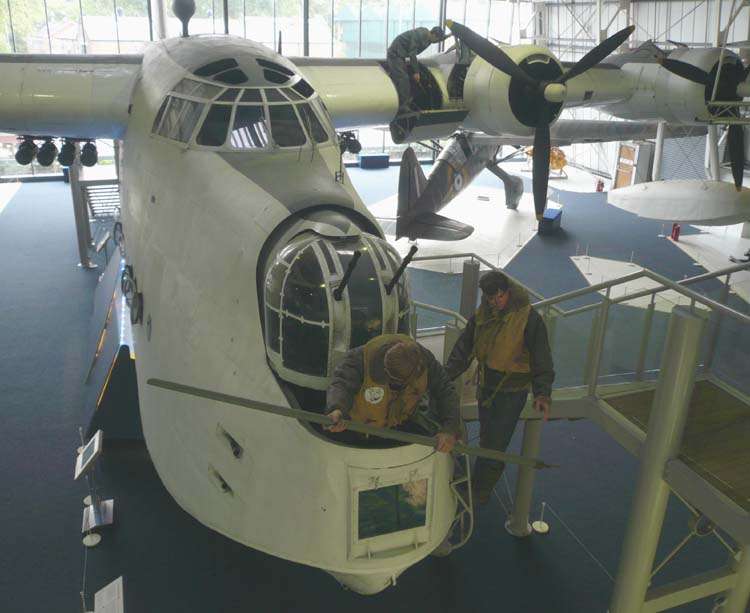
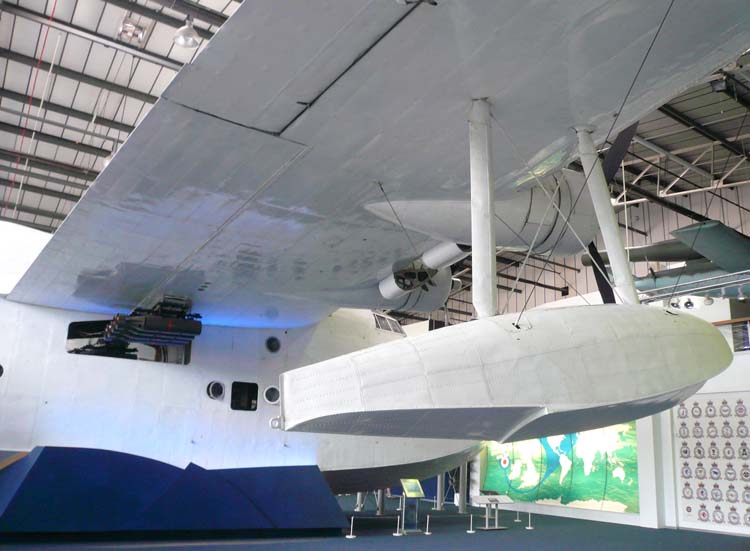
The particular Sunderland was N9046. It belonged to 204 Squadron and its squadron letters were KG-F. Here it is, although it seems to lack the KG-F:

The crew left their northern Scottish base on April 3rd 1940, tasked with carrying out a ten hours protection patrol, looking after a convoy bound for Norway. There was absolutely no sign of the enemy, until two Junkers Ju88s, probably from II./Kampfgeschwader 30, appeared at low altitude over the water, seemingly having arrived from a base in southern Norway, or perhaps in Denmark. Here is a nice Junkers Ju88 in full-ish colour:

And here’s the Airfix kit box:

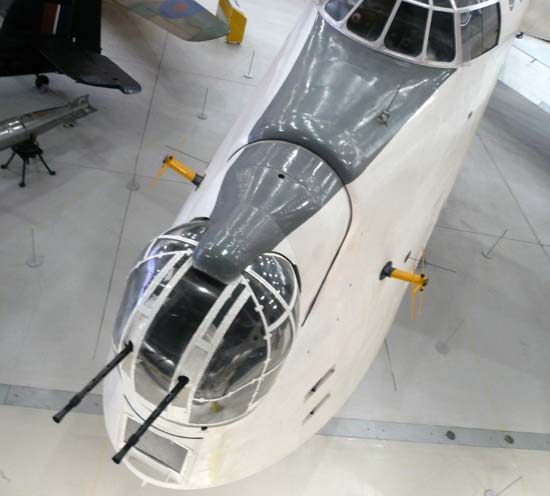
Seeing the Sunderland, one of the two Ju 88s made a head on attack but the Sunderland’s front turret opened up and the two Junkers aircraft seemed to take flight into the leaden clouds. Here’s that front turret again, with its rather light .303 guns.:

Four more Junkers then attempted to attack the ships but they were driven off by the convoy’s various defences. Less than a quarter of an hour later, six Junker Ju88s came in, four of them almost certainly Ju88A-4s. Two of them came for the Sunderland which went right down to the water to make itself a more difficult target. That didn’t stop the Germans who both attacked fiercely, but the flying boat’s gunners drove them off and they eventually fled.

The situation had now become dramatic enough for it to form the basis of a modern computer game:
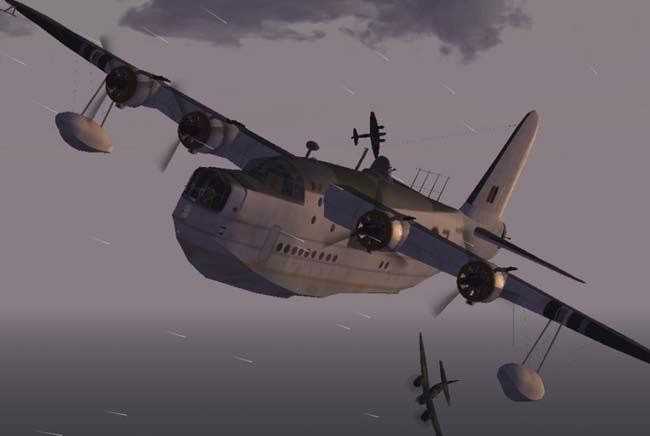
The other four Ju88s, having already released their bombs, then made a line astern attack on the Sunderland but the rear gunner, Corporal William Gray Lillie, with his slightly heavier 0.5 machine guns sent the first one spiralling in flames into the cold, cold waters of the North Sea. Ignore the trees. It’s actually seaweed:
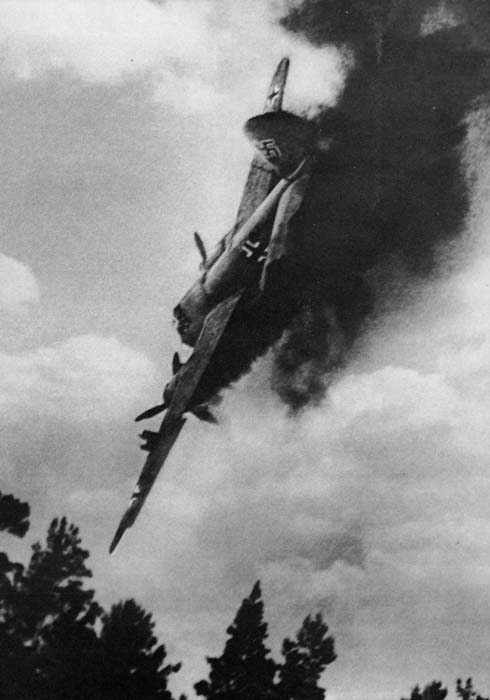
Corporal Lillie blasted the second German in his port engine which was soon pothering black oily smoke and flames. The German pilot left for his land base in Norway, uncertain if he would reach it with only one engine performing properly. In actual fact, he was forced to crash land in the as yet unoccupied northern section of Norway where the crew were forced to set their aircraft on fire before being arrested and interned.

Rather imaginatively, the final two Ju88s then attempted to drop their bombs onto the Sunderland. They missed and finally cleared off home.

N9046 reached Scotland safely and had no problems until Wednesday,  December 11th 1940 when, riding at anchor in Sullom Voe in the Shetlands, it suddenly caught fire and was completely destroyed.

Here is brave Corporal Lillie:

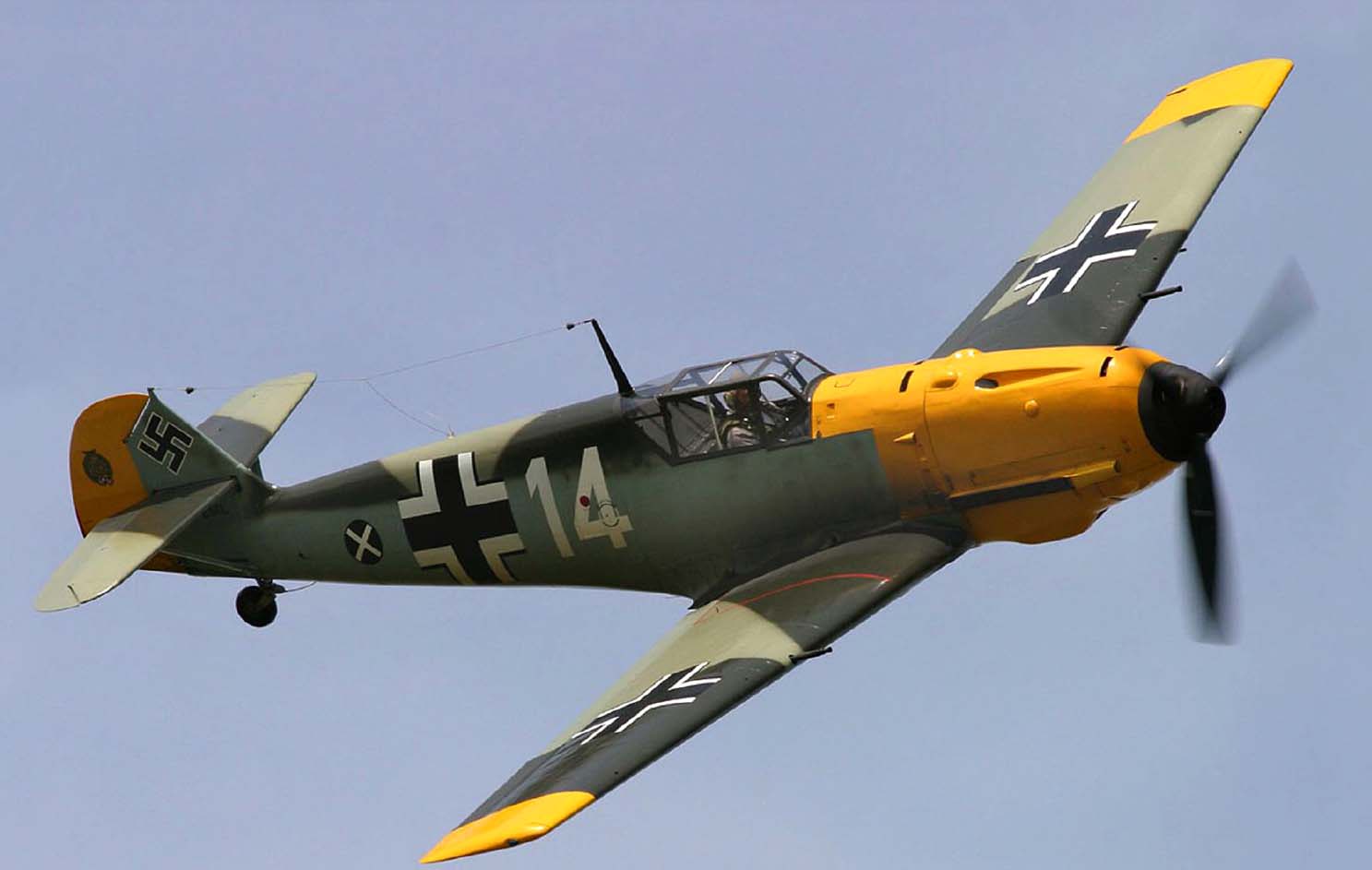
Did he survive the war? Well, sadly, no. He was killed in combat on July 21st 1940, shot down by a Messerschmitt Bf109 of 8./JG77:
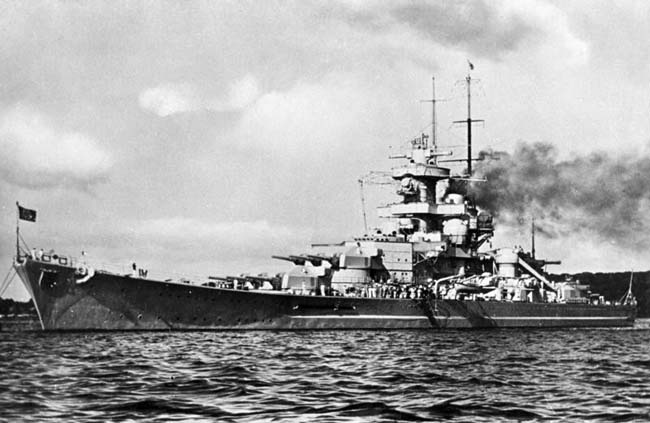
Corporal Lillie was the rear gunner in Sunderland N9028. They had been sent to Trondheim in Norway on a clandestine reconnaissance mission to check the submarine base and to see if the Gneisenau had left the port. Here it is:
Next time, I will show you how a suave English actor is connected to the Short Sunderland and, indeed, the Junkers Ju88.


24 Comments

Filed under Aviation, Cornwall, Criminology, Film & TV, History, Personal, Politics

My New Book

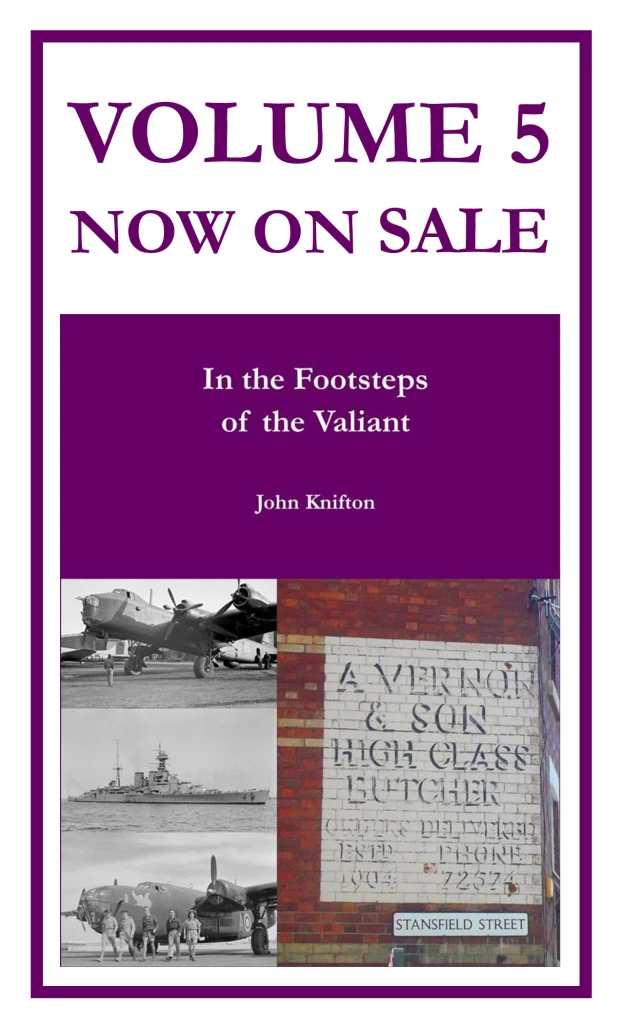
We have just finished publishing my new book about the High School’s casualties in WW2. Here is the front cover:

And here is the blurb from the back cover:

In the Footsteps of the Valiant: The Lives and Deaths of the Forgotten Heroes of Nottingham High School (Vol.1).

This is the first volume of a series detailing the Old Nottinghamians of all ages who sacrificed their lives in the cause of freedom during the Second World War. After nearly five years of ground breaking research, I have been able to add at least forty new names to the official casualty list. I have also uncovered details of the fates of almost all of these hundred and twenty casualties wherever they died, from Saskatchewan to Iran.

This is not, however, a book just about death. I also tell the stories of their lives: their families, where they used to live and their years at school with Masters very different from those of today. You will discover their boyhood hobbies and their sporting triumphs, where they worked as young adults and the jobs they had. Most of all, you will find all the details of the conflicts they fought in and how they met their deaths, the details of which were completely unknown until I carried out my groundbreaking research. And all this is spiced with countless tales of the living Nottingham of yesteryear, a city so different from that of today.

No tale is left untold. No anecdote ignored.

Now available for purchase through Lulu.com:

http://www.lulu.com/shop/john-knifton/in-the-footsteps-of-the-valiant-the-lives-and-deaths-of-the-forgotten-heroes-of-nottingham-high-school-volume-one/paperback/product-24309191.html

The book has 348 pages and is 24 x 19 cms in size (9½ inches x 7½ inches). Any profits will go to ABF The Soldiers’ Charity and the RAF Benevolent Fund.

The title refers to “the Valiant” because for the last hundred years or so, the hymn sung in the very first assembly of the school year is that old favourite, “He who would valiant be”. The hymn was the only one ever written by John Bunyan, the author of “The Pilgrim’s Progress”. Here are the words of the three verses. They don’t write them like that any more:

“He who would valiant be ‘gainst all disaster
Let him in constancy follow the Master
There’s no discouragement shall make him once relent
His first avowed intent to be a pilgrim

Who so beset him round with dismal stories
Do but themselves confound – his strength the more is
No foes shall stay his might; though he with giants fight
He will make good his right to be a pilgrim

Since, Lord, Thou dost defend us with Thy Spirit
We know we at the end, shall life inherit
Then fancies flee away! I’ll fear not what men say
I’ll labour night and day to be a pilgrim”

Here’s the video:

Apparently the boys back in the 1920s wanted to sing the original unexpurgated John Bunyan version, but were not allowed to. Verse 3 lines 1 and 2 used to be:

“Hobgoblin, nor foul fiend,

Can daunt his spirit “

Verse 2 lines 5 and 6 used to be equally exciting with:

“No lion can him fright,

He’ll with a giant fight,”

You can read all about it here.

This hymn has nowadays become the Battle Hymn of the SAS.

One Old Nottinghamian was killed fighting with the SAS in the Mediterranean theatre. Another died at Arnhem:

And another in Iran:

Another in Burma:

Another in Egypt:

In Leicester:

In Greece:

And in Saskatchewan, Canada:

And now, after nearly five years of completely original and ground breaking research, at least forty new names can now be added to the old list of eighty.

And the hitherto unknown details of the fates of almost all of these hundred and twenty casualties have been discovered.

The full story is available here.


30 Comments

Filed under Aviation, Bomber Command, Canada, Film & TV, France, History, Nottingham, Politics, Russia, The High School, Writing

What would you do ? (1) The Solution

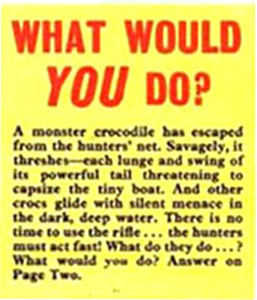
Here’s the emergency from last time:

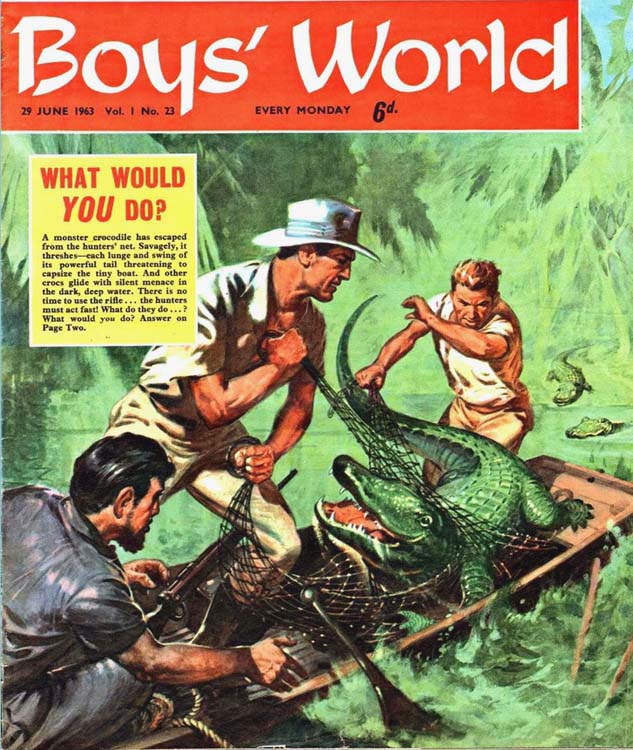
And here’s the situation:

The canoe’s occupants were threatened with a capsize. There were more crocodiles in the water, there was no time to use the rifle and there was a clear need to act fast.

And page 2 says that the solution is:

“The expert hunters have an immediate answer. They cover the crocodile’s eyes. Immediately the monster stops threshing. When a crocodile cannot see, it becomes docile. And then the net can be put round its body to prevent it escaping.”

And that solution is absolutely right. My Dad had a pet blind crocodile for years and he never ate anybody. Well, not completely anyway. And the crocodile was even better behaved.

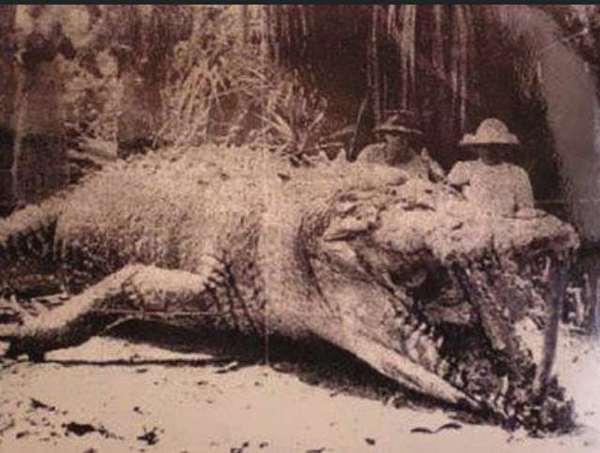
And finally, always have something big enough to wrap round a big crocodile if you come across one:


20 Comments

Filed under Film & TV, History, Humour, Literature, Personal, Writing

What would you do ? (1) The Puzzle

“What would you do ?” used to figure on the cover of a comic called “Boys’ World”. This was a publication, obviously, aimed at boys and first appeared on January 26th 1963, priced sixpence in pre-decimal money, two and a half pence in today’s money. There were 89 issues before the comic was merged with Eagle in 1964. The last issue of “Boys’ World” came out on October 3rd 1964. Here is the Eagle for that very same day. It seems to have swallowed “Boys’ World” without even noticing:

I used to buy “Boys’ World”, and this was mainly for the front cover which always featured a kind of puzzle. It was called “What would you do ?” and was based on somebody being in what Ned Flanders would call “A dilly of a pickle”. Here’s the great man:

Here’s the front cover with the situation for “What would you do ?”

The yellow box sets the scene, and the task is for you to solve the situation. Perhaps you might like to write your idea in the “Comments” section. Here’s the yellow box enlarged:

The monster crocodile has escaped and is thrashing about in the boat. The canoe’s occupants are threatened therefore with a capsize. There are more crocs in the water and there’s no time to use the rifle. There is, though, a clear need to act fast.

Both the picture of the situation and the yellow box can also be enlarged with a double click. I’ll be telling you the answer on December 5th. First prize is a chance to spend an evening Crocodile Rocking with Elton John, second prize is a stuffed thirteen foot crocodile and third prize is a thirteen foot crocodile which is not stuffed.

27 Comments

Filed under Film & TV, History, Humour, Literature, Personal, Writing

Three war crimes, two Sunderlands and one Ashley Wilkes (2)

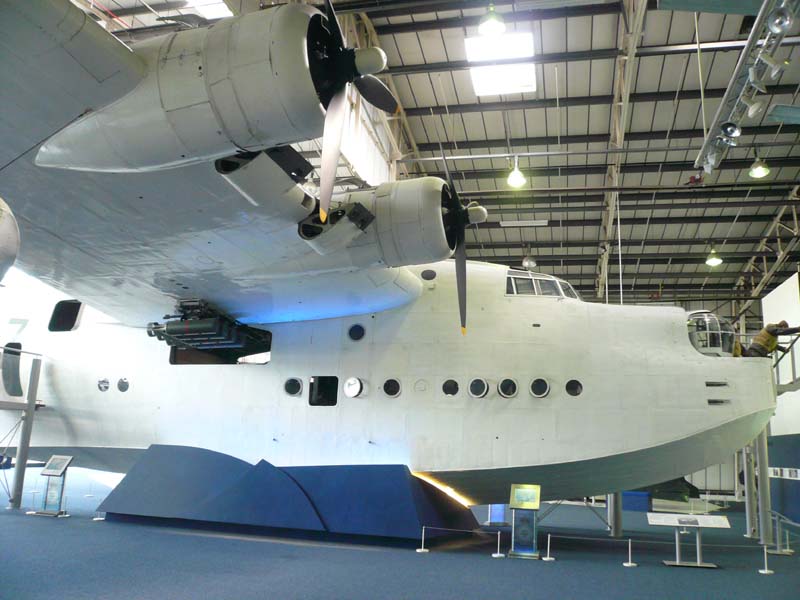
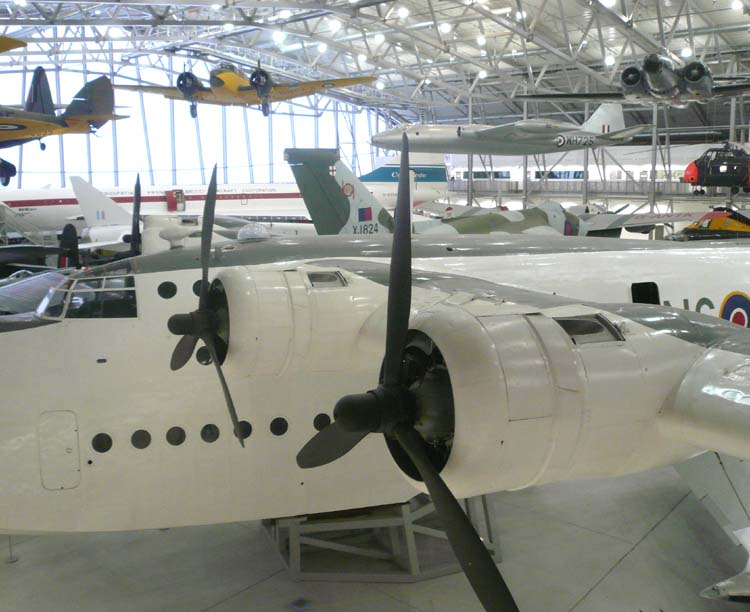
Last time, I was showing you round what is probably the same aircraft in two different locations, that is, the Short Sunderland flying boat at Hendon and then at Duxford.  Just to remind ourselves, the Sunderland was a mighty war machine:

This slideshow requires JavaScript.

The Sunderland had a panoply of weapons. Something for every occasion:

This slideshow requires JavaScript.

There was also an astrodome for taking bearings from the stars, and ASV radar, visible above the cockpit area:

I saw just part of my first ever Sunderland on ‎February 14‎th 2008, ‏‎ at 11:24:44. And, as you might expect for that date, it was love at first sight. The aircraft was behind a Handley Page Hastings and below a Hawker Harrier, and it was terribly squashed in:

I had to wait until 2010 when I went to Hendon to see a Sunderland displayed a little more favourably, and in a much bigger and more open area:

This particular Sunderland you could go inside. Just look at the room. You could fly a model plane around inside it:

The walls have lots of useful instructions:

This slideshow requires JavaScript.

Overall, the Germans were very wary, if not simply afraid, of the Sunderland flying boat. It was an extremely heavily armed aircraft and a formidable opponent. No wonder they called it the “Flying Porcupine”. Porcupines look old, they look rather fat and are rightly known as being grumpy, solitary and always just wanting to be left alone. OMG. How many of those boxes can I tick? And don’t say “All of them”. Here’s a real porcupine at Newquay Zoo in Cornwall. They eventually sold him to Bristol Zoo for “excessive grumpiness”  :

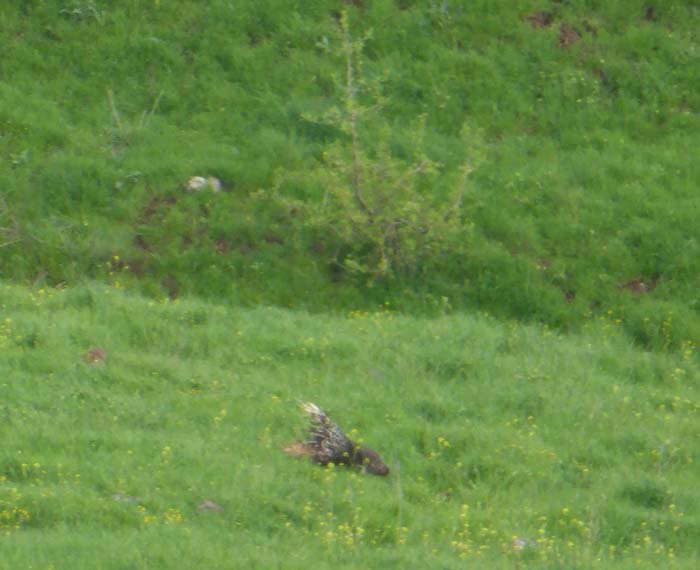
And here’s a wild one in the Golan Heights of Israel. A really rare sight:

Final thought. What is the German for “Flying Porcupine” ?

Why it’s “Das Fliegende Schtachelschwein”, a phrase which has proved particularly useful in my trips to the Fatherland, especially to Berlin Zoo which is conveniently close to the airport.


16 Comments

Filed under Aviation, Cornwall, Film & TV, History, Personal

Three war crimes, two Sunderlands and one Ashley Wilkes (1)

One of the world’s most bewitching aircraft is the Sunderland flying boat. When I was a boy, I never did save up enough pocket money for the Airfix kit, although it was only fifty pence or so in the 1960s. I should have bought it then, though. They’re fifty pounds now!

The Short S.25 Sunderland was a flying boat patrol bomber operated not just by RAF Coastal Command but also by the RAAF, the RCAF, the SAAF, the RNoAF and the Marinha Portuguesa. The last one’s a bit of a give away, but did you get all of the rest? This one’s Australian:

The Sunderland was designed and built by Short Brothers of Belfast, and the cynic inside me says that it was the only decent aircraft of their own that they made during the war. This model of the aircraft was numbered the S.25 because it was a warplane but it was a direct descendant of the S.23 Empire flying boat, the flagship of Imperial Airways. Here it is, a beautiful aircraft:

The new aircraft S25 was very well designed for its purpose. The Sunderland had a wingspan of 112 feet, a length of 85 feet and a height of 32 feet. It was a big aeroplane! Even the stabilising floats on the wings were as big as a rowing boat or a small plane. Compare one of them with the man with a pram, and the Walrus behind them both:

A Sunderland had four Bristol Pegasus XVIII nine-cylinder radial engines which gave it a total of 4,260 horse power:

And those powerful Pegasus engines gave it a range of around 1800 miles at a cruising speed of 178 mph Don’t fly too fast when you’re doing maritime reconnaissance!

The S 25 Sunderland featured a hull even more aerodynamic and more advanced than that of the S23. You can see why it’s called a “Flying Boat”:

Here’s lengthways:

Here’s the nose end of that hull:

Weapons included machine guns in front and rear turrets. The front turret had rather weak 0.303 guns which could not always penetrate thick metal, but at least I got a good shot of it:

I even got a good shot of the three jokers who seemed to be making off with the plane from the Hendon museum, trying to push it backwards through the very large French windows:

Here’s some close-ups for the wanted posters:

This slideshow requires JavaScript.

I didn’t get any good photographs of the rear turret but it had heavier 0.50 calibre machine guns. You can just about spot it among the bits of other aircraft. It’s slightly right of centre:

There was also a heavy machine gun firing from each of the beam hatches. You can just about see one poking out here:

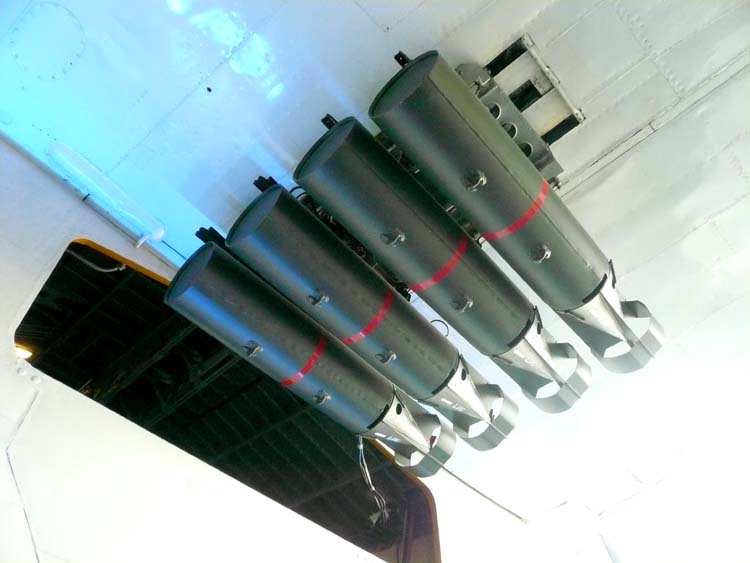
The Sunderland made extensive use of bombs, aerial mines, and depth charges. Here are four which have been winched out ready to drop. Hopefully, they are dummies:

Here they are in close up.

The Vickers Wellington’s immensely  powerful Leigh Lights, designed to light up U-boats on the surface at night, were rarely, if ever, fitted to Sunderlands.

Next time, a look inside the mighty Sunderland.


27 Comments

Filed under Aviation, Bomber Command, Film & TV, History, Personal

On holiday with Ross Poldark (3)

Last time I was showing you more of the attractions at Botallack, in West Penwith, in western Cornwall:

I introduced the Crowns Mines which I called:

“the most photogenic industrial location in Cornwall.”

From the base of the stone chimney, a long sweeping path descends the cliff face. It goes down towards the Crowns Mines:

Their position is so dramatic that it attracts film crews like bees to honey. Here is a slightly different shot which includes what looks to me like the silhouette of Pan and below that, to the right, a number of faces in the rock. At least two gannets are visible flying past as just two white dots. Notice too, the croquet lawn right in the middle of the photograph:

There must be quite a few people who are frightened by the path, which is wide and flat with a substantial fence made largely of rust. To your left, there is a very, very long way to fall on to the sharp rocks below . If you do fall, though, make sure that you look to the right as views are tremendous.

These mines had tunnels which stretched under the ocean for several miles, allegedly. Equally allegedly, the miners could always hear the noise of the waves above their heads.

As you walk down, the two mines gradually grow closer. If I remember correctly, you can go safely into the right hand structure:

But the left hand tower is a very definite “No-No”. Or at least, you’ve got a very large queue of kamikaze pilots to contend with.
Still, it’s a wonderful location. The ocean is so blue and it is transparent enough for the rock platform underneath the waves to show up. Gannets are still passing by . There is one to the right of the right hand tower, just where the wall meets the ground. Again, if I remember correctly, it is impossible to climb to the top of this tower, although a door lets you in to see a very limited part of the ground floor.

This is the best shot I could get of the left hand tower.

The National Trust says that the tunnels went out under the sea just 450 yards (very roughly 450 metres), and reached 1600 feet under the seabed, an amazing depth if you think about it (very roughly 487.68 metres).

Here is a comparison of the two mines then and now. If you look very carefully, you can see a lot of similarities but many differences, some of them the effects of a hundred years’ plus of Atlantic storms:

This slideshow requires JavaScript.

The path leading back up to the main group of ruins is quite steep but you’re not going to get lost with such a landmark to guide you:

How long it must have taken to quarry the stones to build this impressive edifice! It’s certainly lasted a lot longer than the men whose toil and sweat erected it:

Back at the top, among the ruins, I found some intriguing graffiti. This first one could fire at least a couple of romcoms:

And this is a full length effort, vandalised by some moron, unfortunately:

My last memory of the place will be watching a couple of retired BBC planners (click on the picture to enlarge it, and they are on the cliff edge). They are working out the cost of a modern Poldark sequel starring Jeremy Corbin as Poldark’s charismatic youngest son and Vladimir Putin as George Warleggan:

4 Comments

Filed under Cornwall, Film & TV, History, Humour, Literature, Personal, Politics

On holiday with Ross Poldark (2)

Last time I talked in very general terms about the main, and most obvious, sights at Botallack, a disused tin mine in Cornwall:

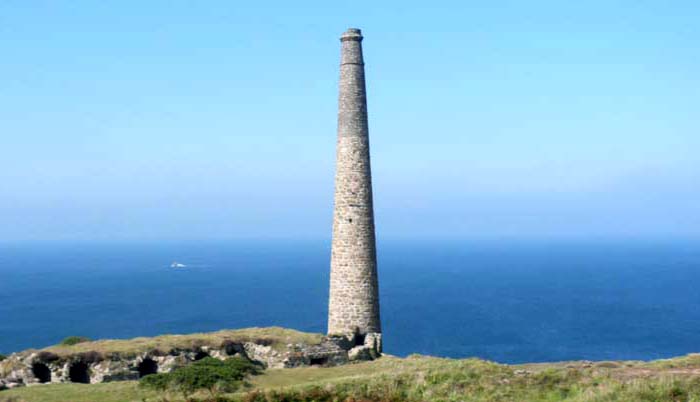
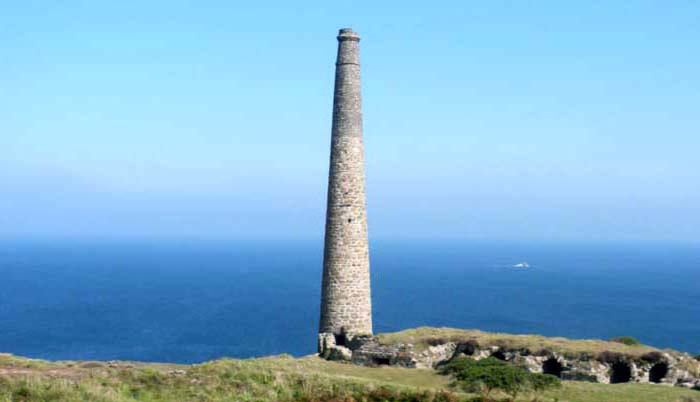
First, there is the enormous stone chimney, to power the pumps that maintain low water levels in the mine:

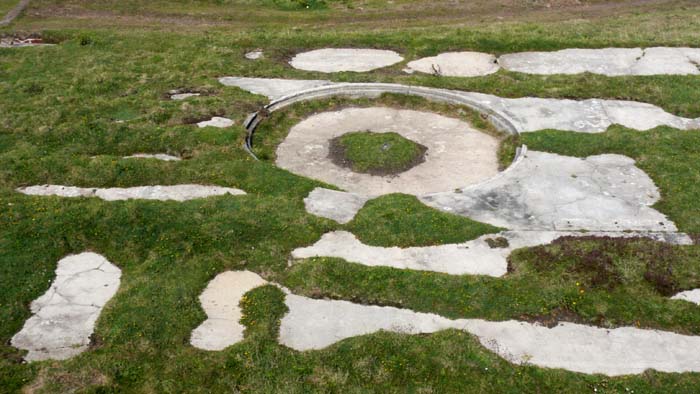
And then there is something which I have never managed to fathom out. It looks rather like Cornwall’s attempt at Peru’s Nazca lines, but constructed with stone and concrete:

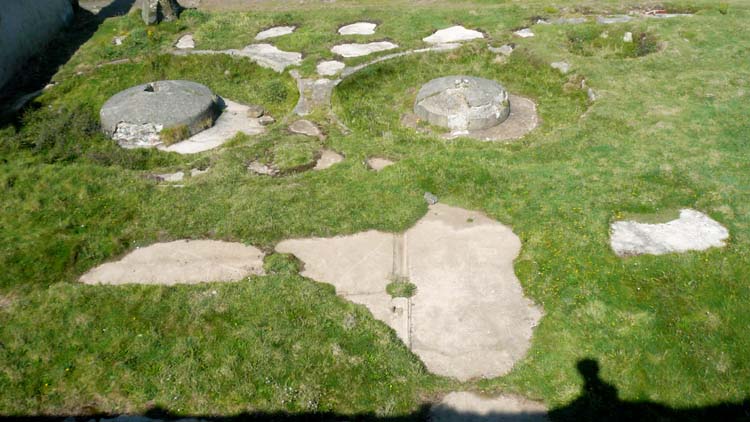
In among them were two Georgian missile silos, their “Hanover” ICBMs targeted on Napoléon’s distant boudoir. Spot the photographer, by the way:

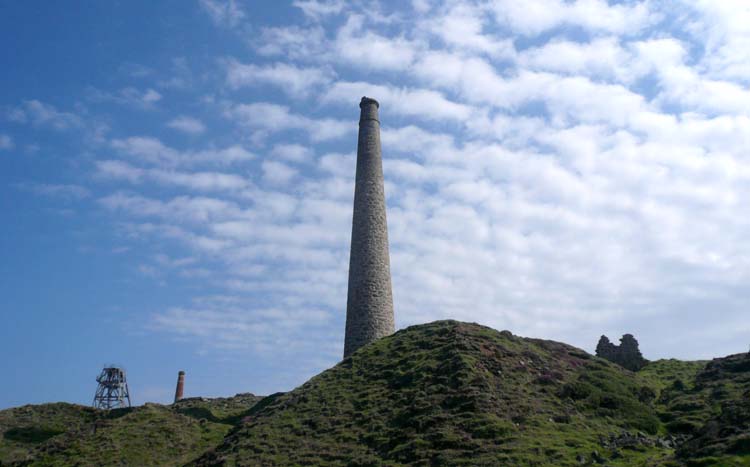
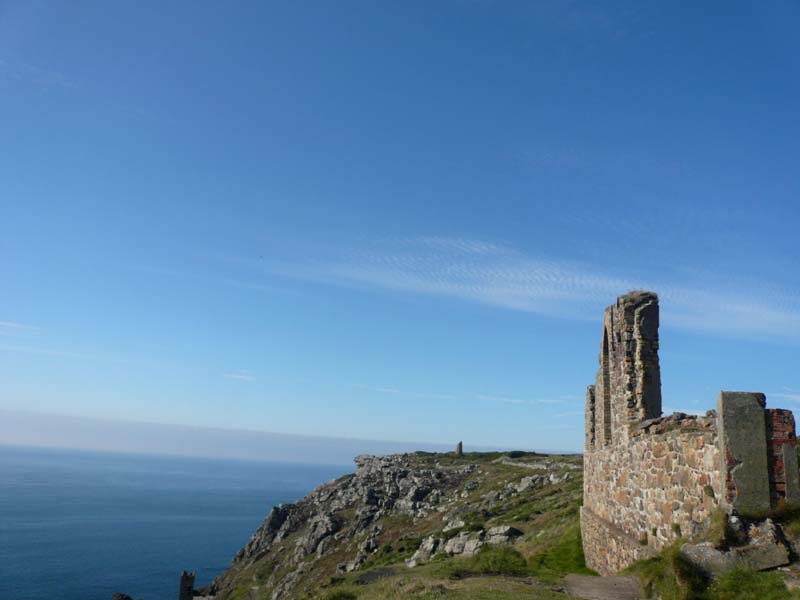
Walk a little further on to the south and there is a view of  the winding gear, the top bits of a more modern chimney, and a ruined wall. And what a sky! :

Keep walking and there is a view back towards the car park. The metal winding gear has not been used for a long time, perhaps as far back as 1900.

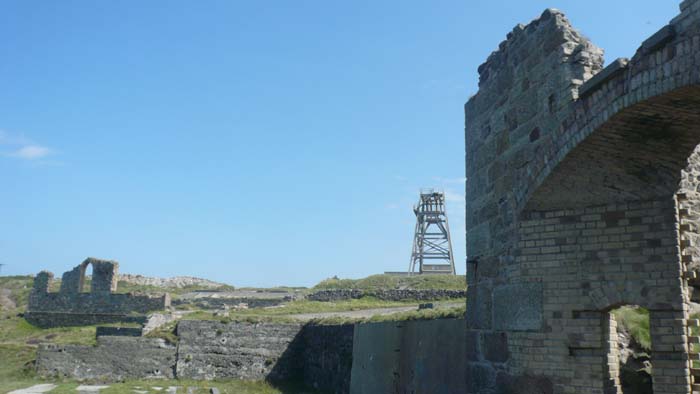
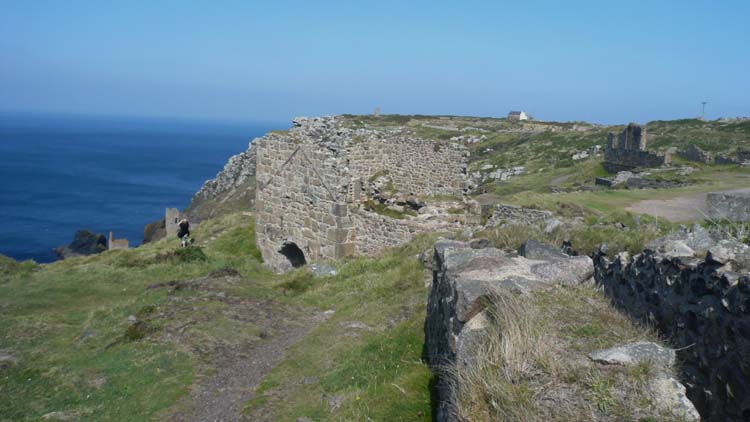
Again, everywhere there are ruined buildings, all of them in local stone:

At least one of the forgotten buildings was an arsenic-refining works. In areas of volcanic rock where tin and copper are mined, some nasty substances may always  be encountered such as arsenic, cadmium, lithium and even uranium.
I suspect that perhaps, over the years, the local builders and farmers have been helping themselves to many of the pre-cut stone blocks for their own walls and/or barn building or perhaps even as the hard core for country roads.

If you turn round and walk past the big stone chimney:

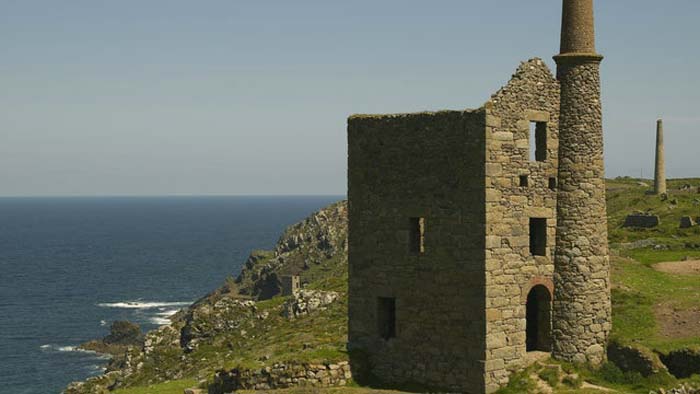
You can then continue for fifty or a hundred yards, until you get to the “abandoned mine engine of Wheal Owles”:

That particular disused mine is frequently used in Poldark episodes when the work force is filmed  actually working the mine. I have walked over to the Wheal Owles on just one occasion but I didn’t take any photographs. To be honest there are so many of this type of ruined pump house in this part of West Cornwall that the old adage “Seen one, you’ve seen ‘em all” comes into play.

This is the view straight ahead of the bench towards the north. There is another large ruined building and then what looks like the stump of a demolished chimney nearer to the tip of the headland.

Here’s that same view looking slightly more northwards;

You can just see the reason why the BBC people chose this site. It’s at the bottom left of the photograph above, and it’s one of the Crowns mines, the most photogenic industrial location in Cornwall and its second most photographed tourist site after the Men-an-Tol:

We’ll walk down to see  the Crowns mines next time.

26 Comments

Filed under Cornwall, Film & TV, History, Humour, Personal, Science

On holiday with Ross Poldark (1)

We visited Cornwall on family holidays in every year between 1987-2012. Sometimes, the largest town, Penzance, can be really wet, wet, wet:

Overall, though, Cornwall can be a magical place:

The west of Cornwall, of course, is where the TV series “Poldark” is set.   Here is the cast without their TV make-up:

It was only in our last year in Cornwall that I realised that, on several occasions, we had visited one of the main filming locations for this popular TV series without even knowing it.
The site which we knew is near a ex-tin mining village called Botallack. First of all, this map shows where Cornwall is situated in England (although the native Cornish, it must be said, do not consider themselves to be English). The orange arrow points to the car-park for the National Trust site at Botallack:

The orange arrow, on all three maps, remember, is pointing to the car-park for the National Trust property where filming takes place. Here it is on a slightly more detailed level:

And here is the largest scale of all, where you can see just how convenient it is for filming, as both of the roads going north are dead ends, and the entrance road in the south can easily be blocked off from the public.

You’d never think that every household in the country is forced to pay the BBC an annual sum of £154.50 if they want to watch TV in this country. And that’s not watching BBC television. It’s to watch any channel at all. Hopefully,  my foreign friends will now realise that we English don’t get our TV for free.

And if the BBC programmes are good, then so should they be with an annual income in 2019 of £4,889,000,000. Incidentally, none of the roads that have to be blocked are a public right of way, so there are no legal problems:


This is the view looking away from the car park. There are lots and lots of shattered buildings, as if the demolition company one day got a better offer and just cleared off in the middle of the job:

Up near the car park is the most modern structure, a set of nineteenth century metal winding gear:

Outside the museum type building which acts as a tourist centre, there were two scarecrows, or at least, we took them to be scarecrows, rather than peasants starved by Sir George Warleggan:

As you walk down towards the mine, the first thing you see is one of the area’s two or three large stone chimneys and a ruined building. Beyond that is the mighty Atlantic Ocean and ultimately, America. Almost invisible, gannets pass by ceaselessly:

And then there is a welcoming bench, from which you can see most of the best attractions. It’s good for mother and daughter:

And for two dear friends:

Next time, we’ll take a closer look at the attractions that have made Botallack one of the hidden treasures of West Penrith, as this area is more properly called.

16 Comments

Filed under Cornwall, Film & TV, History, Humour, Personal

“Hilarity with Heraldry” (1)

Dr Sheldon Cooper is famous for his series of podcasts “Fun with Flags”:

I have always enjoyed vexillology enormously but I would have to confess to an even greater love for heraldry, the study of coats of arms. I don’t really have the time to launch “Hilarity with Heraldry” in any great depth, but I don’t think anybody would find it particularly boring to take a brief look back at some old football, or soccer, badges.
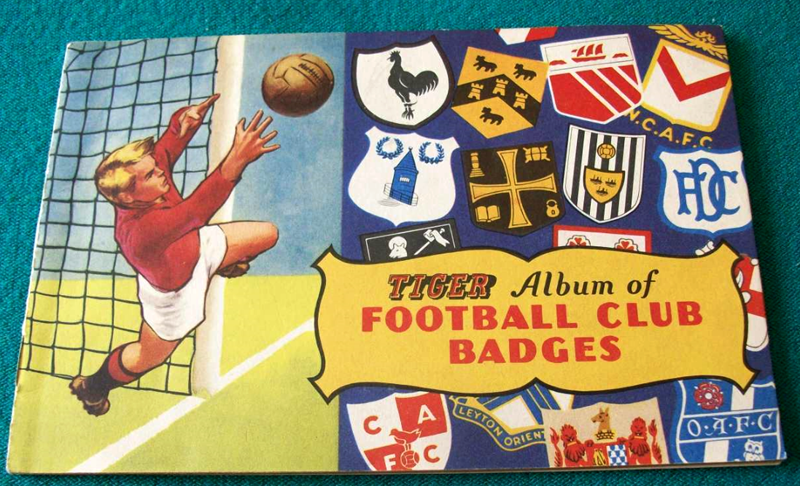
I used to read a comic called “Tiger” when I was a boy and in one issue they sowed the seeds of my interest when they gave away, free, an album of football club badges. This was on an unknown date in 1961, so we are looking back quite a long way. Here’s the album:

The picture comes from ebay where the albums can sell for quite good prices. So too do the 1967 versions of the album, entitled “Roy Race’s Album of Football Club Badges” in honour of the fictional star of the fictional Melchester Rovers. Roy Race was Tiger comic’s “Roy of the Rovers”:

In both 1961 and 1967 the buyer was given the booklet and then in the succeeding weeks, he received sheets of paper with around 30 small badges printed on them. He then had to cut out the badges carefully and then stick them in the booklet with extreme care and glue.

Most boys couldn’t do this, which makes it extremely difficult to buy a booklet where they are stuck in straight, and are not over-trimmed, or, in some cases, they are not stuck in upside down.

This album has a pretty good start to page one. although there is a slight crease:

This is average:

I would not buy this. They are crooked and cut out wrongly. At least two are in the wrong position:

These three are shockers:

And these two badges below are simply the wrong way round. Blackpool is a seaside holiday town with seagulls and BW may conceivably stand for “Bolton Wanderers”. And if this page is like that, the other ones will all be of a similar quality:

I was at an indoor market a few years ago when I bought several colour pages of football, cricket and rugby club badges which dated from the 1950s. The badges seemed to divide into four groups. The first were obviously based on the coat of arms of the town which the club represented. This is Notts County with the tree from Sherwood Forest. Whoever or whatever holds the shield up is called the “supporters” and Notts County have the normal two, namely a lion and some other unknown mammal, possibly on otter, or perhaps a weasel. On top of the shield is the “crest” which, in this case, is a tower from Nottingham Castle. “On top of the shield” is just an optical illusion. The crest actually used to rest on top of the knight’s helmet, so a tower is, to say the least, a challenging choice for his neck muscles. The only bit of the helmet that you can see is the padding between the tower and the metal helmet, which is yellow and green and is called the “wreath” or, because it is twisted, the “torse”:

This is Nottingham Forest with the same type of thing. The supporters are stags and on the shield is a green rustic type cross with three crowns that I know nothing about, I’m afraid.

A similar badge was used for the Nottinghamshire cricket team:

In heraldry, what we would call colours, or tinctures to use the technical phrase, are divided into two groups. The first group is called ‘colours’ and the second is called ‘metals’. All of them have Norman French names. The metals are ‘or’ and ‘argent’, which are ‘gold’ and ‘silver’. The colours are red or ‘gules’ which comes from the word for the mouth of an animal, “la gueule”. ‘Azur’  is easy as it obviously comes from azure blue. ‘Vert’ is green and it has survived a thousand years into modern French, much like ‘purpure’ which is actually a very rare colour. ‘Sable’ is black and comes from the fur for coats, It’s a sort of rich man’s ferret, apparently:

There is just one rule about all these tinctures. Colours cannot go on top of colours and metals cannot go on top of metals. This is because Heraldry was designed for the purposes of identification in battle so everything has to be exceptionally obvious and visible. Here’s the somewhat over dressed queue for the fish and chip shop after a hard day’s peasant slaughtering:

31 Comments

Filed under Film & TV, Football, France, History, Humour, Personal