Category Archives: History

Reintroducing wolves to England? Not a problem (6)

When people suggest that it would be impossible to introduce a wolf pack to the English countryside, they should be aware of the following story. The usual belief is that:

“The Gray Wolf canis lupus has been extinct in England since 1486, in Scotland since 1743 and in Ireland since about 1770.”

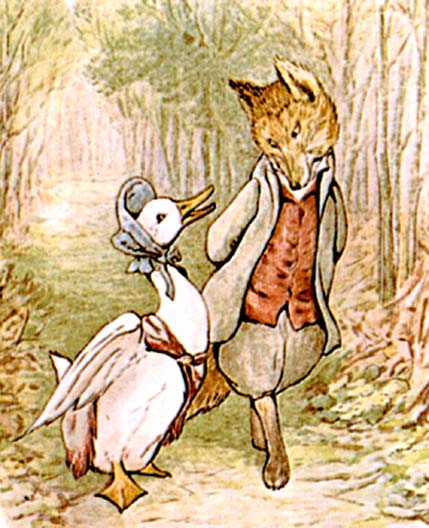
Something strange happened though, in Epping Forest in the late nineteenth century.  Mention of it comes from Beatrix Potter in her Journal from 1881 to 1897:

“Several years ago a gentleman let loose three prairie wolves in Epping Forest. These animals have increased in numbers, and are perfectly wild and shy”.
potter

Talking about what a potential problem the breeding of the American Mink in England might be, in New Scientist for January 18th 1962, Harry V Thompson, Ministry of Agriculture Field Research Station, Worplesdon wrote:

.
“Tales of escaped coyotes canis latrans or prairie wolves in Epping Forest in the late nineteenth century may come to mind …”

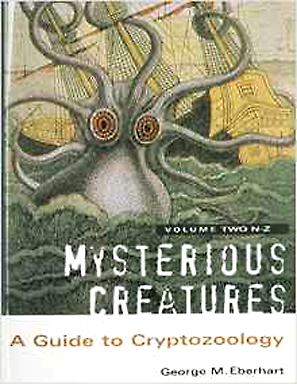
In Mysterious Creatures: A Guide to Cryptozoology, George M. Eberhart stated:

“A few Coyote cubs canis latrans are said to have been introduced around 1881 in Epping Forest, Essex, England.”
crypto

A slightly longer version occurs in some documents from Regent’s Park Zoo dating from July 19th, 1884. Here, the animals are said to have been coyotes:

” Some short time since a gentleman called upon me at the gardens and offered to present to the Society an animal that he believed to be a prairie wolf. He mentioned some particulars concerning its history that caused me not at once to accept his offer, fearing that the animal might prove to be a useless mongrel. At the same time I asked his address, and promised to call and see the animal.

Accordingly, I went to Leytonstone and on my arrival I inquired for Mr. R. Payze, and found the gentleman who had so kindly offered the animal in question. He was very pleased to meet me, and introduced me to what I at once pronounced to be a veritable prairie wolf (Canis latrans). The history of this animal I give as near as possible in Mr. Payze’s words. In the month of May last year some men who were on their way to London with cartloads of hay told him, on their coming through some part of Epping Forest (” near Ongar,” is the locality given in some narratives), they had found or caught three fox cubs, and they had them in a sack tied to the tail of the cart:

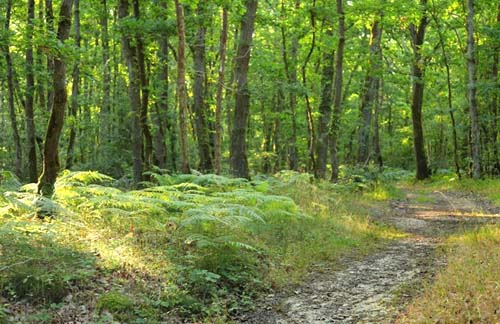
Foret-cinglais1xxxxxxxxxxxxxxxxxxxxxxxx

Believing them to be fox cubs, he bought one of them for a few shillings, and the men went on their way towards London. The animal was at that time so small that it could be put into a pint pot, and I have every reason to believe the following narrative will fully explain what otherwise would appear a mystery. Mr. Payze introduced me to Mr. Swan (who was formerly a servant to Colonel Howard), and he told me that some few years ago four cubs were brought to England in a ship belonging to Mr. J. R. Fletcher, of the Union Docks, and were turned loose (supposed to be fox cubs) in Ongar Wood, which adjoins Epping Forest. These cubs were brought home in a box and kept for a few days at Colonel Howard’s, Goldings, Loughton. They were then taken to Mr. Arkwright’s, formerly master of the Essex Hunt, and were turned out at Marl’s Farm, and the man Swan was present when they were turned out. I have also been informed that from time to time an animal, supposed to be a large gray fox, has been hunted, but never caught, always escaping into the forest.
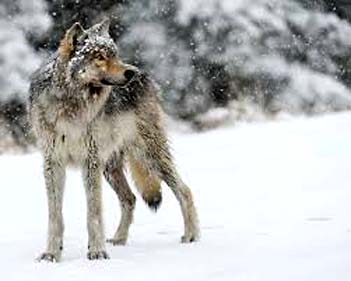
single wolf

I think it highly probable that some of the same kind as the animal now in the gardens still exist in the forest, as this species of wolf is not much larger than a large male fox, and not having any scent like the fox, would not be likely to get killed by foxhounds or followed any great distance by them.”

The editor of  Land and Water magazine supplemented this account as follows :

” Subsequently, in company with Mr. Bartlett, we visited Epping Forest ; and from the inquiries made we have little doubt as to the fact of the animal in question having been born in the forest. Swan and other persons who have been acquainted with the forest for many years told us they well recollect the circumstance of the ‘strange animals from foreign parts’ being turned down, and we expect shortly to have further confirmatory evidence from others who were present on the occasion. When first born, the prairie wolf might readily be mistaken for a cub fox. Mr. Payze, who is a lover of animals, and has from time to time kept many tame foxes, was under the impression until quite
recently that ‘ Charlie,’ as the animal is called, was a fox.

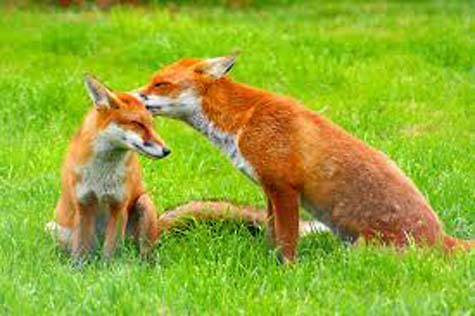
foxes

As it developed, however, he noticed several points quite distinct from the common fox, and as, moreover, the animal (although quite quiet with his children) showed unmistakable snappish tendencies towards strangers, he decided to consult Mr. Bartlett, with the result that the superintendent declared that the creature was a Prairie Wolf canis latrans.
(This determination was not correct, see post.—Editor.”
Whatever the animals were, they seem to have persisted until the beginning of the 20th century. The previous article from the Regent’s Park Zoo was criticised for its naivety, Henry Foster sarcastically stating that “his dog was recently killed and proclaimed to be a wolf”.
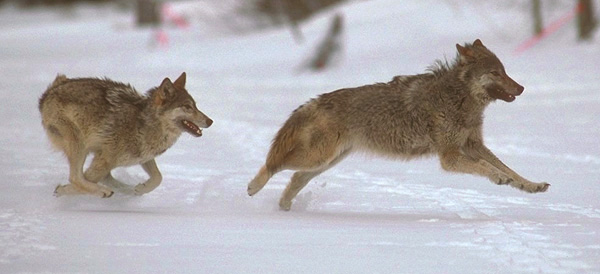
wolves 2

On October 23rd 1884, however, Henry Ffennell, however, contradicted Mr Foster. Ffennell  had some connection with Regent’s Park and stated that

“the animal was definitely a wolf, bred and captured in the forest. It could be viewed at the gardens.”

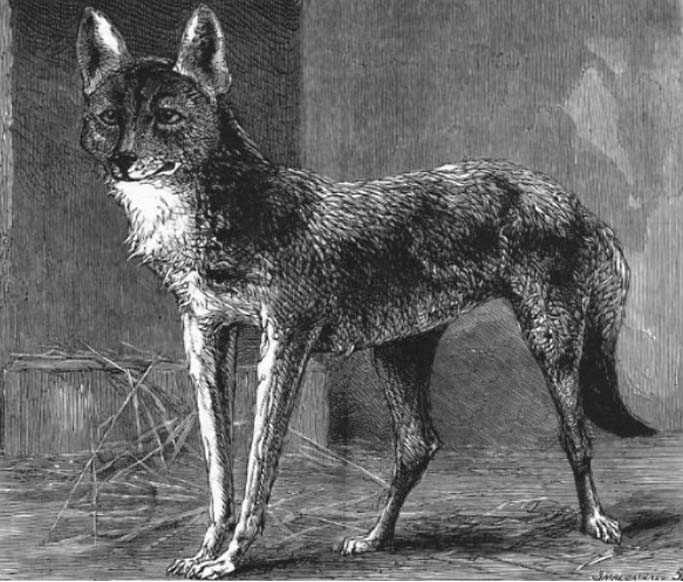
A print of the “English Wolf” is widely available to buy on the Internet. It has this caption alongside it:

“Concerning the animal depicted in our engraving which has aroused much interest among naturalists and others, Mr AD Bartlett, the Superintendent of the Zoological Society’s Gardens , Regent’s Park, writes thus:-

.
“The prairie wolf now being exhibited in these gardens was presented by Mr K Payne, of Leytonstone, who says he bought the animal about a year ago. it was one of three that had been taken in Epping Forest by some farm labourers, Mr Payne believing at the time that it was a fox cub. Its subsequent growth, however, caused him to suspect that it was not a fox. As it became troublesome on account of its destructive habits, notwithstanding that it had been reared perfectly tame, he decided to get rid of it, and accordingly presented it to this Society. Inquiry is now being initiated with a view to ascertain, if possible, the manner in which the parents had been introduced into that part of the country. It is said that, some years ago, some foreign cubs, supposed to be foxes, were turned out in  the neighbourhood of Epping Forest.”

epping wolf print

No problem, then. Find a forest. Tell people your wolves are just Grey Foxes, and take it from there.
16 Comments

Filed under Cryptozoology, History, Science, Wildlife and Nature

Bygone football clubs (1)

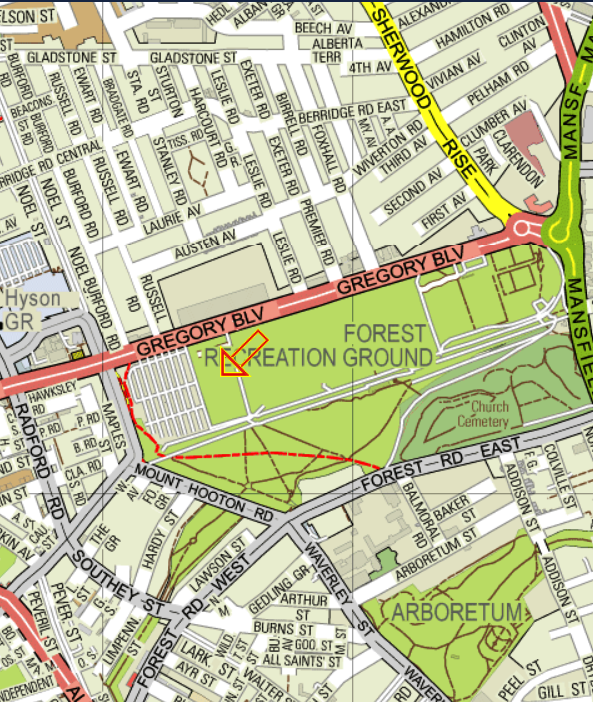
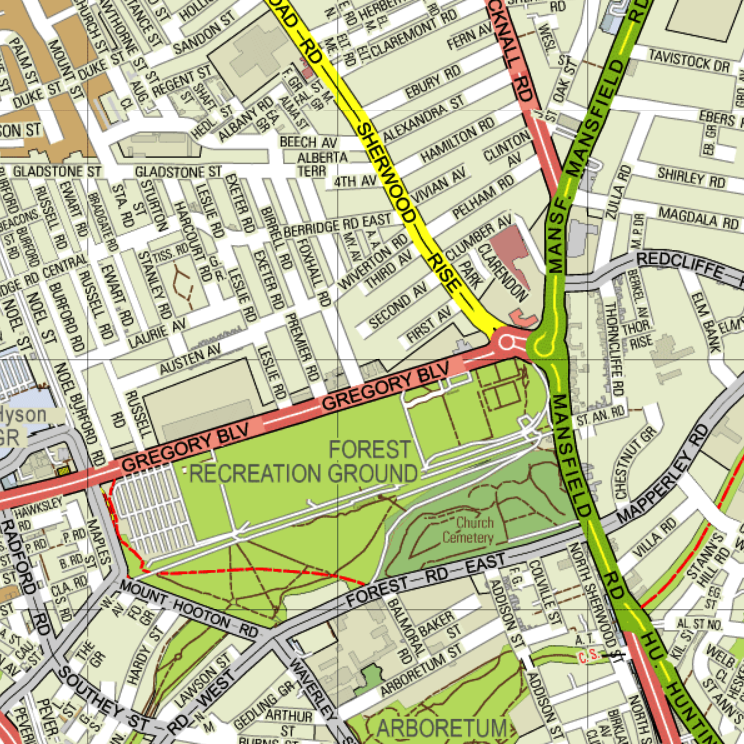
Over the years, the Forest Recreation Ground has been used for many, very varied, sporting activities. Here is a modern map:

forest

In the medieval period, bear baiting had been probably the first activity on the Forest, with a horse racing course eventually being constructed on the very same site.

Originally the racecourse measured four miles long, but in the early 1700s, this was shortened to two miles. In 1797 a new track in the form of a figure-of-eight was laid out. Unfortunately, this rather strange layout was not successful, and another more conventional course, therefore, oval in shape, was constructed soon afterwards

By the 1860s though, the racecourse was in decline, offering only small prizes, and attracting only second rate horses.  The last race meeting took place on September 29th-30th 1890, and Nottingham’s horse racing subsequently moved to Colwick.

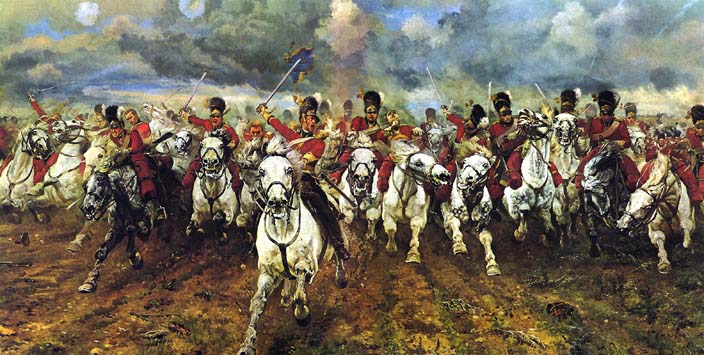
Around 1800, the centre of the racecourse had been used as a place of exercise by the many officers of the cavalry who lived in a distinctive Georgian building on Forest Road. Familiar to all High School pupils, it played host to a tiny sweet shop originally called “Baldry’s” and, more recently, “Dicko’s”. It is now a bakery. Most of those cavalry officers were destined to charge at the Battle of Waterloo:

Scotland_Forever

By 1849, cricketers were using the western end of the Forest for practice, and they soon moved to the centre of the racecourse to play professional games for large sums of money.

It is not really known when football was first played on the Forest. A group of young men regularly met there in the early 1860s, to play a primitive kind of field hockey called “shinney”. They soon thought of giving this up to play the new sport of football.

An initial meeting was convened therefore in the upstairs room of the then Clinton Arms in Shakespeare Street, and the “Forest Foot Ball Club” was duly formed in 1865.

Their first fixture on the Forest was on Thursday, March 22nd 1866, a friendly game between Fifteen of the Forest, and Thirteen of the Notts Club. The game was eventually played between Seventeen of the Forest and Eleven of the Notts, and, according to some sources, was goalless, Nottingham Forest’s first ever goal being scored in their third game, another friendly on the Forest against Notts County, which finished as a 1-1 draw.

Other contradictory sources say, however, that the initial game finished as a 1-0 victory for Nottingham Forest, with Old Nottinghamian, William Henry Revis, providing the decisive score.

One early newspaper article, described how:

“When the men were spread out, the field looked exceedingly picturesque, with the orange and black stripes of the Notts, and the red and white of the Foresters.”

This slideshow requires JavaScript.

One of Nottinghamshire’s greatest early footballers, E.H.Greenhalgh, who played for England in the first ever international match against Scotland in 1872, was to write, of football on the Forest:

“The first set of players who came out were regarded as a company of harmless
lunatics who amused themselves by kicking one another’s shins, but did no great harm to the public at large, although in earlier days they would have been put in the stocks.”

Richard Daft, wrote in similar vein…

“When a young man I played regularly with the Notts County Football Club when it was first formed. I believe I played centre forward, but I am not quite sure about this as we were never very particular in those days about keeping in one place. Charging and dribbling were the chief features of the game at that time, and often very rough play was indulged in.”

The exact location of Nottingham Forest’s pitches has never been ascertained for certain. My own researches have led me to believe that they must have been immediately to the east of what is now the “Park-and-ride” car park, at the bottom of the slight slope, but I have no way of being totally sure about this. Look for the orange arrow:

Untitled forest

Forest certainly had major problems with their location, however, when they entered the F.A.Cup from 1878 onwards. The Forest was common land, with free access for all, but the regulations of the F.A.Cup stipulated that an admission charge had to be levied. For this reason, “Forest Foot Ball Club” had to move to the Meadows area for the 1879-1880 cup campaign.

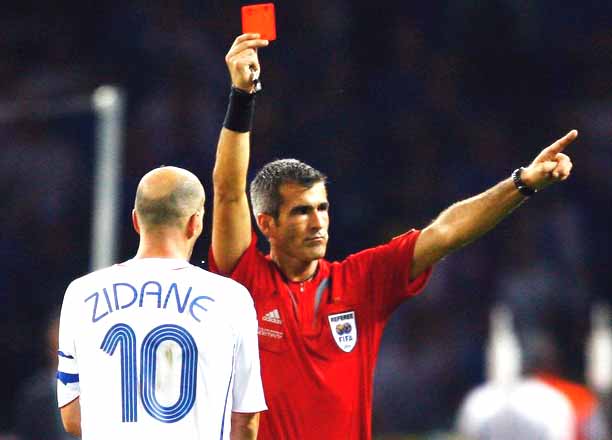
This was not, of course, before the club had introduced various innovations. Samuel Weller Widdowson had invented the shin guard, which was first worn on the Forest in 1874. In 1878, the first ever referee’s whistle in the world was heard on the Forest, most probably in a game between Nottingham Forest and Sheffield Norfolk. It was blown by Mr C.J.Spencer, and marked the first step in a long, long journey of what shall we say, talking points?

zid

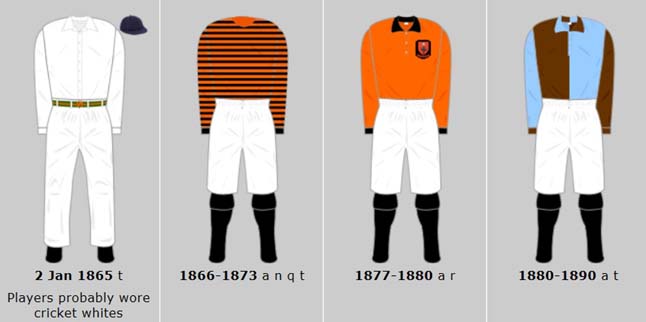
The club’s departure however, did not mean that the Forest itself was suddenly devoid of football clubs. Throughout the Victorian era, football was always to remain the main sport, played by scores of different local teams, all wearing their own unique and brightly coloured shirts and shorts.

Indeed, at this time, there were so many local teams using the pitches that the High School were frequently unable to fulfil their own fixtures on Saturdays, but instead had to play on Wednesdays, occasionally Thursdays, or even Tuesdays. At the time, of course, Wednesday was half day closing for shops and businesses in Nottingham, and Thursday was half day closing in Sherwood.

On these half days, it was by no means unusual to see footballers on buses and trams, travelling to their game, already changed into their kit. A newspaper at the time wrote of

“persons hurrying to the Forest football grounds, and dozens of players in full
rig making their way in the same direction,”

Notts County wore black and orange hoops, and at least three other kits:

notts county

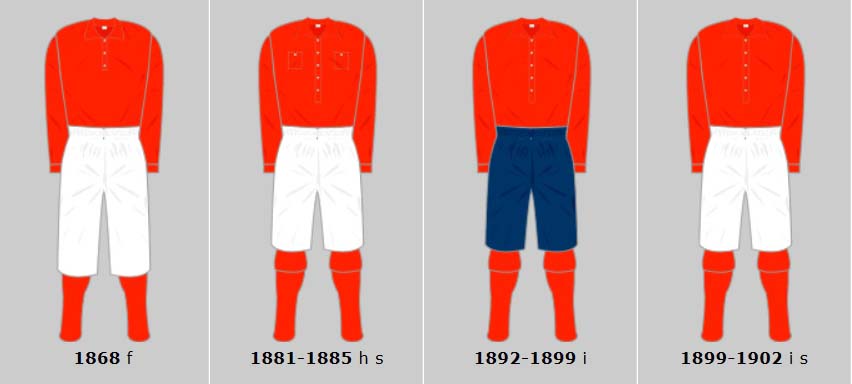
Nottingham Forest had always worn their famous “Garibaldi Red”. Here are some of their oldest kits, with only minor changes from year to year, and those sexy shorts getting shorter and shorter:

forest 1868 zzzzzz

By the way, all the illustrations of old football kits came from the best ever website for the soccer nerd and all those boys who had more than twenty different Subbuteo teams. New Brighton Tower 1898? Oh, yes.

Forest and County were not the only football clubs in Nottingham.  Next time I will look at some of the less well known local teams in the area at the end of the Victorian era and before the First World War.


16 Comments

Filed under Football, History, Nottingham, The High School

A Twitch to Kent : Day One

Friday, October 14th, 1988
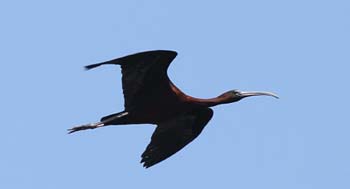
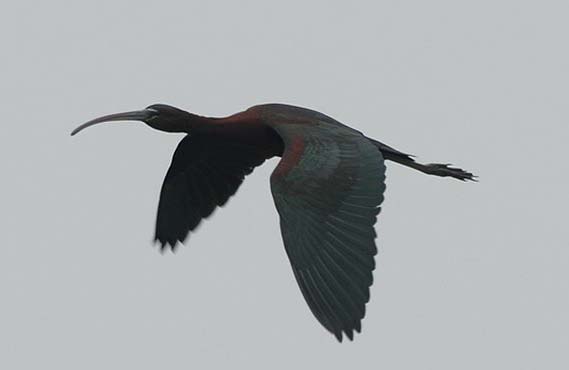
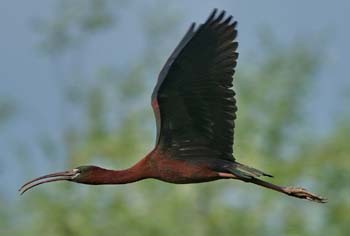
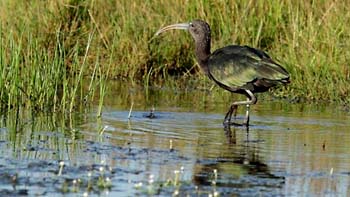
This is a new venture for me. A minibus trip, to Kent for a whole weekend. Surely we’ll get to see something. I am looking forward to a chance to see the famous Glossy Ibis:

Glossy_Ibis_1700_e

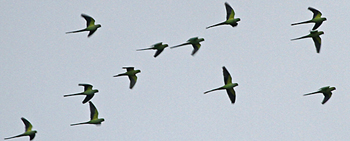
I may possibly get a glimpse of Ring-necked Parakeet, if we’re lucky:

flock parakeete

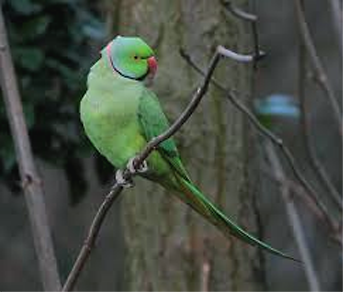
They’re a lot better close up:

parak

There’s also a fair number of other birds scattered around the country and I start an exciting war of nerves in the minibus, trying to persuade everybody that it would be an extremely good idea to call in and see them all.

I have taken the unpardonable sin of producing a dozen photocopies of an article about the habits of the Stodmarsh Glossy Ibis. A lot of people who had up to now never heard of the bird, are soon warming to the idea of going to see it. A mention of the Isabelline Shrike however, is not quite as successful, since almost all my fellow passengers have a very accurate idea of just how far away Dorset is.

On the Saturday afternoon we move over to Stodmarsh, where by now, we all expect to see the Glossy Ibis, flying over our heads on its way to roost, as it is supposed to do every single night. It can be seen flying in over the Lampen Wall. But just what is a Lampen, and why do we need to be protected from it?

view from lampen wall

In the late afternoon, the reserve doesn’t really have a lot on show. I wait in vain for a Cetti’s Warbler, a bird, that to my eternal shame, I have yet to see, although I have heard a lot singing in Norfolk.
The Stodmarsh logbook by the car park says that the Ibis came in to roost at 4 o’clock the previous evening. That’s a bit of a frightening thought, because we don’t manage to get there until 4.15 and I have the horrible nagging feeling that we have all missed it .
The minutes tick by as we wait for the bird. We get more and more worried. At least, the
serious birdwatchers do. Some of our fellow travellers act as if there is a Glossy Ibis resident in every county in the British Isles, instead of just one single, lost, bird in the whole country.

4.45. Nothing

5.00. Nothing
We get so desperate that Paul puts into operation the ultimate birdwatching spell. He inserts his index finger into the handle of his tripod, followed by the whispered recital of the bird’s Latin name. The spell works a lot better if you haven’t looked up the Latin beforehand, but actually know it anyway.
And of course it works. Within a few short minutes, Wayne is shouting, “I think I’ve got it.”

And just for once, he is actually right.

gloucsglossyibis

The bird flies over, circles a few times, and finally drops down into the reeds, presumably into its roosting place.

It is supposed in all the books to be particularly primitive looking, but I think it’s absolutely superb. It has rounded wings which seemed almost transparent against the light of the sky, and its improbably long bill balances perfectly the dangling legs. And it is is nowhere near as awkward in flight as the descriptions would have you believe. It circles around us, light and graceful. It even earns a spontaneous round of applause from its admirers. It is certainly the best bird I’ve seen so far in my very short birdwatching career. Easily.

glos ibis

Nowadays, with the alleged advent of Global Warming, the Glossy Ibis, usually a bird of Southern Europe, is being seen with increased frequency in England. A little while back, one even came to spend a few weeks in a wet field down by the River Trent in Nottinghamshire:

glossyibis2 nottnm


22 Comments

Filed under History, Science, Twitching, Wildlife and Nature

High School Football Team achieves Perfection on the Forest

Wednesday, January 21st 1981

On a dull, dreary, drizzly day in winter, the author stood with the football team coach, Tony Slack, watching the First XI play a well contested match against High Pavement 2nd XI. We were on the Forest, at the side of a pitch which has now been partially covered by the all-weather facilities. Look for that orange arrow:

This slideshow requires JavaScript.

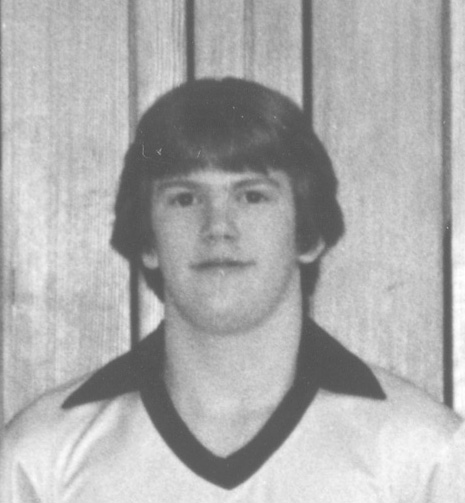
Suddenly, eighteen year old Norman Garden, his sleeves rolled up in determined fashion, won the ball with a strong, vigorous tackle at the edge of his own penalty area:

NORMAN GARDENxxxxxxxxxxxxxxxxxxxxxxxxxxxx

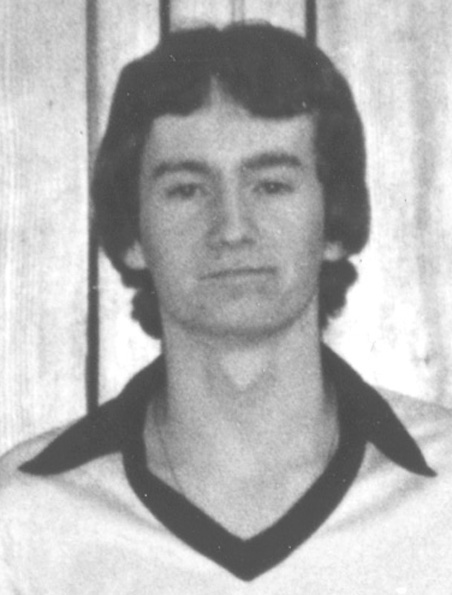
He came forward with the ball at his feet and set off thoughtfully towards the opposition goal. Looking up, he sent a long, curving, arcing pass out to young Bert Crisp on the left wing. Bert trapped the ball, then ran forward ten yards or so, and looked across at the attacking possibilities:

BERT CRISP the one
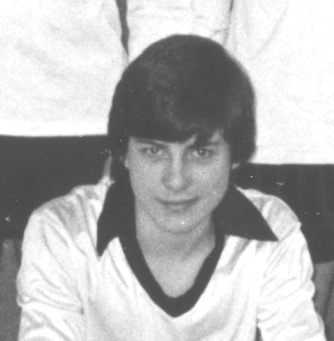
Five yards outside the penalty area stood Chris Ingle, the team’s centre forward. He was in his usual pose, apparently disinterested, lacking commitment, without any apparent desire for hard physical involvement, a young man who only came alive when he saw the whites of an opposing goalkeeper’s eyes:

CHRIS INGLE ONE WWWWWWWWWWWWWWW

Chris began to move. He accelerated slowly but purposefully from his standing start as he crossed the white line of the penalty area. Bert Crisp instinctively knew what to do. He clipped in a wickedly curving centre, about four or five feet above the ground. It was timed to arrive at the penalty spot at exactly the same time as the deadly centre forward. Chris Ingle, as the ball flew in front of him, launched himself full length over the cloying mud.
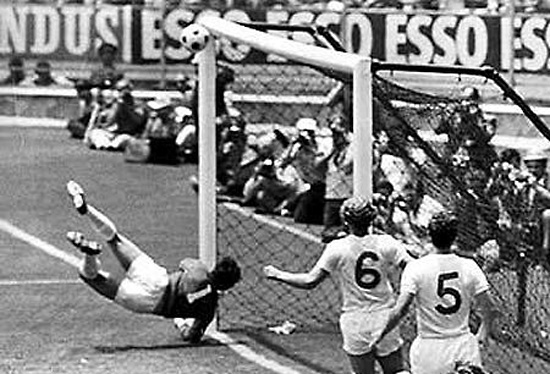
He met the ball hard with his forehead, catching it a blow which rocketed it towards the top corner of the net. “Goal!!” we teachers both yelled in our minds. But it was not quite over. The opposing goalkeeper soared backwards and with a despairing left hand just managed to flick out at the ball. He diverted it upwards, and it flew onto the crossbar and behind the goal for a corner.

Chris Ingle got up and wiped the mud from his hands down the front of his white shirt. Tony Slack turned to me and said, “You wouldn’t see anything better than that in the First Division.” And he was right.

And, in case you missed it, here’s that fabulous save again…

banks defesa

19 Comments

Filed under Football, History, Humour, Nottingham, Personal, The High School

A scary tale of cemeteries and coffins unearthed by the storm

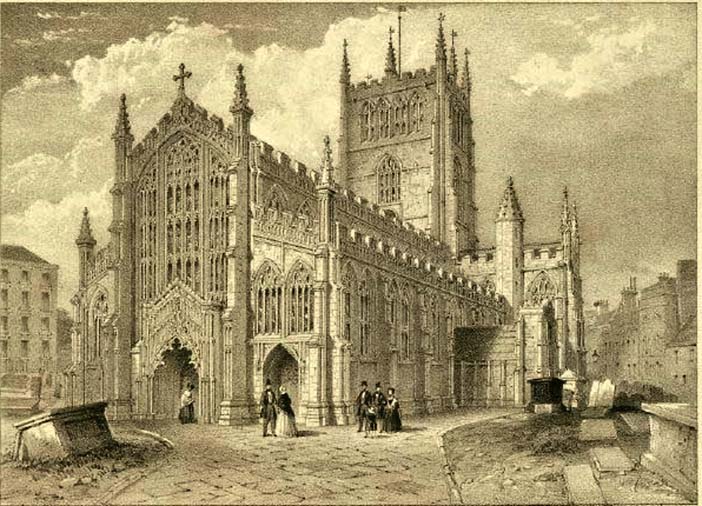
This strange tale is just one of many which I have found in a little gem of a book entitled “The Date-Book of Remarkable Memorable Events Connected With Nottingham and Its Neighbourhood, 1750-1879”. Its author was  John Frost Sutton, and I have tried to make his account read a little bit more easily for the modern reader:

“December 1792
An extraordinary occurrence is stated to have happened this year at St Mary’s Church.

st mary engrav

It was necessary to improve the passageway at the side of the churchyard leading down towards the County Hall. This could not be done without taking down some houses, and the churchyard wall on the south side of the building; in order to widen the road, it was also necessary to dig away a part of the churchyard. The cemetery was much higher there than the street and when the wall was removed,  one night, a heavy shower of rain, washed away a considerable portion of the earth from the churchyard. In consequence of this, several coffins were left almost completely uncovered, and two or three of them fell out.

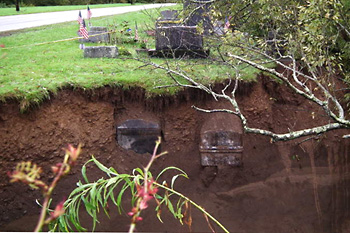
Here is a modern cemetery in South Carolina where exactly the same problem has occurred:

washed out graves

Back to the story:

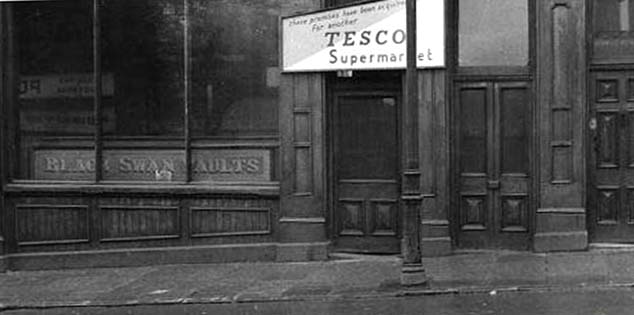
Among these coffins was one which contained the remains of Mr William Moore, for some years landlord of the Black Swan public house, situated near the church. He had been dead for about twelve years.

The Black Swan used to stand in Goosegate. It was closed as a public house, and became a shop. This is the most recent picture of it that I can find:

black swan pub

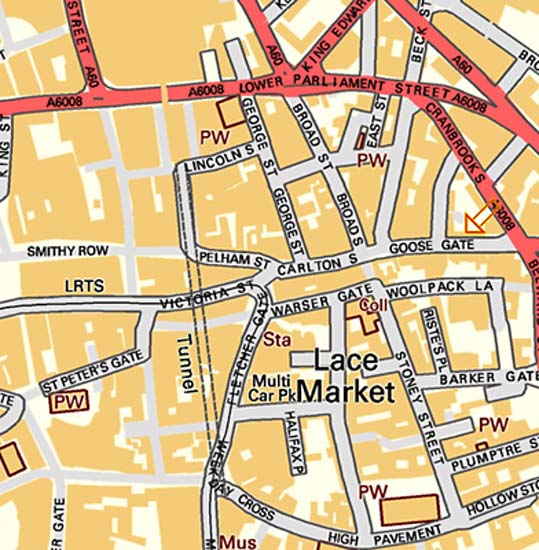
Here is Goosegate, indicated, as always, by the orange arrow.  St Mary’s Church is indicated as a “Place of Worship” by the letters PW on High Pavement, towards the bottom of the map:

goosgate

And now, back to the shattered coffin:

“The coffin being broken, there was observed in his remains a concretion not unlike a pumice stone, but rather whiter, and as large as the liver of an ox.”

It took me a very long time indeed to find out the weight of a complete ox liver, but I eventually decided that a pound, sixteen ounces or half a kilo would be roughly right:

“Mr William Moore, the landlord of the Black Swan, was a remarkable man for having a very large belly, which projected more on one side than the other:

belly
He had often said to his friends, that he thought a hard substance was beginning to form within him when only 22 years of age, and this continued to grow slowly until the day of his death He died about the age of 70. He had also been heard to say that it gave him little pain, though he found it troublesome; and it is worthy of remark, that the ribs on the side of the concretion bowed very much outwards.

Three local Doctors, Dr Hodges, Dr Neville and Dr Ford had examined Mr Moore several times and he had promised that whichever of them survived him should have permission to perform a post mortem on his body. But as Mr Moore survived all three of the doctors, no post mortem examination was ever made. Nothing therefore but an accident could possibly have brought the concretion to light.”

19 Comments

Filed under History, Nottingham

Deadly Deer (5)

There are apparently 75,000 collisions between cars and deer every year in the UK. This results in 450 injuries and, the latest figures allege, as many as twenty fatalities, both drivers and passengers.
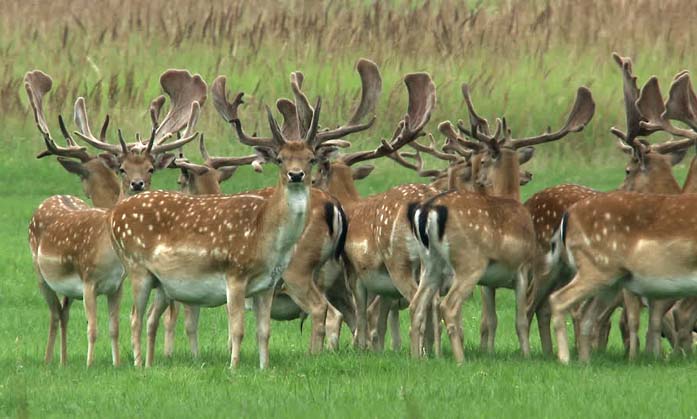
It is not surprising that these traumatic events are so frequent. The United Kingdom has more than two million deer. This represents the highest total since Saxon times:

-fallow-deer-stag-herdxxxxxxxxxxxxxx

A few years ago, there was even a muntjac deer in our staff car park, right in the middle of Nottingham:

8507_Muntjacxxxxxxxxxxxxxxxxxxxxxxxx

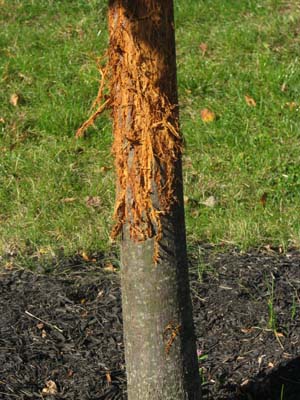
With over-browsing, deer cause enormous damage to our woodlands, and especially the birds who breed there. Too often deer consume the low vegetation which hides their nests and in general, they have a hugely negative effect on trees, shrubs, plants and flowers. This circular destruction of the bark will kill the tree:
deer-damage

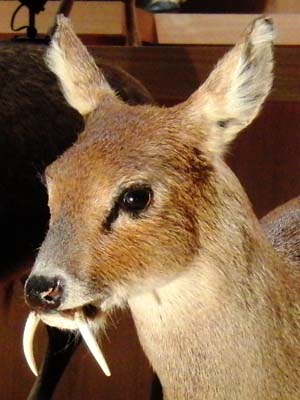
Recently a group of scientists suggested that half of England’s deer should be shot to help preserve our woodland landscape. Several species are actually foreign immigrants to our countryside, namely muntjac and Chinese water deer:

Chinese_water_deer_

Another introduced species are Sika , which manage to get absolutely everywhere:

Sikadeer

Overall, this enormous population of deer causes around £4.5m worth of damage to plantations and woods in Scotland alone. In England, it is not so much the trees which suffer, as the cereal crops, mainly in east and south-west England, where deer cause £4.3m worth of financial loss annually.
I can’t find out the overall cost of deer culling but I suspect, given our successive governments’ ability to spend other people’s money, it will be approximately £14.76 squillion pounds per year.
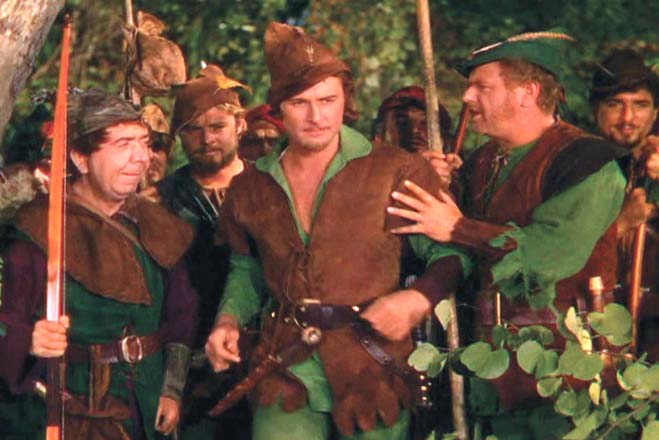
So let’s do it for free. Here in Nottinghamshire, let’s encourage petty criminals to clear off out of the city and live in groups in the forest, armed only with bows and arrows. They could wear green for camouflage and shoot the King’s deer on a regular basis.  And on Bank Holidays why not have great big barbecues for everybody to go to ?

robin hood- heroes
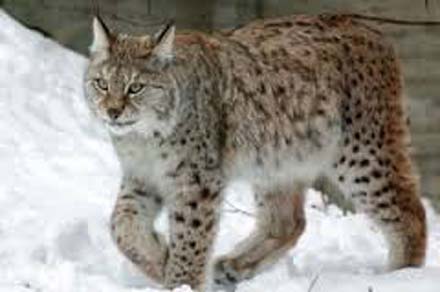
And bring back the lynx. We could have every single animal sponsored by the aftershave company. Lynxes are so shy you wouldn’t even notice them in our local woodland.

lynx a

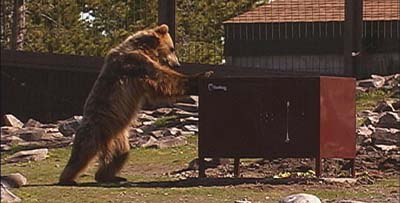
You would obviously notice Brown Bears, but so what? They eat deer by the freezer full. And furthermore, it would make enormous financial sense to have a great big bear eating the contents of all the rubbish bins in our country parks, rather than buying gigantic expensive specialised vehicles and paying humans to empty them.

image_encounters

And think of America itself. What do they have in the woods that eats deer? I’ll give you a clue. It’s totally nocturnal. It’s very shy, especially given the fact that it’s nine feet tall. You would never see them and when you did nobody would believe you. All you’d see would be a gradual diminution in the deer population.

.
If that’s a step (or should I say, a Big Foot) too far, then let’s look back a little in time to the Middle Ages.
As recently as 1433, Sir Robert Plumpton was granted a piece of land in Nottingham by King Henry VI (Parts 1-3) if he could manage to blow his horn and thereby frighten and chase away all the wolves in Sherwood Forest. The piece of land he held in Nottingham was called “Wolf Hunt Land” (The clue’s in the name). In this way Sir Robert probably helped the wolf towards its eventual extinction which occurred, supposedly, during the reign of Henry VII (or Henry VI Part Four, as he was occasionally called).
At this time, back in early fifteenth century, wolves were limited to just a few areas, anyway. Some forests in Lancashire such as Bowland, the Derbyshire Peak District and the Yorkshire Wolds.
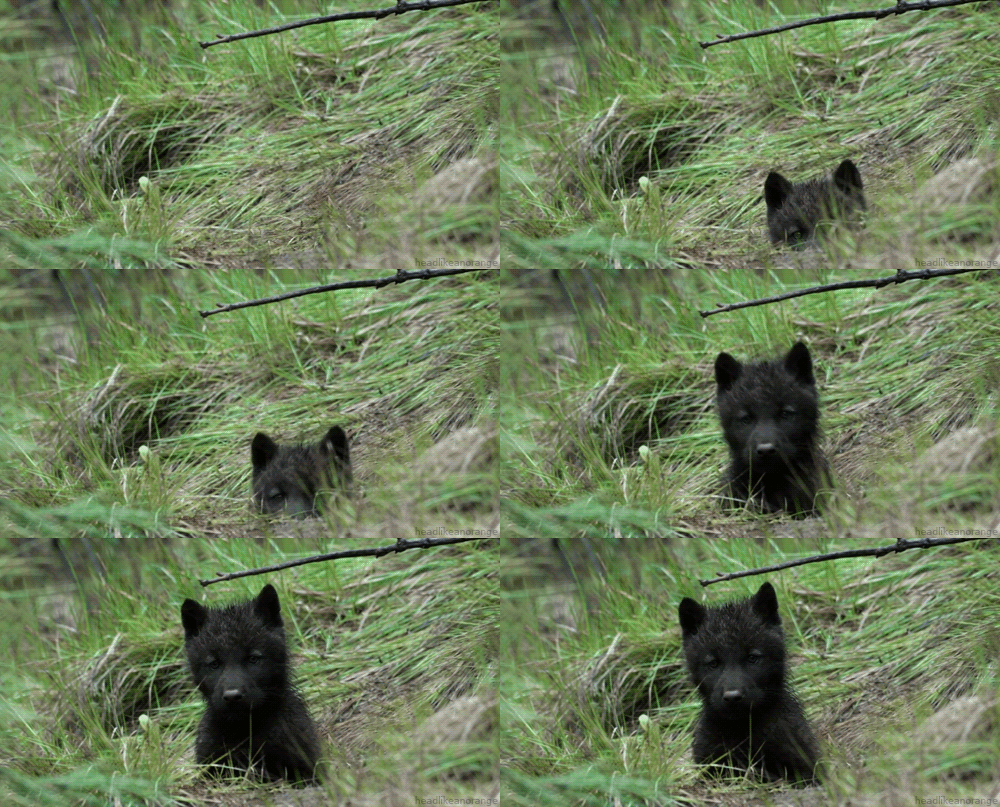
So let’s reintroduce them now. Two million deer to cull. Let Wolfy have a go. We know that they are harmless. Two deaths in North America in 129 years? Negligible!! They’d take care of the deer problem for us:

wolf pack one

And what better sight than watching a pack of wolves  chase down a mountain bike rider over the romantic fells of the Lake District?

wolf baby

Or another pack pursuing quad bike riders in the New Forest? Perhaps a whole wolf family practicing their hunting techniques on somebody else’s badly behaved and loud mouthed kids.

eyes wolf
What’s not to like?

Just watch this video, which comes, literally, from the “HeartOfTheWilderness”:

Or if you are a child, why don’t you let the Smithsonian Channel teach you to howl like a wolf? Ideal for relieving the monotony of those tedious car drives to school. Better even than the counting songs from French lessons:


23 Comments

Filed under History, Humour, Politics, Science, Wildlife and Nature

A Great Bustard in Edwardian Nottinghamshire

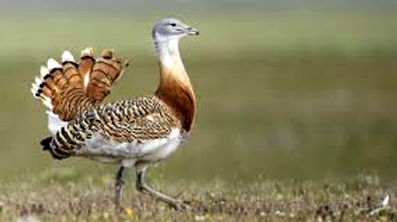
Great Bustards are huge birds, more or less the size of a domestic turkey. They used to live in many areas of Merrye Old Englande, as long as there was plenty of open grassland and only scattered farmland. They liked the chalk downs of central and southern England such as Wiltshire,  for example, and the open sandy heaths of East Anglia. The last bird English bird was shot in 1832. This is not him:

great bustard ddddddddddddddddddddddddddd

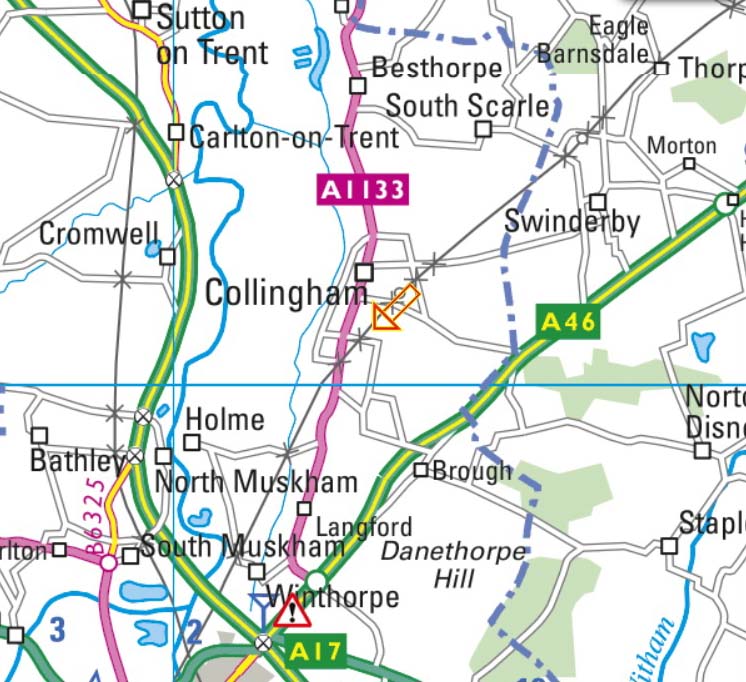
A single Great Bustard  was seen at South Collingham on April 1st and April 23rd to 24th 1906. South Collingham was, I presume, to the south of present day Collingham. The latter village is just to the north of Newark-on-Trent. In 1906, there would have been no electricity cables or pylons. Just open, infrequently visited farmland. The orange arrow marks the approximate spot:

collingh

Mr Henry Wigram sent Joseph Whitaker two letters which have survived, and they are kept in the Local Collection in the library at Mansfield:

The Lodge,
South Collingham,
Newark,
29th of June 1906

Dear Sir,
I am afraid you will think me slow in answering your PC (postcard), but I have had some difficulty in obtaining accurate information about the Cormorant, about which I had no note myself:

gret corm xxxxxxxxxxxxxx

I can tell you now that it was seen on the Newark Parish Church steeple for nearly two months. If I can hear anything more definite than this I will let you know.

.
I was glad to have your enquiry about the Great Bustard, because most people have simply smiled, & said “What could it have been ? ” ! !

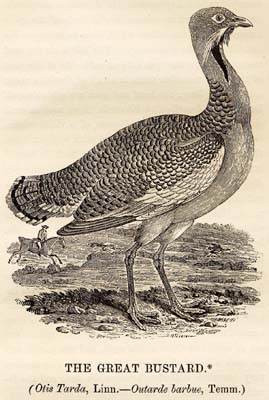
Great_Bustard_woodcut_in_Bewick_British_Birds_1797

I can positively say I did see one, as I had another view of it nearly three weeks after:

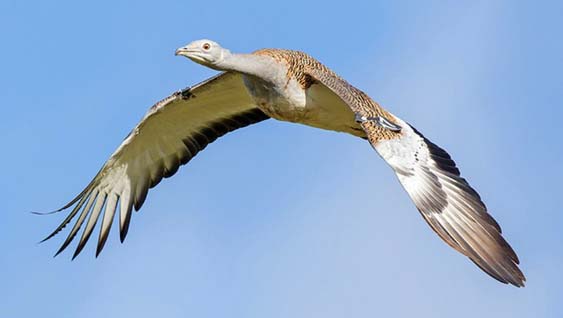
flyingxxxxxxxxxxxxxxxxxxxxxxxxxxxxxxxx

I reported it to “Countryside”, flying over my garden & I believe my wife saw it at about the same time & place on the following day.

The second time I saw it, it was making a noise like an exaggerated Crow’s caw, while on the wing. It was this that drew my attention. On both occasions I was within 120 yards of it:

outarde-barbue-vol2qqqqqqqqqqqqqqqqqqqqq
You have perhaps heard of the Snipe & Redshank laying in the same nest at Besthorpe. The Snipe laid first, each laid 3 eggs, from which I saw the Redshank get up. I am afraid I cannot say how many were hatched.


I have a few other notes which seem interesting to me, but they may very possibly be rather commonplace to one with so much more experience, as you have.
Though I collected eggs as a boy, it is only of late that I have really studied birds at all. If you think I could help in any way I should be only too glad to do so, as far as I can. I am often at Retford on business and could come over to see you if you wish. After all, I have heard of Rainworth from my friend Bonar, who went to see you with the Wordsworths last year, there can be few more interesting places anywhere.
Yours truly,
Henry Wigram

PS:    I am sorry to find I addressed this wrongly, and it has been returned to me.”

A week later, Henry Wigram sent a further letter to the great man, dated July 6th 1906:

The Lodge,
South Collingham,
Newark,
6 July 1906

Dear Sir
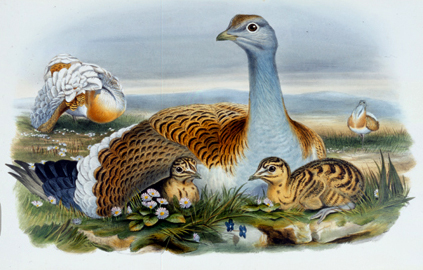
Thank you for your Postcard. Since writing you I have seen a coloured plate of a Great Bustard, & find that it entirely corresponds with my recollection of the bird I saw, but I noticed, as you say, that the bird looks much whiter on wing (sic) than with its wings closed:

qwerty

At the time I saw it, the bird appeared to me to resemble a Turkey more than anything else I could think of. Its colouring was white & brown, not brown & grey.
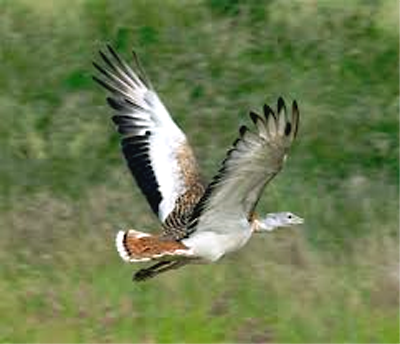
I put its stretch of wing roughly at a yard and a half, and found afterwards that my man, who was with me on both occasions, guessed it at the same measurement:

flying

I first saw it on April 1st, again on April 23rd. My wife is also certain that she saw it on April 24th.
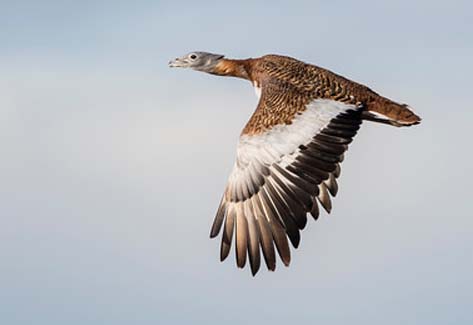
I had field glasses in my pocket the first time, but the bird, which when I first saw it, was in the act of rising from the ground in a grassfield – disturbed by other people passing, (who did not see it) – though at first it did not appear to be flying fast got away so quickly that I could not get the glasses on to it:

taking offqqqqqqqqqqqqqqqqqqqqqqqqqqqq
I was much struck at the time by the pace at which it flew with comparatively slow beats of the wing.
On the second occasion the bird passed right over my head at a height of, I should say, 50 to 60 feet.
This was in the evening. The following morning my wife saw it taking exactly the same line of flight.
I sent word to Gates at Besthorpe on 2nd April that this bird was about, but he was ill & could not look out for it. However a Besthorpe man told him that he had seen a large strange bird about that time:

flyignGAINxxxxxxxxxxxxxxxxxxxxxxxxxx

My father also saw a large bird he could not identify near the same date, but he did not get near enough to it to give any particulars.
I should very much like to come over to Rainworth as you kindly suggest. Would Friday the 20th suit you, & if so at what time?
I saw a bird the other day which puzzled me completely:

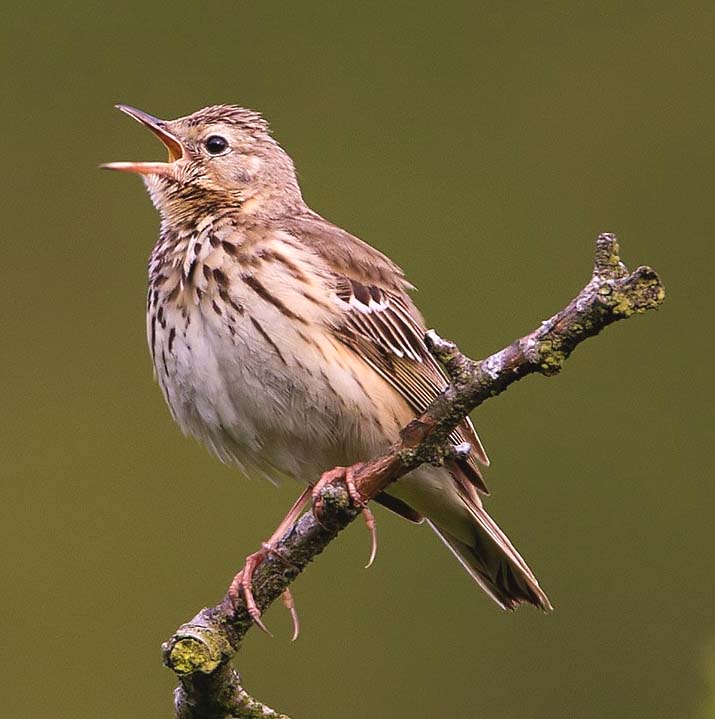
tree pipitqqqqqqqqqqqqqqqqqqqqqqqqqqq

It was the size and shape exactly like a Tree Pipit, but it had pink legs, & the markings on the throat were darker (almost like those of a  miniature French Partridge , & did not extend so far down the breast as in the case of a Tree Pipit. It also seemed to have a dark mark around the neck.
Would it be possible for strong sunlight to deceive one in this way? There were Tree Pipits about the place at the time.
Gates was with me, & quite agreed as to the markings.
Yours very truly,
Henry Wigram

In his own copy of the Birds of Nottinghamshire, Joseph Whitaker has written:

“I may add that Mr Wigram is a keen and careful observer of birds and a good field naturalist, and I am perfectly satisfied that it was a Great Bustard he saw.”

16 Comments

Filed under History, Nottingham, Science, Twitching, Wildlife and Nature

Young men behaving badly and a Touch of Class (2)

Last time I mentioned that there had been a quarrel which set Roy Henderson and his friend Arthur Barton, both from the richest areas of the city, against Harold Connop, the poor kid from the wrong side of the tracks. Two fairly clever kids against one who was blindingly clever, despite his impoverished background. The disagreement took place when Connop was in his second term as Captain of the School, in the Summer Term of 1917.  Roy Henderson was never selected to be Captain of the School and Arthur Barton only did the job very briefly at the end of an extremely short Easter Term, when Francis Bird was called up in March 1918.

bulletin_24_1403256831_2052%20Nottingham%20017

As I said in Part 1, I do not know why Harold Connop was so unpopular although at least three, possibly four, reasons spring easily to mind.

Anyway, here is the tale of the quarrel:

“Arthur Barton and Roy Henderson had given lines to one of Mr Strangeways’ favourites, whom they had found misbehaving. The two prefects were then told off for daring to punish this favoured boy. In revenge, however, fellow prefect Towle climbed through a trapdoor in the ceiling of the 5B room, into the loft above Mr Strangeways’ room, and disrupted his lesson by making a tremendous row on the ventilators.

This is Mr Strangeways:

wmp__1282738059_Headmaster_-_Strangeways0001

Both Barton and Henderson knew that Towle was going to do this, but they did nothing to stop him. Later, they argued that it was not for the Prefects to “attempt in any way to prevent such misbehaviour during School hours: that was the duty of the Masters.”

The other Prefects urged them to “help preserve a proper standard of behaviour”, and there was an enormous row about this outrage, as the perpetrator, Towle, could not be found. Harold Connop tried to remedy the situation at a meeting of the prefects and asked Barton and Henderson directly “Who did it?”.

Barton and Henderson again said that they knew the event was going to happen, but hadn’t tried to stop it.  Connop tried very hard to get them to name names, but they totally refused.

Connop then went straight to the Headmaster. His judgment was that anybody involved should be stripped of their prefectship:

“Such Prefects ought immediately to resign and I should be very pleased if they would do so. Please tell them so.”

Barton and Henderson resigned, and for four days, they were not included on the list of prefects. The Headmaster, however, had not seen either Barton and Henderson personally, or heard their version of the story. Henderson’s father, the clergyman, wrote a letter to Dr.Turpin, and told him that he ought to hear a full explanation.

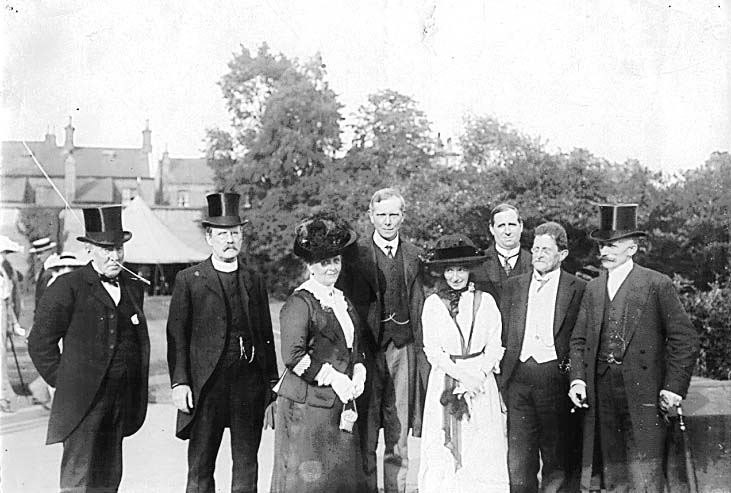
In this picture of the 400th anniversary celebrations, Dr Turpin is behind Mrs Gow and the lady in white:

400 mth heads

Barton and Henderson  duly went to see Dr.Turpin, and told him only they knew who the guilty party was, but were unwilling to furnish a name. They were told to apologise to Mr Strangeways, and were then reinstated as Prefects. They agreed “to do their best to stop such incidents in the future”.

And this was the somewhat surprising, even unsatisfactory, end of the matter. Nothing works like a letter from Daddy!

Shortly afterwards, Connop was caught smoking. He had recently given lines to a boy who had been giving a younger boy a ride on his handlebars as he cycled down Waverley Street. Waverley Street is very steep and this was a very dangerous thing to have done. The boy produced his lines, but also made a statement that he had seen Connop smoking in King Street in the middle of town.

Henderson called a meeting of the prefects about this serious misdemeanour, and Francis Bird accused Connop of breaking his previous promise not to smoke until he left the school, and of undermining the position of the Prefects.

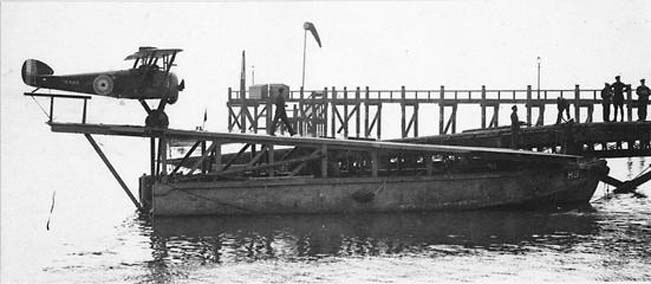
Connop explained that he was not in King Street, but in a street more than a mile from the middle of the town, which was not usually frequented by the boys. They were told that he had just received the news that he had been accepted for the Royal Naval Air Service, and he expected to leave very soon:

aircraft

Connop had bought some cigarettes for a wounded soldier on leave from the Front, and it was only after “being repeatedly pressed” that he had been prevailed upon to smoke. He argued that as School Captain he had been “freer from censure than the majority of his predecessors.” At least one of his accusers had been seen committing a far worse offence than his, and had escaped punishment completely.

Connop admitted his guilt, however, but claimed “extenuating circumstances”. He signed a declaration that he would not repeat the offence.

The entire body of the Prefects, including Henderson and Barton, then considered that the matter had been brought to a final conclusion.

Two months later, the Prefects organised another meeting, and declared that the punishment which they had all previously agreed upon, was now thought to be by no means severe enough.

A meeting of the entire Sixth Form was then called, and the whole affair was presented to them. They then voted as to whether Connop should continue as School Captain for the remainder of the term.

The vote was almost entirely unanimous, and Harold Connop was told to carry on.”

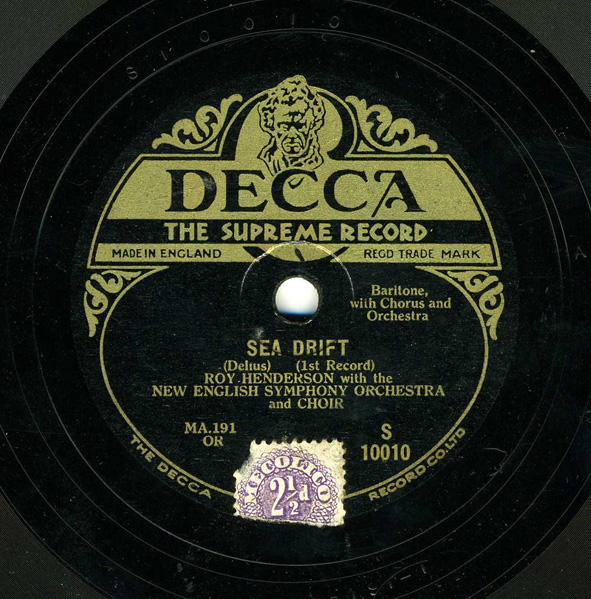
When he left the High School, Henderson joined “B” Battalion of the Artists’ Rifles, before moving to the Regimental Concert Party, based at Lichfield in Staffordshire. It is very difficult to imagine that he saw much combat at all. He later pursued a career in music as a baritone singer, becoming one of the foremost artists in the country.

Decca_1929_Sea_Drift

He died at the advanced age of just over a hundred.
Arthur Barton left the High School in 1918, and joined the Royal Engineers Signal Service. He was demobilised in December 1918. Given the timing of these events, and the time needed for training, it is difficult to imagine that he saw much combat, any more than Roy Henderson did.
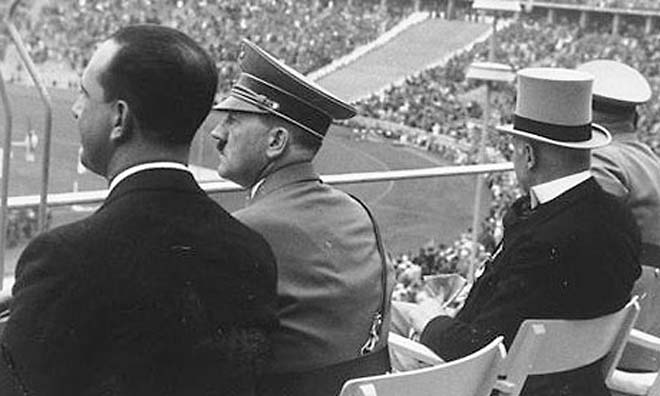
After Cambridge, Barton initially worked at Repton School as Head of Physics and gained a degree of Doctor of Philosophy of London University. He became Headmaster of King Edward VII School, Sheffield, and then Headmaster of the City of London School. In addition, he became a top class football referee who was in charge of an Amateur Cup Final, a large number of international matches in Europe and two games at the Berlin Olympics including the semi-final. Here is Adolf Hitler and two of his friends actually watching the match which saw Germany lose 0-2 to tiny Norway:

hitler-takes-in-the-actio-006

Arthur Barton died at the age of seventy-six.

I cannot trace what happened to young Mr Towle, the ventilator vandal, but we know that on November 16th 1918 at the School Debating Society, he proposed that a letter of congratulation should be sent to Marshall “Fotch” for winning the war for us.

Such crass insensitivity came after his school had lost well over two hundred Old Boys in the carnage of the Great War and, according to another reminiscence, the school flag had been more or less permanently at half-mast for a number of years.

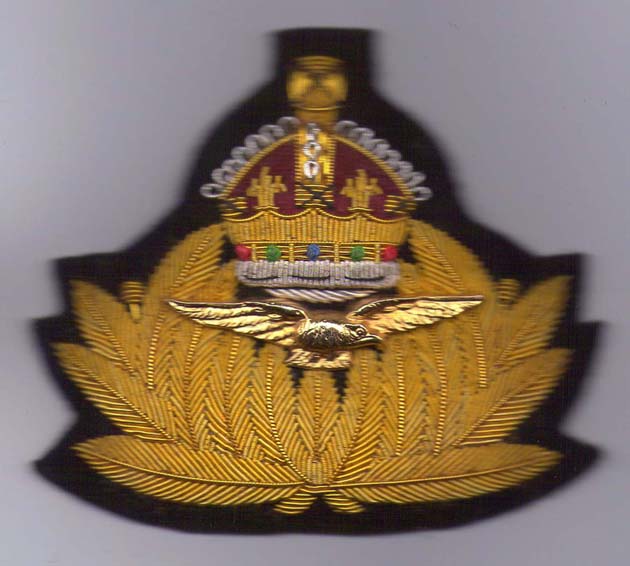
Harold Connop, of course, was one of that list of two hundred war casualties. He had joined the Royal Naval Air Service in 1917 and was posted to the airbase at Dunkerque on March 14th 1918 as a Temporary Flight Sub Lieutenant.

rnas cap

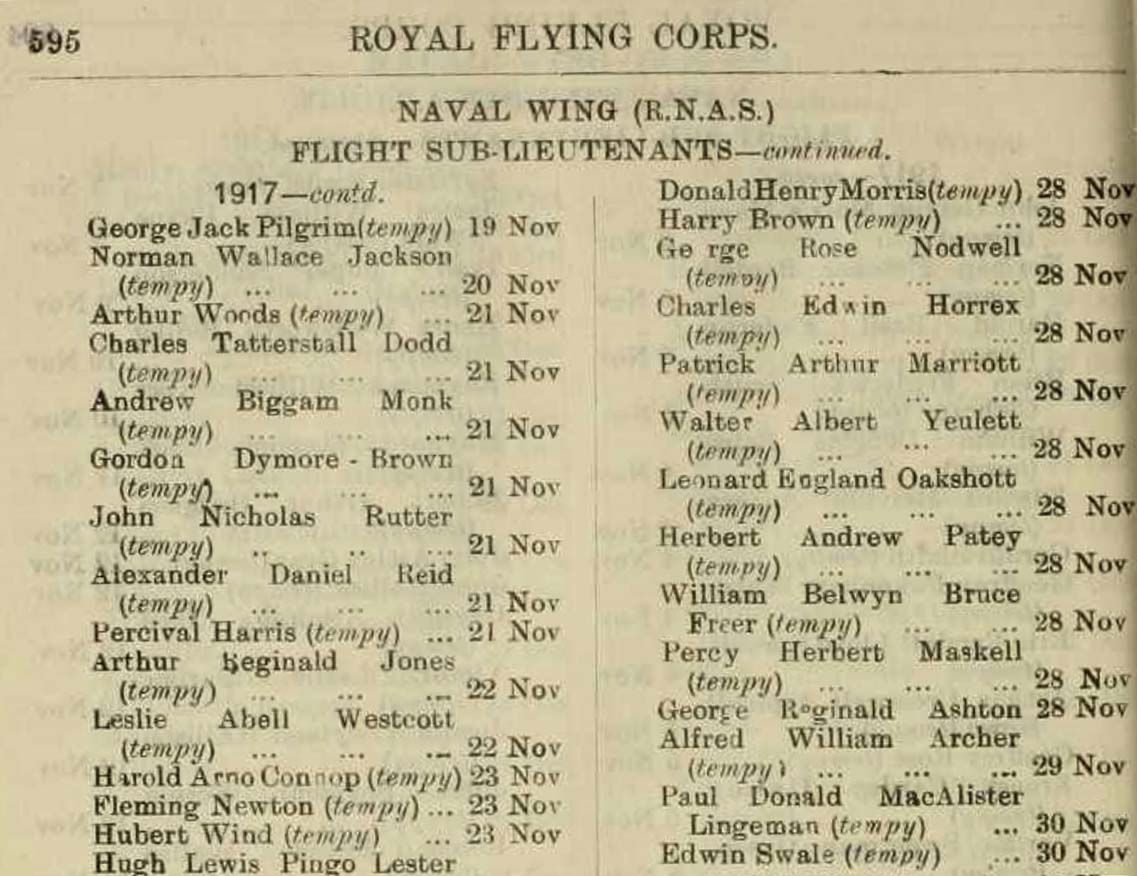
Within a very short time he was seriously wounded in aerial combat. He died from his injuries on March 31st 1918. Here is the RNAS casualty list for this period:

connop

Harold wasn’t a hundred or even seventy-six. He was just eighteen years of age:

grave

19 Comments

Filed under Criminology, History, Nottingham, Politics, The High School

The Most Dangerous English Animal (4)

So, which animals are the killers in England?
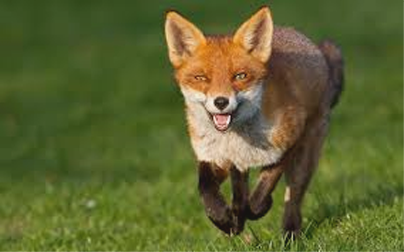
Well, in England, there is no animal carnage whatsoever. All the animals are unbelievably  friendly and welcoming. Nobody in history has ever been killed by a fox:

fox

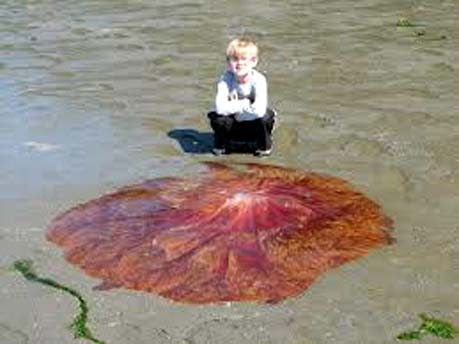
And nobody has ever been done to death by a Lion’s Mane jellyfish either:

jelly

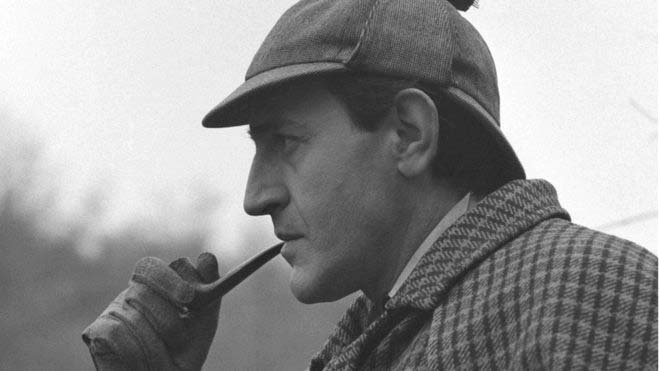
Hard luck Sherlock:

sherl

One lady was hospitalised after a gull attack. The killer birds pecked her little dog to death, which made some of the neighbours sad. A similar incident led to the death of a pensioner who had a heart attack.
On average, only one person a year in England is killed by cows (which really surprised me, I must say).
Five people a year are killed by wasps and bees every year in Britain, the same figure as the average number of deaths by terrorism, apparently.

psaw xxx
Only fourteen people have died in total from snakebite since 1876, with the last one more than forty years ago.
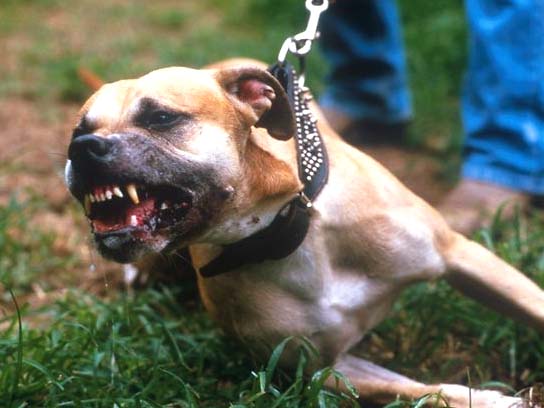
Since 2005 there have been 17 deaths caused by dog attack, which is just under two per year. There are almost a quarter of a million non-fatal attacks per year. These may sometimes be just a scratch but quite often they result in permanent disfigurement. And these statistics are rising rapidly with an increase of a third in the last five years. Animal shelters are apparently nowadays full with all the thousands of Staffordshire Bull Terriers which have been found to be too fierce to be kept as pets:

dog

Most dangerous perhaps, though, are the Artiodactyla, the deer and the antelope. In fact, we have no antelopes in England but the deer make up for it.
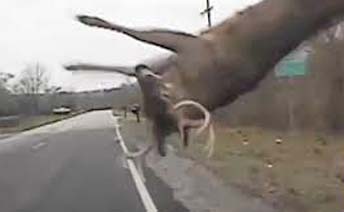
Around 75,000 deer are hit by cars every year in the UK.  This results in 450 injuries but only a few fatalities. Latest figures say that there are up to a dozen, either drivers or passengers.

deer

Getting it all into context, in 2010, 1,970 people were killed in transport accidents with almost four hundred of these being pedestrians. Two pedestrians were killed by a bicycle on the pavement and a further five were killed by motorbikes. Cars and vans claimed 133 victims in the total, and 55 pedestrians were in either a bus or a lorry with 39 hit by a train. Just over a hundred cyclists were killed in total (123) and 429 motorcyclists perished. Travelling in cars, 1,115 deaths occurred, a rather good advert, perhaps, for the virtues of the seat belt. On water, 14 deaths occurred and 22 people were killed in aeroplanes.
Stairs were killers on almost 700 occasions:

steps

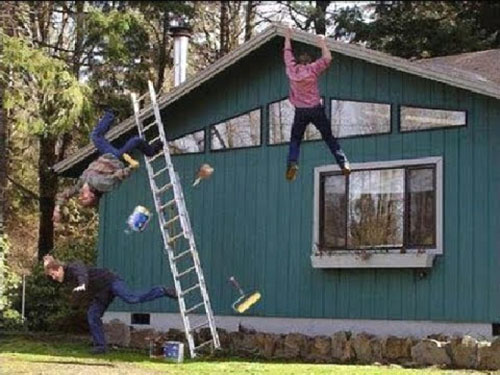
A further 53 people fell to their death off a ladder. It can be accidental:

ladeeeer Or simply, a great mind at work:

ladder-double

More bizarrely, 36 people were killed by a “thrown, projected or falling” object.
Accidental drowning claimed 217 with 29 in the bath and 3 in the local swimming pool. The majority of people who drown, of course, are swimmers rather than non-swimmers.
The real killer animals were doctors and surgeons who claimed 433 people in medical accidents. The forces of nature claimed 129, the same figure as for “excessive natural cold”.
And what about those killer lifts? Four fatalities between 2002-2010.
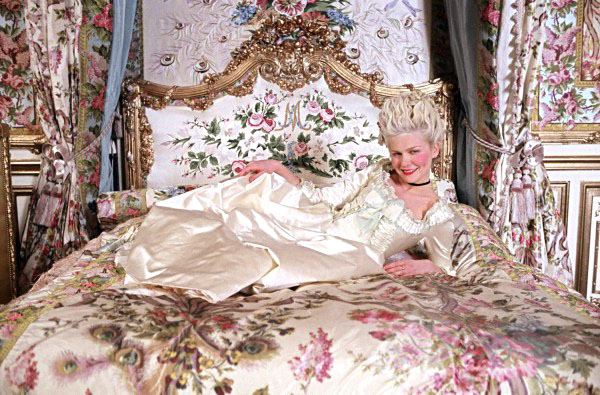
And I’m still trying to work out how they did it. Five people managed to suffocate in bed:

marie-antoinette

There were lots of different sources for these statistics, so I picked one that seemed to be from a reasonable source.

26 Comments

Filed under Criminology, History, Science, Wildlife and Nature

The only trophy the High School Football Team ever won

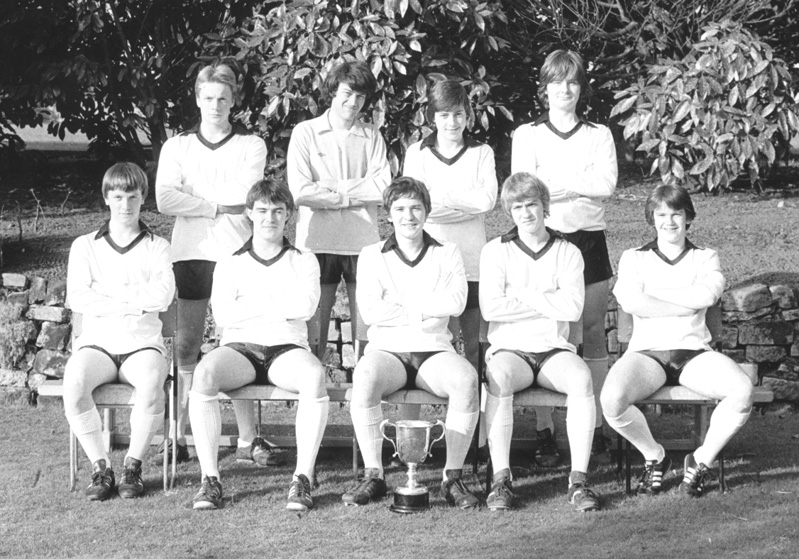
In late March 1981,  the school’s footballers won the Nottinghamshire Schools’ Football Association Seven-a-Side competition. This was the first time that a High School football team had ever won a cup at any level. Here is the squad:

six-a-side BETTER BEST BESTxxxxxxxxxxxxxxxx

The competition was organised into a number of groups, and in their initial group, the High School won two games, and lost just one, to Worksop College ‘B’ team. The High School therefore qualified for the next stage of the competition as the best losers.
This next stage was the semi-final, where they beat Worksop College ‘A’ team by one goal to nil. They therefore went forward to the Final, strangely enough, against Worksop College ‘B’ team. This ‘B’ team was the very same one which had already beaten the High School in the group stages.
In this game, the score was 0-0 at full time, and two periods of extra time did not produce any goals either. As there was no winner as yet, therefore, penalty kicks would be needed to decide the contest. The first five kicks were successful by each side, and the score was 5-5. Everybody would have to try again. The first Worksop player, though, then missed his second kick, leaving the High School needing just one goal to win the cup.
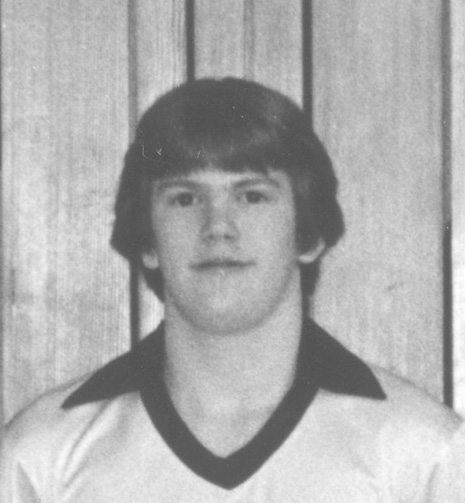
Norman Garden, who had come on as a half time replacement, took the kick, arguably the most important in a minimum of 110 years football at the High School.

NORMAN GARDENxxxxxxxxxxYESY EYS

By his own admission, head down, he took approximate aim. The ball hit both the post and the crossbar but screamed into the back of the net for the winning goal. The High School were the victors by the unusually high score of 6-5.
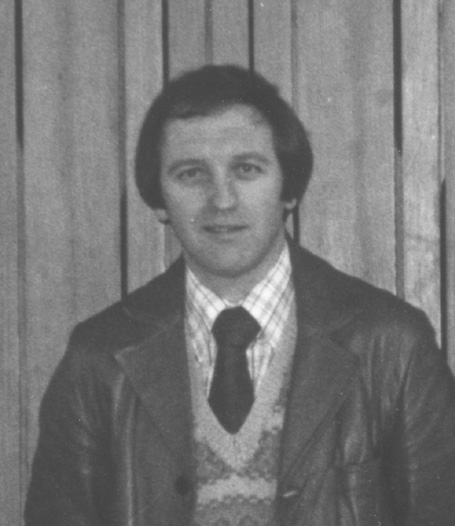
The team was coached, as always, by Tony Slack:

TONY SLACKKK WWWWWWWWWWWWWW

Team members were Raich Growdridge as captain, Simon Derrick, John Ellis, Norman Garden, Chris Ingle, Tim Little, Neil McLachlan, Richard Mousley and Chris Peers.

This slideshow requires JavaScript.


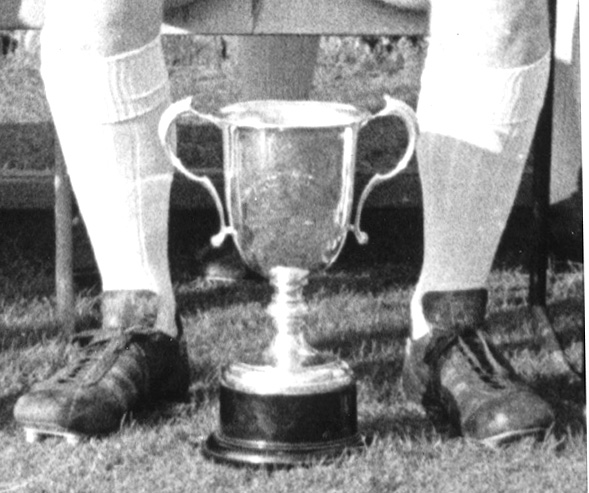
This remains the High School’s only ever official trophy:

ta cup

Strangely enough, the cup was never contested again, and despite various attempts by High School teachers to surrender it back to the relevant authorities, nobody ever came forward to take responsibility for it. As far as is known, the magnificent cup, at least twenty pounds of almost pure, locally mined Worksop silver, still remains somewhere deep in the bowels of the School, locked away for safe keeping by Tony Hatcher, the school caretaker at the time:

tony hatcher

29 Comments

Filed under Football, History, Humour, Nottingham, The High School