Category Archives: Nottingham

Water, water everywhere, especially past Trent Bridge

In a recent blogpost, I mused about the cold past of our city, and how the River Trent had frozen over on a number of occasions in the nineteenth century, the last being in 1892. Previous years when similar brass monkey weather conditions had occurred were 1682, 1814, 1838 and 1855. In all of these winters, the River Trent at Nottingham had literally frozen over from one bank to the other. I found these extremes of weather really quite interesting, so I continued to do further research of my own. I duly found some extra details, such as, for example, the sad fact that:

“on 10 January 1814, seven boys drowned in the River Trent in England by the breaking of the ice.”

One or two more examples of extreme cold have since come to light, in years of which I had previously been completely ignorant. During the winter of 1092-1093, for example, when William Rufus was king:

“the River Thames and all the English rivers (were) heavily locked in with ice”. There was severe frost in this winter. English rivers (were) frozen so hard that horsemen and wagons could travel on them.”

When warmer weather finally came, however:

“drifting ice on the rivers destroyed bridges, and mills were carried away”.

Here is William Rufus, who was to be killed by an arrow in the New Forest:

4559818813_e810e0ca1c_z

Four hundred years later, the River Trent was frozen near Nottingham in the winter of 1485-1486. When the thaw finally came, “the bridge at Newark-on-Trent was swept away.” In 1766, on February 15th, a great snowstorm hit Nottinghamshire, which lasted fifty hours. That is a lot of snow!

Our old friend “Wikipedia” provided a great deal of historical detail about this kind of event, not all of it totally fascinating, although the word “palaeochannel” was new to me and it does contain three unusual vowels in a row. Here’s one I photographed earlier:

paleo chanaell zzzzzzz

I knew that Giant Floods generally follow any Big Freeze but it was interesting to see that, in the modern era, the worst flooding experienced in Nottingham came very soon after the vast snows of the winter of 1946-1947 had melted. This melt was extremely sudden because of continuous heavy rain throughout March. The result was extensive and severe flooding all along the valley of the Trent. During this flood the peak flow of the Trent was 39,100 cubic feet per second, thirteen times the norm. As many as 9,000 houses were flooded and almost one hundred industrial premises were awash, with floodwater up to the height of the first floor. Here are one or two photographs of the flooding. These are of West Bridgford:

This slideshow requires JavaScript.

Here is Arkwright Street next to the railway station:

arkwright st

This is the aptly named Canal Street:

NTGM006755.tif

Here is a picture of the River Trent near the present day Harry Ramsden’s and Toys-r-us. On the left is Wilford Power Station, demolished in the 1980s, and on the right, Clifton Colliery which disappeared even before this (possibly through flooding?):clif colli wilf power station

Here is Beeston, looking remarkably like Venice:

NTGM016349.tif

This photograph is just about recognisable as Melton Road in West Bridgford:

220px-Melton_Road_in_the_floods_of_March_1947_-_geograph_org_uk_-_1537395

This natural disaster in 1947 was the beginning of our modern attempts to tame the river, by building concrete embankments and sluices in an effort to avoid the surging floods which had devastated Long Eaton, Beeston, the Meadows area, Colwick and West Bridgford on more than one occasion during this period. Here is the Trent, with early concrete steps visible only on the far side of the river, and just a grassy slope on this, southern, side:

before concrete

This photograph was probably taken in the 1950s, with concrete embankments on both sides. Trent Bridge is in the background, so we must be looking north:

nottinghamtrentbridge-620x413

Nowadays, the concrete steps near Wilford Suspension Bridge would stop a Soviet tank. Well, perhaps make them feel a little motion sick:

nearcounty hsall

Here’s the other side, looking north towards Trent Bridge and the green roof of County Hall:

concrete zzzzzzzzzzzzzzzzzzz

These are the sluices on the river between Holme Pierrepont and Colwick, designed to hold back excessive flood water so that it can be released gradually at sensible intervals. By the way, firm promises have now been given that the next time they release fifty billion gallons of floodwater, not only will they look first to see if any anglers are fishing at the riverside, but they will also sound a warning klaxon:

colwick sluives zzzzzzzzzzz

This huge construction work of the modern era seems to have been completely successful. During the Millenium Flood of November 2000, the peak flow of the Trent was 36,000 cubic feet per second, around twelve times the norm, and certainly comparable to the conditions experienced in 1946-1947. But this time, the 15,000 homes at risk were completely unaffected and there was none of the widespread flooding seen in 1947 within the city:

flood 2000

In this photo the flooded Trent is, for the most part, still contained within its banks, although Nottingham Forest’s pitch does look as if it may be somewhat waterlogged.  All of the floodwater in the background, by the way, is, for the most part, lying harmlessly on playing fields.


11 Comments

Filed under History, Nottingham, Science, Wildlife and Nature

The very first football season of them all 1888-1889 (Part 1)

At the moment, the High School has very strong  footballing links, both with the Premier League and the Championship. They come in the person of Patrick Bamford, a young man who would seem to have a sparkling footballing future ahead of him:

He is not the only Old Nottinghamian to have played professional football, however. Well over a century ago, for example, a number of old boys took part in that inaugural season of 1888-1889, playing for Notts County in the newly formed Football League.

The season was totally dominated by Preston North End, “The Invincibles”, who beat County on aggregate by 11-1, for example, and were undefeated at the end of the campaign after 22 matches. They dismissed Wolverhampton Wanderers by an aggregate of 9-2 and Stoke City by 10-0. Notts County were to finish in eleventh place out of twelve. Their record of five victories, two draws and fifteen defeats produced a grand total of 12 points, with two for a win and one for a draw. Stoke City also managed 12 points, but their goal average (not difference in those days) was 0.510 as opposed to County’s much more impressive 0.548. That difference of 38 hundredths of a goal was enough for County to escape the Wooden Spoon! Derby County had 16 points and Burnley had 17 points. All four teams were re-elected to the League for the next season:

league table

One Old Nottinghamian who appeared in the County team that season was Arthur Frederick Shaw, of whom I have been, unfortunately, unable to find any photographs whatsoever on the Internet. Arthur was born on August 11th 1869 in Basford. His father was Alfred Shaw (1842-1907), the famous Nottingham and Sussex cricketer:

AlfredShaw_RedLillywhite1876

Shaw senior played for England, and he actually bowled the very first ball ever in the entire history of Test Cricket, which was to the Australian batsman, Charles Bannerman. During his cricketing career, Alfred Shaw took more than 2,000 wickets for Nottinghamshire and Sussex from 1864-1897, before becoming a first class umpire. He died in 1907 at Gedling, Nottingham, and is buried in the churchyard there, close to the grave of Arthur Shrewsbury, the former Nottinghamshire and England batsman:

This slideshow requires JavaScript.

At the time when their son entered the High School on April 28th 1881, at the age of ten, the Shaw family was living at the Belvoir Inn in Kirkby Street, Nottingham, a street which no longer exists. The date when he left the High School remains unknown.
Arthur Shaw played just two games for Notts County during that inaugural 1888-1889 season. His first game was on December 8th 1888 at home to Aston Villa, which resulted in a 2-4 defeat for the Magpies. A crowd of some 2,000 spectators watched the game, where Shaw played as an inside right (Number 8, except that there were no numbers in League Football until August 25th 1928). At left full back (No3) was Herbert Durrant Snook, a fellow Old Nottinghamian, with George Hutchinson Brown, a third Old Nottinghamian, playing at right half (No 4). I will talk about these two gentlemen in a later article.
Arthur’s second game came on March 5th 1889, when County entertained Bolton Wanderers at Meadow Lane. A crowd of some 3,000 spectators watched the match, where Arthur played on this occasion as an inside left (Number 10). County lost narrowly by four goals to nil.

Arthur went on to play for Notts County on two more occasions in the Football League. These both came in the following season of 1889-1890, when the team finished in a much improved tenth place in the League. On December 14th 1889, he appeared in a game at Meadow Lane against Wolverhampton Wanderers, watched by 3,000 people and ending in a narrow 0-2 home defeat for the Magpies. A week later, they entertained Derby County and beat them by three goals to one, in front of a Meadow Lane crowd of, again, some 3,000 spectators. On both occasions, Arthur was playing as an outside right, and, again, had there been numbers on the players’ shirts at this time, he would have worn a No 7.

Arthur appeared a number of times for Nottingham Forest, both before and after his appearances for Notts County. At the age of barely eighteen, therefore, well before Forest were a League club, Arthur made his début for them in the 1887-1888 season, scoring the only goal in a 1-1 home draw against Burslem Port Vale. His other game for Forest was a 3-2 home win against Bolton Wanderers, when Shaw scored what turned out to be the winning goal.

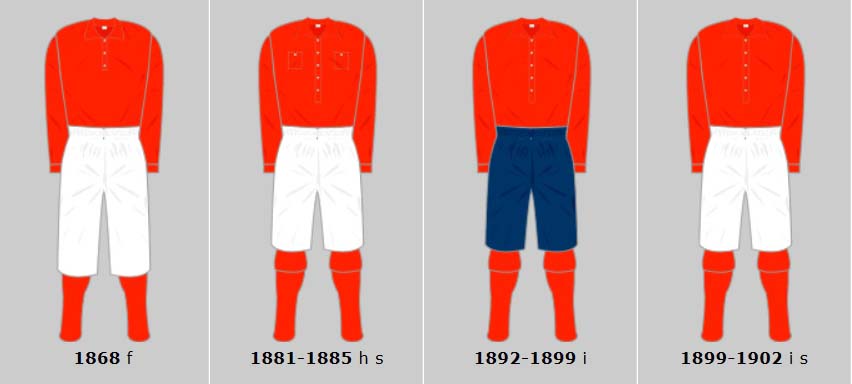
During the following season of 1888-1889, Arthur made four appearances for Forest and scored two goals. He played at home against Preston North End (0-2), Newton Heath (2-2, one scorer unknown), and Clapton (3-2, two goals). He played in away games at Newton Heath (1-3), a team who were later to become Manchester United. All of these games were friendlies. Here are some Forest strips from this long ago era. Things have not changed a great deal:

forest 1868 zzzzzz

In the 1889-1890 season, Arthur made eleven appearances for Forest and scored six goals. He played a number of games in the Football Alliance against Long Eaton Rangers, Sunderland Albion, Darwen, Newton Heath and Small Heath (later Birmingham City). The result in this last game, a 0-12 loss, remains Nottingham Forest’s record defeat. Arthur also appeared in the 0-3 away defeat at Derby Midland in the First Round of the F.A.Cup.

Perhaps the most unusual moment in Arthur Shaw’s whole football career came in this 1889-1890 season when he played for both Nottingham Forest and Notts County. He appeared in the Football Alliance for Forest against Sunderland Albion, (3-1) and then, as we have already seen, for County in the Football League against Wolverhampton Wanderers (0-2) and Derby County (2-3). Shaw capped it all on Boxing Day, December 26th 1889, when he turned out for Forest against County in a 1-1 draw in a friendly at Meadow Lane. I presume that this swapping of allegiances was possible because County played in the Football League and Forest played in the Football Alliance. There would have been no connection between the two organisations.

In the 1890-1891 season, playing for Forest as an outside left (No 11), Arthur appeared in the First Round of the F.A.Cup against Clapton. He scored one goal at the wonderfully named Spotted Dog Grounds as Forest won narrowly by 14-0, still the record away score for the F.A.Cup, and indeed, the record away win in any competition. Clapton had only trailed 0-5 at halftime before conceding nine quick goals in the second half. Arthur’s fellow Old Nottinghamian, the “ageing Tinsley Lindley” was also playing:

Tinsley_Lindley

“There’s only one Tinsley Lindley” scored a mere four goals in this one sided game, where five goals came from the Scottish international Sandy Higgins. A third Old Nottinghamian was playing for Forest in the person of John Edward Leighton, called “Ted” or “Teddy” at the High School and later in his life, “Kipper”, for his ability to fall calmly asleep in the dressing room before big matches. He played quite a few of those over the years, but his greatest honour came on March 13th 1886, when he won his only international cap for England, as an outside left in a 6-1 victory over Ireland in Belfast. Teddy Leighton was making his England début in the same team as fellow High School Old Boy, and Nottingham Forest player, Tinsley Lindley, mentioned above. This was one of no fewer than four occasions on which two ex-pupils of the High School have played together for their country. On other occasions, Leighton and Lindley had also played together for the fabled “Corinthians” club.

Overall, Arthur Shaw was to score a grand total of 11 goals in 79 appearances for Nottingham Forest. After he left Forest he went on to score three goals in 11 appearances for Loughborough, who, at the time, were playing in the Football League, Second Division. He would have worn these long forgotten colours:

Loughborough_Town_1895-1900

Arthur’s final appearance of any kind for Nottingham Forest came when he played as a right half in the semi-final of the Bass Charity Cup. The game was away from home, against Leicester Fosse, and took place on April 6th 1899. It finished in a 1-1 draw, and was watched by approximately 1,000 spectators.

Arthur’s final appearance for Nottingham Forest in the Football League had already come in a 0-5 defeat in an away game against Derby County. This fixture took place at the Baseball Ground on April 11th 1898, and the legendary Steve Bloomer scored a hat trick, before a crowd of some 12,000 spectators:

bloomer xxxxxxxx

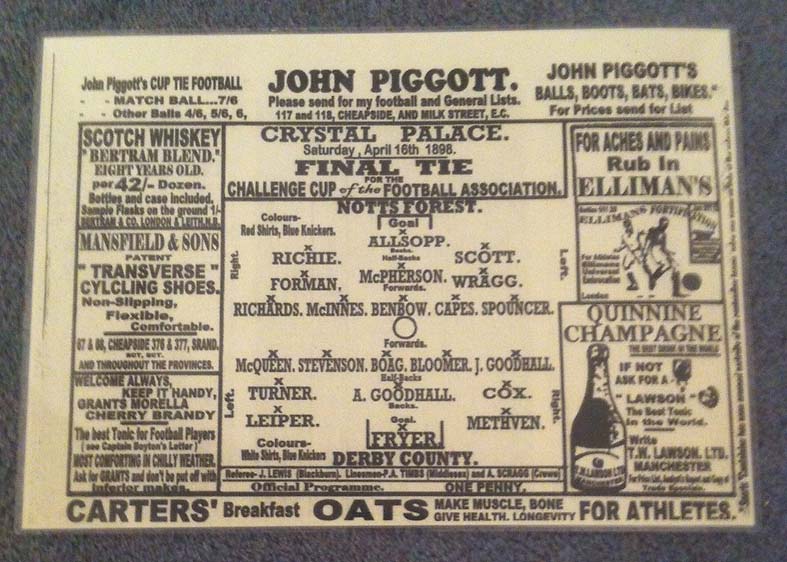
Only five days later, the same two teams were to contest the F.A.Cup Final at Crystal Palace before a crowd of 62,017, Forest triumphing on this occasion by 3-1. Unfortunately, Shaw did not make the team for the final, his position of right half being filled by Frank Forman. This is the closest, however, that any Old Nottinghamian has come to winning an F.A.Cup winner’s medal but only if you don’t count the School Gardener,

programme

By the way, the illustrations of old football kits came from the best ever website for the soccer nerd and all the boys who had more than twenty different Subbuteo teams. New Brighton Tower 1898? Oh, yes.


5 Comments

Filed under Football, History, Nottingham, The High School

Hallowe’en Tales : Numbers Nine and Ten

Number 9

He’s back! The Return of the Phantom Passenger of the No 90 Bus

This is another version of the story about the No 90 bus and the ghost of the cyclist. Clearly, this ghost story is a strong tradition which has persisted for many years on this western side of the Nottingham conurbation. I found this version of the story about five years ago, in a forum about ghosts in Nottinghamshire. I kept the website address at the time, but I can’t find it any more, and I presume the forum is now defunct.

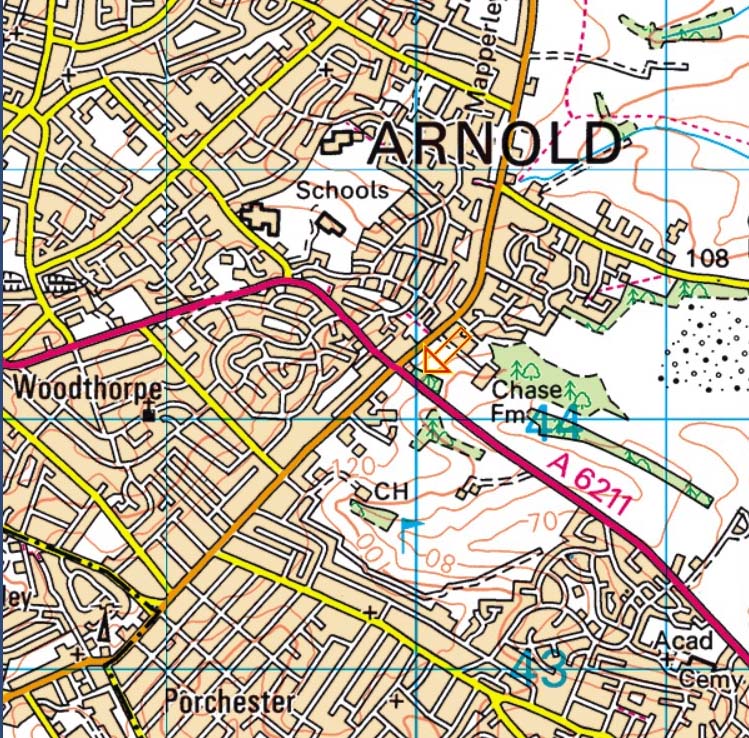
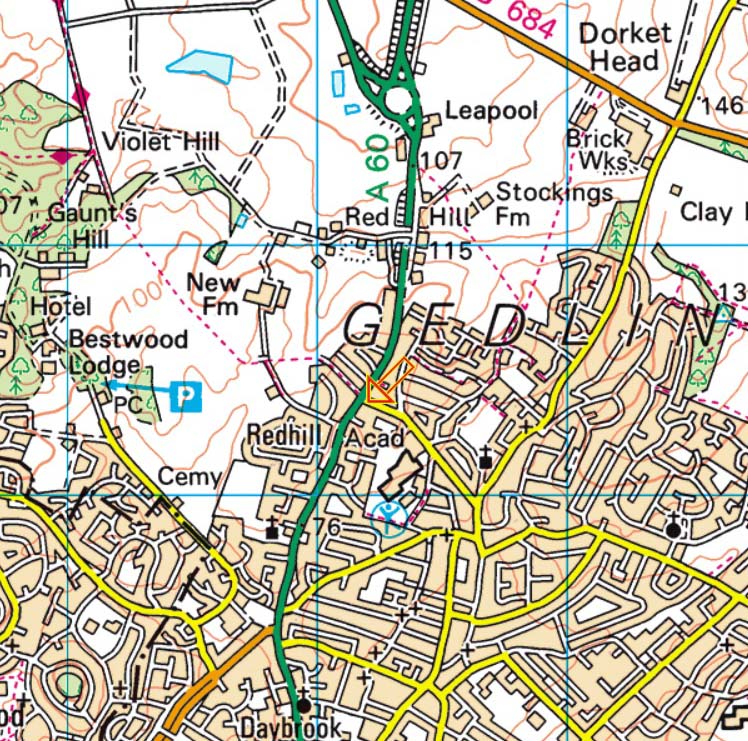
On this map, the orange arrow in the centre points to Arnold Lane. I suspect that the young man who needed the loo went into the tiny wood to the north of the road, having parked his car pointing down what is  actually a very unpleasantly steep road:

at long last

The old man would have been pushing his bike up the hill:

I came home one night in the early hours of the morning from the White Post pub in a friend’s car, turned down Arnold Lane towards Gedling, just down the hill, the friend stopped the car as he needed the loo went round the back of the car. As I sat looking down the hill, I could see an old man pushing a pushbike up the hill on the other side of the road. Then suddenly, he just vanished into thin air.

I thought I had just imagined it but when the friend got back in the car, he asked me “Did you see that?” and I asked him “What?”” as we might have seen different things. He said “The old man. He just disappeared”.

I know some people might say, “Well, there’s a path off the road up there, he could have gone along that, but at the point he disappeared  there was just a very thick hedge. I was not really frightened but I was a bit shocked to see this. My Dad later told me a story of an old man who had come from the pit late one night was going home on his pushbike to Arnold and was hit by a car and killed. That’s why the path at the back of the hedge was put into make it less dangerous.”

To complete the Geography lesson, the open land to the east of Chase Farm is what is left of Gedling Colliery, the coal mine where the old man is supposed to have worked.

Number 10

The Killer Bus

I know two more ripping yarns about buses, both of them told to me by a birdwatching friend, Phil, who had worked initially for Liverpool City Transport and then for Nottingham. One story involves the supernatural, the other, a bus driver who was exceptionally lucky not to become a member of the supernatural.
The lucky bus driver occurred when Phil worked in Liverpool in the early 1960s. There was a good two or three inches of icy snow already on the ground, and an absolutely impenetrable “smog”:

smog

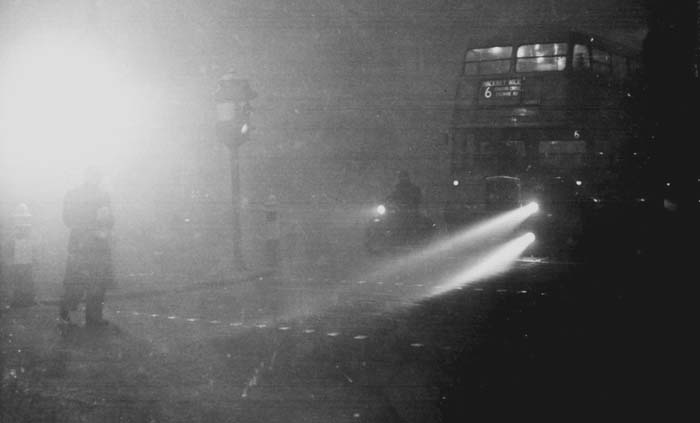
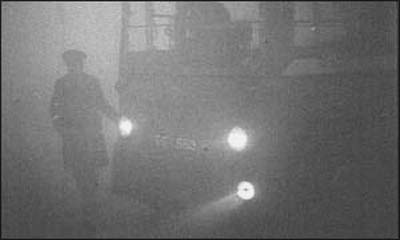
“Smog” was a speciality of the era, and it was a dangerous combination of natural fog, perhaps where the warmer sea met the frozen land, and the thick smoke which came from the tens of thousands of houses heated by coal fires and a good few coal fired power stations around any city in the country:

bus in smnog

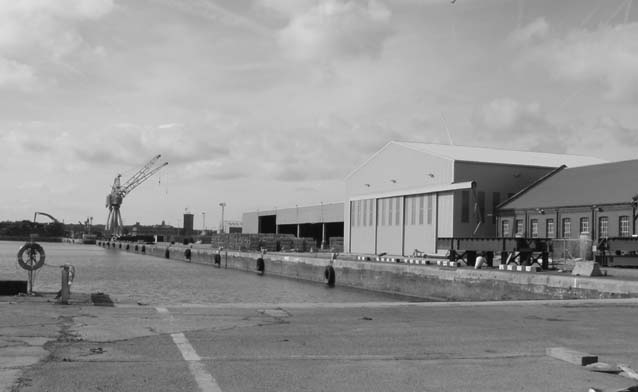
That day in Liverpool, therefore, the weather conditions combined to produce a bizarre situation, whereby the bus driver could not see where he was going, even at walking pace, but at the same time, he left tyre tracks in the snow which let pedestrians see exactly where the bus had been. Imagine, therefore, the pedestrians’ shock to see that an unknown Liverpool bus, full of scores of workers on their way home from the shipyards, but completely lost in the whiteout conditions, had been driven for more than eighty yards along the edge of the docks. leaving tyre tracks just a couple of inches from the twenty foot drop into the icy waters of the Mersey. The lucky driver had finally turned right to safety rather than left to a watery doom:

Dock_in_Port_of_Liverpool_1
Phil told me a second story, a supernatural tale, all of which had taken place in the Bus Depot in Sherwood, the very same suburb of Nottingham where I live:

bus depot

Apparently, the bus in question had some mechanical problem and it was being mended. It was jacked up on strong supports while repairs were carried out.

Only the strong supports gave way, the bus skewed to the left and the mechanic underneath was crushed to death.

A few days later, the repairs to the bus were completed without any further problems. The bus was parked away on one side of the garage while a driver and conductor could be found to take it away on its afternoon route. The two duly arrived just after one o’clock, The conductress stood at the back of the bus while the driver went to get into his cab and warm up the bus engine.

Except that before he could even unlock the door to get into his cab, the bus handbrake must have come off, and the bus rolled backwards. The surface was steep enough for the vehicle to pick up a fair speed, and the unfortunate bus conductress was pinned against the wall of the building. She died in hospital just a few days later.

.
Trade Unions were a lot stronger in those days, and when the shop steward said that his members were adamant that they would not work with this bus, the management had to pay attention to their demands, The decision was taken to dismantle the bus and use all of its parts as spares.

For a long time afterwards, all the drivers and conductors in the depot at Sherwood had the belief that if any serious accident occurred then it must be a bus which had been given, perhaps, the engine of the killer bus, or maybe its rear wheels and axle. And while this belief went on for a good few years, it was ultimately unprovable because no record was ever kept of which parts went into which bus.

9 Comments

Filed under History, Nottingham, Personal

Hallowe’en Tales : Numbers Seven and Eight

Number Seven

The Sea Serpent

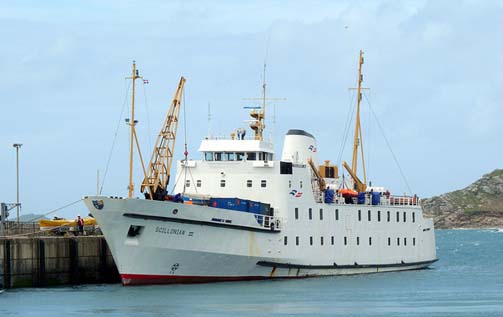
On October 25th 1988, I went over to the Isles of Scilly to birdwatch. I crossed over from Cornwall on the ferry, the Scillonian:

scillonia on scillis xxxxxxxxxx

For two or three hours during the crossing, I remained on deck with my binoculars, eagerly scanning the storm tossed waves for seabirds.

At one point, I noticed what I took to be the head of a Grey Seal, which broke the surface perhaps fifty or a hundred metres away from the boat. This is a Grey Seal which I photographed in the harbour at St.Ives in Cornwall:

P1460520

This head, way out in the Atlantic Ocean, was very similar, dark in colour, and I could see a forehead, two eye sockets, and an obvious snout. I didn’t really think a great deal about it, other than the fact that, for a seal, it was certainly a very long way from land, at least fifteen miles. It remained there, presumably watching the boat, for perhaps two or three minutes. Then, suddenly, a Gannet flew directly above it. A Gannet is a very large bird with a wingspan of some six or seven feet:

wikikikik Northern_Gannetzzzzzzzzzzzzzzzzzzzzz

I then realised from a simple comparison of sizes that the head must be at least a metre and a half, if not two metres, across. And that means it cannot have been a seal !

 Number Eight

The Ghost on the No 90 Bus

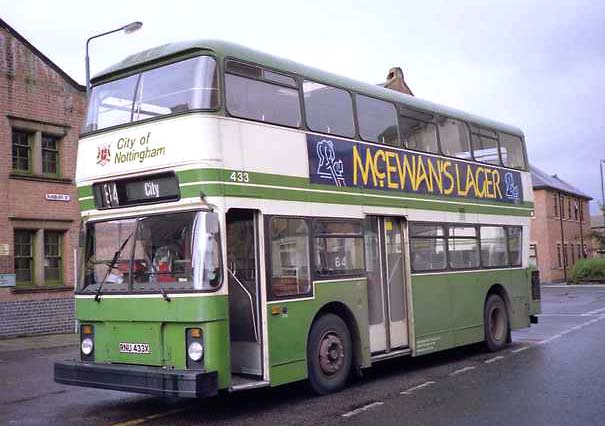
Some thirty or more years ago, we used to live in a large house in a new estate on top of a hill right at the very northern edge of the City of Nottingham. From our top bedroom window, we could see the distant cooling towers of the Ratcliffe-on-Soar Power Station, out towards the East Midlands Airport, absolutely miles away. If it had been built then, we would have easily been able to see the Control Tower on the Airport. To go into Nottingham was a little bit of a bore, though, because there was only the Number 90 bus, which ploughed, every hour, a long and very eccentric furrow from one side of the city to the other, from where we lived on the northern edge, to the furthest bus terminal of Edwalton, beyond even the foetid swamp that is West Bridgford:

DKY-496_lr

The Number 90 bus, strangely enough, had a very strong ghost story attached to it. People told me all about it on several occasions, almost as soon as I mentioned what bus I had to catch to get home and just how long the journey was.

3135590sssss

Funnily enough, the story concerned the very same bus stop on Mansfield Road which we used to use:

bus stop

Anyway, the first occasion the ghost appeared was quite a long time ago, in the 1950s perhaps, or in the 1960s. It was certainly in the era of the bus conductor, who used to go round the bus, issuing tickets and taking the money.

Just imagine to yourself. The time  is around seven or eight o’clock in the evening, and the bus is absolutely deserted. Not a single passenger. The conductor is standing up near the driver’s compartment, talking to him to pass the time. Suddenly, they both notice an old man who is standing at the Mansfield Road bus stop, waiting to go towards the city. The bus stops and the old man gets on. The evening is fine and dry, but the old man is absolutely drenched, with rainwater dripping off him. He looks quite battered, with little rips here and there in his clothing, which is, strangely for the weather at the time, a heavy winter topcoat over an equally heavy winter suit.

The old man says nothing as he gets on. He goes upstairs and the driver and conductor notice he is wearing his bike clips, a simple aid to cycling that is, by now, almost decades out of date.

The driver and conductor finish their conversation. The driver sets off down the road, and the conductor begins the shaky climb up the stairs. He wonders why this special kind of idiot had to go upstairs on a completely empty bus and make the tired conductor follow him.

He gets to the top of the stairs and has a good, surprised look round. The top deck of the bus is completely empty. The old man just isn’t there. He isn’t in the two rows of seats at the front of the bus. The conductor then walks slowly back past all the other rows of seats. The old man isn’t there either, neither is he hiding behind any of the seats in a ludicrous attempt to avoid paying his fare.

Puzzled, the conductor goes back down again, pushes his cap back on his head, and expresses his astonishment to the driver.

Back at the canteen, they tell their tale over a cup of tea and a couple of cigarettes. They are not the first crew to meet “The Phantom Passenger of the Number 90 bus.”

He is, or rather was, an old man of sixty or so:

old_man_on_bike_by_claeva

One winter’s night, he was riding his bicycle home to Arnold, when a hit-and-run driver killed him as he rode carefully and slowly around the Leapool Roundabout. It happened so swiftly that the old man does not realise, even now, that he is no longer alive. Wrapped up against the winter in his heavy suit and heavy topcoat, he still has his bike clips on. His bicycle, to him too valuable to leave behind, is too badly damaged to ride back home. And so, he must walk through the winter rain and sleet the two miles to the nearest bus stop to get back home to his wife and family. On this map, the orange arrow marks the bus stop where the wet old man would get on the No 90 bus. To the north is the Leapool Roundabout. Follow the green road until you come to the obvious roundabout:

map

I don’t know now if the Number 90 still runs or not. I hope it does. No ghost should fade away at the whim of the Nottingham City Transport.

16 Comments

Filed under Cornwall, Cryptozoology, History, Nottingham, Personal, Science, Twitching, Wildlife and Nature

The Nottinghamshire UFO flap of July 1967

I have already mentioned in a previous article, the wonderfully titled “A Werewolf in Cambridgeshire. Run away!!” that I had received “Haunted Skies Volume One” by John Hanson and Dawn Holloway as a Christmas present in 2013.

The following year, for Christmas 2014, I was lucky enough to be given Volumes 2-6, which covered the history of British UFOs from 1960-1977. And I have read the lot! It has taken me until April 2015, but I have, more or less, made it. I now sit eagerly at home awaiting the arrival of the last four volumes in the series, which I ordered last Sunday. These will complete the full set.

The ten volumes are an absolute tour de force and a total labour of love which will become a modern classic. If anything, the books have become better and better as the volumes have gone by. I would urge you strongly to have a look at the two authors’ pages on Amazon, if you find this topic at all interesting.
When a number of UFOs are sighted in a particular locality over a fairly short period of time, this is known as a “flap”. Over the years, around the world, there have been more flaps than you could shake a little green man at. In 1967, there was one in Nottingham.

It started, perhaps, on February 13, 1967 in Radford, an area of mainly Victorian terraced houses a very short distance to the north west of the city centre. Look for the orange arrow, near the “O” of Nottingham:

mapof radford

It was ten minutes to nine in the evening and Frank Earp and Gerald Montague were hard at it on their allotment. It must have been almost totally dark, dark enough, at least, to see a diamond shaped object motionless in the night sky. It had a red light underneath and suddenly changed shape before flying off at fantastic speed. This. hopefully, is similar to what Frank and Gerald saw:

dimond redlight zzzzzzzzzzzzzzzzzzzzzz

Five months later, on July 2nd 1967, reports came in of a bright light with three prongs, motionless in the sky over Knighton Park in nearby Leicester, only 28 miles away from the “Queen of the Midlands”.
The main highlight of the Nottingham Flap came three days later during the evening of Wednesday, July 5th 1967.  An absolutely classic flying saucer was seen by a very large number of witnesses. It was motionless over the Clifton Estate, just above the horizon.

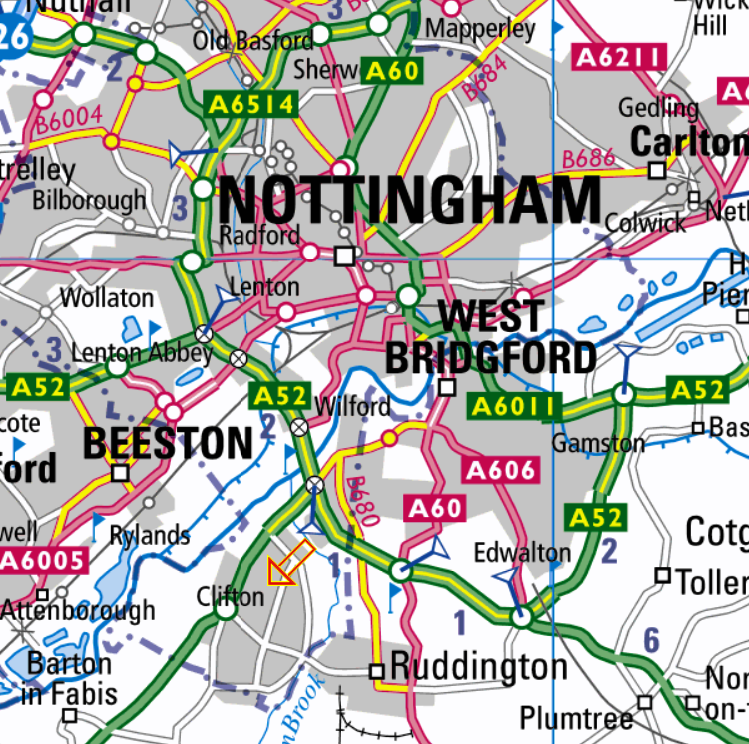
classic_flying_saucer_Clifton Estate is to the south west of the city centre. For the most part, Clifton is a council estate built from 1952 onwards, largely to rehouse the slum areas of the Meadows where, as late as the mid-sixties, barefooted children were by no means unusual. At one time Clifton was the largest council estate in Europe. Look for the orange arrow:

nap of clifton

Eventually, that balmy summer’s evening, somebody called the police, possibly for the protection of any little green men that might emerge from their spacecraft. By now, well in excess of a hundred would-be ufologists were eagerly awaiting developments on the rising ground near to the local Fairham Comprehensive School:

bars gate

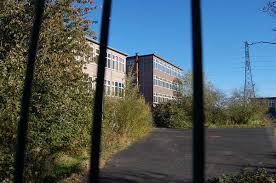
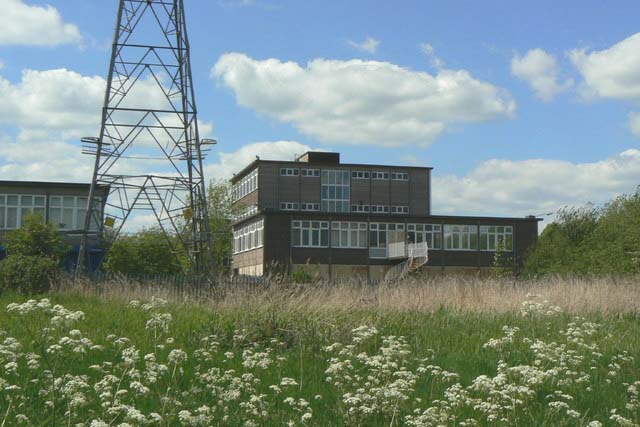
If my memory serves me well, this was a very large all boys’ school, which has now been closed down:

far school

Years later, an old boys’ reunion got a little out of hand:burning school

When they eventually arrived at the UFO landing site, the boys in blue, of course, did not see any UFOs and told the locals that they were the hapless victims of an optical illusion. Mrs Marjorie Cowdell, however, would have none of it. She insisted to the Fighters of Crime that she had seen a flying saucer “swim” down to the ground.

This was big enough news that a host of reporters were sent to investigate by the national press (in actual fact, the Daily Sketch, which has now, alas, gone exactly the same way as Fairham Comprehensive School).

Here is the story, which appeared in this most intellectual of red top tabloids (presumably the reason it folded) on Thursday, July 6th, 1967:

100 SAY WE SAW A FLYING SAUCER LAND

More than 100 people claimed yesterday that they saw a flying saucer land.
They were “spotting” on high ground near Fairham Comprehensive School in Clifton, Nottingham.
Housewives rushed from their homes when it was reported that a flying saucer about 30 feet in diameter had come down. Many people said that the object was disk shaped and silvery.
Police searched the area but found no trace of anything having landed. A spokesman said, “It must have been an optical illusion caused by sunlight and a cloud of dust.”

Mrs Marjorie Cowdell of High Bank, Clifton said, “I don’t care what the police say. I saw a flying saucer swoop to the ground.”

The stream, almost a flood, of “Close Encounters of the First Kind” continued, this time at Wellow, near Ollerton, some twenty miles to the north of Nottingham. On Saturday, July 8, 1967, schoolteacher Bernard Day and his wife, from Newark-on-Trent, were driving along just after nine o’clock in the evening. Suddenly they saw, according to the Nottingham Evening Post, what looked like:

braxzil top

“A child’s top, spinning in the night sky, from one side to an upright position, for over forty minutes, surrounded by bright light. I fetched Police Constable E.Holmes, from Welland Police Station, who had a look through binoculars and said, “I wouldn’t even be able to guess its identity. I’ll have to inform Inspector R. Street. He will make some enquiries.”

What was presumably the same incident is featured on a rather interesting website I found. No exact details are given, but it would seem to be the same series of events. It reads:

“July 1967. 2110 hours. Saturday. Location – Nottingham, Nottinghamshire. A member of the public, teacher Mr Doy, reported seeing a UFO over a local school and a PC HOLMES attended the school  and confirmed the object in the sky. He then reported the sighting to his duty officer, Inspector R .Street.

PC HOLMES stated that the object was a bright light spinning on its own axis in a stationary position above the school. The police could not offer any explanation for the UFO.

UFO CLASSIFICATION – NL (NOCTURNAL LIGHT).

On Duty sighting. 1 Officer.”

I’m not entirely satisfied with a policeman called R. Street and what about PC Holmes? Surely all of his mates must have called him Sherlock?

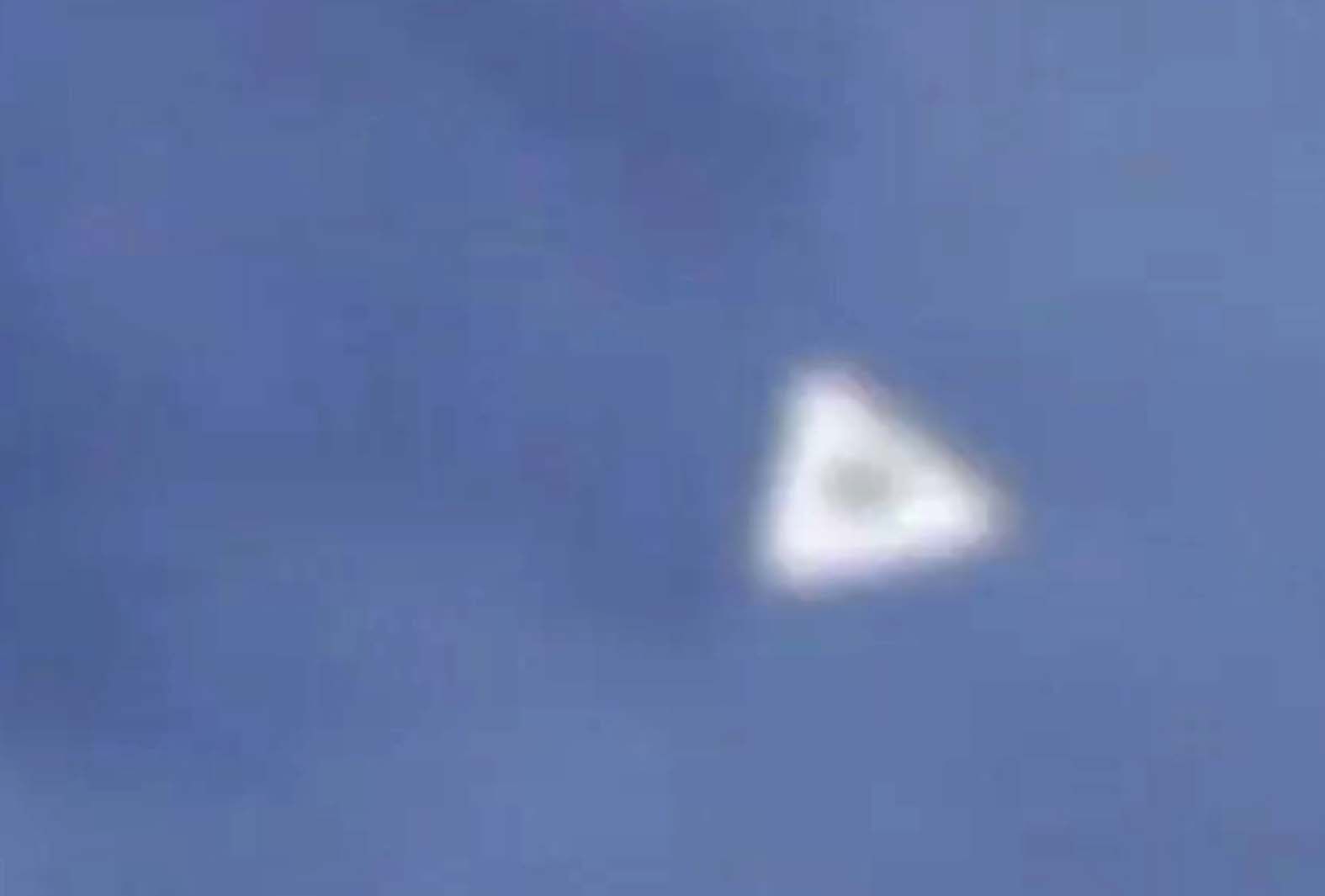
Whatever the case, the Nottingham Roswell Saga went on. On Monday, July 10th, only four days later, a bright white triangle was seen over Radcliffe-on-Trent at half past eight in the morning:

amsterdam 28 oct 2013

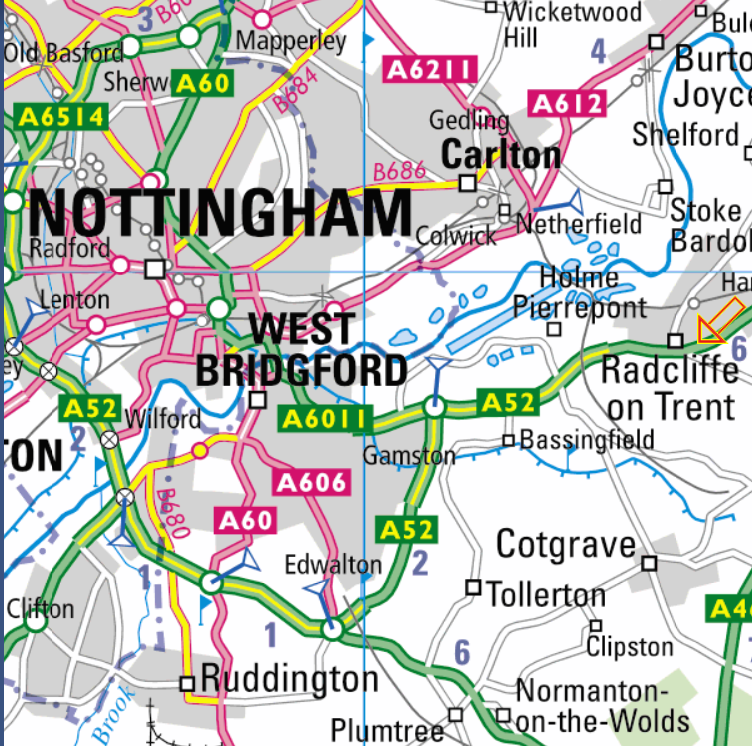
Radcliffe-on-Trent is to the east of the city, a mere two or three miles away from the very centre. Look for the orange arrow:

map of radclff on trent

Interestingly, the locations of all three sightings are visible on this map. The orange arrow points to Radcliffe-on-Trent and Clifton is in the bottom left of the map. Radford is below the big, black N-O of Nottingham.

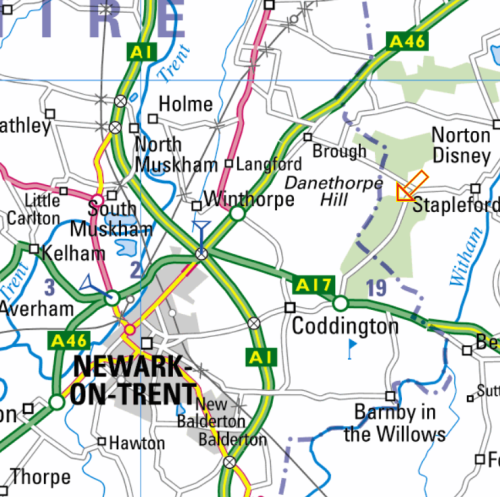
The very final case I can find comes from Newark-on-Trent (just over twenty two miles from Nottingham). It was August 10th and around 10:15 in the late evening. For some unknown reason, Dave Robinson was taking a stroll with his girlfriend in what must have been almost pitch black woodland at Stapleford Woods. Look for the orange arrow:

stapleford map

The two young lovers had just reached a clearing at the edge of the woods when the young lady noticed two lights in the sky. They were possibly round, possibly oval, and yellow in colour, resembling paper. Some six feet and five feet across respectively, they were motionless over a line of trees around half a mile in the distance. I managed to find these likely contenders on the Internet:

After the event, William Blythe of Mansfield interviewed them. Let Dave take up the story:

“Within minutes they disappeared, replaced by a flashing red light, which moved to our right, climbing up and over some trees. Five minutes later we saw the lights again in the sky, now on our right, coming towards us, about a quarter of a mile away.

My curiosity aroused, I drove slowly towards the lights, losing sight of them as I drove around the bend. When I reached the spot where I had seen them, I flashed my headlights and this craft appeared over the trees. Astonished, I stopped the car and listened. Still no sound.

We watched the craft with amazement, as it hovered 20 feet away from us at about the same height off the ground, allowing us to see it had a curved bottom and top, with three squared windows, spilling orange light, and a brilliant light projecting downwards from the top.

As it moved overhead, I became frightened and drove away, fearing what
was going to happen next.”

And that’s it. This was quite impressive by the standards of the middle 1960s, especially when compared to nowadays, when 84% of all programmes on Satellite TV are devoted to aliens, UFOs and government cover ups. If you find this topic of any interest, don’t forget the “Haunted Skies” books by John Hanson and Dawn Holloway. They really are worth a look.  This is the edition which set me off on the trail of the Nottingham Flap and Mrs Marjorie Cowdell:

hauntyed skies 3 zzzzzzzzzzzzzzzzzzz

Next time there will be a host of Internet sites to look at when I try to track down the UFO that crashed just south of Mansfield. That was a very, very, brave thing to do!

20 Comments

Filed under History, Humour, Literature, Nottingham, Science

A peaceful dove in the garden

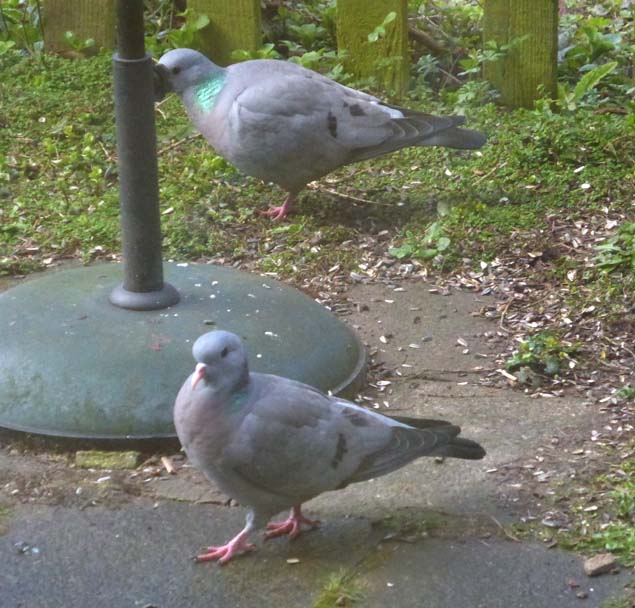
One regular visitor to our garden is the “Stock Dove” whose scientific name is columba oenas. This bird is a kind of pigeon, but a very unusual one for a city.

Normally, Stock Doves live out in the countryside and may congregate in their hundreds to feed in fields or on stubble which has been recently harvested. They also like to live in the parkland which surrounds large country houses. In England there are some 260,000 breeding pairs of Stock Doves but they are certainly an unexpected bird in a city suburb full of traditional 1930s houses like our own. Apparently, there has been an isolated colony of Stock Doves in suburban Sherwood for at least the last seventy years. They might even date back to the period before the houses were ever built:

P1000060

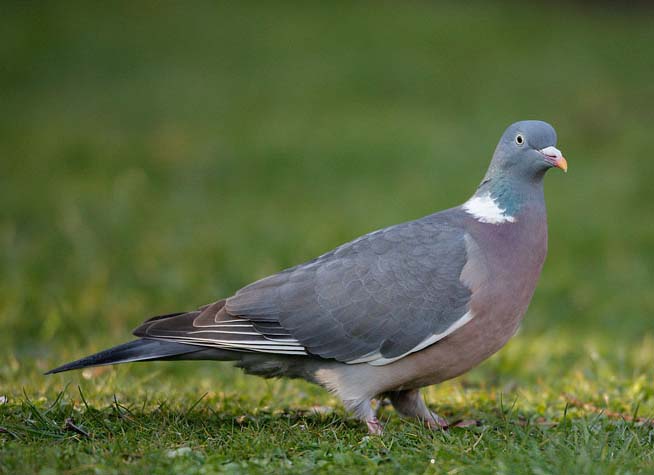
First of all, let’s eliminate the Wood Pigeon with the prominent white mark on its neck. This bird is a fantastic flier. It is the Lockheed Hercules of the bird world:

herc xxxxxxxxxxxxxxxxxx

It can easily manage sixty miles an hour or more, and it can easily do vertical take-offs, but its facial expression is permanently that of a slightly apprehensive, brainless, gormless idiot:

wood-pigeon-jlzzzzzzzzz

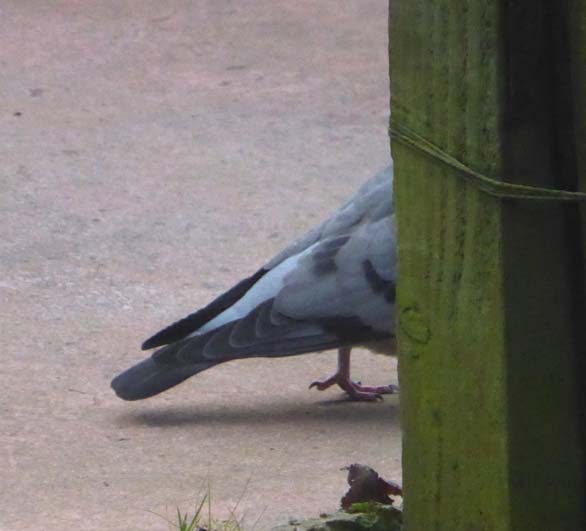
Stock Doves are not feral pigeons either. Stock Doves have dark eyes, whereas the feral pigeon’s eyes are often red. Feral pigeons frequently have diseased feet. A group of feral pigeons will never have any real uniformity of plumage. Any dark marks they may have on their wings will be a lot longer and more extensive than the markings on the wings of a Stock Dove:

This slideshow requires JavaScript.


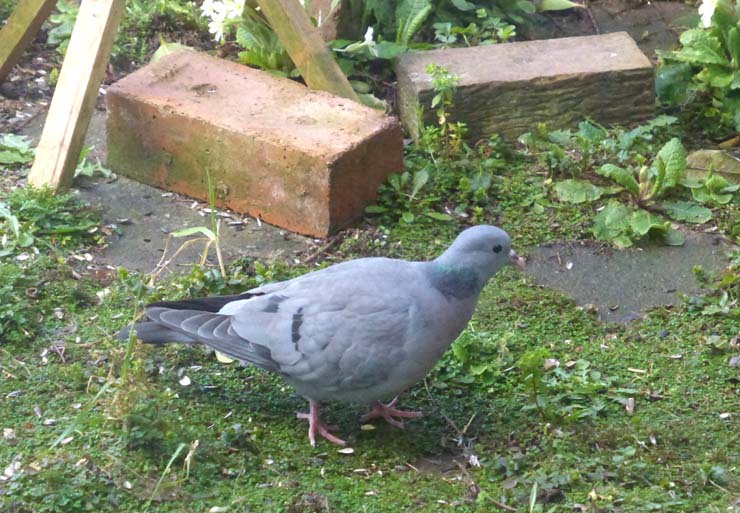
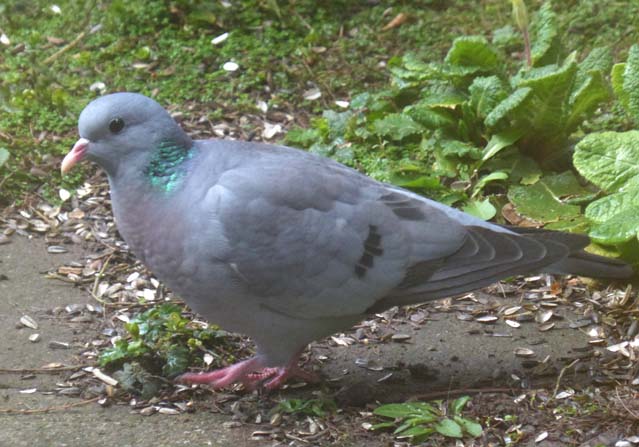
The markings of a Stock Dove are consistent. An iridescent green patch on the neck and two dark marks on the ends of the wings. As well as dark eyes, they also have pink legs and feet:

P1000009xxxxxxxxxxxxxxxxxxx

Like all birds, they have a nictitating membrane to protect the eye, in this case as the bird feeds with potentially harmful plant leaves to contend with:

P1000040

These are probably male and female. In birds of prey, the female is larger than the male, but otherwise, in almost every other species of bird, the female is 15% or so smaller. You would normally not notice this, but when the two are together, it can be quite obvious:

P1000070

Unlike feral pigeons, Stock Doves are quiet, almost shy birds and can be very self-effacing:

P1000008 xxxxxxxxxxxxxxxxxxx

11 Comments

Filed under History, My Garden, My House, Nottingham, Science, Wildlife and Nature

Gulls are the most puzzling of birds….

An extract from my old birdwatching diary, “Crippling Views”

Friday, September 23rd 1988

Another lunchtime visit to the local nature reserve at Attenborough. Look for the orange arrows:

This slideshow requires JavaScript.

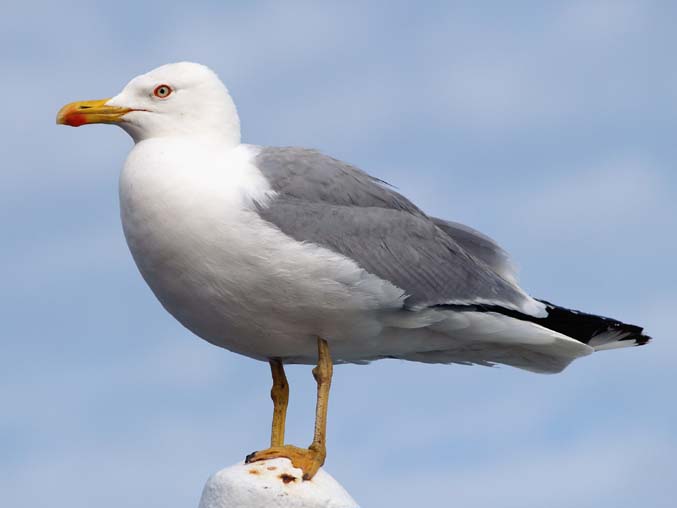
Paul has given me a stakeout for the Yellow-legged Herring Gull that is supposed to have been down here for the past few weeks, on and off :

OLYMPUS DIGITAL CAMERA

I also would like another look at the funny duck that was down here two days ago.  Unfortunately, the duck is not there when I stroll over to the river, and I have to abandon hope on this one, after a good scout round.

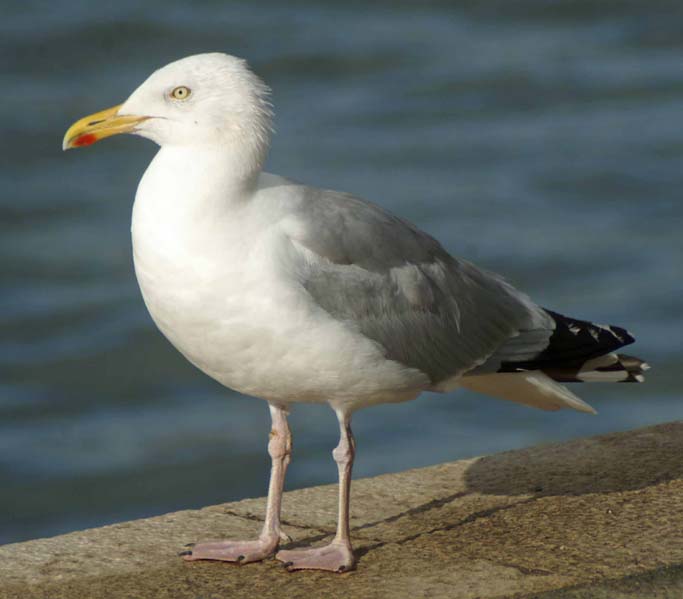
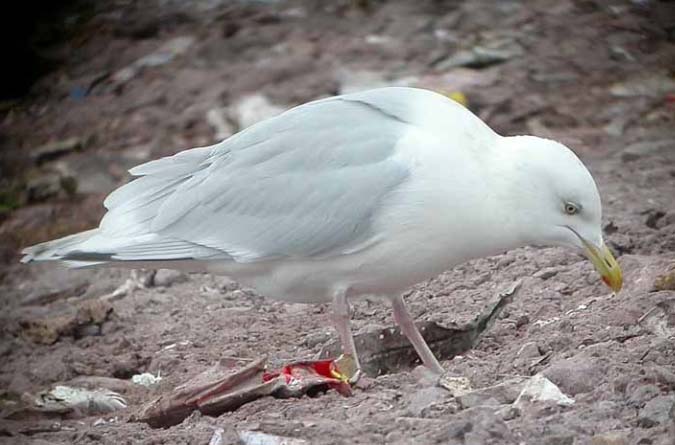
A brief inspection of the birch trees near the car park however does reveal the YLHG, which I feel fairly sure is the same bird that I saw two years previously on the Trent sluices at Colwick, four or five miles or so further up the river. The legs are a cracking bright yellow colour, but I am to a certain extent puzzled by the paleness in the grey of the bird’s back, which, according to Grant’s excellent guidebook “Gulls: a stringer’s guide” should be significantly darker than the normal Herring Gull, but I would say that this individual is definitely quite a bit paler than it should be. This is a normal Herring Gull:

KONICA MINOLTA DIGITAL CAMERA

I am further puzzled by the presence on one of the lakes of an obvious Lesser Black-backed Gull. That bird, of course, has yellow legs, but again, seems paler than one might expect. Is it, therefore, a Darker-than-Normal-Yellow-legged Herring Gull?  Or a Lighter-than-Normal-Lesser Black-backed Gull? Who knows? And I am actually beginning to think:

“Who really cares?”

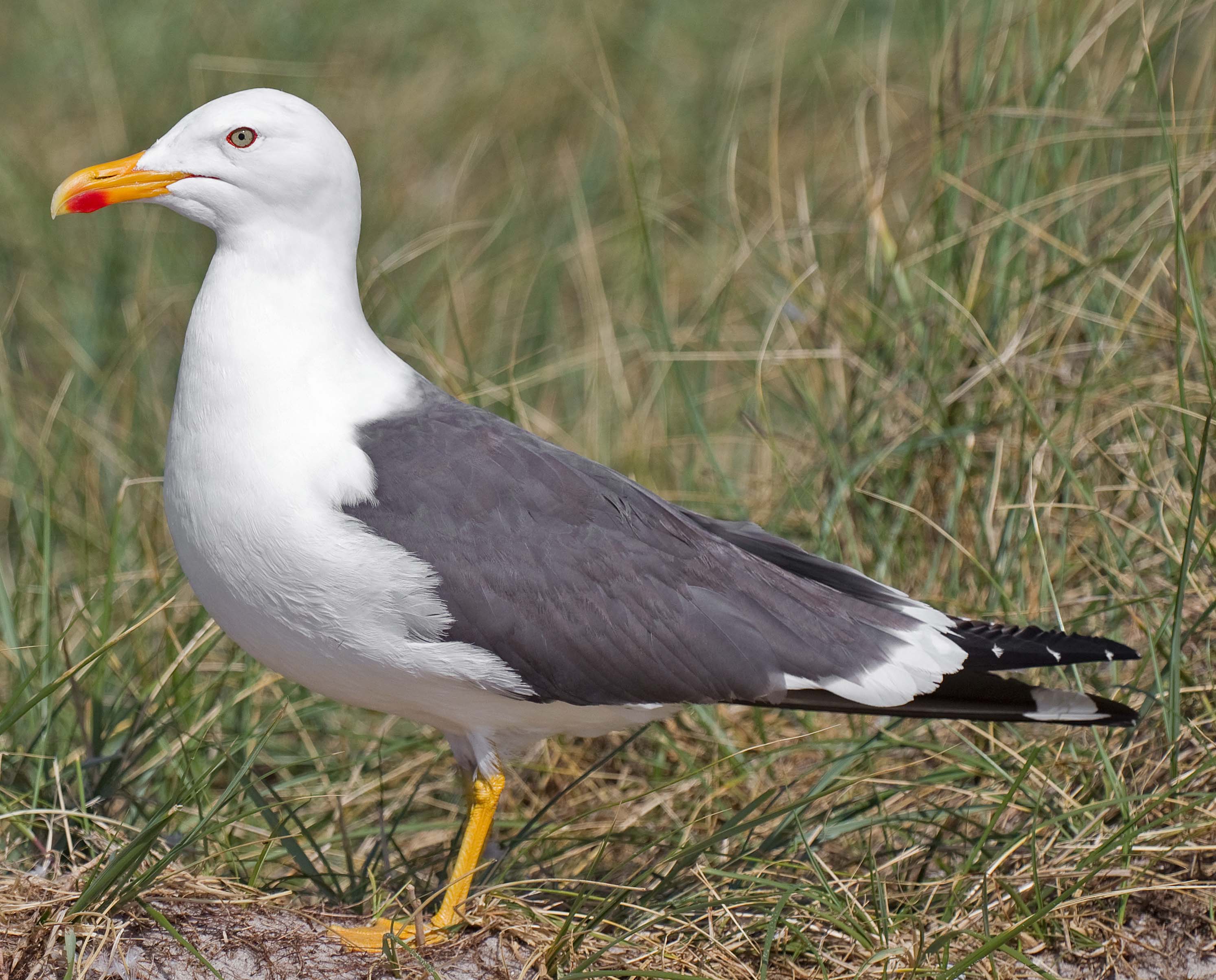
Here is a Lesser Black-backed Gull:

lesser black zzzzzzzzzzzzzzzzzzzzzzzzzzz

And if so, then what is the first bird?

I hate gulls. You’re always on your own when you see them. Or else you are with people so expert that they only ever discuss unbelievably rare birds and never ever mention common ones.

“Did you see the Red-Legged Kittiwake at Flamborough last week?”

“No, but I was lucky enough to find another Relict Gull yesterday, up near the lighthouse, second winter, third in the brood, it had a slight cough.”

This slideshow requires JavaScript.

Anyway, I tick the Attenborough Two as two more Firsts for Britain, namely California Gull and Slaty-backed Gull. Who knows? They might be.

This slideshow requires JavaScript.

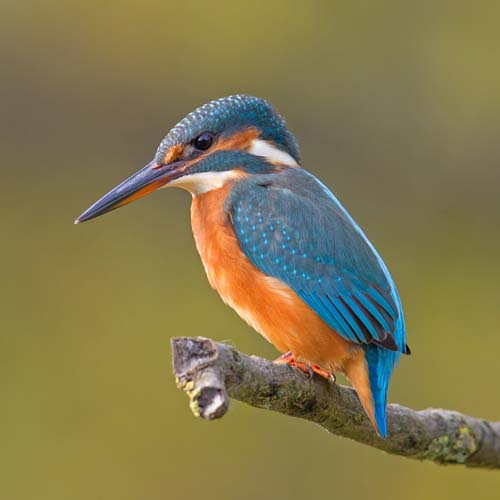
I make my way back to the car park. On the way I see a kingfisher:

Common_Kingfisher_

Thank God. At least you know where you are with a kingfisher. You never have to worry whether it’s a Glaucous Kingfisher or a Glaucous-winged Kingfisher.  A Brünnich’s Kingfisher or a Lesser Crested Kingfisher. It is just a kingfisher, a good bird to spot.

Gulls are the most puzzling of birds. Every single group of ten or more seems to contain at least one individual that might be of another very similar species. No wonder that American birdwatchers are reputed to arm themselves with photographic colour charts which allow a damned sight more than fifty shades of grey to be distinguished one from another.

And so many gull species hybridise on a regular basis. This is a frequent hybrid, the so-called “Nelson’s Gull”:

nrlsonxxxxxxxxxxxxxxxxxxxxxxxxxxxx

It has characteristics reminiscent of both Herring Gull and Glaucous Gull, its two parents:

This slideshow requires JavaScript.

On the other hand, it is really quite wonderful how Mother Nature can create so many different species across the whole world using black, white and grey as the colours from the genetic paint box, with mainly red, yellow or black for the beak and legs.

7 Comments

Filed under Nottingham, Science, Twitching, Wildlife and Nature

Notts £100 million striker (1877-1891) (second half)

In my previous blogpost about Harry Cursham, the Notts County superstar, I wrote for the most part about his exploits in the F.A.Cup. At the time, the F.A.Cup was the only official competition in existence for football clubs. Apart from international matches, which, with just four countries, permitted only three games per season, Harry could only play in friendly games until some bright spark invented the Football League in 1888.

Here is an abridged version of Harry’s exploits in friendly fixtures. For me, the most wonderful things are the evocative names of some of those long defunct clubs.

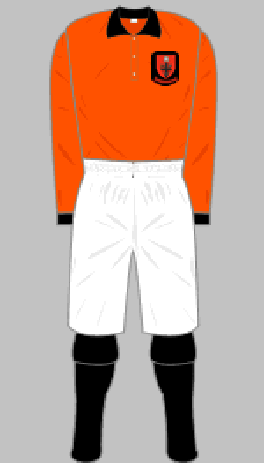
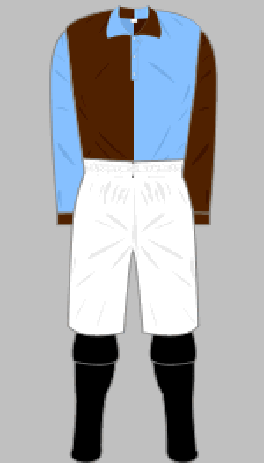
In 1877-1878, Harry scored a hat trick on his début at home against Stoke (4-1), and five goals in an away game against Manchester (6-0). He got four in an 8-2 victory over Derby Grammar School, and also appeared in an amazing 1-10 defeat at Southwell. Harry would have worn this kit:

notts_county_1877-1878

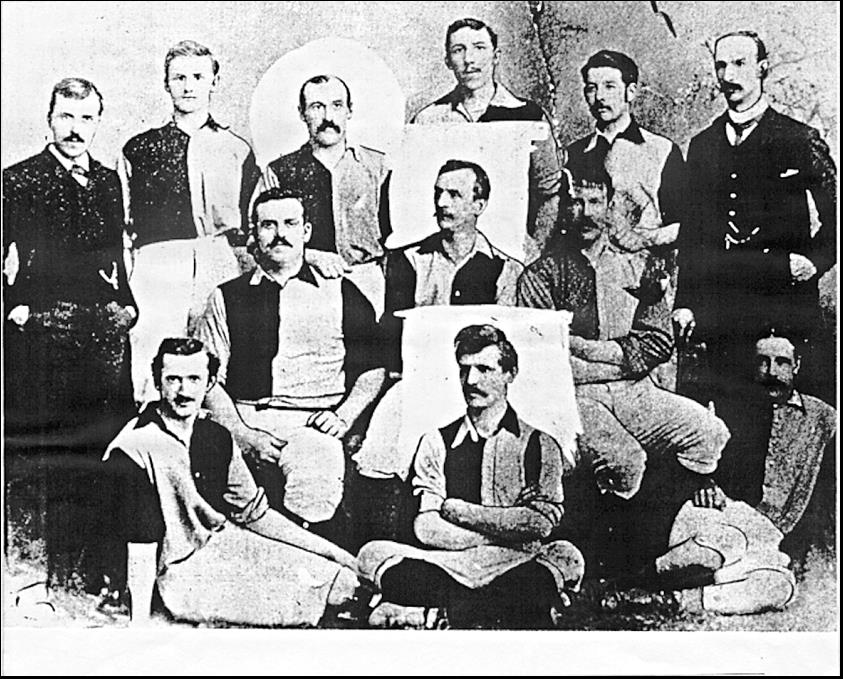
The photograph below shows the Notts.County team which played a prestige friendly against Queens’ Park, of Glasgow, Scotland, on November 18th 1877 at Hampden Park.

(back row) Erasmus Keely, Fred Rothera, Arthur Ashwell (Umpire), Harold Greenhalgh, Harry  Cursham, George Seals. (front row) Richard Greenhalgh, Arthur Cursham, Ernest Greenhalgh, Tom Oliver, S.Keely. Henry Jessop is sitting on the floor. As well as Harry, Arthur Ashwell, Arthur Cursham, Henry Jessop, Tom Oliver and George Seals were all ex-High School pupils:

q park

In 1880-1881, Harry scored 13 goals in 10 appearances, including five at home to Sheffield (8-1), a game in which fellow Old Nottinghamian Harold Morse scored the other three goals. He scored five more goals in what was then Notts’ record winning margin, namely 15-1 at home to Newark.

In 1881-1882, Harry produced 21 goals in just 15 appearances. By now an outside left, he scored four at home to Staveley (7-0) and Derby Midland (7-2), and four more away to Pilgrims (5-1). He scored twos at home to the Old Carthusians (5-1) and the Sheffield Club (5-1) and away to Nottingham Forest (5-0). At one point, he managed 16 goals in six consecutive games (1-2-2-2-4-4 ). In addition, the scorers of three goals in a 5-0 victory over the Sheffield Club remain unknown, as do all the goalscorers in a 13-0 rout of Grantham. It is surely beyond credence that Harry did not score at least once in this particular game.

In 1882-1883, he scored 29 goals in 16 appearances. Having moved to centre forward, he opened the season with six goals against a Local Clubs’ XI (10-1) and scored four at home to Stoke (5-0) with four away at Sheffield (8-2). He got a hat trick in a 10-0 home win over Mitchell St.George’s, and scored twos at home against Sheffield (8-1), Liverpool Ramblers (3-1),Walsall (7-2) and Wednesbury Old Athletic (6-1) and away against Aston Villa (2-1). At one point, Harry managed 16 goals in five games (6-2-2-4-2 ). The scorers remain unknown in a 5-1 victory at Stoke:

harry 1

The 1883-1884 season produced 22 goals in 21 appearances. Playing mainly as an outside left, Harry scored four goals in a 5-1 victory over Padiham, and hat tricks at home to Sheffield Attercliffe (6-2) and Brentwood (3-2). He got twos in a 6-1 home victory over the South of England and in a 4-1 home win against Great Lever.

The following season of 1884-1885, he was to score 19 goals in just 22 appearances, with four in an 8-0 home victory over Derby Midland, and twos at home to Sheffield (6-2), Notts Rangers (6-2), Corinthians (3-2), and, most important of all, against Nottingham Forest, in a 3-2 home victory. He played this season mostly as an outside left, but in January, Harry missed the games against Blackburn Olympic (1-1) and Preston North End (2-3), as he was in mourning for his brother, Arthur, who, having recently emigrated, had died in Pera, Florida on Christmas Eve at the age of only 32, of what was variously called malarial fever or yellow fever. In the game against Blackburn Olympic, the County team all wore black crêpe armbands as a mark of respect. Here is the Olympic team:

blackburn1886

Immediately before the start of this season, “Mercutio”, in his “Nottingham Football Annual”, had described Harry Cursham as:

“A grand forward. Plays on either wing, and has distinguished himself in the centre. Is at his best perhaps on the left, in which position he frequently evokes admiration by the brilliancy of his runs. A splendid shot at goal, and altogether one of the best men of the day.”

In 1885-1886 Harry managed hat tricks at home to West Bromwich Albion (4-3) and Nottingham Forest (5-0). The next season there were 15 goals in 23 games as Harry, by now back at inside left, scored goals steadily throughout the season. He cannot, though, have enjoyed Notts’ narrow 0-14 defeat at the hands of Preston North End, “The Invincibles”, who were to win the first ever Football League Championship in 1888-1889. They were one of the greatest teams in the history of the Football League:

preston-north-end-1889-514

In the last season before the establishment of the Football League, 1887-1888, Harry, now operating at either left or right full back scored only 2 goals in 19 games. They both came in a 4-0 home victory over Grimsby Town, one of only three games in the forward line. Here is the Notts kit from 1888-1890:notts_county_1880-1890

In 1888-1889, Harry, still a right back, became one of the small number of High School boys to have played League football. He played eight times and his two goals came when he reverted to centre forward, in home victories over West Bromwich Albion (2-1) and Wolverhampton Wanderers (3-0). The latter effort, scored after two goals from Ted May, was his last goal for Notts County.

In matches other than F.A.Cup ties, therefore, Harry managed a minimum of 158 goals in 183 appearances. When the F.A.Cup ties are added in, his career total becomes a phenomenal 235 goals in 202 appearances. In very many games, of course, the scorers’ names have been lost and we have no means of knowing if that total of 235 is too low.

On March 18th 1882, Harry refereed the friendly match between Nottingham Forest and a Trent-Wanderers Combination. In this match, Forest’s goalkeeper, John Sands, came out of goal, and scored a goal, surely one of the first times that this had ever happened in football history.

Some years after this, Harry refereed the friendly game between Nottingham Forest and Notts Rangers (0-2), one of the Nottingham’s first ever matches under floodlights. The game kicked off at 8 p.m., on Monday, March 25th 1889. The lighting was provided by Wells lights, fourteen of which were set up around the ground. Powered by oil, they provided, in theory, some 14,000 candlepower each. More than 5,000 spectators were attracted to this unusual game.

Given his amazing record as a goalscorer, Harry was to play for England on several occasions:

h cursham

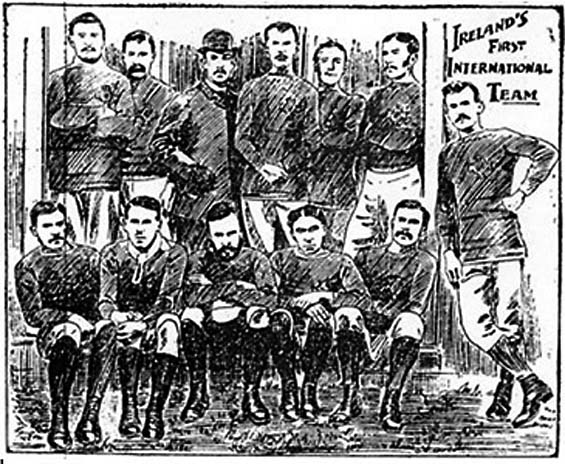
He made his début in 1880 as an outside right, a late replacement in the team as England beat Wales by 3-2 at Wrexham. In 1882, he played as outside left in a record away performance at Belfast in Ireland. Harry scored one goal of England’s thirteen, without reply from the Irish. Here are the Irish, looking very dapper:

M014Ire1882Ire 13-0

Later that year he played as a left half against Scotland in Glasgow, a game the English lost, rather unluckily, by five goals to one. Can you spot the fresh faced Harry in the picture below?

sco 5 eng 1

This particular game was refereed by the splendidly named official, Mr Segar R Bastard. Crowds were to recognise his offspring in innumerable matches down the years.

Harry then scored one goal as England lost by 3-5 to Wales at Wrexham. In February, 1883, he celebrated being in the same England team as his Old Nottinghamian brother, Arthur, by scoring a goal in a 5-0 revenge victory over the Welsh.  In the same month, as an outside left, he helped England beat the Irish by 7-0 at Liverpool. In March 1883, he again appeared with his brother Arthur, this time as a left half, losing to Scotland by 2-3 at Sheffield.

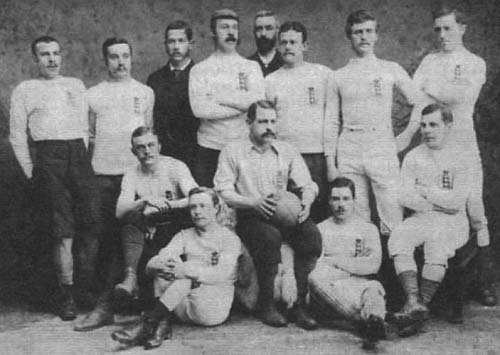
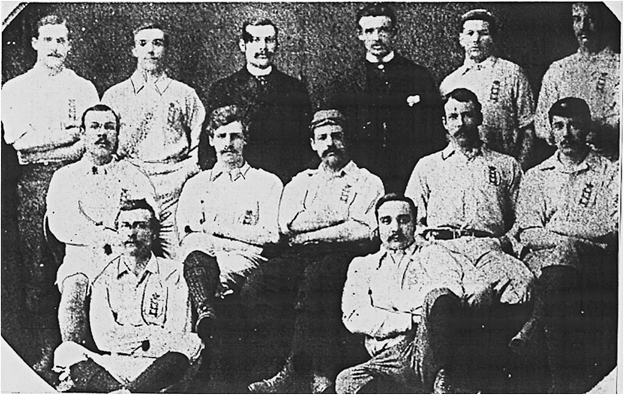
This is the England team which played against Scotland at Sheffield on March 10th 1883. It contained three Notts County players, and two Old Nottinghamians, one of whom, Harry Cursham, is seated second from the left on the middle row. His brother, Arthur Cursham, may be the player seated on the left of the front row, and half back Stuart Macrae is possibly the player at the right hand end of the middle row. Readers may wish to look at other pictures of Notts County, and decide for themselves !

eng v sco 1883

On February 25th 1884, as outside left, Harry scored a hat-trick in England’s 8-1 victory over Ireland in Belfast. This was his last game for England, and he had scored five goals in eight appearances at this level. This remains the record number of England international caps by a Notts County player. What a pity there were only three games per season. What a pity Harry Cursham never played against Andorra, San Marino, Liechtenstein or Gibraltar. What goals Harry would have scored!

After leaving Notts County, Harry played an unrecorded number of games for Grantham:

Grantham_Town_FC_logoOn March 12th 1891, Harry appeared for the Nottingham High School Old Boys at the Gregory Ground, in their fixture against the current High School First Team. Not surprisingly, perhaps, the Old Boys won by 3-1, with Harry getting their second goal midway through the second half. In 1896, Harry, along with Tinsley Lindley, was invited to play in the first ever “Gentlemen versus Players” game, a prestigious friendly, which would help to make absolutely clear to all the working class spectators the rigid class differences and privileges in force in the hierarchical society of the time. To both men’s credit, they refused the opportunity, preferring to watch a local derby match, Forest v County.

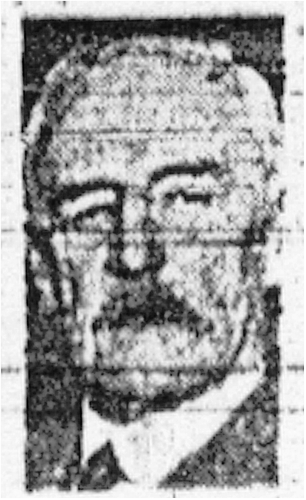
By 1929, Harry was living at “The Firs”, Holme Pierrepoint:

old man

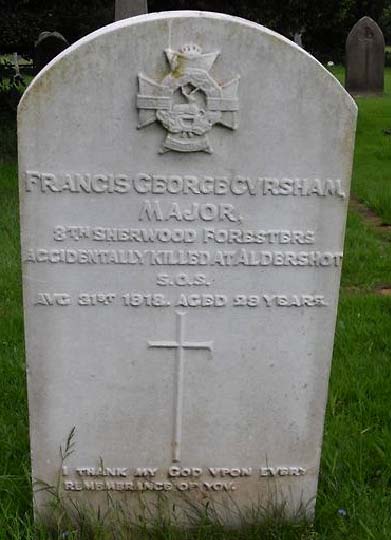
Harry passed away peacefully there on Wednesday, August 6th 1941, at the age of eighty-two. He was survived by his widow, and his daughter, Mrs.R.S.Challands. Harry had two sons. One, Curzon, was a solicitor, while the other son, Francis George, was a Major in the 8th Battalion of the Sherwood Foresters during the Great War. He was tragically killed in an accident on active service at Aldershot on August 31st 1918, at the age of only twenty-nine.

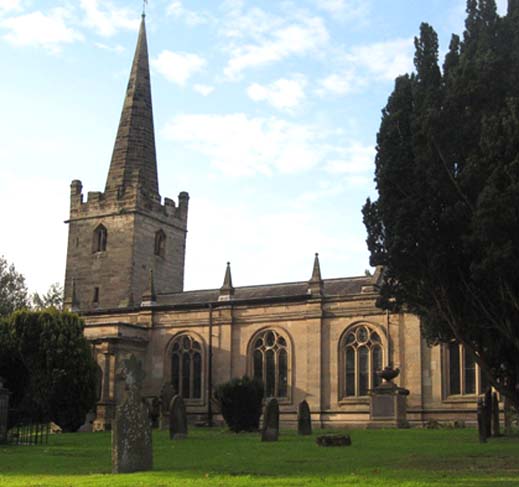
Harry’s funeral took place at Holme Pierrepont Parish Church on Saturday, August 9th 1941:

church hpp xxxxxxx

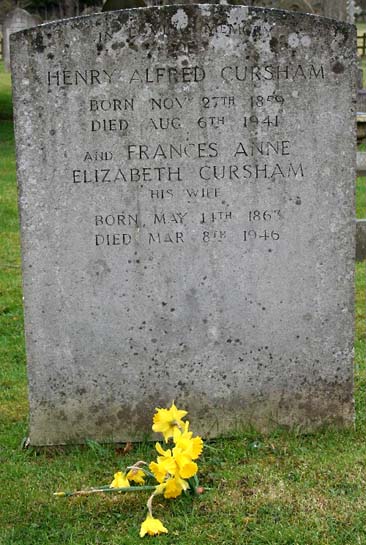
His old friend, the Archdeacon J.P.Hales took the service, assisted by Canon A.D.Allen, the Rector of the parish. Harry was buried behind the church. Harry’s wife, Frances Anne Elizabeth, was to pass away on March 8th 1946, at the age of eighty-two. She was buried with her husband:

grave

Only ten metres away from these two graves lies Harry’s other son, Curzon. He lived to a ripe old age, dying on June 17th 1981 just three weeks short of his 94th birthday. His wife, Sheila Moorhouse Cursham (1891-1968) is interred with him. Next to Harry and Frances lies his son, Francis:

son cursham-granve-a

By the way, the illustrations of the old football kits came from the best ever website for the soccer nerd and all the boys who had more than twenty different Subbuteo teams. New Brighton Tower 1898? Oh, yes.

11 Comments

Filed under Football, History, Nottingham, The High School

The Incredible Story of Frank Mahin, Volume III, 1921-1942

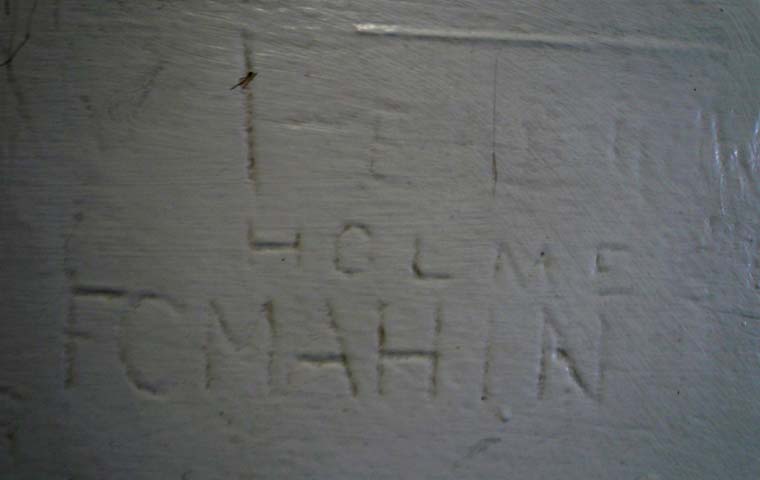
I have previously written three articles about Frank Mahin. The first recounted how he had carved his name on a stone fireplace in the High School:

mahin cccccc

The second article had a title very similar to this present one, but it was called The Incredible Story of Frank Mahin, Volume I, 1887-1909.

After that, I wrote the next one in the series, imaginatively entitled The Incredible Story of Frank Mahin, Volume II, 1908-1920.

And now, Dear Reader, The Incredible Story of Frank Mahin, Volume III, 1921-1942:

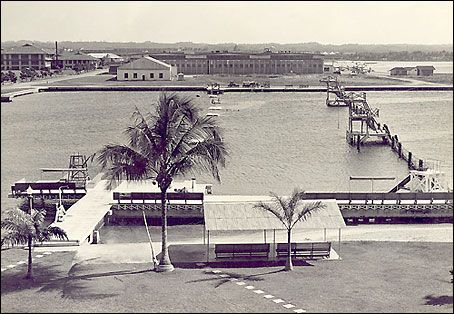
A survivor of the horrors of the Great War, Frank Cadle Mahin immediately resumed his formal military studies.  By 1925, and now promoted to Major Mahin, Frank was a “distinguished graduate” of the Command and General Staff School . He was graduated from the Army War College in 1929 and then became acting Inspector-General of the Panama Canal Department:

TTE_14_Panama_locks-2

I do not know if Frank was available to attend the 25th annual reunion of the Class of 1909 at his old “Alma Mater”, Harvard University in June 1934. Hopefully, if he did, Frank was not there to renew his friendship with Ernst Hanfstaengl, the Harvard graduate, personal friend of Adolf Hitler and the man who took his book, “Mein Kampf”, to the top of the German bestseller lists. According to Wikipedia, Ernst Hanfsteangl also:

“helped to finance the publication of the NSDA’s official newspaper, the Völkischer Beobachter. Adolf Hitler himself was the godfather of Hanfstaengl’s son Egon. Hanfstaengl wrote both Brownshirt and Hitler Youth marches patterned after his Harvard football songs and, he later claimed, devised the chant “Sieg Heil”.”

In 1923, just over ten years before the reunion of the Class of 1909, after the failure of the Beer Hall Putsch, a wounded Adolf Hitler had fled to “Putzi” Hanfstaengl’s house in Uffing, a village a short distance outside Munich. Supposedly, Mrs Hanfstaengl managed to dissuade Adolf from committing suicide, when the police came to arrest him. (What a difference that might have made to the world!).

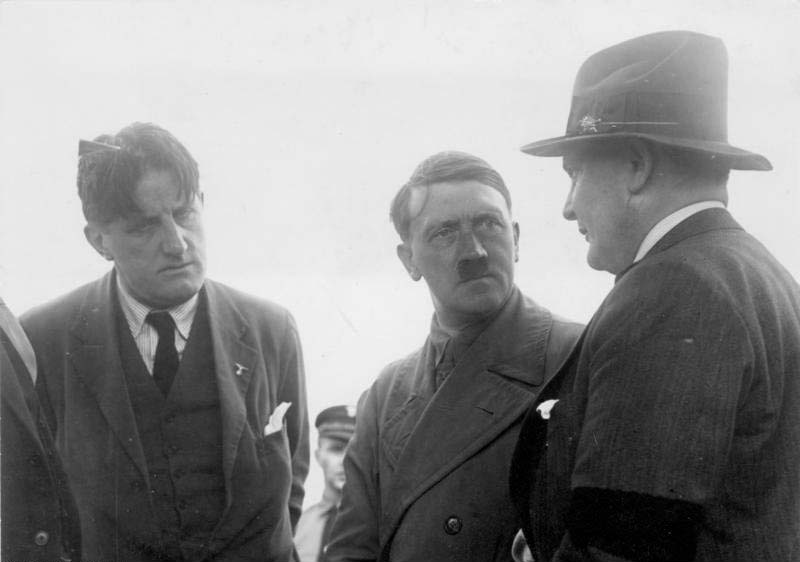
As you might imagine, at Harvard in 1934, there was a certain kerfuffle about this gentleman and his anti-Semitic views, and here are two websites where you can read about these events. Meanwhile, here’s “Putzi” chatting to a couple of his pals about the games in the next round of the German Soccer Cup. “Putzi”, on the left, is happy to play as goalkeeper, Adolf demands to be team captain as his inalienable right and new team signing Hermann Göring promises to lose fifty kilos and play up front, probably on the extreme right:

Bundesarchiv_Bild_102-14080,_Berlin,_Hitler,_Göring_und_Hanfstaengl

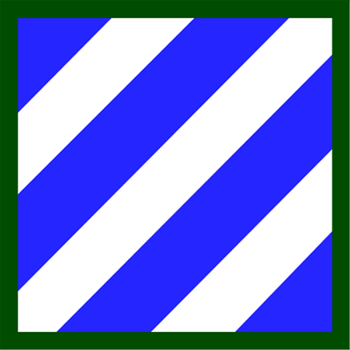
In 1937, Frank was placed in command of the 3rd Infantry Division, nicknamed the “Rock of the Marne”, soldiers who were later, in November 1942, to land with General Patton’s task force on the coast of Morocco:

3_Infantry_Div_cccccc

They eventually overwhelmed the French Vichy defenders, in a highly contested amphibious landing, French fascist traitors v the Americans!
In 1939 Frank organized the 60th Infantry Regiment, the “Go Devils”, commanding them until October 1941, when he was promoted to Brigadier General:

60_IR_Coat_Of_Arms

The “Danville Bee” newspaper in Virginia carried a report of army war games played on June 6th 1941:

WAR GAMES
BRAGG DIX UNITS MOVE INTO BATTLE
Red Forces of South Pitted Against Outnumbered Northern Blues
By JOHN DAFFRON BOWLING GREEN
June.  A 14 mile no man’s land in northeastern Carolina soaked only by rain and reddened by of the north and south (sic) moved into bloodless battle today. At war technically since 5 p.m. yesterday when Second Army Corps Headquarters gave the word, the red forces of the south from Fort Bragg North Carolina pitted their motorized might against the three and a half to one superiority in manpower of the northern blue from Fort Dix New Jersey. There were 75 observers from the General Staff in Washington alone who with many other officers from the 28th and 29th divisions and the Second Army Corps staff moved out onto the battleground to watch the new army perform in modern manner. Planes of the 119th  Observation Squadron from Newark New Jersey scouted the camouflaged position of the Ninth Division southerners In the woodland five miles east of here while flying observers from Bragg based at Richmond droned over the men of the north encamped around Rappahannock Academy Virginia. Northern planes were based at the Quantico Marine Base Virginia. As the units jockeyed for position and closed the separating gap over ground rich in Confederate war lore only one major factor separated the impending battle for Garand and Springfield rifles held blanks in their cartridge clips and the artillery loads were not capped by shells. The khaki clad southern forces wearing red arm bands were under command of Colonel F. C. Mahin. They included the 60th Infantry Battalion Company of the Ninth Medical, one platoon of Company C, 15th Engineers, one section of the Ninth Signal Corps and the second squadron of the Third Horse Cavalry from Fort Myer leant to the Ninth Division for the maneuvers. Northern forces under command of Major General C R Powell comprised the entire 44th Division. They wore blue fatigue uniforms for battle dress. They slogged over terrain made muddy and heavy by several days of sporadic rain. Ironically they moved through woodland blackened by the fires that swept Caroline county forests during the prolonged drought which was broken only last week.”

Frank became a Major General after assuming command of the 33rd Division, nicknamed the “Illinois Division” or the “Prairie Division” at Camp Forrest, Tennessee in May 1942:

33rd_Infantry_Division_SSI_svg

Before his appointment, he had been assistant commander of the 45th Division, called “The Thunderbirds” at Camp Berkley in Texas:

600px-45thIBCTSSI
Sadly, on July 24, 1942, the apparently very capable Frank Cadle Mahin and two Army flyers were killed near Waynesboro, Tennessee in the crash of their Army observation plane, a North American O-47, Serial number 37-337. The official report said that the casualties perished as a result of a forced landing caused by engine failure. This explanation bears out the researches carried out by Frank’s wife, Mauree Pickering Mahin (see below).  Here is a North American O-47B of the 112th Observation Squadron, Ohio National Guard. It is preserved in the National Museum of the United States Air Force:

800px-North_XXXXXXXXXXX

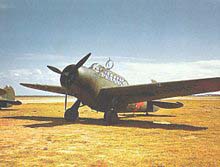
This is an O-47B painted for the army manoeuvres of June 1941, detailed in the report of the “Danville Bee” newspaper above. The insignia on the fuselage shows that the aircraft was hastily painted as a member of “red force”:

220px-North_American_O-47B_1941

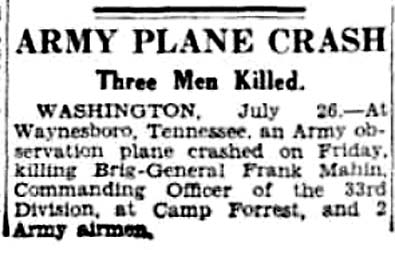
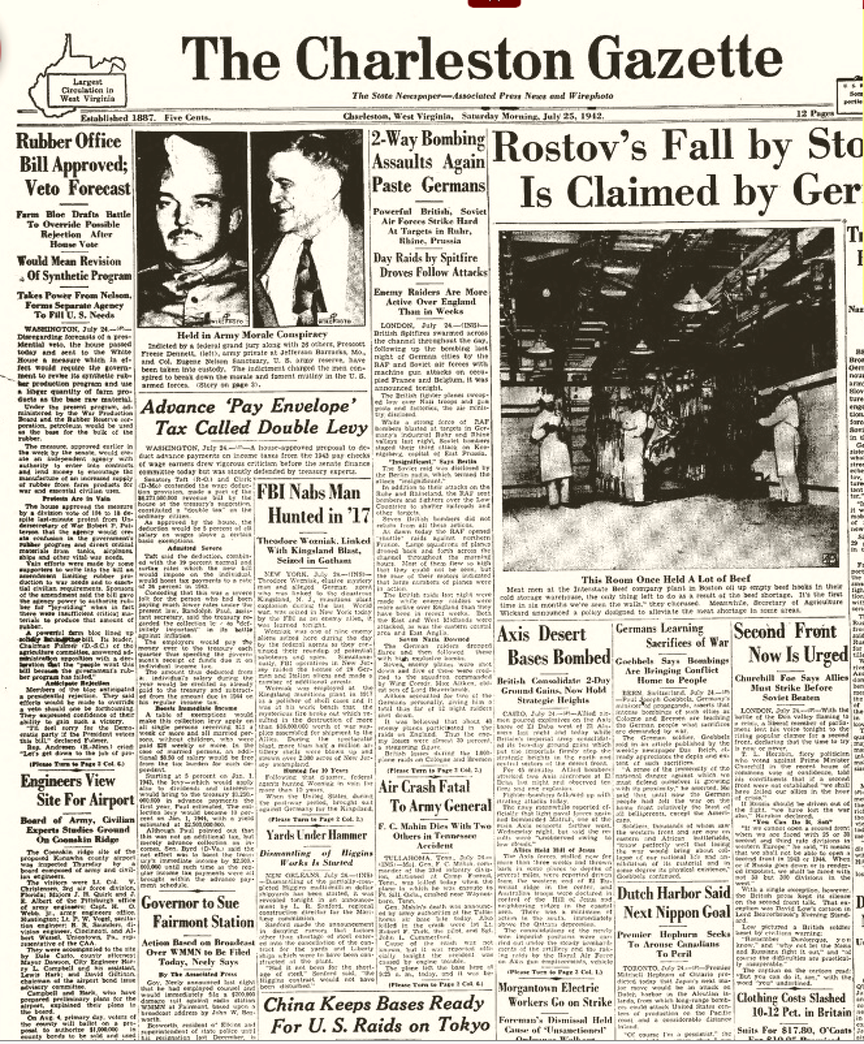
The fatal crash was reported as faraway as Perth, Western Australia, in their local newspaper, “The West Australian“:

newspaper

Frank’s death was also reported on the front pages of local newspapers:

newspaper reoport cccccc

Mrs. Walter Brewer, wife of the Wayne County Sheriff, said:

“The plane struck a tree five miles west of here, but did not burn”.

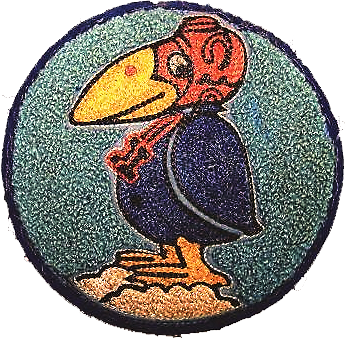
The three occupants were en route from Tullahoma to Fort Sill, Oklahoma. An Army official identified the two others killed as the pilot, Second Lieutenant Robert F. Turk of Wichita, Kansas, and a second passenger, Sergeant John Camerford of Alamo, Texas, both attached to the 127th Observation Squadron, nicknamed the “Jayhawks”, at Tullahoma:

127th_Observation_Squadron_-_Emblem

The 127th was a non-flying squadron operating the Distributed Common Ground System.
Frank’s wife, Mauree Pickering Mahin tells the harrowing tale in her autobiographical “Life in the American Army from the Frontier Days to Army Distaff Hall” :

“I had just fallen asleep when a knock came at the door and I saw Anna and Ernest come in so I knew something was wrong when I looked at their faces! I asked “Is it Dad?” and they both nodded “yes”. “Is he dead?” and again came the same reply. After a few minutes I said: “I think it’s better this way, as it is the way he would want to go; your dad was too intense a man to stand being incapacitated. Did it happen at Fort Sale?” Then Ernest spoke up: “No, Mother it happened at 10.30 this morning, in the mountains near Waynesboro, Tennessee.”

Mauree did her own research about the circumstances of the crash:

“The falling plane was seen by a man traveling on the road nearby, and he knew the terrain around there and was afraid the plane could not land safely any place, so he rushed to the scene and found all three occupants dead. He very quickly notified the Waynesboro Police and they notified the Camp Forrest Air Base. Then the Police immediately came out and picked up the three bodies and sent them on to Camp Forrest.

“And why did the Air Force cancel the Major’s promise to Dad that he would send Dad in his official four engine plane? No adequate explanation was given, and only a two engine plane was supplied. Dad’s chauffer remarked afterwards, that the engines sounded so terrible that he did not think the plane would ever get off the ground!”

Relatively few Old Nottinghamians have ever been murdered, and even fewer have perished as the result of a treasonous act:

“Not too long after that there was another similar accident from there, and an investigation revealed that one of the men who worked on both of those planes admitted he had done something to the engines of both of those planes, thus this was a real case of sabotage!”

I have not been able to trace what was done to this evil saboteur, but in most countries during time of war, the penalty would automatically have been death.

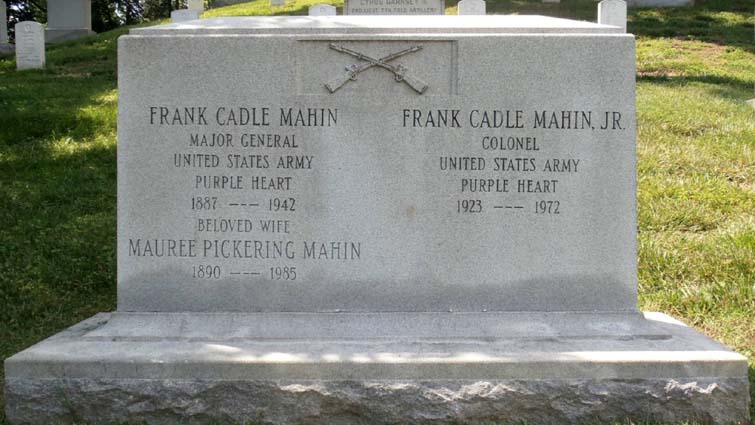
A memorial service was held for Frank at Camp Forrest, Tennessee on Saturday, July 25th, and then the family left for Washington later that afternoon. The interment in the National Cemetery at Arlington was on Tuesday, July 29th.

double grave xxxxxx

Major General Mahin is buried side by side with his son Colonel Frank Cadle Mahin Junior, a graduate of the West Point Class of 1944. The Major General is also commemorated in the Memorial Church at Harvard University. There is a list of the Harvard men who died in World War II, carved in stone on the wall at the right side of the church when facing the altar. There are ten columns. Frank has some very famous colleagues in this list, and it is very difficult to believe that he did not know them, given what must have been their common interest in all things military, and the fact that he, like them, was studying Law.
Since the High School was to abandon football at Christmas 1914, by his tragic death, Frank therefore became the only High School footballer to die during the Second World War. He is the only Old Nottinghamian to be awarded the Purple Heart and the only one to be interred in the National Cemetery at Arlington. I would also argue that Major General Mahin is the highest ranked Old Nottinghamian of all time.
His wife, Mauree, wrote this fitting epitaph:

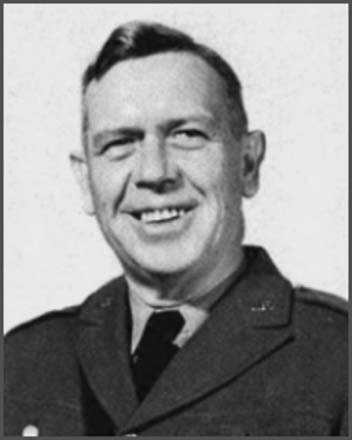
“Thus ended thirty two years of faithful service given by a true soldier to his country. No soldier could have had a greater devotion to duty than did your Dad, and no matter where that duty called him he responded instantly. He died “with his boots on” which is exactly what he wanted to do!!

Mahin_Frank_Cadle

Incidentally, I believe that Mahin’s surname was pronounced “Marr-hin”. Certainly at West Point his son was often teased by his fellow cadets who all called him “Ma-Heen”.

10 Comments

Filed under Aviation, Criminology, History, Nottingham, The High School

Notts £100 million striker (1877-1891) (first half)

Harry Cursham has scored more goals in the F.A Cup competition than any other soccer player in history.

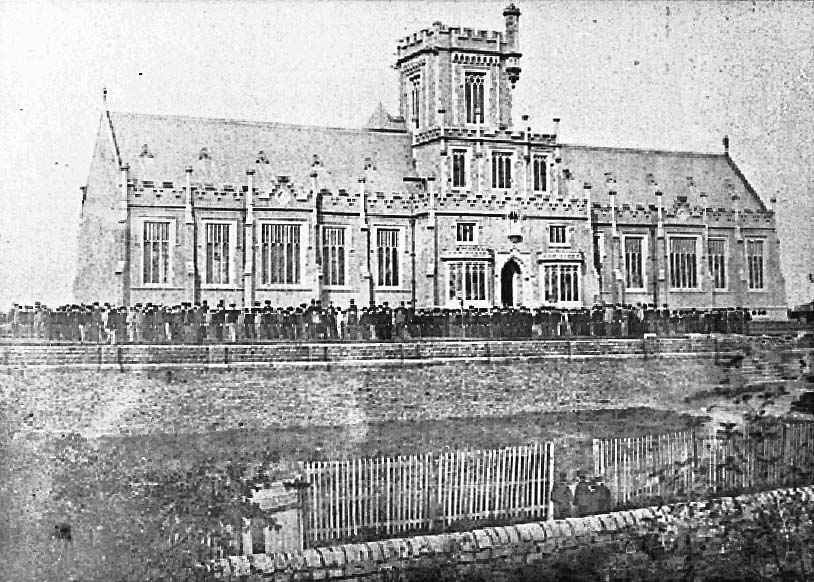
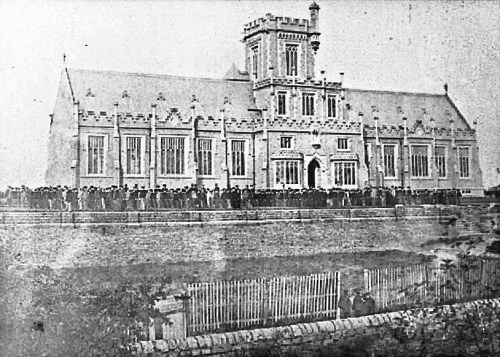
Harry was born at Wilford Grange near Nottingham on November 27th 1859, one of the five sons of William George Cursham, a solicitor. He entered the High School at the age of nine on January 18th 1869, on the same day as his brother, Charles. Harry had three brothers in total. Like him, they all attended the High School. They were Arthur William Cursham, (born 1853), Charles Lambert Cursham, (born 1858), and William Cursham (born 1862). Here is the High School of Harry’s day:
first day

During his school career Harry played for the High School First Team, but only a very few editions of the school magazine, “The Forester”, have survived from this period. Unfortunately, the very few match reports are not particularly detailed, and there is no mention of Harry as a footballer.

Harry does appear as an athlete.  He won a 100 yards’ race for boys under eleven at the Annual Athletic Sports in September 1870. This major event in the social calendar of Victorian Nottingham took place at Trent Bridge, with the crowd entertained throughout the two days by the regimental band of the Robin Hood Rifles. “Cursham ii” won “a capital race” for second place, narrowly beating Brewill, “who ran remarkably well for so small a boy” by about two yards. It was only after the end of the race that the apparently easy winner, Anderson, was disqualified for being over age, thus leaving Harry in first place.

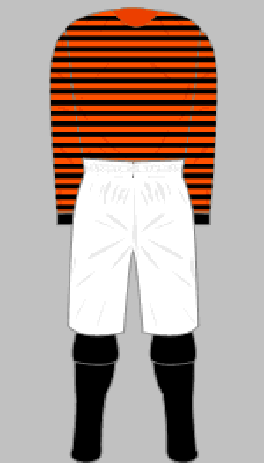
After leaving in 1875, Harry transferred to Repton School as a boarder. He remained there until Christmas 1876, and represented the school at both football and cricket. Harry returned to Nottingham in 1877 and joined Notts County for the 1877-1878 season. Both he, and his brother, Arthur, soon became very great favourites with the crowd. Harry was too young to have worn Notts’ wonderful “convict kit”:
notts_county_1872-1873

On November 3rd 1877, “…these splendidly built players…”, Harry and elder brother, Charles, played for County in their first ever F.A.Cup tie, against the Sheffield Club, for whom Arthur Cursham made an appearance. Arthur, of course, was normally a Notts County player. The match took place at Trent Bridge, and was drawn 1-1. Arthur scored for Sheffield, and Charles for Notts County. The County team included at least four Old Nottinghamians, namely Harry Cursham, Charles Cursham, Thomas Oliver, George Seals, and, possibly, Henry Jessop as a fifth.

In the replay, Arthur scored twice for Sheffield, and County lost 0-3, but Harry was seen as a promising débutant during the season, appearing in the prestigious friendly against Scottish club, Queen’s Park, at Hampden.

Harry soon became a high scoring forward, and scored well in excess of 200 goals in thirteen seasons. “The Football Annual” described him as…

“…one of the best forwards of the day, plays brilliantly on either wing but is particularly effective on the left.”

Elsewhere, he is described as having been:

“…at home on either wing or in the centre, and had good dribbling skills.”

In the 1880s, a third source said that Harry was

“…the most versatile player Notts had during that period, for he was at home anywhere, and was an indispensable member of the English eleven.”

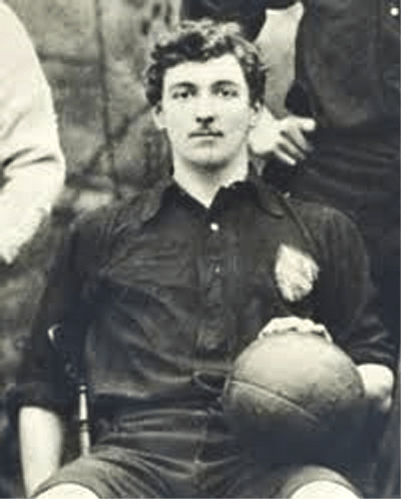
Here is our hero:
cursham

On November 16th 1878, Harry played for Notts County in their First Round F.A.Cup tie against Nottingham Forest at Beeston Cricket Ground, Nottingham Forest having waived their right to host the game. The fact that the Forest Recreation Ground was public land meant that it was impossible to charge admission money. Forest won 3-1, in front of a crowd of some 500 spectators, with goals from Turner, Goodyer and Smith. The attendance was the highest ever recorded for a football match in Nottingham. Special excursion trains were used to take them out of the City.

On November 11th 1880, Harry returned to the High School, and appeared on the Forest for the School First XI  against the Bank. The match took place on a “merit half-holiday”, and the High School fielded six Old Boys, including Harry and Charles Cursham. The Bank’s team was formidable, with several “players of no small note in the local football world”. The game was fast and even, but the the High School’s players were on top form. They ran out the eventual winners by 4-1.

By now Harry had already played for England on one occasion, against Wales at Wrexham on March 15th 1880. As far as I can trace, this game against the Bank is the only occasion on which a current England international represented the High School in any sport.

In the 1881-1882 season, Harry played in the F.A.Cup tie between Notts County and Wednesbury Strollers, a game controversially refereed by Leonard Lindley, the brother of Tinsley Lindley. The visitors led by 2-0 at the interval, but an own goal, and two each from Arthur and Harry Cursham looked to have given Notts a 5-3 victory. Wednesbury were not happy though, with the fact that they had two hotly contested goals awarded against them, by a referee from the same town as their opponents. He was also a personal friend of the Notts County players. Wednesbury Strollers protested to the F.A., who ordered the first ever replay, on a neutral ground, with a neutral referee. This idea of a neutral referee was one which was soon to become fundamental to cup competitions, not just in England, but the whole world over.

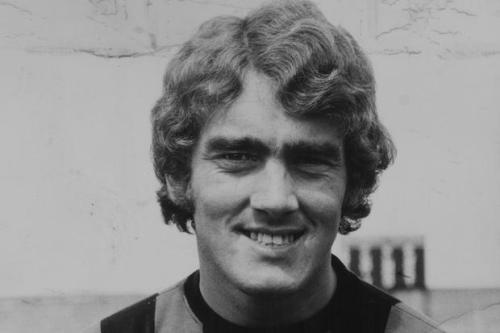
The replay took place at Derby and the result was Notts County 11 Wednesbury Strollers 1. Official records state that Harry scored six goals, but he himself claimed throughout his life that he had got nine, explaining that the referee had confused him with his two brothers, Arthur and Charles. Nine goals in a single game would, over a century later, still remain a record for the F.A.Cup. This total was equalled by Ted MacDougall for Bournemouth against Margate in the First Round on Nov 20th 1971, but it has never been beaten:
ted macdouygall

By now, Harry was centre forward for County, and he continued his remarkable goal scoring feats. In the F.A.Cup in 1882-1883, County defeated the Sheffield Club  by 6-1, before beating Phoenix Bessemer of Rotherham by 4-1, and Sheffield Wednesday by the same score. They were then drawn against Aston Villa, with Notts County hanging on grimly to a 4-3 winning margin, Harry having grabbed a hat-trick. Villa protested, however, that in the dying minutes, Harry had fisted out what would have been an equalising goal. Harry appeared before the F.A. to discuss the “long-arm incident”. He explained that the goalkeeper had been hidden behind him, and that it must have been his hand that had knocked away the ball. Obviously, the F.A. were not used to dealing with High School boys, and their far-fetched excuses, and Harry was believed.

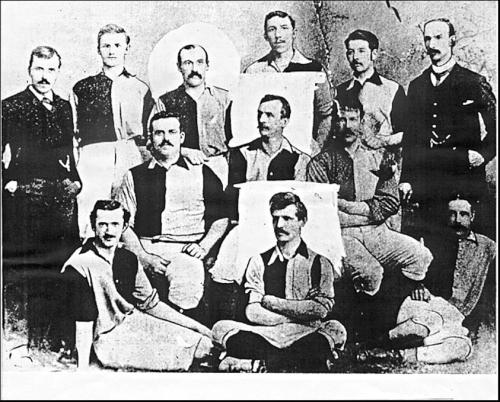
Here is the team photo for the semi-final. At least three of the players were surprise choices, and were pasted into the photograph later on:
county semi final

(back row) Arthur Ashwell (Umpire), Johnny Dixon, Herbert Emmitt, Billy Gunn, Harry Moore, Alf Dobson (second row) Mordecai Sherwin, Arthur Cursham, Stuart Macrae (front row) Charley Dobson, Harry Cursham, H.Chapman (his first name remains apparently unknown. Surely not Herbert?)

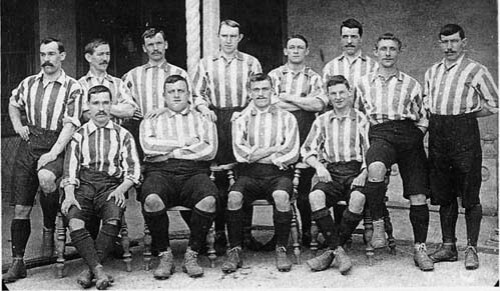
Arthur Ashwell, Arthur Cursham , Johnny Dixon and Harry were all ex-High School boys. In those days, the goalkeeper could be pushed physically into the net, so it paid him to maintain a healthy pie intake. Mordecai Sherwin (16 stone) though, had a long way to go to keep up with 22-stone Fatty Foulke in this Sheffield United team of 1901:
Sheffield_United_FC_1901_team

In the semi-final, Harry scored, but Notts County lost 1-2 against the Old Etonians, who included Lord Kinnaird, and Percy de Paravicini:

In 1883-1884, Harry scored a hat trick against Sheffield Heeley in the first round and then grabbed the winner in a fifth round tie against “The Swifts”. Along with Old Nottinghamian, John Dixon, Harry appeared in the semi-final against Blackburn Rovers but Notts County lost by the only goal of the game, as their goalkeeper, sixteen stone Mordecai Sherwin, was easily barged into the back of the net.

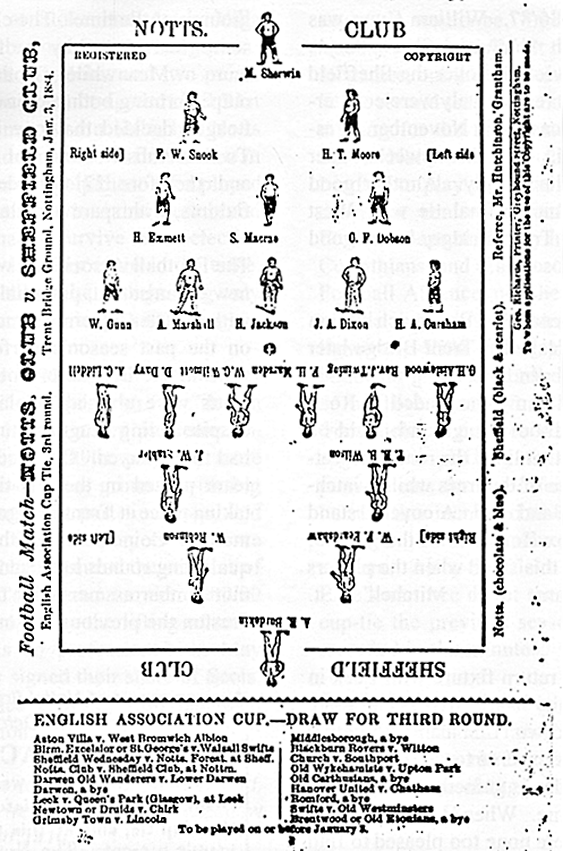
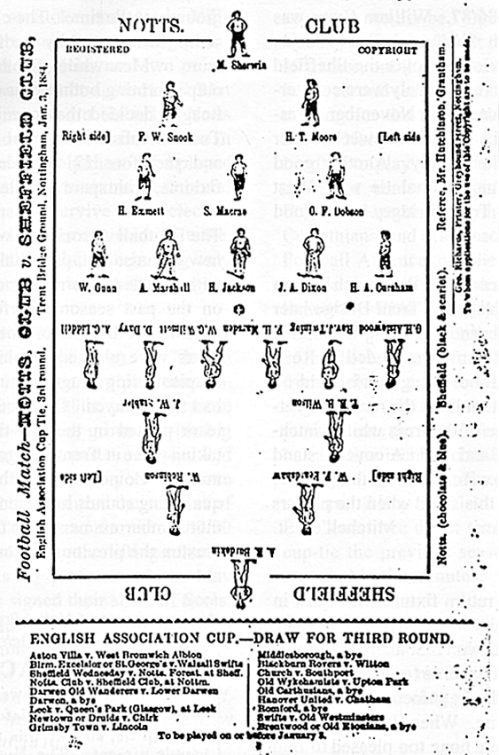
This is Notts’ oldest programme, against the Sheffield Club at Trent Bridge on January 3rd 1885,  watched by 5,000 spectators:
programme

The Old Nottinghamians in the team were Frederick Snook, Harry Jackson, Johnny Dixon and Harry Cursham. The game ended in a 5-0 victory, with County’s goals coming from Dobson, Gunn, Harry Jackson, Harry Cursham and Marshall.

On October 24th 1885, Harry scored four goals in County’s record F.A.Cup victory, a 15-0 rout of Rotherham Town in the First Round at Trent Bridge. Later that year, Harry Cursham appeared in a Sixth Round F.A.Cup tie against the previous season’s beaten finalists, Queen’s Park of Glasgow. The match was played at Trent Bridge before 17,000 spectators, many people having arrived by carriage  from early morning onwards. By the end of normal time the game was poised evenly at 2-2, but the Scottish captain refused to play extra time, because he claimed that the crowd had encroached onto the playing surface and delayed the end of the match. County duly kicked off, unopposed, and kicked the ball into the empty net. The F.A., however, ordered a replay at Derby, where Queen’s Park grabbed the winner in the second half. They duly went on to the final, where they lost to Blackburn Rovers.

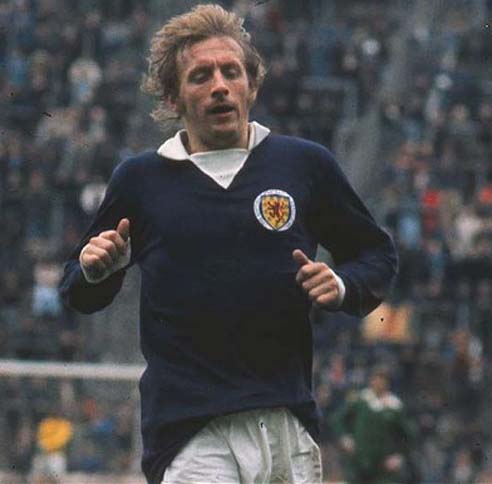
Harry Cursham’s overall total in the F.A.Cup remains the all time goal scoring record. In his career, he managed an official 49 goals, or an unofficial 52 goals, both of which totals have only ever been approached by the peerless Denis Law (41):
law_2779943b

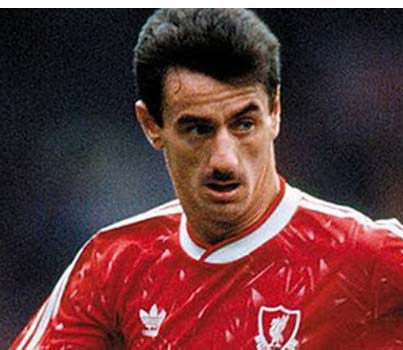
and the man who said that playing for Juventus was just like living in a foreign country, Ian Rush (42).
ian-rush-

In addition, many readers may feel that the two goals he scored in the original, void, game against Wednesbury Strollers should be incorporated in the overall total, giving Harry a record 54 goals in the F.A.Cup. Harry’s full F.A.Cup scoring record was…

Nov  3rd 1877         Notts County v  Sheffield                                     1-1               (1)
Nov  4th 1880         Notts County v Derbyshire F.C                          4-4              (2)
Nov  27th 1880       Notts County v Derbyshire F.C                          4-2              (2)
Nov  24th 1881       Notts County v Wednesbury Strollers               5-2              (2)
Dec  10th 1881        Notts County v Wednesbury Strollers              11-1              (6/9)
Jan   14th 1882       Notts County v Aston Villa                                   1-4              (1)
Nov  4th 1882         Notts County v Sheffield Club                             6-1              (2)
Dec 27th 1882        Notts County v Phoenix Bessemer                     4-1               (1)
Feb 12th 1883         Notts County v Sheffield Wednesday                4-1               (1)
Mar 3rd 1883          Notts County v Aston Villa                                  4-3              (3)
Mar 17th 1883        Notts County v Old Etonians                               1-2               (1)
Nov 10th 1883        Notts County v Sheffield Heeley                         3-1               (3)
Dec 15th 1883         Notts County v Grantham                                   4-0               (2)
Feb  9th 1884          Notts County v Swifts                                           1-1                (1)
Feb 14th 1884         Notts County v Swifts                                           1-0                (1)
Dec 6th 1884           Notts County v Staveley                                       2-0               (1)
Jan 3rd 1885           Notts County v Sheffield Club                             5-0               (1)
Feb 21st 1885          Notts County v Queens’ Park                              2-2                (1)
Oct 24th 1885         Notts County v Rotherham Town                     15-0               (4)
Nov 21st 1885         Notts County v Sheffield Club                             8-0               (1)
Dec 12th 1885        Notts County v Notts Rangers                              3-0               (3)
Oct 30th 1886        Notts County v Basford Rovers                           13-0              (1)
Nov 13th 1886        Notts County v Notts Rangers                              3-3               (1)
Nov 20th 1886       Notts County v Notts Rangers                              5-0               (3)
Dec 11th 1886         Notts County v Staveley                                         3-0               (1)
Jan 29th 1887        Notts County v Great Marlow                               5-2               (3)
Feb 19th 1887         Notts County v West Bromwich  Albion             1-4               (1)
Dec  8th 1888         Notts County v Staveley                                         3-1               (1)

Fittingly, Harry scored in his last ever F.A.Cup game as Notts County’s centre forward:

Feb 28th 1891        Notts County v Sunderland                                   3-3                (1)
Semi-final tie, played at Bramall Lane

This gave Harry an unprecedented career total of 52 goals in 44 F.A.Cup ties (or 54 in 45, if the first game against Wednesbury Strollers is incorporated in the totals.).

There has, of course, been criticism of the strength of the opposition against which Harry scored his F.A.Cup goals. It is worth mentioning, however, that, as an amateur, he may have chosen not to play in some cup ties where he would surely have scored even more goals…

1887-1888              Notts County  v Lincoln Ramblers                        9-0
1888-1889              Notts County  v Eckington                                      4-1
1888-1889              Notts County  v Beeston St.John’s                        4-2
1888-1889              Notts County  v Old Brightonians                         2-0

The F.A.Cup Ties against Eckington and Beeston St.John’s were both contested by Notts County’s reserve side. Harry may well have considered it beneath his dignity to play in these games, even though at this time he was by no means a regular First Team player. Harry also missed the Fourth Round of the F.A.Cup in 1884-1885. This was a 4-1 away win over Walsall Swifts, which took place in front of 5,000 spectators on January 4th 1885. Harry was unfortunately away on honeymoon, having got married in Wilford Church on January 20th. His team mates presented him with a silver plate to mark the occasion:
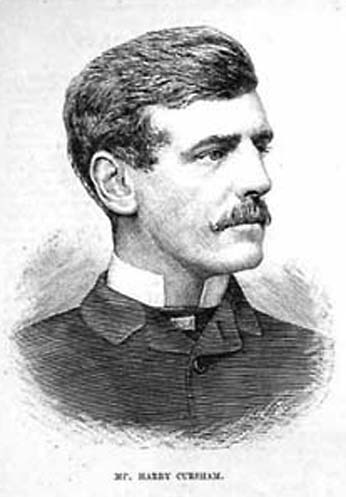
newsapaper

Harry’s last appearance for County in the F.A.Cup is linked extremely closely with his last appearance in the Football League on February 10th 1891, playing as a right full back, in a 4-0 home victory over Burnley. Harry had not appeared in the First Team for over two years, but the regular right back, Tom McLean, was injured, and the Team Management Committee decided to recall Harry.

The reason for this unexpected decision is that County had reached the Sixth Round of the F.A.Cup and had been drawn at home to Stoke. If Tom McLean was still injured, then Harry would be the ideal replacement. He was an older player, experienced with big games and large crowds.

In actual fact, Tom McLean was to return for the Stoke game, which County won by a single goal. McLean’s injury, however, must have flared up again, as Harry returned to the First Team for his last ever appearance in the F.A.Cup, on February 28th 1891, when he played as a right full back in the semi-final tie against Sunderland. The game was at Bramall Lane, and ended 3-3. Fittingly, some 25,000 spectators watched Harry play for the last time. By now, their kit was the familiar:
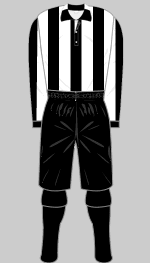
notts_county_1890-1900

For the replay, Harry was again replaced by Tom McLean. Tom’s injury cannot have healed properly, however, since he did not get into the team for the Final.

Neither did Harry, who was replaced by Alex “Sandy” Ferguson, a Scotsman from Rangers, who had played only twice previously. County’s only fixture before the Final was a League game against Blackburn Rovers, who would be County’s opponents in the Final. Notts won this League game with great ease, by 7-1. They then chose to keep the same side for the F.A.Cup Final at the Kennington Oval, and were never even remotely in the game. Blackburn won 3-1 with consummate ease:
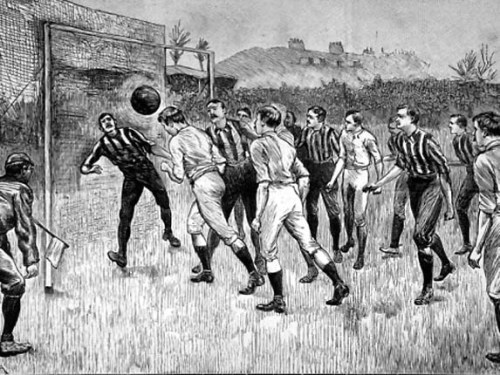
blackburn-rovers-vs-notts-county-f-a-cup-final-1891_i-G-46-4625-3MOFG00Z

Perhaps the Team Management Committee wished that they had kept faith with Harry, who was surely the man for the big occasion. What a way it would have been to finish off his glorious career, winning the F.A.Cup for the first time ever. It was not until 1894 that Notts County finally won the F.A.Cup. And by one of life’s incredible ironies, it was on the day of the Final against Bolton Wanderers that the Nottingham Football News was able to announce the tragically premature death of Alex “Sandy” Ferguson, who had by now moved on to Newark Town.

By the way, the illustrations of the two football kits come from the best ever website for the soccer nerd and all the boys who had more than twenty different Subbuteo teams. New Brighton Tower 1898? Oh, yes.


7 Comments

Filed under Football, History, Humour, Nottingham, The High School