Category Archives: Wildlife and Nature

“Why no statue?” (7)

This is another candidate in my series, “Why no statue?”

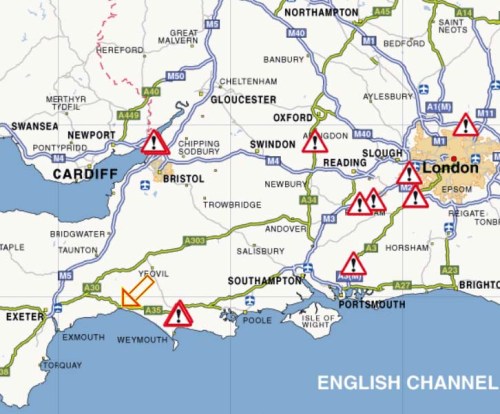
This time, we move to the deep south of England, to the area of Lyme Regis and Charmouth, to be precise. Keep your eyes open for the orange arrow..
Mary Anning (1799-1847) was alive at a time when the entire country believed that the Earth was not very old at all and that it was impossible for species to change or to evolve or even to become extinct.

Mary was born into the family of a cabinetmaker, who died when she was eleven. They supplemented their income by selling fossils from the cliffs on the coast to tourists, from a table outside their home. The latter was so close to the sea that storms often flooded the ground floor and the family had to climb out of a first floor window to escape a watery grave. Here is a typical storm at Charmouth :

Of ten children, only Mary and Joseph survived their childhood. Wars had tripled the price of wheat, but wages had remained the same. The child mortality rate was 50% and smallpox and measles were mean spirited killers. On August 19th 1800, baby Mary was nearly killed but not by disease. She was being held in the arms of a neighbour, Elizabeth Haskings, who was talking to two friends under an elm tree. The tree was struck by lightning and only Mary survived. She was rushed home and revived in a bath of warm water. Wikipedia said that:

“afterwards she seemed to blossom. For years afterward members of her community would attribute the child’s curiosity, intelligence and lively personality to the incident.”

How very Baron Frankenstein!

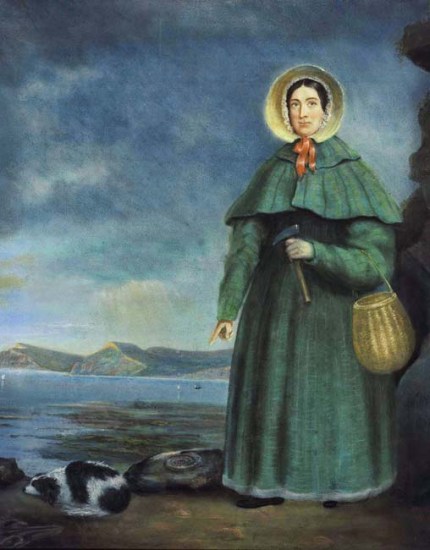
In 1833, a landslide killed her dog, Tray, a black-and-white terrier, at her feet as she hunted fossils under the cliffs. She wrote to her friend:

“Perhaps you will laugh when I say that the death of my old faithful dog has quite upset me, the cliff that fell upon him and killed him in a moment before my eyes, and close to my feet … it was but a moment between me and the same fate”.

Here’s Mary and Tray, on a happier day:
Mary learnt to read and write at a Congregationalist Sunday school. Her favourite possession was a bound collection of the Dissenters’ Theological Magazine and Review containing two essays by the family’s pastor, James Wheaton. One said “God created the world in six days”, the other was entitled “Don’t forget to read about the new science of Geology”.

Mary looked for fossils in the coastal cliffs around Lyme Regis, especially the mudstone cliffs at Charmouth:

Mary was the first person to identify an ichthyosaur skeleton. She was only eleven years old:

On December 10th 1823, she found the first complete plesiosaurus:

This slideshow requires JavaScript.

In 1828, she found the first British pterosaur, followed by a Squaloraja fish skeleton in 1829. A Squaloraja fish is one from the shark or ray family. This is a pterosaur:
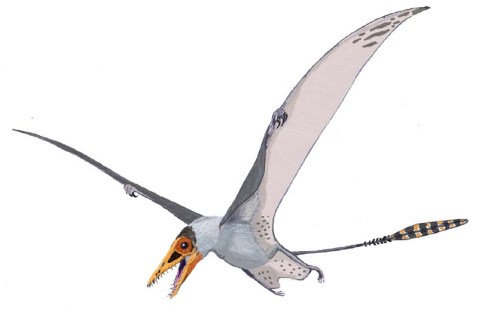
In December 1830 she sold a new species of plesiosaur for £200, an enormous sum in those days, around £25,000 in today’s money. Lady Harriet Silvester had written of Mary, four years earlier:

“It is certainly a wonderful instance of divine favour – that this poor, ignorant girl should be so blessed, for by reading and application she has arrived to that degree of knowledge as to be in the habit of writing and talking with professors and other clever men on the subject, and they all acknowledge that she understands more of the science than anyone else in this kingdom.”

Indeed, on one occasion, the doctor and aide of King Frederick Augustus II of Saxony asked her to write her name down for him.

She spelt it as “Mary Annins”— and told him “I am well known throughout the whole of Europe.”

Which she was.

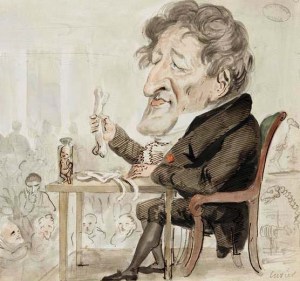
In the early 1820s, the eminent French anatomist Georges Cuvier accused her of forging fossil animals by adding extra ones more or less at random. After a meeting of the Geological Society, Mary was completely exonerated and Cuvier forced to say that he had acted in haste and was wrong.

Impoverished Peasants   1      Famous French Barons     0

Here’s a caricature of Cuvier. In actual fact, Mary Anning was not the only person to get the better of him, despite his having a brain the size of a brontosaurus.
Part 2 to follow…….

 

16 Comments

Filed under France, History, Humour, Science, Wildlife and Nature

My Dad, Fred, and his favourite poetry (5)

When I was a little boy, my Dad, Fred, used to be a teacher at Hastings Road School in Gresley. Unfortunately excessive mining operations underneath the school led to its premature collapse.  My Dad is at the right hand end of the back row:

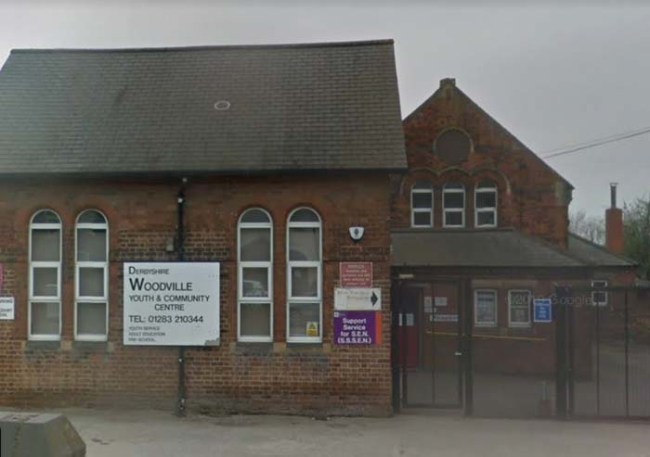
My Dad had to move to the Woodville Church of England Junior School, the school I attended, where, after a number of years, I finished up in his class, which was possibly Class 4. This is the school now.

One afternoon,  I can recall being one of the many children who were all so very frightened when my Dad read out to the fifty of us the narrative poem, “Flannan Isle”, by Wilfrid Wilson Gibson, written in 1912. Here’s the author:

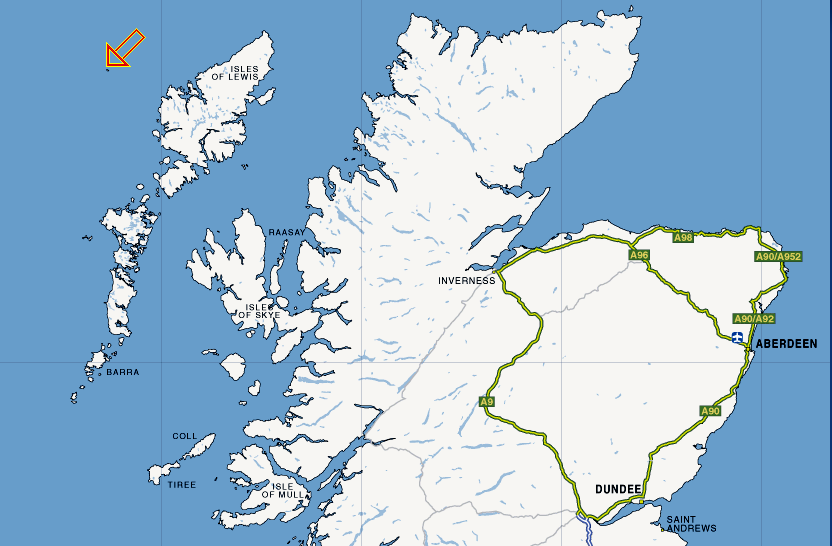
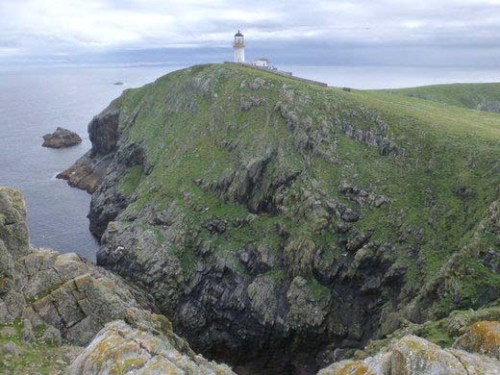
The Flannan Isles incidentally are pretty much as remote as you can get in Britain. The orange arrow is 553 miles from London, in a straight line, slightly less than London-Berlin:

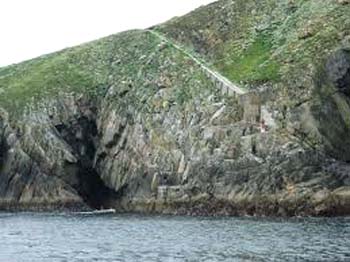
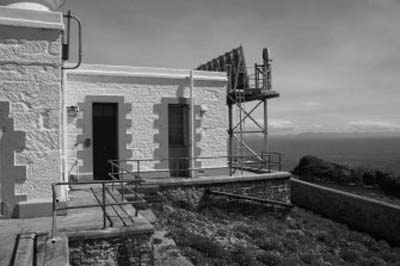
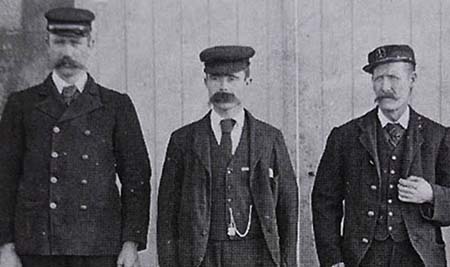
On an unknown date in December 1900, the lighthouse on Flannan Isle suddenly failed to shine. A few days later, when a group of lighthouse men came to investigate, they found that the whole island was completely deserted. The three lighthouse keepers had completely disappeared.

Fred used to recite this poem regularly to his classes, and I can still recall how intriguing many of us found this true story, and how animatedly and at what great length we discussed all the possible reasons for the disappearance of those three unfortunate lighthouse keepers only sixty years previously. We were all convinced that the men had been magically transformed into seabirds,  an absolutely horrific idea for nine year olds in that more innocent age of the early 1960s. Anyway, here’s the first section:

“THOUGH three men dwell on Flannan Isle
To keep the lamp alight,
As we steered under the lee, we caught
No glimmer through the night.” A passing ship at dawn had brought
The news; and quickly we set sail,
To find out what strange thing might ail
The keepers of the deep-sea light.
The Winter day broke blue and bright,
With glancing sun and glancing spray,
As o’er the swell our boat made way,
As gallant as a gull in flight. But, as we neared the lonely Isle;
And looked up at the naked height;
And saw the lighthouse towering white,
With blinded lantern, that all night
Had never shot a spark
Of comfort through the dark,
So ghostly in the cold sunlight
It seemed, that we were struck the while
With wonder all too dread for words.
That sets the scene, although, initially, when I came back to this poem after 60 odd years, I was a little disappointed with the quality of the poetry. Gibson seems so often to add an extra phrase or an extra couple of words, when the poem would actually read better without them.
Anyway, a possible solution is hinted at by the description below of the three strange seabirds:
And, as into the tiny creek
We stole beneath the hanging crag,
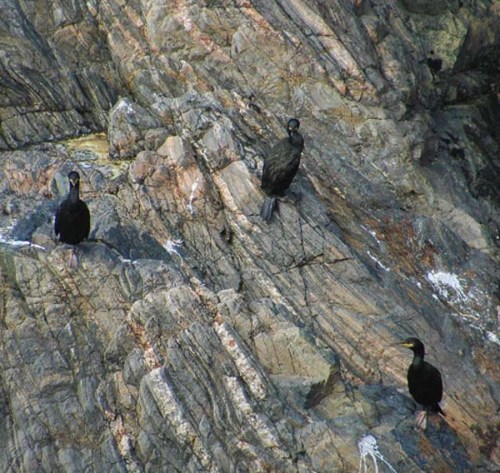
We saw three queer, black, ugly birds—
Too big, by far, in my belief,
For guillemot or shag—
Like seamen sitting bolt-upright
Upon a half-tide reef:
But, as we neared, they plunged from sight,
Without a sound, or spurt of white.

Those three birds, guillemots or shags, were the very things that would go on to terrify a bunch of 9-year olds.

And still to ‘mazed to speak,
We landed; and made fast the boat;
And climbed the track in single file,
Each wishing he was safe afloat,
On any sea, however far,
So it be far from Flannan Isle:
And still we seemed to climb, and climb,
As though we’d lost all count of time,
And so must climb for evermore.
Yet, all too soon, we reached the door—
The black, sun-blistered lighthouse-door,
That gaped for us ajar.


As, on the threshold, for a spell,
We paused, we seemed to breathe the smell
Of limewash and of tar,
Familiar as our daily breath,
As though ‘t were some strange scent of death:
And so, yet wondering, side by side,
We stood a moment, still tongue-tied:
And each with black foreboding eyed
The door, ere we should fling it wide,
To leave the sunlight for the gloom:
Till, plucking courage up, at last,
Hard on each other’s heels we passed,
Into the living-room.
Actually, at this point, I might well retract what I said before. The further I went into the poem, the more I realised, that it is clearly meant to be slowly and deliberately declaimed out loud. Have a go. You’ll see what I mean. And sincere apologies, Wilf !
Yet, as we crowded through the door,
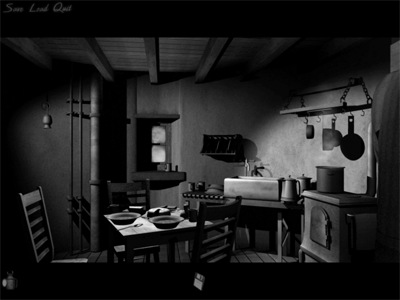
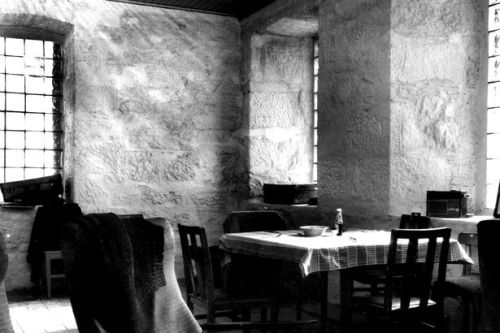
We only saw a table, spread
For dinner, meat and cheese and bread;
But, all untouched; and no one there:
As though, when they sat down to eat,
Ere they could even taste,
Alarm had come; and they in haste
Had risen and left the bread and meat:
For at the table-head a chair
Lay tumbled on the floor. We listened; but we only heard
The feeble cheeping of a bird
That starved upon its perch:
And, listening still, without a word,
We set about our hopeless search.
We hunted high, we hunted low;
And soon ransacked the empty house;
Then o’er the Island, to and fro,
We ranged, to listen and to look
In every cranny, cleft or nook
That might have hid a bird or mouse:
But, though we searched from shore to shore,
We found no sign in any place:
And soon again stood face to face
Before the gaping door:
And stole into the room once more
As frightened children steal.
Aye: though we hunted high and low,
And hunted everywhere,
Of the three men’s fate we found no trace
Of any kind in any place,
But a door ajar, and an untouched meal,
And an overtoppled chair.
And, as we listened in the gloom
Of that forsaken living-room—
A chill clutch on our breath—
We thought how ill-chance came to all
Who kept the Flannan Light:
And how the rock had been the death
Of many a likely lad:
How six had come to a sudden end,
And three had gone stark mad:
And one whom we’d all known as friend
Had leapt from the lantern one still night,
And fallen dead by the lighthouse wall:
And long we thought
On the three we sought,
And of what might yet befall.
Like curs, a glance has brought to heel,
We listened, flinching there:
And looked, and looked, on the untouched meal,
And the overtoppled chair.
We seemed to stand for an endless while,
Though still no word was said,
Three men alive on Flannan Isle,
Who thought, on three men dead.
Hopefully, you made it this far. It is definitely a great poem to be declaimed out loud. But you’ve got to take it slowly and deliberately. If you stumble at the words, go back and give it another go.
And here’s the three birds that we children all thought the lighthouse keepers had been transformed into:

In the future, I hope to produce some blog posts looking at the possible reasons that the three men disappeared.

Portrait of Gibson borrowed from poeticous

16 Comments

Filed under Criminology, Cryptozoology, History, Literature, my Dad, Personal, Science, Wildlife and Nature

They win. Zu Lus (2)

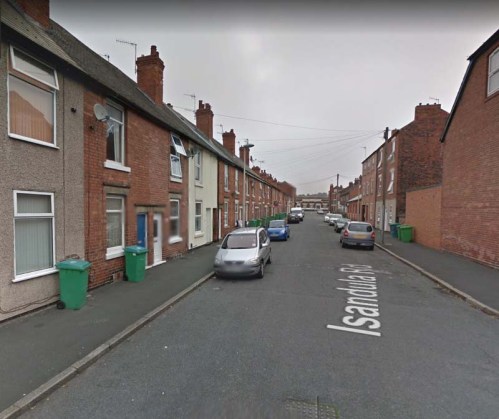
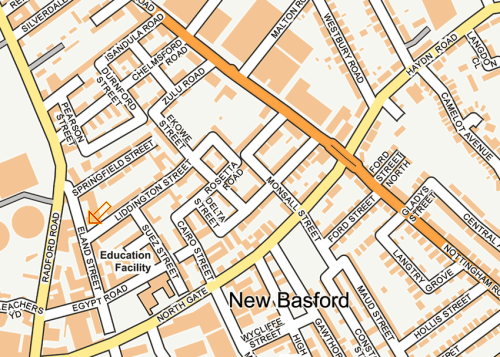
As well as the Egyptian quarter, a number of streets in New Basford in Nottingham are named after the Zulu War of 1879.  As far as I can tell, in this area, there are seven of them, namely Chard Street, Chelmsford Road, Durnford Street, Ekowe Street, Isandula Road, Zulu Road and perhaps Eland Street.

What is most amazing about these streets is that they represent, as far as I can tell, a kind of salute to the Zulus, who were, as I mentioned previously, one of the finest and most valiant of all the opponents of the British Army. The Battle of Isandlwana, or Isandula, for example, was the greatest defeat ever suffered by British soldiers against a native force armed with their traditional weapons.

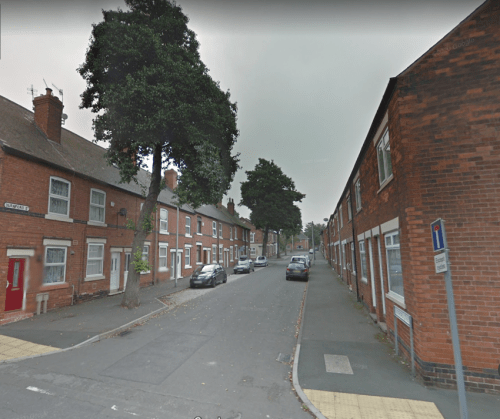
And the Zulus were trustworthy, too. King Cetshwayo tried as best he could to avoid war and told his men not to kill anybody who was not dressed in a red coat and therefore could not be identified with any certainty as a British soldier. He told them not to cross the border into Natal in pursuit of Chelmsford’s defeated forces. The Zulus stuck to both of these promises they had made to their king. Men in dark blue or green uniforms, such as in the Hale rocket battery, were allowed to walk away in peace, and not a single Zulu pursued the remnants of the defeated British army into Natal. If they had done, as Prince Ndanbuko urged them to, there would have been every chance of another stunning victory over the British Empire. Here’s Isandula Road:

So when we walk down Isandula Road, we can all remember that this Victorian street is a memorial to the Empire’s greatest ever native opponents.  Had Isandlwana been an easier word to pronounce, of course, the street would have been called Isandlwana Road.

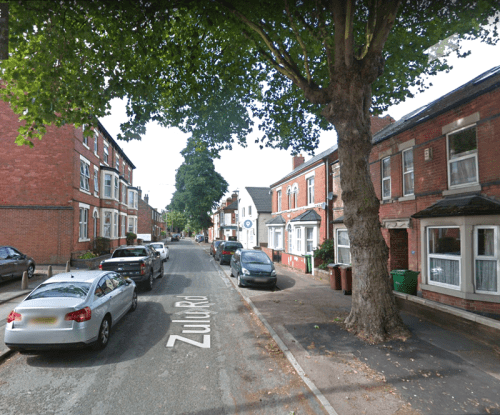
And I really do stick by the idea that this road was a monument to the Zulu warriors. There is only one Isandula Road in the whole of England so it must have been very important name to whoever made the decision to have a road dedicated to the British Empire’s gallant opponents. The same can be said of Zulu Road. There is only one of those in the whole country too :

I kept my eyes open for a Zulu or Tu, but I saw nothing. Here’s a modern Zulu, dressed up for the tourists, with all his friends:

He’s parked his car on the road in the background, which is quite a long way away. No wonder he’s had to keep his best trainers on.

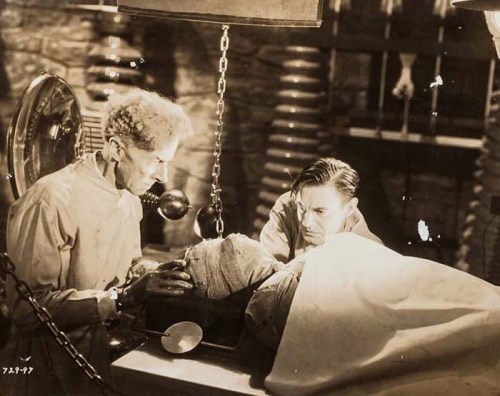
By 1880, people in England were well aware of whose fault the calamitous defeat at Isandlwana was. It was Lord Chelmsford’s, so a road named after him must have served as much as a reminder of his failures and his shortcomings as a monument to his military genius. I would think that nowadays Chelmsford would be more famous as the uncle of Ernest Thesiger, the actor (left) who worked with James Whale in the latter’s Frankenstein films :

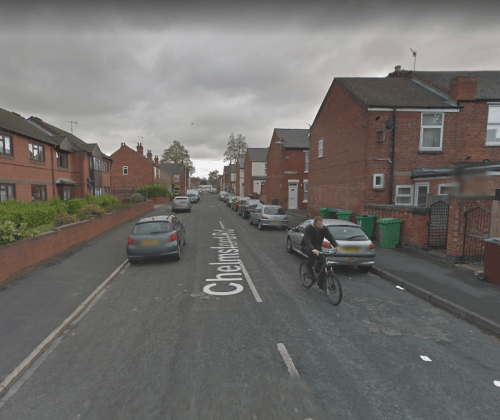
Here is Chelmsford Road, with Lord Chelmsford making good his escape from Isandlwana on his trusty bicycle:

Chelmsford Road may not look as if it is 140 years old, but it does have one feature that is straight from the 1880s. That is the arrangement of four, or perhaps six, houses, in a short row, all of them typical small working class “two up, two down” terraced houses. These four/six houses are opposite  an identical set of houses, with, in this case, a concrete courtyard between the two rows. The more usual pattern was to have the outside lavatories situated in the middle of that courtyard, equidistant from each set of houses. In the golden days of the earth closet, this must have given life a very distinctive flavour, particularly in the summer.

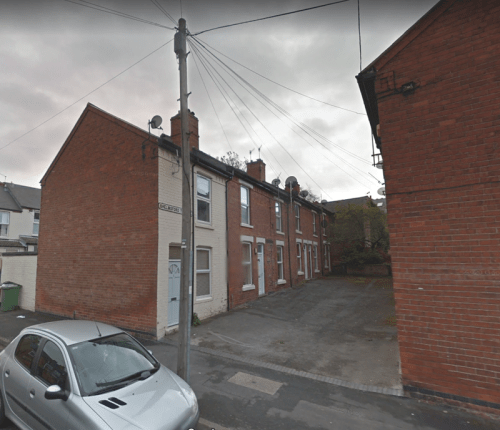
This particular set of houses is called “Chelmsford Terrace” in honour of the great man.  This particular section of Chelmsford Road has other sets of houses like these, one called “Rene Terrace”, and another, “Iris Terrace”:

Here is Durnford Street, all of it:

Anthony Durnford was one of the two subordinate commanders killed at Isandlwana (the other was Henry Pulleine). Chelmsford was quick to blame Durnford for disobeying his superior’s orders to set up a proper defensible camp, although there is actually no hard evidence whatsoever that Chelmsford ever issued such an order. Nevertheless, Durnford can be regarded as a rather unsuccessful soldier, just like Chelmsford. He was also Irish, so, by the racist attitudes of the time, he was an easy man to blame. He was also dead, so he couldn’t argue with any of Chelmsford’s lies.

Chard Street is not always marked on street maps for some reason. It runs at right angles to Isandula Road, Chelmsford Road and Zulu Road. It is marked by the Orange Arrow’s “New Friend”, the Red Hot Air Balloon:

Here is Chard Street. It certainly has a Zululand feel about it:

John Chard is really the only heroic figure in this war to have a street named after him. He was the commander at Rorke’s Drift. He was played by Stanley Baker :

Chard’s second-in-command was Gonville Bromhead, now better known as Sir Michael Caine. Sadly, there was no street named after him. Bromhead was, in actual fact, an Old Boy of Magnus Grammar School in Newark-on-Trent:

There is also an Eland Street fairly close by.  This street probably fits in with all of these other South African links. An Eland is a large antelope which would surely have provided food for members of both armies.

Here is the map for Eland Street, which has an Orange Assegai at its northern end.

Ekowe Street is named after another incident in the Zulu War of 1879…….

On the very same day as the defeat at Isandlwana,  6,570 British soldiers armed with rifles, rockets and field guns managed to defeat a Zulu army of around 10,000 men armed with assegais and cowhide shields. They occupied Ekowe, where they were then besieged by the Zulus for ten weeks before a British army of 5,670 men came to the rescue with their two 9-pounder guns, four 24-pounder Congreve rocket tubes and two Gatling guns. You can see a rocket being fired in this picture:

Incidentally, I cannot find any connection for Liddington Street, Monsall Street or Pearson Street.

Just look though, what rich roots many English street names have.

Just look at the map above. “Ford Street North” where one of Henry Ford’s brothers was probably born. “Camelot Avenue” where Queen Guinevere and Sir Lancelot first fell in love. “Langtry Grove”, probably the  birthplace of Lily Langtry, the mistress of the future King Edward VII and the woman who had a saloon named after her by Judge Roy Bean, “The Only Law West of the Pecos”. Here’s the judge, and the saloon. You can just see the bottom of the letters of “JERSEY LILLY” at the very top of the picture:

And last, but certainly not least, Springfield Street, where Homer Simpson used to live before he left for his new life in television.

18 Comments

Filed under Film & TV, History, Humour, Nottingham, Wildlife and Nature

What would you do ? (14) The Solution

“What would you do ?” used to figure on the cover of a comic called “Boys’ World”. This publication first appeared on January 26th 1963. and lasted 89 issues before the comic was merged with Eagle in 1964. The last issue of “Boys’ World” came out on October 3rd 1964.

I used to buy this comic, mainly for the front cover which always featured a kind of puzzle called “What would you do ?”. The puzzle was based on somebody being in what Ned Flanders would call “A dilly of a pickle”.

Here’s the situation I showed you a few days ago:

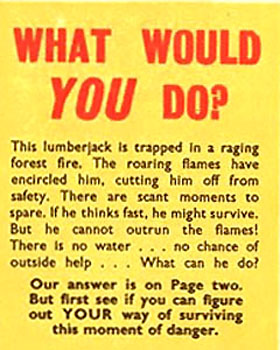
Here’s that yellow box, with the exact circumstances, in case you couldn’t understand the picture:

And the correct solution given on page 2 of the comic is:

Well, there we are…..

“Using his axe as a shovel, the lumberjack quickly scooped a shallow trench in the soft ground. Then lying flat inside it, he pulled his jacket over him and covered it with loose earth. As the blaze passed overhead, he was protected from its direct heat – and was able to breathe the cool air in the ‘pocket’ around him.”

Personally, I’m not so sure that that would work, and I really wouldn’t want to try it, but let’s cheer up and look at page 6 with “The last DINOSAUR on earth”. Here’s the top half of this complete short story by Donne Avenelle.

And here’s the artwork and the story’s rather sad ending:


19 Comments

Filed under Canada, Wildlife and Nature

What would you do ? (14) The Puzzle

“What would you do ?” used to figure on the cover of a boys’ comic called “Boys’ World”. This publication first appeared on January 26th 1963. There were 89 issues before the comic was merged with Eagle in 1964. The last issue of “Boys’ World” came out on October 3rd 1964.

The front cover always featured a puzzle, called “What would you do ?”. It was based on somebody being in what Ned Flanders would call “A dilly of a pickle”. Here’s the situation:


The yellow box sets the scene, and the task is for you to solve the situation. Perhaps you might like to write your idea in the “Comments” section.

Here’s the yellow box enlarged:

So…..it’s a raging forest fire, with roaring flames, and he’s cut off. There’s no water to save him, and no Superman, no Batman, not even a fireman.

So…..it’s one “Dilly of a pickle”. What can he do? Well, any bright ideas, write them in the “Comments” section.

First prize is a look at page 6, to see the last DINOSAUR on Earth.


26 Comments

Filed under Canada, Wildlife and Nature

My Dad, Fred, and his favourite poetry (1)

My Grandfather, Will, had apparently always loved poetry, and in this respect, his son, and my Dad, Fred, was to follow willingly in his father’s footsteps. This burgeoning love of rhyme was nurtured and encouraged by the fact that, like many children in the British Empire, Fred possessed a set of  “The Children’s Encyclopedia” by Arthur Mee, a famous, familiar and popular book of the 1930s:

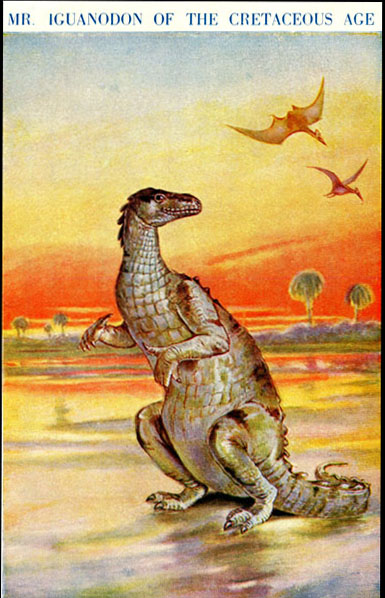
Arthur Mee believed that the English, and in particular the English boy, were the “peak of creation”, although my mother, well familiar both with me and her husband, thought he was a madman. Each volume of Mee’s ten volume set of encyclopedias contained sixteen different themes or subjects and great prominence was always given to the Poetry sections, which were selected by Sir John Hammerton, a famous contemporary historian. Fred also liked the dinosaur pictures too:

Fred would often quote poetry, and his three favourite lines were……

“Season of mists and mellow fruitfulness ”

This is a line of Keats which was automatically triggered by any mention whatsoever of autumn. Or by a walk into a wood in autumn. Or a TV programme about autumn.

Keats’ best pal, Shelley, wrote the lines which are in second place:

“Hail to thee, blithe Spirit!

Bird thou never wert,”

These words would invariably emerge should any sighting of a skylark occur, perhaps during a walk alongside a field of corn. Quite often, it would be just any bird seen to be doing skylarky type things:

In third place came the rather wise, and arguably, slightly incorrect ……

“What is this life if so full of care,

We have no time to stand and stare ? ”

The correct version has no “so” and, surprisingly, no question mark:

“What is this life if,  full of care,

We have no time to stand and stare. ”

The poem was written by William H Davies, a Welsh poet, who spent many years as a tramp or hobo, in the United Kingdom and the United States. Presumably my Dad did not know that he was Welsh. Being Welsh was never a plus point with my Dad.

Fred always professed that his favourite poet was John Clare.  You can read about him in one of my early and probably over long posts, here.

And this is John Clare, perhaps “before” and “after” the boiled egg hairstyle became popular:

This slideshow requires JavaScript.

In retrospect, I have always felt that Fred saw Clare as the simple, agricultural working class man, held firmly in his place in a world dominated by the upper classes, who were, for the most part as poets, fairly worthless and useless aesthetes, lacking Clare’s poetic talents, his intelligence and his capacity for accurate observation of the world around him. Perhaps too, as a native of the simple country village of Woodville, Fred could recognise the truth of the statement by Ronald Blythe, the President of the Clare Society, that the impoverished poet was “England’s most articulate village voice”.

It is not a giant leap, of course, to say that Fred probably saw his own life as directly paralleling that of Clare, denied as he was for purely financial reasons, the chance to go to a grammar school, and to have the same education as the more successful, and much less talented, upper class people that he would meet during the rest of his life, particularly in the RAF.

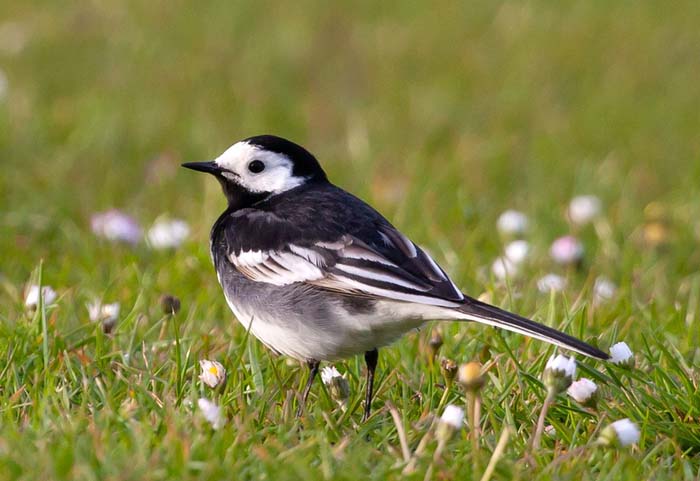
Given this love of John Clare, therefore, every time that he physically saw one running about, perhaps in a school playground when he was on yard duty, Fred would always identify this black and white bird as the “little trotty wagtail”, a phrase taken from one of Clare’s most frequently quoted poems:

Little trotty wagtail, he went in the rain,
And tittering, tottering sideways he near got straight again.
He stooped to get a worm, and look’d up to catch a fly,
And then he flew away ere his feathers they were dry.

Little trotty wagtail, he waddled in the mud,
And left his little footmarks, trample where he would.
He waddled in the water-pudge, and waggle went his tail,
And chirrupt up his wings to dry upon the garden rail.

Little trotty wagtail, you nimble all about,
And in the dimpling water-pudge you waddle in and out;
Your home is nigh at hand, and in the warm pigsty,
So little Master Wagtail, I’ll bid you a goodbye.


17 Comments

Filed under Bomber Command, History, Humour, Literature, my Dad, Personal, Wildlife and Nature

What would you do ? (13) The Solution

“What would you do ?” used to figure on the cover of a boys’ comic called “Boys’ World”. This was a publication, obviously, aimed at boys, and first appeared on January 26th 1963. There were 89 issues before the comic was merged with Eagle in 1964. The last issue of “Boys’ World” came out on October 3rd 1964.

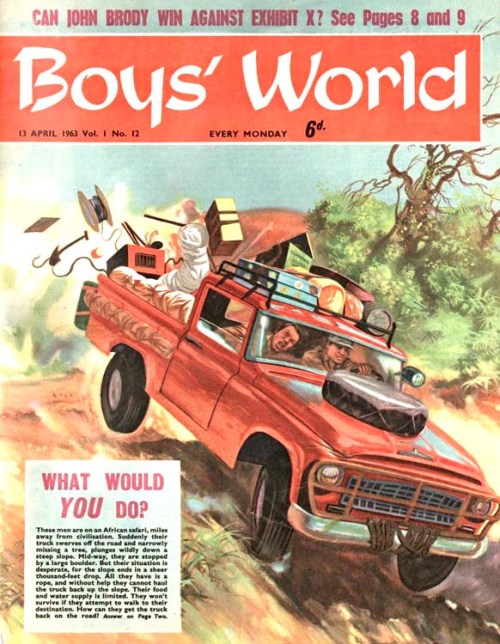
I used to buy “Boys’ World”, and this was mainly for the front cover which always featured a kind of puzzle. It was called “What would you do ?” and was based on somebody being in what Ned Flanders would call “A dilly of a pickle”. Here’s the situation:

And here’s an enlargement of that box:

And the correct solution given on page 2 of the comic is:

So, the answer is taken, more or less, from that wonderful war film of 1958, “Ice Cold in Alex” with John Mills, Sylvia Sims, Anthony Quayle and Harry Andrews. All the four of them can think about in all that heat and all that sand is an ice cold beer in a bar in Alexandria, but at one point they have to wind the truck up a steep sand slope in exactly the same way, more or less, as the solution says:


16 Comments

Filed under Africa, Film & TV, History, military, Wildlife and Nature

What would you do ? (13) The Puzzle

What would you do ?” used to figure on the cover of a boys comic called “Boys’ World”. This was a publication, obviously, aimed at boys and first appeared on January 26th 1963. There were 89 issues before the comic was merged with Eagle in 1964. The last issue of “Boys’ World” came out on October 3rd 1964.

I used to buy “Boys’ World”, and this was mainly for the front cover which always featured a kind of puzzle. It was called “What would you do ?” and was based on somebody being in what Ned Flanders would call “A dilly of a pickle”. Here’s Ned again:

The pale box sets the scene, and the task is for you to solve the situation.  Perhaps you might like to write your idea in the “Comments” section. Here’s the overall view:

Here’s that box enlarged:

So, just in case you can’t make out that rather blurred blue box, it reads, roughly:

“You are out on an African safari when the truck swerves off the road and sets off down a steep slope. Eventually, the truck is stopped when it hits a large boulder. But that isn’t the problem solved. What on earth can they ding-dong-diddily do to escape death? The slope they are on ends with a thousand foot drop. All they have is a rope, and without help, they cannot haul the truck back up the slope. Food and water is limited, and they cannot possibly walk all the way to their destination because of dehydration.  What can do to save themselves?”

Perhaps you might like to write your idea in the “Comments” section.


20 Comments

Filed under Africa, Wildlife and Nature

Poems in “The Nottinghamian” 1922-1946 (6) or “The Cat”, after D.H.Lawrence

The famous novelist, David Herbert Lawrence, was a Nottingham County Council Scholarship pupil at Nottingham High School from 1898-1901.

For a number of reasons, despite his fame as one of the 20th century’s greatest novelists, Lawrence soon became persona non grata at his old school, and, even more so at his old university, which was then called University College, Nottingham.

The problem was that he wrote dubious books where the main characters indulged in naughty practices which embarrassed many of the good citizens of Nottingham and elsewhere:

Furthermore, in 1912, Frieda, the wife of  Professor Weekley, the Head of the Modern Languages Faculty at University College, Nottingham, had run off with Lawrence. She left behind her her three children, who, by the divorce laws of the time, she was forbidden to see. And it was all Lawrence’s fault, and everybody in Nottingham thought Lawrence was a cad and a bounder and they were all firmly on the side of the much wronged Professor Weekley.

This slideshow requires JavaScript.

Given that Lawrence was an Old Nottinghamian, and had behaved so badly, the School had little choice but to condemn him whenever the occasion arose. And those negative feelings extended as far as everything that Lawrence had ever written. Well, how could a cad and a bounder write anything of any value? And exactly the same thing happened at University College, Nottingham.

Imagine my surprise, then, when I opened the July 1941 edition of the School Magazine, the Nottinghamian, and found the following poem:


CAT

(After D.H. Lawrence)


In the daytime,

She only sits licking her back with a rough, pink tongue

Like emery paper rubbing on a wooden frame.

Or curls up in a chair before the fire and mews.

Only milk can tempt her into the kitchen, and then she

Laps,

As gold-fish nibble ant-eggs, or cows munch grass,

With an insatiable longing for more.

Her tail, swishing gently to and fro ;

Her little black funny nose.

She purrs, purrs more gently than a ticking clock or than a baby

breathing in his sleep.

Her small, black feet and glossy shining fur,

Her dark-green eyes blinking in the bright day sunshine.

No more lively than a tired horse, or an old man sitting on a seat in the

park.

Only occasionally does she ring in a sparrow, clawed in a moment of

fiendish exertion ;

Or a mouse, mauled by those deadly cat-claws.


But at night, when the dark shadows hide the corners of the roofs and

people sleep,

She goes out and meets the other cats from down the road.

Then life begins, night-life of a thousand cats,

The cat life.

The black life.

They go and roll on the irises, and on the lilies, and hold a cat-

conference behind dark trees.


Life returns,

The cat life.

Squealing, scratching, and miaouwing and chasing one another through

the shrubs.

Squealing like naughty children, and then miaouwing again.

And then they squeal.

I wake, and wonder what the squealing  is,

Like a child strayed from its mother.

Cats in the garden, sitting on the lilies or chasing one another through

the green shrubs.

The night-life.

The cat life.

The poem was written by DE Rhodes of 6 Cl. That is to say, Dennis Everard Rhodes of 6 Classics. Dennis was born on March 14th 1923. He was the son of the schoolmaster at East Bridgford, a country village to the east of Nottingham, and he entered the High School, on a Nottinghamshire County Council Scholarship, on September 20th 1934, at the age of eleven.

He left the school on July 29th 1941 and went to Sidney Sussex College, Cambridge with an Open Scholarship.

Dennis Rhodes lived to be 97, and he died only months ago. His adult life was on the academic world stage and some of it was so academic that a simple old codger like myself cannot even understand what he was doing. So, sometime soon, there will be a blog post about Dr Dennis Rhodes PhD, and what he got up to in the last seventy years of his life.


17 Comments

Filed under Literature, Nottingham, The High School, Wildlife and Nature, Writing

Poems in “The Nottinghamian” 1922-1946 (4)

The author of the following poem which appeared in the Nottinghamian of December 1940 was Robert Norman Walters of VI Classics. Robert was the son of a “Master Fruiterer” and lived at 159 Cinder Hill Road in Bulwell. He was in the High School from 1930-1941. The winter of 1940-1941 was legendary for its severity and was excellent practice for anybody thinking of taking a winter break in Stalingrad a couple of years later.

SNOW

Snow shall fall and ice

Shall bind the lane in slithering shields

Of white and whitish blue.

Winds shall blow and howl and roar

And tiles shall fall.

Wood shall burst and split

Like statues known of old.

Rivers may cease to run

When snow shall whirl and swirl

And formless roofs gleam white.

Yet when this comes,

Let our strong, deep affections

Unfrozen, freeze not.

But with winter seen afar

Retain the burning heat

Of mid-June’s torrid air.

Robert left to go to Jesus College, Cambridge to study Classics. In the section of his poem :

“Winds shall blow and howl and roar

And tiles shall fall.

Wood shall burst and split

Like statues known of old.

Rivers may cease to run”

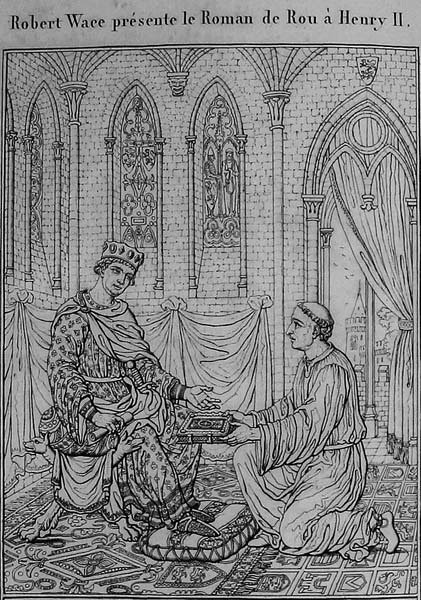
Robert has come remarkably near the words of Wace, who was possibly Robert Wace, a Norman poet, born in Jersey and brought up in mainland Normandy.

Wace was the first author to speak of the Round Table and the Court of King Arthur :

“Eventually

All things decline

Everything falters, dies and ends

Towers cave in, walls collapse

Roses wither, horses stumble

Cloth grows old, men expire

Iron rusts and timber rots away

Nothing made by hand will last.

I say and will say that I am

Wace from the Island of Jersey”

Wace lived, approximately, from 1100-1180.

James Theodore Lester was the son of a Leather Factor & Manufacturer who lived at 42 Bedale Road in Sherwood and then at Castleton House at 5 Castle Avenue in Arnold. The poem occasionally struggles for a rhyme, but the last verse is lovely.

“When I was six”

“When I was six I’d play at boats

And build a fort with many moats

Which I’d replenish with my pail

And put my little boats to sail.


Round and round and round they’d go

Till the water ceased to flow.

Then back home I would repair

And sit upon my rocking chair.


When it was time to go to bed,

Upon the pillow I’d put my head,

And think and dream of things I’d done,

And call the day a happy one.


We’ve already seen Frank Alan Underwood of 51 Charnock Avenue in Wollaton Park with his poem ““Evacuated”. This poem is a lot deeper and a lot more chilling. It was published in April 1943.

THE MIRROR

The dead man lay upon his bed

In the pause at dawn ere the Soul had fled,

And the Lamp burned dim as the East glowed red.

The Soul rose as the man had done

For twenty years at the beck of the sun:

But as yet it knew not that Death had won.

Then still as man and not aware

It looked in the mirror to brush its hair

–Looked in the mirror and found nothing there.

Ivan Keith Doncaster wrote a poem in The Nottinghamian in March 1937 which was pretty good:


THE FISHPOND

There’s a fishpond in our garden,

Not very big or wide ;

But fish just love to dart about,

Among the rocks inside.

And if you sit there on the bank,

You’ll see a sudden flash—

A big fat frog has just dived in,

And made a dreadful splash.


The frightened fish swim swiftly round

In search of safe retreat,

The frog looks at the golden line,

And croaks his sad defeat.

When ice seals up our gold-fish pond,

Neath winter’s frozen spell ;

We just catch golden gleams below,

To tell us all is well.


In summer when the fountain plays,

And sends forth silver rain,

The fish all frolic in great glee,

As cooling showers they gain.


We feed the fish with large ant eggs,

And when the days are warm

They jump to catch the flitting flies

Which o’er the pond do swarm.


Some happy moments there we spend,

Watching the fish at play ;

Spring, Summer, Autumn, Winter too,

They move in swift array.


Ivan Keith Doncaster only lived from 1923-1944 but he had already succeeded in the previous year in writing the most beautiful piece of poetry by any High School boy, bar none. It summarises how much we love our oh-so-beautiful lives, yet all the time are well aware of the price we will all one day pay as the distant bells toll our inevitable doom.

Keith paid his price in the mid-upper turret of a Lancaster over the German city of Kassel on October 22nd 1943, five days after his 20th birthday.

This poem appeared in April 1936 and had Keith lived, he would have been a great poet. He has a masterful touch and is capable of the most astonishing subtlety.

GATHERING SHELLS

“Along the silvery beach we run,

Gathering coloured shells.

We think that gathering shells is fun.

Along the silvery beach we run.

And as we go beneath the sun,

We hear the distant bells.

Along the silvery beach we run,

Gathering coloured shells.”

I have read that poem literally hundreds of times and I do not even begin to tire of it.


19 Comments

Filed under Aviation, Bomber Command, France, History, Literature, My Garden, My House, Nottingham, Personal, The High School, Wildlife and Nature