In a previous article, I wrote about the flooding of Nottingham during the modern era, and the ways in which we have learnt lessons from the floods of 1947 and constructed concrete embankments and sluices so that the River Trent is nowadays, to all intents and purposes, relatively tame. (“relatively” being the operative word.) If you walk down to Trent Bridge and look underneath the bridge on the City side, directly beneath the Riverbank Bar and Kitchen, however, you will see how the flood levels of previous years of watery disaster have been recorded. They are scarily impressive and well worth a visit:
This slideshow requires JavaScript.
The very first records of floods in Nottingham are more a case of inference than anything else. According to the (Royal) Journal of the Statistical Society, Volume XLI and “The Insurance Cyclopaedia” by Cornelius Walford (I need to get out more):
“29 A.D. There was a great overflow of the River Trent in England”.
In 214 A.D. the entire River Trent was again in flood and overflowed its banks by some 20 miles on each side from the normal course of its flow. Many people were drowned as the whole Trent valley was awash and there was great destruction. Both of these dates are during the Roman era, although Nottingham was not, as far as I know, a Roman town. Perhaps they knew that an underlying band of hard rock could be used to ford the river and its adjacent marshes. Just to establish our dates firmly, here is a Roman. Like every single Roman, he is a legionnaire, although he doesn’t look particularly ill to me, but that hat is really something: In 525 A.D. the entire Trent again burst its banks and a great number of cattle were drowned. The locals at his time may well have been Celts since we know that Nottingham, in the Brythonic Celtic language was called “Tigguo Cobauc”, meaning “The Place of Caves”. The Welsh may have been aware of Nottingham’s existence since they called it “Y Ty Ogofog” and even the distant Irish had a word or two for it, namely “Na Tithe Uaimh”, “The Cavey Dwelling”. Here are some Celts, managing to appear very, very fierce indeed, although admittedly, there is more than a dash of Village People in the overall look, especially the one at the front who may have no clothes on at all: Whoever the locals were in 530 A.D., they would certainly have got extremely wet at some point. The mighty River Humber is known to have flooded extensively onto adjacent low-lying ground and most of the region’s cattle were drowned. Much of that excess of water, of course, was bound to have come from the River Trent, which feeds into the Humber. It is difficult to see how Nottingham, at the side of the River Trent, of course, could have escaped floods of such severity. It was slightly after this date that Nottingham, by now a small group of wooden huts and a line of washing, came under the sway of the wonderfully named “Snot”, an Anglo-Saxon chieftain. The place where “The Mighty Snot” lived was immediately called “Snotingaham”, the “home of the people of Snot the Magnificent”. At this time, “Snotingaham”, was part of the Kingdom of Elmet. Here is an Anglo-Saxon chief and his friend. What impressive elmets they are wearing:
I just couldn’t resist that!
Next time, we will see what happens when Ragnar Lothbrok and his pals arrive in Nottingham on a seven-day-cruise in 867AD.
As I mentioned in a previous article, there is a difference between a birdwatcher and a twitcher. A birdwatcher will sit, as I am doing now, and watch whatever birds come to the feeders on the patio. He may go for a walk in his local wood and just see what he can find:
Or take a stroll along the beach, taking care to have his binoculars, and probably his telescope and tripod, to hand. He will have a rough idea of what he is going to see, but nothing is pre-planned:
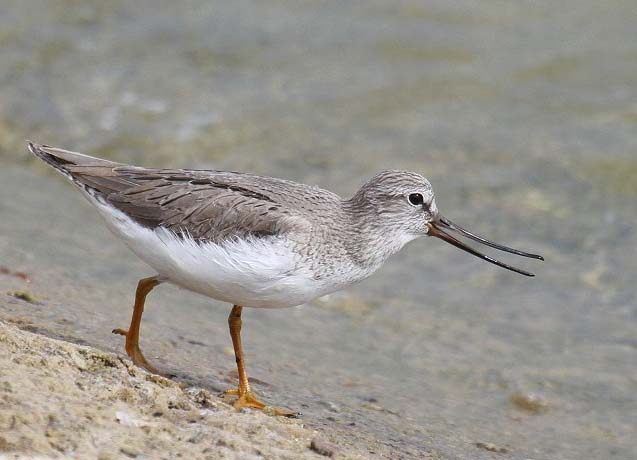
A twitcher is somebody who finds out where a rare bird has been seen and then sets off in an effort to see it. In previous articles, I have revealed how I used to be a twitcher. As I mentioned in a previous blogpost, I used to be a “twitcher”, the sort of birdwatcher who might travel hundreds of miles to see a species which is rare in whichever country he lives.I have already published articles about a trip to Dorset for a Terek Sandpiper:
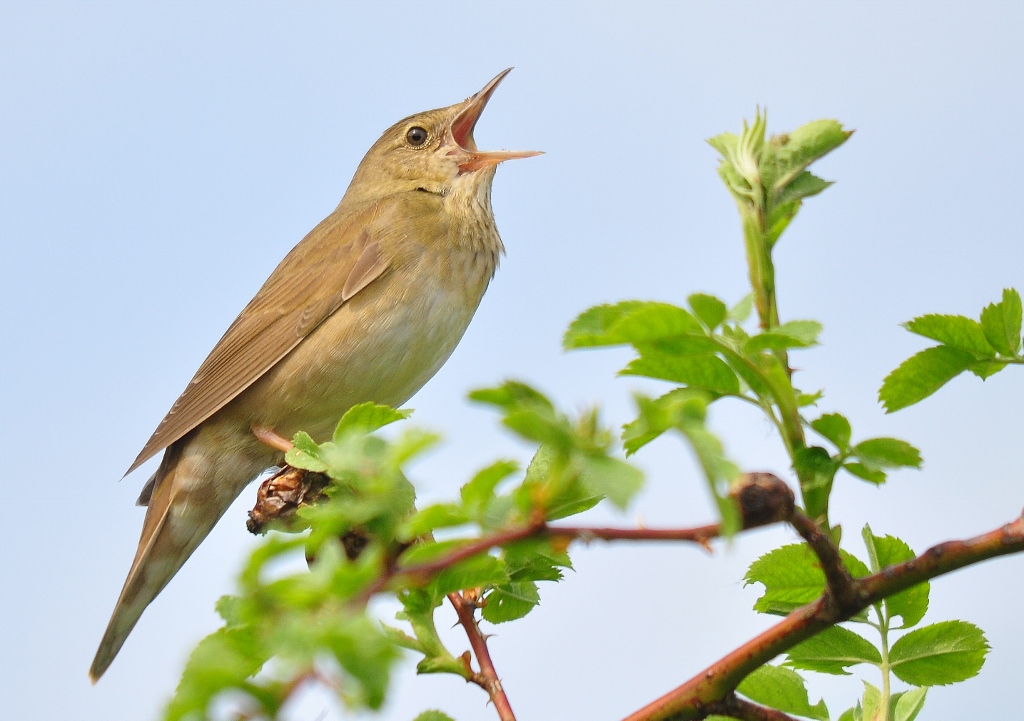
I told you about going to Norfolk for a River Warbler:
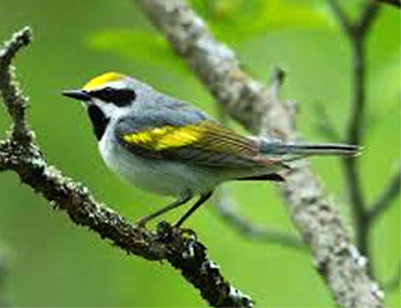
Twitching was a very popular pursuit when I used to do it, back in the 1980s and 1990s. Here is a Golden-winged Warbler:
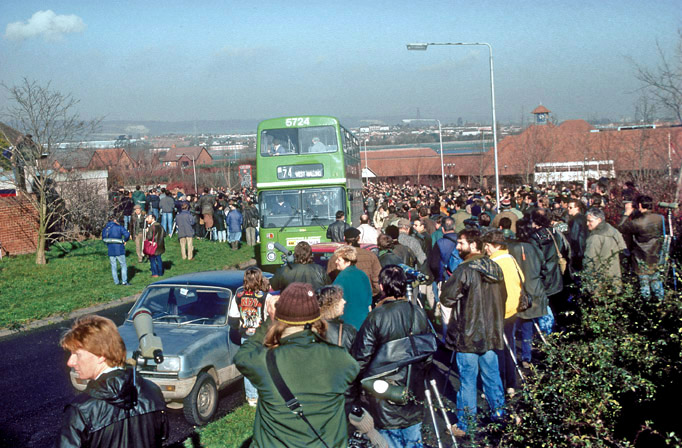
And here are the crowds that went to see it in Kent, myself included:
Even now, a very rare vagrant may attract several thousand twitchers over the course of the bird’s stay.
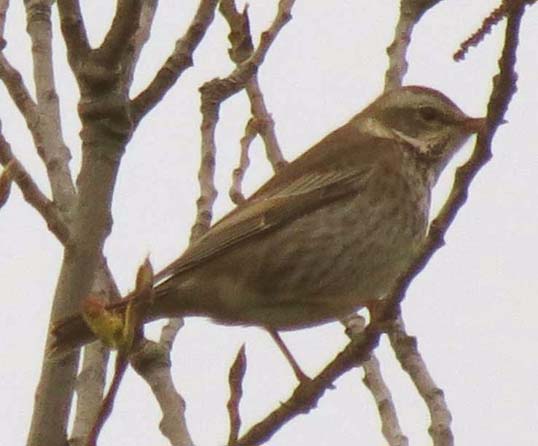
Twitching first began, on a very limited scale, in the 1960s, when news of a long staying bird, such as the Dusky Thrush in Hartlepool during the winter of 1959-1960, were circulated by letter and postcard:
How long has twitching been going on? What bird was the subject of the first twitch? I thought about this for a long while and my eventual conclusion was that it was possibly the Houbara Bustard present in Suffolk from November 21st to December 29th 1962.
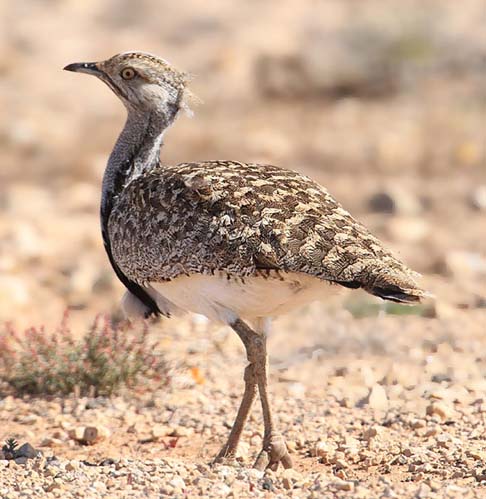
Here is a Houbara Bustard. They are very rare birds:
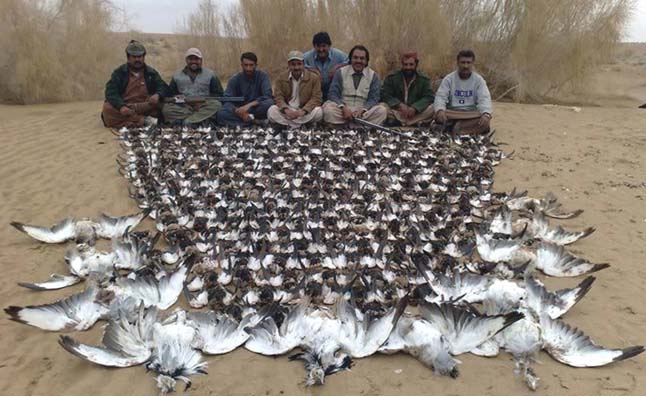
And they will get even rarer if the Pakistani hunters in Baluchistan continue to think that this is sustainable hunting:
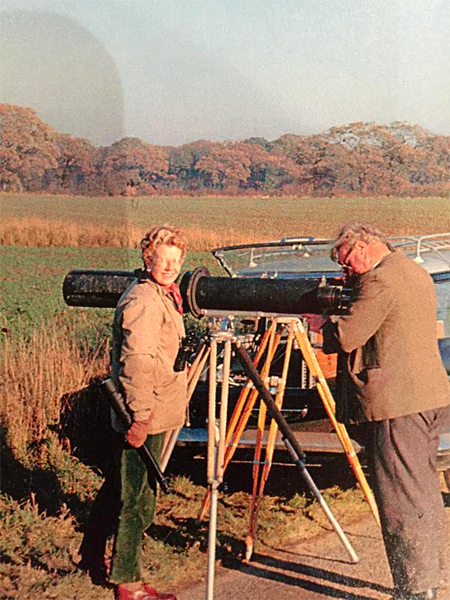
Even if the Houbara Bustard wasn’t the first ever twitch, the photographs reveal that this was very much an event in the distant past:
Just look at the clothes.
Just look at the car.
Just look at the telescope!
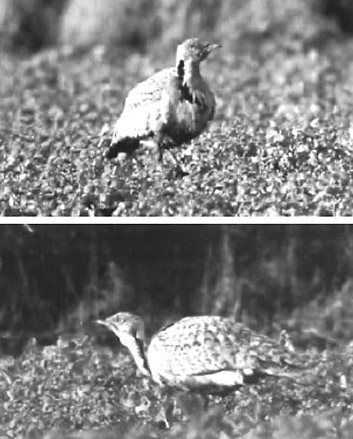
The bird was about the size of a turkey. It fed in a mustard field and could also be found in a stubble field:
Here is another view:
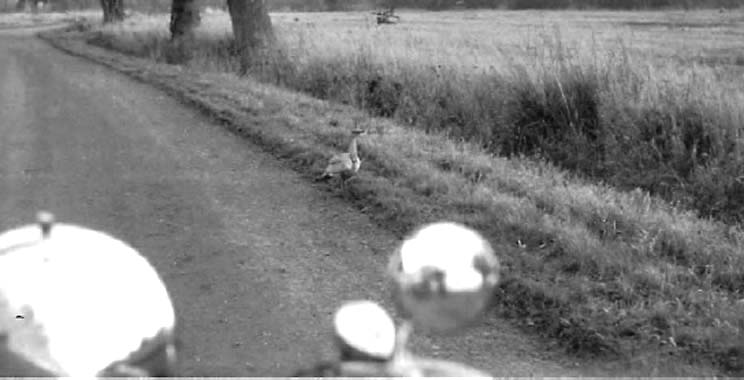
The Suffolk Houbara of 1962 was a rather eccentric creature and it often seemed to prefer to walk rather than fly. It could frequently be observed very easily by parking the old Morris Oxford at the side of the lane between its two favourite fields, and waiting for it to saunter past:
I am sure that it would surprise a great many people to be told that there have been fairies, gnomes and elves seen in Nottingham in quite recent times. The most famous incident was in the late September of 1979. This took place in Wollaton Park, which is the extensive grassland, studded with trees, which surrounds stately Wollaton Hall, home of the Hollywood blockbuster, The Dark Knight Rises :
Wollaton Park is in the centre of Nottingham. Look for the orange arrow:
I do not know the exact place where the fairies and gnomes were seen, but I suspect that it was probably here. Again, look for the orange arrow:
This location fits in quite well with details I have found, namely, “near the lake”, “swampy”, “near an exit from the park” and “near a fenced off nature reserve”. The most frequently quoted directions are “in a rather wet area down by the lake”. Here is the Lake. The orange arrow points to the place where doting parents take their children to feed the ducks and fight off the Canada Geese:
The little elvish creatures were seen by a small group of children between eight and ten years of age who were playing in a swampy section of the park. The children were Angie and her brother Glen and her sister Julie. There was also Andrew and Rosie who were brother and sister, and Patrick. Here are just some of the sixty gnomes:
The children were playing just as dusk was falling, around half past eight. The light was deteriorating but it was still bright enough to see. The children’s attention was attracted by something that sounded like a bell. They saw a throng of around sixty little gnome like men coming out of an area of woodland and bushes which had been fenced off to prevent the general public from entering. The little men were riding in small bubble-like vehicles. These cars were completely silent but they were very quick and could jump and skip over anything in their way such as fallen trees or branches.
Down near the lake they seemed to be enjoying riding over the marshy swampy area, and a few of them chased the children towards the exit gate from the park, just in play, though, not aggressively.
The little men were just half the size of the children, around two feet tall. They all had wrinkled faces, perhaps with a greenish tinge and long white beards, tipped with red. Sometimes they laughed in a strange way. On their little heads, they were wearing what the children described as caps like old-fashioned nightcaps. They were just like what Noddy used to wear, with a little bobble on the very end:
They had blue tops and yellow or green tights or pants. Despite the encroaching darkness, the children were able to see them all plainly. Patrick explained to the Headmaster: “I could see them in the dark. They all showed up.”:
The children watched them for about a quarter of an hour, as the men drove round in their little cars. Each of the fifteen cars carried two little men. They did not have steering wheels but some kind of circular device with a tiny handle to turn it. The little men also were climbing up into the surrounding trees, going into and emerging from, holes in the trunk or branches. All of the children felt that they had somehow surprised the little men, who usually would only have come out after night fell. Eventually, the children all ran away, because it was getting late. The little men had not been threatening or aggressive.
The adults who subsequently heard their stories thought that the little group of children were all telling lies, but the children were completely unwavering in their belief that they had seen what they said they had seen. Furthermore, they had seen the little men previously, during the six weeks of the long summer holiday from school. Some were at the lake, but others were at the Gnomes Anonymous, anti-Alcoholism Group:
The day after they returned to school, their Headmaster questioned them all separately and recorded their answers on a cassette tape recorder. The children all told, more or less, the same story. Their drawings too, were all very similar:
The Headmaster’s opinion was that the children were all telling the truth, although, as might be expected, there were minor differences of detail and emphasis between their different accounts. His overall final judgement was that “The children do sound truthful”. Here is the Headmaster on the School Photo taken that year. You can see why he believed the children:
In actual fact, the Headmaster actually corresponded about the events with Marjorie T Johnson, the author of “Seeing Fairies”:
He sent her the cassette tapes of the children he had recorded. His letter said:
“I think the tape reveals the wide measure of corroboration between the children, as well as the fluency with which they were able to describe the events. I remain sceptical as to the explanation of what they saw, but I am also convinced that the children were describing a real occurrence.”
When the children’s story about the Wollaton little people became public, a number of claims were made that they had been seen before in the boggy area around the lake. Marjorie Johnson, formerly Secretary of the Nottingham-based “Fairy Investigation Society”, confirmed that she had “received a number of previous reports of Little People frequenting this locality”. They included Mrs C George of Stapleford near Nottingham, who, in 1900, had seen both gnomes and fairies by the Wollaton Park Gates as she walked past on the pavement. Here is one of their little cars, abandoned temporarily by the roadside, and taken into the police pound:
Just before the children’s experience, Mrs Brown reported that she had been led telepathically around the Park, from one beauty spot to another, by a group of gnomes. At each stopping place they had magically provided her with a feather to find.
The famous writer on mysteries, and expert on fairy sightings, Janet Bord, added an interesting extra detail to the story:
“Over six years before the Wollaton fairies were reported in the media, I had corresponded with Marina Fry of Cornwall, who wrote to me giving details of her own fairy sighting when she was nearly four years old, around 1940. One night she and her older sisters, all sleeping in one bedroom, awoke to hear a buzzing noise (one sister said ‘music and bells’). Looking out of the window they saw a little man in a tiny blue and yellow car driving around in circles’. He was about 18 inches tall and had a white beard and a ‘blue pointed hat’…he just disappeared after a while.”
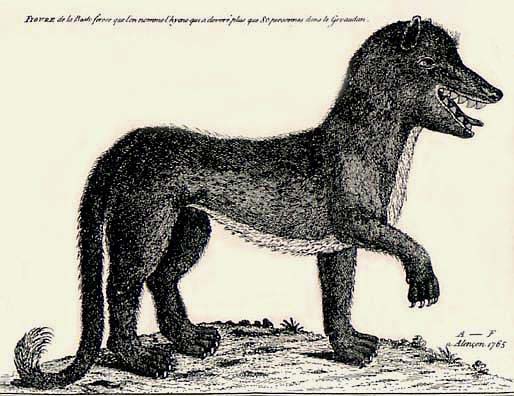
When the Beast of Gévaudan first appeared in 1764, people were unable to identify it. That is why it was immediately christened, in Occitan, the local language of the area, “La Bèstia”. They did not see it as a wolf, but as some unknown monster that devoured little children. The newspapers of the time wanted accurate drawings of it, and it is now known that these two were the first images to appear:
They are not mirror images of each other (but it’s close. Look at the tongue.):
It is believed that no direct witness of the creature has left us a drawing. No artist ever saw the Beast. What did happen, though, it is believed, is that the artists did, on some occasions, draw the creature under the direct instructions of a witness. The problem, though, is that, if this ever did occur, we do not know which of the drawings was done in this way, or, if there was more than one, which is the most accurate.
And don’t forget. There was a language barrier between the shepherds and the shepherdesses and the artists. The latter spoke French but the locals spoke Occitan, an age old language which sounds like a mixture of French, Italian and Spanish. I myself have heard it spoken at a local market, but I could not understand it at all.
Every single illustration of “La Bèstia” has some accuracy in it. These first two both have some of the features of a big cat which is a detail present, on and off, through many of the descriptions given by frightened witnesses. The thrashing tail, the attacks on the head and neck, the lowering of the body, and the rapid movements from side to side before it lunged for the victim are all very feline.
Here we can see that frequently mentioned black stripe between head and tail:
It may have had a long tail which could be thrashed around, and even, possibly, used to strike people:
It may have had a white chest, which means that it was, categorically, not a wolf:
It possibly walked short distances on two legs, again, showing its white chest:
It might have been extremely large. Witnesses all agree that it was as large as a year old calf, or a “cob” horse:
Both claws and hooves have been mentioned by witnesses. Hooves, possibly because it was a creature of the Devil:
Here is another cat-like individual:
Perhaps it may have had a rather prehistoric look to it, but it still went straight for the head:
It may have been extremely strange looking, even if it were a new unknown species:
It may, again, have been a strange canid, but one which invariably went for the head, rather than the more usual canid attacks on the rear legs and lower back:
The creature is sometimes depicted alongside the children which were its normal prey items. There may have been two monsters, or possibly even a small, scattered breeding population:
Perhaps it was a peculiar breed of dog. A super killer greyhound:
It may have been, as Abbé Pourcher thought, a scourge sent by God, un fléau de Dieu. As we have already seen, though, many people believed the monster had been sent by Satan himself. For this reason, they often mentioned hooves. On occasion the head had the look of a satanic goat about it:
Perhaps the illustration was one of the very first ever to be drawn, and the artist had little or nothing to go on, except, perhaps, some peculiar connection with Scottish tartan:
Simplistic, but still with a bushy tail and a stripe along the crest of its back. Perhaps the monster appeared faintly human in its movements. This is certainly an extremely lascivious expression on its face:
The church and stone buildings of the region have not changed in 350 years:
And the brave young girl, Marianne, the spirit of France, fights on and on, against any creatures that may come along:
She will never surrender:
Not to any kind of monster that may threaten her country.
As well as the long list of “Beasts” who seem to have munched their way through the apparently very, very, tasty peasants of France from 1400-1850, or thereabouts, I have also discovered the existence of at least one “Ogre” who was, to put it mildly, not a very nice man (or ogre) at all. His story is told, in exactly the same words, on a couple of websites that I have found. The first is designed to promote tourism in the wonderfully picturesque and unspoilt region of Lozère, which is here:
The story is too long to translate in its entirety, but I have summarised it for any monster fans who do not read French:
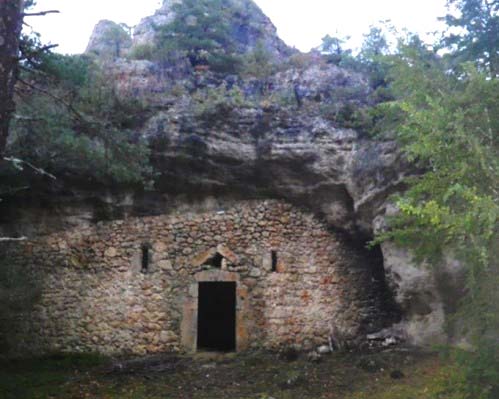
Jean Grin was an Ogre and he lived in a ravine called Malbouche, in what is now a hovel of stones with a collapsed roof. It is surrounded by pine trees and dry scrubland. Inside is a dark room right up against the very rock:
It contains an oven where Jean Grin used to roast children to eat. Outside are piles of stones covered with soil, reputed to be the burial places of his victims:
Jean Grin had retreated to this hovel because of his inability to get along with his neighbours. Soon afterwards, young shepherds and shepherdesses began to disappear in the surrounding area:
He was regarded as being a half-man, half-beast, because he had lived for such a long time out in the wild. Everybody knew that he loved to kill and eat his victims. Terror soon spread throughout the region:
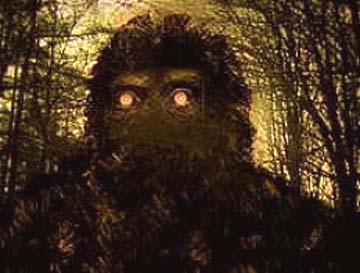
People said that he was a monster, or a man dressed in a skin. His eyes were red, very red and he could be seen approaching from a long way away. From one village to another people said that he was both a werewolf, a monster and a devil, all at the same time, with those awful, glittering, bright red eyes:
Jean Grin only attacked weak people or children. In just six months, from June to December, 1799, this monster killed three victims before running away at prodigious speed. The locals thought he was a second Beast of Gevaudan, because he always attacked children and ate them.
The important noblemen of the area though, did not blame Jean Grin the Ogre, but rather the so-called Beast of Veyreau, an unknown creature of some kind which was also running amok in the region around this time, slaughtering young shepherds and shepherdesses. The noblemen said that this mysterious animal was either a very large wolf, a lynx or a hyena. The ordinary peasants of the countryside, though, already traumatized by a succession of similar horrors, thought that it was a werewolf:
Of all these dramatic events, with ogres, very large wolves, lynxes, hyenas and werewolves (the popular choice) all loose in the area at once, the collective memory of the local people has retained only the most fantastic details, which are perforce the most terrifying ones.
For them the Beast of Veyreau could only be Jean Grin, the wild man. On his shoulders weighed all the problems of the community. He was an ambiguous creature, half way between animal and man. Jean Grin took on the attributes of a savage, brutal wild man which no social norms could restrain. The skin of the beast that covered him transformed him into a magical, demonic creature:
Jean Grin was, according to others, the misunderstood and innocent victim of wild rumours and stories with absolutely no basis in fact. The people of the area found this wild man, therefore, a scapegoat for their suffering during these times of misery and famine. He became a guilty person that nobody would protect.
Who was Jean Grin really? Nobody knows! Whatever the case, this mysterious character, whether man or monster, was finally trapped and surrounded in his lair by a mob of over-excited women who, armed with pitchforks and sticks, dragged him to a neighbouring hamlet where he was burned alive in a white hot oven:
And popular memory had it that :
” When John Grin died, his skin leapt around on the ground ; and therefore he was the Devil. ”
With the death of Jean Grin, the population of the entire region felt liberated, as if order and morality had finally been re-established.
Entering into legend, Jean Grin still haunts the country of his misdeeds, as the all-devouring monster, the ogre who seized and ate children.”
As background information, you should not forget though, that at this time, namely in 1799, this particular area of France, as was mentioned above, was already experiencing the ravages of the Beast of Veyreau. I wrote a more detailed article about this animal which was published on January 16th 2018
Basically, it was a creature which was generally considered to be either a wolf or some other unknown canid. It was a beast which filled all the local inhabitants with great fear:
And certainly, the Beast’s behaviour was not good. He must have spent many an unhappy hour sitting on the naughty step, thinking very carefully about what he had done, and indeed, who he had devoured.
Any child that might meet the Beast, for example, stood a very good chance indeed of being carried off and eaten, first the liver and then the limbs. In the space of just six months, three victims were killed by this beast, including a boy of six.
This is the background, which might well lead us to interpret the story of Jean Grin in a number of different ways. It may well have been a story invented to attract tourists, like the Loch Ness Monster is thought by many to be:
There was, therefore, no such individual as Jean Grin. The whole thing was just an invented tourist trap.
Another slightly different approach would be to say that when the limbs of a six year old victim of the Beast of Veyreau were found hidden in the earth in the Malbouche Ravine, it was only too easy to look across at the nearby “hovel of stones with a collapsed roof” and attribute these ghastly unsolved murders to the person who had lived in the ruins shortly before. Harmless old weirdo, Jean Grin, who could then become transformed into an ogre, a supernatural figure.
Perhaps the tale of Jean Grin the Ogre was used to make up for the incompetency of whoever was in power now, ten years after the French Revolution. Perhaps serious questions were beginning to be asked about the value of this unbelievably massive political upheaval. The revolutionaries were palpably no more capable of capturing the Beast of Veyreau than the noblemen had been ten years before, in the bad old pre-revolutionary days of a Royal France. But if you blame all the gory deaths on Jean Grin the Ogre, though, and you know where he lives, then you can kill him and all your problems are solved.
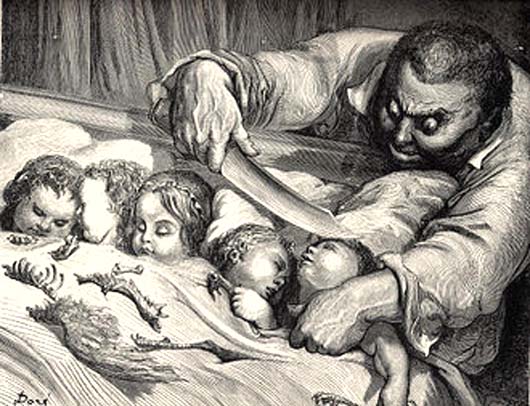
Your inability to kill the real Beast of Veyreau very soon becomes a matter of minor importance. And if the Beast goes on to slaughter any more victims, just deny the events any publicity. If people continue to make an issue of it, put them in prison, or worse. Here is a lovely Ogre, drawn lovingly by Gustav Doré :
Another solution, a slight variation on the previous scenario, is that when nobody whatsoever seemed capable of catching the Beast of Veyreau, that apparent incompetence must have caused enormous frustration to everyone in the area. Perhaps a group of local mothers looked around the Malbouche Ravine on one particular occasion and were unable to locate any fierce animal. Acting as “a mob of over-excited women”, they then decided to take out their frustrations on the nearest passing weirdo. The ghastly fate of Jean Grin then just becomes a simple case of “strange eccentric in the wrong white hot oven at the wrong time”.
The situation is a little like the recent case of Christopher Jefferies, a retired teacher and the landlord of an unfortunate murder victim. He was perceived by the press to be a “dark, macabre, sinister villain” but a more accurate description might well have been “an innocent man wrongly accused of murder by the police”. Clearly, the eight newspapers he successfully sued were playing the part of the women of Veyreau.
There is just one more solution to the legend of Jean Grin. It may be a deeply seated racial memory, but that idea will have to wait for the future.
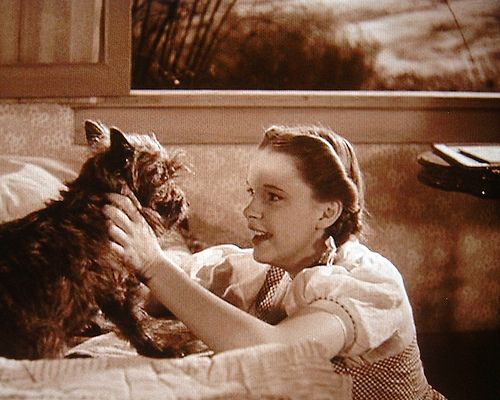
So far I have looked at how Nottingham has been affected by too much water, not enough water, weather that was too cold and weather that was too hot. There have never been any earthquakes or tsunamis here, thank goodness. That is not to say, though, that Nottingham has never been troubled by high winds. All right, it cannot rival Texas or Oklahoma. Neither Dorothy nor Toto ever lived here, and we just cannot compete with things like this:
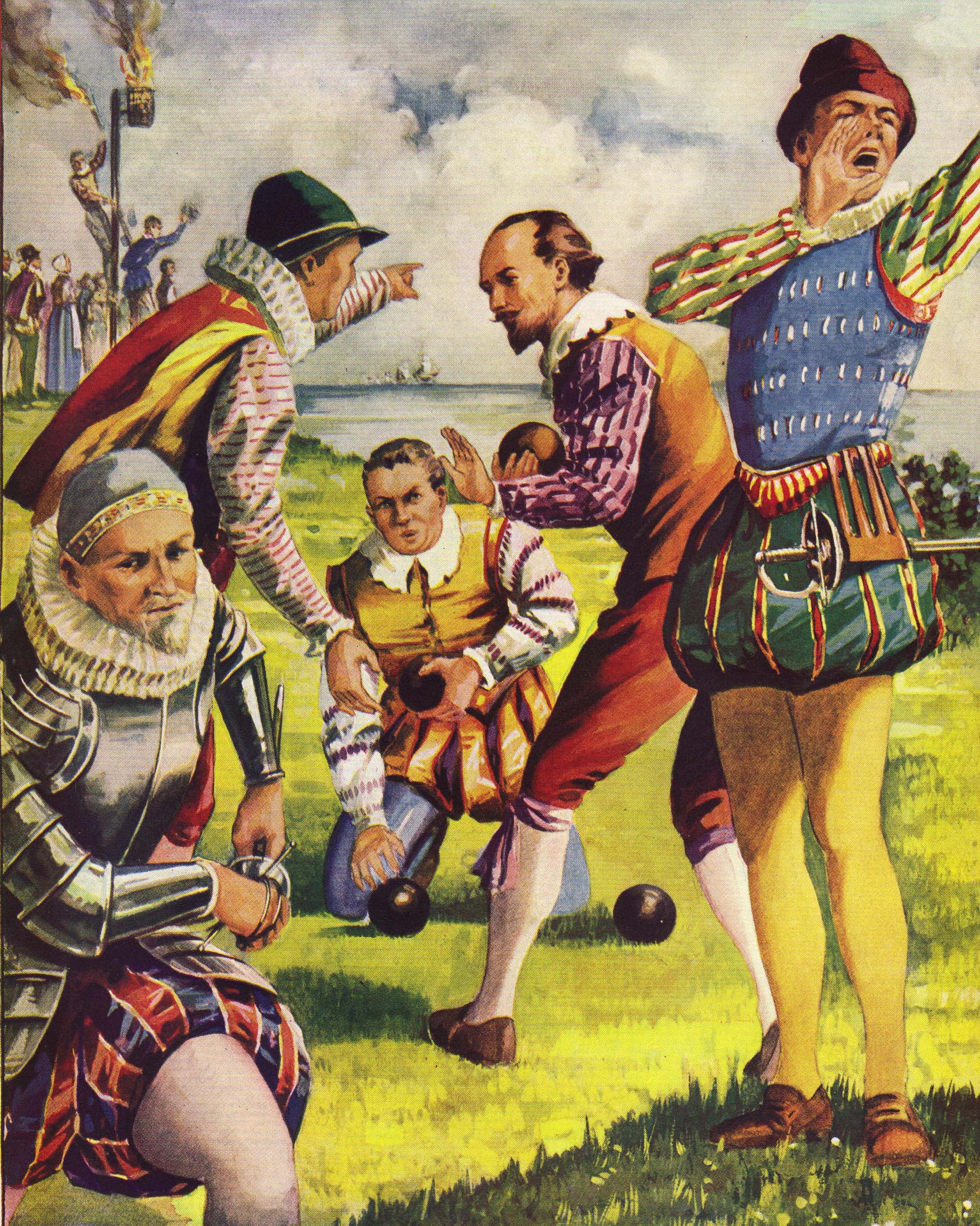
But we do try our hardest. We do our bit. Or at least we did do, way back in the sixteenth century. Just to continue with our policy of showing you the clothes and the costumes, so that you can work out what time period we are talking about, here are some of my favourite people from the era in question, having a game of bowls while they wait for a decision about the Armada from the European Court of Justice:
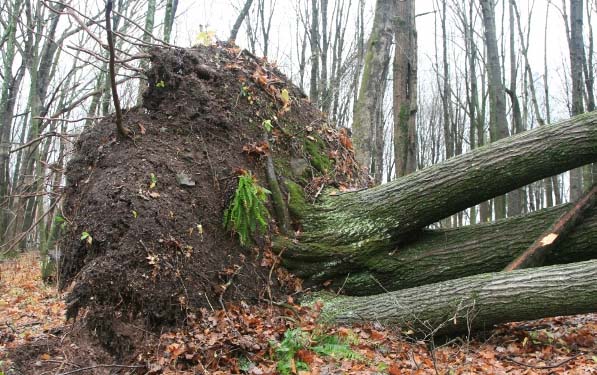
“On the 7th of July, this year, within a mile of Nottingham was a grievous tempest with thunder, which, as it came through beat down all the houses and churches, cast the bells to the outside of the church-yards, and twisted the sheets of lead like a pair of leather gloves and threw them four hundred foot into the field. The River Trent, running between the two towns, the water, with the mud in the bottom, was carried a quarter of a mile, and thrown against trees, with the violence whereof the trees were torn up by the roots, and cast twelve score yards off:
A child was taken out of a woman’s arms, and carried up into the air then let fall, had its arm broke and died. Also, a child was taken forth of a man’s hand and carried two spear’s length high, and then let fall two hundred feet off, of which fall it died.
Five or six men thereabouts were killed yet had neither flesh nor skin hurt. They were slain by the storm, during which, hailstones fell measuring fifteen inches in circumference.”
The “two towns” are thought to have been the villages of Wilford and Lenton which at the time were rural, agricultural villages of roughly similarly size, separated from the main town of Nottingham.
Elsewhere in the East Midlands, on an unknown date in July 1558, in Northamptonshire, there was a storm with immense hailstones some fifteen inches around:
I do not know if these two events were connected or not. Overall in England, it was a very hot summer in 1558 with long periods of drought throughout the whole year. In March of 1558 the country had already seen the “most destructive hurricane in England”, although I have been unable to locate the precise whereabouts of this occurrence, and Nottingham seems to have been unaffected.
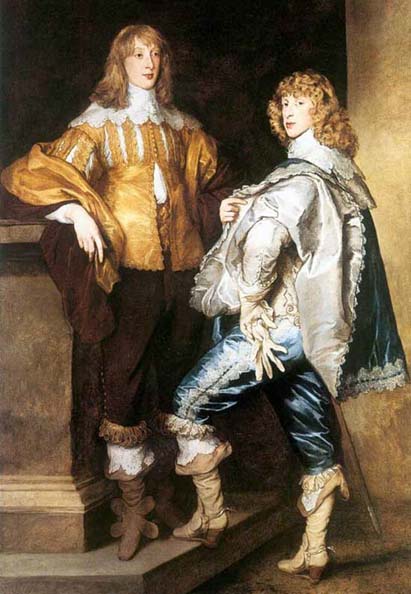
Eighty or so years later, on Wednesday, October 13th 1666, there was a similarly violent storm just a little further north. Called a whirlwind at the time, it actually seems to have done enough damage to warrant being called a tornado. How fashion tastes change in only a hundred years:
“In Lincolnshire, there was a dreadful storm of thunder, accompanied with hail, the stones as large as pigeon or even pullet eggs, followed by a storm or tempest, attended with a strange noise. It came with such violence and force, that at Welbourn, it levelled most of the houses to the ground. It broke down some trees and tore up other trees by the roots. It scattered abroad much corn and hay. One boy only was killed. It went on to Willingmore (Wellingore?) , where it overthrew some houses and killed two children in them. Thence it passed on and touched the skirts of Nanby (Navenby?) and ruined a few houses. Keeping its course to the next town, where it dashed the church steeple in pieces, furiously damaging the church itself, both stone and timber work. It left little of either standing, only the body of the steeple. It threw down many trees and houses. It moved in a channel, not a great breadth. Otherwise it would have ruined a great part of the country. It moved in a circle and looked like fire. It went through Nottinghamshire, where the hailstones were nine inches about. The whirlwind was about 60 yards broad. On Nottingham Forest, it broke down and tore up at least 1,000 trees, overthrew many windmills, overturned boats on the River Trent. In a village of fifty houses, it left only seven standing.”
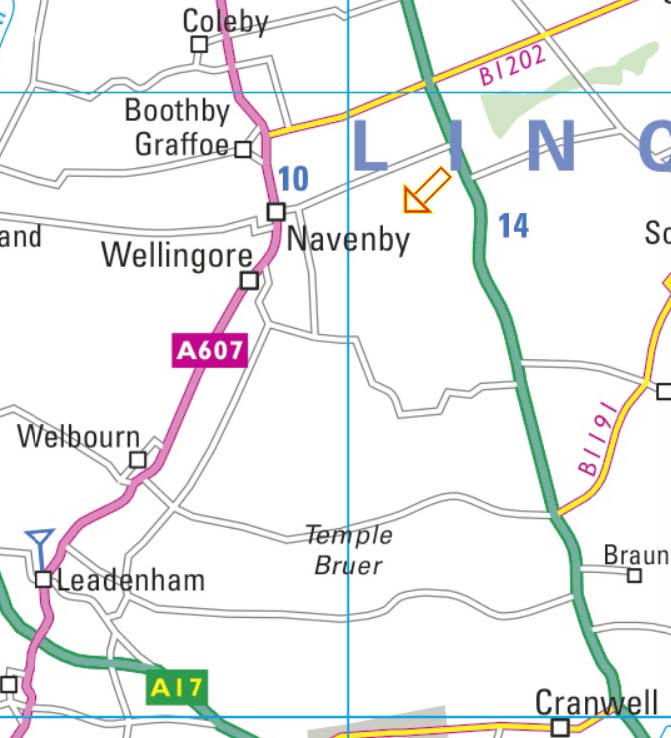
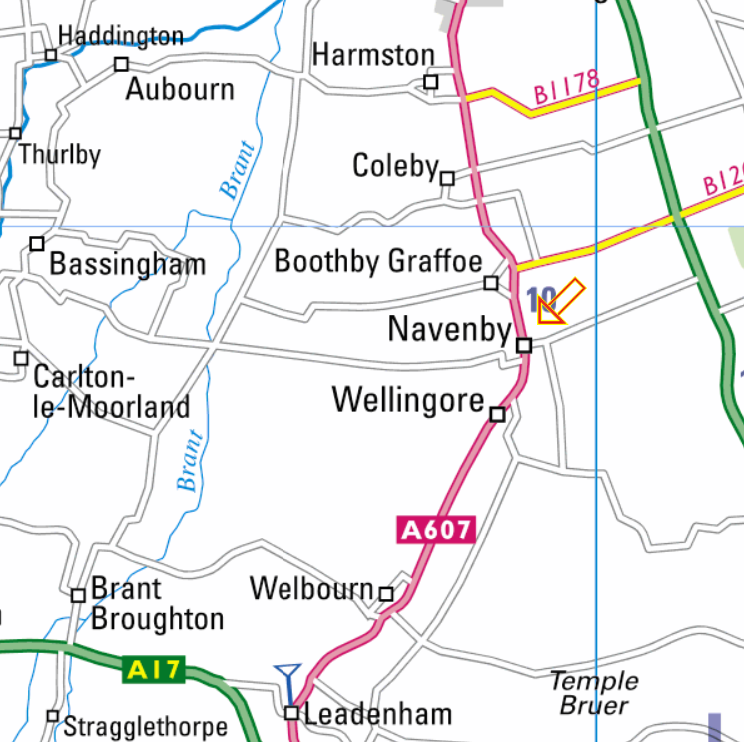
The original place names are given as Welbourn, Willingmore and Nanby. I have taken a quick look at the map and I think that Thomas was writing down the names of the places from a person who was talking to him. I can just imagine a local peasant of the time calling Wellingore, Willingmore and another slack jawed local pronouncing Navenby as Na’nby. As always, look for the orange arrow:
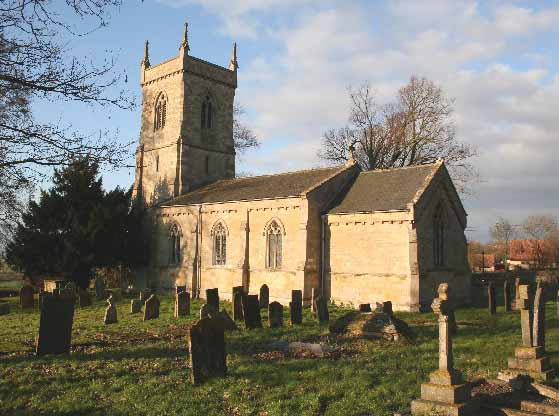
Here is St Chad’s Church in Welbourn, which survived the tornado more or less intact:
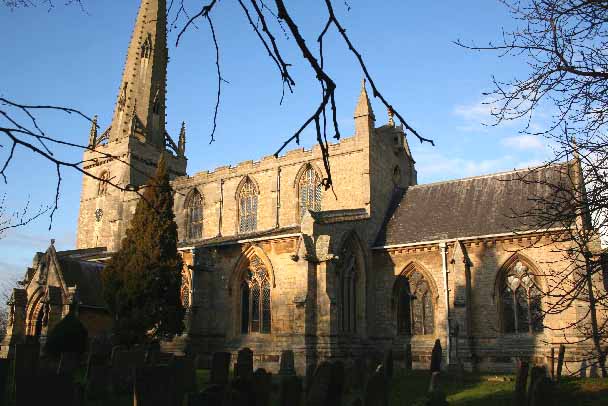
….and a church which over the course of the last 350 years seems to have recovered from what must have been, judging by Thomas’ account, a very bad hair day:
Here is a slightly better overview of the area to refresh your memory. All of my three best guess place names of Welbourn, Willingmore, and Navenby are in a nice, more or less straight line, as the tornado flies. It would be possible to argue that, if the fourth location is a genuine town sized town, then it might be Waddington, or even (less likely perhaps), the county capital of Lincoln. Boothby Graffoe, though, is a lovely village name. Perhaps not as striking as Norton Disney, but cute nevertheless.
Just take a look at this second map, showing clearly the path of the tornado through the three villages. I rest my case, as they say:
From my point of view, of course, the most interesting detail is the fact that:
“On Nottingham Forest, it broke down and tore up at least 1,000 trees.”
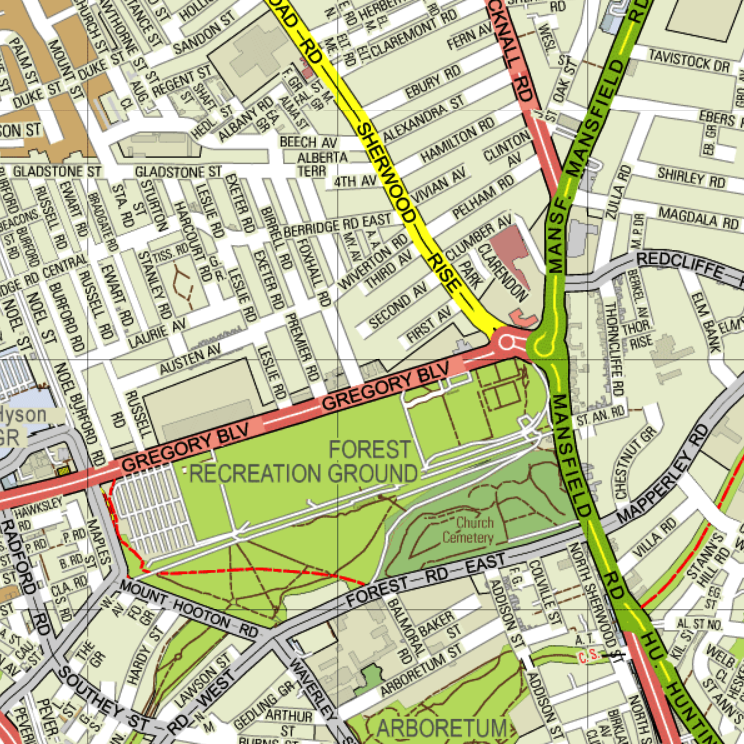
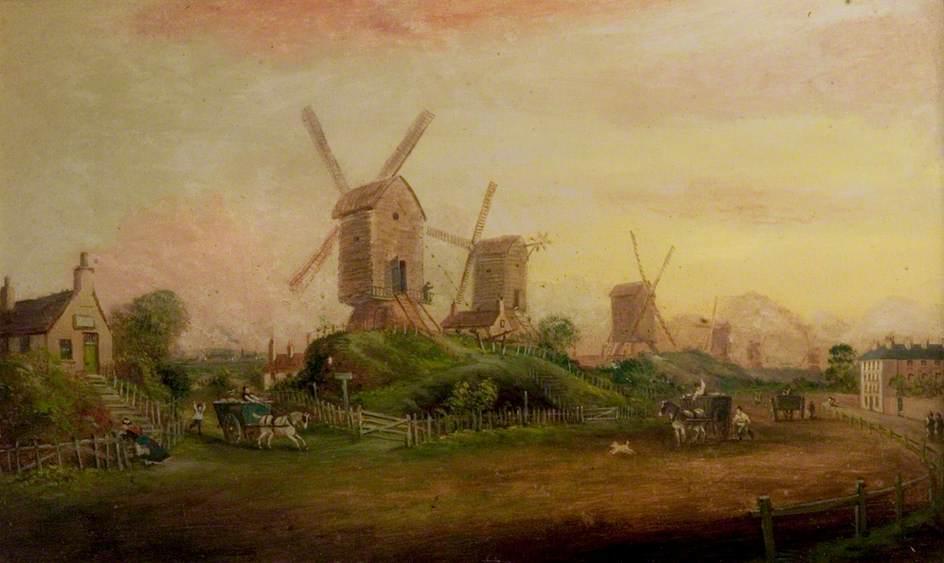
How do I know that this is the same place as Nottingham Forest? I know because of what used to be situated on Forest Road East, to the south of the green area marked “Forest Recreation Ground”. Here is an old, and no doubt, valuable oil painting of them. These are clearly what Richard was talking about when he mentioned that the whirlwind “overthrew many windmills”:
Enormous damage was occasioned in Nottingham:
“On Nottingham Forest, it broke down and tore up at least 1,000 trees, overthrew many windmills, overturned boats on the River Trent. In a village of fifty houses, it left only seven standing.”
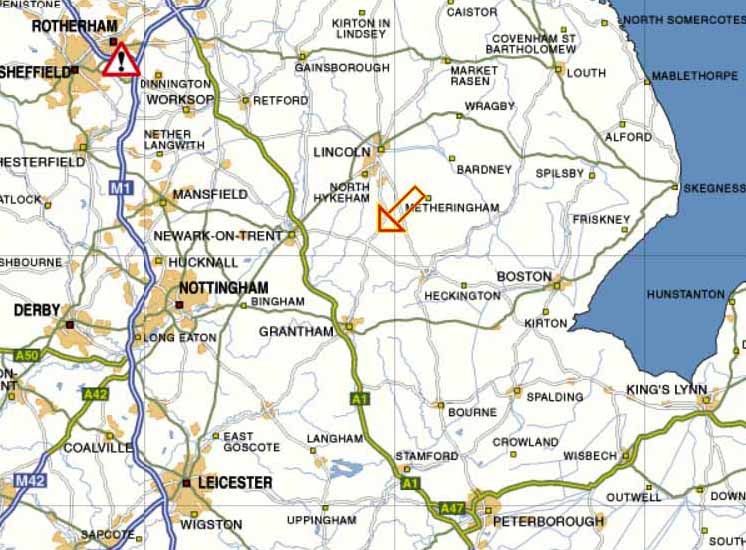
In my opinion, this was because the tornado came from the south west, travelled, broadly speaking, to the north east, and was therefore much stronger in Nottingham than it was in Lincolnshire. This weather event may even be the reason that the Forest Recreation Ground was initially created. Having so many trees cut down together in what was then a heavily wooded part of Sherwood Forest itself, may have been the first step towards the vast open space that we all enjoy today. This map shows the general north easterly path of the tornado. The orange arrow points towards the Lincolnshire Three:
It is always difficult to prove a negative, but this map shows why mention of the tornado came only from Nottingham and the three small villages in Lincolnshire. Even now, 350 years later, there are comparatively few people living between the two localities to tell the story. And equally, there would have been, centuries ago, virtually nobody to tell it to.
Could somebody in England have recognised a tornado in 1666? Well, yes, he could, if he described the storm he saw as “attended with a strange noise”, as well as being “in a channel, not a great breadth”, “about 60 yards broad” and, most convincing of all, “It moved in a circle and looked like fire.” And don’t forget, it is always very difficult for a human being to describe something which is not within his terms of reference or his own personal experience.
Just compare those three hundred and fifty year old descriptions with this:
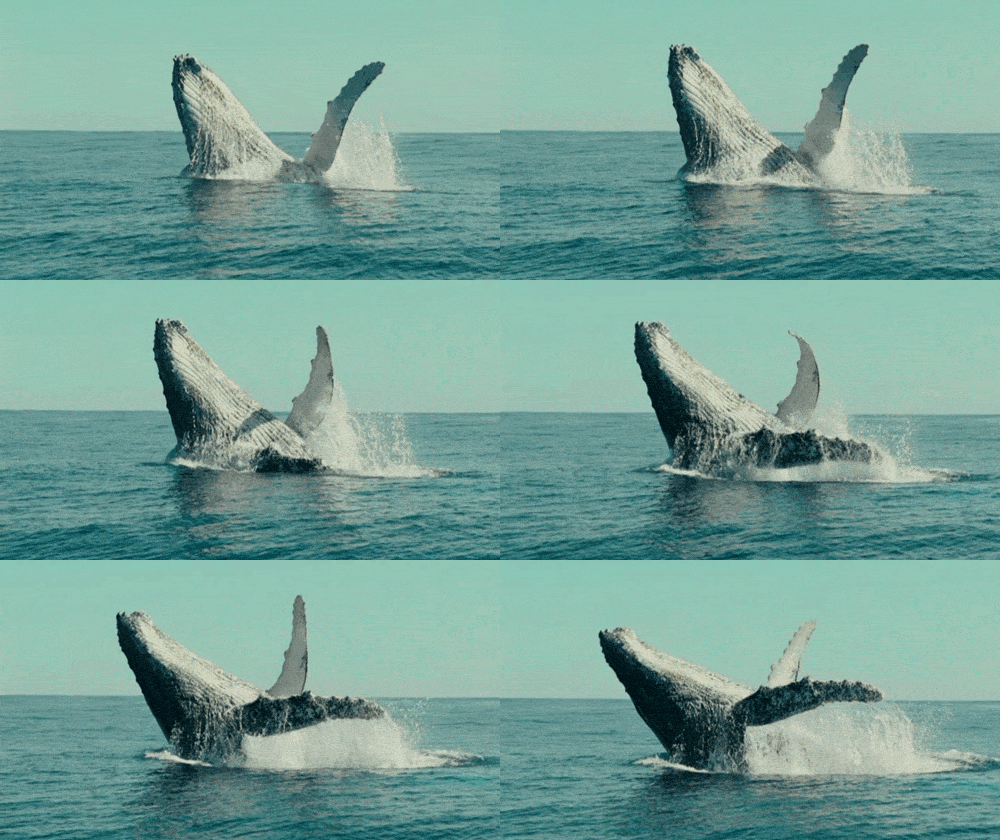
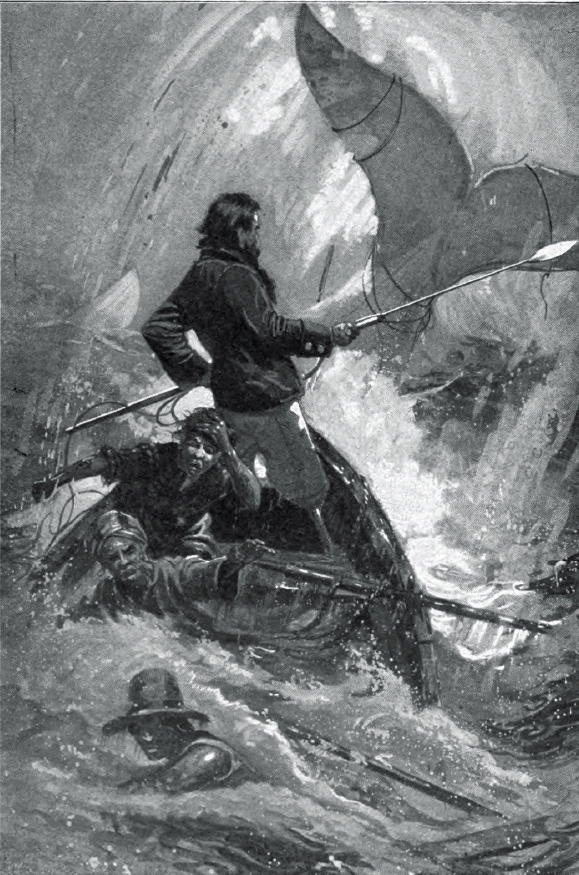
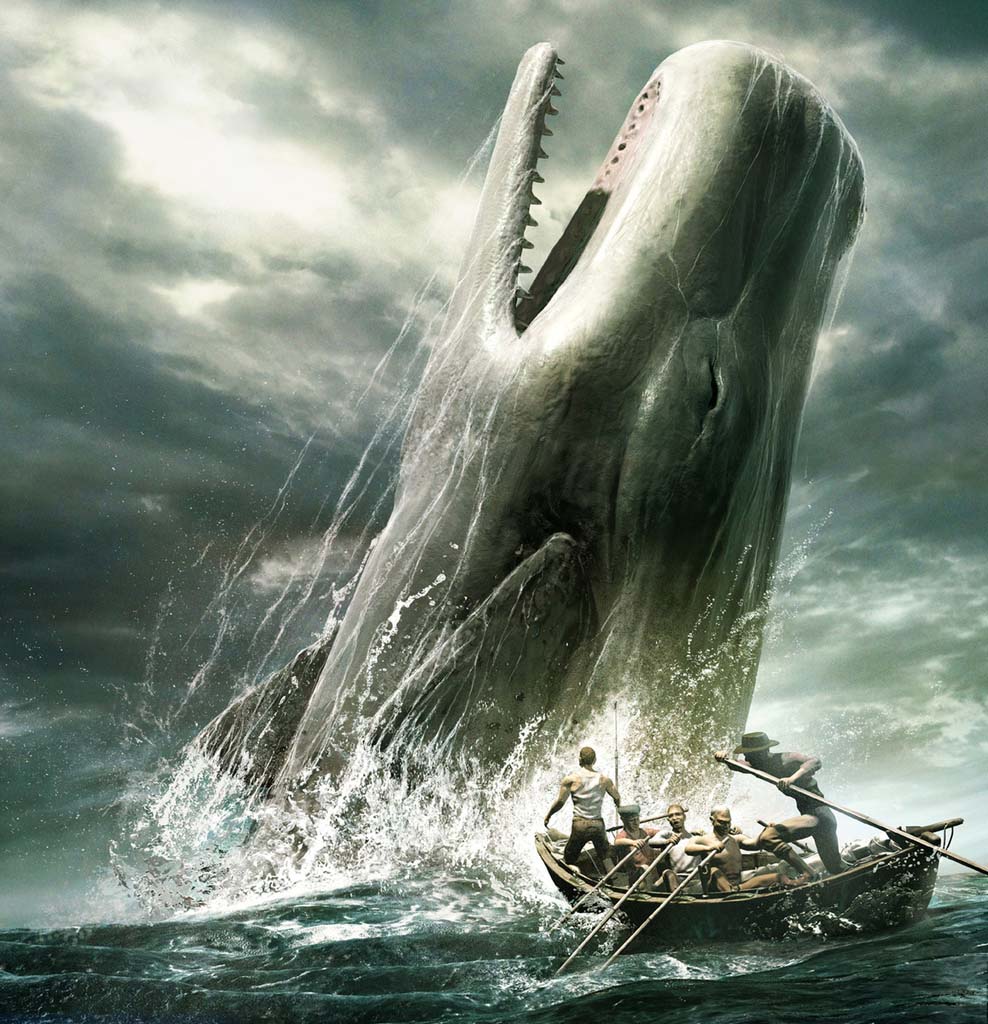
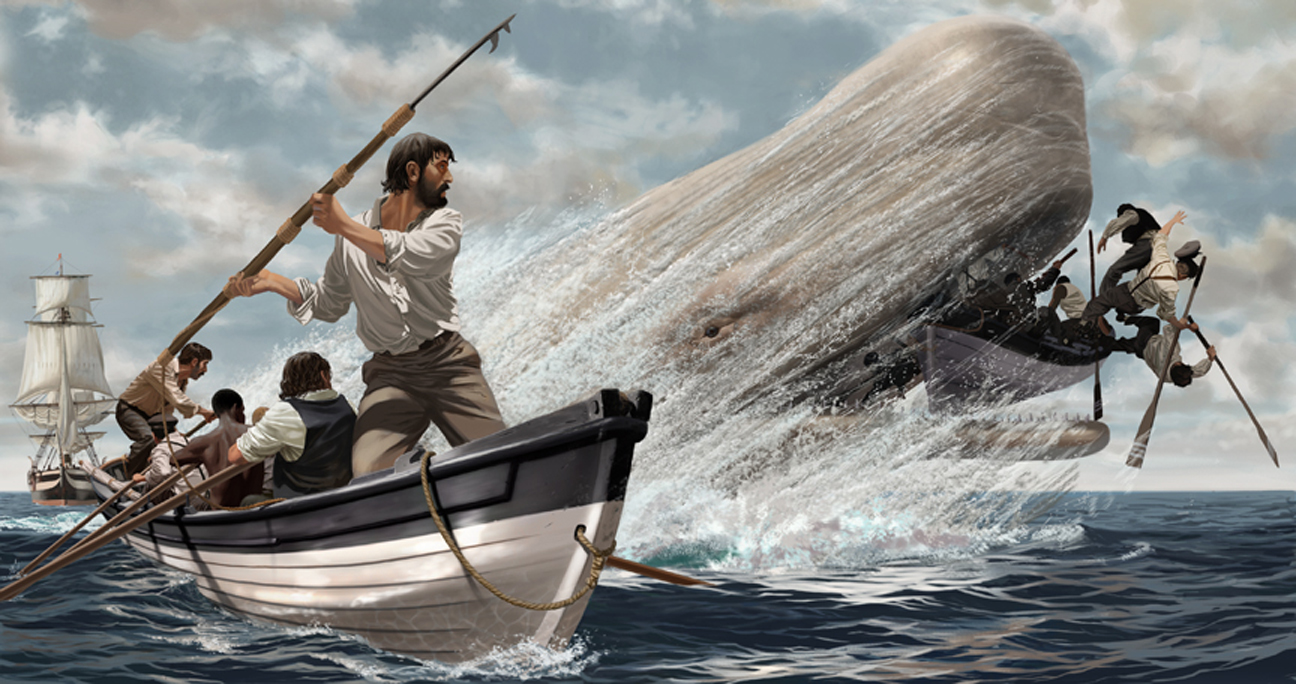
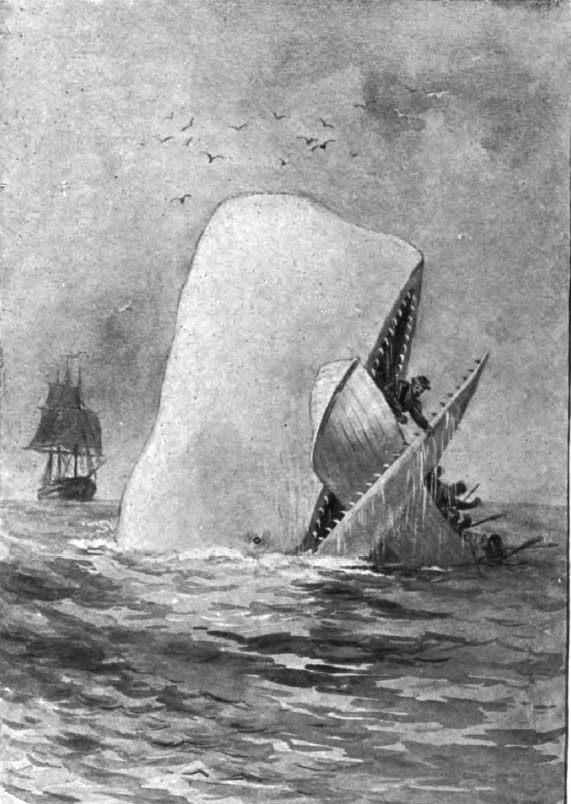
A few years ago, I asked a group of young people if they had ever read the finest novel ever written in English. They thought that they had probably read it, but asked me if I could be a little bit more precise about its title. I said it was called “Moby Dick”.
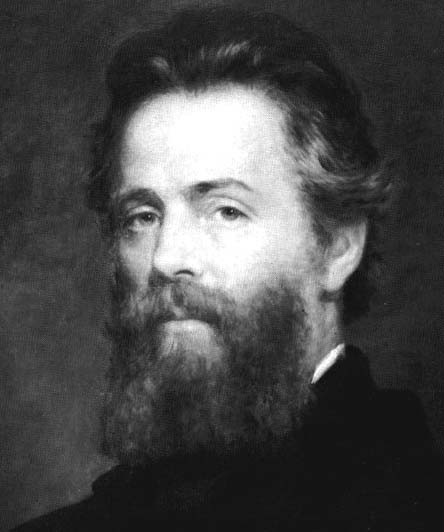
And they were wrong. None of them had ever read it. One person even said that the book could not be considered because it was written by an American. The author’s name, of course, is Herman Melville:
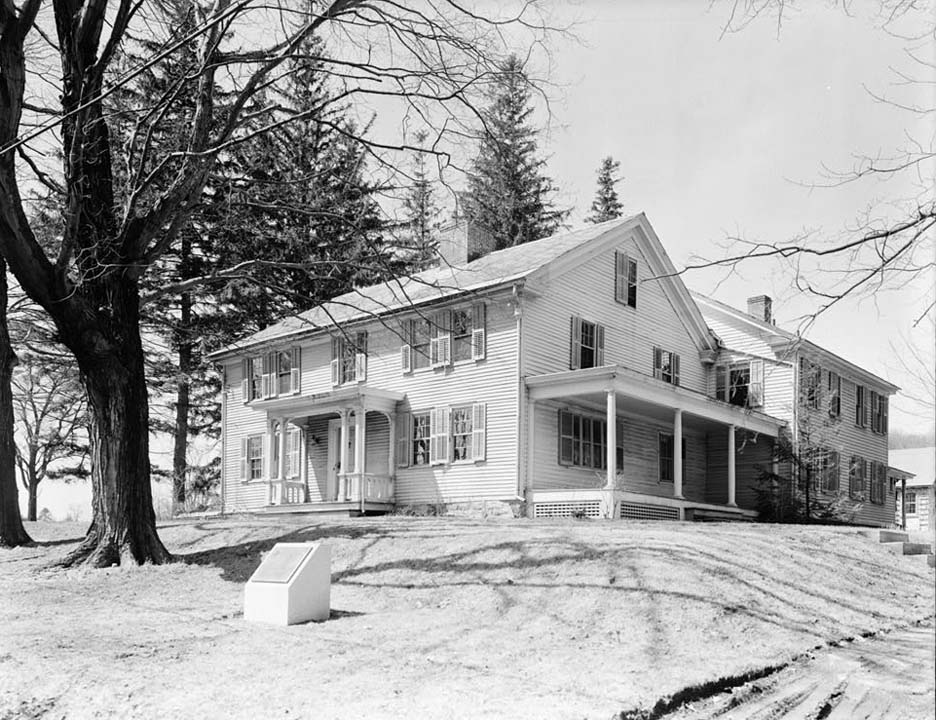
Once he had finished with whaling and the sea, Melville came to live safely on land. Here is his house in Pittsfield, Massachusetts:
A lot of people, of course, are put off by the sheer size of the book. In the three volume British first edition, there were 927 pages. In the American first edition there were 635. (Bigger pages, presumably?).
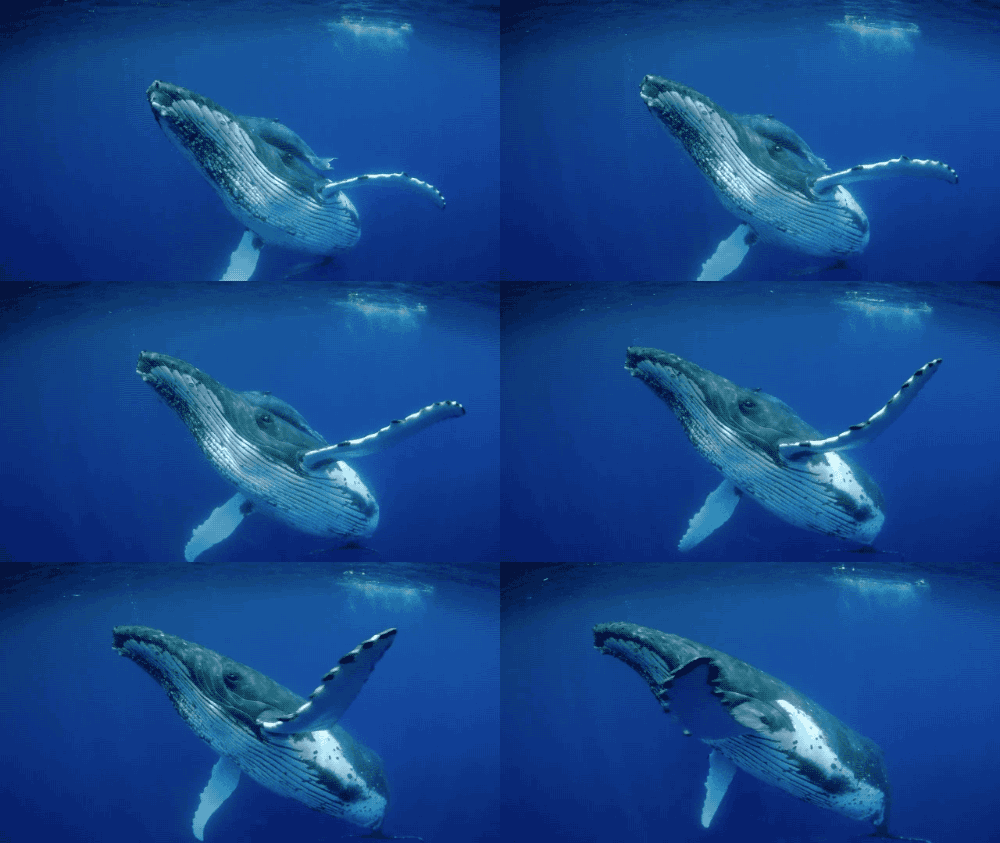
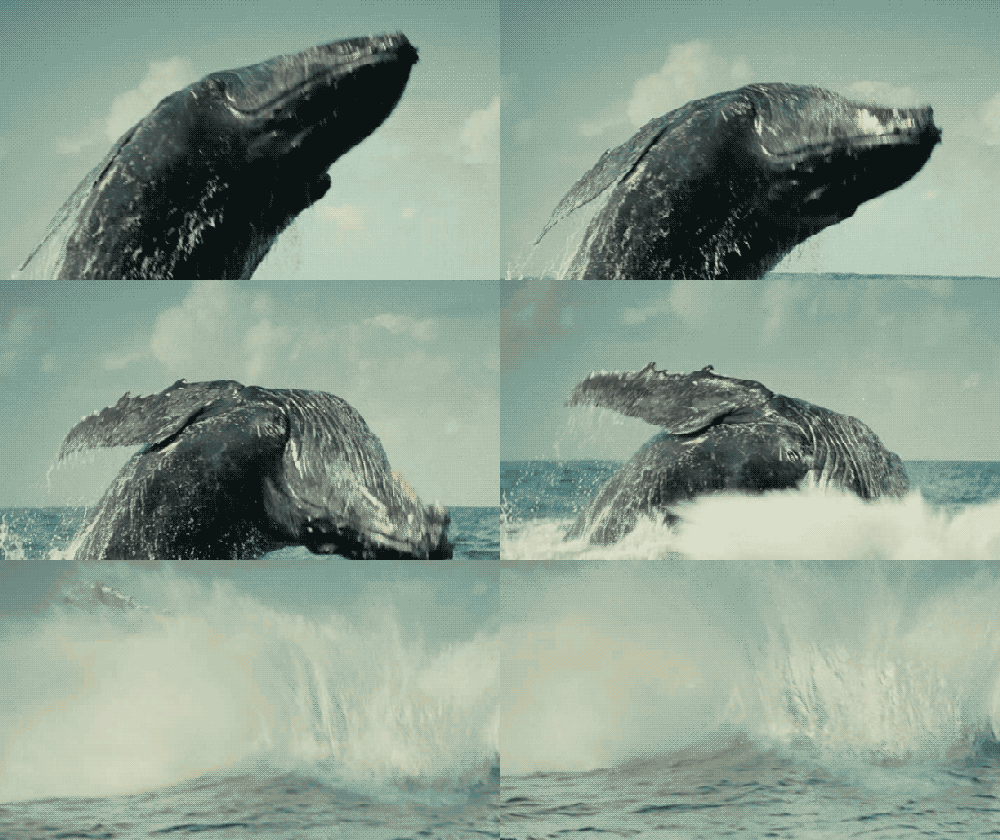
Help, though, is at hand. I have prepared a handy guide as to which of the CXXXIV chapters can be missed out without causing any real damage to the story, or to your understanding of the plot. The problem was that, at the time the book was written, around 1850-1851, there were no television documentaries. Almost nobody had ever seen a whale. Many people had never even seen the sea. More or less nobody knew anything of whaling:
The reader, therefore, had to be informed about the Natural History issues involved, and that, dear reader, is the reason for the great number of the, as it were, “non-fiction” chapters.
In my humble opinion, therefore, do not trouble yourself too much with:
Wow!! If that doesn’t attract you, nothing will. In addition, these chapters could be missed out, but they may add a smidgin to your understanding of the book. These are:
Chapters 39, 40, 41, 83, 93 and 100.
You must read absolutely all of the last thirty chapters, which tell the story of what happens when Captain Ahab and the crew of the Pequod finally set their eyes on a rather angry Moby Dick. (It doesn’t go well.) If you have ever read the book of the film “Jaws”, you will find this last section very reminiscent indeed of that modern classic.
Even if you have doubts, it is not difficult to give it a go. You can download Moby Dick to virtually any type of machine from Amazon, including some of the more modern lawnmowers.
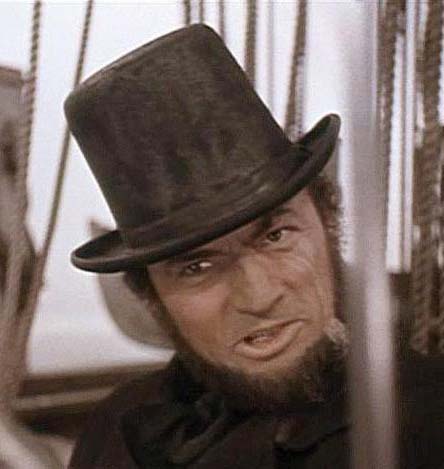
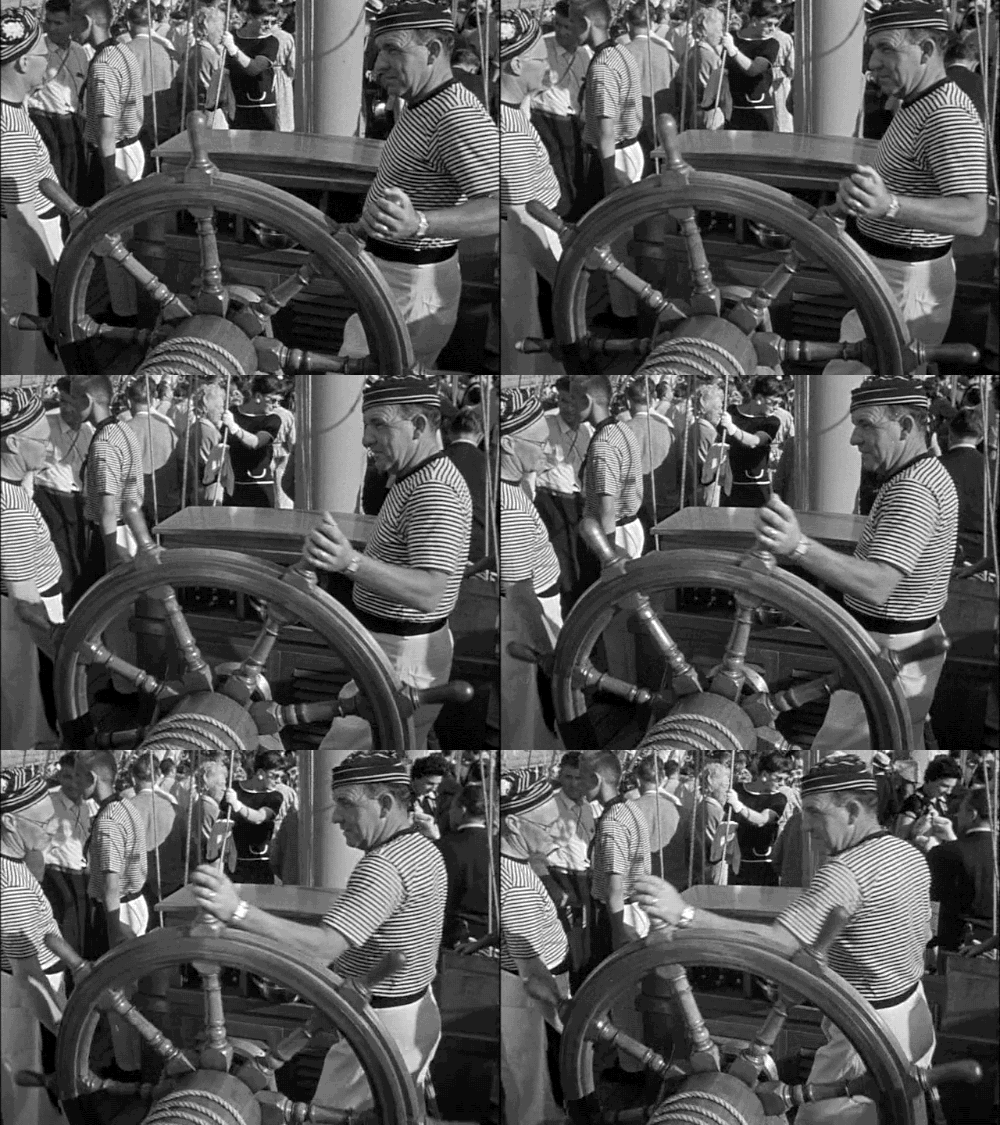
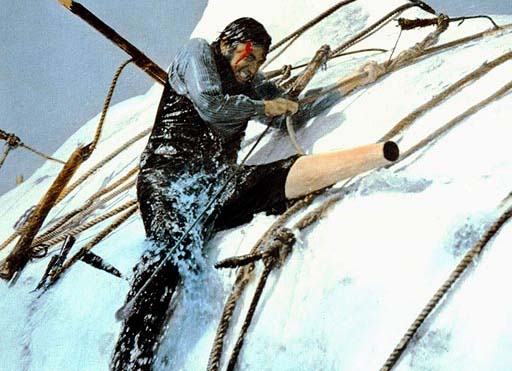
The book is stunning. Pay careful attention to what the characters say and the events which befall them. You will often find that the author has skilfully linked them together. Perhaps he has provided echoes of words and events as the plot unfolds chapter by chapter. This foreshadowing throughout the book creates great tension, because the reader is given broad hints of what catastrophes are in store for the protagonists (who themselves often refuse adamantly to heed these warnings and carry on regardless to their eventual destruction). Here is Captain Ahab:
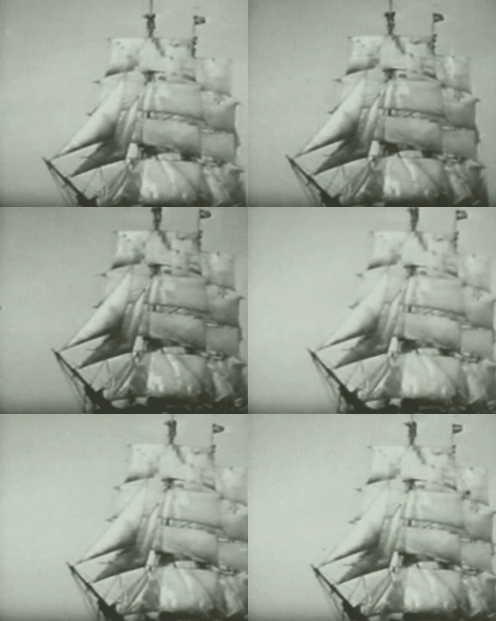
Originally, it was going to be called Pequod’s after the ship:
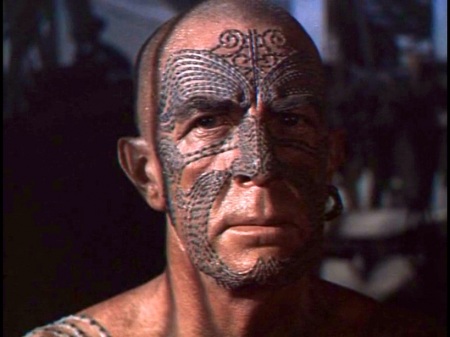
They’re probably lucky it wasn’t named after the whale. Here is Queequeg, one of the three harpooners:
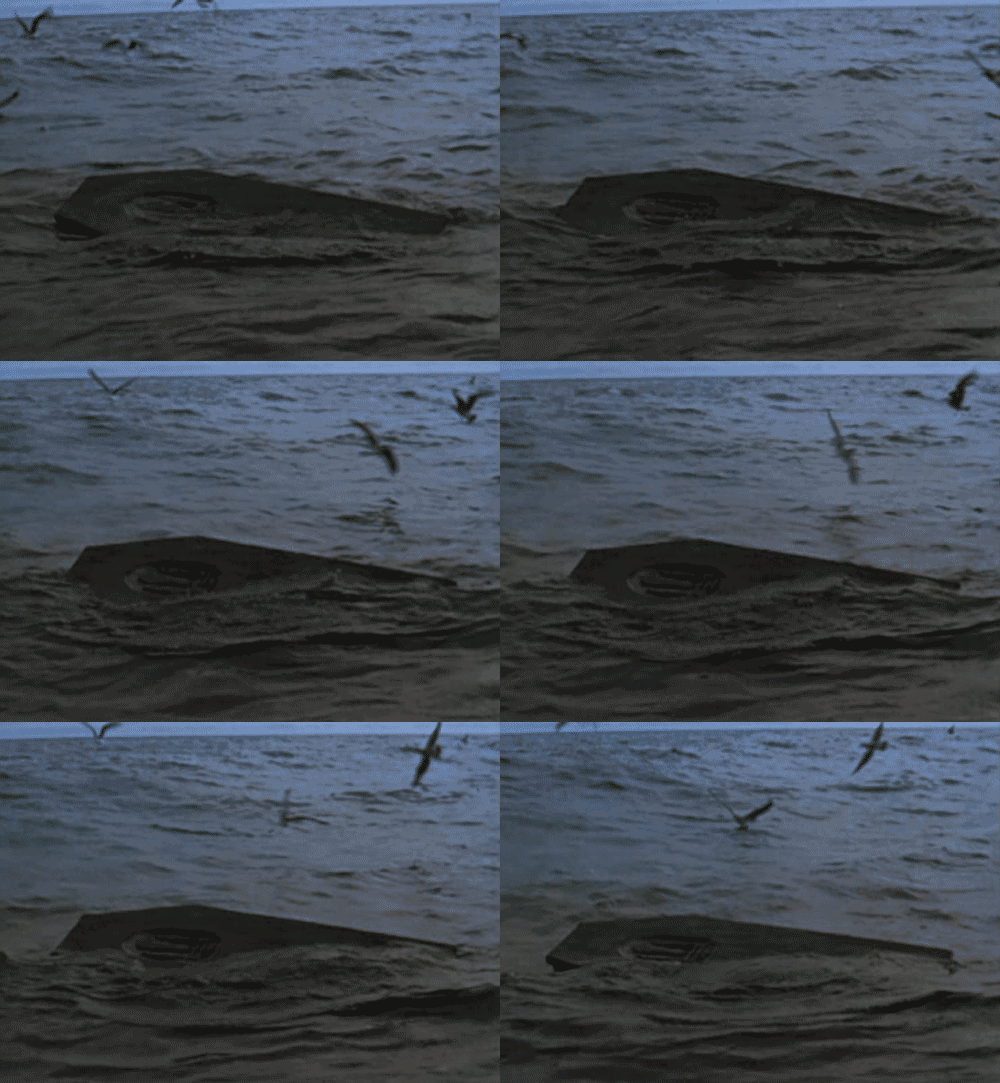
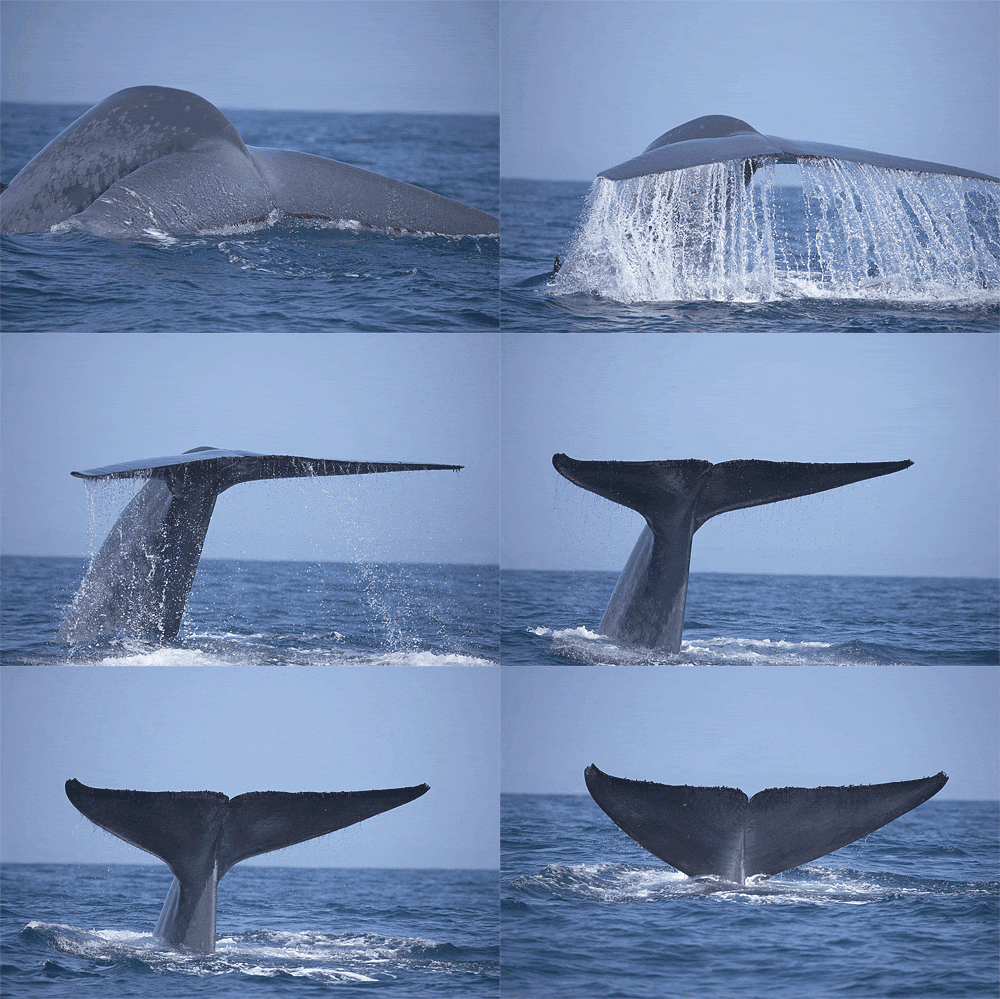
And here is his coffin, floating in the sea:
D. H. Lawrence, the greatest English novelist, called Moby Dick:
“one of the strangest and most wonderful books in the world”
“the greatest book of the sea ever written”
Here are half a dozen quotations to whet your appetite:
“Whenever I find myself growing grim about the mouth; whenever it is a damp, drizzly November in my soul; whenever I find myself involuntarily pausing before coffin warehouses, and bringing up the rear of every funeral I meet; and especially whenever my hypos get such an upper hand of me, that it requires a strong moral principle to prevent me from deliberately stepping into the street, and methodically knocking people’s hats off—then, I account it high time to get to sea as soon as I can.”
“That inscrutable thing is chiefly what I hate; and be the white whale agent, or be the white whale principal, I will wreak that hate upon him. Talk not to me of blasphemy, man; I’d strike the sun if it insulted me.”
“…mastering his emotion, Starbuck calmly rose, and as he quitted the cabin, paused for an instant and said to Ahab: “Let Ahab beware of Ahab; beware of thyself, old man.”
“Tied up and twisted; gnarled and knotted with wrinkles; haggardly firm and unyielding; his eyes glowing like coals, that still glow in the ashes of ruin; Ahab stood forth in the clearness of the morn; lifting his splintered helmet of a brow to the fair girl’s forehead of heaven.”
“Ahab is for ever Ahab, man. This whole act’s immutably decreed. It was rehearsed by thee and me a billion years before this ocean rolled. Fool! I am the Fates’ lieutenant; I act under orders.”
“There is no folly of the beasts of the earth which is not infinitely outdone by the madness of men.”
“Towards thee I roll, thou all-destroying but unconquering whale; to the last I grapple with thee; from hell’s heart I stab at thee; for hate’s sake I spit my last breath at thee.”
And don’t forget, of course, Moby Dick has the most famous beginning of any novel:
“Call me Ishmael.”
The quotations from the end are good, too, but I won’t spoil it for you!
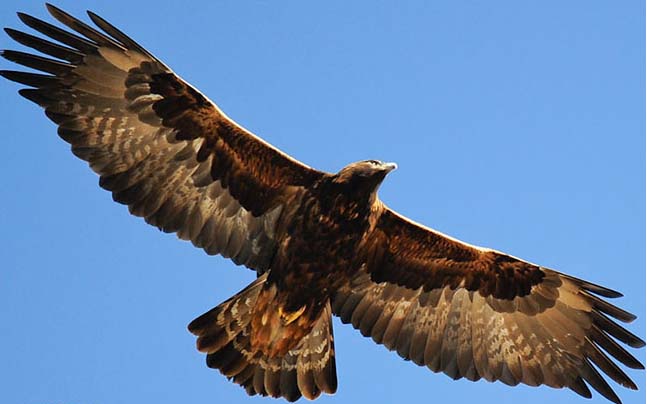
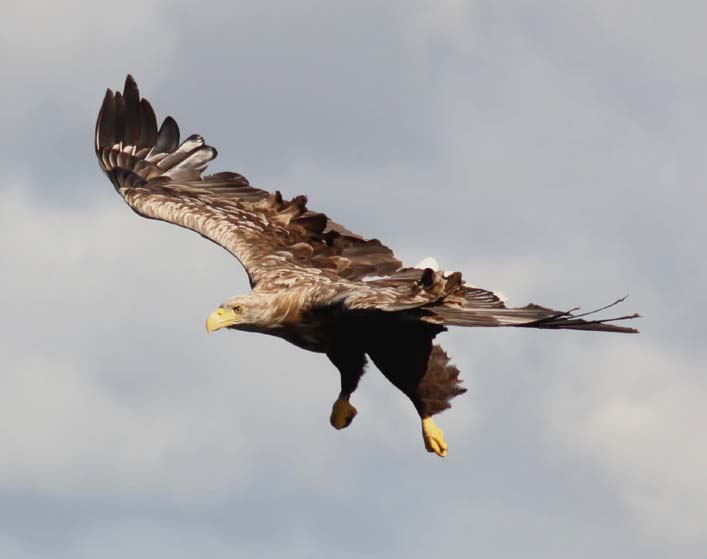
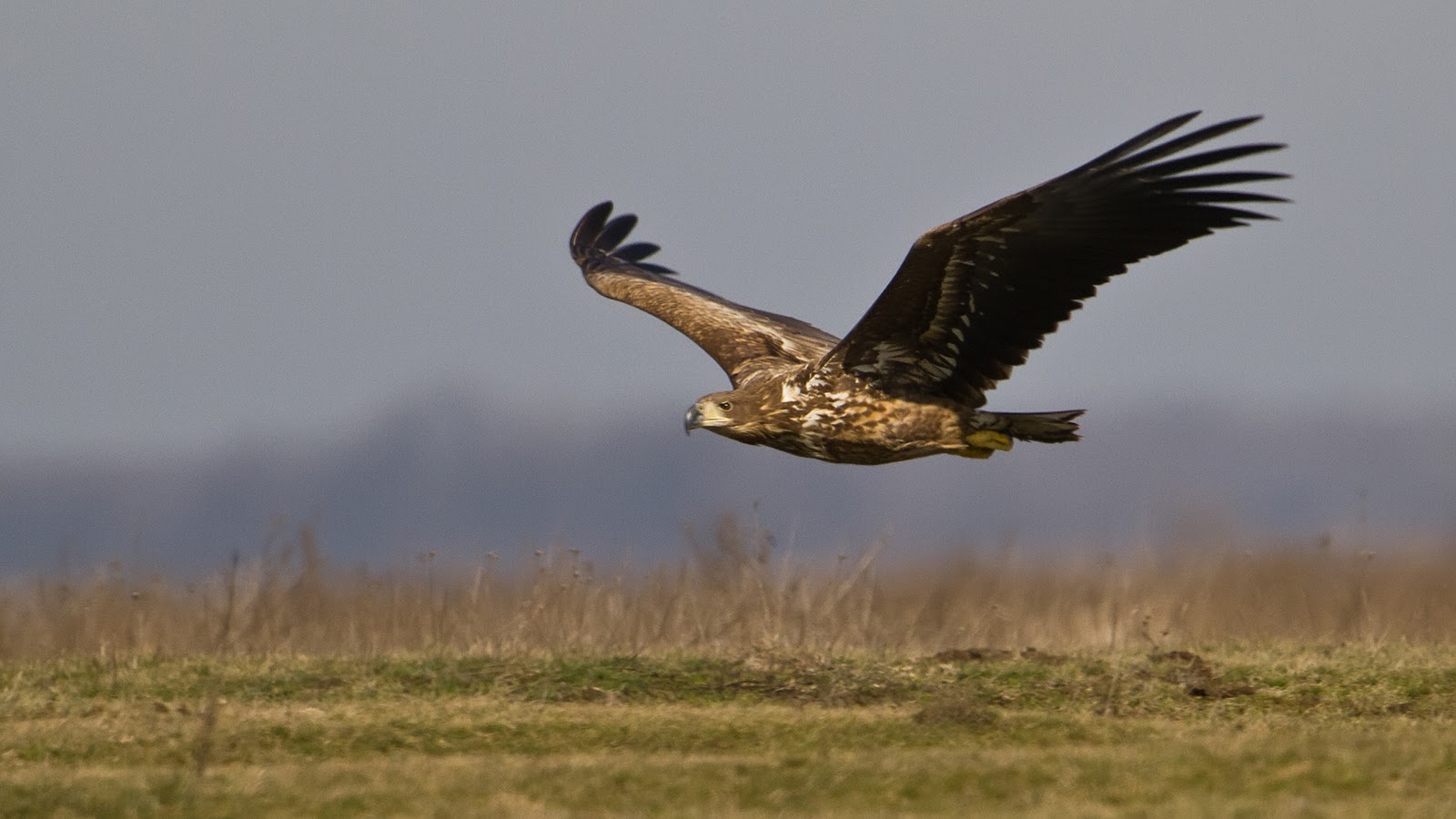
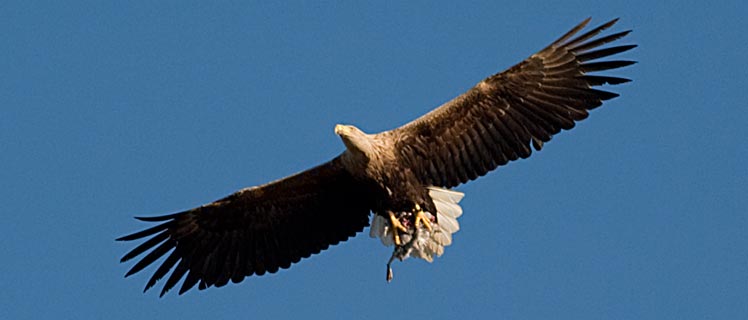
One of the more interesting issues in the area of local Natural History concerns the occurrence of eagles in Nottinghamshire in centuries gone by. In the era of the Anglo-Saxons, for example, the white-tailed sea eagle was called the Erne. This, supposedly, gave the town of Arnold its name.
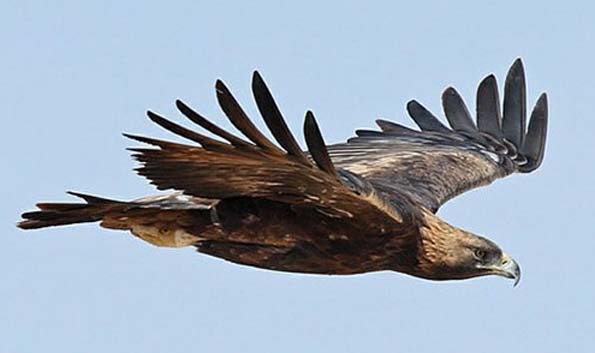
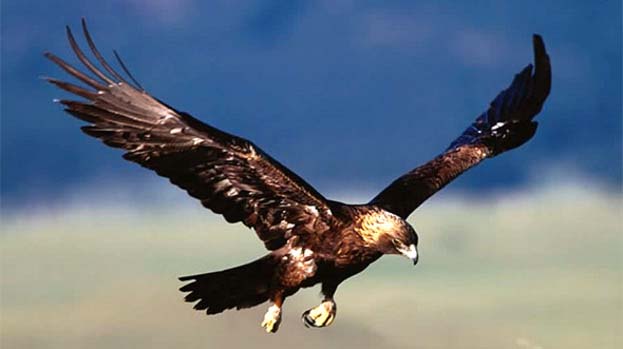
More problematic is the Golden Eagle, which certainly occurred in England much more frequently in the past than it does now. Between 1800-1900, there were at least twenty records nationwide with seven different birds in Yorkshire:
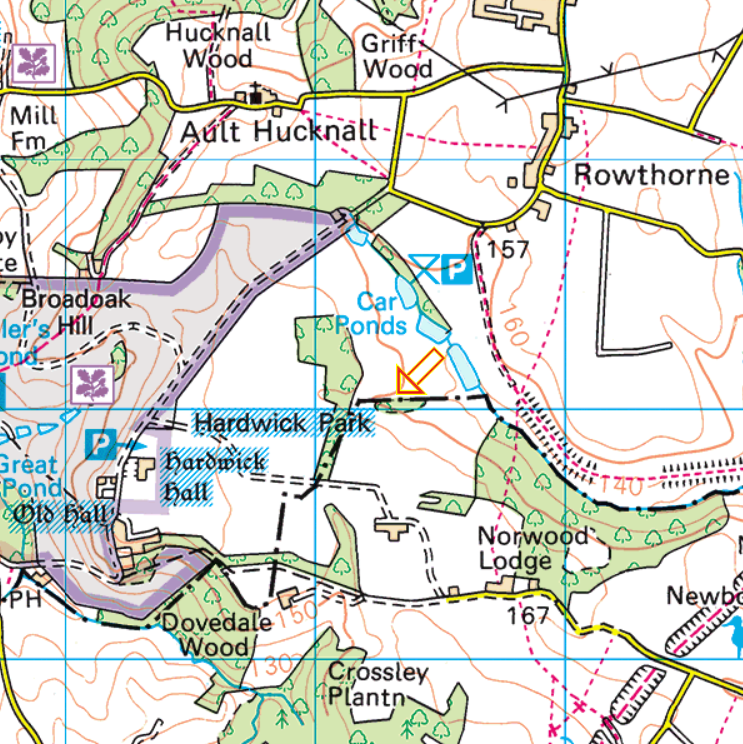
In books about local ornithology, there are some really old records of Golden Eagle. In “The Birds of Derbyshire” which was published in 1893, F.B Whitlock quoted an earlier, eighteenth century ornithologist, Mr Pilkington, who wrote about a Golden Eagle which was seen in Hardwick Park, a large estate right on the border of Derbyshire and Nottinghamshire. Hardwick Hall itself is within less than half a mile of the county boundary and in the absence of an exact location for this particular bird, it seems hardly unreasonable to suggest that it must have ventured into Nottinghamshire at some point during its stay. Both Hardwick Park and Hardwick Hall are easy to spot on this map. I have marked the county boundary between Derbyshire (top left) and Nottinghamshire (bottom right). Look for the orange arrow:
That particular Golden Eagle occurred as far back as 1759. A second Golden Eagle was shot in the same area around 1770. Twelve years later, in 1782, two Golden Eagles were seen “in the out-lying portions of Sherwood Forest, near Hardwick”. It was obviously a suitable habitat with a good supply of food.
In his “Ornithology of Nottinghamshire” published in 1866, William Felkin stated that “The eagle has twice been seen near Beeston: once by myself.” As a man, who, unfortunately, had no digital camera or mobile phone to record evidence of what he had seen, Felkin could have been no more definite than that.
I have recently become addicted to acquiring those reprints of Victorian Ordnance Survey maps and they do reveal that the outskirts of Nottingham were unbelievably countrified as recently as 1901 and even more so in 1866. Perhaps a stray eagle is not quite an outrageous bird to have seen, if only just passing over.
Felkin also noted that a Golden Eagle had been killed in an unrecorded year long ago at Castle Donington. This village, of course, is nowadays on the border between Derbyshire and Leicestershire, although it is reasonably close to Nottinghamshire. Felkin considered that this bird had occurred on Nottinghamshire’s “south-western border” and as such, was therefore worthy of inclusion in his important book about the county’s avifauna:
Modern birdwatchers would say that all these observers were simply mistaken, but that has always seemed a rather strange attitude to me. Just because they lived in the eighteenth or nineteenth century does not make people less trustworthy or more stupid than us. Certainly, in the case of the Golden Eagle which was shot around 1770 near Hardwick Hall, it would have been seen by a great many people once it was stuffed and out on display. They would certainly not have been slow to speak up about any identification errors committed by his Lordship or, indeed, his bird stuffer:
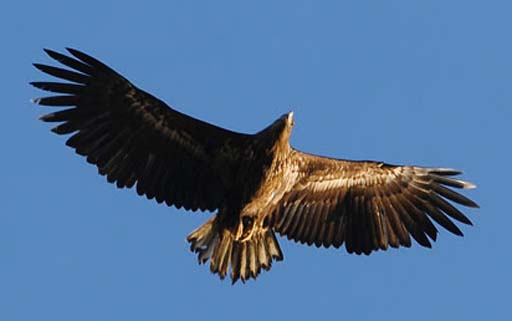
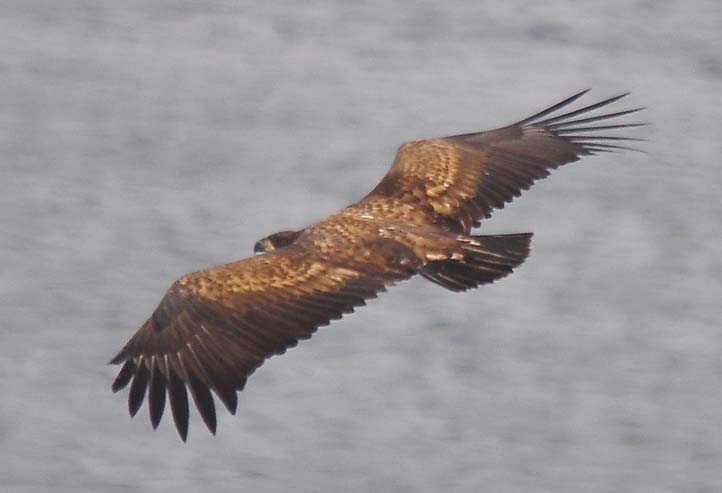
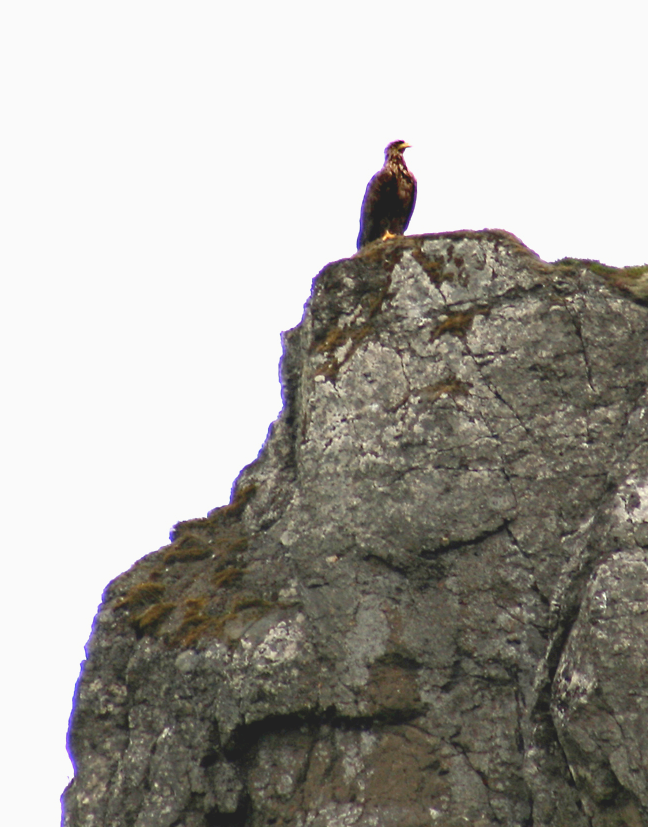
Joseph Whitaker mentions a number of eagles in his “Birds of Nottinghamshire” published in 1907, but these were all considered to be White tailed Sea Eagles, spending their winters further south than their summer breeding areas. His first account was:
“It was in the winter of 1838 that the bird appeared in Welbeck Park. Mr Tillery says :–
“The lake was frozen over at the time, except in one place, where a flush of warm water entered from a culvert which drained the abbey. The place was covered with ducks, teal and widgeon, and I saw his majesty swoop down once or twice to get one for his breakfast, but unsuccessfully, as the ducks saved themselves by diving or flying off. The park-keeper got two shots at him with a ball on a tree but missed him each time, and he gradually got wilder, so that he could never be approached again near enough for a shot. After levying blackmail on the young lambs, hares and game in the neighbourhood, he took himself off after three weeks’ sojourn”
In 1857, a single White tailed Sea Eagle was shot at Osberton near Ollerton on a date several days before January 13th. According to F.O.Morris, the nationally regarded author of “A History of British Birds”, he was informed of the occurrence by Sir Charles Anderson, Baronet, a gentleman who was presumably known to George Saville Foljambe Esquire on whose estate near Osberton the event took place. Sir Charles wrote thus…
“It was first seen sitting on a tree near a place where a cow had been buried a few days before and it continued flying about this locality for some days, always returning to the same tree, as if attracted towards it. There was partial snow on the ground at the time.”
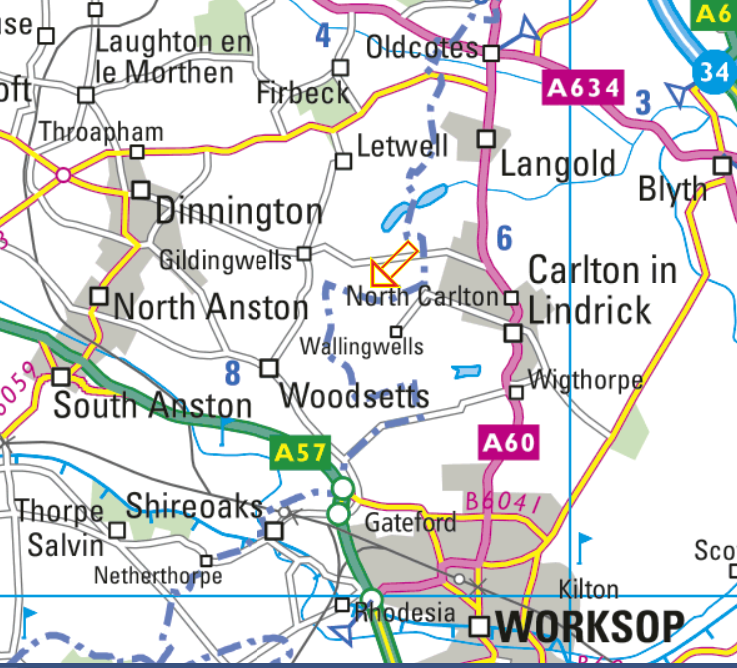
William Sterland included in his two main books, “The Birds of Sherwood Forest” (1869) and “A Descriptive List of the Birds of Nottinghamshire” (1879) an account of the occurrence of a second White tailed Sea Eagle in Lima Wood at Laughton-en-le-Morthen. Strictly speaking, this bizarrely named village is in Yorkshire but it is really quite close to the Nottinghamshire border. On this map, Laughton-en-le-Morthen is towards the top left corner and I have indicated the dark blue county boundary with the orange arrow:
This occurrence was only a few days after the demise of another eagle, shot on the Foljambe estate near Osberton, and related immediately above. Whether the two birds were connected, male and female, or perhaps siblings, we will never know. It is certainly a very striking story:
“The bird was seen in the neighbourhood of Morthen for more than a fortnight before it was shot. On several occasions it was observed perched in a tree about a hundred yards from Pinch Mill, the person resident there taking it at that distance for a stray heron. Thomas Whitfield, the gamekeeper to J.C.Althorpe Esquire of Dinnington made many attempts to get within range of the bird, but was often baffled by its wariness. It was observed to be much molested by crows and small birds, and frequently, as if to escape from persecutions which were beneath its notice to resent, it would mount into the air with graceful spiral curbs until it became nearly lost to sight, leaving its puny assailants far below, and then would sweep as gracefully down again, with all the ease and lightness of wing of the swallow.”
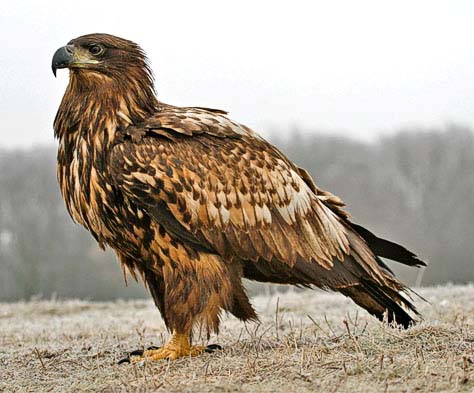
“It seems uncertain what its food consisted of during its sojourn for it was not seen to make any attack. At night it roosted on a tree, but still maintained a vigilant watch. When perceived by Whitfield, it was perched on a tree on the outskirts of the wood, but the night being moonlight, it perceived his approach and he had great difficulty in getting within gunshot. At the moment of his firing it flew off and he thought he had failed in hitting it; but in the morning he found it dead in an adjoining field. Its expanse of wing from tip to tip was seven feet six inches and it weighed eight pounds and a quarter. The friend I have mentioned kindly procured the loan of the bird from Whitfield and sent it for my inspection. It is a fine specimen in the immature plumage of the third or fourth year.”
The bird was shot on January 13, 1857, although. clearly, it had been present for some time before this.
Nearly forty years later in 1896, a single White tailed Sea Eagle was seen in the Deer Park at Park Farm, Annesley, between Nottingham and Mansfield, on November 5th, and for several days afterwards. It was thought to have been attracted to the area by the large number of rabbits present there and indeed, on a number of occasions, was seen feeding on them.
On November 8th, it was shot by Mr George Charles Musters, as it fed on the corpse of a rabbit, and when examined was found to have a total wingspan of seven feet one inch, and a weight of nine and a quarter pounds. It was an immature bird, although not a first winter individual, being considered to be probably three or four years old. It was, of course, preserved by a taxidermist and soon occupied pride of place in the collection of Mr John Patricius Chaworth Musters at Annesley Park.
In Joseph Whitaker’s own personal copy of “The Birds of Nottinghamshire”, housed in Mansfield Library’s local collection, he has appended a short note in pencil, written in that punctuation-free style that he always seems to use:
“I was standing on doorsteps one day in August 1907 waiting for carriage to come round it was a clear warm day a few white clouds were passing over very high I was looking up in the sky when I saw a bird pass under a white cloud it was so high if the white had not shown the job I should never have seen it but it was most distinct + I am certain it was an eagle by its size + flight whether Golden or White tailed I do not know.”
In another handwritten account in 1916, Joseph Whitaker tells the following story which, although illegible in places, is clear enough to constitute a valid record:
“A large bird of the (illegible) kind was seen by Mr Henry Smith’s son in Nov 1916 flying over his farm at Cropwell Butler. He wrote to me saying it was a very big bird + had a white tail. I told him it would be a mature Sea Eagle, and as such a bird was shot in Lincolnshire by Mrs (illegible) keeper of the next week. There is no doubt it was the same bird.”
Attitudes about shooting birds though, were gradually changing: people were well aware that a previously healthy Victorian population of Sea Eagles had disappeared from Scotland by 1900, every single one either shot or poisoned. The very last Sea Eagle was killed on the Shetlands in 1916, an albino bird shot by a member of the clergy.
These new, more conservationist, ideas were reflected in an account included in the Ornithological Records of the now defunct Nottingham Natural Science Field Club. It was included by one of the club’s most prominent birdwatchers, Frank Hind. Even nowadays, his handwriting is still recognisably angry:
“A Sea Eagle was shot by some bounder at Grimesmoor and sent to a taxidermist at Grantham in February of 1920. Mr Turton saw it there. It measured seven feet from tip of one wing to the tip of the other.
This rare visitor had shared the fate of so many noble birds which were frequently to be seen in the British Isles before anyone with a few pounds could buy a gun to destroy whatever his few brains had prompted him to shoot at.”
Nowadays, the positive attitude is the one which has prevailed. Even as I write, there are reintroduction schemes for this magnificent raptor in Ireland, eastern Scotland and many other areas of Great Britain. Many people would like to see it reintroduced to England and the debates rage about whether to select Norfolk or Suffolk. In the Inner Hebrides in western Scotland, of course, these charismatic birds are worth hundreds of millions of pounds to the local economy. Listen to just a few hundred quids’ worth of camera in this wonderful video by Brianpwildlife:
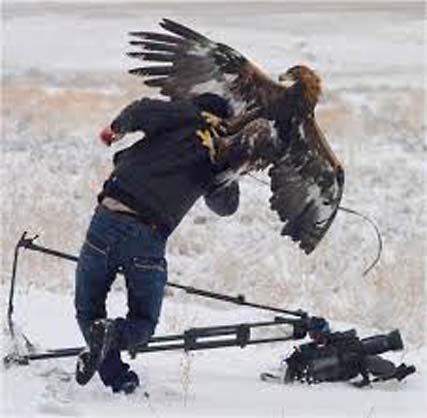
And no, they can’t carry off children or adults or small cars or large cars or vans or lorries or even what appears to be a young man equipped with perhaps a camera on a tripod or maybe a specially adapted hover mower for ice covered lawns:
I have always thought that France was fairly unlucky as a country to have been ravaged over the centuries by various Beasts, the majority of which nobody has been able to identify with 100% certainty. They have all been dismissed as merely oversized wolves, perhaps with attitude problems, but, somehow, I just cannot agree with that. Too many people who saw wolves perhaps three or four times a week were completely puzzled when they saw the BeastofGévaudan, for example:
This slideshow requires JavaScript.
Or when they saw the Beast of Benais or the Beast of Sarlat or the Beast of Auxerrois/ Trucy or the others whose individual blogposts I have not yet launched out into “Le Monde du Blogging”. Creatures such as the Beast of Lyonnais or the Beast of Cévennes/Gard/Vivarais or the Beast of Caen and Chaigny or the Beast of Orléans or the Beast of Veyreau. The Beast of Cinglais or the Beast of Gâtinais. The blood splattered list goes on.
What I did not realise, though, is that there are completely documented and wholly accepted historical accounts which detail attacks on Paris by wolves. And not just one wolf or even one pack of wolves. These were a whole series of large scale attacks by animals which broke all of our present day rules of how to be a politically correct wolf. They gleefully attacked and ate people. French people. Parisians:
The first wolf invasion came during the winter of 1419-1420. Over Europe as a whole, the weather that winter was unbelievably cold. In the east, in what is now Turkey, the Bosphorus was completely frozen over and it was possible to walk over the ice from Üsküdar to Istanbul, which was then called Constantinople.
In Western Europe, virtually all of France had already been made wretched by the debilitating effects of the Hundred Years War which was to last, rather inaccurately, 116 years, from 1337–1453:
This slideshow requires JavaScript.
The winter of 1419-1420 was equally severe over the whole country with very low temperatures and copious amounts of snow falling for prolonged periods. Paris was occupied by the English and the famine there was so great that unfortunate Parisians spent all of their daylight hours wandering around just searching for food. Numerous packs of wolves, as hungry as the people, advanced into the suburbs of the capital, which was now just a vast, frozen wasteland. The River Seine froze over and people could cross over from one side to the other without problem:
Two years later, in 1421-1422, there was another winter of almost unbelievable severity. Wolves again entered the city. Every night they roamed around the streets of Paris, dug up recently buried corpses in the local graveyards and ate them. Anybody who tried to intervene was ripped to pieces and eaten, presumably, as a second course. Any wolves which were killed were strung up in the streets by their back legs the following morning, as a perhaps, slightly over optimistic warning to the rest.
It was so cold during this winter that bottles of wine, grape juice and vinegar froze in the cellars of Parisian houses and in some cases icicles formed on the vaults of cellar roofs. The River Seine, which had previously been in spate, froze over in less than three days and the ice quickly became firm enough to walk on. On January 12th 1422, there began in the French capital what was considered at the time to be the most severe spell of cold ever experienced by man.
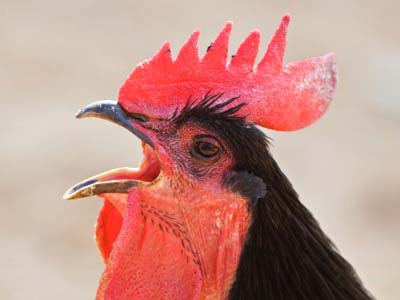
The River Seine froze completely throughout its entire length. Wells froze after four days. This harsh cold persisted for almost three weeks. To compound Parisian misery, a couple of days before the beginning of this extremely cold weather, there had been a heavy snowfall. Because of the severity of this snow and the subsequent extreme cold, people were completely unable to work. Instead, they resorted to jumping games, playing ball and other vigorous activities to keep warm. The freezing conditions were so intense that the ice in the streets and public squares persisted until March 25th. It was so cold that on the heads of cockerels and hens, their combs froze:
Equally surprisingly, there were no wolves reported in Paris during the extremely harsh winter of 1433-1434. The big freeze began on December 31st 1433 and then lasted for nine days short of three months. After this, another severely cold period followed, from March 31st 1434 until April 17th 1434. Just as a comparison, during this particular winter, the entire River Thames in England had frozen completely solid from December to February and remained completely impassable to shipping.
The wolves, though, were back with a vengeance in the second Parisian “Winter of the Wolf”, “L’Hiver du Loup”. This came in 1437–1438, when the weather was equally, if not more, glacial.
The River Seine again froze over completely and packs of wolves wandered into the French capital, roaming the streets in search of food. Here is an anachronistic photo of the River Seine, frozen over in 1437. How can you tell that, mon cher Sherlock?
In actual fact, there had been five unbelievably cold winters in succession over the whole of the European continent, and this was the last of the five. In England, the famine was so severe from 1437-39 that it was second only to the worst years ever in 1315-1317. These latter years were so wet that virtually all the nation’s crops failed and as many as 10% of the population may have eventually perished, in a decade characterised by crime, disease, mass death and cannibalism.
From 1437-1439, though, the winter cold was such that the English people in the countryside were driven to attempt to make bread from fern roots and ivy berries. An unbelievably prudent Mayor of London had avoided this situation in the capital by importing a good supply of rye from Prussia. This may have been Mayor William Estfeld (1437) or Mayor Robert Large (1439) but personally I would go for Stephen Broun the Grocer (1438).
The only record of wolves in Paris which I have been able to trace during these three years of 1437-1439 came as early as the last week of the month of September 1439, when a desperate pack entered the city in search of fresh meat. They ripped out the throats of around fourteen people and duly devoured them. This occurred in the area between Montmartre in the north of the city:
And the Porte Saint-Antoine in the east, right next to the Bastille prison:
From 1450-1850, and possibly beyond that, into the early years of the twentieth century, the so-called Little Ice Age held sway over Europe. In 1457-1458 in Germany, for example, extreme cold froze the Danube River to such a thickness that an army of 40,000 men was able to camp on the ice. Two years, later during the winter of 1459-1460, the entire Baltic Sea was frozen and people could cross between Denmark, Germany and Sweden both on foot and on horseback:
In France, the most severe weather came right at the beginning of the Little Ice Age during their very worst winter of 1449-1450. During this period the weather in France was very wet, extremely cold, and there were, consequently, huge quantities of snow. Indeed, the winter had begun as early as October 1449, when large numbers of olive trees began to die of the cold across the whole country.
It was during this exceptional winter that Paris became the victim of its most famous attack by man-eating wolves, “des loups anthropophages” (a very useful mouthful, should you ever need the phrase on holiday, or perhaps wish to prove your sobriety to a French police officer).
This pack, “The Wolves of Paris”, (Oh somebody, form a Heavy Metal Band…the name is crying out for it!), “Les Loups de Paris”, are thought to have killed and eaten large numbers of hapless human victims of all ages over the course of the winter. The animals initially entered Paris through the very large holes in its dilapidated city walls, which had been built some 250 years previously in the early 13th century. Of course, the original builder, King Philippe Auguste, had intended the walls to protect the city from human invaders rather than animal predators:
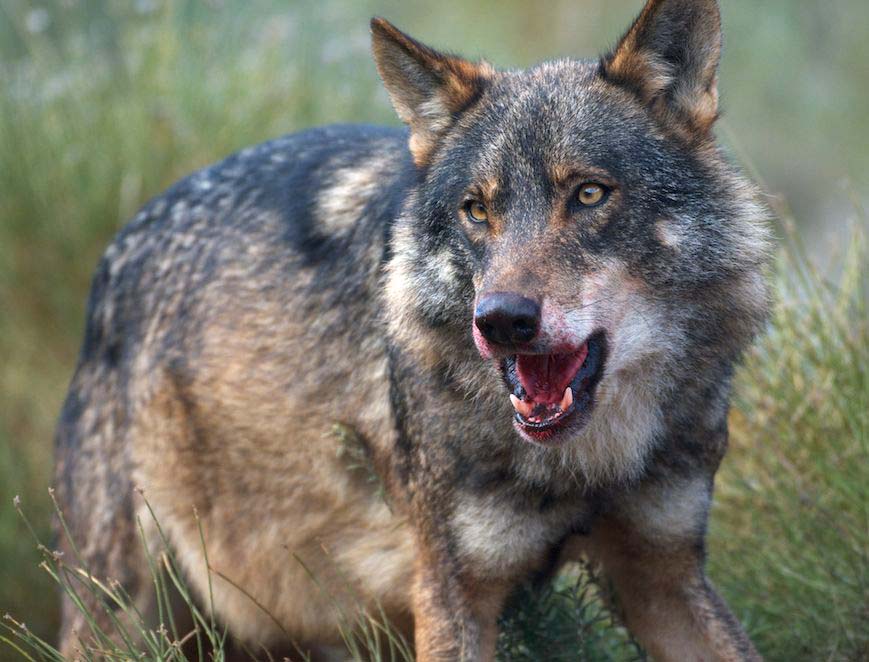
The leader of the pack was a wolf named “Courtaud” which means “Bobtail”, as he had a tail which had been “docked” or shortened in some unknown incident. The descriptions of “Courtaud” at the time said that he was reddish in colour, not really a pigment that you would expect in a pure 100% common, Eurasian or Middle Russian forest wolf as the subspecies canis lupus lupus is variously known across Europe. Suggestions have been made that its unusual colour was because it was an Iberian Wolfcanis lupus signatus on its holidays from Spain, but there is a problem with that. As far as I can see, the Iberian Wolf is not particularly reddish. Here he is. Just look at that blood:
According to the Wikipedia entry in the link above, canis lupus signatus has a lighter build than the European Wolf, some white marks on the upper lips, dark marks on the tail and a pair of dark marks in its front legs. There is no mention of red.
Don’t get me started, but my explanation for all those various Beasts (bêtes féroces, bêtes dévorantes ou bêtes anthropophages) which ravaged France over the centuries now comes into its own. I believe that they were members of a more aggressive, larger and now extinct species of wolf. If any unusual colour is mentioned for La Bête du Gévaudan, La Bête de Cinglais, La Bête de Caen, LaBête du Lyonnais or La Bête du Vivarais, it is always, exclusively, red. And, as we have just seen, Courtaud too had fur of this colour.
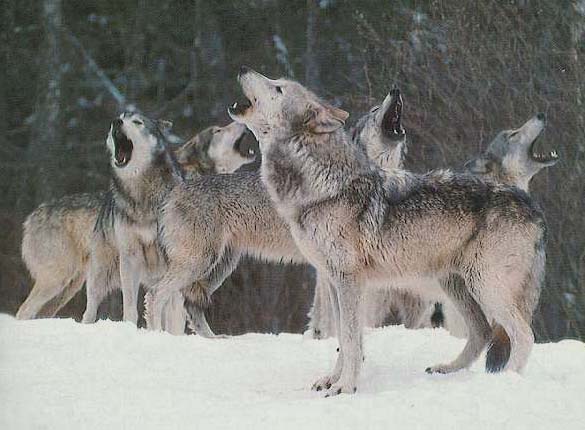
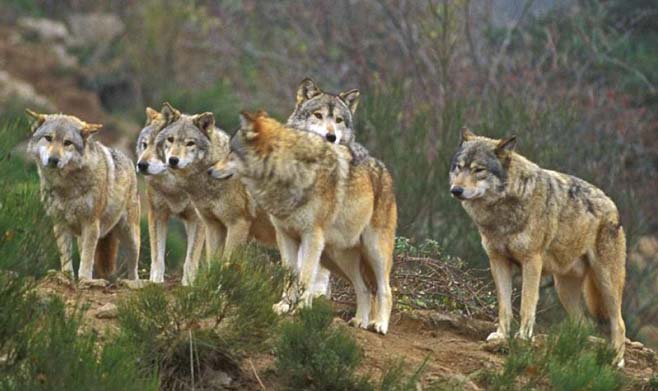
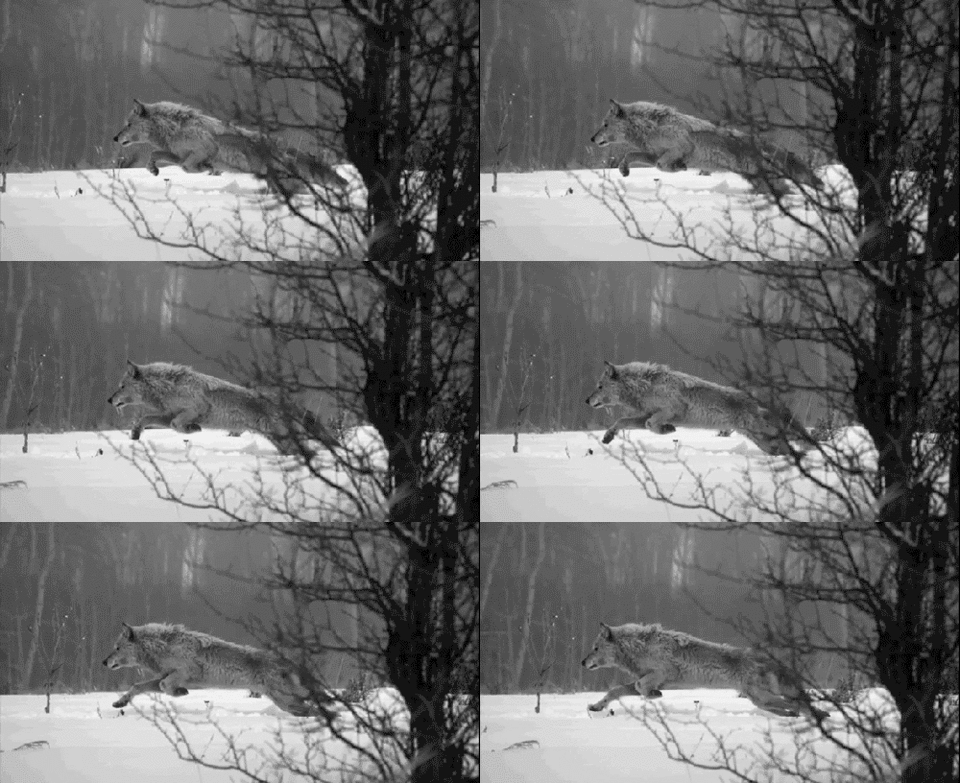
That is why I just do not believe that ordinary wolves were responsible for these blood spattered killings. And anyway, aren’t ordinary wolves a friendly looking bunch of chaps? They would not dream of eating anybody:
At first, there were around twenty wolves in the Parisian pack and they killed dozens of people. Gradually, wolf numbers built up, and the list of victims grew longer and longer. In the first month, supposedly around forty people perished, with a total kill for the whole winter of several hundred. They included, for the most part, anybody the wolves found wandering around the city at night, or any individuals who were outside sleeping rough. Inevitably, the inhabitants of Paris in that winter of 1449-1450 were swept by a feeling of total panic. Attempts to kill the wolves in their dens were totally ineffective. The wolves became so self confident that they often enjoyed a sing-song on their way back from the pub:
Eventually, though, Parisians became increasingly enraged that it was no longer safe to walk the streets of their beautiful city. Furious at all the deaths, a brave group of volunteers found a couple of unwanted cows and killed them. Then they set off, dragging the mutilated corpses along behind them on ropes, so that they left a bloodied trail. Eventually, the wolves began to follow the scent, and slowly, slowly, Courtaud and his bloodthirsty colleagues were lured and prodded into the very heart of the city:
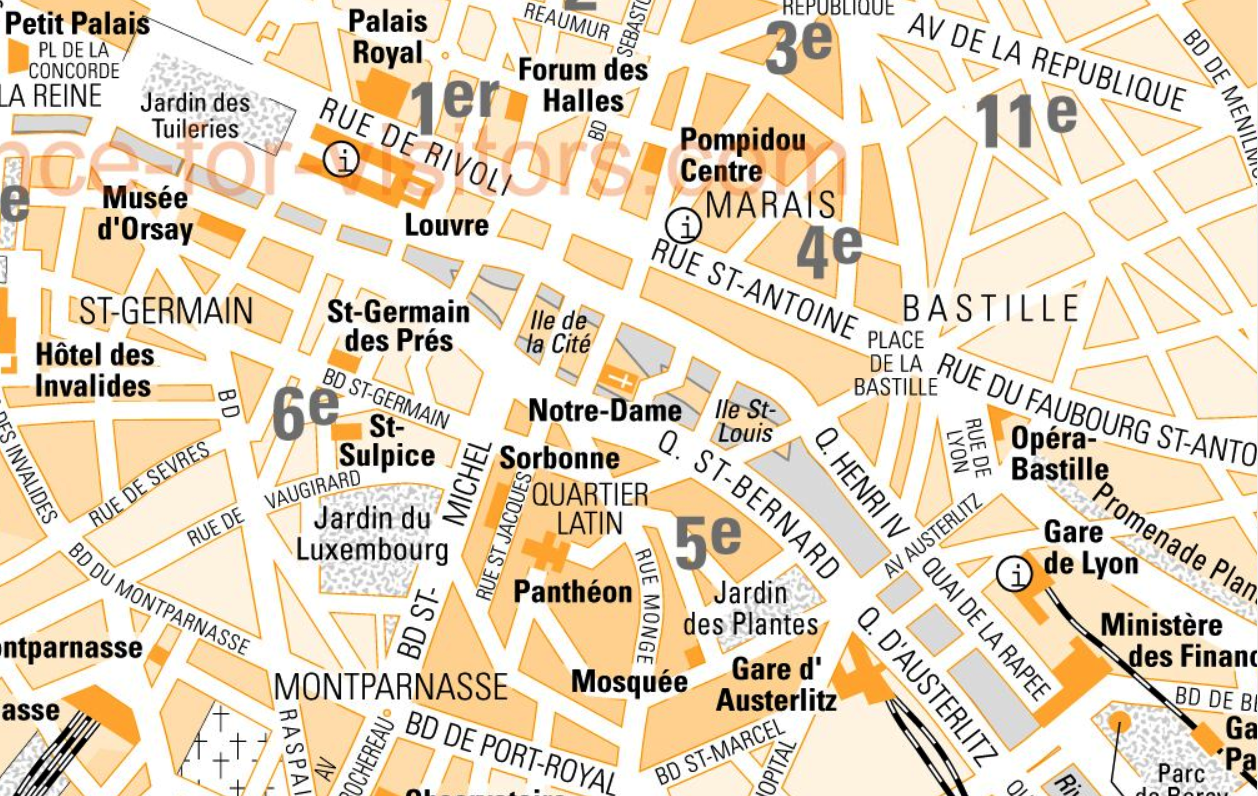
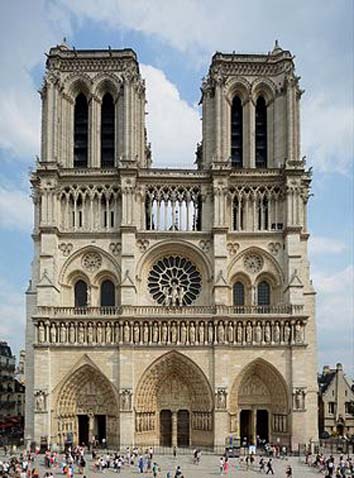
When the wolves reached the Ile de la Cité (middle of the map), they arrived at the large square in front of the cathedral of Notre Dame, which is called the Parvis Notre Dame. Here they were trapped, surrounded by pre-prepared wooden barricades. Here is Notre Dame cathedral. See if you can spot the hunchback:
And here is the large square in front of the cathedral, which is really quite extensive in size. I wouldn’t like to have chased a pack of wolves across here:
Finally, the angry Parisians stoned and speared the entire pack, until every single wolf was dead. Courtaud was paraded dead around the city in a cart, pulled by the triumphant crowd. Here is one of those bizarre modern art exhibitions which was held in Paris recently. I don’t suppose it’s Courtaud and his pals from 1449-1450, but I do hope that no real wolves died to make it:
I do not really believe that Paris’ historical scrapes with wolves have necessarily finished. Grey wolves were completely extirpated from France in the 1920s and 1930s, but ten years ago they started entering the country again from Italy. There are now around 300 wolves in France and the farmers allege that they have killed more than 6,000 sheep in the last twelve months. The woods around Paris are well stocked with deer and boar and they would make an ideal hunting ground for wolves. Indeed, this year, wolves have been sighted just 40 miles from the city:
Presumably preparing the Parisian populace for the latest lupine invasion, there are a number of different books available, all of which are all entitled “The Wolves of Paris”:
“It’s the winter of 1450 and Paris is in a panic. A pack of ravenous wolves is loose in the city, feasting on human flesh. Lorenzo Boccaccio is summoned by a Dominican inquisitor who….”
I have written a good deal, some would say too much, about the monsters which terrorized France between 1500 and the end of the nineteenth century. The most conservative zoologists say that the so-called monsters were just wolves behaving badly. Other more daring individuals say they were cave hyenas or dire wolves or waheelas or whatever:
This slideshow requires JavaScript.
I personally think that they were some kind of Superwolf which was like generally pretty much like an ordinary wolf in appearance, but with enough differences in behaviour to stand out from the rest. Just enough for the French peasant of 1764-1767 to think to himself, “C’était comme un loup, mais ce n’était pas un loup.”
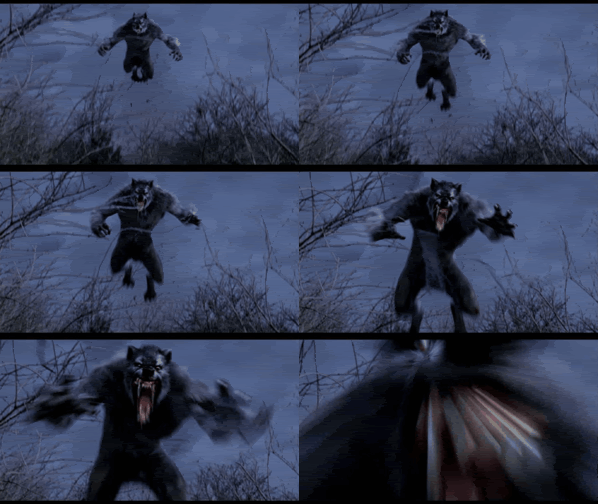
What I have never imagined as the solution to this blood spattered conundrum is the werewolf. In French, it is the Loup-garou:
The Americans in those areas of the USA which have a French heritage call it the Rougarou, rather as if somebody in 1700 had slightly misheard the word. Given that the Rougarou allegedly lives in the bayou and perhaps makes a “Wooo-hooo” call, I have always been somewhat surprised that no aspiring songwriter has ever taken up this subject.
In two cases, back in the day, they were unknown creatures that attacked livestock and left a trail of blood and gore. That could have been anything, of course, perhaps even the first Alien Big Cats in the country but much more likely to have been just feral dogs, which regularly kill both people and livestock in far larger numbers than either wolves or werewolves:
There was mention of a genuine werewolf near Ripon, Yorkshire, in the 1920s and then another in Edale, Lancashire, in 1925. It was described by the forum contributor, Jerry_B as “some large animal…tearing sheep to bits”. Sounds like it’s back to those feral dogs to me.
A bloodsucking equivalent of these two werewolves, allegedly, was the monster “on the prowl in 1905, at Badminton (Gloucester)”.
All of these seem extremely far-fetched in my humble opinion, but there is one interesting English werewolf tale which features very widely on the Internet. For me though, it is a superb example of putting a couple of interesting facts together, and then using them to come to a fairly ridiculous conclusion. After that, everybody is more than happy to view this iffy conclusion as completely sensible and to consider it henceforth as hard fact. No need to bother about questioning the reasoning process. If you still don’t understand what I’m getting at, then treat yourself to the finest example I know of, namely any episode whatsoever in the “Ancient Aliens” TV series.
.
First of all, though, for the sake of argument, I am willing to accept the supposition, for the moment, that wolves in England, centuries ago, were capable of behaviour that, nowadays, would be dismissed as being highly unlikely. That behaviour, of course, would be to treat human beings as a prey item and to attack them as a matter of ordinary routine:
Whatever you may think about that as a supposition, the author, John Harries, in his book “A Ghost Hunter’s Road Book”, states that things were so bad in Saxon times that, presumably at the behest of King Aethelstan:
“ about the year 940 AD a hostel was built in the village of Flixton to shelter wayfarers in wintertime from attacks by wolves. At that period packs of the animals were not uncommon in the north of the country, and they were regarded with particular loathing because in times of severe weather they scavenged in graveyards.”
That statement is by no means outrageous, although it would be nice to know where the story originally came from. After all, there cannot be too many sources available to be cited when it comes to events more than a thousand years ago in 940 AD.
What tips it over the edge, though, is the next piece of rather iffy logic:
“Their cunning in discovering unprotected cattle, their boldness in attacking travellers, and their habit of suddenly descending in large numbers on an area where they had previously been unknown, all helped to give rise to the belief that the animals were not ordinary wolves but human beings who adopted a travesty of wolf shape by night.”
Wolves capable of finding “unprotected cattle”? How unusual! How unprecedented! I’m sure that has never happened in the northern states of the USA.
“Descending in large numbers” to a source of easy food? How extraordinary for a pack predator to be any good at doing that!
The wolf is one of the most widespread and successful predators on the planet. So why do we need to explain his achievements as the work of werewolves? And not even ordinary werewolves at that…
“Their nocturnal exploits were supposed to be organised by a wizard whose innocent appearance enabled him to gather information about cattle, sheep and human wayfarers in taverns and market places.”
Look out! There’s a wizard about!! Careless talk costs lives!!
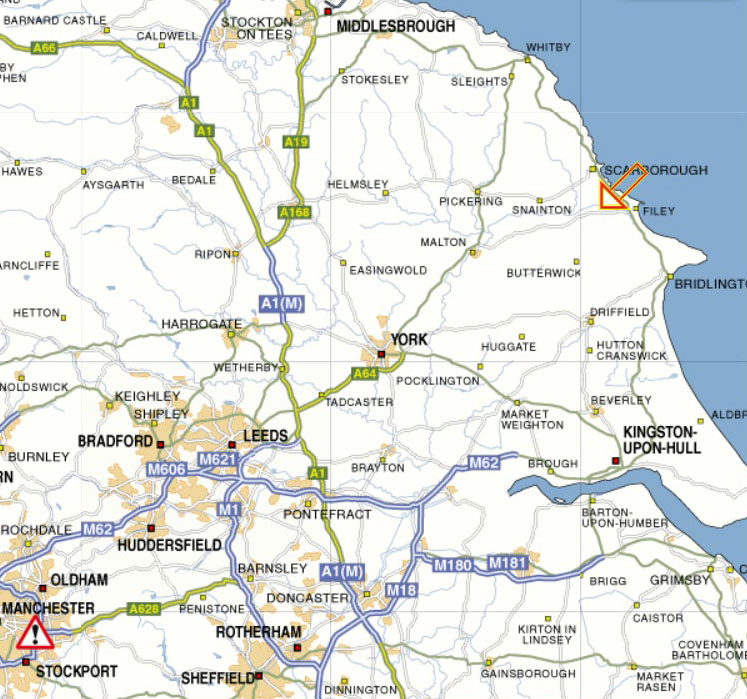
Flixton, by the way, is in Yorkshire, in the north of England, near Scarborough. Look for the orange arrow:
Here is a more detailed map:
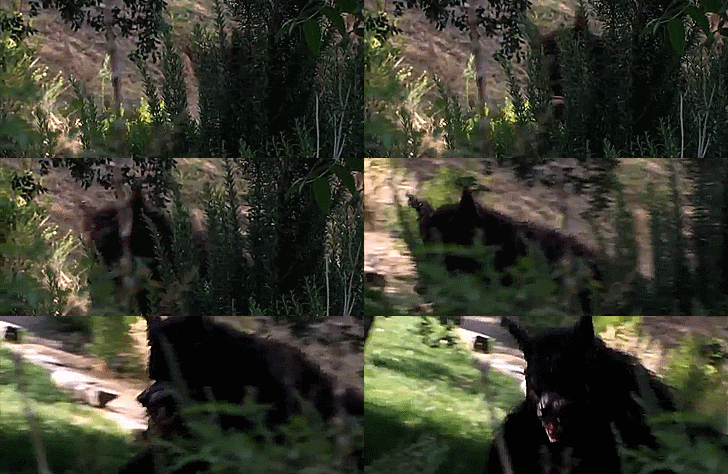
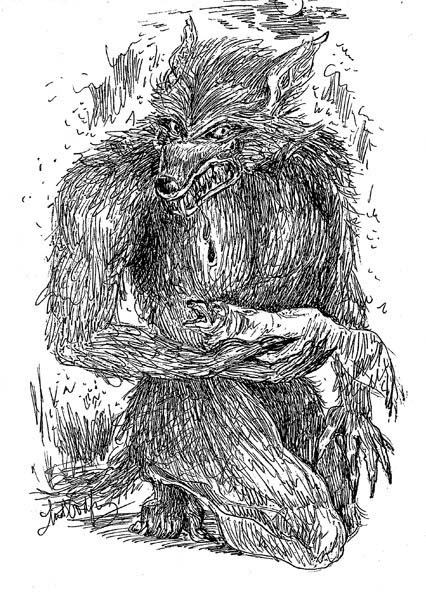
Further details about the Flixton Werewolf were that he has glowing red eyes and a particularly bad body odour. (Don’t say it!) Reports supposedly began all over again in 1150, although by now he had grown a very long tail. In 1800 a stagecoach making its way to York was supposedly attacked by an apparent werewolf. In 1970, the Flixton Werewolf made an unsuccessful attempt at attacking a long distance lorry. Easy prey, of course:
All these additional details, and a succession of precise dates, all help to give the story of a werewolf in Yorkshire veracity and credence, of course.
I was able to find mention on the Internet of just a two other werewolves in England, both of them in Devon (in the Valley of the Rocks in Lynton and the Valley of the Doones on Exmoor). On the latter occasion, a Victorian lady walking home in the dark saw a grey man with a wolf’s head, apparently stalking a large rabbit. The grey man disappeared when he was disturbed by a stag emerging suddenly from some nearby woodland.
Funnily enough, this apparently bizarre tale of the grey man with a wolf’s head sounds a lot more probable to me. If you have read my articles about Shuck and then the Wolfmen in the USA, you may recall that the almost cute behaviour of this grey man with a wolf’s head is much more typical of these cryptocanids:
“Nick Duffy, of the West Midlands Ghost Club, reported that “The first person to contact us was a postman, who told us he had seen what he thought was a werewolf. He saw what he believed was a large dog, but when he got closer, the creature got on his hind legs and ran away.”
“A local scout-leader reported that: “It just looked like a huge dog. But when I slammed the door of my car it reared up on its back legs and ran into the trees. It must have been about six to seven feet tall.”
Both of these pieces of behaviour come much, much closer to the Dogmen and Werewolves of the USA. If you read Linda S.Godfrey, you will see that the majority of these monsters prefer not to attack but to run away:
Let’s finish with two things. Firstly a question. Why do you always have to shoot a werewolf with a silver bullet to kill it?
It’s because back in the days of muskets and similar hit-and-miss weapons, accuracy was way below today’s standards, as was killing power. One, albeit expensive, way to improve both was to discard the third rate bullets of the day, and make your own, rock hard, bullets from…you’ve guessed it! Silver.
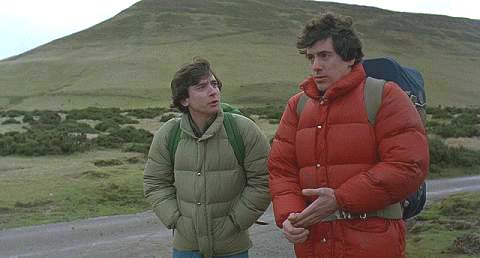
And secondly I was unaware that when they were filming that classic tale “An American Werewolf In London”, the opening scenes on the Yorkshire moors were all filmed in Wales because “Yorkshire didn’t look Yorkshire enough”:

 In 525 A.D. the entire Trent again burst its banks and a great number of cattle were drowned. The locals at his time may well have been Celts since we know that Nottingham, in the Brythonic Celtic language was called “Tigguo Cobauc”, meaning “The Place of Caves”. The Welsh may have been aware of Nottingham’s existence since they called it “Y Ty Ogofog” and even the distant Irish had a word or two for it, namely “Na Tithe Uaimh”, “The Cavey Dwelling”. Here are some Celts, managing to appear very, very fierce indeed, although admittedly, there is more than a dash of Village People in the overall look, especially the one at the front who may have no clothes on at all:
  Whoever the locals were in 530 A.D., they would certainly have got extremely wet at some point. The mighty River Humber is known to have flooded extensively onto adjacent low-lying ground and most of the region’s cattle were drowned. Much of that excess of water, of course, was bound to have come from the River Trent, which feeds into the Humber. It is difficult to see how Nottingham, at the side of the River Trent, of course, could have escaped floods of such severity. It was slightly after this date that Nottingham, by now a small group of wooden huts and a line of washing, came under the sway of the wonderfully named “Snot”, an Anglo-Saxon chieftain. The place where “The Mighty Snot” lived was immediately called “Snotingaham”, the “home of the people of Snot the Magnificent”. At this time, “Snotingaham”, was part of the Kingdom of Elmet. Here is an Anglo-Saxon chief and his friend. What impressive elmets they are wearing:




























 John Knifton