Category Archives: History

Off to the Great War (Part One)

I have already mentioned in a previous blog post that my Grandfather, Will Knifton, emigrated to Canada in an unknown year before the Great War. Conceivably, he was with his elder brother, John Knifton, or more likely perhaps, John went across the Atlantic first and then Will joined him later on. I have only two pieces of evidence to go on.

Firstly, it is recorded that a John Knifton landed in Canada on May 9th 1907. His ship was the “Lake Manitoba” and he was twenty three years of age. His nationality is listed in the Canadian records as English.

On the other hand, I still have an old Bible belonging to my Grandfather, which says inside the front cover,

“the Teachers and Scholars of the Wesleyan Sunday School, Church Gresley, given to him as a token of appreciation for services rendered to the above School, and with sincerest wishes for his future happiness and prosperity. March 26th 1911.”

Whatever the truth of his arrival, Will lived at 266, Symington Avenue, Toronto. He then worked as a locomotive fireman on the Canadian Pacific Railways, between Chapleau, Ontario, right across the Great Plains to Winnipeg. He also talked many times of the town of Moose Jaw, although he never supplied any details that I can remember:

cab paint

Will joined the Canadian Army on June 12th 1916 at the Toronto Recruiting Depôt. He sailed from Canada for the Western Front on July 16th 1916 on the “S.S.Empress of Britain”:
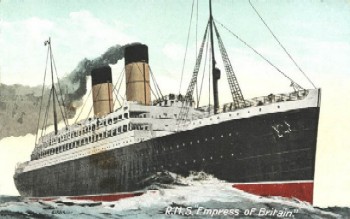
ss_empress_of_britain

For many years, Will had courted a local English girl called Fanny Smith, the daughter of Levi Smith, a labourer in a clay hole in the area around the village of Woodville, in South Derbyshire, where they all lived. Will wrote to her from Canada and then, during his time in the army, he sent her regular postcards from France. During his leaves from the front, he always returned to see her and they married on July 15th 1917:

This slideshow requires JavaScript.

I still have quite a few of Will’s postcards. He had clearly bought this postcard just before he left Canada for England and the Great War:

montrealbxxxxxxxxxxxxx

He used to speak enthusiastically about Montreal and especially about the famous Hôtel Frontenac:
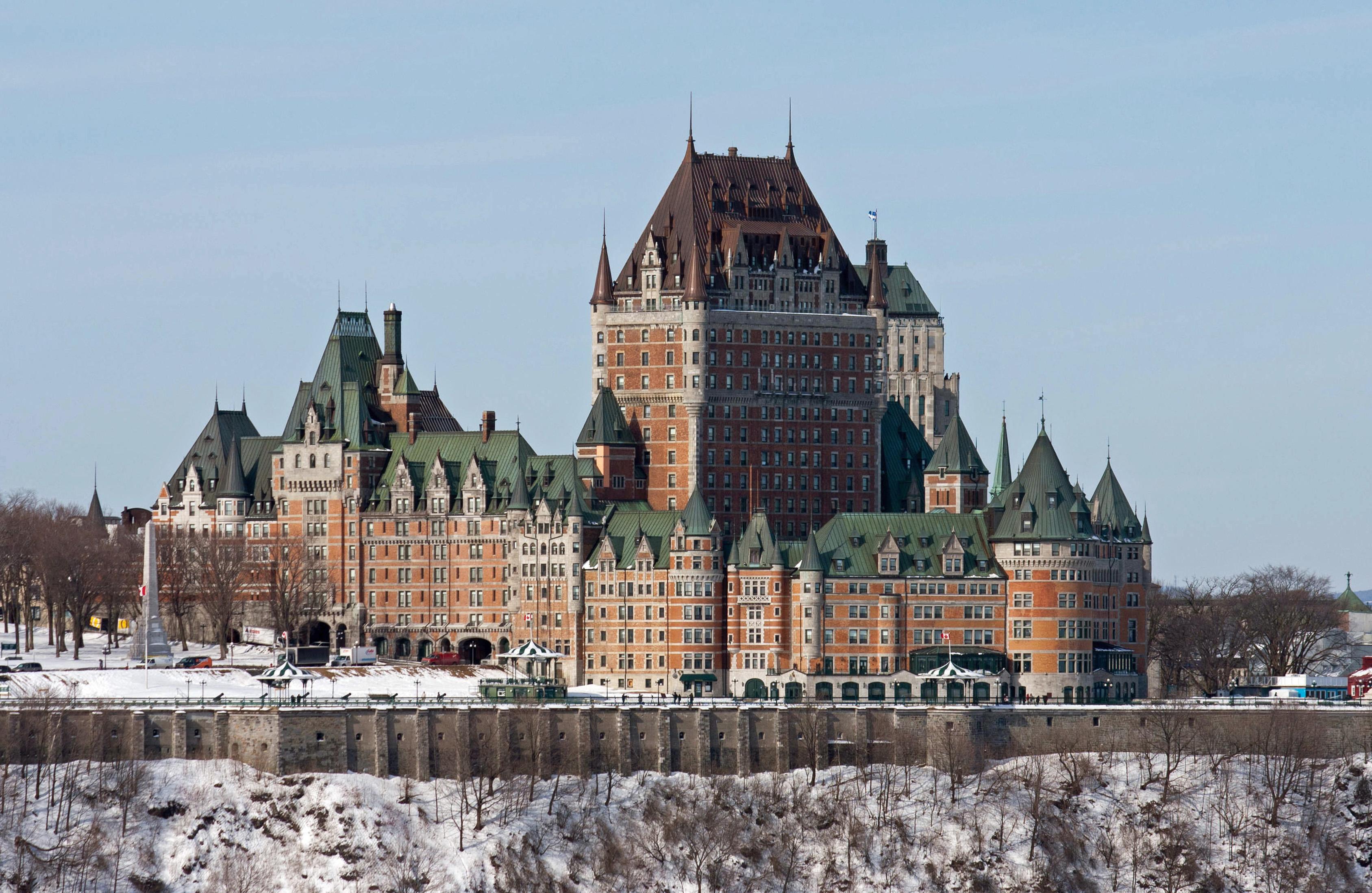
Château_Frontenac_02

On July 25th, Will duly arrived in England, and was taken on strength into the army at Shorncliffe in Kent. He posted his postcard of Montreal soon after he arrived at Shorncliffe Camp in Folkestone, Kent, at 7.00 pm on July 27th 1916. Here is the back of it:
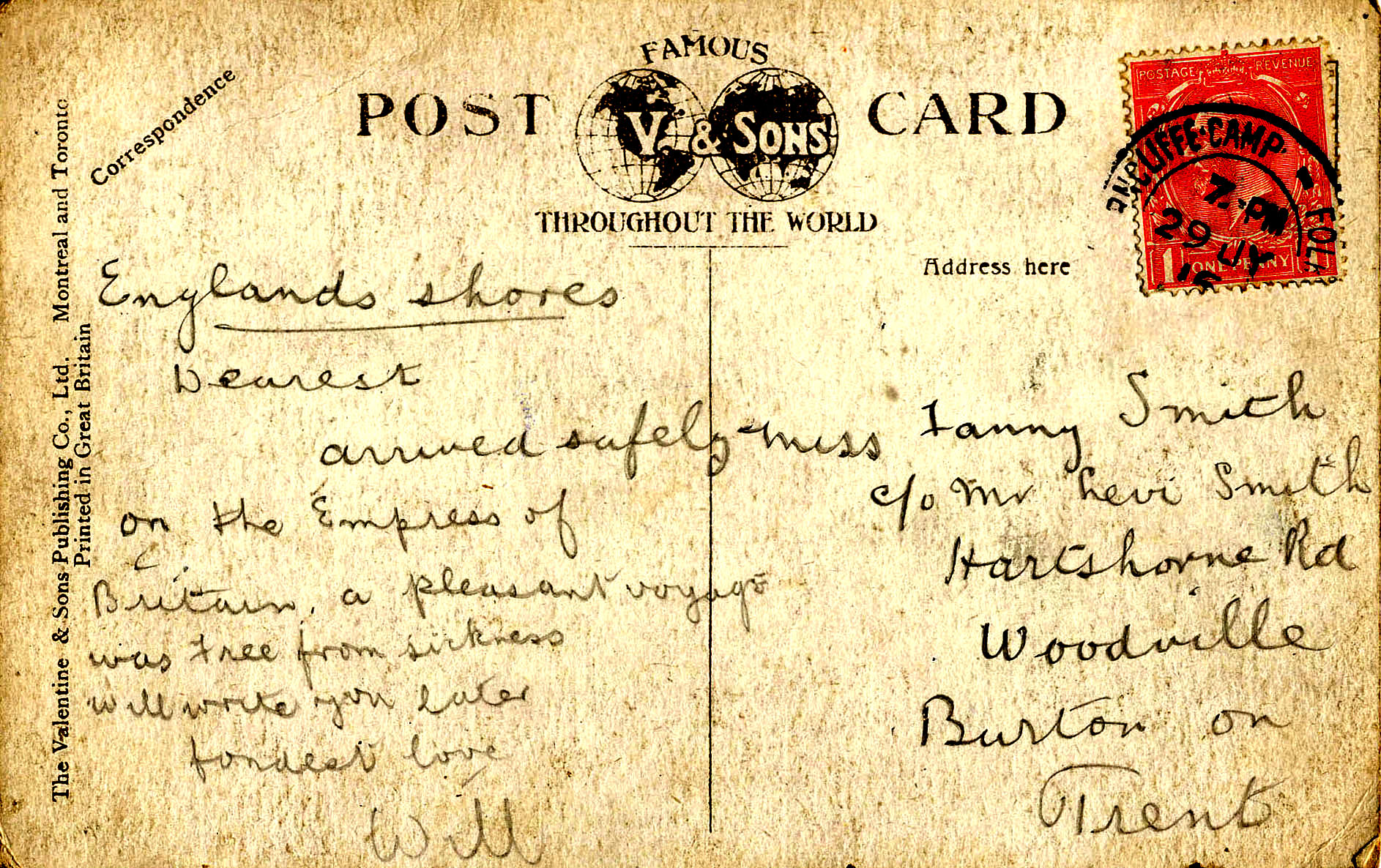
shrncliffe campxxxxxxxxxxxxxxxxx

The message reads:

Englands shores   Dearest, arrived safely on the Empress of Britain, a pleasant voyage was free from sickness will write you later fondest love Will”.

Notice how Will is beginning to become a Canadian with his unusual lack of a preposition in “will write you later”.

Shorncliffe Camp was where Will, and many other young men, were to train for France and the Western Front. Having mentioned the idea of being sick in his previous postcard, Will continues the romantic mood with a picture of the men and horses of the Canadian Field Artillery drilling hard on the parade ground:

canadian cannons sepiaxxxxxxxxxx

The reverse is here:

reverse of shoercliffexxxxxxxxxxxxxxxxxxxxxxx

Will manages to make a charming juxtaposition of “men and horses at drill with the big guns” and “Fondest thoughts” to his true love. (And she really was his true love.)

Will began his training at Shorncliffe on July 27th and he remained there until November 17th 1916. The schedule for basic training makes interesting reading nowadays. This particular week was the one ending June 5th 1915, and it is difficult to imagine that Will would have done anything substantially different just over a year later:

Monday 

(6.30-7.00 am)                          Squad drill without arms

(8.00-9.00 am)                         Physical Training

(9.00-9.30 am)                          Bayonet Fighting

(9.30-10.00 am)                        Rapid loading

(10.00-12.00 am)                      Company Training

afternoon                                 as for morning less ½ hour squad drill

Tuesday

morning                                   as for Monday

afternoon                                Entrenching  (2 Companies), remainder as for Monday

Night March

Wednesday

morning                                   as for Monday

afternoon                                 Entrenching  (2 Companies), remainder as for Monday

Thursday                                  all day                      Battalion field training

Friday 

morning                                    as for Monday

afternoon                                 as for Monday

Saturday 

morning                                   as for Monday, less afternoon (holiday)

(If this were a restaurant, you would only go there once, wouldn’t you?)

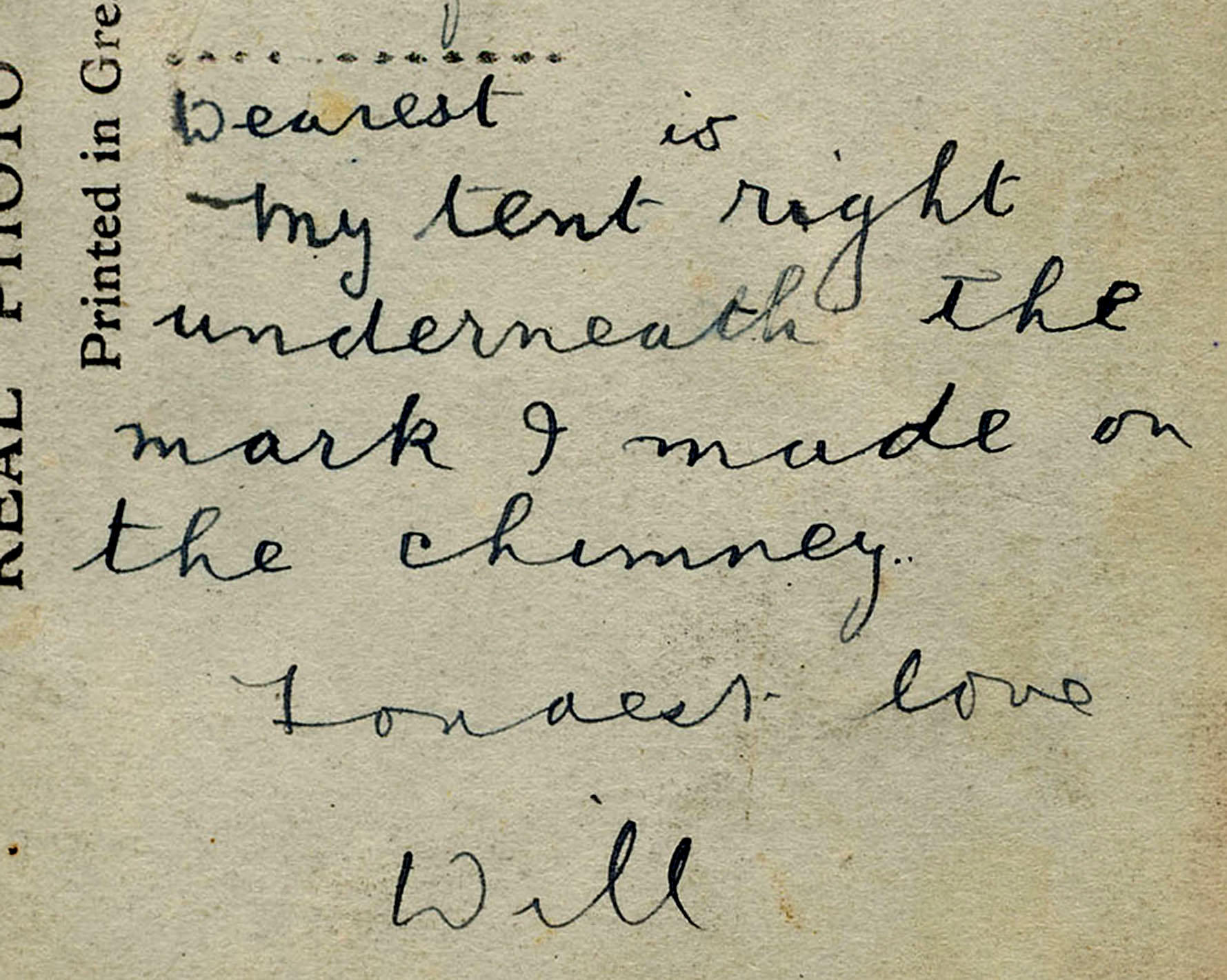
Will’s next postcard continues the hearts and flowers theme with a photograph of the men’s tents.

Will’s own tent is marked with a cross:

tentxxxxxxxxxxxxxxxxxxxxxxxxx

This is the reverse side of this postcard. Firstly, as Fanny received it:
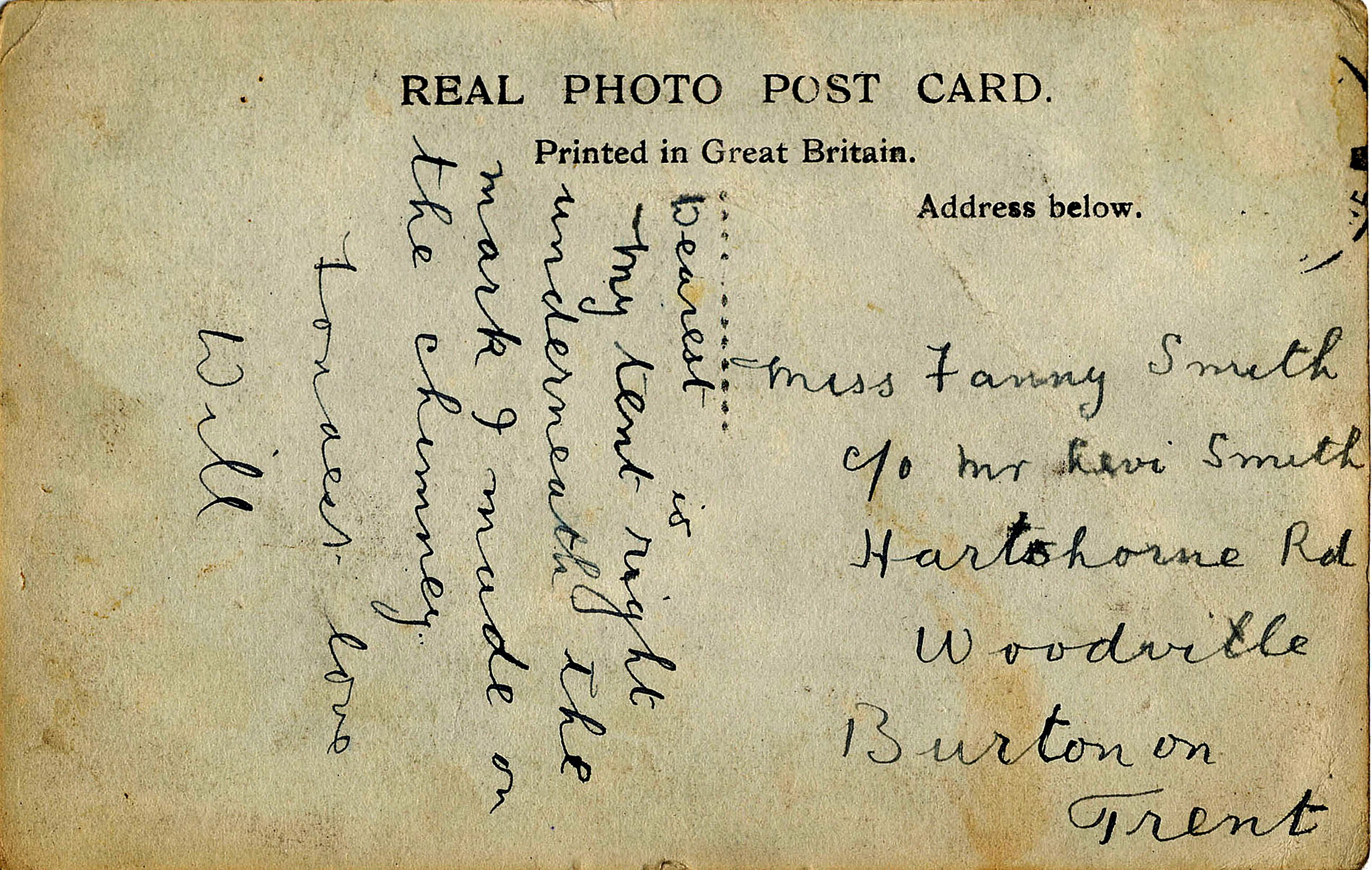
back of tentxxxxxxxxxxxxxxxxxxxxxxx

And here is the message enlarged:

back of tent2xxxxxxxxxxxxxxxxxxxxxxxxxxxx

Will remained at Shorncliffe until November 17th. He sent his girlfriend, or perhaps by now, his fiancée, some more post cards before he left. We will look at them in the near future.


22 Comments

Filed under Canada, France, History, Personal

Victorian Cormorants and Victorian Shags

To keep birdwatchers on their toes, many birds exist in what are called “species pairs”. This means that you may know that a particular bird is either a Ruff or a Buff-breasted Sandpiper, but it will not necessarily be that easy to separate them:

This slideshow requires JavaScript.

And there are literally hundreds of these species pairs, some easy, some not quite so simple. House Sparrow and Tree Sparrow are unmistakable, but what about that rare vagrant to England, the Spanish Sparrow?

This slideshow requires JavaScript.

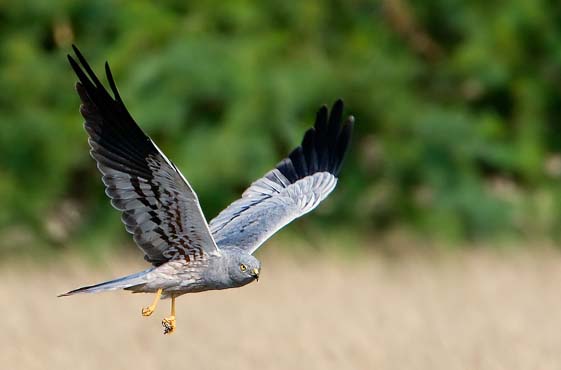
Montagu’s Harrier and Pallid Harrier, for females or juveniles at least, will require careful and probably lengthy examination:

This slideshow requires JavaScript.

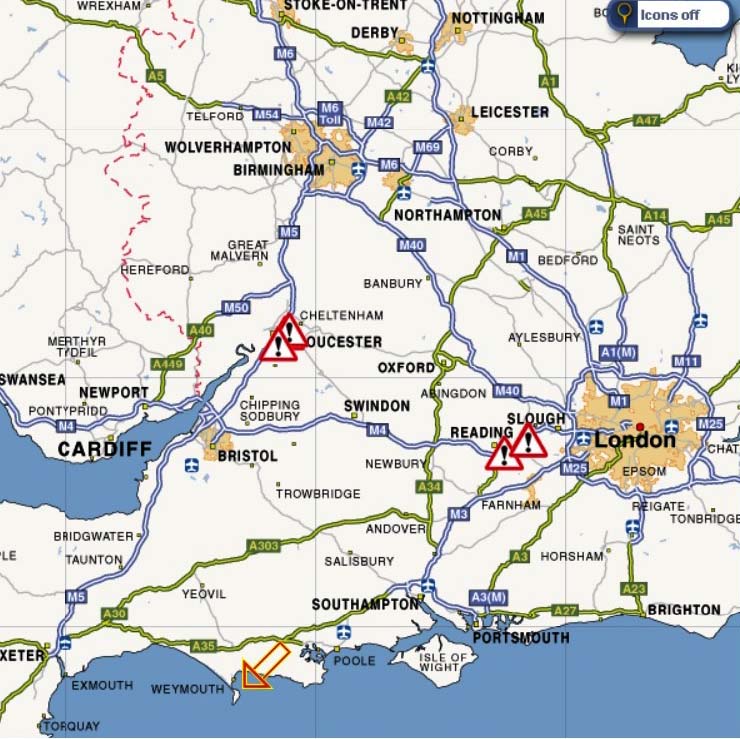
Occasionally, a particular bird will never be identified for definite. Nearly thirty years ago, I drove all the way to Weymouth in Dorset, a round trip of nearly 500 miles, to see a Pipit which was present from mid March to early May 1989, in a field near the Observatory. Look for the orange arrow:

wetymouth

It was either a Richard’s Pipit (not that rare) or a Blyth’s Pipit (one of the first two or three ever in England). Here they are:

This slideshow requires JavaScript.

And the controversy has never really been solved. Indeed, this particular bird is usually known to twitchers as the “Portland Pipit” after the Bird Observatory in whose fields it spent the winter.

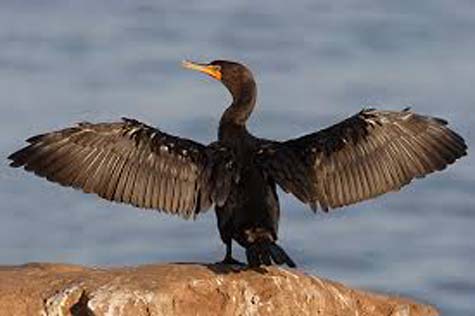
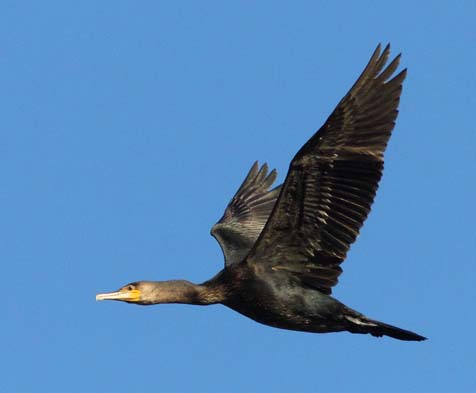
In the Victorian era, of course, without modern telescopes worth more than my car, and, more importantly, field guides with colour photographs, many birds remained unidentifiable especially if they were both fairly rare. One such pair, which I still find challenging enough even now, is the Cormorant and the Shag. Here is a Cormorant:

gret corm xxxxxxxxxxxxxx

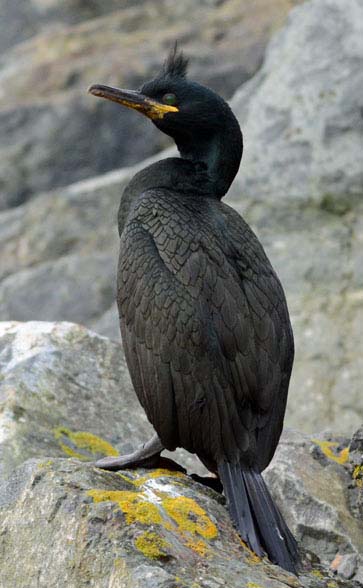
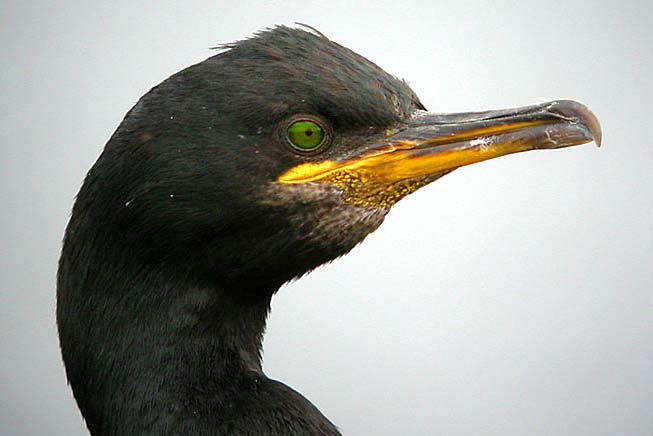
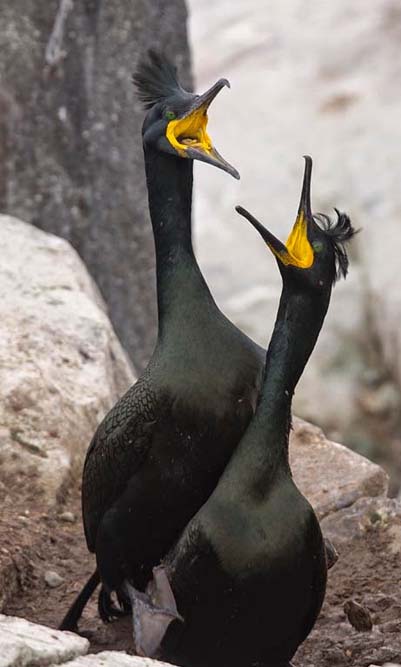
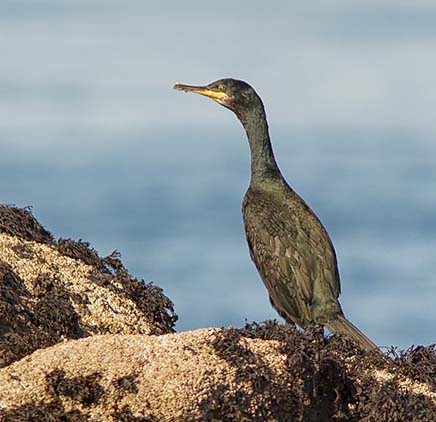
And here is a Shag:

shagbbnn xxxxxxxxxxxxxxxxx

You can probably guess what the Victorian solution was to this problem, at least as far as a rare bird was concerned. You shot the bird, if at all possible.

SHAG-03 xxxxxxxxxxxxxxxxx

With all that in mind, let’s take a trip back to the real era of Steampunk:

“According to H.E. Forrest in a letter to “The Zoologist” magazine, it was on an unrecorded date during the year of 1863 that a single Cormorant was shot at Lamb Close Reservoir near Eastwood and acquired for the collection of Joseph Whitaker:

“The keeper had seen it about some few days and noticed when he put it up, it always flew over the boathouse to another pond beyond. He told Mr Percy Smith, who was staying there, who the next morning took his gun and stood by the side of the boathouse; the keeper rowed round the lake, the bird rose, came as usual and was shot. Just as Mr Smith was lowering his gun, another large bird followed and shared the same fate; on getting to it, he found it was an immature Great Black-backed Gull; thus he brought off a very curious right and left, and secured two very rare Notts birds, which through his kindness are now in my collection.”

cormorant d xxxxxx

Thirty years later, in 1893 came the appearance of another Victorian anecdote about cormorants, this time concerning a famous bird at Newark on Trent. Once again Joseph Whitaker tells the tale:

“I am indebted to Mr Cornelius Brown of Newark on Trent for the following very interesting note : during October 1893 Newark was a centre of interest to naturalists and others owing to the visit of a friendly cormorant which continued to perch week after week on the arrow on the top of the spire of the Parish Church. The Times, Standard, and most of the leading newspapers noticed the incident while Punch magazine had some poetry upon it. The bird went away several hours each day to fish in the Trent, and returned after its sport to its lofty perch, where it might be seen trimming its feathers and making himself smart and comfortable. It left on Friday, November 17th, the day after a heavy storm, after a state of eight weeks save one day.”

The poem appeared in the comical magazine Punch on November 11th, 1893, and is a surprisingly radical comment on the church in general and clergymen in particular. It went thus:

“We are told a Cormorant sits, and doth not tire,
For a whole month, perched upon Newark spire!
Vinny Bourne’s jackdaw is beaten, it is clear
Yet there are cormorants who, year after year,
Perch in the Church. But these omnivorous people
Favour the pulpit mostly, not the steeple
Thrivers upon fat livings find, no doubt,
Cormorant within is cosier than without.”

Wikipedia tells the tale of Vincent “Vinny” Bourne, a Classical scholar who wrote a comic poem about a jackdaw which lived on a steeple.(In Latin, of course)

cornoran

For some people, the Cormorant was a bird of very ill omen. Out in the wilds of Lincolnshire:

“On Sunday, September 9th, 1860, a Cormorant took its position on the steeple of Boston Church, much to the alarm of the superstitious. There it remained with the exception of two hours absence, till early on Monday morning, when it was shot by the caretaker of the church. The fears of the credulous were singularly confirmed when the news arrived of the loss of the P.S.Lady Elgin at sea with 300 passengers, amongst whom were Mr Ingram, Member of Parliament from Boston, and his son, on the very morning when the bird was first seen.”

corm flying xxxxx

The Shag is very similar to the Cormorant, but is slightly smaller, a fact which is much more obvious when the birds are seen together. A single bird is often nowhere near as easy to identify as it is supposed to be. In the Victorian era both species were very rare in Nottinghamshire, so the chance of seeing the two together in order to make a comparison was never going to happen. For this reason, people had great difficulty in distinguishing between the two species of birds.

However in 1879, Joseph Whitaker wrote a letter to “The Zoologist” about some Shags which had turned up in the City of Nottingham itself.

“ON COMMON BIRDS IN NOTTINGHAMSHIRE.- ….Early in the same month, as some workmen at Nottingham were one morning proceeding to their work,  they came across two Shags, flapping about in Cross Street, and after an exciting chase caught them both. They were taken to T.White, birdstuffer, who tells me they dived for fish in his tank, eating several; he kept them alive for two days, but finding they “did not look like living”, killed and stuffed them. I have purchased them for my collection. Another was caught in a street close by, and the fourth was shot on Mapperley Plains. They were all young birds, possibly from the same nest, and having wandered away, got lost; or they may have been driven inland by a gale.”

shags xxxxxxxxxxxxxxxxx

In one of his newspaper articles about birds in North Nottinghamshire, published in the Nottingham Evening Post on June 21st, 1937 , Clifford W. Greatorex, a Fellow of the Zoological Society told the following story:

 “Finally, mention must be made of a Shag, three or four examples of which were recorded in early spring from various parts of North Notts. Contrary to a widely held opinion, the Shag does travel inland occasionally, although its inland visits are not so frequent as those of the more familiar and more abundant Cormorant.

sahg scilli xxxxxxxxxxxxxxxx

One of these visitors from the coast lingered on a part of Welbeck Lake, where it was seen by several reliable observers and its instinctive characteristics noted. Another, apparently injured in some way, was found in a field near a North Notts Village.

shag rutl xxxxxxxxxxxxxxx

The finder induced this bird, which could not fly, to enter a small pond, where it remained, and for the greater part of the week was fed by school children who brought it herrings, soaked bread and table scraps, all of which were devoured with avidity. Unfortunately, however, its injuries proved fatal, and one morning the young folk were grieved to find their new pet lying dead upon the bank.”

Nowadays, Shags remain fairly numerous on the rocky coasts of England, particularly in the west, but overall, they are probably diminishing in number. They are still very rare inland. Cormorants are extremely numerous, enjoying the many lakes conveniently filled with large fish for anglers to pit their wits against. At the moment, they are a protected species, but this may not last too much longer.

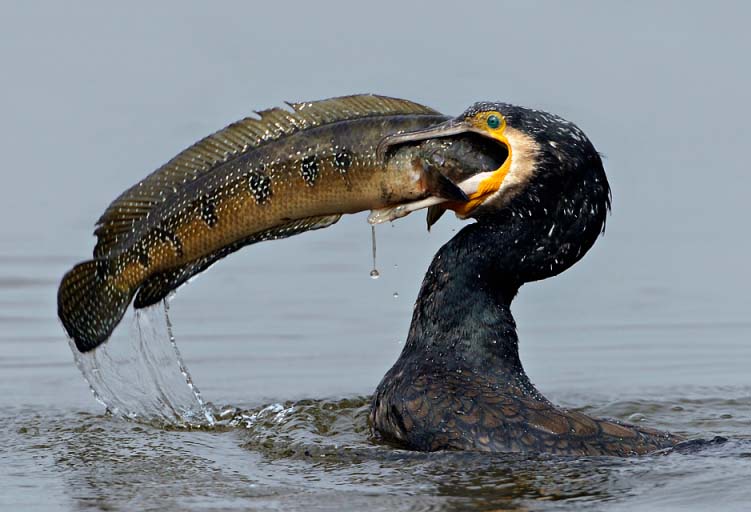
In the meantime, Cormorants will continue to entertain, as greedy but ever optimistic birds:

great-cormorant xxxxxxx


4 Comments

Filed under History, Nottingham, Twitching, Wildlife and Nature

A lovely old bird called Elsie

(An extract from my birdwatching diary “Crippling Views”)

Saturday, June 25, 1988

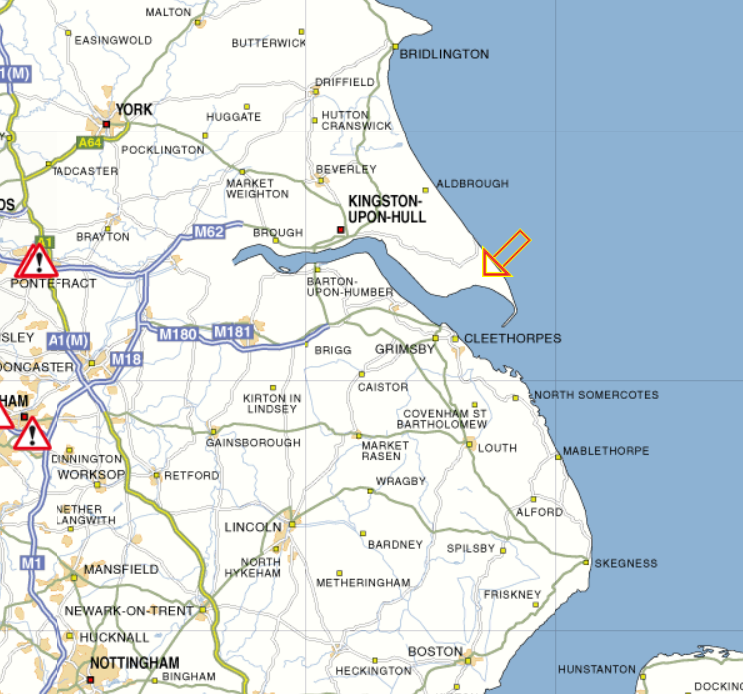
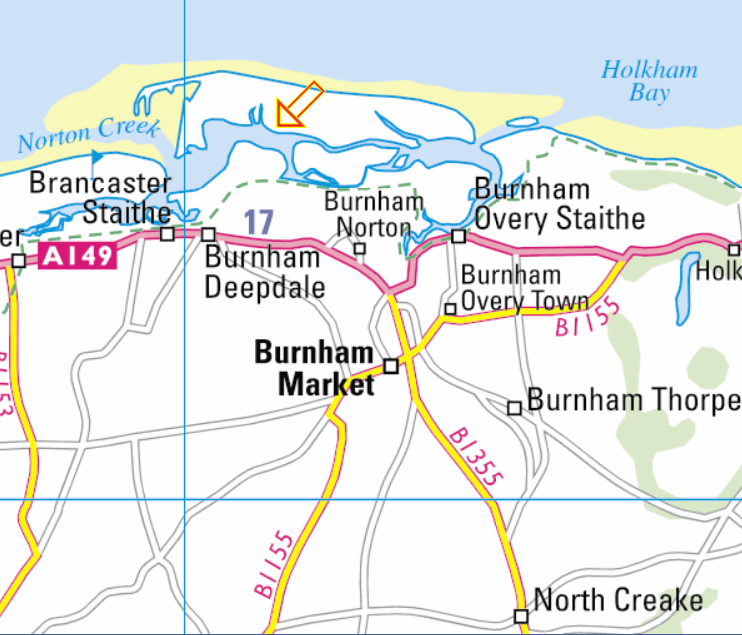
Birdline organises another weekend for me. Look for the orange arrows:

This slideshow requires JavaScript.

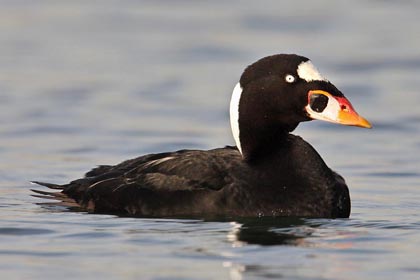
This Saturday, it’s a vagrant duck from North America, a drake Surf Scoter, that has been found offshore at Holme next the Sea  in north Norfolk. A very well-behaved bird, it has been seen every single day of the week, and should be a cinch. Should be:

xxxxxxx surf_scoter_1655

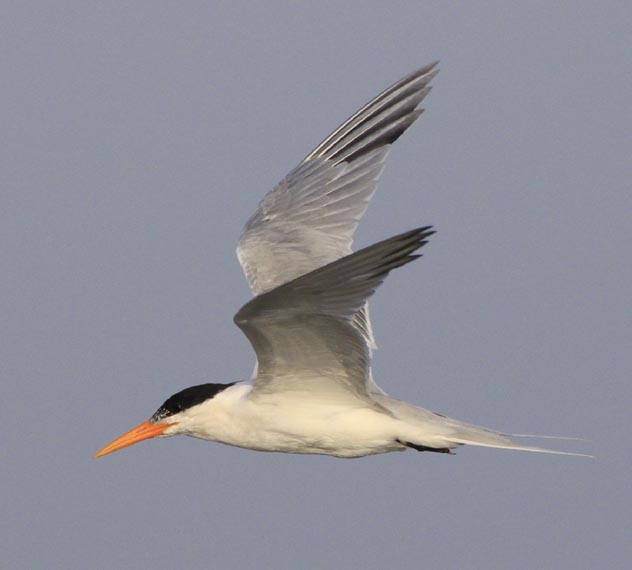
I go with Paul, Robin and Sue. It’s a beautiful summer’s day, blue skies, a bright sun and a typically bracing east coast wind. After an uneventful three hour trip, we park in a layby at the side of the road at the western end of the Holme reserve. As soon as we get out of the car, I see a most peculiar bird. It’s a large tern, flying steadily eastwards along the beach. About the size of a Sandwich Tern, it has a straw yellow bill. I am paralysed, I can’t remember what colour bill a Sandwich Tern has. For a few moments, I think that I’ve got everything exactly backwards, so that all Sandwich Terns have a yellow bill with a black tip. But that’s not the right way round. Sandwich Terns have a black bill with a yellow tip! I force myself to look at the bird for the duration of the flypast, but it’s very difficult to take in a great deal, because I’m so panic stricken:

Sterne voyageuse (Sterna bengalensis)

I think of shouting to Paul, but he’s three miles away, year ticking Redshank. I don’t have the courage to yell to another group of nearby birdwatchers, because deep down, I have a terrible suspicion that I have got it all wrong, that I will be calling out to them just for a Sandwich Tern. I keep looking. The bird is fairly round winged, with fairly dark upper parts to both its wings and back. It has a noticeably white trailing edge to its wings, a little like a Laughing Gull, and for a tern, it seems big, almost the size and bulk of a gull. I walk thirty or forty yards, trying to dismiss the bird as an aberration, the product of a rarity crazed mind. I even consider the idea that I just got out of the car, tired from the driving, and somehow misidentified a Little Tern. There are quite a lot of them over the beach, and mental blocks through fatigue are not that unusual. Then suddenly, the bird reappears. It is in company with  two Sandwich Terns and I can easily pick it out, totally different from its two companions:


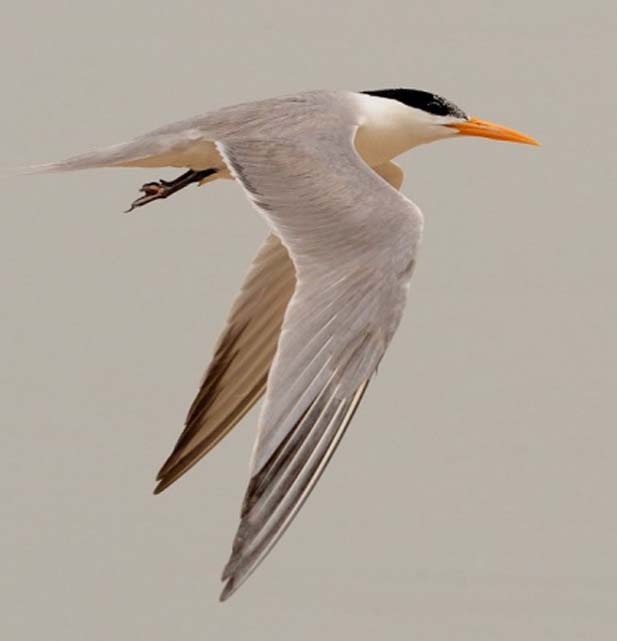
This time, I shout to Paul and tell him to get on to the last bird. He manages to pick it out and agrees with me on two things. Firstly, that it is different to the Sandwich Terns, and secondly, that it has a straw yellow bill.  We have an exciting discussion about it and Paul puts forward the idea that it is a Lesser Crested Tern, a very rare vagrant to Britain, but one which has been seen a few times of late, due in part, it is thought, to a single lost bird which wanders the east coast of Britain, looking eagerly for its Libyan homeland. I haven’t a clue. I’ve never even heard of a Lesser Crested Tern. I thought that Gaddafi had abolished birds as being too flippant. I don’t even have a book with Lesser Crested Tern in it:

xxxx LCT 2

When I get back to Nottingham, I spend many a happy hour, trying to get information on the mystery bird. What convinces me though, is an illustration that I find in an old Indian birdwatching book, where the most salient points are the yellow beak, the dark mantle and the brightest of white trailing edges. They ought to know. They see them a damned sight more often than I do. And what finally proves it to me totally is an announcement a couple of days later that a Lesser Crested Tern has recently been present, on and off, at Cley next the Sea, just a few miles down the coast to the east. Seduced by the promise of eternal fame, I send a letter to the Norfolk Bird Recorder, and also to the Reserve Warden at Holme.

The Surf Scoter, of course, after all this, is long gone. We spend the rest of the day looking for it, but without any luck at all. The Common Scoters are exactly that, but among the hundreds of sea duck, there is no bright white head:

We also see a lot of Little Terns, who succeed in sowing the seeds of doubt, but who, at the same time, solve quite a few problems. They fly down the same track as the putative Lesser Crested Tern, but with a completely different flight action. They flutter like butterflies. They don’t fly purposefully like the mystery bird:

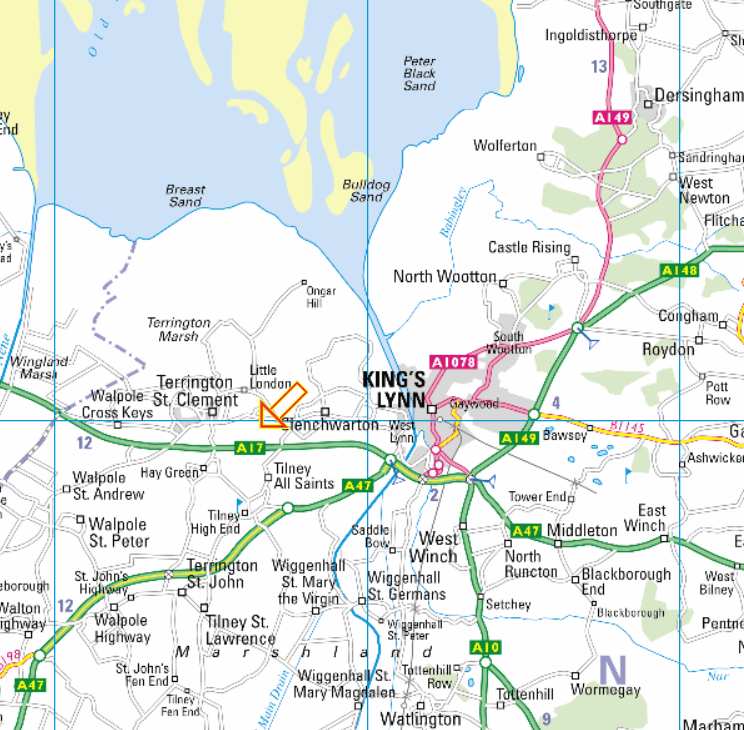
And anyway, I saw it in the company of Sandwich Terns, so I have a good idea of its size, and it’s a lot bigger than a Little Tern. It’s a different bird, in actual fact. A thrilling end to a memorable day is provided as we motor south to Kings Lynn, on the way back. Look for the orange arrow:

lynn

Just beyond the ring road, we see a large raptor quartering the fields to our left:

xxxxxxxxxxxxxxxx Montagu's_Harrier

It crosses the road above our heads, continues the quartering, and finally disappears behind the line of trees on the horizon. It is a male Montagu’s Harrier, perhaps the North Wootton bird, but more likely, from a site not yet revealed to the Verminous Company of Egg Thieves. It is fairly isolated out here though. Let’s hope that the Montagu’s Harrier family spend their summer undisturbed, raise their babies and leave peacefully. Flying back if possible, not over Malta or any other world centre of illegal hunting:

xxxxx montagus_Harrier_Serengeti_


I sent in my claim of a Lesser Crested Tern to the British Bird Rarities Committee, but after a year or two of careful consideration, they rejected it,  even though the Birdwatching Committee in Norfolk seemed reasonably satisfied with it. So, a few years later, I drove to Spurn Head in Yorkshire to see another, or conceivably the same returning, Lesser Crested Tern. Look for Nottingham in the bottom left and the orange arrow:

spurn

I went there on two separate occasions, and finished up driving nearly 500 miles in total. After almost two days standing in “The Place”, “The Bird” did not deign to tern up (sick). On the second day, I was there at seven in the morning, and I was then the last to leave at eight o’clock in the evening. Another birdwatcher arriving alone at half past eight then found the bird exactly where it was supposed to be standing and I’d missed it. That started to make it personal.

A little while later, I drove to the north Norfolk coast where foolhardy twitchers were wading across a tidal creek to Scolt Head Island, their telescopes and tripods held above their heads like the Marines in Vietnam. They were looking for a Lesser Crested Tern which had been seen in the Sandwich Tern colony. Look for the orange arrow: 

scolt

I decided, though, to stay on the mainland, not drown and keep my eyes open for the bird flying down the coast to fish. Three wasted hours. No chance!

It was by now way beyond personal. Around this time a Lesser Crested Tern had been hybridising with Sandwich Terns in a tern colony on the Farne Islands, some three or four miles off the coast of Northumberland, some 200 miles to the north of Nottingham. Eventually, everybody realised that all the many records of Lesser Crested Tern on the English East Coast were most probably this one returning individual, being seen over and over again by different people.  Because the initials of a Lesser Crested Tern are “LCT”, the bird was now being called “Elsie”. I decided to bite the bullet  and drive up to the Farne Islands. As the bird was nesting, it should be a cinch. Should be.

Look for the orange arrows :

This slideshow requires JavaScript.

I failed to see it. So I decided to try again, and at very long last, I saw Elsie’s straw yellow bill sticking jauntily out of a crowd of black billed Sandwich Terns, all sitting on their eggs.

And I watched this good tern, this most excellent tern, for a very long time. A very long time. And then, half an hour later, I came back for seconds. And yes, I had already seen a bird just like Elsie, with her unmistakable bill, somewhere else, a long time previously, but the details escaped me for the moment.
Afterwards, I worked out that the nearest colonies of Lesser Crested Tern were on the coast of Libya. To see one, I had driven to Holme (210 miles for the round trip), Spurn Head twice (500 miles for two round trips), Scolt Head Island (250 miles for the round trip) and the Farne Islands(880 miles for two round trips). How far is it to Libya by car?

11 Comments

Filed under History, Personal, Science, Twitching, Wildlife and Nature

The Beast of Orléans and his grandson

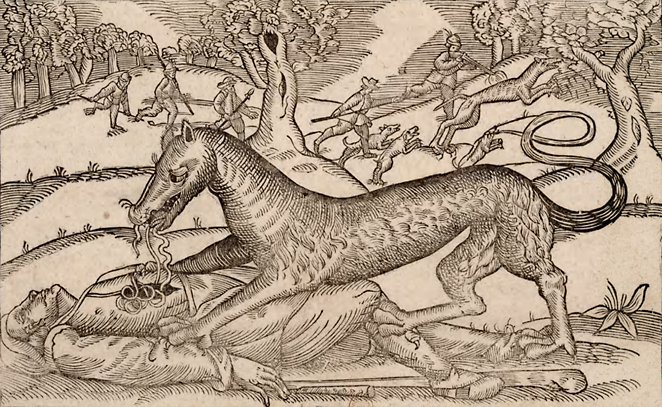
This blog post will introduce you to yet another killer monster (or monsters) in the long, long series of killer monsters which have ravaged different areas of France from around 1550 until the present day. I started this long list by telling you about the Beast of Gévaudan. Then it was the Beast of Benais, the Beast of Auxerre and Trucy, the Beast of Cévennes and Gard and Vivarais and then the Beast of Sarlat. This illustration has been used to represent more or less all of them by the uninhibited copyright thieves who wrote sensationalist pamphlets in the Eighteenth Century:

Bete_de_Cinglais_1632 xxxxxx

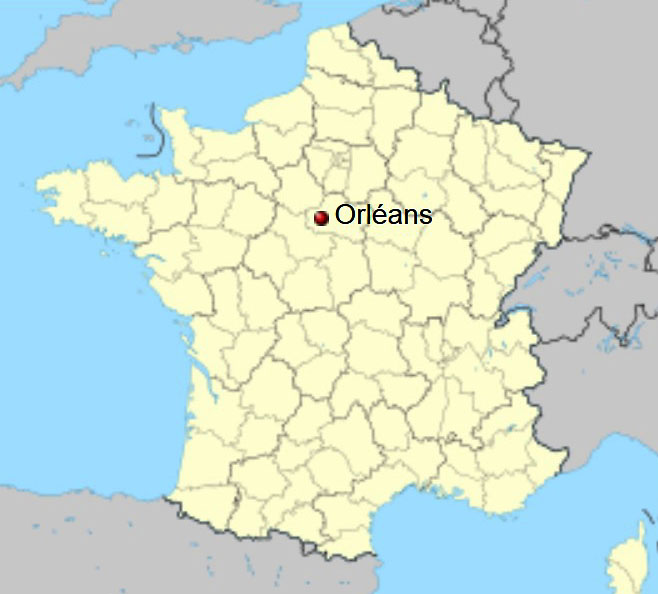
This time I will be looking at the area near Orléans, where a number of “incidents” have taken place over the years:orleans map

Many people at the time thought that the culprits were just ordinary wolves, but, as we will see, there are more than enough anomalies to cause the odd doubt here and there. Once again, I will be looking at a number of websites written in French, offering you my translations and you can then make your own mind up between them.

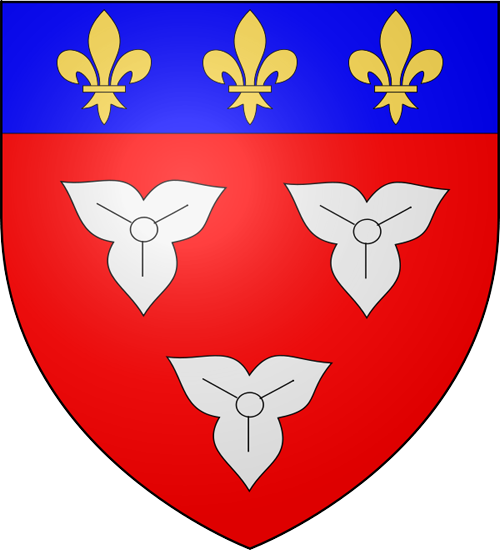
The first website actually begins with a man who was writing about wolves in the region around Orléans. Here is the coat of arms of that beautiful city:

600px-Blason_Orléans_svg.png zzzzzzz

This was in 1911, and the writer in question was an historian called Charles de Beaucorps. He wrote:

“In 1691, the wolves’ misdeeds caused many justified complaints and the Royal Commissioner duly informed the national authorities. Learning that the incidents caused by these predators were increasing every day, he asked the King to allow the inhabitants of ten or twelve parishes to have firearms in their homes.  Normally they did not dare do so for fear of prosecution by the officers of the Royal Hunt. The Royal Commissioner also told them to carry out hunts and asked Monsieur Béchameil, an officer of the crown, to direct them. Nothing was done to stop this scourge: it grew to such an extent that every day people were being killed or injured by wolves. On September 12th, within musket range of the Chêne Brûlé, a parish in Cercottes, a sixty year old woman was devoured. The King’s Prosecutor in the Neuville Guard, who was keeping a register of children killed or injured by wolves using the death certificates written by parish priests, had listed more than 60 young victims in the space of fifteen months. “

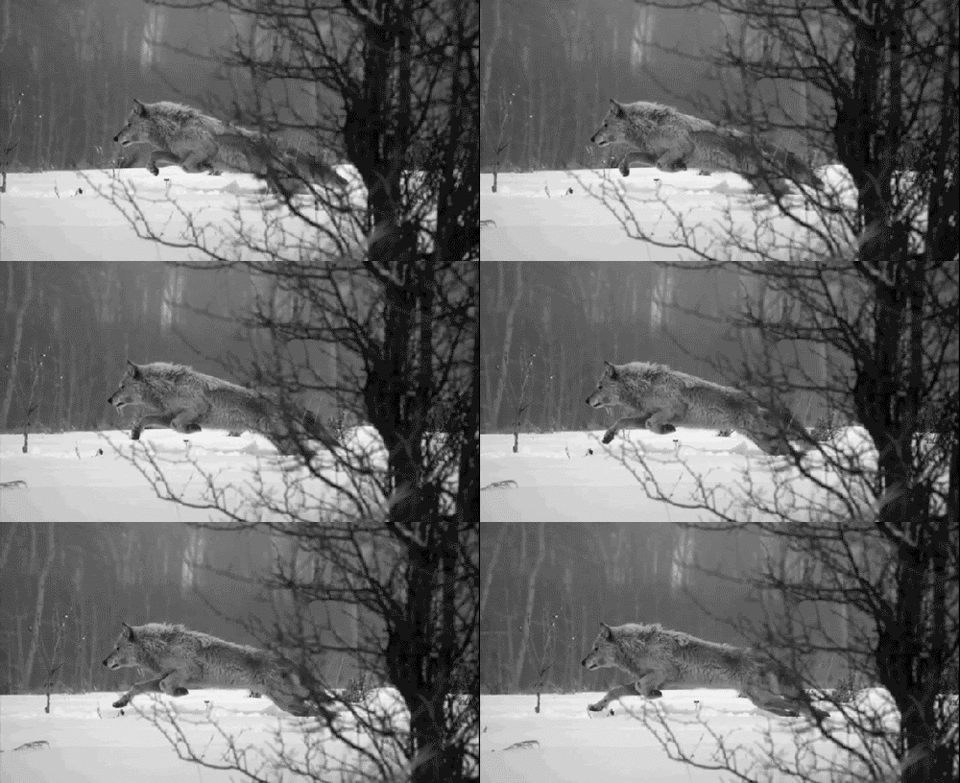
Interestingly enough, this was not, apparently, completely outrageous by the usual standards of behaviour of French wolves, animals which had grown accustomed to feeding on human corpses in open charnel pits until as recently as 1820:

wolf bounding

Charles de Beaucorps, however, was nothing if not a very thorough investigator:

“Despite the hunts and more than two hundred wolves killed, the attacks continued for years, right up until 1702 (a total of eleven years). The first teams of hunters obtained hardly any results. It needed the militia and the Duke of Vendôme, supported by thirty musketeers, to stop this scourge.

In 1700, an “Enormous Beast” was killed in the forest and brought back for the Royal Commissioner, leading to the payment of a reward of thirteen pounds.”

werewolf attack

And nobody, of course, managed to write a precise scientific description of exactly what this “Bête énorme” was. Presumably, though, for it to be considered a “Bête énorme” in the middle of more than two hundred dead wolves, all of which must have looked pretty much the same as all the others, it cannot have been an ordinary wolf.

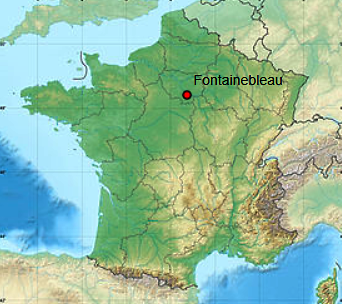
Around the same time, there were equally strange events in Fontainebleau:

“In 1679, woodcutters were killed and eaten in the Forest of Fontainebleau. The parish registers of Bois-le-Roi mentioned several cases of attacks.”

It might have been wolves, but I am surprised that, if it were, they did not say so. As the map shows, these gory killings took place not a million miles from Orléans:

fontaineb

Shortly after this, came the animal which was to become really famous. It was given the name of “The Beast of Orléans”. According to a website we have already visited:

“There were actually two distinct episodes which took place almost a century apart. The first, the Beast of Orléans, happened in 1709, as attested by a letter from Monsieur Polluche Lumina, who lived in the Rue des Hennequins, dated June 17th 1765. It says this:

“I am taking the liberty to write to you about the ferocious Beast of Gévaudan. The more I reflect on all the stories which appeared in the newspapers the more I find a resemblance with what has happened here and what I myself saw in part after the Great Winter of 1709. There appeared an animal which people called “The Beast” which only attacked women and children. There were the same ways of moving around, the same
sharpness and even timidity as the Beast of Gévaudan:

second-beast

The devastation was so serious that in six months there were more than 100 people killed and as many wounded. This provoked the king to send his royal wolf catchers. The officer who commanded them did not bother to follow the trail of destruction which this animal produced and which was normally around the perimeter of the forest.

He decided instead, every morning, to have several hunts in the woods with bloodhounds, after which his men went on a reconnaissance.  Then, without making any noise whatsoever, they positioned marksmen all around the area. The dogs were then released into the forest.

If the Beast was not found, they would go and carry out the same tactics in another area to pursue the Beast. There was hardly any hunt where the men did not kill one, two or three wolves, because the Beast was nothing different from them. Could they not employ the same tactics to destroy the so-called Beast of Gévaudan? I presume that the situation there is just like it was here. Just wolves and nothing more. I forgot to say that they killed a good hundred wolves in this area. In the stomach of several they found hair and other things which proved that they had eaten human flesh. They managed to destroy the species, the wolf, to such a point that there was no longer any question of there being a so-called “Beast” to which fear had given names and features each one more frightening than the last.”

Clearly, Monsieur Polluche Lumina thought that the Beast of Orleans was merely a wolf or wolves, seen under conditions of extreme stress and fear. Such terror supposedly exaggerated the witnesses’ testimony to such an extent that the idea of a monster was born. Not everybody, though, went for this rather simplistic explanation.

A short pamphlet about the Beast was printed at Chartres by Garnier-Allabre, the well-known local manufacturer of wallpaper and pictures. He may well have interviewed the witnesses about what they had seen. Garnier-Allabre produced this illustration which, to me, looks nothing like any wolf I have ever seen, even a stylised one. It has scales! It is armoured! It is as much like an anklylosaurus as a wolf!:

beast 1709

The leaflet also contained the following text:

“This cruel beast tears and devours everything it encounters in its path and causes desolation among whole families in the areas that it moves through. Last December 25th, near the entrance to a village near Beaugency, it found an unfortunate woodcutter and his wife and his eldest son. The ferocious beast first attacked the unfortunate woman. The poor woodcutter and then his son tried to defend her and a terrific battle ensued. Despite their efforts and those of several other people who rushed to the rescue, the unfortunate woman was killed and several others were wounded.
It is impossible to calculate the number of unfortunate people who were victims of the rapacity of this wild beast; it is covered with scales, and no weapon has any effect on it. Let us pray to God, my dear friends, to deliver us from this monster, and pray, too, for the speedy recovery of those injured by this animal. “

The local historian Monsieur Lottin also makes mention of the Beast and links the Beast of Orléans to the Beast of Gévaudan:

“A cruel beast, believed to be a hyena and which ravaged Gévaudan, Auvergne, Nivernais , Bourbonnais and the areas around Orléans and against which regular frontline troops had operated , was killed at that time , by the Sieur Antoine, a skilful hunter. This ferocious animal had caused the greatest devastation and had inspired universal terror. Coloured pictures, produced by Monsieur Letourny, a paper merchant in the Place du Martroi , who had gained a reputation for this kind of engraving, were sold by the thousand.”

Alas, none seem to have survived.

Extremely close to Orléans is the tiny town of Chaingy. It is represented by the red square:

This slideshow requires JavaScript.

Even nowadays Chaingy has only 3,669 inhabitants. It was here that an unbelievably aggressive creature struck more than a century after “The Beast of Orléans”. The same website continues:

“In 1814, the Beast of Chaingy also gave rise to an abundance of images. There has been much confusion between the two creatures, at least on the level of how the illustrations would represent “The Beast”. This is not surprising: the printers did not trouble themselves over exact details and were more than willing to copy each other’s efforts:

Bete_de_Chaingy_ws1028371882


The case of the Beast of Chaingy took place in 1814. It is possible that it reflected other cases of “Beasts” from a long time before, such as the one described by Monsieur Polluche Lumina which took place a long time before (1709). The Beast of Chaingy is a creature which has been a little better documented :

“On December 6th, 1814 , several women and children who were collecting dead wood in the forest were attacked by a she-wolf . The animal killed two and injured eight more. The Baron de Talleyrand, whose magnificent full name was Alexandre Daniel de Talleyrand-Périgord was Prefect of this area. He ordered a hunt and the beast was slain near Cercottes.”

This is as maybe, but, for me, if this creature was just an ordinary canis lupus, then its behaviour was absolutely extraordinary. Nobody nowadays would expect a group of people to be attacked, or even challenged, in a wood by a lone she-wolf. To then have two individuals killed and eight more wounded is quite astonishing. All I can suggest is that this animal was, as has been said so many times both about the Beast of Gévaudan and about many others:

“C’était comme un loup mais ce n’était pas un loup.”
“It was like a wolf but it was not a wolf.”

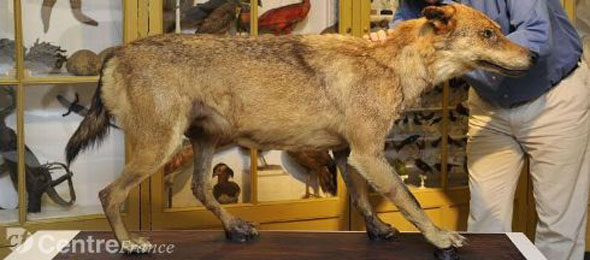
In 1868, the last real wolf in the region was killed by a poacher in Chaingy, a man called Blaise Basset. The body of the animal is now on display at the Museum of Natural Sciences in Orléans.
And here it is:

real bete

Hardly the type of creature to kill two people and wound a further eight. I’m more scared of those polyester slacks if truth be told.
And finally. Let’s hope that this is merely an imaginative drawing of the Beast of Chaingy. If it’s from a trailcam, we could all be in trouble:

imaginative chaingyu


18 Comments

Filed under Cryptozoology, France, History, Science, Wildlife and Nature

A very cunning Käpitan

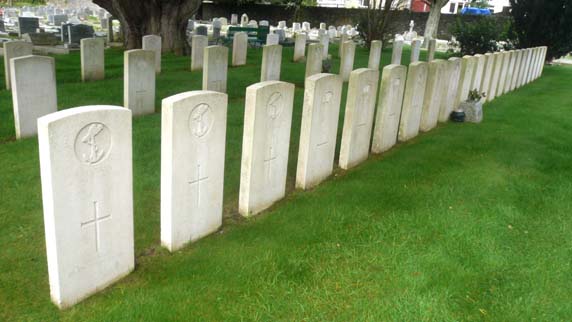
In Penzance Cemetery lie the graves of twenty two Second World War casualties from four individual ships:

P1500367 XXXXXX

These vessels were in a convoy which was attacked by six German E boats ten miles to the west of Lizard Point, during the night of January 5th-6th 1944. All four ships were sunk. The casualties included HMS Wallasea, an armed trawler which was acting as one of the escort ships, the S.S.Solstad, the M.V.Polperro and the M.V.Underwood. This attack was part of the German attempts to disrupt the Allies’ obvious preparations for an invasion of Western Europe that coming summer.

What is so very striking about Naval war graves, however, having seen the last resting places of literally thousands of Army and Air Force casualties, are that the latter can often be very similar in age, rank or nationality, and perhaps even as far as regiments are concerned: in other words, the same kind of details may be repeated over and over again. With Naval graves, though, you feel almost as if a whole family is involved, with people of often widely differing ages, all having performed some specific job within the ship. And like a family, that ship is the sum of these individual parts.
The S.S.Solstad was a Swedish steam powered cargo ship originally launched in 1924 by Lewis John & Sons Ltd. of Aberdeen, under the name of the “Gatwick”. It weighed just under 1,400 tons, and was travelling from Swansea to London with a cargo of coal when it was torpedoed by the German torpedo boats, S-136 and S-84. The ship sank in three minutes with the loss of five lives. Here is the Solstad in two different companies’ liveries:

This slideshow requires JavaScript.

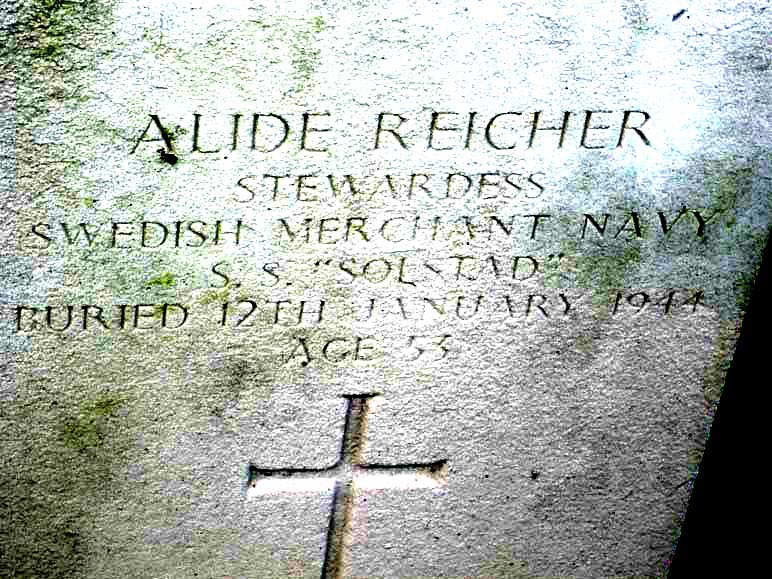
Alide Reicher was 53 years of age. She a stewardess on the Solstad. She is, I think, the only woman war casualty whose grave I personally have ever seen, and even more unique is the fact that she was Swedish, a neutral nationality in theory, and was serving on board a ship of the Swedish Merchant Navy. She really was somebody who gave their life for freedom:

P1500244

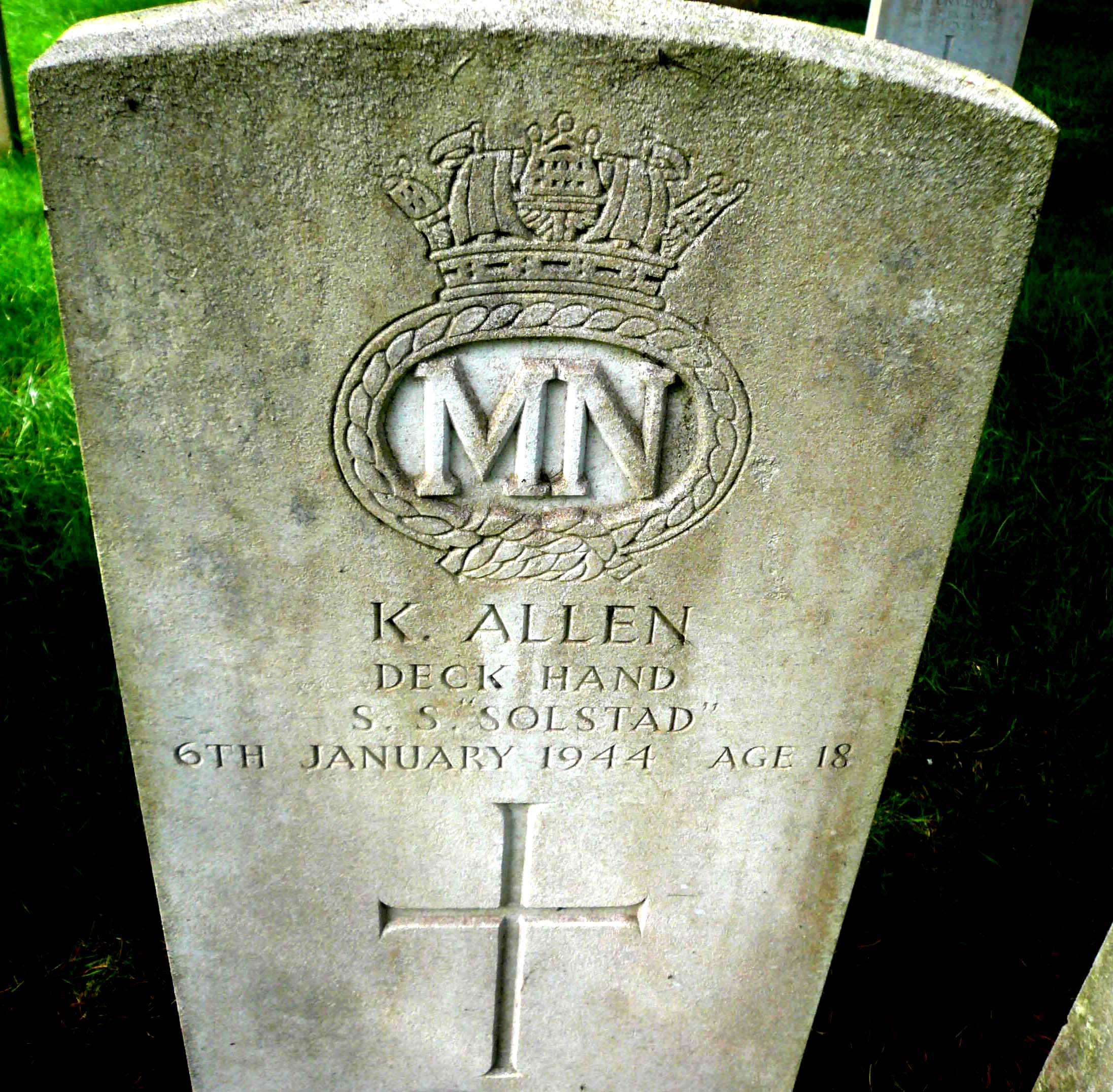
The second casualty from the Solstad was Kenneth Allen who was killed aged only eighteen. Kenneth was a Deck Hand and the son of Alfred Anthony Allen and Minnie Allen of Blyth Northumberland. He was the husband of Marjorie Gertrude Allen of Gravesend:

P1500269 xxxxxxxxx

The M.V. Polperro, registered in Fowey, had sailed from Manchester with a cargo of coal, joining a convoy bound for Penryn, Cornwall and then on to London. This is the only photograph that I could find:

mvpolperro1

The Polperro went down with the loss of all hands, namely eight Merchant Navy seamen and three Royal Navy gunners:

Polperro tower hil ww2 meorial

The wreck lies in 200ft of water. The Penzance graves from this nautical family are two Able Seamen:

This slideshow requires JavaScript.

The M.V.Underwood, almost three hundred feet long and weighing two thousand tons, was travelling from the River Clyde in Scotland to Portsmouth, with military stores including vehicles. The crew of fifteen seamen and three passengers was all lost. This photo shows the M.V.Tuaranga, which was the sister ship of the Underwood, but in all respects save its name, it is the same vessel:

Port Tuaranga, was the sister ship of M.V.Underwood

The wreck of the Underwood was identified in 1975 by information on the boss of the propeller. This grave is that of the Radio Officer, Alexander McRae. He was 43 years of age and came from Carluke in Lanarkshire, Scotland. Graves do not have accents however. Alexander’s parents were William McRae and Annie McRae (nee Wilkie). His wife was called Edith :

P1500332

His Majesty’s Trawler Wallasea, (T-345) was an Isle Class Armed Trawler built in 1943. This vessel was part of the Royal Naval Patrol Service and weighed just under five hundred tons.

This slideshow requires JavaScript.

Seventeen members of the Wallasea’s crew are interred at Penzance.  This closely knit sea-going family includes an Able Seaman, the Cook, an Engineman, a Leading Steward, an Ordinary Signalman, a Seaman, a Second Hand, a Stoker and a Telegraphist:

This slideshow requires JavaScript.


All of these Allied vessels were sunk by German E-boats. These impressive vessels were capable of speeds up to almost 50 m.p.h. and were easily the most effective torpedo boats ever built:

imagesKOJYKRSJ

The attackers on January 5th-6th 1944 were the 5th Flotilla led by Leutnant-Kommander Karl Wilhelm Walter Müller. The flotilla comprised S84, S136, S138, S141, S-52, S142 and S14. In German, the “S” strands for “schnell” or “fast”. Rather imaginatively, in English the “E” stands for “Enemy”.

Karl Müller, when he was the commander of Schnellboot S-52, was already credited with the sinking of the British destroyer Eskdale on April 14th 1943:

This slideshow requires JavaScript.

He was no doubt the very proud owner of his Knight’s Cross of the Iron Cross, awarded on July 8th 1943. This is the only picture of Karl Wilhelm Walter Müller which I have been able to find. The lettering across the photo is in German and may refer to copyright problems, but on the other hand, the long word, when re-examined in Photoshop, does appear to have a swastika in the middle of it, so perhaps it is from some archival source:

Karl Müller received Ritterkreuz

On this particular occasion off the coast of Cornwall, Müller was again in command of Schnellboot S-52. He was tasked with attacking convoys in the English Channel. Skilfully, Müller lay in wait for these particular ships of Convoy WP457, very close to the Cornish coast. His little fleet was then able to surprise the convoy by an unexpected attack from the landward side. This is the little cove where the German E-boat fleet sheltered. Look for the orange arrow:

This slideshow requires JavaScript.


This is the cove where the Germans took refuge. They were extremely close to the shore:

cove

The soldiers guarding the telegraphy installations at Porthcurno presumed that the motor boats must be British and took no action. It was later said that “Their role was to guard the telegraph and not to act as coastal lookouts.” Such pathetic, pompous stupidity was to cost a great many lives.

At three o’clock in the morning of January 6th, 1944, the British convoy was more or less ready to cross Mount’s Bay where:

“The weather was fine with good visibility. It was moonlight with a south-west wind force three and moderate sea. Leaving the cove they prepared to attack the convoy.”

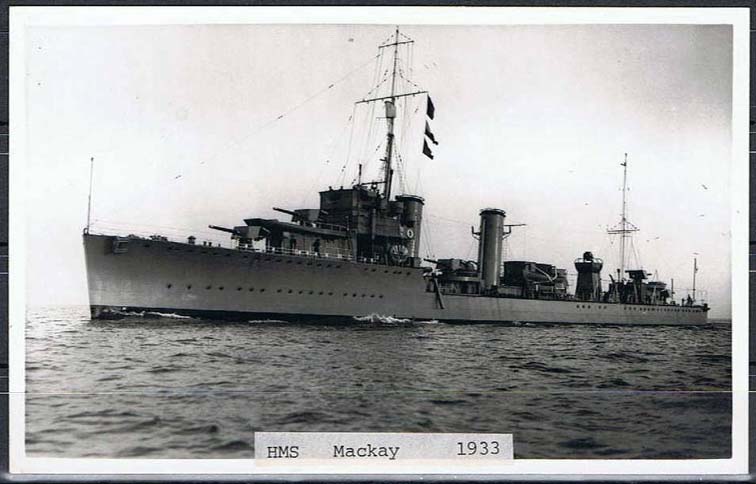
The cunning Leutnant-Kommander Müller had the enormous advantage of complete surprise because his attack came from the landward, Cornwall, side. The escort led by the aging destroyer H.M.S. Mackay was overwhelmed by the firing of no less than 23 torpedoes and four ships were sunk:

mackay

The German force’s first attack sank the Solstad and the second, some five miles south of Penzance, sent the Underwood, the Polperro and the Wallasea to the bottom. Nowadays, with the right knowledge from the Internet, these ships can be visited by divers. Look for the orange arrow:

mounts bay
The rest of Convoy WP457 continued on their way, while the brave civilians of the Penlee lifeboat made valiant attempts to rescue any survivors. Those still alive, of course, were faced with a very low water temperature because of the time of year. In total more than sixty people were killed including, as we have already seen, one woman, Alide Reicher, who was a stewardess on the S.S.Solstad which, technically, belonged to the Swedish Merchant Navy.
Overall, Penzance Cemetery holds twenty two naval casualties from this action with the majority, seventeen, being members of the crew of HM Trawler “Wallasea”.
In April 1944, the Fifth Flotilla under Leutenant-Kommander Karl Müller, was among the E-boats who carried out another audacious attack, this time on Exercise or Operation Tiger, a large-scale rehearsal for the D-Day invasion of Normandy which was being held at Slapton in Devon:

This slideshow requires JavaScript.

A total of 946 American servicemen were killed, with the almost inevitable communication problems causing many casualties from friendly fire. The majority of the casualties, however, were on the morning of April 28th, when a convoy of troops was attacked in Lyme Bay by nine German E-boats under the command of Korvettenkapitän Bernd Klug:

BerndKlug

Leutnant-Kommander Karl Müller survived the war and returned to serve in the West German Navy from 1956–1957. He died in Celle in 1989 at the age of seventy two. Had he been wearing a different uniform in 1944, perhaps an American one, they would have made movies about his daring attack during the 1950s.
It would have been impossible to have written this article without the basic research having been made freely available by David Betts. His excellent book about this most exciting episode in World War Two is advertised here:

There are two final points. Firstly, the war graves in Penzance Cemetery are kept immaculate, every single one. In order to make the inscriptions visible, I have had to photoshop all my photographs and that is the reason that the graves look so peculiar. And last of all, the real cost of war is in these last two photographs. How sad a fate for “our dear Bernard” and a “dear husband and daddy” :

This slideshow requires JavaScript.


14 Comments

Filed under Cornwall, History

The Corncrake: the sound of Victorian England

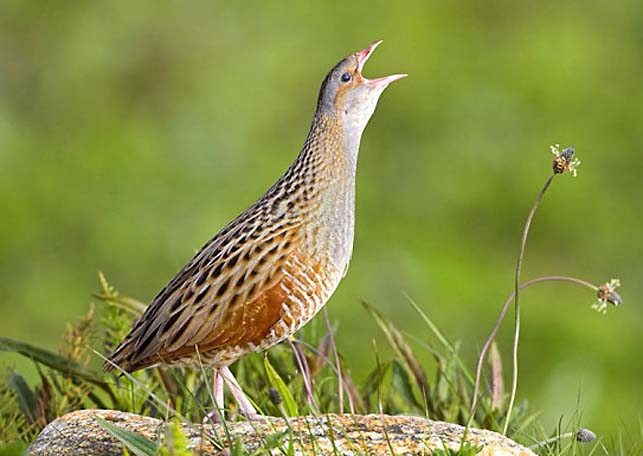
Nowadays the Corncrake is limited to the Outer Hebrides in Scotland although there is also what seems to be a highly successful  reintroduction scheme being carried out in the RSPB Nene Washes Reserve in Cambridgeshire, England:

Corncrakegreyt zzzzzzzzz

In the first half of the nineteenth century, Corncrakes were present throughout the length and breadth of England and their distinctive call was heard in every sunlit field. Even their Latin name, crex crex, is onomatopoeic. The birds were described as producing the most distinctive summer sound to be heard on a country walk anywhere in England. This is the song of the corncrake, beautifully recorded by “therhys927”

Corncrakes will often sing all through the night, and they can in fact be pretty aggravating little so-and-so’s once the initial novelty has worn off:

siningig zzzzzzzzzzzzzzz

John Clare, England’s greatest poet, wrote a poem about the bird which he knew as the “Landrail”:

“How sweet and pleasant grows the way
Through summer time again
While Landrails call from day to day
Amid the grass and grain

We hear it in the weeding time
When knee deep waves the corn
We hear it in the summers prime
Through meadows night and morn

And now I hear it in the grass
That grows as sweet again
And let a minutes notice pass
And now tis in the grain”

Nowadays, the Corncrakes are all gone, gradually killed off by decade after decade of desire for profit, intensive farming practices and in particular the mechanised mowing techniques used by the nation’s farmers in place of the trusty scythe.  This sad decline is chronicled in Nottinghamshire by the county’s Victorian birdwatchers:

crake zzzzzzzzz
In 1866, in his “Ornithology of Nottinghamshire”,  William Felkin wrote that “the corncrake is very common”. Three years later, in 1869, William Sterland provided a charming account of this delightful bird in “The Birds of Sherwood Forest”:

“That bird of singular habits and note, the corncrake, visits us in abundance every year, sometimes arriving as early as the first of May, while in 1853 I did not hear its note until the 18th. This was unusually late; the season being a remarkably cold and backward one, a fact of which our other migratory birds also seemed, in some mysterious way, to be fully cognisant. Nothing, indeed, relating to the feathered tribes is more wonderful or more deserving of our admiration than that knowledge, call it instinct or what you will, which, implanted in them by their Creator, enables them to hasten or delay their departure for their distant but temporary places of abode, according as the seasons there are suitable to their necessities or otherwise. How strikingly is this wisdom brought forward in Holy Scripture: “Yes, the Stork in the heaven knoweth her appointed time and the turtle, and the crane, and the swallow observe the time of their coming.”

William Sterland seems well aware of the piece of Corncrake behaviour which was to prove its downfall, as the mechanized mower made its inexorable way forward:

“I have never succeeded in causing the Corncrake to take wing except with a dog, and even then its flight is always brief, as it takes an early opportunity of dropping to the ground and regaining its cover. It flies rather slowly with its legs hanging down, and there is such an air of effort about his movements on the wing, that I have often wondered how its migrations are performed.
Its ventriloquial powers are well known to every observer. Now it’s harsh “Crake, crake” seems within a few yards, and the next moment it sounds as if it were halfway across the field, and this apparent variation in distance is so well simulated that in a consecutive repetition of its call for ten or twelve times, a few notes will sound as if uttered almost at your feet, and the next two or three from afar, and yet the bird is standing motionless all the time, as I have several times tested. Its singular call I have often imitated by drawing my nail across the teeth of a pocket comb, and thus inducing its near approach.”

flightg zzzzzzz

Again Sterland reveals how fully conscious he is of the problems the Corncrake will face throughout the rest of the nineteenth century:

“The female sits very closely on eggs, so closely indeed, as not infrequently to lose her life by the mower’s scythe. I have known two instances of this, in one of which the poor bird was almost cut in two.”

Ten years later, in 1879, William Sterland provided additional details about the Corncrake:

“An abundant summer visitor. It is also been found in winter, and on this account has been thought by some to hibernate; but apart from the fact that no bird is known to hibernate, why should a corncrake which remains during the winter not be able to fare as well as a water rail or a common snipe. Cold does not affect them.”

In his “Scribblings of a Hedgerow Naturalist”(1904), Joseph Whitaker wrote:

“The other evening when talking to Rose the Nottingham taxidermist (who has set up a great many specimens in this collection) I remarked how very few Corncrake there were about, he said he well remembered about 35 years ago, a man bringing a large basket to his father, of these birds, which he had shot in two days, and they numbered over fifty; at that time he said the meadows round Nottingham were full of them, and their call could be heard on all sides. This year I have heard one, although I have been about a great deal.”

corncrake zzzzzzz

No Corncrakes in 1904, no meadows in 2014! Elsewhere Joseph Whitaker wrote about his country house at Rainworth, between Nottingham, and Mansfield:

“I am sorry to say the Corn Crake is getting scarcer. I have not heard one near the house was several years, although twenty years ago they were in every mowing field. No doubt the result of mowing machines which cuts the young up often I fear.”

Three years later in 1907, Joseph Whitaker provided in “The Birds of Nottinghamshire”  the following information :

“I sorrow to say that this interesting bird is a rapidly vanishing species, not only as far as Notts is concerned, but in many other counties. Twenty years back it was the exception in the spring not to hear a corncrake in nearly every mowing field in the Trent Valley, and almost every seed and grass field left for hay in other parts. In this very high and dry parish of Blidworth, we had between ten and fifteen pairs, now for the last three years not a bird has been heard.”

corcrake_30594 zzzzzzz

Like his fellow nature writers, Joseph Whitaker chronicles the decline:

“At Southwell, on a June night, their curious call resounded on all sides; now this year there may be two pairs. Mr Henry Smith Junior of Cropwell Butler informs me that this scarcity is very noticeable in that part, and in fact all over the south of the county.”

Alas, Whitaker was to be proved wrong when he wrote:

“Let us hope that it will be many years before they are quite a bird of the past, but if they decrease during the next twenty years as fast as their decrease during the last two decades, it pains me to think that it may be so.
I once heard a corncrake calling inside the kitchen garden at Welbeck Abbey.”

And finally, in “Jottings of a Naturalist” in 1912, Whitaker wrote:

“Twenty years ago there were Corncrakes all over the parish, in fact it was the exception not to hear them in every mowing field, but I know that there is been none for the last ten years, not a single bird heard, and the parish is six thousand acres; and it is not only so in these parts, it is the same everywhere.”

Corncrakeflight zzzzzzzzz

And really, that was that. The end of the Corncrake.

As the Great War loomed, the Victorian age drew to a close. No more mowing fields, no more meadows full of flowers, no more clouds of brightly coloured butterflies. And no more Corncrakes. Just mud, blood, war and death.

To film a Corncrake nowadays, you are more or less wasting your time in England. This beautiful, atmospheric video comes from “mikhailrodionov” in faraway Russia:


10 Comments

Filed under History, Nottingham, Science, Twitching, Wildlife and Nature

If you go down to the woods today, you’d better not go alone…

One more monster to terrorise the local peasantry of bygone France was the so called “Bête de Cinglais” which was also called the “Bête d’Evreux”. Its bloodstained career lasted from 1632–1633, as it terrorised the province of Normandy, bringing violent death to one of the most beautiful areas of a beautiful country. Indeed, there is a sharp contrast here with the wild mountains frequented by so many other of the monsters we have read about. Here is a map of northern France:

basse norm map national

And here is a bit more of a close-up. The green UFO marks the precise location:

basse norm map

As always, the best approach is to take an average of the various French websites. The “Virtual Institute of Cryptozoology”, the “Institut Virtuel de Cryptozoologie”, states that:

“In 1632, about fifteen kilometres to the south of Caen, in the Forest of Cinglais, an animal carried out a reign of terror. Those who survived its attacks described it as a kind of huge mastiff of extraordinary agility and speed. Two historical documents mention the mysterious beast: the “Gazette de France” of March 19th 1632 and the edition of June 17th 1633. The edition of 1632 announces that the predator has already devoured around fifteen people in a month.

Forest rangers have shot at it with their muskets but are unable to cause any injury. The priests are trying to mobilize the inhabitants of the neighbouring parishes but the population is so traumatised that very few volunteers dare to take part in the hunts. The hunters themselves do not want to venture into the woods unless they are in a large group. The 1633 edition of the newspaper announces the killing of an animal at the end of a massive hunt lasting three days, organised by the Count de la Suze, with the participation of between 5,000-6,000 hunters and beaters. The Beast of Cinglais looks like a kind of wolf, but is longer, and more red in colour with a more pointed tail and a wider rump than an ordinary wolf. At least thirty people have now been killed.”

This, conceivably, may be a depiction of the creature:

perhaps cinglais

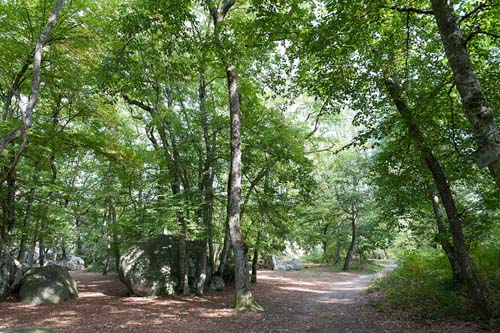
Interestingly enough, there was a further series of attacks only some fifteen years later in the Forest of Fontainebleau. This is a very similar area to the Forest of Cinglais and is not particularly far away at all:

sous-bois-dans-la-foret-de-fontainebleau

The Fontainebleau story is carried by the same website:

“In 1679, woodcutters were killed and eaten in the Forest of Fontainebleau. Records in the parish of Bois-le-Roi mention several cases of attacks.”

A website which specialises in the ghostly aspects of the beautiful Forest of Fontainebleau also carries a few tales of ancient beasts thought to live there:

“There used to exist around the beginning of the sixteenth century a fabulous animal that spread terror in the Forest of Fontainebleau and its surroundings. All indications are that it was a wolf, but some cried “Werewolf”, or tried to blame a magician who was said to be an expert in the art of shape shifting.”

“And then, around 1660, long before the famous Beast of Gévaudan, there was already talk around this area of the Bête du Gâtinais, the  Beast of Gâtinais, a frightful creature which looked like a monstrous wolf. His greatly exaggerated exploits, murdering children and young girls, used to feed people’s fears. Such stories caused many sleepless nights. It was even said that the Beast used to cross the River Seine to come and steal little children and animals on the far side.”

Even in fairly modern times:

“Towards the end of the nineteenth century, an old woman recounted the story of a great evil beast which lived in the forest and which came out from time to time to attack farm labourers, shepherds and flocks of sheep. The monster had to its credit a whole multitude of atrocities, dead sheep, dogs killed and children who just disappeared. The little girl who set off to gather hazelnuts in the woods, and was never seen again. The young nine year old boy devoured near the village of Nanteuil les Meaux”

The website’s author states that:

“It is quite possible that these three stories all refer to the same species of animal, described at different times in history….With evidence of this type, spread over long periods of time….it is not easy to make sense of things, to separate the mythical and imaginary monster from a mere animal.”

That “mere animal”, of course, is the wolf, considered in the France of bygone years to be guilty of far more serious attacks on humans than, say, the wolves of present day North America or Europe. This is the location of Fontainebleau. Compare this map with the maps for the Beast of Caen/Evreaux/Cinglais”:forest of fontaineblasu

As far as Fontainebleau during the first half of the sixteenth century is concerned, there were certainly many people who thought that nobody should ever go down to the woods. If they did, they would certainly be sure of a really big surprise, one with lots of a fangs and an aggressive attitude that needed quite a lot of adjustment. And yes, there were lots of marvellous things to eat, (in a way) but it was better not to go alone. It’s really lovely down in the woods, but perhaps it is safer to stay at home:

The same fascinating website continues:

“In the reign of King François the First, during the first half of the sixteenth century, a certain Sebastian Rabutin was to rid the country of a terrible lynx which was just as murderous as any of our previous beasts. It too was devastating the same region, devouring in turn both young girls and children. This monster, which appears in a fresco in the ballroom of the Château de Fontainebleau where it is depicted as some kind of hybrid between a wolf and a feline, was so formidable that no one dared confront it . For the record, the “loup-cervier”, in Latin “lupus cervarius”, which means deer wolf, is the common name of the Lynx, a big cat which hunts hares or rabbits, but never deer or men.”

I have not been able to trace the fresco in the ballroom of the château, but there is quite a lot to go at:

salle_bal_00

There is absolutely no way though that any of these French monsters was a lynx, as I have already discussed in a previous blogpost about the Beast of Benais.

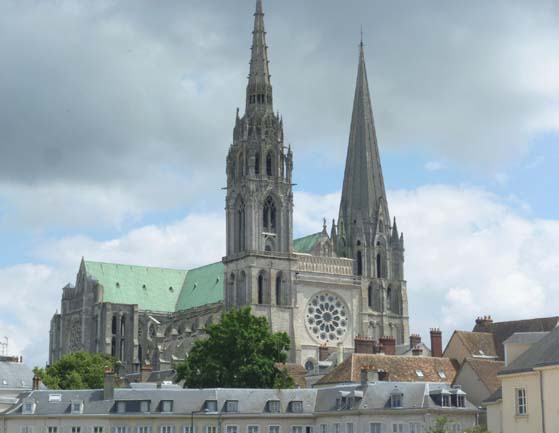
Fairly close to both Caen and  Fontainebleau is the beautiful cathedral city of Chartres:

chartres_cathedralxxxxxxxxx

The “Institut Virtuel de Cryptozoologie” reports how:

“At Chartres, in 1581, a young boy was buried at Ver-les-Chartres, killed by a “wild beast”, “une beste sauvage” whose identity we are not at all sure of.”

If this were not a wolf, and a wolf would surely have been recognised, then it may well have been one of the mysterious beasts we have been examining.

But let’s just forget this supporting cast for the moment. Let’s return to “La Bête de Cinglais”. Another interesting blogpost about this fearsome creature comes from Evelyne Achon:

“The Forest of Cinglais is about 15 kilometres to the south of Caen. The “Beast of Cinglais” is also called “The Beast of Evreux” or “The Beast of Caen”. It refers to a man eating animal behind a series of attacks on humans.

The first attack was mentioned in 1632. These attacks are known through articles in contemporary newspaper. The Gazette de France therefore reported on March 19, 1632:

“News from Caen in Normandy. The 10th of March in the year 1632. Since last month in the forest of Cinglais, and then between there and Falaise, people have seen a wild beast that has already devoured fifteen people. Those who have avoided his fangs report that this savage beast is similar to a large mastiff of such a speed that it would be impossible to run and catch him on foot. He is of such extraordinary agility that people have seen him jump right over the river in certain places. Some people call him Thérende. Local residents and forest gamekeepers have shot at him from range with their arquebuses on several occasions, but without wounding him. They do not dare approach him, or even to reveal themselves, until they are organised in a large group, exactly as they will be today when they hear the sound of the alarm bell, to which all the parishioners from all the parishes around have been invited by their village priests, as three thousand people are assembled to carry out the hunt. “

A gigantic beat was organized in June 1633, with the participation of between 5,000 and 6,000 men. An animal was killed, and the attacks ceased.

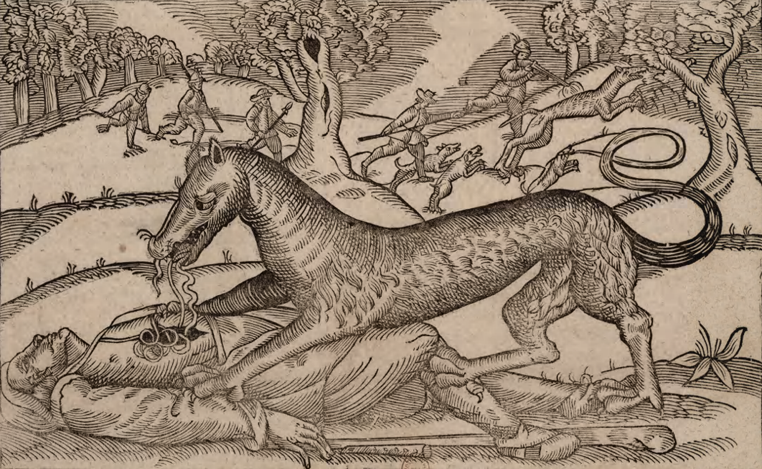
Here is an old engraving of the Beast. Spaghetti for lunch:

Bete_de_Cinglais_1632

The Gazette de France reported on June 17th the death of the creature as follows:

“This raging mad beast which I wrote about last year as having eaten in two months more than thirty people in this forest was believed by everybody to be a creature of magical properties. But the Count de la Suze, having assembled by the order of our Lieutenant General on the 21st of this month between 5000 to 6000 people, has pursued the creature so keenly that after three days it was killed by a shot from a flintlock musket. It turned out to be some kind of wolf but longer, redder in colour with a pointed tail and a rump wider than normal. “

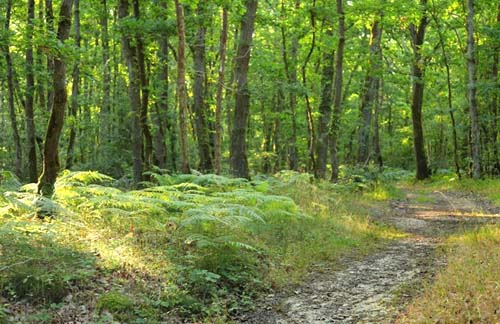
Here is the Forest of Cinglais:

Foret-cinglais1xxxxxxxxxxxxxxxxxxxxxxxx

Wikipedia supplies a little information, but seems, perhaps, rather coy:

“This beast was identified as a wolf, but a mystery still remains. It was described as a kind of red wolf with an elongated body and a more pointed tail than a common wolf. It seemed very quick and agile.”

Another old friend, Vampiredarknews knows the details equally well:

“In 1632, this Beast killed fifteen victims in only one month. It struck in Normandy, where those who escaped described it as a great extremely fast and agile mastiff. It then settled in the Forest of Cinglais, about fifteen kilometres south of Caen. It then killed a dozen or so victims before they organized a hunt that lasted three days and brought together more than 5000 people. It was killed on June 23, 1633 by the Count de la Suze.”

One final website makes a very good point:

“It will eventually be described as a wolf, but a great mystery still hangs around this story ; the behaviour and the agility of the creature are in no way anything like that of a wolf.”

In the fullness of time, I will finish this almost interminable list of “Monsters of France” and draw them all together as the same unknown species. This particular creature is a good example. The Forest of Cinglais, the Forest of Fontainebleau and the charming countryside around Orléans are all pretty much the same kind of environment. The looks and behaviour of these beasts are not unique. Other localities have had strange reddish animals, animals with noticeable tails, animals with extreme agility or with great speed or an ability to leap long distances. There must be a link between them all.

I am very struck by the words of Abbé Pierre Pourcher about the Beast of Gévaudan:

“Everybody who saw it said it was not a wolf. Everybody who did not see it said it was.”

5 Comments

Filed under Cryptozoology, France, History, Science, Wildlife and Nature

Four poor Germans, a very long way from home

On a number of previous occasions, I have written about the Allied servicemen who are interred in Penzance Cemetery. There are also four German combatants from the Second World War, all of them buried, quite fittingly, alongside their erstwhile adversaries:

P1500367 XXXXXX

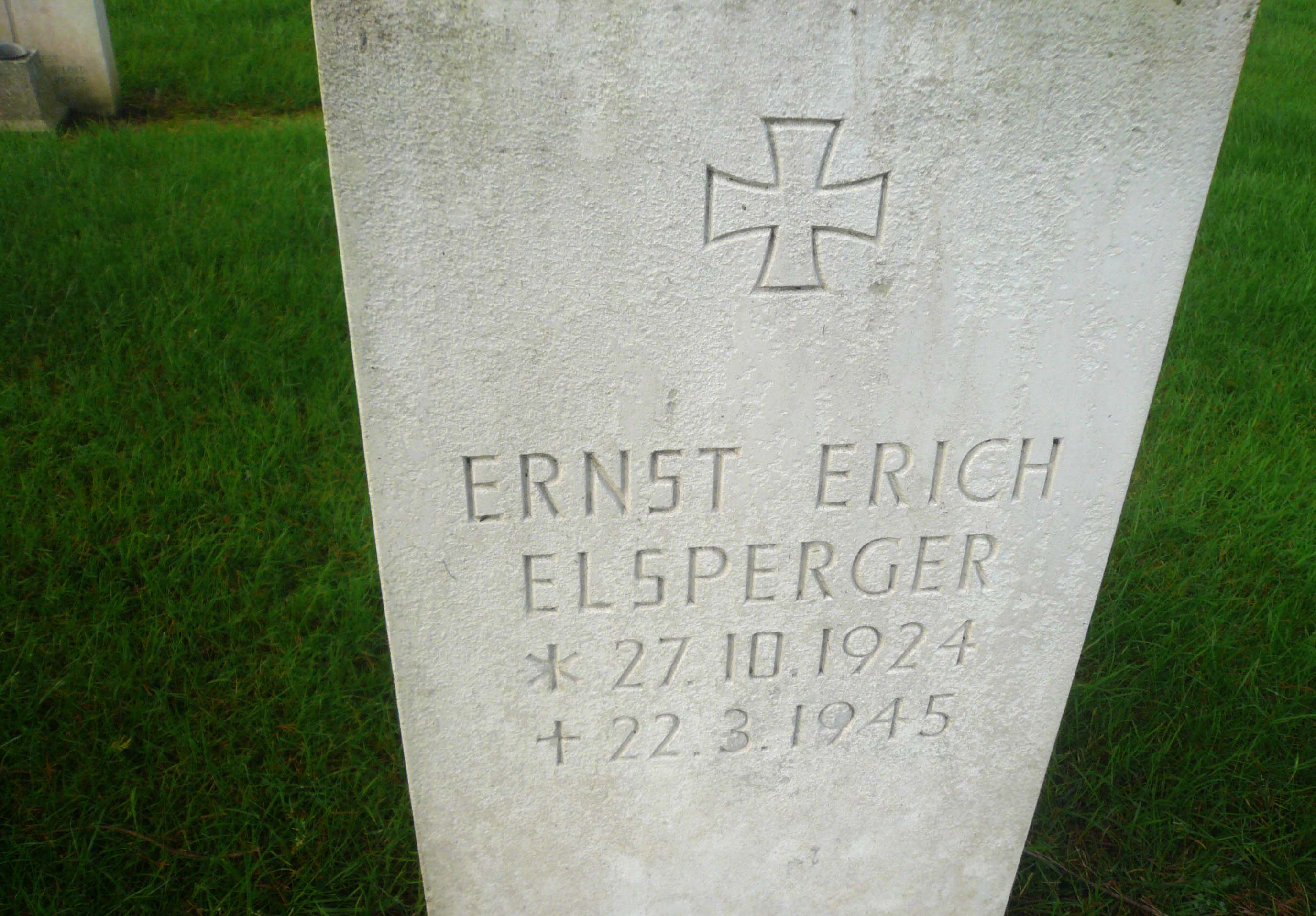
Ernst Erich Elsperger and Conrad H.W. Schweizer were both members of the German Navy, the Kreigsmarine.

Ernst Erich Elsperger was born on October 27th 1924. He reached the rank of Obergefreiter (Senior Lance Corporal) and died on March 22nd 1945 aged only twenty one:

P1500260xxxxx

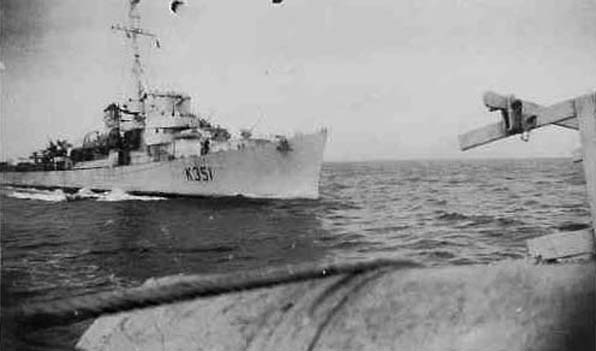
Ernst Elsperger is recorded as being a crew member of the U-1169, which was sunk by depth charges from HMS Duckworth, just south of the Lizard. It was commanded by Oberleutnant Heinz Goldbeck who was himself only thirty one years old when he was killed. Here is HMS Duckworth:ff_hms_duckworth_k351

This particular U-Boat, the U-1169, had not sunk or damaged a single enemy vessel in the almost two years since it was launched at Danzig on April 9th 1943. No photographs of the vessel seem to have survived, and neither do any of its captain. Here is the only surviving Type VIIC U-Boat in the world, the U-995, currently on display at the Laboe Naval Memorial near Kiel. It is exactly the same type of vessel as the U-1169. Do not fail to click on the link to the German website, and make sure that you try the Panorama views. They are guaranteed to scare you (top of the tower) or make you very seasick indeed. Look for the yellow circles on the photograph of the tower:

u boat xxxxxxx
There seems to be some kind of mix-up in the dates of Ernst Elsperger’s death as the U-1169 was sunk on March 29th, and the inscription on the grave says March 22nd. It is possible, of course, that he was a member of the crew of one of the other U-boats sunk in the area in early 1945, namely the U-399, the U-1199, the U-1208, the U-605, or the U-1018.

.
Conrad H.W. Schweizer was born on January 1st 1915 and died on December 18th 1944 aged twenty nine. He is buried alongside an unknown German naval casualty:

This slideshow requires JavaScript.

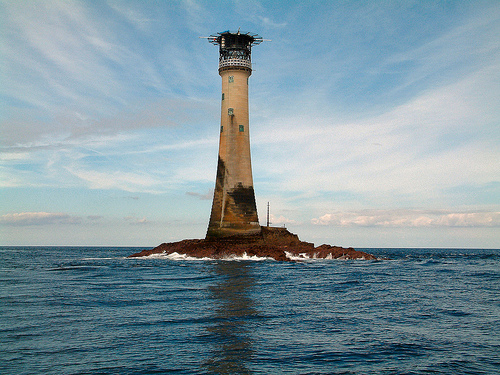
Both Conrad Schweizer, and the unknown seaman buried in the cemetery, were members of the crew of the U-Boat U-1209 which was scuttled after hitting Wolf Rock near the Isles of Scilly on December 18th 1944:

wolf_rock

Forty four crew members survived and were picked up by the Canadian destroyer, HMCS Montreal. There were nine fatalities, including the Captain, Oberleutnant zur See Ewald Hüsenbeck, who had a heart attack during the journey into Plymouth. This is the Montreal:

HMCSMontreal

This second photograph was snapped by Charles James Sadler, RCNVR, a First Class Stoker who was serving in the Canadian destroyer HMCS Columbia:

pg_hmcs_montreal

Earlier in the war, the Montreal had rescued 33 survivors from the Norwegian merchant ship Fjordheim, which had been torpedoed and sunk north of Ireland by the German submarine U-482. The Montreal survived the war and was sold in 1947.  It was finally broken up for scrap in Sydney, Australia, shortly afterwards.

The unfortunate U-1209 was built to exactly the same design as the U-1169 and the U-995, (pictured above). It had been launched at Danzig on February 9th 1944, but, exactly like the U-1169, during its entire career, it had not sunk or damaged a single enemy vessel:

u278rdditionle9mai1945

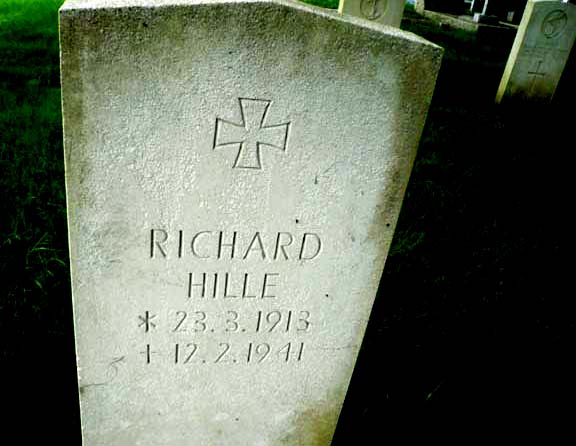
The final grave is that of Richard Hille. Richard was a member of the Luftwaffe. He was in the crew of a Heinkel He 111 bomber of Kampfgeschwader 28, serial numbers 1T+LH, which was shot down on the night of January 31st / February 1st 1941.

Heinkel_He_111 xxxxxxxx

This aging aircraft crashed into the sea off Treen just to the south east of Land’s End after being engaged by a naval patrol vessel, whose name I have been unable to ascertain.

Untitled

Richard Hille was the only crew member to be recovered. On his gravestone, the date given for his death is February 12th 1941. This is because it was the usual convention at the time to use the date of the discovery of bodies found either at sea or on the foreshore, as the date of death. Richard Hille’s body was in fact initially recovered from the sea by a Newlyn trawler. The “Western Morning News” newspaper reported therefore, on the Friday, February 14th, that his body had been hauled up in a trawl off Land’s End on the previous Wednesday, February 12th. A report in the “Cornishman” newspaper of February 20th 1941 detailed his burial at Penzance Cemetery with full military honours:

P1500249xxxx

Finally, two things. Firstly, it would have been totally impossible to write this blogpost without using this source, a forum for exchanging information about the myriad events of World War Two. And secondly, I cannot understand why these four men have never been taken back the hundreds of miles to their own homeland and their own towns or cities. The two U-boats involved caused no damage whatsoever to anybody and the Luftwaffe were never known as war criminals. The four men in Penzance were not members of the Waffen SS or the Wehrmacht. Let them go home at last!

26 Comments

Filed under Cornwall, History

You have three minutes to learn to swim

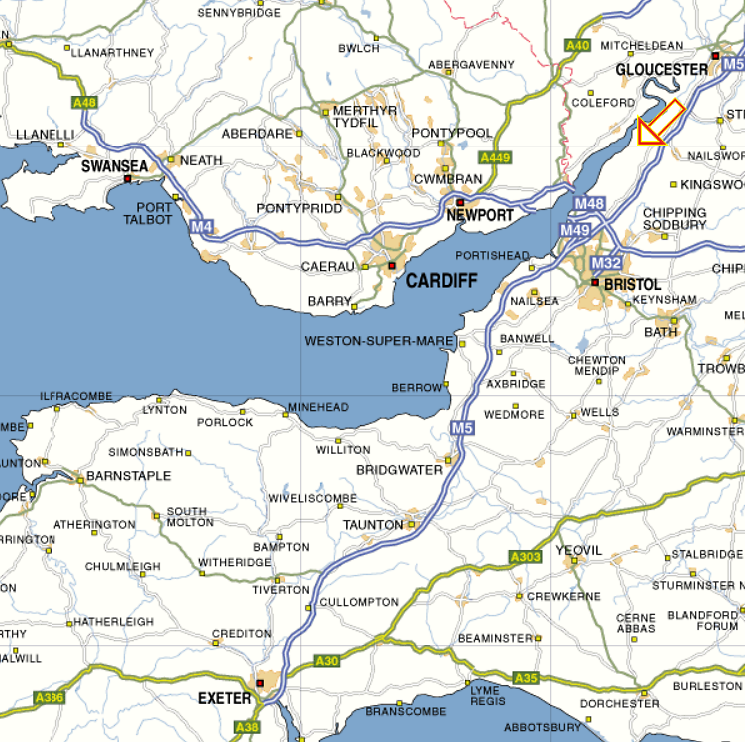
In a previous blogpost I spoke about the Great Storm of 1703. Just under a hundred years previously, in 1607, there had been a huge, spectacular, surging flood in the West Country, centred on the Bristol Channel and the Severn Estuary. Much damage was done, in particular to the area near the orange arrow:
sw of england

The floodwaters which struck on January 30th were in no way the result of a long period of continuous rain, such as has been the case in the recent years of our own century. Indeed contemporary writers stated that:

“The winter was extremely warm and very much drying….even smaller brooks remained ice free. Already in February the sowing was performed, in the same time violets are to have flowered.”

It is always possible, of course, that this long ago catastrophe was the result of a sudden surge, caused by high tides and very strong winds, as has happened several times in Norfolk and Suffolk in the last two hundred years. Some meteorologists, though, have looked beyond this.

Contemporary scientists such as Professor Simon Hazlitt, and Australian geologist Ted Bryant therefore,postulated in their research paper in 2002 that the flooding was caused by a tsunami. Their evidence, other than presumably the immense volumes of water involved in the incident, are that various deposits of sand, pebbles and shells, scattered around the Severn Estuary, are compatible with having been brought from the open ocean.

Their explanation for this melodramatic event was an undersea landslide, or perhaps ocean slide, on the sea floor between Cornwall and Ireland.  Alternatively, there may have been some kind of earthquake, caused by fault lines in the sea somewhere to the southwest of the area.

Whatever the reason, the results were catastrophic. Water swept five miles inland around Bristol and all along the coast of South Wales from Pembrokeshire to Glamorgan and Monmouthshire. In the Somerset Levels, still the victims of flooding nowadays, some four hundred years later, the waters came as far as forty miles inland. Did they recreate the ancient Glastonbury when the waters turned the Tor into the legendary Avalon?

glast

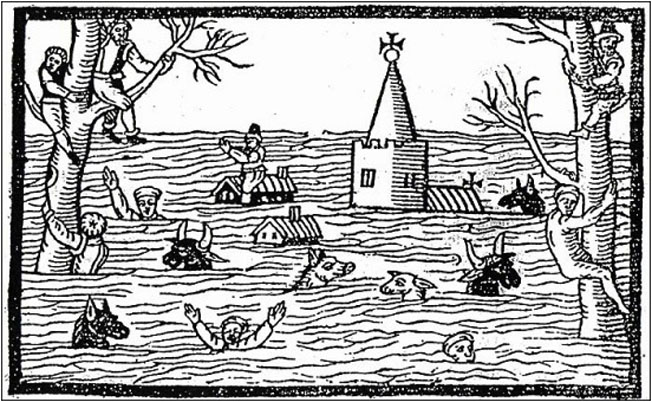
Certainly though, at Frampton on Severn in Gloucestershire, the flood covered the entire village so that only the spire of the church of St Mary the Virgin emerged from the water. There are some lovely details in this contemporary illustration:

1607-flood

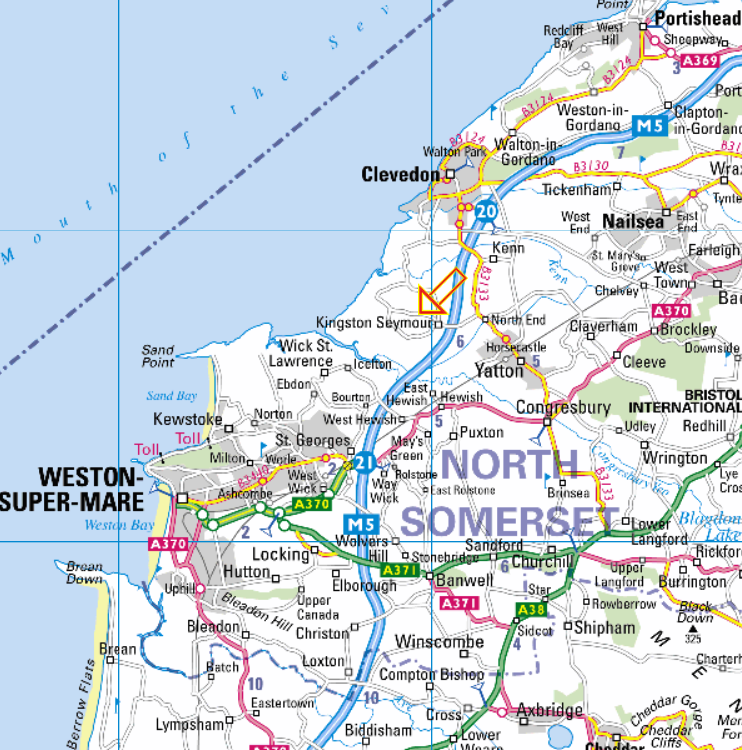
At Burnham on Sea in Somerset, the sea wall was washed away and so were thirty villages in the immediate vicinity. In Huntspill, almost thirty people drowned, with a similar number perishing at Brean which was “swallowed up”. Here, seven out of the nine houses were destroyed: these were typical totals repeated in villages and small towns over the entire area, resulting ultimately in a death toll of at least two thousand people, and that in a fairly sparsely populated agricultural region. Other villages which were devastated included Berrow, Mark, Lympsham, and both South and East Brent were badly affected. Houses and villages were swept away, and overall, an estimated 200 square miles (51,800 ha) of farmland was inundated. Livestock was destroyed. For ten days the Church of All Saints at Kingston Seymour, near Weston-super-Mare, (look for the orange arrow) was filled with water to a depth of five feet (1.5 m):

seymouis

A chiselled mark remains showing that the maximum height of the water was more than 25 feet (7.74 metres) above sea level. The church has a commemorative plaque:

“An inundation of the sea water by overflowing and breaking down the Sea banks; happened in this Parish of Kingstone-Seamore, and many others adjoining; by reason whereof many Persons were drown’d and much Cattle and Goods, were lost: the water in the Church was five feet high and the greatest part lay on the ground about ten days. WILLIAM BOWER”

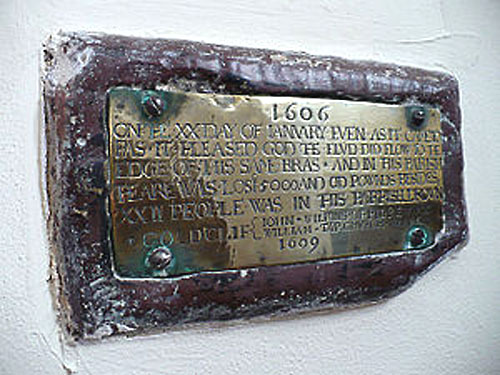
This plaque in the local St Mary’s church records the disaster at Goldcliff near Newport on the Welsh side of the Severn Estuary:

church plaque

Initially, on the day, all was going well:

“for about nine of the morning, the same being most fayrely and brightly spred, many of the inhabitants of these countreys prepared themselves to their affayres”

Then the sea retreated away from the shore; in contemporary terms, it was “driven back”. This is apparently a classic sign of trouble ahead, tsunami  imminent, and sure enough:

“mighty hilles of water tombling over one another in such sort as if the greatest mountains in the world had overwhelmed the lowe villages or marshy grounds. Sometimes it dazzled many of the spectators that they imagined it had bin some fogge or mist coming with great swiftness towards them and with such a smoke as if mountains were all on fire, and to the view of some it seemed as if myriads of thousands of arrows had been shot forth all at one time.”

And there was no escape just by running away:

“(the water)is ‘affirmed to have runne …. with a swiftness so incredible, as that no gray-hounde could have escaped by running before them’.

For me, though, insofar as these events in 1607 are relatively soon after the appearance of the new King James Bible, I personally agree with the sentiments expressed in a contemporary pamphlet which was called:

“God’s warning to the people of England by the great overflowing of the waters”

godswarningsmallThe familiar contemporary illustration quoted above also came from a pamphlet of the time:

moncover

Throughout the area, there were certainly some narrow escapes. Here are four contemporary accounts:

“a maide child, not passing the age of foure years: it is reported that the mother thereof, perceiving the waters to breake so fast into her house, and not being able to escape with it, and having no clothes on, set it upon a beame in the house, to save it from being drowned. And the waters rushing in a pace, a little chicken flew up, it being found in the bosome of it, when helpe came and by the heate thereof preserved the childe’s life”.

“Another little childe is affirmed to have been cast uppon land in a cradle, in which was nothing but a catte the which was discerned as it came floating to the shoare, to leape still from one side of the cradle unto the other, even as if she had been appointed steresman to preserve the small barke from the waves furie”

“A certain man and woman having taken a tree for their succour, espying nothing but death before their eyes, at last among other things which were carried along, they perceived a certain tubbe of great bignesse to come nearer and nearer unto them, until it rested upon that tree wherein they were, committed themselves, and were carried safe until they were cast upon the drie shore”.

“more than did, had perished for want of food, and extreme cold, had not the Rt. Honble. Lord Herbert …. sent out boats to relieve the distresse …. himself going to such houses as he could minister to their provision of meate and other necessaries”.

Nowadays, of course, this just could not happen. We keep a tight control of the weather:

This slideshow requires JavaScript.

Perhaps, though, the builders of medieval churches knew a little bit more than us:

church safe

Having said that, have no fear. Should a flood, or indeed, a tsunami, ever arrive, we will be helped by an army of graduates from the University of the Bleedin’ Obvious:

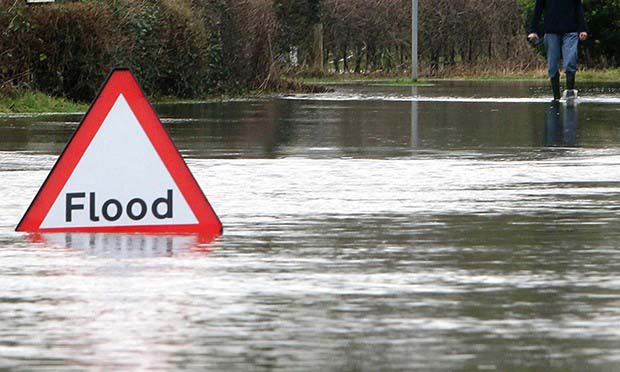
A flood sign


5 Comments

Filed under History, Humour, Science, Wildlife and Nature

A Werewolf in Cambridgeshire. Run away!!

In three previous blog posts, I discussed “Shuck”, the huge phantom black dog, who for centuries has roamed, for the most part, the fields, fens and even beaches of East Anglia. I showed, though, that the cryptic canid has also walked on occasion in Nottinghamshire, visiting churchyards and graveyards. He frequents ancient tracks and pathways and, in particular, a lonely footpath down by the River Trent in Beckingham. He has been seen in isolated Crow Lane in South Muskham and, in recent times, on a pitch black Blyth Road, near Hodsock Priory:

hellhound zzzzz

In my third blogpost, I tried to establish a link with the American Wolfmen such as the “Beast of Bray Road”:

roadkill cccc

These are hairy bipeds with canid features who, like Black Shuck, seem to occur “near freshwater; on hills; at boundary areas such as roads; and on or near burial grounds, and military zones, and all types of sacred areas around the world”:

michigan-dogman ccccccc

These are the words of Linda S Godfrey in her wonderful book, “Real Wolfmen: True Encounters in Modern America”:

book cover linda

After receiving this book as a Christmas present in 2013, I received an equally interesting publication in 2014. It was “Haunted Skies Volume One” by John Hanson and Dawn Holloway:

vol 1

As they say on the cover, the book is part of a whole series telling the entire story of British UFOs. In total, there are ten different volumes and they are, quite simply, an absolute tour de force, a labour of love which runs from 1940 to the present day. So far, I have bought a number of other volumes although I am still a little bit short of the full set (as they say).

What has this got to do with Shuck you may ask? Does this mean that the Beast of Bray Road has moved kennel to England?

Well, in a way, it does. This is Volume 5:

vol 5 cover

This volume runs from 1972-1974. It contains a tale told about RAF Alconbury, a USAAF airbase in Cambridgeshire, which has a number of claims to fame as being haunted by a variety of different spectres. Here is a large scale map of the area. Look for the orange arrow which indicates the airbase:

alconbury map

And here is a close up. The orange arrow is in the same place on both maps:

larg scale alconbury

The amazing tale told to John Hanson and Dawn Holloway, the authors of the book, by an eyewitness, is that a mechanic was:

“carrying out some routine work to an F-5 Aircraft, parked on the runway, a job that should have been completed in an hour. When he failed to make the telephone call, requesting a lift back from the Hangar, a search went out to find him. They found him sitting in the aircraft, as white as a sheet, with the canopy closed. Although I asked him, many times, what it was that he had seen, he declined, saying that it had frightened him so much that he refused to go anywhere near that location again. We discovered, from another source, that the man had seen a terrifying hairy humanoid, which had walked past the aircraft.”

This is a Northrop F-5 aircraft:

Northrop F-5E

This is a second eyewitness account which they quote:

“I also heard about an incident involving two mechanics, working on an aircraft parked on the north side of the base, one of whom was so frightened by the appearance of a strange hairy creature that he jumped into the cockpit of the aircraft and refused to get out for some time.”

ALCONBURY-some of

It is entirely impressive that the two co-authors should then discover a third corroborative tale about two USAAF personnel:

“Sergeants Randi Lee and Jackson…. one night, while on patrol with their two dogs, they saw some movement near the towers and called the Main Gate to check if any workmen were still on-site…. As they approached the tower, they came face-to-face with a hairy figure. The dogs stopped in their tracks, absolutely terrified, frantically trying to get away…..The truck arrived just in time to see the creature, whatever it was, climbing over the security fence, where it was last seen entering North Woods.”

It is difficult to imagine how much more thorough these two authors could have been at this point. They manage to find yet another witness to this bizarre tale:

“One foggy night my father received a radio call; there was an intruder within the perimeter…. He tore out in his truck and sped towards the scene…. Seeing a figure in the fog, he pulled over, thinking it was one of his guards. He rolled down his window and was screamed at, full in the face, by what can only be described as a man-like, bipedal creature. My father nearly wet himself in fear. In an instant the thing ran off at incredible speed and my father drove after it. Within moments it had sped past another of the guards….my father and these men witnessed this creature make fantastic, running bounds across the grounds before leaping over two tall, well-spaced barbed wire fences in a single bound. It disappeared into the surrounding woods.”

werewolf qqqqqqqqqqqqqqqqqqqqq

Many similar and confirmatory accounts can be found on the Internet of this interesting, yet frightening creature. Just as I have quoted John Hanson and Dawn Holloway, some of the websites are clearly redolent of Nick Redfern’s blog post of 2007, “Do Werewolves Roam The Woods Of England?
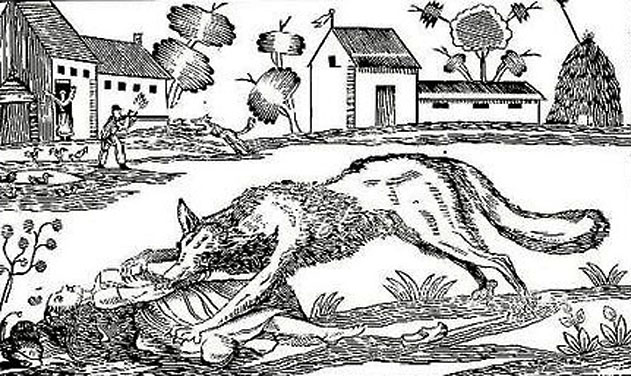
One of the contributors, a gentleman who calls himself “wes” recounts his own version of the Alconbury creature:

“I encountered a werewolf (lack of better description) in England in 1970, I was 20 years old when I was stationed at RAF Alconbury. I was in a secure weapons storage area when i encountered it. It seemed shocked and surprized to been caught off guard and I froze in total fright. I was armed with a .38 and never once considered using it. There was no aggression on its part. I could not comprehend what I was seeing. It is not human. It has a flat snout and large eyes. Its height is approx 5 ft and weight approx.200 lbs. It is very muscular and thin. It wore no clothing and was only moderately hairy. It ran away on its hind legs and scurried over a chain link fence and ran deep into the dense wooded area adjacent to the base. I was extremely frightened but the fear developed into a total commitment of trying to contact it again. I was obsessed with it. I was able to see it again a few weeks later at a distance in the wooded area. I watched it for about 30 seconds slowly moving through the woods”
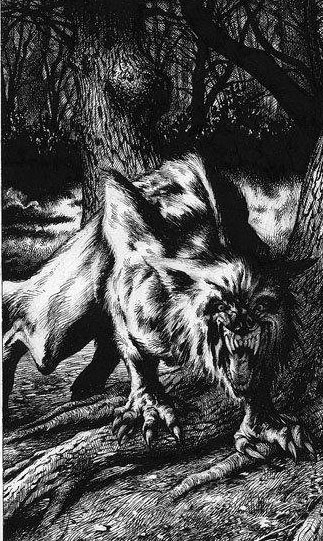
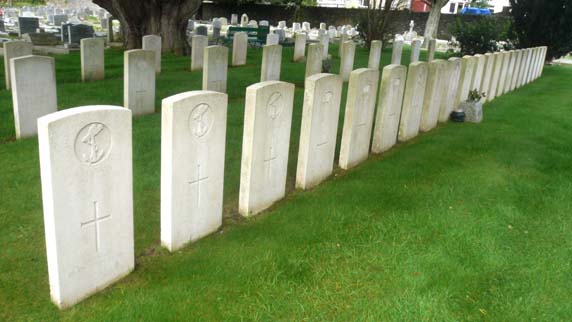
werewolf xxxxxxxxxxxxxxxxvvvvvvvbbbbbbb

At the website “Winter Spirits” a person called “earth_spirit” recounts how he too was in the RAF:

“In 1978 I was stationed with the US Air Force in West Germany and was sent to RAF Alconbury in England for a 30 day TDY (temporary duty.) When I mentioned to a co-worker I was going to RAF Alconbury, he told me that he had been there in 1972 when one of the aircraft mechanics in his squadron had been found late one night in the back seat of an RF-4C Phantom jet, supposedly after he had died of “fright.”  The story was that a subsequent investigation revealed unexplained scratches on the glass of the canopy of the jet, and this started a rumor circulating that the unfortunate crew chief had been the victim of what came to be known as the infamous “hard stand monster.”

You could be forgiven for misinterpreting the “hard stand monster” but clearly, there is something behind these stories.

werewolf_van_helsing_zzzzzzzzzzzzzzzzzz

In a fascinating blog, well worth a look, written by Sarah Hapgood and entitled “sjhstrangetales”, the testimony of yet another witness is quoted:

“Dennis Prisbrey, stationed here between 1973/5, told of colleagues seeing a “creature” near the north side of the airfield. One sighting of it scared a colleague so much that he jumped into the cockpit of an aircraft and refused to get out. The creature was also seen climbing over the security fence, and entering the North Woods. Wesley Uptergrove also saw it, and said he tried to pursue it in a truck. He described it as 5ft 9″ tall, with human-like eyes, a flat nose, and large ears.”

With so many websites discussing the unusual, the ghostly and the frightening, it is again just a matter of establishing some kind of average between the many repeated tellings of what is obviously the same incident. One intriguing explanation is offered by Nick Redfern with the full backing of Linda S.Godrey. Clearly based on the fact that these werewolves are often seen near military bases, it is well worth five minutes of your time. This individual is my favourite. He looks as if he waiting for his library book to be stamped:
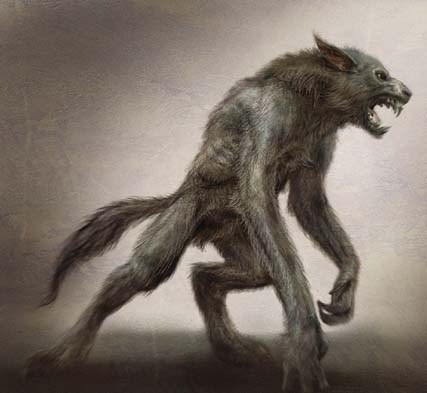
werewolf xxxxxxxxxxxxxxxxxxx

Whatever happens though, you could do lot worse than to take a look at the many volumes of “Haunted Skies” by John Hanson and Dawn Holloway. They are an unbelievable set of books, although “unbelievable” is perhaps not the best choice of words when discussing UFOs.


14 Comments

Filed under Aviation, Cryptozoology, History, Science