Category Archives: Science

Reintroducing wolves to England? Not a problem (6)

When people suggest that it would be impossible to introduce a wolf pack to the English countryside, they should be aware of the following story. The usual belief is that:

“The Gray Wolf canis lupus has been extinct in England since 1486, in Scotland since 1743 and in Ireland since about 1770.”

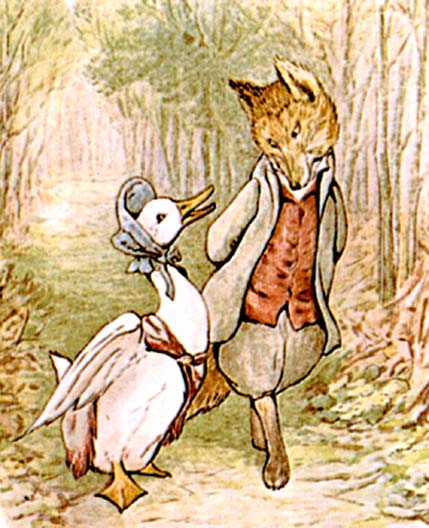
Something strange happened though, in Epping Forest in the late nineteenth century.  Mention of it comes from Beatrix Potter in her Journal from 1881 to 1897:

“Several years ago a gentleman let loose three prairie wolves in Epping Forest. These animals have increased in numbers, and are perfectly wild and shy”.
potter

Talking about what a potential problem the breeding of the American Mink in England might be, in New Scientist for January 18th 1962, Harry V Thompson, Ministry of Agriculture Field Research Station, Worplesdon wrote:

.
“Tales of escaped coyotes canis latrans or prairie wolves in Epping Forest in the late nineteenth century may come to mind …”

In Mysterious Creatures: A Guide to Cryptozoology, George M. Eberhart stated:

“A few Coyote cubs canis latrans are said to have been introduced around 1881 in Epping Forest, Essex, England.”

crypto

A slightly longer version occurs in some documents from Regent’s Park Zoo dating from July 19th, 1884. Here, the animals are said to have been coyotes:

” Some short time since a gentleman called upon me at the gardens and offered to present to the Society an animal that he believed to be a prairie wolf. He mentioned some particulars concerning its history that caused me not at once to accept his offer, fearing that the animal might prove to be a useless mongrel. At the same time I asked his address, and promised to call and see the animal.

Accordingly, I went to Leytonstone and on my arrival I inquired for Mr. R. Payze, and found the gentleman who had so kindly offered the animal in question. He was very pleased to meet me, and introduced me to what I at once pronounced to be a veritable prairie wolf (Canis latrans). The history of this animal I give as near as possible in Mr. Payze’s words. In the month of May last year some men who were on their way to London with cartloads of hay told him, on their coming through some part of Epping Forest (” near Ongar,” is the locality given in some narratives), they had found or caught three fox cubs, and they had them in a sack tied to the tail of the cart:

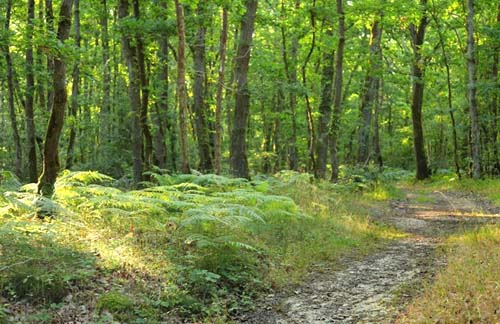
Foret-cinglais1xxxxxxxxxxxxxxxxxxxxxxxx

Believing them to be fox cubs, he bought one of them for a few shillings, and the men went on their way towards London. The animal was at that time so small that it could be put into a pint pot, and I have every reason to believe the following narrative will fully explain what otherwise would appear a mystery. Mr. Payze introduced me to Mr. Swan (who was formerly a servant to Colonel Howard), and he told me that some few years ago four cubs were brought to England in a ship belonging to Mr. J. R. Fletcher, of the Union Docks, and were turned loose (supposed to be fox cubs) in Ongar Wood, which adjoins Epping Forest. These cubs were brought home in a box and kept for a few days at Colonel Howard’s, Goldings, Loughton. They were then taken to Mr. Arkwright’s, formerly master of the Essex Hunt, and were turned out at Marl’s Farm, and the man Swan was present when they were turned out. I have also been informed that from time to time an animal, supposed to be a large gray fox, has been hunted, but never caught, always escaping into the forest.
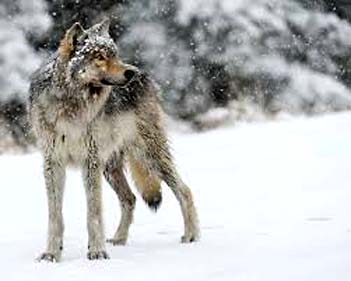
single wolf

I think it highly probable that some of the same kind as the animal now in the gardens still exist in the forest, as this species of wolf is not much larger than a large male fox, and not having any scent like the fox, would not be likely to get killed by foxhounds or followed any great distance by them.”

The editor of  Land and Water magazine supplemented this account as follows :

” Subsequently, in company with Mr. Bartlett, we visited Epping Forest ; and from the inquiries made we have little doubt as to the fact of the animal in question having been born in the forest. Swan and other persons who have been acquainted with the forest for many years told us they well recollect the circumstance of the ‘strange animals from foreign parts’ being turned down, and we expect shortly to have further confirmatory evidence from others who were present on the occasion. When first born, the prairie wolf might readily be mistaken for a cub fox. Mr. Payze, who is a lover of animals, and has from time to time kept many tame foxes, was under the impression until quite
recently that ‘ Charlie,’ as the animal is called, was a fox.

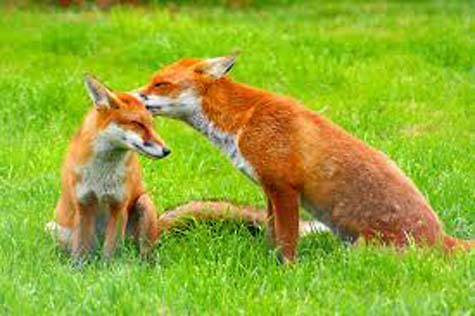
foxes

As it developed, however, he noticed several points quite distinct from the common fox, and as, moreover, the animal (although quite quiet with his children) showed unmistakable snappish tendencies towards strangers, he decided to consult Mr. Bartlett, with the result that the superintendent declared that the creature was a Prairie Wolf canis latrans.
(This determination was not correct, see post.—Editor.”
Whatever the animals were, they seem to have persisted until the beginning of the 20th century. The previous article from the Regent’s Park Zoo was criticised for its naivety, Henry Foster sarcastically stating that “his dog was recently killed and proclaimed to be a wolf”.
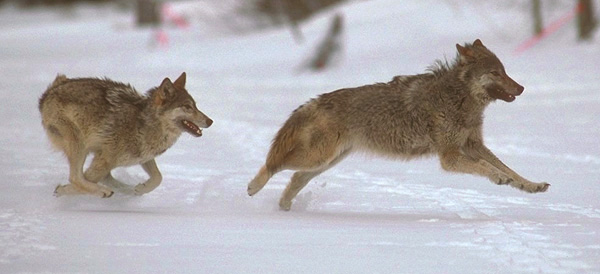
wolves 2

On October 23rd 1884, however, Henry Ffennell, however, contradicted Mr Foster. Ffennell  had some connection with Regent’s Park and stated that

“the animal was definitely a wolf, bred and captured in the forest. It could be viewed at the gardens.”

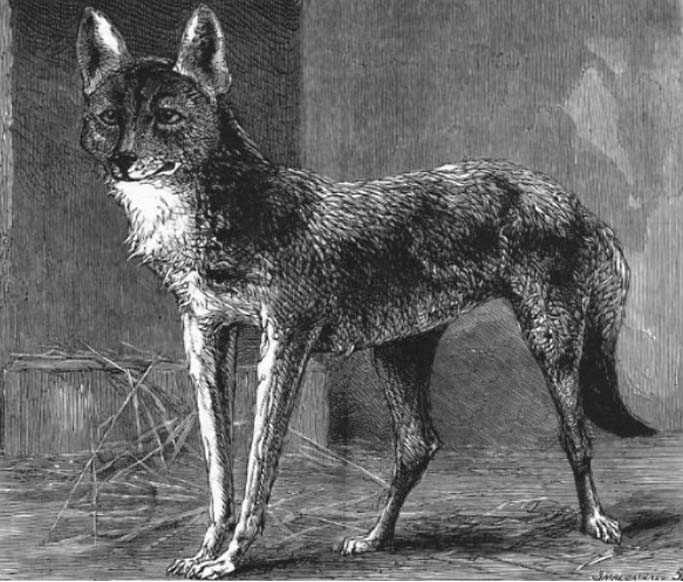
A print of the “English Wolf” is widely available to buy on the Internet. It has this caption alongside it:

“Concerning the animal depicted in our engraving which has aroused much interest among naturalists and others, Mr AD Bartlett, the Superintendent of the Zoological Society’s Gardens , Regent’s Park, writes thus:-

.
“The prairie wolf now being exhibited in these gardens was presented by Mr K Payne, of Leytonstone, who says he bought the animal about a year ago. it was one of three that had been taken in Epping Forest by some farm labourers, Mr Payne believing at the time that it was a fox cub. Its subsequent growth, however, caused him to suspect that it was not a fox. As it became troublesome on account of its destructive habits, notwithstanding that it had been reared perfectly tame, he decided to get rid of it, and accordingly presented it to this Society. Inquiry is now being initiated with a view to ascertain, if possible, the manner in which the parents had been introduced into that part of the country. It is said that, some years ago, some foreign cubs, supposed to be foxes, were turned out in  the neighbourhood of Epping Forest.”

epping wolf print

No problem, then. Find a forest. Tell people your wolves are just Grey Foxes, and take it from there.
16 Comments

Filed under Cryptozoology, History, Science, Wildlife and Nature

A Twitch to Kent : Day One

Friday, October 14th, 1988
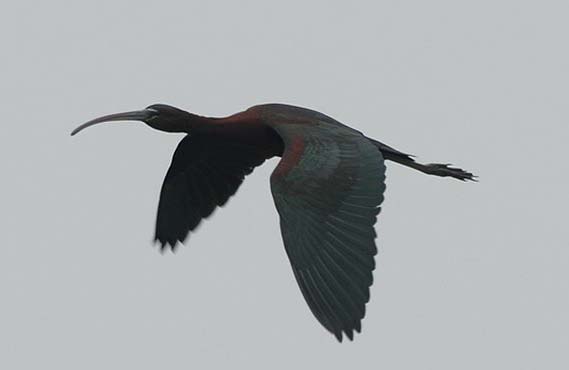
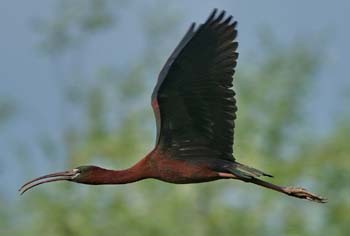
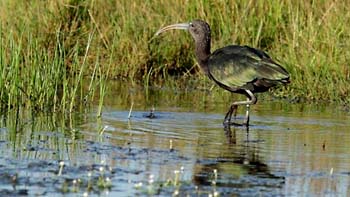
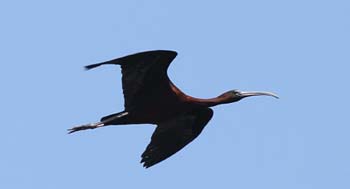
This is a new venture for me. A minibus trip, to Kent for a whole weekend. Surely we’ll get to see something. I am looking forward to a chance to see the famous Glossy Ibis:

Glossy_Ibis_1700_e

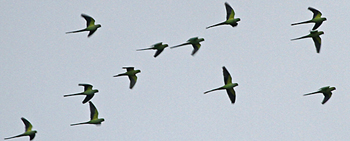
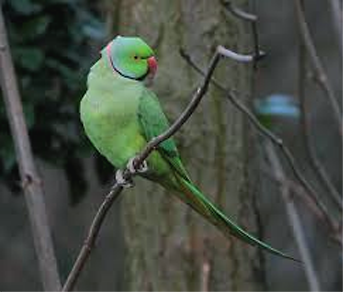
I may possibly get a glimpse of Ring-necked Parakeet, if we’re lucky:

flock parakeete

They’re a lot better close up:

parak

There’s also a fair number of other birds scattered around the country and I start an exciting war of nerves in the minibus, trying to persuade everybody that it would be an extremely good idea to call in and see them all.

I have taken the unpardonable sin of producing a dozen photocopies of an article about the habits of the Stodmarsh Glossy Ibis. A lot of people who had up to now never heard of the bird, are soon warming to the idea of going to see it. A mention of the Isabelline Shrike however, is not quite as successful, since almost all my fellow passengers have a very accurate idea of just how far away Dorset is.

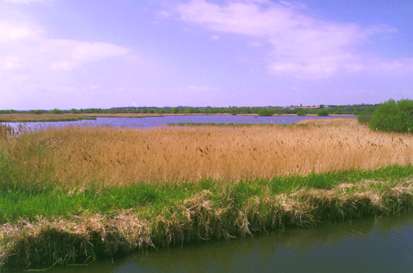
On the Saturday afternoon we move over to Stodmarsh, where by now, we all expect to see the Glossy Ibis, flying over our heads on its way to roost, as it is supposed to do every single night. It can be seen flying in over the Lampen Wall. But just what is a Lampen, and why do we need to be protected from it?

view from lampen wall

In the late afternoon, the reserve doesn’t really have a lot on show. I wait in vain for a Cetti’s Warbler, a bird, that to my eternal shame, I have yet to see, although I have heard a lot singing in Norfolk.
The Stodmarsh logbook by the car park says that the Ibis came in to roost at 4 o’clock the previous evening. That’s a bit of a frightening thought, because we don’t manage to get there until 4.15 and I have the horrible nagging feeling that we have all missed it .
The minutes tick by as we wait for the bird. We get more and more worried. At least, the
serious birdwatchers do. Some of our fellow travellers act as if there is a Glossy Ibis resident in every county in the British Isles, instead of just one single, lost, bird in the whole country.

4.45. Nothing

5.00. Nothing
We get so desperate that Paul puts into operation the ultimate birdwatching spell. He inserts his index finger into the handle of his tripod, followed by the whispered recital of the bird’s Latin name. The spell works a lot better if you haven’t looked up the Latin beforehand, but actually know it anyway.
And of course it works. Within a few short minutes, Wayne is shouting, “I think I’ve got it.”

And just for once, he is actually right.

gloucsglossyibis

The bird flies over, circles a few times, and finally drops down into the reeds, presumably into its roosting place.

It is supposed in all the books to be particularly primitive looking, but I think it’s absolutely superb. It has rounded wings which seemed almost transparent against the light of the sky, and its improbably long bill balances perfectly the dangling legs. And it is is nowhere near as awkward in flight as the descriptions would have you believe. It circles around us, light and graceful. It even earns a spontaneous round of applause from its admirers. It is certainly the best bird I’ve seen so far in my very short birdwatching career. Easily.

glos ibis

Nowadays, with the alleged advent of Global Warming, the Glossy Ibis, usually a bird of Southern Europe, is being seen with increased frequency in England. A little while back, one even came to spend a few weeks in a wet field down by the River Trent in Nottinghamshire:

glossyibis2 nottnm


22 Comments

Filed under History, Science, Twitching, Wildlife and Nature

Deadly Deer (5)

There are apparently 75,000 collisions between cars and deer every year in the UK. This results in 450 injuries and, the latest figures allege, as many as twenty fatalities, both drivers and passengers.
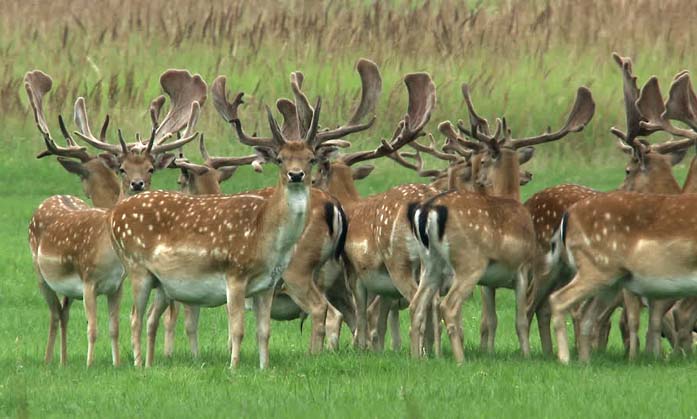
It is not surprising that these traumatic events are so frequent. The United Kingdom has more than two million deer. This represents the highest total since Saxon times:

-fallow-deer-stag-herdxxxxxxxxxxxxxx

A few years ago, there was even a muntjac deer in our staff car park, right in the middle of Nottingham:

8507_Muntjacxxxxxxxxxxxxxxxxxxxxxxxx

With over-browsing, deer cause enormous damage to our woodlands, and especially the birds who breed there. Too often deer consume the low vegetation which hides their nests and in general, they have a hugely negative effect on trees, shrubs, plants and flowers. This circular destruction of the bark will kill the tree:
deer-damage

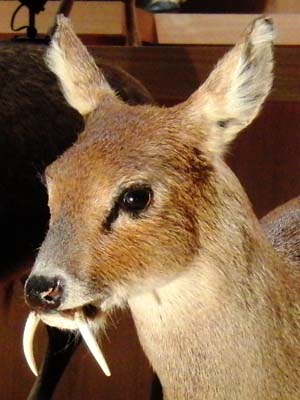
Recently a group of scientists suggested that half of England’s deer should be shot to help preserve our woodland landscape. Several species are actually foreign immigrants to our countryside, namely muntjac and Chinese water deer:

Chinese_water_deer_

Another introduced species are Sika , which manage to get absolutely everywhere:

Sikadeer

Overall, this enormous population of deer causes around £4.5m worth of damage to plantations and woods in Scotland alone. In England, it is not so much the trees which suffer, as the cereal crops, mainly in east and south-west England, where deer cause £4.3m worth of financial loss annually.
I can’t find out the overall cost of deer culling but I suspect, given our successive governments’ ability to spend other people’s money, it will be approximately £14.76 squillion pounds per year.
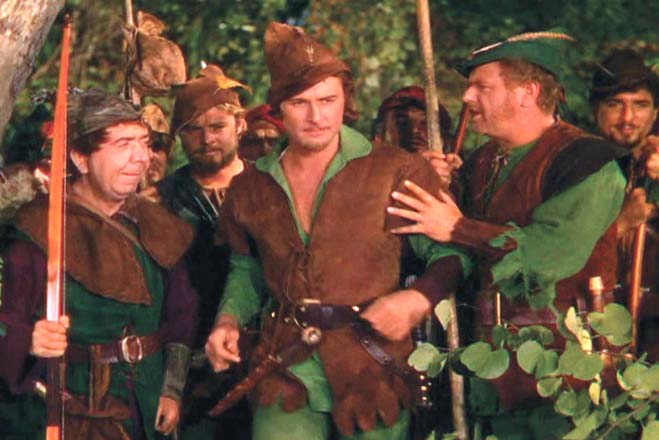
So let’s do it for free. Here in Nottinghamshire, let’s encourage petty criminals to clear off out of the city and live in groups in the forest, armed only with bows and arrows. They could wear green for camouflage and shoot the King’s deer on a regular basis.  And on Bank Holidays why not have great big barbecues for everybody to go to ?

robin hood- heroes
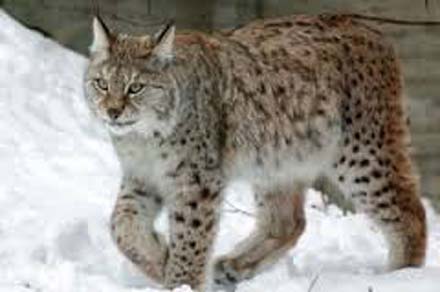
And bring back the lynx. We could have every single animal sponsored by the aftershave company. Lynxes are so shy you wouldn’t even notice them in our local woodland.

lynx a

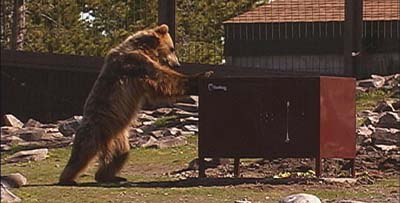
You would obviously notice Brown Bears, but so what? They eat deer by the freezer full. And furthermore, it would make enormous financial sense to have a great big bear eating the contents of all the rubbish bins in our country parks, rather than buying gigantic expensive specialised vehicles and paying humans to empty them.

image_encounters

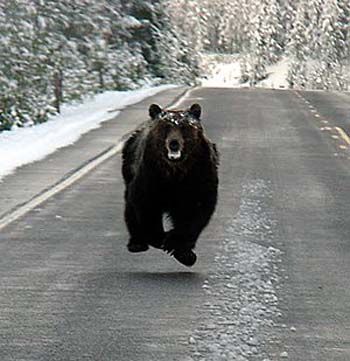
And think of America itself. What do they have in the woods that eats deer? I’ll give you a clue. It’s totally nocturnal. It’s very shy, especially given the fact that it’s nine feet tall. You would never see them and when you did nobody would believe you. All you’d see would be a gradual diminution in the deer population.

.
If that’s a step (or should I say, a Big Foot) too far, then let’s look back a little in time to the Middle Ages.
As recently as 1433, Sir Robert Plumpton was granted a piece of land in Nottingham by King Henry VI (Parts 1-3) if he could manage to blow his horn and thereby frighten and chase away all the wolves in Sherwood Forest. The piece of land he held in Nottingham was called “Wolf Hunt Land” (The clue’s in the name). In this way Sir Robert probably helped the wolf towards its eventual extinction which occurred, supposedly, during the reign of Henry VII (or Henry VI Part Four, as he was occasionally called).
At this time, back in early fifteenth century, wolves were limited to just a few areas, anyway. Some forests in Lancashire such as Bowland, the Derbyshire Peak District and the Yorkshire Wolds.
So let’s reintroduce them now. Two million deer to cull. Let Wolfy have a go. We know that they are harmless. Two deaths in North America in 129 years? Negligible!! They’d take care of the deer problem for us:

wolf pack one

And what better sight than watching a pack of wolves  chase down a mountain bike rider over the romantic fells of the Lake District?

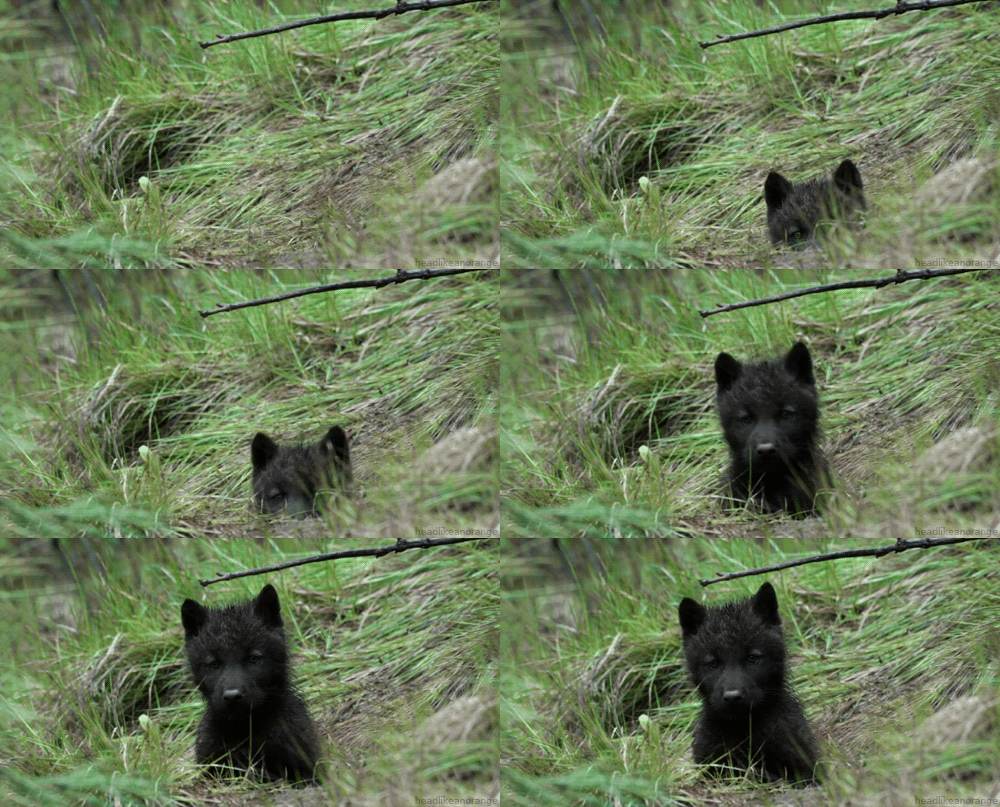
wolf baby

Or another pack pursuing quad bike riders in the New Forest? Perhaps a whole wolf family practicing their hunting techniques on somebody else’s badly behaved and loud mouthed kids.

eyes wolf
What’s not to like?

Just watch this video, which comes, literally, from the “HeartOfTheWilderness”:

Or if you are a child, why don’t you let the Smithsonian Channel teach you to howl like a wolf? Ideal for relieving the monotony of those tedious car drives to school. Better even than the counting songs from French lessons:


23 Comments

Filed under History, Humour, Politics, Science, Wildlife and Nature

A Great Bustard in Edwardian Nottinghamshire

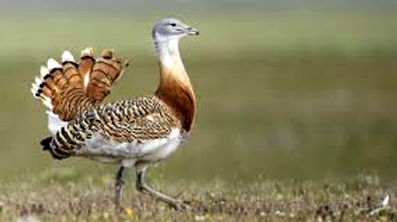
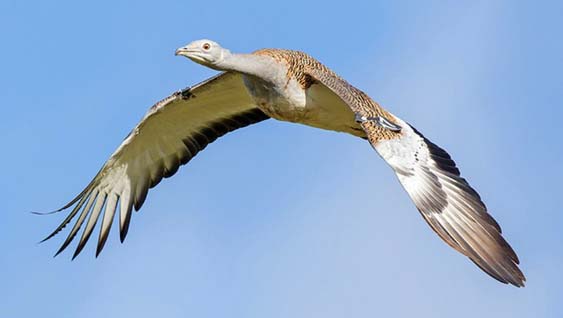
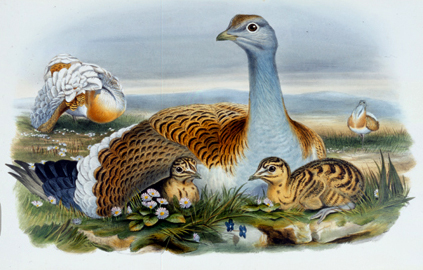
Great Bustards are huge birds, more or less the size of a domestic turkey. They used to live in many areas of Merrye Old Englande, as long as there was plenty of open grassland and only scattered farmland. They liked the chalk downs of central and southern England such as Wiltshire,  for example, and the open sandy heaths of East Anglia. The last bird English bird was shot in 1832. This is not him:

great bustard ddddddddddddddddddddddddddd

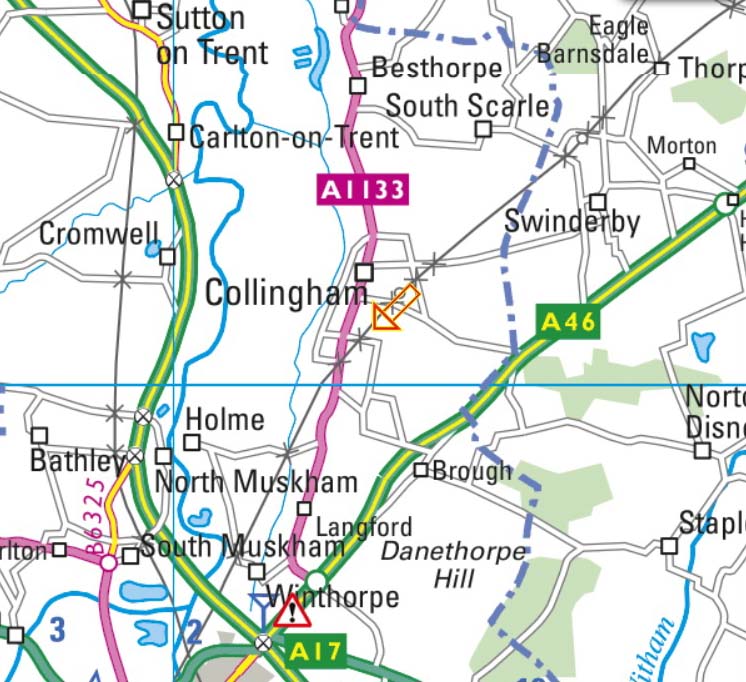
A single Great Bustard  was seen at South Collingham on April 1st and April 23rd to 24th 1906. South Collingham was, I presume, to the south of present day Collingham. The latter village is just to the north of Newark-on-Trent. In 1906, there would have been no electricity cables or pylons. Just open, infrequently visited farmland. The orange arrow marks the approximate spot:

collingh

Mr Henry Wigram sent Joseph Whitaker two letters which have survived, and they are kept in the Local Collection in the library at Mansfield:

The Lodge,
South Collingham,
Newark,
29th of June 1906

Dear Sir,
I am afraid you will think me slow in answering your PC (postcard), but I have had some difficulty in obtaining accurate information about the Cormorant, about which I had no note myself:

gret corm xxxxxxxxxxxxxx

I can tell you now that it was seen on the Newark Parish Church steeple for nearly two months. If I can hear anything more definite than this I will let you know.

.
I was glad to have your enquiry about the Great Bustard, because most people have simply smiled, & said “What could it have been ? ” ! !

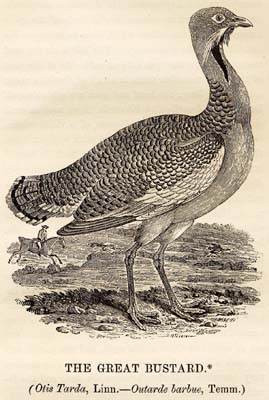
Great_Bustard_woodcut_in_Bewick_British_Birds_1797

I can positively say I did see one, as I had another view of it nearly three weeks after:

flyingxxxxxxxxxxxxxxxxxxxxxxxxxxxxxxxx

I reported it to “Countryside”, flying over my garden & I believe my wife saw it at about the same time & place on the following day.

The second time I saw it, it was making a noise like an exaggerated Crow’s caw, while on the wing. It was this that drew my attention. On both occasions I was within 120 yards of it:

outarde-barbue-vol2qqqqqqqqqqqqqqqqqqqqq
You have perhaps heard of the Snipe & Redshank laying in the same nest at Besthorpe. The Snipe laid first, each laid 3 eggs, from which I saw the Redshank get up. I am afraid I cannot say how many were hatched.


I have a few other notes which seem interesting to me, but they may very possibly be rather commonplace to one with so much more experience, as you have.
Though I collected eggs as a boy, it is only of late that I have really studied birds at all. If you think I could help in any way I should be only too glad to do so, as far as I can. I am often at Retford on business and could come over to see you if you wish. After all, I have heard of Rainworth from my friend Bonar, who went to see you with the Wordsworths last year, there can be few more interesting places anywhere.
Yours truly,
Henry Wigram

PS:    I am sorry to find I addressed this wrongly, and it has been returned to me.”

A week later, Henry Wigram sent a further letter to the great man, dated July 6th 1906:

The Lodge,
South Collingham,
Newark,
6 July 1906

Dear Sir
Thank you for your Postcard. Since writing you I have seen a coloured plate of a Great Bustard, & find that it entirely corresponds with my recollection of the bird I saw, but I noticed, as you say, that the bird looks much whiter on wing (sic) than with its wings closed:

qwerty

At the time I saw it, the bird appeared to me to resemble a Turkey more than anything else I could think of. Its colouring was white & brown, not brown & grey.
I put its stretch of wing roughly at a yard and a half, and found afterwards that my man, who was with me on both occasions, guessed it at the same measurement:

flying

I first saw it on April 1st, again on April 23rd. My wife is also certain that she saw it on April 24th.
I had field glasses in my pocket the first time, but the bird, which when I first saw it, was in the act of rising from the ground in a grassfield – disturbed by other people passing, (who did not see it) – though at first it did not appear to be flying fast got away so quickly that I could not get the glasses on to it:

taking offqqqqqqqqqqqqqqqqqqqqqqqqqqqq
I was much struck at the time by the pace at which it flew with comparatively slow beats of the wing.
On the second occasion the bird passed right over my head at a height of, I should say, 50 to 60 feet.
This was in the evening. The following morning my wife saw it taking exactly the same line of flight.
I sent word to Gates at Besthorpe on 2nd April that this bird was about, but he was ill & could not look out for it. However a Besthorpe man told him that he had seen a large strange bird about that time:

flyignGAINxxxxxxxxxxxxxxxxxxxxxxxxxx

My father also saw a large bird he could not identify near the same date, but he did not get near enough to it to give any particulars.
I should very much like to come over to Rainworth as you kindly suggest. Would Friday the 20th suit you, & if so at what time?
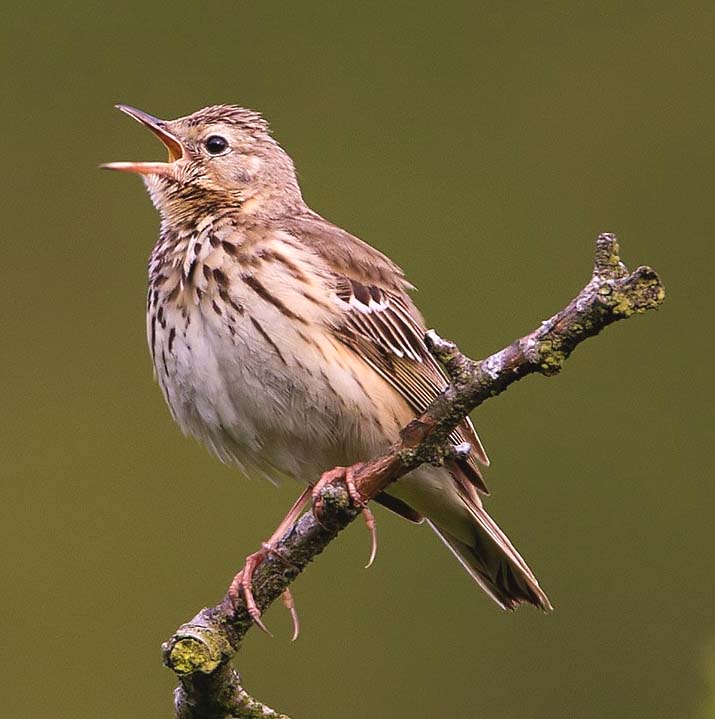
I saw a bird the other day which puzzled me completely:

tree pipitqqqqqqqqqqqqqqqqqqqqqqqqqqq

It was the size and shape exactly like a Tree Pipit, but it had pink legs, & the markings on the throat were darker (almost like those of a  miniature French Partridge , & did not extend so far down the breast as in the case of a Tree Pipit. It also seemed to have a dark mark around the neck.
Would it be possible for strong sunlight to deceive one in this way? There were Tree Pipits about the place at the time.
Gates was with me, & quite agreed as to the markings.
Yours very truly,
Henry Wigram

In his own copy of the Birds of Nottinghamshire, Joseph Whitaker has written:

“I may add that Mr Wigram is a keen and careful observer of birds and a good field naturalist, and I am perfectly satisfied that it was a Great Bustard he saw.”

16 Comments

Filed under History, Nottingham, Science, Twitching, Wildlife and Nature

The Most Dangerous English Animal (4)

So, which animals are the killers in England?
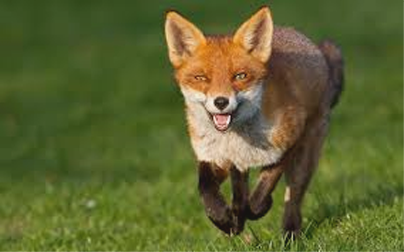
Well, in England, there is no animal carnage whatsoever. All the animals are unbelievably  friendly and welcoming. Nobody in history has ever been killed by a fox:

fox

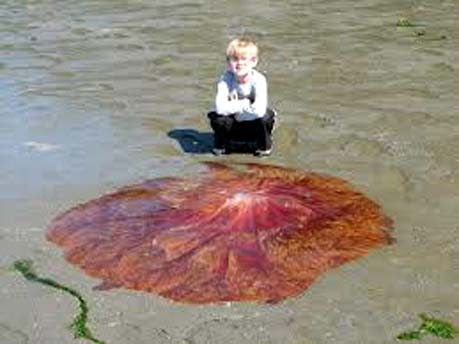
And nobody has ever been done to death by a Lion’s Mane jellyfish either:

jelly

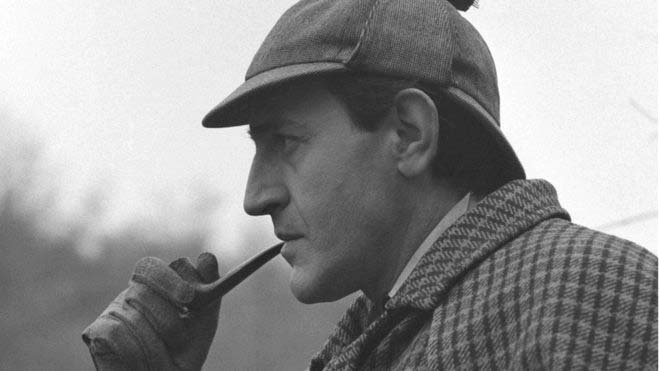
Hard luck Sherlock:

sherl

One lady was hospitalised after a gull attack. The killer birds pecked her little dog to death, which made some of the neighbours sad. A similar incident led to the death of a pensioner who had a heart attack.
On average, only one person a year in England is killed by cows (which really surprised me, I must say).
Five people a year are killed by wasps and bees every year in Britain, the same figure as the average number of deaths by terrorism, apparently.

psaw xxx
Only fourteen people have died in total from snakebite since 1876, with the last one more than forty years ago.
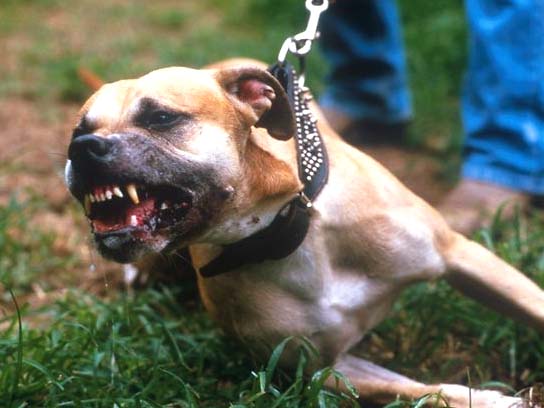
Since 2005 there have been 17 deaths caused by dog attack, which is just under two per year. There are almost a quarter of a million non-fatal attacks per year. These may sometimes be just a scratch but quite often they result in permanent disfigurement. And these statistics are rising rapidly with an increase of a third in the last five years. Animal shelters are apparently nowadays full with all the thousands of Staffordshire Bull Terriers which have been found to be too fierce to be kept as pets:

dog

Most dangerous perhaps, though, are the Artiodactyla, the deer and the antelope. In fact, we have no antelopes in England but the deer make up for it.
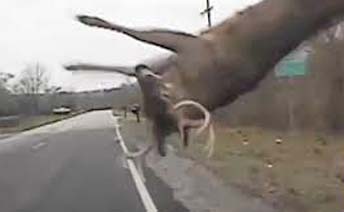
Around 75,000 deer are hit by cars every year in the UK.  This results in 450 injuries but only a few fatalities. Latest figures say that there are up to a dozen, either drivers or passengers.

deer

Getting it all into context, in 2010, 1,970 people were killed in transport accidents with almost four hundred of these being pedestrians. Two pedestrians were killed by a bicycle on the pavement and a further five were killed by motorbikes. Cars and vans claimed 133 victims in the total, and 55 pedestrians were in either a bus or a lorry with 39 hit by a train. Just over a hundred cyclists were killed in total (123) and 429 motorcyclists perished. Travelling in cars, 1,115 deaths occurred, a rather good advert, perhaps, for the virtues of the seat belt. On water, 14 deaths occurred and 22 people were killed in aeroplanes.
Stairs were killers on almost 700 occasions:

steps

A further 53 people fell to their death off a ladder. It can be accidental:

ladeeeer Or simply, a great mind at work:

ladder-double

More bizarrely, 36 people were killed by a “thrown, projected or falling” object.
Accidental drowning claimed 217 with 29 in the bath and 3 in the local swimming pool. The majority of people who drown, of course, are swimmers rather than non-swimmers.
The real killer animals were doctors and surgeons who claimed 433 people in medical accidents. The forces of nature claimed 129, the same figure as for “excessive natural cold”.
And what about those killer lifts? Four fatalities between 2002-2010.
And I’m still trying to work out how they did it. Five people managed to suffocate in bed:

marie-antoinette

There were lots of different sources for these statistics, so I picked one that seemed to be from a reasonable source.

26 Comments

Filed under Criminology, History, Science, Wildlife and Nature

The Most Dangerous American Animal (3)

So what is the most dangerous animal for our American friends??

Well, we already know that wolves have never killed anyone in the lower 48 states of the USA with just one death in Alaska and one in Canada since the year 2000:

621166__the-wolf-pack_p

The most difficult problem I had with the USA was in finding accurate figures. Some lists refer to a single year and others to a number of years. On the other hand, the animals mentioned were all roughly the same in terms of the number of deaths, however the number was expressed.

Soooo…..don’t worry about sharks, with one fatality per year on average between 2001-2013. It was the same figure for alligators, crocodiles (you have both?) mountain lions, moose and, surprising to me, bears. All three species together, Grizzly, Black and Polar kill around two people per year between them. Venomous snakes and lizards (you have both?) kill six, and scorpions one victim fewer.

I didn’t know what a non-venomous insect was, or rather, I just couldn’t see how it would kill you, but anyway, they managed to kill nine people. Much more dangerous, though, were cows with an average kill total of around twenty. According to one expert:

“Large livestock are powerful, quick, protective of their territory and offspring, and especially unpredictable during breeding and birthing periods.”

Most people killed by cows are farm workers although they will attack walkers, birdwatchers and artists on occasion. In particular, in my experience, they especially seem to hate easels and tripods, thinking you are some kind of four or five legged supercow. Meat producing cattle are more docile in their behaviour and milk producing breeds are the worst of all, especially Friesians:

Big_beasts_trigger_2663528kxxxxxxxxxxxxxxxxx

Mammals such as horses, pigs, deer and others killed 52 people annually between them, although strangely, this figure does not count road collisions.

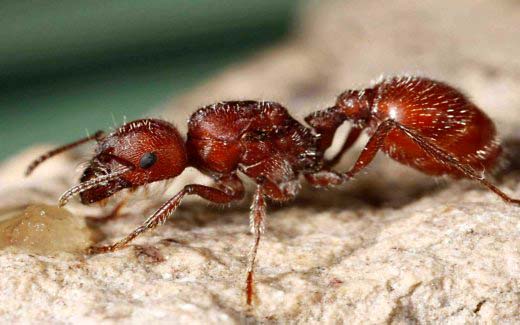
More dangerous still are bees, wasps and hornets with just under sixty deaths, mostly through anaphylactic shock. Other venomous insects killed a further sixty victims, who included a large proportion of old folk in the southern states killed by fire ants.

image_fireants

One website alleges that domestic dogs kill 250 people per year and states that $1 billion is lost every year through injuries and deaths caused by dogs. Sadly 34% of the victims are children under four years of age. Elsewhere totals were much lower with the National Canine Research Council reporting 41 fatal dog attacks in 2014 and 32 fatalities in 2013.

Keep it in context though. The USA has a population of 318.9 million people and 2.6 million people die every year. All animal deaths combined constitute a measly 0.008 percent of all fatalities.

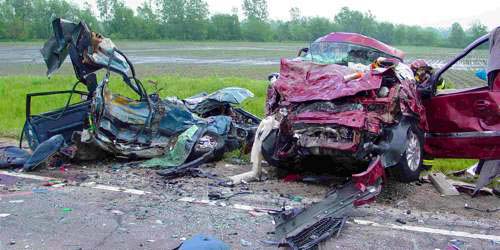
Annually, 33,000 people are killed in cars. There must be towns smaller than that.

AAA-Causes-of-Car-Crashes-Study

30,000 people fall to their deaths.

Nearly 39,000 manage to poison themselves.

11,000 people are shot and killed.

3,868 people drown.

41,000 commit suicide every year.

Around two and a half thousand Americans choke to death every year, with roughly the same total for deaths in fires. Six hundred people shoot themselves accidentally, with 45% of them children. Forty five of the adults will be hunters walking alone in the woods.

In the less serious category, 33 people are killed every year by lightning. A massive 413 deaths occur every year as a result of accidents with ATVs. Even elevators have their dangers…yes, you read correctly…..they kill 26 unfortunate people every year. These don’t look dangerous…but they are:

doors

And what about England? Well, we’ll see in the near future.
32 Comments

Filed under Criminology, History, Humour, Science, Wildlife and Nature

Wolves (2) How to fight them off

Recently, I wrote about how Candice Berner, a thirty two year old special education teacher was killed by wolves as she jogged along a road outside Chignik Lake, a remote village in south western Alaska. It was the first ever fatal wolf attack in Alaska where between 7,700-11,200 wolves are resident. There has only been one fatal attack in the rest of North America, where between 50,000-60,000 wolves are resident. This was a man who regularly fed the wolves near his campsite.
Kenton_SKxxxxxxxxxxxxxxxxxxxxxxxxxx

Last time it emerged that Ms Berner’s slight, almost childlike build would have been attractive to the wolf. So too was the fact that she was out jogging. A running target always brings out the worst in any predator.

Her listening to music on a headset was thought by her father to be contributory, but was actually discounted because wolves are less noisy than the wind anyway.
A recent TV programme on Animal Planet also made one or two important points about this attack. They visited Chignik Lake and discovered that Ms Berner went running every day at the same time. This did not make it particularly difficult for any predator. The first thing every politician at risk of assassination is told is to vary their routine as much as possible. Ms Berner, they said, ran past the town dump, where both wolves and bears would routinely come to scavenge. As I said in a previous article, the local dump is a good way to habituate predators to humans. To show them how human scent equals food. If people take no notice of the predators’ presence, then they will gradually lose their innate fear of humans.

image_encounters

The locals at Chignik Lake considered the dump too dangerous a place to go. Most significantly, the TV reporters found that Candice Berger was the only person in Chignik Lake ever to go jogging outside the town. The locals at Chignik Lake considered this activity far too dangerous, although their primary fear was that of bears, who can chase you at a steady 35 mph. Hard luck Usain Bolt, tootling along at a pathetic 27 mph. The bear population around Chignik Lake was very high.

xjune-2013-bear_jpg_pagespeed_ic_q9hIvBROLI

The road out of Chignik Lake ran along the side of a hill, and as it curved, Ms Berner’s tracks made a sharp U-turn. This was thought to be the point at which she first noticed the wolves. She was running westwards and the wind was blowing from the west so the wolves may have had her scent blown towards them for some considerable time. Presumably, after she had turned sharply away, this provoked a predatory response. Either one or two wolves chased her, while a third ran higher than the road and then swooped down to either knock her down or cause her to slip over. The place she fell had bloodstains with a second depression three or four yards away as she fell for the second time. She had fled about fifty yards from the place where she first apparently turned away from the wolves. She then tried to crawl away but the wolves dragged her down the slope. By now she was in a very bad way. She finally succumbed in a clearing ten yards from the road. The fight was a very brief one and she died quickly. Her body was then dragged thirty yards to an area of small bushes. Blood on the road led to the discovery of her body, and later that night a wolf returned to drag it a further twenty yards downhill.

Nine sets of wolf tracks were found but the Fish and Game Department said that only four or five wolves had been involved.

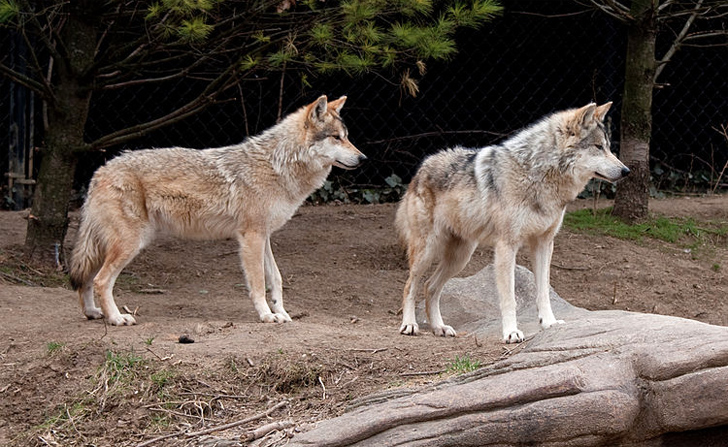
pair-of-mexican-wolves

The Fish and Game Department then culled eight wolves within thirty miles of the attack site. The DNA from one of these wolves was found on the young woman’s body, but a second wolf who left DNA was never found. As always seems to be the case, the evidence of three or four other lots of DNA was impossible to prove.
I have researched exactly what happened in some detail because this attack was, at this time at least, totally unique.
As we have seen, the townspeople seemed deeply worried about the attack, by a member, or members, of a protected species. The Director of the Alaska Wildlife Alliance said that those who wanted to be allowed into the area around the town to kill all the wolves they could find were just:

“A lot of people who want to be macho and go out there and kill animals.”

Perhaps the last words should go to the poor young woman’s father:

“They were just doing what wolves do. Their nature happened to kill my daughter but I don’t have any anger towards wolves.”

Candice_Berner12

So what should you do? Well, the expert in my last article said that you should:

Never feed wolves

Don’t let them become habituated to humans (by leaving them a rubbish tip to visit, presumably)

If confronted by a wolf, don’t run

Face the animal, make yourself appear as large as possible

Yell

Wave your arms

Throws stones or other objects

Resist any attack

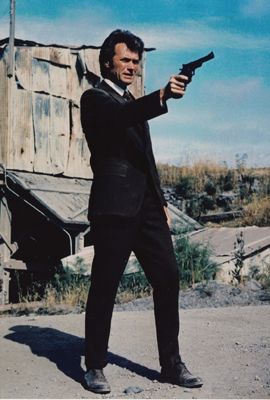
I would personally, if I were American, carry a revolver, one of those that Clint Eastwood carries, and learn how to use it for my own self defence:

dirty-harry328381
And if all else fails, I would try to climb a tree.
The Candice Berner case was notable as being the first fatal wolf attack in North America in which DNA evidence was gathered to confirm wolf involvement.

30 Comments

Filed under Criminology, History, Science, Wildlife and Nature

Wolves (the animal not the football club)

When I wrote about the Beast of Gévaudan, I came to the conclusion that the ferocious creature was a previously unknown type of wolf:

bete-du-gevaudanzzzzzzz

For some unknown reason, it was being forced westwards from its normal habitat of the Polish or Russian primeval forests such as Białowieża. If ancient bison could live there, so could something even more prehistoric:

rejigged bison

At the time I did research the likelihood that the Beast was an ordinary wolf or wolves but I rejected that as a theory because I did not think that wolves would eat human beings.
It would be dishonest, however, not to make it patently clear that in the past, wolves certainly have eaten people but they don’t seem to now. Why should this be?
Firstly, extremes of weather centuries ago, more severe than what we have now, may have lead to a situation where wolves either ate any available prey items or just died. This would account for the Wolves of Paris which I have previously discussed:

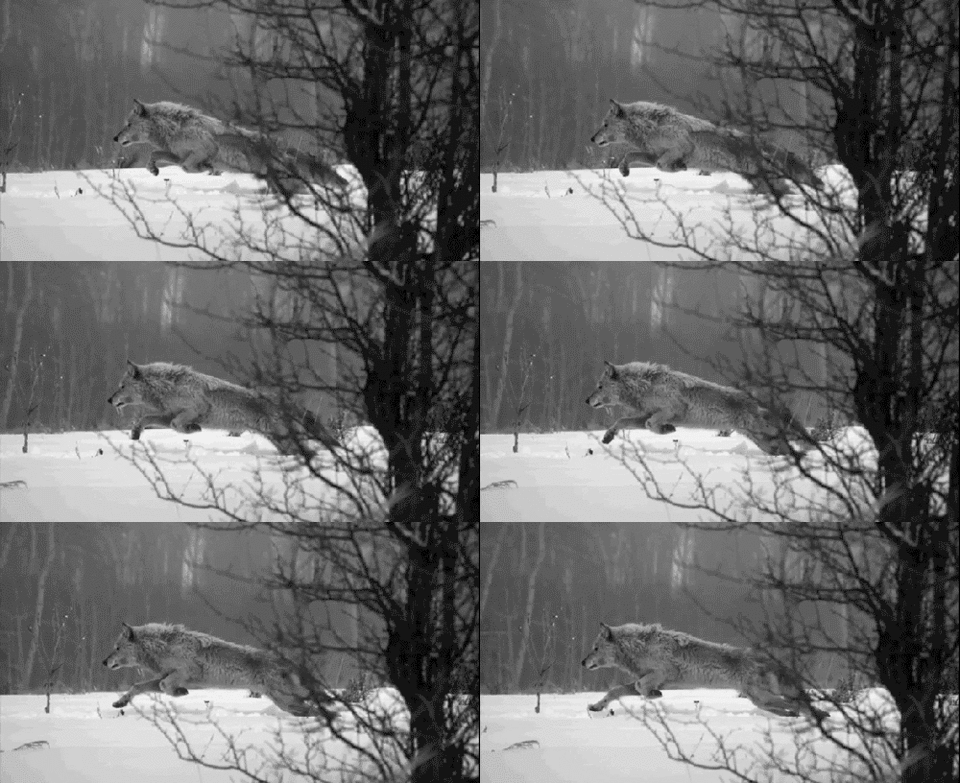
wolf bounding

In actual fact they may also have acquired a taste for human flesh by eating corpses. Apparently, until as late as 1820, corpses in France were frequently thrown into open charnel pits. Presumably, these were paupers, drunks, stillborn babies, in short, anybody dead without the money for a funeral. And it is not outrageous to presume that this lovely way to dispose of the late dearly departed might have taken place in neighbouring countries too. An unfortunate situation that taught wolves to associate the scent of Man with a full belly.
If the hungry wolf wanted a better quality of prime human meat, young, and blood drippingly fresh, the best place was the battlefield straight after the battle. Once the local peasantry had stripped the bodies of everything valuable, they were not buried, but were gradually eaten by the ravens and other corvids, the eagles, both golden and especially white-tailed, and most of all, the local wolf pack.
This association of human flesh, its scent and taste, with a full stomach, was a recipe for disaster when wolves came across, say, lone travellers or children picking berries deep in the woods. And don’t forget. In France the peasantry were forbidden to own firearms to reduce the admittedly tiny risk of a blood spattering revolution.
Nowadays, the situation is completely different. Admittedly France had 7,600 fatal attacks by wolves between 1200–1900 but there has been nothing since. Italy has a population of wolves but without any fatal attacks on humans since 1945 and no attacks by wolves since the eradication of rabies in the 1960s.

wolf pack one

In the Baltic states, where rabies is still allowed to exist, just under a hundred people were bitten between 1992-2000 in Latvia and Lithuania, although the statistics are muddied somewhat in Estonia by the locals’ love for wolf-dog hybrids and keeping wolves captive on their properties.
And what about North America?

wolf baby

Well, in 2002, the Alaska Department of Fish and Game stated that there had been no human deaths in North America attributed to wild, healthy wolves since at least 1900. Concerns were caused though, when, on April 26th, 2000, a six year-old boy was attacked by a wolf in Icy Bay, Alaska. He was not killed, but then, on November 8th 2005 the body of Kenton Carnegie was found in northern Saskatchewan. He had died from “injuries consistent with a wolf attack.” The local wolves had apparently lost their fear of him because he fed them regularly.

Kenton_SKxxxxxxxxxxxxxxxxxxxxxxxxxx

To increase the risk, natural food was scarce in the area at the time and four wolves had been feeding on rubbish tips in the previous weeks. They were no longer scared by human activities. On November 4th, two of Kenton’s fellow campers clashed with two extremely aggressive wolves. Zoologists have now said that this was probably an “exploratory attack” just to see how difficult it was to kill a human being. Another perhaps more serious attack was imminent.
On the day of his demise, Kenton ignored warnings from his companions and went for a walk in the woods. It took the Coroners’ jury two years to rule out Black Bear, but their eventual verdict was “Death by Wolf”.

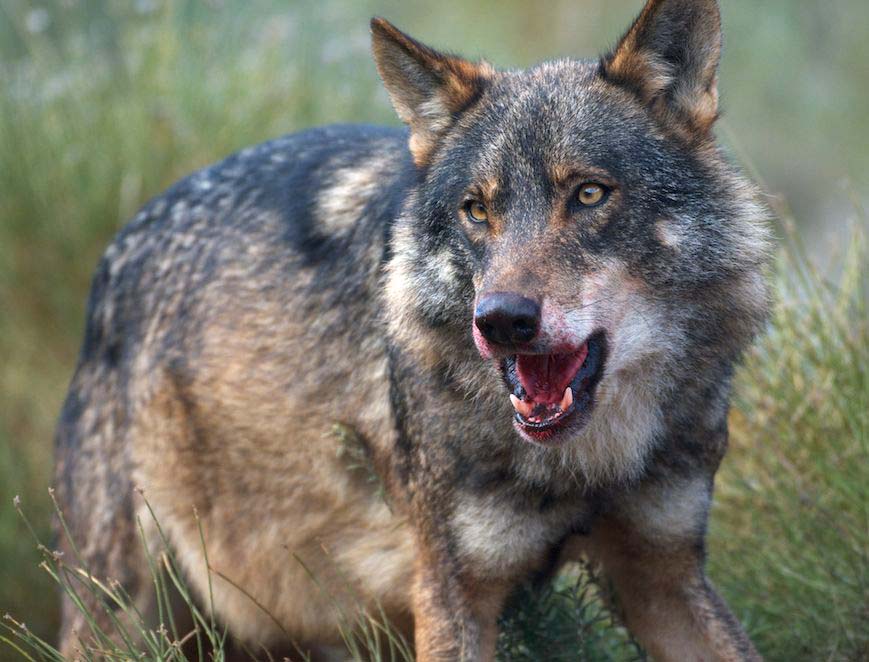
Iberian Wolf alpha male feeding on deer, its mouth tinted with f
On March 8th 2010, Candice Berner, a thirty two year old special education teacher who had only been in Alaska since the previous August was killed by two, perhaps three, wolves as she jogged along a road outside Chignik Lake. It was late afternoon.

Candice_Berner12

This was the first ever fatal wolf attack in Alaska. David Mech, a senior research scientist with the U.S. Geological Survey has studied wolves for more than fifty years. He said:

“There have been about two dozen nonfatal attacks in North America in the past century or so. Most involve wolves that have become habituated to people who have been feeding them at campgrounds, dumps and other sites near wolf habitat.”

Ms Berner was only 4 feet 10 inches tall and weighed just over eight stones (c 112 pounds). David Mech said that her slight, almost childlike build, and the fact that she was running may have attracted the wolves, who, after all, are predators by nature:

“Wolves are very much like dogs in a lot of respects. Things that are running, they have tendency to want to chase them,”


DogChasing

Ms Berner was thought to have been listening to music on a headset, but Dr Mech discounted this, as in his experience wolves move so silently that the wind is enough to mask their presence completely.

Whatever you think about wolves, the truth is that the inhabitants of the tiny village of Chignik Lake have lived alongside wild animals since time immemorial:

chig

This one attack has spooked all of the 73 inhabitants of the area, so remote that it can only be reached by aeroplane. The school’s stuffed wolf mascot had been there a good while, but now it has been kicked well into touch. The wolf badge of the school will also have to go if Virginia Aleck, a local woman, gets her way.
She said that everyone felt trapped in the village. None of the surrounding hills were considered safe anymore.  Nobody walked on their own and everybody carried a rifle.
Is this an over-reaction? Or are wolves just a part of living outside the big city? I’ll try to answer that question in a future article.

17 Comments

Filed under Canada, Cryptozoology, France, History, Personal, Science, Wildlife and Nature

Snow joke

Yet again, the Date-Book of Remarkable Memorable Events Connected With Nottingham and Its Neighbourhood 1750-1879 comes up with the goods.  Ands today you’ll see just how appropriate is the name of the author, John Frost Sutton. Once again, I have tried to simplify some of the more archaic language.

“January 1776

A great fall of snow and intense cold. Drivers of vehicles found it impossible to complete their journeys, and the stagecoach to London was stopped halfway to the capital, and was unable to proceed.”

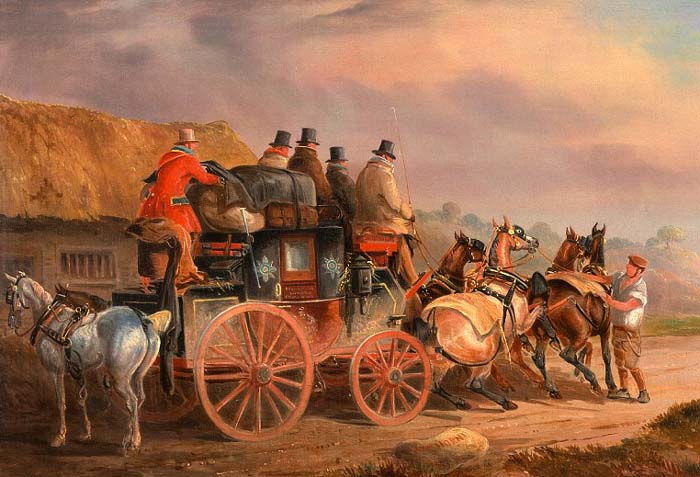
Here is the type of stagecoach we are talking about. It’s not really one for the Apaches to chase:

stagecoach w

“A contemporary record states that the road beyond Northampton “was crowded with the passengers from the north, all of whom had been detained there all the week, owing to the great depth of snow. Many of them had neglected to make any provision for what had happened, and were in the greatest distress. On the other hand, some, who were well supplied with the one thing they really cherished, lived happily at the nearest public or farm houses. They were literally in high spirits. Almost every house on the road exhibited either a happy picture of noise and merriment, or else showed the visible signs of vexation, disappointment, and humiliation.”

“On January 13th, two men were returning in the evening from Nottingham to Papplewick, when they were overcome by the cold, half-way between Redhill and their place of destination. In the morning, one of them was found stretched out on the snow and dead. The other was found in a state of insensibility, with his stiffened arms clasping the trunk of a tree, and icicles at the end of his fingers. With much difficulty his life was preserved.”

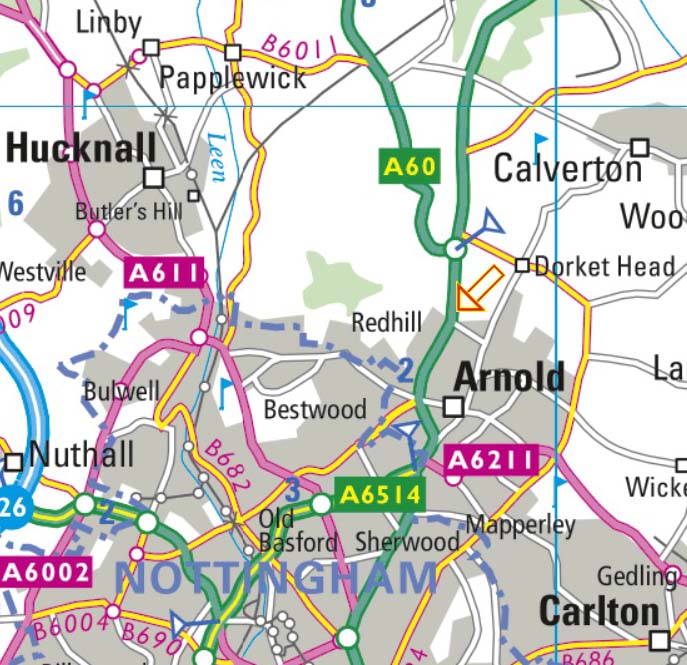
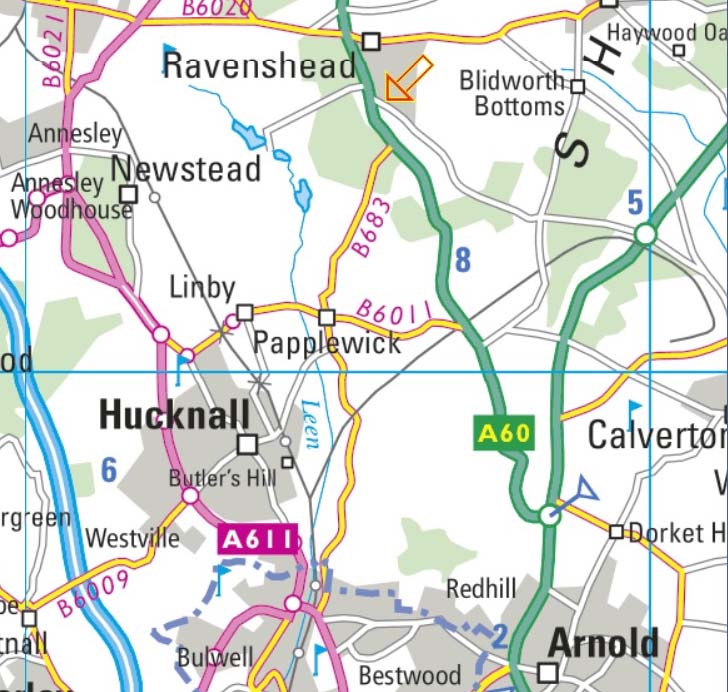
The orange arrow points to Redhill, and Papplewick is in the top left corner:

papplewi3333333333333333333333

“The same day another sufferer was rescued from death by Mr Turner, a Nottingham attorney. A young woman in the service of Mr Lee, of the Peacock Tavern, near St. Peter’s Church in the middle of Nottingham, had been to Leeds on a visit to her friends, and was returning to Nottingham.”

Here is St Peter’s Church in Nottingham, down near the Broadmarsh Shopping Centre. The building to the right will one day be Marks & Spencer but it doesn’t really know it yet:

st-peters-1860-300dpi

The young woman left Leeds as a passenger on the outside of the coach as it was so much cheaper (although a lot colder, of course).

red stage

“About midway between Leeds and Nottingham, some thirty miles from the latter town, the tremendous fall of snow rendered it impossible for the coach to proceed any further, and the young woman, not having enough money to stay where she was, set out resolutely on foot. She managed to reach The Hutt, on the road from Mansfield to Nottingham, when her strength totally failed, and she lay down to die.”

Here is the Hutt nowadays. It figured in a previous article when a White Stork flew over it:

thre hutt

On this map, the orange arrow indicates the Hutt. The immediate area is no longer as isolated or countrified as it would have been in 1766. Redhill and Arnold are both in the bottom right corner:

hutt aaaaa3333333333333333333

“In the hour of her extremity Mr Turner the solicitor happened to be passing that way on horseback, and prompted by humanity, lifted her up, took off his greatcoat and wrapped her in it. He put his gloves onto her hands, and with great difficulty succeeded in carrying her to Redhill, where she was properly taken care of at his expense until sufficiently recovered to be brought to Nottingham.”

I included this bit of the account because there are not many stories where a lawyer is the hero, especially a generous one. This is the “Ram Inn”, an old coaching inn at Redhill. It faces west so it is not easy to photograph and get much light on the subject:

Ram Inn pic

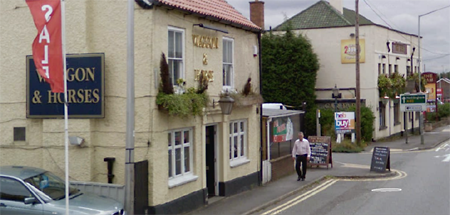
Right next to it is the Waggon and Horses, another coaching inn of the period:

ram

Two pubs next to each other is fabulously convenient. When the barman in one pub refuses to serve you because you are too drunk, you can just leave quietly and try your luck next door.


13 Comments

Filed under History, Nottingham, Science, Wildlife and Nature

Bigfoot? Where? Tunbridge Wells?

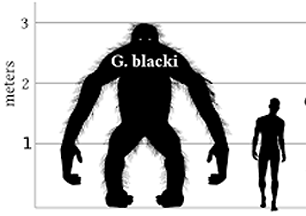
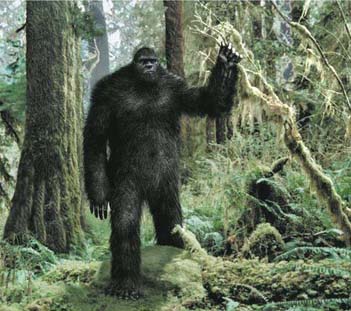
Of late, there has been an increasing number of claims by people who think that they have seen Bigfoot in Great Britain. If you think Bigfoot is a physical being, descended from gigantopithecus blacki, then for me, that particular idea of seeing such gigantic creatures in tiny England is almost beyond ludicrous.

blacki

If you think Bigfoot and all his pals come through vortices in time and space, wormholes in the structure of the dimension, then I suppose his existence here would perhaps be a definite maybe.

Rather reminiscent of the “Barmston Drain Dog Destroyer”, this is a tale from Tunbridge Wells. I have précised the account in the Daily Mail, although it did appear in a good few other newspapers in almost identical form.

Tunbridge Wells, incidentally, is located in west Kent, forty miles from London. The population is about 56,000:

“Terrified walker claims 8ft-tall creature roared at him…

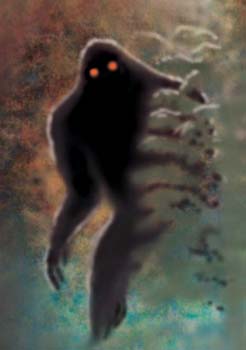
Bigfoot, red-eyes, Bill Rebsamen

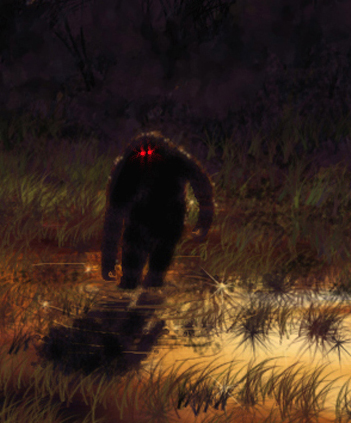
A man walking in the 200 acres of woodland beside the town’s common claims to have spotted an 8ft tall black beast with demonic red eyes and long arms.
The ape-like creature, which looked like America’s legendary Bigfoot, roared at the walker, who immediately ran off in fear.”

And of course, that is not the only report in Tunbridge Wells. All the people who have seen Bigfoot in the local library car park suddenly come out of the woodwork to tell the tale.

“Over the past six months there have been a number of sightings. Locals in Tunbridge Wells have mixed opinions, with some believing it could be a joker wearing a fancy dress costume.
Scientists say rumours of its existence have come from folklore and hoax.”

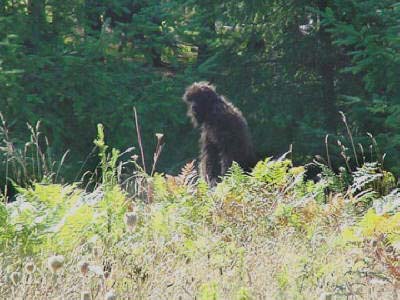
db_Bigfoot43_1_

Interestingly enough, though, there is a tale of a strange creature being seen in Tunbridge Wells well over seventy years ago in 1942. Every monster has to have a name, preferably slightly comic, and presumably in an effort to make it a little less monsterish. He has, therefore, been christened “The Kentish Apeman” or “The Apeman of Kent”. The tale was told best in the Kentish News:

“He was first spotted on the town’s common seventy years ago.
An elderly couple saw it in 1942.’They were sitting on a bench when they became aware of a shuffling noise behind them.
Turning around they saw a tall, ape-like creature with eyes that were burning red moving slowly towards them at a slow pace.. They observed this creature for some time until they became afraid and both fled – terrified.”

big red

“The old lady went on to say that they told the police and members of their family, thinking that a gorilla had escaped from a zoo, but they were laughed at and were not believed.”

pinterestzzzzzzzzzzzzzzzzzzzzzz

This account also mentions other reports of the creature in more detail. One extraordinary tale, even in the context of gigantic unknown apemen, came in Dartford when a student saw a creature with long arms and knees which came up under its chin as it walked. If it’s nice weather tonight, or perhaps tomorrow morning, then go out on your lawn, and give that a go. And don’t forget: “knees which came up under its chin as it walked”.
Five members of the Territorial Army in 1991 spotted this beast on Blue Bell Hill, near Maidstone. They threw stones and shouted at it before running away. A young girl in Chatham saw the apeman appear then run off into the bushes.

hqdefault

Well, there we are. No real, concrete explanation. Not like the famous Man-Monkey of Ranton. (The what?):

“On January 21st 1879, a labourer was employed to take a cart of luggage from Ranton in Staffordshire to Woodcock in Shropshire.
“He was late coming back. His horse was tired, and could only crawl along, so that it was late at night when he arrived at the place where the road crosses the Birmingham and Liverpool canal.
“Just before he reached the bridge, a strange black creature with great white eyes sprang out of the plantation by the roadside and alighted on his horse’s back.”

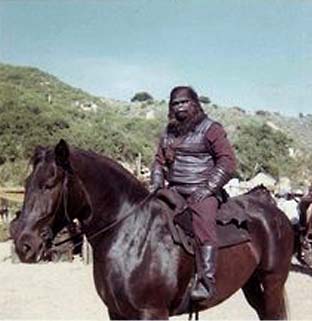
A bit like this?

planet

“He tried to push it off with his whip, but to his horror the whip went right through the thing, and he dropped it on the ground in fright.”

When the man recovered from the fright, he returned home and excitedly spread the story.
A few days later, a policeman came round to his house and told the frightened man: “That was the Man-Monkey sir.”

Not much gets past our police, does it?

11 Comments

Filed under Bigfoot, Cryptozoology, History, Humour, Science, Wildlife and Nature