Category Archives: History

The Avro Lincoln at RAF Cosford

During a recent visit to the museum at RAF Cosford, I was able, as a confirmed fan of the Avro Lancaster, to view its successor, the Avro Lincoln:

cosford c xxxxxxxxxxx

The Avro Lincoln flew for the first time in June 1944, just a few days after the Normandy landings. The first examples of the new bomber were actually called the Lancaster Mark IV and the Lancaster Mark V, but they were eventually rechristened the Lincoln Mark I and the Lincoln Mark II. The new aircraft was the last bomber in the RAF with good old-fashioned piston engines and proper propellers:

lincoln_rf570_heritage_centre

The theory was that the Lincoln would be used in “Tiger Force”, Bomber Command’s contribution to a potentially catastrophic invasion of Japan in 1946. The bombers would have acted, presumably, as the RAF’s equivalent of the B-29 Superfortress or the much less well known Consolidated B-32 Dominator. Here is a B-29, “Fifi”, sadly the only example left flying from the 3,790 constructed:

fifi xxxxxxxxxxxxxxxxxxxxxxxxx

This is the little known B-32, the aircraft which actually flew the last combat mission of World War 2. Only 1156 of these bombers were ever built:

b32-main

At the time of “Tiger Force”, my Dad had already had all his medical injections for this next phase of the war, and the squadron’s Lancasters were all being crated up to be transported out to the Far East. Then suddenly, the Americans dropped their two atomic bombs and the war finally came to an end.
The Lincoln was certainly an improvement on the Lancaster, but the performance figures given in Wikipedia are not particularly startling, with bomb loads, aircraft size and speeds all roughly similar.  Here is the capacious bomb bay:

cosford b xxxxxxxx

The range of the Lincoln was greater than its predecessor, and the maximum speed was an improvement, with the aircraft able to cruise happily at 215 mph.  Similarly, the service ceiling and the rate of climb were better than the Lancaster.
Eventually, more than six hundred Lincolns were to be manufactured, with a further 73 in Australia where it was the largest aircraft ever to be built there.

This photograph comes from a splendid Australian website where you can learn, more or less, to fly a Lincoln, especially the long nosed version, the Mark 31. Every single one also contains two or three  of the author’s laugh-out-loud feelings about life. My favourite one is:

“Going to church doesn’t make you a Christian, any more than standing in a garage makes you a car.”


australian mark 31
Just one single Avro Lincoln was constructed in Canada. Here it is:

canadian _Lincoln_ExCC

With the RAF, the Lincoln was used in the 1950s to oppose the Mau Mau terrorists/freedom fighters in Kenya. You can read the story for yourself, but I do love the British evaluation of the Mau Mau by Dr. John Colin Carothers as

“an irrational force of evil, dominated by bestial impulses and influenced by world communism”

I also enjoyed the description of the traitorous Africans who continued to support the nasty British as:

“the running dogs of British Imperialism”

Very Mao Tse-Tung. And here is the Great Man, ordering five beers:

Chairman-Mao-Zedong-007
The Avro Lincoln was also employed against terrorists/freedom fighters who operated in Malaya (now Malaysia). They too were influenced by world communism, although they were unable to import any running dogs of British Imperialism because of the rather strict customs regulations in force at the time.

All of that history is fairly predictable, except for the sad story of the single Avro Lincoln (RF531 “C”) which was shot down by the Soviet Air Force.  The bomber was attacked by a MiG-15 fighter on its way to Berlin on March 12th 1953. This is a MiG-15:

mig15takeoff05 xxxxxxxxxxxxxxxxxxxxxxxx

The Lincoln was being flown by members of the Central Gunnery School at Leconfield in Yorkshire, and all seven of the crew were killed. The whole very sad, rather ghastly tale, is told on the Spyflight website. What a sad, sick waste of young men’s lives that was. There was just no need for it.

A lot further south, the use of the Avro Lincoln by the Argentine Air Force, the Fuerza Aérea Argentina is quite interesting:

Avroaregenrtine 2Lincoln_B-010_0084_2006-0

These Lincolns (and indeed, Lancasters) were initially employed by the I Grupo de Bombardeo to bomb the rebels, during a military coup in September 1951.  Four years later, the British aircraft were obviously highly thought of, because, in what seems to have been another rather over-vigorous political argument, they were used by the government to bomb the rebels, and by the rebels to bomb the government. Here is the paint scheme of the rebels, apparently influenced, if only slightly, by world communism:

rebel lincoln

This was, of course, the Revolución Libertadora which ousted Juan Peron and his wife Madonna.

(“She plays Evita with a poignant weariness and has more than just a bit of star quality. Love or hate Madonna-Eva, she is a magnet for all eyes.”)

Some things I just cannot resist. Nobody could:

One interesting feature about these ageing South American bombers was that both the Lancasters and the Lincolns in Argentina were serviced, and kept viable, for many, many, years, by ex-Luftwaffe engineers.  For some unknown reason, they had all decided to leave the Fatherland in 1945 to live out the rest of their sad lives in South America:

lincoln argentine

I was fascinated to read as well that Avro Lincolns were used to support the Argentinian bases in the Antarctic. One aircraft therefore, was flown back to Avro in England. Engineers there added a civilian nose and tail, removed all armament, and put in generous extra fuel tanks. Registered as a civil airliner called the Cruz del Sur, the aircraft dropped supplies to the Antarctic San Martín Base from December 1951 onwards:

crfuz del sud
Sixty or so years later, the Argentinians still have two Avro Lincolns preserved. You have already seen two photographs of one of them. Here is another:

argen best picture

The Australians have one of their Lincolns in storage for restoration in the future, and there is also the aircraft that we all saw at RAF Cosford, with its rather disconcerting blue bosses to the propellers:

cosford a xxxxxxxxxxxxxxxxxxxxxxxx

And, as far as I know, that’s it! What a wonderful regard we have for preserving RAF aircraft. Are we embarrassed that we were ever forced to use them in anger?

38 Comments

Filed under Aviation, Bomber Command, History

The very first football season of them all 1888-1889 (Part 2)

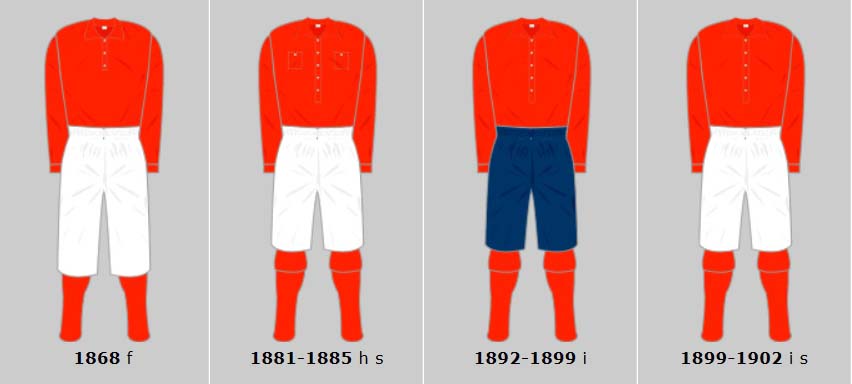
In my previous article about the involvement of the High School’s ex-pupils in the newly invented Football League. I spoke in some detail about the career of Arthur Frederick  Shaw, who played twice for Notts County in that inaugural season of 1888-1889, before going on to make two more League appearances the following season. He then continued his career in the Second Division with firstly Nottingham Forest and then Loughborough. Here is the Notts County kit that he would have worn during that first season:

Capture 1 - Copy

When Arthur Shaw made his first appearance in the Football League on December 8th 1888, at home to Aston Villa, a narrow 2-4 defeat for the Magpies in front of 2,000 spectators, he was the inside right (No 8). In the same team, playing at left full back (No 3) was the splendidly named Herbert Durrant Snook, a fellow ex-pupil of the High School.

Born on December 23rd 1867, Herbert Snook entered the High School on September 11th 1876. He left at Christmas in 1882. Herbert was one of four brothers, the sons of James Snook, a wholesale merchant and draper. The family lived initially in Elm Avenue, Nottingham, before their fortunes improved dramatically and they moved to Penrhyn House, in Clumber Road, The Park, Nottingham:

penryn

The other three Snooks at the High School were James Brasher Snook, Frederick William Snook and Percy Walter Snook. All three played for Notts County in various F.A.Cup ties and friendlies, but never in the Football League.

In that first season of League Football, Herbert also played in three F.A.Cup ties. These were all home games, against Eckington (4-1), Beeston St.John’s (4-2) and Derby Midland (2-1). Herbert played as a right full back (No 2) against Beeston St.John’s, but as a left full back in the two other games. The Cup Ties against Eckington and Beeston St.John’s were both contested by Notts County’s reserve side. On the same day, the First Team played Football League fixtures against Blackburn Rovers (3-3, 4,000 spectators) and Burnley (6-1, 5,000 spectators), both games taking place immediately after the Cup games. The crowd against Beeston St.John’s and Burnley must have gone home happy. It isn’t often that County win two successive games and score ten goals doing it. Here is Notts County’s Meadow Lane. It is the football stadium in the top right. Nottingham Forest’s City Ground is towards the bottom of the picture, on the southern side of the River Trent:

meadoew lanexxxxxxxxxxxxxxxxxxxxxxxxxx

Herbert’s brother, Frederick William, played against Eckington and Beeston St.John’s, at centre forward (No 9) in the first game, and as inside right ((No 8) in the second.  A third Old Nottinghamian to play was Henry Harold Brown who was at the High School from 1874-1878. He appeared as outside left (No 11) in both games and scored a brace of goals against Beeston St.John’s. His brother, Gilbert Noel Brown, yet another ex-pupil of the High School, played as centre forward (No 9) in this game.

In 1890, Herbert Snook was one of the earliest shareholders in the newly formed “Notts Incorporated Football Club”, although during the 1888-1889 season he had played in two friendlies for Nottingham Forest, the first against Stoke City (1-2), the annual Shrove Tuesday match. Here is the Stoke City kit:

Capture 1 - Copy

The second game was against his old team, Notts County (2-5). In excess of 5,000 spectators watched the match. On March 12th 1891, Herbert appeared for the Old Boys in their 3-1 victory over the High School First XI at the Gregory Ground, the home of both the High School footballers and of Nottingham Forest.

Herbert was to spend most of his life living at “The Cedars”, Derby Road, Lenton, Nottingham. He was keen on tennis, and in partnership with Gilbert Noel Brown, held the county men’s doubles championship for many years. Herbert was well known in political circles as a liberal, and worked in the old established family business of James Snook and Company Ltd., who were wholesalers and clothing manufacturers in Houndsgate, Nottingham. In actual fact, Herbert was still working until well into his eightieth year, after forty years as chairman and managing director, and a grand total of sixty two years in the company. Immediately after Herbert’s retirement, the business was taken over by a Birmingham firm. Herbert died on October 13th 1947, at the age of seventy nine, after an illness lasting some months. He was buried in the family vault in the Church Cemetery on Mansfield Road. Here is the Church Cemetery, a Victorian masterpiece. It has a permanent staff of eight vampires:

graveyard

Playing at right half (No 4) on December 8th 1888, against Aston Villa, alongside Arthur Shaw and Herbert Snook, was a third ex-High School pupil, namely G.H.Brown. Strangely, there are two likely candidates of this name in the Victorian school registers at the High School.

The first possibility is George Henry Brown, the son of Samuel Brown, a fish and game dealer of 96, Sherwood Street, Nottingham. He would have been nineteen years of age when the match against Aston Villa took place. A better fit though, would be George Hutchinson Brown, the twenty one year old son of George Wilkinson Brown, a grocer and chandler of firstly 14, Colville Terrace, and then 62, Addison Street, Nottingham. We will probably never know the answer to this enigma, unless Notts County have a dusty box full of players’ contracts from this era, hidden away somewhere, perhaps among the cobwebs of  their trophy room.

George Hutchinson Brown was to wear his admittedly un-numbered shirt as a right half (No 4) for most of that historic first season. He played 19 times out of a possible 22 games. He had the honour of playing in County’s first ever League game, a 1-2 defeat away to Everton at Goodison Park, and also in their first ever home game, a 3-3 draw with Blackburn Rovers. Here is the Blackburn Rovers’ strip, very similar to the present day:

Capture 2 bottom - Copy

Notts County’s first ever league victory came in their fifth game of the season, and was a 3-1 home win over Everton. George Hutchinson Brown was again the team’s right half. Here is the Everton kit:

Capture 3 top - Copy

George also played in County’s first ever away win in the League. This was a long, long, wait, until Match 18 out of 22, a 2-1 win over Accrington on January 26th 1889, County’s only victory away from home in the whole season.  Here are the Accrington colours:

accrington-1892-1893-b

George Brown’s solitary goal came in a narrow 2-5 away defeat against Blackburn Rovers at Ewood Park, in front of 4,000 spectators, on December 15th 1888. One particularly exciting game must have been the last one of the season, another narrow defeat at home, this time by 3-5 against Derby County. The Rams wore this unusual kit:

Capture 1 - Copyxxxx

George had played in friendlies for County in both the 1886-1887 and the 1887-1888 seasons. He made 28 appearances and scored one goal, against the Sheffield Club. Interesting results came against Scottish club, Hibernian (0-6), Aston Villa (8-2), Corinthians (1-4), Nottingham Forest (0-0, 12 000 spectators) and the disastrous Notts Rangers match (0-8). Here are the Hibernian colours of the era:

hinerbnian

George played in five F.A.Cup ties for County, against Nottingham Forest (1-2), playing as a centre half (No 5), Derby Midland (2-1), Old Brightonians (2-0), and Sheffield Wednesday (2-3). Best of all, he played as a left full back (No 3) in the El Classico of the Victorian era, Notts County 13 Basford Rovers 0. Here is Meadow Lane from the spectators’ point of view, seconds after the end of the game:

1962MeadowLanxxxxxxxxxxxxxxxxxxxxxxx

At the end of the 1888-1889 season George left County for ever, and moved to Forest, where he was to play seven games in the Football Alliance, and a number of friendlies. Interesting results included games against Bootle (2-2), Grimsby Town (0-4), Long Eaton Rangers (3-5). Clapton (0-1), Walsall Town Swifts (0-1) and Everton (0-7).

A fourth Old Nottinghamian to play in County’s first season in the Football League was Harry Jackson, who was born on April 23rd 1864. His father, Charles J.Jackson, managed what the School Register rather grandly listed as a “Piscatorial Dépôt”, (probably a fishmongers, or even a fish and chip shop) and the family lived at 23, Carrington Street. Harry played on five occasions; as an outside left at Stoke (0-3), as a centre forward at Burnley (0-1) and Wolverhampton Wanderers (1-2, 1 goal), an inside left at Bolton Wanderers, (3-7, 1 goal), and an inside right at home to Derby County (3-5).

Here is the Burnley kit;
Capture 3 top - Copy - Copy

And here is the Wolverhampton Wanderers’ strip:

Capture 2 top y - Copy

Here are the Bolton Wanderers’ colours. Very little has changed here:

Capture 2 bottom - Copy (2)

In his career with County, Harry also played in 21 F.A.Cup ties, and scored 19 goals. In other games for County, all of which would have been friendlies, he made 101 appearances, and scored 85 goals. This gave Harry Jackson an overall career total of 104 goals in 122 games for Notts County, both totals and a strike rate which  are only exceeded by those of Harry Cursham himself:

h cursham

A fifth Old Nottinghamian in that same inaugural season of 1888-1889 was Edwin Silvester Wardle. Edwin was born on January 11th 1870 and the family lived at Magdala House in Mapperley Road. He attended the High School from 1881-1883. He made two appearances in the League for County, the first as an outside left (No 11) at Goodison Park, Everton, in the very first match of the season (1-2), County’s début in the Football League. Strangely, he then appeared as an outside right in the very last fixture of the campaign, the 3-5 home defeat to Derby County. Prior to this, he had played in six friendlies, scoring three goals, two against Aston Villa (3-3) and one against Halliwell (1-4). He also appeared in four F.A.Cup ties, scoring one goal against Staveley (3-1).

Another particularly disappointed Old Nottinghamian, the sixth to play in that first season of 1888-1889, must have been John Alfred Brown, who made just one appearance for County, as an outside left (No 11) in a game at Villa Park against Aston Villa. County lost narrowly by nine goals to one, watched by an entranced crowd of some 4,000 spectators.

John Alfred Brown was born on March 20th 1866. Along with his elder brother, he entered the High School on August 10th 1874, at the age of eight, although the date when he left the High School remains unknown. He made his first appearances for County towards the end of the 1883-1884 season, when, after the New Year, he played as an inside left in away friendly games at Walsall Swifts (1-2), and Sheffield Attercliffe (0-2). Overall, he played in 34 friendlies between 1884-1888 and he scored a healthy total of 14 goals. Interesting games and scores in 1884-1885 included his two goals in a 5-0 defeat of Wednesbury Old Athletic, and another goal against Hendon in an 8-2 victory. There were also games against Blackburn Olympic (1-1 and 0-3), Preston North End (1-2), Sheffield Wednesday (1-0), the Sheffield Club (3-0), Blackburn Rovers (0-2), Notts Rangers (2-1) and Derby County (0-2). Here are the Blackburn Olympic colours:

Blackburn_Olympic

For the most part, John was an outside left, although he also played at inside left, and inside right. In 1885-1886, he appeared in home games against Bolton Wanderers (3-3) and Great Lever (1-3), and in away games against Queen’s Park (1-5), the Sheffield Club (6-1) and Wellingborough Grammar School (8-3). He scored a goal at Sheffield, although three of the scorers at Wellingborough remain unknown. Two games were at inside left, with one at outside left, and two at centre forward. The following season of  1886-1887, he played at the Sheffield Club (4-1) and Wolverhampton Wanderers (0-2). He also appeared against Preston North End, a game which County were narrow losers by 0-14. Here is the Preston strip:

Capture 2 top y
John’s most successful season was 1887-1888 with 10 goals in 14 appearances. These included Walsall Town (0-4), West Bromwich Albion (1-5), Nottingham Forest (1-0), Preston North End (2-5), Everton (1-3). He played in home fixtures against Leek (8-1), Aston Villa (8-2), Preston North End (2-3), Grimsby Town (4-0), and Corinthians (1-4). A substantial veil might be drawn over Mitchell St.George’s (0-10).

John scored four times against Leek and Aston Villa, with single goals in each game against Preston North End. All of his games were as an inside left.

By the way, the illustrations of old football kits came from the best ever website for the soccer nerd and all the boys who had more than twenty different Subbuteo teams. New Brighton Tower 1898? Oh, yes.


12 Comments

Filed under Derby County, Football, History, Humour, Nottingham, The High School

Water, water everywhere, especially past Trent Bridge

In a recent blogpost, I mused about the cold past of our city, and how the River Trent had frozen over on a number of occasions in the nineteenth century, the last being in 1892. Previous years when similar brass monkey weather conditions had occurred were 1682, 1814, 1838 and 1855. In all of these winters, the River Trent at Nottingham had literally frozen over from one bank to the other. I found these extremes of weather really quite interesting, so I continued to do further research of my own. I duly found some extra details, such as, for example, the sad fact that:

“on 10 January 1814, seven boys drowned in the River Trent in England by the breaking of the ice.”

One or two more examples of extreme cold have since come to light, in years of which I had previously been completely ignorant. During the winter of 1092-1093, for example, when William Rufus was king:

“the River Thames and all the English rivers (were) heavily locked in with ice”. There was severe frost in this winter. English rivers (were) frozen so hard that horsemen and wagons could travel on them.”

When warmer weather finally came, however:

“drifting ice on the rivers destroyed bridges, and mills were carried away”.

Here is William Rufus, who was to be killed by an arrow in the New Forest:

4559818813_e810e0ca1c_z

Four hundred years later, the River Trent was frozen near Nottingham in the winter of 1485-1486. When the thaw finally came, “the bridge at Newark-on-Trent was swept away.” In 1766, on February 15th, a great snowstorm hit Nottinghamshire, which lasted fifty hours. That is a lot of snow!

Our old friend “Wikipedia” provided a great deal of historical detail about this kind of event, not all of it totally fascinating, although the word “palaeochannel” was new to me and it does contain three unusual vowels in a row. Here’s one I photographed earlier:

paleo chanaell zzzzzzz

I knew that Giant Floods generally follow any Big Freeze but it was interesting to see that, in the modern era, the worst flooding experienced in Nottingham came very soon after the vast snows of the winter of 1946-1947 had melted. This melt was extremely sudden because of continuous heavy rain throughout March. The result was extensive and severe flooding all along the valley of the Trent. During this flood the peak flow of the Trent was 39,100 cubic feet per second, thirteen times the norm. As many as 9,000 houses were flooded and almost one hundred industrial premises were awash, with floodwater up to the height of the first floor. Here are one or two photographs of the flooding. These are of West Bridgford:

This slideshow requires JavaScript.

Here is Arkwright Street next to the railway station:

arkwright st

This is the aptly named Canal Street:

NTGM006755.tif

Here is a picture of the River Trent near the present day Harry Ramsden’s and Toys-r-us. On the left is Wilford Power Station, demolished in the 1980s, and on the right, Clifton Colliery which disappeared even before this (possibly through flooding?):clif colli wilf power station

Here is Beeston, looking remarkably like Venice:

NTGM016349.tif

This photograph is just about recognisable as Melton Road in West Bridgford:

220px-Melton_Road_in_the_floods_of_March_1947_-_geograph_org_uk_-_1537395

This natural disaster in 1947 was the beginning of our modern attempts to tame the river, by building concrete embankments and sluices in an effort to avoid the surging floods which had devastated Long Eaton, Beeston, the Meadows area, Colwick and West Bridgford on more than one occasion during this period. Here is the Trent, with early concrete steps visible only on the far side of the river, and just a grassy slope on this, southern, side:

before concrete

This photograph was probably taken in the 1950s, with concrete embankments on both sides. Trent Bridge is in the background, so we must be looking north:

nottinghamtrentbridge-620x413

Nowadays, the concrete steps near Wilford Suspension Bridge would stop a Soviet tank. Well, perhaps make them feel a little motion sick:

nearcounty hsall

Here’s the other side, looking north towards Trent Bridge and the green roof of County Hall:

concrete zzzzzzzzzzzzzzzzzzz

These are the sluices on the river between Holme Pierrepont and Colwick, designed to hold back excessive flood water so that it can be released gradually at sensible intervals. By the way, firm promises have now been given that the next time they release fifty billion gallons of floodwater, not only will they look first to see if any anglers are fishing at the riverside, but they will also sound a warning klaxon:

colwick sluives zzzzzzzzzzz

This huge construction work of the modern era seems to have been completely successful. During the Millenium Flood of November 2000, the peak flow of the Trent was 36,000 cubic feet per second, around twelve times the norm, and certainly comparable to the conditions experienced in 1946-1947. But this time, the 15,000 homes at risk were completely unaffected and there was none of the widespread flooding seen in 1947 within the city:

flood 2000

In this photo the flooded Trent is, for the most part, still contained within its banks, although Nottingham Forest’s pitch does look as if it may be somewhat waterlogged.  All of the floodwater in the background, by the way, is, for the most part, lying harmlessly on playing fields.


11 Comments

Filed under History, Nottingham, Science, Wildlife and Nature

A strange and worrying zoo in France

I have now written quite a few articles about the various Beasts of France, beginning with the most famous, the Beast of Gévaudan, which flourished from 1764-1767:

second-beast

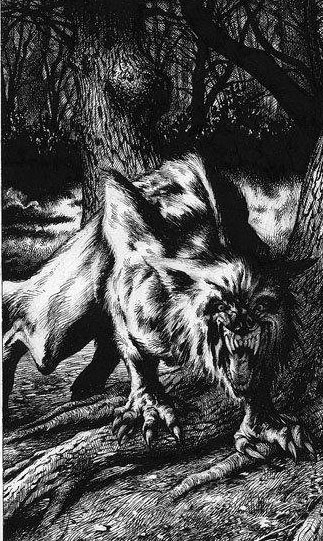
And then it was the Beast of Benais, followed by the Beast of Noth, not forgetting the Beast of the Cévennes, the Beast of Primarette, the Beast of Orléans, the Beast of Lyonnais, the Beast of Sarlat, the Beast of Auxerre, the Beast of Cinglais, the Beast of Gâtinais, the list just goes on and on. Some of them were really quite peculiar creatures, even by the contemporary standards of Beastliness:

beast 1709

Not all French monsters are wolf-types, however. Here are just a few of the inmates of what the original website called “Un Zoo étrange et inquiétant en France”, “a strange and worrying zoo in France”.

The first animal is a snake, which used to live in the Forest of Fontainebleau, just to the south west of Paris:

forest of fontaineblasu

It was seen, and duly killed, by the King (Quite right too!). According to legend, it was 18 feet long, with a weight of some 160 kilos (around 350 pounds):

Giant_snakezzzzzzzzzzzzzzzzzz

This monster was venomous and used to hide in a great pile of rocks which offered him protection as no group of attackers was able to approach the creature simultaneously. Only one adversary at a time could reach him.

One day, King Francis the First or le Roi François Premier, was out hunting in the area. This king was a contemporary of King Henry VIII, at the start of the sixteenth century:

220px-Francis1-1

The King and His Royal Nose decided to put an end to this creature which had sown terror and desolation throughout the land.( Well, it was a very big pile of rocks).

BOA

The king had commissioned a suit of armour covered with razor blades. When the snake tried to coil itself around him, the razor blades, quite literally, cut the monster to pieces.  “Scratch one constrictor!” as they say.

What other animals are in the “strange and worrying zoo”?

Well, back in 1965:

“In the Toulouse area, flocks of sheep belonging to Trappist monks at the Abbey of St. Mary of the Desert, and also those belonging to the Count of Orgeix, suffered extensive depredations from a mysterious animal. Three students from the area of Cadours who were driving around one  night in the car, saw two animals which were larger than a dog or a wolf. They had light beige fur. These strange creatures were like enormous mastiffs, with huge, round, bulging eyes. The four footed killers then disappeared from the area as mysteriously as they had appeared.”

One year later, in May,

“In the region of Pignans (in the département of Var), a tenant farmer, Monsieur Baptistin, asleep in his small house, which was located some two kilometres from the village, was awakened by furious barking from his dog. He got out of bed, switched on the light and saw the silhouette of a huge animal which was disappearing into the darkness:

bigfoot giph

The next morning, he discovered near the water trough animal tracks of a startling size:

jerry-crew-taught-by-bob-titmus zzzzzzzzzzz

The authorities were alerted. The Forestry Services photographed the tracks and made a cast, but nobody was able to ascertain what kind of animal they belonged to.

For several weeks, the locals no longer dared to go out at night. The more daring people who did venture out never failed to take a reliable rifle with them.”

(Actually, it wasn’t Bigfoot, or at least I don’t think it was. It’s just that the details of this story are so vague that it is actually possible to interpret the events as being “Grand-Pied” himself, rather than some, presumably, fairly run-of-the-mill Alien Big Cat.)

In mid-August of 1966, a monster was seen haunting the area around Draguignan near the road to Grasse , a region where many UFOs had been seen, both in flight and on the ground:

“A former member of the armed forces, Monsieur Paul G… , found himself one morning around seven o’clock  face to face with an unknown creature. The animal had its mouth open.  It had a pointed snout, which was rather long, and triangular teeth. Under its neck, it had a goitre which gave it a frightening appearance. The ears were short, like those of a dog, but they were very pointed. The body was very long and covered with grey fur. The animal had a long tail, at least 40 centimetres (16 inches) in length.”

imaginative chaingyu

Interestingly, the town of Draguignan has a name and a coat of arms which are both redolent of another species of legendary animal. The town was founded around 400AD after Saint Hermentaire, the Bishop of Antibes, had overcome a dragon in single combat. Exactly how he managed this does not seem to have been recorded, but here is the coat of arms:

draguignan

It was definitely not a friendly dragon:

friendly dragon

In 1967, the presence of a number of monsters was reported throughout the whole of France. In the Creuse region in particular, between Royère and Chavanat:

Département_creuse zzzzzzzzz

…a feline of unknown species was flushed in the hamlet of Cloux Valleret by a farmer named Monsieur Simo:

surrey puma original

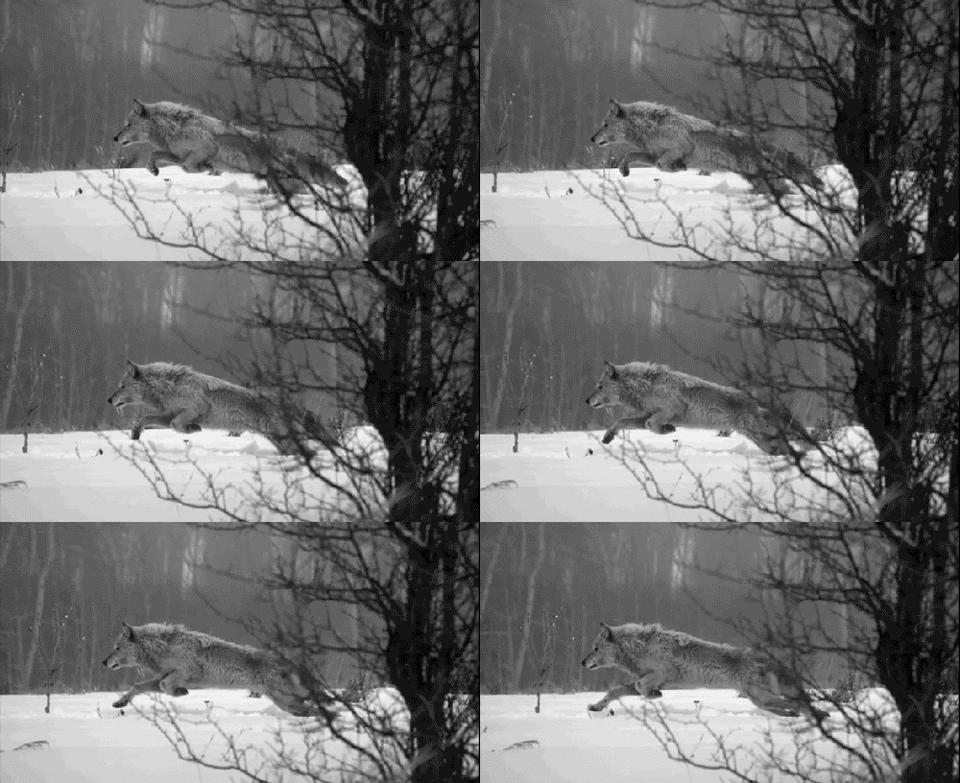
A week earlier, farmers in the Vosges area had already stalked an animal of indeterminate species which looked rather like a wolf:

wolf bounding

All that was easily topped though, by a report from Italy:

“In June 1970, in Meldola, about ten kilometres from Forli, a farmer claimed to have encountered some kind of dragon, six to seven metres long, with a body some 15 inches in diameter.

dragon

The Italian police organized a hunt which did not turn up anything. The monster appeared once or twice more and then disappeared forever.”

Back to France, in 1972:

“In the area around Vigan in Hérault, some medical students, out hunting in a snow covered area, discovered the footprints of an unknown animal:

yeti tracks

They followed the tracks for several kilometres. Suddenly they disappeared just in front of a rock which was projecting up out of the ground. The beast seemed to have reared up on his back end and then been recovered by his masters on board a flying machine.”

Don’t think though, that the French are especially weak minded and that this is why they continually report crazy sightings of weird animals. In this area, the British, quite rightly, are streets ahead of their nearest and dearest neighbours. But first of all, let’s just forget our many, many, ferocious Black Dogs such as Shuck and his like:

dog

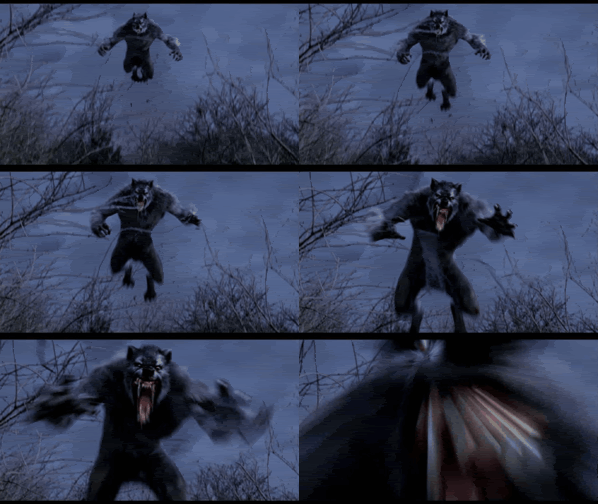
Forget the werewolves seen more than once at Alconbury USAAF Air Base:

werewolf attack

Forget the sightings of Bigfoot in Cannock Chase and Sherwood Forest (an “eight-foot, hairy man beast with red glowing eyes” seen in late 2002) (allegedly):

red eyeszzzzzzzzzzzzzzzzzzzzz

Just on cats alone we are well in front. The most famous cat of all, of course, is the Beast of Bodmin:

bodmin1

But don’t forget his less famous sidekick, the Beast of Exmoor. And before that Gruesome Twosome, it was the Surrey Puma. And don’t ever forget the heyday of the Nottingham Lion.

But look at this list, put together originally by George M. Eberhart.

Don’t just skip through it. Select your top three:

“The Ashley Leopard, the Ayrshire Puma, the Beast of Ballymena, the Beast of Barnet, the Basingstoke Beast, the Beast of Beacon Hill, the Bennachie Beast, the Beast of Bin, the Blagdon Beast, the Beast of Bont, the Broadoak Beast, the Beast of Broomhill, the Beast of Bucks, the Carsington Beast, the Beast of Chiswick, the Essex Beast, the Inkberrow  Beast, the Beast of Margam, the Beast of Milton, the Beast of Otmoor, the Shropshire Border Beast, the Beast of Tonmawr, the Beast of Tweseldown (sic), the Black Beast of Gloucestershire, the Black Beast of Moray, the Brechfa Beast, the Cadmore Cat, the Chiltern Cougar, the Crondall Cougar, the Durham Puma, the Eccles Cheetah, the Fen Tiger, the Highland Puma, the Lindsey Leopard, the Mendips Monster, the M25 Monster, the Munstead Monster, the Norfolk Grinder, the Pink Panther of Derbyshire, the Penistone Panther, the Penwith Cougar, the Beast of Powis, the Rosshire Lioness, the Terror of Tedburn, the Tilford Lynx and, last but not least, the Wolds Wild Cat.”

For me it’s, in third place, the Norfolk Grinder. Second is the Penistone Panther, but my own winner is…….. the Eccles Cheetah!!

14 Comments

Filed under Cryptozoology, France, History, Humour, Science, Wildlife and Nature

The very first football season of them all 1888-1889 (Part 1)

At the moment, the High School has very strong  footballing links, both with the Premier League and the Championship. They come in the person of Patrick Bamford, a young man who would seem to have a sparkling footballing future ahead of him:

He is not the only Old Nottinghamian to have played professional football, however. Well over a century ago, for example, a number of old boys took part in that inaugural season of 1888-1889, playing for Notts County in the newly formed Football League.

The season was totally dominated by Preston North End, “The Invincibles”, who beat County on aggregate by 11-1, for example, and were undefeated at the end of the campaign after 22 matches. They dismissed Wolverhampton Wanderers by an aggregate of 9-2 and Stoke City by 10-0. Notts County were to finish in eleventh place out of twelve. Their record of five victories, two draws and fifteen defeats produced a grand total of 12 points, with two for a win and one for a draw. Stoke City also managed 12 points, but their goal average (not difference in those days) was 0.510 as opposed to County’s much more impressive 0.548. That difference of 38 hundredths of a goal was enough for County to escape the Wooden Spoon! Derby County had 16 points and Burnley had 17 points. All four teams were re-elected to the League for the next season:

league table

One Old Nottinghamian who appeared in the County team that season was Arthur Frederick Shaw, of whom I have been, unfortunately, unable to find any photographs whatsoever on the Internet. Arthur was born on August 11th 1869 in Basford. His father was Alfred Shaw (1842-1907), the famous Nottingham and Sussex cricketer:

AlfredShaw_RedLillywhite1876

Shaw senior played for England, and he actually bowled the very first ball ever in the entire history of Test Cricket, which was to the Australian batsman, Charles Bannerman. During his cricketing career, Alfred Shaw took more than 2,000 wickets for Nottinghamshire and Sussex from 1864-1897, before becoming a first class umpire. He died in 1907 at Gedling, Nottingham, and is buried in the churchyard there, close to the grave of Arthur Shrewsbury, the former Nottinghamshire and England batsman:

This slideshow requires JavaScript.

At the time when their son entered the High School on April 28th 1881, at the age of ten, the Shaw family was living at the Belvoir Inn in Kirkby Street, Nottingham, a street which no longer exists. The date when he left the High School remains unknown.
Arthur Shaw played just two games for Notts County during that inaugural 1888-1889 season. His first game was on December 8th 1888 at home to Aston Villa, which resulted in a 2-4 defeat for the Magpies. A crowd of some 2,000 spectators watched the game, where Shaw played as an inside right (Number 8, except that there were no numbers in League Football until August 25th 1928). At left full back (No3) was Herbert Durrant Snook, a fellow Old Nottinghamian, with George Hutchinson Brown, a third Old Nottinghamian, playing at right half (No 4). I will talk about these two gentlemen in a later article.
Arthur’s second game came on March 5th 1889, when County entertained Bolton Wanderers at Meadow Lane. A crowd of some 3,000 spectators watched the match, where Arthur played on this occasion as an inside left (Number 10). County lost narrowly by four goals to nil.

Arthur went on to play for Notts County on two more occasions in the Football League. These both came in the following season of 1889-1890, when the team finished in a much improved tenth place in the League. On December 14th 1889, he appeared in a game at Meadow Lane against Wolverhampton Wanderers, watched by 3,000 people and ending in a narrow 0-2 home defeat for the Magpies. A week later, they entertained Derby County and beat them by three goals to one, in front of a Meadow Lane crowd of, again, some 3,000 spectators. On both occasions, Arthur was playing as an outside right, and, again, had there been numbers on the players’ shirts at this time, he would have worn a No 7.

Arthur appeared a number of times for Nottingham Forest, both before and after his appearances for Notts County. At the age of barely eighteen, therefore, well before Forest were a League club, Arthur made his début for them in the 1887-1888 season, scoring the only goal in a 1-1 home draw against Burslem Port Vale. His other game for Forest was a 3-2 home win against Bolton Wanderers, when Shaw scored what turned out to be the winning goal.

During the following season of 1888-1889, Arthur made four appearances for Forest and scored two goals. He played at home against Preston North End (0-2), Newton Heath (2-2, one scorer unknown), and Clapton (3-2, two goals). He played in away games at Newton Heath (1-3), a team who were later to become Manchester United. All of these games were friendlies. Here are some Forest strips from this long ago era. Things have not changed a great deal:

forest 1868 zzzzzz

In the 1889-1890 season, Arthur made eleven appearances for Forest and scored six goals. He played a number of games in the Football Alliance against Long Eaton Rangers, Sunderland Albion, Darwen, Newton Heath and Small Heath (later Birmingham City). The result in this last game, a 0-12 loss, remains Nottingham Forest’s record defeat. Arthur also appeared in the 0-3 away defeat at Derby Midland in the First Round of the F.A.Cup.

Perhaps the most unusual moment in Arthur Shaw’s whole football career came in this 1889-1890 season when he played for both Nottingham Forest and Notts County. He appeared in the Football Alliance for Forest against Sunderland Albion, (3-1) and then, as we have already seen, for County in the Football League against Wolverhampton Wanderers (0-2) and Derby County (2-3). Shaw capped it all on Boxing Day, December 26th 1889, when he turned out for Forest against County in a 1-1 draw in a friendly at Meadow Lane. I presume that this swapping of allegiances was possible because County played in the Football League and Forest played in the Football Alliance. There would have been no connection between the two organisations.

In the 1890-1891 season, playing for Forest as an outside left (No 11), Arthur appeared in the First Round of the F.A.Cup against Clapton. He scored one goal at the wonderfully named Spotted Dog Grounds as Forest won narrowly by 14-0, still the record away score for the F.A.Cup, and indeed, the record away win in any competition. Clapton had only trailed 0-5 at halftime before conceding nine quick goals in the second half. Arthur’s fellow Old Nottinghamian, the “ageing Tinsley Lindley” was also playing:

Tinsley_Lindley

“There’s only one Tinsley Lindley” scored a mere four goals in this one sided game, where five goals came from the Scottish international Sandy Higgins. A third Old Nottinghamian was playing for Forest in the person of John Edward Leighton, called “Ted” or “Teddy” at the High School and later in his life, “Kipper”, for his ability to fall calmly asleep in the dressing room before big matches. He played quite a few of those over the years, but his greatest honour came on March 13th 1886, when he won his only international cap for England, as an outside left in a 6-1 victory over Ireland in Belfast. Teddy Leighton was making his England début in the same team as fellow High School Old Boy, and Nottingham Forest player, Tinsley Lindley, mentioned above. This was one of no fewer than four occasions on which two ex-pupils of the High School have played together for their country. On other occasions, Leighton and Lindley had also played together for the fabled “Corinthians” club.

Overall, Arthur Shaw was to score a grand total of 11 goals in 79 appearances for Nottingham Forest. After he left Forest he went on to score three goals in 11 appearances for Loughborough, who, at the time, were playing in the Football League, Second Division. He would have worn these long forgotten colours:

Loughborough_Town_1895-1900

Arthur’s final appearance of any kind for Nottingham Forest came when he played as a right half in the semi-final of the Bass Charity Cup. The game was away from home, against Leicester Fosse, and took place on April 6th 1899. It finished in a 1-1 draw, and was watched by approximately 1,000 spectators.

Arthur’s final appearance for Nottingham Forest in the Football League had already come in a 0-5 defeat in an away game against Derby County. This fixture took place at the Baseball Ground on April 11th 1898, and the legendary Steve Bloomer scored a hat trick, before a crowd of some 12,000 spectators:

bloomer xxxxxxxx

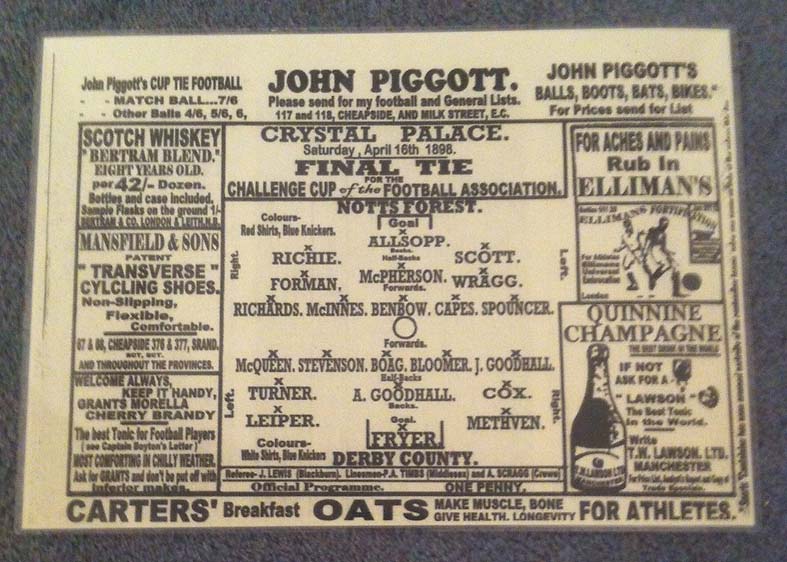
Only five days later, the same two teams were to contest the F.A.Cup Final at Crystal Palace before a crowd of 62,017, Forest triumphing on this occasion by 3-1. Unfortunately, Shaw did not make the team for the final, his position of right half being filled by Frank Forman. This is the closest, however, that any Old Nottinghamian has come to winning an F.A.Cup winner’s medal but only if you don’t count the School Gardener,

programme

By the way, the illustrations of old football kits came from the best ever website for the soccer nerd and all the boys who had more than twenty different Subbuteo teams. New Brighton Tower 1898? Oh, yes.


5 Comments

Filed under Football, History, Nottingham, The High School

It’s the Witching Hour : Story Number Eleven

Number 11

“E pur si muove” : “And yet it moves” (Galileo Galilei)

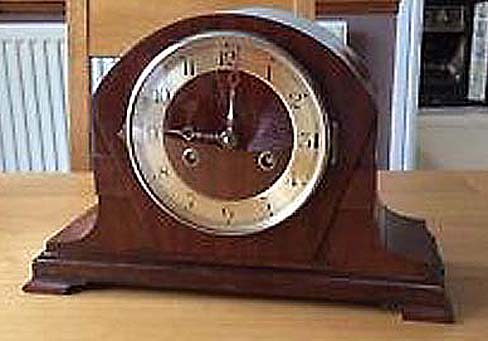
When my father, Fred, died in hospital at the age of eighty, his wristwatch was found to have stopped at 11.04. I went round to his house a couple of days later to check everything was all right, and I found that the old brown wooden clock in the sitting room, which had been a wedding present some fifty or more years earlier, had also stopped at that very same time of 11.04. This is like his sitting room clock, but the time is wrong:

big clock


Towards the end of his life, Fred had been both blind and bed ridden and his house had become very neglected. During the period after Fred’s death, both my wife and I spent a lot of time cleaning and redecorating all the different rooms.

As we did this, day after day, on more than one occasion, we both smelt what we thought was my mother Jean’s perfume. It was as if she were watching over us in approval as we dusted and hoovered. I suppose that if that were the case, then it should not have been too surprising, given that Jean was a typical 1950s housewife, always cleaning and re-cleaning, and immensely house proud.

At this time, my brother, Ken, who had always been so firmly convinced that the house was haunted, refused to go into the empty property on his own. He had always had the idea that spirits, whether good or bad, are pushed into the background by human activity, but that when potentially haunted houses are empty, then the ghosts will begin to claim them back as their own. Ken certainly believed in the story of the little man who had lived there in the 1940s.

Similar feelings were expressed by my daughter Lauren. As I mentioned above, during that period immediately after Fred’s death, my wife and I were readying Fred’s house to be put on the market. We were spending all of our time cleaning, painting and decorating.  Meanwhile, Lauren sat upstairs in the smaller of the two bedrooms revising for her imminent GCSE examinations. She spent all of her time sitting with her back to the wall, scared stiff as she worked. She felt that there was somebody else in the room with her, but that they really did not like her being there. These disquieting feelings only came when she was on her own. As soon as anybody came into the room to see her, all her fears disappeared.

It is easy to dismiss ideas like these out of hand, but it is a little like the difference between walking through a graveyard at three o’clock on a sunlit afternoon:

sunny graveyard

as opposed to three o’clock in the cold, dark depths of a winter’s night:

graveyard_zps723fe69f

With this idea in mind, on the very last evening before the contracts were exchanged and Fred’s house passed out of my possession forever, I decided to do an all-night vigil in an effort to experience something ghostly.

To cut a potentially long story short, I saw or heard absolutely nothing. But, at the same time, though, I was, throughout the entire night, so scared that I never did manage to switch the lights out. I really was very frightened. And, just like Lauren, I too spent all my time sitting with my back to a wall.  Read into that what you will.

There were other strange happenings as well as the stopping of the wristwatch and the old wooden clock. We were experiencing them, I suspect, because we were clearing out Fred’s house after his death. It is very frequently said, for example, that building work, and many other types of physical change such as painting or wallpapering, are extremely good for provoking a strong reaction from any ghosts that may be present.

One day, I had been cleaning and painting the living room. This was the downstairs room where Fred had spent the last two, painful, years of his life, except for his stays in hospital. He had a bed, an armchair, a commode and a television, so he was self-contained in a sad, forlorn sort of way.

That particular day, we had reached lunchtime, and my wife and daughter were outside in Fred’s old summerhouse, finishing off their fish and chips from Renée’s Fish Bar. For some reason I now forget, I was alone. Suddenly, I had the strangest feeling that Fred was there in the room with me. I called out to him,

“Are you there, Dad? It’s me, your son, John. If you are there, give me a sign.”

Straightaway, the curtains in the window looking out towards the garage and the concrete drive where Fred had parked his cars for so many years, began to shake and move. Then they stopped. I waited a few seconds and then called out for a second time.

“Is that you, Dad? If you are there, then make the curtains move again.”

Without delay, the curtains again began to move. I went outside, and called in my daughter, Lauren. I told her to come into the living room and just to stand still and watch, and not to say a word. I called out to Fred for a third time,

“Are you there, Dad? This is your granddaughter, Lauren. If you are still there, give her a sign. Make the curtains move like you did for me.”

Immediately, again the curtains began to move, and then stopped. I turned to Lauren, and asked her if they had actually moved, and that it was not just a coincidence. She replied that she had seen the curtains, and that, yes, they had moved, and that apparently, it had been in response to my request.

So, for a fourth, and final time, I called out loudly,

“Are you still there, Dad? If you are, make the curtains move again.”

And sure enough, they did. I have no explanation for these events other than the supernatural.

There was no window open. No door was open. The central heating radiators underneath the window were switched on throughout the entire episode, but this would not explain the fact that the curtains actually came to a fairly abrupt stop on four separate occasions. Neither was it my imagination or wishful thinking. That was one of the reasons why I asked Lauren to come in and be a witness to events. And to this day, she maintains, Galileo-like, that, yes, the curtains did move.

.
Not surprisingly, perhaps, for quite a while afterwards, Fred was to appear in my dreams. There was one that stood out among the rest.

This dream took place on a huge luxurious ocean liner, standing around a grand piano which stood at the meeting point of several long and wide corridors:

fingersccccccccccccccccccc

Fred was standing there, listening to the pianist who was tinkling away at the ivories in rather desultory fashion. I was talking to Fred, and was trying to trap him into giving me details about the afterlife.

“Where do you live now then, Dad?”, I asked.

“You know that already.”, he said with a slight smile.

“And where you will you go tonight ?”, I asked. “Where will you sleep after we’ve left ?

He did not offer any reply.

“Well, Dad, will I be able to come and see you sometime?”

“Of course you will come and see me…..one day,” he replied, with a strange, wry look, and then walked off for ever down one of the corridors.

I have had no real contact with Fred since, but deep down, I am sure that this will not be the end of the story.

6 Comments

Filed under Aviation, Bomber Command, History, My Garden, My House, Personal

Hallowe’en Tales : Numbers Nine and Ten

Number 9

He’s back! The Return of the Phantom Passenger of the No 90 Bus

This is another version of the story about the No 90 bus and the ghost of the cyclist. Clearly, this ghost story is a strong tradition which has persisted for many years on this western side of the Nottingham conurbation. I found this version of the story about five years ago, in a forum about ghosts in Nottinghamshire. I kept the website address at the time, but I can’t find it any more, and I presume the forum is now defunct.

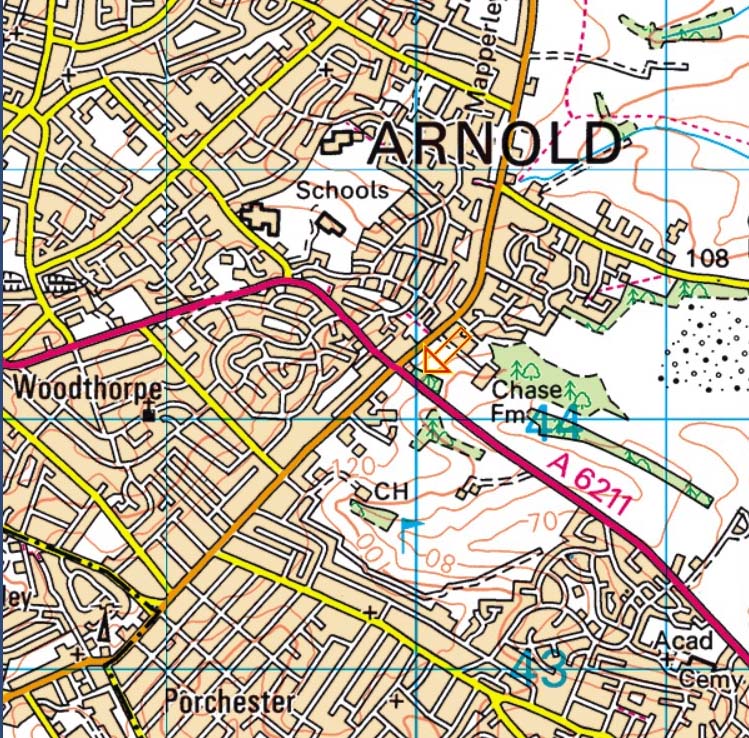
On this map, the orange arrow in the centre points to Arnold Lane. I suspect that the young man who needed the loo went into the tiny wood to the north of the road, having parked his car pointing down what is  actually a very unpleasantly steep road:

at long last

The old man would have been pushing his bike up the hill:

I came home one night in the early hours of the morning from the White Post pub in a friend’s car, turned down Arnold Lane towards Gedling, just down the hill, the friend stopped the car as he needed the loo went round the back of the car. As I sat looking down the hill, I could see an old man pushing a pushbike up the hill on the other side of the road. Then suddenly, he just vanished into thin air.

I thought I had just imagined it but when the friend got back in the car, he asked me “Did you see that?” and I asked him “What?”” as we might have seen different things. He said “The old man. He just disappeared”.

I know some people might say, “Well, there’s a path off the road up there, he could have gone along that, but at the point he disappeared  there was just a very thick hedge. I was not really frightened but I was a bit shocked to see this. My Dad later told me a story of an old man who had come from the pit late one night was going home on his pushbike to Arnold and was hit by a car and killed. That’s why the path at the back of the hedge was put into make it less dangerous.”

To complete the Geography lesson, the open land to the east of Chase Farm is what is left of Gedling Colliery, the coal mine where the old man is supposed to have worked.

Number 10

The Killer Bus

I know two more ripping yarns about buses, both of them told to me by a birdwatching friend, Phil, who had worked initially for Liverpool City Transport and then for Nottingham. One story involves the supernatural, the other, a bus driver who was exceptionally lucky not to become a member of the supernatural.
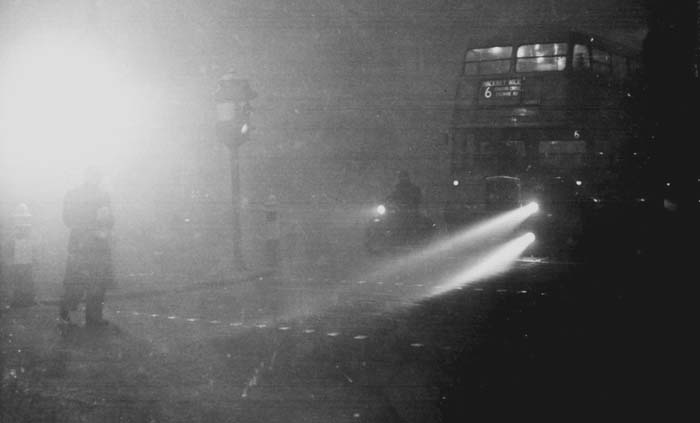
The lucky bus driver occurred when Phil worked in Liverpool in the early 1960s. There was a good two or three inches of icy snow already on the ground, and an absolutely impenetrable “smog”:

smog

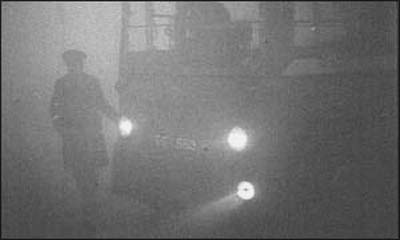
“Smog” was a speciality of the era, and it was a dangerous combination of natural fog, perhaps where the warmer sea met the frozen land, and the thick smoke which came from the tens of thousands of houses heated by coal fires and a good few coal fired power stations around any city in the country:

bus in smnog

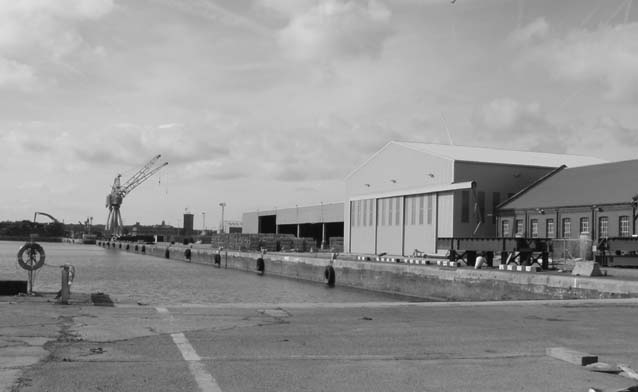
That day in Liverpool, therefore, the weather conditions combined to produce a bizarre situation, whereby the bus driver could not see where he was going, even at walking pace, but at the same time, he left tyre tracks in the snow which let pedestrians see exactly where the bus had been. Imagine, therefore, the pedestrians’ shock to see that an unknown Liverpool bus, full of scores of workers on their way home from the shipyards, but completely lost in the whiteout conditions, had been driven for more than eighty yards along the edge of the docks. leaving tyre tracks just a couple of inches from the twenty foot drop into the icy waters of the Mersey. The lucky driver had finally turned right to safety rather than left to a watery doom:

Dock_in_Port_of_Liverpool_1
Phil told me a second story, a supernatural tale, all of which had taken place in the Bus Depot in Sherwood, the very same suburb of Nottingham where I live:

bus depot

Apparently, the bus in question had some mechanical problem and it was being mended. It was jacked up on strong supports while repairs were carried out.

Only the strong supports gave way, the bus skewed to the left and the mechanic underneath was crushed to death.

A few days later, the repairs to the bus were completed without any further problems. The bus was parked away on one side of the garage while a driver and conductor could be found to take it away on its afternoon route. The two duly arrived just after one o’clock, The conductress stood at the back of the bus while the driver went to get into his cab and warm up the bus engine.

Except that before he could even unlock the door to get into his cab, the bus handbrake must have come off, and the bus rolled backwards. The surface was steep enough for the vehicle to pick up a fair speed, and the unfortunate bus conductress was pinned against the wall of the building. She died in hospital just a few days later.

.
Trade Unions were a lot stronger in those days, and when the shop steward said that his members were adamant that they would not work with this bus, the management had to pay attention to their demands, The decision was taken to dismantle the bus and use all of its parts as spares.

For a long time afterwards, all the drivers and conductors in the depot at Sherwood had the belief that if any serious accident occurred then it must be a bus which had been given, perhaps, the engine of the killer bus, or maybe its rear wheels and axle. And while this belief went on for a good few years, it was ultimately unprovable because no record was ever kept of which parts went into which bus.

9 Comments

Filed under History, Nottingham, Personal

Hallowe’en Tales : Numbers Seven and Eight

Number Seven

The Sea Serpent

On October 25th 1988, I went over to the Isles of Scilly to birdwatch. I crossed over from Cornwall on the ferry, the Scillonian:

scillonia on scillis xxxxxxxxxx

For two or three hours during the crossing, I remained on deck with my binoculars, eagerly scanning the storm tossed waves for seabirds.

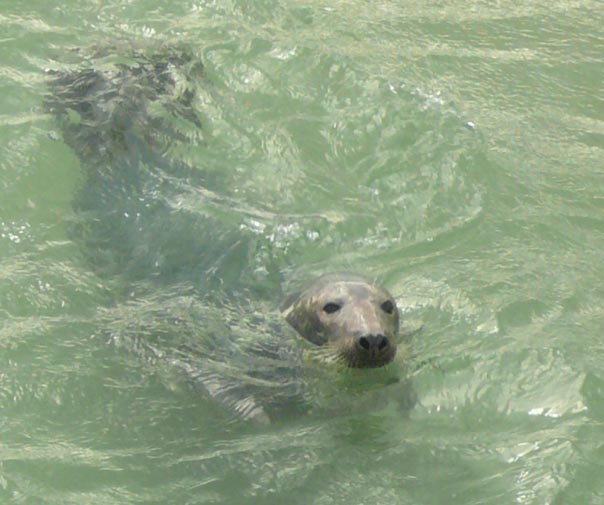
At one point, I noticed what I took to be the head of a Grey Seal, which broke the surface perhaps fifty or a hundred metres away from the boat. This is a Grey Seal which I photographed in the harbour at St.Ives in Cornwall:

P1460520

This head, way out in the Atlantic Ocean, was very similar, dark in colour, and I could see a forehead, two eye sockets, and an obvious snout. I didn’t really think a great deal about it, other than the fact that, for a seal, it was certainly a very long way from land, at least fifteen miles. It remained there, presumably watching the boat, for perhaps two or three minutes. Then, suddenly, a Gannet flew directly above it. A Gannet is a very large bird with a wingspan of some six or seven feet:


wikikikik Northern_Gannetzzzzzzzzzzzzzzzzzzzzz

I then realised from a simple comparison of sizes that the head must be at least a metre and a half, if not two metres, across. And that means it cannot have been a seal !

 Number Eight

The Ghost on the No 90 Bus

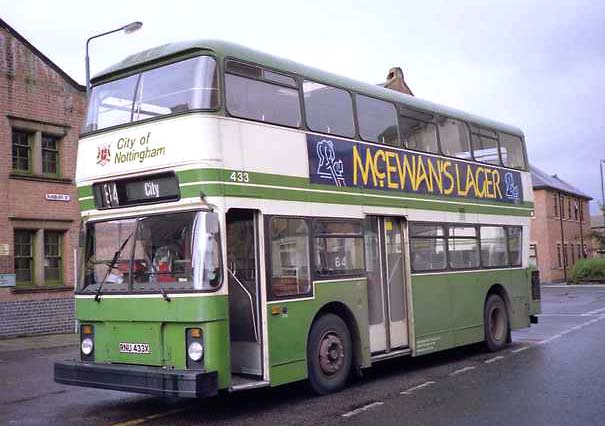
Some thirty or more years ago, we used to live in a large house in a new estate on top of a hill right at the very northern edge of the City of Nottingham. From our top bedroom window, we could see the distant cooling towers of the Ratcliffe-on-Soar Power Station, out towards the East Midlands Airport, absolutely miles away. If it had been built then, we would have easily been able to see the Control Tower on the Airport. To go into Nottingham was a little bit of a bore, though, because there was only the Number 90 bus, which ploughed, every hour, a long and very eccentric furrow from one side of the city to the other, from where we lived on the northern edge, to the furthest bus terminal of Edwalton, beyond even the foetid swamp that is West Bridgford:

DKY-496_lr

The Number 90 bus, strangely enough, had a very strong ghost story attached to it. People told me all about it on several occasions, almost as soon as I mentioned what bus I had to catch to get home and just how long the journey was.

3135590sssss

Funnily enough, the story concerned the very same bus stop on Mansfield Road which we used to use:

bus stop

Anyway, the first occasion the ghost appeared was quite a long time ago, in the 1950s perhaps, or in the 1960s. It was certainly in the era of the bus conductor, who used to go round the bus, issuing tickets and taking the money.

Just imagine to yourself. The time  is around seven or eight o’clock in the evening, and the bus is absolutely deserted. Not a single passenger. The conductor is standing up near the driver’s compartment, talking to him to pass the time. Suddenly, they both notice an old man who is standing at the Mansfield Road bus stop, waiting to go towards the city. The bus stops and the old man gets on. The evening is fine and dry, but the old man is absolutely drenched, with rainwater dripping off him. He looks quite battered, with little rips here and there in his clothing, which is, strangely for the weather at the time, a heavy winter topcoat over an equally heavy winter suit.

The old man says nothing as he gets on. He goes upstairs and the driver and conductor notice he is wearing his bike clips, a simple aid to cycling that is, by now, almost decades out of date.

The driver and conductor finish their conversation. The driver sets off down the road, and the conductor begins the shaky climb up the stairs. He wonders why this special kind of idiot had to go upstairs on a completely empty bus and make the tired conductor follow him.

He gets to the top of the stairs and has a good, surprised look round. The top deck of the bus is completely empty. The old man just isn’t there. He isn’t in the two rows of seats at the front of the bus. The conductor then walks slowly back past all the other rows of seats. The old man isn’t there either, neither is he hiding behind any of the seats in a ludicrous attempt to avoid paying his fare.

Puzzled, the conductor goes back down again, pushes his cap back on his head, and expresses his astonishment to the driver.

Back at the canteen, they tell their tale over a cup of tea and a couple of cigarettes. They are not the first crew to meet “The Phantom Passenger of the Number 90 bus.”

He is, or rather was, an old man of sixty or so:

old_man_on_bike_by_claeva

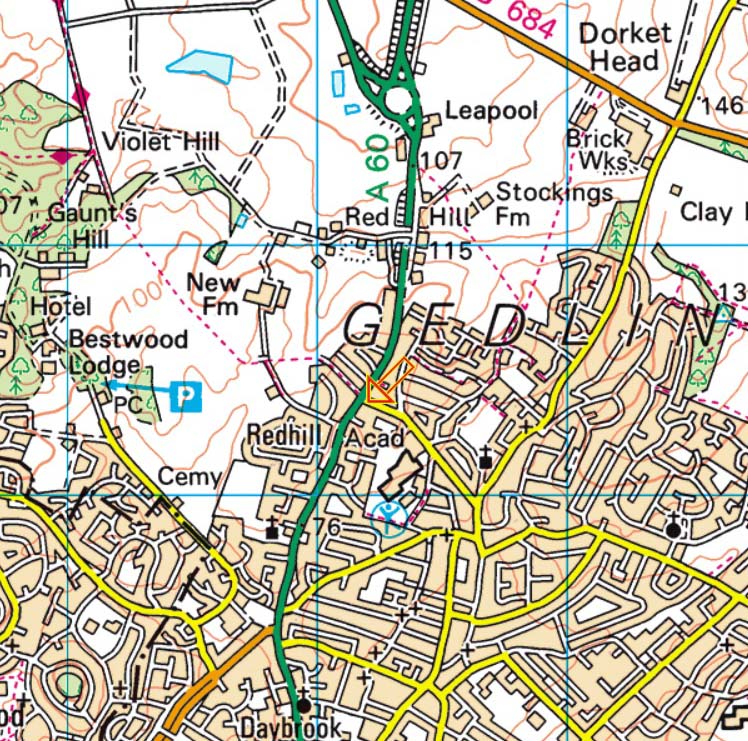
One winter’s night, he was riding his bicycle home to Arnold, when a hit-and-run driver killed him as he rode carefully and slowly around the Leapool Roundabout. It happened so swiftly that the old man does not realise, even now, that he is no longer alive. Wrapped up against the winter in his heavy suit and heavy topcoat, he still has his bike clips on. His bicycle, to him too valuable to leave behind, is too badly damaged to ride back home. And so, he must walk through the winter rain and sleet the two miles to the nearest bus stop to get back home to his wife and family. On this map, the orange arrow marks the bus stop where the wet old man would get on the No 90 bus. To the north is the Leapool Roundabout. Follow the green road until you come to the obvious roundabout:

map

I don’t know now if the Number 90 still runs or not. I hope it does. No ghost should fade away at the whim of the Nottingham City Transport.

16 Comments

Filed under Cornwall, Cryptozoology, History, Nottingham, Personal, Science, Twitching, Wildlife and Nature

Hallowe’en Tales : Numbers Five and Six

Number Five

The UFO

It was perhaps in the first half of 1959, a spring and summer of bright white clouds, bright blue skies and bright warm days. I was in the first year at Junior School, in Miss Cartwright’s class. I must have been seven years old. It was the morning of a late spring or early summer’s day, and we had just finished morning playtime, with little bottles of milk and the excitement of straws.

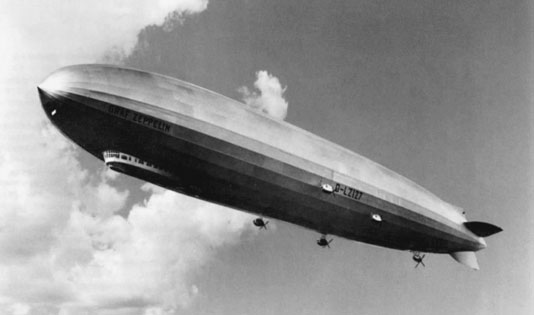
Before each class went back into their classroom, the teachers used to make the whole school line up, in an orderly fashion. Once everybody was quiet and behaving themselves, the classes could start to go in. We members of Class 6 were patiently awaiting our turn, when we all became aware of what even we, as small children, could immediately identify as an unidentified flying object. It was moving silently toward the south west, and was to all intents and purposes, like a grey, or perhaps metallic silver Zeppelin airship:

zeppelin

It was not like any of these obviously fabricated modern UFOs:

This slideshow requires JavaScript.

Under the main section of the craft, which was like a short, stubby cigar in shape, there was some kind of gondola, which was of the same colour, and had a number of conspicuous round portholes in the side. There must have been at least four of them.

I have not found any exact match for the UFO we all saw, but these two are both close. There weren’t any lights on the ends, though, and both drawings lack the gondola, which carried the portholes:

This slideshow requires JavaScript.

The UFO was only a few hundred feet up, at perhaps the same height that we used to see the Vickers Viscounts and Canadair Argonauts from Burnaston Airport flying over:

This slideshow requires JavaScript.

There were of course, no airships in 1959. I myself was a keen plane spotter, and in any case, at the time I watched it, I was sure that this was no plane. I still know the boy who was in front of me in the queue. I see him from time to time even now, fifty five years later. He too has no way of explaining away one of our most vivid childhood memories, despite having grown wise with a wrinkled face and long white hair.

Number Six

Mad Bill

Over the years, my friend Stuart Taylor was to tell me many stories about the ghosts which either he, his mother or his father had either seen or heard. At the time I believed him implicitly, although as we have drifted apart, and I have heard more about him from other sources, I have begun perhaps to doubt the veracity of much of what he told me. I find it difficult to explain away, however, the story of Mad Bill.

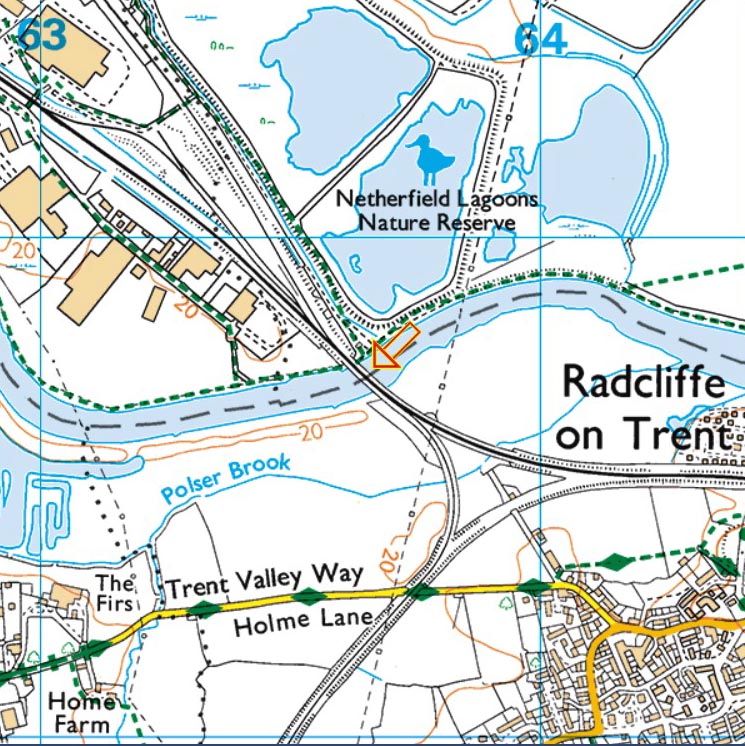
Near to Nottingham, at Netherfield, the main railway line to Grantham runs over the River Trent, and over the frequently flooded water meadows alongside it. The railway line crosses the river on a long, cast iron viaduct, which was constructed around 1850. The orange arrow points towards the viaduct:

land orth of

Popular legend among the railway workers said that in the depths of the night, as they worked on the track near the ageing viaduct, men would occasionally hear what was known as “Mad Bill”.

“Mad Bill” was a strange ghostly manifestation, and consisted of what sounds like somebody throwing down, very loudly and very angrily, a huge old empty oil drum. There is then a delay while Mad Bill apparently walks across to pick the oil drum up again, before throwing it down, and then beginning the process all over again. Nobody has ever seen anything, and it all sounds rather ridiculous, although as Stuart pointed out, these things can seem a little more serious when you’re all alone on the viaduct in the pitch dark at three o’clock in the morning, going back to retrieve a hammer or a shovel you’ve left behind.

“Mad Bill” always occurred on the isolated farmland to the north of the viaduct, which is still indicated by an orange arrow:

viaduct

“Mad Bill” could also be heard on the lonely fields to the south:

land to th south

One winter’s day, I was out bird watching with Stuart, on a gravel pit, next to the viaduct. It was around three o’clock in the afternoon, when suddenly every single bird took to the sky in blind panic. That is usually a sign that a raptor is about, and we scanned the heavens eagerly with our binoculars, in the hope of finding a Peregrine, or some other bird of prey.

We didn’t see one of course. But we did hear something, over on the far side of the river, on the deserted and inaccessible water meadows. It sounded just like some muscle bound idiot smashing a very large and empty oil drum onto the ground. It was still daylight, and we were able to check the area. There was nobody there, and as far as we could see, we were the only people for miles around.

7 Comments

Filed under Aviation, History, My House, Personal, Science

Hallowe’en Tales : Numbers Three and Four

Number Three

Haunted Malham Tarn

In about 1978, despite the fact that I was a teacher of French, I accompanied a couple of Geography teachers on a field trip from our school in Nottingham, to stay at Malham Tarn Field Centre in North Yorkshire:

malham-cove-02xxxxxxxxxxxxxxxxxxxxxxxxx

We used to work late into the evening, and then, between ten and eleven o’clock, usually retired to one of our staff rooms for a few whiskies, and a little R & R. After that, we would all go to bed.

One night, though, I found myself awakened around two or three o’clock in the morning, by what I can only describe as the feeling that there was some kind of evil presence in the room. As I looked out over my feet, beyond the end of the bed, it seemed to be down in the left hand corner, below the window, in the darkness in front of the wardrobe doors. I could see nothing at all, and could not reach the light to put it on, but I was certain of my fear, and the fact that I was not the only person in the room. Indeed, I was so scared that I remembered my experience of horror films, and used some of the remedies I had seen there. I imagined myself cocooned in a pale blue light, and, despite my status as a lapsed Christian, did not hesitate to repeat to myself, again and again, until I eventually fell asleep, ” In the name of Jesus Christ, I defy thee Satan.”
The following day, I asked questions about whether the building, a converted seventeenth century barn, was haunted or not:

Malham_tarn_house

From my colleagues, I could only get very non-committal answers, which clearly hinted that they knew a lot more than they were prepared to reveal. Eventually, I was told that there was indeed supposed to be a ghost in the place. On one occasion, just after midnight, it had walked into and out of walls, a party piece which had totally terrified a group of Sixth Form Girls, who had packed up and left, even though it was in the middle of the night and still dark.

Number Four

The Beast of Glen Etive

In the middle 1970s, I used to go regularly to Scotland with my friend Bill.  Normally, we would do a clockwise circuit around the whole country, camping each year in the same places. On the second day, we normally stayed at Glen Etive, a long and steep sided valley which runs off Glencoe, just to the south of Fort William:

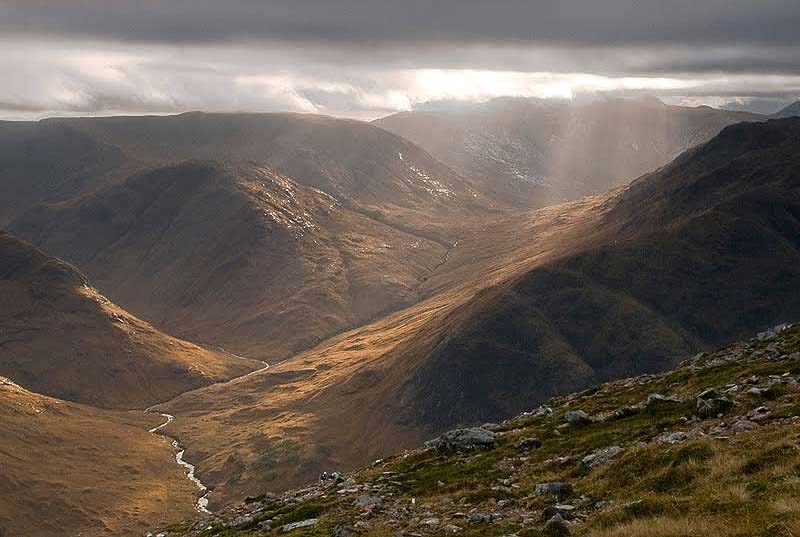
glen-etive

This particular summer, in early August, if I remember correctly, we had again stopped in this dramatic glen, siting our tent and car just a few metres to the side of the single track road that ran the length of the glen. In those days, before the place was a film set, it was very isolated indeed. A single track road led for four or five miles down the valley to its very end, which was just a tiny wooden jetty large enough for a rowing boat. Nobody was camping anywhere near to us, and later in the holiday, when we followed the single track road down from our campsite to the wooden jetty and back, we met nobody in the ten or twelve miles we covered. No cell phones back then. This was genuine wilderness, where the orange arrow marks our orange tent:

etive

As darkness fell, Bill and I were both sitting in the car, looking across the road, and the flat floor of the valley, over towards the precipitous cliffs on the far side. After a couple of cigarettes, Bill announced that he was going to take the toilet roll, and go off to do what a man has to do. He took with him the torch, and his cigarettes and matches.

At first, I could still see him as he walked away toward a huge well-used pile of granite rocks, some two or three hundred metres in the distance. After a few minutes, though,   he was swallowed up by the darkness.

I was rather surprised that he did not switch on the torch, and looked in vain for the glowing end of his cigarette in what was by now total darkness.

After about fifteen minutes or so, I noticed a light well over to the left of where Bill had gone, and was a little worried that he had perhaps got disorientated in the darkness, and that he might fall over, and injure himself.

I began flashing the car headlights steadily to give him a reference point, and was then surprised to see a second light come on, and make its way at some speed towards the car. This, of course was Bill, who had been considerably frightened by the very loud roaring noises he had heard while out among the rocks:

red_deer_stag_

It was for this reason that he had not switched his torch on. He thought that if he did, he might well attract whatever was making the noise. Inside the car, three hundred yards away, for some reason, I had not heard the roaring, perhaps because I was listening to music on the car cassette player. Strangely enough, Bill had not seen the second light, which by now had disappeared.

During the next few hours, though, we both heard the roaring clearly:

red-deers-in-

It was difficult to describe exactly, but at times it was a deep, loud bellowing, and at others it sounded like an almighty crash. I remember thinking that if a giant baby had dropped a full sized battleship into his bath, then that was the noise it would have made.
We were both frightened, and I slept with the carving knife under my pillow. On the other hand, the noise was always fairly distant, and, although alone, and many miles from the nearest house, we were never scared enough to pack up the tent, and drive off into the night.

Later, we tried to investigate the origin of the lights and the noises. We climbed up into the area which we thought they had come from, but with no success. We found nothing to explain either the bellowing or the isolated light which had been at least as large as a torch. Neither did there appear to be any difference between this section of the valley and any other.

Whenever the idea of “bellowing” or “roaring” appears in this article, the animal depicted in the photograph is a Red Deer stag. And yes, in the rutting season, Red Deer stags do roar and bellow. Set against this though, is the fact that the events described here did not really occur during the rutting season, which occurs from October to November. Likewise, the roaring is most frequently heard in the late evening and then during the early dawn. We heard it, though, when night had really begun. It was certainly pitch black, dark enough to need torches for safety reasons.

Forty years later, I would still describe the noise as “a full sized battleship dropped into a bath”. Strange! Very strange!!

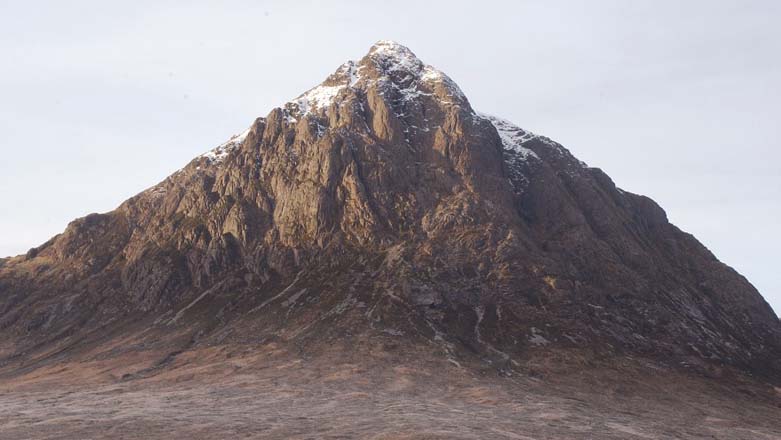
Incidentally, this is the mountain which stands at the head of the glen. It is called “Buachaille Etive Mòr” and, statistically, it is much more dangerous than the Eiger:

monitain


12 Comments

Filed under Cryptozoology, History, Personal, Wildlife and Nature