Category Archives: Nottingham

In the Footsteps of the Valiant (Volume Four)

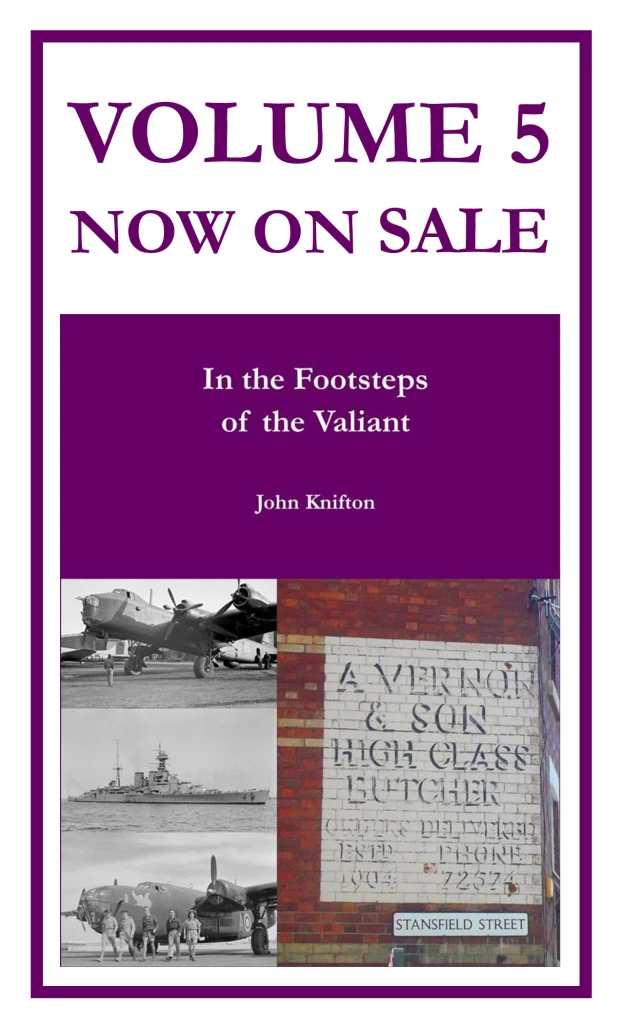
As we found with Volume 3, things moved at a rather slow pace for the publication of Volume 4, but you will be pleased to hear that it has finally made its appearance, detailing 25 of the High School’s casualties in World War II.

Don’t think, incidentally, that we were running out of steam. As I mentioned last time, all five volumes have been deliberately constructed to contain the same amount of material as all of the others. Furthermore, that material is, overall, of the same quality as all the other volumes. No single book is full of exciting stories of derring-do, at the expense of another volume devoid of all excitement. I took great care to make that the case.

Indeed, Volume 4 contains the detailed story of “Watty” Watson, the Battle of Britain fighter pilot who would die, it was alleged by his colleagues in 152 Squadron, the victim of Irish saboteurs in the parachute packing plant.

This volume, therefore, portrays not just the terrible excitement of World War II, but the backgrounds of these 25 young men who died fighting it. Their families, their houses, their school years with Masters very different from those of today:
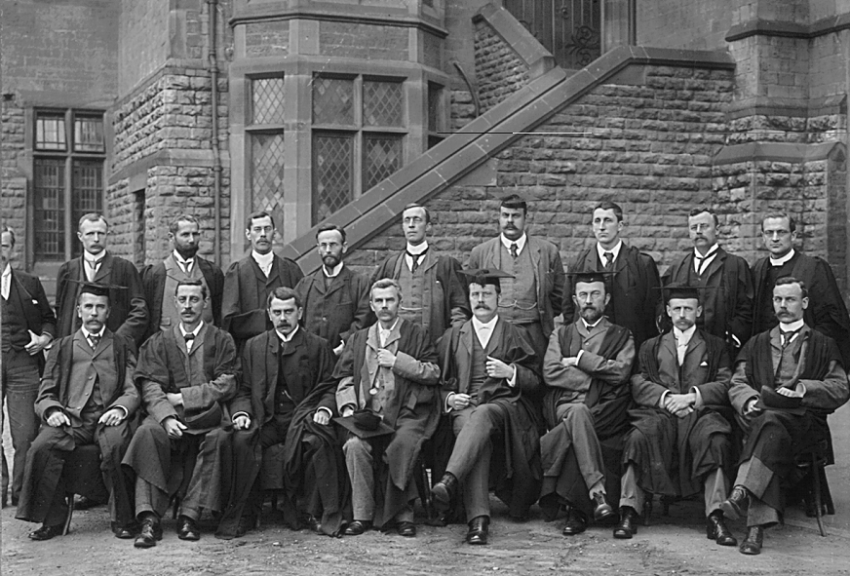
You can read about their boyhood hobbies, their sporting triumphs, where they worked as young adults and the jobs they had. And all of this is related against the background of the living Nottingham of yesteryear, a city almost completely different from that of today.

That is not to say, of course, that you will not find all the details of the conflicts in which these young men fought and the circumstances in which they met their deaths. On occasion, particularly in the case of the more peculiar training accidents, I have even attempted to find explanations for events. Most details of this kind were completely unknown until I carried out my groundbreaking research.

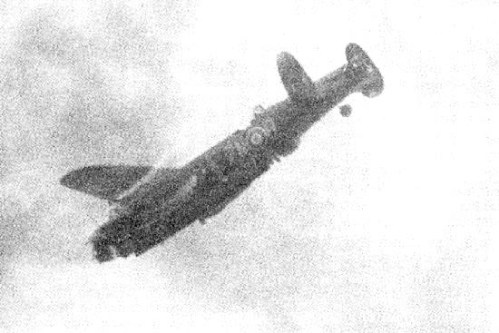
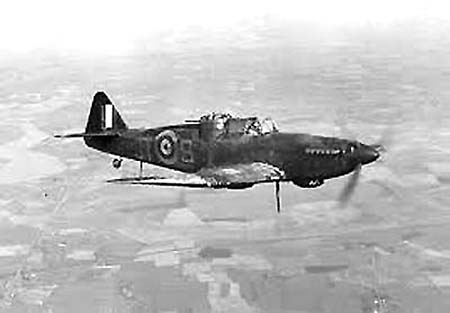
In this volume, you will meet the ON who was killed trying to defend Liverpool at night in a Boulton Paul Defiant night-fighter:
The ON shot down over West Norfolk by Oberleutnant Paul Semrau of the Fernnachtjagd:

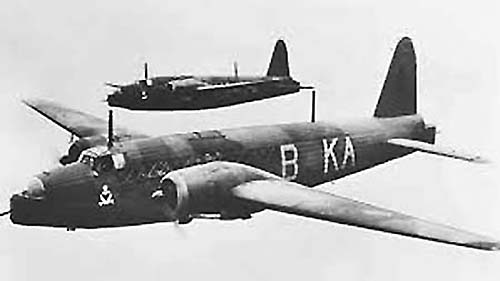
The ON who flew his Vickers Wellington straight into the cold waters of Tremadog Bay in North Wales, for no apparent reason:
The ON who worked for the Air Transport Auxiliary, ferrying American bombers across the Atlantic:

The ON who left his jacket hanging in the School Archives, where it still hangs today. Alas, it may look as if it is waiting for its owner to come in, a laughing, jovial, chubby middle aged man, who will boast that his school cricket blazer still fits him, but who will be sadly disappointed when he takes it off the hanger and realises just how thin he was back in the day.

Alas, he sleeps now in Tobruk Cemetery:

Another ON perished trying to cross the River Volturno in Italy. He and his colleagues were prevented, temporarily, from so doing by the Hermann Göring Division and the 15th Panzergrenadiers.

The ON whose Whitley bomber crossed the North Sea on a bombing mission only to be hit by anti-aircraft fire and crash, as my researches have discovered, on a hillside near Hüffe Farm south of the village of Lashorst, near the small town of Preußisch Oldendorf in North Rhine-Westphalia, nineteen miles east-north-east of Osnabrück and almost midway between that city and Hannover:
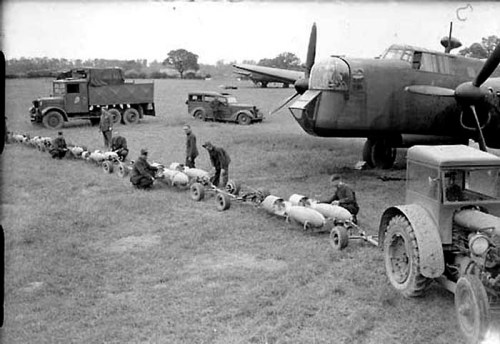
The ON in the wrong place at the wrong time. The place, the Bomb Dump at RAF Graveley, which stored the bombs for the missions of an entire squadron over, at least, a number of days. The time, five seconds before it all blew up.

The ON who fought with the SAS, the Special Air Service and then the SBS, the Special Boat Service. The SAS still do not know how he died.

The ON whose family owned and traded under the name of “Pork Farms”:

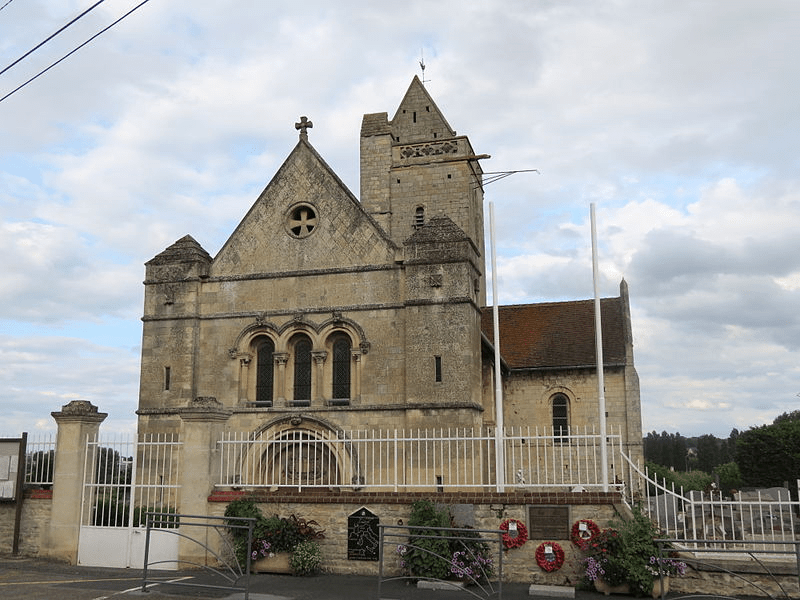
The ON, a young man whose “fast in-swinging ‘yorker’ on the leg stump was so devastating on its day.”  Alas, six years later, he was one of the day’s casualties “laid out on the ground in front of the church wall” in Hérouville,  as the Allies fought hard to clear another of the many little villages  in Normandy.
And finally, the ON who was a history lecturer at Glasgow University, but who, in October 1941, thought it was his duty to give lectures to the ordinary troops in the North African and Mediterranean theatres about why we are fighting and the world after the war. Backwards  and forwards he criss-crossed the area time and again. And the ordinary men lapped it up. They were so happy that a university lecturer who didn’t need to be there had come to see them and to explain the politics of the day.

And don’t forget, our history writing motto still remains:

“No tale is left untold. No anecdote is ignored.”

This book is now available for purchase through Lulu.com:



16 Comments

Filed under Africa, Aviation, Bomber Command, France, History, military, Nottingham, Personal, The High School, Writing

Old Nottinghamian saves the World OR Why no statue? (4)

Thomas Hawksley was born on July 12th 1807 at Arnot Hill House in Arnold, Nottingham, to parents John Hawksley and Sarah Thompson. Arnot Hill House is still there:

John was a worsted woollen manufacturer who co-owned the mill in Arnold. The mill engine’s cooling pond is now the ornamental lake, situated in front of Arnot Hill House. That’s still there too:

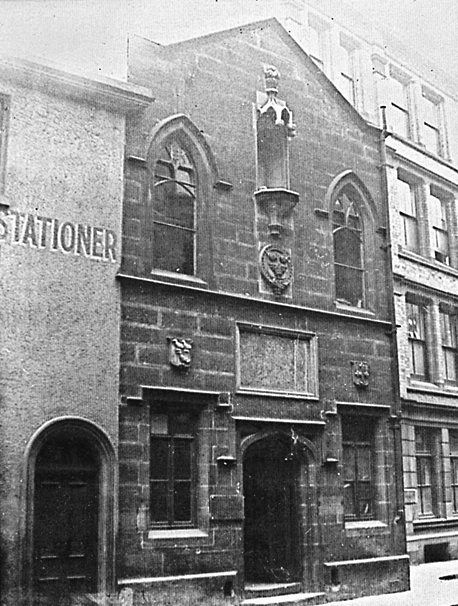
Thomas was educated at the Free School, or Grammar School, in Stoney Street, studying under the Headmaster, Dr Robert Wood.

Thomas arrived on May 27th 1821, at the age of 13 years 6 months. His school days were comparatively brief, for in September 1822 he was removed, with a view to practical training.

Thomas was self-taught from the age of 15 but eventually he was articled to an architect and surveyor Mr Edward Staveley, of Nottingham. He soon became a partner, along with Mr Jalland, of “Staveley, Hawksley and Jalland, engineers, architects, &c.” By 1835, Thomas was based at Middle Pavement and Trent Bridge, and “Staveley & Dudley” were based in Stoney Street. Mr Hawksley and Mr Jalland then worked together until 1850 when Jalland left. Thomas then left for London.

During his time in Nottingham, in 1823, aged only 23, Thomas had constructed a new pumping station for the Trent Waterworks Company near Trent Bridge.

Before this, Nottingham’s water was taken from shallow wells or from the Trent or its tributaries. The new pumping station filtered water taken from the Trent through natural beds of sand and gravel. The water was then pumped through a 15 inch main to a reservoir near the General Hospital. The pipes that carried the water were always kept under high pressure, and taps provided water day and night. Thomas eliminated leakage, and ensured an unvarying supply of fresh water. The pressure also meant that germs could not get in. This arrangement provided “Britain’s first constant supply of clean water, whose high pressure prevented contamination.”

In 1832, the young engineer personally turned on the tap. Anybody in Nottingham could now have clean fresh water from the tap in the yard, thanks to Thomas’ pumping station:

Thomas was the first engineer to set up a scheme of this type in a large and generally fairly dirty industrial town, and to make it work. The local plumbers, of course, objected tooth and nail to doing what Thomas told them to do, but his patience and, presumably, the threat of the sack, persuaded them to obey him.

In 1845, Thomas became chief engineer of the newly formed Nottingham Water Company. Five years later he excavated a seven feet wide and 250 foot deep borehole to get at the purest water which was present in the Bunter sandstone below the town:


Before long, Thomas was setting up schemes like the one at Nottingham across the length and breadth of England.

In this way, an Old Nottinghamian provided clear fresh water at the turn of a tap for most of the citizens of Barnsley, Barnstaple, Birmingham, Boston, Bridgwater, Brighton & Hove, Bristol, Cambridge, Coventry, Darlington, Derby, Durham, Great Yarmouth, Haslingden, Hinckley, Huddersfield, Leeds, Leicester, Lichfield, Lincoln, Liverpool, Lowestoft, Merthyr Tydfil, Middlesbrough, Newark Newcastle-on-Tyne Northampton, Norwich, Oxford, Rochdale, Southport, Sheffield, Southend, Stockton, Sunderland, Wakefield Waterford, Wexford, Windsor, Worcester and York.

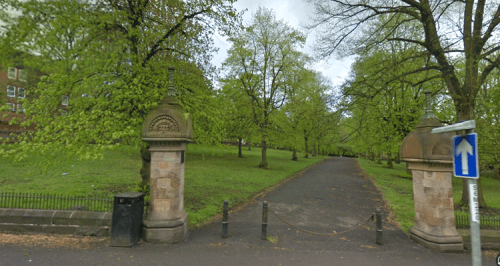
Sunderland seems to have revered Thomas. There is a Thomas Hawkesley Park in Sunderland, full of expensive four and five bedroom houses:

It’s not as beautiful, though, as Hawkesley House:


Thomas was also a gas engineer and, applying the same basic principles for gas as for water, he advised about how to set up the supply for large cities. The number of gas-works he built was very large, and included Barnsley, Bishop Auckland, Burton-on-Trent, Cambridge, Chesterfield, Derby, Folkestone, Gosport, Lowestoft, Newark, Normanton, Nottingham, Pilkington, Radcliffe, Sunderland and Bombay.

Thomas also worked hard on sewage treatment and, as with water and gas, he helped a great many places including Aylesbury, Birmingham, Hertford, Whitehaven, Windsor and Worcester. He anticipated modern methods in refusing to discharge raw sewage into rivers and recommended treatment with chemicals. He believed that spreading the resultant mixture on farmland might well render it completely harmless.

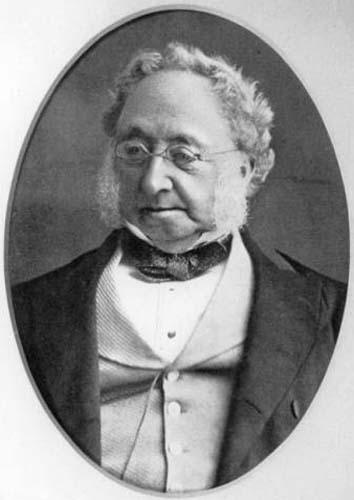
Here is Thomas in later life:

Thomas became the first president of the Institution of Gas Engineers and Managers (1863), President of the Institution of Civil Engineers (1872), President of the Institution of Mechanical Engineers and of the Institution of Gas Engineers (1876) and Fellow of the Royal Society (1878). And he was not a one-trick-pony. In 1885 he received a gold medal for the invention of an instrument for the assistance of the deaf.

Thomas died on September 15th 1893 at 14 Phillimore Gardens in Kensington. London.

In 1907, Thomas’ son, Charles, established the Thomas Hawksley Fund on the centenary of his father’s birth on July 12th 1907. In 1913 Charles initiated the Thomas Hawksley lectures. The first was given by Edward B Ellington, an expert in hydraulic engineering, talking about “Water as a Mechanical Agent”. The lecture was presented at the headquarters of the Institution of Mechanical Engineers and then given again in Birmingham, Leeds, Liverpool and Nottingham. Subsequent speakers have included H L Callendar (published the first steam tables), F W Lanchester, (the car engine), Harry Ricardo (an engine designer) and Sir Noel Ashbridge (broadcasting). Hawksley lectures still take place today.


photo of lake courtesy of geogreph


14 Comments

Filed under History, Nottingham, Science, The High School

Poems in “The Nottinghamian” 1922-1946 (3)

There were many other fine poems published in “The Nottinghamian” during the 1922-1946 period. Not all of them were linked to the war. Here is a selection of some of the best of those.

This one is written by Peter James Middleton, the son of a chemist who lived at 36 Devon Drive, just south of Haydn Road in Sherwood. It appeared in July 1937, when Peter was in the Fourth Form A. Peter left the High School in 1939 after passing his School Certificate.

ADVICE

If I had known Pythagoras,

Two thousand years ago,

And I had known his tendencies,

(As their results I know!)

“Pythagoras,” I should have said,

In firm though kindly tone,

“You stick to Greek philosophy,

Leave triangles alone.”

If Julius Caesar I had met

In some forgotten year,

His trusty sword clasped in his hand,

His pen behind his ear,

I should have said, “Look here, my friend,

Fight, if you must, indeed ;

But don’t write books about yourself,

That no one wants to read !”

In April 1938, we had another poem on a Latin theme, written by Neville Eric Stebbings of Hillcrest, on Sandfield Road in Arnold, to the north of Nottingham. Neville left in August 1944. He was a Prefect with 2nd XV Rugby Colours, 2nd IV Rowing Colours and a JTC ‘A’ Certificate which would entitle him to be an officer if he went into the army.

MY LATIN.

Of all the lessons taught at school,

“Latin” takes the biscuit;

I think I’d rather learn Chinese,

Anyhow, I’d risk it.

With “pugnabis” and “pugnabat”

And second declensions,

I’m always getting a hundred lines

Or else a few detentions.

Why can’t we study “botany”,

And learn about the “daisies”

Instead of swotting “G.N.C.”

And learning “Adverb Phrases”?

They say that Latin clears the brain,

That may be – but I doubt it;

I would not like to see in print

The things I think about it.

The memorising is the worst,

T’would make a Polar Bear grunt;

Fancy learning things like this: —

“Imus istis erunt.”

Oh, Latin gives me sleepless nights

The Grammar – I could burn it.

The hardest task the Romans had

Was when they had to learn it.

David James Hitchin was the son of an overall manufacturer. The family lived at 45 Austen Avenue in Forest Fields, on the far side of the Forest Recreation Ground from the High School. David is another boy who would rather stay in bed than get up. Notice how he gets up as late as eight o’clock because he lives so close to school.

ON GETTING UP

It’s eight o’clock in the morning,

A boy is asleep in bed,

The clock has given its warning,

“I’ll smash that clock,” he said.

“I’m tired of school,” said lazy bones,

“I think I need a rest,”

He gave a grunt, he gave a groan,

He eyed his chilly vest.

His dreams of ease were soon cut short,

The breakfast gong had sounded,

With unwashed neck, and unbrushed hair,

Right down the stairs he bounded.”

The last poem is a masterpiece, some  thirty or forty years before its time when it appeared in the Nottinghamian in July 1948

It was written by Geoffrey Edward C Woollatt who lived, fittingly, at 7 Wordsworth Road in West Bridgford. I think that his father’s job was unique in the history of the thousands of boys who have come to the High School. He was a philatelist.

MEMORIES OF SCHOOL


Down in the High School,

Working all the day,

What do you think we’re working for?

—No pay.


Racing round the busy streets,

What do you think I got?

—Ten times thirty-one,

What a lot.


Outside the Pres’ room,

Writing on the wall,

I’ve been caught without a cap

—That’s all.


Inside the Pres’ room,

Looking at my feet,

Guess what the sentence was,

—One beat.


Down in the corner,

Reaching for the floor,

What do you think I’m looking for?

—The door


Inside the D. room,

I’ve got a date,

When do you think they’ll let me out?

—Too late.


Silence in the D. room,

Working all the time,

What do you think I’ve written?

—One line.

“Ten times thirty-one” means a punishment of writing out the school’s Rule 31 ten times

“The Pres’ room” means the Prefects’ Room. The Prefects were responsible for the school’s discipline outside the classroom and in the absence of a teacher.

“One beat” means one stroke of the cane (on the hand or the backside, not the feet)

The metre of the poem is remarkably similar to a song written by the late and extremely lamented Ian Dury of “Blockheads” fame.

The song was entitled “Jack  ****  George” :

What did you learn in school today?
Jack ****
The minute the teacher turns away
That’s it
How many times were you truly intrigued?
Not any
Is boredom a symptom of mental fatigue?
Not many
When have you ever been top of the class?
Not once
What will you be when you’re out on your ****?
A dunce
What are your prospects of doing quite well?
Too small
And what will you have at the very last bell?
**** all

Here’s the usual link, to Volume 3, currently on sale:


13 Comments

Filed under History, Humour, Nottingham, The High School

Two Old Nottinghamian brothers fighting fascism (2)

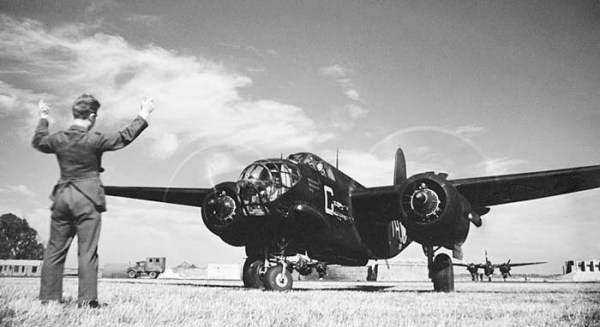
Last time, John Jackson mentioned his brother, Robert Jackson, who was a member of No 418 “City of Edmonton” Squadron of the Royal Canadian Air Force, flying the American twin-engined Douglas Boston Mk IIIs. He was based at RAF Debden, around 34 miles north-east of London. They flew “Intruder sorties” into occupied Europe at night, and at low level to avoid the German radar. Their purpose was to destroy German aircraft, as they took off or came back to land. Sometimes, these were German night fighters, returning from operations over England. More important, though, were the attacks on German bombers as they returned from bombing England. The other main activity were “Ranger sorties”, when they would shoot up either enemy airfields, factories, power stations or shipping. Above all, they tried to destroy as many locomotives and as much rolling stock as possible:

The Bostons went deep into enemy territory, although they did not carry their own radar. They used the naked eye, fortified with an hourly consumption of carrots. 418 Squadron also spent a great deal of time dropping propaganda leaflets on occupied countries such as Belgium, France and Holland.

The Douglas Boston Mark III had extensive armour protection and large fuel tanks for longer range. Its speed was well in excess of 300 mph and fighter versions came closer to 400 mph. 418 Squadron flew a development of the Mark III called the Mark III Intruder, with specialised adaptations on the exhausts to mask the flame effects of the engines at night. They carried four 20mm cannon in a ventral pack under the central portion of the aircraft’s fuselage, and a bomb load of up to two thousand pounds.

The Bostons were painted completely matt black, an unusual paint scheme in the RAF. Squadron letters were in matt red. 418 Squadron was an élite outfit in the RCAF. They carried out more missions than anybody else, both by day and by night, they shot down more German aircraft than anybody else, both by day and by night, and they destroyed more aircraft on the ground than anybody else.

The squadron motto was in Inuit, the single word “Piyautailili” or “Defend Unto Death”:

They trained hard to master flying at low level at night, although it was far from easy. Casualty rates became extremely high in 1942. Aircraft were lost on February 24th, March 9th (two), March 26th and 29th, April 1st (two), 12th and 27th (two), May 17th and 20th (two), July 9th, August 1st, 2nd, 17th, 21st, 28th, October 19th, November 8th and 18th, December 1st and 5th. 24 aircraft in total, with potentially, 72 men killed.

During the winter of 1942-1943, the main problem was that, operating now from RAF Bradwell, they were penetrating deeper and deeper into Germany, much further than ever before. When they left England, conditions might be acceptable, but six hours later, there could be thick fog or ice or snow. They might be short of fuel as they looked for an airfield. There were lots of accidents and lots of casualties.

Bradwell Bay was the only fighter base to be equipped with FIDO, a method of allowing aircraft to land during periods of persistent, thick fog.

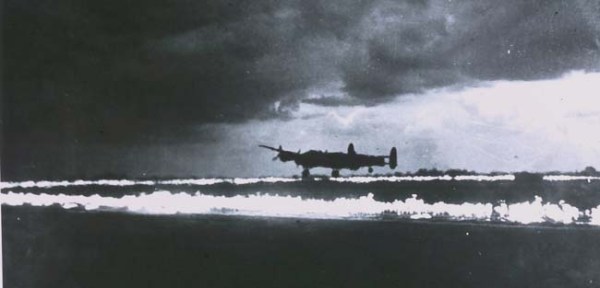
A pipeline either side of the runway had burner jets placed equal distances apart along its entire length. Petrol was pumped in and ignited. The subsequent flames would evaporate the fog droplets sufficiently for any aircraft waiting to land to see the runway:

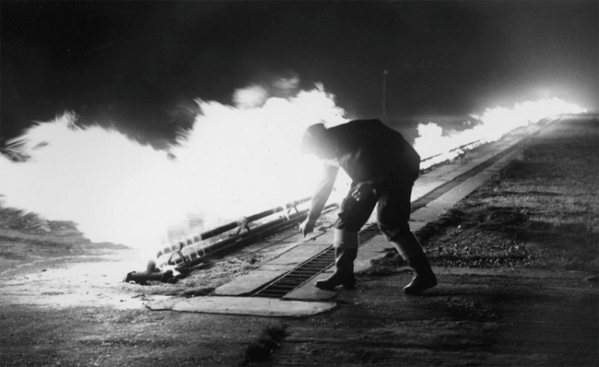
FIDO was usually employed at bomber stations. Here it is, being lit. Mind your eyebrows:

The cost of training a seven man crew, was very much more than 100,000 gallons of petrol per hour. “Bomber” Harris always said that it was cheaper to send twelve men to Oxford or Cambridge for three years than to train a Lancaster crew:


11 Comments

Filed under Aviation, Bomber Command, France, History, military, Nottingham, The High School

Poems in “The Nottinghamian” 1922-1946 (2)

Last time I showed you some of the poems which were published in the school magazine, the Nottinghamian, during the period of 1922-1946, although, to be honest, most of them were about the Second World War. Many of the poems are of a remarkably high standard, and give us quite an accurate snapshot of how boys saw events unfolding in an increasingly terrifying adult world.

During the war, countless thousands of children from British cities were evacuated to the peaceful countryside. Frank Alan Underwood of 51 Charnock Avenue, Wollaton Park, wrote this first poem, “Evacuated”, which appeared in April 1942. Frank was the son of a lecturer at the University of Nottingham. He left the High School in July 1943. He went to university with a State Bursary for Science:

EVACUATED

O for the City Smells once more,

For the asphalt under the rain,

For the harsh, unceasing, clanging roar

Of city streets again.


I am tired of cows and senseless sheep :

All is too quiet to let me sleep ;

But think of the harsh-hushed city din

That comforts me as sleep steals in.

I don’t know whatever happened to Frank, although I did find that a paper entitled “Textures in Metal Sheets” was issued in 1962 by Dr FA Underwood. Further googling yielded further results in the same field.

As the war dragged on, the shops seemed to have very little to sell. This is reflected in a poem entitled “Triolet” by Frederick Brian Perkins, a member of the Second Form A who lived at “Kingsley” in Egerton Road in Woodthorpe. His father was a timber merchant

What is a “Triolet”? Well, it’s an eight-line poem (or stanza) with a rhyme scheme of ABaAabAB. It is apparently very similar to a rondeau. Here’s one:

TRIOLET

In the shops nowadays,

There’s little to buy ;

We alter our ways ;

In the shops nowadays.

They have empty trays ;

And we all stand and sigh,

In the shops nowadays,

There’s little to buy.

The same tale of woe had been told by Donald Arthur Gospel of the Upper Fifth Form Classical in April 1942. Donald was the son of a departmental manager and lived at 70 Whitemoor Road in Old Basford:

VARIATIONS ON A WELL KNOWN THEME

Sing a song of chocolate:

The shoppers formed a queue,

Four and twenty people—

Soon everybody knew ;

When the shop was opened

The folk began to push ;

Now wasn’t that a silly thing,

To start another crush.


The profiteer was in his house,

Counting out his money ;

His friend was in the Black Market,

Selling jars of honey.

The folk were paying double

To have some extra cheese,

When off they went in a “Black Maria,”

Despite all their pleas.


In case you were unaware, this poem is a beautiful re-telling of the old nursery rhyme, “Sing a Song of Sixpence”:

You can find the lyrics and a link to the video with the tune, HERE

Donald Gospel, our author, seems to have fought in the Indian Army in World War Two, moving from there in 1945 to be in the Sherwood Foresters and then the Queen’s Regiment in 1949. Donald passed away in 1995.

There was very little faith that there would be anything in the shops, or indeed, any end to the black marketeers, even eighteen months after the war’s end.

This poem was written by James Derrick Ward, born on December 19th 1933, who lived at 22 Windermere Road in Beeston. His father was the Chief Chemist in a Works Laboratory, possibly connected with one of the military depots at nearby Chilwell. The poem appeared in the Nottinghamian of December 1946. James left the High School in August 1950.

NOVEMBER 5TH, 1946

No squibs, no rockets,

Money in pockets

No fireworks in shop,

My spirits drop.

November.


No clothes for “Guys,”

Oh, hear my sighs !

No crackers leap,

My sorrow’s deep.

November.


No fiery wheels,

Nor thundery peals,

No happy night,

No bonfire bright.

November.

Fortunately, when victory had come almost eighteen months previously, there had been no shortage of fireworks in Moscow. Or people, if you look closely :

A lot of the High School boys had brothers or fathers in the forces. A rather pessimistic ditty occurs quite frequently in the Nottinghamian, with variations, regarding which particular branch of the forces and whether the location was the High School or a college at Oxford or Cambridge. Here we go. The first two refer to an Oxford or Cambridge college, where the main entrance is permanently manned by the college porters :

Nine little Undergrads, at the Porters’ Gate,

One is a sailor so now there are eight.”

And, a very similar poem:


Nine little Undergrads, at the Porters’ Gate,

One joined Bomber Command so now there are eight.”

But there is definitely one little poem which refers specifically to the actual High School in Nottingham:

“Nine Nottinghamians,

At the Forest Road gate,

One went to Bomber Command,

And then there were eight.”

And so on. And sadly, so true.


19 Comments

Filed under Aviation, Bomber Command, History, Humour, military, Nottingham, The High School

Two Old Nottinghamian brothers fighting fascism (1)

There is an interesting letter in the School Archives which begins:

“On December 10th 1988, my son, daughter and myself were visiting Nottingham to see my granddaughter who is at Trent University. We arrived on the Saturday morning, and found my old school, opposite the Forest but with locked gates. Then we suddenly noticed the gates opening. It was one of the teachers preparing to drive out before locking up. We were warm in our anoraks but although he was only wearing light clothes, this kind teacher offered to show us around the outside of the school buildings. The site of the former “Fives” court was, he told us, blocked by a newer building. Memories began flooding back.”

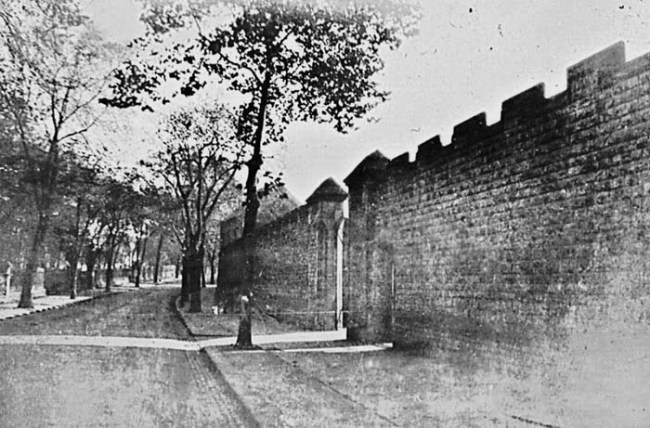
The writer was John T Jackson who left school in 1935 at the age of twelve. His father’s job was transferred to Birmingham and he and his brother transferred to Solihull Grammar School. Here are the school gates on Forest Road in 1932:

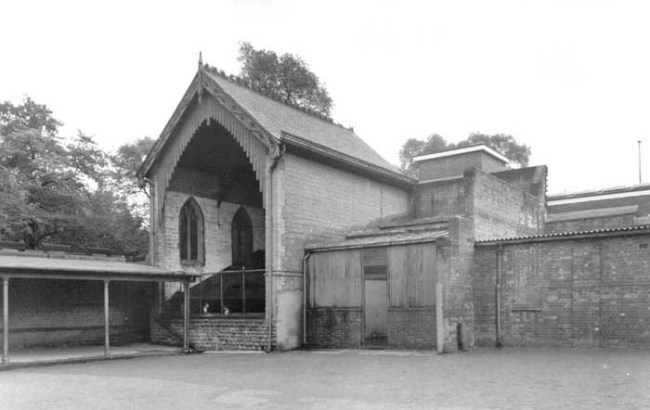
Here are the two fives courts, now replaced by the Sports Hall:

When young John Jackson attended the junior school, Mr Day was the headmaster. One day the boys were all taken outside to see the flight overhead of the new airship, the R101.

The buildings had not changed much as the little group all walked towards the front of the school. Mr Jackson remembered that the steps at the front of the school led to the Headmaster’s room. Then they saw the War Memorial. Mr Jackson had not realised that it would contain so many names. Over two hundred had died to halt fascism. He scanned the names, picking out his brother “Jackson RR”. He was very grateful to see this tribute to the courage and sacrifice that he and his fellow pupils had made.

Robert Renwick Jackson served in the RAF as a pilot in No 40 Squadron based at Chelmsford and flew on low level night intruder missions against enemy targets. In 1943 he was shot down in the coastal area of northern France. He and his observer are buried at Grandcourt in France:

After taking a few photos, John Jackson returned to his car, thanking the teacher for his kindness. When they found the gates locked they had been ready to accept that the best they could manage was to look from outside.

John Jackson had a far luckier war than his brother. He trained as a navigator in the RAF and was stationed at Kinloss in Scotland. His captain was Mac Hamilton, and they survived two tours in Bomber Command. After ten trips to Berlin with 619 Squadron, the whole crew volunteered to join 617 Squadron after Gibson’s successful raid on the dams. 617 was then commanded by Leonard Cheshire who had a precision way of marking targets with special bomb sights. They carried the Tallboy bomb weighing 12000 lbs and attacked special targets such as the U-boat pens, certain tunnels and canals, and rocket sites. Their last two operations were against the Tirpitz battleship. It took a total of three attacks to sink the Tirpitz.”

To be continued………..


6 Comments

Filed under Aviation, Bomber Command, France, History, military, Nottingham, The High School

Poems in “The Nottinghamian” School Magazine 1922-1946 (1)

All the poems in this particular selection have a flavour of the Second World War. Preparations seem to have started as early as 1922, the year when the eccentric and beloved caretaker, universally known as “Robert”, retired.

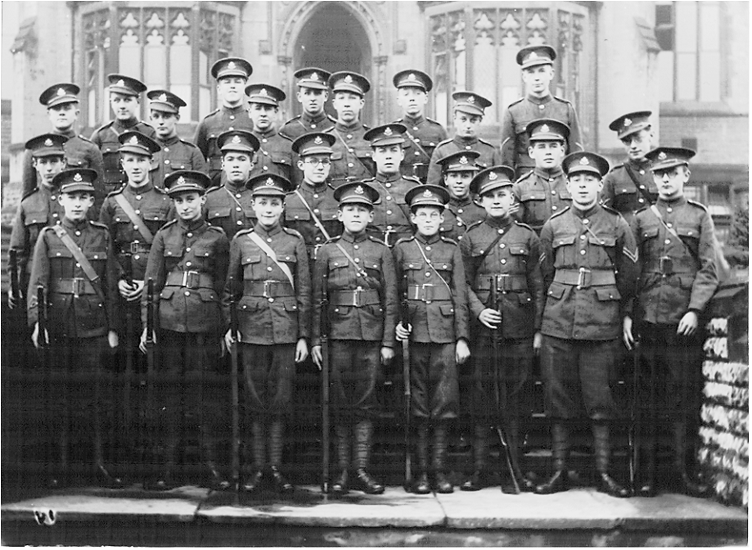
Almost totally deaf and a great favourite of the boys, Robert would have his own poems printed and then distributed around the school. Unfortunately, only one of them appears to have survived. On this occasion, he celebrates the school’s Cadet Corps, preparing slowly but surely  for the next world war:

“If you look through them gates

You’ll see Captain Yates

A-drilling of boys by the score.

So come on, my lads

Get leave of your dads

And join the High School Corps.”

And here is the High School Corps:

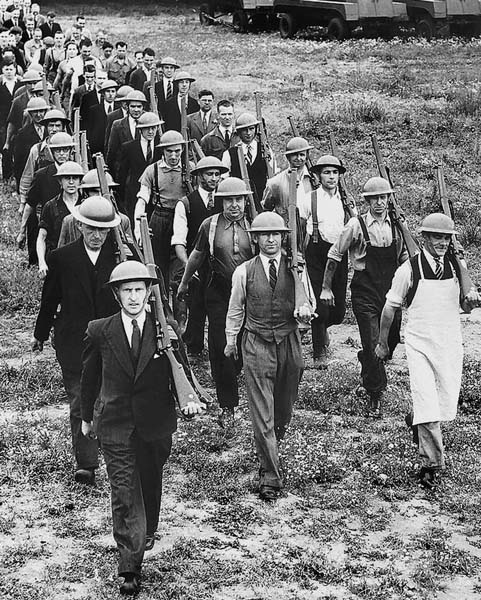
The next poem appeared in December 1943. It celebrates the Home Guard, the amateur soldiers, either too young or too old for the real army, who were tasked with defeating the invading Germans. It was written by Timothy John Norfolk DEAVILLE (aged 9) who was the son of the Reverend R Deaville, the vicar of St Andrew’s on nearby Mapperley Road:

The Home Guard

“Daddy’s in the Home Guard,

He’s helping win the war.

He’s donned a khaki uniform

Just as he did before.


He hasn’t won a medal yet,

He hopes he will do soon.

He’s only been a sergeant

This very afternoon.


His comp’ny’s got a kitten,

He helps to feed it now.

It claws him every morning

And makes him call out, “Ow!”


I’m glad he’s got promotion,

He has more leisure hours.

Commander says he’s clever

(He’s quite a friend of ours).


He hasn’t shot a German yet,

He wants to get a chance.

If “Jerry” tries his funny tricks

He’ll lead them quite a dance.”

Can you spot TV’s Mr Brown in this photograph of an unknown Home Guard unit?

If you remember the song, Mr Brown goes off to town on the 8.21. But he comes home each evening and he’s ready with his gun :

This next poem appeared in April 1945, and it was written by David Brian Bowler of the Science Sixth. It has a bit of a laugh at the various amateur organisations set up by the school to push the Huns straight back into the sea. “J.T.C.” is the Junior Training Corps, L.D.V. stood for the Local Defence Volunteers (or as they were usually called, “Look, duck and vanish”) and the H.G. is the Home Guard.

I don’t know what happened to young David, but I did find two companies where a “David Brian Bowler” is named as a director, shareholder or secretary. They were “Acem Geotechniques Limited” and “Bowler Geotechnical Pty Ltd”, both of them operating in Queensland and Papua & New Guinea.

The poem is called:

“Epic”

“In the grim days they feared the Hun

Would come by air or sea;

At the first observation point

They posted the J.T.C.


Through the chill nights with unknown sounds

Of foes they could not see

They waited, hoping for the chance

To give them ‘ell D.V.


And from those hearty pioneers

By way of L.D.V.,

With drill and guards and tireless work

Came the High School H.G.


First to stand up, last to stand down,

Wherever you may be,

Salute to you, the best of luck,

And thanks to the School H.G.”

Here’s the final parade of the nation’s various Home Guard units, before they were stood down for ever on December 3rd 1944 before being completely disbanded on December 31st 1945.

In December 1940, the Nottinghamian contained a poem entitled

“ODE TO ELSTON (ACCOMPANIED BY WOODPIGEON)”

The title referred to the many boys who took part in a scheme organised by Mr Palmer and Mr Beeby, whereby Sixth Formers went off to work at three different agricultural locations, for the most part helping to get the harvest in. One farm was at Elston, a small village south west of Newark-on-Trent, another was at Car Colston north east of Bingham and the third was at Honey Lane Farm at Farndon which is also near Newark-on-Trent. On other occasions, boys went to a farm camp at Dowsby, just the far side of Grantham.  Ooooh   aargh:

“ODE TO ELSTON (ACCOMPANIED BY WOODPIGEON)”

‘S nice to be in the country

When summer suns are glowing ;

‘S nice to milk the brown cows—

‘S nice.

Cycle out to farmyard

Six o’clock in morning ;

Sweat and sweat and drink tea—

S’wet.


‘S nice to ‘staak’ the barley,

‘S nice to pick the oats,

‘S nice to staak the wheat,

‘S nice !


‘S nice to load the ‘cow-muck’ ?

‘S nice to pump the water ?

‘S nice to be in country

But it’s nicer to be in town !

The poem was written by Philip Blackburn of 6 Classics. He left the school in 1941 with a Studentship for Classics at University College, Nottingham, and a Nottingham Co-operative Society Scholarship of £25 per annum.

23 Comments

Filed under History, Humour, Literature, military, Nottingham, The High School

“A long forgotten war, wasted young lives” (6)

The Second Boer War (1899 –  1902) was fought between the British Empire and the two independent Boer (Dutch) states, the Republic of Transvaal and the Orange Free State, over the British Empire’s influence in South Africa.

The catalyst for the war was the discovery of diamonds and gold in the Boer states.

Last time, we saw how William Henry Heath, the son of a farmer at Bestwood Park to the north of the city of Nottingham may have helped out on the farm, before joining the army and sailing off for a distant, exotic and exciting war in South Africa, the home of gold and diamonds. A large number of Britain’s soldiers in South Africa were transported there on the SS Winifredian, an extremely powerful and very fast steamer, with the rakish lines you’d expect in a ship of that calibre:

Needless to say, things did not go very well for William in South Africa. Before too many years had elapsed William was dead and buried in the thin dry soil of the veldt:

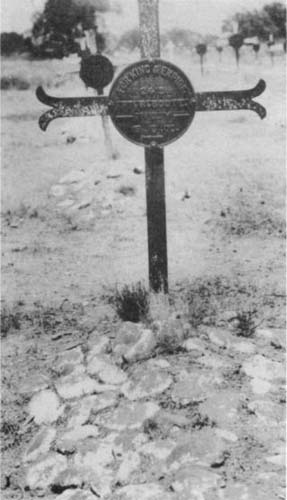
Here is a typical Boer War grave marker. It is in cast iron and reads at the top “For King & Empire”. Because it was made of iron, the embossed lettering tend to last very well in the extremely dry wind of the veldt:

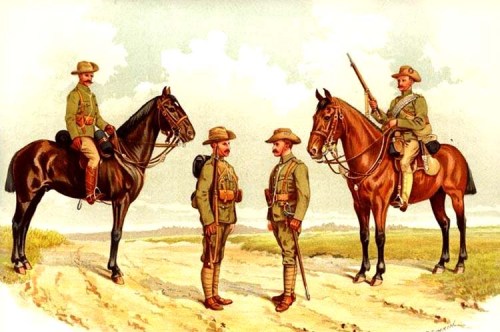
There is a certain amount of confusion about which unit William was serving in when he died. Two local Nottingham websites say that he was serving as a trooper in “The South African Constabulary”. On the other hand, the website with the Roll of Honour from the Nottingham War Memorial of the Boer War says that William Heath was a Private in the 11th Company of the 3rd Battalion of the Imperial Yeomanry. His service number was ‘1972’. Here are the Imperial Yeomanry in a colour print:

And here is just one member of the Imperial Yeomanry, complete with a dead white goose and his extremely alert horse, Dobbin:

William Heath, though, like more than 20,000 other British soldiers, appears not to have died in action but to have died of disease in Pretoria on February 14th 1902.

Illness, of course, despite all of the measures taken by the British Army, was the most frequent way to die in this war. The Royal Army Medical Corps had foreseen this, and had taken the precaution of mobilising more than 150 special units, along with 28 field ambulances and more than twenty hospitals of various types.

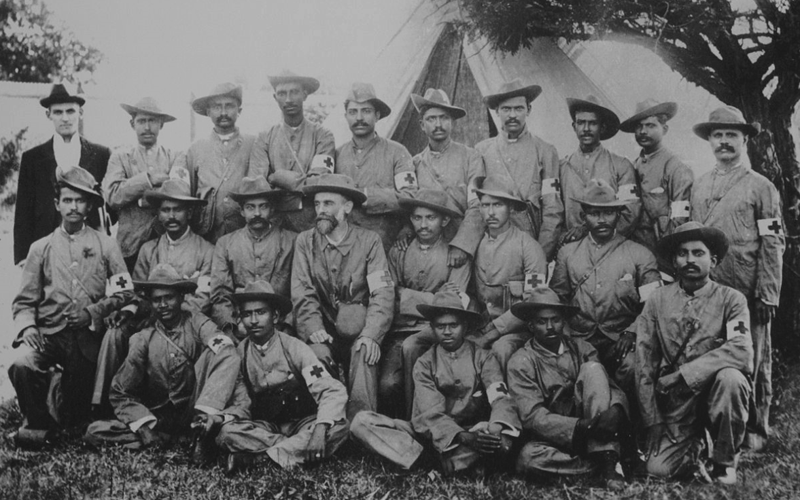
A thousand Indians from Natal were taken on to work as stretcher bearers. One of them would one day become extremely famous. At the time he was a young lawyer in Durban but he worked as a stretcher bearer during the Battles of Colenso and Spion Kop. Here he is,

Clue No 1

“This little brown man in the loincloth was a private man without wealth, without property, without official title or office. He was not a commander of great armies nor ruler of vast lands. He could boast no scientific achievements or artistic gift.”

Clue No 2

He said:

“I am a Muslim and a Hindu and a Christian and a Jew and so are all of you.”

Clue No 3

He said:

“An eye for an eye only ends up making the whole world blind.”

Did you spot him? He’s to the right of the white man with a beard in the middle row, and the man in the back row directly behind him has his hands on his shoulders. And who is he? Well, he’s the most mis-spelled famous person in the world. So, his name isn’t “Ghandi”.

William Heath’s younger brother, Leonard George Heath, was also, like his brother, a pupil at Grosvenor School but he then entered the High School on January 21st 1896. He was in the Lower First with Mr JS Jones in 1895-1896 (sixth of sixteen in the Form Order and in English, 8/12 in French and 14th / 42 in Writing). One of that sixteen was Edward Archer Thurman, a victim of the First World War, killed on December 3rd 1917 in Palestine and buried in Ramleh War Cemetery

With Mr Marriott in the Upper First in 1896-1897, Leonard finished 22/34 in the Form, 16th in English, 27th in French, 22nd in Latin and 10/33 in Writing. In 1897-1898 he was in the Lower Second with Mr WT “Nipper” Ryles, finishing 32/38 in the Form, 34th in English, 29th in French, 32nd in Latin and 15/34 in Writing.

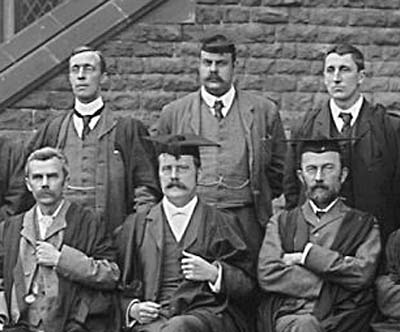
Here is a section of the staff photograph from 1901. Mr Jones is in the centre of the back row. On his left, as you look at the photograph, is Mr Wilfrid Tyson Ryles, alias “Nipper” Ryles. To the right of Mr Jones, as you look at the photograph is Mr Samuel Rnssell Trotman, a teacher of Chemistry and Gymnastics. He would have needed to be fit to cope with a class of 78 pupils as he did in one particular year. You read it right. 78 pupils!!

In front of Nipper Ryles is Mr “Sammy” Corner, in front of Mr Jones is the Headmaster, the Reverend Doctor James Gow, and in front of Mr Trotman is Mr Francis Coverley Smith.

The following year, Leonard George Heath is no longer listed in the School List, and, indeed, by this point, namely July 1898, he seems to have left.

He does not figure in the 1911 census, but we do know that Leonard emigrated to Rio de Janeiro in Brazil where he married Miss Ida Gilbert. When the First World War broke out, the two of them then returned to sunny Bestwood, and Leonard immediately joined the Sherwood Rangers to fight the filthy Huns. He died of his wounds on March 14th 1916 by which time he was a Captain in the 3rd Skinners Horse, in the Meerut Brigade of the Indian Army. He was buried in Le Tréport Military Cemetery in France, and poor Ida, who died on March 25th 1918, possibly of Spanish flu, was buried at Bestwood Emmanuel Cemetery

Rather poignantly, in 1928, their father, Henry Heath, was still patiently ploughing the land at Sunrise Farm.


21 Comments

Filed under Africa, France, History, military, Nottingham, Politics, The High School

“A long forgotten war, wasted young lives” (5)

The Second Boer War (1899 – 1902) was fought between the British Empire and the two independent Boer (Dutch) states, the Republic of Transvaal and the Orange Free State, over the British Empire’s influence in South Africa. The British Empire owned Cape Colony and the Bechuanaland Protectorate:

The catalyst for the war was the discovery of diamonds and gold in the Boer states.

William Henry Heath was born on June 11th 1882. His father was Henry Heath and he was a farmer at Bestwood Park which is to the north of the city of Nottingham. Bestwood Park was originally a hunting estate in Sherwood Forest, owned by the Crown from the Middle Ages until the seventeenth century, when King Charles II gave it to his mistress, Nell Gwyn.

Nell was a famously shy girl, who always kept herself to herself and very much liked to read about embroidery and the lives of the saints:

This slideshow requires JavaScript.

More seriously, the topless painting is called “Portrait of a Courtesan, thought to be Nell Gwyn” and comes from the studio of Sir Peter Lely (1618-80). The more or less clothing free effort is called “Portrait Of A Young Lady And Child As Venus And Cupid” and is known as a picture definitely by Lely.  Sir Peter was the finest painter of the Restoration and the official artist to King Charles II.  And Nell Gwyn? Well, she is known to have been “one of the first women to abandon her modesty to advance her career.”

Two hundred years in the future, William Heath’s mother was Mary Ann Heath and according to the various censuses, by 1891, William had a brother, Leonard, and two sisters, Margaret Annie and Mary. By 1901, Henry,  Evelyn and  Dorothy have appeared and by 1911, another brother, Norman. Depending on the date of his departure to South Africa, William may never have seen Evelyn or Henry and he certainly never saw Dorothy. The farm in 1911 is given as “Sunrise Farm” although that is not necessarily the farm of William’s boyhood. For his education, he may possibly have gone initially to Grosvenor School, a preparatory school at Nos 107-109 Waterloo Crescent, a pleasant footpath off Mount Hootton Road on the western side of the Forest Recreation Ground. Here it is today:

William entered the High School on January 22nd 1895 as Boy No 1366. He was twelve years of age and he went straight into the Upper First with Mr Marriott as his Form Master. Mr Marriott taught at the High School from 1891-1897. He was originally a temporary teacher but he was given a full time job after his first year. He had a BA degree and was a late Scholar of Sidney Sussex College at Cambridge University.

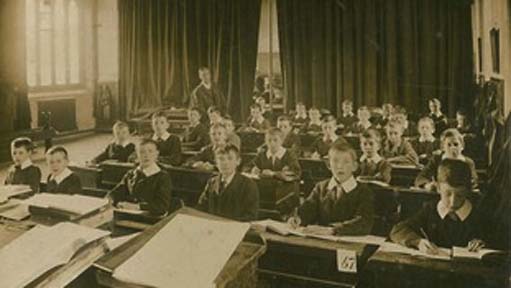
There were 32 boys in the Form and of the 30 boys who took the end-of-term examinations, William came 19th. The School List gives us a number of his exact placings subject by subject… English (18th), French (12th), Latin (16th), Writing (14th), and he came third in Drawing. He had been placed in Mathematical Set XII. The following year, it was the Lower Second with Mr Wilfrid Tyson Ryles. There were 29 in the Form and 28 took the examinations. William finished 15th. Here he is in class with Mr Ryles standing back left of the photograph.

William improved very well over the course of the year though, because he was awarded the Lower Second Prize for the Summer Term. But then it was more of the same…. English (10th), French (18th), Latin (15th) and Writing (25th). He was still  in Mathematical Set XII.

The next year of 1896-1897 was his third, and his last. He spent it in the “Shell” with Mr Hodgson, who was the first ever master of this newly invented Form which was designed to receive boys who entered the school late, usually from state schools, and with little or no previous French or German, and certainly no Latin. The following year they were expected to go into the “Modern Fourth Form” but Henry would not do this as he left at Midsummer 1897.

There were 32 boys in the Shell but they were divided into Divisions A and B. Henry finished 18th of the 21 boys in Division A. His last acts at the High School before his departure were his examinations….. English (19th), French (15th), German (20th), Writing (28th), and he came tenth in Drawing. He had been promoted at last to Mathematical Set X. A figure ‘1’ after his name in the School List signifies that he was awarded a prize for Writing in 1897 and one for being the best in Shell Division A in July 1897. Given his positions, I really don’t see how that worked!

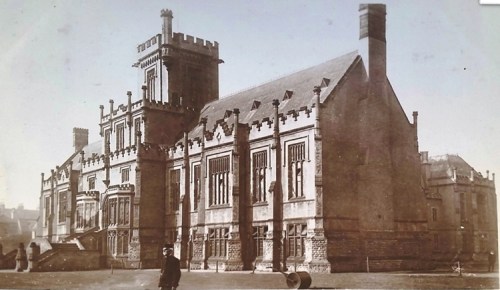
Here’s the High School in around 1896. Note Sergeant Holmes, the Drill Sergeant, and the little boy in the bottom right corner. He should be in class but has no doubt been attracted by the photographer and his assistant.

I do not know what William got up to between his final year at the High School and his leaving for a distant, exotic and exciting war in South Africa. I suppose he may have helped out at Sunrise Farm, but that seems a rather easy thing to say.

Next time, William goes to protect the British Empire from a small group of awkward Dutch farmers or possibly, gets involved in a greedy overseas war, started by rich men eager for bucketfuls (or bucketsful, possibly) of gold and diamonds.


15 Comments

Filed under Africa, History, military, Nottingham, Politics, The High School

“A long forgotten war, wasted young lives” (4)

Edward Archer Thurman was born on October 20th 1885. He was the younger brother of Arthur John Thurman, the Notts County footballer who had died in the Boer War at Boshof on May 30th 1900. The Boer War was fought from 1899-1902 in South Africa, fuelled by the British greed for the diamonds and gold discovered in the Boer states.

Edward’s elder brother, Arthur, though, was not killed in action. Like 23,000 others, he died of “enteric fever”, now known as typhoid.

The Thurman brothers’ father, Edward, though, turned out to be a much more difficult man to pin down. In the 1885 Directory there are two Edward Thurmans. One lived at the “White Lion” public house at 28 Hollow Stone, in the Lacemarket area of the city and the other had a chandler’s shop on Mansfield Road. In another 1885 Directory, Edward Thurman was a victualler at the White Horse in Barkergate. Or, he was a maltster in Sneinton Dale with a home in Barkergate, again in the Lacemarket.

A chandler makes or sells candles and other items such as soap. A victualler sells food, alcohol, and other beverages.

Edward Thurman junior entered the High School as Boy No 1460, on January 21st 1896, at the age of ten, and left at Midsummer 1901, along with DH Lawrence.  According to the School Register, the family was living in 6 Notintone Place in Sneinton, and the father worked as a maltster, an occupation defined as a “person whose occupation is making malt”. In actual fact, he turns grain into malt which is used to brew beer or to make whisky. His business premises were in Sneinton Dale, as the second 1885 directory stated.

Notintone Place, incidentally, was the birthplace of the founder of the Salvation Army, General William Booth:

According to the 1894-1899 Directories though, Edward Harrington Thurman lived at 26, rather than 6, Notintone Place. And yet another Edward Thurman was the manager at Gladstone Liberal Club at 20 St. Ann’s Well Road.

Like his brother, Arthur, Edward junior was an excellent footballer and played at least 32 times for the High School, scoring a minimum of 12 goals from midfield. He won his First Team Colours and the School Magazine, “The Forester”, said he was a player who “Dribbles well and passes unselfishly”.

His opponents during the 1899-1900 season were:

Lincoln Lindum Reserves (a) 0-3, Mr AG Francis’ XI (h) 3-5, Loughborough Grammar School (a) 1-2, Newark Grammar School (a) 5-2 (one goal), Mansfield Grammar School (a) 4-0, Magdala FC Second Team (a) 4-2, Mr Mayne’s XI (a) 5-2, Leicester Grammar School (a) 14-0, and Ratcliffe College (a) 4-1.

During the 1900-1901 season his opponents were

Mr AG Francis’ XI (h) 3-4, Insurance FC (h) 11-0, St Andrew’s Church Institute (h) 0-7, Mr AC Liddell’s XI (h) 1-2, Leicester Wyggeston School (h) 23-0 (three goals), Derby School (a) 8-0 (one goal), Newark Grammar School (h) 17-0 (two goals), Old Boys (h) 4-3 (one goal), Lincoln Lindum (h) 5-2, St Cuthbert’s College, Worksop (a) 2-1, Sheffield Wesley College (h) 1-4, Mr AC Liddell’s XI (h) 3-3, Mansfield Grammar School (h) 7-1 (one goal), Derby School (h) 8-1 (one goal), Loughborough Grammar School (h) 6-0 (one goal), Magdala FC (h) 0-2, Leicester Wyggeston School (a) 3-2, Magdala FC (a) 2-4, Mansfield Grammar School (a) 13-1 (one goal),University College (a) 2-3, Newark Grammar School (h) 12-0 (one goal), Nottingham Insurance FC (h) 4-2 and St Cuthbert’s College, Worksop (h) 2-0.

Edward was usually a No 7, a right winger, but he sometimes played as a No 8, an inside right. Lincoln Lindum would eventually become the professional club, Lincoln City.

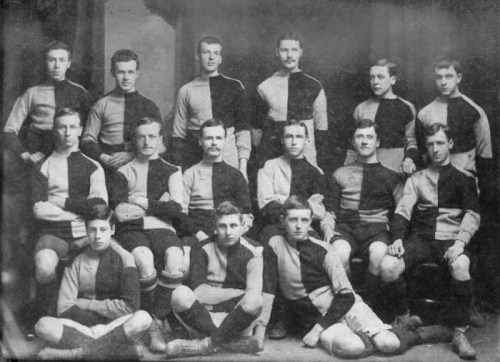
In 1900-1901 Edward appeared in what was arguably the School’s best ever football team. Their record was 16 victories and two draws in 25 games with 145 goals scored and only 45 conceded.

Interestingly, in 1899-1900, Edward was in the Lower Fourth, the same form as DH Lawrence. Of the 39 boys, Lawrence finished fifth and Edward finished 36th of the 36 who sat their exams.

By now, the family had moved to No 2 Belvoir Terrace, which was in the same general area of Sneinton. By 1904 the family had returned to Castle Street. Mr and Mrs Thurman are believed to have spent their last years in Selby Lane in Keyworth.

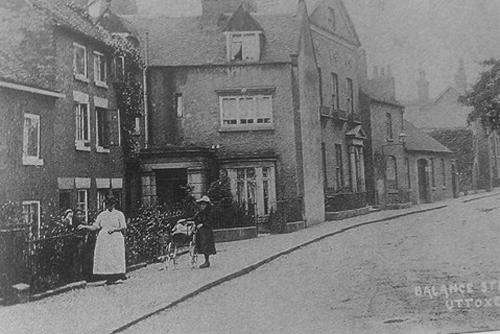
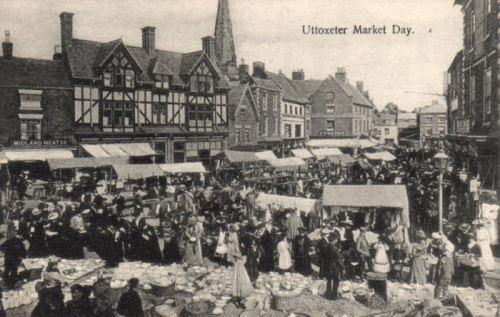
Edward left Nottingham and went to work in Uttoxeter (always pronounced by the real locals as “Utchetter”, rather like ”Ilkeston” and “Ilson”).

He worked initially in the corn business as a clerk, although he eventually became a commercial traveller.

Despite such a good job, Edward joined up when the Great War broke out in 1914. Like his brother, Edward volunteered to preserve King, country and above all, democracy, the right to vote, enjoyed at the time by a massive 14% of the adult population. Edward was in the South Nottinghamshire Hussars and he was killed on December 3rd 1917 in Palestine. He was buried in Ramleh War Cemetery, not the only Old Nottinghamian lying there among almost six thousand casualties of war. News of Edward’s death was received in a way which is poignantly reminiscent of his brother, Arthur.

“He was for several years a member of the Uttoxeter Town Cricket Club, being popular with all who knew him. His many friends will be sorry to hear of his death.” He was 32 years old.


17 Comments

Filed under Football, History, military, Nottingham, The High School