Category Archives: Wildlife and Nature

Wolves (2) How to fight them off

Recently, I wrote about how Candice Berner, a thirty two year old special education teacher was killed by wolves as she jogged along a road outside Chignik Lake, a remote village in south western Alaska. It was the first ever fatal wolf attack in Alaska where between 7,700-11,200 wolves are resident. There has only been one fatal attack in the rest of North America, where between 50,000-60,000 wolves are resident. This was a man who regularly fed the wolves near his campsite.

Kenton_SKxxxxxxxxxxxxxxxxxxxxxxxxxx

Last time it emerged that Ms Berner’s slight, almost childlike build would have been attractive to the wolf. So too was the fact that she was out jogging. A running target always brings out the worst in any predator.

Her listening to music on a headset was thought by her father to be contributory, but was actually discounted because wolves are less noisy than the wind anyway.
A recent TV programme on Animal Planet also made one or two important points about this attack. They visited Chignik Lake and discovered that Ms Berner went running every day at the same time. This did not make it particularly difficult for any predator. The first thing every politician at risk of assassination is told is to vary their routine as much as possible. Ms Berner, they said, ran past the town dump, where both wolves and bears would routinely come to scavenge. As I said in a previous article, the local dump is a good way to habituate predators to humans. To show them how human scent equals food. If people take no notice of the predators’ presence, then they will gradually lose their innate fear of humans.
image_encounters

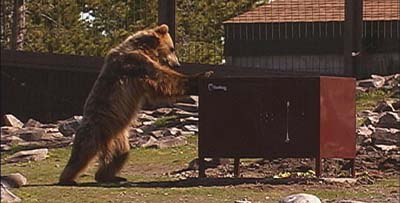
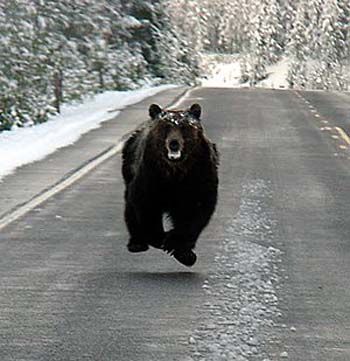
The locals at Chignik Lake considered the dump too dangerous a place to go. Most significantly, the TV reporters found that Candice Berger was the only person in Chignik Lake ever to go jogging outside the town. The locals at Chignik Lake considered this activity far too dangerous, although their primary fear was that of bears, who can chase you at a steady 35 mph. Hard luck Usain Bolt, tootling along at a pathetic 27 mph. The bear population around Chignik Lake was very high.
xjune-2013-bear_jpg_pagespeed_ic_q9hIvBROLI

The road out of Chignik Lake ran along the side of a hill, and as it curved, Ms Berner’s tracks made a sharp U-turn. This was thought to be the point at which she first noticed the wolves. She was running westwards and the wind was blowing from the west so the wolves may have had her scent blown towards them for some considerable time. Presumably, after she had turned sharply away, this provoked a predatory response. Either one or two wolves chased her, while a third ran higher than the road and then swooped down to either knock her down or cause her to slip over. The place she fell had bloodstains with a second depression three or four yards away as she fell for the second time. She had fled about fifty yards from the place where she first apparently turned away from the wolves. She then tried to crawl away but the wolves dragged her down the slope. By now she was in a very bad way. She finally succumbed in a clearing ten yards from the road. The fight was a very brief one and she died quickly. Her body was then dragged thirty yards to an area of small bushes. Blood on the road led to the discovery of her body, and later that night a wolf returned to drag it a further twenty yards downhill.

Nine sets of wolf tracks were found but the Fish and Game Department said that only four or five wolves had been involved.
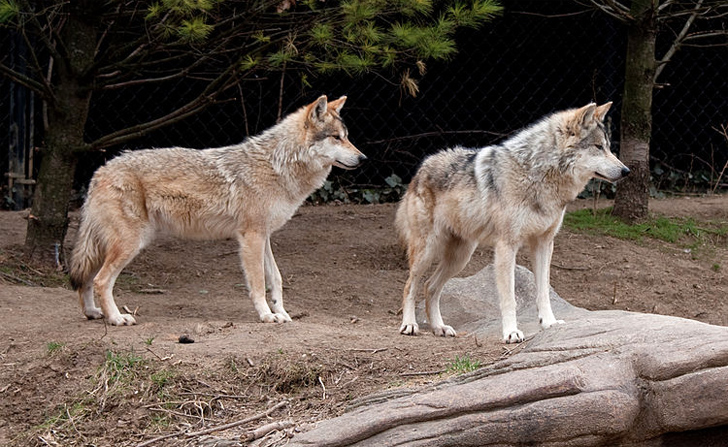
pair-of-mexican-wolves

The Fish and Game Department then culled eight wolves within thirty miles of the attack site. The DNA from one of these wolves was found on the young woman’s body, but a second wolf who left DNA was never found. As always seems to be the case, the evidence of three or four other lots of DNA was impossible to prove.
I have researched exactly what happened in some detail because this attack was, at this time at least, totally unique.
As we have seen, the townspeople seemed deeply worried about the attack, by a member, or members, of a protected species. The Director of the Alaska Wildlife Alliance said that those who wanted to be allowed into the area around the town to kill all the wolves they could find were just:

“A lot of people who want to be macho and go out there and kill animals.”

Perhaps the last words should go to the poor young woman’s father:

“They were just doing what wolves do. Their nature happened to kill my daughter but I don’t have any anger towards wolves.”

Candice_Berner12

So what should you do? Well, the expert in my last article said that you should:

Never feed wolves

Don’t let them become habituated to humans (by leaving them a rubbish tip to visit, presumably)

If confronted by a wolf, don’t run

Face the animal, make yourself appear as large as possible

Yell

Wave your arms

Throws stones or other objects

Resist any attack

I would personally, if I were American, carry a revolver, one of those that Clint Eastwood carries, and learn how to use it for my own self defence:
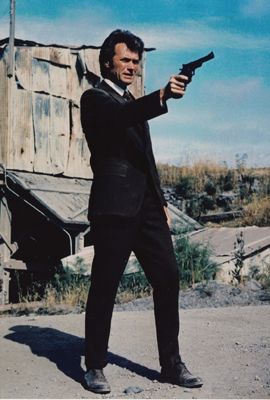
dirty-harry328381
And if all else fails, I would try to climb a tree.
The Candice Berner case was notable as being the first fatal wolf attack in North America in which DNA evidence was gathered to confirm wolf involvement.

30 Comments

Filed under Criminology, History, Science, Wildlife and Nature

Wolves (the animal not the football club)

When I wrote about the Beast of Gévaudan, I came to the conclusion that the ferocious creature was a previously unknown type of wolf:

bete-du-gevaudanzzzzzzz

For some unknown reason, it was being forced westwards from its normal habitat of the Polish or Russian primeval forests such as Białowieża. If ancient bison could live there, so could something even more prehistoric:

rejigged bison

At the time I did research the likelihood that the Beast was an ordinary wolf or wolves but I rejected that as a theory because I did not think that wolves would eat human beings.
It would be dishonest, however, not to make it patently clear that in the past, wolves certainly have eaten people but they don’t seem to now. Why should this be?
Firstly, extremes of weather centuries ago, more severe than what we have now, may have lead to a situation where wolves either ate any available prey items or just died. This would account for the Wolves of Paris which I have previously discussed:

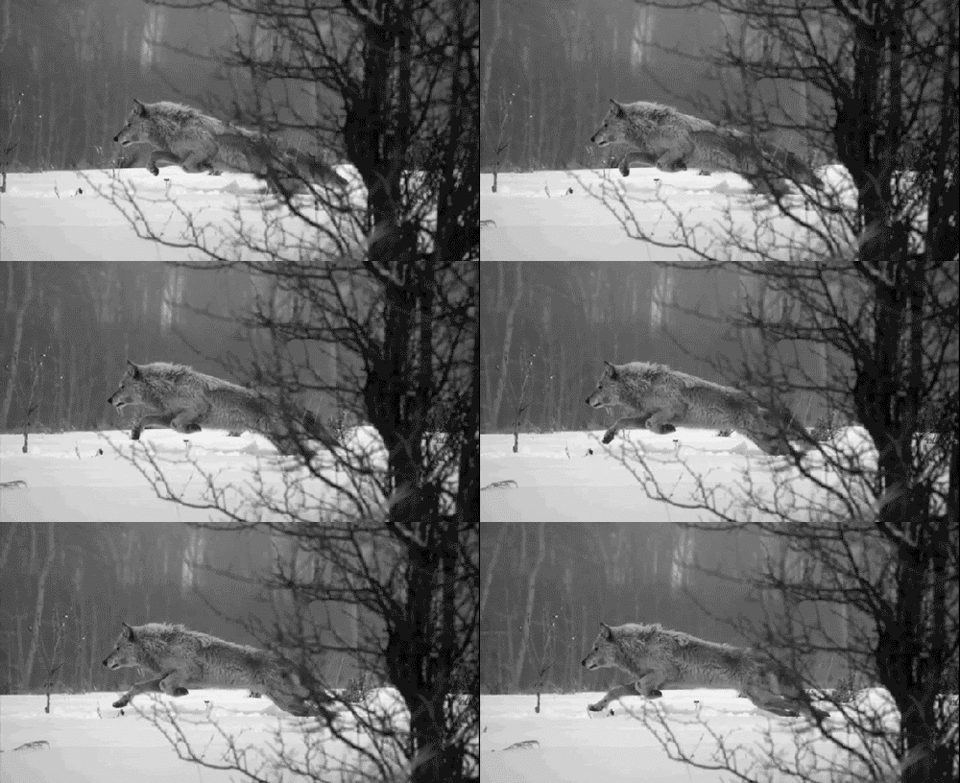
wolf bounding

In actual fact they may also have acquired a taste for human flesh by eating corpses. Apparently, until as late as 1820, corpses in France were frequently thrown into open charnel pits. Presumably, these were paupers, drunks, stillborn babies, in short, anybody dead without the money for a funeral. And it is not outrageous to presume that this lovely way to dispose of the late dearly departed might have taken place in neighbouring countries too. An unfortunate situation that taught wolves to associate the scent of Man with a full belly.
If the hungry wolf wanted a better quality of prime human meat, young, and blood drippingly fresh, the best place was the battlefield straight after the battle. Once the local peasantry had stripped the bodies of everything valuable, they were not buried, but were gradually eaten by the ravens and other corvids, the eagles, both golden and especially white-tailed, and most of all, the local wolf pack.
This association of human flesh, its scent and taste, with a full stomach, was a recipe for disaster when wolves came across, say, lone travellers or children picking berries deep in the woods. And don’t forget. In France the peasantry were forbidden to own firearms to reduce the admittedly tiny risk of a blood spattering revolution.
Nowadays, the situation is completely different. Admittedly France had 7,600 fatal attacks by wolves between 1200–1900 but there has been nothing since. Italy has a population of wolves but without any fatal attacks on humans since 1945 and no attacks by wolves since the eradication of rabies in the 1960s.

wolf pack one

In the Baltic states, where rabies is still allowed to exist, just under a hundred people were bitten between 1992-2000 in Latvia and Lithuania, although the statistics are muddied somewhat in Estonia by the locals’ love for wolf-dog hybrids and keeping wolves captive on their properties.
And what about North America?

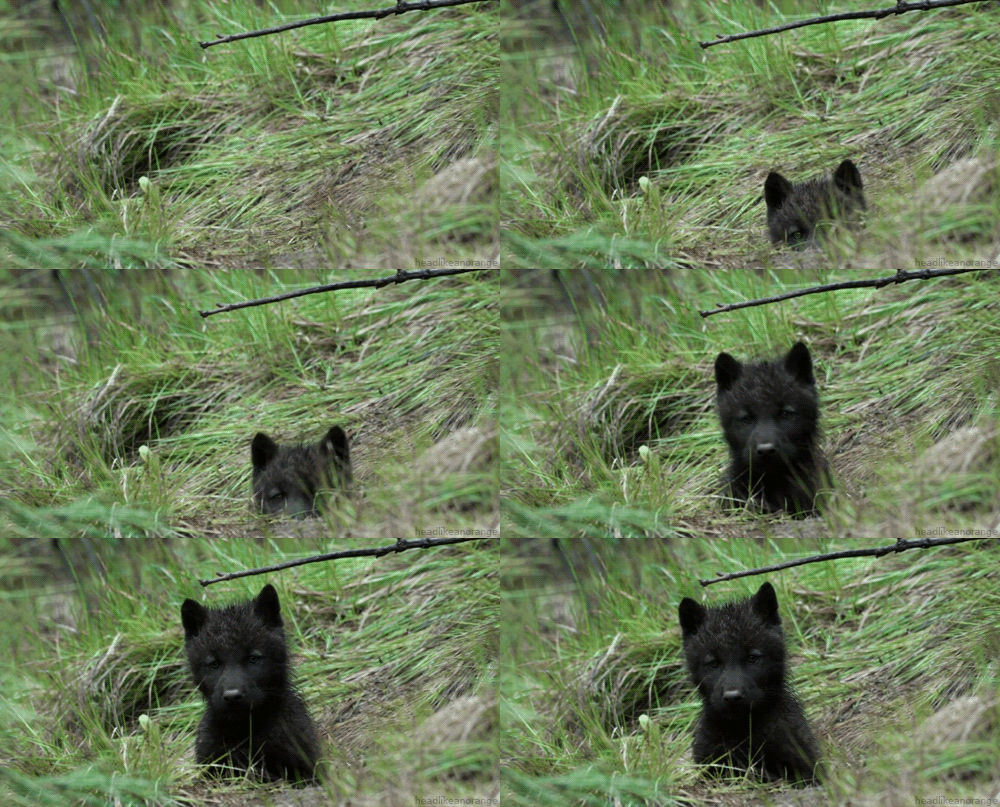
wolf baby

Well, in 2002, the Alaska Department of Fish and Game stated that there had been no human deaths in North America attributed to wild, healthy wolves since at least 1900. Concerns were caused though, when, on April 26th, 2000, a six year-old boy was attacked by a wolf in Icy Bay, Alaska. He was not killed, but then, on November 8th 2005 the body of Kenton Carnegie was found in northern Saskatchewan. He had died from “injuries consistent with a wolf attack.” The local wolves had apparently lost their fear of him because he fed them regularly.

Kenton_SKxxxxxxxxxxxxxxxxxxxxxxxxxx

To increase the risk, natural food was scarce in the area at the time and four wolves had been feeding on rubbish tips in the previous weeks. They were no longer scared by human activities. On November 4th, two of Kenton’s fellow campers clashed with two extremely aggressive wolves. Zoologists have now said that this was probably an “exploratory attack” just to see how difficult it was to kill a human being. Another perhaps more serious attack was imminent.
On the day of his demise, Kenton ignored warnings from his companions and went for a walk in the woods. It took the Coroners’ jury two years to rule out Black Bear, but their eventual verdict was “Death by Wolf”.

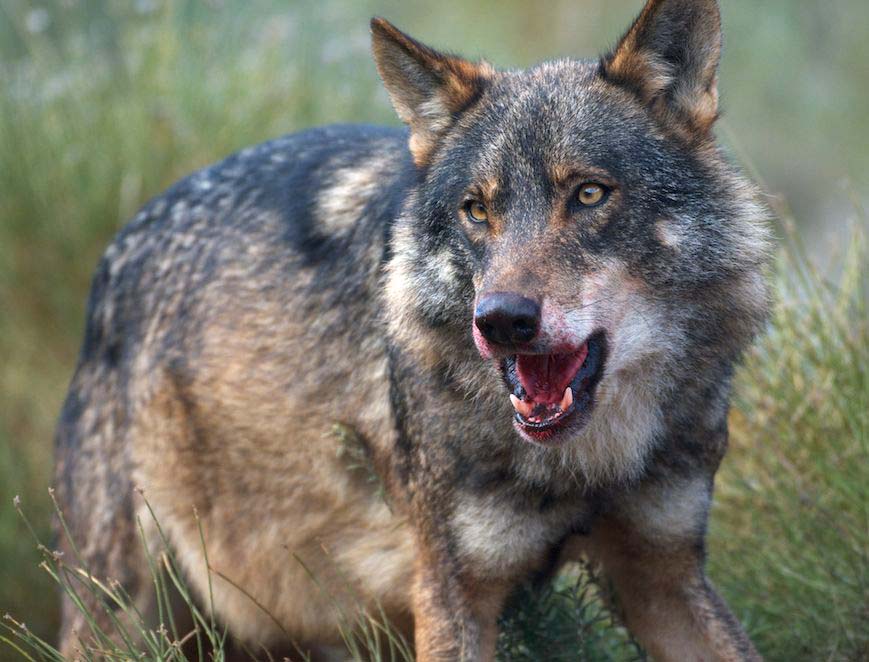
Iberian Wolf alpha male feeding on deer, its mouth tinted with f
On March 8th 2010, Candice Berner, a thirty two year old special education teacher who had only been in Alaska since the previous August was killed by two, perhaps three, wolves as she jogged along a road outside Chignik Lake. It was late afternoon.

Candice_Berner12

This was the first ever fatal wolf attack in Alaska. David Mech, a senior research scientist with the U.S. Geological Survey has studied wolves for more than fifty years. He said:

“There have been about two dozen nonfatal attacks in North America in the past century or so. Most involve wolves that have become habituated to people who have been feeding them at campgrounds, dumps and other sites near wolf habitat.”

Ms Berner was only 4 feet 10 inches tall and weighed just over eight stones (c 112 pounds). David Mech said that her slight, almost childlike build, and the fact that she was running may have attracted the wolves, who, after all, are predators by nature:

“Wolves are very much like dogs in a lot of respects. Things that are running, they have tendency to want to chase them,”


DogChasing

Ms Berner was thought to have been listening to music on a headset, but Dr Mech discounted this, as in his experience wolves move so silently that the wind is enough to mask their presence completely.

Whatever you think about wolves, the truth is that the inhabitants of the tiny village of Chignik Lake have lived alongside wild animals since time immemorial:

chig

This one attack has spooked all of the 73 inhabitants of the area, so remote that it can only be reached by aeroplane. The school’s stuffed wolf mascot had been there a good while, but now it has been kicked well into touch. The wolf badge of the school will also have to go if Virginia Aleck, a local woman, gets her way.
She said that everyone felt trapped in the village. None of the surrounding hills were considered safe anymore.  Nobody walked on their own and everybody carried a rifle.
Is this an over-reaction? Or are wolves just a part of living outside the big city? I’ll try to answer that question in a future article.

17 Comments

Filed under Canada, Cryptozoology, France, History, Personal, Science, Wildlife and Nature

Snow joke

Yet again, the Date-Book of Remarkable Memorable Events Connected With Nottingham and Its Neighbourhood 1750-1879 comes up with the goods.  Ands today you’ll see just how appropriate is the name of the author, John Frost Sutton. Once again, I have tried to simplify some of the more archaic language.

“January 1776

A great fall of snow and intense cold. Drivers of vehicles found it impossible to complete their journeys, and the stagecoach to London was stopped halfway to the capital, and was unable to proceed.”

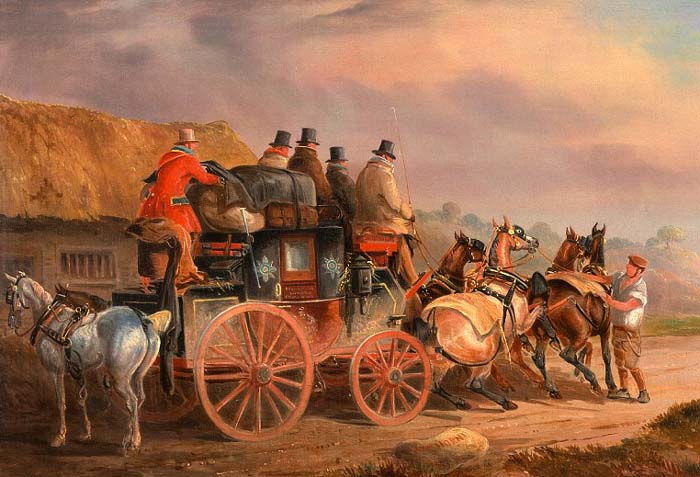
Here is the type of stagecoach we are talking about. It’s not really one for the Apaches to chase:

stagecoach w

“A contemporary record states that the road beyond Northampton “was crowded with the passengers from the north, all of whom had been detained there all the week, owing to the great depth of snow. Many of them had neglected to make any provision for what had happened, and were in the greatest distress. On the other hand, some, who were well supplied with the one thing they really cherished, lived happily at the nearest public or farm houses. They were literally in high spirits. Almost every house on the road exhibited either a happy picture of noise and merriment, or else showed the visible signs of vexation, disappointment, and humiliation.”

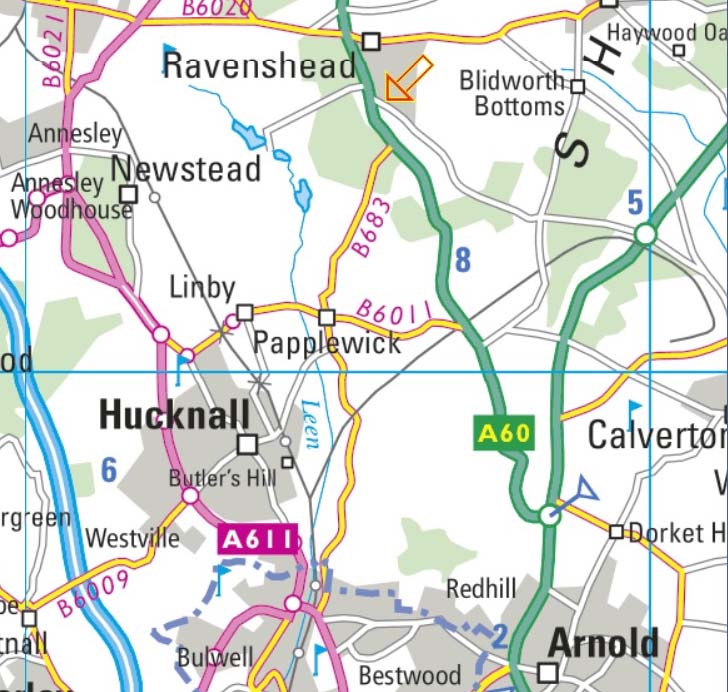
“On January 13th, two men were returning in the evening from Nottingham to Papplewick, when they were overcome by the cold, half-way between Redhill and their place of destination. In the morning, one of them was found stretched out on the snow and dead. The other was found in a state of insensibility, with his stiffened arms clasping the trunk of a tree, and icicles at the end of his fingers. With much difficulty his life was preserved.”

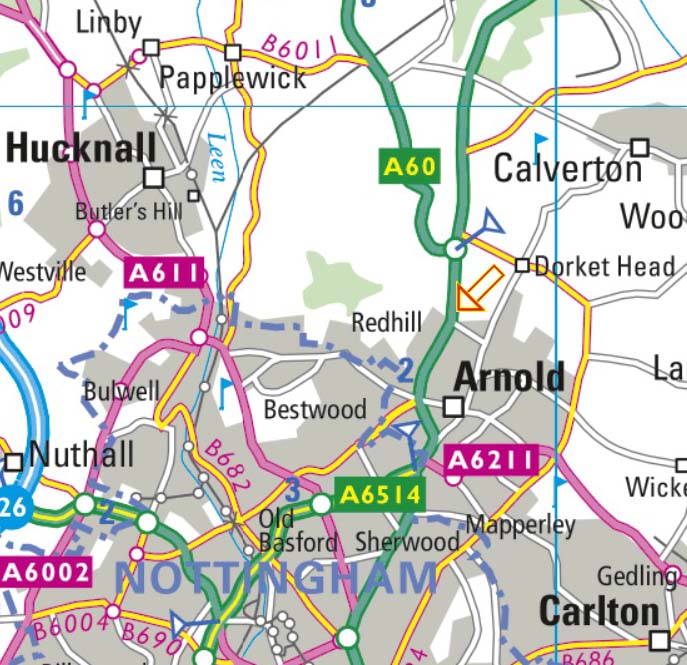
The orange arrow points to Redhill, and Papplewick is in the top left corner:

papplewi3333333333333333333333

“The same day another sufferer was rescued from death by Mr Turner, a Nottingham attorney. A young woman in the service of Mr Lee, of the Peacock Tavern, near St. Peter’s Church in the middle of Nottingham, had been to Leeds on a visit to her friends, and was returning to Nottingham.”

Here is St Peter’s Church in Nottingham, down near the Broadmarsh Shopping Centre. The building to the right will one day be Marks & Spencer but it doesn’t really know it yet:

st-peters-1860-300dpi

The young woman left Leeds as a passenger on the outside of the coach as it was so much cheaper (although a lot colder, of course).

red stage

“About midway between Leeds and Nottingham, some thirty miles from the latter town, the tremendous fall of snow rendered it impossible for the coach to proceed any further, and the young woman, not having enough money to stay where she was, set out resolutely on foot. She managed to reach The Hutt, on the road from Mansfield to Nottingham, when her strength totally failed, and she lay down to die.”

Here is the Hutt nowadays. It figured in a previous article when a White Stork flew over it:

thre hutt

On this map, the orange arrow indicates the Hutt. The immediate area is no longer as isolated or countrified as it would have been in 1766. Redhill and Arnold are both in the bottom right corner:

hutt aaaaa3333333333333333333

“In the hour of her extremity Mr Turner the solicitor happened to be passing that way on horseback, and prompted by humanity, lifted her up, took off his greatcoat and wrapped her in it. He put his gloves onto her hands, and with great difficulty succeeded in carrying her to Redhill, where she was properly taken care of at his expense until sufficiently recovered to be brought to Nottingham.”

I included this bit of the account because there are not many stories where a lawyer is the hero, especially a generous one. This is the “Ram Inn”, an old coaching inn at Redhill. It faces west so it is not easy to photograph and get much light on the subject:

Ram Inn pic

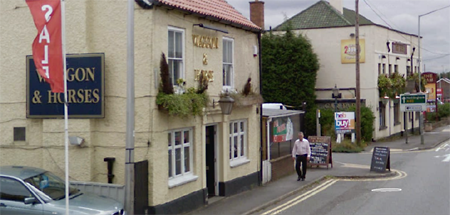
Right next to it is the Waggon and Horses, another coaching inn of the period:

ram

Two pubs next to each other is fabulously convenient. When the barman in one pub refuses to serve you because you are too drunk, you can just leave quietly and try your luck next door.


13 Comments

Filed under History, Nottingham, Science, Wildlife and Nature

Bigfoot? Where? Tunbridge Wells?

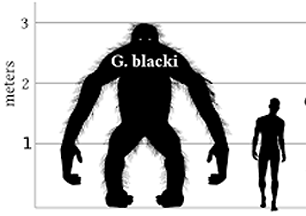
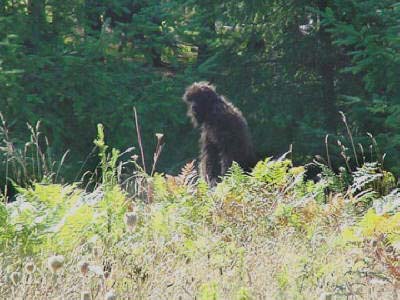
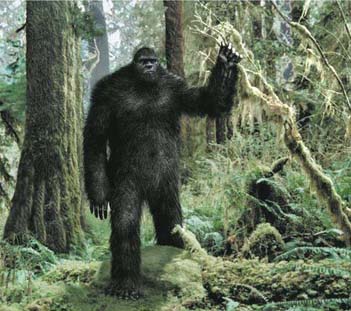
Of late, there has been an increasing number of claims by people who think that they have seen Bigfoot in Great Britain. If you think Bigfoot is a physical being, descended from gigantopithecus blacki, then for me, that particular idea of seeing such gigantic creatures in tiny England is almost beyond ludicrous.

blacki

If you think Bigfoot and all his pals come through vortices in time and space, wormholes in the structure of the dimension, then I suppose his existence here would perhaps be a definite maybe.

Rather reminiscent of the “Barmston Drain Dog Destroyer”, this is a tale from Tunbridge Wells. I have précised the account in the Daily Mail, although it did appear in a good few other newspapers in almost identical form.

Tunbridge Wells, incidentally, is located in west Kent, forty miles from London. The population is about 56,000:

“Terrified walker claims 8ft-tall creature roared at him…

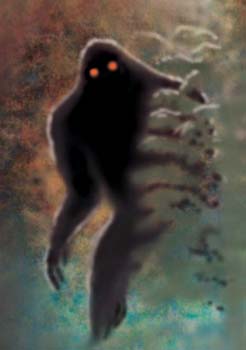
Bigfoot, red-eyes, Bill Rebsamen

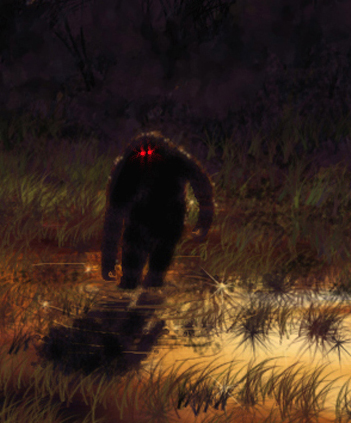
A man walking in the 200 acres of woodland beside the town’s common claims to have spotted an 8ft tall black beast with demonic red eyes and long arms.
The ape-like creature, which looked like America’s legendary Bigfoot, roared at the walker, who immediately ran off in fear.”

And of course, that is not the only report in Tunbridge Wells. All the people who have seen Bigfoot in the local library car park suddenly come out of the woodwork to tell the tale.

“Over the past six months there have been a number of sightings. Locals in Tunbridge Wells have mixed opinions, with some believing it could be a joker wearing a fancy dress costume.
Scientists say rumours of its existence have come from folklore and hoax.”

db_Bigfoot43_1_

Interestingly enough, though, there is a tale of a strange creature being seen in Tunbridge Wells well over seventy years ago in 1942. Every monster has to have a name, preferably slightly comic, and presumably in an effort to make it a little less monsterish. He has, therefore, been christened “The Kentish Apeman” or “The Apeman of Kent”. The tale was told best in the Kentish News:

“He was first spotted on the town’s common seventy years ago.
An elderly couple saw it in 1942.’They were sitting on a bench when they became aware of a shuffling noise behind them.
Turning around they saw a tall, ape-like creature with eyes that were burning red moving slowly towards them at a slow pace.. They observed this creature for some time until they became afraid and both fled – terrified.”

big red

“The old lady went on to say that they told the police and members of their family, thinking that a gorilla had escaped from a zoo, but they were laughed at and were not believed.”

pinterestzzzzzzzzzzzzzzzzzzzzzz

This account also mentions other reports of the creature in more detail. One extraordinary tale, even in the context of gigantic unknown apemen, came in Dartford when a student saw a creature with long arms and knees which came up under its chin as it walked. If it’s nice weather tonight, or perhaps tomorrow morning, then go out on your lawn, and give that a go. And don’t forget: “knees which came up under its chin as it walked”.
Five members of the Territorial Army in 1991 spotted this beast on Blue Bell Hill, near Maidstone. They threw stones and shouted at it before running away. A young girl in Chatham saw the apeman appear then run off into the bushes.

hqdefault

Well, there we are. No real, concrete explanation. Not like the famous Man-Monkey of Ranton. (The what?):

“On January 21st 1879, a labourer was employed to take a cart of luggage from Ranton in Staffordshire to Woodcock in Shropshire.
“He was late coming back. His horse was tired, and could only crawl along, so that it was late at night when he arrived at the place where the road crosses the Birmingham and Liverpool canal.
“Just before he reached the bridge, a strange black creature with great white eyes sprang out of the plantation by the roadside and alighted on his horse’s back.”

A bit like this?

planet

“He tried to push it off with his whip, but to his horror the whip went right through the thing, and he dropped it on the ground in fright.”

When the man recovered from the fright, he returned home and excitedly spread the story.
A few days later, a policeman came round to his house and told the frightened man: “That was the Man-Monkey sir.”

Not much gets past our police, does it?

11 Comments

Filed under Bigfoot, Cryptozoology, History, Humour, Science, Wildlife and Nature

A Werewolf in Yorkshire: Eeh bah gum (again) !

I told you in previous articles that there were more werewolves about than you might think. News came in recently, on Sunday May 15th, of werewolf sightings near Hull in East Yorkshire. The national newspaper, the Daily Express, took up the story. Here is a highly abridged version:

“Seven separate eye witnesses claim to have spotted the 8ft tall creature lurking in an abandoned industrial area outside the centre of Hull.

Residents and folklore experts believe the beast is Old Stinker who, according to legend, is a foul-breathed creature in the Yorkshire Wolds.
The lonely banks of Barmston Drain are where the creature was first reported before Christmas.
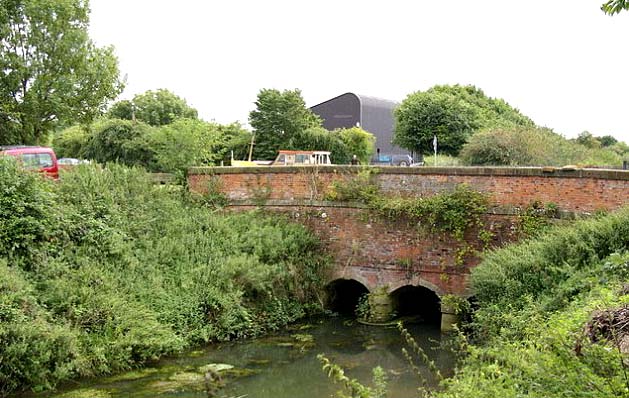
One woman claims to have seen it turn from man to beast as she stood on the bridge”:

barmaston drasin

She said: “It was stood upright one moment. The next it was down running like a dog. I was terrified.
It bounded along, then stopped and reared up on its back legs, before running down the embankment towards the water.
It vaulted thirty feet over to the other side and vanished into some allotments. It both ran on all two legs and on all fours, as if with the qualities of both human and wolf.”

A couple saw “something tall and hairy” eating a German Shepherd dog next to the Drain.
They saw it jump an 8ft high fence before vanishing into the night, its prey still in its jaws.

I have a link to that. Something tall and hairy, eating a German Shepherd dog?

A woman walking her dog spotted something “half-man, half-dog” in the distance.
She was terrified, and her pet began shaking and refused to go any further:

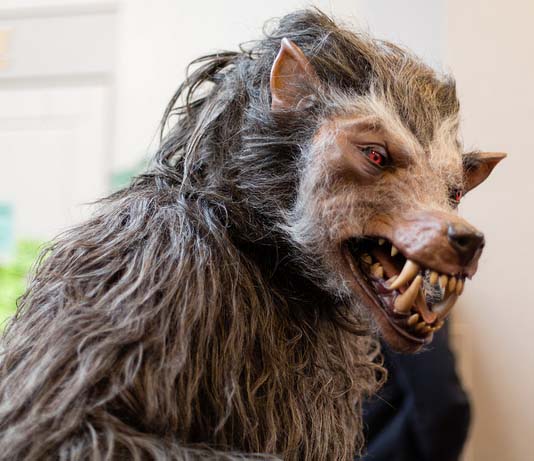
werewolf xxxxxxxxxxxxxxxxxxx

Well, this monster could well have become a minor source of tourist revenue, particularly with the right people in the right costumes. Unfortunately, though, the locals chose to shoot themselves in the foot.

Leave well alone?? Rake in the cash??  No. No. NO!

Let’s take the high risk strategy of going to look for “Old Stinker”, the moment the next full moon raises her beautiful head. Notice how the local councillor just can’t keep away, and his almost childlike faith in Hull Council:

“Now locals plan a werewolf hunt with cameras and recording equipment. Councillor Steve Wilson has offered to keep an incident log: “I am happy to keep a diary of sightings by people around here and report them to Hull Council.”

Just one step from the Stasi.

Local author Charles Christian said: “Old Stinker was actually said to be operating on the other side of the Yorkshire Wolds but it would be no distance at all for a large animal to get to Hull.”

What faith in the public transport system. Why, it’s probably run by Hull Council:

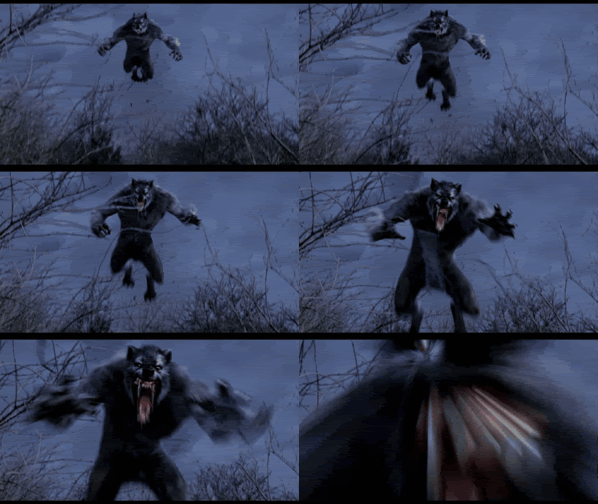
werewolf attack

Mike Covell, an expert in the supernatural, said: “No one really knows what to do. You can hardly pop down the local council office or police station and say you’d like to report a werewolf.”

Well, Mike, have I got news for you. That is exactly what everybody has been doing. On a discussion forum, watertight evidence was provided of previous werewolves in Yorkshire by “wmysteries90″:

“I had one witness claim they saw a huge dog which stood up, jumped over a fence and then run off with a cattle animal.(sic) Then his friend came forward to his fried stating he had seen a huge dog in the same area. (sic) A woman claimed she heard a strange howl. While a former military guy with an undisclosed area on the moors stated that few years back with a routine team in the middle of the night they had the sense of being watched by something.

Also there have been claims made by people around the moors stating that they have either seen or heard strange howls, growls.”

Indeed, the Daily Mail were to concentrate more fully on placing the “Barmston Drain Dog Destroyer” in its proper context, once they had established that the Werewolf Councillor was from the Labour Party.

Old Stinker, therefore, was supposed to haunt the “Wold Newton Triangle” (the what??), an area known for mysterious activity (really?):

wold newton triangle

“For centuries, tales have circulated of zombies, ghosts, and Old Stinker – a great hairy beast with red eyes, who was so called because he had bad breath…people would glimpse the rear lights of a car in front, but it would reveal itself to be the red eyes of a wolf.”

red eyes

How often that has happened to me. Although driving a 1994 Volvo I don’t catch up too many cars, or werewolves, for it to be a real problem. Well, it’s not as bad as ice or sudden banks of fog.

If you want to investigate further the question of “How gullible can people get?”, then this is a similar story, set in the same area, but harking back in the “Golden Age of Satanic Panic”.

werewol
My previous story about the “Barmston Drain Dog Destroyer” and the “Golden Age of Satanic Panic” was soon followed in the national press by the story of two people who saw what they thought was a puma type creature as they returned home along country lanes around Pershore in Worcestershire in the early hours of the morning:

puma

They suddenly saw a “muscular black animal” in the middle of the road. It was around one metre long and they were forced into an emergency stop. The creature circled the car and appeared to be about as tall as the car window. Its eye reflection was green. Frightened, the couple drove off, but not before they had noticed what they took to be the eyes of the creature’s mate hiding in the darkness of the hedgerow:

big cat

There have apparently been other sightings of puma type animals elsewhere in the county, at Evesham, Malvern and in the Malvern Hills.

Indeed, there are continuing reports of pumas or ABCs as they are called (Alien Big Cats) all over the country. In Leicestershire, for example, experts have said that there are two territories which overlap around the East Midlands Airport at Castle Donington. Rutland Water is included in one of them:

_38789095_bigcat300

Even I have seen one, while I was trying out my new “see in the dark” binoculars. I thought it was a fox at the time, but I now realise that foxes don’t have long curved tails, wide faces or big round ears. There are even videos of these killer cats. This one comes from AnimalInfoTV, who produce a great number of really interesting looking videos on a number of different subjects. I would commend them to you:

Going back to the “Puma of Pershore” though, what makes this news story quite extraordinary, however, is the fact that when the couple did a drawing of what they had seen, because a werewolf had been spotted near Hull around the same time, the consensus of opinion suddenly became that they had actually seen the “Worcestershire Werewolf” rather than the “Puma of Pershore”.

werewolf

Well, here is their drawing. Make your own mind up. “Worcestershire Werewolf”?? or the  “Puma of Pershore”??

sketch

I went to Pershore twitching once. It’s a really lovely place. It was to see a Black-throated Thrush, which was at the time, a mega-rarity:

HBW10-TUR-06

13 Comments

Filed under Cryptozoology, History, Humour, Science, Wildlife and Nature

The Osprey in Victorian Nottinghamshire

In the first half of the nineteenth century, William Felkin tells an intriguing story about an osprey in Nottinghamshire:

“In 1839, a female was captured at Beeston Rylands, and kept alive sometime; it was tamed, and often used to fly from its owner’s house to the river, and stand in the shallow water it measured 5’7″ from tip to tip of its wings.”

-fishing-osprey-xxxxxxxxxxxxxxxxxxxxxxxxxxxxxxxx

In 1855  William Sterland tells how a bird took up a temporary residence on the edges of the lake at Thoresby during the summer:

“Attracted in its wanderings by the piscine resources of the large sheet of water where I had the pleasure of seeing it. Here it remained some weeks, faring sumptuously, its manner of fishing affording me and others who witnessed it much gratification ; its large size, its graceful manner of hovering over the water when on the lookout for its prey, and the astonishing rapidity of its plunge when darting on its victim, rendering it a conspicuous object:

osprey againxxxxxxxxxxxxxxxxxxxxxxxxxxxxxxxxxxx

It then to my great regret took its departure, doubtless alarmed at the attacks of the gamekeepers, who viewed its successful forays with little favour.”

In 1880 an Osprey was trapped at Rainworth on an unrecorded date. In one of his notebooks, Joseph Whitaker described it as:

“a beautiful Osprey caught in a rabbit trap by Mr F Ward on May 16th. It measured 5’4″ from wingtip to wingtip.”

Osprey-5xxxxxxxxxxxxxxxxxxxxxxxxxxxxxxxxxxxx

A further account of what is presumably the same occurrence is included in Whitaker’s own copy of “The Birds of Nottinghamshire”, written out in his own hand opposite the entry for this species:

“One of the Duke of Portland’s keepers caught a fine specimen of this Hawk this morning Tuesday. On Monday evening he saw the bird flying about over the heather on the forest where it struck a rabbit & carried it off. About half past four this morning (Tuesday) he again observed the bird strike a rabbit but being near he left it having some traps with him he quickly set some & soon had him in one the bird was in good condition & very fine plumage it measured 5 feet 4½ inches inches from tip to tip.”

ospr michiganxxxxxxxxxxxxxxxxxxxxxxxxxxxxxxx

This final account occurs in “The Zoologist” magazine for 1890:

“One of these fine, but now, alas ! rare birds was shot about the middle of November last by Mr George Edison at Shire Oaks Hall in this county. When he first noticed it, it was hovering over one of the pieces of water near the house, but was being teased by a number of Rooks, who drove it over him, when he shot it. I hear it was a very fine bird, and in good condition. Shire Oaks is just the place to attract an Osprey, having several beautiful sheets of water full of fish of good size, and many species – J WHITAKER, Rainworth,  Notts.”

The editor of “The Zoologist” has added his own opinion at the end of the letter. He writes:

“What a pity that it could not be allowed to remain unmolested in a spot so well suited to its habits. To see an Osprey catch a fish is one of the finest sites in nature.-ED”

Ain’t that the truth!

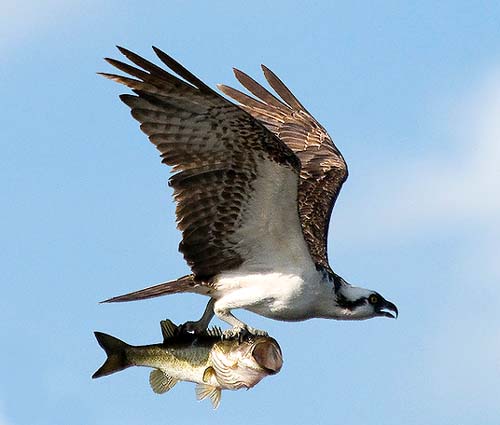
Nowadays, of course, you can drive the thirty or forty miles south to Rutland Water where Ospreys have been introduced and in the summer as many as eight breeding pairs may be seen:

osprey-with-bassxxxxxxxxxxxxxxxxxxxxxxxxxxxxxxxxx

Here is the link to the webcam which keeps watch on one of the birds’ nest.

13 Comments

Filed under History, Science, Twitching, Wildlife and Nature

The Glossy Ibis ; a rare bird in Victorian Nottinghamshire

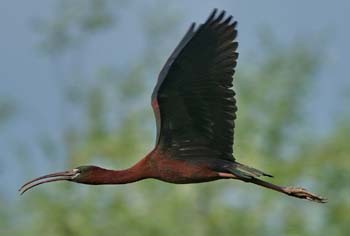
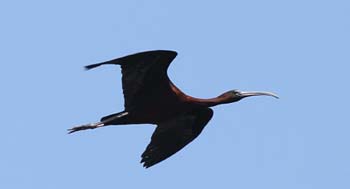
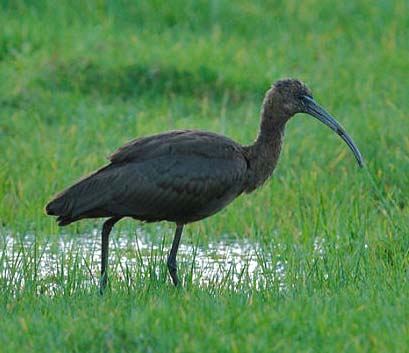
Glossy Ibis is a bird from warmer, southern climes such as the Mediterranean. Even nowadays, it is quite a rare species in the county:

glos ibis

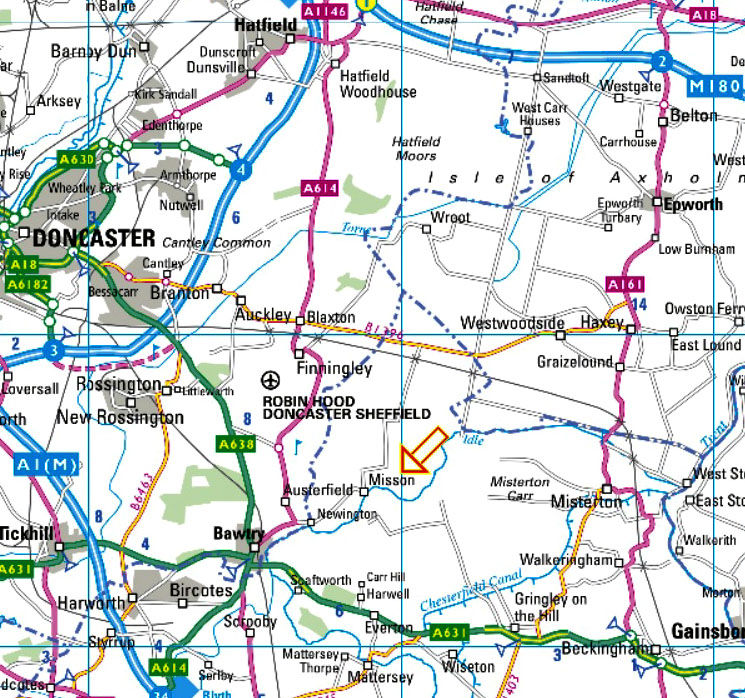
On October 27, 1909, a single bird was shot by Fred Smith at Misson in the very north eastern corner of the county, almost in Yorkshire. This latter county had, for reasons unknown, received an influx of at least fourteen birds during this month of October 1909.  The orange arrow marks the spot. The county boundary with Yorkshire, to the north west, is indicated by the perforated line and must be only a few hundred yards away:

Untitled

Two interesting letters to Joseph Whitaker tell the story.

Dear Sir,
I have the pleasure of dropping you a line in reply to yours, duly received. A man named Fred Smith, who I fear is a shocking poacher, shot the bird, Glossy Ibis, in question. His wife took it to a game dealer, at Doncaster, whose name is Borrill, his shop being in St Sepulchre Gate . He gave her the large sum of one shilling for it, after endeavouring to get it for sixpence.
A doctor bought it from Borrill and is having it stuffed for the museum. I am sorry to have forgotten the doctor’s name, but no doubt the game dealer would tell you if you wrote him. You will forgive me, I hope, for not knowing your book.
I also love birds and used to keep a great many – once I had 46. We still have a few in a good-sized aviary in a greenhouse and my little daughter aged 11  is much interested in birds and has lately acquired several volumes at a cost of £3.10 shillings on the subject.
Yours faithfully,
FW Keane

Glossy_Ibis_1700_e

Joseph Whitaker followed the clues and two months later, he received further information from Dr Corbett himself:

9, Priory Place,
Doncaster
11. 11. 09

Dear Sir,
Mr Borrill showed me your letter re-the Glossy Ibis. All I know of it is that it was exposed in his shop with other wildfowl & I was, fortunately for me, the first to “spot” it & purchase it for the local museum of which I am the curator. If ever you are in Doncaster I shall be pleased to show it to you.
Yours truly,
HH Corbett

Anybody who missed that dead specimen in Doncaster in 1909 had a very long wait to see another Glossy Ibis in Nottinghamshire. In the winter of 2013-2014, a single bird was seen in a flooded roadside field next to the Peugeot Garage in Lowdham, near to the River Trent in the south of the county. southern Nottinghamshire:

lowdham

Most people who wanted to see a Glossy Ibis were able to watch this particular individual which was very amenable and reliable in its appearances. It attracted a steady stream of admirers, and was very easy to see::

Watching an Ibis copyright a

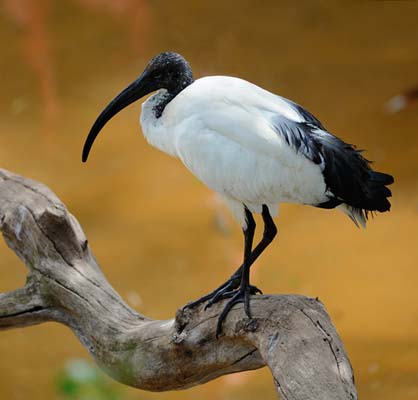
A more spectacular species of Ibis to occur in  Nottinghamshire in the future might well be the Sacred Ibis. This bird normally lives in sub-Saharan Africa, but, in actual fact, there is a healthy feral population in western France. It would not be outrageous for them to cross the Channel:

Ibis

14 Comments

Filed under Criminology, History, Nottingham, Science, Twitching, Wildlife and Nature

Leprechauns in Liverpool

The fact that a small group of children in Nottingham claim to have seen gnomes in leafy Wollaton Park seems incredible, almost ludicrous, in the cold light of day, but it is by no means an isolated incident.

I have spoken in the past of so-called “UFO flaps”, when many sightings occur in just one small area. An example would be the Nottingham UFO flap of July 1967. Similar events occurred nationally in 1964, although this time it involved gnomes, pixies, leprechauns, fairies and their ilk rather than extraterrestrial spacecraft:

ufo-progress19

What was particularly bizarre though, was that the little people, who were seen in three separate places in England during the course of the year, were not closely linked with one particular city, but occurred independently hundreds of miles from each other.

And these widely separated events cannot possibly have been interlinked, because communication in those days was so limited and so private. Just letters or postcards. Telephones were a lot less frequent than you might imagine. You read only national newspapers or your own local paper. Local newspapers from distant cities were more or less unobtainable. The only television was national television… not really a medium for gnomes and fairies!

It sometimes seems that goblins and their ilk are part of our natural landscape and seem to pop out into our world on a rare but fairly regular basis. I presume that this is why nowadays a lot of modern folklorists tend to equate widespread ancient belief in gnomes and their various friends with our current widespread modern belief in space aliens, little green men and tales of abduction.

gnome-alone-trailer

It is this process of flitting between dimensions which remains the same over thousands of years, even if those who do it may have slightly differently coloured clothes and a vastly changed appearance.

And their activites are the same too. After all, how much difference is there between fairies who hold people hostage in their fairy realm and our modern tales of UFOs and extra-terrestrial kidnap?

Back to the simpler stuff.

On June 30th 1964, children saw varying numbers of “little men” in Jubilee Park, Liverpool. Here is the entrance to the park. No Leprechauns in sight yet:

jub park

Nobody knows exactly what the children saw. The little men had “white hats”, and were all seen to be enthusiastically throwing clods of earth at each other.
It took the children very little time indeed to put two and two together, and within minutes they had made a “Positive I.D.” and decided that the little men were, in fact, leprechauns.

chaun

Don’t just a few of the Leprechaun Community look really menacing? It spoils it for the rest.
The following day, July 1st 1964, all the local newspapers claimed that thousands of children had started a hunt, following reports that little green men or leprechauns had been seen near the Bowling Green in Jubilee Park on Jubilee Drive in Liverpool. This was in the Edgeline district in the eastern suburbs of the city. A huge orange arrow has been fired right into the middle of the Bowling Green. No Leprechauns were injured:

jubillee drive

Very soon, Members of the Police Community had to be called in to control the crowds:

volume

A nine year old boy told a reporter that he had seen little men in white hats, throwing stones and mud at each other on the Bowling Green. Another local boy, fourteen year-old David Wilson, claimed to have seen several small green creatures about two feet high running around a haystack on a farm near to the Edgeline Estate:

green alien

A little girl said:

“I was one of the school children that saw those leprechauns. I attended Brae Street School and we all saw them popping in and out of a window overlooking the school yard. There were about four of them, all tiny, dressed like a school book idea of a typical gnome and they sat swinging their legs on the window ledge getting in and out. What they were I don’t know. I only know what they looked like. I’d love to know the truth!!!”

Another child said:

“I remember the siege of St Mary’s Church when the police and Father Rose (or Father Spain) appealed for calm. I was one of the huge crowd of children shouting out “there they are”.
Someone said they had crossed the road into St Mary’s Infants School and were now hiding in the lockers (small cube-like cupboards). I never slept for days, and have had a fear of these type of cupboards to this day, which is still tested as my grandchildren’s nursery school use something similar.”

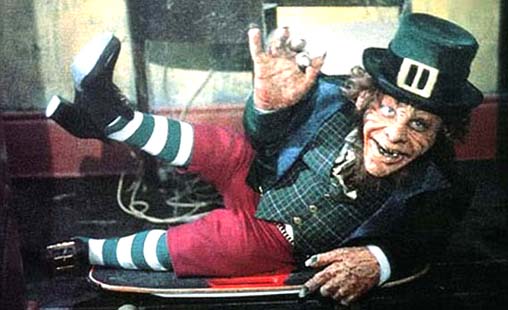
Nobody ever found the leprechaun who was sitting quietly smoking his pipe:

leprechaun

A further witness said:

“I certainly remember the leprechauns, and I actually saw a few of them on Kensington Fields, close to the library, but my parents and other adults tried to convince me that I”d been seeing things. This would be one afternoon in early July 1964, around 4.30pm, and I remember it as if it were yesterday. I was ten at the time and on my way to play football with my mates and saw these little (I’d say just a few inches tall) men dressed in red and black, standing in the grass, looking at me. I’m sure one of them had some type of hat on. I panicked and ran all the way home. My mum said there had been reports of leprechauns and little men on Jubilee Drive and Edge Lane the day before. That same evening crowds turned up on Jubilee Drive, and I remember a girl with a jam jar that she was going to put the leprechauns in!”

The Bowling Green was so crowded that the police attenpted to clear the park and to guard it from the bands of children who were tearing up plants and turf in the search for the little creatures.

Rimrose-Valley-Country

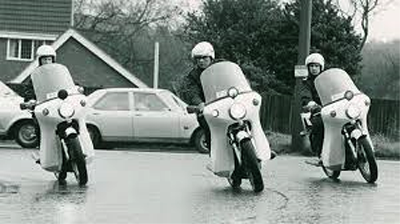
A rather bewildered Park Constable James Nolan had to wear a crash helmet to protect himself from the children throwing stones. At the time of the incident Constable Nolan was one of some fifty City and Parks Police Officers who patrolled the city on blue coloured Vespa scooters with a fixed radio mounted on it – in those days it was state of the art in police communications.

A local woman said to reporters at the time:

“This all started on Tuesday, how I just don’t know, but the sooner it ends the better. Stones have been thrown on the Bowling Green, and for the second night running no one has been able to play. The kids just won’t go away. Some swear they have seen leprechauns. The story has gone round and now we are being besieged by Leprechaun Hunters.”

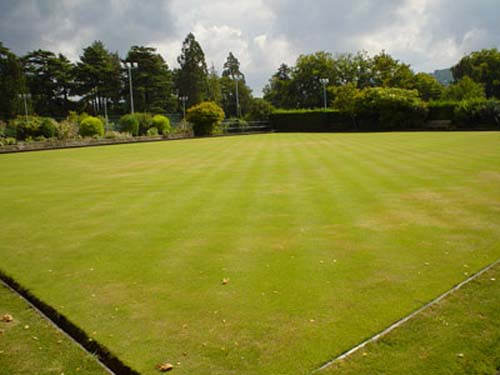
Here is the Bowling Green in more recent times:

bowling-green liver

Such was the desperation of the children’s search that the police had to set up a temporary first aid shelter to treat at least a dozen children who suffered from cuts and bruises. The evening newspapers described the strange visitors as “little green men in white hats, with rhinestones and hurling tiny clubs of earth at each other.”

Thousands of children organised an extensive hunt for them, tearing up plants and turf, scaling surrounding walls, and searching empty houses well beyond the boundaries of Jubilee Park. Eddie McArdle  recalled:

“I remember the story well as I have a scar as a constant reminder of the event. We, the kids from St Marie’s, Kirkby, went en masse into the church and as we hunted the little people, some bright spark shouted that they were coming out after us. Panic ensued and as we all fled quicker than we entered. A boy who is sadly no longer with us swung the church gate in his haste to escape, and I was hit on the forehead by the metal cross on it. The lad, Danny Callahan, didn’t even know he had injured me as he was well up the street and along Elric Walk where I lived. I had to have my head stitched by Dr Cole. As far as I know I was the only person injured by the little visitors. “

Life was getting no easier for Park Constable Nolan, who called in the City Police. Constables in cars and on motorcycles arrived.

untitled

They again attempted to clear the hundreds of youngsters from the bowling greens, which were the alleged playground of the Leprechauns. But the youngsters still thronged there, toddlers to teenagers. They crowded onto the top of the covered reservoir for a better view of the bowling green. Tolerant policemen tried to get the youngsters to leave, but the children would not accept that there were no Leprechauns. Only at 10.00pm was the park finally cleared of children.

Over the next few days, thousands of kids visited not just Jubilee Park, but nearly all of the parks in the City. Some of the Leprechauns still managed to look a bit “iffy”:

Leprechaun_1_leprechaun

The Little People were seen in Abercromby Park, in Stanley Park, in Newsham Park, and in Sefton Park, where a 13-year-old girl said she even grabbed one little man but he slithered from her grasp and fled laughing.

In Kirkby it took almost a fortnight for the clergy and the police to clear more than two hundred children from the graves and tombs of St Chad’s Church where it was believed fairies were living. Certainly, witnesses had repeatedly seen elfin figures dancing in the moonlight and, a sure sign of the supernatural, a crop circle had appeared. A month or more afterwards trolls were repeatedly seen  outside St Mary’s Church in Northwood.

But then gradually reports became fewer and fewer and further and further in between, until the City returned slowly but surely to its humdrum normality.

I would have been unable to tell this long forgotten, and rather peculiar story, were it not for the very many places where it can be read in all of its very many different variations. Some of the links are all here in this short paragraph.

I found the story originally in one of a series of absolutely marvellous books by John Hanson and Dawn Holloway. This particular one is ““Haunted Skies: The Encyclopedia of British UFOs Volume 2 1960-1965”.  I would recommend these books most strongly:

volume


16 Comments

Filed under History, Humour, Science, Wildlife and Nature

More and more water, most of it under Trent Bridge (2)

Last time, I left you awaiting the arrival of Ragnar Lothbrok and his rather fierce friends in Anglo-Saxon Nottingham.

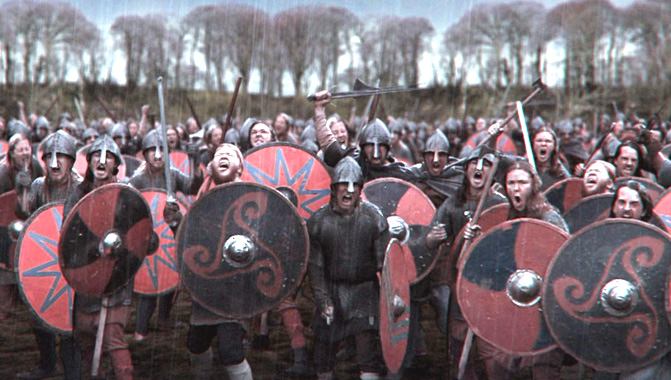
Well, by 867, Anglo-Saxon Nottingham had been well and truly captured by the Vikings and it became one of the Five Boroughs of the Danelaw. There may have been little in the way of extreme weather in this era, but their names were fabulous. The Five Boroughs of the Danelaw is a striking enough phrase, but the name of the army which made Snotingaham, at sword point, an offer they could not refuse, is, quite simply, wonderful. A thousand years before Heavy Metal bands, they rejoiced in the name of “The Great Heathen Army“. And here they are. They’re really quite handsome, aren’t they?

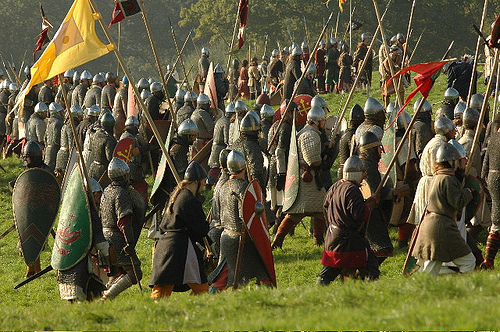
Then again, I really don’t see them as a group of people capable of waiting quietly for a bus: vikingsaaaa Another episode of extreme weather on the rain front came in 1141 when there was another Great Flood. And once again, the flooding was caused, as in 1947, by the mechanism of a sudden melt of large quantities of snow after prodigious amounts of rain. People in 1141 looked like this. Around this time there was clearly a significant risk for everybody of just rusting solid into one great mass:

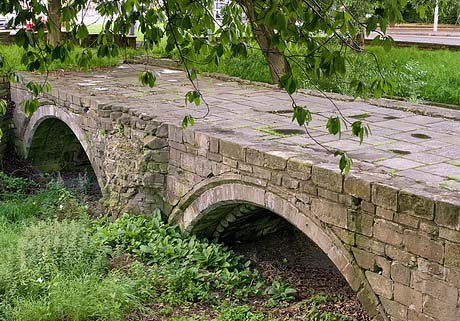
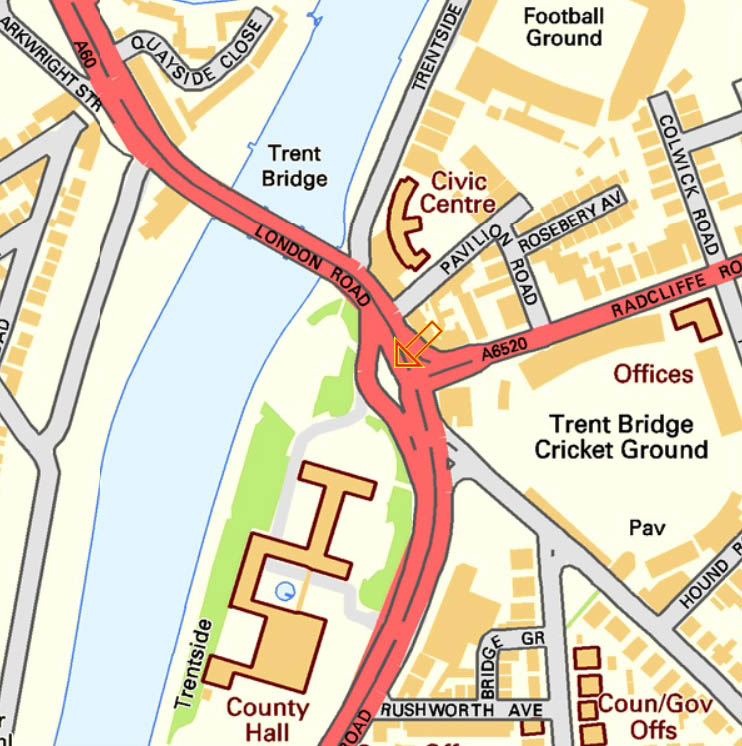
NormanAdvanceIn 1309, Hethbeth Bridge, the medieval precursor of today’s Trent Bridge, was washed away by severe winter floods.  A small fragment of this old bridge is still visible on the road island at the southern end of the modern Trent Bridge: 771942beth heth xxxxxxxxxxx If you go to see it, be very careful. Traffic nowadays is much more dangerous than “The Great Heathen Army”. Look for the orange arrow:

trent

In 1346, little detail has come down to us, other than:

“from mid-summer to Christmas, the rains fell almost without intermission”.

The River Trent duly experienced:

“One of the earliest recorded floods.”

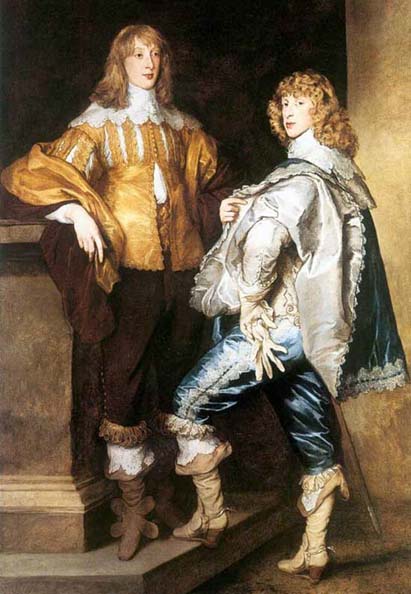
In 1499 Richard Mellers, the husband of Dame Agnes Mellers, of High School fame, is known to have given twenty shillings to help repair one of an apparent succession of Hethbeth Bridges, but it was pretty much in vain, as the Great Flood of 1683 washed a good proportion of it away. Here are two men in 1683. That’s not a look you can just throw together:

Cavaliersxxxxxxxxxxxxxxxxxxxxxx

The worst ever flood in Nottingham was the so-called “Candlemas Flood” of February 1795, when two months of continuous ice and snow all melted extremely rapidly. Every single bridge on the entire River Trent was either damaged or washed away, including the Hethbeth Bridge for the umpteenth time. In the Narrow Marsh area of the city, around what is nowadays Canal Street and the land to the south of St Mary’s Church, the residents were all trapped in the upstairs of their houses and had to be given food from boats. At Wilford, up to 100 sheep were drowned and ten cows perished in West Bridgford. That doesn’t sound much, but they only had twelve.

The late eighteenth century provided some wonderfully ornate dresses, all guaranteed to keep you afloat until help arrived:

1255636099-marie_antoinette

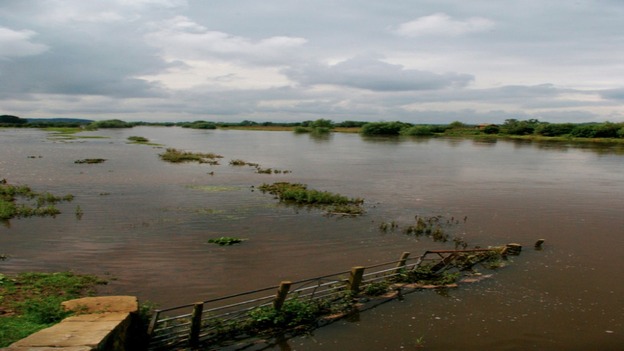
Another less severe flood came in November 1852 when the peak flow of the Trent was measured at some 38,200 cubic feet per second, between twelve and thirteen times the normal levels. A second, slightly worse Victorian inundation came in October 1875 when floodwater was up to six feet deep. During this latter flood the peak flow of the Trent was 45,000 cubic feet per second, fifteen times the normal levels. On Wilford Road an overcrowded cart was washed away and six people were killed. Higher up the river, huge numbers of farm animals were drowned and they must have been a ghastly sight as they floated down to the sea past Trent Bridge:

image_update_24bd582809133d58_1342017794_9j-4aaqsk

9 Comments

Filed under History, Humour, Nottingham, Science, Wildlife and Nature

A Twitch in 1817

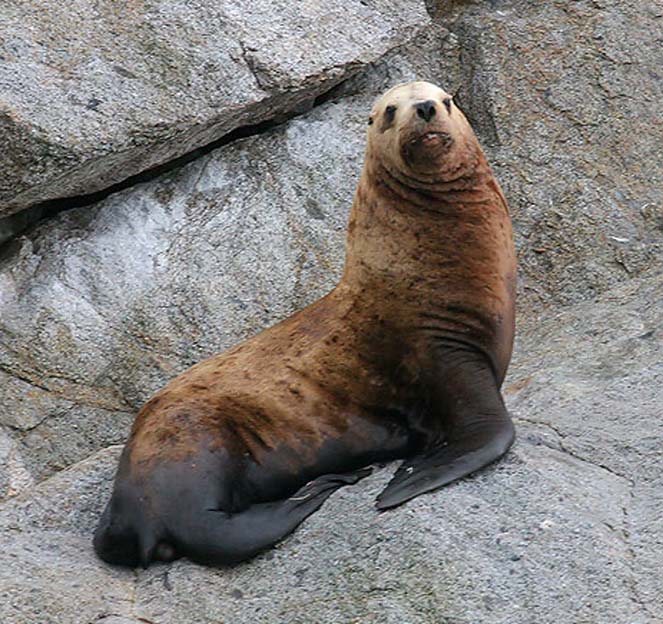
A twitch doesn’t have to involve a bird. It is becoming increasingly fashionable to twitch animals. I have twitched a Steller’s Sea Lion on the Brisons, a pair of sea stacks just off Cape Cornwall, which is in Cornwall, funnily enough. And I succeeded in my quest. I saw this amazingly lost creature, who, by rights, should have been sunning herself in Vladivostock Harbour. I saw her, on and off, for several years, in actual fact:

Steller Sea Lion
I have twitched a Bottle-nose Dolphin in Gainsborough in Lincolnshire. It frequented the River Trent at the back of of a supermarket car park in Gainsborough, Lincolnshire, Netto, if I remember correctly. It was there from January 25th-30th 1999, although I turned up on January 31st. And guess what? Well, this is all that I saw:

beaten

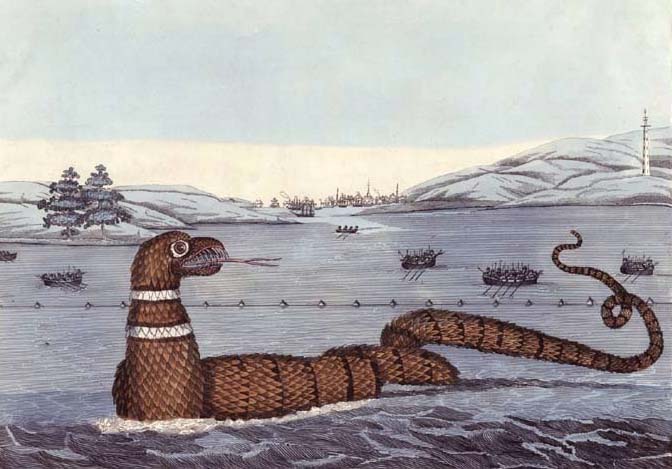
The following account is of a twitch for a sea-creature. It took place in the summer of 1817 in Massachusetts, and this is just one of a huge number of accounts. It came from Colonel TH Perkins on August 15th 1817. I have made one or two changes to make it easier for a modern reader to understand but other than that, there are no differences:

“The first appearance was in the summer of 1817, in the harbour of Cape Ann:

a Cape-Ann

And here is the more modern, less charming version:

a goolge YES easrthzzzzzzzzzzzzzzzzzz

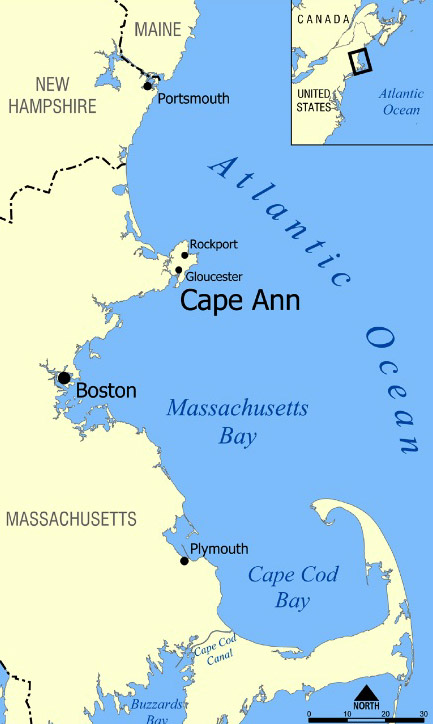
And conceivably, this map is the best one for all the English people who think Boston is a market town in Lincolnshire:

map ann (2)

Back to the story:

“I visited Gloucester with Mr Lee. On our way down we met several persons returning, who had already visited the place, and they reported to us that he had not been seen for two or three days past. We, however, continued our route to Gloucester, though with fears that we should not be rewarded with a sight of the monster which we sought.

I had already satisfied myself, from conversation with several persons who had already seen him, that the reports in circulation were not mere fables. All the townspeople were, as you may suppose, on the alert, and almost every individual, both great and small, had had sight of him, at a greater or less distance:

etching

“The weather was fine, the sea perfectly smooth, and Mr Lee and myself were seated on a point of land which projects into the harbour, about twenty feet above the level of the water, from which we were distant by about fifty or sixty feet. Seated in this way, I observed an agitation in the water at the entrance of the harbour, like that which follows a small vessel going five or six miles an hour through the water. As we knew there were no rocks where the water was this broken. I immediately said to Mr Lee that I had no doubt that what I had seen was the sea serpent in pursuit of fish. Mr Lee was not looking at the spot which I was talking about, and had not seen the foam of the water, the animal having immediately disappeared.
In a few moments after my exclamation, I saw on the opposite side of the harbour, at about two miles distance from where I had first seen, or thought I saw, the snake, the same object, moving with the rapid motion up the harbour, on the western shore”:

drawing (2)

“As he approached us, it was easy to see that his motion was not that of the common snake, either on the land or in the water, but evidently the vertical movement of the caterpillar. As nearly as I could judge, there was visible at a time about forty feet of his body. It was not, to be sure, a continuous body, as from head to tail he was seen only three or four feet at a time. It was very evident, however, that his length must be much greater than what appeared, as, in his movement, he left a considerable wake in his rear. I had a fine telescope, and was within less than half a mile of him. The head was flat in the water, and the animal was, as far as I could distinguish, of a chocolate colour. I was struck with an appearance in the front part of the head like a single horn, about nine inches to a foot in length, and of the form of a spike. There were a great many people collected by this time, many of whom had already seen the serpent. From the time I first saw him until he passed by the place where I stood, and soon after disappeared, was not more than fifteen or twenty minutes”:

erp banded (2)

“I left the place fully satisfied that the verbal reports in circulation, although differing in detail, were essentially correct. I returned to Boston, and having made my report, I found Mrs Perkins and my daughters disposed to make a visit to Gloucester with me when the return of the animal should again be announced. A few days after my return I went again to Cape Ann with the ladies; we had a pleasant ride, but returned unsatisfied in the quest which drew us there.”

BRM2493-Sea-Serpent_lowres-2000x1616

This particular sea serpent was seen regularly around Cape Ann until 1819 at least. Indeed, the east coast of the United States seems to have been a good place for would-be sea serpent twitchers, with records dating back to 1638:

new_england_sea_serpentxxxxxxxxxxxxxx

Don’t think I don’t have my own story to tell:

On October 25th 1988, I went to the Isles of Scilly to birdwatch. I crossed over on the ferry, the Scillonian. For two or three hours during the crossing, I remained on deck with my binoculars, eagerly scanning the storm tossed waves for seabirds.

Scillonian_III-01 xxxxxx

“At one point, I noticed what I took to be the head of a Grey Seal, which broke the surface perhaps a hundred metres away. It was dark in colour, and I could see a forehead, two eye sockets, and an obvious snout. I didn’t really think twice about it, and it remained there for perhaps two or three minutes. Then, suddenly, a Gannet flew directly above it, and I realised from a comparison of sizes that the head must be at least a metre and a half, if not two metres, across. And that means it cannot have been a seal !”

12 Comments

Filed under Cornwall, Cryptozoology, History, Science, Twitching, Wildlife and Nature